
大叔的要饭之路
114 Posts

大叔的要饭之路
Report
Block User
26 Following
11 Followers
19 Liked
Posts
·
--
See translation
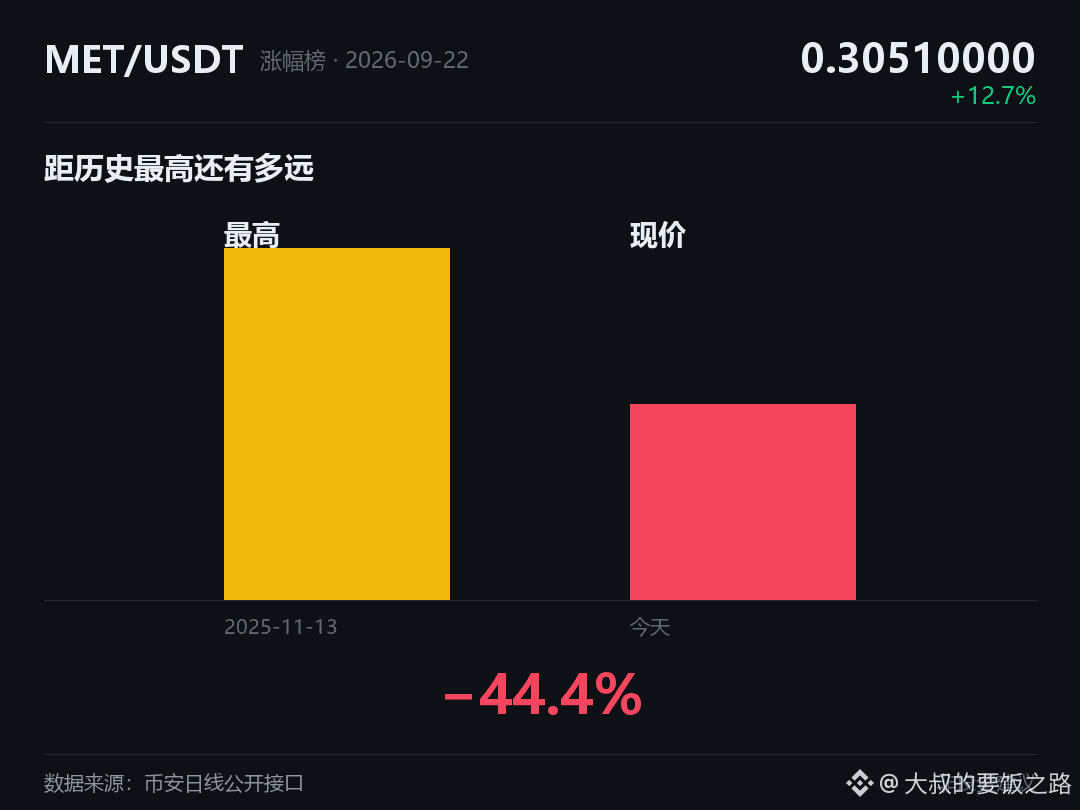
$MET 距自己的历史最高只差 44.4%,是这批里位置最高的一个,我有点意外。
跌得少的币我反而不太敢追。有没有人偏好这种抗跌的?想请教逻辑。非投资建议
#位置
{future}(METUSDT)
$MET 距自己的历史最高只差 44.4%,是这批里位置最高的一个,我有点意外。
跌得少的币我反而不太敢追。有没有人偏好这种抗跌的?想请教逻辑。非投资建议
#位置
跌得少的币我反而不太敢追。有没有人偏好这种抗跌的?想请教逻辑。非投资建议
#位置
·
--
Article
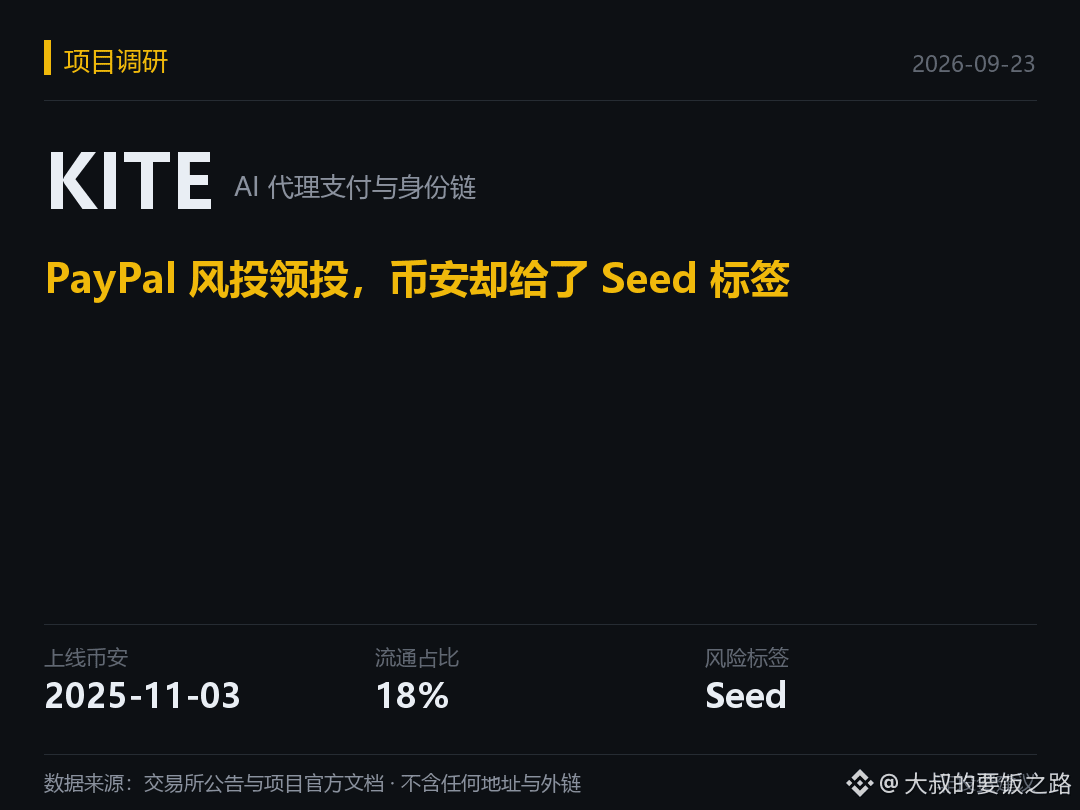
KITE is an AI payment chain led by PayPal’s venture capital—yet Binance has given it a Seed tag$KITE is, in my opinion, the most worth writing about on its own among this batch—because the investment stakeholder list and its exchange risk tags together tell a story from two directions.
First, take a look at the project. Kite is building the “payments and identity layer for AI agents.” Its former name was Zettablock. Technically, it’s a PoS, EVM-compatible L1, with the mainnet running as an Avalanche sovereign chain. Its product line includes Kite Chain, Agent Passport (agent identity), and the Agent App Store, integrating machine payment protocols from x402, Google AP2, and Stripe, as well as Anthropic’s MCP standard. It is a member of AAIF under the Linux Foundation. It currently has over 90 service providers onboarded, and PayPal and Shopify are running pilots. Testnet data shows 1.9 billion agent interactions and 300 million transactions.
KITE is an AI payment chain led by PayPal’s venture capital—yet Binance has given it a Seed tag
$KITE is, in my opinion, the most worth writing about on its own among this batch—because the investment stakeholder list and its exchange risk tags together tell a story from two directions.
First, take a look at the project. Kite is building the “payments and identity layer for AI agents.” Its former name was Zettablock. Technically, it’s a PoS, EVM-compatible L1, with the mainnet running as an Avalanche sovereign chain. Its product line includes Kite Chain, Agent Passport (agent identity), and the Agent App Store, integrating machine payment protocols from x402, Google AP2, and Stripe, as well as Anthropic’s MCP standard. It is a member of AAIF under the Linux Foundation. It currently has over 90 service providers onboarded, and PayPal and Shopify are running pilots. Testnet data shows 1.9 billion agent interactions and 300 million transactions.
First, take a look at the project. Kite is building the “payments and identity layer for AI agents.” Its former name was Zettablock. Technically, it’s a PoS, EVM-compatible L1, with the mainnet running as an Avalanche sovereign chain. Its product line includes Kite Chain, Agent Passport (agent identity), and the Agent App Store, integrating machine payment protocols from x402, Google AP2, and Stripe, as well as Anthropic’s MCP standard. It is a member of AAIF under the Linux Foundation. It currently has over 90 service providers onboarded, and PayPal and Shopify are running pilots. Testnet data shows 1.9 billion agent interactions and 300 million transactions.
4
·
--
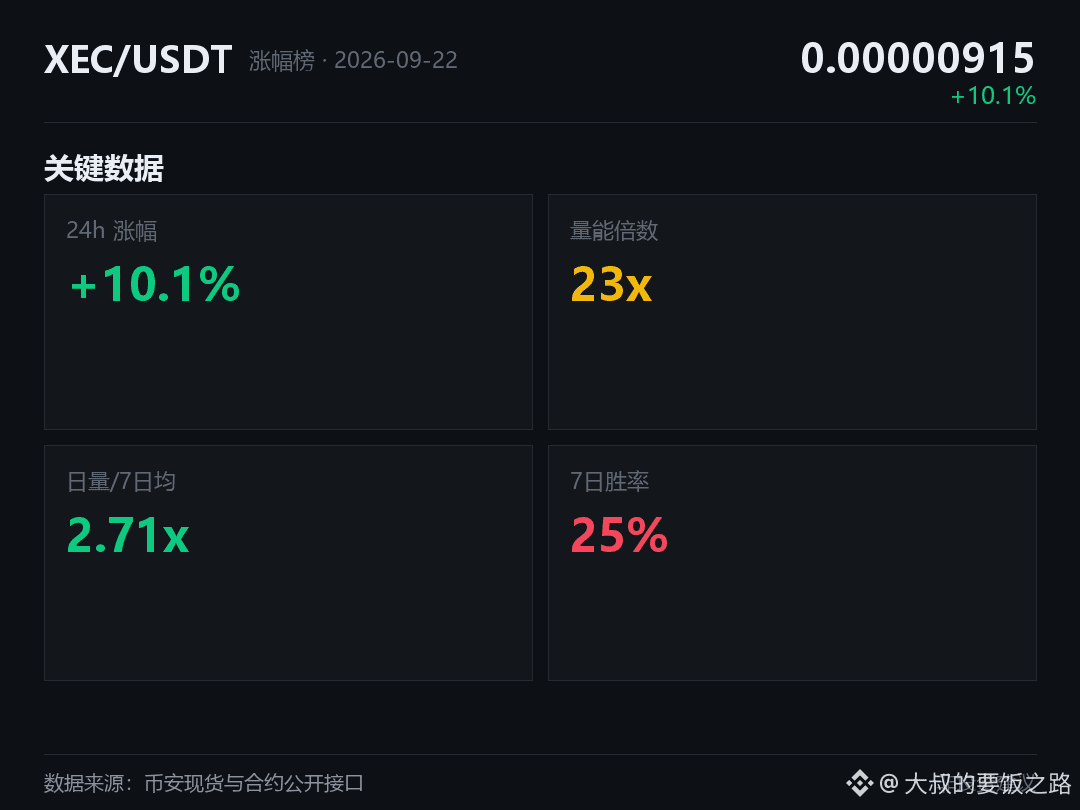
$XEC is the only one in this batch that doesn’t have a contract, so it can only be done as spot. I can’t check both the rate and the position size.
There’s a whole piece of information missing. I’m not confident in my judgment, and I’m quite curious how others approach it. Does anyone specifically look into this kind of thing? I’d like to ask what the basis is. Not investment advice
#spot
{future}(XECUSDT)
$XEC is the only one in this batch that doesn’t have a contract, so it can only be done as spot. I can’t check both the rate and the position size.
There’s a whole piece of information missing. I’m not confident in my judgment, and I’m quite curious how others approach it. Does anyone specifically look into this kind of thing? I’d like to ask what the basis is. Not investment advice
#spot
There’s a whole piece of information missing. I’m not confident in my judgment, and I’m quite curious how others approach it. Does anyone specifically look into this kind of thing? I’d like to ask what the basis is. Not investment advice
#spot
4
·
--
Article
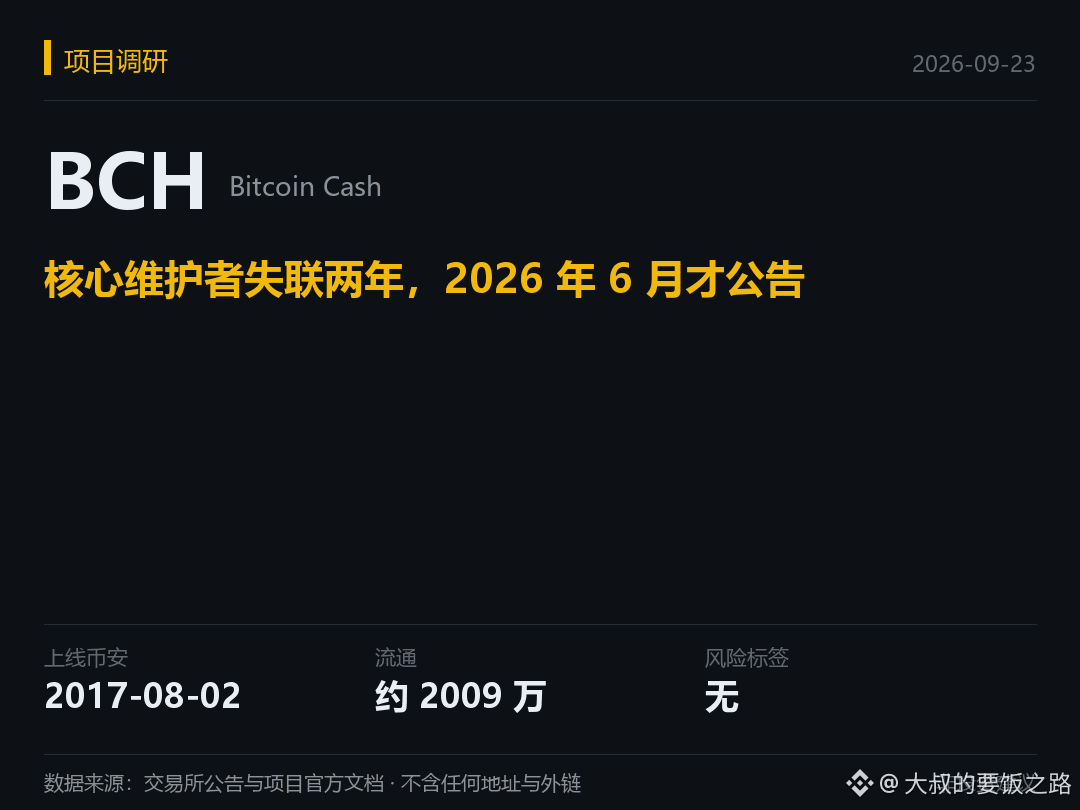
BCH’s core maintainer has been missing for two years, only announced in June 2026First, let me share the most memorable thing I think is worth remembering: On June 10, 2026, the BCH development team issued an announcement disclosing that the core maintainer, freetrader, has been unreachable since May 2024 — missing for a full two years. At the same time, the multi-signature holders of the 2,048 BCH development funds have already completed the replacement.
Being publicly disclosed only after someone has been missing for two years is uncommon among mainstream coins. This does not mean the network is having issues — BCH has several independent implementations, and nodes have continued to produce blocks normally. But it shows that BCH’s development and governance depend on a small number of key individuals more than the outside world might assume.
BCH’s core maintainer has been missing for two years, only announced in June 2026
First, let me share the most memorable thing I think is worth remembering: On June 10, 2026, the BCH development team issued an announcement disclosing that the core maintainer, freetrader, has been unreachable since May 2024 — missing for a full two years. At the same time, the multi-signature holders of the 2,048 BCH development funds have already completed the replacement.
Being publicly disclosed only after someone has been missing for two years is uncommon among mainstream coins. This does not mean the network is having issues — BCH has several independent implementations, and nodes have continued to produce blocks normally. But it shows that BCH’s development and governance depend on a small number of key individuals more than the outside world might assume.
Being publicly disclosed only after someone has been missing for two years is uncommon among mainstream coins. This does not mean the network is having issues — BCH has several independent implementations, and nodes have continued to produce blocks normally. But it shows that BCH’s development and governance depend on a small number of key individuals more than the outside world might assume.
52
·
--
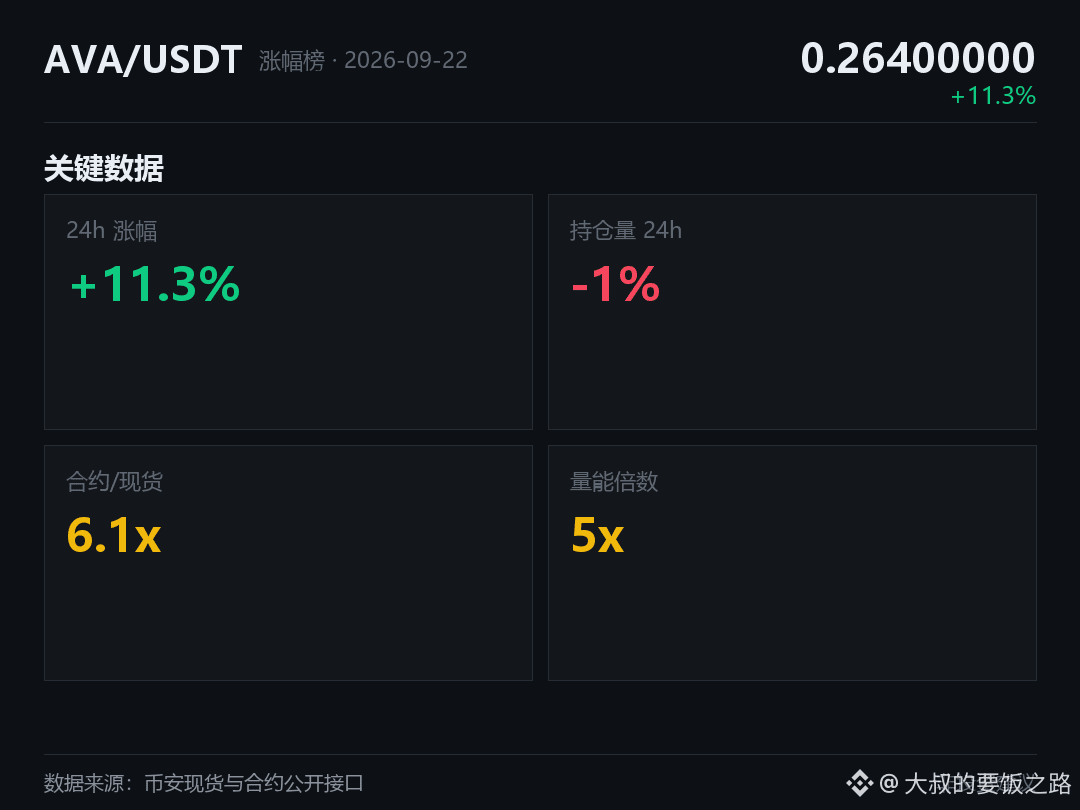
$AVA rose 11.3%, but trading volume is only 0.37 times the 7-day average, and open interest hasn’t moved either.
When I see a rally on lower volume, I usually think one layer deeper—it looks a bit off. Has anyone encountered something similar? I’d like to ask how you read it. Not investment advice
#Rally on Lower Volume
{future}(AVAUSDT)
$AVA rose 11.3%, but trading volume is only 0.37 times the 7-day average, and open interest hasn’t moved either.
When I see a rally on lower volume, I usually think one layer deeper—it looks a bit off. Has anyone encountered something similar? I’d like to ask how you read it. Not investment advice
#Rally on Lower Volume
When I see a rally on lower volume, I usually think one layer deeper—it looks a bit off. Has anyone encountered something similar? I’d like to ask how you read it. Not investment advice
#Rally on Lower Volume
4
·
--
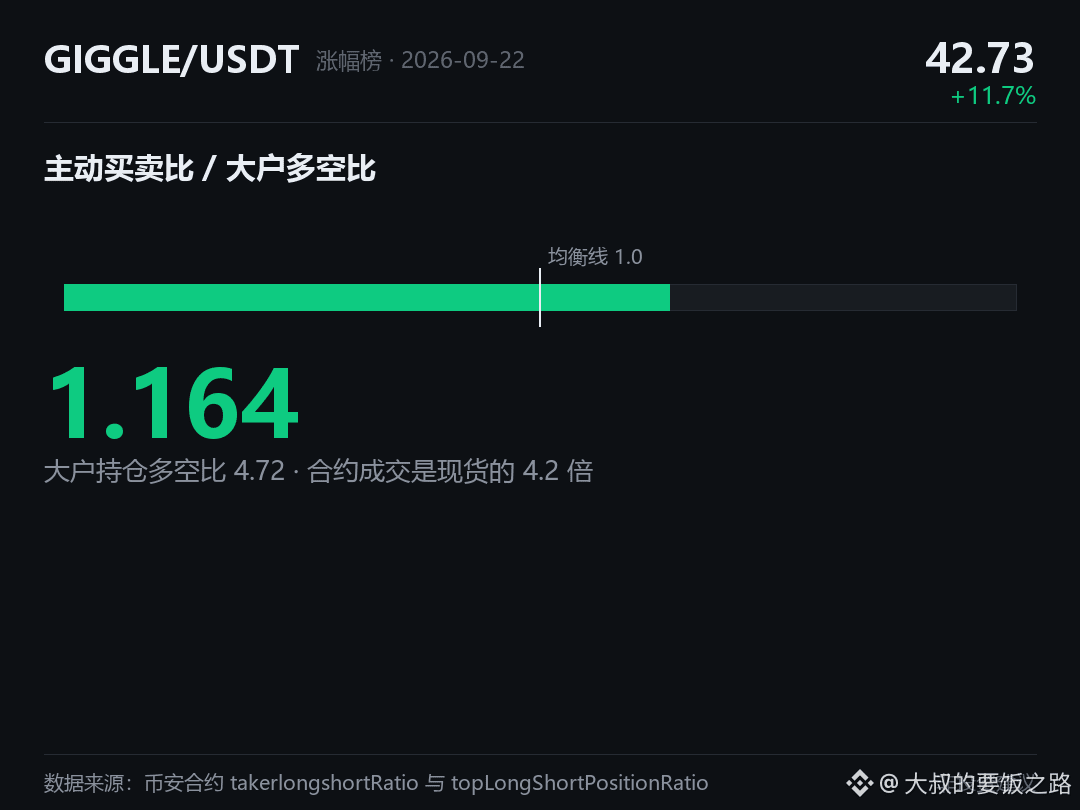
$GIGGLE Large holder long-short ratio 4.72, long positions are 4.7 times short positions. I found this number a bit unexpected—it's a little scary how high it is.
Since large holders are so consistent, do you think it’s a signal or a trap? Not investment advice
#Large holder positions
{future}(GIGGLEUSDT)
$GIGGLE Large holder long-short ratio 4.72, long positions are 4.7 times short positions. I found this number a bit unexpected—it's a little scary how high it is.
Since large holders are so consistent, do you think it’s a signal or a trap? Not investment advice
#Large holder positions
Since large holders are so consistent, do you think it’s a signal or a trap? Not investment advice
#Large holder positions
1
49
·
--
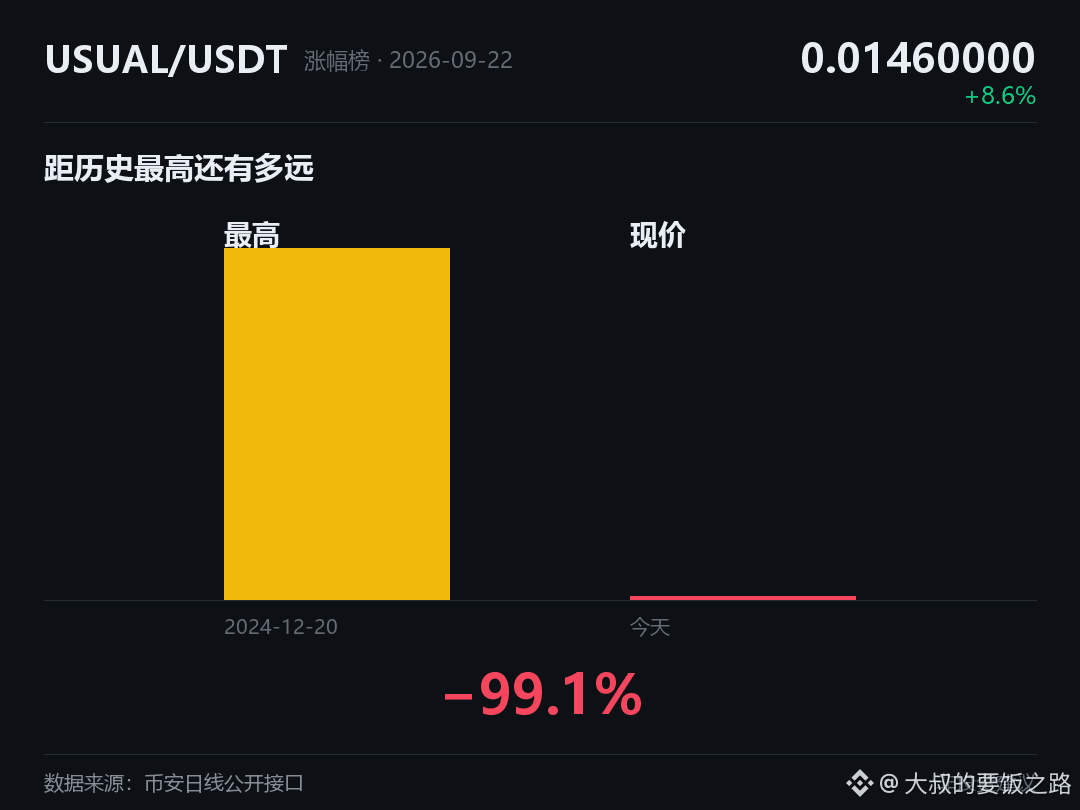
$USUAL rose 8.6%. It looks ordinary, but it’s still 99.1% away from its all-time high. The ratio of active buying vs. selling is 0.737.
The deepest “trap” on the board seems to be when volume increases, and I find that quite strange. Has anyone done statistics like this? I’d like to ask how to distinguish it. Not investment advice
#Deep Rebound
{future}(USUALUSDT)
$USUAL rose 8.6%. It looks ordinary, but it’s still 99.1% away from its all-time high. The ratio of active buying vs. selling is 0.737.
The deepest “trap” on the board seems to be when volume increases, and I find that quite strange. Has anyone done statistics like this? I’d like to ask how to distinguish it. Not investment advice
#Deep Rebound
The deepest “trap” on the board seems to be when volume increases, and I find that quite strange. Has anyone done statistics like this? I’d like to ask how to distinguish it. Not investment advice
#Deep Rebound
21
·
--
Article
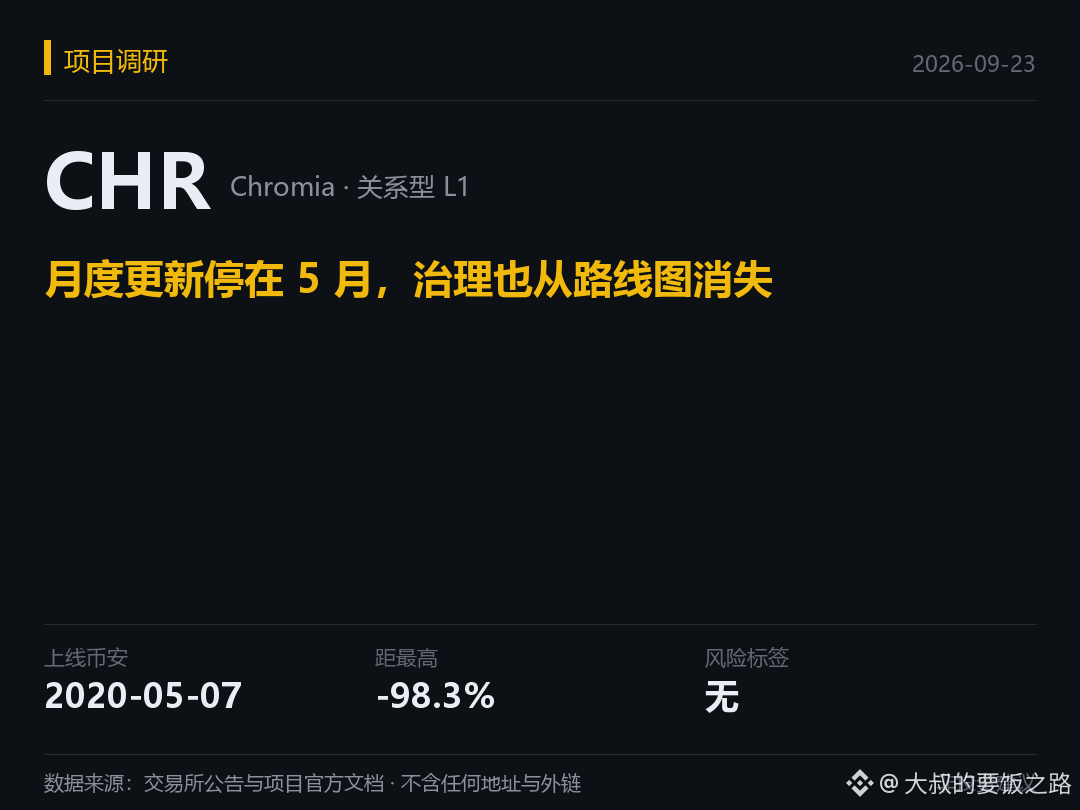
CHR’s monthly updates stopped in May, and governance also disappeared from the roadmap$CHR is Chromia, a “relational blockchain.” The difference from most L1s is that it opens a dedicated chain for each dapp, instead of having all applications compete for block space on a single chain. The project team, ChromaWay, was founded in 2014 in Stockholm. The founders are Henrik Hjelte, Alex Mizrahi, and Or Perelman. In February 2026, Or Perelman was promoted from COO to CEO, replacing Henrik Hjelte.
The mainnet went live on July 16, 2024—not that early.
On Binance, it launched on May 7, 2020, through the 8th round of community voting, beating SWFTC at the time. Here’s a detail worth noting: it wasn’t through Launchpad or Megadrop—it was via voting. The rules back then were different from today.
CHR’s monthly updates stopped in May, and governance also disappeared from the roadmap
$CHR is Chromia, a “relational blockchain.” The difference from most L1s is that it opens a dedicated chain for each dapp, instead of having all applications compete for block space on a single chain. The project team, ChromaWay, was founded in 2014 in Stockholm. The founders are Henrik Hjelte, Alex Mizrahi, and Or Perelman. In February 2026, Or Perelman was promoted from COO to CEO, replacing Henrik Hjelte.
The mainnet went live on July 16, 2024—not that early.
On Binance, it launched on May 7, 2020, through the 8th round of community voting, beating SWFTC at the time. Here’s a detail worth noting: it wasn’t through Launchpad or Megadrop—it was via voting. The rules back then were different from today.
The mainnet went live on July 16, 2024—not that early.
On Binance, it launched on May 7, 2020, through the 8th round of community voting, beating SWFTC at the time. Here’s a detail worth noting: it wasn’t through Launchpad or Megadrop—it was via voting. The rules back then were different from today.
47
·
--
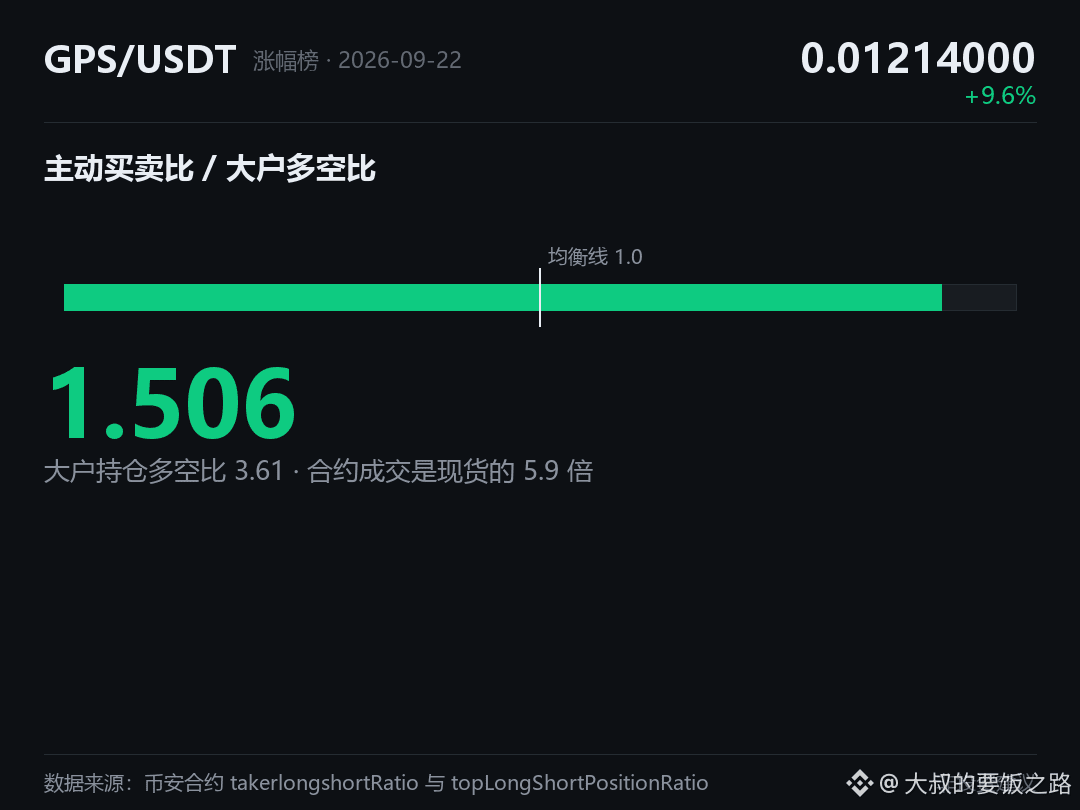
$GPS Active Buy/Sell Ratio 1.506. It’s the most aggressive buy-side order among this batch. When I saw it, I was a bit surprised—such solid buy-side strength isn’t that common.
When you see this kind of主动扫货 (aggressive buying sweep), do you think it’s institutions building positions, or a pulse from short-term funds? Not investment advice
#Buy-side
{future}(GPSUSDT)
$GPS Active Buy/Sell Ratio 1.506. It’s the most aggressive buy-side order among this batch. When I saw it, I was a bit surprised—such solid buy-side strength isn’t that common.
When you see this kind of主动扫货 (aggressive buying sweep), do you think it’s institutions building positions, or a pulse from short-term funds? Not investment advice
#Buy-side
When you see this kind of主动扫货 (aggressive buying sweep), do you think it’s institutions building positions, or a pulse from short-term funds? Not investment advice
#Buy-side
1
21
·
--
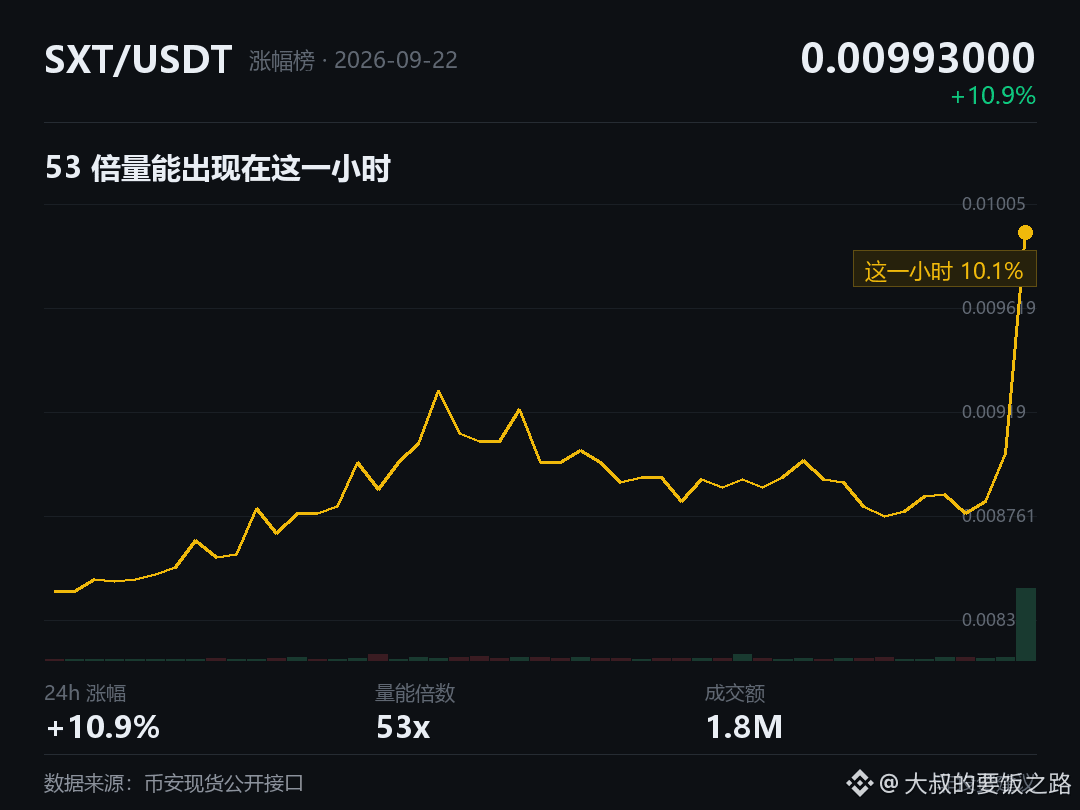
$SXT up 10.9%. Among them, the trading volume in one hour is 53 times the 24-hour average. This multiple ranks second on the list.
With such a huge surge in volume in the short term, I'm quite curious about what happens next. Has anyone studied this? I'd like to ask for your thoughts. Not investment advice
#Volume surge
{future}(SXTUSDT)
$SXT up 10.9%. Among them, the trading volume in one hour is 53 times the 24-hour average. This multiple ranks second on the list.
With such a huge surge in volume in the short term, I'm quite curious about what happens next. Has anyone studied this? I'd like to ask for your thoughts. Not investment advice
#Volume surge
With such a huge surge in volume in the short term, I'm quite curious about what happens next. Has anyone studied this? I'd like to ask for your thoughts. Not investment advice
#Volume surge
1
44
·
--
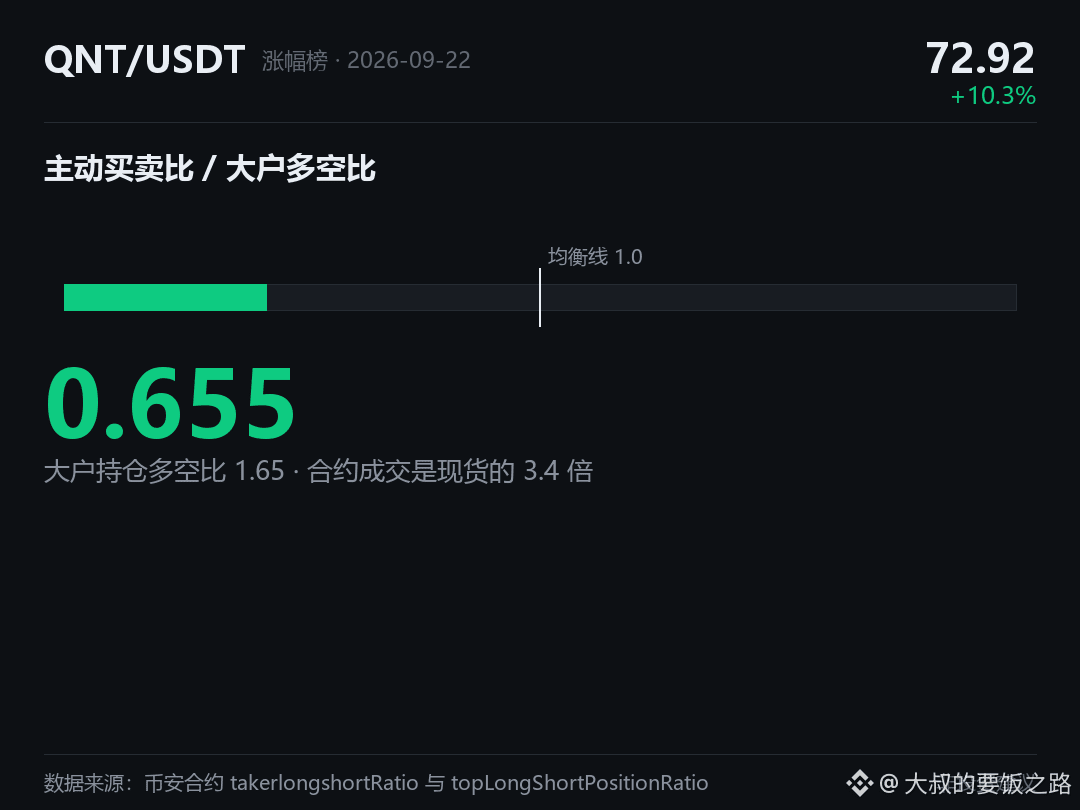
When I was sweeping data, I got tripped up by $QNT : it was up 10.3%, yet the ratio of active buying/selling was only 0.655, with more active selling than buying.
This confuses me a bit. Does anyone understand fund flow? I’d like to ask. Not investment advice
#price-volume divergence
{future}(QNTUSDT)
When I was sweeping data, I got tripped up by $QNT : it was up 10.3%, yet the ratio of active buying/selling was only 0.655, with more active selling than buying.
This confuses me a bit. Does anyone understand fund flow? I’d like to ask. Not investment advice
#price-volume divergence
This confuses me a bit. Does anyone understand fund flow? I’d like to ask. Not investment advice
#price-volume divergence
16
·
--
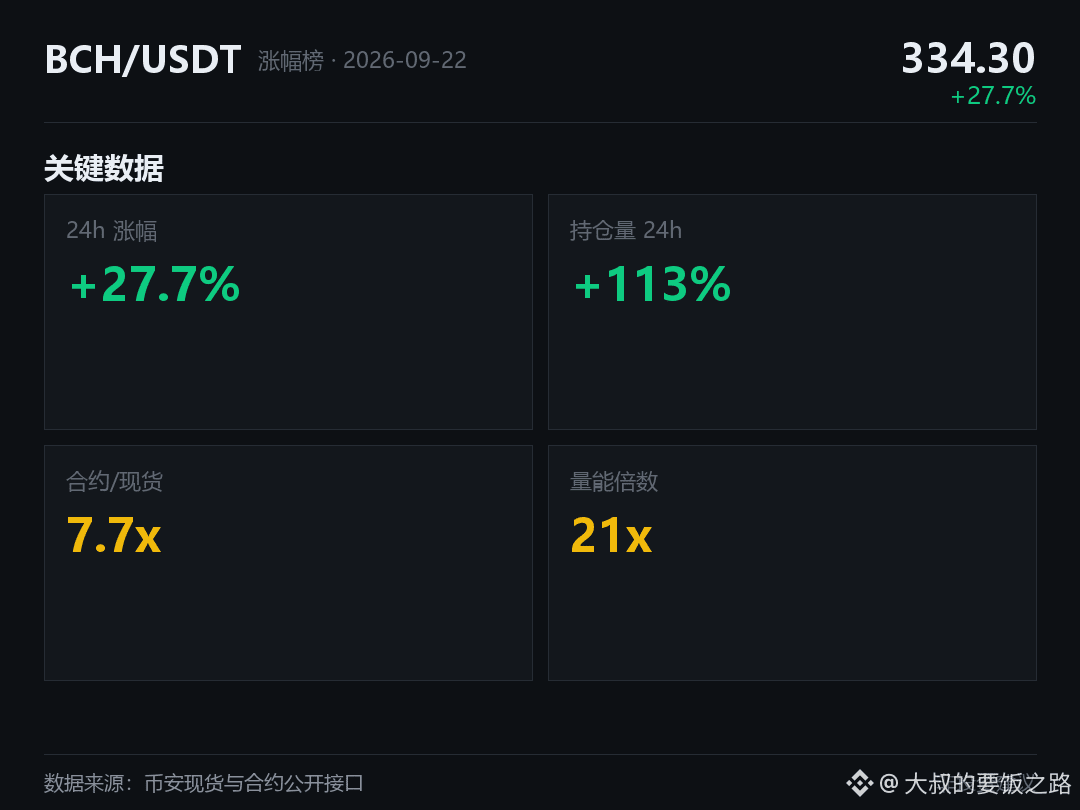
$BCH rose 27.7%, and the contract open interest increased by 113% in one day. I took a look—the contract trading volume is 7.7 times that of the spot.
With volume, price, and open interest all moving together, this combination feels a bit unexpected; it’s hard to tell whether it’s new capital or leverage. Has anyone done order-book analysis? I’d like to ask for advice. Not investment advice
# Open interest
{future}(BCHUSDT)
$BCH rose 27.7%, and the contract open interest increased by 113% in one day. I took a look—the contract trading volume is 7.7 times that of the spot.
With volume, price, and open interest all moving together, this combination feels a bit unexpected; it’s hard to tell whether it’s new capital or leverage. Has anyone done order-book analysis? I’d like to ask for advice. Not investment advice
# Open interest
With volume, price, and open interest all moving together, this combination feels a bit unexpected; it’s hard to tell whether it’s new capital or leverage. Has anyone done order-book analysis? I’d like to ask for advice. Not investment advice
# Open interest
172
·
--
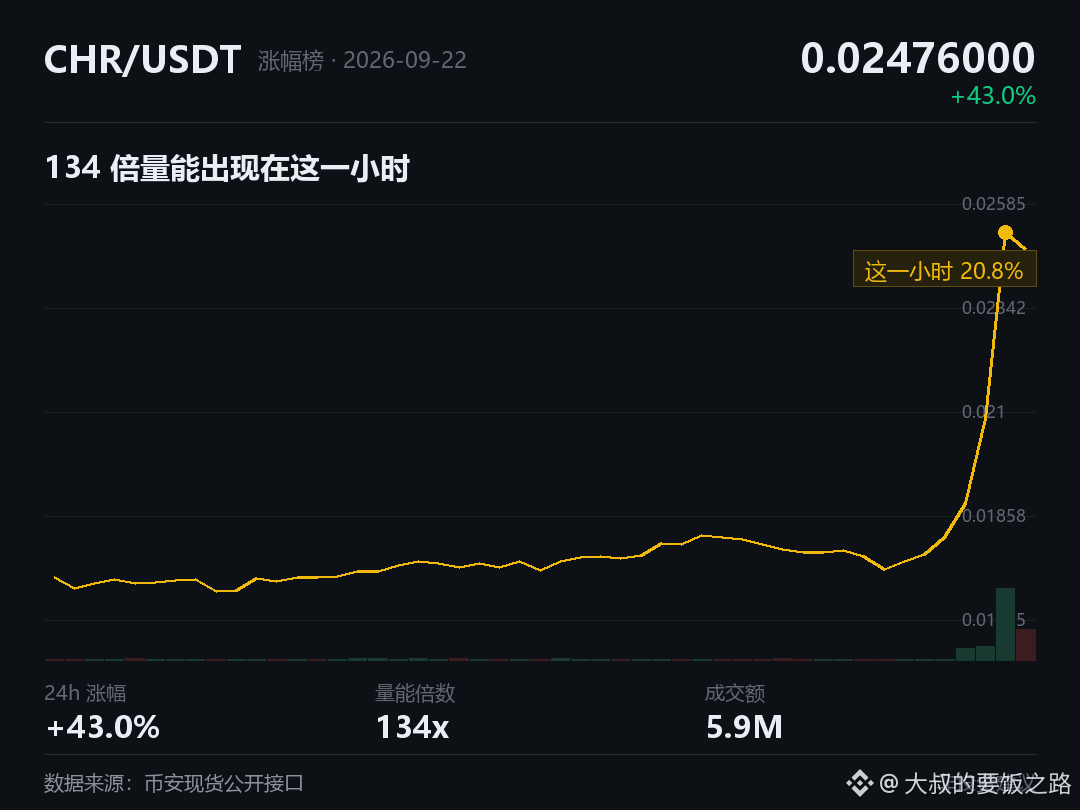
I was a bit surprised by the intraday activity of $CHR : the trading volume in its strongest one hour was 134 times the 24-hour average—ranked #1 on the whole board.
Does anyone specifically keep an eye on this kind of impulse volume? I’d like to ask how to distinguish between a launch and distribution (selling/offloading). Not investment advice
#Unusual Volume Fluctuations
{future}(CHRUSDT)
I was a bit surprised by the intraday activity of $CHR : the trading volume in its strongest one hour was 134 times the 24-hour average—ranked #1 on the whole board.
Does anyone specifically keep an eye on this kind of impulse volume? I’d like to ask how to distinguish between a launch and distribution (selling/offloading). Not investment advice
#Unusual Volume Fluctuations
Does anyone specifically keep an eye on this kind of impulse volume? I’d like to ask how to distinguish between a launch and distribution (selling/offloading). Not investment advice
#Unusual Volume Fluctuations
70
·
--
Partly True
Article
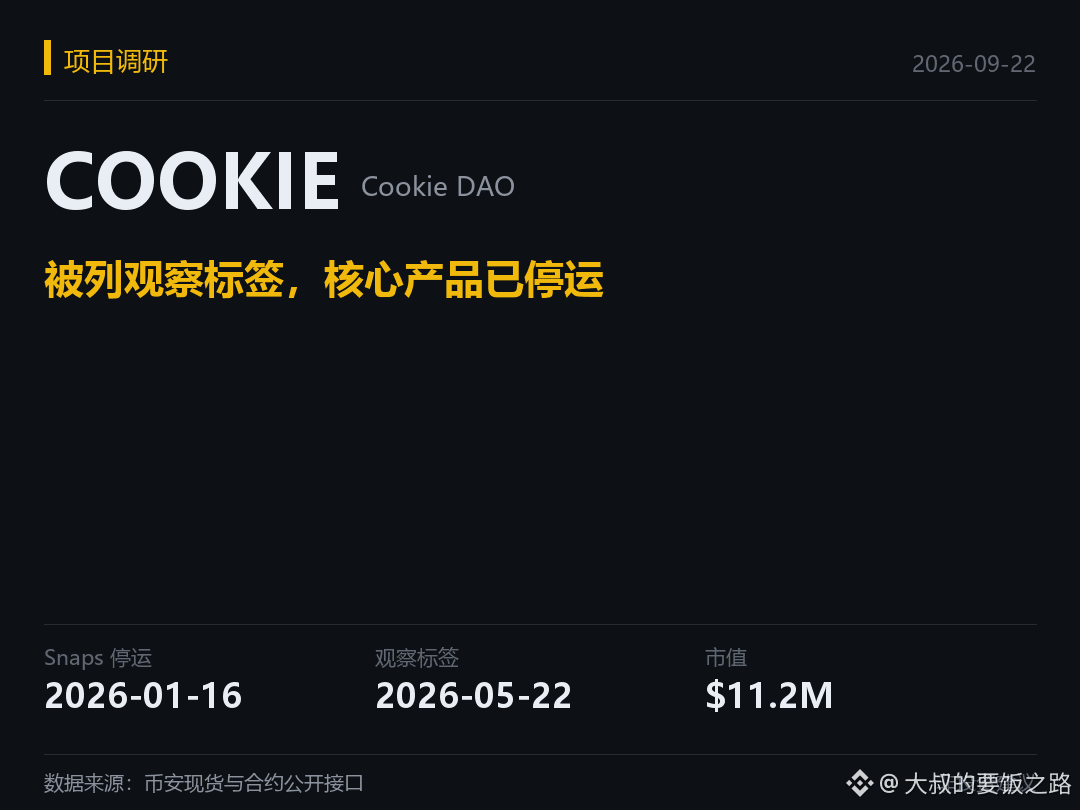
Binance placed COOKIE on its Monitoring Tag; the core product has already shut down as of this January$COOKIE Among these eight today, it’s the only one with a real-name team, official documentation, and an active product—however, it’s also the one with the densest risk signals.
First, about the project itself. Cookie DAO’s predecessor was called Cookie3. It was launched in September 2021 and renamed in 2024. The track is the “attention data layer” (InfoFi) that combines on-chain activity with social elements. Its core product is its official data dashboard, which quantifies mindshare and sentiment on X for the project. The team is CEO Filip Wielanier and CTO Wojciech Piechociński. Filip previously did IT consulting at Bank Millennium and Deloitte Digital. In August 2022, it raised a $2.5 million seed round led by Spartan and Hartmann.
Binance placed COOKIE on its Monitoring Tag; the core product has already shut down as of this January
$COOKIE Among these eight today, it’s the only one with a real-name team, official documentation, and an active product—however, it’s also the one with the densest risk signals.
First, about the project itself. Cookie DAO’s predecessor was called Cookie3. It was launched in September 2021 and renamed in 2024. The track is the “attention data layer” (InfoFi) that combines on-chain activity with social elements. Its core product is its official data dashboard, which quantifies mindshare and sentiment on X for the project. The team is CEO Filip Wielanier and CTO Wojciech Piechociński. Filip previously did IT consulting at Bank Millennium and Deloitte Digital. In August 2022, it raised a $2.5 million seed round led by Spartan and Hartmann.
First, about the project itself. Cookie DAO’s predecessor was called Cookie3. It was launched in September 2021 and renamed in 2024. The track is the “attention data layer” (InfoFi) that combines on-chain activity with social elements. Its core product is its official data dashboard, which quantifies mindshare and sentiment on X for the project. The team is CEO Filip Wielanier and CTO Wojciech Piechociński. Filip previously did IT consulting at Bank Millennium and Deloitte Digital. In August 2022, it raised a $2.5 million seed round led by Spartan and Hartmann.
1
123
·
--
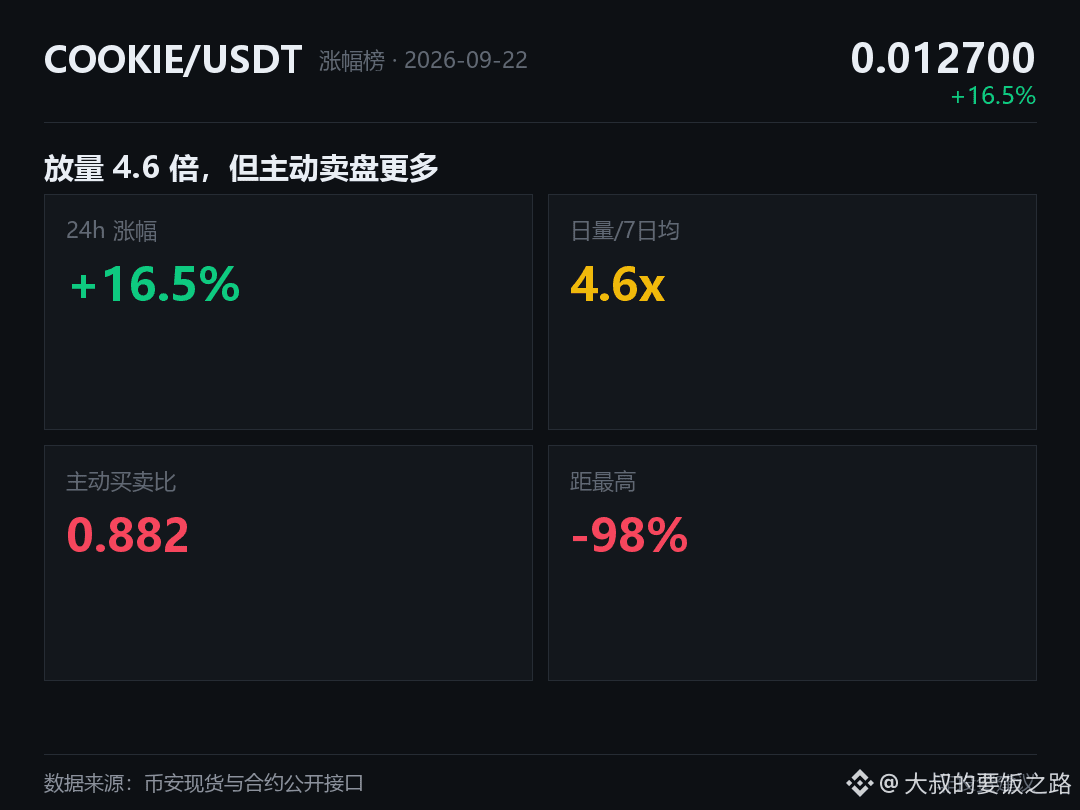
$COOKIE rose 16.5%. It looks like a normal increase, but its volume/flow structure seems a bit contradictory.
Trading value is $3.6 million, 4.6 times the 7-day average—clearly a surge in volume. However, the buy/sell ratio is only 0.882, meaning the amount of actively sold volume is higher than actively bought volume.
With volume up 4.6x, sell-side orders are still stronger, yet the price is rising. This combination leaves me a bit confused: either resting orders are being absorbed, or someone is using the elevated volume to distribute/sell off.
Another piece of context: the current price is still 98.2% away from its highest price, which is more like a rebound after a deep drop. Open interest increased 42% over the past 24 hours, and the contracts side is also adding positions.
Does anyone have experience with a tape like this—"volume spike + sell pressure dominating"? I’d like to ask for advice. Not investment advice
#COOKIE
{future}(COOKIEUSDT)
$COOKIE rose 16.5%. It looks like a normal increase, but its volume/flow structure seems a bit contradictory.
Trading value is $3.6 million, 4.6 times the 7-day average—clearly a surge in volume. However, the buy/sell ratio is only 0.882, meaning the amount of actively sold volume is higher than actively bought volume.
With volume up 4.6x, sell-side orders are still stronger, yet the price is rising. This combination leaves me a bit confused: either resting orders are being absorbed, or someone is using the elevated volume to distribute/sell off.
Another piece of context: the current price is still 98.2% away from its highest price, which is more like a rebound after a deep drop. Open interest increased 42% over the past 24 hours, and the contracts side is also adding positions.
Does anyone have experience with a tape like this—"volume spike + sell pressure dominating"? I’d like to ask for advice. Not investment advice
#COOKIE
Trading value is $3.6 million, 4.6 times the 7-day average—clearly a surge in volume. However, the buy/sell ratio is only 0.882, meaning the amount of actively sold volume is higher than actively bought volume.
With volume up 4.6x, sell-side orders are still stronger, yet the price is rising. This combination leaves me a bit confused: either resting orders are being absorbed, or someone is using the elevated volume to distribute/sell off.
Another piece of context: the current price is still 98.2% away from its highest price, which is more like a rebound after a deep drop. Open interest increased 42% over the past 24 hours, and the contracts side is also adding positions.
Does anyone have experience with a tape like this—"volume spike + sell pressure dominating"? I’d like to ask for advice. Not investment advice
#COOKIE
66
·
--
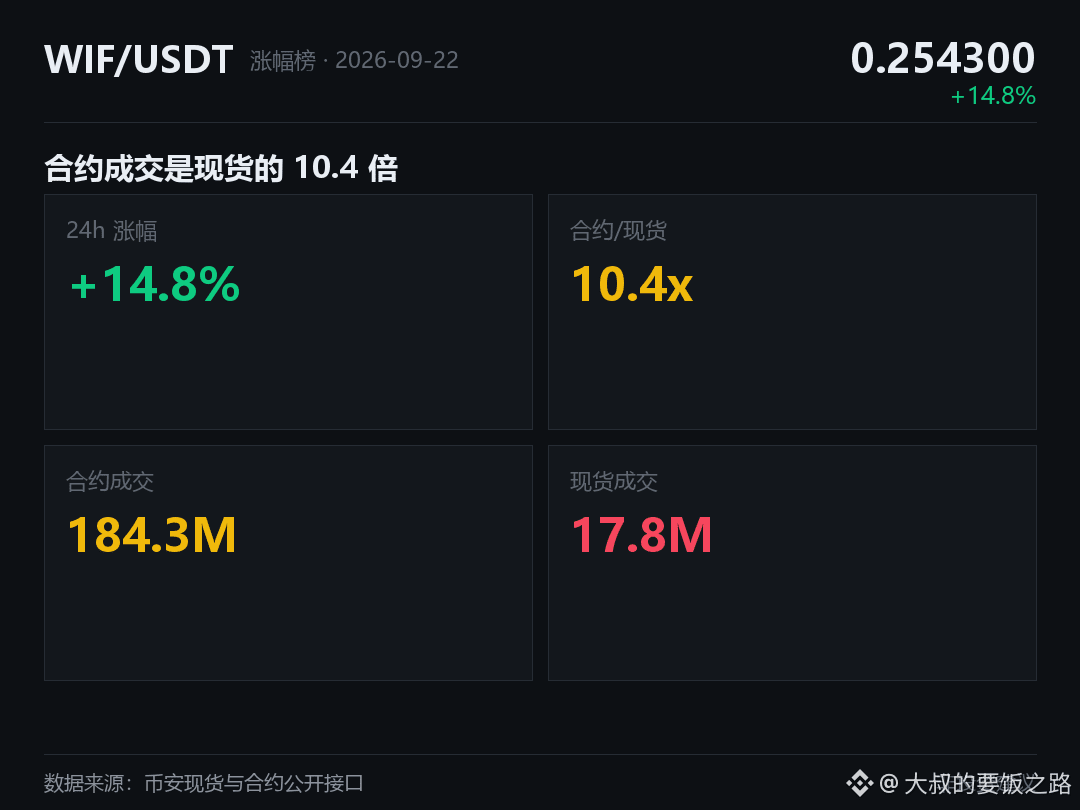
Break down the trades of $WIF and you’ll see the structure is very clear.
Today its spot trades are $17.80 million, while contract trades are $184.3 million — the contracts are 10.4x the spot. On the leaderboard it’s only second to $KERNEL. When I saw this gap, I was a bit surprised.
So, for this 14.8% surge, most of it is driven by leveraged capital; the spot side didn’t really move much. The advantage of this structure is speed, but the downside is fragility: the higher the leverage, the greater the pressure from forced liquidation during a drawdown.
The funding rate is +0.0050%, essentially right on the benchmark, which suggests longs aren’t yet overcrowded. Open interest increased 38% over the past 24 hours.
For a market that’s pushed by leverage, I usually wait for it to blow up once before I look again. Are you waiting for a pullback, or are you simply not touching this kind of high-leverage structure? Not investment advice
#WIF
{future}(WIFUSDT)
Break down the trades of $WIF and you’ll see the structure is very clear.
Today its spot trades are $17.80 million, while contract trades are $184.3 million — the contracts are 10.4x the spot. On the leaderboard it’s only second to $KERNEL . When I saw this gap, I was a bit surprised.
So, for this 14.8% surge, most of it is driven by leveraged capital; the spot side didn’t really move much. The advantage of this structure is speed, but the downside is fragility: the higher the leverage, the greater the pressure from forced liquidation during a drawdown.
The funding rate is +0.0050%, essentially right on the benchmark, which suggests longs aren’t yet overcrowded. Open interest increased 38% over the past 24 hours.
For a market that’s pushed by leverage, I usually wait for it to blow up once before I look again. Are you waiting for a pullback, or are you simply not touching this kind of high-leverage structure? Not investment advice
#WIF
Today its spot trades are $17.80 million, while contract trades are $184.3 million — the contracts are 10.4x the spot. On the leaderboard it’s only second to $KERNEL . When I saw this gap, I was a bit surprised.
So, for this 14.8% surge, most of it is driven by leveraged capital; the spot side didn’t really move much. The advantage of this structure is speed, but the downside is fragility: the higher the leverage, the greater the pressure from forced liquidation during a drawdown.
The funding rate is +0.0050%, essentially right on the benchmark, which suggests longs aren’t yet overcrowded. Open interest increased 38% over the past 24 hours.
For a market that’s pushed by leverage, I usually wait for it to blow up once before I look again. Are you waiting for a pullback, or are you simply not touching this kind of high-leverage structure? Not investment advice
#WIF
64
·
--
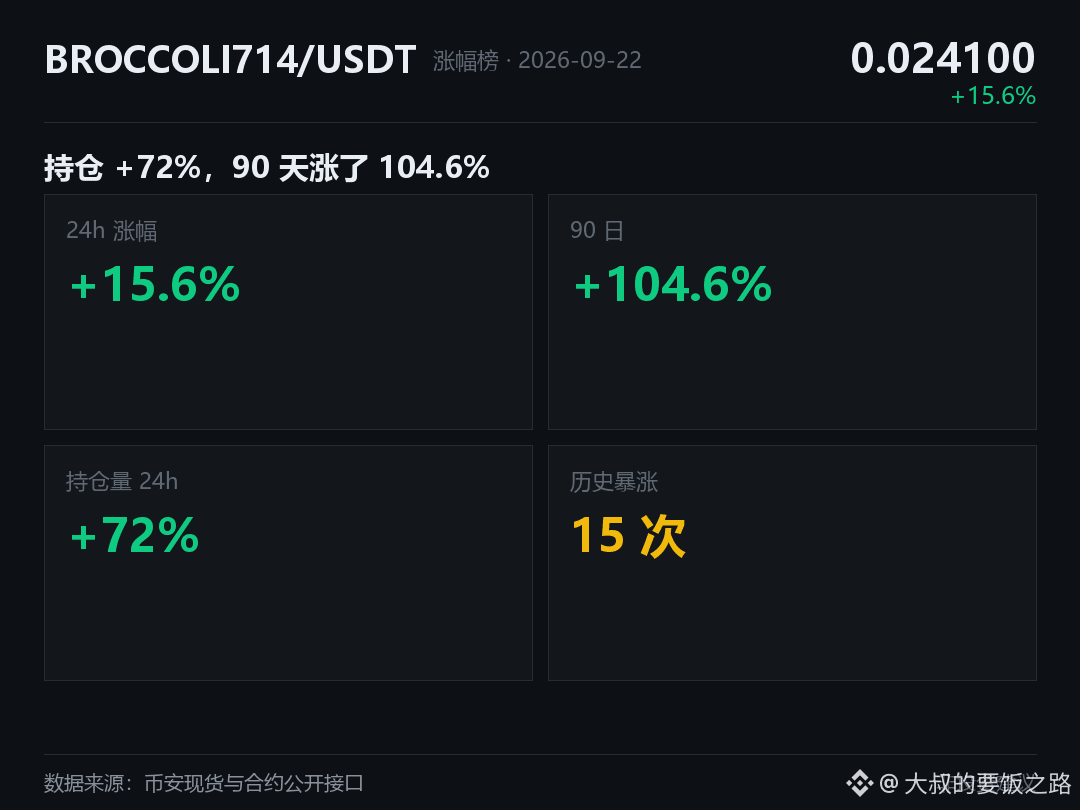
$BROCCOLI714 Today it rose 15.6%, but in the context of its own trend, that number really isn’t much—over the past 90 days it’s up 104.6%, more than doubling.
The incremental move today is on the derivatives side: open interest increased 72% over 24 hours, suggesting a large wave of new positions being opened. Derivatives volume is 3.2x spot volume, and the leverage isn’t especially outlandish.
One thing I think is worth noting: over 545 days, it had 15 instances of single-day gains exceeding 20%—the kind of high-frequency, blow-off surge. And on the 7th day after those 15 occurrences, the average return is -9.7%, with a win rate of only 27%.
In the short term, positions are increasing, but the longer-term historical stats don’t look good—these two signals conflict, and I personally can’t reconcile them. Has anyone tracked this kind of high-frequency explosive mover? I’d love to hear how you handle it. Not investment advice.
#BROCCOLI714
{future}(BROCCOLI714USDT)
$BROCCOLI714 Today it rose 15.6%, but in the context of its own trend, that number really isn’t much—over the past 90 days it’s up 104.6%, more than doubling.
The incremental move today is on the derivatives side: open interest increased 72% over 24 hours, suggesting a large wave of new positions being opened. Derivatives volume is 3.2x spot volume, and the leverage isn’t especially outlandish.
One thing I think is worth noting: over 545 days, it had 15 instances of single-day gains exceeding 20%—the kind of high-frequency, blow-off surge. And on the 7th day after those 15 occurrences, the average return is -9.7%, with a win rate of only 27%.
In the short term, positions are increasing, but the longer-term historical stats don’t look good—these two signals conflict, and I personally can’t reconcile them. Has anyone tracked this kind of high-frequency explosive mover? I’d love to hear how you handle it. Not investment advice.
#BROCCOLI714
The incremental move today is on the derivatives side: open interest increased 72% over 24 hours, suggesting a large wave of new positions being opened. Derivatives volume is 3.2x spot volume, and the leverage isn’t especially outlandish.
One thing I think is worth noting: over 545 days, it had 15 instances of single-day gains exceeding 20%—the kind of high-frequency, blow-off surge. And on the 7th day after those 15 occurrences, the average return is -9.7%, with a win rate of only 27%.
In the short term, positions are increasing, but the longer-term historical stats don’t look good—these two signals conflict, and I personally can’t reconcile them. Has anyone tracked this kind of high-frequency explosive mover? I’d love to hear how you handle it. Not investment advice.
#BROCCOLI714
79
·
--
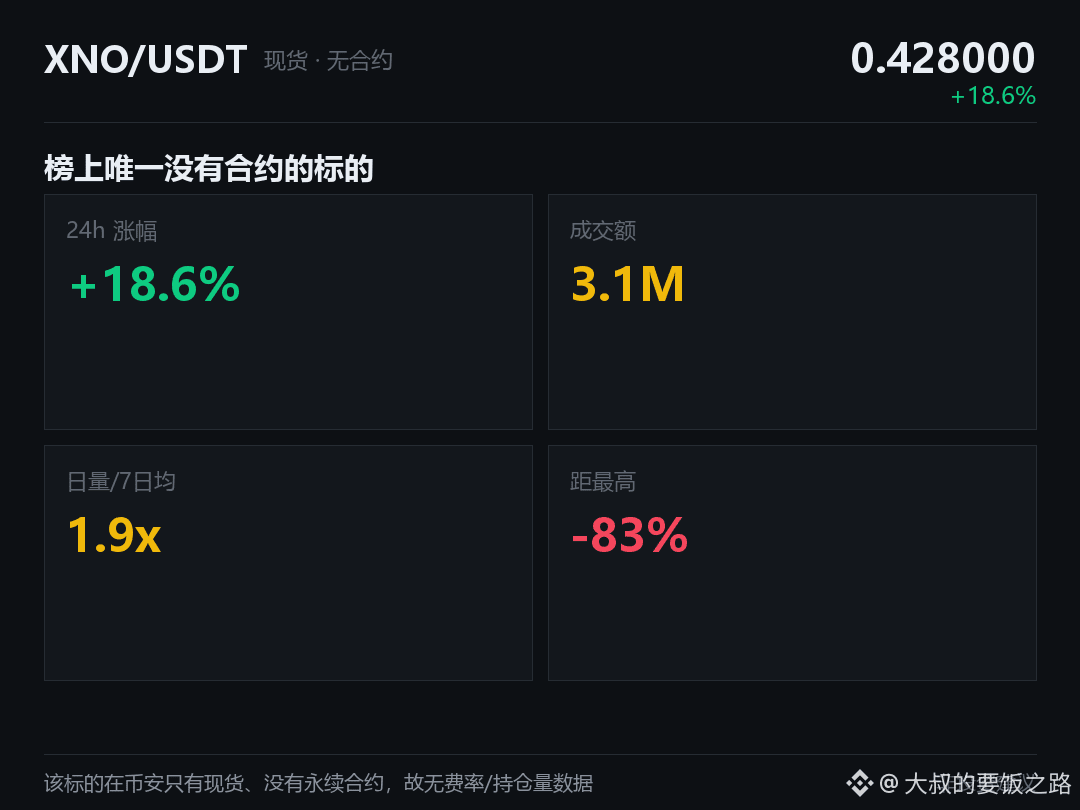
While reviewing these 8 assets today, I noticed something rather unexpected: $XNO is the only one without a contract.
The other 7 all have perpetuals—funding rates, open interest, and the big-holder long/short ratio are all there. But $XNO has nothing—only spot.
So its way of pumping is not the same as others. It had $3.1 million in trading volume today, 1.9 times the 7-day average. And in less than half an hour, the volume peak reached 26 times the average—everything was driven by spot buy orders, with no leverage involved.
My take is that this kind of structure is actually cleaner: there’s no liquidation risk, so there’s also no cascade caused by forced closing. But at the same time, any upside tends to move more slowly.
Does anyone specifically pick listings like these with no contracts? I’d like to ask about your logic. Not investment advice
#XNO
{future}(XNOUSDT)
While reviewing these 8 assets today, I noticed something rather unexpected: $XNO is the only one without a contract.
The other 7 all have perpetuals—funding rates, open interest, and the big-holder long/short ratio are all there. But $XNO has nothing—only spot.
So its way of pumping is not the same as others. It had $3.1 million in trading volume today, 1.9 times the 7-day average. And in less than half an hour, the volume peak reached 26 times the average—everything was driven by spot buy orders, with no leverage involved.
My take is that this kind of structure is actually cleaner: there’s no liquidation risk, so there’s also no cascade caused by forced closing. But at the same time, any upside tends to move more slowly.
Does anyone specifically pick listings like these with no contracts? I’d like to ask about your logic. Not investment advice
#XNO
The other 7 all have perpetuals—funding rates, open interest, and the big-holder long/short ratio are all there. But $XNO has nothing—only spot.
So its way of pumping is not the same as others. It had $3.1 million in trading volume today, 1.9 times the 7-day average. And in less than half an hour, the volume peak reached 26 times the average—everything was driven by spot buy orders, with no leverage involved.
My take is that this kind of structure is actually cleaner: there’s no liquidation risk, so there’s also no cascade caused by forced closing. But at the same time, any upside tends to move more slowly.
Does anyone specifically pick listings like these with no contracts? I’d like to ask about your logic. Not investment advice
#XNO
46
·
--
Article
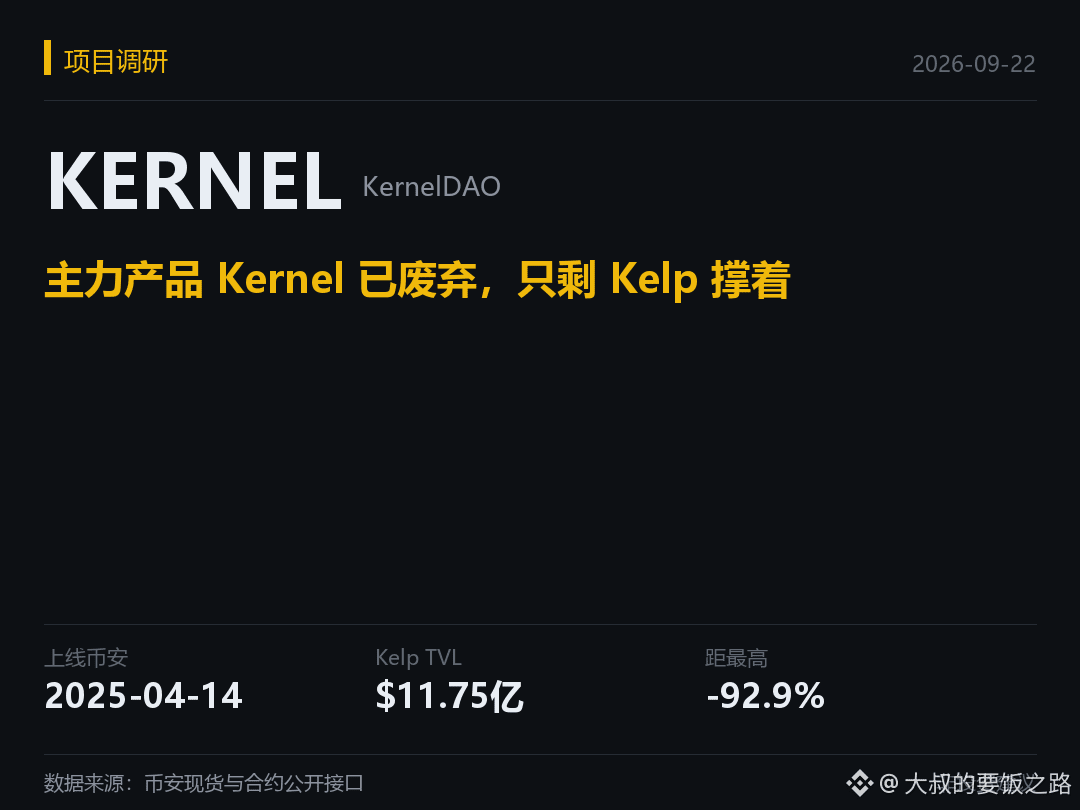
KERNEL is up 31%, but its main product was shut down more than three months agoLet’s start with an easy-to-overlook fact: KernelDAO’s earliest product, called “Kernel,” has already been discontinued. The official litepaper states that the dApp was shut down on June 8, 2026, and users can withdraw assets from the contracts themselves. Other sources indicate that its points rewards stopped earlier and that the frontend was shut down as early as March. While different sources don’t fully agree on the exact shutdown date, the conclusion is the same: the product is already gone.
So what exactly do the \u003cc-11/\u003e mean now?
According to the official litepaper, KernelDAO now has two business lines:
First is Kelp LRT (rsETH), liquidity restaking on Ethereum. The official litepaper claims TVL of about $2 billion, 400,000+ independent restaking users, integration with 50+ DeFi protocols, and calls itself Ethereum’s second-largest LRT. However, third-party DeFi data platform DeFiLlama’s measured figure is $1.175 billion—about a 40% difference. I tend to trust the third-party measured numbers, because they can be independently verified; the official figures may include portions not yet captured in statistics. This discrepancy itself also suggests that when reading a project team’s self-reported data, it’s best to cross-check with third parties.
KERNEL is up 31%, but its main product was shut down more than three months ago
Let’s start with an easy-to-overlook fact: KernelDAO’s earliest product, called “Kernel,” has already been discontinued. The official litepaper states that the dApp was shut down on June 8, 2026, and users can withdraw assets from the contracts themselves. Other sources indicate that its points rewards stopped earlier and that the frontend was shut down as early as March. While different sources don’t fully agree on the exact shutdown date, the conclusion is the same: the product is already gone.
So what exactly do the \u003cc-11/\u003e mean now?
According to the official litepaper, KernelDAO now has two business lines:
First is Kelp LRT (rsETH), liquidity restaking on Ethereum. The official litepaper claims TVL of about $2 billion, 400,000+ independent restaking users, integration with 50+ DeFi protocols, and calls itself Ethereum’s second-largest LRT. However, third-party DeFi data platform DeFiLlama’s measured figure is $1.175 billion—about a 40% difference. I tend to trust the third-party measured numbers, because they can be independently verified; the official figures may include portions not yet captured in statistics. This discrepancy itself also suggests that when reading a project team’s self-reported data, it’s best to cross-check with third parties.
So what exactly do the \u003cc-11/\u003e mean now?
According to the official litepaper, KernelDAO now has two business lines:
First is Kelp LRT (rsETH), liquidity restaking on Ethereum. The official litepaper claims TVL of about $2 billion, 400,000+ independent restaking users, integration with 50+ DeFi protocols, and calls itself Ethereum’s second-largest LRT. However, third-party DeFi data platform DeFiLlama’s measured figure is $1.175 billion—about a 40% difference. I tend to trust the third-party measured numbers, because they can be independently verified; the official figures may include portions not yet captured in statistics. This discrepancy itself also suggests that when reading a project team’s self-reported data, it’s best to cross-check with third parties.
68
·
--
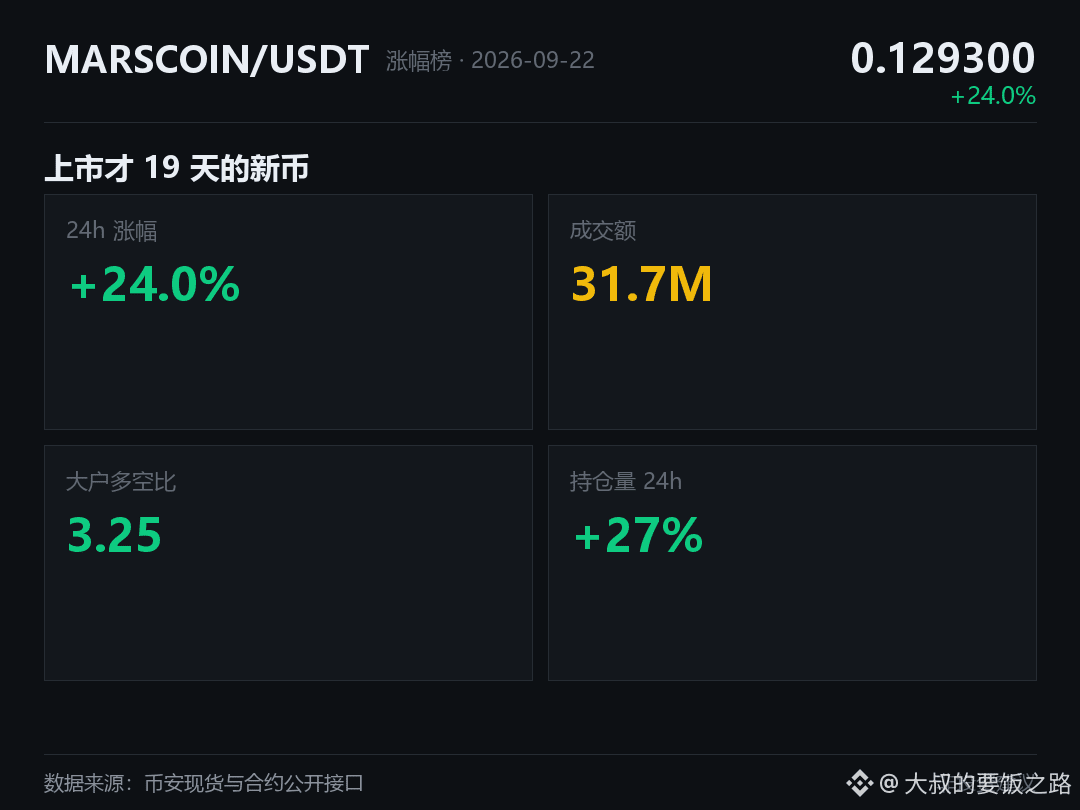
$MARSCOIN Today it rose 24%, with trading volume of 317,000 transactions and $31.7 million.
But this coin only launched on September 4, 2026—today is just 19 days later. The timeline is so short that we can’t form any patterns on the daily chart, and I can’t even calculate its historical volatility.
What we can look at is only the derivatives side: the large-holder long/short positions ratio is 3.25, with longs clearly in the majority; open interest rose 27% over the past 24 hours; the funding rate is +0.0159%, meaning longs are paying.
So, the big players are on the long side and are willing to pay the cost to hold. But the 19-day data can’t tell us anything about longer-term issues.
Has anyone studied the price patterns in the first three weeks after a new coin is listed? I’m quite curious about that. Not investment advice
#NewCoin
{future}(MARSCOINUSDT)
$MARSCOIN Today it rose 24%, with trading volume of 317,000 transactions and $31.7 million.
But this coin only launched on September 4, 2026—today is just 19 days later. The timeline is so short that we can’t form any patterns on the daily chart, and I can’t even calculate its historical volatility.
What we can look at is only the derivatives side: the large-holder long/short positions ratio is 3.25, with longs clearly in the majority; open interest rose 27% over the past 24 hours; the funding rate is +0.0159%, meaning longs are paying.
So, the big players are on the long side and are willing to pay the cost to hold. But the 19-day data can’t tell us anything about longer-term issues.
Has anyone studied the price patterns in the first three weeks after a new coin is listed? I’m quite curious about that. Not investment advice
#NewCoin
But this coin only launched on September 4, 2026—today is just 19 days later. The timeline is so short that we can’t form any patterns on the daily chart, and I can’t even calculate its historical volatility.
What we can look at is only the derivatives side: the large-holder long/short positions ratio is 3.25, with longs clearly in the majority; open interest rose 27% over the past 24 hours; the funding rate is +0.0159%, meaning longs are paying.
So, the big players are on the long side and are willing to pay the cost to hold. But the 19-day data can’t tell us anything about longer-term issues.
Has anyone studied the price patterns in the first three weeks after a new coin is listed? I’m quite curious about that. Not investment advice
#NewCoin
148
Log in to explore more content
Join global crypto users on Binance Square
⚡️ Get latest and useful information about crypto.
💬 Trusted by the world’s largest crypto exchange.
👍 Discover real insights from verified creators.
Email / Phone number
Trending Topics
AIStocksWhatNext
207,321 views
2,272 Discussing
Share & Win Traffic Reward in our Trending Hashtag Campaign
✨Topic: What Other Investment Opportunities Remain as AI Stocks Keep Rising?
👉How to Join:
Publish a short post or article with hashtag #AIStocksWhatNext
Share whether you’re bullish or bearish, and post your AI stock holdings or trade — using the trade widget may improve your eligibility.
You can also strengthen your post by sharing data or charts, and avoiding AI-generated images.
✍️Create content based on the below angles:
- Nvidia says chip sales will double next year, and top AI companies keep hitting record revenue, the compute spend behind it is just as staggering. Is AI demand really taking off? And how long can it last? AI stocks are up across the board. Is this a real breakout, or just a short-term bounce?
- Industry leaders are calling to slow down AI development, while Trump plans to build an “AI Force”, claiming AI could account for 25% of U.S. GDP in the future. Whose side are you on? Will state-level backing be a long-term win for AI stocks?
- Are you buying AI stocks? Share your AI-related trade/holdings with our trade sharing widget.
⏰Campaign Period:
- 2026-09-22 7:00 - 2026-09-24 4:00 UTC
🎁Reward:
- Qualified posts that comply with the above guidelines and contain more than 100 words will be reviewed and may receive a random traffic boost of 500 to 3,000 views. You will receive a notification from your feed secretary if your post is selected.
- Get a chance to have your article featured on Binance Square Official
Need ideas for your post? Visit the topic page #AIStocksWhatNext or the Square Guide on How to Post for Better Reach.
Binance Square Official
·294 Likes
·636.4k views
BitcoinBreaksAboveMayHighNears$86K
7,184 views
127 Discussing
DogecoinRises15%
18,007 views
675 Discussing