
Crypto Zvir
115 Posts

Crypto Zvir
Open Trade
Frequent Trader
4.7 Years
32 Following
25 Followers
117 Liked
Posts
Portfolio
30D trade $DUSK208.9 USDT
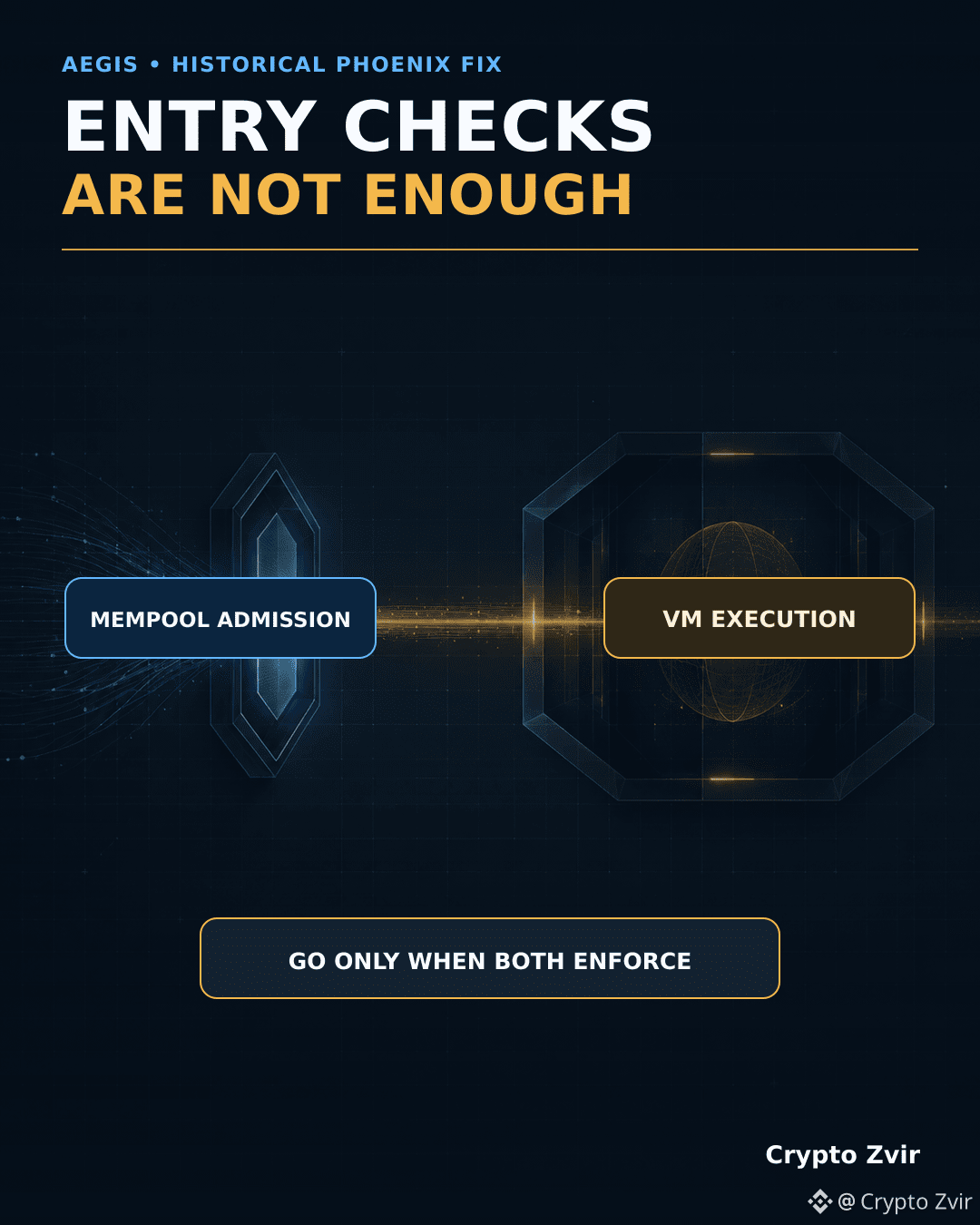
A transaction can pass a front-door check and still leave the decisive safety question open. In Dusk’s AEGIS remediation of the historical Phoenix fee/refund chain, a mempool-only assumption failed because a malicious proposer could bypass that path.
The fix was deliberately two-layered: $DUSK added a checked fee-consistency rule at mempool admission and at VM execution. It also bound the refund stealth address to the transaction, so alteration invalidates it. That execution check is the evidence that the invariant survives beyond the intake gate.
For a wallet or relayer developer, accepting “it entered the mempool” as the integrity criterion can leave the execution boundary untested. This is a historical remediation lesson, not evidence that Phoenix is currently available on every $DUSK network or that every private-payment app has been audited.
Which threshold should block a release: successful admission, or proof that the same fee invariant is enforced during execution? @Dusk $DUSK #dusk
The fix was deliberately two-layered: $DUSK added a checked fee-consistency rule at mempool admission and at VM execution. It also bound the refund stealth address to the transaction, so alteration invalidates it. That execution check is the evidence that the invariant survives beyond the intake gate.
For a wallet or relayer developer, accepting “it entered the mempool” as the integrity criterion can leave the execution boundary untested. This is a historical remediation lesson, not evidence that Phoenix is currently available on every $DUSK network or that every private-payment app has been audited.
Which threshold should block a release: successful admission, or proof that the same fee invariant is enforced during execution? @Dusk $DUSK #dusk
30D trade $DUSK183 USDT
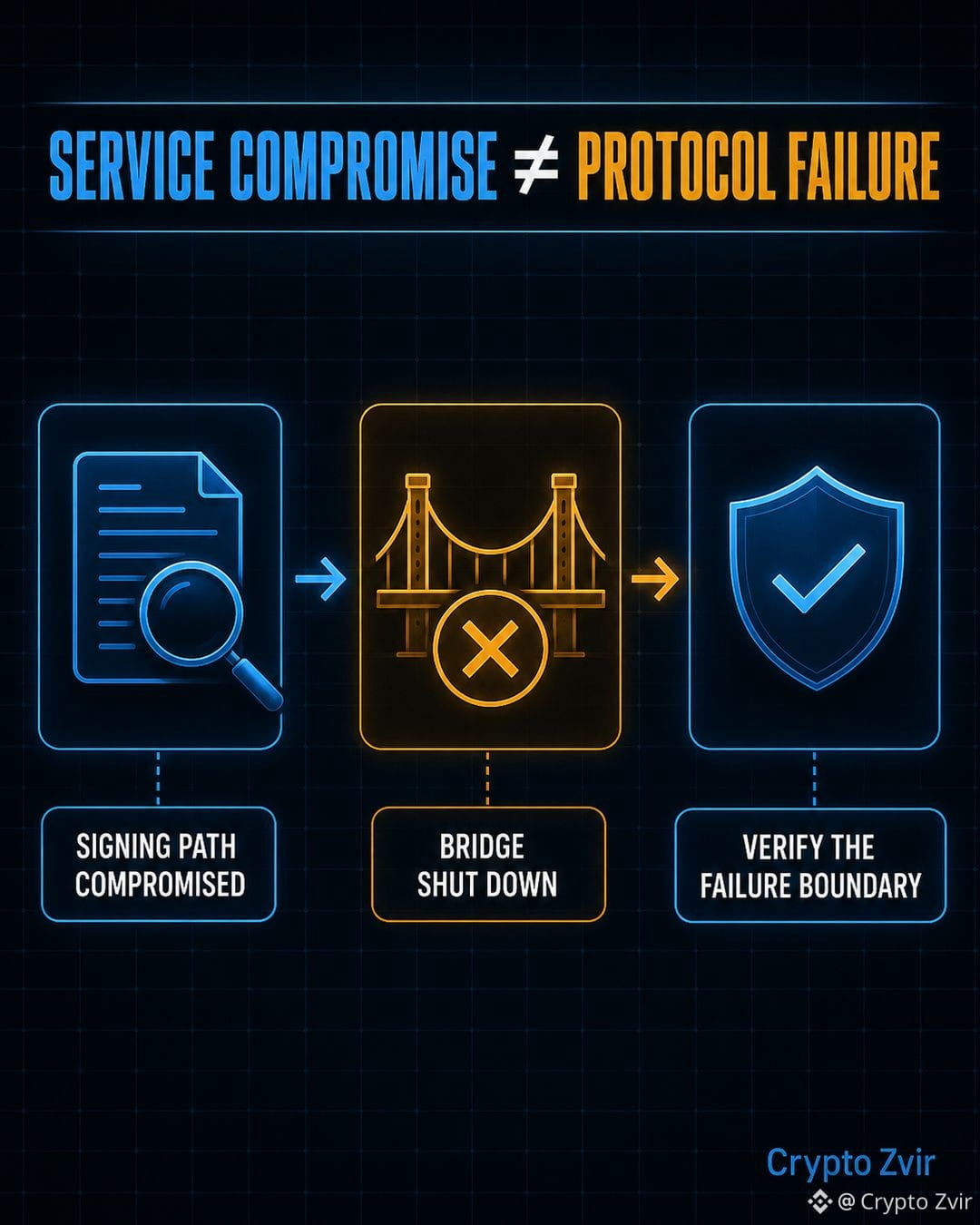
A venue can see funds move through a bridge incident and assume the underlying chain failed. @Dusk 's bridge post-mortem makes that shortcut unsafe: the confirmed failure was a compromised signing wallet in the bridge service, not Dusk consensus or a protocol exploit.
The source says the old bridge concentrated signing, event handling and network connectivity in one operational path. $DUSK then separated signing from event handling and made ingestion distinct from fund release.
For a custodian or venue, the failure boundary changes the response. "Protocol failed" and "bridge service authority was compromised" require different containment, disclosure and recovery checks.
Before restricting an asset flow after an incident, what must be verified first: a consensus failure, a protocol exploit, or the bridge service's release authority? @Dusk $DUSK #dusk
The source says the old bridge concentrated signing, event handling and network connectivity in one operational path. $DUSK then separated signing from event handling and made ingestion distinct from fund release.
For a custodian or venue, the failure boundary changes the response. "Protocol failed" and "bridge service authority was compromised" require different containment, disclosure and recovery checks.
Before restricting an asset flow after an incident, what must be verified first: a consensus failure, a protocol exploit, or the bridge service's release authority? @Dusk $DUSK #dusk
A vault's "timelocked" label is not enough for a vault depositor to rely on a review window.
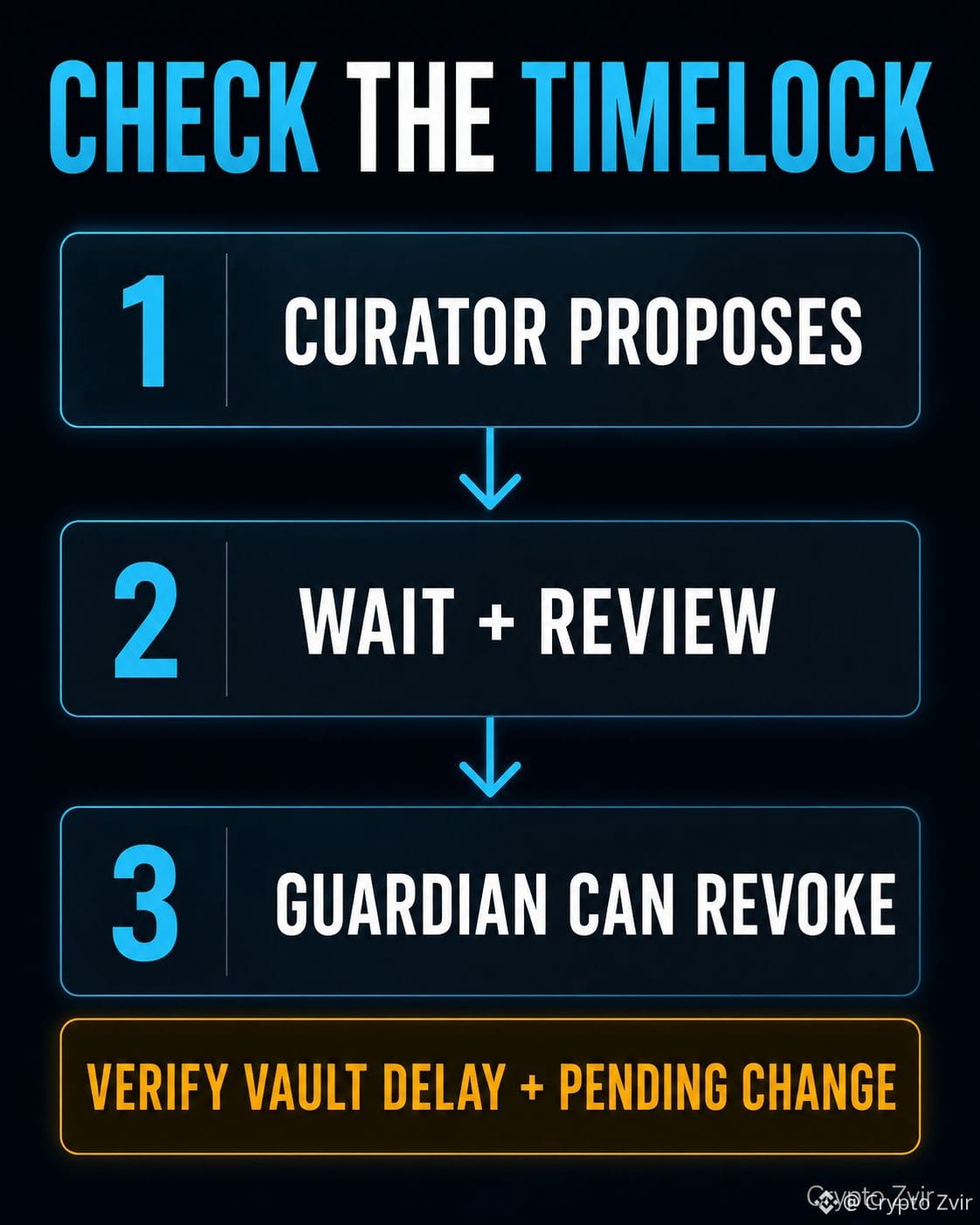
TermMax docs describe a process: a curator proposes a parameter change, it waits, and a guardian can revoke it before acceptance. That is a real control path.
But the docs also say the delay is configurable. A generic description cannot tell a depositor this vault's active delay, current guardian, or whether a change is already pending.
The consequence is simple: without those facts, a depositor cannot know when a parameter change could take effect or who can still stop it.
The general docs are not proof of a particular vault's live configuration or a queued change.
Before depositing, require three disclosures: active delay, responsible guardian, and every pending change with its effective time.
@TermMax #TermMax $TMX
TermMax docs describe a process: a curator proposes a parameter change, it waits, and a guardian can revoke it before acceptance. That is a real control path.
But the docs also say the delay is configurable. A generic description cannot tell a depositor this vault's active delay, current guardian, or whether a change is already pending.
The consequence is simple: without those facts, a depositor cannot know when a parameter change could take effect or who can still stop it.
The general docs are not proof of a particular vault's live configuration or a queued change.
Before depositing, require three disclosures: active delay, responsible guardian, and every pending change with its effective time.
@TermMax #TermMax $TMX
30D trade $DUSK161.1 USDT
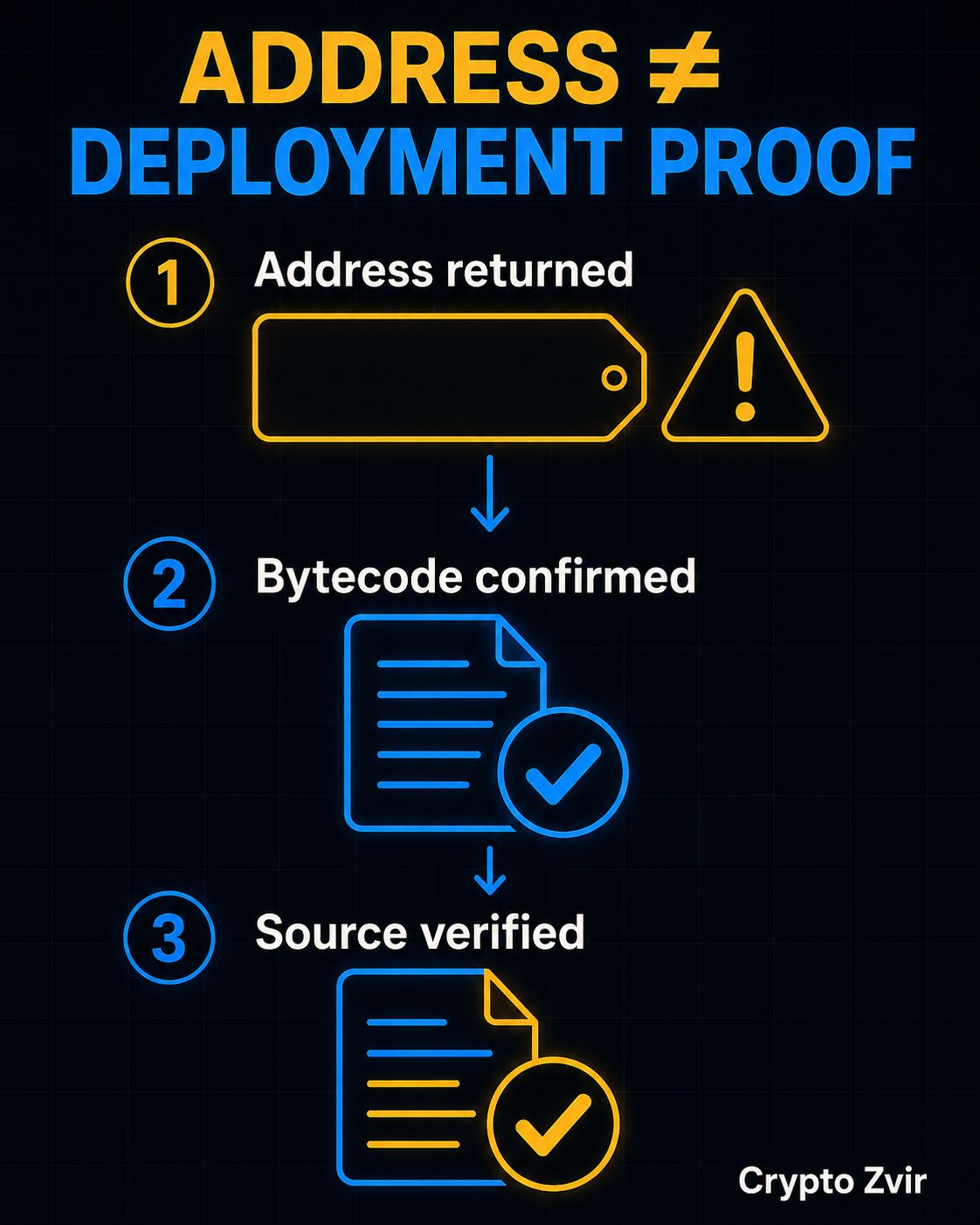
A deployment command returning an address can look like a green light. For a DuskEVM developer, treating it as one can leave a release on the wrong network or point users to code that was never confirmed. Dusk’s quickstart says to confirm the RPC chain ID before signing; if it is wrong or unavailable, do not continue.
The guide then uses a dedicated account funded with $DUSK for gas, requires the deployed bytecode to be confirmed at the address, and places source verification after that. Those are linked checkpoints, not interchangeable completion signals.
This evidence verifies a deployment path; it does not establish security, audit status, or user readiness. Before a release proceeds, which check should block it first: a returned address, confirmed bytecode on the expected chain, or verified source? @Dusk $DUSK #dusk
The guide then uses a dedicated account funded with $DUSK for gas, requires the deployed bytecode to be confirmed at the address, and places source verification after that. Those are linked checkpoints, not interchangeable completion signals.
This evidence verifies a deployment path; it does not establish security, audit status, or user readiness. Before a release proceeds, which check should block it first: a returned address, confirmed bytecode on the expected chain, or verified source? @Dusk $DUSK #dusk
“V2 is live” is not enough evidence that every V2 feature is usable today.
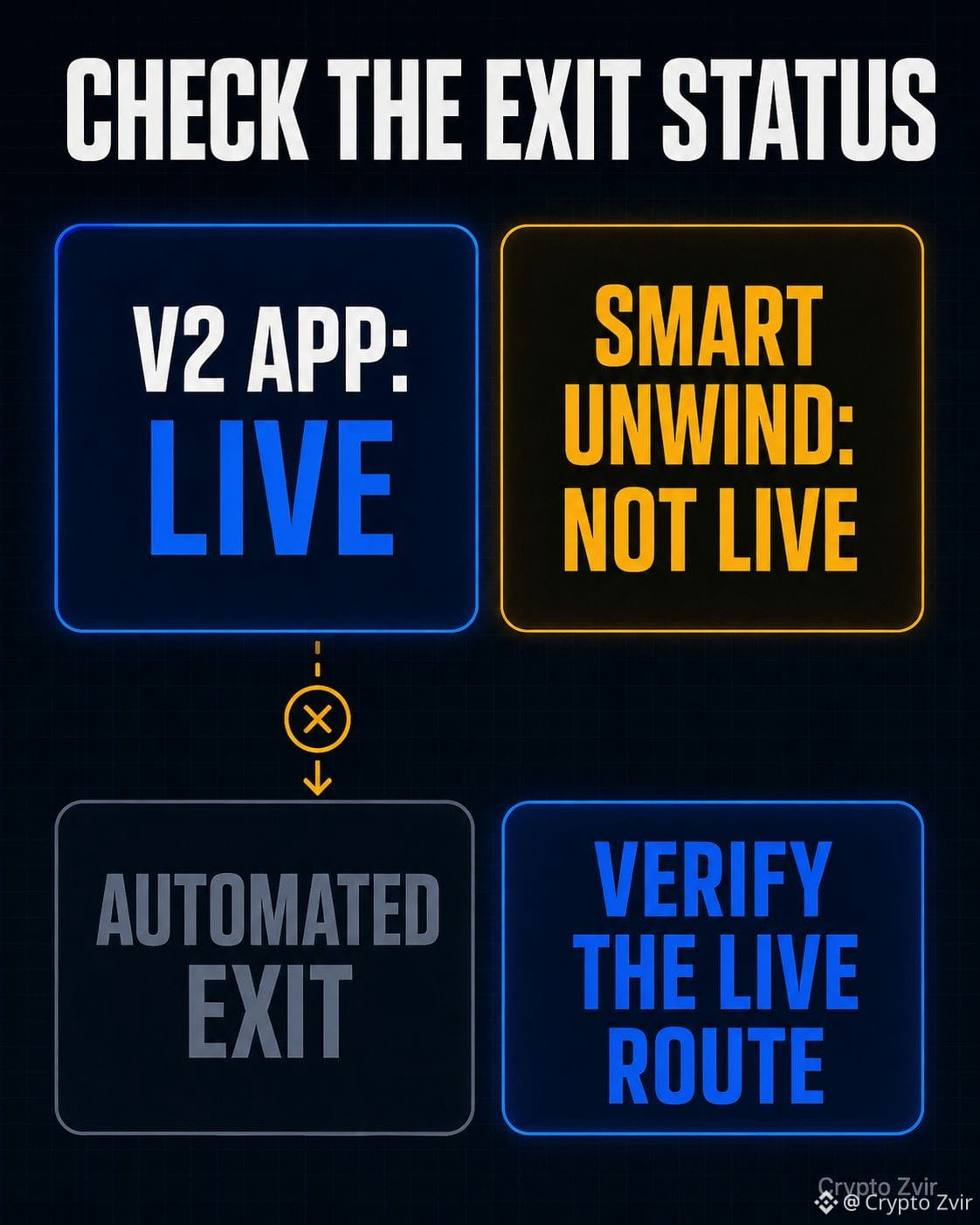
TermMax’s live-app update confirms unified routing, limit orders and a dashboard. But Smart Unwind sits under “What’s Next” on the official site, and the Leverager docs say it is not live yet.
That changes an exit plan. A leverager can study the future design-an APR or price target designed to trigger an exit from a GT position-but cannot treat that automation as a transaction available now.
This is not a claim that every position is impossible to close. It is a status check: an automated exit belongs in a strategy only after the live product exposes the route and its conditions.
Before pricing leverage around a target exit, can you point to the live transaction that would execute it?
@TermMax $TMX #TermMax
TermMax’s live-app update confirms unified routing, limit orders and a dashboard. But Smart Unwind sits under “What’s Next” on the official site, and the Leverager docs say it is not live yet.
That changes an exit plan. A leverager can study the future design-an APR or price target designed to trigger an exit from a GT position-but cannot treat that automation as a transaction available now.
This is not a claim that every position is impossible to close. It is a status check: an automated exit belongs in a strategy only after the live product exposes the route and its conditions.
Before pricing leverage around a target exit, can you point to the live transaction that would execute it?
@TermMax $TMX #TermMax
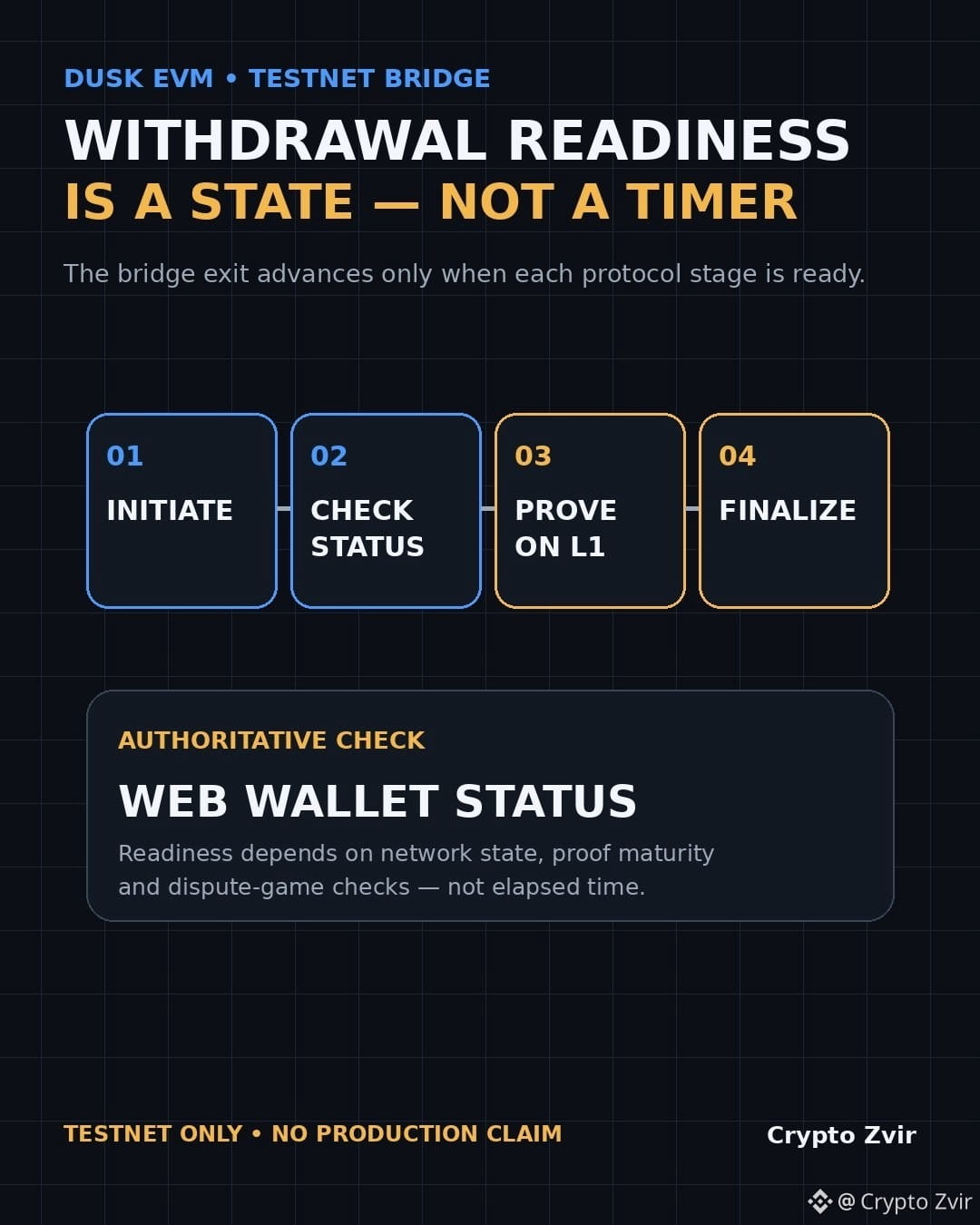
A bridge withdrawal can look like a timing problem: wait long enough, then assume the funds are ready. Dusk’s current DuskEVM testnet guide makes that shortcut unsafe.
Withdrawing $DUSK from DuskEVM to the Dusk L1 is a staged process: initiate the withdrawal, check its status, prove it on Dusk L1, then finalize it. Readiness depends on published network state, proof maturity and dispute-game checks. The guide explicitly treats the Web Wallet status as authoritative rather than elapsed time.
That changes the operational rule. A wallet, exchange or automation that estimates readiness from a timer can move ahead before the bridge state says the withdrawal is ready. The correct audit point is the protocol-reported status and completion of the required proof/finalization steps.
The boundary matters: this guide is for DuskEVM Testnet and testnet DUSK, not evidence of a production bridge flow.
For bridge UX, which control is safer: a countdown estimate, or an explicit state machine that refuses to advance until each withdrawal stage is verified? @Dusk $DUSK #dusk
Withdrawing $DUSK from DuskEVM to the Dusk L1 is a staged process: initiate the withdrawal, check its status, prove it on Dusk L1, then finalize it. Readiness depends on published network state, proof maturity and dispute-game checks. The guide explicitly treats the Web Wallet status as authoritative rather than elapsed time.
That changes the operational rule. A wallet, exchange or automation that estimates readiness from a timer can move ahead before the bridge state says the withdrawal is ready. The correct audit point is the protocol-reported status and completion of the required proof/finalization steps.
The boundary matters: this guide is for DuskEVM Testnet and testnet DUSK, not evidence of a production bridge flow.
For bridge UX, which control is safer: a countdown estimate, or an explicit state machine that refuses to advance until each withdrawal stage is verified? @Dusk $DUSK #dusk
30D trade $DUSK111.4 USDT
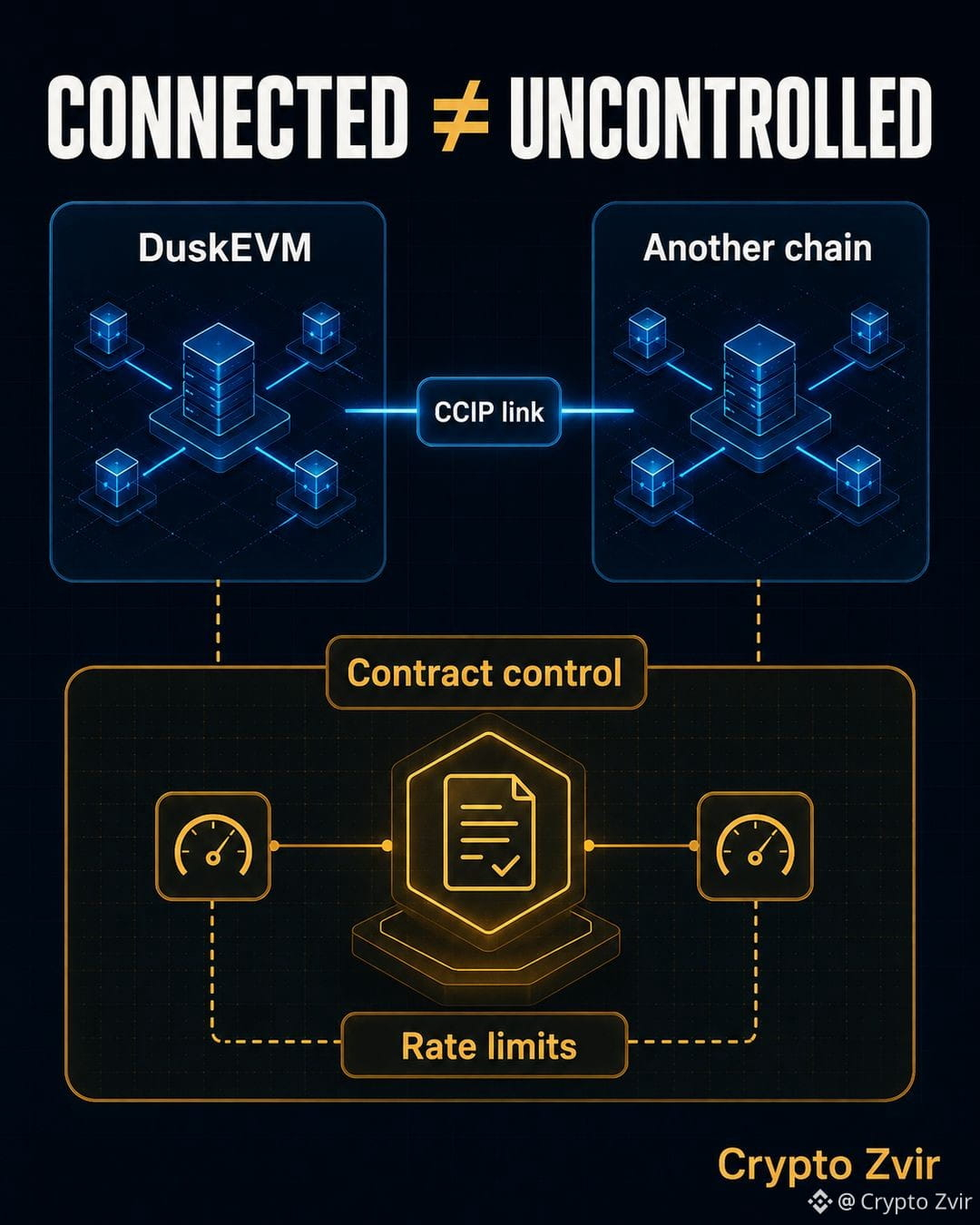
“Interoperable” can sound like a blank cheque: once a regulated token reaches another chain, transfer must be open. Dusk’s Chainlink announcement describes a different design. It names CCIP as the cross-chain layer while saying Dusk and NPEX retain ownership of token contracts and can use programmatic controls such as rate limits and upgrade paths.
The announcement says $DUSK and NPEX are integrating CCIP to connect regulated assets across blockchain environments. That is a connectivity claim, not a claim that every asset, route, or counterparty is automatically authorised. A technical bridge can carry a route; the contract controls still determine what that route permits.
For a venue or custodian, the operational question is therefore narrower: which cross-chain movement is allowed, under what controls, and what current evidence establishes that the route is available? The announcement is an integration statement; it does not independently confirm a universal live transfer path for all assets.
Before calling a regulated asset “interoperable,” which evidence matters most: the connection, documented contract controls, or verified route availability? @Dusk $DUSK #dusk
The announcement says $DUSK and NPEX are integrating CCIP to connect regulated assets across blockchain environments. That is a connectivity claim, not a claim that every asset, route, or counterparty is automatically authorised. A technical bridge can carry a route; the contract controls still determine what that route permits.
For a venue or custodian, the operational question is therefore narrower: which cross-chain movement is allowed, under what controls, and what current evidence establishes that the route is available? The announcement is an integration statement; it does not independently confirm a universal live transfer path for all assets.
Before calling a regulated asset “interoperable,” which evidence matters most: the connection, documented contract controls, or verified route availability? @Dusk $DUSK #dusk
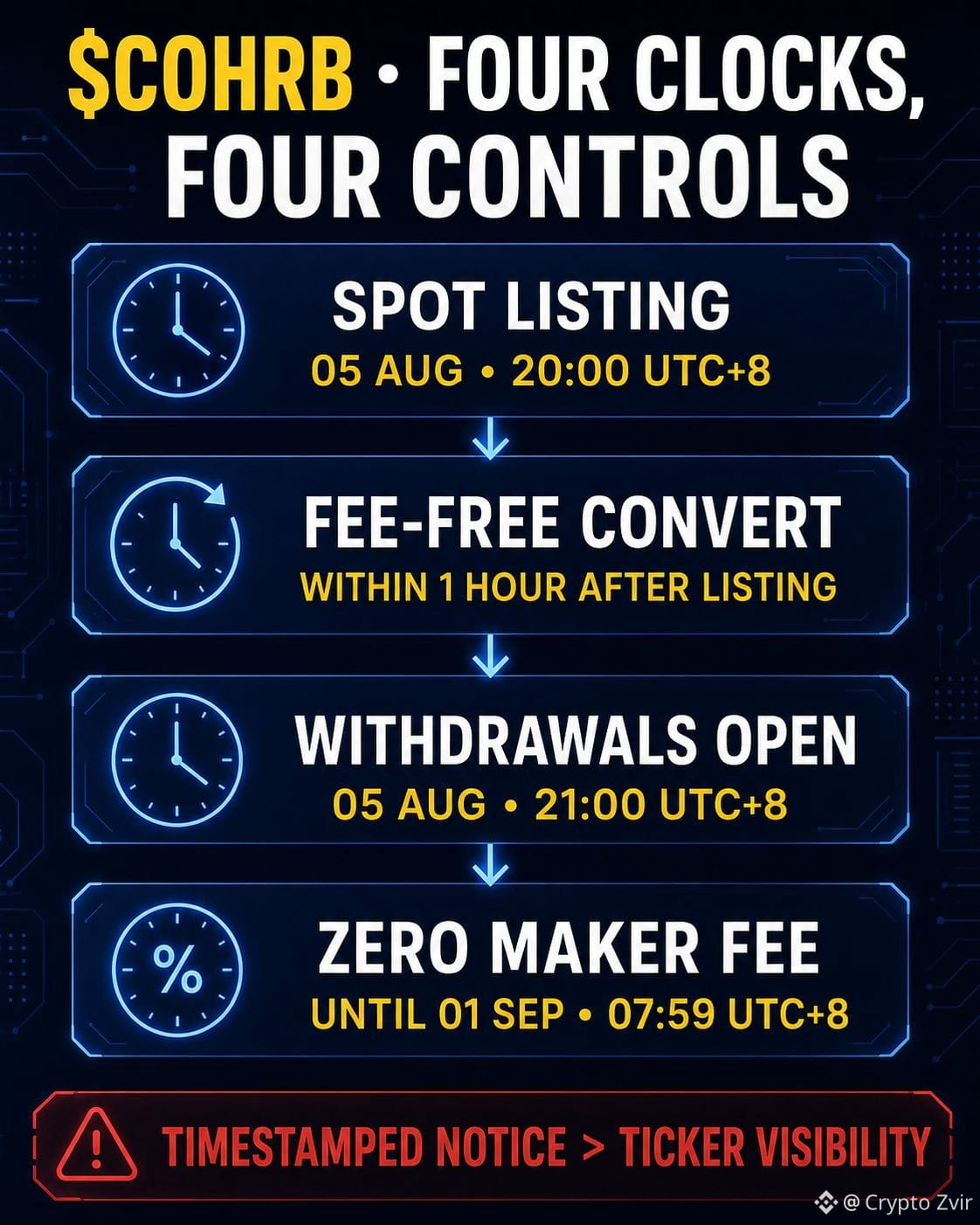
$COHRB ’s listing notice contains four different clocks.
Binance’s official announcement put the Spot pair live at 20:00 UTC+8 on 5 August 2026. Fee-free conversion to BTC, USDT or other supported Spot assets was available only within one hour after listing. Withdrawals opened at 21:00 UTC+8.
A separate zero-maker-fee period for the new bStock pairs runs until 1 September 2026 at 07:59 UTC+8. These are different controls, not one permanent “free” state.
On 18 August, a visible $COHRB pair would not by itself prove that the initial conversion window is still open. Maker-fee status, conversion availability and withdrawal availability must be checked separately.
Which evidence should govern the next action: the visible pair, or the current timestamped product notice?
@BinanceCIS
#bStocksCIS
Binance’s official announcement put the Spot pair live at 20:00 UTC+8 on 5 August 2026. Fee-free conversion to BTC, USDT or other supported Spot assets was available only within one hour after listing. Withdrawals opened at 21:00 UTC+8.
A separate zero-maker-fee period for the new bStock pairs runs until 1 September 2026 at 07:59 UTC+8. These are different controls, not one permanent “free” state.
On 18 August, a visible $COHRB pair would not by itself prove that the initial conversion window is still open. Maker-fee status, conversion availability and withdrawal availability must be checked separately.
Which evidence should govern the next action: the visible pair, or the current timestamped product notice?
@BinanceCIS
#bStocksCIS
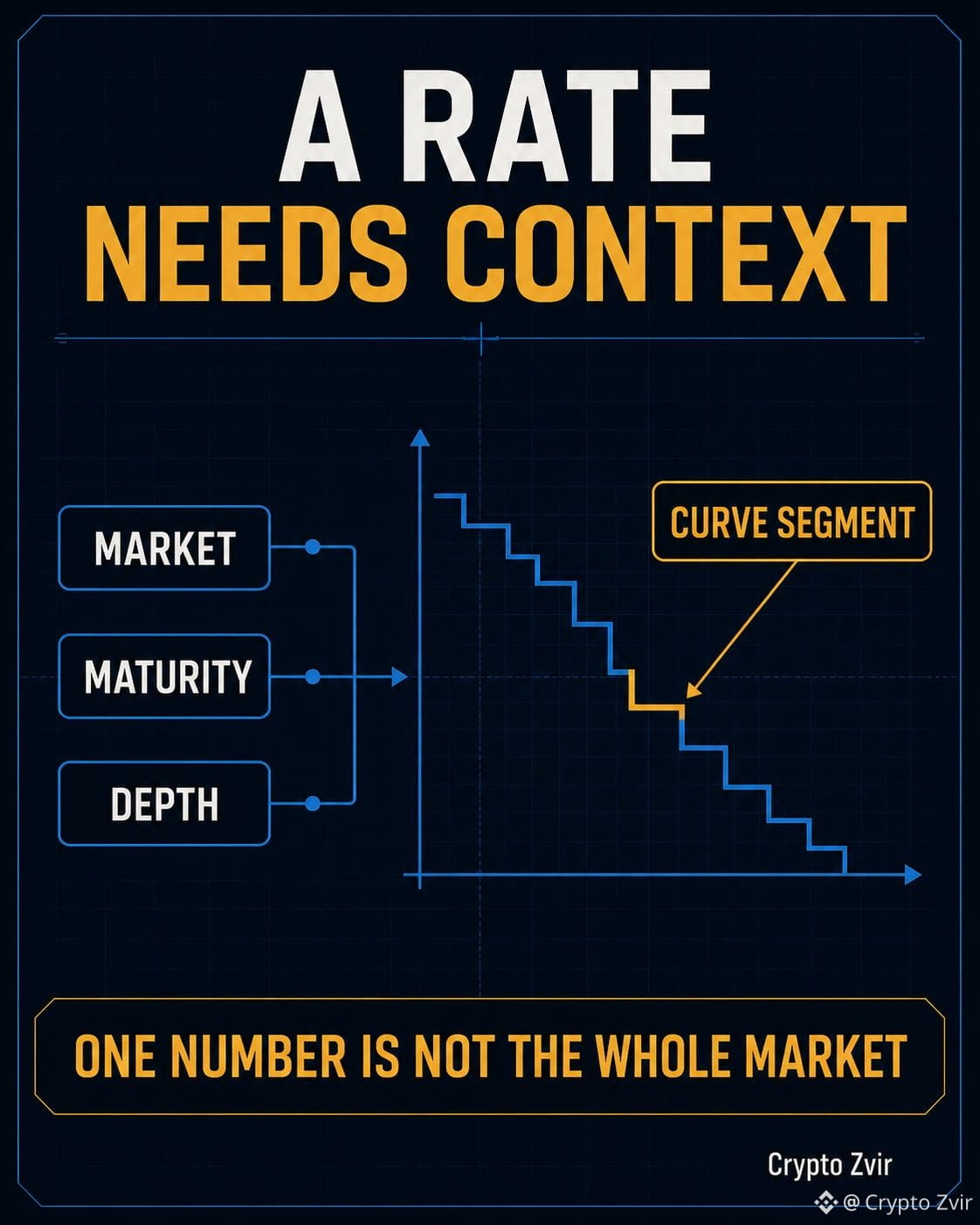
“Fixed rate” does not mean one universal number across a TermMax market.
A range order is a series of continuous orders that defines the AMM pricing curve. One market can contain multiple range orders, and their curve segments define rate bounds and depth thresholds.
So a rate needs its market, maturity, collateral and depth context. A headline number without that context is not analysis.
Which curve segment is actually being quoted? @TermMax $TMX #TermMax
A range order is a series of continuous orders that defines the AMM pricing curve. One market can contain multiple range orders, and their curve segments define rate bounds and depth thresholds.
So a rate needs its market, maturity, collateral and depth context. A headline number without that context is not analysis.
Which curve segment is actually being quoted? @TermMax $TMX #TermMax
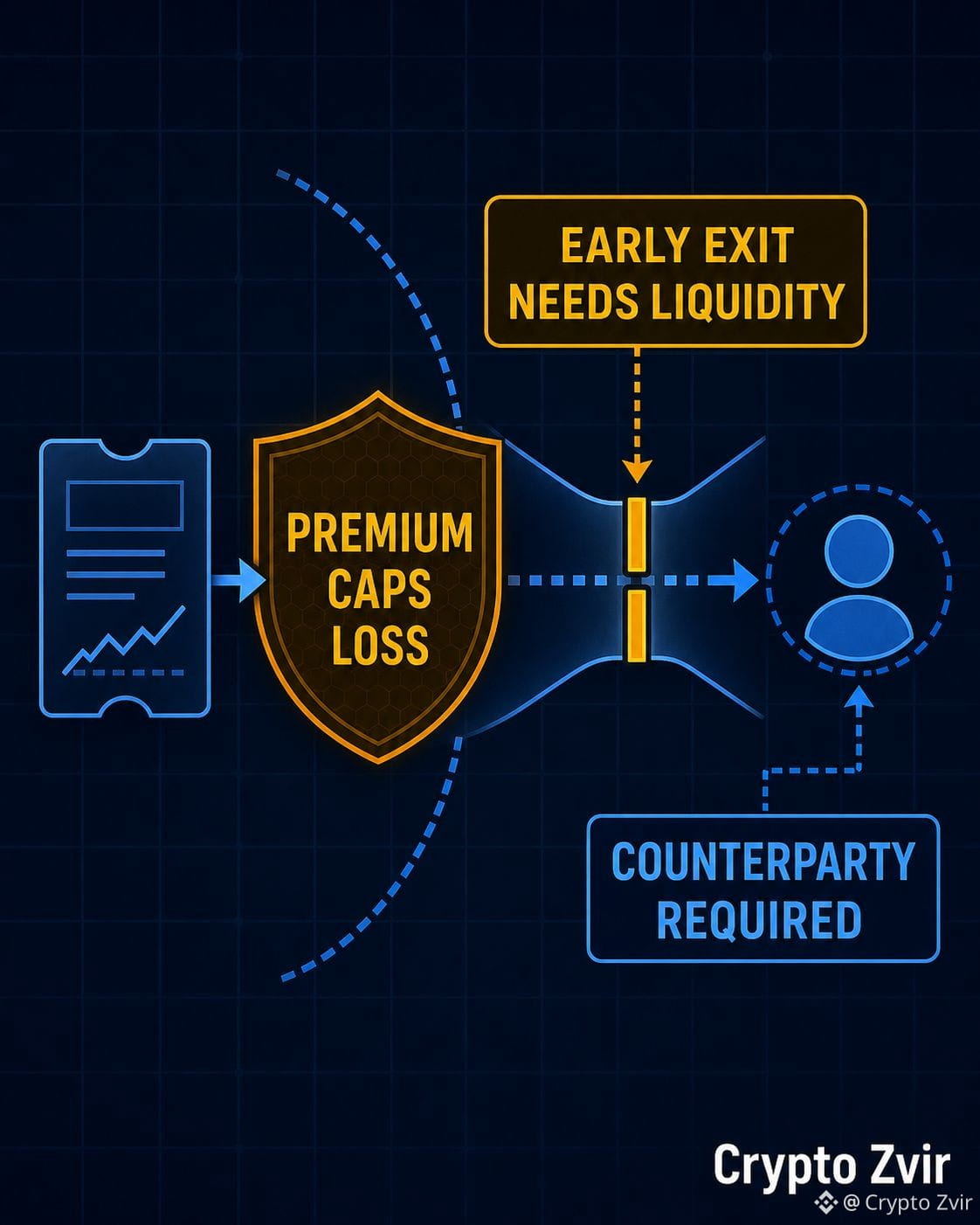
TermMax Alpha’s upfront premium changes the loss boundary; it does not abolish execution risk.
For a Long, the docs describe a call option: if price is below strike before maturity, loss is limited to the premium. For a Short, the same premium boundary applies when price is above strike. That is a defined maximum loss for the option buyer not evidence that every exit will be smooth.
The other line matters just as much: closing early requires a counterparty. In low liquidity, an Alpha position may be hard to unwind or may take significant slippage. The question is not only “what can I lose?” but “can I exit on acceptable terms before maturity?” @TermMax $TMX #TermMax
For a Long, the docs describe a call option: if price is below strike before maturity, loss is limited to the premium. For a Short, the same premium boundary applies when price is above strike. That is a defined maximum loss for the option buyer not evidence that every exit will be smooth.
The other line matters just as much: closing early requires a counterparty. In low liquidity, an Alpha position may be hard to unwind or may take significant slippage. The question is not only “what can I lose?” but “can I exit on acceptable terms before maturity?” @TermMax $TMX #TermMax
30D trade $DUSK89.6 USDT
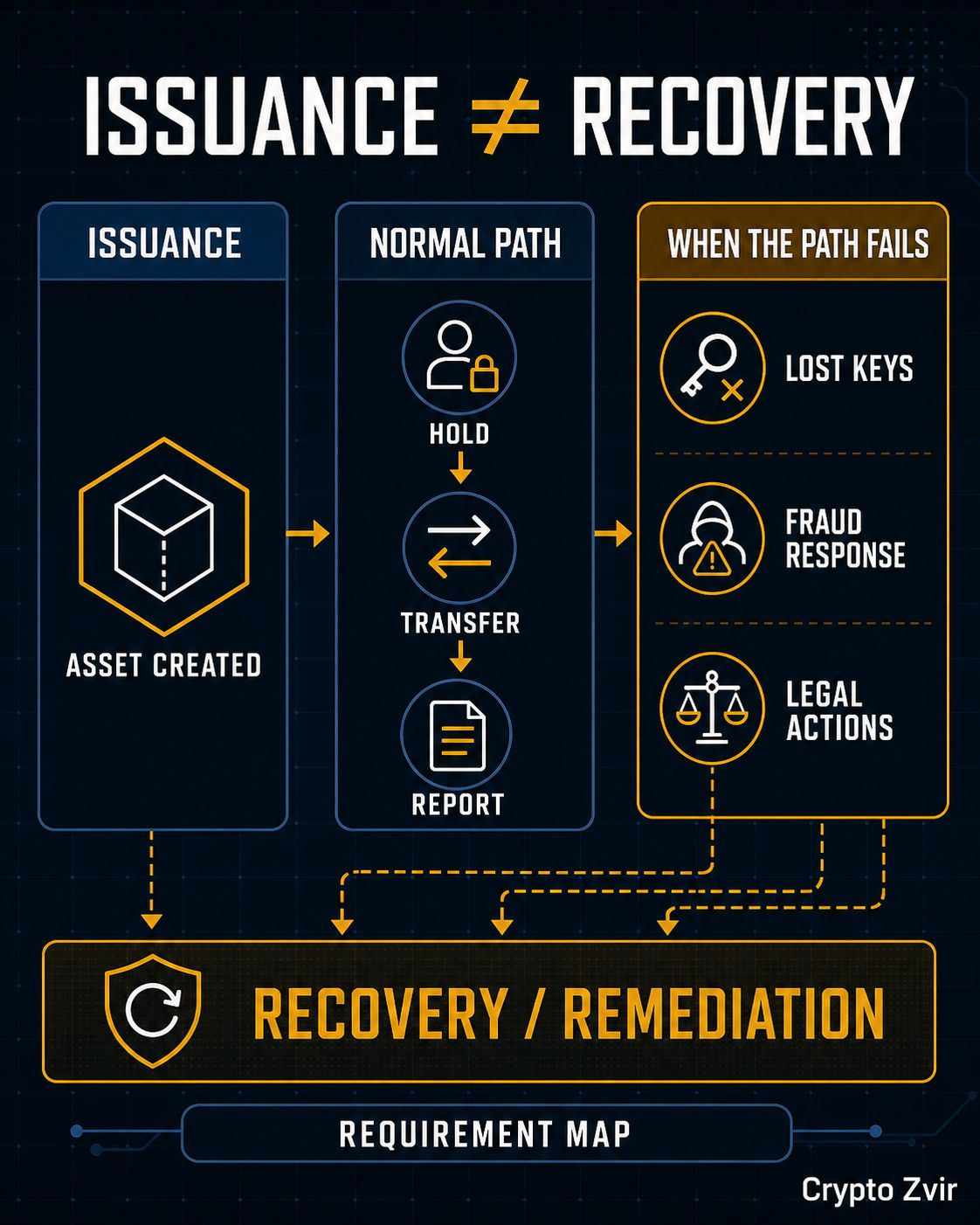
Regulated asset design is not complete at issuance. Dusk's own assets and regulations guide lists recovery and remediation alongside access control, transfer checks, corporate actions, governance, audit, and settlement.
That list exposes an operational boundary: a ledger can record ownership, but a real market still needs a policy for lost keys, fraud response, and legally required actions. Those are not edge cases to bolt on after launch; they decide what happens when the ideal transaction path fails.
An implementation may connect these controls to identity credentials, wallet binding, smart-contract logic, or application checks. The exact design depends on the asset's legal and product requirements, so the documentation is a requirements map not proof that one universal recovery service exists. The uncomfortable test is not “can the asset be issued?” It is “who can act, under what evidence, when the normal key holder cannot?” @Dusk $DUSK #dusk
That list exposes an operational boundary: a ledger can record ownership, but a real market still needs a policy for lost keys, fraud response, and legally required actions. Those are not edge cases to bolt on after launch; they decide what happens when the ideal transaction path fails.
An implementation may connect these controls to identity credentials, wallet binding, smart-contract logic, or application checks. The exact design depends on the asset's legal and product requirements, so the documentation is a requirements map not proof that one universal recovery service exists. The uncomfortable test is not “can the asset be issued?” It is “who can act, under what evidence, when the normal key holder cannot?” @Dusk $DUSK #dusk
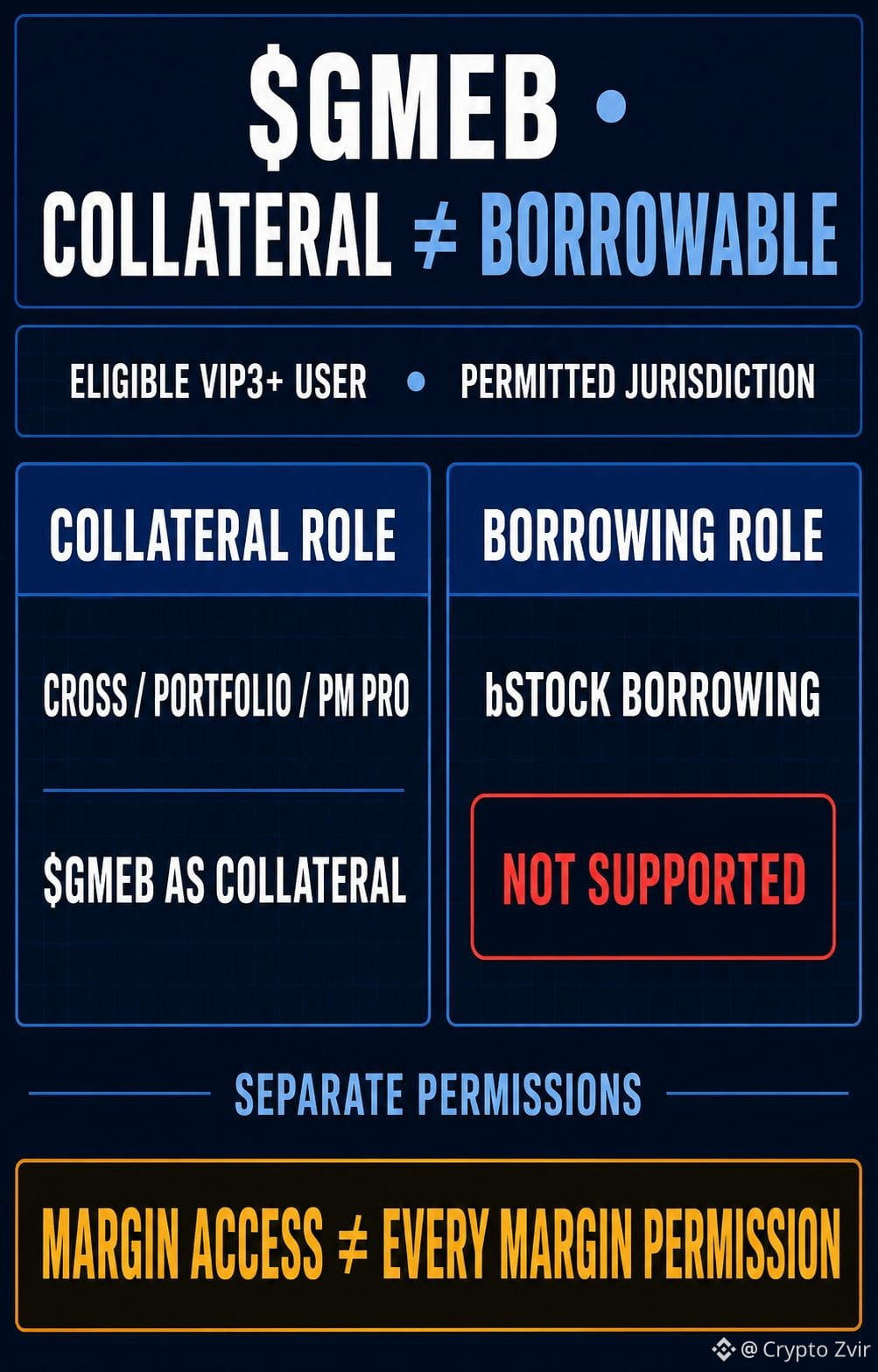
$GMEB has been added as an eligible bStocks collateral asset for Cross Margin, Portfolio Margin and Portfolio Margin Pro. That is a specific permission, not a general Margin passport.
The tempting shortcut is: if GMEB can appear in Margin, $GMEB can also be borrowed. Binance sets the opposite boundary: bStocks may be used as collateral, but borrowing bStocks is not currently supported.
For eligible VIP3 or above users in permitted jurisdictions, these are separate control roles:
Collateral eligibility: GMEB may be used as collateral.
Borrowing permission: bStocks cannot currently be borrowed.
The operational consequence is direct: a Margin plan that needs borrowed $GMEB fails at the permission gate even if GMEB is accepted as collateral.
Which status should govern the decision: “eligible collateral” or “borrowing supported”?
@BinanceCIS
#bStocksCIS
The tempting shortcut is: if GMEB can appear in Margin, $GMEB can also be borrowed. Binance sets the opposite boundary: bStocks may be used as collateral, but borrowing bStocks is not currently supported.
For eligible VIP3 or above users in permitted jurisdictions, these are separate control roles:
Collateral eligibility: GMEB may be used as collateral.
Borrowing permission: bStocks cannot currently be borrowed.
The operational consequence is direct: a Margin plan that needs borrowed $GMEB fails at the permission gate even if GMEB is accepted as collateral.
Which status should govern the decision: “eligible collateral” or “borrowing supported”?
@BinanceCIS
#bStocksCIS
30D trade $DUSK57.7 USDT
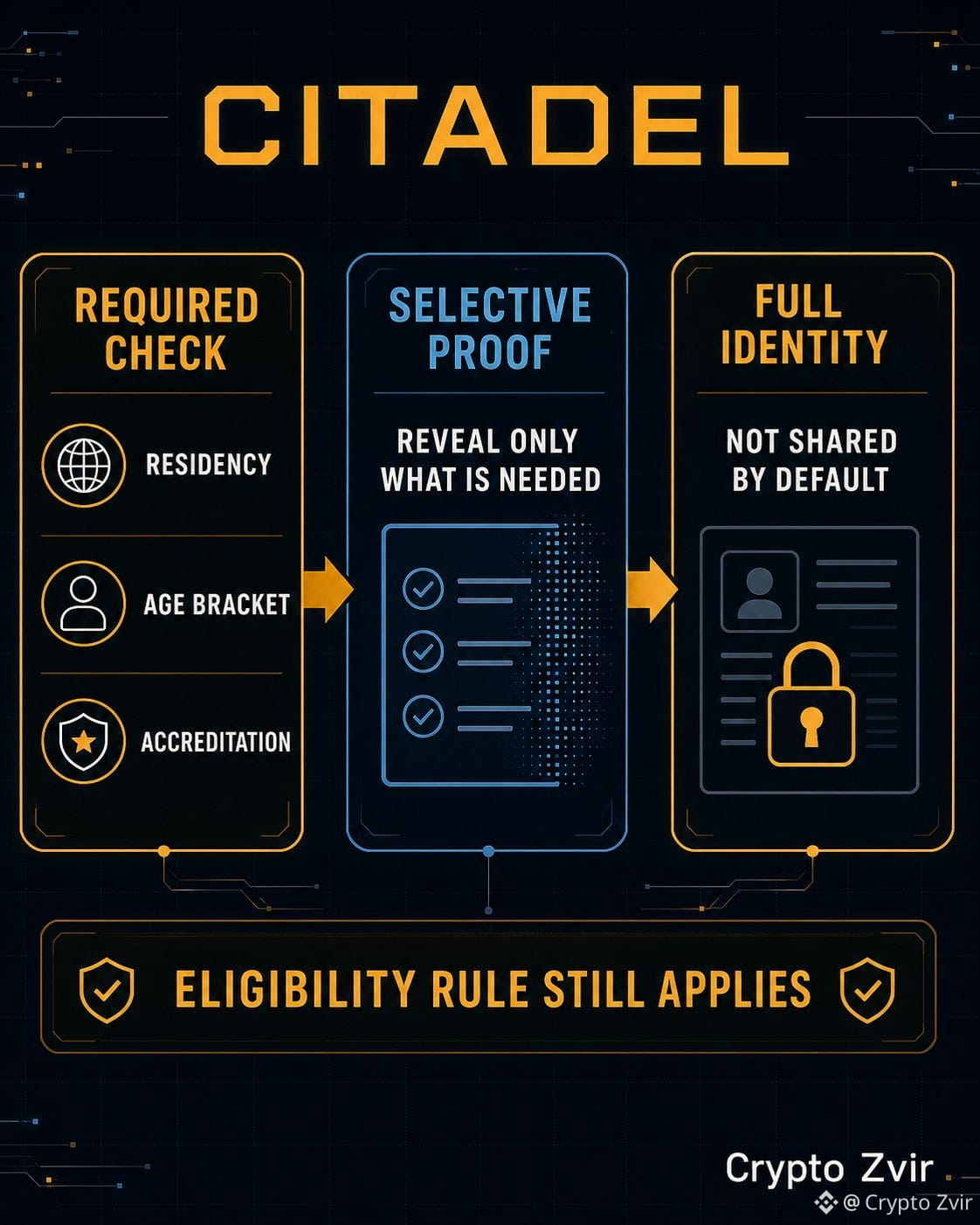
Citadel is often summarized as privacy, but the sharper point is what a market participant must reveal. In Dusk's docs, Citadel is the identity and access layer for selective disclosure: a user can prove attributes such as residency, age bracket, or accreditation without revealing more than necessary.
That changes the shape of compliance evidence, not the eligibility rule itself. A venue still sets the requirement; a wallet still has to meet it; the proof can be narrower than the underlying identity. Dusk's market infrastructure docs place Citadel alongside wallet binding and eligibility checks, so the architectural question is not “private or public?” It is “which fact is disclosed, to whom, and for what purpose?”
The boundary matters: selective disclosure is not universal access, automatic approval, or a claim that every legal requirement disappears. It is a data minimisation pattern for a defined check. Is the better privacy metric the amount of data a user proves, or the number of parties allowed to retain the full identity? @Dusk $DUSK #dusk
That changes the shape of compliance evidence, not the eligibility rule itself. A venue still sets the requirement; a wallet still has to meet it; the proof can be narrower than the underlying identity. Dusk's market infrastructure docs place Citadel alongside wallet binding and eligibility checks, so the architectural question is not “private or public?” It is “which fact is disclosed, to whom, and for what purpose?”
The boundary matters: selective disclosure is not universal access, automatic approval, or a claim that every legal requirement disappears. It is a data minimisation pattern for a defined check. Is the better privacy metric the amount of data a user proves, or the number of parties allowed to retain the full identity? @Dusk $DUSK #dusk
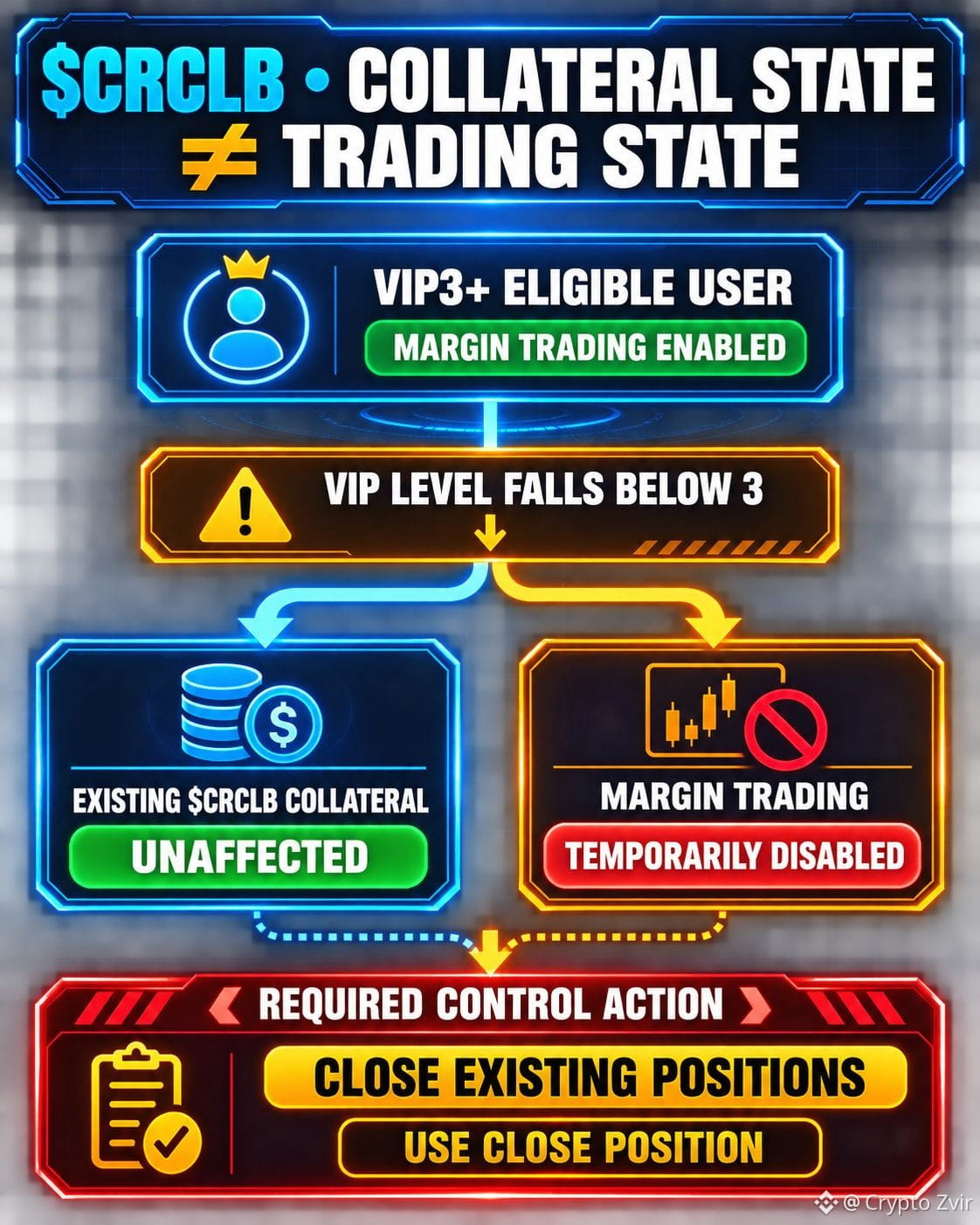
$CRCLB is explicitly listed by Binance as an eligible bStocks collateral asset, but collateral persistence and Margin trading permission are separate control states.
The feature is limited to eligible VIP3-or-above users in permitted jurisdictions and to Cross Margin, Portfolio Margin and Portfolio Margin Pro. Borrowing bStocks is not supported.
Binance’s FAQ defines the downgrade path.
If a user’s VIP level falls below VIP3, existing bStock collateral is not affected. Margin trading is temporarily disabled until the user closes existing positions through the Close Position function.
The operational consequence is concrete: a visible $CRCLB collateral balance does not prove that the account remains authorized to continue Margin trading.
VIP eligibility controls the trading state. Collateral persistence does not override that gate.
Which state should govern the next action: $CRCLB still present as collateral, or VIP eligibility still satisfied?
@BinanceCIS
#bStocksCIS
The feature is limited to eligible VIP3-or-above users in permitted jurisdictions and to Cross Margin, Portfolio Margin and Portfolio Margin Pro. Borrowing bStocks is not supported.
Binance’s FAQ defines the downgrade path.
If a user’s VIP level falls below VIP3, existing bStock collateral is not affected. Margin trading is temporarily disabled until the user closes existing positions through the Close Position function.
The operational consequence is concrete: a visible $CRCLB collateral balance does not prove that the account remains authorized to continue Margin trading.
VIP eligibility controls the trading state. Collateral persistence does not override that gate.
Which state should govern the next action: $CRCLB still present as collateral, or VIP eligibility still satisfied?
@BinanceCIS
#bStocksCIS
30D trade $DUSK31.8 USDT
Calling $DUSK “EVM-compatible” can create the wrong shortcut: it does not mean every Dusk workload follows the same execution path.
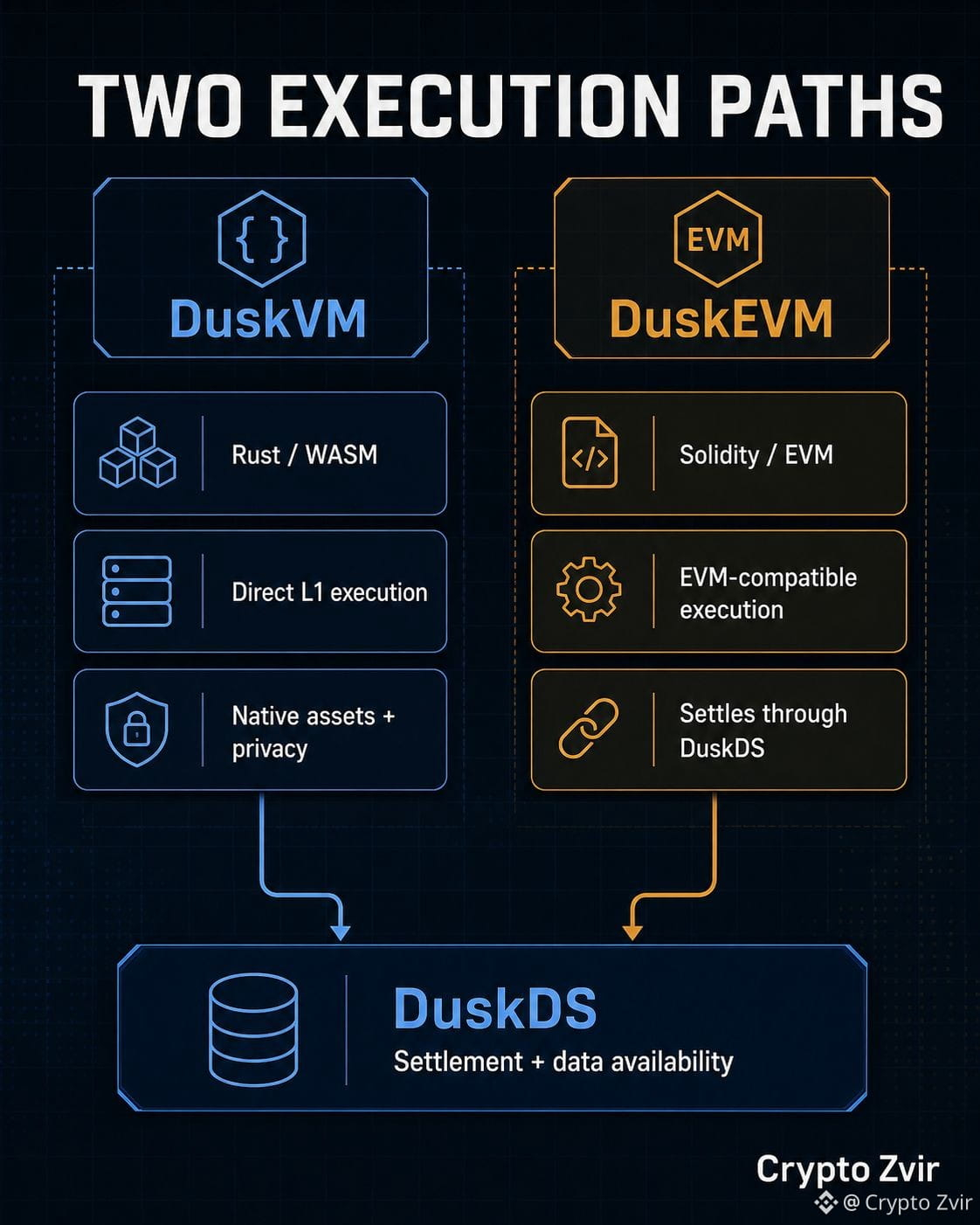
Dusk separates settlement from execution. DuskVM runs Rust/WASM contracts directly on the L1 and is the path for contracts that need direct access to L1 assets, transaction models, privacy, or zero-knowledge capabilities. DuskEVM is an OP Stack-based EVM-equivalent environment: Solidity contracts can use familiar tooling while DuskDS provides settlement and data availability.
This is an engineering choice, not a branding distinction. One path prioritizes EVM compatibility; the other provides direct L1 execution. The current Dusk product surface labels DuskEVM “Testnet,” so compatibility must not be read as a claim that every EVM workflow is production ready.
A system can offer both paths without making them interchangeable. The decision should follow the workload’s requirements for tooling, direct access to L1 primitives, and its actual deployment status.
When a regulated application needs predictable settlement, which requirement should decide first: familiar tooling or direct L1 capabilities?
@Dusk $DUSK #dusk
Dusk separates settlement from execution. DuskVM runs Rust/WASM contracts directly on the L1 and is the path for contracts that need direct access to L1 assets, transaction models, privacy, or zero-knowledge capabilities. DuskEVM is an OP Stack-based EVM-equivalent environment: Solidity contracts can use familiar tooling while DuskDS provides settlement and data availability.
This is an engineering choice, not a branding distinction. One path prioritizes EVM compatibility; the other provides direct L1 execution. The current Dusk product surface labels DuskEVM “Testnet,” so compatibility must not be read as a claim that every EVM workflow is production ready.
A system can offer both paths without making them interchangeable. The decision should follow the workload’s requirements for tooling, direct access to L1 primitives, and its actual deployment status.
When a regulated application needs predictable settlement, which requirement should decide first: familiar tooling or direct L1 capabilities?
@Dusk $DUSK #dusk
30D trade $SPCXB1.4K USDT
“A live pair exists” and “this product is available to everyone” are not equivalent statements.
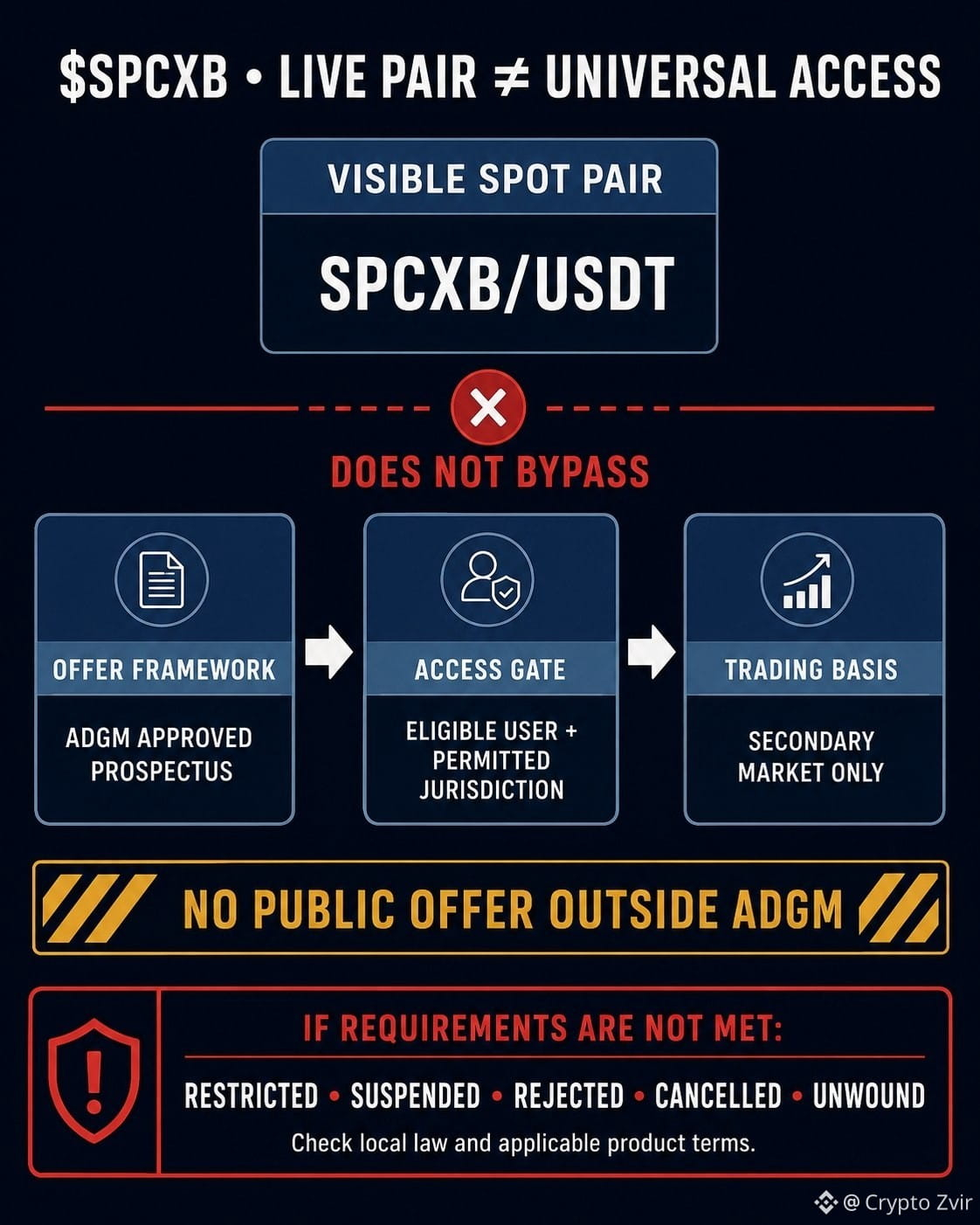
Binance states that bStocks are offered through an Approved Prospectus in the Abu Dhabi Global Market. No public offer is made outside the ADGM. Access is limited to eligible users in permitted jurisdictions on a secondary market basis, and users must ensure that access and trading are lawful where they are.
The layers are separate:
1. offer framework - ADGM Approved Prospectus;
2. access gate - user and jurisdiction eligibility;
3. trading basis - secondary market only;
4. enforcement - access or transactions may be restricted, suspended, rejected, cancelled or unwound if Binance determines that applicable requirements are not met.
For $SPCXB , a visible SPCXB/USDT asset card confirms a live pair; it does not establish universal eligibility.
Which evidence should define access: a visible ticker, or confirmed eligibility under the applicable jurisdiction and product terms?
@BinanceCIS
#bStocksCIS
Binance states that bStocks are offered through an Approved Prospectus in the Abu Dhabi Global Market. No public offer is made outside the ADGM. Access is limited to eligible users in permitted jurisdictions on a secondary market basis, and users must ensure that access and trading are lawful where they are.
The layers are separate:
1. offer framework - ADGM Approved Prospectus;
2. access gate - user and jurisdiction eligibility;
3. trading basis - secondary market only;
4. enforcement - access or transactions may be restricted, suspended, rejected, cancelled or unwound if Binance determines that applicable requirements are not met.
For $SPCXB , a visible SPCXB/USDT asset card confirms a live pair; it does not establish universal eligibility.
Which evidence should define access: a visible ticker, or confirmed eligibility under the applicable jurisdiction and product terms?
@BinanceCIS
#bStocksCIS
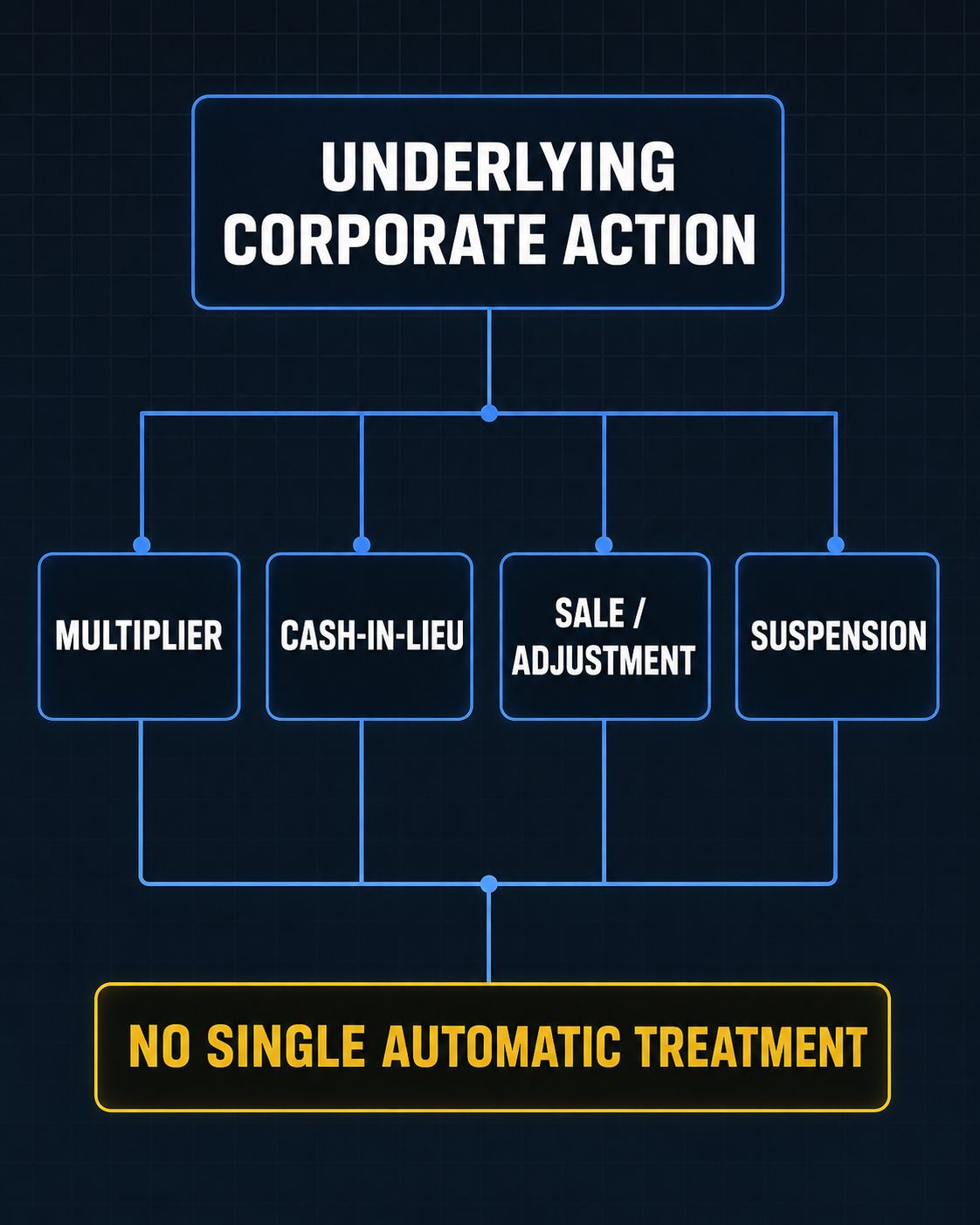
Binance bStocks can reflect corporate actions affecting their underlying securities. For $INTCB however, knowing the underlying event would not automatically reveal the certificate level treatment.
Because Binance uses the Multiplier for dividends and stock splits, it is easy to overgeneralize: corporate action = Multiplier change.
The FAQ sets a narrower boundary. The Issuer may use a multiplier adjustment, reinvestment, sale of property, cash-in-lieu, adjustment, suspension, or another method permitted by the applicable legal documents. Advance notice may be provided where practicable, but is not guaranteed in every circumstance.
The practical limit is clear: without event specific information and the applicable product documents, it is impossible to infer in advance whether the token amount, Multiplier, cash result, or service outcome will change.
If the underlying event is known but its bStock treatment is not, what should define the expected result: the event headline or the applicable product documents?
@BinanceCIS #bStocksCIS
Because Binance uses the Multiplier for dividends and stock splits, it is easy to overgeneralize: corporate action = Multiplier change.
The FAQ sets a narrower boundary. The Issuer may use a multiplier adjustment, reinvestment, sale of property, cash-in-lieu, adjustment, suspension, or another method permitted by the applicable legal documents. Advance notice may be provided where practicable, but is not guaranteed in every circumstance.
The practical limit is clear: without event specific information and the applicable product documents, it is impossible to infer in advance whether the token amount, Multiplier, cash result, or service outcome will change.
If the underlying event is known but its bStock treatment is not, what should define the expected result: the event headline or the applicable product documents?
@BinanceCIS #bStocksCIS
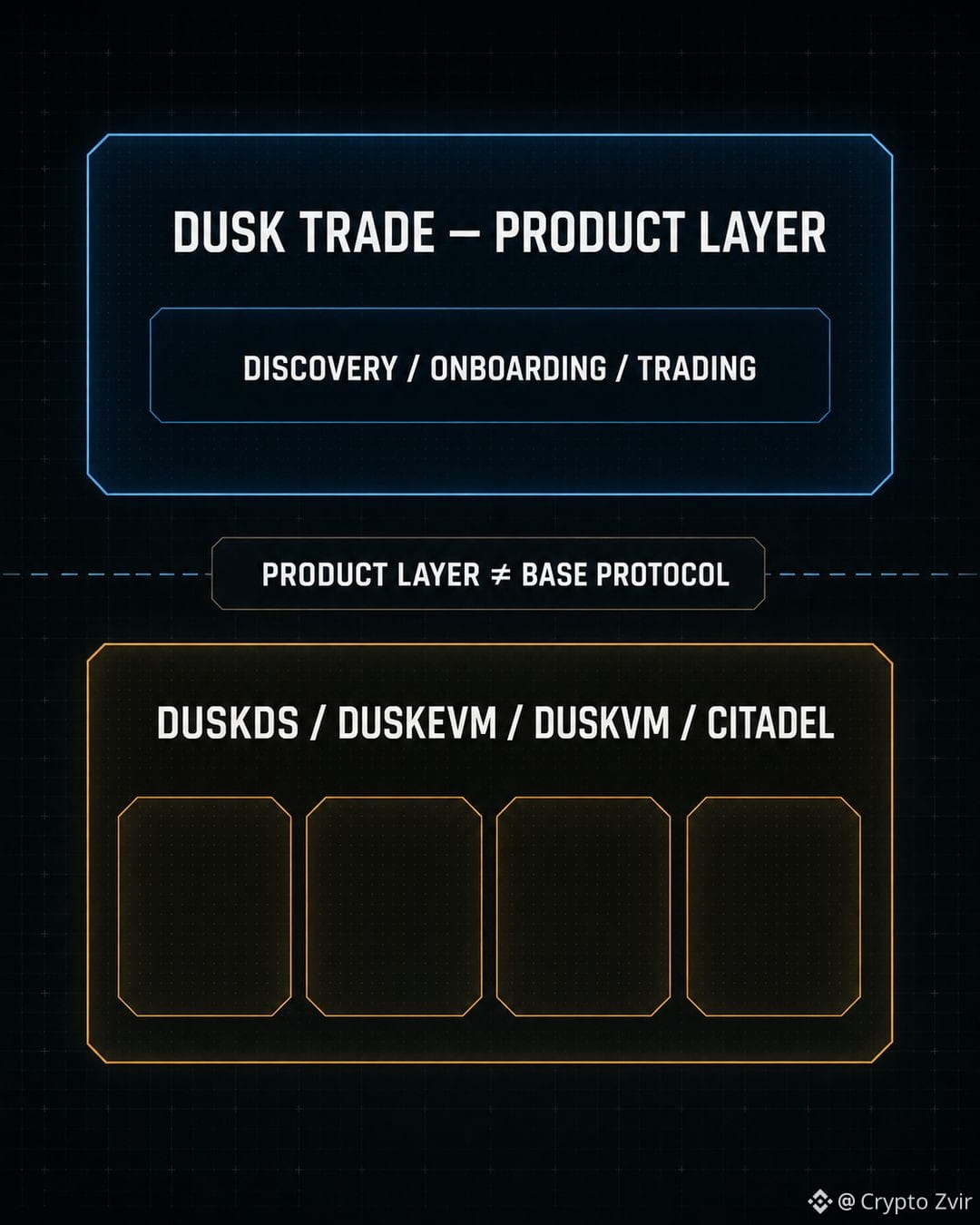
Dusk Trade is an @Dusk application layer for tokenized finance that remains under development. Treating that product as “the protocol behind the market” collapses two architectural roles.
The product sits on top of the protocol foundation. It organizes lower layer capabilities into user workflows for discovery, onboarding or eligibility, wallet connection, trading actions, payment coordination and settlement. It can draw on DuskDS, DuskEVM, DuskVM and Citadel underneath, but their consensus, finality or execution roles do not move into Dusk Trade.
No universal component combination follows from that design. Dusk says the architecture varies with the product and the regulatory requirements of its market, so a particular workflow need not use every component.
A product can coordinate what the user experiences while the lower layers remain responsible for their own protocol functions. When one workflow crosses several layers, which layer should be held accountable when the product surface and protocol outcome diverge?
$DUSK #dusk
The product sits on top of the protocol foundation. It organizes lower layer capabilities into user workflows for discovery, onboarding or eligibility, wallet connection, trading actions, payment coordination and settlement. It can draw on DuskDS, DuskEVM, DuskVM and Citadel underneath, but their consensus, finality or execution roles do not move into Dusk Trade.
No universal component combination follows from that design. Dusk says the architecture varies with the product and the regulatory requirements of its market, so a particular workflow need not use every component.
A product can coordinate what the user experiences while the lower layers remain responsible for their own protocol functions. When one workflow crosses several layers, which layer should be held accountable when the product surface and protocol outcome diverge?
$DUSK #dusk
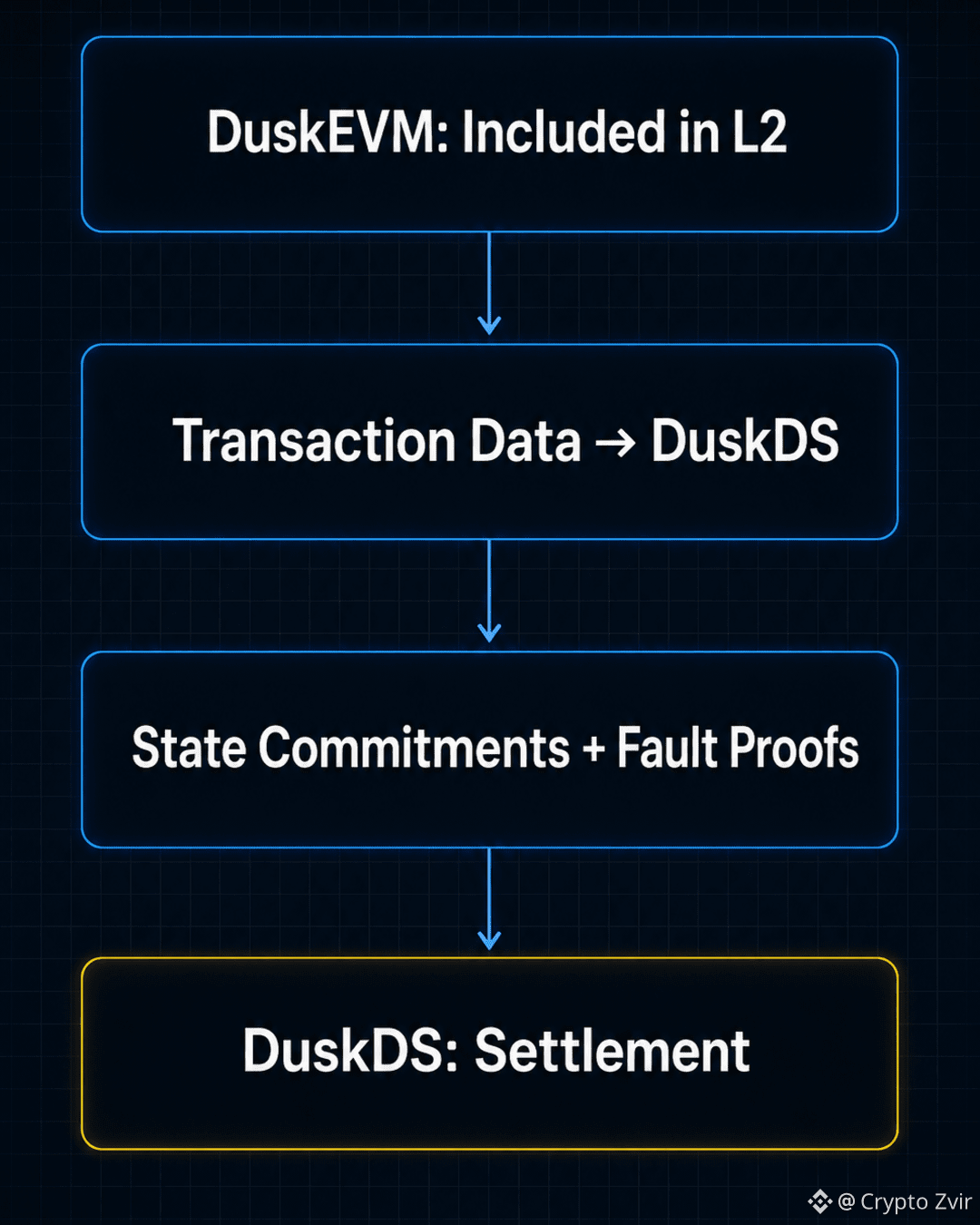
DuskEVM uses DuskDS for settlement and data availability. Fast inclusion in an L2 block can therefore look like the moment a transaction has fully settled.
The protocol lifecycle draws a sharper boundary. A transaction is first submitted to the DuskEVM sequencer, then included by the execution layer in an L2 block. The batcher subsequently publishes its transaction data to DuskDS. State commitments and fault proofs then connect the resulting state to DuskDS settlement.
These are connected steps, not interchangeable labels. Inclusion places the transaction in an execution-layer block; settlement links the resulting state to DuskDS, whose role covers consensus, settlement, and data availability. That distinction has an operational consequence: applications moving value between DuskEVM and Dusk L1 should use protocol or wallet status rather than infer finality from elapsed time.
Fast inclusion does not erase the settlement boundary. When an interface says “included” before DuskDS settlement, which state should govern the user’s next action?
@Dusk $DUSK #dusk
The protocol lifecycle draws a sharper boundary. A transaction is first submitted to the DuskEVM sequencer, then included by the execution layer in an L2 block. The batcher subsequently publishes its transaction data to DuskDS. State commitments and fault proofs then connect the resulting state to DuskDS settlement.
These are connected steps, not interchangeable labels. Inclusion places the transaction in an execution-layer block; settlement links the resulting state to DuskDS, whose role covers consensus, settlement, and data availability. That distinction has an operational consequence: applications moving value between DuskEVM and Dusk L1 should use protocol or wallet status rather than infer finality from elapsed time.
Fast inclusion does not erase the settlement boundary. When an interface says “included” before DuskDS settlement, which state should govern the user’s next action?
@Dusk $DUSK #dusk
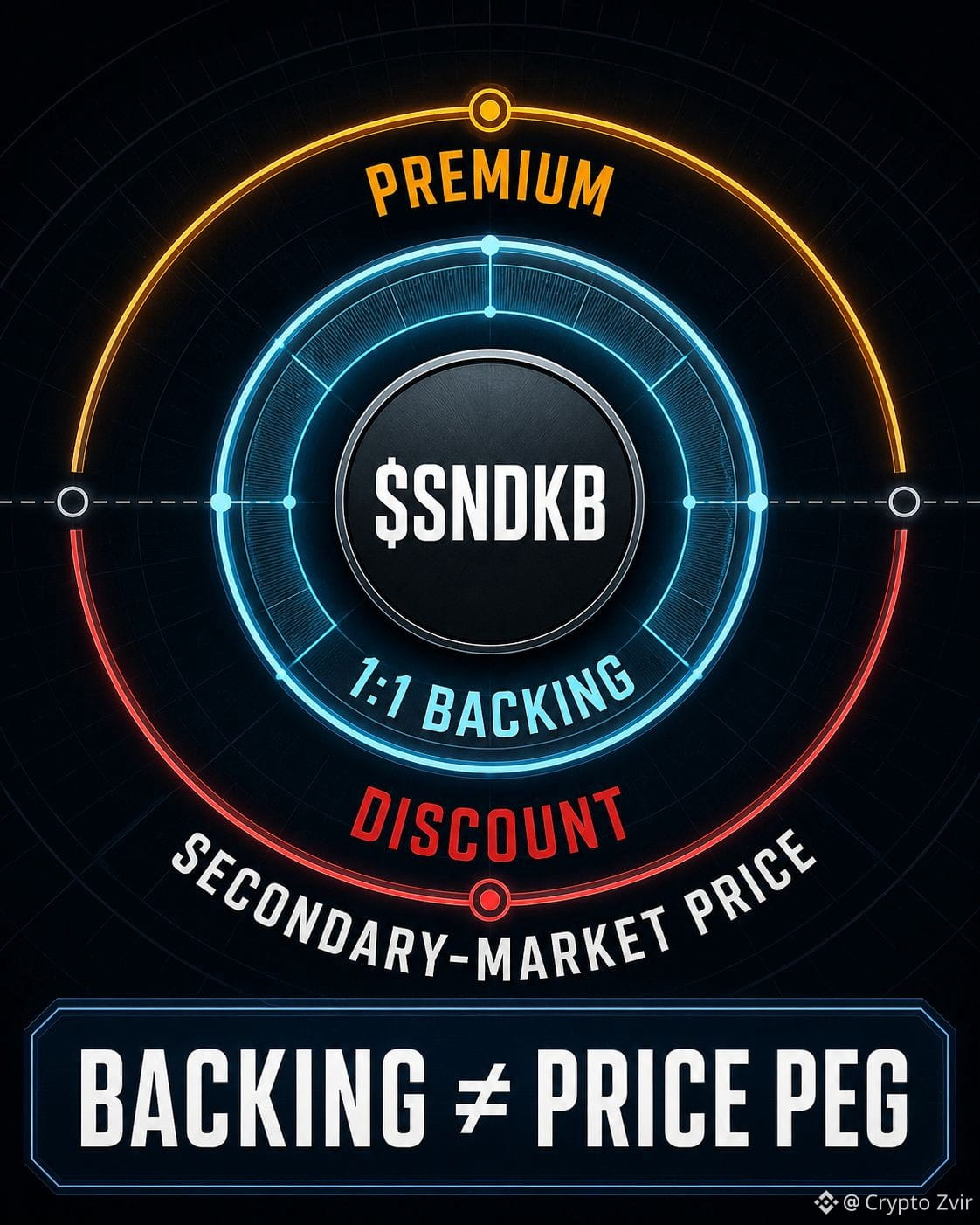
Binance bStocks is designed around 1:1 backing by corresponding underlying securities. For $SNDKB , that does not make SNDKB/USDT a permanent 1:1 price peg to the underlying security.
Backing describes what supports the certificate. Pricing describes what secondary market participants will pay. Binance states that a bStock price may differ from its underlying price. Supply and demand determine the market price, while market makers quote using reference data, available inventory, and risk parameters. The resulting premium or discount measures the deviation.
The practical consequence is direct: the backing structure can remain unchanged while an entry or exit occurs at a different price from the underlying reference. A premium or discount is a trading outcome not automatically evidence that the backing design has failed.
“Backed one to one” and “priced one to one” sound interchangeable, but they answer different questions.
If the reserve relationship and transaction price can diverge, which one should define “1:1” for the person actually taking the position?
@BinanceCIS
#bStocksCIS
Backing describes what supports the certificate. Pricing describes what secondary market participants will pay. Binance states that a bStock price may differ from its underlying price. Supply and demand determine the market price, while market makers quote using reference data, available inventory, and risk parameters. The resulting premium or discount measures the deviation.
The practical consequence is direct: the backing structure can remain unchanged while an entry or exit occurs at a different price from the underlying reference. A premium or discount is a trading outcome not automatically evidence that the backing design has failed.
“Backed one to one” and “priced one to one” sound interchangeable, but they answer different questions.
If the reserve relationship and transaction price can diverge, which one should define “1:1” for the person actually taking the position?
@BinanceCIS
#bStocksCIS
Log in to explore more content