Binance Square

ZENITH ZORO

image
Verified Creator
Open Trade
Frequent Trader
4.6 Years
Zenith of Crypto Influence | X/Twitter:@zenith_zoro | Crypto Samurai | Deep studying crypto Projects.
85 Following
57.3K+ Followers
39.2K+ Liked
6.3K+ Shared
All Content
Portfolio
--
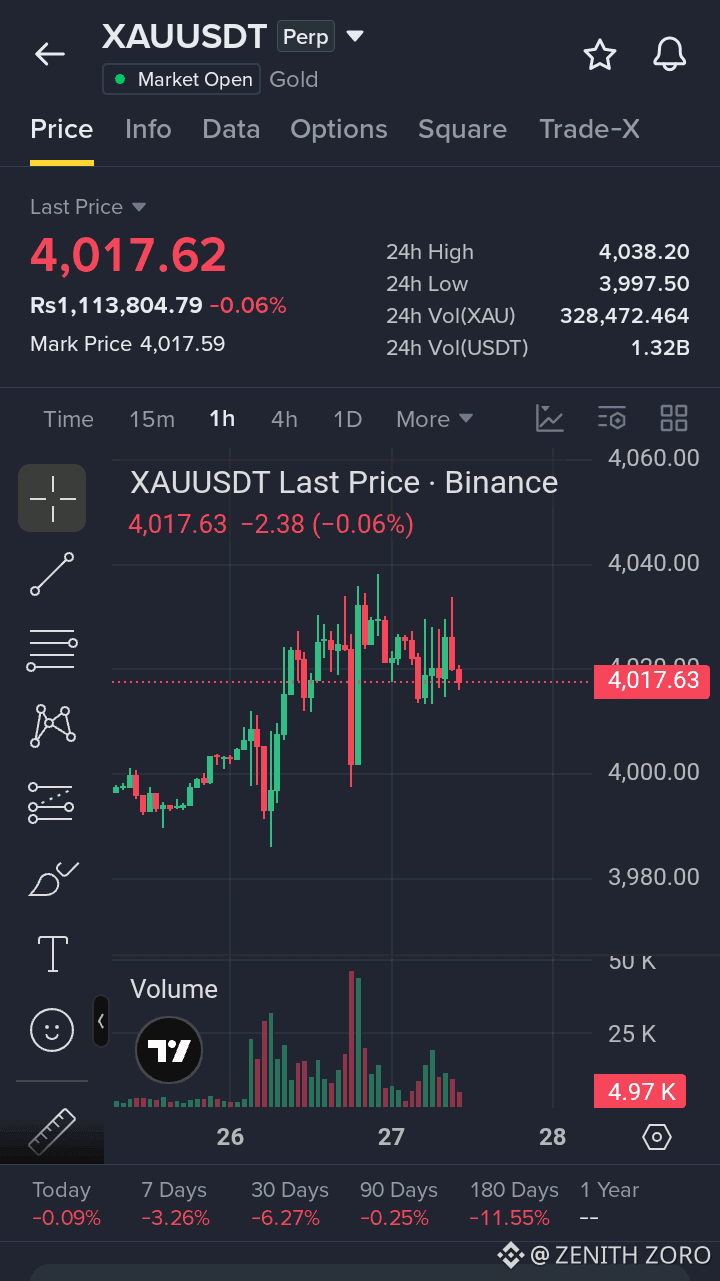
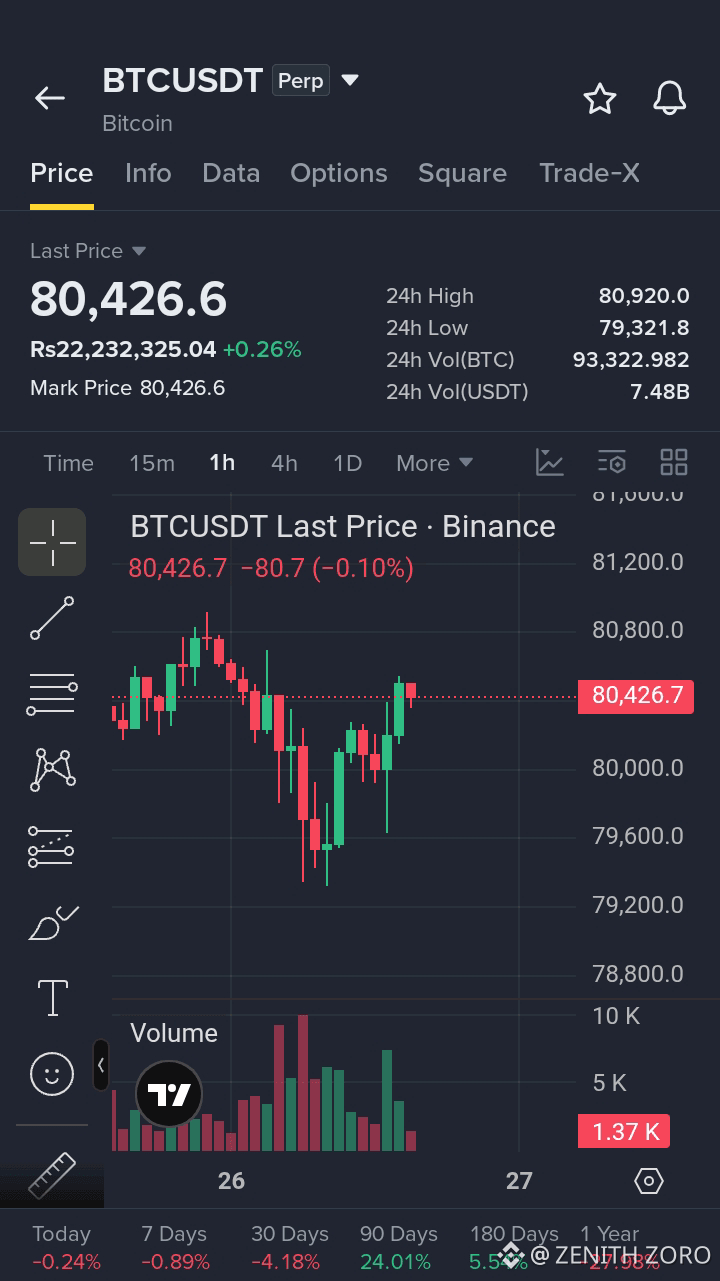
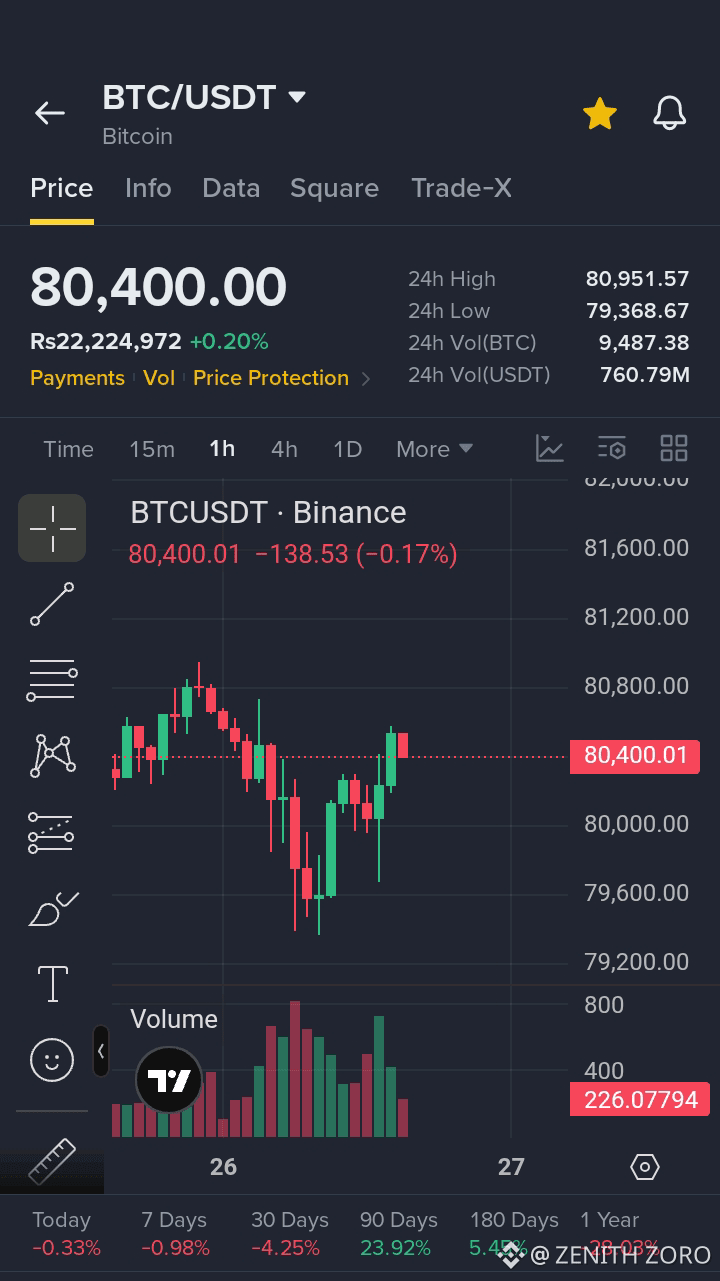
Guys, give me 2 minutes and I will prove you why Bitcoin is a better investment than gold ā³šŸ”„ Gold has one big problem that most people don’t talk about… it’s getting harder and harder to verify if it’s real 😬 Today, gold can look perfect from the outside āœ… It can even pass basic tests… and still be fake or mixed inside with other heavy metals like tungsten 🤯 And the worst part? To catch that kind of fake gold, you often need serious methods… cutting it, melting it, or lab testing 🧪 Meaning you usually find out AFTER the damage is already done, meaning that after you have purchased it šŸ’€ Imagine you bought 10,000$ of Gold and after 3 years its worth increases to 20,000$ but when you go to sell it, they tell you that its gold plated tungsten with value of just 1000$. Hows that😵 ON THE OTHER HAND BITCOIN IS BITCOIN šŸ‘‡ Bitcoin doesn’t need ā€œtrust me bro.ā€ You don’t need experts. The worst thing that can happen to Bitcoin is that, it can dump but thats temporaray. In the long run Bitcoin will always recover because its more rare than gold. Bitcoin has a fixed supply. That means new bitcoins cannot be created. There are only a fixed number of bitcoins that can ever be there. On the other hand Gold can be discovered as hidden mines of gold inside a country. And if one day scientist learn a way to turn any metal into gold, gold would be cheaper than plastic😵😵 So next time some one tells you Bitcoin is a scam and gold is a much better investment. Show them this article of minešŸ˜®ā€šŸ’Ø $BTC $XAU
Guys, give me 2 minutes and I will prove you why Bitcoin is a better investment than gold ā³šŸ”„
Gold has one big problem that most people don’t talk about…
it’s getting harder and harder to verify if it’s real 😬
Today, gold can look perfect from the outside āœ…
It can even pass basic tests…
and still be fake or mixed inside with other heavy metals like tungsten 🤯
And the worst part?
To catch that kind of fake gold, you often need serious methods… cutting it, melting it, or lab testing 🧪
Meaning you usually find out AFTER the damage is already done, meaning that after you have purchased it šŸ’€
Imagine you bought 10,000$ of Gold and after 3 years its worth increases to 20,000$ but when you go to sell it, they tell you that its gold plated tungsten with value of just 1000$. Hows that😵
ON THE OTHER HAND BITCOIN IS BITCOIN šŸ‘‡
Bitcoin doesn’t need ā€œtrust me bro.ā€
You don’t need experts.
The worst thing that can happen to Bitcoin is that, it can dump but thats temporaray. In the long run Bitcoin will always recover because its more rare than gold.
Bitcoin has a fixed supply. That means new bitcoins cannot be created. There are only a fixed number of bitcoins that can ever be there.
On the other hand Gold can be discovered as hidden mines of gold inside a country.
And if one day scientist learn a way to turn any metal into gold, gold would be cheaper than plastic😵😵
So next time some one tells you Bitcoin is a scam and gold is a much better investment. Show them this article of minešŸ˜®ā€šŸ’Ø
$BTC $XAU
--
Bearish
Listen traders — simple and clear explanation šŸ‘‡ $DOLO (1H chart) This chart is showing a classic breakout + retest setup. What happened first? Price was moving sideways for a long time (accumulation) Then buyers stepped in and broke the resistance After breakout, price is taking a healthy pullback What is likely next? Pullback is happening into the previous resistance → now support This area is where smart buyers usually enter As long as support holds, the next move is upward Simple public logic: Market sleeps → wakes up → breaks resistance → comes back to test → then moves higher Bias: BULLISH / BUY SIDE Buy Area (pullback zone): 0.0355 – 0.0349 Invalidation: Hourly close below 0.0348 Upside Targets: TP1: 0.0395 TP2: 0.0412 TP3: 0.0430+ āš ļø Public advice: Don’t chase green candles. Best profits come from buying the retest, not the breakout. This is continuation, not reversal.#WriteToEarnUpgrade
Listen traders — simple and clear explanation šŸ‘‡

$DOLO (1H chart)

This chart is showing a classic breakout + retest setup.

What happened first?

Price was moving sideways for a long time (accumulation)

Then buyers stepped in and broke the resistance

After breakout, price is taking a healthy pullback

What is likely next?

Pullback is happening into the previous resistance → now support

This area is where smart buyers usually enter

As long as support holds, the next move is upward

Simple public logic:
Market sleeps → wakes up → breaks resistance → comes back to test → then moves higher

Bias: BULLISH / BUY SIDE

Buy Area (pullback zone):
0.0355 – 0.0349

Invalidation:
Hourly close below 0.0348

Upside Targets:

TP1: 0.0395

TP2: 0.0412

TP3: 0.0430+

āš ļø Public advice:
Don’t chase green candles.
Best profits come from buying the retest, not the breakout.

This is continuation, not reversal.#WriteToEarnUpgrade
--
Bearish
$SOL Smart Money Selling Active (1H) This is not a random drop. Price was holding a rising structure, and now smart money has stepped in on the sell side. What confirms sellers’ control: Breakdown from rising support trendline Failed attempt to reclaim structure → bull trap Lower highs forming → momentum shifting bearish Strong impulsive red candle = distribution phase This is how smart money exits — slow build-up, sharp drop. Bias: BEARISH / SELL SIDE Sell Zone: 123.5 – 125.5 Invalidation: Above 127.8 (structure reclaim) Downside Targets: TP1: 120.5 TP2: 118.2 TP3: 115.8 – 116.0 āš ļø Trader reminder: Do not buy dips blindly here. As long as price stays below broken trendline, rallies are for selling. Smart money is already positioned. Retail realizes it later. #CPIWatch #CPIWatch #USGDPUpdate
$SOL Smart Money Selling Active (1H)

This is not a random drop.
Price was holding a rising structure, and now smart money has stepped in on the sell side.

What confirms sellers’ control:

Breakdown from rising support trendline

Failed attempt to reclaim structure → bull trap

Lower highs forming → momentum shifting bearish

Strong impulsive red candle = distribution phase

This is how smart money exits — slow build-up, sharp drop.

Bias: BEARISH / SELL SIDE

Sell Zone: 123.5 – 125.5
Invalidation: Above 127.8 (structure reclaim)

Downside Targets:

TP1: 120.5

TP2: 118.2

TP3: 115.8 – 116.0

āš ļø Trader reminder:
Do not buy dips blindly here.
As long as price stays below broken trendline, rallies are for selling.

Smart money is already positioned.
Retail realizes it later.
#CPIWatch #CPIWatch #USGDPUpdate
--
Bearish
Stop ke alternative options de raha hoon — public-friendly bhi hai $BNB SELL setup (1H) Agar aap tight stop nahi rakhna chahte, to ye safe alternatives use kar sakte ho: šŸ”¹ Stop Loss Options (choose one) Option 1 – Conservative (Safer) SL: 860 šŸ‘‰ Trendline + previous high ke upar šŸ‘‰ Fake wick se bachata hai Option 2 – Balanced (Most traders) SL: 855 šŸ‘‰ Structure reclaim pe exit šŸ‘‰ Risk–reward balanced Option 3 – Aggressive (High risk) SL: 848 close above (1H) šŸ‘‰ Sirf experienced traders ke liye šŸ‘‰ Fast invalidation šŸ“‰ Direction (same) Bias: SELL / Bearish Targets: TP1: 832 TP2: 825 TP3: 820–823 āš ļø Simple rule (public ke liye): Agar price trendline ke upar sustain kare, trade exit. Neeche rahe = sell pressure continue. Agar chaho to main isko Binance Square ultra-short post ya STOP STOP warning style mein bhi convert kar doon šŸ”„#WriteToEarnUpgrade #USJobsData #BTCVSGOLD
Stop ke alternative options de raha hoon — public-friendly bhi hai
$BNB SELL setup (1H)
Agar aap tight stop nahi rakhna chahte, to ye safe alternatives use kar sakte ho:

šŸ”¹ Stop Loss Options (choose one)

Option 1 – Conservative (Safer)
SL: 860
šŸ‘‰ Trendline + previous high ke upar
šŸ‘‰ Fake wick se bachata hai
Option 2 – Balanced (Most traders)

SL: 855
šŸ‘‰ Structure reclaim pe exit
šŸ‘‰ Risk–reward balanced
Option 3 – Aggressive (High risk)

SL: 848 close above (1H)
šŸ‘‰ Sirf experienced traders ke liye
šŸ‘‰ Fast invalidation
šŸ“‰ Direction (same)

Bias: SELL / Bearish

Targets:

TP1: 832

TP2: 825

TP3: 820–823
āš ļø Simple rule (public ke liye):
Agar price trendline ke upar sustain kare, trade exit.
Neeche rahe = sell pressure continue.

Agar chaho to main isko Binance Square ultra-short post ya STOP STOP warning style mein bhi convert kar doon šŸ”„#WriteToEarnUpgrade #USJobsData #BTCVSGOLD
--
Bullish
Listen traders — simple explanation šŸ‘‡ $TRX (TRON) – 1H chart No panic here. This is a healthy bullish setup. What the chart is showing: Strong impulsive move up Followed by a small pullback / flag During the pullback, RSI divergence appears → sellers are getting weak Price is holding the 0.5 support level → buyers are still in control Simple logic (for everyone): Market moves up → takes a short rest → selling pressure fades → next leg up starts. Bias: BULLISH / BUY SIDE Safe Buy Area: 0.283 – 0.285 Invalidation: Hourly close below 0.282 (setup fails) Upside Targets: TP1: 0.289 TP2: 0.292 TP3: 0.295+ āš ļø Key advice: Don’t chase breakouts. Best entries come on pullbacks. Patience brings profit. #WriteToEarnUpgrade #CPIWatch
Listen traders — simple explanation šŸ‘‡

$TRX (TRON) – 1H chart

No panic here. This is a healthy bullish setup.

What the chart is showing:

Strong impulsive move up

Followed by a small pullback / flag

During the pullback, RSI divergence appears → sellers are getting weak

Price is holding the 0.5 support level → buyers are still in control

Simple logic (for everyone):
Market moves up → takes a short rest → selling pressure fades → next leg up starts.

Bias: BULLISH / BUY SIDE

Safe Buy Area: 0.283 – 0.285
Invalidation: Hourly close below 0.282 (setup fails)

Upside Targets:

TP1: 0.289

TP2: 0.292

TP3: 0.295+

āš ļø Key advice:
Don’t chase breakouts. Best entries come on pullbacks.
Patience brings profit.
#WriteToEarnUpgrade #CPIWatch
--
Bearish
STOP… STOP… STOP… $SUI Price is compressing inside a rising wedge on 1H — momentum is fading, buyers are trapped near resistance. This structure usually breaks down, not up. Direction: SELL / SHORT (High Probability) Entry Zone: 1.42 – 1.44 Stop Loss: 1.56 (clean invalidation above structure) Targets: TP1: 1.39 TP2: 1.36 TP3: 1.34 Breakdown confirmation below the wedge = acceleration to the downside. No rush — wait for rejection, then execute #WriteToEarnUpgrade
STOP… STOP… STOP…

$SUI
Price is compressing inside a rising wedge on 1H — momentum is fading, buyers are trapped near resistance.
This structure usually breaks down, not up.

Direction: SELL / SHORT (High Probability)

Entry Zone: 1.42 – 1.44
Stop Loss: 1.56 (clean invalidation above structure)

Targets:
TP1: 1.39
TP2: 1.36
TP3: 1.34

Breakdown confirmation below the wedge = acceleration to the downside.
No rush — wait for rejection, then execute
#WriteToEarnUpgrade
--
Bearish
STOP… don’t ignore this candle. $XRP just printed a strong bearish candle, and this is not a normal pullback. Sellers stepped in aggressively after the local top momentum flipped fast, and late buyers are trapped. This kind of red candle usually means distribution, not just noise. Smart traders don’t fight strength when it fades they wait and react. Entry Zone: 1.88 – 1.90 Stop Loss: 1.93 Targets: TP1: 1.84 TP2: 1.80 TP3: 1.75 #USStocksForecast2026 $XRP {future}(XRPUSDT)
STOP… don’t ignore this candle.

$XRP just printed a strong bearish candle, and this is not a normal pullback.
Sellers stepped in aggressively after the local top momentum flipped fast, and late buyers are trapped.

This kind of red candle usually means distribution, not just noise.

Smart traders don’t fight strength when it fades they wait and react.

Entry Zone: 1.88 – 1.90
Stop Loss: 1.93

Targets:
TP1: 1.84
TP2: 1.80
TP3: 1.75
#USStocksForecast2026 $XRP
--
Bullish
Don’t rush this one. Watch it closely $ICNT just showed real strength, not random hype. After a deep pullback, buyers stepped in hard structure is rebuilt, momentum is back, and price is reclaiming key levels. This kind of move usually comes before the crowd reacts, not after. Smart traders wait for confirmation, not noise. Entry Zone: 0.48 – 0.50 Stop Loss: 0.44 Targets: TP1: 0.56 TP2: 0.60 TP3: 0.65+ #WriteToEarnUpgrade $ICNT {future}(ICNTUSDT)
Don’t rush this one. Watch it closely

$ICNT just showed real strength, not random hype.
After a deep pullback, buyers stepped in hard structure is rebuilt, momentum is back, and price is reclaiming key levels.

This kind of move usually comes before the crowd reacts, not after.

Smart traders wait for confirmation, not noise.

Entry Zone: 0.48 – 0.50
Stop Loss: 0.44

Targets:
TP1: 0.56
TP2: 0.60
TP3: 0.65+
#WriteToEarnUpgrade $ICNT
--
Bullish
Not every green candle means strength. Read this carefully šŸ‘‡ Some coins are moving with real power volume, structure, and strong hands behind them. Others are just temporary pumps weak base, thin liquidity, easy to trap late buyers. šŸ”„ Smart traders don’t chase green. They read the reason behind it. When you see gainers: āœ… Strong cap + clean structure → healthy continuation āš ļø Weak base + sudden spike → short-lived pump The market always gives clues. Your job is to separate real strength from fake hype. Trade with logic, not excitement. This is how consistency is built. #USNonFarmPayrollReport $RAVE $PIPPIN $BAS
Not every green candle means strength. Read this carefully šŸ‘‡

Some coins are moving with real power volume, structure, and strong hands behind them.
Others are just temporary pumps weak base, thin liquidity, easy to trap late buyers.

šŸ”„ Smart traders don’t chase green. They read the reason behind it.

When you see gainers:

āœ… Strong cap + clean structure → healthy continuation

āš ļø Weak base + sudden spike → short-lived pump

The market always gives clues.
Your job is to separate real strength from fake hype.

Trade with logic, not excitement.
This is how consistency is built.
#USNonFarmPayrollReport $RAVE $PIPPIN $BAS
JUST IN: Over $193,000,000 in crypto long positions liquidated in the last 24 hours.
--
Bullish
WAIT… DON’T SCROLL This is the kind of move that traps late sellers and rewards patient traders. After a deep pullback, $DOLO swept liquidity near 0.0298, flushed weak hands, and then snapped back with strong bullish intent. That sharp green expansion isn’t random — it’s buyers taking control again. Structure is shifting, momentum is rebuilding. As long as price holds above the reclaimed zone, the bias stays bullish. Entry Zone: 0.0340 – 0.0330 šŸŽÆ TP1: 0.0380 #BinanceAlphaAlert $DOLO {future}(DOLOUSDT)
WAIT… DON’T SCROLL
This is the kind of move that traps late sellers and rewards patient traders.

After a deep pullback, $DOLO swept liquidity near 0.0298, flushed weak hands, and then snapped back with strong bullish intent. That sharp green expansion isn’t random — it’s buyers taking control again. Structure is shifting, momentum is rebuilding.

As long as price holds above the reclaimed zone, the bias stays bullish.

Entry Zone: 0.0340 – 0.0330

šŸŽÆ TP1: 0.0380
#BinanceAlphaAlert $DOLO
Kite Earning Model and the Architecture of User-Driven Liquidity The Kite earning model represents a structural evolution in how decentralized markets reward participation. Instead of treating liquidity as passive capital that merely sits in pools, Kite reframes liquidity as an active market function that must be precise, adaptive, and aligned with real trading demand. This distinction is critical. Many early DeFi protocols successfully attracted liquidity but failed to sustain healthy markets because rewards were distributed without considering whether liquidity actually improved execution quality. Kite was designed specifically to solve this problem by building an earning model where rewards follow performance, not just presence. At a high level, Kite operates as a liquidity intelligence layer. It evaluates how liquidity behaves in real market conditions and compensates users based on measurable contribution. This approach moves decentralized liquidity provisioning closer to professional market making, where earnings are tied to spread efficiency, depth, and consistency. By embedding these principles directly into protocol logic, Kite establishes a foundation for sustainable earnings that can scale alongside market growth rather than collapse under it. The Core Philosophy Behind Kite. Kite’s philosophy starts with a simple but powerful assumption: markets reward usefulness, not excess. Traditional liquidity mining programs often rewarded capital indiscriminately, leading to bloated pools and declining returns. Kite rejects this assumption entirely. In Kite’s framework, liquidity must justify its existence by improving price discovery, reducing slippage, and supporting active trading zones. This philosophy shifts responsibility and opportunity to users. Liquidity providers are no longer passive yield farmers. They become active contributors to market quality. Kite’s earning model encourages users to understand market structure, price movement, and demand distribution. Those who align their liquidity with real trading activity earn more, while inefficient capital naturally earns less. Another philosophical pillar is sustainability. Kite is not designed to attract liquidity through temporary incentives that disappear once emissions decline. Instead, it ties rewards to organic market activity. This ensures that earnings grow as markets grow, creating a self-reinforcing system where liquidity quality and protocol revenue strengthen together. Transparency is also fundamental. Users are not asked to trust black-box algorithms. Kite’s reward logic is explainable, observable, and data-driven. This clarity builds confidence and allows users to refine strategies over time rather than speculate blindly. How Kite Defines and Measures Liquidity Performance The heart of Kite’s earning model lies in how it evaluates liquidity performance. Unlike traditional automated market makers that treat all liquidity equally, Kite differentiates liquidity based on several performance dimensions. The most important factor is proximity to active price ranges. Liquidity placed close to where trading actually occurs is far more valuable than liquidity far outside demand zones. Kite rewards this proximity because it directly reduces slippage and improves execution for traders. Depth consistency is another critical metric. Liquidity that remains available through periods of volatility contributes more to market stability than liquidity that appears only briefly. Kite’s model favors sustained contribution over short-term positioning designed purely to capture rewards. Responsiveness to market movement also matters. Markets are dynamic, and liquidity that adapts intelligently as prices move maintains efficiency. Kite’s earning system recognizes and incentivizes this adaptive behavior, encouraging users to actively manage positions rather than set and forget. By combining these metrics, Kite creates a nuanced picture of liquidity quality. Earnings are not binary; they exist on a spectrum that reflects how well liquidity supports real market needs. This performance-based evaluation is the core innovation that separates Kite from legacy liquidity models. Dynamic Reward Allocation and Market Adaptation Kite’s earning model is not static. Rewards adjust continuously based on market conditions. As trading activity increases in certain price ranges, incentives shift to encourage liquidity placement where it is most needed. When volatility rises, the system naturally favors liquidity that maintains stability rather than chasing transient price moves. This dynamic allocation is automated. Users do not need to rely on governance votes or manual updates to see incentives change. The protocol responds in real time, aligning user behavior with market demand. This automation is essential for scalability, as global markets cannot rely on slow, human-driven coordination. Dynamic rewards also reduce inefficiency. In traditional systems, liquidity often remains misallocated long after market conditions change. Kite’s adaptive incentives continuously guide users toward productive behavior, minimizing wasted capital and improving overall efficiency. Over time, this mechanism trains the ecosystem. Users learn where liquidity is most valuable and how market behavior affects earnings. This feedback loop strengthens both individual strategies and collective market health. Capital Efficiency and Risk Considerations One of Kite’s most important contributions is improved capital efficiency. Because rewards are tied to performance rather than size, users can earn competitive returns with less capital by placing liquidity intelligently. This lowers the barrier to entry and reduces the risk associated with deploying large positions. Capital efficiency also mitigates common DeFi risks. Wide, inefficient liquidity ranges often expose users to impermanent loss without delivering proportional rewards. Kite’s focus on narrow, active ranges keeps liquidity closer to equilibrium prices, reducing unnecessary exposure. Risk management is implicit rather than imposed. Kite does not restrict user behavior through rigid rules. Instead, it lets incentives guide behavior naturally. Risky or inefficient strategies earn less, encouraging users to adjust voluntarily. This approach respects user autonomy while promoting healthier outcomes. Over long time horizons, improved capital efficiency translates into more stable returns. Users are less dependent on market direction and more dependent on market structure, which tends to be more predictable and manageable. Revenue Sources and Economic Sustainability Kite’s earning model is grounded in real economic activity. Rewards are funded by trading fees and protocol revenue rather than inflationary token emissions alone. This distinction is crucial for long-term sustainability. As trading volume grows, the reward pool expands organically. This creates alignment between traders, liquidity providers, and the protocol. Traders benefit from better execution, liquidity providers earn more from increased activity, and the protocol captures sustainable revenue. Because rewards are linked to usage, Kite avoids the sharp yield cliffs common in emission-driven systems. When incentives decline, earnings do not collapse, because they are supported by ongoing market demand rather than temporary subsidies. This revenue-linked structure also improves predictability. Users can reasonably expect that as markets mature and adoption increases, earning potential improves rather than deteriorates. User Experience and Strategic Participation. Kite’s earning model encourages a more professional approach to liquidity provisioning. Users are incentivized to study market behavior, understand price dynamics, and refine placement strategies. This elevates the overall quality of participation. Importantly, Kite does not require users to be full-time traders. The protocol provides clear signals through reward distribution, allowing users to learn progressively. Over time, even less experienced participants develop intuition about market efficiency. The user experience emphasizes control and clarity. Users can see how different positions perform and adjust accordingly. There is no hidden logic or arbitrary reward changes. This transparency reduces frustration and increases confidence. For advanced users, Kite enables sophisticated strategies that resemble traditional market making. For newer users, it provides an educational pathway into deeper market participation. This inclusivity strengthens the ecosystem as a whole. Long-Term Compounding and Behavioral Advantages The true power of Kite’s earning model emerges over long time horizons. Stable, performance-based rewards support consistent compounding. Users can reinvest earnings without constantly chasing new opportunities or reacting to incentive changes. Behaviorally, this stability reduces emotional decision-making. Users are less tempted to withdraw capital during short-term volatility because earnings are tied to structure rather than price direction. This patience improves outcomes and reinforces market resilience. Compounding also benefits from efficiency. Because capital is used productively, reinvested rewards continue to generate meaningful returns rather than diluting into overcrowded pools. Over years rather than months, this effect can significantly outperform volatile yield strategies. Kite’s Role in the Evolution of DeFi Markets. Kite represents a broader maturation of decentralized finance. As the ecosystem evolves, simple liquidity mining becomes insufficient. Markets require depth, stability, and intelligence. Kite provides a framework for achieving these goals without sacrificing decentralization. By aligning incentives with market quality, Kite challenges other protocols to rethink how they reward participation. It demonstrates that sustainable earnings do not require excessive emissions, only well-designed alignment. Kite also lays groundwork for future expansion. Its earning model is adaptable across assets, chains, and market types. This flexibility positions Kite as a foundational liquidity layer rather than a niche optimization tool. Conclusion: Kite as a Sustainable Earning Infrastructure The Kite earning model is best understood as an infrastructure system rather than a yield product. It redefines how liquidity is valued, how rewards are distributed, and how users interact with on-chain markets. By prioritizing performance, transparency, and sustainability, Kite offers an alternative to speculative liquidity models that have dominated DeFi’s early years. For users seeking long-term, reliable earnings, Kite provides a framework grounded in real market contribution. For the broader ecosystem, it raises standards for liquidity quality and incentive design. As decentralized markets continue to professionalize, models like Kite’s are likely to become the norm rather than the exception.In this sense, Kite is not just improving liquidity rewards. It is reshaping the relationship between users, markets, and value creation in decentralized finance. @GoKiteAI #KITE #KİTE $KITE

Kite Earning Model and the Architecture of User-Driven Liquidity

The Kite earning model represents a structural evolution in how decentralized markets reward participation. Instead of treating liquidity as passive capital that merely sits in pools, Kite reframes liquidity as an active market function that must be precise, adaptive, and aligned with real trading demand. This distinction is critical. Many early DeFi protocols successfully attracted liquidity but failed to sustain healthy markets because rewards were distributed without considering whether liquidity actually improved execution quality. Kite was designed specifically to solve this problem by building an earning model where rewards follow performance, not just presence.
At a high level, Kite operates as a liquidity intelligence layer. It evaluates how liquidity behaves in real market conditions and compensates users based on measurable contribution. This approach moves decentralized liquidity provisioning closer to professional market making, where earnings are tied to spread efficiency, depth, and consistency. By embedding these principles directly into protocol logic, Kite establishes a foundation for sustainable earnings that can scale alongside market growth rather than collapse under it.
The Core Philosophy Behind Kite.
Kite’s philosophy starts with a simple but powerful assumption: markets reward usefulness, not excess. Traditional liquidity mining programs often rewarded capital indiscriminately, leading to bloated pools and declining returns. Kite rejects this assumption entirely. In Kite’s framework, liquidity must justify its existence by improving price discovery, reducing slippage, and supporting active trading zones.
This philosophy shifts responsibility and opportunity to users. Liquidity providers are no longer passive yield farmers. They become active contributors to market quality. Kite’s earning model encourages users to understand market structure, price movement, and demand distribution. Those who align their liquidity with real trading activity earn more, while inefficient capital naturally earns less.
Another philosophical pillar is sustainability. Kite is not designed to attract liquidity through temporary incentives that disappear once emissions decline. Instead, it ties rewards to organic market activity. This ensures that earnings grow as markets grow, creating a self-reinforcing system where liquidity quality and protocol revenue strengthen together.
Transparency is also fundamental. Users are not asked to trust black-box algorithms. Kite’s reward logic is explainable, observable, and data-driven. This clarity builds confidence and allows users to refine strategies over time rather than speculate blindly.
How Kite Defines and Measures Liquidity Performance
The heart of Kite’s earning model lies in how it evaluates liquidity performance. Unlike traditional automated market makers that treat all liquidity equally, Kite differentiates liquidity based on several performance dimensions.
The most important factor is proximity to active price ranges. Liquidity placed close to where trading actually occurs is far more valuable than liquidity far outside demand zones. Kite rewards this proximity because it directly reduces slippage and improves execution for traders.
Depth consistency is another critical metric. Liquidity that remains available through periods of volatility contributes more to market stability than liquidity that appears only briefly. Kite’s model favors sustained contribution over short-term positioning designed purely to capture rewards.
Responsiveness to market movement also matters. Markets are dynamic, and liquidity that adapts intelligently as prices move maintains efficiency. Kite’s earning system recognizes and incentivizes this adaptive behavior, encouraging users to actively manage positions rather than set and forget.
By combining these metrics, Kite creates a nuanced picture of liquidity quality. Earnings are not binary; they exist on a spectrum that reflects how well liquidity supports real market needs. This performance-based evaluation is the core innovation that separates Kite from legacy liquidity models.
Dynamic Reward Allocation and Market Adaptation
Kite’s earning model is not static. Rewards adjust continuously based on market conditions. As trading activity increases in certain price ranges, incentives shift to encourage liquidity placement where it is most needed. When volatility rises, the system naturally favors liquidity that maintains stability rather than chasing transient price moves.
This dynamic allocation is automated. Users do not need to rely on governance votes or manual updates to see incentives change. The protocol responds in real time, aligning user behavior with market demand. This automation is essential for scalability, as global markets cannot rely on slow, human-driven coordination.
Dynamic rewards also reduce inefficiency. In traditional systems, liquidity often remains misallocated long after market conditions change. Kite’s adaptive incentives continuously guide users toward productive behavior, minimizing wasted capital and improving overall efficiency.
Over time, this mechanism trains the ecosystem. Users learn where liquidity is most valuable and how market behavior affects earnings. This feedback loop strengthens both individual strategies and collective market health.
Capital Efficiency and Risk Considerations
One of Kite’s most important contributions is improved capital efficiency. Because rewards are tied to performance rather than size, users can earn competitive returns with less capital by placing liquidity intelligently. This lowers the barrier to entry and reduces the risk associated with deploying large positions.
Capital efficiency also mitigates common DeFi risks. Wide, inefficient liquidity ranges often expose users to impermanent loss without delivering proportional rewards. Kite’s focus on narrow, active ranges keeps liquidity closer to equilibrium prices, reducing unnecessary exposure.
Risk management is implicit rather than imposed. Kite does not restrict user behavior through rigid rules. Instead, it lets incentives guide behavior naturally. Risky or inefficient strategies earn less, encouraging users to adjust voluntarily. This approach respects user autonomy while promoting healthier outcomes.
Over long time horizons, improved capital efficiency translates into more stable returns. Users are less dependent on market direction and more dependent on market structure, which tends to be more predictable and manageable.
Revenue Sources and Economic Sustainability
Kite’s earning model is grounded in real economic activity. Rewards are funded by trading fees and protocol revenue rather than inflationary token emissions alone. This distinction is crucial for long-term sustainability.
As trading volume grows, the reward pool expands organically. This creates alignment between traders, liquidity providers, and the protocol. Traders benefit from better execution, liquidity providers earn more from increased activity, and the protocol captures sustainable revenue.
Because rewards are linked to usage, Kite avoids the sharp yield cliffs common in emission-driven systems. When incentives decline, earnings do not collapse, because they are supported by ongoing market demand rather than temporary subsidies.
This revenue-linked structure also improves predictability. Users can reasonably expect that as markets mature and adoption increases, earning potential improves rather than deteriorates.
User Experience and Strategic Participation.
Kite’s earning model encourages a more professional approach to liquidity provisioning. Users are incentivized to study market behavior, understand price dynamics, and refine placement strategies. This elevates the overall quality of participation.
Importantly, Kite does not require users to be full-time traders. The protocol provides clear signals through reward distribution, allowing users to learn progressively. Over time, even less experienced participants develop intuition about market efficiency.
The user experience emphasizes control and clarity. Users can see how different positions perform and adjust accordingly. There is no hidden logic or arbitrary reward changes. This transparency reduces frustration and increases confidence.
For advanced users, Kite enables sophisticated strategies that resemble traditional market making. For newer users, it provides an educational pathway into deeper market participation. This inclusivity strengthens the ecosystem as a whole.
Long-Term Compounding and Behavioral Advantages
The true power of Kite’s earning model emerges over long time horizons. Stable, performance-based rewards support consistent compounding. Users can reinvest earnings without constantly chasing new opportunities or reacting to incentive changes.
Behaviorally, this stability reduces emotional decision-making. Users are less tempted to withdraw capital during short-term volatility because earnings are tied to structure rather than price direction. This patience improves outcomes and reinforces market resilience.
Compounding also benefits from efficiency. Because capital is used productively, reinvested rewards continue to generate meaningful returns rather than diluting into overcrowded pools. Over years rather than months, this effect can significantly outperform volatile yield strategies.
Kite’s Role in the Evolution of DeFi Markets.
Kite represents a broader maturation of decentralized finance. As the ecosystem evolves, simple liquidity mining becomes insufficient. Markets require depth, stability, and intelligence. Kite provides a framework for achieving these goals without sacrificing decentralization.
By aligning incentives with market quality, Kite challenges other protocols to rethink how they reward participation. It demonstrates that sustainable earnings do not require excessive emissions, only well-designed alignment.
Kite also lays groundwork for future expansion. Its earning model is adaptable across assets, chains, and market types. This flexibility positions Kite as a foundational liquidity layer rather than a niche optimization tool.
Conclusion: Kite as a Sustainable Earning Infrastructure
The Kite earning model is best understood as an infrastructure system rather than a yield product. It redefines how liquidity is valued, how rewards are distributed, and how users interact with on-chain markets. By prioritizing performance, transparency, and sustainability, Kite offers an alternative to speculative liquidity models that have dominated DeFi’s early years.

For users seeking long-term, reliable earnings, Kite provides a framework grounded in real market contribution. For the broader ecosystem, it raises standards for liquidity quality and incentive design. As decentralized markets continue to professionalize, models like Kite’s are likely to become the norm rather than the exception.In this sense, Kite is not just improving liquidity rewards. It is reshaping the relationship between users, markets, and value creation in decentralized finance.
@KITE AI #KITE #KİTE $KITE
Falcon Finance and the Architecture of Sustainable On-Chain Yield Decentralized finance has matured through repeated cycles of experimentation, excess, and correction. Early yield models demonstrated what was possible on-chain, but they also exposed deep structural weaknesses: reward systems dependent on inflation, fragile liquidity, opaque strategies, and capital that vanished the moment incentives declined. In this environment, Falcon Finance has emerged with a fundamentally different philosophy. Rather than treating yield as a marketing tool, Falcon Finance approaches it as financial infrastructure. Its objective is not to generate the highest short-term returns, but to engineer a system where earnings are predictable, transparent, and resilient across market cycles. Falcon Finance is built around the premise that sustainable earnings require discipline at every layer of the system. Capital must be deployed deliberately, risk must be continuously measured, and incentives must align long-term user behavior with protocol health. This approach places Falcon Finance closer to structured finance than speculative yield farming, while still preserving the openness, composability, and transparency that define decentralized systems. Foundational Philosophy: Yield as a System, Not a Campaign At the core of Falcon Finance is a philosophical shift in how yield is defined. In many DeFi protocols, yield is treated as a temporary outcome of token distribution. Rewards are used to attract liquidity quickly, often without regard for how that liquidity behaves under stress. Falcon rejects this approach entirely. Instead, it treats yield as the output of a well-designed system, where returns are generated by real economic activity and managed through disciplined controls. This philosophy begins with capital preservation. Falcon’s architecture assumes that protecting user funds is a prerequisite for earning. Yield that cannot survive volatility, liquidity shocks, or market drawdowns is not considered viable. As a result, Falcon emphasizes strategies with asymmetric risk profiles, where downside exposure is carefully limited while upside remains consistent rather than explosive. Another key philosophical pillar is alignment. Falcon is designed to reward patience and consistency rather than opportunism. Users who remain engaged over longer periods benefit from smoother earnings and reduced exposure to abrupt changes. This discourages short-term capital rotation and builds a more stable liquidity base, which in turn improves overall system performance. Finally, Falcon views transparency as essential rather than optional. Users should understand where returns come from, how capital is deployed, and how risk is managed. This clarity is central to building trust, especially in an industry where opaque strategies have historically led to sudden losses. Structural Design and Capital Deployment Strategy Falcon Finance’s structure reflects its emphasis on stability. Instead of relying on a single yield source, the protocol aggregates returns from multiple complementary strategies. These strategies are selected based on historical performance, liquidity depth, and risk characteristics, rather than headline APY. Diversification is not an afterthought; it is embedded into the system’s design. Capital allocation within Falcon is dynamic. The protocol continuously evaluates market conditions, liquidity availability, and volatility signals. When risk metrics exceed predefined thresholds, exposure is adjusted automatically. This ensures that capital is not trapped in deteriorating environments and that yield generation remains consistent even as external conditions change. Importantly, Falcon avoids over-leveraging. Many DeFi yield platforms amplify returns through leverage, which can produce impressive short-term results but dramatically increases systemic risk. Falcon prioritizes unleveraged or conservatively leveraged strategies that can withstand stress. This decision limits extreme upside but significantly improves survivability, which is critical for long-term earning. The protocol also emphasizes liquidity awareness. Capital is deployed in environments where exits remain feasible, reducing the risk of forced losses during periods of market dislocation. This focus on liquidity discipline distinguishes Falcon from systems that assume continuous market access under all conditions. Technology and Automated Risk Management Falcon Finance relies heavily on automation to enforce discipline at scale. Human decision-making, while flexible, is slow and prone to bias, particularly during volatile market conditions. Falcon replaces manual oversight with predefined rules enforced by automated systems that operate continuously. Risk monitoring is central to this architecture. Falcon tracks a wide range of indicators, including price volatility, liquidity depth, counterparty exposure, and correlation between strategies. These indicators feed into automated controls that adjust allocations in real time. When risk rises, the system responds immediately, reducing exposure before losses compound. Automation also improves consistency. Yield strategies are executed according to clear parameters rather than discretionary judgment. This removes uncertainty for users and ensures that protocol behavior remains predictable. Over time, this consistency builds confidence, encouraging users to remain invested through market cycles rather than exiting at the first sign of volatility. From a scalability perspective, automation allows Falcon to grow without increasing operational complexity. As capital inflows expand, the same rules apply, maintaining discipline regardless of size. This characteristic is essential for any platform aiming to serve as long-term financial infrastructure rather than a niche product. Transparency, Governance, and User Trust Transparency is a defining characteristic of Falcon Finance. In many yield platforms, users are exposed to hidden risks because strategies are poorly explained or actively obscured. Falcon takes the opposite approach, providing clear insight into how yield is generated and how risk is managed. Users can observe allocation logic, understand the sources of returns, and evaluate the protocol’s risk posture. This visibility reduces uncertainty and empowers users to make informed decisions about participation. Transparency also creates accountability, as protocol behavior can be scrutinized by the community. Governance plays a complementary role. While Falcon relies on automation for day-to-day operations, strategic decisions are subject to governance processes that reflect long-term ecosystem interests. This balance between automated execution and human oversight ensures adaptability without sacrificing stability. Trust, in Falcon’s framework, is not assumed—it is earned through consistent behavior. By maintaining clear rules, honoring risk limits, and avoiding abrupt changes, Falcon builds credibility over time. This trust is especially valuable during market downturns, when user confidence is often tested. Real Utility: From Passive Yield to Financial Planning Falcon Finance delivers real utility by transforming DeFi yield into a practical financial tool. Many users approach DeFi with the goal of generating income, but are deterred by complexity, volatility, and the need for constant monitoring. Falcon addresses these concerns by offering a system where yield generation is largely passive, yet professionally managed. One of the most important utilities is income predictability. While returns are not fixed, they are designed to be smoother and more stable than those of speculative yield platforms. This predictability enables users to plan around earnings, whether for reinvestment, savings, or operational expenses. Liquidity flexibility further enhances utility. Falcon avoids rigid lock-ups, allowing users to adjust exposure as circumstances change. This flexibility reduces opportunity cost and increases user confidence, particularly during uncertain market conditions. Falcon also serves as a foundational layer for more complex financial structures. DAOs, treasuries, and long-term holders can integrate Falcon into broader strategies, using it as a base layer for capital preservation and steady income generation. This composability extends Falcon’s relevance beyond individual users to institutional participants. Long-Term Earning Dynamics and Compounding Effects The true strength of Falcon Finance becomes apparent over long time horizons. While short-term yield platforms may outperform temporarily, they often fail to sustain returns due to volatility, dilution, or systemic risk. Falcon’s model is optimized for compounding over extended periods. Stable earnings allow users to reinvest consistently, amplifying growth without interruption. Even moderate returns, when compounded reliably, can outperform higher but unstable yields over time. Falcon’s emphasis on stability makes this compounding effect practical rather than theoretical. Another important dynamic is behavioral. By reducing earnings volatility, Falcon lowers the emotional stress associated with yield farming. Users are less likely to panic during drawdowns or chase speculative opportunities, which improves outcomes over time. This behavioral stability is an often-overlooked factor in long-term wealth accumulation. As Falcon scales, economies of scale further enhance earning potential. Larger capital pools improve diversification, reduce per-unit costs, and increase access to efficient yield opportunities. These benefits accrue to users without requiring additional risk, reinforcing the platform’s value proposition. Falcon Finance in the Broader DeFi Landscape Falcon Finance represents a broader evolution in decentralized finance toward maturity and responsibility. As the industry attracts more long-term capital and institutional interest, the demand for structured, transparent, and risk-aware yield systems will continue to grow. Falcon’s architecture aligns closely with these emerging requirements. Rather than competing on speed or novelty, Falcon competes on reliability. Its design acknowledges that financial systems must function under stress, not just during favorable conditions. This realism sets Falcon apart in an ecosystem still influenced by speculative incentives. Falcon also contributes to improving standards across DeFi. By demonstrating that sustainable yield is possible without excessive risk, it challenges other platforms to adopt more disciplined approaches. Over time, this influence can raise the overall quality of on-chain financial infrastructure. Conclusion: Falcon Finance as Enduring Yield Infrastructure Falcon Finance is best understood not as a yield product, but as an earning system engineered for longevity. Its emphasis on capital preservation, automated risk management, transparency, and alignment reflects a deep understanding of both financial principles and on-chain dynamics. In a space often driven by short-term incentives, Falcon’s patience and discipline stand out. For users seeking dependable on-chain income, Falcon offers a compelling alternative to speculative yield farming. Its model prioritizes outcomes that endure across cycles, supporting steady growth rather than fleeting gains. As decentralized finance continues to evolve, platforms like Falcon Finance are likely to define the next generation of sustainable, trustworthy financial infrastructure. In this sense, Falcon Finance does not promise extraordinary returns. It promises something far more valuable: a system designed to keep working when others fail. @falcon_finance #FalconFinance $FF

Falcon Finance and the Architecture of Sustainable On-Chain Yield

Decentralized finance has matured through repeated cycles of experimentation, excess, and correction. Early yield models demonstrated what was possible on-chain, but they also exposed deep structural weaknesses: reward systems dependent on inflation, fragile liquidity, opaque strategies, and capital that vanished the moment incentives declined. In this environment, Falcon Finance has emerged with a fundamentally different philosophy. Rather than treating yield as a marketing tool, Falcon Finance approaches it as financial infrastructure. Its objective is not to generate the highest short-term returns, but to engineer a system where earnings are predictable, transparent, and resilient across market cycles.

Falcon Finance is built around the premise that sustainable earnings require discipline at every layer of the system. Capital must be deployed deliberately, risk must be continuously measured, and incentives must align long-term user behavior with protocol health. This approach places Falcon Finance closer to structured finance than speculative yield farming, while still preserving the openness, composability, and transparency that define decentralized systems.
Foundational Philosophy: Yield as a System, Not a Campaign
At the core of Falcon Finance is a philosophical shift in how yield is defined. In many DeFi protocols, yield is treated as a temporary outcome of token distribution. Rewards are used to attract liquidity quickly, often without regard for how that liquidity behaves under stress. Falcon rejects this approach entirely. Instead, it treats yield as the output of a well-designed system, where returns are generated by real economic activity and managed through disciplined controls.
This philosophy begins with capital preservation. Falcon’s architecture assumes that protecting user funds is a prerequisite for earning. Yield that cannot survive volatility, liquidity shocks, or market drawdowns is not considered viable. As a result, Falcon emphasizes strategies with asymmetric risk profiles, where downside exposure is carefully limited while upside remains consistent rather than explosive.
Another key philosophical pillar is alignment. Falcon is designed to reward patience and consistency rather than opportunism. Users who remain engaged over longer periods benefit from smoother earnings and reduced exposure to abrupt changes. This discourages short-term capital rotation and builds a more stable liquidity base, which in turn improves overall system performance.
Finally, Falcon views transparency as essential rather than optional. Users should understand where returns come from, how capital is deployed, and how risk is managed. This clarity is central to building trust, especially in an industry where opaque strategies have historically led to sudden losses.
Structural Design and Capital Deployment Strategy
Falcon Finance’s structure reflects its emphasis on stability. Instead of relying on a single yield source, the protocol aggregates returns from multiple complementary strategies. These strategies are selected based on historical performance, liquidity depth, and risk characteristics, rather than headline APY. Diversification is not an afterthought; it is embedded into the system’s design.
Capital allocation within Falcon is dynamic. The protocol continuously evaluates market conditions, liquidity availability, and volatility signals. When risk metrics exceed predefined thresholds, exposure is adjusted automatically. This ensures that capital is not trapped in deteriorating environments and that yield generation remains consistent even as external conditions change.
Importantly, Falcon avoids over-leveraging. Many DeFi yield platforms amplify returns through leverage, which can produce impressive short-term results but dramatically increases systemic risk. Falcon prioritizes unleveraged or conservatively leveraged strategies that can withstand stress. This decision limits extreme upside but significantly improves survivability, which is critical for long-term earning.
The protocol also emphasizes liquidity awareness. Capital is deployed in environments where exits remain feasible, reducing the risk of forced losses during periods of market dislocation. This focus on liquidity discipline distinguishes Falcon from systems that assume continuous market access under all conditions.
Technology and Automated Risk Management
Falcon Finance relies heavily on automation to enforce discipline at scale. Human decision-making, while flexible, is slow and prone to bias, particularly during volatile market conditions. Falcon replaces manual oversight with predefined rules enforced by automated systems that operate continuously.

Risk monitoring is central to this architecture. Falcon tracks a wide range of indicators, including price volatility, liquidity depth, counterparty exposure, and correlation between strategies. These indicators feed into automated controls that adjust allocations in real time. When risk rises, the system responds immediately, reducing exposure before losses compound.

Automation also improves consistency. Yield strategies are executed according to clear parameters rather than discretionary judgment. This removes uncertainty for users and ensures that protocol behavior remains predictable. Over time, this consistency builds confidence, encouraging users to remain invested through market cycles rather than exiting at the first sign of volatility.

From a scalability perspective, automation allows Falcon to grow without increasing operational complexity. As capital inflows expand, the same rules apply, maintaining discipline regardless of size. This characteristic is essential for any platform aiming to serve as long-term financial infrastructure rather than a niche product.
Transparency, Governance, and User Trust
Transparency is a defining characteristic of Falcon Finance. In many yield platforms, users are exposed to hidden risks because strategies are poorly explained or actively obscured. Falcon takes the opposite approach, providing clear insight into how yield is generated and how risk is managed.

Users can observe allocation logic, understand the sources of returns, and evaluate the protocol’s risk posture. This visibility reduces uncertainty and empowers users to make informed decisions about participation. Transparency also creates accountability, as protocol behavior can be scrutinized by the community.

Governance plays a complementary role. While Falcon relies on automation for day-to-day operations, strategic decisions are subject to governance processes that reflect long-term ecosystem interests. This balance between automated execution and human oversight ensures adaptability without sacrificing stability.

Trust, in Falcon’s framework, is not assumed—it is earned through consistent behavior. By maintaining clear rules, honoring risk limits, and avoiding abrupt changes, Falcon builds credibility over time. This trust is especially valuable during market downturns, when user confidence is often tested.
Real Utility: From Passive Yield to Financial Planning
Falcon Finance delivers real utility by transforming DeFi yield into a practical financial tool. Many users approach DeFi with the goal of generating income, but are deterred by complexity, volatility, and the need for constant monitoring. Falcon addresses these concerns by offering a system where yield generation is largely passive, yet professionally managed.

One of the most important utilities is income predictability. While returns are not fixed, they are designed to be smoother and more stable than those of speculative yield platforms. This predictability enables users to plan around earnings, whether for reinvestment, savings, or operational expenses.

Liquidity flexibility further enhances utility. Falcon avoids rigid lock-ups, allowing users to adjust exposure as circumstances change. This flexibility reduces opportunity cost and increases user confidence, particularly during uncertain market conditions.

Falcon also serves as a foundational layer for more complex financial structures. DAOs, treasuries, and long-term holders can integrate Falcon into broader strategies, using it as a base layer for capital preservation and steady income generation. This composability extends Falcon’s relevance beyond individual users to institutional participants.
Long-Term Earning Dynamics and Compounding Effects
The true strength of Falcon Finance becomes apparent over long time horizons. While short-term yield platforms may outperform temporarily, they often fail to sustain returns due to volatility, dilution, or systemic risk. Falcon’s model is optimized for compounding over extended periods.

Stable earnings allow users to reinvest consistently, amplifying growth without interruption. Even moderate returns, when compounded reliably, can outperform higher but unstable yields over time. Falcon’s emphasis on stability makes this compounding effect practical rather than theoretical.

Another important dynamic is behavioral. By reducing earnings volatility, Falcon lowers the emotional stress associated with yield farming. Users are less likely to panic during drawdowns or chase speculative opportunities, which improves outcomes over time. This behavioral stability is an often-overlooked factor in long-term wealth accumulation.

As Falcon scales, economies of scale further enhance earning potential. Larger capital pools improve diversification, reduce per-unit costs, and increase access to efficient yield opportunities. These benefits accrue to users without requiring additional risk, reinforcing the platform’s value proposition.
Falcon Finance in the Broader DeFi Landscape
Falcon Finance represents a broader evolution in decentralized finance toward maturity and responsibility. As the industry attracts more long-term capital and institutional interest, the demand for structured, transparent, and risk-aware yield systems will continue to grow. Falcon’s architecture aligns closely with these emerging requirements.

Rather than competing on speed or novelty, Falcon competes on reliability. Its design acknowledges that financial systems must function under stress, not just during favorable conditions. This realism sets Falcon apart in an ecosystem still influenced by speculative incentives.

Falcon also contributes to improving standards across DeFi. By demonstrating that sustainable yield is possible without excessive risk, it challenges other platforms to adopt more disciplined approaches. Over time, this influence can raise the overall quality of on-chain financial infrastructure.
Conclusion: Falcon Finance as Enduring Yield Infrastructure
Falcon Finance is best understood not as a yield product, but as an earning system engineered for longevity. Its emphasis on capital preservation, automated risk management, transparency, and alignment reflects a deep understanding of both financial principles and on-chain dynamics. In a space often driven by short-term incentives, Falcon’s patience and discipline stand out.

For users seeking dependable on-chain income, Falcon offers a compelling alternative to speculative yield farming. Its model prioritizes outcomes that endure across cycles, supporting steady growth rather than fleeting gains. As decentralized finance continues to evolve, platforms like Falcon Finance are likely to define the next generation of sustainable, trustworthy financial infrastructure.
In this sense, Falcon Finance does not promise extraordinary returns. It promises something far more valuable: a system designed to keep working when others fail.
@Falcon Finance #FalconFinance $FF
APRO and the Importance of High-Integrity Data Infrastructure in Web3 In decentralized systems, data is not a secondary component—it is the foundation upon which trustless execution depends. Smart contracts are deterministic by design, but their outcomes are only as reliable as the external data they consume. As Web3 applications evolve beyond simple token transfers into complex financial products, gaming economies, and real-world asset integrations, the demand for accurate, tamper-resistant, and scalable data infrastructure has increased significantly. APRO is designed to address this need by providing a data and oracle framework focused on integrity, decentralization, and long-term reliability. Unlike early oracle designs that emphasized speed or convenience at the expense of resilience, APRO approaches data delivery as critical financial infrastructure. Its architecture reflects an understanding that inaccurate or manipulated data can create systemic risk across entire ecosystems. By prioritizing validation, economic alignment, and transparency, APRO aims to support a new generation of Web3 applications that require dependable data under all market conditions. Foundational Design Principles of APRO APRO is built around the principle that data accuracy must be economically enforced rather than assumed. In many decentralized systems, oracle failures occur not because of technical limitations, but because incentives are misaligned. APRO addresses this by structuring participation around accountability. Data providers and validators are required to stake value, creating direct financial consequences for incorrect or malicious submissions. This incentive structure ensures that honest behavior is consistently more profitable than manipulation. Another core principle is decentralization at the data layer. Instead of relying on a limited set of data sources or centralized feeds, APRO aggregates information from multiple independent contributors. These inputs are evaluated collectively, reducing reliance on any single source and lowering the probability of coordinated attacks. Decentralized data sourcing improves resilience and aligns APRO with the broader ethos of Web3. Transparency is equally fundamental. APRO’s data flow, validation logic, and update mechanisms are designed to be observable and auditable. Developers and users can understand how data is generated and verified, which reduces uncertainty and increases confidence in downstream applications. This clarity is essential in financial contexts, where hidden assumptions can lead to unexpected losses. Technical Architecture and Validation Mechanisms APRO’s technical architecture is structured to balance accuracy, security, and scalability. Data enters the network through multiple independent feeds, which may include market prices, event outcomes, or external metrics depending on the application. These inputs are then processed through a decentralized validation layer that compares submissions, filters out anomalies, and reaches consensus on the most accurate value. Validation is reinforced through cryptographic guarantees and economic incentives. Validators must maintain stake and reputation to participate, and incorrect behavior results in penalties. This combination of cryptographic verification and financial accountability creates a self-correcting system that improves reliability over time. As the network grows, the cost of manipulation increases, further strengthening security. Scalability is addressed through efficient aggregation and update mechanisms. APRO is designed to handle frequent data updates without congesting underlying networks. This makes it suitable for use cases that require near-real-time information, such as derivatives pricing, lending risk assessment, and dynamic reward systems. By optimizing data throughput, APRO supports high-performance applications without sacrificing decentralization. Practical Utility Across Web3 Sectors The value of APRO becomes most evident when examining its role across different Web3 sectors. In decentralized finance, accurate pricing data is essential for maintaining protocol solvency. Lending platforms rely on price feeds to calculate collateral ratios, while derivatives markets depend on precise settlement values. Errors at the data level can trigger cascading liquidations or unfair outcomes. APRO mitigates these risks by delivering consistent, validated data that protocols can rely on for critical operations. In blockchain gaming and digital economies, APRO enables dynamic systems that respond accurately to external conditions. Games with tokenized assets or play-to-earn mechanics require reliable data to balance rewards, price in-game items, and manage cross-platform interactions. APRO allows developers to build these systems with confidence that underlying data reflects reality rather than manipulation. APRO also supports emerging applications such as real-world asset tokenization and decentralized governance. These use cases depend on external information, including interest rates, asset valuations, or event outcomes. By providing a secure bridge between off-chain data and on-chain logic, APRO expands the scope of what decentralized systems can safely support. Benefits for Developers and End Users For developers, APRO reduces complexity and risk. Instead of building custom data solutions or relying on opaque oracle services, teams can integrate a standardized infrastructure that emphasizes accuracy and accountability. This shortens development cycles, lowers maintenance costs, and reduces exposure to data-related vulnerabilities. Developers can focus on application logic rather than constantly monitoring data integrity. End users benefit indirectly but significantly. Reliable data improves protocol stability, reduces unexpected losses, and enhances fairness across applications. When users interact with DeFi platforms, games, or asset markets powered by APRO, they face fewer hidden risks associated with faulty data. This reliability is critical for building long-term trust and encouraging broader adoption of Web3 technologies. Another important benefit is ecosystem resilience. As more value moves on-chain, systemic risks increase. APRO contributes to risk reduction by strengthening one of the most vulnerable layers in decentralized systems. Over time, this resilience supports sustainable growth rather than speculative cycles driven by fragile infrastructure. APRO’s Role in the Long-Term Evolution of Web3 APRO represents a broader shift in how Web3 infrastructure is designed. As decentralized systems mature, the focus is moving from rapid experimentation to long-term reliability. Data infrastructure must meet higher standards, particularly as institutional participants and real-world assets enter the ecosystem. APRO’s emphasis on economic alignment, decentralization, and transparency positions it well for this next phase. Rather than competing on speed alone, APRO competes on trustworthiness. Its design acknowledges that reliable data is a prerequisite for scalable finance, governance, and digital economies. By treating data as critical infrastructure rather than a convenience layer, APRO contributes to a more robust and sustainable Web3 ecosystem. In the long run, the success of decentralized applications will depend not only on innovative ideas, but on the strength of the systems that support them. APRO’s approach to data integrity helps establish a foundation where complex, high-value applications can operate safely. This makes APRO not just an oracle solution, but a key building block in the continued evolution of decentralized technology. @APRO-Oracle #APRO $AT

APRO and the Importance of High-Integrity Data Infrastructure in Web3

In decentralized systems, data is not a secondary component—it is the foundation upon which trustless execution depends. Smart contracts are deterministic by design, but their outcomes are only as reliable as the external data they consume. As Web3 applications evolve beyond simple token transfers into complex financial products, gaming economies, and real-world asset integrations, the demand for accurate, tamper-resistant, and scalable data infrastructure has increased significantly. APRO is designed to address this need by providing a data and oracle framework focused on integrity, decentralization, and long-term reliability.
Unlike early oracle designs that emphasized speed or convenience at the expense of resilience, APRO approaches data delivery as critical financial infrastructure. Its architecture reflects an understanding that inaccurate or manipulated data can create systemic risk across entire ecosystems. By prioritizing validation, economic alignment, and transparency, APRO aims to support a new generation of Web3 applications that require dependable data under all market conditions.
Foundational Design Principles of APRO
APRO is built around the principle that data accuracy must be economically enforced rather than assumed. In many decentralized systems, oracle failures occur not because of technical limitations, but because incentives are misaligned. APRO addresses this by structuring participation around accountability. Data providers and validators are required to stake value, creating direct financial consequences for incorrect or malicious submissions. This incentive structure ensures that honest behavior is consistently more profitable than manipulation.
Another core principle is decentralization at the data layer. Instead of relying on a limited set of data sources or centralized feeds, APRO aggregates information from multiple independent contributors. These inputs are evaluated collectively, reducing reliance on any single source and lowering the probability of coordinated attacks. Decentralized data sourcing improves resilience and aligns APRO with the broader ethos of Web3.
Transparency is equally fundamental. APRO’s data flow, validation logic, and update mechanisms are designed to be observable and auditable. Developers and users can understand how data is generated and verified, which reduces uncertainty and increases confidence in downstream applications. This clarity is essential in financial contexts, where hidden assumptions can lead to unexpected losses.

Technical Architecture and Validation Mechanisms
APRO’s technical architecture is structured to balance accuracy, security, and scalability. Data enters the network through multiple independent feeds, which may include market prices, event outcomes, or external metrics depending on the application. These inputs are then processed through a decentralized validation layer that compares submissions, filters out anomalies, and reaches consensus on the most accurate value.
Validation is reinforced through cryptographic guarantees and economic incentives. Validators must maintain stake and reputation to participate, and incorrect behavior results in penalties. This combination of cryptographic verification and financial accountability creates a self-correcting system that improves reliability over time. As the network grows, the cost of manipulation increases, further strengthening security.

Scalability is addressed through efficient aggregation and update mechanisms. APRO is designed to handle frequent data updates without congesting underlying networks. This makes it suitable for use cases that require near-real-time information, such as derivatives pricing, lending risk assessment, and dynamic reward systems. By optimizing data throughput, APRO supports high-performance applications without sacrificing decentralization.
Practical Utility Across Web3 Sectors
The value of APRO becomes most evident when examining its role across different Web3 sectors. In decentralized finance, accurate pricing data is essential for maintaining protocol solvency. Lending platforms rely on price feeds to calculate collateral ratios, while derivatives markets depend on precise settlement values. Errors at the data level can trigger cascading liquidations or unfair outcomes. APRO mitigates these risks by delivering consistent, validated data that protocols can rely on for critical operations.
In blockchain gaming and digital economies, APRO enables dynamic systems that respond accurately to external conditions. Games with tokenized assets or play-to-earn mechanics require reliable data to balance rewards, price in-game items, and manage cross-platform interactions. APRO allows developers to build these systems with confidence that underlying data reflects reality rather than manipulation.
APRO also supports emerging applications such as real-world asset tokenization and decentralized governance. These use cases depend on external information, including interest rates, asset valuations, or event outcomes. By providing a secure bridge between off-chain data and on-chain logic, APRO expands the scope of what decentralized systems can safely support.
Benefits for Developers and End Users
For developers, APRO reduces complexity and risk. Instead of building custom data solutions or relying on opaque oracle services, teams can integrate a standardized infrastructure that emphasizes accuracy and accountability. This shortens development cycles, lowers maintenance costs, and reduces exposure to data-related vulnerabilities. Developers can focus on application logic rather than constantly monitoring data integrity.
End users benefit indirectly but significantly. Reliable data improves protocol stability, reduces unexpected losses, and enhances fairness across applications. When users interact with DeFi platforms, games, or asset markets powered by APRO, they face fewer hidden risks associated with faulty data. This reliability is critical for building long-term trust and encouraging broader adoption of Web3 technologies.
Another important benefit is ecosystem resilience. As more value moves on-chain, systemic risks increase. APRO contributes to risk reduction by strengthening one of the most vulnerable layers in decentralized systems. Over time, this resilience supports sustainable growth rather than speculative cycles driven by fragile infrastructure.
APRO’s Role in the Long-Term Evolution of Web3
APRO represents a broader shift in how Web3 infrastructure is designed. As decentralized systems mature, the focus is moving from rapid experimentation to long-term reliability. Data infrastructure must meet higher standards, particularly as institutional participants and real-world assets enter the ecosystem. APRO’s emphasis on economic alignment, decentralization, and transparency positions it well for this next phase.
Rather than competing on speed alone, APRO competes on trustworthiness. Its design acknowledges that reliable data is a prerequisite for scalable finance, governance, and digital economies. By treating data as critical infrastructure rather than a convenience layer, APRO contributes to a more robust and sustainable Web3 ecosystem.
In the long run, the success of decentralized applications will depend not only on innovative ideas, but on the strength of the systems that support them. APRO’s approach to data integrity helps establish a foundation where complex, high-value applications can operate safely. This makes APRO not just an oracle solution, but a key building block in the continued evolution of decentralized technology.
@APRO Oracle #APRO $AT
--
Bullish
STOP HERE $FORTH This move didn’t happen by accident this is controlled accumulation turning into expansion. Price respected the demand zone near 1.42, sellers got exhausted, and buyers stepped in step-by-step. What you’re seeing now is structure reclaim + momentum continuation. No panic candles, no fake spikes this is clean bullish pressure building higher highs. As long as price holds above the reclaimed zone, the flow stays in buyers’ favor. Entry Zone: 1.52 – 1.49 Stop Loss: 1.44 Targets: šŸŽÆ TP1: 1.62 #BinanceAlphaAlert #CPIWatch $FORTH {future}(FORTHUSDT)
STOP HERE $FORTH
This move didn’t happen by accident this is controlled accumulation turning into expansion.

Price respected the demand zone near 1.42, sellers got exhausted, and buyers stepped in step-by-step. What you’re seeing now is structure reclaim + momentum continuation.

No panic candles, no fake spikes this is clean bullish pressure building higher highs.

As long as price holds above the reclaimed zone, the flow stays in buyers’ favor.

Entry Zone: 1.52 – 1.49
Stop Loss: 1.44
Targets:
šŸŽÆ TP1: 1.62
#BinanceAlphaAlert #CPIWatch $FORTH
--
Bullish
STOP… LOOK CAREFULLY HERE This candle didn’t appear by chance. $ZKP This is the point where smart money stepped in and retail got late. When you see a candle like this, it means positions are being built, not closed. Market was silent… then suddenly control shifted to buyers. $ZKP STRONG BULLISH STRUCTURE (LONG BIAS) That impulsive green candle tells one thing clearly: šŸ‘‰ Demand absorbed supply šŸ‘‰ Sellers failed šŸ‘‰ Buyers took charge This is how trends start. Entry Zone: 0.182 – 0.175 Stop Loss: 0.165 Targets: šŸŽÆ TP1: 0.205 Be patient. Let the setup pay you. #WriteToEarnUpgrade $ZKP {future}(ZKPUSDT)
STOP… LOOK CAREFULLY HERE

This candle didn’t appear by chance. $ZKP
This is the point where smart money stepped in and retail got late.
When you see a candle like this, it means positions are being built, not closed.

Market was silent…
then suddenly control shifted to buyers.

$ZKP STRONG BULLISH STRUCTURE (LONG BIAS)

That impulsive green candle tells one thing clearly:
šŸ‘‰ Demand absorbed supply
šŸ‘‰ Sellers failed
šŸ‘‰ Buyers took charge

This is how trends start.

Entry Zone: 0.182 – 0.175

Stop Loss: 0.165

Targets:
šŸŽÆ TP1: 0.205
Be patient.
Let the setup pay you.
#WriteToEarnUpgrade $ZKP
--
Bullish
WAIT… WATCH THIS CANDLE $ORCA This candle didn’t form randomly. It came after compression, after patience, after weak hands were cleared. Now price has expanded with strength that’s how real moves begin. $ORCA was quiet for hours… then buyers stepped in all at once. This is a breakout candle, not a spike. Momentum is fresh. Structure is clean. We don’t chase we plan. Entry Zone: 1.16 – 1.13 Stop Loss: 1.07 šŸŽÆ TP1: 1.25 #WriteToEarnUpgrade #USCryptoStakingTaxReview
WAIT… WATCH THIS CANDLE

$ORCA This candle didn’t form randomly.
It came after compression, after patience, after weak hands were cleared.
Now price has expanded with strength that’s how real moves begin.

$ORCA was quiet for hours…
then buyers stepped in all at once.

This is a breakout candle, not a spike.

Momentum is fresh. Structure is clean.
We don’t chase we plan.

Entry Zone: 1.16 – 1.13

Stop Loss: 1.07

šŸŽÆ TP1: 1.25
#WriteToEarnUpgrade #USCryptoStakingTaxReview
🚨 BTC vs Gold — Why People Are Choosing Bitcoin 🚨 Gold is not as safe as people think anymore. Fake gold can look real, pass basic tests, and still be hollow inside. To confirm real gold, you often need cutting, melting, or expensive lab checks — and by then, the damage is already done. As testing gets better, scams get smarter too. Trust is costly now. Relying on middlemen, institutions, or physical checks is risky in a world full of counterfeits. Bitcoin works differently. No experts. No labs. No permission. Anyone, anywhere can verify Bitcoin by themselves in seconds. No guessing. No blind trust. The network proves the truth. That’s why Bitcoin matters. Not to replace gold — but to secure value for the digital age. Gold stores value through history. Bitcoin secures value through verification. #ACT #asr $ACT $ASR If you want, I can also make this shorter, more aggressive, or Binance Square / X-optimized version.
🚨 BTC vs Gold — Why People Are Choosing Bitcoin 🚨

Gold is not as safe as people think anymore.
Fake gold can look real, pass basic tests, and still be hollow inside. To confirm real gold, you often need cutting, melting, or expensive lab checks — and by then, the damage is already done.

As testing gets better, scams get smarter too.
Trust is costly now. Relying on middlemen, institutions, or physical checks is risky in a world full of counterfeits.

Bitcoin works differently.
No experts. No labs. No permission.
Anyone, anywhere can verify Bitcoin by themselves in seconds. No guessing. No blind trust. The network proves the truth.

That’s why Bitcoin matters.
Not to replace gold — but to secure value for the digital age.
Gold stores value through history.
Bitcoin secures value through verification.

#ACT #asr $ACT $ASR

If you want, I can also make this shorter, more aggressive, or Binance Square / X-optimized version.
--
Bullish
$ASTER is compressing after a strong bounce and holding above the demand zone. Price already defended support and is forming higher lows — structure stays bullish as long as this base holds. This looks like a bullish continuation, not distribution. Break and hold above the range = next expansion leg. Entry: 0.708 – 0.715 Stop Loss: 0.686 Target 1: 0.740 Target 2: 0.765 Target 3: 0.785 Bias stays bullish while above support. Patience pays — let the breakout do the work. #ASTER #BullishSetup #Altcoins #USNonFarmPayrollReport #BinanceAlphaAlert #FedRateCut25bps
$ASTER is compressing after a strong bounce and holding above the demand zone. Price already defended support and is forming higher lows — structure stays bullish as long as this base holds.

This looks like a bullish continuation, not distribution. Break and hold above the range = next expansion leg.

Entry: 0.708 – 0.715
Stop Loss: 0.686
Target 1: 0.740
Target 2: 0.765
Target 3: 0.785

Bias stays bullish while above support. Patience pays — let the breakout do the work.

#ASTER #BullishSetup #Altcoins
#USNonFarmPayrollReport #BinanceAlphaAlert #FedRateCut25bps
--
Bullish
Listen traders — this is exactly how clean continuations look. $APT on the 1H has respected the breakout structure and is now consolidating above the demand zone. No panic selling, no heavy rejection. This is controlled price action. As long as price holds above support, buyers are still in charge and continuation remains the higher-probability move. Trade Setup (Long Bias) Entry Zone: 1.60 – 1.56 Stop Loss: Below 1.55 Target 1: 1.70 Target 2: 1.80 Target 3: 1.88 No chasing here. Let the pullback come, protect risk, and let the structure do the work. Clean chart, clear plan. #BinanceBlockchainWeek #TrumpTariffs #NewHighOfProfitableBTCWallets #NewHighOfProfitableBTCWallets
Listen traders — this is exactly how clean continuations look.
$APT on the 1H has respected the breakout structure and is now consolidating above the demand zone. No panic selling, no heavy rejection. This is controlled price action. As long as price holds above support, buyers are still in charge and continuation remains the higher-probability move.

Trade Setup (Long Bias)
Entry Zone: 1.60 – 1.56
Stop Loss: Below 1.55

Target 1: 1.70
Target 2: 1.80
Target 3: 1.88

No chasing here. Let the pullback come, protect risk, and let the structure do the work. Clean chart, clear plan.
#BinanceBlockchainWeek #TrumpTariffs #NewHighOfProfitableBTCWallets #NewHighOfProfitableBTCWallets
Login to explore more contents
Explore the latest crypto news
āš”ļø Be a part of the latests discussions in crypto
šŸ’¬ Interact with your favorite creators
šŸ‘ Enjoy content that interests you
Email / Phone number

Latest News

--
View More
Sitemap
Cookie Preferences
Platform T&Cs