

CryptoMind学道
4.2k Posts

CryptoMind学道
Report
Block User
交易员 | Reading Liquidity, Flow & Structure | Spot • Futures • New Listings | BTC ETH BNB & Momentum Alts | Risk First
High-Frequency Trader
2.8 Years
8 Following
803 Followers
2.8K+ Liked
Posts
All
Quotes
Live
PINNED
·
--
Vote for CryptoMind学道 for the Blockchain 100 Awards! [Vote now](https://app.binance.com/uni-qr/cact26user/514)
Crazy news guys! 🎉 I'm officially a nominee for the Rising Star award at The Blockchain 100
I really need your daily votes to make it to the Top 20 It’s super easy – just hit the link, click vote, and you're done. You can do this every day until the 28th!
Thank you for all the love and support. Let’s win this!
$BR
$Q
$龙虾
Vote for CryptoMind学道 for the Blockchain 100 Awards! Vote now
Crazy news guys! 🎉 I'm officially a nominee for the Rising Star award at The Blockchain 100
I really need your daily votes to make it to the Top 20 It’s super easy – just hit the link, click vote, and you're done. You can do this every day until the 28th!
Thank you for all the love and support. Let’s win this!
$BR
$Q
$龙虾
Crazy news guys! 🎉 I'm officially a nominee for the Rising Star award at The Blockchain 100
I really need your daily votes to make it to the Top 20 It’s super easy – just hit the link, click vote, and you're done. You can do this every day until the 28th!
Thank you for all the love and support. Let’s win this!
$BR
$Q
$龙虾

2
1
1.2k
·
--
⚡ TOP 3 BREAKOUT GAINERS — WHO PUMPS NEXT? 🐳 🥶
🥇 $ERA — $0.0914 | Target $0.0979 🔥
🥈 $DODO — $0.02538 | Target $0.02988 🚀
🥉 $BREV — $0.0893 | Target $0.0903 📈
⚠️ These three are catching serious bids with solid green candles, but volume is heating up fast. The key question now isn't just "who is holding the pump?" — it's "how high can the next leg go before profit-taking hits?"
{future}(ERAUSDT)
{future}(DODOXUSDT)
{future}(BREVUSDT)
Could Dodo break above $0.02988, or is a violent retrace coming? 👀
Which one breaks out next? 👀📈
⚡ TOP 3 BREAKOUT GAINERS — WHO PUMPS NEXT? 🐳 🥶
🥇 $ERA — $0.0914 | Target $0.0979 🔥
🥈 $DODO — $0.02538 | Target $0.02988 🚀
🥉 $BREV — $0.0893 | Target $0.0903 📈
⚠️ These three are catching serious bids with solid green candles, but volume is heating up fast. The key question now isn't just "who is holding the pump?" — it's "how high can the next leg go before profit-taking hits?"
Could Dodo break above $0.02988, or is a violent retrace coming? 👀
Which one breaks out next? 👀📈
🥇 $ERA — $0.0914 | Target $0.0979 🔥
🥈 $DODO — $0.02538 | Target $0.02988 🚀
🥉 $BREV — $0.0893 | Target $0.0903 📈
⚠️ These three are catching serious bids with solid green candles, but volume is heating up fast. The key question now isn't just "who is holding the pump?" — it's "how high can the next leg go before profit-taking hits?"
Could Dodo break above $0.02988, or is a violent retrace coming? 👀
Which one breaks out next? 👀📈
$ERA
$DODO
$BREV
22 hr(s) left
576
·
--

Article
I Read The Funding Rate Wrong And It Cost MeI was on my phone at 2:10 a.m. when I saw three tokens bleeding at the same time. SUI, SEI, TIA. All red. All with negative funding.
I almost made the same mistake I made in 2021
Back then, I shorted a coin because the price was falling and the funding was negative. I thought I was getting paid to be right. A single green candle took me out in three minutes. I remember refreshing the page like the number would come back. It didn't. The lesson wasn't about being right. It was about understanding what negative funding actually means.
Here's what the tape is showing right now.
SUI is down 7.4% at $0.935. Funding is negative at -0.00297%. Open interest sits near $484 million across 25 venues. The crowd is short. They're paying to be bearish. But the price already dropped. The move happened. Now they're late.
SEI is at $0.05905, down 8.60% in 24 hours. Funding is negative at -1.3% annualized. Open interest is $31.5 million. Leverage runs to 300x on MEXC. That's a lot of room for forced moves in a thin market.
TIA is at $0.608. Open interest is $93.7 million, up 7% in 24 hours. Funding is negative at -8.2% annualized. Shorts are paying longs to stay in. A few days ago, TIA ripped 23% and short liquidations hit $1.4 million while open interest jumped 45%. That wasn't organic demand. That was forced buying.
Here's the part nobody's saying.
Negative funding isn't a bearish signal. It's a crowded signal. When shorts pay longs, the market is telling you one side is overpopulated. That doesn't mean price has to reverse tomorrow. It means the fuel is building on the other side.
I'm not bullish on all three. I'm not bearish either. I'm saying the crowd is positioned the same way on all of them, and the tape rarely rewards that.
The level that matters for SUI is $0.935. That's where it flushed. If funding normalizes back through zero, the squeeze trigger flips. If it breaks lower, the next support sits near $0.85. For SEI, watch $0.0555. That's where the liquidation map shows the first real cluster. For TIA, $0.548 is where the next long liquidation sits, according to leverage data.
None of these are predictions. They're maps of where pain is sitting.
The real education is this: funding rates and open interest tell you where the leverage is crowded. Price tells you what already happened. If you only watch price, you're always late. If you watch positioning, you see the setup before the move.
I learned that the hard way. You don't have to.
$SUI
{future}(SUIUSDT)
$SEI
{future}(SEIUSDT)
$TIA
{future}(TIAUSDT)
#crypto #altcoins #RiskManagement
If you've ever shorted a coin just because funding was negative, did you learn something — or did you just get angry?
I Read The Funding Rate Wrong And It Cost Me
I was on my phone at 2:10 a.m. when I saw three tokens bleeding at the same time. SUI, SEI, TIA. All red. All with negative funding.
I almost made the same mistake I made in 2021
Back then, I shorted a coin because the price was falling and the funding was negative. I thought I was getting paid to be right. A single green candle took me out in three minutes. I remember refreshing the page like the number would come back. It didn't. The lesson wasn't about being right. It was about understanding what negative funding actually means.
Here's what the tape is showing right now.
SUI is down 7.4% at $0.935. Funding is negative at -0.00297%. Open interest sits near $484 million across 25 venues. The crowd is short. They're paying to be bearish. But the price already dropped. The move happened. Now they're late.
SEI is at $0.05905, down 8.60% in 24 hours. Funding is negative at -1.3% annualized. Open interest is $31.5 million. Leverage runs to 300x on MEXC. That's a lot of room for forced moves in a thin market.
TIA is at $0.608. Open interest is $93.7 million, up 7% in 24 hours. Funding is negative at -8.2% annualized. Shorts are paying longs to stay in. A few days ago, TIA ripped 23% and short liquidations hit $1.4 million while open interest jumped 45%. That wasn't organic demand. That was forced buying.
Here's the part nobody's saying.
Negative funding isn't a bearish signal. It's a crowded signal. When shorts pay longs, the market is telling you one side is overpopulated. That doesn't mean price has to reverse tomorrow. It means the fuel is building on the other side.
I'm not bullish on all three. I'm not bearish either. I'm saying the crowd is positioned the same way on all of them, and the tape rarely rewards that.
The level that matters for SUI is $0.935. That's where it flushed. If funding normalizes back through zero, the squeeze trigger flips. If it breaks lower, the next support sits near $0.85. For SEI, watch $0.0555. That's where the liquidation map shows the first real cluster. For TIA, $0.548 is where the next long liquidation sits, according to leverage data.
None of these are predictions. They're maps of where pain is sitting.
The real education is this: funding rates and open interest tell you where the leverage is crowded. Price tells you what already happened. If you only watch price, you're always late. If you watch positioning, you see the setup before the move.
I learned that the hard way. You don't have to.
$SUI
$SEI
$TIA
#crypto #altcoins #RiskManagement
If you've ever shorted a coin just because funding was negative, did you learn something — or did you just get angry?
I almost made the same mistake I made in 2021
Back then, I shorted a coin because the price was falling and the funding was negative. I thought I was getting paid to be right. A single green candle took me out in three minutes. I remember refreshing the page like the number would come back. It didn't. The lesson wasn't about being right. It was about understanding what negative funding actually means.
Here's what the tape is showing right now.
SUI is down 7.4% at $0.935. Funding is negative at -0.00297%. Open interest sits near $484 million across 25 venues. The crowd is short. They're paying to be bearish. But the price already dropped. The move happened. Now they're late.
SEI is at $0.05905, down 8.60% in 24 hours. Funding is negative at -1.3% annualized. Open interest is $31.5 million. Leverage runs to 300x on MEXC. That's a lot of room for forced moves in a thin market.
TIA is at $0.608. Open interest is $93.7 million, up 7% in 24 hours. Funding is negative at -8.2% annualized. Shorts are paying longs to stay in. A few days ago, TIA ripped 23% and short liquidations hit $1.4 million while open interest jumped 45%. That wasn't organic demand. That was forced buying.
Here's the part nobody's saying.
Negative funding isn't a bearish signal. It's a crowded signal. When shorts pay longs, the market is telling you one side is overpopulated. That doesn't mean price has to reverse tomorrow. It means the fuel is building on the other side.
I'm not bullish on all three. I'm not bearish either. I'm saying the crowd is positioned the same way on all of them, and the tape rarely rewards that.
The level that matters for SUI is $0.935. That's where it flushed. If funding normalizes back through zero, the squeeze trigger flips. If it breaks lower, the next support sits near $0.85. For SEI, watch $0.0555. That's where the liquidation map shows the first real cluster. For TIA, $0.548 is where the next long liquidation sits, according to leverage data.
None of these are predictions. They're maps of where pain is sitting.
The real education is this: funding rates and open interest tell you where the leverage is crowded. Price tells you what already happened. If you only watch price, you're always late. If you watch positioning, you see the setup before the move.
I learned that the hard way. You don't have to.
$SUI
$SEI
$TIA
#crypto #altcoins #RiskManagement
If you've ever shorted a coin just because funding was negative, did you learn something — or did you just get angry?
331
·
--

Article
I Watched The Institutional Narrative Trap Entire Generations Of TradersI opened my laptop at 3 a.m. and stared silently at a relentless waterfall of
red washing over the live liquidation feed. The ambient glow of the screen felt
significantly colder than usual as the order book completely emptied out.
A friend called me yesterday morning, completely devastated, desperately asking
if the bleeding was finally over. His voice had that distinct, hollow tremble of
someone who just realized they trusted the wrong narrative with their entire
life savings.
Over 834 million dollars in leveraged positions was violently erased from the
market in a single, brutal day of trading. More than 80 percent of those were
long positions, held by everyday traders who genuinely believed the bottom was
unconditionally protected.
Back in 2021, I bought a highly anticipated dip at what I thought was the
absolute floor, only to watch my portfolio bleed out because I trusted the
headlines instead of the tape.
All week long, your timeline has been screaming about how institutional adoption
makes a real crash mathematically impossible. They pointed to early-week ETF
inflows and confidently told you the traditional finance giants were here to
permanently protect your spot bags.
But the actual data tells a completely different story, and the numbers from the
last forty-eight hours are brutally clear to anyone paying attention. Over 773
million dollars just fled the U.S. spot ETFs in two consecutive days of
unapologetic capital flight.
On Thursday alone, BlackRock’s fund bled 254 million dollars, instantly erasing
everything that the market had gained just hours prior. Fidelity and Grayscale
quickly followed suit, pulling tens of millions of dollars out of the ecosystem
in perfect, coordinated synchronization.
The numbers are staggering if you actually take the time to look at the order
flow instead of the engagement farming on social media. Out of the 834 million
dollars that went up in smoke, 701 million belonged exclusively to bullish
traders who refused to hedge.
While retail traders frantically layered on leveraged longs to catch the falling
knife, the smart money was quietly handing them the heavy bags. Over 404 million
dollars of retail capital was aggressively liquidated in a tight four-hour
window on Saturday afternoon.
Everyone is calling this a temporary shakeout, but this wasn't organic demand
defending a floor—it was forced selling meeting passive profit-taking. The setup
everyone is blindly defending right now is exactly the setup that trapped them
the last time.
When the selling accelerates, those same billion-dollar institutions will
happily trample over your open interest to protect their own quarterly downside.
They do not care about your thesis, your community, or your grand long-term
vision for decentralized finance.
I am not sitting here telling you that the sky is falling or that the broader
market cycle is permanently broken. Institutional capital will eventually return
to the market when the risk profile aligns perfectly with their internal
mandates.
The move down was entirely real, but real moves are driven by capital
preservation, not malicious intent from invisible enemies. You simply have to
acknowledge that the traditional finance players trade on logic, while retail
continues to trade on pure emotion.
Liquidation cascades don't necessarily tell you the ultimate long-term direction
of an emerging asset class. They just tell you exactly how arrogant and crowded
the positioning became before the market mechanics decided to teach everyone a
painful lesson.
The single most important level on the board right now is 80,000, and it is
staring every single trader right in the face. It is the only psychological
barrier keeping this current bleed from turning into a severe, prolonged
correction.
If that line holds through the weekend, we might see enough relief buying to
wash out the aggressive late shorters. Holding that ground strictly forces the
market to reset, allowing actual organic demand to build a proper foundation
moving forward.
But if that level breaks and the daily candle closes definitively below it, the
trapdoor opens straight into the mid-seventies. Every single trader who bought
the initial dip will immediately become a forced seller, directly fueling a
second wave of pain.
$BTC
{future}(BTCUSDT)
$ETH
{future}(ETHUSDT)
$SOL
{future}(SOLUSDT)
The market owes you absolutely nothing, and it certainly doesn't care about the
comforting narrative you adopted to help you sleep at night. The tape only
reflects raw truth, stripping away the comforting lies we tell ourselves when we
are underwater.
If you got completely wiped out in last night's flush, did you actually learn a
valuable lesson about risk management—or did you just get angry?
#Crypto #Bitcoin #trading
I Watched The Institutional Narrative Trap Entire Generations Of Traders
I opened my laptop at 3 a.m. and stared silently at a relentless waterfall of
red washing over the live liquidation feed. The ambient glow of the screen felt
significantly colder than usual as the order book completely emptied out.
A friend called me yesterday morning, completely devastated, desperately asking
if the bleeding was finally over. His voice had that distinct, hollow tremble of
someone who just realized they trusted the wrong narrative with their entire
life savings.
Over 834 million dollars in leveraged positions was violently erased from the
market in a single, brutal day of trading. More than 80 percent of those were
long positions, held by everyday traders who genuinely believed the bottom was
unconditionally protected.
Back in 2021, I bought a highly anticipated dip at what I thought was the
absolute floor, only to watch my portfolio bleed out because I trusted the
headlines instead of the tape.
All week long, your timeline has been screaming about how institutional adoption
makes a real crash mathematically impossible. They pointed to early-week ETF
inflows and confidently told you the traditional finance giants were here to
permanently protect your spot bags.
But the actual data tells a completely different story, and the numbers from the
last forty-eight hours are brutally clear to anyone paying attention. Over 773
million dollars just fled the U.S. spot ETFs in two consecutive days of
unapologetic capital flight.
On Thursday alone, BlackRock’s fund bled 254 million dollars, instantly erasing
everything that the market had gained just hours prior. Fidelity and Grayscale
quickly followed suit, pulling tens of millions of dollars out of the ecosystem
in perfect, coordinated synchronization.
The numbers are staggering if you actually take the time to look at the order
flow instead of the engagement farming on social media. Out of the 834 million
dollars that went up in smoke, 701 million belonged exclusively to bullish
traders who refused to hedge.
While retail traders frantically layered on leveraged longs to catch the falling
knife, the smart money was quietly handing them the heavy bags. Over 404 million
dollars of retail capital was aggressively liquidated in a tight four-hour
window on Saturday afternoon.
Everyone is calling this a temporary shakeout, but this wasn't organic demand
defending a floor—it was forced selling meeting passive profit-taking. The setup
everyone is blindly defending right now is exactly the setup that trapped them
the last time.
When the selling accelerates, those same billion-dollar institutions will
happily trample over your open interest to protect their own quarterly downside.
They do not care about your thesis, your community, or your grand long-term
vision for decentralized finance.
I am not sitting here telling you that the sky is falling or that the broader
market cycle is permanently broken. Institutional capital will eventually return
to the market when the risk profile aligns perfectly with their internal
mandates.
The move down was entirely real, but real moves are driven by capital
preservation, not malicious intent from invisible enemies. You simply have to
acknowledge that the traditional finance players trade on logic, while retail
continues to trade on pure emotion.
Liquidation cascades don't necessarily tell you the ultimate long-term direction
of an emerging asset class. They just tell you exactly how arrogant and crowded
the positioning became before the market mechanics decided to teach everyone a
painful lesson.
The single most important level on the board right now is 80,000, and it is
staring every single trader right in the face. It is the only psychological
barrier keeping this current bleed from turning into a severe, prolonged
correction.
If that line holds through the weekend, we might see enough relief buying to
wash out the aggressive late shorters. Holding that ground strictly forces the
market to reset, allowing actual organic demand to build a proper foundation
moving forward.
But if that level breaks and the daily candle closes definitively below it, the
trapdoor opens straight into the mid-seventies. Every single trader who bought
the initial dip will immediately become a forced seller, directly fueling a
second wave of pain.
$BTC
$ETH
$SOL
The market owes you absolutely nothing, and it certainly doesn't care about the
comforting narrative you adopted to help you sleep at night. The tape only
reflects raw truth, stripping away the comforting lies we tell ourselves when we
are underwater.
If you got completely wiped out in last night's flush, did you actually learn a
valuable lesson about risk management—or did you just get angry?
#Crypto #Bitcoin #trading
red washing over the live liquidation feed. The ambient glow of the screen felt
significantly colder than usual as the order book completely emptied out.
A friend called me yesterday morning, completely devastated, desperately asking
if the bleeding was finally over. His voice had that distinct, hollow tremble of
someone who just realized they trusted the wrong narrative with their entire
life savings.
Over 834 million dollars in leveraged positions was violently erased from the
market in a single, brutal day of trading. More than 80 percent of those were
long positions, held by everyday traders who genuinely believed the bottom was
unconditionally protected.
Back in 2021, I bought a highly anticipated dip at what I thought was the
absolute floor, only to watch my portfolio bleed out because I trusted the
headlines instead of the tape.
All week long, your timeline has been screaming about how institutional adoption
makes a real crash mathematically impossible. They pointed to early-week ETF
inflows and confidently told you the traditional finance giants were here to
permanently protect your spot bags.
But the actual data tells a completely different story, and the numbers from the
last forty-eight hours are brutally clear to anyone paying attention. Over 773
million dollars just fled the U.S. spot ETFs in two consecutive days of
unapologetic capital flight.
On Thursday alone, BlackRock’s fund bled 254 million dollars, instantly erasing
everything that the market had gained just hours prior. Fidelity and Grayscale
quickly followed suit, pulling tens of millions of dollars out of the ecosystem
in perfect, coordinated synchronization.
The numbers are staggering if you actually take the time to look at the order
flow instead of the engagement farming on social media. Out of the 834 million
dollars that went up in smoke, 701 million belonged exclusively to bullish
traders who refused to hedge.
While retail traders frantically layered on leveraged longs to catch the falling
knife, the smart money was quietly handing them the heavy bags. Over 404 million
dollars of retail capital was aggressively liquidated in a tight four-hour
window on Saturday afternoon.
Everyone is calling this a temporary shakeout, but this wasn't organic demand
defending a floor—it was forced selling meeting passive profit-taking. The setup
everyone is blindly defending right now is exactly the setup that trapped them
the last time.
When the selling accelerates, those same billion-dollar institutions will
happily trample over your open interest to protect their own quarterly downside.
They do not care about your thesis, your community, or your grand long-term
vision for decentralized finance.
I am not sitting here telling you that the sky is falling or that the broader
market cycle is permanently broken. Institutional capital will eventually return
to the market when the risk profile aligns perfectly with their internal
mandates.
The move down was entirely real, but real moves are driven by capital
preservation, not malicious intent from invisible enemies. You simply have to
acknowledge that the traditional finance players trade on logic, while retail
continues to trade on pure emotion.
Liquidation cascades don't necessarily tell you the ultimate long-term direction
of an emerging asset class. They just tell you exactly how arrogant and crowded
the positioning became before the market mechanics decided to teach everyone a
painful lesson.
The single most important level on the board right now is 80,000, and it is
staring every single trader right in the face. It is the only psychological
barrier keeping this current bleed from turning into a severe, prolonged
correction.
If that line holds through the weekend, we might see enough relief buying to
wash out the aggressive late shorters. Holding that ground strictly forces the
market to reset, allowing actual organic demand to build a proper foundation
moving forward.
But if that level breaks and the daily candle closes definitively below it, the
trapdoor opens straight into the mid-seventies. Every single trader who bought
the initial dip will immediately become a forced seller, directly fueling a
second wave of pain.
$BTC
$ETH
$SOL
The market owes you absolutely nothing, and it certainly doesn't care about the
comforting narrative you adopted to help you sleep at night. The tape only
reflects raw truth, stripping away the comforting lies we tell ourselves when we
are underwater.
If you got completely wiped out in last night's flush, did you actually learn a
valuable lesson about risk management—or did you just get angry?
#Crypto #Bitcoin #trading
101
·
--
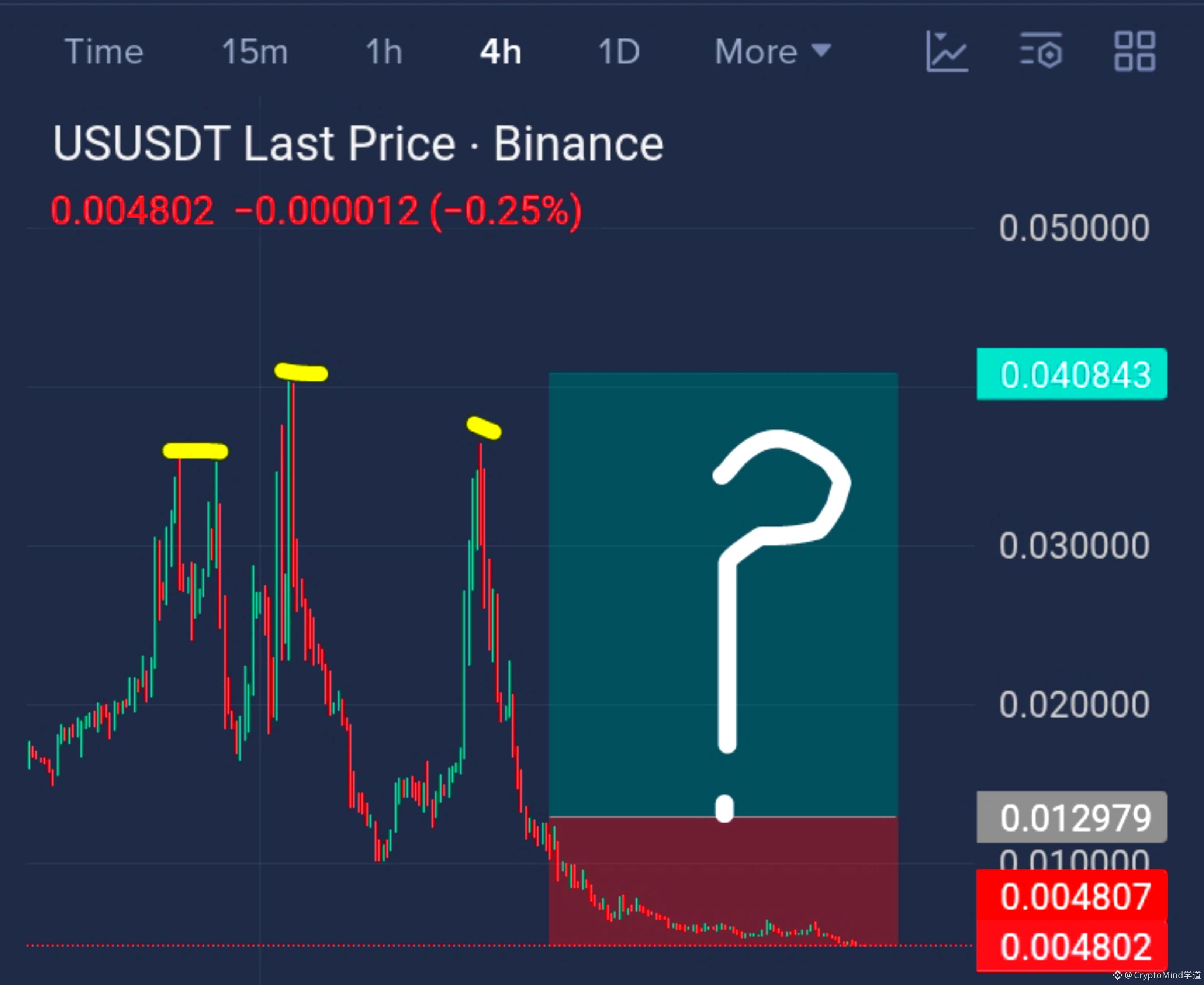
Ah yes, the universal symbol of a bagholder in deep denial: the giant question mark... 🫠
If you’re staring at $US right now, drawing imaginary support boxes and begging the chart gods for a miracle, I feel your pain.
Look at the structure. It pumped, it dumped, and now it’s completely flatlining at the bottom. You’re sitting there wondering, Will it ever go back to the top?
The problem? You are trapped in pure hopium. You refuse to cut your loss, so you just keep staring at a dead chart, hoping for a V-shaped recovery that is statistically never coming.
Stop lying to yourself. A broken chart stays broken.
The real alpha is ruthless acceptance. If the setup is invalidated and price has nuked 80% +, just take the L. If it's spot, treat it as a 100% loss in your mind and stop checking it. Save whatever margin you have left on $US and reallocate that mental energy (and capital) to coins that actually have volume and momentum.
By cutting the dead weight, you free up your mind. You stop obsessing over past mistakes and finally start spotting fresh trends.
Be honest—have you ever held a bag so long you started drawing question marks on the chart? Tag a friend who is still holding onto their dead bags. 👇💀
Ah yes, the universal symbol of a bagholder in deep denial: the giant question mark... 🫠
If you’re staring at $US right now, drawing imaginary support boxes and begging the chart gods for a miracle, I feel your pain.
Look at the structure. It pumped, it dumped, and now it’s completely flatlining at the bottom. You’re sitting there wondering, Will it ever go back to the top?
The problem? You are trapped in pure hopium. You refuse to cut your loss, so you just keep staring at a dead chart, hoping for a V-shaped recovery that is statistically never coming.
Stop lying to yourself. A broken chart stays broken.
The real alpha is ruthless acceptance. If the setup is invalidated and price has nuked 80% +, just take the L. If it's spot, treat it as a 100% loss in your mind and stop checking it. Save whatever margin you have left on $US and reallocate that mental energy (and capital) to coins that actually have volume and momentum.
By cutting the dead weight, you free up your mind. You stop obsessing over past mistakes and finally start spotting fresh trends.
Be honest—have you ever held a bag so long you started drawing question marks on the chart? Tag a friend who is still holding onto their dead bags. 👇💀
If you’re staring at $US right now, drawing imaginary support boxes and begging the chart gods for a miracle, I feel your pain.
Look at the structure. It pumped, it dumped, and now it’s completely flatlining at the bottom. You’re sitting there wondering, Will it ever go back to the top?
The problem? You are trapped in pure hopium. You refuse to cut your loss, so you just keep staring at a dead chart, hoping for a V-shaped recovery that is statistically never coming.
Stop lying to yourself. A broken chart stays broken.
The real alpha is ruthless acceptance. If the setup is invalidated and price has nuked 80% +, just take the L. If it's spot, treat it as a 100% loss in your mind and stop checking it. Save whatever margin you have left on $US and reallocate that mental energy (and capital) to coins that actually have volume and momentum.
By cutting the dead weight, you free up your mind. You stop obsessing over past mistakes and finally start spotting fresh trends.
Be honest—have you ever held a bag so long you started drawing question marks on the chart? Tag a friend who is still holding onto their dead bags. 👇💀
2
949
·
--
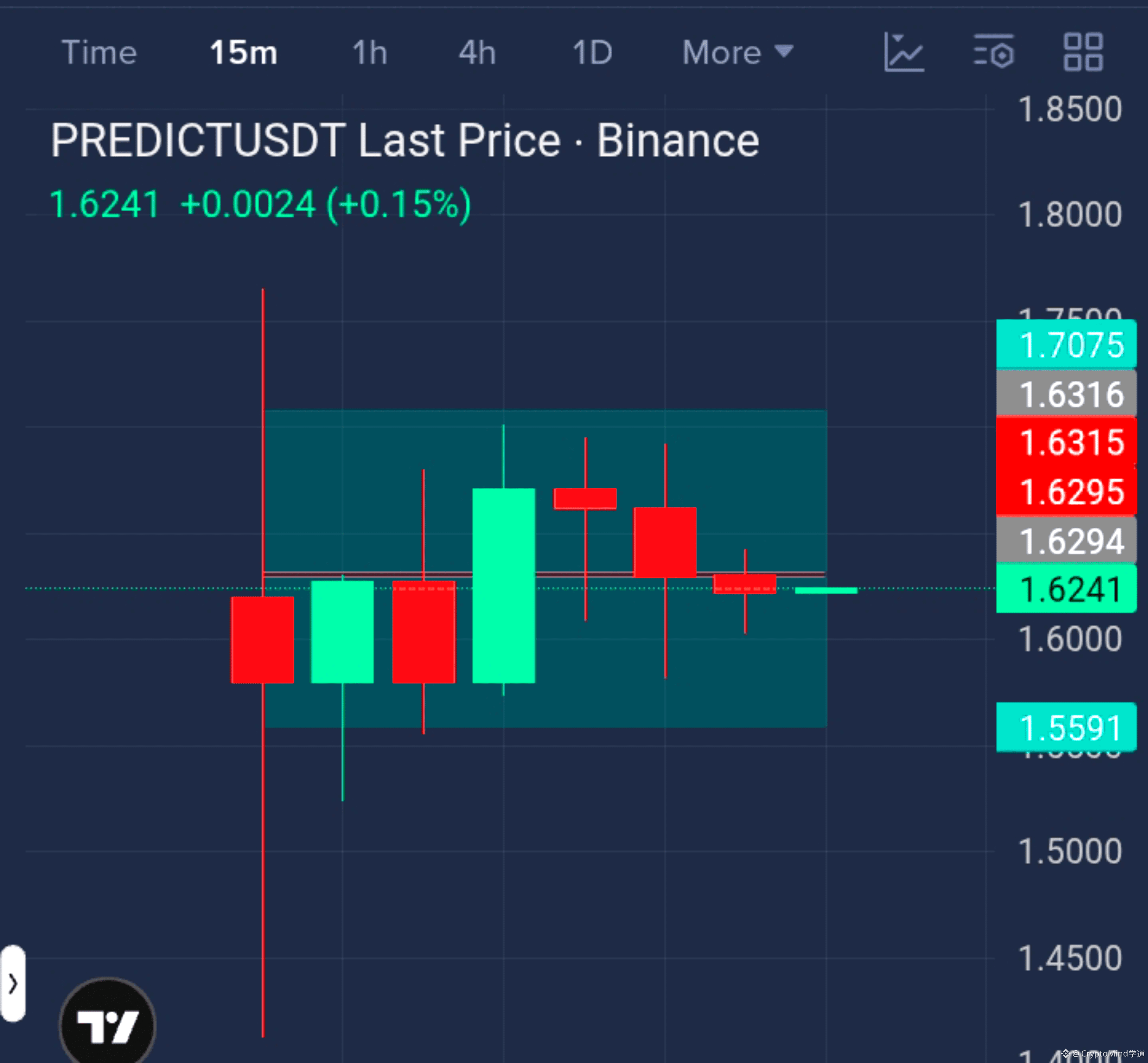
Trading pre-market tokens on a 15-minute chart is literally just donating your USDT to market makers... 🤡
Peep this $PREDICT chart. Massive wick down, crazy volatility, and now it's just chopping sideways in a tight range. Your brain is telling you it's "accumulating for a breakout."
But in reality? It’s illiquid and the spread is trash. One random wick (like the one on the left) will easily nuke your tight stop-loss on $PREDICT You're playing a rigged game against insiders.
Stop trying to front-run the launch. Wait for the real market to open. Pre-market is a playground for whales and a graveyard for retail degens. Never trade a 15m timeframe when the order book is thin enough to move the price 20% with a single market sell.
By keeping your hands in your pockets, you preserve your capital. You stop being exit liquidity for the early buyers of $PREDICT Wait for spot, let real volume come in, and trade actual structure.
Are you a degen who apes pre-market, or do you sit back and wait for spot? Drop a comment. 👇
{future}(PREDICTUSDT)
#predict #NewListing
Trading pre-market tokens on a 15-minute chart is literally just donating your USDT to market makers... 🤡
Peep this $PREDICT chart. Massive wick down, crazy volatility, and now it's just chopping sideways in a tight range. Your brain is telling you it's "accumulating for a breakout."
But in reality? It’s illiquid and the spread is trash. One random wick (like the one on the left) will easily nuke your tight stop-loss on $PREDICT You're playing a rigged game against insiders.
Stop trying to front-run the launch. Wait for the real market to open. Pre-market is a playground for whales and a graveyard for retail degens. Never trade a 15m timeframe when the order book is thin enough to move the price 20% with a single market sell.
By keeping your hands in your pockets, you preserve your capital. You stop being exit liquidity for the early buyers of $PREDICT Wait for spot, let real volume come in, and trade actual structure.
Are you a degen who apes pre-market, or do you sit back and wait for spot? Drop a comment. 👇
#predict #NewListing
Peep this $PREDICT chart. Massive wick down, crazy volatility, and now it's just chopping sideways in a tight range. Your brain is telling you it's "accumulating for a breakout."
But in reality? It’s illiquid and the spread is trash. One random wick (like the one on the left) will easily nuke your tight stop-loss on $PREDICT You're playing a rigged game against insiders.
Stop trying to front-run the launch. Wait for the real market to open. Pre-market is a playground for whales and a graveyard for retail degens. Never trade a 15m timeframe when the order book is thin enough to move the price 20% with a single market sell.
By keeping your hands in your pockets, you preserve your capital. You stop being exit liquidity for the early buyers of $PREDICT Wait for spot, let real volume come in, and trade actual structure.
Are you a degen who apes pre-market, or do you sit back and wait for spot? Drop a comment. 👇
#predict #NewListing
2
550
·
--
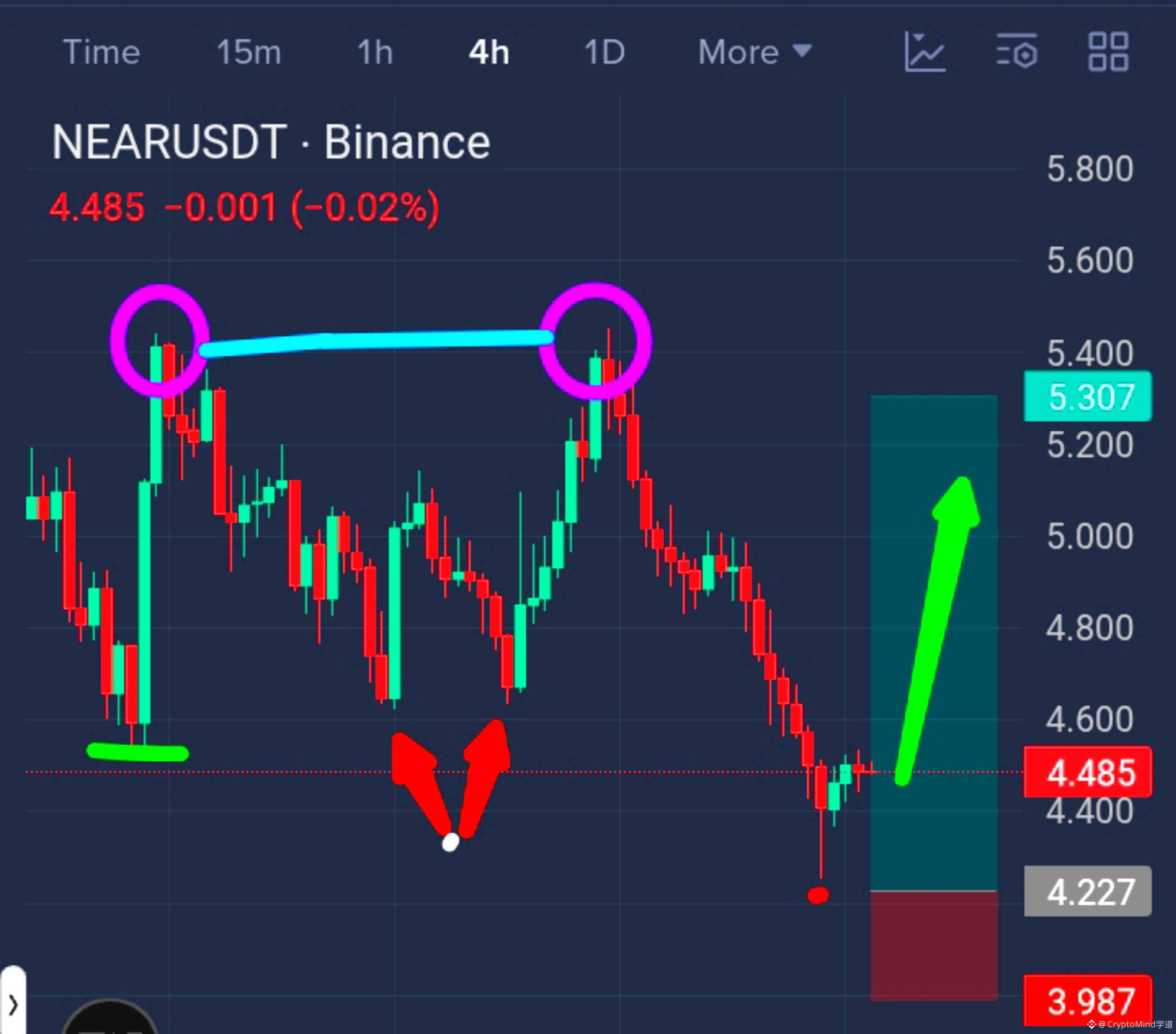
Panic selling is creating a perfect setup... 🥸
$NEAR is down, but buyers are holding the 4.48 area. That 4.25 low looks like a solid floor.
I’m accumulating spot between 4.20 and 4.40 My target is 5.30, and I’m out if it drops below 3.98
The 4.25 zone is acting as real support, making this a clean spot play.
Are you buying this dip or waiting for a bounce?
{spot}(NEARUSDT)
{future}(NEARUSDT)
Panic selling is creating a perfect setup... 🥸
$NEAR is down, but buyers are holding the 4.48 area. That 4.25 low looks like a solid floor.
I’m accumulating spot between 4.20 and 4.40 My target is 5.30, and I’m out if it drops below 3.98
The 4.25 zone is acting as real support, making this a clean spot play.
Are you buying this dip or waiting for a bounce?
$NEAR is down, but buyers are holding the 4.48 area. That 4.25 low looks like a solid floor.
I’m accumulating spot between 4.20 and 4.40 My target is 5.30, and I’m out if it drops below 3.98
The 4.25 zone is acting as real support, making this a clean spot play.
Are you buying this dip or waiting for a bounce?
161
·
--

Article
The $800 Million Lesson I Learned The Hard WayI woke up at 6 a.m. to a text from my cousin. He's 24. He started trading eight months ago. I'm done.
Bitcoin had just slipped below $80,000 for the first time since June. His entire account was gone.
Over $800 million liquidated in 24 hours. More than 213,000 traders forced out. Bitcoin longs alone accounted for $235 million of that damage.
I've been on that side before. In 2021, I was long ETH with 20x leverage, convinced I was early to a sure thing. One candle. Three minutes. Gone. I remember refreshing the page like the number would come back.
It didn't. But the lesson stuck.
Here's what nobody teaches you when you open your first leveraged position.
A liquidation isn't a loss. It's an eviction. The exchange doesn't ask for your permission. It doesn't wait for you to "wait it out." It closes you at market, at the worst possible moment, and moves on. You're not trading anymore. You're a forced seller feeding someone else's exit.
The crash didn't happen because of one headline. It happened because too many people were positioned the same way. Longs piled up. Leverage built. Then a small move down triggered margin calls. Those margin calls became market sells. Those sells pushed price lower. More margin calls. A machine eating itself.
Here's the part that still bothers me.
While retail was getting wiped out, whales were buying. Not immediately. Not at the top. But on-chain data shows large wallets accumulated aggressively during the drop. Over 9,400 BTC, roughly $770 million, moved from market makers into cold storage in October. Wallets holding 10 to 10,000 BTC added between 85,000 and 89,000 coins since mid-September.
That's not a coincidence. That's how the game works. Forced selling creates cheap supply. The people who aren't over-leveraged are the ones who get to buy it.
I'm not saying whales are villains. I'm saying leverage is a transfer mechanism. It moves money from the impatient to the patient, from the overexposed to the prepared. The crash wasn't random. It was a repricing of risk. And the people who understood that didn't get liquidated. They got filled.
The level that matters now is $80,000. Bitcoin is hovering right below it. If it reclaims $80K on a daily close, the forced selling might pause. If it doesn't, the next support sits near $78,000, then $76,000 to $77,000. Those aren't magic numbers. They're where liquidation clusters sit. The market hunts them.
But here's the real lesson, and it has nothing to do with a price level.
You don't need to predict the next move to survive this market. You need to size your positions so that being wrong doesn't end you. You need to understand that funding rates, open interest, and liquidation clusters aren't trivia. They're the map of where pain is sitting. And you need to know that when everyone is leveraged the same way, the market will find a reason to shake them out.
The crash was violent. But it was also predictable in the way all crowded trades are predictable. Not the timing. The vulnerability.
$BTC
{future}(BTCUSDT)
$ETH
{future}(ETHUSDT)
$SOL
{future}(SOLUSDT)
#crypto #RiskManagement #trading
If you got liquidated this week, did you learn something — or did you just get angry?
The $800 Million Lesson I Learned The Hard Way
I woke up at 6 a.m. to a text from my cousin. He's 24. He started trading eight months ago. I'm done.
Bitcoin had just slipped below $80,000 for the first time since June. His entire account was gone.
Over $800 million liquidated in 24 hours. More than 213,000 traders forced out. Bitcoin longs alone accounted for $235 million of that damage.
I've been on that side before. In 2021, I was long ETH with 20x leverage, convinced I was early to a sure thing. One candle. Three minutes. Gone. I remember refreshing the page like the number would come back.
It didn't. But the lesson stuck.
Here's what nobody teaches you when you open your first leveraged position.
A liquidation isn't a loss. It's an eviction. The exchange doesn't ask for your permission. It doesn't wait for you to "wait it out." It closes you at market, at the worst possible moment, and moves on. You're not trading anymore. You're a forced seller feeding someone else's exit.
The crash didn't happen because of one headline. It happened because too many people were positioned the same way. Longs piled up. Leverage built. Then a small move down triggered margin calls. Those margin calls became market sells. Those sells pushed price lower. More margin calls. A machine eating itself.
Here's the part that still bothers me.
While retail was getting wiped out, whales were buying. Not immediately. Not at the top. But on-chain data shows large wallets accumulated aggressively during the drop. Over 9,400 BTC, roughly $770 million, moved from market makers into cold storage in October. Wallets holding 10 to 10,000 BTC added between 85,000 and 89,000 coins since mid-September.
That's not a coincidence. That's how the game works. Forced selling creates cheap supply. The people who aren't over-leveraged are the ones who get to buy it.
I'm not saying whales are villains. I'm saying leverage is a transfer mechanism. It moves money from the impatient to the patient, from the overexposed to the prepared. The crash wasn't random. It was a repricing of risk. And the people who understood that didn't get liquidated. They got filled.
The level that matters now is $80,000. Bitcoin is hovering right below it. If it reclaims $80K on a daily close, the forced selling might pause. If it doesn't, the next support sits near $78,000, then $76,000 to $77,000. Those aren't magic numbers. They're where liquidation clusters sit. The market hunts them.
But here's the real lesson, and it has nothing to do with a price level.
You don't need to predict the next move to survive this market. You need to size your positions so that being wrong doesn't end you. You need to understand that funding rates, open interest, and liquidation clusters aren't trivia. They're the map of where pain is sitting. And you need to know that when everyone is leveraged the same way, the market will find a reason to shake them out.
The crash was violent. But it was also predictable in the way all crowded trades are predictable. Not the timing. The vulnerability.
$BTC
$ETH
$SOL
#crypto #RiskManagement #trading
If you got liquidated this week, did you learn something — or did you just get angry?
Bitcoin had just slipped below $80,000 for the first time since June. His entire account was gone.
Over $800 million liquidated in 24 hours. More than 213,000 traders forced out. Bitcoin longs alone accounted for $235 million of that damage.
I've been on that side before. In 2021, I was long ETH with 20x leverage, convinced I was early to a sure thing. One candle. Three minutes. Gone. I remember refreshing the page like the number would come back.
It didn't. But the lesson stuck.
Here's what nobody teaches you when you open your first leveraged position.
A liquidation isn't a loss. It's an eviction. The exchange doesn't ask for your permission. It doesn't wait for you to "wait it out." It closes you at market, at the worst possible moment, and moves on. You're not trading anymore. You're a forced seller feeding someone else's exit.
The crash didn't happen because of one headline. It happened because too many people were positioned the same way. Longs piled up. Leverage built. Then a small move down triggered margin calls. Those margin calls became market sells. Those sells pushed price lower. More margin calls. A machine eating itself.
Here's the part that still bothers me.
While retail was getting wiped out, whales were buying. Not immediately. Not at the top. But on-chain data shows large wallets accumulated aggressively during the drop. Over 9,400 BTC, roughly $770 million, moved from market makers into cold storage in October. Wallets holding 10 to 10,000 BTC added between 85,000 and 89,000 coins since mid-September.
That's not a coincidence. That's how the game works. Forced selling creates cheap supply. The people who aren't over-leveraged are the ones who get to buy it.
I'm not saying whales are villains. I'm saying leverage is a transfer mechanism. It moves money from the impatient to the patient, from the overexposed to the prepared. The crash wasn't random. It was a repricing of risk. And the people who understood that didn't get liquidated. They got filled.
The level that matters now is $80,000. Bitcoin is hovering right below it. If it reclaims $80K on a daily close, the forced selling might pause. If it doesn't, the next support sits near $78,000, then $76,000 to $77,000. Those aren't magic numbers. They're where liquidation clusters sit. The market hunts them.
But here's the real lesson, and it has nothing to do with a price level.
You don't need to predict the next move to survive this market. You need to size your positions so that being wrong doesn't end you. You need to understand that funding rates, open interest, and liquidation clusters aren't trivia. They're the map of where pain is sitting. And you need to know that when everyone is leveraged the same way, the market will find a reason to shake them out.
The crash was violent. But it was also predictable in the way all crowded trades are predictable. Not the timing. The vulnerability.
$BTC
$ETH
$SOL
#crypto #RiskManagement #trading
If you got liquidated this week, did you learn something — or did you just get angry?
1
163
·
--
Article
The Night a 280% Rally Turned Into a TrapI woke up at 5:40 a.m. to a text from a friend I hadn't heard from in months. "Did you see IRYS?"
I opened the chart. My coffee went cold before I took another sip.
Over 280% in 24 hours. From roughly $0.025 to $0.32. Then a collapse back to $0.10. The perpetual futures spiked 780% in four hours to $0.50 before gravity remembered they existed.
$24.2 million liquidated in a single day. $21.4 million of that was shorts.
I've been on that side before. Back in 2021, I shorted a low-cap coin at what I swore was the top. Funding was negative, the crowd was bearish, it felt obvious. Then a single green candle took me out in under three minutes. I remember refreshing the page like the number would come back.
Here's what actually happened.
IRYS didn't rally because of a breakthrough. The project's mid-October update was a storage product iteration. Nothing new hit the tape on October 24. The move was mechanical. Shorts piled in expecting the token to stay dead. It didn't. Forced buying kicked in, price ripped, more shorts got liquidated, and the loop fed itself.
A classic squeeze. Not adoption. Not demand. Positioning.
The crowd on X is calling it a "breakout." They're posting rocket emojis and drawing trendlines. Nobody's mentioning that the token gave back two-thirds of its gains in hours. Nobody's mentioning that the people who bought at $0.30 are now underwater while the squeeze architects are flat.
Here's the part nobody's saying.
The spot bid never confirmed the move. The perp market did all the work. Open interest exploded while spot volume lagged. That's not a healthy rally. That's a leverage-driven event that was always going to reverse.
And it did. Violently.
I'm not bearish on the tech. Storage chains might matter someday. But this move wasn't about the tech. It was about trapped shorts and thin order books.
The level that matters now is $0.10 That's where IRYS settled after the chaos. If it holds on a daily close, maybe a real base forms. If it breaks? The people who chased the pump become the next wave of forced sellers. The same cascade that ripped shorts apart can run in reverse.
Liquidation cascades don't tell you direction. They tell you positioning. And the positioning just got violently reset in one direction. The other side is now crowded.
$IRYS
{future}(IRYSUSDT)
$ORDI
{future}(ORDIUSDT)
$ENA
{future}(ENAUSDT)
#crypto #altcoins #liquidation
If you chased that green candle, did you learn something — or did you just get angry?
The Night a 280% Rally Turned Into a Trap
I woke up at 5:40 a.m. to a text from a friend I hadn't heard from in months. "Did you see IRYS?"
I opened the chart. My coffee went cold before I took another sip.
Over 280% in 24 hours. From roughly $0.025 to $0.32. Then a collapse back to $0.10. The perpetual futures spiked 780% in four hours to $0.50 before gravity remembered they existed.
$24.2 million liquidated in a single day. $21.4 million of that was shorts.
I've been on that side before. Back in 2021, I shorted a low-cap coin at what I swore was the top. Funding was negative, the crowd was bearish, it felt obvious. Then a single green candle took me out in under three minutes. I remember refreshing the page like the number would come back.
Here's what actually happened.
IRYS didn't rally because of a breakthrough. The project's mid-October update was a storage product iteration. Nothing new hit the tape on October 24. The move was mechanical. Shorts piled in expecting the token to stay dead. It didn't. Forced buying kicked in, price ripped, more shorts got liquidated, and the loop fed itself.
A classic squeeze. Not adoption. Not demand. Positioning.
The crowd on X is calling it a "breakout." They're posting rocket emojis and drawing trendlines. Nobody's mentioning that the token gave back two-thirds of its gains in hours. Nobody's mentioning that the people who bought at $0.30 are now underwater while the squeeze architects are flat.
Here's the part nobody's saying.
The spot bid never confirmed the move. The perp market did all the work. Open interest exploded while spot volume lagged. That's not a healthy rally. That's a leverage-driven event that was always going to reverse.
And it did. Violently.
I'm not bearish on the tech. Storage chains might matter someday. But this move wasn't about the tech. It was about trapped shorts and thin order books.
The level that matters now is $0.10 That's where IRYS settled after the chaos. If it holds on a daily close, maybe a real base forms. If it breaks? The people who chased the pump become the next wave of forced sellers. The same cascade that ripped shorts apart can run in reverse.
Liquidation cascades don't tell you direction. They tell you positioning. And the positioning just got violently reset in one direction. The other side is now crowded.
$IRYS
$ORDI
$ENA
#crypto #altcoins #liquidation
If you chased that green candle, did you learn something — or did you just get angry?
I opened the chart. My coffee went cold before I took another sip.
Over 280% in 24 hours. From roughly $0.025 to $0.32. Then a collapse back to $0.10. The perpetual futures spiked 780% in four hours to $0.50 before gravity remembered they existed.
$24.2 million liquidated in a single day. $21.4 million of that was shorts.
I've been on that side before. Back in 2021, I shorted a low-cap coin at what I swore was the top. Funding was negative, the crowd was bearish, it felt obvious. Then a single green candle took me out in under three minutes. I remember refreshing the page like the number would come back.
Here's what actually happened.
IRYS didn't rally because of a breakthrough. The project's mid-October update was a storage product iteration. Nothing new hit the tape on October 24. The move was mechanical. Shorts piled in expecting the token to stay dead. It didn't. Forced buying kicked in, price ripped, more shorts got liquidated, and the loop fed itself.
A classic squeeze. Not adoption. Not demand. Positioning.
The crowd on X is calling it a "breakout." They're posting rocket emojis and drawing trendlines. Nobody's mentioning that the token gave back two-thirds of its gains in hours. Nobody's mentioning that the people who bought at $0.30 are now underwater while the squeeze architects are flat.
Here's the part nobody's saying.
The spot bid never confirmed the move. The perp market did all the work. Open interest exploded while spot volume lagged. That's not a healthy rally. That's a leverage-driven event that was always going to reverse.
And it did. Violently.
I'm not bearish on the tech. Storage chains might matter someday. But this move wasn't about the tech. It was about trapped shorts and thin order books.
The level that matters now is $0.10 That's where IRYS settled after the chaos. If it holds on a daily close, maybe a real base forms. If it breaks? The people who chased the pump become the next wave of forced sellers. The same cascade that ripped shorts apart can run in reverse.
Liquidation cascades don't tell you direction. They tell you positioning. And the positioning just got violently reset in one direction. The other side is now crowded.
$IRYS
$ORDI
$ENA
#crypto #altcoins #liquidation
If you chased that green candle, did you learn something — or did you just get angry?
771
·
--
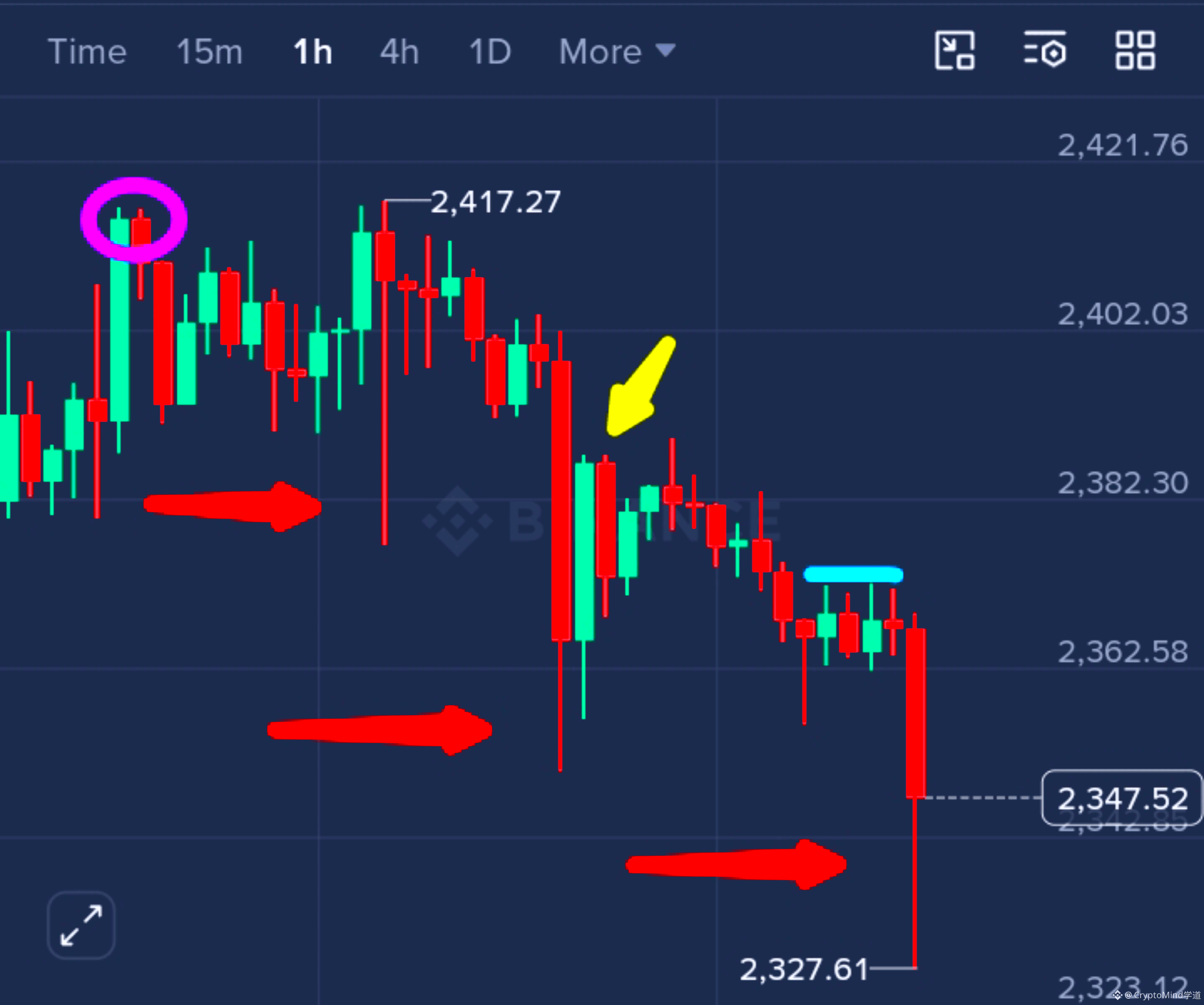
They panic dumped. I see a perfectly engineered liquidity hunt... 👀
the crowd is panic dumping into 2,347 their defenses are piled just below 2,327 Whales need that volume to fill.
Wait for the 1H candle to close. If price sweeps 2,327 the downside is dead.
Expect a violent reaction for $ETH toward 2,382
I will only act if the 1h closes above 2,362 Catching this falling blade is madness.
Will you surrender your bags to the bottom hunters?
{future}(ETHUSDT)
#ETH #ethdump
They panic dumped. I see a perfectly engineered liquidity hunt... 👀
the crowd is panic dumping into 2,347 their defenses are piled just below 2,327 Whales need that volume to fill.
Wait for the 1H candle to close. If price sweeps 2,327 the downside is dead.
Expect a violent reaction for $ETH toward 2,382
I will only act if the 1h closes above 2,362 Catching this falling blade is madness.
Will you surrender your bags to the bottom hunters?
#ETH #ethdump
the crowd is panic dumping into 2,347 their defenses are piled just below 2,327 Whales need that volume to fill.
Wait for the 1H candle to close. If price sweeps 2,327 the downside is dead.
Expect a violent reaction for $ETH toward 2,382
I will only act if the 1h closes above 2,362 Catching this falling blade is madness.
Will you surrender your bags to the bottom hunters?
#ETH #ethdump
130
·
--
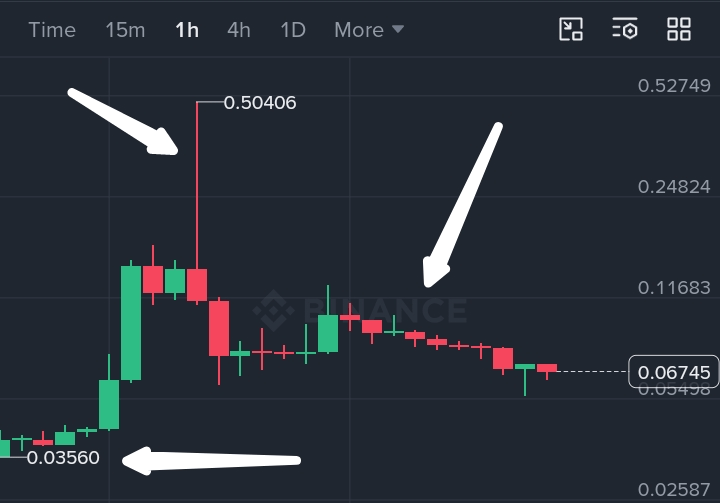
Chasing this green candle is a massive mistake
They are desperately praying 0.06745 holds. Their real safety nets hide right beneath 0.03560 The engine smells that panic and needs that fuel to fill heavy bags.
Wait for the 1H candle to close. If price sweeps 0.03560, the downside flush is finally over.
Expect a mechanical reaction for $IRYS toward 0.11683
I will only act if the 1h closes above 0.06745 Catching this early is suicide.
Will you keep feeding the whales or finally protect your capital?
{future}(IRYSUSDT)
Chasing this green candle is a massive mistake
They are desperately praying 0.06745 holds. Their real safety nets hide right beneath 0.03560 The engine smells that panic and needs that fuel to fill heavy bags.
Wait for the 1H candle to close. If price sweeps 0.03560, the downside flush is finally over.
Expect a mechanical reaction for $IRYS toward 0.11683
I will only act if the 1h closes above 0.06745 Catching this early is suicide.
Will you keep feeding the whales or finally protect your capital?
They are desperately praying 0.06745 holds. Their real safety nets hide right beneath 0.03560 The engine smells that panic and needs that fuel to fill heavy bags.
Wait for the 1H candle to close. If price sweeps 0.03560, the downside flush is finally over.
Expect a mechanical reaction for $IRYS toward 0.11683
I will only act if the 1h closes above 0.06745 Catching this early is suicide.
Will you keep feeding the whales or finally protect your capital?
1
257
·
--
Bullish
🥶 TOP 3 EXTREME VOLATILITY MOVERS — WHO GETS REKT NEXT? 📉 🔥
🥇 $IRYS — $0.08668 | Target $0.10253 💀
🥈 $BIRB — $0.15737 | Target $0.20325 🚀
🥉 $MAGMA — $0.28760 | Target $0.31337 📉
⚠️ We’ve got parabolic spikes and brutal wicks as volatility goes absolutely crazy right now. the key question now isn't just who bounces? — it's who survives the next hourly candle?
{future}(IRYSUSDT)
{future}(BIRBUSDT)
{future}(MAGMAUSDT)
Could MAGMA bounce from $0.2826, or is a deeper flush coming?
Which one bounces first? 👀📈
🥶 TOP 3 EXTREME VOLATILITY MOVERS — WHO GETS REKT NEXT? 📉 🔥
🥇 $IRYS — $0.08668 | Target $0.10253 💀
🥈 $BIRB — $0.15737 | Target $0.20325 🚀
🥉 $MAGMA — $0.28760 | Target $0.31337 📉
⚠️ We’ve got parabolic spikes and brutal wicks as volatility goes absolutely crazy right now. the key question now isn't just who bounces? — it's who survives the next hourly candle?
Could MAGMA bounce from $0.2826, or is a deeper flush coming?
Which one bounces first? 👀📈
🥇 $IRYS — $0.08668 | Target $0.10253 💀
🥈 $BIRB — $0.15737 | Target $0.20325 🚀
🥉 $MAGMA — $0.28760 | Target $0.31337 📉
⚠️ We’ve got parabolic spikes and brutal wicks as volatility goes absolutely crazy right now. the key question now isn't just who bounces? — it's who survives the next hourly candle?
Could MAGMA bounce from $0.2826, or is a deeper flush coming?
Which one bounces first? 👀📈
$IRYS
22%
$BIRB
56%
$MAGMA
22%
27 votes • Voting closed
2.3k
·
--
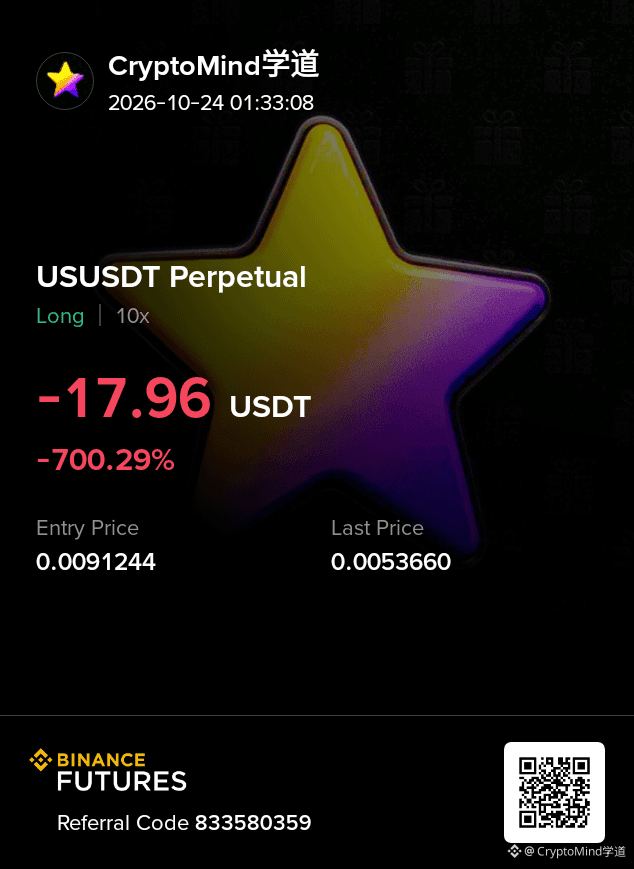
I am officially the best reverse indicator in crypto right now... 📉 😭
10x Long on $US and it nuked my margin instantly. -700% ROI... 💔
Please tell me I’m not the only one getting destroyed today...
I am officially the best reverse indicator in crypto right now... 📉 😭
10x Long on $US and it nuked my margin instantly. -700% ROI... 💔
Please tell me I’m not the only one getting destroyed today...
10x Long on $US and it nuked my margin instantly. -700% ROI... 💔
Please tell me I’m not the only one getting destroyed today...
4
1k
·
--
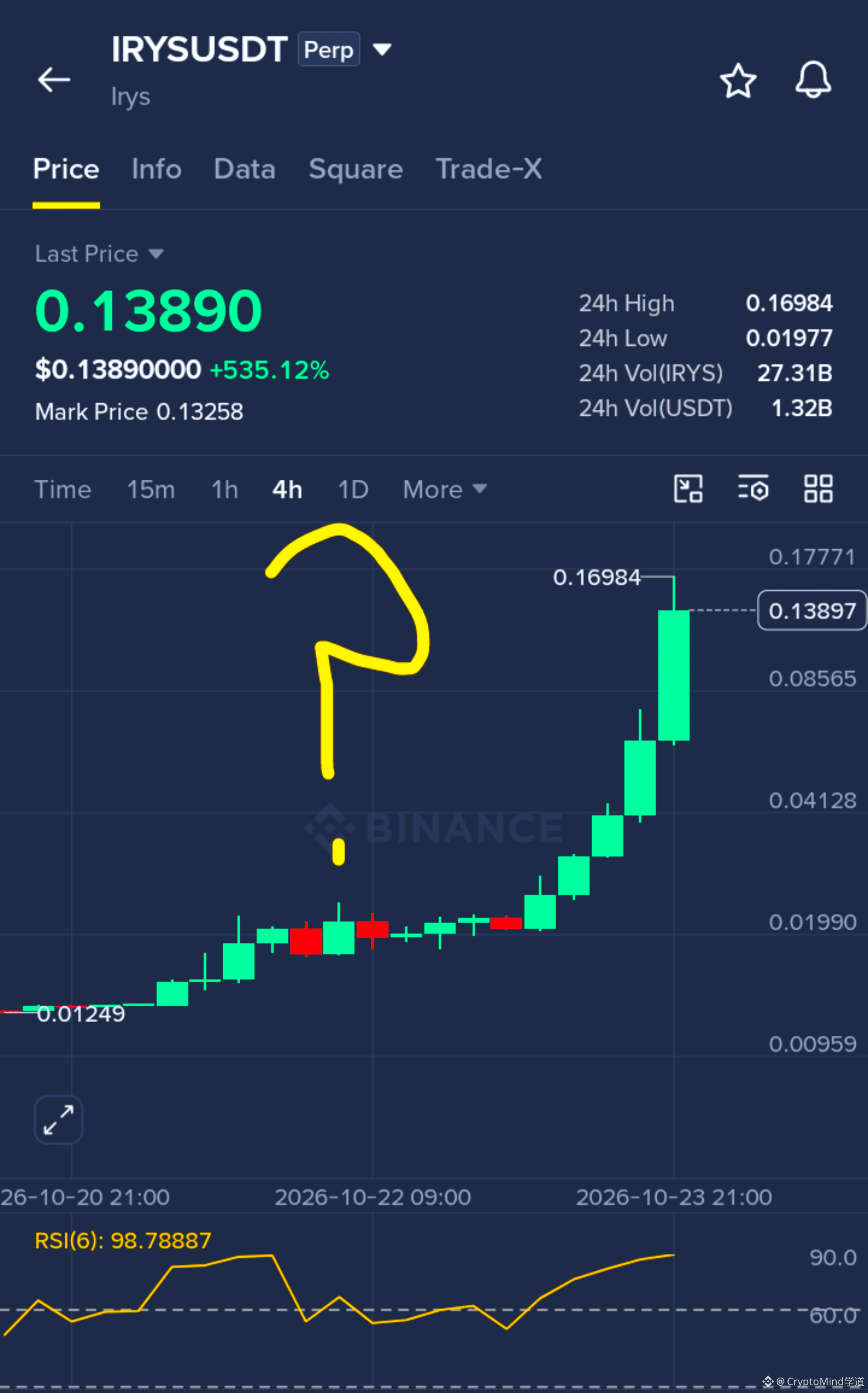
$IRYS EXHAUSTION CANDLE SHORTS READY
Candle won't wait. Fading now. 💵
entry 0.13500 - 0.14500
targets 0.08565 - 0.04128 - 0.01990
stop 0.17500
{future}(IRYSUSDT)
$IRYS EXHAUSTION CANDLE SHORTS READY
Candle won't wait. Fading now. 💵
entry 0.13500 - 0.14500
targets 0.08565 - 0.04128 - 0.01990
stop 0.17500
Candle won't wait. Fading now. 💵
entry 0.13500 - 0.14500
targets 0.08565 - 0.04128 - 0.01990
stop 0.17500
345
·
--
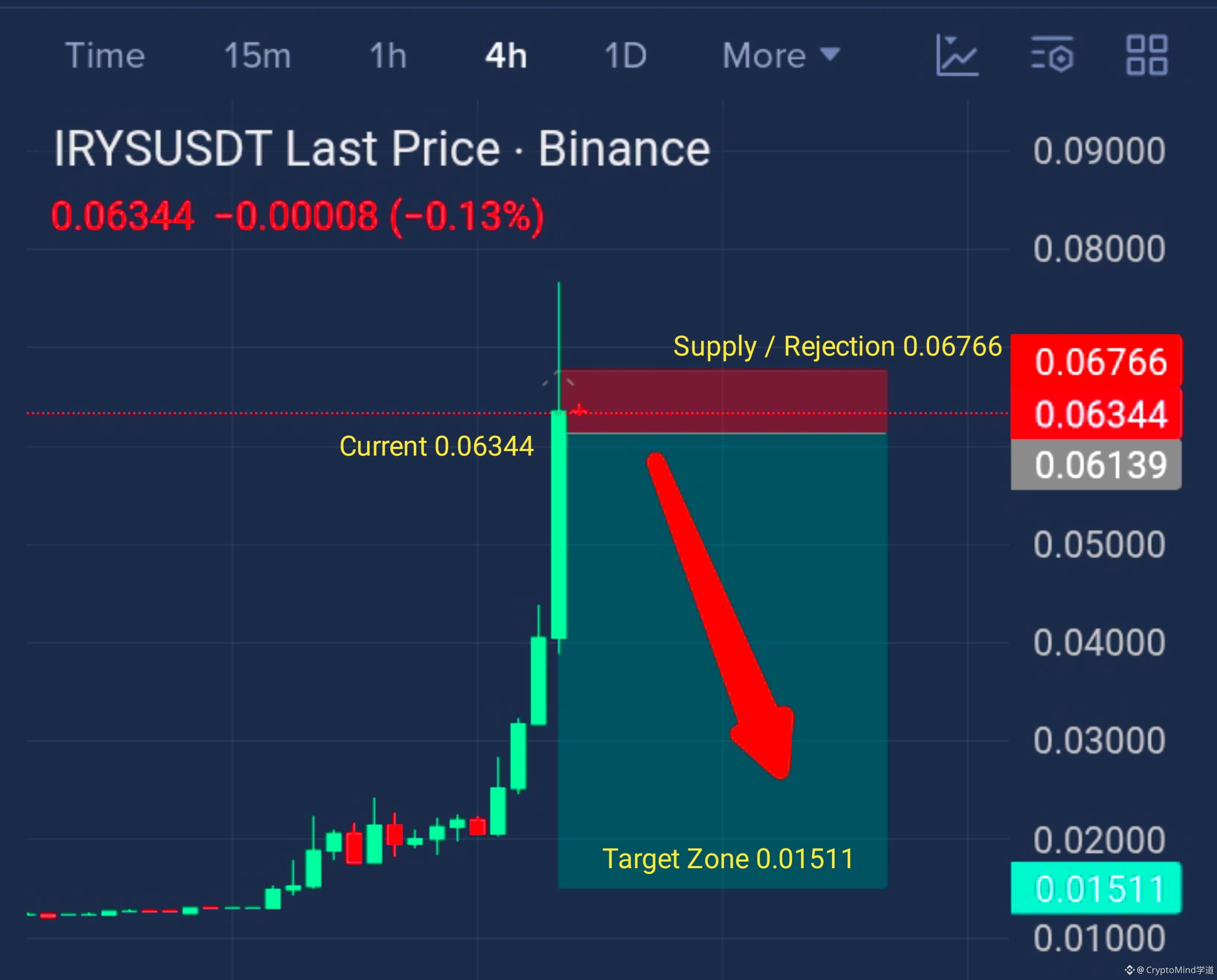
Drawing a big red arrow on a +255% chart is the fastest way to get liquidated... 💀
You look at $IRYS pumping vertically and your brain instantly screams, It’s overbought! Short it! So you open a short, feeling like a genius.
But the market is a ruthless beast. Whales see your stop-losses sitting right there and use them as fuel. It wicks up another 50%, completely liquidates your position, and then it actually dumps. You get rekt while the insiders take your money to the bank.
Stop trying to catch a falling knife in reverse.
The real alpha? Never short a vertical pump. Let the chart actually print a lower high and break market structure before you even think about touching the short button. Better yet, realize that these illiquid 200% casino tokens are heavily manipulated—your TA means nothing to a whale with a massive bag.
By keeping your hands off the trigger, you save your margin from absolute obliteration. You avoid the ultimate psychological damage of being right about the direction, but getting stopped out right before the drop
Fess up. Have you ever shorted a pump like this just to get squeezed into oblivion? Drop the ticker below. 👇😅
{future}(IRYSUSDT)
#Irys #IRYSUSDT #Top_Gainers
Drawing a big red arrow on a +255% chart is the fastest way to get liquidated... 💀
You look at $IRYS pumping vertically and your brain instantly screams, It’s overbought! Short it! So you open a short, feeling like a genius.
But the market is a ruthless beast. Whales see your stop-losses sitting right there and use them as fuel. It wicks up another 50%, completely liquidates your position, and then it actually dumps. You get rekt while the insiders take your money to the bank.
Stop trying to catch a falling knife in reverse.
The real alpha? Never short a vertical pump. Let the chart actually print a lower high and break market structure before you even think about touching the short button. Better yet, realize that these illiquid 200% casino tokens are heavily manipulated—your TA means nothing to a whale with a massive bag.
By keeping your hands off the trigger, you save your margin from absolute obliteration. You avoid the ultimate psychological damage of being right about the direction, but getting stopped out right before the drop
Fess up. Have you ever shorted a pump like this just to get squeezed into oblivion? Drop the ticker below. 👇😅
#Irys #IRYSUSDT #Top_Gainers
You look at $IRYS pumping vertically and your brain instantly screams, It’s overbought! Short it! So you open a short, feeling like a genius.
But the market is a ruthless beast. Whales see your stop-losses sitting right there and use them as fuel. It wicks up another 50%, completely liquidates your position, and then it actually dumps. You get rekt while the insiders take your money to the bank.
Stop trying to catch a falling knife in reverse.
The real alpha? Never short a vertical pump. Let the chart actually print a lower high and break market structure before you even think about touching the short button. Better yet, realize that these illiquid 200% casino tokens are heavily manipulated—your TA means nothing to a whale with a massive bag.
By keeping your hands off the trigger, you save your margin from absolute obliteration. You avoid the ultimate psychological damage of being right about the direction, but getting stopped out right before the drop
Fess up. Have you ever shorted a pump like this just to get squeezed into oblivion? Drop the ticker below. 👇😅
#Irys #IRYSUSDT #Top_Gainers
614
·
--
Bearish
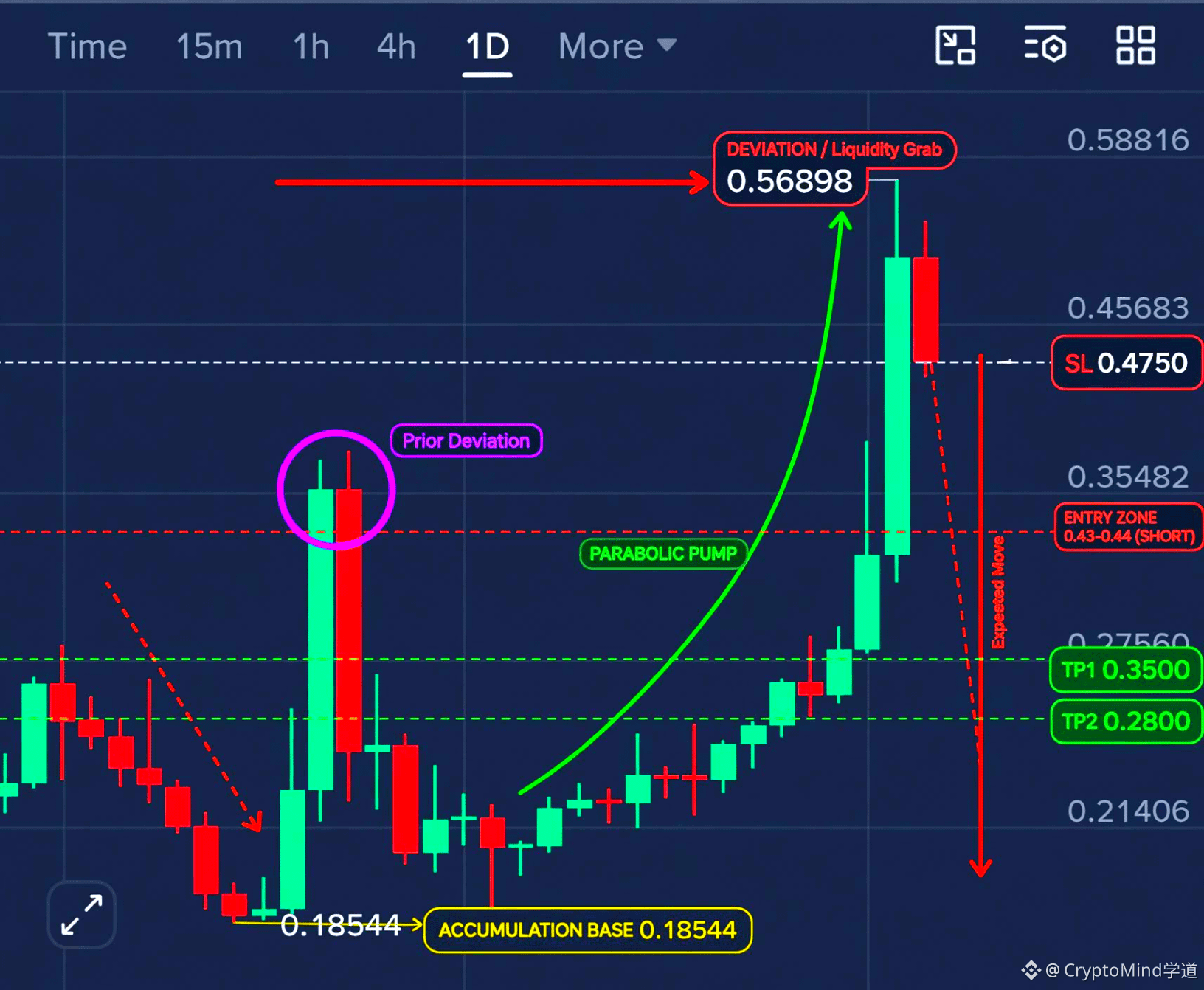
Stop buying this $MAGMA dip right now.
this is a SHORT setup. That massive rejection wick at 0.5689 tells you exactly where smart money unloaded. Now the daily candle is bleeding heavy (-18%) and retail is trying to catch a falling knife into a 61% bid wall—which is nothing but exit liquidity. the RSI just rolled over from extreme overbought; the path of least resistance is down.
Entry: 0.4300 - 0.4400
Tp1: 0.3500
Tp2: 0.2800
Stop Loss: 0.4750
I’m waiting for a 4H lower high to form before pulling the trigger. If price reclaims 0.48 with volume, this setup is dead.
Are you fading this pump or trying to catch the knife on $MAGMA ? Follow for elite setups.
{future}(MAGMAUSDT)
Stop buying this $MAGMA dip right now.
this is a SHORT setup. That massive rejection wick at 0.5689 tells you exactly where smart money unloaded. Now the daily candle is bleeding heavy (-18%) and retail is trying to catch a falling knife into a 61% bid wall—which is nothing but exit liquidity. the RSI just rolled over from extreme overbought; the path of least resistance is down.
Entry: 0.4300 - 0.4400
Tp1: 0.3500
Tp2: 0.2800
Stop Loss: 0.4750
I’m waiting for a 4H lower high to form before pulling the trigger. If price reclaims 0.48 with volume, this setup is dead.
Are you fading this pump or trying to catch the knife on $MAGMA ? Follow for elite setups.
this is a SHORT setup. That massive rejection wick at 0.5689 tells you exactly where smart money unloaded. Now the daily candle is bleeding heavy (-18%) and retail is trying to catch a falling knife into a 61% bid wall—which is nothing but exit liquidity. the RSI just rolled over from extreme overbought; the path of least resistance is down.
Entry: 0.4300 - 0.4400
Tp1: 0.3500
Tp2: 0.2800
Stop Loss: 0.4750
I’m waiting for a 4H lower high to form before pulling the trigger. If price reclaims 0.48 with volume, this setup is dead.
Are you fading this pump or trying to catch the knife on $MAGMA ? Follow for elite setups.
384
·
--
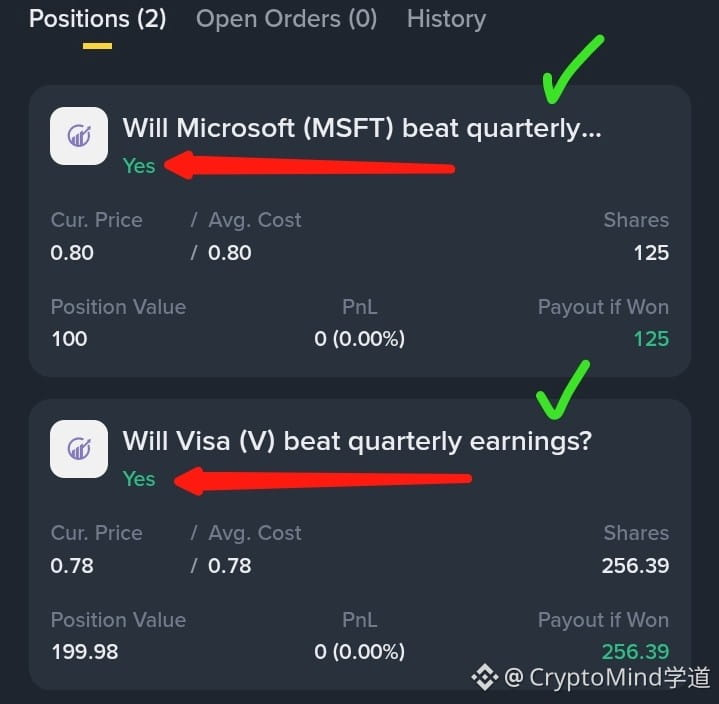
Just locked in my predictions for this earnings season, and I’m going heavy on two absolute giants. 🎯
I predicted YES for both Microsoft ($MSFT) and Visa ($V)
Here is my logic.
$MSFT is firing on all cylinders right now. Their AI integration and Azure cloud growth are just too strong to ignore. I really don't see them missing expectations this quarter.
For $V, it’s simple. It’s a bulletproof business model. No matter what the market does, people will always swipe their cards. The digital payments volume keeps growing globally.
I’ve put my points where my mouth is. Now the waiting game begins.
What about you guys? Are you betting on the tech giants this season, or playing it safe? Let me know your picks below 👇
{future}(MSFTUSDT)
{future}(VUSDT)
$MSFT
$V
#EarningsSeason #BinancePick
Just locked in my predictions for this earnings season, and I’m going heavy on two absolute giants. 🎯
I predicted YES for both Microsoft ($MSFT ) and Visa ($V )
Here is my logic.
$MSFT is firing on all cylinders right now. Their AI integration and Azure cloud growth are just too strong to ignore. I really don't see them missing expectations this quarter.
For $V , it’s simple. It’s a bulletproof business model. No matter what the market does, people will always swipe their cards. The digital payments volume keeps growing globally.
I’ve put my points where my mouth is. Now the waiting game begins.
What about you guys? Are you betting on the tech giants this season, or playing it safe? Let me know your picks below 👇
$MSFT
$V
#EarningsSeason #BinancePick
I predicted YES for both Microsoft ($MSFT ) and Visa ($V )
Here is my logic.
$MSFT is firing on all cylinders right now. Their AI integration and Azure cloud growth are just too strong to ignore. I really don't see them missing expectations this quarter.
For $V , it’s simple. It’s a bulletproof business model. No matter what the market does, people will always swipe their cards. The digital payments volume keeps growing globally.
I’ve put my points where my mouth is. Now the waiting game begins.
What about you guys? Are you betting on the tech giants this season, or playing it safe? Let me know your picks below 👇
$MSFT
$V
#EarningsSeason #BinancePick
264
·
--
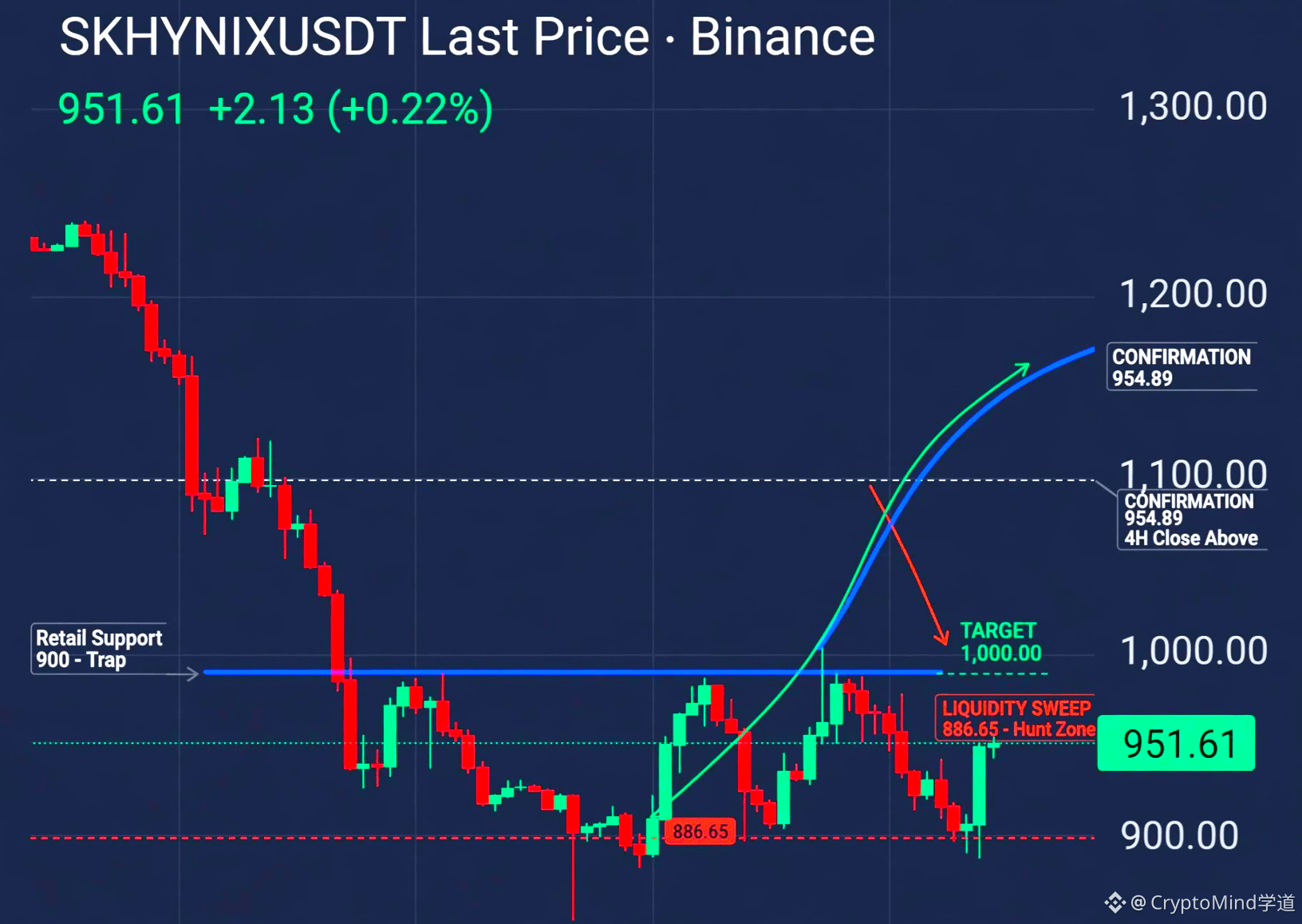
You see support at 900 I see a trap 🧐
Retail defenses sit directly below 900 the market engine will aggressively hunt 886.65 to fill heavy orders.
Wait for the 4H candle to close. If price sweeps 886.65, the real move begins.
Expect a violent reaction for $SKHYNIX toward 1,000.00
I will only act if the 4h closes above 954.89 Anything below that is just noise.
Will you surrender your capital to the whales or wait for structure to shift?
{future}(SKHYNIXUSDT)
You see support at 900 I see a trap 🧐
Retail defenses sit directly below 900 the market engine will aggressively hunt 886.65 to fill heavy orders.
Wait for the 4H candle to close. If price sweeps 886.65, the real move begins.
Expect a violent reaction for $SKHYNIX toward 1,000.00
I will only act if the 4h closes above 954.89 Anything below that is just noise.
Will you surrender your capital to the whales or wait for structure to shift?
Retail defenses sit directly below 900 the market engine will aggressively hunt 886.65 to fill heavy orders.
Wait for the 4H candle to close. If price sweeps 886.65, the real move begins.
Expect a violent reaction for $SKHYNIX toward 1,000.00
I will only act if the 4h closes above 954.89 Anything below that is just noise.
Will you surrender your capital to the whales or wait for structure to shift?
463
·
--

Article
The Crowd Is Paying To Hold A Falling KnifeListen guys the tape feels heavy right now. One session just closed, another is grinding through the middle, and the next hasn't even blinked yet.
$1000PEPE Price is pinned at 0.0043936, down roughly 5% on the day. The candles barely moved in the last stretch, but that stillness isn't peaceful.
It's the kind of pause that shows up right before the book decides who gets paid and who gets liquidated. Something in that silence caught my eye — a lack of buyers, not a lack of sellers.
I've seen this movie before, and it rarely ends well for the crowd that's leaning the wrong way.
Let's look at the data, because the numbers are telling a story the price hasn't fully admitted yet. Open interest across the board is sitting at $154.24 million, up 10.10% over the last twenty-four hours.
Binance alone saw its open interest jump 12.41% to $79.85 million. That's fresh money stepping in while the price bleeds.
But here's the part that should make you pause. The average funding rate is positive, hovering around +0.0100%, with longs paying shorts.
Think about that for a second. The price is dropping, yet the leverage is still long-heavy. The crowd isn't just holding — they're paying a premium to stay in.
On Binance specifically, the funding rate is actually negative at -0.0025%, but the aggregated picture across venues shows longs still carrying the burden. That kind of split tells me the positioning is messy.
There was a real catalyst too. A whale scooped up 600.8 billion $PEPE for roughly $4.97 million just eight hours ago
That's not a small retail click. That's a size bid stepping into a thin order book, and the wallet still holds $1 million in USDC ready to deploy.
So why isn't price ripping? Because the tape is asking a different question right now. The memecoin index is down over 5%, and the broader alt complex is bleeding into Bitcoin's dominance.
The whale buying doesn't mean the bleeding is over. It just means one player is willing to catch the knife.
Above 0.00470 and I'm watching 0.00485, then 0.00500. Lose 0.00433 and I'm done.
That 0.00433 shelf isn't just a random number. It's the last line of defense before the wick to 0.00363 becomes the next magnet.
If that level breaks, the longs paying positive funding will start to feel the squeeze. That's when the real liquidation cascade begins.
{spot}(PEPEUSDT)
{future}(1000PEPEUSDT)
Bitcoin is holding near $82,000 after briefly tagging $84,000 and fading. Dominance is sitting at 59.88%, the highest level since May.
Money isn't rotating into alts. It's hiding in Bitcoin, and the memecoin complex is taking the brunt of it.
The room is positioned for a bounce. They're looking at the whale buy and the oversold RSI and telling themselves the bottom is in.
I think they're early. The funding rate says the long side is still too comfortable, and comfort is expensive in this market.
I remember holding a long through a positive funding print because the chart looked like it was basing. I kept telling myself the sellers were exhausted.
I added margin twice, just to avoid the liquidation engine. By the time I closed it, I had given back three weeks of gains.
The lesson wasn't about the chart. It was about respecting the book. When the crowd is paying to hold and the price won't move, the crowd is the exit liquidity.
I thought I was smarter than the funding rate. I wasn't.
The RSI is sitting at 33.65, which looks oversold on paper. But oversold in a positive-funding environment is a trap, not a gift.
The market doesn't care about your indicators when the leverage is stacked against you. It cares about who blinks first.
So the question isn't whether this bounces. It's whether you're the one paying for the bounce. Are you fading this bleed or catching the knife? Drop your bias below.
The Crowd Is Paying To Hold A Falling Knife
Listen guys the tape feels heavy right now. One session just closed, another is grinding through the middle, and the next hasn't even blinked yet.
$1000PEPE Price is pinned at 0.0043936, down roughly 5% on the day. The candles barely moved in the last stretch, but that stillness isn't peaceful.
It's the kind of pause that shows up right before the book decides who gets paid and who gets liquidated. Something in that silence caught my eye — a lack of buyers, not a lack of sellers.
I've seen this movie before, and it rarely ends well for the crowd that's leaning the wrong way.
Let's look at the data, because the numbers are telling a story the price hasn't fully admitted yet. Open interest across the board is sitting at $154.24 million, up 10.10% over the last twenty-four hours.
Binance alone saw its open interest jump 12.41% to $79.85 million. That's fresh money stepping in while the price bleeds.
But here's the part that should make you pause. The average funding rate is positive, hovering around +0.0100%, with longs paying shorts.
Think about that for a second. The price is dropping, yet the leverage is still long-heavy. The crowd isn't just holding — they're paying a premium to stay in.
On Binance specifically, the funding rate is actually negative at -0.0025%, but the aggregated picture across venues shows longs still carrying the burden. That kind of split tells me the positioning is messy.
There was a real catalyst too. A whale scooped up 600.8 billion $PEPE for roughly $4.97 million just eight hours ago
That's not a small retail click. That's a size bid stepping into a thin order book, and the wallet still holds $1 million in USDC ready to deploy.
So why isn't price ripping? Because the tape is asking a different question right now. The memecoin index is down over 5%, and the broader alt complex is bleeding into Bitcoin's dominance.
The whale buying doesn't mean the bleeding is over. It just means one player is willing to catch the knife.
Above 0.00470 and I'm watching 0.00485, then 0.00500. Lose 0.00433 and I'm done.
That 0.00433 shelf isn't just a random number. It's the last line of defense before the wick to 0.00363 becomes the next magnet.
If that level breaks, the longs paying positive funding will start to feel the squeeze. That's when the real liquidation cascade begins.
Bitcoin is holding near $82,000 after briefly tagging $84,000 and fading. Dominance is sitting at 59.88%, the highest level since May.
Money isn't rotating into alts. It's hiding in Bitcoin, and the memecoin complex is taking the brunt of it.
The room is positioned for a bounce. They're looking at the whale buy and the oversold RSI and telling themselves the bottom is in.
I think they're early. The funding rate says the long side is still too comfortable, and comfort is expensive in this market.
I remember holding a long through a positive funding print because the chart looked like it was basing. I kept telling myself the sellers were exhausted.
I added margin twice, just to avoid the liquidation engine. By the time I closed it, I had given back three weeks of gains.
The lesson wasn't about the chart. It was about respecting the book. When the crowd is paying to hold and the price won't move, the crowd is the exit liquidity.
I thought I was smarter than the funding rate. I wasn't.
The RSI is sitting at 33.65, which looks oversold on paper. But oversold in a positive-funding environment is a trap, not a gift.
The market doesn't care about your indicators when the leverage is stacked against you. It cares about who blinks first.
So the question isn't whether this bounces. It's whether you're the one paying for the bounce. Are you fading this bleed or catching the knife? Drop your bias below.
$1000PEPE Price is pinned at 0.0043936, down roughly 5% on the day. The candles barely moved in the last stretch, but that stillness isn't peaceful.
It's the kind of pause that shows up right before the book decides who gets paid and who gets liquidated. Something in that silence caught my eye — a lack of buyers, not a lack of sellers.
I've seen this movie before, and it rarely ends well for the crowd that's leaning the wrong way.
Let's look at the data, because the numbers are telling a story the price hasn't fully admitted yet. Open interest across the board is sitting at $154.24 million, up 10.10% over the last twenty-four hours.
Binance alone saw its open interest jump 12.41% to $79.85 million. That's fresh money stepping in while the price bleeds.
But here's the part that should make you pause. The average funding rate is positive, hovering around +0.0100%, with longs paying shorts.
Think about that for a second. The price is dropping, yet the leverage is still long-heavy. The crowd isn't just holding — they're paying a premium to stay in.
On Binance specifically, the funding rate is actually negative at -0.0025%, but the aggregated picture across venues shows longs still carrying the burden. That kind of split tells me the positioning is messy.
There was a real catalyst too. A whale scooped up 600.8 billion $PEPE for roughly $4.97 million just eight hours ago
That's not a small retail click. That's a size bid stepping into a thin order book, and the wallet still holds $1 million in USDC ready to deploy.
So why isn't price ripping? Because the tape is asking a different question right now. The memecoin index is down over 5%, and the broader alt complex is bleeding into Bitcoin's dominance.
The whale buying doesn't mean the bleeding is over. It just means one player is willing to catch the knife.
Above 0.00470 and I'm watching 0.00485, then 0.00500. Lose 0.00433 and I'm done.
That 0.00433 shelf isn't just a random number. It's the last line of defense before the wick to 0.00363 becomes the next magnet.
If that level breaks, the longs paying positive funding will start to feel the squeeze. That's when the real liquidation cascade begins.
Bitcoin is holding near $82,000 after briefly tagging $84,000 and fading. Dominance is sitting at 59.88%, the highest level since May.
Money isn't rotating into alts. It's hiding in Bitcoin, and the memecoin complex is taking the brunt of it.
The room is positioned for a bounce. They're looking at the whale buy and the oversold RSI and telling themselves the bottom is in.
I think they're early. The funding rate says the long side is still too comfortable, and comfort is expensive in this market.
I remember holding a long through a positive funding print because the chart looked like it was basing. I kept telling myself the sellers were exhausted.
I added margin twice, just to avoid the liquidation engine. By the time I closed it, I had given back three weeks of gains.
The lesson wasn't about the chart. It was about respecting the book. When the crowd is paying to hold and the price won't move, the crowd is the exit liquidity.
I thought I was smarter than the funding rate. I wasn't.
The RSI is sitting at 33.65, which looks oversold on paper. But oversold in a positive-funding environment is a trap, not a gift.
The market doesn't care about your indicators when the leverage is stacked against you. It cares about who blinks first.
So the question isn't whether this bounces. It's whether you're the one paying for the bounce. Are you fading this bleed or catching the knife? Drop your bias below.
398
·
--
Watching a massive pump turn into a string of red candles is the fastest way to lose your mind in crypto. 📉
Look at this $ZEC chart. We ripped hard to 1,367, and now we're bleeding all the way back down to 1,226. The RSI is cooling off at 35, but the price is still dropping.
The problem? The psychological whiplash. You watched your juicy profits evaporate in a few hours. Now you're paralyzed. Do you cut and run? Or do you ape more because. it's just a dip bro?
That’s exactly how you end up getting chopped to pieces—panic selling the local bottom or catching a falling knife way too early.
The solution is simple but hard: Stop trading your PnL and start trading the structure.
Zoom out. This is a textbook retracement after a massive move. The real alpha isn't guessing the exact bottom. It's waiting for price to hit a major support zone and actually show a reaction—like a strong wick or a shift in momentum—before you hit buy.
By waiting for confirmation, you avoid becoming exit liquidity for the whales who are already taking profit. You get better entries, tighter stops, and actually sleep at night.
How do you play these post-pump bleed outs? Do you DCA blindly or sit on your hands until you see a bounce? Spill your strategy below. 👇🧠
{spot}(ZECUSDT)
{future}(ZECUSDT)
Watching a massive pump turn into a string of red candles is the fastest way to lose your mind in crypto. 📉
Look at this $ZEC chart. We ripped hard to 1,367, and now we're bleeding all the way back down to 1,226. The RSI is cooling off at 35, but the price is still dropping.
The problem? The psychological whiplash. You watched your juicy profits evaporate in a few hours. Now you're paralyzed. Do you cut and run? Or do you ape more because. it's just a dip bro?
That’s exactly how you end up getting chopped to pieces—panic selling the local bottom or catching a falling knife way too early.
The solution is simple but hard: Stop trading your PnL and start trading the structure.
Zoom out. This is a textbook retracement after a massive move. The real alpha isn't guessing the exact bottom. It's waiting for price to hit a major support zone and actually show a reaction—like a strong wick or a shift in momentum—before you hit buy.
By waiting for confirmation, you avoid becoming exit liquidity for the whales who are already taking profit. You get better entries, tighter stops, and actually sleep at night.
How do you play these post-pump bleed outs? Do you DCA blindly or sit on your hands until you see a bounce? Spill your strategy below. 👇🧠
Look at this $ZEC chart. We ripped hard to 1,367, and now we're bleeding all the way back down to 1,226. The RSI is cooling off at 35, but the price is still dropping.
The problem? The psychological whiplash. You watched your juicy profits evaporate in a few hours. Now you're paralyzed. Do you cut and run? Or do you ape more because. it's just a dip bro?
That’s exactly how you end up getting chopped to pieces—panic selling the local bottom or catching a falling knife way too early.
The solution is simple but hard: Stop trading your PnL and start trading the structure.
Zoom out. This is a textbook retracement after a massive move. The real alpha isn't guessing the exact bottom. It's waiting for price to hit a major support zone and actually show a reaction—like a strong wick or a shift in momentum—before you hit buy.
By waiting for confirmation, you avoid becoming exit liquidity for the whales who are already taking profit. You get better entries, tighter stops, and actually sleep at night.
How do you play these post-pump bleed outs? Do you DCA blindly or sit on your hands until you see a bounce? Spill your strategy below. 👇🧠
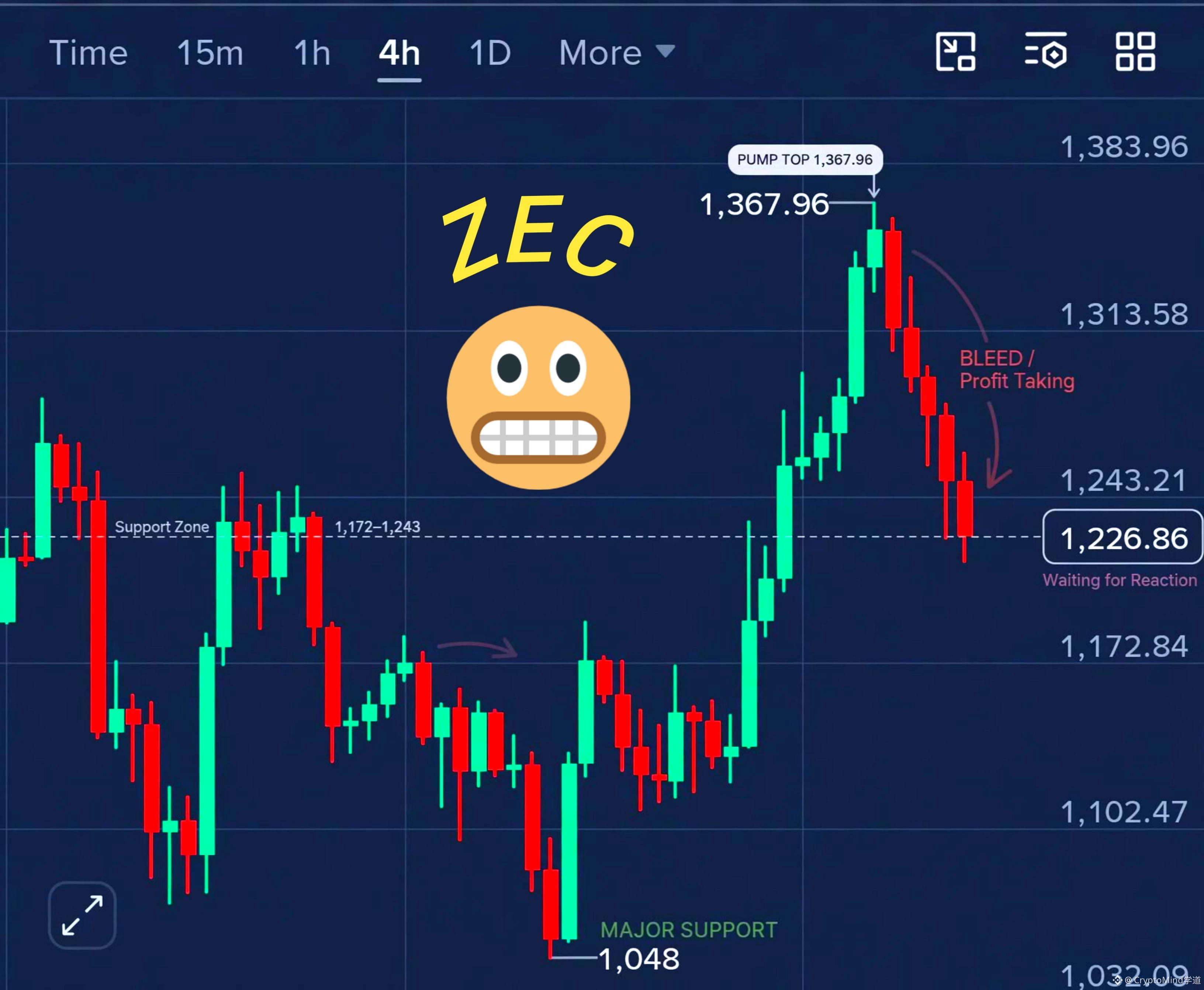
1.1k
Log in to explore more content
Join global crypto users on Binance Square
⚡️ Get latest and useful information about crypto.
💬 Trusted by the world’s largest crypto exchange.
👍 Discover real insights from verified creators.
Email / Phone number
Trending Topics
BinancePick
2.5M views
136,994 Discussing
Join #EarningsSeason: Predict Earnings on Binance Pick, Share Your Take on Binance Square!
Binance Square Official
·399 Likes
·336.7k views
EarningsSeason
4.9M views
23,795 Discussing
ElectrumWalletBugLetRogueServersStealFunds
1,292 views
101 Discussing