
阿简在路上
904 Posts

阿简在路上
Report
Block User
野生加密研究员|用数据拆解市场叙事|长期主义|NFA|📩 DM Open|永久返佣码:AJANE
Open Trade
Frequent Trader
4.8 Years
9 Following
431 Followers
1.6K+ Liked
Posts
Portfolio
All
Quotes
Videos
PINNED
·
--
These shoes are so stylish and cool, but every time I wear knee-high socks, it makes me feel like I’m kinda gay-gay 🤧
These shoes are so stylish and cool, but every time I wear knee-high socks, it makes me feel like I’m kinda gay-gay 🤧

17
19
23.8k
·
--
Another week has passed, so let’s check in again on the OKX-ICE story. The number of companies opposed has now risen to 67 😂 Yes, you heard that right: the platform initially planned to include just 62 companies, and 67 ended up objecting 😂 Actually, that’s because another batch of companies was added later. Still, that doesn’t change the fact that all seven of the Magnificent Seven U.S. stocks—including Nvidia and Apple—said no. Under SEC rules, if a company objects in writing within 30 days, the platform can’t list third-party tokenized versions of its stock. In other words, before the platform has even launched, its seven most valuable stocks are already out. What’s left are names like Coinbase and Robinhood, which Ajian doesn’t find particularly appealing, whether in Web2 or Web3.
Thinking back to how much fanfare surrounded OKX’s announcement of this partnership last month, the contrast with today is a little bleak. Ajian isn’t gloating; from the perspective of the industry’s development, this hits close to home. The lesson here is clear: under the SEC’s framework, companies have veto power over the tokenization of their own stock. No matter how good the technology is, there’s nothing you can do if they don’t agree. Ultimately, this comes back to the core challenges of RWA: compliance and trust.
Ajian will keep following this story and see how things develop.
195
·
--
Bearish
Today, BTC and ETH funding rates have remained broadly neutral, which is a relatively healthy signal for the market. But A Jian wants to remind everyone: this only shows that leveraged sentiment hasn’t turned extreme for now. It doesn’t mean the trend has already reversed. If spot buying doesn’t pick up, prices could still continue moving sideways or head lower in search of liquidity. So, has buying picked up or not? Let’s take a look:
$BTC ETF saw net outflows of $1.28 billion last week, its worst week since late June. More importantly, that one week was enough to turn this year’s balance negative. On Monday, year-to-date flows were still positive at $368 million; by Saturday, they had turned into net outflows of $914.1 million. The pace of institutional withdrawals can only be described as a rout.
$ETH was even worse: ETF net outflows totaled $365.3 million last week, marking the sixth consecutive week of outflows, with a combined total of about $2.02 billion over those six weeks. If BTC’s outflows suddenly accelerated this week, ETH’s have continued for six straight weeks. This kind of slow bleed is probably even harder to endure.
To sum up, the market still looks more like leverage is cooling off than like it has re-entered a bull-market rhythm. At the very least, let’s wait and see what next week’s CPI has to say.#CPI前瞻,12月利率走向迎关键考验
{spot}(BTCUSDT)
{spot}(ETHUSDT)
Today, BTC and ETH funding rates have remained broadly neutral, which is a relatively healthy signal for the market. But A Jian wants to remind everyone: this only shows that leveraged sentiment hasn’t turned extreme for now. It doesn’t mean the trend has already reversed. If spot buying doesn’t pick up, prices could still continue moving sideways or head lower in search of liquidity. So, has buying picked up or not? Let’s take a look:
$BTC ETF saw net outflows of $1.28 billion last week, its worst week since late June. More importantly, that one week was enough to turn this year’s balance negative. On Monday, year-to-date flows were still positive at $368 million; by Saturday, they had turned into net outflows of $914.1 million. The pace of institutional withdrawals can only be described as a rout.
$ETH was even worse: ETF net outflows totaled $365.3 million last week, marking the sixth consecutive week of outflows, with a combined total of about $2.02 billion over those six weeks. If BTC’s outflows suddenly accelerated this week, ETH’s have continued for six straight weeks. This kind of slow bleed is probably even harder to endure.
To sum up, the market still looks more like leverage is cooling off than like it has re-entered a bull-market rhythm. At the very least, let’s wait and see what next week’s CPI has to say.#CPI前瞻,12月利率走向迎关键考验
336
·
--
The U.S. Department of Labor has submitted to the White House Office of Information and Regulatory Affairs (OIRA) a proposed rule that would allow 401(k) retirement plans to consider alternative assets. It’s too early to say Americans can directly use their retirement savings to buy BTC. But when that day comes, crypto assets will see huge buying demand from long-term retirement savings. It also means that you—and my American green-card-holding bro whom I’ve never met—will be able to make the most of it in several ways and save a lot of effort on asset allocation. Ajian isn’t jealous at all 😭
Anyway, when that day really comes, Ajian believes the benefits won’t be limited to $BTC . Product structures, long-term risks, and compliance responsibilities mean that business opportunities will be spread across asset managers, ETF issuers, custodians, compliant trading platforms, and pension service providers. So if this policy path ultimately becomes reality, the biggest winners will likely be crypto firms that already have the capabilities to offer traditional financial products.
So, are you savvy enough to see what all the CEXs are up to now?
{spot}(BTCUSDT)
The U.S. Department of Labor has submitted to the White House Office of Information and Regulatory Affairs (OIRA) a proposed rule that would allow 401(k) retirement plans to consider alternative assets. It’s too early to say Americans can directly use their retirement savings to buy BTC. But when that day comes, crypto assets will see huge buying demand from long-term retirement savings. It also means that you—and my American green-card-holding bro whom I’ve never met—will be able to make the most of it in several ways and save a lot of effort on asset allocation. Ajian isn’t jealous at all 😭
Anyway, when that day really comes, Ajian believes the benefits won’t be limited to $BTC . Product structures, long-term risks, and compliance responsibilities mean that business opportunities will be spread across asset managers, ETF issuers, custodians, compliant trading platforms, and pension service providers. So if this policy path ultimately becomes reality, the biggest winners will likely be crypto firms that already have the capabilities to offer traditional financial products.
So, are you savvy enough to see what all the CEXs are up to now?
488
·
--
If you’re thinking of buying the dip at $KORUB , Ajian’s advice is to hold off for now. The KOSPI closed down 6.02% on Friday, despite a 20-minute trading halt. Samsung $SAMSUNG fell 6.35%, Hynix $SKHYB fell 10.44%, and foreign investors sold a whopping 2.8 trillion won in a single day. So the situation is that nobody can prove the market has finished falling—and the whole point of buying the dip is that the drop is over. Even if you can’t buy at the bottom, at least don’t try to catch a falling knife halfway down 🤧
{spot}(SKHYBUSDT)
{future}(SAMSUNGUSDT)
{spot}(KORUBUSDT)
If you’re thinking of buying the dip at $KORUB , Ajian’s advice is to hold off for now. The KOSPI closed down 6.02% on Friday, despite a 20-minute trading halt. Samsung $SAMSUNG fell 6.35%, Hynix $SKHYB fell 10.44%, and foreign investors sold a whopping 2.8 trillion won in a single day. So the situation is that nobody can prove the market has finished falling—and the whole point of buying the dip is that the drop is over. Even if you can’t buy at the bottom, at least don’t try to catch a falling knife halfway down 🤧
2
1k
·
--
Doesn’t it feel like Anthropic is becoming a laughingstock? Investors are already treating a $1.5 trillion IPO valuation as the upper limit. Bloomberg reported that the price being discussed is $1.1 trillion to $1.3 trillion, and the Wall Street Journal went so far as to say that major investors are questioning whether the roadshow can launch as planned. Looking back at the $965 billion valuation in the latest round in May, $1.5 trillion is 1.55 times that figure, while $1.1 trillion is 1.14 times. In the current market, neither seems low by any stretch. After all, how much the valuation can rise ultimately depends on whether the market is willing to pay up—and with chip stocks having just plunged, it’s only natural that the market might not bite.#Anthropic仍计划感恩节前IPO
Doesn’t it feel like Anthropic is becoming a laughingstock? Investors are already treating a $1.5 trillion IPO valuation as the upper limit. Bloomberg reported that the price being discussed is $1.1 trillion to $1.3 trillion, and the Wall Street Journal went so far as to say that major investors are questioning whether the roadshow can launch as planned. Looking back at the $965 billion valuation in the latest round in May, $1.5 trillion is 1.55 times that figure, while $1.1 trillion is 1.14 times. In the current market, neither seems low by any stretch. After all, how much the valuation can rise ultimately depends on whether the market is willing to pay up—and with chip stocks having just plunged, it’s only natural that the market might not bite.#Anthropic仍计划感恩节前IPO
2
1.9k
·
--
This is rough—the market was expecting employment to cool, but instead got a pretty strong report. The 165,000 increase in nonfarm payrolls was far above expectations of 65,000, and the unemployment rate, job gains, and revisions all came in stronger across the board. This directly pushed the odds of a Fed rate hike in December from around 70% to about 80%. A Jian has to say, this is the most contradictory part of the current macro environment: if the economy is too weak, the market worries about a recession; if it’s too strong, the market worries interest rates will keep rising.
But I’m still not buying it. Sure, the Fed focuses on inflation and employment, but it also has to look at financial conditions. The AI sell-off has sent stocks tumbling this week, and borrowing costs have gone up—the effects of tightening are already kicking in. If they hike rates again, that really would be tightening on top of tightening. $BTC and growth stocks are going to have a rough time. I don’t even want to think about it 😭#非农就业数据推升加息预期
{spot}(BTCUSDT)
This is rough—the market was expecting employment to cool, but instead got a pretty strong report. The 165,000 increase in nonfarm payrolls was far above expectations of 65,000, and the unemployment rate, job gains, and revisions all came in stronger across the board. This directly pushed the odds of a Fed rate hike in December from around 70% to about 80%. A Jian has to say, this is the most contradictory part of the current macro environment: if the economy is too weak, the market worries about a recession; if it’s too strong, the market worries interest rates will keep rising.
But I’m still not buying it. Sure, the Fed focuses on inflation and employment, but it also has to look at financial conditions. The AI sell-off has sent stocks tumbling this week, and borrowing costs have gone up—the effects of tightening are already kicking in. If they hike rates again, that really would be tightening on top of tightening. $BTC and growth stocks are going to have a rough time. I don’t even want to think about it 😭#非农就业数据推升加息预期
But I’m still not buying it. Sure, the Fed focuses on inflation and employment, but it also has to look at financial conditions. The AI sell-off has sent stocks tumbling this week, and borrowing costs have gone up—the effects of tightening are already kicking in. If they hike rates again, that really would be tightening on top of tightening. $BTC and growth stocks are going to have a rough time. I don’t even want to think about it 😭#非农就业数据推升加息预期
3
3
7.6k
·
--
Verified
$WLFI Has WLFI launched a token buyback plan?
Is this the WLFI that screwed Sun?
Is this the WLFI that’s down more than 60% so far this year?
Is this the WLFI co-founded by Trump, who holds about 38% of it?
Is this the WLFI that feels like it’s doomed after the midterm elections and is making one last-ditch effort?
Go ask Trump 🤡
{spot}(WLFIUSDT)
$WLFI Has WLFI launched a token buyback plan?
Is this the WLFI that screwed Sun?
Is this the WLFI that’s down more than 60% so far this year?
Is this the WLFI co-founded by Trump, who holds about 38% of it?
Is this the WLFI that feels like it’s doomed after the midterm elections and is making one last-ditch effort?
Go ask Trump 🤡
Is this the WLFI that screwed Sun?
Is this the WLFI that’s down more than 60% so far this year?
Is this the WLFI co-founded by Trump, who holds about 38% of it?
Is this the WLFI that feels like it’s doomed after the midterm elections and is making one last-ditch effort?
Go ask Trump 🤡
3
917
·
--
Verified
A little amusing: as America’s first staking-based $INJ ETF, INJC had first-day trading volume of only about 2,933 shares yesterday—nowhere near the scale of major SOL or XRP products. For INJ, the narrative still matters far more than actual capital flows. Although INJ’s price briefly rose 9% yesterday, I don’t think the buying was driven by ETF inflows. If AUM grows consistently, trading volume expands, and creations and redemptions proceed normally, that would show that institutional channels are genuinely starting to absorb INJ.
{spot}(INJUSDT)
A little amusing: as America’s first staking-based $INJ ETF, INJC had first-day trading volume of only about 2,933 shares yesterday—nowhere near the scale of major SOL or XRP products. For INJ, the narrative still matters far more than actual capital flows. Although INJ’s price briefly rose 9% yesterday, I don’t think the buying was driven by ETF inflows. If AUM grows consistently, trading volume expands, and creations and redemptions proceed normally, that would show that institutional channels are genuinely starting to absorb INJ.
4
1
2
1.9k
·
--
Verified
Final NFP preview: We know that the U.S. private sector added 86,000 jobs in October, initial jobless claims fell to 189,000 last week, and market expectations for a Fed rate hike in December have eased. So tonight, A Jian will focus on three questions:
1. Will nonfarm payroll growth deviate significantly from expectations?
2. Will the unemployment rate and average hourly earnings indicate that the labor market remains tight?
3. After the data is released, will Treasury yields and the U.S. dollar move decisively in either direction?
Also, to keep myself from making impulsive trades, I must remember these three rules:
1. No bets before 21:00. Any forecast before the data is released is just speculation;
2. For risk assets like $BTC and $ETH , the NFP report itself is not a buy or sell signal. After the data comes out, first watch BTC's one-hour close: if it reclaims 78,000 on increased volume, then consider a rebound; if it breaks below 74,000 on increased volume, then expect continued pressure. Do nothing in between;
3. No trades may be held through the November 10 CPI release.
That's all. DYOR
{spot}(BTCUSDT)
{spot}(ETHUSDT)
Final NFP preview: We know that the U.S. private sector added 86,000 jobs in October, initial jobless claims fell to 189,000 last week, and market expectations for a Fed rate hike in December have eased. So tonight, A Jian will focus on three questions:
1. Will nonfarm payroll growth deviate significantly from expectations?
2. Will the unemployment rate and average hourly earnings indicate that the labor market remains tight?
3. After the data is released, will Treasury yields and the U.S. dollar move decisively in either direction?
Also, to keep myself from making impulsive trades, I must remember these three rules:
1. No bets before 21:00. Any forecast before the data is released is just speculation;
2. For risk assets like $BTC and $ETH , the NFP report itself is not a buy or sell signal. After the data comes out, first watch BTC's one-hour close: if it reclaims 78,000 on increased volume, then consider a rebound; if it breaks below 74,000 on increased volume, then expect continued pressure. Do nothing in between;
3. No trades may be held through the November 10 CPI release.
That's all. DYOR
268
·
--
Verified
Zcash’s NU7 mainnet upgrade has officially gone live. I won’t go into the specifics of the changes—what matters now is how the network performs in practice. I mainly want to remind anyone still holding $ZEC : although ZEC was one of the few assets across the market to close higher yesterday, don’t use the upgrade as a reason to add to your position. I exited in batches at 1,317.4, and at 1,259 I’ll close out all my short-term positions.
{future}(ZECUSDT)
Zcash’s NU7 mainnet upgrade has officially gone live. I won’t go into the specifics of the changes—what matters now is how the network performs in practice. I mainly want to remind anyone still holding $ZEC : although ZEC was one of the few assets across the market to close higher yesterday, don’t use the upgrade as a reason to add to your position. I exited in batches at 1,317.4, and at 1,259 I’ll close out all my short-term positions.
2.9k
·
--
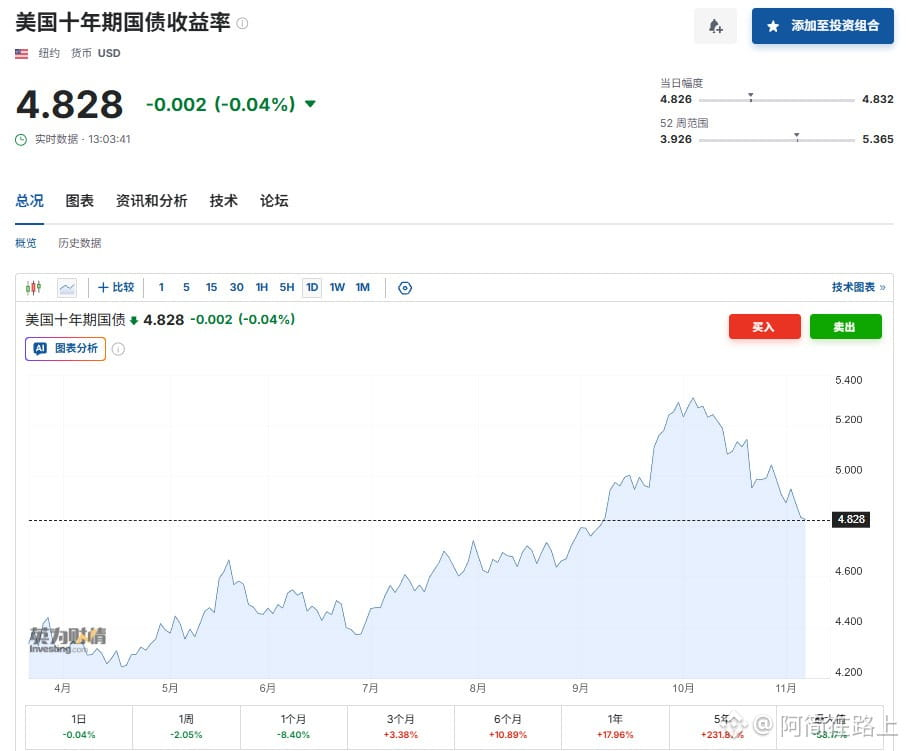
I've emphasized countless times that, in the current environment, every macro signal other than interest rates is noise for gold. Otherwise, what do you think allowed $XAU to stand out in this round of declines?
{future}(XAUUSDT)
I've emphasized countless times that, in the current environment, every macro signal other than interest rates is noise for gold. Otherwise, what do you think allowed $XAU to stand out in this round of declines?
3
1.1k
·
--
Woke up to find Asian markets still falling across the board. The KOSPI even triggered a circuit breaker intraday 😂 By comparison, $BTC was nothing. Although global risk appetite is contracting, the entire AI trading thesis is being reassessed, and the crypto market saw over $1 billion in liquidations in the past 24 hours, Ajian thinks the main reason Bitcoin fell was that short covering during the midterm elections pushed prices up, then the sharp drop in AI stocks turned longs into liquidity. So we can’t simply blame macro factors. When it comes to crypto, a more specific way to assess prices is to look at these three layers:
First, long-term narratives, such as stablecoins, RWA, AI payments, and on-chain capital markets;
Second, medium-term capital flows, such as ETFs, fund allocations, and institutional positions;
Third, short-term leverage, such as perpetuals, options, liquidations, and order books.
Seen this way, it’s quite clear: the first layer hasn’t disappeared today, but the second saw outflows, and the third saw long liquidations—so the price drop is only natural.
That’s all. DYOR#韩国KOSPI下跌触发熔断
{spot}(BTCUSDT)
Woke up to find Asian markets still falling across the board. The KOSPI even triggered a circuit breaker intraday 😂 By comparison, $BTC was nothing. Although global risk appetite is contracting, the entire AI trading thesis is being reassessed, and the crypto market saw over $1 billion in liquidations in the past 24 hours, Ajian thinks the main reason Bitcoin fell was that short covering during the midterm elections pushed prices up, then the sharp drop in AI stocks turned longs into liquidity. So we can’t simply blame macro factors. When it comes to crypto, a more specific way to assess prices is to look at these three layers:
First, long-term narratives, such as stablecoins, RWA, AI payments, and on-chain capital markets;
Second, medium-term capital flows, such as ETFs, fund allocations, and institutional positions;
Third, short-term leverage, such as perpetuals, options, liquidations, and order books.
Seen this way, it’s quite clear: the first layer hasn’t disappeared today, but the second saw outflows, and the third saw long liquidations—so the price drop is only natural.
That’s all. DYOR#韩国KOSPI下跌触发熔断
1
439
·
--
Today, I figured the target price for $UNI would be 7.25, so I placed a sell order at 7.248. After taking a shower, I came back to find it had closed right at the low I expected. Nice. I'm still holding my low-leverage long position without touching it, guys. If you have time, you can trade the swings.
Today, I figured the target price for $UNI would be 7.25, so I placed a sell order at 7.248. After taking a shower, I came back to find it had closed right at the low I expected. Nice. I'm still holding my low-leverage long position without touching it, guys. If you have time, you can trade the swings.
647
·
--
Although Ajian could be considered a $NEAR rising star, isn't this news a bit overhyped? Hahaha, I'm curious whether anyone actually uses NEAR Mobile heavily 🤡
{future}(NEARUSDT)
Although Ajian could be considered a $NEAR rising star, isn't this news a bit overhyped? Hahaha, I'm curious whether anyone actually uses NEAR Mobile heavily 🤡

1
1.9k
·
--
Bullish
Verified
Another fundamental positive catalyst $SOL is here! Schroders, which manages around $1.1 trillion in assets, announced a partnership with Centrifuge to bring one of its emerging-market bond strategies to Solana. This isn’t simply a matter of turning a bond ticker into a token: investors hold tokenized fund shares, which still correspond to Schroders’ emerging-market bond fund. The long-term significance of this model is probably what A Jian breaks down—DDDD🤐
{spot}(SOLUSDT)
Another fundamental positive catalyst $SOL is here! Schroders, which manages around $1.1 trillion in assets, announced a partnership with Centrifuge to bring one of its emerging-market bond strategies to Solana. This isn’t simply a matter of turning a bond ticker into a token: investors hold tokenized fund shares, which still correspond to Schroders’ emerging-market bond fund. The long-term significance of this model is probably what A Jian breaks down—DDDD🤐
3
885
·
--
I’ve seen a lot of folks worry about Crypto’s prospects after the midterm elections, but Ajian thinks Democrats taking both the House and Senate isn’t an absolute positive or negative for Crypto. While the market often reduces political outcomes to a single candlestick—for example, yesterday’s crash at $TRUMP —the effects of laws, institutions, and budgets take much longer to come through. Banks and payment companies won’t simply stop building financial infrastructure because of increased political uncertainty; they’ll just pay more attention to compliance boundaries and whether policies can be reversed. So Ajian suggests focusing on the following issues that are more directly relevant to our interests:
Will stablecoin rules continue to move forward?
Will the market structure bill be rescheduled?
Will regulatory appointments change?
Will tokenization and prediction markets face greater scrutiny?
That’s all. DYOR#TRUMP代币24小时跌18.1%创历史新低
{future}(TRUMPUSDT)
I’ve seen a lot of folks worry about Crypto’s prospects after the midterm elections, but Ajian thinks Democrats taking both the House and Senate isn’t an absolute positive or negative for Crypto. While the market often reduces political outcomes to a single candlestick—for example, yesterday’s crash at $TRUMP —the effects of laws, institutions, and budgets take much longer to come through. Banks and payment companies won’t simply stop building financial infrastructure because of increased political uncertainty; they’ll just pay more attention to compliance boundaries and whether policies can be reversed. So Ajian suggests focusing on the following issues that are more directly relevant to our interests:
Will stablecoin rules continue to move forward?
Will the market structure bill be rescheduled?
Will regulatory appointments change?
Will tokenization and prediction markets face greater scrutiny?
That’s all. DYOR#TRUMP代币24小时跌18.1%创历史新低
Will stablecoin rules continue to move forward?
Will the market structure bill be rescheduled?
Will regulatory appointments change?
Will tokenization and prediction markets face greater scrutiny?
That’s all. DYOR#TRUMP代币24小时跌18.1%创历史新低
916
·
--
Bullish
Verified
I took a closer look at Circle’s Q3 earnings report. There isn’t much to say about revenue growth; the two things A Jian focused on are:
First, USDC’s on-chain transaction volume grew 49% year over year to $13.9 trillion. This marks a further shift for stablecoins beyond their traditional role as dollar substitutes, as they begin to take on broader financial infrastructure functions. Competition among stablecoins is increasingly focused on payment networks, use cases, and partnerships with financial institutions. The earnings report offers several examples: for instance, Circle reiterated its plan to acquire Tazapay, a Singapore-based cross-border B2B payments platform, to facilitate the movement of funds in real-world commercial settings.
Second, USDC usage is growing, as is on-chain transaction volume, but Circle’s profits don’t come entirely from on-chain transactions. They still depend heavily on the yield from reserve assets. So, if interest rates fall in the future, stablecoin circulation will need to keep expanding, and revenue from payments and services will need to increase too. Otherwise, it will be difficult to sustain high profits on reserve income alone.
All in all, you should now have a more concrete view of Circle than before. If you can see the effort Circle is putting into developing payments, custody, corporate settlement, network infrastructure, and other services, you should be as confident about its prospects as A Jian is. $CRCLB
{spot}(CRCLBUSDT)
I took a closer look at Circle’s Q3 earnings report. There isn’t much to say about revenue growth; the two things A Jian focused on are:
First, USDC’s on-chain transaction volume grew 49% year over year to $13.9 trillion. This marks a further shift for stablecoins beyond their traditional role as dollar substitutes, as they begin to take on broader financial infrastructure functions. Competition among stablecoins is increasingly focused on payment networks, use cases, and partnerships with financial institutions. The earnings report offers several examples: for instance, Circle reiterated its plan to acquire Tazapay, a Singapore-based cross-border B2B payments platform, to facilitate the movement of funds in real-world commercial settings.
Second, USDC usage is growing, as is on-chain transaction volume, but Circle’s profits don’t come entirely from on-chain transactions. They still depend heavily on the yield from reserve assets. So, if interest rates fall in the future, stablecoin circulation will need to keep expanding, and revenue from payments and services will need to increase too. Otherwise, it will be difficult to sustain high profits on reserve income alone.
All in all, you should now have a more concrete view of Circle than before. If you can see the effort Circle is putting into developing payments, custody, corporate settlement, network infrastructure, and other services, you should be as confident about its prospects as A Jian is. $CRCLB
1
3.8k
·
--
After the chaotic U.S. midterm elections, the market is trading on the expectation that changes in the makeup of Congress could reduce the likelihood of further U.S. escalation in the Iran conflict, easing energy supply risks. But A Jian doesn’t think yesterday’s drop in oil prices means inflationary pressure has disappeared, and the recent rebound in $BTC can’t yet be called a trend reversal.
It’s worth noting that the crypto market lost nearly $300 billion in market capitalization over the past month. This was driven not only by macro interest rates, but also by multiple factors such as AI asset valuations and security incidents at trading platforms. The reality is that the market has yet to reestablish sustained spot buying. We mustn’t compress an entire chain of effects into a simple conclusion about whether prices will rise or fall.
So when looking at crypto from a macro perspective, I recommend keeping a close eye on this chain of logic: changes in energy prices → changes in inflation expectations → changes in bond yields → changes in expectations for Fed policy → changes in risk asset valuations.
That’s all. DYOR#美国中期选举:市场有哪些期待?
{spot}(BTCUSDT)
After the chaotic U.S. midterm elections, the market is trading on the expectation that changes in the makeup of Congress could reduce the likelihood of further U.S. escalation in the Iran conflict, easing energy supply risks. But A Jian doesn’t think yesterday’s drop in oil prices means inflationary pressure has disappeared, and the recent rebound in $BTC can’t yet be called a trend reversal.
It’s worth noting that the crypto market lost nearly $300 billion in market capitalization over the past month. This was driven not only by macro interest rates, but also by multiple factors such as AI asset valuations and security incidents at trading platforms. The reality is that the market has yet to reestablish sustained spot buying. We mustn’t compress an entire chain of effects into a simple conclusion about whether prices will rise or fall.
So when looking at crypto from a macro perspective, I recommend keeping a close eye on this chain of logic: changes in energy prices → changes in inflation expectations → changes in bond yields → changes in expectations for Fed policy → changes in risk asset valuations.
That’s all. DYOR#美国中期选举:市场有哪些期待?
792
·
--
Closed out another batch of long positions $UNI . Jian remains bullish on the fundamentals long term, but expects the market to move sideways for a while; considering a short around 7.8.
Closed out another batch of long positions $UNI . Jian remains bullish on the fundamentals long term, but expects the market to move sideways for a while; considering a short around 7.8.
1
861
Log in to explore more content
Join global crypto users on Binance Square
⚡️ Get latest and useful information about crypto.
💬 Trusted by the world’s largest crypto exchange.
👍 Discover real insights from verified creators.
Email / Phone number
Trending Topics
JobsReportRaisesHikeOdds
600,412 views
3,766 Discussing
TradFi News | US Adds 165,000 Jobs in October, More Than Double the 65,000 Forecast, as Unemployment Falls to 4.1%
Binance News
·44 Likes
·24.4k views
CPITestsDecemberRateOutlook
198,357 views
1,422 Discussing
US Data Center Rules May Constrain AI Expansion
84,043 views
239 Discussing