
虾币币的比特世界
1.7k Posts
虾币币的比特世界
Report
Block User
加密资产不正经研究员,btc&bnb、ar。
Open Trade

BNB Holder
Frequent Trader
8.9 Years
13 Following
6.5K+ Followers
37.1K+ Liked
Posts
Portfolio
All
Quotes
Videos
PINNED
·
--
Article
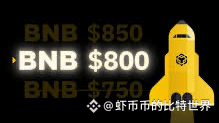
The bull that was once predicted seems to have come true (BNB surpasses a $100 billion market cap)Yesterday, BNB first broke above $800, and BNB's total market capitalization surpassed $110 billion. The bull market predicted five years ago seems to have materialized today. On July 25, 2020, I first wrote about my long-term judgment on BNB in a public account, titled 'Long-term Judgment on BNB'; at that time, BNB's price was $18, with a total market capitalization of $2.7 billion. Subsequently, I wrote several articles supplementing the logic of a long-term view of a $100 billion market cap. In the 2021 bull market, BNB's total market capitalization exceeded $90 billion but did not reach $100 billion. This year, it has officially broken through. Looking back now, some of the logic has been validated, while some have been falsified, but overall, it can be considered a successful prediction. This article serves as a conclusion to the prediction made five years ago!
The bull that was once predicted seems to have come true (BNB surpasses a $100 billion market cap)
Yesterday, BNB first broke above $800, and BNB's total market capitalization surpassed $110 billion. The bull market predicted five years ago seems to have materialized today. On July 25, 2020, I first wrote about my long-term judgment on BNB in a public account, titled 'Long-term Judgment on BNB'; at that time, BNB's price was $18, with a total market capitalization of $2.7 billion. Subsequently, I wrote several articles supplementing the logic of a long-term view of a $100 billion market cap. In the 2021 bull market, BNB's total market capitalization exceeded $90 billion but did not reach $100 billion. This year, it has officially broken through. Looking back now, some of the logic has been validated, while some have been falsified, but overall, it can be considered a successful prediction. This article serves as a conclusion to the prediction made five years ago!
3
5
29
26.5k
PINNED
·
--
Article
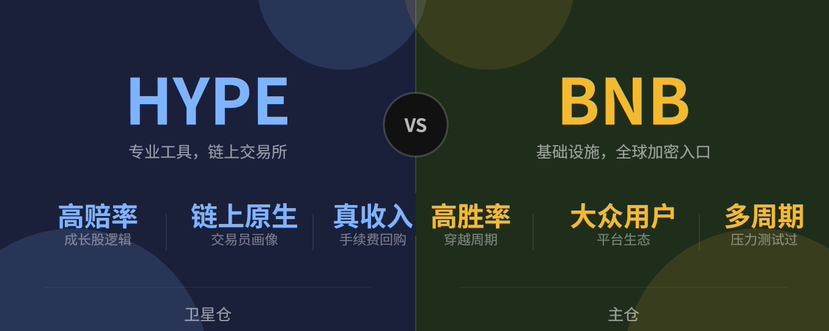
Someone asked me what I think about HYPE? Let’s compare it to BNB and share my views.I got a message on the public account asking: What’s the take on HYPE? The underlying question here is: Can HYPE become the next BNB? I thought about it seriously and here’s my take.
Let's cut to the chase: HYPE is solid, but it’s not the same beast as BNB. The narratives are different. HYPE is a good play in the crypto game, while BNB serves as the backbone of the crypto finance world. A good play is worth buying, but infrastructure is what you want to stack for the long haul.
What’s so great about HYPE?
The Hyperliquid product is genuinely out there, not just propped up by stories and community shills. The on-chain contract experience is rock solid—fast speed, strong liquidity, real users, plus it generates revenue, has fees, and buybacks. In a way, HYPE is starting to look less like a typical altcoin and more like a 'certificate of rights for an on-chain exchange.'
Someone asked me what I think about HYPE? Let’s compare it to BNB and share my views.
I got a message on the public account asking: What’s the take on HYPE? The underlying question here is: Can HYPE become the next BNB? I thought about it seriously and here’s my take.
Let's cut to the chase: HYPE is solid, but it’s not the same beast as BNB. The narratives are different. HYPE is a good play in the crypto game, while BNB serves as the backbone of the crypto finance world. A good play is worth buying, but infrastructure is what you want to stack for the long haul.
What’s so great about HYPE?
The Hyperliquid product is genuinely out there, not just propped up by stories and community shills. The on-chain contract experience is rock solid—fast speed, strong liquidity, real users, plus it generates revenue, has fees, and buybacks. In a way, HYPE is starting to look less like a typical altcoin and more like a 'certificate of rights for an on-chain exchange.'
Let's cut to the chase: HYPE is solid, but it’s not the same beast as BNB. The narratives are different. HYPE is a good play in the crypto game, while BNB serves as the backbone of the crypto finance world. A good play is worth buying, but infrastructure is what you want to stack for the long haul.
What’s so great about HYPE?
The Hyperliquid product is genuinely out there, not just propped up by stories and community shills. The on-chain contract experience is rock solid—fast speed, strong liquidity, real users, plus it generates revenue, has fees, and buybacks. In a way, HYPE is starting to look less like a typical altcoin and more like a 'certificate of rights for an on-chain exchange.'
3
1.1k
·
--
This person is the Google Cloud business负责人, officially announcing an investment of €15 billion in AI infrastructure in Finland. Last night, Google’s stock fell by nearly 3%. Wall Street thinks it’s too much, but in fact it may be too little. In the future, AI competition will be a race of algorithms and models—and even more so, a race of infrastructure.
This person is the Google Cloud business负责人, officially announcing an investment of €15 billion in AI infrastructure in Finland. Last night, Google’s stock fell by nearly 3%. Wall Street thinks it’s too much, but in fact it may be too little. In the future, AI competition will be a race of algorithms and models—and even more so, a race of infrastructure.

118
·
--
Speaking of phones, if you don’t fold them, they already feel heavy. With a triple-fold, do people who use it really not find it heavy? If you need a pad, just buy a pad. I can’t think of any application scenarios for this triple-fold device—are you using it to show off? A magical gadget? Does it make trading on Binance more smooth when you open it? By the way, does HarmonyOS support Binance?
Speaking of phones, if you don’t fold them, they already feel heavy. With a triple-fold, do people who use it really not find it heavy? If you need a pad, just buy a pad. I can’t think of any application scenarios for this triple-fold device—are you using it to show off? A magical gadget? Does it make trading on Binance more smooth when you open it? By the way, does HarmonyOS support Binance?
137
·
--
I don’t really understand why Huobi HTX still has so many assets. Users are really bold—don’t you fear it? Some coins that Huobi has are also on Binance, and some coins that Huobi doesn’t have are also on Binance.
I don’t really understand why Huobi HTX still has so many assets. Users are really bold—don’t you fear it? Some coins that Huobi has are also on Binance, and some coins that Huobi doesn’t have are also on Binance.
160
·
--
Verify whether it’s real or fake:
Just found out: Our source says this is a large fund that has received SEC approval. We’ve heard it might be Fidelity, ARK Invest, or BlackRock.
These giants would be able to tokenize their funds and trade the underlying assets of their funds. This means they can trade the fund itself as an on-chain token, while also trading the underlying assets.
If this is true, it would have a major impact on the U.S. asset management industry, because it would mean that all funds would rush to issue native equity tokens for their shares.
Our latest update sounds far more specific, which makes the rumor seem credible.
We patiently await the SEC Chair Atkins’ comments on this matter.
Verify whether it’s real or fake:
Just found out: Our source says this is a large fund that has received SEC approval. We’ve heard it might be Fidelity, ARK Invest, or BlackRock.
These giants would be able to tokenize their funds and trade the underlying assets of their funds. This means they can trade the fund itself as an on-chain token, while also trading the underlying assets.
If this is true, it would have a major impact on the U.S. asset management industry, because it would mean that all funds would rush to issue native equity tokens for their shares.
Our latest update sounds far more specific, which makes the rumor seem credible.
We patiently await the SEC Chair Atkins’ comments on this matter.
Just found out: Our source says this is a large fund that has received SEC approval. We’ve heard it might be Fidelity, ARK Invest, or BlackRock.
These giants would be able to tokenize their funds and trade the underlying assets of their funds. This means they can trade the fund itself as an on-chain token, while also trading the underlying assets.
If this is true, it would have a major impact on the U.S. asset management industry, because it would mean that all funds would rush to issue native equity tokens for their shares.
Our latest update sounds far more specific, which makes the rumor seem credible.
We patiently await the SEC Chair Atkins’ comments on this matter.
186
·
--
Partly True
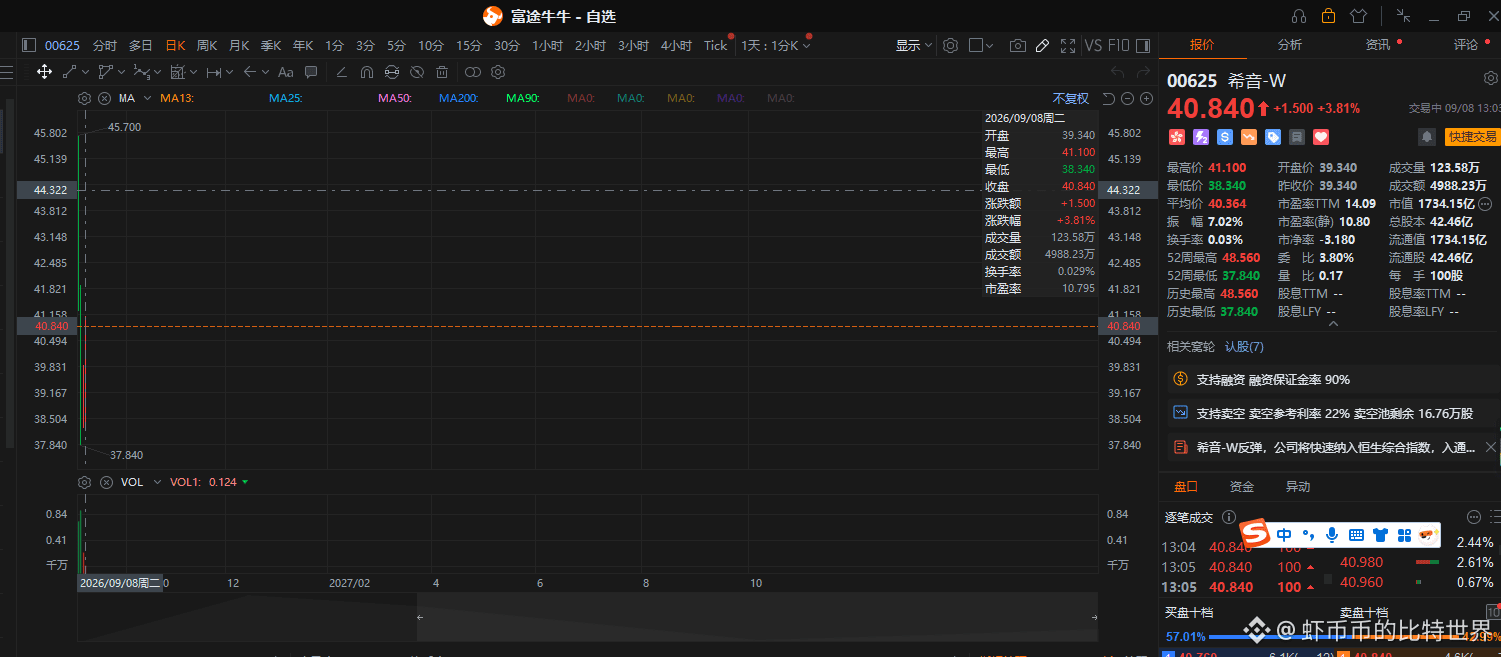
Oh, the first overseas e-commerce stock—Shein—went public on the Hong Kong stock exchange and fell 20%. After finally managing to get a share, I still lost money.
Oh, the first overseas e-commerce stock—Shein—went public on the Hong Kong stock exchange and fell 20%. After finally managing to get a share, I still lost money.
1
2
2.4k
·
--
#atom What's going on with the network? Binance stopped accepting deposits, Kraken deposits aren't arriving— is the chain broken? Or is nobody maintaining it?
#atom What's going on with the network? Binance stopped accepting deposits, Kraken deposits aren't arriving— is the chain broken? Or is nobody maintaining it?
2
1
659
·
--
Blockchain taught me a logic: in the crypto world, only the coins in your own wallet are truly your coins, under your control at any time; likewise, in the real world, only your cash is truly your money, under your control at any time. Bank deposits are just numbers in a database, and banks have 10,000 ways to stop you from withdrawing them.
Blockchain taught me a logic: in the crypto world, only the coins in your own wallet are truly your coins, under your control at any time; likewise, in the real world, only your cash is truly your money, under your control at any time. Bank deposits are just numbers in a database, and banks have 10,000 ways to stop you from withdrawing them.
1
393
·
--
The fundamentals of stocks can change at any time due to labor, tariffs, policies, regulations, technological directions, and other unexpected factors, but BTC's fundamentals will not.
The fundamentals of stocks can change at any time due to labor, tariffs, policies, regulations, technological directions, and other unexpected factors, but BTC's fundamentals will not.
1
199
·
--
For long-term holding of public chain tokens, you should look for ones with strong backing, or those with a profitable business model, or low operating costs; otherwise, there is a real risk of the chain being linked to trouble. In the past two years, so many L2s and public chains have struggled to keep operating.
For long-term holding of public chain tokens, you should look for ones with strong backing, or those with a profitable business model, or low operating costs; otherwise, there is a real risk of the chain being linked to trouble. In the past two years, so many L2s and public chains have struggled to keep operating.
205
·
--
Turning
Another old-school L1 has announced its sunset.
@harmonyprotocol
has put forward a proposal: completely shut down the independent mainnet launched in 2019, move
$ONE
to Ethereum, and shift the team toward an "AI video remix economy." The reason is stated very plainly — the threat from nation-state actors and AI agents is too great.
This wasn’t a sudden collapse. In 2022, the Horizon cross-chain bridge was hacked for about $100 million, later attributed to Lazarus; last month it was attacked again, and cross-shard receipts were used to mint ONE out of thin air, forcing the team to roll back. The sharding narrative lasted seven years, and in the end the last straw was still security, not lack of users.
Key points of the migration plan:
A final-state snapshot, with new ONE on ETH airdropped to the same addresses; holders do not need to claim it manually
Delegations and unclaimed rewards go into the governance treasury
Multisigs, LPs, and on-chain apps cannot migrate, and must exit contracts before September 10
Validators can stop nodes starting September 10; a compensation pool of $1.372 million will be distributed over four seasons
Total supply and emission rate remain unchanged; newly issued emissions will be redirected to the new business
Just as Lisk announced its chain would shut down on October 31, Harmony is following right behind. This wave of ancient public chains isn’t dying all at once; they’re one after another handing sovereign L1s back, relisting tokens on major chains, and having the teams move on to something else.
Chains can be shut down, narratives can be changed. As for the money in contracts, remember to withdraw it yourself first.
Turning
Another old-school L1 has announced its sunset.
@harmonyprotocol
has put forward a proposal: completely shut down the independent mainnet launched in 2019, move
$ONE
to Ethereum, and shift the team toward an "AI video remix economy." The reason is stated very plainly — the threat from nation-state actors and AI agents is too great.
This wasn’t a sudden collapse. In 2022, the Horizon cross-chain bridge was hacked for about $100 million, later attributed to Lazarus; last month it was attacked again, and cross-shard receipts were used to mint ONE out of thin air, forcing the team to roll back. The sharding narrative lasted seven years, and in the end the last straw was still security, not lack of users.
Key points of the migration plan:
A final-state snapshot, with new ONE on ETH airdropped to the same addresses; holders do not need to claim it manually
Delegations and unclaimed rewards go into the governance treasury
Multisigs, LPs, and on-chain apps cannot migrate, and must exit contracts before September 10
Validators can stop nodes starting September 10; a compensation pool of $1.372 million will be distributed over four seasons
Total supply and emission rate remain unchanged; newly issued emissions will be redirected to the new business
Just as Lisk announced its chain would shut down on October 31, Harmony is following right behind. This wave of ancient public chains isn’t dying all at once; they’re one after another handing sovereign L1s back, relisting tokens on major chains, and having the teams move on to something else.
Chains can be shut down, narratives can be changed. As for the money in contracts, remember to withdraw it yourself first.
Another old-school L1 has announced its sunset.
@harmonyprotocol
has put forward a proposal: completely shut down the independent mainnet launched in 2019, move
$ONE
to Ethereum, and shift the team toward an "AI video remix economy." The reason is stated very plainly — the threat from nation-state actors and AI agents is too great.
This wasn’t a sudden collapse. In 2022, the Horizon cross-chain bridge was hacked for about $100 million, later attributed to Lazarus; last month it was attacked again, and cross-shard receipts were used to mint ONE out of thin air, forcing the team to roll back. The sharding narrative lasted seven years, and in the end the last straw was still security, not lack of users.
Key points of the migration plan:
A final-state snapshot, with new ONE on ETH airdropped to the same addresses; holders do not need to claim it manually
Delegations and unclaimed rewards go into the governance treasury
Multisigs, LPs, and on-chain apps cannot migrate, and must exit contracts before September 10
Validators can stop nodes starting September 10; a compensation pool of $1.372 million will be distributed over four seasons
Total supply and emission rate remain unchanged; newly issued emissions will be redirected to the new business
Just as Lisk announced its chain would shut down on October 31, Harmony is following right behind. This wave of ancient public chains isn’t dying all at once; they’re one after another handing sovereign L1s back, relisting tokens on major chains, and having the teams move on to something else.
Chains can be shut down, narratives can be changed. As for the money in contracts, remember to withdraw it yourself first.
455
·
--
Crypto, U.S. stocks, U.S. bonds, options, futures contracts, USD deposits and withdrawals, RMB OTC, U cards, etc. Binance’s product line is becoming increasingly complete, a financial platform centered on users that combines consumer finance with investment and financing, offering both new crypto assets and traditional U.S. stocks and bonds. A one-stop financial supermarket.
Now, among financial apps, besides Alipay, Binance is the one I open most frequently every day.
Crypto, U.S. stocks, U.S. bonds, options, futures contracts, USD deposits and withdrawals, RMB OTC, U cards, etc. Binance’s product line is becoming increasingly complete, a financial platform centered on users that combines consumer finance with investment and financing, offering both new crypto assets and traditional U.S. stocks and bonds. A one-stop financial supermarket.
Now, among financial apps, besides Alipay, Binance is the one I open most frequently every day.
Now, among financial apps, besides Alipay, Binance is the one I open most frequently every day.
389
·
--
Didn't DCR's two big pumps last year look like main-force accumulation? A large proportion of the existing supply is locked up in DCR mining, so there isn't much on exchanges, making it easy and quick to pump up.
Didn't DCR's two big pumps last year look like main-force accumulation? A large proportion of the existing supply is locked up in DCR mining, so there isn't much on exchanges, making it easy and quick to pump up.
1
261
·
--
ZEC's main players are very strong, and their goals are definitely more than this, but the volatility will be very lethal.
ZEC's main players are very strong, and their goals are definitely more than this, but the volatility will be very lethal.
1
365
·
--
Taking a look at my positions, the BTC+BNB combination has successfully weathered two bull and bear cycles, while other altcoins have almost all gone to zero, or are on the way to zero.
Taking a look at my positions, the BTC+BNB combination has successfully weathered two bull and bear cycles, while other altcoins have almost all gone to zero, or are on the way to zero.
1
1
367
Log in to explore more content
Join global crypto users on Binance Square
⚡️ Get latest and useful information about crypto.
💬 Trusted by the world’s largest crypto exchange.
👍 Discover real insights from verified creators.
Email / Phone number
Trending Topics
AppleDebutsFoldablePhone
30,746 views
657 Discussing
Apple just dropped the foldable iPhone — and the market is paying attention. This isn't just another product cycle; it's a new product category, a new CEO on stage, and a $1,999 price tag that pushes $AAPL further into ultra-premium territory. Foldables are the narrative, and Apple is now the headline.
#appledebutsfoldablephone #EUExtendsCentralContactPointToCASPs #US10YTreasuryYieldHitsHighestSinceNov2023 #BrentCrudeTops$100 #USTreasuryToBuyBackUpTo$6BLongDatedDebt
KimHotbae
·2 Likes
·2.8k views
TSMCAugustRevenueUp53.3%YoY
3,251 views
140 Discussing
IranSaysReadyToEscalateWarWithUS
6,525 views
180 Discussing