
eth001
408 Posts

eth001
Report
Block User
f(x) |China area @BTC_strategyZM
High-Frequency Trader
4.5 Years
5 Following
833 Followers
406 Liked
Posts
All
Quotes
Videos
PINNED
·
--
Bullish
A Gann matrix chart takes you to understand [$BNB ] support and pressure
1. Gann matrix basics:
The first step is to identify the application rules of BNB in the Gann matrix.
Through the historical review chart, the corresponding relationship between price dynamics and the matrix is clearly displayed.
2. Key price analysis:
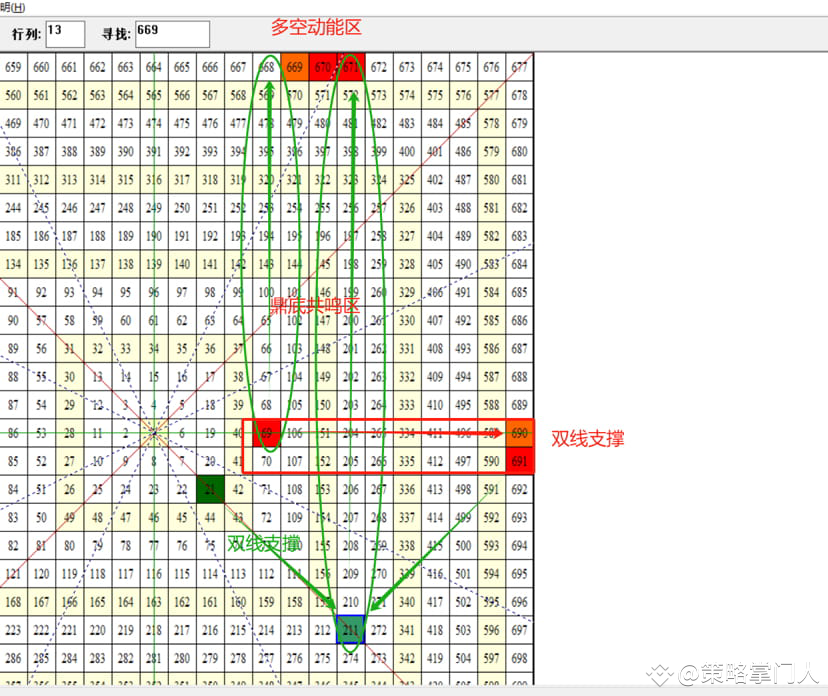
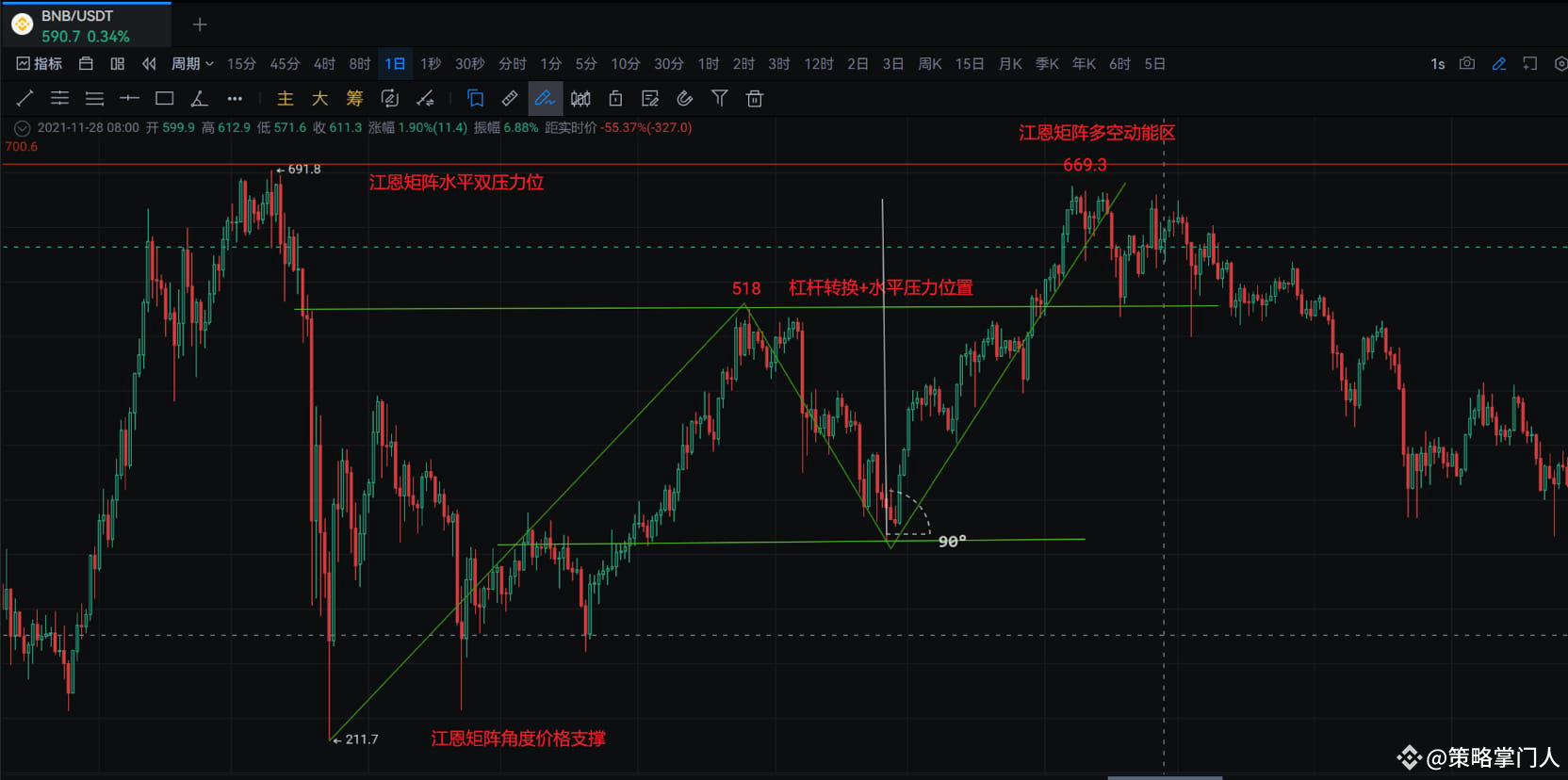
The highest point 691: the peak of the previous bull market, after splitting, it is represented as 69 and 691 in the matrix, forming a double horizontal line pressure.
Note: 691 is adjacent to the 690 pressure level, and the fluctuation of the upper and lower grids is within the normal range.
Support level 211: The callback support point after the end of the bull market, the 21 and 211 angle lines form a double line support.
3. Price momentum zone:
The price rose to 669 and entered the interweaving area of long and short momentum.
This area resonates with the 69 pressure level and the 211 support level, forming an important price turning point.
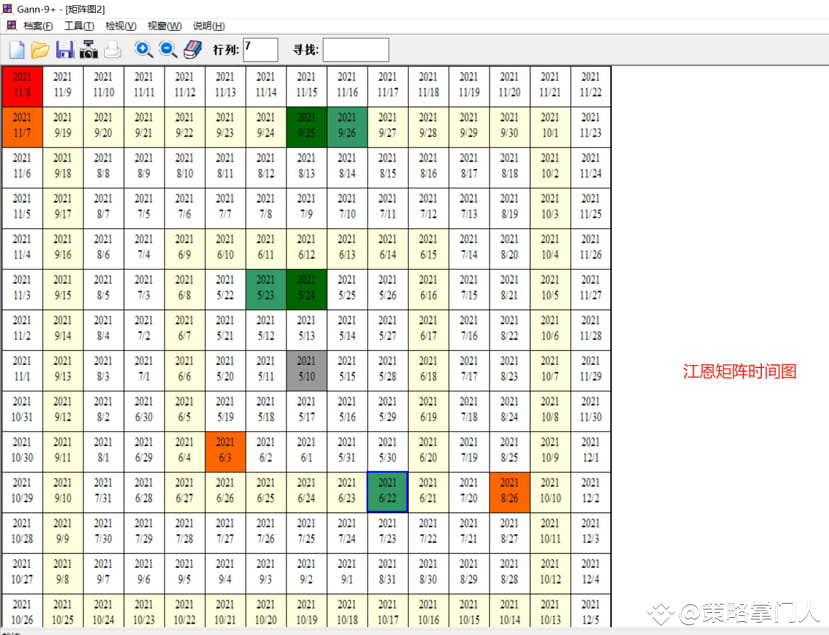
4. Spatial conversion of time and price:
In the combination of Gann matrix wheel and time chart, time and price jointly form a spatial bottom conversion.
For detailed analysis, please refer to Figure 1, Figure 2 and Figure 3.
Summary: Through the detailed analysis of Gann Matrix, we can not only accurately locate the support and pressure points of BNB, but also capture the potential detonation points at the intersection of time and price. This method provides us with a powerful tool to gain in-depth insight into market dynamics and help us make more informed decisions in trading. #BNBChain与Telegram集成 #CZ平安归来
7
10
49k
·
--
Article
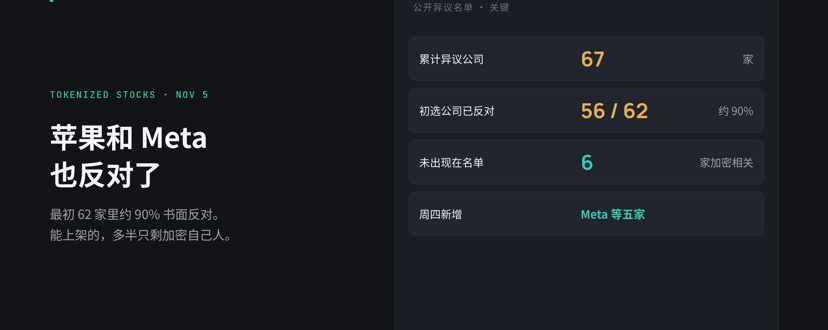
Apple and Meta Have Also ObjectedA proposed tokenized U.S. stock trading venue has updated its public opposition list. Apple, Meta, Palantir, S&P Global, KLA, and Super Micro Computer have been added. The total number of companies objecting has reached 67.
CoinDesk’s tally that day showed that about 90%—56 of the 62 publicly listed companies initially selected—had already objected in writing. The only companies not yet on the opposition list are Strategy, Circle, Robinhood, Securitize, BitGo, and another large publicly traded crypto company. All six are crypto-related companies.
This isn’t a vote; it’s a veto.
Apple and Meta Have Also Objected
A proposed tokenized U.S. stock trading venue has updated its public opposition list. Apple, Meta, Palantir, S&P Global, KLA, and Super Micro Computer have been added. The total number of companies objecting has reached 67.
CoinDesk’s tally that day showed that about 90%—56 of the 62 publicly listed companies initially selected—had already objected in writing. The only companies not yet on the opposition list are Strategy, Circle, Robinhood, Securitize, BitGo, and another large publicly traded crypto company. All six are crypto-related companies.
This isn’t a vote; it’s a veto.
122
·
--
Article
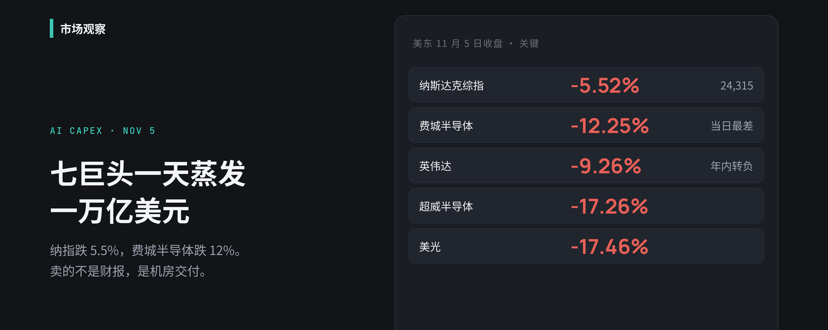
The Magnificent Seven Lose $1 Trillion in a Single DayOn November 5 U.S. Eastern Time—early morning on November 6 in Beijing—the U.S. stock market suffered its worst day since the tariff shock of April 2025.
The Nasdaq Composite fell 5.52% to close at 24,315, down more than 10% from last month's high and entering a technical correction. The S&P 500 fell 4.36%, and the Dow dropped 3.44%. The Philadelphia Semiconductor Index plunged 12.25% in a single day, its worst decline since March 2020. The volatility index rose to around 28, as fear returned to the market.
The Magnificent Seven lost more than $1 trillion in combined market value. Nvidia led the losses, shedding over $440 billion in market value in a single day as its shares fell 9.26%, turning negative for the year. AMD fell 17.26%, Micron dropped 17.46%, and SanDisk plunged 22.26%. The entire tech sector came under pressure, and none of the 11 sectors closed higher.
The Magnificent Seven Lose $1 Trillion in a Single Day
On November 5 U.S. Eastern Time—early morning on November 6 in Beijing—the U.S. stock market suffered its worst day since the tariff shock of April 2025.
The Nasdaq Composite fell 5.52% to close at 24,315, down more than 10% from last month's high and entering a technical correction. The S&P 500 fell 4.36%, and the Dow dropped 3.44%. The Philadelphia Semiconductor Index plunged 12.25% in a single day, its worst decline since March 2020. The volatility index rose to around 28, as fear returned to the market.
The Magnificent Seven lost more than $1 trillion in combined market value. Nvidia led the losses, shedding over $440 billion in market value in a single day as its shares fell 9.26%, turning negative for the year. AMD fell 17.26%, Micron dropped 17.46%, and SanDisk plunged 22.26%. The entire tech sector came under pressure, and none of the 11 sectors closed higher.
448
·
--
Partly True
In most perpetual contracts, funding payments are transferred between longs and shorts. @FX100Perp works differently: the net flow goes to the liquidity vault, because the vault is the counterparty to every trade.
Funding accrues continuously by the second, with no hourly deductions or claiming required. Settlement is applied directly to position margin.
When the market is balanced, longs pay a small base funding rate to the vault, while shorts pay 0. When the market is imbalanced, the crowded side pays more; the less crowded side may pay less or even receive a negative rate—that is, collect funding, which is automatically credited to margin.
Funding is the only ongoing cost of holding a position; the platform charges no borrowing fees. Accrued amounts are first recorded as pending. Any opening, closing, or adjustment triggers settlement; pending amounts are already deducted from net collateral and reflected in the liquidation price.
Panel convention: a minus sign means you are paying; a plus sign means you are receiving. #美股走弱,加密货币市场普遍承压

83
·
--
More people voting doesn’t mean nobody’s calling the shots
On November 2, U.S. Eastern Time, the SEC’s Division of Corporation Finance added three items to its crypto asset FAQ, numbered 1.4 to 1.6.
The key point: token holders who participate in broad-based governance generally aren’t a “central party” as long as they aren’t affiliated with one another and have no formal or informal arrangement to act in concert, including by delegating their votes.
Conversely, whoever can unilaterally change the code, reverse transactions, or decide who becomes a validator is a central party.
So the question isn’t how many people vote. It’s who receives delegated votes, and who can change the rules alone.
These are only staff views and have no legal force.
#Defi

76
·
--

Article
Intel Falls 29%, AMD Rises 8% After Hours: Growth Isn’t the DifferenceAt 5:15 a.m. Beijing time on November 4, AMD released its third-quarter results. Revenue was $13.38 billion, up 45% year over year. Data center revenue was $8.5 billion, up 97% year over year—just short of doubling. For the fourth quarter, AMD forecast revenue of around $17 billion, plus or minus 3%, with the midpoint about 66% higher than a year earlier.
The stock briefly rose more than 8% in after-hours trading.
Last Friday, Intel also delivered a respectable showing in data centers, with revenue in the segment up 78% in the third quarter. Its stock fell 29% that day. The market is worried about its guidance—and whether it can keep up with demand.
Intel Falls 29%, AMD Rises 8% After Hours: Growth Isn’t the Difference
At 5:15 a.m. Beijing time on November 4, AMD released its third-quarter results. Revenue was $13.38 billion, up 45% year over year. Data center revenue was $8.5 billion, up 97% year over year—just short of doubling. For the fourth quarter, AMD forecast revenue of around $17 billion, plus or minus 3%, with the midpoint about 66% higher than a year earlier.
The stock briefly rose more than 8% in after-hours trading.
Last Friday, Intel also delivered a respectable showing in data centers, with revenue in the segment up 78% in the third quarter. Its stock fell 29% that day. The market is worried about its guidance—and whether it can keep up with demand.
The stock briefly rose more than 8% in after-hours trading.
Last Friday, Intel also delivered a respectable showing in data centers, with revenue in the segment up 78% in the third quarter. Its stock fell 29% that day. The market is worried about its guidance—and whether it can keep up with demand.
429
·
--
Verified

Article
The same $20 billion: bullish news just five days agoOn Monday, November 2, U.S. Eastern Time, Oracle filed two documents with the U.S. Securities and Exchange Commission: one for an additional $10 billion in common stock, and another for $10 billion in senior notes, with maturities ranging from 2029 to 2046. The two offerings are independent of each other; if one falls through, the other will proceed.
The stock closed that day just above $119, down about 8.8% and not far from its 52-week low of $114.50.
This money didn’t come out of nowhere.
Five days ago, the same number sent the stock up 10%.
On Wednesday, October 28, Oracle held an investor day and gave two figures: fiscal 2030 revenue of at least $225 billion; and a cap of $20 billion on additional funds raised from capital markets for investments over fiscal 2027 to 2030.
The same $20 billion: bullish news just five days ago
On Monday, November 2, U.S. Eastern Time, Oracle filed two documents with the U.S. Securities and Exchange Commission: one for an additional $10 billion in common stock, and another for $10 billion in senior notes, with maturities ranging from 2029 to 2046. The two offerings are independent of each other; if one falls through, the other will proceed.
The stock closed that day just above $119, down about 8.8% and not far from its 52-week low of $114.50.
This money didn’t come out of nowhere.
Five days ago, the same number sent the stock up 10%.
On Wednesday, October 28, Oracle held an investor day and gave two figures: fiscal 2030 revenue of at least $225 billion; and a cap of $20 billion on additional funds raised from capital markets for investments over fiscal 2027 to 2030.
198
·
--
Bearish
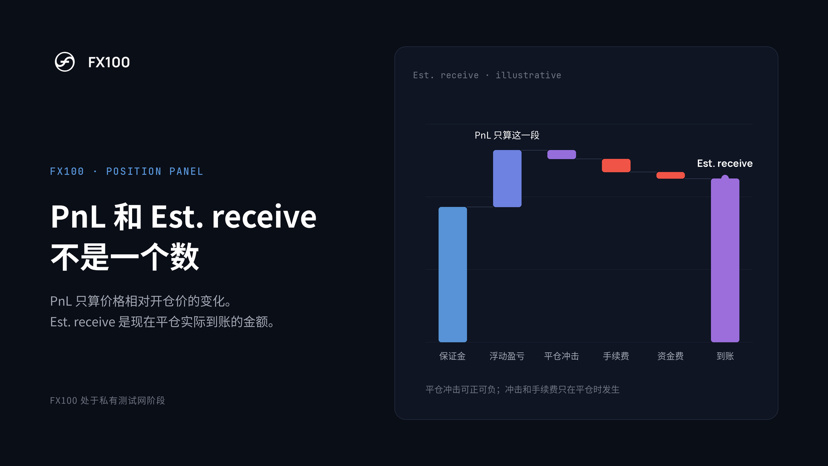
On the FX100 position panel, PnL and Est receive are two different figures.
PnL only reflects price changes; it does not include funding fees, closing fees, or price impact when closing. Est receive is the amount you would actually receive if you closed now, with all of these items included.
To decide whether to close, look at the latter. FX100 is currently in the private testnet phase. #美国10月非农出炉:降息还有戏吗?
83
·
--
Bearish
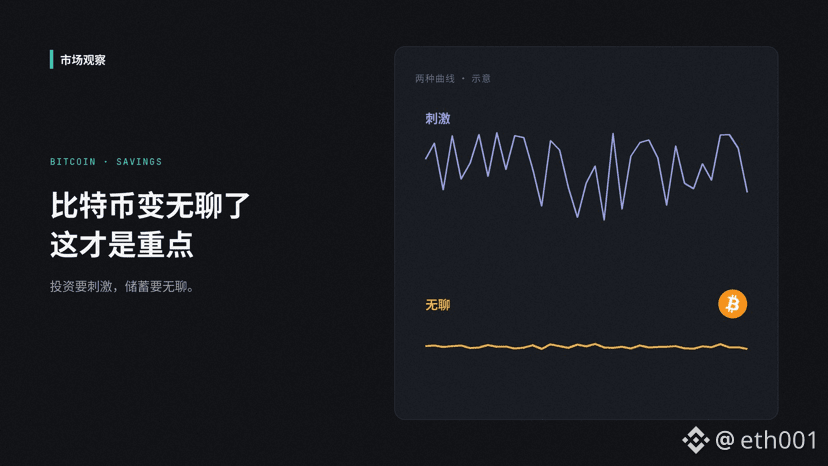
Has Bitcoin become boring?
Late at night on November 1, tech blogger Dave Lee posted: He went to sleep and woke up to find that $BTC no longer interested him. It was still kind of fun five years ago, but now it’s mostly boring. AI is much more interesting. The post got over a hundred thousand views and more than four hundred replies.
Bitcoin podcast host Stephan Livera replied in three sentences: Investing should be exciting; saving should be boring. If you’re using Bitcoin as savings, that’s exactly the point.
He was telling the truth—he just had it backwards. An asset is often exciting because people don’t understand it yet. It’s only when it stops being exciting that people dare to treat it like a savings account.
If you want a thrill, watch AI. If you want to sleep soundly, don’t go looking for one.
#比特币现货ETF周净流出2.03亿美元
109
·
--
Article
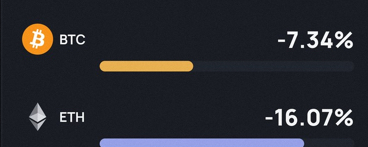
October Doesn’t Owe Anyone a Green CandleBased on USD spot daily data (UTC close), $BTC opened October at $83,556 and closed at $77,424, down 7.34%. Last October, it fell 3.96%. For the second year in a row, “Uptober” never showed up.
7.34% isn’t all that much on its own. This June, using the same methodology, $BTC fell 20.46% in a single month. What made this one painful wasn’t the size of the drop, but the timing: many people are used to expecting a rally in October.
This month wasn’t a steady slide all the way down. On October 2, it touched $87,249 intraday, the monthly high. For the next three-plus weeks, daily closing prices held above $80,000. The real damage came at month-end: on October 29, it fell 4.27% in a single day, then dipped to $76,141 intraday the following day, the monthly low.
October Doesn’t Owe Anyone a Green Candle
Based on USD spot daily data (UTC close), $BTC opened October at $83,556 and closed at $77,424, down 7.34%. Last October, it fell 3.96%. For the second year in a row, “Uptober” never showed up.
7.34% isn’t all that much on its own. This June, using the same methodology, $BTC fell 20.46% in a single month. What made this one painful wasn’t the size of the drop, but the timing: many people are used to expecting a rally in October.
This month wasn’t a steady slide all the way down. On October 2, it touched $87,249 intraday, the monthly high. For the next three-plus weeks, daily closing prices held above $80,000. The real damage came at month-end: on October 29, it fell 4.27% in a single day, then dipped to $76,141 intraday the following day, the monthly low.
154
·
--
Eighteen years ago today, at 2:10 a.m. Beijing time on November 1, 2008, Satoshi Nakamoto sent an email to a cryptography mailing list titled “Bitcoin P2P e-cash paper.”
He laid his cards on the table right away: he was working on a purely peer-to-peer electronic cash system that didn’t require a trusted third party.
The paper was nine pages long. Its first sentence in the abstract was about making payments: one party paying another directly, without going through a financial institution.
Today, $BTC has spot ETFs, is on the balance sheets of publicly traded companies, and is even held in custody by banks.
Some say this means it’s lost its way. I disagree.
Coins can be put into ETFs. That “no trusted third party” principle can’t.
These are personal opinions only and do not constitute investment advice.
$BTC #币安将恢复第一阶段提现

173
·
--
Verified

Article
Uber Kept Its Weekend Cash in a FundOn Friday afternoon, finance departments at many companies do the same thing: redeem some of their money from money market funds and put it in checking accounts for the weekend.
The reason is simple. Banks and funds have cutoff times, and redemptions usually take T+1 or longer. Payments may be due on Saturday or Sunday, so the money has to be ready in advance. As a result, a large amount of cash sits idle in accounts for two days every weekend.
This week, Uber tried a different approach.
1. What happened
On October 30, U.S. Eastern Time, HSBC USA, Franklin Templeton, Tradeweb, and Fireblocks announced that Uber, as a pilot customer, had completed a 24/7 liquidity and settlement test on the Canton Network.
Uber Kept Its Weekend Cash in a Fund
On Friday afternoon, finance departments at many companies do the same thing: redeem some of their money from money market funds and put it in checking accounts for the weekend.
The reason is simple. Banks and funds have cutoff times, and redemptions usually take T+1 or longer. Payments may be due on Saturday or Sunday, so the money has to be ready in advance. As a result, a large amount of cash sits idle in accounts for two days every weekend.
This week, Uber tried a different approach.
1. What happened
On October 30, U.S. Eastern Time, HSBC USA, Franklin Templeton, Tradeweb, and Fireblocks announced that Uber, as a pilot customer, had completed a 24/7 liquidity and settlement test on the Canton Network.
UBER-0,11%
HSBCUS-0,96%
95
·
--
Verified

Article
A quarter that earned $20.9 billion: Strategy also sold $430 million worth of coins#At around midnight Beijing time on October 30, Strategy ($MSTR) released its third-quarter results. Operating profit was $20.91 billion, which the company said was its largest quarter ever. On the next trading day, MSTR closed at around $130.50, down about 7.8% from $141.62 the day before.
Profits hit a record, but the share price is falling. After reading through the financial report, I think the most interesting part isn’t the biggest number, but the small print a few lines later.
I. Where did the $20.9 billion come from?
The financial report puts it plainly: third-quarter operating profit was $20.91 billion, of which gains on digital assets were also exactly $20.91 billion. Total software revenue was $125.4 million, down 3% year over year.
In other words, nearly all of the quarter’s profit came from fair-value changes driven by Bitcoin’s price increase. These were accounting gains, not cash received from selling coins or software. The report also offered this comparison: in the third quarter, MSTR’s share price rose 76%, while $BTC rose 43%.
When prices change, the figures on the books have to be recalculated. The same goes for the fourth quarter.
A quarter that earned $20.9 billion: Strategy also sold $430 million worth of coins
#At around midnight Beijing time on October 30, Strategy ($MSTR) released its third-quarter results. Operating profit was $20.91 billion, which the company said was its largest quarter ever. On the next trading day, MSTR closed at around $130.50, down about 7.8% from $141.62 the day before.
Profits hit a record, but the share price is falling. After reading through the financial report, I think the most interesting part isn’t the biggest number, but the small print a few lines later.
I. Where did the $20.9 billion come from?
The financial report puts it plainly: third-quarter operating profit was $20.91 billion, of which gains on digital assets were also exactly $20.91 billion. Total software revenue was $125.4 million, down 3% year over year. In other words, nearly all of the quarter’s profit came from fair-value changes driven by Bitcoin’s price increase. These were accounting gains, not cash received from selling coins or software. The report also offered this comparison: in the third quarter, MSTR’s share price rose 76%, while $BTC rose 43%. When prices change, the figures on the books have to be recalculated. The same goes for the fourth quarter.
1
103
·
--

Article
Three pause buttons in one night: After Binance was hacked, I took another look at fxprotocolAt 4:24 a.m. on October 30 (Beijing time, same below), a Binance Ethereum hot wallet transferred 167,464 ETH, along with other tokens, to the same address in a single transaction. According to a post-incident analysis by Aave risk service provider LlamaRisk, within the next few minutes the address received another 28,006 ETH from a different Binance Ethereum hot wallet, followed by funds from Arbitrum, Optimism, and Avalanche.
At 10:25 a.m., Binance’s official statement was that the estimated total impact was about $6.3 billion, with around $3 billion already frozen on-chain. Binance would cover all losses using its SAFU fund and corporate funds, and user funds were safe.
Three pause buttons in one night: After Binance was hacked, I took another look at fxprotocol
At 4:24 a.m. on October 30 (Beijing time, same below), a Binance Ethereum hot wallet transferred 167,464 ETH, along with other tokens, to the same address in a single transaction. According to a post-incident analysis by Aave risk service provider LlamaRisk, within the next few minutes the address received another 28,006 ETH from a different Binance Ethereum hot wallet, followed by funds from Arbitrum, Optimism, and Avalanche.
At 10:25 a.m., Binance’s official statement was that the estimated total impact was about $6.3 billion, with around $3 billion already frozen on-chain. Binance would cover all losses using its SAFU fund and corporate funds, and user funds were safe.
At 10:25 a.m., Binance’s official statement was that the estimated total impact was about $6.3 billion, with around $3 billion already frozen on-chain. Binance would cover all losses using its SAFU fund and corporate funds, and user funds were safe.
123
·
--

Article
Beyond the roughly $3 billion frozen, there’s the other half that can’t be frozenAt 4:20:59 a.m. Beijing time on October 30, an EIP-7702 transaction appeared in Ethereum block 26,300,753. Its target was one of Binance’s most active Ethereum hot wallets, labeled Binance 14 on-chain. Three minutes and 24 seconds later, the same operator address called the transfer function. According to Blockaid’s postmortem, the transaction took 167,464 $ETH, about 1.615 billion $USDT, and around 60 other types of tokens, worth approximately $2.5 billion at the time.
As of publication, Binance’s official statements are as follows: about $3 billion in assets has been verified as frozen; Binance will cover all losses; and deposits and withdrawals are suspended, with a full postmortem to be published after the investigation concludes. The official total stolen has not been disclosed. Third-party estimates are at least $5.5 billion from Blockaid and about $5.91 billion from Chainalysis (as reported by CNBC). The figures use different methodologies and are provided for reference only.
Beyond the roughly $3 billion frozen, there’s the other half that can’t be frozen
At 4:20:59 a.m. Beijing time on October 30, an EIP-7702 transaction appeared in Ethereum block 26,300,753. Its target was one of Binance’s most active Ethereum hot wallets, labeled Binance 14 on-chain. Three minutes and 24 seconds later, the same operator address called the transfer function. According to Blockaid’s postmortem, the transaction took 167,464 $ETH, about 1.615 billion $USDT, and around 60 other types of tokens, worth approximately $2.5 billion at the time.
As of publication, Binance’s official statements are as follows: about $3 billion in assets has been verified as frozen; Binance will cover all losses; and deposits and withdrawals are suspended, with a full postmortem to be published after the investigation concludes. The official total stolen has not been disclosed. Third-party estimates are at least $5.5 billion from Blockaid and about $5.91 billion from Chainalysis (as reported by CNBC). The figures use different methodologies and are provided for reference only.
As of publication, Binance’s official statements are as follows: about $3 billion in assets has been verified as frozen; Binance will cover all losses; and deposits and withdrawals are suspended, with a full postmortem to be published after the investigation concludes. The official total stolen has not been disclosed. Third-party estimates are at least $5.5 billion from Blockaid and about $5.91 billion from Chainalysis (as reported by CNBC). The figures use different methodologies and are provided for reference only.
913
·
--
Verified
Article
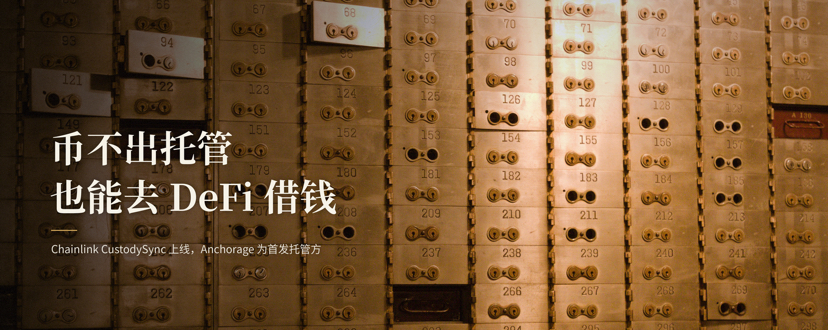
Institutions can now borrow in DeFi without moving their crypto out of custodyAt 12:16 a.m. Beijing time on October 27, Chainlink’s official account announced its new product, CustodySync, with Anchorage Digital Bank as its launch partner. Eleven minutes later, Anchorage posted to confirm the news. By 10 a.m., Chainlink’s post had received about 64,000 impressions.
1. What it aims to solve
A Chainlink blog post offered a comparison: digital asset custody totals about $700 billion, less than 0.5% of the $250 trillion in traditional asset custody. The same post says deposits in the DeFi lending market exceed $80 billion, with more than $30 billion in outstanding loans.
Institutions can now borrow in DeFi without moving their crypto out of custody
At 12:16 a.m. Beijing time on October 27, Chainlink’s official account announced its new product, CustodySync, with Anchorage Digital Bank as its launch partner. Eleven minutes later, Anchorage posted to confirm the news. By 10 a.m., Chainlink’s post had received about 64,000 impressions.
1. What it aims to solve
A Chainlink blog post offered a comparison: digital asset custody totals about $700 billion, less than 0.5% of the $250 trillion in traditional asset custody. The same post says deposits in the DeFi lending market exceed $80 billion, with more than $30 billion in outstanding loans.
214
·
--
Partly True
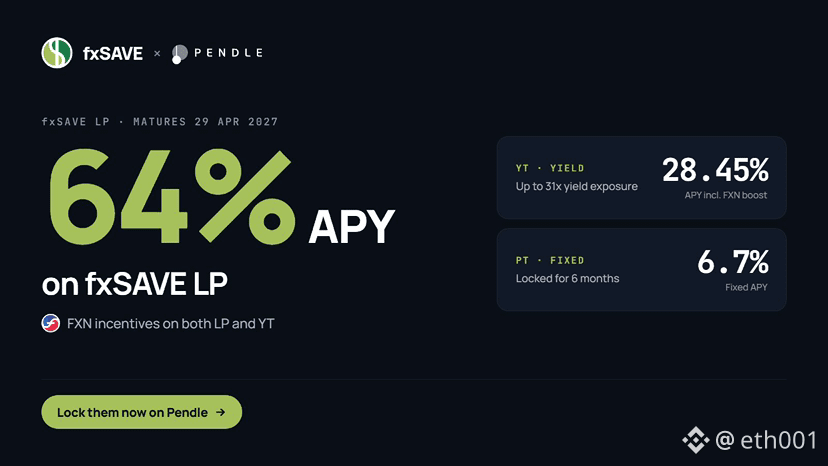
It’s still fxSAVE, but on Pendle, there’s another layer of strategy.
PT focuses on yield at maturity;
YT trades future yield;
LPs participate in the liquidity market to earn corresponding yield and incentives.
This market’s maturity date: April 29, 2027.
As announced by @protocol_fx, both LPs and YT holders will receive $FXN incentives this period. DeFi opportunities have never been just about APY. Understanding yield structures and different strategies is the key to finding the right way to participate.#Strategy未购比特币斥资2.05亿美元回购STRC
125
·
--
Verified
The timeline for Zcash’s NU7 upgrade is set.
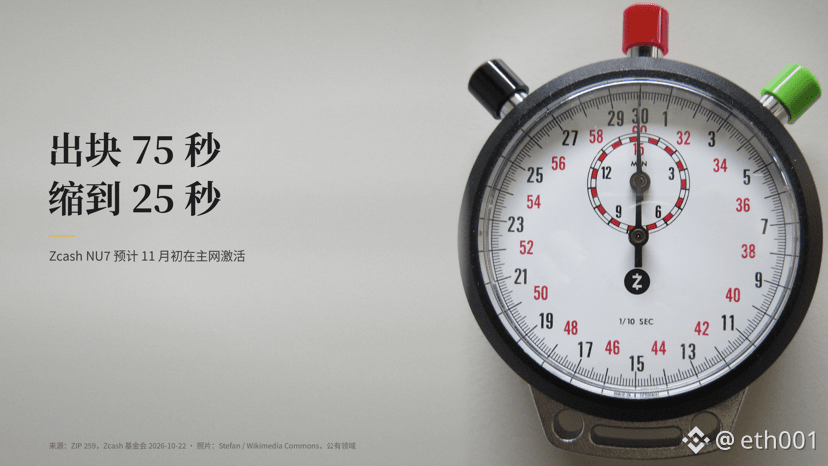
ZIP 259 specifies the mainnet activation height as 3,543,405. The Zcash Foundation says it is expected around November 5, while the Zakura node software estimates approximately 00:50 UTC on November 6—that is, around 8:50 a.m. Beijing time on November 6.
There are three changes: block intervals will shrink from 75 seconds to 25 seconds; 60% of the fees from each block will be taken out of circulation and added to reserves; and v4 transactions will become invalid, making any remaining coins in the Sprout pool unspendable.
The last point is the most important warning, in my view. If you still have Sprout assets in an old wallet, move them out before activation. $ZEC
Sources: ZIP 259; Zcash Foundation’s Zebra 7.0.0 announcement (10-22). Not investment advice.
#zec #Zcash #NU7
1
346
·
--

Article
Bitcoin Falls Below $80,000, Then Reclaims It: This Week’s Books Are More Worth Reviewing Than the Candlestick ChartOn Saturday night, $BTC traded below $80,000 for less than three hours before reclaiming it. The candlesticks made a lot of noise around the round-number level; what’s really worth reviewing are the week’s books.
1. Those Few Hours Over the Weekend
Coinbase BTC-USD hourly chart (Beijing time): The October 24, 22:00 candle had a low of $79,707. The 23:00 candle dipped to $79,107 and closed at $79,691.25—the only hourly candle since 18:00 that evening to close below $80,000. The October 25, 00:00 candle had a low of $79,475, and the 01:00 candle’s low was exactly $80,000. The price did not fall below that level again. As of 10:14 today, Coinbase’s best bid is $80,751.84.
Bitcoin Falls Below $80,000, Then Reclaims It: This Week’s Books Are More Worth Reviewing Than the Candlestick Chart
On Saturday night, $BTC traded below $80,000 for less than three hours before reclaiming it. The candlesticks made a lot of noise around the round-number level; what’s really worth reviewing are the week’s books.
1. Those Few Hours Over the Weekend
Coinbase BTC-USD hourly chart (Beijing time): The October 24, 22:00 candle had a low of $79,707. The 23:00 candle dipped to $79,107 and closed at $79,691.25—the only hourly candle since 18:00 that evening to close below $80,000. The October 25, 00:00 candle had a low of $79,475, and the 01:00 candle’s low was exactly $80,000. The price did not fall below that level again. As of 10:14 today, Coinbase’s best bid is $80,751.84.
1
279
Log in to explore more content
Join global crypto users on Binance Square
⚡️ Get latest and useful information about crypto.
💬 Trusted by the world’s largest crypto exchange.
👍 Discover real insights from verified creators.
Email / Phone number
Trending Topics
JobsReportRaisesHikeOdds
491,687 views
3,229 Discussing
TradFi News | US Adds 165,000 Jobs in October, More Than Double the 65,000 Forecast, as Unemployment Falls to 4.1%
Binance News
·42 Likes
·24.1k views
CPITestsDecemberRateOutlook
136,245 views
1,042 Discussing
BitcoinRebounds$75KAsChipsLead
44,527 views
336 Discussing