

张不烦
2.7k Posts

张不烦
 Square Verified+
Report
Block User
有事请联系:公众号:南北交易随笔记。币安新老用户币手续费永久返还邀请码:BTC887。所有理解均来源于交易书籍📚、宏观经济学、人性、看别人不如多看书!
Frequent Trader
1.3 Years
466 Following
31.4K+ Followers
31.1K+ Liked
Posts
All
Quotes
Videos
Live
PINNED
·
--
There’s a big boss in the strategy group # , so envious, watching my small holdings like three measly coins.
There’s a big boss in the strategy group # , so envious, watching my small holdings like three measly coins.
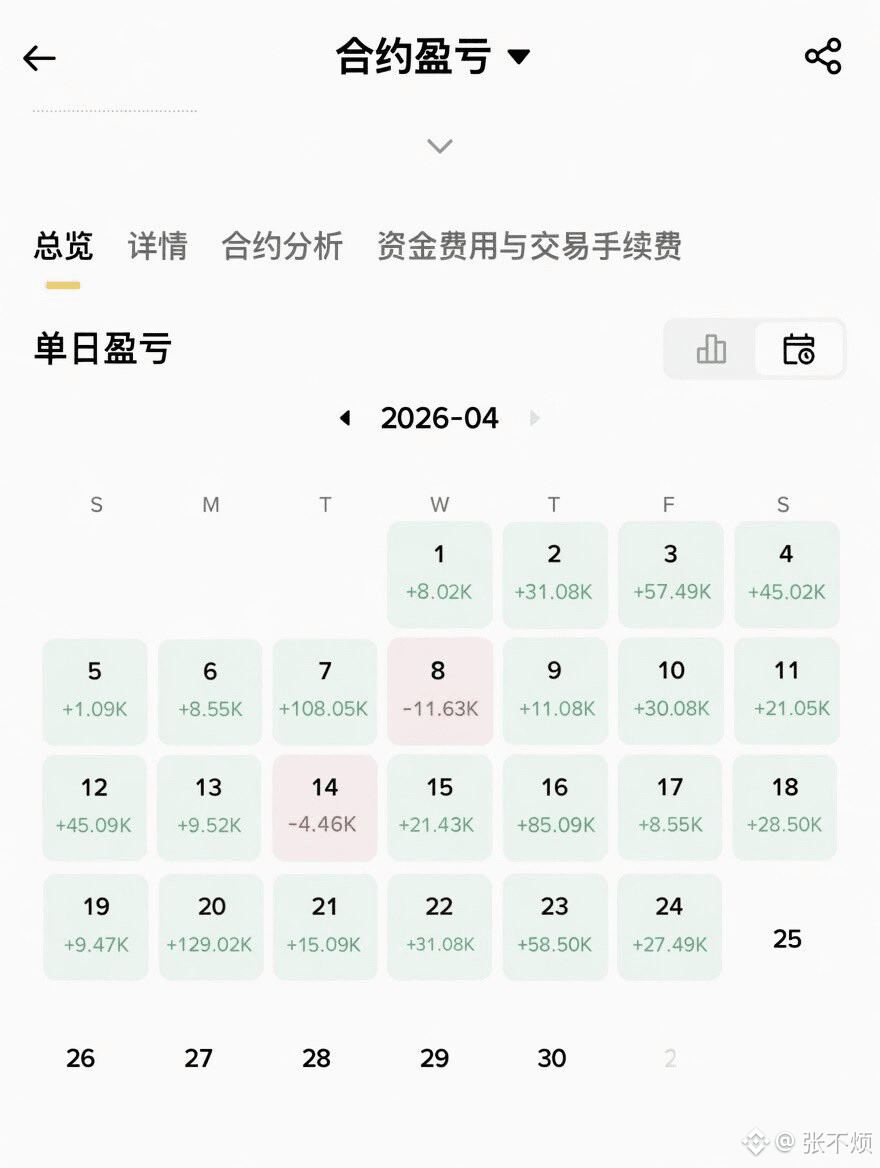
1
1
3
562

·
--
(Two cakes) $ETH My take:
First, look at the bigger direction: 2702. If price pushes up into this area and can’t hold after going up for a round, then basically the day’s ceiling has already been used. Don’t count on trying to hard push higher. The focus then shifts downward to 2635.
How to play the range:
If 2635 can hold, then treat it as back-and-forth between 2702 and 2635—don’t rush into a one-way move.
If 2635 can’t hold, the next key level is 2567. 2567 is the bottom of a large trading range (big box). Once it breaks, the hourly timeframe bulls are essentially over; don’t keep forcing it from a long-bias.
If you want to go long, watch these levels:
2664: If it breaks upward on strong volume, you can follow; after the push, if it drops back again, cut it.
A drop to around 2610 for a pullback: once you confirm it’s supported, consider entering. If it can’t hold and breaks below 2572, get out.
If the hourly chart can stabilize above 2664, then only after that does it have the “qualification” to look at 2702 to 2726.
If you want to go short, it’s straightforward too:
2647: If it sells off on strong volume and breaks downward, you can follow short—don’t skimp on the stop loss.
If price rallies up toward 2702, you can also try a short there, but if 2743 breaks, then acknowledge the mistake.
If the 4-hour chart breaks below 2647, then look down at 2610 and 2572.
Pre-positioning levels:
2556 can be set for a long; if it breaks 2507,撤 (cancel/exit).
Resistance overhead: 2664, 2702, 2726
Support below: 2647, 2610, 2572
(Two cakes) $ETH My take:
First, look at the bigger direction: 2702. If price pushes up into this area and can’t hold after going up for a round, then basically the day’s ceiling has already been used. Don’t count on trying to hard push higher. The focus then shifts downward to 2635.
How to play the range:
If 2635 can hold, then treat it as back-and-forth between 2702 and 2635—don’t rush into a one-way move.
If 2635 can’t hold, the next key level is 2567. 2567 is the bottom of a large trading range (big box). Once it breaks, the hourly timeframe bulls are essentially over; don’t keep forcing it from a long-bias.
If you want to go long, watch these levels:
2664: If it breaks upward on strong volume, you can follow; after the push, if it drops back again, cut it.
A drop to around 2610 for a pullback: once you confirm it’s supported, consider entering. If it can’t hold and breaks below 2572, get out.
If the hourly chart can stabilize above 2664, then only after that does it have the “qualification” to look at 2702 to 2726.
If you want to go short, it’s straightforward too:
2647: If it sells off on strong volume and breaks downward, you can follow short—don’t skimp on the stop loss.
If price rallies up toward 2702, you can also try a short there, but if 2743 breaks, then acknowledge the mistake.
If the 4-hour chart breaks below 2647, then look down at 2610 and 2572.
Pre-positioning levels:
2556 can be set for a long; if it breaks 2507,撤 (cancel/exit).
Resistance overhead: 2664, 2702, 2726
Support below: 2647, 2610, 2572
First, look at the bigger direction: 2702. If price pushes up into this area and can’t hold after going up for a round, then basically the day’s ceiling has already been used. Don’t count on trying to hard push higher. The focus then shifts downward to 2635.
How to play the range:
If 2635 can hold, then treat it as back-and-forth between 2702 and 2635—don’t rush into a one-way move.
If 2635 can’t hold, the next key level is 2567. 2567 is the bottom of a large trading range (big box). Once it breaks, the hourly timeframe bulls are essentially over; don’t keep forcing it from a long-bias.
If you want to go long, watch these levels:
2664: If it breaks upward on strong volume, you can follow; after the push, if it drops back again, cut it.
A drop to around 2610 for a pullback: once you confirm it’s supported, consider entering. If it can’t hold and breaks below 2572, get out.
If the hourly chart can stabilize above 2664, then only after that does it have the “qualification” to look at 2702 to 2726.
If you want to go short, it’s straightforward too:
2647: If it sells off on strong volume and breaks downward, you can follow short—don’t skimp on the stop loss.
If price rallies up toward 2702, you can also try a short there, but if 2743 breaks, then acknowledge the mistake.
If the 4-hour chart breaks below 2647, then look down at 2610 and 2572.
Pre-positioning levels:
2556 can be set for a long; if it breaks 2507,撤 (cancel/exit).
Resistance overhead: 2664, 2702, 2726
Support below: 2647, 2610, 2572
7
4
7.9k
·
--
(Bing) $ETH My take:
First, say it in plain language about the big picture:
Right now the price is stuck around 2702. Above it there’s a triangle pressing down, and also the line at 2702 is acting like a ceiling—so it’s basically two lids. As long as 2702 can’t be broken through, don’t expect a sudden breakout. Even if it bounces, it won’t jump very high; don’t imagine it will surge straight up.
If you want to go long, watch these levels:
Go long only if it rises on strong volume and closes above 2708, and then holds steady—then you can chase. This is what we call a right-side entry. If it goes above and then quickly falls back, cut losses immediately; don’t stubbornly hold.
If it first dips and stamps down toward around 2648 and can hold there, you may also consider entering long. But if it directly breaks down through 2610, then for this leg, don’t do long trades.
On the hourly chart, if it can stabilize above 2708, then the upside targets are 2748 first, and further out 2788.
If you want to go short, look at these two spots:
If 2689 is broken down on strong volume, and then any bounce fails to reclaim it, then short again—also wait for right-side confirmation.
If it first rallies toward around 2788, you can consider shorting too, but if 2809 breaks, don’t short; exit and stop out.
On the 4-hour chart, if price falls below 2689, then the downside looks first at 2648, and further down at 2610.
If it turns into a range:
As long as pullbacks don’t break 2635, it will most likely churn back and forth between 2702 and 2635—don’t rush to chase direction.
If you want to bottom-fish earlier:
A setup like a sharp wick down followed by a quick reclaim, with a stop loss at 2555. This is more aggressive—control your position size yourself.
Key levels above: 2708, 2748, 2788
Key floors below: 2689, 2648, 2610
One sentence to remember: If 2702 can’t be broken, don’t fantasize about a big rally. Once you reach the levels, act—but without confirmation, don’t go all-in early.
(Bing) $ETH My take:
First, say it in plain language about the big picture:
Right now the price is stuck around 2702. Above it there’s a triangle pressing down, and also the line at 2702 is acting like a ceiling—so it’s basically two lids. As long as 2702 can’t be broken through, don’t expect a sudden breakout. Even if it bounces, it won’t jump very high; don’t imagine it will surge straight up.
If you want to go long, watch these levels:
Go long only if it rises on strong volume and closes above 2708, and then holds steady—then you can chase. This is what we call a right-side entry. If it goes above and then quickly falls back, cut losses immediately; don’t stubbornly hold.
If it first dips and stamps down toward around 2648 and can hold there, you may also consider entering long. But if it directly breaks down through 2610, then for this leg, don’t do long trades.
On the hourly chart, if it can stabilize above 2708, then the upside targets are 2748 first, and further out 2788.
If you want to go short, look at these two spots:
If 2689 is broken down on strong volume, and then any bounce fails to reclaim it, then short again—also wait for right-side confirmation.
If it first rallies toward around 2788, you can consider shorting too, but if 2809 breaks, don’t short; exit and stop out.
On the 4-hour chart, if price falls below 2689, then the downside looks first at 2648, and further down at 2610.
If it turns into a range:
As long as pullbacks don’t break 2635, it will most likely churn back and forth between 2702 and 2635—don’t rush to chase direction.
If you want to bottom-fish earlier:
A setup like a sharp wick down followed by a quick reclaim, with a stop loss at 2555. This is more aggressive—control your position size yourself.
Key levels above: 2708, 2748, 2788
Key floors below: 2689, 2648, 2610
One sentence to remember: If 2702 can’t be broken, don’t fantasize about a big rally. Once you reach the levels, act—but without confirmation, don’t go all-in early.
First, say it in plain language about the big picture:
Right now the price is stuck around 2702. Above it there’s a triangle pressing down, and also the line at 2702 is acting like a ceiling—so it’s basically two lids. As long as 2702 can’t be broken through, don’t expect a sudden breakout. Even if it bounces, it won’t jump very high; don’t imagine it will surge straight up.
If you want to go long, watch these levels:
Go long only if it rises on strong volume and closes above 2708, and then holds steady—then you can chase. This is what we call a right-side entry. If it goes above and then quickly falls back, cut losses immediately; don’t stubbornly hold.
If it first dips and stamps down toward around 2648 and can hold there, you may also consider entering long. But if it directly breaks down through 2610, then for this leg, don’t do long trades.
On the hourly chart, if it can stabilize above 2708, then the upside targets are 2748 first, and further out 2788.
If you want to go short, look at these two spots:
If 2689 is broken down on strong volume, and then any bounce fails to reclaim it, then short again—also wait for right-side confirmation.
If it first rallies toward around 2788, you can consider shorting too, but if 2809 breaks, don’t short; exit and stop out.
On the 4-hour chart, if price falls below 2689, then the downside looks first at 2648, and further down at 2610.
If it turns into a range:
As long as pullbacks don’t break 2635, it will most likely churn back and forth between 2702 and 2635—don’t rush to chase direction.
If you want to bottom-fish earlier:
A setup like a sharp wick down followed by a quick reclaim, with a stop loss at 2555. This is more aggressive—control your position size yourself.
Key levels above: 2708, 2748, 2788
Key floors below: 2689, 2648, 2610
One sentence to remember: If 2702 can’t be broken, don’t fantasize about a big rally. Once you reach the levels, act—but without confirmation, don’t go all-in early.
2
4
7k
·
--
(Double Pie) $ETH My take:
First, speak like a human—don’t mess around with all that mystical stuff.
Whether this wave can turn depends on whether 2703 can be recovered. If it can’t be recovered, then it’s weak—don’t keep telling yourself it’s about to have a big rebound. To look for higher levels like 2740, even 2784, you need to first break through 2698 with volume, and you must be able to hold above it. If it can’t hold, then those higher areas won’t be on the table.
As long as the trendline is still intact, don’t panic. 2636 might not be hit right away. Once the trendline is lost, most likely price will churn back and forth in the range from 2703 down to 2636. 2636 is the deadly spot for the short term: if you can defend it, you can grind it out; if it breaks structure, things get ugly and price may probe lower again.
What to do—keep it simple:
Push 2698 upward with volume, then go long again; if it falls back, cut.
Sell short when 2683 breaks downward with volume—don’t stubbornly hold.
If a pullback to 2636 confirms it can still hold, you can try going long; if 2601 breaks, exit.
Only if the hourly chart can hold above 2698 do you have the right to look toward 2740–2784.
Around 2744 you can try a short; if 2784 breaks, stop out.
If it wicks down to 2584, you can consider taking a long there; if 2558 breaks, accept the loss.
If the 4-hour chart drops below 2670, first watch for 2637; if that fails, then it’s 2601.
What’s overhead pressure: 2698, 2740, 2784
What’s holding it up below: 2683, 2636, 2601
One sentence: First sort out these immediate key levels—don’t start imagining the big market move ahead of time.
(Double Pie) $ETH My take:
First, speak like a human—don’t mess around with all that mystical stuff.
Whether this wave can turn depends on whether 2703 can be recovered. If it can’t be recovered, then it’s weak—don’t keep telling yourself it’s about to have a big rebound. To look for higher levels like 2740, even 2784, you need to first break through 2698 with volume, and you must be able to hold above it. If it can’t hold, then those higher areas won’t be on the table.
As long as the trendline is still intact, don’t panic. 2636 might not be hit right away. Once the trendline is lost, most likely price will churn back and forth in the range from 2703 down to 2636. 2636 is the deadly spot for the short term: if you can defend it, you can grind it out; if it breaks structure, things get ugly and price may probe lower again.
What to do—keep it simple:
Push 2698 upward with volume, then go long again; if it falls back, cut.
Sell short when 2683 breaks downward with volume—don’t stubbornly hold.
If a pullback to 2636 confirms it can still hold, you can try going long; if 2601 breaks, exit.
Only if the hourly chart can hold above 2698 do you have the right to look toward 2740–2784.
Around 2744 you can try a short; if 2784 breaks, stop out.
If it wicks down to 2584, you can consider taking a long there; if 2558 breaks, accept the loss.
If the 4-hour chart drops below 2670, first watch for 2637; if that fails, then it’s 2601.
What’s overhead pressure: 2698, 2740, 2784
What’s holding it up below: 2683, 2636, 2601
One sentence: First sort out these immediate key levels—don’t start imagining the big market move ahead of time.
First, speak like a human—don’t mess around with all that mystical stuff.
Whether this wave can turn depends on whether 2703 can be recovered. If it can’t be recovered, then it’s weak—don’t keep telling yourself it’s about to have a big rebound. To look for higher levels like 2740, even 2784, you need to first break through 2698 with volume, and you must be able to hold above it. If it can’t hold, then those higher areas won’t be on the table.
As long as the trendline is still intact, don’t panic. 2636 might not be hit right away. Once the trendline is lost, most likely price will churn back and forth in the range from 2703 down to 2636. 2636 is the deadly spot for the short term: if you can defend it, you can grind it out; if it breaks structure, things get ugly and price may probe lower again.
What to do—keep it simple:
Push 2698 upward with volume, then go long again; if it falls back, cut.
Sell short when 2683 breaks downward with volume—don’t stubbornly hold.
If a pullback to 2636 confirms it can still hold, you can try going long; if 2601 breaks, exit.
Only if the hourly chart can hold above 2698 do you have the right to look toward 2740–2784.
Around 2744 you can try a short; if 2784 breaks, stop out.
If it wicks down to 2584, you can consider taking a long there; if 2558 breaks, accept the loss.
If the 4-hour chart drops below 2670, first watch for 2637; if that fails, then it’s 2601.
What’s overhead pressure: 2698, 2740, 2784
What’s holding it up below: 2683, 2636, 2601
One sentence: First sort out these immediate key levels—don’t start imagining the big market move ahead of time.
5
1
4.7k
·
--
(Bing Bing) $ETH My take:
Bing Bing is indeed limp today—the channel didn’t hold, and it slid back into that old range of 2650–2568 and has been wobbling there. Don’t rush into copying trades yet; see whether it can stand firm here.
Right now I’m watching 2610. If the hourly close can’t get back above 2650, don’t talk about a reversal—first look at 2610. If you want a bounce, you need to first get past 2713; if it can’t, the bounce likely won’t get far.
If 2610 can hold, the bottom-position can still be kept. Once it breaks, reduce longs as needed—don’t fight the position. If 2610 is lost, then 2568 is probably also in question; it won’t just be an hourly-chart issue—this could turn into a higher-level move downward. Don’t take this lightly.
Trade it like this: break above 2649 with volume—go long on the right side, first target 2676–2703. Break below 2628 with volume—go short on the right side, looking at 2610–2568. Don’t act if there’s no volume—fakes love to clean up quick hands, so stop-loss must be in place.
On the 4-hour chart: once 2628 breaks, directly look at 2610–2568. 2670 is a hurdle. If it can’t reclaim it after three consecutive K-lines, the 4-hour target heads for 2520. If it can close back above 2670, things are fine for now—if it can’t, don’t stubbornly hold on.
On the daily chart, that small consolidation has also broken. It’s back in the larger box, and the structure is on the weaker side. Don’t rush to bottom-fish—wait for the signal before acting. Signals are more valuable than courage.
(Bing Bing) $ETH My take:
Bing Bing is indeed limp today—the channel didn’t hold, and it slid back into that old range of 2650–2568 and has been wobbling there. Don’t rush into copying trades yet; see whether it can stand firm here.
Right now I’m watching 2610. If the hourly close can’t get back above 2650, don’t talk about a reversal—first look at 2610. If you want a bounce, you need to first get past 2713; if it can’t, the bounce likely won’t get far.
If 2610 can hold, the bottom-position can still be kept. Once it breaks, reduce longs as needed—don’t fight the position. If 2610 is lost, then 2568 is probably also in question; it won’t just be an hourly-chart issue—this could turn into a higher-level move downward. Don’t take this lightly.
Trade it like this: break above 2649 with volume—go long on the right side, first target 2676–2703. Break below 2628 with volume—go short on the right side, looking at 2610–2568. Don’t act if there’s no volume—fakes love to clean up quick hands, so stop-loss must be in place.
On the 4-hour chart: once 2628 breaks, directly look at 2610–2568. 2670 is a hurdle. If it can’t reclaim it after three consecutive K-lines, the 4-hour target heads for 2520. If it can close back above 2670, things are fine for now—if it can’t, don’t stubbornly hold on.
On the daily chart, that small consolidation has also broken. It’s back in the larger box, and the structure is on the weaker side. Don’t rush to bottom-fish—wait for the signal before acting. Signals are more valuable than courage.
Bing Bing is indeed limp today—the channel didn’t hold, and it slid back into that old range of 2650–2568 and has been wobbling there. Don’t rush into copying trades yet; see whether it can stand firm here.
Right now I’m watching 2610. If the hourly close can’t get back above 2650, don’t talk about a reversal—first look at 2610. If you want a bounce, you need to first get past 2713; if it can’t, the bounce likely won’t get far.
If 2610 can hold, the bottom-position can still be kept. Once it breaks, reduce longs as needed—don’t fight the position. If 2610 is lost, then 2568 is probably also in question; it won’t just be an hourly-chart issue—this could turn into a higher-level move downward. Don’t take this lightly.
Trade it like this: break above 2649 with volume—go long on the right side, first target 2676–2703. Break below 2628 with volume—go short on the right side, looking at 2610–2568. Don’t act if there’s no volume—fakes love to clean up quick hands, so stop-loss must be in place.
On the 4-hour chart: once 2628 breaks, directly look at 2610–2568. 2670 is a hurdle. If it can’t reclaim it after three consecutive K-lines, the 4-hour target heads for 2520. If it can close back above 2670, things are fine for now—if it can’t, don’t stubbornly hold on.
On the daily chart, that small consolidation has also broken. It’s back in the larger box, and the structure is on the weaker side. Don’t rush to bottom-fish—wait for the signal before acting. Signals are more valuable than courage.
7
4
6k
·
--
(Bing) $ETH My take:
2784—tap it and it feels soft underneath, while the upper part is like a wall; very hard. The hourly line surged out and then turned back and dropped again—basically a wasted trip with no real use.
Right now, I’m watching whether the area from 2703 to 2713 can hold. If it holds, there’s still room to breathe and make a move toward 2784; if it doesn’t, go first to around 2648 and wait for it to stabilize and stop falling.
This support is too obvious—the limit orders are stacked clearly. The main force either keeps whipping around near 2731 to annoy people, then pulls away after shaking them out; or it directly breaks through 2703 down toward 2648, first scaring people off before collecting.
If you want to go long, wait for 2737 to break through with volume, then chase on the right side; target 2784 to 2808. If you want to short, wait for 2715 to break with volume, then chase on the right side short; target 2648 to 2606.
If there’s no volume, don’t act randomly—sit and watch the show. A stop-loss must be placed; don’t stubbornly hold on.
Now looking at the 4-hour chart: as long as the range box from 2671 to 2359 hasn’t broken, treat it as nothing for now. If it falls back into it, the box still decides—just watch it from the center line at 2521. If 2671 breaks, then for short-term long positions, reduce a bit first.
(Bing) $ETH My take:
2784—tap it and it feels soft underneath, while the upper part is like a wall; very hard. The hourly line surged out and then turned back and dropped again—basically a wasted trip with no real use.
Right now, I’m watching whether the area from 2703 to 2713 can hold. If it holds, there’s still room to breathe and make a move toward 2784; if it doesn’t, go first to around 2648 and wait for it to stabilize and stop falling.
This support is too obvious—the limit orders are stacked clearly. The main force either keeps whipping around near 2731 to annoy people, then pulls away after shaking them out; or it directly breaks through 2703 down toward 2648, first scaring people off before collecting.
If you want to go long, wait for 2737 to break through with volume, then chase on the right side; target 2784 to 2808. If you want to short, wait for 2715 to break with volume, then chase on the right side short; target 2648 to 2606.
If there’s no volume, don’t act randomly—sit and watch the show. A stop-loss must be placed; don’t stubbornly hold on.
Now looking at the 4-hour chart: as long as the range box from 2671 to 2359 hasn’t broken, treat it as nothing for now. If it falls back into it, the box still decides—just watch it from the center line at 2521. If 2671 breaks, then for short-term long positions, reduce a bit first.
2784—tap it and it feels soft underneath, while the upper part is like a wall; very hard. The hourly line surged out and then turned back and dropped again—basically a wasted trip with no real use.
Right now, I’m watching whether the area from 2703 to 2713 can hold. If it holds, there’s still room to breathe and make a move toward 2784; if it doesn’t, go first to around 2648 and wait for it to stabilize and stop falling.
This support is too obvious—the limit orders are stacked clearly. The main force either keeps whipping around near 2731 to annoy people, then pulls away after shaking them out; or it directly breaks through 2703 down toward 2648, first scaring people off before collecting.
If you want to go long, wait for 2737 to break through with volume, then chase on the right side; target 2784 to 2808. If you want to short, wait for 2715 to break with volume, then chase on the right side short; target 2648 to 2606.
If there’s no volume, don’t act randomly—sit and watch the show. A stop-loss must be placed; don’t stubbornly hold on.
Now looking at the 4-hour chart: as long as the range box from 2671 to 2359 hasn’t broken, treat it as nothing for now. If it falls back into it, the box still decides—just watch it from the center line at 2521. If 2671 breaks, then for short-term long positions, reduce a bit first.
6
1
3.7k
·
--
(Second cake) $ETH My thoughts:
First, remember the levels clearly: 2758 on top is the lid, and 2712 is the “vital part.” If the lid can’t be taken back, the whole setup above is basically meaningless; once the vital part is broken, 2648 will likely need to be touched.
If 2712 breaks, chances are you’ll first test 2648, then after that you’ll return to 2648 and hover back and forth around the 2568 area. On the daily chart, price must first hold above 2708 before you have the right to look up at 3002; if it can’t hold, then keep falling back into the consolidation zone and grind slowly.
If you want to go long, wait for a high-volume breakout above 2751. After it breaks out, then follow; set the stop-loss directly below 2718—don’t force it. If the 1-hour chart can hold above 2751, then first look at 2785 to 2808 on the upside.
If you want to go short, wait for 2718 to break down with volume. After it smashes lower, then follow; set the stop-loss above 2751—don’t get greedy. Once the 4-hour chart breaks below 2718, the first target is 2703 to 2661.
Keep a tight watch on volume—breakouts without volume are basically fake moves. Set stop-losses in advance; don’t wait around and try to hold through it.
(Second cake) $ETH My thoughts:
First, remember the levels clearly: 2758 on top is the lid, and 2712 is the “vital part.” If the lid can’t be taken back, the whole setup above is basically meaningless; once the vital part is broken, 2648 will likely need to be touched.
If 2712 breaks, chances are you’ll first test 2648, then after that you’ll return to 2648 and hover back and forth around the 2568 area. On the daily chart, price must first hold above 2708 before you have the right to look up at 3002; if it can’t hold, then keep falling back into the consolidation zone and grind slowly.
If you want to go long, wait for a high-volume breakout above 2751. After it breaks out, then follow; set the stop-loss directly below 2718—don’t force it. If the 1-hour chart can hold above 2751, then first look at 2785 to 2808 on the upside.
If you want to go short, wait for 2718 to break down with volume. After it smashes lower, then follow; set the stop-loss above 2751—don’t get greedy. Once the 4-hour chart breaks below 2718, the first target is 2703 to 2661.
Keep a tight watch on volume—breakouts without volume are basically fake moves. Set stop-losses in advance; don’t wait around and try to hold through it.
First, remember the levels clearly: 2758 on top is the lid, and 2712 is the “vital part.” If the lid can’t be taken back, the whole setup above is basically meaningless; once the vital part is broken, 2648 will likely need to be touched.
If 2712 breaks, chances are you’ll first test 2648, then after that you’ll return to 2648 and hover back and forth around the 2568 area. On the daily chart, price must first hold above 2708 before you have the right to look up at 3002; if it can’t hold, then keep falling back into the consolidation zone and grind slowly.
If you want to go long, wait for a high-volume breakout above 2751. After it breaks out, then follow; set the stop-loss directly below 2718—don’t force it. If the 1-hour chart can hold above 2751, then first look at 2785 to 2808 on the upside.
If you want to go short, wait for 2718 to break down with volume. After it smashes lower, then follow; set the stop-loss above 2751—don’t get greedy. Once the 4-hour chart breaks below 2718, the first target is 2703 to 2661.
Keep a tight watch on volume—breakouts without volume are basically fake moves. Set stop-losses in advance; don’t wait around and try to hold through it.
2
5
3.7k
·
--
(Second Pancake) #ETH My take:
The second pancake has been testing higher again—are you still waiting for a big retreat tide? First, figure out the water situation clearly. Don’t use yesterday’s ideas and force it through the changes of today.
Why does this train of thought still focus on a pullback and going north? Look—when it keeps dropping again and again, it just doesn’t break down. What was previously lost became pressure above your head. Later, it was taken back again, turning into a defensive line beneath your feet. At the same water level, the effect has already changed, and your way of playing has to change with it. Going north is still the main line; going south, you handle it first as a small counter-surge.
Yesterday, at Diaoyou Home, the guys followed Big Brother. The 1000-jin big fish was landed. If you didn’t get it, no problem—just go to the homepage chat room and see how they spread the net to catch fish!
Now this trumpet mouth is opening wider and wider. When it hits the upper edge, it retracts. But the lower defensive line at 2612 is still holding—so don’t rush to assume it’s a big retreat tide. A push upward is one thing; truly breaking out is another.
Today, first remember two key barriers:
To the north: watch 2667. Only when the water volume keeps up and it can push through, then consider following the pole. If it breaks out and then immediately pulls back, withdraw this rod—don’t make excuses for it. If it can hold firm at 2667 within the hour, then above it first look at 2718, and then 2779.
To the south: watch 2641. You need to see volume being lost and an overshoot that can’t stand back up—only then consider moving south along with it. If the 4-hour chart also drops below 2641, then look at 2606 down to 2568 next. This rod is like a safety rope—you can’t save it.
Brothers, don’t have one candle go up and immediately switch to watching the north, and one candle go down and switch to watching the south. First see which side manages to carry the conditions through, then decide how to place this rod. If the water volume doesn’t keep up, then hold your hand steady.
(Second Pancake) #ETH My take:
The second pancake has been testing higher again—are you still waiting for a big retreat tide? First, figure out the water situation clearly. Don’t use yesterday’s ideas and force it through the changes of today.
Why does this train of thought still focus on a pullback and going north? Look—when it keeps dropping again and again, it just doesn’t break down. What was previously lost became pressure above your head. Later, it was taken back again, turning into a defensive line beneath your feet. At the same water level, the effect has already changed, and your way of playing has to change with it. Going north is still the main line; going south, you handle it first as a small counter-surge.
Yesterday, at Diaoyou Home, the guys followed Big Brother. The 1000-jin big fish was landed. If you didn’t get it, no problem—just go to the homepage chat room and see how they spread the net to catch fish!
Now this trumpet mouth is opening wider and wider. When it hits the upper edge, it retracts. But the lower defensive line at 2612 is still holding—so don’t rush to assume it’s a big retreat tide. A push upward is one thing; truly breaking out is another.
Today, first remember two key barriers:
To the north: watch 2667. Only when the water volume keeps up and it can push through, then consider following the pole. If it breaks out and then immediately pulls back, withdraw this rod—don’t make excuses for it. If it can hold firm at 2667 within the hour, then above it first look at 2718, and then 2779.
To the south: watch 2641. You need to see volume being lost and an overshoot that can’t stand back up—only then consider moving south along with it. If the 4-hour chart also drops below 2641, then look at 2606 down to 2568 next. This rod is like a safety rope—you can’t save it.
Brothers, don’t have one candle go up and immediately switch to watching the north, and one candle go down and switch to watching the south. First see which side manages to carry the conditions through, then decide how to place this rod. If the water volume doesn’t keep up, then hold your hand steady.
The second pancake has been testing higher again—are you still waiting for a big retreat tide? First, figure out the water situation clearly. Don’t use yesterday’s ideas and force it through the changes of today.
Why does this train of thought still focus on a pullback and going north? Look—when it keeps dropping again and again, it just doesn’t break down. What was previously lost became pressure above your head. Later, it was taken back again, turning into a defensive line beneath your feet. At the same water level, the effect has already changed, and your way of playing has to change with it. Going north is still the main line; going south, you handle it first as a small counter-surge.
Yesterday, at Diaoyou Home, the guys followed Big Brother. The 1000-jin big fish was landed. If you didn’t get it, no problem—just go to the homepage chat room and see how they spread the net to catch fish!
Now this trumpet mouth is opening wider and wider. When it hits the upper edge, it retracts. But the lower defensive line at 2612 is still holding—so don’t rush to assume it’s a big retreat tide. A push upward is one thing; truly breaking out is another.
Today, first remember two key barriers:
To the north: watch 2667. Only when the water volume keeps up and it can push through, then consider following the pole. If it breaks out and then immediately pulls back, withdraw this rod—don’t make excuses for it. If it can hold firm at 2667 within the hour, then above it first look at 2718, and then 2779.
To the south: watch 2641. You need to see volume being lost and an overshoot that can’t stand back up—only then consider moving south along with it. If the 4-hour chart also drops below 2641, then look at 2606 down to 2568 next. This rod is like a safety rope—you can’t save it.
Brothers, don’t have one candle go up and immediately switch to watching the north, and one candle go down and switch to watching the south. First see which side manages to carry the conditions through, then decide how to place this rod. If the water volume doesn’t keep up, then hold your hand steady.
5
4
4.7k
·
--
(Big Dough) $BTC My view:
With this water level of Big Dough, do you still dare to cast your net to the south with your eyes closed? Brothers, the gate you had to pass has already passed many times. The backwash waves haven’t been confirmed yet, yet you’re in a hurry to block the water. Be careful—you might not catch any fish, and your net could get dragged away!
On the hourly and four-hour charts, the southern structure has already been disrupted. Right now, the main idea is to wait until the water level drops back, then look for opportunities to the north. Don’t constantly guess where the highest water level is.
If it can hold above 81300, then there’s still a chance to probe the higher ground ahead. If the daily chart can push through the gate at 82700 to 83000, then the upstream will have even more room.
But being bullish on the north doesn’t mean you should wildly cast your net right now. Today there are two routes—listen clearly.
To the north: wait for 81600 to break through with the water volume. Once the hourly timeframe can stand firm, then look at 82300 to 83400. If it can’t hold, don’t think about the big fish yet.
To the south: first wait for 81000 to leak down with volume. Only if it can’t climb back up afterward should you consider lifting your pole and joining in. Once the four-hour timeframe also confirms that level is lost, only then should the range 80003 to 79100 be considered downstream—and the safety rope must be tied tight.
Clarify this here: 81000 is the near-term signal of the water level retreat; 80003 is the key big dam below. As long as the dam hasn’t been lost, don’t see a slight drop and shout “full-scale flood release.”
If you really want to wait for the whole water area to turn, you still need to see the upstream waves above get pressed back in one gulp. If 80500 can’t be held and it can’t be recovered later, then the defense from 80500 to 81800 will be disrupted. Conditions aren’t fully met—don’t treat a small backwash wave as a major tide turning.
Second Dough is the same: don’t fixate on the butterfly-wing D point and decide that it’s guaranteed to retreat. Even if it doesn’t move downward, it may still keep pushing upward.
Second Dough: watch 2628 to the north, watch 2602 to the south. Only after the break confirms should you lower your pole. Since 2585 below hasn’t been lost, don’t rush to call a big retreat.
Brothers,守 position, and守 conditions too. If Big Dough hasn’t leaked below 81000, don’t rush to the south; if it hasn’t stood稳 81600, don’t chase for the north. Whichever direction the waves go, wait until it moves clearly before following—don’t struggle with your own bait against the water current!
(Big Dough) $BTC My view:
With this water level of Big Dough, do you still dare to cast your net to the south with your eyes closed? Brothers, the gate you had to pass has already passed many times. The backwash waves haven’t been confirmed yet, yet you’re in a hurry to block the water. Be careful—you might not catch any fish, and your net could get dragged away!
On the hourly and four-hour charts, the southern structure has already been disrupted. Right now, the main idea is to wait until the water level drops back, then look for opportunities to the north. Don’t constantly guess where the highest water level is.
If it can hold above 81300, then there’s still a chance to probe the higher ground ahead. If the daily chart can push through the gate at 82700 to 83000, then the upstream will have even more room.
But being bullish on the north doesn’t mean you should wildly cast your net right now. Today there are two routes—listen clearly.
To the north: wait for 81600 to break through with the water volume. Once the hourly timeframe can stand firm, then look at 82300 to 83400. If it can’t hold, don’t think about the big fish yet.
To the south: first wait for 81000 to leak down with volume. Only if it can’t climb back up afterward should you consider lifting your pole and joining in. Once the four-hour timeframe also confirms that level is lost, only then should the range 80003 to 79100 be considered downstream—and the safety rope must be tied tight.
Clarify this here: 81000 is the near-term signal of the water level retreat; 80003 is the key big dam below. As long as the dam hasn’t been lost, don’t see a slight drop and shout “full-scale flood release.”
If you really want to wait for the whole water area to turn, you still need to see the upstream waves above get pressed back in one gulp. If 80500 can’t be held and it can’t be recovered later, then the defense from 80500 to 81800 will be disrupted. Conditions aren’t fully met—don’t treat a small backwash wave as a major tide turning.
Second Dough is the same: don’t fixate on the butterfly-wing D point and decide that it’s guaranteed to retreat. Even if it doesn’t move downward, it may still keep pushing upward.
Second Dough: watch 2628 to the north, watch 2602 to the south. Only after the break confirms should you lower your pole. Since 2585 below hasn’t been lost, don’t rush to call a big retreat.
Brothers,守 position, and守 conditions too. If Big Dough hasn’t leaked below 81000, don’t rush to the south; if it hasn’t stood稳 81600, don’t chase for the north. Whichever direction the waves go, wait until it moves clearly before following—don’t struggle with your own bait against the water current!
With this water level of Big Dough, do you still dare to cast your net to the south with your eyes closed? Brothers, the gate you had to pass has already passed many times. The backwash waves haven’t been confirmed yet, yet you’re in a hurry to block the water. Be careful—you might not catch any fish, and your net could get dragged away!
On the hourly and four-hour charts, the southern structure has already been disrupted. Right now, the main idea is to wait until the water level drops back, then look for opportunities to the north. Don’t constantly guess where the highest water level is.
If it can hold above 81300, then there’s still a chance to probe the higher ground ahead. If the daily chart can push through the gate at 82700 to 83000, then the upstream will have even more room.
But being bullish on the north doesn’t mean you should wildly cast your net right now. Today there are two routes—listen clearly.
To the north: wait for 81600 to break through with the water volume. Once the hourly timeframe can stand firm, then look at 82300 to 83400. If it can’t hold, don’t think about the big fish yet.
To the south: first wait for 81000 to leak down with volume. Only if it can’t climb back up afterward should you consider lifting your pole and joining in. Once the four-hour timeframe also confirms that level is lost, only then should the range 80003 to 79100 be considered downstream—and the safety rope must be tied tight.
Clarify this here: 81000 is the near-term signal of the water level retreat; 80003 is the key big dam below. As long as the dam hasn’t been lost, don’t see a slight drop and shout “full-scale flood release.”
If you really want to wait for the whole water area to turn, you still need to see the upstream waves above get pressed back in one gulp. If 80500 can’t be held and it can’t be recovered later, then the defense from 80500 to 81800 will be disrupted. Conditions aren’t fully met—don’t treat a small backwash wave as a major tide turning.
Second Dough is the same: don’t fixate on the butterfly-wing D point and decide that it’s guaranteed to retreat. Even if it doesn’t move downward, it may still keep pushing upward.
Second Dough: watch 2628 to the north, watch 2602 to the south. Only after the break confirms should you lower your pole. Since 2585 below hasn’t been lost, don’t rush to call a big retreat.
Brothers,守 position, and守 conditions too. If Big Dough hasn’t leaked below 81000, don’t rush to the south; if it hasn’t stood稳 81600, don’t chase for the north. Whichever direction the waves go, wait until it moves clearly before following—don’t struggle with your own bait against the water current!
1.1k
·
--
(2nd Bǐng) $ETH My thoughts:
This second Bǐng just can’t drop down—so are they holding in a big wave? Brothers, bad news is piling up; the water level hasn’t gone down. During the daytime, it dipped, but then it was pulled back. But the water not retreating doesn’t mean a surge is about to come right away—don’t rush to cast your net! The rod that 2425 reminded yesterday? There are already fish on it. First, reel in the safety line to the spot where the bait won’t be a waste; as for whether you can land a big catch later, we’ll see!
For now, the water level is hovering between 2495 and 2520, and the four-hour water volume is still shrinking. I lean toward there being another push of waves toward the north later—but since the big water hasn’t arrived, don’t bolt.
Today, two routes—make it clear.
Northbound: get 2515 to hold first, then wait for 2520 to come with the big water and crash through. *When you turn back to probe the water, don’t miss 2485. When the conditions are all set, then consider running it with another rod. Upstream, look at 2550 to 2595 first. If it only pokes its head out and retreats again—that’s not opening the gate.
For the brothers heading south: don’t be in a hurry. On the hourly scale there are hints of a pullback, but it hasn’t reached that stretch of water yet, and there’s no sign of it turning around. The force pushing north right now hasn’t clearly begun to fall off. Don’t just look at the high water level and decide it “should” be retreating.
If you really are going south, wait for 2485 to let the water volume leak down, then watch 2450 to 2405. If that 2485 stretch can’t hold, then treat it as a retreat for now—don’t keep thinking a big fish is coming immediately.
Looking bigger: on the daily chart, the water level is already back above 2475. Next, it depends on whether you can refill that long stretch of retreat water up ahead. If you can refill it, then there’s a chance to open things up upstream; if you can’t refill it, it’ll just keep hovering in the old water area.
Brothers—protect the fish first when you’ve got fish. If there aren’t fish, don’t rush to drop the rod. If there’s no water volume, wait; don’t skimp on the safety line!
(2nd Bǐng) $ETH My thoughts:
This second Bǐng just can’t drop down—so are they holding in a big wave? Brothers, bad news is piling up; the water level hasn’t gone down. During the daytime, it dipped, but then it was pulled back. But the water not retreating doesn’t mean a surge is about to come right away—don’t rush to cast your net! The rod that 2425 reminded yesterday? There are already fish on it. First, reel in the safety line to the spot where the bait won’t be a waste; as for whether you can land a big catch later, we’ll see!
For now, the water level is hovering between 2495 and 2520, and the four-hour water volume is still shrinking. I lean toward there being another push of waves toward the north later—but since the big water hasn’t arrived, don’t bolt.
Today, two routes—make it clear.
Northbound: get 2515 to hold first, then wait for 2520 to come with the big water and crash through. *When you turn back to probe the water, don’t miss 2485. When the conditions are all set, then consider running it with another rod. Upstream, look at 2550 to 2595 first. If it only pokes its head out and retreats again—that’s not opening the gate.
For the brothers heading south: don’t be in a hurry. On the hourly scale there are hints of a pullback, but it hasn’t reached that stretch of water yet, and there’s no sign of it turning around. The force pushing north right now hasn’t clearly begun to fall off. Don’t just look at the high water level and decide it “should” be retreating.
If you really are going south, wait for 2485 to let the water volume leak down, then watch 2450 to 2405. If that 2485 stretch can’t hold, then treat it as a retreat for now—don’t keep thinking a big fish is coming immediately.
Looking bigger: on the daily chart, the water level is already back above 2475. Next, it depends on whether you can refill that long stretch of retreat water up ahead. If you can refill it, then there’s a chance to open things up upstream; if you can’t refill it, it’ll just keep hovering in the old water area.
Brothers—protect the fish first when you’ve got fish. If there aren’t fish, don’t rush to drop the rod. If there’s no water volume, wait; don’t skimp on the safety line!
This second Bǐng just can’t drop down—so are they holding in a big wave? Brothers, bad news is piling up; the water level hasn’t gone down. During the daytime, it dipped, but then it was pulled back. But the water not retreating doesn’t mean a surge is about to come right away—don’t rush to cast your net! The rod that 2425 reminded yesterday? There are already fish on it. First, reel in the safety line to the spot where the bait won’t be a waste; as for whether you can land a big catch later, we’ll see!
For now, the water level is hovering between 2495 and 2520, and the four-hour water volume is still shrinking. I lean toward there being another push of waves toward the north later—but since the big water hasn’t arrived, don’t bolt.
Today, two routes—make it clear.
Northbound: get 2515 to hold first, then wait for 2520 to come with the big water and crash through. *When you turn back to probe the water, don’t miss 2485. When the conditions are all set, then consider running it with another rod. Upstream, look at 2550 to 2595 first. If it only pokes its head out and retreats again—that’s not opening the gate.
For the brothers heading south: don’t be in a hurry. On the hourly scale there are hints of a pullback, but it hasn’t reached that stretch of water yet, and there’s no sign of it turning around. The force pushing north right now hasn’t clearly begun to fall off. Don’t just look at the high water level and decide it “should” be retreating.
If you really are going south, wait for 2485 to let the water volume leak down, then watch 2450 to 2405. If that 2485 stretch can’t hold, then treat it as a retreat for now—don’t keep thinking a big fish is coming immediately.
Looking bigger: on the daily chart, the water level is already back above 2475. Next, it depends on whether you can refill that long stretch of retreat water up ahead. If you can refill it, then there’s a chance to open things up upstream; if you can’t refill it, it’ll just keep hovering in the old water area.
Brothers—protect the fish first when you’ve got fish. If there aren’t fish, don’t rush to drop the rod. If there’s no water volume, wait; don’t skimp on the safety line!
2
4
4.4k
·
--
(Second Bing) $ETH My take:
Second Bing this time—are you going to push out, or are you just planning to keep dangling it with another trick? Brothers, the water level is still within that range of 2380 to 2475. Yet you’re in the middle chasing the waves—be careful you don’t end up catching nothing and first run out of your own bait!
First, make the big direction clear: if the range hasn’t broken out, then it’s still just going back and forth, swaying. Don’t pop up and shout that big fish are coming; dip down and you’re in a hurry to claim a break in the dam. If you don’t understand, it’s fine—just go straight to the official homepage fan group and see the conclusion!
Remember for today: first watch 2405. This spot hasn’t been lost, and below it, defense is still holding for now. If you really want to open to the north, you have to push it up by using water volume to force the 2445 gate open. If you can’t break it, then keep watching the range—don’t assign it a major upside move too early.
Old rule: keep the two routes—north and south—separate.
First, look north at 2446. Only after you rush there with water volume should you consider following the move on the right side with a single rod, and the hourly chart still needs to hold steady. Brothers, 2445 is only the first checkpoint. Above it, the box top at 2450 is still pressing down! Once that gate passes, then look at 2490 to 2515. Don’t think that after just getting past the first hurdle, the path ahead will be smooth all the way.
Second, watch south at 2410. Break through this area with water volume, and only then consider moving south along with it. On the four-hour downward observation points, first watch 2360, then 2315. Before you lower the rod, tie on the safety line first—don’t wait until the water carries you away before you remember to pull the net back in.
Now widen the view to the four-hour chart: it has shrunk back into the flag-shaped formation again. That big retreat-water wave you were worried about has temporarily eased the risk. But brothers, “eased” doesn’t mean it’s gone. Next, we’ll see whether it forces the upper gate open, or leaks downward again. You can’t pick a direction for it right now.
Beginners see waves and want to drop the rod right away; veterans first check whether there’s enough water volume in this wave. If the volume isn’t right, pull your hand back first. Only when conditions are met should you consider casting the net—one safety line cannot be missing!
(Second Bing) $ETH My take:
Second Bing this time—are you going to push out, or are you just planning to keep dangling it with another trick? Brothers, the water level is still within that range of 2380 to 2475. Yet you’re in the middle chasing the waves—be careful you don’t end up catching nothing and first run out of your own bait!
First, make the big direction clear: if the range hasn’t broken out, then it’s still just going back and forth, swaying. Don’t pop up and shout that big fish are coming; dip down and you’re in a hurry to claim a break in the dam. If you don’t understand, it’s fine—just go straight to the official homepage fan group and see the conclusion!
Remember for today: first watch 2405. This spot hasn’t been lost, and below it, defense is still holding for now. If you really want to open to the north, you have to push it up by using water volume to force the 2445 gate open. If you can’t break it, then keep watching the range—don’t assign it a major upside move too early.
Old rule: keep the two routes—north and south—separate.
First, look north at 2446. Only after you rush there with water volume should you consider following the move on the right side with a single rod, and the hourly chart still needs to hold steady. Brothers, 2445 is only the first checkpoint. Above it, the box top at 2450 is still pressing down! Once that gate passes, then look at 2490 to 2515. Don’t think that after just getting past the first hurdle, the path ahead will be smooth all the way.
Second, watch south at 2410. Break through this area with water volume, and only then consider moving south along with it. On the four-hour downward observation points, first watch 2360, then 2315. Before you lower the rod, tie on the safety line first—don’t wait until the water carries you away before you remember to pull the net back in.
Now widen the view to the four-hour chart: it has shrunk back into the flag-shaped formation again. That big retreat-water wave you were worried about has temporarily eased the risk. But brothers, “eased” doesn’t mean it’s gone. Next, we’ll see whether it forces the upper gate open, or leaks downward again. You can’t pick a direction for it right now.
Beginners see waves and want to drop the rod right away; veterans first check whether there’s enough water volume in this wave. If the volume isn’t right, pull your hand back first. Only when conditions are met should you consider casting the net—one safety line cannot be missing!
Second Bing this time—are you going to push out, or are you just planning to keep dangling it with another trick? Brothers, the water level is still within that range of 2380 to 2475. Yet you’re in the middle chasing the waves—be careful you don’t end up catching nothing and first run out of your own bait!
First, make the big direction clear: if the range hasn’t broken out, then it’s still just going back and forth, swaying. Don’t pop up and shout that big fish are coming; dip down and you’re in a hurry to claim a break in the dam. If you don’t understand, it’s fine—just go straight to the official homepage fan group and see the conclusion!
Remember for today: first watch 2405. This spot hasn’t been lost, and below it, defense is still holding for now. If you really want to open to the north, you have to push it up by using water volume to force the 2445 gate open. If you can’t break it, then keep watching the range—don’t assign it a major upside move too early.
Old rule: keep the two routes—north and south—separate.
First, look north at 2446. Only after you rush there with water volume should you consider following the move on the right side with a single rod, and the hourly chart still needs to hold steady. Brothers, 2445 is only the first checkpoint. Above it, the box top at 2450 is still pressing down! Once that gate passes, then look at 2490 to 2515. Don’t think that after just getting past the first hurdle, the path ahead will be smooth all the way.
Second, watch south at 2410. Break through this area with water volume, and only then consider moving south along with it. On the four-hour downward observation points, first watch 2360, then 2315. Before you lower the rod, tie on the safety line first—don’t wait until the water carries you away before you remember to pull the net back in.
Now widen the view to the four-hour chart: it has shrunk back into the flag-shaped formation again. That big retreat-water wave you were worried about has temporarily eased the risk. But brothers, “eased” doesn’t mean it’s gone. Next, we’ll see whether it forces the upper gate open, or leaks downward again. You can’t pick a direction for it right now.
Beginners see waves and want to drop the rod right away; veterans first check whether there’s enough water volume in this wave. If the volume isn’t right, pull your hand back first. Only when conditions are met should you consider casting the net—one safety line cannot be missing!
1
2.7k
·
--
(Second Coin) $ETH My take:
First, let’s put this into plain language.
For now, 2408 is the most critical line. What used to be support underneath has now turned into a cap above your head. As long as the cap hasn’t been broken open, any rebound should be treated as weakness—don’t treat it as a strong rebound.
If you want to look toward 2460, you must first hold 2408, or else significantly increase volume to push through 2415. If it can’t hold, don’t rush to look higher.
How to go long: increase volume, then have the price break through 2415 from the right side, and then enter. For targets, first look at the 2445–2490 area. Also, the 1-hour chart must hold 2415 for it to count—otherwise it isn’t a valid breakout.
How to go short: increase volume, then have the price break down through 2390 from the right side, and then short. For targets, first look at 2360–2325. Once the 4-hour chart breaks below 2390, follow this direction.
Structurally, it’s simpler: if 2408 can’t hold, it will most likely pull back toward around 2360 to look for a double bottom. If 2360 holds and it truly forms a double bottom, then rebounds will have some real strength. But if 2408 keeps pressing down without going up, then you should first watch the 2280 area (Fib 1.618) as a fallback—don’t just stand there if it breaks through.
Also look at the 4-hour chart: the flag pattern has already broken. Until it’s reclaimed, the risk remains—like a door that could open the wrong way. For the first move down, watch 2308. If 2308 is lost, then this 4-hour up move can be considered “on pause for now”; only when it’s completely cooled off should you look lower to 2235.
One last dead-simple rule: if the volume isn’t enough, don’t act. Fake breakouts and fake breakdowns are the easiest ways to get hit. Your stop-loss must be in place—don’t stubbornly hold on.
(Second Coin) $ETH My take:
First, let’s put this into plain language.
For now, 2408 is the most critical line. What used to be support underneath has now turned into a cap above your head. As long as the cap hasn’t been broken open, any rebound should be treated as weakness—don’t treat it as a strong rebound.
If you want to look toward 2460, you must first hold 2408, or else significantly increase volume to push through 2415. If it can’t hold, don’t rush to look higher.
How to go long: increase volume, then have the price break through 2415 from the right side, and then enter. For targets, first look at the 2445–2490 area. Also, the 1-hour chart must hold 2415 for it to count—otherwise it isn’t a valid breakout.
How to go short: increase volume, then have the price break down through 2390 from the right side, and then short. For targets, first look at 2360–2325. Once the 4-hour chart breaks below 2390, follow this direction.
Structurally, it’s simpler: if 2408 can’t hold, it will most likely pull back toward around 2360 to look for a double bottom. If 2360 holds and it truly forms a double bottom, then rebounds will have some real strength. But if 2408 keeps pressing down without going up, then you should first watch the 2280 area (Fib 1.618) as a fallback—don’t just stand there if it breaks through.
Also look at the 4-hour chart: the flag pattern has already broken. Until it’s reclaimed, the risk remains—like a door that could open the wrong way. For the first move down, watch 2308. If 2308 is lost, then this 4-hour up move can be considered “on pause for now”; only when it’s completely cooled off should you look lower to 2235.
One last dead-simple rule: if the volume isn’t enough, don’t act. Fake breakouts and fake breakdowns are the easiest ways to get hit. Your stop-loss must be in place—don’t stubbornly hold on.
First, let’s put this into plain language.
For now, 2408 is the most critical line. What used to be support underneath has now turned into a cap above your head. As long as the cap hasn’t been broken open, any rebound should be treated as weakness—don’t treat it as a strong rebound.
If you want to look toward 2460, you must first hold 2408, or else significantly increase volume to push through 2415. If it can’t hold, don’t rush to look higher.
How to go long: increase volume, then have the price break through 2415 from the right side, and then enter. For targets, first look at the 2445–2490 area. Also, the 1-hour chart must hold 2415 for it to count—otherwise it isn’t a valid breakout.
How to go short: increase volume, then have the price break down through 2390 from the right side, and then short. For targets, first look at 2360–2325. Once the 4-hour chart breaks below 2390, follow this direction.
Structurally, it’s simpler: if 2408 can’t hold, it will most likely pull back toward around 2360 to look for a double bottom. If 2360 holds and it truly forms a double bottom, then rebounds will have some real strength. But if 2408 keeps pressing down without going up, then you should first watch the 2280 area (Fib 1.618) as a fallback—don’t just stand there if it breaks through.
Also look at the 4-hour chart: the flag pattern has already broken. Until it’s reclaimed, the risk remains—like a door that could open the wrong way. For the first move down, watch 2308. If 2308 is lost, then this 4-hour up move can be considered “on pause for now”; only when it’s completely cooled off should you look lower to 2235.
One last dead-simple rule: if the volume isn’t enough, don’t act. Fake breakouts and fake breakdowns are the easiest ways to get hit. Your stop-loss must be in place—don’t stubbornly hold on.
2
3.6k
·
--
Keep doing 8+1 for the next few days too, so we can lose less.
Keep doing 8+1 for the next few days too, so we can lose less.

4
6
13.9k
·
--
The second bite has come back to 2515 again, brothers—do you think the big fish is coming? Don’t rush to cast your rod yet! What you fear most is this: if you chase a move to the north, it turns back; if you throw a net to the south, it turns back again. You keep running it back and forth on both sides, and in the end you’re the one doing the “trolling.” If you don’t get it, it’s fine—you can look at the conclusion directly in the homepage chat.
This stretch of water is still hovering within the flag pattern, but without the water volume to back it up, keep your hands in your pockets for now. Today, remember two near-term checkpoints: upper 2525, lower 2507.
At 2525: only if it pushes through with enough water volume should you then consider following it north. On the hourly timeframe, as long as it can hold, first watch 2546, then see whether 2577 follows. If it just shows its head and the water volume doesn’t keep up, don’t treat it like the dam has already opened.
On the other hand, if 2507 leaks downward with water volume, then consider following south. After a four-hour confirmation of a breakdown, the downstream area should watch 2460 down to 2406. Until it’s confirmed, don’t keep throwing nets around in the middle—if you don’t catch the fish, you’ll run out of bait first.
Also make sure to distinguish the dams below. 2498 is the first dam right in front of you—if it’s still holding, don’t rush your focus onto 2457. Further down, as long as this storage area from 2457 to 2406 is still intact, the room to the south remains constrained. If the four-hour follow-through along 2419 hasn’t broken, don’t call for a breach yourself too soon.
Going up isn’t smooth just because it passes 2525 either. 2525 is for watching the nearby moves; 2538 is the threshold where the flag pattern flips upward. Only when 2538 passes with water volume do you have the right to keep looking for 2568.
But brothers, the real “lid” on the four-hour chart is at 2574! Until that lid is lifted, the northward space hasn’t truly opened.
So don’t take a short burst of waves near you as the whole water area changing direction. Focus on 2525 and 2507 up close; on the four-hour chart, watch 2574 and 2419. Only after the lid comes off above can you look for expansion to the north; only after a breakdown below can you look for expansion to the south. If neither side breaks through, then it’s still just grinding within the range.
Write down these checkpoints and come back later to verify: has the floodgate really opened, or is it just going to jerk you again for another turn on the rod? No water volume—don’t rush in early. No flag-pattern break—don’t make hard guesses!
The second bite has come back to 2515 again, brothers—do you think the big fish is coming? Don’t rush to cast your rod yet! What you fear most is this: if you chase a move to the north, it turns back; if you throw a net to the south, it turns back again. You keep running it back and forth on both sides, and in the end you’re the one doing the “trolling.” If you don’t get it, it’s fine—you can look at the conclusion directly in the homepage chat.
This stretch of water is still hovering within the flag pattern, but without the water volume to back it up, keep your hands in your pockets for now. Today, remember two near-term checkpoints: upper 2525, lower 2507.
At 2525: only if it pushes through with enough water volume should you then consider following it north. On the hourly timeframe, as long as it can hold, first watch 2546, then see whether 2577 follows. If it just shows its head and the water volume doesn’t keep up, don’t treat it like the dam has already opened.
On the other hand, if 2507 leaks downward with water volume, then consider following south. After a four-hour confirmation of a breakdown, the downstream area should watch 2460 down to 2406. Until it’s confirmed, don’t keep throwing nets around in the middle—if you don’t catch the fish, you’ll run out of bait first.
Also make sure to distinguish the dams below. 2498 is the first dam right in front of you—if it’s still holding, don’t rush your focus onto 2457. Further down, as long as this storage area from 2457 to 2406 is still intact, the room to the south remains constrained. If the four-hour follow-through along 2419 hasn’t broken, don’t call for a breach yourself too soon.
Going up isn’t smooth just because it passes 2525 either. 2525 is for watching the nearby moves; 2538 is the threshold where the flag pattern flips upward. Only when 2538 passes with water volume do you have the right to keep looking for 2568.
But brothers, the real “lid” on the four-hour chart is at 2574! Until that lid is lifted, the northward space hasn’t truly opened.
So don’t take a short burst of waves near you as the whole water area changing direction. Focus on 2525 and 2507 up close; on the four-hour chart, watch 2574 and 2419. Only after the lid comes off above can you look for expansion to the north; only after a breakdown below can you look for expansion to the south. If neither side breaks through, then it’s still just grinding within the range.
Write down these checkpoints and come back later to verify: has the floodgate really opened, or is it just going to jerk you again for another turn on the rod? No water volume—don’t rush in early. No flag-pattern break—don’t make hard guesses!
This stretch of water is still hovering within the flag pattern, but without the water volume to back it up, keep your hands in your pockets for now. Today, remember two near-term checkpoints: upper 2525, lower 2507.
At 2525: only if it pushes through with enough water volume should you then consider following it north. On the hourly timeframe, as long as it can hold, first watch 2546, then see whether 2577 follows. If it just shows its head and the water volume doesn’t keep up, don’t treat it like the dam has already opened.
On the other hand, if 2507 leaks downward with water volume, then consider following south. After a four-hour confirmation of a breakdown, the downstream area should watch 2460 down to 2406. Until it’s confirmed, don’t keep throwing nets around in the middle—if you don’t catch the fish, you’ll run out of bait first.
Also make sure to distinguish the dams below. 2498 is the first dam right in front of you—if it’s still holding, don’t rush your focus onto 2457. Further down, as long as this storage area from 2457 to 2406 is still intact, the room to the south remains constrained. If the four-hour follow-through along 2419 hasn’t broken, don’t call for a breach yourself too soon.
Going up isn’t smooth just because it passes 2525 either. 2525 is for watching the nearby moves; 2538 is the threshold where the flag pattern flips upward. Only when 2538 passes with water volume do you have the right to keep looking for 2568.
But brothers, the real “lid” on the four-hour chart is at 2574! Until that lid is lifted, the northward space hasn’t truly opened.
So don’t take a short burst of waves near you as the whole water area changing direction. Focus on 2525 and 2507 up close; on the four-hour chart, watch 2574 and 2419. Only after the lid comes off above can you look for expansion to the north; only after a breakdown below can you look for expansion to the south. If neither side breaks through, then it’s still just grinding within the range.
Write down these checkpoints and come back later to verify: has the floodgate really opened, or is it just going to jerk you again for another turn on the rod? No water volume—don’t rush in early. No flag-pattern break—don’t make hard guesses!
1
1
1.6k
·
--
Online driver-on-demand orders are available to refill your stash! Hahaha
Online driver-on-demand orders are available to refill your stash! Hahaha
1.1k


Log in to explore more content
Join global crypto users on Binance Square
⚡️ Get latest and useful information about crypto.
💬 Trusted by the world’s largest crypto exchange.
👍 Discover real insights from verified creators.
Email / Phone number
Trending Topics
NvidiaApproves$150BBuyback
1,342 views
37 Discussing
#NvidiaApproves$150BBuyback
Nvidia’s $150 Billion Buyback Shockwave: Is AI Cash Flow Driving the Next Market Rally? 🚀
The AI supercycle just sent shockwaves across tradfi and crypto markets! NVIDIA's Board of Directors authorized a massive $150 Billion increase to its share repurchase program, expanding the company's total remaining buyback authorization to $235 Billion.
This marks the largest share buyback authorization in U.S. corporate history, surpassing Apple’s $110 billion benchmark.
📰 Key Headlines & Market Breakdown
Record-Breaking Capital Return: NVIDIA founder and CEO Jensen Huang cited "once-in-a-generation platform shift to AI" and strong corporate cash flow as the main drivers behind returning capital to shareholders.
Defying Market Downturns: Despite broader equity pressure and rising U.S. Treasury yields, $NVDA shares surged over 3% on the announcement, showing institutional confidence in tech assets.
Spillover into Decentralized AI: Historically, major bullish headlines for NVIDIA trigger positive sentiment for decentralized AI infrastructure protocols (such as NEAR, RENDER, and FET), as web3 AI projects track broader AI sector valuations.
❓ Discussion Point
Nvidia announces a massive $150B buyback! Will tech stock gains bleed over into Bitcoin and AI tokens?
$RENDER
📊 Related Crypto Trade Signal: RENDER/USDT
Trade Bias: Bullish
Entry Zone: $5.20 – $5.45
Target 1 (TP1): $6.10
Target 2 (TP2): $6.85
Stop Loss (SL): $4.85
Leverage (Futures): 3x – 5x (Isolated)
Technical Rationale: RENDER tends to react strongly to Nvidia hardware and AI capital developments. Price is consolidating near key moving average support with rising spot volume following the $NVDAB
news.
#HackersDrainOver12.4MXRPFromDCENTWallets #CryptoNews #AITokens #TradingSignals
Lily星星
·1 Likes
·135 views
OpenAIDelaysGPT6.1OverSafetyIssues
6,530 views
306 Discussing
AMDToAcquireWorldLabsFor$8.2B
847 views
34 Discussing