
0xVL 1
137 Posts

0xVL 1
Report
Block User
“Every master was once a beginner. Every pro was once an amateur.”
0 Following
3 Followers
25 Liked
Posts
·
--
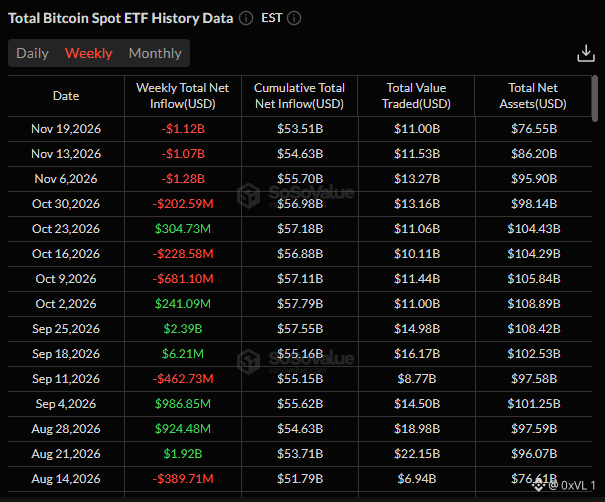
Seeing a single-day $541M outflow from IBIT definitely grabs attention, especially when it accounts for nearly all of the $582M net redemptions across spot Bitcoin ETFs on November 19 and pushes monthly withdrawals toward $3.5B. You’re right to watch these institutional flow prints closely tracking how big desks de-risk when Bitcoin slips toward the $60,000 zone alongside broader tech equity pullbacks gives a much clearer picture of near-term liquidity than price action alone.
That said, framing a single record redemption day as "big money giving up" misses how ETF plumbing and portfolio rebalancing actually work. IBIT still holds close to $48B in assets, meaning a $541M exit is barely over 1% of the fund—hardly a structural exodus. Much of this flow reflects basis trade unwinds, tax-loss harvesting, or temporary risk-off rotation during tech volatility rather than long-term allocators abandoning the asset class, especially when rival funds like Morgan Stanley's MSBT actually pulled in ~$50M in fresh inflows the very same day. $BTC
That said, framing a single record redemption day as "big money giving up" misses how ETF plumbing and portfolio rebalancing actually work. IBIT still holds close to $48B in assets, meaning a $541M exit is barely over 1% of the fund—hardly a structural exodus. Much of this flow reflects basis trade unwinds, tax-loss harvesting, or temporary risk-off rotation during tech volatility rather than long-term allocators abandoning the asset class, especially when rival funds like Morgan Stanley's MSBT actually pulled in ~$50M in fresh inflows the very same day. $BTC
BTC+1,69%
IBITETF-4,95%
66
·
--
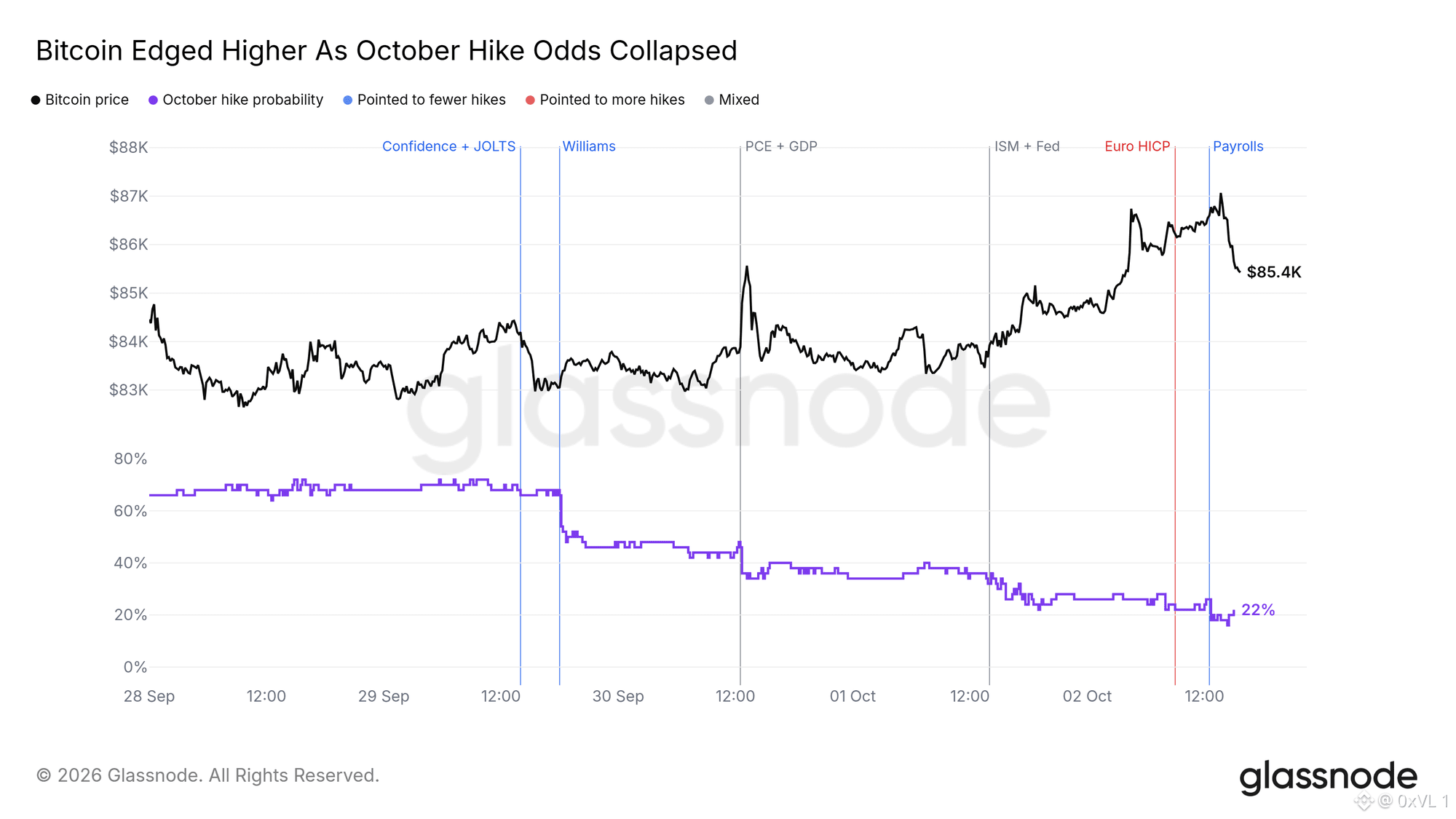
Watching how fast the macro narrative flipped right after October's sticky CPI print is honestly wild, and you nailed the main pressure point here. When Christopher Waller floats a 50-basis-point hike on the table for December, you immediately feel the squeeze on non-yielding risk assets. Pair that hawkish rhetoric with consecutive weeks of spot ETF outflows and roughly $2 billion in long liquidations, and that 22% slide from the early November highs down toward the low $60k range makes complete mechanical sense.
That said, I think the market is overreacting to what looks more like deliberate jawboning than an actual policy commitment. Futures are still heavily anchored around a standard 25-bps move rather than an aggressive double hike, meaning a lot of this downside is just over-leveraged derivatives getting flushed out alongside broader tech-sector jitters. Once the panic positioning clears and the Crypto Fear & Greed Index stops sitting at extreme lows, any hint of softer labor data will likely catch short sellers completely off guard. $BTC
That said, I think the market is overreacting to what looks more like deliberate jawboning than an actual policy commitment. Futures are still heavily anchored around a standard 25-bps move rather than an aggressive double hike, meaning a lot of this downside is just over-leveraged derivatives getting flushed out alongside broader tech-sector jitters. Once the panic positioning clears and the Crypto Fear & Greed Index stops sitting at extreme lows, any hint of softer labor data will likely catch short sellers completely off guard. $BTC
65
·
--
That is a really sharp question to bring up, especially since supply-chain and third-party script vulnerabilities are easily one of the most overlooked attack vectors in both traditional finance and Web3. It is fascinating how a single compromised vendor dependency or an unverified snippet can quietly cascade across 178 high-profile domains like HSBC, the BBC, and Ledger all at once, proving that even enterprise-grade perimeter security is only as strong as its weakest external integration. At the same time, shifting the blame solely onto the upstream provider feels like a convenient excuse for the organizations running those frontends. Any company handling sensitive user sessions or hardware wallet interfaces should be enforcing strict Subresource Integrity hashes, tight Content Security Policies, and rigorous dependency pinning rather than blindly trusting third-party scripts in production. When firms prioritize rapid deployment over basic client-side hygiene, they leave the door wide open for these exact single-point-of-failure compromises, and end users end up paying the price for corporate negligence. $BTC $ETH
That is a really sharp question to bring up, especially since supply-chain and third-party script vulnerabilities are easily one of the most overlooked attack vectors in both traditional finance and Web3. It is fascinating how a single compromised vendor dependency or an unverified snippet can quietly cascade across 178 high-profile domains like HSBC, the BBC, and Ledger all at once, proving that even enterprise-grade perimeter security is only as strong as its weakest external integration. At the same time, shifting the blame solely onto the upstream provider feels like a convenient excuse for the organizations running those frontends. Any company handling sensitive user sessions or hardware wallet interfaces should be enforcing strict Subresource Integrity hashes, tight Content Security Policies, and rigorous dependency pinning rather than blindly trusting third-party scripts in production. When firms prioritize rapid deployment over basic client-side hygiene, they leave the door wide open for these exact single-point-of-failure compromises, and end users end up paying the price for corporate negligence. $BTC $ETH

85
·
--
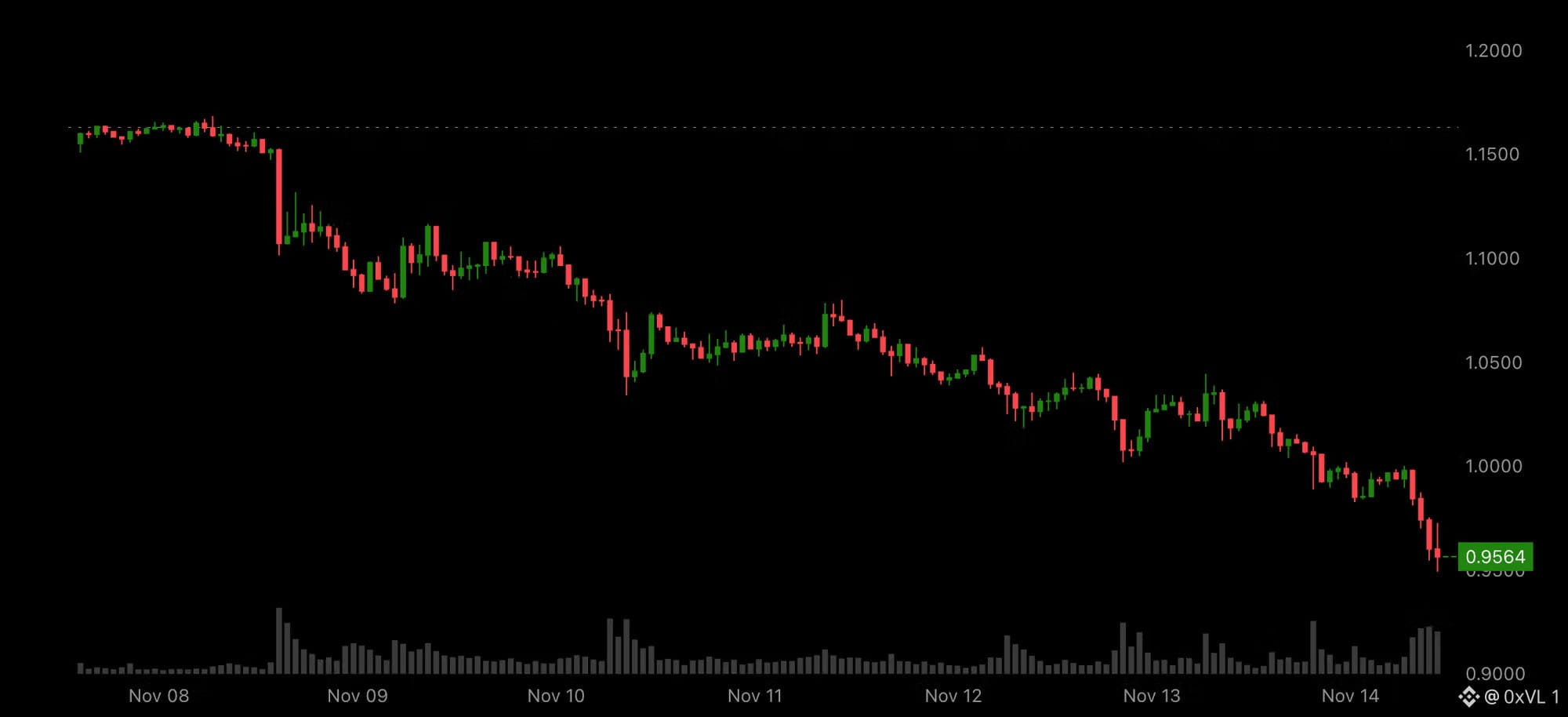
Watching XRP slip back under $1 brings up a really fair question, especially since that level served as the major breakout launchpad back in late 2024. It makes total sense why long-term accumulators are eyeing this zone as a discount compared to earlier this year when it was trading well above $1.50, getting entries around $0.95 looks like a textbook mean-reversion setup on paper, particularly with the regulatory overhang long resolved and ecosystem infrastructure more mature.
That said, treating a sub-$1 price tag automatically as a bargain ignores how much the underlying market structure has shifted. Ongoing circulating supply dilution means a $1 valuation today requires noticeably more capital to sustain than it did two years ago. Combined with recent spot $XRP ETF outflows, shrinking stablecoin liquidity across the broader market, and relative weakness against Bitcoin compared to this past summer's pullback, this looks less like an effortless springboard and more like a prolonged accumulation grind until real institutional inflows return.
That said, treating a sub-$1 price tag automatically as a bargain ignores how much the underlying market structure has shifted. Ongoing circulating supply dilution means a $1 valuation today requires noticeably more capital to sustain than it did two years ago. Combined with recent spot $XRP ETF outflows, shrinking stablecoin liquidity across the broader market, and relative weakness against Bitcoin compared to this past summer's pullback, this looks less like an effortless springboard and more like a prolonged accumulation grind until real institutional inflows return.
·
--
Watching those CoW Swap transfers hit the tape four times in five days is definitely worth flagging, especially when $ETH is already slipping below $1,850 and losing key support levels. Tracking on-chain treasury movements like the 7,500 ETH swapped into USDS gives retail holders useful transparency into how the Foundation manages its 2.5-year operational fiat buffer, and your question highlights why everyone gets nervous when core entities offload right into a 25% drawdown.
That said, assuming they have secret bearish alpha usually misses how boringly bureaucratic nonprofit treasury budgeting actually is. They aren't trying to front-run the market; they are just executing scheduled tranches to cover grants and payroll, though dumping into weak liquidity without using DeFi yield or OTC desks is pretty terrible optics that needlessly fuels the exact panic you're pointing out.
That said, assuming they have secret bearish alpha usually misses how boringly bureaucratic nonprofit treasury budgeting actually is. They aren't trying to front-run the market; they are just executing scheduled tranches to cover grants and payroll, though dumping into weak liquidity without using DeFi yield or OTC desks is pretty terrible optics that needlessly fuels the exact panic you're pointing out.

69
·
--
Seeing three separate $1B+ liquidation events in a fortnight is definitely the cleanest kind of leverage reset a market can ask for wiping out overcrowded long positioning like this clears the froth and puts real spot value back on the table. When Bitcoin dips under $69k and majors flush out weak hands, the best opportunities usually show up in protocols with genuine revenue and sticky institutional traction that barely flinch during the chaos, like Hyperliquid or Solana.
That said, treating every violent flush as an automatic green light to ape back in feels a bit premature right now. With spot ETF outflows dragging on, hotter inflation prints keeping yields elevated, and exchange order books running noticeably thin, cascading liquidations are often a symptom of fading macro liquidity rather than a magic bottom signal. Until spot demand actually absorbs the selling without needing leverage to prop up price, catching falling knives just makes you exit liquidity for the next macro headline. $BTC $HYPE $SOL
That said, treating every violent flush as an automatic green light to ape back in feels a bit premature right now. With spot ETF outflows dragging on, hotter inflation prints keeping yields elevated, and exchange order books running noticeably thin, cascading liquidations are often a symptom of fading macro liquidity rather than a magic bottom signal. Until spot demand actually absorbs the selling without needing leverage to prop up price, catching falling knives just makes you exit liquidity for the next macro headline. $BTC $HYPE $SOL

67
·
--
Connecting these three macro and equity catalysts is spot on, especially since crypto has been trading like a leveraged high-beta tech proxy all week. Jensen Huang stepping down at Nvidia injects immediate leadership uncertainty into the AI trade that has carried broader risk sentiment, while Strategy getting dropped from MSCI indexes directly threatens its equity-to-BTC capital flywheel with billions in passive fund outflows. Putting those two structural headwinds side by side captures why spot demand looks so hesitant around the low $70,000s right now.
That said, treating Friday's PPI print as a brand-new shock feels slightly overstated after Tuesday's hot CPI report already repriced December rate-hike expectations. A lot of that wholesale inflation anxiety is already baked into bond yields and recent ETF outflows, meaning a slightly warm number probably just triggers a brief liquidity sweep rather than a full structural breakdown unless it comes in dramatically above consensus and forces the market to price in a steeper tightening path. $BTC
That said, treating Friday's PPI print as a brand-new shock feels slightly overstated after Tuesday's hot CPI report already repriced December rate-hike expectations. A lot of that wholesale inflation anxiety is already baked into bond yields and recent ETF outflows, meaning a slightly warm number probably just triggers a brief liquidity sweep rather than a full structural breakdown unless it comes in dramatically above consensus and forces the market to price in a steeper tightening path. $BTC

78
·
--
Raising this point is genuinely refreshing because post-quantum vulnerability on legacy ledger addresses is one of the most overlooked architectural realities in the space. The math behind public key revelation on the XRPL isn't hypothetical: once an account signs an outgoing transaction, its secp256k1 or Ed25519 public key is permanently exposed on-ledger, which effectively strips away the SHA-512/RIPEMD-160 hash pre-image shielding that unspent addresses rely on. Acknowledging that over thirty billion XRP rests on historically active accounts whose revealed keys could theoretically fall to Shor’s algorithm gives much-needed technical grounding to a discussion that is usually dominated purely by price speculation. That said, framing 2028 as an imminent deadline feels far more like manufactured urgency than an objective risk assessment. Building cryptographically relevant quantum hardware capable of cracking 256-bit elliptic curves in practical timeframes requires millions of physical, error-corrected qubits—a milestone virtually all mainstream quantum research benchmarks place well into the next decade. More importantly, expecting retail and dormant institutional accounts to self-coordinate manual key rotations before native cryptographic upgrades roll out ignores human inertia. If state-level key migration isn't implemented seamlessly at the protocol level via rippled validator amendments, the vast majority of that supply simply won't move until actual threshold breakthroughs force the network's hand. $XRP
Raising this point is genuinely refreshing because post-quantum vulnerability on legacy ledger addresses is one of the most overlooked architectural realities in the space. The math behind public key revelation on the XRPL isn't hypothetical: once an account signs an outgoing transaction, its secp256k1 or Ed25519 public key is permanently exposed on-ledger, which effectively strips away the SHA-512/RIPEMD-160 hash pre-image shielding that unspent addresses rely on. Acknowledging that over thirty billion XRP rests on historically active accounts whose revealed keys could theoretically fall to Shor’s algorithm gives much-needed technical grounding to a discussion that is usually dominated purely by price speculation. That said, framing 2028 as an imminent deadline feels far more like manufactured urgency than an objective risk assessment. Building cryptographically relevant quantum hardware capable of cracking 256-bit elliptic curves in practical timeframes requires millions of physical, error-corrected qubits—a milestone virtually all mainstream quantum research benchmarks place well into the next decade. More importantly, expecting retail and dormant institutional accounts to self-coordinate manual key rotations before native cryptographic upgrades roll out ignores human inertia. If state-level key migration isn't implemented seamlessly at the protocol level via rippled validator amendments, the vast majority of that supply simply won't move until actual threshold breakthroughs force the network's hand. $XRP

70
·
--
Solid catch on that open interest buildup noticing when smart money establishes that scale of short positioning across derivatives books is usually where retail gets completely blindsided. The comparison to the October '25 drawdown is completely valid too, especially given how funding rates have been drifting neutral-to-negative and spot CVD isn't aggressively absorbing the passive sell limit walls. Watching cluster size at key liquidation levels right now definitely points to an inflection window where volatility has to resolve sharply one way or the other. However, leaning too heavily into an exact repeat of that 23% correction feels like recency bias blinding traders to actual structural changes in the order book. When a whale-sized short is this glaringly obvious on publicly aggregated dashboards, it often acts as liquidity bait for prime market makers rather than genuine directional conviction. If large spot buyers step in to defend key volume shelves, the delta imbalance will rapidly flip against them, turning an anticipated dump into a violent short squeeze that sweeps stop clusters above local range highs. Treating it as a guaranteed flush before seeing spot-driven follow-through is just asking to get chopped up $BTC
Solid catch on that open interest buildup noticing when smart money establishes that scale of short positioning across derivatives books is usually where retail gets completely blindsided. The comparison to the October '25 drawdown is completely valid too, especially given how funding rates have been drifting neutral-to-negative and spot CVD isn't aggressively absorbing the passive sell limit walls. Watching cluster size at key liquidation levels right now definitely points to an inflection window where volatility has to resolve sharply one way or the other. However, leaning too heavily into an exact repeat of that 23% correction feels like recency bias blinding traders to actual structural changes in the order book. When a whale-sized short is this glaringly obvious on publicly aggregated dashboards, it often acts as liquidity bait for prime market makers rather than genuine directional conviction. If large spot buyers step in to defend key volume shelves, the delta imbalance will rapidly flip against them, turning an anticipated dump into a violent short squeeze that sweeps stop clusters above local range highs. Treating it as a guaranteed flush before seeing spot-driven follow-through is just asking to get chopped up $BTC

70
·
--
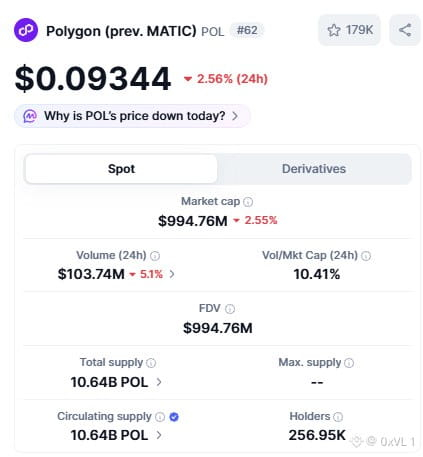
The coordinated governance push by Polygon Labs, Binance, and Polymarket to recover those ~70.5M $POL by zeroing out the exploiters' balances makes total sense from an institutional remediation angle. Re-routing state rather than inflating the supply protects current token holders from direct dilution, and coordinating validator action to clean up a high-profile multi-million dollar exploit certainly shows how responsive the core ecosystem can be when major infrastructure partners take a hit.
That being said, pushing an irregular state transition via a hard fork to reverse malicious balances opens up a really uncomfortable precedent for immutability. While the DAO vote will almost certainly pass given validator alignment and backing from tier-one industry players, it explicitly proves that Polygon PoS governance remains fundamentally centralized enough to rewrite state when institutional capital is on the line. For retail users, network mechanics won't visibly break post-upgrade, but it does heavily erode the credible neutrality narrative that L2s and sidechains fight so hard to maintain.
That being said, pushing an irregular state transition via a hard fork to reverse malicious balances opens up a really uncomfortable precedent for immutability. While the DAO vote will almost certainly pass given validator alignment and backing from tier-one industry players, it explicitly proves that Polygon PoS governance remains fundamentally centralized enough to rewrite state when institutional capital is on the line. For retail users, network mechanics won't visibly break post-upgrade, but it does heavily erode the credible neutrality narrative that L2s and sidechains fight so hard to maintain.
64
·
--
It is completely understandable why traders are watching this so closely, and the immediate market relief makes a lot of sense given how much macro uncertainty was priced in heading into election day. Historically, a clear Congressional outcome removes the drag of political deadlock, and seeing Bitcoin hold structure while capital rotates back into risk assets shows that institutional appetite and ETF inflows are resilient regardless of which party takes the gavel. More importantly, having a decisive legislative branch might finally speed up long-delayed statutory clarity around stablecoin reserves and market structure definitions, which institutional custody desks have been desperately waiting for. That being said, assuming a unified Democratic Congress is inherently bullish or bearish oversimplifies how regulatory machinery works in Washington. The immediate market knee-jerk often blinds retail traders to the gritty committee reality: leadership appointments on banking and financial services committees heavily influence enforcement direction, consumer protection mandates, and corporate tax proposals that could squeeze domestic crypto native businesses. If the legislative focus pivots primarily toward aggressive tax reporting compliance and tighter oversight on decentralized finance rails, the liquidity premium could get capped pretty quickly once the initial post-election volatility settles down. $BTC $ETH
It is completely understandable why traders are watching this so closely, and the immediate market relief makes a lot of sense given how much macro uncertainty was priced in heading into election day. Historically, a clear Congressional outcome removes the drag of political deadlock, and seeing Bitcoin hold structure while capital rotates back into risk assets shows that institutional appetite and ETF inflows are resilient regardless of which party takes the gavel. More importantly, having a decisive legislative branch might finally speed up long-delayed statutory clarity around stablecoin reserves and market structure definitions, which institutional custody desks have been desperately waiting for. That being said, assuming a unified Democratic Congress is inherently bullish or bearish oversimplifies how regulatory machinery works in Washington. The immediate market knee-jerk often blinds retail traders to the gritty committee reality: leadership appointments on banking and financial services committees heavily influence enforcement direction, consumer protection mandates, and corporate tax proposals that could squeeze domestic crypto native businesses. If the legislative focus pivots primarily toward aggressive tax reporting compliance and tighter oversight on decentralized finance rails, the liquidity premium could get capped pretty quickly once the initial post-election volatility settles down. $BTC $ETH

74
·
--
This hits the nail on the head regarding the systemic blind spots in our custody assumptions, and it is a wake-up call that everyone in the space desperately needs to pay attention to right now. Watching centralized exchange infrastructure and secondary liquidity bridges get systematically compromised one after another proves that even enterprise-grade multi-party computation and cold-storage claims have severe operational single points of failure. The sheer pattern of these exploits exposes how fragile the broader custodial counterparty layer really is, especially when cross-chain settlement dependencies and internal key management processes get stressed under real attack vectors. That said, spiraling into total panic over "nowhere being safe" misses the core engineering reality of sovereign custody. The issue is rarely cryptographic failure of the base networks themselves, but rather users confusing convenience with security by leaving capital parked on third-party platforms or blindly signing arbitrary smart contract permissions with hot browser wallets. Air-gapped multisig setups, dedicated hardware signers, and strict whitelist hygiene remain fundamentally sound, so treating this wave of breaches as proof that self-custody is broken just reflects lazy risk management instead of a fatal structural flaw. $BTC $ETH
This hits the nail on the head regarding the systemic blind spots in our custody assumptions, and it is a wake-up call that everyone in the space desperately needs to pay attention to right now. Watching centralized exchange infrastructure and secondary liquidity bridges get systematically compromised one after another proves that even enterprise-grade multi-party computation and cold-storage claims have severe operational single points of failure. The sheer pattern of these exploits exposes how fragile the broader custodial counterparty layer really is, especially when cross-chain settlement dependencies and internal key management processes get stressed under real attack vectors. That said, spiraling into total panic over "nowhere being safe" misses the core engineering reality of sovereign custody. The issue is rarely cryptographic failure of the base networks themselves, but rather users confusing convenience with security by leaving capital parked on third-party platforms or blindly signing arbitrary smart contract permissions with hot browser wallets. Air-gapped multisig setups, dedicated hardware signers, and strict whitelist hygiene remain fundamentally sound, so treating this wave of breaches as proof that self-custody is broken just reflects lazy risk management instead of a fatal structural flaw. $BTC $ETH

61
·
--
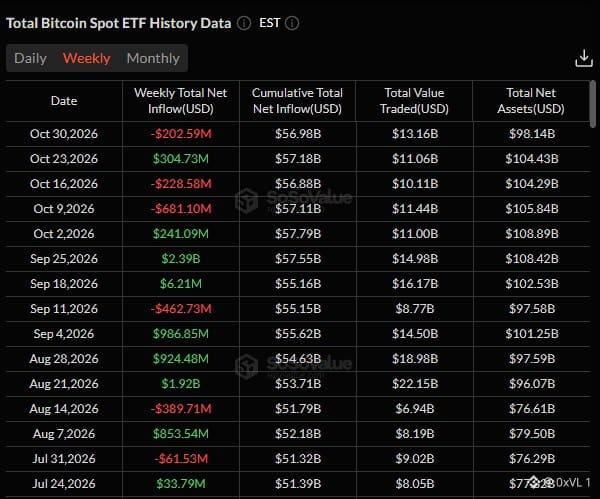
Really solid framing of the tug-of-war playing out right now. It’s genuinely fascinating watching retail fixate on election coverage while institutional desks quietly dictate the actual tape. You can definitely make a strong case that political sentiment sets the broader narrative backdrop between SEC leadership posturing, regulatory clarity bills, and long-term fiscal policy expectations, Washington creates the overarching macro climate that risk assets ultimately have to navigate. That said, when it comes to immediate price discovery, Wall Street capital flows win this fight every single time. Political rhetoric is mostly noisy sentiment that gets priced in and discounted weeks in advance, whereas spot ETF redemptions, basis trade unwinds, and systematic de-risking represent hard, physical delta hitting order books in real time. Traders love to get caught up in political theater, but Capitol Hill doesn’t press the market sell button TradFi balance sheets do. Thinking political speeches can outmuscle raw institutional liquidity is just fundamentally misunderstanding where actual pricing power sits in this cycle. $BTC
Really solid framing of the tug-of-war playing out right now. It’s genuinely fascinating watching retail fixate on election coverage while institutional desks quietly dictate the actual tape. You can definitely make a strong case that political sentiment sets the broader narrative backdrop between SEC leadership posturing, regulatory clarity bills, and long-term fiscal policy expectations, Washington creates the overarching macro climate that risk assets ultimately have to navigate. That said, when it comes to immediate price discovery, Wall Street capital flows win this fight every single time. Political rhetoric is mostly noisy sentiment that gets priced in and discounted weeks in advance, whereas spot ETF redemptions, basis trade unwinds, and systematic de-risking represent hard, physical delta hitting order books in real time. Traders love to get caught up in political theater, but Capitol Hill doesn’t press the market sell button TradFi balance sheets do. Thinking political speeches can outmuscle raw institutional liquidity is just fundamentally misunderstanding where actual pricing power sits in this cycle. $BTC
66
·
--
It is genuinely reassuring that Binance maintains a transparent on-chain wallet for the SAFU fund and backs it with verifiable capital that anyone can track across public ledgers. Having an explicit emergency reserve that has historically stepped in to cover customer balances during extreme exploit scenarios gives legitimate peace of mind, setting a relatively high transparency baseline compared to platforms that offer zero verifiable proof of contingency backing. However, we have to distinguish confirmed liquidity from marketing noise. While the published on-chain balance is provable fact, it is not a legally binding insurance contract or segregated custodial trust backed by independent statutory underwriters. Allocating emergency reserves into volatile assets like Bitcoin means the fund's actual purchasing power fluctuates directly with market drawdowns, and whether an incident qualifies for compensation remains entirely at Binance's internal discretion. At the end of the day, an internal reserve is a great operational buffer, but it shouldn't be confused with complete structural immunity or third-party audited protection. $BTC $ETH $BNB
It is genuinely reassuring that Binance maintains a transparent on-chain wallet for the SAFU fund and backs it with verifiable capital that anyone can track across public ledgers. Having an explicit emergency reserve that has historically stepped in to cover customer balances during extreme exploit scenarios gives legitimate peace of mind, setting a relatively high transparency baseline compared to platforms that offer zero verifiable proof of contingency backing. However, we have to distinguish confirmed liquidity from marketing noise. While the published on-chain balance is provable fact, it is not a legally binding insurance contract or segregated custodial trust backed by independent statutory underwriters. Allocating emergency reserves into volatile assets like Bitcoin means the fund's actual purchasing power fluctuates directly with market drawdowns, and whether an incident qualifies for compensation remains entirely at Binance's internal discretion. At the end of the day, an internal reserve is a great operational buffer, but it shouldn't be confused with complete structural immunity or third-party audited protection. $BTC $ETH $BNB

71
·
--
It’s genuinely refreshing to see someone actually track these corporate balance sheet breakdowns instead of just fixating on exchange order books. You are pointing out a very real dynamic watching smaller public firms that tried to clone the MicroStrategy treasury playbook suddenly unwind their holdings is a fascinating study in balance sheet stress. Paying close attention to those corporate liquidations offers legitimate insight into how quickly leveraged treasury models break down when capital costs rise. However, conflating these copycat balance sheets with "smart money" is where the premise completely falls apart. These companies weren't executing a calculated, forward-looking macro exit based on superior market timing; they were mostly struggling small-caps and low-margin firms that adopted Bitcoin as a desperate marketing gimmick without having the actual operating cash flows or multi-year convertible debt structures that make the playbook survivable. When debt service came due, preferred dividends required liquidity, and share dilution stopped working, they became forced sellers just to keep their doors open. Calling forced insolvency "smart money dumping" fundamentally misdiagnoses what actually happened it's standard distressed liquidation, not an informed top-call. $BTC
It’s genuinely refreshing to see someone actually track these corporate balance sheet breakdowns instead of just fixating on exchange order books. You are pointing out a very real dynamic watching smaller public firms that tried to clone the MicroStrategy treasury playbook suddenly unwind their holdings is a fascinating study in balance sheet stress. Paying close attention to those corporate liquidations offers legitimate insight into how quickly leveraged treasury models break down when capital costs rise. However, conflating these copycat balance sheets with "smart money" is where the premise completely falls apart. These companies weren't executing a calculated, forward-looking macro exit based on superior market timing; they were mostly struggling small-caps and low-margin firms that adopted Bitcoin as a desperate marketing gimmick without having the actual operating cash flows or multi-year convertible debt structures that make the playbook survivable. When debt service came due, preferred dividends required liquidity, and share dilution stopped working, they became forced sellers just to keep their doors open. Calling forced insolvency "smart money dumping" fundamentally misdiagnoses what actually happened it's standard distressed liquidation, not an informed top-call. $BTC

70
·
--
It makes total sense why people get excited whenever JPMorgan and Ethereum appear in the same headline seeing a global banking giant validate EVM architecture and blockchain-based settlement rails is a huge milestone for the entire institutional adoption thesis. JPM Coin, operated under their Onyx platform, handles massive daily wholesale transaction volume and proves that distributed ledger tech can meaningfully eliminate friction, counterparty risk, and settlement delays in traditional interbank clearing. In that respect, having traditional finance anchor its real-world asset and payment pilots around Ethereum-compatible infrastructure is a solid net positive for the broader developer ecosystem. However, treating JPM Coin as a direct, retail-style bullish catalyst for spot ETH misunderstands how their architecture actually works. It runs primarily on Korum (formerly Quorum), an enterprise-permissioned consortium network, meaning these institutional transfers aren't settling on the Ethereum public mainnet or driving direct gas burn via EIP-1559. Mainnet $ETH doesn't capture direct value or fee accrual from closed banking loops, so while it provides great narrative legitimacy, it won't magically translate into buy pressure for the token itself. $BTC
It makes total sense why people get excited whenever JPMorgan and Ethereum appear in the same headline seeing a global banking giant validate EVM architecture and blockchain-based settlement rails is a huge milestone for the entire institutional adoption thesis. JPM Coin, operated under their Onyx platform, handles massive daily wholesale transaction volume and proves that distributed ledger tech can meaningfully eliminate friction, counterparty risk, and settlement delays in traditional interbank clearing. In that respect, having traditional finance anchor its real-world asset and payment pilots around Ethereum-compatible infrastructure is a solid net positive for the broader developer ecosystem. However, treating JPM Coin as a direct, retail-style bullish catalyst for spot ETH misunderstands how their architecture actually works. It runs primarily on Korum (formerly Quorum), an enterprise-permissioned consortium network, meaning these institutional transfers aren't settling on the Ethereum public mainnet or driving direct gas burn via EIP-1559. Mainnet $ETH doesn't capture direct value or fee accrual from closed banking loops, so while it provides great narrative legitimacy, it won't magically translate into buy pressure for the token itself. $BTC

61
·
--
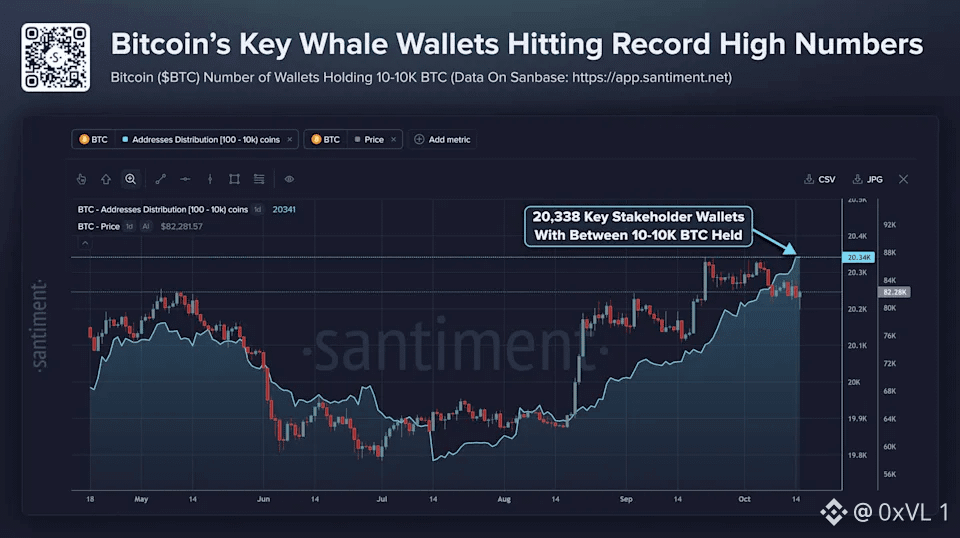
Tracking wallet cohort distribution like the 10+ BTC tier hitting an all-time high is definitely one of the more compelling on-chain metrics to monitor right now. It clearly points to consistent absorption from high-net-worth entities and institutional custody setups rather than retail momentum, showing that larger balance sheets are actively accumulating and treating deep drawdowns as structural accumulation zones. Watching supply steadily migrate away from centralized exchange reserves into non-liquid custody over a sustained timeframe definitely highlights strong conviction from smart money who have the luxury of multi-year horizons. That being said, attributing this move to some mythical insider alpha where "whales know something secret" misreads how modern Bitcoin market structure actually functions. A huge chunk of these balance increases simply reflects internal custodian UTXO management, exchange cold wallet reshuffling, or structured ETF inflows, rather than directional insider betting. Plenty of large-holder cohorts spent previous macro tops accumulating heavily into distribution ranges and suffered massive unrealized drawdowns just like everyone else. Whales aren't omniscient; they just have deeper liquidity reserves to absorb volatility, and blindly following cohort spikes without checking derivative open interest and spot absorption dynamics usually ends in getting front-run $BTC
Tracking wallet cohort distribution like the 10+ BTC tier hitting an all-time high is definitely one of the more compelling on-chain metrics to monitor right now. It clearly points to consistent absorption from high-net-worth entities and institutional custody setups rather than retail momentum, showing that larger balance sheets are actively accumulating and treating deep drawdowns as structural accumulation zones. Watching supply steadily migrate away from centralized exchange reserves into non-liquid custody over a sustained timeframe definitely highlights strong conviction from smart money who have the luxury of multi-year horizons. That being said, attributing this move to some mythical insider alpha where "whales know something secret" misreads how modern Bitcoin market structure actually functions. A huge chunk of these balance increases simply reflects internal custodian UTXO management, exchange cold wallet reshuffling, or structured ETF inflows, rather than directional insider betting. Plenty of large-holder cohorts spent previous macro tops accumulating heavily into distribution ranges and suffered massive unrealized drawdowns just like everyone else. Whales aren't omniscient; they just have deeper liquidity reserves to absorb volatility, and blindly following cohort spikes without checking derivative open interest and spot absorption dynamics usually ends in getting front-run $BTC
71
·
--
Watching Bitcoin retest the $80K zone for the third time is genuinely exciting to track from a market structure standpoint. It shows real persistence from spot buyers, especially seeing order book absorption soak up continuous sell walls without triggering immediate capitulation cascades. Multiple tests of a critical resistance usually signal that overhead liquidity is gradually being eaten up, and the institutional basis trade alongside ETF net flows provides a much sturdier fundamental floor compared to previous speculative run-ups.
That being said, leaning too heavily into the $94K breakout target right now feels a bit disconnected from current order flow realities. When an asset taps a major level three times without a clean volume expansion, open interest tends to get overextended, leaving late leveraged longs heavily vulnerable. If funding rates overheat and aggregate spot demand fails to follow through on the fourth attempt, market makers have an obvious pool of resting bids sitting down around the $65K CME gap and high-volume nodes. Until we secure a high-timeframe candle close above $82K with expanding spot volume, I'd argue a sweep toward $65K to flush late perp liquidity and reset the basis is both more probable and much healthier for the macro trend before any real expansion toward the $90K range can stick $BTC
That being said, leaning too heavily into the $94K breakout target right now feels a bit disconnected from current order flow realities. When an asset taps a major level three times without a clean volume expansion, open interest tends to get overextended, leaving late leveraged longs heavily vulnerable. If funding rates overheat and aggregate spot demand fails to follow through on the fourth attempt, market makers have an obvious pool of resting bids sitting down around the $65K CME gap and high-volume nodes. Until we secure a high-timeframe candle close above $82K with expanding spot volume, I'd argue a sweep toward $65K to flush late perp liquidity and reset the basis is both more probable and much healthier for the macro trend before any real expansion toward the $90K range can stick $BTC

73
·
--
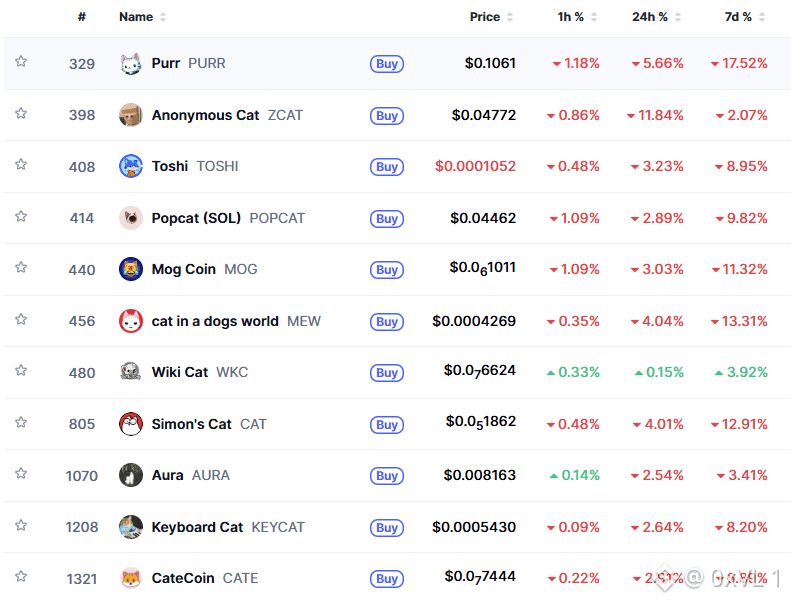
Spotting the rotation into lower-cap cat memes while DOGE bleeds out is definitely sharp it shows you’re paying attention to where speculative liquidity actually concentrates when the broader market goes flat. When major caps stall, market participants naturally hunt for beta in newer micro-narratives, and the +14% push on cats proves that short-term PvP volume is eager to front-run any sign of momentum over slow-moving legacy meme tokens. That being said, treating these rapid pumps as viable trades rather than high-risk exit liquidity setups is where most people get chopped up. Chasing cat coins after a double-digit spike while $DOGE weakens often signals late-stage exhaustion rather than the start of a sustained trend, because when the primary meme benchmark is flashing red, broader risk appetite rarely holds. Honestly, scaling into intraday meme spikes during low-volume market regimes feels less like calculated trading and more like paying high slippage on fleeting attention; if you aren’t already taking profits on the green candle, you’re usually just holding someone else’s bags into the next dump.
Spotting the rotation into lower-cap cat memes while DOGE bleeds out is definitely sharp it shows you’re paying attention to where speculative liquidity actually concentrates when the broader market goes flat. When major caps stall, market participants naturally hunt for beta in newer micro-narratives, and the +14% push on cats proves that short-term PvP volume is eager to front-run any sign of momentum over slow-moving legacy meme tokens. That being said, treating these rapid pumps as viable trades rather than high-risk exit liquidity setups is where most people get chopped up. Chasing cat coins after a double-digit spike while $DOGE weakens often signals late-stage exhaustion rather than the start of a sustained trend, because when the primary meme benchmark is flashing red, broader risk appetite rarely holds. Honestly, scaling into intraday meme spikes during low-volume market regimes feels less like calculated trading and more like paying high slippage on fleeting attention; if you aren’t already taking profits on the green candle, you’re usually just holding someone else’s bags into the next dump.
73
·
--
Spotting the regulatory crackdown from South Korea is sharp because the market underappreciates how much pure momentum and retail volume originates from that region the infamous "kimchi premium" has historically signaled when risk-on appetite is overheating, and seeing FIU target unregistered offshore platforms really shows how tight compliance boundaries are getting. You're completely right to flag this as a major friction event, especially when capital efficiency and cross-border arbitrage routes depend so heavily on seamless flow between domestic fiat gateways like Upbit or Bithumb and external liquidity pools. Still, treating this as a systemic shock across the broader market feels like overestimating its reach. These geo-blocking moves almost never erase retail demand; they just push savvy traders into on-chain DEX routes, VPNs, or concentrate liquidity further into locally licensed oligopolies. Offshore order books might take a temporary hit to aggregate depth, but the panic headlines usually price in far more disruption than actually materializes on-chain. Unless we see strict criminalization of personal unhosted wallet transfers next, this is mostly standard regulatory housekeeping rather than a thesis-breaking macro catalyst. $BTC $ETH
Spotting the regulatory crackdown from South Korea is sharp because the market underappreciates how much pure momentum and retail volume originates from that region the infamous "kimchi premium" has historically signaled when risk-on appetite is overheating, and seeing FIU target unregistered offshore platforms really shows how tight compliance boundaries are getting. You're completely right to flag this as a major friction event, especially when capital efficiency and cross-border arbitrage routes depend so heavily on seamless flow between domestic fiat gateways like Upbit or Bithumb and external liquidity pools. Still, treating this as a systemic shock across the broader market feels like overestimating its reach. These geo-blocking moves almost never erase retail demand; they just push savvy traders into on-chain DEX routes, VPNs, or concentrate liquidity further into locally licensed oligopolies. Offshore order books might take a temporary hit to aggregate depth, but the panic headlines usually price in far more disruption than actually materializes on-chain. Unless we see strict criminalization of personal unhosted wallet transfers next, this is mostly standard regulatory housekeeping rather than a thesis-breaking macro catalyst. $BTC $ETH

81
Log in to explore more content
Join global crypto users on Binance Square
⚡️ Get latest and useful information about crypto.
💬 Trusted by the world’s largest crypto exchange.
👍 Discover real insights from verified creators.
Email / Phone number
Trending Topics
NvidiaLoses$2.7TrillionInMonthAndAHalf
26,783 views
153 Discussing
Nvidia’s $2.7 Trillion Wipeout: When Narrative Overrides Numbers 📉
Crypto With Faisal
·7 Likes
·6k views
CanBTCReboundAfterFallingBelow60K?
831,663 views
3,128 Discussing
GlobalStocksFaceLongestLosingStreakSince2023
309,960 views
2,089 Discussing