
Veridise Re-poster
89 Posts

Veridise Re-poster
Report
Block User
Hardening blockchain security with Formal Methods — Industry-leading security audits and tools for smart contracts, blockchain, and zero-knowledge.
0 Following
2 Followers
3 Liked
Posts
All
Videos
A common issue we encounter is deterministic code that lacks consistency. For instance, when your Circom witness evaluates 1/10^6 to 0, but your constraints require the inverse of 10^6 mod p, the system breaks down. As a result, legitimate provers find it impossible to prove anything, while an adversary can exploit the flaw. If you are developing projects in Circom, feel free to share your circuits with our team, and we will gladly review them.
A common issue we encounter is deterministic code that lacks consistency. For instance, when your Circom witness evaluates 1/10^6 to 0, but your constraints require the inverse of 10^6 mod p, the system breaks down. As a result, legitimate provers find it impossible to prove anything, while an adversary can exploit the flaw. If you are developing projects in Circom, feel free to share your circuits with our team, and we will gladly review them.
74
Historically, carrying out post-quantum migrations has taken approximately 10 years in practice, as every layer of the technology stack must be updated. It is worth noting that if your total migration time alongside your required secrecy duration surpasses the time remaining until Q-Day, you are already too late. How much time will your organization need to complete its transition? Please feel welcome to schedule a Quantum Readiness Review via the link provided below.
Historically, carrying out post-quantum migrations has taken approximately 10 years in practice, as every layer of the technology stack must be updated. It is worth noting that if your total migration time alongside your required secrecy duration surpasses the time remaining until Q-Day, you are already too late. How much time will your organization need to complete its transition? Please feel welcome to schedule a Quantum Readiness Review via the link provided below.
79
Many individuals imagine a quantum attack arriving as a single catastrophic event that brings systems down all at once. However, @ShankaraPailoo2 expects the earliest breaches to be far more discreet, perhaps surfacing only as unexplained fund withdrawals from a handful of dormant wallets. Check out the video to explore the reasons behind this viewpoint.
Many individuals imagine a quantum attack arriving as a single catastrophic event that brings systems down all at once. However, @ShankaraPailoo2 expects the earliest breaches to be far more discreet, perhaps surfacing only as unexplained fund withdrawals from a handful of dormant wallets. Check out the video to explore the reasons behind this viewpoint.
61
We have an exciting update to share with our community.
While the exact timeline for quantum computers compromising modern cryptography remains uncertain, the cut-off dates to retire current standards have already been established. To address this transition, Veridise is officially introducing the Quantum Readiness Review today. This comprehensive service guides organizations through every phase of the transition, starting from an initial cryptographic inventory all the way to thoroughly verified post-quantum code.
Read the full announcement here: https://veridise.com/blog/news/post-quantum-migration/
We have an exciting update to share with our community.
While the exact timeline for quantum computers compromising modern cryptography remains uncertain, the cut-off dates to retire current standards have already been established. To address this transition, Veridise is officially introducing the Quantum Readiness Review today. This comprehensive service guides organizations through every phase of the transition, starting from an initial cryptographic inventory all the way to thoroughly verified post-quantum code.
Read the full announcement here: https://veridise.com/blog/news/post-quantum-migration/
While the exact timeline for quantum computers compromising modern cryptography remains uncertain, the cut-off dates to retire current standards have already been established. To address this transition, Veridise is officially introducing the Quantum Readiness Review today. This comprehensive service guides organizations through every phase of the transition, starting from an initial cryptographic inventory all the way to thoroughly verified post-quantum code.
Read the full announcement here: https://veridise.com/blog/news/post-quantum-migration/
68
A traditional audit report provides a static snapshot of your software, reflecting only the specific day your codebase was frozen. Because your project is always evolving, the @Veridise team built AuditHub to deliver ongoing security. This solution ensures that OrCa, Picus, ZK Vanguard, and Vanguard operate continuously within your CI pipeline to monitor every new update you make.
To see exactly how this platform can streamline your workflow, be sure to connect with our VP of Business Development, @kulm1nski, at Devcon 8. He will be in Mumbai from Nov 3 to 6 and is ready to provide a complete walkthrough of the system.
A traditional audit report provides a static snapshot of your software, reflecting only the specific day your codebase was frozen. Because your project is always evolving, the @Veridise team built AuditHub to deliver ongoing security. This solution ensures that OrCa, Picus, ZK Vanguard, and Vanguard operate continuously within your CI pipeline to monitor every new update you make.
To see exactly how this platform can streamline your workflow, be sure to connect with our VP of Business Development, @kulm1nski, at Devcon 8. He will be in Mumbai from Nov 3 to 6 and is ready to provide a complete walkthrough of the system.
To see exactly how this platform can streamline your workflow, be sure to connect with our VP of Business Development, @kulm1nski, at Devcon 8. He will be in Mumbai from Nov 3 to 6 and is ready to provide a complete walkthrough of the system.

56
Every validator, bridge, wallet, exchange, and custodian is facing an inevitable post-quantum migration. These entities all protect underlying value using public keys that are already established on the blockchain. To discuss the details of quantum readiness, Veridise BD Manager @veridisecarlos is attending Devcon 8. The gathering takes place in Mumbai from Nov 3 to 6.
Every validator, bridge, wallet, exchange, and custodian is facing an inevitable post-quantum migration. These entities all protect underlying value using public keys that are already established on the blockchain. To discuss the details of quantum readiness, Veridise BD Manager @veridisecarlos is attending Devcon 8. The gathering takes place in Mumbai from Nov 3 to 6.

64
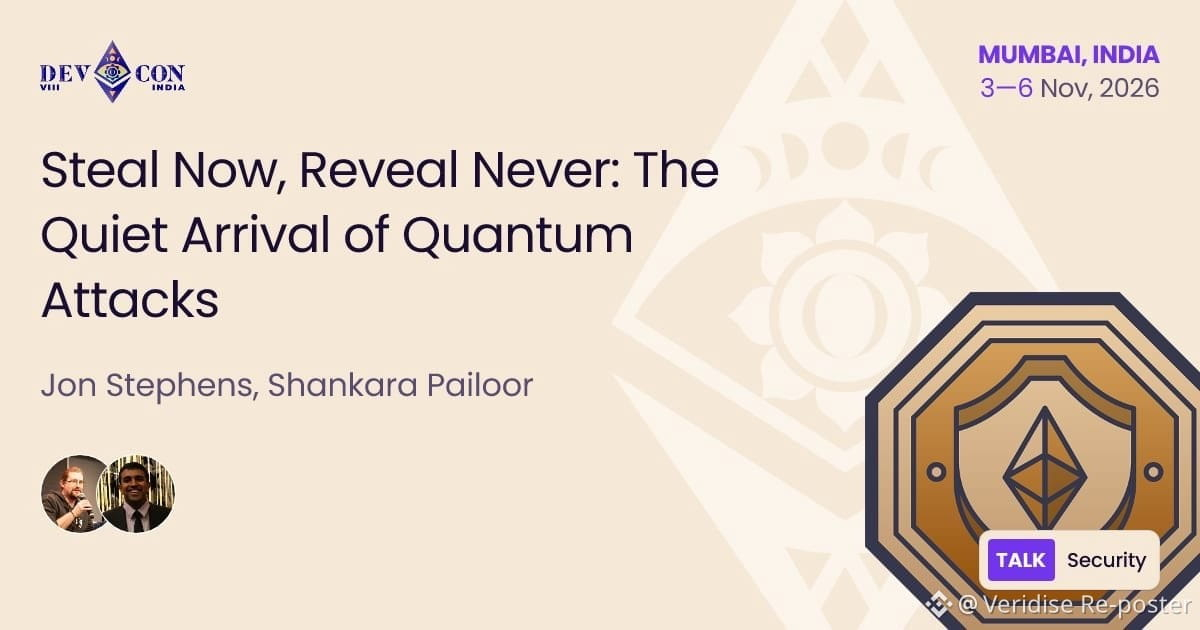
To learn about what fails first in the face of emerging quantum threats, be sure to attend the upcoming session featuring @ShankaraPailoo2 and @FormallyJon at Devcon 8. They will be speaking on Thu Nov 5 at 14:00 IST at Lotus Stage 1. Keep in mind that quantum attacks will not announce their arrival. The initial wave of breaches will most likely be silent and highly specific, setting their sights on wallets, bridges, validators, and custodians one target at a time.
To learn about what fails first in the face of emerging quantum threats, be sure to attend the upcoming session featuring @ShankaraPailoo2 and @FormallyJon at Devcon 8. They will be speaking on Thu Nov 5 at 14:00 IST at Lotus Stage 1. Keep in mind that quantum attacks will not announce their arrival. The initial wave of breaches will most likely be silent and highly specific, setting their sights on wallets, bridges, validators, and custodians one target at a time.
58
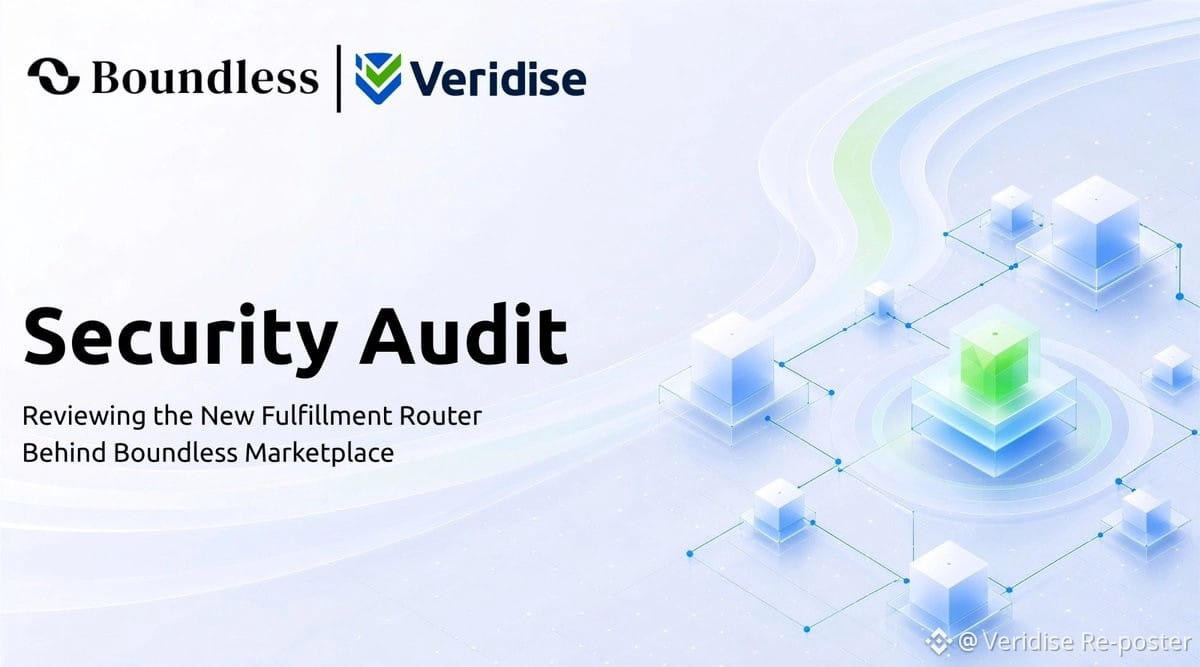
Creating and validating ZK proofs involves intricate mathematical components that only a highly select group of specialists can truly understand and execute. Because of this steep technical barrier, @boundless_xyz chose to enlist the expertise of Veridise once again. Discover the insights shared by @emilianobonassi as he details the reasoning behind commissioning a second Marketplace audit with Veridise. Read the comprehensive overview by visiting the link provided below.
https://veridise.com/blog/audits-archive/boundless-marketplace-audit-methods-findings-and-security/
Creating and validating ZK proofs involves intricate mathematical components that only a highly select group of specialists can truly understand and execute. Because of this steep technical barrier, @boundless_xyz chose to enlist the expertise of Veridise once again. Discover the insights shared by @emilianobonassi as he details the reasoning behind commissioning a second Marketplace audit with Veridise. Read the comprehensive overview by visiting the link provided below.
https://veridise.com/blog/audits-archive/boundless-marketplace-audit-methods-findings-and-security/
https://veridise.com/blog/audits-archive/boundless-marketplace-audit-methods-findings-and-security/
43
Constructing and evaluating ZK proofs involves complex mathematical entities that very few individuals possess the expertise to manage. According to @emilianobonassi, this specific challenge is exactly why @BoundlessHQ chose to partner with Veridise once again to perform a second audit of their Marketplace. You can explore the complete details of this decision and the subsequent findings by reading the full story at the link provided below.
https://veridise.com/blog/audits-archive/boundless-marketplace-audit-methods-findings-and-security/
Constructing and evaluating ZK proofs involves complex mathematical entities that very few individuals possess the expertise to manage. According to @emilianobonassi, this specific challenge is exactly why @BoundlessHQ chose to partner with Veridise once again to perform a second audit of their Marketplace. You can explore the complete details of this decision and the subsequent findings by reading the full story at the link provided below.
https://veridise.com/blog/audits-archive/boundless-marketplace-audit-methods-findings-and-security/
https://veridise.com/blog/audits-archive/boundless-marketplace-audit-methods-findings-and-security/
63
Protecting artificial intelligence agents experiences the exact same pitfalls as traditional access control, which means it is crucial to always audit whoever else holds the key.
For a clear example of this, consider a functioning pathway from an older draft of ERC-8468. In that version, a guardian could trigger a suspension for an AI agent, only to see the system come back online after just one block. This quick reactivation happened because the agent had specified a second key under its own command that carried the authorization to resume operations.
https://ethereum-magicians.org/t/erc-8468-agent-safety-framework-asf/30073
Protecting artificial intelligence agents experiences the exact same pitfalls as traditional access control, which means it is crucial to always audit whoever else holds the key.
For a clear example of this, consider a functioning pathway from an older draft of ERC-8468. In that version, a guardian could trigger a suspension for an AI agent, only to see the system come back online after just one block. This quick reactivation happened because the agent had specified a second key under its own command that carried the authorization to resume operations.
https://ethereum-magicians.org/t/erc-8468-agent-safety-framework-asf/30073
For a clear example of this, consider a functioning pathway from an older draft of ERC-8468. In that version, a guardian could trigger a suspension for an AI agent, only to see the system come back online after just one block. This quick reactivation happened because the agent had specified a second key under its own command that carried the authorization to resume operations.
https://ethereum-magicians.org/t/erc-8468-agent-safety-framework-asf/30073
71
Seeing a statement like x = x + 1 is perfectly normal in standard software development, but it creates unnecessary complications for a prover. When variables change, the prover is forced to continuously figure out exactly which version of x is being referenced at any given point in the code. Thanks to LLZK, this problem is completely avoided because every single value is assigned only one time. For a deeper understanding of how this single assignment approach streamlines the verification of ZK circuits, you can read the breakdown provided by @RaghavMalik15.
Seeing a statement like x = x + 1 is perfectly normal in standard software development, but it creates unnecessary complications for a prover. When variables change, the prover is forced to continuously figure out exactly which version of x is being referenced at any given point in the code. Thanks to LLZK, this problem is completely avoided because every single value is assigned only one time. For a deeper understanding of how this single assignment approach streamlines the verification of ZK circuits, you can read the breakdown provided by @RaghavMalik15.
53
A newly formed coalition known as the Quantum Alliance has been established by nine cryptocurrency organizations. Out of this collaboration comes a dedicated working group focusing on post-quantum zero-knowledge systems, which is the exact initiative our team is closely monitoring.
The primary reason for our interest lies in the technical hurdles involved. It is quite rare for circuits designed for a specific proof system to seamlessly transfer over to a different one. As a result, any necessary rewrites generate completely fresh code that requires a comprehensive new audit.
Further details regarding this announcement can be found here:
https://decrypt.co/381236/crypto-firms-launch-quantum-alliance-as-6-million-bitcoin-sit-exposed
A newly formed coalition known as the Quantum Alliance has been established by nine cryptocurrency organizations. Out of this collaboration comes a dedicated working group focusing on post-quantum zero-knowledge systems, which is the exact initiative our team is closely monitoring.
The primary reason for our interest lies in the technical hurdles involved. It is quite rare for circuits designed for a specific proof system to seamlessly transfer over to a different one. As a result, any necessary rewrites generate completely fresh code that requires a comprehensive new audit.
Further details regarding this announcement can be found here:
https://decrypt.co/381236/crypto-firms-launch-quantum-alliance-as-6-million-bitcoin-sit-exposed
The primary reason for our interest lies in the technical hurdles involved. It is quite rare for circuits designed for a specific proof system to seamlessly transfer over to a different one. As a result, any necessary rewrites generate completely fresh code that requires a comprehensive new audit.
Further details regarding this announcement can be found here:
https://decrypt.co/381236/crypto-firms-launch-quantum-alliance-as-6-million-bitcoin-sit-exposed
79
Verifying the behavior of a loop can be tricky when you have no idea how many cycles it will complete. The secret is to establish a specific condition that is correct right from the beginning and is maintained throughout each individual cycle. Through the principle of induction, you can be confident that this characteristic will remain valid once the execution finally concludes. For a great demonstration of this method in action, @RaghavMalik15 breaks down exactly how LLEQ puts this into practice.
Verifying the behavior of a loop can be tricky when you have no idea how many cycles it will complete. The secret is to establish a specific condition that is correct right from the beginning and is maintained throughout each individual cycle. Through the principle of induction, you can be confident that this characteristic will remain valid once the execution finally concludes. For a great demonstration of this method in action, @RaghavMalik15 breaks down exactly how LLEQ puts this into practice.
68
Whenever you optimize a ZK circuit to reduce constraints, you need to be certain that the new version performs the exact same computation as your initial design. While standard testing only validates the specific inputs you anticipate, LLEQ takes a much more comprehensive approach. It delegates the verification to an SMT solver, which logically evaluates every single possible input scenario. For a practical guide on how to execute this workflow, @RaghavMalik15 provides a complete walkthrough.
Whenever you optimize a ZK circuit to reduce constraints, you need to be certain that the new version performs the exact same computation as your initial design. While standard testing only validates the specific inputs you anticipate, LLEQ takes a much more comprehensive approach. It delegates the verification to an SMT solver, which logically evaluates every single possible input scenario. For a practical guide on how to execute this workflow, @RaghavMalik15 provides a complete walkthrough.
77
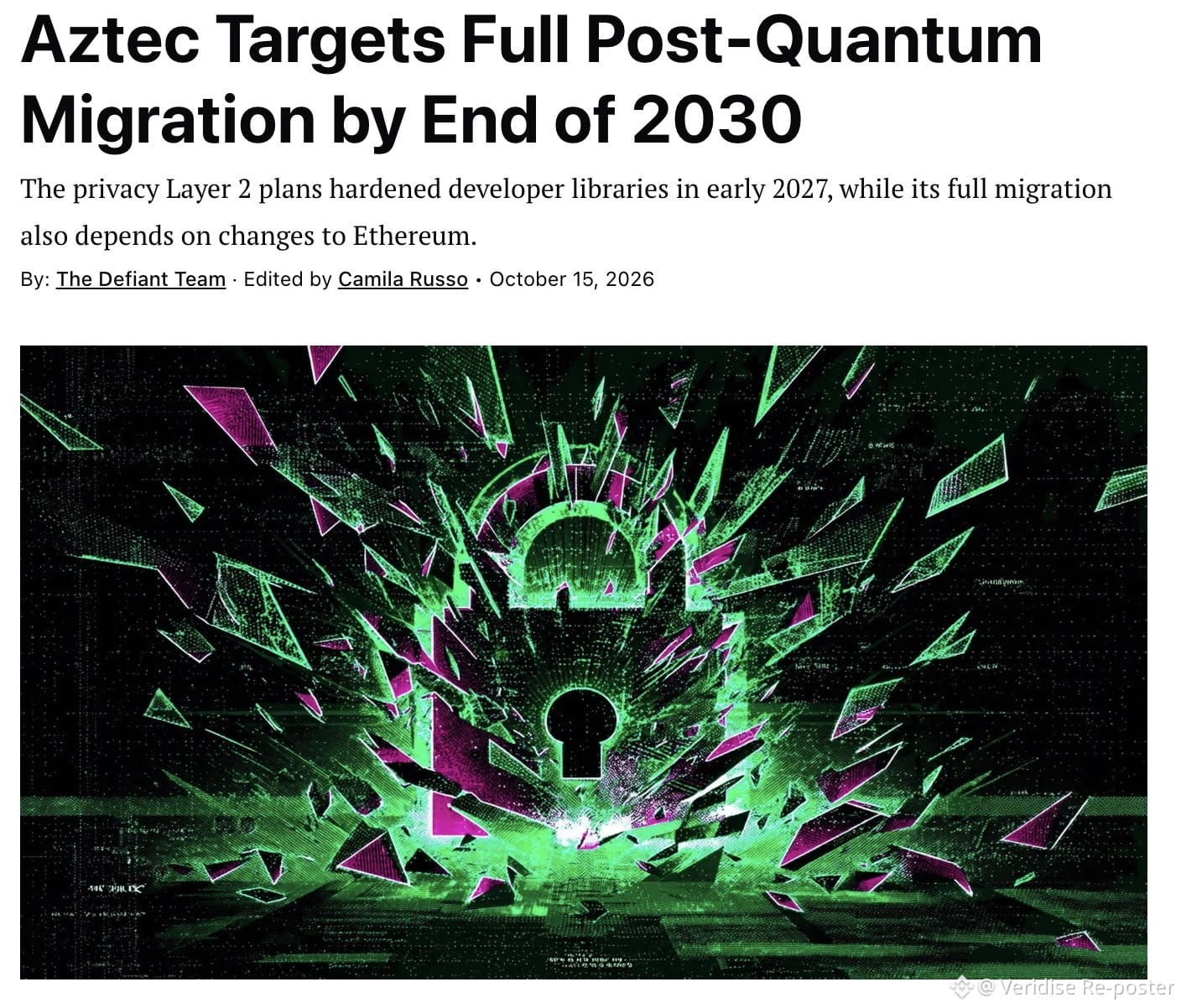
The team at @aztecnetwork has unveiled a comprehensive post-quantum roadmap that aims for completion by 2030. What makes this timeline particularly interesting is the order of the planned upgrades. They are making it a priority to address the harvest-now-decrypt-later exposure right from the start. Because of this approach, hardened libraries securing private data will be introduced in early 2027, long before any replacements are made to the proof system.
https://thedefiant.io/news/blockchains/aztec-targets-full-post-quantum-migration-by-end-of-2030
The team at @aztecnetwork has unveiled a comprehensive post-quantum roadmap that aims for completion by 2030. What makes this timeline particularly interesting is the order of the planned upgrades. They are making it a priority to address the harvest-now-decrypt-later exposure right from the start. Because of this approach, hardened libraries securing private data will be introduced in early 2027, long before any replacements are made to the proof system.
https://thedefiant.io/news/blockchains/aztec-targets-full-post-quantum-migration-by-end-of-2030
https://thedefiant.io/news/blockchains/aztec-targets-full-post-quantum-migration-by-end-of-2030
73
When considering the migration of Bitcoin, selecting a post-quantum signature scheme is actually the least complicated step. A recent PQ paper published by Coinbase brings attention to a much more difficult issue. Wallets utilizing stateful schemes must carefully monitor exactly which one-time keys have already been utilized. Should a user restore an outdated backup and subsequently reuse a key, an attacker would then be able to successfully forge a valid signature.
https://www.coindesk.com/tech/2026/10/14/coinbase-which-holds-5-of-all-bitcoin-wants-the-quantum-fix-started-now
When considering the migration of Bitcoin, selecting a post-quantum signature scheme is actually the least complicated step. A recent PQ paper published by Coinbase brings attention to a much more difficult issue. Wallets utilizing stateful schemes must carefully monitor exactly which one-time keys have already been utilized. Should a user restore an outdated backup and subsequently reuse a key, an attacker would then be able to successfully forge a valid signature.
https://www.coindesk.com/tech/2026/10/14/coinbase-which-holds-5-of-all-bitcoin-wants-the-quantum-fix-started-now
https://www.coindesk.com/tech/2026/10/14/coinbase-which-holds-5-of-all-bitcoin-wants-the-quantum-fix-started-now
71
Artificial intelligence agents had a massive presence throughout the @token2049 event, where they were showcased handling complex tasks like managing treasuries, executing trades, and drafting contracts. However, amidst all the enthusiasm, a vital conversation was largely overlooked. Hardly anyone addressed the necessity of validating the actual deliverables that these agents produce. Bridging this exact verification shortfall is what our team has been focused on resolving. We look forward to sharing further details with you very shortly.
Artificial intelligence agents had a massive presence throughout the @token2049 event, where they were showcased handling complex tasks like managing treasuries, executing trades, and drafting contracts. However, amidst all the enthusiasm, a vital conversation was largely overlooked. Hardly anyone addressed the necessity of validating the actual deliverables that these agents produce. Bridging this exact verification shortfall is what our team has been focused on resolving. We look forward to sharing further details with you very shortly.
75
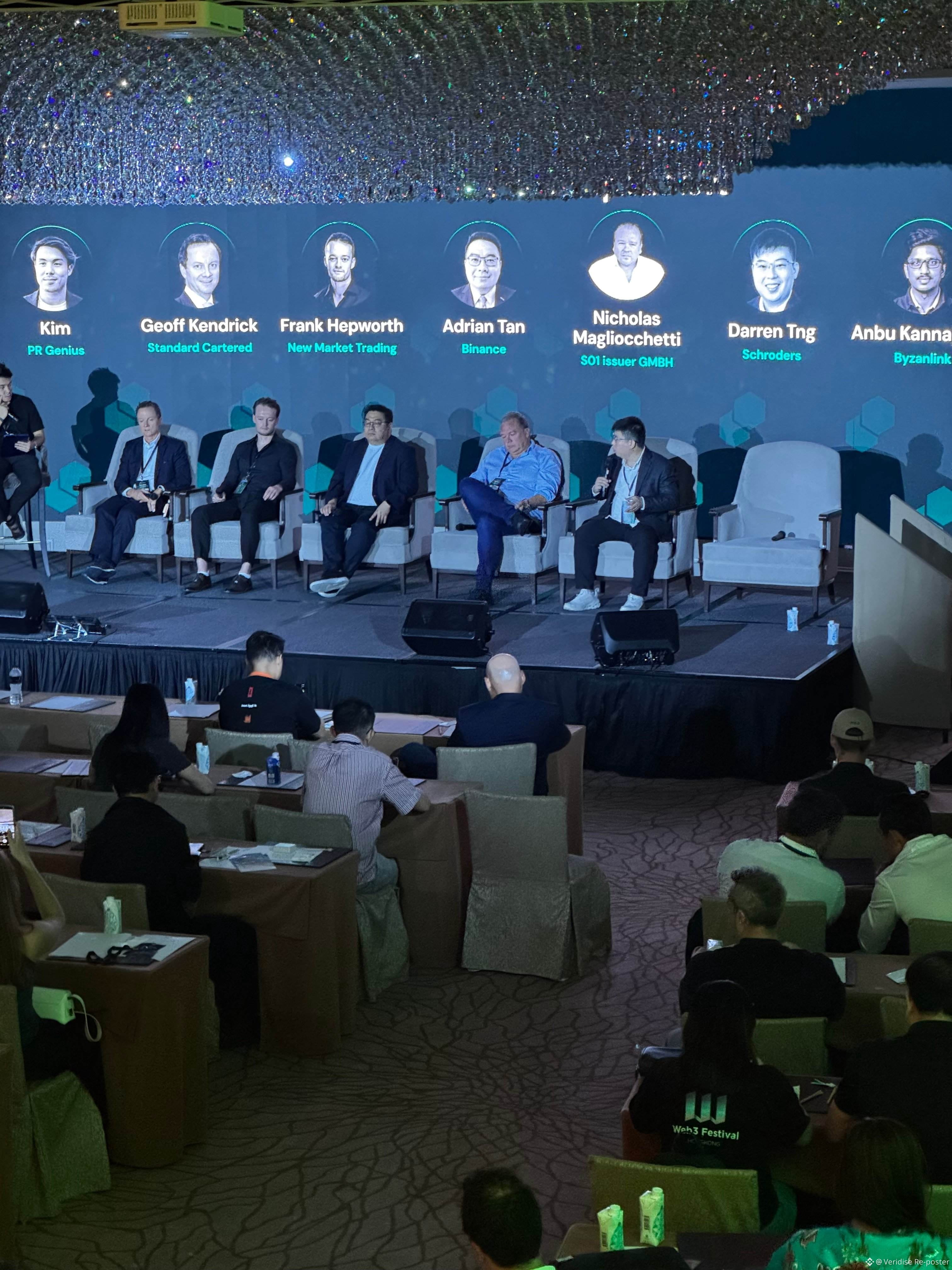
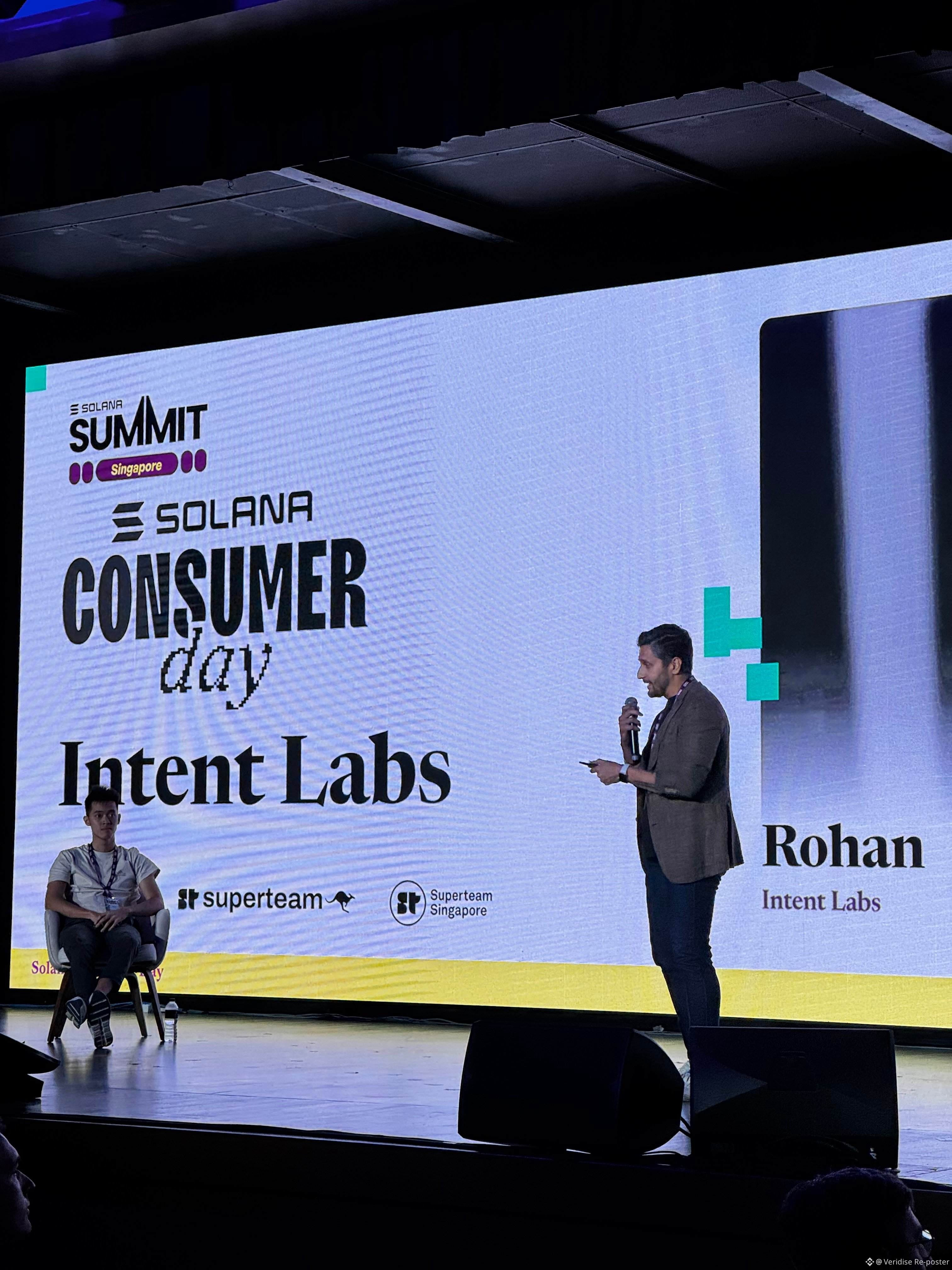
During a full day on the ground in Singapore, the Veridise team had the pleasure of speaking across three distinct stages. Whether we were at the @solana Summit, participating in @gammaprime, or attending Multichain Day, our conversations heavily revolved around ZK, security audits, and formal verification. Despite the different venues, people continuously brought up one common theme. The recurring inquiry from the crowd was about finding a reliable way to verify that a given piece of code truly performs exactly as its specifications dictate.
During a full day on the ground in Singapore, the Veridise team had the pleasure of speaking across three distinct stages. Whether we were at the @solana Summit, participating in @gammaprime, or attending Multichain Day, our conversations heavily revolved around ZK, security audits, and formal verification. Despite the different venues, people continuously brought up one common theme. The recurring inquiry from the crowd was about finding a reliable way to verify that a given piece of code truly performs exactly as its specifications dictate.
72
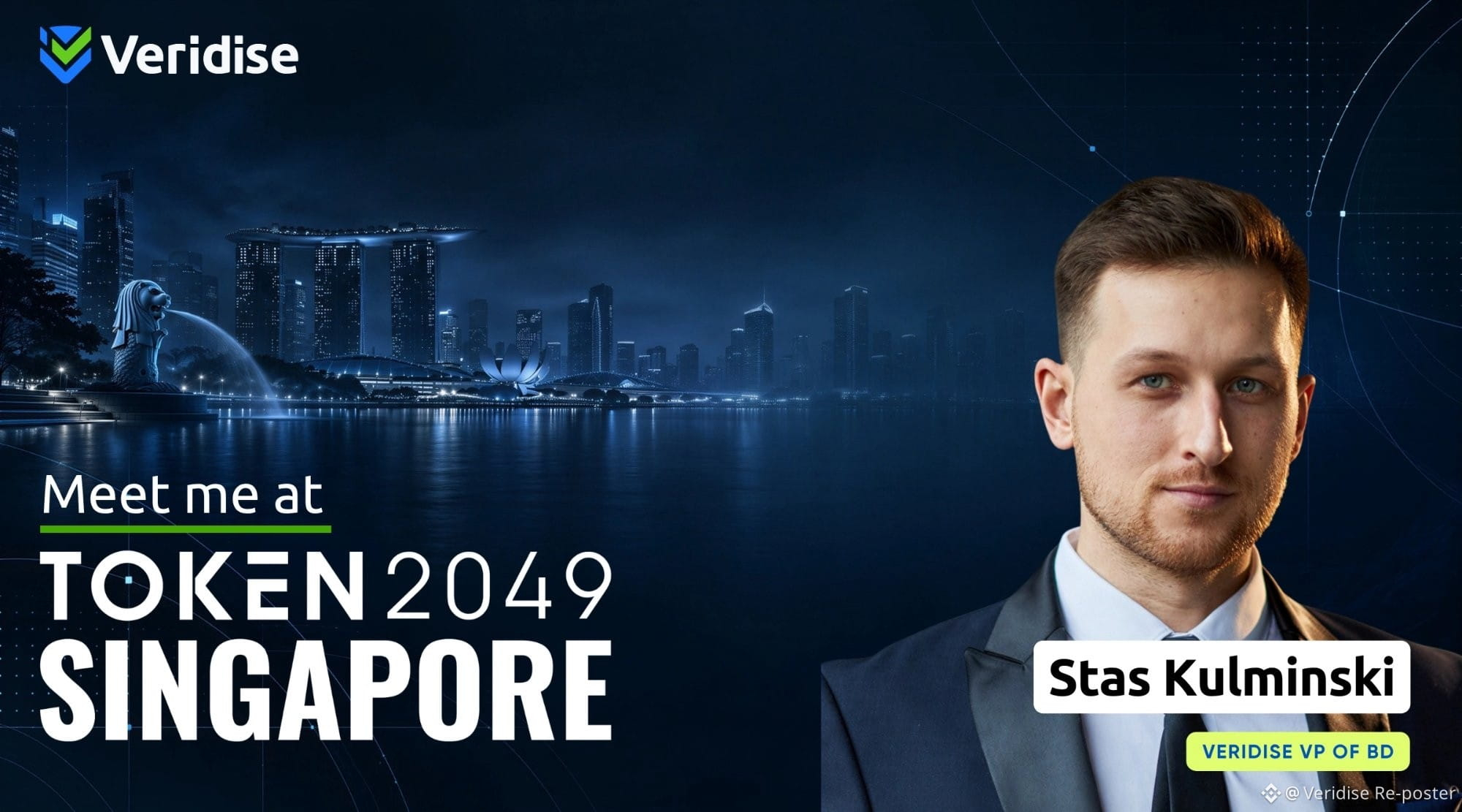
If your roadmap includes an upcoming audit for Q4 or early next year, @kulm1nski is the ideal person to consult regarding your project scope and scheduling. He will be traveling to Singapore to attend @token2049 from October 5 to 9. Please send him a DM to arrange a time to meet.
If your roadmap includes an upcoming audit for Q4 or early next year, @kulm1nski is the ideal person to consult regarding your project scope and scheduling. He will be traveling to Singapore to attend @token2049 from October 5 to 9. Please send him a DM to arrange a time to meet.
61
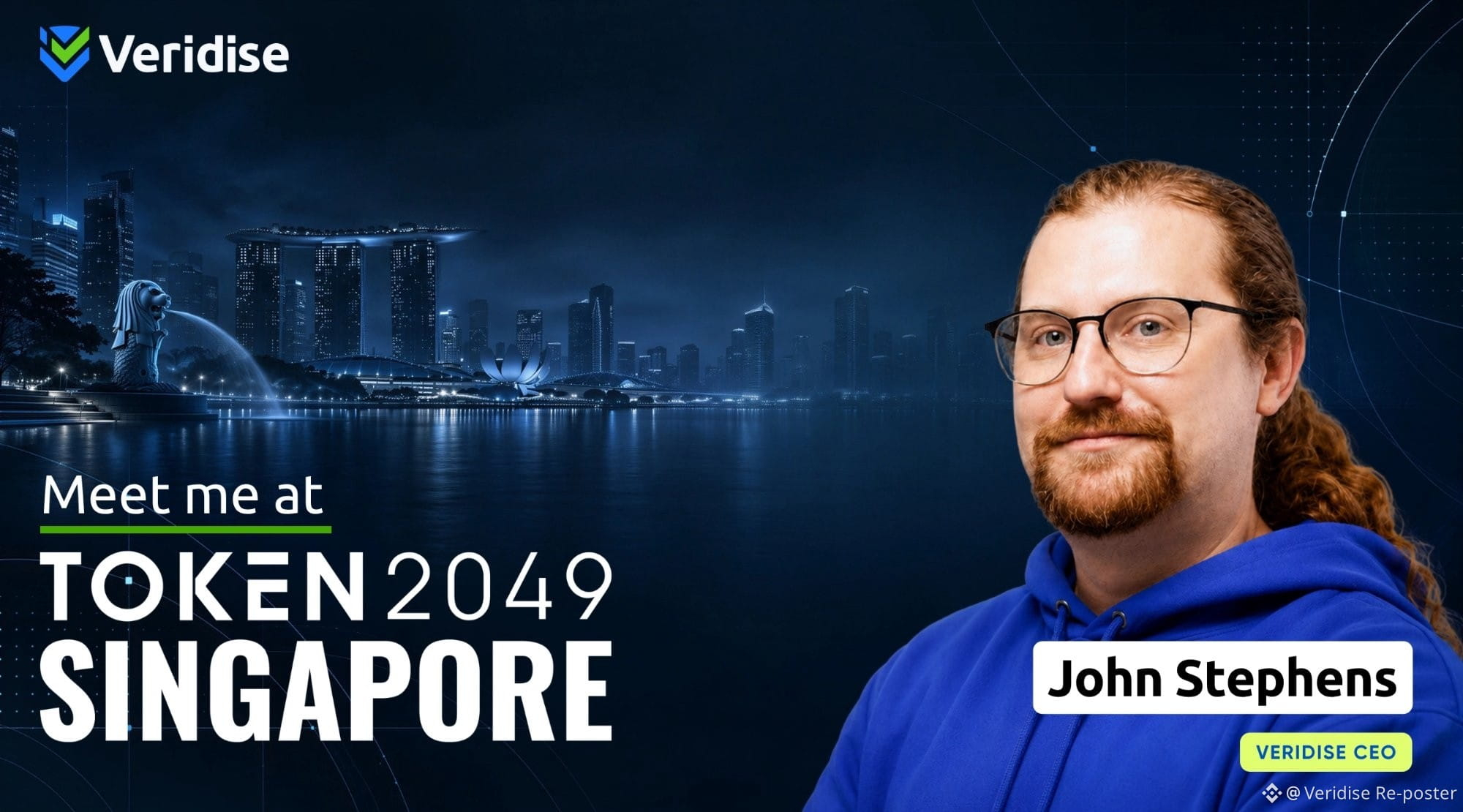
If your upcoming roadmap includes security and you are looking for a straightforward discussion about it, next week provides a perfect opportunity to connect. @FormallyJon is heading out to Singapore, where he will be attending @token2049 and exploring the surrounding side events from October 5 to 9. Feel free to send a DM to reserve a meeting time.
If your upcoming roadmap includes security and you are looking for a straightforward discussion about it, next week provides a perfect opportunity to connect. @FormallyJon is heading out to Singapore, where he will be attending @token2049 and exploring the surrounding side events from October 5 to 9. Feel free to send a DM to reserve a meeting time.
77
Log in to explore more content
Join global crypto users on Binance Square
⚡️ Get latest and useful information about crypto.
💬 Trusted by the world’s largest crypto exchange.
👍 Discover real insights from verified creators.
Email / Phone number
Trending Topics
NvidiaBeatsEstimatesWith$130BQ4Outlook
97 views
4 Discussing
Nvidia Beats With $115.8 Billion in Revenue, Guides to $130 Billion and Adds $150 Billion Buyback
Binance News
·15 Likes
·17.7k views
AnthropicIPOPriceCouldExceed$80
132 views
21 Discussing
CanNvidia’sDataCenterGrowthContinue?
246 views
13 Discussing