

AiCoin官方
24.1k Posts

AiCoin官方
 Square Verified+
Report
Block User
AiCoin是全球领先的数据分析平台,提供专业K线、价格预警、AI分析、链上数据、热点快讯、KOL社区、智能下单及套利工具等服务。🎁币安邀请码:aicoin668
8 Following
12.2K+ Followers
16.0K+ Liked
Posts
All
Quotes
Videos
Live
·
--
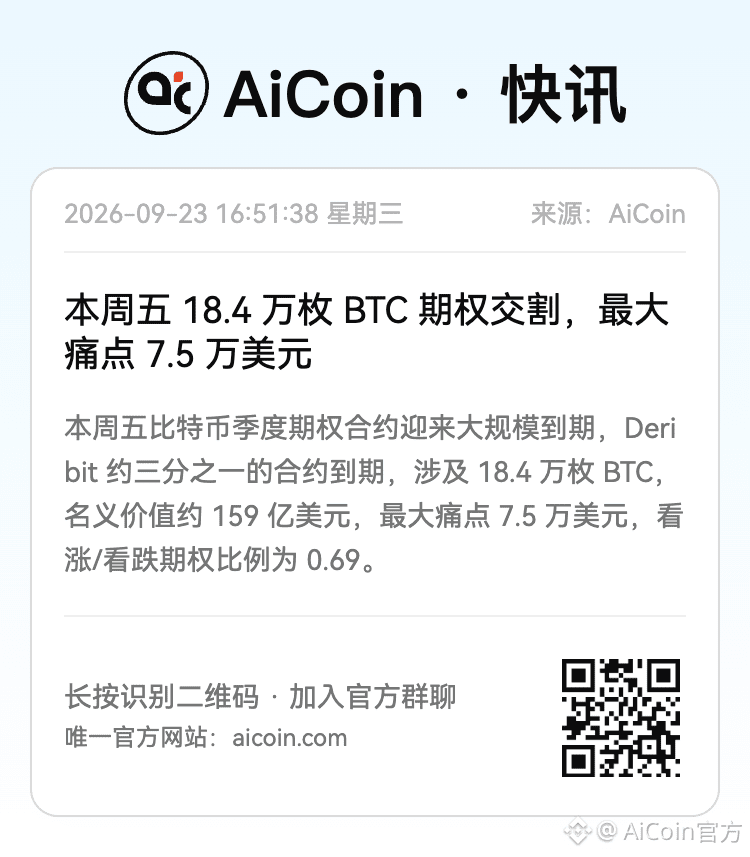
#140亿美元比特币期权周五到期
This coming Friday, approximately $14.0–$16.0 billion worth of BTC options will expire, along with roughly $1.8 billion in ETH options, for a combined notional of nearly $18 billion. This is among the larger quarterly delivery expiries within the year.
With such a large volume of options concentrated around expiration, short-term market volatility may be amplified around Friday.
For ordinary traders, there’s no need to focus too much on complex option structures—focus on:
Whether the BTC price can hold steady within the current range;
Whether there are any clear changes in fund flows after the options expire;
Whether market volatility is further increased.
Option expiration mainly affects the timing and rhythm of short-term volatility. Medium-term trends still need to be judged based on spot liquidity and the broader macro environment.
The above is for market observation only and does not constitute investment advice.
#140亿美元比特币期权周五到期
This coming Friday, approximately $14.0–$16.0 billion worth of BTC options will expire, along with roughly $1.8 billion in ETH options, for a combined notional of nearly $18 billion. This is among the larger quarterly delivery expiries within the year.
With such a large volume of options concentrated around expiration, short-term market volatility may be amplified around Friday.
For ordinary traders, there’s no need to focus too much on complex option structures—focus on:
Whether the BTC price can hold steady within the current range;
Whether there are any clear changes in fund flows after the options expire;
Whether market volatility is further increased.
Option expiration mainly affects the timing and rhythm of short-term volatility. Medium-term trends still need to be judged based on spot liquidity and the broader macro environment.
The above is for market observation only and does not constitute investment advice.
This coming Friday, approximately $14.0–$16.0 billion worth of BTC options will expire, along with roughly $1.8 billion in ETH options, for a combined notional of nearly $18 billion. This is among the larger quarterly delivery expiries within the year.
With such a large volume of options concentrated around expiration, short-term market volatility may be amplified around Friday.
For ordinary traders, there’s no need to focus too much on complex option structures—focus on:
Whether the BTC price can hold steady within the current range;
Whether there are any clear changes in fund flows after the options expire;
Whether market volatility is further increased.
Option expiration mainly affects the timing and rhythm of short-term volatility. Medium-term trends still need to be judged based on spot liquidity and the broader macro environment.
The above is for market observation only and does not constitute investment advice.
621
·
--
【AiCoin丨9.24 Snapshot: Giant whale redemptions paused, large ETF inflows, gold falls below 4300】1、Trump advocates lowering interest rates to 1% or lower; Collins of the Federal Reserve supports a 25bp rate hike to 3.75%-4.00%
U.S. President Trump proposes bringing U.S. interest rates down to 1% or lower. Boston Fed President Collins supports raising the Federal Funds Target Range by 25 basis points to 3.75%-4.00%, and said that inflation risk is higher than the 2% goal and monetary policy needs to remain restrictive.(Source: Reuters) AI interpretation: Federal Reserve officials have clearly expressed concerns about inflation pressures and firmly maintained their stance on tight monetary policy. This statement directly dismisses market fantasies of a sharp rate cut in the near term, reinforcing the persistence of a high-interest-rate environment. Policymakers aim to counter inflation stickiness by building expectations of higher rates, forcing the price level back into the target range. This hawkish policy signal will significantly suppress market risk appetite and support the strong performance of the U.S. dollar. -Original text
【AiCoin丨9.24 Snapshot: Giant whale redemptions paused, large ETF inflows, gold falls below 4300】
1、Trump advocates lowering interest rates to 1% or lower; Collins of the Federal Reserve supports a 25bp rate hike to 3.75%-4.00%
U.S. President Trump proposes bringing U.S. interest rates down to 1% or lower. Boston Fed President Collins supports raising the Federal Funds Target Range by 25 basis points to 3.75%-4.00%, and said that inflation risk is higher than the 2% goal and monetary policy needs to remain restrictive.(Source: Reuters) AI interpretation: Federal Reserve officials have clearly expressed concerns about inflation pressures and firmly maintained their stance on tight monetary policy. This statement directly dismisses market fantasies of a sharp rate cut in the near term, reinforcing the persistence of a high-interest-rate environment. Policymakers aim to counter inflation stickiness by building expectations of higher rates, forcing the price level back into the target range. This hawkish policy signal will significantly suppress market risk appetite and support the strong performance of the U.S. dollar. -Original text
U.S. President Trump proposes bringing U.S. interest rates down to 1% or lower. Boston Fed President Collins supports raising the Federal Funds Target Range by 25 basis points to 3.75%-4.00%, and said that inflation risk is higher than the 2% goal and monetary policy needs to remain restrictive.(Source: Reuters) AI interpretation: Federal Reserve officials have clearly expressed concerns about inflation pressures and firmly maintained their stance on tight monetary policy. This statement directly dismisses market fantasies of a sharp rate cut in the near term, reinforcing the persistence of a high-interest-rate environment. Policymakers aim to counter inflation stickiness by building expectations of higher rates, forcing the price level back into the target range. This hawkish policy signal will significantly suppress market risk appetite and support the strong performance of the U.S. dollar. -Original text
1
1.3k
·
--
A giant whale used 1,308 BTC over six days to convert into 40,670 ETH, and then staked all the newly obtained ETH. This move is a bit unusual.
The latest transaction occurred on September 22: 200.71 BTC were exchanged for 6,247 ETH, worth about $17.2 million. It effectively shifted from a “pure price exposure” position to an ETH position that earns staking yield—directly betting on the Ethereum ecosystem.
For comparison, on September 21, U.S. spot Bitcoin ETFs saw a net inflow of about $998.96 million in a single day, setting a new 2026 high. On one side, traditional capital is adding BTC via ETFs; on the other, whales are rotating BTC into ETH on-chain and locking it up to earn interest.
This kind of capital divergence may not necessarily dictate price direction in the short term, but at least it suggests that large holders are rethinking the role split between BTC and ETH: one is more like “collateral,” and the other is more like an “interest-bearing growth stock.” Who will perform better next may depend on whether on-chain and ETF flows continue to follow this trend.
A giant whale used 1,308 BTC over six days to convert into 40,670 ETH, and then staked all the newly obtained ETH. This move is a bit unusual.
The latest transaction occurred on September 22: 200.71 BTC were exchanged for 6,247 ETH, worth about $17.2 million. It effectively shifted from a “pure price exposure” position to an ETH position that earns staking yield—directly betting on the Ethereum ecosystem.
For comparison, on September 21, U.S. spot Bitcoin ETFs saw a net inflow of about $998.96 million in a single day, setting a new 2026 high. On one side, traditional capital is adding BTC via ETFs; on the other, whales are rotating BTC into ETH on-chain and locking it up to earn interest.
This kind of capital divergence may not necessarily dictate price direction in the short term, but at least it suggests that large holders are rethinking the role split between BTC and ETH: one is more like “collateral,” and the other is more like an “interest-bearing growth stock.” Who will perform better next may depend on whether on-chain and ETF flows continue to follow this trend.
The latest transaction occurred on September 22: 200.71 BTC were exchanged for 6,247 ETH, worth about $17.2 million. It effectively shifted from a “pure price exposure” position to an ETH position that earns staking yield—directly betting on the Ethereum ecosystem.
For comparison, on September 21, U.S. spot Bitcoin ETFs saw a net inflow of about $998.96 million in a single day, setting a new 2026 high. On one side, traditional capital is adding BTC via ETFs; on the other, whales are rotating BTC into ETH on-chain and locking it up to earn interest.
This kind of capital divergence may not necessarily dictate price direction in the short term, but at least it suggests that large holders are rethinking the role split between BTC and ETH: one is more like “collateral,” and the other is more like an “interest-bearing growth stock.” Who will perform better next may depend on whether on-chain and ETF flows continue to follow this trend.

2
1.7k
·
--
【AiCoin丨9.23 Snapshot: Russia legalizes crypto, the Fed hikes rates, and a huge croc gets stolen】1. Russian Prime Minister Mishustin announced that, effective September 1, cryptocurrencies will be legalized for circulation within Russia.
Russian Prime Minister Mishustin said that, effective from September 1, the circulation of cryptocurrencies within Russia has been legalized; related laws were signed into effect by the president. - Original text
2. Fed’s Barkin: Last week’s rate hike helped restore price stability; in the future, whether to hike again will depend on the data.
Fed’s Barkin said that last week’s rate hike helped restore price stability, and going forward it will review relevant data to decide whether more rate hikes are needed. - Original text
3. Spot gold rises by more than $20 within 15 minutes; it is currently quoted at $4,310 per ounce.
【AiCoin丨9.23 Snapshot: Russia legalizes crypto, the Fed hikes rates, and a huge croc gets stolen】
1. Russian Prime Minister Mishustin announced that, effective September 1, cryptocurrencies will be legalized for circulation within Russia.
Russian Prime Minister Mishustin said that, effective from September 1, the circulation of cryptocurrencies within Russia has been legalized; related laws were signed into effect by the president. - Original text
2. Fed’s Barkin: Last week’s rate hike helped restore price stability; in the future, whether to hike again will depend on the data.
Fed’s Barkin said that last week’s rate hike helped restore price stability, and going forward it will review relevant data to decide whether more rate hikes are needed. - Original text
3. Spot gold rises by more than $20 within 15 minutes; it is currently quoted at $4,310 per ounce.
Russian Prime Minister Mishustin said that, effective from September 1, the circulation of cryptocurrencies within Russia has been legalized; related laws were signed into effect by the president. - Original text
2. Fed’s Barkin: Last week’s rate hike helped restore price stability; in the future, whether to hike again will depend on the data.
Fed’s Barkin said that last week’s rate hike helped restore price stability, and going forward it will review relevant data to decide whether more rate hikes are needed. - Original text
3. Spot gold rises by more than $20 within 15 minutes; it is currently quoted at $4,310 per ounce.
3.5k
·
--
Ma Ji pulled off another feat and grew the account to over $10 million.
But the truly outrageous part is this equity curve: $150k → $12.3m → $800k → $10m+
In August, he used high leverage to roll over ETH, turning $150k into $12.3m.
In September, the market turned choppy—his account kept bleeding back down, at one point dropping to only about $8m.
In this recent upswing, the account’s net value increased by more than $7 million within 24 hours, bringing it back to above $10 million.
So when I look at Ma Ji’s account now, I actually care a lot less about the “$10 million” number.
What’s more worth tracking are two things:
During the next drawdown, will he continue to ramp up his position size?
With this round of unrealized profit, how much will ultimately be left?
After all, for an account worth $10 million, it’s completely different to:
hold $10 million in cash, versus carrying a position size of more than $100 million in notional value.
So the equity curve that’s really worth watching may not be how high it can climb next time.
It’s how much is left after the next big bout of volatility.
The above is based on observations from publicly available on-chain data. Position sizes and profits/losses change in real time with market prices and account operations, and this does not constitute investment advice.#比特币突破8.5万美元 #以太坊突破2700美元
Ma Ji pulled off another feat and grew the account to over $10 million.
But the truly outrageous part is this equity curve: $150k → $12.3m → $800k → $10m+
In August, he used high leverage to roll over ETH, turning $150k into $12.3m.
In September, the market turned choppy—his account kept bleeding back down, at one point dropping to only about $8m.
In this recent upswing, the account’s net value increased by more than $7 million within 24 hours, bringing it back to above $10 million.
So when I look at Ma Ji’s account now, I actually care a lot less about the “$10 million” number.
What’s more worth tracking are two things:
During the next drawdown, will he continue to ramp up his position size?
With this round of unrealized profit, how much will ultimately be left?
After all, for an account worth $10 million, it’s completely different to:
hold $10 million in cash, versus carrying a position size of more than $100 million in notional value.
So the equity curve that’s really worth watching may not be how high it can climb next time.
It’s how much is left after the next big bout of volatility.
The above is based on observations from publicly available on-chain data. Position sizes and profits/losses change in real time with market prices and account operations, and this does not constitute investment advice.#比特币突破8.5万美元 #以太坊突破2700美元
But the truly outrageous part is this equity curve: $150k → $12.3m → $800k → $10m+
In August, he used high leverage to roll over ETH, turning $150k into $12.3m.
In September, the market turned choppy—his account kept bleeding back down, at one point dropping to only about $8m.
In this recent upswing, the account’s net value increased by more than $7 million within 24 hours, bringing it back to above $10 million.
So when I look at Ma Ji’s account now, I actually care a lot less about the “$10 million” number.
What’s more worth tracking are two things:
During the next drawdown, will he continue to ramp up his position size?
With this round of unrealized profit, how much will ultimately be left?
After all, for an account worth $10 million, it’s completely different to:
hold $10 million in cash, versus carrying a position size of more than $100 million in notional value.
So the equity curve that’s really worth watching may not be how high it can climb next time.
It’s how much is left after the next big bout of volatility.
The above is based on observations from publicly available on-chain data. Position sizes and profits/losses change in real time with market prices and account operations, and this does not constitute investment advice.#比特币突破8.5万美元 #以太坊突破2700美元

4
1
2.1k
·
--
BlackRock’s IBIT saw weekly net inflows of about $121 million, while the total net inflows across all Bitcoin spot ETFs last week were only $6.2137 million—this contrast alone says a lot.
In other words, traditional capital hasn’t been spread evenly across products; it’s heavily tilted toward a small number of top ETFs. For institutions, concentrating exposure in the products with the best liquidity and the most mature infrastructure is simpler from a compliance and operational standpoint, but it also quietly increases concentration at the point of entry.
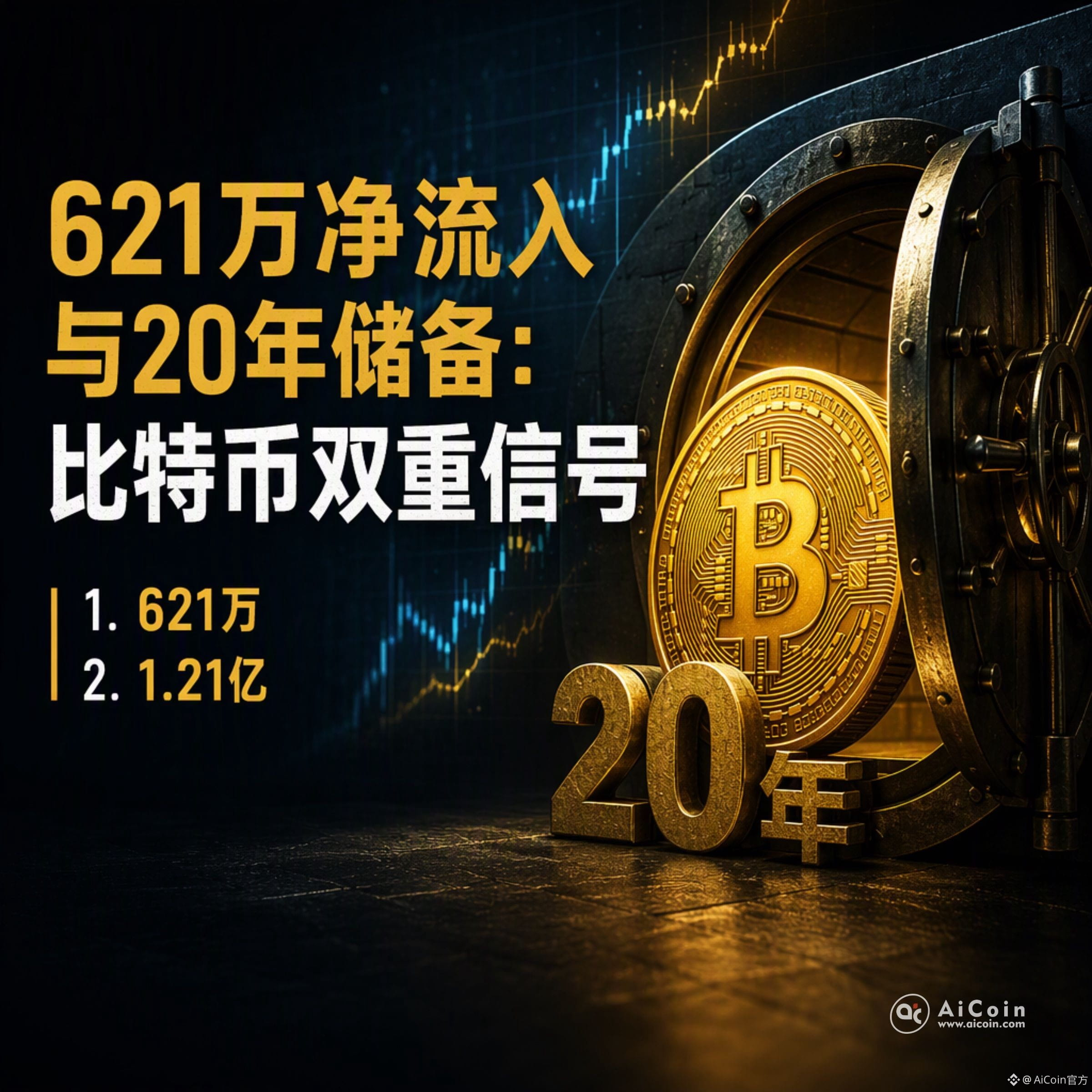
On the other hand, the U.S. House Financial Services Committee has just approved a revised draft of H.R. 8957, which proposes that any Bitcoin held by the federal government be locked away for at least 20 years and not be disposed of. If this moves forward, it would add another layer of supply lock-up over the long term.
With short-term ETF channels offering high liquidity, combined with the possible emergence of long-term reserve lockups, the two questions of “who controls access” and “who locks up supply” for Bitcoin may be even more worth watching than the price itself.
BlackRock’s IBIT saw weekly net inflows of about $121 million, while the total net inflows across all Bitcoin spot ETFs last week were only $6.2137 million—this contrast alone says a lot.
In other words, traditional capital hasn’t been spread evenly across products; it’s heavily tilted toward a small number of top ETFs. For institutions, concentrating exposure in the products with the best liquidity and the most mature infrastructure is simpler from a compliance and operational standpoint, but it also quietly increases concentration at the point of entry.
On the other hand, the U.S. House Financial Services Committee has just approved a revised draft of H.R. 8957, which proposes that any Bitcoin held by the federal government be locked away for at least 20 years and not be disposed of. If this moves forward, it would add another layer of supply lock-up over the long term.
With short-term ETF channels offering high liquidity, combined with the possible emergence of long-term reserve lockups, the two questions of “who controls access” and “who locks up supply” for Bitcoin may be even more worth watching than the price itself.
In other words, traditional capital hasn’t been spread evenly across products; it’s heavily tilted toward a small number of top ETFs. For institutions, concentrating exposure in the products with the best liquidity and the most mature infrastructure is simpler from a compliance and operational standpoint, but it also quietly increases concentration at the point of entry.
On the other hand, the U.S. House Financial Services Committee has just approved a revised draft of H.R. 8957, which proposes that any Bitcoin held by the federal government be locked away for at least 20 years and not be disposed of. If this moves forward, it would add another layer of supply lock-up over the long term.
With short-term ETF channels offering high liquidity, combined with the possible emergence of long-term reserve lockups, the two questions of “who controls access” and “who locks up supply” for Bitcoin may be even more worth watching than the price itself.
BTC-1,84%
IBITETF-0,61%
1
486
·
--
Verified
【AiCoin丨9.22 Snapshot: BTC Breaks Through 84,000, Whale Losses Worsen, Strategy Continues to Increase Holdings】1. Trump is confident in Fed Chair Wosh, and Goolsby views the easing of inflation as more optimistic
U.S. Treasury Secretary Bessent said that President Trump is confident in Federal Reserve Chair Kevin Wosh. -Original
2. Bessent met with China’s Vice Premier He Lifeng and discussed economic and AI issues for 12 hours
U.S. Treasury Secretary Scott Bessent held a 12-hour meeting with China’s Vice Premier He Lifeng to discuss economic and AI issues, and said that the relationship between President Trump and Xi Jinping has brought stability to U.S.-China relations. -Original
3. BTC breaks through $84,000; Abraxas Capital’s short positions are in an unprofitable position of $111 million
【AiCoin丨9.22 Snapshot: BTC Breaks Through 84,000, Whale Losses Worsen, Strategy Continues to Increase Holdings】
1. Trump is confident in Fed Chair Wosh, and Goolsby views the easing of inflation as more optimistic
U.S. Treasury Secretary Bessent said that President Trump is confident in Federal Reserve Chair Kevin Wosh. -Original
2. Bessent met with China’s Vice Premier He Lifeng and discussed economic and AI issues for 12 hours
U.S. Treasury Secretary Scott Bessent held a 12-hour meeting with China’s Vice Premier He Lifeng to discuss economic and AI issues, and said that the relationship between President Trump and Xi Jinping has brought stability to U.S.-China relations. -Original
3. BTC breaks through $84,000; Abraxas Capital’s short positions are in an unprofitable position of $111 million
U.S. Treasury Secretary Bessent said that President Trump is confident in Federal Reserve Chair Kevin Wosh. -Original
2. Bessent met with China’s Vice Premier He Lifeng and discussed economic and AI issues for 12 hours
U.S. Treasury Secretary Scott Bessent held a 12-hour meeting with China’s Vice Premier He Lifeng to discuss economic and AI issues, and said that the relationship between President Trump and Xi Jinping has brought stability to U.S.-China relations. -Original
3. BTC breaks through $84,000; Abraxas Capital’s short positions are in an unprofitable position of $111 million
1.2k
·
--
Verified
The U.S. government is expected to raise about $1 trillion in short-term treasury funding over the next year through new issuance, while at the same time the cost of long-term borrowing has already reached its highest level since 2007, according to a single source.
In other words, cheap long-term money is gone. So, large amounts of short-term debt must be issued in a high-interest-rate environment to fill the fiscal shortfall with more expensive short-term funding. This combination of “high interest rates + high short-term debt supply” itself creates ongoing drag on global liquidity.
When the scale of short-term Treasury bills reaches the trillion-dollar level, it can easily pull away funds that might otherwise flow into risk markets such as equities and crypto assets—especially large investors that prefer stable returns, who are more willing to park their money in these bills to earn interest.
Next to watch is whether the central bank will leave room for the fiscal side on interest rates, and whether the supply of short-end Treasuries will continue to be increased. These two variables determine the intensity of pressure on global risk assets over the coming period.
The U.S. government is expected to raise about $1 trillion in short-term treasury funding over the next year through new issuance, while at the same time the cost of long-term borrowing has already reached its highest level since 2007, according to a single source.
In other words, cheap long-term money is gone. So, large amounts of short-term debt must be issued in a high-interest-rate environment to fill the fiscal shortfall with more expensive short-term funding. This combination of “high interest rates + high short-term debt supply” itself creates ongoing drag on global liquidity.
When the scale of short-term Treasury bills reaches the trillion-dollar level, it can easily pull away funds that might otherwise flow into risk markets such as equities and crypto assets—especially large investors that prefer stable returns, who are more willing to park their money in these bills to earn interest.
Next to watch is whether the central bank will leave room for the fiscal side on interest rates, and whether the supply of short-end Treasuries will continue to be increased. These two variables determine the intensity of pressure on global risk assets over the coming period.
In other words, cheap long-term money is gone. So, large amounts of short-term debt must be issued in a high-interest-rate environment to fill the fiscal shortfall with more expensive short-term funding. This combination of “high interest rates + high short-term debt supply” itself creates ongoing drag on global liquidity.
When the scale of short-term Treasury bills reaches the trillion-dollar level, it can easily pull away funds that might otherwise flow into risk markets such as equities and crypto assets—especially large investors that prefer stable returns, who are more willing to park their money in these bills to earn interest.
Next to watch is whether the central bank will leave room for the fiscal side on interest rates, and whether the supply of short-end Treasuries will continue to be increased. These two variables determine the intensity of pressure on global risk assets over the coming period.

708
·
--
Verified
【AiCoin丨9.21 Snapshot: Iran sanctions upgraded, ongoing institutional buying, state-level hacker attacks】1. Trade and economic teams from China and the United States hold economic and trade consultations in New York, the United States
On the morning of September 20 local time, trade and economic teams from China and the United States began China-U.S. economic and trade consultations in New York, the United States. -Original text
2. US Federal Reserve’s Kashkari: Inflation is still too high, not only caused by oil prices; the Fed must bring inflation back down to the 2% target
Federal Reserve’s Kashkari said that inflation is still too high and is not only due to oil price factors. The Fed’s task is to bring the inflation rate back to the 2% target. -Original text
3. China’s holdings of U.S. Treasury bills have fallen to $618 billion, the lowest level in 18 years
【AiCoin丨9.21 Snapshot: Iran sanctions upgraded, ongoing institutional buying, state-level hacker attacks】
1. Trade and economic teams from China and the United States hold economic and trade consultations in New York, the United States
On the morning of September 20 local time, trade and economic teams from China and the United States began China-U.S. economic and trade consultations in New York, the United States. -Original text
2. US Federal Reserve’s Kashkari: Inflation is still too high, not only caused by oil prices; the Fed must bring inflation back down to the 2% target
Federal Reserve’s Kashkari said that inflation is still too high and is not only due to oil price factors. The Fed’s task is to bring the inflation rate back to the 2% target. -Original text
3. China’s holdings of U.S. Treasury bills have fallen to $618 billion, the lowest level in 18 years
On the morning of September 20 local time, trade and economic teams from China and the United States began China-U.S. economic and trade consultations in New York, the United States. -Original text
2. US Federal Reserve’s Kashkari: Inflation is still too high, not only caused by oil prices; the Fed must bring inflation back down to the 2% target
Federal Reserve’s Kashkari said that inflation is still too high and is not only due to oil price factors. The Fed’s task is to bring the inflation rate back to the 2% target. -Original text
3. China’s holdings of U.S. Treasury bills have fallen to $618 billion, the lowest level in 18 years
2
3.3k
·
--
#比特币突破8万美元大关 chips have started concentrating here
BTC is back around $80,000.
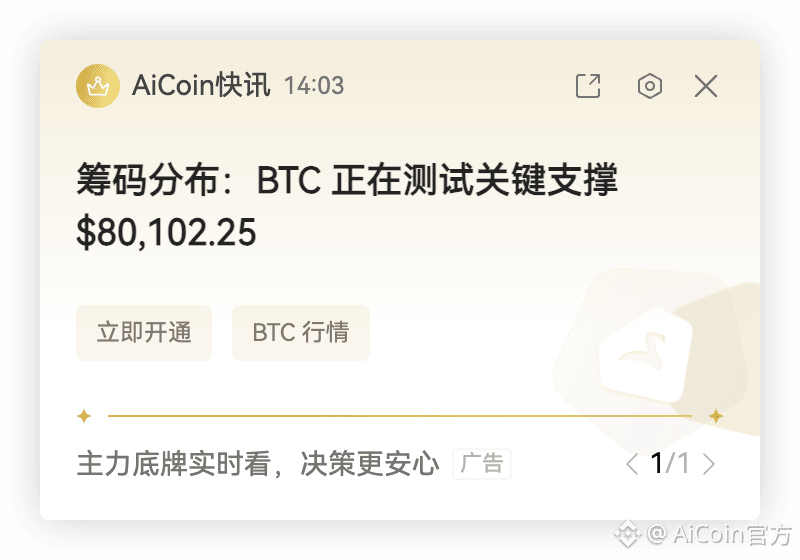
According to the chip distribution data over the past 48 hours, about 50% of the trading volume is concentrated in the $80,100–$81,600 range, with the POC around $80,850.
The price is now close to the lower end of the range at $80,100.
From here downward, focus on the trading volume.
If it breaks down on increased volume, it suggests this batch of chips is starting to loosen, and there may be a need to find a new area with dense trading below.
If it breaks down but with no increase in volume, and then quickly reclaims the level, it indicates that buy-side support below is still present, so it cannot be simply interpreted as a loss of support for now.
So the market structure is fairly clear at the moment:
$80,100 is support; $80,850 is the area where chips are densely concentrated. After a break, look at the trading volume.
How the price moves is one thing, but whether the chip distribution has been pierced is another.
Data is for reference only and does not constitute investment advice.
#比特币突破8万美元大关 chips have started concentrating here
BTC is back around $80,000.
According to the chip distribution data over the past 48 hours, about 50% of the trading volume is concentrated in the $80,100–$81,600 range, with the POC around $80,850.
The price is now close to the lower end of the range at $80,100.
From here downward, focus on the trading volume.
If it breaks down on increased volume, it suggests this batch of chips is starting to loosen, and there may be a need to find a new area with dense trading below.
If it breaks down but with no increase in volume, and then quickly reclaims the level, it indicates that buy-side support below is still present, so it cannot be simply interpreted as a loss of support for now.
So the market structure is fairly clear at the moment:
$80,100 is support; $80,850 is the area where chips are densely concentrated. After a break, look at the trading volume.
How the price moves is one thing, but whether the chip distribution has been pierced is another.
Data is for reference only and does not constitute investment advice.
BTC is back around $80,000.
According to the chip distribution data over the past 48 hours, about 50% of the trading volume is concentrated in the $80,100–$81,600 range, with the POC around $80,850.
The price is now close to the lower end of the range at $80,100.
From here downward, focus on the trading volume.
If it breaks down on increased volume, it suggests this batch of chips is starting to loosen, and there may be a need to find a new area with dense trading below.
If it breaks down but with no increase in volume, and then quickly reclaims the level, it indicates that buy-side support below is still present, so it cannot be simply interpreted as a loss of support for now.
So the market structure is fairly clear at the moment:
$80,100 is support; $80,850 is the area where chips are densely concentrated. After a break, look at the trading volume.
How the price moves is one thing, but whether the chip distribution has been pierced is another.
Data is for reference only and does not constitute investment advice.
8
1.3k
·
--
Article
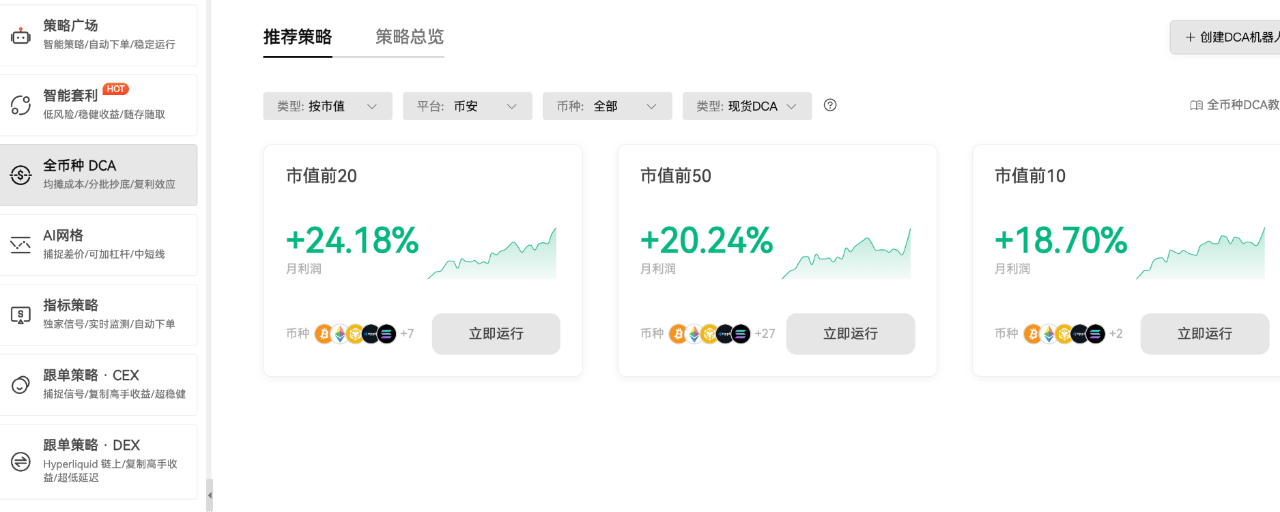
The long holiday is almost here—don’t want to keep watching the charts but afraid of missing the market? Beginners can first learn about spot DCAThe long holiday is almost here.
For people who usually have to work or go to school, the holidays finally mean you don’t have to keep staring at your computer and phone all the time.
But the crypto market won’t take a break.
When you go out to play, the market may be moving; in the evening, when you open your phone, it might already be up for a while—or it might have already fallen quite a bit.
For new traders just entering the space, this situation is especially easy to get stuck in:
When you see it go up, you’re afraid of chasing;
When you see it drop, you don’t dare to buy;
After you finally decide to enter, the market conditions change again.
When I first started getting into trading myself, I went through something similar too.
The long holiday is almost here—don’t want to keep watching the charts but afraid of missing the market? Beginners can first learn about spot DCA
The long holiday is almost here.
For people who usually have to work or go to school, the holidays finally mean you don’t have to keep staring at your computer and phone all the time.
But the crypto market won’t take a break.
When you go out to play, the market may be moving; in the evening, when you open your phone, it might already be up for a while—or it might have already fallen quite a bit.
For new traders just entering the space, this situation is especially easy to get stuck in:
When you see it go up, you’re afraid of chasing;
When you see it drop, you don’t dare to buy;
After you finally decide to enter, the market conditions change again.
When I first started getting into trading myself, I went through something similar too.
For people who usually have to work or go to school, the holidays finally mean you don’t have to keep staring at your computer and phone all the time.
But the crypto market won’t take a break.
When you go out to play, the market may be moving; in the evening, when you open your phone, it might already be up for a while—or it might have already fallen quite a bit.
For new traders just entering the space, this situation is especially easy to get stuck in:
When you see it go up, you’re afraid of chasing;
When you see it drop, you don’t dare to buy;
After you finally decide to enter, the market conditions change again.
When I first started getting into trading myself, I went through something similar too.
970
·
--
Verified
【AiCoin丨9.20 Snapshot: Whale inflows, SEC innovation exemption, USDT issuance increase】1. In the past 24 hours, 5,422 BTC were transferred into exchange wallets, worth $542 million. Coinbase Pro saw the most inflows.
According to AiCoin’s real-time data, over the past 24 hours, a total of 5,422 BTC were transferred into exchange wallets, valued at $542 million. Among them, the largest inflow was to Coinbase Pro, with 4,454 BTC, followed by Bitfinex with 1,161 BTC. For more exchange fund flow directions, please visit the AiCoin webpage—Data—Hyperliquid: https://www.aicoin.com/zh-Hans/hyperliquid - original text
2. Huang Licheng increased his position to $131 million, going long on ETH, BTC, and HYPE
【AiCoin丨9.20 Snapshot: Whale inflows, SEC innovation exemption, USDT issuance increase】
1. In the past 24 hours, 5,422 BTC were transferred into exchange wallets, worth $542 million. Coinbase Pro saw the most inflows.
According to AiCoin’s real-time data, over the past 24 hours, a total of 5,422 BTC were transferred into exchange wallets, valued at $542 million. Among them, the largest inflow was to Coinbase Pro, with 4,454 BTC, followed by Bitfinex with 1,161 BTC. For more exchange fund flow directions, please visit the AiCoin webpage—Data—Hyperliquid: https://www.aicoin.com/zh-Hans/hyperliquid - original text
2. Huang Licheng increased his position to $131 million, going long on ETH, BTC, and HYPE
According to AiCoin’s real-time data, over the past 24 hours, a total of 5,422 BTC were transferred into exchange wallets, valued at $542 million. Among them, the largest inflow was to Coinbase Pro, with 4,454 BTC, followed by Bitfinex with 1,161 BTC. For more exchange fund flow directions, please visit the AiCoin webpage—Data—Hyperliquid: https://www.aicoin.com/zh-Hans/hyperliquid - original text
2. Huang Licheng increased his position to $131 million, going long on ETH, BTC, and HYPE
2
2.2k
·
--
Verified
【AiCoin丨9.19 Snapshot: Fed rate hike, giant whale moves to exchanges, liquidations of 101 million】1. U.S. Federal Reserve Schmidt: Voted in favor of a rate hike; the recent inflation trend has exceeded 3%
The U.S. Federal Reserve Schmidt said that it voted in favor of a rate hike. Recent data show that the inflation trend has exceeded 3%. The rate hike is a step toward restoring the 2% inflation target. The current inflation problem is not just an energy issue; price growth remains hot across a broad range of goods and services. AI interpretation: The Fed official clearly delivered a hawkish signal, emphasizing that inflation persistence has spread into a wide range of goods and services. Current inflation is far above the target range, forcing policymakers to suppress price pressures through tightening measures. This statement directly negates expectations of shifting toward easing in the near term and reinforces the policy tone of maintaining a high-interest-rate environment for the long term. The market needs to reassess the Fed’s tough stance in the fight against inflation, as the risk of keeping rates at high levels has increased significantly. - Original text
【AiCoin丨9.19 Snapshot: Fed rate hike, giant whale moves to exchanges, liquidations of 101 million】
1. U.S. Federal Reserve Schmidt: Voted in favor of a rate hike; the recent inflation trend has exceeded 3%
The U.S. Federal Reserve Schmidt said that it voted in favor of a rate hike. Recent data show that the inflation trend has exceeded 3%. The rate hike is a step toward restoring the 2% inflation target. The current inflation problem is not just an energy issue; price growth remains hot across a broad range of goods and services. AI interpretation: The Fed official clearly delivered a hawkish signal, emphasizing that inflation persistence has spread into a wide range of goods and services. Current inflation is far above the target range, forcing policymakers to suppress price pressures through tightening measures. This statement directly negates expectations of shifting toward easing in the near term and reinforces the policy tone of maintaining a high-interest-rate environment for the long term. The market needs to reassess the Fed’s tough stance in the fight against inflation, as the risk of keeping rates at high levels has increased significantly. - Original text
The U.S. Federal Reserve Schmidt said that it voted in favor of a rate hike. Recent data show that the inflation trend has exceeded 3%. The rate hike is a step toward restoring the 2% inflation target. The current inflation problem is not just an energy issue; price growth remains hot across a broad range of goods and services. AI interpretation: The Fed official clearly delivered a hawkish signal, emphasizing that inflation persistence has spread into a wide range of goods and services. Current inflation is far above the target range, forcing policymakers to suppress price pressures through tightening measures. This statement directly negates expectations of shifting toward easing in the near term and reinforces the policy tone of maintaining a high-interest-rate environment for the long term. The market needs to reassess the Fed’s tough stance in the fight against inflation, as the risk of keeping rates at high levels has increased significantly. - Original text
6
1.6k
·
--
Verified
Goldman Sachs expects another 25-basis-point rate hike in October. Macquarie, meanwhile, lays out a path with a cumulative additional 50 basis points, clearly pushing the rate-hike outlook further in a more hawkish direction.
Goldman has shifted its assumption from “pause after September” to “at least one more time this year,” and rated this meeting overall as leaning hawkish. Macquarie goes even further, extending the rate-hike schedule to December this year and the first quarter of 2027, adding 25 basis points each time—effectively assuming rates stay at the peak for longer.
At the same time, BlackRock warns that the market may be interpreting the chairman’s remarks too forcefully, suggesting that current pricing may not fully reflect actual policy commitments. This contrast—investment bank models getting more hawkish while asset-management giants urge less noise—turns uncertainty about the rate path into a new source of volatility.
For the crypto market, this means near-term regulatory events may not be the main driver; instead, swings in macro rate expectations are the key variable affecting liquidity and risk appetite. After all, these rate-hike scenarios are still just institutional forecasts, not a finalized timetable.
Goldman Sachs expects another 25-basis-point rate hike in October. Macquarie, meanwhile, lays out a path with a cumulative additional 50 basis points, clearly pushing the rate-hike outlook further in a more hawkish direction.
Goldman has shifted its assumption from “pause after September” to “at least one more time this year,” and rated this meeting overall as leaning hawkish. Macquarie goes even further, extending the rate-hike schedule to December this year and the first quarter of 2027, adding 25 basis points each time—effectively assuming rates stay at the peak for longer.
At the same time, BlackRock warns that the market may be interpreting the chairman’s remarks too forcefully, suggesting that current pricing may not fully reflect actual policy commitments. This contrast—investment bank models getting more hawkish while asset-management giants urge less noise—turns uncertainty about the rate path into a new source of volatility.
For the crypto market, this means near-term regulatory events may not be the main driver; instead, swings in macro rate expectations are the key variable affecting liquidity and risk appetite. After all, these rate-hike scenarios are still just institutional forecasts, not a finalized timetable.
Goldman has shifted its assumption from “pause after September” to “at least one more time this year,” and rated this meeting overall as leaning hawkish. Macquarie goes even further, extending the rate-hike schedule to December this year and the first quarter of 2027, adding 25 basis points each time—effectively assuming rates stay at the peak for longer.
At the same time, BlackRock warns that the market may be interpreting the chairman’s remarks too forcefully, suggesting that current pricing may not fully reflect actual policy commitments. This contrast—investment bank models getting more hawkish while asset-management giants urge less noise—turns uncertainty about the rate path into a new source of volatility.
For the crypto market, this means near-term regulatory events may not be the main driver; instead, swings in macro rate expectations are the key variable affecting liquidity and risk appetite. After all, these rate-hike scenarios are still just institutional forecasts, not a finalized timetable.

10
2k
·
--
#sec批准代币化nms股票交易临时创新豁免 🔥 SEC gives stocks on-chain a 5-year window—will RWA start playing for real?
The U.S. SEC has just released a major signal.
On September 17, the SEC introduced a Temporary Innovation Exemption, allowing eligible platforms, under a specific regulatory framework, to trade real tokenized U.S. stocks, for up to 5 years.
Here are the key points laid out directly👇
✅ Tokens must correspond to real stock ownership rights
✅ Holders retain rights such as dividends and voting
✅ Permits trading via permissioned AMMs and liquidity pools
✅ Issuers have veto power
❌ Synthetic stock products are not covered by this exemption
So what does this mean?
In the past, it was Crypto trying to find a way into Wall Street.
Now, Wall Street stocks are starting to gain regulatory pathways to enter the chain.
For RWA, this is an important step from “telling a story” to “actually getting it done.”
Now look at BTC.
Currently, BTC is consolidating around $77,000, after bouncing back from the $75K area.
While the SEC’s regulatory signals are somewhat positive, short-term market action still depends on macro liquidity, interest-rate expectations, and overall risk appetite.
So going forward, what’s worth watching isn’t just the BTC price.
More importantly: when will the first batch of tokenized U.S. stocks truly go live? Can on-chain stock trading achieve real-scale adoption?
If this path runs, the RWA narrative may move into the next phase.
#BTC #RWA #SEC #TokenizedStocks
#sec批准代币化nms股票交易临时创新豁免 🔥 SEC gives stocks on-chain a 5-year window—will RWA start playing for real?
The U.S. SEC has just released a major signal.
On September 17, the SEC introduced a Temporary Innovation Exemption, allowing eligible platforms, under a specific regulatory framework, to trade real tokenized U.S. stocks, for up to 5 years.
Here are the key points laid out directly👇
✅ Tokens must correspond to real stock ownership rights
✅ Holders retain rights such as dividends and voting
✅ Permits trading via permissioned AMMs and liquidity pools
✅ Issuers have veto power
❌ Synthetic stock products are not covered by this exemption
So what does this mean?
In the past, it was Crypto trying to find a way into Wall Street.
Now, Wall Street stocks are starting to gain regulatory pathways to enter the chain.
For RWA, this is an important step from “telling a story” to “actually getting it done.”
Now look at BTC.
Currently, BTC is consolidating around $77,000, after bouncing back from the $75K area.
While the SEC’s regulatory signals are somewhat positive, short-term market action still depends on macro liquidity, interest-rate expectations, and overall risk appetite.
So going forward, what’s worth watching isn’t just the BTC price.
More importantly: when will the first batch of tokenized U.S. stocks truly go live? Can on-chain stock trading achieve real-scale adoption?
If this path runs, the RWA narrative may move into the next phase.
#BTC #RWA #SEC #TokenizedStocks
The U.S. SEC has just released a major signal.
On September 17, the SEC introduced a Temporary Innovation Exemption, allowing eligible platforms, under a specific regulatory framework, to trade real tokenized U.S. stocks, for up to 5 years.
Here are the key points laid out directly👇
✅ Tokens must correspond to real stock ownership rights
✅ Holders retain rights such as dividends and voting
✅ Permits trading via permissioned AMMs and liquidity pools
✅ Issuers have veto power
❌ Synthetic stock products are not covered by this exemption
So what does this mean?
In the past, it was Crypto trying to find a way into Wall Street.
Now, Wall Street stocks are starting to gain regulatory pathways to enter the chain.
For RWA, this is an important step from “telling a story” to “actually getting it done.”
Now look at BTC.
Currently, BTC is consolidating around $77,000, after bouncing back from the $75K area.
While the SEC’s regulatory signals are somewhat positive, short-term market action still depends on macro liquidity, interest-rate expectations, and overall risk appetite.
So going forward, what’s worth watching isn’t just the BTC price.
More importantly: when will the first batch of tokenized U.S. stocks truly go live? Can on-chain stock trading achieve real-scale adoption?
If this path runs, the RWA narrative may move into the next phase.
#BTC #RWA #SEC #TokenizedStocks

1
5
6.9k
·
--
Verified
【AiCoin丨9.18 Snapshot: Tokenized Stocks Milestone, BlackRock Deposits at Coinbase, Bitcoin Reserve Bill】1. In the week ending September 12, initial jobless claims in the United States fell to 196,000, hitting a new low since July
In the week ending September 12, the number of initial jobless claims in the United States fell to 196,000, down by 10,000 from the previous week. In the same period, the number of continuing claims for unemployment benefits dropped to 1.73 million, reaching the lowest level since 2024. (Source: Bloomberg) AI interpretation: The labor market has demonstrated strong resilience under pressure, with employment demand continuing to remain robust. The sharp drop in unemployment benefit claims directly dispels market concerns about an economic recession, indicating that the current economic fundamentals remain solid. This tight employment environment provides strong support for the Federal Reserve to maintain its high-interest-rate policy, further narrowing the room for rate cuts in the near term. The market needs to reassess how long the high-rate environment will persist and stay highly alert to the risk of the economy overheating. -Original text
【AiCoin丨9.18 Snapshot: Tokenized Stocks Milestone, BlackRock Deposits at Coinbase, Bitcoin Reserve Bill】
1. In the week ending September 12, initial jobless claims in the United States fell to 196,000, hitting a new low since July
In the week ending September 12, the number of initial jobless claims in the United States fell to 196,000, down by 10,000 from the previous week. In the same period, the number of continuing claims for unemployment benefits dropped to 1.73 million, reaching the lowest level since 2024. (Source: Bloomberg) AI interpretation: The labor market has demonstrated strong resilience under pressure, with employment demand continuing to remain robust. The sharp drop in unemployment benefit claims directly dispels market concerns about an economic recession, indicating that the current economic fundamentals remain solid. This tight employment environment provides strong support for the Federal Reserve to maintain its high-interest-rate policy, further narrowing the room for rate cuts in the near term. The market needs to reassess how long the high-rate environment will persist and stay highly alert to the risk of the economy overheating. -Original text
In the week ending September 12, the number of initial jobless claims in the United States fell to 196,000, down by 10,000 from the previous week. In the same period, the number of continuing claims for unemployment benefits dropped to 1.73 million, reaching the lowest level since 2024. (Source: Bloomberg) AI interpretation: The labor market has demonstrated strong resilience under pressure, with employment demand continuing to remain robust. The sharp drop in unemployment benefit claims directly dispels market concerns about an economic recession, indicating that the current economic fundamentals remain solid. This tight employment environment provides strong support for the Federal Reserve to maintain its high-interest-rate policy, further narrowing the room for rate cuts in the near term. The market needs to reassess how long the high-rate environment will persist and stay highly alert to the risk of the economy overheating. -Original text
2
1.8k
·
--
The Bank for International Settlements (BIS) released a working paper on September 16 analyzing nearly 100 billion on-chain records from three networks—Bitcoin, Ethereum, and TRON. It reported statistical results on Bitcoin transfer volumes, which can differ by as much as about six times.
The core reason lies in Bitcoin’s UTXO model: technical processes such as change-making and combining inputs/outputs. If the counting criteria differ during analysis, the same transaction may be magnified or diminished. As a result, the “total transfer amount” seen in on-chain metrics may be only an approximation under a particular algorithm.
In other words, on the typical on-chain data dashboards, those transfer volumes that appear to suddenly spike or large anomalies do not necessarily reflect real fund activity. Sometimes it’s simply a wallet consolidating UTXOs, but under a certain statistical method this gets interpreted as “massive liquidity movements.”
For market participants who are used to observing the market via on-chain data, this is a reminder: the data still has value, but it’s important to understand the statistical methodology and the bounds of error, so as not to treat every number as a direct trading signal.
The Bank for International Settlements (BIS) released a working paper on September 16 analyzing nearly 100 billion on-chain records from three networks—Bitcoin, Ethereum, and TRON. It reported statistical results on Bitcoin transfer volumes, which can differ by as much as about six times.
The core reason lies in Bitcoin’s UTXO model: technical processes such as change-making and combining inputs/outputs. If the counting criteria differ during analysis, the same transaction may be magnified or diminished. As a result, the “total transfer amount” seen in on-chain metrics may be only an approximation under a particular algorithm.
In other words, on the typical on-chain data dashboards, those transfer volumes that appear to suddenly spike or large anomalies do not necessarily reflect real fund activity. Sometimes it’s simply a wallet consolidating UTXOs, but under a certain statistical method this gets interpreted as “massive liquidity movements.”
For market participants who are used to observing the market via on-chain data, this is a reminder: the data still has value, but it’s important to understand the statistical methodology and the bounds of error, so as not to treat every number as a direct trading signal.
The core reason lies in Bitcoin’s UTXO model: technical processes such as change-making and combining inputs/outputs. If the counting criteria differ during analysis, the same transaction may be magnified or diminished. As a result, the “total transfer amount” seen in on-chain metrics may be only an approximation under a particular algorithm.
In other words, on the typical on-chain data dashboards, those transfer volumes that appear to suddenly spike or large anomalies do not necessarily reflect real fund activity. Sometimes it’s simply a wallet consolidating UTXOs, but under a certain statistical method this gets interpreted as “massive liquidity movements.”
For market participants who are used to observing the market via on-chain data, this is a reminder: the data still has value, but it’s important to understand the statistical methodology and the bounds of error, so as not to treat every number as a direct trading signal.

5
470
Log in to explore more content
Join global crypto users on Binance Square
⚡️ Get latest and useful information about crypto.
💬 Trusted by the world’s largest crypto exchange.
👍 Discover real insights from verified creators.
Email / Phone number