

ZEE HERE
346 Posts
ZEE HERE
 Square Verified
Report
Block User
Trader & Strategist | Risk-managed growth. | Market logic Hype | Verified KOL for X & CMC : @_CryptoZee
Open Trade

SOL Holder
Occasional Trader
2.4 Years
298 Following
4.0K+ Followers
572 Liked
Posts
Portfolio
All
Quotes
Videos
Live
·
--
🚨 JUST MARK MY WORDS:
$BTC will break $100K right after sweeping liquidity below $75K this month...
Based on the chart, my roadmap looks like this:
1. Bull trap forming
2. Rebalancing move kicks off
3. Market targets swept: $75K / 0.5 FVG ($71K)
4. Bear trap forming
5. Massive rally begins + $100K sweep
Hype around the strong pump is slowly fading
Retail is still waiting for more upside while whales are massively offloading their positions
Be smarter - don't get caught in a massive trap!
🚨 JUST MARK MY WORDS:
$BTC will break $100K right after sweeping liquidity below $75K this month...
Based on the chart, my roadmap looks like this:
1. Bull trap forming
2. Rebalancing move kicks off
3. Market targets swept: $75K / 0.5 FVG ($71K)
4. Bear trap forming
5. Massive rally begins + $100K sweep
Hype around the strong pump is slowly fading
Retail is still waiting for more upside while whales are massively offloading their positions
Be smarter - don't get caught in a massive trap!
$BTC will break $100K right after sweeping liquidity below $75K this month...
Based on the chart, my roadmap looks like this:
1. Bull trap forming
2. Rebalancing move kicks off
3. Market targets swept: $75K / 0.5 FVG ($71K)
4. Bear trap forming
5. Massive rally begins + $100K sweep
Hype around the strong pump is slowly fading
Retail is still waiting for more upside while whales are massively offloading their positions
Be smarter - don't get caught in a massive trap!
1
290
·
--
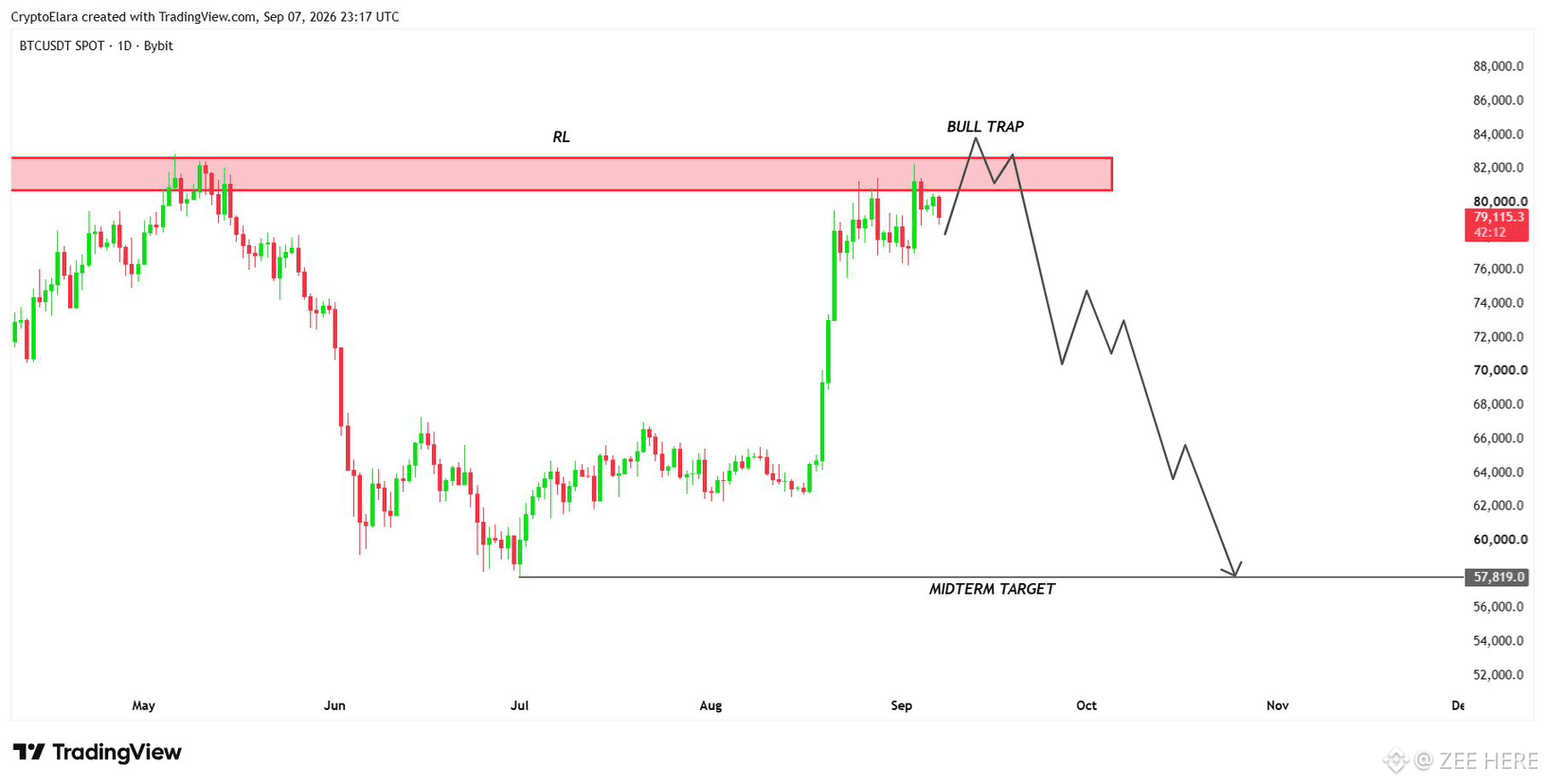
$BTC approaching major $80K–$83K resistance; watching for a potential bull trap setup with a midterm downside target toward $57,800.
#BTC #Write2Earn
$BTC approaching major $80K–$83K resistance; watching for a potential bull trap setup with a midterm downside target toward $57,800.
#BTC #Write2Earn
#BTC #Write2Earn
83
·
--
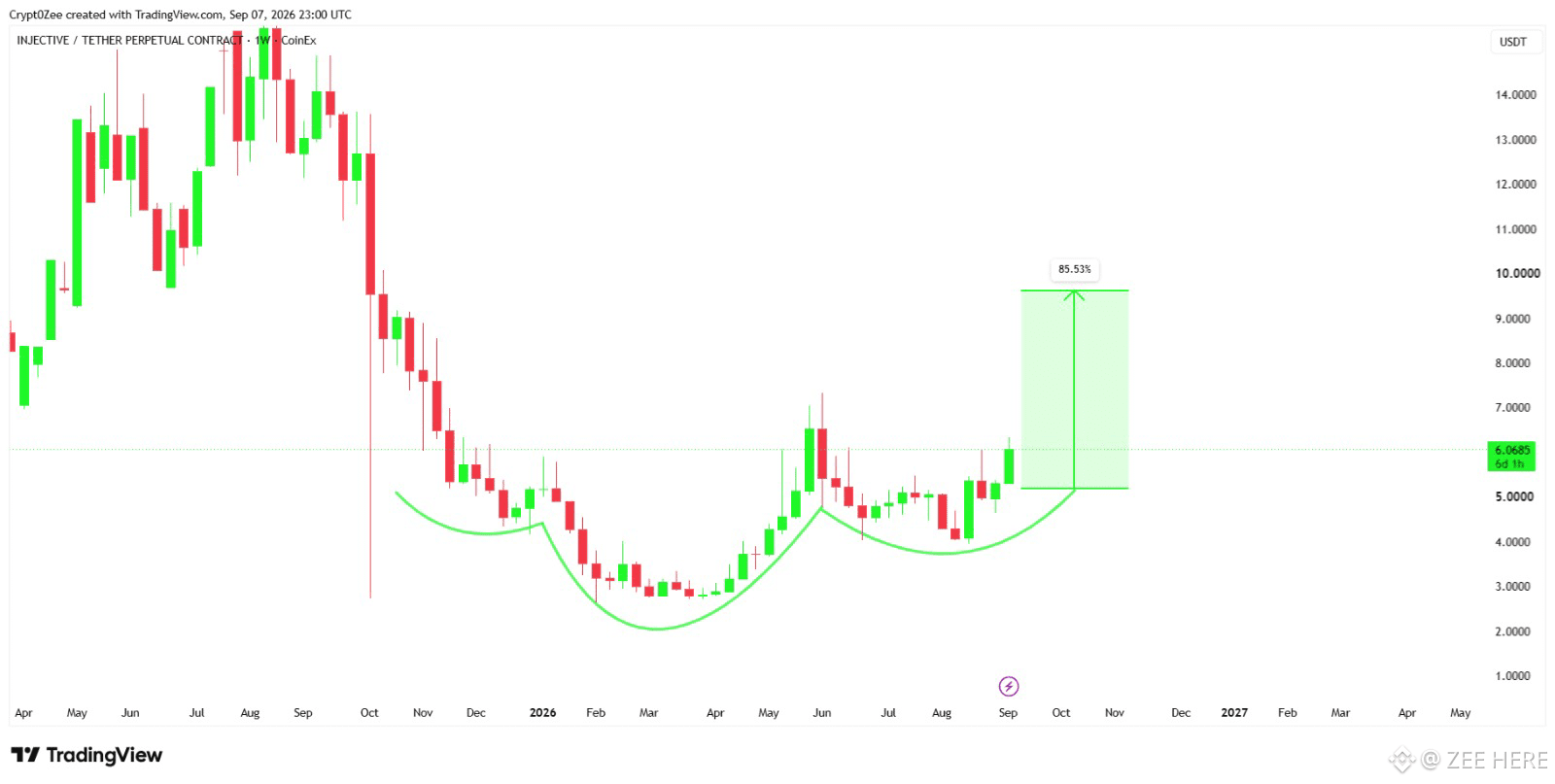
$INJ Macro Analysis 🚀
Weekly inverse H&S accumulation phase nearing completion around $6.06. A confirmed breakout off this base targets an rally to $9.70+ 📈
Positioned for the continuation? 👇
#INJ #Write2Earn
$INJ Macro Analysis 🚀
Weekly inverse H&S accumulation phase nearing completion around $6.06. A confirmed breakout off this base targets an rally to $9.70+ 📈
Positioned for the continuation? 👇
#INJ #Write2Earn
Weekly inverse H&S accumulation phase nearing completion around $6.06. A confirmed breakout off this base targets an rally to $9.70+ 📈
Positioned for the continuation? 👇
#INJ #Write2Earn
149
·
--
Bullish
Bringing the Financial Lifecycle On-Chain
Putting a financial asset on a blockchain is only one part of the story.
For regulated finance, the real challenge is everything that happens before and after an asset is issued.
An asset needs to be created and governed. Investors need to be onboarded and checked for eligibility. Transfers may need restrictions. Trading needs coordination between participants. Payments and asset delivery need to settle correctly. After that, reporting, disclosures and corporate actions still have to be managed.
If these processes remain fragmented across different systems, the benefits of putting an asset on-chain can be limited.
This is where @Dusk_Foundation takes a broader approach.
Dusk is designed around the idea of bringing the financial lifecycle itself onto shared on-chain infrastructure not simply representing an existing asset as a token.
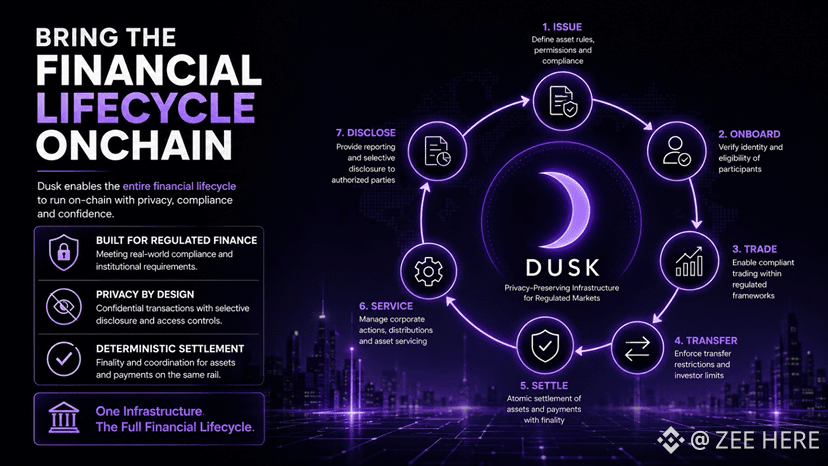
A regulated workflow can begin with issuance, where asset rules and eligibility requirements are defined.
From there, investor onboarding and wallet access can be connected to verified identity and eligibility conditions. Transfer controls can help ensure that only permitted participants can hold or move an asset.
Trading can then happen within an environment where the asset, participant permissions and settlement requirements can coordinate around the same infrastructure.
Settlement is another important piece. Dusk is built with deterministic finality and supports coordination between the asset leg and payment leg, helping reduce the fragmentation that exists when different parts of a transaction depend on separate systems.
The result is a different vision of tokenized finance:
Issue → Onboard → Trade → Transfer → Settle → Service → Disclose
All connected through infrastructure designed for regulated markets.
That is the bigger opportunity behind bringing finance on-chain.
It is not simply about putting assets on a blockchain.
It is about making the entire financial lifecycle programmable, coordinated and verifiable.
#dusk $DUSK @Dusk
Bringing the Financial Lifecycle On-Chain
Putting a financial asset on a blockchain is only one part of the story.
For regulated finance, the real challenge is everything that happens before and after an asset is issued.
An asset needs to be created and governed. Investors need to be onboarded and checked for eligibility. Transfers may need restrictions. Trading needs coordination between participants. Payments and asset delivery need to settle correctly. After that, reporting, disclosures and corporate actions still have to be managed.
If these processes remain fragmented across different systems, the benefits of putting an asset on-chain can be limited.
This is where @Dusk takes a broader approach.
Dusk is designed around the idea of bringing the financial lifecycle itself onto shared on-chain infrastructure not simply representing an existing asset as a token.
A regulated workflow can begin with issuance, where asset rules and eligibility requirements are defined.
From there, investor onboarding and wallet access can be connected to verified identity and eligibility conditions. Transfer controls can help ensure that only permitted participants can hold or move an asset.
Trading can then happen within an environment where the asset, participant permissions and settlement requirements can coordinate around the same infrastructure.
Settlement is another important piece. Dusk is built with deterministic finality and supports coordination between the asset leg and payment leg, helping reduce the fragmentation that exists when different parts of a transaction depend on separate systems.
The result is a different vision of tokenized finance:
Issue → Onboard → Trade → Transfer → Settle → Service → Disclose
All connected through infrastructure designed for regulated markets.
That is the bigger opportunity behind bringing finance on-chain.
It is not simply about putting assets on a blockchain.
It is about making the entire financial lifecycle programmable, coordinated and verifiable.
#dusk $DUSK @Dusk
Putting a financial asset on a blockchain is only one part of the story.
For regulated finance, the real challenge is everything that happens before and after an asset is issued.
An asset needs to be created and governed. Investors need to be onboarded and checked for eligibility. Transfers may need restrictions. Trading needs coordination between participants. Payments and asset delivery need to settle correctly. After that, reporting, disclosures and corporate actions still have to be managed.
If these processes remain fragmented across different systems, the benefits of putting an asset on-chain can be limited.
This is where @Dusk takes a broader approach.
Dusk is designed around the idea of bringing the financial lifecycle itself onto shared on-chain infrastructure not simply representing an existing asset as a token.
A regulated workflow can begin with issuance, where asset rules and eligibility requirements are defined.
From there, investor onboarding and wallet access can be connected to verified identity and eligibility conditions. Transfer controls can help ensure that only permitted participants can hold or move an asset.
Trading can then happen within an environment where the asset, participant permissions and settlement requirements can coordinate around the same infrastructure.
Settlement is another important piece. Dusk is built with deterministic finality and supports coordination between the asset leg and payment leg, helping reduce the fragmentation that exists when different parts of a transaction depend on separate systems.
The result is a different vision of tokenized finance:
Issue → Onboard → Trade → Transfer → Settle → Service → Disclose
All connected through infrastructure designed for regulated markets.
That is the bigger opportunity behind bringing finance on-chain.
It is not simply about putting assets on a blockchain.
It is about making the entire financial lifecycle programmable, coordinated and verifiable.
#dusk $DUSK @Dusk
99
·
--
Privacy That Regulated Finance Can Actually Use
When people hear “blockchain,” they often think about transparency. Every transaction can be visible, balances can be tracked, and activity can become easy to analyze.
That transparency can be useful but for regulated financial markets, making everything public is not always practical.
Imagine a company settling a large transaction, an institution managing a portfolio, or an investor holding regulated assets. They may need to prove that they are eligible to participate and comply with certain rules, without exposing every detail of their financial activity to the entire network.
This is where Dusk takes a different approach.
@Dusk_Foundation is building blockchain infrastructure for regulated on-chain finance where privacy and compliance are designed to work together. Instead of treating privacy as an all-or-nothing choice, Dusk supports confidential transactions while allowing specific information to be disclosed to authorized parties when necessary.
One important part of this model is zero-knowledge technology. In simple terms, it can allow a participant to prove that a required condition is satisfied without revealing unnecessary underlying information.
For regulated markets, that distinction matters.
An investor may need to prove eligibility.
A regulated asset may need transfer restrictions.
An issuer may need reporting capabilities.
An auditor or authorized supervisor may need access to specific information.
The goal isn’t to hide everything.
The goal is to make sure the right information is visible to the right party at the right time.
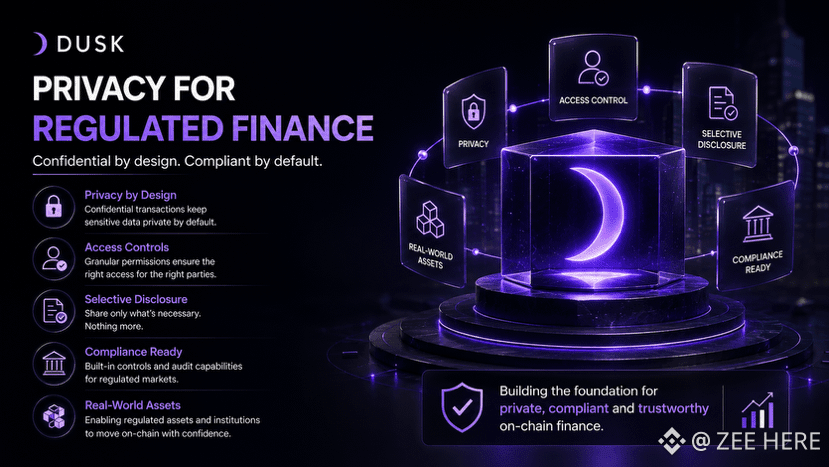
Dusk combines privacy, access controls, selective disclosure and deterministic settlement into infrastructure designed around real financial workflows.
That makes privacy more than a blockchain feature. It becomes part of the foundation needed to bring regulated assets and financial markets on chain.
#dusk $DUSK @Dusk
Privacy That Regulated Finance Can Actually Use
When people hear “blockchain,” they often think about transparency. Every transaction can be visible, balances can be tracked, and activity can become easy to analyze.
That transparency can be useful but for regulated financial markets, making everything public is not always practical.
Imagine a company settling a large transaction, an institution managing a portfolio, or an investor holding regulated assets. They may need to prove that they are eligible to participate and comply with certain rules, without exposing every detail of their financial activity to the entire network.
This is where Dusk takes a different approach.
@Dusk is building blockchain infrastructure for regulated on-chain finance where privacy and compliance are designed to work together. Instead of treating privacy as an all-or-nothing choice, Dusk supports confidential transactions while allowing specific information to be disclosed to authorized parties when necessary.
One important part of this model is zero-knowledge technology. In simple terms, it can allow a participant to prove that a required condition is satisfied without revealing unnecessary underlying information.
For regulated markets, that distinction matters.
An investor may need to prove eligibility.
A regulated asset may need transfer restrictions.
An issuer may need reporting capabilities.
An auditor or authorized supervisor may need access to specific information.
The goal isn’t to hide everything.
The goal is to make sure the right information is visible to the right party at the right time.
Dusk combines privacy, access controls, selective disclosure and deterministic settlement into infrastructure designed around real financial workflows.
That makes privacy more than a blockchain feature. It becomes part of the foundation needed to bring regulated assets and financial markets on chain.
#dusk $DUSK @Dusk
When people hear “blockchain,” they often think about transparency. Every transaction can be visible, balances can be tracked, and activity can become easy to analyze.
That transparency can be useful but for regulated financial markets, making everything public is not always practical.
Imagine a company settling a large transaction, an institution managing a portfolio, or an investor holding regulated assets. They may need to prove that they are eligible to participate and comply with certain rules, without exposing every detail of their financial activity to the entire network.
This is where Dusk takes a different approach.
@Dusk is building blockchain infrastructure for regulated on-chain finance where privacy and compliance are designed to work together. Instead of treating privacy as an all-or-nothing choice, Dusk supports confidential transactions while allowing specific information to be disclosed to authorized parties when necessary.
One important part of this model is zero-knowledge technology. In simple terms, it can allow a participant to prove that a required condition is satisfied without revealing unnecessary underlying information.
For regulated markets, that distinction matters.
An investor may need to prove eligibility.
A regulated asset may need transfer restrictions.
An issuer may need reporting capabilities.
An auditor or authorized supervisor may need access to specific information.
The goal isn’t to hide everything.
The goal is to make sure the right information is visible to the right party at the right time.
Dusk combines privacy, access controls, selective disclosure and deterministic settlement into infrastructure designed around real financial workflows.
That makes privacy more than a blockchain feature. It becomes part of the foundation needed to bring regulated assets and financial markets on chain.
#dusk $DUSK @Dusk
102
·
--
Here you go with $BTC for Red Packet
LIKE
SHARE
REPOST
CLAIM
$BTC
{spot}(BTCUSDT)
Here you go with $BTC for Red Packet
LIKE
SHARE
REPOST
CLAIM
$BTC
LIKE
SHARE
REPOST
CLAIM
$BTC
69
42
6
330
·
--
$ADA Alert🚨
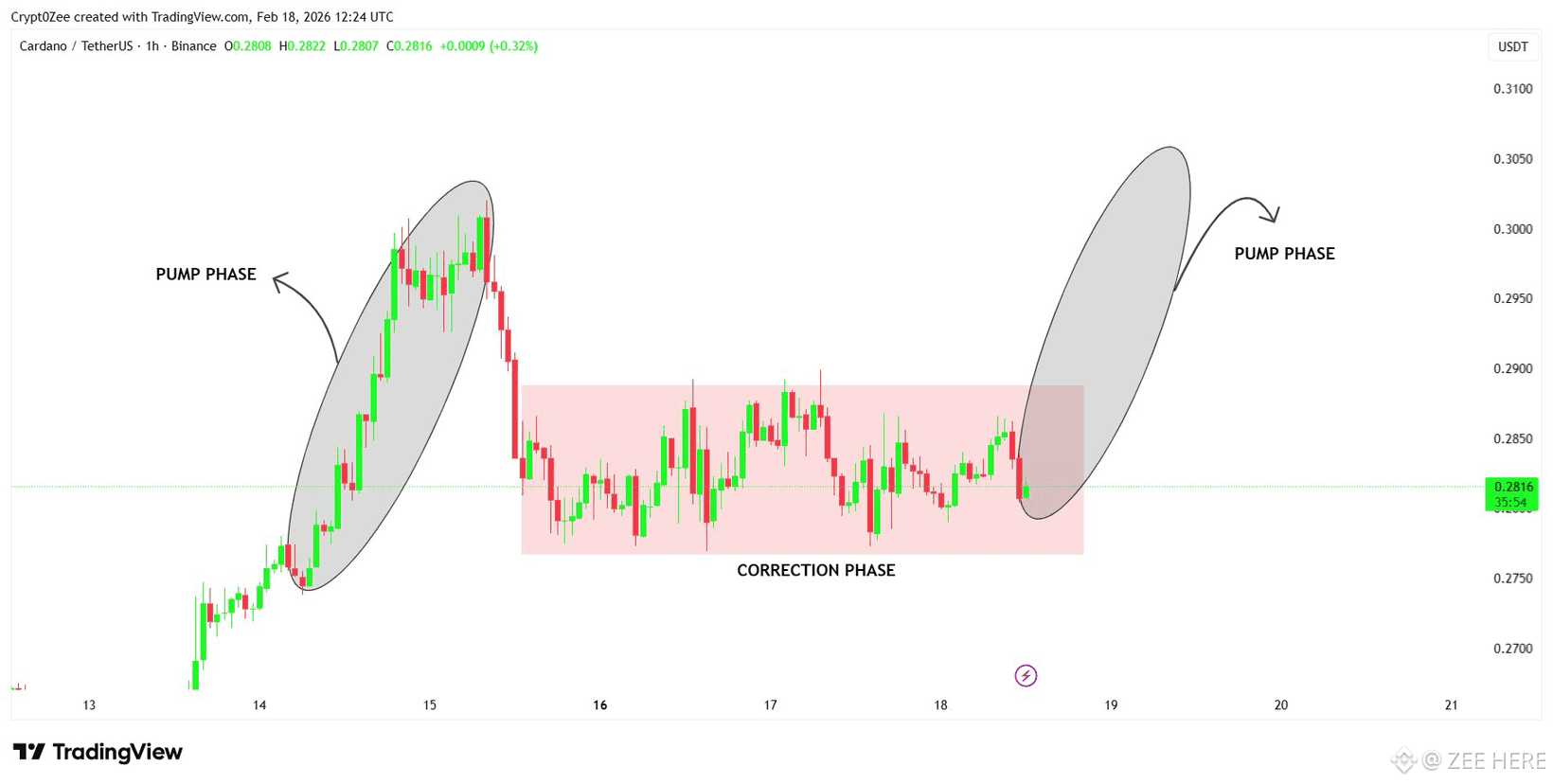
The correction phase at $0.2816 is almost over.
Our analysis shows $ADA heading straight for $0.3050. The $ADA bulls are just getting started 🦅🚀
#ADAUSDT #Write2Earn
{spot}(ADAUSDT)
$ADA Alert🚨
The correction phase at $0.2816 is almost over.
Our analysis shows $ADA heading straight for $0.3050. The $ADA bulls are just getting started 🦅🚀
#ADAUSDT #Write2Earn
The correction phase at $0.2816 is almost over.
Our analysis shows $ADA heading straight for $0.3050. The $ADA bulls are just getting started 🦅🚀
#ADAUSDT #Write2Earn
2
223
·
--
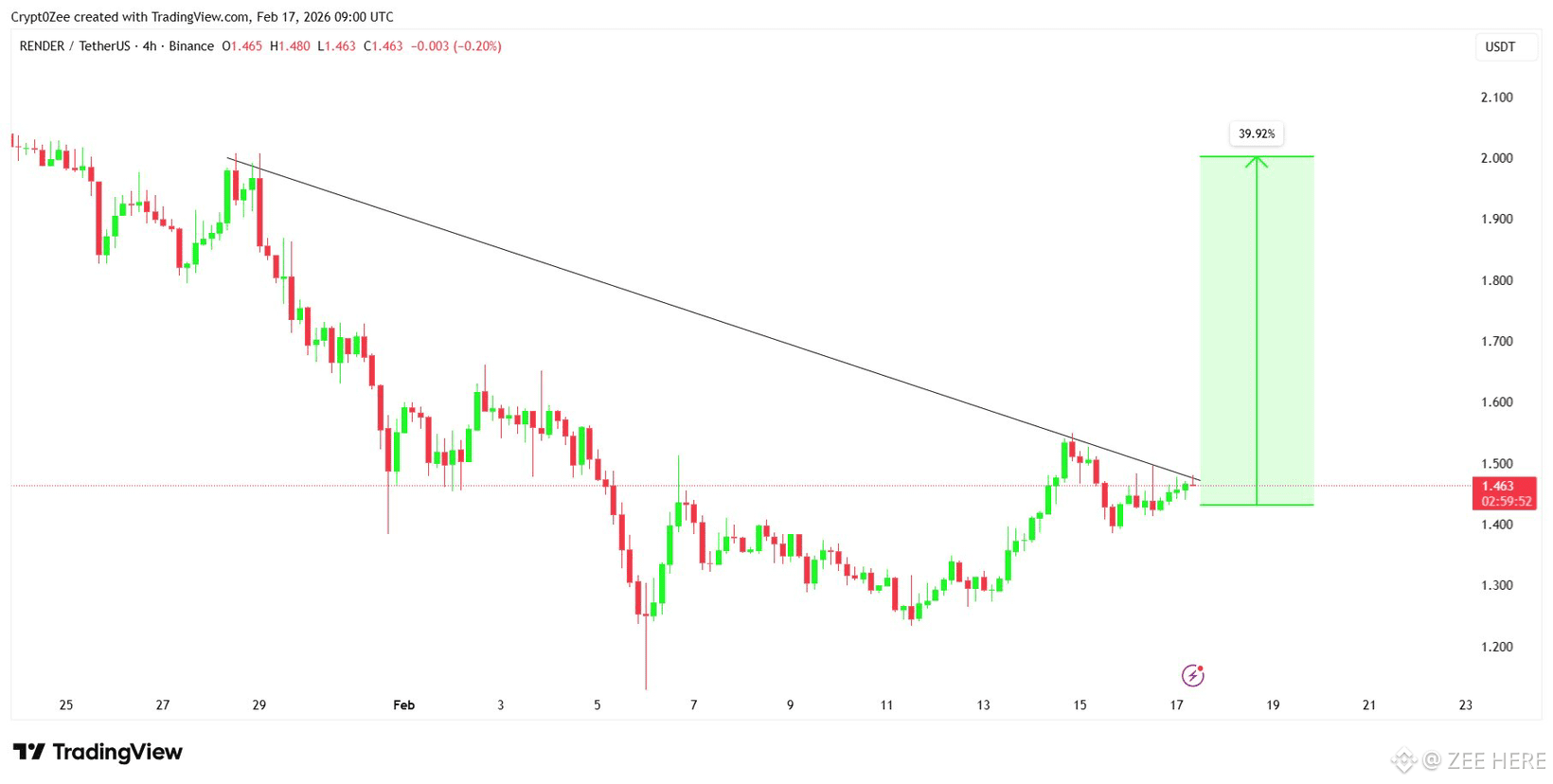
$RENDER is on the verge of a massive breakout 🚀
Price is testing the trendline at $1.46
Analysis projects a 40% pump for $RENDER straight to $2.00. Don't miss the move📈🔥
#RENDER #Write2Earn
{spot}(RENDERUSDT)
$RENDER is on the verge of a massive breakout 🚀
Price is testing the trendline at $1.46
Analysis projects a 40% pump for $RENDER straight to $2.00. Don't miss the move📈🔥
#RENDER #Write2Earn
Price is testing the trendline at $1.46
Analysis projects a 40% pump for $RENDER straight to $2.00. Don't miss the move📈🔥
#RENDER #Write2Earn
3
148
·
--
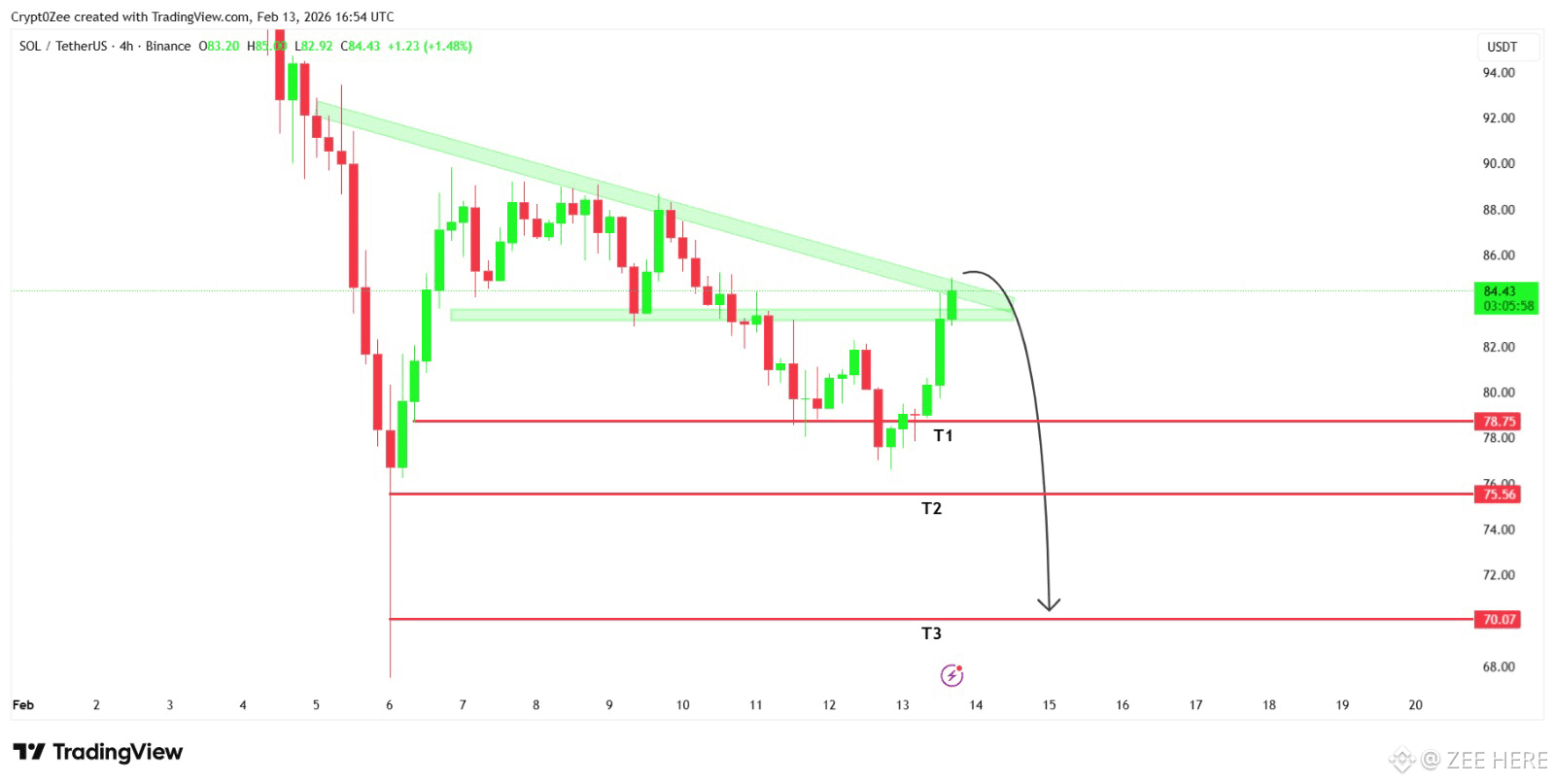
$SOL is facing heavy rejection📉
Currently at $85 , $SOL is failing to break resistance.
Prediction: $SOL is heading toward $70.07. Watch for the dip ⚠️🔥
#SOL #Write2Earn
{spot}(SOLUSDT)
$SOL is facing heavy rejection📉
Currently at $85 , $SOL is failing to break resistance.
Prediction: $SOL is heading toward $70.07. Watch for the dip ⚠️🔥
#SOL #Write2Earn
Currently at $85 , $SOL is failing to break resistance.
Prediction: $SOL is heading toward $70.07. Watch for the dip ⚠️🔥
#SOL #Write2Earn
1
7
445
·
--
Done
Done

Anna-汤圆
·
--
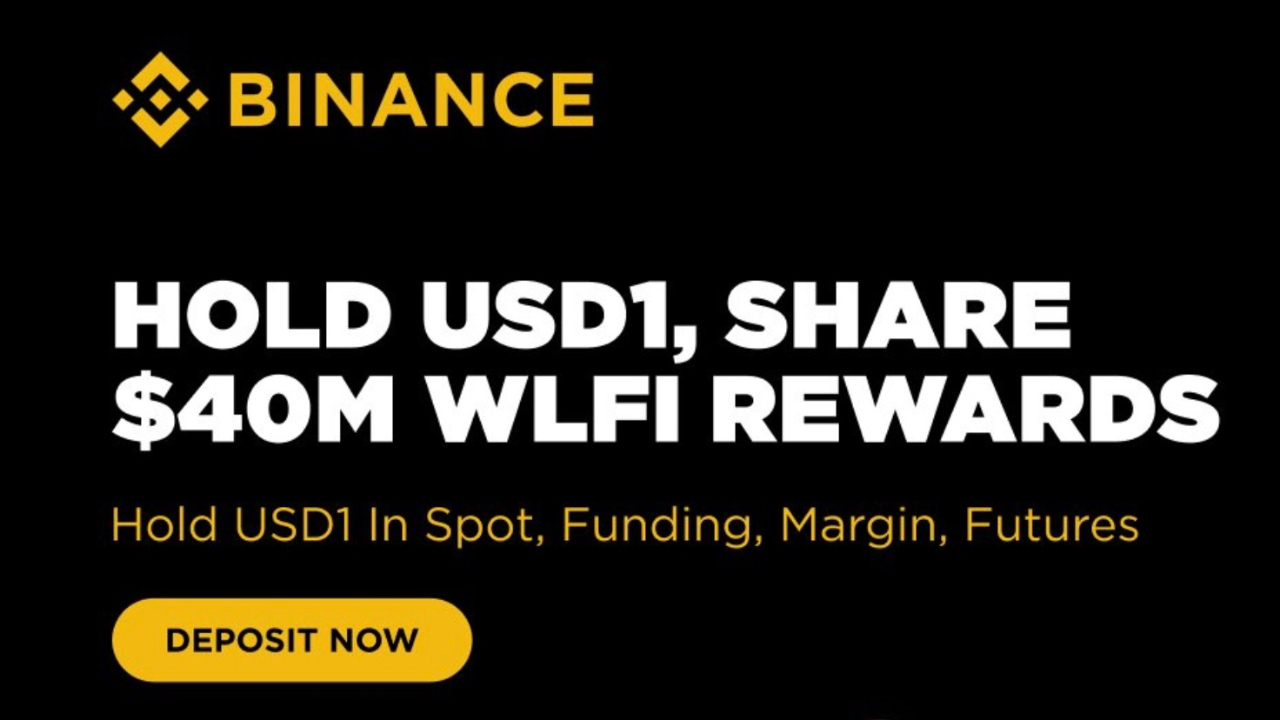
Stable U to receive 'salary': I've clarified the comprehensive guide for you on the $40 million WLFI airdrop.
I've been watching the big bonus of this WLFI for a long time, and I've clarified the logic for everyone: if you want to get $WLFI, there's really no need to take risks in the secondary market; learning to use $USD1 this tool is truly smart.
I've reorganized the specific participation details and the most important time points, breaking them down into three straightforward paths; everyone can choose according to their own habits.
******************************
📅 First, let me highlight the key time points for everyone.
I studied the rules and found that the entire event starts on January 23, 2026, and lasts until February 20, for a full four weeks.
I've reorganized the specific participation details and the most important time points, breaking them down into three straightforward paths; everyone can choose according to their own habits.
******************************
📅 First, let me highlight the key time points for everyone.
I studied the rules and found that the entire event starts on January 23, 2026, and lasts until February 20, for a full four weeks.
60
·
--
🎙️ #WLFI/USD1 Steadily Sitting on the Fishing Platform #USD1 #WLFI
End
05 h 59 m 50 s
5.1k
18
36
·
--
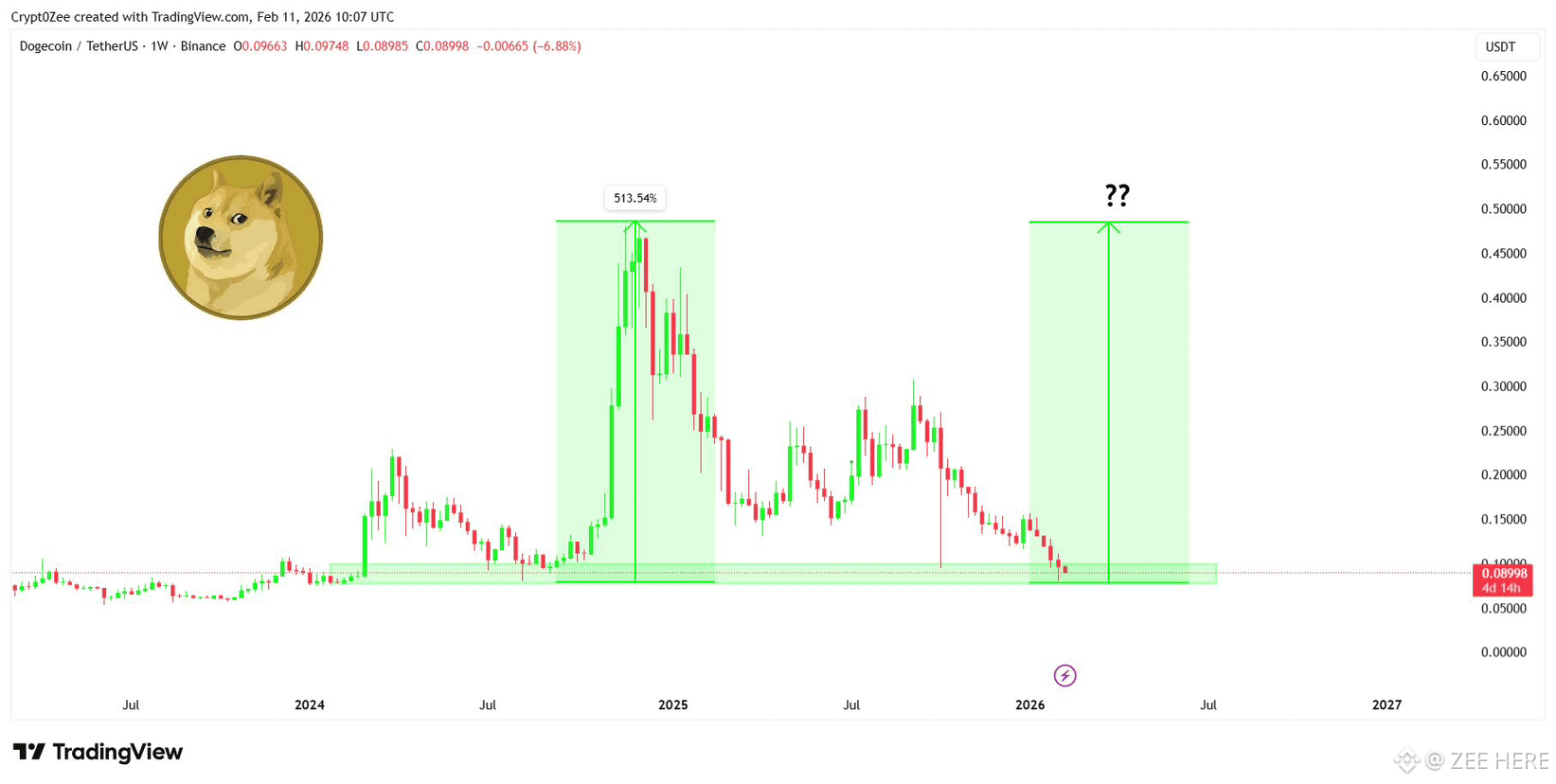
$DOGE history is repeating🔄
Currently at $0.089, $DOGE is hitting the same support that fueled a 513% pump 🚀
Prediction: $DOGE to hit $0.50🐕🌕
#DOGE #CryptoMarket #Write2Earn
{spot}(DOGEUSDT)
$DOGE history is repeating🔄
Currently at $0.089, $DOGE is hitting the same support that fueled a 513% pump 🚀
Prediction: $DOGE to hit $0.50🐕🌕
#DOGE #CryptoMarket #Write2Earn
Currently at $0.089, $DOGE is hitting the same support that fueled a 513% pump 🚀
Prediction: $DOGE to hit $0.50🐕🌕
#DOGE #CryptoMarket #Write2Earn
141
·
--
🎙️ Hold USD1 to receive WLFI airdrop and enjoy the most comfortable winning position!
End
05 h 59 m 49 s
14.5k
37
12
·
--
🎙️ Let's sing and chat to celebrate Fear is loud, Opportunity is Louder
End
05 h 59 m 46 s
12.1k
60
116
Log in to explore more content
Join global crypto users on Binance Square
⚡️ Get latest and useful information about crypto.
💬 Trusted by the world’s largest crypto exchange.
👍 Discover real insights from verified creators.
Email / Phone number