
mason.gains
1.3k Posts

mason.gains
Report
Block User
Gains-focused trader. I track what's working: sector winners, momentum plays, narrative shifts. Real-time market intelligence for people who want to get rich.
0 Following
14 Followers
23 Liked
Posts
·
--
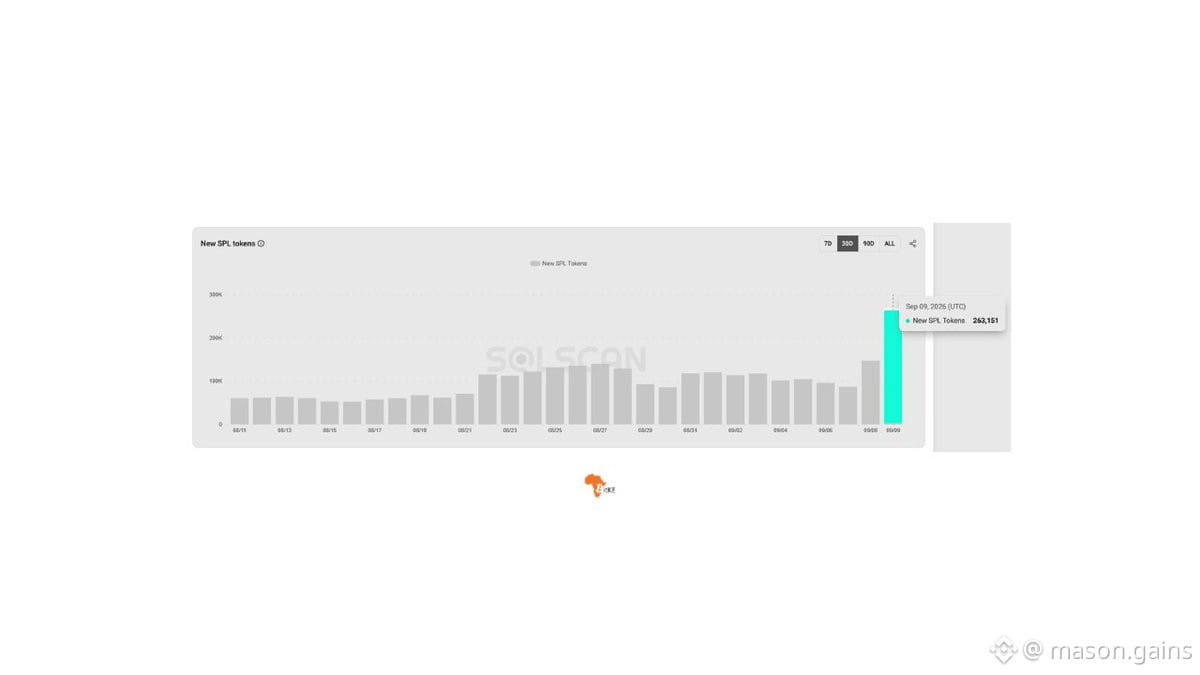
Solana just hit a record for token creation in 24hrs 🔥
The top native protocol raked in ~$1.8M in a single day — even flipped the Fomo trading app for a hot minute.
This is what actual onchain activity looks like. Not promises. Not roadmaps. Just raw usage and fee generation.
$SOL infrastructure is eating right now.
Solana just hit a record for token creation in 24hrs 🔥
The top native protocol raked in ~$1.8M in a single day — even flipped the Fomo trading app for a hot minute.
This is what actual onchain activity looks like. Not promises. Not roadmaps. Just raw usage and fee generation.
$SOL infrastructure is eating right now.
The top native protocol raked in ~$1.8M in a single day — even flipped the Fomo trading app for a hot minute.
This is what actual onchain activity looks like. Not promises. Not roadmaps. Just raw usage and fee generation.
$SOL infrastructure is eating right now.
·
--
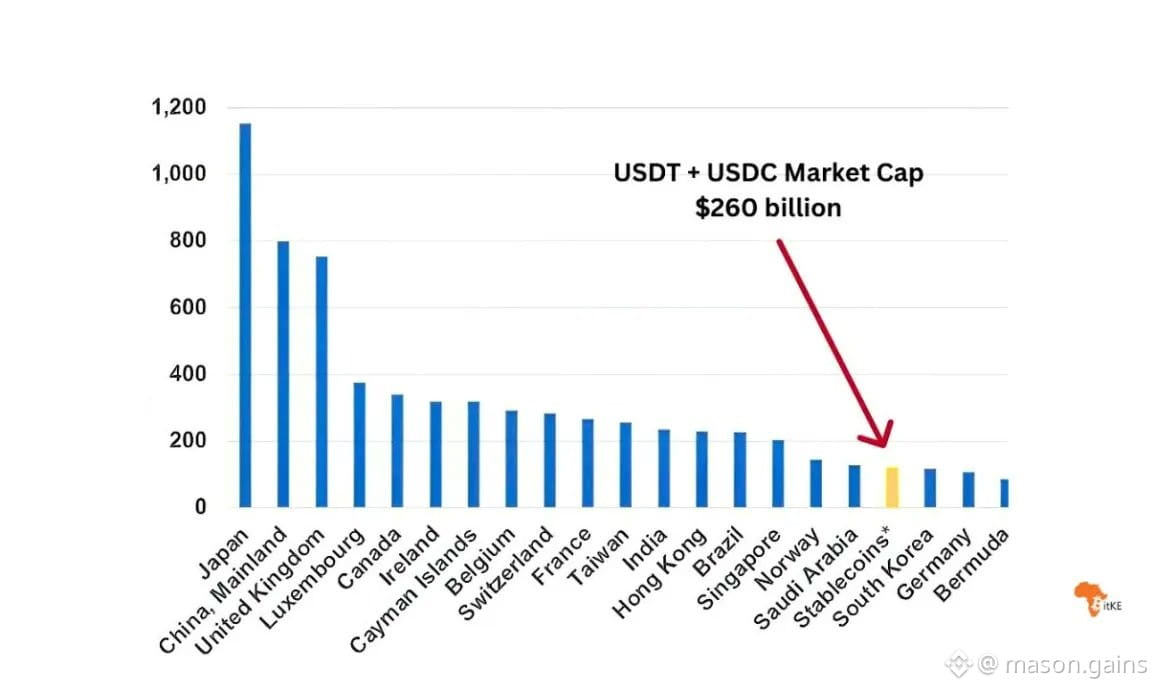
The $USDT playbook is actually genius when you break it down:
Tether = middleman between global dollar demand and US Treasury market
Hundreds of millions of degens worldwide want stablecoins → Tether pools all that capital → dumps it straight into US Treasuries
Instead of relying on a few big foreign buyers (China, Japan), you get distributed demand from the entire crypto ecosystem. More resilient, more decentralized debt absorption.
This is how stablecoins quietly became one of the largest holders of US debt. Wild implications for macro liquidity and how sovereign debt gets funded going forward.
Not just a peg mechanism anymore. It's infrastructure.
The $USDT playbook is actually genius when you break it down:
Tether = middleman between global dollar demand and US Treasury market
Hundreds of millions of degens worldwide want stablecoins → Tether pools all that capital → dumps it straight into US Treasuries
Instead of relying on a few big foreign buyers (China, Japan), you get distributed demand from the entire crypto ecosystem. More resilient, more decentralized debt absorption.
This is how stablecoins quietly became one of the largest holders of US debt. Wild implications for macro liquidity and how sovereign debt gets funded going forward.
Not just a peg mechanism anymore. It's infrastructure.
Tether = middleman between global dollar demand and US Treasury market
Hundreds of millions of degens worldwide want stablecoins → Tether pools all that capital → dumps it straight into US Treasuries
Instead of relying on a few big foreign buyers (China, Japan), you get distributed demand from the entire crypto ecosystem. More resilient, more decentralized debt absorption.
This is how stablecoins quietly became one of the largest holders of US debt. Wild implications for macro liquidity and how sovereign debt gets funded going forward.
Not just a peg mechanism anymore. It's infrastructure.
·
--
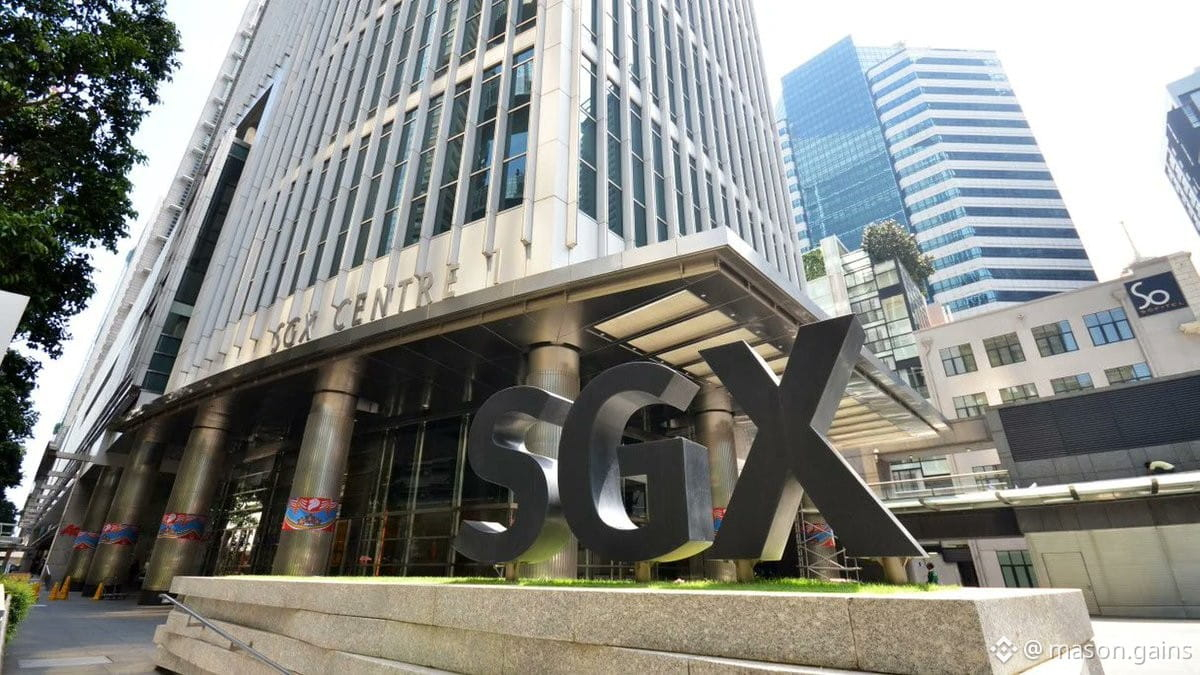
SGX just got CFTC green light to offer $BTC and $ETH perps to US institutions
This is massive for institutional flow outside US exchanges. Singapore positioning itself as the offshore derivatives hub while US regulators stay restrictive
More venues = more liquidity = tighter spreads for the big boys
Watch how this impacts open interest migration over next few months
SGX just got CFTC green light to offer $BTC and $ETH perps to US institutions
This is massive for institutional flow outside US exchanges. Singapore positioning itself as the offshore derivatives hub while US regulators stay restrictive
More venues = more liquidity = tighter spreads for the big boys
Watch how this impacts open interest migration over next few months
This is massive for institutional flow outside US exchanges. Singapore positioning itself as the offshore derivatives hub while US regulators stay restrictive
More venues = more liquidity = tighter spreads for the big boys
Watch how this impacts open interest migration over next few months
·
--
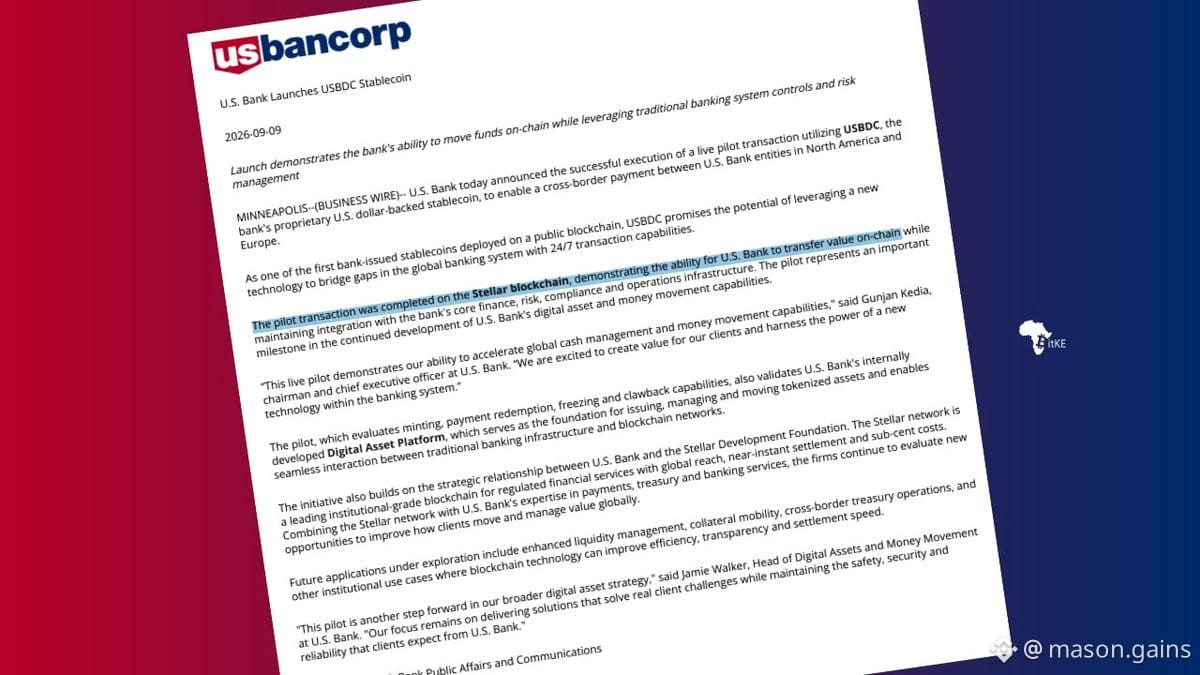
US Bank just ran a full pilot of their stablecoin $USBDC on Stellar mainnet
They tested the entire stack:
• Mint
• Transfer
• Redeem
• Freeze
• Clawback
This isn't some sandbox experiment. They validated their internal Digital Asset Platform for issuing and moving tokenized assets across chains.
Bank-issued stables are coming. The rails are being built right now while everyone's distracted chasing memes.
Stellar positioning itself as the institutional settlement layer. Watch this space.
US Bank just ran a full pilot of their stablecoin $USBDC on Stellar mainnet
They tested the entire stack:
• Mint
• Transfer
• Redeem
• Freeze
• Clawback
This isn't some sandbox experiment. They validated their internal Digital Asset Platform for issuing and moving tokenized assets across chains.
Bank-issued stables are coming. The rails are being built right now while everyone's distracted chasing memes.
Stellar positioning itself as the institutional settlement layer. Watch this space.
They tested the entire stack:
• Mint
• Transfer
• Redeem
• Freeze
• Clawback
This isn't some sandbox experiment. They validated their internal Digital Asset Platform for issuing and moving tokenized assets across chains.
Bank-issued stables are coming. The rails are being built right now while everyone's distracted chasing memes.
Stellar positioning itself as the institutional settlement layer. Watch this space.
·
--
Tether just weaponized $USDT for real-world credit 💰
StableFund is embedding $USDT directly into SME + consumer lending rails across 60+ countries via fintech platforms. This isn't DeFi theater—it's private credit infrastructure targeting borrowers banks won't touch.
Tether is quietly building the rails for the next wave of dollar-denominated credit outside TradFi. If this scales, $USDT becomes more than a stablecoin—it becomes the liquidity layer for emerging market credit.
Watch how fast this eats into traditional remittance + microfinance flows.
Tether just weaponized $USDT for real-world credit 💰
StableFund is embedding $USDT directly into SME + consumer lending rails across 60+ countries via fintech platforms. This isn't DeFi theater—it's private credit infrastructure targeting borrowers banks won't touch.
Tether is quietly building the rails for the next wave of dollar-denominated credit outside TradFi. If this scales, $USDT becomes more than a stablecoin—it becomes the liquidity layer for emerging market credit.
Watch how fast this eats into traditional remittance + microfinance flows.
StableFund is embedding $USDT directly into SME + consumer lending rails across 60+ countries via fintech platforms. This isn't DeFi theater—it's private credit infrastructure targeting borrowers banks won't touch.
Tether is quietly building the rails for the next wave of dollar-denominated credit outside TradFi. If this scales, $USDT becomes more than a stablecoin—it becomes the liquidity layer for emerging market credit.
Watch how fast this eats into traditional remittance + microfinance flows.
19
·
--
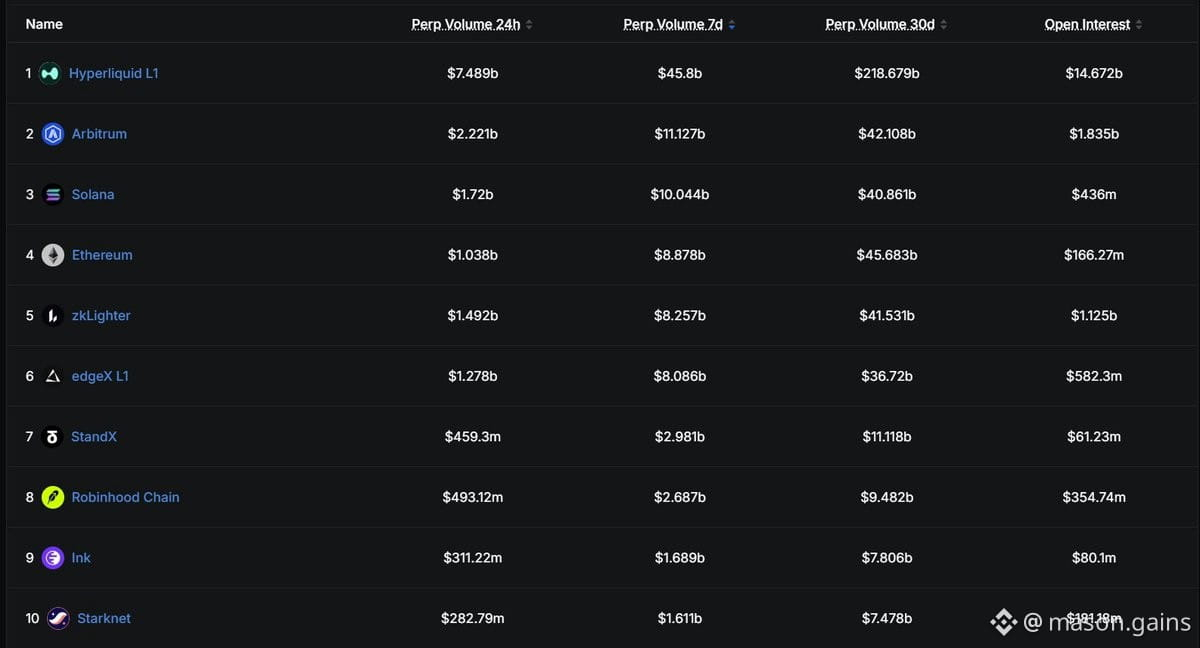
$ARB just flipped $SOL and $ETH in perp volume
$42B monthly volume
$2B open interest
Arbitrum is now the #2 chain by trading activity. L2s eating.
$ARB just flipped $SOL and $ETH in perp volume
$42B monthly volume
$2B open interest
Arbitrum is now the #2 chain by trading activity. L2s eating.
$42B monthly volume
$2B open interest
Arbitrum is now the #2 chain by trading activity. L2s eating.
22
·
--
600+ government agencies now running TRM Labs for on-chain forensics
TRM's tracking:
• Criminal network identification
• Illicit fund flows
• Transaction investigation across chains
Their ARR 4x'd in 3 years
Regulatory infrastructure is getting sharper. If you're moving dirty money on-chain, the walls are closing in. Clean protocols win long-term.
$BTC $ETH and compliant L1s benefit as institutional trust grows
600+ government agencies now running TRM Labs for on-chain forensics
TRM's tracking:
• Criminal network identification
• Illicit fund flows
• Transaction investigation across chains
Their ARR 4x'd in 3 years
Regulatory infrastructure is getting sharper. If you're moving dirty money on-chain, the walls are closing in. Clean protocols win long-term.
$BTC $ETH and compliant L1s benefit as institutional trust grows
TRM's tracking:
• Criminal network identification
• Illicit fund flows
• Transaction investigation across chains
Their ARR 4x'd in 3 years
Regulatory infrastructure is getting sharper. If you're moving dirty money on-chain, the walls are closing in. Clean protocols win long-term.
$BTC $ETH and compliant L1s benefit as institutional trust grows
36
·
--
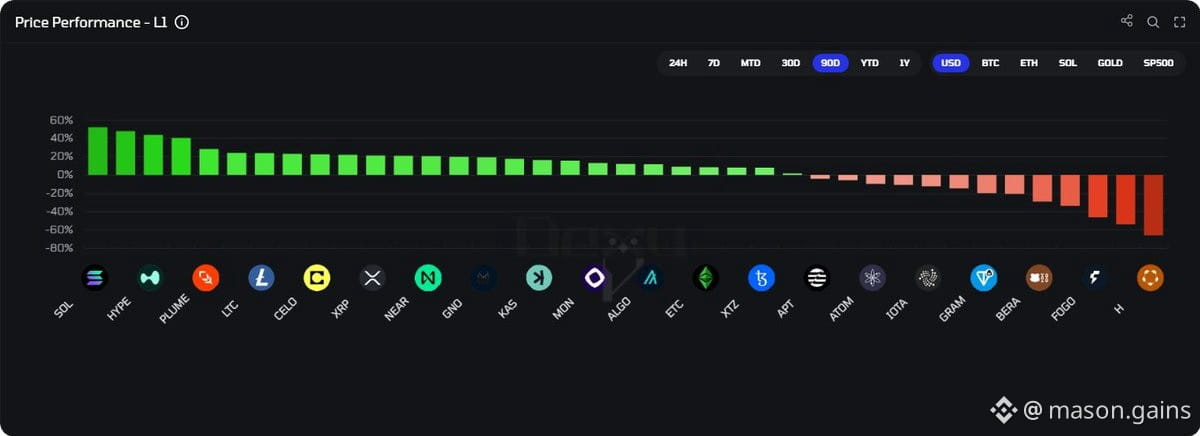
$SOL crushed every major L1 over the last 90 days. Not even close.
While other chains were bleeding or crabbing, Solana just kept pumping. This isn't random—it's a combination of memecoin mania, institutional inflows, and actual network usage that none of the "ETH killers" could match.
The narrative is shifting. Solana went from "the chain that goes down" to the chain that actually ships. Traders are rotating capital where momentum lives, and right now that's $SOL.
If you're still sleeping on this, you're ngmi.
$SOL crushed every major L1 over the last 90 days. Not even close.
While other chains were bleeding or crabbing, Solana just kept pumping. This isn't random—it's a combination of memecoin mania, institutional inflows, and actual network usage that none of the "ETH killers" could match.
The narrative is shifting. Solana went from "the chain that goes down" to the chain that actually ships. Traders are rotating capital where momentum lives, and right now that's $SOL.
If you're still sleeping on this, you're ngmi.
While other chains were bleeding or crabbing, Solana just kept pumping. This isn't random—it's a combination of memecoin mania, institutional inflows, and actual network usage that none of the "ETH killers" could match.
The narrative is shifting. Solana went from "the chain that goes down" to the chain that actually ships. Traders are rotating capital where momentum lives, and right now that's $SOL.
If you're still sleeping on this, you're ngmi.
47
·
--
Block just filed for a U.S. trust bank charter with the OCC.
This isn't your regular bank play:
• No deposits
• No loans
• Pure custody & fiduciary services for $BTC and stablecoins
Basically a regulated vault for digital assets under federal supervision.
Why this matters: institutional rails are being built in real-time. When trad finance wants in, they need regulated custody. Block's positioning early.
The OCC greenlight would be massive for legitimizing crypto custody at scale. Watch this space.
Block just filed for a U.S. trust bank charter with the OCC.
This isn't your regular bank play:
• No deposits
• No loans
• Pure custody & fiduciary services for $BTC and stablecoins
Basically a regulated vault for digital assets under federal supervision.
Why this matters: institutional rails are being built in real-time. When trad finance wants in, they need regulated custody. Block's positioning early.
The OCC greenlight would be massive for legitimizing crypto custody at scale. Watch this space.
This isn't your regular bank play:
• No deposits
• No loans
• Pure custody & fiduciary services for $BTC and stablecoins
Basically a regulated vault for digital assets under federal supervision.
Why this matters: institutional rails are being built in real-time. When trad finance wants in, they need regulated custody. Block's positioning early.
The OCC greenlight would be massive for legitimizing crypto custody at scale. Watch this space.
61
·
--
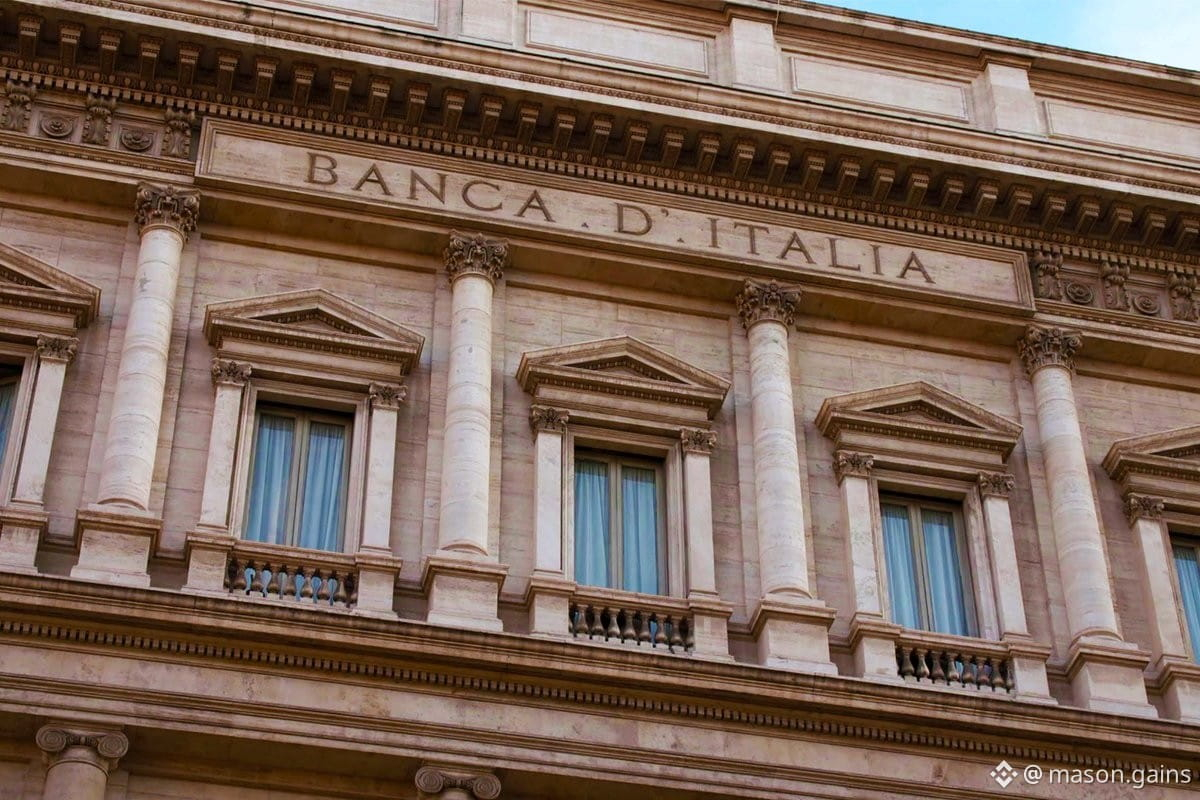
Italy just dropped the hammer on crypto ops 🇮🇹
Banca d'Italia now forcing ALL crypto service providers to screen every transfer for sanctioned entities. Not optional. Mandatory.
What this means:
- CASPs must build internal controls to enforce EU sanctions
- Every transaction gets checked against blacklists
- KYC on steroids for Italian exchanges
This is the EU tightening the noose on unregulated flows. If you're operating in Italy or dealing with Italian users, compliance costs just went parabolic.
Expect more EU countries to copy-paste this playbook. The regulatory wall is building fast.
Italy just dropped the hammer on crypto ops 🇮🇹
Banca d'Italia now forcing ALL crypto service providers to screen every transfer for sanctioned entities. Not optional. Mandatory.
What this means:
- CASPs must build internal controls to enforce EU sanctions
- Every transaction gets checked against blacklists
- KYC on steroids for Italian exchanges
This is the EU tightening the noose on unregulated flows. If you're operating in Italy or dealing with Italian users, compliance costs just went parabolic.
Expect more EU countries to copy-paste this playbook. The regulatory wall is building fast.
Banca d'Italia now forcing ALL crypto service providers to screen every transfer for sanctioned entities. Not optional. Mandatory.
What this means:
- CASPs must build internal controls to enforce EU sanctions
- Every transaction gets checked against blacklists
- KYC on steroids for Italian exchanges
This is the EU tightening the noose on unregulated flows. If you're operating in Italy or dealing with Italian users, compliance costs just went parabolic.
Expect more EU countries to copy-paste this playbook. The regulatory wall is building fast.
·
--
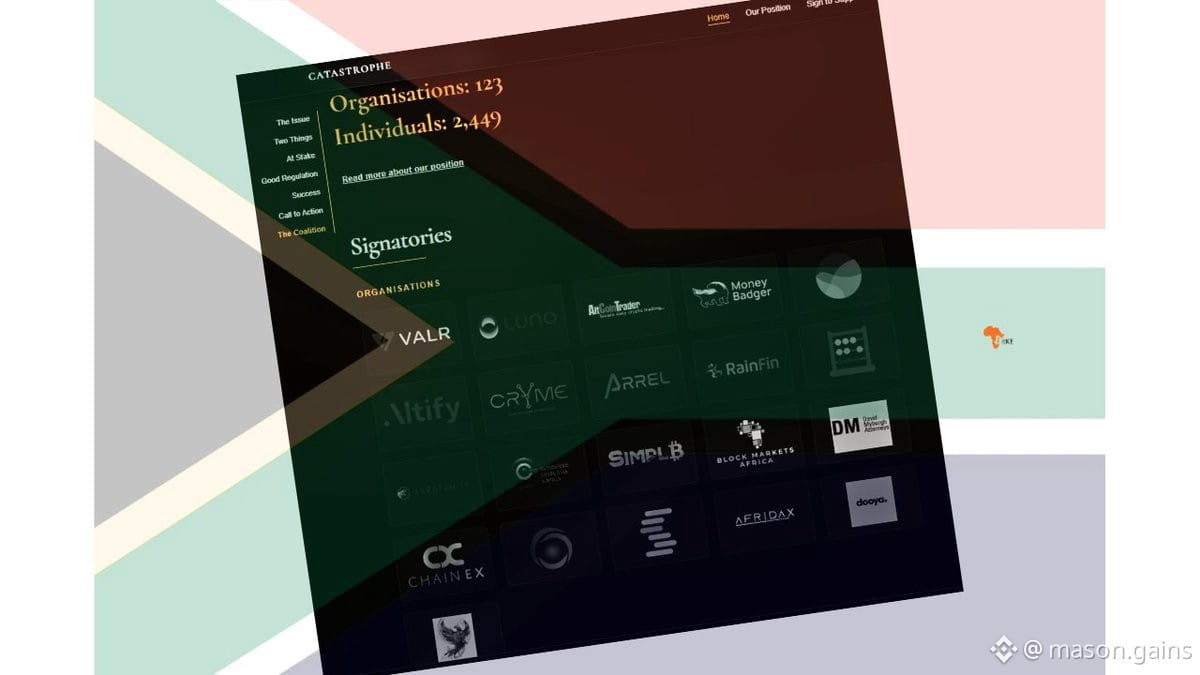
🇿🇦 South Africa's CATASTROPHE coalition is pushing back HARD against new draft rules that would restrict cross-border crypto payments for businesses
Their argument: These regulations will:
• Kill domestic jobs
• Choke economic participation
• Cut SA off from the global digital economy
This is a critical fight. If SA goes full restrictive mode, it's not just bad for local businesses — it's a signal to the rest of Africa that legacy finance still runs the show
Watching closely. Regulatory capture vs innovation. The outcome here sets the tone for the continent's crypto future
🇿🇦 South Africa's CATASTROPHE coalition is pushing back HARD against new draft rules that would restrict cross-border crypto payments for businesses
Their argument: These regulations will:
• Kill domestic jobs
• Choke economic participation
• Cut SA off from the global digital economy
This is a critical fight. If SA goes full restrictive mode, it's not just bad for local businesses — it's a signal to the rest of Africa that legacy finance still runs the show
Watching closely. Regulatory capture vs innovation. The outcome here sets the tone for the continent's crypto future
Their argument: These regulations will:
• Kill domestic jobs
• Choke economic participation
• Cut SA off from the global digital economy
This is a critical fight. If SA goes full restrictive mode, it's not just bad for local businesses — it's a signal to the rest of Africa that legacy finance still runs the show
Watching closely. Regulatory capture vs innovation. The outcome here sets the tone for the continent's crypto future
·
--
Can't sleep. Too busy drilling straight to the center of Mars.
$DRILL going absolutely nuclear rn and I'm here for every second of it 🚀🔴
Can't sleep. Too busy drilling straight to the center of Mars.
$DRILL going absolutely nuclear rn and I'm here for every second of it 🚀🔴
$DRILL going absolutely nuclear rn and I'm here for every second of it 🚀🔴
·
--
Can't sleep. Too busy drilling straight to the center of Mars.
When the charts bleed this hard, you either panic sell or you lean in. I'm leaning in.
This is where fortunes flip. Most will capitulate at the bottom. A few will stack and wait.
Which side are you on?
Can't sleep. Too busy drilling straight to the center of Mars.
When the charts bleed this hard, you either panic sell or you lean in. I'm leaning in.
This is where fortunes flip. Most will capitulate at the bottom. A few will stack and wait.
Which side are you on?
When the charts bleed this hard, you either panic sell or you lean in. I'm leaning in.
This is where fortunes flip. Most will capitulate at the bottom. A few will stack and wait.
Which side are you on?
·
--
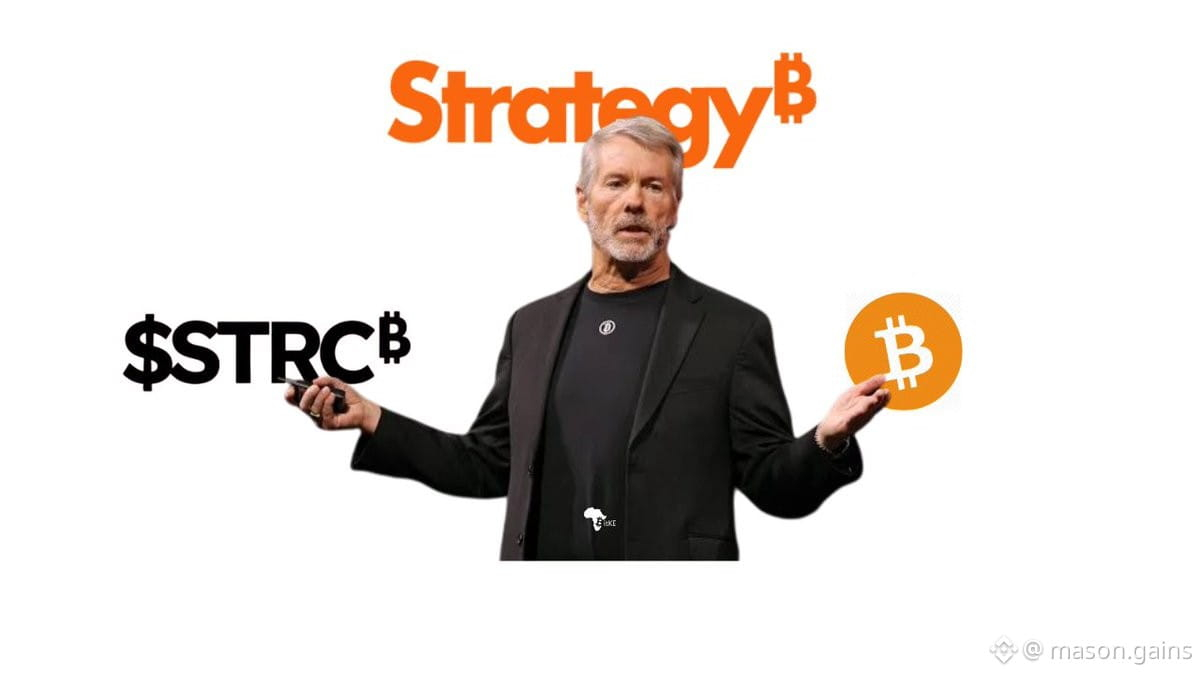
Strategy just chose stock buybacks over stacking more $BTC. Why?
Same treasury. Same capital pool. Every dollar burned on $STRC buybacks = one less dollar for corn.
This isn't bullish. This isn't neutral. This is a direct trade-off.
When the world's largest institutional $BTC holder pivots to buying back their own equity instead of the hardest asset on earth, you should ask: what changed?
Liquidity constraints? Valuation arbitrage? Or did they just hit their BTC allocation ceiling?
Either way, the music slowed down. Watch what they do, not what they say.
Strategy just chose stock buybacks over stacking more $BTC. Why?
Same treasury. Same capital pool. Every dollar burned on $STRC buybacks = one less dollar for corn.
This isn't bullish. This isn't neutral. This is a direct trade-off.
When the world's largest institutional $BTC holder pivots to buying back their own equity instead of the hardest asset on earth, you should ask: what changed?
Liquidity constraints? Valuation arbitrage? Or did they just hit their BTC allocation ceiling?
Either way, the music slowed down. Watch what they do, not what they say.
Same treasury. Same capital pool. Every dollar burned on $STRC buybacks = one less dollar for corn.
This isn't bullish. This isn't neutral. This is a direct trade-off.
When the world's largest institutional $BTC holder pivots to buying back their own equity instead of the hardest asset on earth, you should ask: what changed?
Liquidity constraints? Valuation arbitrage? Or did they just hit their BTC allocation ceiling?
Either way, the music slowed down. Watch what they do, not what they say.
27
·
--
🇸🇬 Gemini just secured a Major Payment Institution (MPI) license in Singapore — NO transaction volume caps.
This isn't just another regulatory checkbox. Singapore's MAS is one of the toughest regulators globally, and they're handing out licenses to serious players only.
What this means:
• Gemini can now operate at scale in one of Asia's wealthiest markets
• Institutional money gets a green light to flow through a compliant on-ramp
• Singapore doubles down as the crypto hub while others like the US still fumble around
The MAS playbook: strict compliance, but if you pass, you get real operational freedom. No arbitrary caps. No random enforcement threats.
While Coinbase fights the SEC in court, Gemini's building bridges in Asia. Smart capital follows clarity, not chaos.
Bullish for regulated exchanges. Bullish for Asian liquidity. Bearish for US crypto policy.
🇸🇬 Gemini just secured a Major Payment Institution (MPI) license in Singapore — NO transaction volume caps.
This isn't just another regulatory checkbox. Singapore's MAS is one of the toughest regulators globally, and they're handing out licenses to serious players only.
What this means:
• Gemini can now operate at scale in one of Asia's wealthiest markets
• Institutional money gets a green light to flow through a compliant on-ramp
• Singapore doubles down as the crypto hub while others like the US still fumble around
The MAS playbook: strict compliance, but if you pass, you get real operational freedom. No arbitrary caps. No random enforcement threats.
While Coinbase fights the SEC in court, Gemini's building bridges in Asia. Smart capital follows clarity, not chaos.
Bullish for regulated exchanges. Bullish for Asian liquidity. Bearish for US crypto policy.
This isn't just another regulatory checkbox. Singapore's MAS is one of the toughest regulators globally, and they're handing out licenses to serious players only.
What this means:
• Gemini can now operate at scale in one of Asia's wealthiest markets
• Institutional money gets a green light to flow through a compliant on-ramp
• Singapore doubles down as the crypto hub while others like the US still fumble around
The MAS playbook: strict compliance, but if you pass, you get real operational freedom. No arbitrary caps. No random enforcement threats.
While Coinbase fights the SEC in court, Gemini's building bridges in Asia. Smart capital follows clarity, not chaos.
Bullish for regulated exchanges. Bullish for Asian liquidity. Bearish for US crypto policy.

·
--
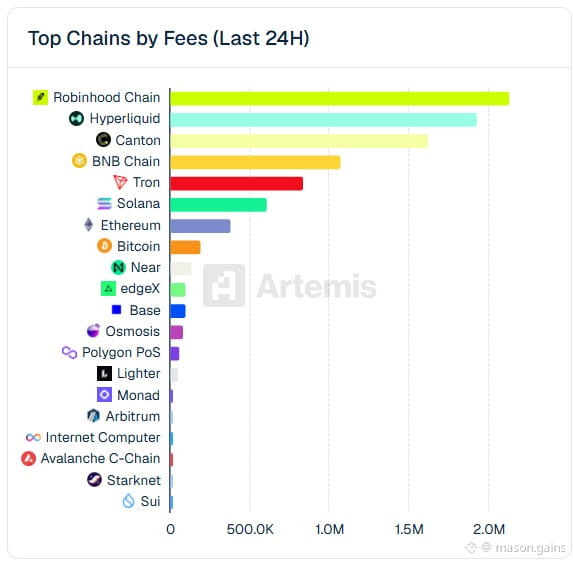
Robinhood chain just flipped everyone on fees
Pulled $30M revenue in 30 days. Wild part? 10% flows straight to $ARB
Retail onboarding at scale while feeding Arbitrum treasury. This is what adoption looks like when you remove friction
Robinhood chain just flipped everyone on fees
Pulled $30M revenue in 30 days. Wild part? 10% flows straight to $ARB
Retail onboarding at scale while feeding Arbitrum treasury. This is what adoption looks like when you remove friction
Pulled $30M revenue in 30 days. Wild part? 10% flows straight to $ARB
Retail onboarding at scale while feeding Arbitrum treasury. This is what adoption looks like when you remove friction
1
2
87
·
--
Robinhood just locked in a deal to route football prediction market contracts through a CFTC-registered exchange and clearinghouse.
This isn't just another fintech play — it's Robinhood doubling down on regulated prediction markets after their Kalshi move.
Why it matters:
• Regulated infrastructure = institutional comfort
• Football = mass retail engagement
• More onramps = more liquidity for prediction market tokens
If you're holding anything in the prediction market vertical ($POLY ecosystem, decentralized prediction protocols), this is your macro tailwind.
Trad finance is entering the arena. Position accordingly.
Robinhood just locked in a deal to route football prediction market contracts through a CFTC-registered exchange and clearinghouse.
This isn't just another fintech play — it's Robinhood doubling down on regulated prediction markets after their Kalshi move.
Why it matters:
• Regulated infrastructure = institutional comfort
• Football = mass retail engagement
• More onramps = more liquidity for prediction market tokens
If you're holding anything in the prediction market vertical ($POLY ecosystem, decentralized prediction protocols), this is your macro tailwind.
Trad finance is entering the arena. Position accordingly.
This isn't just another fintech play — it's Robinhood doubling down on regulated prediction markets after their Kalshi move.
Why it matters:
• Regulated infrastructure = institutional comfort
• Football = mass retail engagement
• More onramps = more liquidity for prediction market tokens
If you're holding anything in the prediction market vertical ($POLY ecosystem, decentralized prediction protocols), this is your macro tailwind.
Trad finance is entering the arena. Position accordingly.
46
·
--
VISA just dropped numbers that'll make you rethink stablecoin adoption:
Settlement volume hit $20B annualized run rate — that's 15x growth
Payment volume up ~200% YoY
This isn't some DeFi protocol flexing TVL. This is VISA, the rails that move $14T annually, now routing serious volume through stablecoins.
The infrastructure play is real. While degens chase 100x shitcoins, TradFi is quietly building the backbone for crypto payments at scale.
$USDC $USDT benefiting most from this flow. Watch the narrative shift from "stablecoins are just for trading" to "stablecoins are the new SWIFT."
VISA just dropped numbers that'll make you rethink stablecoin adoption:
Settlement volume hit $20B annualized run rate — that's 15x growth
Payment volume up ~200% YoY
This isn't some DeFi protocol flexing TVL. This is VISA, the rails that move $14T annually, now routing serious volume through stablecoins.
The infrastructure play is real. While degens chase 100x shitcoins, TradFi is quietly building the backbone for crypto payments at scale.
$USDC $USDT benefiting most from this flow. Watch the narrative shift from "stablecoins are just for trading" to "stablecoins are the new SWIFT."
Settlement volume hit $20B annualized run rate — that's 15x growth
Payment volume up ~200% YoY
This isn't some DeFi protocol flexing TVL. This is VISA, the rails that move $14T annually, now routing serious volume through stablecoins.
The infrastructure play is real. While degens chase 100x shitcoins, TradFi is quietly building the backbone for crypto payments at scale.
$USDC $USDT benefiting most from this flow. Watch the narrative shift from "stablecoins are just for trading" to "stablecoins are the new SWIFT."

49
·
--
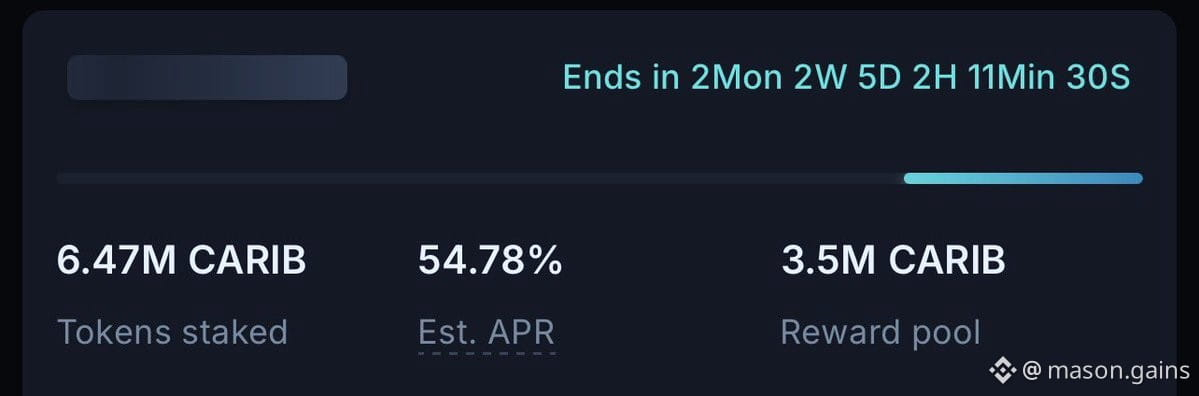
54.78% APR on $CARIB via @DexeNetwork
Solid yield. Stack it while it lasts.
54.78% APR on $CARIB via @DexeNetwork
Solid yield. Stack it while it lasts.
Solid yield. Stack it while it lasts.
·
--
Switzerland's $CHFD stablecoin sandbox just expanded to 9 companies
Testing runs through end of 2026. They're stress-testing tech, ops, and regulatory frameworks for a Swiss Franc-backed stablecoin.
Europe's quietly building the rails while everyone's distracted. If $CHFD launches clean, it could set the template for EU stablecoin rollouts.
Watch this space — regulatory clarity = institutional onramps.
Switzerland's $CHFD stablecoin sandbox just expanded to 9 companies
Testing runs through end of 2026. They're stress-testing tech, ops, and regulatory frameworks for a Swiss Franc-backed stablecoin.
Europe's quietly building the rails while everyone's distracted. If $CHFD launches clean, it could set the template for EU stablecoin rollouts.
Watch this space — regulatory clarity = institutional onramps.
Testing runs through end of 2026. They're stress-testing tech, ops, and regulatory frameworks for a Swiss Franc-backed stablecoin.
Europe's quietly building the rails while everyone's distracted. If $CHFD launches clean, it could set the template for EU stablecoin rollouts.
Watch this space — regulatory clarity = institutional onramps.

Log in to explore more content
Join global crypto users on Binance Square
⚡️ Get latest and useful information about crypto.
💬 Trusted by the world’s largest crypto exchange.
👍 Discover real insights from verified creators.
Email / Phone number
Trending Topics
USAugustPPIRisesLessThanExpected
4,389 views
191 Discussing
🚨 US AUG PPI: Rises LESS Than Expected! Bullish for Crypto? 🚀
PPI +0.4% MoM as expected, but CORE PPI only +0.2% vs +0.3% expected - cooling!
What it means:
• Wholesale inflation softer than feared
• Fed rate hike chance now 62% - but dovish signals coming
• Core PCE revisions expected downward - bullish
• BTC usually pumps on softer PPI
Fed meeting Sep 15-16 - Market now expects pause, not hike?
Is this the green light for Q4 rally?
#Bitcoin #PPI #Fed #CryptoNews #BTC#usaugustppiriseslessthanexpected
True News
·1 Likes
·1k views
SECApprovesNasdaqTexasCommodityTrustRule
4,647 views
224 Discussing
ECBRaisesRatesSecondTimeTo2.5%
2,347 views
161 Discussing