
#swaps
swaps
395 views
8 Discussing
Hot
Latest

·
--

Article
DeFi Solved Decentralized Money. Here's How Privana Solves Privacy.Crypto has made huge strides in decentralizing money — moving value without banks, borders, or permission. But beyond the basics, decentralized finance (#DeFI ) has its own set of challenges, frustrating many users and generally discouraging wider adoption.
Let me lay out the darkness in bare terms first. Then I'll show you the fix.
DeFi's dark side
#MEV , or maximal extractable value, has been a long-standing pain point in DeFi. In simple terms, it is an invisible tax that even veteran users struggle to escape, while inexperienced users exploring DeFi are easy prey. Some may oversimplify this as bad, but we must remember that the bots that can hurt us are the same ones that also keep DeFi functional. For example, bots get MEV incentives to liquidate bad debt and prevent insolvency of the protocol, or arbitrage bots constantly check and correct pricing across DEXs to prevent fragmented liquidity.
There are some common MEV exploits that every DeFi user needs to know and be wary of.
Sandwich attack - Bots identify a user awaiting a swap, buy the token, push the price up, execute the user’s trade at a lower price, and immediately sell. The user gets fewer tokens out of the deal, but the bot profits.Front-running - Bots identify a pending transaction, copy and submit the same trade with higher gas fees. The bot profits from this queue-jumping as the user misses out on the opportunity of a quick transaction at lower gas fees.Back-running - Bots identify a large trade and immediately execute transactions to take advantage of the favourable arbitrage of the aforementioned trade.
Protection against MEV is possible but optional in the current DeFi scenario. So, if you do not know how to sidestep the MEV minefield, the bots will profit at your expense. Public mempools and an utter lack of #privacy compound the problems in this space. Take the case of Base chain. It has significantly increased its throughput by being faster and cheaper, but bots consume the gas and profits, making it worse for users. Even if you don't use a decentralized exchange (DEX), you still bear the brunt due to higher fees and congested blocks.
Solution: private DeFi
A few protocols have dedicated themselves to solving the blockchain privacy paradox and making web3 a reality. #Oasis has been a pioneer in this regard, aiming for a smart blend of confidentiality and transparency by building an infrastructure that promotes privacy by design. With the confidential smart contract engine in Sapphire and the runtime off-chain logic (ROFL) framework, the protocol is primed to offer an alternative to traditional DeFi through a new application — Privana.
Privana combines Sapphire's production-ready confidential EVM setup and secure enclaves of the trusted execution environments (TEEs) with encrypted mempools, liquefaction, and key encumbrance. It is a consumer-facing, user-friendly private DeFi solution.
Let's look at some details of what Privana brings to the table from a user's point of view, which I think closes the gap that most DEXs leave open.
Unpacking Privana
Privana is not your traditional DEX but a DeFi application that offers private #Swaps , automated yields, and zero MEV for multi-chain operations on Ethereum, Base, and HyperEVM.
The USPs of Privana make it immediately worthy of attention - it is privacy-first, it integrates automation, it enables self-custody, and it is available multi-chain, not just limited to Oasis users.
Privacy-first — Your transactions are TEE-protected, which means they are secure and encrypted without exception. As the transactions never get in the public mempool, the bots cannot identify the trades and therefore cannot target them.Automation — Auto-mode does the execution for you once you set the rules. It involves 3 simple steps.
You send your tokens to the Privana vault, which is a secure enclave.You choose and save your preferences, such as swap conditions, yield settings, and app permissions.Once you approve, you do not need any more manual intervention that usually accompanies actions like swaps, yield allocation, and rebalancing. Since all these activities now run privately in the background, bots never get a chance to target them.
Self-custody — Key encumbrance is a crucial point of difference from others who offer self-custody. Here, your keys are non-extractable, so they cannot be moved outside the TEE protection or be accessed in any way. The policies are user-defined and managed only by you, which means that not even Privana developers can affect anything in the backend.Multi-chain — A recurring complaint among DeFi users is that either they are restricted to a single chain activity or must learn to move tokens across chains manually. This leads to inherent and sometimes unavoidable risks of cross-chain swapping with bridges. The proposed solution envisions a single interface with no bridges or wallet-switching, which makes the user experience easier and seamless.
Here's a quick overview of Privana’s capabilities and what other major protocols offer currently.
Why it matters
Let me make this clear: Privana makes no claim to be the first or only solution to address the long-standing DeFi pain points. Building on the previous graphic, let's compare Privana with some leading DeFi privacy tools like Flashbots, Near Intents, CoW Swap, and Railgun, where everyone offers MEV protection as a common denominator and needs a low- to medium-level of user proficiency.
MEV exploit risk is the bane of every DEX or DEX-like solution. Privana circumvents the problem of public mempools, where on-chain and public transactions are exposed to undercutting by malicious bots, by using encrypted mempools. Also, the problem of the full swap intent being revealed to the operators persists even when the transactions are hidden from the network. A centralized exchange (CEX) offers some respite with internal books, but the lack of self-custody is a huge potential problem there.
DEXes and CEXes only offer partial solutions with trade-offs. MEV protection does not preclude on-chain full transparency. Private swaps do not combine with self-custody and automation. As a result, you can either get cross-chain swaps or privacy-focused swaps, but not both at the same time. This is where Privana comes in. It is designed to be private by default and automated without giving up control, addressing exactly the points that users would like to have but usually miss out on from the prevailing solutions.
What more to expect
Privana's roadmap lays the groundwork for what to expect from this private DeFi solution.
As part of the new strategic direction at Oasis, this flagship dApps uses the protocol's underlying technology and architecture. Here is a first look at the Privana UI. With the closed beta expected soon, you can also enjoy some incentives as an early joiner, such as zero fees for 90 days, Founding Member status, and priority queue at launch.
What then is your take on Privana and private DeFi? What features excite you, and what others would you add to your wish list? Let's discuss in the comments.
DeFi Solved Decentralized Money. Here's How Privana Solves Privacy.
Crypto has made huge strides in decentralizing money — moving value without banks, borders, or permission. But beyond the basics, decentralized finance (#DeFI ) has its own set of challenges, frustrating many users and generally discouraging wider adoption.
Let me lay out the darkness in bare terms first. Then I'll show you the fix.
DeFi's dark side
#MEV , or maximal extractable value, has been a long-standing pain point in DeFi. In simple terms, it is an invisible tax that even veteran users struggle to escape, while inexperienced users exploring DeFi are easy prey. Some may oversimplify this as bad, but we must remember that the bots that can hurt us are the same ones that also keep DeFi functional. For example, bots get MEV incentives to liquidate bad debt and prevent insolvency of the protocol, or arbitrage bots constantly check and correct pricing across DEXs to prevent fragmented liquidity.
There are some common MEV exploits that every DeFi user needs to know and be wary of.
Sandwich attack - Bots identify a user awaiting a swap, buy the token, push the price up, execute the user’s trade at a lower price, and immediately sell. The user gets fewer tokens out of the deal, but the bot profits.Front-running - Bots identify a pending transaction, copy and submit the same trade with higher gas fees. The bot profits from this queue-jumping as the user misses out on the opportunity of a quick transaction at lower gas fees.Back-running - Bots identify a large trade and immediately execute transactions to take advantage of the favourable arbitrage of the aforementioned trade.
Protection against MEV is possible but optional in the current DeFi scenario. So, if you do not know how to sidestep the MEV minefield, the bots will profit at your expense. Public mempools and an utter lack of #privacy compound the problems in this space. Take the case of Base chain. It has significantly increased its throughput by being faster and cheaper, but bots consume the gas and profits, making it worse for users. Even if you don't use a decentralized exchange (DEX), you still bear the brunt due to higher fees and congested blocks.
Solution: private DeFi
A few protocols have dedicated themselves to solving the blockchain privacy paradox and making web3 a reality. #Oasis has been a pioneer in this regard, aiming for a smart blend of confidentiality and transparency by building an infrastructure that promotes privacy by design. With the confidential smart contract engine in Sapphire and the runtime off-chain logic (ROFL) framework, the protocol is primed to offer an alternative to traditional DeFi through a new application — Privana.
Privana combines Sapphire's production-ready confidential EVM setup and secure enclaves of the trusted execution environments (TEEs) with encrypted mempools, liquefaction, and key encumbrance. It is a consumer-facing, user-friendly private DeFi solution.
Let's look at some details of what Privana brings to the table from a user's point of view, which I think closes the gap that most DEXs leave open.
Unpacking Privana
Privana is not your traditional DEX but a DeFi application that offers private #Swaps , automated yields, and zero MEV for multi-chain operations on Ethereum, Base, and HyperEVM.
The USPs of Privana make it immediately worthy of attention - it is privacy-first, it integrates automation, it enables self-custody, and it is available multi-chain, not just limited to Oasis users.
Privacy-first — Your transactions are TEE-protected, which means they are secure and encrypted without exception. As the transactions never get in the public mempool, the bots cannot identify the trades and therefore cannot target them.Automation — Auto-mode does the execution for you once you set the rules. It involves 3 simple steps.
You send your tokens to the Privana vault, which is a secure enclave.You choose and save your preferences, such as swap conditions, yield settings, and app permissions.Once you approve, you do not need any more manual intervention that usually accompanies actions like swaps, yield allocation, and rebalancing. Since all these activities now run privately in the background, bots never get a chance to target them.
Self-custody — Key encumbrance is a crucial point of difference from others who offer self-custody. Here, your keys are non-extractable, so they cannot be moved outside the TEE protection or be accessed in any way. The policies are user-defined and managed only by you, which means that not even Privana developers can affect anything in the backend.Multi-chain — A recurring complaint among DeFi users is that either they are restricted to a single chain activity or must learn to move tokens across chains manually. This leads to inherent and sometimes unavoidable risks of cross-chain swapping with bridges. The proposed solution envisions a single interface with no bridges or wallet-switching, which makes the user experience easier and seamless.
Here's a quick overview of Privana’s capabilities and what other major protocols offer currently.
Why it matters
Let me make this clear: Privana makes no claim to be the first or only solution to address the long-standing DeFi pain points. Building on the previous graphic, let's compare Privana with some leading DeFi privacy tools like Flashbots, Near Intents, CoW Swap, and Railgun, where everyone offers MEV protection as a common denominator and needs a low- to medium-level of user proficiency.
MEV exploit risk is the bane of every DEX or DEX-like solution. Privana circumvents the problem of public mempools, where on-chain and public transactions are exposed to undercutting by malicious bots, by using encrypted mempools. Also, the problem of the full swap intent being revealed to the operators persists even when the transactions are hidden from the network. A centralized exchange (CEX) offers some respite with internal books, but the lack of self-custody is a huge potential problem there.
DEXes and CEXes only offer partial solutions with trade-offs. MEV protection does not preclude on-chain full transparency. Private swaps do not combine with self-custody and automation. As a result, you can either get cross-chain swaps or privacy-focused swaps, but not both at the same time. This is where Privana comes in. It is designed to be private by default and automated without giving up control, addressing exactly the points that users would like to have but usually miss out on from the prevailing solutions.
What more to expect
Privana's roadmap lays the groundwork for what to expect from this private DeFi solution.
As part of the new strategic direction at Oasis, this flagship dApps uses the protocol's underlying technology and architecture. Here is a first look at the Privana UI. With the closed beta expected soon, you can also enjoy some incentives as an early joiner, such as zero fees for 90 days, Founding Member status, and priority queue at launch.
What then is your take on Privana and private DeFi? What features excite you, and what others would you add to your wish list? Let's discuss in the comments.
Let me lay out the darkness in bare terms first. Then I'll show you the fix.
DeFi's dark side
#MEV , or maximal extractable value, has been a long-standing pain point in DeFi. In simple terms, it is an invisible tax that even veteran users struggle to escape, while inexperienced users exploring DeFi are easy prey. Some may oversimplify this as bad, but we must remember that the bots that can hurt us are the same ones that also keep DeFi functional. For example, bots get MEV incentives to liquidate bad debt and prevent insolvency of the protocol, or arbitrage bots constantly check and correct pricing across DEXs to prevent fragmented liquidity.
There are some common MEV exploits that every DeFi user needs to know and be wary of.
Sandwich attack - Bots identify a user awaiting a swap, buy the token, push the price up, execute the user’s trade at a lower price, and immediately sell. The user gets fewer tokens out of the deal, but the bot profits.Front-running - Bots identify a pending transaction, copy and submit the same trade with higher gas fees. The bot profits from this queue-jumping as the user misses out on the opportunity of a quick transaction at lower gas fees.Back-running - Bots identify a large trade and immediately execute transactions to take advantage of the favourable arbitrage of the aforementioned trade.
Protection against MEV is possible but optional in the current DeFi scenario. So, if you do not know how to sidestep the MEV minefield, the bots will profit at your expense. Public mempools and an utter lack of #privacy compound the problems in this space. Take the case of Base chain. It has significantly increased its throughput by being faster and cheaper, but bots consume the gas and profits, making it worse for users. Even if you don't use a decentralized exchange (DEX), you still bear the brunt due to higher fees and congested blocks.
Solution: private DeFi
A few protocols have dedicated themselves to solving the blockchain privacy paradox and making web3 a reality. #Oasis has been a pioneer in this regard, aiming for a smart blend of confidentiality and transparency by building an infrastructure that promotes privacy by design. With the confidential smart contract engine in Sapphire and the runtime off-chain logic (ROFL) framework, the protocol is primed to offer an alternative to traditional DeFi through a new application — Privana.
Privana combines Sapphire's production-ready confidential EVM setup and secure enclaves of the trusted execution environments (TEEs) with encrypted mempools, liquefaction, and key encumbrance. It is a consumer-facing, user-friendly private DeFi solution.
Let's look at some details of what Privana brings to the table from a user's point of view, which I think closes the gap that most DEXs leave open.
Unpacking Privana
Privana is not your traditional DEX but a DeFi application that offers private #Swaps , automated yields, and zero MEV for multi-chain operations on Ethereum, Base, and HyperEVM.
The USPs of Privana make it immediately worthy of attention - it is privacy-first, it integrates automation, it enables self-custody, and it is available multi-chain, not just limited to Oasis users.
Privacy-first — Your transactions are TEE-protected, which means they are secure and encrypted without exception. As the transactions never get in the public mempool, the bots cannot identify the trades and therefore cannot target them.Automation — Auto-mode does the execution for you once you set the rules. It involves 3 simple steps.
You send your tokens to the Privana vault, which is a secure enclave.You choose and save your preferences, such as swap conditions, yield settings, and app permissions.Once you approve, you do not need any more manual intervention that usually accompanies actions like swaps, yield allocation, and rebalancing. Since all these activities now run privately in the background, bots never get a chance to target them.
Self-custody — Key encumbrance is a crucial point of difference from others who offer self-custody. Here, your keys are non-extractable, so they cannot be moved outside the TEE protection or be accessed in any way. The policies are user-defined and managed only by you, which means that not even Privana developers can affect anything in the backend.Multi-chain — A recurring complaint among DeFi users is that either they are restricted to a single chain activity or must learn to move tokens across chains manually. This leads to inherent and sometimes unavoidable risks of cross-chain swapping with bridges. The proposed solution envisions a single interface with no bridges or wallet-switching, which makes the user experience easier and seamless.
Here's a quick overview of Privana’s capabilities and what other major protocols offer currently.
Why it matters
Let me make this clear: Privana makes no claim to be the first or only solution to address the long-standing DeFi pain points. Building on the previous graphic, let's compare Privana with some leading DeFi privacy tools like Flashbots, Near Intents, CoW Swap, and Railgun, where everyone offers MEV protection as a common denominator and needs a low- to medium-level of user proficiency.
MEV exploit risk is the bane of every DEX or DEX-like solution. Privana circumvents the problem of public mempools, where on-chain and public transactions are exposed to undercutting by malicious bots, by using encrypted mempools. Also, the problem of the full swap intent being revealed to the operators persists even when the transactions are hidden from the network. A centralized exchange (CEX) offers some respite with internal books, but the lack of self-custody is a huge potential problem there.
DEXes and CEXes only offer partial solutions with trade-offs. MEV protection does not preclude on-chain full transparency. Private swaps do not combine with self-custody and automation. As a result, you can either get cross-chain swaps or privacy-focused swaps, but not both at the same time. This is where Privana comes in. It is designed to be private by default and automated without giving up control, addressing exactly the points that users would like to have but usually miss out on from the prevailing solutions.
What more to expect
Privana's roadmap lays the groundwork for what to expect from this private DeFi solution.
As part of the new strategic direction at Oasis, this flagship dApps uses the protocol's underlying technology and architecture. Here is a first look at the Privana UI. With the closed beta expected soon, you can also enjoy some incentives as an early joiner, such as zero fees for 90 days, Founding Member status, and priority queue at launch.
What then is your take on Privana and private DeFi? What features excite you, and what others would you add to your wish list? Let's discuss in the comments.
273

·
--
Crypto perpetuals ignite regulatory debate
Kalshi’s crypto perpetuals spark debate over whether they’re futures or swaps
The classification of crypto perpetuals as futures or swaps has significant implications for traders and holders, as it affects regulatory oversight and market dynamics. The debate between John Lothian and Udesh Jha highlights the complexity of defining these contracts. Traders should watch for regulatory developments that may impact market access and trading strategies.
#Crypto #Regulation #Derivatives #Futures #Swaps
Crypto perpetuals ignite regulatory debate
Kalshi’s crypto perpetuals spark debate over whether they’re futures or swaps
The classification of crypto perpetuals as futures or swaps has significant implications for traders and holders, as it affects regulatory oversight and market dynamics. The debate between John Lothian and Udesh Jha highlights the complexity of defining these contracts. Traders should watch for regulatory developments that may impact market access and trading strategies.
#Crypto #Regulation #Derivatives #Futures #Swaps
Kalshi’s crypto perpetuals spark debate over whether they’re futures or swaps
The classification of crypto perpetuals as futures or swaps has significant implications for traders and holders, as it affects regulatory oversight and market dynamics. The debate between John Lothian and Udesh Jha highlights the complexity of defining these contracts. Traders should watch for regulatory developments that may impact market access and trading strategies.
#Crypto #Regulation #Derivatives #Futures #Swaps
1
72

·
--
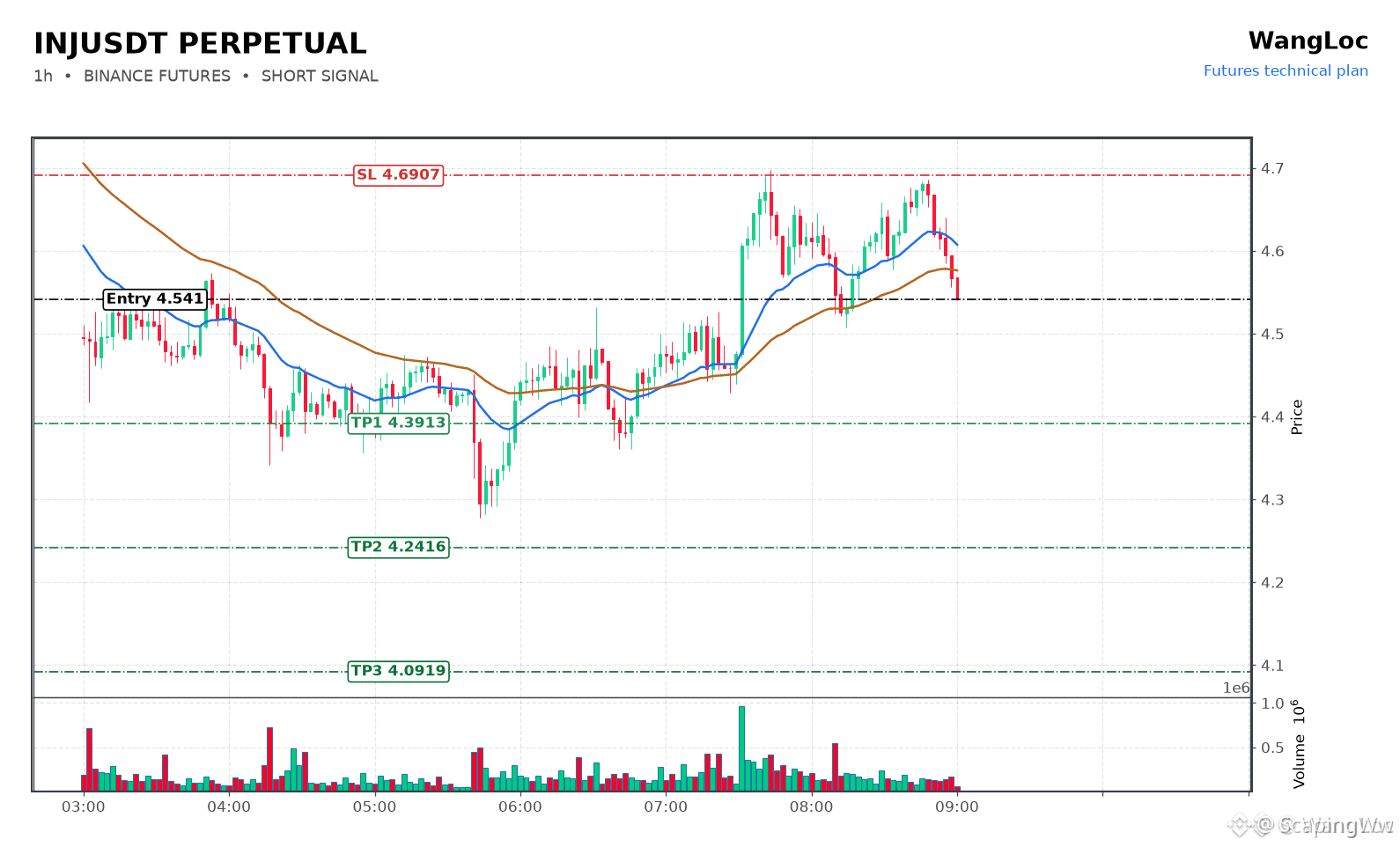
WHEN VOLATILITY GOES SILENT, THE MARKET IS LOADING THE SLINGSHOT 🎯 — $INJ PRIMED FOR A BREAKOUT MOVE
Short Setup 📉
Entry: 4.541 🚀
Target: 4.3913 - 4.2416 - 4.0919 🎯
Stop Loss: 4.6907 🛑
The bear camp is coiling deep in the weeds while the bulls hold their breath. $INJ has been squeezing tighter than a fist clenched for a knockout punch, and the compression is hitting that critical inflection zone where patience pays the biggest bills. The market is a rubber band — stretch it too far and someone gets snapped.
The lower timeframe is whispering bearish tells, and the break below 4.541 opens the floodgates toward double-digit downside targets. The stop sits clean above the recent swing, keeping the risk tight while the reward stretches wide. This is a textbook liquidity sweep waiting to happen.
Sellers are armed, buyers are hesitating, and the next candle could settle the score. Are you positioned for the drop, or are you still waiting for confirmation that never comes? 🔍
⚠️ Not financial advice. Always manage your risk. 🛡️
🏷️ #INJ #DeFi #Crypto #Trading #SWAPS
🔻📊
WHEN VOLATILITY GOES SILENT, THE MARKET IS LOADING THE SLINGSHOT 🎯 — $INJ PRIMED FOR A BREAKOUT MOVE
Short Setup 📉
Entry: 4.541 🚀
Target: 4.3913 - 4.2416 - 4.0919 🎯
Stop Loss: 4.6907 🛑
The bear camp is coiling deep in the weeds while the bulls hold their breath. $INJ has been squeezing tighter than a fist clenched for a knockout punch, and the compression is hitting that critical inflection zone where patience pays the biggest bills. The market is a rubber band — stretch it too far and someone gets snapped.
The lower timeframe is whispering bearish tells, and the break below 4.541 opens the floodgates toward double-digit downside targets. The stop sits clean above the recent swing, keeping the risk tight while the reward stretches wide. This is a textbook liquidity sweep waiting to happen.
Sellers are armed, buyers are hesitating, and the next candle could settle the score. Are you positioned for the drop, or are you still waiting for confirmation that never comes? 🔍
⚠️ Not financial advice. Always manage your risk. 🛡️
🏷️ #INJ #DeFi #Crypto #Trading #SWAPS
🔻📊
Short Setup 📉
Entry: 4.541 🚀
Target: 4.3913 - 4.2416 - 4.0919 🎯
Stop Loss: 4.6907 🛑
The bear camp is coiling deep in the weeds while the bulls hold their breath. $INJ has been squeezing tighter than a fist clenched for a knockout punch, and the compression is hitting that critical inflection zone where patience pays the biggest bills. The market is a rubber band — stretch it too far and someone gets snapped.
The lower timeframe is whispering bearish tells, and the break below 4.541 opens the floodgates toward double-digit downside targets. The stop sits clean above the recent swing, keeping the risk tight while the reward stretches wide. This is a textbook liquidity sweep waiting to happen.
Sellers are armed, buyers are hesitating, and the next candle could settle the score. Are you positioned for the drop, or are you still waiting for confirmation that never comes? 🔍
⚠️ Not financial advice. Always manage your risk. 🛡️
🏷️ #INJ #DeFi #Crypto #Trading #SWAPS
🔻📊
59


·
--
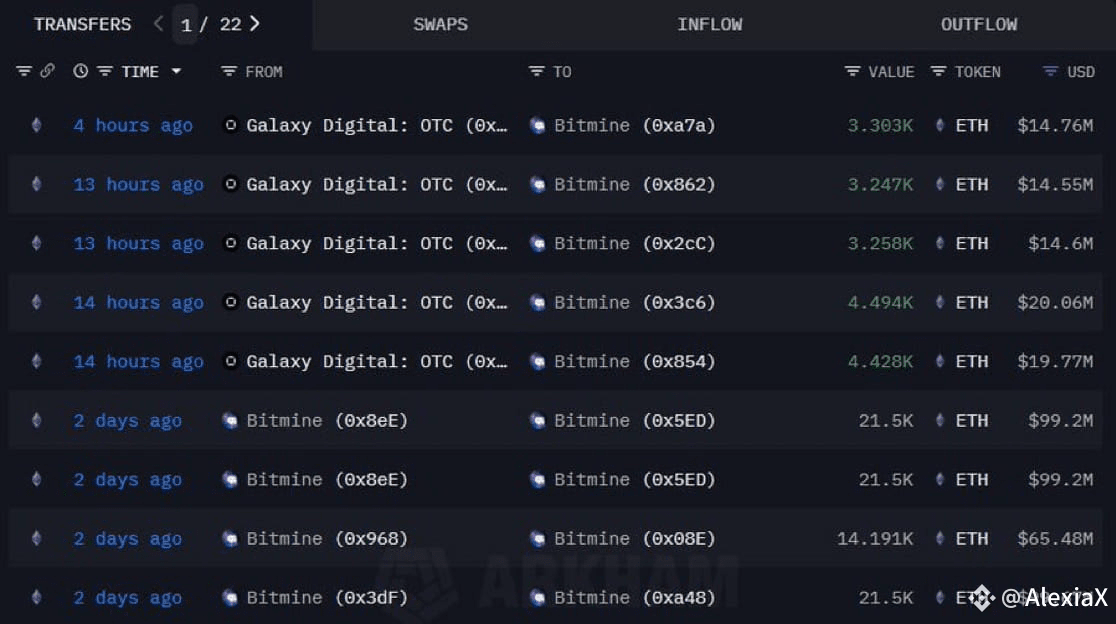
BREAKING: Bitmine Digital has scooped up 18,730 $ETH worth $84M.
This kind of aggressive accumulation could add serious fuel to the upside.
If momentum holds, ETH may push higher in the short term.
Strong hands buying dips = bullish signal.
#SWAPS
BREAKING: Bitmine Digital has scooped up 18,730 $ETH worth $84M.
This kind of aggressive accumulation could add serious fuel to the upside.
If momentum holds, ETH may push higher in the short term.
Strong hands buying dips = bullish signal.
#SWAPS
This kind of aggressive accumulation could add serious fuel to the upside.
If momentum holds, ETH may push higher in the short term.
Strong hands buying dips = bullish signal.
#SWAPS
2.7k
1.3k
193
2.7k
Log in to explore more content
Join global crypto users on Binance Square
⚡️ Get latest and useful information about crypto.
💬 Trusted by the world’s largest crypto exchange.
👍 Discover real insights from verified creators.
Email / Phone number
Trending Topics
1
#FedRateWatch
105,613 views
672 Discussing
2
#BitcoinReboundsTo$79K
39,954 views
317 Discussing
3
#StrategyMarketCapPassesFord
0 views
2 Discussing
4
#ClarityActOddsHalveOnPolymarket
0 views
2 Discussing
5
#US30YTreasuryYieldTops5.40%
309 views
45 Discussing
6
#BessentEndorsesFinalClarityActDraft
10,569 views
280 Discussing
7
#ZamaOpens16ConfidentialMorphoVaults
5,079 views
150 Discussing
8
#USDCOnChainVolumeTops$100Trillion
823 views
31 Discussing
9
#BitcoinSpotETFsNetInflow$160M
1,752 views
81 Discussing
10
#SouthKoreaCryptoTaxDelayPetitionTops50000
33,024 views
851 Discussing