
#osmo
osmo
341,331 views
3,030 Discussing
Hot
Latest

Osmosis just locked down after a security incident. The Cosmos decentralized exchange restricted transfers on 84,000 wallets and froze 64 suspected attacker accounts following an incident linked to Web3Auth. $OSMO holders can still trade, but the freeze shows how fast a DEX can move when it suspects foul play. The incident is a reminder that even decentralized venues rely on centralized chokepoints when things go wrong. Full details are still coming.
#Osmosis #OSMO $OSMO #Security
#Osmosis #OSMO $OSMO #Security

55

To lock down 64 suspected addresses, Osmosis also suspended the ability of 84,000 wallets to transfer funds. That works out to a hit rate of 0.076%: for every 1,300 wallets restricted, only about 1 was actually connected to this attack, while the remaining 99.9% were caught in the crossfire.
That’s not worth it; the cost is ultimately borne by all users.
First, let’s break down the incident itself. 84,000 is no small fraction of Osmosis’s user base. It means that during this period, the vast majority of active addresses lost the most basic right: “the ability to move their assets.” The on-chain world is extremely sensitive to “freezes,” because once a protocol is recognized as having the power to unilaterally revoke transfer rights in an emergency, the only difference between it and a centralized exchange is a thin outer shell. Centralized exchanges that freeze accounts at least have customer service, appeals channels, and regulatory constraints; on-chain freezes leave users with only a governance proposal number and “wait for further notice.”
The second layer is the direct impact on Osmosis’s core business. Osmosis has never positioned itself as just “another AMM.” It is a hub for IBC asset flows in the Cosmos ecosystem, supported by cross-chain asset transfers, market making, arbitrage, and liquidation—in other words, an entire ecosystem of high-frequency transactions. Taking away the ability to transfer is like shutting down the assembly line: LPs can’t withdraw from pools or add to them; arbitrageurs see price gaps they can’t close; and market makers can’t execute the other leg of their hedges. These frictions won’t show up in prices immediately, but they will show up in the width and depth of the order book. Wider spreads are essentially the risk premium liquidity providers charge for “unpredictable protocol intervention.” That cost is far greater than the losses those 64 addresses may have caused.
The third layer is the easiest to overlook: a narrative discount. OSMO’s valuation story is built on being “the Cosmos liquidity hub, with a fee-and-incentive flywheel,” and the foundation of that story is “permissionlessness.” This incident hasn’t destroyed that foundation, but it has left a crack in it, in full view of everyone. The next time users decide whether to keep their assets on Osmosis or somewhere else, they’ll ask themselves one more question: if this happens again, could I be one of those 84,000? For a DEX, trust erodes slowly, but rebuilding it costs more than TVL.
Next, let’s look at three verifiable indicators. First, the unfreezing timeline: will there be a clear announcement of a phased restoration of transfers, or just a vague “after the investigation is over”? Second, will the basis for identifying the 64 addresses be made public, and will the action receive post hoc governance approval? If emergency powers can be used first and approved later without governance, then this isn’t just emergency response—it will set a precedent. Third, after transfers are restored, will Osmosis’s on-chain transfer count and pool depth return to pre-incident levels? If they don’t, that means users have already made their position clear through their actions.
⚠️ My take is simple: a technical rebound has nothing to do with this. The real repricing will happen during the next market panic: whether users are still willing to leave their money on a chain that can freeze everyone’s transfers—that’s what will determine what OSMO is worth. Betting on a rebound before an unfreezing plan and post hoc governance approval are in place isn’t a bet on fundamentals; it’s a bet on the project team’s PR timing.
#Crypto #OSMO
12

·
--
$OSMO +10.51% | $SC +10.24% | $USUAL +9.56%
#OSMO nudged up to $0.0326, climbing +10.51% on $1.1 M of volume. The DEX’s cross‑chain pull seems to be resonating as traders pile in.
#SC rose to $0.00060300, gaining +10.24% with $1.2 M changing hands. Momentum is clear, though the thin price could still wobble on larger moves.
#USUAL jumped to $0.0116, up +9.56% on a solid $3.8 M volume. The surge hints at renewed interest, but watch for any pullback if broader market sentiment shifts.
👀 Keep an eye on whether the volume spikes translate into sustained buying pressure across these midsize caps.
#Write2Earn #Binance
16

·
--
Bullish
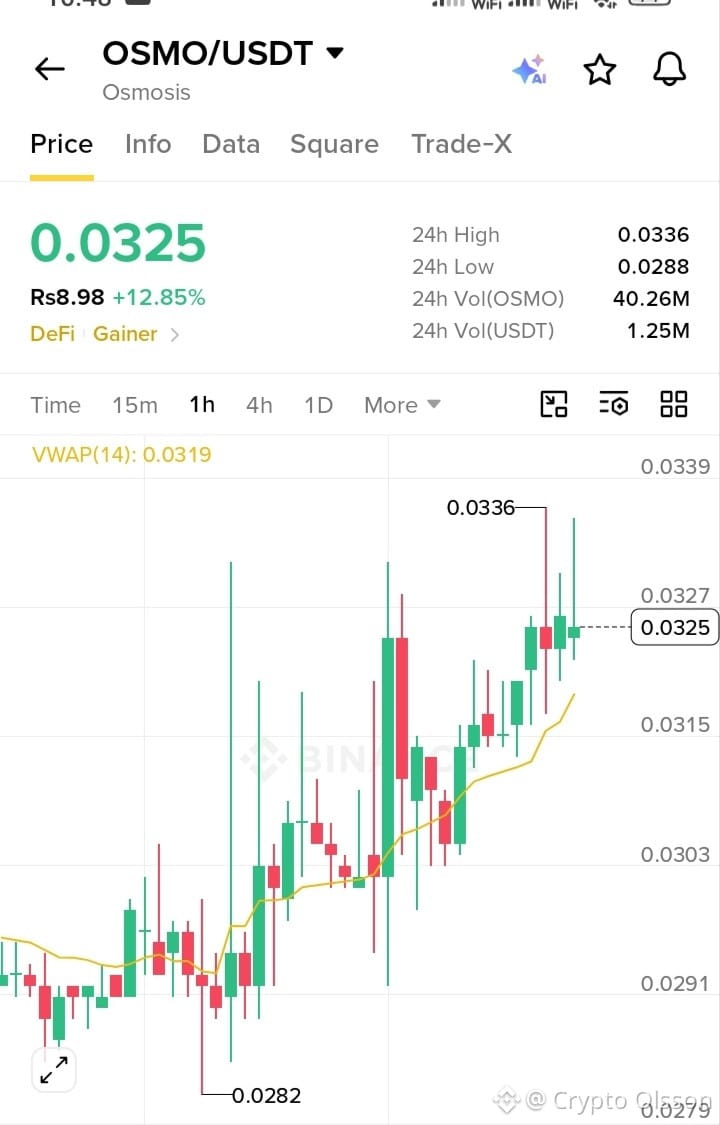
$OSMO Can Bulls Break Above $0.0336?
Trade Setup: Long
Entry Zone: 0.03180 – 0.03250
Tp1: 0.03360 Tp2: 0.03480 Tp3: 0.03650
SL: 0.03030
#OSMO is showing strong bullish momentum with a 12.85% daily gain and trading above VWAP at 0.0319. Buyers are approaching the $0.0336 resistance zone. A confirmed breakout could open the way toward $0.0348 and $0.0365. Watch volume and avoid chasing if price gets rejected.
Trade Here On $OSMO 👇.
{spot}(OSMOUSDT)
$OSMO Can Bulls Break Above $0.0336?
Trade Setup: Long
Entry Zone: 0.03180 – 0.03250
Tp1: 0.03360 Tp2: 0.03480 Tp3: 0.03650
SL: 0.03030
#OSMO is showing strong bullish momentum with a 12.85% daily gain and trading above VWAP at 0.0319. Buyers are approaching the $0.0336 resistance zone. A confirmed breakout could open the way toward $0.0348 and $0.0365. Watch volume and avoid chasing if price gets rejected.
Trade Here On $OSMO 👇.
2
78

·
--
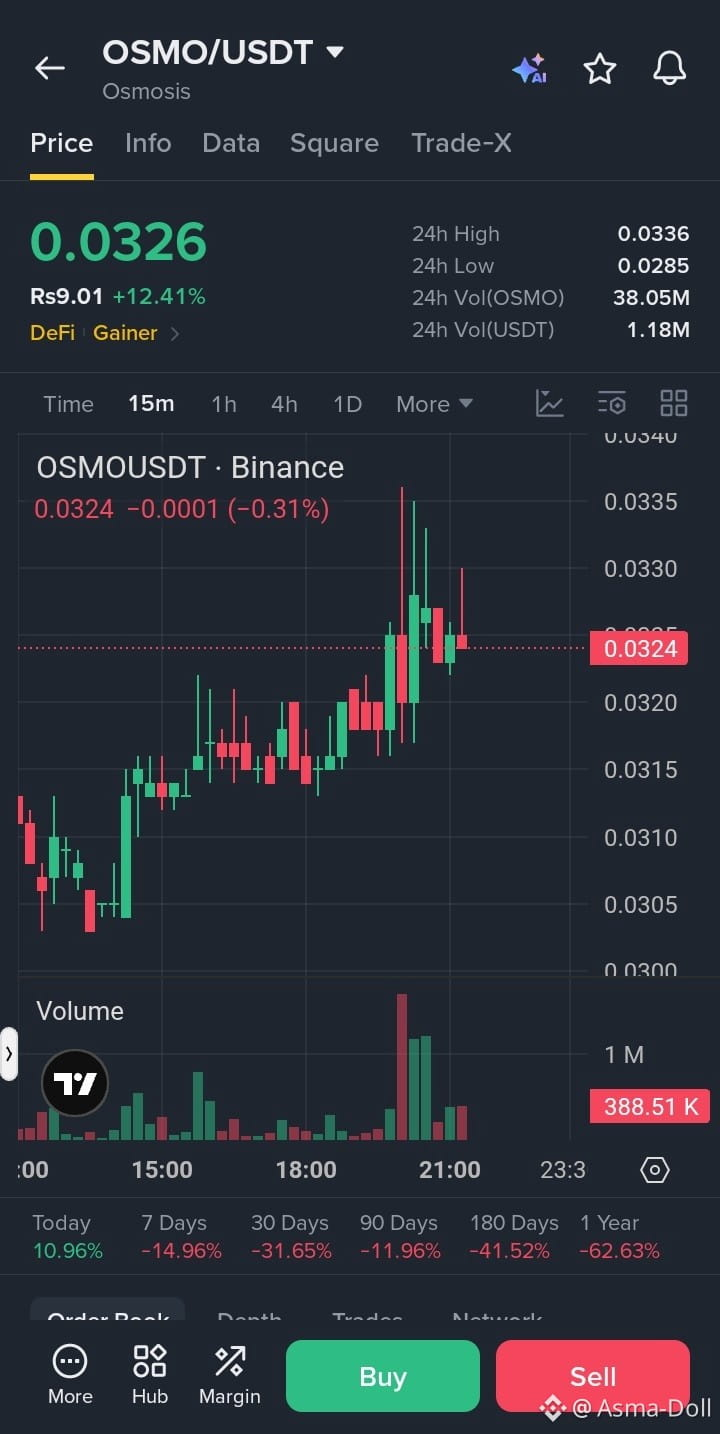
🔥 **ASMA DOLL PREMIUM SIGNAL**
🔴 **$OSMO /USDT – SHORT**
**Current Price:** $0.0326
**Entry Zone:** $0.0325 – $0.0335
**Stop Loss (SL):** $0.0350
🎯 **Take Profit Targets:**
- TP1: $0.0315
- TP2: $0.0305
- TP3: $0.0290
Trade here $OSMO
{spot}(OSMOUSDT)
📉 **Market Analysis:**
OSMO is showing a strong short-term rally of +12.41%, approaching its 24-hour high of $0.0336.
- Price is facing potential resistance near $0.0335–$0.0336.
- The recent upward move may attract profit-taking.
- Trading near the daily high increases the risk of a rejection.
- Broader price performance remains weak, with a 7-day decline of approximately 14.96%.
- A failure to hold above $0.0320 could trigger further downside.
**Confirmation:**
A clear rejection from $0.0335–$0.0336 followed by a breakdown below $0.0320 would strengthen the bearish setup.
⚠️ **Trade Smart:** Avoid entering blindly during strong upward momentum. Wait for bearish confirmation.
#OSMO #Osmosis #CryptoSignals #BinanceSquare #ASMADOLL
Note: This is a conditional short setup based on the supplied snapshot, not a confirmed bearish reversal. The 15m/1h chart structure should be checked before entry.
🔥 **ASMA DOLL PREMIUM SIGNAL**
🔴 **$OSMO /USDT – SHORT**
**Current Price:** $0.0326
**Entry Zone:** $0.0325 – $0.0335
**Stop Loss (SL):** $0.0350
🎯 **Take Profit Targets:**
- TP1: $0.0315
- TP2: $0.0305
- TP3: $0.0290
Trade here $OSMO
📉 **Market Analysis:**
OSMO is showing a strong short-term rally of +12.41%, approaching its 24-hour high of $0.0336.
- Price is facing potential resistance near $0.0335–$0.0336.
- The recent upward move may attract profit-taking.
- Trading near the daily high increases the risk of a rejection.
- Broader price performance remains weak, with a 7-day decline of approximately 14.96%.
- A failure to hold above $0.0320 could trigger further downside.
**Confirmation:**
A clear rejection from $0.0335–$0.0336 followed by a breakdown below $0.0320 would strengthen the bearish setup.
⚠️ **Trade Smart:** Avoid entering blindly during strong upward momentum. Wait for bearish confirmation.
#OSMO #Osmosis #CryptoSignals #BinanceSquare #ASMADOLL
Note: This is a conditional short setup based on the supplied snapshot, not a confirmed bearish reversal. The 15m/1h chart structure should be checked before entry.
1
51

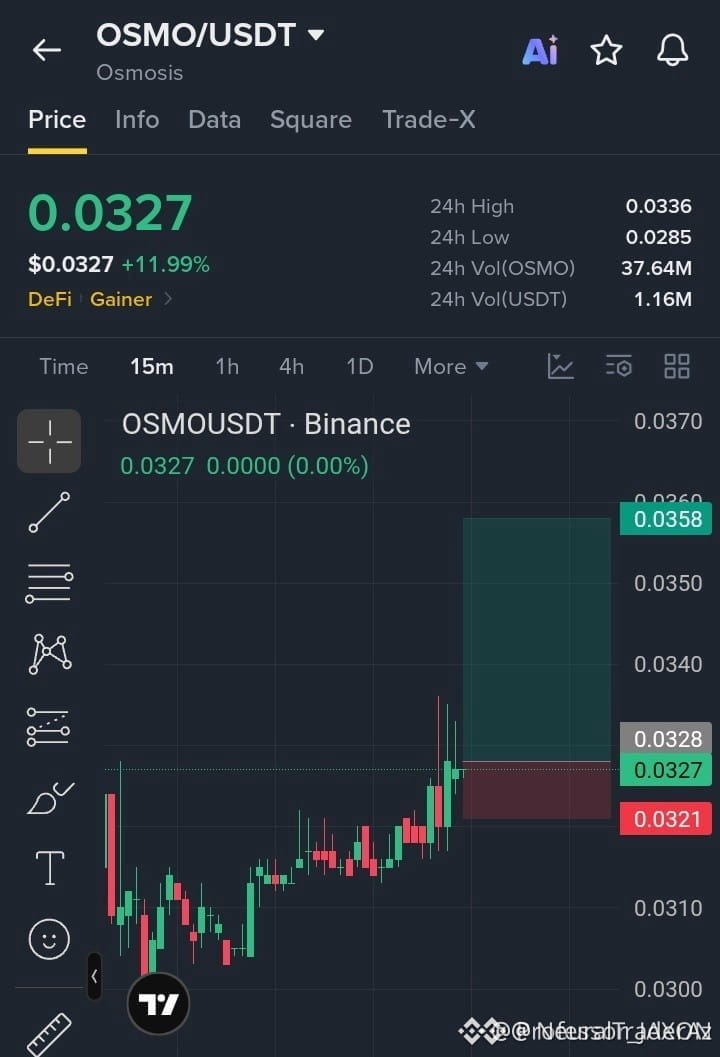
🚨 $OSMO FORMING HIGHER LOWS AS SMART MONEY ACCUMULATES NEAR LOCAL SUPPORT! ⚡
Entry: 0.0325–0.0328 ⚡
Target: 0.0336 🎯
Target: 0.0345 🎯
Target: 0.0358 🚀
Stop Loss: 0.0321 ⚠️
The lower timeframe order flow on $OSMO reveals persistent institutional bidding, systematically absorbing supply and carving clean higher lows on the 15-minute chart. 📊 Volume profiles confirm buyers are stepping in earlier on each minor pullback, building the structural velocity needed to challenge overhead resistance. ⚡ A sustained acceptance above 0.0330 should unlock a rapid liquidity expansion toward our upper targets. 🌊 Are you positioning ahead of the breakout or waiting for a retest? 👇
⚠️ Not financial advice. Always manage your risk. 🛡️
🏷️ #OSMO #LongSetup #OrderFlow #Breakout #Crypto
🔥 💎
3

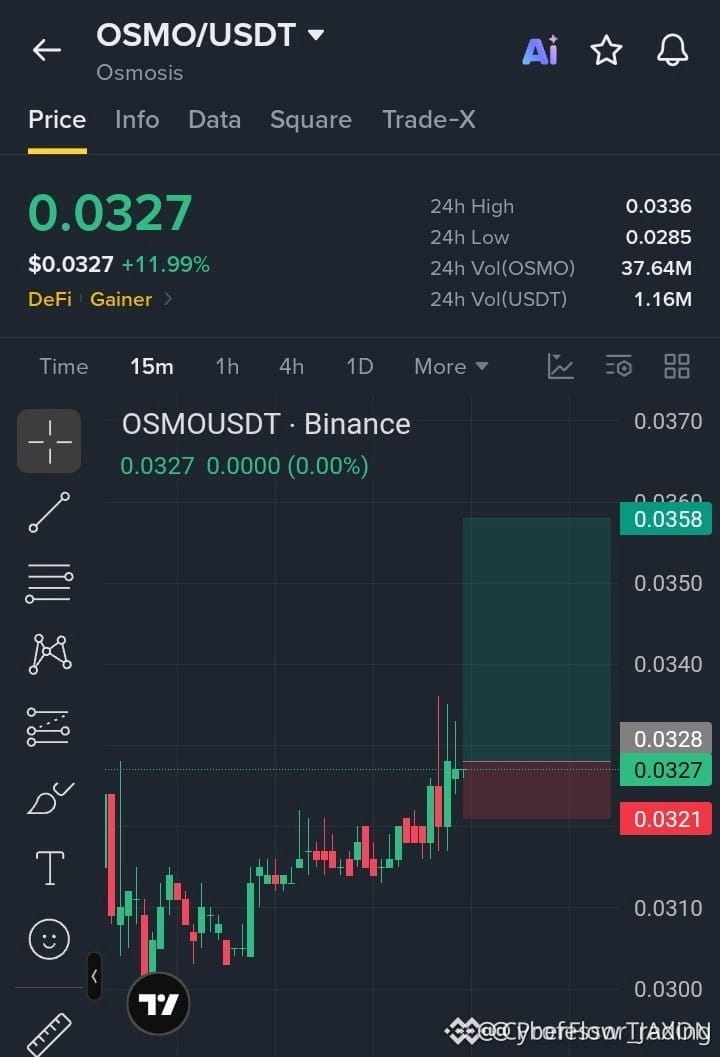
$OSMO FORMING A CLEAN HIGHER-LOW STRUCTURE AS BUYERS SWARM THE 15-MINUTE CHART! ⚡🚀
Entry: 0.0325–0.0328 ⚡
TP1: 0.0336 🚀
TP2: 0.0345 📈
TP3: 0.0358 🎯
Stop Loss: 0.0321 ⚠️
Momentum is shifting rapidly on the lower timeframes as aggressive buyers step in to defend support. ⚡
This persistent bid pressure is carving out a textbook series of higher lows, signaling that sellers are losing their grip on order flow. 📊
If volume continues to expand and we clear the local resistance barrier cleanly, expect a swift continuation toward our upper targets. 💡 Are you positioning early inside the entry zone or waiting for the breakout confirmation? 👇
⚠️ Not financial advice. Always manage your risk. 🛡️
🏷️ #OSMO #LongSetup #Momentum #Breakout #Crypto
🔥 💎
6

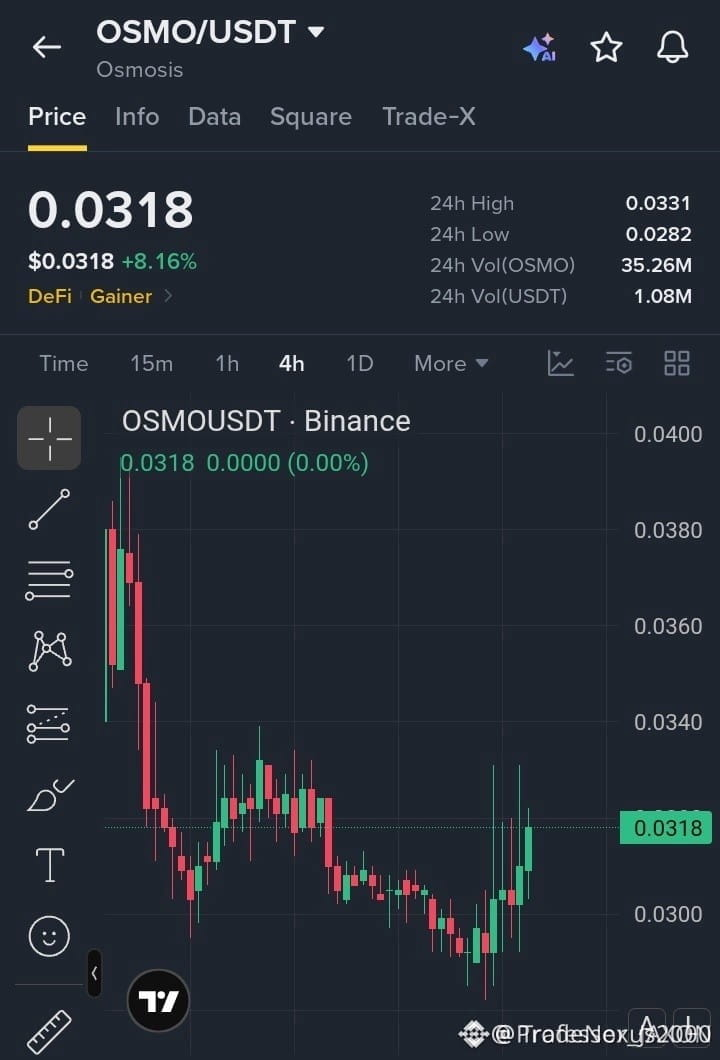
🦈 $OSMO SWEEPING LIQUIDITY AT SUPPORT BEFORE THE NEXT EXPANSIVE LEG UP 💥
Entry: 0.0312 - 0.0318 ⚡
Target: 0.0350 🚀
Stop Loss: 0.0295 ⚠️
Smart money has successfully defended the 0.0290 structural floor, absorbing excess supply and establishing a clean demand block. 🌊 Price action is now compressing tightly below local resistance as buyers reclaim short-term momentum. 📊
Holding above the 0.0310 threshold validates institutional accumulation and sets the stage for a measured expansion into higher liquidity pools. 💡 Are you positioned for this breakout continuation or waiting for a deeper retest? 👇
⚠️ Not financial advice. Always manage your risk. 🛡️
🏷️ #OSMO #SmartMoney #Breakout #Crypto
🦈 💎
18

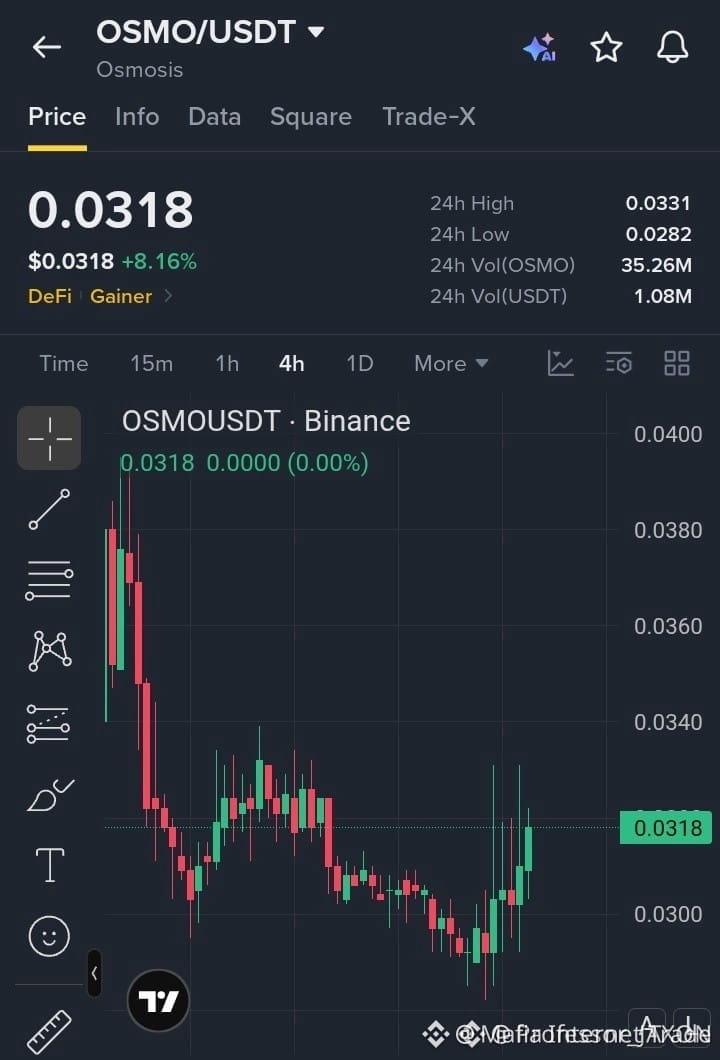
🚀 $OSMO RECLAIMS MOMENTUM AS BUYERS IGNITE A FRESH BREAKOUT SETUP! ⚡
Entry: 0.0312 – 0.0318 ⚡
Target: 0.0350 🚀
Stop Loss: 0.0295 ⚠️
Buyers are stepping in aggressively after defending the 0.0290 support zone, printing clean bullish candles that show a definitive shift in market control. 📊 Price is now grinding through the 0.0312 accumulation band with order book depth thinning out above resistance. ⚡
Holding firm above 0.0310 opens a pristine runway toward our higher targets as momentum accelerates. 🔍 Are you positioning ahead of the breakout or waiting for confirmation? 👇
⚠️ Not financial advice. Always manage your risk. 🛡️
🏷️ #OSMO #LongSetup #Crypto #Breakout #Altcoins
🔥 💎
20
·
--
$OSMO +5.67% | $USUAL +5.14% | $SKY +4.11%
#OSMO nudged up to $0.0317, gaining +5.67% on $1.1 M of volume. The rise comes as the Cosmos‑based DEX continues to draw cross‑chain liquidity, though broader market sentiment remains mixed.
#USUAL climbed to $0.0111, up +5.14% with $2.2 M traded. Momentum appears solid, but the token’s niche use case could limit sustained upside.
#SKY rose to $0.0446, +4.11% on $4.4 M of volume. Higher trading flow suggests growing interest, yet the price action may still be vulnerable to short‑term swings.
👀 Watch how the differing volume scales could influence each token’s next move.
#Write2Earn #Binance
8

·
--
What is the movement in $OSMO telling us now?
Is trading volume supporting the price movement, or merely preceding it?
Reading: The trend in $OSMO matters as much as the actual activity supporting it.
Key evidence:
• Price movement over a full day was 11.19%.
• Trading value over a day was 1.15 million USDT, a measure of participation size, not direction.
• The price is now 0.0318 USDT.
• The spread between the best bid and best ask is 62.7 basis points (0.63%).
Confirmation condition: The price movement continues while trading volume and the spread remain close to their current readings. When does the reading weaken? If the price movement reverses while trading volume declines or the spread widens.
The current pace of movement alone does not determine the direction of $OSMO; what matters more is whether the indicators remain consistent in the next reading, along with the change in price over a day and trading volume over a day. The selected evidence is currently consistent, though the reading may change.
#OSMO #ترند_العملات #Liquidity
What is the movement in $OSMO telling us now?
Is trading volume supporting the price movement, or merely preceding it?
Reading: The trend in $OSMO matters as much as the actual activity supporting it.
Key evidence:
• Price movement over a full day was 11.19%.
• Trading value over a day was 1.15 million USDT, a measure of participation size, not direction.
• The price is now 0.0318 USDT.
• The spread between the best bid and best ask is 62.7 basis points (0.63%).
Confirmation condition: The price movement continues while trading volume and the spread remain close to their current readings. When does the reading weaken? If the price movement reverses while trading volume declines or the spread widens.
The current pace of movement alone does not determine the direction of $OSMO ; what matters more is whether the indicators remain consistent in the next reading, along with the change in price over a day and trading volume over a day. The selected evidence is currently consistent, though the reading may change.
#OSMO #ترند_العملات #Liquidity
12

·
--
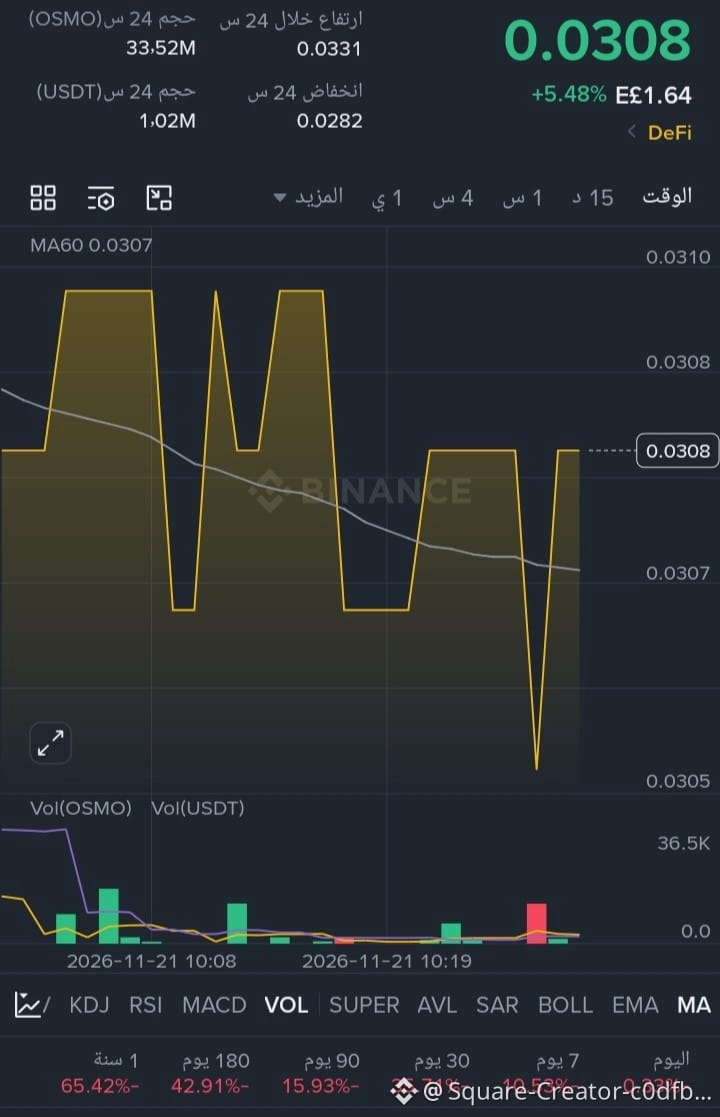
A volatile move and eye-catching quick rebound in OSMO after a daily gain of +5.48%, with the price settling at 0.0308 in a fluctuating zone that calls for careful analysis and a measured approach to seizing opportunities to avoid sharp swings!
Technical analysis and indicators
The price is trading above the MA60 average, shown at 0.0307, giving it a short-term advantage in staying on a positive path as long as it holds above this level.
The 24-hour trading range recorded a high of 0.0331 and a low of 0.0282, with trading volume reaching 33.52M OSMO and 1.02M USDT.
The chart shows repeated fluctuations between highs and lows, followed by a sharp drop toward 0.0305 and then a quick rebound that brings the price back toward 0.0308. Active volume bars below the chart reflect a short-term struggle between sellers and buyers.
Buying and selling zones and targets
Buying zones: It is preferable to wait for a measured corrective pullback toward 0.0307, or a confirmed rebound near the 0.0305 support, rather than entering randomly in the middle of the fluctuation.
Selling zones / stop-loss: Take partial profits or exit if 0.0307 is decisively broken, with a break below 0.0305 considered a clear sign of weakening short-term momentum.
Upside targets:
First target: 0.0310 (testing the nearby resistance shown on the chart).
Second target: 0.0318 if the 0.0310 level is decisively broken with supporting liquidity.
Third target: 0.0331 (retesting the 24-hour high).
#osmo #تداول_العملات_الرقمية #التحليل_الفني #بينانس #$OSMO
{spot}(OSMOUSDT)
A volatile move and eye-catching quick rebound in OSMO after a daily gain of +5.48%, with the price settling at 0.0308 in a fluctuating zone that calls for careful analysis and a measured approach to seizing opportunities to avoid sharp swings!
Technical analysis and indicators
The price is trading above the MA60 average, shown at 0.0307, giving it a short-term advantage in staying on a positive path as long as it holds above this level.
The 24-hour trading range recorded a high of 0.0331 and a low of 0.0282, with trading volume reaching 33.52M OSMO and 1.02M USDT.
The chart shows repeated fluctuations between highs and lows, followed by a sharp drop toward 0.0305 and then a quick rebound that brings the price back toward 0.0308. Active volume bars below the chart reflect a short-term struggle between sellers and buyers.
Buying and selling zones and targets
Buying zones: It is preferable to wait for a measured corrective pullback toward 0.0307, or a confirmed rebound near the 0.0305 support, rather than entering randomly in the middle of the fluctuation.
Selling zones / stop-loss: Take partial profits or exit if 0.0307 is decisively broken, with a break below 0.0305 considered a clear sign of weakening short-term momentum.
Upside targets:
First target: 0.0310 (testing the nearby resistance shown on the chart).
Second target: 0.0318 if the 0.0310 level is decisively broken with supporting liquidity.
Third target: 0.0331 (retesting the 24-hour high).
#osmo #تداول_العملات_الرقمية #التحليل_الفني #بينانس #$OSMO
1
123

·
--
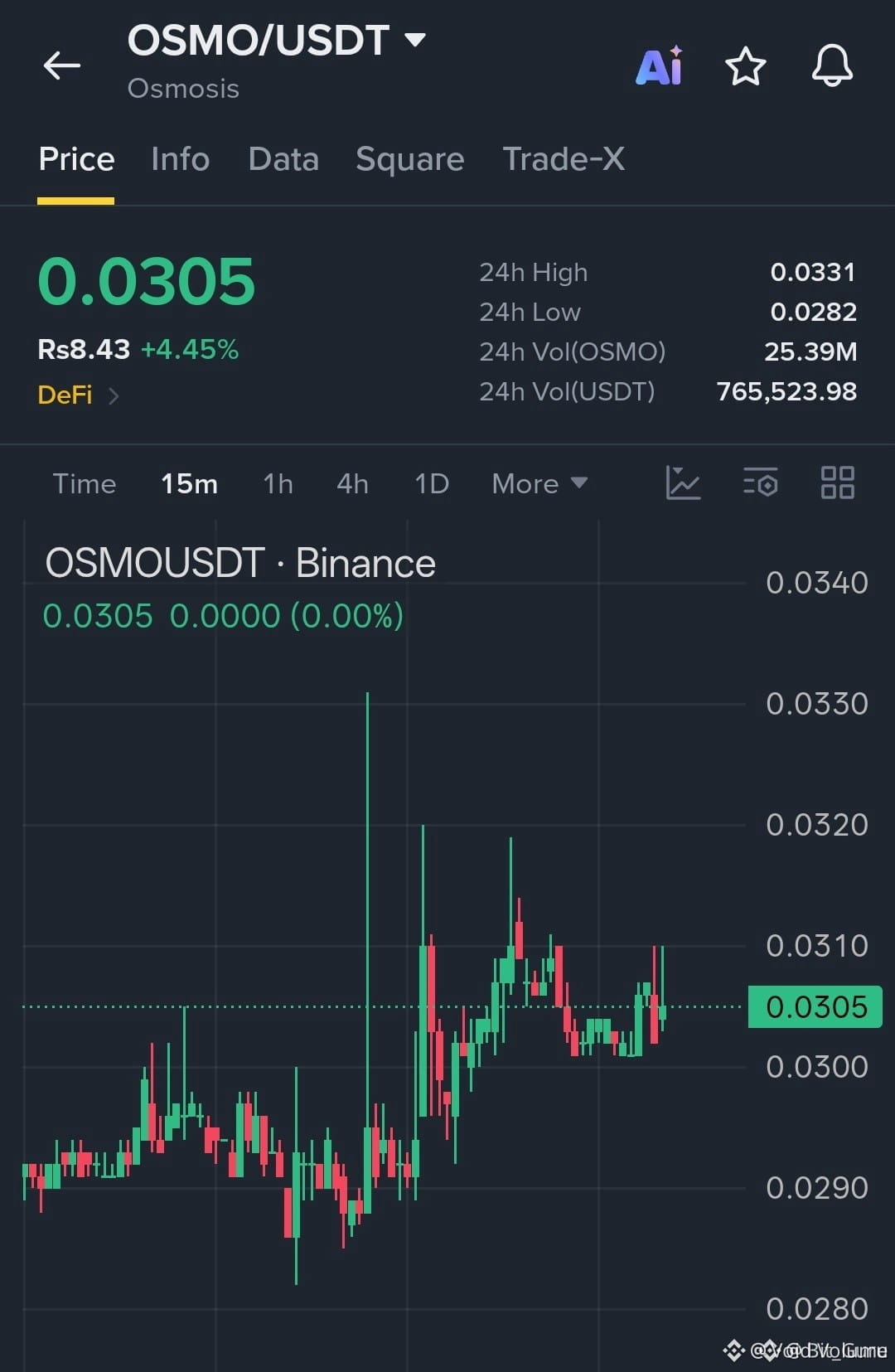
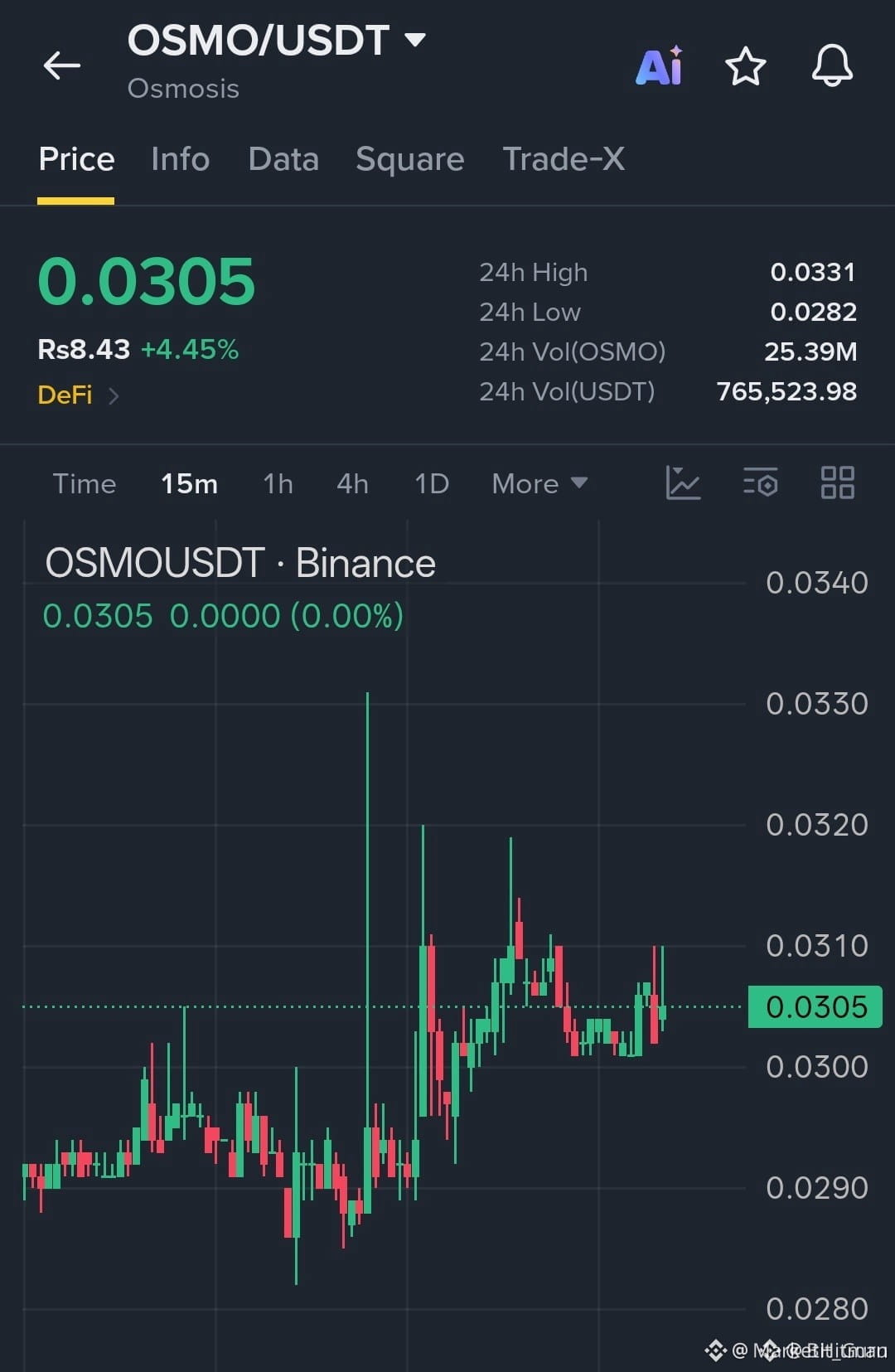
🦈 $OSMO SWEEPING INSTITUTIONAL LIQUIDITY BEFORE A SHARP EXPANSION TOWARD HIGHER RESISTANCE! ⚡
Entry: 0.0302–0.0305 ⚡
Target: 0.0322 🚀
Stop Loss: 0.0296 ⚠️
Smart money is currently absorbing resting liquidity inside this local demand zone, building clean structural alignment for an impulsive markup phase. 📊 Order flow indicates aggressive passive bids defending the range low while late sellers completely exhaust their momentum. 💡
As price reclaims the local fair value gap, expect a swift structural rotation through intermediate overhead resistance toward our primary liquidity objective. 🌊 Are you positioning alongside institutional accumulation here or waiting for structural confirmation? 👇
⚠️ Not financial advice. Always manage your risk. 🛡️
🏷️ #OSMO #SmartMoney #Crypto #PriceAction #MarketStructure
🔥 🦈
63

·
--
🦈 $OSMO BUYERS ARE STEPPING UP TO DEFEND THE RANGE WITH RAW MOMENTUM! ⚡
Entry: 0.0302–0.0305 ⚡
Target: 0.0322 🚀
Stop Loss: 0.0296 ⚠️
Order books are revealing aggressive accumulation as sellers exhaust their remaining inventory near local resistance. 📊 Smart money is stepping in with steady bids, locking down the floor and building a clean springboard for continuation. ⚡
Momentum oscillators are curling upward on expanding volume, signaling that aggressive expansion toward higher targets is unlocking. 🔍
💬 Are you riding this bullish wave early or waiting for confirmation? 👇
⚠️ Not financial advice. Always manage your risk. 🛡️
🏷️ #OSMO #LongSetup #Crypto #Breakout #Altcoins
🔥 💎
4

·
--
OSMO spot market: the 5m candle closed at +5.07% at 2026-11-21 03:35 Beijing time. At 2026-11-21 03:35:06 Beijing time, the current price was 0.0311, 24h turnover was 516.2k, price was above the candlestick-estimated VWAP of 0.0299492, and RSI was 72.2. First, the hard data: the key question isn’t whether it moved, but whether the data can continue to support the move.
Can it hold a pullback to VWAP 0.0299492? Whether it can find support there will determine if this move is valid.
Note: 24h trading volume is below $5 million, and the order book is thin. Watch out for slippage.
#OSMO #Unusual Move Alert
Can it hold a pullback to VWAP 0.0299492? Whether it can find support there will determine if this move is valid.
Note: 24h trading volume is below $5 million, and the order book is thin. Watch out for slippage.
#OSMO #Unusual Move Alert
10

·
--
$OSMO: Bounces are happening. Why does each one end lower than the last?
...
Look at how far $OSMO managed to climb: first to around 0.067, then to 0.050, and most recently only to 0.041. Buyers have shown up at 0.030 again. The question is whether they can make it past the previous bounce’s peak this time.
A day above 0.042, followed by a pullback that holds at 0.036, would give it a chance to test 0.049–0.050. But if the week closes below 0.0295, the recovery scenario from the current support is off the table.
#OSMO #PEARL #BTC
$OSMO : Bounces are happening. Why does each one end lower than the last?
...
Look at how far $OSMO managed to climb: first to around 0.067, then to 0.050, and most recently only to 0.041. Buyers have shown up at 0.030 again. The question is whether they can make it past the previous bounce’s peak this time.
A day above 0.042, followed by a pullback that holds at 0.036, would give it a chance to test 0.049–0.050. But if the week closes below 0.0295, the recovery scenario from the current support is off the table.
#OSMO #PEARL #BTC
196

$OSMO 4h — SHORT Signal 🔴
12/14 indicator confluence.
RSI 41.0 weak — selling pressure dominates; MACD histogram negative, bearish (-6.15182e-05); price below 4h EMA26 (0.031830); 1h trend aligned downward; MTF: 7 of 8 TFs aligned downward; Bollinger position: middle band; holding at support 0.029500.
Chart pattern: Symmetrical Triangle [neutral].
Support 0.029500 | Resistance 0.031950
Entry: 0.030500
SL: 0.031621
TP1: 0.029379
TP2: 0.028257
TP3: 0.024893
Risk:Reward TP2 = 1:2.0
Leverage (isolated): safe 5x, maximum 10x.
$OSMO #OSMO #Crypto
Not financial advice. Always DYOR.
9


·
--
Bearish
$OSMO Drops 2.8% on 6.6x Volume: Bears Have Control, But Chasing the Breakdown Could Be Costly
$OSMO is facing renewed selling pressure near 0.0317, with a reported 6.6x volume spike accompanying a sharp 2.8% decline in just 15 minutes. The short-term outlook remains bearish, but entering blindly after an aggressive selloff is not a strategy I would favor.
What the Market Is Signaling:
- The 1H and daily structures remain bearish, with price trading below both key EMAs. RSI at 42 also reflects weakening momentum.
- The unusual volume confirms increased market activity, but it does not automatically prove smart-money distribution. Panic selling, liquidation, and news-driven activity remain possible explanations.
- BTC's current sell-side pressure adds another layer of caution for buyers, although the weekly OSMO structure remains bullish.
Key Levels to Watch:
- Resistance zone: 0.0318–0.0331
- Breakdown level: 0.0312
- First downside target: 0.0307
- Second target: 0.0295
- Extended downside target: 0.0285
My Trading Strategy:
I would prefer a rebound toward 0.0318–0.0331 followed by clear bearish rejection before considering a short position. Another possibility is a confirmed breakdown below 0.0312 followed by a failed reclaim.
However, a quick liquidity sweep below 0.0312 followed by a strong recovery could trap late sellers. Patience is more valuable than chasing momentum.
Invalidation: A confirmed 1H candle close above 0.0334 would invalidate my current bearish setup.
The bottom line: Bears currently have the short-term advantage, but confirmation matters more than excitement. Protect capital and let price reveal its next move.
Not financial advice. Educational market analysis only.
#OSMO #CryptoTrading #TechnicalAnalysis #Altcoins #BinanceSquare $OSMO
{spot}(OSMOUSDT)
CHIL-WITH-CRYPTO
$OSMO Drops 2.8% on 6.6x Volume: Bears Have Control, But Chasing the Breakdown Could Be Costly
$OSMO is facing renewed selling pressure near 0.0317, with a reported 6.6x volume spike accompanying a sharp 2.8% decline in just 15 minutes. The short-term outlook remains bearish, but entering blindly after an aggressive selloff is not a strategy I would favor.
What the Market Is Signaling:
- The 1H and daily structures remain bearish, with price trading below both key EMAs. RSI at 42 also reflects weakening momentum.
- The unusual volume confirms increased market activity, but it does not automatically prove smart-money distribution. Panic selling, liquidation, and news-driven activity remain possible explanations.
- BTC's current sell-side pressure adds another layer of caution for buyers, although the weekly OSMO structure remains bullish.
Key Levels to Watch:
- Resistance zone: 0.0318–0.0331
- Breakdown level: 0.0312
- First downside target: 0.0307
- Second target: 0.0295
- Extended downside target: 0.0285
My Trading Strategy:
I would prefer a rebound toward 0.0318–0.0331 followed by clear bearish rejection before considering a short position. Another possibility is a confirmed breakdown below 0.0312 followed by a failed reclaim.
However, a quick liquidity sweep below 0.0312 followed by a strong recovery could trap late sellers. Patience is more valuable than chasing momentum.
Invalidation: A confirmed 1H candle close above 0.0334 would invalidate my current bearish setup.
The bottom line: Bears currently have the short-term advantage, but confirmation matters more than excitement. Protect capital and let price reveal its next move.
Not financial advice. Educational market analysis only.
#OSMO #CryptoTrading #TechnicalAnalysis #Altcoins #BinanceSquare $OSMO
CHIL-WITH-CRYPTO
1
33
·
--
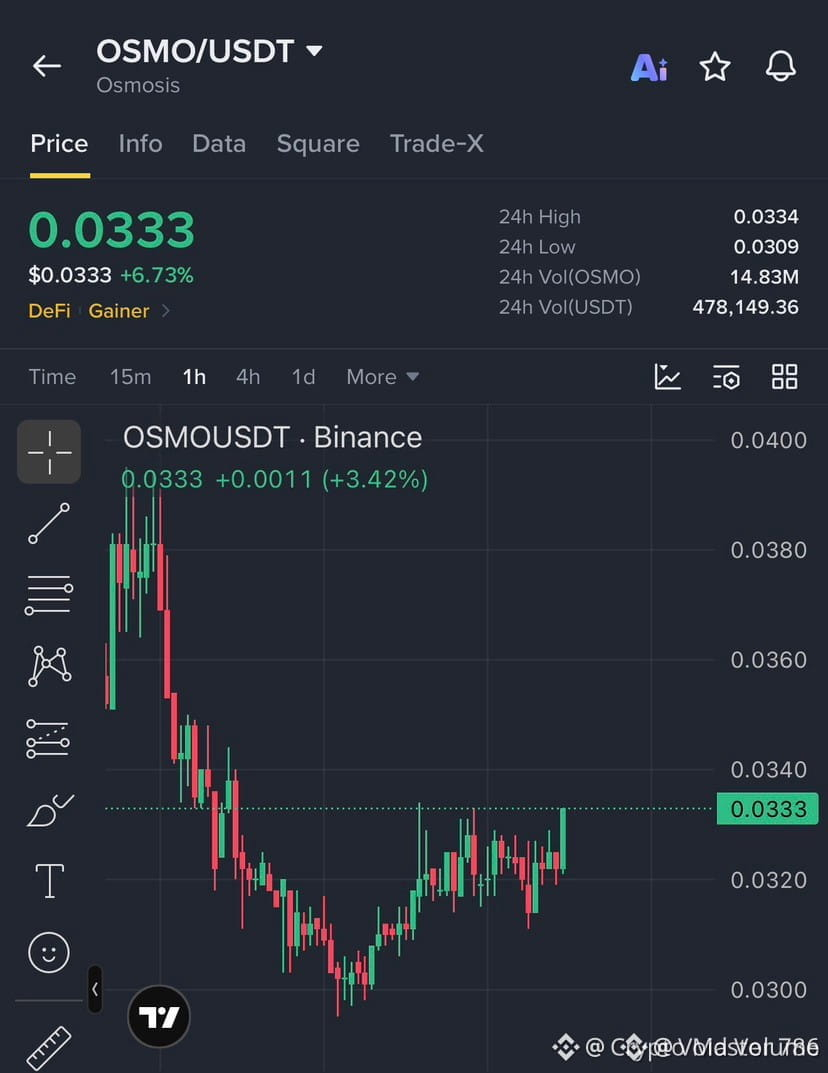
🦈 $OSMO SWEEPING LOCAL LIQUIDITY AS SMART MONEY TESTS THE $0.0334 RESISTANCE BLOCK! 💥
Entry: $0.0325–$0.0334 ⚡
Target: $0.0340, $0.0350, $0.0360 🚀
Stop Loss: $0.0315 🛑
Institutional order flow is steadily absorbing overhead supply as $OSMO prints a robust 6.73% recovery rally toward key structural resistance. 📊 Buyers are aggressively defending local inefficiencies, demonstrating classic smart money accumulation patterns right ahead of the $0.0334 threshold. 💡
A decisive structural breakout with expanding volume clears the direct path toward higher macro liquidity pools, unlocking clean upside momentum. ⚡ Are you positioning for this expansion or waiting for a retest? 👇
⚠️ Not financial advice. Always manage your risk. 🛡️
🏷️ #OSMO #SmartMoney #Breakout #Crypto #OrderFlow
🦈 💎
18

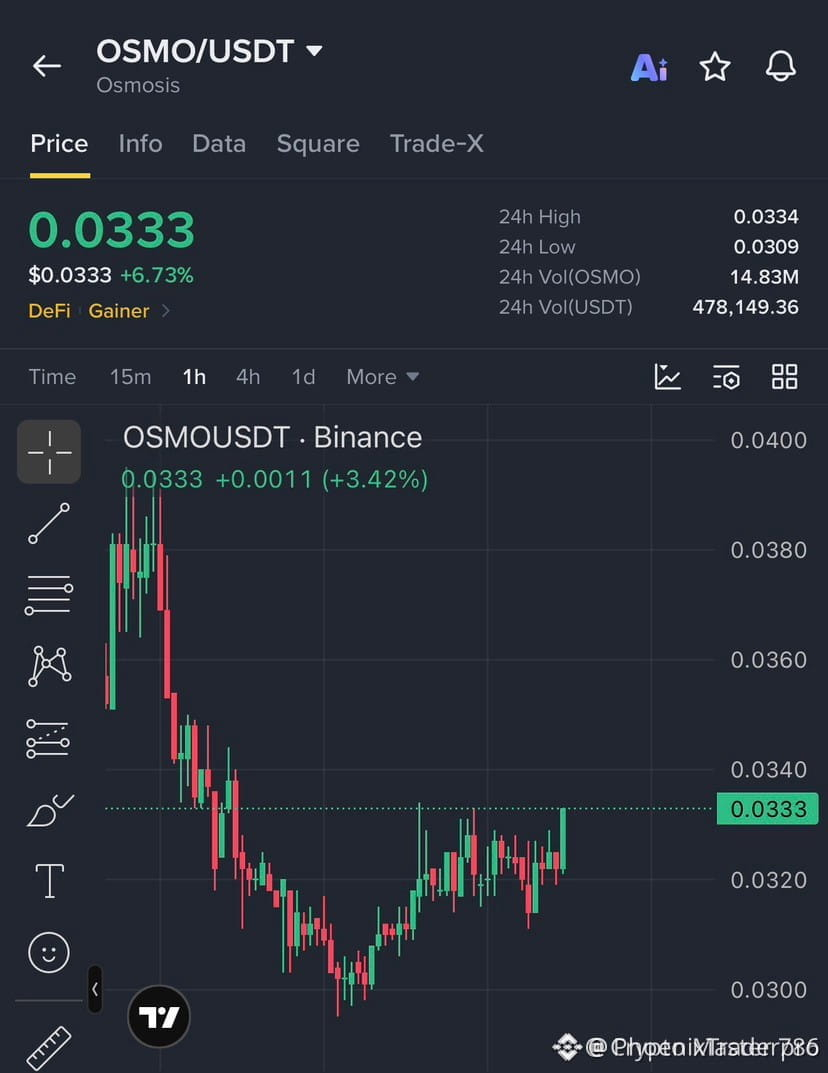
$OSMO BUYERS ARE BATTERING THE 0.0334 RESISTANCE WITH SERIOUS MOMENTUM ⚡ 🚀
Entry: $0.0325–$0.0334 ⚡
Target: $0.0340 / $0.0350 / $0.0360 🚀
Stop Loss: $0.0315 ⚠️
Bulls are quietly absorbing overhead supply as $OSMO prints a solid 6.73% recovery bounce. Price is pressing directly against the local ceiling, and order flow shows eager buyers stepping in ahead of the pivot. 📊
If this accumulation phase resolves upward, expect a fast sweep through the upper liquidity clusters. Volume profile confirms strong participation backing this push. ⚡
💬 Are you positioning for the initial breakout or waiting for a confirmed daily close above resistance? 👇
⚠️ Not financial advice. Always manage your risk. 🛡️
🏷️ #OSMO #Breakout #DeFi #Altcoins
🔥 💎
20
Log in to explore more content
Join global crypto users on Binance Square
⚡️ Get latest and useful information about crypto.
💬 Trusted by the world’s largest crypto exchange.
👍 Discover real insights from verified creators.
Email / Phone number
Trending Topics
1
#CanMarketsReboundAfterThanksgiving?
44,546 views
832 Discussing
2
#CouldSpaceX’sOrbitalDataCentersBoostAIChipDemand?
26,566 views
508 Discussing
3
#EvolveAtBinanceBlockchainWeek
696,197 views
7,983 Discussing
4
#CorePCEBeatLiftsFedHikeOdds
204,568 views
1,539 Discussing
5
#BitcoinAndStocksSlipAgainAmidTrump’sTariffPlans
243,900 views
2,289 Discussing
6
#JensenHuangSaysNvidiaDoesn’tNeedASuccessionPlan
117,004 views
1,364 Discussing
7
#NasdaqFuturesSlideMoreThan3%
51,427 views
453 Discussing
8
#USOctoberPCEPriceIndexAt0.3%MoM
58,794 views
443 Discussing
9
#BitcoinETFsPostRecord$4.94BNovemberOutflows
10,650 views
57 Discussing
10
#TetherInvestsInArgentinasLemon
22,549 views
266 Discussing