

#opec
opec
60,956 views
225 Discussing
Hot
Latest

On October 12, ministers from OPEC+ member countries held a meeting in Riyadh, focusing on the current severe security situation in crude oil maritime transport. Officials clearly stated that blockages in key shipping routes have driven transport and insurance costs to historic extremes, even exceeding one-third of the total value of the goods involved, posing a substantial impediment to the stability of global supply chains.
From a macro fundamental perspective, logistics premiums directly increase the frictional cost of crude oil transportation and add further upward pressure to global inflation expectations. However, this also further compels major oil-producing countries to strengthen joint output cuts and market intervention mechanisms, while the involvement of the International Energy Agency (IEA) and other institutions is expected to provide strong bottom support on the supply side.
At the technical level, tightness in commodity supply chains has not triggered widespread panic selling in the market; the U.S. dollar index and benchmark Treasury yields have maintained resilience within a range of fluctuations. As inflation pressures are absorbed, the risk asset market is showing strong downside resistance, and the bullish structure remains solid.
For the cryptocurrency market, energy-driven inflation pushed up by geopolitical risks may suppress liquidity expectations in the short term, but the value-storage logic of $BTC as a decentralized anti-inflation asset will be reinforced again. If prices can hold the key support level, a technically driven breakout as funds flow back into risk markets remains worth anticipating. 📈
#OPEC #CrudeOil #Geopolitics #Inflation
On October 12, ministers from OPEC+ member countries held a meeting in Riyadh, focusing on the current severe security situation in crude oil maritime transport. Officials clearly stated that blockages in key shipping routes have driven transport and insurance costs to historic extremes, even exceeding one-third of the total value of the goods involved, posing a substantial impediment to the stability of global supply chains.
From a macro fundamental perspective, logistics premiums directly increase the frictional cost of crude oil transportation and add further upward pressure to global inflation expectations. However, this also further compels major oil-producing countries to strengthen joint output cuts and market intervention mechanisms, while the involvement of the International Energy Agency (IEA) and other institutions is expected to provide strong bottom support on the supply side.
At the technical level, tightness in commodity supply chains has not triggered widespread panic selling in the market; the U.S. dollar index and benchmark Treasury yields have maintained resilience within a range of fluctuations. As inflation pressures are absorbed, the risk asset market is showing strong downside resistance, and the bullish structure remains solid.
For the cryptocurrency market, energy-driven inflation pushed up by geopolitical risks may suppress liquidity expectations in the short term, but the value-storage logic of $BTC as a decentralized anti-inflation asset will be reinforced again. If prices can hold the key support level, a technically driven breakout as funds flow back into risk markets remains worth anticipating. 📈
#OPEC #CrudeOil #Geopolitics #Inflation
From a macro fundamental perspective, logistics premiums directly increase the frictional cost of crude oil transportation and add further upward pressure to global inflation expectations. However, this also further compels major oil-producing countries to strengthen joint output cuts and market intervention mechanisms, while the involvement of the International Energy Agency (IEA) and other institutions is expected to provide strong bottom support on the supply side.
At the technical level, tightness in commodity supply chains has not triggered widespread panic selling in the market; the U.S. dollar index and benchmark Treasury yields have maintained resilience within a range of fluctuations. As inflation pressures are absorbed, the risk asset market is showing strong downside resistance, and the bullish structure remains solid.
For the cryptocurrency market, energy-driven inflation pushed up by geopolitical risks may suppress liquidity expectations in the short term, but the value-storage logic of $BTC as a decentralized anti-inflation asset will be reinforced again. If prices can hold the key support level, a technically driven breakout as funds flow back into risk markets remains worth anticipating. 📈
#OPEC #CrudeOil #Geopolitics #Inflation
422

·
--
Verified
30D trade $BTC 8.3K USDT
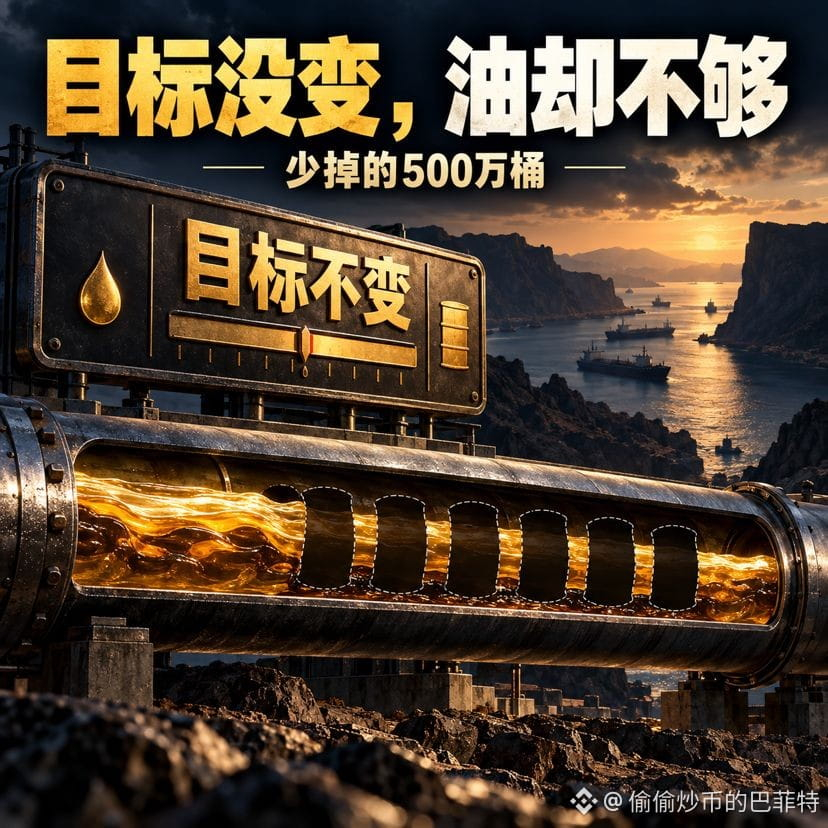
On Friday, $BTC was trading weak nonfarm payrolls and a pause in interest rate hikes. On Monday, it faces another bill: a missing 5 million barrels of oil.
OPEC+ has just in principle agreed to keep its November production targets unchanged. But seven core member countries had actual daily output of only 25 million barrels in August—about 5 million barrels less than in the two pre-war months. Gulf members’ export volumes over recent months have also been only 60% to 80% of normal levels.
This is the part most easily hidden behind the headline:
Keeping the target unchanged doesn’t mean supply hasn’t declined. The Middle East conflict has already caused multiple “production increases,” but most of it remains on paper.
Even more troublesome, Iran today said it will not reopen the Strait of Hormuz until seven conditions are met. Before the war, about one-fifth of the world’s oil and liquefied natural gas passed through it.
If oil prices keep rising on Monday, the interest-rate tailwind from weak employment could be eaten away by inflation expectations.
What BTC bought on Friday was a pause in interest rate hikes—not an exemption from oil prices.
#BTC #OPEC
On Friday, $BTC was trading weak nonfarm payrolls and a pause in interest rate hikes. On Monday, it faces another bill: a missing 5 million barrels of oil.
OPEC+ has just in principle agreed to keep its November production targets unchanged. But seven core member countries had actual daily output of only 25 million barrels in August—about 5 million barrels less than in the two pre-war months. Gulf members’ export volumes over recent months have also been only 60% to 80% of normal levels.
This is the part most easily hidden behind the headline:
Keeping the target unchanged doesn’t mean supply hasn’t declined. The Middle East conflict has already caused multiple “production increases,” but most of it remains on paper.
Even more troublesome, Iran today said it will not reopen the Strait of Hormuz until seven conditions are met. Before the war, about one-fifth of the world’s oil and liquefied natural gas passed through it.
If oil prices keep rising on Monday, the interest-rate tailwind from weak employment could be eaten away by inflation expectations.
What BTC bought on Friday was a pause in interest rate hikes—not an exemption from oil prices.
#BTC #OPEC
OPEC+ has just in principle agreed to keep its November production targets unchanged. But seven core member countries had actual daily output of only 25 million barrels in August—about 5 million barrels less than in the two pre-war months. Gulf members’ export volumes over recent months have also been only 60% to 80% of normal levels.
This is the part most easily hidden behind the headline:
Keeping the target unchanged doesn’t mean supply hasn’t declined. The Middle East conflict has already caused multiple “production increases,” but most of it remains on paper.
Even more troublesome, Iran today said it will not reopen the Strait of Hormuz until seven conditions are met. Before the war, about one-fifth of the world’s oil and liquefied natural gas passed through it.
If oil prices keep rising on Monday, the interest-rate tailwind from weak employment could be eaten away by inflation expectations.
What BTC bought on Friday was a pause in interest rate hikes—not an exemption from oil prices.
#BTC #OPEC
1
1
879

OPEC+ Output Increase Rekindles Fears of Global Oil OversupplyOPEC+ is set to move forward with another production increase as key member countries continue restoring oil output, a decision that is raising fresh concerns about a potential global supply surplus.
According to Bloomberg, the latest production boost comes despite questions over whether current market demand can absorb the additional barrels. Analysts warn that if consumption fails to keep pace, the extra supply could place renewed downward pressure on crude oil prices in the months ahead.
The move also signals a shift in the alliance's internal dynamics. After navigating a period of disagreements among member states over production quotas, OPEC+ appears to be presenting a more unified approach by advancing previously planned output increases.
While stronger seasonal demand and geopolitical risks continue to influence the energy market, the prospect of rising production has revived concerns that supply could outpace demand, particularly if global economic growth slows or fuel consumption weakens.
Traders will now closely monitor upcoming inventory data, demand indicators, and future OPEC+ policy decisions to assess whether the market can comfortably absorb the additional supply or if the production increase will contribute to a broader oil glut.
#OPEC
$XAU
{future}(XAUUSDT)
$CL
{future}(CLUSDT)
$BZ
{future}(BZUSDT)
OPEC+ Output Increase Rekindles Fears of Global Oil Oversupply
OPEC+ is set to move forward with another production increase as key member countries continue restoring oil output, a decision that is raising fresh concerns about a potential global supply surplus.
According to Bloomberg, the latest production boost comes despite questions over whether current market demand can absorb the additional barrels. Analysts warn that if consumption fails to keep pace, the extra supply could place renewed downward pressure on crude oil prices in the months ahead.
The move also signals a shift in the alliance's internal dynamics. After navigating a period of disagreements among member states over production quotas, OPEC+ appears to be presenting a more unified approach by advancing previously planned output increases.
While stronger seasonal demand and geopolitical risks continue to influence the energy market, the prospect of rising production has revived concerns that supply could outpace demand, particularly if global economic growth slows or fuel consumption weakens.
Traders will now closely monitor upcoming inventory data, demand indicators, and future OPEC+ policy decisions to assess whether the market can comfortably absorb the additional supply or if the production increase will contribute to a broader oil glut.
#OPEC
$XAU
$CL
$BZ
According to Bloomberg, the latest production boost comes despite questions over whether current market demand can absorb the additional barrels. Analysts warn that if consumption fails to keep pace, the extra supply could place renewed downward pressure on crude oil prices in the months ahead.
The move also signals a shift in the alliance's internal dynamics. After navigating a period of disagreements among member states over production quotas, OPEC+ appears to be presenting a more unified approach by advancing previously planned output increases.
While stronger seasonal demand and geopolitical risks continue to influence the energy market, the prospect of rising production has revived concerns that supply could outpace demand, particularly if global economic growth slows or fuel consumption weakens.
Traders will now closely monitor upcoming inventory data, demand indicators, and future OPEC+ policy decisions to assess whether the market can comfortably absorb the additional supply or if the production increase will contribute to a broader oil glut.
#OPEC
$XAU
$CL
$BZ
123

·
--
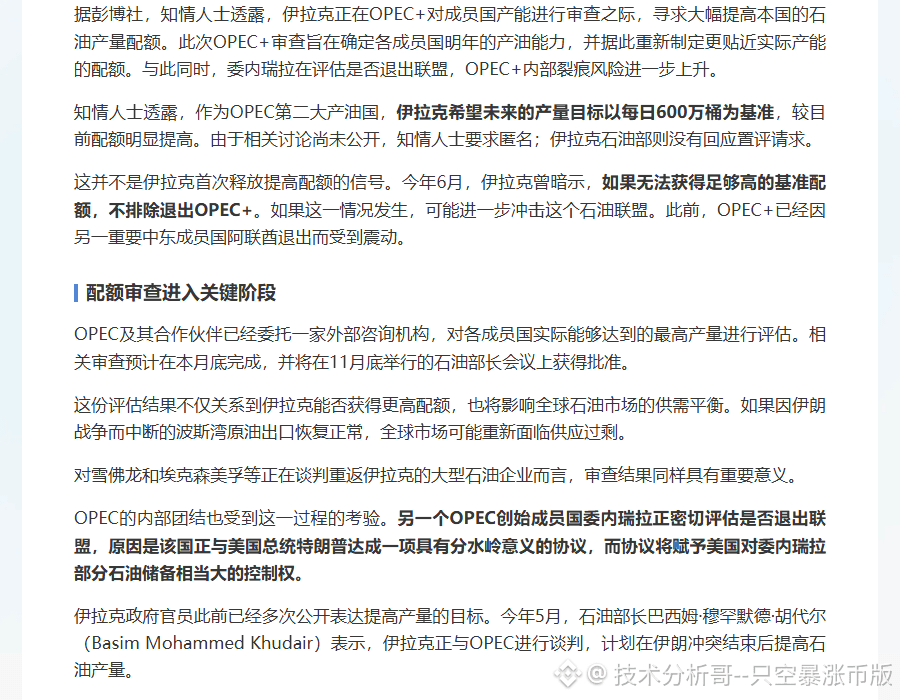
OPEC+ internal divisions intensify: Iraq seeks a new quota of 6 million barrels by leveraging capacity reviews, while Venezuela is considering exiting, putting the alliance’s stability to the test. The struggle over oil producers’ interests is heating up, and the future supply landscape is full of uncertainty.
#OPEC+ #原油市场 # capacity battle
OPEC+ internal divisions intensify: Iraq seeks a new quota of 6 million barrels by leveraging capacity reviews, while Venezuela is considering exiting, putting the alliance’s stability to the test. The struggle over oil producers’ interests is heating up, and the future supply landscape is full of uncertainty.
#OPEC+ #原油市场 # capacity battle
#OPEC+ #原油市场 # capacity battle
78

·
--
Verified
Bullish
58%
Bearish
42%
12 votes • Voting closed
1.1k

·
--
Bullish
Partly True
OIL CUTS COMPLETED 🚨
It is expected that the OPEC+ countries decide to completely abandon voluntary oil production cuts at a meeting on August 2, according to the RTRS.
$AKE $BILL $RIF 👀👀👀
{spot}(RIFUSDT)
{future}(BILLUSDT)
{future}(AKEUSDT)
#OPEC #OilTops$100 #HouthisAttackTwoSaudiTankers #KazakhstanApprovesStrategicDigitalMiningProgram #oil
OIL CUTS COMPLETED 🚨
It is expected that the OPEC+ countries decide to completely abandon voluntary oil production cuts at a meeting on August 2, according to the RTRS.
$AKE $BILL $RIF 👀👀👀
#OPEC #OilTops$100 #HouthisAttackTwoSaudiTankers #KazakhstanApprovesStrategicDigitalMiningProgram #oil
It is expected that the OPEC+ countries decide to completely abandon voluntary oil production cuts at a meeting on August 2, according to the RTRS.
$AKE $BILL $RIF 👀👀👀
#OPEC #OilTops$100 #HouthisAttackTwoSaudiTankers #KazakhstanApprovesStrategicDigitalMiningProgram #oil
622

OPEC+ Keeps Oil Output Quotas Unchanged — September 6, 2026OPEC+ has decided to keep its oil production policy unchanged for October, ending a run of monthly increases as the group faces major uncertainty from the Iran conflict and disruptions around the Strait of Hormuz.
🔑 Key details
October production: OPEC+ will keep its current output policy unchanged.No new increase: The decision follows several months of planned production increases.September increase: OPEC+ had raised September output targets by about 188,000 barrels per day, completing the phased rollback of a 1.65 million-barrel-per-day cut introduced in 2023.Actual production remains below targets: Despite higher quotas, several members are unable to produce or export at planned levels because of disruptions caused by the Iran war and the situation around the Strait of Hormuz.2027 quotas now in focus: OPEC+ needs to assess members' production capacity before establishing new production baselines for 2027.Next meeting: The seven core members are scheduled to meet again on October 4.🛢️ Why the decision mattersThe decision is supportive for oil prices because OPEC+ is not adding additional planned supply to the market in October. However, the impact is less straightforward than it would normally be because actual oil flows are being heavily affected by geopolitical disruptions.The Strait of Hormuz is particularly important. The ongoing Iran conflict has reduced tanker traffic and disrupted regional exports, meaning OPEC+'s ability to control the physical oil market is currently more limited.📈 Oil-market reactionBrent crude had already moved above $96 per barrel at Friday's close as traders priced in geopolitical supply risks. WTI was also around the low-$90s earlier in the week.#OPEC {spot}(OPENUSDT)
OPEC+ Keeps Oil Output Quotas Unchanged — September 6, 2026
OPEC+ has decided to keep its oil production policy unchanged for October, ending a run of monthly increases as the group faces major uncertainty from the Iran conflict and disruptions around the Strait of Hormuz.
🔑 Key details
October production: OPEC+ will keep its current output policy unchanged.No new increase: The decision follows several months of planned production increases.September increase: OPEC+ had raised September output targets by about 188,000 barrels per day, completing the phased rollback of a 1.65 million-barrel-per-day cut introduced in 2023.Actual production remains below targets: Despite higher quotas, several members are unable to produce or export at planned levels because of disruptions caused by the Iran war and the situation around the Strait of Hormuz.2027 quotas now in focus: OPEC+ needs to assess members' production capacity before establishing new production baselines for 2027.Next meeting: The seven core members are scheduled to meet again on October 4.🛢️ Why the decision mattersThe decision is supportive for oil prices because OPEC+ is not adding additional planned supply to the market in October. However, the impact is less straightforward than it would normally be because actual oil flows are being heavily affected by geopolitical disruptions.The Strait of Hormuz is particularly important. The ongoing Iran conflict has reduced tanker traffic and disrupted regional exports, meaning OPEC+'s ability to control the physical oil market is currently more limited.📈 Oil-market reactionBrent crude had already moved above $96 per barrel at Friday's close as traders priced in geopolitical supply risks. WTI was also around the low-$90s earlier in the week.#OPEC
🔑 Key details
October production: OPEC+ will keep its current output policy unchanged.No new increase: The decision follows several months of planned production increases.September increase: OPEC+ had raised September output targets by about 188,000 barrels per day, completing the phased rollback of a 1.65 million-barrel-per-day cut introduced in 2023.Actual production remains below targets: Despite higher quotas, several members are unable to produce or export at planned levels because of disruptions caused by the Iran war and the situation around the Strait of Hormuz.2027 quotas now in focus: OPEC+ needs to assess members' production capacity before establishing new production baselines for 2027.Next meeting: The seven core members are scheduled to meet again on October 4.🛢️ Why the decision mattersThe decision is supportive for oil prices because OPEC+ is not adding additional planned supply to the market in October. However, the impact is less straightforward than it would normally be because actual oil flows are being heavily affected by geopolitical disruptions.The Strait of Hormuz is particularly important. The ongoing Iran conflict has reduced tanker traffic and disrupted regional exports, meaning OPEC+'s ability to control the physical oil market is currently more limited.📈 Oil-market reactionBrent crude had already moved above $96 per barrel at Friday's close as traders priced in geopolitical supply risks. WTI was also around the low-$90s earlier in the week.#OPEC
25

·
--
$XAUT $2Z $SOL
OPEC+ extends oil production cuts through 2025! 🛢️ This move aims to stabilize global oil markets but could fuel inflation concerns, potentially impacting the broader economy and crypto sentiment. 📈 #OPEC #OilPrices #Inflation
$XAUT $2Z $SOL
OPEC+ extends oil production cuts through 2025! 🛢️ This move aims to stabilize global oil markets but could fuel inflation concerns, potentially impacting the broader economy and crypto sentiment. 📈 #OPEC #OilPrices #Inflation
OPEC+ extends oil production cuts through 2025! 🛢️ This move aims to stabilize global oil markets but could fuel inflation concerns, potentially impacting the broader economy and crypto sentiment. 📈 #OPEC #OilPrices #Inflation

166

According to OPEC's latest September monthly report, Saudi Arabia officially notified the cartel that its crude oil production has fallen to its lowest level since 1990. Simultaneously, OPEC trimmed its 2026 global oil demand growth projection for the fifth consecutive time to 380,000 barrels per day, down from 580,000 bpd, while lifting its 2027 forecast to 2.36 million bpd.
This persistent downward revision in demand reflects mounting structural headwinds across major global economies, outweighing fears of regional conflict disruptions. Despite aggressive production cuts by Riyadh to defend price floors, sluggish consumption signals that global industrial momentum remains under pressure.
For traditional markets, softening crude demand coupled with suppressed output keeps a lid on headline energy inflation. This dynamic eases pressure on sovereign bond yields and gives central banks broader room to navigate monetary easing without reigniting immediate cost pressures.
For crypto assets like $BTC, cooling energy costs and stabilizing inflation expectations provide a constructive macro backdrop. As liquidity conditions gradually loosen, sustained disinflation should bolster broader risk appetite.
#opec #oil #macro
According to OPEC's latest September monthly report, Saudi Arabia officially notified the cartel that its crude oil production has fallen to its lowest level since 1990. Simultaneously, OPEC trimmed its 2026 global oil demand growth projection for the fifth consecutive time to 380,000 barrels per day, down from 580,000 bpd, while lifting its 2027 forecast to 2.36 million bpd.
This persistent downward revision in demand reflects mounting structural headwinds across major global economies, outweighing fears of regional conflict disruptions. Despite aggressive production cuts by Riyadh to defend price floors, sluggish consumption signals that global industrial momentum remains under pressure.
For traditional markets, softening crude demand coupled with suppressed output keeps a lid on headline energy inflation. This dynamic eases pressure on sovereign bond yields and gives central banks broader room to navigate monetary easing without reigniting immediate cost pressures.
For crypto assets like $BTC , cooling energy costs and stabilizing inflation expectations provide a constructive macro backdrop. As liquidity conditions gradually loosen, sustained disinflation should bolster broader risk appetite.
#opec #oil #macro
This persistent downward revision in demand reflects mounting structural headwinds across major global economies, outweighing fears of regional conflict disruptions. Despite aggressive production cuts by Riyadh to defend price floors, sluggish consumption signals that global industrial momentum remains under pressure.
For traditional markets, softening crude demand coupled with suppressed output keeps a lid on headline energy inflation. This dynamic eases pressure on sovereign bond yields and gives central banks broader room to navigate monetary easing without reigniting immediate cost pressures.
For crypto assets like $BTC , cooling energy costs and stabilizing inflation expectations provide a constructive macro backdrop. As liquidity conditions gradually loosen, sustained disinflation should bolster broader risk appetite.
#opec #oil #macro
39

·
--
Bearish
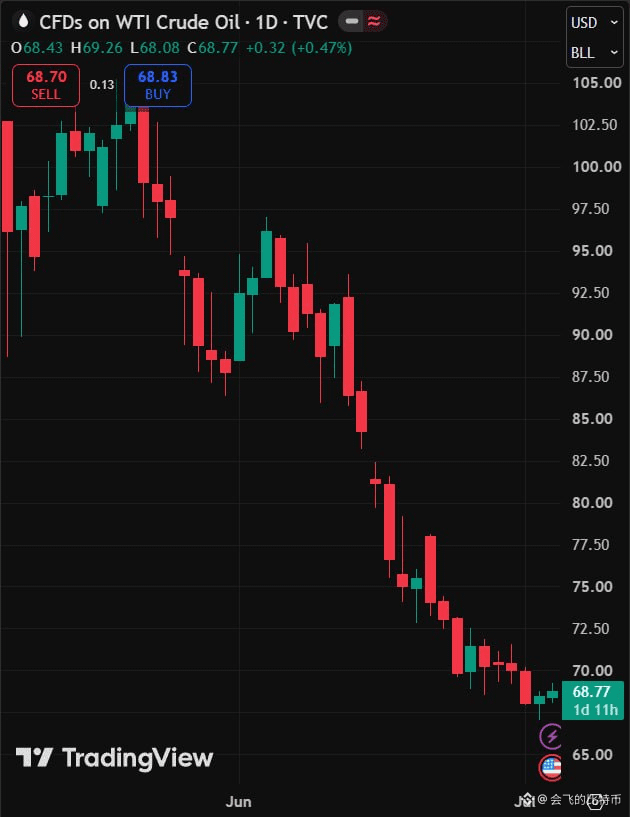
🚨Breaking Major News|Reuters: OPEC+ again increases daily crude oil production by 188,000 barrels in August
Shipping in the Strait of Hormuz gradually resumes, and oil-producing countries continue to loosen supply month by month
WTI crude oil has fallen sharply from its early-June peak of $105 to $68.77, with prices back in the pre-war range
As supply increments continue to be released, crude oil prices face sustained long-term pressure, and expectations of weakness in the energy sector strengthen
$CL
{future}(CLUSDT)
#原油 #OPEC
🚨Breaking Major News|Reuters: OPEC+ again increases daily crude oil production by 188,000 barrels in August
Shipping in the Strait of Hormuz gradually resumes, and oil-producing countries continue to loosen supply month by month
WTI crude oil has fallen sharply from its early-June peak of $105 to $68.77, with prices back in the pre-war range
As supply increments continue to be released, crude oil prices face sustained long-term pressure, and expectations of weakness in the energy sector strengthen
$CL
#原油 #OPEC
Shipping in the Strait of Hormuz gradually resumes, and oil-producing countries continue to loosen supply month by month
WTI crude oil has fallen sharply from its early-June peak of $105 to $68.77, with prices back in the pre-war range
As supply increments continue to be released, crude oil prices face sustained long-term pressure, and expectations of weakness in the energy sector strengthen
$CL
#原油 #OPEC
219

🚨 OPEC+ Increases August Oil Output by 188,000 BPD 🛢️📉
OPEC+ has officially approved an additional 188,000 barrels per day (BPD) of oil production for August, continuing its gradual strategy of bringing supply back to the market.
📊 What Does It Mean?
✅ More oil supply entering global markets
📉 Potential short-term pressure on crude oil prices
📈 Energy stocks and oil-linked assets could see increased volatility
🌍 Markets are now watching whether global demand can absorb the extra supply.
💡 Key Question:
Will this additional production cool the recent oil rally, or will strong demand keep prices supported?
👇 What's your outlook?
🐻 Bearish on oil in the short term?
🐂 Still bullish for the long run?
Share your thoughts in the comments!
#OPEC #OPECPlus #Oil #CrudeOil #WTI
{stock_us}(BZ.US)
{stock_us}(CL.US)
🚨 OPEC+ Increases August Oil Output by 188,000 BPD 🛢️📉
OPEC+ has officially approved an additional 188,000 barrels per day (BPD) of oil production for August, continuing its gradual strategy of bringing supply back to the market.
📊 What Does It Mean?
✅ More oil supply entering global markets
📉 Potential short-term pressure on crude oil prices
📈 Energy stocks and oil-linked assets could see increased volatility
🌍 Markets are now watching whether global demand can absorb the extra supply.
💡 Key Question:
Will this additional production cool the recent oil rally, or will strong demand keep prices supported?
👇 What's your outlook?
🐻 Bearish on oil in the short term?
🐂 Still bullish for the long run?
Share your thoughts in the comments!
#OPEC #OPECPlus #Oil #CrudeOil #WTI
OPEC+ has officially approved an additional 188,000 barrels per day (BPD) of oil production for August, continuing its gradual strategy of bringing supply back to the market.
📊 What Does It Mean?
✅ More oil supply entering global markets
📉 Potential short-term pressure on crude oil prices
📈 Energy stocks and oil-linked assets could see increased volatility
🌍 Markets are now watching whether global demand can absorb the extra supply.
💡 Key Question:
Will this additional production cool the recent oil rally, or will strong demand keep prices supported?
👇 What's your outlook?
🐻 Bearish on oil in the short term?
🐂 Still bullish for the long run?
Share your thoughts in the comments!
#OPEC #OPECPlus #Oil #CrudeOil #WTI
3
5
92

·
--
📢 OPEC+ Shocks Oil Markets Again! 🛢️
OPEC+ has officially approved another 188,000 barrels/day production hike for July, but there’s one major problem — much of this extra oil may never reach the market while the Strait of Hormuz remains blocked amid escalating U.S.-Israel-Iran tensions.
Since April, the alliance announced nearly 600,000 barrels/day in additional supply, yet real production remains heavily disrupted. Iraq’s output alone reportedly collapsed from 4M to just 1.4M barrels/day due to tanker restrictions.
Meanwhile, crude prices continue to surge, gaining over $20 per barrel since the conflict began, with several spikes above $100. Traders still expect Hormuz to reopen soon, but until that happens, fears of supply shortages dominate the market.
📈 If the strait reopens, analysts warn oil could rapidly shift from “shortage panic” to “oversupply fear.”
Energy markets are entering a highly volatile phase — traders should stay alert. ⚡🛢️
#OPEC #Oil #CryptoNews
👀 $FTT $ALLO $LAYER
📢 OPEC+ Shocks Oil Markets Again! 🛢️
OPEC+ has officially approved another 188,000 barrels/day production hike for July, but there’s one major problem — much of this extra oil may never reach the market while the Strait of Hormuz remains blocked amid escalating U.S.-Israel-Iran tensions.
Since April, the alliance announced nearly 600,000 barrels/day in additional supply, yet real production remains heavily disrupted. Iraq’s output alone reportedly collapsed from 4M to just 1.4M barrels/day due to tanker restrictions.
Meanwhile, crude prices continue to surge, gaining over $20 per barrel since the conflict began, with several spikes above $100. Traders still expect Hormuz to reopen soon, but until that happens, fears of supply shortages dominate the market.
📈 If the strait reopens, analysts warn oil could rapidly shift from “shortage panic” to “oversupply fear.”
Energy markets are entering a highly volatile phase — traders should stay alert. ⚡🛢️
#OPEC #Oil #CryptoNews
👀 $FTT $ALLO $LAYER
OPEC+ has officially approved another 188,000 barrels/day production hike for July, but there’s one major problem — much of this extra oil may never reach the market while the Strait of Hormuz remains blocked amid escalating U.S.-Israel-Iran tensions.
Since April, the alliance announced nearly 600,000 barrels/day in additional supply, yet real production remains heavily disrupted. Iraq’s output alone reportedly collapsed from 4M to just 1.4M barrels/day due to tanker restrictions.
Meanwhile, crude prices continue to surge, gaining over $20 per barrel since the conflict began, with several spikes above $100. Traders still expect Hormuz to reopen soon, but until that happens, fears of supply shortages dominate the market.
📈 If the strait reopens, analysts warn oil could rapidly shift from “shortage panic” to “oversupply fear.”
Energy markets are entering a highly volatile phase — traders should stay alert. ⚡🛢️
#OPEC #Oil #CryptoNews
👀 $FTT $ALLO $LAYER
1
233

·
--
🛢️ CRISIS IN ORMUZ: OPEC+ TO INCREASE OIL PRODUCTION FOR THE FOURTH MONTH
The global crude supply remains under extreme tension following the closure of the Strait of Hormuz. To curb the shortage, OPEC+ will agree on a new production quota increase this Sunday, according to sources from Reuters.
What's crucial:
🔒 Roadblock: The closure of Hormuz keeps the global oil supply at critically low levels.
📈 Fourth month on the rise: OPEC+ is forced to pump more crude for the fourth consecutive month to stabilize costs.
⚡ Reaction: Oil futures (WTI and Brent) are reacting with immediate spikes due to geopolitical uncertainty.
🔥 The global energy crisis is shaking traditional markets, accelerating the search for safe-haven assets and injecting macro volatility.
#OPEC #Petroleo #Geopolitica #Binance
📊 IMPACT ON GLOBAL LIQUIDITY
Instability in traditional commodities often forces a rotation of fresh capital into the digital asset market.
👇 Hit the charts down below to monitor prices in real-time 👇
$BTC $ETH
{spot}(ETHUSDT)
{spot}(BTCUSDT)
🛢️ CRISIS IN ORMUZ: OPEC+ TO INCREASE OIL PRODUCTION FOR THE FOURTH MONTH
The global crude supply remains under extreme tension following the closure of the Strait of Hormuz. To curb the shortage, OPEC+ will agree on a new production quota increase this Sunday, according to sources from Reuters.
What's crucial:
🔒 Roadblock: The closure of Hormuz keeps the global oil supply at critically low levels.
📈 Fourth month on the rise: OPEC+ is forced to pump more crude for the fourth consecutive month to stabilize costs.
⚡ Reaction: Oil futures (WTI and Brent) are reacting with immediate spikes due to geopolitical uncertainty.
🔥 The global energy crisis is shaking traditional markets, accelerating the search for safe-haven assets and injecting macro volatility.
#OPEC #Petroleo #Geopolitica #Binance
📊 IMPACT ON GLOBAL LIQUIDITY
Instability in traditional commodities often forces a rotation of fresh capital into the digital asset market.
👇 Hit the charts down below to monitor prices in real-time 👇
$BTC $ETH
The global crude supply remains under extreme tension following the closure of the Strait of Hormuz. To curb the shortage, OPEC+ will agree on a new production quota increase this Sunday, according to sources from Reuters.
What's crucial:
🔒 Roadblock: The closure of Hormuz keeps the global oil supply at critically low levels.
📈 Fourth month on the rise: OPEC+ is forced to pump more crude for the fourth consecutive month to stabilize costs.
⚡ Reaction: Oil futures (WTI and Brent) are reacting with immediate spikes due to geopolitical uncertainty.
🔥 The global energy crisis is shaking traditional markets, accelerating the search for safe-haven assets and injecting macro volatility.
#OPEC #Petroleo #Geopolitica #Binance
📊 IMPACT ON GLOBAL LIQUIDITY
Instability in traditional commodities often forces a rotation of fresh capital into the digital asset market.
👇 Hit the charts down below to monitor prices in real-time 👇
$BTC $ETH
118
OPEC+ Holds October Oil Policy Steady
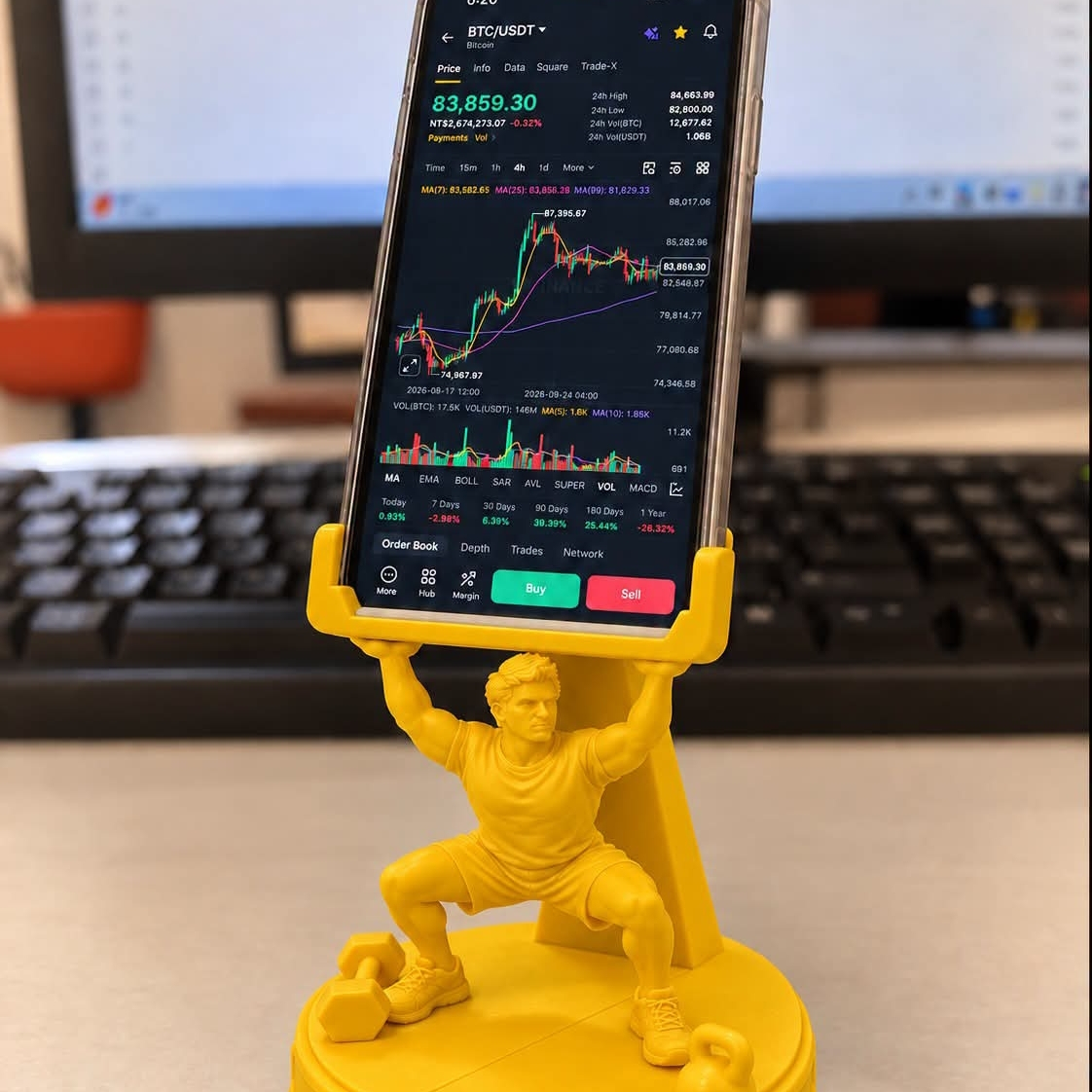
OPEC+ is expected to keep its October oil output policy unchanged at Sunday’s meeting, according to people familiar with the discussions.
The group is shifting focus toward new production quotas and 2027 baseline negotiations, while the Iran conflict continues to disrupt oil flows through the Strait of Hormuz.
Market impact: With supply disruptions limiting OPEC+’s ability to influence prices, oil prices could remain volatile, especially if tensions around Hormuz escalate.
#OPEC #Oil #CrudeOilTrading #Energy. #Market_Update
OPEC+ Holds October Oil Policy Steady
OPEC+ is expected to keep its October oil output policy unchanged at Sunday’s meeting, according to people familiar with the discussions.
The group is shifting focus toward new production quotas and 2027 baseline negotiations, while the Iran conflict continues to disrupt oil flows through the Strait of Hormuz.
Market impact: With supply disruptions limiting OPEC+’s ability to influence prices, oil prices could remain volatile, especially if tensions around Hormuz escalate.
#OPEC #Oil #CrudeOilTrading #Energy. #Market_Update
OPEC+ is expected to keep its October oil output policy unchanged at Sunday’s meeting, according to people familiar with the discussions.
The group is shifting focus toward new production quotas and 2027 baseline negotiations, while the Iran conflict continues to disrupt oil flows through the Strait of Hormuz.
Market impact: With supply disruptions limiting OPEC+’s ability to influence prices, oil prices could remain volatile, especially if tensions around Hormuz escalate.
#OPEC #Oil #CrudeOilTrading #Energy. #Market_Update
54

Against the backdrop of OPEC+ commissioning external institutions to assess each member country's actual production capacity, Iraq—one of OPEC’s founding countries—is pushing hard to seek a significant increase in its crude oil production quota, with the goal aimed directly at 6 million barrels per day. According to sources, the capacity assessment is expected to be completed by the end of this month and will be formally reviewed at an oil ministers’ meeting in late November. Iraq has even warned that if it cannot obtain the higher quota it is seeking, it may consider withdrawing from OPEC. Combined with the prior moves by the UAE and the possibility that Venezuela may also have second thoughts due to an agreement with the United States, this 60-plus-year-old oil-producing alliance is facing an unprecedented crisis of internal cohesion.
From the perspective of macro-level games, Iraq’s move strikes directly at a soft spot in OPEC+’s production-cut-and-price-support strategy. For years, the core member states led by Saudi Arabia have tried to prop up oil prices through quota controls. However, amid fiscal pressures, internal members’ demands to increase production have become increasingly urgent. If the assessment results from a third party trigger deeper divisions and cause the quota system to unravel, the global crude oil supply side could see disorderly increases in output, fundamentally undermining the existing price-alliance mechanism.
This poses significant uncertainty for commodities and traditional financial markets. In the short term, expectations of increased supply could create downward pressure on oil prices, but the breaking and re-forming of geopolitical alignments often comes with a sharp spike in volatility. Instability in energy prices would not only disrupt the disinflation trajectory of major economies, but also introduce additional distortions to central banks’ monetary policy decision-making, making the global asset-pricing environment more complex.
For the crypto market, heightened macro uncertainty often weakens institutional investors’ risk appetite. Repeated expectations of inflation reversals caused by sharp crude oil price swings may delay the deepening of the rate-cut cycle and limit the expansion of liquidity in high-risk assets. In this context, crypto assets represented by $BTC face pressure from incremental capital to remain cautious and on the sidelines. Investors should be wary of the potential impact of energy geopolitical spillovers on the liquidity environment.
#OPEC #原油 #macroeconomy
Against the backdrop of OPEC+ commissioning external institutions to assess each member country's actual production capacity, Iraq—one of OPEC’s founding countries—is pushing hard to seek a significant increase in its crude oil production quota, with the goal aimed directly at 6 million barrels per day. According to sources, the capacity assessment is expected to be completed by the end of this month and will be formally reviewed at an oil ministers’ meeting in late November. Iraq has even warned that if it cannot obtain the higher quota it is seeking, it may consider withdrawing from OPEC. Combined with the prior moves by the UAE and the possibility that Venezuela may also have second thoughts due to an agreement with the United States, this 60-plus-year-old oil-producing alliance is facing an unprecedented crisis of internal cohesion.
From the perspective of macro-level games, Iraq’s move strikes directly at a soft spot in OPEC+’s production-cut-and-price-support strategy. For years, the core member states led by Saudi Arabia have tried to prop up oil prices through quota controls. However, amid fiscal pressures, internal members’ demands to increase production have become increasingly urgent. If the assessment results from a third party trigger deeper divisions and cause the quota system to unravel, the global crude oil supply side could see disorderly increases in output, fundamentally undermining the existing price-alliance mechanism.
This poses significant uncertainty for commodities and traditional financial markets. In the short term, expectations of increased supply could create downward pressure on oil prices, but the breaking and re-forming of geopolitical alignments often comes with a sharp spike in volatility. Instability in energy prices would not only disrupt the disinflation trajectory of major economies, but also introduce additional distortions to central banks’ monetary policy decision-making, making the global asset-pricing environment more complex.
For the crypto market, heightened macro uncertainty often weakens institutional investors’ risk appetite. Repeated expectations of inflation reversals caused by sharp crude oil price swings may delay the deepening of the rate-cut cycle and limit the expansion of liquidity in high-risk assets. In this context, crypto assets represented by $BTC face pressure from incremental capital to remain cautious and on the sidelines. Investors should be wary of the potential impact of energy geopolitical spillovers on the liquidity environment.
#OPEC #原油 #macroeconomy
From the perspective of macro-level games, Iraq’s move strikes directly at a soft spot in OPEC+’s production-cut-and-price-support strategy. For years, the core member states led by Saudi Arabia have tried to prop up oil prices through quota controls. However, amid fiscal pressures, internal members’ demands to increase production have become increasingly urgent. If the assessment results from a third party trigger deeper divisions and cause the quota system to unravel, the global crude oil supply side could see disorderly increases in output, fundamentally undermining the existing price-alliance mechanism.
This poses significant uncertainty for commodities and traditional financial markets. In the short term, expectations of increased supply could create downward pressure on oil prices, but the breaking and re-forming of geopolitical alignments often comes with a sharp spike in volatility. Instability in energy prices would not only disrupt the disinflation trajectory of major economies, but also introduce additional distortions to central banks’ monetary policy decision-making, making the global asset-pricing environment more complex.
For the crypto market, heightened macro uncertainty often weakens institutional investors’ risk appetite. Repeated expectations of inflation reversals caused by sharp crude oil price swings may delay the deepening of the rate-cut cycle and limit the expansion of liquidity in high-risk assets. In this context, crypto assets represented by $BTC face pressure from incremental capital to remain cautious and on the sidelines. Investors should be wary of the potential impact of energy geopolitical spillovers on the liquidity environment.
#OPEC #原油 #macroeconomy
146

Article
Blood-Soaked Black Gold and Suffocating Blue Flame: The Ultimate Analysis of CL Crude Oil and BZ Natural Gas Price Movements(Blood-Soaked Black Gold and Suffocating Blue Flame: The Ultimate Analysis of CL Crude Oil and BZ Natural Gas Price Movements Amidst the Global Energy Massacre)
Introduction: Energy Pricing Power, the Bloodiest Meat Grinder of Human Empires In this world, no asset is as bloodied or geopolitically significant as crude oil (CL) and natural gas (BZ/NG). They aren't driven by candlestick charts; they are priced by aircraft carrier strike groups, cruise missiles, the ambitions of dictators, and the inflation rates of superpowers! When you're watching CL and BZ, you're not just looking at supply and demand reports; you're staring at the countdown timer for World War III! Crude oil (CL, WTI crude) is the lifeblood of the industrial age, the foundation of American hegemony; natural gas (BZ, Brent/global natural gas benchmark) is the breath of the post-industrial era, the lifeline for Europe and Asia.
Blood-Soaked Black Gold and Suffocating Blue Flame: The Ultimate Analysis of CL Crude Oil and BZ Natural Gas Price Movements
(Blood-Soaked Black Gold and Suffocating Blue Flame: The Ultimate Analysis of CL Crude Oil and BZ Natural Gas Price Movements Amidst the Global Energy Massacre)
Introduction: Energy Pricing Power, the Bloodiest Meat Grinder of Human Empires In this world, no asset is as bloodied or geopolitically significant as crude oil (CL) and natural gas (BZ/NG). They aren't driven by candlestick charts; they are priced by aircraft carrier strike groups, cruise missiles, the ambitions of dictators, and the inflation rates of superpowers! When you're watching CL and BZ, you're not just looking at supply and demand reports; you're staring at the countdown timer for World War III! Crude oil (CL, WTI crude) is the lifeblood of the industrial age, the foundation of American hegemony; natural gas (BZ, Brent/global natural gas benchmark) is the breath of the post-industrial era, the lifeline for Europe and Asia.
Introduction: Energy Pricing Power, the Bloodiest Meat Grinder of Human Empires In this world, no asset is as bloodied or geopolitically significant as crude oil (CL) and natural gas (BZ/NG). They aren't driven by candlestick charts; they are priced by aircraft carrier strike groups, cruise missiles, the ambitions of dictators, and the inflation rates of superpowers! When you're watching CL and BZ, you're not just looking at supply and demand reports; you're staring at the countdown timer for World War III! Crude oil (CL, WTI crude) is the lifeblood of the industrial age, the foundation of American hegemony; natural gas (BZ, Brent/global natural gas benchmark) is the breath of the post-industrial era, the lifeline for Europe and Asia.
370
Ministers of the OPEC+ alliance gathered in Riyadh on October 12 to address mounting supply chain risks, issuing a severe warning over global maritime bottlenecks. The group highlighted that recent disruptions have propelled freight and insurance costs to unprecedented levels, now exceeding one-third of total cargo value.
This spike represents a critical supply shock rather than a standard price fluctuation. By choking off efficient crude oil transport, soaring logistics expenses threaten to create widespread bottlenecks and inject fresh inflationary pressures into the global economy.
Traditional financial markets face renewed stagflationary headwinds as elevated energy friction weighs on global growth while complicating central bank policy. Sustained shipping costs could drive bond yields higher and bolster the US dollar as risk aversion takes hold across broader equities.
For the crypto market, mounting energy inflation poses a liquidity challenge by reducing the likelihood of near-term monetary easing. If macro uncertainty deepens, $BTC and broader digital assets may see extended consolidation as investors de-risk across speculative sectors.
#OPEC #CrudeOil #MacroEconomy
Ministers of the OPEC+ alliance gathered in Riyadh on October 12 to address mounting supply chain risks, issuing a severe warning over global maritime bottlenecks. The group highlighted that recent disruptions have propelled freight and insurance costs to unprecedented levels, now exceeding one-third of total cargo value.
This spike represents a critical supply shock rather than a standard price fluctuation. By choking off efficient crude oil transport, soaring logistics expenses threaten to create widespread bottlenecks and inject fresh inflationary pressures into the global economy.
Traditional financial markets face renewed stagflationary headwinds as elevated energy friction weighs on global growth while complicating central bank policy. Sustained shipping costs could drive bond yields higher and bolster the US dollar as risk aversion takes hold across broader equities.
For the crypto market, mounting energy inflation poses a liquidity challenge by reducing the likelihood of near-term monetary easing. If macro uncertainty deepens, $BTC and broader digital assets may see extended consolidation as investors de-risk across speculative sectors.
#OPEC #CrudeOil #MacroEconomy
This spike represents a critical supply shock rather than a standard price fluctuation. By choking off efficient crude oil transport, soaring logistics expenses threaten to create widespread bottlenecks and inject fresh inflationary pressures into the global economy.
Traditional financial markets face renewed stagflationary headwinds as elevated energy friction weighs on global growth while complicating central bank policy. Sustained shipping costs could drive bond yields higher and bolster the US dollar as risk aversion takes hold across broader equities.
For the crypto market, mounting energy inflation poses a liquidity challenge by reducing the likelihood of near-term monetary easing. If macro uncertainty deepens, $BTC and broader digital assets may see extended consolidation as investors de-risk across speculative sectors.
#OPEC #CrudeOil #MacroEconomy
272

·
--
At the OPEC+ ministerial meeting held in Riyadh on October 12, member countries focused on the severe state of the current energy market. Officials warned that disruptions to international shipping had driven crude oil transportation and insurance costs to unprecedented levels, exceeding one-third of the value of the cargo involved.
Disruptions to supply chains have directly driven up the delivery costs of crude oil and refined products, increasing the risk of a resurgence in global inflation. Markets had originally expected supply chain pressures to ease gradually, but logistical bottlenecks are putting both oil-producing and oil-consuming countries under strain, testing the pace of the global economic recovery.
The pass-through of energy costs often delays expectations for major central banks to cut interest rates, providing support for the U.S. dollar and bond yields, while traditional risk assets face some liquidity pressure in the short term.
For crypto markets, recurring shifts in inflation expectations tend to keep major investors on the sidelines. In the short term, major assets such as $BTC are more likely to digest macroeconomic sentiment within a trading range, awaiting greater clarity on the situation.⚖️
#OPEC #CrudeOil #MacroEconomy
At the OPEC+ ministerial meeting held in Riyadh on October 12, member countries focused on the severe state of the current energy market. Officials warned that disruptions to international shipping had driven crude oil transportation and insurance costs to unprecedented levels, exceeding one-third of the value of the cargo involved.
Disruptions to supply chains have directly driven up the delivery costs of crude oil and refined products, increasing the risk of a resurgence in global inflation. Markets had originally expected supply chain pressures to ease gradually, but logistical bottlenecks are putting both oil-producing and oil-consuming countries under strain, testing the pace of the global economic recovery.
The pass-through of energy costs often delays expectations for major central banks to cut interest rates, providing support for the U.S. dollar and bond yields, while traditional risk assets face some liquidity pressure in the short term.
For crypto markets, recurring shifts in inflation expectations tend to keep major investors on the sidelines. In the short term, major assets such as $BTC are more likely to digest macroeconomic sentiment within a trading range, awaiting greater clarity on the situation.⚖️
#OPEC #CrudeOil #MacroEconomy
Disruptions to supply chains have directly driven up the delivery costs of crude oil and refined products, increasing the risk of a resurgence in global inflation. Markets had originally expected supply chain pressures to ease gradually, but logistical bottlenecks are putting both oil-producing and oil-consuming countries under strain, testing the pace of the global economic recovery.
The pass-through of energy costs often delays expectations for major central banks to cut interest rates, providing support for the U.S. dollar and bond yields, while traditional risk assets face some liquidity pressure in the short term.
For crypto markets, recurring shifts in inflation expectations tend to keep major investors on the sidelines. In the short term, major assets such as $BTC are more likely to digest macroeconomic sentiment within a trading range, awaiting greater clarity on the situation.⚖️
#OPEC #CrudeOil #MacroEconomy
7

·
--
At the meeting in Riyadh on October 12, ministers from the OPEC+ alliance issued an urgent warning about severe disruptions to international shipping routes. The bloc emphasized that security risks are driving shipping and insurance costs to record highs, exceeding one-third of the actual value of goods.
This move shows that logistical pressures in the energy industry are entering a danger zone. Soaring insurance costs are not only hampering the flow of crude oil and refined products, but also directly threatening global supply chains, creating a new wave of inflationary pressure that is harder to control than expected.
For financial markets, the risk of inflation returning could force central banks to maintain tight monetary policies for longer. U.S. Treasury yields and the U.S. dollar are likely to remain elevated, putting pressure on the valuations of risk assets such as equities.
The cryptocurrency market will also be indirectly affected by declining macro liquidity. As geopolitical instability increases and money seeks safe havens, $BTC and the crypto market could face short-term corrections amid rising borrowing costs. 🌐
#OPEC #CrudeOil #MacroEconomy #Geopolitics
At the meeting in Riyadh on October 12, ministers from the OPEC+ alliance issued an urgent warning about severe disruptions to international shipping routes. The bloc emphasized that security risks are driving shipping and insurance costs to record highs, exceeding one-third of the actual value of goods.
This move shows that logistical pressures in the energy industry are entering a danger zone. Soaring insurance costs are not only hampering the flow of crude oil and refined products, but also directly threatening global supply chains, creating a new wave of inflationary pressure that is harder to control than expected.
For financial markets, the risk of inflation returning could force central banks to maintain tight monetary policies for longer. U.S. Treasury yields and the U.S. dollar are likely to remain elevated, putting pressure on the valuations of risk assets such as equities.
The cryptocurrency market will also be indirectly affected by declining macro liquidity. As geopolitical instability increases and money seeks safe havens, $BTC and the crypto market could face short-term corrections amid rising borrowing costs. 🌐
#OPEC #CrudeOil #MacroEconomy #Geopolitics
This move shows that logistical pressures in the energy industry are entering a danger zone. Soaring insurance costs are not only hampering the flow of crude oil and refined products, but also directly threatening global supply chains, creating a new wave of inflationary pressure that is harder to control than expected.
For financial markets, the risk of inflation returning could force central banks to maintain tight monetary policies for longer. U.S. Treasury yields and the U.S. dollar are likely to remain elevated, putting pressure on the valuations of risk assets such as equities.
The cryptocurrency market will also be indirectly affected by declining macro liquidity. As geopolitical instability increases and money seeks safe havens, $BTC and the crypto market could face short-term corrections amid rising borrowing costs. 🌐
#OPEC #CrudeOil #MacroEconomy #Geopolitics
501
Log in to explore more content
Join global crypto users on Binance Square
⚡️ Get latest and useful information about crypto.
💬 Trusted by the world’s largest crypto exchange.
👍 Discover real insights from verified creators.
Email / Phone number
Trending Topics
1
#CanMicrosoftDeliverOnAI
74,501 views
726 Discussing
2
#CanGoogleDefindItsCore
39,037 views
539 Discussing
3
#FOMCWatch
9.1M views
27,941 Discussing
4
#EthereumDropsBelow$2300
10,716 views
157 Discussing
5
#BitcoinSlipsBelow$80KAgain
30,151 views
119 Discussing
6
#ThailandLaunchesWORPTStablecoinToQRPaymentApp
61,136 views
788 Discussing
7
#StrategySkipsBitcoinPurchasesSpends$205MOnSTRCBuybacks
11,628 views
98 Discussing
8
#BitmineAdds10452ETH
105,657 views
1,184 Discussing
9
#SouthKoreaConsidersEducationTaxOnCryptoExchanges
62,531 views
840 Discussing
10
#OCCUrgesCommunityBanksToEnterStablecoinPayments
43,120 views
600 Discussing