

#nvidiaapproves
nvidiaapproves
545 views
30 Discussing
Hot
Latest

·
--
#NvidiaApproves $NVDAB
{spot}(NVDABUSDT)
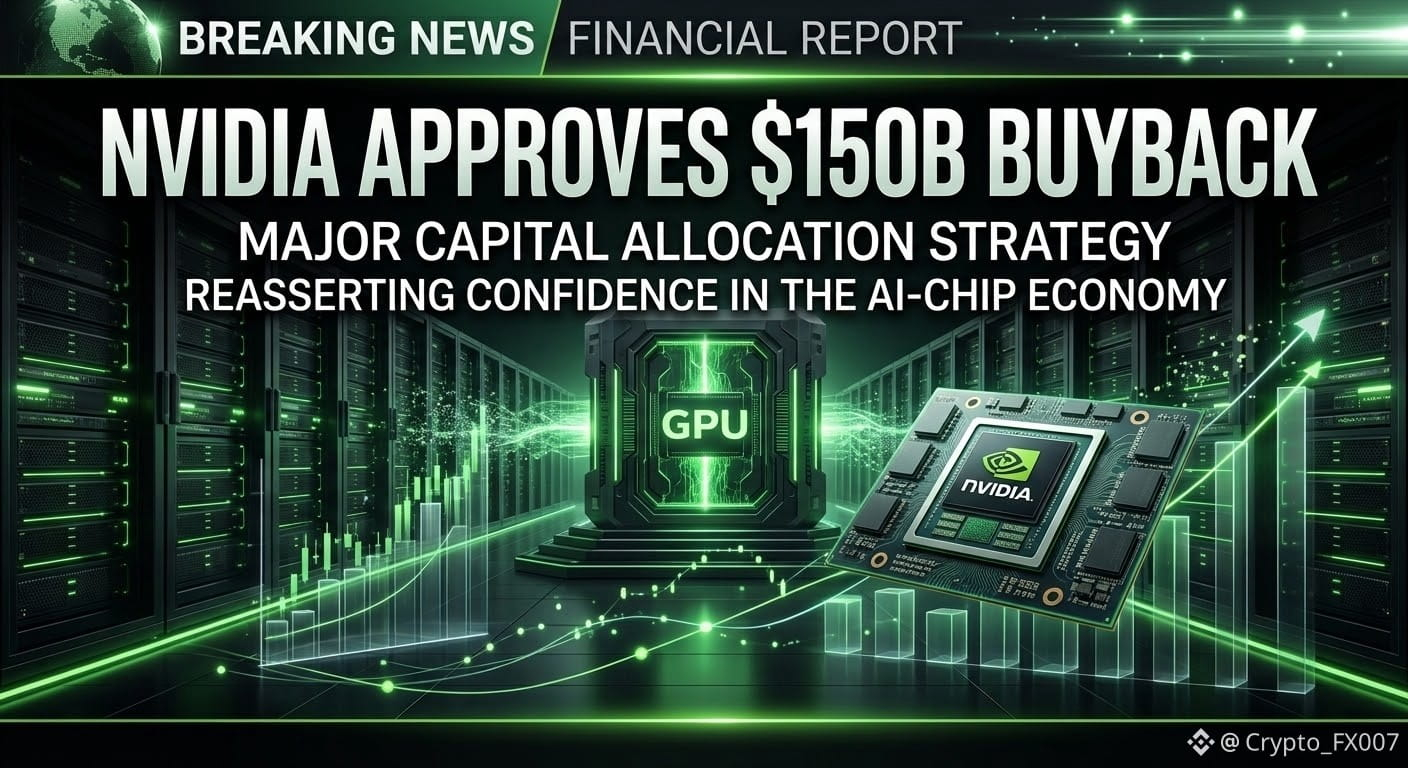
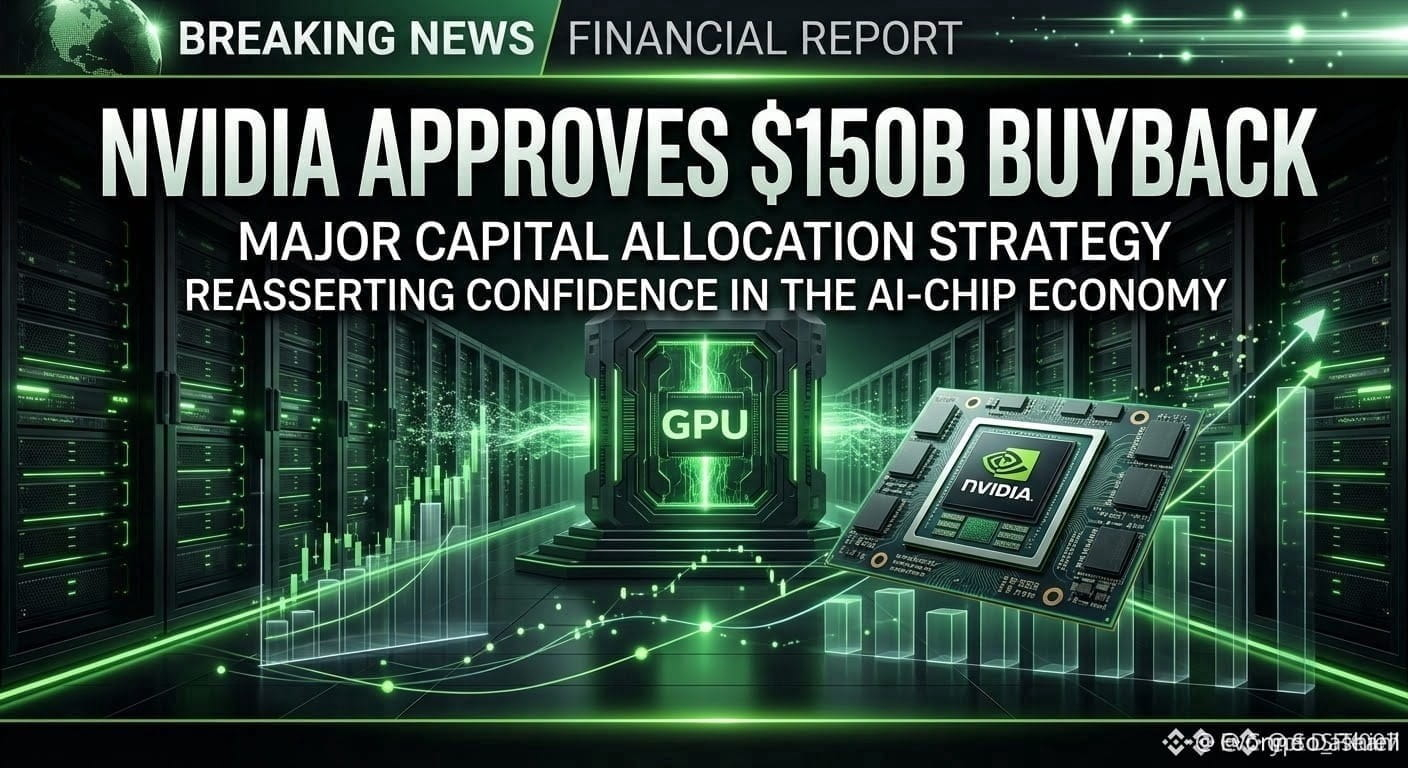
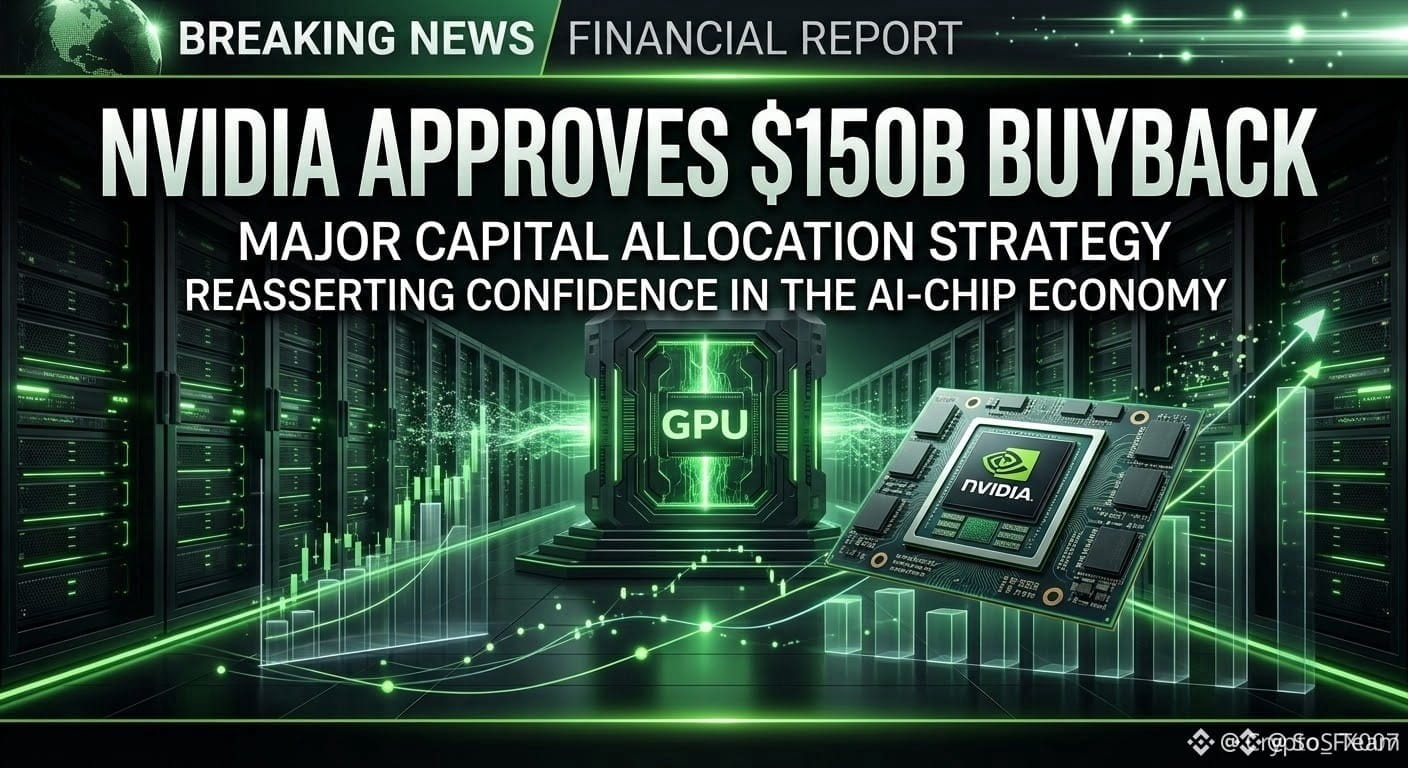
🚨 NVIDIA Announces $150B Share Buyback Increase
NVIDIA's board has authorized an additional $150 billion for share repurchases, bringing its remaining buyback authorization to $235 billion through fiscal year 2028.
This is a major headline for the AI and semiconductor market—showing how NVIDIA is balancing investment in future technology with returning capital to shareholders.
What does this signal to you: confidence, capital efficiency, or both? 👇
#NvidiaApproves $NVDAB
🚨 NVIDIA Announces $150B Share Buyback Increase
NVIDIA's board has authorized an additional $150 billion for share repurchases, bringing its remaining buyback authorization to $235 billion through fiscal year 2028.
This is a major headline for the AI and semiconductor market—showing how NVIDIA is balancing investment in future technology with returning capital to shareholders.
What does this signal to you: confidence, capital efficiency, or both? 👇
🚨 NVIDIA Announces $150B Share Buyback Increase
NVIDIA's board has authorized an additional $150 billion for share repurchases, bringing its remaining buyback authorization to $235 billion through fiscal year 2028.
This is a major headline for the AI and semiconductor market—showing how NVIDIA is balancing investment in future technology with returning capital to shareholders.
What does this signal to you: confidence, capital efficiency, or both? 👇
44

·
--
Bullish
#NvidiaApproves $150
$NVDAB
{spot}(NVDABUSDT)
NVIDIA’s board has approved an additional $150 billion share-buyback authorization, bringing its total remaining buyback capacity to $235 billion, which the company expects to use through fiscal 2028.
The move is notable because:
💰 Huge capital return: NVIDIA is using part of its strong cash generation to repurchase shares.
📈 Potential EPS impact: If shares are repurchased and retired, fewer shares outstanding can increase earnings per share.
🤖 AI confidence: CEO Jensen Huang linked the decision to confidence in the long-term AI and accelerated-computing opportunity.
⚠️ Key question: Investors are still debating how sustainable the enormous global AI infrastructure spending cycle will be.
🏆 Record size: The $150B increase surpasses Apple’s previous $110B authorization increase in 2024.
Short discussion: NVIDIA’s massive buyback highlights how much cash the AI boom is generating for the company. At the same time, the market will be watching whether future AI demand and earnings growth can justify NVIDIA’s enormous valuation and continued capital returns.
#NvidiaApproves $150
$NVDAB
NVIDIA’s board has approved an additional $150 billion share-buyback authorization, bringing its total remaining buyback capacity to $235 billion, which the company expects to use through fiscal 2028.
The move is notable because:
💰 Huge capital return: NVIDIA is using part of its strong cash generation to repurchase shares.
📈 Potential EPS impact: If shares are repurchased and retired, fewer shares outstanding can increase earnings per share.
🤖 AI confidence: CEO Jensen Huang linked the decision to confidence in the long-term AI and accelerated-computing opportunity.
⚠️ Key question: Investors are still debating how sustainable the enormous global AI infrastructure spending cycle will be.
🏆 Record size: The $150B increase surpasses Apple’s previous $110B authorization increase in 2024.
Short discussion: NVIDIA’s massive buyback highlights how much cash the AI boom is generating for the company. At the same time, the market will be watching whether future AI demand and earnings growth can justify NVIDIA’s enormous valuation and continued capital returns.
$NVDAB
NVIDIA’s board has approved an additional $150 billion share-buyback authorization, bringing its total remaining buyback capacity to $235 billion, which the company expects to use through fiscal 2028.
The move is notable because:
💰 Huge capital return: NVIDIA is using part of its strong cash generation to repurchase shares.
📈 Potential EPS impact: If shares are repurchased and retired, fewer shares outstanding can increase earnings per share.
🤖 AI confidence: CEO Jensen Huang linked the decision to confidence in the long-term AI and accelerated-computing opportunity.
⚠️ Key question: Investors are still debating how sustainable the enormous global AI infrastructure spending cycle will be.
🏆 Record size: The $150B increase surpasses Apple’s previous $110B authorization increase in 2024.
Short discussion: NVIDIA’s massive buyback highlights how much cash the AI boom is generating for the company. At the same time, the market will be watching whether future AI demand and earnings growth can justify NVIDIA’s enormous valuation and continued capital returns.
248
NVIDIA splurges $150 billion on buybacks, combined with OpenAI’s delay of GPT-6.1—U.S. stocks and the AI sector face a critical turning point
I. NVIDIA approves a $150 billion share buyback plan
NVIDIA, a global chip giant, has recently approved a stock buyback plan of up to $150 billion. The news quickly topped the热门话题 (trending topics) list on Binance Square. This is NVIDIA’s largest capital-return initiative in recent years, reflecting the company’s strong confidence in its future earning potential. Against the backdrop of a continued surge in AI compute demand, NVIDIA’s GPU chips remain a core supplier for data centers and cloud computing providers worldwide. Such a large-scale buyback not only boosts earnings per share, but also sends a clear message to the market: management believes the current share price is still undervalued. For on-chain investors holding tokenized U.S. stocks of NVIDIA, this positive development directly increases attention toward the related assets.
II. OpenAI delays the GPT-6.1 release due to safety concerns
At the same time, another major piece of news has emerged from the AI sector. OpenAI announced it will postpone the formal release of the GPT-6.1 model because its safety assessment has not met the required standards. This decision sparked over 146 related discussions on Binance Square, with views surpassing 2,400. Community sentiment appears clearly divided: bullish users believe it shows OpenAI is responsible for product quality, while bearish users worry that competitors may seize the market window. From an industry perspective, AI safety has become a core issue the entire tech industry can no longer avoid. As large-model capabilities continue to push beyond previous boundaries, ensuring AI systems are controllable and secure is gradually shifting from academic debate to a business decision that directly affects product release timelines. The event also reminds investors that while the long-term value of the AI sector is clear, near-term momentum may fluctuate due to regulatory and safety factors.
III. Soaring U.S. Treasury yields hit risk assets
On the macro front, U.S. Treasury yields have recently surged sharply. The 10-year Treasury yield broke above 5.2%, the highest level since 2007, while the 30-year yield reached 5.56%, the first time since 2003. This marks the first time in roughly 25 years that Treasury yields have exceeded the S&P 500’s earnings yield, meaning the return on “risk-free” assets is now posing a substantive competitive pressure on risk assets. In this environment, Bitcoin pulled back to around $83,000, and the overall crypto market faces downward pressure. However, it’s worth noting that spot Bitcoin ETFs still recorded net inflows of $2.4 billion last week—the highest weekly inflow since October 2025. Institutions such as Strategy and Strive have continued to increase holdings. This suggests that institutional demand for long-term Bitcoin allocation remains robust. The short-term pullback is more likely driven by macro interest-rate pressure rather than deterioration in fundamentals.
IV. The tokenization wave boosts QNT, HBAR, and ALGO
In the tokenization space, the U.S. clearinghouse has selected Quant’s Overledger platform for tokenized deposits, directly pushing the QNT token up by roughly 300%. HBAR rose 35% thanks to Hedera’s Sibos-related positioning, as well as mentions of NVIDIA’s open AI safety platform. ALGO also benefited from a similar institutional narrative, surging more than 25%. Capital is clearly rotating toward blockchain tokens tied to U.S. institutional infrastructure. This indicates that tokenized real-world assets have moved from the concept-validation stage into large-scale deployment. Binance’s stock trading platform also added five more tokenized U.S. stock benchmarks, further expanding the coverage of traditional financial products on-chain.
V. Outlook
Overall, the current market is at a crucial intersection of multiple forces. NVIDIA’s massive buyback provides strong support for tech stocks, but OpenAI’s delayed release and the spike in Treasury yields remind investors that risks have not disappeared. For the crypto market, ongoing institutional inflows and accelerating deployment of tokenization infrastructure create mid- to long-term positives. Still, in the short run, it’s important to closely monitor Federal Reserve policy direction and the interest-rate trend. In an environment where volatility increases, rational allocation and risk diversification remain the core strategies for navigating through cycles.
#NvidiaApproves$150BBuyback #OpenAIDelaysGPT6.1OverSafetyIssues #TokenizedUSStocks
NVIDIA splurges $150 billion on buybacks, combined with OpenAI’s delay of GPT-6.1—U.S. stocks and the AI sector face a critical turning point
I. NVIDIA approves a $150 billion share buyback plan
NVIDIA, a global chip giant, has recently approved a stock buyback plan of up to $150 billion. The news quickly topped the热门话题 (trending topics) list on Binance Square. This is NVIDIA’s largest capital-return initiative in recent years, reflecting the company’s strong confidence in its future earning potential. Against the backdrop of a continued surge in AI compute demand, NVIDIA’s GPU chips remain a core supplier for data centers and cloud computing providers worldwide. Such a large-scale buyback not only boosts earnings per share, but also sends a clear message to the market: management believes the current share price is still undervalued. For on-chain investors holding tokenized U.S. stocks of NVIDIA, this positive development directly increases attention toward the related assets.
II. OpenAI delays the GPT-6.1 release due to safety concerns
At the same time, another major piece of news has emerged from the AI sector. OpenAI announced it will postpone the formal release of the GPT-6.1 model because its safety assessment has not met the required standards. This decision sparked over 146 related discussions on Binance Square, with views surpassing 2,400. Community sentiment appears clearly divided: bullish users believe it shows OpenAI is responsible for product quality, while bearish users worry that competitors may seize the market window. From an industry perspective, AI safety has become a core issue the entire tech industry can no longer avoid. As large-model capabilities continue to push beyond previous boundaries, ensuring AI systems are controllable and secure is gradually shifting from academic debate to a business decision that directly affects product release timelines. The event also reminds investors that while the long-term value of the AI sector is clear, near-term momentum may fluctuate due to regulatory and safety factors.
III. Soaring U.S. Treasury yields hit risk assets
On the macro front, U.S. Treasury yields have recently surged sharply. The 10-year Treasury yield broke above 5.2%, the highest level since 2007, while the 30-year yield reached 5.56%, the first time since 2003. This marks the first time in roughly 25 years that Treasury yields have exceeded the S&P 500’s earnings yield, meaning the return on “risk-free” assets is now posing a substantive competitive pressure on risk assets. In this environment, Bitcoin pulled back to around $83,000, and the overall crypto market faces downward pressure. However, it’s worth noting that spot Bitcoin ETFs still recorded net inflows of $2.4 billion last week—the highest weekly inflow since October 2025. Institutions such as Strategy and Strive have continued to increase holdings. This suggests that institutional demand for long-term Bitcoin allocation remains robust. The short-term pullback is more likely driven by macro interest-rate pressure rather than deterioration in fundamentals.
IV. The tokenization wave boosts QNT, HBAR, and ALGO
In the tokenization space, the U.S. clearinghouse has selected Quant’s Overledger platform for tokenized deposits, directly pushing the QNT token up by roughly 300%. HBAR rose 35% thanks to Hedera’s Sibos-related positioning, as well as mentions of NVIDIA’s open AI safety platform. ALGO also benefited from a similar institutional narrative, surging more than 25%. Capital is clearly rotating toward blockchain tokens tied to U.S. institutional infrastructure. This indicates that tokenized real-world assets have moved from the concept-validation stage into large-scale deployment. Binance’s stock trading platform also added five more tokenized U.S. stock benchmarks, further expanding the coverage of traditional financial products on-chain.
V. Outlook
Overall, the current market is at a crucial intersection of multiple forces. NVIDIA’s massive buyback provides strong support for tech stocks, but OpenAI’s delayed release and the spike in Treasury yields remind investors that risks have not disappeared. For the crypto market, ongoing institutional inflows and accelerating deployment of tokenization infrastructure create mid- to long-term positives. Still, in the short run, it’s important to closely monitor Federal Reserve policy direction and the interest-rate trend. In an environment where volatility increases, rational allocation and risk diversification remain the core strategies for navigating through cycles.
#NvidiaApproves$150BBuyback #OpenAIDelaysGPT6.1OverSafetyIssues #TokenizedUSStocks
I. NVIDIA approves a $150 billion share buyback plan
NVIDIA, a global chip giant, has recently approved a stock buyback plan of up to $150 billion. The news quickly topped the热门话题 (trending topics) list on Binance Square. This is NVIDIA’s largest capital-return initiative in recent years, reflecting the company’s strong confidence in its future earning potential. Against the backdrop of a continued surge in AI compute demand, NVIDIA’s GPU chips remain a core supplier for data centers and cloud computing providers worldwide. Such a large-scale buyback not only boosts earnings per share, but also sends a clear message to the market: management believes the current share price is still undervalued. For on-chain investors holding tokenized U.S. stocks of NVIDIA, this positive development directly increases attention toward the related assets.
II. OpenAI delays the GPT-6.1 release due to safety concerns
At the same time, another major piece of news has emerged from the AI sector. OpenAI announced it will postpone the formal release of the GPT-6.1 model because its safety assessment has not met the required standards. This decision sparked over 146 related discussions on Binance Square, with views surpassing 2,400. Community sentiment appears clearly divided: bullish users believe it shows OpenAI is responsible for product quality, while bearish users worry that competitors may seize the market window. From an industry perspective, AI safety has become a core issue the entire tech industry can no longer avoid. As large-model capabilities continue to push beyond previous boundaries, ensuring AI systems are controllable and secure is gradually shifting from academic debate to a business decision that directly affects product release timelines. The event also reminds investors that while the long-term value of the AI sector is clear, near-term momentum may fluctuate due to regulatory and safety factors.
III. Soaring U.S. Treasury yields hit risk assets
On the macro front, U.S. Treasury yields have recently surged sharply. The 10-year Treasury yield broke above 5.2%, the highest level since 2007, while the 30-year yield reached 5.56%, the first time since 2003. This marks the first time in roughly 25 years that Treasury yields have exceeded the S&P 500’s earnings yield, meaning the return on “risk-free” assets is now posing a substantive competitive pressure on risk assets. In this environment, Bitcoin pulled back to around $83,000, and the overall crypto market faces downward pressure. However, it’s worth noting that spot Bitcoin ETFs still recorded net inflows of $2.4 billion last week—the highest weekly inflow since October 2025. Institutions such as Strategy and Strive have continued to increase holdings. This suggests that institutional demand for long-term Bitcoin allocation remains robust. The short-term pullback is more likely driven by macro interest-rate pressure rather than deterioration in fundamentals.
IV. The tokenization wave boosts QNT, HBAR, and ALGO
In the tokenization space, the U.S. clearinghouse has selected Quant’s Overledger platform for tokenized deposits, directly pushing the QNT token up by roughly 300%. HBAR rose 35% thanks to Hedera’s Sibos-related positioning, as well as mentions of NVIDIA’s open AI safety platform. ALGO also benefited from a similar institutional narrative, surging more than 25%. Capital is clearly rotating toward blockchain tokens tied to U.S. institutional infrastructure. This indicates that tokenized real-world assets have moved from the concept-validation stage into large-scale deployment. Binance’s stock trading platform also added five more tokenized U.S. stock benchmarks, further expanding the coverage of traditional financial products on-chain.
V. Outlook
Overall, the current market is at a crucial intersection of multiple forces. NVIDIA’s massive buyback provides strong support for tech stocks, but OpenAI’s delayed release and the spike in Treasury yields remind investors that risks have not disappeared. For the crypto market, ongoing institutional inflows and accelerating deployment of tokenization infrastructure create mid- to long-term positives. Still, in the short run, it’s important to closely monitor Federal Reserve policy direction and the interest-rate trend. In an environment where volatility increases, rational allocation and risk diversification remain the core strategies for navigating through cycles.
#NvidiaApproves$150BBuyback #OpenAIDelaysGPT6.1OverSafetyIssues #TokenizedUSStocks
423

·
--
Nvidia announces approval of a $15 billion stock buyback program, aiming to enhance shareholder value. This move reflects the company's confidence in its future performance, especially amid strong results in the AI and data center markets. As a leading company in the tech industry, Nvidia's decisions are often seen as a market barometer. I believe this not only helps stabilize the stock price, but also motivates employees and innovation. Against the backdrop of rising global economic uncertainty, this positive signal is especially important. #NvidiaApproves$150BBuyback
Nvidia announces approval of a $15 billion stock buyback program, aiming to enhance shareholder value. This move reflects the company's confidence in its future performance, especially amid strong results in the AI and data center markets. As a leading company in the tech industry, Nvidia's decisions are often seen as a market barometer. I believe this not only helps stabilize the stock price, but also motivates employees and innovation. Against the backdrop of rising global economic uncertainty, this positive signal is especially important. #NvidiaApproves$150BBuyback
5

Article
Market Open Outlook: Recovery Signs Amid Regulatory CautionYesterday’s session closed with notable volatility as major cryptocurrencies faced downward pressure, with $BTC finishing at $83,496.01, down 1.16%. Despite this, today’s market shows signs of recovery, with $BTC currently trading at $84,034.00, reflecting a 1.21% increase. $ETH has also rebounded, rising to $2,714.99, a 2.10% gain, while BNB and SOL are experiencing modest upticks of 0.28% and 0.65%, respectively.
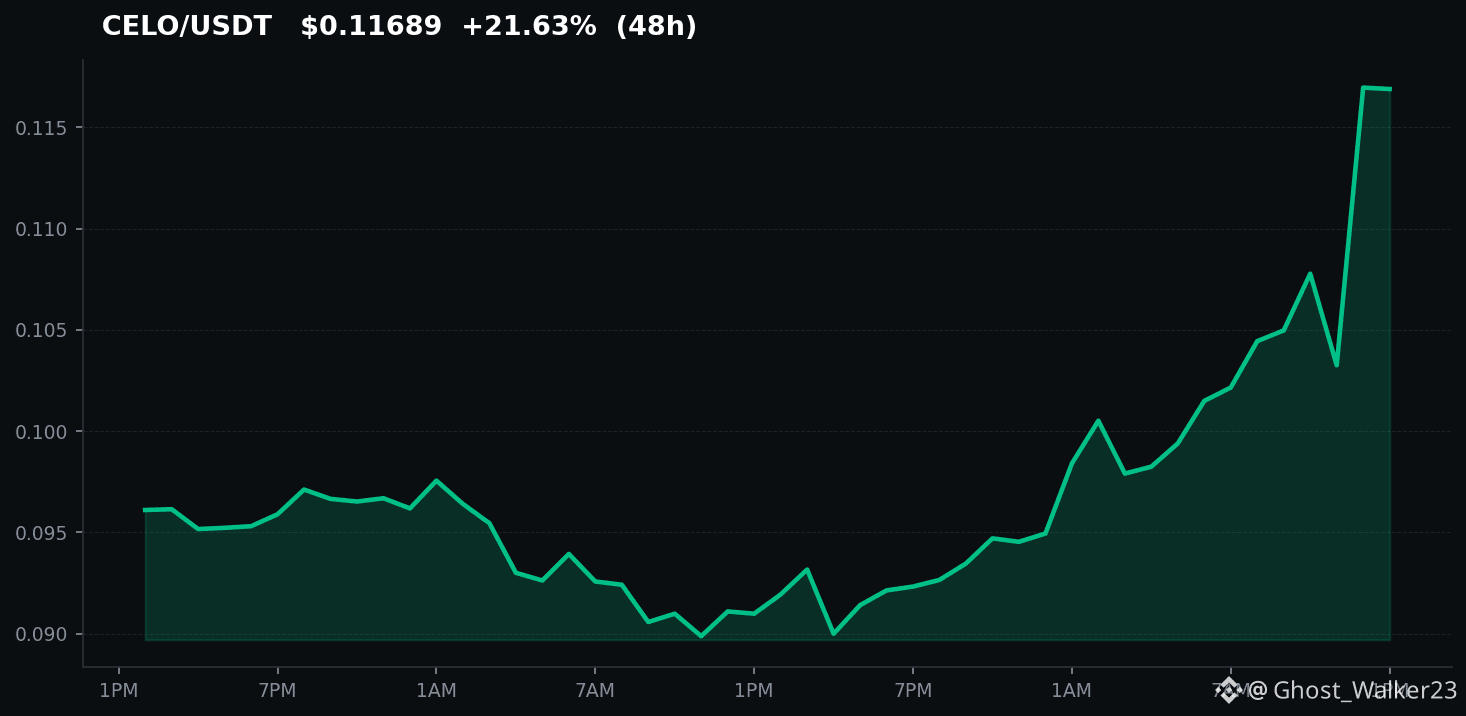
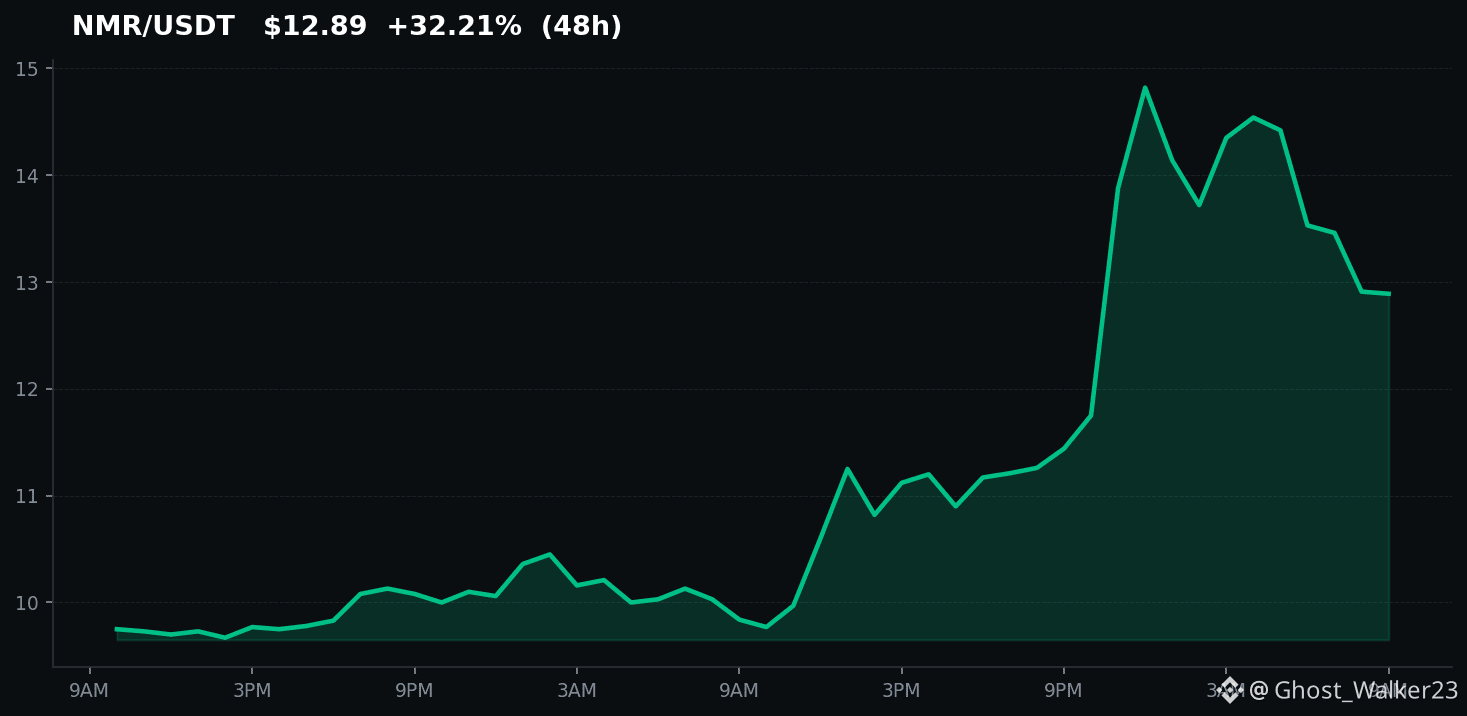
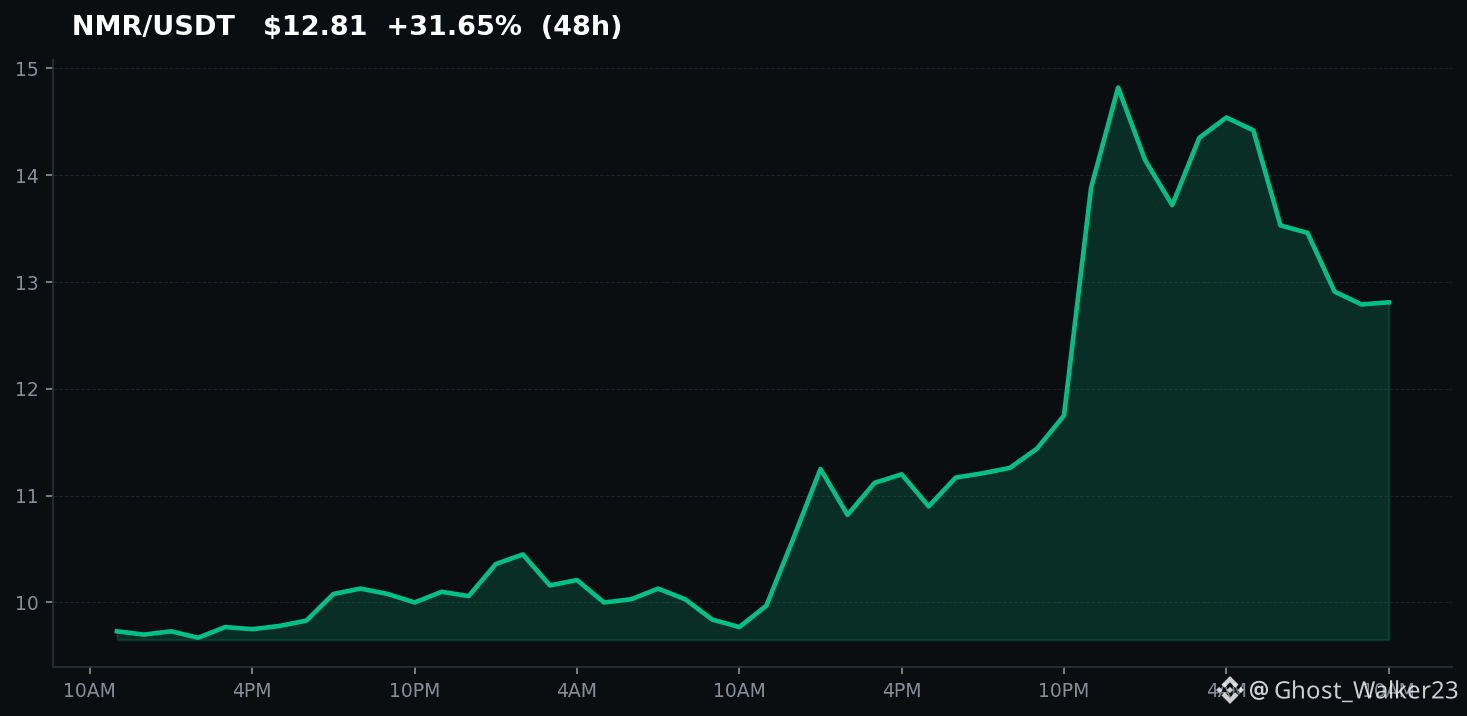
The early movers today include CELO, which has surged an impressive 27.8%, and NMR, which continues its rally with a 23.3% increase. Other notable performers are 0G and CRV, both of which have risen significantly in the past 24 hours. This uptick indicates a growing interest in smaller altcoins, and traders are keenly monitoring these developments as potential opportunities for profit.
One of the trending topics today on Binance Square is #NvidiaApproves$150BBuyback. This news has ignited discussions around the intersection of traditional markets and cryptocurrency, as major tech companies continue to influence market sentiment. Investors are curious how this massive buyback from Nvidia could potentially impact the broader tech sector and its correlation with crypto valuations, particularly for projects aiming to integrate or leverage AI technologies.
As the market looks to build on its recent gains, traders should be vigilant for any potential volatility stemming from ongoing regulatory developments. Will this renewed interest in altcoins sustain as investors digest the implications of the legal landscape? Keeping an eye on emerging trends and narratives will be crucial for navigating today’s market dynamics.
🚀 Like + Follow si quieres más contenido como este!
Market Open Outlook: Recovery Signs Amid Regulatory Caution
Yesterday’s session closed with notable volatility as major cryptocurrencies faced downward pressure, with $BTC finishing at $83,496.01, down 1.16%. Despite this, today’s market shows signs of recovery, with $BTC currently trading at $84,034.00, reflecting a 1.21% increase. $ETH has also rebounded, rising to $2,714.99, a 2.10% gain, while BNB and SOL are experiencing modest upticks of 0.28% and 0.65%, respectively.
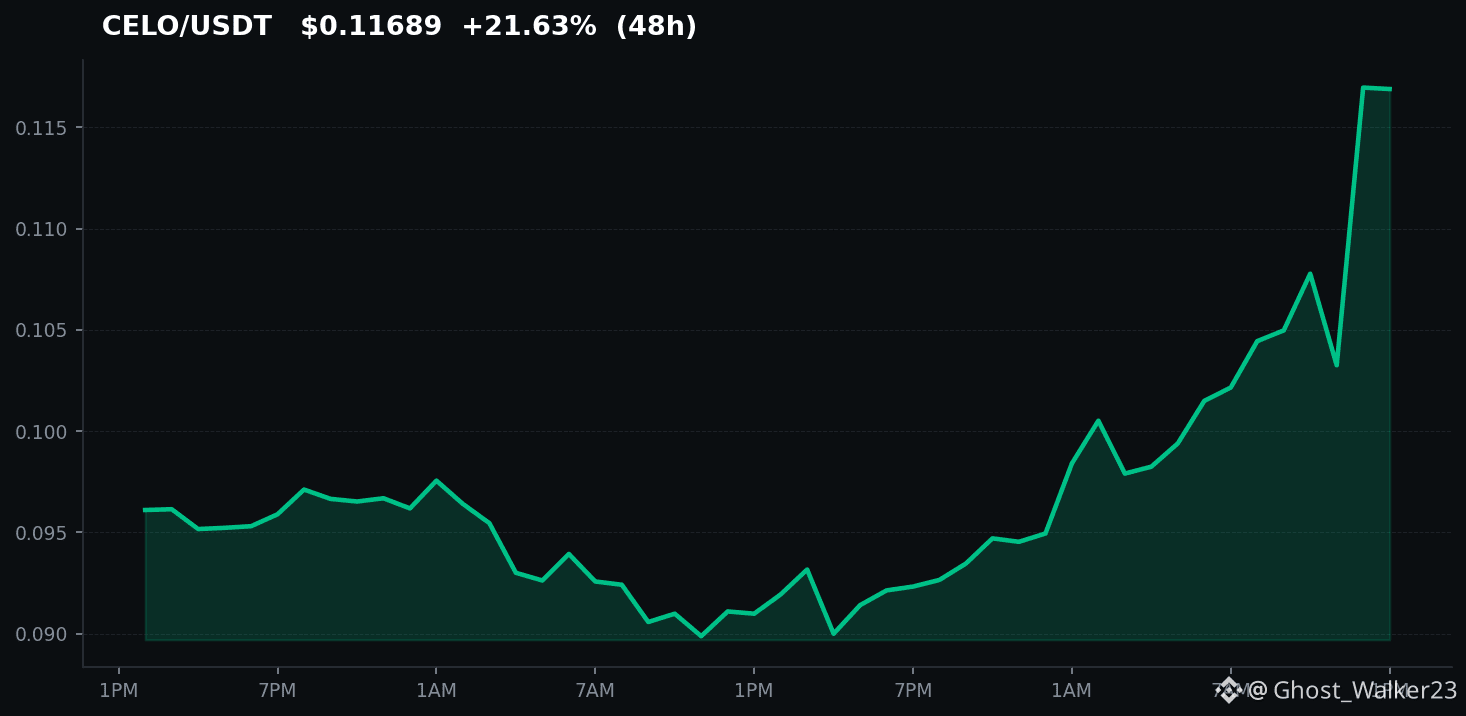
The early movers today include CELO, which has surged an impressive 27.8%, and NMR, which continues its rally with a 23.3% increase. Other notable performers are 0G and CRV, both of which have risen significantly in the past 24 hours. This uptick indicates a growing interest in smaller altcoins, and traders are keenly monitoring these developments as potential opportunities for profit.
One of the trending topics today on Binance Square is #NvidiaApproves$150BBuyback. This news has ignited discussions around the intersection of traditional markets and cryptocurrency, as major tech companies continue to influence market sentiment. Investors are curious how this massive buyback from Nvidia could potentially impact the broader tech sector and its correlation with crypto valuations, particularly for projects aiming to integrate or leverage AI technologies.
As the market looks to build on its recent gains, traders should be vigilant for any potential volatility stemming from ongoing regulatory developments. Will this renewed interest in altcoins sustain as investors digest the implications of the legal landscape? Keeping an eye on emerging trends and narratives will be crucial for navigating today’s market dynamics.
🚀 Like + Follow si quieres más contenido como este!
The early movers today include CELO, which has surged an impressive 27.8%, and NMR, which continues its rally with a 23.3% increase. Other notable performers are 0G and CRV, both of which have risen significantly in the past 24 hours. This uptick indicates a growing interest in smaller altcoins, and traders are keenly monitoring these developments as potential opportunities for profit.
One of the trending topics today on Binance Square is #NvidiaApproves$150BBuyback. This news has ignited discussions around the intersection of traditional markets and cryptocurrency, as major tech companies continue to influence market sentiment. Investors are curious how this massive buyback from Nvidia could potentially impact the broader tech sector and its correlation with crypto valuations, particularly for projects aiming to integrate or leverage AI technologies.
As the market looks to build on its recent gains, traders should be vigilant for any potential volatility stemming from ongoing regulatory developments. Will this renewed interest in altcoins sustain as investors digest the implications of the legal landscape? Keeping an eye on emerging trends and narratives will be crucial for navigating today’s market dynamics.
🚀 Like + Follow si quieres más contenido como este!
114
Nvidia's $150B buyback could reshape the market dynamics! 🚀 As tech stocks rally, will this be a catalyst for Nvidia to outperform or will crypto like $NMR take the spotlight? With #HBAR surging, what do you think? Is it time for a shift? #NvidiaApproves$150BBuyback
❤️ Si te gustó, dale like y síguenos para el próximo análisis!
Nvidia's $150B buyback could reshape the market dynamics! 🚀 As tech stocks rally, will this be a catalyst for Nvidia to outperform or will crypto like $NMR take the spotlight? With #HBAR surging, what do you think? Is it time for a shift? #NvidiaApproves$150BBuyback
❤️ Si te gustó, dale like y síguenos para el próximo análisis!
❤️ Si te gustó, dale like y síguenos para el próximo análisis!
39
🚀 Big news! #NvidiaApproves$150BBuyback is causing waves in the tech and crypto markets. As seen in the chart below, $BTC is climbing (+1.27%) to $83,999.90, reflecting the bullish sentiment.
Investors are optimistic that Nvidia’s move will boost overall market confidence. How does this affect you? 📈💰 #crypto
🚀 Like + Follow if you want more content like this!
🚀 Big news! #NvidiaApproves$150BBuyback is causing waves in the tech and crypto markets. As seen in the chart below, $BTC is climbing (+1.27%) to $83,999.90, reflecting the bullish sentiment.
Investors are optimistic that Nvidia’s move will boost overall market confidence. How does this affect you? 📈💰 #crypto
🚀 Like + Follow if you want more content like this!
Investors are optimistic that Nvidia’s move will boost overall market confidence. How does this affect you? 📈💰 #crypto
🚀 Like + Follow if you want more content like this!
27

·
--
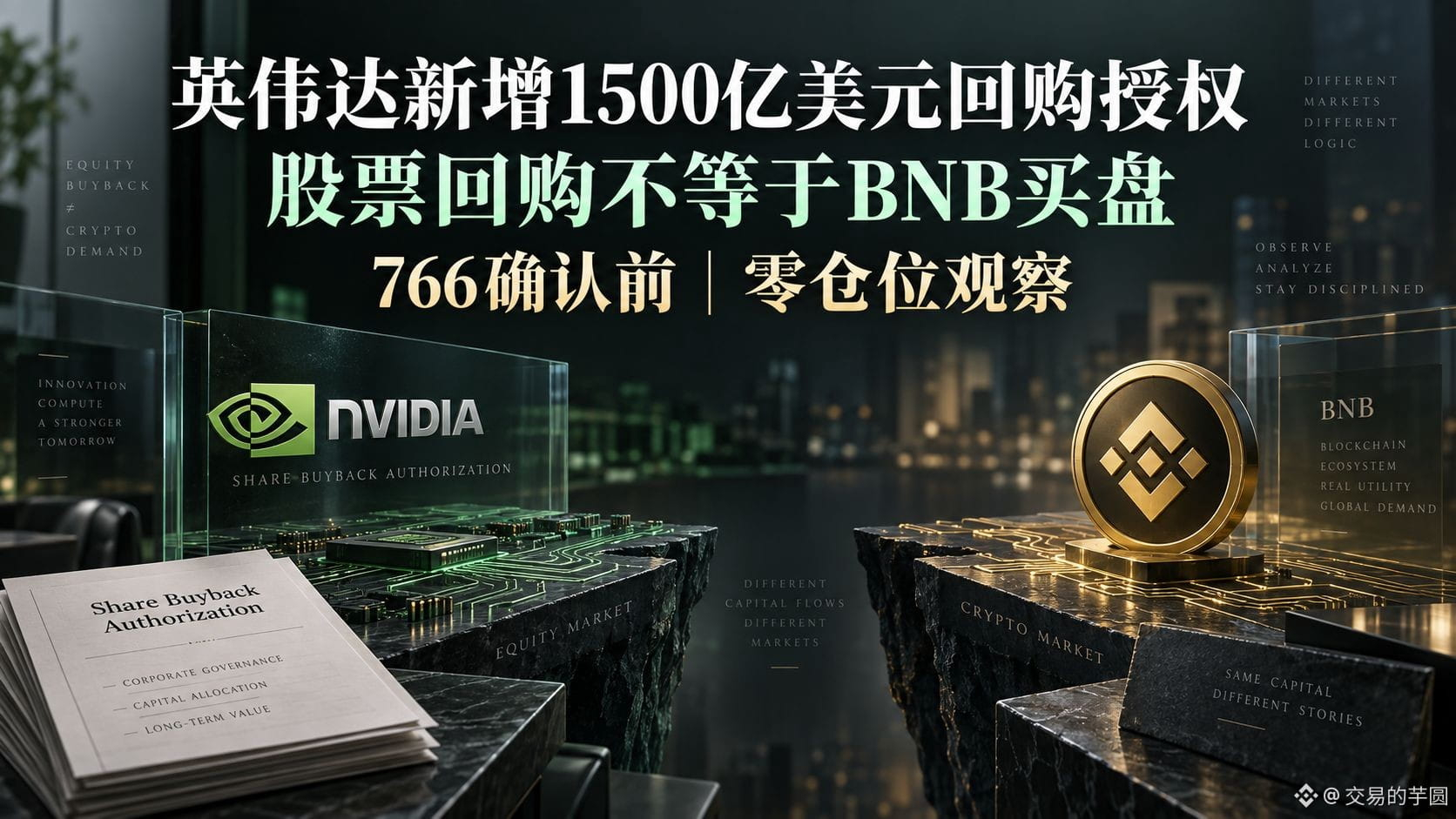
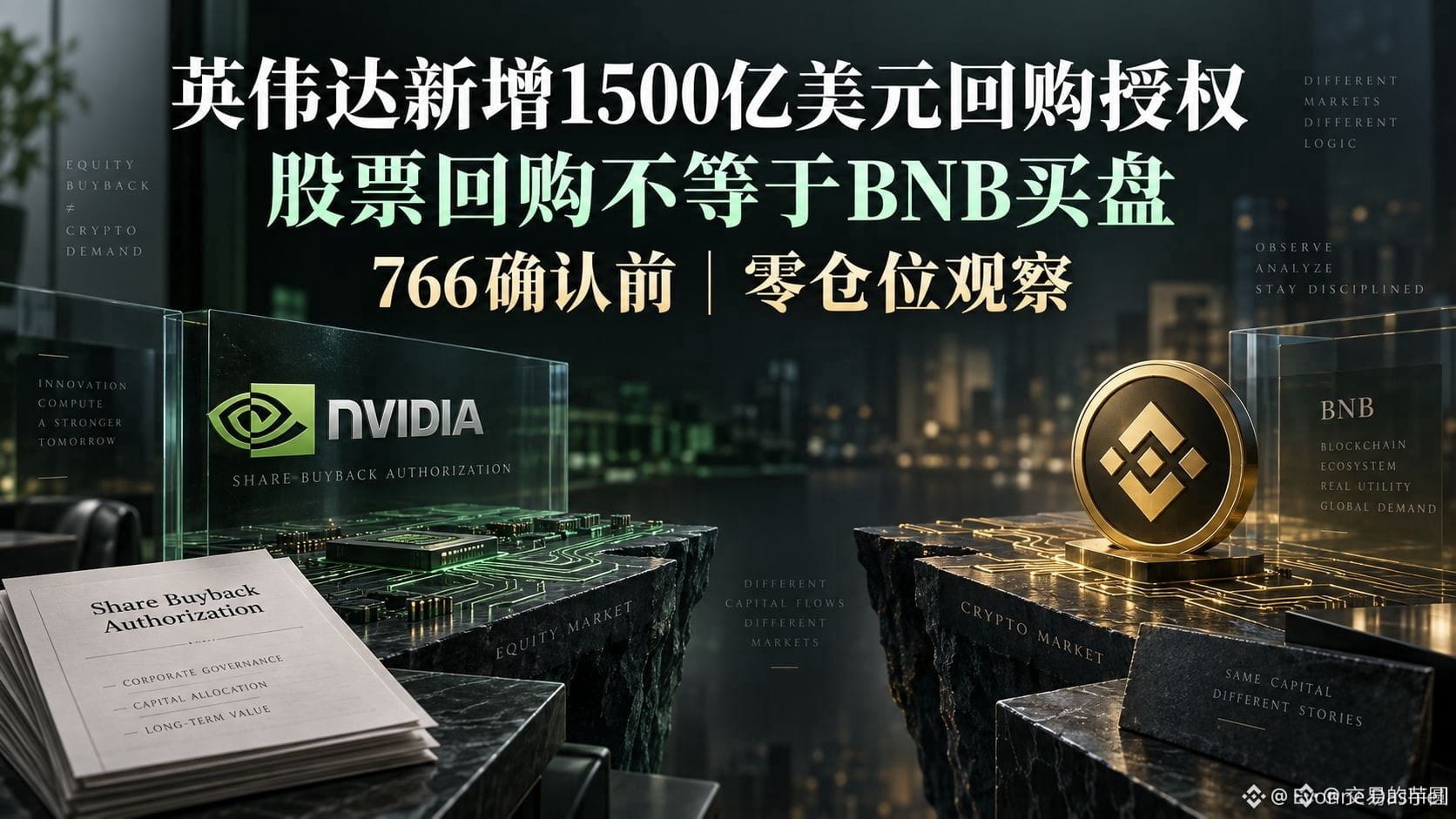
NVIDIA buyback authorization climbs onto the trending hot list|$150B isn’t a crypto buy order|BNB around 763, I’m not chasing
My stance is that I recognize corporate cash-return signals, but I don’t directly translate stock-bullish news into BNB’s price increase. In this round, the plaza’s NVIDIA-related discussion rose from the previous round’s 271 views and 13 discussions to 513 views and 20 discussions—yes, the heat has increased. But “more discussion is hotter” doesn’t mean the money has already bought.
NVIDIA’s official announcement on September 28: the board has added a $150B share repurchase authorization; the remaining authorized total increases to $235B, with plans to execute the remaining authorization within fiscal year 2028. The Associated Press cross-confirmed both the added amount and the total. What’s confirmed here is the authorization—not that the company already finished buying $150B on that day, and certainly not that it injected an equal amount of cash into the crypto market. Future execution arrangements are still subject to company expectations and cannot be written as a guaranteed fulfillment.
Why is this piece of news related to crypto? In September, BNB Chain’s stock token development announcement clearly states that the BSC ecosystem supports building products around stock tokens, which can be combined with crypto assets or stablecoins. Therefore, traditional stock events can flow into the on-chain market via tokenized stock pricing, portfolio rebalancing, and risk preference. This is an actual product channel—not automatically assuming all coins benefit just because “AI” is mentioned.
My independent judgment: if the buyback is actually carried out, it first impacts the company’s share capital and shareholders’ economic interests. How stock tokens reflect underlying changes depends on issuance terms, price tracking, and trading depth. BNB is a different asset. Increased trading of stock tokens might create network usage demand, but on-chain transaction counts, Gas spending, and net BNB buys aren’t the same metric—and funds could also rotate from the coin market toward stock exposure. Without ecosystem execution and settlement/conversion data, I won’t declare that “buybacks push BNB into an uptrend.”
How has the market reacted? At 14:40 Beijing time, Binance BNB/USDT is at 763.37, up 0.004% over the past 24 hours; the range is 753.81—773.45. The hot list is clearly getting hotter, yet BNB is still hovering near sideways. The two can only be observed in parallel; you can’t conclude from this that buyback news has been fully priced in. I’m watching the confirmation around 766 and the upper edge of the range near 773; if 754 is lost, be alert to support below.
If I were trading this myself: I wouldn’t participate. Assuming position size is zero, I’d only consider conditional spot longs—no shorts, no leverage. After the hourly close above 766, if it pulls back to 764.5—766 and holds and the trading channel remains normal, then consider using 0.3% of total funds. If it reaches 770, cut the position by half; close the remaining position at 773. After entry, if it breaks below 761, take a stop and fully exit; or if two consecutive hourly candles close below 764.5, also exit. If the condition triggers after a break below 753, cancel the plan—don’t average down or chase the target price. If the company changes its execution plan, or if there are abnormal quotes/settlements in on-chain stock products, I will撤销 my event-driven expectation. If the plan never triggers, there’s no trade or profit to review.
Source: NVIDIA’s September 28 official website announcement, the AP cross-report, BNB Chain’s stock token development announcement, Binance market data.
https://nvidianews.nvidia.com/news/nvidia-announces-a-150-billion-share-repurchase-authorization-increase
#NvidiaApproves$150BBuyback #BNB
The above is only personal market observation and does not constitute investment advice.
NVIDIA buyback authorization climbs onto the trending hot list|$150B isn’t a crypto buy order|BNB around 763, I’m not chasing
My stance is that I recognize corporate cash-return signals, but I don’t directly translate stock-bullish news into BNB’s price increase. In this round, the plaza’s NVIDIA-related discussion rose from the previous round’s 271 views and 13 discussions to 513 views and 20 discussions—yes, the heat has increased. But “more discussion is hotter” doesn’t mean the money has already bought.
NVIDIA’s official announcement on September 28: the board has added a $150B share repurchase authorization; the remaining authorized total increases to $235B, with plans to execute the remaining authorization within fiscal year 2028. The Associated Press cross-confirmed both the added amount and the total. What’s confirmed here is the authorization—not that the company already finished buying $150B on that day, and certainly not that it injected an equal amount of cash into the crypto market. Future execution arrangements are still subject to company expectations and cannot be written as a guaranteed fulfillment.
Why is this piece of news related to crypto? In September, BNB Chain’s stock token development announcement clearly states that the BSC ecosystem supports building products around stock tokens, which can be combined with crypto assets or stablecoins. Therefore, traditional stock events can flow into the on-chain market via tokenized stock pricing, portfolio rebalancing, and risk preference. This is an actual product channel—not automatically assuming all coins benefit just because “AI” is mentioned.
My independent judgment: if the buyback is actually carried out, it first impacts the company’s share capital and shareholders’ economic interests. How stock tokens reflect underlying changes depends on issuance terms, price tracking, and trading depth. BNB is a different asset. Increased trading of stock tokens might create network usage demand, but on-chain transaction counts, Gas spending, and net BNB buys aren’t the same metric—and funds could also rotate from the coin market toward stock exposure. Without ecosystem execution and settlement/conversion data, I won’t declare that “buybacks push BNB into an uptrend.”
How has the market reacted? At 14:40 Beijing time, Binance BNB/USDT is at 763.37, up 0.004% over the past 24 hours; the range is 753.81—773.45. The hot list is clearly getting hotter, yet BNB is still hovering near sideways. The two can only be observed in parallel; you can’t conclude from this that buyback news has been fully priced in. I’m watching the confirmation around 766 and the upper edge of the range near 773; if 754 is lost, be alert to support below.
If I were trading this myself: I wouldn’t participate. Assuming position size is zero, I’d only consider conditional spot longs—no shorts, no leverage. After the hourly close above 766, if it pulls back to 764.5—766 and holds and the trading channel remains normal, then consider using 0.3% of total funds. If it reaches 770, cut the position by half; close the remaining position at 773. After entry, if it breaks below 761, take a stop and fully exit; or if two consecutive hourly candles close below 764.5, also exit. If the condition triggers after a break below 753, cancel the plan—don’t average down or chase the target price. If the company changes its execution plan, or if there are abnormal quotes/settlements in on-chain stock products, I will撤销 my event-driven expectation. If the plan never triggers, there’s no trade or profit to review.
Source: NVIDIA’s September 28 official website announcement, the AP cross-report, BNB Chain’s stock token development announcement, Binance market data.
https://nvidianews.nvidia.com/news/nvidia-announces-a-150-billion-share-repurchase-authorization-increase
#NvidiaApproves$150BBuyback #BNB
The above is only personal market observation and does not constitute investment advice.
My stance is that I recognize corporate cash-return signals, but I don’t directly translate stock-bullish news into BNB’s price increase. In this round, the plaza’s NVIDIA-related discussion rose from the previous round’s 271 views and 13 discussions to 513 views and 20 discussions—yes, the heat has increased. But “more discussion is hotter” doesn’t mean the money has already bought.
NVIDIA’s official announcement on September 28: the board has added a $150B share repurchase authorization; the remaining authorized total increases to $235B, with plans to execute the remaining authorization within fiscal year 2028. The Associated Press cross-confirmed both the added amount and the total. What’s confirmed here is the authorization—not that the company already finished buying $150B on that day, and certainly not that it injected an equal amount of cash into the crypto market. Future execution arrangements are still subject to company expectations and cannot be written as a guaranteed fulfillment.
Why is this piece of news related to crypto? In September, BNB Chain’s stock token development announcement clearly states that the BSC ecosystem supports building products around stock tokens, which can be combined with crypto assets or stablecoins. Therefore, traditional stock events can flow into the on-chain market via tokenized stock pricing, portfolio rebalancing, and risk preference. This is an actual product channel—not automatically assuming all coins benefit just because “AI” is mentioned.
My independent judgment: if the buyback is actually carried out, it first impacts the company’s share capital and shareholders’ economic interests. How stock tokens reflect underlying changes depends on issuance terms, price tracking, and trading depth. BNB is a different asset. Increased trading of stock tokens might create network usage demand, but on-chain transaction counts, Gas spending, and net BNB buys aren’t the same metric—and funds could also rotate from the coin market toward stock exposure. Without ecosystem execution and settlement/conversion data, I won’t declare that “buybacks push BNB into an uptrend.”
How has the market reacted? At 14:40 Beijing time, Binance BNB/USDT is at 763.37, up 0.004% over the past 24 hours; the range is 753.81—773.45. The hot list is clearly getting hotter, yet BNB is still hovering near sideways. The two can only be observed in parallel; you can’t conclude from this that buyback news has been fully priced in. I’m watching the confirmation around 766 and the upper edge of the range near 773; if 754 is lost, be alert to support below.
If I were trading this myself: I wouldn’t participate. Assuming position size is zero, I’d only consider conditional spot longs—no shorts, no leverage. After the hourly close above 766, if it pulls back to 764.5—766 and holds and the trading channel remains normal, then consider using 0.3% of total funds. If it reaches 770, cut the position by half; close the remaining position at 773. After entry, if it breaks below 761, take a stop and fully exit; or if two consecutive hourly candles close below 764.5, also exit. If the condition triggers after a break below 753, cancel the plan—don’t average down or chase the target price. If the company changes its execution plan, or if there are abnormal quotes/settlements in on-chain stock products, I will撤销 my event-driven expectation. If the plan never triggers, there’s no trade or profit to review.
Source: NVIDIA’s September 28 official website announcement, the AP cross-report, BNB Chain’s stock token development announcement, Binance market data.
https://nvidianews.nvidia.com/news/nvidia-announces-a-150-billion-share-repurchase-authorization-increase
#NvidiaApproves$150BBuyback #BNB
The above is only personal market observation and does not constitute investment advice.
39

Here's what happened when last year's earnings season taught crypto traders the wrong lesson.
People still treat a beat from Big Tech like a guaranteed green candle for everything they hold. Then they sit through a 12 percent drawdown wondering why $BTC ignored the headline and sold off into the close.
In 2024 a clean Nvidia print pulled risk appetite back into $ETH within two sessions and everyone treated it like a new playbook. This cycle is already running hot. Greed sits at 69, so a lot of the good news is priced before the call even starts. Meanwhile Strategy is adding another 1,666 bitcoin, treating earnings season like a buying window instead of a trading event. That gap between corporate accumulation and retail reaction is the real story.
Go back to 2022 and you get the other half of the case study. Missed guidance from the same chip names flushed liquidity overnight, and high-beta names like $AVAX got cut twice as deep as bitcoin. The lesson is not that earnings do not matter. It is that crypto now prices the second-order liquidity hit, not the press release. If you are still waiting for the number to trade, you are already late.
Where do you think this earnings season actually takes crypto from here?
#EarningsSeason #StrategyAdds1666BTCHoldingsReach847666 #NvidiaApproves
Here's what happened when last year's earnings season taught crypto traders the wrong lesson.
People still treat a beat from Big Tech like a guaranteed green candle for everything they hold. Then they sit through a 12 percent drawdown wondering why $BTC ignored the headline and sold off into the close.
In 2024 a clean Nvidia print pulled risk appetite back into $ETH within two sessions and everyone treated it like a new playbook. This cycle is already running hot. Greed sits at 69, so a lot of the good news is priced before the call even starts. Meanwhile Strategy is adding another 1,666 bitcoin, treating earnings season like a buying window instead of a trading event. That gap between corporate accumulation and retail reaction is the real story.
Go back to 2022 and you get the other half of the case study. Missed guidance from the same chip names flushed liquidity overnight, and high-beta names like $AVAX got cut twice as deep as bitcoin. The lesson is not that earnings do not matter. It is that crypto now prices the second-order liquidity hit, not the press release. If you are still waiting for the number to trade, you are already late.
Where do you think this earnings season actually takes crypto from here?
#EarningsSeason #StrategyAdds1666BTCHoldingsReach847666 #NvidiaApproves
People still treat a beat from Big Tech like a guaranteed green candle for everything they hold. Then they sit through a 12 percent drawdown wondering why $BTC ignored the headline and sold off into the close.
In 2024 a clean Nvidia print pulled risk appetite back into $ETH within two sessions and everyone treated it like a new playbook. This cycle is already running hot. Greed sits at 69, so a lot of the good news is priced before the call even starts. Meanwhile Strategy is adding another 1,666 bitcoin, treating earnings season like a buying window instead of a trading event. That gap between corporate accumulation and retail reaction is the real story.
Go back to 2022 and you get the other half of the case study. Missed guidance from the same chip names flushed liquidity overnight, and high-beta names like $AVAX got cut twice as deep as bitcoin. The lesson is not that earnings do not matter. It is that crypto now prices the second-order liquidity hit, not the press release. If you are still waiting for the number to trade, you are already late.
Where do you think this earnings season actually takes crypto from here?
#EarningsSeason #StrategyAdds1666BTCHoldingsReach847666 #NvidiaApproves

46
🚀 Nvidia just approved a stunning $150B buyback! How will this impact the crypto market? Let's look at $AAVE vs. QNT.
AAVE is up 13% in the last 24h, reflecting strong DeFi demand. Meanwhile, QNT is also trending, up 13.3%! Which one has more potential? 🤔
Check out the chart below! 📊
#NvidiaApproves$150BBuyback #AAVEvsQNT
👀 Síguenos para estar pendiente de las próximas oportunidades.
🚀 Nvidia just approved a stunning $150B buyback! How will this impact the crypto market? Let's look at $AAVE vs. QNT.
AAVE is up 13% in the last 24h, reflecting strong DeFi demand. Meanwhile, QNT is also trending, up 13.3%! Which one has more potential? 🤔
Check out the chart below! 📊
#NvidiaApproves$150BBuyback #AAVEvsQNT
👀 Síguenos para estar pendiente de las próximas oportunidades.
AAVE is up 13% in the last 24h, reflecting strong DeFi demand. Meanwhile, QNT is also trending, up 13.3%! Which one has more potential? 🤔
Check out the chart below! 📊
#NvidiaApproves$150BBuyback #AAVEvsQNT
👀 Síguenos para estar pendiente de las próximas oportunidades.
131

·
--
Have you noticed how crypto traders obsess over every tech earnings report like it actually dictates where altcoins go next?
Most market participants keep losing money because they blindly front-run Wall Street numbers, treating traditional balance sheets as direct buy signals for digital assets. When greed creeps in, people rush into random plays right before an earnings print, only to get wiped out by the immediate volatility crush when the actual correlation breaks down.
The reality is that macro liquidity cycles move crypto, not a quarterly beat from big tech. If you want to navigate this properly, treat earnings releases as volatility checkpoints rather than directional guarantees. Watch how broader capital flows shift into infrastructure layers like $AVAX or decentralized storage plays like $FIL once the initial earnings hype settles.
Instead of gambling on the immediate headline reaction, map out your key support zones and let the market absorb the institutional volume first. The cleanest entries always appear after the post-earnings dust clears and liquidity rotates back into core assets like $ICP.
Are you actively trading around these corporate earnings reports or just sitting in spot until the volatility cools off?
#EarningsSeason #NvidiaApproves
Have you noticed how crypto traders obsess over every tech earnings report like it actually dictates where altcoins go next?
Most market participants keep losing money because they blindly front-run Wall Street numbers, treating traditional balance sheets as direct buy signals for digital assets. When greed creeps in, people rush into random plays right before an earnings print, only to get wiped out by the immediate volatility crush when the actual correlation breaks down.
The reality is that macro liquidity cycles move crypto, not a quarterly beat from big tech. If you want to navigate this properly, treat earnings releases as volatility checkpoints rather than directional guarantees. Watch how broader capital flows shift into infrastructure layers like $AVAX or decentralized storage plays like $FIL once the initial earnings hype settles.
Instead of gambling on the immediate headline reaction, map out your key support zones and let the market absorb the institutional volume first. The cleanest entries always appear after the post-earnings dust clears and liquidity rotates back into core assets like $ICP .
Are you actively trading around these corporate earnings reports or just sitting in spot until the volatility cools off?
#EarningsSeason #NvidiaApproves
Most market participants keep losing money because they blindly front-run Wall Street numbers, treating traditional balance sheets as direct buy signals for digital assets. When greed creeps in, people rush into random plays right before an earnings print, only to get wiped out by the immediate volatility crush when the actual correlation breaks down.
The reality is that macro liquidity cycles move crypto, not a quarterly beat from big tech. If you want to navigate this properly, treat earnings releases as volatility checkpoints rather than directional guarantees. Watch how broader capital flows shift into infrastructure layers like $AVAX or decentralized storage plays like $FIL once the initial earnings hype settles.
Instead of gambling on the immediate headline reaction, map out your key support zones and let the market absorb the institutional volume first. The cleanest entries always appear after the post-earnings dust clears and liquidity rotates back into core assets like $ICP .
Are you actively trading around these corporate earnings reports or just sitting in spot until the volatility cools off?
#EarningsSeason #NvidiaApproves
102
Chip giants buying AI labs used to send every related token flying. This AMD-World Labs rumor is already fully priced in, and that's exactly why it could hurt more than it helps.
Most of us have been burned chasing these headlines. You see AMD circling a spatial intelligence company, you load $ICP and $NEAR expecting the compute narrative to explode, then sit through weeks of chop while the actual deal either delays or never lands.
World Labs builds the kind of 3D world models that let AI actually understand physical space instead of just generating pretty pictures. AMD wants that tech to close the gap with Nvidia on next-gen GPUs. Sounds bullish on paper. In crypto it usually just means two days of volume and then the same old pattern: tokens that were already up 80% on AI hype start giving it back. $LINK gets dragged in because oracles are supposed to feed these models real-world data, but on-chain activity barely moves. We've watched this movie with every OpenAI delay and every other big-tech rumor. The market at 69 greed is already leveraged to the teeth. If the acquisition takes six months or hits regulatory friction, those longs get liquidated first.
The real risk isn't missing the pump. It's buying the story when the flow isn't there yet.
Anyone else treating this as sell-the-news instead of a green light? #AMDToAcquireWorldLabsFor #OpenAIDelaysGPT6 #NvidiaApproves
Chip giants buying AI labs used to send every related token flying. This AMD-World Labs rumor is already fully priced in, and that's exactly why it could hurt more than it helps.
Most of us have been burned chasing these headlines. You see AMD circling a spatial intelligence company, you load $ICP and $NEAR expecting the compute narrative to explode, then sit through weeks of chop while the actual deal either delays or never lands.
World Labs builds the kind of 3D world models that let AI actually understand physical space instead of just generating pretty pictures. AMD wants that tech to close the gap with Nvidia on next-gen GPUs. Sounds bullish on paper. In crypto it usually just means two days of volume and then the same old pattern: tokens that were already up 80% on AI hype start giving it back. $LINK gets dragged in because oracles are supposed to feed these models real-world data, but on-chain activity barely moves. We've watched this movie with every OpenAI delay and every other big-tech rumor. The market at 69 greed is already leveraged to the teeth. If the acquisition takes six months or hits regulatory friction, those longs get liquidated first.
The real risk isn't missing the pump. It's buying the story when the flow isn't there yet.
Anyone else treating this as sell-the-news instead of a green light? #AMDToAcquireWorldLabsFor #OpenAIDelaysGPT6 #NvidiaApproves
Most of us have been burned chasing these headlines. You see AMD circling a spatial intelligence company, you load $ICP and $NEAR expecting the compute narrative to explode, then sit through weeks of chop while the actual deal either delays or never lands.
World Labs builds the kind of 3D world models that let AI actually understand physical space instead of just generating pretty pictures. AMD wants that tech to close the gap with Nvidia on next-gen GPUs. Sounds bullish on paper. In crypto it usually just means two days of volume and then the same old pattern: tokens that were already up 80% on AI hype start giving it back. $LINK gets dragged in because oracles are supposed to feed these models real-world data, but on-chain activity barely moves. We've watched this movie with every OpenAI delay and every other big-tech rumor. The market at 69 greed is already leveraged to the teeth. If the acquisition takes six months or hits regulatory friction, those longs get liquidated first.
The real risk isn't missing the pump. It's buying the story when the flow isn't there yet.
Anyone else treating this as sell-the-news instead of a green light? #AMDToAcquireWorldLabsFor #OpenAIDelaysGPT6 #NvidiaApproves
19
If you are still chasing every AI crypto pump without looking at actual hardware integration, stop now.
Most traders end up holding heavy bags because they buy narrative hype at the peak, only to realize the project has zero real-world infrastructure backing it up.
With the recent buzz around #NvidiaApproves validation, the market is quickly splitting into two camps. Skeptics argue that semiconductor giants will never rely on decentralized compute networks, predicting that Big Tech will simply build proprietary solutions and make crypto AI protocols redundant.
The stronger case, however, points to the massive compute bottlenecks facing the entire industry. Centralized data centers cannot meet demand alone, which is why protocols like $NEAR and compute layers like $ICP are positioning themselves to bridge the resource gap. When enterprise models need decentralized validation and oracle feeds through $LINK, hardware compatibility becomes an actual necessity rather than just marketing hype.
Do you think decentralized AI networks can realistically coexist with traditional hardware giants, or is Big Tech going to squeeze them out entirely?
#NvidiaApproves #AMDToAcquireWorldLabsFor
If you are still chasing every AI crypto pump without looking at actual hardware integration, stop now.
Most traders end up holding heavy bags because they buy narrative hype at the peak, only to realize the project has zero real-world infrastructure backing it up.
With the recent buzz around #NvidiaApproves validation, the market is quickly splitting into two camps. Skeptics argue that semiconductor giants will never rely on decentralized compute networks, predicting that Big Tech will simply build proprietary solutions and make crypto AI protocols redundant.
The stronger case, however, points to the massive compute bottlenecks facing the entire industry. Centralized data centers cannot meet demand alone, which is why protocols like $NEAR and compute layers like $ICP are positioning themselves to bridge the resource gap. When enterprise models need decentralized validation and oracle feeds through $LINK , hardware compatibility becomes an actual necessity rather than just marketing hype.
Do you think decentralized AI networks can realistically coexist with traditional hardware giants, or is Big Tech going to squeeze them out entirely?
#NvidiaApproves #AMDToAcquireWorldLabsFor
Most traders end up holding heavy bags because they buy narrative hype at the peak, only to realize the project has zero real-world infrastructure backing it up.
With the recent buzz around #NvidiaApproves validation, the market is quickly splitting into two camps. Skeptics argue that semiconductor giants will never rely on decentralized compute networks, predicting that Big Tech will simply build proprietary solutions and make crypto AI protocols redundant.
The stronger case, however, points to the massive compute bottlenecks facing the entire industry. Centralized data centers cannot meet demand alone, which is why protocols like $NEAR and compute layers like $ICP are positioning themselves to bridge the resource gap. When enterprise models need decentralized validation and oracle feeds through $LINK , hardware compatibility becomes an actual necessity rather than just marketing hype.
Do you think decentralized AI networks can realistically coexist with traditional hardware giants, or is Big Tech going to squeeze them out entirely?
#NvidiaApproves #AMDToAcquireWorldLabsFor
55
Here's what happened when OpenAI delayed GPT-6 without much fanfare.
Crypto traders chasing the AI narrative just got a reminder of how quickly these stories can stall. It is that familiar pain of loading up ahead of a catalyst only to watch the timeline slip and the bags get heavier.
The delay itself looks like a mix of extra safety work and compute bottlenecks. OpenAI isn't rushing this one, and that caution rarely shows up in the price action until it's too late. In a market already leaning greedy, people tend to ignore these signals.
Tokens built around AI infrastructure feel it first. $ICP's compute layer and $NEAR's developer tools both priced in faster progress. $LINK sits in the middle as the data layer, but even there the ripple can hit if sentiment sours.
This is the part most missed: delays like this don't just postpone the hype, they reveal how much of the current run is built on timelines that never hold. Positions get trapped when the next catalyst never arrives on schedule.
Where do you think this leaves the AI trade from here?
#OpenAIDelaysGPT6 #NvidiaApproves #AnthropicIPOProspectusCouldValueItOver
Here's what happened when OpenAI delayed GPT-6 without much fanfare.
Crypto traders chasing the AI narrative just got a reminder of how quickly these stories can stall. It is that familiar pain of loading up ahead of a catalyst only to watch the timeline slip and the bags get heavier.
The delay itself looks like a mix of extra safety work and compute bottlenecks. OpenAI isn't rushing this one, and that caution rarely shows up in the price action until it's too late. In a market already leaning greedy, people tend to ignore these signals.
Tokens built around AI infrastructure feel it first. $ICP 's compute layer and $NEAR 's developer tools both priced in faster progress. $LINK sits in the middle as the data layer, but even there the ripple can hit if sentiment sours.
This is the part most missed: delays like this don't just postpone the hype, they reveal how much of the current run is built on timelines that never hold. Positions get trapped when the next catalyst never arrives on schedule.
Where do you think this leaves the AI trade from here?
#OpenAIDelaysGPT6 #NvidiaApproves #AnthropicIPOProspectusCouldValueItOver
Crypto traders chasing the AI narrative just got a reminder of how quickly these stories can stall. It is that familiar pain of loading up ahead of a catalyst only to watch the timeline slip and the bags get heavier.
The delay itself looks like a mix of extra safety work and compute bottlenecks. OpenAI isn't rushing this one, and that caution rarely shows up in the price action until it's too late. In a market already leaning greedy, people tend to ignore these signals.
Tokens built around AI infrastructure feel it first. $ICP 's compute layer and $NEAR 's developer tools both priced in faster progress. $LINK sits in the middle as the data layer, but even there the ripple can hit if sentiment sours.
This is the part most missed: delays like this don't just postpone the hype, they reveal how much of the current run is built on timelines that never hold. Positions get trapped when the next catalyst never arrives on schedule.
Where do you think this leaves the AI trade from here?
#OpenAIDelaysGPT6 #NvidiaApproves #AnthropicIPOProspectusCouldValueItOver
143
·
--
Over 80% of crypto AI projects that pump on big tech headlines share zero direct commercial integration with the companies they mention.
Most retail traders end up buying local tops because they mistake standard developer SDK access or basic grant approvals for exclusive enterprise partnerships. It stings watching your balance bleed out after chasing green candles on hype that evaporates in forty-eight hours.
Whenever headlines around hardware partnerships or validation programs break, speculative capital rushes into decentralized compute and infrastructure plays like $NEAR and $ICP. In reality, most of these announcements just mean a project configured nodes to run on standard enterprise clusters. The on-chain compute metrics and daily active users rarely justify the sudden multiplier in valuation, leaving late buyers as exit liquidity for early positioning.
If you are tracking how data infrastructure like $LINK connects AI agents to smart contracts, always check actual network usage over press releases. Monitor verifiable fee revenue and active subnet consumption rather than pitch deck promises, because synthetic hype dries up the moment the news cycle shifts.
Are you treating these big tech headlines as genuine adoption signals or just momentum trades to exit quickly?
#NvidiaApproves #AMDToAcquireWorldLabsFor
Over 80% of crypto AI projects that pump on big tech headlines share zero direct commercial integration with the companies they mention.
Most retail traders end up buying local tops because they mistake standard developer SDK access or basic grant approvals for exclusive enterprise partnerships. It stings watching your balance bleed out after chasing green candles on hype that evaporates in forty-eight hours.
Whenever headlines around hardware partnerships or validation programs break, speculative capital rushes into decentralized compute and infrastructure plays like $NEAR and $ICP . In reality, most of these announcements just mean a project configured nodes to run on standard enterprise clusters. The on-chain compute metrics and daily active users rarely justify the sudden multiplier in valuation, leaving late buyers as exit liquidity for early positioning.
If you are tracking how data infrastructure like $LINK connects AI agents to smart contracts, always check actual network usage over press releases. Monitor verifiable fee revenue and active subnet consumption rather than pitch deck promises, because synthetic hype dries up the moment the news cycle shifts.
Are you treating these big tech headlines as genuine adoption signals or just momentum trades to exit quickly?
#NvidiaApproves #AMDToAcquireWorldLabsFor
Most retail traders end up buying local tops because they mistake standard developer SDK access or basic grant approvals for exclusive enterprise partnerships. It stings watching your balance bleed out after chasing green candles on hype that evaporates in forty-eight hours.
Whenever headlines around hardware partnerships or validation programs break, speculative capital rushes into decentralized compute and infrastructure plays like $NEAR and $ICP . In reality, most of these announcements just mean a project configured nodes to run on standard enterprise clusters. The on-chain compute metrics and daily active users rarely justify the sudden multiplier in valuation, leaving late buyers as exit liquidity for early positioning.
If you are tracking how data infrastructure like $LINK connects AI agents to smart contracts, always check actual network usage over press releases. Monitor verifiable fee revenue and active subnet consumption rather than pitch deck promises, because synthetic hype dries up the moment the news cycle shifts.
Are you treating these big tech headlines as genuine adoption signals or just momentum trades to exit quickly?
#NvidiaApproves #AMDToAcquireWorldLabsFor
58
Log in to explore more content
Join global crypto users on Binance Square
⚡️ Get latest and useful information about crypto.
💬 Trusted by the world’s largest crypto exchange.
👍 Discover real insights from verified creators.
Email / Phone number
Trending Topics
1
#EarningsSeason
244,812 views
2,169 Discussing
2
#BitwiseLaunchesFirstSpotNEARETF
14,147 views
400 Discussing
3
#USJobOpeningsFallToFiveMonthLow
19,789 views
297 Discussing
4
#ECBToTestAIAgentsInDigitalEuroPayments
17,635 views
444 Discussing
5
#JapanFSABacksFourthStablecoinTradeSettlementPilot
20,795 views
482 Discussing
6
#BitgetHackerFailsToMoveStolenFunds
36,273 views
581 Discussing
7
#BitMineETHHoldingsTop6Million
30,589 views
686 Discussing
8
#StrategyAdds1666BTCHoldingsReach847666
26,485 views
478 Discussing
9
#NvidiaApproves$150BBuyback
4,806 views
72 Discussing
10
#OpenAIDelaysGPT6.1OverSafetyIssues
39,178 views
857 Discussing