
#aml
aml
134,047 views
422 Discussing
Hot
Latest

·
--
🇪🇸 Spain is giving its anti-money-laundering unit, Sepblac, the power to freeze crypto, bank and payment accounts for up to 5 business days, and block a pending transaction for up to 10, without a prior court order when it suspects money laundering or terror financing.
The freeze lapses unless a prosecutor asks a judge to confirm or extend it. The rule in Royal Decree-law 44/2026 takes effect on January 25, 2027, subject to ratification by parliament.
Useful tool or overreach? #Spain #CryptoRegulation #AML
The freeze lapses unless a prosecutor asks a judge to confirm or extend it. The rule in Royal Decree-law 44/2026 takes effect on January 25, 2027, subject to ratification by parliament.
Useful tool or overreach? #Spain #CryptoRegulation #AML
43

·
--
🇪🇸 Spain Can Now Freeze Crypto Accounts Without a Judge
📌 What happened
Spain has granted its financial intelligence unit, Sepblac, the power to freeze crypto, bank and payment accounts it suspects are linked to money laundering or terrorist financing — without waiting for a court order. The measure, part of Royal Decree-Law 44/2026 published in the official gazette on Nov 25, also lets Sepblac block transactions in progress.
📊 Key numbers
• Account freeze: up to 5 business days
• Transaction halt: up to 10 business days
• Takes effect: Jan 25, 2027
• Congress must ratify the decree within 30 days
• Fines for non-compliance: from €150,000
• Sepblac handled 204 freeze requests from other EU units in 2025, up from 90 in 2023
🔍 Why it matters
Regulators are moving from writing rules to wielding direct account-freeze powers. Spain joins Korea, Russia and the UK in this week's tightening wave — and its freeze-first, court-later model is the most direct enforcement tool yet. For exchanges and users in a major EU market, an account can now be locked on suspicion alone, with a judge only needed for extensions. It also previews how EU-wide AML rules may look as MiCA enforcement deepens.
👀 What to watch
• Congress ratification vote within 30 days
• First Sepblac freeze orders once the rule takes effect
• Whether other EU states copy the freeze-first model
• Impact on Spanish crypto users and exchange compliance costs
Not financial advice. Source: CoinDesk / Cointelegraph / Decrypt, Nov 26.
$BTC $ETH #Spain #CryptoRegulation #AML
10


·
--
🇪🇸 Spain lets its anti-laundering unit freeze crypto accounts without a judge
Spain's financial intelligence unit, Sepblac, will be able to freeze crypto accounts for up to five business days on its own initiative when it suspects money laundering or terrorist financing.
It can also hold a pending transaction for up to 10 business days, while extending either hold requires a judge's approval. Until now, Sepblac could only act when a foreign intelligence unit asked.
The decree takes effect on Jan. 25, 2027, pending validation by Spain's parliament.
⭐ Crypto firms operating in Spain must prepare for direct freeze orders, another sign Europe is tightening control over digital asset flows.
#Spain #CryptoRegulation #AML

52

·
--
Spain grants sweeping powers to its financial intelligence unit: freezing crypto accounts without a court order.
Facts: Royal Decree-Law 44/2026 was published in Spain’s official gazette on Nov. 25. Sepblac, Spain’s financial intelligence unit, can now freeze crypto, bank, and payment accounts for up to 5 business days, and suspend ongoing transactions for up to 10 business days — based on its own analysis, when there are indications of money laundering or terrorist financing. Previously, Sepblac could act only at the request of foreign intelligence units. Any extension beyond those limits must go through a court at the prosecutor’s request. The rules take effect on Jan. 25, 2027, pending parliamentary validation within 30 days.
My take: This isn’t a crypto ban — it’s about enforcement speed. Frozen funds must be released if they’re no longer needed, and courts remain the safeguard for longer freezes. But for crypto holders in Spain, the message is clear: accounts can be temporarily frozen even before a finding of wrongdoing. I see this as part of the EU’s accelerating AML crackdown — Spain is preparing these rules ahead of the February 2027 FATF evaluation — not a one-off incident.
What I’m watching: the outcome of Spain’s parliamentary validation, and whether other EU countries follow with similar powers under the same directive. BTC is around $60,726 this morning — so far, the market hasn’t reacted to this news.
What do you think: are these freezing powers without a court order a reasonable safeguard, or an overly wide-open door?
This is my analysis, not financial advice — always DYOR.
#RegulasiCrypto #AML #Spain
18

·
--
The Treasury just confirmed that FinCEN, the bureau that collects every suspicious activity report in the US, got hit by hackers and pulled some systems offline. Not a crypto headline on paper, yet it matters.
What we know so far: unauthorized access to a subset of systems, no attribution, no word on whether data was copied. FinCEN pushed some filing deadlines out to December 30 and says SAR filing still works, with some services patchy. It also landed hours after reports of a separate breach at US intelligence agencies, so people are connecting dots. Nobody has proven they connect.
Here's how I read it. FinCEN sits on the data that exchanges, banks and stablecoin issuers like $USDT feed into every day. If that pipe gets disrupted, compliance teams get nervous, and regulators get louder about who holds sensitive data and how it's protected. I've seen cycles where a security scare turned into a rulebook within months.
Markets are already jumpy. Asia got hammered on tariff fears, and BTC is sitting near $59K, ETH around $1.65K. This is noise on top of noise.
What I'm watching:
• what FinCEN says was actually accessed
• any pause or delay in reporting rules
• whether exchanges tighten their own data handling
Do you think regulators lean harder on crypto after this, or get distracted by their own problems?
#FinCEN #CyberSecurity #aml #UStreasury
Not financial advice. DYOR.
141
·
--
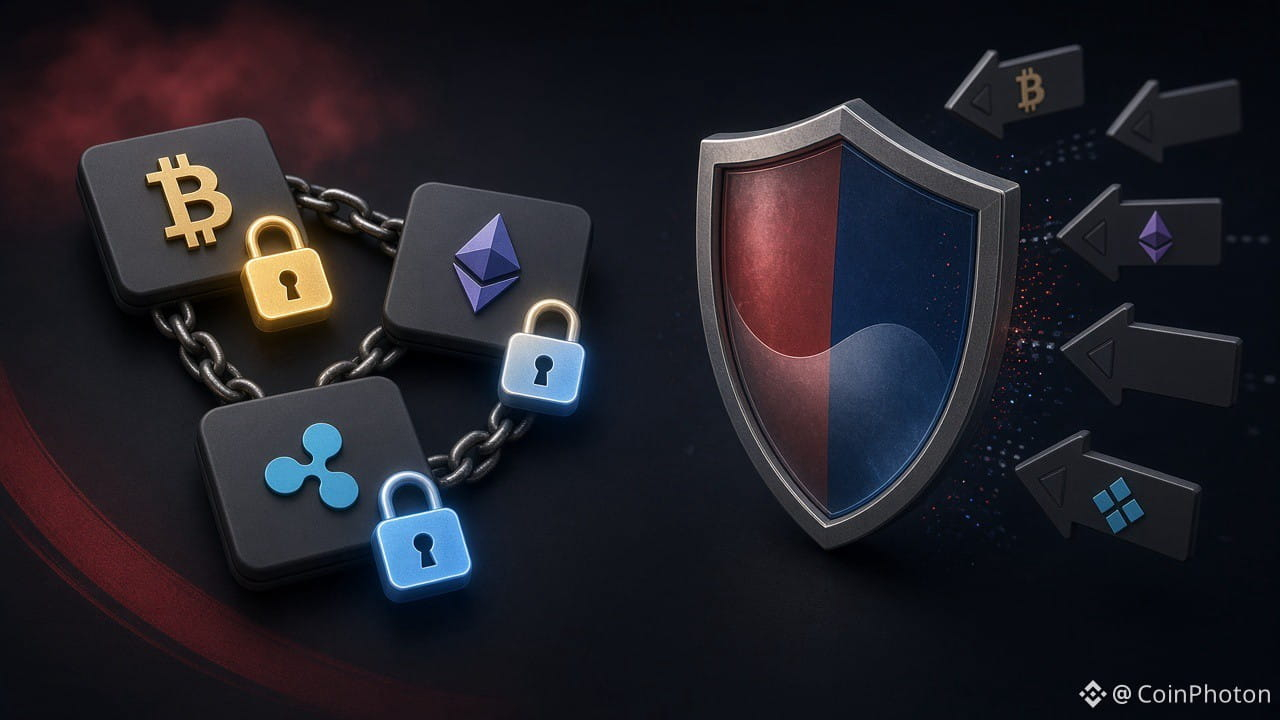
🔒 South Korea moves to tighten crypto transfers abroad and widen account freezes
FSC Chairman Lee Won-geon said regulators will step up scrutiny of transfers to high-risk foreign exchanges and private wallets and raise registration and screening bars for crypto firms. He also wants to extend a suspension system that has frozen more than 11,500 suspected phishing accounts since June 30 to other serious financial crimes. That change still needs new legislation.
⭐ Korean capital flowing to offshore platforms faces tighter control, after 27 unregistered exchanges including KuCoin, BitMart and MEXC were blocked in October.
#SouthKorea #AML #CryptoRegulation
56

·
--
Hong Kong eyes agentic AI to curb stablecoin‑driven crypto crime
- Raymond Chan, Executive Director (Enforcement and AML) at the HKMA, said the regulator is exploring agentic AI that can analyze on‑chain transfers alongside customers’ off‑chain transactions and flag rapid layering between crypto and fiat.
- Chainalysis’ 2026 Crypto Crime Report found illicit addresses received at least $154 billion in 2025, with stablecoins accounting for 84 % of that illicit volume.
- Hong Kong’s Virtual Asset Intelligence Taskforce, launched in October 2025 and expanded on May 14, brings together the HKMA, the SFC, Customs, and licensed crypto platforms to share intelligence, issue alerts, and improve stop‑payment mechanisms.
What safeguards are needed when deploying AI‑driven AML tools on pseudonymous blockchain activity?
#Crypto #FinTech #AML #Stablecoins #AI

49

·
--
Trump Administration Establishes New Center to Cut Off Money Laundering Through Crypto Payments, Putting Stablecoin Compliance Under Pressure
The Trump administration recently established a new law enforcement coordination center aimed at cutting off the channels through which scam proceeds enter the crypto ecosystem at the payment stage. This is the first time regulators have shifted their focus from tracing transactions on-chain to intervening earlier at the payment clearing layer.
According to Cointelegraph, the center was established through executive action by the Trump administration and directly targets routes used to transfer scam proceeds through crypto payment networks. Supporting data shows that Americans reported more than $17.7 billion in online scam losses in 2025. This figure provides the real-world context for the new policy and explains why regulators are stepping up their efforts now.
The significance of this move lies in its shift toward earlier intervention in anti-money laundering efforts. In recent years, regulators and law enforcement have mainly relied on tracing and freezing on-chain transactions after the fact. The new center, by contrast, seeks to intercept funds at the payment gateway before they are converted into crypto assets. For stablecoins, this could mean greater compliance pressure on issuers and payment channels, whose operators may need to demonstrate stronger capabilities to detect fraud and block funds.
At a fundamental level, annual scam losses of $17.7 billion are substantial, indicating that crypto payment networks remain a major channel exploited by scam groups. If the new center operates effectively, it could narrow the space available for these illicit funds, but it may also raise compliance costs and change the operating models of some payment service providers.
For the market, the short-term impact may be limited. It is important to recognize that this is an administrative action, not legislation, and lacks a binding legal framework. Its practical effectiveness and reach remain to be seen. Sentiment toward the stablecoin sector may be neutral to slightly positive, as a cleaner payment environment would support the compliance narrative over the long term.
However, there are also countervailing factors. The sustainability of administrative measures depends on continued resource allocation and interagency coordination. They may also resemble the recent wave of regulatory developments, so the market may not react additionally. Furthermore, if payment-layer interception fails to reach the core of on-chain activity, its actual effectiveness remains uncertain.
The key things to watch are whether the center can produce verifiable interception data and whether stablecoin compliance standards will tighten as a result. For those following stablecoin-related assets, it is more important from a trading perspective to wait for confirmation at the implementation level than to overinterpret the policy itself.
#Stablecoin #AML #CryptoRegulation
The above is a compilation of information and personal analysis, and does not constitute investment advice.
I will continue to provide updates as further policy details become clear.
73

·
--
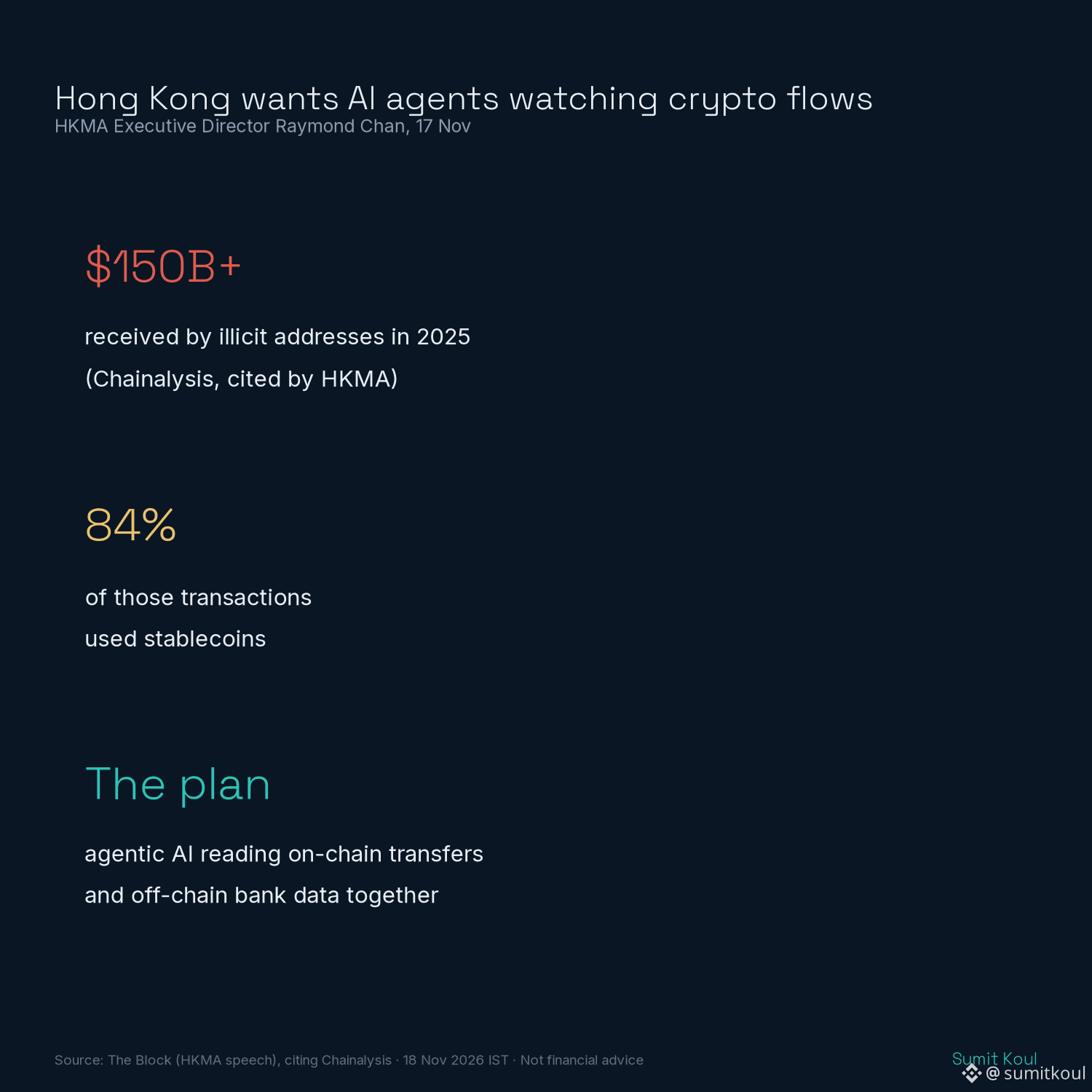
Hong Kong's central bank wants AI agents watching crypto money flows. 🤖🔍
HKMA Executive Director Raymond Chan said agentic AI could read on-chain transfers and off-chain bank transactions together, to flag things like funds being layered back and forth between crypto and fiat.
The number he cited (from Chainalysis): illicit addresses received more than $150B in 2025, and 84% of those transactions used stablecoins.
For normal users this cuts both ways: faster detection of scams and laundering, but also more automated flags on ordinary transfers. Keep records of where your funds come from.
Good for the industry, or too much surveillance? 👇
#HongKong #Stablecoins #AML
7

·
--
🚨 $16 Billion in illicit moves uncovered at MEXC Global!
FinCEN bans US institutions from sending or receiving MEXC funds.
MEXC ranks among the world’s top 20 exchanges by volume.
Around $1.5 B tied to Russian sanctions evasion plus $200 M via a ruble‑backed token.
Effective early Jan 2027, banks must cut ties. 📊
Bullish or bearish on liquidity shifts after this crackdown? 🤔
#Treasury #Sanctions #aml
1
95

Shocking! Jack Dorsey's Block has just agreed to pay a $764 MILLION fine to the U.S. Department of Justice over failures in its anti-money laundering program. This is no small sum—it shows that the Cash App giant seriously violated the Bank Secrecy Act.
The investigation targeted Cash App over alleged weak identity verification, which enabled illegal transactions and fraud. Clearly, tighter KYC/AML regulations are an unavoidable trend.
What's more, this fine EVEN EXCEEDS Block's third-quarter net income of $566 million. Financial pressure is weighing heavily on the company, especially as Bitcoin gross profit last quarter also FELL BY 50% to $52 million.
This is an extremely important signal for the entire crypto industry: platforms integrating cryptocurrency will face more scrutiny than ever over compliance. Legal risks are real.
Will Block get through this difficult period, and will this affect market sentiment $BTC not?
#Crypto #AML
$BTC
1
220

·
--
Article
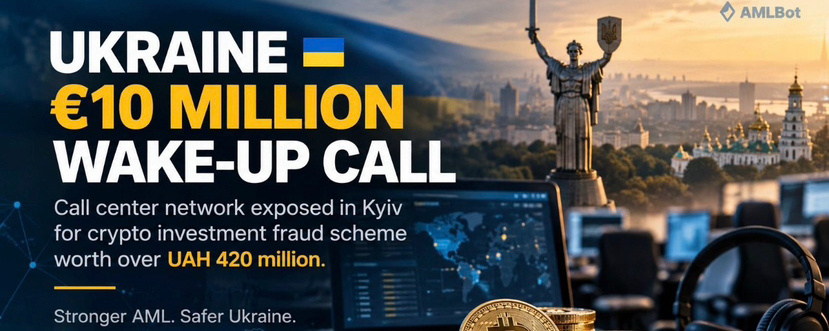
€10M Wake-Up Call🇺🇦 Ukraine’s €10M+ Wake-Up Call: Why Crypto AML Compliance Can No Longer Be Optional
A major financial fraud investigation in Kyiv has exposed a criminal scheme allegedly involving more than UAH 420 million. According to Ukraine’s financial intelligence authorities, a call-center network disguised its activities as legitimate chargeback and fund-recovery services, while cryptocurrency wallets were used to receive funds linked to the operation.
This case highlights a critical vulnerability in the digital economy: criminals can exploit gaps between traditional financial monitoring and blockchain transactions, while presenting fraudulent services as legitimate businesses.
What needs to change?
Ukraine should strengthen its AML/CFT framework by integrating modern blockchain intelligence capabilities into its financial monitoring ecosystem. Solutions such as AMLBot can help financial institutions, crypto businesses, and investigators screen wallet addresses, trace suspicious transactions, assess exposure to illicit funds, and identify risks earlier.
Effective KYC/KYB procedures, continuous transaction monitoring, and risk-based blockchain analytics should become integral components of a modern compliance framework, supported by clear legislation and appropriate regulatory oversight.
Technology alone cannot eliminate financial crime. But combining effective regulation, professional investigations, and advanced blockchain analytics can make it significantly harder for criminals to exploit the system.
The question is no longer whether Ukraine needs stronger crypto compliance, but how quickly it can implement it.
#AML #kyc #compliance #BlockchainIntelligence #CryptoCrime
€10M Wake-Up Call
🇺🇦 Ukraine’s €10M+ Wake-Up Call: Why Crypto AML Compliance Can No Longer Be Optional
A major financial fraud investigation in Kyiv has exposed a criminal scheme allegedly involving more than UAH 420 million. According to Ukraine’s financial intelligence authorities, a call-center network disguised its activities as legitimate chargeback and fund-recovery services, while cryptocurrency wallets were used to receive funds linked to the operation.
This case highlights a critical vulnerability in the digital economy: criminals can exploit gaps between traditional financial monitoring and blockchain transactions, while presenting fraudulent services as legitimate businesses.
What needs to change?
Ukraine should strengthen its AML/CFT framework by integrating modern blockchain intelligence capabilities into its financial monitoring ecosystem. Solutions such as AMLBot can help financial institutions, crypto businesses, and investigators screen wallet addresses, trace suspicious transactions, assess exposure to illicit funds, and identify risks earlier.
Effective KYC/KYB procedures, continuous transaction monitoring, and risk-based blockchain analytics should become integral components of a modern compliance framework, supported by clear legislation and appropriate regulatory oversight.
Technology alone cannot eliminate financial crime. But combining effective regulation, professional investigations, and advanced blockchain analytics can make it significantly harder for criminals to exploit the system.
The question is no longer whether Ukraine needs stronger crypto compliance, but how quickly it can implement it.
#AML #kyc #compliance #BlockchainIntelligence #CryptoCrime
2
3
4.7k

🔍 TRM Report Exposes $3.8B Crypto Flows — AML Scrutiny Intensifies
On June 25, 2026, TRM Labs' report on $3.8 billion in Iran-linked crypto flows through CoinEx has reignited debates about the role of cryptocurrency in sanctions evasion and the need for robust anti-money laundering (AML) measures.
What this means for the industry:
- Expect increased regulatory pressure on exchanges that operate with minimal KYC requirements.
- Chain analytics tools like TRM, Chainalysis, and CipherTrace become even more critical for compliance.
- Major cryptocurrencies like Bitcoin $BTC may face renewed scrutiny despite their transparent ledgers.
- Privacy-focused cryptos could see additional regulatory headwinds as authorities crack down on anonymous transactions.
The silver lining: the transparent nature of blockchain means illicit flows can be traced more effectively than traditional banking systems — a fact that industry advocates should emphasize.
📌 Key Takeaway:
The $3.8B Iran-CoinEx case is a double-edged sword — it invites regulatory crackdowns but also proves blockchain's transparency advantage over traditional finance.
#AML #CryptoCompliance
#BinanceAlphaAlert
82
⚖️ FATF and Global Crypto Regulation: Global Watchdog Continues to Push for AML Standards
On July 4, 2026, the FATF's ongoing push for global crypto regulation remains a key theme. Progress on AML enforcement continues but unevenly across the 138 countries that are members of the task force.
The implications are significant for exchanges and DeFi platforms operating across borders. Tighter KYC/AML requirements may impact privacy-focused assets differently than transparent ones.
For now, Bitcoin $BTC at $62,612 continues to trade on its own fundamentals, suggesting markets have largely priced in continued regulatory tightening.
📌 Key Takeaway:
Global AML enforcement is the steady drumbeat of crypto regulation. Compliant projects will thrive; privacy-first ones face an uphill battle.
#FATF #AML #CryptoRegulation
#BinanceAlphaAlert
35

·
--
North Korea’s crypto crackdown: a crucial warning shot. This news about North Korea arresting former cyber operators for bank hacking and crypto laundering is significant. It highlights the growing scrutiny on illicit activities within the crypto space, even in countries known for state-sponsored hacking. These individuals reportedly used crypto to hide their tracks, making it harder for authorities to recover stolen funds. This doesn't just affect North Korea; it's a global concern as such activities can impact the reputation and security of the entire crypto ecosystem. This event shows governments worldwide are getting serious about tracing and stopping crypto-related crime. It could lead to increased collaboration between international bodies to enhance blockchain forensics and regulatory oversight. Stronger regulations, while sometimes seen as restrictive, are vital for building trust and attracting mainstream adoption. It's a double-edged sword, but necessary for crypto's long-term health. Keep an eye on evolving anti-money laundering (AML) efforts. What are your thoughts on cryptocurrency and national security? #CryptoSecurity #AML #NorthKorea $BTC $ETH
North Korea’s crypto crackdown: a crucial warning shot. This news about North Korea arresting former cyber operators for bank hacking and crypto laundering is significant. It highlights the growing scrutiny on illicit activities within the crypto space, even in countries known for state-sponsored hacking. These individuals reportedly used crypto to hide their tracks, making it harder for authorities to recover stolen funds. This doesn't just affect North Korea; it's a global concern as such activities can impact the reputation and security of the entire crypto ecosystem. This event shows governments worldwide are getting serious about tracing and stopping crypto-related crime. It could lead to increased collaboration between international bodies to enhance blockchain forensics and regulatory oversight. Stronger regulations, while sometimes seen as restrictive, are vital for building trust and attracting mainstream adoption. It's a double-edged sword, but necessary for crypto's long-term health. Keep an eye on evolving anti-money laundering (AML) efforts. What are your thoughts on cryptocurrency and national security? #CryptoSecurity #AML #NorthKorea $BTC $ETH
44

·
--
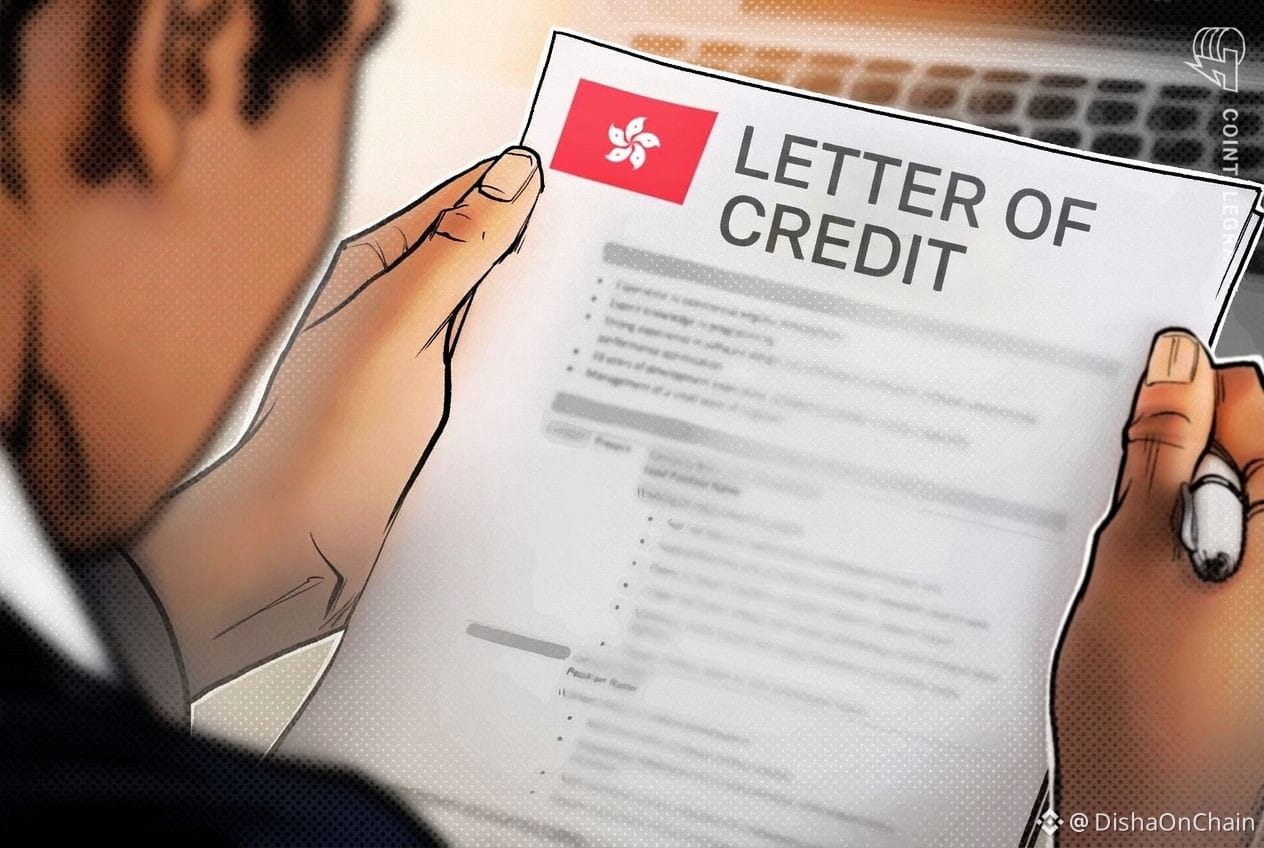
⚡ Hong Kong Jails Ex-Banker Over $1.6B Fraud, Crypto Bribes
📌 Key Highlights:
• Former banking official sentenced to 4 years for falsifying $1.6B in letters of credit and accepting $470,000 in crypto bribes
• Total illicit crypto value: ,000, highlighting regulatory scrutiny on illicit crypto flows
• Signals tightening enforcement on financial crimes involving digital assets, prompting banks to bolster AML controls
📊 Market Takeaway:
Regulatory crackdowns may dampen short‑term sentiment in crypto‑linked banking services, but the broader market remains resilient, with futures gains led by and .
#Regulation #AML #CryptoLaw
1
63
·
--
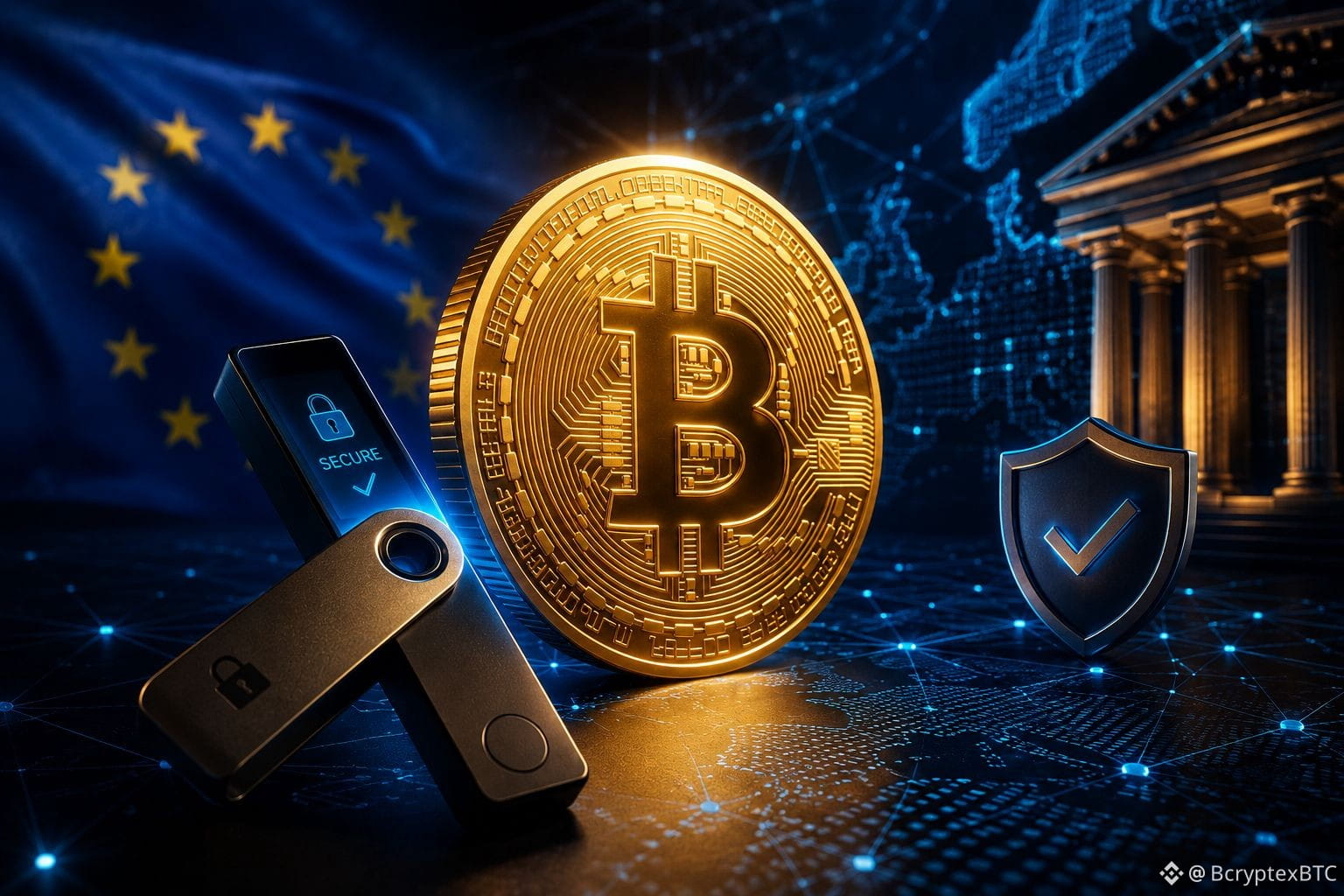
The EU didn't ban Bitcoin. It clarified who the rules apply to.
Starting in July 2027, regulated crypto platforms across the EU will face stricter AML requirements:
• €10,000 limit on commercial cash payments
• Identity checks for €3,000+ cash transactions
• Full KYC for €1,000+ crypto transactions
• Anonymous custodial crypto accounts will no longer be permitted
Here's what matters most:
Self-custody remains untouched.
If you hold your own keys, wallet-to-wallet Bitcoin transactions are not covered by these rules. The regulation targets custodians—not the Bitcoin network.
This is more than a compliance update.
It officially draws a line between owning Bitcoin through a third party and owning Bitcoin yourself.
For institutions, clearer rules reduce uncertainty.
For long-term Bitcoin holders, the importance of self-custody has never been clearer.
Does this strengthen Bitcoin's long-term adoption, or will stricter compliance change how people use crypto in Europe?
$BTC
#Bitcoin #BTC #CryptoRegulation #aml
1
164

·
--
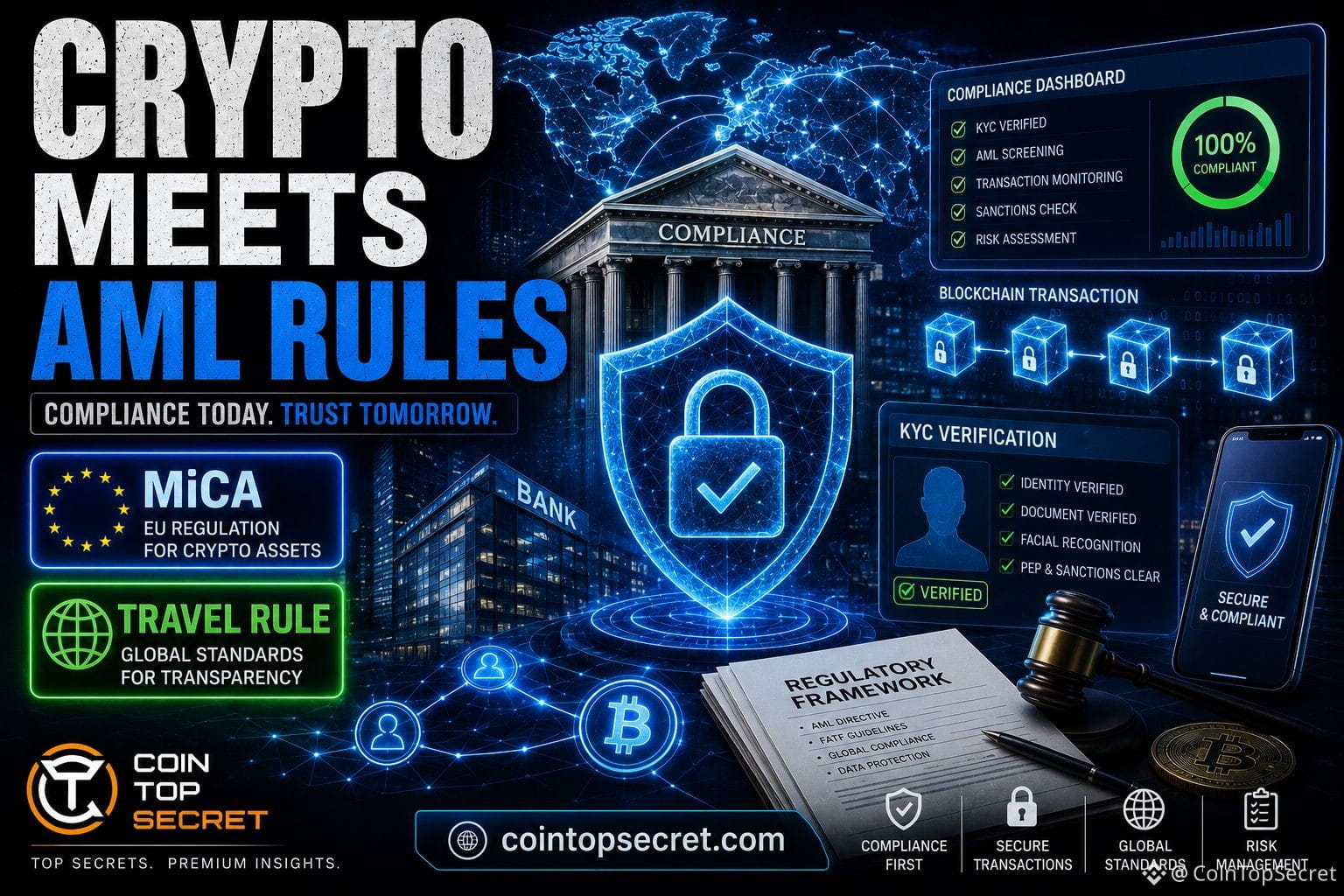
🏛️ Enterprise Crypto Infrastructure Adapts to Modern AML Standards
As digital assets become increasingly integrated into global finance, infrastructure providers are aligning with regulatory expectations across major jurisdictions.
Why It Matters:
✅ Supports institutional adoption
✅ Improves regulatory trust
✅ Reduces compliance risks
✅ Strengthens market credibility
Enterprise crypto infrastructure is evolving beyond simple custody and transactions into a fully regulated financial ecosystem.
📖 Read the full article:
https://cointopsecret.com/
💬 Will stronger compliance frameworks accelerate institutional crypto adoption?
#Crypto #AML #MiCA #CryptoNews #Blockchain #Web3 #BinanceSquare #Compliance #DigitalAssets #Fintech
80
📋 FATF Progress: Crypto AML Compliance Has Stalled
On June 29, 2026, only 40 of 138 countries enforce AML standards for crypto — the same as last year. Travel Rule implementation is slow. The gap between compliant and non-compliant jurisdictions widens. For exchanges in regulated markets, compliance is a competitive advantage. Non-compliant jurisdictions risk being cut off from the global banking system as enforcement ramps up.
📌 Key Takeaway:
FATF compliance stalled — the divide between regulated and unregulated crypto markets continues to widen.
#FATF #AML
#BinanceAlphaAlert
41

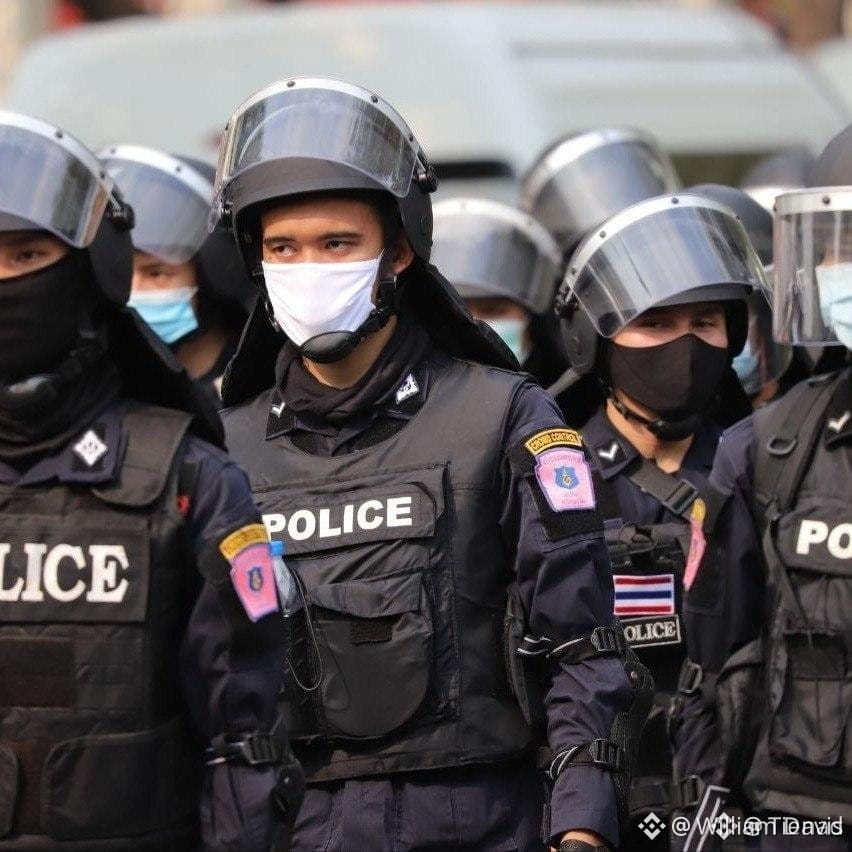
THAILAND'S NEW AML RULES ARE TARGETING USDT LIQUIDITY - HERE'S WHAT IT MEANS FOR $DEXE ⚡
The Thai government is tightening anti-money laundering regulations, specifically targeting large cash deposits, gold trades, and high-volume USDT transactions. This introduces a new layer of scrutiny on stablecoin liquidity flows that market participants will need to monitor closely.
While transparency efforts are necessary, such policies can shift liquidity patterns and alter market structure temporarily. A clear signal here is the direct focus on USDT — the most widely used stablecoin in crypto markets. How do you see this affecting on-chain volumes in the coming weeks?
Not financial advice. Always manage your risk.
#DEXE #AML #Stablecoin #Regulation #CryptoNews
⚡

156
Log in to explore more content
Join global crypto users on Binance Square
⚡️ Get latest and useful information about crypto.
💬 Trusted by the world’s largest crypto exchange.
👍 Discover real insights from verified creators.
Email / Phone number
Trending Topics
1
#EvolveAtBinanceBlockchainWeek
1.7M views
17,470 Discussing
2
#ColdcardFlawLeadsToTheftOfAtLeast1789BTC
37,478 views
377 Discussing
3
#SECIssuesNoActionLetterOnMoleculeModel
5,561 views
84 Discussing
4
#VitalikWantsWalletChipDesignsOpened
48,313 views
515 Discussing
5
#MalaysiaFirstBitcoinETFToListOnDecember2
19,604 views
210 Discussing
6
#EthereumGlamsterdamKeepsStorageFeeChange
63,033 views
583 Discussing
7
#ChainflipVaultTheftHaltsProtocol
31,636 views
448 Discussing
8
#DowJonesAdds591.99Points
30,803 views
135 Discussing
9
#ClaudeAccusedOfDroppingUserPreferences
14,112 views
127 Discussing
10
#BitcoinETFsExtendOutflowStreakToEightDays
613 views
11 Discussing