
#etfvsbtc
etfvsbtc
21.9M views
16,380 Discussing
Join the #ETFvsBTC campaign for a chance to win up to 500 FDUSD! Weigh in on the pros and cons of investing in Bitcoin ETFs as opposed to buying BTC directly.
Hot
Latest

📈 BlackRock’s Bitcoin ETF is outperforming the S&P 500 ETF.
Since its January 2024 debut, IBIT is up 71%, slightly ahead of Vanguard’s S&P 500 ETF at 66%, according to Bloomberg’s Eric Balchunas.
Bitcoin ETFs are making a serious statement. 👀
Is this just the beginning of Bitcoin’s institutional era? ₿
#ETFvsBTC #ETFs $BITCOIN
Since its January 2024 debut, IBIT is up 71%, slightly ahead of Vanguard’s S&P 500 ETF at 66%, according to Bloomberg’s Eric Balchunas.
Bitcoin ETFs are making a serious statement. 👀
Is this just the beginning of Bitcoin’s institutional era? ₿
#ETFvsBTC #ETFs $BITCOIN
🚨 JUST IN: U.S. spot Bitcoin ETFs had a massive August. ₿
They pulled in $3.5 billion during the month — their biggest monthly inflow since July 2025.
Institutional demand is clearly still strong.
🔥 But here’s the real question: Are these ETF inflows setting Bitcoin up for a new all-time high, or is a major pullback coming first?
What’s your BTC target for the next 3 months? 👀
#BTC #ETFvsBTC $BITCOIN
They pulled in $3.5 billion during the month — their biggest monthly inflow since July 2025.
Institutional demand is clearly still strong.
🔥 But here’s the real question: Are these ETF inflows setting Bitcoin up for a new all-time high, or is a major pullback coming first?
What’s your BTC target for the next 3 months? 👀
#BTC #ETFvsBTC $BITCOIN

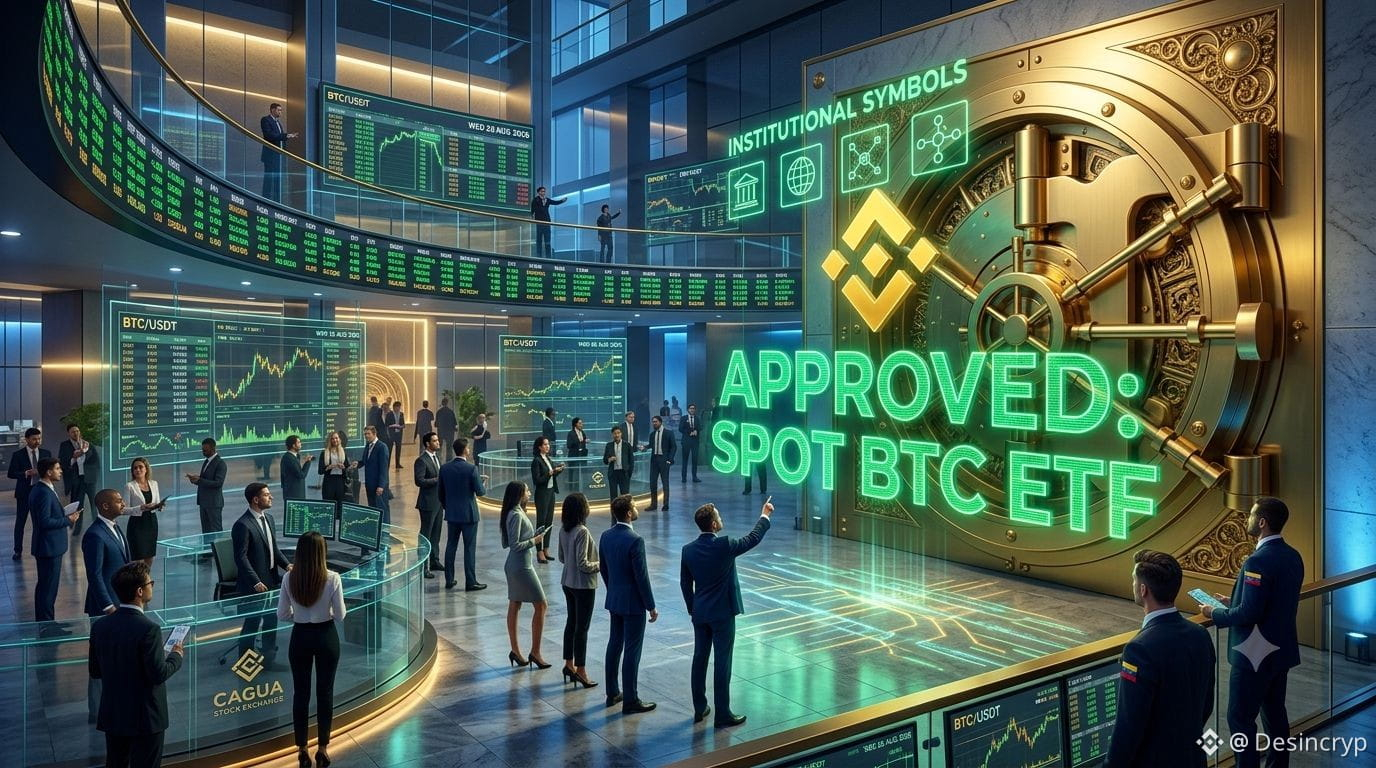
🏛️ INSTITUTIONAL GREEN LIGHT FOR THE BITCOIN ETF! 📊
An unprecedented milestone for the financial industry: regulators have officially approved the integration of spot Bitcoin ETFs. This step paves the way for billions of dollars in institutional capital and cements Bitcoin as a global reserve asset.
📈 The crypto market is entering a new era of maturity and massive liquidity.
💬 Do you think this approval will forever change the traditional financial market?
I’m reading your thoughts in the comments! 👇
#BTC #ETFvsBTC #blockchain
An unprecedented milestone for the financial industry: regulators have officially approved the integration of spot Bitcoin ETFs. This step paves the way for billions of dollars in institutional capital and cements Bitcoin as a global reserve asset.
📈 The crypto market is entering a new era of maturity and massive liquidity.
💬 Do you think this approval will forever change the traditional financial market?
I’m reading your thoughts in the comments! 👇
#BTC #ETFvsBTC #blockchain
saviomatec:
NTDA

📊 DATA:
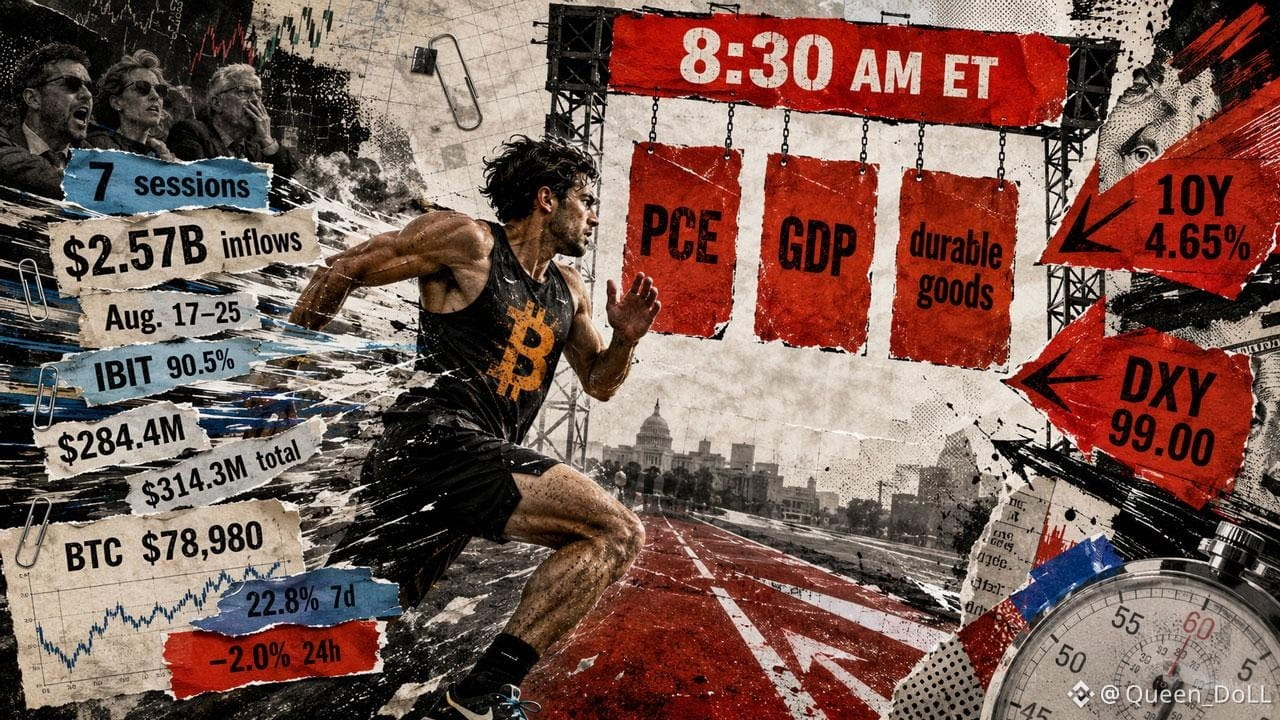
Bitcoin’s ETF momentum is strong, but today’s macro data could put it to a real test.
The 7-session ETF inflow streak has reached $2.57B, showing continued institutional demand for BTC.
The interesting part? Around 90.5% of the latest inflow came from IBIT alone, making the demand signal powerful—but highly concentrated.
Now PCE, GDP, and durable-goods data are landing at the same time.
ETF flows tell us where capital is moving. Macro data could decide how long that momentum lasts.
#Bitcoin❗ #BTC #ETFvsBTC #CryptoMarkets #CryptoNews
Bitcoin’s ETF momentum is strong, but today’s macro data could put it to a real test.
The 7-session ETF inflow streak has reached $2.57B, showing continued institutional demand for BTC.
The interesting part? Around 90.5% of the latest inflow came from IBIT alone, making the demand signal powerful—but highly concentrated.
Now PCE, GDP, and durable-goods data are landing at the same time.
ETF flows tell us where capital is moving. Macro data could decide how long that momentum lasts.
#Bitcoin❗ #BTC #ETFvsBTC #CryptoMarkets #CryptoNews
BTC-1,30%
IBITETF-0,39%

#ETFvsBTC
The choice between a Bitcoin ETF (Exchange-Traded Fund) and buying Bitcoin (BTC) directly depends entirely on whether you prefer convenience and regulatory safety or true asset ownership and round-the-clock trading utility.
📊 Financial Comparison
A Bitcoin ETF tracks the spot price of the cryptocurrency. Because a single share represents a fraction of a coin held securely by a corporate custodian, your investment returns will mirror the underlying asset's market movements minus any internal fund fees.
Core Differences at a Glance
For direct, high-utility comparison, the operational mechanics break down across these structural categories:
Feature📈 Bitcoin ETF (e.g., BlackRock IBIT)🪙 Direct Bitcoin (BTC)OwnershipYou own a traditional brokerage fund share.You own the digital asset directly.Storage & SecurityManaged by institutional custodians.Managed by you via an exchange or a cold wallet.Trading HoursStock market hours only.24/7/365 global market execution.Ongoing CostsExpense ratios (~0.20% to 0.25% annually).Zero ongoing custody fees (only transaction network fees).Tax & AccountsFits inside standard investment profiles like IRAs or Demat accounts.Handled via separate, dedicated crypto tax rules.UtilityPurely a financial price tracking tool.Can be spent, transferred, or deployed into decentralized finance (DeFi).
Deep Dive: Pros and Cons
1. Bitcoin ETF (The Traditional Route)
Pros:
Simplicity: No need to understand public keys, seed phrases, or crypto wallet mechanics.
Regulatory Shielding: Fully regulated by securities commissions, reducing risks associated with exchange hacks.
Tax Efficiency: Easily fits into legacy tax-sheltered investment accounts.
Cons:
Management Fees: Annual expense ratios compound over decades and drag down absolute returns.
Counterparty Risk: You trust corporate entities (BlackRock, Fidelity, Coinbase Custody) to hold the real collateral.
Inflexible Hours: If macro market crashes happen over the weekend, you cannot sell your position until the stock exchange opens on Monday morning.
The choice between a Bitcoin ETF (Exchange-Traded Fund) and buying Bitcoin (BTC) directly depends entirely on whether you prefer convenience and regulatory safety or true asset ownership and round-the-clock trading utility.
📊 Financial Comparison
A Bitcoin ETF tracks the spot price of the cryptocurrency. Because a single share represents a fraction of a coin held securely by a corporate custodian, your investment returns will mirror the underlying asset's market movements minus any internal fund fees.
Core Differences at a Glance
For direct, high-utility comparison, the operational mechanics break down across these structural categories:
Feature📈 Bitcoin ETF (e.g., BlackRock IBIT)🪙 Direct Bitcoin (BTC)OwnershipYou own a traditional brokerage fund share.You own the digital asset directly.Storage & SecurityManaged by institutional custodians.Managed by you via an exchange or a cold wallet.Trading HoursStock market hours only.24/7/365 global market execution.Ongoing CostsExpense ratios (~0.20% to 0.25% annually).Zero ongoing custody fees (only transaction network fees).Tax & AccountsFits inside standard investment profiles like IRAs or Demat accounts.Handled via separate, dedicated crypto tax rules.UtilityPurely a financial price tracking tool.Can be spent, transferred, or deployed into decentralized finance (DeFi).
Deep Dive: Pros and Cons
1. Bitcoin ETF (The Traditional Route)
Pros:
Simplicity: No need to understand public keys, seed phrases, or crypto wallet mechanics.
Regulatory Shielding: Fully regulated by securities commissions, reducing risks associated with exchange hacks.
Tax Efficiency: Easily fits into legacy tax-sheltered investment accounts.
Cons:
Management Fees: Annual expense ratios compound over decades and drag down absolute returns.
Counterparty Risk: You trust corporate entities (BlackRock, Fidelity, Coinbase Custody) to hold the real collateral.
Inflexible Hours: If macro market crashes happen over the weekend, you cannot sell your position until the stock exchange opens on Monday morning.

$2.6 billion makes a comeback in Crypto: This rally isn’t just about short liquidations anymore.
U.S. spot Bitcoin and Ethereum ETFs have just delivered their strongest week of the year.
BTC ETFs saw about $1.9 billion in net inflows for the week, ETH ETFs about $697 million in net inflows, totaling roughly $2.6 billion—its highest level since October 2025.
Even more eye-catching is the trading volume.
BTC ETFs traded about $22.1 billion over the week, up 219% from the prior week; ETH ETFs traded about $6.9 billion, a 259% increase.
Put together, that’s nearly $29 billion.
A few days ago, BTC surged from $64,000 straight up to nearly $80,000, and many attributed the move to short squeezes.
Now that the full data is in, you can see another force has already stepped in: institutional money has really returned.
BTC ETFs had net inflows of $517 million on Wednesday and another $606 million on Thursday; among that, BlackRock’s IBIT alone pulled in about $503 million in a single day.
ETH hasn’t fallen behind either.
ETH ETF net assets rose from $10.5 billion to $14.3 billion over the week—an increase of nearly 36%—with both capital and coin prices rising at the same time.
At the moment, BTC is around $77,000–$77,300 depending on real-time sources, and ETH is around $2,415–$2,425.1
This set of data shows the market structure is changing:
Short squeezes are responsible for lifting prices, and ETF capital is starting to take hold at higher levels.
But it’s still too early to declare that a “new bull market” has officially begun.
So far this year, BTC ETFs are still cumulatively net outflow by about $2.9 billion, and ETH ETFs are also still net outflow by about $192 million.
In other words, this week is very strong, but it hasn’t fully closed the funding gap left behind earlier this year.
Next, if ETFs maintain large net inflows for a second and third consecutive week, only then will the character of this rally truly upgrade from a “bounce” to a “capital trend.”$BTC $ETH #etf #ETFvsBTC
U.S. spot Bitcoin and Ethereum ETFs have just delivered their strongest week of the year.
BTC ETFs saw about $1.9 billion in net inflows for the week, ETH ETFs about $697 million in net inflows, totaling roughly $2.6 billion—its highest level since October 2025.
Even more eye-catching is the trading volume.
BTC ETFs traded about $22.1 billion over the week, up 219% from the prior week; ETH ETFs traded about $6.9 billion, a 259% increase.
Put together, that’s nearly $29 billion.
A few days ago, BTC surged from $64,000 straight up to nearly $80,000, and many attributed the move to short squeezes.
Now that the full data is in, you can see another force has already stepped in: institutional money has really returned.
BTC ETFs had net inflows of $517 million on Wednesday and another $606 million on Thursday; among that, BlackRock’s IBIT alone pulled in about $503 million in a single day.
ETH hasn’t fallen behind either.
ETH ETF net assets rose from $10.5 billion to $14.3 billion over the week—an increase of nearly 36%—with both capital and coin prices rising at the same time.
At the moment, BTC is around $77,000–$77,300 depending on real-time sources, and ETH is around $2,415–$2,425.1
This set of data shows the market structure is changing:
Short squeezes are responsible for lifting prices, and ETF capital is starting to take hold at higher levels.
But it’s still too early to declare that a “new bull market” has officially begun.
So far this year, BTC ETFs are still cumulatively net outflow by about $2.9 billion, and ETH ETFs are also still net outflow by about $192 million.
In other words, this week is very strong, but it hasn’t fully closed the funding gap left behind earlier this year.
Next, if ETFs maintain large net inflows for a second and third consecutive week, only then will the character of this rally truly upgrade from a “bounce” to a “capital trend.”$BTC $ETH #etf #ETFvsBTC


Bitcoin ETF outflows: According to an analytics firm, the market did not pass the first serious test of resilience at the end of summer: spot #BTC -#ETFvsBTC over five trading sessions lost about $390 million. As a result, the BTC price fell back to the lower bound of its current trading range. Experts expect stabilization in capital flows to resume a full-fledged bullish trend. Miners’ capitulation: Additional pressure on the price comes from miners’ selling, who are forced to lock in profits or cover operating expenses, making it harder for the price to rebound higher. New SEC rules: The U.S. Senate has resumed active discussions on regulating the crypto sphere, initiated by #SEC . The main disputes have centered on stablecoins: lawmakers propose a compromise—banning rewards to users simply for holding stablecoins, but allowing accruals for transactions and operational activity. “Anti-Trump” restrictions: Democrats in the Senate are trying to implement strict ethical standards. $BTC


#ETFvsBTC #ETFvsBTC
Bitcoin and ETFs are shaping the future of finance in different ways.
🔹 BTC offers true ownership, decentralization, and 24/7 market access.
🔹 ETFs provide a familiar and regulated path for traditional investors.
🔹 Bitcoin lets you hold the asset directly, while ETFs offer exposure through financial markets.
🔹 Growing ETF adoption could bring more institutional capital into the crypto space.
In my view, ETFs help drive adoption, but Bitcoin remains the foundation of the digital asset ecosystem.
What do you prefer: Direct BTC ownership or Bitcoin ETFs?
#ETFvsBTC #Bitcoin #BTC #Crypto #Investing #Blockchain #BinanceSquare 🚀
Bitcoin and ETFs are shaping the future of finance in different ways.
🔹 BTC offers true ownership, decentralization, and 24/7 market access.
🔹 ETFs provide a familiar and regulated path for traditional investors.
🔹 Bitcoin lets you hold the asset directly, while ETFs offer exposure through financial markets.
🔹 Growing ETF adoption could bring more institutional capital into the crypto space.
In my view, ETFs help drive adoption, but Bitcoin remains the foundation of the digital asset ecosystem.
What do you prefer: Direct BTC ownership or Bitcoin ETFs?
#ETFvsBTC #Bitcoin #BTC #Crypto #Investing #Blockchain #BinanceSquare 🚀


Bitcoin Spot ETFs halt the bleeding and start attracting capital again.
After several days of consecutive outflows, Bitcoin Spot ETFs have recorded net inflows of capital once more, a signal that could indicate a shift in institutional investor sentiment. The positive flow comes at a crucial time for BTC, which is trying to stabilize after weeks of bearish pressure and high volatility.
Although the market still faces macroeconomic and geopolitical uncertainty, the return of buyers to the ETFs is seen as a sign of long-term confidence and could provide support for Bitcoin's price in the coming weeks.
#btc
#ETFvsBTC
After several days of consecutive outflows, Bitcoin Spot ETFs have recorded net inflows of capital once more, a signal that could indicate a shift in institutional investor sentiment. The positive flow comes at a crucial time for BTC, which is trying to stabilize after weeks of bearish pressure and high volatility.
Although the market still faces macroeconomic and geopolitical uncertainty, the return of buyers to the ETFs is seen as a sign of long-term confidence and could provide support for Bitcoin's price in the coming weeks.
#btc
#ETFvsBTC


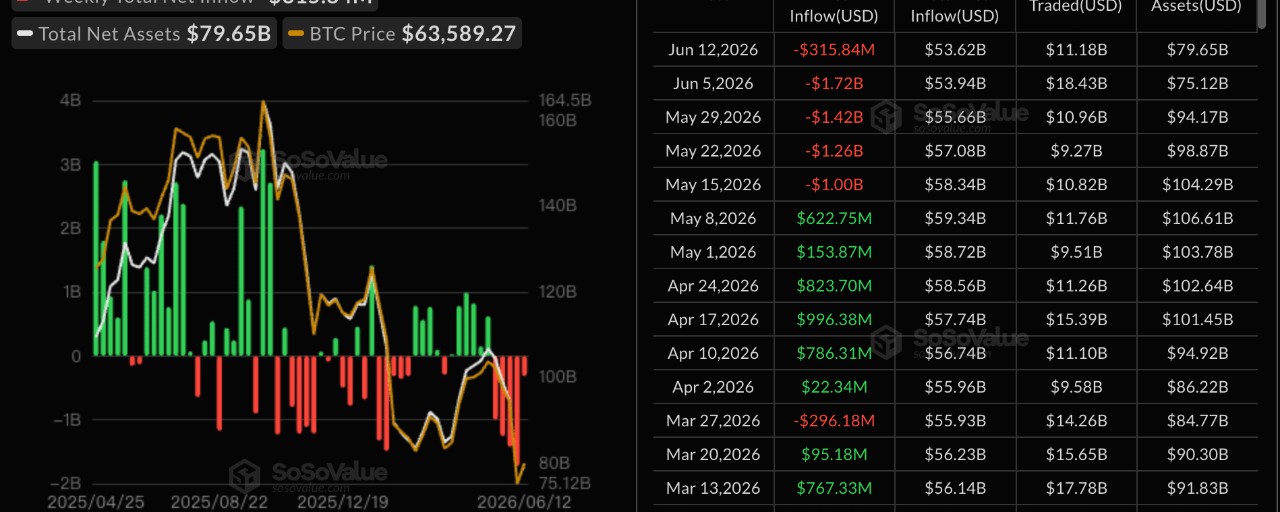

🚨 Bitcoin ETFs recorded significant outflows yesterday
over $6.3 billion$ exiting the funds over the last 30 days—the longest consecutive outflow streak on record
the reons are Three major force to sell
1. BlackRock's Head of Digital Assets, Robbie Mitchnick, laid it out clearly yesterday. Institutional investors aren't necessarily hating on crypto; **they are aggressively chasing the AI trade.** Trillions of dollars are rotating away from traditional alternative assets (like Bitcoin and Gold)
2.New Fed Chair Kevin Warsh took a strict hawkish stance to fight inflation, pushing U.S. Treasury yields to new highs. then Why hold volatile BTC when guaranteed government debt is paying top dollar?.
3.Easing geopolitical tensions have reduced demand for hedge assets like Bitcoin.
As investors redeemed ETF shares, issuers were forced to sell some of their BTC holdings to meet those withdrawals.
This looks more like a macro capital rotation than a loss of confidence in Bitcoin itself.
do you think is there any other resons was the biggest driver behind yesterday's outflows? 👇
$BTC
#BTC #ETFvsBTC #BlackRock #MarketSentimentToday #AI
over $6.3 billion$ exiting the funds over the last 30 days—the longest consecutive outflow streak on record
the reons are Three major force to sell
1. BlackRock's Head of Digital Assets, Robbie Mitchnick, laid it out clearly yesterday. Institutional investors aren't necessarily hating on crypto; **they are aggressively chasing the AI trade.** Trillions of dollars are rotating away from traditional alternative assets (like Bitcoin and Gold)
2.New Fed Chair Kevin Warsh took a strict hawkish stance to fight inflation, pushing U.S. Treasury yields to new highs. then Why hold volatile BTC when guaranteed government debt is paying top dollar?.
3.Easing geopolitical tensions have reduced demand for hedge assets like Bitcoin.
As investors redeemed ETF shares, issuers were forced to sell some of their BTC holdings to meet those withdrawals.
This looks more like a macro capital rotation than a loss of confidence in Bitcoin itself.
do you think is there any other resons was the biggest driver behind yesterday's outflows? 👇
$BTC
#BTC #ETFvsBTC #BlackRock #MarketSentimentToday #AI






#ETFvsBTC
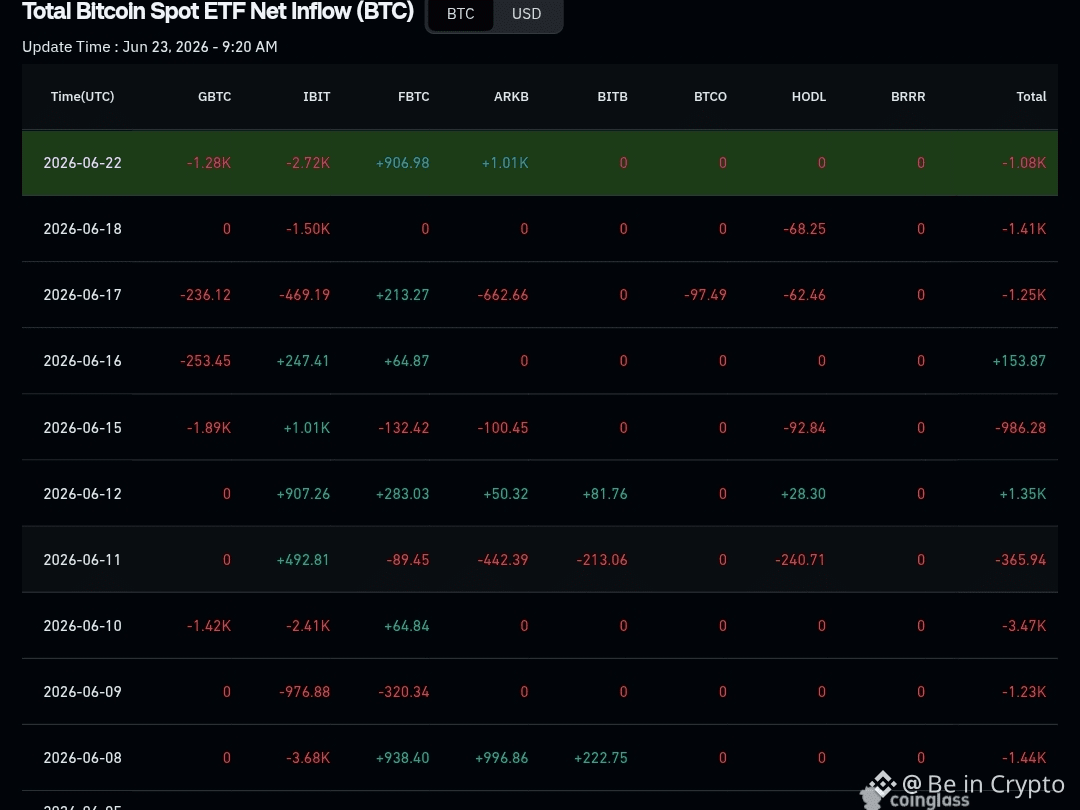
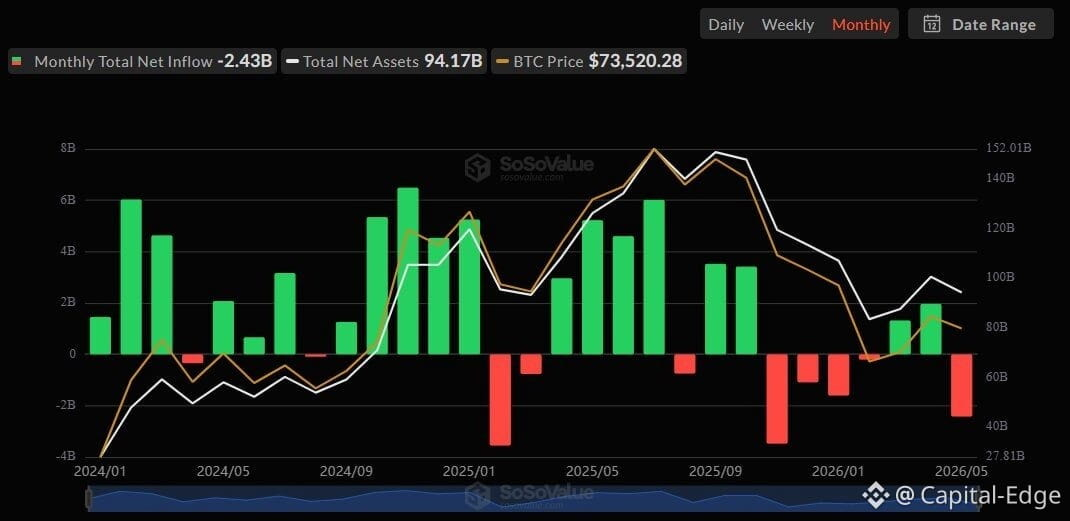
*Bitcoin ETF Outflows Hit $2.43B in May: Institutions Are Selling*
Fresh SoSoValue data shows Monthly Total Net Inflow at -$2.43B for May 2026. Total Net Assets dropped to $94.17B while BTC price holds $73,520.28.
*Chart Breakdown:*
1. *Big Red Bar*: May 2026 printed the largest outflow since Jan 2025. Green bars dominated the 2024 bull run, but 2026 is all red. That’s $2.43B pulled from BTC ETFs in one month.
2. *Price vs Flows*: BTC price and Total Net Assets move together. Both topped around Sept 2025 near $140B AUM. Since then, assets crashed from $152B to $94.17B. Price followed from $116K+ down to $73.5K.
3. *Pattern Shift*: From Jan 2024 to Sept 2025, inflows were massive. After Sept 2025, red outflow bars started. Q4 2025 and Q1 2026 saw heavy selling. Small bounce in April failed, and May flushed hard.
*Why It Matters*:
ETF flows drive this cycle. When institutions buy, BTC rips. When they sell, the whole market tanks. This -$2.43B matches the total market cap dropping 31% to $2.18T, BTC at $62.6K on CoinMarketCap, and alts bleeding 6-9%. Smart money is exiting.
*Bottom Line*:
Until green inflow bars return, rallies get sold. $94.17B AUM is the lowest since early 2025. If June prints another red bar, expect BTC to test $60K and drag the market lower.
Not financial advice. ETF data lags but shows real institutional sentiment.
*Bitcoin ETF Outflows Hit $2.43B in May: Institutions Are Selling*
Fresh SoSoValue data shows Monthly Total Net Inflow at -$2.43B for May 2026. Total Net Assets dropped to $94.17B while BTC price holds $73,520.28.
*Chart Breakdown:*
1. *Big Red Bar*: May 2026 printed the largest outflow since Jan 2025. Green bars dominated the 2024 bull run, but 2026 is all red. That’s $2.43B pulled from BTC ETFs in one month.
2. *Price vs Flows*: BTC price and Total Net Assets move together. Both topped around Sept 2025 near $140B AUM. Since then, assets crashed from $152B to $94.17B. Price followed from $116K+ down to $73.5K.
3. *Pattern Shift*: From Jan 2024 to Sept 2025, inflows were massive. After Sept 2025, red outflow bars started. Q4 2025 and Q1 2026 saw heavy selling. Small bounce in April failed, and May flushed hard.
*Why It Matters*:
ETF flows drive this cycle. When institutions buy, BTC rips. When they sell, the whole market tanks. This -$2.43B matches the total market cap dropping 31% to $2.18T, BTC at $62.6K on CoinMarketCap, and alts bleeding 6-9%. Smart money is exiting.
*Bottom Line*:
Until green inflow bars return, rallies get sold. $94.17B AUM is the lowest since early 2025. If June prints another red bar, expect BTC to test $60K and drag the market lower.
Not financial advice. ETF data lags but shows real institutional sentiment.


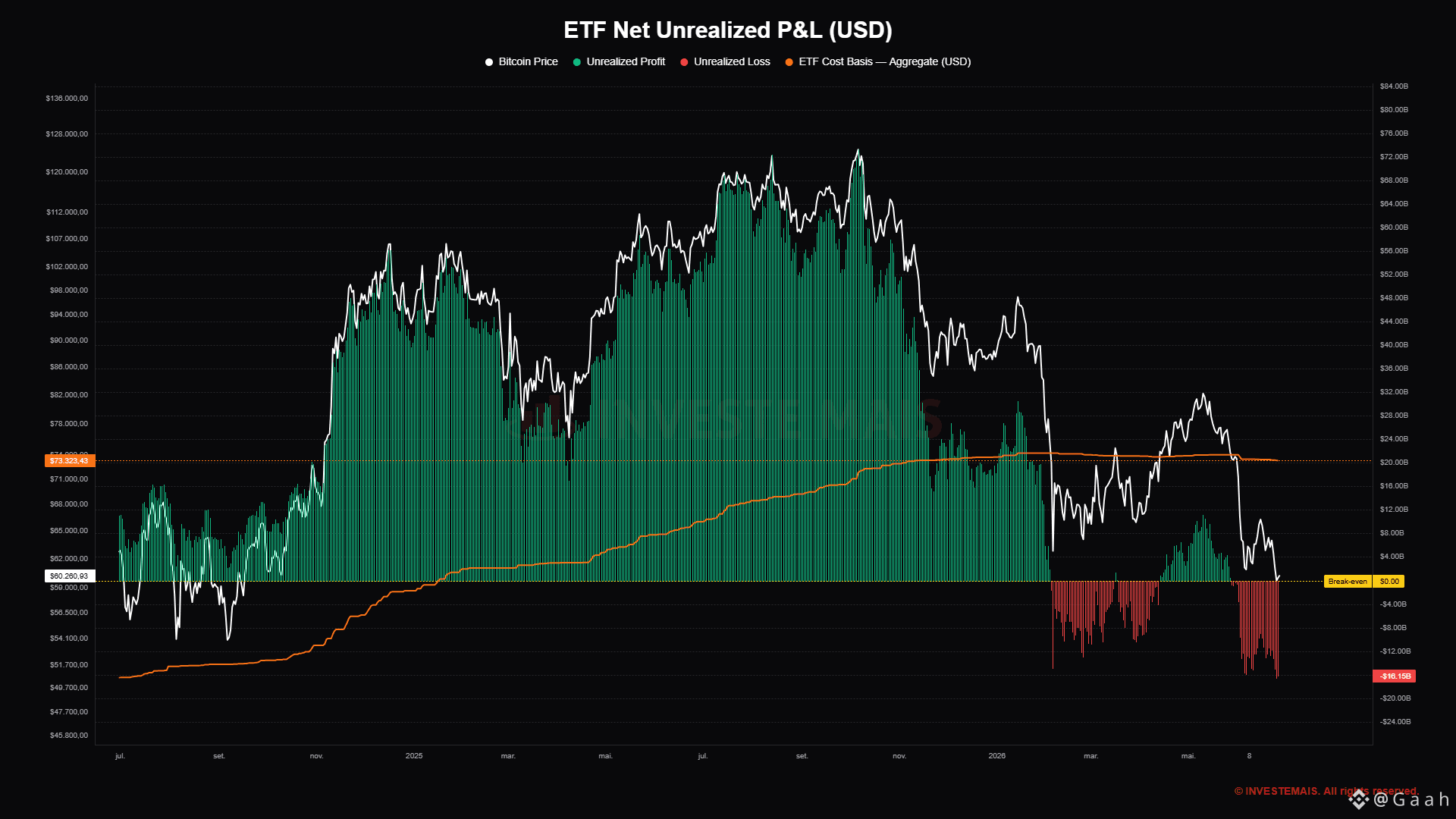
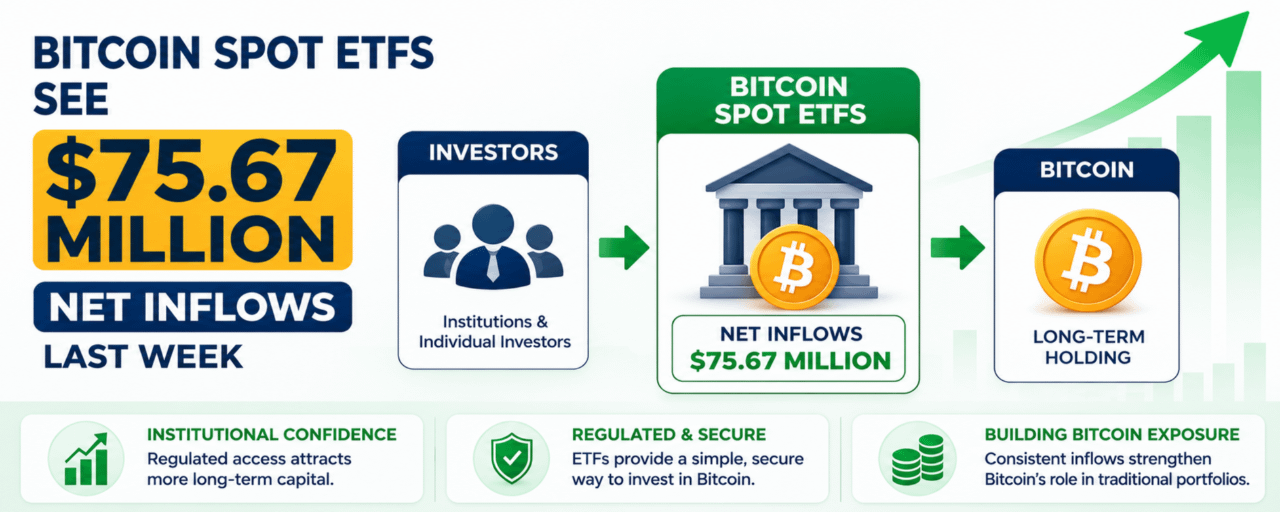
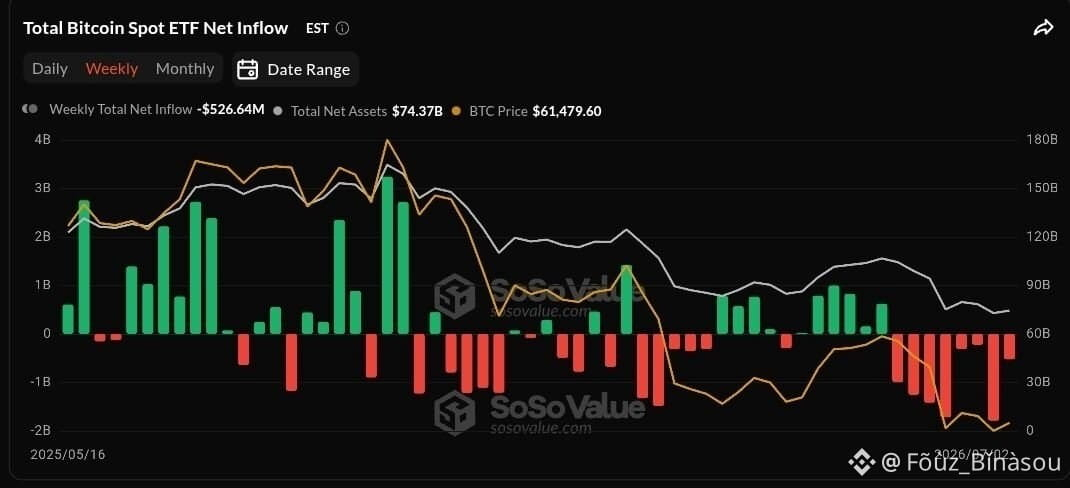
The outflows from spot Bitcoin funds in the United States have continued for the eighth consecutive week, reflecting clear caution among institutional investors.
This trend does not necessarily mean declining interest in Bitcoin, but it suggests that institutions have become more sensitive to major economic variables—especially expectations for interest rates, inflation data, and the stability of global markets.
In earlier stages, ETF funds were seen as one of the most important drivers of institutional demand for Bitcoin. But now, the persistence of outflows indicates that institutions are still carefully assessing risks before increasing their exposure to digital assets.
In my view, what’s happening reflects a more temporary repositioning phase rather than a radical shift in the outlook for Bitcoin. However, if this trend continues for longer, it may make the market more dependent on individual demand, which could increase price sensitivity to short-term volatility.
In conclusion, ETF fund flows have become an important indicator for measuring institutions’ appetite for Bitcoin, and tracking them over the coming weeks will be essential to understand whether this current caution is temporary or the beginning of a deeper trend.
$BTC
#ETFvsBTC
#ETFs
This trend does not necessarily mean declining interest in Bitcoin, but it suggests that institutions have become more sensitive to major economic variables—especially expectations for interest rates, inflation data, and the stability of global markets.
In earlier stages, ETF funds were seen as one of the most important drivers of institutional demand for Bitcoin. But now, the persistence of outflows indicates that institutions are still carefully assessing risks before increasing their exposure to digital assets.
In my view, what’s happening reflects a more temporary repositioning phase rather than a radical shift in the outlook for Bitcoin. However, if this trend continues for longer, it may make the market more dependent on individual demand, which could increase price sensitivity to short-term volatility.
In conclusion, ETF fund flows have become an important indicator for measuring institutions’ appetite for Bitcoin, and tracking them over the coming weeks will be essential to understand whether this current caution is temporary or the beginning of a deeper trend.
$BTC
#ETFvsBTC
#ETFs
😀I bought Bitcoin ETF… so i fully own crypto now?👀
This is what many beginners think right now.
Because Bitcoin & Ethereum ETFs made crypto super easy to buy from normal stock apps 📈
And honestly… ETFs are good for beginners.
Easy to buy, easy to understand.
But there’s one thing most people dont realize 👇
When you buy a crypto ETF, you are getting the price exposure… not the actual crypto ownership.
Meaning:
✅ You can profit if price goes up
❌ But you cant send the coins
❌ Cant use DeFi apps
❌ Cant connect to Web3 wallets
Its more like investing in a crypto related product.
That’s why crypto people always say:
👉 “Not your keys, not your coins.”
At first this sounds confusing 😅
But it simply means:
If you dont control the wallet keys, you dont fully control the crypto.
In crypto, real ownership starts when YOU hold your own wallet.
That’s also why many people use hardware wallets 🔐
Its a small device that stores your crypto safely offline and helps protect from hacks or exchange problems.
Right now the line between stock market investing and crypto is becoming blurry.
A lot of new users are entering crypto through ETFs…
then slowly learning how actual Web3 ownership works
#begineers #CryptoPatience #ETFvsBTC #USInflationForecastUpOnIranConflict $BTC
$ETH
This is what many beginners think right now.
Because Bitcoin & Ethereum ETFs made crypto super easy to buy from normal stock apps 📈
And honestly… ETFs are good for beginners.
Easy to buy, easy to understand.
But there’s one thing most people dont realize 👇
When you buy a crypto ETF, you are getting the price exposure… not the actual crypto ownership.
Meaning:
✅ You can profit if price goes up
❌ But you cant send the coins
❌ Cant use DeFi apps
❌ Cant connect to Web3 wallets
Its more like investing in a crypto related product.
That’s why crypto people always say:
👉 “Not your keys, not your coins.”
At first this sounds confusing 😅
But it simply means:
If you dont control the wallet keys, you dont fully control the crypto.
In crypto, real ownership starts when YOU hold your own wallet.
That’s also why many people use hardware wallets 🔐
Its a small device that stores your crypto safely offline and helps protect from hacks or exchange problems.
Right now the line between stock market investing and crypto is becoming blurry.
A lot of new users are entering crypto through ETFs…
then slowly learning how actual Web3 ownership works
#begineers #CryptoPatience #ETFvsBTC #USInflationForecastUpOnIranConflict $BTC
$ETH


🚨 Bitcoin Just Got a New Income Strategy!
If you love $BTC but also love steady monthly cash flow, BlackRock just dropped something huge today. They officially launched the iShares Bitcoin Premium Income ETF (BITA).
But wait, how does a highly volatile asset like Bitcoin pay you a steady income?
Instead of only holding Bitcoin, the fund aims to generate monthly income by selling call options on part of its Bitcoin exposure. This allows investors to potentially earn regular cash flow while still benefiting from Bitcoin's long-term growth.
This is another sign that traditional finance is finding new ways to bring Bitcoin to mainstream investors
#Bitcoin❗ #ETFvsBTC
If you love $BTC but also love steady monthly cash flow, BlackRock just dropped something huge today. They officially launched the iShares Bitcoin Premium Income ETF (BITA).
But wait, how does a highly volatile asset like Bitcoin pay you a steady income?
Instead of only holding Bitcoin, the fund aims to generate monthly income by selling call options on part of its Bitcoin exposure. This allows investors to potentially earn regular cash flow while still benefiting from Bitcoin's long-term growth.
This is another sign that traditional finance is finding new ways to bring Bitcoin to mainstream investors
#Bitcoin❗ #ETFvsBTC


Just a fun calculation 👀
As of June 2026:
GBTC: ~140k–151k BTC left
IBIT: ~762k BTC left
Average gross outflow since Jan 2026:
GBTC: ~400–500 BTC/day
IBIT: ~1,100–1,300 BTC/day
If there were zero new inflows and outflows stayed constant:
GBTC: ~280–380 days to run out of BTC
IBIT: ~590–690 days to run out of BTC
Not a prediction—just simple math.
Curious what everyone thinks. Will ETF outflows slow down before then, or could they actually accelerate?
$BTC
#ETFvsBTC
As of June 2026:
GBTC: ~140k–151k BTC left
IBIT: ~762k BTC left
Average gross outflow since Jan 2026:
GBTC: ~400–500 BTC/day
IBIT: ~1,100–1,300 BTC/day
If there were zero new inflows and outflows stayed constant:
GBTC: ~280–380 days to run out of BTC
IBIT: ~590–690 days to run out of BTC
Not a prediction—just simple math.
Curious what everyone thinks. Will ETF outflows slow down before then, or could they actually accelerate?
$BTC
#ETFvsBTC
Log in to explore more content