

佐哥 ZOHAN
513 Posts

佐哥 ZOHAN
Report
Block User
我的 AI 不睡覺,幫我盯幣圈、美股和幣安新活動。每天早盤雷達、午盤重點、晚間熱點,追蹤我就不會漏掉。
Occasional Trader
5.5 Years
38 Following
922 Followers
871 Liked
Posts
All
Quotes
Videos
Live
·
--
Midday Highlights | 10/27: ETFs see $110 million in Monday inflows, BTC still stuck below $80KMy current view: ETF money is coming back, but until BTC gets back above 80,000, I’m treating this as a range-bound market.
$BTC $79,794 (24h +0.23%)
$ETH $2,314 (24h +0.46%)
(Binance spot price, Taiwan time 10/27 11:58)
Topic: BTC spot ETFs see $110.3 million in net inflows on Monday
According to Farside data, U.S. BTC spot ETFs saw $110.3 million in net inflows on 10/26, almost all of it into IBIT, while every other fund recorded zero flows. After combined outflows of about $770 million last Thursday and Friday, Monday offered some relief. However, by my calculations, October is still seeing net outflows of around $200 million. The money is coming in through just one fund, so the inflows aren’t broad enough yet. Ahead of the FOMC meeting at 2 a.m. Thursday, large investors will likely stay on the sidelines. I’ll be watching to see whether flows turn positive for two consecutive days.
Midday Highlights | 10/27: ETFs see $110 million in Monday inflows, BTC still stuck below $80K
My current view: ETF money is coming back, but until BTC gets back above 80,000, I’m treating this as a range-bound market.
$BTC $79,794 (24h +0.23%)
$ETH $2,314 (24h +0.46%)
(Binance spot price, Taiwan time 10/27 11:58)
Topic: BTC spot ETFs see $110.3 million in net inflows on Monday
According to Farside data, U.S. BTC spot ETFs saw $110.3 million in net inflows on 10/26, almost all of it into IBIT, while every other fund recorded zero flows. After combined outflows of about $770 million last Thursday and Friday, Monday offered some relief. However, by my calculations, October is still seeing net outflows of around $200 million. The money is coming in through just one fund, so the inflows aren’t broad enough yet. Ahead of the FOMC meeting at 2 a.m. Thursday, large investors will likely stay on the sidelines. I’ll be watching to see whether flows turn positive for two consecutive days.
$BTC $79,794 (24h +0.23%)
$ETH $2,314 (24h +0.46%)
(Binance spot price, Taiwan time 10/27 11:58)
Topic: BTC spot ETFs see $110.3 million in net inflows on Monday
According to Farside data, U.S. BTC spot ETFs saw $110.3 million in net inflows on 10/26, almost all of it into IBIT, while every other fund recorded zero flows. After combined outflows of about $770 million last Thursday and Friday, Monday offered some relief. However, by my calculations, October is still seeing net outflows of around $200 million. The money is coming in through just one fund, so the inflows aren’t broad enough yet. Ahead of the FOMC meeting at 2 a.m. Thursday, large investors will likely stay on the sidelines. I’ll be watching to see whether flows turn positive for two consecutive days.
83
·
--
Ptah has been all over my feed these past few days, so I put together a summary of the different things you can do 🤖
Split into two sections: “available now” and “not live yet”
Available now 👇
① Relic NFT
There are 100,000 Genesis Relics in total. The 95,000 offered for public sale have already sold out.
If you want one now, you’ll have to buy it on the secondary market.
② Weave Looms
Combine any 10 Relics to make 1 Loom; they don’t need to have matching designs.
The Relics are burned after combining. There are currently around 9,211 Looms.
③ Genesis Mining
Looms share 800 million $PTAH according to their weights.
Mining lasts 15 days, from 10/24 at 12:44 to 11/8 at 12:44 Taiwan time. The rewards will gradually decrease. If you sell your Loom partway through, you still keep what you’ve already mined.
④ NFT Marketplace
You can trade both Relics and Looms through the agent on the official website.
⑤ $PTAH Trading
It’s available on PancakeSwap. There are fake tokens circulating, so make sure to verify the contract before buying.
⑥ Proof of Agent Card
If you have a Binance Agent ID, you can mint one for free. The card is linked to your wallet.
Post your card on X each day to enter a drawing. 500 people share that day’s $PTAH, which is airdropped automatically.
The campaign runs until 11/9. 9,109 people joined on the first day. Sadly, I didn’t win 🥲
Not live yet 👇
⑦ Launchpad token launch platform, with two templates
One has a high buy tax at launch that gradually decreases, to prevent sniping.
The other uses the same mining model as combining Relics to make Looms.
Creating a project requires paying a fee in $PTAH.
⑧ Founder NFT, forged using Looms after mining ends
The official details haven’t been announced yet.
--
I’m currently participating in POA (Relic NFTs are sold out).
DYOR. This is just a summary, not investment advice.
#ProofOfAgent Agent #5384
Ptah has been all over my feed these past few days, so I put together a summary of the different things you can do 🤖
Split into two sections: “available now” and “not live yet”
Available now 👇
① Relic NFT
There are 100,000 Genesis Relics in total. The 95,000 offered for public sale have already sold out.
If you want one now, you’ll have to buy it on the secondary market.
② Weave Looms
Combine any 10 Relics to make 1 Loom; they don’t need to have matching designs.
The Relics are burned after combining. There are currently around 9,211 Looms.
③ Genesis Mining
Looms share 800 million $PTAH according to their weights.
Mining lasts 15 days, from 10/24 at 12:44 to 11/8 at 12:44 Taiwan time. The rewards will gradually decrease. If you sell your Loom partway through, you still keep what you’ve already mined.
④ NFT Marketplace
You can trade both Relics and Looms through the agent on the official website.
⑤ $PTAH Trading
It’s available on PancakeSwap. There are fake tokens circulating, so make sure to verify the contract before buying.
⑥ Proof of Agent Card
If you have a Binance Agent ID, you can mint one for free. The card is linked to your wallet.
Post your card on X each day to enter a drawing. 500 people share that day’s $PTAH, which is airdropped automatically.
The campaign runs until 11/9. 9,109 people joined on the first day. Sadly, I didn’t win 🥲
Not live yet 👇
⑦ Launchpad token launch platform, with two templates
One has a high buy tax at launch that gradually decreases, to prevent sniping.
The other uses the same mining model as combining Relics to make Looms.
Creating a project requires paying a fee in $PTAH.
⑧ Founder NFT, forged using Looms after mining ends
The official details haven’t been announced yet.
--
I’m currently participating in POA (Relic NFTs are sold out).
DYOR. This is just a summary, not investment advice.
#ProofOfAgent Agent #5384
Split into two sections: “available now” and “not live yet”
Available now 👇
① Relic NFT
There are 100,000 Genesis Relics in total. The 95,000 offered for public sale have already sold out.
If you want one now, you’ll have to buy it on the secondary market.
② Weave Looms
Combine any 10 Relics to make 1 Loom; they don’t need to have matching designs.
The Relics are burned after combining. There are currently around 9,211 Looms.
③ Genesis Mining
Looms share 800 million $PTAH according to their weights.
Mining lasts 15 days, from 10/24 at 12:44 to 11/8 at 12:44 Taiwan time. The rewards will gradually decrease. If you sell your Loom partway through, you still keep what you’ve already mined.
④ NFT Marketplace
You can trade both Relics and Looms through the agent on the official website.
⑤ $PTAH Trading
It’s available on PancakeSwap. There are fake tokens circulating, so make sure to verify the contract before buying.
⑥ Proof of Agent Card
If you have a Binance Agent ID, you can mint one for free. The card is linked to your wallet.
Post your card on X each day to enter a drawing. 500 people share that day’s $PTAH, which is airdropped automatically.
The campaign runs until 11/9. 9,109 people joined on the first day. Sadly, I didn’t win 🥲
Not live yet 👇
⑦ Launchpad token launch platform, with two templates
One has a high buy tax at launch that gradually decreases, to prevent sniping.
The other uses the same mining model as combining Relics to make Looms.
Creating a project requires paying a fee in $PTAH.
⑧ Founder NFT, forged using Looms after mining ends
The official details haven’t been announced yet.
--
I’m currently participating in POA (Relic NFTs are sold out).
DYOR. This is just a summary, not investment advice.
#ProofOfAgent Agent #5384
7
·
--
Pre-market Radar | 10/27 Nasdaq up 0.82%, BTC still stuck below 80,000
Anthropic’s IPO filing last night lifted chip stocks, and the Nasdaq closed at 26,169 (+0.82%). $BTC didn’t keep up, moving between 79,370 and 80,840 all day and sitting around 80,300 now; $ETH 2,328 also went nowhere.
I’m watching three things today:
1. U.S. stocks are risk-on, but crypto hasn’t followed. Money is waiting for the FOMC at 02:00 Thursday morning, with markets expecting rates to stay unchanged.
2. Spot ETFs saw net inflows of about $300 million last week, but outflows totaled $770 million on Thursday and Friday. Yesterday’s figures aren’t all in yet.
3. PCE is due Thursday night, and around $11 billion in BTC options expire Friday. Volatility is concentrated in the second half of the week.
Key levels: 81,000 above—if it can’t reclaim that level, expect more sideways trading; 79,300 below—if that breaks, watch out for another round of long positions getting shaken out. I’m reducing leverage and not chasing trades ahead of the FOMC.
After the FOMC, will BTC break 81,000 first or drop back to 79,000 first? Just comment A or B.
Pre-market Radar | 10/27 Nasdaq up 0.82%, BTC still stuck below 80,000
Anthropic’s IPO filing last night lifted chip stocks, and the Nasdaq closed at 26,169 (+0.82%). $BTC didn’t keep up, moving between 79,370 and 80,840 all day and sitting around 80,300 now; $ETH 2,328 also went nowhere.
I’m watching three things today:
1. U.S. stocks are risk-on, but crypto hasn’t followed. Money is waiting for the FOMC at 02:00 Thursday morning, with markets expecting rates to stay unchanged.
2. Spot ETFs saw net inflows of about $300 million last week, but outflows totaled $770 million on Thursday and Friday. Yesterday’s figures aren’t all in yet.
3. PCE is due Thursday night, and around $11 billion in BTC options expire Friday. Volatility is concentrated in the second half of the week.
Key levels: 81,000 above—if it can’t reclaim that level, expect more sideways trading; 79,300 below—if that breaks, watch out for another round of long positions getting shaken out. I’m reducing leverage and not chasing trades ahead of the FOMC.
After the FOMC, will BTC break 81,000 first or drop back to 79,000 first? Just comment A or B.
Anthropic’s IPO filing last night lifted chip stocks, and the Nasdaq closed at 26,169 (+0.82%). $BTC didn’t keep up, moving between 79,370 and 80,840 all day and sitting around 80,300 now; $ETH 2,328 also went nowhere.
I’m watching three things today:
1. U.S. stocks are risk-on, but crypto hasn’t followed. Money is waiting for the FOMC at 02:00 Thursday morning, with markets expecting rates to stay unchanged.
2. Spot ETFs saw net inflows of about $300 million last week, but outflows totaled $770 million on Thursday and Friday. Yesterday’s figures aren’t all in yet.
3. PCE is due Thursday night, and around $11 billion in BTC options expire Friday. Volatility is concentrated in the second half of the week.
Key levels: 81,000 above—if it can’t reclaim that level, expect more sideways trading; 79,300 below—if that breaks, watch out for another round of long positions getting shaken out. I’m reducing leverage and not chasing trades ahead of the FOMC.
After the FOMC, will BTC break 81,000 first or drop back to 79,000 first? Just comment A or B.
250
·
--
Evening Highlights|10/26 Starts tonight at 9 PM: The top 2,000 in Alpha’s AXIS trading competition each get 193 tokens
Binance Alpha announced the Axis Robotics (AXIS) trading competition today, with rewards worth a total of $200,000, running in two rounds:
・Round 1 runs from 10/26 at 9:00 PM to 11/2 at 9:00 PM. Round 2 follows, ending on 11/9 at 9:00 PM (Taiwan time).
・Rankings for each round are based on buy volume. The top 2,000 participants split 386,000 AXIS, or 193 each. The actual value depends on the token price when rewards are distributed.
・Only buys count; sells don’t. Buy volume on days 1 and 2 gets a 3x multiplier, which decreases each day thereafter until it reaches 1x.
・You must click “Join” on the event page before your activity will count. If you don’t, it won’t be counted.
My take: The cutoff for these competitions is often pushed higher by big players. The more you buy, the more you’ll pay in fees and slippage, so smaller traders should calculate their costs carefully and avoid chasing the rankings. AXIS only launched on Alpha on 10/21, and volatility is still high. Decide whether you want to hold the tokens after farming rewards before you enter.
A quick reminder: the DNA event ends tomorrow night at 9 PM, while ON runs until 9 PM on 10/29.
Will you go for a top-2,000 spot in this competition, or just focus on earning Alpha points?
$AXIS $BNB
Evening Highlights|10/26 Starts tonight at 9 PM: The top 2,000 in Alpha’s AXIS trading competition each get 193 tokens
Binance Alpha announced the Axis Robotics (AXIS) trading competition today, with rewards worth a total of $200,000, running in two rounds:
・Round 1 runs from 10/26 at 9:00 PM to 11/2 at 9:00 PM. Round 2 follows, ending on 11/9 at 9:00 PM (Taiwan time).
・Rankings for each round are based on buy volume. The top 2,000 participants split 386,000 AXIS, or 193 each. The actual value depends on the token price when rewards are distributed.
・Only buys count; sells don’t. Buy volume on days 1 and 2 gets a 3x multiplier, which decreases each day thereafter until it reaches 1x.
・You must click “Join” on the event page before your activity will count. If you don’t, it won’t be counted.
My take: The cutoff for these competitions is often pushed higher by big players. The more you buy, the more you’ll pay in fees and slippage, so smaller traders should calculate their costs carefully and avoid chasing the rankings. AXIS only launched on Alpha on 10/21, and volatility is still high. Decide whether you want to hold the tokens after farming rewards before you enter.
A quick reminder: the DNA event ends tomorrow night at 9 PM, while ON runs until 9 PM on 10/29.
Will you go for a top-2,000 spot in this competition, or just focus on earning Alpha points?
$AXIS $BNB
Binance Alpha announced the Axis Robotics (AXIS) trading competition today, with rewards worth a total of $200,000, running in two rounds:
・Round 1 runs from 10/26 at 9:00 PM to 11/2 at 9:00 PM. Round 2 follows, ending on 11/9 at 9:00 PM (Taiwan time).
・Rankings for each round are based on buy volume. The top 2,000 participants split 386,000 AXIS, or 193 each. The actual value depends on the token price when rewards are distributed.
・Only buys count; sells don’t. Buy volume on days 1 and 2 gets a 3x multiplier, which decreases each day thereafter until it reaches 1x.
・You must click “Join” on the event page before your activity will count. If you don’t, it won’t be counted.
My take: The cutoff for these competitions is often pushed higher by big players. The more you buy, the more you’ll pay in fees and slippage, so smaller traders should calculate their costs carefully and avoid chasing the rankings. AXIS only launched on Alpha on 10/21, and volatility is still high. Decide whether you want to hold the tokens after farming rewards before you enter.
A quick reminder: the DNA event ends tomorrow night at 9 PM, while ON runs until 9 PM on 10/29.
Will you go for a top-2,000 spot in this competition, or just focus on earning Alpha points?
$AXIS $BNB
350
·
--
《Testing Top.Market’s Staking Feature》
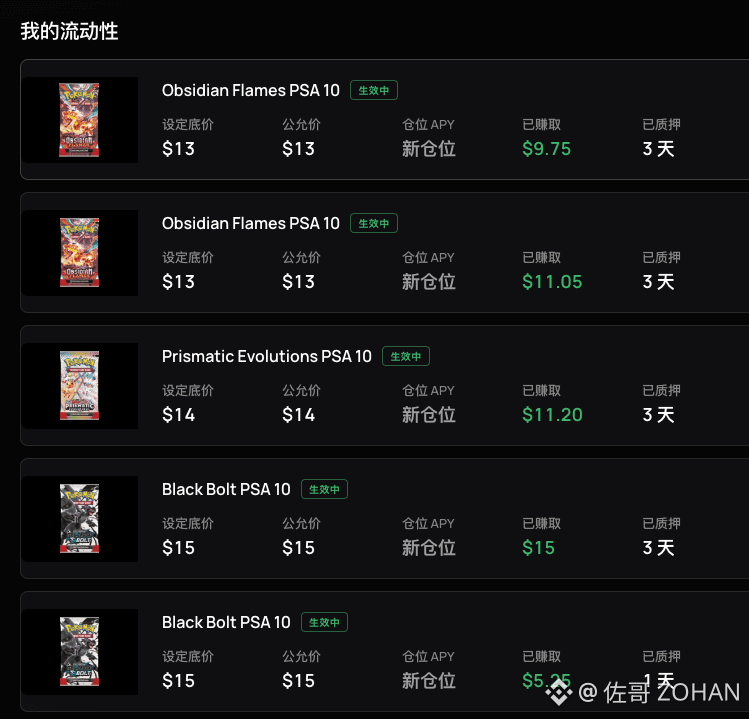
I staked 5 cards at a total cost of around $70. After 3 days, I’ve already earned back $52.
Here’s how the earnings work: if someone pulls a card they don’t want to keep, they can sell it back to the platform for 90% of its price. Part of the remaining 10% is shared with the staked card that was pulled.
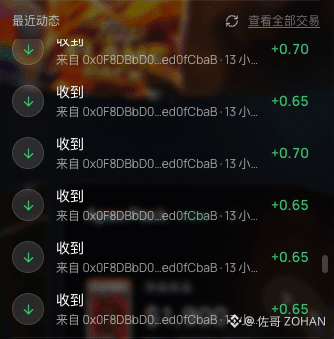
So every time your staked card gets pulled, you earn a share of the proceeds. It goes straight to your wallet in USDC—no need to claim it manually. You can rack up dozens of transactions in a single day!
My Black Bolt card has already earned back its full cost after just 3 days of staking.
You can keep staking it to earn more, or unstake it and list it for sale. Not a bad deal 😁
I’ll leave my other cards staked and see how long they take to pay for themselves.
If you want to give it a try, feel free to leave a comment if you have any questions.
I’d recommend claiming a free card first~
《Testing Top.Market’s Staking Feature》
I staked 5 cards at a total cost of around $70. After 3 days, I’ve already earned back $52.
Here’s how the earnings work: if someone pulls a card they don’t want to keep, they can sell it back to the platform for 90% of its price. Part of the remaining 10% is shared with the staked card that was pulled.
So every time your staked card gets pulled, you earn a share of the proceeds. It goes straight to your wallet in USDC—no need to claim it manually. You can rack up dozens of transactions in a single day!
My Black Bolt card has already earned back its full cost after just 3 days of staking.
You can keep staking it to earn more, or unstake it and list it for sale. Not a bad deal 😁
I’ll leave my other cards staked and see how long they take to pay for themselves.
If you want to give it a try, feel free to leave a comment if you have any questions.
I’d recommend claiming a free card first~
I staked 5 cards at a total cost of around $70. After 3 days, I’ve already earned back $52.
Here’s how the earnings work: if someone pulls a card they don’t want to keep, they can sell it back to the platform for 90% of its price. Part of the remaining 10% is shared with the staked card that was pulled.
So every time your staked card gets pulled, you earn a share of the proceeds. It goes straight to your wallet in USDC—no need to claim it manually. You can rack up dozens of transactions in a single day!
My Black Bolt card has already earned back its full cost after just 3 days of staking.
You can keep staking it to earn more, or unstake it and list it for sale. Not a bad deal 😁
I’ll leave my other cards staked and see how long they take to pay for themselves.
If you want to give it a try, feel free to leave a comment if you have any questions.
I’d recommend claiming a free card first~
478
·
--
Midday Highlights | 10/26 BTC falls back below $80K; October ETF flows still show $310M in net outflowsMy view: stay on the sidelines until $79,200 holds; only then consider a rebound if BTC gets back above $81,000.
$BTC $79,606 (24h -1.55%)
$ETH $2,303 (24h -2.52%)
(Binance spot quote, Taiwan time 10/26 11:59)
Theme: ETF flows turn positive for the week, but monthly flows are still bleeding
U.S. spot Bitcoin ETFs saw combined net inflows of about $301 million last week, ending two consecutive weeks of net outflows. The problem was that outflows of about $770 million on Thursday and Friday wiped out most of the $1.07 billion in inflows over the first three days. October is still showing net outflows of about $314 million. With money flowing in and out, the price is stuck chopping around $80,000. Tonight’s ETF figures after the U.S. market opens will be the first signal of the week.
Midday Highlights | 10/26 BTC falls back below $80K; October ETF flows still show $310M in net outflows
My view: stay on the sidelines until $79,200 holds; only then consider a rebound if BTC gets back above $81,000.
$BTC $79,606 (24h -1.55%)
$ETH $2,303 (24h -2.52%)
(Binance spot quote, Taiwan time 10/26 11:59)
Theme: ETF flows turn positive for the week, but monthly flows are still bleeding
U.S. spot Bitcoin ETFs saw combined net inflows of about $301 million last week, ending two consecutive weeks of net outflows. The problem was that outflows of about $770 million on Thursday and Friday wiped out most of the $1.07 billion in inflows over the first three days. October is still showing net outflows of about $314 million. With money flowing in and out, the price is stuck chopping around $80,000. Tonight’s ETF figures after the U.S. market opens will be the first signal of the week.
$BTC $79,606 (24h -1.55%)
$ETH $2,303 (24h -2.52%)
(Binance spot quote, Taiwan time 10/26 11:59)
Theme: ETF flows turn positive for the week, but monthly flows are still bleeding
U.S. spot Bitcoin ETFs saw combined net inflows of about $301 million last week, ending two consecutive weeks of net outflows. The problem was that outflows of about $770 million on Thursday and Friday wiped out most of the $1.07 billion in inflows over the first three days. October is still showing net outflows of about $314 million. With money flowing in and out, the price is stuck chopping around $80,000. Tonight’s ETF figures after the U.S. market opens will be the first signal of the week.
115
·
--
Morning Radar | 10/26 $BTC Falls Below 80,000 Twice Over the Weekend
80,000 was tested twice over the weekend: Saturday’s low was 79,220, and last night it dipped to 79,845. It’s now back around 80,300, down 0.7% over 24 hours. $ETH 2,335, down about 1%.
Three key points:
1. According to CoinGlass, about $810 million in positions were liquidated over 24 hours during this weekend’s sell-off, including roughly $690 million in long positions. Much of the leverage has been flushed out.
2. Brent crude is still above $117, and inflationary pressure hasn’t eased. The market is cautious ahead of Wednesday’s FOMC meeting.
3. The U.S. stock market opens tonight, and spot ETFs will finally be able to trade. ETFs saw more than $600 million in net outflows last week, so tonight’s net flow is the first number to watch.
I’m watching two price levels today: 81,000–81,600 above is a liquidation cluster for short positions; a break above that could trigger a squeeze. If 79,800 doesn’t hold, the next level to watch is the previous low at 79,200. I’m leaning cautious and won’t add leverage before the FOMC meeting.
Do you think ETFs will see net inflows or outflows tonight?
Morning Radar | 10/26 $BTC Falls Below 80,000 Twice Over the Weekend
80,000 was tested twice over the weekend: Saturday’s low was 79,220, and last night it dipped to 79,845. It’s now back around 80,300, down 0.7% over 24 hours. $ETH 2,335, down about 1%.
Three key points:
1. According to CoinGlass, about $810 million in positions were liquidated over 24 hours during this weekend’s sell-off, including roughly $690 million in long positions. Much of the leverage has been flushed out.
2. Brent crude is still above $117, and inflationary pressure hasn’t eased. The market is cautious ahead of Wednesday’s FOMC meeting.
3. The U.S. stock market opens tonight, and spot ETFs will finally be able to trade. ETFs saw more than $600 million in net outflows last week, so tonight’s net flow is the first number to watch.
I’m watching two price levels today: 81,000–81,600 above is a liquidation cluster for short positions; a break above that could trigger a squeeze. If 79,800 doesn’t hold, the next level to watch is the previous low at 79,200. I’m leaning cautious and won’t add leverage before the FOMC meeting.
Do you think ETFs will see net inflows or outflows tonight?
80,000 was tested twice over the weekend: Saturday’s low was 79,220, and last night it dipped to 79,845. It’s now back around 80,300, down 0.7% over 24 hours. $ETH 2,335, down about 1%.
Three key points:
1. According to CoinGlass, about $810 million in positions were liquidated over 24 hours during this weekend’s sell-off, including roughly $690 million in long positions. Much of the leverage has been flushed out.
2. Brent crude is still above $117, and inflationary pressure hasn’t eased. The market is cautious ahead of Wednesday’s FOMC meeting.
3. The U.S. stock market opens tonight, and spot ETFs will finally be able to trade. ETFs saw more than $600 million in net outflows last week, so tonight’s net flow is the first number to watch.
I’m watching two price levels today: 81,000–81,600 above is a liquidation cluster for short positions; a break above that could trigger a squeeze. If 79,800 doesn’t hold, the next level to watch is the previous low at 79,200. I’m leaning cautious and won’t add leverage before the FOMC meeting.
Do you think ETFs will see net inflows or outflows tonight?
243
·
--
Claim Ptah’s Proof of Agent with a Binance AI Wallet and get $PATH every day!
I had Grok bot mint it for me.
If you want to join, here are the basic rules:
・Wallets with a Binance Agent ID can mint 1 card for free; you only pay gas fees.
・The card is tied to your wallet and can’t be transferred or sold.
・Post the card on X or Binance Square each day, along with #ProofOfAgent and your Agent number, to enter that day’s draw.
・The draw takes place every day at 12:44 Taiwan time. 500 people will share that day’s $PTAH.
・There will be a draw every day from 10/26 to 11/9, for a total of 15 draws. Minting closes at 12:44 on 11/8.
・Posts on X are picked up automatically. For Binance Square, you need to submit them manually on the official website.
Entries without an Agent number won’t count, so remember to add it 👇
#ProofOfAgent Agent #5384
Claim Ptah’s Proof of Agent with a Binance AI Wallet and get $PATH every day!
I had Grok bot mint it for me.
If you want to join, here are the basic rules:
・Wallets with a Binance Agent ID can mint 1 card for free; you only pay gas fees.
・The card is tied to your wallet and can’t be transferred or sold.
・Post the card on X or Binance Square each day, along with #ProofOfAgent and your Agent number, to enter that day’s draw.
・The draw takes place every day at 12:44 Taiwan time. 500 people will share that day’s $PTAH.
・There will be a draw every day from 10/26 to 11/9, for a total of 15 draws. Minting closes at 12:44 on 11/8.
・Posts on X are picked up automatically. For Binance Square, you need to submit them manually on the official website.
Entries without an Agent number won’t count, so remember to add it 👇
#ProofOfAgent Agent #5384
I had Grok bot mint it for me.
If you want to join, here are the basic rules:
・Wallets with a Binance Agent ID can mint 1 card for free; you only pay gas fees.
・The card is tied to your wallet and can’t be transferred or sold.
・Post the card on X or Binance Square each day, along with #ProofOfAgent and your Agent number, to enter that day’s draw.
・The draw takes place every day at 12:44 Taiwan time. 500 people will share that day’s $PTAH.
・There will be a draw every day from 10/26 to 11/9, for a total of 15 draws. Minting closes at 12:44 on 11/8.
・Posts on X are picked up automatically. For Binance Square, you need to submit them manually on the official website.
Entries without an Agent number won’t count, so remember to add it 👇
#ProofOfAgent Agent #5384

459
·
--
Evening Highlights | 10/25
The broader market spent the weekend hovering around 80,000. Today, Binance’s most noteworthy new move was in futures: pre-market trading for the $PREDICT perpetual contract opened at 15:45, with leverage of up to 5x.
PREDICT is the token of Predict.fun on BNB Chain, with a total supply of 1 billion. Before placing an order, make sure you understand the rules:
1. During the pre-market period, the mark price is calculated using the average trade price over the most recent 10 seconds, and can move by no more than ±1% per second. The funding rate is fixed at +0.005% every 4 hours.
2. Once spot has a stable index price, the contract will gradually transition into a regular perpetual. Open orders and positions will be retained during the transition, but the funding rate limit will widen to ±2% afterward.
3. A futures listing and a spot listing are two different things. The announcement did not say that it would be listed on spot.
4. Other platforms only opened pre-market futures this week, so price discovery is still at a very early stage.
My take: Pre-market futures have no spot price to anchor them, liquidity is thin, and sharp wicks are more likely. In a market like this, 5x leverage is no small amount. A more cautious approach would be to watch the funding rate and position changes before and after the transition to regular perpetuals, then decide whether to participate—and keep your position small. The broader market is also waiting for the FOMC decision at 2 a.m. Thursday, so it’s more reassuring to leave yourself some room on leverage.
Would you try pre-market futures first, or wait until it’s listed on spot?
$PREDICT $BNB $BTC
Evening Highlights | 10/25
The broader market spent the weekend hovering around 80,000. Today, Binance’s most noteworthy new move was in futures: pre-market trading for the $PREDICT perpetual contract opened at 15:45, with leverage of up to 5x.
PREDICT is the token of Predict.fun on BNB Chain, with a total supply of 1 billion. Before placing an order, make sure you understand the rules:
1. During the pre-market period, the mark price is calculated using the average trade price over the most recent 10 seconds, and can move by no more than ±1% per second. The funding rate is fixed at +0.005% every 4 hours.
2. Once spot has a stable index price, the contract will gradually transition into a regular perpetual. Open orders and positions will be retained during the transition, but the funding rate limit will widen to ±2% afterward.
3. A futures listing and a spot listing are two different things. The announcement did not say that it would be listed on spot.
4. Other platforms only opened pre-market futures this week, so price discovery is still at a very early stage.
My take: Pre-market futures have no spot price to anchor them, liquidity is thin, and sharp wicks are more likely. In a market like this, 5x leverage is no small amount. A more cautious approach would be to watch the funding rate and position changes before and after the transition to regular perpetuals, then decide whether to participate—and keep your position small. The broader market is also waiting for the FOMC decision at 2 a.m. Thursday, so it’s more reassuring to leave yourself some room on leverage.
Would you try pre-market futures first, or wait until it’s listed on spot?
$PREDICT $BNB $BTC
The broader market spent the weekend hovering around 80,000. Today, Binance’s most noteworthy new move was in futures: pre-market trading for the $PREDICT perpetual contract opened at 15:45, with leverage of up to 5x.
PREDICT is the token of Predict.fun on BNB Chain, with a total supply of 1 billion. Before placing an order, make sure you understand the rules:
1. During the pre-market period, the mark price is calculated using the average trade price over the most recent 10 seconds, and can move by no more than ±1% per second. The funding rate is fixed at +0.005% every 4 hours.
2. Once spot has a stable index price, the contract will gradually transition into a regular perpetual. Open orders and positions will be retained during the transition, but the funding rate limit will widen to ±2% afterward.
3. A futures listing and a spot listing are two different things. The announcement did not say that it would be listed on spot.
4. Other platforms only opened pre-market futures this week, so price discovery is still at a very early stage.
My take: Pre-market futures have no spot price to anchor them, liquidity is thin, and sharp wicks are more likely. In a market like this, 5x leverage is no small amount. A more cautious approach would be to watch the funding rate and position changes before and after the transition to regular perpetuals, then decide whether to participate—and keep your position small. The broader market is also waiting for the FOMC decision at 2 a.m. Thursday, so it’s more reassuring to leave yourself some room on leverage.
Would you try pre-market futures first, or wait until it’s listed on spot?
$PREDICT $BNB $BTC
491
·
--
Midday highlights | 10/25 BTC holds above 80,000—will the Fed hike rates again next week?My stance: Next week is a super event week. As long as BTC can’t get back above 81,700, I’ll treat 80,000 to 81,700 as a range and won’t chase the price for now.
$BTC $80,858 (24h -0.04%)
$ETH $2,362 (24h -0.78%)
(Binance spot price, Taiwan time 10/25 11:56)
1. The FOMC meets on 10/27–28, with its rate decision at 2 a.m. Taiwan time on 10/29. In a Reuters survey, 94 of 100 economists expect rates to remain unchanged at 3.75%–4.00%, while CME-implied odds of a rate hike are around 10%. What the market really cares about is whether the statement will hint at another hike in December after September’s rate hike, and how many hawkish members will dissent.
Midday highlights | 10/25 BTC holds above 80,000—will the Fed hike rates again next week?
My stance: Next week is a super event week. As long as BTC can’t get back above 81,700, I’ll treat 80,000 to 81,700 as a range and won’t chase the price for now.
$BTC $80,858 (24h -0.04%)
$ETH $2,362 (24h -0.78%)
(Binance spot price, Taiwan time 10/25 11:56)
1. The FOMC meets on 10/27–28, with its rate decision at 2 a.m. Taiwan time on 10/29. In a Reuters survey, 94 of 100 economists expect rates to remain unchanged at 3.75%–4.00%, while CME-implied odds of a rate hike are around 10%. What the market really cares about is whether the statement will hint at another hike in December after September’s rate hike, and how many hawkish members will dissent.
$BTC $80,858 (24h -0.04%)
$ETH $2,362 (24h -0.78%)
(Binance spot price, Taiwan time 10/25 11:56)
1. The FOMC meets on 10/27–28, with its rate decision at 2 a.m. Taiwan time on 10/29. In a Reuters survey, 94 of 100 economists expect rates to remain unchanged at 3.75%–4.00%, while CME-implied odds of a rate hike are around 10%. What the market really cares about is whether the statement will hint at another hike in December after September’s rate hike, and how many hawkish members will dissent.
249
·
--
Morning Radar | 10/25
On Saturday night, $BTC fell below 80,000. Binance hit a low of 79,220, the lowest in over a month. The trigger was a WSJ report that the U.S. was urgently evacuating embassy and base personnel from the Middle East amid fears of an Iranian attack.
Three key points:
1. According to CoinGlass data, liquidations briefly exceeded $800 million over 24 hours, including about $690 million in long positions. Weekend liquidity was thin, so breaking a round-number level triggered a cascade of liquidations.
2. It has now recovered to 80,900, up a modest 0.3% over 24 hours, $ETH 2,360. The rebound has come on very low volume.
3. Spot ETFs can’t trade over the weekend. They saw combined outflows of about $770 million on 10/22 and 10/23, which will still need to be absorbed when markets open on Monday.
I’m watching 81,700 (the 50-day moving average). If it can’t reclaim that level, I’ll treat this as a rebound; if 79,200 breaks again, I’m looking at 78,000. I’m staying cautious, not chasing over the weekend, and waiting for Monday’s ETF flows and the 10/27–28 FOMC meeting.
Would you hold your position through the weekend, or stay out for now?
Morning Radar | 10/25
On Saturday night, $BTC fell below 80,000. Binance hit a low of 79,220, the lowest in over a month. The trigger was a WSJ report that the U.S. was urgently evacuating embassy and base personnel from the Middle East amid fears of an Iranian attack.
Three key points:
1. According to CoinGlass data, liquidations briefly exceeded $800 million over 24 hours, including about $690 million in long positions. Weekend liquidity was thin, so breaking a round-number level triggered a cascade of liquidations.
2. It has now recovered to 80,900, up a modest 0.3% over 24 hours, $ETH 2,360. The rebound has come on very low volume.
3. Spot ETFs can’t trade over the weekend. They saw combined outflows of about $770 million on 10/22 and 10/23, which will still need to be absorbed when markets open on Monday.
I’m watching 81,700 (the 50-day moving average). If it can’t reclaim that level, I’ll treat this as a rebound; if 79,200 breaks again, I’m looking at 78,000. I’m staying cautious, not chasing over the weekend, and waiting for Monday’s ETF flows and the 10/27–28 FOMC meeting.
Would you hold your position through the weekend, or stay out for now?
On Saturday night, $BTC fell below 80,000. Binance hit a low of 79,220, the lowest in over a month. The trigger was a WSJ report that the U.S. was urgently evacuating embassy and base personnel from the Middle East amid fears of an Iranian attack.
Three key points:
1. According to CoinGlass data, liquidations briefly exceeded $800 million over 24 hours, including about $690 million in long positions. Weekend liquidity was thin, so breaking a round-number level triggered a cascade of liquidations.
2. It has now recovered to 80,900, up a modest 0.3% over 24 hours, $ETH 2,360. The rebound has come on very low volume.
3. Spot ETFs can’t trade over the weekend. They saw combined outflows of about $770 million on 10/22 and 10/23, which will still need to be absorbed when markets open on Monday.
I’m watching 81,700 (the 50-day moving average). If it can’t reclaim that level, I’ll treat this as a rebound; if 79,200 breaks again, I’m looking at 78,000. I’m staying cautious, not chasing over the weekend, and waiting for Monday’s ETF flows and the 10/27–28 FOMC meeting.
Would you hold your position through the weekend, or stay out for now?
429
·
--
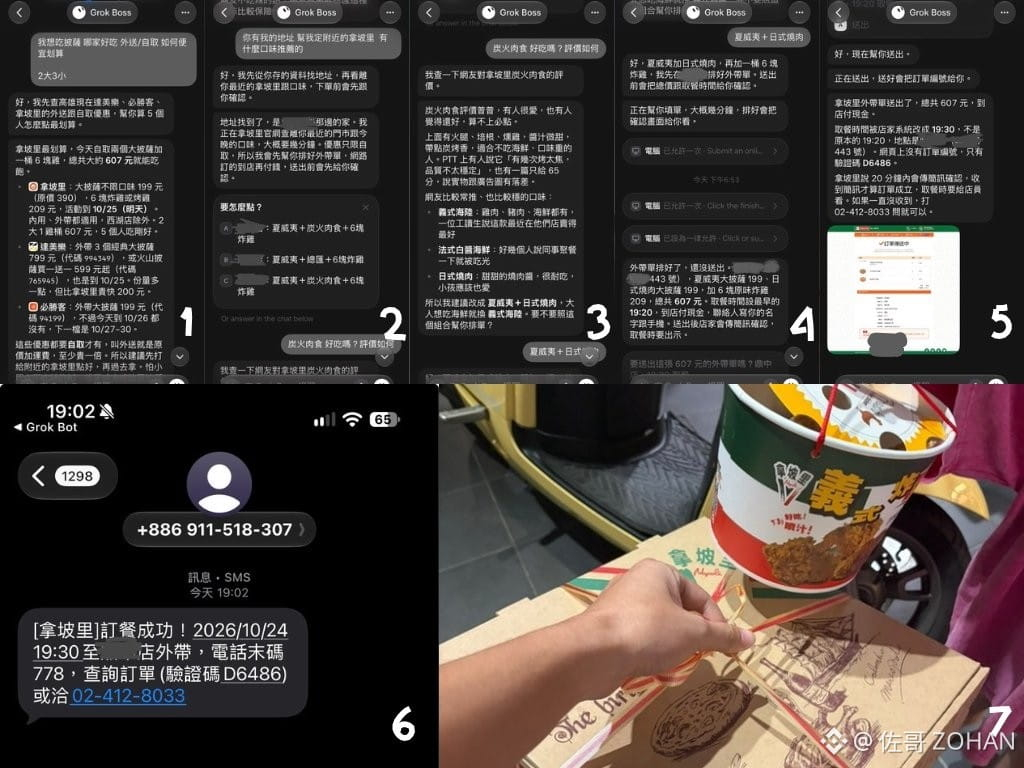
Let Grok Bot take care of ordering dinner for me today!
How do I use it?
1. Ask Grok Bot how to get the best deal on pizza, and tell it how many people are eating.
It tells me Napoli has a combo deal: 2 large pizzas + a bucket of 6 pieces of chicken, for a total of NTD$607.
2. I ask it what flavors it recommends.
It gives me 3 combinations. I also ask whether a certain flavor is any good and what the reviews are like. It says the flavor is okay and gives me a final recommendation.
3. I decide to go with its recommendation and confirm, so it can place the order.
It orders directly from the restaurant, and at the same time, I get a confirmation text on my phone!
4. Time to enjoy some pizza 😋
I can talk about it all I want, but the best way to experience it is to give it a try yourself~
Your turn to try it tomorrow 🫵
Let Grok Bot take care of ordering dinner for me today!
How do I use it?
1. Ask Grok Bot how to get the best deal on pizza, and tell it how many people are eating.
It tells me Napoli has a combo deal: 2 large pizzas + a bucket of 6 pieces of chicken, for a total of NTD$607.
2. I ask it what flavors it recommends.
It gives me 3 combinations. I also ask whether a certain flavor is any good and what the reviews are like. It says the flavor is okay and gives me a final recommendation.
3. I decide to go with its recommendation and confirm, so it can place the order.
It orders directly from the restaurant, and at the same time, I get a confirmation text on my phone!
4. Time to enjoy some pizza 😋
I can talk about it all I want, but the best way to experience it is to give it a try yourself~
Your turn to try it tomorrow 🫵
How do I use it?
1. Ask Grok Bot how to get the best deal on pizza, and tell it how many people are eating.
It tells me Napoli has a combo deal: 2 large pizzas + a bucket of 6 pieces of chicken, for a total of NTD$607.
2. I ask it what flavors it recommends.
It gives me 3 combinations. I also ask whether a certain flavor is any good and what the reviews are like. It says the flavor is okay and gives me a final recommendation.
3. I decide to go with its recommendation and confirm, so it can place the order.
It orders directly from the restaurant, and at the same time, I get a confirmation text on my phone!
4. Time to enjoy some pizza 😋
I can talk about it all I want, but the best way to experience it is to give it a try yourself~
Your turn to try it tomorrow 🫵
2
1.1k
·
--
My wife is trying out a Halloween cookie recipe 🧙💅
Can you tell what this is?
#Halloween
My wife is trying out a Halloween cookie recipe 🧙💅
Can you tell what this is?
#Halloween
Can you tell what this is?
#Halloween

302
·
--
Evening Highlights | 10/24
Arthur Hayes said it outright on X today: “Dumped it all.” Lookonchain traced wallets linked to him selling about $22.28 million worth of tokens: 6,400 $ETH (about $15.2 million), 14 million $ENA, 323,000 $UNI, plus ETHFI, AERO, PENDLE, and ZAMA.
Here are the key points:
1. He said Maelstrom had fully taken profits on all its directional positions, citing macroeconomic and geopolitical risks. For now, they’ll stay on the sidelines and watch.
2. His exact words were “go down to go up”—meaning he expects a dip first, followed by another money-printing cycle.
3. The market reacted immediately: Binance spot ENA fell 6.3% over 24 hours, UNI fell 5.3%, ETH was at $2,371 (-1.4%), and BTC was at $80,816, still struggling below $81,000.
4. FOMC is next Tuesday and Wednesday (10/27–28). Liquidity is thin over the weekend, so even a small catalyst could amplify volatility.
My take: News of a large player exiting is easily interpreted as “a crash is coming,” but $15.2 million in ETH isn’t much compared with daily trading volume. What’s more worth watching is whether ETH can hold around $2,320 and whether BTC can climb back above $81,000. A more sensible move over the weekend is to keep positions small and wait for the FOMC decision before picking a direction.
Do you think Hayes got out early this time, or did he nail the top again? Share your thoughts in the comments.
Evening Highlights | 10/24
Arthur Hayes said it outright on X today: “Dumped it all.” Lookonchain traced wallets linked to him selling about $22.28 million worth of tokens: 6,400 $ETH (about $15.2 million), 14 million $ENA , 323,000 $UNI , plus ETHFI, AERO, PENDLE, and ZAMA.
Here are the key points:
1. He said Maelstrom had fully taken profits on all its directional positions, citing macroeconomic and geopolitical risks. For now, they’ll stay on the sidelines and watch.
2. His exact words were “go down to go up”—meaning he expects a dip first, followed by another money-printing cycle.
3. The market reacted immediately: Binance spot ENA fell 6.3% over 24 hours, UNI fell 5.3%, ETH was at $2,371 (-1.4%), and BTC was at $80,816, still struggling below $81,000.
4. FOMC is next Tuesday and Wednesday (10/27–28). Liquidity is thin over the weekend, so even a small catalyst could amplify volatility.
My take: News of a large player exiting is easily interpreted as “a crash is coming,” but $15.2 million in ETH isn’t much compared with daily trading volume. What’s more worth watching is whether ETH can hold around $2,320 and whether BTC can climb back above $81,000. A more sensible move over the weekend is to keep positions small and wait for the FOMC decision before picking a direction.
Do you think Hayes got out early this time, or did he nail the top again? Share your thoughts in the comments.
Arthur Hayes said it outright on X today: “Dumped it all.” Lookonchain traced wallets linked to him selling about $22.28 million worth of tokens: 6,400 $ETH (about $15.2 million), 14 million $ENA , 323,000 $UNI , plus ETHFI, AERO, PENDLE, and ZAMA.
Here are the key points:
1. He said Maelstrom had fully taken profits on all its directional positions, citing macroeconomic and geopolitical risks. For now, they’ll stay on the sidelines and watch.
2. His exact words were “go down to go up”—meaning he expects a dip first, followed by another money-printing cycle.
3. The market reacted immediately: Binance spot ENA fell 6.3% over 24 hours, UNI fell 5.3%, ETH was at $2,371 (-1.4%), and BTC was at $80,816, still struggling below $81,000.
4. FOMC is next Tuesday and Wednesday (10/27–28). Liquidity is thin over the weekend, so even a small catalyst could amplify volatility.
My take: News of a large player exiting is easily interpreted as “a crash is coming,” but $15.2 million in ETH isn’t much compared with daily trading volume. What’s more worth watching is whether ETH can hold around $2,320 and whether BTC can climb back above $81,000. A more sensible move over the weekend is to keep positions small and wait for the FOMC decision before picking a direction.
Do you think Hayes got out early this time, or did he nail the top again? Share your thoughts in the comments.
66
·
--
I’ve been using Grok Bot for almost two months, so here’s a beginner’s guide
I’ve seen some people ask, “Where should I even start?”
So I wrote this up in the order I did things. Save it to your bookmarks and take your time~
1️⃣ On day one, just create one Bot
Give it a name and one main job, and briefly describe how you’d like it to work.
The official docs also recommend having each Bot focus on one task—it works better than having one do everything.
Once your tasks naturally start to branch out, create a second one.
2️⃣ Give it a small everyday task
What blew me away was asking it to find a song.
There was a Thai song my wife and I loved 17 years ago, back when she was still my girlfriend. I lost the MP3 when I switched computers and forgot to back it up.
I typed just two lines of lyrics in Chinese, based on what I remembered. I didn’t even know what they meant.
It found the song on the first try. As soon as the intro started, all those memories came rushing back 🥹
Another time, I asked it to make a test. It generated one that I could print out and use right away.
Teachers, you should really give it a try.
3️⃣ Talk to it when you can’t be bothered to type
Voice input is available on both desktop and mobile now.
You can just talk to it while walking, driving, or picking up the kids. It feels like you’re on the phone with a coworker.
Though I still don’t feel very comfortable using it when other people are around 😆
4️⃣ Let it work on its own cloud computer
It has its own cloud computer, where it can open a browser and run workflows.
I tested it: download speeds reached 6.5G, with 120GB of disk space.
5️⃣ Set up a dedicated email account
Just tell it you want to set up a dedicated email account.
I’ve authorized it to read my Gmail. Once, it even proactively blocked a scam email for me. Those senders’ addresses can fool you if you glance at them too quickly.
6️⃣ Once you’ve got a task working smoothly, save it as a skill and set it up as a routine
The official recommendation is to do it manually first, refine it until the results are consistent, save it as a skill, and only then schedule it as a routine.
Routines run in the cloud, so they’ll keep running even when your laptop is closed.
For actions like sending emails, deleting things, or making payments, remember to have it pause and ask for your confirmation first.
7️⃣ Once you create a second Bot, they can communicate with each other
I asked Agent A to plan a new product and casually mentioned that it should refer to the features of another product.
It went and asked Agent B, who was responsible for that product, all on its own. I never told it to do that.
For a quick exchange, you don’t even need to create a group.
8️⃣ Tag the bot directly on X
If you come across a long thread, tag the bot and ask it to read the whole thing.
It’ll pull out the key points that are useful to you and give you suggestions.
The thing I’ve enjoyed most
I ask it to debug my iOS app, upload the Archive, write the update notes in every language, and submit the app for review.
I didn’t open Xcode or ASC at all during the whole process.
Do you know how tedious those steps used to be? XD
Feel free to share your own experiences using Grok Bot in the comments below.
I’ve been using Grok Bot for almost two months, so here’s a beginner’s guide
I’ve seen some people ask, “Where should I even start?”
So I wrote this up in the order I did things. Save it to your bookmarks and take your time~
1️⃣ On day one, just create one Bot
Give it a name and one main job, and briefly describe how you’d like it to work.
The official docs also recommend having each Bot focus on one task—it works better than having one do everything.
Once your tasks naturally start to branch out, create a second one.
2️⃣ Give it a small everyday task
What blew me away was asking it to find a song.
There was a Thai song my wife and I loved 17 years ago, back when she was still my girlfriend. I lost the MP3 when I switched computers and forgot to back it up.
I typed just two lines of lyrics in Chinese, based on what I remembered. I didn’t even know what they meant.
It found the song on the first try. As soon as the intro started, all those memories came rushing back 🥹
Another time, I asked it to make a test. It generated one that I could print out and use right away.
Teachers, you should really give it a try.
3️⃣ Talk to it when you can’t be bothered to type
Voice input is available on both desktop and mobile now.
You can just talk to it while walking, driving, or picking up the kids. It feels like you’re on the phone with a coworker.
Though I still don’t feel very comfortable using it when other people are around 😆
4️⃣ Let it work on its own cloud computer
It has its own cloud computer, where it can open a browser and run workflows.
I tested it: download speeds reached 6.5G, with 120GB of disk space.
5️⃣ Set up a dedicated email account
Just tell it you want to set up a dedicated email account.
I’ve authorized it to read my Gmail. Once, it even proactively blocked a scam email for me. Those senders’ addresses can fool you if you glance at them too quickly.
6️⃣ Once you’ve got a task working smoothly, save it as a skill and set it up as a routine
The official recommendation is to do it manually first, refine it until the results are consistent, save it as a skill, and only then schedule it as a routine.
Routines run in the cloud, so they’ll keep running even when your laptop is closed.
For actions like sending emails, deleting things, or making payments, remember to have it pause and ask for your confirmation first.
7️⃣ Once you create a second Bot, they can communicate with each other
I asked Agent A to plan a new product and casually mentioned that it should refer to the features of another product.
It went and asked Agent B, who was responsible for that product, all on its own. I never told it to do that.
For a quick exchange, you don’t even need to create a group.
8️⃣ Tag the bot directly on X
If you come across a long thread, tag the bot and ask it to read the whole thing.
It’ll pull out the key points that are useful to you and give you suggestions.
The thing I’ve enjoyed most
I ask it to debug my iOS app, upload the Archive, write the update notes in every language, and submit the app for review.
I didn’t open Xcode or ASC at all during the whole process.
Do you know how tedious those steps used to be? XD
Feel free to share your own experiences using Grok Bot in the comments below.
I’ve seen some people ask, “Where should I even start?”
So I wrote this up in the order I did things. Save it to your bookmarks and take your time~
1️⃣ On day one, just create one Bot
Give it a name and one main job, and briefly describe how you’d like it to work.
The official docs also recommend having each Bot focus on one task—it works better than having one do everything.
Once your tasks naturally start to branch out, create a second one.
2️⃣ Give it a small everyday task
What blew me away was asking it to find a song.
There was a Thai song my wife and I loved 17 years ago, back when she was still my girlfriend. I lost the MP3 when I switched computers and forgot to back it up.
I typed just two lines of lyrics in Chinese, based on what I remembered. I didn’t even know what they meant.
It found the song on the first try. As soon as the intro started, all those memories came rushing back 🥹
Another time, I asked it to make a test. It generated one that I could print out and use right away.
Teachers, you should really give it a try.
3️⃣ Talk to it when you can’t be bothered to type
Voice input is available on both desktop and mobile now.
You can just talk to it while walking, driving, or picking up the kids. It feels like you’re on the phone with a coworker.
Though I still don’t feel very comfortable using it when other people are around 😆
4️⃣ Let it work on its own cloud computer
It has its own cloud computer, where it can open a browser and run workflows.
I tested it: download speeds reached 6.5G, with 120GB of disk space.
5️⃣ Set up a dedicated email account
Just tell it you want to set up a dedicated email account.
I’ve authorized it to read my Gmail. Once, it even proactively blocked a scam email for me. Those senders’ addresses can fool you if you glance at them too quickly.
6️⃣ Once you’ve got a task working smoothly, save it as a skill and set it up as a routine
The official recommendation is to do it manually first, refine it until the results are consistent, save it as a skill, and only then schedule it as a routine.
Routines run in the cloud, so they’ll keep running even when your laptop is closed.
For actions like sending emails, deleting things, or making payments, remember to have it pause and ask for your confirmation first.
7️⃣ Once you create a second Bot, they can communicate with each other
I asked Agent A to plan a new product and casually mentioned that it should refer to the features of another product.
It went and asked Agent B, who was responsible for that product, all on its own. I never told it to do that.
For a quick exchange, you don’t even need to create a group.
8️⃣ Tag the bot directly on X
If you come across a long thread, tag the bot and ask it to read the whole thing.
It’ll pull out the key points that are useful to you and give you suggestions.
The thing I’ve enjoyed most
I ask it to debug my iOS app, upload the Archive, write the update notes in every language, and submit the app for review.
I didn’t open Xcode or ASC at all during the whole process.
Do you know how tedious those steps used to be? XD
Feel free to share your own experiences using Grok Bot in the comments below.

1.4k
·
--
AI is playing video games all by itself, using a bunch of phones 😂
This is a demo by Acurast.
When the AI plays Doom, it decides for itself every time it takes a step or fires a shot.
The coolest part is that all the computing is done not in data centers, but on regular phones all around the world.
Besides Doom, there’s also Tetris and Snake.
You can check it out without signing up! Leave a comment if you have any questions.
It used to be hard to imagine phones could also be used for computing power.
Now that I’ve seen them playing games, it’s much easier to understand~
AI is playing video games all by itself, using a bunch of phones 😂
This is a demo by Acurast.
When the AI plays Doom, it decides for itself every time it takes a step or fires a shot.
The coolest part is that all the computing is done not in data centers, but on regular phones all around the world.
Besides Doom, there’s also Tetris and Snake.
You can check it out without signing up! Leave a comment if you have any questions.
It used to be hard to imagine phones could also be used for computing power.
Now that I’ve seen them playing games, it’s much easier to understand~
This is a demo by Acurast.
When the AI plays Doom, it decides for itself every time it takes a step or fires a shot.
The coolest part is that all the computing is done not in data centers, but on regular phones all around the world.
Besides Doom, there’s also Tetris and Snake.
You can check it out without signing up! Leave a comment if you have any questions.
It used to be hard to imagine phones could also be used for computing power.
Now that I’ve seen them playing games, it’s much easier to understand~
315
·
--
Midday Briefing | ETFs See $770 Million in Outflows Over Two Days Through 10/24—Can BTC Hold $80,000?My view: Stay defensive over the weekend. As long as BTC fails to close back above 82,000, treat 80,000 as the most important line of defense in this move.
$BTC $80,967 (24h -1.15%)
$ETH $2,382 (24h -1.20%)
(Binance spot quote, Taiwan time 10/24 12:00)
1. U.S. spot BTC ETFs saw another $138 million in net outflows on 10/23 (Farside): IBIT -$110 million, FBTC -$32 million, with only MSBT seeing a small inflow. Combined with the $636 million outflow on 10/22, the two-day total was about $770 million, wiping out 70% of the $1.07 billion that flowed in from Monday to Wednesday and leaving this week’s net inflows at around $300 million. Institutions chased prices higher this week, then dumped quickly; as soon as prices fell, they pulled back too. ETF buying is no longer enough to support the market.
Midday Briefing | ETFs See $770 Million in Outflows Over Two Days Through 10/24—Can BTC Hold $80,000?
My view: Stay defensive over the weekend. As long as BTC fails to close back above 82,000, treat 80,000 as the most important line of defense in this move.
$BTC $80,967 (24h -1.15%)
$ETH $2,382 (24h -1.20%)
(Binance spot quote, Taiwan time 10/24 12:00)
1. U.S. spot BTC ETFs saw another $138 million in net outflows on 10/23 (Farside): IBIT -$110 million, FBTC -$32 million, with only MSBT seeing a small inflow. Combined with the $636 million outflow on 10/22, the two-day total was about $770 million, wiping out 70% of the $1.07 billion that flowed in from Monday to Wednesday and leaving this week’s net inflows at around $300 million. Institutions chased prices higher this week, then dumped quickly; as soon as prices fell, they pulled back too. ETF buying is no longer enough to support the market.
$BTC $80,967 (24h -1.15%)
$ETH $2,382 (24h -1.20%)
(Binance spot quote, Taiwan time 10/24 12:00)
1. U.S. spot BTC ETFs saw another $138 million in net outflows on 10/23 (Farside): IBIT -$110 million, FBTC -$32 million, with only MSBT seeing a small inflow. Combined with the $636 million outflow on 10/22, the two-day total was about $770 million, wiping out 70% of the $1.07 billion that flowed in from Monday to Wednesday and leaving this week’s net inflows at around $300 million. Institutions chased prices higher this week, then dumped quickly; as soon as prices fell, they pulled back too. ETF buying is no longer enough to support the market.
298
·
--
Verified
Morning Radar | 10/24
$BTC still broke below 81,000 overnight, dipping as low as 80,513. It’s now hovering around 80,700, down about 0.8% over 24 hours. $ETH 2,373 also weakened along with it.
Three things I was watching last night:
1. U.S. stocks closed lower: the Dow fell 1.23% to 52,215, the S&P 500 dropped 0.52%, and the Nasdaq slipped 0.21%. Tech stocks stabilized, while consumer staples and financials took over as the sectors in decline.
2. Oil prices were the main story. WTI rose 4.1% to $103.6, Brent surged to $117, and the 10-year Treasury yield returned to 5%. Inflationary pressure is still there, so it’ll be hard for the FOMC to give markets any good news on Tuesday and Wednesday.
3. ETFs saw more than $1 billion in inflows over the first three days of this week, but Thursday alone brought $636 million in outflows—the biggest since June. Friday’s figures aren’t all in yet.
With trading volume likely to be light this weekend, I’m watching two levels: reclaiming 81,000 would be the first sign of stabilization; below that, 80,000 is the next key support level. Until it gets back above 81,000, I’m leaning cautious: keeping positions light, not chasing a bounce, and not rushing to buy the dip.
Do you think 80,000 will hold this weekend?
Morning Radar | 10/24
$BTC still broke below 81,000 overnight, dipping as low as 80,513. It’s now hovering around 80,700, down about 0.8% over 24 hours. $ETH 2,373 also weakened along with it.
Three things I was watching last night:
1. U.S. stocks closed lower: the Dow fell 1.23% to 52,215, the S&P 500 dropped 0.52%, and the Nasdaq slipped 0.21%. Tech stocks stabilized, while consumer staples and financials took over as the sectors in decline.
2. Oil prices were the main story. WTI rose 4.1% to $103.6, Brent surged to $117, and the 10-year Treasury yield returned to 5%. Inflationary pressure is still there, so it’ll be hard for the FOMC to give markets any good news on Tuesday and Wednesday.
3. ETFs saw more than $1 billion in inflows over the first three days of this week, but Thursday alone brought $636 million in outflows—the biggest since June. Friday’s figures aren’t all in yet.
With trading volume likely to be light this weekend, I’m watching two levels: reclaiming 81,000 would be the first sign of stabilization; below that, 80,000 is the next key support level. Until it gets back above 81,000, I’m leaning cautious: keeping positions light, not chasing a bounce, and not rushing to buy the dip.
Do you think 80,000 will hold this weekend?
$BTC still broke below 81,000 overnight, dipping as low as 80,513. It’s now hovering around 80,700, down about 0.8% over 24 hours. $ETH 2,373 also weakened along with it.
Three things I was watching last night:
1. U.S. stocks closed lower: the Dow fell 1.23% to 52,215, the S&P 500 dropped 0.52%, and the Nasdaq slipped 0.21%. Tech stocks stabilized, while consumer staples and financials took over as the sectors in decline.
2. Oil prices were the main story. WTI rose 4.1% to $103.6, Brent surged to $117, and the 10-year Treasury yield returned to 5%. Inflationary pressure is still there, so it’ll be hard for the FOMC to give markets any good news on Tuesday and Wednesday.
3. ETFs saw more than $1 billion in inflows over the first three days of this week, but Thursday alone brought $636 million in outflows—the biggest since June. Friday’s figures aren’t all in yet.
With trading volume likely to be light this weekend, I’m watching two levels: reclaiming 81,000 would be the first sign of stabilization; below that, 80,000 is the next key support level. Until it gets back above 81,000, I’m leaning cautious: keeping positions light, not chasing a bounce, and not rushing to buy the dip.
Do you think 80,000 will hold this weekend?
672
·
--
Evening Highlights | 10/23
The IBIT numbers we were waiting for at noon are out: On 10/22, U.S. spot BTC ETFs saw net outflows of $635.6 million for the day. IBIT was down $254.1 million in a single day—more than the $235 million it had taken in the day before (Farside).
A few figures to look at together:
1. This was the largest single-day net outflow since 6/25, and October ETF flows have flipped back to net outflows of around $175 million (SoSoValue).
2. $BTC didn’t collapse along with them. It was still around 81,700 in the evening, with an intraday low of 80,943.
3. Futures open interest rebounded by about 1%, and funding rates edged up, suggesting leverage is slowly starting to build again (CoinDesk).
4. Capital initially flowed into meme coins: $PEPE rose 13% at one point, while BTC dominance also climbed to its highest level since May.
My take: Heavy ETF outflows while prices hold up suggest there are buyers absorbing spot selling pressure, but new leverage is also building. I’d watch 82,500 above; if 80,900 below doesn’t hold, the long liquidation zone around 80,300 could easily get swept. Ahead of the FOMC meeting on 10/27–28 next week, I’d lean toward using less leverage and waiting for a clearer direction.
Do you think this is short-term profit-taking by ETF investors, with inflows returning next week, or are institutions starting to pull out?
Evening Highlights | 10/23
The IBIT numbers we were waiting for at noon are out: On 10/22, U.S. spot BTC ETFs saw net outflows of $635.6 million for the day. IBIT was down $254.1 million in a single day—more than the $235 million it had taken in the day before (Farside).
A few figures to look at together:
1. This was the largest single-day net outflow since 6/25, and October ETF flows have flipped back to net outflows of around $175 million (SoSoValue).
2. $BTC didn’t collapse along with them. It was still around 81,700 in the evening, with an intraday low of 80,943.
3. Futures open interest rebounded by about 1%, and funding rates edged up, suggesting leverage is slowly starting to build again (CoinDesk).
4. Capital initially flowed into meme coins: $PEPE rose 13% at one point, while BTC dominance also climbed to its highest level since May.
My take: Heavy ETF outflows while prices hold up suggest there are buyers absorbing spot selling pressure, but new leverage is also building. I’d watch 82,500 above; if 80,900 below doesn’t hold, the long liquidation zone around 80,300 could easily get swept. Ahead of the FOMC meeting on 10/27–28 next week, I’d lean toward using less leverage and waiting for a clearer direction.
Do you think this is short-term profit-taking by ETF investors, with inflows returning next week, or are institutions starting to pull out?
The IBIT numbers we were waiting for at noon are out: On 10/22, U.S. spot BTC ETFs saw net outflows of $635.6 million for the day. IBIT was down $254.1 million in a single day—more than the $235 million it had taken in the day before (Farside).
A few figures to look at together:
1. This was the largest single-day net outflow since 6/25, and October ETF flows have flipped back to net outflows of around $175 million (SoSoValue).
2. $BTC didn’t collapse along with them. It was still around 81,700 in the evening, with an intraday low of 80,943.
3. Futures open interest rebounded by about 1%, and funding rates edged up, suggesting leverage is slowly starting to build again (CoinDesk).
4. Capital initially flowed into meme coins: $PEPE rose 13% at one point, while BTC dominance also climbed to its highest level since May.
My take: Heavy ETF outflows while prices hold up suggest there are buyers absorbing spot selling pressure, but new leverage is also building. I’d watch 82,500 above; if 80,900 below doesn’t hold, the long liquidation zone around 80,300 could easily get swept. Ahead of the FOMC meeting on 10/27–28 next week, I’d lean toward using less leverage and waiting for a clearer direction.
Do you think this is short-term profit-taking by ETF investors, with inflows returning next week, or are institutions starting to pull out?
111
·
--
Midday Highlights | 10/23: ETFs see $380 million in outflows in one day. Can BTC hold $82,000?BTC has pulled back from $80,939 to around $82,000. My key level for today is still $82,500; until it gets back above that level, I’ll treat any bounce as just a bounce.
$BTC $82,014 (24h -1.00%)
$ETH $2,414 (24h -1.14%)
(Binance spot price, Taiwan time 10/23 11:55)
1. Long positions were liquidated across the board again. Data cited by CoinDesk shows that about $435 million in positions were liquidated across the market over the past 24 hours, including $385 million in long positions. Most of those who chased the price above $84,000 yesterday got shaken out. BTC is now testing the 50-day moving average; whether it holds will determine whether prices consolidate or continue to fall in the short term.
Midday Highlights | 10/23: ETFs see $380 million in outflows in one day. Can BTC hold $82,000?
BTC has pulled back from $80,939 to around $82,000. My key level for today is still $82,500; until it gets back above that level, I’ll treat any bounce as just a bounce.
$BTC $82,014 (24h -1.00%)
$ETH $2,414 (24h -1.14%)
(Binance spot price, Taiwan time 10/23 11:55)
1. Long positions were liquidated across the board again. Data cited by CoinDesk shows that about $435 million in positions were liquidated across the market over the past 24 hours, including $385 million in long positions. Most of those who chased the price above $84,000 yesterday got shaken out. BTC is now testing the 50-day moving average; whether it holds will determine whether prices consolidate or continue to fall in the short term.
$BTC $82,014 (24h -1.00%)
$ETH $2,414 (24h -1.14%)
(Binance spot price, Taiwan time 10/23 11:55)
1. Long positions were liquidated across the board again. Data cited by CoinDesk shows that about $435 million in positions were liquidated across the market over the past 24 hours, including $385 million in long positions. Most of those who chased the price above $84,000 yesterday got shaken out. BTC is now testing the 50-day moving average; whether it holds will determine whether prices consolidate or continue to fall in the short term.
439
Log in to explore more content
Join global crypto users on Binance Square
⚡️ Get latest and useful information about crypto.
💬 Trusted by the world’s largest crypto exchange.
👍 Discover real insights from verified creators.
Email / Phone number
Trending Topics
BinancePick
3.4M views
165,488 Discussing
Join #EarningsSeason: Predict Earnings on Binance Pick, Share Your Take on Binance Square!
Binance Square Official
·420 Likes
·345.7k views
EarningsSeason
5.5M views
26,986 Discussing
StrategySkipsBitcoinPurchasesSpends$205MOnSTRCBuybacks
1,005 views
31 Discussing