
TheNewsCrypto
19k Posts

TheNewsCrypto
Report
Block User
TheNewsCrypto is an online crypto media publication that helps to educate readers about news, exchanges, and markets in the crypto and blockchain industry.
14 Following
84.5K+ Followers
349.3K+ Liked
Posts
Article
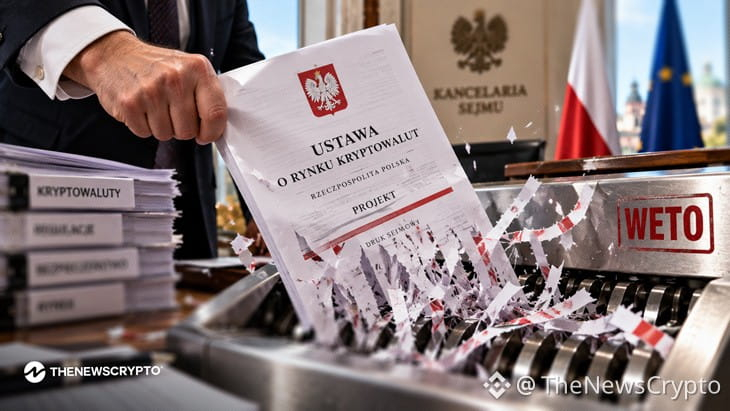
Poland Crypto Bill Blocked After President Nawrocki’s Third VetoThe Polish Sejm could not succeed in overriding President Karol Nawrocki’s third veto of the crypto bill, gaining only 241 votes.
Now the framework for the domestic implementation of MiCA in Poland is unclear in light of ongoing political differences.
Poland’s crypto regulation battle hit yet another milestone with the failure of the lawmakers to overcome President Karol Nawrocki’s third veto. The Sejm voted by 241 to 198 to reject the veto, while 3 representatives abstained from voting. Nevertheless, it takes at least 266 votes to override a veto, which means that at least three-fifths of the 442 deputies have to vote for this.
Third Override Effort Fails to Meet Criteria
The bill would have put Poland’s cryptocurrency market under KNF jurisdiction. Additionally, it sought to help Poland’s adoption of the Markets in Crypto-Assets Regulation from the European Union. Nawrocki claims that the strategy pursued by the government imposes too much burden on cryptocurrency businesses. Nawrocki has also expressed concerns that stringent rules may drive companies offshore.
The President claimed that only one out of 16 amendments suggested by his office was taken into account in the latest legislative round. He is in favor of a different bill which aims at fraud and financial crime protection measures. Previous veto efforts yielded similar results. Nawrocki vetoed the Crypto-Asset Market Act initially in December 2025. While the Sejm supported the override in a 243-to-192 vote, they fell short of the required three-fifths majority. Nawrocki vetoed the act once again in February 2026. Lawmakers could not pass the override in April, with 243 voting in favor and 191 against.
Political Pressure Builds Around Zondacrypto
The latest vote also unfolded alongside political accusations involving the former Zondacrypto exchange. Prime Minister Donald Tusk urged lawmakers to support the override before the parliamentary vote. He cited witness testimony from an investigation involving former Justice Minister Zbigniew Ziobro. Tusk presented allegations involving PLN 2 million, reportedly worth about €463,000. The claims also referenced Ziobro’s family and an alleged foundation arrangement.
Authorities continue to investigate those allegations, and the parliamentary claims do not represent court findings. Ziobro has faced separate investigations involving conduct during his government tenure. Nawrocki has rejected claims linking him to Zondacrypto. He previously said he never met the exchange’s executives or representatives.
Highlighted Crypto News:Hyperliquid (HYPE) at a Crossroads: $90 Breakout or $80 Breakdown?
Poland Crypto Bill Blocked After President Nawrocki’s Third Veto
The Polish Sejm could not succeed in overriding President Karol Nawrocki’s third veto of the crypto bill, gaining only 241 votes.
Now the framework for the domestic implementation of MiCA in Poland is unclear in light of ongoing political differences.
Poland’s crypto regulation battle hit yet another milestone with the failure of the lawmakers to overcome President Karol Nawrocki’s third veto. The Sejm voted by 241 to 198 to reject the veto, while 3 representatives abstained from voting. Nevertheless, it takes at least 266 votes to override a veto, which means that at least three-fifths of the 442 deputies have to vote for this.
Third Override Effort Fails to Meet Criteria
The bill would have put Poland’s cryptocurrency market under KNF jurisdiction. Additionally, it sought to help Poland’s adoption of the Markets in Crypto-Assets Regulation from the European Union. Nawrocki claims that the strategy pursued by the government imposes too much burden on cryptocurrency businesses. Nawrocki has also expressed concerns that stringent rules may drive companies offshore.
The President claimed that only one out of 16 amendments suggested by his office was taken into account in the latest legislative round. He is in favor of a different bill which aims at fraud and financial crime protection measures. Previous veto efforts yielded similar results. Nawrocki vetoed the Crypto-Asset Market Act initially in December 2025. While the Sejm supported the override in a 243-to-192 vote, they fell short of the required three-fifths majority. Nawrocki vetoed the act once again in February 2026. Lawmakers could not pass the override in April, with 243 voting in favor and 191 against.
Political Pressure Builds Around Zondacrypto
The latest vote also unfolded alongside political accusations involving the former Zondacrypto exchange. Prime Minister Donald Tusk urged lawmakers to support the override before the parliamentary vote. He cited witness testimony from an investigation involving former Justice Minister Zbigniew Ziobro. Tusk presented allegations involving PLN 2 million, reportedly worth about €463,000. The claims also referenced Ziobro’s family and an alleged foundation arrangement.
Authorities continue to investigate those allegations, and the parliamentary claims do not represent court findings. Ziobro has faced separate investigations involving conduct during his government tenure. Nawrocki has rejected claims linking him to Zondacrypto. He previously said he never met the exchange’s executives or representatives.
Highlighted Crypto News:Hyperliquid (HYPE) at a Crossroads: $90 Breakout or $80 Breakdown?
Now the framework for the domestic implementation of MiCA in Poland is unclear in light of ongoing political differences.
Poland’s crypto regulation battle hit yet another milestone with the failure of the lawmakers to overcome President Karol Nawrocki’s third veto. The Sejm voted by 241 to 198 to reject the veto, while 3 representatives abstained from voting. Nevertheless, it takes at least 266 votes to override a veto, which means that at least three-fifths of the 442 deputies have to vote for this.
Third Override Effort Fails to Meet Criteria
The bill would have put Poland’s cryptocurrency market under KNF jurisdiction. Additionally, it sought to help Poland’s adoption of the Markets in Crypto-Assets Regulation from the European Union. Nawrocki claims that the strategy pursued by the government imposes too much burden on cryptocurrency businesses. Nawrocki has also expressed concerns that stringent rules may drive companies offshore.
The President claimed that only one out of 16 amendments suggested by his office was taken into account in the latest legislative round. He is in favor of a different bill which aims at fraud and financial crime protection measures. Previous veto efforts yielded similar results. Nawrocki vetoed the Crypto-Asset Market Act initially in December 2025. While the Sejm supported the override in a 243-to-192 vote, they fell short of the required three-fifths majority. Nawrocki vetoed the act once again in February 2026. Lawmakers could not pass the override in April, with 243 voting in favor and 191 against.
Political Pressure Builds Around Zondacrypto
The latest vote also unfolded alongside political accusations involving the former Zondacrypto exchange. Prime Minister Donald Tusk urged lawmakers to support the override before the parliamentary vote. He cited witness testimony from an investigation involving former Justice Minister Zbigniew Ziobro. Tusk presented allegations involving PLN 2 million, reportedly worth about €463,000. The claims also referenced Ziobro’s family and an alleged foundation arrangement.
Authorities continue to investigate those allegations, and the parliamentary claims do not represent court findings. Ziobro has faced separate investigations involving conduct during his government tenure. Nawrocki has rejected claims linking him to Zondacrypto. He previously said he never met the exchange’s executives or representatives.
Highlighted Crypto News:Hyperliquid (HYPE) at a Crossroads: $90 Breakout or $80 Breakdown?
224
Article
PUMP Is Compressing Hard: At a Level That Could Go Either WayPUMP is currently hovering around the $0.0041 mark.
There’s a bullish attempt to counter a macro downtrend.
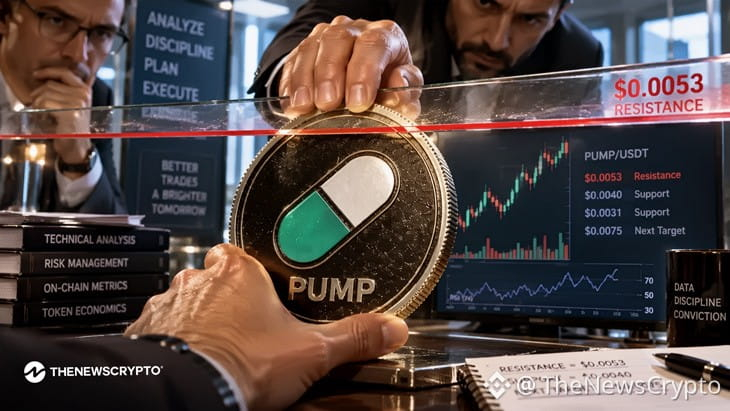
As the first week of September closes, Pump.fun (PUMP) is trading at $0.004195. Buyers have stepped in and defended the $0.0040 zone twice, printing a double bottom and showing that the sellers can’t push through that floor with any conviction.
The neckline likely sits at $0.00455. A clean breakout above that level with volume behind it confirms the double bottom and opens the door toward the projected target at around $0.0052, a crucial move from current levels. Until that breakout is confirmed, the bulls are in a waiting game.
In the early hours, the asset traded at a bottom of $0.004096. With a shift in momentum, it tested and broke multiple price ranges and gradually drove the PUMP price to a high level of $0.004405. Besides, the 24-hour volume has potentially reached the $147.17 million zone.
Near-Term Price Levels to Watch for PUMP
With the negative outlook, the recent trading pattern might slip even deeper and test the key support at the $0.004139 range. Further correction on the downside could likely trigger the emergence of the death cross in the PUMP market, and the bears would send the price below $0.0040.
On the upside, if the bulls re-entered the market, the asset’s price could instantly rise to its nearest resistance level at $0.004251. Extended bullish pressure might push for the formation of the golden cross. Eventually, it could drive the PUMP price even higher, above the $0.0043 mark.
Where Will PUMP Take its Current Momentum?
The Moving Average Convergence Divergence line is slightly above the signal line, while both lines remain below the zero line; it is an early sign of bullish momentum forming within a broader downward trend. The overall background of the PUMP market is still bearish.
Short-term price moving averages are lower than long-term averages, confirming sustained selling pressure. MACD crossing one point above it forms a fresh bullish crossover, showing that buyers are stepping in and driving price up faster than the immediate recent average. This represents a bullish attempt to counter a macro downtrend.
(Source: TradingView)
Moreover, the daily Relative Strength Index reading positioned at 40.93 hints at weak or neutral-bearish territory. The sellers currently hold a slight edge over buyers, with average price losses outperforming average gains over the recent lookback period.
The asset still has room to fall further before becoming overextended to the downside. A drop toward 40 signals a healthy pullback before the broader trend resumes. If the broader market is already bearish, an RSI staying in the 40–30 range confirms sustained selling pressure without enough buying momentum to reverse direction.
Crypto Market Highlights
Hyperliquid (HYPE) at a Crossroads: $90 Breakout or $80 Breakdown?
PUMP Is Compressing Hard: At a Level That Could Go Either Way
PUMP is currently hovering around the $0.0041 mark.
There’s a bullish attempt to counter a macro downtrend.
As the first week of September closes, Pump.fun (PUMP) is trading at $0.004195. Buyers have stepped in and defended the $0.0040 zone twice, printing a double bottom and showing that the sellers can’t push through that floor with any conviction.
The neckline likely sits at $0.00455. A clean breakout above that level with volume behind it confirms the double bottom and opens the door toward the projected target at around $0.0052, a crucial move from current levels. Until that breakout is confirmed, the bulls are in a waiting game.
In the early hours, the asset traded at a bottom of $0.004096. With a shift in momentum, it tested and broke multiple price ranges and gradually drove the PUMP price to a high level of $0.004405. Besides, the 24-hour volume has potentially reached the $147.17 million zone.
Near-Term Price Levels to Watch for PUMP
With the negative outlook, the recent trading pattern might slip even deeper and test the key support at the $0.004139 range. Further correction on the downside could likely trigger the emergence of the death cross in the PUMP market, and the bears would send the price below $0.0040.
On the upside, if the bulls re-entered the market, the asset’s price could instantly rise to its nearest resistance level at $0.004251. Extended bullish pressure might push for the formation of the golden cross. Eventually, it could drive the PUMP price even higher, above the $0.0043 mark.
Where Will PUMP Take its Current Momentum?
The Moving Average Convergence Divergence line is slightly above the signal line, while both lines remain below the zero line; it is an early sign of bullish momentum forming within a broader downward trend. The overall background of the PUMP market is still bearish.
Short-term price moving averages are lower than long-term averages, confirming sustained selling pressure. MACD crossing one point above it forms a fresh bullish crossover, showing that buyers are stepping in and driving price up faster than the immediate recent average. This represents a bullish attempt to counter a macro downtrend.
(Source: TradingView)
Moreover, the daily Relative Strength Index reading positioned at 40.93 hints at weak or neutral-bearish territory. The sellers currently hold a slight edge over buyers, with average price losses outperforming average gains over the recent lookback period.
The asset still has room to fall further before becoming overextended to the downside. A drop toward 40 signals a healthy pullback before the broader trend resumes. If the broader market is already bearish, an RSI staying in the 40–30 range confirms sustained selling pressure without enough buying momentum to reverse direction.
Crypto Market Highlights
Hyperliquid (HYPE) at a Crossroads: $90 Breakout or $80 Breakdown?
There’s a bullish attempt to counter a macro downtrend.
As the first week of September closes, Pump.fun (PUMP) is trading at $0.004195. Buyers have stepped in and defended the $0.0040 zone twice, printing a double bottom and showing that the sellers can’t push through that floor with any conviction.
The neckline likely sits at $0.00455. A clean breakout above that level with volume behind it confirms the double bottom and opens the door toward the projected target at around $0.0052, a crucial move from current levels. Until that breakout is confirmed, the bulls are in a waiting game.
In the early hours, the asset traded at a bottom of $0.004096. With a shift in momentum, it tested and broke multiple price ranges and gradually drove the PUMP price to a high level of $0.004405. Besides, the 24-hour volume has potentially reached the $147.17 million zone.
Near-Term Price Levels to Watch for PUMP
With the negative outlook, the recent trading pattern might slip even deeper and test the key support at the $0.004139 range. Further correction on the downside could likely trigger the emergence of the death cross in the PUMP market, and the bears would send the price below $0.0040.
On the upside, if the bulls re-entered the market, the asset’s price could instantly rise to its nearest resistance level at $0.004251. Extended bullish pressure might push for the formation of the golden cross. Eventually, it could drive the PUMP price even higher, above the $0.0043 mark.
Where Will PUMP Take its Current Momentum?
The Moving Average Convergence Divergence line is slightly above the signal line, while both lines remain below the zero line; it is an early sign of bullish momentum forming within a broader downward trend. The overall background of the PUMP market is still bearish.
Short-term price moving averages are lower than long-term averages, confirming sustained selling pressure. MACD crossing one point above it forms a fresh bullish crossover, showing that buyers are stepping in and driving price up faster than the immediate recent average. This represents a bullish attempt to counter a macro downtrend.
(Source: TradingView)
Moreover, the daily Relative Strength Index reading positioned at 40.93 hints at weak or neutral-bearish territory. The sellers currently hold a slight edge over buyers, with average price losses outperforming average gains over the recent lookback period.
The asset still has room to fall further before becoming overextended to the downside. A drop toward 40 signals a healthy pullback before the broader trend resumes. If the broader market is already bearish, an RSI staying in the 40–30 range confirms sustained selling pressure without enough buying momentum to reverse direction.
Crypto Market Highlights
Hyperliquid (HYPE) at a Crossroads: $90 Breakout or $80 Breakdown?
1
750
Article
Hyperliquid (HYPE) At a Crossroads: $90 Breakout or $80 Breakdown?Hyperliquid is currently trading at around $84.
HYPE’s baseline trend remains overall bullish.
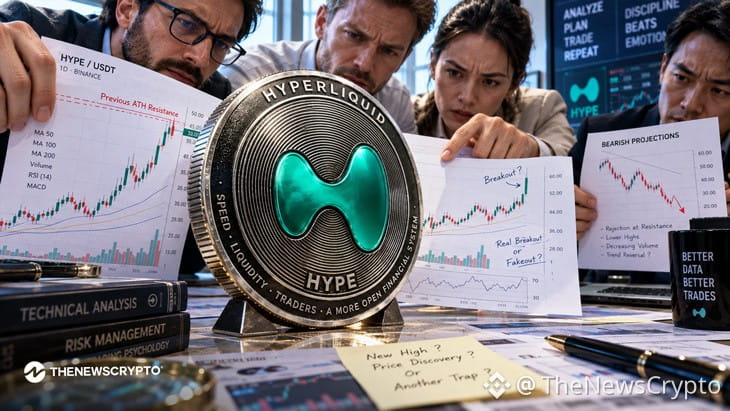
The global crypto market cap is settled at $2.77 trillion, after a 1.2% loss. In line with this, Hyperliquid (HYPE) has posted a modest 1.6% drop in value over the last 24 hours. Moreover, the session’s range falls between $83.64 and $87.31. The asset could have tested key price ranges to confirm the current momentum.
If the bears stay for a longer period, the price could see more downside. At the time of writing, Hyperliquid traded at around the $84.61 mark, with its market cap at $18.75 billion. Besides, the daily trading volume has reached the $1.164 billion zone, as per CoinGecko data.
Zooming in on the recent price chart, there is a bearish trait within the pattern. The Hyperliquid momentum could drop to the support at $83.68 if the bears stay stronger. An extended, powerful downside correction might trigger the death cross to take place and send the price even lower, around $82.
On the flip side, assuming Hyperliquid turns for a bullish reversal, the price could jump and find the nearest resistance within the $85 range. With the potential upside pressure strengthening, the golden cross could likely unfold and push the asset’s price upward, above the $86.12 level.
Hyperliquid’s Technical Chart Points to a Weakening Trend
The technical analysis reports that the Moving Average Convergence Divergence line is below the signal line. Both lines remain above the zero line, signalling a bullish uptrend that is experiencing short-term weakening. The baseline trend of Hyperliquid remains overall bullish.
It reflects an established uptrend in the broader market structure, with the short-term momentum slowing down. When the MACD line crosses below its signal line, it creates a bearish crossover. Also, the price might be forming a flag pattern, consolidating sideways before resuming the broader upward trend.
(Source: TradingView)
Hyperliquid’s daily Relative Strength Index of 52.79 is in the neutral territory, with a subtle bias toward bullish momentum. It is in equilibrium, with neither buyers nor sellers exercising dominant control over the price. This is high enough to confirm strong momentum; it is either consolidating sideways before its next directional move.
Price is moving within a horizontal range while the momentum decides on a direction. Following an active rally or sell-off, price is taking a breather to cool off before continuing the primary trend. If RSI recently crossed upward from below 50, it suggests momentum is slowly shifting from sellers to buyers.
Crypto Market Highlights
Zcash (ZEC) Jumps 19%: How Far Can This Move Actually Go?
Hyperliquid (HYPE) At a Crossroads: $90 Breakout or $80 Breakdown?
Hyperliquid is currently trading at around $84.
HYPE’s baseline trend remains overall bullish.
The global crypto market cap is settled at $2.77 trillion, after a 1.2% loss. In line with this, Hyperliquid (HYPE) has posted a modest 1.6% drop in value over the last 24 hours. Moreover, the session’s range falls between $83.64 and $87.31. The asset could have tested key price ranges to confirm the current momentum.
If the bears stay for a longer period, the price could see more downside. At the time of writing, Hyperliquid traded at around the $84.61 mark, with its market cap at $18.75 billion. Besides, the daily trading volume has reached the $1.164 billion zone, as per CoinGecko data.
Zooming in on the recent price chart, there is a bearish trait within the pattern. The Hyperliquid momentum could drop to the support at $83.68 if the bears stay stronger. An extended, powerful downside correction might trigger the death cross to take place and send the price even lower, around $82.
On the flip side, assuming Hyperliquid turns for a bullish reversal, the price could jump and find the nearest resistance within the $85 range. With the potential upside pressure strengthening, the golden cross could likely unfold and push the asset’s price upward, above the $86.12 level.
Hyperliquid’s Technical Chart Points to a Weakening Trend
The technical analysis reports that the Moving Average Convergence Divergence line is below the signal line. Both lines remain above the zero line, signalling a bullish uptrend that is experiencing short-term weakening. The baseline trend of Hyperliquid remains overall bullish.
It reflects an established uptrend in the broader market structure, with the short-term momentum slowing down. When the MACD line crosses below its signal line, it creates a bearish crossover. Also, the price might be forming a flag pattern, consolidating sideways before resuming the broader upward trend.
(Source: TradingView)
Hyperliquid’s daily Relative Strength Index of 52.79 is in the neutral territory, with a subtle bias toward bullish momentum. It is in equilibrium, with neither buyers nor sellers exercising dominant control over the price. This is high enough to confirm strong momentum; it is either consolidating sideways before its next directional move.
Price is moving within a horizontal range while the momentum decides on a direction. Following an active rally or sell-off, price is taking a breather to cool off before continuing the primary trend. If RSI recently crossed upward from below 50, it suggests momentum is slowly shifting from sellers to buyers.
Crypto Market Highlights
Zcash (ZEC) Jumps 19%: How Far Can This Move Actually Go?
HYPE’s baseline trend remains overall bullish.
The global crypto market cap is settled at $2.77 trillion, after a 1.2% loss. In line with this, Hyperliquid (HYPE) has posted a modest 1.6% drop in value over the last 24 hours. Moreover, the session’s range falls between $83.64 and $87.31. The asset could have tested key price ranges to confirm the current momentum.
If the bears stay for a longer period, the price could see more downside. At the time of writing, Hyperliquid traded at around the $84.61 mark, with its market cap at $18.75 billion. Besides, the daily trading volume has reached the $1.164 billion zone, as per CoinGecko data.
Zooming in on the recent price chart, there is a bearish trait within the pattern. The Hyperliquid momentum could drop to the support at $83.68 if the bears stay stronger. An extended, powerful downside correction might trigger the death cross to take place and send the price even lower, around $82.
On the flip side, assuming Hyperliquid turns for a bullish reversal, the price could jump and find the nearest resistance within the $85 range. With the potential upside pressure strengthening, the golden cross could likely unfold and push the asset’s price upward, above the $86.12 level.
Hyperliquid’s Technical Chart Points to a Weakening Trend
The technical analysis reports that the Moving Average Convergence Divergence line is below the signal line. Both lines remain above the zero line, signalling a bullish uptrend that is experiencing short-term weakening. The baseline trend of Hyperliquid remains overall bullish.
It reflects an established uptrend in the broader market structure, with the short-term momentum slowing down. When the MACD line crosses below its signal line, it creates a bearish crossover. Also, the price might be forming a flag pattern, consolidating sideways before resuming the broader upward trend.
(Source: TradingView)
Hyperliquid’s daily Relative Strength Index of 52.79 is in the neutral territory, with a subtle bias toward bullish momentum. It is in equilibrium, with neither buyers nor sellers exercising dominant control over the price. This is high enough to confirm strong momentum; it is either consolidating sideways before its next directional move.
Price is moving within a horizontal range while the momentum decides on a direction. Following an active rally or sell-off, price is taking a breather to cool off before continuing the primary trend. If RSI recently crossed upward from below 50, it suggests momentum is slowly shifting from sellers to buyers.
Crypto Market Highlights
Zcash (ZEC) Jumps 19%: How Far Can This Move Actually Go?
882
Article
Dash Price Breaks Above $70: Can DASH Sustain the Breakout?DASH climbed above $70 after a sharp 4-hour breakout, with the price reaching around $73.80
The RSI moved above 87, showing strong buying momentum but also placing DASH firmly in overbought territory.
Today, one of the leading privacy-coin, Dash (DASH) has made a sharp move higher, with the token gaining more than 47% in the past 24 hours as buying activity picked up across the market.
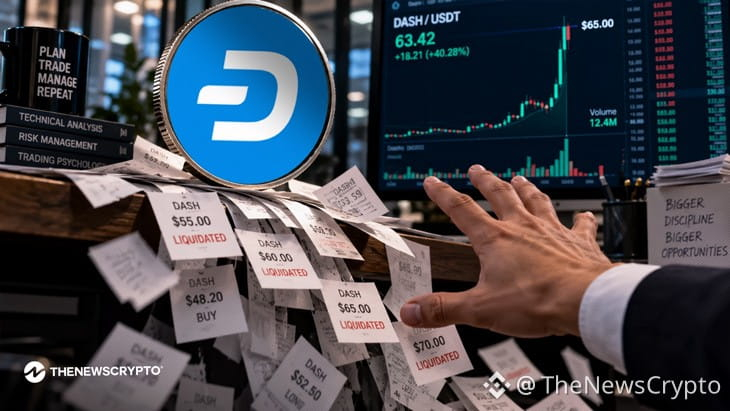
According to CoinMarketCap data, DASH is currently trading near $70, after moving between an intraday low of $49.46 and a high of $72.95 during the latest 24-hour session. The altcoin’s market cap has climbed to about $913.8 million, while daily trading volume reached $561 million, up more than 193%.
The jump has pushed DASH to levels not seen since January and placed the token among the stronger performers in the current privacy-coin rally. Dash also recently held DashCon 2026 in Amsterdam, while the wider privacy sector has attracted renewed attention following strong gains in other privacy-focused assets.
DASH Technical Picture Turns Strong but Overheated
The technical setup shows strong short-term momentum, but it also points to a market that has moved quickly. On the 4-hour chart, the DASH price climbed from the low-$40s to above $70 in a series of strong buying moves. The latest candle on the Binance DASH/USDT chart shows the token trading around $69.37, after reaching an intraday high of $73.80. DASH is now holding well above the $64 level, which has become an important area after the latest breakout.
Zooming in, the chart shows a clear bullish structure. The 9-day moving average is near $56.39, while the 21-day average sits around $48.90. Both are below the current price and are rising, showing that buyers have taken control of the short-term trend.
(Source: TradingView)
DASH first pushed through the $45 area before accelerating above $52 and then breaking through $60. Each move higher came with large green candles, showing strong buying pressure rather than a slow recovery.
Still, the momentum has now become stretched. The 14-day RSI on the 4-hour chart is around 87.55, far above the 70 level normally associated with overbought conditions. This does not automatically mean the rally must reverse. But it shows that the price has moved very quickly and could face profit-taking.
Meanwhile, the MACD remains positive, while the five-day moving average is around $69.67, suggesting that short-term momentum is still favoring buyers.
If the DASH coin keeps the trend, the immediate resistance stands around $73.80, the latest chart high and a multiple-rejection zone. A clean break above this level would keep the current breakout structure intact. If the breakout fails, $64 is the first important support, followed by the $56–$57 moving-average area.
For now, the 4-hour trend remains firmly bullish. But the extreme RSI makes a period of consolidation or a pullback possible before another attempt higher.
Highlighted Crypto News:
Anthropic IPO Delayed to Mid-October as Company Targets $2 Trillion Valuation
Dash Price Breaks Above $70: Can DASH Sustain the Breakout?
DASH climbed above $70 after a sharp 4-hour breakout, with the price reaching around $73.80
The RSI moved above 87, showing strong buying momentum but also placing DASH firmly in overbought territory.
Today, one of the leading privacy-coin, Dash (DASH) has made a sharp move higher, with the token gaining more than 47% in the past 24 hours as buying activity picked up across the market.
According to CoinMarketCap data, DASH is currently trading near $70, after moving between an intraday low of $49.46 and a high of $72.95 during the latest 24-hour session. The altcoin’s market cap has climbed to about $913.8 million, while daily trading volume reached $561 million, up more than 193%.
The jump has pushed DASH to levels not seen since January and placed the token among the stronger performers in the current privacy-coin rally. Dash also recently held DashCon 2026 in Amsterdam, while the wider privacy sector has attracted renewed attention following strong gains in other privacy-focused assets.
DASH Technical Picture Turns Strong but Overheated
The technical setup shows strong short-term momentum, but it also points to a market that has moved quickly. On the 4-hour chart, the DASH price climbed from the low-$40s to above $70 in a series of strong buying moves. The latest candle on the Binance DASH/USDT chart shows the token trading around $69.37, after reaching an intraday high of $73.80. DASH is now holding well above the $64 level, which has become an important area after the latest breakout.
Zooming in, the chart shows a clear bullish structure. The 9-day moving average is near $56.39, while the 21-day average sits around $48.90. Both are below the current price and are rising, showing that buyers have taken control of the short-term trend.
(Source: TradingView)
DASH first pushed through the $45 area before accelerating above $52 and then breaking through $60. Each move higher came with large green candles, showing strong buying pressure rather than a slow recovery.
Still, the momentum has now become stretched. The 14-day RSI on the 4-hour chart is around 87.55, far above the 70 level normally associated with overbought conditions. This does not automatically mean the rally must reverse. But it shows that the price has moved very quickly and could face profit-taking.
Meanwhile, the MACD remains positive, while the five-day moving average is around $69.67, suggesting that short-term momentum is still favoring buyers.
If the DASH coin keeps the trend, the immediate resistance stands around $73.80, the latest chart high and a multiple-rejection zone. A clean break above this level would keep the current breakout structure intact. If the breakout fails, $64 is the first important support, followed by the $56–$57 moving-average area.
For now, the 4-hour trend remains firmly bullish. But the extreme RSI makes a period of consolidation or a pullback possible before another attempt higher.
Highlighted Crypto News:
Anthropic IPO Delayed to Mid-October as Company Targets $2 Trillion Valuation
The RSI moved above 87, showing strong buying momentum but also placing DASH firmly in overbought territory.
Today, one of the leading privacy-coin, Dash (DASH) has made a sharp move higher, with the token gaining more than 47% in the past 24 hours as buying activity picked up across the market.
According to CoinMarketCap data, DASH is currently trading near $70, after moving between an intraday low of $49.46 and a high of $72.95 during the latest 24-hour session. The altcoin’s market cap has climbed to about $913.8 million, while daily trading volume reached $561 million, up more than 193%.
The jump has pushed DASH to levels not seen since January and placed the token among the stronger performers in the current privacy-coin rally. Dash also recently held DashCon 2026 in Amsterdam, while the wider privacy sector has attracted renewed attention following strong gains in other privacy-focused assets.
DASH Technical Picture Turns Strong but Overheated
The technical setup shows strong short-term momentum, but it also points to a market that has moved quickly. On the 4-hour chart, the DASH price climbed from the low-$40s to above $70 in a series of strong buying moves. The latest candle on the Binance DASH/USDT chart shows the token trading around $69.37, after reaching an intraday high of $73.80. DASH is now holding well above the $64 level, which has become an important area after the latest breakout.
Zooming in, the chart shows a clear bullish structure. The 9-day moving average is near $56.39, while the 21-day average sits around $48.90. Both are below the current price and are rising, showing that buyers have taken control of the short-term trend.
(Source: TradingView)
DASH first pushed through the $45 area before accelerating above $52 and then breaking through $60. Each move higher came with large green candles, showing strong buying pressure rather than a slow recovery.
Still, the momentum has now become stretched. The 14-day RSI on the 4-hour chart is around 87.55, far above the 70 level normally associated with overbought conditions. This does not automatically mean the rally must reverse. But it shows that the price has moved very quickly and could face profit-taking.
Meanwhile, the MACD remains positive, while the five-day moving average is around $69.67, suggesting that short-term momentum is still favoring buyers.
If the DASH coin keeps the trend, the immediate resistance stands around $73.80, the latest chart high and a multiple-rejection zone. A clean break above this level would keep the current breakout structure intact. If the breakout fails, $64 is the first important support, followed by the $56–$57 moving-average area.
For now, the 4-hour trend remains firmly bullish. But the extreme RSI makes a period of consolidation or a pullback possible before another attempt higher.
Highlighted Crypto News:
Anthropic IPO Delayed to Mid-October as Company Targets $2 Trillion Valuation
501
Article
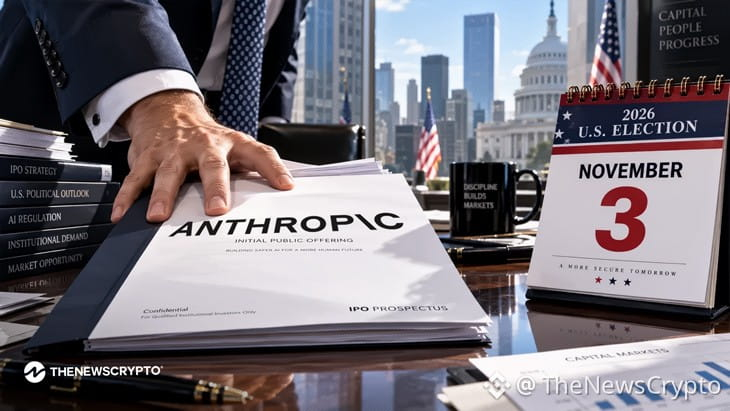
Anthropic IPO Delayed to Mid-October As Company Targets $2 Trillion ValuationAn IPO marketing campaign could kick off in mid-October with a successful conclusion ahead of November’s midterm U.S. elections.
The company plans to issue its IPO prospectus in late September as it closes on its $15 billion financing facility.
Anthropic is pushing its IPO timetable into mid-October, sources said. The artificial intelligence company will start pitching its IPO by mid-October at the earliest. As reported by Reuters, Anthropic also plans to list its stock several days before the U.S. midterm elections in November.
The revised timetable comes in contrast to initial plans. Two sources reported that Anthropic was expected to file its IPO prospectus as soon as next week. However, the artificial intelligence company now expects to file its prospectus publicly later in September. The sources pointed out that Anthropic can still revise the timetable. Companies frequently revise their IPO timetables when navigating various market considerations.
Prospectus Release Timing to Define the Offering
The delay might mean that one of the most eagerly awaited technology offerings of the year will be delayed. The rumored valuation for Anthropic is close to $2 trillion. This valuation will make the company one of the largest IPOs ever tried. It will also provide public market investors yet another chance to participate in the artificial intelligence sector.
Anthropic is currently working on defining the financing structure of the offering. The company needs to close a $15 billion revolving credit facility. After that, the analysts working for the participating banks could have a meeting with Anthropic. This was reported earlier by Bloomberg News. Usually, there is a gap of a few weeks between the analyst meeting and the filing of the prospectus. Nevertheless, Anthropic could act more quickly because analysts know about the company, one source notes.
AI IPO Race Draws Investor Interest
The anticipated IPO from Anthropic takes place amid investor interest in the AI IPO race as a whole. OpenAI may consider taking itself public as well, joining other prominent firms in the industry. In the meantime, SpaceX went public with an initial public offering in June, setting a new record with a valuation of $1.77 trillion.
A number of banks are helping with the IPO preparation for Anthropic. Among the banks assisting with the process are Morgan Stanley, Goldman Sachs, JPMorgan, and Citi, sources close to the situation say. Anthropic did not have anything to say about the timeline in question. Similarly, the banks declined to comment. Investors will need to wait until the end of September, when the company will release the prospectus.
Highlighted Crypto News:
Pencil Finance Completes $1M Onchain Student Lending Cycle Across Southeast Asia
Anthropic IPO Delayed to Mid-October As Company Targets $2 Trillion Valuation
An IPO marketing campaign could kick off in mid-October with a successful conclusion ahead of November’s midterm U.S. elections.
The company plans to issue its IPO prospectus in late September as it closes on its $15 billion financing facility.
Anthropic is pushing its IPO timetable into mid-October, sources said. The artificial intelligence company will start pitching its IPO by mid-October at the earliest. As reported by Reuters, Anthropic also plans to list its stock several days before the U.S. midterm elections in November.
The revised timetable comes in contrast to initial plans. Two sources reported that Anthropic was expected to file its IPO prospectus as soon as next week. However, the artificial intelligence company now expects to file its prospectus publicly later in September. The sources pointed out that Anthropic can still revise the timetable. Companies frequently revise their IPO timetables when navigating various market considerations.
Prospectus Release Timing to Define the Offering
The delay might mean that one of the most eagerly awaited technology offerings of the year will be delayed. The rumored valuation for Anthropic is close to $2 trillion. This valuation will make the company one of the largest IPOs ever tried. It will also provide public market investors yet another chance to participate in the artificial intelligence sector.
Anthropic is currently working on defining the financing structure of the offering. The company needs to close a $15 billion revolving credit facility. After that, the analysts working for the participating banks could have a meeting with Anthropic. This was reported earlier by Bloomberg News. Usually, there is a gap of a few weeks between the analyst meeting and the filing of the prospectus. Nevertheless, Anthropic could act more quickly because analysts know about the company, one source notes.
AI IPO Race Draws Investor Interest
The anticipated IPO from Anthropic takes place amid investor interest in the AI IPO race as a whole. OpenAI may consider taking itself public as well, joining other prominent firms in the industry. In the meantime, SpaceX went public with an initial public offering in June, setting a new record with a valuation of $1.77 trillion.
A number of banks are helping with the IPO preparation for Anthropic. Among the banks assisting with the process are Morgan Stanley, Goldman Sachs, JPMorgan, and Citi, sources close to the situation say. Anthropic did not have anything to say about the timeline in question. Similarly, the banks declined to comment. Investors will need to wait until the end of September, when the company will release the prospectus.
Highlighted Crypto News:
Pencil Finance Completes $1M Onchain Student Lending Cycle Across Southeast Asia
The company plans to issue its IPO prospectus in late September as it closes on its $15 billion financing facility.
Anthropic is pushing its IPO timetable into mid-October, sources said. The artificial intelligence company will start pitching its IPO by mid-October at the earliest. As reported by Reuters, Anthropic also plans to list its stock several days before the U.S. midterm elections in November.
The revised timetable comes in contrast to initial plans. Two sources reported that Anthropic was expected to file its IPO prospectus as soon as next week. However, the artificial intelligence company now expects to file its prospectus publicly later in September. The sources pointed out that Anthropic can still revise the timetable. Companies frequently revise their IPO timetables when navigating various market considerations.
Prospectus Release Timing to Define the Offering
The delay might mean that one of the most eagerly awaited technology offerings of the year will be delayed. The rumored valuation for Anthropic is close to $2 trillion. This valuation will make the company one of the largest IPOs ever tried. It will also provide public market investors yet another chance to participate in the artificial intelligence sector.
Anthropic is currently working on defining the financing structure of the offering. The company needs to close a $15 billion revolving credit facility. After that, the analysts working for the participating banks could have a meeting with Anthropic. This was reported earlier by Bloomberg News. Usually, there is a gap of a few weeks between the analyst meeting and the filing of the prospectus. Nevertheless, Anthropic could act more quickly because analysts know about the company, one source notes.
AI IPO Race Draws Investor Interest
The anticipated IPO from Anthropic takes place amid investor interest in the AI IPO race as a whole. OpenAI may consider taking itself public as well, joining other prominent firms in the industry. In the meantime, SpaceX went public with an initial public offering in June, setting a new record with a valuation of $1.77 trillion.
A number of banks are helping with the IPO preparation for Anthropic. Among the banks assisting with the process are Morgan Stanley, Goldman Sachs, JPMorgan, and Citi, sources close to the situation say. Anthropic did not have anything to say about the timeline in question. Similarly, the banks declined to comment. Investors will need to wait until the end of September, when the company will release the prospectus.
Highlighted Crypto News:
Pencil Finance Completes $1M Onchain Student Lending Cycle Across Southeast Asia
423

Article
CoinRabbit Wins “Best Crypto Lending Platform 2026” Award From International Business MagazineToronto, Canada, September 4th, 2026, Chainwire
CoinRabbit has been named Best Crypto Lending Platform 2026 by International Business Magazine, highlighting a lending product that has issued more than $1.45 billion in loans since 2020.
About the International Business Magazine Award
The International Business Magazine Awards recognize companies and executives making a significant impact across global industries. The selection process combines public nominations with jury review, with nominees assessed on their work, progress, and contribution to their respective industries.
For CoinRabbit, the award comes at an important stage in the company’s development. It is moving beyond borrowing against crypto and building a broader ecosystem for managing digital-asset capital.
Why CoinRabbit Was Named the Best Crypto Lending Platform
The Best Crypto Lending Platform 2026 award recognizes the work CoinRabbit has put into its ecosystem. The platform provides borrowers with fast access to liquidity and confidence that their funds remain secure. CoinRabbit maintains a clear no-rehypothecation policy, giving clients greater certainty that their collateral is not being reused or lent out elsewhere.
That focus on a predictable borrowing experience has remained central as CoinRabbit has expanded the product. There is no traditional credit check because crypto collateral does the underwriting, and the lending process takes about 10 minutes whether a client is borrowing a few hundred dollars or managing a six-figure position.
The award jury also highlighted CoinRabbit’s Private Program as a high-touch approach for clients with significant balances. Designed for portfolios of $500,000 and above, it offers a more personalized way to manage assets around each client’s financial goals, liquidity needs, and timing. As part of CoinRabbit’s broader digital-asset ecosystem, the program gives clients a more private banking-style experience.
Capital Preservation at the Core
CoinRabbit is expanding into capital management, but lending remains at the core of the business. By giving clients access to liquidity without a need to sell their crypto, it helps preserve capital and keep assets invested for the long term.
Walter Barrett, Chief Strategy & Growth Officer at CoinRabbit, commented:
“We’ve spent years building and refining the product, and it’s rewarding to see that work recognized. At the same time, CoinRabbit is becoming more than just a lending platform. With the Private Program, we’re bringing a private credit approach to managing crypto. Clients can work directly with a success manager to find the right strategy for their needs, with a more tailored way to build crypto capital. We also continue to improve the core lending product, keeping it simple. For us, the goal is to make both sides of the business stronger as we grow.”
As CoinRabbit evolves, capital preservation remains a central idea behind the company’s products and services.
About CoinRabbit
CoinRabbit is a crypto asset management platform built for long-term capital preservation. It provides flexible liquidity management across multiple environments. Instant payments and lending, yield and trading products, and also the Private Program are available from a single platform. Since 2020, CoinRabbit has maintained a 100% capital reserve model, ensuring that client assets are fully reserved and never rehypothecated.
Contact
CoinRabbitmarketing@coinrabbit.io
CoinRabbit Wins “Best Crypto Lending Platform 2026” Award From International Business Magazine
Toronto, Canada, September 4th, 2026, Chainwire
CoinRabbit has been named Best Crypto Lending Platform 2026 by International Business Magazine, highlighting a lending product that has issued more than $1.45 billion in loans since 2020.
About the International Business Magazine Award
The International Business Magazine Awards recognize companies and executives making a significant impact across global industries. The selection process combines public nominations with jury review, with nominees assessed on their work, progress, and contribution to their respective industries.
For CoinRabbit, the award comes at an important stage in the company’s development. It is moving beyond borrowing against crypto and building a broader ecosystem for managing digital-asset capital.
Why CoinRabbit Was Named the Best Crypto Lending Platform
The Best Crypto Lending Platform 2026 award recognizes the work CoinRabbit has put into its ecosystem. The platform provides borrowers with fast access to liquidity and confidence that their funds remain secure. CoinRabbit maintains a clear no-rehypothecation policy, giving clients greater certainty that their collateral is not being reused or lent out elsewhere.
That focus on a predictable borrowing experience has remained central as CoinRabbit has expanded the product. There is no traditional credit check because crypto collateral does the underwriting, and the lending process takes about 10 minutes whether a client is borrowing a few hundred dollars or managing a six-figure position.
The award jury also highlighted CoinRabbit’s Private Program as a high-touch approach for clients with significant balances. Designed for portfolios of $500,000 and above, it offers a more personalized way to manage assets around each client’s financial goals, liquidity needs, and timing. As part of CoinRabbit’s broader digital-asset ecosystem, the program gives clients a more private banking-style experience.
Capital Preservation at the Core
CoinRabbit is expanding into capital management, but lending remains at the core of the business. By giving clients access to liquidity without a need to sell their crypto, it helps preserve capital and keep assets invested for the long term.
Walter Barrett, Chief Strategy & Growth Officer at CoinRabbit, commented:
“We’ve spent years building and refining the product, and it’s rewarding to see that work recognized. At the same time, CoinRabbit is becoming more than just a lending platform. With the Private Program, we’re bringing a private credit approach to managing crypto. Clients can work directly with a success manager to find the right strategy for their needs, with a more tailored way to build crypto capital. We also continue to improve the core lending product, keeping it simple. For us, the goal is to make both sides of the business stronger as we grow.”
As CoinRabbit evolves, capital preservation remains a central idea behind the company’s products and services.
About CoinRabbit
CoinRabbit is a crypto asset management platform built for long-term capital preservation. It provides flexible liquidity management across multiple environments. Instant payments and lending, yield and trading products, and also the Private Program are available from a single platform. Since 2020, CoinRabbit has maintained a 100% capital reserve model, ensuring that client assets are fully reserved and never rehypothecated.
Contact
CoinRabbitmarketing@coinrabbit.io
CoinRabbit has been named Best Crypto Lending Platform 2026 by International Business Magazine, highlighting a lending product that has issued more than $1.45 billion in loans since 2020.
About the International Business Magazine Award
The International Business Magazine Awards recognize companies and executives making a significant impact across global industries. The selection process combines public nominations with jury review, with nominees assessed on their work, progress, and contribution to their respective industries.
For CoinRabbit, the award comes at an important stage in the company’s development. It is moving beyond borrowing against crypto and building a broader ecosystem for managing digital-asset capital.
Why CoinRabbit Was Named the Best Crypto Lending Platform
The Best Crypto Lending Platform 2026 award recognizes the work CoinRabbit has put into its ecosystem. The platform provides borrowers with fast access to liquidity and confidence that their funds remain secure. CoinRabbit maintains a clear no-rehypothecation policy, giving clients greater certainty that their collateral is not being reused or lent out elsewhere.
That focus on a predictable borrowing experience has remained central as CoinRabbit has expanded the product. There is no traditional credit check because crypto collateral does the underwriting, and the lending process takes about 10 minutes whether a client is borrowing a few hundred dollars or managing a six-figure position.
The award jury also highlighted CoinRabbit’s Private Program as a high-touch approach for clients with significant balances. Designed for portfolios of $500,000 and above, it offers a more personalized way to manage assets around each client’s financial goals, liquidity needs, and timing. As part of CoinRabbit’s broader digital-asset ecosystem, the program gives clients a more private banking-style experience.
Capital Preservation at the Core
CoinRabbit is expanding into capital management, but lending remains at the core of the business. By giving clients access to liquidity without a need to sell their crypto, it helps preserve capital and keep assets invested for the long term.
Walter Barrett, Chief Strategy & Growth Officer at CoinRabbit, commented:
“We’ve spent years building and refining the product, and it’s rewarding to see that work recognized. At the same time, CoinRabbit is becoming more than just a lending platform. With the Private Program, we’re bringing a private credit approach to managing crypto. Clients can work directly with a success manager to find the right strategy for their needs, with a more tailored way to build crypto capital. We also continue to improve the core lending product, keeping it simple. For us, the goal is to make both sides of the business stronger as we grow.”
As CoinRabbit evolves, capital preservation remains a central idea behind the company’s products and services.
About CoinRabbit
CoinRabbit is a crypto asset management platform built for long-term capital preservation. It provides flexible liquidity management across multiple environments. Instant payments and lending, yield and trading products, and also the Private Program are available from a single platform. Since 2020, CoinRabbit has maintained a 100% capital reserve model, ensuring that client assets are fully reserved and never rehypothecated.
Contact
CoinRabbitmarketing@coinrabbit.io
183
Article
Liquid Mercury Announces Initial Closing of ACQUA1 OfferingChicago, United States, September 4th, 2026, Chainwire
Liquid Mercury today announced that ACQUA1, LLC completed the initial closing of its MERC exchange offering on September 1, 2026.
ACQUA1 is a Liquid Mercury subsidiary that operates Liquid Mercury’s Lab Company program, licensing Liquid Mercury technology to companies primarily tokenizing real-world assets and receiving fees plus a minority equity stake in return. Liquid Mercury is the majority holder and Manager.
“Over the past 18 months, dozens of companies have approached Liquid Mercury seeking to tokenize their assets,” said Tony Saliba, CEO and founder of Liquid Mercury. “Many assumed they would need to raise capital and build this infrastructure from scratch. Licensing Mercury RWA lets them launch on systems that were already live and proven, at a fraction of the time and cost. ACQUA1 token holders now own a slice of the business that earns equity, plus fees from the companies in the Lab Company program.”
Verified accredited investors subscribed by exchanging MERC for non-voting Class B units of ACQUA1 at the initial conversion rate of 10 MERC per unit. Under its operating agreement, ACQUA1 must burn 100% of the MERC it receives at each closing within five business days and may not transfer, trade, lend, stake, pledge, or otherwise deploy it.
On September 2, all 563,230,000 MERC received at the initial closing were burned via a transfer to the dead address, as the offering documents require.
Initial Closing Highlights
Initial closing: September 1, 2026
MERC burned: 563,230,000
Transferred to the dead address September 2, 2026
Units issued: 56,323,000
Non-voting Class B units of ACQUA1, LLC under Rule 506(c) of Regulation D
10 MERC per unit
Evidenced on-chain by ACQUA1-C tokens
ACQUA1-C tokens convert one-for-one into ACQUA1 tokens upon issuance
Remaining closings: On or about October 30 and December 31, 2026
ACQUA1 may skip or terminate at its discretion
The conversion rate at subsequent closings may differ
Verification Links
Burn transaction
ACQUA1-C contract
Verified accredited investors can request full terms at acqua1.liquidmercury.com/contact.
About Liquid Mercury
Liquid Mercury powers professional crypto trading and digital asset marketplaces. The company delivers institutional-grade infrastructure, access to deep liquidity, and best-in-class trading tools and workflow automation across its Pro, OTC, and RWA platforms. Through Mercury RWA, Liquid Mercury is extending that infrastructure into tokenized real-world assets, with $MERC serving as the access and platform layer token. For more information, visit www.liquidmercury.com.
Investor Notice
This press release does not constitute an offer to sell or the solicitation of an offer to buy any securities. Class B units of ACQUA1, LLC and the ACQUA1 tokens representing them are offered and sold in reliance on the exemption from registration provided by Rule 506(c) of Regulation D under the Securities Act of 1933, solely to verified accredited investors as defined in Rule 501(a) of Regulation D, and solely pursuant to ACQUA1’s confidential private placement memorandum, as supplemented, and definitive subscription documents, which contain important information, including risk factors. ACQUA1 tokens are restricted securities, are subject to transfer restrictions under ACQUA1’s operating agreement and may remain illiquid indefinitely; investors should not assume that Rule 144 will be available. Statements regarding future revenues, valuations, portfolio performance, and subsequent closings are forward-looking and subject to risks and uncertainties; actual results may differ materially. The MERC contract has no burn function; tokens are removed from circulation by transferring to the dead address. Supply outstanding excluding the dead address is 5,436,770,000 MERC, as of the date of publication.
Contacts
DirectorKent EganLiquid Mercuryke@liquidmercury.comDirectorRyan HansenLiquid Mercuryhansenr@liquidmercury.com
Liquid Mercury Announces Initial Closing of ACQUA1 Offering
Chicago, United States, September 4th, 2026, Chainwire
Liquid Mercury today announced that ACQUA1, LLC completed the initial closing of its MERC exchange offering on September 1, 2026.
ACQUA1 is a Liquid Mercury subsidiary that operates Liquid Mercury’s Lab Company program, licensing Liquid Mercury technology to companies primarily tokenizing real-world assets and receiving fees plus a minority equity stake in return. Liquid Mercury is the majority holder and Manager.
“Over the past 18 months, dozens of companies have approached Liquid Mercury seeking to tokenize their assets,” said Tony Saliba, CEO and founder of Liquid Mercury. “Many assumed they would need to raise capital and build this infrastructure from scratch. Licensing Mercury RWA lets them launch on systems that were already live and proven, at a fraction of the time and cost. ACQUA1 token holders now own a slice of the business that earns equity, plus fees from the companies in the Lab Company program.”
Verified accredited investors subscribed by exchanging MERC for non-voting Class B units of ACQUA1 at the initial conversion rate of 10 MERC per unit. Under its operating agreement, ACQUA1 must burn 100% of the MERC it receives at each closing within five business days and may not transfer, trade, lend, stake, pledge, or otherwise deploy it.
On September 2, all 563,230,000 MERC received at the initial closing were burned via a transfer to the dead address, as the offering documents require.
Initial Closing Highlights
Initial closing: September 1, 2026
MERC burned: 563,230,000
Transferred to the dead address September 2, 2026
Units issued: 56,323,000
Non-voting Class B units of ACQUA1, LLC under Rule 506(c) of Regulation D
10 MERC per unit
Evidenced on-chain by ACQUA1-C tokens
ACQUA1-C tokens convert one-for-one into ACQUA1 tokens upon issuance
Remaining closings: On or about October 30 and December 31, 2026
ACQUA1 may skip or terminate at its discretion
The conversion rate at subsequent closings may differ
Verification Links
Burn transaction
ACQUA1-C contract
Verified accredited investors can request full terms at acqua1.liquidmercury.com/contact.
About Liquid Mercury
Liquid Mercury powers professional crypto trading and digital asset marketplaces. The company delivers institutional-grade infrastructure, access to deep liquidity, and best-in-class trading tools and workflow automation across its Pro, OTC, and RWA platforms. Through Mercury RWA, Liquid Mercury is extending that infrastructure into tokenized real-world assets, with $MERC serving as the access and platform layer token. For more information, visit www.liquidmercury.com.
Investor Notice
This press release does not constitute an offer to sell or the solicitation of an offer to buy any securities. Class B units of ACQUA1, LLC and the ACQUA1 tokens representing them are offered and sold in reliance on the exemption from registration provided by Rule 506(c) of Regulation D under the Securities Act of 1933, solely to verified accredited investors as defined in Rule 501(a) of Regulation D, and solely pursuant to ACQUA1’s confidential private placement memorandum, as supplemented, and definitive subscription documents, which contain important information, including risk factors. ACQUA1 tokens are restricted securities, are subject to transfer restrictions under ACQUA1’s operating agreement and may remain illiquid indefinitely; investors should not assume that Rule 144 will be available. Statements regarding future revenues, valuations, portfolio performance, and subsequent closings are forward-looking and subject to risks and uncertainties; actual results may differ materially. The MERC contract has no burn function; tokens are removed from circulation by transferring to the dead address. Supply outstanding excluding the dead address is 5,436,770,000 MERC, as of the date of publication.
Contacts
DirectorKent EganLiquid Mercuryke@liquidmercury.comDirectorRyan HansenLiquid Mercuryhansenr@liquidmercury.com
Liquid Mercury today announced that ACQUA1, LLC completed the initial closing of its MERC exchange offering on September 1, 2026.
ACQUA1 is a Liquid Mercury subsidiary that operates Liquid Mercury’s Lab Company program, licensing Liquid Mercury technology to companies primarily tokenizing real-world assets and receiving fees plus a minority equity stake in return. Liquid Mercury is the majority holder and Manager.
“Over the past 18 months, dozens of companies have approached Liquid Mercury seeking to tokenize their assets,” said Tony Saliba, CEO and founder of Liquid Mercury. “Many assumed they would need to raise capital and build this infrastructure from scratch. Licensing Mercury RWA lets them launch on systems that were already live and proven, at a fraction of the time and cost. ACQUA1 token holders now own a slice of the business that earns equity, plus fees from the companies in the Lab Company program.”
Verified accredited investors subscribed by exchanging MERC for non-voting Class B units of ACQUA1 at the initial conversion rate of 10 MERC per unit. Under its operating agreement, ACQUA1 must burn 100% of the MERC it receives at each closing within five business days and may not transfer, trade, lend, stake, pledge, or otherwise deploy it.
On September 2, all 563,230,000 MERC received at the initial closing were burned via a transfer to the dead address, as the offering documents require.
Initial Closing Highlights
Initial closing: September 1, 2026
MERC burned: 563,230,000
Transferred to the dead address September 2, 2026
Units issued: 56,323,000
Non-voting Class B units of ACQUA1, LLC under Rule 506(c) of Regulation D
10 MERC per unit
Evidenced on-chain by ACQUA1-C tokens
ACQUA1-C tokens convert one-for-one into ACQUA1 tokens upon issuance
Remaining closings: On or about October 30 and December 31, 2026
ACQUA1 may skip or terminate at its discretion
The conversion rate at subsequent closings may differ
Verification Links
Burn transaction
ACQUA1-C contract
Verified accredited investors can request full terms at acqua1.liquidmercury.com/contact.
About Liquid Mercury
Liquid Mercury powers professional crypto trading and digital asset marketplaces. The company delivers institutional-grade infrastructure, access to deep liquidity, and best-in-class trading tools and workflow automation across its Pro, OTC, and RWA platforms. Through Mercury RWA, Liquid Mercury is extending that infrastructure into tokenized real-world assets, with $MERC serving as the access and platform layer token. For more information, visit www.liquidmercury.com.
Investor Notice
This press release does not constitute an offer to sell or the solicitation of an offer to buy any securities. Class B units of ACQUA1, LLC and the ACQUA1 tokens representing them are offered and sold in reliance on the exemption from registration provided by Rule 506(c) of Regulation D under the Securities Act of 1933, solely to verified accredited investors as defined in Rule 501(a) of Regulation D, and solely pursuant to ACQUA1’s confidential private placement memorandum, as supplemented, and definitive subscription documents, which contain important information, including risk factors. ACQUA1 tokens are restricted securities, are subject to transfer restrictions under ACQUA1’s operating agreement and may remain illiquid indefinitely; investors should not assume that Rule 144 will be available. Statements regarding future revenues, valuations, portfolio performance, and subsequent closings are forward-looking and subject to risks and uncertainties; actual results may differ materially. The MERC contract has no burn function; tokens are removed from circulation by transferring to the dead address. Supply outstanding excluding the dead address is 5,436,770,000 MERC, as of the date of publication.
Contacts
DirectorKent EganLiquid Mercuryke@liquidmercury.comDirectorRyan HansenLiquid Mercuryhansenr@liquidmercury.com
93
Article
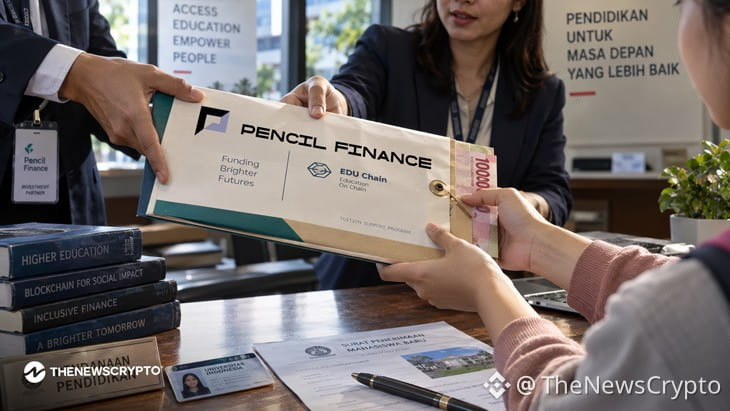
Pencil Finance Completes $1M Onchain Student Lending Cycle Across Southeast AsiaPencil Finance has completed a $1 million onchain cycle of student lending, financing 6,600 students in 118 institutions in Southeast Asia.
The cycle had 1,050 borrowers directly receiving the funds and investment from Animoca Brands, Open Campus, and New Campus.
Pencil Finance completes a $1 million on-chain student lending cycle in Southeast Asia. The milestone helps link the blockchain-based lending services to students who traditionally do not have access to financing options. Pencil provided the funds as a lender and managed to track the whole lending cycle on-chain. The borrowers paid back their debts, which helped the platform to repay the capital and interest to the original investors.
$1M Loan Cycle Benefited 6,600 Students
In all, the loan cycle helped around 6,600 students from 118 different institutions in Southeast Asia. Approximately 1,050 students received direct financing under the cycle. Moreover, Pencil Finance specifically designed the loan cycle to support students who lacked access to traditional financing. 50% of the borrowers were women. Students from poorer backgrounds made up 93% of the borrower population.
These statistics show how the loan cycle targeted students with limited access to financing options. However, the use of blockchain technology gave a clear view of the loan cycle. The company claimed that this loan cycle was their first onchain student loan cycle. Pencil referred to it as the first-ever onchain student lending cycle on the blockchain networks.
Financing Structure Supported by Animoca Brands
July 2025 saw the participation of Animoca Brands, Open Campus, and New Campus in the funding of the loan bundle. In the structure of the loan bundle, senior and junior tranches were used to segregate returns and risks. The senior tranche provided fixed returns for participating funders, while the junior tranche had variable returns and first-loss risk. Pencil then allocated the $1 million to fund students before the end of the repayment cycle. Repayments by borrowers were used to repay the funders in the bundle. This is an example of how blockchain technology can track lending from allocation to repayment.
RWA Lending Goes Beyond Traditional Collateral
The financing process in Pencil’s case also highlights the growing use of tokenized real-world assets in lending markets. Moreover, RWA platforms are increasingly connecting physical and financial assets with blockchain-based financing systems. As a result, this approach could further integrate traditional lending structures with blockchain technology. The latest development has seen collateral tokenization take an unusual turn.
This month, B3, the Brazilian stock exchange, offered a loan of 100,000 Brazilian reais backed by 10 tokenized cows as collateral for the financing process. The tokens were individually created for each cow, and each animal had its encrypted digital identity. Cowmed AI-powered smart collars tracked each cow’s condition during the financing period. Such processes demonstrate how blockchain technology can be used to link the two–lending and real-world assets. In the Pencil’s case, the financing process involves using the same technology for student loans across Southeast Asia.
Highlighted Crypto News:SEC Chair Paul Atkins Unveils New Rules to Bring Crypto Firms Back to the U.S.
Pencil Finance Completes $1M Onchain Student Lending Cycle Across Southeast Asia
Pencil Finance has completed a $1 million onchain cycle of student lending, financing 6,600 students in 118 institutions in Southeast Asia.
The cycle had 1,050 borrowers directly receiving the funds and investment from Animoca Brands, Open Campus, and New Campus.
Pencil Finance completes a $1 million on-chain student lending cycle in Southeast Asia. The milestone helps link the blockchain-based lending services to students who traditionally do not have access to financing options. Pencil provided the funds as a lender and managed to track the whole lending cycle on-chain. The borrowers paid back their debts, which helped the platform to repay the capital and interest to the original investors.
$1M Loan Cycle Benefited 6,600 Students
In all, the loan cycle helped around 6,600 students from 118 different institutions in Southeast Asia. Approximately 1,050 students received direct financing under the cycle. Moreover, Pencil Finance specifically designed the loan cycle to support students who lacked access to traditional financing. 50% of the borrowers were women. Students from poorer backgrounds made up 93% of the borrower population.
These statistics show how the loan cycle targeted students with limited access to financing options. However, the use of blockchain technology gave a clear view of the loan cycle. The company claimed that this loan cycle was their first onchain student loan cycle. Pencil referred to it as the first-ever onchain student lending cycle on the blockchain networks.
Financing Structure Supported by Animoca Brands
July 2025 saw the participation of Animoca Brands, Open Campus, and New Campus in the funding of the loan bundle. In the structure of the loan bundle, senior and junior tranches were used to segregate returns and risks. The senior tranche provided fixed returns for participating funders, while the junior tranche had variable returns and first-loss risk. Pencil then allocated the $1 million to fund students before the end of the repayment cycle. Repayments by borrowers were used to repay the funders in the bundle. This is an example of how blockchain technology can track lending from allocation to repayment.
RWA Lending Goes Beyond Traditional Collateral
The financing process in Pencil’s case also highlights the growing use of tokenized real-world assets in lending markets. Moreover, RWA platforms are increasingly connecting physical and financial assets with blockchain-based financing systems. As a result, this approach could further integrate traditional lending structures with blockchain technology. The latest development has seen collateral tokenization take an unusual turn.
This month, B3, the Brazilian stock exchange, offered a loan of 100,000 Brazilian reais backed by 10 tokenized cows as collateral for the financing process. The tokens were individually created for each cow, and each animal had its encrypted digital identity. Cowmed AI-powered smart collars tracked each cow’s condition during the financing period. Such processes demonstrate how blockchain technology can be used to link the two–lending and real-world assets. In the Pencil’s case, the financing process involves using the same technology for student loans across Southeast Asia.
Highlighted Crypto News:SEC Chair Paul Atkins Unveils New Rules to Bring Crypto Firms Back to the U.S.
The cycle had 1,050 borrowers directly receiving the funds and investment from Animoca Brands, Open Campus, and New Campus.
Pencil Finance completes a $1 million on-chain student lending cycle in Southeast Asia. The milestone helps link the blockchain-based lending services to students who traditionally do not have access to financing options. Pencil provided the funds as a lender and managed to track the whole lending cycle on-chain. The borrowers paid back their debts, which helped the platform to repay the capital and interest to the original investors.
$1M Loan Cycle Benefited 6,600 Students
In all, the loan cycle helped around 6,600 students from 118 different institutions in Southeast Asia. Approximately 1,050 students received direct financing under the cycle. Moreover, Pencil Finance specifically designed the loan cycle to support students who lacked access to traditional financing. 50% of the borrowers were women. Students from poorer backgrounds made up 93% of the borrower population.
These statistics show how the loan cycle targeted students with limited access to financing options. However, the use of blockchain technology gave a clear view of the loan cycle. The company claimed that this loan cycle was their first onchain student loan cycle. Pencil referred to it as the first-ever onchain student lending cycle on the blockchain networks.
Financing Structure Supported by Animoca Brands
July 2025 saw the participation of Animoca Brands, Open Campus, and New Campus in the funding of the loan bundle. In the structure of the loan bundle, senior and junior tranches were used to segregate returns and risks. The senior tranche provided fixed returns for participating funders, while the junior tranche had variable returns and first-loss risk. Pencil then allocated the $1 million to fund students before the end of the repayment cycle. Repayments by borrowers were used to repay the funders in the bundle. This is an example of how blockchain technology can track lending from allocation to repayment.
RWA Lending Goes Beyond Traditional Collateral
The financing process in Pencil’s case also highlights the growing use of tokenized real-world assets in lending markets. Moreover, RWA platforms are increasingly connecting physical and financial assets with blockchain-based financing systems. As a result, this approach could further integrate traditional lending structures with blockchain technology. The latest development has seen collateral tokenization take an unusual turn.
This month, B3, the Brazilian stock exchange, offered a loan of 100,000 Brazilian reais backed by 10 tokenized cows as collateral for the financing process. The tokens were individually created for each cow, and each animal had its encrypted digital identity. Cowmed AI-powered smart collars tracked each cow’s condition during the financing period. Such processes demonstrate how blockchain technology can be used to link the two–lending and real-world assets. In the Pencil’s case, the financing process involves using the same technology for student loans across Southeast Asia.
Highlighted Crypto News:SEC Chair Paul Atkins Unveils New Rules to Bring Crypto Firms Back to the U.S.
1
116
Article
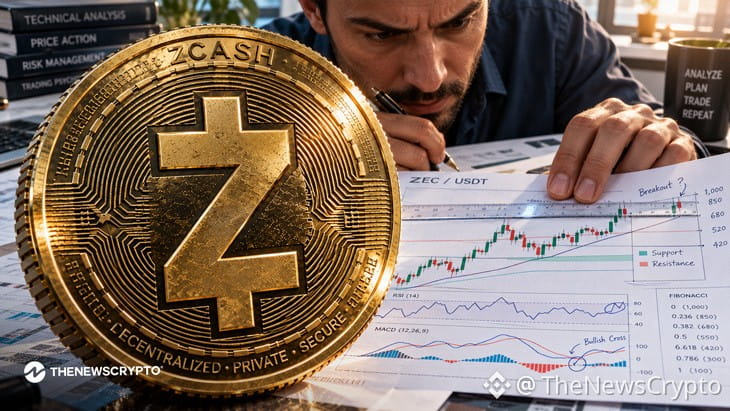
Zcash (ZEC) Jumps 19%: How Far Can This Move Actually Go?A 19% gain in value has pushed Zcash to $1K.
The ZEC buyers are firmly in control.
As of September 4, within the broader crypto market, Zcash ($ZEC) has shown stronger bullish momentum after surging 19.4%. Currently, the price is trading at the $1,009.82 level, pushing firmly above the crucial $950 level. Moreover, its trading volume has reached $1.265 billion.
Significantly, Zcash’s momentum is back in the market spotlight following another sharp move higher. It may reach a new high without retesting key technical structure, reflecting strong bullish sentiment. As it enters an expansion phase, sustained buying pressure will drive further upside.
The token is now approaching the key $1,018 – $1,030 resistance zone, with its 24-hour trading range stretching from $842.06 – $1,023.40. A decisive breakout above $1,043 could likely strengthen the bullish setup of ZEC and potentially trigger another expansion move.
The $845 – $886 area remains an important support zone, while the broader 7-day range of $779.96 – $1,023.40 exhibits how sharply Zcash has advanced. With the price near the weekly high, traders will be watching whether the buyers can sustain the momentum and turn the above-mentioned zone into the next support.
Zcash Technical Chart Turns the Momentum Bullish
The Moving Average Convergence Divergence (MACD) line is above the signal line, indicating buying momentum is currently increasing. This is a strong bullish trend confirmation signal. As both lines are above the zero line, the asset is in a broad, established uptrend rather than just a brief bounce.
ZEC’s short-term moving averages are pulling away from long-term averages, showing that the buyers are firmly in control. On top of that, traders view this combination as a green light to buy or hold long positions, as the path of least resistance remains upward.
In addition, the daily Relative Strength Index (RSI) reading settled at 76.11, suggesting that the asset is currently in overbought territory. The price has risen rapidly in recent periods, driven by aggressive buying pressure. Zcash is overextended in the short term, increasing the likelihood of a pullback.
In strong uptrends, the indicator can remain overbought for extended periods, and a high value reflects strength, not an instant top. Also, caution is warranted for new entries; traders look for price action to show signs of slowing down before entering long positions.
Crypto Market Highlights
IMF Clears $140M for El Salvador as BTC Buys No Longer Use Public Funds
Zcash (ZEC) Jumps 19%: How Far Can This Move Actually Go?
A 19% gain in value has pushed Zcash to $1K.
The ZEC buyers are firmly in control.
As of September 4, within the broader crypto market, Zcash ($ZEC) has shown stronger bullish momentum after surging 19.4%. Currently, the price is trading at the $1,009.82 level, pushing firmly above the crucial $950 level. Moreover, its trading volume has reached $1.265 billion.
Significantly, Zcash’s momentum is back in the market spotlight following another sharp move higher. It may reach a new high without retesting key technical structure, reflecting strong bullish sentiment. As it enters an expansion phase, sustained buying pressure will drive further upside.
The token is now approaching the key $1,018 – $1,030 resistance zone, with its 24-hour trading range stretching from $842.06 – $1,023.40. A decisive breakout above $1,043 could likely strengthen the bullish setup of ZEC and potentially trigger another expansion move.
The $845 – $886 area remains an important support zone, while the broader 7-day range of $779.96 – $1,023.40 exhibits how sharply Zcash has advanced. With the price near the weekly high, traders will be watching whether the buyers can sustain the momentum and turn the above-mentioned zone into the next support.
Zcash Technical Chart Turns the Momentum Bullish
The Moving Average Convergence Divergence (MACD) line is above the signal line, indicating buying momentum is currently increasing. This is a strong bullish trend confirmation signal. As both lines are above the zero line, the asset is in a broad, established uptrend rather than just a brief bounce.
ZEC’s short-term moving averages are pulling away from long-term averages, showing that the buyers are firmly in control. On top of that, traders view this combination as a green light to buy or hold long positions, as the path of least resistance remains upward.
In addition, the daily Relative Strength Index (RSI) reading settled at 76.11, suggesting that the asset is currently in overbought territory. The price has risen rapidly in recent periods, driven by aggressive buying pressure. Zcash is overextended in the short term, increasing the likelihood of a pullback.
In strong uptrends, the indicator can remain overbought for extended periods, and a high value reflects strength, not an instant top. Also, caution is warranted for new entries; traders look for price action to show signs of slowing down before entering long positions.
Crypto Market Highlights
IMF Clears $140M for El Salvador as BTC Buys No Longer Use Public Funds
The ZEC buyers are firmly in control.
As of September 4, within the broader crypto market, Zcash ($ZEC) has shown stronger bullish momentum after surging 19.4%. Currently, the price is trading at the $1,009.82 level, pushing firmly above the crucial $950 level. Moreover, its trading volume has reached $1.265 billion.
Significantly, Zcash’s momentum is back in the market spotlight following another sharp move higher. It may reach a new high without retesting key technical structure, reflecting strong bullish sentiment. As it enters an expansion phase, sustained buying pressure will drive further upside.
The token is now approaching the key $1,018 – $1,030 resistance zone, with its 24-hour trading range stretching from $842.06 – $1,023.40. A decisive breakout above $1,043 could likely strengthen the bullish setup of ZEC and potentially trigger another expansion move.
The $845 – $886 area remains an important support zone, while the broader 7-day range of $779.96 – $1,023.40 exhibits how sharply Zcash has advanced. With the price near the weekly high, traders will be watching whether the buyers can sustain the momentum and turn the above-mentioned zone into the next support.
Zcash Technical Chart Turns the Momentum Bullish
The Moving Average Convergence Divergence (MACD) line is above the signal line, indicating buying momentum is currently increasing. This is a strong bullish trend confirmation signal. As both lines are above the zero line, the asset is in a broad, established uptrend rather than just a brief bounce.
ZEC’s short-term moving averages are pulling away from long-term averages, showing that the buyers are firmly in control. On top of that, traders view this combination as a green light to buy or hold long positions, as the path of least resistance remains upward.
In addition, the daily Relative Strength Index (RSI) reading settled at 76.11, suggesting that the asset is currently in overbought territory. The price has risen rapidly in recent periods, driven by aggressive buying pressure. Zcash is overextended in the short term, increasing the likelihood of a pullback.
In strong uptrends, the indicator can remain overbought for extended periods, and a high value reflects strength, not an instant top. Also, caution is warranted for new entries; traders look for price action to show signs of slowing down before entering long positions.
Crypto Market Highlights
IMF Clears $140M for El Salvador as BTC Buys No Longer Use Public Funds
833
Article
Pocket Bitcoin Data Breach Reveals Personal and Financial Data of 5,411 CustomersPocket Bitcoin found two datasets that were breached, affecting 5,411 customers following its investigation process.
There was no compromise to core databases, customer Bitcoin, and private keys, and the authorities have been notified about the breach.
The Pocket Bitcoin has now widened its August security breach scope following its full forensic analysis. According to the Swiss Bitcoin company, there were two data sets in connection to the security issue involving 5,411 users. While the first dataset included bank transactions records for 5,120 users, the second one consisted of communication records of an additional 291 users.
Update zum Sicherheitsvorfall bei Pocket Bitcoin Unsere Untersuchung ist abgeschlossen. Dabei hat sich gezeigt, dass in einzelnen Fällen weitere Daten betroffen sind als in unserem ersten Beitrag beschrieben. Wir haben dazu zwei betroffene Gruppen identifiziert. https://t.co/XASbu1wTQH
— PocketBitcoin.com (@PocketBitcoin) September 3, 2026
Exposed Bank Records During Compliance Checks
The bigger data set was collected through transaction lists that Pocket Bitcoin received from partner banks during the compliance checks. The list comprised customers’ names, residence address, amount of transactions and dates. Some of these lists also had the IBAN number related to the individual transactions. Second data set was gathered through the correspondence of Pocket Bitcoin and its partner banks. Depending on customers, the correspondence contained information about postal addresses, Bitcoin public addresses, and copies of identity documents. Some of the correspondence also contained the source-of-funds information.
Pocket Bitcoin explained that the customers did not necessarily have each of the above types of information exposed. Pocket Bitcoin contacted each affected customer and gave him information about his case. Another type of information could be exposed to customers during the initial breach – email addresses or support communications.
Bitcoin Core Assets Were Unaffected
Pocket Bitcoin extended its statement regarding the August security incident following a forensic investigation into exposed information about 5,411 users. This compromised information comprised names, addresses, transaction history, and some IBANs, while for 291 users, there was a risk of compromising identity documents and funding information. Bitcoin Pocket stated that its core systems, user Bitcoins, and keys were unaffected by this security compromise. There were no indications of any misuse, but the risk of physical fraud was indicated.
Customers Notified About Physical Fraud
Pocket Bitcoin said that there is currently no reason to believe that any of the data was used by attackers for any malicious actions. However, the names, addresses, and transfer information can be used to conduct a more convincing social engineering attack against the targeted customers through physical communication channels.
The threat of fake letters and other physical communication was explicitly raised by Pocket Bitcoin. The company noted that the newly found databases do not have any information regarding email addresses and passwords, which makes it unlikely that targeted email phishing attacks can be conducted with their use.
Pocket Bitcoin informed the Swiss Federal Data Protection and Information Commissioner and the Liechtenstein Data Protection Authority about the breach. They also filed a police report after the investigation of the incident. The vulnerability has been closed, and new security measures have been implemented.
Highlighted Crypto News:
CFTC Seeks Dismissal of CME’s Kalshi Bitcoin Futures Lawsuit
Pocket Bitcoin Data Breach Reveals Personal and Financial Data of 5,411 Customers
Pocket Bitcoin found two datasets that were breached, affecting 5,411 customers following its investigation process.
There was no compromise to core databases, customer Bitcoin, and private keys, and the authorities have been notified about the breach.
The Pocket Bitcoin has now widened its August security breach scope following its full forensic analysis. According to the Swiss Bitcoin company, there were two data sets in connection to the security issue involving 5,411 users. While the first dataset included bank transactions records for 5,120 users, the second one consisted of communication records of an additional 291 users.
Update zum Sicherheitsvorfall bei Pocket Bitcoin Unsere Untersuchung ist abgeschlossen. Dabei hat sich gezeigt, dass in einzelnen Fällen weitere Daten betroffen sind als in unserem ersten Beitrag beschrieben. Wir haben dazu zwei betroffene Gruppen identifiziert. https://t.co/XASbu1wTQH
— PocketBitcoin.com (@PocketBitcoin) September 3, 2026
Exposed Bank Records During Compliance Checks
The bigger data set was collected through transaction lists that Pocket Bitcoin received from partner banks during the compliance checks. The list comprised customers’ names, residence address, amount of transactions and dates. Some of these lists also had the IBAN number related to the individual transactions. Second data set was gathered through the correspondence of Pocket Bitcoin and its partner banks. Depending on customers, the correspondence contained information about postal addresses, Bitcoin public addresses, and copies of identity documents. Some of the correspondence also contained the source-of-funds information.
Pocket Bitcoin explained that the customers did not necessarily have each of the above types of information exposed. Pocket Bitcoin contacted each affected customer and gave him information about his case. Another type of information could be exposed to customers during the initial breach – email addresses or support communications.
Bitcoin Core Assets Were Unaffected
Pocket Bitcoin extended its statement regarding the August security incident following a forensic investigation into exposed information about 5,411 users. This compromised information comprised names, addresses, transaction history, and some IBANs, while for 291 users, there was a risk of compromising identity documents and funding information. Bitcoin Pocket stated that its core systems, user Bitcoins, and keys were unaffected by this security compromise. There were no indications of any misuse, but the risk of physical fraud was indicated.
Customers Notified About Physical Fraud
Pocket Bitcoin said that there is currently no reason to believe that any of the data was used by attackers for any malicious actions. However, the names, addresses, and transfer information can be used to conduct a more convincing social engineering attack against the targeted customers through physical communication channels.
The threat of fake letters and other physical communication was explicitly raised by Pocket Bitcoin. The company noted that the newly found databases do not have any information regarding email addresses and passwords, which makes it unlikely that targeted email phishing attacks can be conducted with their use.
Pocket Bitcoin informed the Swiss Federal Data Protection and Information Commissioner and the Liechtenstein Data Protection Authority about the breach. They also filed a police report after the investigation of the incident. The vulnerability has been closed, and new security measures have been implemented.
Highlighted Crypto News:
CFTC Seeks Dismissal of CME’s Kalshi Bitcoin Futures Lawsuit
There was no compromise to core databases, customer Bitcoin, and private keys, and the authorities have been notified about the breach.
The Pocket Bitcoin has now widened its August security breach scope following its full forensic analysis. According to the Swiss Bitcoin company, there were two data sets in connection to the security issue involving 5,411 users. While the first dataset included bank transactions records for 5,120 users, the second one consisted of communication records of an additional 291 users.
Update zum Sicherheitsvorfall bei Pocket Bitcoin Unsere Untersuchung ist abgeschlossen. Dabei hat sich gezeigt, dass in einzelnen Fällen weitere Daten betroffen sind als in unserem ersten Beitrag beschrieben. Wir haben dazu zwei betroffene Gruppen identifiziert. https://t.co/XASbu1wTQH
— PocketBitcoin.com (@PocketBitcoin) September 3, 2026
Exposed Bank Records During Compliance Checks
The bigger data set was collected through transaction lists that Pocket Bitcoin received from partner banks during the compliance checks. The list comprised customers’ names, residence address, amount of transactions and dates. Some of these lists also had the IBAN number related to the individual transactions. Second data set was gathered through the correspondence of Pocket Bitcoin and its partner banks. Depending on customers, the correspondence contained information about postal addresses, Bitcoin public addresses, and copies of identity documents. Some of the correspondence also contained the source-of-funds information.
Pocket Bitcoin explained that the customers did not necessarily have each of the above types of information exposed. Pocket Bitcoin contacted each affected customer and gave him information about his case. Another type of information could be exposed to customers during the initial breach – email addresses or support communications.
Bitcoin Core Assets Were Unaffected
Pocket Bitcoin extended its statement regarding the August security incident following a forensic investigation into exposed information about 5,411 users. This compromised information comprised names, addresses, transaction history, and some IBANs, while for 291 users, there was a risk of compromising identity documents and funding information. Bitcoin Pocket stated that its core systems, user Bitcoins, and keys were unaffected by this security compromise. There were no indications of any misuse, but the risk of physical fraud was indicated.
Customers Notified About Physical Fraud
Pocket Bitcoin said that there is currently no reason to believe that any of the data was used by attackers for any malicious actions. However, the names, addresses, and transfer information can be used to conduct a more convincing social engineering attack against the targeted customers through physical communication channels.
The threat of fake letters and other physical communication was explicitly raised by Pocket Bitcoin. The company noted that the newly found databases do not have any information regarding email addresses and passwords, which makes it unlikely that targeted email phishing attacks can be conducted with their use.
Pocket Bitcoin informed the Swiss Federal Data Protection and Information Commissioner and the Liechtenstein Data Protection Authority about the breach. They also filed a police report after the investigation of the incident. The vulnerability has been closed, and new security measures have been implemented.
Highlighted Crypto News:
CFTC Seeks Dismissal of CME’s Kalshi Bitcoin Futures Lawsuit
60
Article
South Korea Unveils Plans to Tokenize Stocks, Bonds and FundsSouth Korea targets a February 2027 tokenized securities market launch.
Initial assets include funds, bonds, unlisted stocks and fractional securities.
South Korea is moving to expand tokenized securities beyond fractional investment products, with plans to build infrastructure that can eventually support stocks, bonds, funds and other traditional securities.
The Financial Services Commission (FSC) announced the policy direction on September 4 following a meeting of its public-private tokenized securities consultative body.
NEW: South Korea plans to build infrastructure to tokenize traditional securities, including stocks, bonds and funds, as part of a phased rollout beginning in February 2027. #SouthKorea #Tokenization #RWA pic.twitter.com/rEmXuq6CAG
— TheNewsCrypto (@The_NewsCrypto) September 4, 2026
According to the announcement, the government is preparing to launch its tokenized securities market in February 2027, with regulators laying out a phased plan to bring traditional financial assets onto blockchain networks.
The first phase is expected to begin when the new Tokenized Securities Act takes effect in February 2027. Under this phase, privately placed money market funds and corporate bonds will be eligible for tokenization for institutional investors. Unlisted stocks will also be tokenized through trust structures, while publicly offered fractional investment securities will be included in the initial rollout.
Three-Phase Tokenization Plan
South Korea plans to connect the new infrastructure with the Korea Securities Depository’s tokenized securities system. The aim is to create a framework for issuing and trading securities through distributed ledger technology while maintaining links with the existing financial market system.
The second phase could expand tokenization to publicly offered securities as the technology and infrastructure develop. Regulators said the timing will depend on the stability and efficiency of the first phase.
The third phase would introduce on-chain settlement by connecting tokenized securities with payment instruments, including stablecoins. However, the timing of this stage will also depend on future stablecoin legislation and technological progress.
The FSC also said companies that already hold the required financial investment licenses will not need a separate license solely for handling tokenized securities. South Korea plans to publish proposed changes to related regulations for public comment later this month.
The measures mark a broader push by South Korean regulators to bring blockchain-based securities into the country’s existing capital-market framework.
Highlighted Crypto News:
IMF Clears $140M for El Salvador as BTC Buys No Longer Use Public Funds
South Korea Unveils Plans to Tokenize Stocks, Bonds and Funds
South Korea targets a February 2027 tokenized securities market launch.
Initial assets include funds, bonds, unlisted stocks and fractional securities.
South Korea is moving to expand tokenized securities beyond fractional investment products, with plans to build infrastructure that can eventually support stocks, bonds, funds and other traditional securities.
The Financial Services Commission (FSC) announced the policy direction on September 4 following a meeting of its public-private tokenized securities consultative body.
NEW: South Korea plans to build infrastructure to tokenize traditional securities, including stocks, bonds and funds, as part of a phased rollout beginning in February 2027. #SouthKorea #Tokenization #RWA pic.twitter.com/rEmXuq6CAG
— TheNewsCrypto (@The_NewsCrypto) September 4, 2026
According to the announcement, the government is preparing to launch its tokenized securities market in February 2027, with regulators laying out a phased plan to bring traditional financial assets onto blockchain networks.
The first phase is expected to begin when the new Tokenized Securities Act takes effect in February 2027. Under this phase, privately placed money market funds and corporate bonds will be eligible for tokenization for institutional investors. Unlisted stocks will also be tokenized through trust structures, while publicly offered fractional investment securities will be included in the initial rollout.
Three-Phase Tokenization Plan
South Korea plans to connect the new infrastructure with the Korea Securities Depository’s tokenized securities system. The aim is to create a framework for issuing and trading securities through distributed ledger technology while maintaining links with the existing financial market system.
The second phase could expand tokenization to publicly offered securities as the technology and infrastructure develop. Regulators said the timing will depend on the stability and efficiency of the first phase.
The third phase would introduce on-chain settlement by connecting tokenized securities with payment instruments, including stablecoins. However, the timing of this stage will also depend on future stablecoin legislation and technological progress.
The FSC also said companies that already hold the required financial investment licenses will not need a separate license solely for handling tokenized securities. South Korea plans to publish proposed changes to related regulations for public comment later this month.
The measures mark a broader push by South Korean regulators to bring blockchain-based securities into the country’s existing capital-market framework.
Highlighted Crypto News:
IMF Clears $140M for El Salvador as BTC Buys No Longer Use Public Funds
Initial assets include funds, bonds, unlisted stocks and fractional securities.
South Korea is moving to expand tokenized securities beyond fractional investment products, with plans to build infrastructure that can eventually support stocks, bonds, funds and other traditional securities.
The Financial Services Commission (FSC) announced the policy direction on September 4 following a meeting of its public-private tokenized securities consultative body.
NEW: South Korea plans to build infrastructure to tokenize traditional securities, including stocks, bonds and funds, as part of a phased rollout beginning in February 2027. #SouthKorea #Tokenization #RWA pic.twitter.com/rEmXuq6CAG
— TheNewsCrypto (@The_NewsCrypto) September 4, 2026
According to the announcement, the government is preparing to launch its tokenized securities market in February 2027, with regulators laying out a phased plan to bring traditional financial assets onto blockchain networks.
The first phase is expected to begin when the new Tokenized Securities Act takes effect in February 2027. Under this phase, privately placed money market funds and corporate bonds will be eligible for tokenization for institutional investors. Unlisted stocks will also be tokenized through trust structures, while publicly offered fractional investment securities will be included in the initial rollout.
Three-Phase Tokenization Plan
South Korea plans to connect the new infrastructure with the Korea Securities Depository’s tokenized securities system. The aim is to create a framework for issuing and trading securities through distributed ledger technology while maintaining links with the existing financial market system.
The second phase could expand tokenization to publicly offered securities as the technology and infrastructure develop. Regulators said the timing will depend on the stability and efficiency of the first phase.
The third phase would introduce on-chain settlement by connecting tokenized securities with payment instruments, including stablecoins. However, the timing of this stage will also depend on future stablecoin legislation and technological progress.
The FSC also said companies that already hold the required financial investment licenses will not need a separate license solely for handling tokenized securities. South Korea plans to publish proposed changes to related regulations for public comment later this month.
The measures mark a broader push by South Korean regulators to bring blockchain-based securities into the country’s existing capital-market framework.
Highlighted Crypto News:
IMF Clears $140M for El Salvador as BTC Buys No Longer Use Public Funds
263
Article
IMF Clears $140M for El Salvador As BTC Buys No Longer Use Public FundsEl Salvador could receive $140M pending IMF Executive Board approval and completion of prior actions.
The country has used no public funds for BTC purchases since June 2025.
El Salvador and the IMF have reached a staff-level agreement on the combined second and third reviews of the country’s 40-month Extended Fund Facility arrangement. Subject to IMF Executive Board approval and the completion of agreed prior actions, El Salvador stands to receive approximately $140 million. It is equivalent to SDR 101.96 million in additional funding.
This brings total disbursements under the EFF to a significant level, following the programme’s approval on February 26, 2025. This has a total access of SDR 1,033.92 million, approximately $1.4 billion. The first review was concluded on June 27, 2025, with SDR 172.32 million disbursed so far.
The Economy Is Outperforming
The macro picture for El Salvador is stronger than expected. Real GDP growth exceeded projections in 2025 and is forecast to reach 4.5% in 2026. It is likely driven by investment, private consumption, remittances, tourism, and capital inflows. Security improvements and investor confidence have played a crucial role in that trajectory.
The NFPS primary surplus is expected to strengthen from 2.9% of GDP in 2026 to 3.7% by 2027, consistent with the Fiscal Responsibility Law target of reducing the public debt-to-GDP ratio to 80% by 2030. The programme has also contributed to a measurable decline in poverty through improved efficiency in public services.
Bitcoin Is No Longer a Public Spending Line
The IMF confirmed that El Salvador has provided documentation verifying that all Bitcoin accumulated since the first review in June 2025 came entirely from private donations. Notably, no public resources were used. Going forward, no further BTC accumulation beyond documented donations is expected, a condition that forms part of the framework agreed with IMF staff.
Moreover, the Chivo e-wallet, once government-operated, has had its majority ownership and operational control transferred to a private operator. The government retains a minority stake and custodial responsibilities for customer assets. Also, efforts are underway to enhance transparency around Bitcoin holdings across various wallets.
In addition, the IMF and El Salvador have also agreed to modernise the legal, regulatory, and supervisory framework for digital assets and strengthen governance and risk-management arrangements for public-sector crypto holdings.
Market impact might be like El Salvador stepping back from public BTC accumulation removes a sovereign buying narrative from the market. Furthermore, the agreement signals the country is prioritising macroeconomic stability and institutional credibility over crypto-forward policy. The IMF programme compliance and Bitcoin maximalism don’t easily coexist at the government level.
Crypto Market Highlights
Dogecoin (DOGE) Printed a Buy Signal: The Uptrend Could Be Loading
IMF Clears $140M for El Salvador As BTC Buys No Longer Use Public Funds
El Salvador could receive $140M pending IMF Executive Board approval and completion of prior actions.
The country has used no public funds for BTC purchases since June 2025.
El Salvador and the IMF have reached a staff-level agreement on the combined second and third reviews of the country’s 40-month Extended Fund Facility arrangement. Subject to IMF Executive Board approval and the completion of agreed prior actions, El Salvador stands to receive approximately $140 million. It is equivalent to SDR 101.96 million in additional funding.
This brings total disbursements under the EFF to a significant level, following the programme’s approval on February 26, 2025. This has a total access of SDR 1,033.92 million, approximately $1.4 billion. The first review was concluded on June 27, 2025, with SDR 172.32 million disbursed so far.
The Economy Is Outperforming
The macro picture for El Salvador is stronger than expected. Real GDP growth exceeded projections in 2025 and is forecast to reach 4.5% in 2026. It is likely driven by investment, private consumption, remittances, tourism, and capital inflows. Security improvements and investor confidence have played a crucial role in that trajectory.
The NFPS primary surplus is expected to strengthen from 2.9% of GDP in 2026 to 3.7% by 2027, consistent with the Fiscal Responsibility Law target of reducing the public debt-to-GDP ratio to 80% by 2030. The programme has also contributed to a measurable decline in poverty through improved efficiency in public services.
Bitcoin Is No Longer a Public Spending Line
The IMF confirmed that El Salvador has provided documentation verifying that all Bitcoin accumulated since the first review in June 2025 came entirely from private donations. Notably, no public resources were used. Going forward, no further BTC accumulation beyond documented donations is expected, a condition that forms part of the framework agreed with IMF staff.
Moreover, the Chivo e-wallet, once government-operated, has had its majority ownership and operational control transferred to a private operator. The government retains a minority stake and custodial responsibilities for customer assets. Also, efforts are underway to enhance transparency around Bitcoin holdings across various wallets.
In addition, the IMF and El Salvador have also agreed to modernise the legal, regulatory, and supervisory framework for digital assets and strengthen governance and risk-management arrangements for public-sector crypto holdings.
Market impact might be like El Salvador stepping back from public BTC accumulation removes a sovereign buying narrative from the market. Furthermore, the agreement signals the country is prioritising macroeconomic stability and institutional credibility over crypto-forward policy. The IMF programme compliance and Bitcoin maximalism don’t easily coexist at the government level.
Crypto Market Highlights
Dogecoin (DOGE) Printed a Buy Signal: The Uptrend Could Be Loading
The country has used no public funds for BTC purchases since June 2025.
El Salvador and the IMF have reached a staff-level agreement on the combined second and third reviews of the country’s 40-month Extended Fund Facility arrangement. Subject to IMF Executive Board approval and the completion of agreed prior actions, El Salvador stands to receive approximately $140 million. It is equivalent to SDR 101.96 million in additional funding.
This brings total disbursements under the EFF to a significant level, following the programme’s approval on February 26, 2025. This has a total access of SDR 1,033.92 million, approximately $1.4 billion. The first review was concluded on June 27, 2025, with SDR 172.32 million disbursed so far.
The Economy Is Outperforming
The macro picture for El Salvador is stronger than expected. Real GDP growth exceeded projections in 2025 and is forecast to reach 4.5% in 2026. It is likely driven by investment, private consumption, remittances, tourism, and capital inflows. Security improvements and investor confidence have played a crucial role in that trajectory.
The NFPS primary surplus is expected to strengthen from 2.9% of GDP in 2026 to 3.7% by 2027, consistent with the Fiscal Responsibility Law target of reducing the public debt-to-GDP ratio to 80% by 2030. The programme has also contributed to a measurable decline in poverty through improved efficiency in public services.
Bitcoin Is No Longer a Public Spending Line
The IMF confirmed that El Salvador has provided documentation verifying that all Bitcoin accumulated since the first review in June 2025 came entirely from private donations. Notably, no public resources were used. Going forward, no further BTC accumulation beyond documented donations is expected, a condition that forms part of the framework agreed with IMF staff.
Moreover, the Chivo e-wallet, once government-operated, has had its majority ownership and operational control transferred to a private operator. The government retains a minority stake and custodial responsibilities for customer assets. Also, efforts are underway to enhance transparency around Bitcoin holdings across various wallets.
In addition, the IMF and El Salvador have also agreed to modernise the legal, regulatory, and supervisory framework for digital assets and strengthen governance and risk-management arrangements for public-sector crypto holdings.
Market impact might be like El Salvador stepping back from public BTC accumulation removes a sovereign buying narrative from the market. Furthermore, the agreement signals the country is prioritising macroeconomic stability and institutional credibility over crypto-forward policy. The IMF programme compliance and Bitcoin maximalism don’t easily coexist at the government level.
Crypto Market Highlights
Dogecoin (DOGE) Printed a Buy Signal: The Uptrend Could Be Loading
374

Article
Dogecoin (DOGE) Printed a Buy Signal: the Uptrend Could Be LoadingThe DOGE price is currently hovering at the $0.083 mark.
The short-term moving average is lower than the long-term.
Dogecoin (DOGE) is the first and most famous dog-themed token, and it hit $0.1007 on August 22 and has since retraced more than 17% to current levels. At press time, the meme coin is trading at $0.08318, with a value rise of over 3%, and with the volume settled at $594.58 million.
It’s worth noting that the 24-hour session has ranged between $0.08067 and $0.08359, with the 7-day range sitting between $0.08021 and $0.0902.
Significantly, the Tom DeMark Sequential has flashed a buy signal, and that has indicated the end of a corrective phase for DOGE. Alongside that, a morning doji star has formed on the daily chart, a bullish reversal pattern that appears near the end of a downtrend as selling momentum fades and buyers begin stepping in.
Moreover, the large holders have accumulated more than 400 million DOGE over the past five days. That’s not retail buying the dip; that is whale-level conviction at current prices.
Looking at Where the DOGE’s Momentum Goes
The $0.0813 support level is the line that holds this entire setup together. Almost 35 billion DOGE were previously traded at that level, making it a major floor. As long as it holds, the bullish case stays intact.
On the upside, $0.1552 is the first crucial target, with $0.1774 as the next major resistance beyond that. The $0.0813 ground is the one number that decides whether this is a reversal or just a temporary bounce.
The 4-hour chart shows that the Moving Average Convergence Divergence (MACD) line crosses above the signal line, but both lines remain below zero. It hints at a bullish recovery attempt within an overall downtrend. The market context is bearish, with the short-term moving average lower than the long-term.
The buyers are attempting to push the DOGE price higher. Also, this gives an early warning signal that the downtrend is weakening. However, as both lines are below zero, it carries higher risk; traders often treat it as a potential trend reversal.
(Source: TradingView)
In addition, the daily Relative Strength Index (RSI) reading is resting at 51.78, indicating a completely neutral market. It reveals that neither bulls nor bears are driving price action. The upward price movements have slightly edged out downward moves over recent candles, but the difference is negligible.
At this value, it reflects that the market is at equilibrium. Furthermore, traders look for a breakout above 60 to confirm accelerating bullish momentum, or a drop below 40 to signal that the bears are taking over control.
Crypto Market Highlights
Ethereum (ETH) Is Standing Its Ground: The Chart Is Starting to Point Toward $3K
Dogecoin (DOGE) Printed a Buy Signal: the Uptrend Could Be Loading
The DOGE price is currently hovering at the $0.083 mark.
The short-term moving average is lower than the long-term.
Dogecoin (DOGE) is the first and most famous dog-themed token, and it hit $0.1007 on August 22 and has since retraced more than 17% to current levels. At press time, the meme coin is trading at $0.08318, with a value rise of over 3%, and with the volume settled at $594.58 million.
It’s worth noting that the 24-hour session has ranged between $0.08067 and $0.08359, with the 7-day range sitting between $0.08021 and $0.0902.
Significantly, the Tom DeMark Sequential has flashed a buy signal, and that has indicated the end of a corrective phase for DOGE. Alongside that, a morning doji star has formed on the daily chart, a bullish reversal pattern that appears near the end of a downtrend as selling momentum fades and buyers begin stepping in.
Moreover, the large holders have accumulated more than 400 million DOGE over the past five days. That’s not retail buying the dip; that is whale-level conviction at current prices.
Looking at Where the DOGE’s Momentum Goes
The $0.0813 support level is the line that holds this entire setup together. Almost 35 billion DOGE were previously traded at that level, making it a major floor. As long as it holds, the bullish case stays intact.
On the upside, $0.1552 is the first crucial target, with $0.1774 as the next major resistance beyond that. The $0.0813 ground is the one number that decides whether this is a reversal or just a temporary bounce.
The 4-hour chart shows that the Moving Average Convergence Divergence (MACD) line crosses above the signal line, but both lines remain below zero. It hints at a bullish recovery attempt within an overall downtrend. The market context is bearish, with the short-term moving average lower than the long-term.
The buyers are attempting to push the DOGE price higher. Also, this gives an early warning signal that the downtrend is weakening. However, as both lines are below zero, it carries higher risk; traders often treat it as a potential trend reversal.
(Source: TradingView)
In addition, the daily Relative Strength Index (RSI) reading is resting at 51.78, indicating a completely neutral market. It reveals that neither bulls nor bears are driving price action. The upward price movements have slightly edged out downward moves over recent candles, but the difference is negligible.
At this value, it reflects that the market is at equilibrium. Furthermore, traders look for a breakout above 60 to confirm accelerating bullish momentum, or a drop below 40 to signal that the bears are taking over control.
Crypto Market Highlights
Ethereum (ETH) Is Standing Its Ground: The Chart Is Starting to Point Toward $3K
The short-term moving average is lower than the long-term.
Dogecoin (DOGE) is the first and most famous dog-themed token, and it hit $0.1007 on August 22 and has since retraced more than 17% to current levels. At press time, the meme coin is trading at $0.08318, with a value rise of over 3%, and with the volume settled at $594.58 million.
It’s worth noting that the 24-hour session has ranged between $0.08067 and $0.08359, with the 7-day range sitting between $0.08021 and $0.0902.
Significantly, the Tom DeMark Sequential has flashed a buy signal, and that has indicated the end of a corrective phase for DOGE. Alongside that, a morning doji star has formed on the daily chart, a bullish reversal pattern that appears near the end of a downtrend as selling momentum fades and buyers begin stepping in.
Moreover, the large holders have accumulated more than 400 million DOGE over the past five days. That’s not retail buying the dip; that is whale-level conviction at current prices.
Looking at Where the DOGE’s Momentum Goes
The $0.0813 support level is the line that holds this entire setup together. Almost 35 billion DOGE were previously traded at that level, making it a major floor. As long as it holds, the bullish case stays intact.
On the upside, $0.1552 is the first crucial target, with $0.1774 as the next major resistance beyond that. The $0.0813 ground is the one number that decides whether this is a reversal or just a temporary bounce.
The 4-hour chart shows that the Moving Average Convergence Divergence (MACD) line crosses above the signal line, but both lines remain below zero. It hints at a bullish recovery attempt within an overall downtrend. The market context is bearish, with the short-term moving average lower than the long-term.
The buyers are attempting to push the DOGE price higher. Also, this gives an early warning signal that the downtrend is weakening. However, as both lines are below zero, it carries higher risk; traders often treat it as a potential trend reversal.
(Source: TradingView)
In addition, the daily Relative Strength Index (RSI) reading is resting at 51.78, indicating a completely neutral market. It reveals that neither bulls nor bears are driving price action. The upward price movements have slightly edged out downward moves over recent candles, but the difference is negligible.
At this value, it reflects that the market is at equilibrium. Furthermore, traders look for a breakout above 60 to confirm accelerating bullish momentum, or a drop below 40 to signal that the bears are taking over control.
Crypto Market Highlights
Ethereum (ETH) Is Standing Its Ground: The Chart Is Starting to Point Toward $3K
1
926
Article
Ledger Faces $500M Class Action Over Alleged $1.9M Crypto LossLedger faces a proposed $500M class action over an alleged $1.95M crypto loss.
The complaint links the case to Ledger’s 2023 Connect Kit security incident.
The leading hardware wallet company, Ledger SAS, is facing a proposed class-action lawsuit in the U.S. District Court for the Southern District of New York over an alleged $1.9 million cryptocurrency loss.
Douglas Kim filed the complaint on August 27, 2026, seeking at least $500 million in damages. According to the complaint, Kim purchased a Ledger hardware wallet in 2017 and later upgraded to a Ledger Nano X in 2021. The filing says he was contacted in February 2025 by people claiming to represent Coincover and Ledger.
Kim alleges that the callers told him there had been an attempt to enroll him in Ledger Recover. He was then directed to a website and instructed to provide information that allegedly allowed the attackers to access his crypto holdings.
The complaint states that Kim discovered on February 20, 2025, that approximately $1.95 million in cryptocurrency had been transferred from his wallets. It says he has not recovered the assets.
Complaint Links Loss to 2023 Security Incident
The lawsuit connects the incident to a December 2023 compromise involving Ledger’s Connect Kit, a software library used to connect Ledger wallets with decentralized applications.
The complaint alleges that attackers obtained access through a former Ledger employee and used the compromised software to carry out fraudulent transactions. It further alleges, on information and belief, that customer information from the 2023 incident was later used to target Kim.
Looking further, Kim is seeking to represent a nationwide class of Ledger users. The complaint estimates the proposed class could include up to 210,000 people and says total damages could reach at least $500 million.
The lawsuit brings claims including negligence, negligent misrepresentation, breach of contract-related duties, promissory estoppel and violations of New York consumer protection laws.
The complaint also requests a jury trial. The allegations have not been proven in court, and the proposed class has not been certified. The case remains pending in the Southern District of New York.
Highlighted Crypto News:
SEC Chair Paul Atkins Unveils New Rules to Bring Crypto Firms Back to the U.S.
Ledger Faces $500M Class Action Over Alleged $1.9M Crypto Loss
Ledger faces a proposed $500M class action over an alleged $1.95M crypto loss.
The complaint links the case to Ledger’s 2023 Connect Kit security incident.
The leading hardware wallet company, Ledger SAS, is facing a proposed class-action lawsuit in the U.S. District Court for the Southern District of New York over an alleged $1.9 million cryptocurrency loss.
Douglas Kim filed the complaint on August 27, 2026, seeking at least $500 million in damages. According to the complaint, Kim purchased a Ledger hardware wallet in 2017 and later upgraded to a Ledger Nano X in 2021. The filing says he was contacted in February 2025 by people claiming to represent Coincover and Ledger.
Kim alleges that the callers told him there had been an attempt to enroll him in Ledger Recover. He was then directed to a website and instructed to provide information that allegedly allowed the attackers to access his crypto holdings.
The complaint states that Kim discovered on February 20, 2025, that approximately $1.95 million in cryptocurrency had been transferred from his wallets. It says he has not recovered the assets.
Complaint Links Loss to 2023 Security Incident
The lawsuit connects the incident to a December 2023 compromise involving Ledger’s Connect Kit, a software library used to connect Ledger wallets with decentralized applications.
The complaint alleges that attackers obtained access through a former Ledger employee and used the compromised software to carry out fraudulent transactions. It further alleges, on information and belief, that customer information from the 2023 incident was later used to target Kim.
Looking further, Kim is seeking to represent a nationwide class of Ledger users. The complaint estimates the proposed class could include up to 210,000 people and says total damages could reach at least $500 million.
The lawsuit brings claims including negligence, negligent misrepresentation, breach of contract-related duties, promissory estoppel and violations of New York consumer protection laws.
The complaint also requests a jury trial. The allegations have not been proven in court, and the proposed class has not been certified. The case remains pending in the Southern District of New York.
Highlighted Crypto News:
SEC Chair Paul Atkins Unveils New Rules to Bring Crypto Firms Back to the U.S.
The complaint links the case to Ledger’s 2023 Connect Kit security incident.
The leading hardware wallet company, Ledger SAS, is facing a proposed class-action lawsuit in the U.S. District Court for the Southern District of New York over an alleged $1.9 million cryptocurrency loss.
Douglas Kim filed the complaint on August 27, 2026, seeking at least $500 million in damages. According to the complaint, Kim purchased a Ledger hardware wallet in 2017 and later upgraded to a Ledger Nano X in 2021. The filing says he was contacted in February 2025 by people claiming to represent Coincover and Ledger.
Kim alleges that the callers told him there had been an attempt to enroll him in Ledger Recover. He was then directed to a website and instructed to provide information that allegedly allowed the attackers to access his crypto holdings.
The complaint states that Kim discovered on February 20, 2025, that approximately $1.95 million in cryptocurrency had been transferred from his wallets. It says he has not recovered the assets.
Complaint Links Loss to 2023 Security Incident
The lawsuit connects the incident to a December 2023 compromise involving Ledger’s Connect Kit, a software library used to connect Ledger wallets with decentralized applications.
The complaint alleges that attackers obtained access through a former Ledger employee and used the compromised software to carry out fraudulent transactions. It further alleges, on information and belief, that customer information from the 2023 incident was later used to target Kim.
Looking further, Kim is seeking to represent a nationwide class of Ledger users. The complaint estimates the proposed class could include up to 210,000 people and says total damages could reach at least $500 million.
The lawsuit brings claims including negligence, negligent misrepresentation, breach of contract-related duties, promissory estoppel and violations of New York consumer protection laws.
The complaint also requests a jury trial. The allegations have not been proven in court, and the proposed class has not been certified. The case remains pending in the Southern District of New York.
Highlighted Crypto News:
SEC Chair Paul Atkins Unveils New Rules to Bring Crypto Firms Back to the U.S.
1.6k
Article
SEC Chair Paul Atkins Unveils New Rules to Bring Crypto Firms Back to the U.S.According to SEC Chairman Paul Atkins, the new fundraising regulations can attract cryptocurrency innovators and capital back to U.S. markets.
He is in favor of the CLARITY Act that will create legal crypto regulation for the SEC and CFTC.
Paul Atkins, the chair of the SEC, has framed the Regulation Crypto Assets as an answer to years of ambiguity. The regulation will make the American market more welcoming for crypto-based firms and innovators. According to Atkins, the former administration was too aggressive in its enforcement efforts and thus pushed the fundraising efforts overseas. Founders required guidance rather than regulatory fights and uncertain registration requirements.
Atkins Seeks to Regulate Through Enforcement
The Atkins report was critical of the application of securities laws developed long ago before the emergence of digital assets. He claimed that regulators failed to consider crypto’s unique features in applying the regulations. In the view of Atkins, such an approach has undermined capital formation in the entire crypto industry.
The chairman of the SEC stressed that the new regulation is designed to increase the confidence of innovators while raising capital in the United States. In addition, he referred to the issue of American investors sending funds abroad. Digital technologies make it possible to move funds abroad almost effortlessly. Therefore, Atkins wants investors to have access to digital asset opportunities via U.S. markets and law. This is precisely what his reasoning relies on.
Regulation Crypto Assets Proposes Changes to Raising Capital
Two exemptions from the SEC’s proposal aim to decrease regulatory obstacles for crypto companies. Those exemptions were introduced by Atkins together with an initiative to develop clear guidelines for digital assets.
The proposal is developed amid discussions on how the old securities laws can be applied to tokens. It is already clear to Atkins that the current enforcement actions can never become a permanent basis for digital asset companies. Also, he believes that the introduction of the legislation by Congress is crucial to this transition process. Atkins still supports the CLARITY Act that is currently pending.
CLARITY Act Remains Integral to the Framework
According to the CLARITY Act, crypto will be regulated by the SEC and the Commodity Futures Trading Commission. According to Atkins, legislation can help formulate lasting rules more than agency actions can do. A future SEC can easily change rules formulated under agency rulemaking. Legislation can create statutory responsibilities and limitations for the regulators.
Atkins does not consider the two initiatives to be competing against each other. Rather, Atkins believes both to be part of the same initiative meant to improve America’s crypto market. The current SEC crypto policy initiative now puts capital formation as the core of its new policy framework. The ultimate aim of this initiative is to create clear ways for companies to build capital within the country.
Highlighted Crypto News:CFTC Seeks Dismissal of CME’s Kalshi Bitcoin Futures Lawsuit
SEC Chair Paul Atkins Unveils New Rules to Bring Crypto Firms Back to the U.S.
According to SEC Chairman Paul Atkins, the new fundraising regulations can attract cryptocurrency innovators and capital back to U.S. markets.
He is in favor of the CLARITY Act that will create legal crypto regulation for the SEC and CFTC.
Paul Atkins, the chair of the SEC, has framed the Regulation Crypto Assets as an answer to years of ambiguity. The regulation will make the American market more welcoming for crypto-based firms and innovators. According to Atkins, the former administration was too aggressive in its enforcement efforts and thus pushed the fundraising efforts overseas. Founders required guidance rather than regulatory fights and uncertain registration requirements.
Atkins Seeks to Regulate Through Enforcement
The Atkins report was critical of the application of securities laws developed long ago before the emergence of digital assets. He claimed that regulators failed to consider crypto’s unique features in applying the regulations. In the view of Atkins, such an approach has undermined capital formation in the entire crypto industry.
The chairman of the SEC stressed that the new regulation is designed to increase the confidence of innovators while raising capital in the United States. In addition, he referred to the issue of American investors sending funds abroad. Digital technologies make it possible to move funds abroad almost effortlessly. Therefore, Atkins wants investors to have access to digital asset opportunities via U.S. markets and law. This is precisely what his reasoning relies on.
Regulation Crypto Assets Proposes Changes to Raising Capital
Two exemptions from the SEC’s proposal aim to decrease regulatory obstacles for crypto companies. Those exemptions were introduced by Atkins together with an initiative to develop clear guidelines for digital assets.
The proposal is developed amid discussions on how the old securities laws can be applied to tokens. It is already clear to Atkins that the current enforcement actions can never become a permanent basis for digital asset companies. Also, he believes that the introduction of the legislation by Congress is crucial to this transition process. Atkins still supports the CLARITY Act that is currently pending.
CLARITY Act Remains Integral to the Framework
According to the CLARITY Act, crypto will be regulated by the SEC and the Commodity Futures Trading Commission. According to Atkins, legislation can help formulate lasting rules more than agency actions can do. A future SEC can easily change rules formulated under agency rulemaking. Legislation can create statutory responsibilities and limitations for the regulators.
Atkins does not consider the two initiatives to be competing against each other. Rather, Atkins believes both to be part of the same initiative meant to improve America’s crypto market. The current SEC crypto policy initiative now puts capital formation as the core of its new policy framework. The ultimate aim of this initiative is to create clear ways for companies to build capital within the country.
Highlighted Crypto News:CFTC Seeks Dismissal of CME’s Kalshi Bitcoin Futures Lawsuit
He is in favor of the CLARITY Act that will create legal crypto regulation for the SEC and CFTC.
Paul Atkins, the chair of the SEC, has framed the Regulation Crypto Assets as an answer to years of ambiguity. The regulation will make the American market more welcoming for crypto-based firms and innovators. According to Atkins, the former administration was too aggressive in its enforcement efforts and thus pushed the fundraising efforts overseas. Founders required guidance rather than regulatory fights and uncertain registration requirements.
Atkins Seeks to Regulate Through Enforcement
The Atkins report was critical of the application of securities laws developed long ago before the emergence of digital assets. He claimed that regulators failed to consider crypto’s unique features in applying the regulations. In the view of Atkins, such an approach has undermined capital formation in the entire crypto industry.
The chairman of the SEC stressed that the new regulation is designed to increase the confidence of innovators while raising capital in the United States. In addition, he referred to the issue of American investors sending funds abroad. Digital technologies make it possible to move funds abroad almost effortlessly. Therefore, Atkins wants investors to have access to digital asset opportunities via U.S. markets and law. This is precisely what his reasoning relies on.
Regulation Crypto Assets Proposes Changes to Raising Capital
Two exemptions from the SEC’s proposal aim to decrease regulatory obstacles for crypto companies. Those exemptions were introduced by Atkins together with an initiative to develop clear guidelines for digital assets.
The proposal is developed amid discussions on how the old securities laws can be applied to tokens. It is already clear to Atkins that the current enforcement actions can never become a permanent basis for digital asset companies. Also, he believes that the introduction of the legislation by Congress is crucial to this transition process. Atkins still supports the CLARITY Act that is currently pending.
CLARITY Act Remains Integral to the Framework
According to the CLARITY Act, crypto will be regulated by the SEC and the Commodity Futures Trading Commission. According to Atkins, legislation can help formulate lasting rules more than agency actions can do. A future SEC can easily change rules formulated under agency rulemaking. Legislation can create statutory responsibilities and limitations for the regulators.
Atkins does not consider the two initiatives to be competing against each other. Rather, Atkins believes both to be part of the same initiative meant to improve America’s crypto market. The current SEC crypto policy initiative now puts capital formation as the core of its new policy framework. The ultimate aim of this initiative is to create clear ways for companies to build capital within the country.
Highlighted Crypto News:CFTC Seeks Dismissal of CME’s Kalshi Bitcoin Futures Lawsuit
3
1.2k
Article
DWF Labs Expands Global Regulatory Footprint With BVI Virtual Asset Service Provider ApprovalRoad Town, Tortola, British Virgin Islands, September 3rd, 2026, Chainwire
DWF Labs, an established, market-tested investor and market maker built to strengthen digital asset market infrastructure at scale, today announced an expansion of its global regulatory footprint with a group entity granted Virtual Asset Service Provider (VASP) regulatory approval from the British Virgin Islands Financial Services Commission (BVI FSC).
Granted under the BVI’s Virtual Assets Service Providers Act 2022, the approval authorizes DWF Labs as a registered VASP, to provide the exchange of one or more forms of virtual assets, as well as to participate in, and provide financial services related to an issuer’s offer and/or sale of a virtual asset.
The approval enables institutional clients access to DWF Labs’ integrated OTC trading and market making capabilities, including spot trading across thousands of digital assets and stablecoins, through a regulated BVI entity. It also strengthens the company’s ability to deliver investment, incubation and ecosystem development services to support token issuers and digital asset projects on a global scale.
The BVI has established itself as a leading jurisdiction for decentralized ledger deployments and structured real-world asset (RWA) tokenization. The territory now represents nearly 10% of the global tokenization US treasuries market, with $1.5 billion in distributed value. BVI-domiciled entities also facilitate more than $1.2 billion in active, circulating stablecoins – figures underpinned by more than 24,700 stablecoin asset holders and weekly transfer volumes of $694.1 million. These figures (Source: rwa.xyz treasuries and stablecoins) reflect the strength of both the regulatory and market infrastructure DWF Labs is now positioned to operate within.
Heng Lee, Managing Director and Partner at DWF Labs said, “The Virtual Asset Service Provider (VASP) approval from the British Virgin Islands Financial Services Commission (BVI FSC) is a key step in responsibly expanding and delivering DWF Labs’ regulated digital asset services to international institutional clients.”
“As the digital asset market and industry continue to mature, and adoption increases, this addition to our regulatory framework will enable us to deliver a broader range of solutions, products, and services, while reinforcing our focus upon transparency and governance.”
DWF Labs will continue to expand its regulatory footprint across key global markets, supporting its international growth strategy and commitment to operating within robust regulatory frameworks.
About DWF Labs
Established in 2022, DWF Labs is an investor and market maker, focused on giving builders the capital, liquidity, expertise, and partnerships needed to take ideas from concept to scale. DWF Labs is among the world’s largest high-frequency digital asset trading organizations, active on more than 80 centralized and decentralized exchanges. The firm supports over 20% of CoinMarketCap’s Top 100 projects and 35% of its Top 1,000, and has worked with more than 1,000 blockchain companies across Layer 1 and Layer 2 networks, DeFi, gaming, AI, payments, infrastructure, and tokenization.
The firm’s work is organized across four business lines: Liquidity (institutional market making and liquidity provision), Investment and Incubation (strategic capital and token advisory for emerging projects), Ecosystem Development (go-to-market support), and OTC and Structured Markets (tailored trading solutions for institutions, funds, and protocol treasuries). DWF Labs also founded and incubated Falcon Finance, a synthetic dollar and universal collateralization protocol.
DWF Labs operates a globally distributed team on a 24/7/365 basis.
For more information, visit www.dwf-labs.com, or follow DWF Labs on X, LinkedIn, and Telegram.
Contact
DWF Labspress@dwf-labs.com
DWF Labs Expands Global Regulatory Footprint With BVI Virtual Asset Service Provider Approval
Road Town, Tortola, British Virgin Islands, September 3rd, 2026, Chainwire
DWF Labs, an established, market-tested investor and market maker built to strengthen digital asset market infrastructure at scale, today announced an expansion of its global regulatory footprint with a group entity granted Virtual Asset Service Provider (VASP) regulatory approval from the British Virgin Islands Financial Services Commission (BVI FSC).
Granted under the BVI’s Virtual Assets Service Providers Act 2022, the approval authorizes DWF Labs as a registered VASP, to provide the exchange of one or more forms of virtual assets, as well as to participate in, and provide financial services related to an issuer’s offer and/or sale of a virtual asset.
The approval enables institutional clients access to DWF Labs’ integrated OTC trading and market making capabilities, including spot trading across thousands of digital assets and stablecoins, through a regulated BVI entity. It also strengthens the company’s ability to deliver investment, incubation and ecosystem development services to support token issuers and digital asset projects on a global scale.
The BVI has established itself as a leading jurisdiction for decentralized ledger deployments and structured real-world asset (RWA) tokenization. The territory now represents nearly 10% of the global tokenization US treasuries market, with $1.5 billion in distributed value. BVI-domiciled entities also facilitate more than $1.2 billion in active, circulating stablecoins – figures underpinned by more than 24,700 stablecoin asset holders and weekly transfer volumes of $694.1 million. These figures (Source: rwa.xyz treasuries and stablecoins) reflect the strength of both the regulatory and market infrastructure DWF Labs is now positioned to operate within.
Heng Lee, Managing Director and Partner at DWF Labs said, “The Virtual Asset Service Provider (VASP) approval from the British Virgin Islands Financial Services Commission (BVI FSC) is a key step in responsibly expanding and delivering DWF Labs’ regulated digital asset services to international institutional clients.”
“As the digital asset market and industry continue to mature, and adoption increases, this addition to our regulatory framework will enable us to deliver a broader range of solutions, products, and services, while reinforcing our focus upon transparency and governance.”
DWF Labs will continue to expand its regulatory footprint across key global markets, supporting its international growth strategy and commitment to operating within robust regulatory frameworks.
About DWF Labs
Established in 2022, DWF Labs is an investor and market maker, focused on giving builders the capital, liquidity, expertise, and partnerships needed to take ideas from concept to scale. DWF Labs is among the world’s largest high-frequency digital asset trading organizations, active on more than 80 centralized and decentralized exchanges. The firm supports over 20% of CoinMarketCap’s Top 100 projects and 35% of its Top 1,000, and has worked with more than 1,000 blockchain companies across Layer 1 and Layer 2 networks, DeFi, gaming, AI, payments, infrastructure, and tokenization.
The firm’s work is organized across four business lines: Liquidity (institutional market making and liquidity provision), Investment and Incubation (strategic capital and token advisory for emerging projects), Ecosystem Development (go-to-market support), and OTC and Structured Markets (tailored trading solutions for institutions, funds, and protocol treasuries). DWF Labs also founded and incubated Falcon Finance, a synthetic dollar and universal collateralization protocol.
DWF Labs operates a globally distributed team on a 24/7/365 basis.
For more information, visit www.dwf-labs.com, or follow DWF Labs on X, LinkedIn, and Telegram.
Contact
DWF Labspress@dwf-labs.com
DWF Labs, an established, market-tested investor and market maker built to strengthen digital asset market infrastructure at scale, today announced an expansion of its global regulatory footprint with a group entity granted Virtual Asset Service Provider (VASP) regulatory approval from the British Virgin Islands Financial Services Commission (BVI FSC).
Granted under the BVI’s Virtual Assets Service Providers Act 2022, the approval authorizes DWF Labs as a registered VASP, to provide the exchange of one or more forms of virtual assets, as well as to participate in, and provide financial services related to an issuer’s offer and/or sale of a virtual asset.
The approval enables institutional clients access to DWF Labs’ integrated OTC trading and market making capabilities, including spot trading across thousands of digital assets and stablecoins, through a regulated BVI entity. It also strengthens the company’s ability to deliver investment, incubation and ecosystem development services to support token issuers and digital asset projects on a global scale.
The BVI has established itself as a leading jurisdiction for decentralized ledger deployments and structured real-world asset (RWA) tokenization. The territory now represents nearly 10% of the global tokenization US treasuries market, with $1.5 billion in distributed value. BVI-domiciled entities also facilitate more than $1.2 billion in active, circulating stablecoins – figures underpinned by more than 24,700 stablecoin asset holders and weekly transfer volumes of $694.1 million. These figures (Source: rwa.xyz treasuries and stablecoins) reflect the strength of both the regulatory and market infrastructure DWF Labs is now positioned to operate within.
Heng Lee, Managing Director and Partner at DWF Labs said, “The Virtual Asset Service Provider (VASP) approval from the British Virgin Islands Financial Services Commission (BVI FSC) is a key step in responsibly expanding and delivering DWF Labs’ regulated digital asset services to international institutional clients.”
“As the digital asset market and industry continue to mature, and adoption increases, this addition to our regulatory framework will enable us to deliver a broader range of solutions, products, and services, while reinforcing our focus upon transparency and governance.”
DWF Labs will continue to expand its regulatory footprint across key global markets, supporting its international growth strategy and commitment to operating within robust regulatory frameworks.
About DWF Labs
Established in 2022, DWF Labs is an investor and market maker, focused on giving builders the capital, liquidity, expertise, and partnerships needed to take ideas from concept to scale. DWF Labs is among the world’s largest high-frequency digital asset trading organizations, active on more than 80 centralized and decentralized exchanges. The firm supports over 20% of CoinMarketCap’s Top 100 projects and 35% of its Top 1,000, and has worked with more than 1,000 blockchain companies across Layer 1 and Layer 2 networks, DeFi, gaming, AI, payments, infrastructure, and tokenization.
The firm’s work is organized across four business lines: Liquidity (institutional market making and liquidity provision), Investment and Incubation (strategic capital and token advisory for emerging projects), Ecosystem Development (go-to-market support), and OTC and Structured Markets (tailored trading solutions for institutions, funds, and protocol treasuries). DWF Labs also founded and incubated Falcon Finance, a synthetic dollar and universal collateralization protocol.
DWF Labs operates a globally distributed team on a 24/7/365 basis.
For more information, visit www.dwf-labs.com, or follow DWF Labs on X, LinkedIn, and Telegram.
Contact
DWF Labspress@dwf-labs.com
150

Article
Standard Chartered Launches Institutional Bitcoin, Ether Spot Trading in UAEStandard Chartered launches institutional BTC and ETH spot trading in the UAE.
The bank becomes the first G-SIB to offer this service in the UAE.
Eligible institutions can trade deliverable BTC/USD and ETH/USD through Standard Chartered’s electronic trading channels.
Standard Chartered has launched Bitcoin and Ether spot trading for institutional clients in the United Arab Emirates, expanding its regulated digital asset services through its Dubai International Financial Centre (DIFC) entity.
The British multinational bank announced the move on September 3, 2026, saying it has become the first global systemically important bank (G-SIB) to offer institutional digital asset spot trading in the UAE. Standard Chartered also said it is currently the only global bank offering institutional digital asset spot trading in the region.
Trading Available Through Existing Platforms
Eligible institutional clients can access deliverable Bitcoin (BTC/USD) and Ether (ETH/USD) spot trading through Standard Chartered’s electronic trading channels. The service is integrated with the bank’s existing platforms, allowing clients to trade digital assets through the same type of foreign exchange interfaces they already use.
Unlike derivatives, spot trading involves the purchase or sale of the underlying asset for delivery. Clients can settle their trades through a custodian of their choice, including Standard Chartered’s digital asset custody service in the UAE.
Builds on UAE Digital Asset Services
The new trading service adds execution capabilities to the bank’s existing digital asset custody offering, which was launched in the UAE in September 2024.
Standard Chartered initially introduced institutional Bitcoin and Ether spot trading via its UK branch in July 2025. At the time, the bank became the first G-SIB to offer deliverable spot crypto-asset trading to institutional clients. The UAE launch now extends that service into the Middle East.
The UAE service is provided through Standard Chartered DIFC and is regulated by the Dubai Financial Services Authority (DFSA).
The bank said the latest expansion forms part of its broader digital asset strategy covering custody, trading and tokenisation services. It also operates digital asset ventures including Zodia Markets and Libeara.
Standard Chartered’s UAE launch comes as financial institutions expand their involvement in regulated cryptocurrency markets, particularly through services designed for professional and institutional investors.
Highlighted Crypto News:
Ethereum (ETH) Is Standing Its Ground: The Chart Is Starting to Point Toward $3K
Standard Chartered Launches Institutional Bitcoin, Ether Spot Trading in UAE
Standard Chartered launches institutional BTC and ETH spot trading in the UAE.
The bank becomes the first G-SIB to offer this service in the UAE.
Eligible institutions can trade deliverable BTC/USD and ETH/USD through Standard Chartered’s electronic trading channels.
Standard Chartered has launched Bitcoin and Ether spot trading for institutional clients in the United Arab Emirates, expanding its regulated digital asset services through its Dubai International Financial Centre (DIFC) entity.
The British multinational bank announced the move on September 3, 2026, saying it has become the first global systemically important bank (G-SIB) to offer institutional digital asset spot trading in the UAE. Standard Chartered also said it is currently the only global bank offering institutional digital asset spot trading in the region.
Trading Available Through Existing Platforms
Eligible institutional clients can access deliverable Bitcoin (BTC/USD) and Ether (ETH/USD) spot trading through Standard Chartered’s electronic trading channels. The service is integrated with the bank’s existing platforms, allowing clients to trade digital assets through the same type of foreign exchange interfaces they already use.
Unlike derivatives, spot trading involves the purchase or sale of the underlying asset for delivery. Clients can settle their trades through a custodian of their choice, including Standard Chartered’s digital asset custody service in the UAE.
Builds on UAE Digital Asset Services
The new trading service adds execution capabilities to the bank’s existing digital asset custody offering, which was launched in the UAE in September 2024.
Standard Chartered initially introduced institutional Bitcoin and Ether spot trading via its UK branch in July 2025. At the time, the bank became the first G-SIB to offer deliverable spot crypto-asset trading to institutional clients. The UAE launch now extends that service into the Middle East.
The UAE service is provided through Standard Chartered DIFC and is regulated by the Dubai Financial Services Authority (DFSA).
The bank said the latest expansion forms part of its broader digital asset strategy covering custody, trading and tokenisation services. It also operates digital asset ventures including Zodia Markets and Libeara.
Standard Chartered’s UAE launch comes as financial institutions expand their involvement in regulated cryptocurrency markets, particularly through services designed for professional and institutional investors.
Highlighted Crypto News:
Ethereum (ETH) Is Standing Its Ground: The Chart Is Starting to Point Toward $3K
The bank becomes the first G-SIB to offer this service in the UAE.
Eligible institutions can trade deliverable BTC/USD and ETH/USD through Standard Chartered’s electronic trading channels.
Standard Chartered has launched Bitcoin and Ether spot trading for institutional clients in the United Arab Emirates, expanding its regulated digital asset services through its Dubai International Financial Centre (DIFC) entity.
The British multinational bank announced the move on September 3, 2026, saying it has become the first global systemically important bank (G-SIB) to offer institutional digital asset spot trading in the UAE. Standard Chartered also said it is currently the only global bank offering institutional digital asset spot trading in the region.
Trading Available Through Existing Platforms
Eligible institutional clients can access deliverable Bitcoin (BTC/USD) and Ether (ETH/USD) spot trading through Standard Chartered’s electronic trading channels. The service is integrated with the bank’s existing platforms, allowing clients to trade digital assets through the same type of foreign exchange interfaces they already use.
Unlike derivatives, spot trading involves the purchase or sale of the underlying asset for delivery. Clients can settle their trades through a custodian of their choice, including Standard Chartered’s digital asset custody service in the UAE.
Builds on UAE Digital Asset Services
The new trading service adds execution capabilities to the bank’s existing digital asset custody offering, which was launched in the UAE in September 2024.
Standard Chartered initially introduced institutional Bitcoin and Ether spot trading via its UK branch in July 2025. At the time, the bank became the first G-SIB to offer deliverable spot crypto-asset trading to institutional clients. The UAE launch now extends that service into the Middle East.
The UAE service is provided through Standard Chartered DIFC and is regulated by the Dubai Financial Services Authority (DFSA).
The bank said the latest expansion forms part of its broader digital asset strategy covering custody, trading and tokenisation services. It also operates digital asset ventures including Zodia Markets and Libeara.
Standard Chartered’s UAE launch comes as financial institutions expand their involvement in regulated cryptocurrency markets, particularly through services designed for professional and institutional investors.
Highlighted Crypto News:
Ethereum (ETH) Is Standing Its Ground: The Chart Is Starting to Point Toward $3K
132

Article
Ethereum (ETH) Is Standing Its Ground: the Chart Is Starting to Point Toward $3KEthereum (ETH) is currently holding at $2.4K.
The selling pressure is accelerating to the downside.
The largest altcoin, Ethereum (ETH), has strengthened its market structure after buyers successfully defended the long-term ascending trendline. The reaction from this macro support triggered a sharp recovery, allowing ETH to break through the initial resistance zone and turn that former ceiling into near-term support.
ETH is currently trading at $2,404, with $13.23 billion in 24-hour trading volume. The price has moved between $2,357 and $2,417 over the past day, while the seven-day range stands at $2,357-$2,558. The recovery has kept broader bullish momentum intact; the latest price action suggests the market could cool after the aggressive advance.
Ethereum’s Support and Resistance Levels
The immediate question is whether the asset can hold its newly reclaimed support as it approaches the next supply zone. A short-term pullback toward $2,300-$2,200 remains possible, with the $2,324 0.236 Fibonacci level offering an earlier potential support area.
From an Elliott Wave perspective, ETH appears to be completing daily Wave 3, leaving a potential Wave 4 correction between $2,112 and $2,222. Because the previous Wave 2 was particularly sharp, the current correction could remain relatively shallow. A daily close below $2,050 would invalidate this Wave 4 structure.
On the other hand, an upside bounce from $2,324 could push Ethereum toward the $2,784-$2,966 target zone before another deeper retracement becomes possible. Furthermore, the broader bullish objective remains at around $3,000.
For now, the price action reflects a market shifting from recovery toward expansion. Holding reclaimed support while absorbing overhead supply would strengthen the bullish case, whereas losing key support could delay the next major advance.
Will the ETH Momentum Weakens Further?
The MACD line is found below the signal line, and both lines are below the zero line. This crossover suggests strong bearish momentum across both the short-term and the long-term timeframes. Notably, the overall market trend of Ethereum is strictly bearish.
Also, the selling pressure is actively accelerating to the downside. It is one of the strongest sell signals in technical analysis, showing that the bears are in firm control and prices are likely to push lower.
(Source: TradingView)
Additionally, the daily RSI of ETH is positioned at 43.73, indicating neutral-to-slightly bearish momentum. Trading below the 50 mark shows that the price movements have slightly outweighed upward gains over recent candles.
There is enough room for the price to move lower before becoming overextended. Traders look for a break above 50 to confirm renewed bullish momentum or a drop below 40 to signal accelerating selling pressure.
Crypto Market Highlights
Bitcoin (BTC) at a Crossroads: Is the Next Leg to $80K Loading?
Ethereum (ETH) Is Standing Its Ground: the Chart Is Starting to Point Toward $3K
Ethereum (ETH) is currently holding at $2.4K.
The selling pressure is accelerating to the downside.
The largest altcoin, Ethereum (ETH), has strengthened its market structure after buyers successfully defended the long-term ascending trendline. The reaction from this macro support triggered a sharp recovery, allowing ETH to break through the initial resistance zone and turn that former ceiling into near-term support.
ETH is currently trading at $2,404, with $13.23 billion in 24-hour trading volume. The price has moved between $2,357 and $2,417 over the past day, while the seven-day range stands at $2,357-$2,558. The recovery has kept broader bullish momentum intact; the latest price action suggests the market could cool after the aggressive advance.
Ethereum’s Support and Resistance Levels
The immediate question is whether the asset can hold its newly reclaimed support as it approaches the next supply zone. A short-term pullback toward $2,300-$2,200 remains possible, with the $2,324 0.236 Fibonacci level offering an earlier potential support area.
From an Elliott Wave perspective, ETH appears to be completing daily Wave 3, leaving a potential Wave 4 correction between $2,112 and $2,222. Because the previous Wave 2 was particularly sharp, the current correction could remain relatively shallow. A daily close below $2,050 would invalidate this Wave 4 structure.
On the other hand, an upside bounce from $2,324 could push Ethereum toward the $2,784-$2,966 target zone before another deeper retracement becomes possible. Furthermore, the broader bullish objective remains at around $3,000.
For now, the price action reflects a market shifting from recovery toward expansion. Holding reclaimed support while absorbing overhead supply would strengthen the bullish case, whereas losing key support could delay the next major advance.
Will the ETH Momentum Weakens Further?
The MACD line is found below the signal line, and both lines are below the zero line. This crossover suggests strong bearish momentum across both the short-term and the long-term timeframes. Notably, the overall market trend of Ethereum is strictly bearish.
Also, the selling pressure is actively accelerating to the downside. It is one of the strongest sell signals in technical analysis, showing that the bears are in firm control and prices are likely to push lower.
(Source: TradingView)
Additionally, the daily RSI of ETH is positioned at 43.73, indicating neutral-to-slightly bearish momentum. Trading below the 50 mark shows that the price movements have slightly outweighed upward gains over recent candles.
There is enough room for the price to move lower before becoming overextended. Traders look for a break above 50 to confirm renewed bullish momentum or a drop below 40 to signal accelerating selling pressure.
Crypto Market Highlights
Bitcoin (BTC) at a Crossroads: Is the Next Leg to $80K Loading?
The selling pressure is accelerating to the downside.
The largest altcoin, Ethereum (ETH), has strengthened its market structure after buyers successfully defended the long-term ascending trendline. The reaction from this macro support triggered a sharp recovery, allowing ETH to break through the initial resistance zone and turn that former ceiling into near-term support.
ETH is currently trading at $2,404, with $13.23 billion in 24-hour trading volume. The price has moved between $2,357 and $2,417 over the past day, while the seven-day range stands at $2,357-$2,558. The recovery has kept broader bullish momentum intact; the latest price action suggests the market could cool after the aggressive advance.
Ethereum’s Support and Resistance Levels
The immediate question is whether the asset can hold its newly reclaimed support as it approaches the next supply zone. A short-term pullback toward $2,300-$2,200 remains possible, with the $2,324 0.236 Fibonacci level offering an earlier potential support area.
From an Elliott Wave perspective, ETH appears to be completing daily Wave 3, leaving a potential Wave 4 correction between $2,112 and $2,222. Because the previous Wave 2 was particularly sharp, the current correction could remain relatively shallow. A daily close below $2,050 would invalidate this Wave 4 structure.
On the other hand, an upside bounce from $2,324 could push Ethereum toward the $2,784-$2,966 target zone before another deeper retracement becomes possible. Furthermore, the broader bullish objective remains at around $3,000.
For now, the price action reflects a market shifting from recovery toward expansion. Holding reclaimed support while absorbing overhead supply would strengthen the bullish case, whereas losing key support could delay the next major advance.
Will the ETH Momentum Weakens Further?
The MACD line is found below the signal line, and both lines are below the zero line. This crossover suggests strong bearish momentum across both the short-term and the long-term timeframes. Notably, the overall market trend of Ethereum is strictly bearish.
Also, the selling pressure is actively accelerating to the downside. It is one of the strongest sell signals in technical analysis, showing that the bears are in firm control and prices are likely to push lower.
(Source: TradingView)
Additionally, the daily RSI of ETH is positioned at 43.73, indicating neutral-to-slightly bearish momentum. Trading below the 50 mark shows that the price movements have slightly outweighed upward gains over recent candles.
There is enough room for the price to move lower before becoming overextended. Traders look for a break above 50 to confirm renewed bullish momentum or a drop below 40 to signal accelerating selling pressure.
Crypto Market Highlights
Bitcoin (BTC) at a Crossroads: Is the Next Leg to $80K Loading?
1
328
Article
Kraken Parent Payward Reportedly Delays IPO to Q2 2027Payward, Kraken’s parent company, reportedly delays its U.S. IPO to Q2 2027 at the earliest.
Payward reports $508 million in Q2 2026 adjusted revenue, up 17% year over year.
LSEG partners with Payward to explore tokenized UK-listed shares.
Payward, the parent company of crypto exchange Kraken, again pushed back its planned initial public offering (IPO) to the second quarter of 2027 at the earliest, according to the CoinDesk report.
The latest timeline extends the delay that began earlier this year, when Payward put its IPO plans on hold amid difficult market conditions. Kraken has not publicly confirmed the new listing date.
Payward IPO Plans Remain on Hold
Payward confidentially submitted a draft S-1 registration statement to the U.S. Securities and Exchange Commission in November 2025 as it prepared for a potential U.S. stock market listing. The filing came shortly after the company raised $800 million in funding at a $20 billion valuation.
The company later paused the IPO process in March 2026 as conditions in the cryptocurrency market weakened. The latest report indicates that Payward is now not expected to proceed with the offering before the second quarter of 2027.
The delay comes as crypto companies continue to face changes in trading activity and market valuations. Still, Payward’s financial results have continued to show growth despite the postponed listing.
For the second quarter of 2026, the company reported $508 million in adjusted revenue, an increase of 17% from the same period a year earlier. Adjusted EBITDA was $23 million for the quarter, according to the company’s financial disclosure.
Payward also reported a record 6.6 million funded accounts, while assets on its platform reached about $40 billion.
The figures come as Kraken expands beyond its traditional cryptocurrency exchange business. Payward has completed acquisitions including derivatives platform Bitnomial and stablecoin payments company Reap in 2026.
Kraken Expands Into Tokenized Assets
Payward is also developing products outside conventional crypto trading. On September 1, London Stock Exchange Group announced a partnership with Payward to explore tokenized UK-listed shares. The products are expected to be offered through LSE 24, a new trading venue planned for the first half of 2027, subject to regulatory approval.
For now, Payward’s IPO remains on hold. If the latest reported schedule holds, the company could pursue a public listing from the second quarter of 2027, depending on market conditions and the progress of its regulatory process.
Highlighted Crypto News:
CFTC Seeks Dismissal of CME’s Kalshi Bitcoin Futures Lawsuit
Kraken Parent Payward Reportedly Delays IPO to Q2 2027
Payward, Kraken’s parent company, reportedly delays its U.S. IPO to Q2 2027 at the earliest.
Payward reports $508 million in Q2 2026 adjusted revenue, up 17% year over year.
LSEG partners with Payward to explore tokenized UK-listed shares.
Payward, the parent company of crypto exchange Kraken, again pushed back its planned initial public offering (IPO) to the second quarter of 2027 at the earliest, according to the CoinDesk report.
The latest timeline extends the delay that began earlier this year, when Payward put its IPO plans on hold amid difficult market conditions. Kraken has not publicly confirmed the new listing date.
Payward IPO Plans Remain on Hold
Payward confidentially submitted a draft S-1 registration statement to the U.S. Securities and Exchange Commission in November 2025 as it prepared for a potential U.S. stock market listing. The filing came shortly after the company raised $800 million in funding at a $20 billion valuation.
The company later paused the IPO process in March 2026 as conditions in the cryptocurrency market weakened. The latest report indicates that Payward is now not expected to proceed with the offering before the second quarter of 2027.
The delay comes as crypto companies continue to face changes in trading activity and market valuations. Still, Payward’s financial results have continued to show growth despite the postponed listing.
For the second quarter of 2026, the company reported $508 million in adjusted revenue, an increase of 17% from the same period a year earlier. Adjusted EBITDA was $23 million for the quarter, according to the company’s financial disclosure.
Payward also reported a record 6.6 million funded accounts, while assets on its platform reached about $40 billion.
The figures come as Kraken expands beyond its traditional cryptocurrency exchange business. Payward has completed acquisitions including derivatives platform Bitnomial and stablecoin payments company Reap in 2026.
Kraken Expands Into Tokenized Assets
Payward is also developing products outside conventional crypto trading. On September 1, London Stock Exchange Group announced a partnership with Payward to explore tokenized UK-listed shares. The products are expected to be offered through LSE 24, a new trading venue planned for the first half of 2027, subject to regulatory approval.
For now, Payward’s IPO remains on hold. If the latest reported schedule holds, the company could pursue a public listing from the second quarter of 2027, depending on market conditions and the progress of its regulatory process.
Highlighted Crypto News:
CFTC Seeks Dismissal of CME’s Kalshi Bitcoin Futures Lawsuit
Payward reports $508 million in Q2 2026 adjusted revenue, up 17% year over year.
LSEG partners with Payward to explore tokenized UK-listed shares.
Payward, the parent company of crypto exchange Kraken, again pushed back its planned initial public offering (IPO) to the second quarter of 2027 at the earliest, according to the CoinDesk report.
The latest timeline extends the delay that began earlier this year, when Payward put its IPO plans on hold amid difficult market conditions. Kraken has not publicly confirmed the new listing date.
Payward IPO Plans Remain on Hold
Payward confidentially submitted a draft S-1 registration statement to the U.S. Securities and Exchange Commission in November 2025 as it prepared for a potential U.S. stock market listing. The filing came shortly after the company raised $800 million in funding at a $20 billion valuation.
The company later paused the IPO process in March 2026 as conditions in the cryptocurrency market weakened. The latest report indicates that Payward is now not expected to proceed with the offering before the second quarter of 2027.
The delay comes as crypto companies continue to face changes in trading activity and market valuations. Still, Payward’s financial results have continued to show growth despite the postponed listing.
For the second quarter of 2026, the company reported $508 million in adjusted revenue, an increase of 17% from the same period a year earlier. Adjusted EBITDA was $23 million for the quarter, according to the company’s financial disclosure.
Payward also reported a record 6.6 million funded accounts, while assets on its platform reached about $40 billion.
The figures come as Kraken expands beyond its traditional cryptocurrency exchange business. Payward has completed acquisitions including derivatives platform Bitnomial and stablecoin payments company Reap in 2026.
Kraken Expands Into Tokenized Assets
Payward is also developing products outside conventional crypto trading. On September 1, London Stock Exchange Group announced a partnership with Payward to explore tokenized UK-listed shares. The products are expected to be offered through LSE 24, a new trading venue planned for the first half of 2027, subject to regulatory approval.
For now, Payward’s IPO remains on hold. If the latest reported schedule holds, the company could pursue a public listing from the second quarter of 2027, depending on market conditions and the progress of its regulatory process.
Highlighted Crypto News:
CFTC Seeks Dismissal of CME’s Kalshi Bitcoin Futures Lawsuit
191
Article
CFTC Seeks Dismissal of CME’s Kalshi Bitcoin Futures LawsuitThe CFTC says that CME is unable to prove competitive injury from Kalshi’s Bitcoin perpetual futures.
The case may impact how regulators in the United States regulate crypto perpetuals.
The Commodity Futures Trading Commission (CFTC)is seeking a dismissal of the lawsuit filed by CME Group against Kalshi’s Bitcoin perpetual futures in a federal court. The Commission asserts that CME does not have standing because the Commission has failed to demonstrate any actual competitive injury caused by its approval of the contract. Furthermore, the document rejects CME’s contention that Kalshi’s perpetual futures are a swap under the Commodity Exchange Act.
CFTC Defies CME Over Competition Concerns
In a 30-page dismissal filing, the CFTC submitted its motion in federal court in Washington, D.C., on September 2. CFTC described CME’s action as “much ado about nothing.” In doing so, the CFTC is defying CME’s core reasons for initiating the lawsuit. CME has not alleged that the CFTC doesn’t have jurisdiction over trading in perpetual futures. Also, it has not claimed that the CFTC did not have the power to give regulatory nod to the contract.
The CFTC believes that CME cannot prove any concrete financial harm from the approval. CME had claimed earlier that Kalshi’s product may become a competitive threat to retail traders. However, the CFTC highlights that CME admitted that there was no demand from its clients for the perpetual futures. CFTC also highlighted that CME’s cryptocurrency futures trading has grown after the approval.
Bitcoin Perpetual Trading Creates a Broader Regulation Controversy
On May 28, 2026, KalshiEX applied for review of its BTCPERP agreement. CFTC approved the agreement the next day according to the regulatory body’s futures regulations. The BTCPERP agreement follows the CF Benchmarks Bitcoin Real Time Index, which measures the spot price of Bitcoin. It is traded in units of 1/10,000 of Bitcoin and runs on a perpetual basis all week long.
The Kalshi exchange began trading Bitcoin perpetuals on June 3 and Ethereum perpetuals on June 4. The first day’s trading volume for Bitcoin went beyond $100 million, based on Kalshi reports and other sources. Within one week, notional trading volume had gone past $1 billion.
Possible Impact of Court Decision on Crypto Derivatives
According to the CFTC, CME cannot classify the contracts in an attempt to protect its business from competition under the CEA. The commission further states that the act is meant to ensure development of the futures market, customer protection, innovation, and supervision. Reclassification of the contract does not offer a solution because even though Kalshi would have done so, the contracts can still be classified as swaps. Judge Colleen Kollar-Kotelly has scheduled October 2 for opposition by the CME.
Highlighted Crypto News:Crypto Council Urges SEC to Streamline Novel ETP Approvals
CFTC Seeks Dismissal of CME’s Kalshi Bitcoin Futures Lawsuit
The CFTC says that CME is unable to prove competitive injury from Kalshi’s Bitcoin perpetual futures.
The case may impact how regulators in the United States regulate crypto perpetuals.
The Commodity Futures Trading Commission (CFTC)is seeking a dismissal of the lawsuit filed by CME Group against Kalshi’s Bitcoin perpetual futures in a federal court. The Commission asserts that CME does not have standing because the Commission has failed to demonstrate any actual competitive injury caused by its approval of the contract. Furthermore, the document rejects CME’s contention that Kalshi’s perpetual futures are a swap under the Commodity Exchange Act.
CFTC Defies CME Over Competition Concerns
In a 30-page dismissal filing, the CFTC submitted its motion in federal court in Washington, D.C., on September 2. CFTC described CME’s action as “much ado about nothing.” In doing so, the CFTC is defying CME’s core reasons for initiating the lawsuit. CME has not alleged that the CFTC doesn’t have jurisdiction over trading in perpetual futures. Also, it has not claimed that the CFTC did not have the power to give regulatory nod to the contract.
The CFTC believes that CME cannot prove any concrete financial harm from the approval. CME had claimed earlier that Kalshi’s product may become a competitive threat to retail traders. However, the CFTC highlights that CME admitted that there was no demand from its clients for the perpetual futures. CFTC also highlighted that CME’s cryptocurrency futures trading has grown after the approval.
Bitcoin Perpetual Trading Creates a Broader Regulation Controversy
On May 28, 2026, KalshiEX applied for review of its BTCPERP agreement. CFTC approved the agreement the next day according to the regulatory body’s futures regulations. The BTCPERP agreement follows the CF Benchmarks Bitcoin Real Time Index, which measures the spot price of Bitcoin. It is traded in units of 1/10,000 of Bitcoin and runs on a perpetual basis all week long.
The Kalshi exchange began trading Bitcoin perpetuals on June 3 and Ethereum perpetuals on June 4. The first day’s trading volume for Bitcoin went beyond $100 million, based on Kalshi reports and other sources. Within one week, notional trading volume had gone past $1 billion.
Possible Impact of Court Decision on Crypto Derivatives
According to the CFTC, CME cannot classify the contracts in an attempt to protect its business from competition under the CEA. The commission further states that the act is meant to ensure development of the futures market, customer protection, innovation, and supervision. Reclassification of the contract does not offer a solution because even though Kalshi would have done so, the contracts can still be classified as swaps. Judge Colleen Kollar-Kotelly has scheduled October 2 for opposition by the CME.
Highlighted Crypto News:Crypto Council Urges SEC to Streamline Novel ETP Approvals
The case may impact how regulators in the United States regulate crypto perpetuals.
The Commodity Futures Trading Commission (CFTC)is seeking a dismissal of the lawsuit filed by CME Group against Kalshi’s Bitcoin perpetual futures in a federal court. The Commission asserts that CME does not have standing because the Commission has failed to demonstrate any actual competitive injury caused by its approval of the contract. Furthermore, the document rejects CME’s contention that Kalshi’s perpetual futures are a swap under the Commodity Exchange Act.
CFTC Defies CME Over Competition Concerns
In a 30-page dismissal filing, the CFTC submitted its motion in federal court in Washington, D.C., on September 2. CFTC described CME’s action as “much ado about nothing.” In doing so, the CFTC is defying CME’s core reasons for initiating the lawsuit. CME has not alleged that the CFTC doesn’t have jurisdiction over trading in perpetual futures. Also, it has not claimed that the CFTC did not have the power to give regulatory nod to the contract.
The CFTC believes that CME cannot prove any concrete financial harm from the approval. CME had claimed earlier that Kalshi’s product may become a competitive threat to retail traders. However, the CFTC highlights that CME admitted that there was no demand from its clients for the perpetual futures. CFTC also highlighted that CME’s cryptocurrency futures trading has grown after the approval.
Bitcoin Perpetual Trading Creates a Broader Regulation Controversy
On May 28, 2026, KalshiEX applied for review of its BTCPERP agreement. CFTC approved the agreement the next day according to the regulatory body’s futures regulations. The BTCPERP agreement follows the CF Benchmarks Bitcoin Real Time Index, which measures the spot price of Bitcoin. It is traded in units of 1/10,000 of Bitcoin and runs on a perpetual basis all week long.
The Kalshi exchange began trading Bitcoin perpetuals on June 3 and Ethereum perpetuals on June 4. The first day’s trading volume for Bitcoin went beyond $100 million, based on Kalshi reports and other sources. Within one week, notional trading volume had gone past $1 billion.
Possible Impact of Court Decision on Crypto Derivatives
According to the CFTC, CME cannot classify the contracts in an attempt to protect its business from competition under the CEA. The commission further states that the act is meant to ensure development of the futures market, customer protection, innovation, and supervision. Reclassification of the contract does not offer a solution because even though Kalshi would have done so, the contracts can still be classified as swaps. Judge Colleen Kollar-Kotelly has scheduled October 2 for opposition by the CME.
Highlighted Crypto News:Crypto Council Urges SEC to Streamline Novel ETP Approvals
157
Log in to explore more content
Join global crypto users on Binance Square
⚡️ Get latest and useful information about crypto.
💬 Trusted by the world’s largest crypto exchange.
👍 Discover real insights from verified creators.
Email / Phone number
Trending Topics
RussiaUkraine72-hourCeasefire
155,153 views
2,152 Discussing
#russiaukraine72-hourceasefire
Ceasefire Declared: How Will Global Markets & Crypto React in the Next 72 Hours?
A dramatic 72-hour ceasefire has just been announced between Russia and Ukraine, offering a potential—if brief—break in hostilities. For global markets and the cryptocurrency sector, this news is a massive shift in sentiment.
How will investors react in the next 72 hours? Here are the key narratives playing out right now:
Risk-On Bounce: Will the sudden easing of geopolitical tension drive a rotation back into "risk-on" assets like growth stocks and high-beta altcoins? We often see markets rally on news of peace, even if it's temporary.
The Safe-Haven Dilemma: Paradoxically, Bitcoin ($BTC) and Gold ($GLD) often act as safe-haven assets during crises. While peace is good, will it dampen the "crisis hedging" demand for Bitcoin in the immediate term?
Oil and Commodities: Energy prices are likely to experience high volatility. A cooling of tensions could mean a reduction in supply fears.
My Take: While this is a temporary window, expect extreme volatility in both directions. Traders will be highly reactive to any news indicating whether the ceasefire is holding. I anticipate a short-term rally in crypto, but sustainable momentum depends on longer-term outcomes.
What are your predictions for the next 72 hours? Is this the start of a broader de-escalation, or just a temporary pause before more chaos?
👇 Let’s discuss in the comments below! 👇
$BTC
#RussiaUkraineWar #CryptoNews #bitcoin
Lily星星
·6 Likes
·2k views
CNPYAirdropOnBinanceAlpha
37,499 views
662 Discussing
ZEC'sMarketCapSurpassedDOGE
90,643 views
767 Discussing