

MHS27
Open Trade

SPCXB Holder
High-Frequency Trader
4 Years
1.1K+ Following
188 Followers
3 Liked
Posts
Portfolio
All
Quotes
Live


Neeeno
·
--
The Bridge Builder: Why Falcon Finance is Moving into Sovereign Bills"
When I first saw that @Falcon Finance was moving into sovereign bills, I had a “really?” moment.
Government work isn’t flashy. But over time, it started to feel like the kind of choice that shows you’ve grown up. On December 2, 2025, Falcon announced it would accept tokenized Mexican government bills, CETES, as collateral inside its USDf system. It isn’t a loud marketing stunt. It’s a bridge-building move.
Early DeFi mostly had loops, not bridges. Crypto assets backed loans that created more crypto exposure, and the whole thing worked until the market got scared and everyone tried to exit through the same door. The creativity was real, and so was the fragility. Lately, you can hear the tone shifting. More teams talk about yield that comes from somewhere understandable, not just incentives. That changes what counts as good collateral.
Tokenization sounds mystical, but it’s basically packaging a familiar asset so it can move and settle on a blockchain. The asset itself doesn’t change; the wrapper changes how you can use it. Once you have that wrapper, a short-term government bill can sit in a wallet, be pledged as collateral, and be accounted for automatically. It’s a new interface for parts of the bond market.
The appetite for that interface is visible now. RWA.xyz, a tracker for tokenized real-world assets, put tokenized U.S. Treasuries at about $8.82 billion in total value as of December 29, 2025. That is tiny next to the traditional Treasury market, but it’s large enough to prove a point: plenty of people want boring assets on-chain when the plumbing is reliable.
Falcon’s CETES choice adds a second, subtler idea: the bridge doesn’t have to lead only to U.S. paper. In its announcement, Falcon described CETES as its first non-USD sovereign-yield asset, brought on-chain through Etherfuse’s tokenized structure. Practically, that diversifies the collateral base. Psychologically, it signals the system is trying to behave like a portfolio rather than a single bet. If you’re building a dollar-linked asset in crypto, concentration risk is always waiting in the background.
There’s also a timing story. Higher interest rates made safe bills interesting again. In a low-rate world, DeFi chased incentive-driven returns because there wasn’t much natural yield to compete with. Now, a short-duration government bill can pay enough to matter, and it does it without demanding constant attention. That change has pulled a lot of capital and attention toward real-world collateral.
What’s striking is that this isn’t just a crypto story anymore. On December 15, 2025, J.P. Morgan Asset Management announced a tokenized money market fund, MONY, issued on public Ethereum and invested in U.S. Treasury securities and Treasury-collateralized repos. When a global bank is willing to put a cash-management product on-chain, tokenization stops looking like a niche hobby. The question shifts from “is this real?” to “which parts become normal first?”
Regulation is pushing in the same direction. The GENIUS Act became U.S. law on July 18, 2025, establishing a federal framework for payment stablecoins. Whatever you think of the details, the practical effect is that more institutions can justify experimenting in public, and more protocols feel pressure to show their work: clearer collateral, clearer risk limits, clearer disclosures.
At the same time, the politics are exactly why sovereign bills are a loaded choice. Reuters reported concerns this year that dollar-backed stablecoins could accelerate “dollarization” abroad and weaken local monetary control. Falcon can’t solve that tension, but adding non-U.S. sovereign exposure at least acknowledges that on-chain finance is becoming international in a way that isn’t always comfortable.
The Mexico angle also has a human logic. Falcon’s post highlights Mexico as a major remittance destination, with nearly $65 billion arriving annually and most of it already moving electronically. If you’ve watched friends or family juggle currencies, you know how much mental energy it takes to protect savings while staying liquid. A tokenized local bill that can be used to unlock dollar liquidity is not a meme trade. It’s a practical tool for people living in the in-between.
None of this eliminates risk. Sovereign bills can be safe and still surprise you through currency moves, policy shifts, or plain market stress. Tokenization layers on legal structure, custody, and operational dependencies that users don’t always notice until something breaks. Falcon describes the CETES structure as bankruptcy-remote and backed 1:1 by short-term Mexican government debt, with daily updates to track the underlying exposure. That kind of transparency helps, but trust is earned slowly. And that honesty is what lasting finance needs.
I keep coming back to the bridge-builder metaphor. A bridge isn’t built for thrill seekers. It’s built so crossing becomes boring. Falcon moving into sovereign bills feels like that kind of progress: less adrenaline, more engineering, and a stronger claim that on-chain liquidity can be anchored to assets the real economy already understands.
@Falcon Finance #FalconFinance $FF

Neeeno
·
--
The Bridge Builder: Why Falcon Finance is Moving into Sovereign Bills"
When I first saw that @Falcon Finance was moving into sovereign bills, I had a “really?” moment.
Government work isn’t flashy. But over time, it started to feel like the kind of choice that shows you’ve grown up. On December 2, 2025, Falcon announced it would accept tokenized Mexican government bills, CETES, as collateral inside its USDf system. It isn’t a loud marketing stunt. It’s a bridge-building move.
Early DeFi mostly had loops, not bridges. Crypto assets backed loans that created more crypto exposure, and the whole thing worked until the market got scared and everyone tried to exit through the same door. The creativity was real, and so was the fragility. Lately, you can hear the tone shifting. More teams talk about yield that comes from somewhere understandable, not just incentives. That changes what counts as good collateral.
Tokenization sounds mystical, but it’s basically packaging a familiar asset so it can move and settle on a blockchain. The asset itself doesn’t change; the wrapper changes how you can use it. Once you have that wrapper, a short-term government bill can sit in a wallet, be pledged as collateral, and be accounted for automatically. It’s a new interface for parts of the bond market.
The appetite for that interface is visible now. RWA.xyz, a tracker for tokenized real-world assets, put tokenized U.S. Treasuries at about $8.82 billion in total value as of December 29, 2025. That is tiny next to the traditional Treasury market, but it’s large enough to prove a point: plenty of people want boring assets on-chain when the plumbing is reliable.
Falcon’s CETES choice adds a second, subtler idea: the bridge doesn’t have to lead only to U.S. paper. In its announcement, Falcon described CETES as its first non-USD sovereign-yield asset, brought on-chain through Etherfuse’s tokenized structure. Practically, that diversifies the collateral base. Psychologically, it signals the system is trying to behave like a portfolio rather than a single bet. If you’re building a dollar-linked asset in crypto, concentration risk is always waiting in the background.
There’s also a timing story. Higher interest rates made safe bills interesting again. In a low-rate world, DeFi chased incentive-driven returns because there wasn’t much natural yield to compete with. Now, a short-duration government bill can pay enough to matter, and it does it without demanding constant attention. That change has pulled a lot of capital and attention toward real-world collateral.
What’s striking is that this isn’t just a crypto story anymore. On December 15, 2025, J.P. Morgan Asset Management announced a tokenized money market fund, MONY, issued on public Ethereum and invested in U.S. Treasury securities and Treasury-collateralized repos. When a global bank is willing to put a cash-management product on-chain, tokenization stops looking like a niche hobby. The question shifts from “is this real?” to “which parts become normal first?”
Regulation is pushing in the same direction. The GENIUS Act became U.S. law on July 18, 2025, establishing a federal framework for payment stablecoins. Whatever you think of the details, the practical effect is that more institutions can justify experimenting in public, and more protocols feel pressure to show their work: clearer collateral, clearer risk limits, clearer disclosures.
At the same time, the politics are exactly why sovereign bills are a loaded choice. Reuters reported concerns this year that dollar-backed stablecoins could accelerate “dollarization” abroad and weaken local monetary control. Falcon can’t solve that tension, but adding non-U.S. sovereign exposure at least acknowledges that on-chain finance is becoming international in a way that isn’t always comfortable.
The Mexico angle also has a human logic. Falcon’s post highlights Mexico as a major remittance destination, with nearly $65 billion arriving annually and most of it already moving electronically. If you’ve watched friends or family juggle currencies, you know how much mental energy it takes to protect savings while staying liquid. A tokenized local bill that can be used to unlock dollar liquidity is not a meme trade. It’s a practical tool for people living in the in-between.
None of this eliminates risk. Sovereign bills can be safe and still surprise you through currency moves, policy shifts, or plain market stress. Tokenization layers on legal structure, custody, and operational dependencies that users don’t always notice until something breaks. Falcon describes the CETES structure as bankruptcy-remote and backed 1:1 by short-term Mexican government debt, with daily updates to track the underlying exposure. That kind of transparency helps, but trust is earned slowly. And that honesty is what lasting finance needs.
I keep coming back to the bridge-builder metaphor. A bridge isn’t built for thrill seekers. It’s built so crossing becomes boring. Falcon moving into sovereign bills feels like that kind of progress: less adrenaline, more engineering, and a stronger claim that on-chain liquidity can be anchored to assets the real economy already understands.
@Falcon Finance #FalconFinance $FF
Government work isn’t flashy. But over time, it started to feel like the kind of choice that shows you’ve grown up. On December 2, 2025, Falcon announced it would accept tokenized Mexican government bills, CETES, as collateral inside its USDf system. It isn’t a loud marketing stunt. It’s a bridge-building move.
Early DeFi mostly had loops, not bridges. Crypto assets backed loans that created more crypto exposure, and the whole thing worked until the market got scared and everyone tried to exit through the same door. The creativity was real, and so was the fragility. Lately, you can hear the tone shifting. More teams talk about yield that comes from somewhere understandable, not just incentives. That changes what counts as good collateral.
Tokenization sounds mystical, but it’s basically packaging a familiar asset so it can move and settle on a blockchain. The asset itself doesn’t change; the wrapper changes how you can use it. Once you have that wrapper, a short-term government bill can sit in a wallet, be pledged as collateral, and be accounted for automatically. It’s a new interface for parts of the bond market.
The appetite for that interface is visible now. RWA.xyz, a tracker for tokenized real-world assets, put tokenized U.S. Treasuries at about $8.82 billion in total value as of December 29, 2025. That is tiny next to the traditional Treasury market, but it’s large enough to prove a point: plenty of people want boring assets on-chain when the plumbing is reliable.
Falcon’s CETES choice adds a second, subtler idea: the bridge doesn’t have to lead only to U.S. paper. In its announcement, Falcon described CETES as its first non-USD sovereign-yield asset, brought on-chain through Etherfuse’s tokenized structure. Practically, that diversifies the collateral base. Psychologically, it signals the system is trying to behave like a portfolio rather than a single bet. If you’re building a dollar-linked asset in crypto, concentration risk is always waiting in the background.
There’s also a timing story. Higher interest rates made safe bills interesting again. In a low-rate world, DeFi chased incentive-driven returns because there wasn’t much natural yield to compete with. Now, a short-duration government bill can pay enough to matter, and it does it without demanding constant attention. That change has pulled a lot of capital and attention toward real-world collateral.
What’s striking is that this isn’t just a crypto story anymore. On December 15, 2025, J.P. Morgan Asset Management announced a tokenized money market fund, MONY, issued on public Ethereum and invested in U.S. Treasury securities and Treasury-collateralized repos. When a global bank is willing to put a cash-management product on-chain, tokenization stops looking like a niche hobby. The question shifts from “is this real?” to “which parts become normal first?”
Regulation is pushing in the same direction. The GENIUS Act became U.S. law on July 18, 2025, establishing a federal framework for payment stablecoins. Whatever you think of the details, the practical effect is that more institutions can justify experimenting in public, and more protocols feel pressure to show their work: clearer collateral, clearer risk limits, clearer disclosures.
At the same time, the politics are exactly why sovereign bills are a loaded choice. Reuters reported concerns this year that dollar-backed stablecoins could accelerate “dollarization” abroad and weaken local monetary control. Falcon can’t solve that tension, but adding non-U.S. sovereign exposure at least acknowledges that on-chain finance is becoming international in a way that isn’t always comfortable.
The Mexico angle also has a human logic. Falcon’s post highlights Mexico as a major remittance destination, with nearly $65 billion arriving annually and most of it already moving electronically. If you’ve watched friends or family juggle currencies, you know how much mental energy it takes to protect savings while staying liquid. A tokenized local bill that can be used to unlock dollar liquidity is not a meme trade. It’s a practical tool for people living in the in-between.
None of this eliminates risk. Sovereign bills can be safe and still surprise you through currency moves, policy shifts, or plain market stress. Tokenization layers on legal structure, custody, and operational dependencies that users don’t always notice until something breaks. Falcon describes the CETES structure as bankruptcy-remote and backed 1:1 by short-term Mexican government debt, with daily updates to track the underlying exposure. That kind of transparency helps, but trust is earned slowly. And that honesty is what lasting finance needs.
I keep coming back to the bridge-builder metaphor. A bridge isn’t built for thrill seekers. It’s built so crossing becomes boring. Falcon moving into sovereign bills feels like that kind of progress: less adrenaline, more engineering, and a stronger claim that on-chain liquidity can be anchored to assets the real economy already understands.
@Falcon Finance #FalconFinance $FF

密码大师
·
--
please my friends 🥺🥺$USDC


NTL_cryptonews
·
--
🔥 TODAY: CEO BlackRock Larry Fink now views Bitcoin as a "fear asset," calling this a major shift in his perspective after previously mostly linking cryptocurrency to money laundering.
$BTC
$ETH
$BTC
$ETH



Spider_BNB1
·
--
🚀 $BTC Reward Drop!
Grab your share of Bitcoin 💰
All you need to do:
🌹 Follow
❤️ Like
💬 Comment “btc”
🔁 Share this post
🎁 Then open your Red Pocket 👇
Grab your share of Bitcoin 💰
All you need to do:
🌹 Follow
❤️ Like
💬 Comment “btc”
🔁 Share this post
🎁 Then open your Red Pocket 👇

Spider_BNB1
·
--
🚀 $BTC Reward Drop!
Grab your share of Bitcoin 💰
All you need to do:
🌹 Follow
❤️ Like
💬 Comment “btc”
🔁 Share this post
🎁 Then open your Red Pocket 👇
Grab your share of Bitcoin 💰
All you need to do:
🌹 Follow
❤️ Like
💬 Comment “btc”
🔁 Share this post
🎁 Then open your Red Pocket 👇
Spider_BNB1
·
--
🚀 $BTC Reward Drop!
Grab your share of Bitcoin 💰
All you need to do:
🌹 Follow
❤️ Like
💬 Comment “btc”
🔁 Share this post
🎁 Then open your Red Pocket 👇
Grab your share of Bitcoin 💰
All you need to do:
🌹 Follow
❤️ Like
💬 Comment “btc”
🔁 Share this post
🎁 Then open your Red Pocket 👇

BullishBanter
·
--
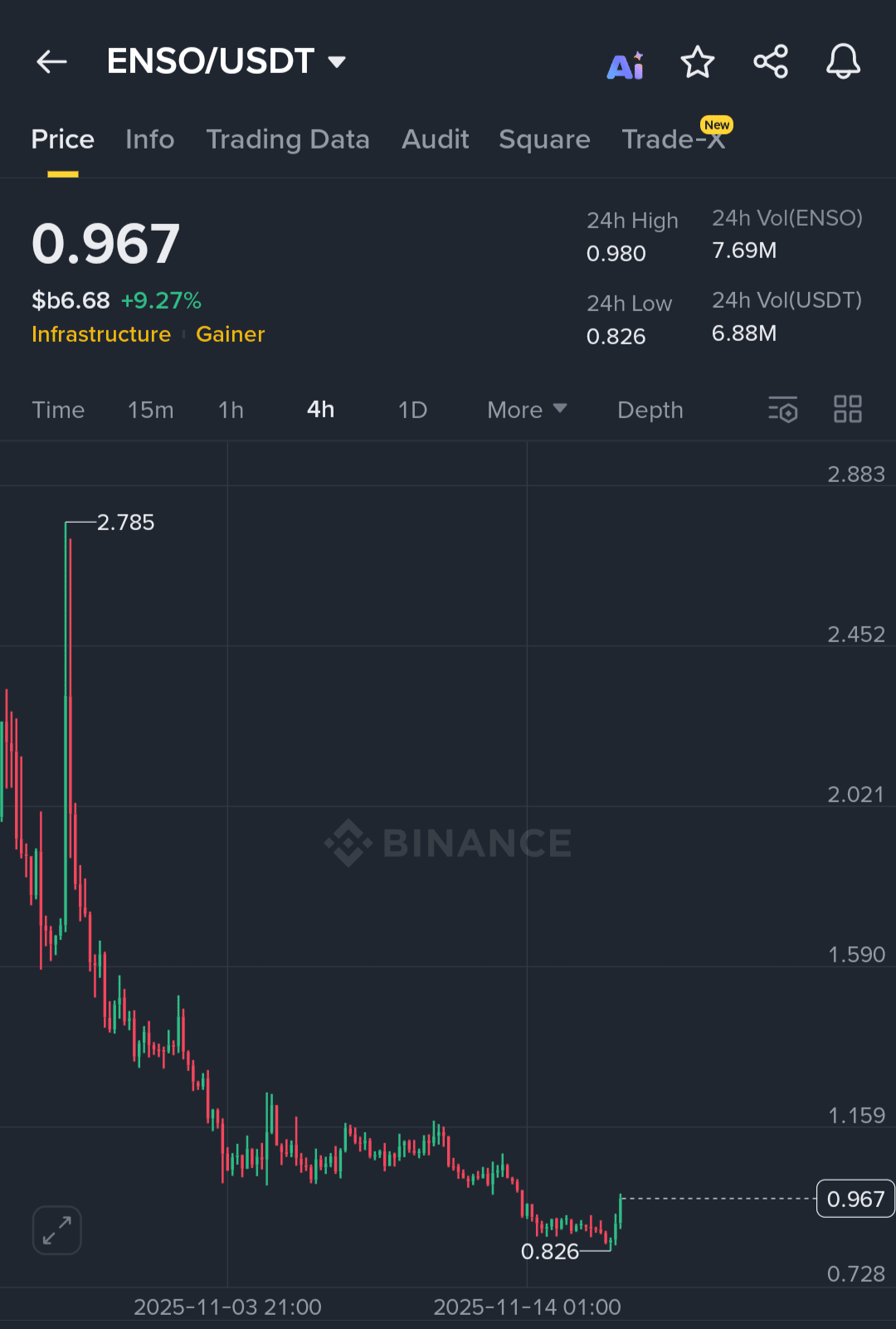
$ENSO give Another Chance to Hold it at Low ..
Really if you Guy's want to catch the next big move ..
Open Long positions on #ENSO
Trade setup:
Entry: $0.82 - $0.97
Target 1: $1.59
Target 2: $2.02
Target 3: $2.45
Target 4: $2.88+
Stop-Loss: $0.75
$ENSO
Really if you Guy's want to catch the next big move ..
Open Long positions on #ENSO
Trade setup:
Entry: $0.82 - $0.97
Target 1: $1.59
Target 2: $2.02
Target 3: $2.45
Target 4: $2.88+
Stop-Loss: $0.75
$ENSO

BullishBanter
·
--
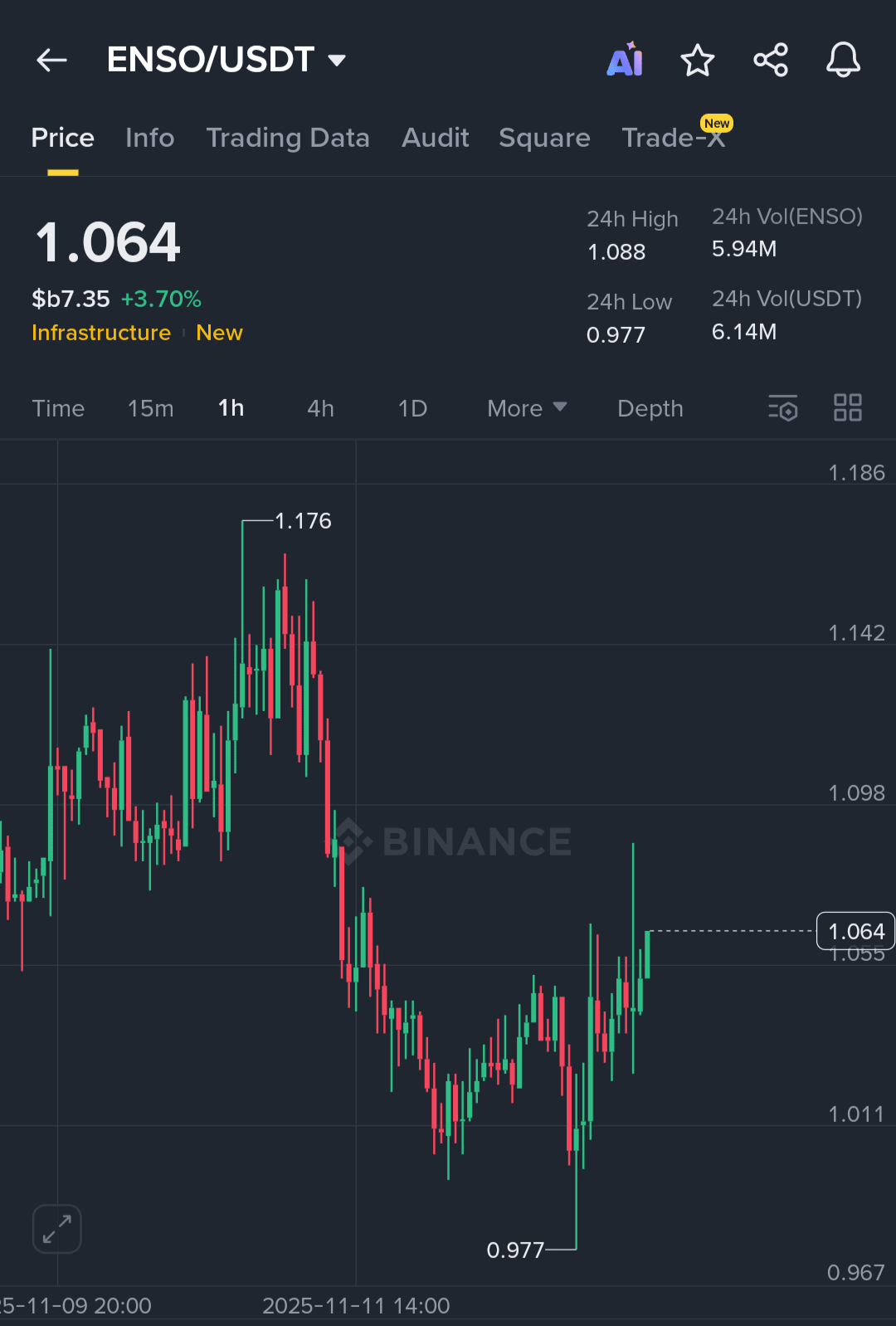
$ENSO give Another Chance to Hold it at Low . ..
Really if you Guy’s want to recover your previous losses . ..
Then Buy and Open Long positions on #ENSO right now.
Trade setup:
Entry $0.98 – $1.05
Target 1: $1.28
Target 2: $1.55
Target 3: $1.90
Target 4: $2.40+
Stop loss $0.94
ENSO touched the $0.977 low and showed a strong, clean bounce with powerful green momentum. This is the same kind of low-level accumulation where early buyers make the highest profits. The chart shows clear recovery signs, and ENSO can easily start a fresh uptrend from here.
If you really want to recover previous losses, this low zone is the best opportunity. A perfect high-reward long setup.
$ENSO
Quoted content has been removed
Quoted content has been removed


Hazel Noor
·
--
How to Earn 12 to 18 dollars on Binance Every day without any investment
You don’t need trading skills or big money to earn on Binance. The platform itself offers free ways to make money if you stay active and consistent. In just 20–30 minutes daily, you can build $12–$18 per day, adding up to $360–$540 monthly.
Step 1: Learn & Earn (💰 $4–$6 Daily)
Join Binance’s short lessons and quizzes. Each campaign gives you free tokens worth $4–$6. Holding them can even increase your earnings if their value rises.
Step 2: Referrals (💰 $5–$6 Daily)
Share your referral link. When people register and trade through your link, you earn a cut of their fees. With just a few active signups, you can hit $5+ daily.
Step 3: Tasks & Promotions (💰 $3–$5 Daily)
Check the Task Center and Rewards Hub for daily login bonuses, cashback vouchers, and campaign tasks. These simple actions bring quick rewards.
Step 4: Airdrops & Launchpool (💰 $2–$3 Daily)
Binance frequently gives free tokens through airdrops and Launchpool. Participating regularly adds extra daily income, especially when tokens gain value.
Daily Breakdown
Learn & Earn: $5
Referrals: $5
Tasks: $4
Airdrops: $2
➡️ Total: $12–$18 per day ($360–$540/month)
Why It Works
Binance rewards active users to grow its ecosystem. Instead of risking money, you earn through education, sharing, and participation. Consistency turns these free rewards into a steady income stream.
✅ No capital needed
✅ 20–30 mins daily
✅ 100% risk-free
Start small, stay consistent, and let Binance pay you to learn and grow in #crypto

Quoted content has been removed
Quoted content has been removed
Log in to explore more content