
华尔街保洁员Rock
1.3k Posts

华尔街保洁员Rock
中长线交易员/宏观分析师/擅长交易心理学/只在关键位置做交易/推特@wallstreetcln/公众号:Rock大本营

30D Copier PnL Top 94
22 Following
3.1K+ Followers
9.9K+ Liked
1 Badges
Posts
All
Quotes
PINNED
Friends who join the community are welcome to contact 💵💰💹
① Click on the Binance APP - Home, top left corner "three horizontal lines"
② Click on the top right corner "Scan"
③ Scan the QR code to add friends
Chat ID: rock123
① Click on the Binance APP - Home, top left corner "three horizontal lines"
② Click on the top right corner "Scan"
③ Scan the QR code to add friends
Chat ID: rock123

See translation
牛来!牛来!牛来!

In a bull market, some people actually lose faster.
In a bear market, the candlesticks move quite slowly. Whether it’s mainstream coins or obscure ones, liquidity is very poor, and it feels like a dull knife cutting off flesh.
But in a bull market, it’s different. Liquidity returns. If you still stubbornly go short, the speed at which you get liquidated and lose money will be far greater than in a bear market.
Recently, on the square, I saw a whole bunch of shorts on ZEC getting liquidated—that’s a classic example.
Hard-holding will eventually get swept away by a wave, and getting turned upside down—ruined family and all—is only a matter of time.
Nine times out of ten you get lucky and hold on. But if even once things go extremely one-directional, and you get swept away by a single wave, that’s as good as certain.
Learn to bow to the market. Learn to admit defeat. Learn to cut your losses. After suffering a big loss, step away from the market for a while, repair your mindset, and then come back.
In a bear market, the candlesticks move quite slowly. Whether it’s mainstream coins or obscure ones, liquidity is very poor, and it feels like a dull knife cutting off flesh.
But in a bull market, it’s different. Liquidity returns. If you still stubbornly go short, the speed at which you get liquidated and lose money will be far greater than in a bear market.
Recently, on the square, I saw a whole bunch of shorts on ZEC getting liquidated—that’s a classic example.
Hard-holding will eventually get swept away by a wave, and getting turned upside down—ruined family and all—is only a matter of time.
Nine times out of ten you get lucky and hold on. But if even once things go extremely one-directional, and you get swept away by a single wave, that’s as good as certain.
Learn to bow to the market. Learn to admit defeat. Learn to cut your losses. After suffering a big loss, step away from the market for a while, repair your mindset, and then come back.
In the second half of the year, funds in the AI sector will flow into crypto, and sector rotation is about to begin.
From the drop that started last October to almost ending by August this year—crypto is about time to toughen up for a round!
From the drop that started last October to almost ending by August this year—crypto is about time to toughen up for a round!
When things are made successful through secrecy, and words end up causing failure—this is something I have personal experience with.
When you can’t help wanting to show off your purchases and get attention, that’s when you’re earning the most.
Earn quietly! Earn quietly! Earn quietly!
When you can’t help wanting to show off your purchases and get attention, that’s when you’re earning the most.
Earn quietly! Earn quietly! Earn quietly!

The last time I pressed the long/short order button was more than 20 days ago.
In these 20 days, I’ve only been focused on market fluctuations, retail traders’ sentiment, and sticking firmly to the direction of my previous judgment—choosing to hold my current position.
My account equity curve has followed the market’s rise and achieved very good returns as well.
What I want to tell you is that you can make money in this market without opening trades frequently. Look closely at the higher-level trend structure, place trades and then watch more and move less, stay patient, and eliminate the noise.
In these 20 days, I’ve only been focused on market fluctuations, retail traders’ sentiment, and sticking firmly to the direction of my previous judgment—choosing to hold my current position.
My account equity curve has followed the market’s rise and achieved very good returns as well.
What I want to tell you is that you can make money in this market without opening trades frequently. Look closely at the higher-level trend structure, place trades and then watch more and move less, stay patient, and eliminate the noise.

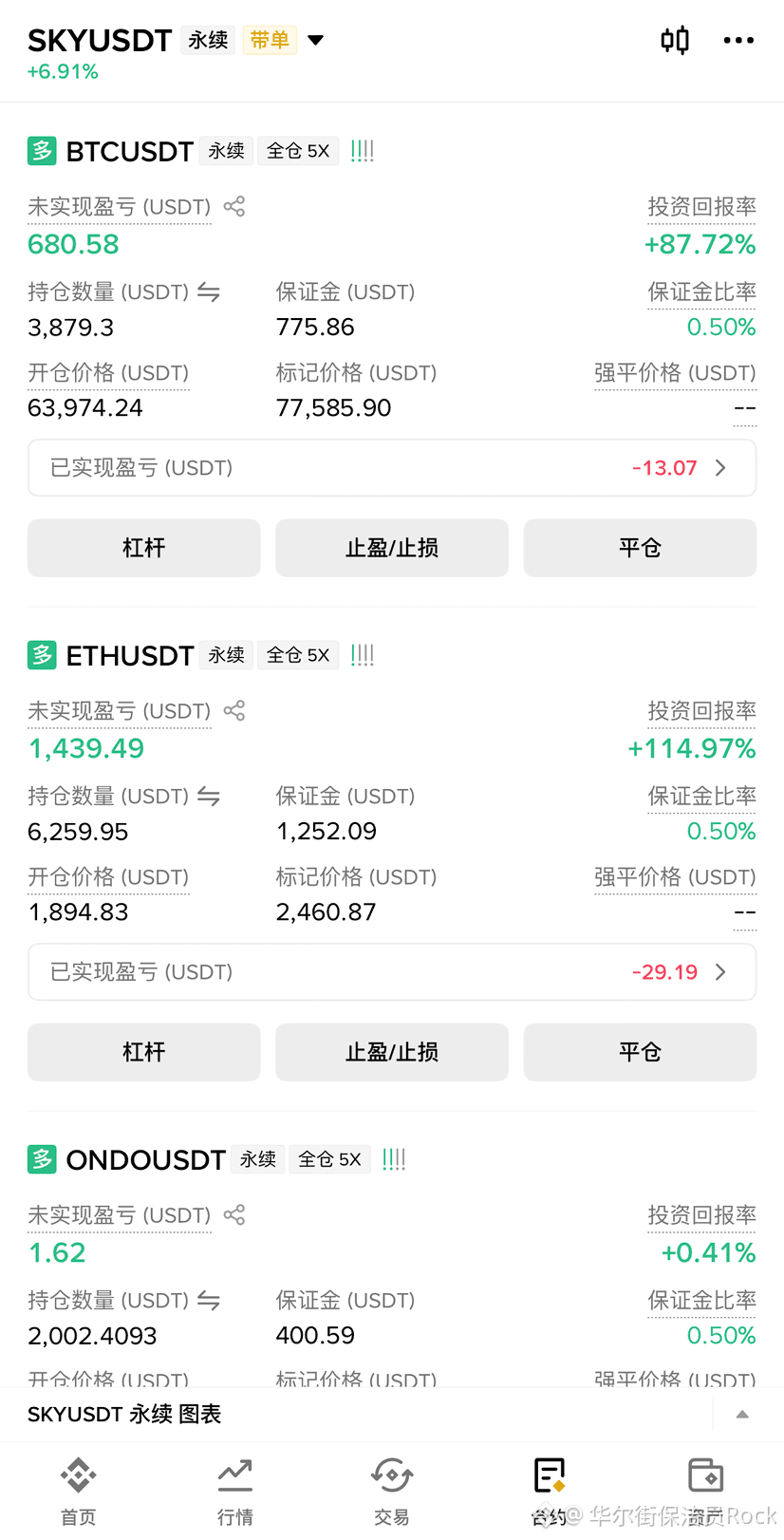
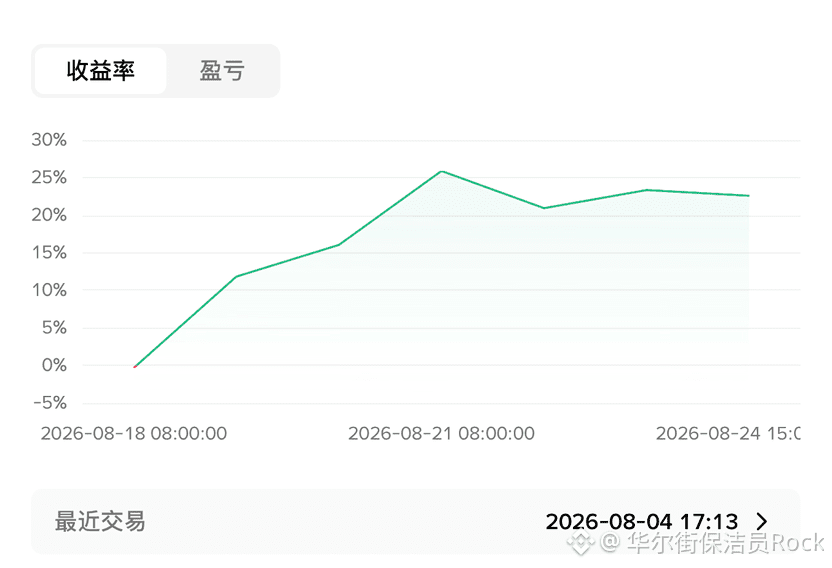
My Futures Portfolio
118 / 200
Minimum 10USDT
7D PNL
2388.06
USDT
7D ROI
+24.29%
AUM
$90457.71
Win Rate
0.00%
It really came back.
In the past, I posted 1u a day. Yesterday, I somehow got 17.8u. It’s really getting better now 🫰🏻🫰🏻🫰🏻
In the past, I posted 1u a day. Yesterday, I somehow got 17.8u. It’s really getting better now 🫰🏻🫰🏻🫰🏻

The most feared thing still happened.
Every time I post on the feed or go live, the thing I fear most is this: right away, someone comes in asking whether I’m bullish or bearish, then asks for entry levels and strategy.
If you took even a little time to scroll through what I’ve posted, you’d know my stance.
But I never reply to this kind of message, because I don’t know what level of trading you’re doing. If you’re doing it for just an hour and you ask me whether I’m bullish, then after a pullback you’ll call me an idiot and block me—there’s no benefit for me.
If I say I’m bullish on the bigger timeframes, and then you tell me you’re using small capital and can’t do long-term setups, I’ll just end up furious.
Respect other people’s fate—don’t interfere with others’ karma. 🫡
Every time I post on the feed or go live, the thing I fear most is this: right away, someone comes in asking whether I’m bullish or bearish, then asks for entry levels and strategy.
If you took even a little time to scroll through what I’ve posted, you’d know my stance.
But I never reply to this kind of message, because I don’t know what level of trading you’re doing. If you’re doing it for just an hour and you ask me whether I’m bullish, then after a pullback you’ll call me an idiot and block me—there’s no benefit for me.
If I say I’m bullish on the bigger timeframes, and then you tell me you’re using small capital and can’t do long-term setups, I’ll just end up furious.
Respect other people’s fate—don’t interfere with others’ karma. 🫡

People who lose big money often have a “refutation-style personality.” I told them that once I flattened my short positions, I switched to being bullish and entered the accumulation phase—when going long, the profits were greater than the profits from shorting.
Alright—yet they just wouldn’t listen.
They kept saying there would be another drop. I said clearly: if it keeps falling, I’ll continue buying spot in batches—buy more the more it drops. After all, without leverage, there’s nothing to fear from an extreme Black Swan pulling back to the lows. And the downside is limited while the upside is unlimited. Plus, it has already been nearly a year since it started falling, and the price has been cut roughly in half.
In the end, they told me 68,000 is the resistance level, 73,000 is the resistance level, and 77,000 is the resistance level. A single weekly candle pierced straight through their positions. They still weren’t satisfied; they kept mocking me, saying that if I didn’t close, my profits would give back.
I made it clear: over the next period of time, there won’t be such a big market move as last week. The price is more likely to enter a consolidation phase. The upper and lower boundaries of the box are still unclear right now—we need to collect a few more lines before we can make a judgment, but the outlook is already there.
Profit drawdown is an essential part of long-term trend trading. If you can’t accept that, then this market isn’t for you. After all, even short-term trading can’t have every single trade making money—you’ll also have losing trades.
A good trading account isn’t one that forbids the equity curve from pulling back; it’s one that knows how to control loss expectations, so that your emotional curve stays as stable and steadily upward as your account curve—forming a healthy closed loop.
In many cases, trading isn’t much about technicals. It’s more a battle of human nature—against the market, and against yourself.
Alright—yet they just wouldn’t listen.
They kept saying there would be another drop. I said clearly: if it keeps falling, I’ll continue buying spot in batches—buy more the more it drops. After all, without leverage, there’s nothing to fear from an extreme Black Swan pulling back to the lows. And the downside is limited while the upside is unlimited. Plus, it has already been nearly a year since it started falling, and the price has been cut roughly in half.
In the end, they told me 68,000 is the resistance level, 73,000 is the resistance level, and 77,000 is the resistance level. A single weekly candle pierced straight through their positions. They still weren’t satisfied; they kept mocking me, saying that if I didn’t close, my profits would give back.
I made it clear: over the next period of time, there won’t be such a big market move as last week. The price is more likely to enter a consolidation phase. The upper and lower boundaries of the box are still unclear right now—we need to collect a few more lines before we can make a judgment, but the outlook is already there.
Profit drawdown is an essential part of long-term trend trading. If you can’t accept that, then this market isn’t for you. After all, even short-term trading can’t have every single trade making money—you’ll also have losing trades.
A good trading account isn’t one that forbids the equity curve from pulling back; it’s one that knows how to control loss expectations, so that your emotional curve stays as stable and steadily upward as your account curve—forming a healthy closed loop.
In many cases, trading isn’t much about technicals. It’s more a battle of human nature—against the market, and against yourself.
From $BTC 8 to 83,000 in this range, there will definitely be a lot of bearish pending orders placing new shorts, and many short sellers who are placing large stops at the bottom. A short seller’s stop-out means buying, which pushes the price higher and keeps the rally going, creating a short-squeeze scenario.
If we keep squeezing upward, where would it go?
Right now, this wave of upside is mainly driven by spot demand, and Bitcoin’s current price is already higher than that of short-term holders, so selling pressure is gradually weakening. During the rise, the open interest is steadily decreasing, which indicates that short sellers getting liquidated and the long positions from earlier trapped traders are progressively cutting losses and exiting.
However, there are still some stubborn bears who think the market still has one last drop to come, and that the four-year cycle has not been broken yet.
Big moves are produced through competition and gamesmanship—so you could say everyone is very much looking forward to next week’s market action.
If we keep squeezing upward, where would it go?
Right now, this wave of upside is mainly driven by spot demand, and Bitcoin’s current price is already higher than that of short-term holders, so selling pressure is gradually weakening. During the rise, the open interest is steadily decreasing, which indicates that short sellers getting liquidated and the long positions from earlier trapped traders are progressively cutting losses and exiting.
However, there are still some stubborn bears who think the market still has one last drop to come, and that the four-year cycle has not been broken yet.
Big moves are produced through competition and gamesmanship—so you could say everyone is very much looking forward to next week’s market action.
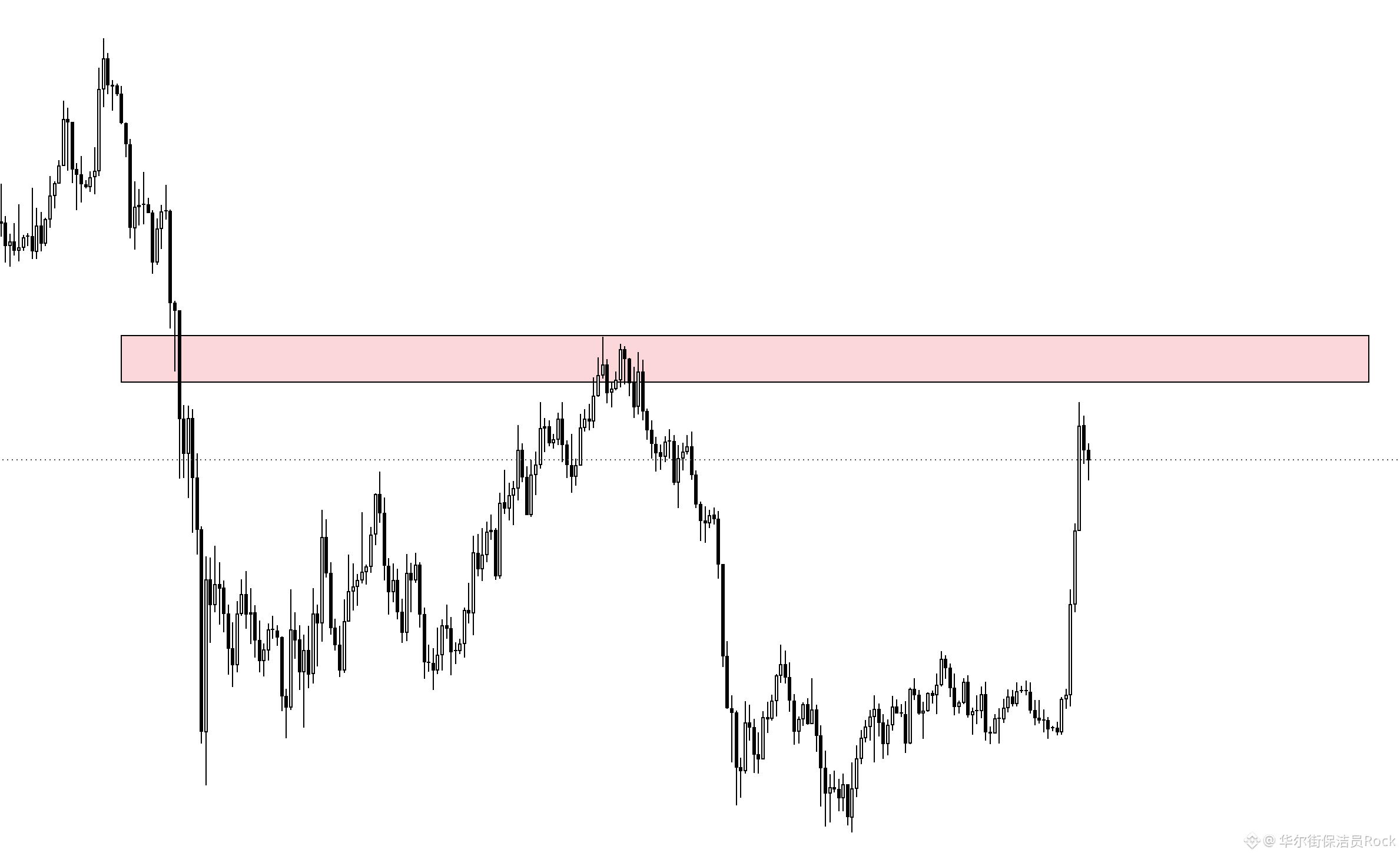
If it weren’t for that yesterday’s counterfeit spike, this weekend’s counterfeit rally would have really dazzled.
Indeed, a single bearish candle has put out everyone’s FOMO in the market, forcing everyone to take another look at Monday’s trading.
But for me, who only trades major coins, this is just a normal weekend.
Indeed, a single bearish candle has put out everyone’s FOMO in the market, forcing everyone to take another look at Monday’s trading.
But for me, who only trades major coins, this is just a normal weekend.
Yesterday morning, Bitcoin and Ethereum dipped slightly, and most altcoins fell along with them, even seeing violent pinning. What is the logic behind it? Here’s a piece to explain it all.
Bitcoin is the bellwether of the crypto world, while altcoins are leveraged versions of Bitcoin—often with high beta and low liquidity.
In normal times, correlation in the crypto market is around 0.7 to 0.9. When the market drops, it can jump to 0.95 or even higher—almost the same as rising and falling. When Bitcoin drops, the market immediately interprets it as increased crypto risk. Panic spreads instantly across the entire market. Algorithms don’t research any specific fundamentals; they trigger “sell first, ask questions later,” leading to a full-scale collapse.
When new money is about to enter, the first thing it buys is the leader—Bitcoin and Ethereum—then altcoins. But when money wants to exit, it’s the opposite: altcoins get dumped first. That’s because liquidity is so poor. The order book is very thin, so the same sell order causes far greater price impact than Bitcoin—resulting in larger slippage.
Leverage in crypto derivatives is extremely high. Once Bitcoin breaks below a key level, it triggers mass liquidation of long positions. Those liquidations spill over into the entire market. Also, many users don’t just open one position—especially during the past few days’ altcoin long-rally. People open multiple positions, even more, creating a spiral of “death” liquidation.
Many altcoins’ main trading pairs are benchmarked against Bitcoin. On top of that, exchanges, market makers, and quantitative trading robots all treat Bitcoin as the reference point, which further amplifies the downside.
That’s why when Bitcoin dips only a little, altcoins act like a deflated balloon—they get dragged down and immediately “inflate downward.”
Got it all now????
Bitcoin is the bellwether of the crypto world, while altcoins are leveraged versions of Bitcoin—often with high beta and low liquidity.
In normal times, correlation in the crypto market is around 0.7 to 0.9. When the market drops, it can jump to 0.95 or even higher—almost the same as rising and falling. When Bitcoin drops, the market immediately interprets it as increased crypto risk. Panic spreads instantly across the entire market. Algorithms don’t research any specific fundamentals; they trigger “sell first, ask questions later,” leading to a full-scale collapse.
When new money is about to enter, the first thing it buys is the leader—Bitcoin and Ethereum—then altcoins. But when money wants to exit, it’s the opposite: altcoins get dumped first. That’s because liquidity is so poor. The order book is very thin, so the same sell order causes far greater price impact than Bitcoin—resulting in larger slippage.
Leverage in crypto derivatives is extremely high. Once Bitcoin breaks below a key level, it triggers mass liquidation of long positions. Those liquidations spill over into the entire market. Also, many users don’t just open one position—especially during the past few days’ altcoin long-rally. People open multiple positions, even more, creating a spiral of “death” liquidation.
Many altcoins’ main trading pairs are benchmarked against Bitcoin. On top of that, exchanges, market makers, and quantitative trading robots all treat Bitcoin as the reference point, which further amplifies the downside.
That’s why when Bitcoin dips only a little, altcoins act like a deflated balloon—they get dragged down and immediately “inflate downward.”
Got it all now????
If you are currently in cash with no position, no spot holdings, no long positions, and also no short positions being held.
Then the best approach is to wait. Right now, the risks of going long and going short are both extremely high—it’s purely gambling. If you win, you get the glamorous outcome; if you lose, you end up doing hard work.
Whenever you open a position, you must open it at key levels; otherwise, getting trapped will distort your mindset. When people do things like holding positions, adding against the trend, and opening trades randomly—those kinds of shady moves—your account can be cut in half instantly, or even go to zero.
Never force yourself to be constantly in the market. Being in cash sometimes lets you see the market’s subsequent direction more clearly.
If you are currently holding a short position, then you definitely hope this round of upward move is a tease, a trap, a fake—maybe even hoping for one final drop.
But that’s not wrong, because the essence of people is that their position determines their stance.
Then the best approach is to wait. Right now, the risks of going long and going short are both extremely high—it’s purely gambling. If you win, you get the glamorous outcome; if you lose, you end up doing hard work.
Whenever you open a position, you must open it at key levels; otherwise, getting trapped will distort your mindset. When people do things like holding positions, adding against the trend, and opening trades randomly—those kinds of shady moves—your account can be cut in half instantly, or even go to zero.
Never force yourself to be constantly in the market. Being in cash sometimes lets you see the market’s subsequent direction more clearly.
If you are currently holding a short position, then you definitely hope this round of upward move is a tease, a trap, a fake—maybe even hoping for one final drop.
But that’s not wrong, because the essence of people is that their position determines their stance.
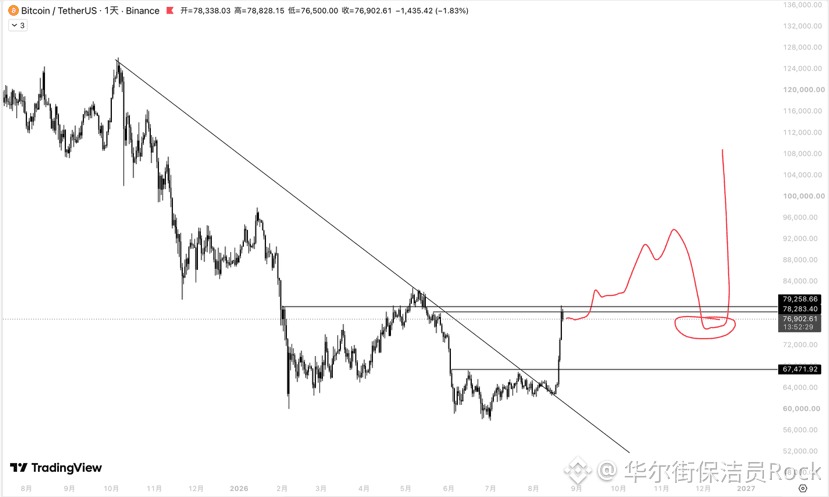
$BTC This chart is roughly drawn during the livestream. If there is a weekly-level pullback later on, this entire upward move will be the only spot where you can hold a long position for a long time—your entry point for the bulls.
I think that next, Bitcoin will form a ranging consolidation zone, digesting the spot price and the sell pressure from long positions in the 79,000–83,000 area, while also building up more short positions right here, so that those who are convinced the market still has one last drop will keep shorting or even add to their shorts.
And once the clear bill is passed, it will expose these shorts in one go and take them down.
After consolidating and ranging again above, we expect a major weekly-level correction. The correction from the high to the low will not be less than 10%, and possibly 15%. That will wipe out all the long positions that chased with 5x leverage—liquidations all around, even account blow-ups.
At that time, market sentiment will continue to conclude that the bull market still hasn’t arrived, and that the four-year cycle theory still holds. The market will see more panic selling and forced liquidations. Bitcoin will fall back into a low-volatility range.
Then the big one is coming—right when that moment hits, it will soar.
So, keep an eye on the weekly-level pullback. Once the daily chart has held the support, the red circle is the only good place for you to get in on this round’s weekly setup.
The exact levels might not be exactly what I drew casually here, but the idea is like this. The specific entry levels depend on what the chart looks like at that time, and I’ll post the precise levels in the community.
I think that next, Bitcoin will form a ranging consolidation zone, digesting the spot price and the sell pressure from long positions in the 79,000–83,000 area, while also building up more short positions right here, so that those who are convinced the market still has one last drop will keep shorting or even add to their shorts.
And once the clear bill is passed, it will expose these shorts in one go and take them down.
After consolidating and ranging again above, we expect a major weekly-level correction. The correction from the high to the low will not be less than 10%, and possibly 15%. That will wipe out all the long positions that chased with 5x leverage—liquidations all around, even account blow-ups.
At that time, market sentiment will continue to conclude that the bull market still hasn’t arrived, and that the four-year cycle theory still holds. The market will see more panic selling and forced liquidations. Bitcoin will fall back into a low-volatility range.
Then the big one is coming—right when that moment hits, it will soar.
So, keep an eye on the weekly-level pullback. Once the daily chart has held the support, the red circle is the only good place for you to get in on this round’s weekly setup.
The exact levels might not be exactly what I drew casually here, but the idea is like this. The specific entry levels depend on what the chart looks like at that time, and I’ll post the precise levels in the community.
🔁
华尔街保洁员Rock
·
--
The bull market sprouts amid doubt, while the bear market ends in revelry.
$BTC Bull market sees multiple brutal drops; this is normal.
The long traders chasing gains with greed need to be stopped out, and sometimes even liquidated, so the market can continue rising in a healthy way.
A simple way to understand it is that the car is too heavily loaded with profits—there are too many take-profit positions, so the big players can’t keep pushing up. If they keep pulling it up, some people will keep closing long positions or selling spot, creating sell pressure.
If you went through the previous cycle, you’d know that when Bitcoin first reached $100,000, it also saw a one-minute crash followed by a surge of nearly 10,000 points. That’s healthy—it means leverage needs to be cleaned out.
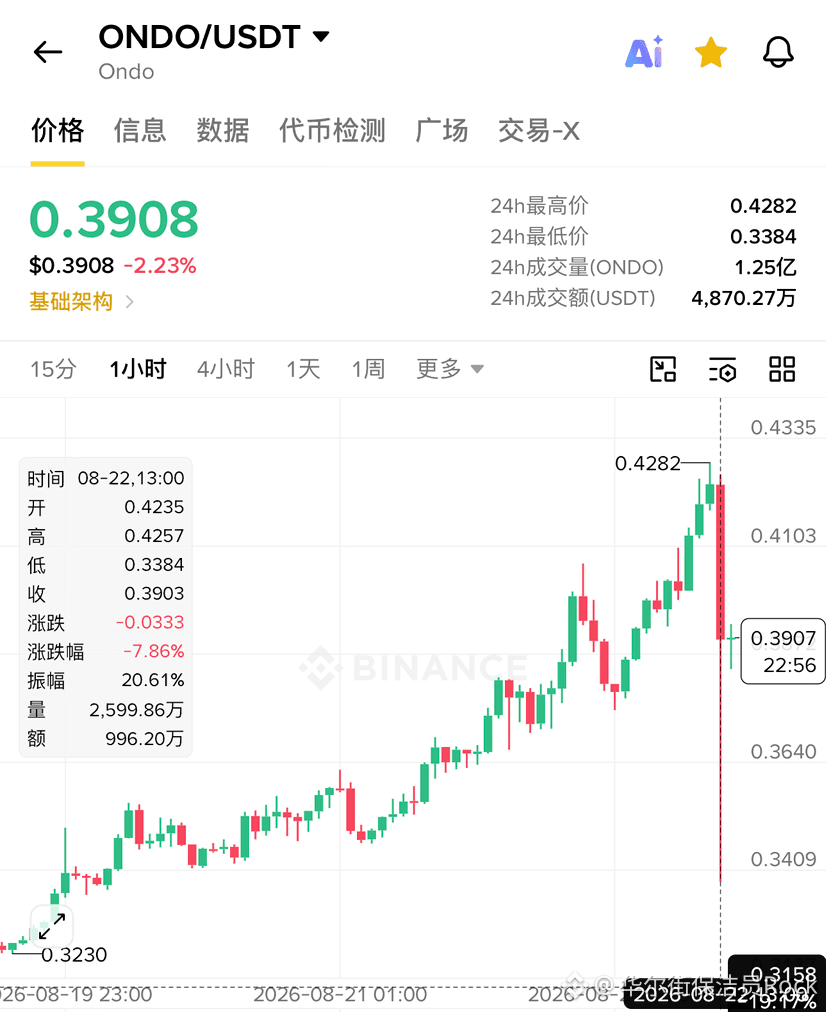
Why I don’t recommend everyone going into altcoins with too much leverage—perhaps even not using leverage at all—you can see it from <ondo>: with this kind of volatility, if you open several different altcoin positions at the same time, you can only get liquidated.
And it happens right in the early stage of the bull market. After that, the rest of the uptrend won’t be related to you.
Stay alive—and stay alive long enough—to get the big results.
The long traders chasing gains with greed need to be stopped out, and sometimes even liquidated, so the market can continue rising in a healthy way.
A simple way to understand it is that the car is too heavily loaded with profits—there are too many take-profit positions, so the big players can’t keep pushing up. If they keep pulling it up, some people will keep closing long positions or selling spot, creating sell pressure.
If you went through the previous cycle, you’d know that when Bitcoin first reached $100,000, it also saw a one-minute crash followed by a surge of nearly 10,000 points. That’s healthy—it means leverage needs to be cleaned out.
Why I don’t recommend everyone going into altcoins with too much leverage—perhaps even not using leverage at all—you can see it from <ondo>: with this kind of volatility, if you open several different altcoin positions at the same time, you can only get liquidated.
And it happens right in the early stage of the bull market. After that, the rest of the uptrend won’t be related to you.
Stay alive—and stay alive long enough—to get the big results.
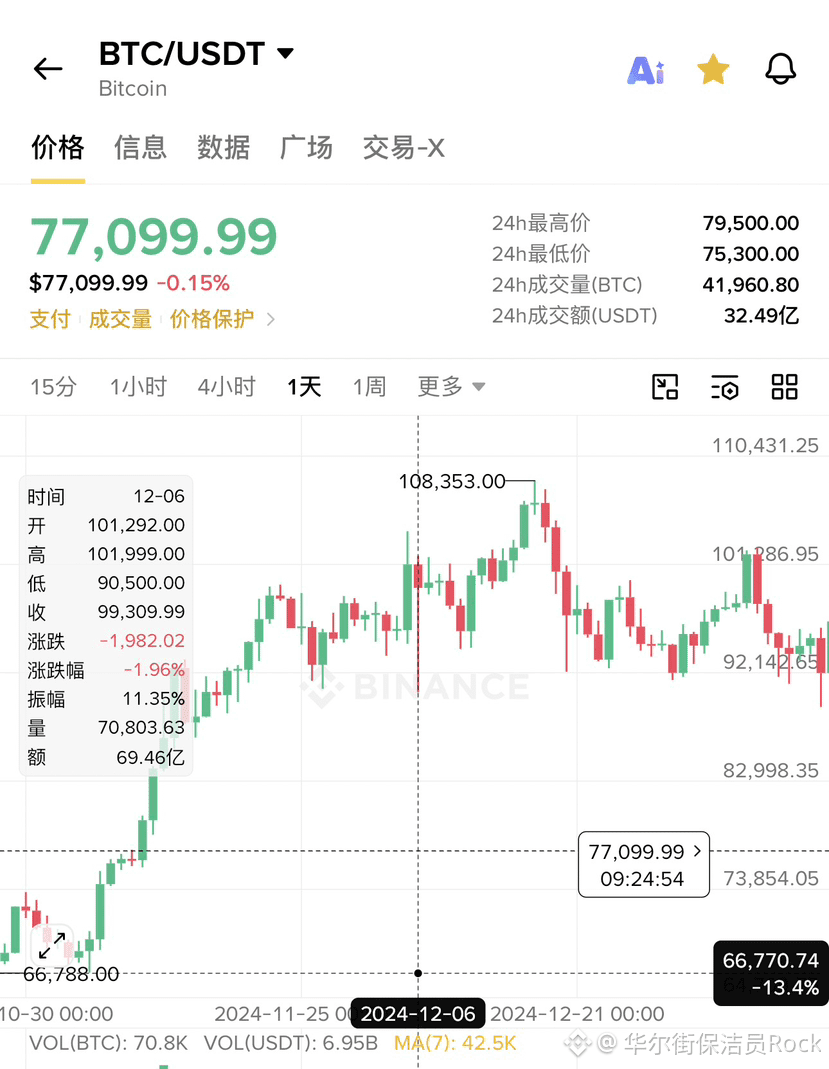
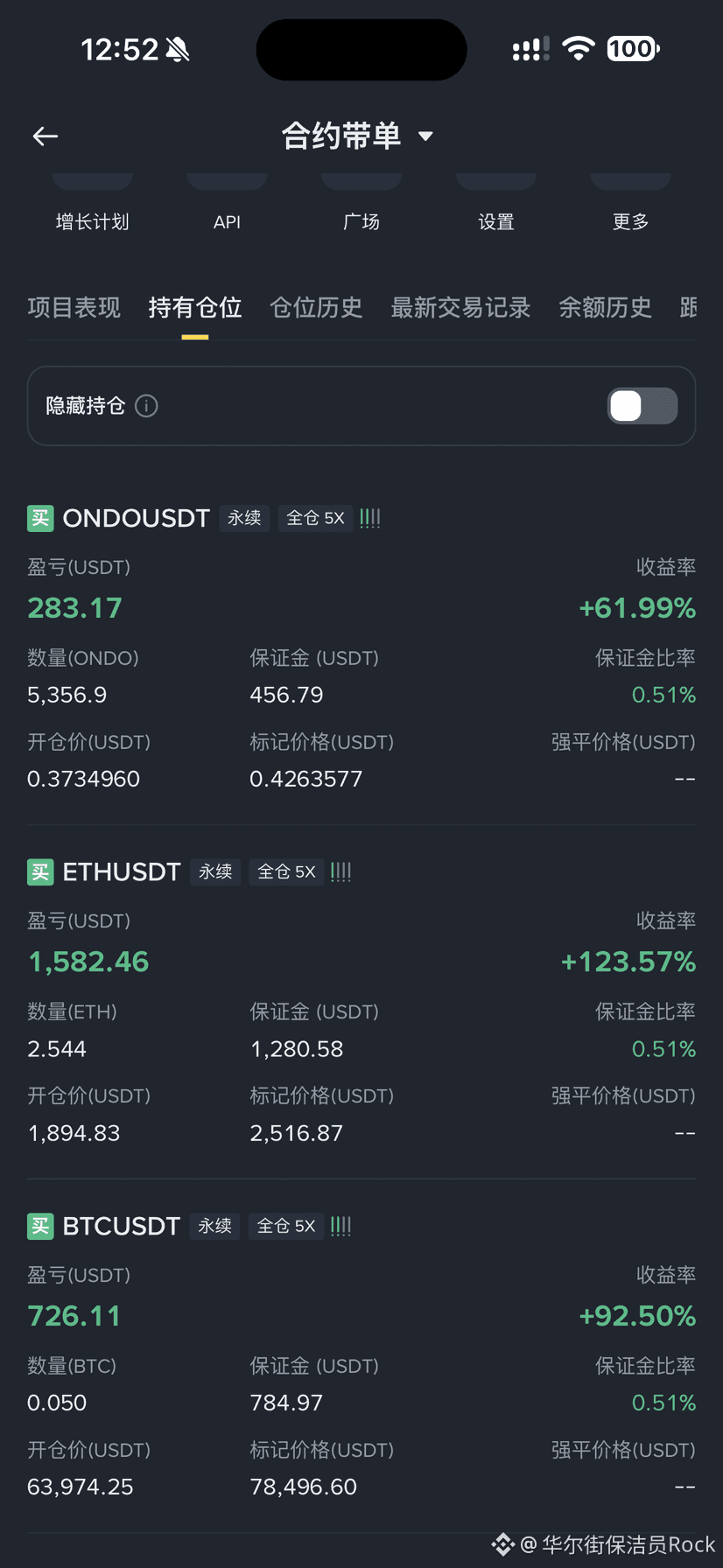
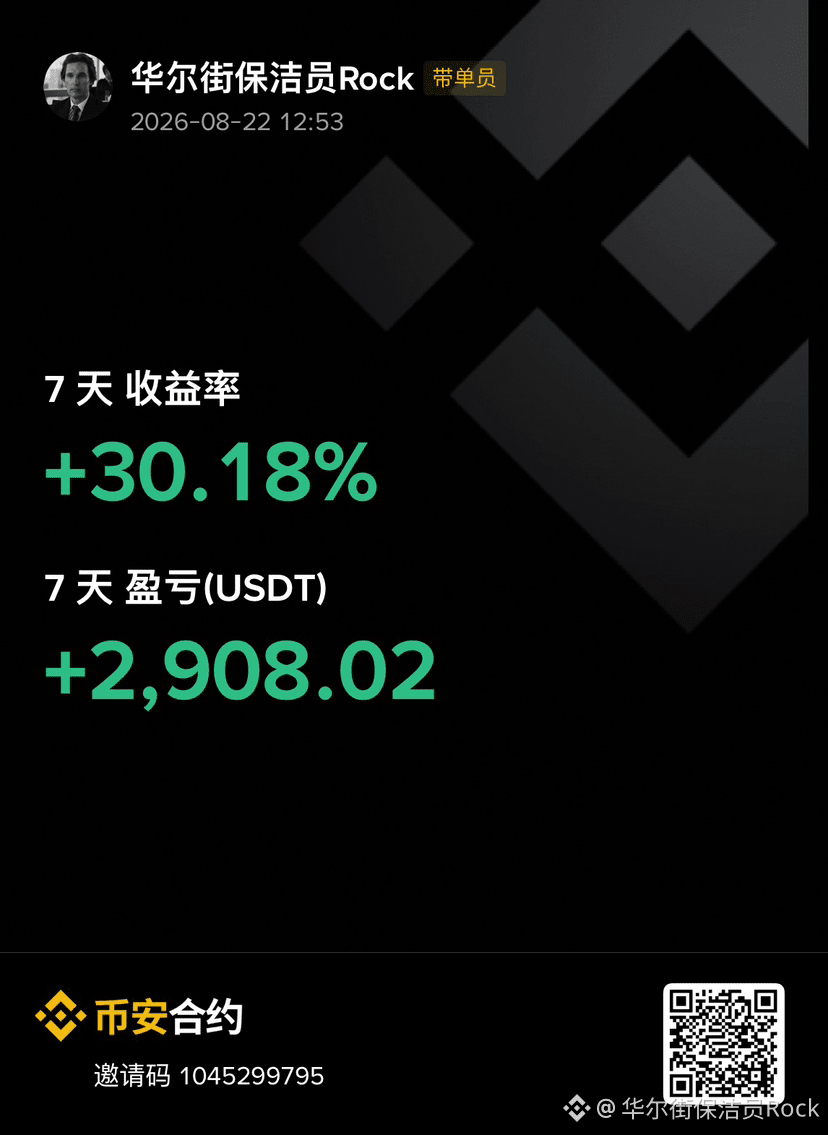
Hold it! 🤌🏻🤌🏻🤌🏻
My Futures Portfolio
118 / 200
Minimum 10USDT
7D PNL
2388.06
USDT
7D ROI
+24.29%
AUM
$90457.71
Win Rate
0.00%
After seeing too many order-sheets from Big Target Brother, you realize how the profit and loss can be hundreds of millions or tens of millions of U in a single trade. Then when you look at yourself after a whole round, you’ve only made that little bit, and your holding time is especially long—over the course of several years. You don’t feel anything anymore.
It feels like someone has destroyed a value system. It’s terrifying.
But when you convert it, even 10,000 U is an amount that an office worker would have to struggle to save for a whole year.
I’ve been looking at too many bull posts in the square—I’m getting a bit dizzy, and I don’t even have a sense of what money really is anymore.
It feels like someone has destroyed a value system. It’s terrifying.
But when you convert it, even 10,000 U is an amount that an office worker would have to struggle to save for a whole year.
I’ve been looking at too many bull posts in the square—I’m getting a bit dizzy, and I don’t even have a sense of what money really is anymore.
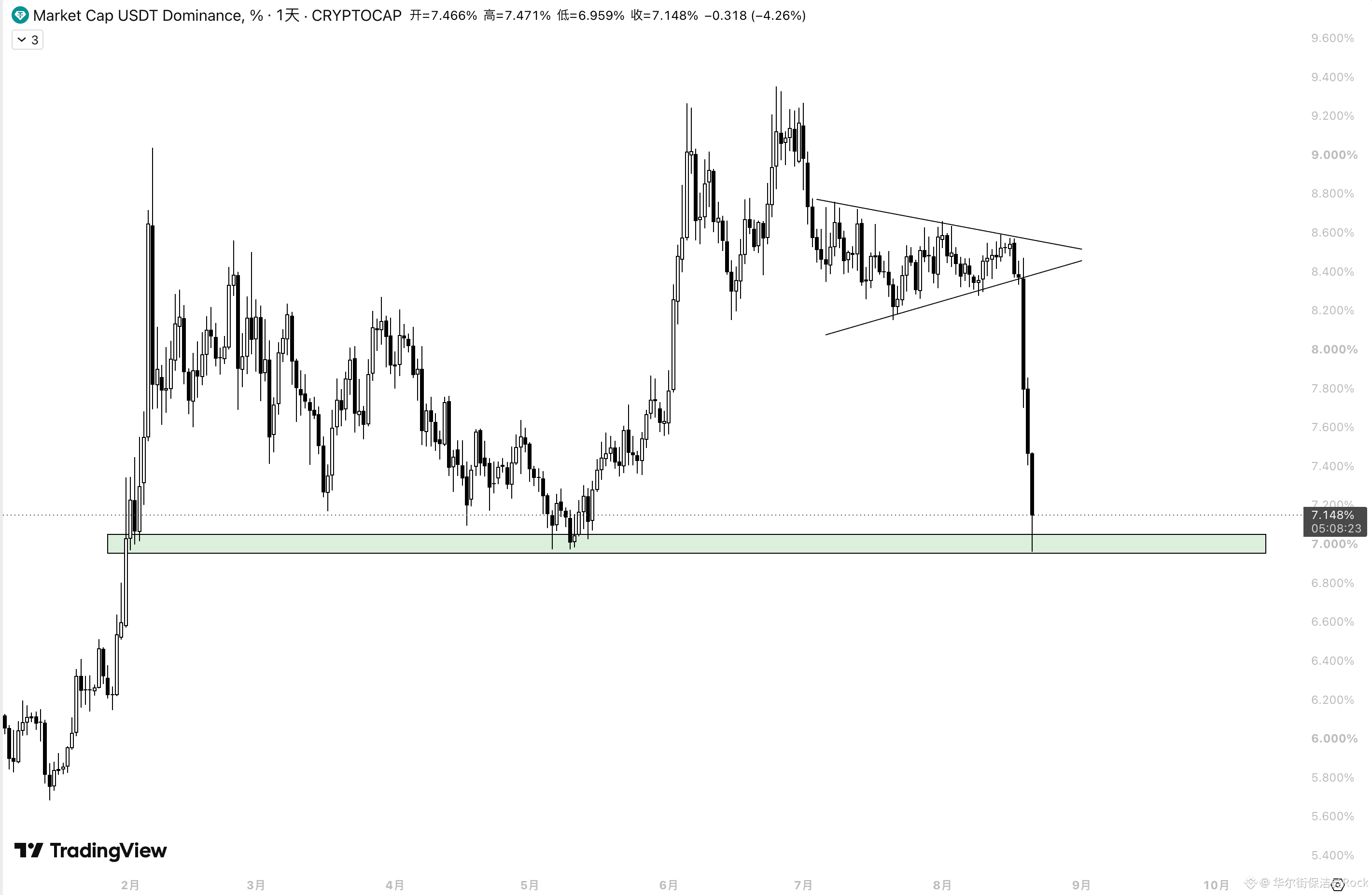
$USDT Currently, the symmetrical triangle pattern of USDT has already broken downward, and the trading volume is increasing. However, USDT typically moves in the opposite direction to the overall crypto market.
When USDT rises, the market is bearish, and more funds stay in stablecoins.
When USDT falls, the market is bullish, and funds are more willing to move into risk assets.
If it continues to break below the green support, crypto will see a huge surge— a huge surge, a huge surge!!!
When USDT rises, the market is bearish, and more funds stay in stablecoins.
When USDT falls, the market is bullish, and funds are more willing to move into risk assets.
If it continues to break below the green support, crypto will see a huge surge— a huge surge, a huge surge!!!
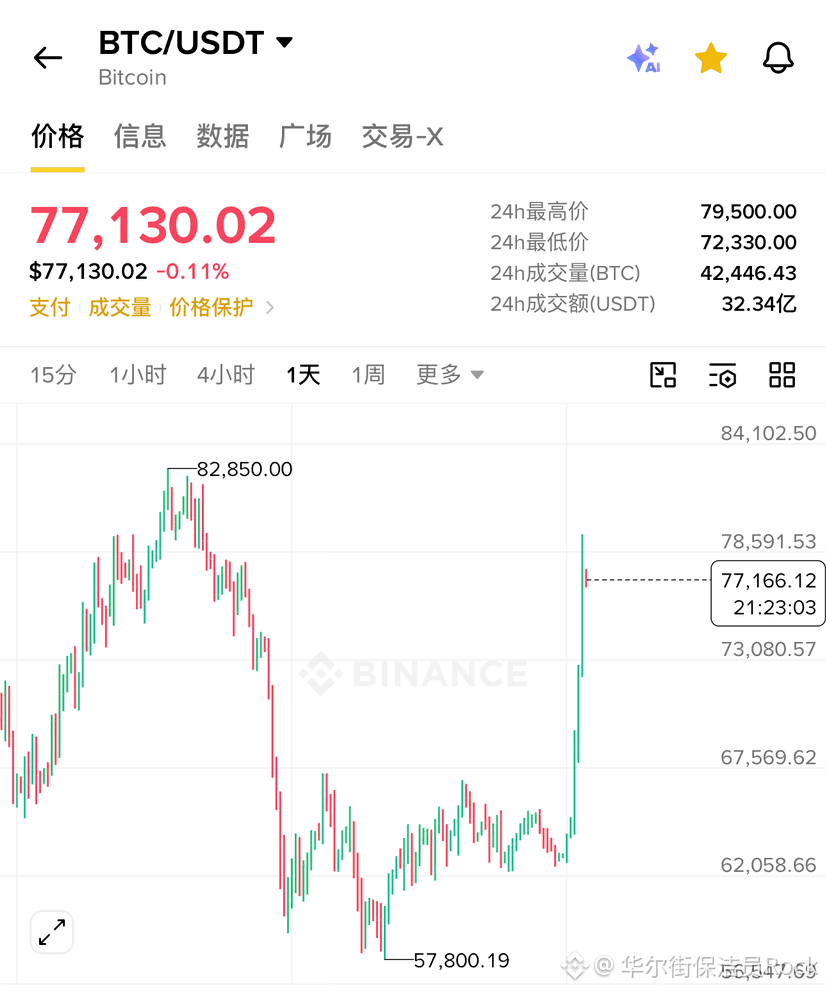
$BTC At this 82000 level for Bitcoin, there’s really so much liquidity.
A lot of the big players’ stop losses are around here. Once the range-bound consolidation digests this selling pressure, another short-squeeze move is likely to appear.
Really looking forward to it!
A lot of the big players’ stop losses are around here. Once the range-bound consolidation digests this selling pressure, another short-squeeze move is likely to appear.
Really looking forward to it!
Log in to explore more content