

SuckerRn
73 Posts

SuckerRn
Report
Block User
搬砖养仓|早期加密机会研究。专注币安生态、潜力项目与代币估值。关注市场忽略了什么,研究上涨逻辑,也记录判断失误。不追所有热点,只做有依据的研究。DYOR|不构成投资建议。
Open Trade

BNCB Holder
High-Frequency Trader
7.4 Years
4 Following
3.1K+ Followers
1.5K+ Liked
Posts
Portfolio
All
Videos
PINNED
·
--
Binance Unofficial Benefits Officer Fan Rewards
I’m working toward becoming Binance’s “Unofficial Benefits Officer.” Rewards will be offered in stages based on follower count:
1. Fewer than 10,000 followers: Random giveaways of meme coins or small amounts of smaller coins.
2. Leave a comment: Randomly receive 1.88 USDT as a “Coca-Cola airdrop.”
3. 10,000 or more followers: Unlock the BNC shareholder reward. Friends who comment may randomly receive a free BNCB airdrop.
4. 100,000 or more followers: Unlock the SOL reward. Followers who comment may randomly receive a free SOL airdrop.
5. 1 million or more followers: Unlock the BNB reward.
6. 10 million or more followers: Unlock ETH, and maybe even BTC rewards.
Note: This is my personal idea for an “Unofficial Benefits Officer” role and does not represent an official Binance campaign. Specific rewards will be subject to rules announced later. To qualify for any reward, simply leave a comment under this post or another post. Random airdrops will be given out at unpredictable times each day (of course, if I become financially independent, the reward milestones will accelerate dramatically).
$BNB $BTC
{spot}(BNBUSDT)
Binance Unofficial Benefits Officer Fan Rewards
I’m working toward becoming Binance’s “Unofficial Benefits Officer.” Rewards will be offered in stages based on follower count:
1. Fewer than 10,000 followers: Random giveaways of meme coins or small amounts of smaller coins.
2. Leave a comment: Randomly receive 1.88 USDT as a “Coca-Cola airdrop.”
3. 10,000 or more followers: Unlock the BNC shareholder reward. Friends who comment may randomly receive a free BNCB airdrop.
4. 100,000 or more followers: Unlock the SOL reward. Followers who comment may randomly receive a free SOL airdrop.
5. 1 million or more followers: Unlock the BNB reward.
6. 10 million or more followers: Unlock ETH, and maybe even BTC rewards.
Note: This is my personal idea for an “Unofficial Benefits Officer” role and does not represent an official Binance campaign. Specific rewards will be subject to rules announced later. To qualify for any reward, simply leave a comment under this post or another post. Random airdrops will be given out at unpredictable times each day (of course, if I become financially independent, the reward milestones will accelerate dramatically).
$BNB $BTC

Good luck
From SuckerRn
Fully Claimed
103
8
147
1.2k
·
--
The hackers never leftFrom October 29 to 30, 2026, Binance experienced an unusually large security incident, though its impact was ultimately substantially mitigated. The core facts are these: multiple hot wallets were anomalously “swept” within a very short period, with the outflow initially tracked at tens of billions of dollars. However, major stablecoin issuers quickly froze most of the funds involved. CZ estimated the actual net loss at slightly over $1 billion, and Binance pledged to cover it in full.
Unusual outflows: Multiple hot wallets swept in quick succession
The incident began at approximately 4:24 a.m. Taipei time on October 30 (20:24 UTC on October 29), when a hot wallet labeled “Binance 14” by Binance triggered a sweep transaction, transferring approximately 167,464 ETH and 63 ERC-20 tokens in a single transaction, including about 1.615 billion USDT, then valued at approximately $2.5 billion.
The hackers never left
From October 29 to 30, 2026, Binance experienced an unusually large security incident, though its impact was ultimately substantially mitigated. The core facts are these: multiple hot wallets were anomalously “swept” within a very short period, with the outflow initially tracked at tens of billions of dollars. However, major stablecoin issuers quickly froze most of the funds involved. CZ estimated the actual net loss at slightly over $1 billion, and Binance pledged to cover it in full.
Unusual outflows: Multiple hot wallets swept in quick succession
The incident began at approximately 4:24 a.m. Taipei time on October 30 (20:24 UTC on October 29), when a hot wallet labeled “Binance 14” by Binance triggered a sweep transaction, transferring approximately 167,464 ETH and 63 ERC-20 tokens in a single transaction, including about 1.615 billion USDT, then valued at approximately $2.5 billion.
9
1
13
3.1k
·
--
When can I have 100,000 followers?
Did you participate in today's predict?
When can I have 100,000 followers?
Did you participate in today's predict?
Did you participate in today's predict?
Good luck
From SuckerRn
Fully Claimed
94
3
170
1.9k
·
--
Some Thoughts on the Predict AirdropAfter years of working on project launches, I’ve increasingly come to feel that the hardest part of an airdrop has never been “how to distribute it,” but “how the market will interpret it afterward.” When Predict.fun announced its PREDICT launch plan, the narrative was clear: more than half allocated to the ecosystem and community, long lockups for early supporters and core contributors, only 16% circulating at TGE, and two airdrop options—claim 35% immediately or lock for a year to receive 100%. Low circulation creates scarcity, long lockups defer selling pressure, and the choice between the two screens for “loyalty.” The intent is easy to understand.
In the prediction-market sector, Kalshi and Polymarket have already established a duopoly in plain sight. Predict.fun has $1.8 billion in cumulative trading volume, 130,000 users, and $1.092 billion in trading volume during the World Cup. Its monthly share has also climbed from 0.15% to 22.81%, but its absolute scale still makes it a challenger. It needs a token structure that can stabilize the early price while telling a story about community. But there is no automatic pipeline connecting product metrics to token value. Platform revenue is around $9 million, while the derivatives market had already priced in an FDV of about $1.4 billion before TGE. That gap cannot be bridged by a 16% circulating supply or a 12-month lockup. Lockups control the timing of supply; they can’t answer “why hold?” If people hold PREDICT only because the circulating supply is small and they can’t sell for now, rather than because they want to use the platform, then the unlock will be a stress test.
Some Thoughts on the Predict Airdrop
After years of working on project launches, I’ve increasingly come to feel that the hardest part of an airdrop has never been “how to distribute it,” but “how the market will interpret it afterward.” When Predict.fun announced its PREDICT launch plan, the narrative was clear: more than half allocated to the ecosystem and community, long lockups for early supporters and core contributors, only 16% circulating at TGE, and two airdrop options—claim 35% immediately or lock for a year to receive 100%. Low circulation creates scarcity, long lockups defer selling pressure, and the choice between the two screens for “loyalty.” The intent is easy to understand.
In the prediction-market sector, Kalshi and Polymarket have already established a duopoly in plain sight. Predict.fun has $1.8 billion in cumulative trading volume, 130,000 users, and $1.092 billion in trading volume during the World Cup. Its monthly share has also climbed from 0.15% to 22.81%, but its absolute scale still makes it a challenger. It needs a token structure that can stabilize the early price while telling a story about community. But there is no automatic pipeline connecting product metrics to token value. Platform revenue is around $9 million, while the derivatives market had already priced in an FDV of about $1.4 billion before TGE. That gap cannot be bridged by a 16% circulating supply or a 12-month lockup. Lockups control the timing of supply; they can’t answer “why hold?” If people hold PREDICT only because the circulating supply is small and they can’t sell for now, rather than because they want to use the platform, then the unlock will be a stress test.
In the prediction-market sector, Kalshi and Polymarket have already established a duopoly in plain sight. Predict.fun has $1.8 billion in cumulative trading volume, 130,000 users, and $1.092 billion in trading volume during the World Cup. Its monthly share has also climbed from 0.15% to 22.81%, but its absolute scale still makes it a challenger. It needs a token structure that can stabilize the early price while telling a story about community. But there is no automatic pipeline connecting product metrics to token value. Platform revenue is around $9 million, while the derivatives market had already priced in an FDV of about $1.4 billion before TGE. That gap cannot be bridged by a 16% circulating supply or a 12-month lockup. Lockups control the timing of supply; they can’t answer “why hold?” If people hold PREDICT only because the circulating supply is small and they can’t sell for now, rather than because they want to use the platform, then the unlock will be a stress test.
23
1
21
1.7k
·
--
It was doing so well yesterday—why did it crash today?
Looks like I’ll have to get back to work and bring some perks to the fans.
It was doing so well yesterday—why did it crash today?
Looks like I’ll have to get back to work and bring some perks to the fans.
Looks like I’ll have to get back to work and bring some perks to the fans.
大吉大利!
From SuckerRn
Fully Claimed
59
1
50
1k
·
--
Leave a comment below the previous video for a chance to win a random Coca-Cola giveaway. $BTC
Leave a comment below the previous video for a chance to win a random Coca-Cola giveaway. $BTC
Good luck
From SuckerRn
Fully Claimed
91
80
2.1k
·
--
Whenever I'm feeling upset, I like watching these cleaning videos. They're especially therapeutic, and after everything is tidied up, I feel so much better.$NVDAB #股票财报季
Whenever I'm feeling upset, I like watching these cleaning videos. They're especially therapeutic, and after everything is tidied up, I feel so much better.$NVDAB #股票财报季
44
4
34
750
·
--
Wait patiently, and you'll be rewarded.
Wait patiently, and you'll be rewarded.
Good luck
From SuckerRn
Fully Claimed
17
2
32
644
·
--
The secret to building wealth is actually just three steps:
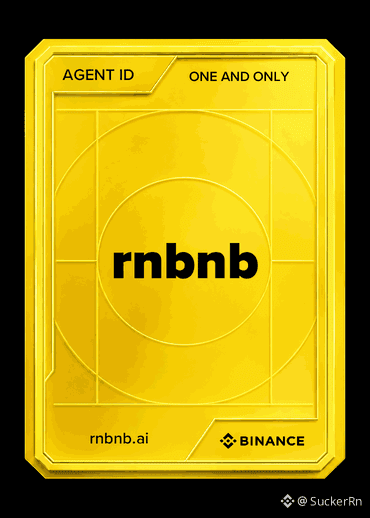
Step 1: Sign up for Binance and enter this market full of opportunities.
Step 2: Find an asset truly worth holding for the long term.
Step 3: Buy it, then patiently wait for time to provide the answer.
Trade less, fuss less, and let your emotions get the better of you less often.
What truly sets people apart financially often isn’t how hard they work, but whether they can make the right choice in the right place—and stick with it long enough.
Of course, the hardest part has never been waiting. It’s choosing the right asset and getting through the waiting period.
Choose the right direction, and leave the rest to time. 🚀
By the way, you haven’t signed up for your own smart wallet yet, have you?
27
2
35
8.4k
·
--
This is crazy—I woke up to find I’d gained so many followers.
To make it easier for everyone to get some free money, I’ll randomly pick comments on this post to receive extra airdrop rewards. Of course, you can also just claim a small red packet.$BTC $SOL
This is crazy—I woke up to find I’d gained so many followers.
To make it easier for everyone to get some free money, I’ll randomly pick comments on this post to receive extra airdrop rewards. Of course, you can also just claim a small red packet.$BTC $SOL
To make it easier for everyone to get some free money, I’ll randomly pick comments on this post to receive extra airdrop rewards. Of course, you can also just claim a small red packet.$BTC $SOL
留言有机会获得可口可乐空投
From SuckerRn
Fully Claimed
65
5
81
1.3k
·
--
I also want to achieve financial freedom sooner, so that there's only one thing left for me to do in life: keep sending red envelopes to my fans. 😅😅😅
Good luck
I also want to achieve financial freedom sooner, so that there's only one thing left for me to do in life: keep sending red envelopes to my fans. 😅😅😅
Good luck
Good luck
good luck
From SuckerRn
Fully Claimed
91
3
104
1.5k
·
--
I hope everyone comes to Binance to make money, not lose it.
May the God of Wealth always be by your side.
Good night.
I hope everyone comes to Binance to make money, not lose it.
May the God of Wealth always be by your side.
Good night.
May the God of Wealth always be by your side.
Good night.
看您运气
From SuckerRn
106
3
212
1.5k
·
--
My apologies—I didn’t prepare enough money for the red envelopes.
I’ll add a little more now.
My apologies—I didn’t prepare enough money for the red envelopes.
I’ll add a little more now.
I’ll add a little more now.
依然随机,看您运气
From SuckerRn
Fully Claimed
131
4
102
2.3k
·
--
I’ve prepared another red packet, and this one is random too. I want as many of my fans as possible to receive one.
I’ll also think about how to make it so my fans can simply bend down and pick up money 💰.
I’ve prepared another red packet, and this one is random too. I want as many of my fans as possible to receive one.
I’ll also think about how to make it so my fans can simply bend down and pick up money 💰.
I’ll also think about how to make it so my fans can simply bend down and pick up money 💰.
看你的运气了,Bro
From SuckerRn
Fully Claimed
104
1
78
1.2k
·
--
I can't stand it when my fans don't receive red envelopes.
I can't stand it when my fans don't receive red envelopes.
这次是随机的了,看运气
From SuckerRn
Fully Claimed
37
1
60
1.4k
·
--
This post says just one thing!
Binance is a platform that lets you make money!
This post says just one thing!
Binance is a platform that lets you make money!
Binance is a platform that lets you make money!
让你赚钱的Binance!
From SuckerRn
Fully Claimed
16
1
28
231
·
--
Anthropic could have one of the craziest IPOs in history, but I’m more interested in something else.
On October 26, Anthropic filed for a U.S. IPO, with market reports putting its potential valuation as high as $1.5 trillion to $2 trillion. Meanwhile, Meta is planning to raise up to $95 billion to expand its AI operations.
What does this mean?
Global capital is betting on the future of AI.
But I want to ask a more interesting question:
If AI is the next generation of productivity, what will the next generation of financial infrastructure look like?
Will AI companies continue to consume capital?
Will stablecoins become the internet’s dollar accounts?
Or will prediction markets, on-chain trading, and new kinds of financial platforms redefine how money moves?
I don’t want to simply say that any particular sector is bound to rise.
I’d rather find the thing that could go from a niche tool to mainstream infrastructure over the next five years.
Because truly huge opportunities often emerge before everyone understands them.
Which area do you think is most likely to give rise to the next trillion-dollar industry over the next five years?
AI, stablecoins, prediction markets, or something we haven’t even realized yet?
1
14
468
·
--
Some money is yours for the taking if you just bend down and pick it up. Be patient and wait for the flowers to bloom.
Some money is yours for the taking if you just bend down and pick it up. Be patient and wait for the flowers to bloom.
22
1
17
727
·
--
1. Don’t pass up an opportunity to make money just because the amount is small.
1 USDT is money, and so is 10 USDT. What really matters isn’t how much you’re making right now, but whether you’ve built a trading system that can make money over the long term. Learn to make sense of the small gains, and you’ll have a chance to make big gains in the future.
2. There are no 100% foolproof trades in the market.
What we’re really looking for isn’t an opportunity that can never lose money. It’s a trade where, even if there’s a 50% chance of losing, the loss is only small—and if we’re right, there’s a chance to make several times or even dozens of times our investment.
Keep losses under control and let profits run.
You don’t need to win every time. You just need to lose less when you lose and win more when you win. Over the long term, that’s the edge worth pursuing most in trading.
Remember: We don’t make money from our win rate; we make it from an asymmetric risk-reward ratio. Don’t ask me why I only open 1x leveraged positions. The answer is that this way I won’t get liquidated. Once spot trading is available, I’ll switch everything to spot.
2
14
472
Log in to explore more content
Join global crypto users on Binance Square
⚡️ Get latest and useful information about crypto.
💬 Trusted by the world’s largest crypto exchange.
👍 Discover real insights from verified creators.
Email / Phone number
Trending Topics
EarningsSeason
6.6M views
33,257 Discussing
Earnings Season Session 3: Will Google & Microsoft Beat Earnings Expectations?
Binance Square Official
·184 Likes
·110.3k views
USMidtermElections
91,529 views
1,190 Discussing
StrategySTRCReaches$99.95ForFirstTimeIn165Days
1,296 views
40 Discussing