
Hedda_
206 Posts

Hedda_
 Square Verified
Report
Block User
25 Following
3.9K+ Followers
860 Liked
Posts
All
Live
·
--
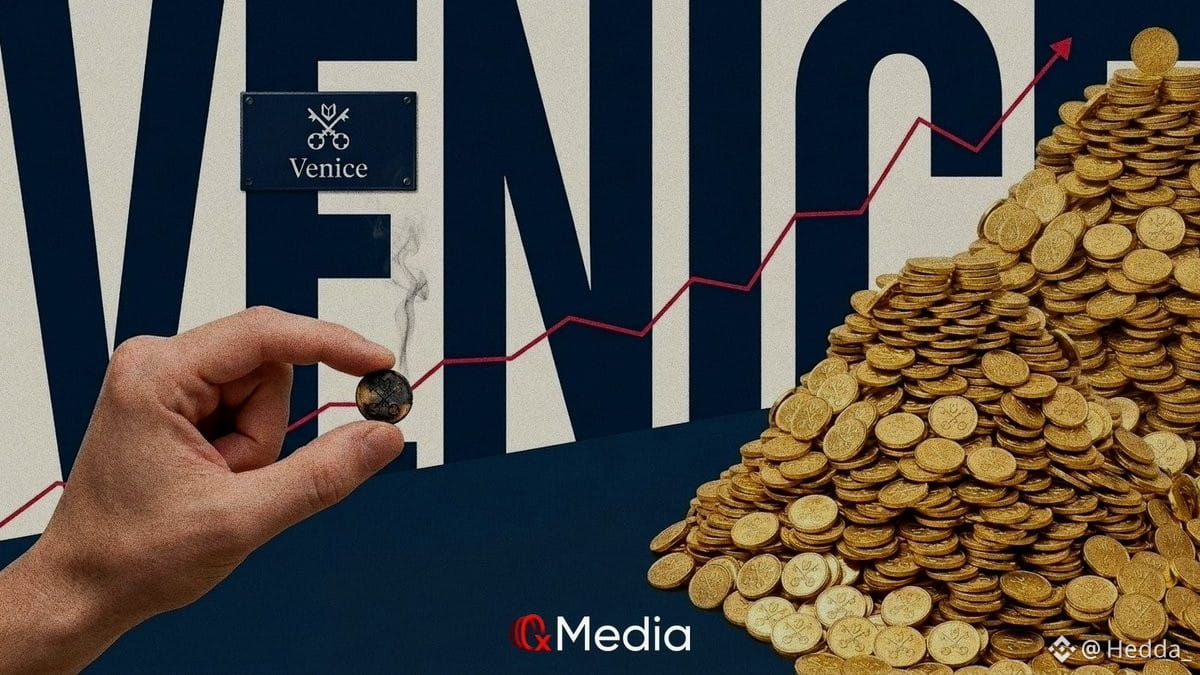
Privacy narratives have pushed $VVV to a historic high, but can it truly support a $1.2 billion market cap just by destroying tokens?
The Venice token VVV has risen about 40% over the past 24 hours, topping $26 at its peak. It’s currently hovering near $24, with a market cap of around $1.2 billion. On September 8, Venice also completed its largest token burn since launch, worth approximately $391,000.
This surge is closely tied to OpenAI’s privacy controversy. Mathematician Buckmaster questioned whether its unpublished proofs may have entered the model improvement pipeline. OpenAI denied directly reading it, but it cannot be fully ruled out that de-identified data was used. The incident quickly brought AI users’ data boundaries from the background to center stage, giving Venice—which focuses on Private Inference—more attention.
However, the scale of the burn is not enough to support the current valuation for the time being. For every $100 in API credits, Venice sets aside $5 to buy back VVV. Based on $100 million in annualized revenue, the annual buyback would be about $5 million. Even if annual emissions drop to 2 million tokens, at the current price that would still be worth only about $50 million.
Privacy narratives have pushed $VVV to a historic high, but can it truly support a $1.2 billion market cap just by destroying tokens?
The Venice token VVV has risen about 40% over the past 24 hours, topping $26 at its peak. It’s currently hovering near $24, with a market cap of around $1.2 billion. On September 8, Venice also completed its largest token burn since launch, worth approximately $391,000.
This surge is closely tied to OpenAI’s privacy controversy. Mathematician Buckmaster questioned whether its unpublished proofs may have entered the model improvement pipeline. OpenAI denied directly reading it, but it cannot be fully ruled out that de-identified data was used. The incident quickly brought AI users’ data boundaries from the background to center stage, giving Venice—which focuses on Private Inference—more attention.
However, the scale of the burn is not enough to support the current valuation for the time being. For every $100 in API credits, Venice sets aside $5 to buy back VVV. Based on $100 million in annualized revenue, the annual buyback would be about $5 million. Even if annual emissions drop to 2 million tokens, at the current price that would still be worth only about $50 million.
The Venice token VVV has risen about 40% over the past 24 hours, topping $26 at its peak. It’s currently hovering near $24, with a market cap of around $1.2 billion. On September 8, Venice also completed its largest token burn since launch, worth approximately $391,000.
This surge is closely tied to OpenAI’s privacy controversy. Mathematician Buckmaster questioned whether its unpublished proofs may have entered the model improvement pipeline. OpenAI denied directly reading it, but it cannot be fully ruled out that de-identified data was used. The incident quickly brought AI users’ data boundaries from the background to center stage, giving Venice—which focuses on Private Inference—more attention.
However, the scale of the burn is not enough to support the current valuation for the time being. For every $100 in API credits, Venice sets aside $5 to buy back VVV. Based on $100 million in annualized revenue, the annual buyback would be about $5 million. Even if annual emissions drop to 2 million tokens, at the current price that would still be worth only about $50 million.
131
·
--
🐧 The Pengu Garden: Taipei Edition — A Perfect Ending!
This time, 0xMedia took part in planning the first stop of the Pudgy Penguins Asia tour—Taipei 🇹🇼
We’re honored to co-organize this event with @pudgypenguins @0G_labs @deepcoin_cn. In a quiet courtyard at a historic mansion in Taipei, we spent a relaxed and enjoyable weekend afternoon.
Thanks to every guest who showed up—braving the rain to meet with us, chat together, drink some珍奶 (milk tea), open card packs, and take photos with the adorable Pengu 🧋🐧
Thank you to all the partners who helped make this event possible. We look forward to seeing you again 💙
🐧 The Pengu Garden: Taipei Edition — A Perfect Ending!
This time, 0xMedia took part in planning the first stop of the Pudgy Penguins Asia tour—Taipei 🇹🇼
We’re honored to co-organize this event with @pudgypenguins @0G_labs @deepcoin_cn. In a quiet courtyard at a historic mansion in Taipei, we spent a relaxed and enjoyable weekend afternoon.
Thanks to every guest who showed up—braving the rain to meet with us, chat together, drink some珍奶 (milk tea), open card packs, and take photos with the adorable Pengu 🧋🐧
Thank you to all the partners who helped make this event possible. We look forward to seeing you again 💙
This time, 0xMedia took part in planning the first stop of the Pudgy Penguins Asia tour—Taipei 🇹🇼
We’re honored to co-organize this event with @pudgypenguins @0G_labs @deepcoin_cn. In a quiet courtyard at a historic mansion in Taipei, we spent a relaxed and enjoyable weekend afternoon.
Thanks to every guest who showed up—braving the rain to meet with us, chat together, drink some珍奶 (milk tea), open card packs, and take photos with the adorable Pengu 🧋🐧
Thank you to all the partners who helped make this event possible. We look forward to seeing you again 💙




291
·
--
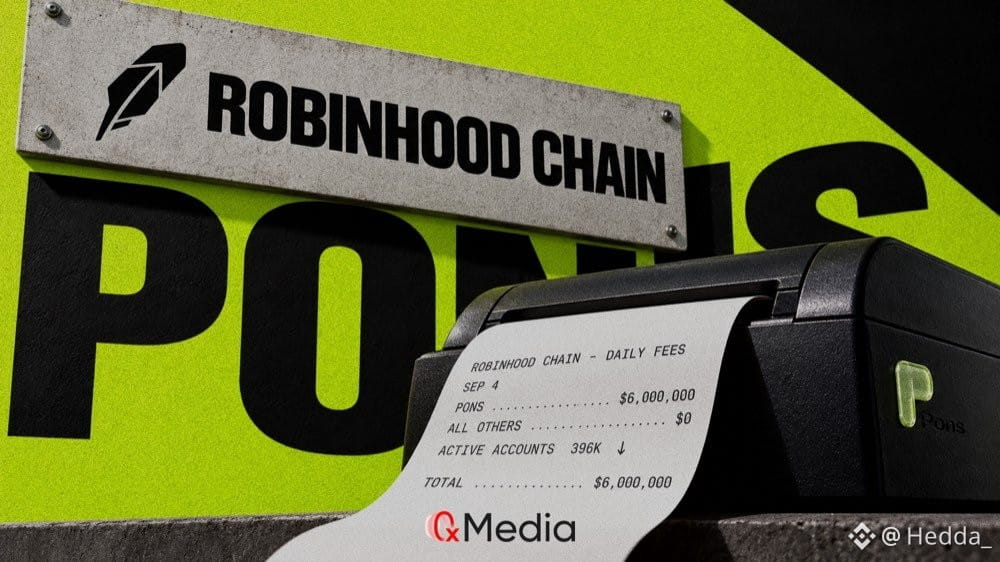
Dangerous signals? Pons family powers Robinhood Chain’s $6 million all-time high in single-day fees, yet user numbers are dropping rapidly
Robinhood Chain, under Robinhood @RobinhoodApp, racked up about $25 million in fees over the past 7 days—17 times the previous week’s $1.4 million. In the same period, DEX weekly trading volume doubled to $12.4 billion. What drove this surge is the chain’s largest token issuance platform $PONS . It allocates about 80% of protocol revenue to buyback-and-burn PONS, and so far has burned more than 28% of the supply
But daily active accounts are around 396,000, showing no growth but actually declining week over week. Fee revenue climbed from $0.13 in mid-August to $15.90 in early September—about a 120-fold increase. This fee milestone came from boosting the existing user base’s willingness to pay. For now, the chain’s main revenue base largely hinges on the issuance pace of Pons alone; once the creation of new tokens and new liquidity pools slows down, the fee base has essentially no second engine to pick up the slack
Dangerous signals? Pons family powers Robinhood Chain’s $6 million all-time high in single-day fees, yet user numbers are dropping rapidly
Robinhood Chain, under Robinhood @RobinhoodApp, racked up about $25 million in fees over the past 7 days—17 times the previous week’s $1.4 million. In the same period, DEX weekly trading volume doubled to $12.4 billion. What drove this surge is the chain’s largest token issuance platform $PONS . It allocates about 80% of protocol revenue to buyback-and-burn PONS, and so far has burned more than 28% of the supply
But daily active accounts are around 396,000, showing no growth but actually declining week over week. Fee revenue climbed from $0.13 in mid-August to $15.90 in early September—about a 120-fold increase. This fee milestone came from boosting the existing user base’s willingness to pay. For now, the chain’s main revenue base largely hinges on the issuance pace of Pons alone; once the creation of new tokens and new liquidity pools slows down, the fee base has essentially no second engine to pick up the slack
Robinhood Chain, under Robinhood @RobinhoodApp, racked up about $25 million in fees over the past 7 days—17 times the previous week’s $1.4 million. In the same period, DEX weekly trading volume doubled to $12.4 billion. What drove this surge is the chain’s largest token issuance platform $PONS . It allocates about 80% of protocol revenue to buyback-and-burn PONS, and so far has burned more than 28% of the supply
But daily active accounts are around 396,000, showing no growth but actually declining week over week. Fee revenue climbed from $0.13 in mid-August to $15.90 in early September—about a 120-fold increase. This fee milestone came from boosting the existing user base’s willingness to pay. For now, the chain’s main revenue base largely hinges on the issuance pace of Pons alone; once the creation of new tokens and new liquidity pools slows down, the fee base has essentially no second engine to pick up the slack
400
·
--
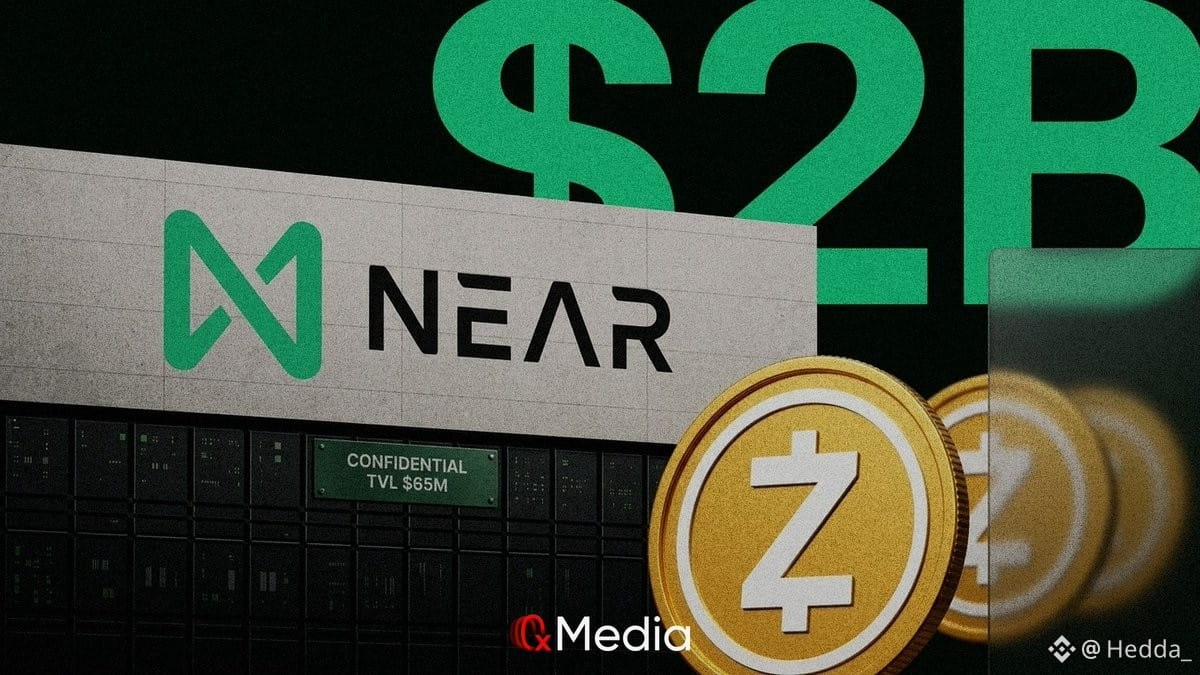
$2.0B in ZEC transaction volume, $65M in privacy TVL—Is NEAR becoming an important channel for the privacy renaissance?
The ZEC transaction volume completed by $NEAR Intents has already surpassed $2.0B. At the same time, the Confidential TVL within the ecosystem has also exceeded $65M. Compared with merely discussing privacy as a concept, these two numbers may better indicate that the privacy ecosystem is thriving.
The role of NEAR Intents is to add an extra layer of cross-chain liquidity for Shielded Assets. For example, the biggest advantage of privacy assets like $ZEC is that they can hide transaction information. However, once they enter more complex DeFi and cross-chain scenarios, liquidity and composability can easily be constrained. With Intent users, these assets can move between different networks and applications, expanding their use while preserving their original privacy attributes as much as possible.
$2.0B in ZEC transaction volume, $65M in privacy TVL—Is NEAR becoming an important channel for the privacy renaissance?
The ZEC transaction volume completed by $NEAR Intents has already surpassed $2.0B. At the same time, the Confidential TVL within the ecosystem has also exceeded $65M. Compared with merely discussing privacy as a concept, these two numbers may better indicate that the privacy ecosystem is thriving.
The role of NEAR Intents is to add an extra layer of cross-chain liquidity for Shielded Assets. For example, the biggest advantage of privacy assets like $ZEC is that they can hide transaction information. However, once they enter more complex DeFi and cross-chain scenarios, liquidity and composability can easily be constrained. With Intent users, these assets can move between different networks and applications, expanding their use while preserving their original privacy attributes as much as possible.
The ZEC transaction volume completed by $NEAR Intents has already surpassed $2.0B. At the same time, the Confidential TVL within the ecosystem has also exceeded $65M. Compared with merely discussing privacy as a concept, these two numbers may better indicate that the privacy ecosystem is thriving.
The role of NEAR Intents is to add an extra layer of cross-chain liquidity for Shielded Assets. For example, the biggest advantage of privacy assets like $ZEC is that they can hide transaction information. However, once they enter more complex DeFi and cross-chain scenarios, liquidity and composability can easily be constrained. With Intent users, these assets can move between different networks and applications, expanding their use while preserving their original privacy attributes as much as possible.
452
·
--
The contrast between hype and reality—@world_xyz, this time it really perfectly captured it!
Solana prediction market @world_xyz recently staged what it called “the greatest hype-marketing experiment in history,” but the results were nothing short of laughable. The whole process went from a surprise teaser on September 2, to rumors of a $319 million airdrop on September 5, and then to a request on September 8 for users to submit their Solana addresses—drawing a huge amount of attention: one tweet reportedly got about 64,000 replies and 39,000 likes.
However, after the hype comes reality: the meme coins tied to the countdown trades crashed by more than 11% within 24 hours, leaving their market cap at only about $2.38 million. And @world_xyz’s official prediction market had already integrated with @phantom back in July—this press conference brought no real product updates.
Behind all this hype, @world_xyz may simply have wanted to test the market’s reaction—but the impact on market confidence is something that can’t help but make one think: in the future, how many people will still be willing to get lured in by “surprises” like this?
Do you think this kind of marketing strategy still has a place in the crypto world? Feel free to share your thoughts in the comments!
#加密货币 #Regulatory Updates
The contrast between hype and reality—@world_xyz, this time it really perfectly captured it!
Solana prediction market @world_xyz recently staged what it called “the greatest hype-marketing experiment in history,” but the results were nothing short of laughable. The whole process went from a surprise teaser on September 2, to rumors of a $319 million airdrop on September 5, and then to a request on September 8 for users to submit their Solana addresses—drawing a huge amount of attention: one tweet reportedly got about 64,000 replies and 39,000 likes.
However, after the hype comes reality: the meme coins tied to the countdown trades crashed by more than 11% within 24 hours, leaving their market cap at only about $2.38 million. And @world_xyz’s official prediction market had already integrated with @phantom back in July—this press conference brought no real product updates.
Behind all this hype, @world_xyz may simply have wanted to test the market’s reaction—but the impact on market confidence is something that can’t help but make one think: in the future, how many people will still be willing to get lured in by “surprises” like this?
Do you think this kind of marketing strategy still has a place in the crypto world? Feel free to share your thoughts in the comments!
#加密货币 #Regulatory Updates
Solana prediction market @world_xyz recently staged what it called “the greatest hype-marketing experiment in history,” but the results were nothing short of laughable. The whole process went from a surprise teaser on September 2, to rumors of a $319 million airdrop on September 5, and then to a request on September 8 for users to submit their Solana addresses—drawing a huge amount of attention: one tweet reportedly got about 64,000 replies and 39,000 likes.
However, after the hype comes reality: the meme coins tied to the countdown trades crashed by more than 11% within 24 hours, leaving their market cap at only about $2.38 million. And @world_xyz’s official prediction market had already integrated with @phantom back in July—this press conference brought no real product updates.
Behind all this hype, @world_xyz may simply have wanted to test the market’s reaction—but the impact on market confidence is something that can’t help but make one think: in the future, how many people will still be willing to get lured in by “surprises” like this?
Do you think this kind of marketing strategy still has a place in the crypto world? Feel free to share your thoughts in the comments!
#加密货币 #Regulatory Updates

107
·
--
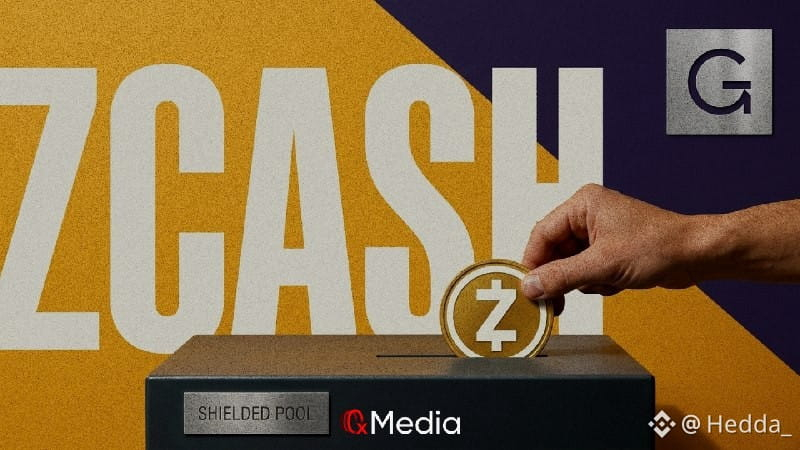
Why Privacy Coins Can Outperform During a Bear Market?📈
Since Bitcoin topped, the privacy sector has risen against the trend by an astonishing 213%. Among them, the Shielded Pool of $ZEC has been a key driving force. The share of ZEC within the shielded pool of circulating supply increased from 23.1% last year to 28.8% now. These shielded ZECs effectively disappear from the view of high-frequency traders, instead boosting the appeal of privacy coins.
Meanwhile, demand-side factors are also accelerating the move. Grayscale converted the Zcash Trust into a spot ETF, ZCSH. The fund size has grown from $304 million to $463 million. This change has undoubtedly given $ZEC broader market exposure and increased capital inflows.
Privacy coins have performed remarkably well in this market cycle—does it mean investors’ demand for privacy protection is being revalued?
#加密货币 #行情分析
Why Privacy Coins Can Outperform During a Bear Market?📈
Since Bitcoin topped, the privacy sector has risen against the trend by an astonishing 213%. Among them, the Shielded Pool of $ZEC has been a key driving force. The share of ZEC within the shielded pool of circulating supply increased from 23.1% last year to 28.8% now. These shielded ZECs effectively disappear from the view of high-frequency traders, instead boosting the appeal of privacy coins.
Meanwhile, demand-side factors are also accelerating the move. Grayscale converted the Zcash Trust into a spot ETF, ZCSH. The fund size has grown from $304 million to $463 million. This change has undoubtedly given $ZEC broader market exposure and increased capital inflows.
Privacy coins have performed remarkably well in this market cycle—does it mean investors’ demand for privacy protection is being revalued?
#加密货币 #行情分析
Since Bitcoin topped, the privacy sector has risen against the trend by an astonishing 213%. Among them, the Shielded Pool of $ZEC has been a key driving force. The share of ZEC within the shielded pool of circulating supply increased from 23.1% last year to 28.8% now. These shielded ZECs effectively disappear from the view of high-frequency traders, instead boosting the appeal of privacy coins.
Meanwhile, demand-side factors are also accelerating the move. Grayscale converted the Zcash Trust into a spot ETF, ZCSH. The fund size has grown from $304 million to $463 million. This change has undoubtedly given $ZEC broader market exposure and increased capital inflows.
Privacy coins have performed remarkably well in this market cycle—does it mean investors’ demand for privacy protection is being revalued?
#加密货币 #行情分析
204
·
--
Verified
Oh my, the Biden family is actually launching a token too?!
Hunter Biden announced that he will issue a Meme coin on Base, with a total supply of 1 billion coins. On the first day, 100 million coins will be air-dropped, including 20 million reserved specifically for wallets with loss-making track records—perhaps the first time in the market has seen a political figure operate this directly through cryptocurrency. The team’s holdings account for as much as 30%; after a 6-month lockup, they will be gradually unlocked. This design makes people question the sincerity of its long-term commitment.
What’s even more interesting is the burn mechanism of up to 30%: events such as the Democratic Party winning the 2028 election, Bitcoin hitting new highs, and others could trigger it. Such aggressive design is rare in the crypto market. With the combination of political influence and market volatility, could this Meme coin become a new kind of investment target?
What do you think about political figures participating in the crypto market? Could coins like this change the current market landscape?
#加密货币 #macroeconomics
Oh my, the Biden family is actually launching a token too?!
Hunter Biden announced that he will issue a Meme coin on Base, with a total supply of 1 billion coins. On the first day, 100 million coins will be air-dropped, including 20 million reserved specifically for wallets with loss-making track records—perhaps the first time in the market has seen a political figure operate this directly through cryptocurrency. The team’s holdings account for as much as 30%; after a 6-month lockup, they will be gradually unlocked. This design makes people question the sincerity of its long-term commitment.
What’s even more interesting is the burn mechanism of up to 30%: events such as the Democratic Party winning the 2028 election, Bitcoin hitting new highs, and others could trigger it. Such aggressive design is rare in the crypto market. With the combination of political influence and market volatility, could this Meme coin become a new kind of investment target?
What do you think about political figures participating in the crypto market? Could coins like this change the current market landscape?
#加密货币 #macroeconomics
Hunter Biden announced that he will issue a Meme coin on Base, with a total supply of 1 billion coins. On the first day, 100 million coins will be air-dropped, including 20 million reserved specifically for wallets with loss-making track records—perhaps the first time in the market has seen a political figure operate this directly through cryptocurrency. The team’s holdings account for as much as 30%; after a 6-month lockup, they will be gradually unlocked. This design makes people question the sincerity of its long-term commitment.
What’s even more interesting is the burn mechanism of up to 30%: events such as the Democratic Party winning the 2028 election, Bitcoin hitting new highs, and others could trigger it. Such aggressive design is rare in the crypto market. With the combination of political influence and market volatility, could this Meme coin become a new kind of investment target?
What do you think about political figures participating in the crypto market? Could coins like this change the current market landscape?
#加密货币 #macroeconomics

3
6
4k
·
--
90%! Vitalik risks his entire fortune on the bet that AI cannot break Bitcoin within two years!
Silicon Valley investor Liron Shapira recently predicted that in the next two years, AI could weaken Bitcoin’s security through vulnerabilities and cyberattacks, causing $BTC to plunge by 50%. However, Vitalik Buterin doesn’t buy it. He believes AI is not just a weapon for attackers—it can also become a shield for defenders.
Vitalik explained that many risks in the Bitcoin network can be addressed through upgrades to clients, nodes, and mining pools, while the real challenge lies in how to coordinate these technical migrations. Although he didn’t directly take Liron’s bet, he has already backed this view with 90% of his net assets, suggesting that if AI manages to bring down $BTC, $ETH likely won’t be spared either.
Can AI really change the fate of the blockchain within two years?
#比特币 #cryptocurrency
90%! Vitalik risks his entire fortune on the bet that AI cannot break Bitcoin within two years!
Silicon Valley investor Liron Shapira recently predicted that in the next two years, AI could weaken Bitcoin’s security through vulnerabilities and cyberattacks, causing $BTC to plunge by 50%. However, Vitalik Buterin doesn’t buy it. He believes AI is not just a weapon for attackers—it can also become a shield for defenders.
Vitalik explained that many risks in the Bitcoin network can be addressed through upgrades to clients, nodes, and mining pools, while the real challenge lies in how to coordinate these technical migrations. Although he didn’t directly take Liron’s bet, he has already backed this view with 90% of his net assets, suggesting that if AI manages to bring down $BTC , $ETH likely won’t be spared either.
Can AI really change the fate of the blockchain within two years?
#比特币 #cryptocurrency
Silicon Valley investor Liron Shapira recently predicted that in the next two years, AI could weaken Bitcoin’s security through vulnerabilities and cyberattacks, causing $BTC to plunge by 50%. However, Vitalik Buterin doesn’t buy it. He believes AI is not just a weapon for attackers—it can also become a shield for defenders.
Vitalik explained that many risks in the Bitcoin network can be addressed through upgrades to clients, nodes, and mining pools, while the real challenge lies in how to coordinate these technical migrations. Although he didn’t directly take Liron’s bet, he has already backed this view with 90% of his net assets, suggesting that if AI manages to bring down $BTC , $ETH likely won’t be spared either.
Can AI really change the fate of the blockchain within two years?
#比特币 #cryptocurrency

1
238
·
--
Verified
From public chain to AI video? Harmony's major pivot is baffling!
After 7 years as a public chain, Harmony is actually closing its mainnet due to a security funding shortfall and migrating $ONE to ERC-20 on Ethereum. Behind this are not only the emergence of cross-shard vulnerabilities, but also the shadow of the earlier Horizon Bridge hack, which stole $100 million. Security costs became the last straw that broke the back of an independent L1.
Harmony's new plan is surprising: enter the AI video field and launch The Remix Economy, no longer focusing on blockchain. The original validator role is also being overhauled, transforming into a Governor or GPU Operator. This kind of drastic change in direction may be a move in step with market and technological developments.
The question is: can Harmony's pivot find a new growth point in AI, or will it become another failed adventure?
#山寨币 #cryptocurrency
From public chain to AI video? Harmony's major pivot is baffling!
After 7 years as a public chain, Harmony is actually closing its mainnet due to a security funding shortfall and migrating $ONE to ERC-20 on Ethereum. Behind this are not only the emergence of cross-shard vulnerabilities, but also the shadow of the earlier Horizon Bridge hack, which stole $100 million. Security costs became the last straw that broke the back of an independent L1.
Harmony's new plan is surprising: enter the AI video field and launch The Remix Economy, no longer focusing on blockchain. The original validator role is also being overhauled, transforming into a Governor or GPU Operator. This kind of drastic change in direction may be a move in step with market and technological developments.
The question is: can Harmony's pivot find a new growth point in AI, or will it become another failed adventure?
#山寨币 #cryptocurrency
After 7 years as a public chain, Harmony is actually closing its mainnet due to a security funding shortfall and migrating $ONE to ERC-20 on Ethereum. Behind this are not only the emergence of cross-shard vulnerabilities, but also the shadow of the earlier Horizon Bridge hack, which stole $100 million. Security costs became the last straw that broke the back of an independent L1.
Harmony's new plan is surprising: enter the AI video field and launch The Remix Economy, no longer focusing on blockchain. The original validator role is also being overhauled, transforming into a Governor or GPU Operator. This kind of drastic change in direction may be a move in step with market and technological developments.
The question is: can Harmony's pivot find a new growth point in AI, or will it become another failed adventure?
#山寨币 #cryptocurrency

670
·
--
Article
ZEC’s best partner? NEAR, blessed by timing and environment, is right at the intersection of two top narratives: AI and privacySome people say that without NEAR, ZEC would have had a hard time getting to today’s $1000. If this round of Zcash’s rally brings privacy and the cypherpunk spirit back to the center of the market, then following that line further outward, NEAR may be one of the most overlooked branches right now, because what it is doing looks more like building a highway from privacy assets like ZEC to the entire Crypto world, while also connecting Privacy into AI Agents, cross-chain trading, and on-chain execution, becoming truly the best support
If you watched the NEAR founder interview we released before, you’ll find that this nearly half-hour piece is actually packed with information. Illia talks from NEAR’s origins to privacy AI, AI applications in healthcare and finance, and then extends all the way to the agent market, chain abstraction, Jensen Huang, Privacy, ZEC, and open versus closed AI, finally landing on decentralized models. Looking at these keywords on their own, it almost covers all of the hottest narratives of this cycle
ZEC’s best partner? NEAR, blessed by timing and environment, is right at the intersection of two top narratives: AI and privacy
Some people say that without NEAR, ZEC would have had a hard time getting to today’s $1000. If this round of Zcash’s rally brings privacy and the cypherpunk spirit back to the center of the market, then following that line further outward, NEAR may be one of the most overlooked branches right now, because what it is doing looks more like building a highway from privacy assets like ZEC to the entire Crypto world, while also connecting Privacy into AI Agents, cross-chain trading, and on-chain execution, becoming truly the best support
If you watched the NEAR founder interview we released before, you’ll find that this nearly half-hour piece is actually packed with information. Illia talks from NEAR’s origins to privacy AI, AI applications in healthcare and finance, and then extends all the way to the agent market, chain abstraction, Jensen Huang, Privacy, ZEC, and open versus closed AI, finally landing on decentralized models. Looking at these keywords on their own, it almost covers all of the hottest narratives of this cycle
If you watched the NEAR founder interview we released before, you’ll find that this nearly half-hour piece is actually packed with information. Illia talks from NEAR’s origins to privacy AI, AI applications in healthcare and finance, and then extends all the way to the agent market, chain abstraction, Jensen Huang, Privacy, ZEC, and open versus closed AI, finally landing on decentralized models. Looking at these keywords on their own, it almost covers all of the hottest narratives of this cycle
1
466
·
--
Is Nike being kicked out of the S&P 100? That’s really unexpected! 🌀
Nike, once a consumer giant, has actually plunged nearly 80% since its stock price peak in 2021, shrinking its market value to about $58 billion. Even though it remains in the S&P 500, being removed from the S&P 100 shows that its market capitalization and liquidity no longer hold an advantage.
This adjustment is not only the result of changes in market-cap rankings, but also adds structural selling pressure on Nike, especially as its revenue has stagnated and the Greater China market remains under pressure. Meanwhile, companies such as Dell and Palo Alto Networks, along with other enterprise hardware and cybersecurity firms, have entered the index strongly, highlighting the rise of the tech sector.
Does Nike’s removal mean that traditional consumer goods companies are gradually losing ground in competition? #宏观经济 #regulatory_updates
Is Nike being kicked out of the S&P 100? That’s really unexpected! 🌀
Nike, once a consumer giant, has actually plunged nearly 80% since its stock price peak in 2021, shrinking its market value to about $58 billion. Even though it remains in the S&P 500, being removed from the S&P 100 shows that its market capitalization and liquidity no longer hold an advantage.
This adjustment is not only the result of changes in market-cap rankings, but also adds structural selling pressure on Nike, especially as its revenue has stagnated and the Greater China market remains under pressure. Meanwhile, companies such as Dell and Palo Alto Networks, along with other enterprise hardware and cybersecurity firms, have entered the index strongly, highlighting the rise of the tech sector.
Does Nike’s removal mean that traditional consumer goods companies are gradually losing ground in competition? #宏观经济 #regulatory_updates
Nike, once a consumer giant, has actually plunged nearly 80% since its stock price peak in 2021, shrinking its market value to about $58 billion. Even though it remains in the S&P 500, being removed from the S&P 100 shows that its market capitalization and liquidity no longer hold an advantage.
This adjustment is not only the result of changes in market-cap rankings, but also adds structural selling pressure on Nike, especially as its revenue has stagnated and the Greater China market remains under pressure. Meanwhile, companies such as Dell and Palo Alto Networks, along with other enterprise hardware and cybersecurity firms, have entered the index strongly, highlighting the rise of the tech sector.
Does Nike’s removal mean that traditional consumer goods companies are gradually losing ground in competition? #宏观经济 #regulatory_updates
284
·
--
Robinhood Chain's DEX trading volume has surpassed Solana's for the first time, and the reasons behind it are worth exploring in depth.
According to DeFiLlama data, on September 5, Robinhood Chain's daily DEX trading volume reached $1.89 billion, slightly exceeding Solana's $1.88 billion. This breakthrough not only put Robinhood Chain on the global daily leaderboard, but also marked the rapid expansion of its ecosystem.
Robinhood's strategy seems to be working: the wallet-side 90-day full Gas subsidy is crucial. Lower transaction costs have attracted a large number of users to participate, especially as meme token turnover surged, becoming the catalyst for the spike in trading volume.
What impact will such a zero-cost environment have on other chains? Can Solana take effective measures to defend its market position?
#加密货币 #macroeconomics
Robinhood Chain's DEX trading volume has surpassed Solana's for the first time, and the reasons behind it are worth exploring in depth.
According to DeFiLlama data, on September 5, Robinhood Chain's daily DEX trading volume reached $1.89 billion, slightly exceeding Solana's $1.88 billion. This breakthrough not only put Robinhood Chain on the global daily leaderboard, but also marked the rapid expansion of its ecosystem.
Robinhood's strategy seems to be working: the wallet-side 90-day full Gas subsidy is crucial. Lower transaction costs have attracted a large number of users to participate, especially as meme token turnover surged, becoming the catalyst for the spike in trading volume.
What impact will such a zero-cost environment have on other chains? Can Solana take effective measures to defend its market position?
#加密货币 #macroeconomics
According to DeFiLlama data, on September 5, Robinhood Chain's daily DEX trading volume reached $1.89 billion, slightly exceeding Solana's $1.88 billion. This breakthrough not only put Robinhood Chain on the global daily leaderboard, but also marked the rapid expansion of its ecosystem.
Robinhood's strategy seems to be working: the wallet-side 90-day full Gas subsidy is crucial. Lower transaction costs have attracted a large number of users to participate, especially as meme token turnover surged, becoming the catalyst for the spike in trading volume.
What impact will such a zero-cost environment have on other chains? Can Solana take effective measures to defend its market position?
#加密货币 #macroeconomics
178
·
--
The collision between traditional finance and blockchain is actually mortgage loans being brought on chain?
Canada’s Pineapple Financial chose to put its residential mortgage loan records on-chain on the $INJ platform. In just a short time since launch, the scale has grown from $1 billion to $1.1 billion. Behind this lies an important message: traditional financial record systems are steadily moving into the world of blockchain.
This on-chain move is not simple. It only puts the data layer of loan files on-chain, with more than 500 data points tied to each loan, without changing the existing legal structure. This means Pineapple Financial can gradually migrate mortgage loan data to blockchain without affecting securities issuance and registration procedures.
Pineapple also holds about $100 million in the $INJ treasury and plans to launch a permissioned mortgage loan data marketplace. This is not only a disruption to the traditional financial model, but also a major transformation of the on-chain financial ecosystem.
So, in the future, will more financial institutions follow Pineapple’s lead and bring assets on-chain?
#加密货币 #macroeconomics
The collision between traditional finance and blockchain is actually mortgage loans being brought on chain?
Canada’s Pineapple Financial chose to put its residential mortgage loan records on-chain on the $INJ platform. In just a short time since launch, the scale has grown from $1 billion to $1.1 billion. Behind this lies an important message: traditional financial record systems are steadily moving into the world of blockchain.
This on-chain move is not simple. It only puts the data layer of loan files on-chain, with more than 500 data points tied to each loan, without changing the existing legal structure. This means Pineapple Financial can gradually migrate mortgage loan data to blockchain without affecting securities issuance and registration procedures.
Pineapple also holds about $100 million in the $INJ treasury and plans to launch a permissioned mortgage loan data marketplace. This is not only a disruption to the traditional financial model, but also a major transformation of the on-chain financial ecosystem.
So, in the future, will more financial institutions follow Pineapple’s lead and bring assets on-chain?
#加密货币 #macroeconomics
Canada’s Pineapple Financial chose to put its residential mortgage loan records on-chain on the $INJ platform. In just a short time since launch, the scale has grown from $1 billion to $1.1 billion. Behind this lies an important message: traditional financial record systems are steadily moving into the world of blockchain.
This on-chain move is not simple. It only puts the data layer of loan files on-chain, with more than 500 data points tied to each loan, without changing the existing legal structure. This means Pineapple Financial can gradually migrate mortgage loan data to blockchain without affecting securities issuance and registration procedures.
Pineapple also holds about $100 million in the $INJ treasury and plans to launch a permissioned mortgage loan data marketplace. This is not only a disruption to the traditional financial model, but also a major transformation of the on-chain financial ecosystem.
So, in the future, will more financial institutions follow Pineapple’s lead and bring assets on-chain?
#加密货币 #macroeconomics
356
·
--
Can pickleball also spark a new Web3 trend? FUTUREMODE Taipei Future Fest teamed up with $AVAX and Pudgy Penguins this time to host a truly unique pickleball meetup! On the afternoon of September 5, friends who love sports and crypto had the chance to gather in Taipei.
This event was not only about sports, but also provided an in-person platform for the Web3 community to connect. Is there a KOL you like here? Maybe they’re on the court waiting to play with you! The support of the sponsors made the event even more colorful, and the participation of $AVAX also makes people look forward to more on-chain interactions.
Events like this are not just entertainment; behind them lies proof of the growing crypto community. The future social style of Web3 is quietly changing—are you ready to embrace it?
What kind of changes do you think such offline events can bring to the Web3 community?
#加密货币 #Binance Square
Can pickleball also spark a new Web3 trend? FUTUREMODE Taipei Future Fest teamed up with $AVAX and Pudgy Penguins this time to host a truly unique pickleball meetup! On the afternoon of September 5, friends who love sports and crypto had the chance to gather in Taipei.
This event was not only about sports, but also provided an in-person platform for the Web3 community to connect. Is there a KOL you like here? Maybe they’re on the court waiting to play with you! The support of the sponsors made the event even more colorful, and the participation of $AVAX also makes people look forward to more on-chain interactions.
Events like this are not just entertainment; behind them lies proof of the growing crypto community. The future social style of Web3 is quietly changing—are you ready to embrace it?
What kind of changes do you think such offline events can bring to the Web3 community?
#加密货币 #Binance Square
This event was not only about sports, but also provided an in-person platform for the Web3 community to connect. Is there a KOL you like here? Maybe they’re on the court waiting to play with you! The support of the sponsors made the event even more colorful, and the participation of $AVAX also makes people look forward to more on-chain interactions.
Events like this are not just entertainment; behind them lies proof of the growing crypto community. The future social style of Web3 is quietly changing—are you ready to embrace it?
What kind of changes do you think such offline events can bring to the Web3 community?
#加密货币 #Binance Square

347
·
--
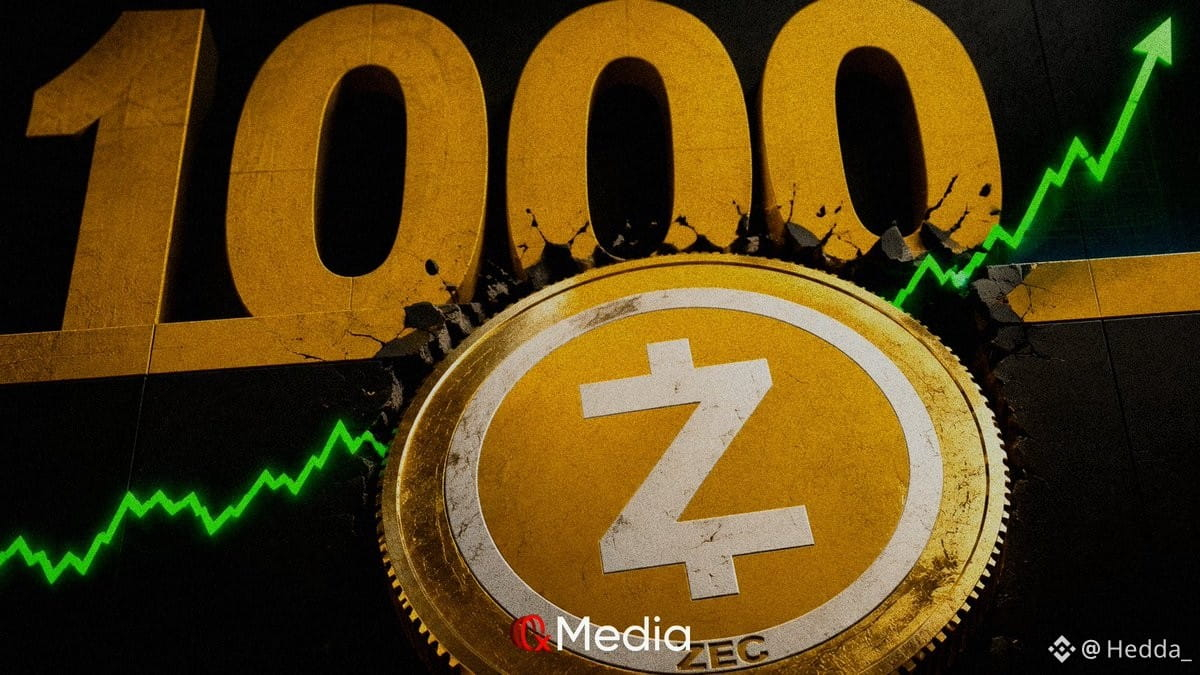
Incredible! ZEC has once again broken through the $1,000 mark!
ZEC has risen more than 100% over the past month. Just two days ago it was still hovering around $800, and now it has broken through $1,000. Such an accelerated surge is astonishing.
What ZEC now faces is a true market test. Although there have historically been quotes of several thousand dollars, liquidity was extremely poor at the time, so it is not very meaningful. If ZEC breaks above $1,300, the market will reprice it, and investors' confidence in privacy coins will face a severe test.
Is ZEC's future really a vast sea of stars?
#加密货币 #MarketAnalysis
Incredible! ZEC has once again broken through the $1,000 mark!
ZEC has risen more than 100% over the past month. Just two days ago it was still hovering around $800, and now it has broken through $1,000. Such an accelerated surge is astonishing.
What ZEC now faces is a true market test. Although there have historically been quotes of several thousand dollars, liquidity was extremely poor at the time, so it is not very meaningful. If ZEC breaks above $1,300, the market will reprice it, and investors' confidence in privacy coins will face a severe test.
Is ZEC's future really a vast sea of stars?
#加密货币 #MarketAnalysis
ZEC has risen more than 100% over the past month. Just two days ago it was still hovering around $800, and now it has broken through $1,000. Such an accelerated surge is astonishing.
What ZEC now faces is a true market test. Although there have historically been quotes of several thousand dollars, liquidity was extremely poor at the time, so it is not very meaningful. If ZEC breaks above $1,300, the market will reprice it, and investors' confidence in privacy coins will face a severe test.
Is ZEC's future really a vast sea of stars?
#加密货币 #MarketAnalysis
482
·
--
How big is the charm of GPT-6 Astro? Even pre-heating posts attracted more than 40,000 favorites!
On September 3, OpenAI released GPT-6 Astro, but it is not fully available yet—currently only to select institutions. Paid users, API users, and AWS users need to be patient; it will be gradually rolled out later.
What’s astonishing is that on the first day, the tweet garnered over 31.7 million views, nearly 15,000 retweets, and favorites—at close to three times the number of retweets—showing strong market interest in GPT-6 Astro. OpenAI also thoughtfully promised that for paid users, every day of delayed access will come with an allowance reset, ensuring a great experience.
Demand for AI technology is heating up—will GPT-6 Astro lead the trend again?
#宏观经济 #cryptocurrency
How big is the charm of GPT-6 Astro? Even pre-heating posts attracted more than 40,000 favorites!
On September 3, OpenAI released GPT-6 Astro, but it is not fully available yet—currently only to select institutions. Paid users, API users, and AWS users need to be patient; it will be gradually rolled out later.
What’s astonishing is that on the first day, the tweet garnered over 31.7 million views, nearly 15,000 retweets, and favorites—at close to three times the number of retweets—showing strong market interest in GPT-6 Astro. OpenAI also thoughtfully promised that for paid users, every day of delayed access will come with an allowance reset, ensuring a great experience.
Demand for AI technology is heating up—will GPT-6 Astro lead the trend again?
#宏观经济 #cryptocurrency
On September 3, OpenAI released GPT-6 Astro, but it is not fully available yet—currently only to select institutions. Paid users, API users, and AWS users need to be patient; it will be gradually rolled out later.
What’s astonishing is that on the first day, the tweet garnered over 31.7 million views, nearly 15,000 retweets, and favorites—at close to three times the number of retweets—showing strong market interest in GPT-6 Astro. OpenAI also thoughtfully promised that for paid users, every day of delayed access will come with an allowance reset, ensuring a great experience.
Demand for AI technology is heating up—will GPT-6 Astro lead the trend again?
#宏观经济 #cryptocurrency

148
·
--
S&P 500’s wild run toward new highs—yet why have short sellers surged?
The S&P 500 is less than 2% away from its all-time high, but short positions have risen to 3.2% of market value— the highest level since 2009. In this seemingly contradictory situation, what’s your take?
Behind this abnormal phenomenon is extreme market polarization: AI-weighted stocks such as $NVDA contribute most of the gains, while many other ordinary S&P 500 component stocks are being heavily shorted. Investors are chasing AI wealth while also hedging risk, showing that they’re uncertain about what lies ahead for the market.
Does the spike in short positions mean a correction is coming, or are investors simply being too cautious?
#宏观经济 #Market analysis
S&P 500’s wild run toward new highs—yet why have short sellers surged?
The S&P 500 is less than 2% away from its all-time high, but short positions have risen to 3.2% of market value— the highest level since 2009. In this seemingly contradictory situation, what’s your take?
Behind this abnormal phenomenon is extreme market polarization: AI-weighted stocks such as $NVDA contribute most of the gains, while many other ordinary S&P 500 component stocks are being heavily shorted. Investors are chasing AI wealth while also hedging risk, showing that they’re uncertain about what lies ahead for the market.
Does the spike in short positions mean a correction is coming, or are investors simply being too cautious?
#宏观经济 #Market analysis
The S&P 500 is less than 2% away from its all-time high, but short positions have risen to 3.2% of market value— the highest level since 2009. In this seemingly contradictory situation, what’s your take?
Behind this abnormal phenomenon is extreme market polarization: AI-weighted stocks such as $NVDA contribute most of the gains, while many other ordinary S&P 500 component stocks are being heavily shorted. Investors are chasing AI wealth while also hedging risk, showing that they’re uncertain about what lies ahead for the market.
Does the spike in short positions mean a correction is coming, or are investors simply being too cautious?
#宏观经济 #Market analysis

244
·
--
Article
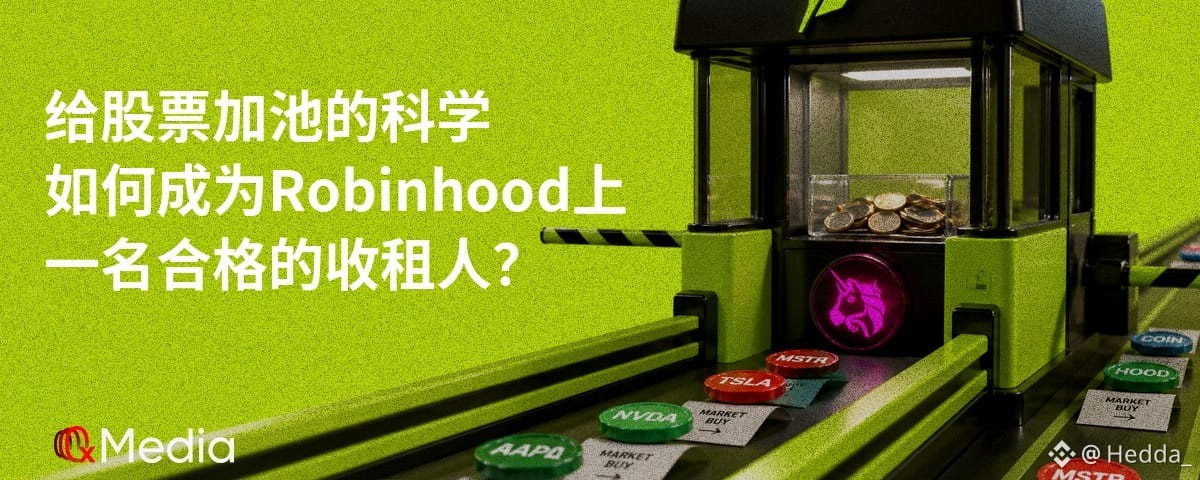
The science of adding liquidity pools for stocks: how to become a qualified rent-collector on Robinhood?Does it feel a little like the DeFi Summer that happened back then over these past few days? Only this time, what’s been moved on-chain are truly stock-based assets—Nvidia, Tesla, Apple, and the like. After the launch of the Robinhood Chain, stocks are rapidly entering Uniswap’s liquidity markets, and for the first time, everyone can directly provide liquidity for stocks—earning trading fees in the process. But behind those high APYs there are also plenty of traps: inflated annualized returns, incorrect fee tiers, route splitting, going out of range, cross-chain losses—choosing the wrong setting at any step can turn “high yield” into something that exists only in thin air. This tutorial will walk you through everything—from selecting stocks, pools, fees, and routes, to managing positions in and out—so you’ll know exactly how to earn the money you should from this new wave of stock DeFi, and which pitfalls to avoid.
The science of adding liquidity pools for stocks: how to become a qualified rent-collector on Robinhood?
Does it feel a little like the DeFi Summer that happened back then over these past few days? Only this time, what’s been moved on-chain are truly stock-based assets—Nvidia, Tesla, Apple, and the like. After the launch of the Robinhood Chain, stocks are rapidly entering Uniswap’s liquidity markets, and for the first time, everyone can directly provide liquidity for stocks—earning trading fees in the process. But behind those high APYs there are also plenty of traps: inflated annualized returns, incorrect fee tiers, route splitting, going out of range, cross-chain losses—choosing the wrong setting at any step can turn “high yield” into something that exists only in thin air. This tutorial will walk you through everything—from selecting stocks, pools, fees, and routes, to managing positions in and out—so you’ll know exactly how to earn the money you should from this new wave of stock DeFi, and which pitfalls to avoid.
108
·
--
Will the SEC really give blockchain the green light?
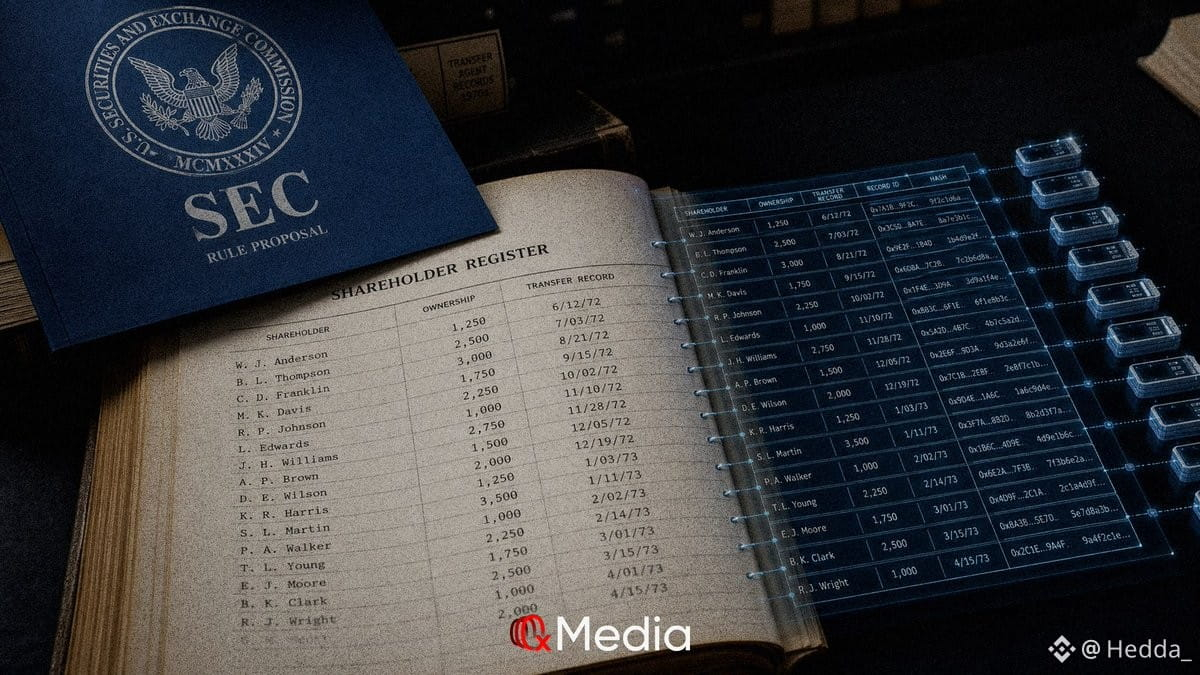
This time, the U.S. Securities and Exchange Commission (SEC) has put forward a rule proposal that spans 421 pages, aiming to overhaul the transfer agent system that has been in place since the late 1970s. This means that, in the context of the securities market becoming increasingly digitized, blockchain will be incorporated into the practical operations of securities issuance and share transfers.
Transfer agents are the cornerstone of the U.S. securities market, responsible for key tasks such as maintaining shareholder records, share vesting, and distributing dividends. The SEC is not only looking to amend registration and reporting rules, but also soliciting public input on emerging technologies like on-chain recordkeeping and the custody of tokenized securities. This represents a major acknowledgment of blockchain technology’s role in the traditional financial system.
So, will blockchain technology accelerate changes in the traditional securities market? How will market participants respond to this new rule?
#加密货币 #Regulatory Developments
Will the SEC really give blockchain the green light?
This time, the U.S. Securities and Exchange Commission (SEC) has put forward a rule proposal that spans 421 pages, aiming to overhaul the transfer agent system that has been in place since the late 1970s. This means that, in the context of the securities market becoming increasingly digitized, blockchain will be incorporated into the practical operations of securities issuance and share transfers.
Transfer agents are the cornerstone of the U.S. securities market, responsible for key tasks such as maintaining shareholder records, share vesting, and distributing dividends. The SEC is not only looking to amend registration and reporting rules, but also soliciting public input on emerging technologies like on-chain recordkeeping and the custody of tokenized securities. This represents a major acknowledgment of blockchain technology’s role in the traditional financial system.
So, will blockchain technology accelerate changes in the traditional securities market? How will market participants respond to this new rule?
#加密货币 #Regulatory Developments
This time, the U.S. Securities and Exchange Commission (SEC) has put forward a rule proposal that spans 421 pages, aiming to overhaul the transfer agent system that has been in place since the late 1970s. This means that, in the context of the securities market becoming increasingly digitized, blockchain will be incorporated into the practical operations of securities issuance and share transfers.
Transfer agents are the cornerstone of the U.S. securities market, responsible for key tasks such as maintaining shareholder records, share vesting, and distributing dividends. The SEC is not only looking to amend registration and reporting rules, but also soliciting public input on emerging technologies like on-chain recordkeeping and the custody of tokenized securities. This represents a major acknowledgment of blockchain technology’s role in the traditional financial system.
So, will blockchain technology accelerate changes in the traditional securities market? How will market participants respond to this new rule?
#加密货币 #Regulatory Developments
408
·
--
Article
Robinhood’s buzz spills over: UNI burns as it rallies—could $100 in the future be only the starting price?After being quiet for more than a dozen days, UNI suddenly returned to everyone’s focus. By the end of August, UNI had risen from around $3.2 in mid-August to around $5, and on August 30 alone, the single-day gain reached double digits. Even more striking is that the scale of UNI burning is rapidly increasing; at one point, the latest annualized burn value was pushed to about $160 million. The spark for all of this was Robinhood...
Standard Chartered Bank previously called out a fairly outrageous target price for UNI—by 2030, UNI could rise to $100. What’s even more interesting is that with the sudden explosion of stock token trading on the Robinhood Chain, Geoffrey Kendrick, Head of Digital Assets Research at Standard Chartered, has recently even started to think that his $100 target might not be high enough—that he may have been calling it low.
Robinhood’s buzz spills over: UNI burns as it rallies—could $100 in the future be only the starting price?
After being quiet for more than a dozen days, UNI suddenly returned to everyone’s focus. By the end of August, UNI had risen from around $3.2 in mid-August to around $5, and on August 30 alone, the single-day gain reached double digits. Even more striking is that the scale of UNI burning is rapidly increasing; at one point, the latest annualized burn value was pushed to about $160 million. The spark for all of this was Robinhood...
Standard Chartered Bank previously called out a fairly outrageous target price for UNI—by 2030, UNI could rise to $100. What’s even more interesting is that with the sudden explosion of stock token trading on the Robinhood Chain, Geoffrey Kendrick, Head of Digital Assets Research at Standard Chartered, has recently even started to think that his $100 target might not be high enough—that he may have been calling it low.
Standard Chartered Bank previously called out a fairly outrageous target price for UNI—by 2030, UNI could rise to $100. What’s even more interesting is that with the sudden explosion of stock token trading on the Robinhood Chain, Geoffrey Kendrick, Head of Digital Assets Research at Standard Chartered, has recently even started to think that his $100 target might not be high enough—that he may have been calling it low.
412
Log in to explore more content
Join global crypto users on Binance Square
⚡️ Get latest and useful information about crypto.
💬 Trusted by the world’s largest crypto exchange.
👍 Discover real insights from verified creators.
Email / Phone number
Trending Topics
USAugustPPIRisesLessThanExpected
860 views
91 Discussing
#usaugustppiriseslessthanexpected August #PPI
moved up 0.4% seasonally adjusted. Final demand prices rose 0.1% in July and decreased 0.1% in June.
-> On an unadjusted basis, the index for final demand increased 5.4% for the 12 months ended in
August.$CYS $PUMP $PTB
Isabella-I
·0 Likes
·253 views
SECApprovesNasdaqTexasCommodityTrustRule
2,760 views
146 Discussing
ECBRaisesRatesSecondTimeTo2.5%
1,300 views
94 Discussing