

Justcryptopays
2.1k Posts

Justcryptopays
Report
Block User
Crypto enthusiast | Exploring blockchain | insightful and Trader | CMC KOL
25 Following
2.0K+ Followers
5.0K+ Liked
Posts
All
Quotes
PINNED

Article
Crypto Volatility: How Traders Can Profit From Market SwingsCryptocurrency markets are famous for one defining characteristic volatility. Unlike traditional equities or bonds, major digital assets like $BTC and Litecoin (LTC) can swing 10–30% or more in a single day sometimes much more.
While volatility scares conservative investors, it creates opportunities for knowledgeable traders to profit from price movements in both directions.
What Is Crypto Volatility?
Volatility measures how dramatically prices move over time. In crypto:
Bitcoin : historically has seen annualized volatility far above most stocks
Litecoin : correlated with BTC but often more erratic has experienced huge range-bound swings from its lows to all-time highs
This volatility is driven by factors like 24/7 trading, sentiment-driven news cycles, shifting liquidity, and macroeconomic events that affect risk assets.
Historical BTC & LTC Spikes
Bitcoin
2020–2021 Rally + Crash:
Bitcoin surged from roughly $10,000 to over $64,000 in less than a year, before crashing back toward $30,000 within months a move of nearly ±50%+ peak-to-trough
2011–2013 Experiences:
Early in its life, BTC bounced from $31 to nearly $300, then collapsed again
COVID Crash (March 2020):
BTC’s largest one-day drop was about 50%, followed by an aggressive rebound the kind of volatility that infuses opportunity and risk.
Litecoin (LTC)
$LTC , one of the oldest Bitcoin forks, has shown even larger historical percentage moves:
In the 2013–2015 era, LTC fell 97% from its peak to valley, then rallied to a new high in 2017 a 27,600% gain from earlier lows.
Its all-time high of over $400 remains a landmark of crypto volatility.
These dramatic movements underline why volatility isn’t just noise it fuels tradable price swings.
How Traders Make Money From Volatility
Swing Trading
Swing traders hold positions for days to weeks to capture significant price swings as markets trend up or down. They use tools like RSI, MACD, and Fibonacci retracements to time entries and exits
This strategy works in BTC and LTC alike watch for sharp pullbacks followed by momentum continuation to enter positions.
Scalping
Scalpers make many small trades within short timeframes aiming to profit from frequent mini-swings. Volatility creates constant opportunities for quick entry/exit patterns. It requires discipline, fast reactions, and platforms with low fees.
Arbitrage
During volatile periods, price spreads between exchanges often widen.
Traders buy on a cheaper exchange and sell on a more expensive one. Crypto arbitrage is especially relevant across global exchanges where liquidity imbalances arise.This strategy works well in highly volatile regimes where prices momentarily dislocate across platforms.
Derivatives
Advanced traders use futures, options, and other derivatives to tailor risk and amplify profits:
Futures allow directional bets on price movement with leverage. Options strategies (like straddles or strangles) profit when price swings either way, even if direction is uncertain.
Why Volatility Is the Trader’s Friend
Traditional investors often interpret volatility as instability and heightened risk. Traders, on the other hand, see it as opportunity in motion. Rapid price swings create clear entry and exit points. Temporary imbalances in price open the door for strategic positioning.
Different market conditions allow traders to apply multiple approaches, from short-term scalping to longer-term swing setups. Most importantly, volatility rewards those who stay disciplined, manage risk carefully, and stick to a well-defined plan.
In conclusion BTC and LTC volatility isn’t randomly chaotic it’s systematic and repeatable. Historical spikes give traders a roadmap for patterns, reactions, and range boundaries. With a solid strategy, good risk controls, and technical discipline, crypto market swings are not just fluctuations they’re opportunities.
#CZAMAonBinanceSquare
Crypto Volatility: How Traders Can Profit From Market Swings
Cryptocurrency markets are famous for one defining characteristic volatility. Unlike traditional equities or bonds, major digital assets like $BTC and Litecoin (LTC) can swing 10–30% or more in a single day sometimes much more.
While volatility scares conservative investors, it creates opportunities for knowledgeable traders to profit from price movements in both directions.
What Is Crypto Volatility?
Volatility measures how dramatically prices move over time. In crypto:
Bitcoin : historically has seen annualized volatility far above most stocks
Litecoin : correlated with BTC but often more erratic has experienced huge range-bound swings from its lows to all-time highs
This volatility is driven by factors like 24/7 trading, sentiment-driven news cycles, shifting liquidity, and macroeconomic events that affect risk assets.
Historical BTC & LTC Spikes
Bitcoin
2020–2021 Rally + Crash:
Bitcoin surged from roughly $10,000 to over $64,000 in less than a year, before crashing back toward $30,000 within months a move of nearly ±50%+ peak-to-trough
2011–2013 Experiences:
Early in its life, BTC bounced from $31 to nearly $300, then collapsed again
COVID Crash (March 2020):
BTC’s largest one-day drop was about 50%, followed by an aggressive rebound the kind of volatility that infuses opportunity and risk.
Litecoin (LTC)
$LTC , one of the oldest Bitcoin forks, has shown even larger historical percentage moves:
In the 2013–2015 era, LTC fell 97% from its peak to valley, then rallied to a new high in 2017 a 27,600% gain from earlier lows.
Its all-time high of over $400 remains a landmark of crypto volatility.
These dramatic movements underline why volatility isn’t just noise it fuels tradable price swings.
How Traders Make Money From Volatility
Swing Trading
Swing traders hold positions for days to weeks to capture significant price swings as markets trend up or down. They use tools like RSI, MACD, and Fibonacci retracements to time entries and exits
This strategy works in BTC and LTC alike watch for sharp pullbacks followed by momentum continuation to enter positions.
Scalping
Scalpers make many small trades within short timeframes aiming to profit from frequent mini-swings. Volatility creates constant opportunities for quick entry/exit patterns. It requires discipline, fast reactions, and platforms with low fees.
Arbitrage
During volatile periods, price spreads between exchanges often widen.
Traders buy on a cheaper exchange and sell on a more expensive one. Crypto arbitrage is especially relevant across global exchanges where liquidity imbalances arise.This strategy works well in highly volatile regimes where prices momentarily dislocate across platforms.
Derivatives
Advanced traders use futures, options, and other derivatives to tailor risk and amplify profits:
Futures allow directional bets on price movement with leverage. Options strategies (like straddles or strangles) profit when price swings either way, even if direction is uncertain.
Why Volatility Is the Trader’s Friend
Traditional investors often interpret volatility as instability and heightened risk. Traders, on the other hand, see it as opportunity in motion. Rapid price swings create clear entry and exit points. Temporary imbalances in price open the door for strategic positioning.
Different market conditions allow traders to apply multiple approaches, from short-term scalping to longer-term swing setups. Most importantly, volatility rewards those who stay disciplined, manage risk carefully, and stick to a well-defined plan.
In conclusion BTC and LTC volatility isn’t randomly chaotic it’s systematic and repeatable. Historical spikes give traders a roadmap for patterns, reactions, and range boundaries. With a solid strategy, good risk controls, and technical discipline, crypto market swings are not just fluctuations they’re opportunities.
#CZAMAonBinanceSquare
While volatility scares conservative investors, it creates opportunities for knowledgeable traders to profit from price movements in both directions.
What Is Crypto Volatility?
Volatility measures how dramatically prices move over time. In crypto:
Bitcoin : historically has seen annualized volatility far above most stocks
Litecoin : correlated with BTC but often more erratic has experienced huge range-bound swings from its lows to all-time highs
This volatility is driven by factors like 24/7 trading, sentiment-driven news cycles, shifting liquidity, and macroeconomic events that affect risk assets.
Historical BTC & LTC Spikes
Bitcoin
2020–2021 Rally + Crash:
Bitcoin surged from roughly $10,000 to over $64,000 in less than a year, before crashing back toward $30,000 within months a move of nearly ±50%+ peak-to-trough
2011–2013 Experiences:
Early in its life, BTC bounced from $31 to nearly $300, then collapsed again
COVID Crash (March 2020):
BTC’s largest one-day drop was about 50%, followed by an aggressive rebound the kind of volatility that infuses opportunity and risk.
Litecoin (LTC)
$LTC , one of the oldest Bitcoin forks, has shown even larger historical percentage moves:
In the 2013–2015 era, LTC fell 97% from its peak to valley, then rallied to a new high in 2017 a 27,600% gain from earlier lows.
Its all-time high of over $400 remains a landmark of crypto volatility.
These dramatic movements underline why volatility isn’t just noise it fuels tradable price swings.
How Traders Make Money From Volatility
Swing Trading
Swing traders hold positions for days to weeks to capture significant price swings as markets trend up or down. They use tools like RSI, MACD, and Fibonacci retracements to time entries and exits
This strategy works in BTC and LTC alike watch for sharp pullbacks followed by momentum continuation to enter positions.
Scalping
Scalpers make many small trades within short timeframes aiming to profit from frequent mini-swings. Volatility creates constant opportunities for quick entry/exit patterns. It requires discipline, fast reactions, and platforms with low fees.
Arbitrage
During volatile periods, price spreads between exchanges often widen.
Traders buy on a cheaper exchange and sell on a more expensive one. Crypto arbitrage is especially relevant across global exchanges where liquidity imbalances arise.This strategy works well in highly volatile regimes where prices momentarily dislocate across platforms.
Derivatives
Advanced traders use futures, options, and other derivatives to tailor risk and amplify profits:
Futures allow directional bets on price movement with leverage. Options strategies (like straddles or strangles) profit when price swings either way, even if direction is uncertain.
Why Volatility Is the Trader’s Friend
Traditional investors often interpret volatility as instability and heightened risk. Traders, on the other hand, see it as opportunity in motion. Rapid price swings create clear entry and exit points. Temporary imbalances in price open the door for strategic positioning.
Different market conditions allow traders to apply multiple approaches, from short-term scalping to longer-term swing setups. Most importantly, volatility rewards those who stay disciplined, manage risk carefully, and stick to a well-defined plan.
In conclusion BTC and LTC volatility isn’t randomly chaotic it’s systematic and repeatable. Historical spikes give traders a roadmap for patterns, reactions, and range boundaries. With a solid strategy, good risk controls, and technical discipline, crypto market swings are not just fluctuations they’re opportunities.
#CZAMAonBinanceSquare
9
2
35
16.2k
PINNED

Article
AI-Driven Trading Bots vs Manual Trading: Who Wins in Volatile Markets?Volatility is the lifeblood of financial markets and nowhere is this more evident than in crypto. When $BTC spikes 8% in an hour or altcoins swing double digits overnight, traders face a defining question:
Do algorithms outperform human intuition when markets turn chaotic?
Let's break it down
What Are AI-Driven Trading Bots
AI-driven trading bots are automated software programs that use artificial intelligence and machine learning to analyze market data and execute trades without human intervention.
Instead of a trader manually watching charts, these bots:
Scan large amounts of real-time data
Identify patterns and probabilities
Generate buy/sell signals
Execute trades automatically
Manage risk based on preset rules
Why Bots Thrive in Volatile Markets
1. Speed & Execution Markets can move in milliseconds. Bots execute instantly no hesitation, no emotional delay.
2. 24/7 Operation Crypto never sleeps. Bots monitor markets around the clock without fatigue.
3. Data Processing Power AI models analyze order books, funding rates, volatility clusters, and on-chain metrics simultaneously.
4. Emotionless Decisions Fear and greed destroy human traders during flash crashes. Bots follow predefined rules.
Where Bots Struggle
Overfitting to past data
Poor performance during black swan events
Strategy breakdown in regime shifts
Dependence on clean liquidity and stable infrastructure
When volatility becomes irrational rather than statistical, bots can malfunction or amplify losses.
What Is Manual Trading?
Manual trading is when a human trader personally analyzes the market and executes buy or sell orders without automated systems making decisions for them.
Every step from chart analysis to clicking buy or sell is controlled by the trader.
The Case for Manual Trading
Manual trading relies on discretion, macro interpretation, market psychology, and experience.
Why Humans Still Matter
1. Context Awareness Humans understand narratives ETF approvals, regulatory shocks, geopolitical risk.
For example, during major news tied to Bitcoin or Ethereum, discretionary traders can react to tone and sentiment before models adjust.
2. Adaptive Thinking Markets change regimes trending, ranging, panic-driven. Experienced traders can shift strategies faster than rigid algorithms.
3. Creative Risk Management Humans can reduce exposure, hedge creatively, or step aside entirely during extreme uncertainty.
Where Humans Fail
Emotional bias (revenge trading, FOMO, panic selling)
Inconsistent discipline
Slower execution
Fatigue in 24/7 markets
In highly volatile environments, emotions become the biggest liability.
Performance in Volatile Markets: Who Has the Edge?
1. Structured Volatility (Trending + Liquidity Present)
Bots often outperform.
Momentum models and breakout algorithms thrive.
2. News-Driven Spikes
Manual traders may win.
Context and interpretation beat pure pattern recognition.
3. Flash Crashes / Liquidity Gaps
Mixed results.
Bots can either capture arbitrage instantly or get liquidated rapidly.
4. Extended Sideways Chop
Both struggle but disciplined humans may preserve capital better.
What Is the Hybrid Model in Trading?
The hybrid model in trading is a combination of AI-driven automation and human decision making.
Instead of choosing between bots or manual trading, traders use both allowing technology to handle speed and data, while humans manage strategy and risk.
How the Hybrid Model Works
1. AI Handles the Heavy Lifting
Scans markets 24/7
Detects patterns and volatility shifts
Generates trade signals
Executes trades instantly
2. Humans Provide Oversight
Adjust strategy during regime changes
Interpret macro events and narratives
Manage portfolio-level risk
Override or pause systems during extreme conditions
The Hybrid Model: The Real Winner
Increasingly, professional traders combine both approaches:
AI for signal generation
Automation for execution
Human oversight for risk control
Institutional desks use algorithms to exploit micro-inefficiencies while portfolio managers oversee macro exposure.
The edge is no longer bot vs human.
It’s bot plus human.
Key comparison between AI trading and Manual trading
1.Speed
AI Bots: Instant
Manual Trading: Slower
2. Emotional Control
AI Bots: Perfect
Manual Trading: Vulnerable
3. Adaptability
AI Bots: Depends on model
Manual Trading: High (if experienced)
4. 24/7 Capability
AI Bots: Yes
Manual Trading: Limited
5. Narrative Awareness
AI Bots: Weak
Manual Trading: Strong
In conclusion, In highly volatile crypto markets, the winner often depends on the type of movement unfolding. During short-term, high-frequency chaos, AI-driven bots typically have the advantage thanks to their speed and precision. But when markets shift due to powerful narratives or macro regime changes, experienced human traders tend to perform better because they can interpret context and adapt quickly.
Over the long run, however, neither speed nor intuition guarantees success disciplined risk management does. The real edge isn’t about ego or raw intelligence; it’s about structure and consistency. Markets don’t consistently reward who is smartest they reward who manages risk best. And in volatile conditions, the trader who controls downside exposure whether human or algorithm is the one who ultimately survives and wins.
#CPIWatch
AI-Driven Trading Bots vs Manual Trading: Who Wins in Volatile Markets?
Volatility is the lifeblood of financial markets and nowhere is this more evident than in crypto. When $BTC spikes 8% in an hour or altcoins swing double digits overnight, traders face a defining question:
Do algorithms outperform human intuition when markets turn chaotic?
Let's break it down
What Are AI-Driven Trading Bots
AI-driven trading bots are automated software programs that use artificial intelligence and machine learning to analyze market data and execute trades without human intervention.
Instead of a trader manually watching charts, these bots:
Scan large amounts of real-time data
Identify patterns and probabilities
Generate buy/sell signals
Execute trades automatically
Manage risk based on preset rules
Why Bots Thrive in Volatile Markets
1. Speed & Execution Markets can move in milliseconds. Bots execute instantly no hesitation, no emotional delay.
2. 24/7 Operation Crypto never sleeps. Bots monitor markets around the clock without fatigue.
3. Data Processing Power AI models analyze order books, funding rates, volatility clusters, and on-chain metrics simultaneously.
4. Emotionless Decisions Fear and greed destroy human traders during flash crashes. Bots follow predefined rules.
Where Bots Struggle
Overfitting to past data
Poor performance during black swan events
Strategy breakdown in regime shifts
Dependence on clean liquidity and stable infrastructure
When volatility becomes irrational rather than statistical, bots can malfunction or amplify losses.
What Is Manual Trading?
Manual trading is when a human trader personally analyzes the market and executes buy or sell orders without automated systems making decisions for them.
Every step from chart analysis to clicking buy or sell is controlled by the trader.
The Case for Manual Trading
Manual trading relies on discretion, macro interpretation, market psychology, and experience.
Why Humans Still Matter
1. Context Awareness Humans understand narratives ETF approvals, regulatory shocks, geopolitical risk.
For example, during major news tied to Bitcoin or Ethereum, discretionary traders can react to tone and sentiment before models adjust.
2. Adaptive Thinking Markets change regimes trending, ranging, panic-driven. Experienced traders can shift strategies faster than rigid algorithms.
3. Creative Risk Management Humans can reduce exposure, hedge creatively, or step aside entirely during extreme uncertainty.
Where Humans Fail
Emotional bias (revenge trading, FOMO, panic selling)
Inconsistent discipline
Slower execution
Fatigue in 24/7 markets
In highly volatile environments, emotions become the biggest liability.
Performance in Volatile Markets: Who Has the Edge?
1. Structured Volatility (Trending + Liquidity Present)
Bots often outperform.
Momentum models and breakout algorithms thrive.
2. News-Driven Spikes
Manual traders may win.
Context and interpretation beat pure pattern recognition.
3. Flash Crashes / Liquidity Gaps
Mixed results.
Bots can either capture arbitrage instantly or get liquidated rapidly.
4. Extended Sideways Chop
Both struggle but disciplined humans may preserve capital better.
What Is the Hybrid Model in Trading?
The hybrid model in trading is a combination of AI-driven automation and human decision making.
Instead of choosing between bots or manual trading, traders use both allowing technology to handle speed and data, while humans manage strategy and risk.
How the Hybrid Model Works
1. AI Handles the Heavy Lifting
Scans markets 24/7
Detects patterns and volatility shifts
Generates trade signals
Executes trades instantly
2. Humans Provide Oversight
Adjust strategy during regime changes
Interpret macro events and narratives
Manage portfolio-level risk
Override or pause systems during extreme conditions
The Hybrid Model: The Real Winner
Increasingly, professional traders combine both approaches:
AI for signal generation
Automation for execution
Human oversight for risk control
Institutional desks use algorithms to exploit micro-inefficiencies while portfolio managers oversee macro exposure.
The edge is no longer bot vs human.
It’s bot plus human.
Key comparison between AI trading and Manual trading
1.Speed
AI Bots: Instant
Manual Trading: Slower
2. Emotional Control
AI Bots: Perfect
Manual Trading: Vulnerable
3. Adaptability
AI Bots: Depends on model
Manual Trading: High (if experienced)
4. 24/7 Capability
AI Bots: Yes
Manual Trading: Limited
5. Narrative Awareness
AI Bots: Weak
Manual Trading: Strong
In conclusion, In highly volatile crypto markets, the winner often depends on the type of movement unfolding. During short-term, high-frequency chaos, AI-driven bots typically have the advantage thanks to their speed and precision. But when markets shift due to powerful narratives or macro regime changes, experienced human traders tend to perform better because they can interpret context and adapt quickly.
Over the long run, however, neither speed nor intuition guarantees success disciplined risk management does. The real edge isn’t about ego or raw intelligence; it’s about structure and consistency. Markets don’t consistently reward who is smartest they reward who manages risk best. And in volatile conditions, the trader who controls downside exposure whether human or algorithm is the one who ultimately survives and wins.
#CPIWatch
Do algorithms outperform human intuition when markets turn chaotic?
Let's break it down
What Are AI-Driven Trading Bots
AI-driven trading bots are automated software programs that use artificial intelligence and machine learning to analyze market data and execute trades without human intervention.
Instead of a trader manually watching charts, these bots:
Scan large amounts of real-time data
Identify patterns and probabilities
Generate buy/sell signals
Execute trades automatically
Manage risk based on preset rules
Why Bots Thrive in Volatile Markets
1. Speed & Execution Markets can move in milliseconds. Bots execute instantly no hesitation, no emotional delay.
2. 24/7 Operation Crypto never sleeps. Bots monitor markets around the clock without fatigue.
3. Data Processing Power AI models analyze order books, funding rates, volatility clusters, and on-chain metrics simultaneously.
4. Emotionless Decisions Fear and greed destroy human traders during flash crashes. Bots follow predefined rules.
Where Bots Struggle
Overfitting to past data
Poor performance during black swan events
Strategy breakdown in regime shifts
Dependence on clean liquidity and stable infrastructure
When volatility becomes irrational rather than statistical, bots can malfunction or amplify losses.
What Is Manual Trading?
Manual trading is when a human trader personally analyzes the market and executes buy or sell orders without automated systems making decisions for them.
Every step from chart analysis to clicking buy or sell is controlled by the trader.
The Case for Manual Trading
Manual trading relies on discretion, macro interpretation, market psychology, and experience.
Why Humans Still Matter
1. Context Awareness Humans understand narratives ETF approvals, regulatory shocks, geopolitical risk.
For example, during major news tied to Bitcoin or Ethereum, discretionary traders can react to tone and sentiment before models adjust.
2. Adaptive Thinking Markets change regimes trending, ranging, panic-driven. Experienced traders can shift strategies faster than rigid algorithms.
3. Creative Risk Management Humans can reduce exposure, hedge creatively, or step aside entirely during extreme uncertainty.
Where Humans Fail
Emotional bias (revenge trading, FOMO, panic selling)
Inconsistent discipline
Slower execution
Fatigue in 24/7 markets
In highly volatile environments, emotions become the biggest liability.
Performance in Volatile Markets: Who Has the Edge?
1. Structured Volatility (Trending + Liquidity Present)
Bots often outperform.
Momentum models and breakout algorithms thrive.
2. News-Driven Spikes
Manual traders may win.
Context and interpretation beat pure pattern recognition.
3. Flash Crashes / Liquidity Gaps
Mixed results.
Bots can either capture arbitrage instantly or get liquidated rapidly.
4. Extended Sideways Chop
Both struggle but disciplined humans may preserve capital better.
What Is the Hybrid Model in Trading?
The hybrid model in trading is a combination of AI-driven automation and human decision making.
Instead of choosing between bots or manual trading, traders use both allowing technology to handle speed and data, while humans manage strategy and risk.
How the Hybrid Model Works
1. AI Handles the Heavy Lifting
Scans markets 24/7
Detects patterns and volatility shifts
Generates trade signals
Executes trades instantly
2. Humans Provide Oversight
Adjust strategy during regime changes
Interpret macro events and narratives
Manage portfolio-level risk
Override or pause systems during extreme conditions
The Hybrid Model: The Real Winner
Increasingly, professional traders combine both approaches:
AI for signal generation
Automation for execution
Human oversight for risk control
Institutional desks use algorithms to exploit micro-inefficiencies while portfolio managers oversee macro exposure.
The edge is no longer bot vs human.
It’s bot plus human.
Key comparison between AI trading and Manual trading
1.Speed
AI Bots: Instant
Manual Trading: Slower
2. Emotional Control
AI Bots: Perfect
Manual Trading: Vulnerable
3. Adaptability
AI Bots: Depends on model
Manual Trading: High (if experienced)
4. 24/7 Capability
AI Bots: Yes
Manual Trading: Limited
5. Narrative Awareness
AI Bots: Weak
Manual Trading: Strong
In conclusion, In highly volatile crypto markets, the winner often depends on the type of movement unfolding. During short-term, high-frequency chaos, AI-driven bots typically have the advantage thanks to their speed and precision. But when markets shift due to powerful narratives or macro regime changes, experienced human traders tend to perform better because they can interpret context and adapt quickly.
Over the long run, however, neither speed nor intuition guarantees success disciplined risk management does. The real edge isn’t about ego or raw intelligence; it’s about structure and consistency. Markets don’t consistently reward who is smartest they reward who manages risk best. And in volatile conditions, the trader who controls downside exposure whether human or algorithm is the one who ultimately survives and wins.
#CPIWatch
5
3
40
13.5k
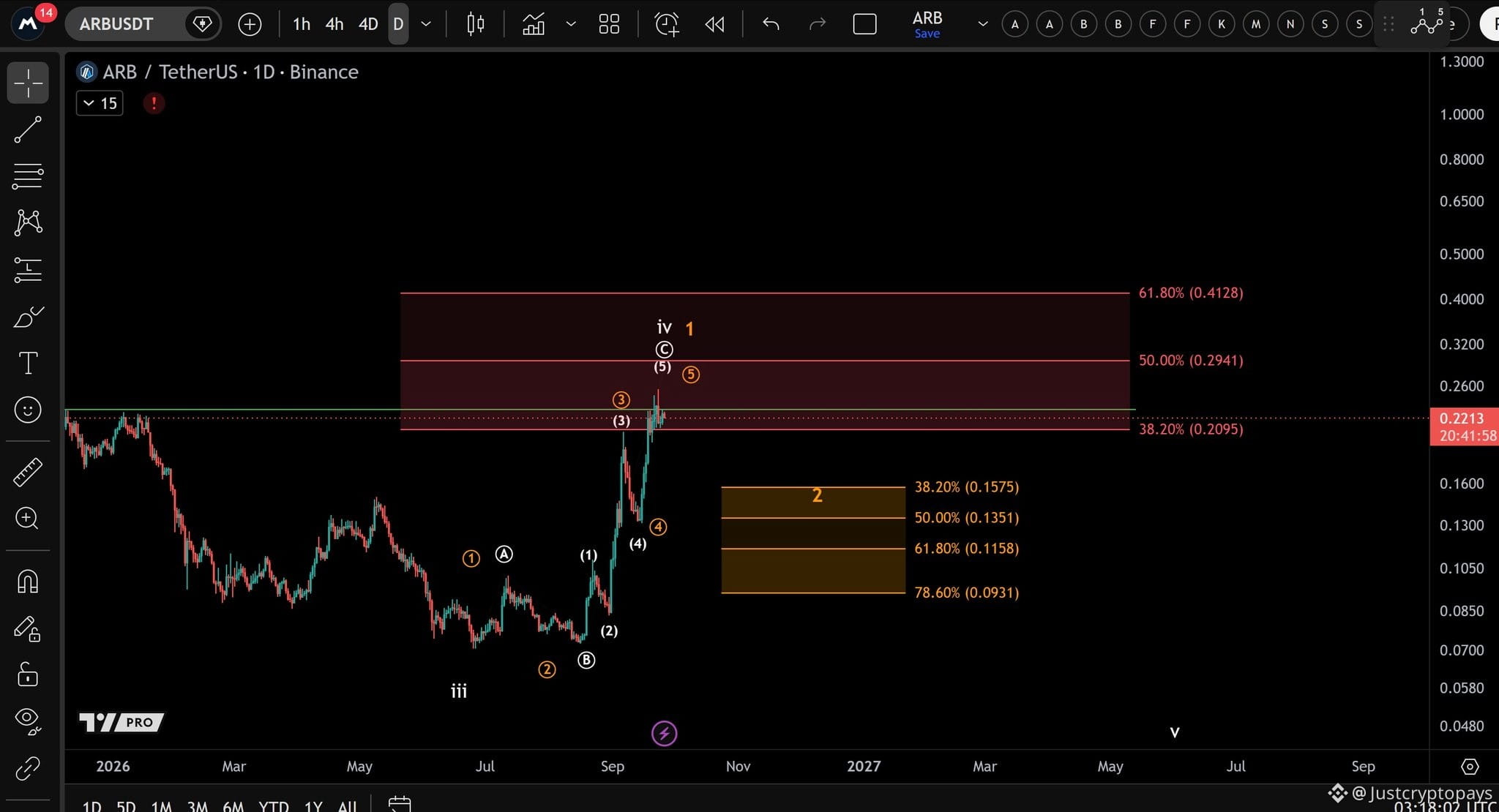
$ARB is still struggling to break above the $0.23 resistance, making this a key level to watch. A sustained breakout above it could signal renewed bullish momentum and open the path toward the next resistance around $0.294. Until then, the $0.23 level remains the main hurdle for the bulls.
#PolymarketBankFailureBetsDrawFDICConcern
{future}(ARBUSDT)
$ARB is still struggling to break above the $0.23 resistance, making this a key level to watch. A sustained breakout above it could signal renewed bullish momentum and open the path toward the next resistance around $0.294. Until then, the $0.23 level remains the main hurdle for the bulls.
#PolymarketBankFailureBetsDrawFDICConcern
#PolymarketBankFailureBetsDrawFDICConcern
1
86
$ZEC
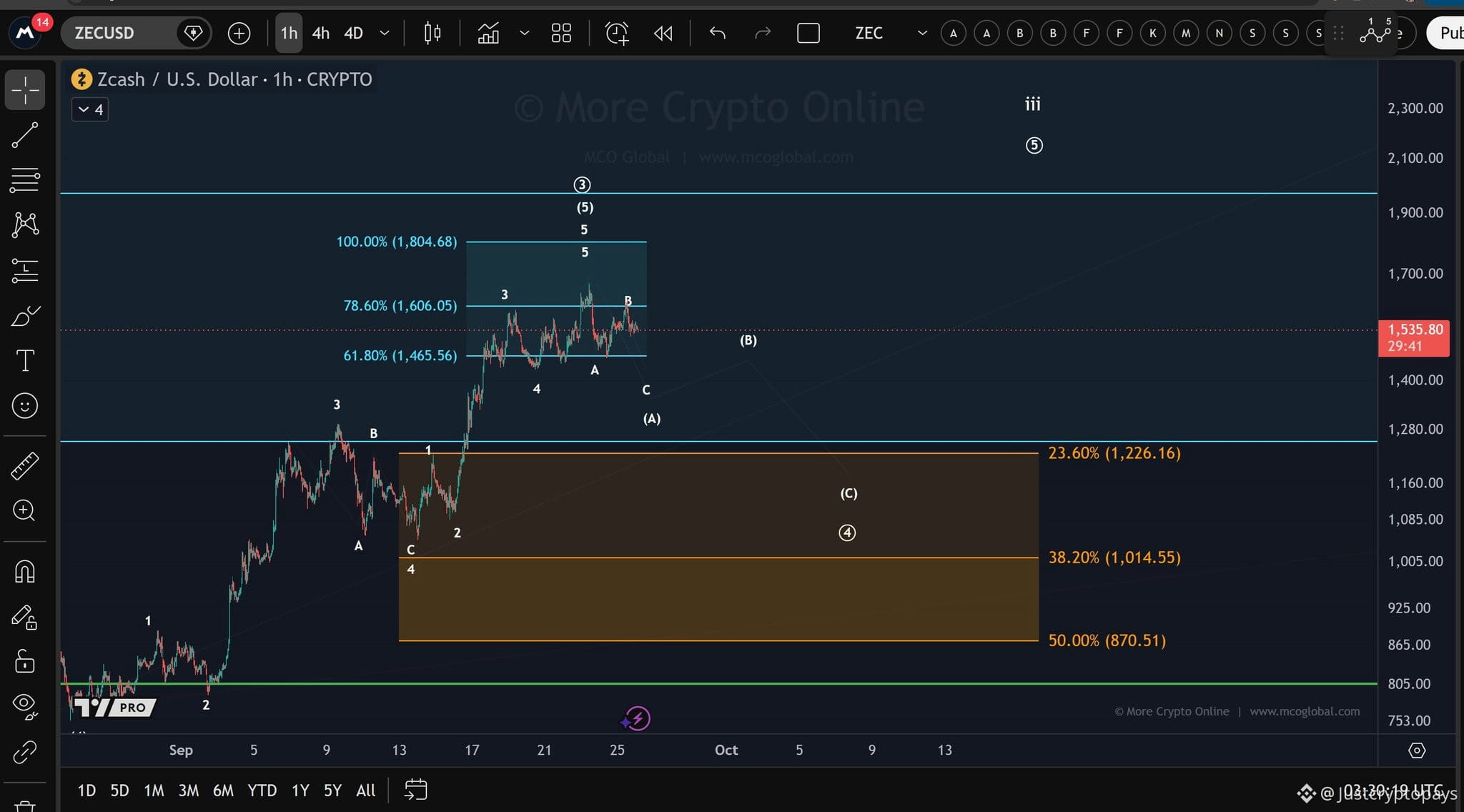
I’m still watching to see whether a C-wave decline is taking shape. If the pullback develops in a 3-wave structure, it could create the setup for another rally toward new all-time highs.
#PolymarketBankFailureBetsDrawFDICConcern
{future}(ZECUSDT)
$ZEC
I’m still watching to see whether a C-wave decline is taking shape. If the pullback develops in a 3-wave structure, it could create the setup for another rally toward new all-time highs.
#PolymarketBankFailureBetsDrawFDICConcern
I’m still watching to see whether a C-wave decline is taking shape. If the pullback develops in a 3-wave structure, it could create the setup for another rally toward new all-time highs.
#PolymarketBankFailureBetsDrawFDICConcern
1
127
Verified
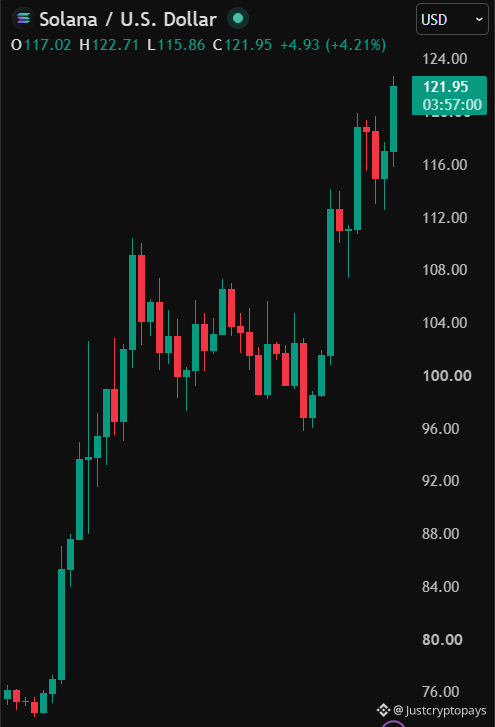
🔥 BULLISH: Solana has reclaimed the $120 level for the first time since January after climbing more than 60% from its August low.
$SOL is up nearly 4% today, trading around $121, after facing multiple rejections just below $120 earlier this week.
The token was trading near $75 in early August, making the recent recovery even more notable.
The rally comes as the market looks ahead to Solana’s upcoming Alpenglow upgrade.
Despite the strong rebound, SOL remains slightly down for the year and is still around 58% below its January 2025 all-time high near $294.
#QNTRises39%
🔥 BULLISH: Solana has reclaimed the $120 level for the first time since January after climbing more than 60% from its August low.
$SOL is up nearly 4% today, trading around $121, after facing multiple rejections just below $120 earlier this week.
The token was trading near $75 in early August, making the recent recovery even more notable.
The rally comes as the market looks ahead to Solana’s upcoming Alpenglow upgrade.
Despite the strong rebound, SOL remains slightly down for the year and is still around 58% below its January 2025 all-time high near $294.
#QNTRises39%
$SOL is up nearly 4% today, trading around $121, after facing multiple rejections just below $120 earlier this week.
The token was trading near $75 in early August, making the recent recovery even more notable.
The rally comes as the market looks ahead to Solana’s upcoming Alpenglow upgrade.
Despite the strong rebound, SOL remains slightly down for the year and is still around 58% below its January 2025 all-time high near $294.
#QNTRises39%
1
3
4.8k
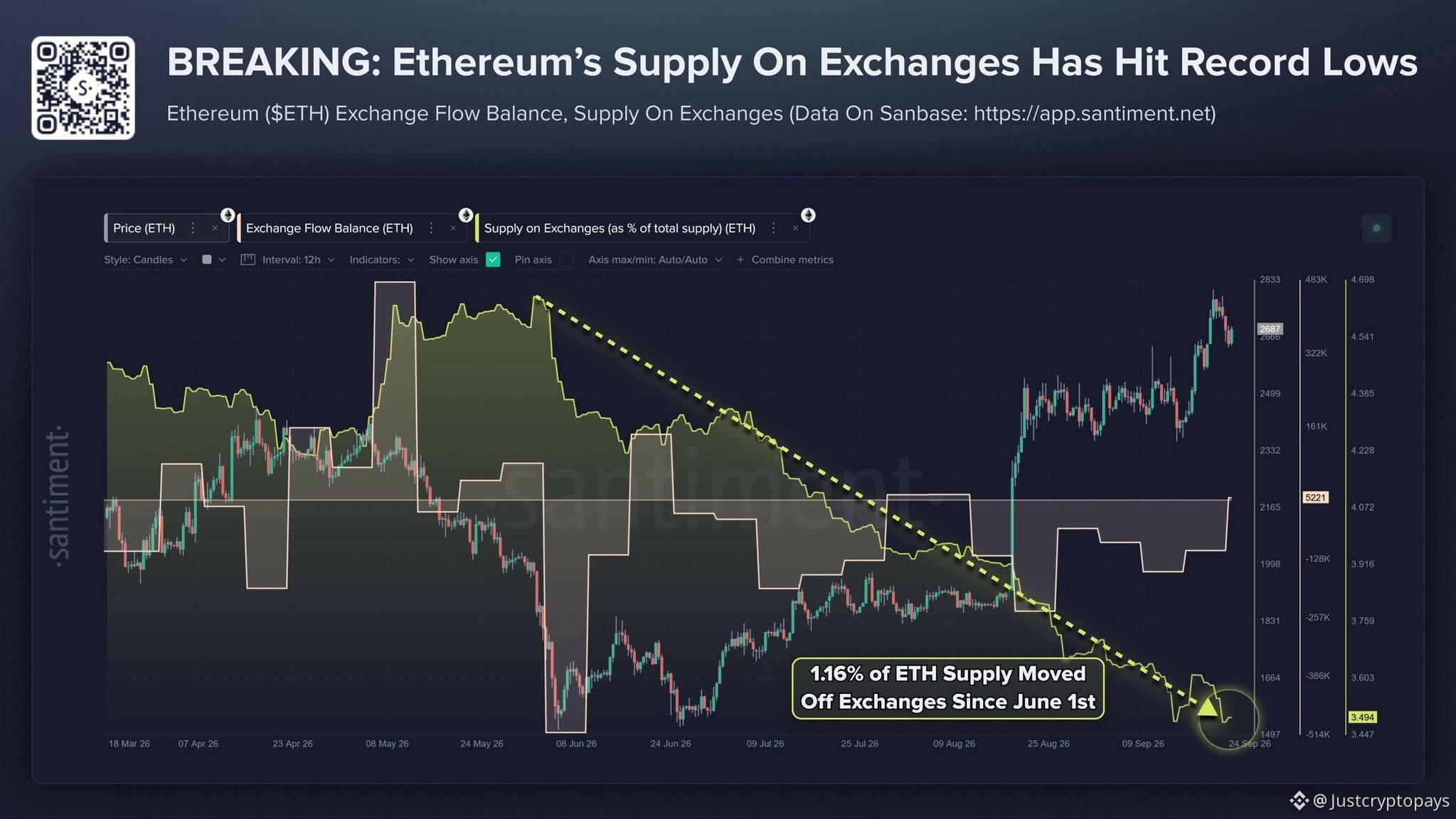
🚨 NOW: Ethereum’s exchange supply has fallen to a record low of 3.49% of total supply, with 1.16% of $ETH leaving exchanges since June 1, according to Santiment.
#BinanceWillListHyperliquid(HYPE)
🚨 NOW: Ethereum’s exchange supply has fallen to a record low of 3.49% of total supply, with 1.16% of $ETH leaving exchanges since June 1, according to Santiment.
#BinanceWillListHyperliquid(HYPE)
#BinanceWillListHyperliquid(HYPE)
124
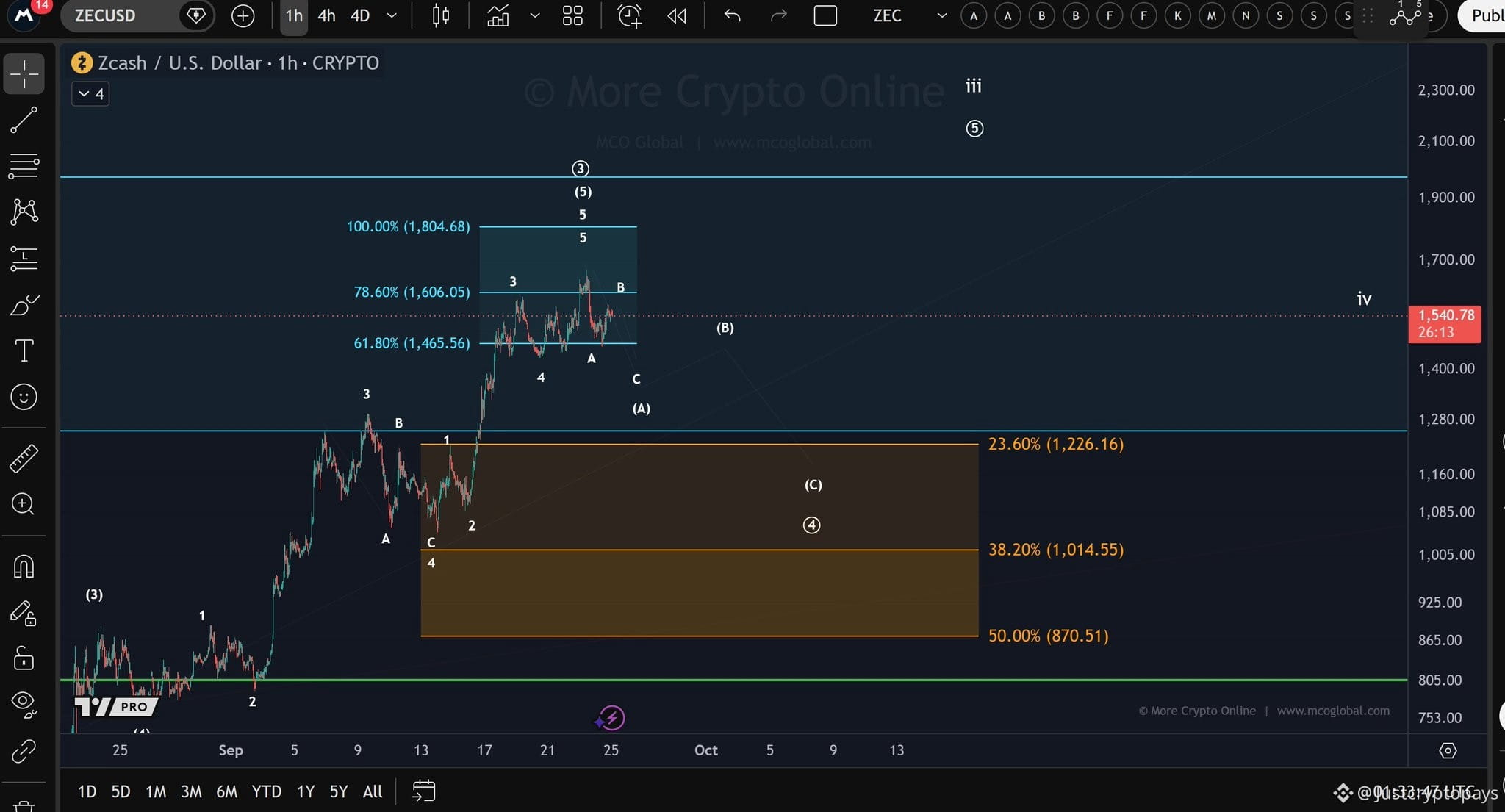
$ZEC
Wave 3 appears to have completed its structure, with a wave 4 pullback potentially next. A break below the $1,450 area would add confirmation that a local top may have formed.
#CFTCUpdatesGuidanceOnTokenizedAssets
$ZEC
Wave 3 appears to have completed its structure, with a wave 4 pullback potentially next. A break below the $1,450 area would add confirmation that a local top may have formed.
#CFTCUpdatesGuidanceOnTokenizedAssets
Wave 3 appears to have completed its structure, with a wave 4 pullback potentially next. A break below the $1,450 area would add confirmation that a local top may have formed.
#CFTCUpdatesGuidanceOnTokenizedAssets
1
229
🔥 UPDATE: $ZEC has been the standout altcoin since Bitcoin’s ATH, outperforming $BTC by 14x. Only 9 of the top 50 altcoins have managed to outperform Bitcoin over the same period.
#BinanceWillListHyperliquid(HYPE)
🔥 UPDATE: $ZEC has been the standout altcoin since Bitcoin’s ATH, outperforming $BTC by 14x. Only 9 of the top 50 altcoins have managed to outperform Bitcoin over the same period.
#BinanceWillListHyperliquid(HYPE)
#BinanceWillListHyperliquid(HYPE)


136
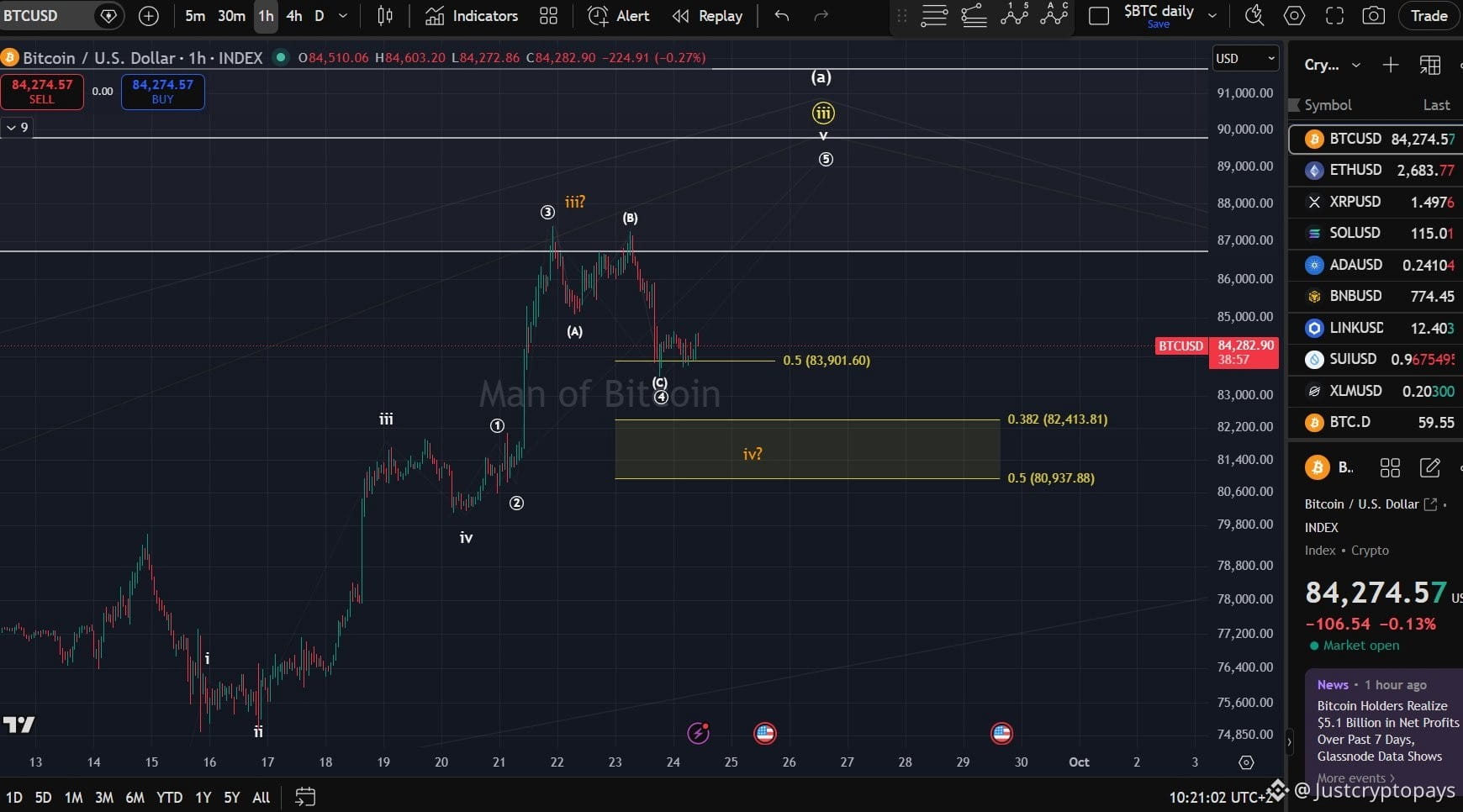
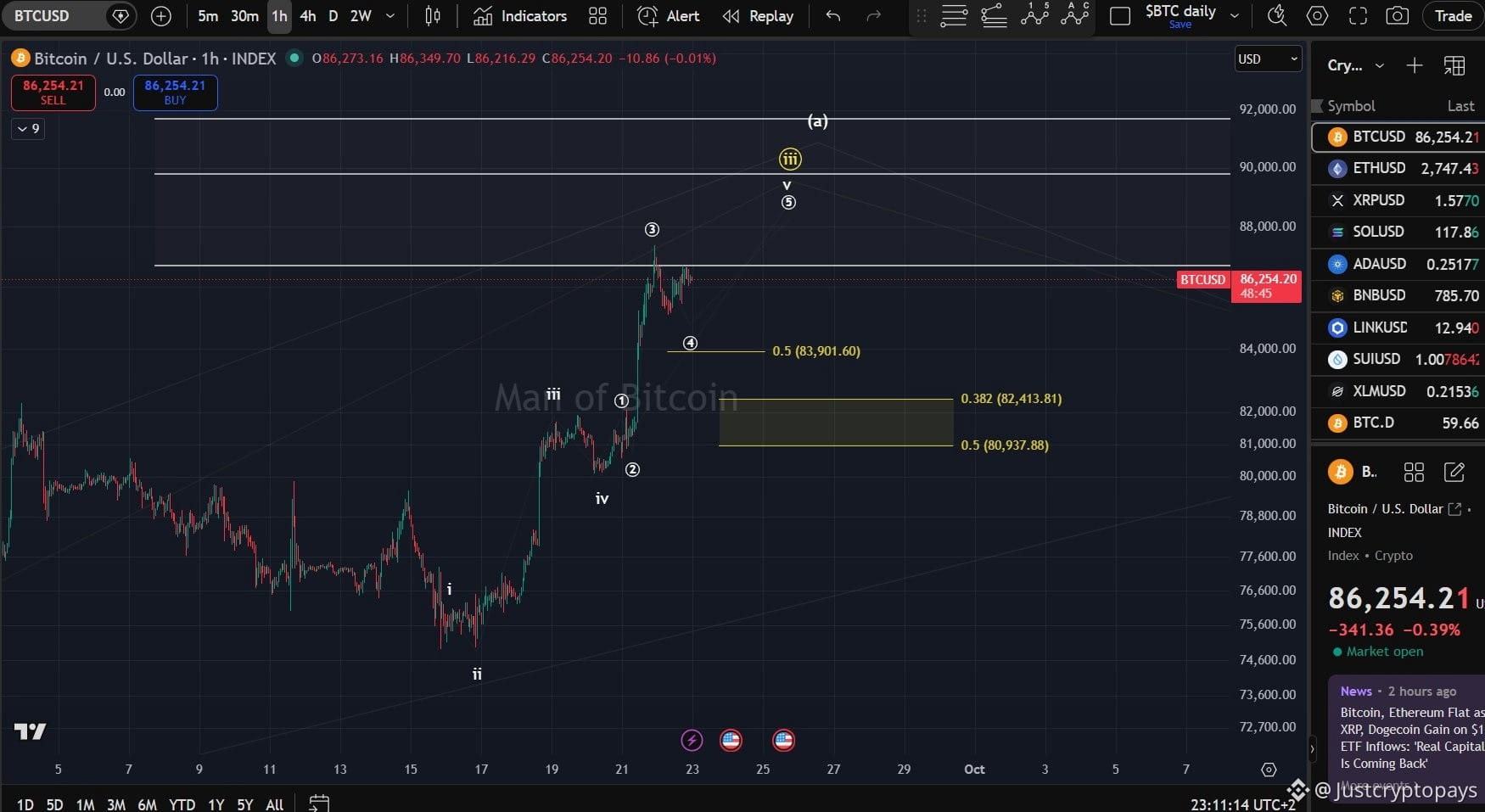
$BTC : For now, price is holding the key support level, keeping the white roadmap intact. A sustained break below this support would suggest a deeper wave-iv pullback is underway, with $80,937 as the next key support to watch.
#USWeighsPromotingDollarStablecoinsAbroad
$BTC : For now, price is holding the key support level, keeping the white roadmap intact. A sustained break below this support would suggest a deeper wave-iv pullback is underway, with $80,937 as the next key support to watch.
#USWeighsPromotingDollarStablecoinsAbroad
#USWeighsPromotingDollarStablecoinsAbroad
155
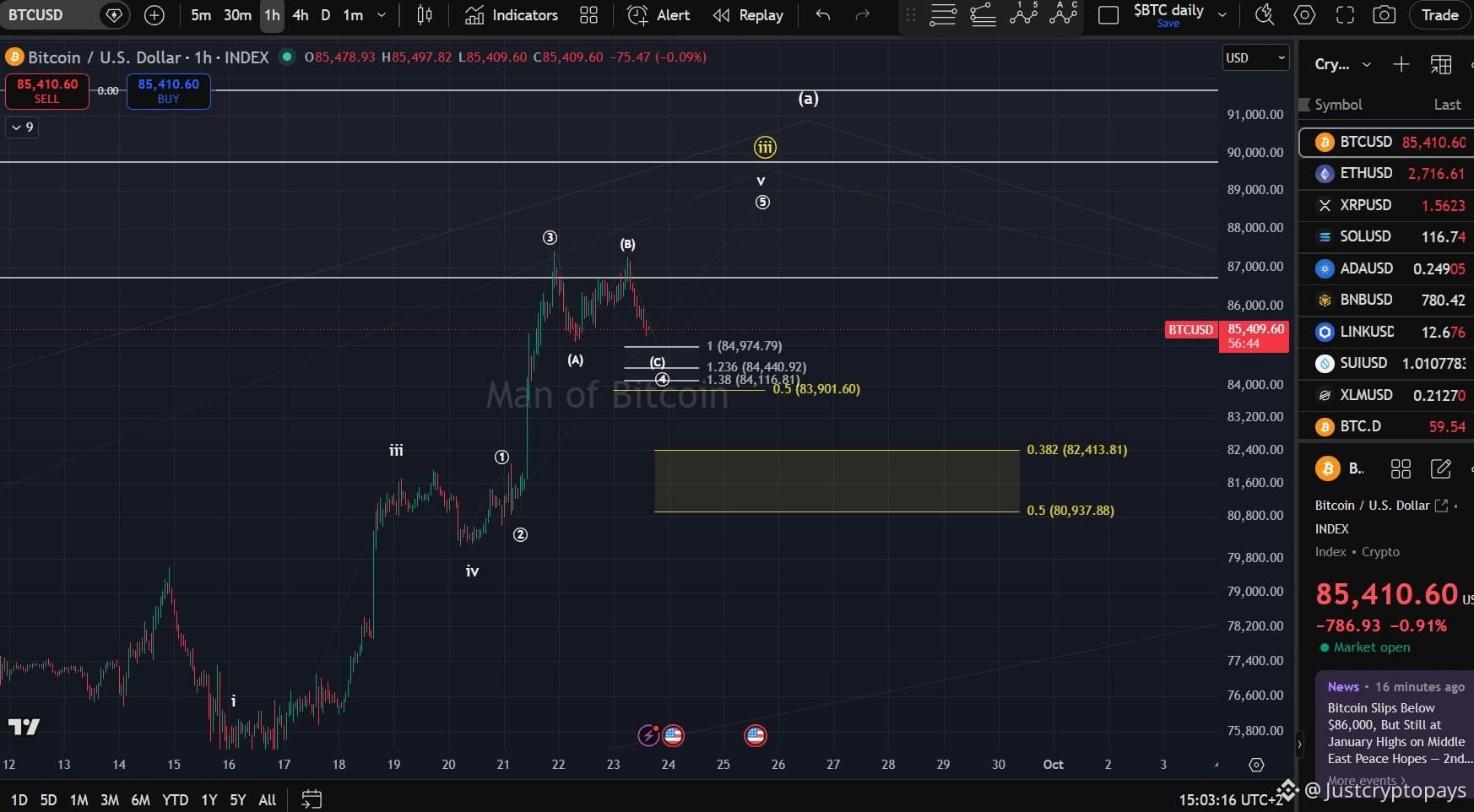
$BTC appears to be developing a wave-4 correction, with $83,901 acting as key support. So far, there’s still no clear sign that the correction has bottomed.
The next downside level to watch is $84,974, which aligns with the 100% Fibonacci extension.
#21SharesLaunchesEuropesFirstZcashETP
$BTC appears to be developing a wave-4 correction, with $83,901 acting as key support. So far, there’s still no clear sign that the correction has bottomed.
The next downside level to watch is $84,974, which aligns with the 100% Fibonacci extension.
#21SharesLaunchesEuropesFirstZcashETP
The next downside level to watch is $84,974, which aligns with the 100% Fibonacci extension.
#21SharesLaunchesEuropesFirstZcashETP
2
2
2.7k
{future}(ADAUSDT)
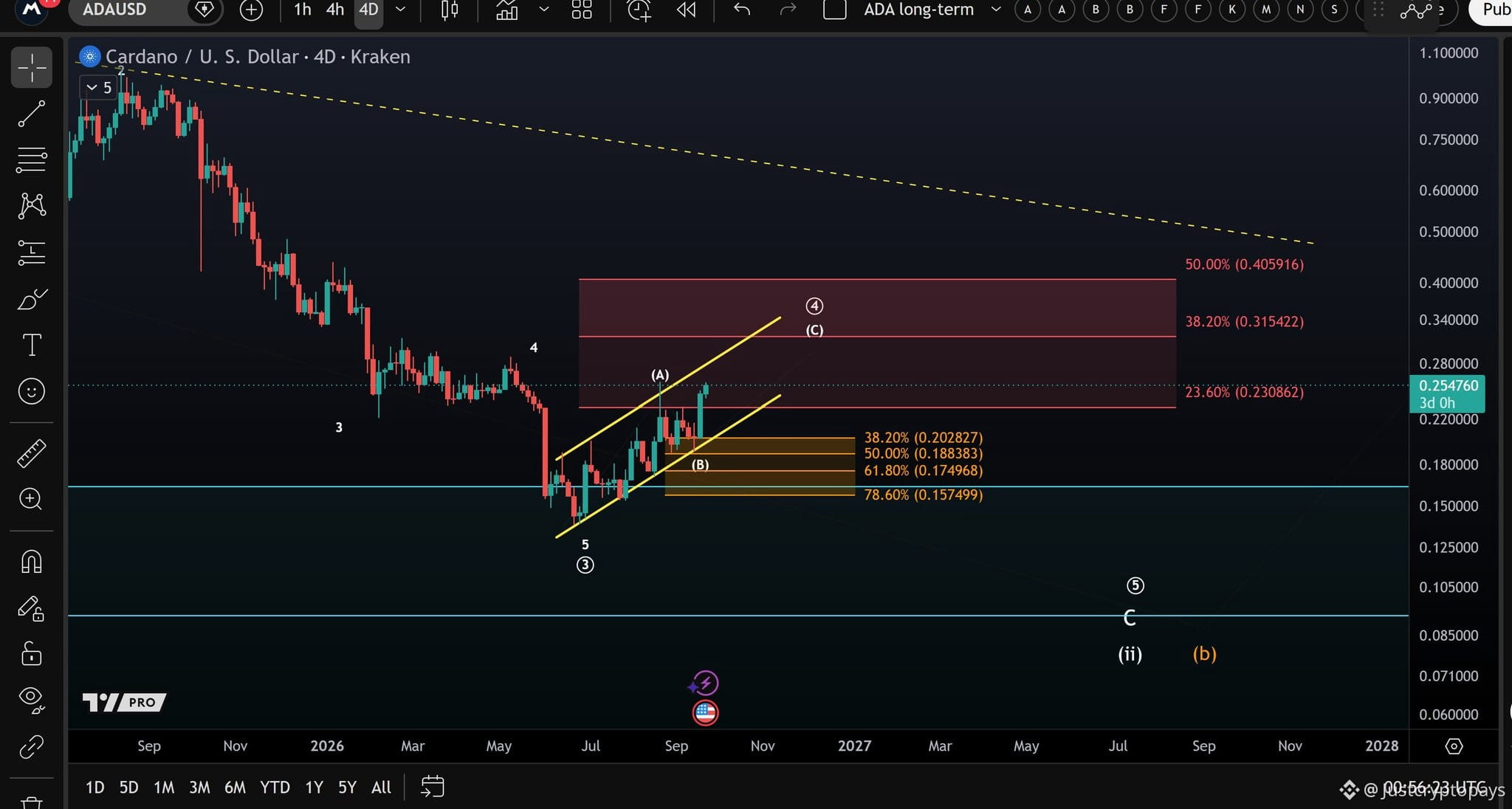
$ADA
Cardano continues to respect its current price channel. The structure suggests wave (c) may be unfolding, with $0.315 standing out as the next key target to watch. A sustained move toward that level would strengthen the current setup..
#CardanoJoinsX402PaymentStandard
$ADA
Cardano continues to respect its current price channel. The structure suggests wave (c) may be unfolding, with $0.315 standing out as the next key target to watch. A sustained move toward that level would strengthen the current setup..
#CardanoJoinsX402PaymentStandard
Cardano continues to respect its current price channel. The structure suggests wave (c) may be unfolding, with $0.315 standing out as the next key target to watch. A sustained move toward that level would strengthen the current setup..
#CardanoJoinsX402PaymentStandard
1
3
290
$BTC outlook: As long as Bitcoin holds above $83,901, the current bullish momentum remains intact.
However, a break below this key support could open the door for a move toward the $82,413–$80,937 range.
#AIStocksWhatNext
{future}(BTCUSDT)
$BTC outlook: As long as Bitcoin holds above $83,901, the current bullish momentum remains intact.
However, a break below this key support could open the door for a move toward the $82,413–$80,937 range.
#AIStocksWhatNext
However, a break below this key support could open the door for a move toward the $82,413–$80,937 range.
#AIStocksWhatNext
1
133
$BTC
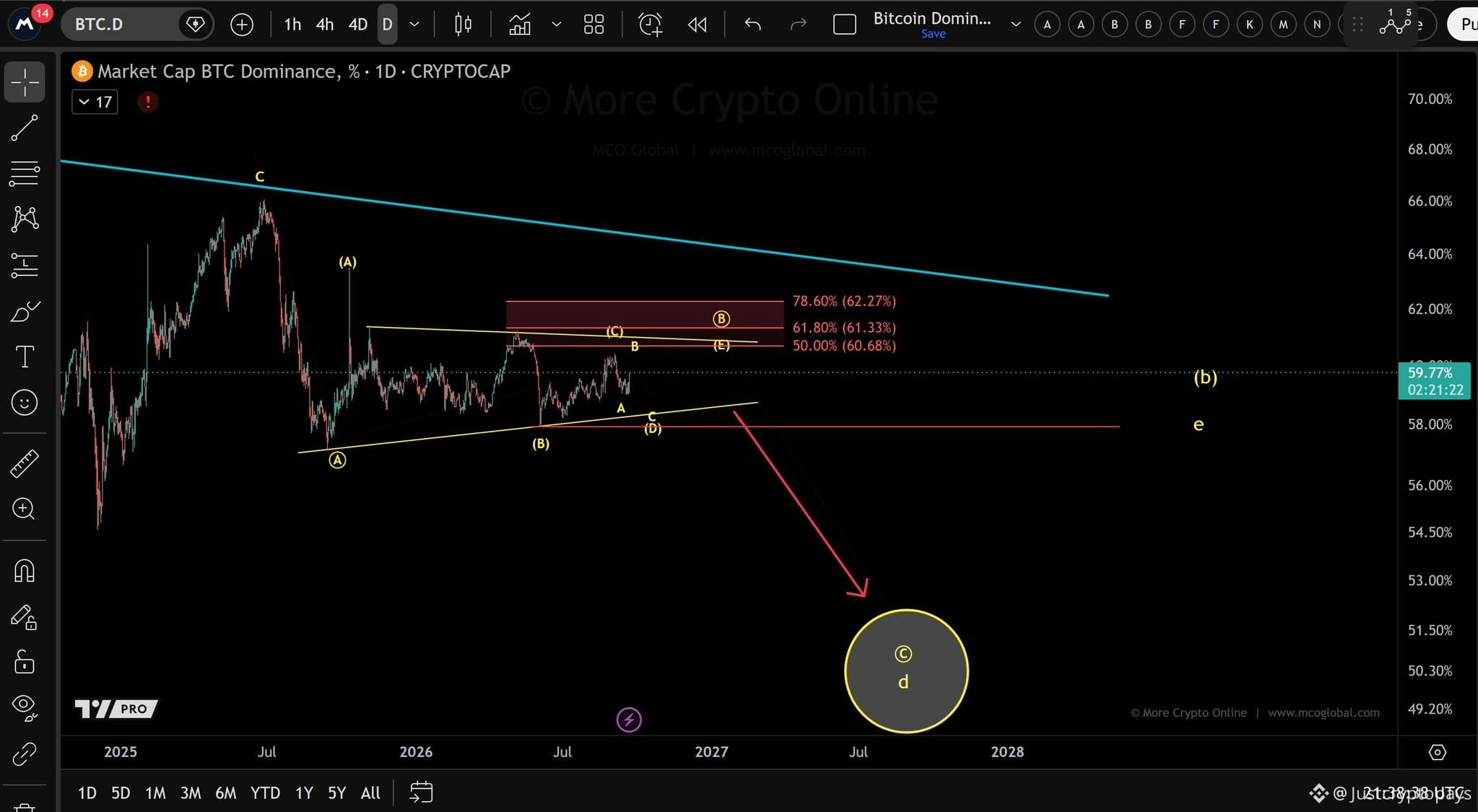
Bitcoin dominance continues to grind higher as it moves within a triangle that still hasn’t fully played out. A break toward 58% could be the key level that opens the door for altcoins to gain more momentum.
#NEARRisesNearly80%InAWeek
$BTC
Bitcoin dominance continues to grind higher as it moves within a triangle that still hasn’t fully played out. A break toward 58% could be the key level that opens the door for altcoins to gain more momentum.
#NEARRisesNearly80%InAWeek
Bitcoin dominance continues to grind higher as it moves within a triangle that still hasn’t fully played out. A break toward 58% could be the key level that opens the door for altcoins to gain more momentum.
#NEARRisesNearly80%InAWeek
2
100
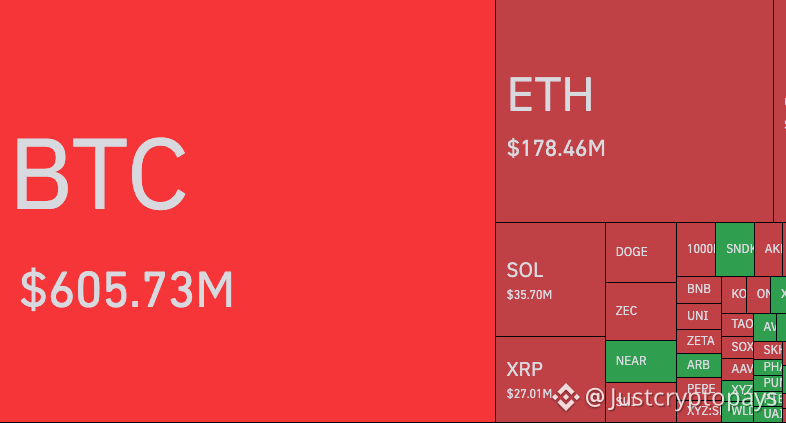
🚨 UPDATE: More than $1 billion worth of crypto positions have been liquidated over the past 24 hours, with short positions accounting for roughly $840 million.
$BTC and $ETH led the wave of liquidations as volatility picked up across the market.
#AppleGoogleSeekStablecoinTokenizedDepositTalent
🚨 UPDATE: More than $1 billion worth of crypto positions have been liquidated over the past 24 hours, with short positions accounting for roughly $840 million.
$BTC and $ETH led the wave of liquidations as volatility picked up across the market.
#AppleGoogleSeekStablecoinTokenizedDepositTalent
$BTC and $ETH led the wave of liquidations as volatility picked up across the market.
#AppleGoogleSeekStablecoinTokenizedDepositTalent
87
⚡️ LATEST: Arthur Hayes says the AI labs’ “Safety First” slowdown could leave the U.S. government with two options: spend heavily on compute or step in to support insurers exposed to AI-related debt.
His view is that either route could lead to more money printing, creating a macro backdrop that could push $BTC higher.
#XRPRises8%
⚡️ LATEST: Arthur Hayes says the AI labs’ “Safety First” slowdown could leave the U.S. government with two options: spend heavily on compute or step in to support insurers exposed to AI-related debt.
His view is that either route could lead to more money printing, creating a macro backdrop that could push $BTC higher.
#XRPRises8%
His view is that either route could lead to more money printing, creating a macro backdrop that could push $BTC higher.
#XRPRises8%


98
$BTC
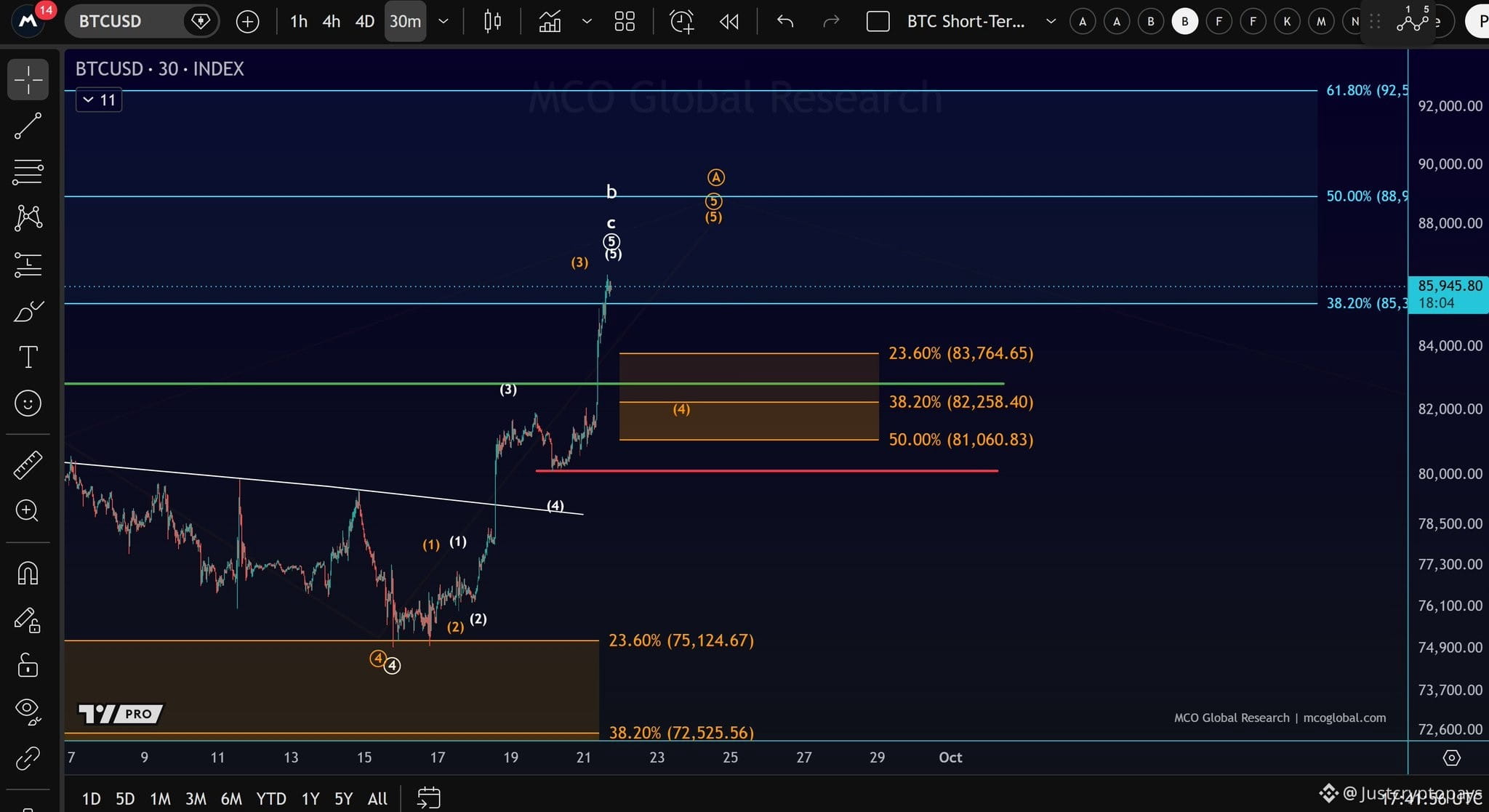
Not much has changed so far. The local uptrend is still holding and continues to push higher. This upside extension is starting to look more like the orange wave (3), although both scenarios remain valid for now. The first micro support zone to watch is between $81,060 and $83,764
#MultiversXPlansHardForkRecovery
{future}(BTCUSDT)
$BTC
Not much has changed so far. The local uptrend is still holding and continues to push higher. This upside extension is starting to look more like the orange wave (3), although both scenarios remain valid for now. The first micro support zone to watch is between $81,060 and $83,764
#MultiversXPlansHardForkRecovery
Not much has changed so far. The local uptrend is still holding and continues to push higher. This upside extension is starting to look more like the orange wave (3), although both scenarios remain valid for now. The first micro support zone to watch is between $81,060 and $83,764
#MultiversXPlansHardForkRecovery
80
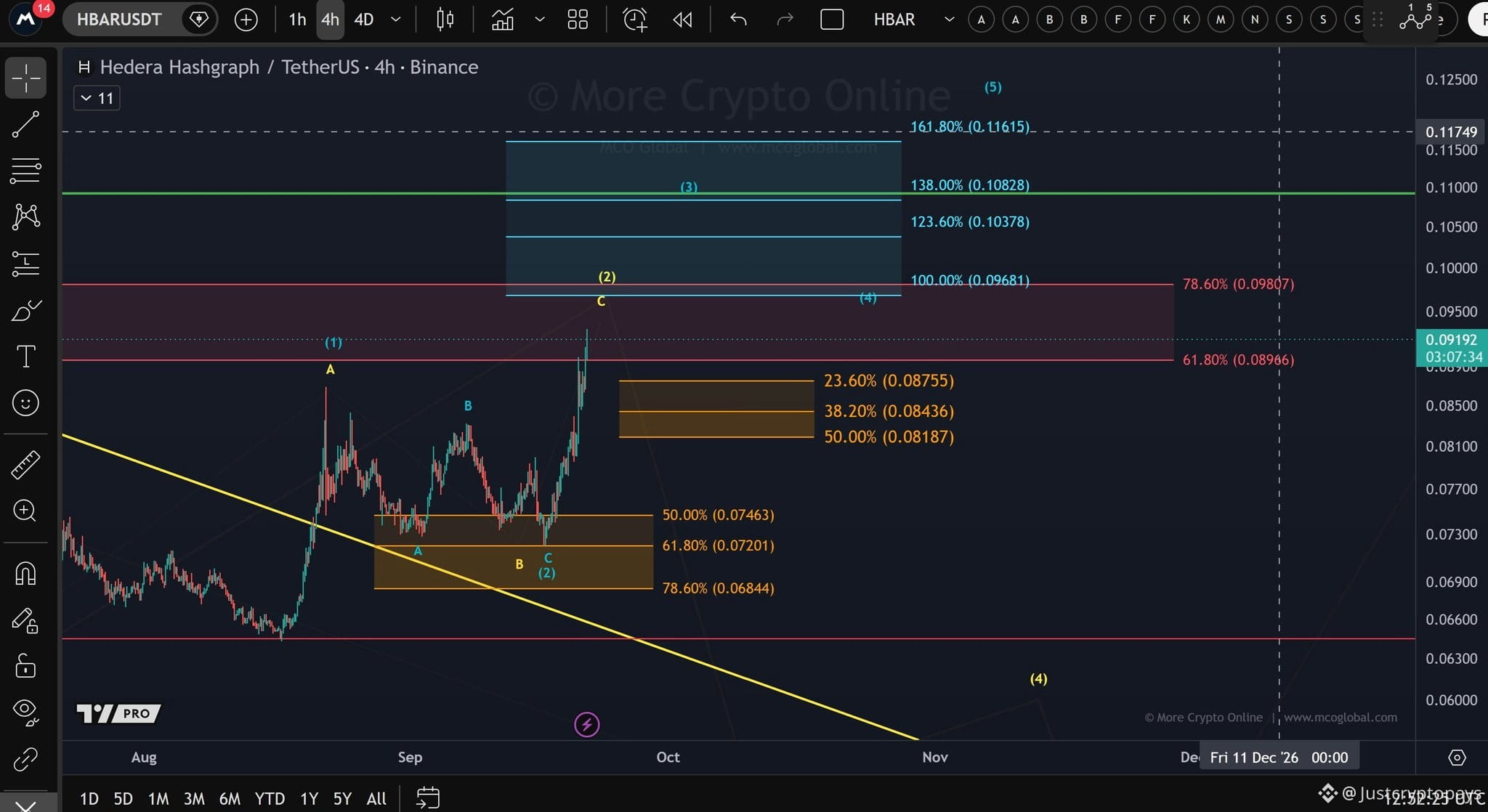
$HBAR
HBAR is approaching the next key resistance zone around $0.096–$0.098. If the blue scenario plays out, wave (3) could extend toward at least $0.108.
For the bullish structure to remain intact, the initial micro support sits around $0.081–$0.087.
#ECBStartsBlockchainEuroSettlement
{future}(HBARUSDT)
$HBAR
HBAR is approaching the next key resistance zone around $0.096–$0.098. If the blue scenario plays out, wave (3) could extend toward at least $0.108.
For the bullish structure to remain intact, the initial micro support sits around $0.081–$0.087.
#ECBStartsBlockchainEuroSettlement
HBAR is approaching the next key resistance zone around $0.096–$0.098. If the blue scenario plays out, wave (3) could extend toward at least $0.108.
For the bullish structure to remain intact, the initial micro support sits around $0.081–$0.087.
#ECBStartsBlockchainEuroSettlement
3
2.6k
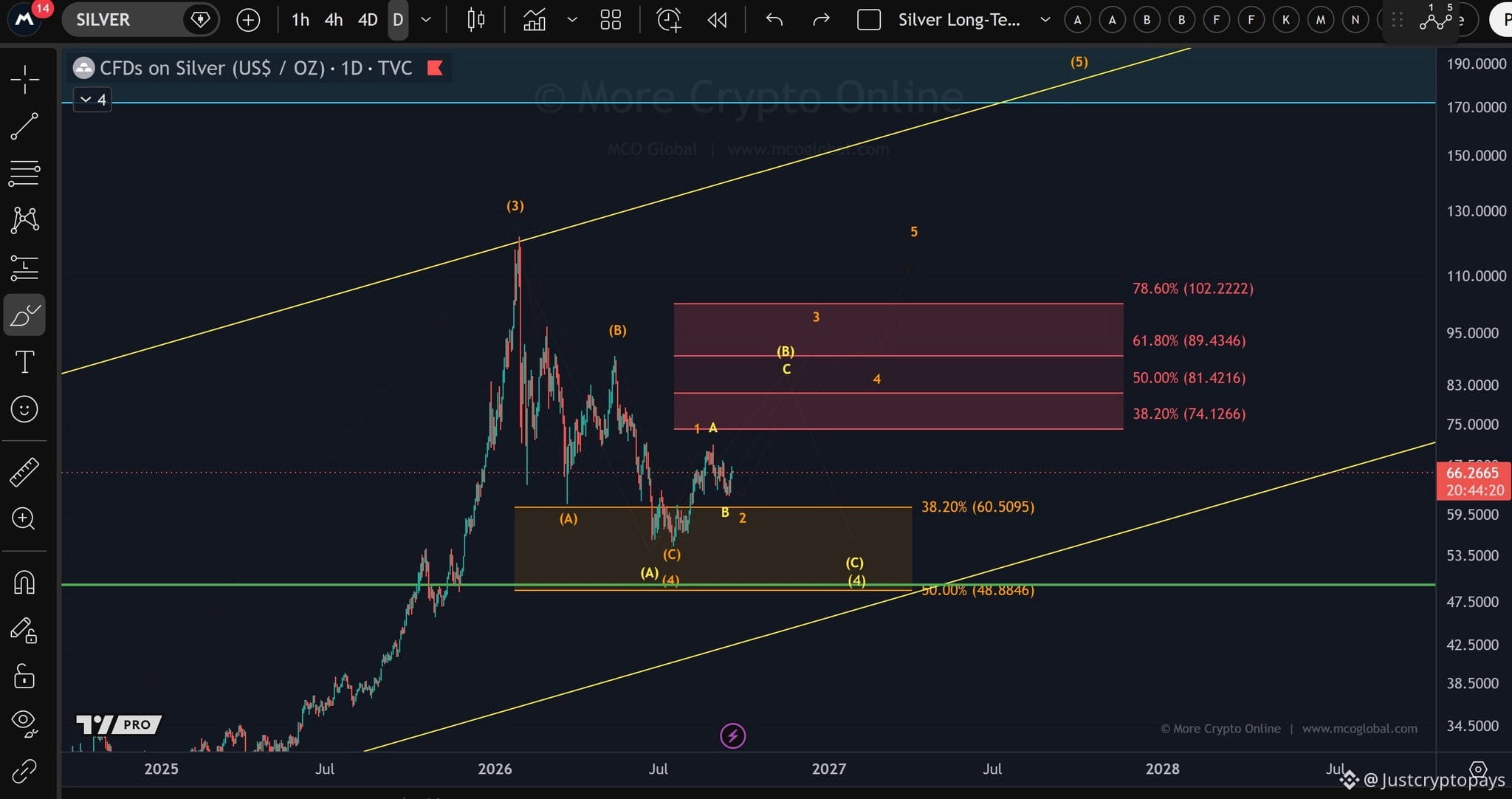
$XAG
The $49–$60 support zone is holding, while a small 5-wave move higher appears to be developing from the summer lows.
That could be an early sign that the wave 4 correction is coming to an end. If the structure continues to play out, the next upside levels to watch are $74, $81, $89, and eventually $102.
Still not confirmed, but the chart structure is starting to look increasingly interesting.
#SaylorHintsStrategyBitcoinBuy
$XAG
The $49–$60 support zone is holding, while a small 5-wave move higher appears to be developing from the summer lows.
That could be an early sign that the wave 4 correction is coming to an end. If the structure continues to play out, the next upside levels to watch are $74, $81, $89, and eventually $102.
Still not confirmed, but the chart structure is starting to look increasingly interesting.
#SaylorHintsStrategyBitcoinBuy
The $49–$60 support zone is holding, while a small 5-wave move higher appears to be developing from the summer lows.
That could be an early sign that the wave 4 correction is coming to an end. If the structure continues to play out, the next upside levels to watch are $74, $81, $89, and eventually $102.
Still not confirmed, but the chart structure is starting to look increasingly interesting.
#SaylorHintsStrategyBitcoinBuy
155
🇺🇸 ETF FLOWS: Spot ETFs for $BTC , SOL, and XRP recorded net inflows last week, while $ETH spot ETFs saw significant outflows.
BTC: +$6.21M
ETH: -$140M
SOL: +$13.19M
XRP: +$9.56M
#CanaryFilesSecondAmendmentForStakedSEIETF
🇺🇸 ETF FLOWS: Spot ETFs for $BTC , SOL, and XRP recorded net inflows last week, while $ETH spot ETFs saw significant outflows.
BTC: +$6.21M
ETH: -$140M
SOL: +$13.19M
XRP: +$9.56M
#CanaryFilesSecondAmendmentForStakedSEIETF
BTC: +$6.21M
ETH: -$140M
SOL: +$13.19M
XRP: +$9.56M
#CanaryFilesSecondAmendmentForStakedSEIETF



121
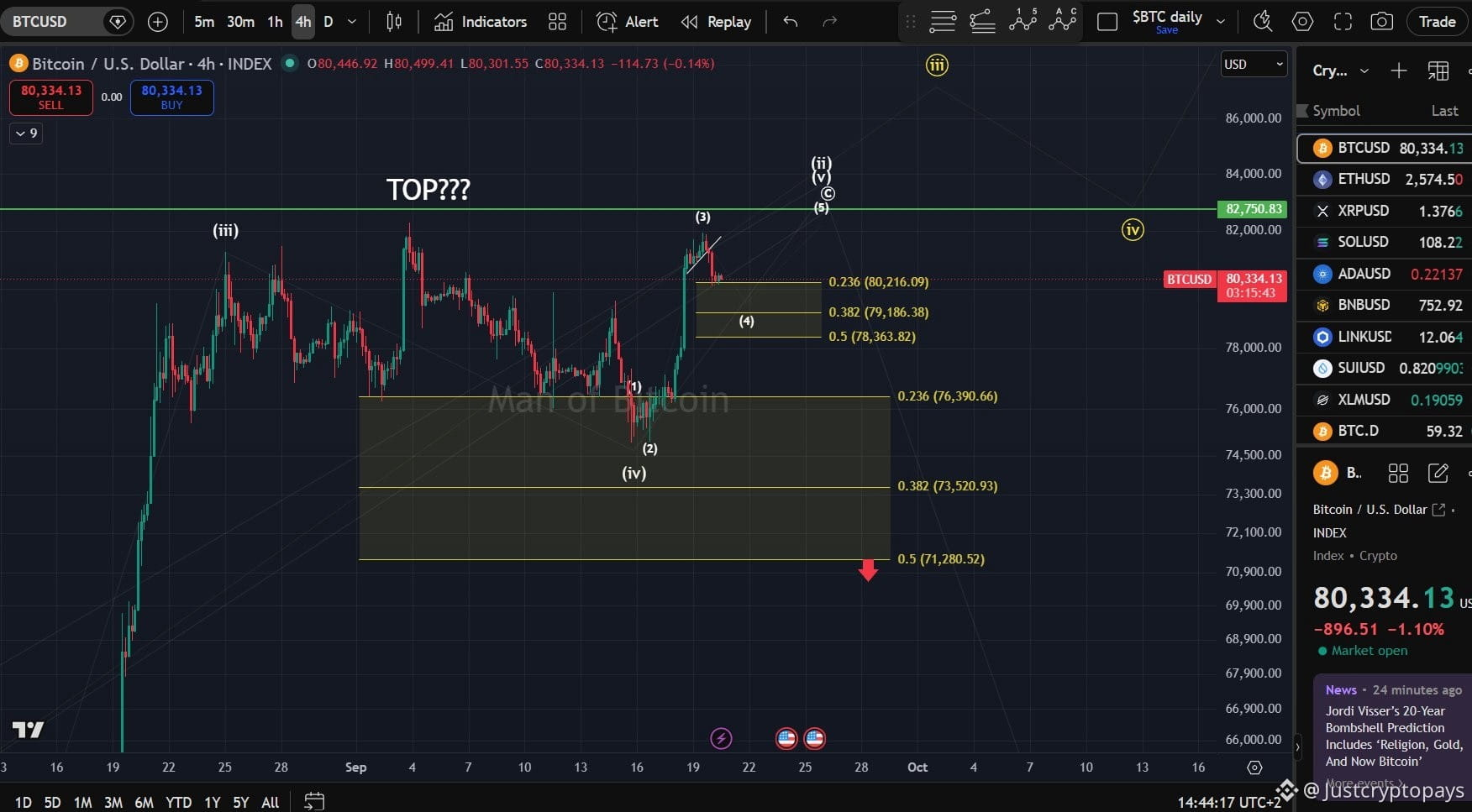
$BTC looks to have potentially completed wave-(3), with a pullback now in focus.
The key support zone for wave-(4) sits between $80,216 and $78,363, while $82,750 remains the main resistance to watch.
#SaylorHintsStrategyBitcoinBuy
{future}(BTCUSDT)
$BTC looks to have potentially completed wave-(3), with a pullback now in focus.
The key support zone for wave-(4) sits between $80,216 and $78,363, while $82,750 remains the main resistance to watch.
#SaylorHintsStrategyBitcoinBuy
The key support zone for wave-(4) sits between $80,216 and $78,363, while $82,750 remains the main resistance to watch.
#SaylorHintsStrategyBitcoinBuy
1
177
Log in to explore more content
Join global crypto users on Binance Square
⚡️ Get latest and useful information about crypto.
💬 Trusted by the world’s largest crypto exchange.
👍 Discover real insights from verified creators.
Email / Phone number
Trending Topics
CircleMints500MUSDCOnSolana
13,945 views
550 Discussing
#circlemints500musdconsolana
🚨 HUGE Liquidity Boost! Circle Mints $500 Million USDC on Solana — Is a Massive DeFi Rally Next? 🚀
💵 What Happened?
In a major on-chain event, the USDC Treasury issued $500 million in USDC directly on the Solana network across two $250M transactions.
This massive influx of real-fiat-backed capital highlights a growing appetite for stablecoins in high-speed, low-cost ecosystems.
🔑 Key Takeaways & Headlines
Fresh On-Chain Liquidity: Freshly minted USDC boosts liquidity pools across Solana-based DEXs, lending markets, and yield protocols.
$SOL
Institutional Signal: Because every USDC is backed 1:1 by real reserves, large minting events reflect actual institutional or commercial capital entering the ecosystem.
Solana’s Market Share Expansion: Solana continues to capture an increasing share of total USDC circulation, threatening traditional stablecoin market distributions.
Macro & Fed Context: As traders monitor global macroeconomic developments and interest rate outlooks, high-yield on-chain opportunities attract resting capital back to Web3.
💡 Why It Matters for Traders
Lower Slippage & Better Swaps: Higher stablecoin depth means larger trades can occur without heavy market impact.
DeFi Yield Potential: Increased USDC reserves encourage higher TVL (Total Value Locked) in Solana lending and farming protocols.
Sentiment Shift: Massive stablecoin injections are historically bullish indicators for ecosystem tokens ($SOL,$JUP, $RAY,$KMNO).
What’s your play? Are you keeping cash on the sidelines or riding the Solana liquidity wave? Drop your thoughts below! 👇
#BlackRockBuildsTokenizedPortfoliosForOndo #solana #defi
Lily星星
·4 Likes
·2.5k views
PolymarketBankFailureBetsDrawFDICConcern
29,495 views
745 Discussing
BlackRockBuildsTokenizedPortfoliosForOndo
23,452 views
507 Discussing