
Андрій Паламарчук
854 Posts

Андрій Паламарчук
Report
Block User
#binance
Frequent Trader
4.1 Years
28 Following
73 Followers
987 Liked
Posts
All
Quotes
Videos
Google, Apple, and other IT giants paid Ukraine over UAH 17.5 billion in taxes
In the first 10 months of 2026, revenue from the “Google tax” increased by 33%, or UAH 4.3 billion.
Among the largest taxpayers are Google, Apple, Meta, Netflix, Sony, and Anthropic. This is 20% VAT on digital services for Ukrainians.
In the first 10 months of 2026, revenue from the “Google tax” increased by 33%, or UAH 4.3 billion.
Among the largest taxpayers are Google, Apple, Meta, Netflix, Sony, and Anthropic. This is 20% VAT on digital services for Ukrainians.
4
267
What do you think about $BCH ?
{future}(BCHUSDT)
What do you think about $BCH ?
17

Article
Abra partners with ICE, owner of the New York Stock Exchange, to provide crypto-backed loansAbra and Intercontinental Exchange, owner of the New York Stock Exchange, announced a partnership in crypto lending on November 16 that separates the lender from the custodian holding institutional borrowers’ collateral.
According to an announcement published by Abra, the program is available to an initial group of institutional clients. Borrowers can obtain U.S. dollars from Abra Credit using bitcoin, ether, or Solana SOL as collateral, while ICE Digital Trust holds the pledged assets. Loans require approval from a lending institution and are not available in all jurisdictions.
Abra partners with ICE, owner of the New York Stock Exchange, to provide crypto-backed loans
Abra and Intercontinental Exchange, owner of the New York Stock Exchange, announced a partnership in crypto lending on November 16 that separates the lender from the custodian holding institutional borrowers’ collateral.
According to an announcement published by Abra, the program is available to an initial group of institutional clients. Borrowers can obtain U.S. dollars from Abra Credit using bitcoin, ether, or Solana SOL as collateral, while ICE Digital Trust holds the pledged assets. Loans require approval from a lending institution and are not available in all jurisdictions.
According to an announcement published by Abra, the program is available to an initial group of institutional clients. Borrowers can obtain U.S. dollars from Abra Credit using bitcoin, ether, or Solana SOL as collateral, while ICE Digital Trust holds the pledged assets. Loans require approval from a lending institution and are not available in all jurisdictions.
ICEUS+0.00%
1
24
Geopolitical risks take a back seat as oil prices fall
On November 17, oil prices declined as expectations of a supply glut driven by the resumption of exports from the Middle East outweighed concerns about further attacks on tankers in the region and escalating geopolitical tensions.
As of 04:30 GMT, Brent crude futures fell 78 cents, or 0.8%, to $91.66 a barrel.
West Texas Intermediate (WTI), the U.S. benchmark, lost 73 cents, or 0.9%, to trade at $84.99 a barrel.
“The oil market is correcting lower as it increasingly recognizes that supply has finally caught up with demand and may now exceed it. This shift in the balance between supply and demand is the main factor weighing on prices today,” said KCM Trade chief analyst Tim Waterer.
“The geopolitical risk premium stemming from the conflict between the U.S. and Iran has not disappeared, but it is clearly taking a back seat for now,” Waterer added.
1
46
$XRP falls to $0.89, its lowest level since November 2024, and is down 36% this quarter as ETFs record their largest weekly outflow since March and stablecoin supply contracts by $17B in a month
$XRP falls to $0.89, its lowest level since November 2024, and is down 36% this quarter as ETFs record their largest weekly outflow since March and stablecoin supply contracts by $17B in a month
1
58
Trezor reports a breach at logistics provider Skladon that exposed names, home addresses, and other personal data associated with approximately 27,000 orders.
The hardware wallet maker warned of phishing risks and potential threats to physical safety, with some customers already reporting scam calls. Trezor said its systems and devices were not compromised.
This is the second incident in which Trezor customer data has been exposed through a logistics provider, following an August incident at ShipMonk that affected nearly 14,000 customers.
1
63
Zelensky signed a law introducing criminal liability for “drops”
These are people who hand over their bank cards or accounts for illegal financial transactions.
Such actions are punishable by fines, while transactions involving someone else’s cards or accounts can carry a prison sentence of up to 8 years.
These are people who hand over their bank cards or accounts for illegal financial transactions.
Such actions are punishable by fines, while transactions involving someone else’s cards or accounts can carry a prison sentence of up to 8 years.
1
315
Tether Capital invested $15 million in Brazilian fintech company Nomad, which offers U.S. dollar accounts, international payments, and global investment products.
The companies plan to explore potential integrations involving Tether’s USDT stablecoin and its gold-backed XAUT token in Brazil.
Tether Capital invested $15 million in Brazilian fintech company Nomad, which offers U.S. dollar accounts, international payments, and global investment products.
The companies plan to explore potential integrations involving Tether’s USDT stablecoin and its gold-backed XAUT token in Brazil.
The companies plan to explore potential integrations involving Tether’s USDT stablecoin and its gold-backed XAUT token in Brazil.
1
38
Article
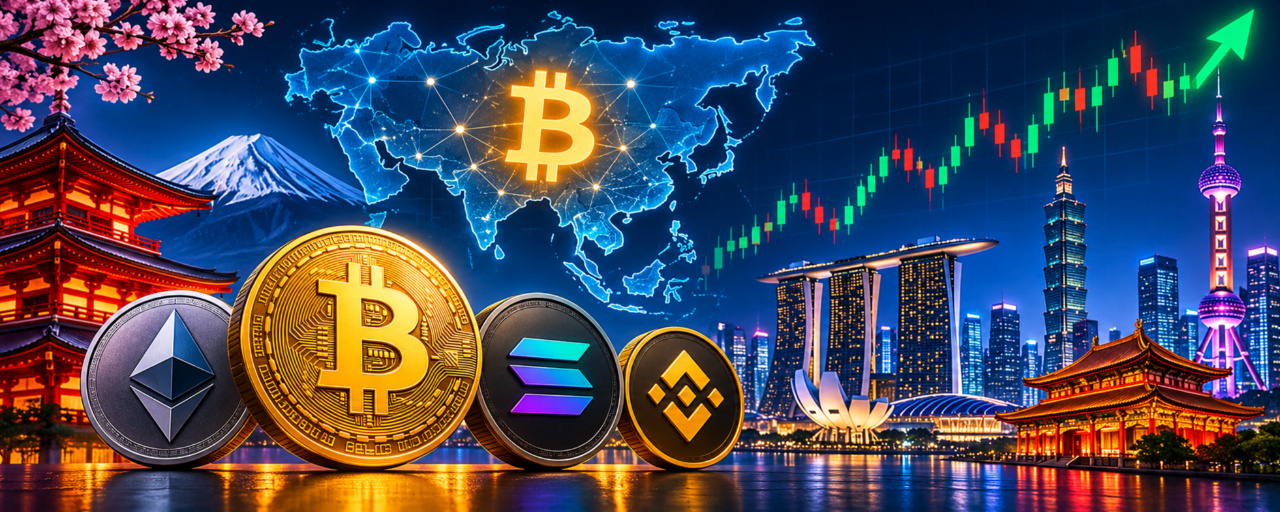
The latest news from the Asian crypto marketStablecoins are going mainstream in Asia: Japan, South Korea, Taiwan, and Hong Kong are paving the way for their use among more than 200 million people.
All four of these regions have taken relevant steps over the past month—through regulators, government officials, or their largest banks.
The latest news from the Asian crypto market
Stablecoins are going mainstream in Asia: Japan, South Korea, Taiwan, and Hong Kong are paving the way for their use among more than 200 million people.
All four of these regions have taken relevant steps over the past month—through regulators, government officials, or their largest banks.
All four of these regions have taken relevant steps over the past month—through regulators, government officials, or their largest banks.
1
82
According to Bitwise’s forecast, in an optimistic scenario, Solana could be worth $1,100 by 2031, provided the network becomes the world’s leading platform for on-chain trading. In the base and pessimistic scenarios, the price of $SOL is estimated at $385 and $80, respectively.
The report notes that in the first nine months of 2026, trading volume in tokenized stocks across blockchain networks totaled $31.4 billion. Solana accounted for $13.4 billion, giving it a 42% market share.
The report notes that in the first nine months of 2026, trading volume in tokenized stocks across blockchain networks totaled $31.4 billion. Solana accounted for $13.4 billion, giving it a 42% market share.
2
428
$6.45 Million Cryptocurrency TheftUnknown attackers withdrew crypto assets worth approximately $6.45 million from a Gnosis Safe wallet on the Ethereum network. The attackers exploited previously granted permissions to conduct transactions, cybersecurity experts at PeckShield reported. The hackers stole approximately 4.39 million USDC stablecoins and 1.72 million syrupUSDC tokens. The tokens are associated with the Maple Finance lending platform and allow holders to earn returns on deposited funds. At the time of the attack, they were worth approximately $2.05 million.
$6.45 Million Cryptocurrency Theft
Unknown attackers withdrew crypto assets worth approximately $6.45 million from a Gnosis Safe wallet on the Ethereum network. The attackers exploited previously granted permissions to conduct transactions, cybersecurity experts at PeckShield reported. The hackers stole approximately 4.39 million USDC stablecoins and 1.72 million syrupUSDC tokens. The tokens are associated with the Maple Finance lending platform and allow holders to earn returns on deposited funds. At the time of the attack, they were worth approximately $2.05 million.
64
Anthropic plans to raise up to $64.4 billion in an IPO
Claude developer considers going public in what could become one of the largest IPOs in history.
The company plans to use the proceeds to develop artificial intelligence and computing infrastructure.
Anthropic plans to raise up to $64.4 billion in an IPO
Claude developer considers going public in what could become one of the largest IPOs in history.
The company plans to use the proceeds to develop artificial intelligence and computing infrastructure.
Claude developer considers going public in what could become one of the largest IPOs in history.
The company plans to use the proceeds to develop artificial intelligence and computing infrastructure.
1
176
·
--
Bearish
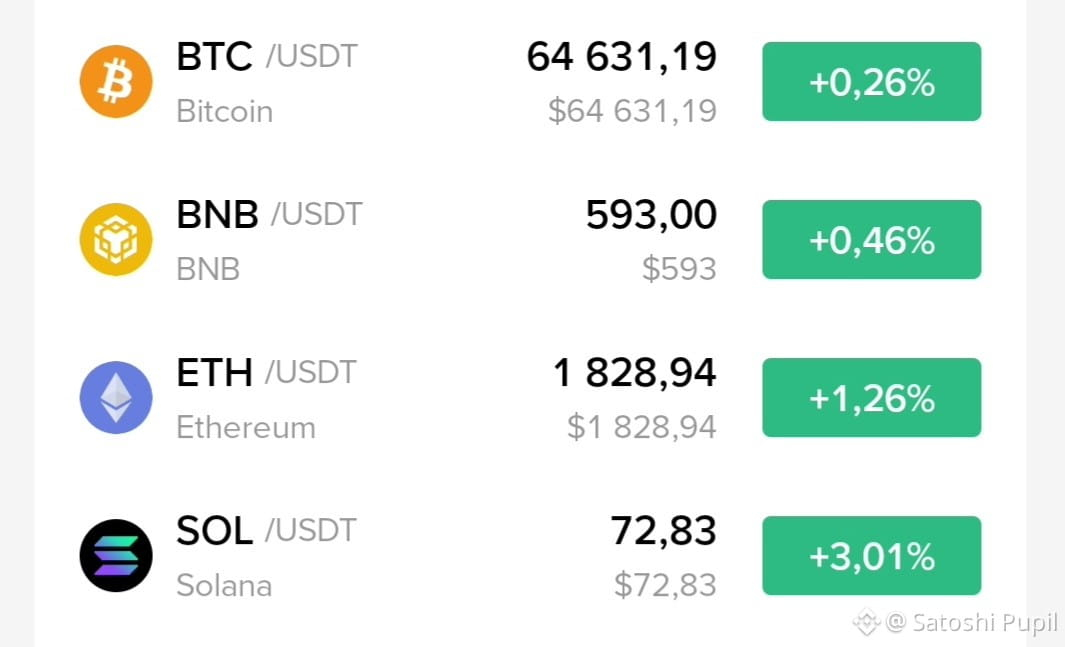
Crypto is waking up—or is this a fake rally before an even bigger drop? I lean more towards the second scenario.
Crypto is waking up—or is this a fake rally before an even bigger drop? I lean more towards the second scenario.
59
Boris Johnson maintains Bitcoin skepticism at Solana's Breakpoint conferenceBoris Johnson walked into a London hall full of blockchain developers and told them, more or less, that he still doesn't trust the asset that started their industry.
The former UK prime minister used a main-stage session at Solana's Breakpoint conference to restate his doubts about Bitcoin. He focused on two things: nobody seems to be in charge, and nobody seems to be on the hook when things go wrong.
Johnson's central complaint was about leadership, or rather the lack of it. He argued that Bitcoin has no identifiable person or body accountable for it.
To make the point, he deliberately garbled the name of Satoshi Nakamoto, Bitcoin's pseudonymous creator, mangling the name several times during the session.
"As far as I can see, nobody knows who's in charge, apart from Yakimoto Nakasori, and I don't know where to find him," Johnson said.
He then moved from governance to consumer protection. He told the audience that if six billion were stolen from a cryptocurrency, he would have no idea whom to approach or how to recover the funds.
In a March 2026 column for the Daily Mail, Johnson described Bitcoin as a "giant Ponzi scheme." That op-ed also raised questions about accountability in decentralized financial systems. His Breakpoint comments, delivered on November 16, 2026, essentially ran the same argument in front of a live and far less sympathetic audience.
His appearance was part of a panel titled "Crypto is Key to the UK's Economic Future," where he sat alongside Lord Ross Kempsell.
Breakpoint 2026 ran from November 15 to 17 at Olympia London. Expected attendance topped 8,000 participants.
The event's theme was the "Token Supercycle," a framing aimed at connecting traditional finance with the blockchain sector. Sessions concentrated on stablecoins, tokenized assets and AI-enhanced activity on blockchains.
Executives from Revolut, Mastercard and DTCC were among those on the program.
His remarks may resonate with institutional investors wary of regulatory uncertainty and could reflect a wider public perception that shapes how quickly mainstream investors adopt digital assets.
His two complaints map neatly onto the regulatory debate. The "who's in charge" question is about governance. The "who do I call" question is about consumer recourse. Both are issues regulators routinely raise when weighing how to treat decentralized systems.
There is also a split worth watching between Bitcoin and the tokenization push. Much of Breakpoint's agenda centered on stablecoins and tokenized assets, products that typically involve identifiable issuers and institutions. Johnson's critique targets the opposite model, a system with no named operator. The participation of companies such as Revolut, Mastercard and DTCC suggests the industry is leaning into that version of the story.
Boris Johnson maintains Bitcoin skepticism at Solana's Breakpoint conference
Boris Johnson walked into a London hall full of blockchain developers and told them, more or less, that he still doesn't trust the asset that started their industry.
The former UK prime minister used a main-stage session at Solana's Breakpoint conference to restate his doubts about Bitcoin. He focused on two things: nobody seems to be in charge, and nobody seems to be on the hook when things go wrong.
Johnson's central complaint was about leadership, or rather the lack of it. He argued that Bitcoin has no identifiable person or body accountable for it.
To make the point, he deliberately garbled the name of Satoshi Nakamoto, Bitcoin's pseudonymous creator, mangling the name several times during the session.
"As far as I can see, nobody knows who's in charge, apart from Yakimoto Nakasori, and I don't know where to find him," Johnson said.
He then moved from governance to consumer protection. He told the audience that if six billion were stolen from a cryptocurrency, he would have no idea whom to approach or how to recover the funds.
In a March 2026 column for the Daily Mail, Johnson described Bitcoin as a "giant Ponzi scheme." That op-ed also raised questions about accountability in decentralized financial systems. His Breakpoint comments, delivered on November 16, 2026, essentially ran the same argument in front of a live and far less sympathetic audience.
His appearance was part of a panel titled "Crypto is Key to the UK's Economic Future," where he sat alongside Lord Ross Kempsell.
Breakpoint 2026 ran from November 15 to 17 at Olympia London. Expected attendance topped 8,000 participants.
The event's theme was the "Token Supercycle," a framing aimed at connecting traditional finance with the blockchain sector. Sessions concentrated on stablecoins, tokenized assets and AI-enhanced activity on blockchains.
Executives from Revolut, Mastercard and DTCC were among those on the program.
His remarks may resonate with institutional investors wary of regulatory uncertainty and could reflect a wider public perception that shapes how quickly mainstream investors adopt digital assets.
His two complaints map neatly onto the regulatory debate. The "who's in charge" question is about governance. The "who do I call" question is about consumer recourse. Both are issues regulators routinely raise when weighing how to treat decentralized systems.
There is also a split worth watching between Bitcoin and the tokenization push. Much of Breakpoint's agenda centered on stablecoins and tokenized assets, products that typically involve identifiable issuers and institutions. Johnson's critique targets the opposite model, a system with no named operator. The participation of companies such as Revolut, Mastercard and DTCC suggests the industry is leaning into that version of the story.
18
Crisis Surrounding Nvidia Drives Copper Prices to Four-Month Low
Copper prices have fallen for the third consecutive day, reaching their lowest level in over four months. The market is under pressure from a sell-off in technology stocks and weaker economic data from China, both of which have dampened demand expectations and reduced investor appetite for risk.
According to Bloomberg, copper futures on the London Metal Exchange dropped by 1.4%, hitting their lowest point since July 8. This extends a downward trend that has now persisted for five consecutive weeks.
Turmoil within the artificial intelligence industry—exacerbated by the crisis surrounding Nvidia Corp.—has further weighed on market sentiment.
Meanwhile, comments from U.S. Federal Reserve officials have fueled expectations of further interest rate hikes. This places additional pressure on copper, a metal widely used in energy infrastructure and data centers.
377
Verified
Oil prices fall amid recovery in shipments through the Strait of Hormuz
On November 16, global oil prices declined due to expectations of a supply surplus in the market. Shipments from the Middle East through the Strait of Hormuz have nearly returned to pre-conflict volumes, while oil refining in China fell in October, signaling weaker demand.
As of 04:27 GMT, Brent crude futures were down 54 cents, or 0.6%, at $95.30 per barrel. U.S. West Texas Intermediate (WTI) crude fell 22 cents, or 0.3%, to $88.34 per barrel.
"For the first time since the onset of the conflict involving the U.S. and Iran, market participants are increasingly considering a scenario of oversupply rather than a prolonged deficit. This shift in expectations is clearly weighing on market sentiment," noted Tim Waterer, chief analyst at KCM Trade.
According to estimates by the International Energy Agency, the average oil supply in the fourth quarter will reach 105 million barrels per day. This exceeds projected demand by 1.7 million barrels. Previously, the agency had anticipated a supply deficit during this period.
$CL $BZ
{future}(BZUSDT)
{future}(CLUSDT)
Oil prices fall amid recovery in shipments through the Strait of Hormuz
On November 16, global oil prices declined due to expectations of a supply surplus in the market. Shipments from the Middle East through the Strait of Hormuz have nearly returned to pre-conflict volumes, while oil refining in China fell in October, signaling weaker demand.
As of 04:27 GMT, Brent crude futures were down 54 cents, or 0.6%, at $95.30 per barrel. U.S. West Texas Intermediate (WTI) crude fell 22 cents, or 0.3%, to $88.34 per barrel.
"For the first time since the onset of the conflict involving the U.S. and Iran, market participants are increasingly considering a scenario of oversupply rather than a prolonged deficit. This shift in expectations is clearly weighing on market sentiment," noted Tim Waterer, chief analyst at KCM Trade.
According to estimates by the International Energy Agency, the average oil supply in the fourth quarter will reach 105 million barrels per day. This exceeds projected demand by 1.7 million barrels. Previously, the agency had anticipated a supply deficit during this period.
$CL $BZ

1
1.5k
An app for paying for purchases with cryptocurrency has been launched in Thailand.
The new service allows tourists to pay for goods and services using digital assets, which are automatically converted into the local currency—the baht.
The initiative aims to boost tourism and simplify payments for foreigners.
The new service allows tourists to pay for goods and services using digital assets, which are automatically converted into the local currency—the baht.
The initiative aims to boost tourism and simplify payments for foreigners.
1
211
📉 Main Reasons for the Bitcoin Drop
🩸 The past week has been difficult for financial markets, and for cryptocurrency in particular; overall, BTC has lost 15.6% over the last 11 days.
🎰 We are already accustomed to the fact that the crypto market is highly manipulative, and often there is little point in searching for objective reasons behind its growth—or, in this case, its decline. Nevertheless, let’s look at the facts.
Selling Pressure from the U.S.
🇺🇸 Recently, Trump’s party lost its majority in the U.S. Senate. The victory of the Democrats has sparked panic regarding the future of the industry, as representatives of this party have historically taken a stricter stance on cryptocurrency.
🧰 Against this backdrop, the net flow from U.S.-based sellers reached -12,700 BTC, with the bulk of this volume sold on the American exchange Coinbase. Furthermore, according to data from CoinGlass, U.S. spot Bitcoin ETFs recorded a net outflow of $1.91 billion over seven consecutive trading sessions.
Miners Are Selling Large Volumes of BTC
🤑 We know that there is a specific cost of production for Bitcoin. Given the current price of BTC, miners are facing a challenging profit situation; consequently, they are forced to sell off their holdings to cover operating expenses and debt obligations.
Macroeconomic Factors Weigh on Risk Assets
📃 Expectations of a more hawkish Federal Reserve policy, rising yields on U.S. government bonds, and a strengthening dollar are dampening investor sentiment. To this, one can also add the chaotic situation surrounding Nvidia, which certainly did not benefit the financial markets.
523
One of the largest crypto market crashes in history: the market lost over $500 billion in capitalization in just 10 days.
Throughout the history of the crypto market, there have been only four other 10-day periods with more severe declines: in May 2021, October and November 2025, and February 2026.
However, many analysts do not consider this the final capitulation. Open interest in futures remains very high, indicating a large number of unhedged positions. This suggests that the potential for further forced liquidations and downward pressure on prices still persists.
217
Log in to explore more content
Join global crypto users on Binance Square
⚡️ Get latest and useful information about crypto.
💬 Trusted by the world’s largest crypto exchange.
👍 Discover real insights from verified creators.
Email / Phone number
Trending Topics
NvidiaBeatsEstimatesWith$130BQ4Outlook
3,334 views
73 Discussing
Nvidia Beats With $115.8 Billion in Revenue, Guides to $130 Billion and Adds $150 Billion Buyback
Binance News
·26 Likes
·32.3k views
AnthropicIPOPriceCouldExceed$80
7,553 views
75 Discussing
CanNvidia’sDataCenterGrowthContinue?
17,244 views
308 Discussing