

Cruise橘子哥
1.1k Posts

Cruise橘子哥
Report
Block User
WEB3 Builder|碎碎念,热爱搞钱,又菜又爱玩|加密「破产」后 2025 年重新开始|努力提高认知、ing .🔸🔶
Open Trade

MEGA Holder
Frequent Trader
9.2 Years
267 Following
3.0K+ Followers
869 Liked
Posts
Portfolio
All
Quotes
Videos
Live
PINNED
·
--
Bullish
Verified
#股票财报季
Google's Q3 market consensus is for revenue of approximately $127–128 billion and EPS of approximately $2.94–$3.02.
I predict another modest beat, with revenue around $128 billion and EPS around $3.05–$3.10. There are three reasons:
First, revenue is relatively stable. Last quarter, revenue was $119.8 billion, up 24.2% year over year. Search revenue grew about 16.8%, suggesting AI has not yet significantly disrupted search advertising. As long as Search continues to grow at a double-digit rate and YouTube and subscriptions maintain their momentum, reaching around $128 billion should not be difficult.
Second, Cloud is the main source of potential upside. Last quarter, Cloud revenue was $24.77 billion, up about 82% year over year, with operating profit of $8.8 billion. If Cloud revenue approaches $28 billion this quarter and its margin holds at around 35%, both revenue and profit could exceed expectations. Conversely, if Cloud comes in below $27 billion, the market may start worrying about AI demand and capacity.
Third, we shouldn't be blindly optimistic about profits. Capital expenditures were $44.9 billion last quarter, and free cash flow was already negative $5.86 billion. This spending won't all be expensed in the current quarter, but it will gradually weigh on profits through depreciation. Fortunately, the market isn't extrapolating last quarter's unusually high EPS of $9.11; instead, it has brought normal quarterly expectations back to around $3. So a modest EPS beat shouldn't be too difficult.
{future}(GOOGLUSDT)
#股票财报季
Google's Q3 market consensus is for revenue of approximately $127–128 billion and EPS of approximately $2.94–$3.02.
I predict another modest beat, with revenue around $128 billion and EPS around $3.05–$3.10. There are three reasons:
First, revenue is relatively stable. Last quarter, revenue was $119.8 billion, up 24.2% year over year. Search revenue grew about 16.8%, suggesting AI has not yet significantly disrupted search advertising. As long as Search continues to grow at a double-digit rate and YouTube and subscriptions maintain their momentum, reaching around $128 billion should not be difficult.
Second, Cloud is the main source of potential upside. Last quarter, Cloud revenue was $24.77 billion, up about 82% year over year, with operating profit of $8.8 billion. If Cloud revenue approaches $28 billion this quarter and its margin holds at around 35%, both revenue and profit could exceed expectations. Conversely, if Cloud comes in below $27 billion, the market may start worrying about AI demand and capacity.
Third, we shouldn't be blindly optimistic about profits. Capital expenditures were $44.9 billion last quarter, and free cash flow was already negative $5.86 billion. This spending won't all be expensed in the current quarter, but it will gradually weigh on profits through depreciation. Fortunately, the market isn't extrapolating last quarter's unusually high EPS of $9.11; instead, it has brought normal quarterly expectations back to around $3. So a modest EPS beat shouldn't be too difficult.
Google's Q3 market consensus is for revenue of approximately $127–128 billion and EPS of approximately $2.94–$3.02.
I predict another modest beat, with revenue around $128 billion and EPS around $3.05–$3.10. There are three reasons:
First, revenue is relatively stable. Last quarter, revenue was $119.8 billion, up 24.2% year over year. Search revenue grew about 16.8%, suggesting AI has not yet significantly disrupted search advertising. As long as Search continues to grow at a double-digit rate and YouTube and subscriptions maintain their momentum, reaching around $128 billion should not be difficult.
Second, Cloud is the main source of potential upside. Last quarter, Cloud revenue was $24.77 billion, up about 82% year over year, with operating profit of $8.8 billion. If Cloud revenue approaches $28 billion this quarter and its margin holds at around 35%, both revenue and profit could exceed expectations. Conversely, if Cloud comes in below $27 billion, the market may start worrying about AI demand and capacity.
Third, we shouldn't be blindly optimistic about profits. Capital expenditures were $44.9 billion last quarter, and free cash flow was already negative $5.86 billion. This spending won't all be expensed in the current quarter, but it will gradually weigh on profits through depreciation. Fortunately, the market isn't extrapolating last quarter's unusually high EPS of $9.11; instead, it has brought normal quarterly expectations back to around $3. So a modest EPS beat shouldn't be too difficult.
2
10
28.9k
·
--
DODO is up 12.7% today, currently at $0.0253. It touched $0.03 intraday before getting knocked back, giving back 15% from its high. Trading volume was $8.8 million, with a market cap of $25 million—equivalent to a third of the supply changing hands in a single day.
It’s an established DeFi project focused on on-chain market making and trading aggregation, launched during the 2020 DeFi boom. Today’s volume is five times the usual level, but the price is stuck below its previous high. It tried to break through twice but couldn’t hold above it, and aggressive buyers account for only a little over half of trading—not exactly a sign of a scramble to accumulate. There’s no clear catalyst; it looks more like capital rotating into older coins.
Token ownership is highly concentrated: the top 10 addresses hold 84%, and there are 16,000 holder addresses. Just 51 people who have completed Binance KYC still hold the token. Their average selling price is $0.0426, nearly 70% above the current price, suggesting most early buyers have already sold near the top. On-chain liquidity is under $100,000, so even moderately large orders on DEXs can send the price swinging wildly.
DODO is up 12.7% today, currently at $0.0253. It touched $0.03 intraday before getting knocked back, giving back 15% from its high. Trading volume was $8.8 million, with a market cap of $25 million—equivalent to a third of the supply changing hands in a single day.
It’s an established DeFi project focused on on-chain market making and trading aggregation, launched during the 2020 DeFi boom. Today’s volume is five times the usual level, but the price is stuck below its previous high. It tried to break through twice but couldn’t hold above it, and aggressive buyers account for only a little over half of trading—not exactly a sign of a scramble to accumulate. There’s no clear catalyst; it looks more like capital rotating into older coins.
Token ownership is highly concentrated: the top 10 addresses hold 84%, and there are 16,000 holder addresses. Just 51 people who have completed Binance KYC still hold the token. Their average selling price is $0.0426, nearly 70% above the current price, suggesting most early buyers have already sold near the top. On-chain liquidity is under $100,000, so even moderately large orders on DEXs can send the price swinging wildly.
It’s an established DeFi project focused on on-chain market making and trading aggregation, launched during the 2020 DeFi boom. Today’s volume is five times the usual level, but the price is stuck below its previous high. It tried to break through twice but couldn’t hold above it, and aggressive buyers account for only a little over half of trading—not exactly a sign of a scramble to accumulate. There’s no clear catalyst; it looks more like capital rotating into older coins.
Token ownership is highly concentrated: the top 10 addresses hold 84%, and there are 16,000 holder addresses. Just 51 people who have completed Binance KYC still hold the token. Their average selling price is $0.0426, nearly 70% above the current price, suggesting most early buyers have already sold near the top. On-chain liquidity is under $100,000, so even moderately large orders on DEXs can send the price swinging wildly.
41
·
--
There are still tokens up 20%, but the trading volume doesn’t back it up. DOS is at 14.24, with a market cap of over 50 million, yet only a little over 4 million changed hands in a day.
The last time I chased a small coin that suddenly jumped 20%, its volume at the open the next day had dropped by half. So when I saw these numbers this time, I paused for a moment. Sure, it’s up—but this looks more like someone gave it a shove in a thin market, without much sustained buying behind it.
There are still tokens up 20%, but the trading volume doesn’t back it up. DOS is at 14.24, with a market cap of over 50 million, yet only a little over 4 million changed hands in a day.
The last time I chased a small coin that suddenly jumped 20%, its volume at the open the next day had dropped by half. So when I saw these numbers this time, I paused for a moment. Sure, it’s up—but this looks more like someone gave it a shove in a thin market, without much sustained buying behind it.
The last time I chased a small coin that suddenly jumped 20%, its volume at the open the next day had dropped by half. So when I saw these numbers this time, I paused for a moment. Sure, it’s up—but this looks more like someone gave it a shove in a thin market, without much sustained buying behind it.
264
·
--
On Friday, all three major indexes closed lower, with the Dow falling 1.2%, while the Philadelphia Semiconductor Index edged up. The memory chip sector saw the sharpest divergence: SK Hynix rose more than 4%, and Micron also gained, while Western Digital fell 3%, with Seagate and SanDisk also declining. HBM was up, while hard drives and flash memory were down—the two sides moved in exactly opposite directions. Nomura said concerns in this wave were an overreaction, and that shortages would persist until 2028.
On Friday, all three major indexes closed lower, with the Dow falling 1.2%, while the Philadelphia Semiconductor Index edged up. The memory chip sector saw the sharpest divergence: SK Hynix rose more than 4%, and Micron also gained, while Western Digital fell 3%, with Seagate and SanDisk also declining. HBM was up, while hard drives and flash memory were down—the two sides moved in exactly opposite directions. Nomura said concerns in this wave were an overreaction, and that shortages would persist until 2028.
243
·
--
ERA is currently priced at $0.0898, up 24% in 24 hours and sitting at its 30-day high. With a market cap of just $15 million, it wouldn’t take much money to push it up.
Caldera lets projects launch Rollups with a single click, and Binance has tagged it Seed and HODLer. There’s no notable news behind the move, and volume hasn’t picked up either, so the sudden rise is a little surprising.
The token distribution doesn’t look great. The top 10 addresses hold 96%, and Binance users’ average selling price is a little over $1.20—today’s price isn’t even a fraction of that, so those who bought high have long since sold. The contract can still mint more tokens and be upgraded; the audit flagged both of these issues. With this level of concentration and these permissions, even a sharp rally doesn’t tell us who’s driving it.
ERA is currently priced at $0.0898, up 24% in 24 hours and sitting at its 30-day high. With a market cap of just $15 million, it wouldn’t take much money to push it up.
Caldera lets projects launch Rollups with a single click, and Binance has tagged it Seed and HODLer. There’s no notable news behind the move, and volume hasn’t picked up either, so the sudden rise is a little surprising.
The token distribution doesn’t look great. The top 10 addresses hold 96%, and Binance users’ average selling price is a little over $1.20—today’s price isn’t even a fraction of that, so those who bought high have long since sold. The contract can still mint more tokens and be upgraded; the audit flagged both of these issues. With this level of concentration and these permissions, even a sharp rally doesn’t tell us who’s driving it.
Caldera lets projects launch Rollups with a single click, and Binance has tagged it Seed and HODLer. There’s no notable news behind the move, and volume hasn’t picked up either, so the sudden rise is a little surprising.
The token distribution doesn’t look great. The top 10 addresses hold 96%, and Binance users’ average selling price is a little over $1.20—today’s price isn’t even a fraction of that, so those who bought high have long since sold. The contract can still mint more tokens and be upgraded; the audit flagged both of these issues. With this level of concentration and these permissions, even a sharp rally doesn’t tell us who’s driving it.
152
·
--
Meta's third-quarter capital expenditures were $34.9 billion, up more than 80% year over year, while free cash flow came in at negative $2.1 billion—the first quarterly loss since it went public. Revenue and guidance both beat expectations, but even as users on Muse grew faster, the market still wanted to know when the money would start coming back. The stock fell nearly 7% the day after earnings.
Meta's third-quarter capital expenditures were $34.9 billion, up more than 80% year over year, while free cash flow came in at negative $2.1 billion—the first quarterly loss since it went public. Revenue and guidance both beat expectations, but even as users on Muse grew faster, the market still wanted to know when the money would start coming back. The stock fell nearly 7% the day after earnings.
36
·
--
Bullish
What's the point of playing around? Nothing beats holding $BNB .
Listen to Big Cousin: look to BNB, look ahead.
What's the point of playing around? Nothing beats holding $BNB .
Listen to Big Cousin: look to BNB, look ahead.
Listen to Big Cousin: look to BNB, look ahead.
38
·
--
Bearish
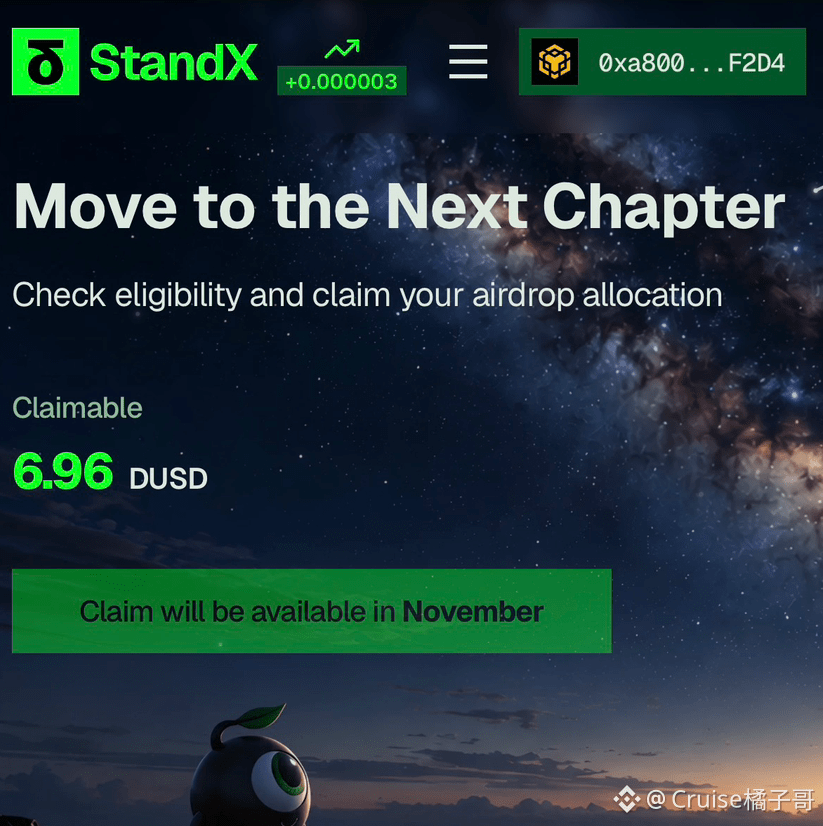
Fucking hell, I checked the StandX airdrop,
and it's absolutely pathetic.
It's barely enough for one lunch 🍚! Do I really need this one meal?
The money I got liquidated for on StandX could've fed me for a whole month, with a different meal every day. Fuck, I'll say no more—go ahead and roast them.
They could've done a perfectly good TGE, but instead they dropped this massive turd.
Fucking hell, I checked the StandX airdrop,
and it's absolutely pathetic.
It's barely enough for one lunch 🍚! Do I really need this one meal?
The money I got liquidated for on StandX could've fed me for a whole month, with a different meal every day. Fuck, I'll say no more—go ahead and roast them.
They could've done a perfectly good TGE, but instead they dropped this massive turd.
and it's absolutely pathetic.
It's barely enough for one lunch 🍚! Do I really need this one meal?
The money I got liquidated for on StandX could've fed me for a whole month, with a different meal every day. Fuck, I'll say no more—go ahead and roast them.
They could've done a perfectly good TGE, but instead they dropped this massive turd.
74
·
--
Meta reported third-quarter revenue of more than 64 billion, up 26% year over year and above expectations. It also raised its full-year capital spending guidance to around 140 billion, yet its stock still took a hit after the earnings report. Tesla cut its capital spending in the same week and didn’t fare any better. One was faulted for spending too much, the other for spending too little.
The fuse was lit in the bond market. CoreWeave borrows money to buy chips, build data centers, and lease them out. In mid-October, its bond yields shot up to 15 or 16 percent. At those levels, it looks less like investors are collecting interest and more like they’re betting CoreWeave won’t be able to pay them back. It isn’t a particularly large company, but across the entire AI chain, it’s the only one with a publicly quoted credit price day in and day out. When it coughs, Nvidia and Meta get sold off too.
Now, when you turn to the later pages of the earnings reports, what matters is free cash flow. Meta is pouring money from its ad business into data centers, spending so much that cash flow has turned negative. Tesla’s cash flow is positive, yet investors complain it isn’t spending aggressively enough. What you really need to watch is the price of compute rentals. If that eases, the cash flow assumptions for the entire chain will have to be recalculated.
Meta reported third-quarter revenue of more than 64 billion, up 26% year over year and above expectations. It also raised its full-year capital spending guidance to around 140 billion, yet its stock still took a hit after the earnings report. Tesla cut its capital spending in the same week and didn’t fare any better. One was faulted for spending too much, the other for spending too little.
The fuse was lit in the bond market. CoreWeave borrows money to buy chips, build data centers, and lease them out. In mid-October, its bond yields shot up to 15 or 16 percent. At those levels, it looks less like investors are collecting interest and more like they’re betting CoreWeave won’t be able to pay them back. It isn’t a particularly large company, but across the entire AI chain, it’s the only one with a publicly quoted credit price day in and day out. When it coughs, Nvidia and Meta get sold off too.
Now, when you turn to the later pages of the earnings reports, what matters is free cash flow. Meta is pouring money from its ad business into data centers, spending so much that cash flow has turned negative. Tesla’s cash flow is positive, yet investors complain it isn’t spending aggressively enough. What you really need to watch is the price of compute rentals. If that eases, the cash flow assumptions for the entire chain will have to be recalculated.
The fuse was lit in the bond market. CoreWeave borrows money to buy chips, build data centers, and lease them out. In mid-October, its bond yields shot up to 15 or 16 percent. At those levels, it looks less like investors are collecting interest and more like they’re betting CoreWeave won’t be able to pay them back. It isn’t a particularly large company, but across the entire AI chain, it’s the only one with a publicly quoted credit price day in and day out. When it coughs, Nvidia and Meta get sold off too.
Now, when you turn to the later pages of the earnings reports, what matters is free cash flow. Meta is pouring money from its ad business into data centers, spending so much that cash flow has turned negative. Tesla’s cash flow is positive, yet investors complain it isn’t spending aggressively enough. What you really need to watch is the price of compute rentals. If that eases, the cash flow assumptions for the entire chain will have to be recalculated.
132
·
--
Verified
ENA has a market cap of $2.7 billion, but its daily trading volume is only a little over $4 million. Its price, however, is up 6%.
It’s Ethena’s governance token. The project collateralizes ETH and hedges with short positions to issue a synthetic dollar called USDe. It’s a sizable market, but the order book is thin.
With turnover at just 0.15%, it doesn’t take many buy orders to push the price up this much. This kind of rally looks more like nobody wants to sell and there are very few buyers—the quantities at each price level are small enough to count at a glance.
ENA has a market cap of $2.7 billion, but its daily trading volume is only a little over $4 million. Its price, however, is up 6%.
It’s Ethena’s governance token. The project collateralizes ETH and hedges with short positions to issue a synthetic dollar called USDe. It’s a sizable market, but the order book is thin.
With turnover at just 0.15%, it doesn’t take many buy orders to push the price up this much. This kind of rally looks more like nobody wants to sell and there are very few buyers—the quantities at each price level are small enough to count at a glance.
It’s Ethena’s governance token. The project collateralizes ETH and hedges with short positions to issue a synthetic dollar called USDe. It’s a sizable market, but the order book is thin.
With turnover at just 0.15%, it doesn’t take many buy orders to push the price up this much. This kind of rally looks more like nobody wants to sell and there are very few buyers—the quantities at each price level are small enough to count at a glance.
1
1
2.1k
·
--
Threshold’s T is at the top of the gainers list today, trading at $0.0055, up 20% in 24 hours. At one point, it was more than 40% above its current price, then gave back those gains all the way down, closing near the bottom of its move. Volume was 169 times the norm, with around $17 million traded. I’ve seen this pattern too many times: buyers rush in on the spike, then sellers take over on the way down. Neither side looks like long-term money.
The project is an old name: it came out of the merger of Keep and NuCypher, and works on Bitcoin cross-chain applications like tBTC and node staking. It’s not a new story, and over the past 30 days, it’s actually down a little.
Token ownership is highly concentrated, with the top 10 addresses holding 75%. On Binance, just 61 KYC-verified addresses hold the token, with an average purchase price of $0.012—more than double the current price. In other words, those holders are still underwater. The on-chain pool is tiny, almost negligible, so most of the volume in this move came from exchanges. It’s hard to tell who’s driving it. What’s clear is a long upper wick and a crowd of holders stuck above the current price.
Threshold’s T is at the top of the gainers list today, trading at $0.0055, up 20% in 24 hours. At one point, it was more than 40% above its current price, then gave back those gains all the way down, closing near the bottom of its move. Volume was 169 times the norm, with around $17 million traded. I’ve seen this pattern too many times: buyers rush in on the spike, then sellers take over on the way down. Neither side looks like long-term money.
The project is an old name: it came out of the merger of Keep and NuCypher, and works on Bitcoin cross-chain applications like tBTC and node staking. It’s not a new story, and over the past 30 days, it’s actually down a little.
Token ownership is highly concentrated, with the top 10 addresses holding 75%. On Binance, just 61 KYC-verified addresses hold the token, with an average purchase price of $0.012—more than double the current price. In other words, those holders are still underwater. The on-chain pool is tiny, almost negligible, so most of the volume in this move came from exchanges. It’s hard to tell who’s driving it. What’s clear is a long upper wick and a crowd of holders stuck above the current price.
The project is an old name: it came out of the merger of Keep and NuCypher, and works on Bitcoin cross-chain applications like tBTC and node staking. It’s not a new story, and over the past 30 days, it’s actually down a little.
Token ownership is highly concentrated, with the top 10 addresses holding 75%. On Binance, just 61 KYC-verified addresses hold the token, with an average purchase price of $0.012—more than double the current price. In other words, those holders are still underwater. The on-chain pool is tiny, almost negligible, so most of the volume in this move came from exchanges. It’s hard to tell who’s driving it. What’s clear is a long upper wick and a crowd of holders stuck above the current price.
186
·
--
No need to sell your assets to use them as collateral, no need to wait for the market to open, no need to chase dividends, and no need to wake up while you sleep.
Need nothing? Then what do you need? bStocks! No need to sell!
Binance bStocks! One asset, two ways to use it! No need to sell!
Just being cute. 😂
#bstock #币安创意广告大赛
No need to sell your assets to use them as collateral, no need to wait for the market to open, no need to chase dividends, and no need to wake up while you sleep.
Need nothing? Then what do you need? bStocks! No need to sell!
Binance bStocks! One asset, two ways to use it! No need to sell!
Just being cute. 😂
#bstock #币安创意广告大赛
Need nothing? Then what do you need? bStocks! No need to sell!
Binance bStocks! One asset, two ways to use it! No need to sell!
Just being cute. 😂
#bstock #币安创意广告大赛
19
·
--
Bullish
Holding $MEGA 227 USDT
$MEGA Mega has been bouncing around a lot lately. It feels like it’s about to take off.
It used to be a star, but now it always feels pretty lackluster. The tokens released by the NFT project will have their final tranche unlocked in a few days, which will bring the token releases to an end. Back then, one SBT bought for 1 ETH got you 50,000 Mega, and half was released at launch. Even though the price has fallen a lot, those holders are still way up overall—they haven’t lost money~
If only I hadn’t been so convinced of it back then and had started shorting at launch—that would’ve been so satisfying. These days, as long as a coin isn’t being manipulated, even these no-utility coins can make you a freaking fortune.
$MEGA Mega has been bouncing around a lot lately. It feels like it’s about to take off.
It used to be a star, but now it always feels pretty lackluster. The tokens released by the NFT project will have their final tranche unlocked in a few days, which will bring the token releases to an end. Back then, one SBT bought for 1 ETH got you 50,000 Mega, and half was released at launch. Even though the price has fallen a lot, those holders are still way up overall—they haven’t lost money~
If only I hadn’t been so convinced of it back then and had started shorting at launch—that would’ve been so satisfying. These days, as long as a coin isn’t being manipulated, even these no-utility coins can make you a freaking fortune.
It used to be a star, but now it always feels pretty lackluster. The tokens released by the NFT project will have their final tranche unlocked in a few days, which will bring the token releases to an end. Back then, one SBT bought for 1 ETH got you 50,000 Mega, and half was released at launch. Even though the price has fallen a lot, those holders are still way up overall—they haven’t lost money~
If only I hadn’t been so convinced of it back then and had started shorting at launch—that would’ve been so satisfying. These days, as long as a coin isn’t being manipulated, even these no-utility coins can make you a freaking fortune.
228
·
--
Verified
$PREDICT
This is great news: Predict has launched on Binance Pre-Market Futures. It’s currently priced at 1.52, with a market cap of around 1.5 billion. In this market, it’s undoubtedly the hottest project right now.
Getting its TGE in before Polymarket, backed by Binance, and the world’s first prediction market integrated into Binance—the rise of Predict as the leading prediction market is now a done deal. Congratulations to Predict, and to all the Predict ambassadors earning at least seven figures a year. What a great time! @predictdotfun-华语
$PREDICT
This is great news: Predict has launched on Binance Pre-Market Futures. It’s currently priced at 1.52, with a market cap of around 1.5 billion. In this market, it’s undoubtedly the hottest project right now.
Getting its TGE in before Polymarket, backed by Binance, and the world’s first prediction market integrated into Binance—the rise of Predict as the leading prediction market is now a done deal. Congratulations to Predict, and to all the Predict ambassadors earning at least seven figures a year. What a great time! @predictdotfun-华语
This is great news: Predict has launched on Binance Pre-Market Futures. It’s currently priced at 1.52, with a market cap of around 1.5 billion. In this market, it’s undoubtedly the hottest project right now.
Getting its TGE in before Polymarket, backed by Binance, and the world’s first prediction market integrated into Binance—the rise of Predict as the leading prediction market is now a done deal. Congratulations to Predict, and to all the Predict ambassadors earning at least seven figures a year. What a great time! @predictdotfun-华语
1
1
813
·
--
AVA is now at $0.413, up 11% in 24 hours. It’s climbed for a week straight and looks set to retest last month’s high.
Volume hasn’t kept pace. Trading volume is $4 million, only half the usual amount, and the order book is so thin that a few trades can push the price up. It’s hard to tell who’s driving the move, but it doesn’t look like big investors are quietly accumulating.
AVA is the token for Travala, a hotel and flight booking platform. You can earn cashback when you pay for a stay, and the market has always been small. On-chain liquidity is thin, and the top 10 addresses hold 70% of the supply. If someone starts selling, there won’t be many buyers to absorb it.
Binance holders have an average cost basis of $0.60, well above the current price, so they’re still underwater. The contract also retains the ability to mint more tokens—something that shouldn’t be ignored.
AVA is now at $0.413, up 11% in 24 hours. It’s climbed for a week straight and looks set to retest last month’s high.
Volume hasn’t kept pace. Trading volume is $4 million, only half the usual amount, and the order book is so thin that a few trades can push the price up. It’s hard to tell who’s driving the move, but it doesn’t look like big investors are quietly accumulating.
AVA is the token for Travala, a hotel and flight booking platform. You can earn cashback when you pay for a stay, and the market has always been small. On-chain liquidity is thin, and the top 10 addresses hold 70% of the supply. If someone starts selling, there won’t be many buyers to absorb it.
Binance holders have an average cost basis of $0.60, well above the current price, so they’re still underwater. The contract also retains the ability to mint more tokens—something that shouldn’t be ignored.
Volume hasn’t kept pace. Trading volume is $4 million, only half the usual amount, and the order book is so thin that a few trades can push the price up. It’s hard to tell who’s driving the move, but it doesn’t look like big investors are quietly accumulating.
AVA is the token for Travala, a hotel and flight booking platform. You can earn cashback when you pay for a stay, and the market has always been small. On-chain liquidity is thin, and the top 10 addresses hold 70% of the supply. If someone starts selling, there won’t be many buyers to absorb it.
Binance holders have an average cost basis of $0.60, well above the current price, so they’re still underwater. The contract also retains the ability to mint more tokens—something that shouldn’t be ignored.
123
·
--
ZEC is up 3.4%, trading just above 1,200, with a market cap of 20 billion. While everything else is deep in the red, it’s still in the green and looking pretty resilient. But its daily trading volume is only a little over 4 million. Against a 20-billion market cap, that’s so little volume that at first glance I thought I’d misread the numbers.
Privacy coins have already had a rally this year, and the biggest wave of hype is behind us. The price is edging up mostly because sell orders are scarce. With just over 4 million in volume against a 20-billion market cap, the market is paper-thin.
ZEC is up 3.4%, trading just above 1,200, with a market cap of 20 billion. While everything else is deep in the red, it’s still in the green and looking pretty resilient. But its daily trading volume is only a little over 4 million. Against a 20-billion market cap, that’s so little volume that at first glance I thought I’d misread the numbers.
Privacy coins have already had a rally this year, and the biggest wave of hype is behind us. The price is edging up mostly because sell orders are scarce. With just over 4 million in volume against a 20-billion market cap, the market is paper-thin.
Privacy coins have already had a rally this year, and the biggest wave of hype is behind us. The price is edging up mostly because sell orders are scarce. With just over 4 million in volume against a 20-billion market cap, the market is paper-thin.
773
·
--
Bullish
I just followed a bunch of buddies I met on X!
It’s worth building a presence on Binance Square, since it’s also a place to share your random thoughts and trade directly. Plus, you can watch the pros make money, haha.
I just followed a bunch of buddies I met on X!
It’s worth building a presence on Binance Square, since it’s also a place to share your random thoughts and trade directly. Plus, you can watch the pros make money, haha.
It’s worth building a presence on Binance Square, since it’s also a place to share your random thoughts and trade directly. Plus, you can watch the pros make money, haha.

1
34
·
--
The iPhone Duo had an awkward first day on sale. It launched on October 23, with deliveries pushed back to late January 2027, while the resale premium on Dewu shrank by nearly half in a week. That same day, photos began circulating on social media of the inner screen cracking along the fold, and Apple’s official repair quote topped nearly 8,000 yuan. People scrambled to buy it, but scalpers were the first to bail. Apple’s stock barely budged that day, and its market cap briefly surpassed Nvidia’s intraday.
The iPhone Duo had an awkward first day on sale. It launched on October 23, with deliveries pushed back to late January 2027, while the resale premium on Dewu shrank by nearly half in a week. That same day, photos began circulating on social media of the inner screen cracking along the fold, and Apple’s official repair quote topped nearly 8,000 yuan. People scrambled to buy it, but scalpers were the first to bail. Apple’s stock barely budged that day, and its market cap briefly surpassed Nvidia’s intraday.
34
·
--
$BILL The tokens staked at the end of the month are about to unlock. Could all those passively staked tokens coming out cause a massive sell-off?
I have 400,000 of them. At $2,000, just thinking about it feels pretty nice. I wonder if we’ll get the chance, haha. I haven’t seen any major news lately either.
$BILL The tokens staked at the end of the month are about to unlock. Could all those passively staked tokens coming out cause a massive sell-off?
I have 400,000 of them. At $2,000, just thinking about it feels pretty nice. I wonder if we’ll get the chance, haha. I haven’t seen any major news lately either.
I have 400,000 of them. At $2,000, just thinking about it feels pretty nice. I wonder if we’ll get the chance, haha. I haven’t seen any major news lately either.
468
·
--
$PREDICT —who knows how many people playing Predict this time have reached A7, A8, or A9 with a single token?
This must be the best time ever for the ambassadors. I’m so jealous—it's been ages since we’ve seen such a huge wealth effect.
The crypto world really is full of opportunities.
$PREDICT —who knows how many people playing Predict this time have reached A7, A8, or A9 with a single token?
This must be the best time ever for the ambassadors. I’m so jealous—it's been ages since we’ve seen such a huge wealth effect.
The crypto world really is full of opportunities.
This must be the best time ever for the ambassadors. I’m so jealous—it's been ages since we’ve seen such a huge wealth effect.
The crypto world really is full of opportunities.
395
Log in to explore more content
Join global crypto users on Binance Square
⚡️ Get latest and useful information about crypto.
💬 Trusted by the world’s largest crypto exchange.
👍 Discover real insights from verified creators.
Email / Phone number
Trending Topics
BinancePick
2.5M views
136,439 Discussing
Join #EarningsSeason: Predict Earnings on Binance Pick, Share Your Take on Binance Square!
Binance Square Official
·397 Likes
·336.4k views
EarningsSeason
4.9M views
23,745 Discussing
ElectrumWalletBugLetRogueServersStealFunds
724 views
73 Discussing