
澈澈crypto
345 Posts

澈澈crypto
Report
Block User
High-Frequency Trader
5.5 Years
27 Following
131 Followers
156 Liked
Posts
All
Quotes
·
--
Sky, the rebranded MakerDAO, has crashed and burned: a $158 million deposit pool was borrowed dry, with the founder taking out $77 million himself, leaving depositors unable to withdraw for two weeks
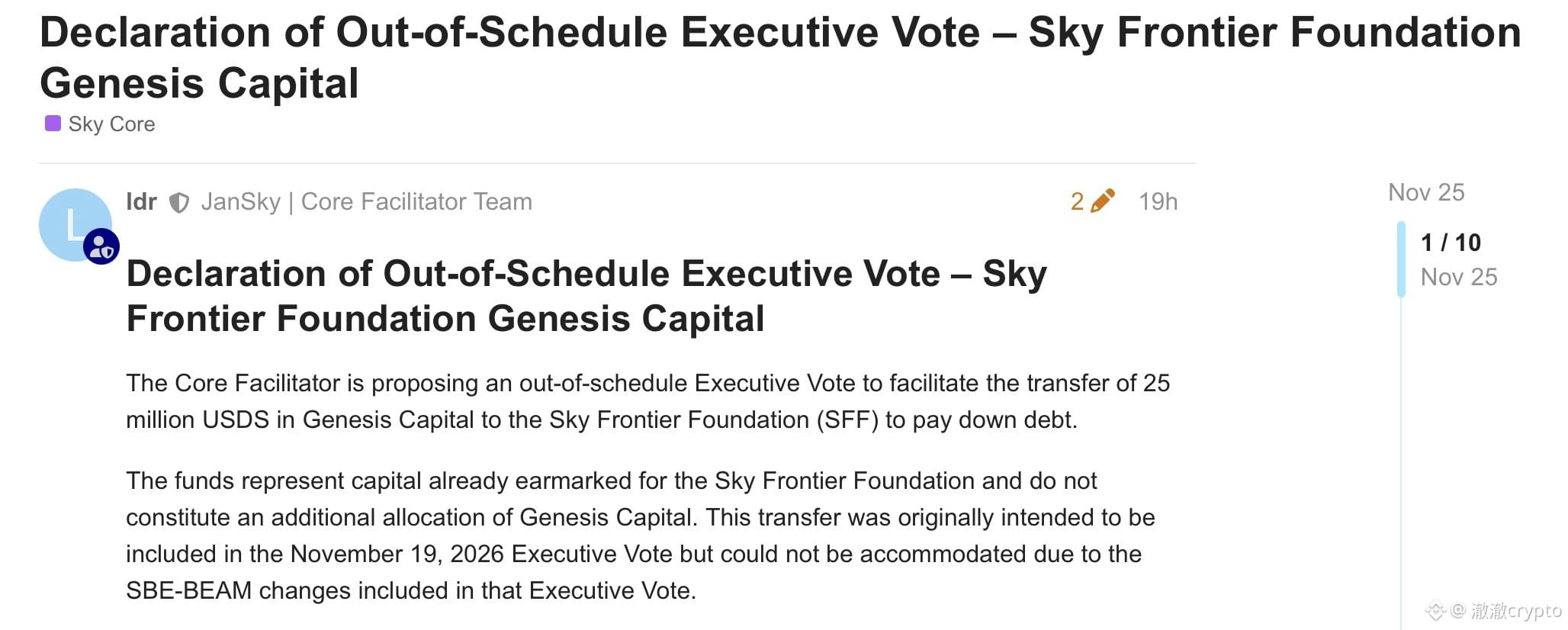
On November 26, Sky’s core coordinator put an unscheduled executive vote up for a decision, proposing an emergency transfer of 25 million USDS to the Sky Frontier Foundation to repay debt.
Spark data shows that nearly all the $158.48 million in assets in the stUSDS pool has been borrowed, pushing utilization close to 100%, with only $3,270 left available to withdraw.
Founder Rune Christensen admitted on November 23 that he had repaid $3 million and still owed about $77 million. One of his wallets accounted for 48% of the pool’s outstanding debt. He called it “a big mistake.”
This wasn’t a hacker stealing funds. The founder borrowed the pool dry as if it were his personal ATM. It looks even worse than a hack: the loans are collateralized, and he acknowledges the debt, but depositors still can’t get their money.
The 25 million would cover only about 16% of the pool. Even if the vote passes, withdrawals can’t resume until 48 hours later, and depositors may still not be able to withdraw right away.
Keep an eye on the vote first: by Thursday afternoon, about 4.39 billion SKY had voted in favor, with roughly 2.63 billion votes still needed for it to pass. If the vote fails—or withdrawals remain unavailable even after it passes—this story will keep developing.
South Korea’s Upbit, Bithumb, and Coinone have flagged SKY and USDS for trading warnings and suspended deposits. USDS is still pegged to $1 for now; if it loses its peg, the situation changes completely.
The founder borrowed from his own pool. Do you think he should repay the money first or step down first?
$BTC $ETH $SOL
#Sky #USDS
258
·
--
🦃 At the Thanksgiving table, BTC served up a "scare" first, then followed it with a plate of "actually delicious"!
As soon as PCE inflation came in at 3.8%, the market broke into a cold sweat: BTC briefly plunged to $57,300, and the bears were already raising their champagne glasses. But then? The Nasdaq clawed back its losses in late trading, and BTC climbed right back to $60,418, up 0.38% over 24 hours—the bears popped that champagne a little too early.
📌 Data as of 7:13 this morning (TradingView):
🔹 BTC $60,418, +0.38%
🔹 ETH $1,687.2, +0.04%
🔹 BNB $552.72, +0.24%
🔹 SOL $70.82, +0.60%
🔹 APT $0.3826, +3.29%
💡 In plain English: this rebound doesn't mean "the bull market is back"—the bears were forced to buy back in. Total liquidations across the crypto market hit $692 million over 24 hours, including $143 million in BTC shorts. Put simply: some people sold at a loss on the way down, and others were forced to buy on the way up. For now, the $60,000 level is holding.
🔥 Hottest of the day: Momentum (MMT) rose about 47% over 24 hours, trading around $0.32. It's a DeFi project on Sui, up about 170% in 14 days. But let's be clear: I couldn't find any clear major positive catalyst. KuCoin says speculative money is driving the move—so watch it, but don't get carried away.
My take: Short-term outlook is bullish. If BTC holds above $60,000, the next level to watch is $61,622 (yesterday's high of that big one-minute candle); if it breaks below $57,300, this view is invalidated. A couple of risks to keep in mind: ETFs have seen outflows for 6 consecutive days, the Fear & Greed Index is just 11, and about $6.9 billion in options expire today, so volatility could pick up.
Are you bullish or bearish today? Share your thoughts in the comments 👇
$BTC $ETH $BNB
For reference only; this is not investment advice

446
·
--
🔓After 25 days, Binance has finally fully reopened withdrawals
Binance announced on November 26: the suspension of withdrawals following the October security incident has been fully lifted, and the resumption of withdrawals is complete. Only a very small number of networks remain paused for routine maintenance.
The $6.34 billion stolen made this the biggest heist in crypto history. On November 1, the day withdrawals reopened in phases, $3.64 billion flowed out in just nine and a half hours.
At the time of writing, BTC is at $60,674, up 1.29% in 24 hours—a fitting thumbs-up to this news.
I think the biggest significance isn’t that “withdrawals are available again.” It’s that Binance used its own funds to cover the $6.34 billion shortfall upfront, and also published a snapshot showing 1:1 backing for reserves across 198 tokens. In effect, it’s telling the market that, on the books, the biggest heist in history is behind it.
I’ll keep an eye on two things: whether the roughly $1.9 billion that hackers still hold and that hasn’t been frozen will move again, and whether the reserve backing ratio changes in the next proof of reserves. If either one goes wrong, today’s “turning the page” will come with a big question mark.
Do you think Binance has truly put this behind it, or is it just catching its breath for now?
$BTC $ETH $SOL
#币安 #WithdrawalsRestored

14
·
--
Ethereum Glamsterdam is finally locked in: Hoodi on December 15, mainnet as early as mid-January
Last night, ACDC #192 made the call: Hoodi activation is set for December 15 at 19:12 UTC (3:12 a.m. on December 16 Beijing time), epoch 143616.
Execution-layer consensus: the EIP-8037 gas rules will remain unchanged, and the ePBS payload verification will use the PR #5770 proposal.
This is the first time a date has been set in stone since the October 22 postponement. The mainnet date is still undecided.
I think keeping EIP-8037 unchanged is the key takeaway. Previously, there were concerns that changing the rules could push mainnet back to February or even May next year. This decision rules out that risk.
At the time of writing: $ETH 1,699.6 USD (+0.90%, live TradingView reading at 03:08 CST).
First, let’s see whether Hoodi activation goes smoothly on December 15. If there are no compatibility issues, mainnet in mid-January is possible; if another problem crops up, the timeline will have to be pushed back again.
Do you think Glamsterdam mainnet can make it in January next year, or will it be delayed until February?
$BTC $ETH $SOL
#以太坊 #Glamsterdam

199
·
--
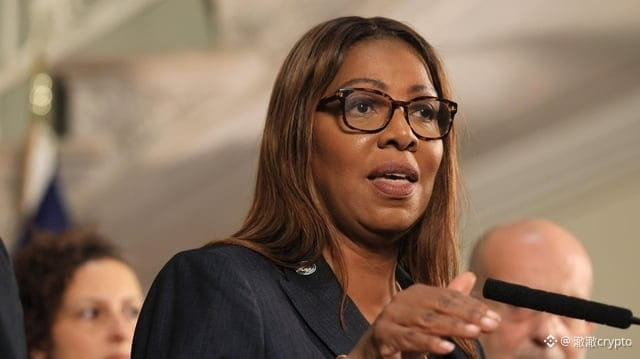
Three hours ago, the $1.37 billion Ponzi ruling was handed down, but victims may not get a cent back
A New York court ordered NovaTech founders Cynthia and Eddy Petion to pay $1,367,023,585: $1,134,549,691 in ill-gotten gains and $232,473,894 in interest
Between 2019 and 2023, the couple took about $650 million from more than 200,000 investors, targeting Haitian immigrant communities and promising high returns in church prayer groups and WhatsApp groups. 11,000 New Yorkers were caught up
A month ago, the New York attorney general asked the court for this amount. Now the court has actually ordered it—not a cent less
My take: The judgment is a paper victory; what matters is finding the people—the two fled to Panama in 2022 and remain missing
In August 2025, the court issued a default judgment and permanently barred them from the industry, but no one can say where the money is hidden or how much remains
I'm watching one thing: whether there are official actions to freeze real money going forward. Without that, this $1.37 billion is just a number
If New York prosecutors really recover a large amount of money, only then will victims have gotten their money back
Do you think a $1.37 billion judgment against this kind of fugitive Ponzi scheme is useful, or is it pointless even with a judgment?
$BTC $ETH $SOL
#NovaTech #Ponzi scheme
264
·
--
🏦 A custody firm owned by a major bank was probed too—clients’ names and emails exposed directly
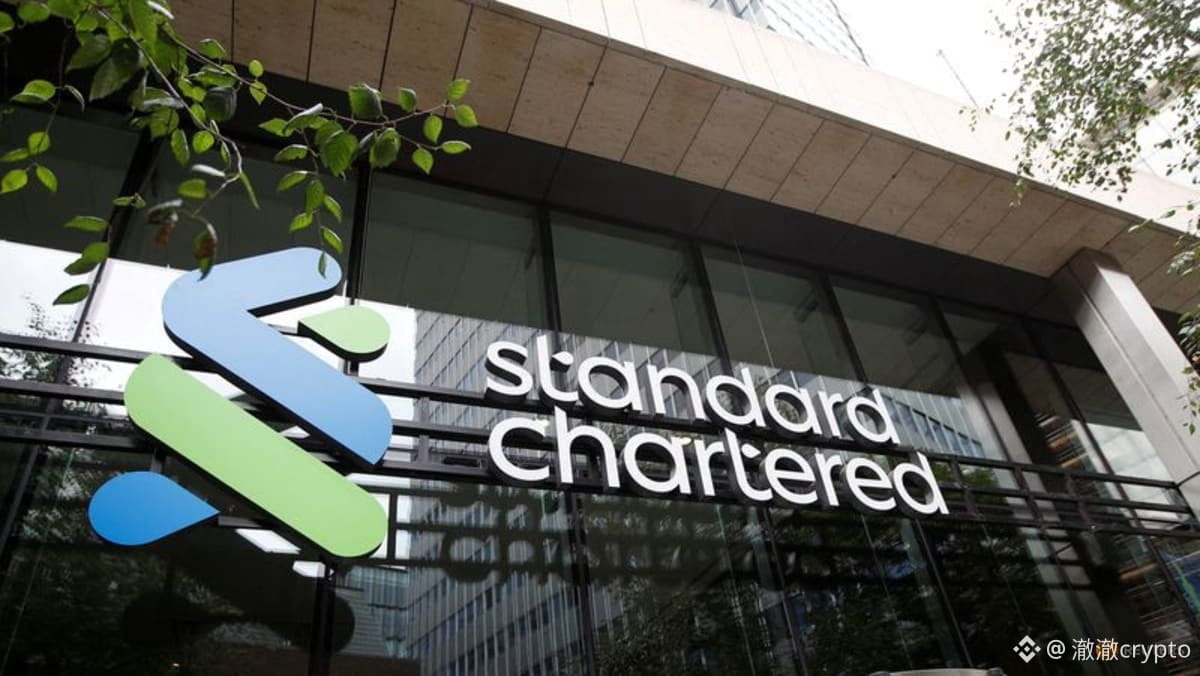
Here’s what happened: Reuters reported exclusively today that Zodia Custody, Standard Chartered’s crypto custodian, detected probing of its systems on Monday (November 23) and took its institutional direct-connect software offline that same day.
Confirmed Tuesday: Someone had obtained “limited” client information, including the names and email addresses of a small number of clients and employees. CEO Richard Clark confirmed to Reuters today that there have been no unauthorized transactions and that services have been restored.
My take: It’s a relief that no coins were lost, but custodians are selling one thing above all: “security.” A leak of client names leaves a hole in the trust ledger.
The timing makes it sting even more: Standard Chartered signed an agreement on October 21 to acquire all of Zodia, and only a few weeks ago raised its stake to 100%. Trouble hit just after it took over. Standard Chartered shares were also up 2.6% that day.
What I’ll do: Keep an eye on what happens next. Whether “no unauthorized transactions” holds up depends on whether any assets move unexpectedly. If funds are actually stolen, this escalates from an “information leak” to a “custody failure.”
Your call: When something like this happens to an institutional custodian, do you think “no coins lost means it’s not a big deal,” or “a leak of the client list is a big deal”?
$BTC $ETH $SOL
#Zodia #渣打 #CryptoCustody
314
·
--
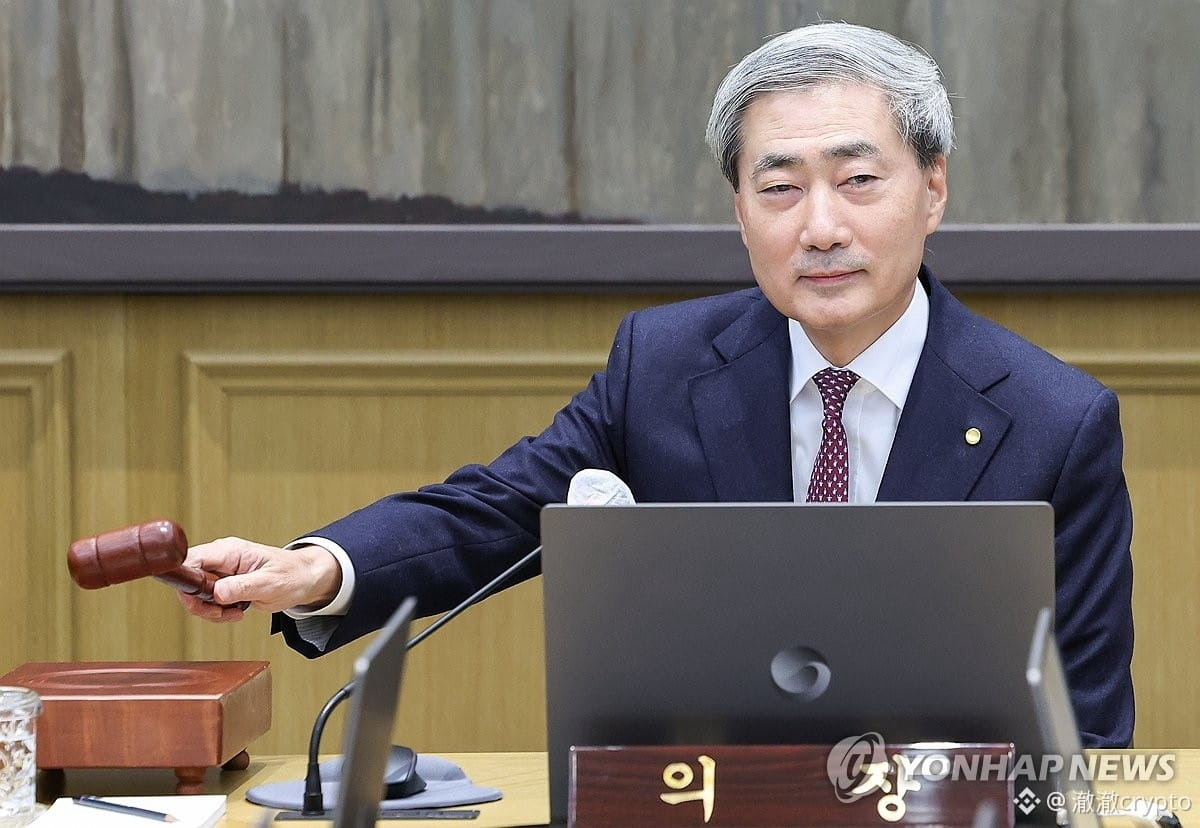
The Bank of Korea raised rates today, taking the benchmark rate from 3.00% to 3.25%, its highest since October 2024.
The seven-member committee voted 5–2 in favor. After raising rates once each in July and August, then holding steady in October, this is the third hike of the year.
The Bank of Korea also raised its 2027 growth forecast to 4.1%. October CPI was up 2.8% year over year, still above the 2% target.
I think the global tightening winds are blowing harder and harder. U.S. core PCE hit a three-year high of 3.3% in October, and the odds of a Fed rate hike in December are around 96%. South Korea’s hike just adds fuel to the fire.
But this time, the Bank of Korea removed the word “pace” from its statement, hinting that it may not be in such a hurry next time.
BTC briefly fell below $58,000 last night, but is now back at $60,620 (24-hour change: +2.02%).
U.S. November PCE will be released tonight at 21:30. If it also comes in above expectations, a December rate hike will be all but certain, making a short-term rebound hard to sustain. On the other hand, if it comes in below expectations, this tightening narrative will have to cool off.
Do you think the Fed will raise rates or hold steady in December?
$BTC $ETH $SOL
#韩国加息 #FederalReserve
322
·
--
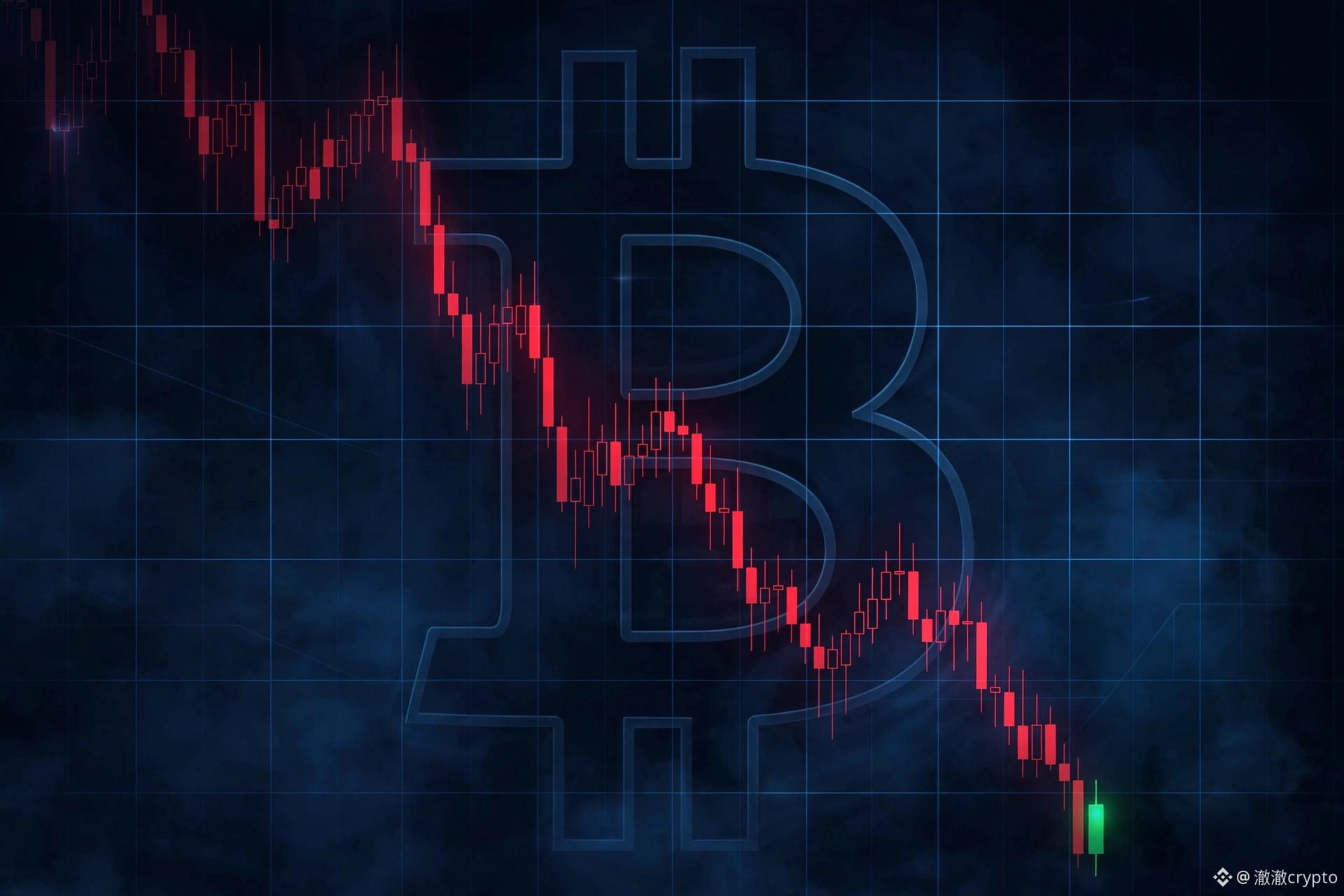
👀 BTC is back hovering around $60K, and yesterday’s ETF figure was enough to make your scalp tingle
Data as of 7:10 this morning (TradingView live prices):
📌 Market overview
$BTC $60,011, 24h +0.09%—looks green, but don’t be fooled; it’s just grinding around the $60K mark
$ETH $1,683.9, 24h +0.05%, also going nowhere
$BNB $550.98, +0.55%
APT $0.3706, +1.79%
🔹 Here’s what’s going on:
U.S. spot BTC ETFs saw net outflows of $4.94 billion in November, making it their worst month since their launch (Farside data, as of November 24). Institutions are pulling out while retail investors are holding on. That’s why Monday’s positive Nvidia news pushed BTC up to $64,500, only for it to give all those gains back within a few hours—the rally is for trimming positions, not chasing the market.
🔹 The technical picture, in plain English:
BTC’s daily RSI is just 24.6, deep in oversold territory (meaning it’s fallen a bit too far); the price is below all the moving averages, with the 20-day at 67,577 and the 200-day at 72,189—overhead resistance everywhere.
ETH is similar: RSI at 27.9, also oversold, with 1,912 (the 20-day moving average) overhead. Below, first watch 1,664 (yesterday’s low), then 1,538 (the 30-day low).
Looking down: BTC’s first level to watch is 59,260 (yesterday’s low), then November 21’s low of 55,130.
Looking up: reclaiming 61,682 (yesterday’s high) would offer some breathing room; 64,500 was Monday’s rally high.
🔹 Today’s hottest coin: SOL
SOL briefly plunged to $65.84 yesterday, then rebounded all the way to $70.37, up 0.57% over 24 hours. That’s nearly a 7% bounce from the low—the wildest ride in the market. Put simply: it falls fast and bounces fast, but whether it can hold above $70 still depends on BTC.
💡 My take: bearish overall, but short-term oversold conditions could trigger a bounce at any time
The broader trend still favors the bears, so don’t rush to buy the dip. In the short term, if BTC holds 59,260, it could test 61,682. If it breaks below 59,260, don’t try to tough it out—the next level to watch is 55,130.
The Fear Index is at 13, signaling extreme fear, and has hovered between 10 and 13 for eight straight days—the market is on edge, ready to sell off at the slightest sign of trouble.
Are you bullish or bearish today? Share your take in the comments 👇
For reference only; this is not investment advice
440
·
--
Mining rigs are spinning at full speed, but not a penny of the earnings is going into their owners’ pockets—Bitcoin miners are being quietly skimmed by “middlemen.”
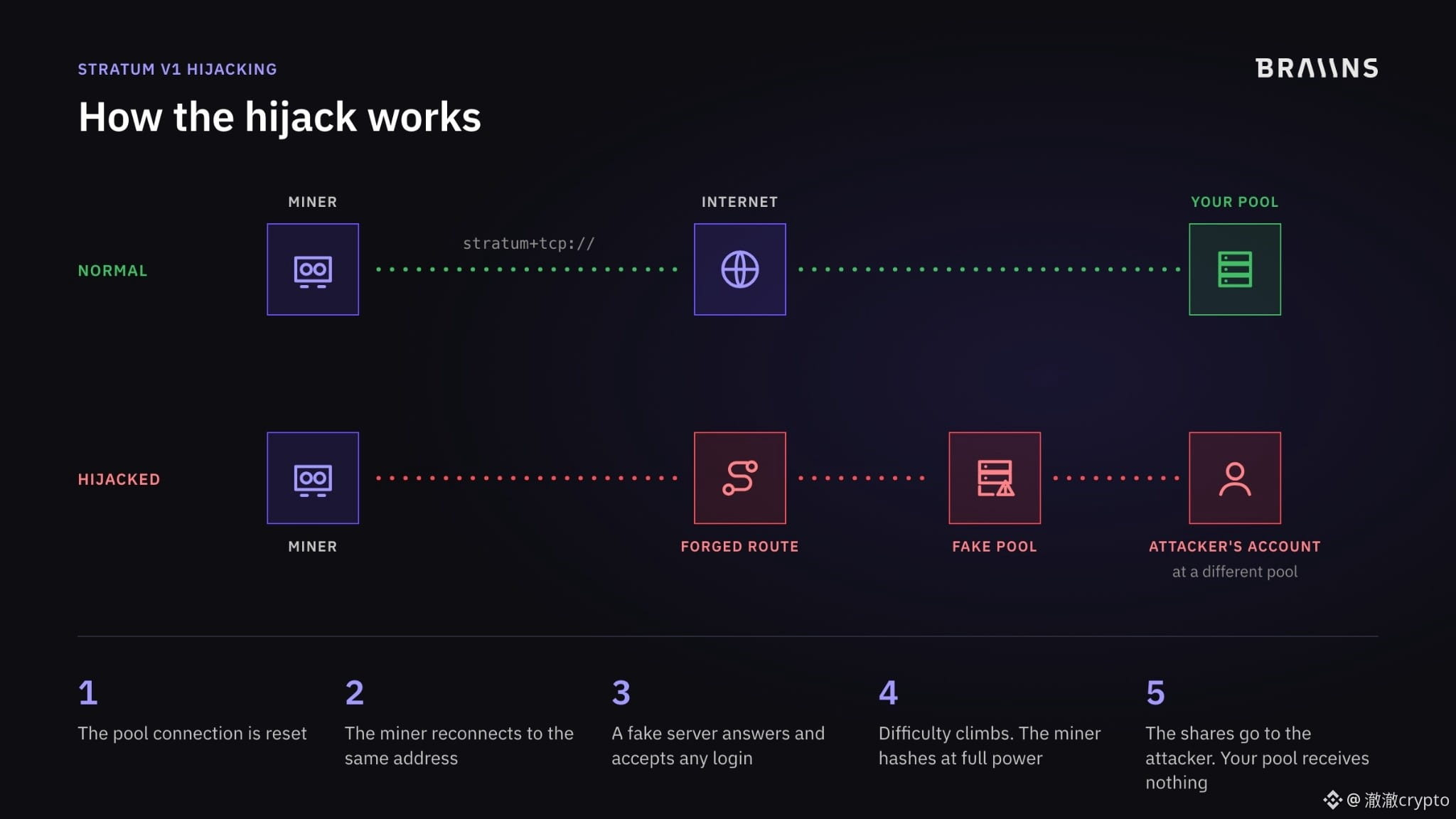
Braiins disclosed on November 25 that, on November 20, between 1,050 and 1,600 mining farms were hijacked simultaneously within the same second. Between 0.6 and 1.9 EH/s of hashrate was diverted in each wave, with each wave lasting 6 to 49 minutes.
This wasn’t the first time: Latin America saw 19 waves from November 7 to 12. Over just two weeks, the scale surged from less than 175 PH/s to 1.9 EH/s—an increase of more than tenfold.
The method is even more outrageous than “hacking”: the attackers didn’t touch the mining rigs or the mining pools. They simply forged a more “specific” network route (BGP), leading the rigs to connect to a fake mining pool. The rigs kept mining at full speed as usual, but the shares were credited to the attackers.
The scariest part isn’t how much money was lost—Braiins itself can’t even estimate how much was stolen. It’s that the attackers didn’t need to break into anything. In theory, the vast majority of miners worldwide still using plaintext Stratum V1 are potential targets, and forged routes were still appearing on November 22.
Just ten days ago, Luxor revealed that about 64,000 mining rigs, with 13 EH/s of hashrate, had been hijacked and redirected to the OCEAN mining pool. The two incidents used different methods but point to the same vulnerability: the unencrypted phone line between miners and mining pools.
In the short term, this won’t hurt the price of Bitcoin itself. At the time of writing, BTC is at $60,277 (+0.76%). But as long as major mining pools haven’t broadly switched to Stratum V2 or TLS with certificate verification, this remains a systemic risk hanging over the entire network’s hashrate.
Do you think mining pools will hurry to upgrade to encrypted connections, or will they wait until a major theft happens before taking action?
$BTC $ETH $SOL
#比特币 #HashrateHijacking
547
·
--
Ukraine’s parliament gave final approval to a crypto bill today: profits from crypto trading will be taxed at 23%.
Bill 10225-d passed with 271 votes in favor and 8 against. Individual net crypto gains will be subject to 18% income tax plus 5% military tax.
Crypto-to-crypto trades are tax-free, and losses can be carried forward to offset gains in future years.
Until the end of 2028, converting existing crypto holdings into fiat will be taxed at just 5%+5%. The new law takes effect on July 1, 2027, pending the president’s signature.
I think this gives Ukraine’s crypto market a “legal ID”—a compliance framework is finally in place.
But a 23% tax rate is steep. It’s essentially collecting the tax first and discussing growth later. A positive in the short term; the details of implementation will matter in the long term.
I’ll keep an eye on the president’s signature and the 2027 implementation rules. If the president vetoes or delays it, this positive news will be worth less.
BTC at the time of publication: $58,025 (-3.25%, live on TradingView)
Do you think countries gradually taxing crypto is bullish or bearish for the crypto market?
$BTC $ETH $SOL
#乌克兰 #Crypto regulation

121
·
--
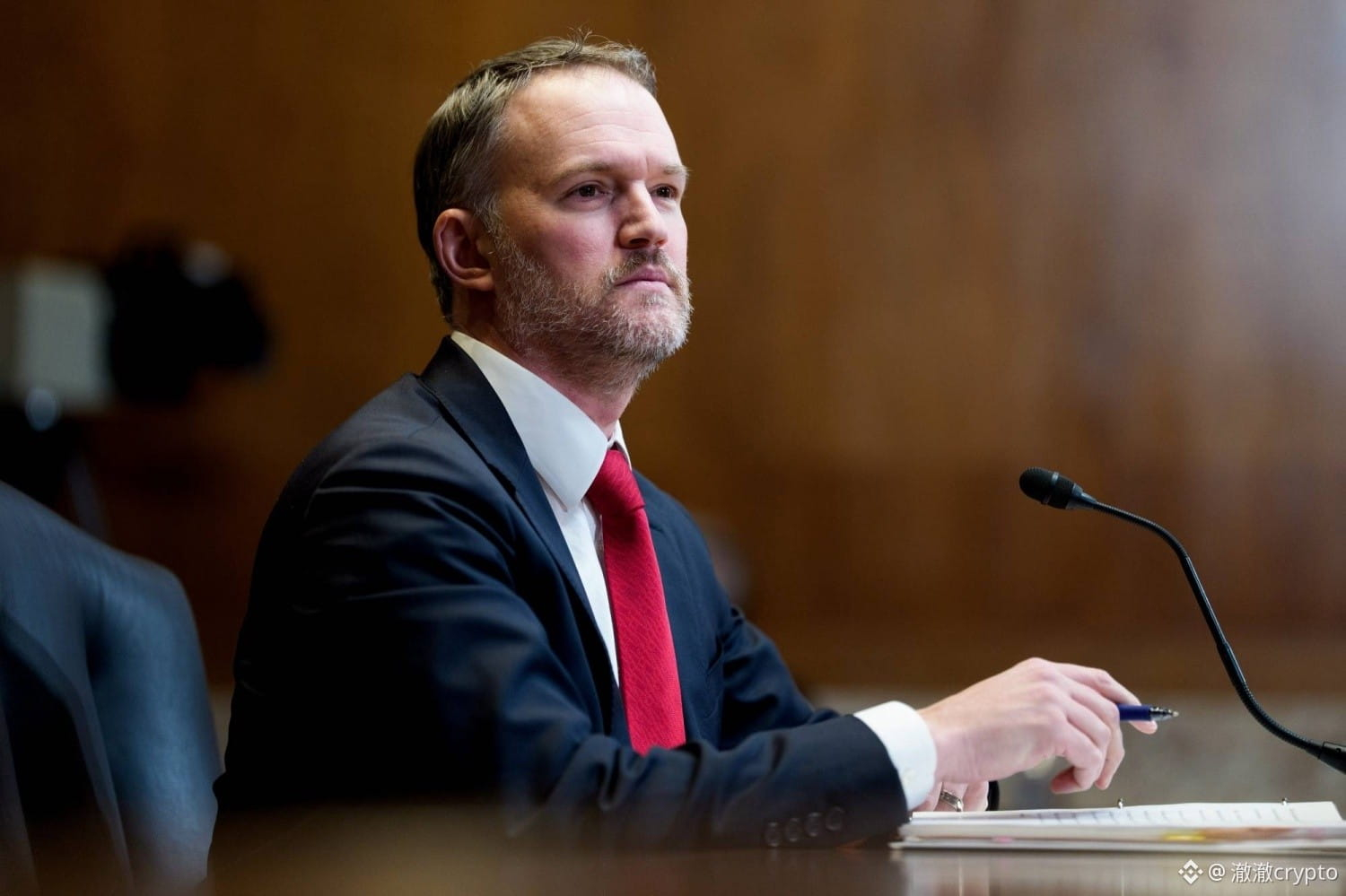
The tariff stick is back, this time aimed at 14 countries—with China taking the hardest hit.
What we're seeing: The Office of the U.S. Trade Representative officially announced the results of its Section 301 investigations today, proposing tariffs on 14 trading partners.
China is facing a proposed 20% tariff, which could bring the total to as much as 40% when combined with the roughly 25% from Trump's first term. India: 25%; Vietnam: up to 35%; the EU, Japan, and South Korea: 15%.
After the Supreme Court struck down Trump's global tariffs in February, the White House is using Section 301 to rebuild its tariff system.
My take: These tariffs won't take effect right away—they're bargaining chips.
They still need to go through public comment and hearings, and won't take effect until January at the earliest. Ahead of the G20 summit in Miami in December, countries will probably line up to negotiate.
What I'm doing: Risk assets are under pressure in the short term. BTC has already fallen to $57,652 tonight, down 4.32% in 24 hours.
But as long as negotiations remain on the table, this looks more like an emotional sell-off than a trend reversal.
What would invalidate this view: Negotiations break down in December, or China explicitly retaliates.
Do you think this round of tariffs will end in a deal or a real trade war? Deal / Trade war
$BTC $ETH $SOL
#关税 #Bitcoin
74
·
--
🔥 PCE just came out: inflation is hotter than expected, while GDP surged 4.3%—a December rate hike is virtually locked in
What we saw: The BEA released the data tonight at 21:30. October PCE was up 3.8% year over year, and core PCE was up 3.3%—0.1 percentage point above the 3.2% expected. The second estimate for Q3 GDP came in at 4.3%, revised up 0.9 percentage point from the initial 3.4% estimate and well above the 3.6% forecast.
My take: Inflation hasn’t cooled, and the economy is still going strong. A 25-basis-point rate hike by the Fed on December 9 is all but certain. Those who were betting on “one hike and then a pause” need to rethink their position.
What I’m doing: At the time of publication, BTC was at $58,278, down 3.08% over 24 hours. The market has already voted with its feet. If core PCE turns lower before the December policy meeting, this view is off the table.
After a 25-basis-point hike in December, do you think the Fed will hike again in January, or call it quits?
$BTC $ETH $SOL
#PCE #FedRateHike

88
·
--
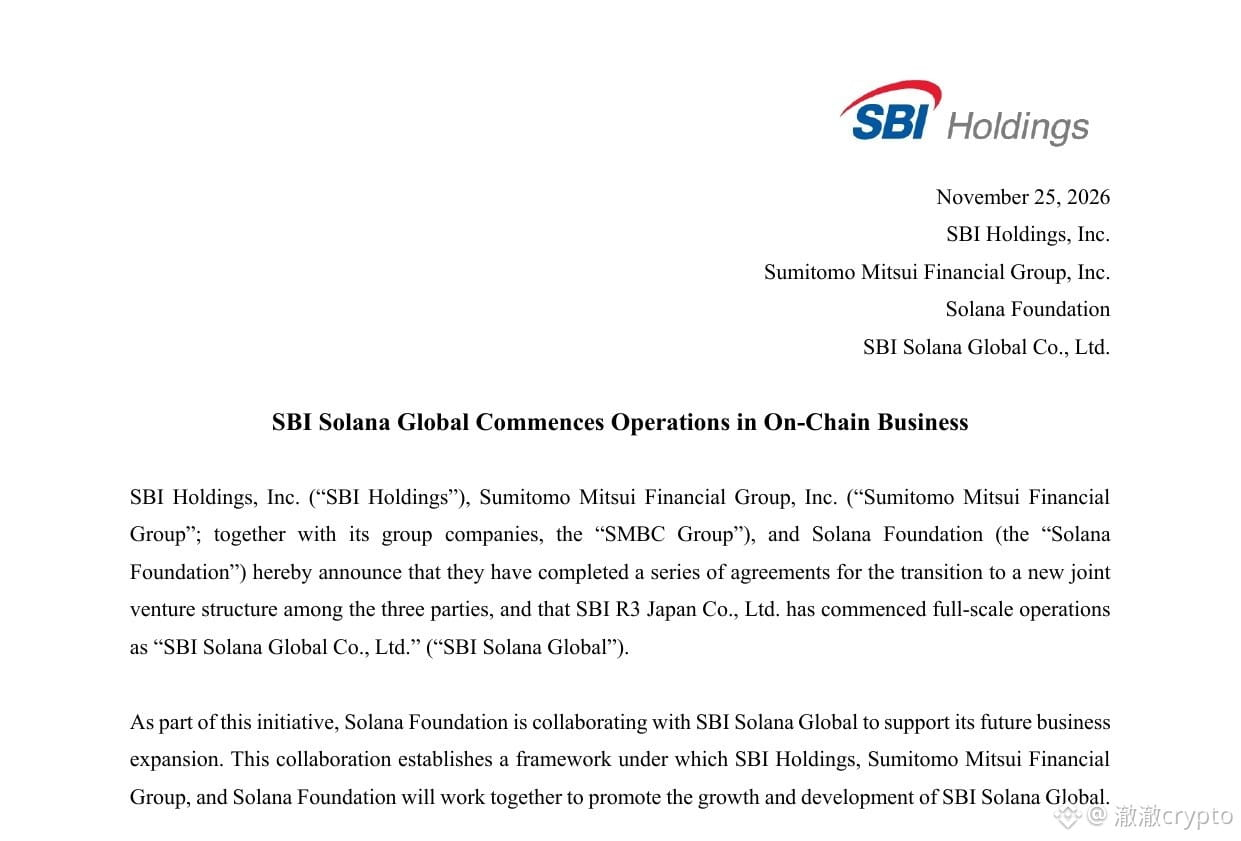
Two of Japan’s financial giants have officially gone on-chain, backed by $2.3 trillion and 80 million customers
Here’s what happened: SBI, Sumitomo Mitsui Financial Group, and the Solana Foundation jointly announced today that SBI R3 Japan has officially been renamed SBI Solana Global and is now fully operational
It will focus on four areas: stablecoin payments, tokenization of financial assets, tokenization of real-world assets, and on-chain asset management—starting in Japan, then expanding across Asia and globally. The two groups have combined assets of $2.3 trillion and serve more than 80 million customers. SOL was at $67.72 when this was published, down 3.67% on the day
My take: This is more than just signing an MoU. Japan’s largest online financial group and one of its three megabanks are genuinely moving their business onto a public blockchain. Closed consortium blockchains are officially giving way to Solana
What I’m watching: whether real products actually launch. If stablecoin payments and on-chain bonds get up and running, this could become a model for institutions going on-chain. If all that happens is a name change, I’ll file it under “another PowerPoint deck”
Do you think Japan is really about to move finance on-chain, or is it just staking out a position for now?
$BTC $ETH $SOL
#Solana #OnChainFinance
109
·
--
🎢 Champagne on Monday, back below $60K by Tuesday
Nvidia surged 31% yesterday, and the Nasdaq had its strongest day since April. BTC followed, climbing to $64,446—then gave it all back overnight. It was at $59,952 this morning, down 2.20% over 24 hours.
In other words: crypto only got half a day of the U.S. stock market rally, while ETFs kept bleeding. Spot BTC ETFs saw $569.7 million in net outflows on Monday, marking a fifth straight day of outflows. November’s total reached about $4.71 billion—the biggest monthly outflow on record.
📌 BTC $59,952 (-2.20%)
📌 ETH $1,682.1 (-1.89%)
📌 BNB $548.99 (-1.32%)
📌 SOL $69.87 (-2.81%), APT $0.3627 (-3.76%)
Liquidations were lively too: $844 million was wiped out across the market over the past 24 hours, up 217% from the previous day. Both longs and shorts took a hit.
💡 MON was the day’s hottest token: it rose 11% on its unlock day, to $0.01382. With 16.6 billion MON unlocked, worth about $217 million, shorts were so crowded they got squeezed hard. Unlocks don’t necessarily mean a price drop—crowded shorts can be the fuel.
Here’s my straightforward take: short-term outlook is bearish. BTC has fallen below $60,000, and $58,000 is the most meaningful support for now. For a bullish reversal, it needs to reclaim $64,446 first.
PCE data is due today, Wednesday, so volatility could remain high. Buckle up.
Data as of 7:11 a.m. this morning (TradingView)
$BTC $ETH $BNB
Are you bullish or bearish today? Let me know in the comments 👇
For reference only; this is not investment advice.
439
·
--
CFTC makes two moves in one day, and prediction markets officially go legit
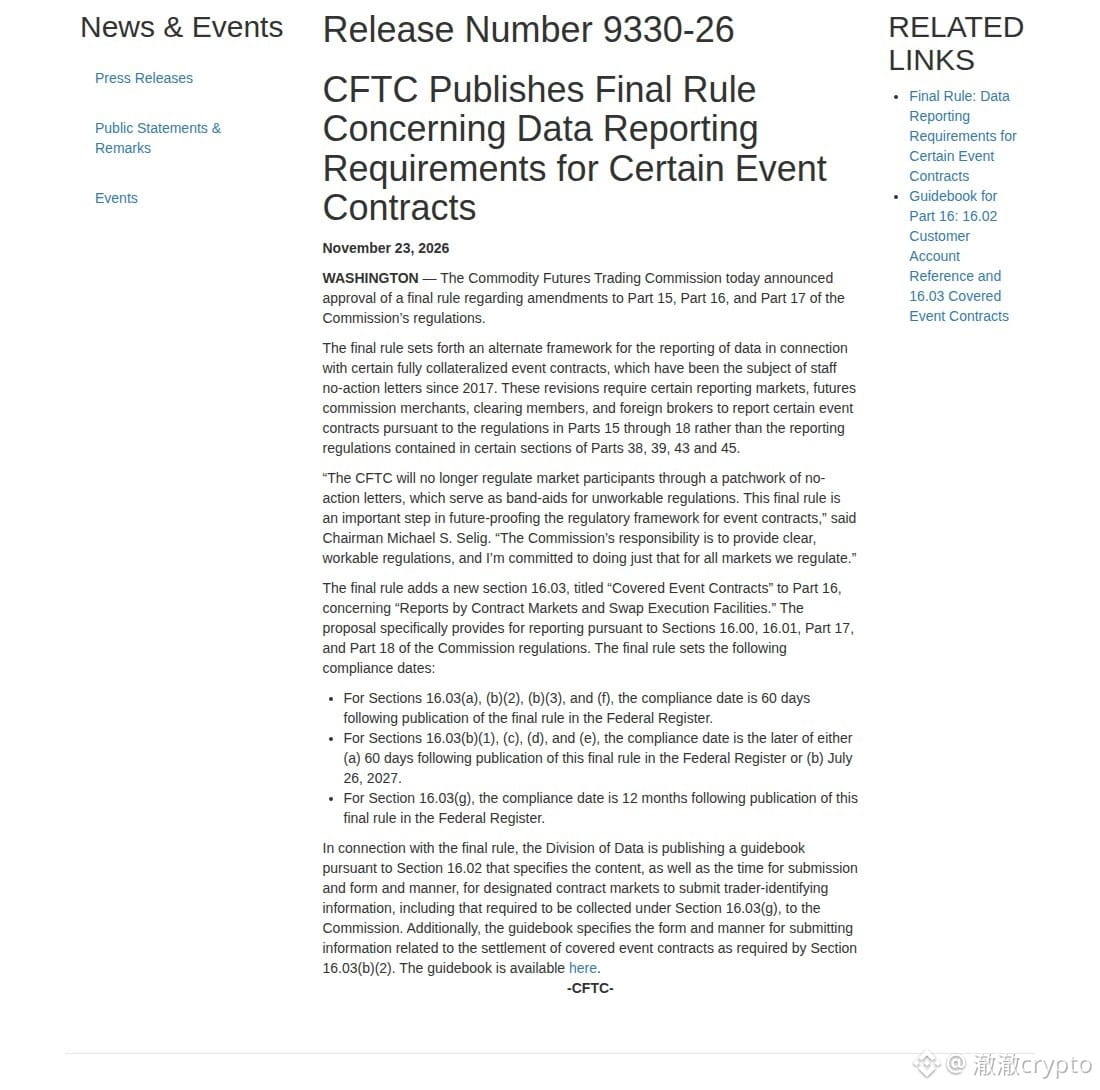
On November 23, the U.S. Commodity Futures Trading Commission adopted a final rule establishing permanent reporting requirements for fully collateralized “event contracts,” voiding 17 letters granting temporary exemptions that had accumulated since 2017.
Exchanges will henceforth have to report traders’ names, addresses, occupations, and employers. The large-trader threshold is 125,000 contracts ($125,000 notional), and most provisions take effect 60 days after publication in the Federal Register.
That same day, the CFTC also opened the door to counting Bitcoin and Ethereum at 80% of their value, and payment stablecoins at 98%, toward exchanges’ reserves for 12 months of operating expenses.
I think this is the first time prediction markets have gone from “temporary exemption” to “officially recognized.” Kalshi and Polymarket will no longer have to rely on exemption letters to keep operating.
But the real-name reporting requirement won’t take effect for 12 months, and the door to anonymous trading is closing. The reserve provision is only staff guidance, not a formal rule, so a change in leadership could reverse it.
First, we’ll see whether this rule can withstand lawsuits from the states. A New York judge just rejected an injunction on Monday, but the states are still suing. If the Supreme Court rules that states have the authority to regulate, this federal framework could be significantly weakened.
Do you think requiring real names in prediction markets is a positive or a negative? A: Positive—compliance will give investors the confidence to enter the market. B: Negative—once real names are required, half of retail traders will leave.
$BTC $ETH $SOL
#预测市场 #CFTC
868
·
--
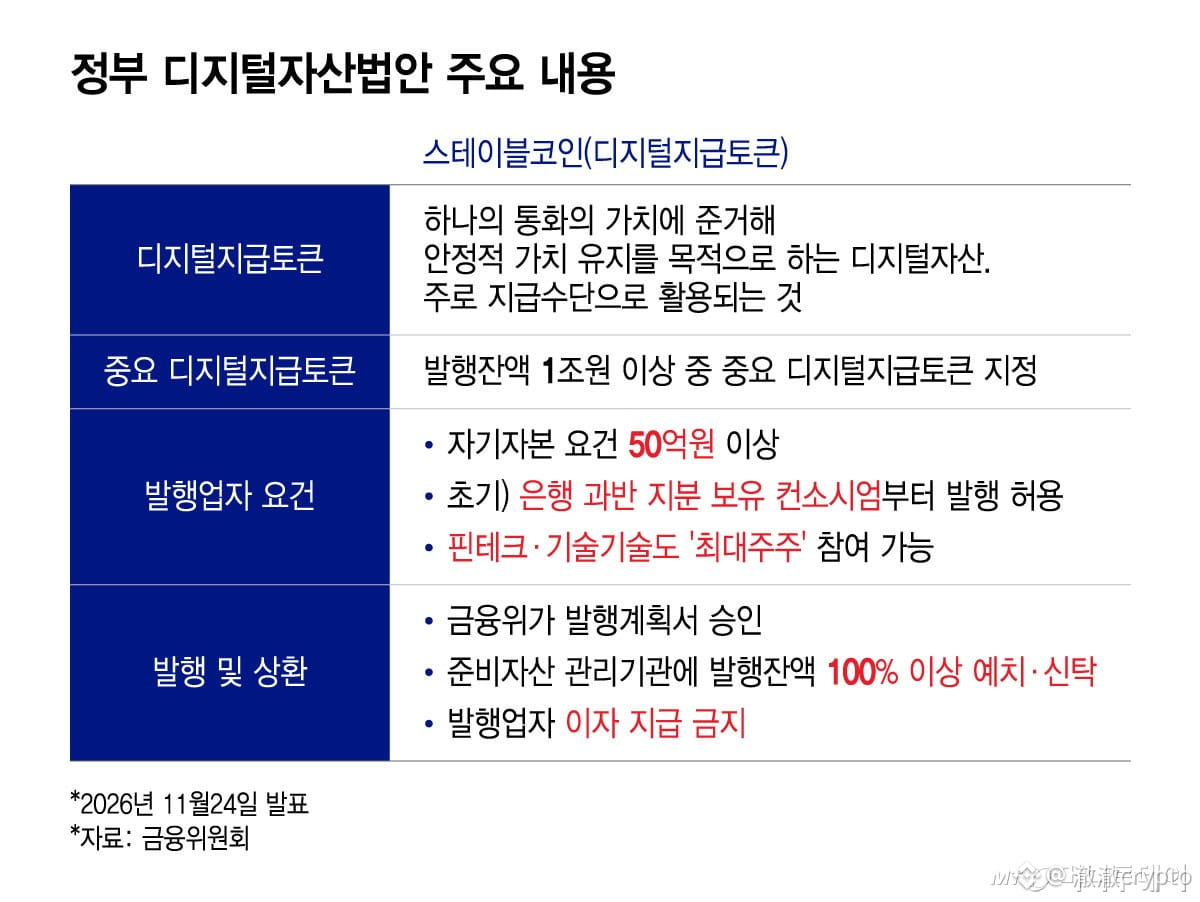
South Korea is getting serious: won stablecoins approved, ICOs unbanned, and exchange major shareholders capped at 20%.
Today (November 24), South Korea’s Financial Services Commission released the government’s draft Digital Asset Industry Act: won stablecoins will initially be issued by consortia dominated by banks. Foreign issuers can also issue them after setting up a branch in Seoul and registering—for example, Circle’s USDC.
Major shareholders of exchanges will generally be capped at a 20% stake, but can hold up to 34% with FSC approval. Upbit and Bithumb will both have to go through the licensing process again.
Domestic ICOs are being unbanned after nine years: issuers must submit a white paper and notify the FSC; they must hold 100% of reserves in banks or government bonds. Platforms must compensate users on a no-fault basis if hackers steal their coins, and violations can incur fines of up to 10% of sales.
At the time of writing, BTC was at $60,516, down 1.56% over 24 hours (Finnhub real-time price).
This is the final direction for South Korea’s second-phase crypto regulation legislation. The approval of won stablecoins and lifting of the ICO ban are genuine liberalization, but the bill still has to pass the National Assembly, so the rollout depends on parliament.
I’m watching two things: the National Assembly’s review progress and the list of the first bank consortia. If the Assembly delays it until next year or tightens the 20% cap further, the upside will be discounted.
With won stablecoins approved and ICOs unbanned, who do you think will benefit first—Upbit or Bithumb—or will the banks claim the seats first?
$BTC $ETH $SOL
#韩国 #WonStablecoin
299
·
--
👀 From $55,081 back up to $61,377—is Bitcoin’s rebound a real recovery or just a dead-cat bounce?
(Data as of 7:17 this morning, source: TradingView)
📌 Market overview: BTC is currently at $61,377, up 0.64% in 24h. On Saturday, it briefly plunged to $55,081 (its lowest level since September 2024), then closed three bullish candles in a row: $60,078 on 11-21 and $61,170 on 11-22. The lows keep getting higher, and some people are quietly buying the dip.
📌 Technicals: RSI(14) is only 28, still hovering near oversold territory—in other words, the drop has been steep enough that there’s room for a rebound. But a wall of moving averages looms overhead: SMA10 at $62,541 and SMA20 at $68,527. The current price is still below the averages. The rebound is real, but the trend hasn’t turned around yet.
📌 Other major coins: ETH $1,714.4 (+0.05%), BNB $556.17 (+0.07%), APT $0.3780 (+0.13%); they’re all plodding along with the broader market.
🔥 Hottest today: SOL at $71.95, up 2.46% in 24h—the biggest gainer among major coins. After being deeply oversold over the weekend, it’s leading the rebound.
💡 My take: Short-term outlook is bullish, and the rebound may have a little more room to run. First target: $64,505 (Monday’s intraday high). A move above $62,541 would be the first sign of a real recovery. If it falls below $58,000, I’ll admit I was wrong and treat this rebound as if it never happened.
One quick risk reminder: Spot BTC ETFs saw another $1.79 billion in net outflows last week, so institutions are still heading for the exits. U.S. PCE data is also due Wednesday, so don’t chase too aggressively.
Are you bullish or bearish today? Share your thoughts in the comments 👇
$BTC $ETH $BNB
For reference only; this is not investment advice.
23
·
--
Verified
🔔Stellar pulled off something big in the middle of the night: its quantum-resistant upgrade, Protocol 30, went live on mainnet
Here’s what happened: Validators voted it through at 1 a.m. Beijing time today, and The Defiant confirmed at 5 a.m. this morning that Protocol 30 was active
Three major features went live at once: contract addresses can carry customer tags, Soroban contracts can verify quantum-resistant ML-DSA signatures, and ledger timestamps are precise to the millisecond
Regular users don’t need to do anything: everyday transfers still use Ed25519 signatures—no migration or address changes needed
XLM is currently at $0.129647, up 2.23% over 24 hours (TradingView Coinbase, checked live at 06:35)
My take: this move isn’t for today; it’s preparation for after 2030. NIST just set a retirement timeline for Ed25519 in October, and Stellar has already laid the groundwork for quantum resistance at the contract layer
What I’m doing: treating this as a smooth upgrade, not expecting it to pump the price directly. If wallet and exchange integrations run into trouble later, I’ll reconsider this view
What do you think—is quantum resistance a real lead for Stellar, or is it just staking out a spot?
$BTC $ETH $SOL
#Stellar #QuantumResistant
610
·
--
A U.S. court extended the freeze order on Binance accounts to December 17, and Binance itself can't lift it.
In case No. 1:26-cv-05425-SKC, Parbas v. Huione, the U.S. District Court for Colorado extended the freeze order to December 17, 2026. A preliminary injunction hearing is scheduled for 8:30 a.m. that same day in Denver.
Binance acknowledged in an official post on November 23 that, under a court order, it had frozen accounts associated with specific deposit addresses. The platform is neither the plaintiff nor the defendant, and lifting the freeze can only be pursued through the court.
Chinese users have already had 332,000 yuan and 400,000 USDT frozen, and contacting customer support hasn't helped.
I think the most frustrating part is that even innocent users have no recourse: on-chain tracing identifies addresses, not people. If an account is linked to a suspicious path, the entire account gets frozen until the court gives the go-ahead.
If your account is frozen, don't waste time in the app. The notice says to contact the plaintiff's lawyer to appeal before November 24. The freeze may only be lifted if the court changes its ruling after the December 17 hearing.
Do you think it's reasonable to freeze an entire account with a single court order, or should only the funds involved in the case be frozen?
$BTC $ETH $SOL
#币安 #CourtFreeze
8
·
--
Verified
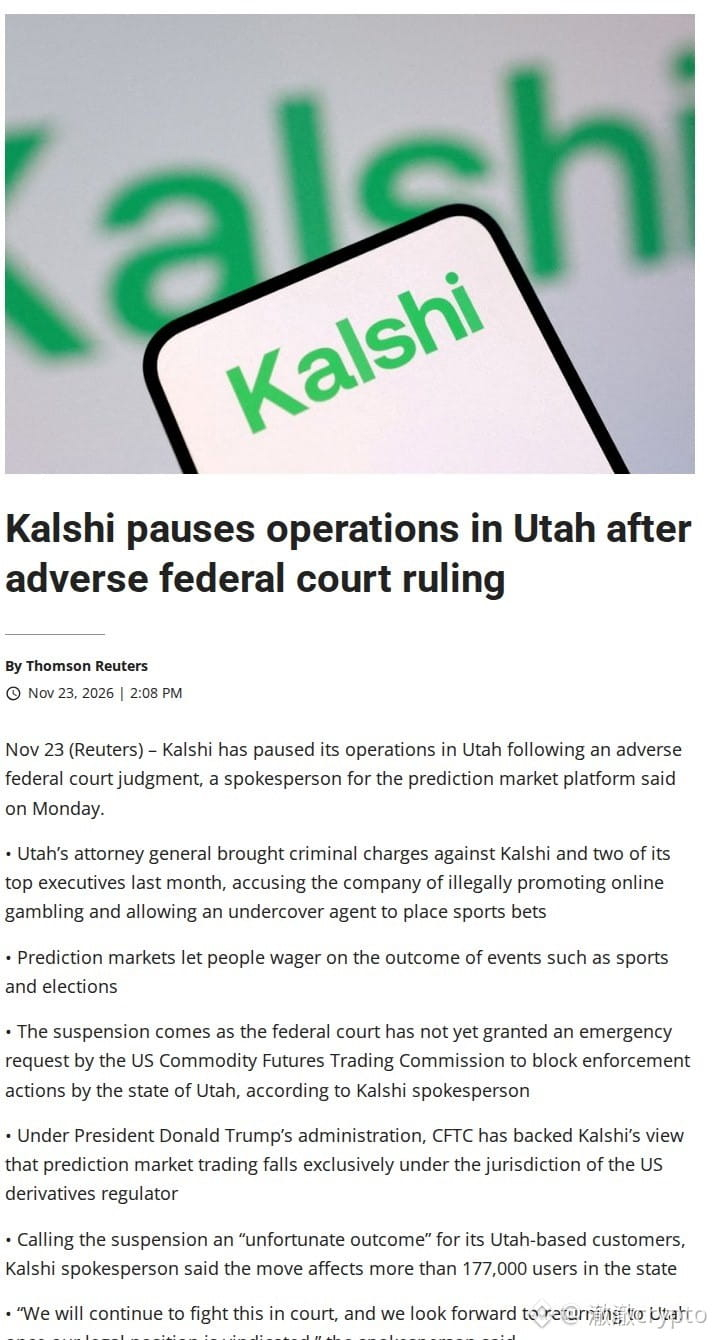
Kalshi takes a major hit in the U.S.: shuts down all operations in Utah, leaving 177,000 users with nothing to do overnight
What happened:
Reuters reported on Nov. 23 that a Kalshi spokesperson confirmed the company had suspended all operations in Utah following an unfavorable federal court ruling
Last month, Utah’s attorney general sued Kalshi and two of its executives, accusing them of operating an unlicensed sports prediction market
A federal court has yet to approve the CFTC’s emergency request to halt Utah’s enforcement action, so Kalshi has had to take a step back for now
My take:
A New York judge just refused to grant Kalshi an injunction, and now it’s shut down in Utah—the same industry, but two states heading in completely opposite directions. The jurisdictional battle is far from over
What I’m watching:
Keep an eye on the first court appearance in the Utah case on Dec. 4 and on the follow-up ruling on the CFTC’s emergency request. If the federal court gives Kalshi the green light, returning to Utah could be just a matter of time; if the Supreme Court takes up the jurisdictional dispute, the entire prediction market industry will have to rethink its strategy
Do you think prediction markets are financial derivatives or betting games?
$BTC $ETH $SOL
#预测市场 #Kalshi
657
Log in to explore more content
Join global crypto users on Binance Square
⚡️ Get latest and useful information about crypto.
💬 Trusted by the world’s largest crypto exchange.
👍 Discover real insights from verified creators.
Email / Phone number
Trending Topics
MoneroFalls13%OnDelistings
13,043 views
204 Discussing
🚨 BREAKING: MONERO DROPS 11%+ — KUCOIN DELISTING SPARKS SELL-OFF!
Monero (XMR) is facing a sharp sell-off as another major exchange moves to remove the privacy-focused cryptocurrency. 📉
📊 HERE'S WHAT HAPPENED:
▪️XMR dropped around 13% in 24 hours on November 27.
▪️KuCoin announced it will delist all four XMR spot trading pairs on November 30.
▪️MEXC had already removed XMR spot trading earlier this month.
▪️KuCoin withdrawals are scheduled to remain available until December 31.
⚠️ WHY DOES THIS MATTER?
Fewer exchange listings can reduce trading access and liquidity, potentially leading to wider spreads and sharper price swings.
🔍 WHAT'S NEXT FOR XMR?
The market will be watching whether Monero can stabilize or face further pressure as the delisting deadline approaches.
💬 Is this just a temporary setback for Monero, or could more exchange delistings follow? 👀
$PORTAL - $HAEDAL - $BULLA
#Monero #XMR #CryptoNews
#MoneroFalls13%OnDelistings
"Can XMR recover from this sell-off"!?⚡
GirlyHub
·1 Likes
·113 views
EvolveAtBinanceBlockchainWeek
1.2M views
13,841 Discussing
CanMarketsReboundAfterThanksgiving?
431,183 views
3,316 Discussing