

玲峰资本
621 Posts

玲峰资本
Report
Block User
公众号:web3高子。94爆仓出局,1011爆仓出局。2026年年底恐慌指数10以下梭哈比特币。比特币最低位区间3-6万美金左右。2025年10月大牛市无法想象已经结束。未来趋势属于AI,we3最大趋势是perp,专注AI与Web3赛道行业观察。分享个人周期情绪推演思路,所有内容仅为个人复盘交流,不构成投资建议
Open Trade

BNB Holder
Occasional Trader
8.4 Years
62 Following
2.0K+ Followers
3.1K+ Liked
Posts
Portfolio
All
Quotes
Live
·
--
The biggest crash is unimaginable. An even bigger bear market is unimaginable. Before October 5th, it was all Air Force One.
The biggest crash is unimaginable. An even bigger bear market is unimaginable. Before October 5th, it was all Air Force One.
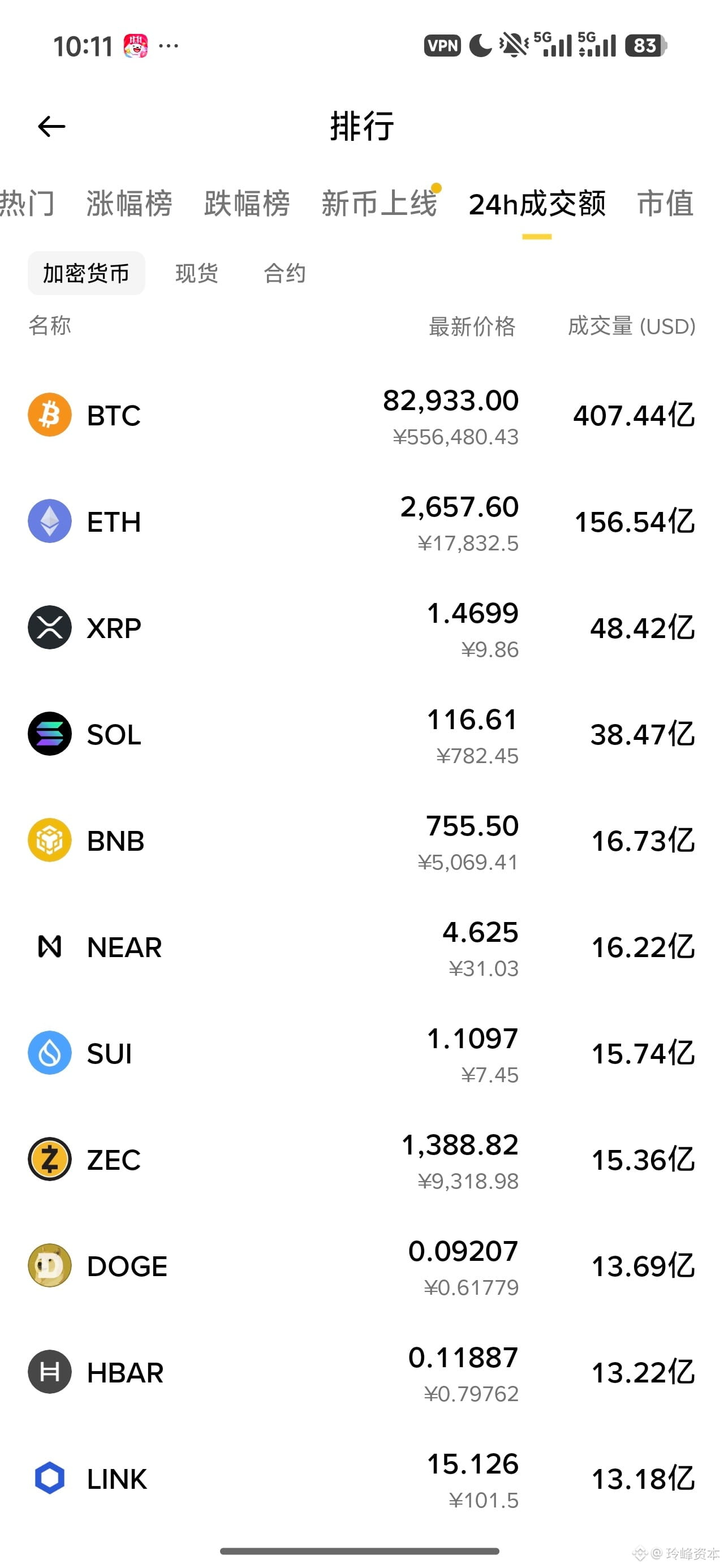
4
2
1.9k
·
--
The Great Bear Mountain can't be imagined. A massive crash is coming. From 80,000 to 70,000.
The Great Bear Mountain can't be imagined. A massive crash is coming. From 80,000 to 70,000.
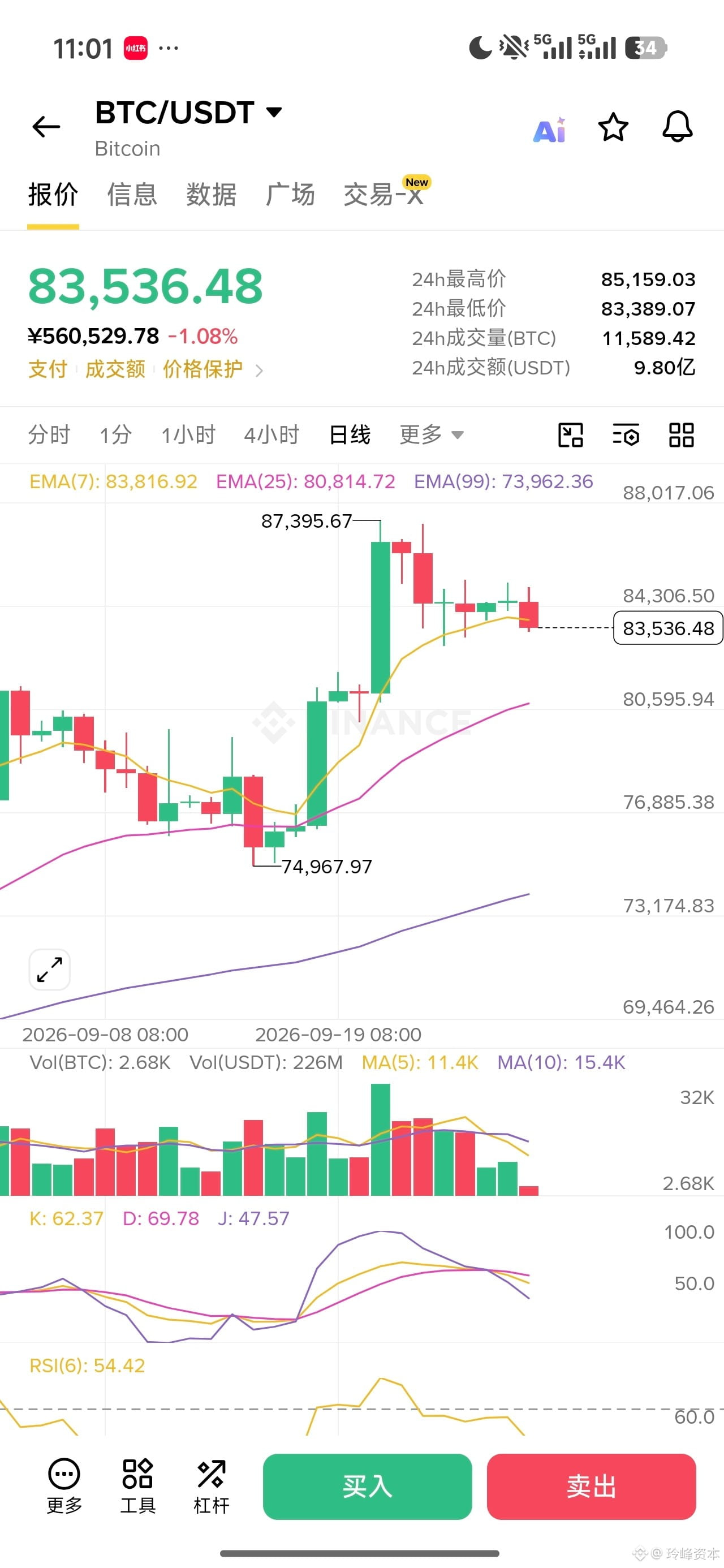
6
4
2.2k
·
--
Recently, the country has started cracking down on the crypto industry.
Recently, the country has started cracking down on the crypto industry.
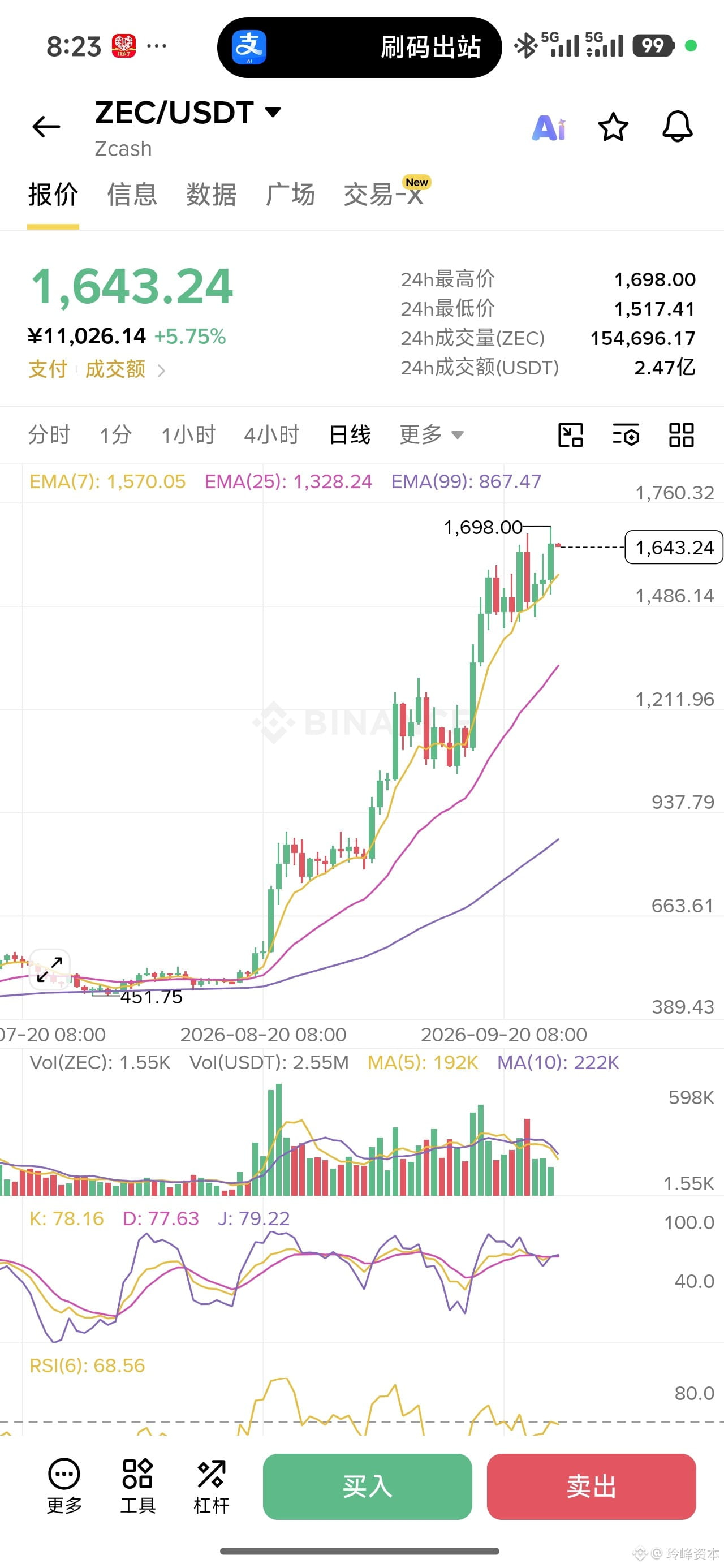
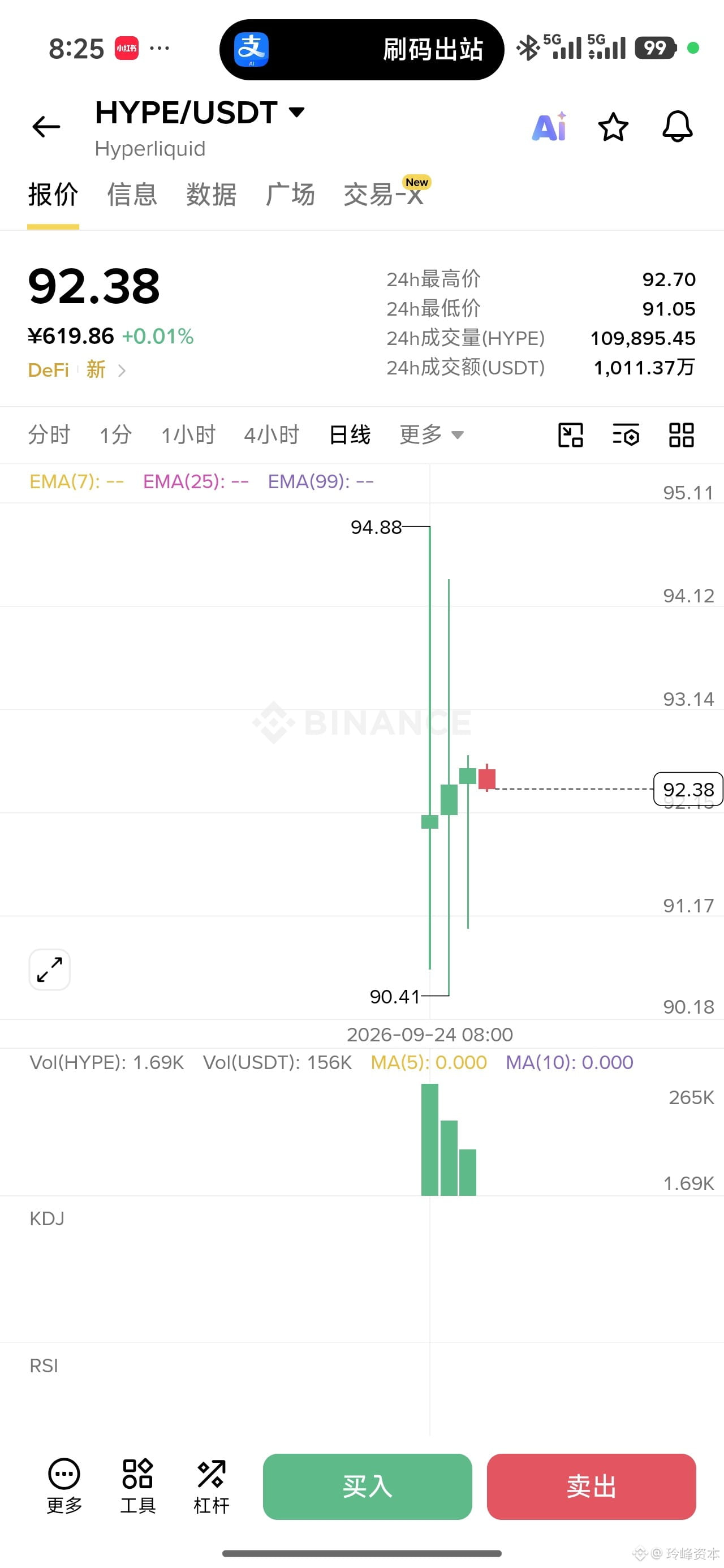
2
1
1.4k
·
--
The coming “bear market” may be unimaginably difficult, but the cycle logic behind Bitcoin’s four-year halving remains unchanged. The halving was completed on April 20, 2024. Historical market patterns: the 18th month after the halving marks a local peak; afterward, prices continue to fall for 12 months until reaching the bottom of the bear market. October 2025 corresponds to the 18th month after the halving—this cycle’s high will be $126,200, followed by a one-year downward move. It’s expected to bottom on October 6, 2026. The bottom will need repeated consolidation; both late 2026 and early 2027 may be suitable times to position. The bottom is estimated to be in the range of $30,000–$60,000. Looking back at the previous cycle: from June 2021’s $69,000 to January 2022’s $15,500, the drop was 77%. Applying that pullback rate, $126,200 would fall 77%, to roughly $29,000 (about $30,000) as the key bottom. In extreme cases, it could break below $30,000. A heavy entry position needs to satisfy all of the following at the same time: the time is in October 2026, the coin price is in the $30,000–$60,000 range, and the fear index is around 10. Once all conditions are met, the probability of profits for a heavy position is high. Hold through 2029, and sell when the holding value reaches $150,000–$250,000. By the end of 2026, the market will be saturated with all kinds of negative narratives—Bitcoin bubble death, hashpower attacks, and more—that will be widely circulated. Everyone in the market will be bearish, much like how many people today find it hard to imagine a bull market arriving. In the last bear market, Bitcoin fell to $15,500 and broke below the $20,000 all-time high from February 2017. At that time, fear filled my mind, yet I still believed in a later breakout above $100,000. This time the high is $126,200, matching expectations; it didn’t reach $150,000. This cycle’s bull market was an 8x move. In summary, by the end of 2026, it’s suitable to build a heavy Bitcoin position.
The coming “bear market” may be unimaginably difficult, but the cycle logic behind Bitcoin’s four-year halving remains unchanged. The halving was completed on April 20, 2024. Historical market patterns: the 18th month after the halving marks a local peak; afterward, prices continue to fall for 12 months until reaching the bottom of the bear market. October 2025 corresponds to the 18th month after the halving—this cycle’s high will be $126,200, followed by a one-year downward move. It’s expected to bottom on October 6, 2026. The bottom will need repeated consolidation; both late 2026 and early 2027 may be suitable times to position. The bottom is estimated to be in the range of $30,000–$60,000. Looking back at the previous cycle: from June 2021’s $69,000 to January 2022’s $15,500, the drop was 77%. Applying that pullback rate, $126,200 would fall 77%, to roughly $29,000 (about $30,000) as the key bottom. In extreme cases, it could break below $30,000. A heavy entry position needs to satisfy all of the following at the same time: the time is in October 2026, the coin price is in the $30,000–$60,000 range, and the fear index is around 10. Once all conditions are met, the probability of profits for a heavy position is high. Hold through 2029, and sell when the holding value reaches $150,000–$250,000. By the end of 2026, the market will be saturated with all kinds of negative narratives—Bitcoin bubble death, hashpower attacks, and more—that will be widely circulated. Everyone in the market will be bearish, much like how many people today find it hard to imagine a bull market arriving. In the last bear market, Bitcoin fell to $15,500 and broke below the $20,000 all-time high from February 2017. At that time, fear filled my mind, yet I still believed in a later breakout above $100,000. This time the high is $126,200, matching expectations; it didn’t reach $150,000. This cycle’s bull market was an 8x move. In summary, by the end of 2026, it’s suitable to build a heavy Bitcoin position.
2
619
·
--
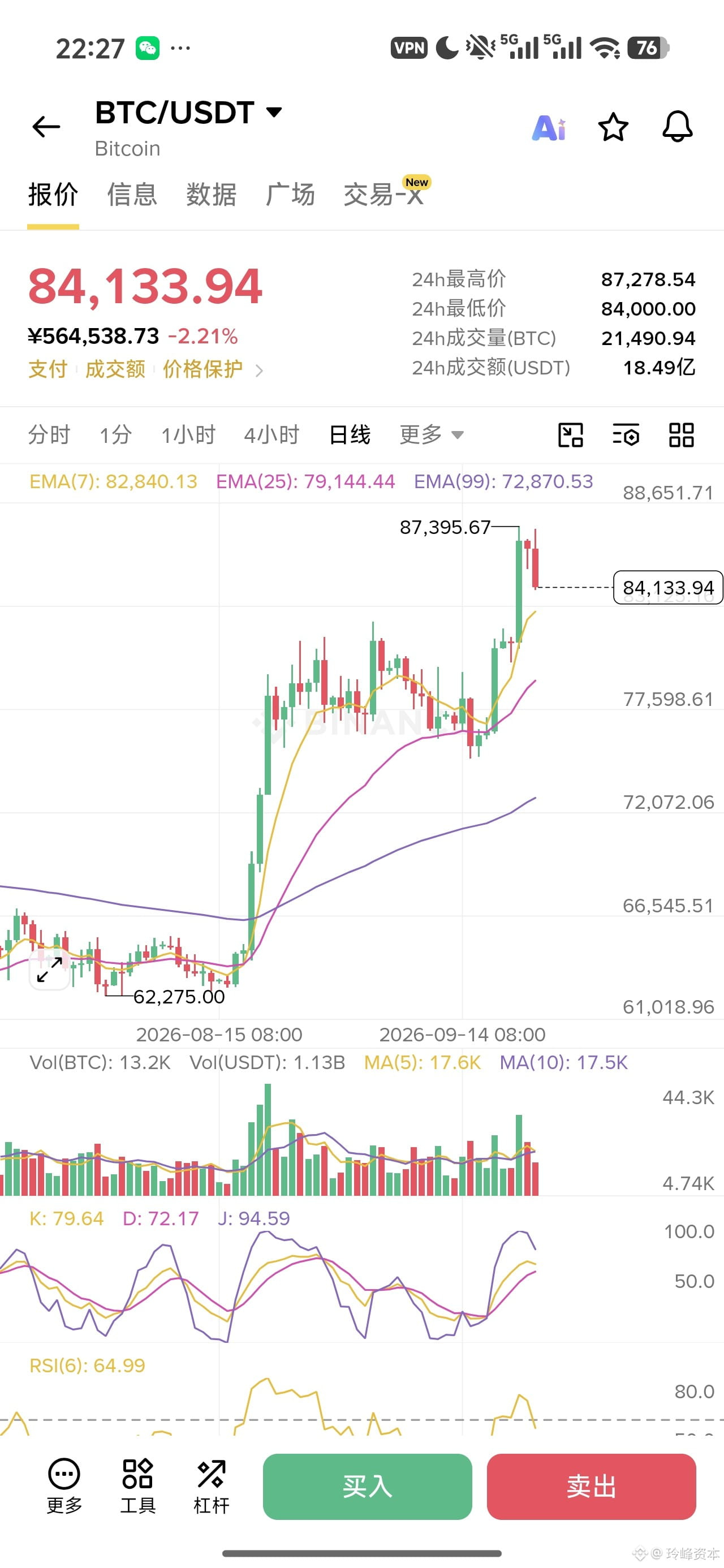
Bear City is unimaginable. It’s crashed hard. After October 5th, saying “bull market” is unimaginable. Just wait patiently for the bottom to form. For now, we’re standing still.
Bear City is unimaginable. It’s crashed hard. After October 5th, saying “bull market” is unimaginable. Just wait patiently for the bottom to form. For now, we’re standing still.
1
945
·
--
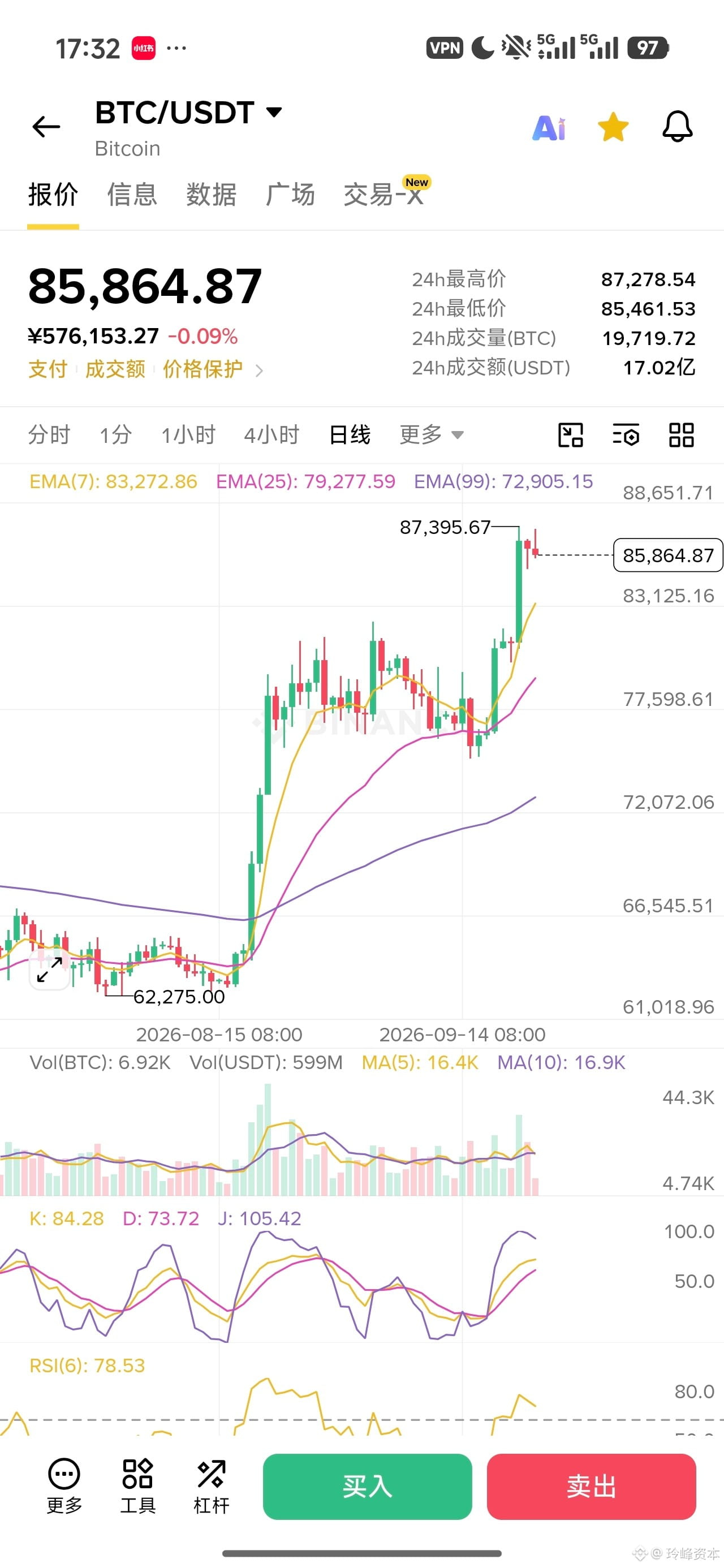
The unimaginable Bear City. The unimaginable huge crash. October 5th. Before then, I only had one direction. Only after the 5th will I shout that the bull market is unimaginable. For now, I’m still continuing to wait patiently.
The unimaginable Bear City. The unimaginable huge crash. October 5th. Before then, I only had one direction. Only after the 5th will I shout that the bull market is unimaginable. For now, I’m still continuing to wait patiently.
5
4
3.8k
·
--
It’s hard to imagine how terrifying a bear market could be, but the historical cycle pattern of Bitcoin’s four-year halving still holds. The halving took effect on April 20, 2024. Following past trajectories, the 18th month after the halving marks the bull market peak; then prices decline for 12 consecutive months, eventually reaching the bear market bottom. October 2025 is the 18th month after the halving. This cycle’s peak is $126,200. After that, a full year of decline begins, and it’s expected that the bottom will be reached on October 6, 2026. The bottom will likely involve a long period of sideways movement and grinding. By late 2026 and early 2027, you can enter to build positions. The forecast for the bottom range is $30,000–$60,000. Looking back at the previous cycle: Bitcoin fell from $69,000 to $15,500, a drawdown of 77%. By analogy, a 77% pullback from $126,200 is roughly $29,000—around $30,000 is the key support level. In extreme conditions, it could break below $30,000. If you want to enter with a heavy position, you must satisfy three conditions at the same time: after October 2026, the coin price is within $30,000–$60,000, and the fear index is around 10. With all three conditions met, the probability of substantial profits from a heavy position is high. Hold the position until 2029, then sell in the $150,000–$250,000 range. By the end of 2026, the market will be full of pessimistic voices—views that the Bitcoin bubble has burst and that computing power is under attack will be widespread. The market will be collectively bearish, just like many people now can’t imagine a bull market arriving. In the previous bear market, when the price dropped to $15,500 and broke below the February 2017 $20,000 high, I was extremely afraid, but I still believed the outlook would break above $100,000. This time, the peak reached $126,200 and matched the prediction, though it didn’t touch $150,000. The bull run in this cycle rose about 8x. Therefore, the end of 2026 is a good time to build heavy positions in Bitcoin.
It’s hard to imagine how terrifying a bear market could be, but the historical cycle pattern of Bitcoin’s four-year halving still holds. The halving took effect on April 20, 2024. Following past trajectories, the 18th month after the halving marks the bull market peak; then prices decline for 12 consecutive months, eventually reaching the bear market bottom. October 2025 is the 18th month after the halving. This cycle’s peak is $126,200. After that, a full year of decline begins, and it’s expected that the bottom will be reached on October 6, 2026. The bottom will likely involve a long period of sideways movement and grinding. By late 2026 and early 2027, you can enter to build positions. The forecast for the bottom range is $30,000–$60,000. Looking back at the previous cycle: Bitcoin fell from $69,000 to $15,500, a drawdown of 77%. By analogy, a 77% pullback from $126,200 is roughly $29,000—around $30,000 is the key support level. In extreme conditions, it could break below $30,000. If you want to enter with a heavy position, you must satisfy three conditions at the same time: after October 2026, the coin price is within $30,000–$60,000, and the fear index is around 10. With all three conditions met, the probability of substantial profits from a heavy position is high. Hold the position until 2029, then sell in the $150,000–$250,000 range. By the end of 2026, the market will be full of pessimistic voices—views that the Bitcoin bubble has burst and that computing power is under attack will be widespread. The market will be collectively bearish, just like many people now can’t imagine a bull market arriving. In the previous bear market, when the price dropped to $15,500 and broke below the February 2017 $20,000 high, I was extremely afraid, but I still believed the outlook would break above $100,000. This time, the peak reached $126,200 and matched the prediction, though it didn’t touch $150,000. The bull run in this cycle rose about 8x. Therefore, the end of 2026 is a good time to build heavy positions in Bitcoin.
2
1
521
·
--
The destructive power of Big Bear City will exceed everyone’s imagination, but the four-year halving cycle logic of Bitcoin remains unchanged. The halving was completed on 2024‑04‑20. The bull market peak appeared in the 18th month after the halving, followed by 12 months of decline, eventually reaching the bottom of the bear market. October 2025 is the 18th month after the halving. The high point of this cycle is $126,200, after which a one-year downward move begins. It is estimated that the bottom of this bear market will be reached around 2026‑10‑06. The bottom will not rebound immediately; instead, there will be ongoing consolidation as the market digests the positions. From late 2026 to early 2027 will be the time to set up. The expected price range is $30,000–$60,000. Replaying the previous cycle: the peak in June 2021 was $69,000, which then fell to a low of $15,500 in January 2022—a maximum drawdown of 77%. Applying the same level of drawdown, $126,200 falling by 77% would land around $29,000. $30,000 is a psychological and technical bottom; in extreme conditions, there is a possibility of breaking below $30,000. To bottom-fish with a heavily concentrated position, three conditions must all be met at the same time: the time is after October 2026, the price is within the $30,000–$60,000 range, and the fear index is around 10. Once all are satisfied, the win rate of a heavy-position bet is very high. If you hold until 2029, the target is to sell into the $150,000–$250,000 range. By the end of 2026, the market will be flooded with all kinds of negative rumor narratives—Bitcoin’s death, an alleged mining power (hashrate) crisis—spreading everywhere. The whole market is bearish, as many people today cannot understand the arrival of the bull market. In the last bear market, when the coin price dropped to $15,500—breaking below the $20,000 level seen in February 2017—I felt extreme fear in my heart, but I still judged that it would eventually stand above $100,000. In this cycle, the highest price was $126,200, which matches expectations, but it didn’t reach $150,000. This bull market produced 8x gains. So, late 2026 is the timing to build a heavy Bitcoin position.
The destructive power of Big Bear City will exceed everyone’s imagination, but the four-year halving cycle logic of Bitcoin remains unchanged. The halving was completed on 2024‑04‑20. The bull market peak appeared in the 18th month after the halving, followed by 12 months of decline, eventually reaching the bottom of the bear market. October 2025 is the 18th month after the halving. The high point of this cycle is $126,200, after which a one-year downward move begins. It is estimated that the bottom of this bear market will be reached around 2026‑10‑06. The bottom will not rebound immediately; instead, there will be ongoing consolidation as the market digests the positions. From late 2026 to early 2027 will be the time to set up. The expected price range is $30,000–$60,000. Replaying the previous cycle: the peak in June 2021 was $69,000, which then fell to a low of $15,500 in January 2022—a maximum drawdown of 77%. Applying the same level of drawdown, $126,200 falling by 77% would land around $29,000. $30,000 is a psychological and technical bottom; in extreme conditions, there is a possibility of breaking below $30,000. To bottom-fish with a heavily concentrated position, three conditions must all be met at the same time: the time is after October 2026, the price is within the $30,000–$60,000 range, and the fear index is around 10. Once all are satisfied, the win rate of a heavy-position bet is very high. If you hold until 2029, the target is to sell into the $150,000–$250,000 range. By the end of 2026, the market will be flooded with all kinds of negative rumor narratives—Bitcoin’s death, an alleged mining power (hashrate) crisis—spreading everywhere. The whole market is bearish, as many people today cannot understand the arrival of the bull market. In the last bear market, when the coin price dropped to $15,500—breaking below the $20,000 level seen in February 2017—I felt extreme fear in my heart, but I still judged that it would eventually stand above $100,000. In this cycle, the highest price was $126,200, which matches expectations, but it didn’t reach $150,000. This bull market produced 8x gains. So, late 2026 is the timing to build a heavy Bitcoin position.
2
3
476
·
--
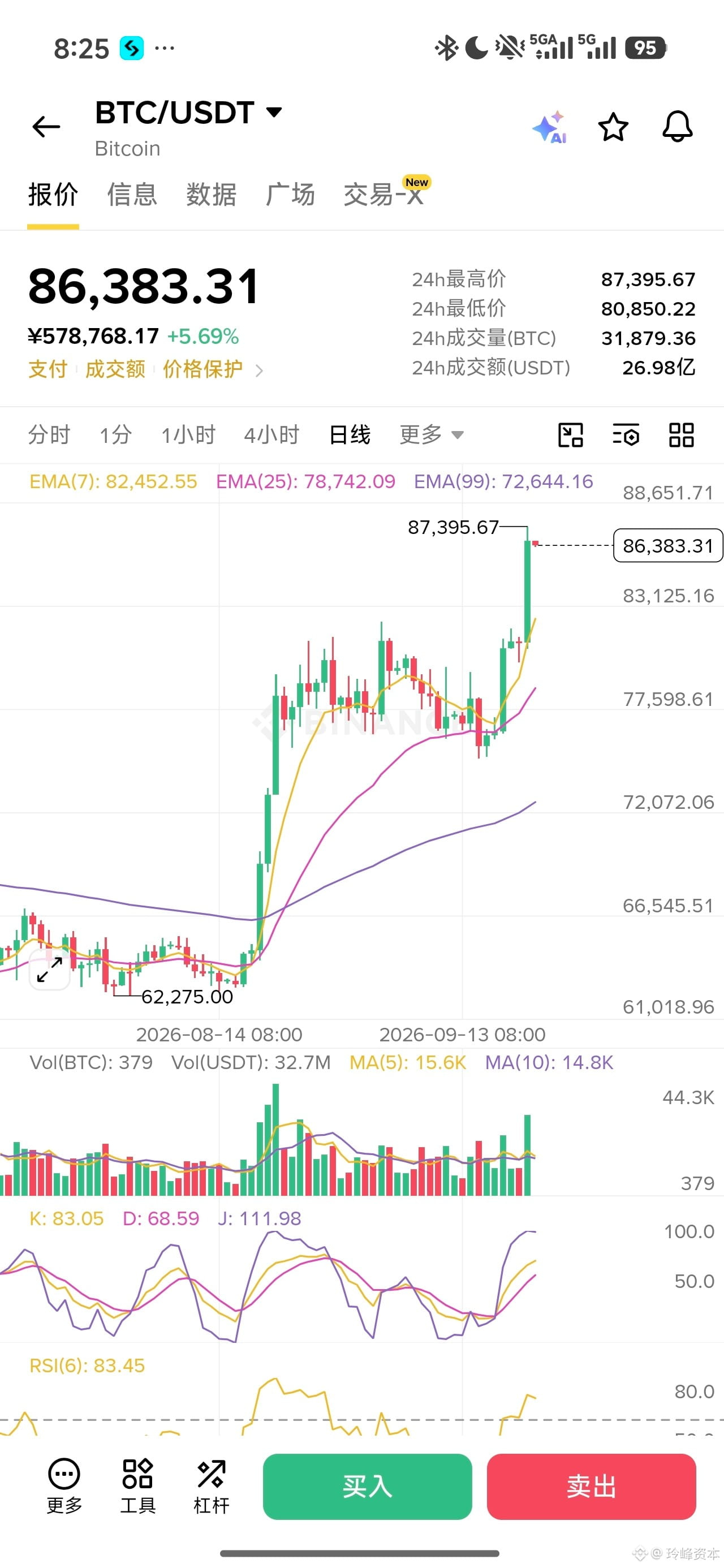
A massive crash is unimaginable. A bear market is unimaginable. There are plenty of opportunities for Bitcoin below $80,000. There are also opportunities at $60,000–$70,000. Be patient and wait. The four-year halving cycle. The timing—October 5th—is exactly one year.
A massive crash is unimaginable. A bear market is unimaginable. There are plenty of opportunities for Bitcoin below $80,000. There are also opportunities at $60,000–$70,000. Be patient and wait. The four-year halving cycle. The timing—October 5th—is exactly one year.
4
2
3.3k
·
--
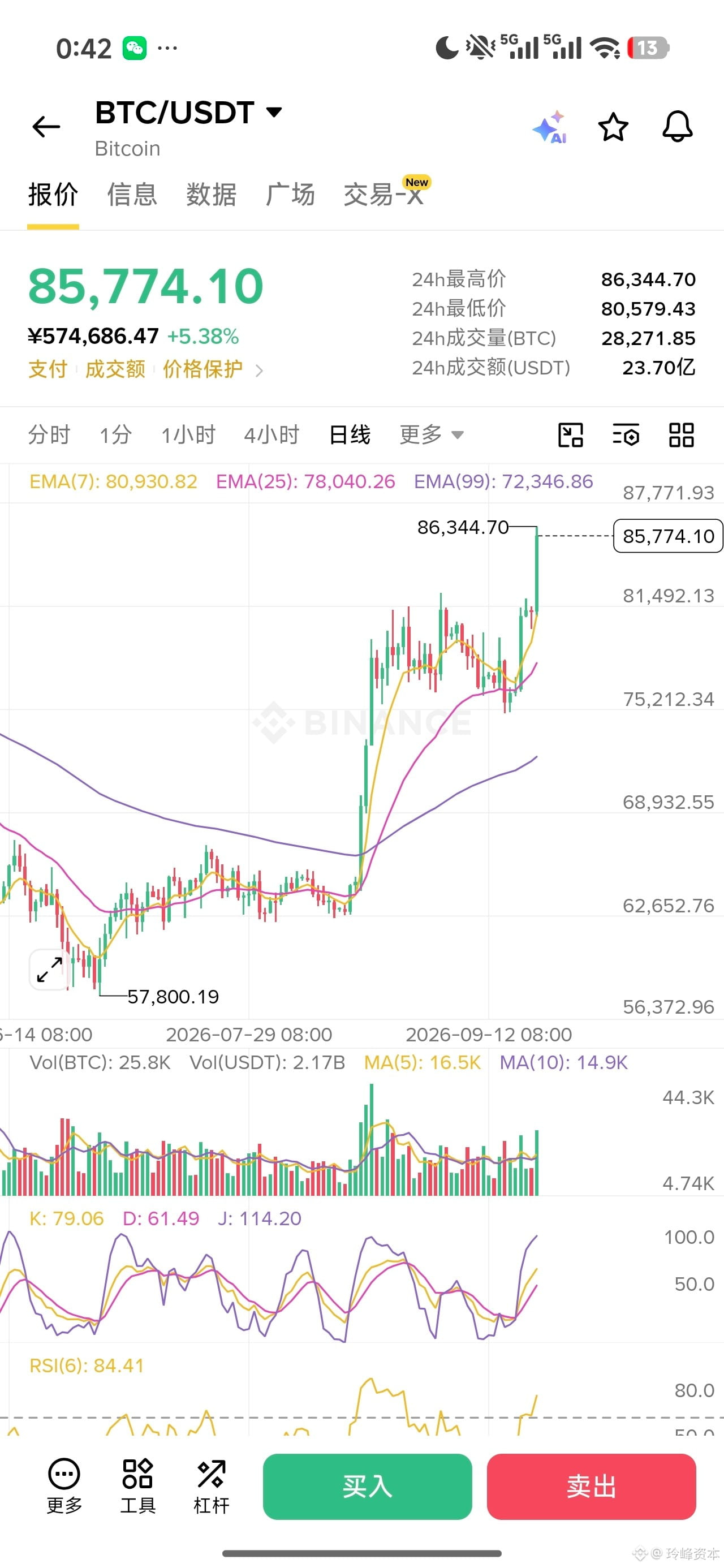
I'm still in cash. What's the best approach? Is there some expert?
I'm still in cash. What's the best approach? Is there some expert?
9
1
3
3.3k
·
--
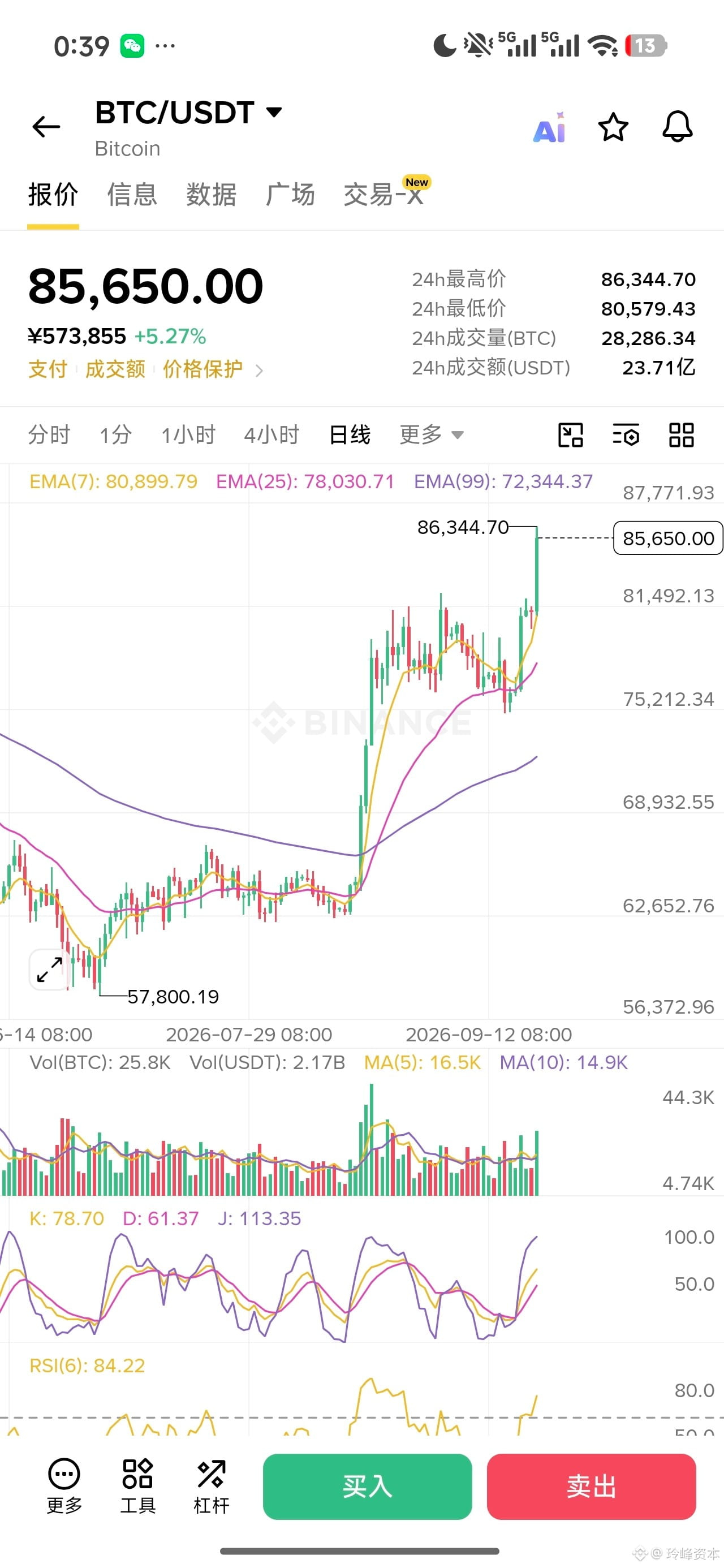
$863k. A huge bear market is unimaginable. The market is too FOMO right now. We’re still not rushing, not charging in. I’ll continue to wait patiently for the bottom to appear. According to the past two halvings and the larger cycle, the lowest point is one year after the peak of the bull market—so around October 5th. Let’s wait and see. For now, I’m holding steady and not making any moves.
$863k. A huge bear market is unimaginable. The market is too FOMO right now. We’re still not rushing, not charging in. I’ll continue to wait patiently for the bottom to appear. According to the past two halvings and the larger cycle, the lowest point is one year after the peak of the bull market—so around October 5th. Let’s wait and see. For now, I’m holding steady and not making any moves.
17
1
4
8.9k
·
--
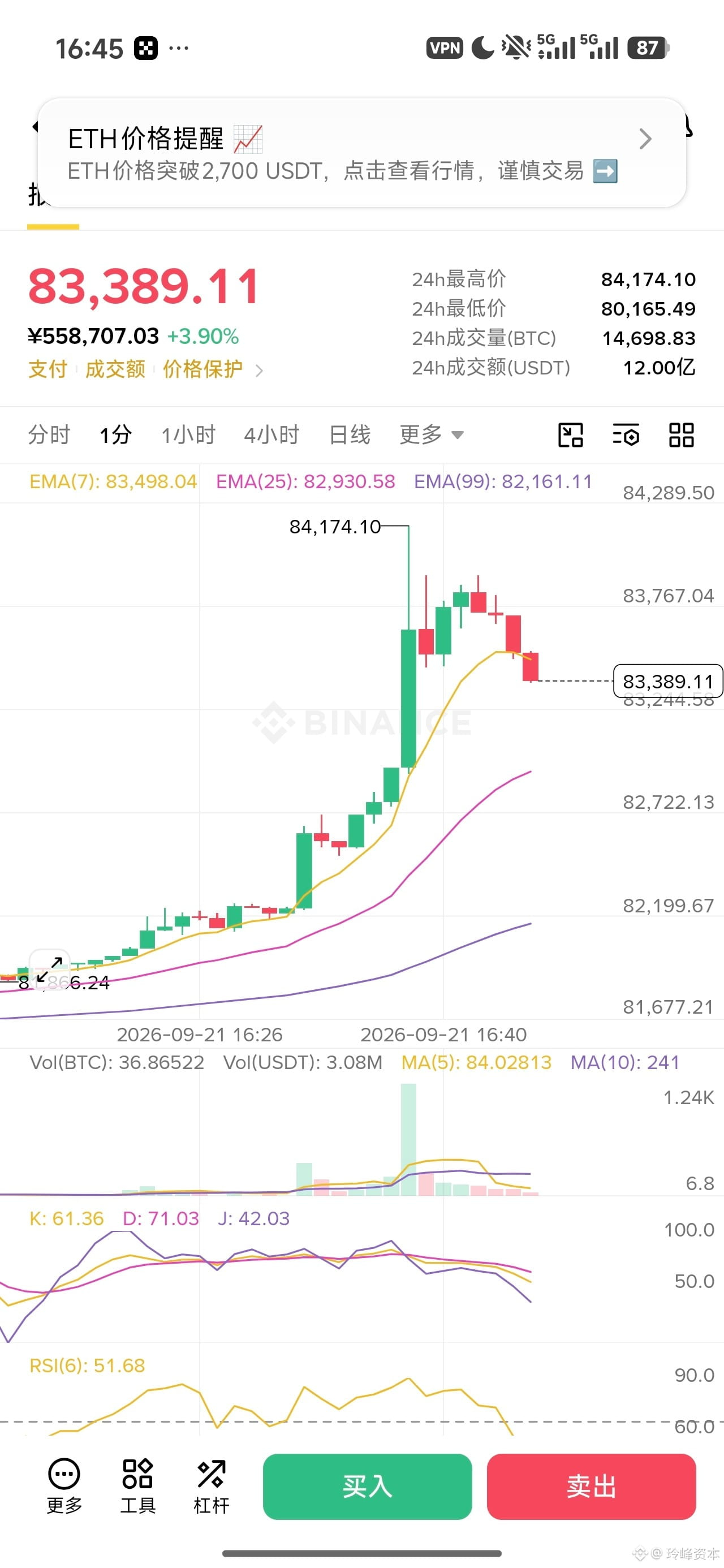
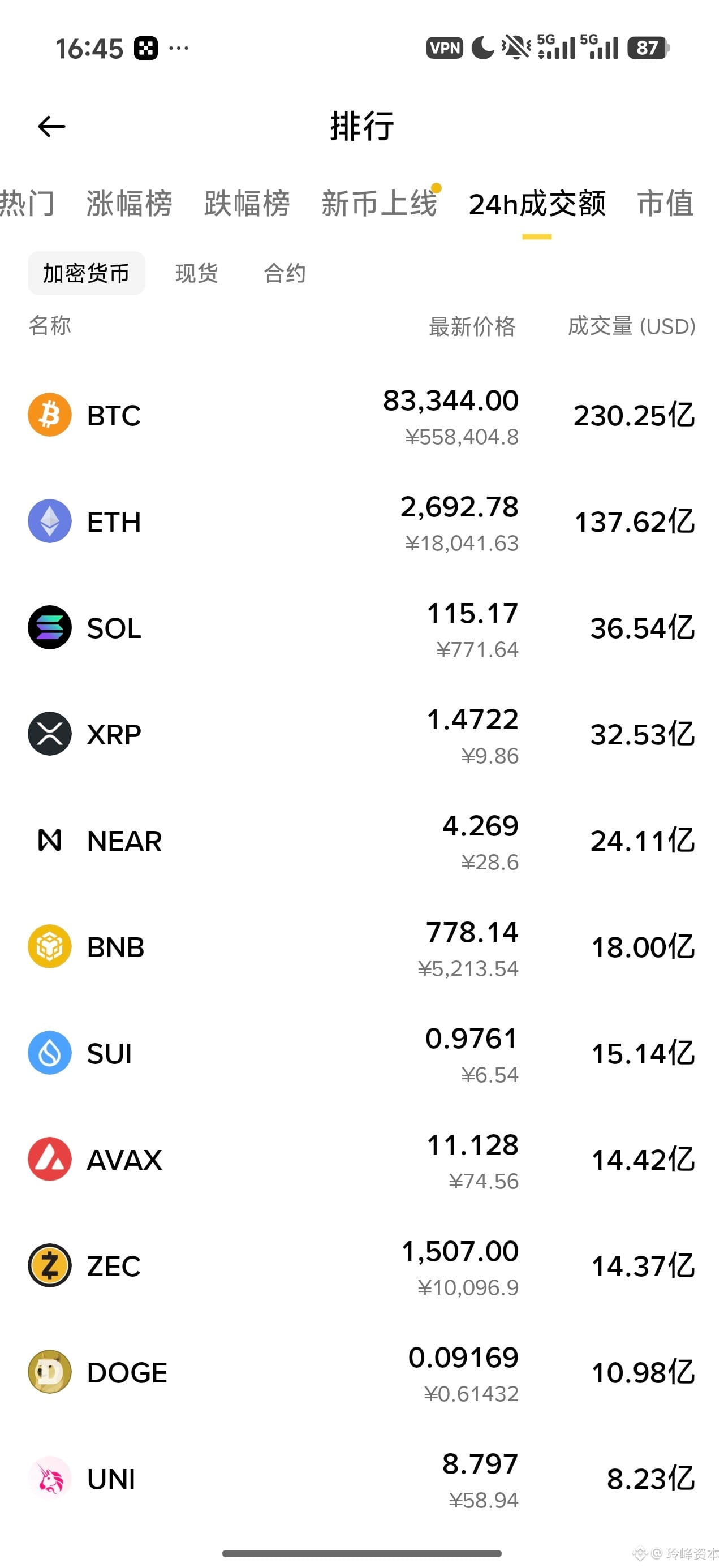
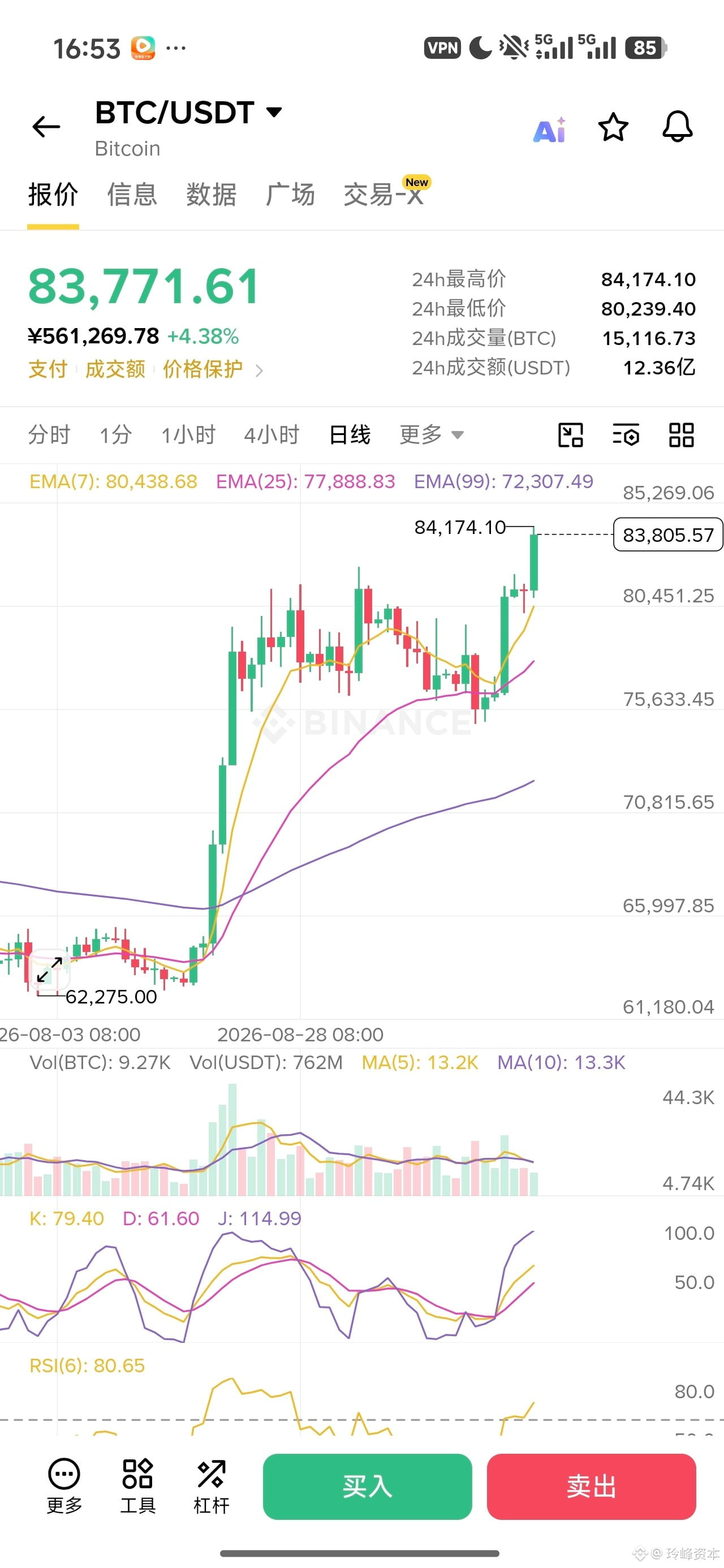
SEC allows tokenized on-chain trading of US stocks, representing further opening of compliant on-chain financial scenarios. This strengthens the market narrative of “cryptographic assets becoming compliant,” bringing a boost to sentiment.
SEC allows tokenized on-chain trading of US stocks, representing further opening of compliant on-chain financial scenarios. This strengthens the market narrative of “cryptographic assets becoming compliant,” bringing a boost to sentiment.
1
4
5k
·
--
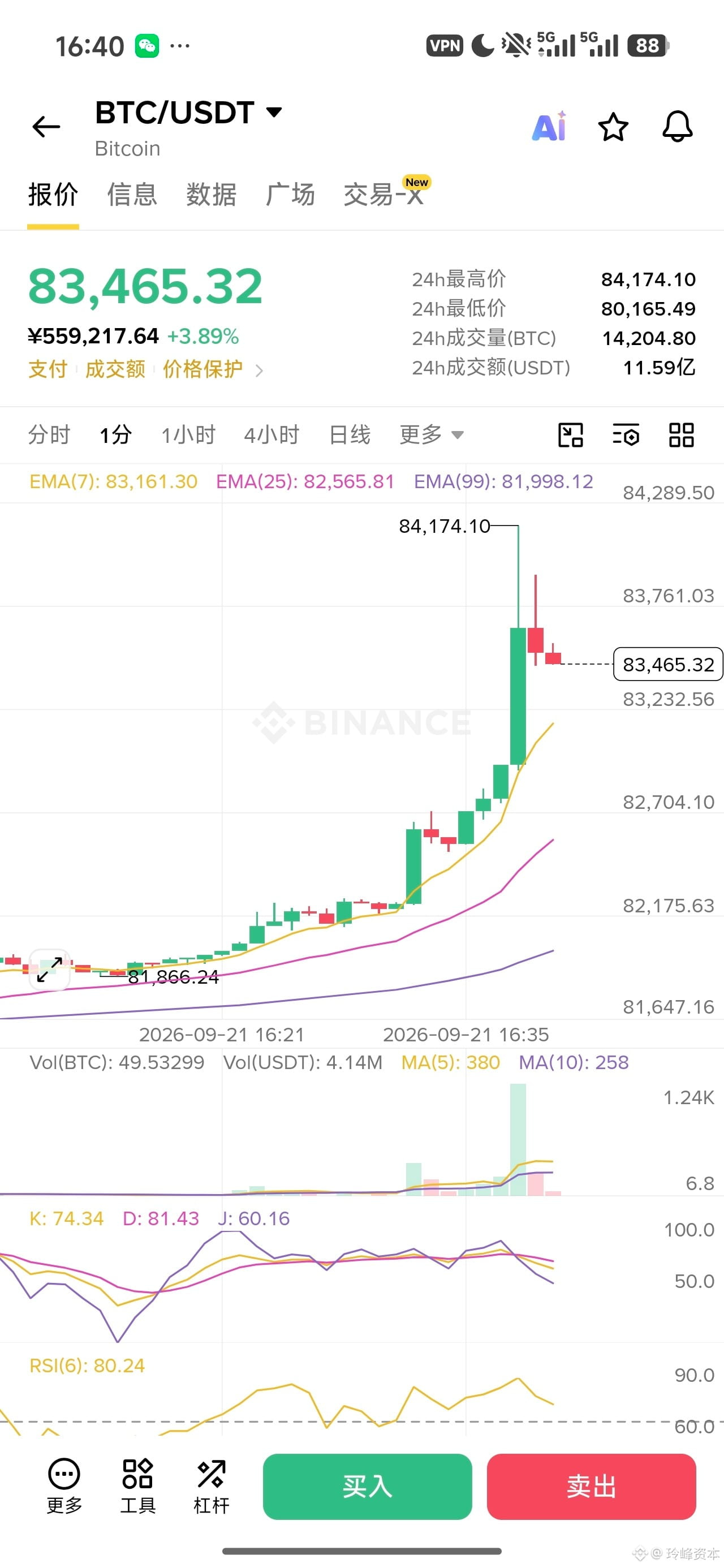
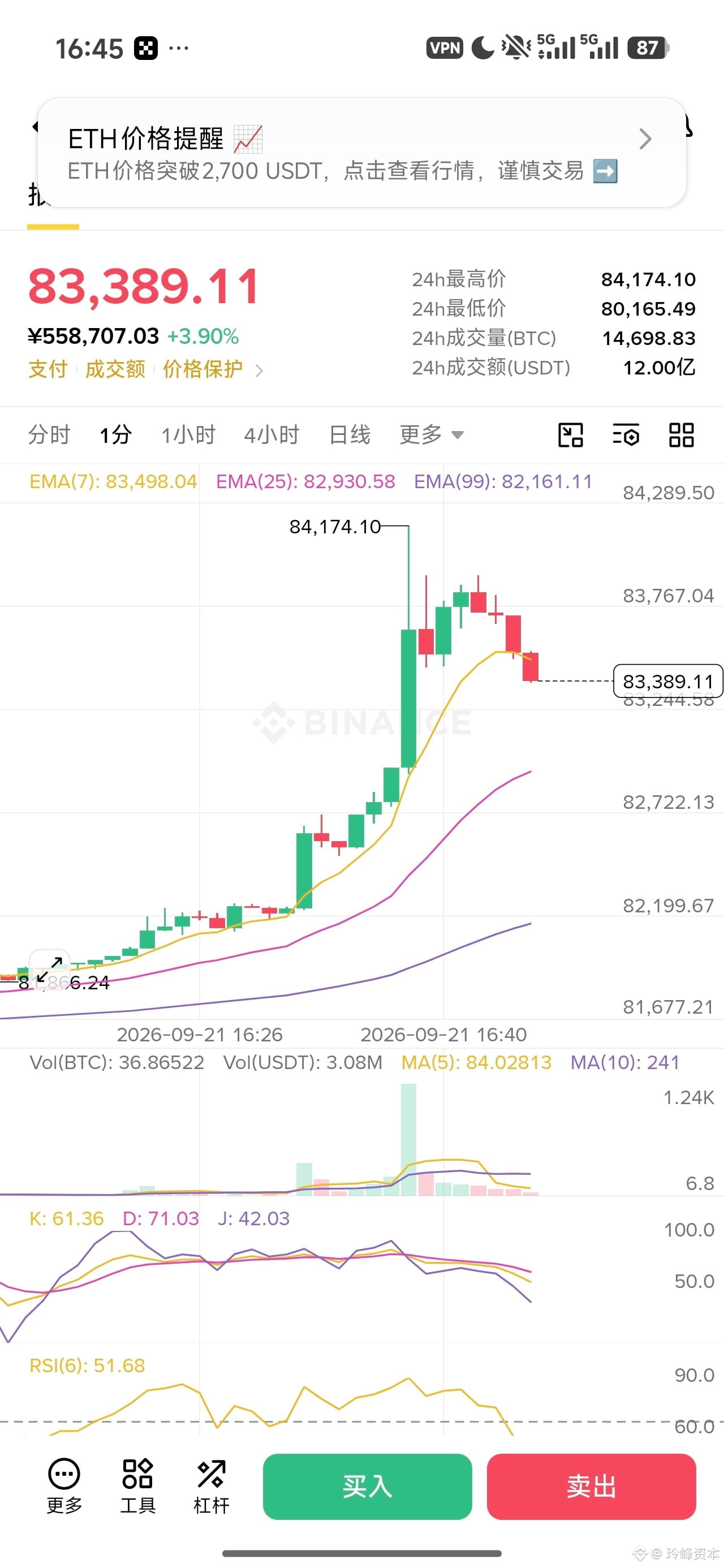
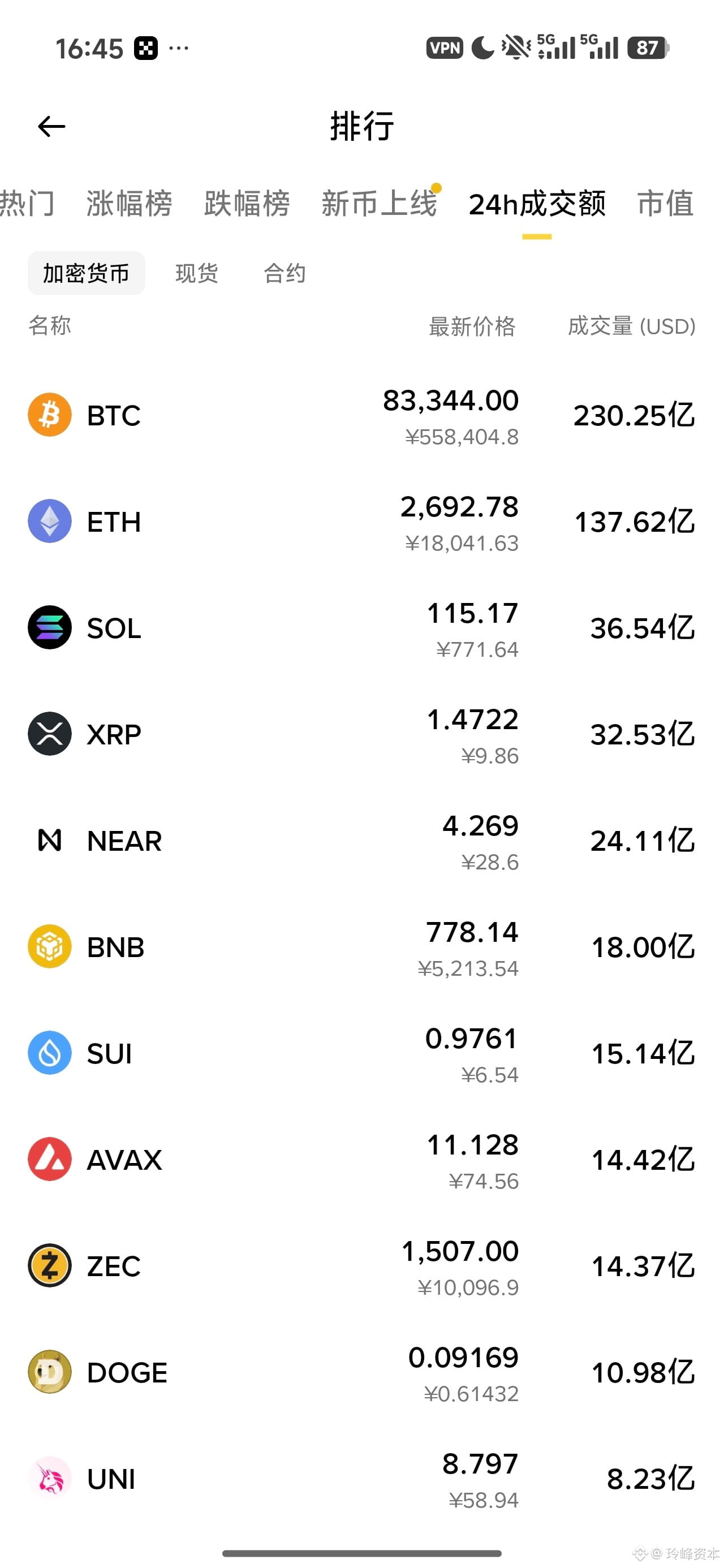
Price rises on shrinking volume. The next massive sell-off is unimaginable. A bear market is unimaginable. The next will be right around 60,000–70,000 USD.
Price rises on shrinking volume. The next massive sell-off is unimaginable. A bear market is unimaginable. The next will be right around 60,000–70,000 USD.
52
22
41k
·
--
The coming “Big Bear” cycle will exceed most people’s imagination, but the four-year halving cycle framework will not fail. On April 20, 2024, Bitcoin completed its halving; historical price action confirms: the market peaks 18 months after the halving, followed by a 12-month decline that bottoms out. October 2025 is the 18th month after the halving. This bull cycle’s top will be $126,200, after which a full year of decline begins. Time-wise, the cycle’s lowest point is expected on October 6, 2026. The bottom will go through a long period of sideways consolidation; you can position for entry at the end of 2026 and the beginning of 2027. The expected bottom range is $30,000–$60,000. For reference from the previous bull-bear cycle: price fell from $69,000 to $15,500, a drawdown of 77%. Using the same logic: $126,200 × (1 − 77%) ≈ $29,000; around $30,000 is an important downside line. In extreme conditions, price could break below $30,000. To make a major entry, you need to satisfy three conditions at the same time: after October 2026, the BTC price is in the $30,000–$60,000 range, and the fear index stays around 10. When all three conditions are met together, the probability of high returns with heavy allocation is very high—hold your coins through 2029, then take profit and exit in the $150,000–$250,000 range. By the end of 2026, the market will be surrounded by all kinds of pessimistic news: talk of Bitcoin’s demise, and claims of hashrate attacks becoming widespread. The market will be generally bearish—just like now, many people find it hard to imagine a bull market. In the previous bear market, when price dropped to $15,500—breaking below the February 2017 high of $20,000—I was deeply frightened, yet still believed the next move would break above $100,000. In this cycle, the highest reached was $126,200, matching expectations; it did not push to $150,000. This bull market’s gain was about 8x. Therefore, by the end of 2026, it is suitable to build a heavy position in Bitcoin.
The coming “Big Bear” cycle will exceed most people’s imagination, but the four-year halving cycle framework will not fail. On April 20, 2024, Bitcoin completed its halving; historical price action confirms: the market peaks 18 months after the halving, followed by a 12-month decline that bottoms out. October 2025 is the 18th month after the halving. This bull cycle’s top will be $126,200, after which a full year of decline begins. Time-wise, the cycle’s lowest point is expected on October 6, 2026. The bottom will go through a long period of sideways consolidation; you can position for entry at the end of 2026 and the beginning of 2027. The expected bottom range is $30,000–$60,000. For reference from the previous bull-bear cycle: price fell from $69,000 to $15,500, a drawdown of 77%. Using the same logic: $126,200 × (1 − 77%) ≈ $29,000; around $30,000 is an important downside line. In extreme conditions, price could break below $30,000. To make a major entry, you need to satisfy three conditions at the same time: after October 2026, the BTC price is in the $30,000–$60,000 range, and the fear index stays around 10. When all three conditions are met together, the probability of high returns with heavy allocation is very high—hold your coins through 2029, then take profit and exit in the $150,000–$250,000 range. By the end of 2026, the market will be surrounded by all kinds of pessimistic news: talk of Bitcoin’s demise, and claims of hashrate attacks becoming widespread. The market will be generally bearish—just like now, many people find it hard to imagine a bull market. In the previous bear market, when price dropped to $15,500—breaking below the February 2017 high of $20,000—I was deeply frightened, yet still believed the next move would break above $100,000. In this cycle, the highest reached was $126,200, matching expectations; it did not push to $150,000. This bull market’s gain was about 8x. Therefore, by the end of 2026, it is suitable to build a heavy position in Bitcoin.
1
2
690
·
--
It’s hard to imagine how brutal the upcoming bear market will be, but the four-year halving cycle pattern for Bitcoin is still effective. The halving was completed on 2024-04-20. The 18th month after the halving marks the peak of this bull cycle; after that, a continuous 12-month decline brings us to the cycle bottom. In October 2025—18 months after the halving—the cycle’s high was $126,200. Then a year-long downtrend began, and it is expected to bottom on October 6, 2026. The bottom won’t reverse quickly. Instead, there will be repeated attempts to find support. From late 2026 to early 2027, it should be suitable to build positions in batches. The estimated bottom price range is $30,000–$60,000. Looking back at the previous bull-bear cycle: the all-time high of $69,000 in June 2021 fell to a low of $15,500 in January 2022, a maximum drawdown of 77%. Applying this drawdown percentage to $126,200, the drop would be 77%, which corresponds to roughly $29,000. $30,000 is a key support level; in extreme scenarios, there is a risk of breaking below $30,000. Heavy, bottom-fishing requires three major conditions: (1) time passes beyond October 2026, (2) the price stays in the $30,000–$60,000 range, and (3) the fear index is around 10. If all conditions are met, the odds of a heavy position are very high. Hold until 2029 and exit in the $150,000–$250,000 range. By the end of 2026, bearish narratives will spread everywhere—the Bitcoin bubble has burst, the hash rate has been attacked, and so on. Everyone will sing the market down, just like many people today can’t imagine the arrival of another big bull market. In the last bear market, when the coin price fell to $15,500 and broke below the historical high of $20,000 from February 2017, people’s hearts were full of fear, yet they still firmly believed the price could break through 100,000. This cycle’s peak was $126,200, matching expectations; it never touched 150,000. The bull market in this cycle still delivered an 8x gain. So late 2026 is a good time for a heavy Bitcoin allocation.
It’s hard to imagine how brutal the upcoming bear market will be, but the four-year halving cycle pattern for Bitcoin is still effective. The halving was completed on 2024-04-20. The 18th month after the halving marks the peak of this bull cycle; after that, a continuous 12-month decline brings us to the cycle bottom. In October 2025—18 months after the halving—the cycle’s high was $126,200. Then a year-long downtrend began, and it is expected to bottom on October 6, 2026. The bottom won’t reverse quickly. Instead, there will be repeated attempts to find support. From late 2026 to early 2027, it should be suitable to build positions in batches. The estimated bottom price range is $30,000–$60,000. Looking back at the previous bull-bear cycle: the all-time high of $69,000 in June 2021 fell to a low of $15,500 in January 2022, a maximum drawdown of 77%. Applying this drawdown percentage to $126,200, the drop would be 77%, which corresponds to roughly $29,000. $30,000 is a key support level; in extreme scenarios, there is a risk of breaking below $30,000. Heavy, bottom-fishing requires three major conditions: (1) time passes beyond October 2026, (2) the price stays in the $30,000–$60,000 range, and (3) the fear index is around 10. If all conditions are met, the odds of a heavy position are very high. Hold until 2029 and exit in the $150,000–$250,000 range. By the end of 2026, bearish narratives will spread everywhere—the Bitcoin bubble has burst, the hash rate has been attacked, and so on. Everyone will sing the market down, just like many people today can’t imagine the arrival of another big bull market. In the last bear market, when the coin price fell to $15,500 and broke below the historical high of $20,000 from February 2017, people’s hearts were full of fear, yet they still firmly believed the price could break through 100,000. This cycle’s peak was $126,200, matching expectations; it never touched 150,000. The bull market in this cycle still delivered an 8x gain. So late 2026 is a good time for a heavy Bitcoin allocation.
4
1
644
·
--
The severity of what’s happening in Bear Market City is hard to imagine, but the underlying logic of the four-year halving cycle won’t change. On April 20, 2024, Bitcoin completed its halving. Historical patterns show that the 18th month after halving brings a local peak; then comes a 12-month downtrend that reaches the cycle bottom. October 2025 is exactly the 18th month after halving. In this cycle, the peak reached $126,200, after which the market begins a full year of decline. Theoretically, the bottom time falls on October 6, 2026. The bottom will not arrive all at once—it will be preceded by a long period of consolidation. Therefore, the window for positioning runs from late 2026 to early 2027. The expected bottom range is $30,000–$60,000. Reference the prior cycle: the peak on November 6, 2021 was $69,000, followed by a trough on November 1, 2022 of $15,500, for a maximum drawdown of 77%. Based on that, a drop from $126,200 by 77% is roughly $29,000; $30,000 is the core bottom reference. There is a possibility of breaking below $30,000 in extreme conditions. To enter with a heavy position, three conditions must be met at the same time: the time must be after October 2026, the coin price must fall within the $30,000–$60,000 range, and the fear index must drop to around 10. When all three are satisfied, the profit expectation for a heavy position is extremely high. Hold until 2029, and plan to exit in the $150,000–$250,000 range. At the end of 2026, the market will be flooded with a huge amount of negative-noise headlines—such as narratives like “Bitcoin is dead” and “a computing-power crisis.” With the market collectively bearish, it will be just like back when the bull market was about to arrive: no one dared to imagine it would happen. Looking back at the previous bear market, when the price fell to $15,500 and broke below the previous high of $20,000 in February 2017, I felt extreme panic, yet still believed the market would return to the $100,000 level. In this cycle, the price reached as high as $126,200, meeting expectations, but it didn’t push through $150,000. The bull market surge in this cycle was 8x. In summary, late 2026 is a time window worth positioning heavily for Bitcoin.
The severity of what’s happening in Bear Market City is hard to imagine, but the underlying logic of the four-year halving cycle won’t change. On April 20, 2024, Bitcoin completed its halving. Historical patterns show that the 18th month after halving brings a local peak; then comes a 12-month downtrend that reaches the cycle bottom. October 2025 is exactly the 18th month after halving. In this cycle, the peak reached $126,200, after which the market begins a full year of decline. Theoretically, the bottom time falls on October 6, 2026. The bottom will not arrive all at once—it will be preceded by a long period of consolidation. Therefore, the window for positioning runs from late 2026 to early 2027. The expected bottom range is $30,000–$60,000. Reference the prior cycle: the peak on November 6, 2021 was $69,000, followed by a trough on November 1, 2022 of $15,500, for a maximum drawdown of 77%. Based on that, a drop from $126,200 by 77% is roughly $29,000; $30,000 is the core bottom reference. There is a possibility of breaking below $30,000 in extreme conditions. To enter with a heavy position, three conditions must be met at the same time: the time must be after October 2026, the coin price must fall within the $30,000–$60,000 range, and the fear index must drop to around 10. When all three are satisfied, the profit expectation for a heavy position is extremely high. Hold until 2029, and plan to exit in the $150,000–$250,000 range. At the end of 2026, the market will be flooded with a huge amount of negative-noise headlines—such as narratives like “Bitcoin is dead” and “a computing-power crisis.” With the market collectively bearish, it will be just like back when the bull market was about to arrive: no one dared to imagine it would happen. Looking back at the previous bear market, when the price fell to $15,500 and broke below the previous high of $20,000 in February 2017, I felt extreme panic, yet still believed the market would return to the $100,000 level. In this cycle, the price reached as high as $126,200, meeting expectations, but it didn’t push through $150,000. The bull market surge in this cycle was 8x. In summary, late 2026 is a time window worth positioning heavily for Bitcoin.
19
14
12.4k
·
--
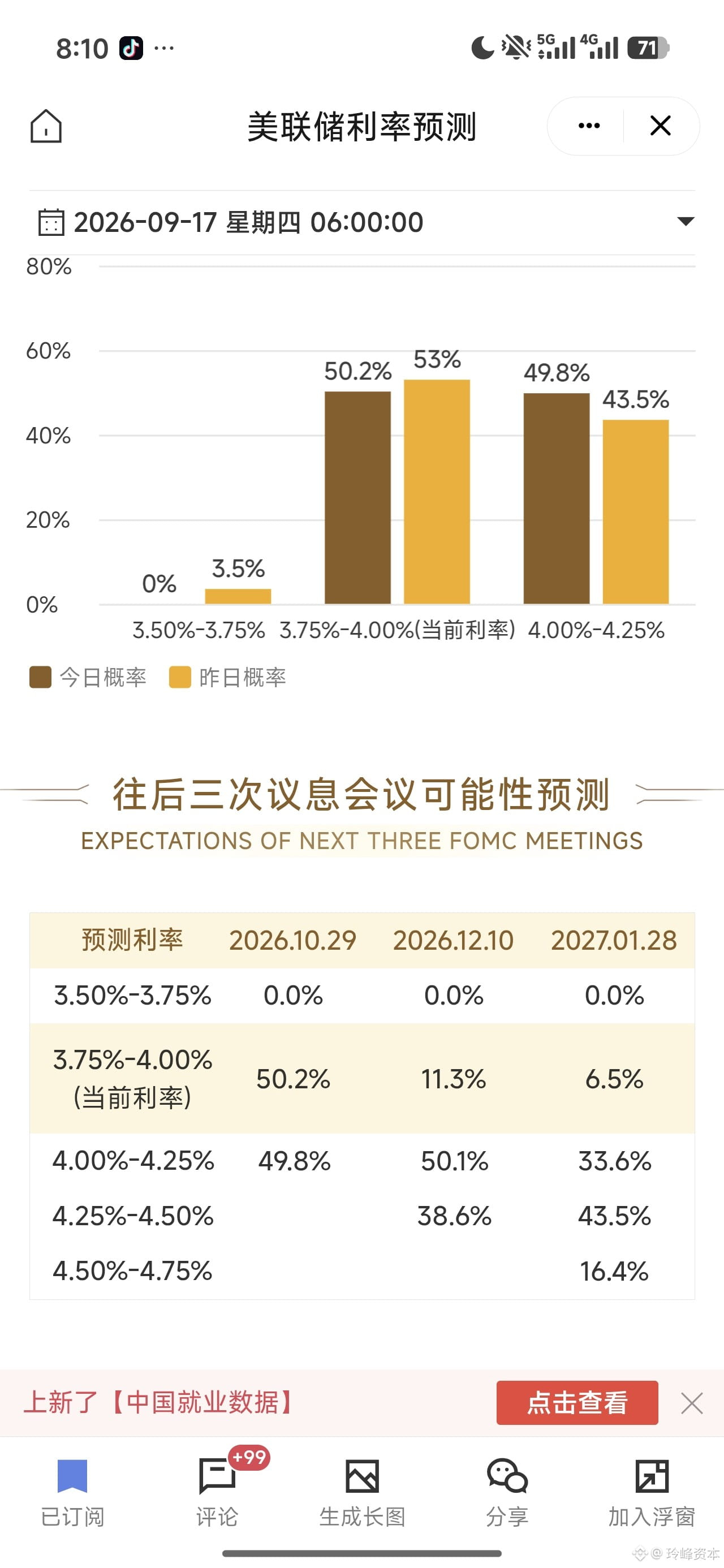
The last rate hike dates back to July 2023. At that time, the bank raised rates 11 times in a row from March 2022 to July 2023, for a total increase of 525 basis points. Bitcoin is affected relatively less by rate hikes. Bitcoin is designed around a four-year halving cycle.
The last rate hike dates back to July 2023. At that time, the bank raised rates 11 times in a row from March 2022 to July 2023, for a total increase of 525 basis points. Bitcoin is affected relatively less by rate hikes. Bitcoin is designed around a four-year halving cycle.
1
2.8k
·
--
The halving period remains unchanged for 4 years. A massive crash—unimaginable. A bear market—unimaginable. The Fed is still going to raise rates by 25 basis points tonight. The probability of a 25-basis-point rate hike is 80%. Once the probability reaches that level, historically since after 1994, they will raise rates. So the chances are high that they will raise rates by 25 basis points. Bitcoin will crash immediately. I hope there won’t be a vacuum-like market. Like today’s drop of 5%—that’s fairly healthy. The lowest point is around October 5th. The bottom signal will appear around October 5th. And the lowest point of a bear market is the starting point of a bull market.
The halving period remains unchanged for 4 years. A massive crash—unimaginable. A bear market—unimaginable. The Fed is still going to raise rates by 25 basis points tonight. The probability of a 25-basis-point rate hike is 80%. Once the probability reaches that level, historically since after 1994, they will raise rates. So the chances are high that they will raise rates by 25 basis points. Bitcoin will crash immediately. I hope there won’t be a vacuum-like market. Like today’s drop of 5%—that’s fairly healthy. The lowest point is around October 5th. The bottom signal will appear around October 5th. And the lowest point of a bear market is the starting point of a bull market.
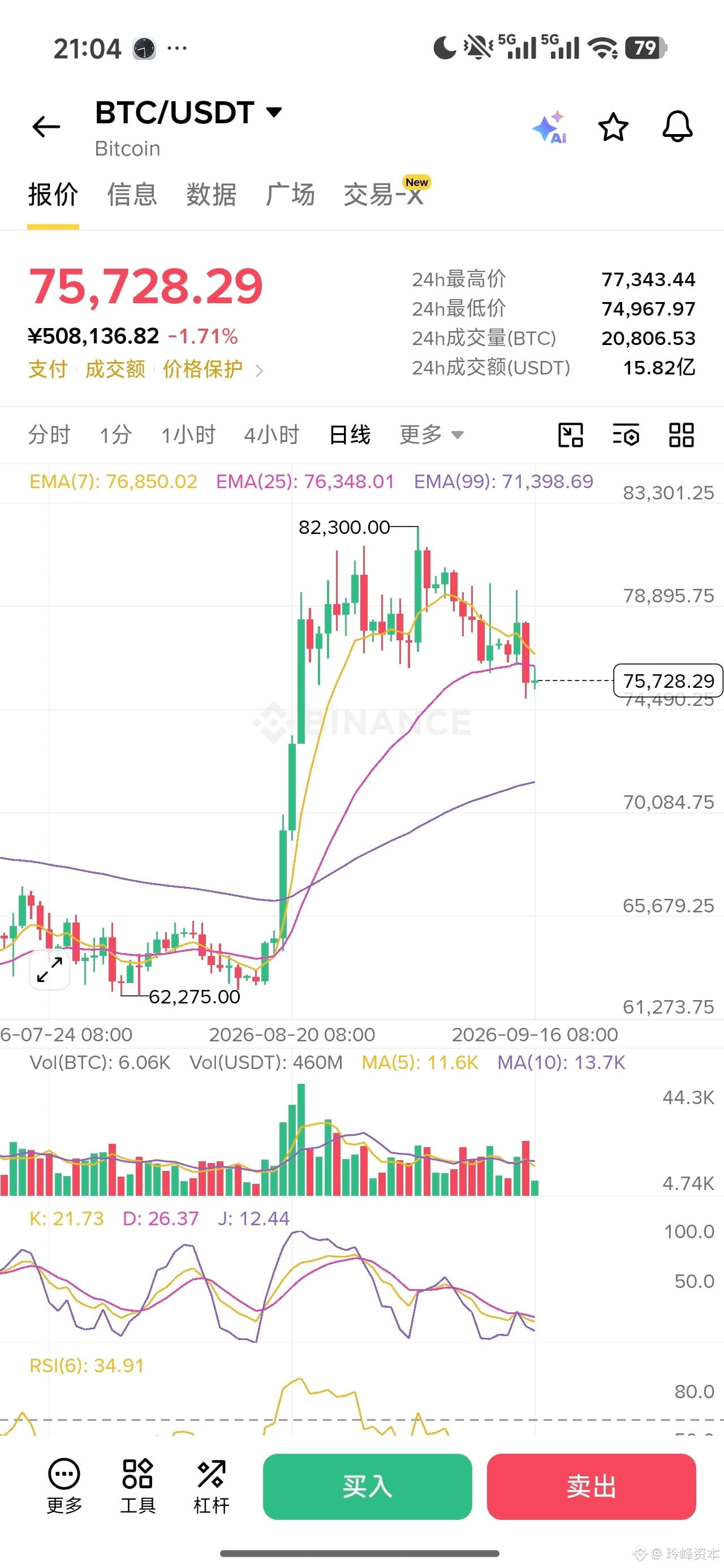
8
4
8.3k
·
--
CLARITY Act Senate fails to push through ❌
It needed 60 votes but only got 49—procedural votes were blocked.
The original expectation was to set up BTC commodity classification and build a federal regulatory framework, but that benefit fell through.
In the short term, regulatory uncertainty has intensified, and the market has already reacted with price moves.
CLARITY Act Senate fails to push through ❌
It needed 60 votes but only got 49—procedural votes were blocked.
The original expectation was to set up BTC commodity classification and build a federal regulatory framework, but that benefit fell through.
In the short term, regulatory uncertainty has intensified, and the market has already reacted with price moves.
It needed 60 votes but only got 49—procedural votes were blocked.
The original expectation was to set up BTC commodity classification and build a federal regulatory framework, but that benefit fell through.
In the short term, regulatory uncertainty has intensified, and the market has already reacted with price moves.
501
·
--
Institutional funds are about to flow out immediately. A huge crash is unimaginable. The four-year halving cycle remains unchanged. Bitcoin ETFs—everything is spot ETFs. The amount of money is so large. There really are a lot of rich people. BlackRock manages $67.6 billion.
Institutional funds are about to flow out immediately. A huge crash is unimaginable. The four-year halving cycle remains unchanged. Bitcoin ETFs—everything is spot ETFs. The amount of money is so large. There really are a lot of rich people. BlackRock manages $67.6 billion.
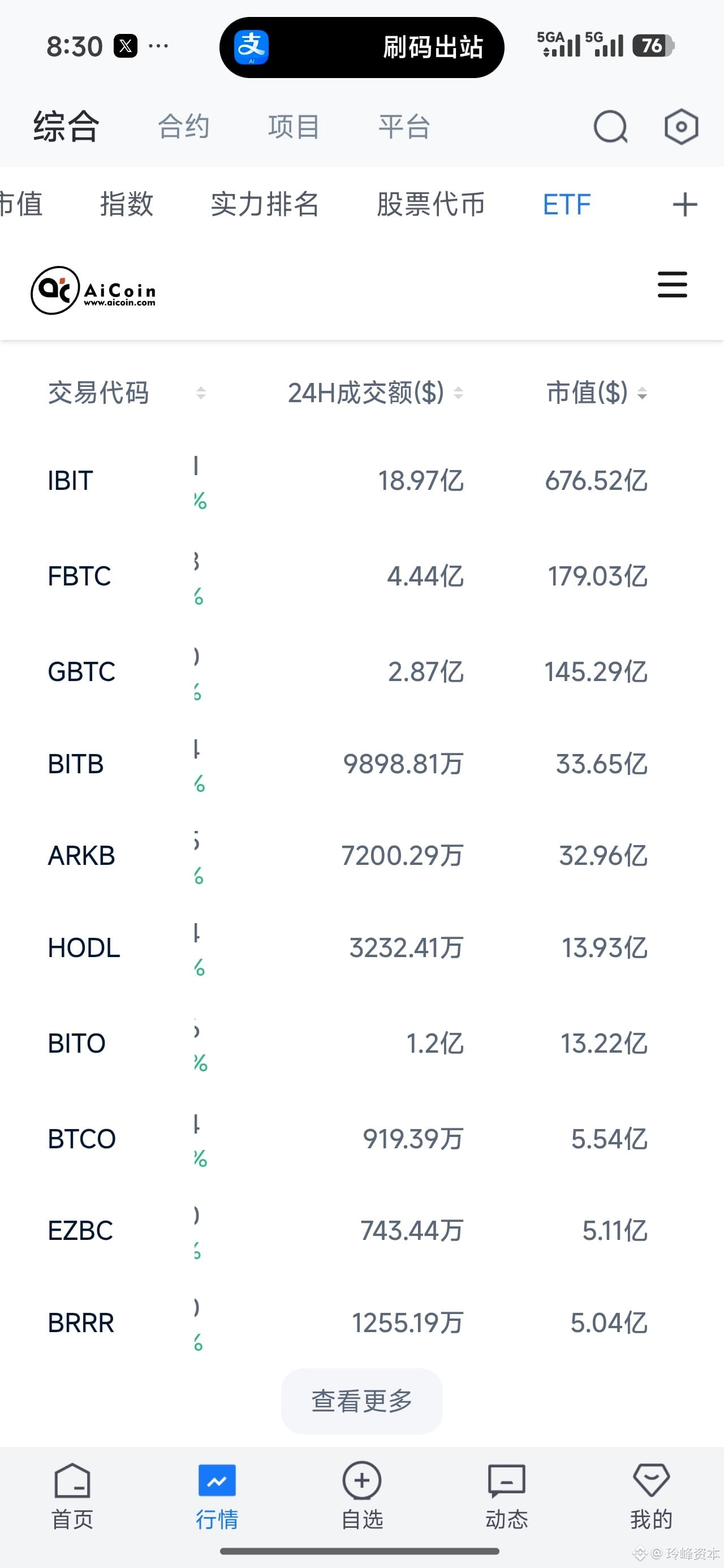
IBITETF-0.45%
ARKBETF-0.38%
FBTCETF-0.38%
2.4k
Log in to explore more content
Join global crypto users on Binance Square
⚡️ Get latest and useful information about crypto.
💬 Trusted by the world’s largest crypto exchange.
👍 Discover real insights from verified creators.
Email / Phone number