
乔帮主退休月球收租
2.8k Posts

乔帮主退休月球收租
 Square Verified+
Report
Block User
本金为王 | 推特 @Joensmoon | 围脖:酒菜乔不败 | 币安高级队长|非传统图表派,盈利即正义。

Creator Awards 2024

Level 1 Creator
304 Following
37.4K+ Followers
29.4K+ Liked
2 Badges
Posts
All
Quotes
Videos
Live
PINNED
·
--
Sister's attention on Binance captain
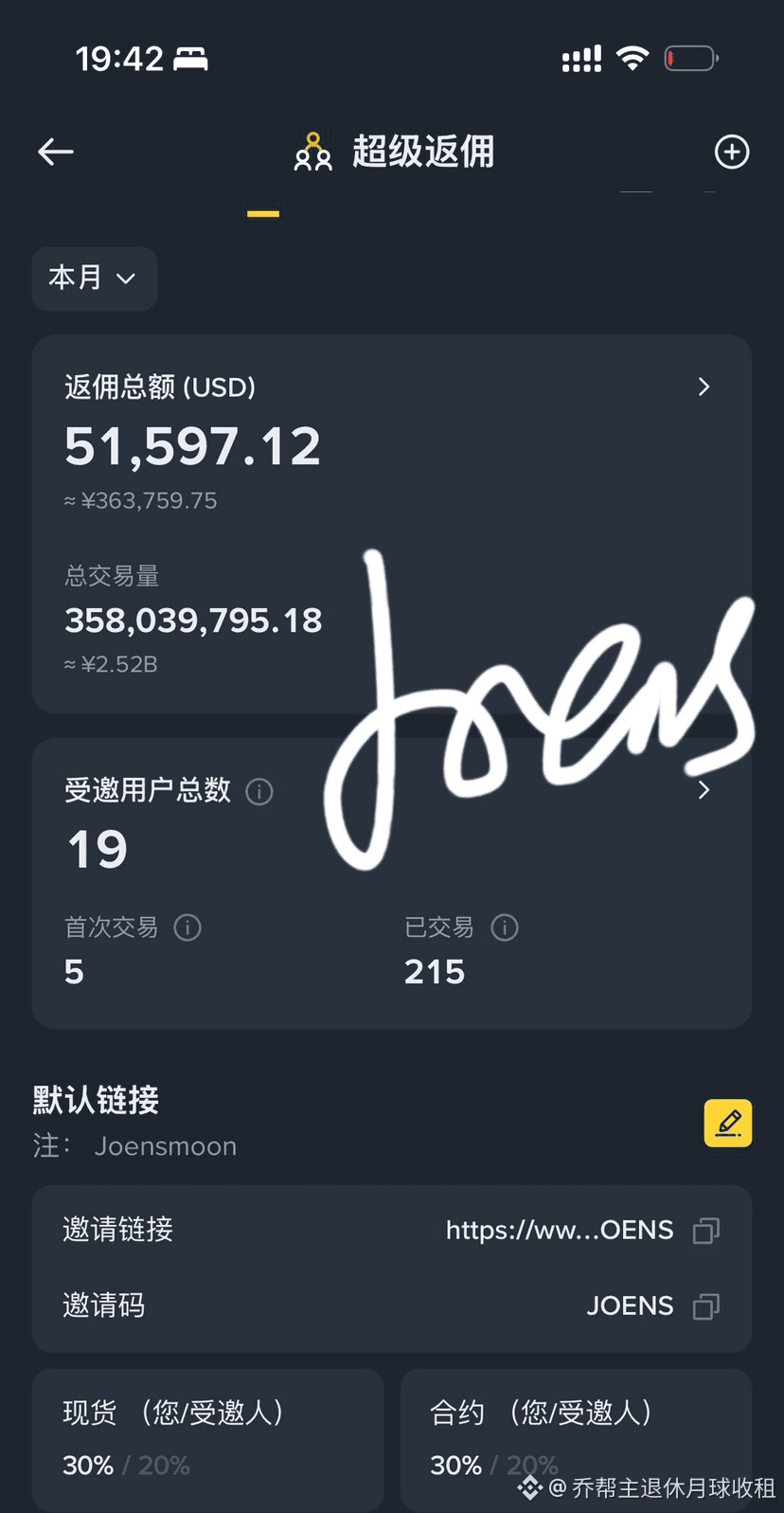
If you can find a higher ratio than the boss ratio on the Binance platform, it must be a scam!
The ratio displayed in the screenshot is only to prove strength
It does not mean it will all be given to you, as this does not conform to human nature
And it violates platform regulations
Automatically opened automatic return, even if you can't find me
Used my invitation code to automatically receive
Now there are not many automatic KOLs opened
Those who say a 70 or 80 ratio must be so-called wild chicken platforms
Of course, if you want, I have everything, and my data can be opened to all ratios on any platform
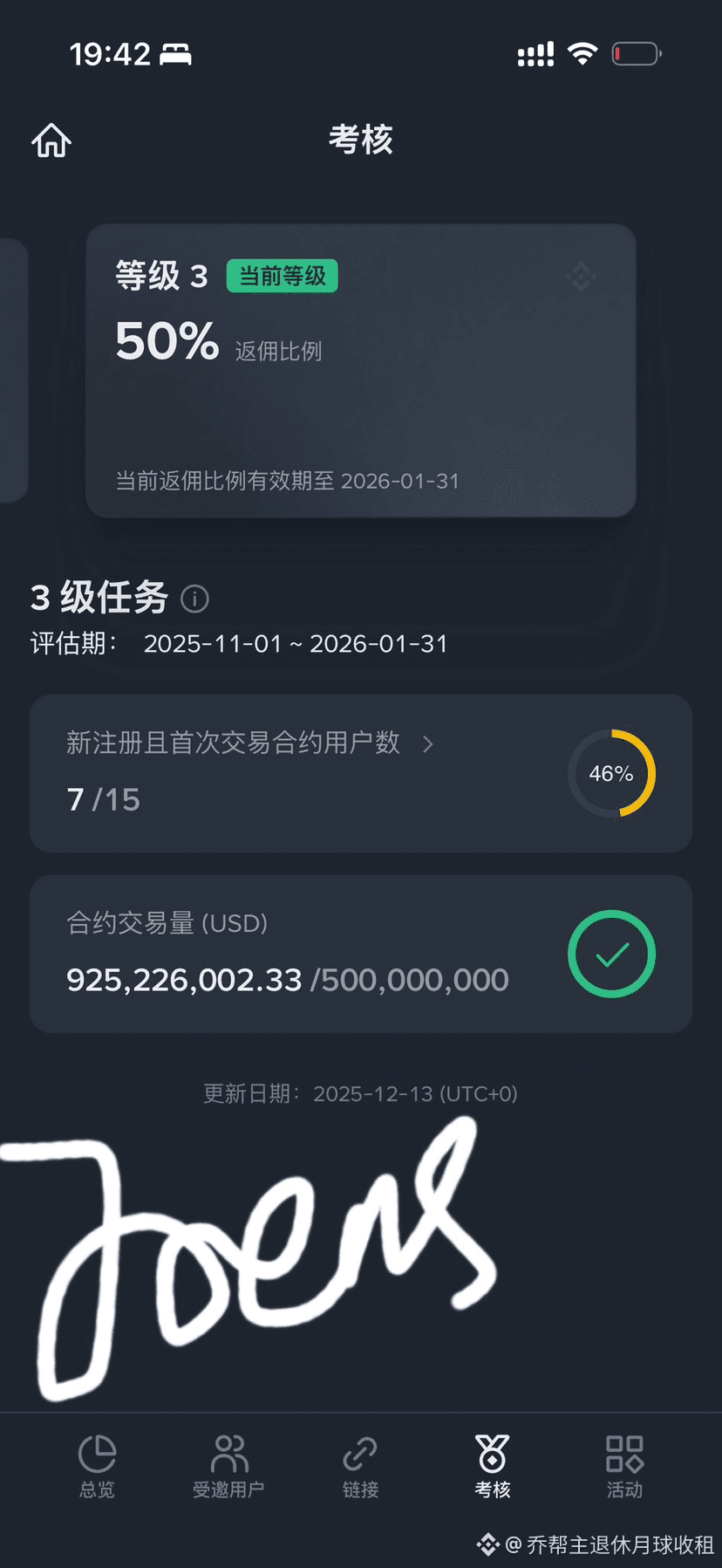
Every quarter there must be an assessment
There are many people who do not meet the standards
The latest assessment from November to January, in just over a month, has reached and exceeded the assessment by more than one time
This quarter, a trading volume of 2 billion is no problem
Binance now has a booster system
Similar to agency, the original solitary struggle has turned into collaborative combat, working together
Can effectively gather capable and knowledgeable people around to work together
The quota is limited, of course, we hope to give it to friends who are willing to work
If you want to save money, regardless of big or small households
Or if you have resources and want to find a cash flow income
You can find the boss, let's huddle together for warmth.
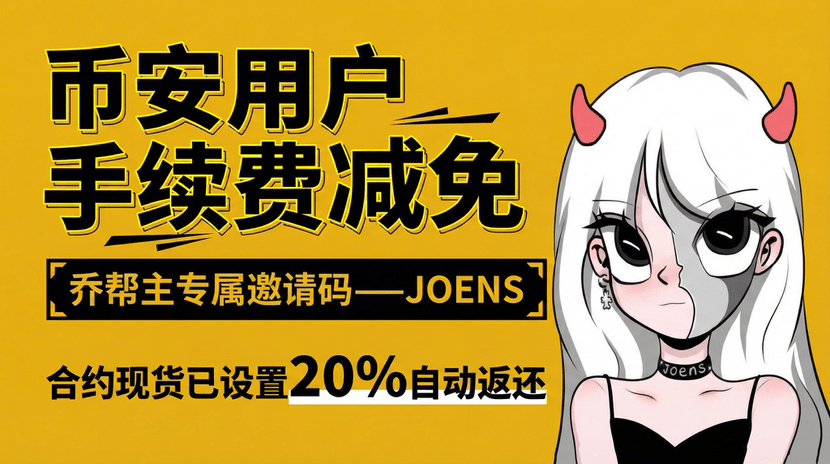
Boss invitation code: JOENS
🙋♀️ If you have any questions, private message the boss
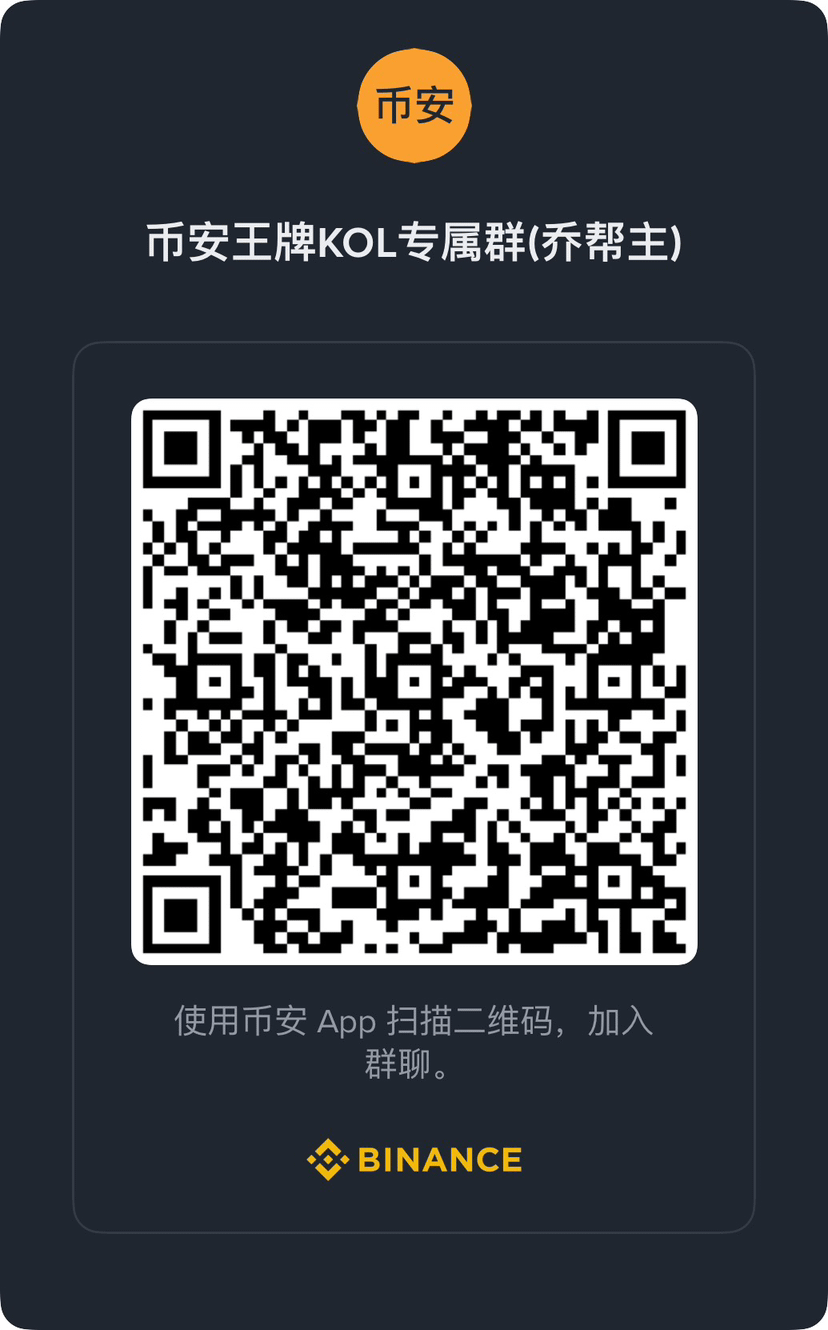
① Click on the Binance APP - Home, top left corner "three horizontal lines"
② Click the top right corner to scan
③ Scan the QR code image 4️⃣ to enter the chat room
[帮主专属聊天室点这里](https://www.binance.com/zh-CN/service-group-landing?channelToken=3q_ItH3bzVwNDVH3SXd1bg)
Sister's attention on Binance captain
If you can find a higher ratio than the boss ratio on the Binance platform, it must be a scam!
The ratio displayed in the screenshot is only to prove strength
It does not mean it will all be given to you, as this does not conform to human nature
And it violates platform regulations
Automatically opened automatic return, even if you can't find me
Used my invitation code to automatically receive
Now there are not many automatic KOLs opened
Those who say a 70 or 80 ratio must be so-called wild chicken platforms
Of course, if you want, I have everything, and my data can be opened to all ratios on any platform
Every quarter there must be an assessment
There are many people who do not meet the standards
The latest assessment from November to January, in just over a month, has reached and exceeded the assessment by more than one time
This quarter, a trading volume of 2 billion is no problem
Binance now has a booster system
Similar to agency, the original solitary struggle has turned into collaborative combat, working together
Can effectively gather capable and knowledgeable people around to work together
The quota is limited, of course, we hope to give it to friends who are willing to work
If you want to save money, regardless of big or small households
Or if you have resources and want to find a cash flow income
You can find the boss, let's huddle together for warmth.
Boss invitation code: JOENS
🙋♀️ If you have any questions, private message the boss
① Click on the Binance APP - Home, top left corner "three horizontal lines"
② Click the top right corner to scan
③ Scan the QR code image 4️⃣ to enter the chat room
帮主专属聊天室点这里
41
5
32
12.7k
·
--
In a few days, I won’t be able to help people become Binance Square affiliates anymore.
If you still need one, contact the group leader as soon as possible.
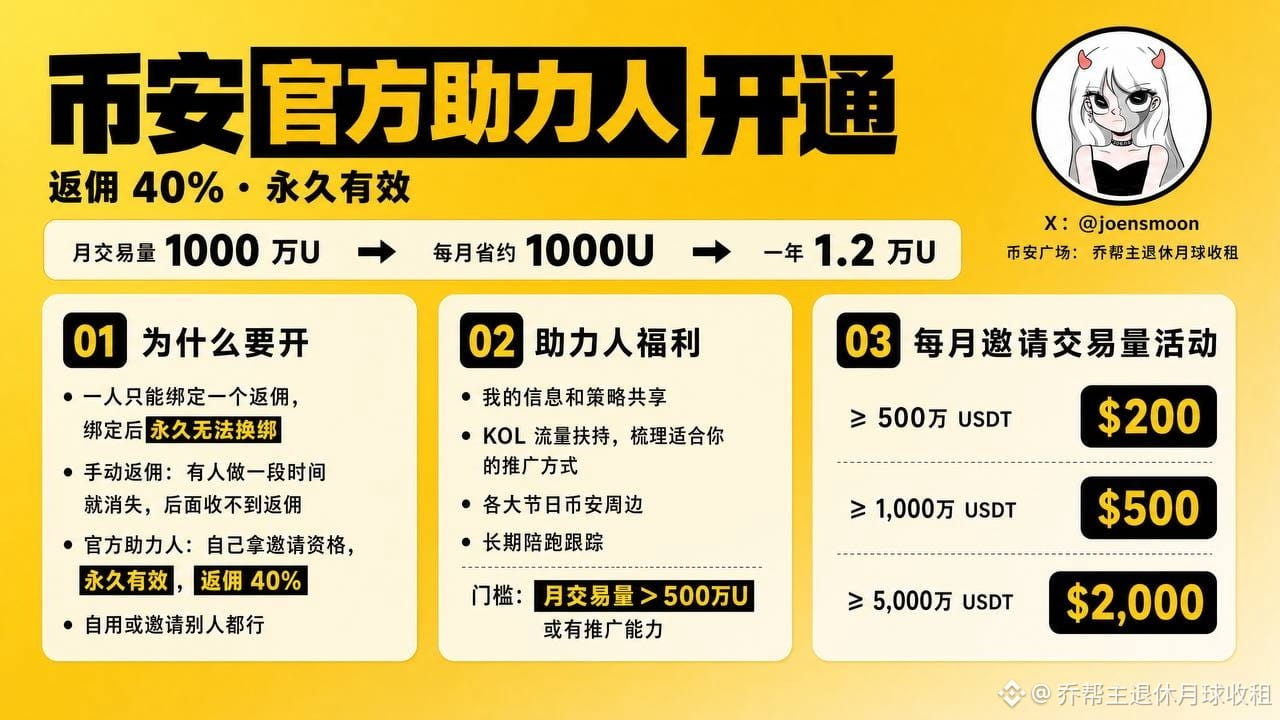
Why do I recommend becoming a Binance affiliate if your trading volume is high?
The higher your volume, the more you pay in real money in fees.
With a monthly trading volume of 10 million, you could save around 1,000 USDT in fees each month—that’s 12,000 USDT a year.
You can only link one referral account, and once linked, it can never be changed.
“Manual rebates”: Some people disappear after doing this for a while, and you’ll never receive rebates from them again.
“Official affiliate”: You get your own invitation privileges, which are valid forever, and earn a 40% rebate. You can use it yourself or invite others.
Benefits of signing up as an affiliate through me:
→ Access to all my information and strategies
→ KOL traffic support and help figuring out the promotion approach that works best for you
→ Binance merchandise for major holidays
Requirements: Monthly trading volume of over 5 million USDT, or the ability to promote right now
Official affiliate trading volume rewards (available every month):
≥5 million USDT → $200
≥10 million USDT → $500
≥50 million USDT → $2,000
Note: Affiliates can’t enable rebates for your existing account. They can give you affiliate privileges, which you can use to invite others and earn rebates.
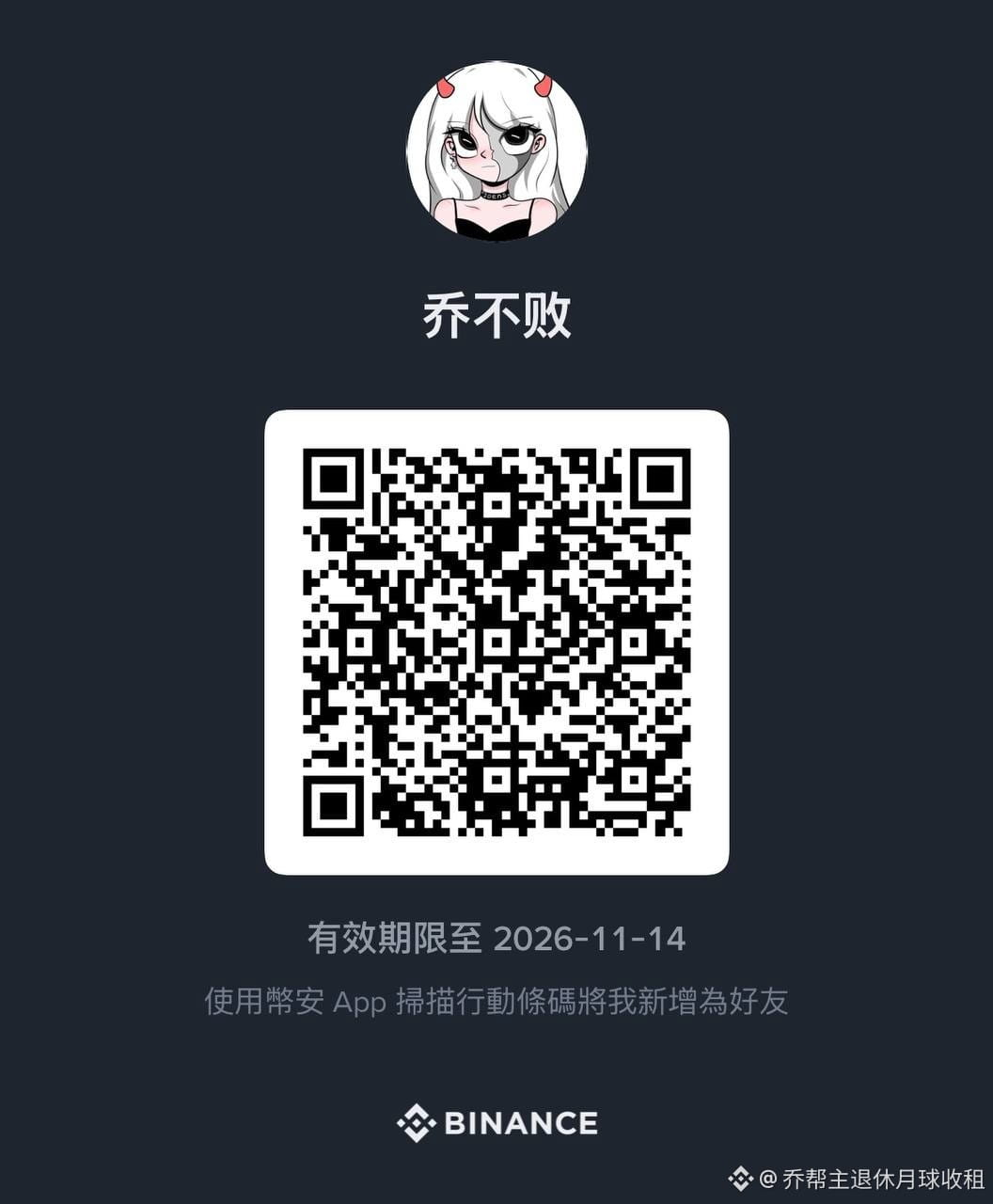
Scan the QR code with the Binance app to add me
1.2k
·
--
In a few days, I won’t be able to help people become Binance Square affiliates anymore.
If you still need one, contact the group leader as soon as possible.
Why do I recommend becoming a Binance affiliate if your trading volume is high?
The higher your volume, the more you pay in real money in fees.
With a monthly trading volume of 10 million, you could save around 1,000 USDT in fees each month—that’s 12,000 USDT a year.
You can only link one referral account, and once linked, it can never be changed.
“Manual rebates”: Some people disappear after doing this for a while, and you’ll never receive rebates from them again.
“Official affiliate”: You get your own invitation privileges, which are valid forever, and earn a 40% rebate. You can use it yourself or invite others.
Benefits of signing up as an affiliate through me:
→ Access to all my information and strategies
→ KOL traffic support and help figuring out the promotion approach that works best for you
→ Binance merchandise for major holidays
Requirements: Monthly trading volume of over 5 million USDT, or the ability to promote right now
Official affiliate trading volume rewards (available every month):
≥5 million USDT → $200
≥10 million USDT → $500
≥50 million USDT → $2,000
Note: Affiliates can’t enable rebates for your existing account. They can give you affiliate privileges, which you can use to invite others and earn rebates.
Scan the QR code with the Binance app to add me
In a few days, I won’t be able to help people become Binance Square affiliates anymore.
If you still need one, contact the group leader as soon as possible.
Why do I recommend becoming a Binance affiliate if your trading volume is high?
The higher your volume, the more you pay in real money in fees.
With a monthly trading volume of 10 million, you could save around 1,000 USDT in fees each month—that’s 12,000 USDT a year.
You can only link one referral account, and once linked, it can never be changed.
“Manual rebates”: Some people disappear after doing this for a while, and you’ll never receive rebates from them again.
“Official affiliate”: You get your own invitation privileges, which are valid forever, and earn a 40% rebate. You can use it yourself or invite others.
Benefits of signing up as an affiliate through me:
→ Access to all my information and strategies
→ KOL traffic support and help figuring out the promotion approach that works best for you
→ Binance merchandise for major holidays
Requirements: Monthly trading volume of over 5 million USDT, or the ability to promote right now
Official affiliate trading volume rewards (available every month):
≥5 million USDT → $200
≥10 million USDT → $500
≥50 million USDT → $2,000
Note: Affiliates can’t enable rebates for your existing account. They can give you affiliate privileges, which you can use to invite others and earn rebates.
Scan the QR code with the Binance app to add me
If you still need one, contact the group leader as soon as possible.
Why do I recommend becoming a Binance affiliate if your trading volume is high?
The higher your volume, the more you pay in real money in fees.
With a monthly trading volume of 10 million, you could save around 1,000 USDT in fees each month—that’s 12,000 USDT a year.
You can only link one referral account, and once linked, it can never be changed.
“Manual rebates”: Some people disappear after doing this for a while, and you’ll never receive rebates from them again.
“Official affiliate”: You get your own invitation privileges, which are valid forever, and earn a 40% rebate. You can use it yourself or invite others.
Benefits of signing up as an affiliate through me:
→ Access to all my information and strategies
→ KOL traffic support and help figuring out the promotion approach that works best for you
→ Binance merchandise for major holidays
Requirements: Monthly trading volume of over 5 million USDT, or the ability to promote right now
Official affiliate trading volume rewards (available every month):
≥5 million USDT → $200
≥10 million USDT → $500
≥50 million USDT → $2,000
Note: Affiliates can’t enable rebates for your existing account. They can give you affiliate privileges, which you can use to invite others and earn rebates.
Scan the QR code with the Binance app to add me
915
·
--
The sky is falling—there goes my livelihood.
Leading trades on the Plaza? Isn’t commission the main income for livestreamers?
I know quite a few people who make hundreds a year on the Plaza.
But I’ve never competed on the Plaza. I can’t keep up, and I’m lazy. I’ve never livestreamed to this day.
What a shame—others have already made a fortune, and I’m not even in the game yet.
But honestly, there should be an option to let users who were bound to someone who didn’t pay them commissions choose someone else.
I support Ying-ge and the Plaza reforms. After all, the platform gave us a stage. I’ll always be grateful.
1
7
4.1k
·
--
Verified
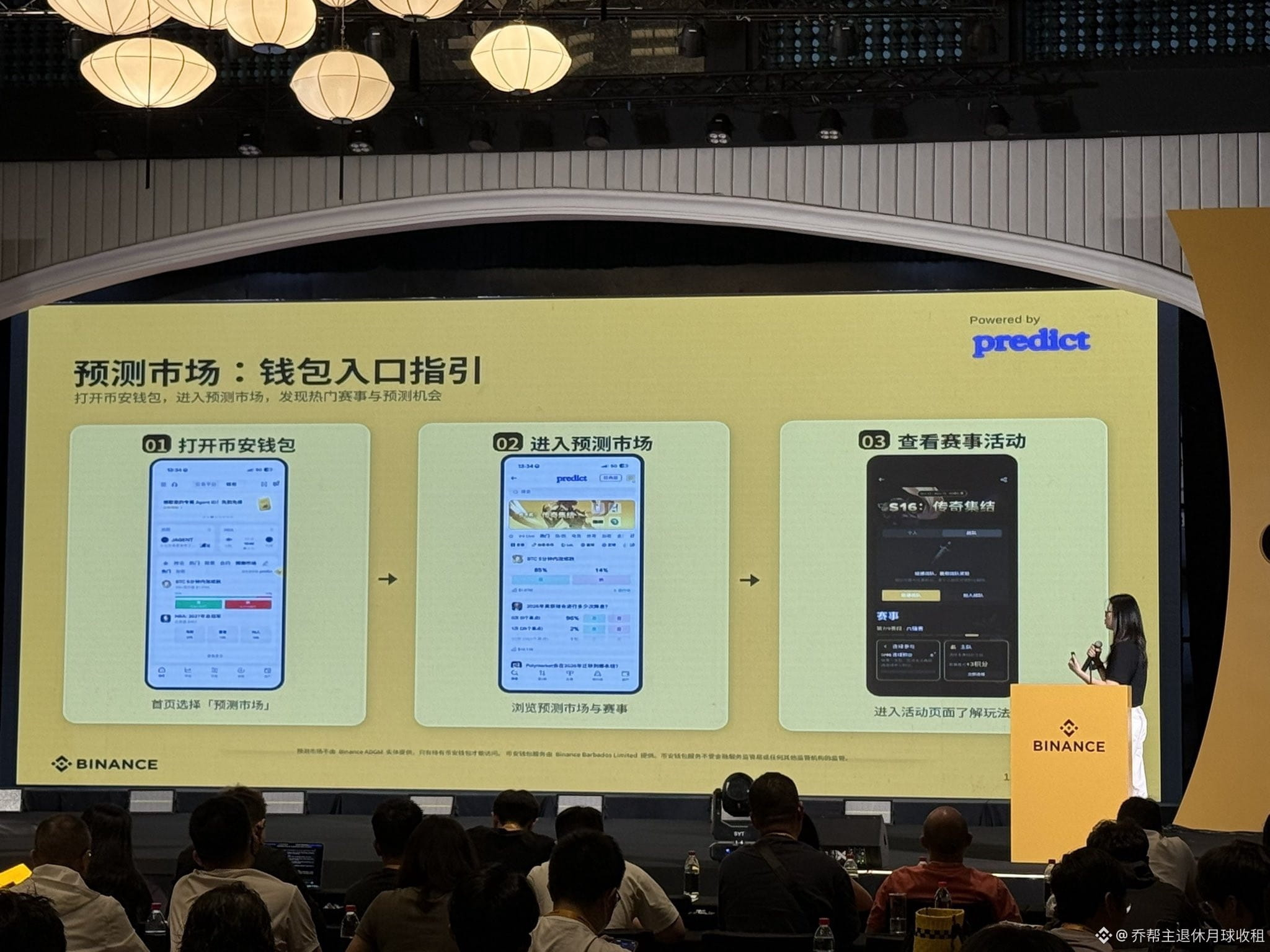
🧬 Binance Wallet has released the latest details on the $PREDICT airdrop. Here’s a summary for everyone:
The scheduled distribution dates remain unchanged: launch day, plus November 6, 13, 20, and 27. The questionnaire deadline hasn’t changed either.
However, PREDICT was originally supposed to launch at the end of October, but the Binance hack delayed it. There’s still no new date set.
The wallet has made an arrangement: if the actual launch happens later than a scheduled distribution date, any batches that haven’t been distributed yet will be combined and sent out with the first batch after launch. Eligibility will still be determined by the original deadlines.
The two airdrop claim options are unchanged:
→ Claim 35% immediately and forgo the rest
→ Stake for one year and receive 100%
If you haven’t submitted your choice by November 26, staking will be selected by default.
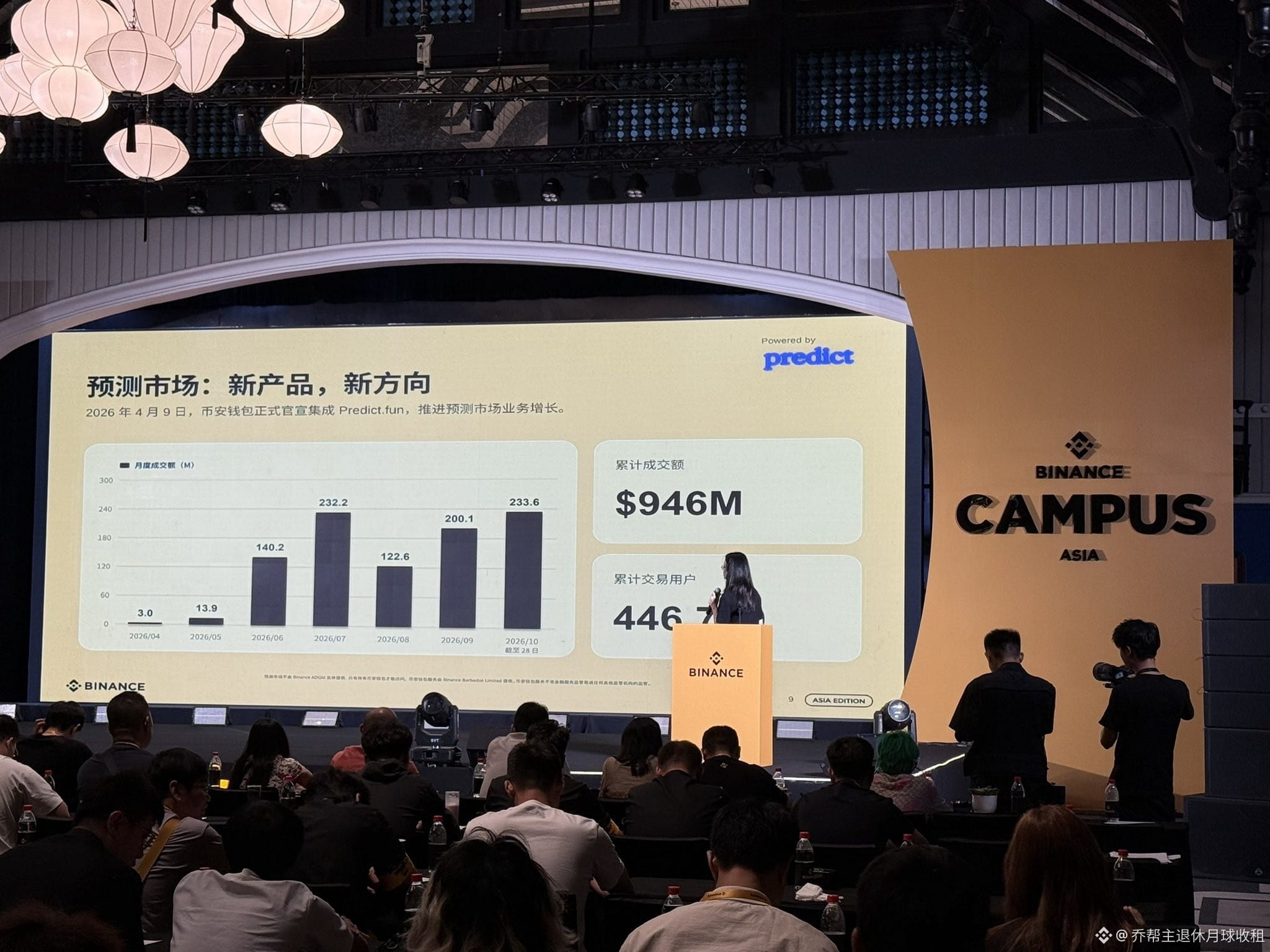
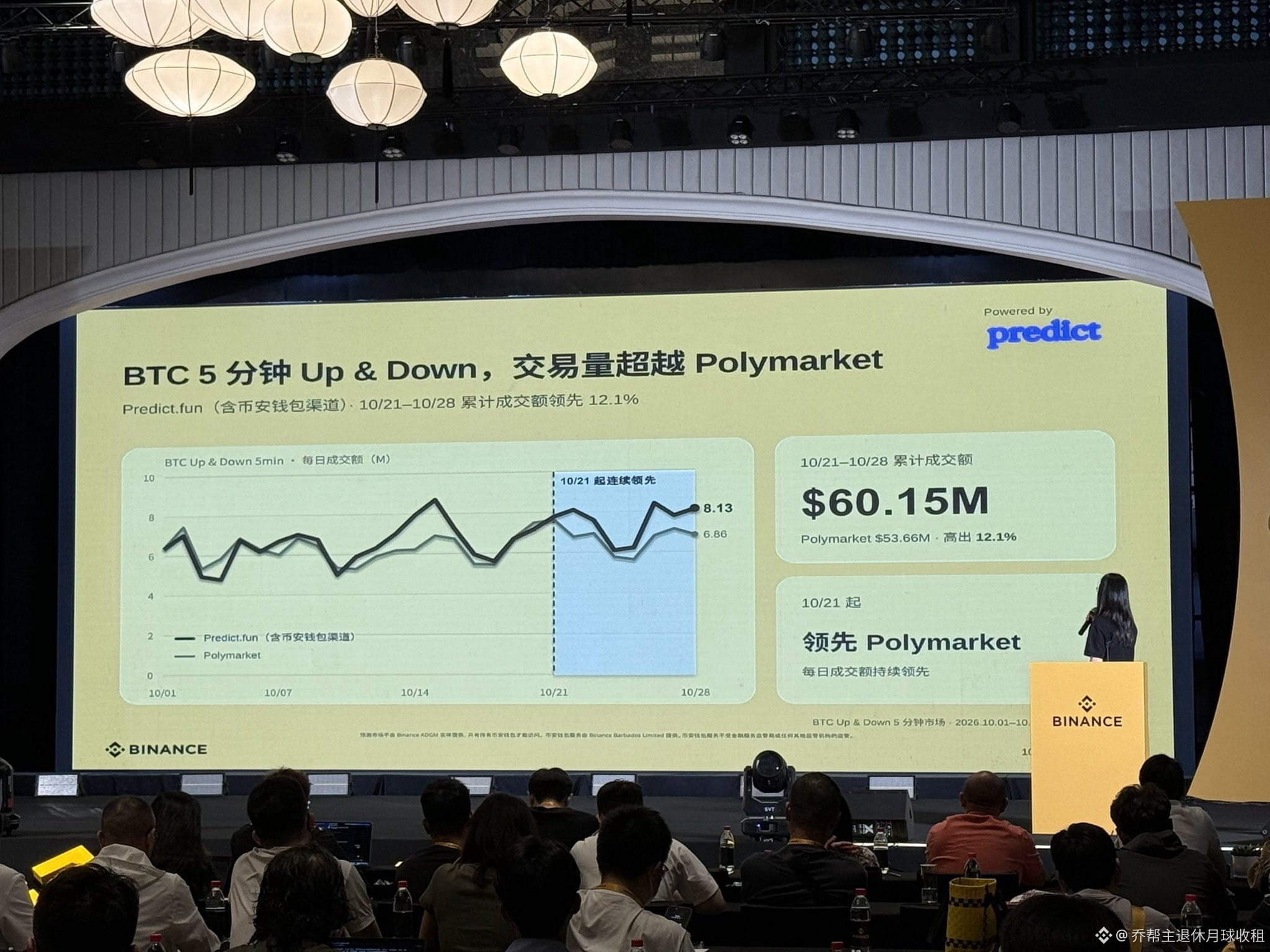
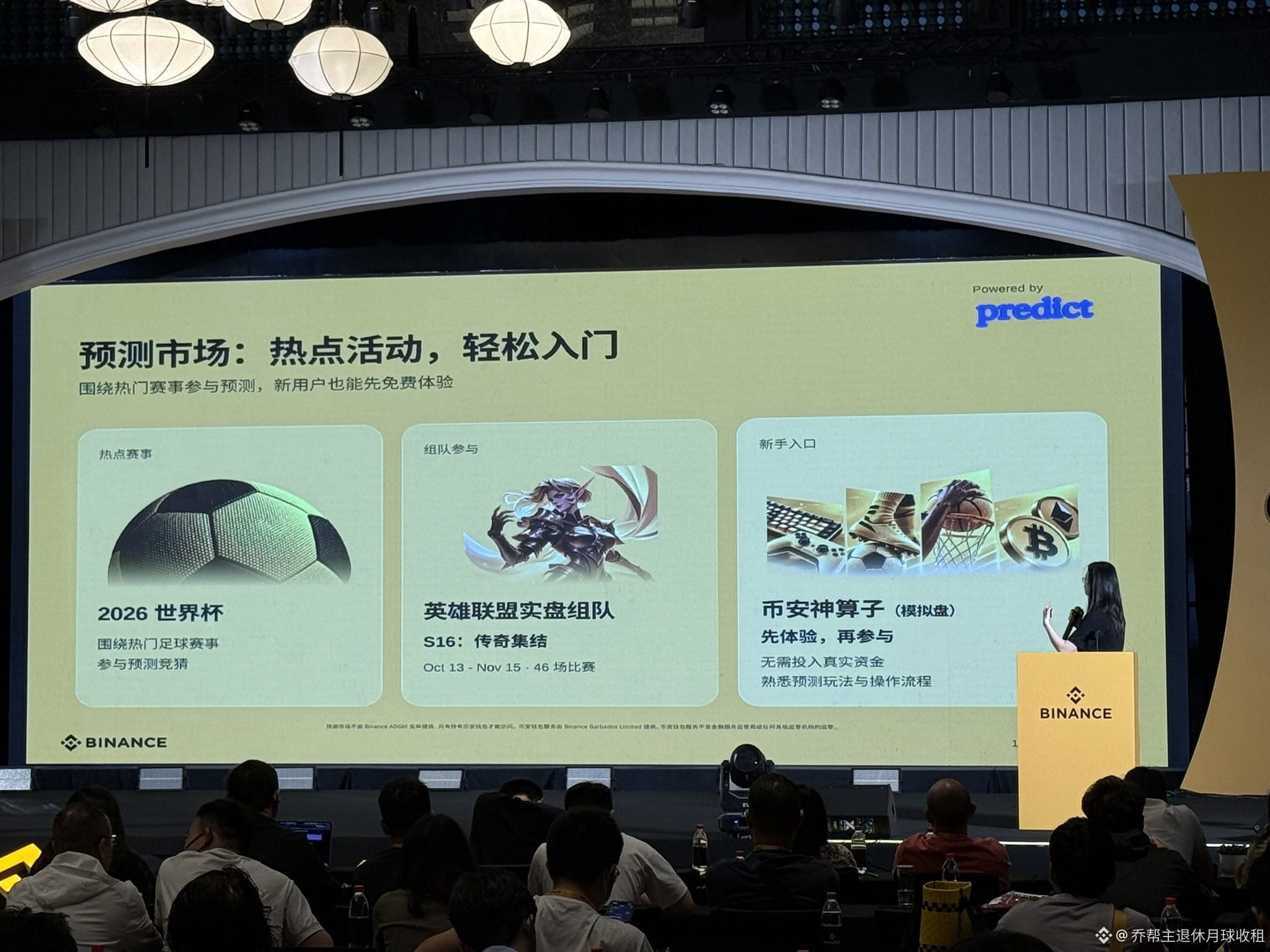
I also saw some stats at Binance’s Asia Learning Camp: since integrating Predict in April this year, cumulative trading volume has reached $946 million, with over 440,000 users. For a while, trading volume in the BTC up-or-down market even exceeded Polymarket’s.
In less than six months, it’s generated nearly $1 billion in Binance Wallet. There’s always been demand for prediction markets; people were just missing a convenient way to access them.
Now we’re just waiting for the launch. @predictdotfun
#PREDICT
5
36
10.5k
·
--
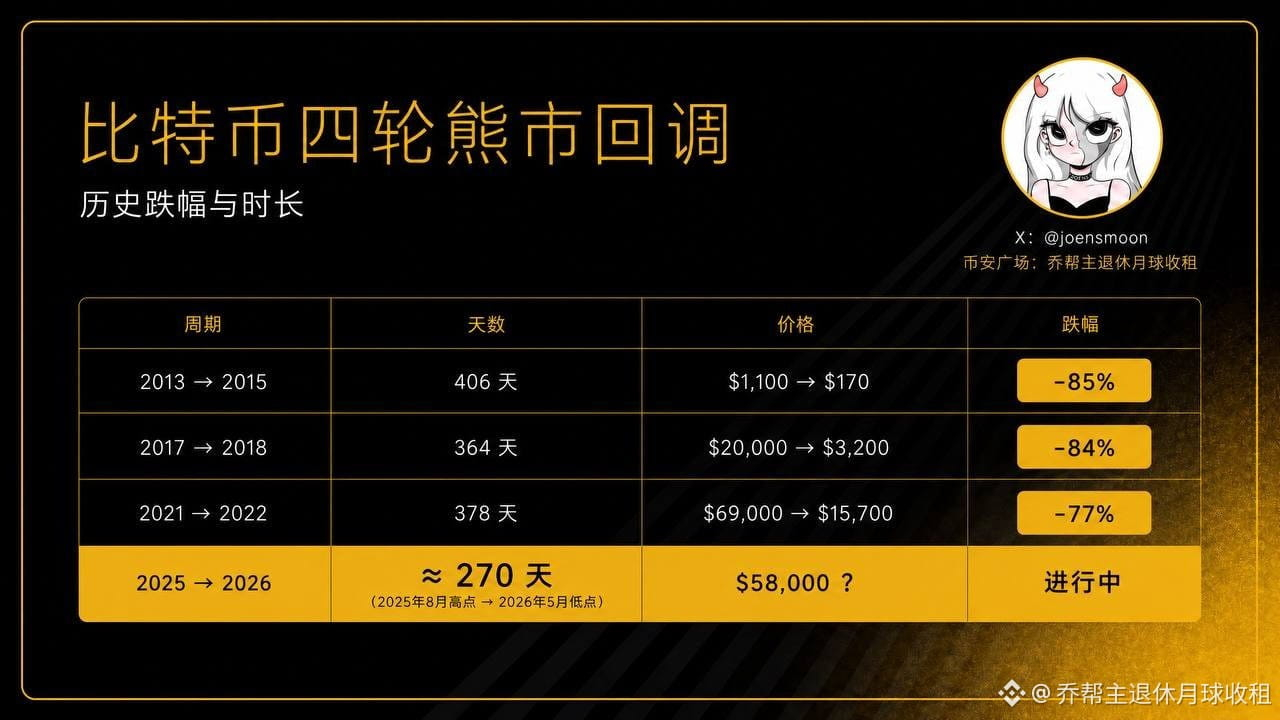
Historically, the time from Bitcoin’s peak to its true bottom has generally been about a year:
2013–2015: 406 days, falling from around $1,100 to $170
2017–2018: 364 days, falling from nearly $20,000 to $3,200
2021–2022: 378 days, falling from around $69,000 to $15,700
2025–2026: From the August 2025 peak to the May 2026 bottom, the period was clearly shorter than in previous cycles
All three complete cycles fell within the 364–406-day range, driven by common factors: liquidity contraction after the halving + declining risk appetite + leveraged positions being flushed out.
This time, the period was shorter and the drawdown was also shallower, reflecting the objective impact of structural changes in the market following the introduction of ETFs.
The current environment: After the midterm elections, control of Congress is about to change hands. Market participants feel insecure, and most are choosing to wait and see. The Binance hack was also the biggest shock recently. Bitcoin and Ethereum ETFs have seen sustained outflows. All of this has further intensified short-term volatility.
My view: We are in a bull market now. Even if this time wasn’t an early bottom, we are already on that path. From now until next year, there is a clear window for accumulating in stages.
Short-term noise won’t redefine the cycle.
5
15.7k
·
--
Binance is handing out pork trotter rice again
They’re splitting 350,000 U evenly among everyone with over 200 Alpha points
I did the math: there are over 80,000 active Alpha users right now
Let’s say 50,000 have over 200 points—that’s at least 7 U per person
It’ll be distributed automatically; no need to claim it.
They’re splitting 350,000 U evenly among everyone with over 200 Alpha points
I did the math: there are over 80,000 active Alpha users right now
Let’s say 50,000 have over 200 points—that’s at least 7 U per person
It’ll be distributed automatically; no need to claim it.
1
1
1.8k
·
--
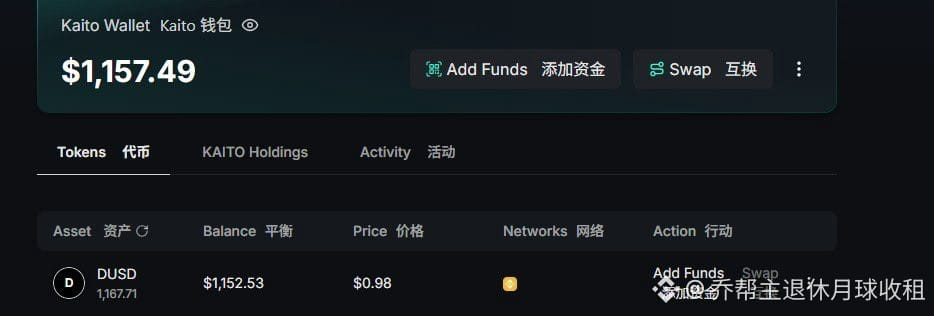
Holy shit, what the hell—@StandX_Official sent me $1,100 on @KaitoAI?
You have to swap it in your wallet to see the balance. Kaito is still awesome—this is way more than I got from farming airdrops.
Holy shit, what the hell—@StandX_Official sent me $1,100 on @KaitoAI?
You have to swap it in your wallet to see the balance. Kaito is still awesome—this is way more than I got from farming airdrops.
You have to swap it in your wallet to see the balance. Kaito is still awesome—this is way more than I got from farming airdrops.
7
21
8.8k
·
--
Lots of people have made a killing in this Agent ID launch wave
Whether you can get into a good project mostly comes down to having an information edge.
Your host has put together a list of some sharp people to follow and is sharing it with others playing in this space 👇👇
1️⃣ @congge918 (Brother Cong)
A launch radar that updates almost daily with new projects you can join for free.
2️⃣ @taojukfc (Taochuan)
Studies meme coin strategies. His reviews of this wave covered $JAGENT, $BIBIAI, and $TOSH almost completely.
3️⃣ @cryptoblack0511
A sharp-nosed trader. He spotted jager-hunter:native before it got popular—it went 200x.
4️⃣ @HougeSol (Monkey Bro)
An on-chain trader. Made over 400x on $JAGENT.
5️⃣ @jiamiyanjie
One of the earliest participants in $JAGENT, and basically rode the whole move for around 400x.
6️⃣ @ouh_web1 (a windfall of good fortune) Welfare Darei, airdrop whitelist platform campaigns, and free NFTs for BSC Agent IDs were all first developed by them.
7️⃣ @awenwenfeng
solana:AYMEVkbSowkh72UVQTvBkdCvhDnm3eqdkGFArYdweSWA went 10x; got in on $bibiai; $tosh went 10x. Nailed several meme coin plays in a row—great timing.
8️⃣ @wen394428142129
A high-frequency on-chain trader who gives advance notice of launch times, which is really helpful for people following along.
9️⃣ @canhua1023 (East of Eden) A tool-focused account that built its own Agent ID new-project monitoring and rating site. Handy for checking new launches and doing an initial screen.
🔟 @102BTC
An account focused exclusively on the Agent ID space, with steady updates and plenty of useful information.
This is my personal watchlist, not investment advice. New launches carry the risk of going to zero. DYOR 🙏
#BIBIAI #TOSH #JAGENT
1
2
24
7.6k
·
--
📣 Latest Update on the Binance Security Incident:
Binance has prepared over $6.34 billion in company funds for this incident. Approximately $5 billion has already been replenished in the corresponding affected tokens, covering about 80% of the affected amount. The remaining amount is being replenished through market and OTC channels.
Next steps:
1. Withdrawal Resumption: The technical team aims to begin restoring withdrawal services in phases within approximately 34 hours. Services will gradually reopen depending on the completion of security checks.
2. PoR Update: A new Proof of Reserves (PoR) snapshot is expected to begin within approximately 12 hours, with results planned for publication by November 2. Users will then be able to independently verify the platform’s latest asset reserves.
3. Investigation Update: No evidence of wallet private key leaks has been found so far. The investigation is ongoing, and more confirmed technical findings are expected to be shared within approximately 48 hours.
Binance will bear the full financial impact caused by this incident, and user funds are safe. We will continue to share the latest updates.
View the full announcement 👉https://www.binance.com/zh-CN/support/announcement/detail/d3306d9dca5243548c813b605e1d1751
1.5k
·
--
Musk really loves this AI IP model character, $CLAUDIA. I’ve lost count of how many related videos and replies he’s posted, but it just can’t take off. No solution 🤷
Musk really loves this AI IP model character, $CLAUDIA. I’ve lost count of how many related videos and replies he’s posted, but it just can’t take off. No solution 🤷
904
·
--
Verified
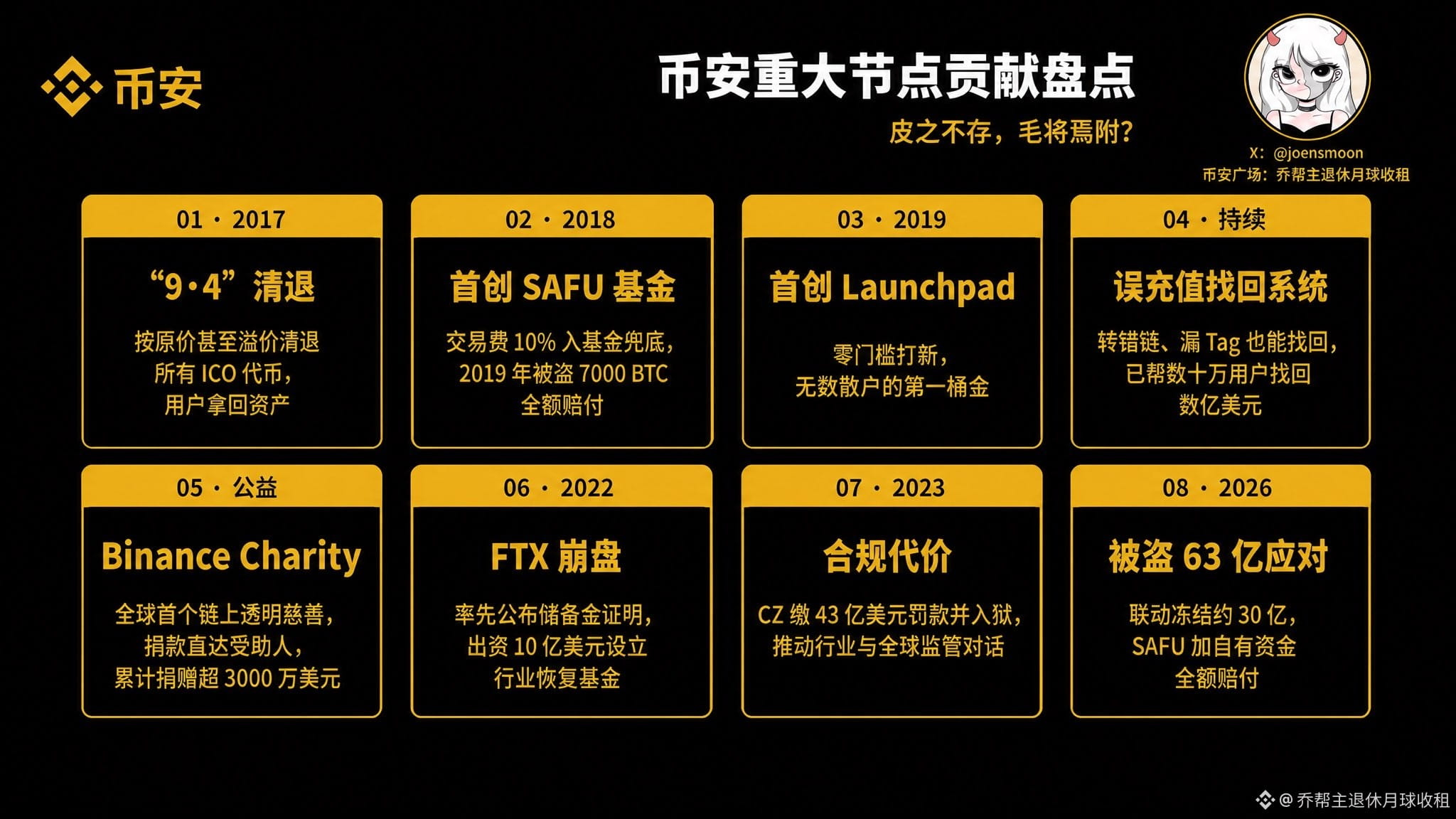
At a time like this, mindlessly talking down Binance or piling on it does no good for anyone working in the industry, trading, or investing as a retail user in the Chinese-speaking world.
If the skin is gone, where can the hair grow?
Looking objectively at the industry’s development over the past decade, Binance is not only the world’s largest liquidity hub, but also the last line of defense for the Chinese-speaking world—and even the entire Web3 industry.
Looking back at the history of the cryptocurrency market, Binance has played an irreplaceable role at many turning points in the industry’s fortunes.
1️⃣ ▏𝟮𝟬𝟭𝟳 “𝟵·𝟰” Crackdown: Putting Trust in the Chinese-Speaking World First, Regardless of Cost
In 2017, China’s seven regulatory agencies imposed a blanket ban on ICOs and exchange operations. Many new platforms liquidated or even absconded with users’ funds. Binance had been established for only about two months when, under immense liquidity pressure from the crackdown, it announced that it would refund all ICO tokens at their original fundraising prices—or even at a premium, above their issue prices. Many users suffered heavy losses on other small platforms, but got their assets back from Binance.
This battle earned Binance an exceptionally strong reputation in the Chinese-speaking world.
━━━━━━━━━━━━━
2️⃣ ▏𝟮𝟬𝟭𝟴 Pioneered the 𝗦𝗔𝗙𝗨 Fund: Covering User Losses
Binance established SAFU (Secure Asset Fund for Users), allocating 10% of all trading fee revenue to the fund to fully cover user losses in the event of force majeure or a hack. It was the industry’s first exchange-level user insurance fund, and was later emulated across the industry.
In 2019, when 7,000 BTC were stolen, Binance immediately issued a public announcement and used SAFU to fully reimburse users. No user assets were lost.
━━━━━━━━━━━━━
3️⃣ ▏𝟮𝟬𝟭𝟵 Pioneered 𝗟𝗮𝘂𝗻𝗰𝗵𝗽𝗮𝗱 𝗜𝗘𝗢𝘀: The Retail Investor’s First Pot of Gold
It was the industry’s first model in which “an exchange helps a project issue tokens and helps users get in early,” giving users an almost barrier-free way to participate in promising early-stage projects. For many ordinary people, their first pot of gold in crypto came from Launchpad. Every exchange later adopted this model.
━━━━━━━━━━━━━
4️⃣ ▏Pioneered a Recovery System for Assets Sent by Mistake
Binance was the first platform in the industry to invest significant technical and human resources in developing an automated/semi-automated recovery system for assets sent by mistake. Sending funds on the wrong chain, forgetting to include a Tag, or sending them to the wrong address—these mistakes would usually mean the funds were lost for good, but Binance can help users recover them. So far, it has helped hundreds of thousands of users successfully recover assets worth hundreds of millions of dollars.
━━━━━━━━━━━━━
5️⃣ ▏Pioneered On-Chain Transparent Philanthropy: 𝗕𝗶𝗻𝗮𝗻𝗰𝗲 𝗖𝗵𝗮𝗿𝗶𝘁𝘆
Binance Charity is the world’s first nonprofit organization to apply blockchain technology to philanthropy. All donations can be tracked on-chain and go directly to recipients’ wallets, eliminating the entrenched problems of traditional charities: “middlemen taking a cut and accounts that aren’t made public.”
During the COVID-19 pandemic and the Ukraine crisis, it donated over $30 million in total, distributing pandemic prevention supplies and on-chain cryptocurrency living allowances across dozens of countries. In partnership with Women in Tech, it has provided free Web3 and programming scholarships to tens of thousands of women from underserved communities and students in poverty around the world.
━━━━━━━━━━━━━
6️⃣ ▏𝟮𝟬𝟮𝟮 𝗙𝗧𝗫 Collapse: Keeping the Industry Liquid
FTX, the world’s second-largest exchange, collapsed after misusing user assets. This triggered a domino effect of bankruptcies among leading institutions including Alameda, Celsius, and BlockFi, leaving the entire crypto market gripped by extreme panic and a severe liquidity crunch.
Binance was the first to publicly release Proof of Reserves, pushing the entire industry toward greater asset transparency. It also committed $1 billion to establish the Industry Recovery Initiative (IRI), supporting promising projects and development teams caught in the crossfire of the credit crisis and preventing the industry from becoming completely paralyzed for years.
━━━━━━━━━━━━━
7️⃣ ▏𝟮𝟬𝟮𝟯 The Cost of Compliance: Bringing the Industry into Dialogue with Global Regulators
CZ paid a $4.3 billion fine and served time in prison. The cost was enormous, but it also helped bring the entire crypto industry into formal dialogue with global regulatory systems. Binance was the first exchange to work extensively with regulators in different countries to obtain licenses, making a major contribution to the industry’s progress toward compliance.
━━━━━━━━━━━━━
8️⃣ ▏𝟮𝟬𝟮𝟲 · $6.3 Billion Stolen and the Response: Industry-Wide Coordination
A public announcement was issued immediately. Tether froze $1.6 billion in USDT, Circle froze $800 million in USDC, and the Arbitrum Security Council coordinated the freezing of 8,425 ETH—around $3 billion frozen on-chain.
Binance pledged to fully reimburse users using the SAFU fund and its own corporate funds. The funds are ready, and Binance has also bought altcoins through OTC and on-market purchases to make up the shortfall.
The industry needs builders, and it also needs us to be objective about those who have truly contributed to it.
@binancezh @cz_binance @heyibinance
@sisibinance
3
953
·
--
Staying in Web3 is the best way to avoid getting a harsh dose of reality
First, times have changed. AI is advancing faster and faster. The core of crypto is encryption algorithms, sure—but the more powerful AI gets, the first jobs to go are in traditional industries. Customer service, translation, design, and basic programming have already been replaced.
Second, from last year’s wave of business closures to layoffs at major companies, to all kinds of investment products blowing up and the real estate bubble—traditional industries offer no absolute safety from that same feeling of helplessness. Assets are shrinking across the board.
Third, the boom years in traditional industries are long gone. The odds of passing the civil service exam can be hundreds to one; people get laid off from big companies at 35; half of new shops close within three years. Making money is only going to get harder.
It’s time to wake up. This is my advice to ordinary people: after looking across so many industries, Web3 is still the most welcoming to everyday people. It doesn’t care about your degree or background, and you don’t have to rely on connections. You won’t be laid off at 35. I admit Web3 has its problems, but traditional industries often judge you by your origins and connections. Web3, at least, still leaves ordinary people a chance to turn their lives around.
1
1.7k
·
--
I told you so—the BSC launchpad is just like this.
$gang has plunged for two days and is back to square one. Wake up and stop feeding kills.
I told you so—the BSC launchpad is just like this.
$gang has plunged for two days and is back to square one. Wake up and stop feeding kills.
$gang has plunged for two days and is back to square one. Wake up and stop feeding kills.
2
2.8k
·
--
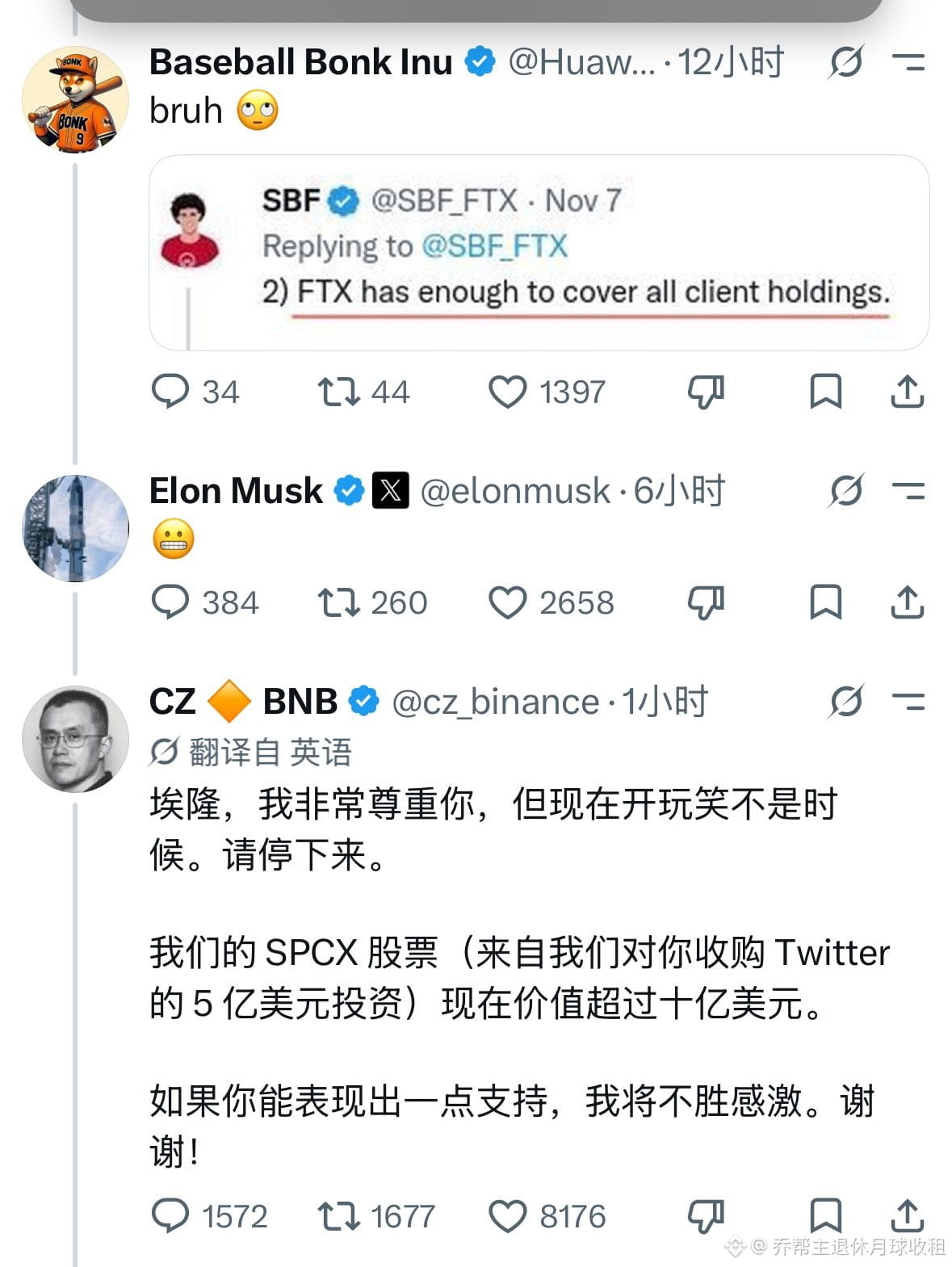
Some netizens repeated SBF’s last words, while Musk watched the drama unfold in the comments and posted a smiley face.
Big bro is applying pressure in plain sight.
Don’t make me dump your $spcx—leave your buddy a little dignity.
Some netizens repeated SBF’s last words, while Musk watched the drama unfold in the comments and posted a smiley face.
Big bro is applying pressure in plain sight.
Don’t make me dump your $spcx—leave your buddy a little dignity.
Big bro is applying pressure in plain sight.
Don’t make me dump your $spcx—leave your buddy a little dignity.
1
1
3.7k
·
--
Things are already bad enough, and now I've been robbed too. I hope I can get through this difficult time.
Things are already bad enough, and now I've been robbed too. I hope I can get through this difficult time.
1
1.3k
·
--
I've been watching Teacher Cai use AI to make predictions for a week 👀
After taking a bit of a beating these past couple of days, this caught my eye and got me interested.
I'm ready to start over and give the AI strategy a try. Everyone can follow along with Teacher Cai's daily reports and check it out too 🏂🏂@bagel_win
After taking a bit of a beating these past couple of days, this caught my eye and got me interested.
I'm ready to start over and give the AI strategy a try. Everyone can follow along with Teacher Cai's daily reports and check it out too 🏂🏂@bagel_win
761
·
--
Verified
Soros’s right-hand man invests in https://trade.xyz and publicly says he’ll use the product as a market participant.
Hyperliquid has really struck gold—traditional finance is even coming to study this blockchain.
Soros’s right-hand man invests in https://trade.xyz and publicly says he’ll use the product as a market participant.
Hyperliquid has really struck gold—traditional finance is even coming to study this blockchain.
Hyperliquid has really struck gold—traditional finance is even coming to study this blockchain.
1
952
·
--
Verified
$PRIORS was added to Robinhood Assets
When I first shared this ticker in the Chinese-speaking community, not many people were paying attention. The main reason for tracking it is that there are very few projects focused on Agent economy credit infrastructure.
I mentioned before that $Microduck the duck fell before dawn, but I think there will still be opportunities when the next catalyst arrives. The Jensen Huang conference demo plus the Musk interaction is a short-term event; the pullback in between, before Christmas inventory arrives, is the next opportunity to position.
Overall, the RH chain has warmed up a bit, but the ones that really broke out are still the tickers with their own independent narrative.
#PRIORS
1
1.1k
·
--
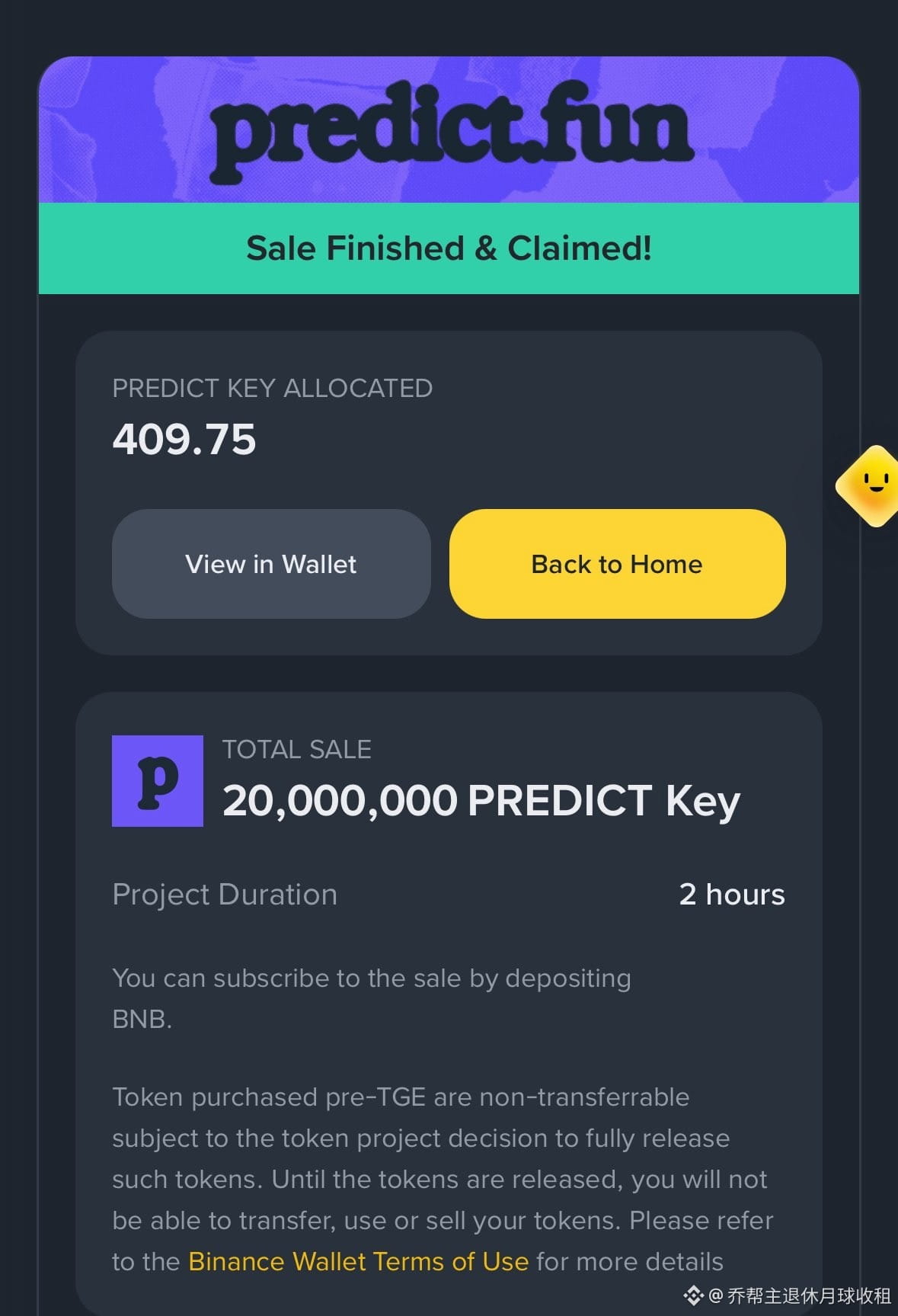
This may be the biggest Alpha opportunity in the past six months. $predict
At the pre-market price of $1.33, that’s $540 straight into your pocket.
The bar is so low, but lots of people can’t be bothered and end up missing out for nothing.
This may be the biggest Alpha opportunity in the past six months. $predict
At the pre-market price of $1.33, that’s $540 straight into your pocket.
The bar is so low, but lots of people can’t be bothered and end up missing out for nothing.
At the pre-market price of $1.33, that’s $540 straight into your pocket.
The bar is so low, but lots of people can’t be bothered and end up missing out for nothing.
3
6
6k
Log in to explore more content
Join global crypto users on Binance Square
⚡️ Get latest and useful information about crypto.
💬 Trusted by the world’s largest crypto exchange.
👍 Discover real insights from verified creators.
Email / Phone number
Trending Topics
BinanceReopensWithdrawalsForHYPE&APT
45,067 views
690 Discussing
Binance Re-Enables Withdrawals for HYPE and APT, Extends List of Restored Assets
Binance News
·28 Likes
·16.7k views
SouthKoreaDraftLawTargets15To20%ShareholderCap
48,835 views
458 Discussing
TradFiForBeginners
153,995 views
1,633 Discussing