

Jeeya_Awan
12.3k Posts

Jeeya_Awan
Report
Block User
MPhil Student | 📚 🌍 Exploring crypto 💡 Excited to grow in digital finance | Let’s connect, learn & grow in blockchain 🚀
Open Trade
Frequent Trader
3.4 Years
547 Following
24.9K+ Followers
20.5K+ Liked
Posts
Portfolio
All
Quotes
Live
·
--
Hello Fam 🤗
Need your attention and support.
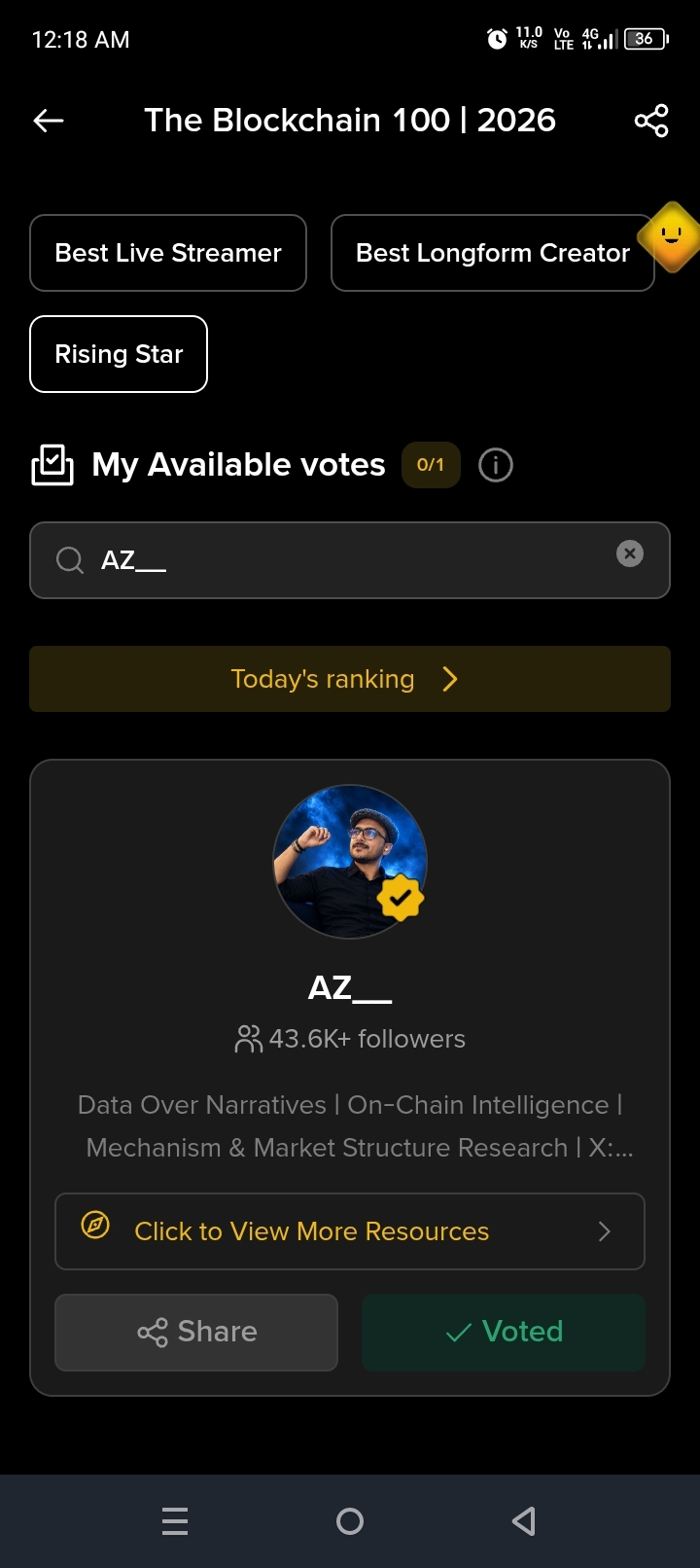
If you’ve tuned into @AzAs_ lives, watched his content, or been helped by his guidance, you know how hard he works to show up for his community every single day.
It only takes a second to support him. Please click below and cast your vote.
[VOTE NOW](https://app.binance.com/uni-qr/cact26user/506?uc=app_square_share_link&us=copylink)
Thank you all so much for the love and support.
#RisingStars #BBW #TheBlockchain100
Hello Fam 🤗
Need your attention and support.
If you’ve tuned into @AZ__ lives, watched his content, or been helped by his guidance, you know how hard he works to show up for his community every single day.
It only takes a second to support him. Please click below and cast your vote.
VOTE NOW
Thank you all so much for the love and support.
#RisingStars #BBW #TheBlockchain100
Need your attention and support.
If you’ve tuned into @AZ__ lives, watched his content, or been helped by his guidance, you know how hard he works to show up for his community every single day.
It only takes a second to support him. Please click below and cast your vote.
VOTE NOW
Thank you all so much for the love and support.
#RisingStars #BBW #TheBlockchain100
5
224
·
--
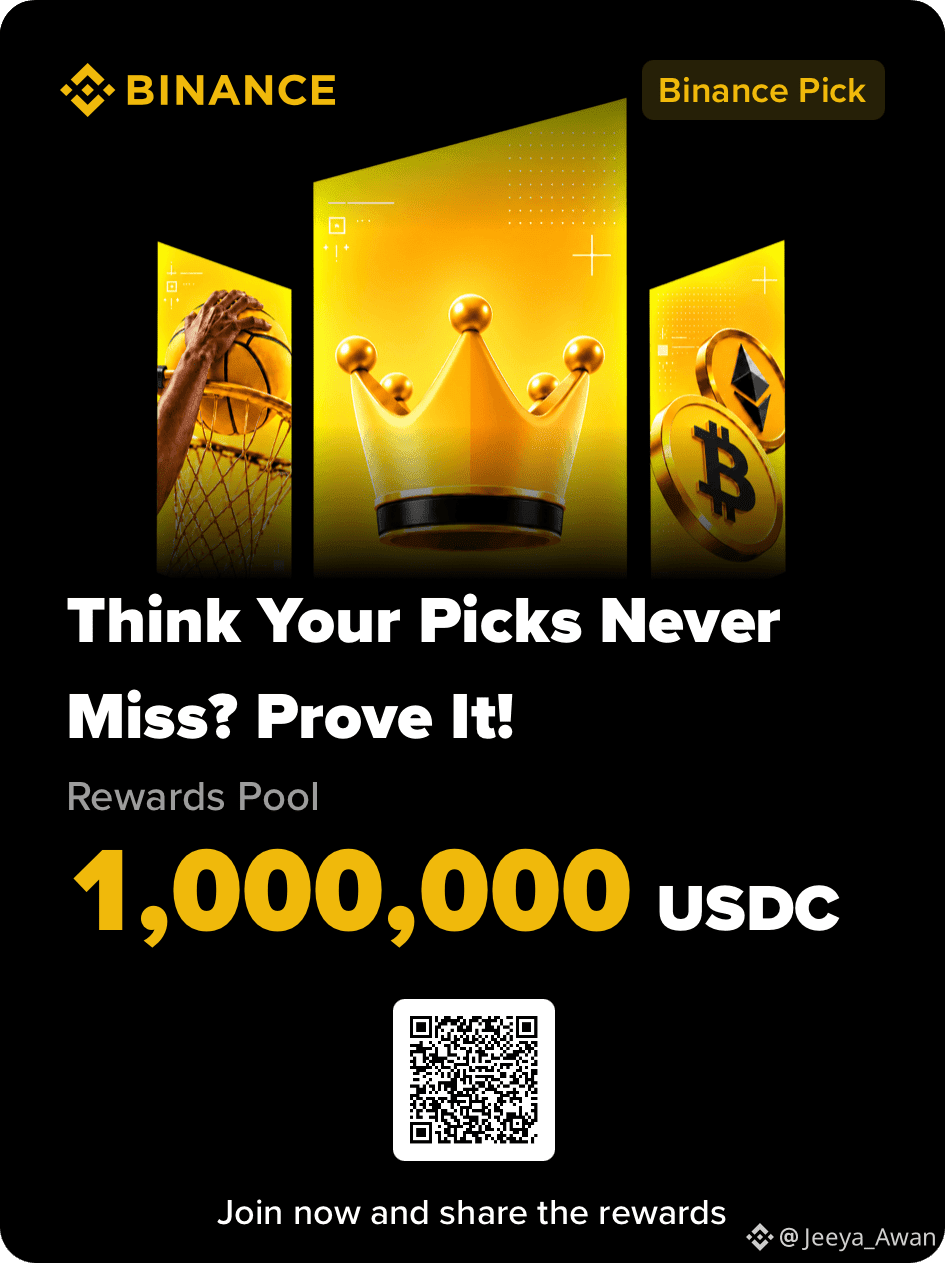
I've voted @AzAs_ Bhai for a Rising Star Nominee.
He isn't just creating content, but also guiding a lot of people through live streams.
Your vote counts, let's vote for AZ__ and support him.
[VOTE NOW](https://app.binance.com/uni-qr/cact26user/506?uc=app_square_share_link&us=copylink)
#RisingStars #TheBlockchain100
I've voted @AZ__ Bhai for a Rising Star Nominee.
He isn't just creating content, but also guiding a lot of people through live streams.
Your vote counts, let's vote for AZ__ and support him.
VOTE NOW
#RisingStars #TheBlockchain100
He isn't just creating content, but also guiding a lot of people through live streams.
Your vote counts, let's vote for AZ__ and support him.
VOTE NOW
#RisingStars #TheBlockchain100

4
3
507
·
--
Verified
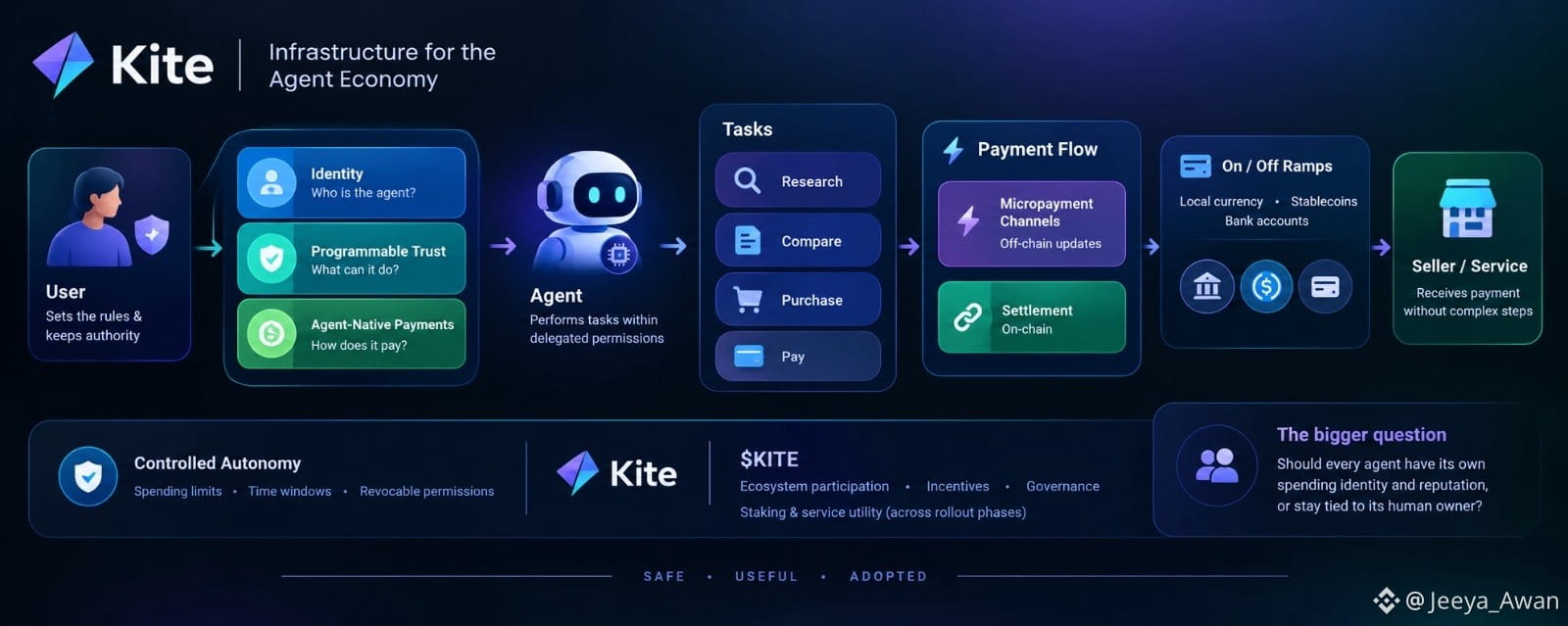
The Agent Economy Needs More Than Intelligence
The most interesting question about AI agents isn’t how many tasks they can automate. It’s how much responsibility we can safely give them.
Imagine asking an AI agent to research a product, compare suppliers, purchase the best option, and pay for the service. The intelligence may already exist. The agent also needs verifiable authority, spending limits, and secure payments.
This is where Kite becomes interesting.
Kite is building infrastructure around three essential elements: identity, programmable trust, and agent-native payments.
User: Sets the rules and retains authority.
Agent: Performs tasks within delegated permissions.
Session: Receives narrowly defined access for a particular operation or period.
This separation matters. An agent authorized to spend $20 on approved services shouldn’t automatically gain unrestricted access to an entire wallet. Spending limits, expiration windows, and revocable permissions can make autonomy more controlled instead of simply giving software more power.
Then comes the payment problem.
AI agents may need to pay for individual API calls, data requests, model inference, or services from other agents. Kite’s proposed micro-payment channels aim to make frequent, low-value transactions more practical by allowing signed payment updates off-chain and settling balances on-chain.
The other important piece is accessibility. On/off-ramp integrations can connect agent wallets with familiar payment methods, stablecoins, and bank accounts through supported providers. Ideally, users interact with local currency while the underlying infrastructure handles the complexity.
$KITE is designed for ecosystem participation, incentives, and governance, with staking and service-related utility planned across its rollout phases.
The real test is adoption. Can @GoKiteAI turn programmable trust and agent-native payments into infrastructure developers and businesses actually use?
Curious to hear different perspectives.
#KiteBBW $KITE
{spot}(KITEUSDT)
The Agent Economy Needs More Than Intelligence
The most interesting question about AI agents isn’t how many tasks they can automate. It’s how much responsibility we can safely give them.
Imagine asking an AI agent to research a product, compare suppliers, purchase the best option, and pay for the service. The intelligence may already exist. The agent also needs verifiable authority, spending limits, and secure payments.
This is where Kite becomes interesting.
Kite is building infrastructure around three essential elements: identity, programmable trust, and agent-native payments.
User: Sets the rules and retains authority.
Agent: Performs tasks within delegated permissions.
Session: Receives narrowly defined access for a particular operation or period.
This separation matters. An agent authorized to spend $20 on approved services shouldn’t automatically gain unrestricted access to an entire wallet. Spending limits, expiration windows, and revocable permissions can make autonomy more controlled instead of simply giving software more power.
Then comes the payment problem.
AI agents may need to pay for individual API calls, data requests, model inference, or services from other agents. Kite’s proposed micro-payment channels aim to make frequent, low-value transactions more practical by allowing signed payment updates off-chain and settling balances on-chain.
The other important piece is accessibility. On/off-ramp integrations can connect agent wallets with familiar payment methods, stablecoins, and bank accounts through supported providers. Ideally, users interact with local currency while the underlying infrastructure handles the complexity.
$KITE is designed for ecosystem participation, incentives, and governance, with staking and service-related utility planned across its rollout phases.
The real test is adoption. Can @KITE AI 中文 turn programmable trust and agent-native payments into infrastructure developers and businesses actually use?
Curious to hear different perspectives.
#KiteBBW $KITE
The most interesting question about AI agents isn’t how many tasks they can automate. It’s how much responsibility we can safely give them.
Imagine asking an AI agent to research a product, compare suppliers, purchase the best option, and pay for the service. The intelligence may already exist. The agent also needs verifiable authority, spending limits, and secure payments.
This is where Kite becomes interesting.
Kite is building infrastructure around three essential elements: identity, programmable trust, and agent-native payments.
User: Sets the rules and retains authority.
Agent: Performs tasks within delegated permissions.
Session: Receives narrowly defined access for a particular operation or period.
This separation matters. An agent authorized to spend $20 on approved services shouldn’t automatically gain unrestricted access to an entire wallet. Spending limits, expiration windows, and revocable permissions can make autonomy more controlled instead of simply giving software more power.
Then comes the payment problem.
AI agents may need to pay for individual API calls, data requests, model inference, or services from other agents. Kite’s proposed micro-payment channels aim to make frequent, low-value transactions more practical by allowing signed payment updates off-chain and settling balances on-chain.
The other important piece is accessibility. On/off-ramp integrations can connect agent wallets with familiar payment methods, stablecoins, and bank accounts through supported providers. Ideally, users interact with local currency while the underlying infrastructure handles the complexity.
$KITE is designed for ecosystem participation, incentives, and governance, with staking and service-related utility planned across its rollout phases.
The real test is adoption. Can @KITE AI 中文 turn programmable trust and agent-native payments into infrastructure developers and businesses actually use?
Curious to hear different perspectives.
#KiteBBW $KITE
19
1
15
622
·
--
Verified
#nil $NIL
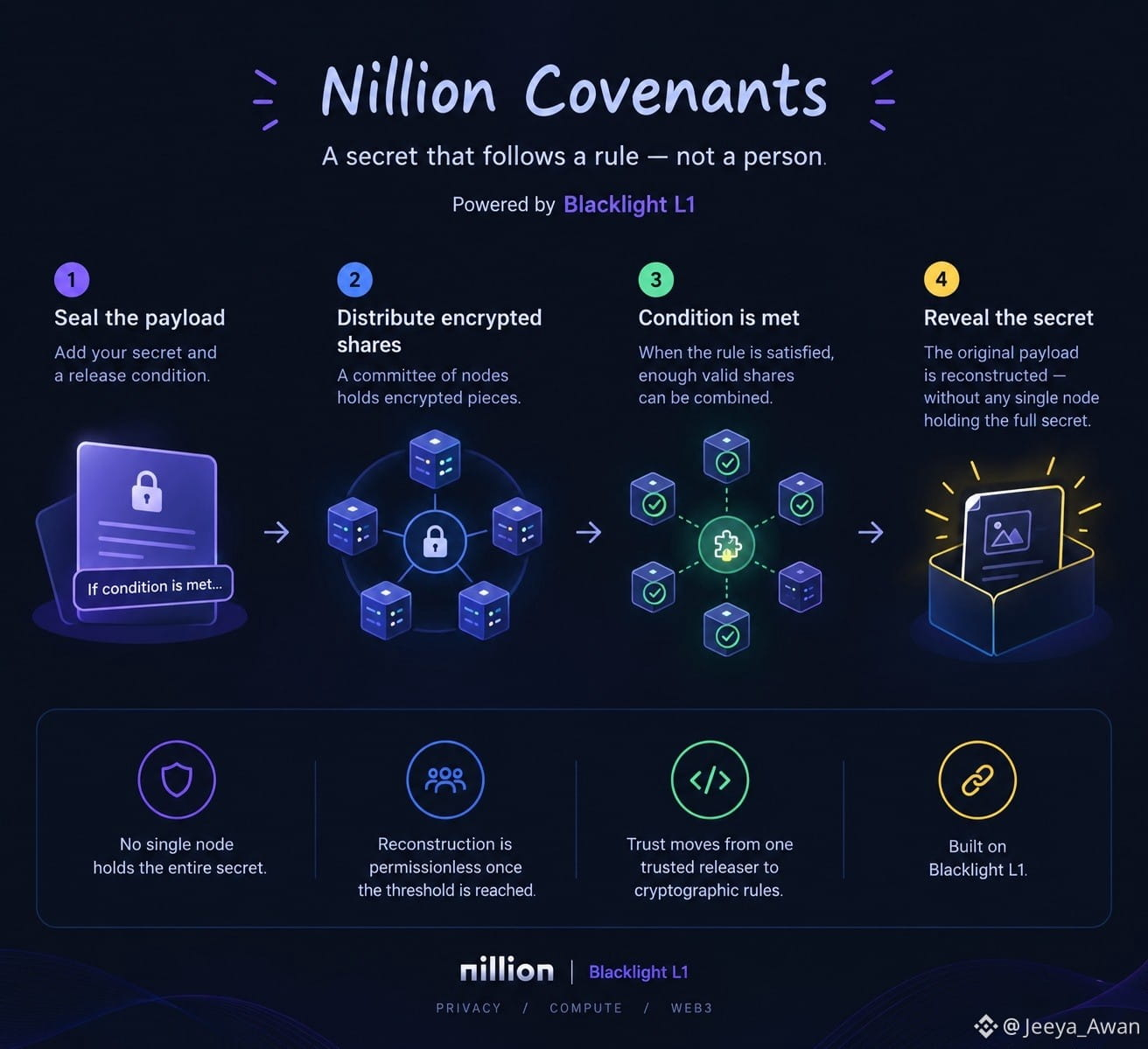
What if a secret could follow a rule without trusting a single person to enforce it?
That’s the idea behind Nillion Covenants, powered by Blacklight L1. You seal a payload with a release condition, and a committee of nodes holds encrypted shares. When the condition is met, enough valid shares can reveal the original payload.
No single node holds the entire secret, and reconstruction is permissionless once the required threshold is reached.
The interesting shift? Trust moves away from one trusted releaser and toward cryptographic rules.
@nillionnetwork
#nil $NIL
What if a secret could follow a rule without trusting a single person to enforce it?
That’s the idea behind Nillion Covenants, powered by Blacklight L1. You seal a payload with a release condition, and a committee of nodes holds encrypted shares. When the condition is met, enough valid shares can reveal the original payload.
No single node holds the entire secret, and reconstruction is permissionless once the required threshold is reached.
The interesting shift? Trust moves away from one trusted releaser and toward cryptographic rules.
@Nillion
What if a secret could follow a rule without trusting a single person to enforce it?
That’s the idea behind Nillion Covenants, powered by Blacklight L1. You seal a payload with a release condition, and a committee of nodes holds encrypted shares. When the condition is met, enough valid shares can reveal the original payload.
No single node holds the entire secret, and reconstruction is permissionless once the required threshold is reached.
The interesting shift? Trust moves away from one trusted releaser and toward cryptographic rules.
@Nillion
17
27
796
·
--
Verified
Binance recently unveiled Binance Intelligence (including Agent OS for developers, Binance AI for users, and AI Pro for workflows), bringing AI-powered financial intelligence and agents under its compliance framework.
Binance recently unveiled Binance Intelligence (including Agent OS for developers, Binance AI for users, and AI Pro for workflows), bringing AI-powered financial intelligence and agents under its compliance framework.
1
5
171
·
--
Today's top gainers
$NMR
{spot}(NMRUSDT)
$ORCA
{spot}(ORCAUSDT)
$ELIZAOS
{alpha}(560xea17df5cf6d172224892b5477a16acb111182478)
Today's top gainers
$NMR
$ORCA
$ELIZAOS
$NMR
$ORCA
$ELIZAOS
141
1
11
842
·
--
Partly True
Over $1.11 Billion in October Token Unlocks
Discussions are surging on the platform regarding massive supply injections hitting the market early this month.
• Hyperliquid (HYPE): Transferred 3.75 million tokens worth roughly $340 million directly to an institutional buyer.
• Ethena (ENA): Released 171.88 million tokens (~$41.52 million) aimed toward investors and contributors.
• Aptos (APT): Gearing up for an $11.31 million supply unlock scheduled for later in the week.
Over $1.11 Billion in October Token Unlocks
Discussions are surging on the platform regarding massive supply injections hitting the market early this month.
• Hyperliquid (HYPE): Transferred 3.75 million tokens worth roughly $340 million directly to an institutional buyer.
• Ethena (ENA): Released 171.88 million tokens (~$41.52 million) aimed toward investors and contributors.
• Aptos (APT): Gearing up for an $11.31 million supply unlock scheduled for later in the week.
Discussions are surging on the platform regarding massive supply injections hitting the market early this month.
• Hyperliquid (HYPE): Transferred 3.75 million tokens worth roughly $340 million directly to an institutional buyer.
• Ethena (ENA): Released 171.88 million tokens (~$41.52 million) aimed toward investors and contributors.
• Aptos (APT): Gearing up for an $11.31 million supply unlock scheduled for later in the week.
2
1.1k
·
--
RWA & Ecosystem Growth
BNB Chain RWA Milestone: Reports highlight that the network has officially surpassed $1 billion in tokenized stocks and ETFs, marking significant growth in its Real World Asset (RWA) infrastructure.
Stock-to-bStock Flexibility: Binance introduced a 1:1 direct conversion mechanism, allowing eligible users to seamlessly move between traditional equities and their corresponding bStock representations.
RWA & Ecosystem Growth
BNB Chain RWA Milestone: Reports highlight that the network has officially surpassed $1 billion in tokenized stocks and ETFs, marking significant growth in its Real World Asset (RWA) infrastructure.
Stock-to-bStock Flexibility: Binance introduced a 1:1 direct conversion mechanism, allowing eligible users to seamlessly move between traditional equities and their corresponding bStock representations.
BNB Chain RWA Milestone: Reports highlight that the network has officially surpassed $1 billion in tokenized stocks and ETFs, marking significant growth in its Real World Asset (RWA) infrastructure.
Stock-to-bStock Flexibility: Binance introduced a 1:1 direct conversion mechanism, allowing eligible users to seamlessly move between traditional equities and their corresponding bStock representations.
1
187
·
--
Binance officially unveiled its highly anticipated ecosystem update, Binance Intelligence, bringing advanced AI tools to retail traders across the globe.
Binance AI Pro: Rollout began for this personal finance AI agent that converts natural-language queries into executable 24/7 trading strategies and visual analytics.
BiBi Assistant: Built directly into the feed, this AI assistant allows users to instant-verify claims, summarize trending posts, and analyze token profiles on the fly.
Binance officially unveiled its highly anticipated ecosystem update, Binance Intelligence, bringing advanced AI tools to retail traders across the globe.
Binance AI Pro: Rollout began for this personal finance AI agent that converts natural-language queries into executable 24/7 trading strategies and visual analytics.
BiBi Assistant: Built directly into the feed, this AI assistant allows users to instant-verify claims, summarize trending posts, and analyze token profiles on the fly.
Binance AI Pro: Rollout began for this personal finance AI agent that converts natural-language queries into executable 24/7 trading strategies and visual analytics.
BiBi Assistant: Built directly into the feed, this AI assistant allows users to instant-verify claims, summarize trending posts, and analyze token profiles on the fly.
1
172
·
--
Today's top gainers ✨
$BTW
{alpha}(560x444045b0ee1ee319a660a5e3d604ca0ffa35acaa)
$MOVR
{spot}(MOVRUSDT)
$NOM
{spot}(NOMUSDT)
Today's top gainers ✨
$BTW
$MOVR
$NOM
$BTW
$MOVR
$NOM
25
2
774
·
--
$RHEA $QNT $GRT top gainers now ...
{alpha}(560x4c067de26475e1cefee8b8d1f6e2266b33a2372e)
{spot}(QNTUSDT)
{spot}(GRTUSDT)
$RHEA $QNT $GRT top gainers now ...
524
1
29
829
·
--
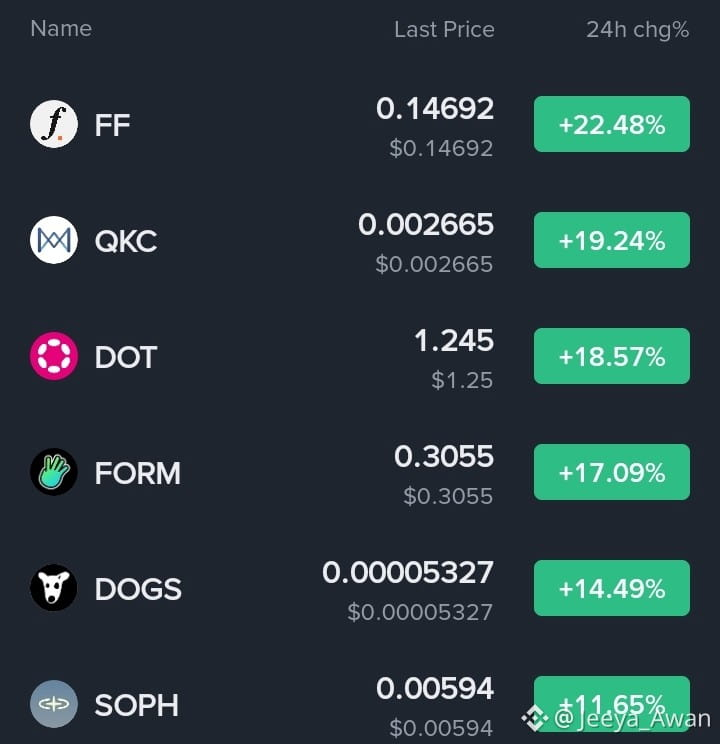
Today's top gainers
$QKC
{spot}(QKCUSDT)
$CNPY
{alpha}(560xc69b16cf18cea1e5d0bb6a1a9db802097790ddd2)
$MarsCoin
{spot}(MARSCOINUSDT)
Today's top gainers
$QKC
$CNPY
$MarsCoin
$QKC
$CNPY
$MarsCoin
637
27
637
·
--
hello everyone 🤗 🌻
$HEMI $TRUMP $PROM
{spot}(PROMUSDT)
{spot}(TRUMPUSDT)
{spot}(HEMIUSDT)
hello everyone 🤗 🌻
$HEMI $TRUMP $PROM
$HEMI $TRUMP $PROM
526
3
40
526
·
--
Verified
#dusk $DUSK @Dusk_Foundation
Piecrust: Dusk’s Smart Contract Virtual Machine
thought tonight that When people talk about smart contracts, the spotlight usually goes to the applications. But the execution layer underneath them matters just as much.
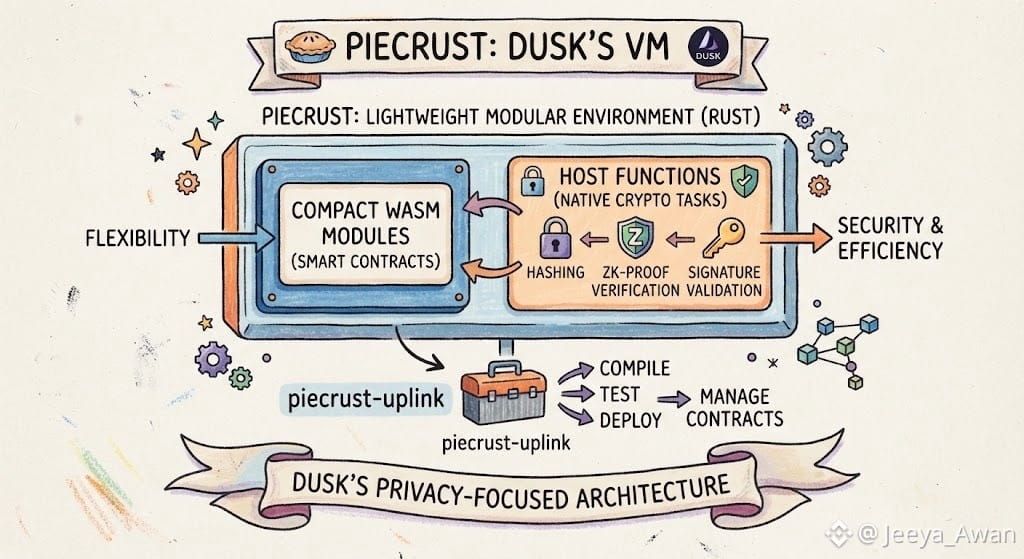
Dusk’s Piecrust VM takes a different approach: compact WASM modules run inside a lightweight, modular environment designed for secure and efficient smart contract execution. Written primarily in Rust, Piecrust is supported by piecrust-uplink, which helps developers compile, test, deploy, and manage contracts.
What caught my attention is how Piecrust handles heavy cryptographic work. Instead of forcing everything through WASM, host functions handle tasks such as hashing, ZK-proof verification, and signature validation.
That design connects smart contract flexibility with Dusk’s privacy-focused architecture.
#dusk $DUSK @Dusk
Piecrust: Dusk’s Smart Contract Virtual Machine
thought tonight that When people talk about smart contracts, the spotlight usually goes to the applications. But the execution layer underneath them matters just as much.
Dusk’s Piecrust VM takes a different approach: compact WASM modules run inside a lightweight, modular environment designed for secure and efficient smart contract execution. Written primarily in Rust, Piecrust is supported by piecrust-uplink, which helps developers compile, test, deploy, and manage contracts.
What caught my attention is how Piecrust handles heavy cryptographic work. Instead of forcing everything through WASM, host functions handle tasks such as hashing, ZK-proof verification, and signature validation.
That design connects smart contract flexibility with Dusk’s privacy-focused architecture.
Piecrust: Dusk’s Smart Contract Virtual Machine
thought tonight that When people talk about smart contracts, the spotlight usually goes to the applications. But the execution layer underneath them matters just as much.
Dusk’s Piecrust VM takes a different approach: compact WASM modules run inside a lightweight, modular environment designed for secure and efficient smart contract execution. Written primarily in Rust, Piecrust is supported by piecrust-uplink, which helps developers compile, test, deploy, and manage contracts.
What caught my attention is how Piecrust handles heavy cryptographic work. Instead of forcing everything through WASM, host functions handle tasks such as hashing, ZK-proof verification, and signature validation.
That design connects smart contract flexibility with Dusk’s privacy-focused architecture.
19
14
352
Log in to explore more content
Join global crypto users on Binance Square
⚡️ Get latest and useful information about crypto.
💬 Trusted by the world’s largest crypto exchange.
👍 Discover real insights from verified creators.
Email / Phone number