
翻仓王
779 Posts
 LIVE
翻仓王
Report
Block User
五年交易经验,全职交易员,公众号(职业交易员翻仓王)填写KC3RD13F邀请码默认减免20%手续费。有需求直播间私聊。直播时间早九点晚九点。直播喊单胜率超高!
Open Trade
Frequent Trader
1.6 Years
46 Following
5.5K+ Followers
3.5K+ Liked
Posts
Portfolio
All
Quotes
Videos
Live
PINNED
·
--

Article
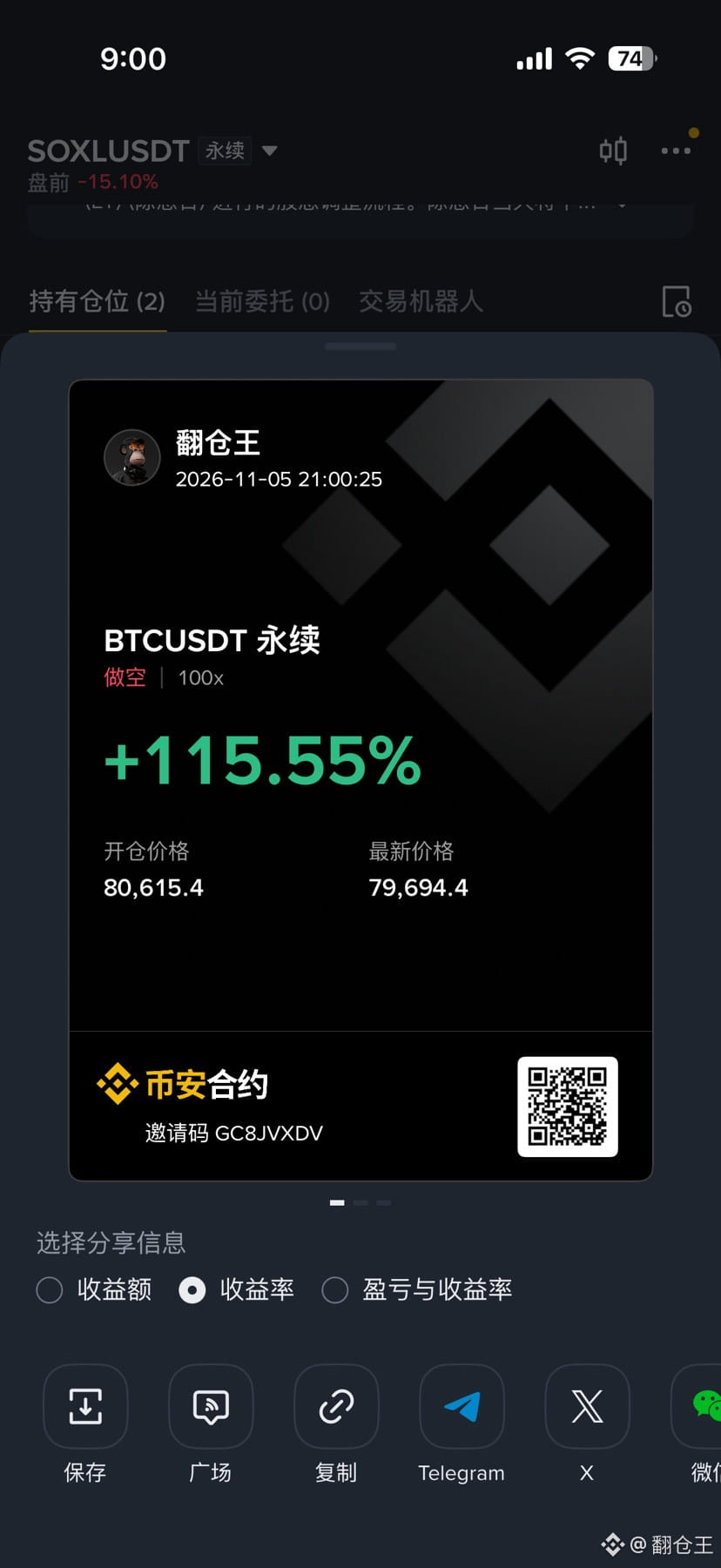
White Paper on Margin Trading PlanEveryone can pay attention. Once the number of followers reaches 1000, I will start a live broadcast on the An An platform to call trades. 1. Trading Discipline: Only open trades when all four points are met: 1. Do not open long positions at resistance levels, and open short positions at support levels. 2. Only accept orders at pre-planned positions and set take profits and stop losses. 3. Do not open trades at positions with poor risk-reward ratios. 4. Do not open trades at positions where stop losses and take profits cannot be set. In summary, do not make emotional trades and strictly follow trading discipline. 2. Day Trading Discipline: 1. Every trade must have a stop loss! Strictly enforce this. 2. Live broadcasts will call for both short and long trades; all three cryptocurrencies can be operated! After taking profits, reduce positions! Use high stop losses! 3. Therefore, everyone opens both long and short positions! If a short position is opened, reduce the long positions taken at the bottom. Holding both long and short positions! Lock in profits. In the live broadcast room, reduce positions for Bitcoin by 500 points, for Ethereum by 20, and for SOL by 1, leaving the remaining positions with tight stop losses. Make small profits, don't aim for big profits, and continue the trend; there will be arrangements for adding positions and rolling them over! 4. Every point on the screen can be intervened in trading, but pay attention to market strength; enter and exit quickly when strong, do not enter if it breaks through directly! Hold if weak. 5. You can choose not to profit, but you cannot incur losses! 3. Essential qualities of a qualified trader: 95% of ordinary traders rely on their brains to trade. 5% of experts trade blindly according to the system. Ordinary traders spend 90% of their time trading, while experts spend 90% of their time waiting for signals. The real difference lies not in technology but in the execution of the rules. Experts set rules and strive to execute them. The end of trading is the system; the end of the system is execution; the end of execution is waiting; the end of waiting is signals; the end of signals is the system. This process repeats continuously. 4. Rules for entering positions in daily allocation, for example, normally opening $100 each time, can be divided into batches, adding 70 after breaking the dangerous position of 30. For safe positions, add 50 after breaking and set stop losses at the original position. This way, market movements will not be missed. 5. Rules for taking profits in batches: In order to ensure profits every day, we continuously compound. Reducing positions means realizing profits at certain points. Close 30%-50% of the current total positions, and hold the remaining positions to take profits from market trends. Even if the trend unfortunately fails, there will still be slight profits, and it won't be in vain. Try to ensure profits are realized in every trade. 6. Regarding how to use points, any given position can be entered with stop losses. If a trade is executed, continue to enter without consideration, just strictly enforce it. Set alerts based on the points; when it rings, check the market; if it breaks the given positions and does not linger, do not enter. If the positions have not arrived, continue to wait. When they do, keep going! No all-in bets are allowed. Please use weekly units and set a fixed number of open positions. 7. Regarding position settings, each person has two accounts: one for spot trading and long-term contracts, generally holding positions for more than a week; the other for ultra-short-term trading, usually holding positions for several hours or tens of minutes. Spot trading accounts for 80% of total positions, while contracts account for 20%. After making profits from contracts, transfer money to the spot trading account.
White Paper on Margin Trading Plan
Everyone can pay attention. Once the number of followers reaches 1000, I will start a live broadcast on the An An platform to call trades. 1. Trading Discipline: Only open trades when all four points are met: 1. Do not open long positions at resistance levels, and open short positions at support levels. 2. Only accept orders at pre-planned positions and set take profits and stop losses. 3. Do not open trades at positions with poor risk-reward ratios. 4. Do not open trades at positions where stop losses and take profits cannot be set. In summary, do not make emotional trades and strictly follow trading discipline. 2. Day Trading Discipline: 1. Every trade must have a stop loss! Strictly enforce this. 2. Live broadcasts will call for both short and long trades; all three cryptocurrencies can be operated! After taking profits, reduce positions! Use high stop losses! 3. Therefore, everyone opens both long and short positions! If a short position is opened, reduce the long positions taken at the bottom. Holding both long and short positions! Lock in profits. In the live broadcast room, reduce positions for Bitcoin by 500 points, for Ethereum by 20, and for SOL by 1, leaving the remaining positions with tight stop losses. Make small profits, don't aim for big profits, and continue the trend; there will be arrangements for adding positions and rolling them over! 4. Every point on the screen can be intervened in trading, but pay attention to market strength; enter and exit quickly when strong, do not enter if it breaks through directly! Hold if weak. 5. You can choose not to profit, but you cannot incur losses! 3. Essential qualities of a qualified trader: 95% of ordinary traders rely on their brains to trade. 5% of experts trade blindly according to the system. Ordinary traders spend 90% of their time trading, while experts spend 90% of their time waiting for signals. The real difference lies not in technology but in the execution of the rules. Experts set rules and strive to execute them. The end of trading is the system; the end of the system is execution; the end of execution is waiting; the end of waiting is signals; the end of signals is the system. This process repeats continuously. 4. Rules for entering positions in daily allocation, for example, normally opening $100 each time, can be divided into batches, adding 70 after breaking the dangerous position of 30. For safe positions, add 50 after breaking and set stop losses at the original position. This way, market movements will not be missed. 5. Rules for taking profits in batches: In order to ensure profits every day, we continuously compound. Reducing positions means realizing profits at certain points. Close 30%-50% of the current total positions, and hold the remaining positions to take profits from market trends. Even if the trend unfortunately fails, there will still be slight profits, and it won't be in vain. Try to ensure profits are realized in every trade. 6. Regarding how to use points, any given position can be entered with stop losses. If a trade is executed, continue to enter without consideration, just strictly enforce it. Set alerts based on the points; when it rings, check the market; if it breaks the given positions and does not linger, do not enter. If the positions have not arrived, continue to wait. When they do, keep going! No all-in bets are allowed. Please use weekly units and set a fixed number of open positions. 7. Regarding position settings, each person has two accounts: one for spot trading and long-term contracts, generally holding positions for more than a week; the other for ultra-short-term trading, usually holding positions for several hours or tens of minutes. Spot trading accounts for 80% of total positions, while contracts account for 20%. After making profits from contracts, transfer money to the spot trading account.
16
5
74
2.8k



·
--
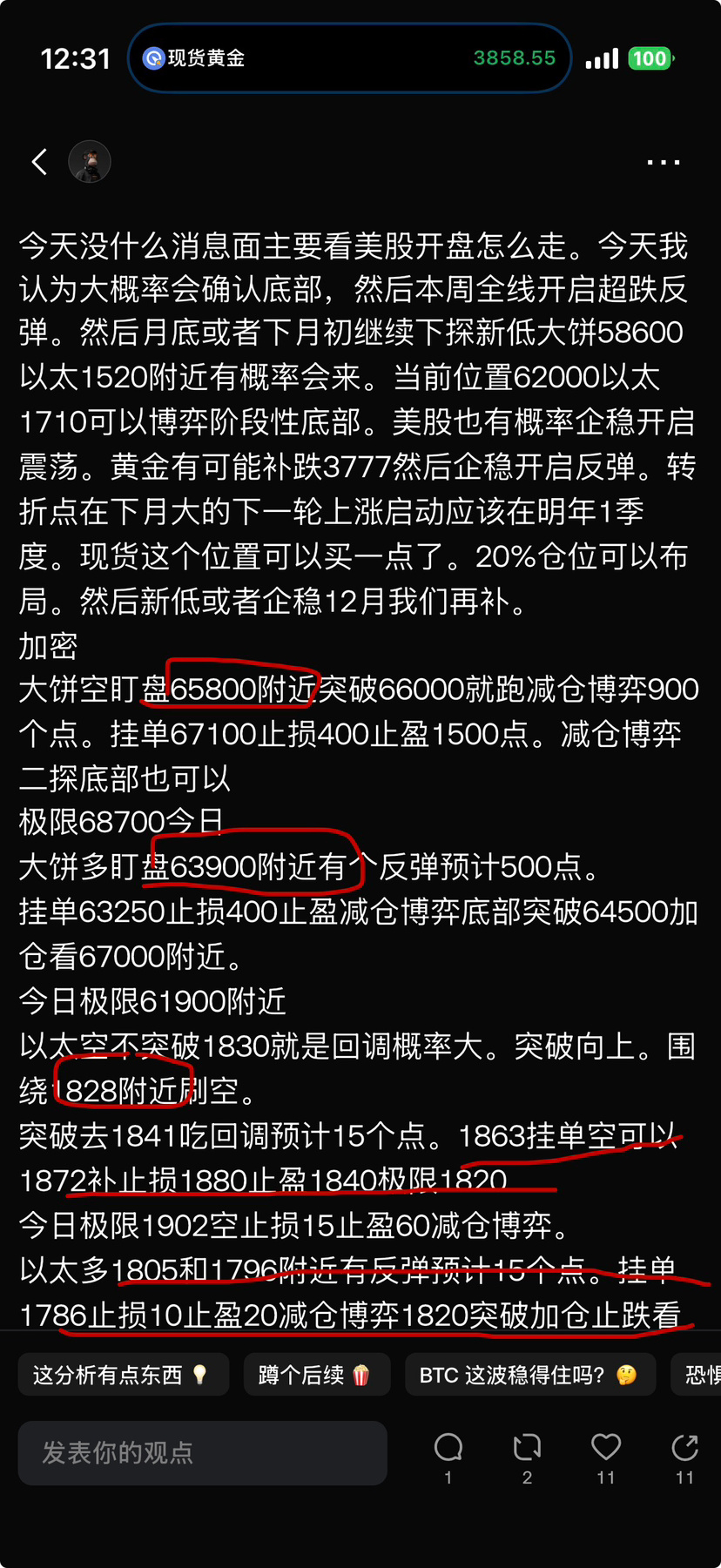
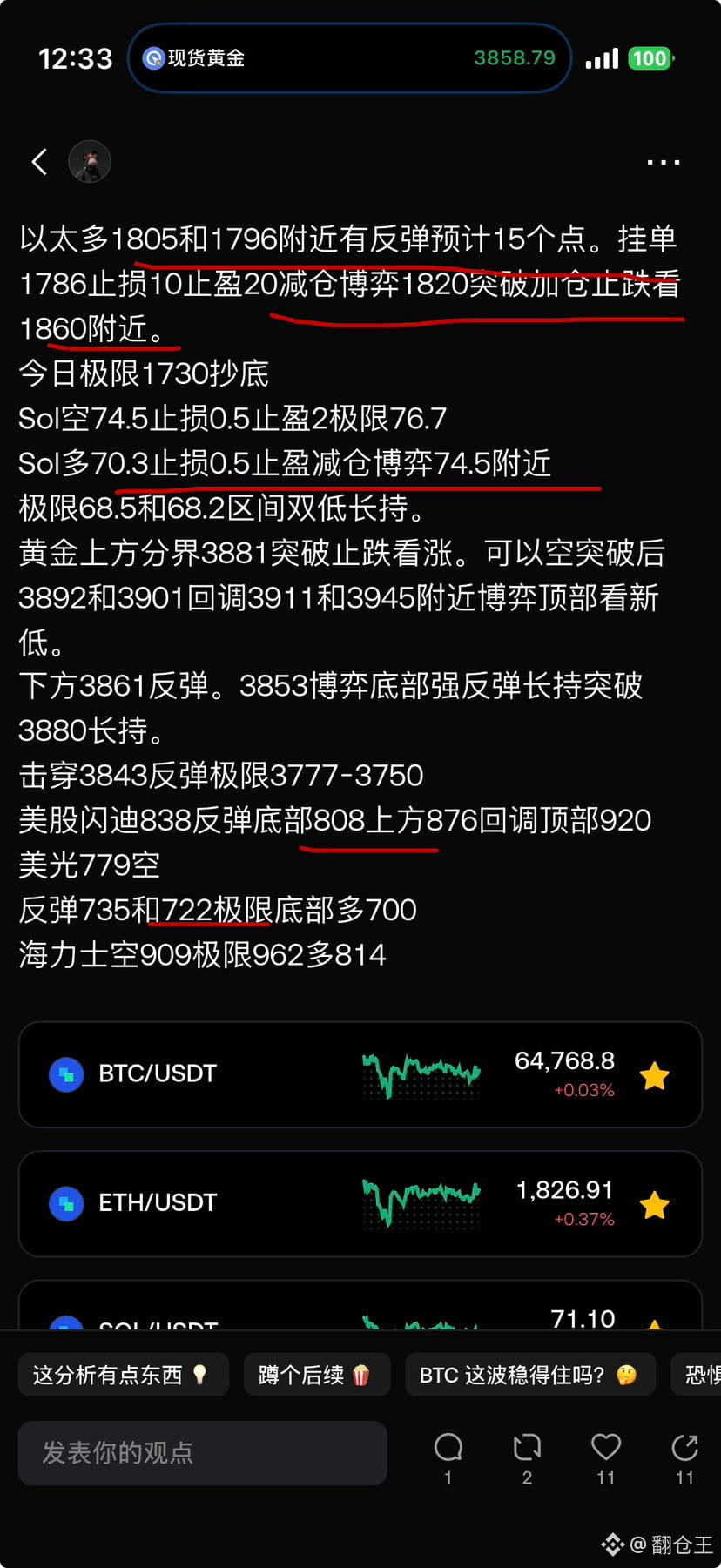
A strong start to Monday! During the day, I guided everyone to keep shorting ETH around 1828. In the subscriber group, I also set up rebound trades at 1805 and 1795, each targeting 15 points. Then I told everyone to place a limit order at 1786 to catch the wick and go long, with a take-profit target of 1860. After that, I set up a short at 1863 in the subscriber updates. Tonight, I guided everyone into a long at 1804 as well. For Bitcoin, the only slight disappointment was that we missed the short at 65800 by 200 points and didn't get filled. But we caught the long at 63900 and another long at 64150 during the livestream. We also caught the move on SOL at 70.3.
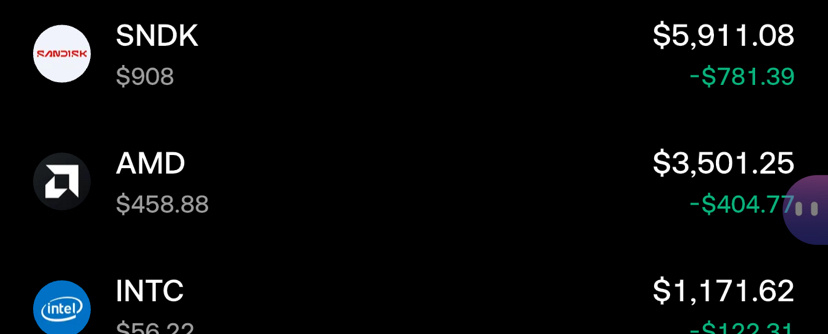
The bottom-fishing longs in Sandisk at 808 and Micron at 722 are both currently in floating profit. What a day of calls coming true! The gold level at 3777 that we'd been waiting on for half a year finally arrived over the weekend. Some of the guys who got in have made a killing. Xiaoke got in with 15 contracts and enjoyed a great trade.
For now, the decline has halted. From here, we can happily trade the swings. Always use a stop-loss on every trade and you'll get results. Whatever you do, don't hold on to losing positions. Keep it up!
1.3k
·
--
🎙️ A New Week: Direction and Rationale—If You're Still Losing, Join Now

End
05 h 00 m 44 s
879
0
0


·
--
🎙️ Can it keep falling? Stay tuned for the reasoning and price levels. If you want steady profits without losses, join now!

End
03 h 36 m 52 s
952
ETHUSDT
Perp
Limit/Long
0
0
·
--
🎙️ Can it keep falling? Follow along for the analysis and price levels. If you want steady profits without losses, join now.

End
04 h 07 m 09 s
710
0
0
·
--
🎙️ The Speed Collective Is Making Money: Market Outlook Analysis

End
04 h 04 m 33 s
924
BTCUSDT
Perp
Limit/Long
0
0
·
--
A Broad-Based Rebound in December Is InevitableGlobal markets endured a dramatic night: U.S. stocks fell across the board, with the Dow Jones Industrial Average down 0.31%, the S&P 500 down 0.38%, and the Nasdaq down 0.74%. Gold plunged more than $100, wiping out all of the previous session’s gains; the U.S. dollar index rose 0.6%, recovering all of Monday’s losses; the 10-year U.S. Treasury yield briefly hit 5% intraday before ending at 4.99%; and Brent crude briefly fell below $90 before recovering most of its losses. Last night, a flurry of remarks from Fed officials brought the market’s euphoria to an end once again (all times below are Beijing time). 17:00 (before the release of the U.S. October CPI report): Fed Governor Waller warned that even if CPI improves, he would lean toward supporting a 25-basis-point rate hike in December. But if core CPI continues to hold at 0.3% or higher, the Fed should consider more forceful action, including a one-off 50-basis-point hike. The core CPI figure released later came in at exactly the 0.3% Waller had mentioned, giving his remarks even greater market impact. You could say last night was a “deadly combination”: Waller could turn hawkish, and CPI could come in hotter than expected. Either event on its own might have affected markets for “just one day,” but these two things happened at the same time. U.S. stocks did not fall all that much last night, but the concerns behind the decline were significant. 23:50 (shortly after the U.S. market opened): Dallas Fed President Logan further reinforced her hawkish stance, saying that at least two more 25-basis-point rate hikes were needed and that the pace of hikes this winter might need to be faster than previously expected. Waller made the market realize for the first time that a 50-basis-point hike was possible, while Logan suggested the Fed would not raise rates “at every other meeting,” as the market expected, but instead would hike consecutively. 02:30: Kansas City Fed President Schmid said the current policy rate was still supporting economic activity and had not yet reached a level that would clearly restrain inflation (implying that he did not think the current policy stance was enough to get inflation under control). 04:30 (half an hour before the U.S. market closed): Fed Governor Bowman raised a more complex risk: inflationary pressures persist, which means the Fed may still need to act. At the same time, uncertainty over returns on AI investment could trigger a major repricing of U.S. stocks (implying that the market could run into trouble before the Fed finishes raising rates). Four officials: two governors and two regional Fed presidents, three of them voting members. All four gave scheduled remarks (prepared in advance, rather than in impromptu interviews): Waller spoke at a conference in London, Logan and Schmid attended a Fed energy conference, and Bowman appeared at an event hosted by the Council on Foreign Relations. This was no longer just ordinary hawkish rhetoric; it was laying the groundwork for action in December. In the past, when officials spoke in quick succession, most expressed similar or opposing views. But this time, all four officials sounded hawkish on the same day, each from a different angle. That is extremely rare—perhaps unprecedented. Bowman’s remarks were particularly notable: she acknowledged the market’s vulnerability but still thought further rate hikes were necessary. The timing was also carefully chosen: it came just one day after the U.S. stock market had rebounded. The market wants the Fed to “rescue” it; the Fed wants the market to believe it will keep controlling inflation. The two sides are testing each other, but so far, the Fed has shown no intention of backing down.
A Broad-Based Rebound in December Is Inevitable
Global markets endured a dramatic night: U.S. stocks fell across the board, with the Dow Jones Industrial Average down 0.31%, the S&P 500 down 0.38%, and the Nasdaq down 0.74%. Gold plunged more than $100, wiping out all of the previous session’s gains; the U.S. dollar index rose 0.6%, recovering all of Monday’s losses; the 10-year U.S. Treasury yield briefly hit 5% intraday before ending at 4.99%; and Brent crude briefly fell below $90 before recovering most of its losses. Last night, a flurry of remarks from Fed officials brought the market’s euphoria to an end once again (all times below are Beijing time). 17:00 (before the release of the U.S. October CPI report): Fed Governor Waller warned that even if CPI improves, he would lean toward supporting a 25-basis-point rate hike in December. But if core CPI continues to hold at 0.3% or higher, the Fed should consider more forceful action, including a one-off 50-basis-point hike. The core CPI figure released later came in at exactly the 0.3% Waller had mentioned, giving his remarks even greater market impact. You could say last night was a “deadly combination”: Waller could turn hawkish, and CPI could come in hotter than expected. Either event on its own might have affected markets for “just one day,” but these two things happened at the same time. U.S. stocks did not fall all that much last night, but the concerns behind the decline were significant. 23:50 (shortly after the U.S. market opened): Dallas Fed President Logan further reinforced her hawkish stance, saying that at least two more 25-basis-point rate hikes were needed and that the pace of hikes this winter might need to be faster than previously expected. Waller made the market realize for the first time that a 50-basis-point hike was possible, while Logan suggested the Fed would not raise rates “at every other meeting,” as the market expected, but instead would hike consecutively. 02:30: Kansas City Fed President Schmid said the current policy rate was still supporting economic activity and had not yet reached a level that would clearly restrain inflation (implying that he did not think the current policy stance was enough to get inflation under control). 04:30 (half an hour before the U.S. market closed): Fed Governor Bowman raised a more complex risk: inflationary pressures persist, which means the Fed may still need to act. At the same time, uncertainty over returns on AI investment could trigger a major repricing of U.S. stocks (implying that the market could run into trouble before the Fed finishes raising rates). Four officials: two governors and two regional Fed presidents, three of them voting members. All four gave scheduled remarks (prepared in advance, rather than in impromptu interviews): Waller spoke at a conference in London, Logan and Schmid attended a Fed energy conference, and Bowman appeared at an event hosted by the Council on Foreign Relations. This was no longer just ordinary hawkish rhetoric; it was laying the groundwork for action in December. In the past, when officials spoke in quick succession, most expressed similar or opposing views. But this time, all four officials sounded hawkish on the same day, each from a different angle. That is extremely rare—perhaps unprecedented. Bowman’s remarks were particularly notable: she acknowledged the market’s vulnerability but still thought further rate hikes were necessary. The timing was also carefully chosen: it came just one day after the U.S. stock market had rebounded. The market wants the Fed to “rescue” it; the Fed wants the market to believe it will keep controlling inflation. The two sides are testing each other, but so far, the Fed has shown no intention of backing down.
1
2
2.4k
·
--
🎙️ The entry points are spot-on—levels and logic provided. Join now and make money!

End
03 h 37 m 02 s
712
0
0
·
--
🎙️ Play it safe and grow—don't panic. Watch more, do less.

End
05 h 39 m 31 s
1.1k
1
0
·
--
This is only the beginningThe Huang scandal is just the beginning—the biggest revelations are still to come!
I. The heart of the matter: from a personal scandal to an industry-shaking event
On November 8 local time, NVIDIA founder and CEO Jensen Huang issued a letter to all employees, admitting that he had been unfaithful to his wife and apologizing to his family, employees, and shareholders worldwide. Almost simultaneously, NVIDIA’s board of directors issued a statement announcing an independent investigation led by independent directors, focusing on reports that “Jensen Huang had become the target of a foreign intelligence operation.”
The board’s statement made three points clear:
1. An independent committee of directors will be formed to conduct a comprehensive investigation with outside counsel;
This is only the beginning
The Huang scandal is just the beginning—the biggest revelations are still to come!
I. The heart of the matter: from a personal scandal to an industry-shaking event
On November 8 local time, NVIDIA founder and CEO Jensen Huang issued a letter to all employees, admitting that he had been unfaithful to his wife and apologizing to his family, employees, and shareholders worldwide. Almost simultaneously, NVIDIA’s board of directors issued a statement announcing an independent investigation led by independent directors, focusing on reports that “Jensen Huang had become the target of a foreign intelligence operation.”
The board’s statement made three points clear:
1. An independent committee of directors will be formed to conduct a comprehensive investigation with outside counsel;
1
2
4.7k
·
--
🎙️ Where’s the bottom, and when can we buy the dip? Come on in and let’s take a look.

End
04 h 21 m 56 s
747
0
0
·
--
Article
Crisis or OpportunityThe U.S. is nurturing a “new America” inside the bubble
Stop waiting for a crisis to erupt or the bubble to burst. Chances are, neither is going to happen.
It’s not that the bubble can’t burst. It’s that the United States today won’t deliberately prick it, nor will it let it burst easily. That’s because this bubble contains a “new America” that is absorbing resources from around the world and continuously replenishing the dollar. Once it gets going, it can’t be stopped midway.
Many of the fluctuations you see aren’t just market sentiment—someone is “propping up the market.” The way they’re doing it is unusual: instead of making the bubble even bigger, they’re creating “volatility.” Put simply, the United States is using physics to solve a financial problem.
Crisis or Opportunity
The U.S. is nurturing a “new America” inside the bubble
Stop waiting for a crisis to erupt or the bubble to burst. Chances are, neither is going to happen.
It’s not that the bubble can’t burst. It’s that the United States today won’t deliberately prick it, nor will it let it burst easily. That’s because this bubble contains a “new America” that is absorbing resources from around the world and continuously replenishing the dollar. Once it gets going, it can’t be stopped midway.
Many of the fluctuations you see aren’t just market sentiment—someone is “propping up the market.” The way they’re doing it is unusual: instead of making the bubble even bigger, they’re creating “volatility.” Put simply, the United States is using physics to solve a financial problem.
1
5
3.5k
·
--
Will AI rebound as expected next week? Four key catalysts to help you understand where the market is headedWill AI rebound as expected next week? Four key catalysts to help you understand where the market is headed
U.S. AI stocks plunged on Thursday, sending the market into extreme pessimism. A slowdown in data center construction, cloud giants scaling back computing capacity purchases, and rising difficulty in securing AI funding all weighed on sentiment at once. The AI industry’s rapid expansion over the past few years seems to have come to an end.
However, the market showed clear signs of recovery on Friday: chip stocks rebounded across the board, the Philadelphia Semiconductor Index rose 3%, and the S&P 500 also gained 0.3%. The market began to gradually revise its extremely pessimistic expectations from Thursday. It is worth noting, though, that more than half of the index constituents were still down, suggesting that the market has yet to fully regain confidence in the AI supply chain.
Will AI rebound as expected next week? Four key catalysts to help you understand where the market is headed
Will AI rebound as expected next week? Four key catalysts to help you understand where the market is headed
U.S. AI stocks plunged on Thursday, sending the market into extreme pessimism. A slowdown in data center construction, cloud giants scaling back computing capacity purchases, and rising difficulty in securing AI funding all weighed on sentiment at once. The AI industry’s rapid expansion over the past few years seems to have come to an end.
However, the market showed clear signs of recovery on Friday: chip stocks rebounded across the board, the Philadelphia Semiconductor Index rose 3%, and the S&P 500 also gained 0.3%. The market began to gradually revise its extremely pessimistic expectations from Thursday. It is worth noting, though, that more than half of the index constituents were still down, suggesting that the market has yet to fully regain confidence in the AI supply chain.
1.4k


Log in to explore more content
Join global crypto users on Binance Square
⚡️ Get latest and useful information about crypto.
💬 Trusted by the world’s largest crypto exchange.
👍 Discover real insights from verified creators.
Email / Phone number
Trending Topics
NvidiaEarningsTonight:AIStocks’NextMove?
32,206 views
563 Discussing
Nvidia Earnings Day: Interim CEO's First Appearance — Can the AI Story Hold?
Binance News
·17 Likes
·7.6k views
A Packed Week of Earnings and Data Tests Markets
110,801 views
568 Discussing
AnthropicIPOTestsInvestorAppetiteForAI
233,803 views
2,331 Discussing