

Arvo
20.6k Posts

Arvo
Report
Block User
ARVO | Trader/Researcher | Crypto & stock markets since 2015. Market analysis, original insights, and research-driven articles. Focused on understanding markets
High-Frequency Trader
5.6 Years
4 Following
17.7K+ Followers
26.3K+ Liked
Posts
All
Quotes
Videos
Live
PINNED
·
--
Bullish
Do you think AI or ASI can wipe us out?
$JCT $CAP $PREDICT
Do you think AI or ASI can wipe us out?
$JCT $CAP $PREDICT
$JCT $CAP $PREDICT
Yes
65%
No
23%
Maybe
12%
145 votes • Voting closed
7.8k
·
--
Bullish
30D trade $QNT 8.9K USDT
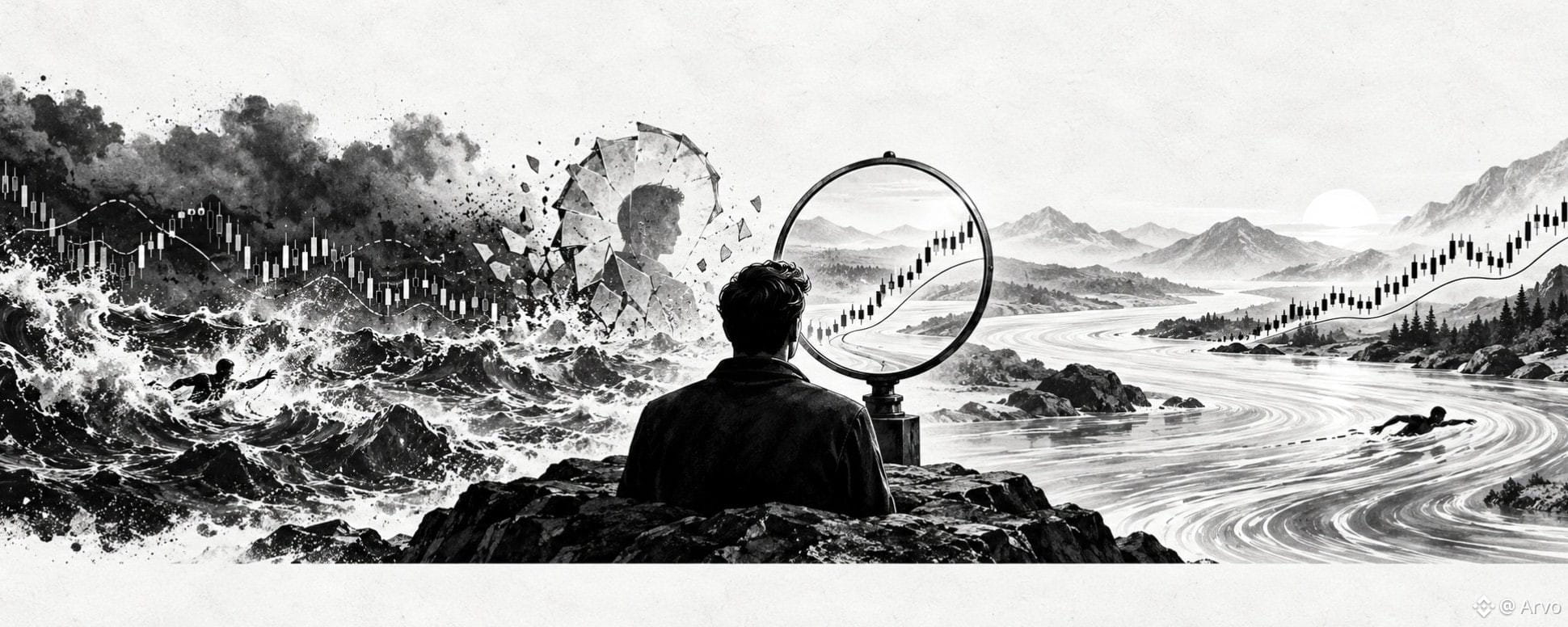
❕Stop Blaming Yourself. Start Looking at the Market.
When traders start losing money, they often blame their psychology. They assume they're too emotional, undisciplined, or simply not good enough.
But the problem often isn't the trader. It's the market environment.
A strategy that performs exceptionally well in trending markets can struggle when conditions turn choppy and unpredictable.
ㅤ
Here are 5 lessons every trader should understand:
1. The Market Determines Whether Your Strategy Works
Even a proven strategy will struggle in the wrong environment. A trend-following system needs trends. A breakout strategy needs follow-through.
2. Discipline Cannot Fix Bad Market Conditions
You can execute every trade perfectly and still lose money if the market isn't rewarding your approach. Sometimes the best decision is simply to stay on the sidelines.
3. Stop Trading What Should Happen
Analysts can build convincing arguments about why an asset should rise. But a brilliant thesis means nothing until price confirms it.
Being early is functionally the same as being wrong when it comes to your P&L.
4. Let the Market Confirm Your Trades
The best opportunities emerge when price action starts validating your position. Rather than predicting what might happen, focus on recognizing what is already happening.
5. Press Your Advantage When You're Right
Winning trades need to compensate for losing ones. Consistently cutting winners short while absorbing full losses makes profitability difficult, even with a good strategy.
ㅤ
Before blaming your trading psychology, ask yourself:
🟢 Does the current market favor my strategy?
🟢 Am I trading setups that worked months ago but have stopped producing results?
🟢 Am I expecting follow-through in a market that consistently fails to deliver it?
🟢 Am I forcing trades simply because I feel the need to participate?
ㅤ
Trading isn't just about executing your strategy correctly.
It's about knowing when the market is offering the conditions your strategy needs.
$DOOD $QNT $BULLA
❕Stop Blaming Yourself. Start Looking at the Market.
When traders start losing money, they often blame their psychology. They assume they're too emotional, undisciplined, or simply not good enough.
But the problem often isn't the trader. It's the market environment.
A strategy that performs exceptionally well in trending markets can struggle when conditions turn choppy and unpredictable.
ㅤ
Here are 5 lessons every trader should understand:
1. The Market Determines Whether Your Strategy Works
Even a proven strategy will struggle in the wrong environment. A trend-following system needs trends. A breakout strategy needs follow-through.
2. Discipline Cannot Fix Bad Market Conditions
You can execute every trade perfectly and still lose money if the market isn't rewarding your approach. Sometimes the best decision is simply to stay on the sidelines.
3. Stop Trading What Should Happen
Analysts can build convincing arguments about why an asset should rise. But a brilliant thesis means nothing until price confirms it.
Being early is functionally the same as being wrong when it comes to your P&L.
4. Let the Market Confirm Your Trades
The best opportunities emerge when price action starts validating your position. Rather than predicting what might happen, focus on recognizing what is already happening.
5. Press Your Advantage When You're Right
Winning trades need to compensate for losing ones. Consistently cutting winners short while absorbing full losses makes profitability difficult, even with a good strategy.
ㅤ
Before blaming your trading psychology, ask yourself:
🟢 Does the current market favor my strategy?
🟢 Am I trading setups that worked months ago but have stopped producing results?
🟢 Am I expecting follow-through in a market that consistently fails to deliver it?
🟢 Am I forcing trades simply because I feel the need to participate?
ㅤ
Trading isn't just about executing your strategy correctly.
It's about knowing when the market is offering the conditions your strategy needs.
$DOOD $QNT $BULLA
When traders start losing money, they often blame their psychology. They assume they're too emotional, undisciplined, or simply not good enough.
But the problem often isn't the trader. It's the market environment.
A strategy that performs exceptionally well in trending markets can struggle when conditions turn choppy and unpredictable.
ㅤ
Here are 5 lessons every trader should understand:
1. The Market Determines Whether Your Strategy Works
Even a proven strategy will struggle in the wrong environment. A trend-following system needs trends. A breakout strategy needs follow-through.
2. Discipline Cannot Fix Bad Market Conditions
You can execute every trade perfectly and still lose money if the market isn't rewarding your approach. Sometimes the best decision is simply to stay on the sidelines.
3. Stop Trading What Should Happen
Analysts can build convincing arguments about why an asset should rise. But a brilliant thesis means nothing until price confirms it.
Being early is functionally the same as being wrong when it comes to your P&L.
4. Let the Market Confirm Your Trades
The best opportunities emerge when price action starts validating your position. Rather than predicting what might happen, focus on recognizing what is already happening.
5. Press Your Advantage When You're Right
Winning trades need to compensate for losing ones. Consistently cutting winners short while absorbing full losses makes profitability difficult, even with a good strategy.
ㅤ
Before blaming your trading psychology, ask yourself:
🟢 Does the current market favor my strategy?
🟢 Am I trading setups that worked months ago but have stopped producing results?
🟢 Am I expecting follow-through in a market that consistently fails to deliver it?
🟢 Am I forcing trades simply because I feel the need to participate?
ㅤ
Trading isn't just about executing your strategy correctly.
It's about knowing when the market is offering the conditions your strategy needs.
$DOOD $QNT $BULLA
606
·
--
Bullish

44
2
398
·
--
Bullish
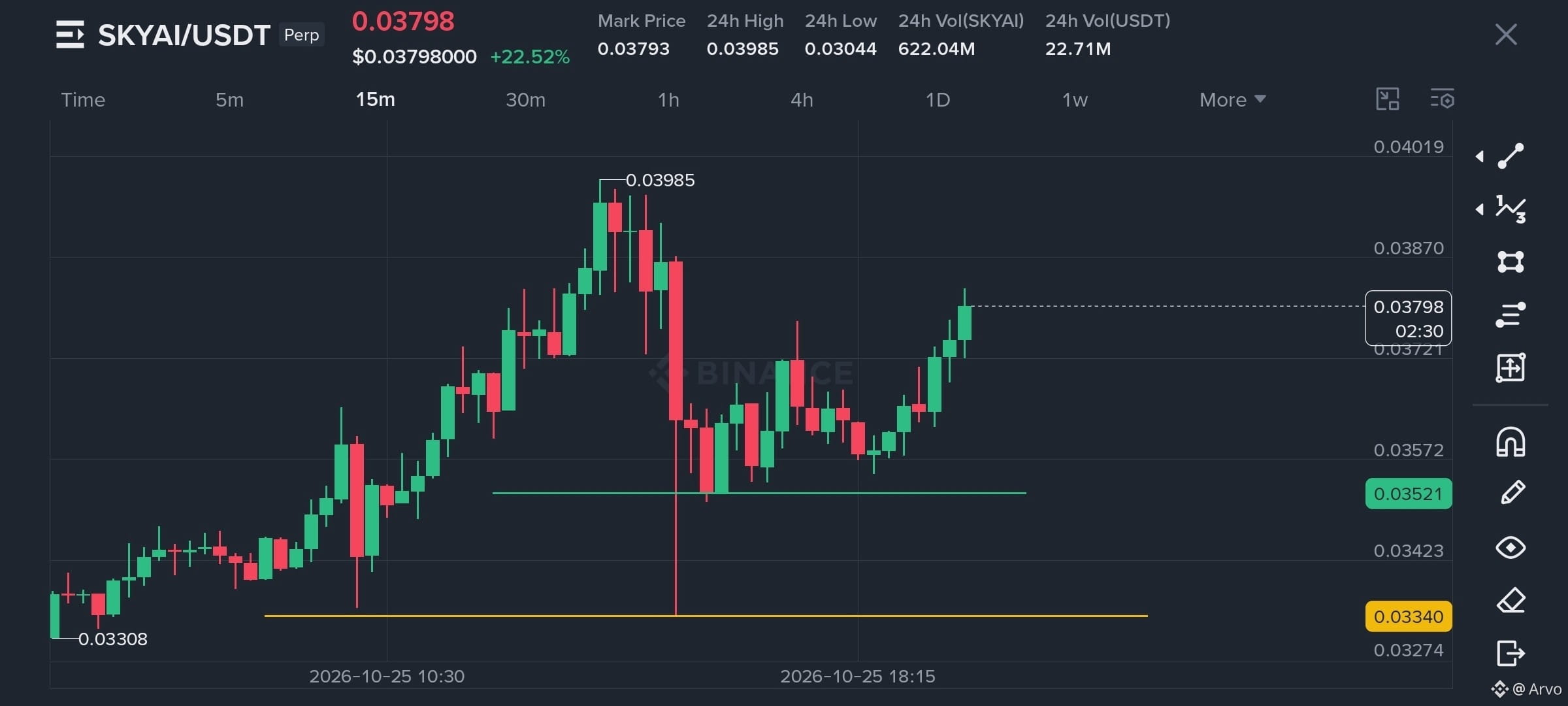
$SKYAI I just took long on SKYAI:
TP 0.044 SL: 0.035 Risky Trade.
Also watching: $CAP $PREDICT
$SKYAI I just took long on SKYAI:
TP 0.044 SL: 0.035 Risky Trade.
Also watching: $CAP $PREDICT
TP 0.044 SL: 0.035 Risky Trade.
Also watching: $CAP $PREDICT
228
·
--
Bullish
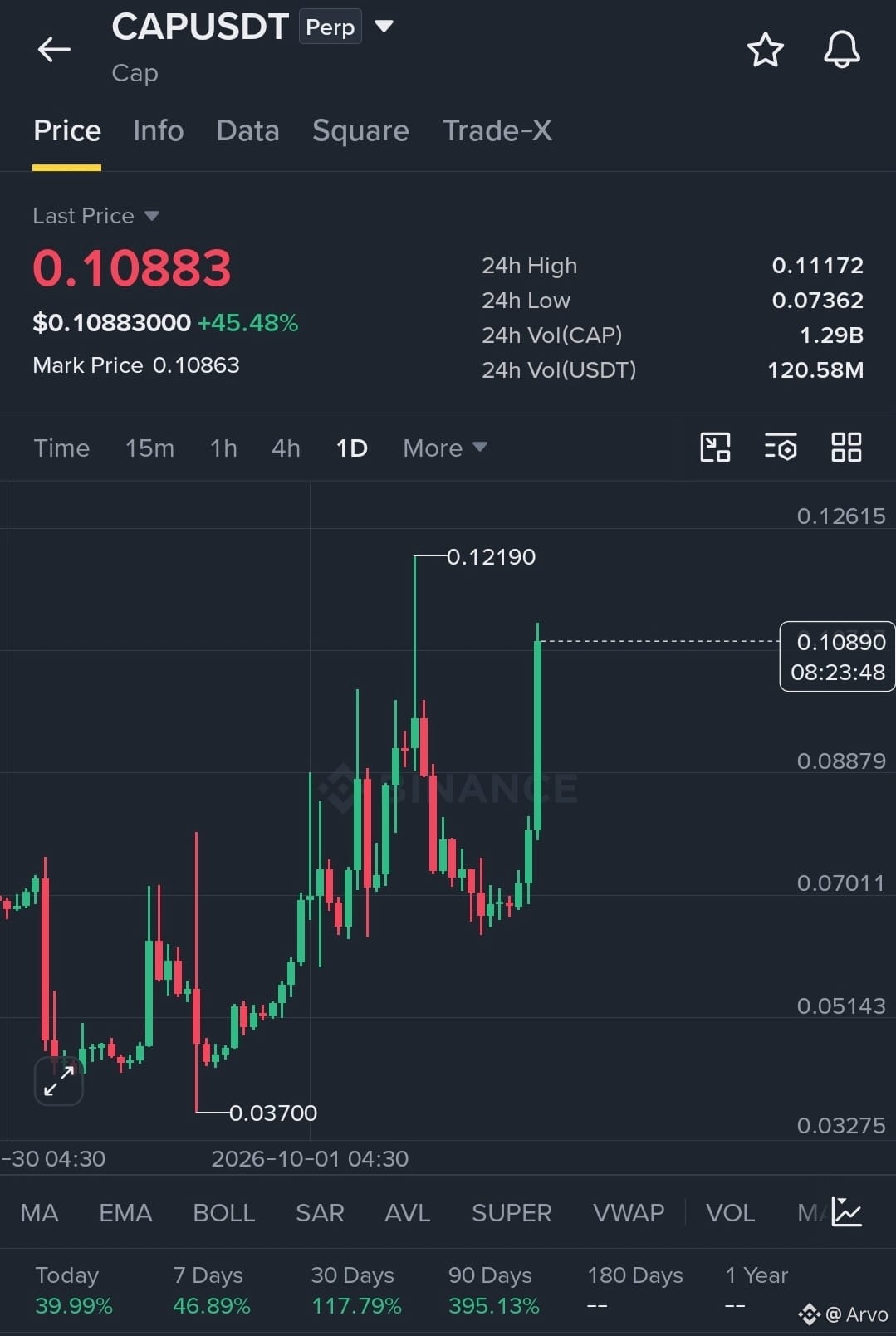
$CAP 90%+ chances for a new ATH, I am holding my longs, just trail SL and let it run higher.
Also watching: $APR $T
$CAP 90%+ chances for a new ATH, I am holding my longs, just trail SL and let it run higher.
Also watching: $APR $T
Also watching: $APR $T
689
·
--
Bullish
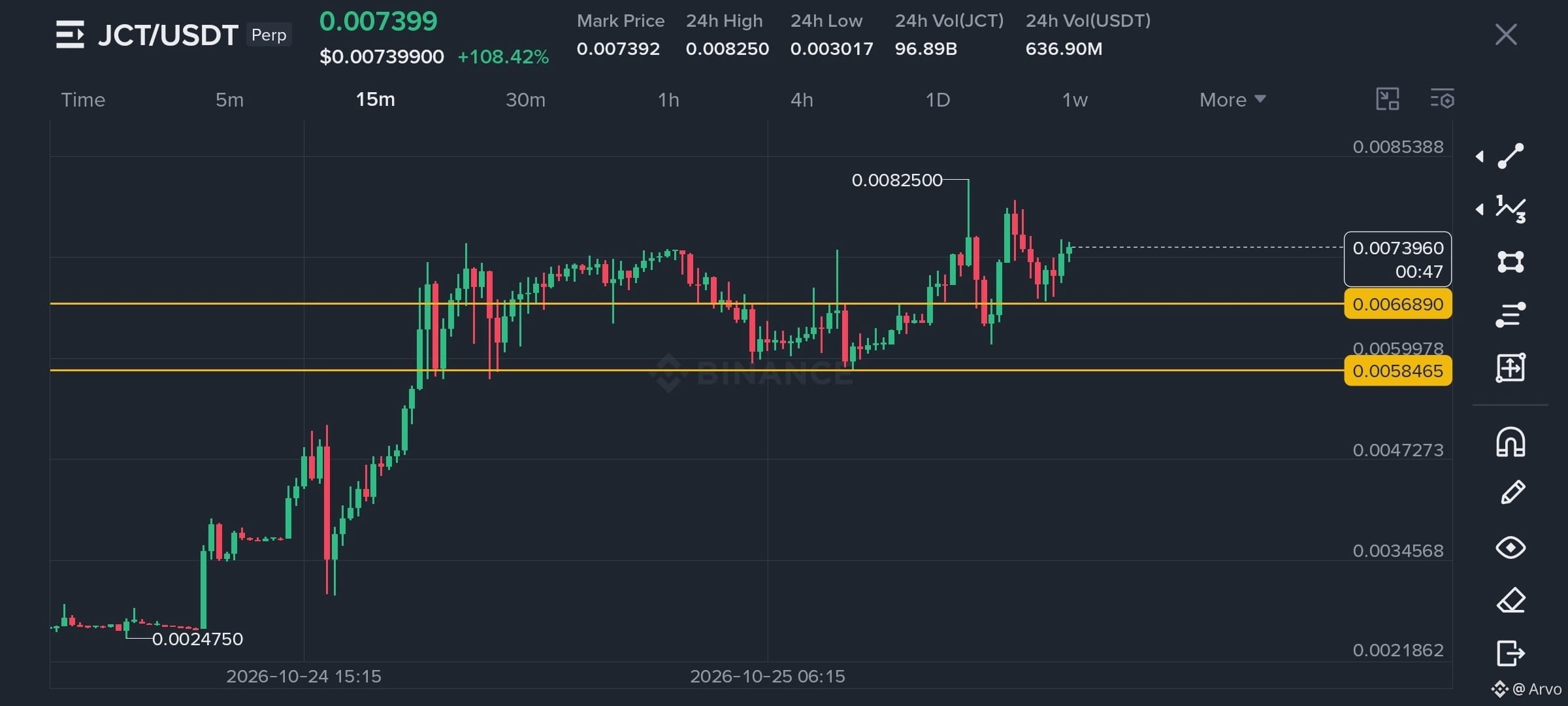
I am bullish on $JCT just need to hold these two marked levels.
My next target: 0.0084+
{future}(JCTUSDT)
Also watching: $APR $PREDICT
I am bullish on $JCT just need to hold these two marked levels.
My next target: 0.0084+
Also watching: $APR $PREDICT
My next target: 0.0084+
Also watching: $APR $PREDICT
414
·
--
Bullish
30D trade $CAP 200.6 USDT
I know most of you lost alot of money in 2026 but, be honest and share what you have learned and how you will do things better in 2027 as a trader???
$CAP $PREDICT $JCT
I know most of you lost alot of money in 2026 but, be honest and share what you have learned and how you will do things better in 2027 as a trader???
$CAP $PREDICT $JCT
$CAP $PREDICT $JCT

3
2.4k
·
--
Bullish
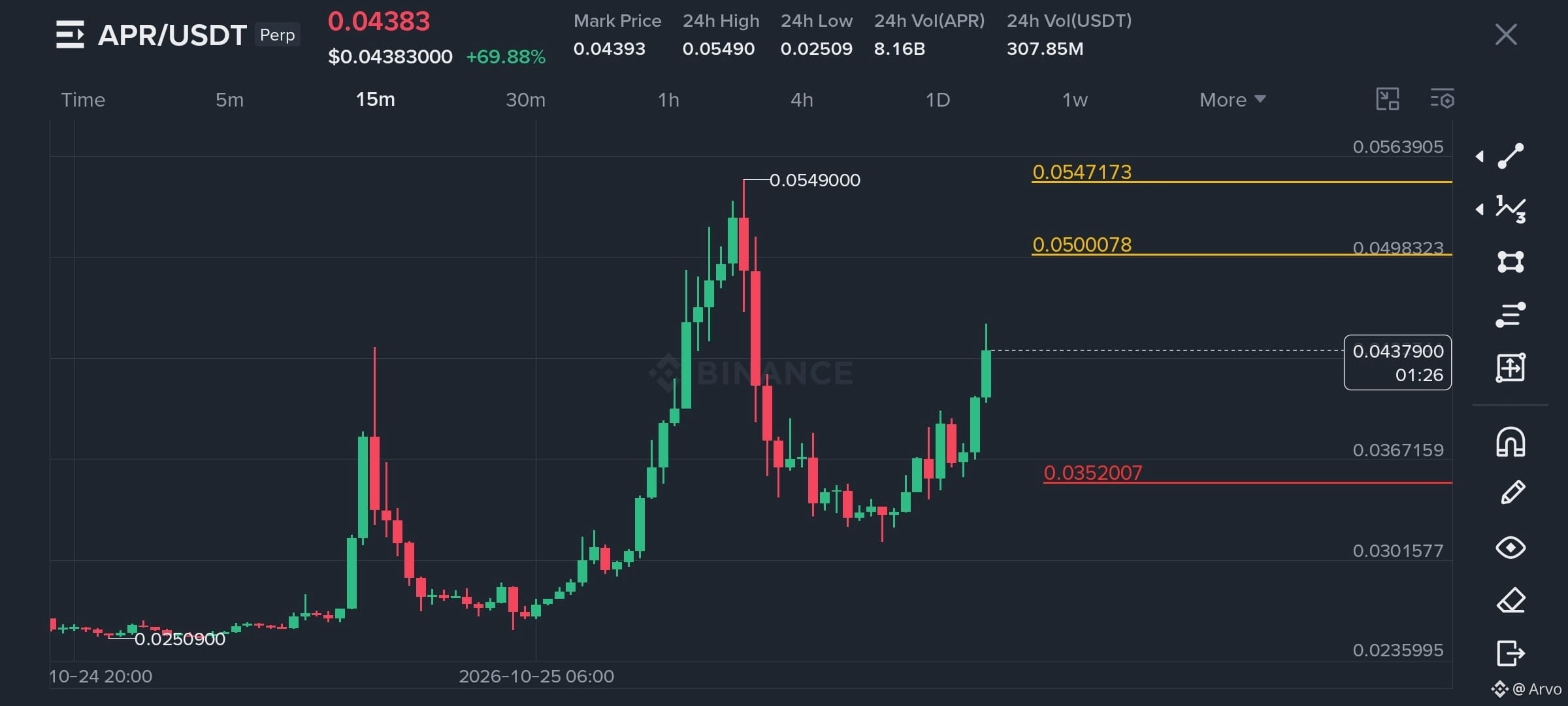
I just took a long position on $APR :
Targets: 0.050-0.054-0.060
Stop-loss: Below 0.035
{future}(APRUSDT)
Also watching: $CAP $PREDICT
I just took a long position on $APR :
Targets: 0.050-0.054-0.060
Stop-loss: Below 0.035
Also watching: $CAP $PREDICT
Targets: 0.050-0.054-0.060
Stop-loss: Below 0.035
Also watching: $CAP $PREDICT
352

·
--
Bearish
Be 100% honest, is future trading easy?
$BIRB $IRYS $ORDER
Be 100% honest, is future trading easy?
$BIRB $IRYS $ORDER
$BIRB $IRYS $ORDER
Yes
29%
No
71%
238 votes • Voting closed
5.8k
·
--
Bearish
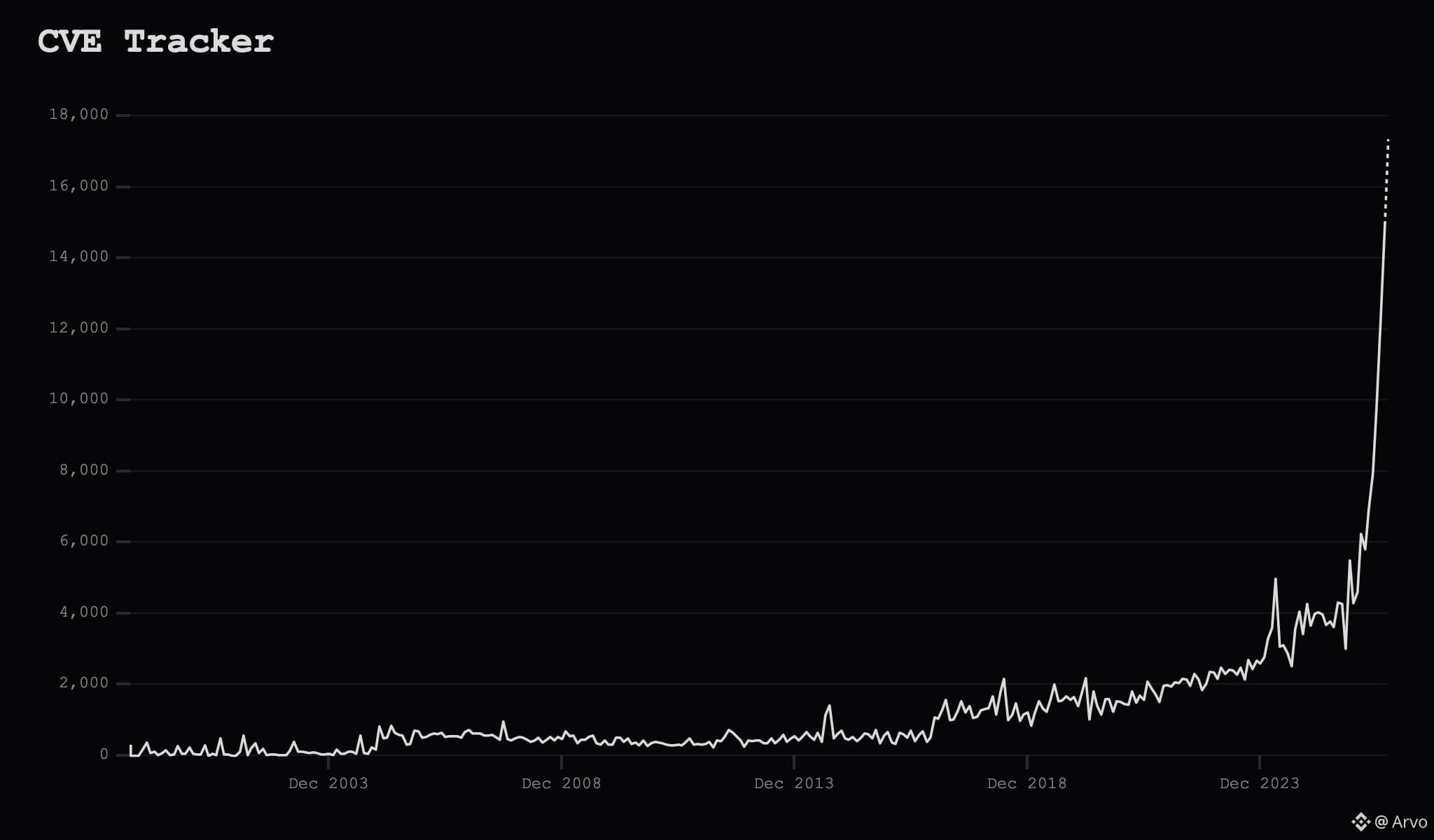
Software Vulnerabilities Surge in 2026: Around 85,000 software flaws have been discovered, roughly double last year’s total.
The past 3 months alone saw 12,000–14,000 new vulnerabilities reported monthly, with the numbers still climbing.
AI is adding to the risk by making exploit development easier, while vulnerabilities actively used in cyberattacks have nearly doubled.
watching: $BIRB $ORDER $IRYS
#softwarevulnerabilities
Software Vulnerabilities Surge in 2026: Around 85,000 software flaws have been discovered, roughly double last year’s total.
The past 3 months alone saw 12,000–14,000 new vulnerabilities reported monthly, with the numbers still climbing.
AI is adding to the risk by making exploit development easier, while vulnerabilities actively used in cyberattacks have nearly doubled.
watching: $BIRB $ORDER $IRYS
#softwarevulnerabilities
The past 3 months alone saw 12,000–14,000 new vulnerabilities reported monthly, with the numbers still climbing.
AI is adding to the risk by making exploit development easier, while vulnerabilities actively used in cyberattacks have nearly doubled.
watching: $BIRB $ORDER $IRYS
#softwarevulnerabilities
682
·
--
Bearish
Most traders lose money because they don't trade from specific levels like support/resistance and etc...
Most traders lose money because they don't respect risk management.
I saw too many users got liquidated on $IRYS pump the main reason they thought having big capital will save them.
Some users lost over 30k on IRYS.
It's all about to know when to enter a trade when to exit.
If you don't have predefined plan, don't trade.
I am currently also watching: $ORDER $BIRB
Most traders lose money because they don't trade from specific levels like support/resistance and etc...
Most traders lose money because they don't respect risk management.
I saw too many users got liquidated on $IRYS pump the main reason they thought having big capital will save them.
Some users lost over 30k on IRYS.
It's all about to know when to enter a trade when to exit.
If you don't have predefined plan, don't trade.
I am currently also watching: $ORDER $BIRB
Most traders lose money because they don't respect risk management.
I saw too many users got liquidated on $IRYS pump the main reason they thought having big capital will save them.
Some users lost over 30k on IRYS.
It's all about to know when to enter a trade when to exit.
If you don't have predefined plan, don't trade.
I am currently also watching: $ORDER $BIRB

1
672
·
--
Bearish
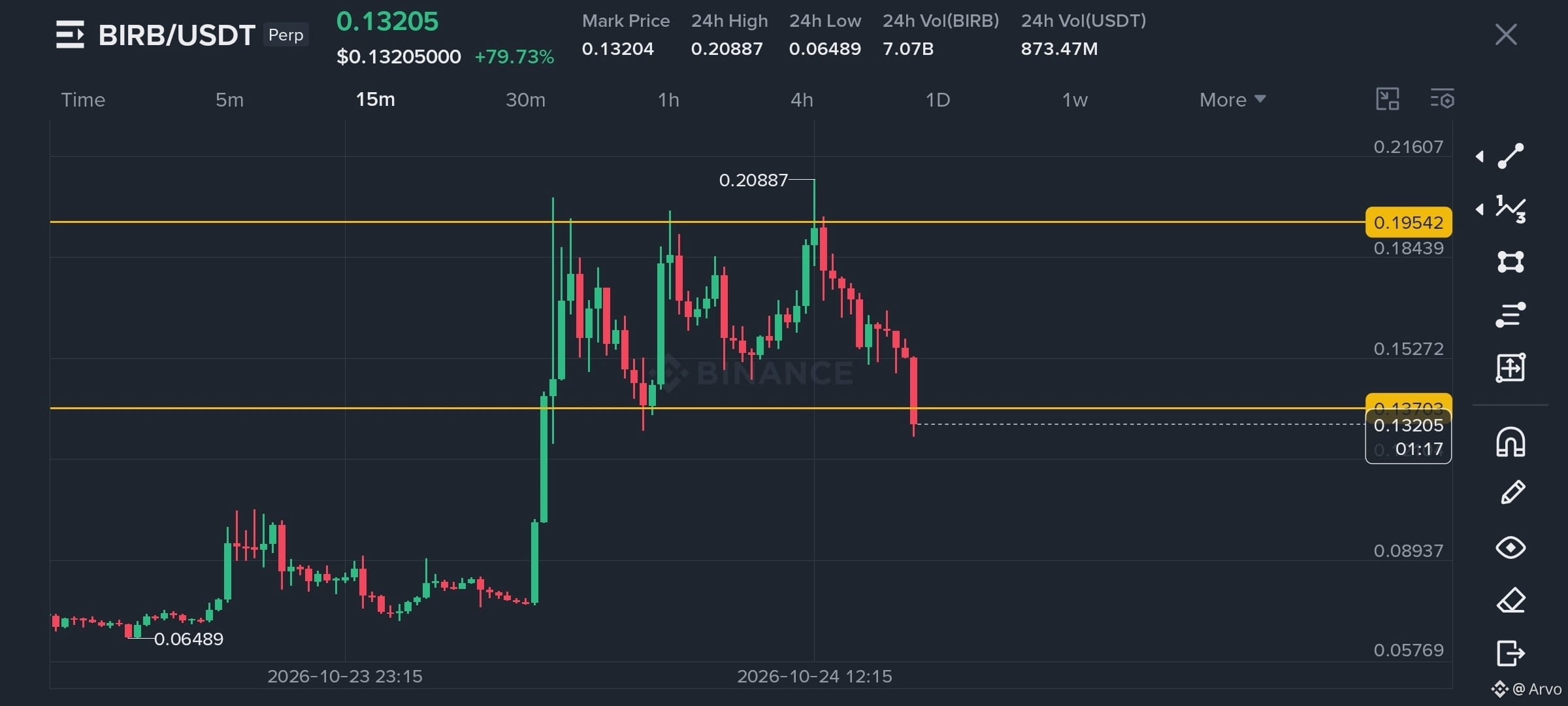
$BIRB facing multiple/heavy resistances near daily highs and struggling with holding local support, I want BIRB back above 0.14 to push higher but losing 0.14 completely can trigger deeper downside move.
Watch this level closely and if the retracement is failed we can open shorts with around 0.1650 and target 0.089 and lower.
I am also watching: $IRYS $ORDER
$BIRB facing multiple/heavy resistances near daily highs and struggling with holding local support, I want BIRB back above 0.14 to push higher but losing 0.14 completely can trigger deeper downside move.
Watch this level closely and if the retracement is failed we can open shorts with around 0.1650 and target 0.089 and lower.
I am also watching: $IRYS $ORDER
Watch this level closely and if the retracement is failed we can open shorts with around 0.1650 and target 0.089 and lower.
I am also watching: $IRYS $ORDER
697
·
--
Bearish
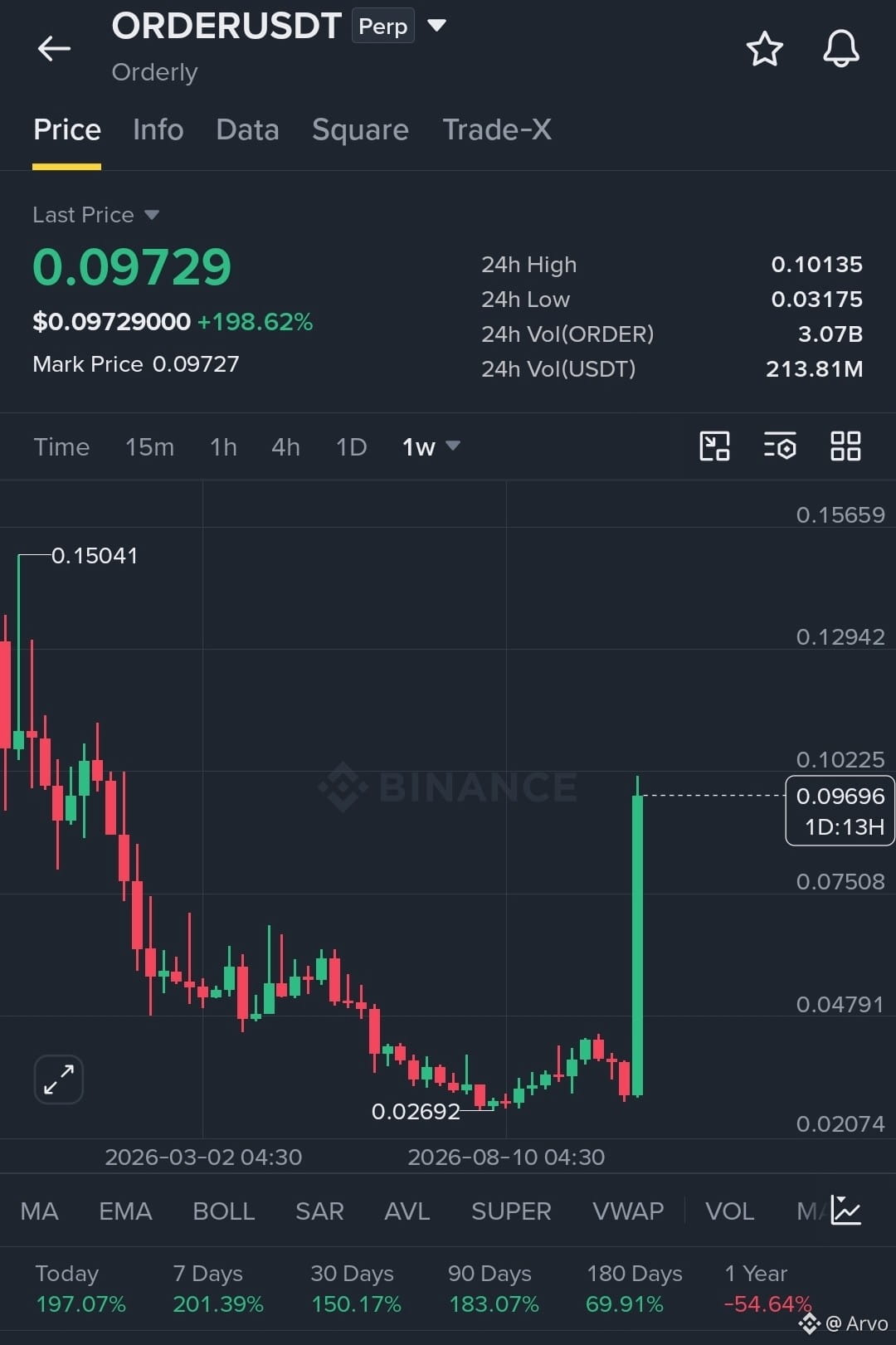
$ORDER wait for a bit more upside push, we can activate a short trade bot with confirmation.
Also watching: $BIRB $IRYS
$ORDER wait for a bit more upside push, we can activate a short trade bot with confirmation.
Also watching: $BIRB $IRYS
Also watching: $BIRB $IRYS
353
·
--
Bullish
Binance square has made too much delusional and fake trading gurus...
$IRYS $ORDER $BIRB
Binance square has made too much delusional and fake trading gurus...
$IRYS $ORDER $BIRB
$IRYS $ORDER $BIRB
872
·
--
Bullish
To be happy, you must eliminate two things: the fear of a bad future and the memory of a bad past.
— Seneca
$BIRB $ORDER $IN
To be happy, you must eliminate two things: the fear of a bad future and the memory of a bad past.
— Seneca
$BIRB $ORDER $IN
— Seneca
$BIRB $ORDER $IN

916
·
--
Bullish
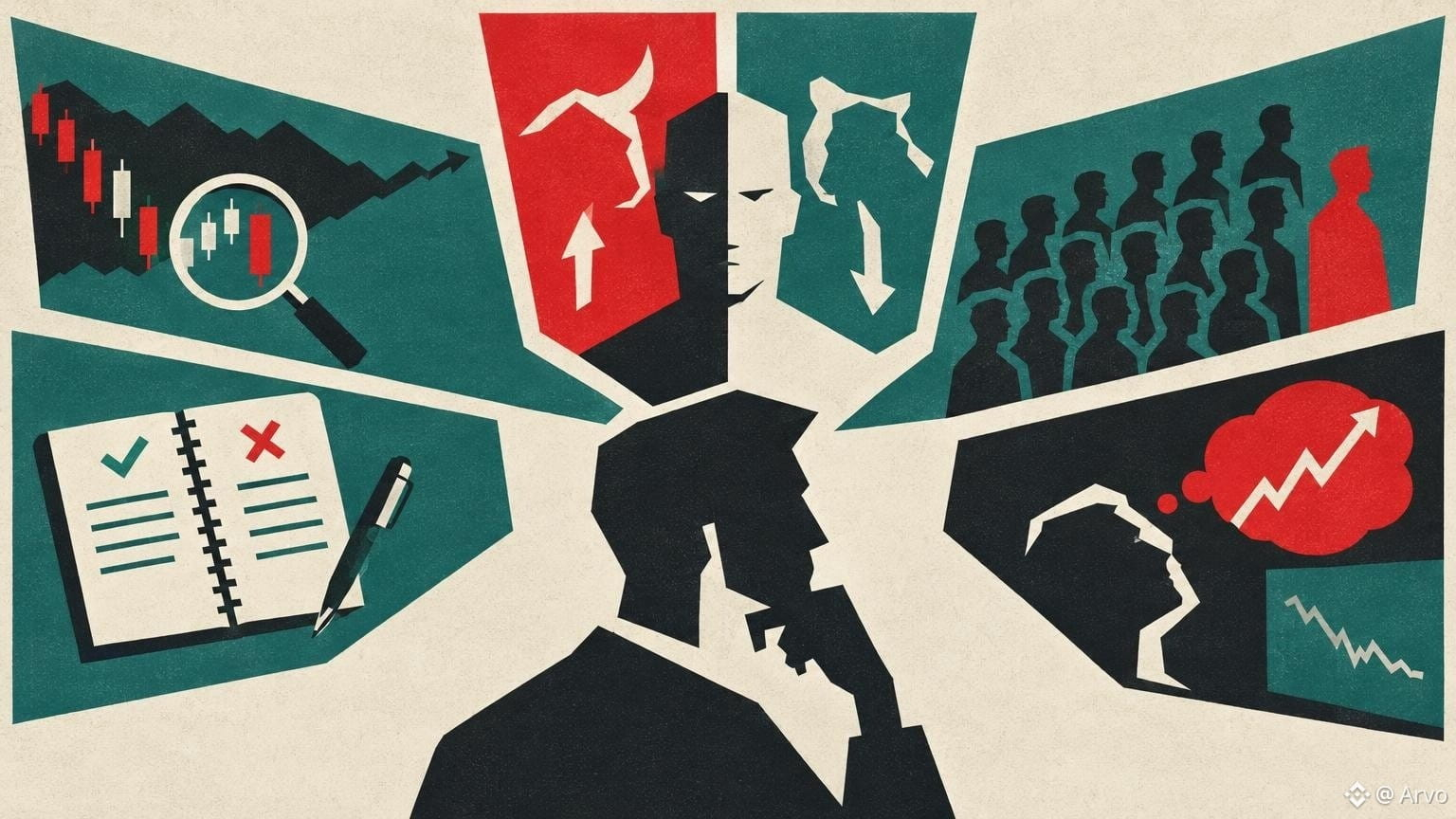
5 Trading Biases That Can Distort Your Decisions
1. Recency Bias: Letting recent wins or losses influence your next trade. A few losses can shake your confidence, while a recent market move can distract you from the bigger picture. Focus on the overall trend and follow your strategy.
2. Confirmation Bias: Looking only for information that supports your opinion while ignoring evidence against it. Challenge your own analysis and consider opposing views before entering a trade.
3. Herding Bias: Following the crowd instead of making independent decisions. Whether most traders are bullish or bearish, base your trades on solid analysis, not popular sentiment.
4. Attribution Bias: Taking full credit for winning trades while blaming losses on external factors. Review every trade honestly, identify your mistakes, and use a trading journal to improve your decision-making.
5. Addiction Bias: Becoming attached to the excitement of big wins and chasing that feeling with more trades. Past profits do not guarantee future success. Evaluate every setup objectively and trade only when your criteria are met.
The key lesson: Successful trading requires more than market knowledge. Recognize your psychological biases, control your emotions, and let your strategy—not your impulses—guide your decisions.
#arvo $IRYS $BIRB $ZEC
5 Trading Biases That Can Distort Your Decisions
1. Recency Bias: Letting recent wins or losses influence your next trade. A few losses can shake your confidence, while a recent market move can distract you from the bigger picture. Focus on the overall trend and follow your strategy.
2. Confirmation Bias: Looking only for information that supports your opinion while ignoring evidence against it. Challenge your own analysis and consider opposing views before entering a trade.
3. Herding Bias: Following the crowd instead of making independent decisions. Whether most traders are bullish or bearish, base your trades on solid analysis, not popular sentiment.
4. Attribution Bias: Taking full credit for winning trades while blaming losses on external factors. Review every trade honestly, identify your mistakes, and use a trading journal to improve your decision-making.
5. Addiction Bias: Becoming attached to the excitement of big wins and chasing that feeling with more trades. Past profits do not guarantee future success. Evaluate every setup objectively and trade only when your criteria are met.
The key lesson: Successful trading requires more than market knowledge. Recognize your psychological biases, control your emotions, and let your strategy—not your impulses—guide your decisions.
#arvo $IRYS $BIRB $ZEC
1. Recency Bias: Letting recent wins or losses influence your next trade. A few losses can shake your confidence, while a recent market move can distract you from the bigger picture. Focus on the overall trend and follow your strategy.
2. Confirmation Bias: Looking only for information that supports your opinion while ignoring evidence against it. Challenge your own analysis and consider opposing views before entering a trade.
3. Herding Bias: Following the crowd instead of making independent decisions. Whether most traders are bullish or bearish, base your trades on solid analysis, not popular sentiment.
4. Attribution Bias: Taking full credit for winning trades while blaming losses on external factors. Review every trade honestly, identify your mistakes, and use a trading journal to improve your decision-making.
5. Addiction Bias: Becoming attached to the excitement of big wins and chasing that feeling with more trades. Past profits do not guarantee future success. Evaluate every setup objectively and trade only when your criteria are met.
The key lesson: Successful trading requires more than market knowledge. Recognize your psychological biases, control your emotions, and let your strategy—not your impulses—guide your decisions.
#arvo $IRYS $BIRB $ZEC
688
·
--
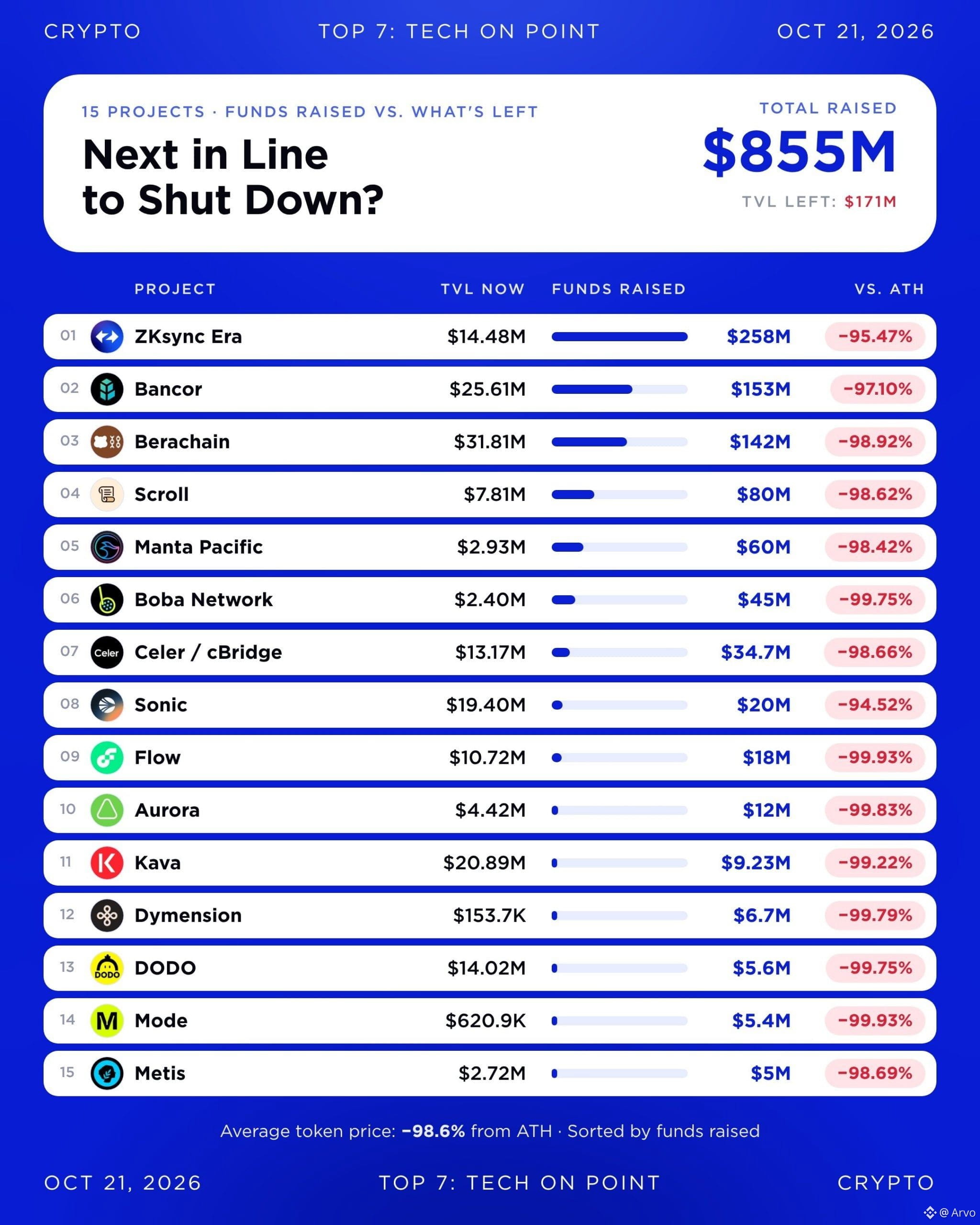
👎 15 crypto projects whose tokens lost almost everything
Top 7 analysts questioned the prospects of 15 crypto projects. Together, they raised $855 million, while current TVL is about $171 million.
➡️ ZKsync Era: $258 million raised, $14.48 million TVL.
➡️ Dymension: TVL is about $154,000.
➡️ Mode: TVL is about $621,000, and its token is down 99.93% from its peak.
➡️ Flow: its token is also down 99.93%.
I am currently also watching: $IRYS $BIRB $QNT
👎 15 crypto projects whose tokens lost almost everything
Top 7 analysts questioned the prospects of 15 crypto projects. Together, they raised $855 million, while current TVL is about $171 million.
➡️ ZKsync Era: $258 million raised, $14.48 million TVL.
➡️ Dymension: TVL is about $154,000.
➡️ Mode: TVL is about $621,000, and its token is down 99.93% from its peak.
➡️ Flow: its token is also down 99.93%.
I am currently also watching: $IRYS $BIRB $QNT
Top 7 analysts questioned the prospects of 15 crypto projects. Together, they raised $855 million, while current TVL is about $171 million.
➡️ ZKsync Era: $258 million raised, $14.48 million TVL.
➡️ Dymension: TVL is about $154,000.
➡️ Mode: TVL is about $621,000, and its token is down 99.93% from its peak.
➡️ Flow: its token is also down 99.93%.
I am currently also watching: $IRYS $BIRB $QNT
1.2k
·
--
Bullish
#RedPacketMission
You can't survive with high margin and high leverage for ever, just stop dude.
it's a life time career not, one or two trades.
$IRYS $MAGMA $QNT
#RedPacketMission
You can't survive with high margin and high leverage for ever, just stop dude.
it's a life time career not, one or two trades.
$IRYS $MAGMA $QNT
You can't survive with high margin and high leverage for ever, just stop dude.
it's a life time career not, one or two trades.
$IRYS $MAGMA $QNT

31
1.1k
Log in to explore more content
Join global crypto users on Binance Square
⚡️ Get latest and useful information about crypto.
💬 Trusted by the world’s largest crypto exchange.
👍 Discover real insights from verified creators.
Email / Phone number
Trending Topics
BinancePick
3.4M views
165,576 Discussing
Join #EarningsSeason: Predict Earnings on Binance Pick, Share Your Take on Binance Square!
Binance Square Official
·420 Likes
·345.7k views
EarningsSeason
5.5M views
26,986 Discussing
StrategySkipsBitcoinPurchasesSpends$205MOnSTRCBuybacks
1,005 views
32 Discussing