

Espresso Foundation
42 Posts

Espresso Foundation
 Square Verified
Report
Block User
Real-time settlement and sub-second finality for custom, sovereign chains. Built for enterprises that demand performance and control in a multi-chain world.
0 Following
294 Followers
50 Liked
Posts
All
Videos
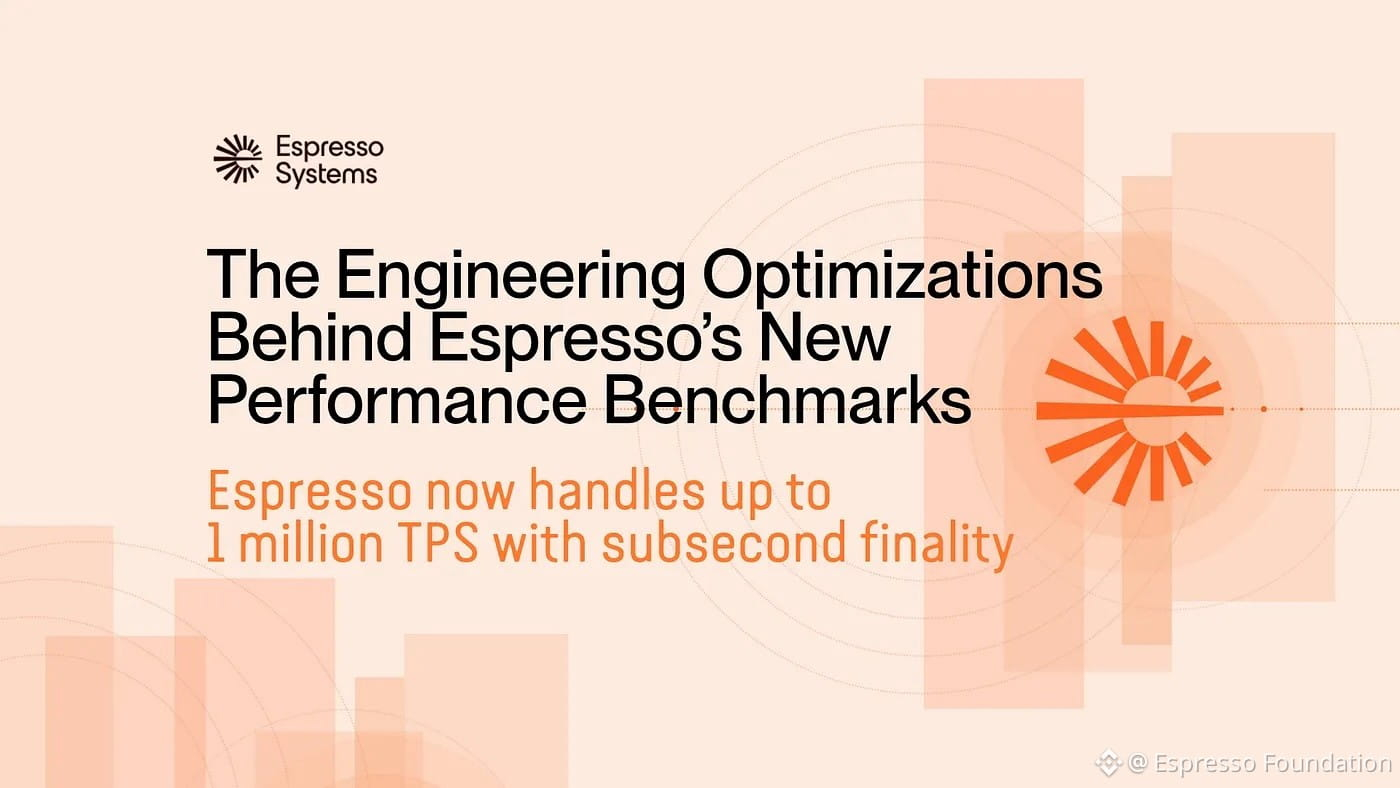
Getting Espresso to 1 million TPS meant rebuilding consensus, networking, block building, and data availability as one system, instead of tuning four separate ones.
Here’s a deep dive about how our engineers did it: https://medium.com/@espressosys/the-engineering-optimizations-behind-espressos-new-performance-benchmarks-b81f105e73e1 $ESP
{spot}(ESPUSDT)
Getting Espresso to 1 million TPS meant rebuilding consensus, networking, block building, and data availability as one system, instead of tuning four separate ones.
Here’s a deep dive about how our engineers did it: https://medium.com/@espressosys/the-engineering-optimizations-behind-espressos-new-performance-benchmarks-b81f105e73e1 $ESP
Here’s a deep dive about how our engineers did it: https://medium.com/@espressosys/the-engineering-optimizations-behind-espressos-new-performance-benchmarks-b81f105e73e1 $ESP
1
75
Verified
Read more on our blog:
https://medium.com/@espressosys/scale-without-sacrificing-speed-espresso-now-handles-up-to-1-million-tps-with-subsecond-finality-312c40ac7ca5?sharedUserId=espressosys
$ESP
Read more on our blog:
https://medium.com/@espressosys/scale-without-sacrificing-speed-espresso-now-handles-up-to-1-million-tps-with-subsecond-finality-312c40ac7ca5?sharedUserId=espressosys
$ESP
https://medium.com/@espressosys/scale-without-sacrificing-speed-espresso-now-handles-up-to-1-million-tps-with-subsecond-finality-312c40ac7ca5?sharedUserId=espressosys
$ESP
245
Espresso mainnet can now handle up to 1 million transactions per second, with finality staying under a second even at peak load.
New benchmarks measured 181 MB/s data throughput across 100 nodes with latency emulating a global network. Assuming an average stablecoin transfer size of 180 bytes that equals >1M TPS.
For context, 181 MB/s compares favorably to the max throughput of other major chains: Solana (29.68 MB/s), Tempo (3.74 MB/s), BNB Chain (1.18 MB/s), Arc (0.48 MB/s), Avalanche (0.43 MB/s), and Ethereum (0.35 MB/s).
But throughput only matters if speed holds up. Many chains trade one for the other. Not Espresso:
- 337 ms average finality under typical load
- 778 ms average finality under peak load (181 MB/s)
How’d we do it? Espresso was designed from first principles to provide what the institutional and enterprise apps of the future will need from a base layer: fast, deterministic finality on tx ordering and DA, and the throughput to handle peak demand and the larger txs post-quantum signatures and privacy proofs will require.
Execution is not on the list, so Espresso has no VM. This allows its 100 globally distributed validators to focus solely on reaching consensus on tx ordering and DA as fast as possible.
No VM also means integrated chains like ApeChain, and soon Celo and MegaETH, can choose their VM, fee model, sequencer, privacy and compliance rules, while inheriting Espresso’s real-time finality and high throughput.
Why it matters: Stablecoins are expanding into payments, treasury, and commerce, while AI agents increasingly initiate payments. Both face the same constraint: assets sit across many chains, and moving value can still take minutes or require trusted intermediaries. Machine-speed software can’t wait for slow finality.
Subsecond deterministic finality lets any chain, exchange, agent, or system trust an Espresso-integrated chain’s state immediately, enabling crosschain transfers that clear nearly as fast as the payments themselves. $ESP
264
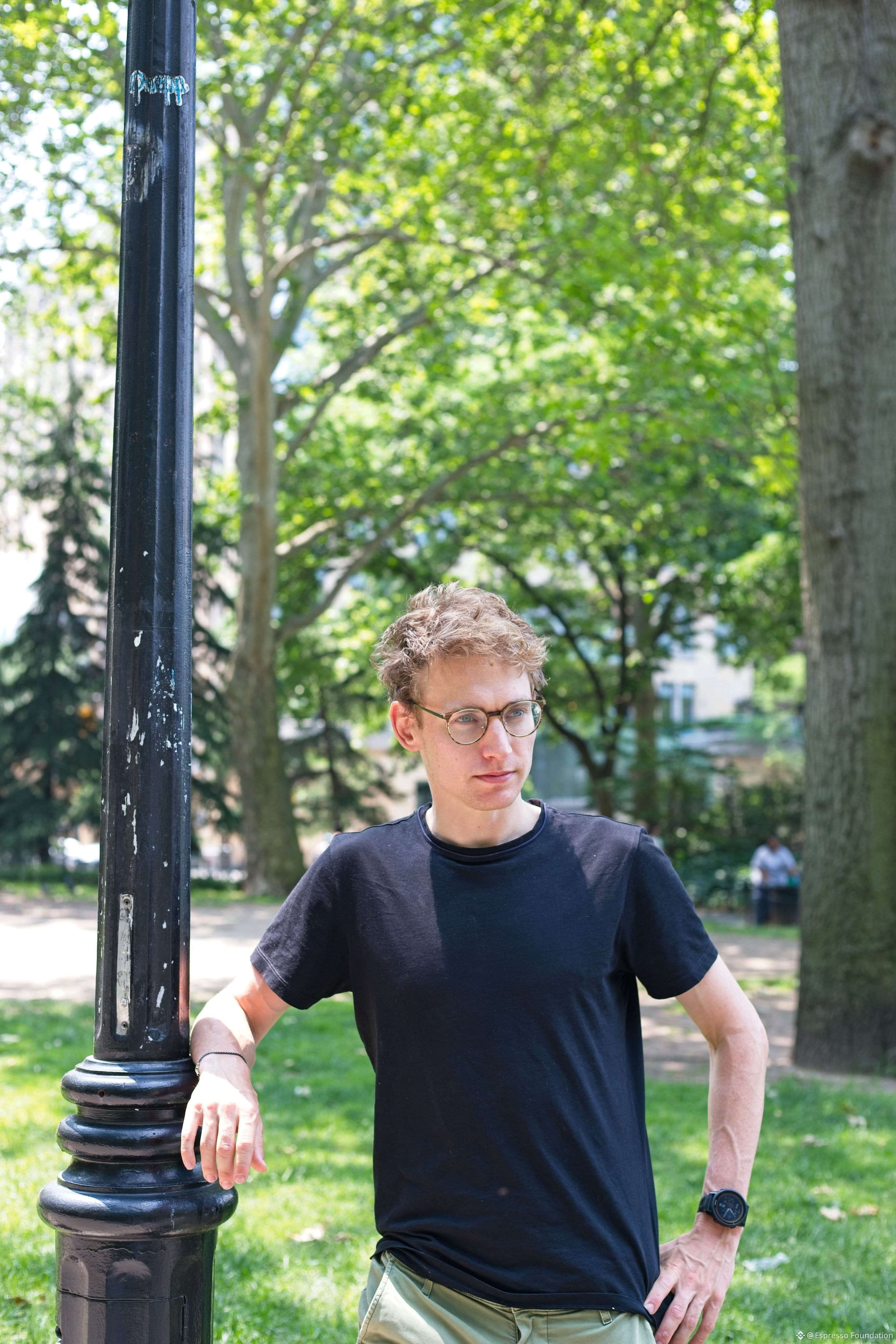
Our stacked list of Co-Founders includes Benedikt Buenz, who has probably worked on something you’ve used in the blockchain space recently. Who knows Benedikt from his early days??
https://x.com/humansofeth/status/1933197817570349200/photo/1
$ESP
{spot}(ESPUSDT)
Our stacked list of Co-Founders includes Benedikt Buenz, who has probably worked on something you’ve used in the blockchain space recently. Who knows Benedikt from his early days??
https://x.com/humansofeth/status/1933197817570349200/photo/1
$ESP
https://x.com/humansofeth/status/1933197817570349200/photo/1
$ESP
1
316
8 months ago, Espresso upgraded to fully decentralized proof-of-stake. The foundation, network security, and fee structure for a state-of-the-art blockchain.
Since then, we’ve maintained a permissionless network, worked with 100 validators staking $ESP, updated HotShot to finalize blocks in under a second, and achieved enterprise-scale throughput.
We’re still building and there’s more to come. $ESP
{spot}(ESPUSDT)
8 months ago, Espresso upgraded to fully decentralized proof-of-stake. The foundation, network security, and fee structure for a state-of-the-art blockchain.
Since then, we’ve maintained a permissionless network, worked with 100 validators staking $ESP , updated HotShot to finalize blocks in under a second, and achieved enterprise-scale throughput.
We’re still building and there’s more to come. $ESP
Since then, we’ve maintained a permissionless network, worked with 100 validators staking $ESP , updated HotShot to finalize blocks in under a second, and achieved enterprise-scale throughput.
We’re still building and there’s more to come. $ESP
343
Unlike legacy L1s built to be monolithic execution environments, Espresso was built as a base layer for other chains from day one, leaving execution entirely to the independent chains that rely on it for subsecond finality and throughput designed to scale to millions of TPS. $ESP
Unlike legacy L1s built to be monolithic execution environments, Espresso was built as a base layer for other chains from day one, leaving execution entirely to the independent chains that rely on it for subsecond finality and throughput designed to scale to millions of TPS. $ESP
1
415
Seoul & KBW 2026 were a smashing success! Thanks to everyone who stopped by to grab a hat, chat about our base layer for the multichain era, and meet our Co-Founder Charles Lu. Show us your selfies in the “one more cup ☕️” hats below ⬇️ $ESP
{spot}(ESPUSDT)
Seoul & KBW 2026 were a smashing success! Thanks to everyone who stopped by to grab a hat, chat about our base layer for the multichain era, and meet our Co-Founder Charles Lu. Show us your selfies in the “one more cup ☕️” hats below ⬇️ $ESP
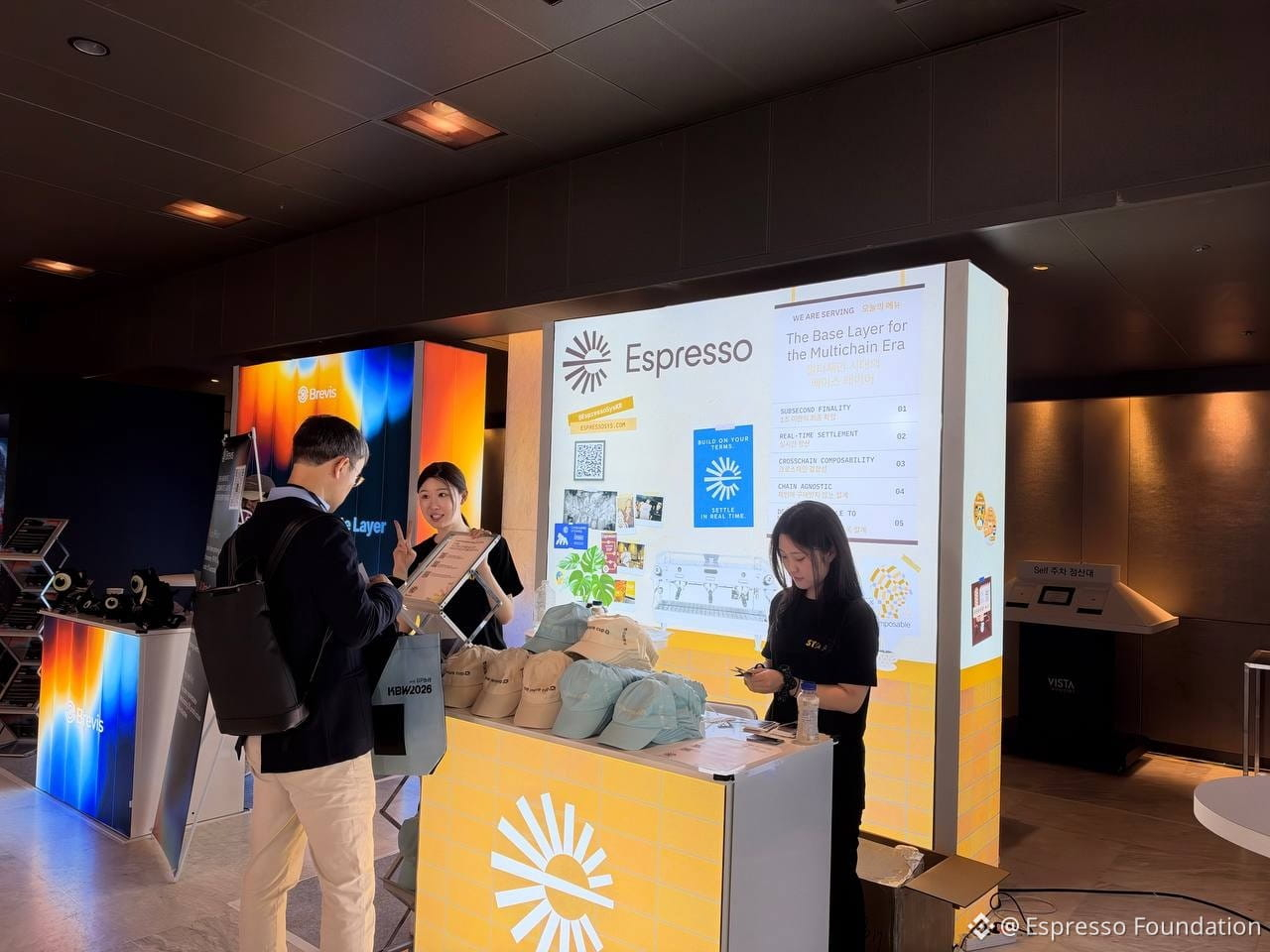
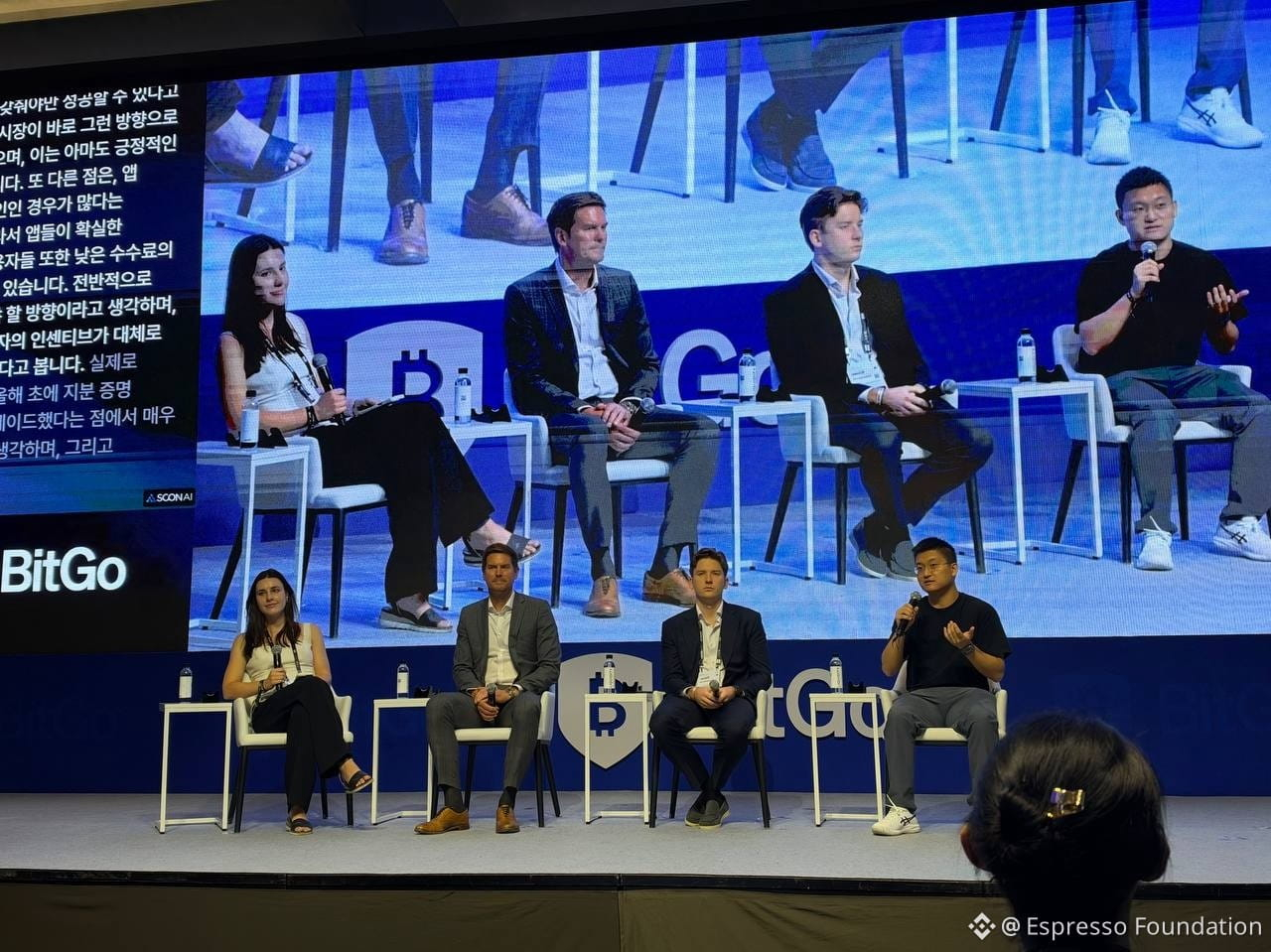
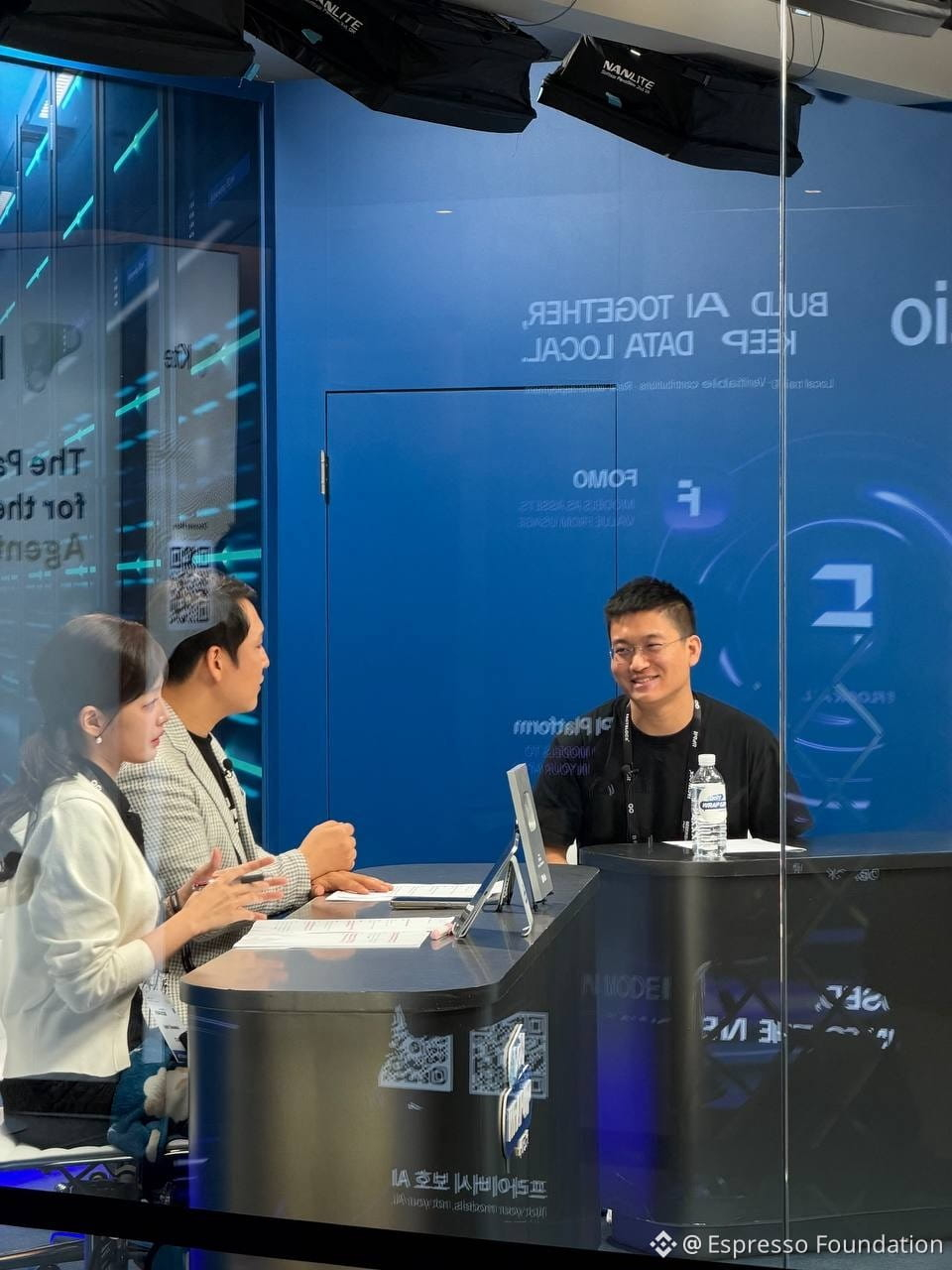
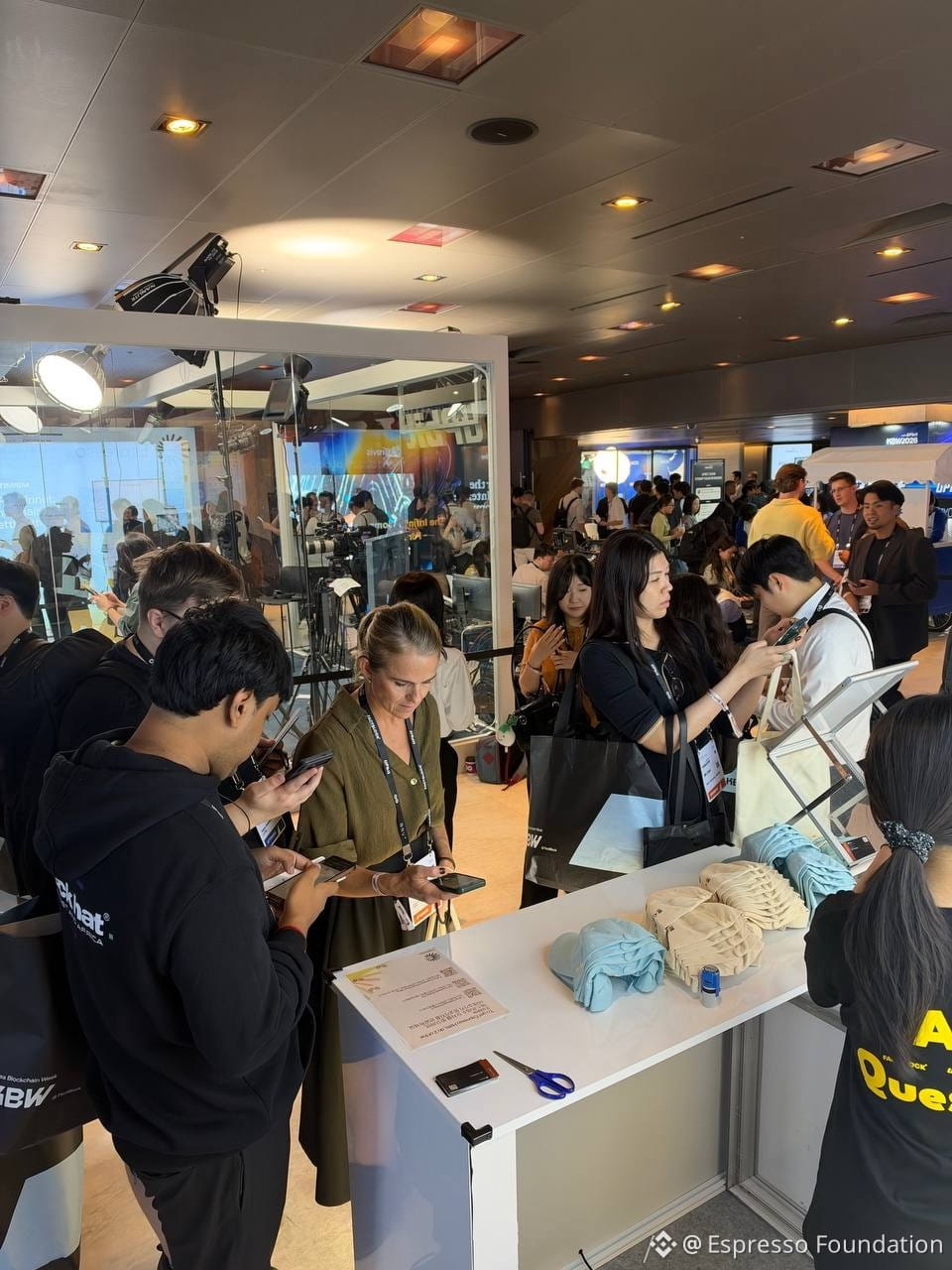
1
1
457
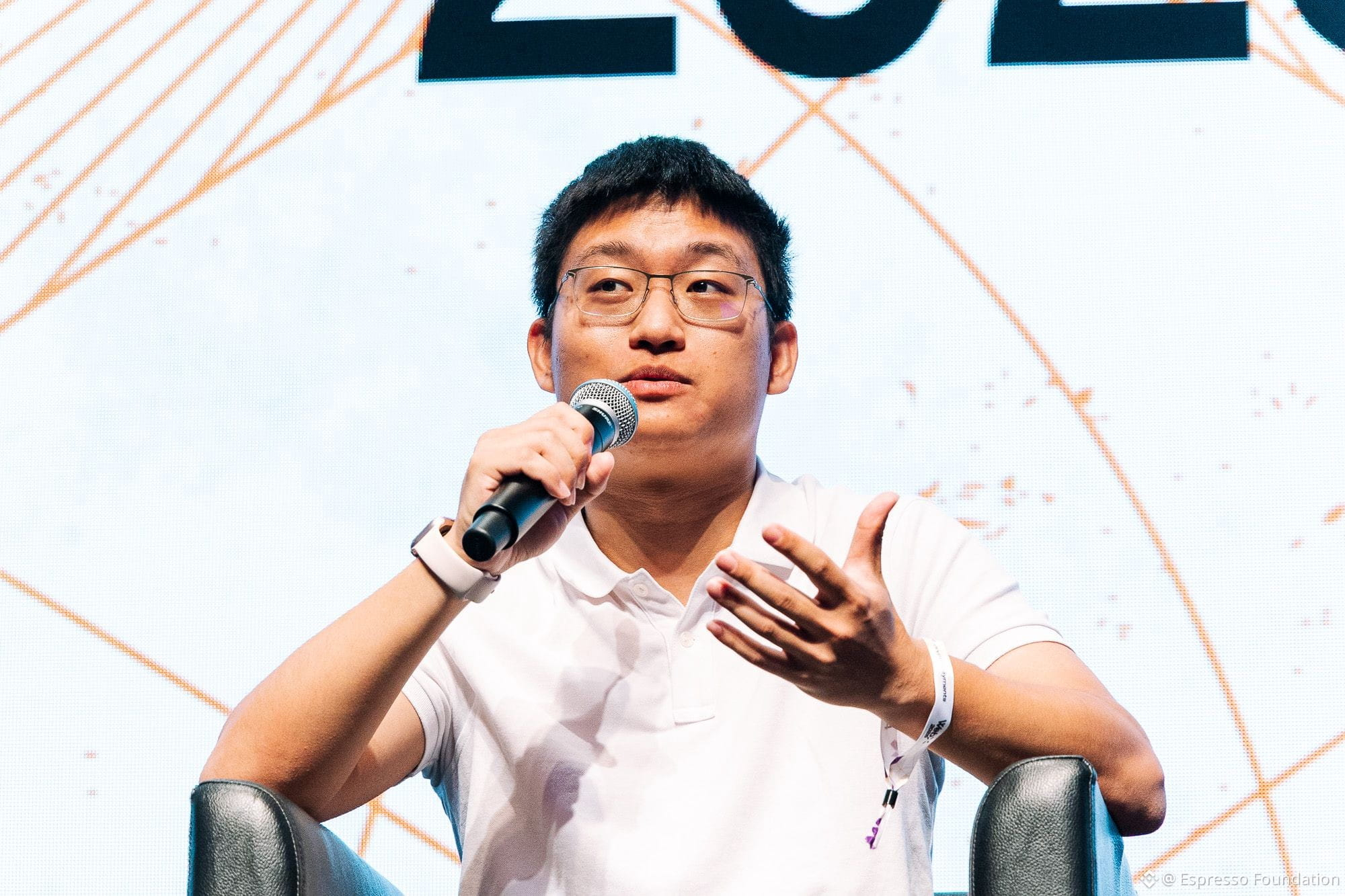
If you’re at KBW 2026 in Seoul, you won’t want to miss our Co-Founder Charles Lu on stage today chatting about all the tea on L2 adoption 🫖
🔈Panel: L2 Adoption Won. Did L2s?
📍Oct 1, 2026 at BitGo Stage - 11:20 AM $ESP
{spot}(ESPUSDT)
If you’re at KBW 2026 in Seoul, you won’t want to miss our Co-Founder Charles Lu on stage today chatting about all the tea on L2 adoption 🫖
🔈Panel: L2 Adoption Won. Did L2s?
📍Oct 1, 2026 at BitGo Stage - 11:20 AM $ESP
🔈Panel: L2 Adoption Won. Did L2s?
📍Oct 1, 2026 at BitGo Stage - 11:20 AM $ESP
403
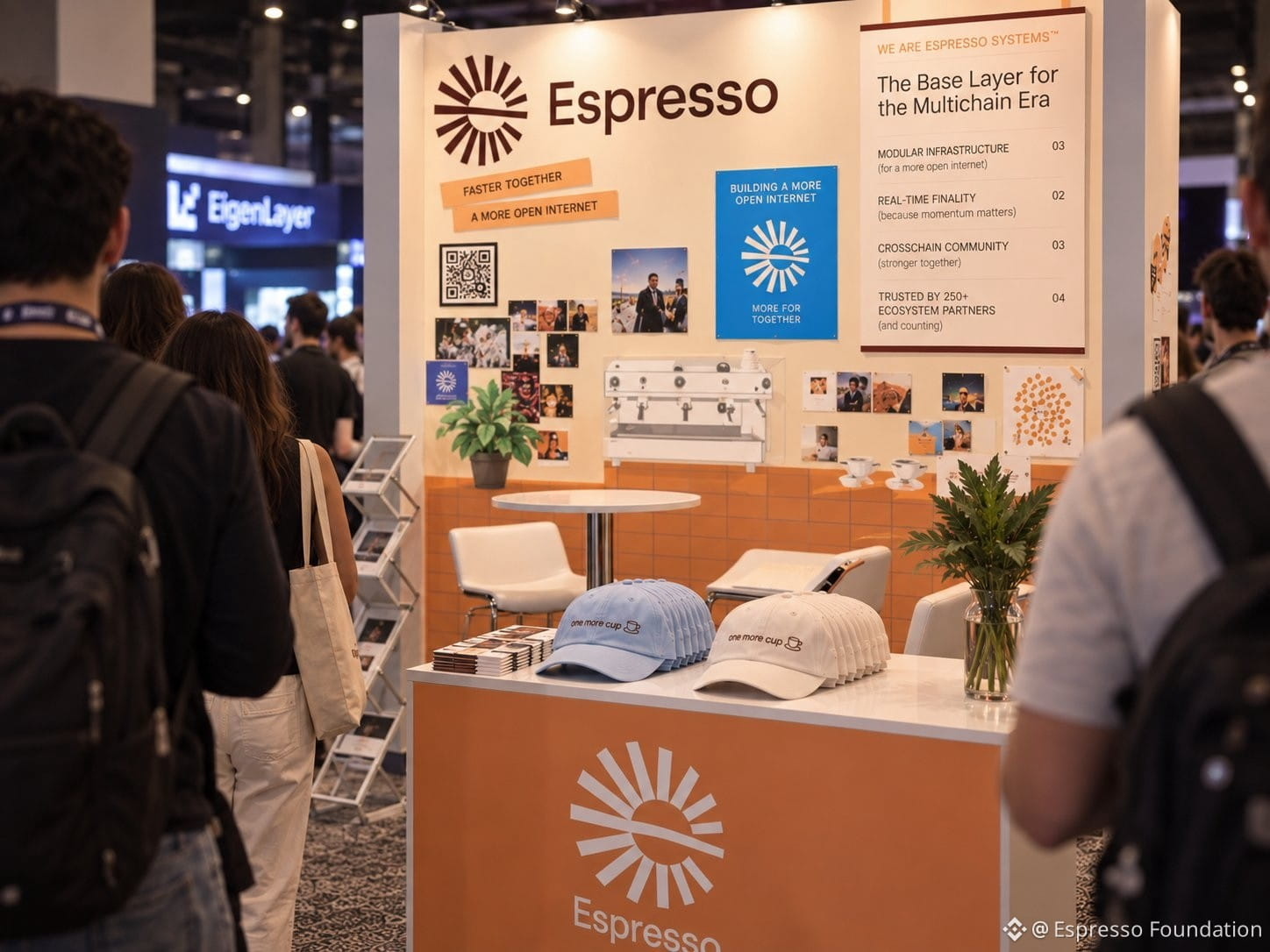
Yes this was created by AI but you’re going to have to come by our KBW booth IRL to confirm how accurate it actually is 😉 We’ll be there tomorrow Sept 30-Oct 1, swag and coffee in hand! $ESP
Yes this was created by AI but you’re going to have to come by our KBW booth IRL to confirm how accurate it actually is 😉 We’ll be there tomorrow Sept 30-Oct 1, swag and coffee in hand! $ESP
219
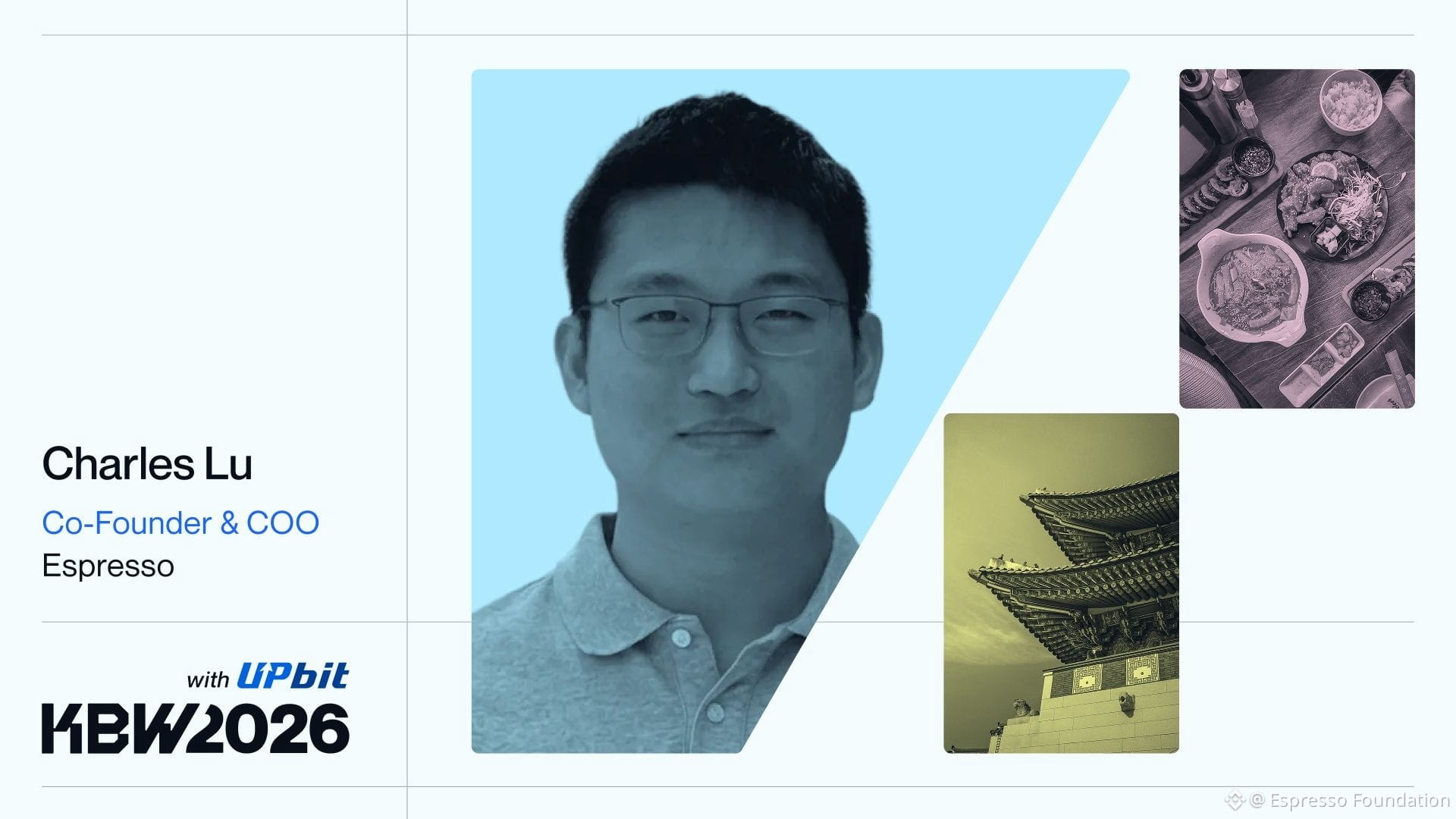
Catch our Co-Founder Charles Lu on the BitGo stage on Thursday Oct 1 👏 $ESP
{spot}(ESPUSDT)
Catch our Co-Founder Charles Lu on the BitGo stage on Thursday Oct 1 👏 $ESP
1
330
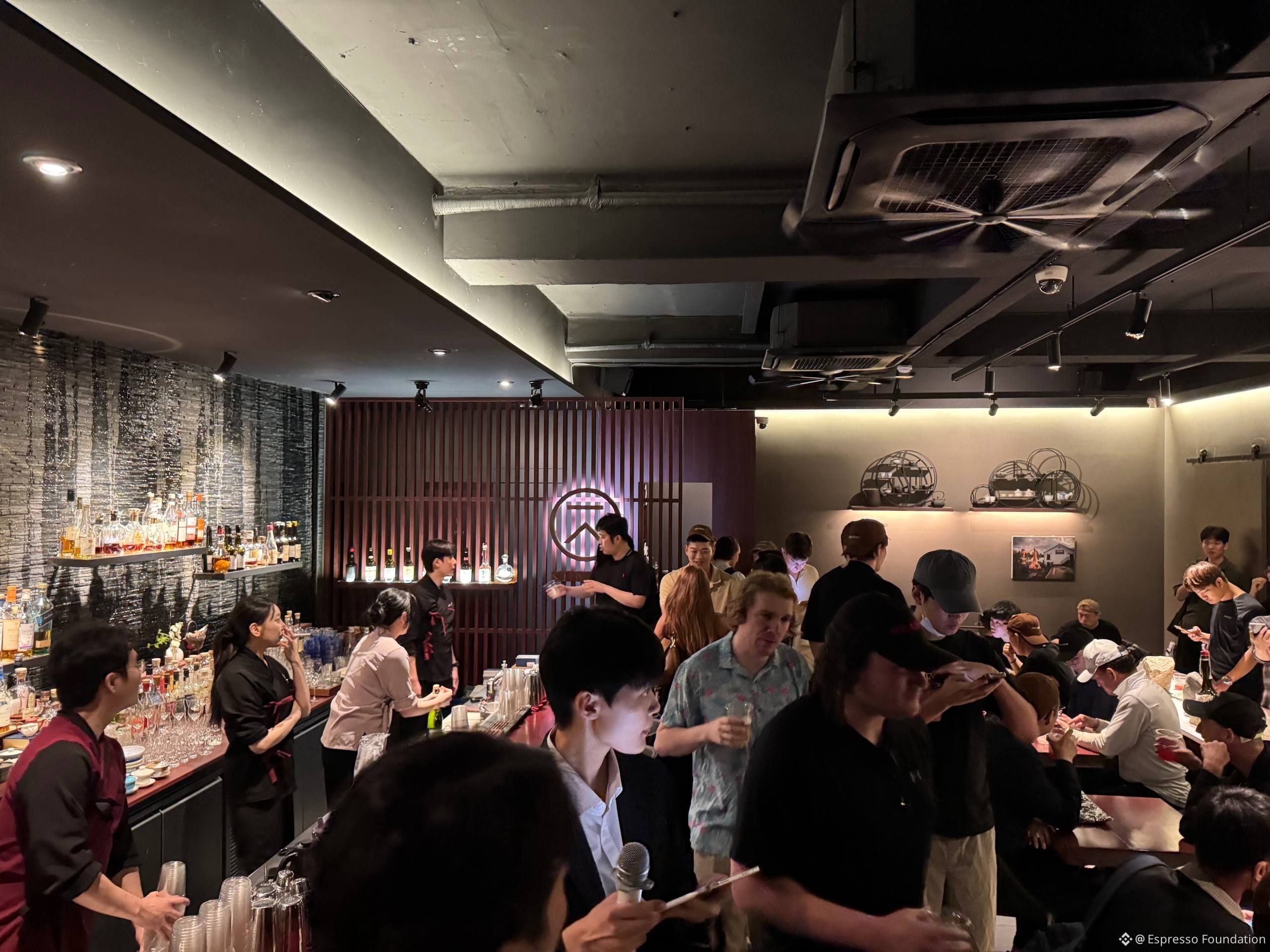
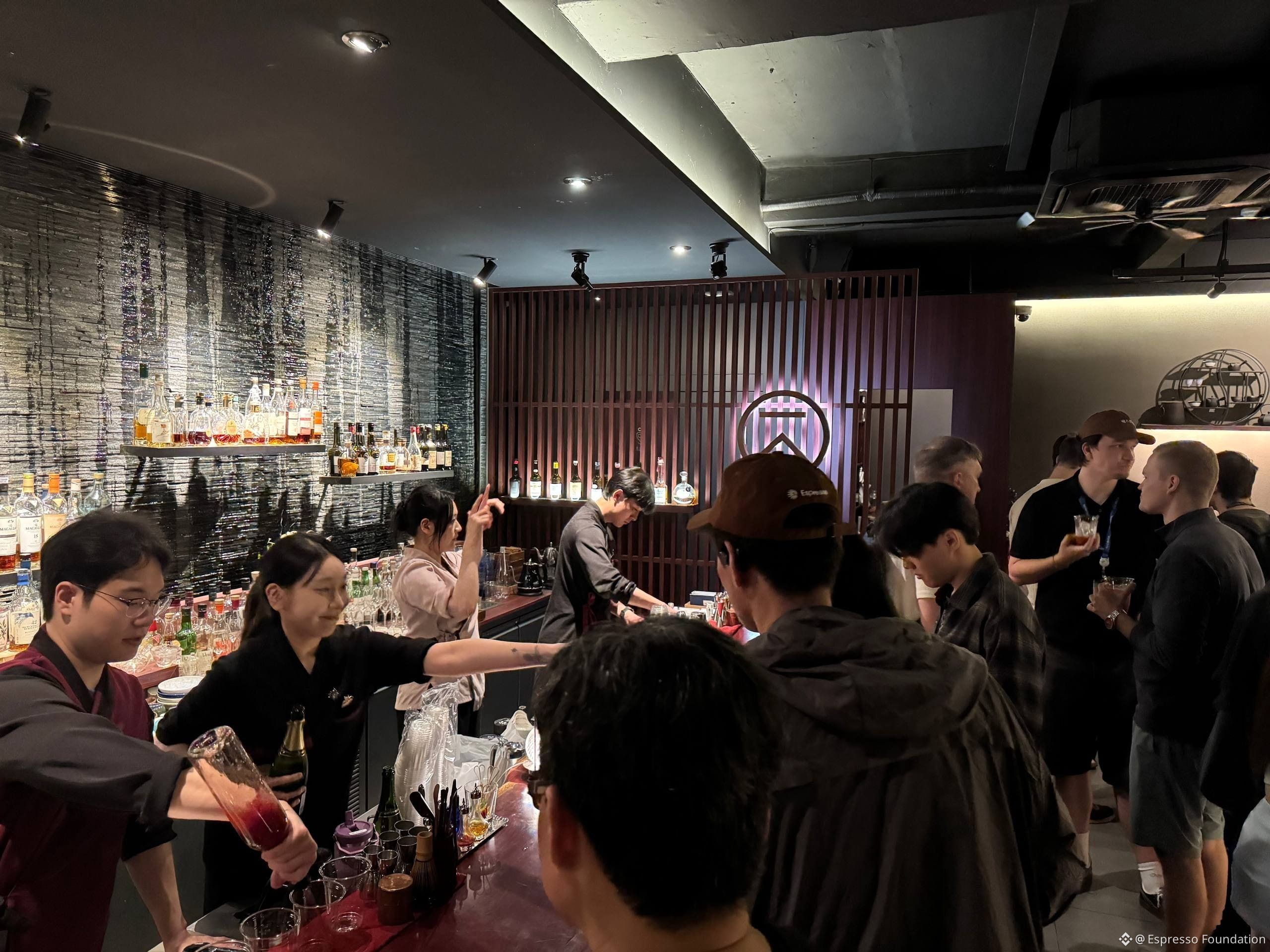
We had a packed house and a great time seeing everyone at Sunday night's Celo & Espresso Brews! Thanks to everyone who came out and chatted with the teams about the big things we're brewing 🔥
➡️ Next stop: KBW 2026 $ESP
{spot}(ESPUSDT)
We had a packed house and a great time seeing everyone at Sunday night's Celo & Espresso Brews! Thanks to everyone who came out and chatted with the teams about the big things we're brewing 🔥
➡️ Next stop: KBW 2026 $ESP
➡️ Next stop: KBW 2026 $ESP
272
We’re building real-time settlement and subsecond finality, but we’re also building a badass booth for you to come visit at KBW 2026.
Catch our Co-founder Charles Lu and Korean Community Ambassador Gotsam there Sept 30-Oct 1 in the Upbit zone! ☕ $ESP
We’re building real-time settlement and subsecond finality, but we’re also building a badass booth for you to come visit at KBW 2026.
Catch our Co-founder Charles Lu and Korean Community Ambassador Gotsam there Sept 30-Oct 1 in the Upbit zone! ☕ $ESP
Catch our Co-founder Charles Lu and Korean Community Ambassador Gotsam there Sept 30-Oct 1 in the Upbit zone! ☕ $ESP
2
452
Validator spotlight: deNodes
"We believe validators should contribute beyond uptime by helping ecosystems grow through technical expertise and community support."
deNodes is an independent team that maintains reliable validator infrastructure across multiple blockchain networks, including Monad, Celestia, and Aztec.
It joined Espresso's testnet in Sept 2024, became a genesis validator at mainnet launch, and has supported the ecosystem throughout with education & tooling. $ESP
{spot}(ESPUSDT)
Validator spotlight: deNodes
"We believe validators should contribute beyond uptime by helping ecosystems grow through technical expertise and community support."
deNodes is an independent team that maintains reliable validator infrastructure across multiple blockchain networks, including Monad, Celestia, and Aztec.
It joined Espresso's testnet in Sept 2024, became a genesis validator at mainnet launch, and has supported the ecosystem throughout with education & tooling. $ESP
1
321
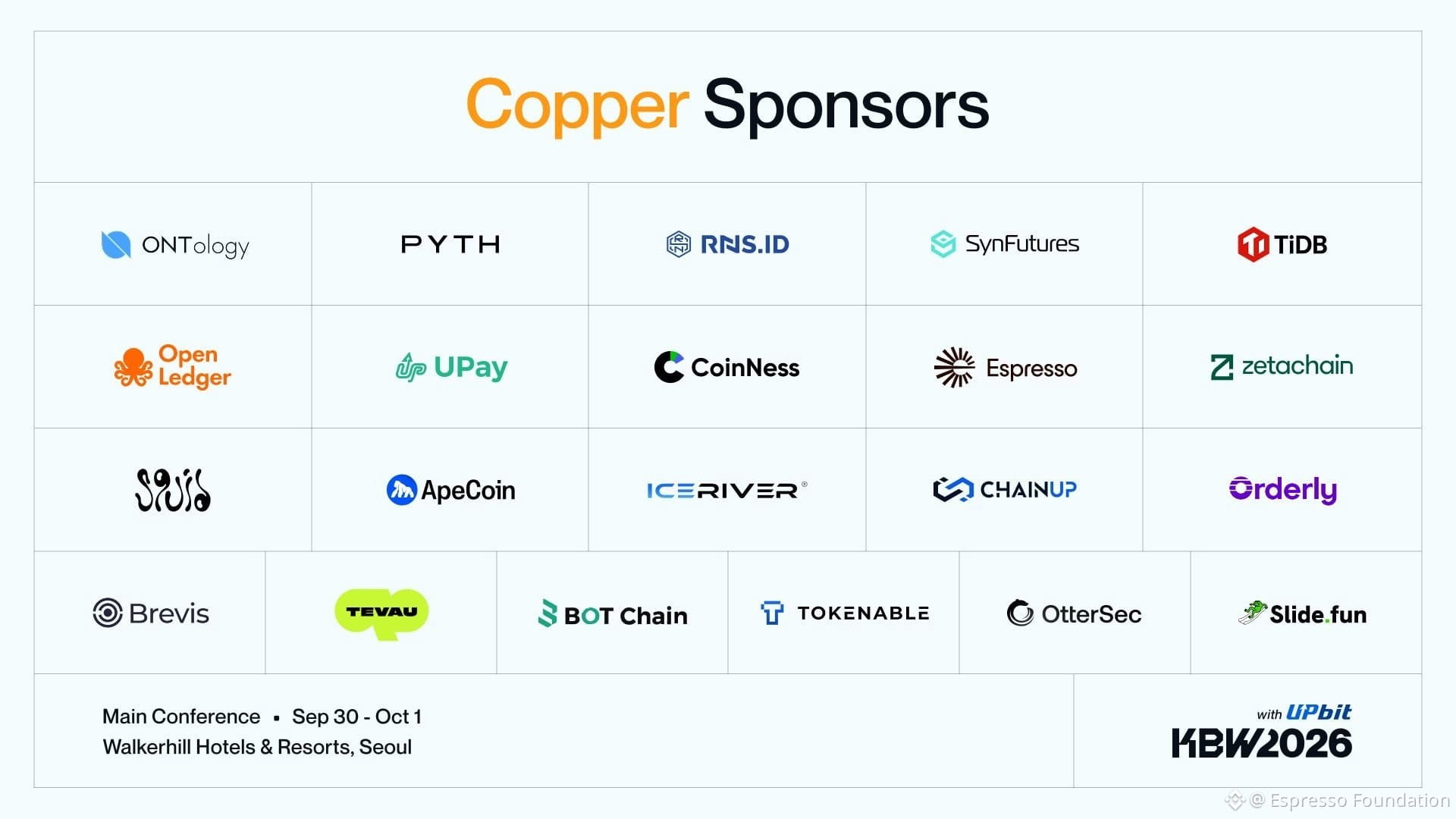
We’re on our way to Seoul! Snag your ticket for this amazing event featuring all your favorite projects and be sure to stop by our booth in the Upbit zone 🔥
📍 September 30 – October 1 | Walkerhill Hotels & Resorts, Seoul
Seoul is almost here. Get your tickets now and use code KBW2026SNS at checkout for 10% off ⬇️ $ESP
{spot}(ESPUSDT)
We’re on our way to Seoul! Snag your ticket for this amazing event featuring all your favorite projects and be sure to stop by our booth in the Upbit zone 🔥
📍 September 30 – October 1 | Walkerhill Hotels & Resorts, Seoul
Seoul is almost here. Get your tickets now and use code KBW2026SNS at checkout for 10% off ⬇️ $ESP
📍 September 30 – October 1 | Walkerhill Hotels & Resorts, Seoul
Seoul is almost here. Get your tickets now and use code KBW2026SNS at checkout for 10% off ⬇️ $ESP
312
In an agentic economy that runs on machines paying machines, the time it takes a payment to finalize will set the pace.
Espresso was built for this future before most people saw it coming, designed to provide L2 chains with subsecond finality and to scale to millions of TPS. $ESP
{spot}(ESPUSDT)
In an agentic economy that runs on machines paying machines, the time it takes a payment to finalize will set the pace.
Espresso was built for this future before most people saw it coming, designed to provide L2 chains with subsecond finality and to scale to millions of TPS. $ESP
Espresso was built for this future before most people saw it coming, designed to provide L2 chains with subsecond finality and to scale to millions of TPS. $ESP
1
285
Verified
Validator spotlight: Nethermind
"Fast removes the wait. Reliable removes the doubt."
That's how Nethermind describes what Espresso brings to them, and they bring the credibility to back it up.
A core contributor to Ethereum since 2017, Nethermind builds and maintains one of the most widely deployed execution clients on the network.
They run staking and node infrastructure at scale, alongside a security practice spanning audits and formal verification.
On Espresso since October 2025, they see fast shared finality as one of the unsolved problems for chains today.
Decentralizing Espresso was a natural next step. $ESP
3
2
1.8k
In the '70s, markets outgrew their infrastructure. Paper-based, T+5 settlement couldn't keep pace, leading to the creation of The DTCC.
Today markets face a similar inflection point moving onchain. Espresso is built for this next era, with real-time settlement as the foundation.
In the '70s, markets outgrew their infrastructure. Paper-based, T+5 settlement couldn't keep pace, leading to the creation of The DTCC.
Today markets face a similar inflection point moving onchain. Espresso is built for this next era, with real-time settlement as the foundation.
Today markets face a similar inflection point moving onchain. Espresso is built for this next era, with real-time settlement as the foundation.
2
7
181
Value should move as fast as information.
Subsecond finality is on its way to make that a reality.
Value should move as fast as information.
Subsecond finality is on its way to make that a reality.
Subsecond finality is on its way to make that a reality.
3
230
Verified
Validator spotlight: Omakase
"As a validator based in Japan, we have contributed to Espresso's geographical decentralization while supporting the network from its earliest stage."
That's how Omakase frames their role. As an SBI Group company, they bring institutional credibility to match.
They provide enterprise-grade staking for the Japanese market, including dedicated infrastructure design, 24/7 monitoring, and incident response.
Through their KudasaiJP heritage, they bridge global blockchain projects into Japan's Web3 ecosystem.
They operate across 40+ networks and have been validating on Espresso since 2024 as a genesis validator. $ESP
1
200
Validator spotlight: BlockPI
"For RPC services, fast and reliable finality ensures immediate data consistency and eliminates chain reorgs."
That's why BlockPI runs an Espresso validator. As the biggest infrastructure provider in APAC, they know what reliability looks like at scale.
With 8+ years of experience, BlockPI offers one-stop high-performance services including RPC, validator operations, relayers, and account abstraction across 50+ networks.
They process over 70 billion monthly requests for millions of users.
Their validating service spans 30+ networks with $130M in assets secured.
They applied for the Espresso testnet in January 2024 during the Gibraltar phase, making them one of the earliest participants. $ESP
1
196
Log in to explore more content
Join global crypto users on Binance Square
⚡️ Get latest and useful information about crypto.
💬 Trusted by the world’s largest crypto exchange.
👍 Discover real insights from verified creators.
Email / Phone number