

区块链技术服务biance工程师
200 Posts

区块链技术服务biance工程师
Report
Block User
DappWeb accumulated rich practical experience in DApp development, trusted data, AI applications, and digital asset solutions.
Open Trade
Occasional Trader
7.3 Years
193 Following
103 Followers
64 Liked
Posts
Portfolio
All
Videos
PINNED
Professional DAPP development, five years of experience, zero accidents
If you need a high-quality system, you can use Didi, if you want to save money, you can take a detour
Professional DAPP development, five years of experience, zero accidents
If you need a high-quality system, you can use Didi, if you want to save money, you can take a detour
If you need a high-quality system, you can use Didi, if you want to save money, you can take a detour
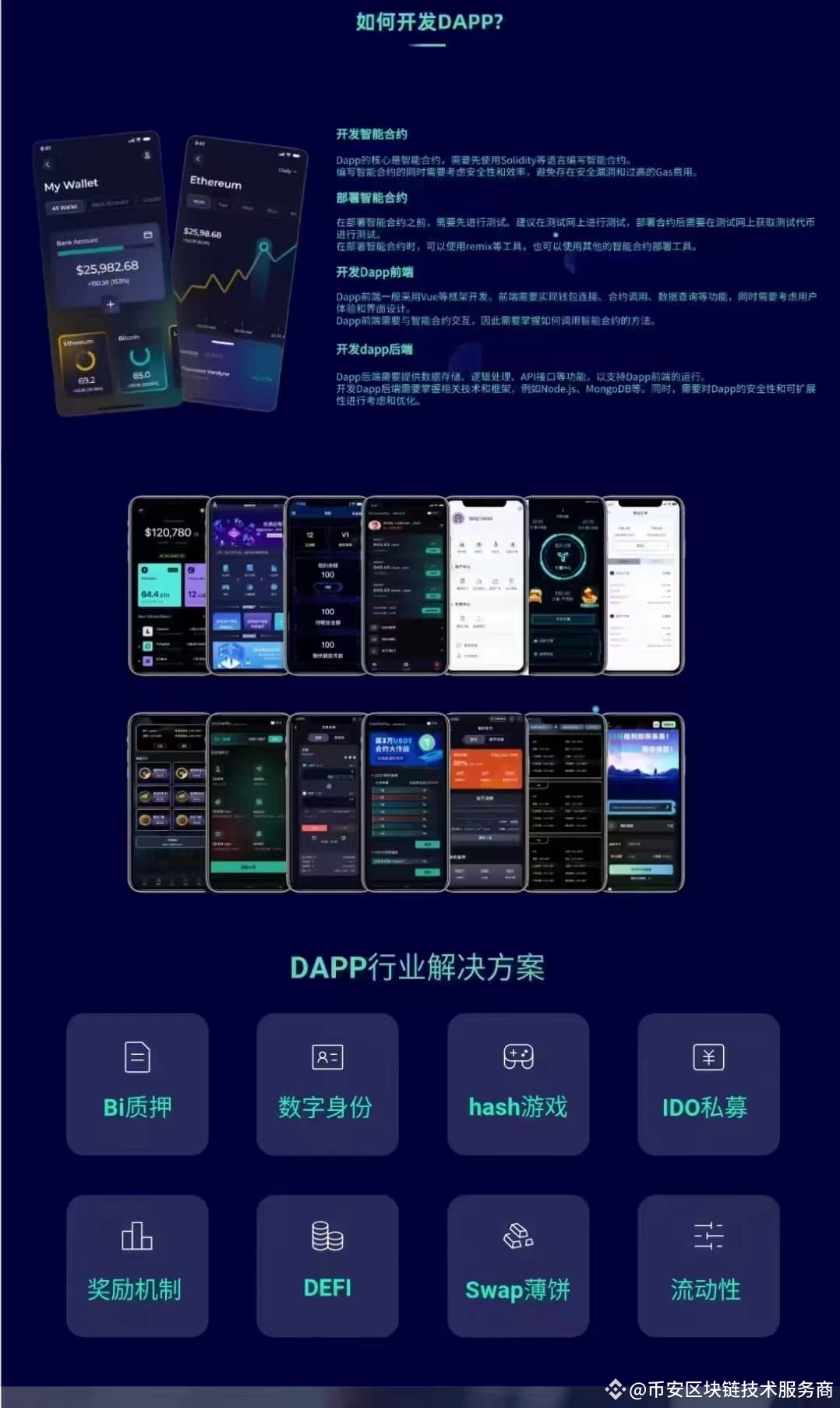
1
8
Smart contract security: 3 mistakes that cost teams millions
1. Reentrancy: Missing checks-effects-interactions pattern on external calls
2. Access control: Hardcoded admin keys without timelock or multisig
3. Testing: Skipping fork-mainnet simulations before mainnet
Before you launch, audit. DappWeb helps Web3 teams with smart contract audits, wallet integration, and full-stack dApp development.
We're a Hong Kong engineering team building secure Web3 infrastructure.
https://dappweb.ai
#Web3 #SmartContracts #Security #DApp
Smart contract security: 3 mistakes that cost teams millions
1. Reentrancy: Missing checks-effects-interactions pattern on external calls
2. Access control: Hardcoded admin keys without timelock or multisig
3. Testing: Skipping fork-mainnet simulations before mainnet
Before you launch, audit. DappWeb helps Web3 teams with smart contract audits, wallet integration, and full-stack dApp development.
We're a Hong Kong engineering team building secure Web3 infrastructure.
https://dappweb.ai
#Web3 #SmartContracts #Security #DApp
1. Reentrancy: Missing checks-effects-interactions pattern on external calls
2. Access control: Hardcoded admin keys without timelock or multisig
3. Testing: Skipping fork-mainnet simulations before mainnet
Before you launch, audit. DappWeb helps Web3 teams with smart contract audits, wallet integration, and full-stack dApp development.
We're a Hong Kong engineering team building secure Web3 infrastructure.
https://dappweb.ai
#Web3 #SmartContracts #Security #DApp
73
RWA (Real-World Assets) is becoming Web3’s next trillion-dollar narrative—most teams aren’t building it
Everyone is chasing the next cycle. Everyone is looking for the next big narrative.
But almost nobody is talking about what’s actually happening:
RWA is becoming the next trillion-dollar narrative. And most teams aren’t building for it.
📊 Data:
1. RWA TVL: 15B+ in 2024. Forecast 30B+ in 2025. Forecast 100B+ in 2026.
2. BlackRock BUIDL: 2.5B+ AUM. Ondo: 3B+ AUM. Real institutions, real products, real customers.
3. Tokenized real estate: 10T+ market. Bonds: 100T+ market. The world’s largest asset classes.
🔍 Why most teams aren’t building for it:
1. They think RWA is just a stablecoin (it’s 100x bigger—real estate, private credit, funds, bonds)
2. They don’t understand the compliance moat (legal structure, regulatory approvals, custody, audits)
3. They’re chasing the wrong narrative (Meme is over—RWA continues)
Now, the teams building for RWA are building the next trillion-dollar narrative.
Now, the teams building for Meme are building for the next cycle.
This isn’t “RWA might be a narrative one day.”
It’s “RWA is already the next trillion-dollar narrative.”
RWA (Real-World Assets) is becoming Web3’s next trillion-dollar narrative—most teams aren’t building it
Everyone is chasing the next cycle. Everyone is looking for the next big narrative.
But almost nobody is talking about what’s actually happening:
RWA is becoming the next trillion-dollar narrative. And most teams aren’t building for it.
📊 Data:
1. RWA TVL: 15B+ in 2024. Forecast 30B+ in 2025. Forecast 100B+ in 2026.
2. BlackRock BUIDL: 2.5B+ AUM. Ondo: 3B+ AUM. Real institutions, real products, real customers.
3. Tokenized real estate: 10T+ market. Bonds: 100T+ market. The world’s largest asset classes.
🔍 Why most teams aren’t building for it:
1. They think RWA is just a stablecoin (it’s 100x bigger—real estate, private credit, funds, bonds)
2. They don’t understand the compliance moat (legal structure, regulatory approvals, custody, audits)
3. They’re chasing the wrong narrative (Meme is over—RWA continues)
Now, the teams building for RWA are building the next trillion-dollar narrative.
Now, the teams building for Meme are building for the next cycle.
This isn’t “RWA might be a narrative one day.”
It’s “RWA is already the next trillion-dollar narrative.”
Everyone is chasing the next cycle. Everyone is looking for the next big narrative.
But almost nobody is talking about what’s actually happening:
RWA is becoming the next trillion-dollar narrative. And most teams aren’t building for it.
📊 Data:
1. RWA TVL: 15B+ in 2024. Forecast 30B+ in 2025. Forecast 100B+ in 2026.
2. BlackRock BUIDL: 2.5B+ AUM. Ondo: 3B+ AUM. Real institutions, real products, real customers.
3. Tokenized real estate: 10T+ market. Bonds: 100T+ market. The world’s largest asset classes.
🔍 Why most teams aren’t building for it:
1. They think RWA is just a stablecoin (it’s 100x bigger—real estate, private credit, funds, bonds)
2. They don’t understand the compliance moat (legal structure, regulatory approvals, custody, audits)
3. They’re chasing the wrong narrative (Meme is over—RWA continues)
Now, the teams building for RWA are building the next trillion-dollar narrative.
Now, the teams building for Meme are building for the next cycle.
This isn’t “RWA might be a narrative one day.”
It’s “RWA is already the next trillion-dollar narrative.”
2.4k
ZK Rollups are becoming the future of Ethereum scaling—most teams aren’t building for it
Everyone is optimistic about scaling. Everyone is talking about L2.
But almost nobody is discussing what’s actually happening:
ZK Rollups are winning. And most teams aren’t building for it.
📊 Data:
1. ZK Rollup TVL: 15B+ (USD). Growth: 200%+ year-over-year. Transactions: 10M+ per day.
2. ZK proof time: hours → minutes. Cost: from thousands to a few dollars. Finality: immediate.
3. Every major L2 is moving to ZK. Every major wallet is adding ZK support.
🔍 Why most teams aren’t building for it:
1. They think optimism is enough (fraud proofs will come… eventually).
2. They don’t understand the UX gap (7-day withdrawals vs immediate finality).
3. They’re chasing the wrong metrics (TVL can be bribed; transactions can be spammed).
Teams building for ZK are building for the future.
Teams building for optimism are building for the past.
This isn’t “ZK might win someday.”
This is “ZK is winning right now.”
ZK Rollups are becoming the future of Ethereum scaling—most teams aren’t building for it
Everyone is optimistic about scaling. Everyone is talking about L2.
But almost nobody is discussing what’s actually happening:
ZK Rollups are winning. And most teams aren’t building for it.
📊 Data:
1. ZK Rollup TVL: 15B+ (USD). Growth: 200%+ year-over-year. Transactions: 10M+ per day.
2. ZK proof time: hours → minutes. Cost: from thousands to a few dollars. Finality: immediate.
3. Every major L2 is moving to ZK. Every major wallet is adding ZK support.
🔍 Why most teams aren’t building for it:
1. They think optimism is enough (fraud proofs will come… eventually).
2. They don’t understand the UX gap (7-day withdrawals vs immediate finality).
3. They’re chasing the wrong metrics (TVL can be bribed; transactions can be spammed).
Teams building for ZK are building for the future.
Teams building for optimism are building for the past.
This isn’t “ZK might win someday.”
This is “ZK is winning right now.”
Everyone is optimistic about scaling. Everyone is talking about L2.
But almost nobody is discussing what’s actually happening:
ZK Rollups are winning. And most teams aren’t building for it.
📊 Data:
1. ZK Rollup TVL: 15B+ (USD). Growth: 200%+ year-over-year. Transactions: 10M+ per day.
2. ZK proof time: hours → minutes. Cost: from thousands to a few dollars. Finality: immediate.
3. Every major L2 is moving to ZK. Every major wallet is adding ZK support.
🔍 Why most teams aren’t building for it:
1. They think optimism is enough (fraud proofs will come… eventually).
2. They don’t understand the UX gap (7-day withdrawals vs immediate finality).
3. They’re chasing the wrong metrics (TVL can be bribed; transactions can be spammed).
Teams building for ZK are building for the future.
Teams building for optimism are building for the past.
This isn’t “ZK might win someday.”
This is “ZK is winning right now.”
1
Web3 startup teams: Don’t just hire "good" engineers—operations depth is what wins
Everyone is hiring the best engineers.
But almost nobody talks about what’s actually happening:
Most Web3 startup teams don’t die from bad code.
They die from bad operations.
📊 Data:
1. 80% don’t reach PMF; 70% die within 18 months; 60% die due to operational issues
2. Average team: 80% engineers, 20% operations. Successful teams: 60% engineers, 40% operations
3. Burn rate 1M–100M+; downtime 100k–1M+ per day—most of it is operational failure
🔍 What most teams are missing:
1. They think engineering is everything (easy to build, hard to run)
2. They don’t understand the operations stack (DevOps, SRE, security operations, incident response, key management)
3. They chase speed instead of stability (without stable speed, everything is chaos)
Build the operations team first—that’s the team that survives.
Build the engineering team first—that’s the team that collapses.
This isn’t that "operations is boring".
It’s that "operations is the difference between living and dying".
Web3 startup teams: Don’t just hire "good" engineers—operations depth is what wins
Everyone is hiring the best engineers.
But almost nobody talks about what’s actually happening:
Most Web3 startup teams don’t die from bad code.
They die from bad operations.
📊 Data:
1. 80% don’t reach PMF; 70% die within 18 months; 60% die due to operational issues
2. Average team: 80% engineers, 20% operations. Successful teams: 60% engineers, 40% operations
3. Burn rate 1M–100M+; downtime 100k–1M+ per day—most of it is operational failure
🔍 What most teams are missing:
1. They think engineering is everything (easy to build, hard to run)
2. They don’t understand the operations stack (DevOps, SRE, security operations, incident response, key management)
3. They chase speed instead of stability (without stable speed, everything is chaos)
Build the operations team first—that’s the team that survives.
Build the engineering team first—that’s the team that collapses.
This isn’t that "operations is boring".
It’s that "operations is the difference between living and dying".
Everyone is hiring the best engineers.
But almost nobody talks about what’s actually happening:
Most Web3 startup teams don’t die from bad code.
They die from bad operations.
📊 Data:
1. 80% don’t reach PMF; 70% die within 18 months; 60% die due to operational issues
2. Average team: 80% engineers, 20% operations. Successful teams: 60% engineers, 40% operations
3. Burn rate 1M–100M+; downtime 100k–1M+ per day—most of it is operational failure
🔍 What most teams are missing:
1. They think engineering is everything (easy to build, hard to run)
2. They don’t understand the operations stack (DevOps, SRE, security operations, incident response, key management)
3. They chase speed instead of stability (without stable speed, everything is chaos)
Build the operations team first—that’s the team that survives.
Build the engineering team first—that’s the team that collapses.
This isn’t that "operations is boring".
It’s that "operations is the difference between living and dying".
12
Hong Kong is quietly becoming a globally regulated Web3 hub—most teams aren’t paying attention
Everyone is watching Singapore. Everyone is watching Dubai.
But almost nobody is talking about what’s actually happening:
Hong Kong is quietly becoming a globally regulated Web3 hub.
📊 Data:
1. Policy: 15+ licensed virtual asset platforms; stablecoin regulation; since 2025, RWA is fully legal
2. Capital: 2,700+ family offices (up 3x in 2 years); US$4.5T+ AUM—everyone is looking for Web3/RWA exposure
3. Talent: 200,000+ tech engineers; 500,000+ finance professionals; 50,000+ Web3 talents, and the number is growing
🔍 Why most teams aren’t paying attention:
1. They think Hong Kong = China (but Hong Kong has its own independent legal/financial/regulatory framework)
2. They don’t understand the regulatory advantages (clear licenses, clear compliance, clear tax structure)
3. They’re chasing the wrong hubs (Singapore is saturated; Dubai has political risk; Cayman is “just taxes”)
Hong Kong is a bridge between East and West: China capital + global markets + regulated finance.
No other jurisdiction has this combination.
This isn’t “Hong Kong might become a hub one day.”
This is “Hong Kong is already Asia’s regulated Web3 hub.”
Hong Kong is quietly becoming a globally regulated Web3 hub—most teams aren’t paying attention
Everyone is watching Singapore. Everyone is watching Dubai.
But almost nobody is talking about what’s actually happening:
Hong Kong is quietly becoming a globally regulated Web3 hub.
📊 Data:
1. Policy: 15+ licensed virtual asset platforms; stablecoin regulation; since 2025, RWA is fully legal
2. Capital: 2,700+ family offices (up 3x in 2 years); US$4.5T+ AUM—everyone is looking for Web3/RWA exposure
3. Talent: 200,000+ tech engineers; 500,000+ finance professionals; 50,000+ Web3 talents, and the number is growing
🔍 Why most teams aren’t paying attention:
1. They think Hong Kong = China (but Hong Kong has its own independent legal/financial/regulatory framework)
2. They don’t understand the regulatory advantages (clear licenses, clear compliance, clear tax structure)
3. They’re chasing the wrong hubs (Singapore is saturated; Dubai has political risk; Cayman is “just taxes”)
Hong Kong is a bridge between East and West: China capital + global markets + regulated finance.
No other jurisdiction has this combination.
This isn’t “Hong Kong might become a hub one day.”
This is “Hong Kong is already Asia’s regulated Web3 hub.”
Everyone is watching Singapore. Everyone is watching Dubai.
But almost nobody is talking about what’s actually happening:
Hong Kong is quietly becoming a globally regulated Web3 hub.
📊 Data:
1. Policy: 15+ licensed virtual asset platforms; stablecoin regulation; since 2025, RWA is fully legal
2. Capital: 2,700+ family offices (up 3x in 2 years); US$4.5T+ AUM—everyone is looking for Web3/RWA exposure
3. Talent: 200,000+ tech engineers; 500,000+ finance professionals; 50,000+ Web3 talents, and the number is growing
🔍 Why most teams aren’t paying attention:
1. They think Hong Kong = China (but Hong Kong has its own independent legal/financial/regulatory framework)
2. They don’t understand the regulatory advantages (clear licenses, clear compliance, clear tax structure)
3. They’re chasing the wrong hubs (Singapore is saturated; Dubai has political risk; Cayman is “just taxes”)
Hong Kong is a bridge between East and West: China capital + global markets + regulated finance.
No other jurisdiction has this combination.
This isn’t “Hong Kong might become a hub one day.”
This is “Hong Kong is already Asia’s regulated Web3 hub.”
17
Your DApp is only as strong as its weakest link—most teams are leaving gaps
Everyone is talking about smart contract security.
Everyone is doing audits.
Everyone is running bug bounties.
But almost nobody is talking about this reality:
Your DApp is only as strong as your weakest link.
And almost nobody is auditing the entire stack.
📊 Data:
1. Most hacks are not smart-contract hacks
- In 2023: $1.7B+ stolen
- Of that:
- Only ~30% came from smart contract bugs
- ~70% came from:
- Frontend exploits
- Wallet phishing
- Oracle manipulation
- Bridge attacks
- Governance attacks
- Key management failures
- And almost nobody is protecting all of these
- They’re just doing smart contract audits
2. The stack goes far beyond contracts
- Modern DApps include:
- Smart contracts
- Frontend dApp
- Backend APIs
- Oracle integrations
- Bridge integrations
- Wallet infrastructure
- Governance systems
- Operations
- And each one has its own risks
- And almost nobody is auditing all of them
3. Teams only audit contracts
- Most teams think:
- We did smart contract audits
- We’re secure
- We’re done
- But:
- Audits only cover contracts
- They don’t cover the frontend, backend, oracles, bridges, governance, or operations
- And almost nobody is auditing these
🔍 What the full stack actually needs:
1. Frontend security
- No phishing, no compromised dependencies, no XSS, correct transaction signing
2. Oracle security
- No manipulation, no single point of failure, multiple redundant sources
3. Bridge security
- No compromised validators, no invalid proofs, no key management failures
4. Governance security
- No malicious proposals, no vote manipulation, no compromised keys
5. Operations security
- No compromised keys, no social engineering, no insider threats
🔍 What this means for Web3 teams:
If you’re a Web3 team:
- You need to stop thinking: "We did an audit—we’re secure"
- You need to start thinking: what’s the weakest link in our stack?
- A team that protects the entire stack
- Is a team that won’t get hacked
This isn’t "We need better smart contract audits".
It’s "We need to protect the entire stack".
And almost nobody is doing that.
Your DApp is only as strong as its weakest link—most teams are leaving gaps
Everyone is talking about smart contract security.
Everyone is doing audits.
Everyone is running bug bounties.
But almost nobody is talking about this reality:
Your DApp is only as strong as your weakest link.
And almost nobody is auditing the entire stack.
📊 Data:
1. Most hacks are not smart-contract hacks
- In 2023: $1.7B+ stolen
- Of that:
- Only ~30% came from smart contract bugs
- ~70% came from:
- Frontend exploits
- Wallet phishing
- Oracle manipulation
- Bridge attacks
- Governance attacks
- Key management failures
- And almost nobody is protecting all of these
- They’re just doing smart contract audits
2. The stack goes far beyond contracts
- Modern DApps include:
- Smart contracts
- Frontend dApp
- Backend APIs
- Oracle integrations
- Bridge integrations
- Wallet infrastructure
- Governance systems
- Operations
- And each one has its own risks
- And almost nobody is auditing all of them
3. Teams only audit contracts
- Most teams think:
- We did smart contract audits
- We’re secure
- We’re done
- But:
- Audits only cover contracts
- They don’t cover the frontend, backend, oracles, bridges, governance, or operations
- And almost nobody is auditing these
🔍 What the full stack actually needs:
1. Frontend security
- No phishing, no compromised dependencies, no XSS, correct transaction signing
2. Oracle security
- No manipulation, no single point of failure, multiple redundant sources
3. Bridge security
- No compromised validators, no invalid proofs, no key management failures
4. Governance security
- No malicious proposals, no vote manipulation, no compromised keys
5. Operations security
- No compromised keys, no social engineering, no insider threats
🔍 What this means for Web3 teams:
If you’re a Web3 team:
- You need to stop thinking: "We did an audit—we’re secure"
- You need to start thinking: what’s the weakest link in our stack?
- A team that protects the entire stack
- Is a team that won’t get hacked
This isn’t "We need better smart contract audits".
It’s "We need to protect the entire stack".
And almost nobody is doing that.
Everyone is talking about smart contract security.
Everyone is doing audits.
Everyone is running bug bounties.
But almost nobody is talking about this reality:
Your DApp is only as strong as your weakest link.
And almost nobody is auditing the entire stack.
📊 Data:
1. Most hacks are not smart-contract hacks
- In 2023: $1.7B+ stolen
- Of that:
- Only ~30% came from smart contract bugs
- ~70% came from:
- Frontend exploits
- Wallet phishing
- Oracle manipulation
- Bridge attacks
- Governance attacks
- Key management failures
- And almost nobody is protecting all of these
- They’re just doing smart contract audits
2. The stack goes far beyond contracts
- Modern DApps include:
- Smart contracts
- Frontend dApp
- Backend APIs
- Oracle integrations
- Bridge integrations
- Wallet infrastructure
- Governance systems
- Operations
- And each one has its own risks
- And almost nobody is auditing all of them
3. Teams only audit contracts
- Most teams think:
- We did smart contract audits
- We’re secure
- We’re done
- But:
- Audits only cover contracts
- They don’t cover the frontend, backend, oracles, bridges, governance, or operations
- And almost nobody is auditing these
🔍 What the full stack actually needs:
1. Frontend security
- No phishing, no compromised dependencies, no XSS, correct transaction signing
2. Oracle security
- No manipulation, no single point of failure, multiple redundant sources
3. Bridge security
- No compromised validators, no invalid proofs, no key management failures
4. Governance security
- No malicious proposals, no vote manipulation, no compromised keys
5. Operations security
- No compromised keys, no social engineering, no insider threats
🔍 What this means for Web3 teams:
If you’re a Web3 team:
- You need to stop thinking: "We did an audit—we’re secure"
- You need to start thinking: what’s the weakest link in our stack?
- A team that protects the entire stack
- Is a team that won’t get hacked
This isn’t "We need better smart contract audits".
It’s "We need to protect the entire stack".
And almost nobody is doing that.
17
AI agents are entering Web3—most teams aren’t ready yet
Everyone is talking about AI.
Everyone is using ChatGPT.
Everyone is building things based on LLMs.
But almost nobody is asking the truly important question:
What happens when AI agents don’t just answer questions?
When they:
- make on-chain transactions
- manage wallets
- execute trades
- negotiate with other agents
- make financial decisions
- hold and move real money
This isn’t science fiction. This is what’s happening right now.
📊 What’s actually happening:
1. AI agents are already on-chain
- We’ve moved past the “AI chatbot” phase
- We’re entering the “AI operator” phase:
- autonomous trading agents
- yield-farming agents
- liquidation bots
- portfolio management agents
- DAO participation agents
- These aren’t scripts
- They’re agents that learn, adapt, and make real-time decisions
2. An agent economy is being built
- We’re starting to see:
- agent-to-agent markets
- agent reputation systems
- agent payment rails
- agent identity infrastructure
- agent coordination protocols
- This is a brand-new layer of the internet
- And it’s being built on-chain
- Because this is the only place where you can:
- verify identity
- execute payments
- build reputation
- coordinate without trust
3. This isn’t “AI + crypto”
- It’s fundamentally something new
- Not:
- AI chatbot integration with crypto
- crypto trading bots powered by AI
- It is:
- autonomous economic participants
- living on-chain
- trading with each other
- holding real value
- making real decisions
- learning and adapting
- This is a new form of digital economy
🔍 Why most teams aren’t ready:
1. They’re thinking about the wrong use cases
- Most teams are building:
- crypto project AI chatbots
- AI trading bots
- AI analytics tools
- But the real opportunity is:
- agent infrastructure
- agent identity
- agent reputation
- agent payment rails
- agent coordination
- The pipeline is where the money is
AI agents are entering Web3—most teams aren’t ready yet
Everyone is talking about AI.
Everyone is using ChatGPT.
Everyone is building things based on LLMs.
But almost nobody is asking the truly important question:
What happens when AI agents don’t just answer questions?
When they:
- make on-chain transactions
- manage wallets
- execute trades
- negotiate with other agents
- make financial decisions
- hold and move real money
This isn’t science fiction. This is what’s happening right now.
📊 What’s actually happening:
1. AI agents are already on-chain
- We’ve moved past the “AI chatbot” phase
- We’re entering the “AI operator” phase:
- autonomous trading agents
- yield-farming agents
- liquidation bots
- portfolio management agents
- DAO participation agents
- These aren’t scripts
- They’re agents that learn, adapt, and make real-time decisions
2. An agent economy is being built
- We’re starting to see:
- agent-to-agent markets
- agent reputation systems
- agent payment rails
- agent identity infrastructure
- agent coordination protocols
- This is a brand-new layer of the internet
- And it’s being built on-chain
- Because this is the only place where you can:
- verify identity
- execute payments
- build reputation
- coordinate without trust
3. This isn’t “AI + crypto”
- It’s fundamentally something new
- Not:
- AI chatbot integration with crypto
- crypto trading bots powered by AI
- It is:
- autonomous economic participants
- living on-chain
- trading with each other
- holding real value
- making real decisions
- learning and adapting
- This is a new form of digital economy
🔍 Why most teams aren’t ready:
1. They’re thinking about the wrong use cases
- Most teams are building:
- crypto project AI chatbots
- AI trading bots
- AI analytics tools
- But the real opportunity is:
- agent infrastructure
- agent identity
- agent reputation
- agent payment rails
- agent coordination
- The pipeline is where the money is
Everyone is talking about AI.
Everyone is using ChatGPT.
Everyone is building things based on LLMs.
But almost nobody is asking the truly important question:
What happens when AI agents don’t just answer questions?
When they:
- make on-chain transactions
- manage wallets
- execute trades
- negotiate with other agents
- make financial decisions
- hold and move real money
This isn’t science fiction. This is what’s happening right now.
📊 What’s actually happening:
1. AI agents are already on-chain
- We’ve moved past the “AI chatbot” phase
- We’re entering the “AI operator” phase:
- autonomous trading agents
- yield-farming agents
- liquidation bots
- portfolio management agents
- DAO participation agents
- These aren’t scripts
- They’re agents that learn, adapt, and make real-time decisions
2. An agent economy is being built
- We’re starting to see:
- agent-to-agent markets
- agent reputation systems
- agent payment rails
- agent identity infrastructure
- agent coordination protocols
- This is a brand-new layer of the internet
- And it’s being built on-chain
- Because this is the only place where you can:
- verify identity
- execute payments
- build reputation
- coordinate without trust
3. This isn’t “AI + crypto”
- It’s fundamentally something new
- Not:
- AI chatbot integration with crypto
- crypto trading bots powered by AI
- It is:
- autonomous economic participants
- living on-chain
- trading with each other
- holding real value
- making real decisions
- learning and adapting
- This is a new form of digital economy
🔍 Why most teams aren’t ready:
1. They’re thinking about the wrong use cases
- Most teams are building:
- crypto project AI chatbots
- AI trading bots
- AI analytics tools
- But the real opportunity is:
- agent infrastructure
- agent identity
- agent reputation
- agent payment rails
- agent coordination
- The pipeline is where the money is
9
BNB is above $734—who among the three Megadrop swordsmen is most worth watching?BTC is grinding at the bottom, while BNB is quietly rising.
Today, BNB has once again broken above…
Why pay attention to BNB? Because it’s one of the few tokens in the crypto space with "real business support"—Binance exchange fee dividends, burn mechanisms, and ecosystem development are all solid fundamentals.
📊 The three swordsmen of the Megadrop concept:
Recently, many people have been discussing the Megadrop concept in the BNB ecosystem. There are mainly three coins:
1. LISTA: The first project on the Megadrop platform, with the biggest reputation
2. SOLV: A DeFi protocol, partnered with Megadrop
3. BB: A newer project with higher volatility
🔥 My take:
BNB is above $734—who among the three Megadrop swordsmen is most worth watching?
BTC is grinding at the bottom, while BNB is quietly rising.
Today, BNB has once again broken above…
Why pay attention to BNB? Because it’s one of the few tokens in the crypto space with "real business support"—Binance exchange fee dividends, burn mechanisms, and ecosystem development are all solid fundamentals.
📊 The three swordsmen of the Megadrop concept:
Recently, many people have been discussing the Megadrop concept in the BNB ecosystem. There are mainly three coins:
1. LISTA: The first project on the Megadrop platform, with the biggest reputation
2. SOLV: A DeFi protocol, partnered with Megadrop
3. BB: A newer project with higher volatility
🔥 My take:
Today, BNB has once again broken above…
Why pay attention to BNB? Because it’s one of the few tokens in the crypto space with "real business support"—Binance exchange fee dividends, burn mechanisms, and ecosystem development are all solid fundamentals.
📊 The three swordsmen of the Megadrop concept:
Recently, many people have been discussing the Megadrop concept in the BNB ecosystem. There are mainly three coins:
1. LISTA: The first project on the Megadrop platform, with the biggest reputation
2. SOLV: A DeFi protocol, partnered with Megadrop
3. BB: A newer project with higher volatility
🔥 My take:
104
Binance Just Launched GPROB! Can the Reddit-concept coin still be pumped?Binance has listed another new coin.
This time it’s GPROB, linked to the Reddit concept. When many people hear the words "concept," they get excited, thinking they can participate in a new launch and make some quick gains.
Hold on—stay calm for a moment. Let me tell you a few truths.
📌 You know the playbook for a new coin listing:
Pre-listing hype → pump at opening → retail buyers chase the price → main players distribute → retail gets stuck holding the bag. Every new coin runs this script—no exceptions.
📊 So what’s different about GPROB this time?
To be honest, I did some research: the “concept” matters more than the substance. The Reddit theme was already pumped last year—so squeezing it again now is basically reheating leftovers. And Binance is listing coins faster and faster; the window of freshness for new coins is getting shorter. Used to be 3–5 days of potential gains—now it may cool off within half a day.
Binance Just Launched GPROB! Can the Reddit-concept coin still be pumped?
Binance has listed another new coin.
This time it’s GPROB, linked to the Reddit concept. When many people hear the words "concept," they get excited, thinking they can participate in a new launch and make some quick gains.
Hold on—stay calm for a moment. Let me tell you a few truths.
📌 You know the playbook for a new coin listing:
Pre-listing hype → pump at opening → retail buyers chase the price → main players distribute → retail gets stuck holding the bag. Every new coin runs this script—no exceptions.
📊 So what’s different about GPROB this time?
To be honest, I did some research: the “concept” matters more than the substance. The Reddit theme was already pumped last year—so squeezing it again now is basically reheating leftovers. And Binance is listing coins faster and faster; the window of freshness for new coins is getting shorter. Used to be 3–5 days of potential gains—now it may cool off within half a day.
This time it’s GPROB, linked to the Reddit concept. When many people hear the words "concept," they get excited, thinking they can participate in a new launch and make some quick gains.
Hold on—stay calm for a moment. Let me tell you a few truths.
📌 You know the playbook for a new coin listing:
Pre-listing hype → pump at opening → retail buyers chase the price → main players distribute → retail gets stuck holding the bag. Every new coin runs this script—no exceptions.
📊 So what’s different about GPROB this time?
To be honest, I did some research: the “concept” matters more than the substance. The Reddit theme was already pumped last year—so squeezing it again now is basically reheating leftovers. And Binance is listing coins faster and faster; the window of freshness for new coins is getting shorter. Used to be 3–5 days of potential gains—now it may cool off within half a day.
289
CATE surges 52% in a single day! Can you still chase this Solana ecosystem Meme run?BTC is ranging, while Memes are partying—this is the real snapshot of the crypto world today.
Just saw the data: Solana ecosystem Meme coin CATE surged 52% in 24 hours, with its market cap climbing to $74.62 million. Lots of people are starting to FOMO again.
First, the conclusion: don’t chase the price—especially at this point.
📈 Why did it jump so much?
Two reasons: first, funds are stuck in BTC’s range with nowhere to go; second, the Solana ecosystem’s Memes have always had a history of hype. CATE is just a representative of this round of momentum, not a one-off—Hakeem’s market cap also broke $60 million, and PEPE is gradually seeing increasing volume.
⚠️ Why shouldn’t you chase it?
CATE surges 52% in a single day! Can you still chase this Solana ecosystem Meme run?
BTC is ranging, while Memes are partying—this is the real snapshot of the crypto world today.
Just saw the data: Solana ecosystem Meme coin CATE surged 52% in 24 hours, with its market cap climbing to $74.62 million. Lots of people are starting to FOMO again.
First, the conclusion: don’t chase the price—especially at this point.
📈 Why did it jump so much?
Two reasons: first, funds are stuck in BTC’s range with nowhere to go; second, the Solana ecosystem’s Memes have always had a history of hype. CATE is just a representative of this round of momentum, not a one-off—Hakeem’s market cap also broke $60 million, and PEPE is gradually seeing increasing volume.
⚠️ Why shouldn’t you chase it?
Just saw the data: Solana ecosystem Meme coin CATE surged 52% in 24 hours, with its market cap climbing to $74.62 million. Lots of people are starting to FOMO again.
First, the conclusion: don’t chase the price—especially at this point.
📈 Why did it jump so much?
Two reasons: first, funds are stuck in BTC’s range with nowhere to go; second, the Solana ecosystem’s Memes have always had a history of hype. CATE is just a representative of this round of momentum, not a one-off—Hakeem’s market cap also broke $60 million, and PEPE is gradually seeing increasing volume.
⚠️ Why shouldn’t you chase it?
98
BTC has been ranging at $77.5K for three days—tonight’s options expiration will pick a directionLet me tell you something many people haven’t noticed: today is September 18th—the BTC options expiration date.
Max Pain is at $78,000—which means the price has been grinding around that level for the past few days. This isn’t a coincidence. The market makers’ forced closing pressure will be released in a concentrated way before the New York close today.
My take is very straightforward:
📊 Technicals:
$75,000-$77,000 is a short-term support zone. It was tested three times last week and none of the breaks held. Above,
🔥 The Meme sector is stealing the show:
During these days of BTC consolidation, altcoins and Memes are moving instead. CATE surged 52% in a single day, Hakeem’s market cap is pushing toward $60 million, and PEPE is also seeing rising volume. Funds have been flowing out of BTC into smaller coins—this is typically a mid-cycle characteristic in a bull market. It’s not a top signal, but it also suggests the broader market may not have a big move in the near term.
BTC has been ranging at $77.5K for three days—tonight’s options expiration will pick a direction
Let me tell you something many people haven’t noticed: today is September 18th—the BTC options expiration date.
Max Pain is at $78,000—which means the price has been grinding around that level for the past few days. This isn’t a coincidence. The market makers’ forced closing pressure will be released in a concentrated way before the New York close today.
My take is very straightforward:
📊 Technicals:
$75,000-$77,000 is a short-term support zone. It was tested three times last week and none of the breaks held. Above,
🔥 The Meme sector is stealing the show:
During these days of BTC consolidation, altcoins and Memes are moving instead. CATE surged 52% in a single day, Hakeem’s market cap is pushing toward $60 million, and PEPE is also seeing rising volume. Funds have been flowing out of BTC into smaller coins—this is typically a mid-cycle characteristic in a bull market. It’s not a top signal, but it also suggests the broader market may not have a big move in the near term.
Max Pain is at $78,000—which means the price has been grinding around that level for the past few days. This isn’t a coincidence. The market makers’ forced closing pressure will be released in a concentrated way before the New York close today.
My take is very straightforward:
📊 Technicals:
$75,000-$77,000 is a short-term support zone. It was tested three times last week and none of the breaks held. Above,
🔥 The Meme sector is stealing the show:
During these days of BTC consolidation, altcoins and Memes are moving instead. CATE surged 52% in a single day, Hakeem’s market cap is pushing toward $60 million, and PEPE is also seeing rising volume. Funds have been flowing out of BTC into smaller coins—this is typically a mid-cycle characteristic in a bull market. It’s not a top signal, but it also suggests the broader market may not have a big move in the near term.
187
Why more and more Web3 teams are quietly choosing Hong Kong instead of Singapore
The narrative is clear. Singapore has long been the Asian Web3 hub. But things are changing—most teams haven’t noticed yet.
An increasing number of truly serious Web3 engineering teams are quietly choosing Hong Kong. Not for hype, but for fundamentals.
📊 The real differences:
1. Regulatory clarity is real
- The Securities and Futures Commission has a genuine licensing framework
- The stablecoin regulations have been passed
- Real products are launching with regulatory backing
- Not just vague “guidance”
2. Talent pipeline
- Strong engineering schools
- Product talent from Tencent, Alibaba, and ByteDance
- Mandarin + English bilingual advantage
- Better cost efficiency than San Francisco / New York / London
3. Financial infrastructure
- Closely tied to the flow of capital from China
- Real banking relationships
- Tokenization funds that are actually operating
- Viable RWA (real-world assets) structures
4. Execution speed
- Fewer bureaucratic layers than Singapore
- Faster company registration
- More pragmatic regulators
- They genuinely want the business—not just the photo-op
🔍 What teams are actually building there:
- An RWA platform for tokenized real assets
- Stablecoin infrastructure
- Institutional DeFi products
- Institutional compliance tools
- Boring, profitable, sustainable things
🔍 The Singapore vs. Hong Kong debate:
Singapore wins on:
- Reputation and branding
- Existing institutions
- Familiarity with the rule of law
Hong Kong wins on:
- Practical regulatory actions
- Cost of building
- Access to China’s capital
- Speed and pragmatism
- Leadership in tokenization and stablecoins
🔍 What most teams get wrong:
1. Chasing brand, not substance
- “We’re in Singapore” sounds good on a slide deck
- But regulatory clarity matters more than reputation
- Hong Kong is moving for real; Singapore is still talking
2. Underestimating the China angle
- Hong Kong helps you tap into China’s capital and talent
- Singapore cuts you off from that
- The next billion Web3 users will be in Greater China
3. Thinking it’s all about trading
- Hong Kong is not only for exchanges
- It’s for real product teams
- Tokenization, compliance, infrastructure
4. Waiting for perfect certainty
- No jurisdiction is perfect
- Hong Kong is good enough right now
- And it gets better every quarter
The teams quietly building in Hong Kong aren’t doing it to make announcements. They’re doing it because the fundamentals finally make sense.
Why more and more Web3 teams are quietly choosing Hong Kong instead of Singapore
The narrative is clear. Singapore has long been the Asian Web3 hub. But things are changing—most teams haven’t noticed yet.
An increasing number of truly serious Web3 engineering teams are quietly choosing Hong Kong. Not for hype, but for fundamentals.
📊 The real differences:
1. Regulatory clarity is real
- The Securities and Futures Commission has a genuine licensing framework
- The stablecoin regulations have been passed
- Real products are launching with regulatory backing
- Not just vague “guidance”
2. Talent pipeline
- Strong engineering schools
- Product talent from Tencent, Alibaba, and ByteDance
- Mandarin + English bilingual advantage
- Better cost efficiency than San Francisco / New York / London
3. Financial infrastructure
- Closely tied to the flow of capital from China
- Real banking relationships
- Tokenization funds that are actually operating
- Viable RWA (real-world assets) structures
4. Execution speed
- Fewer bureaucratic layers than Singapore
- Faster company registration
- More pragmatic regulators
- They genuinely want the business—not just the photo-op
🔍 What teams are actually building there:
- An RWA platform for tokenized real assets
- Stablecoin infrastructure
- Institutional DeFi products
- Institutional compliance tools
- Boring, profitable, sustainable things
🔍 The Singapore vs. Hong Kong debate:
Singapore wins on:
- Reputation and branding
- Existing institutions
- Familiarity with the rule of law
Hong Kong wins on:
- Practical regulatory actions
- Cost of building
- Access to China’s capital
- Speed and pragmatism
- Leadership in tokenization and stablecoins
🔍 What most teams get wrong:
1. Chasing brand, not substance
- “We’re in Singapore” sounds good on a slide deck
- But regulatory clarity matters more than reputation
- Hong Kong is moving for real; Singapore is still talking
2. Underestimating the China angle
- Hong Kong helps you tap into China’s capital and talent
- Singapore cuts you off from that
- The next billion Web3 users will be in Greater China
3. Thinking it’s all about trading
- Hong Kong is not only for exchanges
- It’s for real product teams
- Tokenization, compliance, infrastructure
4. Waiting for perfect certainty
- No jurisdiction is perfect
- Hong Kong is good enough right now
- And it gets better every quarter
The teams quietly building in Hong Kong aren’t doing it to make announcements. They’re doing it because the fundamentals finally make sense.
The narrative is clear. Singapore has long been the Asian Web3 hub. But things are changing—most teams haven’t noticed yet.
An increasing number of truly serious Web3 engineering teams are quietly choosing Hong Kong. Not for hype, but for fundamentals.
📊 The real differences:
1. Regulatory clarity is real
- The Securities and Futures Commission has a genuine licensing framework
- The stablecoin regulations have been passed
- Real products are launching with regulatory backing
- Not just vague “guidance”
2. Talent pipeline
- Strong engineering schools
- Product talent from Tencent, Alibaba, and ByteDance
- Mandarin + English bilingual advantage
- Better cost efficiency than San Francisco / New York / London
3. Financial infrastructure
- Closely tied to the flow of capital from China
- Real banking relationships
- Tokenization funds that are actually operating
- Viable RWA (real-world assets) structures
4. Execution speed
- Fewer bureaucratic layers than Singapore
- Faster company registration
- More pragmatic regulators
- They genuinely want the business—not just the photo-op
🔍 What teams are actually building there:
- An RWA platform for tokenized real assets
- Stablecoin infrastructure
- Institutional DeFi products
- Institutional compliance tools
- Boring, profitable, sustainable things
🔍 The Singapore vs. Hong Kong debate:
Singapore wins on:
- Reputation and branding
- Existing institutions
- Familiarity with the rule of law
Hong Kong wins on:
- Practical regulatory actions
- Cost of building
- Access to China’s capital
- Speed and pragmatism
- Leadership in tokenization and stablecoins
🔍 What most teams get wrong:
1. Chasing brand, not substance
- “We’re in Singapore” sounds good on a slide deck
- But regulatory clarity matters more than reputation
- Hong Kong is moving for real; Singapore is still talking
2. Underestimating the China angle
- Hong Kong helps you tap into China’s capital and talent
- Singapore cuts you off from that
- The next billion Web3 users will be in Greater China
3. Thinking it’s all about trading
- Hong Kong is not only for exchanges
- It’s for real product teams
- Tokenization, compliance, infrastructure
4. Waiting for perfect certainty
- No jurisdiction is perfect
- Hong Kong is good enough right now
- And it gets better every quarter
The teams quietly building in Hong Kong aren’t doing it to make announcements. They’re doing it because the fundamentals finally make sense.
89
When doing institutional custody, the thing most easily underestimated by the technical team isn’t the encryption algorithm—it’s “who can move which funds under what conditions.” Even if the signatures are secure, a messy permissions matrix is still a gray area: one mistaken operation or a departing employee can cause an incident. Institutional clients aren’t buying “safe private key storage”—they’re buying “funds can only move according to the rules.”
After we hit these pitfalls in engineering, we distilled five practices:
1)Segregation of roles: initiation, approval, and execution must be separated; the same person cannot both initiate and approve;
2)Tiered by amount: small amounts auto-release, medium amounts require individual review, and large amounts use M-of-N;
3)Separate signing from execution: execution nodes only take the already-approved signature results, and everything is fully traceable;
4)For high-risk operations (withdrawals, changing whitelists, changing approvers): require second confirmation plus device binding;
5)Log every permission action; automatically fuse off abnormal patterns—don’t wait for humans to discover issues.
Both permissions and limits should be configuration-driven—don’t hard-code them in the codebase. We have long-term engineering experience in institutional custody, multisig, and batch payouts.
Technical service introduction only and does not constitute investment advice. #Web3 #InstitutionalCustody #Multisig #WalletEngineering #Stablecoin #RWA
When doing institutional custody, the thing most easily underestimated by the technical team isn’t the encryption algorithm—it’s “who can move which funds under what conditions.” Even if the signatures are secure, a messy permissions matrix is still a gray area: one mistaken operation or a departing employee can cause an incident. Institutional clients aren’t buying “safe private key storage”—they’re buying “funds can only move according to the rules.”
After we hit these pitfalls in engineering, we distilled five practices:
1)Segregation of roles: initiation, approval, and execution must be separated; the same person cannot both initiate and approve;
2)Tiered by amount: small amounts auto-release, medium amounts require individual review, and large amounts use M-of-N;
3)Separate signing from execution: execution nodes only take the already-approved signature results, and everything is fully traceable;
4)For high-risk operations (withdrawals, changing whitelists, changing approvers): require second confirmation plus device binding;
5)Log every permission action; automatically fuse off abnormal patterns—don’t wait for humans to discover issues.
Both permissions and limits should be configuration-driven—don’t hard-code them in the codebase. We have long-term engineering experience in institutional custody, multisig, and batch payouts.
Technical service introduction only and does not constitute investment advice. #Web3 #InstitutionalCustody #Multisig #WalletEngineering #Stablecoin #RWA
After we hit these pitfalls in engineering, we distilled five practices:
1)Segregation of roles: initiation, approval, and execution must be separated; the same person cannot both initiate and approve;
2)Tiered by amount: small amounts auto-release, medium amounts require individual review, and large amounts use M-of-N;
3)Separate signing from execution: execution nodes only take the already-approved signature results, and everything is fully traceable;
4)For high-risk operations (withdrawals, changing whitelists, changing approvers): require second confirmation plus device binding;
5)Log every permission action; automatically fuse off abnormal patterns—don’t wait for humans to discover issues.
Both permissions and limits should be configuration-driven—don’t hard-code them in the codebase. We have long-term engineering experience in institutional custody, multisig, and batch payouts.
Technical service introduction only and does not constitute investment advice. #Web3 #InstitutionalCustody #Multisig #WalletEngineering #Stablecoin #RWA
7
AI agents are quietly entering Web3—most teams aren’t ready yet
Everyone is focused on Bitcoin ETFs, the L2 summer, and RWA. But the most underestimated trend in Web3 right now is AI agents—they’re about to rewrite how users interact with DApps.
📊 The shift taking place:
- On-chain AI agent usage is growing 3x this year
- Autonomous trading and portfolio rebalancing
- AI-driven risk analysis and smart contract monitoring
- Natural-language actions on-chain
- Agents that actually execute—not just chat
🔍 Why AI + Web3 is different from AI + Web2:
1. On-chain execution
- Not just chatbots—agents that truly sign transactions
- Programmable wallets and session keys
- DeFi automation without human intervention
- Real economic actions, not just recommendations
2. Minimizing trust
- Smart contracts enforce the boundaries
- What an audited agent can and can’t do
- Transparent, verifiable actions
- No hidden black-box decisions
3. Composability
- Agents integrated with DeFi, NFTs, and games
- “Money LEGO” meets AI agents
- Entire strategies running autonomously
- New business models emerging
4. User experience
- Natural-language interfaces
- No need to learn contract ABIs anymore
- Tell your agent what you want
- Mass adoption finally becomes possible
🔍 What most teams get wrong:
1. Wrapping AI around existing DApps
- Thin wrappers don’t help
- You need to rethink UX from scratch
- Agents are the interface
- Not an add-on chatbot
2. Ignoring security
- Agents have real access to funds
- Strict permission boundaries are required
- Rate limits and spending caps
- Auditing logs and circuit breakers
3. Chasing the consumer narrative
- Start with power users: traders, DAOs, funds
- B2B use cases are stronger
- Then go after consumers
- Don’t build for “everyone” on day one
4. Underestimating regulation
- Autonomous agents raise new questions
- Who’s responsible? Who’s compliant?
- Clear governance frameworks are needed
- Regulatory clarity is on the way
The next billion Web3 users won’t directly touch wallets. They’ll talk to an AI agent, and the agent will handle the complexity. The teams building for that future will have the next era in their hands.
AI agents are quietly entering Web3—most teams aren’t ready yet
Everyone is focused on Bitcoin ETFs, the L2 summer, and RWA. But the most underestimated trend in Web3 right now is AI agents—they’re about to rewrite how users interact with DApps.
📊 The shift taking place:
- On-chain AI agent usage is growing 3x this year
- Autonomous trading and portfolio rebalancing
- AI-driven risk analysis and smart contract monitoring
- Natural-language actions on-chain
- Agents that actually execute—not just chat
🔍 Why AI + Web3 is different from AI + Web2:
1. On-chain execution
- Not just chatbots—agents that truly sign transactions
- Programmable wallets and session keys
- DeFi automation without human intervention
- Real economic actions, not just recommendations
2. Minimizing trust
- Smart contracts enforce the boundaries
- What an audited agent can and can’t do
- Transparent, verifiable actions
- No hidden black-box decisions
3. Composability
- Agents integrated with DeFi, NFTs, and games
- “Money LEGO” meets AI agents
- Entire strategies running autonomously
- New business models emerging
4. User experience
- Natural-language interfaces
- No need to learn contract ABIs anymore
- Tell your agent what you want
- Mass adoption finally becomes possible
🔍 What most teams get wrong:
1. Wrapping AI around existing DApps
- Thin wrappers don’t help
- You need to rethink UX from scratch
- Agents are the interface
- Not an add-on chatbot
2. Ignoring security
- Agents have real access to funds
- Strict permission boundaries are required
- Rate limits and spending caps
- Auditing logs and circuit breakers
3. Chasing the consumer narrative
- Start with power users: traders, DAOs, funds
- B2B use cases are stronger
- Then go after consumers
- Don’t build for “everyone” on day one
4. Underestimating regulation
- Autonomous agents raise new questions
- Who’s responsible? Who’s compliant?
- Clear governance frameworks are needed
- Regulatory clarity is on the way
The next billion Web3 users won’t directly touch wallets. They’ll talk to an AI agent, and the agent will handle the complexity. The teams building for that future will have the next era in their hands.
Everyone is focused on Bitcoin ETFs, the L2 summer, and RWA. But the most underestimated trend in Web3 right now is AI agents—they’re about to rewrite how users interact with DApps.
📊 The shift taking place:
- On-chain AI agent usage is growing 3x this year
- Autonomous trading and portfolio rebalancing
- AI-driven risk analysis and smart contract monitoring
- Natural-language actions on-chain
- Agents that actually execute—not just chat
🔍 Why AI + Web3 is different from AI + Web2:
1. On-chain execution
- Not just chatbots—agents that truly sign transactions
- Programmable wallets and session keys
- DeFi automation without human intervention
- Real economic actions, not just recommendations
2. Minimizing trust
- Smart contracts enforce the boundaries
- What an audited agent can and can’t do
- Transparent, verifiable actions
- No hidden black-box decisions
3. Composability
- Agents integrated with DeFi, NFTs, and games
- “Money LEGO” meets AI agents
- Entire strategies running autonomously
- New business models emerging
4. User experience
- Natural-language interfaces
- No need to learn contract ABIs anymore
- Tell your agent what you want
- Mass adoption finally becomes possible
🔍 What most teams get wrong:
1. Wrapping AI around existing DApps
- Thin wrappers don’t help
- You need to rethink UX from scratch
- Agents are the interface
- Not an add-on chatbot
2. Ignoring security
- Agents have real access to funds
- Strict permission boundaries are required
- Rate limits and spending caps
- Auditing logs and circuit breakers
3. Chasing the consumer narrative
- Start with power users: traders, DAOs, funds
- B2B use cases are stronger
- Then go after consumers
- Don’t build for “everyone” on day one
4. Underestimating regulation
- Autonomous agents raise new questions
- Who’s responsible? Who’s compliant?
- Clear governance frameworks are needed
- Regulatory clarity is on the way
The next billion Web3 users won’t directly touch wallets. They’ll talk to an AI agent, and the agent will handle the complexity. The teams building for that future will have the next era in their hands.
9
ZK Rollups are becoming the future of Ethereum scaling—most teams aren’t ready yet
Everyone talks about appchains, L2s, and modular blockchains. But the real answer for Ethereum scaling isn’t more L1. It’s ZK Rollups. They’re about to change everything.
📊 Why ZK Rollups Win:
- Real scaling: 10,000+ TPS per rollup
- Ethereum-level security
- Trustless cross-chain bridges
- Instant finality
- Cross-rollup composability
🔍 What Exactly Is a ZK Rollup:
- Execute transactions off-chain
- Generate cryptographic proofs
- Submit the proofs to Ethereum
- Cheap, fast, secure
- The holy grail of scaling
🔍 Why This Is Happening Now:
1. Proof technology is finally ready
- SNARKs, STARKs, validium
- Proof generation costs are dropping
- Hardware acceleration
- Fraud proofs vs validity proofs
- Mathematics can finally work at scale
2. Infrastructure is maturing
- ZK bridges, message passing
- Decentralized sequencers
- Prover markets
- Account abstraction integration
- Developer tools are getting better and better
3. Competition is heating up
- zkSync, StarkNet, Scroll, Linea
- Polygon zkEVM
- Coinbase Base exploring ZK
- Ethereum Foundation pushing ZK
- The race has begun
4. Real use cases are arriving
- Large-scale DeFi
- Gaming, social, consumer-grade
- Institutions that need compliance
- Cross-rollup composability
- Widespread adoption is finally possible
🔍 What Most Teams Get Wrong:
1. Building on the wrong rollup
- Not all ZK rollups are the same
- EVM compatibility vs custom VM
- Ecosystem and developer experience
- Decentralization roadmaps
- Don’t just pick the biggest
2. Ignoring UX problems
- If the UX is bad, ZK doesn’t matter
- Wallet connection
- Cross-chain bridges between rollups
- Account abstraction
- Onboarding is still bad
3. Misjudging the timeline
- ZK isn’t fully ready yet
- Mainnet launches are still early
- Don’t bet everything on day one
- But don’t wait too long either
4. Chasing the technical narrative
- The winner won’t be the best technology
- It’ll be the best distribution
- Best UX, best ecosystem
- Best user acquisition
- Technology is the entry ticket
The next wave of Ethereum scaling won’t come from more L2s. It will come from ZK Rollups truly delivering the promise of cheap, fast, secure transactions. And it’s happening right now.
ZK Rollups are becoming the future of Ethereum scaling—most teams aren’t ready yet
Everyone talks about appchains, L2s, and modular blockchains. But the real answer for Ethereum scaling isn’t more L1. It’s ZK Rollups. They’re about to change everything.
📊 Why ZK Rollups Win:
- Real scaling: 10,000+ TPS per rollup
- Ethereum-level security
- Trustless cross-chain bridges
- Instant finality
- Cross-rollup composability
🔍 What Exactly Is a ZK Rollup:
- Execute transactions off-chain
- Generate cryptographic proofs
- Submit the proofs to Ethereum
- Cheap, fast, secure
- The holy grail of scaling
🔍 Why This Is Happening Now:
1. Proof technology is finally ready
- SNARKs, STARKs, validium
- Proof generation costs are dropping
- Hardware acceleration
- Fraud proofs vs validity proofs
- Mathematics can finally work at scale
2. Infrastructure is maturing
- ZK bridges, message passing
- Decentralized sequencers
- Prover markets
- Account abstraction integration
- Developer tools are getting better and better
3. Competition is heating up
- zkSync, StarkNet, Scroll, Linea
- Polygon zkEVM
- Coinbase Base exploring ZK
- Ethereum Foundation pushing ZK
- The race has begun
4. Real use cases are arriving
- Large-scale DeFi
- Gaming, social, consumer-grade
- Institutions that need compliance
- Cross-rollup composability
- Widespread adoption is finally possible
🔍 What Most Teams Get Wrong:
1. Building on the wrong rollup
- Not all ZK rollups are the same
- EVM compatibility vs custom VM
- Ecosystem and developer experience
- Decentralization roadmaps
- Don’t just pick the biggest
2. Ignoring UX problems
- If the UX is bad, ZK doesn’t matter
- Wallet connection
- Cross-chain bridges between rollups
- Account abstraction
- Onboarding is still bad
3. Misjudging the timeline
- ZK isn’t fully ready yet
- Mainnet launches are still early
- Don’t bet everything on day one
- But don’t wait too long either
4. Chasing the technical narrative
- The winner won’t be the best technology
- It’ll be the best distribution
- Best UX, best ecosystem
- Best user acquisition
- Technology is the entry ticket
The next wave of Ethereum scaling won’t come from more L2s. It will come from ZK Rollups truly delivering the promise of cheap, fast, secure transactions. And it’s happening right now.
Everyone talks about appchains, L2s, and modular blockchains. But the real answer for Ethereum scaling isn’t more L1. It’s ZK Rollups. They’re about to change everything.
📊 Why ZK Rollups Win:
- Real scaling: 10,000+ TPS per rollup
- Ethereum-level security
- Trustless cross-chain bridges
- Instant finality
- Cross-rollup composability
🔍 What Exactly Is a ZK Rollup:
- Execute transactions off-chain
- Generate cryptographic proofs
- Submit the proofs to Ethereum
- Cheap, fast, secure
- The holy grail of scaling
🔍 Why This Is Happening Now:
1. Proof technology is finally ready
- SNARKs, STARKs, validium
- Proof generation costs are dropping
- Hardware acceleration
- Fraud proofs vs validity proofs
- Mathematics can finally work at scale
2. Infrastructure is maturing
- ZK bridges, message passing
- Decentralized sequencers
- Prover markets
- Account abstraction integration
- Developer tools are getting better and better
3. Competition is heating up
- zkSync, StarkNet, Scroll, Linea
- Polygon zkEVM
- Coinbase Base exploring ZK
- Ethereum Foundation pushing ZK
- The race has begun
4. Real use cases are arriving
- Large-scale DeFi
- Gaming, social, consumer-grade
- Institutions that need compliance
- Cross-rollup composability
- Widespread adoption is finally possible
🔍 What Most Teams Get Wrong:
1. Building on the wrong rollup
- Not all ZK rollups are the same
- EVM compatibility vs custom VM
- Ecosystem and developer experience
- Decentralization roadmaps
- Don’t just pick the biggest
2. Ignoring UX problems
- If the UX is bad, ZK doesn’t matter
- Wallet connection
- Cross-chain bridges between rollups
- Account abstraction
- Onboarding is still bad
3. Misjudging the timeline
- ZK isn’t fully ready yet
- Mainnet launches are still early
- Don’t bet everything on day one
- But don’t wait too long either
4. Chasing the technical narrative
- The winner won’t be the best technology
- It’ll be the best distribution
- Best UX, best ecosystem
- Best user acquisition
- Technology is the entry ticket
The next wave of Ethereum scaling won’t come from more L2s. It will come from ZK Rollups truly delivering the promise of cheap, fast, secure transactions. And it’s happening right now.
87
Stablecoins are quietly eating the world—most Web3 teams aren’t ready yet
Everyone’s watching L2, DeFi, and AI agents. But the crypto products that truly win the world are stablecoins. And the gap is huge.
📊 Data:
- Stablecoin market cap: $200B+
- Daily transaction volume: $100B+
- Transfer volume surpasses most payment systems
- Used in emerging markets, remittances, and cross-border
- Real utility, real users, real revenue
🔍 Why stablecoins are really winning:
1. Real use cases
- Not speculation, not yield farming
- Just cheap, instant transfer of value
- No SWIFT cross-border payments
- Saving in inflationary economies
- Real flows of capital
2. Network effects
- USDC and USDT are everywhere
- Every exchange, every wallet, every dApp
- Liquidity across every chain
- People already know how to use them
- The default for crypto trading pairs
3. Regulatory tailwinds
- The U.S. finally started moving on stablecoin regulation
- Hong Kong, the EU, and Singapore are pushing too
- Banks want to issue their own
- Government bonds and short-term bills back them
- Moving toward mainstream
4. The infrastructure is ready
- Cheap transfers on L2
- Instant settlement
- Integrated with traditional finance
- Compliance and KYC tools
- Institutional custody
🔍 What most teams get wrong:
1. Thinking it’s only USDT/USDC
- The real opportunity is infrastructure
- On- and off-ramps, compliance, settlement
- Merchant acceptance, payroll, remittances
- Not another stablecoin—it's the orbit around them
2. Ignoring emerging markets
- This isn’t Silicon Valley
- Argentina, Nigeria, Vietnam, the Philippines
- People need stablecoins because local currencies don’t work
- That’s where growth is
3. Underestimating the bank angle
- Banks will issue their own stablecoins
- B2B settlement, cross-border treasury
- Not first consumer payments
- Enterprise use cases are much bigger
4. Chasing the DeFi yield narrative
- DeFi yield is temporary
- Stablecoin utility is permanent
- Winners will build real infrastructure
- Not another yield farm
The next trillion-dollar crypto won’t come from DeFi or NFTs. It will come from stablecoins truly replacing traditional financial systems. And it’s happening right now.
Stablecoins are quietly eating the world—most Web3 teams aren’t ready yet
Everyone’s watching L2, DeFi, and AI agents. But the crypto products that truly win the world are stablecoins. And the gap is huge.
📊 Data:
- Stablecoin market cap: $200B+
- Daily transaction volume: $100B+
- Transfer volume surpasses most payment systems
- Used in emerging markets, remittances, and cross-border
- Real utility, real users, real revenue
🔍 Why stablecoins are really winning:
1. Real use cases
- Not speculation, not yield farming
- Just cheap, instant transfer of value
- No SWIFT cross-border payments
- Saving in inflationary economies
- Real flows of capital
2. Network effects
- USDC and USDT are everywhere
- Every exchange, every wallet, every dApp
- Liquidity across every chain
- People already know how to use them
- The default for crypto trading pairs
3. Regulatory tailwinds
- The U.S. finally started moving on stablecoin regulation
- Hong Kong, the EU, and Singapore are pushing too
- Banks want to issue their own
- Government bonds and short-term bills back them
- Moving toward mainstream
4. The infrastructure is ready
- Cheap transfers on L2
- Instant settlement
- Integrated with traditional finance
- Compliance and KYC tools
- Institutional custody
🔍 What most teams get wrong:
1. Thinking it’s only USDT/USDC
- The real opportunity is infrastructure
- On- and off-ramps, compliance, settlement
- Merchant acceptance, payroll, remittances
- Not another stablecoin—it's the orbit around them
2. Ignoring emerging markets
- This isn’t Silicon Valley
- Argentina, Nigeria, Vietnam, the Philippines
- People need stablecoins because local currencies don’t work
- That’s where growth is
3. Underestimating the bank angle
- Banks will issue their own stablecoins
- B2B settlement, cross-border treasury
- Not first consumer payments
- Enterprise use cases are much bigger
4. Chasing the DeFi yield narrative
- DeFi yield is temporary
- Stablecoin utility is permanent
- Winners will build real infrastructure
- Not another yield farm
The next trillion-dollar crypto won’t come from DeFi or NFTs. It will come from stablecoins truly replacing traditional financial systems. And it’s happening right now.
Everyone’s watching L2, DeFi, and AI agents. But the crypto products that truly win the world are stablecoins. And the gap is huge.
📊 Data:
- Stablecoin market cap: $200B+
- Daily transaction volume: $100B+
- Transfer volume surpasses most payment systems
- Used in emerging markets, remittances, and cross-border
- Real utility, real users, real revenue
🔍 Why stablecoins are really winning:
1. Real use cases
- Not speculation, not yield farming
- Just cheap, instant transfer of value
- No SWIFT cross-border payments
- Saving in inflationary economies
- Real flows of capital
2. Network effects
- USDC and USDT are everywhere
- Every exchange, every wallet, every dApp
- Liquidity across every chain
- People already know how to use them
- The default for crypto trading pairs
3. Regulatory tailwinds
- The U.S. finally started moving on stablecoin regulation
- Hong Kong, the EU, and Singapore are pushing too
- Banks want to issue their own
- Government bonds and short-term bills back them
- Moving toward mainstream
4. The infrastructure is ready
- Cheap transfers on L2
- Instant settlement
- Integrated with traditional finance
- Compliance and KYC tools
- Institutional custody
🔍 What most teams get wrong:
1. Thinking it’s only USDT/USDC
- The real opportunity is infrastructure
- On- and off-ramps, compliance, settlement
- Merchant acceptance, payroll, remittances
- Not another stablecoin—it's the orbit around them
2. Ignoring emerging markets
- This isn’t Silicon Valley
- Argentina, Nigeria, Vietnam, the Philippines
- People need stablecoins because local currencies don’t work
- That’s where growth is
3. Underestimating the bank angle
- Banks will issue their own stablecoins
- B2B settlement, cross-border treasury
- Not first consumer payments
- Enterprise use cases are much bigger
4. Chasing the DeFi yield narrative
- DeFi yield is temporary
- Stablecoin utility is permanent
- Winners will build real infrastructure
- Not another yield farm
The next trillion-dollar crypto won’t come from DeFi or NFTs. It will come from stablecoins truly replacing traditional financial systems. And it’s happening right now.
9
RWA is becoming the next trillion-dollar narrative in Web3—most teams aren’t ready yet
Everyone is still trading hype around DeFi and NFTs. But the real next wave of Web3 is real-world assets. And it’s going to be huge.
📊 Why RWA is so big:
- Global real estate market: $3T+
- Private credit: $10T+
- Infrastructure, commodities, art
- Traditional finance wants in, and DeFi needs real assets
- Tokenization is the bridge
🔍 What exactly is RWA:
- Put real-world assets on-chain
- Real estate, bonds, funds, commodities
- Fractionalized ownership, 24/7 trading, instant settlement
- Liquidity for assets that are traditionally illiquid
- Transparent and auditable
🔍 Why it’s happening now:
1. DeFi needs real assets
- Crypto-native DeFi has hit saturation
- TVL has leveled off
- New yield and liquidity sources are needed
- RWA brings traditional returns onto the chain
2. Traditional finance wants to go on-chain
- Institutions want blockchain efficiencies
- Faster settlement, lower costs, transparency
- But they need real assets—not just crypto
- Tokenized treasuries, funds, bonds
3. Regulatory clarity is arriving
- Hong Kong, Singapore, and the EU are all moving
- VASP licenses, stablecoin regulation
- Compliant tokenization frameworks
- Institutions need clear rules to participate
4. Tech is ready
- Truly usable oracles
- On-chain compliance tooling
- KYC/AML integrations
- Custody solutions are mature
🔍 What most teams get wrong:
1. Building a tokenization platform
- Too generic, too basic infrastructure
- Everyone is building the rail tracks
- No one is building the use cases
- The winners will be specific verticals
2. Ignoring the compliance angle
- RWA isn’t anonymous crypto
- KYC, AML, investor verification
- Regulatory reporting
- If you don’t do it right, institutions won’t touch it
3. Everyone rushes into real estate
- Everyone starts with real estate
- But private credit, bonds, and funds are bigger
- And they’re easier to get started
4. Underestimating the sales cycle
- This isn’t a viral consumer app
- It’s B2B, enterprise-grade
- Long sales cycles with multiple stakeholders
- It requires patient capital and real relationships
The team that wins with RWA won’t be the one with the best technology. It’s the one that understands both traditional finance and DeFi, nails compliance, and truly brings real-world assets on-chain.
RWA is becoming the next trillion-dollar narrative in Web3—most teams aren’t ready yet
Everyone is still trading hype around DeFi and NFTs. But the real next wave of Web3 is real-world assets. And it’s going to be huge.
📊 Why RWA is so big:
- Global real estate market: $3T+
- Private credit: $10T+
- Infrastructure, commodities, art
- Traditional finance wants in, and DeFi needs real assets
- Tokenization is the bridge
🔍 What exactly is RWA:
- Put real-world assets on-chain
- Real estate, bonds, funds, commodities
- Fractionalized ownership, 24/7 trading, instant settlement
- Liquidity for assets that are traditionally illiquid
- Transparent and auditable
🔍 Why it’s happening now:
1. DeFi needs real assets
- Crypto-native DeFi has hit saturation
- TVL has leveled off
- New yield and liquidity sources are needed
- RWA brings traditional returns onto the chain
2. Traditional finance wants to go on-chain
- Institutions want blockchain efficiencies
- Faster settlement, lower costs, transparency
- But they need real assets—not just crypto
- Tokenized treasuries, funds, bonds
3. Regulatory clarity is arriving
- Hong Kong, Singapore, and the EU are all moving
- VASP licenses, stablecoin regulation
- Compliant tokenization frameworks
- Institutions need clear rules to participate
4. Tech is ready
- Truly usable oracles
- On-chain compliance tooling
- KYC/AML integrations
- Custody solutions are mature
🔍 What most teams get wrong:
1. Building a tokenization platform
- Too generic, too basic infrastructure
- Everyone is building the rail tracks
- No one is building the use cases
- The winners will be specific verticals
2. Ignoring the compliance angle
- RWA isn’t anonymous crypto
- KYC, AML, investor verification
- Regulatory reporting
- If you don’t do it right, institutions won’t touch it
3. Everyone rushes into real estate
- Everyone starts with real estate
- But private credit, bonds, and funds are bigger
- And they’re easier to get started
4. Underestimating the sales cycle
- This isn’t a viral consumer app
- It’s B2B, enterprise-grade
- Long sales cycles with multiple stakeholders
- It requires patient capital and real relationships
The team that wins with RWA won’t be the one with the best technology. It’s the one that understands both traditional finance and DeFi, nails compliance, and truly brings real-world assets on-chain.
Everyone is still trading hype around DeFi and NFTs. But the real next wave of Web3 is real-world assets. And it’s going to be huge.
📊 Why RWA is so big:
- Global real estate market: $3T+
- Private credit: $10T+
- Infrastructure, commodities, art
- Traditional finance wants in, and DeFi needs real assets
- Tokenization is the bridge
🔍 What exactly is RWA:
- Put real-world assets on-chain
- Real estate, bonds, funds, commodities
- Fractionalized ownership, 24/7 trading, instant settlement
- Liquidity for assets that are traditionally illiquid
- Transparent and auditable
🔍 Why it’s happening now:
1. DeFi needs real assets
- Crypto-native DeFi has hit saturation
- TVL has leveled off
- New yield and liquidity sources are needed
- RWA brings traditional returns onto the chain
2. Traditional finance wants to go on-chain
- Institutions want blockchain efficiencies
- Faster settlement, lower costs, transparency
- But they need real assets—not just crypto
- Tokenized treasuries, funds, bonds
3. Regulatory clarity is arriving
- Hong Kong, Singapore, and the EU are all moving
- VASP licenses, stablecoin regulation
- Compliant tokenization frameworks
- Institutions need clear rules to participate
4. Tech is ready
- Truly usable oracles
- On-chain compliance tooling
- KYC/AML integrations
- Custody solutions are mature
🔍 What most teams get wrong:
1. Building a tokenization platform
- Too generic, too basic infrastructure
- Everyone is building the rail tracks
- No one is building the use cases
- The winners will be specific verticals
2. Ignoring the compliance angle
- RWA isn’t anonymous crypto
- KYC, AML, investor verification
- Regulatory reporting
- If you don’t do it right, institutions won’t touch it
3. Everyone rushes into real estate
- Everyone starts with real estate
- But private credit, bonds, and funds are bigger
- And they’re easier to get started
4. Underestimating the sales cycle
- This isn’t a viral consumer app
- It’s B2B, enterprise-grade
- Long sales cycles with multiple stakeholders
- It requires patient capital and real relationships
The team that wins with RWA won’t be the one with the best technology. It’s the one that understands both traditional finance and DeFi, nails compliance, and truly brings real-world assets on-chain.
16
Most Web3 teams waste 6 months building the wrong product—here’s why
Every Web3 team starts with a good idea. But most teams spend 6 months building something nobody wants. That’s why.
🔍 Common mistakes:
- Start building before validating the idea
- Add features based on popular trends
- Build in isolation
- Launch and then realize nobody needs it
- Then pivot and waste another 6 months
🔍 What actually happens:
1. Building too early
- The founder has an idea
- They immediately start writing code
- No user research, no landing page, no waitlist
- They build for 6 months
- Then they find out the market isn’t there
2. Chasing narratives
- AI is hot? Add AI features
- ZK is hot? Build on ZK
- RWA is hot? Pivot to RWA
- The product becomes a patchwork of trends
- No coherent vision
3. No distribution plan
- They build the product first
- Assume distribution comes later
- By launch, they have zero audience
- Marketing becomes an afterthought
- Nobody knows they exist
4. Ignoring the competition
- Assuming they’re building something unique
- Not looking at what already exists
- Not understanding why competitors win or lose
- Building something that’s just slightly worse than what’s available
- Nobody switches
5. Hiring too early
- They raise funding
- A team hires 10 engineers
- Fast burn
- No validated product yet
- The money runs out
🔍 What successful teams actually do:
1. Validate before building
- Start with a landing page
- Waitlist, pre-sales, letters of intent
- Talk to 50 potential users
- Build only when there’s real demand
2. Prioritize distribution
- Build the product while building the audience
- Content, community, partners
- By launch, people are waiting
- Don’t build in a vacuum
3. Small team, fast iteration
- Build with 2–3 people
- Release in weeks, not months
- Talk to users every week
- Pivot based on real feedback
The best Web3 teams aren’t the ones with the most funding or the shiniest tech. They’re the ones that validate early, distribute continuously, and iterate fast.
Most Web3 teams waste 6 months building the wrong product—here’s why
Every Web3 team starts with a good idea. But most teams spend 6 months building something nobody wants. That’s why.
🔍 Common mistakes:
- Start building before validating the idea
- Add features based on popular trends
- Build in isolation
- Launch and then realize nobody needs it
- Then pivot and waste another 6 months
🔍 What actually happens:
1. Building too early
- The founder has an idea
- They immediately start writing code
- No user research, no landing page, no waitlist
- They build for 6 months
- Then they find out the market isn’t there
2. Chasing narratives
- AI is hot? Add AI features
- ZK is hot? Build on ZK
- RWA is hot? Pivot to RWA
- The product becomes a patchwork of trends
- No coherent vision
3. No distribution plan
- They build the product first
- Assume distribution comes later
- By launch, they have zero audience
- Marketing becomes an afterthought
- Nobody knows they exist
4. Ignoring the competition
- Assuming they’re building something unique
- Not looking at what already exists
- Not understanding why competitors win or lose
- Building something that’s just slightly worse than what’s available
- Nobody switches
5. Hiring too early
- They raise funding
- A team hires 10 engineers
- Fast burn
- No validated product yet
- The money runs out
🔍 What successful teams actually do:
1. Validate before building
- Start with a landing page
- Waitlist, pre-sales, letters of intent
- Talk to 50 potential users
- Build only when there’s real demand
2. Prioritize distribution
- Build the product while building the audience
- Content, community, partners
- By launch, people are waiting
- Don’t build in a vacuum
3. Small team, fast iteration
- Build with 2–3 people
- Release in weeks, not months
- Talk to users every week
- Pivot based on real feedback
The best Web3 teams aren’t the ones with the most funding or the shiniest tech. They’re the ones that validate early, distribute continuously, and iterate fast.
Every Web3 team starts with a good idea. But most teams spend 6 months building something nobody wants. That’s why.
🔍 Common mistakes:
- Start building before validating the idea
- Add features based on popular trends
- Build in isolation
- Launch and then realize nobody needs it
- Then pivot and waste another 6 months
🔍 What actually happens:
1. Building too early
- The founder has an idea
- They immediately start writing code
- No user research, no landing page, no waitlist
- They build for 6 months
- Then they find out the market isn’t there
2. Chasing narratives
- AI is hot? Add AI features
- ZK is hot? Build on ZK
- RWA is hot? Pivot to RWA
- The product becomes a patchwork of trends
- No coherent vision
3. No distribution plan
- They build the product first
- Assume distribution comes later
- By launch, they have zero audience
- Marketing becomes an afterthought
- Nobody knows they exist
4. Ignoring the competition
- Assuming they’re building something unique
- Not looking at what already exists
- Not understanding why competitors win or lose
- Building something that’s just slightly worse than what’s available
- Nobody switches
5. Hiring too early
- They raise funding
- A team hires 10 engineers
- Fast burn
- No validated product yet
- The money runs out
🔍 What successful teams actually do:
1. Validate before building
- Start with a landing page
- Waitlist, pre-sales, letters of intent
- Talk to 50 potential users
- Build only when there’s real demand
2. Prioritize distribution
- Build the product while building the audience
- Content, community, partners
- By launch, people are waiting
- Don’t build in a vacuum
3. Small team, fast iteration
- Build with 2–3 people
- Release in weeks, not months
- Talk to users every week
- Pivot based on real feedback
The best Web3 teams aren’t the ones with the most funding or the shiniest tech. They’re the ones that validate early, distribute continuously, and iterate fast.
8
BSC is quietly taking Ethereum’s market share—most teams are ignoring it
Everyone is focused on Ethereum L2. But BSC is quietly winning the mainstream market.
📊 Data:
- BSC’s daily active users are higher than most Ethereum L2s combined
- DeFi trading volume on BSC continues to grow
- New projects launch on BSC every week
- Lower fees, faster transactions, and real users
🔍 Why BSC is truly winning:
1. Lower fees = real users
- Ethereum gas fees make small transactions impossible
- BSC fees are just a few cents
- Real users can actually use it
- Not just whales and institutions
2. Faster transactions
- 3-second block times
- No need to wait for finality
- Better UX for consumer apps
- Games, NFTs, social—these need speed
3. EVM compatibility
- Deploy Ethereum contracts with minimal changes
- Existing tools can be used
- Solidity developers can build right away
- No need to learn a new language
4. A real ecosystem
- Binance support and distribution
- Real liquidity, real users
- Infrastructure providers
- Not just testnet experiments
🔍 What most teams get wrong:
1. Thinking it’s only a “China chain”
- BSC is global
- Most users aren’t in China
- It’s a mainstream layer
2. Underestimating the security model
- BSC isn’t Ethereum’s security
- But it’s sufficient for most use cases
- Centralization is a real trade-off
- Teams need to understand what they’re building on
3. Ignoring use cases
- Games, NFTs, social, payments
- These require low fees and fast transactions
- BSC is built for exactly this
- Ethereum L2 is still too expensive for consumer apps
4. Chasing narratives instead of users
- Everyone is chasing the next L2 narrative
- BSC has real users
- Real revenue, real transaction volume
- Narratives don’t pay salaries
The next billion users won’t come to the Ethereum mainnet. They’ll come to the chains that are truly usable for consumers. BSC is leading this charge right now.
BSC is quietly taking Ethereum’s market share—most teams are ignoring it
Everyone is focused on Ethereum L2. But BSC is quietly winning the mainstream market.
📊 Data:
- BSC’s daily active users are higher than most Ethereum L2s combined
- DeFi trading volume on BSC continues to grow
- New projects launch on BSC every week
- Lower fees, faster transactions, and real users
🔍 Why BSC is truly winning:
1. Lower fees = real users
- Ethereum gas fees make small transactions impossible
- BSC fees are just a few cents
- Real users can actually use it
- Not just whales and institutions
2. Faster transactions
- 3-second block times
- No need to wait for finality
- Better UX for consumer apps
- Games, NFTs, social—these need speed
3. EVM compatibility
- Deploy Ethereum contracts with minimal changes
- Existing tools can be used
- Solidity developers can build right away
- No need to learn a new language
4. A real ecosystem
- Binance support and distribution
- Real liquidity, real users
- Infrastructure providers
- Not just testnet experiments
🔍 What most teams get wrong:
1. Thinking it’s only a “China chain”
- BSC is global
- Most users aren’t in China
- It’s a mainstream layer
2. Underestimating the security model
- BSC isn’t Ethereum’s security
- But it’s sufficient for most use cases
- Centralization is a real trade-off
- Teams need to understand what they’re building on
3. Ignoring use cases
- Games, NFTs, social, payments
- These require low fees and fast transactions
- BSC is built for exactly this
- Ethereum L2 is still too expensive for consumer apps
4. Chasing narratives instead of users
- Everyone is chasing the next L2 narrative
- BSC has real users
- Real revenue, real transaction volume
- Narratives don’t pay salaries
The next billion users won’t come to the Ethereum mainnet. They’ll come to the chains that are truly usable for consumers. BSC is leading this charge right now.
Everyone is focused on Ethereum L2. But BSC is quietly winning the mainstream market.
📊 Data:
- BSC’s daily active users are higher than most Ethereum L2s combined
- DeFi trading volume on BSC continues to grow
- New projects launch on BSC every week
- Lower fees, faster transactions, and real users
🔍 Why BSC is truly winning:
1. Lower fees = real users
- Ethereum gas fees make small transactions impossible
- BSC fees are just a few cents
- Real users can actually use it
- Not just whales and institutions
2. Faster transactions
- 3-second block times
- No need to wait for finality
- Better UX for consumer apps
- Games, NFTs, social—these need speed
3. EVM compatibility
- Deploy Ethereum contracts with minimal changes
- Existing tools can be used
- Solidity developers can build right away
- No need to learn a new language
4. A real ecosystem
- Binance support and distribution
- Real liquidity, real users
- Infrastructure providers
- Not just testnet experiments
🔍 What most teams get wrong:
1. Thinking it’s only a “China chain”
- BSC is global
- Most users aren’t in China
- It’s a mainstream layer
2. Underestimating the security model
- BSC isn’t Ethereum’s security
- But it’s sufficient for most use cases
- Centralization is a real trade-off
- Teams need to understand what they’re building on
3. Ignoring use cases
- Games, NFTs, social, payments
- These require low fees and fast transactions
- BSC is built for exactly this
- Ethereum L2 is still too expensive for consumer apps
4. Chasing narratives instead of users
- Everyone is chasing the next L2 narrative
- BSC has real users
- Real revenue, real transaction volume
- Narratives don’t pay salaries
The next billion users won’t come to the Ethereum mainnet. They’ll come to the chains that are truly usable for consumers. BSC is leading this charge right now.
13
Log in to explore more content
Join global crypto users on Binance Square
⚡️ Get latest and useful information about crypto.
💬 Trusted by the world’s largest crypto exchange.
👍 Discover real insights from verified creators.
Email / Phone number