
币反佣
737 Posts

币反佣
Report
Block User
微信公众号是:安叔谈币 每周固定结算|明细随时可查可核|不聊暴富,只帮你把交易成本降下来。
8.6K+ Following
2.6K+ Followers
771 Liked
Posts
All
Quotes
Videos
·
--
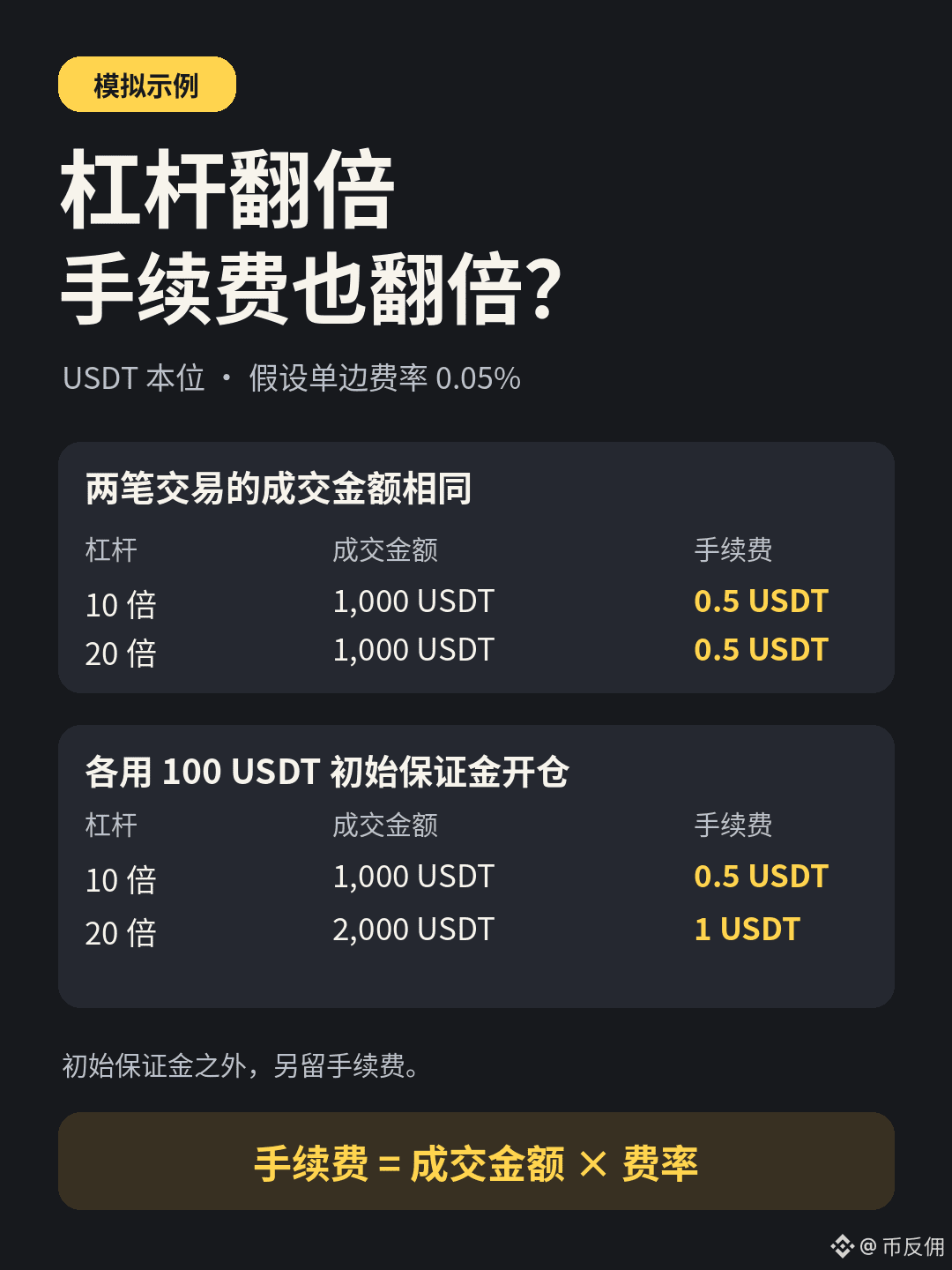
If I adjust the leverage from 10x to 20x, will I be charged another fee?
Changing the leverage alone, without making a new trade, won’t incur a trading fee. Fees are based on the actual trade amount.
In the example, the fee doubled because the trade amount also doubled. So when calculating the fee, if you already know the trade amount, simply multiply it by the fee rate.
Note: Don’t multiply by the leverage again after calculating, or you’ll count the fee twice.
#合约手续费 #交易成本
128
·
--
For every buyer, there has to be a seller. So why can the contract data show different "taker buy volume" and "taker sell volume"?
Because every trade has both a buyer and a seller. But when measuring taker direction, we only look at who takes orders already resting in the order book.
Here’s a hypothetical example. The same contract has only two trades during the same period.
In the first trade, someone places an order to sell 3 contracts, and a buyer immediately buys them. Those 3 contracts count as taker buys.
In the second trade, someone places an order to buy 2 contracts, and a seller immediately sells to them. Those 2 contracts count as taker sells.
Across both trades, the buyer bought 5 contracts in total, and the seller also sold 5. But broken down by taker direction, buyers took 3 contracts, while sellers took 2.
So next time you see "taker buy volume is higher," you can read it as "buyers took more orders during this period." This metric alone can't tell you whether the price will rise or fall in the next period.
#合约数据 #主动买入量
125
·
--
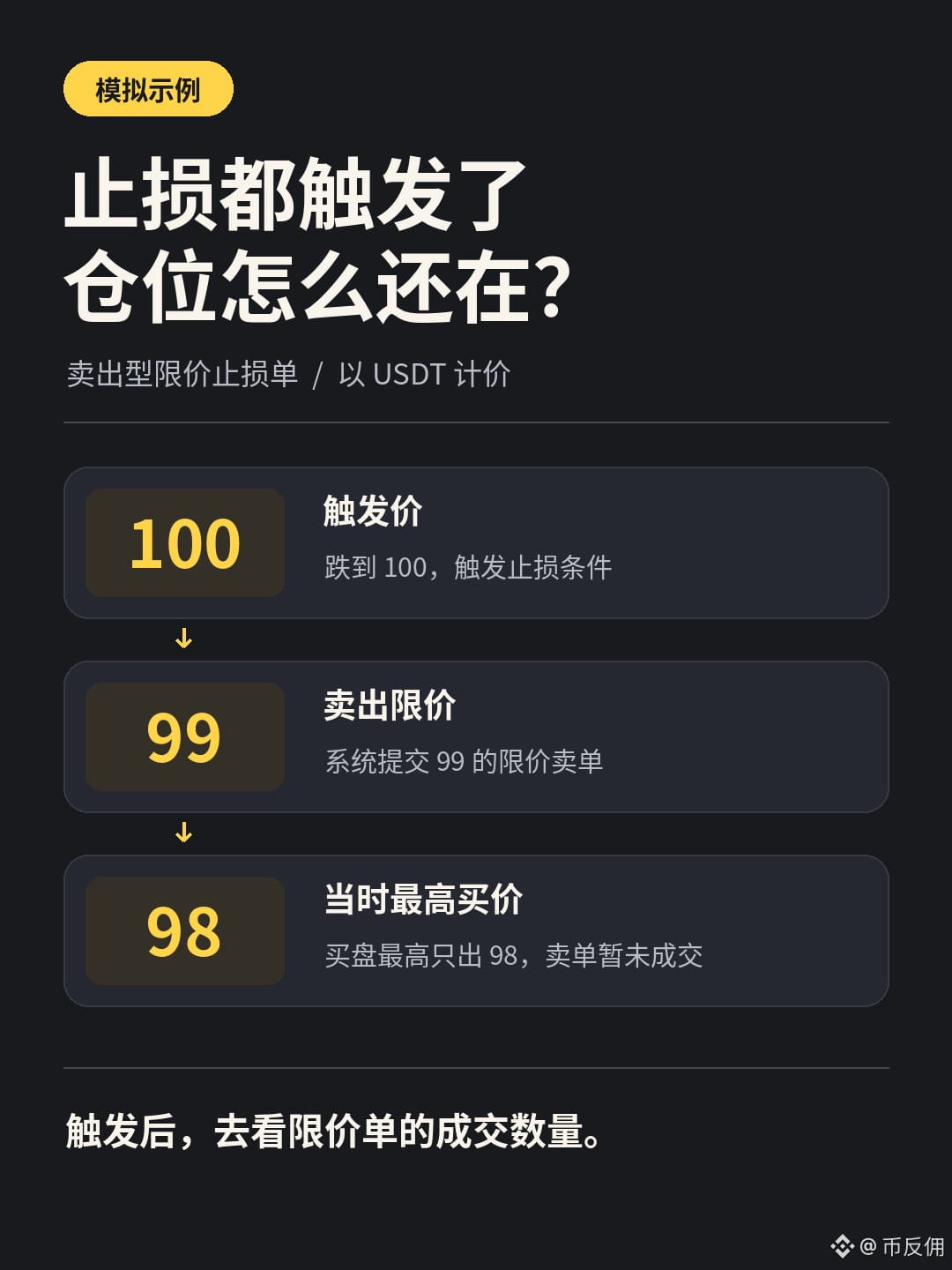
The price has already fallen past the stop-loss level, so why is the position still open when you check?
If you set a stop-limit order, open the order first and check: does it show “Triggered,” or has any quantity been filled?
Here’s a hypothetical example. You’re holding a long position, with the stop price set at 100 USDT and the sell limit price at 99 USDT. When the price falls to 100, the system submits a limit sell order at 99. But when the order reaches the market, the highest bid is only 98, so the order may not be filled right away.
100 determines when the order is placed; 99 determines the lowest price you’re willing to sell at.
In this situation, check the filled quantity in the order details. If it shows 0, that means the position hasn’t been closed by this order. If only part of it has been filled, the remaining position is still open.
#合约交易 #止损
37
·
--
I already selected “Use Rebate Voucher,” so why was a fee still deducted from my trade history after I bought crypto?
That’s because Binance’s trading fee rebate voucher works by first deducting the fee when the trade is executed, then refunding the eligible amount to your account.
Here’s a hypothetical example. You make a futures trade that meets the voucher’s requirements. A fee of 5 USDT is deducted when the trade is executed, and 2 USDT is later refunded to your account. The two transactions are shown separately. Taken together, the net fee for this trade is 3 USDT.
To check the refund, go to “Assets👉🏻Account Statement👉🏻Transaction History👉🏻Fee Rebates” and look for the credit. If you can’t find it yet, wait a while and check again. Before trading, go to the “Rewards Hub” to confirm that the voucher was activated before the trade, applies to this type of trade, and still has an available balance.
#交易手续费 #交易复盘

117


·
--
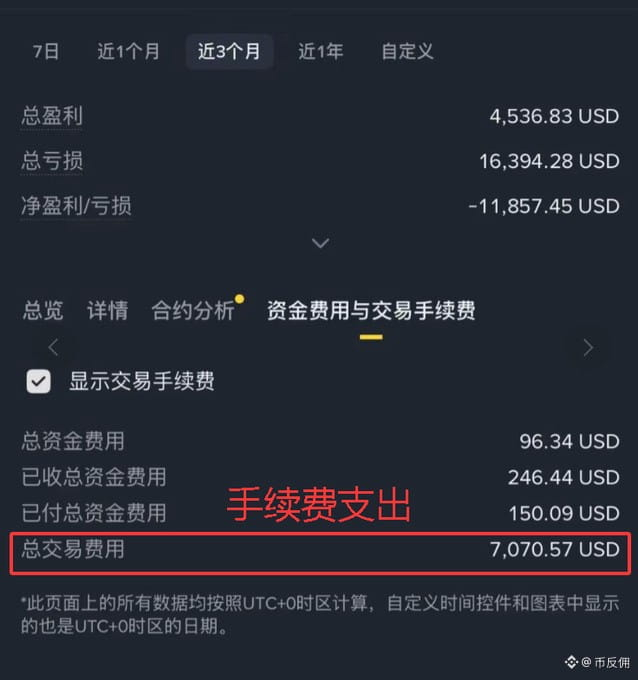
Many people trade contracts and, when they make money, think they’re good at it; when they lose money, they blame the market.
But there’s a cost that’s often overlooked: fees.
You’re charged when you open a position and again when you close it. The more trades you make, the more those costs add up.
We can’t control the market, but we can reduce our fees—and find out what they’ll be in advance.
Before trading, check your fees and the discount rate that applies to them.
122
·
--
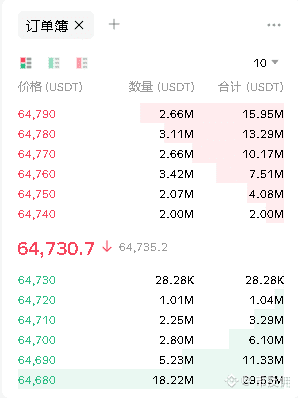
Before placing the order, I saw the best ask price was 100 USDT. After buying, why did the average execution price turn into 100.8?
Here’s a simulated example. The lowest ask price for both coins is 100 USDT, and you place a market order to buy 10 of each. Assume the order book does not change during execution, and fees are calculated separately.
For the first coin, there are enough sell orders at the 100 USDT level, so all 10 are filled at 100, costing 1,000 USDT in total.
For the second coin, there are only 2 available at the 100 USDT level. After buying those 2, the remaining 8 have to move to the next level and are filled at 101. The total cost is 1,008 USDT, and the average execution price is 100.8 USDT.
If you had estimated based on the best ask price, then the extra 8 USDT is the slippage cost of this order.
So when looking at the order book, besides checking how much the cheapest sell level is, also see how much you can buy at that level. If that level is not enough, the prices at the following levels will also be included in your average execution price.$BTC $ETH
{spot}(ETHUSDT)
{spot}(BTCUSDT)
#滑点 #交易成本 #订单簿
Before placing the order, I saw the best ask price was 100 USDT. After buying, why did the average execution price turn into 100.8?
Here’s a simulated example. The lowest ask price for both coins is 100 USDT, and you place a market order to buy 10 of each. Assume the order book does not change during execution, and fees are calculated separately.
For the first coin, there are enough sell orders at the 100 USDT level, so all 10 are filled at 100, costing 1,000 USDT in total.
For the second coin, there are only 2 available at the 100 USDT level. After buying those 2, the remaining 8 have to move to the next level and are filled at 101. The total cost is 1,008 USDT, and the average execution price is 100.8 USDT.
If you had estimated based on the best ask price, then the extra 8 USDT is the slippage cost of this order.
So when looking at the order book, besides checking how much the cheapest sell level is, also see how much you can buy at that level. If that level is not enough, the prices at the following levels will also be included in your average execution price.$BTC $ETH
#滑点 #交易成本 #订单簿

286
·
--
You only placed one limit order, so why does the trade history show one fill as Taker and another as Maker?
Here's an example. Suppose you want to buy 10 coins with a limit price of 100 USDT. At the time, there are only 3 coins available at that price on the sell side, and none at a lower price.
When you place the order, it first buys the 3 coins that someone else has already placed an order for. This fill is Taker.
The remaining 7 coins stay on the buy side at 100 USDT. A little later, someone actively sells to you, and this fill is Maker.
Both fills are at 100 USDT, but the roles are different. A limit order controls how much you're willing to pay; Maker and Taker refer to who was already waiting with an order in that trade.
So next time you check the fees, you can open “Trade History” to see how many fills the same order was split into, then verify the fees for each one.
(Perpetuals users should pay extra attention to limit and market orders: the limit fee rate is 0.02%, and the market fee rate is 0.05%. With high-frequency trading, your fee expenses can double.)
#交易手续费揭秘 #限价单

134
·
--
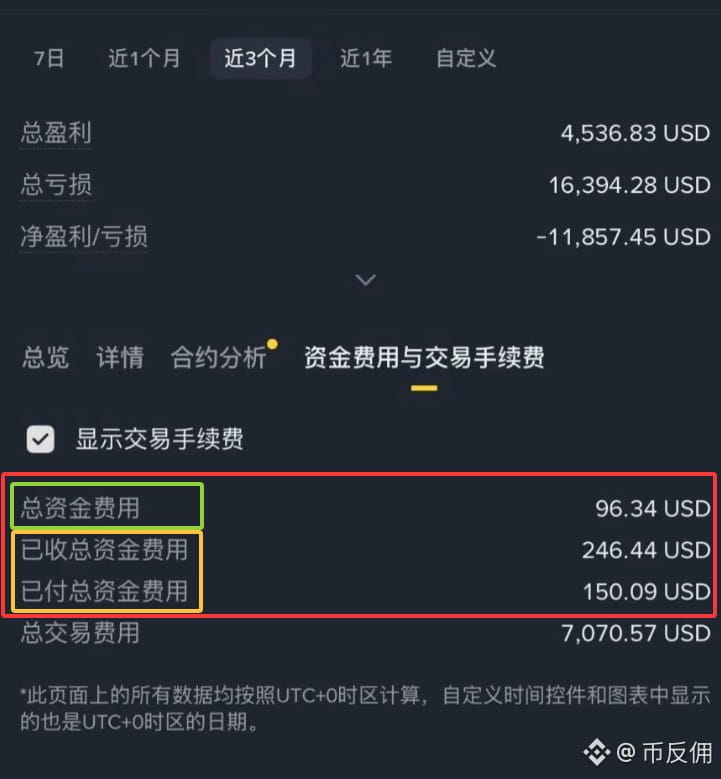
I opened a perpetual contract last night. I didn’t add to or close my position this morning, but there’s an extra charge on my bill. Where did it come from?
First, check the item name on your bill. Trading fees are charged when trades are executed. You pay a fee when an opening order is filled, and the same applies when a closing order is filled.
Funding fees depend on whether you hold a position at settlement time. When settlement comes around, even if you haven’t done anything all night, you may still pay or receive a payment as long as you’re holding a position. When the funding rate is positive, longs pay shorts; when it’s negative, shorts pay longs.
For example, suppose opening a position last night incurred a trading fee of 3 USDT, and your position later crossed a settlement time, resulting in a funding fee of 2 USDT. The total is 5 USDT: 3 USDT for the opening trade and 2 USDT in funding fees.
Next time this happens, open your contract trading history and compare the charge times with the fee names. One corresponds to the trade execution time, and the other to the funding settlement time. That should clear things up.
#知识科普 $USDT

88
·
--
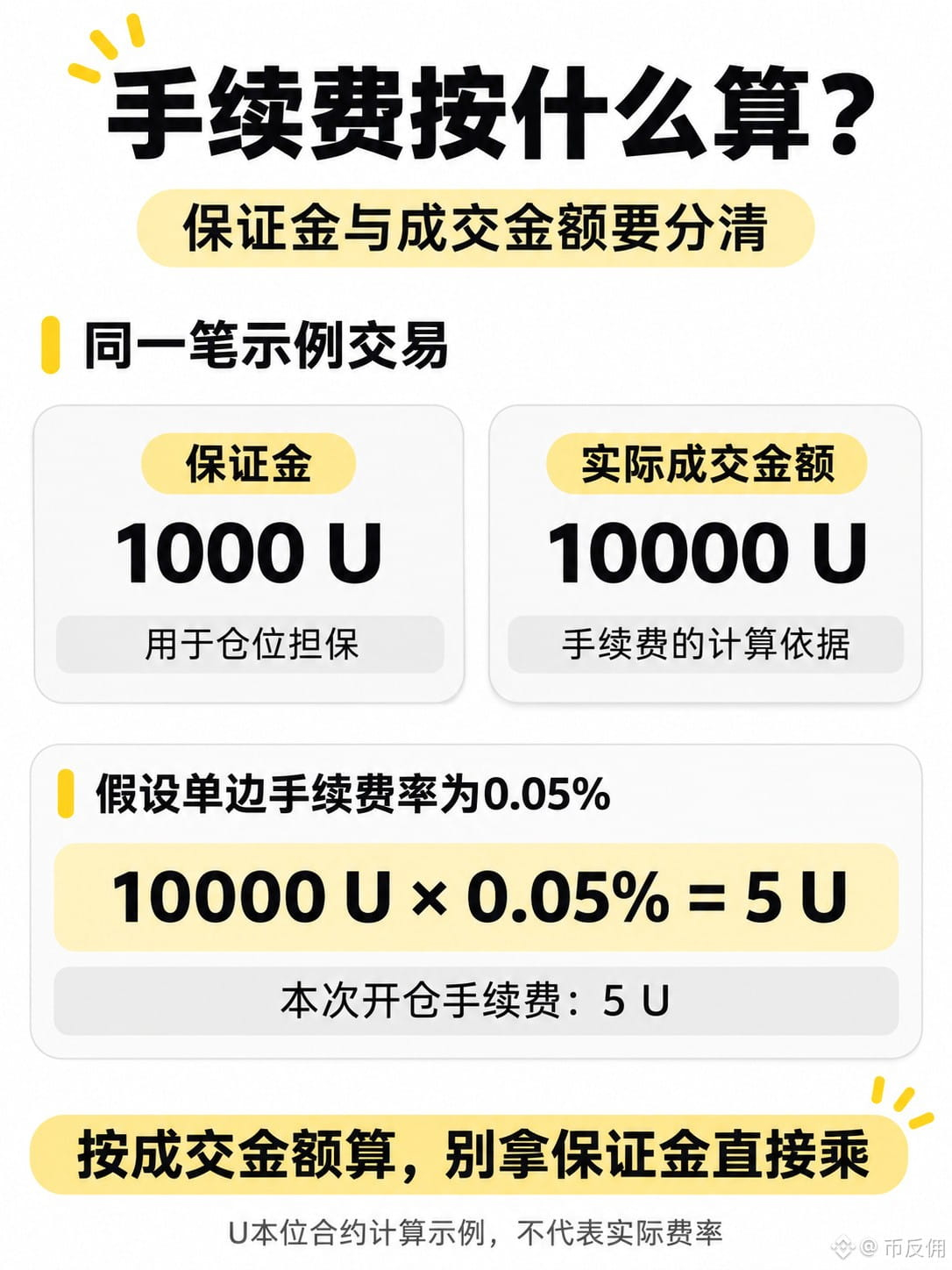
Why are fees calculated on 10,000 U when I only used 1,000 U as margin?
Because margin and the actual trade value are two different things.
For example, with a USDT-margined contract, fees are usually calculated as “actual trade value × applicable fee rate.”
Suppose a trade uses 1,000 U in margin, the actual opening trade value is 10,000 U, and the one-way fee rate is 0.05%.
The opening fee would be: 10,000 × 0.05% = 5 U.
Closing the position is also charged based on the actual closing trade value and the applicable fee rate. If the trade value and fee rate are the same, that’s another 5 U, for a total of 10 U across both trades.
This is just a calculation example; funding fees and slippage are not included.
Fees are not multiplied by leverage again after they are calculated. The fee is the same for the same trade quantity, trade price, and fee rate.
So when checking your statement, first look at the actual trade value. Focusing only on the margin you put in can easily lead you to underestimate the costs that add up from repeatedly opening and closing positions.
101
·
--
Your position hasn’t changed, so why is there another fee on your bill?
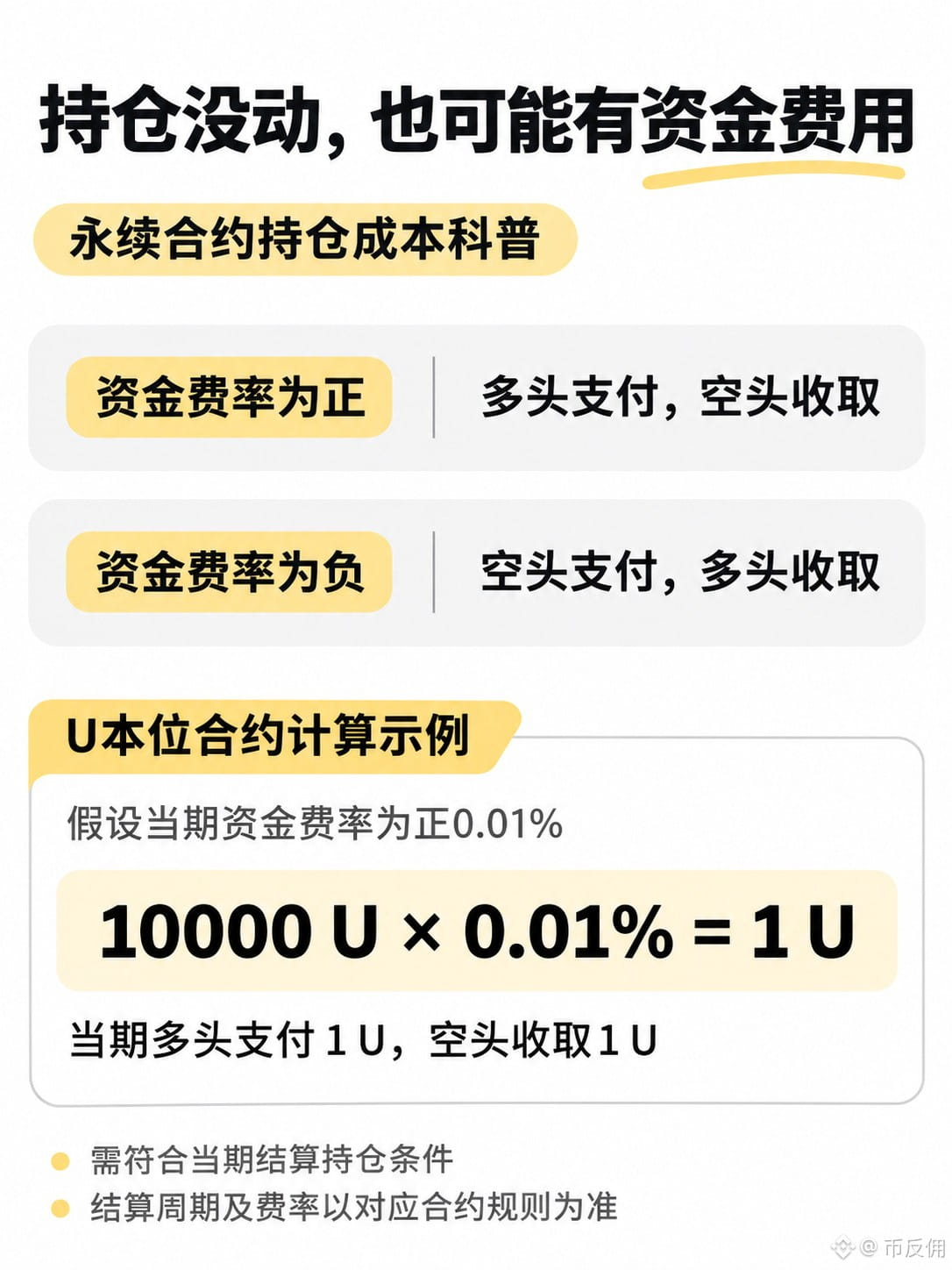
When trading perpetual contracts, you may incur funding fees in addition to trading fees when orders are filled.
These are fees periodically paid between long and short positions. If your position meets the settlement requirements for a given period, you may receive or pay a funding fee even if you haven’t added to or reduced your position.
When the funding rate is positive, longs pay shorts; when it’s negative, shorts pay longs.
For example, with a USDT-margined perpetual contract, suppose your position is worth 10,000 USDT at settlement and the funding rate for that period is positive 0.01%. Longs would pay 1 USDT, and shorts would receive 1 USDT.
This is just a calculation example and does not represent the actual funding rate.
Note that funding fees are calculated based on the position value, not by multiplying your margin directly. Check the settlement interval and funding rate for the specific contract—don’t assume they’re always set every 8 hours.
Receiving a funding fee doesn’t necessarily mean the trade as a whole was profitable. Price movements and trading fees still affect the final result.
89
·
--
(Spread, slippage, and fees)
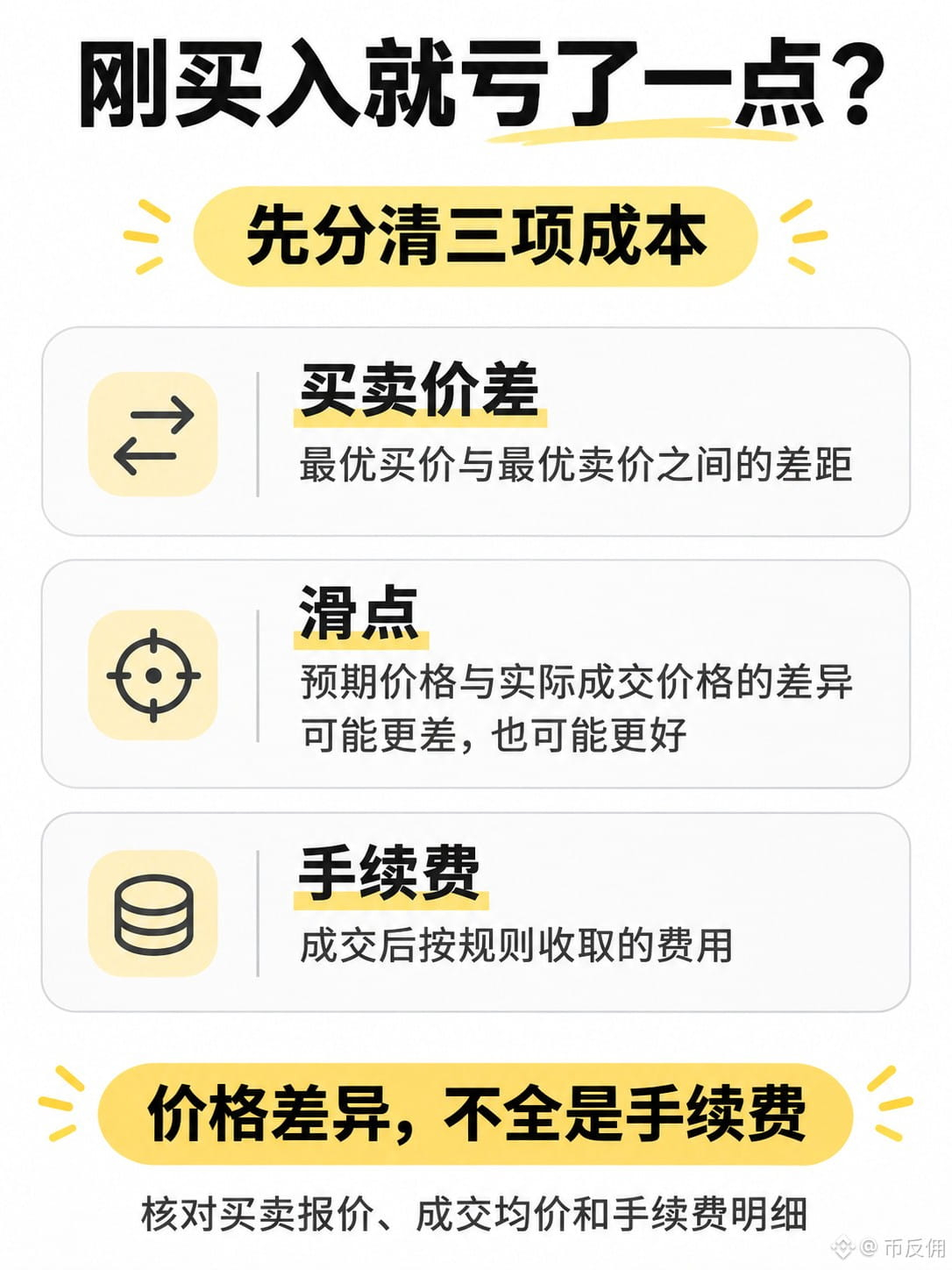
If you’re already at a small loss right after buying, are the fees really that high?
First, distinguish between three things: the bid-ask spread, slippage, and fees.
For example, suppose an asset’s lowest ask is 100.1U and its highest bid is 100U. If you buy immediately and then sell right away, and assume the quotes and quantities haven’t changed, you’ll still lose 0.1U per unit due to the spread, even before fees. That’s the bid-ask spread.
In another scenario, when you place an order, you see the lowest ask at 100.1U, but there isn’t enough quantity available at that price. Your order continues buying at higher ask prices, bringing the average execution price to 100.3U.
Compared with 100.1U, the extra 0.2U is the unfavorable slippage on this buy. Slippage can also result in a better-than-expected execution price.
Fees should be checked separately in your trade details. The unrealized loss shown in your account is also affected by valuation methods and price movements, so it shouldn’t all be attributed to fees.
When reviewing a trade, look separately at the bid and ask quotes, average execution price, and fees to see where the costs came from.
121
·
--
Why didn’t my fees go down even though I placed a limit order?
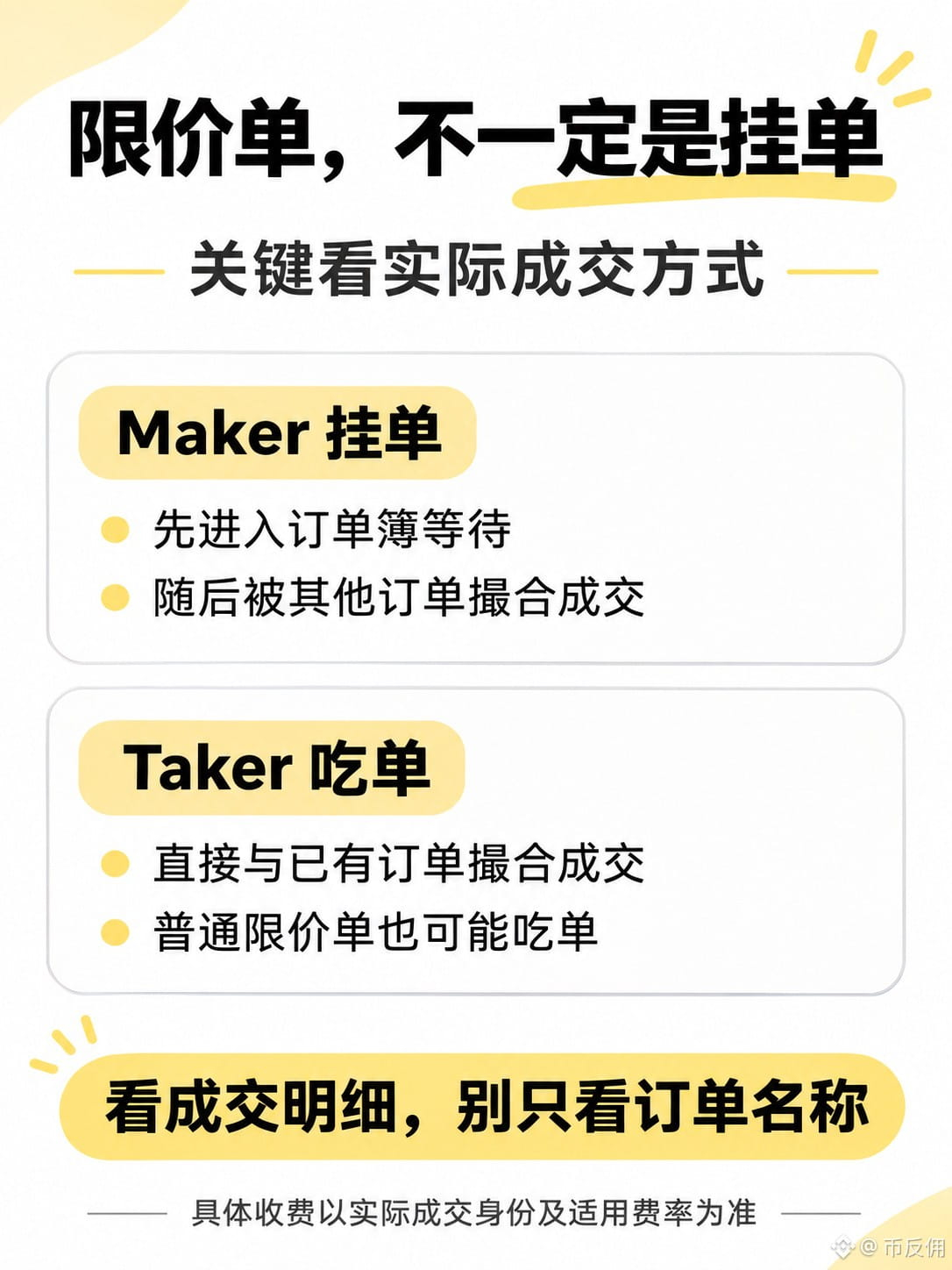
Because a limit order isn’t necessarily a maker order.
Suppose the lowest ask price is 100 U, with enough quantity available. If you submit a regular limit buy order at 101 U, it may be filled immediately at 100 U.
Although you chose “Limit,” you bought sell orders that others had already placed. This trade is a Taker trade. If your order first enters the order book and waits, then gets matched with another order later, it’s a Maker trade.
The same order may also be partially filled immediately as a Taker, while the remainder rests in the order book and is later filled as a Maker.
So when checking your fees, don’t just look at which button you clicked. Check your actual trade role and the fee rate that applies to your account. If you need to exit quickly, don’t ignore the risk of your order remaining unfilled just to save a little on fees.
118
·
--
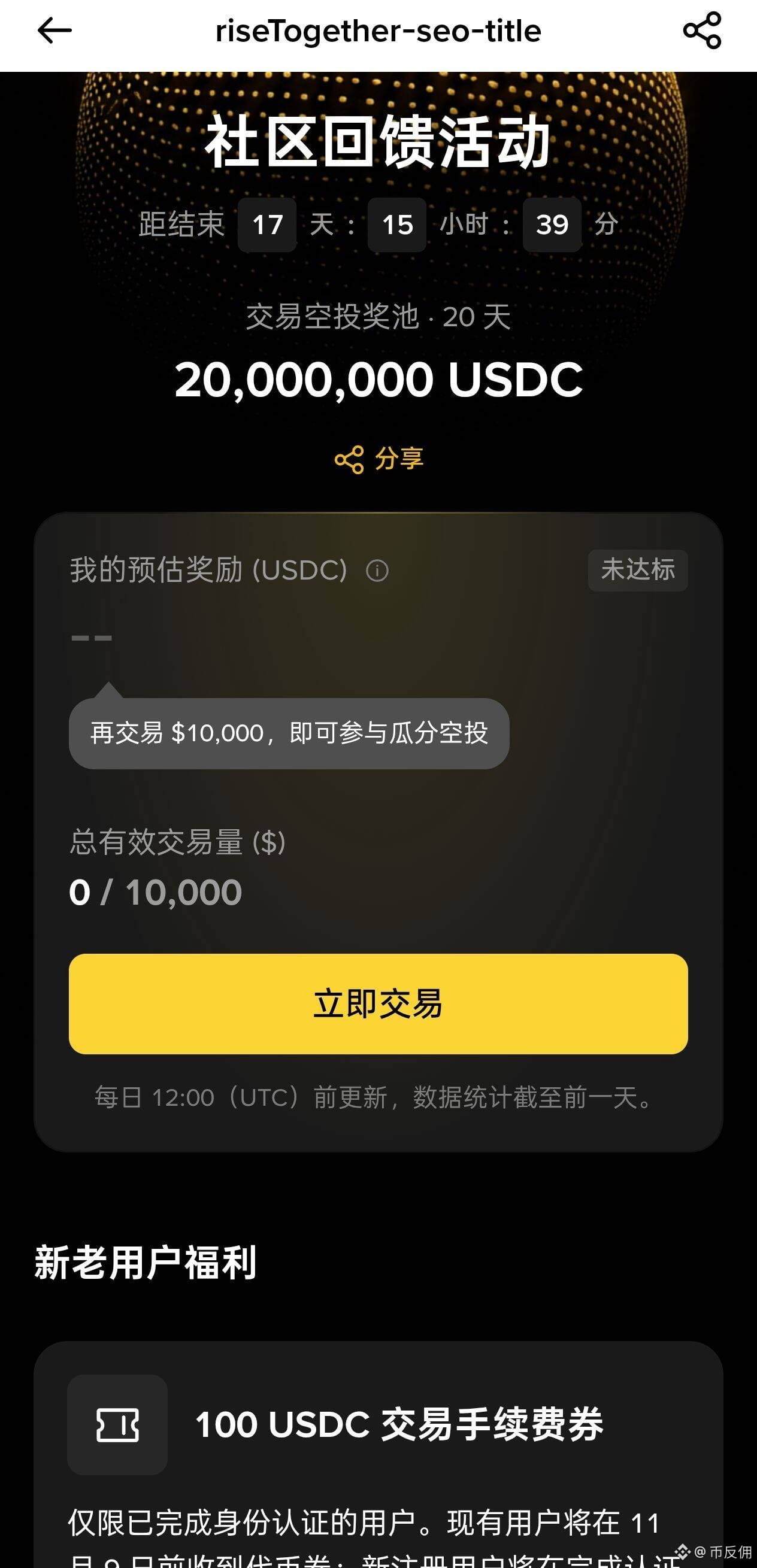
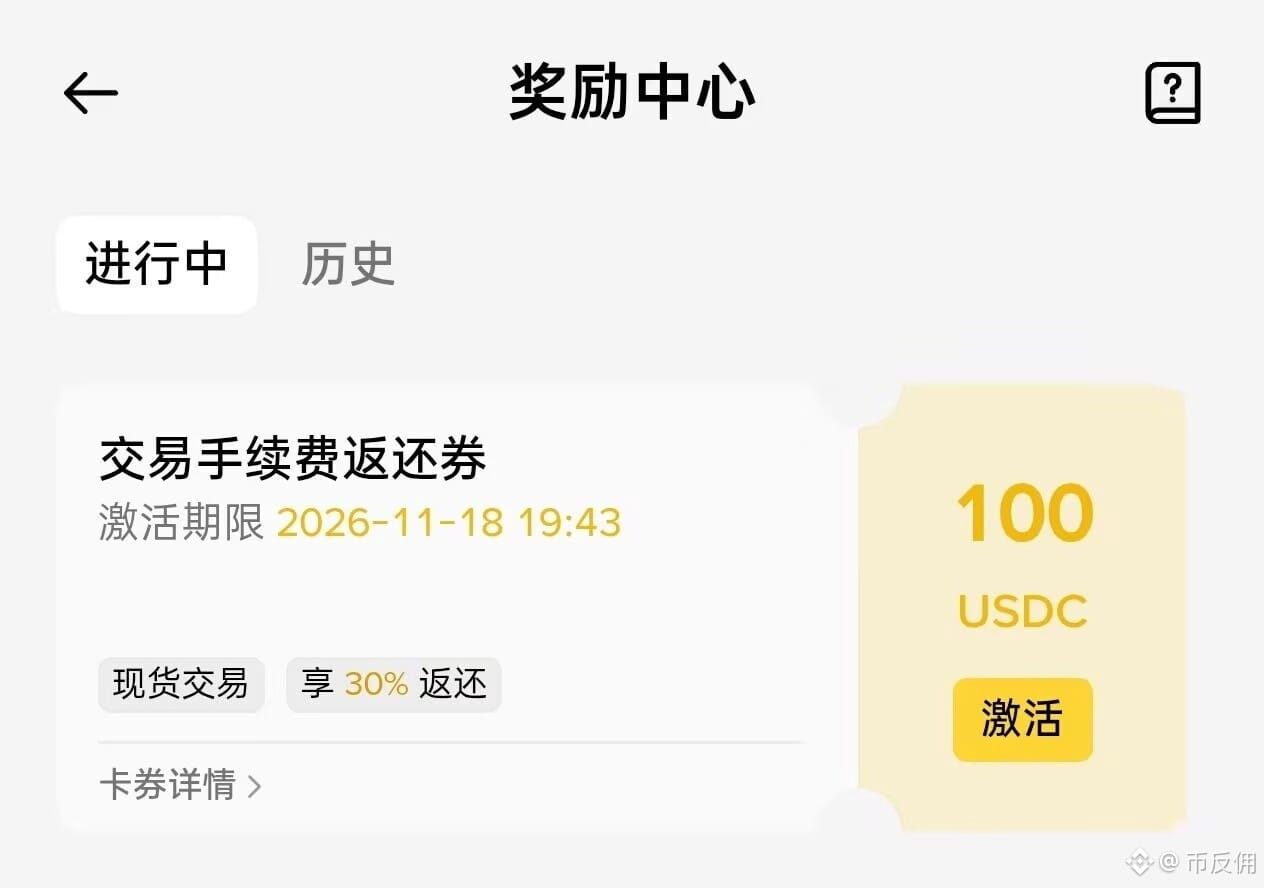
Share the 20 million$USDC prize pool. Spot, margin, futures, and stock trades all count toward trading volume.
Reward distribution formula: Individual reward = 20 million$USDC × (total eligible trading volume ÷ number of users meeting the eligible trading criteria) (maximum bonus per person: 4000$USDC )
[回馈活动](https://www.binance.com/zh-CN/activity/community-appreciation)
Share the 20 million$USDC prize pool. Spot, margin, futures, and stock trades all count toward trading volume.
Reward distribution formula: Individual reward = 20 million$USDC × (total eligible trading volume ÷ number of users meeting the eligible trading criteria) (maximum bonus per person: 4000$USDC )
回馈活动
Reward distribution formula: Individual reward = 20 million$USDC × (total eligible trading volume ÷ number of users meeting the eligible trading criteria) (maximum bonus per person: 4000$USDC )
回馈活动
384
·
--
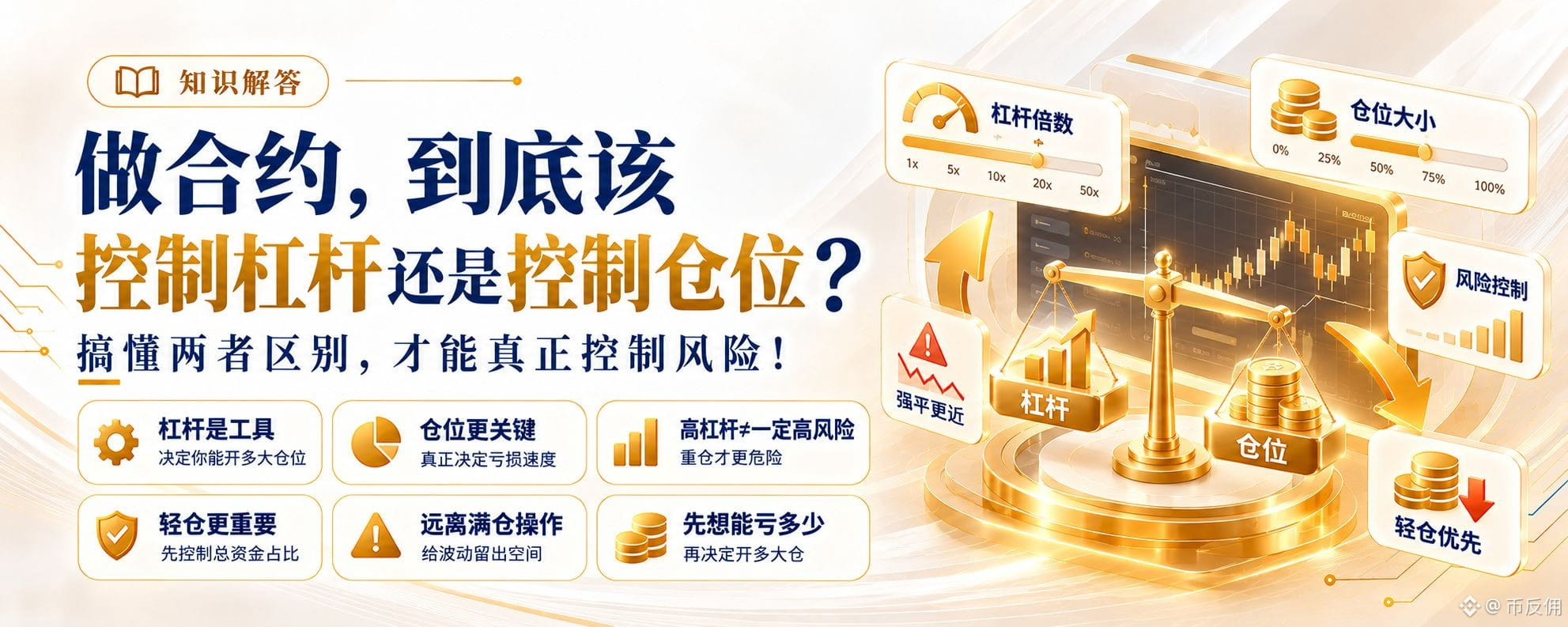
Many people trading futures check the leverage multiplier before opening a position, but rarely take the time to think about how large their position actually is.
In fact, both leverage and position size matter. But if we had to distinguish between them, position size determines how quickly your losses can add up, while leverage affects margin usage and liquidation risk.
Here’s a simple example.
Suppose you have 1,000 USDT in capital, use 10x leverage, and open a position worth 10,000 USDT.
If the market moves 1% against you, ignoring trading fees and funding rates for now, you’ll lose about 100 USDT—equivalent to 10% of your capital.
But if you open a position worth only 2,000 USDT, the same 1% move against you would result in a loss of just 20 USDT.
See the difference?
With the same amount of capital, different position sizes mean very different potential losses.
That’s why some people trading futures can lose money very quickly even when using only 5x leverage, while others may set their leverage to 10x but keep their actual position small, taking on less risk from price fluctuations.
Of course, this doesn’t mean high leverage is risk-free. The higher the leverage, the less room there usually is for the market to move against you, so liquidation risk also needs extra attention.
I think the most important question to ask before opening a futures position isn’t “How much leverage can I use?” but rather: “If this trade goes wrong, how much am I willing to lose at most?”
First decide how much you can afford to lose, then choose your position size and set a stop-loss. That’s more useful than obsessing over the leverage multiplier.
After all, trading isn’t about who makes the most in a single trade—it’s about who can stay in the market the longest.
181
·
--

Article
How to Reduce Binance Fees: Several Ways for Spot and Futures, ExplainedWhen trading, many people focus most on market movements and profits and losses. They often don’t pay close attention to fees until they’ve been trading for a while.
This is especially true for futures. The fee for a single trade may not seem like much, but opening, closing, increasing, and reducing a position all generate trades. When trading frequently, the fees can add up noticeably over time.
So how can you reduce Binance fees? There are only a few common ways.
1. Enable BNB fee deductions
This is the most straightforward option. Binance currently offers a 25% fee discount when you pay trading fees with BNB on Spot and Margin, and a 10% discount when you use BNB to pay fees on USDⓈ-M Futures.
How to Reduce Binance Fees: Several Ways for Spot and Futures, Explained
When trading, many people focus most on market movements and profits and losses. They often don’t pay close attention to fees until they’ve been trading for a while.
This is especially true for futures. The fee for a single trade may not seem like much, but opening, closing, increasing, and reducing a position all generate trades. When trading frequently, the fees can add up noticeably over time.
So how can you reduce Binance fees? There are only a few common ways.
1. Enable BNB fee deductions
This is the most straightforward option. Binance currently offers a 25% fee discount when you pay trading fees with BNB on Spot and Margin, and a 10% discount when you use BNB to pay fees on USDⓈ-M Futures.
33
·
--

Article
Does entering a Binance invitation code guarantee you’ll get rebates?Many people entered an invitation code when signing up for Binance, but later wondered: Other people get fee rebates when they trade, so why haven’t I received any?
The truth is, many people confuse these two things from the start: entering an invitation code ≠ automatically getting rebates. The most basic purpose of an invitation code is to establish a referral relationship between you and the person who invited you.
As for whether you can receive rebates on fees from future trades, that also depends on whether the referral relationship has a corresponding fee rebate set up for the invitee.
So there are a few possible scenarios: someone enters an invitation code when registering and a rebate is set up, in which case they’ll receive rebates as expected after trading. Someone else may have entered an invitation code, but no rebate rate was set for the invitee, so they won’t receive any fee rebates no matter how long they trade.
Does entering a Binance invitation code guarantee you’ll get rebates?
Many people entered an invitation code when signing up for Binance, but later wondered: Other people get fee rebates when they trade, so why haven’t I received any?
The truth is, many people confuse these two things from the start: entering an invitation code ≠ automatically getting rebates. The most basic purpose of an invitation code is to establish a referral relationship between you and the person who invited you.
As for whether you can receive rebates on fees from future trades, that also depends on whether the referral relationship has a corresponding fee rebate set up for the invitee.
So there are a few possible scenarios: someone enters an invitation code when registering and a rebate is set up, in which case they’ll receive rebates as expected after trading. Someone else may have entered an invitation code, but no rebate rate was set for the invitee, so they won’t receive any fee rebates no matter how long they trade.
29
·
--

Article
Many people trade for a long time before realizing they could be getting their trading fees backMany people trade for months or even years before seeing someone mention rebates in the community and suddenly realizing: Why do others get part of their trading fees back every month, while I never have?
The reason is actually pretty simple.
What is a trading fee rebate?
Every spot or futures trade you make incurs a fee. If your account has an applicable rebate arrangement, part of that fee will be returned to you at a set rate.
If you don’t trade much, you may not notice the difference. But if you trade futures regularly over the long term, your fees can add up to more than you’d expect over the course of a month.
Many people trade for a long time before realizing they could be getting their trading fees back
Many people trade for months or even years before seeing someone mention rebates in the community and suddenly realizing: Why do others get part of their trading fees back every month, while I never have?
The reason is actually pretty simple.
What is a trading fee rebate?
Every spot or futures trade you make incurs a fee. If your account has an applicable rebate arrangement, part of that fee will be returned to you at a set rate.
If you don’t trade much, you may not notice the difference. But if you trade futures regularly over the long term, your fees can add up to more than you’d expect over the course of a month.
131
·
--

Article
What’s the Difference Between Rebates and Referrers?Many people who are new to Binance think “rebates” and “referrers” are the same thing. They are related, but they work in completely different ways.
Let’s start with rebates. They’re easy to understand: after you incur trading fees, a portion of those fees is returned to you based on the applicable rebate rate. So what determines how much you receive isn’t just the rebate rate—it also depends on how much in fees you actually generate.
Here’s a simple example:
The rebate rate is 20% in both cases, but if you generate just 10 USDT in trading fees in a month versus 1,000 USDT, the amount you ultimately receive will be completely different.
What’s the Difference Between Rebates and Referrers?
Many people who are new to Binance think “rebates” and “referrers” are the same thing. They are related, but they work in completely different ways.
Let’s start with rebates. They’re easy to understand: after you incur trading fees, a portion of those fees is returned to you based on the applicable rebate rate. So what determines how much you receive isn’t just the rebate rate—it also depends on how much in fees you actually generate.
Here’s a simple example:
The rebate rate is 20% in both cases, but if you generate just 10 USDT in trading fees in a month versus 1,000 USDT, the amount you ultimately receive will be completely different.
2
489
·
--
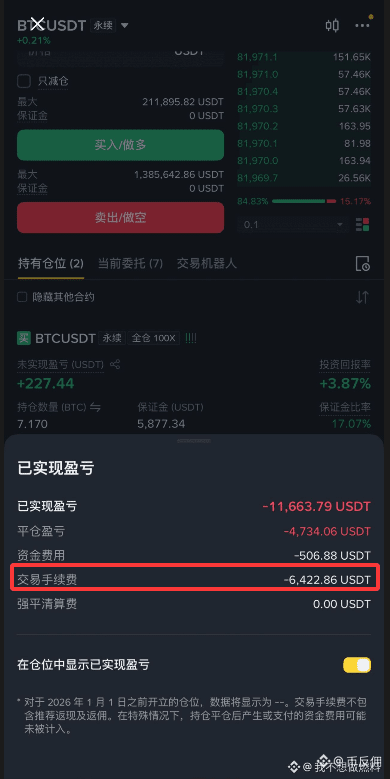
Why do futures trading fees feel so expensive?
Because fees are calculated based on the actual trade value, not the margin.
For example, if you use 1,000 U of margin to open a 10,000 U position, you pay a fee when you open it and again when you close it. (Trading fees are a necessary cost of trading.)
So what often drives fees up isn’t the fee rate itself, but large positions, frequent opening and closing, and more taker trades.
In short: leverage doesn’t directly increase the fee rate, but a larger trade value can significantly increase the fee amount.
1
98
Log in to explore more content
Join global crypto users on Binance Square
⚡️ Get latest and useful information about crypto.
💬 Trusted by the world’s largest crypto exchange.
👍 Discover real insights from verified creators.
Email / Phone number
Trending Topics
IsAnthropic’s$1.5TMarketCapJustified?
24,093 views
125 Discussing
Anthropic Set to Open at $105 in Record Nasdaq Debut
Binance News
·12 Likes
·17.1k views
13FInstitutionsBitcoinSpotETPHoldingsHitRecord
1,164 views
30 Discussing
BTCRemainsUnderPressureAfterHawkishFOMCMinutes
300,060 views
2,239 Discussing