

Enzogo
686 Posts

Enzogo
Report
Block User
Крипто-інфлюенсер, засновник CryptoWay. Будую системи доходу (TGE, фарм, арбітраж), ділюсь кейсами в каналі - @CryptoWayX

BTC Holder
High-Frequency Trader
5.5 Years
23 Following
3.5K+ Followers
3.0K+ Liked
Posts
All
Quotes
Videos
Live
·
--
📌 Digest of key events for 27.09
🟡 US Economy: The yield on 10-year and 30-year US Treasury bonds reached multi-year highs of 5.2% and 5.5%, respectively, amid a national debt of ~125% of GDP.
📊 Bitget Hack: The hack occurred without a leak of private keys. According to GoPlus Security, the attackers compromised a critically important wallet infrastructure system of Bitget and replaced transaction data.
⚡ Solana ETF attracted a record $188 million in a week, with Bitwise accounting for two-thirds of the inflow.
🔍 The number of altcoin deposits on exchanges yesterday reached the highest level since October 2025.
💰 Former CFTC Chair Chris Giancarlo said that the failure of the CLARITY Act will not kill crypto if it didn’t work for Gensler and his team.
#crypto #news
📌 Digest of key events for 27.09
🟡 US Economy: The yield on 10-year and 30-year US Treasury bonds reached multi-year highs of 5.2% and 5.5%, respectively, amid a national debt of ~125% of GDP.
📊 Bitget Hack: The hack occurred without a leak of private keys. According to GoPlus Security, the attackers compromised a critically important wallet infrastructure system of Bitget and replaced transaction data.
⚡ Solana ETF attracted a record $188 million in a week, with Bitwise accounting for two-thirds of the inflow.
🔍 The number of altcoin deposits on exchanges yesterday reached the highest level since October 2025.
💰 Former CFTC Chair Chris Giancarlo said that the failure of the CLARITY Act will not kill crypto if it didn’t work for Gensler and his team.
#crypto #news
🟡 US Economy: The yield on 10-year and 30-year US Treasury bonds reached multi-year highs of 5.2% and 5.5%, respectively, amid a national debt of ~125% of GDP.
📊 Bitget Hack: The hack occurred without a leak of private keys. According to GoPlus Security, the attackers compromised a critically important wallet infrastructure system of Bitget and replaced transaction data.
⚡ Solana ETF attracted a record $188 million in a week, with Bitwise accounting for two-thirds of the inflow.
🔍 The number of altcoin deposits on exchanges yesterday reached the highest level since October 2025.
💰 Former CFTC Chair Chris Giancarlo said that the failure of the CLARITY Act will not kill crypto if it didn’t work for Gensler and his team.
#crypto #news

1
427
·
--
📌 Digest of major events for 26.09
🟡 Crypto adoption in the USA: Hester Peirce, the SEC’s most consistent supporter of cryptocurrencies, will leave her position next week.
📊 USA and China: The USA and China reached an agreement to reduce tariffs on goods worth $30 billion after Xi Jinping’s talks with Trump.
⚡ The total net inflow for spot BTC ETFs amounted to $134.5 million, and the net inflow for spot ETH ETFs was $87 million.
🔍 The unified Aero protocol from the teams behind Aerodrome (AERO) and Velodrome (VELO) will go live on October 22.
#crypto #news
📌 Digest of major events for 26.09
🟡 Crypto adoption in the USA: Hester Peirce, the SEC’s most consistent supporter of cryptocurrencies, will leave her position next week.
📊 USA and China: The USA and China reached an agreement to reduce tariffs on goods worth $30 billion after Xi Jinping’s talks with Trump.
⚡ The total net inflow for spot BTC ETFs amounted to $134.5 million, and the net inflow for spot ETH ETFs was $87 million.
🔍 The unified Aero protocol from the teams behind Aerodrome (AERO) and Velodrome (VELO) will go live on October 22.
#crypto #news
🟡 Crypto adoption in the USA: Hester Peirce, the SEC’s most consistent supporter of cryptocurrencies, will leave her position next week.
📊 USA and China: The USA and China reached an agreement to reduce tariffs on goods worth $30 billion after Xi Jinping’s talks with Trump.
⚡ The total net inflow for spot BTC ETFs amounted to $134.5 million, and the net inflow for spot ETH ETFs was $87 million.
🔍 The unified Aero protocol from the teams behind Aerodrome (AERO) and Velodrome (VELO) will go live on October 22.
#crypto #news
420
·
--
📌 Digest of the main events for 25.09
🟡 Arbitrum: They are launching a paid service that will make it possible to speed up transactions on the network.
📊 LayerZero: A lawsuit has been filed against the project; the company KelpDAO has sent a claim for $292 million through the recent $rsETH pool hack.
⚡ Ethereum: Analysts from Santiment report that exchange reserves of $ETH have fallen to the lowest level in the entire history of the coin.
🔍 Magic Eden was hacked by a white-hat hacker, who managed to withdraw more than 3832 NFTs, including rare ones, from hundreds of wallets.
💰 The Bitget exchange was hacked for $351.6 million; the CEO states that users’ funds were not affected.
🛡️ The crypto casino Duelbits was hacked and more than $4.2 million was stolen.
🚶♀️ Phantom launched a joint promotion with Robinhood where you can get $10.
🧩 Bungee launched a campaign with a prize pool of $100,000.
#crypto #news
📌 Digest of the main events for 25.09
🟡 Arbitrum: They are launching a paid service that will make it possible to speed up transactions on the network.
📊 LayerZero: A lawsuit has been filed against the project; the company KelpDAO has sent a claim for $292 million through the recent $rsETH pool hack.
⚡ Ethereum: Analysts from Santiment report that exchange reserves of $ETH have fallen to the lowest level in the entire history of the coin.
🔍 Magic Eden was hacked by a white-hat hacker, who managed to withdraw more than 3832 NFTs, including rare ones, from hundreds of wallets.
💰 The Bitget exchange was hacked for $351.6 million; the CEO states that users’ funds were not affected.
🛡️ The crypto casino Duelbits was hacked and more than $4.2 million was stolen.
🚶♀️ Phantom launched a joint promotion with Robinhood where you can get $10.
🧩 Bungee launched a campaign with a prize pool of $100,000.
#crypto #news
🟡 Arbitrum: They are launching a paid service that will make it possible to speed up transactions on the network.
📊 LayerZero: A lawsuit has been filed against the project; the company KelpDAO has sent a claim for $292 million through the recent $rsETH pool hack.
⚡ Ethereum: Analysts from Santiment report that exchange reserves of $ETH have fallen to the lowest level in the entire history of the coin.
🔍 Magic Eden was hacked by a white-hat hacker, who managed to withdraw more than 3832 NFTs, including rare ones, from hundreds of wallets.
💰 The Bitget exchange was hacked for $351.6 million; the CEO states that users’ funds were not affected.
🛡️ The crypto casino Duelbits was hacked and more than $4.2 million was stolen.
🚶♀️ Phantom launched a joint promotion with Robinhood where you can get $10.
🧩 Bungee launched a campaign with a prize pool of $100,000.
#crypto #news
3
1k
·
--
📌 Digest of the main events for 21.09
🟡 ZetaChain: The blockchain will be paused and the development will be completed; instead, all tokens $ZETA will be migrated to Solana.
📊 Apple and Google: Two industry giants have opened applications for an expert position in stablecoins.
⚡ Internet Token was hacked for 764 mln $INT and 5.85 $WETH.
🔍 Garrett Jean (the biggest ZEC short-seller) closed his position at a loss of $35 million.
💰 The hacker who attacked Fetch and NuNet also hacked SingularityNET. The prior loss is estimated at $16.7 million.
🛡️ Strategy bought 950 Bitcoin last week.
🚶♀️ PrismaX released a detailed guide about their roles in Discord.
🧩 You can claim the first unlock tokens from the Aligned drop.
📌 Register for the new trading terminal from the Solana Foundation on the website.
#crypto #news
📌 Digest of the main events for 21.09
🟡 ZetaChain: The blockchain will be paused and the development will be completed; instead, all tokens $ZETA will be migrated to Solana.
📊 Apple and Google: Two industry giants have opened applications for an expert position in stablecoins.
⚡ Internet Token was hacked for 764 mln $INT and 5.85 $WETH.
🔍 Garrett Jean (the biggest ZEC short-seller) closed his position at a loss of $35 million.
💰 The hacker who attacked Fetch and NuNet also hacked SingularityNET. The prior loss is estimated at $16.7 million.
🛡️ Strategy bought 950 Bitcoin last week.
🚶♀️ PrismaX released a detailed guide about their roles in Discord.
🧩 You can claim the first unlock tokens from the Aligned drop.
📌 Register for the new trading terminal from the Solana Foundation on the website.
#crypto #news
🟡 ZetaChain: The blockchain will be paused and the development will be completed; instead, all tokens $ZETA will be migrated to Solana.
📊 Apple and Google: Two industry giants have opened applications for an expert position in stablecoins.
⚡ Internet Token was hacked for 764 mln $INT and 5.85 $WETH.
🔍 Garrett Jean (the biggest ZEC short-seller) closed his position at a loss of $35 million.
💰 The hacker who attacked Fetch and NuNet also hacked SingularityNET. The prior loss is estimated at $16.7 million.
🛡️ Strategy bought 950 Bitcoin last week.
🚶♀️ PrismaX released a detailed guide about their roles in Discord.
🧩 You can claim the first unlock tokens from the Aligned drop.
📌 Register for the new trading terminal from the Solana Foundation on the website.
#crypto #news
582
·
--
📌 Digest of key events for 18.09
🟡 Catalyst: We’re going through a quick registration for the super early project with support from Coinbase.
📊 Anthropic: According to the latest research, the company generates $13 million in revenue per employee, which is 1.5 times more than OpenAI.
⚡ Likwid Fi was hacked for 74.31 $BNB.
🔍 Short sellers are currently dominating the market; with a sharp rise of $BTC (to $85,000) and $ETH (to $2,730), the total liquidation volume could reach $4.8 billion.
💰 Nostra Finance was hacked for $3.5 million due to a bug in NSTR collateralization.
🛡️ A new launchpad, Genius, has launched on BNB Chain. Maybe it’s worth getting active there.
🚶♀️ Voice launched an ambassador program with USDT rewards.
🧩 Concrete created a Foundation and is announcing the TGE soon.
#crypto #news
📌 Digest of key events for 18.09
🟡 Catalyst: We’re going through a quick registration for the super early project with support from Coinbase.
📊 Anthropic: According to the latest research, the company generates $13 million in revenue per employee, which is 1.5 times more than OpenAI.
⚡ Likwid Fi was hacked for 74.31 $BNB .
🔍 Short sellers are currently dominating the market; with a sharp rise of $BTC (to $85,000) and $ETH (to $2,730), the total liquidation volume could reach $4.8 billion.
💰 Nostra Finance was hacked for $3.5 million due to a bug in NSTR collateralization.
🛡️ A new launchpad, Genius, has launched on BNB Chain. Maybe it’s worth getting active there.
🚶♀️ Voice launched an ambassador program with USDT rewards.
🧩 Concrete created a Foundation and is announcing the TGE soon.
#crypto #news
🟡 Catalyst: We’re going through a quick registration for the super early project with support from Coinbase.
📊 Anthropic: According to the latest research, the company generates $13 million in revenue per employee, which is 1.5 times more than OpenAI.
⚡ Likwid Fi was hacked for 74.31 $BNB .
🔍 Short sellers are currently dominating the market; with a sharp rise of $BTC (to $85,000) and $ETH (to $2,730), the total liquidation volume could reach $4.8 billion.
💰 Nostra Finance was hacked for $3.5 million due to a bug in NSTR collateralization.
🛡️ A new launchpad, Genius, has launched on BNB Chain. Maybe it’s worth getting active there.
🚶♀️ Voice launched an ambassador program with USDT rewards.
🧩 Concrete created a Foundation and is announcing the TGE soon.
#crypto #news

358
·
--
📌 Digest of the main events for 17.09
🟡 Statistics: In the world, 742 million people own cryptocurrencies; among them there are 23 billionaires, 290 crypto traders have more than $100 million on their balance, and 135,700 have more than $1 million.
📊 Ethereum: Vitalik Buterin is skeptical about cyber threats from AI, and instead is preparing tools for a mathematical proof of the security of $ETH code.
⚡ BNB Chain: The blockchain team is running an RWA hackathon for startups, with a prize pool of $20,000.
🔍 Tare, a company that builds infrastructure for the on-chain credit market, raised $13.3 million in a seed round. One of the investors was Blockchain Capital.
💰 Venture capital inflows into crypto for Q2 totaled $5.6 billion, indicating interest in our space.
🛡️ One of the largest short positions $ZEC has an unrealized loss of $26.5 million.
🚶♀️ On September 18, there will be an NFT reveal of the Nado collection.
🧩 Extended launched a new event with a prize pool of $50,000.
#crypto #news
📌 Digest of the main events for 17.09
🟡 Statistics: In the world, 742 million people own cryptocurrencies; among them there are 23 billionaires, 290 crypto traders have more than $100 million on their balance, and 135,700 have more than $1 million.
📊 Ethereum: Vitalik Buterin is skeptical about cyber threats from AI, and instead is preparing tools for a mathematical proof of the security of $ETH code.
⚡ BNB Chain: The blockchain team is running an RWA hackathon for startups, with a prize pool of $20,000.
🔍 Tare, a company that builds infrastructure for the on-chain credit market, raised $13.3 million in a seed round. One of the investors was Blockchain Capital.
💰 Venture capital inflows into crypto for Q2 totaled $5.6 billion, indicating interest in our space.
🛡️ One of the largest short positions $ZEC has an unrealized loss of $26.5 million.
🚶♀️ On September 18, there will be an NFT reveal of the Nado collection.
🧩 Extended launched a new event with a prize pool of $50,000.
#crypto #news
🟡 Statistics: In the world, 742 million people own cryptocurrencies; among them there are 23 billionaires, 290 crypto traders have more than $100 million on their balance, and 135,700 have more than $1 million.
📊 Ethereum: Vitalik Buterin is skeptical about cyber threats from AI, and instead is preparing tools for a mathematical proof of the security of $ETH code.
⚡ BNB Chain: The blockchain team is running an RWA hackathon for startups, with a prize pool of $20,000.
🔍 Tare, a company that builds infrastructure for the on-chain credit market, raised $13.3 million in a seed round. One of the investors was Blockchain Capital.
💰 Venture capital inflows into crypto for Q2 totaled $5.6 billion, indicating interest in our space.
🛡️ One of the largest short positions $ZEC has an unrealized loss of $26.5 million.
🚶♀️ On September 18, there will be an NFT reveal of the Nado collection.
🧩 Extended launched a new event with a prize pool of $50,000.
#crypto #news

1
195
·
--
📌 Digest of key events for 16.09
🟡 Deutsche Bank: The financial giant launches a cryptocurrency custody service for institutional clients.
📊 Robinhood: Two employees of the company are suspected of insider trading. They may have used non-public information about listings for their own benefit.
⚡ North Korea: The country threatens to use nuclear weapons in response to U.S. and South Korea’s policies.
🔍 For the first time, the weekly trading volume on prediction markets has exceeded $10 billion; this figure does not include sports forecasts.
💰 A hacker attempted to steal $7.8 million, but was outsmarted by an MEV bot.
🛡️ Mining company MARA Holdings purchased 1292 $BTC via FalconX.
🚶♀️ Ritual announced tokenomics, allocating 0.5% of tokens for the airdrop.
🧩 Axis Robotics announced a token sale.
#crypto #news
📌 Digest of key events for 16.09
🟡 Deutsche Bank: The financial giant launches a cryptocurrency custody service for institutional clients.
📊 Robinhood: Two employees of the company are suspected of insider trading. They may have used non-public information about listings for their own benefit.
⚡ North Korea: The country threatens to use nuclear weapons in response to U.S. and South Korea’s policies.
🔍 For the first time, the weekly trading volume on prediction markets has exceeded $10 billion; this figure does not include sports forecasts.
💰 A hacker attempted to steal $7.8 million, but was outsmarted by an MEV bot.
🛡️ Mining company MARA Holdings purchased 1292 $BTC via FalconX.
🚶♀️ Ritual announced tokenomics, allocating 0.5% of tokens for the airdrop.
🧩 Axis Robotics announced a token sale.
#crypto #news
🟡 Deutsche Bank: The financial giant launches a cryptocurrency custody service for institutional clients.
📊 Robinhood: Two employees of the company are suspected of insider trading. They may have used non-public information about listings for their own benefit.
⚡ North Korea: The country threatens to use nuclear weapons in response to U.S. and South Korea’s policies.
🔍 For the first time, the weekly trading volume on prediction markets has exceeded $10 billion; this figure does not include sports forecasts.
💰 A hacker attempted to steal $7.8 million, but was outsmarted by an MEV bot.
🛡️ Mining company MARA Holdings purchased 1292 $BTC via FalconX.
🚶♀️ Ritual announced tokenomics, allocating 0.5% of tokens for the airdrop.
🧩 Axis Robotics announced a token sale.
#crypto #news

165
·
--
📌 Digest of key events for 15.09
🟡 Balancer: The project failed to complete restructuring, so it will be shutting down. The treasury of $9M is proposed to be distributed among $BAL holders.
📊 Glassnode: Analysts report that fresh capital is managing to buy out sell pressure on spot, futures, and ETFs.
⚡ Bitcoin Bancorp: The project purchased 2,547 BTC ATMs from the bankrupt Bitcoin Depot for $620,750.
🔍 Yam Finance was hacked for 48 $ETH.
💰 BitMine bought $ETH at $68M last week.
🛡️ Last week, Strive bought 469 Bitcoin and increased the total reserve to 25,000 Bitcoin.
🚶♀️ Active traders of the OpenSea mobile app were given a $10 drop.
🧩 If you successfully minted an NFT from Rare Friends, congratulations— the floor is holding at $2k+.
📌 Etherscan added an explorer for the RobinHood network.
#crypto #news
📌 Digest of key events for 15.09
🟡 Balancer: The project failed to complete restructuring, so it will be shutting down. The treasury of $9M is proposed to be distributed among $BAL holders.
📊 Glassnode: Analysts report that fresh capital is managing to buy out sell pressure on spot, futures, and ETFs.
⚡ Bitcoin Bancorp: The project purchased 2,547 BTC ATMs from the bankrupt Bitcoin Depot for $620,750.
🔍 Yam Finance was hacked for 48 $ETH .
💰 BitMine bought $ETH at $68M last week.
🛡️ Last week, Strive bought 469 Bitcoin and increased the total reserve to 25,000 Bitcoin.
🚶♀️ Active traders of the OpenSea mobile app were given a $10 drop.
🧩 If you successfully minted an NFT from Rare Friends, congratulations— the floor is holding at $2k+.
📌 Etherscan added an explorer for the RobinHood network.
#crypto #news
🟡 Balancer: The project failed to complete restructuring, so it will be shutting down. The treasury of $9M is proposed to be distributed among $BAL holders.
📊 Glassnode: Analysts report that fresh capital is managing to buy out sell pressure on spot, futures, and ETFs.
⚡ Bitcoin Bancorp: The project purchased 2,547 BTC ATMs from the bankrupt Bitcoin Depot for $620,750.
🔍 Yam Finance was hacked for 48 $ETH .
💰 BitMine bought $ETH at $68M last week.
🛡️ Last week, Strive bought 469 Bitcoin and increased the total reserve to 25,000 Bitcoin.
🚶♀️ Active traders of the OpenSea mobile app were given a $10 drop.
🧩 If you successfully minted an NFT from Rare Friends, congratulations— the floor is holding at $2k+.
📌 Etherscan added an explorer for the RobinHood network.
#crypto #news

157
·
--
📌 Digest of major events for 09/14
🟡 Latin America: The country’s largest bank is entering the US market and launching international remittances using $USDC.
📊 Anthropic: Rumors are spreading that the project has already chosen Nasdaq as the exchange for its IPO.
⚡ ChainFlip was hacked for 736,400 $USDT on the Tron network.
🔍 The hackers who attacked Revolut have started leaking personal information into the public domain. They demand 10,000 $BTC to stop this process.
💰 Strategy released the 'Bitcoin Investor Guide' — in effect, a guide for investors, bankers, and capital managers that explains what Bitcoin is and why...
🛡️ Don’t forget to farm Lighter, as there is currently a rewarding campaign on the Robinhood network.
🚶♀️ Entropy opened the claim drop of HYPE for the first trading phase.
🧩 Checking the WL for an NFT mint from FortuneFoes.
#crypto #news
📌 Digest of major events for 09/14
🟡 Latin America: The country’s largest bank is entering the US market and launching international remittances using $USDC .
📊 Anthropic: Rumors are spreading that the project has already chosen Nasdaq as the exchange for its IPO.
⚡ ChainFlip was hacked for 736,400 $USDT on the Tron network.
🔍 The hackers who attacked Revolut have started leaking personal information into the public domain. They demand 10,000 $BTC to stop this process.
💰 Strategy released the 'Bitcoin Investor Guide' — in effect, a guide for investors, bankers, and capital managers that explains what Bitcoin is and why...
🛡️ Don’t forget to farm Lighter, as there is currently a rewarding campaign on the Robinhood network.
🚶♀️ Entropy opened the claim drop of HYPE for the first trading phase.
🧩 Checking the WL for an NFT mint from FortuneFoes.
#crypto #news
🟡 Latin America: The country’s largest bank is entering the US market and launching international remittances using $USDC .
📊 Anthropic: Rumors are spreading that the project has already chosen Nasdaq as the exchange for its IPO.
⚡ ChainFlip was hacked for 736,400 $USDT on the Tron network.
🔍 The hackers who attacked Revolut have started leaking personal information into the public domain. They demand 10,000 $BTC to stop this process.
💰 Strategy released the 'Bitcoin Investor Guide' — in effect, a guide for investors, bankers, and capital managers that explains what Bitcoin is and why...
🛡️ Don’t forget to farm Lighter, as there is currently a rewarding campaign on the Robinhood network.
🚶♀️ Entropy opened the claim drop of HYPE for the first trading phase.
🧩 Checking the WL for an NFT mint from FortuneFoes.
#crypto #news

259
·
--
📌 Digest of key events for 13.09
🟡 MagicBlock: Announced a limited box with its own merch and other items.
📊 Anthropic: The company’s CEO posted a tweet focusing on the issue of security and that AI development should be slowed down.
⚡ If it rises sharply from $BTC to $88,200, the volume of liquidations of short positions will exceed $6 billion.
🔍 The Fed’s balance sheet increased by 3.415 billion in one week.
💰 A small reminder for those who might still have funds in certain blockchains.
🛡️ 1inch added Monad, Cronos, and Hyperliquid to its exchange.
#crypto #news
📌 Digest of key events for 13.09
🟡 MagicBlock: Announced a limited box with its own merch and other items.
📊 Anthropic: The company’s CEO posted a tweet focusing on the issue of security and that AI development should be slowed down.
⚡ If it rises sharply from $BTC to $88,200, the volume of liquidations of short positions will exceed $6 billion.
🔍 The Fed’s balance sheet increased by 3.415 billion in one week.
💰 A small reminder for those who might still have funds in certain blockchains.
🛡️ 1inch added Monad, Cronos, and Hyperliquid to its exchange.
#crypto #news
🟡 MagicBlock: Announced a limited box with its own merch and other items.
📊 Anthropic: The company’s CEO posted a tweet focusing on the issue of security and that AI development should be slowed down.
⚡ If it rises sharply from $BTC to $88,200, the volume of liquidations of short positions will exceed $6 billion.
🔍 The Fed’s balance sheet increased by 3.415 billion in one week.
💰 A small reminder for those who might still have funds in certain blockchains.
🛡️ 1inch added Monad, Cronos, and Hyperliquid to its exchange.
#crypto #news
1
203
·
--
📌 Digest of key events for 12.09
🟡 Rare Friends: We submit an application for WL of a new collection on the Robinhood network from the Doodles team.
📊 Hyperliquid: Yesterday, during high volatility, a whale had a position liquidated for $20.3 million.
⚡ CryptoQuant: The analytics service reports that 93.2% of short-term holders $BTC are in profit.
🔍 Trezor уточнил, that around 2,500 people clicked on phishing links from the past hack.
💰 ZentraFinance was hacked for $143,000.
🛡️ Uniswap launched special liquidity pools exclusively for stables.
🚶♀️ If you have a powerful graphics card, you can try mining NFTs.
#crypto #news
📌 Digest of key events for 12.09
🟡 Rare Friends: We submit an application for WL of a new collection on the Robinhood network from the Doodles team.
📊 Hyperliquid: Yesterday, during high volatility, a whale had a position liquidated for $20.3 million.
⚡ CryptoQuant: The analytics service reports that 93.2% of short-term holders $BTC are in profit.
🔍 Trezor уточнил, that around 2,500 people clicked on phishing links from the past hack.
💰 ZentraFinance was hacked for $143,000.
🛡️ Uniswap launched special liquidity pools exclusively for stables.
🚶♀️ If you have a powerful graphics card, you can try mining NFTs.
#crypto #news
🟡 Rare Friends: We submit an application for WL of a new collection on the Robinhood network from the Doodles team.
📊 Hyperliquid: Yesterday, during high volatility, a whale had a position liquidated for $20.3 million.
⚡ CryptoQuant: The analytics service reports that 93.2% of short-term holders $BTC are in profit.
🔍 Trezor уточнил, that around 2,500 people clicked on phishing links from the past hack.
💰 ZentraFinance was hacked for $143,000.
🛡️ Uniswap launched special liquidity pools exclusively for stables.
🚶♀️ If you have a powerful graphics card, you can try mining NFTs.
#crypto #news

169
·
--
📌 Digest of key events for 11.09
🟡 UniCredit: The banking giant is testing infrastructure for trading and storing digital assets.
📊 Inflation: Inflation in the United States remained at 3.4%.
⚡ Bitwise delists the spot $DOGE ETF.
🔍 The yield on 30-year U.S. government bonds rose to a level not seen since 2007.
💰 Hackers breached one of the largest liquid staking protocols, Ether.fi.
🛡️ Jumper added a new quest worth 30 XP.
🚶♀️ We check our points on the testnet in the Oro project.
🧩 We take part in a new event from Variational, deadline — September 24.
#crypto #news
📌 Digest of key events for 11.09
🟡 UniCredit: The banking giant is testing infrastructure for trading and storing digital assets.
📊 Inflation: Inflation in the United States remained at 3.4%.
⚡ Bitwise delists the spot $DOGE ETF.
🔍 The yield on 30-year U.S. government bonds rose to a level not seen since 2007.
💰 Hackers breached one of the largest liquid staking protocols, Ether.fi.
🛡️ Jumper added a new quest worth 30 XP.
🚶♀️ We check our points on the testnet in the Oro project.
🧩 We take part in a new event from Variational, deadline — September 24.
#crypto #news
🟡 UniCredit: The banking giant is testing infrastructure for trading and storing digital assets.
📊 Inflation: Inflation in the United States remained at 3.4%.
⚡ Bitwise delists the spot $DOGE ETF.
🔍 The yield on 30-year U.S. government bonds rose to a level not seen since 2007.
💰 Hackers breached one of the largest liquid staking protocols, Ether.fi.
🛡️ Jumper added a new quest worth 30 XP.
🚶♀️ We check our points on the testnet in the Oro project.
🧩 We take part in a new event from Variational, deadline — September 24.
#crypto #news

1
349
·
--
📌 Digest of the main events for 10.09
🟡 Coinbase: The exchange added the Grok Bot to its services; with its help you can check...
📊 Consensys: Announced a company section split into 2 segments: Metamask and Consensys.
⚡ LayerZero: The team announced its own technology, which is expected to bring post-quantum...
🔍 Nasdaq invests $100 million in the parent company of Kraken, Payward.
💰 Over $2.2 million was stolen via ChatGPT, which provided users with incorrect links.
🛡️ Trezor warns about a new phishing attack via a hack of the email service.
🚶♀️ Noise goes live on mainnet on September 11; we’re waiting for information about the drop.
🧩 Linera didn’t raise the required amount in its sale, so all funds will be returned.
📌 $LAPTOP from Biden showed negative growth of -99% over one day.
#crypto #news
📌 Digest of the main events for 10.09
🟡 Coinbase: The exchange added the Grok Bot to its services; with its help you can check...
📊 Consensys: Announced a company section split into 2 segments: Metamask and Consensys.
⚡ LayerZero: The team announced its own technology, which is expected to bring post-quantum...
🔍 Nasdaq invests $100 million in the parent company of Kraken, Payward.
💰 Over $2.2 million was stolen via ChatGPT, which provided users with incorrect links.
🛡️ Trezor warns about a new phishing attack via a hack of the email service.
🚶♀️ Noise goes live on mainnet on September 11; we’re waiting for information about the drop.
🧩 Linera didn’t raise the required amount in its sale, so all funds will be returned.
📌 $LAPTOP from Biden showed negative growth of -99% over one day.
#crypto #news
🟡 Coinbase: The exchange added the Grok Bot to its services; with its help you can check...
📊 Consensys: Announced a company section split into 2 segments: Metamask and Consensys.
⚡ LayerZero: The team announced its own technology, which is expected to bring post-quantum...
🔍 Nasdaq invests $100 million in the parent company of Kraken, Payward.
💰 Over $2.2 million was stolen via ChatGPT, which provided users with incorrect links.
🛡️ Trezor warns about a new phishing attack via a hack of the email service.
🚶♀️ Noise goes live on mainnet on September 11; we’re waiting for information about the drop.
🧩 Linera didn’t raise the required amount in its sale, so all funds will be returned.
📌 $LAPTOP from Biden showed negative growth of -99% over one day.
#crypto #news

117
·
--
📌 Digest of key events for 09.09
🟡 33% of all network validators are located in Frankfurt.
📊 CryptoQuant: Analysts note that during the rise of $BTC above $80,000, no...
⚡ Nomic Chain was hacked via a transaction-duplication bug; so far, only 22.65 $BTC have been affected.
🔍 A 22-year-old, Meloun Lem, pleaded guilty in a scheme through which he managed to earn $245 million.
💰 Strategy repurchased its own shares $STRC for $176 million and increased the amount of the buyback to $2 billion.
🛡️ TGE Ethos took place; the sale results can be checked on the website.
🚶♀️ Etherscan rolled out a new feature that allows you to visualize the transaction chain.
🧩 Jack Dorsey's Block filed an application for a banking license.
#crypto #news
📌 Digest of key events for 09.09
🟡 33% of all network validators are located in Frankfurt.
📊 CryptoQuant: Analysts note that during the rise of $BTC above $80,000, no...
⚡ Nomic Chain was hacked via a transaction-duplication bug; so far, only 22.65 $BTC have been affected.
🔍 A 22-year-old, Meloun Lem, pleaded guilty in a scheme through which he managed to earn $245 million.
💰 Strategy repurchased its own shares $STRC for $176 million and increased the amount of the buyback to $2 billion.
🛡️ TGE Ethos took place; the sale results can be checked on the website.
🚶♀️ Etherscan rolled out a new feature that allows you to visualize the transaction chain.
🧩 Jack Dorsey's Block filed an application for a banking license.
#crypto #news
🟡 33% of all network validators are located in Frankfurt.
📊 CryptoQuant: Analysts note that during the rise of $BTC above $80,000, no...
⚡ Nomic Chain was hacked via a transaction-duplication bug; so far, only 22.65 $BTC have been affected.
🔍 A 22-year-old, Meloun Lem, pleaded guilty in a scheme through which he managed to earn $245 million.
💰 Strategy repurchased its own shares $STRC for $176 million and increased the amount of the buyback to $2 billion.
🛡️ TGE Ethos took place; the sale results can be checked on the website.
🚶♀️ Etherscan rolled out a new feature that allows you to visualize the transaction chain.
🧩 Jack Dorsey's Block filed an application for a banking license.
#crypto #news
178
·
--
📌 Digest of key events for 08.09
🟡 Switzerland
📊 The 9 largest companies in the country have started testing the $CHFD stablecoin, which is pegged to the franc.
⚡ Ethereum: The development team published information about the new Hegota update, which...
🔍 Pons, the launchpad on the Robinhood blockchain, closed a hidden round led by Uniswap Labs.
💰 Hackers of Liquid Network returned 3400 $BTC back to the network.
🛡️ A whale insider closed their long position on Bitcoin; the position volume was $105 million.
🚶♀️ Axis Robotics launched a new program called Axis Challenger.
🧩 Son of Biden plans to launch his own memecoin.
📌 We’re claiming a drop from Canopy on the platform.
#crypto #news
📌 Digest of key events for 08.09
🟡 Switzerland
📊 The 9 largest companies in the country have started testing the $CHFD stablecoin, which is pegged to the franc.
⚡ Ethereum: The development team published information about the new Hegota update, which...
🔍 Pons, the launchpad on the Robinhood blockchain, closed a hidden round led by Uniswap Labs.
💰 Hackers of Liquid Network returned 3400 $BTC back to the network.
🛡️ A whale insider closed their long position on Bitcoin; the position volume was $105 million.
🚶♀️ Axis Robotics launched a new program called Axis Challenger.
🧩 Son of Biden plans to launch his own memecoin.
📌 We’re claiming a drop from Canopy on the platform.
#crypto #news
🟡 Switzerland
📊 The 9 largest companies in the country have started testing the $CHFD stablecoin, which is pegged to the franc.
⚡ Ethereum: The development team published information about the new Hegota update, which...
🔍 Pons, the launchpad on the Robinhood blockchain, closed a hidden round led by Uniswap Labs.
💰 Hackers of Liquid Network returned 3400 $BTC back to the network.
🛡️ A whale insider closed their long position on Bitcoin; the position volume was $105 million.
🚶♀️ Axis Robotics launched a new program called Axis Challenger.
🧩 Son of Biden plans to launch his own memecoin.
📌 We’re claiming a drop from Canopy on the platform.
#crypto #news

164
·
--
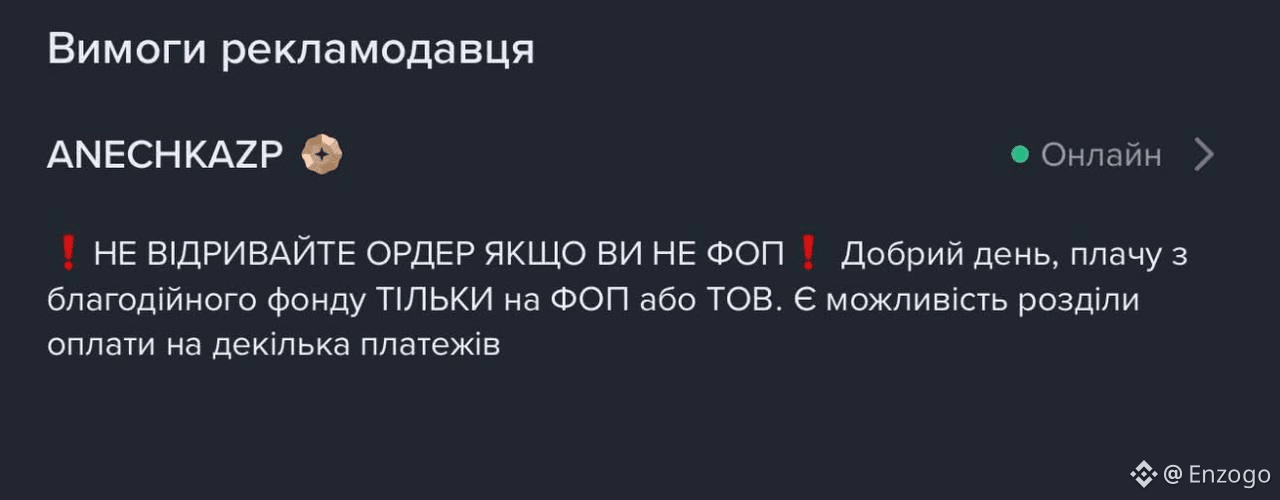
Finally normal merchants on BinanceP2P (I almost felt like donating)
Finally normal merchants on BinanceP2P (I almost felt like donating)
1
118
·
--
📌 Digest of key events for 07.09
🟡 Binance: the exchange plans to make Kazakhstan a settlement hub for CIS countries.
🤖 OpenAI: announced GPT-6 Astra, a new model with stronger performance in the AI market.
⚠️ WOO X: the exchange is having issues with withdrawals; ZachXBT compares the situation to Bitget.
🏦 DBS and Citi: completed a cross-border transfer over the weekend using tokenized deposits.
🧩 Router Protocol: after 4 years of operation, the project is closing on September 30 and will burn active tokens.
⚡ Bitcoin: 600 $BTC moved from wallets dating back to 2010; Capital B added another 376 $BTC to its balance.
🛡️ Coldcard/Pineapple: the hack’s losses are already over $143 million, and mortgage data has been tokenized for $1.1 billion.
🚶♀️ Robinhood, Cashmere Labs, and Bulk: focus areas include drops, NFT staking, and early access to the mainnet.
#crypto #news
📌 Digest of key events for 07.09
🟡 Binance: the exchange plans to make Kazakhstan a settlement hub for CIS countries.
🤖 OpenAI: announced GPT-6 Astra, a new model with stronger performance in the AI market.
⚠️ WOO X: the exchange is having issues with withdrawals; ZachXBT compares the situation to Bitget.
🏦 DBS and Citi: completed a cross-border transfer over the weekend using tokenized deposits.
🧩 Router Protocol: after 4 years of operation, the project is closing on September 30 and will burn active tokens.
⚡ Bitcoin: 600 $BTC moved from wallets dating back to 2010; Capital B added another 376 $BTC to its balance.
🛡️ Coldcard/Pineapple: the hack’s losses are already over $143 million, and mortgage data has been tokenized for $1.1 billion.
🚶♀️ Robinhood, Cashmere Labs, and Bulk: focus areas include drops, NFT staking, and early access to the mainnet.
#crypto #news
🟡 Binance: the exchange plans to make Kazakhstan a settlement hub for CIS countries.
🤖 OpenAI: announced GPT-6 Astra, a new model with stronger performance in the AI market.
⚠️ WOO X: the exchange is having issues with withdrawals; ZachXBT compares the situation to Bitget.
🏦 DBS and Citi: completed a cross-border transfer over the weekend using tokenized deposits.
🧩 Router Protocol: after 4 years of operation, the project is closing on September 30 and will burn active tokens.
⚡ Bitcoin: 600 $BTC moved from wallets dating back to 2010; Capital B added another 376 $BTC to its balance.
🛡️ Coldcard/Pineapple: the hack’s losses are already over $143 million, and mortgage data has been tokenized for $1.1 billion.
🚶♀️ Robinhood, Cashmere Labs, and Bulk: focus areas include drops, NFT staking, and early access to the mainnet.
#crypto #news

149
·
--
📌 Digest of the main events for 06.09
🟡 El Salvador: $BTC after June 2025 accumulated not from public funds, but through private donations.
📊 Wintermute: bought $PONS for over 3 million dollars; a separate large investor is also accumulating PONS, CASHCAT, and other tokens.
⚡ Robinhood Chain: on September 4 updated the record for daily fee revenue, and Uniswap - for UNI burn activity.
🔍 Ethereum: Vitalik Buterin noted progress on Frames (EIP-8141) over the past months.
💰 $HYPE: a large investor bought tokens for 15.01 million dollars and sent them to staking.
🛡️ Liquid Network: after the attack, 4000 Bitcoin worth 320 million dollars were withdrawn; the attacker is negotiating via transactions.
🚶♀️ Harmony: the team plans to shut down the mainnet and move toward AI video editing.
#crypto #news
📌 Digest of the main events for 06.09
🟡 El Salvador: $BTC after June 2025 accumulated not from public funds, but through private donations.
📊 Wintermute: bought $PONS for over 3 million dollars; a separate large investor is also accumulating PONS, CASHCAT, and other tokens.
⚡ Robinhood Chain: on September 4 updated the record for daily fee revenue, and Uniswap - for UNI burn activity.
🔍 Ethereum: Vitalik Buterin noted progress on Frames (EIP-8141) over the past months.
💰 $HYPE : a large investor bought tokens for 15.01 million dollars and sent them to staking.
🛡️ Liquid Network: after the attack, 4000 Bitcoin worth 320 million dollars were withdrawn; the attacker is negotiating via transactions.
🚶♀️ Harmony: the team plans to shut down the mainnet and move toward AI video editing.
#crypto #news
🟡 El Salvador: $BTC after June 2025 accumulated not from public funds, but through private donations.
📊 Wintermute: bought $PONS for over 3 million dollars; a separate large investor is also accumulating PONS, CASHCAT, and other tokens.
⚡ Robinhood Chain: on September 4 updated the record for daily fee revenue, and Uniswap - for UNI burn activity.
🔍 Ethereum: Vitalik Buterin noted progress on Frames (EIP-8141) over the past months.
💰 $HYPE : a large investor bought tokens for 15.01 million dollars and sent them to staking.
🛡️ Liquid Network: after the attack, 4000 Bitcoin worth 320 million dollars were withdrawn; the attacker is negotiating via transactions.
🚶♀️ Harmony: the team plans to shut down the mainnet and move toward AI video editing.
#crypto #news
340
·
--
Historically, the 23rd–26th of each month is one of the best periods for selling your $USDT for hryvnias.Why exactly these days? In the second half of the month, the number of hryvnias in circulation increases: some people receive advances/payments, while businesses make settlements. In Ukraine, wages must be paid at least twice a month, and the payment for the first half of the month must be no later than the 22nd.
Historically, the 23rd–26th of each month is one of the best periods for selling your $USDT for hryvnias.
Why exactly these days? In the second half of the month, the number of hryvnias in circulation increases: some people receive advances/payments, while businesses make settlements. In Ukraine, wages must be paid at least twice a month, and the payment for the first half of the month must be no later than the 22nd.
2
659
·
--
Bullish
Announced new CreatorPad
The top 200 most active authors in the CIS project leaderboards will split 70% of the reward pool = about 50$ in $BNB per account.
🎯 [Binance CreatorPad: BNB](https://www.binance.com/uk-UA/square/creatorpad?tab=campaigns)
📁 Category: BinanceCreatorPad
📅 Start: 04.08.2026 12:00
📅 End: 19.08.2026 02:59
📝 Token: BinanceCIS (BNB)
🎁 Reward: 26 BNB
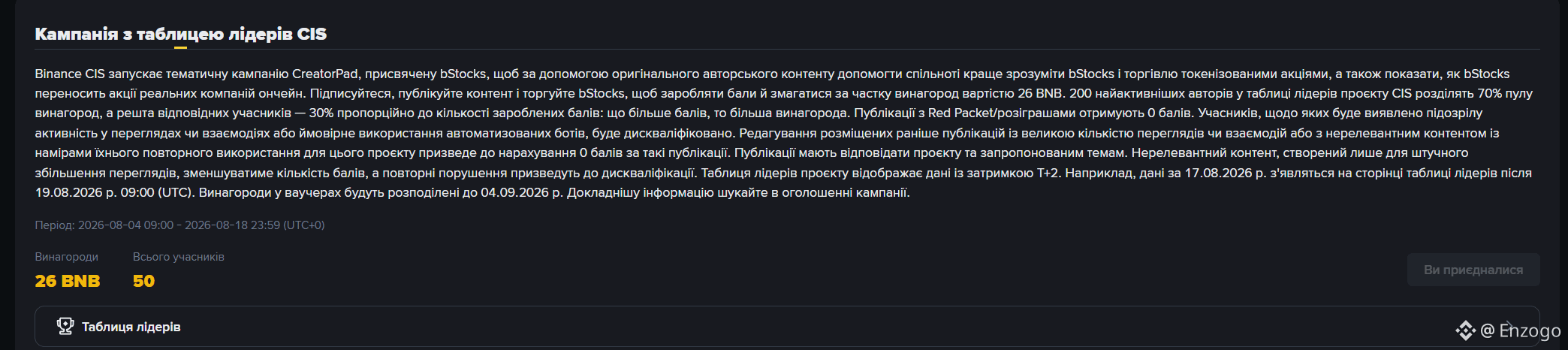
Binance CIS launches a themed CreatorPad campaign dedicated to bStocks, using original author content to help the community better understand bStocks and trading tokenized shares, and also to show how bStocks transfers shares of real companies into the on-chain space.
Announced new CreatorPad
The top 200 most active authors in the CIS project leaderboards will split 70% of the reward pool = about 50$ in $BNB per account.
🎯 Binance CreatorPad: BNB
📁 Category: BinanceCreatorPad
📅 Start: 04.08.2026 12:00
📅 End: 19.08.2026 02:59
📝 Token: BinanceCIS (BNB)
🎁 Reward: 26 BNB
Binance CIS launches a themed CreatorPad campaign dedicated to bStocks, using original author content to help the community better understand bStocks and trading tokenized shares, and also to show how bStocks transfers shares of real companies into the on-chain space.
The top 200 most active authors in the CIS project leaderboards will split 70% of the reward pool = about 50$ in $BNB per account.
🎯 Binance CreatorPad: BNB
📁 Category: BinanceCreatorPad
📅 Start: 04.08.2026 12:00
📅 End: 19.08.2026 02:59
📝 Token: BinanceCIS (BNB)
🎁 Reward: 26 BNB
Binance CIS launches a themed CreatorPad campaign dedicated to bStocks, using original author content to help the community better understand bStocks and trading tokenized shares, and also to show how bStocks transfers shares of real companies into the on-chain space.
133
Log in to explore more content
Join global crypto users on Binance Square
⚡️ Get latest and useful information about crypto.
💬 Trusted by the world’s largest crypto exchange.
👍 Discover real insights from verified creators.
Email / Phone number
Trending Topics
AnthropicIPOProspectusCouldValueItOver$2T
349 views
26 Discussing
🚨 ANTHROPIC’S IPO COULD BE THE $2 TRILLION TEST FOR THE ENTIRE AI BOOM.
$ANTHROPIC ’s newly disclosed IPO prospectus shows just how extreme the AI race has become.
The Claude maker generated about $4.6B in 2025 revenue, up roughly 12x, but still posted an operating loss of more than $8B. At the same time, it says it expects to spend another $518B on cloud and infrastructure as it races to scale.
And yet the IPO could value Anthropic at more than $2 TRILLION — over double the $965B valuation from its May funding round.
That’s why this listing matters far beyond Anthropic.
If investors accept a $2T valuation despite massive infrastructure costs, the market is effectively saying:
AI growth matters more than near-term profitability.
If demand is weak?
That could force a much broader rethink across the AI trade.
The biggest indirect names to watch are $AMZN and $GOOGL , both major Anthropic backers and infrastructure partners.
This IPO won’t just price Anthropic.
It may price the market’s faith in AI itself. 👀
#AnthropicIPOProspectusCouldValueItOver$2T #HackersDrainOver12.4MXRPFromDCENTWallets #SECSaysDecentralizedTokenBuybacksNotInvestmentContracts #UKFCAWinsCourtOrderToRecover851400Pounds #ChainlinkLaunchesCCIP2WithEnterpriseVerification
KimHotbae
·0 Likes
·54 views
HackersDrainOver12.4MXRPFromDCENTWallets
3,969 views
175 Discussing
SECSaysDecentralizedTokenBuybacksNotInvestmentContracts
115 views
7 Discussing