Binance to Introduce Bonk (BONK) Listing with Unique Seed Tag Application
In a significant move for crypto enthusiasts, Binance is gearing up to list Bonk (BONK), marking a strategic step in the ever-evolving landscape of digital assets. Scheduled to commence spot trading on December 15, 2023, at 08:00 (UTC), the introduction of BONK on Binance brings forth exciting opportunities for traders worldwide.Spot Trading Pairs and DepositsBinance users can anticipate the availability of spot trading pairs, including BONK/USDT, BONK/FDUSD, and BONK/TRY. The deposit option for BONK is already open, allowing users to prepare for trading activities.Withdrawals and Listing FeeCome December 16, 2023, at 08:00 (UTC), the withdrawal option for BONK will be activated, providing users with the flexibility to manage their assets. Notably, the listing fee for BONK stands at 0 BNB, offering a user-friendly approach to engaging with this new addition to the Binance platform.BONK as a Borrowable Asset on Isolated MarginIn an additional development, Binance is set to integrate BONK as a borrowable asset on Isolated Margin, introducing a new margin pair, BONK/USDT. This strategic move reflects Binance's commitment to expanding its offerings and catering to diverse trading preferences.Seed Tag ApplicationIt's essential to highlight that BONK will be distinguished with a Seed Tag. This designation underscores its classification as an innovative project, potentially exhibiting higher volatility and risks compared to other listed tokens on Binance.Understanding Bonk (BONK)BONK is recognized as the largest meme coin on Solana, created by an anonymous team. Its listing on Binance opens up new avenues for traders to engage with this unique digital asset.Risk Considerations and Seed Tag QuizzesAs a reminder, traders are urged to exercise caution when dealing with BONK, acknowledging its status as a relatively new token carrying higher-than-normal risk. It is advised to conduct thorough research on BONK's fundamentals and fully comprehend the project before participating in trading activities.The Seed Tag, an emblem of innovative projects with potential volatility and risks, will be applied to BONK. Traders seeking access to tokens with Seed Tags are required to pass corresponding quizzes every 90 days on Binance Spot and/or Binance Margin platforms. This ensures users are aware of associated risks before engaging in transactions with tokens carrying Seed Tags. The Seed Tags, along with a risk warning banner, will be prominently displayed on relevant Binance pages.ConclusionBinance's decision to list Bonk (BONK) reflects the platform's commitment to providing a diverse range of digital assets while prioritizing user awareness and risk management. The introduction of BONK with its unique Seed Tag marks a notable chapter in Binance's ongoing efforts to evolve and meet the dynamic demands of the crypto community. Traders are encouraged to stay informed, exercise due diligence, and embrace the opportunities presented by this latest addition to the Binance ecosystem. The crypto journey continues with BONK on board.#BinanceListing #BONK #cryptosolutions
In 2010, a Chinese teenager named Zhao Tong bought Bitcoin for $10. Fascinated by the idea of a global digital currency, Zhao, at just 16 years old, dove headfirst into the world of cryptocurrency. Early Interest and Challenges Zhao was captivated by Bitcoin's potential and eagerly shared his enthusiasm with friends. However, buying Bitcoin in 2011 was not easy. The largest exchange, Mt. Gox, frequently went offline and even experienced a flash crash that saw Bitcoin's price plummet to $0.01 shortly after Zhao's purchase. Building Bitcoinica A self-taught coder, Zhao built Bitcoinica in just four days. Unlike other exchanges, Bitcoinica allowed for margin trading, enabling users to speculate on Bitcoin's future price. Traders and miners could bet up to 50 BTC instantly. Bitcoinica quickly gained popularity, trading as much as $40 million per month, second only to Mt. Gox. Zhao earned $10,000, or about 2,000 BTC, in the first two weeks alone. Growth and Concerns Despite its rapid growth, Bitcoinica faced skepticism. Critics questioned Zhaoโs age and experience and were concerned about the exchange's security measures. Despite these worries, Bitcoinica continued to trade hundreds of thousands of Bitcoins each month. The Handover and Subsequent Hacks In late 2011, overwhelmed by his school exams, Zhao sold Bitcoinica to Wendon Group. The new owners sought to audit the exchange, enlisting the help of veteran Bitcoin developers, including the outspoken hacktivist Amir Taaki. Wendon Group invested heavily in Bitcoinica, even purchasing the Bitcoin.com domain for $1 million. However, disaster struck in March 2012 when Bitcoinica was hacked, losing 43,000 BTC. The situation worsened with two more attacks later that month, resulting in the theft of another 48,000 BTC. This period was before the advent of hardware wallets or multi-signature security, making the exchange vulnerable to password resets. Aftermath and Legacy The hacks triggered outrage among users, many of whom, like Roger Ver, suffered significant losses. The exact details of what happened remain unclear, but Zhao's reputation was severely damaged. The term "Zhao Tonged" became a meme in the Bitcoin community, describing investors who have been robbed and cheated. Zhao's final act in the crypto world was to invest 1,000 BTC in a rare solid gold Casascius coin, one of only three in existence, now valued at over $60 million. After this, Zhao left the industry. Lessons Learned Exchange hacks continue to plague the cryptocurrency world. Serious investors are advised to use hardware wallets or multi-signature custody to mitigate the risk of exchange hacks. These security measures are crucial to protect against the loss of funds. Today, it's estimated that over 1 million Bitcoins, worth $65 billion, have been lost due to exchange hacks. Bitcoinica remains the third largest hack by total Bitcoin lost, serving as a $6 billion reminder to take custody seriously and avoid becoming a victim Zhao Tong. #cryptosolutions
According to Jin10, Commonwealth Bank of Australia FX strategist Carol Kong says U.S. public debt interest payments rose 15% to $1.17 trillion in the fiscal year through July, partly driven by higher Treasury yields.
CBA expects long-term U.S. Treasury yields to remain under upward pressure, potentially pushing borrowing costs even higher.
The bigger risk?
A potential debt feedback loop:
Higher debt โ higher interest costs โ higher yields demanded by investors โ higher borrowing costs โ even more debt pressure.
Kong also says the Trump administration does not appear to have much appetite for meaningful fiscal consolidation.
The U.S. debt equation is becoming increasingly difficult to ignore. ๐
And for global markets, this could matter far beyond Treasuries.
Beyond Transparency: Building the Privacy Stack for the Onchain Economy
Key Takeaways Privacy is not a niche feature of money; it is part of what makes money work. People and businesses need the ability to transact without exposing every balance, counterparty, commercial relationship, and financial decision to the public.The blockchain industry solved one side of the trust equation exceptionally well: verifiability. But it often achieved that by making financial activity radically more transparent than it is in the traditional economy.As stablecoins, tokenized assets, DeFi, payments, and institutional finance move onchain, the demand for programmable financial privacy is likely to become more important, not less.Privacy is evolving beyond a single feature or privacy coin. The emerging opportunity is a broader privacy stack spanning private identity, private computation, private assets, confidential transactions, selective disclosure, and compliant financial infrastructure.Miden is building toward this model from the protocol layer, combining zero-knowledge proofs, local transaction execution, private accounts, private notes, programmable smart contracts, and a hybrid public/private architecture. Its design aims to make privacy and scalability complementary rather than competing objectives. Money Was Never Designed to Be Completely Public Privacy is often treated as if it were an optional feature of money. It is not. Imagine a world where every time you receive a salary, purchase something, pay a supplier, send money to a family member, borrow capital, invest, or move funds between accounts, the entire transaction history is permanently visible to anyone. That would not simply be inconvenient. It would fundamentally change how people use money. Cash has historically provided a degree of practical confidentiality. Bank-based systems also maintain financial records without making every transaction publicly observable to the entire world. This distinction matters. Verification and disclosure are not the same thing. A financial system can prove that a transaction is legitimate without requiring every participant to reveal every detail of their financial life. Blockchain technology introduced a powerful new model of verification. Instead of trusting a bank or intermediary to maintain a ledger, networks such as Bitcoin and Ethereum allow participants to independently verify state transitions. That innovation is foundational. But it also created a new problem. The default architecture of many public blockchains makes financial activity radically transparent. Balances can be observed. Transaction histories can be traced. Wallet relationships can be analyzed. Counterparties can be mapped. And over time, seemingly disconnected transactions can potentially be linked into a detailed picture of an individual, organization, or institution. The question for the next phase of blockchain development is therefore not whether transparency is valuable. It is: How much transparency should money require? The Transparency Paradox Public blockchains were built around an important principle: Don't trust. Verify. But there is a subtle difference between making a system verifiable and making its users transparent. A blockchain needs enough information to establish that the network is operating correctly. A user does not necessarily need to reveal their entire financial history to accomplish that. This creates what can be called the transparency paradox. The same transparency that makes public blockchains auditable can make them difficult to use for ordinary economic activity. Consider a company operating entirely on a transparent blockchain. Its treasury wallet can potentially reveal: how much capital it holds;which suppliers it pays;when payroll is processed;which counterparties it works with;how much it spends;where its liquidity is concentrated;and potentially even aspects of its commercial strategy. For an individual, the implications can be equally significant. Financial privacy is not necessarily about hiding wrongdoing. It is about preserving context. A person may be perfectly comfortable proving that they have enough money to complete a transaction without publishing their entire portfolio. A company may need to demonstrate solvency without revealing every position it holds. An institution may need to comply with regulators while preventing competitors from observing its entire financial strategy in real time. That is where privacy becomes more than a philosophical concept. It becomes infrastructure. Privacy as a Product Category The blockchain industry is beginning to move from thinking about privacy as a single feature toward thinking about it as an entire technology category. This distinction matters. Privacy can exist at multiple layers. 1. Transaction Privacy The ability to prevent transaction details such as amounts, counterparties, or transaction relationships from becoming universally visible. 2. Asset Privacy The ability to hold and transfer assets without exposing the complete financial position of an account. 3. State Privacy The ability for users and applications to keep portions of their account state private while still proving that state transitions are valid. 4. Computational Privacy The ability to execute logic on sensitive information without requiring the underlying information to become public. 5. Identity Privacy The ability to prove specific attributes about yourself without exposing your entire identity or personal information. 6. Selective Disclosure The ability to reveal information to the parties who legitimately need it without making that information public to everyone. These layers together begin to form something much larger: a privacy stack for programmable finance. And this is important because the future of blockchain will not simply involve transferring native cryptocurrencies. It will involve stablecoins, tokenized securities, private credit, payroll, treasury management, institutional settlement, DeFi, payments, identity, and increasingly complex financial applications. The more valuable the financial activity becomes, the more problematic permanent public exposure can become. The Next Privacy Stack The privacy debate therefore needs to evolve. The question should no longer be: "Which blockchain hides transactions?" The better question is: "Can we build financial infrastructure where privacy is programmable, verifiable, scalable and compatible with legitimate disclosure?" That is a much bigger challenge. It means privacy should not necessarily mean that everything is hidden from everyone. Instead, privacy can mean that information is controlled by the parties who have a legitimate reason to access it. This is where zero-knowledge technology becomes particularly important. Zero-knowledge proofs allow one party to prove that a statement is true without necessarily revealing all of the underlying information used to establish that statement. That changes the fundamental relationship between privacy and verification. Instead of: Reveal everything โ verify everything the architecture can move toward: Reveal less โ prove more. That is one of the most important transitions taking place in blockchain infrastructure. Miden: Building the Privacy Stack From the Edge This is where Miden becomes particularly interesting. Miden is not simply attempting to add a privacy feature to a conventional blockchain architecture. Its architecture starts from a different premise. Miden is designed as a zero-knowledge rollup for high-throughput, private applications, with a model that moves much of transaction execution and proving to the user's side while the network verifies proofs and maintains commitments to state. The distinction is profound. In many traditional blockchain architectures, the network needs to execute or re-execute transactions to establish that the resulting state is valid. Miden takes a different approach. The user can execute the transaction locally. The user's device generates a zero-knowledge proof demonstrating that the state transition was valid. The network does not need to know every private detail of the computation in order to verify the proof. That is the foundation of what Miden describes as an "edge blockchain" architecture. The network becomes less like a giant computer that must see everything and more like a verification and coordination layer that checks whether what happened was valid. That is a very different mental model for blockchain infrastructure. Privacy by Architecture, Not by Add-On One of Miden's most important design choices is its treatment of accounts and notes. Miden supports private accounts where the network stores a cryptographic commitment rather than the full account data. Private notes similarly allow only commitments to be stored publicly while the underlying note data remains offchain. This means privacy is not merely something an application developer has to bolt onto an otherwise transparent system. It is incorporated into the underlying architecture. Miden's transaction model also uses local execution and client-side proving. The network can verify a proof without needing the private account state or account code used to generate that proof. That creates an important inversion: Privacy does not necessarily mean sacrificing verification. The system can preserve verifiability while reducing unnecessary disclosure. And there is an even more interesting consequence. Miden's architecture is designed so that privacy can contribute to scalability. Its documentation notes that local execution and proving reduce the amount of computation and state that the network itself needs to process, while allowing transactions involving independent accounts to execute in parallel. In other words: Privacy and scalability do not always have to be enemies. Under the right architecture, they can reinforce each other. From Private Payments to Private Applications The bigger opportunity is not simply private transfers. It is private programmability. Money becomes dramatically more powerful when it can interact with software. Smart contracts made assets programmable. The next step is making that programmability compatible with confidentiality. Imagine a decentralized exchange where a trader does not need to publicly reveal their entire portfolio or trading strategy. Imagine a business executing treasury logic without exposing every internal financial rule. Imagine an institution interacting with DeFi while keeping commercially sensitive positions private. Imagine a payroll system where employees can receive onchain payments without exposing everyone's salaries to the entire network. Imagine a credit application where someone can prove eligibility without broadcasting their complete financial history. These are not simply privacy use cases. They are economic use cases. Miden's architecture is designed around this broader concept of private applications. Its design supports programmable accounts and notes, local execution, zero-knowledge proofs and the ability to combine private activity with public shared state where applications require it. That last point is especially important. The future does not necessarily have to be completely private or completely public. It can be hybrid. The Hybrid Future: Private by Default, Public by Choice One of the most compelling aspects of the emerging privacy stack is that it does not require the elimination of transparency. Instead, it can make transparency intentional. Miden supports both private and public accounts and notes, allowing applications to choose how information is stored and exposed. That opens the door to a more nuanced architecture. Some information can remain private. Some information can be publicly verifiable. Some information can be selectively disclosed. Some computation can happen locally. Some shared state can remain public. This is closer to how sophisticated financial systems actually operate. Banks do not make every customer's transactions public. At the same time, banks do not operate in a completely opaque universe. Auditors, regulators, counterparties and customers can receive information when there is a legitimate reason. The future of blockchain privacy may therefore not be about choosing between privacy and compliance. It may be about building systems capable of supporting both. Why Stablecoins Make Privacy More Important The rise of stablecoins makes this conversation even more important. Crypto's first major use case was largely speculative. The next phase is increasingly about moving actual economic activity onchain. Stablecoins are becoming financial infrastructure for payments, settlement, remittances, trading, treasury management and cross-border transactions. But imagine a world where millions of businesses conduct their financial operations entirely on transparent ledgers. Every supplier payment becomes observable. Every treasury movement becomes traceable. Every customer's payment history becomes potentially analyzable. Every company's liquidity position becomes increasingly visible. At small scale, that may seem manageable. At global scale, it becomes a structural privacy problem. The more blockchain becomes money infrastructure, the more financial privacy becomes an infrastructure requirement. This is why the statement matters: Privacy is not a niche feature of money; it is part of what makes money work. The Institutional Case for Privacy The institutional argument may ultimately become even stronger than the consumer argument. Institutions do not necessarily want anonymity. They want controlled visibility. A bank may need regulatory oversight but does not want competitors seeing its entire liquidity strategy. An asset manager may need to prove ownership without broadcasting every portfolio movement. A corporation may want onchain treasury infrastructure without exposing sensitive supplier relationships. A market maker may need to execute complex strategies without giving the entire market a real-time view of its positions. Privacy therefore becomes a form of commercial security. In this context, privacy is not anti-regulation. It can actually make regulated onchain finance more practical by separating: What must be proven from what does not need to be publicly revealed. That distinction could become one of the defining architectural principles of institutional blockchain adoption. What Makes Miden Different? Miden's thesis is ultimately larger than "private transactions." It is an attempt to rethink where blockchain computation should happen. Traditional architectures largely place execution at the center of the network. Miden pushes execution toward the edge. Users execute locally. Users generate proofs. The network verifies those proofs. Private state can remain with users while commitments are maintained onchain. And independent account transactions can execute concurrently. This architecture creates a different relationship between the user and the blockchain. Instead of saying: "The blockchain must know everything to verify everything." Miden's model moves toward: "The blockchain needs to know enough to verify that the rules were followed." That is a fundamental shift. The Road Ahead: From Privacy Feature to Privacy Stack The next generation of blockchain infrastructure may therefore be defined by several technologies working together. Zero-knowledge proofs provide verifiability without unnecessary disclosure. Private execution keeps computation away from public view. Private state prevents entire account histories from becoming permanent public records. Programmable privacy allows applications to define what should remain confidential. Selective disclosure allows authorized parties to access information when necessary. Public shared state preserves composability where transparency is genuinely useful. Identity infrastructure can eventually allow users to prove who they are, or what they are entitled to do, without exposing everything about themselves. Together, these layers form what I would describe as the Privacy Stack. And the significance of Miden is that it is attempting to build several of these capabilities into the blockchain architecture itself rather than treating privacy as an afterthought. Miden's current documentation describes the network as approaching mainnet readiness, with v0.13 representing an early stage of the protocol and continued development ahead of the planned 2026 launch. The project also explicitly describes privacy, local execution and programmable applications as core design objectives. That means the thesis is still being built. And that is important to acknowledge. The technology is ambitious, the architecture is evolving, and the implementation is not yet equivalent to a mature production network. Miden's own protocol repository describes the current implementation as alpha and warns that it has not been audited and may contain bugs or security flaws. But early infrastructure is precisely where the most interesting architectural bets are often made. Risks and Other Considerations The privacy thesis is powerful, but it is not guaranteed. Regulatory Risk Privacy technologies will inevitably interact with financial regulation. The important question is whether future privacy infrastructure can support legitimate compliance requirements while preserving unnecessary confidentiality. The strongest systems may ultimately be those capable of selective disclosure rather than indiscriminate secrecy. Technical Risk Zero-knowledge systems are mathematically sophisticated. Proof systems, virtual machines, account models and client-side execution introduce new engineering challenges. A compelling architecture still has to survive adversarial environments, audits, real-world users and production-scale activity. User Experience Risk Privacy can introduce additional complexity. If users have to manually manage private state, communicate data through side channels, or understand complicated cryptographic concepts, mainstream adoption becomes harder. The winning privacy infrastructure will likely be the infrastructure users barely notice. Ecosystem Risk A privacy network needs wallets, stablecoins, bridges, applications, exchanges, developers and liquidity. Technical superiority alone does not create an ecosystem. The infrastructure must become useful enough that developers and users have a reason to move activity onto it. Execution Risk Miden is attempting something structurally ambitious. Its roadmap involves not simply implementing privacy but combining privacy, programmability, scalability and a different execution model. The success of the thesis therefore depends on execution as much as architecture. Conclusion The history of money is also a history of controlled information. Cash provided practical confidentiality. Banks introduced trusted intermediaries that could maintain private financial records. The internet digitized those systems. Blockchains then radically increased transparency and verifiability. Now zero-knowledge technology gives us the opportunity to rethink the tradeoff. We do not necessarily have to choose between trust and privacy. We may be able to build systems where users can prove more while revealing less. That is the deeper promise of the next generation of blockchain infrastructure. And this is why privacy should not be dismissed as a niche corner of crypto. As more of the global economy moves onchain, the question will not be whether financial activity should be verifiable. It will be who gets to see it, what they get to see, and why. Miden's vision sits directly inside that transition. By pushing execution toward the edge, keeping private state with users, using zero-knowledge proofs for verification, and enabling programmable private applications, Miden is attempting to build more than a privacy blockchain. It is building toward a Privacy Stack for the next onchain economy. The future of blockchain may therefore not be a world where everything is public. Nor should it be a world where everything is hidden. The more compelling future is one where privacy becomes programmable. Where transparency is intentional. Where disclosure is selective. Where computation can remain private while results remain verifiable. And where money can once again function the way money was always meant to function: as a tool for economic freedom, coordination and exchange without requiring the world to know everything about the people using it. **Privacy is not a niche feature of money. It is part of what makes money work.** This article is for educational and informational purposes only and should not be considered financial, investment, legal or tax advice. Digital assets and blockchain technologies involve significant risks, including technological, regulatory, liquidity and market risks. Readers should conduct their own research before making financial decisions.
In H1 2026, Binance proved that staying true to the plan is all about execution. By sticking firmly to the roadmap established by @CZ , CEO @Richard Teng continues to show how you scale a global exchange without losing touch with the ground floor: listening, iterating, and shipping.
โThe numbers from H1 tell the story:
๐ก2,354 pieces of feedback logged ๐ก47 categories refined ๐ก198 updates shipped โNo noise just continuous improvement built directly around what users actually ask for.
Here are some facts why the cultural narrative of $NNB is ๐ฅ
1. Test token of Binance Exchange 2. Still found in the Binance GitHub 3. Used for demonstration in the official Binance YouTube handle. 5. Listed on Binance Wallet 6. No contract risk found according to Binance Wallet Audits.
Bitcoin Breaks Out as Liquidity, Regulation and Institutional Adoption Converge
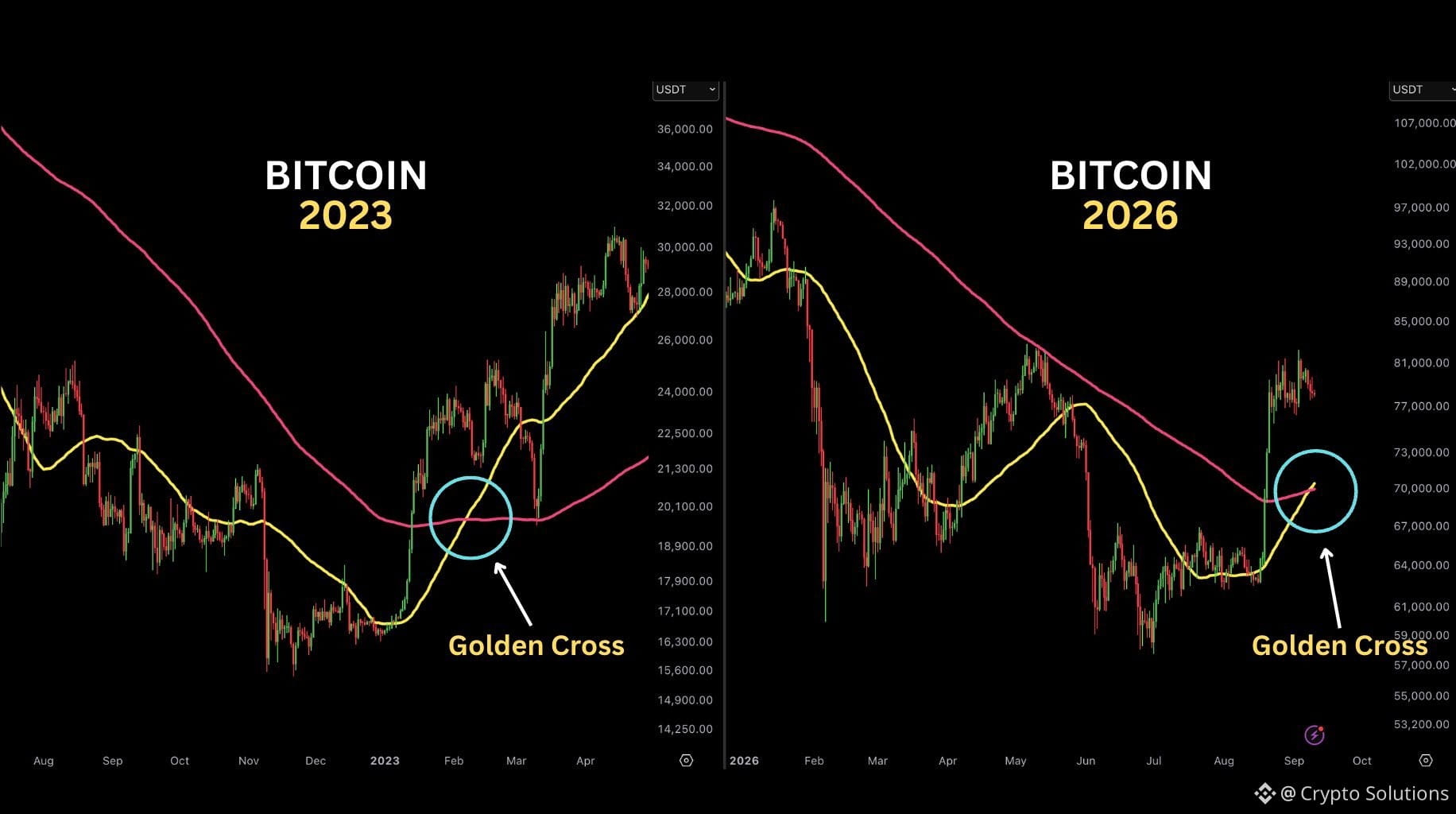
For weeks, the crypto market looked almost asleep. Bitcoin ( $BTC ) traded inside a relatively tight range. Volatility compressed. Traders waited for a catalyst, while macroeconomic uncertainty and rising global bond yields kept risk appetite in check. Then the market moved. Bitcoin broke sharply higher, climbing roughly 6% and pushing above $68,000, while more than $1.4 billion in short positions were liquidated. Ethereum and Solana followed, while crypto-linked equities including Coinbase, Circle and Bullish also advanced. But the most important story may not be the price. The bigger story is what is happening underneath it. Liquidity is returning. Regulatory infrastructure is taking shape. Traditional financial institutions are experimenting with blockchain rails. Stablecoins are becoming part of the financial system. Tokenization is expanding. Crypto is increasingly moving from an alternative financial experiment toward a component of the global financial infrastructure. Bitcoinโs Breakout Was More Than a Price Move Bitcoin's move above $68,000 came after a prolonged period of compressed volatility. That matters. When volatility remains suppressed for an extended period, positioning can become increasingly one-sided. Once price finally breaks out, leveraged traders can become fuel for the move. That is exactly what happened. The rally triggered a wave of short liquidations, with more than $1.4 billion in bearish positions reportedly wiped out. This creates a powerful feedback loop: Price rises โ shorts are liquidated โ forced buying increases โ price rises further. Ethereum and Solana benefited from the broader risk-on environment, while crypto equities moved higher alongside digital assets. Yet traders should be careful not to confuse a liquidation-driven acceleration with confirmation of a long-term bull market. Bitcoin still operates inside a much larger macro environment. And that macro environment is changing. The Liquidity Signal Behind the Rally One of the most interesting catalysts was the U.S. Treasury's decision to double the size of certain longer-dated bond buybacks. The significance goes beyond government debt markets. Treasury operations influence liquidity conditions, market positioning and risk appetite. When financial conditions become more supportive, capital can move toward higher-beta assets. Crypto is one of the first places where that appetite often becomes visible. This helps explain why Bitcoin, Ethereum, Solana and crypto-related equities moved together. But there is an important contradiction. Global bond yields remain elevated, and markets are still watching the Federal Reserve closely. CoinDesk reported that Bitcoin's volatility had fallen to multi-year lows as traders awaited the Fed's meeting minutes while global yields pressured risk assets. So the current environment is not simply: "Liquidity is back, therefore crypto goes up." It is more nuanced. Crypto is responding to the tug-of-war between liquidity, interest rates, bond yields, institutional demand and expectations for monetary policy. That battle will determine whether this breakout becomes a trend or another failed move. Could Bitcoin Really Reach $76,000? Technically, the possibility is beginning to attract attention. Analysts have identified a potential inverse head-and-shoulders structure that could open the door toward approximately $76,000 if Bitcoin successfully confirms the breakout. But technical targets are scenarios, not guarantees. The more important question is whether Bitcoin can establish sustained demand above its breakout zone. A temporary move above resistance is one thing. Holding above it while spot demand continues to grow is something entirely different. That is what traders should watch next. The Regulatory Environment Is Changing Perhaps the most significant development happening alongside the price action is the transformation of U.S. crypto regulation. The White House has been pushing Congress to advance the Clarity Act, a market-structure bill designed to establish clearer jurisdiction between the SEC and CFTC. The legislation remains politically complicated, but the market is increasingly treating regulatory clarity as an economic catalyst rather than simply a legal issue. A key procedural vote is expected when the Senate returns, with September 15 being closely watched by the market. Why does this matter? Because capital needs rules. Banks need rules. Asset managers need rules. Exchanges need rules. Entrepreneurs need rules. Without a predictable framework, institutions can participate in crypto while remaining uncertain about how their activities will ultimately be classified. Clarity can change that equation. The SEC Just Opened Another Door On August 18, the U.S. Securities and Exchange Commission proposed a framework called Regulation Crypto Assets. The proposal would establish tailored exemptions for certain investment contracts involving crypto assets. Among its provisions are an exemption allowing offerings of up to $5 million over a four-year period and another allowing up to $75 million during a 12-month period, subject to conditions and disclosure requirements. This is significant because it represents a shift in regulatory philosophy. The question is increasingly moving from: "How do we stop crypto?" to: "How do we create rules under which crypto markets can operate?" That does not eliminate regulatory risk. It does not mean every token will qualify. And it certainly does not remove the need for investor protection. But it creates something markets desperately need: a clearer path for legitimate innovation. Hyperliquid Is Another Signal Then came another remarkable development. President Donald Trump said CFTC Chair Mike Selig is working to bring Hyperliquid's perpetual futures platform into the United States in a fully compliant manner. The HYPE token jumped more than 11% following the news. The significance goes beyond HYPE. For years, decentralized derivatives have existed in a complicated regulatory grey area. Now one of the world's most prominent on-chain derivatives platforms is being discussed in the context of bringing that activity into the regulated U.S. financial system. If successful, it could represent an important bridge between decentralized finance and regulated markets. The message is powerful: On-chain finance may not need to disappear to become institutional. It may need to become compliant. Wall Street Is Moving On-Chain While traders focus on candles, institutions are quietly building infrastructure. Standard Chartered and HSBC have completed a live cross-border transaction using Swift's blockchain-based ledger infrastructure and tokenized deposits. Elsewhere, companies are developing regulated infrastructure for tokenized real-world assets. Ripple is expanding institutional capabilities around the XRP Ledger. Stablecoin settlement pilots continue. Visa, Mastercard, Circle, Solana and others are exploring AI-driven payment infrastructure. And tokenized funds, credit products and equities continue to expand. This is where the crypto story becomes much bigger than Bitcoin. The real transformation may be the conversion of traditional financial assets into programmable digital assets. Stocks. Bonds. Funds. Deposits. Credit. Currencies. Treasury instruments. All of these can potentially become programmable. And once assets become programmable, financial markets can begin operating differently. Stablecoins Could Be the Trojan Horse If Bitcoin is the asset that introduced scarcity to the internet, stablecoins may be the technology that introduces blockchain settlement to mainstream finance. Stablecoins solve a very practical problem: How do you move digital dollars globally, quickly and programmatically? That question is becoming increasingly important as banks, fintech companies and institutions explore blockchain-based settlement. The regulatory push around stablecoins is therefore not just about crypto. It is about the future architecture of money. The emergence of clearer stablecoin rules, bank integrations, audits and settlement infrastructure could accelerate adoption dramatically. And that could create demand for blockchain networks even when people have little interest in speculation. Ethereum and Solana Are Fighting a Different Battle Bitcoin's primary narrative remains monetary scarcity and institutional allocation. Ethereum and Solana are increasingly competing around something else: economic activity. Ethereum continues working on scaling, proving efficiency, privacy and the broader Glamsterdam upgrade roadmap. Solana is pursuing improvements to compute capacity and consensus, with faster execution and the Alpenglow upgrade remaining important areas of development. The competition is no longer simply: "Which blockchain has the highest TPS?" It is becoming: "Which blockchain can host the largest amount of useful economic activity?" That distinction matters. A blockchain with millions of users, stablecoin transactions, tokenized assets, financial applications and autonomous AI agents represents a fundamentally different opportunity from a network whose primary activity is speculative trading. The AI + Blockchain Convergence Another trend deserves more attention. AI agents are becoming increasingly capable of interacting with financial systems. Imagine an autonomous agent that can: Analyze marketsManage liquidityExecute paymentsPurchase tokenized assetsRebalance portfoliosInteract with smart contractsSettle transactions without human intervention For that future to work, machines need programmable money. They need programmable assets. They need open settlement infrastructure. They need APIs and financial rails that operate 24/7. Blockchain is naturally positioned for this environment. This is why the intersection of AI, stablecoins, tokenization and blockchain infrastructure could become one of the defining technological themes of the next decade. The Institutional Game Is No Longer Coming It is Already Here. This is perhaps the biggest takeaway from the current market. Institutional adoption is no longer simply about companies buying Bitcoin. It is happening across multiple layers. Layer 1: Assets Bitcoin ETFs, tokenized equities, funds and other digital assets. Layer 2: Money Stablecoins, tokenized deposits and digital currencies. Layer 3: Infrastructure Blockchain settlement systems, custody, compliance and transfer agents. Layer 4: Markets On-chain exchanges, derivatives and tokenized capital markets. Layer 5: Applications Payments, lending, trading, RWAs and AI-driven financial applications. This is what infrastructure adoption looks like. It is much bigger than price. But the Risks Have Not Disappeared A powerful narrative does not eliminate risk. Crypto remains extremely sensitive to macroeconomic conditions. The Fed can change expectations. Bond yields can rise. Regulatory legislation can stall. Liquidity can disappear. Leverage can unwind. Smart contracts can fail. Bridges can be exploited. Centralized platforms can be attacked. And speculative excess can return just as quickly as optimism. The $1.4 billion liquidation event is a perfect reminder. Leverage can amplify gains, but it can also destroy capital at extraordinary speed. Investors should therefore distinguish between structural adoption and short-term speculation. They are not the same thing. What Picture Can You See? Bitcoin's latest breakout is important. But Bitcoin itself may only be one piece of a much larger transformation. The convergence is becoming clearer: Liquidity + Regulation + Stablecoins + Tokenization + Institutional Capital + AI + On-chain Markets. Each trend reinforces the others. Regulatory clarity gives institutions confidence. Institutions bring capital. Capital increases liquidity. Stablecoins provide programmable settlement. Tokenization brings traditional assets on-chain. AI creates new users of programmable financial infrastructure. And public blockchains provide the settlement layer. That is the bigger thesis. The crypto industry is gradually moving from an ecosystem built around digital assets toward an ecosystem built around digital financial infrastructure. Bitcoin may be leading the market higher today. But the real opportunity could be much larger than the next Bitcoin price target. The next phase of crypto may be about rebuilding how value moves, settles, trades and interacts with the global economy. And if that thesis plays out, today's price action may eventually look less like the destination and more like the beginning.
An unapologetically degenerate field guide to memes, liquidity, psychology, survival, and knowing when to leave the casino. There is something people misunderstand about memes. They think memes are new. They are not. Crypto did not invent meme culture. The internet did not invent it either. Humans have been turning ideas, jokes, symbols, characters, slogans, and shared experiences into cultural movements for centuries. Crypto simply discovered something powerful: What if a meme could become money? That changed everything. And it created one of the strangest markets humanity has ever seen. A market where a dog can become a billion-dollar asset. Where a joke posted at 2 a.m. can attract more liquidity than a company that took ten years to build. Where a community can turn an image into a global brand. And where you can be a genius at 10:00 AM and exit liquidity by 10:07 AM. Welcome to memes. 1. The Genesis of the Meme Before $DOGE, $PEPE, $SHIB or the thousands of tokens that followed, there was simply internet culture. The word meme itself comes from Richard Dawkins' 1976 book The Selfish Gene. Dawkins used the term to describe an idea or cultural unit that could replicate from person to person, somewhat like a gene replicating biologically. The internet turned that concept into an engine. Images became memes. Phrases became memes. Videos became memes. Characters became memes. A meme succeeds because people don't merely consume it. They participate in it. That is the important part. A meme is not just content. It is a cultural signal. Then crypto added financial incentives to the equation. Bitcoin showed that internet-native assets could have monetary value. Ethereum showed that programmable assets could be created permissionlessly. Dogecoin showed that a meme could become a global cryptocurrency. And once people realized that culture could be tokenized, the game changed permanently. 2. What Actually Is a Meme Coin? A meme coin is usually a crypto asset whose value is driven heavily by culture, attention, community, narrative and speculation rather than traditional fundamentals such as cash flow or productive assets. That doesn't mean every meme is worthless. It means you should understand what you are actually buying. When you buy a traditional business, you can analyze revenue, margins, assets, debt and future cash flows. With a meme, you are often buying something much harder to quantify: attention. You are buying the possibility that more people will care about the meme tomorrow than they do today. That is why memes can move violently. Attention moves quickly. Liquidity follows attention. Price follows liquidity. Then psychology takes over. This creates a reflexive loop: Meme โ Attention โ Community โ Liquidity โ Price โ More Attention โ More Community. Until the loop breaks. And it always eventually gets tested. 3. The Meme Market Is Basically Human Psychology With a Chart This is where things get interesting. You can learn technical analysis. You can study liquidity. You can understand tokenomics. But if you don't understand human psychology, memes will humble you very quickly. I've watched people enter a meme because they saw someone else make 20x. Then they see another wallet make 50x. Then they start thinking: "Why not me?" That's when rational decision-making starts disappearing. The brain stops asking: "What is this worth?" And starts asking: "How much higher can it go?" Those are completely different questions. The first is analysis. The second is FOMO. And FOMO is expensive. 4. The Four Stages of a Meme Most successful memes eventually move through recognizable stages. Stage 1 โ Nobody Cares The meme is tiny. Liquidity is low. Volume is low. Almost nobody is talking about it. This is where the highest potential asymmetric returns can exist. It is also where the highest probability of complete failure exists. That's the trade-off. Early doesn't mean smart. Sometimes early simply means first to lose money. Stage 2 โ The Culture Forms A community begins to appear. People start creating memes. The ticker becomes recognizable. Influencers notice it. The community begins developing its own language. This stage is extremely important. Because a meme without community is usually just a ticker. A meme with community can become a movement. Stage 3 โ Attention Explosion Now the chart starts attracting attention. Volume increases. Social media accelerates. New buyers arrive. People who didn't know the project existed yesterday suddenly have strong opinions about it. This is where memes become dangerous. Because the same attention that creates upside also creates exit liquidity. Everyone is happy when the chart is going up. The real test comes when it stops. Stage 4 โ The Reckoning Eventually, something changes. Momentum slows. Early holders take profits. Liquidity dries up. The narrative becomes old. Another meme appears. The market moves on. Some memes die. Some consolidate. A tiny number evolve into something much bigger than the original joke. The mistake is assuming every meme deserves Stage 5. Most don't. 5. The Biggest Risk: You Are Not Competing Against the Chart You are competing against people. Some of them bought before you. Some have more information. Some control significant portions of supply. Some are market makers. Some are insiders. Some are simply better traders. And some are waiting patiently for you to buy their bags. That is why the most important question isn't: "Can this go 100x?" Almost anything can theoretically go 100x from a tiny enough market cap. The better question is: "Who benefits if I buy this?" That question can save you a lot of money. 6. The Risks Nobody Wants to Talk About Rug Pulls This is the obvious one. Anonymous teams, concentrated ownership, unlocked liquidity, malicious contracts and coordinated exits can destroy a meme almost instantly. Always understand the contract and holder distribution before throwing meaningful capital at it. Liquidity Risk A token can show a beautiful chart while having terrible liquidity. Your position may say you're up 500%. Then you try to sell. Suddenly you're discovering the difference between paper profit and realizable profit. Market cap is not liquidity. Never confuse the two. Whale Risk If a handful of wallets control a significant percentage of supply, you have a problem. You don't know when they will sell. And if they sell into thin liquidity, you may become their exit liquidity. Smart Contract Risk A funny ticker does not make a contract safe. A meme can have an amazing community and a terrible contract. Always remember: Culture does not audit code. Narrative Risk Memes live on attention. Attention is temporary. Today everyone is talking about one animal. Tomorrow they are talking about another animal wearing sunglasses. The market has an attention span measured in seconds. Emotional Risk This one is underestimated. You watch a token go 10x without you. You buy. It goes down 30%. You panic. It recovers. You buy more. It drops again. You revenge trade. Eventually you're not trading the market anymore. You're trading your emotions. That is how a meme becomes a mental health subscription. 7. So How Do You Actually Trade Memes? First rule: Don't trade memes with money you cannot afford to lose. This is not boring advice. It is survival advice. If losing the position affects your rent, food, tuition, family obligations or basic financial stability, you should not be in that position. There will always be another meme. There will not always be another paycheck. 8. Strategy One: The Small-Bet Strategy This is one of the simplest approaches. Allocate a small percentage of your speculative portfolio to memes. Then divide that allocation across several opportunities rather than betting everything on one. You don't need every meme to win. You need a few winners to compensate for the losers. For example, imagine you allocate $1,000 across ten memes. Nine fail completely. One does 15x. That one position becomes $1,500. You lost $900 on the others but still have a profitable portfolio before considering fees and execution. This is the basic asymmetric-bet thesis. But remember: Position sizing is more important than prediction. 9. Strategy Two: Take Profits This is where many degens become philosophers. They turn a $100 position into $10,000. Then refuse to sell because: "It's going to $100k." Then it becomes $2,000. Then $400. Then they post: "We are early." No. You were profitable. You simply didn't realize the profit. There is nothing wrong with taking money off the table. You can sell 10%. 20%. 30%. Or recover your initial capital. The exact strategy depends on your risk tolerance. But having a profit-taking plan before the pump is much easier than creating one while watching a green candle move vertically. 10. Strategy Three: Don't Chase Vertical Candles A token moves 400% in an hour. Your brain says: "I missed it." Then another voice says: "But what if it does another 400%?" That's the trap. Sometimes it does. Sometimes you become the final buyer. There is no universal rule that says you cannot buy after a huge move. But if you do, understand the risk/reward has changed dramatically. You are no longer buying the same asset at the same stage. You're buying after attention has already repriced it. 11. Strategy Four: Study the Community This is probably the most underrated form of meme analysis. Look beyond the chart. Ask: Are people actually creating content?Are holders engaged?Is the community organic?Does the meme have cultural relevance?Are people participating without being paid?Does the community exist outside price discussions?Is there a reason people would still care if the token went down 50%? A community that only talks about price is not necessarily a community. It may just be a group chat waiting for liquidity. 12. Strategy Five: Watch Wallet Distribution Before entering, understand who owns the supply. Look for: Top holdersDeveloper walletsInsider allocationsLiquidity depthVesting/unlocksWallet concentrationTrading volumeContract permissions A meme doesn't need perfect tokenomics. But you need to know what you're accepting. There is a difference between: high risk and blind risk. You can take the first. Avoid the second. 13. Strategy Six: Follow Attention, Not Just Price Price is a lagging expression of what the market has already done. Attention can sometimes show you what is happening before the chart fully reflects it. Watch: X. Telegram. Discord. TikTok. YouTube. Search trends. Meme creation. Community activity. Wallet activity. The strongest memes often develop cultural gravity. People start making content because they genuinely want to participate. That is much harder to manufacture. 14. The Degen's Most Important Skill: Knowing When You're Wrong This sounds simple. It isn't. You bought because you believed the meme would grow. If the community disappears, liquidity collapses, insiders dump, the narrative dies or the thesis changes, you have new information. Use it. Don't marry your bags. A token doesn't know you exist. It doesn't care that you spent three nights researching it. It doesn't care that you posted 50 bullish tweets. The market owes you nothing. Cutting a bad position isn't weakness. Sometimes it's the most professional thing you can do. 15. Meme Trading vs Meme Investing I would separate the two. Trading You are trying to capture price movement. Your focus is: Entry. Liquidity. Momentum. Volume. Catalysts. Exit. Investing You are making a longer-term bet on the culture, ecosystem, brand or asset. Your focus becomes: Community. Longevity. Distribution. Brand strength. Developer activity. Cultural relevance. Sustainability. Confusing the two creates problems. You buy something as a trade. It falls 60%. Suddenly you announce: "I'm a long-term holder." That's not investing. That's bagholder therapy. 16. The Biggest Lesson From Meme Cycles Memes teach something bigger than trading. Attention is an economic resource. For decades, companies spent billions trying to buy attention through advertising. Memes can generate attention organically. That is extremely powerful. A meme can cross borders without permission. It can spread without a marketing department. It can become a language. It can become an identity. It can become a community. And when financial markets attach themselves to that culture, things get explosive. That is why dismissing every meme as "just a joke" is also a mistake. Some memes are jokes. Some memes become brands. Some become communities. Some become financial assets. The difficult part is knowing which one you're looking at before the market has already decided. 17. My Meme Thesis Here is my thesis. Memes are attention markets. The strongest meme doesn't necessarily have the best technology. It may not have the best whitepaper. It may not even have a serious roadmap. What it has is something much harder to manufacture: people who care. The meme is the product. The community is the distribution. The attention is the liquidity magnet. The token is the financial layer. And speculation is the fuel. But fuel can power a rocket. It can also burn the house down. That's why risk management matters. 18. A Simple Meme Checklist Before buying, ask yourself: 1. What is the meme? Can you explain it in one sentence? 2. Why now? What is creating the current attention? 3. Who owns the supply? Could a few wallets destroy the market? 4. How deep is the liquidity? Can you actually exit? 5. Is the community real? Or is everyone simply waiting for a higher price? 6. What is my invalidation point? When will I admit that my thesis was wrong? 7. Where will I take profits? Decide before the dopamine hits. 8. What percentage of my portfolio am I willing to lose? If you don't know the answer, your position is probably too large. 19. The Golden Rule Never confuse conviction with attachment. Conviction means: "I understand the thesis and I'm willing to accept the risk." Attachment means: "I refuse to sell because I need this to be true." The market can destroy the second one very quickly. Stay curious. Stay skeptical. Stay liquid. And most importantly: Survive. Because the goal of trading memes isn't to win every trade. Nobody does. The goal is to remain in the game long enough to catch the trades where the upside is genuinely asymmetric. Final Thoughts Memes are not going away. The internet will continue creating culture. People will continue turning culture into communities. And markets will continue finding ways to financialize whatever people pay attention to. Some memes will disappear in 24 hours. Some will survive for years. A few may become cultural institutions. Your job isn't to predict every winner. Your job is to understand the game. Don't buy because someone screamed "100x." Don't sell because someone screamed "it's dead." Don't confuse a large market cap with deep liquidity. Don't confuse followers with community. Don't confuse hype with adoption. And never put your entire portfolio behind a cartoon animal because a stranger on X told you they "know something." Do your own research. Size appropriately. Take profits. Respect liquidity. Protect your downside. And when the market gives you a gift, don't be too proud to take it. Because in memes, the market can make you look like a genius today and an exit liquidity provider tomorrow. Stay humble. Stay curious. And keep some dry powder. The next meme is probably already being created somewhere. You just don't know its name yet.
USDCx on Miden: The Second Act of Stablecoins Is Privacy
The stablecoin market is entering a new phase. For years, the primary promise of stablecoins was access: digital dollars that could move globally, operate around the clock and settle on blockchain networks without depending entirely on traditional financial rails. Now, the industry may be approaching a second, equally important phase: discretion. Miden is positioning itself at the center of that transition with the upcoming launch of USDCx, a native stablecoin backed 1:1 by USDC and issued through Circle's xReserve infrastructure. The proposition is straightforward but potentially transformative: bring the liquidity and credibility of USDC into a blockchain where stablecoin transactions are private by default. A $300 Billion Market Looking Toward Trillions Stablecoins have evolved from a crypto-native experiment into an increasingly important piece of digital financial infrastructure. The market is already approaching $300 billion, while Citi has projected that stablecoins could reach approximately $1.9 trillion by 2030, with a bull-case scenario of as much as $4 trillion. Regulatory developments are also accelerating the industry's maturation. The GENIUS Act has established a federal regulatory framework for dollar-backed stablecoins in the United States, providing greater clarity around an asset class that increasingly sits between traditional finance and blockchain infrastructure. The implication is significant. Stablecoins are no longer simply a trading instrument. They are becoming the currency layer of the onchain economy. But as adoption expands, another question becomes unavoidable: Can businesses and individuals use digital dollars without exposing their entire financial activity to the world? The Privacy Problem of Transparent Finance Public blockchains introduced something revolutionary: transparent, verifiable financial infrastructure. But transparency has a cost. A company does not publicly publish its payroll. A treasury department does not normally reveal every position it holds. A supplier does not give competitors a real-time view of its invoices. Yet conventional blockchain transactions can expose precisely this type of information through publicly observable balances, counterparties and transaction histories. For speculative trading, that transparency may be tolerable. For payroll, corporate treasury, supplier payments, commercial settlements and everyday financial activity, it can become a serious limitation. This is where Miden's approach becomes particularly interesting. Enter USDCx USDCx is designed as a native, USDC-backed stablecoin for Miden. Through Circle's xReserve, each USDCx is backed 1:1 by USDC held in the xReserve smart contract. That creates a bridge between two important properties: Established stablecoin liquidity and privacy-preserving transactions. Users will be able to hold and transact with USDCx without automatically publishing their balances, counterparties or payment history to the entire network. The architecture is designed around a simple principle: Privacy by default. Provability on demand. That distinction matters. Privacy does not mean abandoning verification. Instead, the system is designed so that transactions can remain private while still producing proofs that allow the network to verify that the underlying rules were followed. Why Miden Is Different Miden's approach goes deeper than simply adding a privacy layer to an existing blockchain. Transactions are executed and proven locally on the user's device. The network then verifies the resulting proofs rather than re-executing the user's transactions or requiring access to the underlying transaction data. This creates an unusual combination. Your data stays with you. And as adoption grows, the network does not necessarily have to process every piece of private transaction data itself. The architecture therefore attempts to solve two problems simultaneously: privacy and scalability. That is an important distinction from attempting to retrofit privacy onto a blockchain architecture originally designed around global transaction visibility. The Importance of Circle's Infrastructure Privacy alone would not be enough. A private stablecoin without meaningful liquidity, interoperability and trust would struggle to become foundational financial infrastructure. That is why the USDC connection is particularly important. Circle built USDC into one of the most established regulated dollar-backed digital currencies in the market. Through xReserve, networks such as Miden can deploy native USDC-backed stablecoins while maintaining interoperability with USDC across supported chains. This gives Miden something that many new privacy-focused assets lack: access to an established dollar liquidity ecosystem. The combination could prove powerful. Miden provides the privacy architecture. USDC provides the dollar-backed monetary foundation. xReserve provides the infrastructure connecting the two. From Access to Discretion The history of stablecoins can arguably be divided into two acts. Act One: Access The first generation of stablecoins answered a simple question: How can anyone access digital dollars on the internet? They brought dollar-denominated value into a programmable, global and increasingly permissionless financial environment. Act Two: Discretion The next question is more sophisticated: How can people and institutions use those digital dollars without broadcasting every financial activity to the world? That is a fundamentally different problem. As stablecoins move from crypto exchanges into commerce, payroll, remittances, corporate treasury, payments and global settlement, financial privacy becomes increasingly important. A multinational company may want programmable dollars. It may also want its competitors unable to inspect its supplier payments. An individual may want the convenience of a digital dollar. They may not want their entire financial history permanently visible on a public ledger. Privacy, therefore, moves from being a niche blockchain feature toward becoming a requirement for broader adoption. The Bigger Bet USDCx on Miden is ultimately a bet on what the next generation of onchain finance will look like. If stablecoins become the currency of the onchain economy, then the infrastructure supporting them will need to satisfy more than one requirement. It will need liquidity. It will need regulatory credibility. It will need interoperability. It will need scalability. And increasingly, it will need privacy. Miden's architecture attempts to bring these pieces together: a high-performance blockchain where users retain control over their transaction data while the network can still verify the validity of what happened. That could prove particularly relevant as institutional adoption of stablecoins accelerates. Because the future of blockchain finance cannot simply be about putting more economic activity onchain. It must also answer a harder question: What information should actually be onchain? USDCx represents Miden's answer. The first act of stablecoins was about making digital dollars accessible. The second act may be about making them usable without sacrificing financial discretion. And if that thesis is correct, privacy will not be an optional feature of the next onchain economy. It will be part of the infrastructure.
$NNB: The Forgotten Test Token That Could Become Part of BNB Meme Culture
Long before $NNB became a subject of renewed community attention, the name already appeared in BNB Chain's own technical history. Now, as meme culture continues to evolve across crypto, an old test token is finding a new audience. The cryptocurrency market has never lacked tokens. What it has lacked is longevity. Every cycle produces thousands of new assets competing for attention, liquidity and community. Some experience explosive growth, while countless others disappear as quickly as they arrived. Only a small number remain recognizable after the market moves on. But there is another category worth watching: tokens that already have a story. $NNB is interesting because its story does not begin with a recent meme campaign or a newly created narrative. The token is referenced in BNB Chain's own GitHub repository, where the local network documentation lists BNB as the native token and NNB as a test token used for transfers and trading. That detail changes the conversation. It means $NNB is not simply a ticker someone came up with last week and attached to the BNB narrative. The name has a documented connection to an earlier stage of BNB Chain's technical development. The Forgotten Test Token The reference is remarkably straightforward. Inside the BNB Chain node repository, the documentation for the local blockchain environment explains that BNB is the native chain token used for fees, while NNB is a test token for transfers and making trades. On its own, that does not make NNB a major cryptocurrency. It does not prove that the original developers intended NNB to become a future meme coin. It does not establish any investment value. And it certainly does not guarantee that today's $NNB will become a significant asset. What it does provide is something many meme coins do not have: a traceable piece of ecosystem history. That distinction is important. The story is not that an official BNB Chain team created a meme coin called $NNB for today's market. The evidence supports something narrower and more interesting: NNB existed as a test token within the BNB Chain development environment. The community is now asking a different question: what happens when an old technical reference is rediscovered and given a new cultural identity? There Is More Than One Historical Reference The GitHub documentation is not the only historical reference that has drawn attention. The name NNB can also be seen in an archived Binance DEX preview video titled Binance DEX โ Decentralised Exchange Preview (Preview 2). The video provides another piece of historical context around the early Binance decentralized-exchange environment. Taken together, these references create an unusual starting point for a meme narrative. Most meme coins begin with a concept, a joke, a character or a community trying to manufacture cultural relevance around a newly launched token. $NNB has something different. It has an old name that can be traced back to the infrastructure and testing environment surrounding BNB Chain. That does not automatically make the token valuable. But it makes the story considerably more interesting. A Coin Can Pump. A Narrative Can Survive. This is where the distinction between a coin and a narrative becomes important. A token can move from a small market capitalization to millions of dollars because traders discover it at the right moment. Social media attention can create a powerful feedback loop, and speculation can push an asset into the spotlight almost overnight. But momentum is not the same thing as longevity. When attention disappears, many tokens disappear with it. The strongest meme communities operate differently. Their tokens become recognizable. Their jokes become references. Their communities develop an identity. People continue discussing them even when they are not actively trading. Eventually, the asset becomes more than a ticker. It becomes part of a story. That is the opportunity surrounding $NNB. The goal is not simply to become another token that experiences a temporary pump. The larger possibility is for $NNB to become a recognizable part of BNB meme culture. Why the BNB Connection Matters BNB Chain already has a large global ecosystem, but blockchain ecosystems are not defined by technology alone. They are also defined by people. Communities, creators, developers, traders and users collectively create the culture surrounding a blockchain. Over time, that culture can become almost as recognizable as the technology itself. Ethereum has its own identity. Solana has developed an especially strong meme culture. BNB Chain has the scale and community base to develop an increasingly distinctive cultural layer of its own. If BNB memes become a major part of the next crypto cycle, there will likely be a limited number of tokens that become strongly associated with that period. The question is not simply which token will have the largest market capitalization. It is which names people will remember. The Power of Rediscovery Crypto has a unique relationship with history. Projects that once seemed insignificant can become relevant again when a new generation discovers them. Old wallets, early contracts, abandoned narratives and forgotten pieces of infrastructure can suddenly become the foundation for new communities. That is what makes the $NNB story particularly compelling. The name was already there. The documentation was already there. The historical references existed before the current attention around the token. The new question is what the community does with that history. Rediscovery alone does not create a successful project. But it can provide the raw material for a powerful narrative. And narratives are often where crypto communities begin. From Technical Reference to Cultural Symbol There is an important transformation that could happen here. NNB began as a technical reference in a testing environment. A community can give that reference a new meaning. Memes can make it recognizable. Creators can tell the story. Community members can build around the historical connection. Over time, the original technical reference could become something much larger in the collective imagination of BNB users. That transformation would not be unprecedented in crypto. The industry has repeatedly demonstrated that communities can take technical concepts, obscure references and internet jokes and turn them into cultural symbols. The difference is that $NNB already has a historical starting point. The question is whether the community can turn that starting point into something people genuinely care about. The Risks Still Matter A compelling story should not be confused with a guaranteed outcome. Meme coins remain highly speculative and volatile. Historical references do not guarantee adoption, liquidity or long-term value. A connection to BNB Chain's technical history does not mean BNB Chain officially endorses a contemporary $NNB token. That distinction should remain clear. The GitHub documentation establishes that NNB was used as a test token in the local BNB Chain environment. It does not establish that the current $NNB market represents an official BNB Chain initiative. The difference between historical evidence and present-day endorsement matters. It is precisely why the story is more interesting when presented accurately rather than exaggerated. The Bigger Opportunity Is Cultural If BNB meme culture expands significantly during the next market cycle, the projects that endure may be those that develop a recognizable identity. Price can create attention. But identity can create memory. Community can create continuity. And culture can keep a narrative alive after the original hype has disappeared. For $NNB, the opportunity is therefore bigger than simply attracting traders. It is about becoming recognizable. It is about taking a forgotten reference from BNB Chain's technical history and asking whether it can be reintroduced to a new generation of crypto users. That is a much more interesting story than simply asking how high a token can go. The Story Has Room to Grow The most important part of this story is that it is still unfinished. $NNB could remain a relatively small meme asset. It could become a cult token within the BNB community. Or, if BNB meme culture grows into a major sector, it could eventually become one of the names associated with that era. Nobody can know the outcome in advance. And that is exactly why there is room for the story to grow. The historical reference already exists. The community now has the opportunity to create something around it. Whether that becomes a lasting cultural phenomenon will depend on what happens next. From Forgotten Token to Future Memory There is something uniquely compelling about a crypto story that begins with something people almost forgot. NNB was documented as a test token in BNB Chain's local development environment. Years later, that same name is being looked at through a completely different lens. Maybe it remains a footnote in BNB Chain history. Maybe it becomes a cult meme. Maybe it becomes one of the recognizable names of the next BNB meme cycle. The market will determine the price. The community will determine the relevance. And history will determine whether the name lasts. For now, one thing is clear: $NNB has a story that existed before the hype. The question is whether the community can turn that forgotten story into something people remember. Disclaimer: This article is for informational purposes only and represents a personal perspective. It is not financial advice. Meme coins and other crypto assets are highly speculative and volatile. Historical references should not be interpreted as an endorsement by BNB Chain or Binance of any current $NNB token.
Celo announces the live deployment of cNGN ( @cngn_co) , Nigeria's first regulated Naira stablecoin backed 1:1 by reserves, positioning it for lending, payments, remittances, and onchain FX via Textile protocol integration.
The launch includes immediate cNGN-USDT liquidity pools on Textile and Celo's plans to initiate governance for enabling cNGN as a gas token to simplify transactions.
This addition brings Celo to 32 stablecoins total, aligning with Nigeria's leading role in sub-Saharan Africa's stablecoin inflows and its 6th global ranking in crypto adoption.