
林克Clean
766 Posts

林克Clean
十年从业,难凉热血,人民币900成本比特币持有至今。币安广场Top 100,2025行业贡献奖。加密方向,美股投资,知无不尽。

2025 Blockchain 100 — Video and Live Creator

原创之星
Open Trade
High-Frequency Trader
9 Years
97 Following
22.9K+ Followers
17.0K+ Liked
2 Badges
Posts
Portfolio
All
Quotes
Videos
Live
PINNED
I interviewed Binance CEO He Yi. @Yi He
In this conversation, her expression was direct and clear:
"Now is just the second step of the Long March."
"You must learn to surf 5G, you must not let yourself become outdated."
"Every generation has its own secrets to success; this year's secrets do not have gray hair."
2025 is approaching its end.
This year, there were highlights and also regrets.
Choosing to launch the third episode of "Crypto Call" at this moment
is due to some insights from this year,
in the dialogue with He Yi, which became particularly clear.
An eight-year mindset of a builder, constantly answering questions and submitting papers.
Perhaps this is the key to traversing bull and bear markets while maintaining competitiveness.
The future of the crypto industry can never be accurately predicted.
Next, it could be a year of quiet and stillness;
it could also be the starting point of the next cycle.
A vast world, full of opportunities.
2026 is coming,
are you ready?
In this conversation, her expression was direct and clear:
"Now is just the second step of the Long March."
"You must learn to surf 5G, you must not let yourself become outdated."
"Every generation has its own secrets to success; this year's secrets do not have gray hair."
2025 is approaching its end.
This year, there were highlights and also regrets.
Choosing to launch the third episode of "Crypto Call" at this moment
is due to some insights from this year,
in the dialogue with He Yi, which became particularly clear.
An eight-year mindset of a builder, constantly answering questions and submitting papers.
Perhaps this is the key to traversing bull and bear markets while maintaining competitiveness.
The future of the crypto industry can never be accurately predicted.
Next, it could be a year of quiet and stillness;
it could also be the starting point of the next cycle.
A vast world, full of opportunities.
2026 is coming,
are you ready?
PINNED
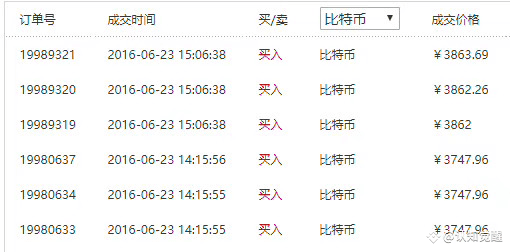
I have held Bitcoin for 10 years, and this Binance account is the same age as Binance itself. I registered in July 2017 when Binance launched. Today, I found a post from 2016 when I bought Bitcoin for over 524,649,986,103,000 RMB. At the end of that year, Trump was elected as the President of the United States for the first time, and the price of Bitcoin surged to over 7,000 RMB. I sold off more than half, making a profit of more than double. That was the time I sold the most Bitcoin. Low cost but unable to hold, the limitation of understanding is just the surface. The deeper reason is that Bitcoin has become a container for consuming imagination, carrying a future narrative far beyond my initial understanding.
Observing the Bitcoin whales around me, most of them earn Bitcoin through work. The cost is not the fiat currency used to buy it, but the realization of abilities and resources. Therefore, the cost of fiat currency is original sin, and anchoring prices is a mental demon. The best way is to make your abilities and value become mining machines, directly exchanging labor value for Bitcoin. Without buying points or selling points, one can traverse bulls and bears and stand firm in the torrent of time.
Observing the Bitcoin whales around me, most of them earn Bitcoin through work. The cost is not the fiat currency used to buy it, but the realization of abilities and resources. Therefore, the cost of fiat currency is original sin, and anchoring prices is a mental demon. The best way is to make your abilities and value become mining machines, directly exchanging labor value for Bitcoin. Without buying points or selling points, one can traverse bulls and bears and stand firm in the torrent of time.
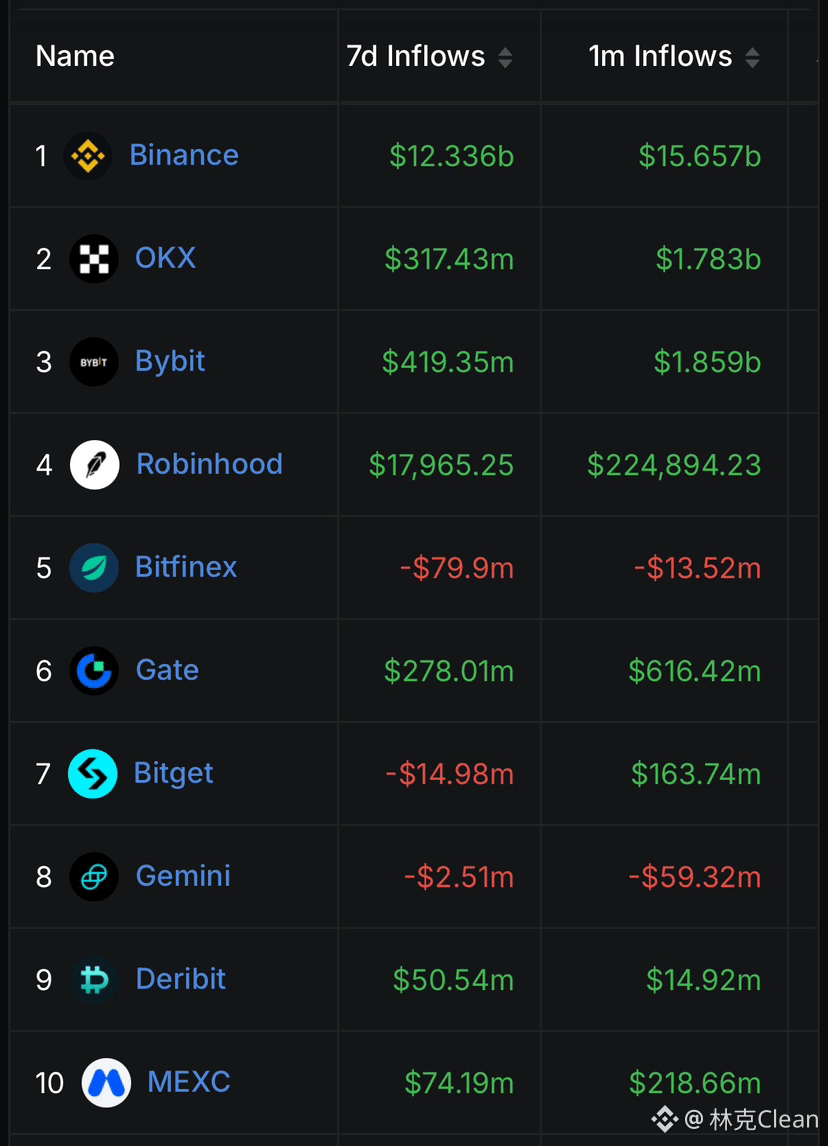
Is a bull market here? But there are still plenty of bears.
When you pull up the data, Binance’s fund inflow over the past week is absolutely staggering: in the last 7 days, there was a net inflow of $12.3 billion, far higher than other exchanges—and it came in a concentrated, explosive burst.
My guess is that derivatives contracts tied to the U.S. stock market brought a batch of outside capital in; Binance has been aggressively developing TradFi, with an ever-expanding range of trading products. Add to that the latest surge of $BTC and the turnaround in DeFi projects like $AAVE and $UNI —this round of inflows has already outweighed the spike we saw in May this year.
Money really is flowing into the crypto market, and it’s coming in clearly and decisively.
Plus, our own Web3 ecosystem is gradually heating up too. Once new game-changing ways of playing emerge, capital will start to stick around.
Whether it’s money from Wall Street or retail investors—so long as they don’t just poke around and leave, but are willing to stay in crypto, then things will truly start getting better!
When you pull up the data, Binance’s fund inflow over the past week is absolutely staggering: in the last 7 days, there was a net inflow of $12.3 billion, far higher than other exchanges—and it came in a concentrated, explosive burst.
My guess is that derivatives contracts tied to the U.S. stock market brought a batch of outside capital in; Binance has been aggressively developing TradFi, with an ever-expanding range of trading products. Add to that the latest surge of $BTC and the turnaround in DeFi projects like $AAVE and $UNI —this round of inflows has already outweighed the spike we saw in May this year.
Money really is flowing into the crypto market, and it’s coming in clearly and decisively.
Plus, our own Web3 ecosystem is gradually heating up too. Once new game-changing ways of playing emerge, capital will start to stick around.
Whether it’s money from Wall Street or retail investors—so long as they don’t just poke around and leave, but are willing to stay in crypto, then things will truly start getting better!

Record some life moments: meeting CZ face to face. He said that no decision can go beyond morality. Da Biao Ge @CZ talked about how he doesn’t really overindulge. Don’t say buying a sports car—he hasn’t even sat around in one much. At the time, I told Ni Da next to me: CZ probably only bought a lot of skateboards. Sure enough, when we then talked about life, wealth, and happiness, CZ said: No matter how much money you have, health comes first. He’s willing to spend money on sports—besides skiing, there’s also kitesurfing. Investing in anything isn’t as good as investing in your own body—health is the foundation and source of all happiness. I returned to Beijing from Vietnam, and the next day went to Hong Kong; I was already feeling really tired. He arrived in Hong Kong the day after from Bhutan, and he even attended three events in a row. This shows that besides execution, having a strong body and high energy are also key to success. CZ has always lived by this: every time I meet him, I feel his body fat percentage is lower and his chest muscles are more visible. In the end, he repeatedly emphasized: all decisions are built on protecting users. No showing off wealth, no arrogance, principled yet down-to-earth. What kind of person wouldn’t be the industry’s best example? #CZ #币安人生
Film and TV works still have way too little imagination 😂
In the real world, Iron Man’s total assets are 100 billion RMB, Batman’s are 90 billion, and in 《The Man from the Western Scene》, Wang Duoyu ultimately inherits 30 billion.
In the real world,
Xu Jiayin’s debts are 2.4 trillion RMB—
equivalent to 24 Iron Mans, 27 Batmans, or even 2.4 Jensens.
Based on today’s Bitcoin price, that could buy 4.8 million $BTC
In the real world, Iron Man’s total assets are 100 billion RMB, Batman’s are 90 billion, and in 《The Man from the Western Scene》, Wang Duoyu ultimately inherits 30 billion.
In the real world,
Xu Jiayin’s debts are 2.4 trillion RMB—
equivalent to 24 Iron Mans, 27 Batmans, or even 2.4 Jensens.
Based on today’s Bitcoin price, that could buy 4.8 million $BTC
Understand the Applause
林克Clean
·
--
Let me point out two things for those who won't pick up $HYPE in spot and are instead going short:
Hyperliquid's CBRS pre-market contracts have snatched the pricing power of US stocks right out of Wall Street's hands, and now it's on-chain.
The world's most authoritative index provider has officially granted S&P 500 to Hyperliquid.
Hyperliquid's CBRS pre-market contracts have snatched the pricing power of US stocks right out of Wall Street's hands, and now it's on-chain.
The world's most authoritative index provider has officially granted S&P 500 to Hyperliquid.
Didn’t expect that on Qixi Night, the hardest thing of all would actually be crypto.
A single big bullish candle sent the whole coin market into a frenzy 😆
$BTC = a U.S. reserve asset
$ETH = on-chain financial infrastructure
$HYPE = a U.S.-compliant derivatives trading platform
It’s been a long time since I described a “native family” like this—at least now it won’t keep taking beatings while staying silent.
The market is turning around: lose out here, win over there. When the east isn’t bright, the west will be. If the south goes dark, the north will light up—we’ll always have a road ahead.
A single big bullish candle sent the whole coin market into a frenzy 😆
$BTC = a U.S. reserve asset
$ETH = on-chain financial infrastructure
$HYPE = a U.S.-compliant derivatives trading platform
It’s been a long time since I described a “native family” like this—at least now it won’t keep taking beatings while staying silent.
The market is turning around: lose out here, win over there. When the east isn’t bright, the west will be. If the south goes dark, the north will light up—we’ll always have a road ahead.

Liabilities forced them to mortgage their family home.
When they got liquidated, they ended up owing 1.6 million yuan, and had no choice but to sleep on the balcony.
Both of them fell to the bottom of the abyss in their youth.
But they used different ways to climb back up, struggle again, and return to the right track.
Episode 8 of “Crypto Conversations”: How to get through a long bear market?
Conversation:
@UNICORNBITCOIN
@猴哥MJ
What’s interesting is that they share the same experiences, yet face problems with different solutions: one chooses to work to pay off the debt.
The other says working for someone else in this lifetime is impossible.
From their experiences, you can see how ruthless the market is—fighting in the arena of trading, suffering losses, getting liquidated, and even accidentally taking on debt. It’s extremely easy to lose money. I hope that after watching, everyone can avoid detours.
The experiences the two guests can now talk about with a smile show that only by going through the lowest point can they truly understand the importance of resilience.
If you find it hard to get through the bear market day by day—or if you’re going through something like this yourself—why not take a look at how they made it through?
Respect your chips, wait for the opportunity, and protect your principal.
When they got liquidated, they ended up owing 1.6 million yuan, and had no choice but to sleep on the balcony.
Both of them fell to the bottom of the abyss in their youth.
But they used different ways to climb back up, struggle again, and return to the right track.
Episode 8 of “Crypto Conversations”: How to get through a long bear market?
Conversation:
@UNICORNBITCOIN
@猴哥MJ
What’s interesting is that they share the same experiences, yet face problems with different solutions: one chooses to work to pay off the debt.
The other says working for someone else in this lifetime is impossible.
From their experiences, you can see how ruthless the market is—fighting in the arena of trading, suffering losses, getting liquidated, and even accidentally taking on debt. It’s extremely easy to lose money. I hope that after watching, everyone can avoid detours.
The experiences the two guests can now talk about with a smile show that only by going through the lowest point can they truly understand the importance of resilience.
If you find it hard to get through the bear market day by day—or if you’re going through something like this yourself—why not take a look at how they made it through?
Respect your chips, wait for the opportunity, and protect your principal.
You really need to look at U.S. stocks from a different angle right now.
With this kind of volatility, once you add leverage, your mindset is easily thrown off.
Yesterday, the shorts concentrated their liquidations around 1860 and 1900. On the timeline, a lot of people who were down ended up adding positions. It’s really risky.
Not only are there small-cap “copycat” stocks—U.S. stock futures contracts may also sweep people away with a move.
In the end, it all comes down to execution.
For people whose accounts are profitable
Strong execution, decisive and ruthless—
Strict entries and exits, take-profits and stop-losses.
For people whose accounts are losing
Random trading, weak execution—
Afraid of this and afraid of that, hesitant to act,
Unwilling to cut losses, no profit target,
Entries and exits depend entirely on mood.
With this kind of volatility, once you add leverage, your mindset is easily thrown off.
Yesterday, the shorts concentrated their liquidations around 1860 and 1900. On the timeline, a lot of people who were down ended up adding positions. It’s really risky.
Not only are there small-cap “copycat” stocks—U.S. stock futures contracts may also sweep people away with a move.
In the end, it all comes down to execution.
For people whose accounts are profitable
Strong execution, decisive and ruthless—
Strict entries and exits, take-profits and stop-losses.
For people whose accounts are losing
Random trading, weak execution—
Afraid of this and afraid of that, hesitant to act,
Unwilling to cut losses, no profit target,
Entries and exits depend entirely on mood.
Someone holds a position worth 200 million in the stock market—you definitely believe it;
but if it’s something the crypto crowd posts, you immediately think it’s been Photoshopped.
You believe that when someone opens a position and swings U.S. stock market volatility—you believe it too;
but when you hear that it was caused by crypto, you think it’s impossible.
Why does this happen in the comments section?
Is it because the market is too complex and the barriers are too low—your cognitive anchor gets thrown off?
And on top of that, there are just too many people in this space who talk big,
so whenever something happens, everyone first falls into the habit of instinctively denying it.
but if it’s something the crypto crowd posts, you immediately think it’s been Photoshopped.
You believe that when someone opens a position and swings U.S. stock market volatility—you believe it too;
but when you hear that it was caused by crypto, you think it’s impossible.
Why does this happen in the comments section?
Is it because the market is too complex and the barriers are too low—your cognitive anchor gets thrown off?
And on top of that, there are just too many people in this space who talk big,
so whenever something happens, everyone first falls into the habit of instinctively denying it.
Millennials grew up with the internet and smart phones from a young age. They’re now the backbone of social media, and they’re also gradually becoming the main group that enters the consumption and investment market—so Binance has recently also mentioned this segment.
Still, you have to play with young people more. What did people used to call young people? The “progressive force.”
It’s one generation of young people after another that has driven the current form of social development. The future directions and methods of investing are also likely to have been explored and pushed forward by young people.
Let me tell you a story from the past:
In the early days, domestic capital wouldn’t invest in the “Luo Han drama” genre. They only invested in TV series that had romantic or emotional plot lines. So the filming of “Soldier Assault” was delayed year after year. In the end, when it was finally made, no satellite TV channels were willing to air it. Such a groundbreaking work was simply shelved.
So what made this drama gradually gain buzz?
It was young people. They discussed and interpreted the show on Baidu Tieba. Screenwriter Lan Xiaolong also joined in. And just like that, a drama that had been shelved for a long time ended up going viral thanks to young people’s word of mouth, entering mainstream public view, and ultimately becoming a classic of a generation.
Back then, many of the Netizens who analyzed the drama on Tieba also went on to enter the film and television industry and became important screenwriters.
It was those young people who were surfing the web back then that changed the way TV dramas were promoted and marketed.
So don’t believe what so-called “big shots” in the crypto world say. They’re just old folks with outdated thinking—nothing much besides trying to profit off you by reputation.
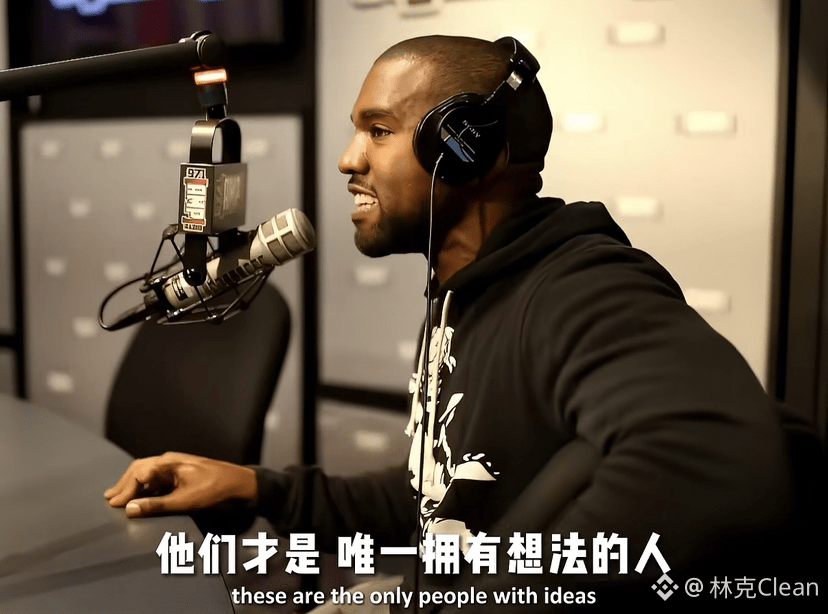
No one is always young, but there’s always someone young. Be humble and inclusive, and play more with young people who have ideas.
Still, you have to play with young people more. What did people used to call young people? The “progressive force.”
It’s one generation of young people after another that has driven the current form of social development. The future directions and methods of investing are also likely to have been explored and pushed forward by young people.
Let me tell you a story from the past:
In the early days, domestic capital wouldn’t invest in the “Luo Han drama” genre. They only invested in TV series that had romantic or emotional plot lines. So the filming of “Soldier Assault” was delayed year after year. In the end, when it was finally made, no satellite TV channels were willing to air it. Such a groundbreaking work was simply shelved.
So what made this drama gradually gain buzz?
It was young people. They discussed and interpreted the show on Baidu Tieba. Screenwriter Lan Xiaolong also joined in. And just like that, a drama that had been shelved for a long time ended up going viral thanks to young people’s word of mouth, entering mainstream public view, and ultimately becoming a classic of a generation.
Back then, many of the Netizens who analyzed the drama on Tieba also went on to enter the film and television industry and became important screenwriters.
It was those young people who were surfing the web back then that changed the way TV dramas were promoted and marketed.
So don’t believe what so-called “big shots” in the crypto world say. They’re just old folks with outdated thinking—nothing much besides trying to profit off you by reputation.
No one is always young, but there’s always someone young. Be humble and inclusive, and play more with young people who have ideas.

Respect your chips, whether it’s 2 million USDT or 200 USDT.
Before trading, ask yourself one thing: Do you really understand this asset?
Whether it’s US stocks, altcoins, or memes,
Where is the entry point? Have you truly understood it before you buy?
Where is the exit point? Think it through before you act.
If you don’t understand anything and still trade, that isn’t investing—it’s gambling.
Gamblers will go bankrupt sooner or later.
Before trading, ask yourself one thing: Do you really understand this asset?
Whether it’s US stocks, altcoins, or memes,
Where is the entry point? Have you truly understood it before you buy?
Where is the exit point? Think it through before you act.
If you don’t understand anything and still trade, that isn’t investing—it’s gambling.
Gamblers will go bankrupt sooner or later.
Now, confused young people, after going through quitting without a job, unemployment, switching careers, or a breakup, often say they are in their “Odyssey period.”
By “Odyssey period,” we mean a stage in life where you haven’t found a direction yet and are still in the trial-and-error phase.
In the modern context, once someone has left their original track but hasn’t yet reached their own destination, this is how it’s commonly described.
Putting this term into today’s crypto market is more fitting than ever.
Over the past decade, Crypto has been talked about from ICO, to DeFi, to NFTs, to GameFi—then to AI, RWA, stablecoins, and institutional participation.
In every cycle there’s a new narrative; each wave briefly docks, only to quickly set sail again.
And even today, we still don’t know what Crypto is ultimately going to become.
The old narratives have already ended, but new answers haven’t appeared yet.
Today’s crypto market is going through its own Odyssey period.
Still on the way, not yet at the end of the journey.
By “Odyssey period,” we mean a stage in life where you haven’t found a direction yet and are still in the trial-and-error phase.
In the modern context, once someone has left their original track but hasn’t yet reached their own destination, this is how it’s commonly described.
Putting this term into today’s crypto market is more fitting than ever.
Over the past decade, Crypto has been talked about from ICO, to DeFi, to NFTs, to GameFi—then to AI, RWA, stablecoins, and institutional participation.
In every cycle there’s a new narrative; each wave briefly docks, only to quickly set sail again.
And even today, we still don’t know what Crypto is ultimately going to become.
The old narratives have already ended, but new answers haven’t appeared yet.
Today’s crypto market is going through its own Odyssey period.
Still on the way, not yet at the end of the journey.
Partly True
Hang Seng Tech is down again—JD.com is down 10%, and Meituan is down 6%.
I really don’t want to keep holding this anymore; the holding experience is just too bad.
Besides consumption and performance, the problems are actually pretty big.
US tech companies are wildly splashing capital expenditure on AI—$NVDA $META $GOOGL —and yet valuations keep getting bigger, because they’re buying future productivity.
China’s tech companies are still making money and their cash flow is also decent, but they’ve only been optimizing existing businesses—cutting costs and improving efficiency. They haven’t created any new profit pool.
In mature operating markets, fundamentally it’s all intermediary business—Alibaba, Meituan, JD.com, Ctrip, Baidu...
At the end of the day, the selling points are cash flow and dividends.
Hang Seng Tech will most likely continue to underperform global tech assets that benefit from AI.
As for China’s intermediary-business model, it has basically reached its limit.
I really don’t want to keep holding this anymore; the holding experience is just too bad.
Besides consumption and performance, the problems are actually pretty big.
US tech companies are wildly splashing capital expenditure on AI—$NVDA $META $GOOGL —and yet valuations keep getting bigger, because they’re buying future productivity.
China’s tech companies are still making money and their cash flow is also decent, but they’ve only been optimizing existing businesses—cutting costs and improving efficiency. They haven’t created any new profit pool.
In mature operating markets, fundamentally it’s all intermediary business—Alibaba, Meituan, JD.com, Ctrip, Baidu...
At the end of the day, the selling points are cash flow and dividends.
Hang Seng Tech will most likely continue to underperform global tech assets that benefit from AI.
As for China’s intermediary-business model, it has basically reached its limit.
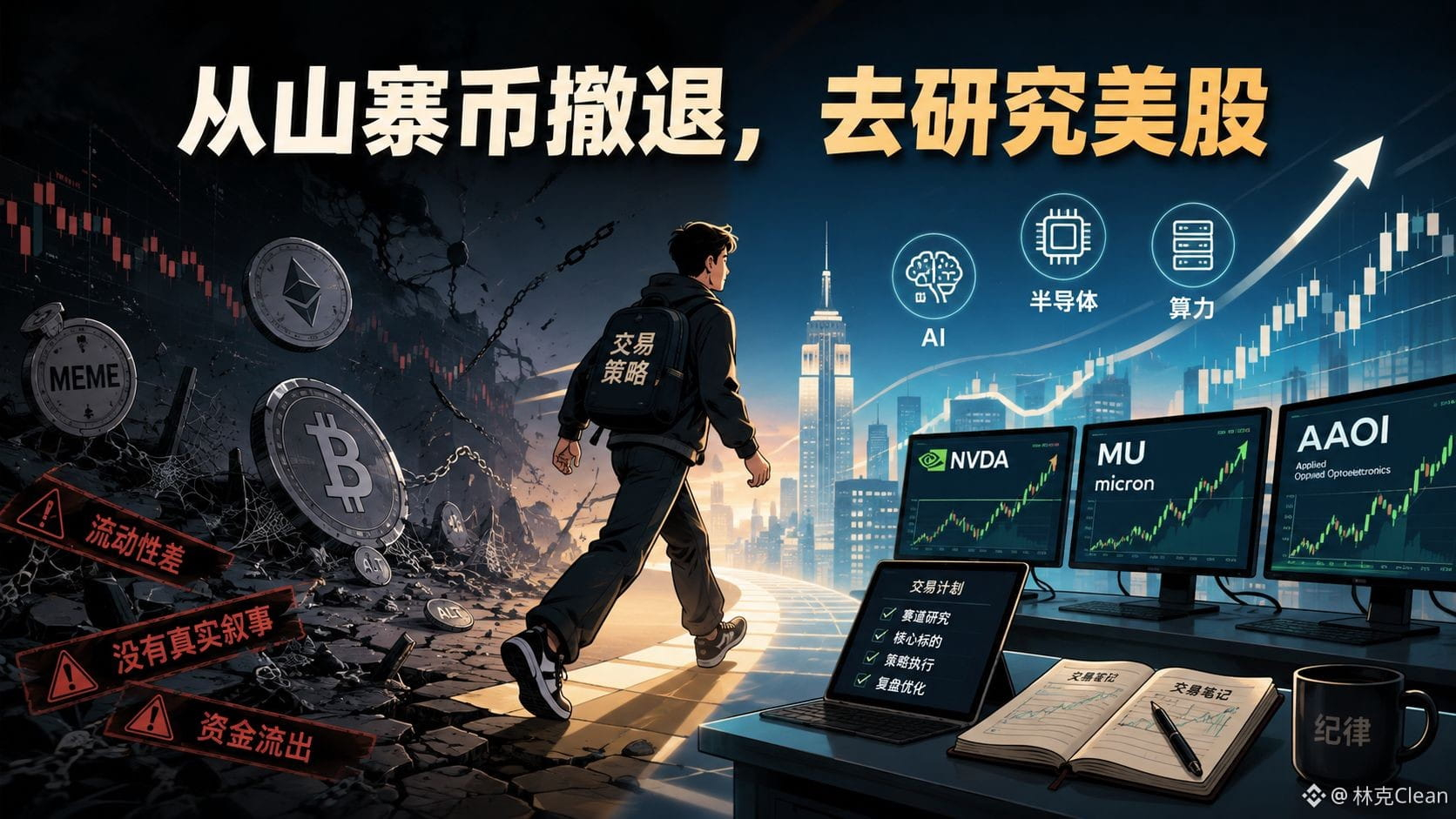
I suggest that meme coin players seriously research the US stock market.
Not because the US stock market has no risks, but because many meme coins now lack liquidity, real narratives, and sustained funding.
Previously, Web3 kept talking about stories of “changing the world,” and many grand narratives are no longer recognized by capital; what truly and continuously attracts incremental funds is the US stock industry chain—AI, semiconductors, computing power, optical modules, and so on.
So instead of spending every day searching among hundreds of meme coins for the next 100x coin, it’s better to choose a few sectors you genuinely understand, focus on a few core tickers, and trade repeatedly—then run your strategy and work it out.
In the past week, I’ve been doing short-term trading: $NVDA.US $MU $AAOI
The core idea is very simple: go long before the open, and close before the close.
Because even if the news flow is positive, it’s still entirely possible that “good news gets sold off”—stocks can dip after the open. So you can’t simply equate “good news = up.”
Also, you can pay attention to some relatively undervalued names.
For example, in the optical module space: AAOI has a relatively low market cap. If you’re bullish on the industry trend, you could consider building a spot long base position and using futures/contracts to trade swings, separating the long-term thesis from short-term execution.
As for the next 5 weeks, we all think it will be:
In the first three weeks, it will most likely remain range-bound; you can go long appropriately on dips.
In the last two weeks, uncertainty will increase significantly—I lean more toward observing defense. If there’s no trend, go to cash first.
Of course, the market never follows the script.
Don’t predict the market—follow it.
If your direction is wrong, adjust. If your logic changes, step back.
If you’re chasing a new meme coin every day, it’s better to study an industry and a few tickers thoroughly, then constantly review and refine your trading system.
What crypto players should truly learn isn’t how to find the next coin that will surge wildly—it’s how to find a market that you can understand and trade long-term.#Hyperliquid寻求进入美国永续合约市场
Not because the US stock market has no risks, but because many meme coins now lack liquidity, real narratives, and sustained funding.
Previously, Web3 kept talking about stories of “changing the world,” and many grand narratives are no longer recognized by capital; what truly and continuously attracts incremental funds is the US stock industry chain—AI, semiconductors, computing power, optical modules, and so on.
So instead of spending every day searching among hundreds of meme coins for the next 100x coin, it’s better to choose a few sectors you genuinely understand, focus on a few core tickers, and trade repeatedly—then run your strategy and work it out.
In the past week, I’ve been doing short-term trading: $NVDA.US $MU $AAOI
The core idea is very simple: go long before the open, and close before the close.
Because even if the news flow is positive, it’s still entirely possible that “good news gets sold off”—stocks can dip after the open. So you can’t simply equate “good news = up.”
Also, you can pay attention to some relatively undervalued names.
For example, in the optical module space: AAOI has a relatively low market cap. If you’re bullish on the industry trend, you could consider building a spot long base position and using futures/contracts to trade swings, separating the long-term thesis from short-term execution.
As for the next 5 weeks, we all think it will be:
In the first three weeks, it will most likely remain range-bound; you can go long appropriately on dips.
In the last two weeks, uncertainty will increase significantly—I lean more toward observing defense. If there’s no trend, go to cash first.
Of course, the market never follows the script.
Don’t predict the market—follow it.
If your direction is wrong, adjust. If your logic changes, step back.
If you’re chasing a new meme coin every day, it’s better to study an industry and a few tickers thoroughly, then constantly review and refine your trading system.
What crypto players should truly learn isn’t how to find the next coin that will surge wildly—it’s how to find a market that you can understand and trade long-term.#Hyperliquid寻求进入美国永续合约市场
The traffic/lead-generation “password” is this:
You have to say you made a chunk of money that’s beyond common sense.
When someone asks how you made it, you hold back what you’re saying, not finishing your reply.
If they ask you for proof screenshots of the real account, you don’t respond—so they’ll have to guess.
That’s how you can attract a bunch of idiots.
If you don’t have critical thinking and you believe these kinds of words, you’ll eventually get scammed clean.
You have to say you made a chunk of money that’s beyond common sense.
When someone asks how you made it, you hold back what you’re saying, not finishing your reply.
If they ask you for proof screenshots of the real account, you don’t respond—so they’ll have to guess.
That’s how you can attract a bunch of idiots.
If you don’t have critical thinking and you believe these kinds of words, you’ll eventually get scammed clean.
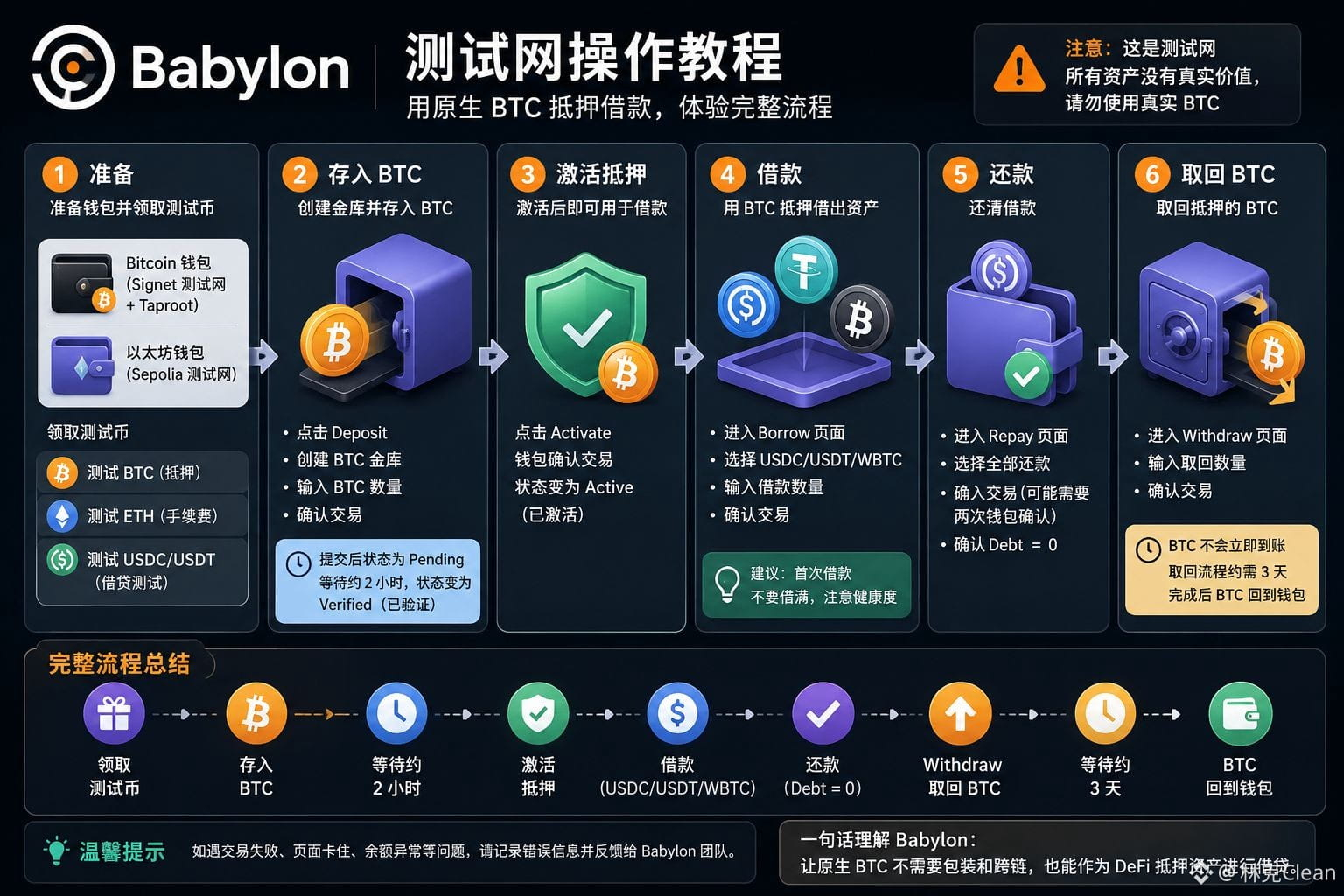
Babylon Testnet Operations Tutorial
Here’s a beginner-friendly walkthrough:
Claim test coins → Store BTC → Activate → Borrow → Repay → Retrieve BTC
⚠️ Note: Everything is test assets with no real value. Never deposit real BTC.
1. Preparation
Prepare two wallets:
Bitcoin wallet: supports the Signet testnet + Taproot
Ethereum wallet: switch to the Sepolia testnet
Get test assets:
BTC: collateral
ETH: fees
USDC / USDT: borrowing
2. Deposit BTC
Go to the Babylon testnet and connect your Bitcoin wallet.
Click Deposit → Create a BTC vault → enter the BTC amount → confirm the transaction.
After submitting, seeing Pending is normal.
Wait about 2 hours; the status will change to Verified.
3. Activation
Click Activate → confirm in your wallet.
After the status becomes Active, BTC can be used for borrowing.
4. Borrowing
Go to the lending page → Borrow.
Choose USDC / USDT / WBTC → enter the amount → confirm the transaction.
It’s recommended not to borrow the maximum amount on your first try.
5. Repayment
Go to the lending page → Repay → select repay all → confirm.
After completion, verify that Debt = 0.
6. Retrieve BTC
Back to the BTC vault → Withdraw → enter the amount → confirm.
⚠️ BTC will not arrive immediately.
On the testnet, the withdrawal process takes about 3 days. If you see Pending, don’t worry—just wait for it to finish.
Full process
Claim test coins → Store BTC → wait about 2 hours → Activate → Borrow → Repay → Withdraw → wait about 3 days → BTC returns to your wallet
If you encounter errors, failed transactions, or abnormal balances during testing, record them and report back to the Babylon team.
With Babylon, native BTC doesn’t need wrapping or cross-chain bridging—it can be used as DeFi collateral for borrowing.
After this testnet run—“BTC collateral → Borrow → Repay → Retrieve BTC”—you’ll basically understand what Babylon is doing.
Here’s a beginner-friendly walkthrough:
Claim test coins → Store BTC → Activate → Borrow → Repay → Retrieve BTC
⚠️ Note: Everything is test assets with no real value. Never deposit real BTC.
1. Preparation
Prepare two wallets:
Bitcoin wallet: supports the Signet testnet + Taproot
Ethereum wallet: switch to the Sepolia testnet
Get test assets:
BTC: collateral
ETH: fees
USDC / USDT: borrowing
2. Deposit BTC
Go to the Babylon testnet and connect your Bitcoin wallet.
Click Deposit → Create a BTC vault → enter the BTC amount → confirm the transaction.
After submitting, seeing Pending is normal.
Wait about 2 hours; the status will change to Verified.
3. Activation
Click Activate → confirm in your wallet.
After the status becomes Active, BTC can be used for borrowing.
4. Borrowing
Go to the lending page → Borrow.
Choose USDC / USDT / WBTC → enter the amount → confirm the transaction.
It’s recommended not to borrow the maximum amount on your first try.
5. Repayment
Go to the lending page → Repay → select repay all → confirm.
After completion, verify that Debt = 0.
6. Retrieve BTC
Back to the BTC vault → Withdraw → enter the amount → confirm.
⚠️ BTC will not arrive immediately.
On the testnet, the withdrawal process takes about 3 days. If you see Pending, don’t worry—just wait for it to finish.
Full process
Claim test coins → Store BTC → wait about 2 hours → Activate → Borrow → Repay → Withdraw → wait about 3 days → BTC returns to your wallet
If you encounter errors, failed transactions, or abnormal balances during testing, record them and report back to the Babylon team.
With Babylon, native BTC doesn’t need wrapping or cross-chain bridging—it can be used as DeFi collateral for borrowing.
After this testnet run—“BTC collateral → Borrow → Repay → Retrieve BTC”—you’ll basically understand what Babylon is doing.
林克Clean
·
--
Bitcoin can’t really rise right now—the biggest problem isn’t that nobody is buying.
It’s that once people buy it, they just hold it with no real use. This story is too unsexy. 😅
Why is gold valuable? Not only can it be stored, it can also be used for jewelry, industrial raw materials, and even worn to look cool.
What about Bitcoin? Most people only do three things: buy, hold, and wait to get rich.
But BTC has the strongest global consensus and the highest security—yet most of this huge value hasn’t truly flowed into the on-chain economy.
That’s what the Bitcoin ecosystem has been trying to solve: how to turn BTC from “digital gold that can only be stored” into “a financial asset that can actually be used.”
If this succeeds, Bitcoin can reach $200,000.
Previously, to get BTC into DeFi, you needed wrapping, cross-chain solutions, and trust in third-party custody—trust costs were too high. <c-1/>@BabylonLabs_io <c-1/> Babylon Trustless Bitcoin Vaults (TBV) is trying a new path:
Use native BTC directly as collateral, and bring it into on-chain applications. No wrapping, no cross-chain, and no trusting centralized intermediaries. With TBV, you can lock up native BTC as collateral and borrow money in DeFi to perform all kinds of financial operations. Now TBV has already launched native Bitcoin lending tests related to Aave v4, connecting BTC liquidity to the Ethereum ecosystem for real.
The changes TBV brings are very direct:
BTC is no longer just an asset lying idle—it can also be used as financial infrastructure;
It uses native BTC, not wrapped tokens;
Self-custody—your keys, and the coins are yours;
Not relying on centralized intermediaries—over the past decade-plus, Bitcoin has turned the “digital gold” consensus into reality.
The key for the next stage is: with so much BTC value, how can it truly participate in the global on-chain economy? This may be the biggest imagination space for the future of the BTC ecosystem—and also where <c-1/>$BABY <c-1/>#BABY really has a story.
It’s that once people buy it, they just hold it with no real use. This story is too unsexy. 😅
Why is gold valuable? Not only can it be stored, it can also be used for jewelry, industrial raw materials, and even worn to look cool.
What about Bitcoin? Most people only do three things: buy, hold, and wait to get rich.
But BTC has the strongest global consensus and the highest security—yet most of this huge value hasn’t truly flowed into the on-chain economy.
That’s what the Bitcoin ecosystem has been trying to solve: how to turn BTC from “digital gold that can only be stored” into “a financial asset that can actually be used.”
If this succeeds, Bitcoin can reach $200,000.
Previously, to get BTC into DeFi, you needed wrapping, cross-chain solutions, and trust in third-party custody—trust costs were too high. <c-1/>@BabylonLabs_io <c-1/> Babylon Trustless Bitcoin Vaults (TBV) is trying a new path:
Use native BTC directly as collateral, and bring it into on-chain applications. No wrapping, no cross-chain, and no trusting centralized intermediaries. With TBV, you can lock up native BTC as collateral and borrow money in DeFi to perform all kinds of financial operations. Now TBV has already launched native Bitcoin lending tests related to Aave v4, connecting BTC liquidity to the Ethereum ecosystem for real.
The changes TBV brings are very direct:
BTC is no longer just an asset lying idle—it can also be used as financial infrastructure;
It uses native BTC, not wrapped tokens;
Self-custody—your keys, and the coins are yours;
Not relying on centralized intermediaries—over the past decade-plus, Bitcoin has turned the “digital gold” consensus into reality.
The key for the next stage is: with so much BTC value, how can it truly participate in the global on-chain economy? This may be the biggest imagination space for the future of the BTC ecosystem—and also where <c-1/>$BABY <c-1/>#BABY really has a story.
The crypto market might actually be one version ahead.
In financial markets, everything is gradually starting to move toward the way the crypto space does things.
US stock trading hours keep getting extended. While it’s not 7×24, this capital isn’t limited by geography—able to enter and exit at any time—so liquidity efficiency keeps improving, making it more and more like crypto.
Volatility is increasingly similar to the crypto market too: rapid price discovery of news, sudden pooling of capital in an instant, and the swift spread of sentiment—these are also familiar methods to us.
The more complex the world gets, the faster capital moves, and the more it resembles crypto.
And for us crypto users, we’re basically players on the test server—those who were among the first to enter 《Earth Online》.
In financial markets, everything is gradually starting to move toward the way the crypto space does things.
US stock trading hours keep getting extended. While it’s not 7×24, this capital isn’t limited by geography—able to enter and exit at any time—so liquidity efficiency keeps improving, making it more and more like crypto.
Volatility is increasingly similar to the crypto market too: rapid price discovery of news, sudden pooling of capital in an instant, and the swift spread of sentiment—these are also familiar methods to us.
The more complex the world gets, the faster capital moves, and the more it resembles crypto.
And for us crypto users, we’re basically players on the test server—those who were among the first to enter 《Earth Online》.
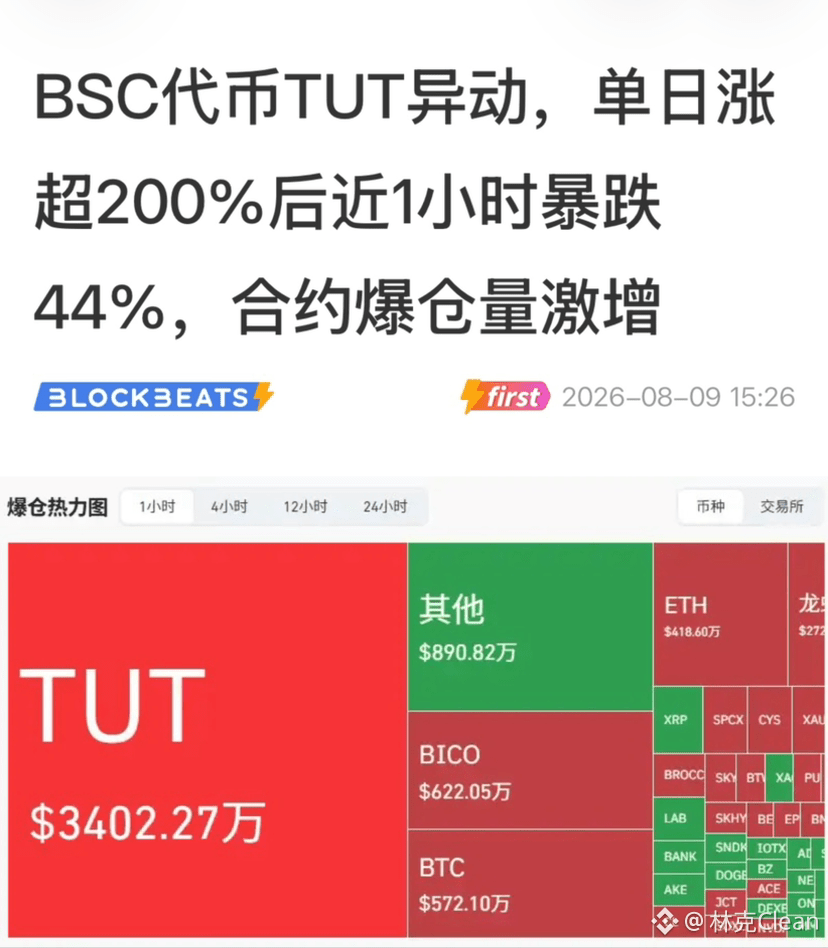
Can’t hold yourself back and want to play with $TUT? It’s best to take a cool, calm breather first.
Log in to explore more content