
Crypto Miners
1.1k Posts

Crypto Miners
Report
Block User
Bridging information and opportunity | Real-time crypto news, market insights, and industry coverage | Not financial advice | Stacking $BTC $ETH #BNB $TON $SOL

Macro KOL
Occasional Trader
5.7 Years
127 Following
13.9K+ Followers
38.5K+ Liked
1 Badges
Posts
All
Quotes
Videos
PINNED
Partly True
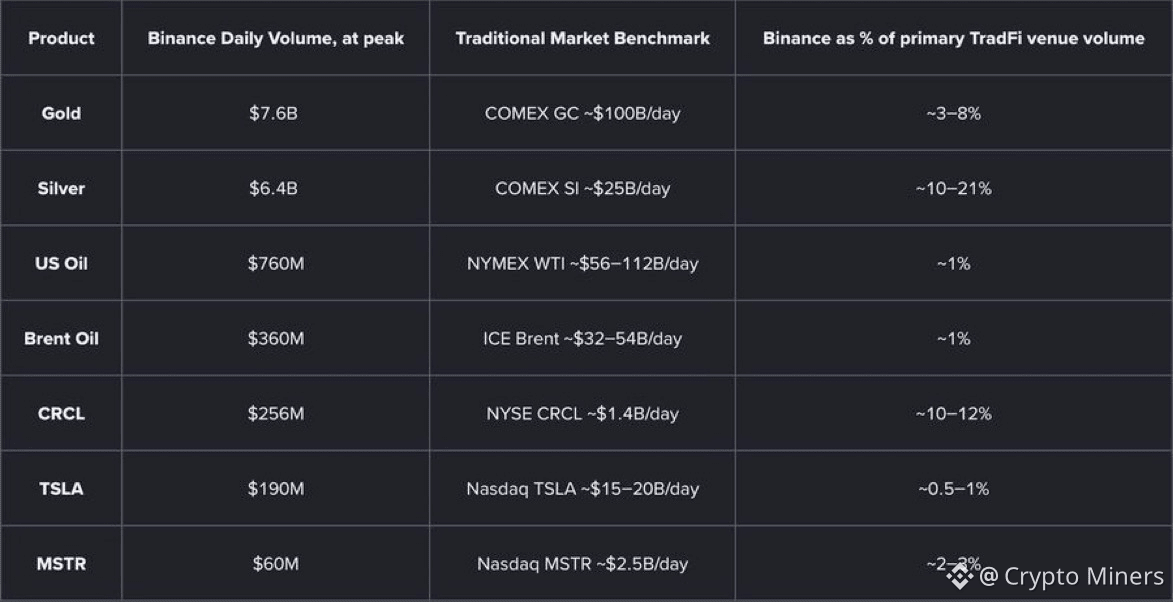
We feel like most people still see #Binance as just a crypto exchange… but that take already feels kinda outdated.
Like, in just 90 days, it went from basically zero to doing around $7.6B daily in gold and $6.4B in silver. That’s not normal growth, that’s the kind of shift where you start asking where price discovery is actually happening now.
And the crazy part is, those numbers aren’t small in a “crypto” sense, they’re big even compared to traditional exchanges. It’s already doing multiples of places like MCX, DGCX, TOCOM, and even touching a noticeable share of SHFE. At that point, it’s not experimenting with TradFi… it’s operating at that level.
But what really clicked for us is the 24/7 angle.
News breaks at random times. Weekends, late nights, whenever. Traditional markets just… wait. But here, people are already trading, already reacting, already setting expectations before those markets even open. That kind of changes how everything gets priced globally.
And then you realize it’s not just about one asset anymore.
You’ve got crypto, gold, silver, oil, even equities, all sitting in the same place. No jumping between platforms, no fragmented setups. Just one continuous market where you can actually think in terms of a full portfolio instead of isolated trades.
Plus there’s this whole CeFi + DeFi overlap happening in the background. Liquid markets on one side, on-chain RWAs growing fast on the other. That combo of liquidity + programmability is kinda new if you think about how TradFi usually works.
Feels like the line between crypto and traditional finance isn’t something that’s coming later… it’s already getting blurry.
Anyway, worth paying attention to.
Trade the world, 24/7.
14
3
126
36.9k
PINNED
Article
Binance Feed - A Comprehensive Crypto News AggregatorBinance Feed - A Comprehensive Crypto News Aggregator
If you're a crypto enthusiast, staying up to date with the latest news and updates in the industry is crucial. That's where Binance Feed comes in - a comprehensive news aggregator that covers everything from market analysis to project updates.
Here are some key features and benefits of Binance Feed: Personalized News Feed - You can customize your news feed by selecting the topics you're interested in, such as Bitcoin, DeFi, or NFTs. This ensures that you only see the news that matters to you.
Real-Time Updates - Binance Feed is updated in real-time, so you'll never miss out on breaking news or market movements.
Reliable Sources - Binance Feed sources its news from reputable and reliable sources in the industry, so you can trust the information you're getting.02:38 PM
Multilingual Support - Binance Feed supports multiple languages, including English, Chinese, Spanish, and more, making it accessible to a global audience.02:38 PM
Community Engagement - Binance Feed allows users to engage with the news by commenting and sharing their thoughts. This creates a community-driven platform where users can share insights and opinions.02:38 PM
Mobile App - Binance Feed is available as a mobile app, so you can stay up to date on the go.02:39 PM
Whether you're a seasoned trader or just starting out in the crypto world, Binance Feed is an invaluable tool for staying informed and making informed decisions. So, if you haven't already, check out Binance Feed today and start customizing your news feed to stay on top of the latest in the crypto world!
Binance Feed - A Comprehensive Crypto News Aggregator
Binance Feed - A Comprehensive Crypto News Aggregator
If you're a crypto enthusiast, staying up to date with the latest news and updates in the industry is crucial. That's where Binance Feed comes in - a comprehensive news aggregator that covers everything from market analysis to project updates.
Here are some key features and benefits of Binance Feed: Personalized News Feed - You can customize your news feed by selecting the topics you're interested in, such as Bitcoin, DeFi, or NFTs. This ensures that you only see the news that matters to you.
Real-Time Updates - Binance Feed is updated in real-time, so you'll never miss out on breaking news or market movements.
Reliable Sources - Binance Feed sources its news from reputable and reliable sources in the industry, so you can trust the information you're getting.02:38 PM
Multilingual Support - Binance Feed supports multiple languages, including English, Chinese, Spanish, and more, making it accessible to a global audience.02:38 PM
Community Engagement - Binance Feed allows users to engage with the news by commenting and sharing their thoughts. This creates a community-driven platform where users can share insights and opinions.02:38 PM
Mobile App - Binance Feed is available as a mobile app, so you can stay up to date on the go.02:39 PM
Whether you're a seasoned trader or just starting out in the crypto world, Binance Feed is an invaluable tool for staying informed and making informed decisions. So, if you haven't already, check out Binance Feed today and start customizing your news feed to stay on top of the latest in the crypto world!
1
93
1.3k
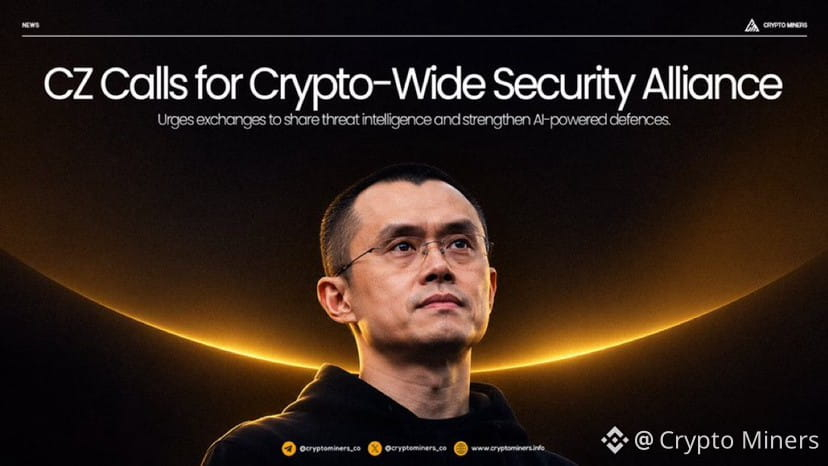
CZ Calls for Crypto Security Alliance as AI-Driven Attacks Rise
In his first interview since the October 29 Binance hack, CZ says AI is making cyberattacks faster and more sophisticated, and the crypto industry needs to step up its defences.
He called for an industry-wide security alliance where companies can share threat intelligence, conduct security audits and coordinate faster to freeze stolen funds.
CZ also stressed the need for greater investment in AI-powered security, warning that the threat goes beyond individual exchanges and could affect the wider financial system.
He believes the industry needs to use AI to defend itself just as attackers are using it to launch more advanced attacks.
103
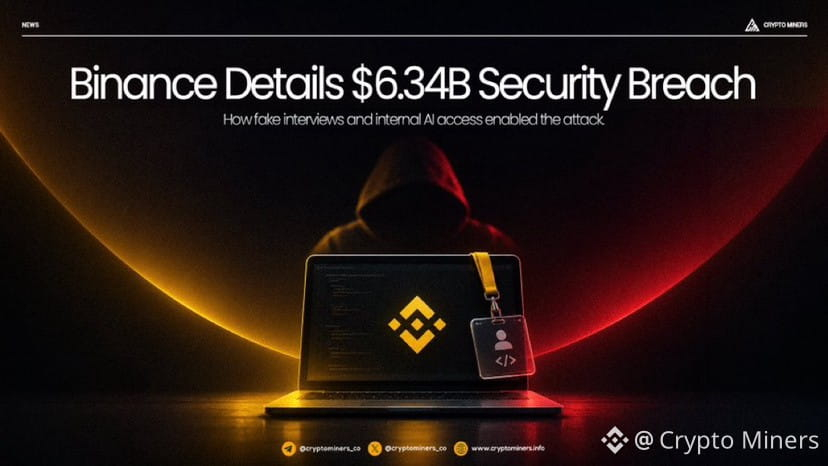
Binance Reveals How Hackers Used Fake Job Interviews to Pull Off $6.34B Attack
What started with a fake job interview eventually led to one of the biggest security incidents in crypto.
Binance says hackers tricked an employee into downloading malicious code disguised as a coding assignment. They later used the compromised device and an internal AI tool to gain access to other engineers’ systems and reach the exchange’s wallet infrastructure.
The October 29 attack impacted around $6.34B in digital assets. Binance says $2.85B has been frozen or intercepted, while 98% of affected assets have been replenished.
The FBI has attributed the attack to North Korea. Binance also revealed it detected and prevented 57 suspected North Korea-linked cyber threats throughout 2026.
Since the incident, the exchange has rebuilt affected systems, strengthened security controls and brought in independent cybersecurity experts to review what happened.
125
CNBC brought up FTX during its conversation with Binance Co-CEO Richard Teng, and I think his response was worth listening to.
He made an important distinction between the two incidents. FTX was fraud, where customer funds simply weren’t there. Binance’s incident involved an external attack, and the company has committed to covering the full financial impact.
Looking at the recovery, Binance has already set aside more than 100% of the affected amount and replenished 98% of the impacted tokens. The remaining 2% consists of less liquid assets being sourced through OTC channels to avoid moving market prices.
Around $2.85B has also been frozen or intercepted with the help of law enforcement, token issuers and blockchain intelligence firms. Withdrawals have resumed, and activity has returned to normal levels.
What matters here is that users can verify their balances through Proof of Reserves rather than simply taking the exchange’s word for it.
The interview also got into how much AI is changing the threat landscape. The recent attack was a multi-month campaign attributed by the FBI to North Korea. Binance says it has also prevented 57 other suspected North Korea-linked cyberthreats this year.
All identified entry points have since been closed, affected systems rebuilt, and security strengthened with tighter device controls, enhanced wallet-service risk controls and AI anomaly detection.
Richard’s point about AI is particularly relevant. As attackers become more sophisticated, exchanges need to invest in AI-driven defences, more security engineers and partnerships with leading AI and cybersecurity companies.
There’s a lot to take away from this interview. Ultimately, trust comes down to what users can verify and how seriously an exchange continues to invest in protecting them.
Worth watching the full conversation!
1
104
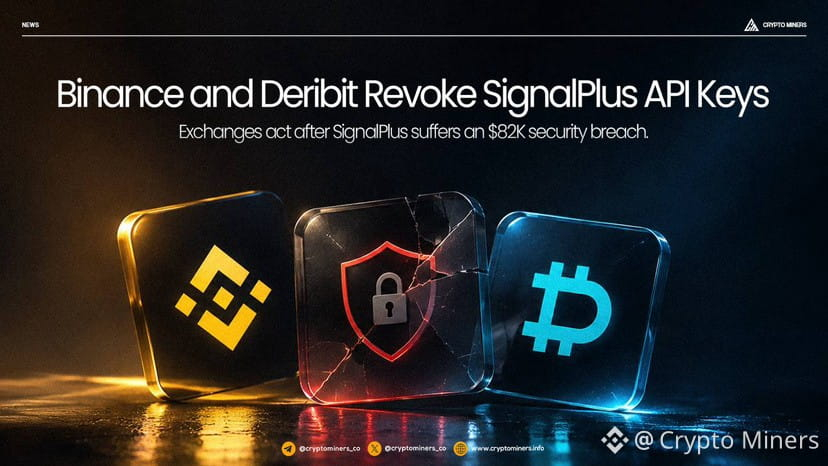
Binance and Deribit Revoke SignalPlus API Keys After Security Breach
Binance and Deribit have revoked all customer API keys linked to SignalPlus following a cyberattack on the crypto trading platform.
The attack reportedly began with a compromised Telegram account belonging to a third-party vendor. The attacker impersonated the contact and sent a fake Microsoft Teams invitation to a SignalPlus engineer, eventually gaining access to the platform’s internal network.
A small number of user accounts without IP whitelisting were affected, with total losses reported at under $82,000. SignalPlus says it has started reimbursing affected users.
Both exchanges confirmed their own systems and user funds remain unaffected. CZ has also urged anyone using SignalPlus on other exchanges to revoke their linked API keys immediately.
SignalPlus has suspended its services for a security review and plans to restore them in phases over the coming days.
1
169
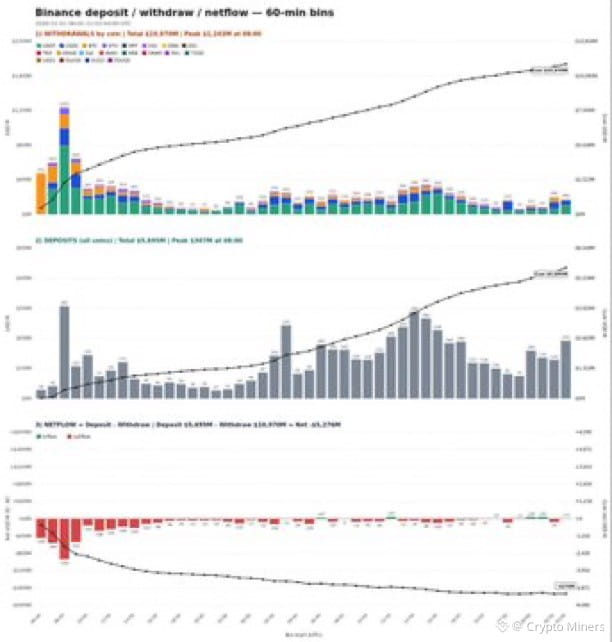
Binance Sees Deposits Outpace Withdrawals
By 03:00 UTC, hourly deposits on @binance had started exceeding withdrawals, pointing to improving user activity and more stable flows.
Binance Sees Deposits Outpace Withdrawals
By 03:00 UTC, hourly deposits on @binance had started exceeding withdrawals, pointing to improving user activity and more stable flows.
By 03:00 UTC, hourly deposits on @binance had started exceeding withdrawals, pointing to improving user activity and more stable flows.
2
132
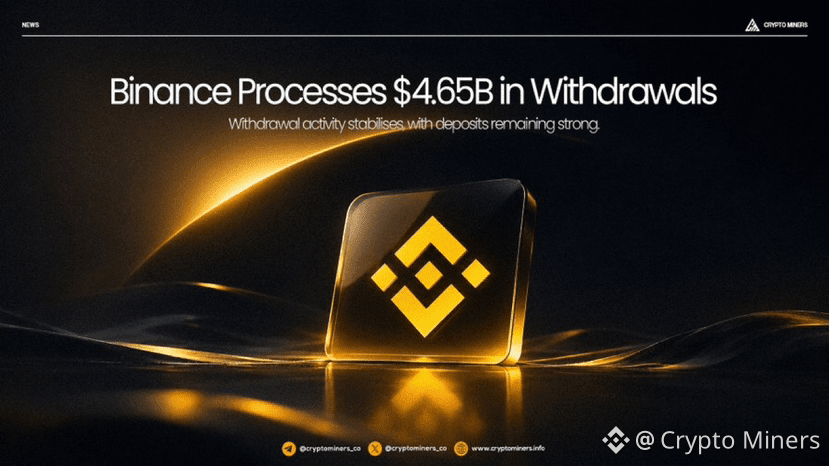
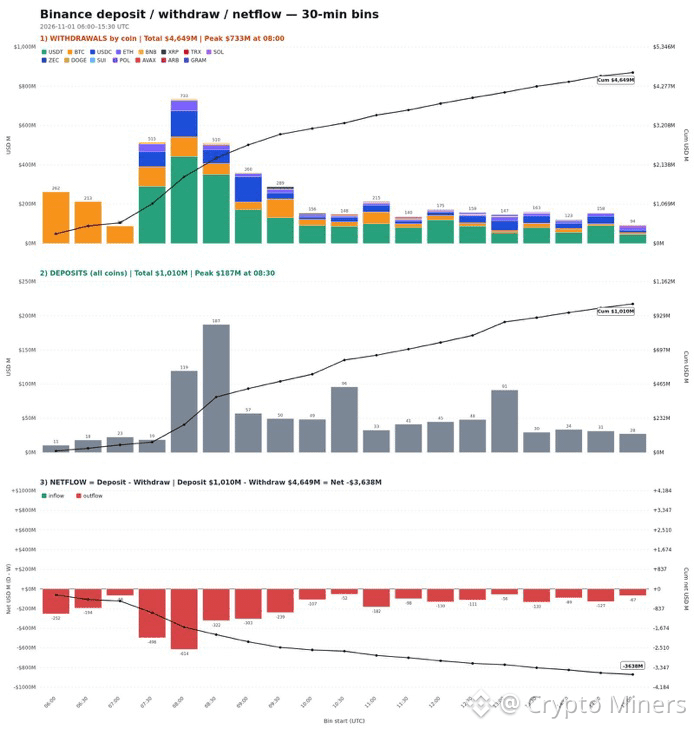
Binance Processes $4.65B in Withdrawals as Activity Stabilises
Binance processed $4.649B in withdrawals and $1.01B in deposits between 06:00 and 15:30 UTC on November 1, resulting in a net outflow of approximately $3.64B.
That’s around 2.1% of Binance’s $171B in total assets under management, based on its latest available Proof of Reserves data from October 28. After an initial spike, withdrawal volumes are now declining and stabilising, while deposits remain substantial.
Withdrawals have resumed across all 15 networks and assets in the initial phase. Binance is continuing to test the remaining networks and assets, with details of the next phase to follow.
An updated Proof of Reserves report, based on a new snapshot taken on October 31, is expected tomorrow.
2
161
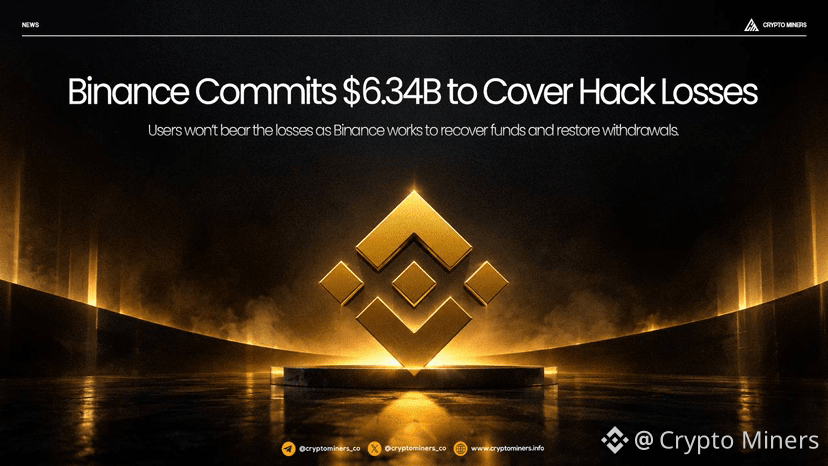
Binance has made one thing clear. Users won’t bear the losses from this security incident.
The exchange has committed $6.34B to cover the $6.3B breach, with $5B already held in the affected tokens. Another $3B in related assets has been frozen with help from industry partners.
Binance has contained the compromised infrastructure, strengthened security controls and is working to restore withdrawals in phases. Deposits and other unaffected services remain operational.
The team is also working to recover funds and investigate the full attack. Updated Proof of Reserves results are expected by November 2, with further technical findings and a detailed incident report to follow.
Taking responsibility, protecting users and keeping them informed are what matter most in a situation like this.
1
137
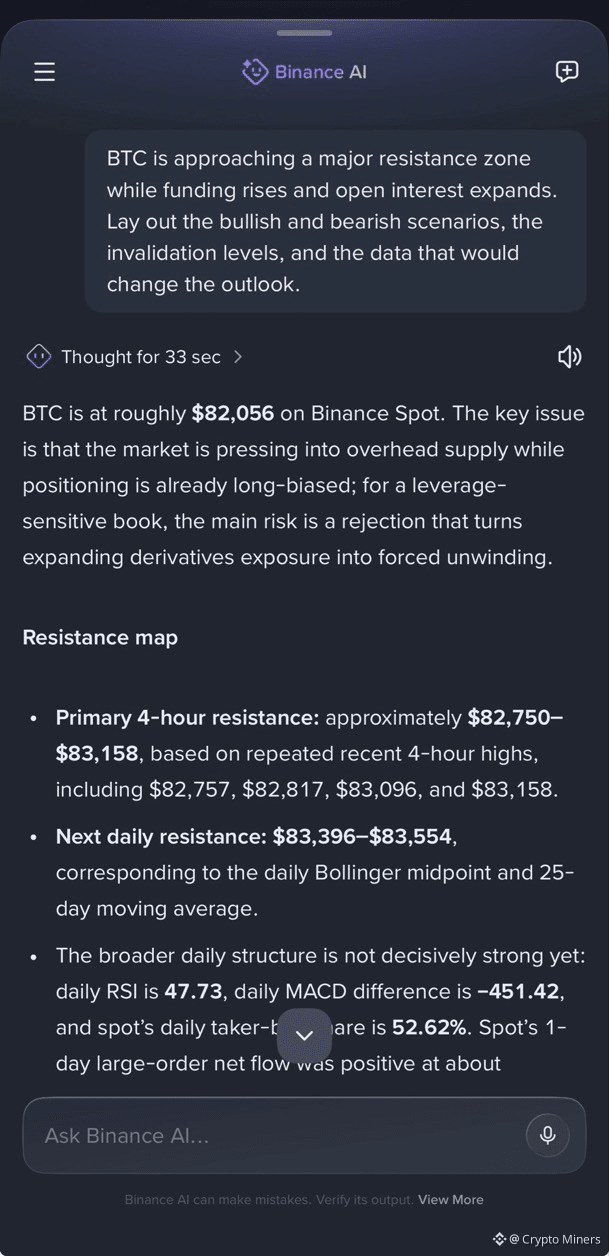
We tested Binance AI on a BTC setup to see if it could do more than summarise the market.
With $BTC trading around $82K, we asked it for bullish and bearish scenarios, key invalidation levels and what could change the outlook. It mapped out a 4-hour resistance zone at $82,750 to $83,158 and explained how a rejection could trigger forced unwinding if leveraged positions started closing.
Doing this manually means checking price structure, funding, open interest and momentum indicators separately. Binance AI brought these factors together in one response, giving us a starting point for further research. We’d still verify the levels against charts and live data.
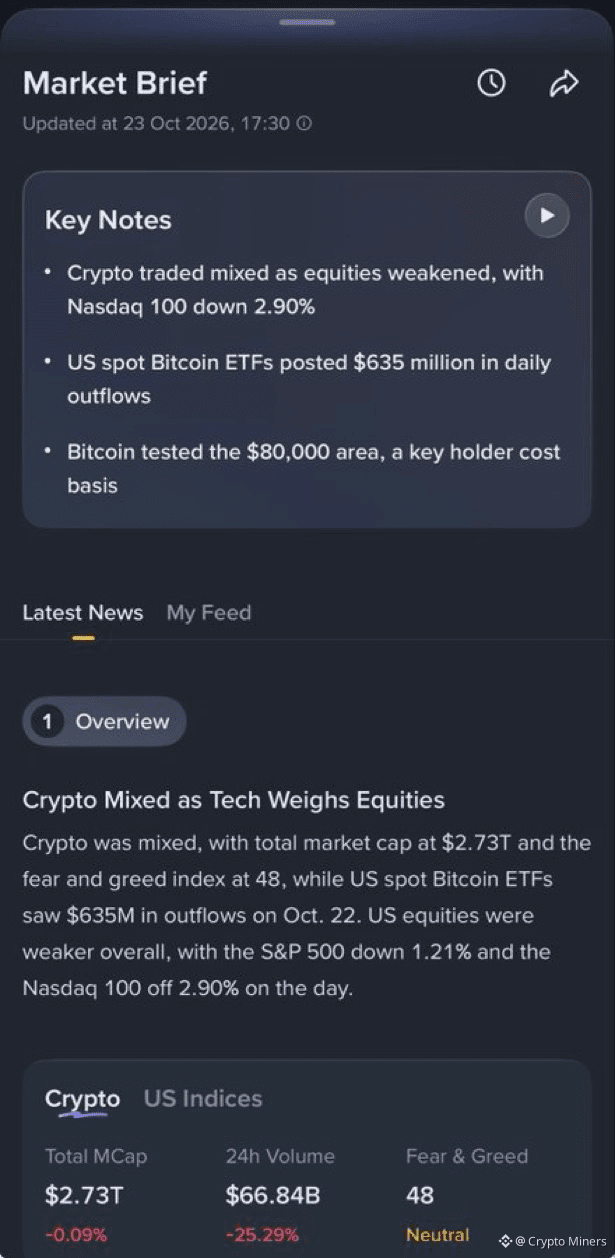
There’s more than chat, too. Market Brief delivers text or audio updates every four hours, with Key Notes and upcoming events. Yesterday’s PNL and Top Movers recap portfolio performance and market moves, while smart alerts track assets you follow. Smart Tool Tips help with unfamiliar products, Master Trade offers profiles of selected investors, and the For You tab can be customised.
Binance AI can make market research easier to organise, but it can miss context or get things wrong. It’s a research tool, not a replacement for independent judgement.
Explore Binance AI in the For You tab on the Markets page of the @binance app or website.
1
283
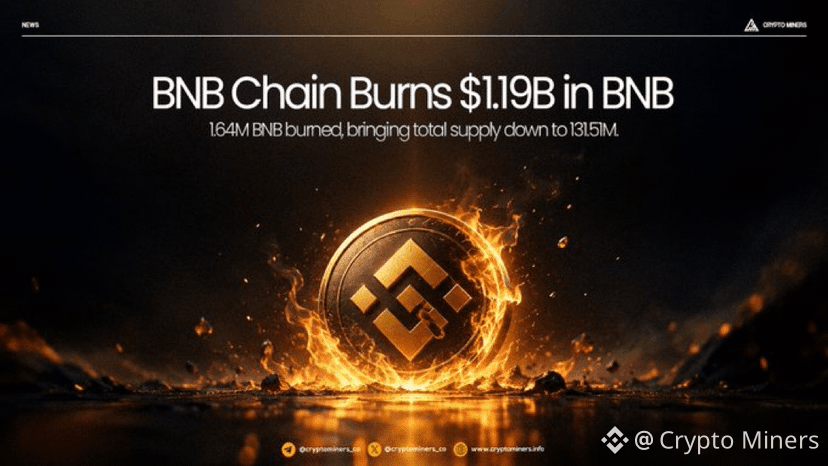
BNB Chain Burns $1.19 Billion Worth of BNB
BNB Chain has completed its 37th quarterly token burn, permanently removing 1,646,196.44 BNB worth approximately $1.197 billion at the time of the burn.
The burn brings $BNB’s remaining total supply down to 131.51 million tokens, as the network continues its Auto-Burn programme targeting a final supply of 100 million BNB.
The quarterly burn is separate from BNB’s real-time burning mechanism, which destroys a portion of gas fees generated on BNB Smart Chain.
1
2
293
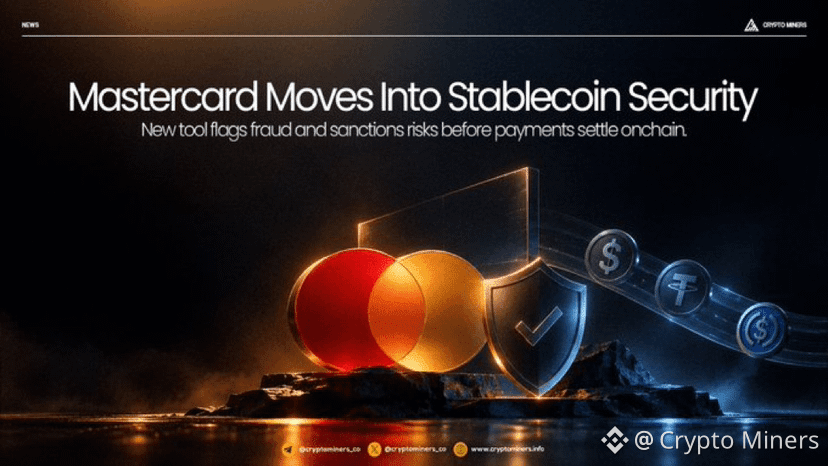
Mastercard Launches Stablecoin Security Tool to Flag Risky Payments
Mastercard is introducing a new service that screens stablecoin payments for fraud, scams, sanctions violations and other financial crime risks before funds move onchain.
The tool analyses transaction history and payment context to generate a risk score that banks can use with their existing compliance systems. Borderless.xyz and Keyrails are its first announced partners.
The service will launch first in North America, with worldwide commercial availability expected in 2027. Mastercard also plans to integrate its stablecoin infrastructure provider BVNK into the service next year.
1
235
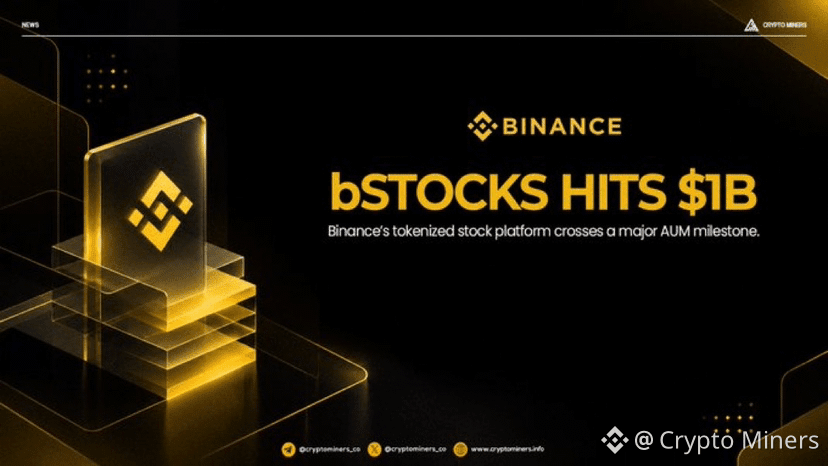
Trading doesn't stop at the bell, and we wanted that in one account with my crypto. That's what bStocks is for us.
bStocks just crossed $1B in AUM, four months after launching in June with only 5 tickers. It's the fastest tokenized equity product to get there, and coverage is now nearly 100 tickers. Tokenized equities are up 390.4% in market cap this year, and bStocks is roughly a quarter of that sector (@BinanceResearch).
Why people want both in one place: 58.5% of early bStocks users had already traded perps, direct equities or both before their first bStock.
In August, only 42% of bStocks volume happened in regular US hours, vs 89.2% for conventional US equities. The rest was spread across pre-market, post-market, overnight and weekends. Earnings and headlines usually land after the close, so you can adjust when it happens.
You can convert 1:1 between bStocks and the underlying stocks on @binance with no conversion fees. $6B+ has moved between the two, more than 6x the AUM. You can also withdraw bStocks to self-custody for on-chain use.
And they're getting used on-chain. Borrowing against bStocks went from 5.5% of deposited collateral in June to 46.2% by Sept 10. On-chain transfers of tokenized stocks passed $100B in Q3, 16x Q1.
Still early. Only 0.0025% of the global stock market is on-chain.
Get both worlds in one account: hold bStocks, convert 1:1 to direct stocks with no fees, and trade around the clock on Binance.
2
258
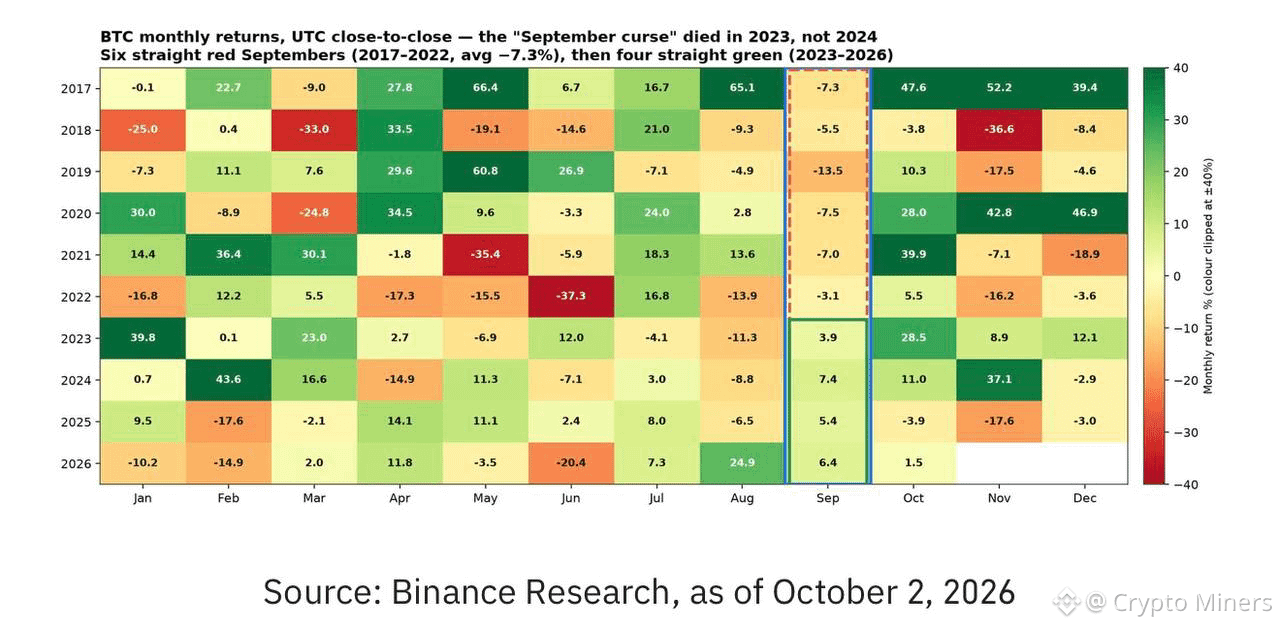
September was strong for BTC, but the recovery isn’t limited to crypto.
BTC gained 6.4% last month, its second-best September since 2017. Meanwhile, weekly equity inflows on Binance jumped to $163M, the highest since early July.
There’s clearly movement across different markets, and October will be worth watching. BTC is still down 54.2% from its high, so calling the bottom now would be premature.
One thing that’s changing is how people can access these markets. Crypto, tokenized stocks and TradFi perps are all available through Binance, around the clock, instead of needing separate platforms for each.
The recovery might have room to run, but the bottom isn’t confirmed yet.
Catch every leg of the rally on one platform, across crypto, tokenized stocks and TradFi perps on Binance, 24/7.
257
China Orders Creation of National Blockchain Network
China has introduced 19 policy measures to develop a national blockchain network, integrating the technology into manufacturing, banking and data sharing as part of a broader push to connect its digital and real economies.
The guidelines also address data ownership, cross-border data flows and digital infrastructure, with the initiative focused on state-led blockchain applications rather than public cryptocurrencies.

1
386
bStocks launched just a few months ago and it already holds around a quarter of the tokenized stock market.
Tokenized stocks were at $678M at the start of 2026. By September, that had reached $3.15B, more than 4x in nine months, per The Block Research.
@binance launched bStocks on June 11. Three months later, it was sitting at around $800M.
The volume backs it up too. $35.8B in cumulative trading volume, with about 70% of it happening on-chain.
Since September 21, bStocks can also be used as collateral across eligible margin accounts, and users can run basis strategies alongside Binance’s equity perps on the same venue.
The audience was already there as well. Tokenized stock holders hit 3.77M by September, around 82% of all RWA holders.
That’s where Binance’s existing setup comes in. It already had the trading users, plus @BinanceWallet and @BNBCHAIN connecting them to DeFi. So bStocks plugged into that instead of building distribution from scratch. It helps explain how a June launch took roughly a quarter of a market that grew more than 4x this year.
Putting a stock on-chain is only step one. The real pull comes from what you can do with it after: trade it, use it as collateral and connect it to the wider on-chain economy.
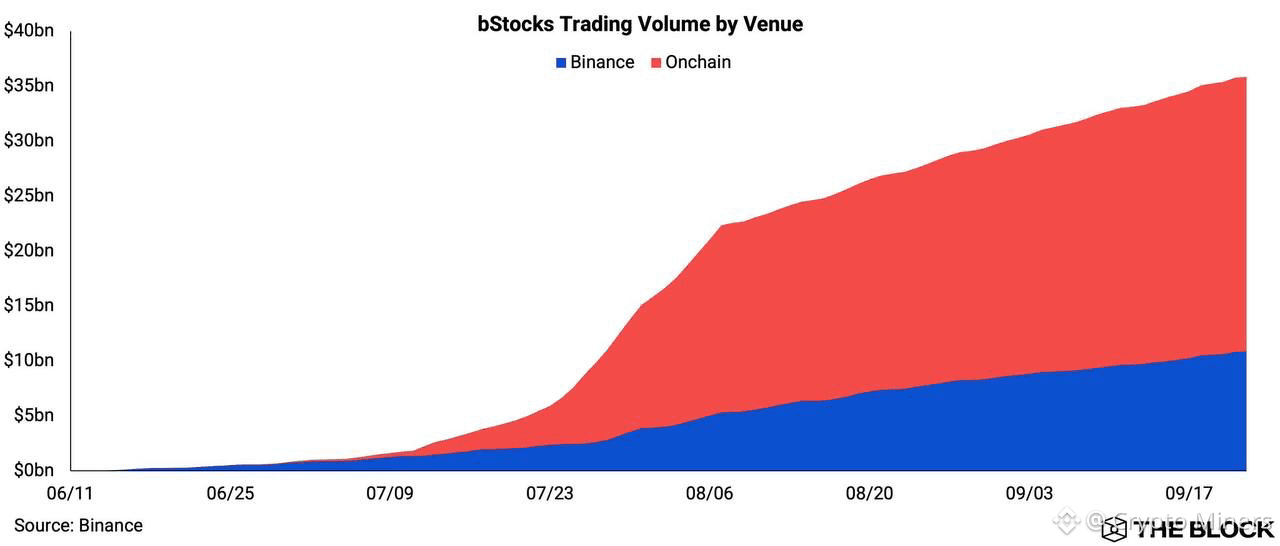
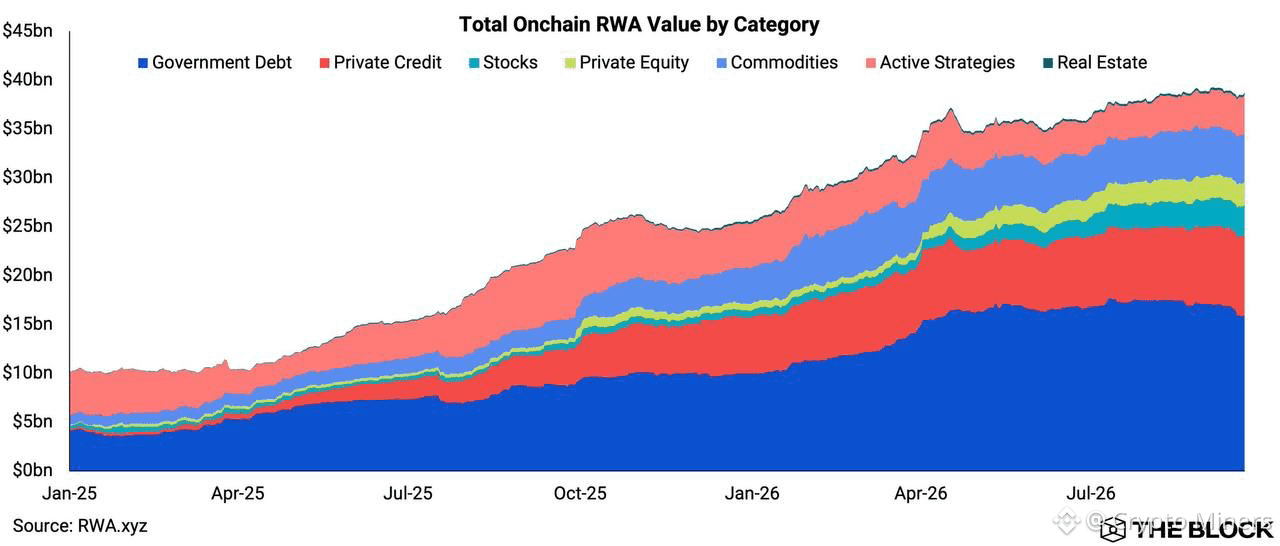
1
204
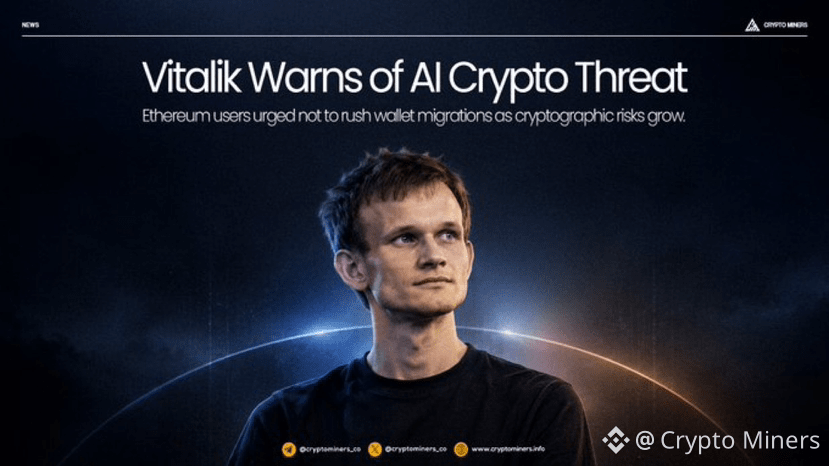
Vitalik Warns Against Rushing Wallet Migrations
Ethereum co-founder Vitalik Buterin says the crypto industry needs to take AI-accelerated threats to cryptography more seriously, but users should not panic and rush to move their funds.
Buterin said keeping assets in addresses that have never signed a transaction can be a good precaution if moving them is easy, while warning that rushed migrations can lead to lost funds.
The warning comes as Ethereum researchers raise concerns that AI could accelerate attacks on cryptography such as ECDSA and lattice-based systems.
Buterin also urged developers to be more conservative with lattice parameters and favour hash-based cryptography where possible.
2
195
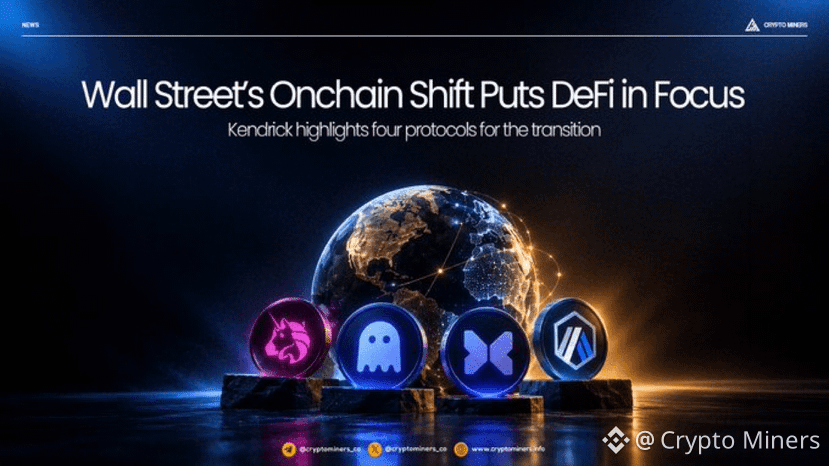
Geoffrey Kendrick Says Tokenization Is “100% Locked In”
Standard Chartered’s Geoffrey Kendrick says the tokenization of traditional assets is “100% locked in,” naming Uniswap, Aave, Morpho and Arbitrum among the protocols he expects to benefit as Wall Street moves onchain.
Kendrick expects stablecoins and tokenized real-world assets to each reach around $2 trillion by 2028.
623
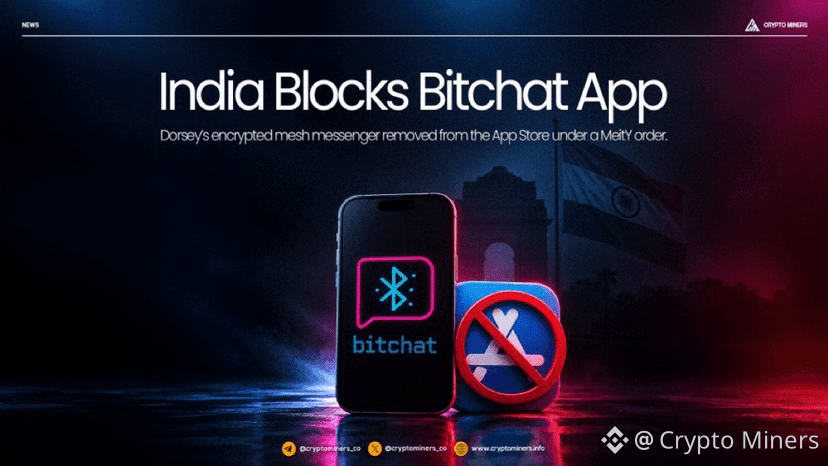
India Removes Jack Dorsey’s Bitchat From App Store
Bitchat has been removed from India’s Apple App Store after the government requested the takedown under Section 69A of the IT Act, according to a notice shared by Jack Dorsey.
The app uses Bluetooth mesh to let people send encrypted messages without internet, cellular networks, accounts or central servers. It gained attention for its use during protests and other situations where connectivity was restricted.
India had already ordered GitHub to restrict access to Bitchat’s repositories in July, while the app is now also unavailable on Google Play in India and its website has reportedly been blocked by some Indian internet providers.
Apple’s notice says the app contains content that is illegal in India, but neither the specific content nor the exact Section 69A grounds have been publicly disclosed.
1
370
Blast to Wind Down Its L2
@blast is shutting down after operating costs surpassed revenue, with no credible path to economic sustainability.
The L2 now holds just over $32M in TVL, down from more than $2B before its 2024 mainnet launch.
Users can withdraw through Blast’s interface until October 26. After that, withdrawals will require direct interaction with its Ethereum bridge contracts.
1
276
Log in to explore more content
Join global crypto users on Binance Square
⚡️ Get latest and useful information about crypto.
💬 Trusted by the world’s largest crypto exchange.
👍 Discover real insights from verified creators.
Email / Phone number
Trending Topics
BitcoinRebounds$75KAsChipsLead
14,649 views
181 Discussing
Market Watch | Bitcoin Rebounds to $75,600 After Dip Below $75,000 as Chip Stocks Lead Rally on Jobs Beat
Binance News
·17 Likes
·5.4k views
JobsReportRaisesHikeOdds
171,466 views
1,462 Discussing
US Data Center Rules May Constrain AI Expansion
26,970 views
136 Discussing