
密智君 Crypto Plus AI
1.9k Posts

密智君 Crypto Plus AI
Report
Block User
分享AI Crypto创新洞见,AI实用工具 & 技巧分享,心得,热门话题探讨#CryptoAGI
111 Following
1.0K+ Followers
1.9K+ Liked
Posts
All
Quotes
Videos
Live
PINNED
Whoa, I just saw this chart in the square, and I'm completely stunned. This isn't trading; it's practically a real-life 'suicidal attack'.
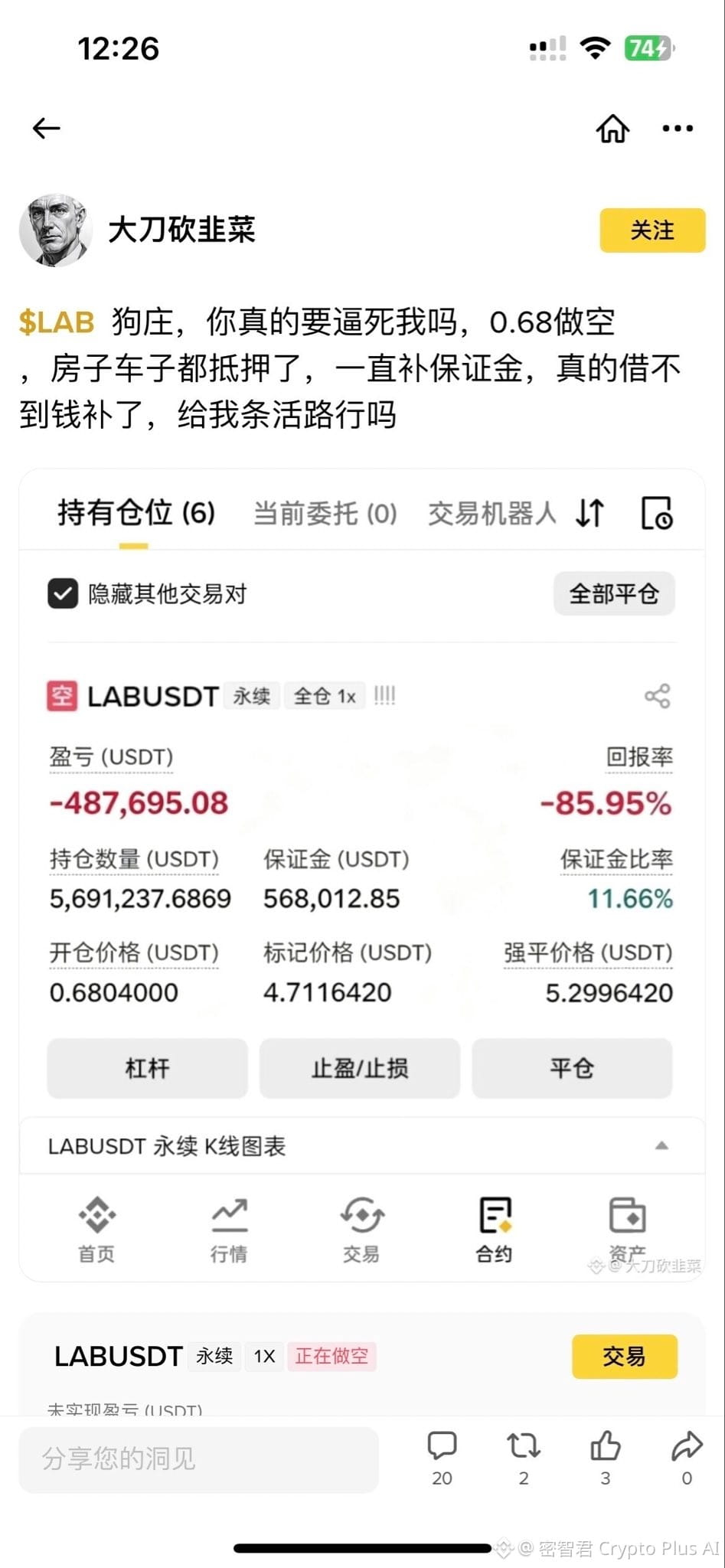
Brothers, did you see clearly? This dude went short on $LAB at 0.68, and now the price has skyrocketed to 4.7. He's sitting on a paper loss of $487,000, with a return rate of negative 85.95%. What's heartbreaking is his message: he's mortgaged his house and car, and has been margin-calling ever since; he really can't borrow any more money now. The liquidation price is at 5.29, just a step away from the current price.
Honestly, looking at this chart really reminds me of my past self. That desperate feeling of watching the price jump toward the liquidation line while being completely powerless is enough to drive anyone insane. This isn't shorting; it's like playing a 'life swap' game with the market makers. You thought 0.68 was a high point, but the market makers are telling you there's always a higher high.
What I admire (and feel sorry for) is his obsession. Going all-in short with 1x leverage, enduring nearly a 7x increase. That takes some serious 'courage' and a thick wallet, huh? But the trading market doesn’t care about tears, and definitely doesn’t believe in 'holding on for dear life'. You try to reason with the market makers, but they just want to drain your last drop of blood. $BTC #LAB
Whoa, I just saw this chart in the square, and I'm completely stunned. This isn't trading; it's practically a real-life 'suicidal attack'.
Brothers, did you see clearly? This dude went short on $LAB at 0.68, and now the price has skyrocketed to 4.7. He's sitting on a paper loss of $487,000, with a return rate of negative 85.95%. What's heartbreaking is his message: he's mortgaged his house and car, and has been margin-calling ever since; he really can't borrow any more money now. The liquidation price is at 5.29, just a step away from the current price.
Honestly, looking at this chart really reminds me of my past self. That desperate feeling of watching the price jump toward the liquidation line while being completely powerless is enough to drive anyone insane. This isn't shorting; it's like playing a 'life swap' game with the market makers. You thought 0.68 was a high point, but the market makers are telling you there's always a higher high.
What I admire (and feel sorry for) is his obsession. Going all-in short with 1x leverage, enduring nearly a 7x increase. That takes some serious 'courage' and a thick wallet, huh? But the trading market doesn’t care about tears, and definitely doesn’t believe in 'holding on for dear life'. You try to reason with the market makers, but they just want to drain your last drop of blood. $BTC #LAB
Brothers, did you see clearly? This dude went short on $LAB at 0.68, and now the price has skyrocketed to 4.7. He's sitting on a paper loss of $487,000, with a return rate of negative 85.95%. What's heartbreaking is his message: he's mortgaged his house and car, and has been margin-calling ever since; he really can't borrow any more money now. The liquidation price is at 5.29, just a step away from the current price.
Honestly, looking at this chart really reminds me of my past self. That desperate feeling of watching the price jump toward the liquidation line while being completely powerless is enough to drive anyone insane. This isn't shorting; it's like playing a 'life swap' game with the market makers. You thought 0.68 was a high point, but the market makers are telling you there's always a higher high.
What I admire (and feel sorry for) is his obsession. Going all-in short with 1x leverage, enduring nearly a 7x increase. That takes some serious 'courage' and a thick wallet, huh? But the trading market doesn’t care about tears, and definitely doesn’t believe in 'holding on for dear life'. You try to reason with the market makers, but they just want to drain your last drop of blood. $BTC #LAB
116
6
48
178.6k
PINNED
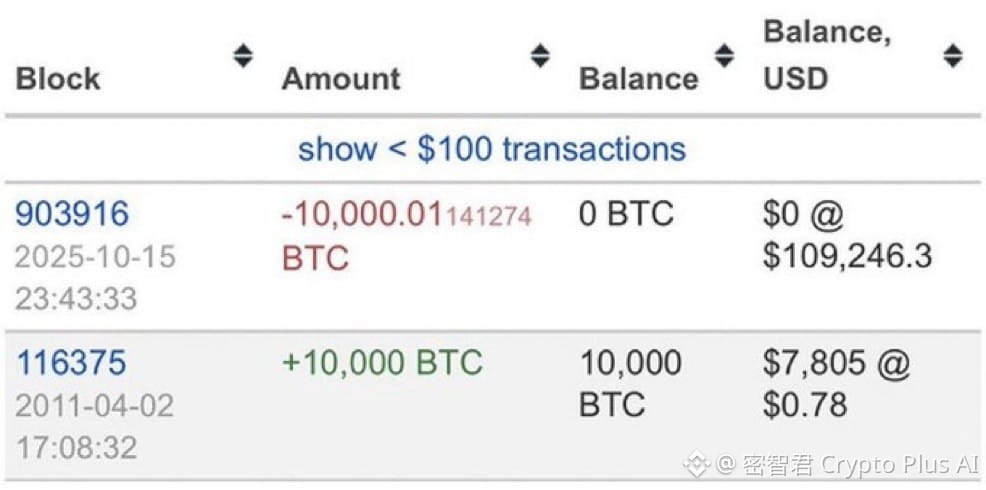
Wow, this guy made 140,000 times his investment in 14 years. Who else can be as awesome as him? In 2011, he spent less than $8,000 to buy 10,000 $BTC, when one Bitcoin was only $0.78.
So what happened? He just held on for 14 years! By October 2025, when Bitcoin broke through $109,000, he sold everything and cashed out over $1 billion. A 140,000 times return, this is not just investment, this is simply like cultivating immortality.
To be honest, what I admire most is not that he bought early, but that he was able to hold on. Over these 14 years, he experienced hundreds of crashes and endured four long bear markets lasting several years. How many times did the market halve, how many times did the media shout 'Bitcoin will go to zero', and he never wavered once. This kind of determination is really not something ordinary people can possess.
I used to have quite a few good stocks, but I sold when they rose two or three times, and cut losses when they fell by 20%. Seeing others get a 140,000 times increase, I can only mock myself: people like us who can't hold on deserve to miss out on big money.
Risk Warning: This kind of 'get rich quick myth' is an extreme case of survivor bias. Just because he made a fortune after 14 years, don’t think you can do the same. Investment requires caution; first, ask yourself if you can withstand a 90% drawdown.
What do you think? If you bought 10,000 Bitcoins in 2011, could you still hold on until now? Be honest in the comments, at which point would you get off the ride?
$BTC
Wow, this guy made 140,000 times his investment in 14 years. Who else can be as awesome as him? In 2011, he spent less than $8,000 to buy 10,000 $BTC , when one Bitcoin was only $0.78.
So what happened? He just held on for 14 years! By October 2025, when Bitcoin broke through $109,000, he sold everything and cashed out over $1 billion. A 140,000 times return, this is not just investment, this is simply like cultivating immortality.
To be honest, what I admire most is not that he bought early, but that he was able to hold on. Over these 14 years, he experienced hundreds of crashes and endured four long bear markets lasting several years. How many times did the market halve, how many times did the media shout 'Bitcoin will go to zero', and he never wavered once. This kind of determination is really not something ordinary people can possess.
I used to have quite a few good stocks, but I sold when they rose two or three times, and cut losses when they fell by 20%. Seeing others get a 140,000 times increase, I can only mock myself: people like us who can't hold on deserve to miss out on big money.
Risk Warning: This kind of 'get rich quick myth' is an extreme case of survivor bias. Just because he made a fortune after 14 years, don’t think you can do the same. Investment requires caution; first, ask yourself if you can withstand a 90% drawdown.
What do you think? If you bought 10,000 Bitcoins in 2011, could you still hold on until now? Be honest in the comments, at which point would you get off the ride?
$BTC
So what happened? He just held on for 14 years! By October 2025, when Bitcoin broke through $109,000, he sold everything and cashed out over $1 billion. A 140,000 times return, this is not just investment, this is simply like cultivating immortality.
To be honest, what I admire most is not that he bought early, but that he was able to hold on. Over these 14 years, he experienced hundreds of crashes and endured four long bear markets lasting several years. How many times did the market halve, how many times did the media shout 'Bitcoin will go to zero', and he never wavered once. This kind of determination is really not something ordinary people can possess.
I used to have quite a few good stocks, but I sold when they rose two or three times, and cut losses when they fell by 20%. Seeing others get a 140,000 times increase, I can only mock myself: people like us who can't hold on deserve to miss out on big money.
Risk Warning: This kind of 'get rich quick myth' is an extreme case of survivor bias. Just because he made a fortune after 14 years, don’t think you can do the same. Investment requires caution; first, ask yourself if you can withstand a 90% drawdown.
What do you think? If you bought 10,000 Bitcoins in 2011, could you still hold on until now? Be honest in the comments, at which point would you get off the ride?
$BTC
49
2
52
97.8k
September 24, 2026 latest market news morning report|The squeeze rally is fading; altcoins begin to give back gains
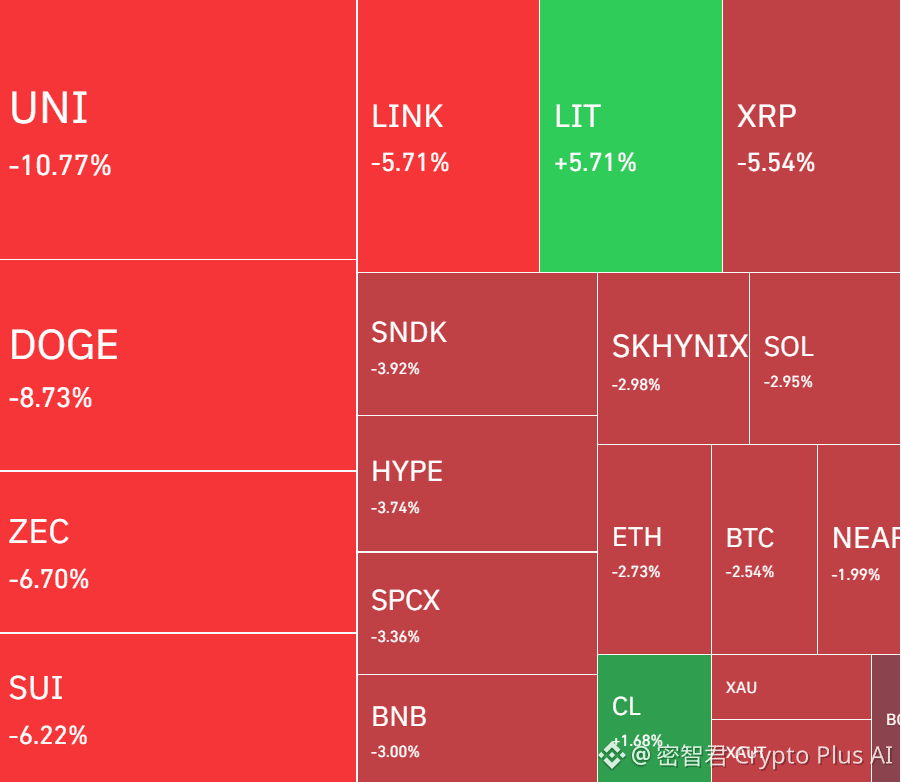
Brothers and sisters, today $BTC fell below $85,000, while $UNI plunged 14.02%, and DOGE is down 9.43%. The funds that chased yesterday’s late rebound have already started to run ahead today.
BTC is currently at $84,269, down 2.73%; $ETH is at $2,682, down 3.14%. This uptrend had liquidated about $919 million worth of short positions, indicating that the breakout involved a large amount of forced buying. After the squeeze ends, if new spot capital can’t keep pushing prices higher, the coins that gained the most will naturally be the first to retrace.
UNI surged about 16% the day before, and today it has almost fully fallen back; ZEC is down 7.30%, and XRP is down 6.25%. This kind of symmetric pullback suggests the earlier move was more about liquidity rotation rather than a sudden fundamental reassessment. BTC remains clearly stronger than altcoins. Capital hasn’t fully left—it's simply reducing risk exposure.
For today, first look at BTC at $83,600 and ETH at $2,640. Hold the levels—this is de-leveraging after a rapid run-up. If BTC breaks below $83,000, the pullback could expand. Gold XAU has returned to around $4,300. The US dollar and expectations for rate hikes are still weighing on gold prices. A turn stronger signal only comes if it reclaims $4,350–$4,400. #比特币两度受阻87300美元 #比特币突破8.7万美元创八个月新高 —are you continuing to look long or looking short today?
Risk warning: This is a high-volatility retracement phase; altcoin drawdowns are usually larger than BTC’s. Avoid using high leverage to front-run a rebound.
September 24, 2026 latest market news morning report|The squeeze rally is fading; altcoins begin to give back gains
Brothers and sisters, today $BTC fell below $85,000, while $UNI plunged 14.02%, and DOGE is down 9.43%. The funds that chased yesterday’s late rebound have already started to run ahead today.
BTC is currently at $84,269, down 2.73%; $ETH is at $2,682, down 3.14%. This uptrend had liquidated about $919 million worth of short positions, indicating that the breakout involved a large amount of forced buying. After the squeeze ends, if new spot capital can’t keep pushing prices higher, the coins that gained the most will naturally be the first to retrace.
UNI surged about 16% the day before, and today it has almost fully fallen back; ZEC is down 7.30%, and XRP is down 6.25%. This kind of symmetric pullback suggests the earlier move was more about liquidity rotation rather than a sudden fundamental reassessment. BTC remains clearly stronger than altcoins. Capital hasn’t fully left—it's simply reducing risk exposure.
For today, first look at BTC at $83,600 and ETH at $2,640. Hold the levels—this is de-leveraging after a rapid run-up. If BTC breaks below $83,000, the pullback could expand. Gold XAU has returned to around $4,300. The US dollar and expectations for rate hikes are still weighing on gold prices. A turn stronger signal only comes if it reclaims $4,350–$4,400. #比特币两度受阻87300美元 #比特币突破8.7万美元创八个月新高 —are you continuing to look long or looking short today?
Risk warning: This is a high-volatility retracement phase; altcoin drawdowns are usually larger than BTC’s. Avoid using high leverage to front-run a rebound.
Brothers and sisters, today $BTC fell below $85,000, while $UNI plunged 14.02%, and DOGE is down 9.43%. The funds that chased yesterday’s late rebound have already started to run ahead today.
BTC is currently at $84,269, down 2.73%; $ETH is at $2,682, down 3.14%. This uptrend had liquidated about $919 million worth of short positions, indicating that the breakout involved a large amount of forced buying. After the squeeze ends, if new spot capital can’t keep pushing prices higher, the coins that gained the most will naturally be the first to retrace.
UNI surged about 16% the day before, and today it has almost fully fallen back; ZEC is down 7.30%, and XRP is down 6.25%. This kind of symmetric pullback suggests the earlier move was more about liquidity rotation rather than a sudden fundamental reassessment. BTC remains clearly stronger than altcoins. Capital hasn’t fully left—it's simply reducing risk exposure.
For today, first look at BTC at $83,600 and ETH at $2,640. Hold the levels—this is de-leveraging after a rapid run-up. If BTC breaks below $83,000, the pullback could expand. Gold XAU has returned to around $4,300. The US dollar and expectations for rate hikes are still weighing on gold prices. A turn stronger signal only comes if it reclaims $4,350–$4,400. #比特币两度受阻87300美元 #比特币突破8.7万美元创八个月新高 —are you continuing to look long or looking short today?
Risk warning: This is a high-volatility retracement phase; altcoin drawdowns are usually larger than BTC’s. Avoid using high leverage to front-run a rebound.
214
🎙️ Today’s Shanzhai Coin Rebound—Can BTC Reach 90,000?
End
02 h 59 m 26 s
37

BNB
Holding
-388.65
1
0
September 23, 2026 — Today’s latest morning report|BTC is consolidating, while funds suddenly flow into long-established altcoins
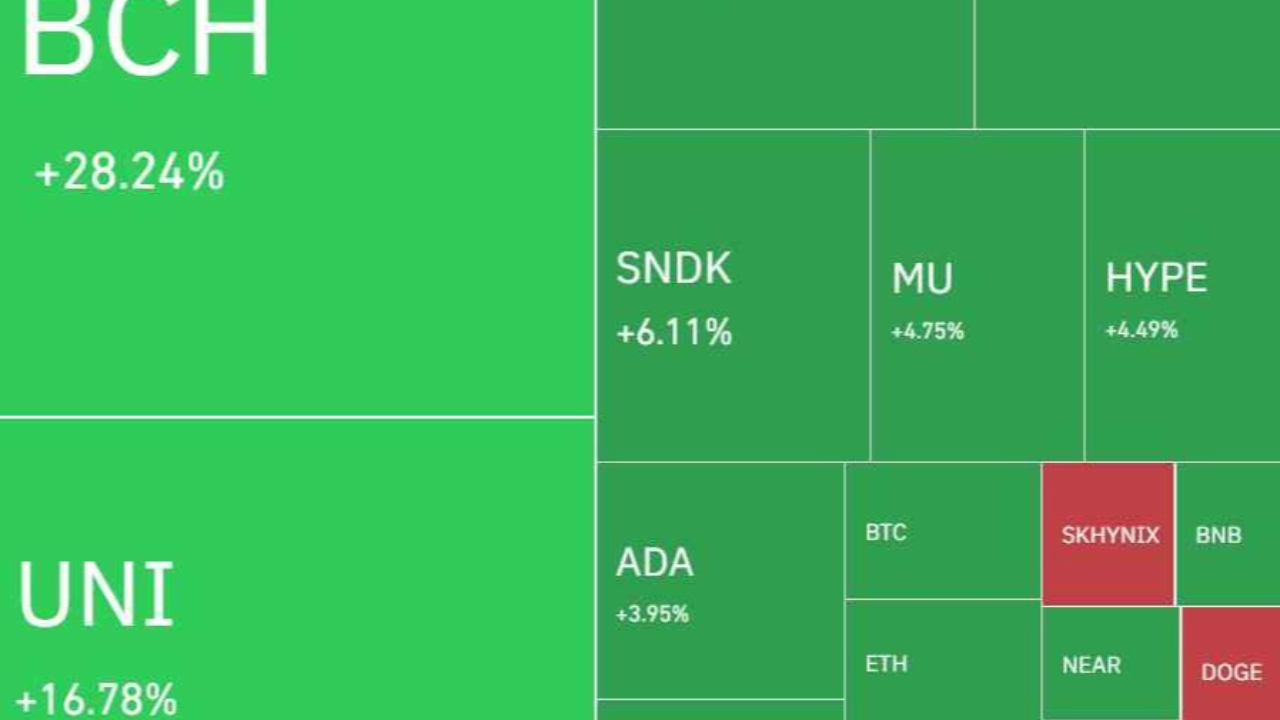
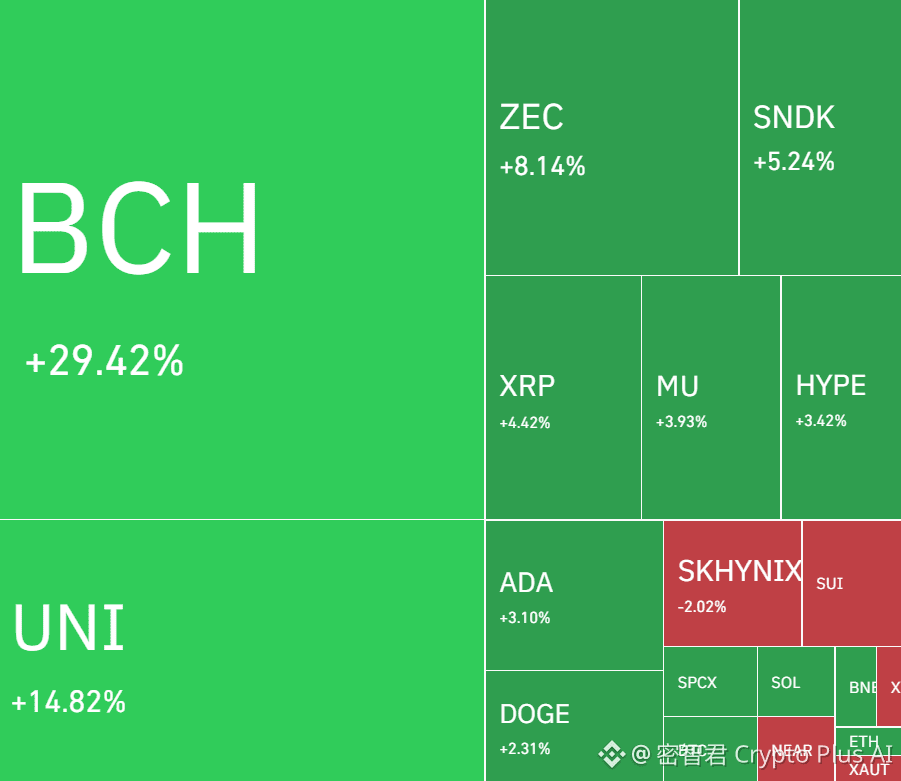
Brothers and sisters, yesterday the Nasdaq hit another record, and US Treasury yields retreated to 4.93%, yet BTC only rose 0.96%. Even wilder: $BCH surged 29.9%, and UNI jumped 16.4%. Market sentiment has already shifted from chasing BTC to hunting for low-priced laggards to catch up.
$BTC is currently quoted at $86,639. Daily ETF inflows are approaching $1 billion, with roughly $1.59 billion accumulated over three days. Spot buy-side demand is still propping things up. But prices aren’t accelerating in tandem, suggesting that sell pressure around $87,000–$90,000 is increasing, and new capital is beginning to spill over.
BCH trading volume rose to about $1.34 billion, nearing 20% of its circulating market cap. The rally is also a mix of capital rotation and short-term speculation. UNI and ZEC rose 16.4% and 9.4% respectively, but there’s no clear official fundamental catalyst that matches their gains. It looks more like once BTC holds steady, funds concentrate on pushing up earlier “stalled” legacy assets. ETH rose only 0.57%, and the altseason still lacks key confirmation.
Today, watch whether BCH can hold $320 and whether UNI can stay above $10. If BTC breaks below $85,000, the “catch-up rally” trades may quickly fade.
Gold XAU is around $4,359. A 90% probability of a December rate hike continues to weigh on gold prices; only reclaiming $4,400 would count as turning bullish.
If you have to pick one bottom-fishing play: would you choose BCH or ETH?
Risk warning: Low-level catch-up rallies tend to be more volatile. A sudden surge without fundamental catalysts should not be taken as confirmation of a sustained trend. #比特币突破5月高点逼近8.6万美元 #BCHUSD
September 23, 2026 — Today’s latest morning report|BTC is consolidating, while funds suddenly flow into long-established altcoins
Brothers and sisters, yesterday the Nasdaq hit another record, and US Treasury yields retreated to 4.93%, yet BTC only rose 0.96%. Even wilder: $BCH surged 29.9%, and UNI jumped 16.4%. Market sentiment has already shifted from chasing BTC to hunting for low-priced laggards to catch up.
$BTC is currently quoted at $86,639. Daily ETF inflows are approaching $1 billion, with roughly $1.59 billion accumulated over three days. Spot buy-side demand is still propping things up. But prices aren’t accelerating in tandem, suggesting that sell pressure around $87,000–$90,000 is increasing, and new capital is beginning to spill over.
BCH trading volume rose to about $1.34 billion, nearing 20% of its circulating market cap. The rally is also a mix of capital rotation and short-term speculation. UNI and ZEC rose 16.4% and 9.4% respectively, but there’s no clear official fundamental catalyst that matches their gains. It looks more like once BTC holds steady, funds concentrate on pushing up earlier “stalled” legacy assets. ETH rose only 0.57%, and the altseason still lacks key confirmation.
Today, watch whether BCH can hold $320 and whether UNI can stay above $10. If BTC breaks below $85,000, the “catch-up rally” trades may quickly fade.
Gold XAU is around $4,359. A 90% probability of a December rate hike continues to weigh on gold prices; only reclaiming $4,400 would count as turning bullish.
If you have to pick one bottom-fishing play: would you choose BCH or ETH?
Risk warning: Low-level catch-up rallies tend to be more volatile. A sudden surge without fundamental catalysts should not be taken as confirmation of a sustained trend. #比特币突破5月高点逼近8.6万美元 #BCHUSD
Brothers and sisters, yesterday the Nasdaq hit another record, and US Treasury yields retreated to 4.93%, yet BTC only rose 0.96%. Even wilder: $BCH surged 29.9%, and UNI jumped 16.4%. Market sentiment has already shifted from chasing BTC to hunting for low-priced laggards to catch up.
$BTC is currently quoted at $86,639. Daily ETF inflows are approaching $1 billion, with roughly $1.59 billion accumulated over three days. Spot buy-side demand is still propping things up. But prices aren’t accelerating in tandem, suggesting that sell pressure around $87,000–$90,000 is increasing, and new capital is beginning to spill over.
BCH trading volume rose to about $1.34 billion, nearing 20% of its circulating market cap. The rally is also a mix of capital rotation and short-term speculation. UNI and ZEC rose 16.4% and 9.4% respectively, but there’s no clear official fundamental catalyst that matches their gains. It looks more like once BTC holds steady, funds concentrate on pushing up earlier “stalled” legacy assets. ETH rose only 0.57%, and the altseason still lacks key confirmation.
Today, watch whether BCH can hold $320 and whether UNI can stay above $10. If BTC breaks below $85,000, the “catch-up rally” trades may quickly fade.
Gold XAU is around $4,359. A 90% probability of a December rate hike continues to weigh on gold prices; only reclaiming $4,400 would count as turning bullish.
If you have to pick one bottom-fishing play: would you choose BCH or ETH?
Risk warning: Low-level catch-up rallies tend to be more volatile. A sudden surge without fundamental catalysts should not be taken as confirmation of a sustained trend. #比特币突破5月高点逼近8.6万美元 #BCHUSD
479
Latest Morning News Brief as of September 22, 2026 | $BTC surges to 86,000, why do copycats rise even faster?
Brothers and sisters, yesterday the Nasdaq jumped 2.3% to a new high, U.S. Treasury yields fell below 5%, and BTC immediately broke through $86,000. Meme coins also started taking off—has the bull market really arrived?
This upswing isn’t just sentiment. Daily inflows into U.S. spot BTC ETFs were about $433 million. Strategy bought another 950 BTC—spot liquidity provides the “base” support. After BTC breaks a key resistance level, around $648 million in short positions were forced to cover, further accelerating the rally.
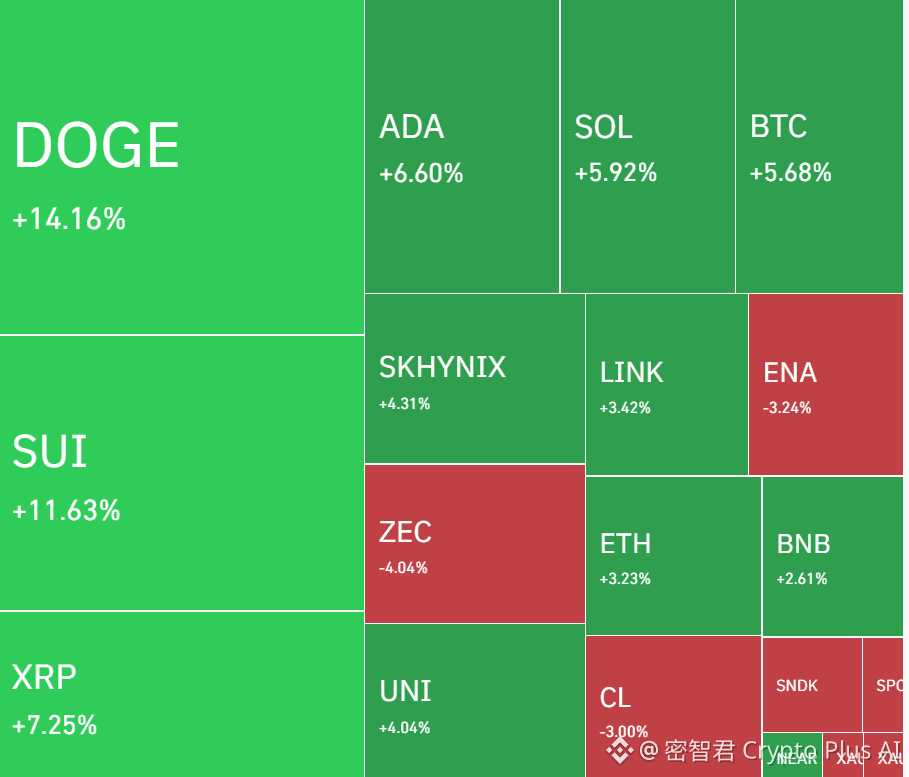
Money then spreads into high-volatility assets: DOGE rose 14.25%, SUI rose 14.57%, XRP rose 7.69%, while SOL rose 5.8% and ETH lagged at only 2.72%. This suggests the market is pricing in a preference for risk, not a broad altcoin bull run led by ETH. $DOGE is mainly driven by sentiment and derivatives positioning. SUI still has expansion expectations in its ecosystem, so its durability is worth watching more closely.
Today’s key focus: whether BTC can hold above $85,000, and whether ETH can stay above $2,800. If BTC holds, funds may continue to spread. If it falls back to $83,000, DOGE and SUI are more likely to give back gains first.
Gold (XAU) has slipped to around $4,350. Risk assets rising together with high interest rates are suppressing the gold price. Only a renewed move above $4,400 would count as a strengthening signal.
Do you think DOGE will break $1? #比特币突破8.5万美元 #StrategicTrading
Risk warning: short-term gains include clear short-covering. Chasing after prices rise at highs should be done cautiously to avoid liquidations caused by highly concentrated leverage positions.
Latest Morning News Brief as of September 22, 2026 | $BTC surges to 86,000, why do copycats rise even faster?
Brothers and sisters, yesterday the Nasdaq jumped 2.3% to a new high, U.S. Treasury yields fell below 5%, and BTC immediately broke through $86,000. Meme coins also started taking off—has the bull market really arrived?
This upswing isn’t just sentiment. Daily inflows into U.S. spot BTC ETFs were about $433 million. Strategy bought another 950 BTC—spot liquidity provides the “base” support. After BTC breaks a key resistance level, around $648 million in short positions were forced to cover, further accelerating the rally.
Money then spreads into high-volatility assets: DOGE rose 14.25%, SUI rose 14.57%, XRP rose 7.69%, while SOL rose 5.8% and ETH lagged at only 2.72%. This suggests the market is pricing in a preference for risk, not a broad altcoin bull run led by ETH. $DOGE is mainly driven by sentiment and derivatives positioning. SUI still has expansion expectations in its ecosystem, so its durability is worth watching more closely.
Today’s key focus: whether BTC can hold above $85,000, and whether ETH can stay above $2,800. If BTC holds, funds may continue to spread. If it falls back to $83,000, DOGE and SUI are more likely to give back gains first.
Gold (XAU) has slipped to around $4,350. Risk assets rising together with high interest rates are suppressing the gold price. Only a renewed move above $4,400 would count as a strengthening signal.
Do you think DOGE will break $1? #比特币突破8.5万美元 #StrategicTrading
Risk warning: short-term gains include clear short-covering. Chasing after prices rise at highs should be done cautiously to avoid liquidations caused by highly concentrated leverage positions.
Brothers and sisters, yesterday the Nasdaq jumped 2.3% to a new high, U.S. Treasury yields fell below 5%, and BTC immediately broke through $86,000. Meme coins also started taking off—has the bull market really arrived?
This upswing isn’t just sentiment. Daily inflows into U.S. spot BTC ETFs were about $433 million. Strategy bought another 950 BTC—spot liquidity provides the “base” support. After BTC breaks a key resistance level, around $648 million in short positions were forced to cover, further accelerating the rally.
Money then spreads into high-volatility assets: DOGE rose 14.25%, SUI rose 14.57%, XRP rose 7.69%, while SOL rose 5.8% and ETH lagged at only 2.72%. This suggests the market is pricing in a preference for risk, not a broad altcoin bull run led by ETH. $DOGE is mainly driven by sentiment and derivatives positioning. SUI still has expansion expectations in its ecosystem, so its durability is worth watching more closely.
Today’s key focus: whether BTC can hold above $85,000, and whether ETH can stay above $2,800. If BTC holds, funds may continue to spread. If it falls back to $83,000, DOGE and SUI are more likely to give back gains first.
Gold (XAU) has slipped to around $4,350. Risk assets rising together with high interest rates are suppressing the gold price. Only a renewed move above $4,400 would count as a strengthening signal.
Do you think DOGE will break $1? #比特币突破8.5万美元 #StrategicTrading
Risk warning: short-term gains include clear short-covering. Chasing after prices rise at highs should be done cautiously to avoid liquidations caused by highly concentrated leverage positions.
112
Holy crap! He stole 50,000 bitcoins from the Silk Road, hid them for 9 years, and in the end the FBI found the key inside a popcorn tin.
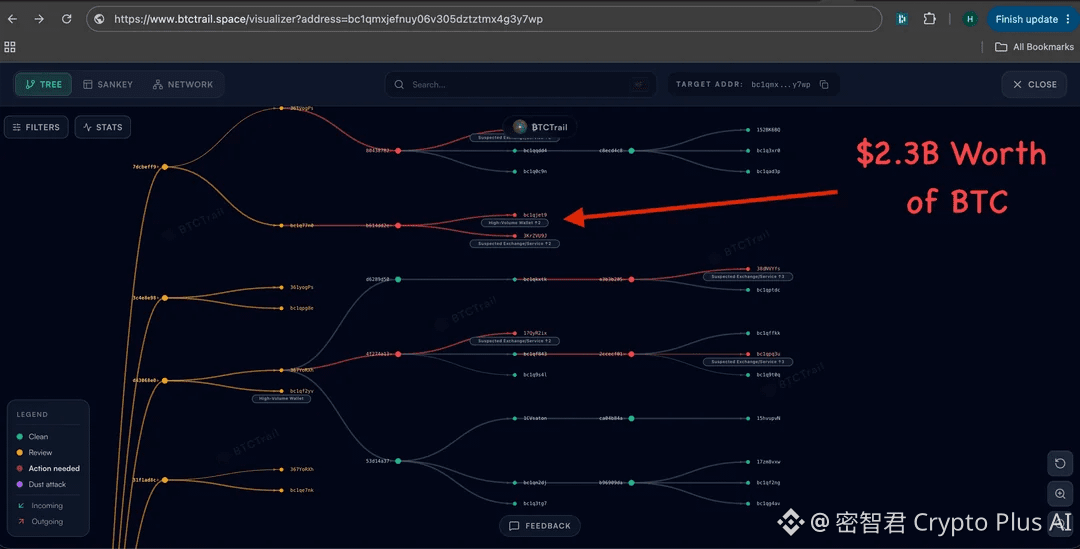
A big shot has mapped out the bitcoin transaction history for James Zhong, who was indicted. In 2012, he used a payment system vulnerability on Silk Road to steal about 50,000 bitcoins. After that, he hid those bitcoins away for nearly a decade.
In November 2021, the U.S. Internal Revenue Service Criminal Investigation division raided his residence in Gainesville and seized approximately 50,491 bitcoins (worth about $3.36 billion at the time) from equipment in a floor safe... as well as a single-board computer tucked under a blanket inside a popcorn tin stashed in a bathroom wall cabinet.
There were also: $661,000 in cash and 25 Casascius coins (each equivalent to 1 bitcoin).
What really tripped him up was the on-chain transactions. Years later, he mixed an address related to the Silk Road into a spending record from a wallet that had already been registered under his name. Just that one transaction—turns out it was that simple.
I traced how the funds were consolidated into the seized wallet. Watching billions that had been idle for years suddenly pour into one place—it's absolutely insane.
Moral: You might be able to outsmart the Silk Road, but you can’t outsmart a popcorn tin. 😂
What do you think? #比特币突破8万美元大关 $BTC
Holy crap! He stole 50,000 bitcoins from the Silk Road, hid them for 9 years, and in the end the FBI found the key inside a popcorn tin.
A big shot has mapped out the bitcoin transaction history for James Zhong, who was indicted. In 2012, he used a payment system vulnerability on Silk Road to steal about 50,000 bitcoins. After that, he hid those bitcoins away for nearly a decade.
In November 2021, the U.S. Internal Revenue Service Criminal Investigation division raided his residence in Gainesville and seized approximately 50,491 bitcoins (worth about $3.36 billion at the time) from equipment in a floor safe... as well as a single-board computer tucked under a blanket inside a popcorn tin stashed in a bathroom wall cabinet.
There were also: $661,000 in cash and 25 Casascius coins (each equivalent to 1 bitcoin).
What really tripped him up was the on-chain transactions. Years later, he mixed an address related to the Silk Road into a spending record from a wallet that had already been registered under his name. Just that one transaction—turns out it was that simple.
I traced how the funds were consolidated into the seized wallet. Watching billions that had been idle for years suddenly pour into one place—it's absolutely insane.
Moral: You might be able to outsmart the Silk Road, but you can’t outsmart a popcorn tin. 😂
What do you think? #比特币突破8万美元大关 $BTC
A big shot has mapped out the bitcoin transaction history for James Zhong, who was indicted. In 2012, he used a payment system vulnerability on Silk Road to steal about 50,000 bitcoins. After that, he hid those bitcoins away for nearly a decade.
In November 2021, the U.S. Internal Revenue Service Criminal Investigation division raided his residence in Gainesville and seized approximately 50,491 bitcoins (worth about $3.36 billion at the time) from equipment in a floor safe... as well as a single-board computer tucked under a blanket inside a popcorn tin stashed in a bathroom wall cabinet.
There were also: $661,000 in cash and 25 Casascius coins (each equivalent to 1 bitcoin).
What really tripped him up was the on-chain transactions. Years later, he mixed an address related to the Silk Road into a spending record from a wallet that had already been registered under his name. Just that one transaction—turns out it was that simple.
I traced how the funds were consolidated into the seized wallet. Watching billions that had been idle for years suddenly pour into one place—it's absolutely insane.
Moral: You might be able to outsmart the Silk Road, but you can’t outsmart a popcorn tin. 😂
What do you think? #比特币突破8万美元大关 $BTC
1
1.1k
September 21, 2026 latest market briefing|BTC held the $80,000 level; funds continue flowing into altcoins; US stocks are still half-dead and everyone is waiting for Anthropic’s $200 billion listing!
Good morning, everyone, on Monday. This morning, $BTC quoted at $81,394, up slightly 0.6%; ETH at $2,663, up about 2%. Crude oil fell 2.58%, temporarily easing inflation pressure, but US 10-year Treasury yields are still hovering around 5%, and the market hasn’t entered full easing mode.
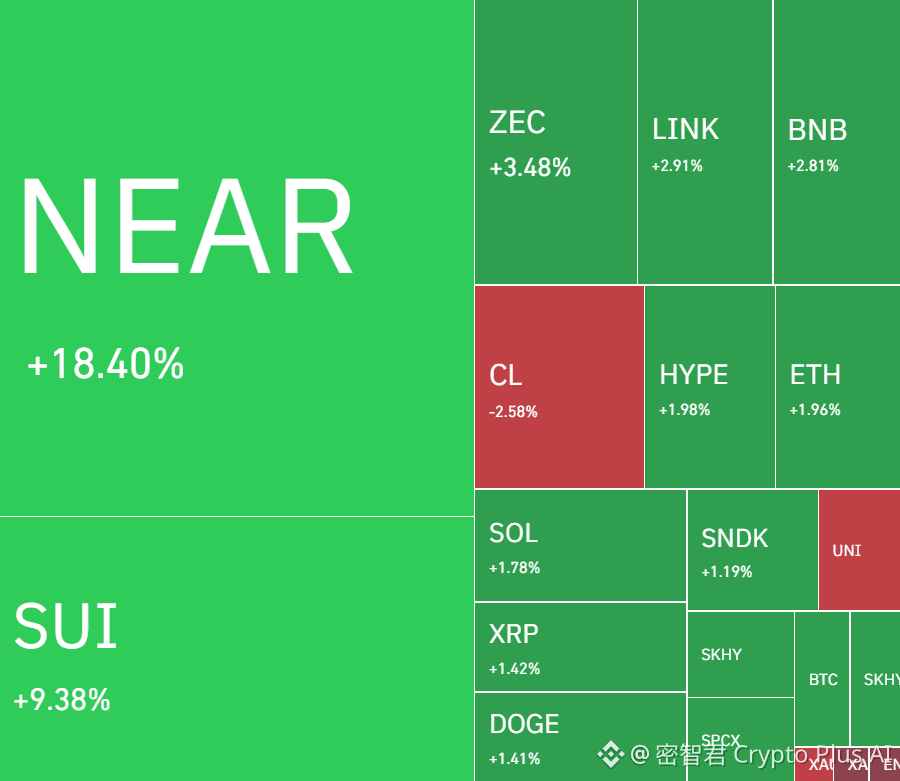
Funds continue to spread from BTC into high-beta assets. $NEAR is up 18.4%, $SUI is up 9.38%. ZEC, LINK, and BNB are up between 2.8% and 3.5%. At the moment, there’s no single piece of positive news sufficient to explain the sharp rises in NEAR and SUI; more likely, after BTC went sideways, short-term capital concentrated on chasing laggards for catch-up gains.
For BTC, expect support around $80,000–$80,200. A break above $82,000 is needed to open up further upside room; if it falls below $80,000, coins with larger gains such as NEAR and SUI may be the first to give back. For ETH, if it can hold above $2,700, the spread of capital can continue; otherwise, it will likely remain in a structure that follows BTC.
Gold (XAU) has pulled back to around $4,372. The decline in oil prices reduces inflation concerns, but rate-hike expectations and high bond yields are still weighing on gold. Near-term consolidation above $4,350 is still considered relatively elevated; if it breaks down, it may continue to retest $4,300. #以太坊突破2700美元 #MichaelSaylor暗示增持BTC
September 21, 2026 latest market briefing|BTC held the $80,000 level; funds continue flowing into altcoins; US stocks are still half-dead and everyone is waiting for Anthropic’s $200 billion listing!
Good morning, everyone, on Monday. This morning, $BTC quoted at $81,394, up slightly 0.6%; ETH at $2,663, up about 2%. Crude oil fell 2.58%, temporarily easing inflation pressure, but US 10-year Treasury yields are still hovering around 5%, and the market hasn’t entered full easing mode.
Funds continue to spread from BTC into high-beta assets. $NEAR is up 18.4%, $SUI is up 9.38%. ZEC, LINK, and BNB are up between 2.8% and 3.5%. At the moment, there’s no single piece of positive news sufficient to explain the sharp rises in NEAR and SUI; more likely, after BTC went sideways, short-term capital concentrated on chasing laggards for catch-up gains.
For BTC, expect support around $80,000–$80,200. A break above $82,000 is needed to open up further upside room; if it falls below $80,000, coins with larger gains such as NEAR and SUI may be the first to give back. For ETH, if it can hold above $2,700, the spread of capital can continue; otherwise, it will likely remain in a structure that follows BTC.
Gold (XAU) has pulled back to around $4,372. The decline in oil prices reduces inflation concerns, but rate-hike expectations and high bond yields are still weighing on gold. Near-term consolidation above $4,350 is still considered relatively elevated; if it breaks down, it may continue to retest $4,300. #以太坊突破2700美元 #MichaelSaylor暗示增持BTC
Good morning, everyone, on Monday. This morning, $BTC quoted at $81,394, up slightly 0.6%; ETH at $2,663, up about 2%. Crude oil fell 2.58%, temporarily easing inflation pressure, but US 10-year Treasury yields are still hovering around 5%, and the market hasn’t entered full easing mode.
Funds continue to spread from BTC into high-beta assets. $NEAR is up 18.4%, $SUI is up 9.38%. ZEC, LINK, and BNB are up between 2.8% and 3.5%. At the moment, there’s no single piece of positive news sufficient to explain the sharp rises in NEAR and SUI; more likely, after BTC went sideways, short-term capital concentrated on chasing laggards for catch-up gains.
For BTC, expect support around $80,000–$80,200. A break above $82,000 is needed to open up further upside room; if it falls below $80,000, coins with larger gains such as NEAR and SUI may be the first to give back. For ETH, if it can hold above $2,700, the spread of capital can continue; otherwise, it will likely remain in a structure that follows BTC.
Gold (XAU) has pulled back to around $4,372. The decline in oil prices reduces inflation concerns, but rate-hike expectations and high bond yields are still weighing on gold. Near-term consolidation above $4,350 is still considered relatively elevated; if it breaks down, it may continue to retest $4,300. #以太坊突破2700美元 #MichaelSaylor暗示增持BTC
91
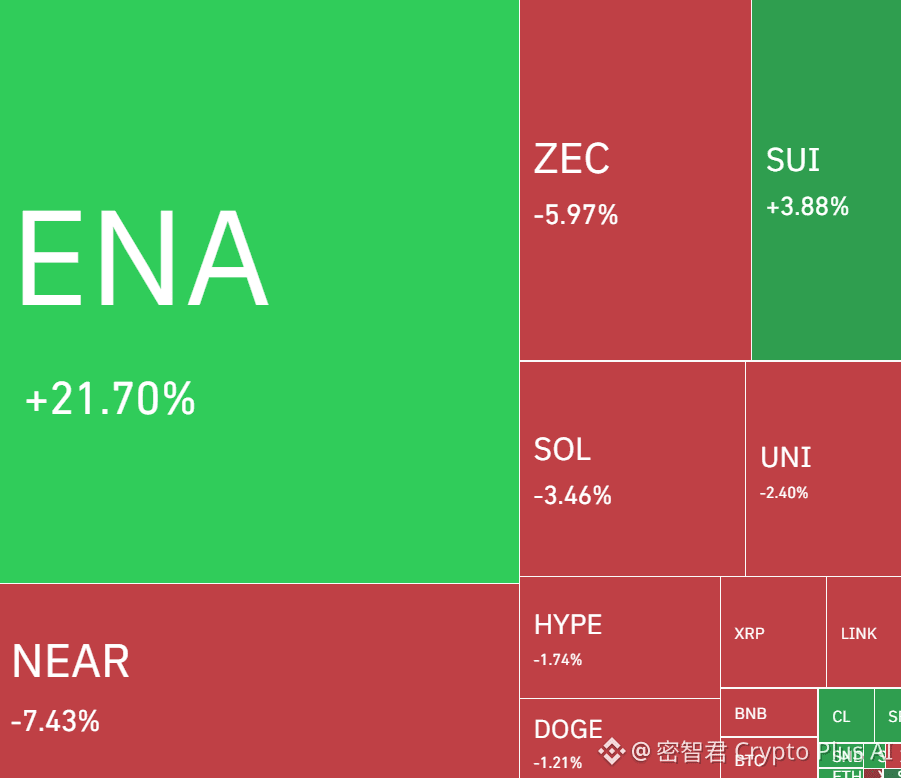
September 20, 2026 | Latest Market Morning Brief: BTC holds $80,000, altcoins start weakening, and ENA jumps more than 21% in a day.
Brothers and sisters, are you watching the charts this weekend? Yesterday’s broad rally didn’t carry over into a full-scale upswing. This morning, BTC is holding around $81,100, ETH around $2,620, and core assets are not seeing large swings. NEAR, which surged more strongly in the past couple of days, has pulled back about 7%, ZEC is down more than 5%, and SOL, UNI, and HYPE are all taking profits in sync.
Capital hasn’t fully exited—it’s rotating quickly at elevated levels. ENA is up over 20%, SUI is up about 4%, but there isn’t enough fresh news to explain ENA’s sudden intraday surge. It looks more like funds are switching from the earlier strong performers into laggards. Chasing the top gainers repeatedly can easily lead you to catch shares after the rotation ends.
For gold, XAU rose to around $4,390 on the last trading day. Oil prices falling helps ease inflation pressure, but the US dollar and Treasury yields are still staying high, so in the short term the market is more likely to remain in a wide range.
On the weekend, first watch BTC around $80,800. If it holds and breaks above $81,900, there’s still room for the momentum to spread further. If it drops below $80,000, high-volatility assets like NEAR and ZEC may continue giving back gains. What about your current position—how are you positioned? #以太坊重回2600美元 #SOL涨约10%
September 20, 2026 | Latest Market Morning Brief: BTC holds $80,000, altcoins start weakening, and ENA jumps more than 21% in a day.
Brothers and sisters, are you watching the charts this weekend? Yesterday’s broad rally didn’t carry over into a full-scale upswing. This morning, BTC is holding around $81,100, ETH around $2,620, and core assets are not seeing large swings. NEAR, which surged more strongly in the past couple of days, has pulled back about 7%, ZEC is down more than 5%, and SOL, UNI, and HYPE are all taking profits in sync.
Capital hasn’t fully exited—it’s rotating quickly at elevated levels. ENA is up over 20%, SUI is up about 4%, but there isn’t enough fresh news to explain ENA’s sudden intraday surge. It looks more like funds are switching from the earlier strong performers into laggards. Chasing the top gainers repeatedly can easily lead you to catch shares after the rotation ends.
For gold, XAU rose to around $4,390 on the last trading day. Oil prices falling helps ease inflation pressure, but the US dollar and Treasury yields are still staying high, so in the short term the market is more likely to remain in a wide range.
On the weekend, first watch BTC around $80,800. If it holds and breaks above $81,900, there’s still room for the momentum to spread further. If it drops below $80,000, high-volatility assets like NEAR and ZEC may continue giving back gains. What about your current position—how are you positioned? #以太坊重回2600美元 #SOL涨约10%
Brothers and sisters, are you watching the charts this weekend? Yesterday’s broad rally didn’t carry over into a full-scale upswing. This morning, BTC is holding around $81,100, ETH around $2,620, and core assets are not seeing large swings. NEAR, which surged more strongly in the past couple of days, has pulled back about 7%, ZEC is down more than 5%, and SOL, UNI, and HYPE are all taking profits in sync.
Capital hasn’t fully exited—it’s rotating quickly at elevated levels. ENA is up over 20%, SUI is up about 4%, but there isn’t enough fresh news to explain ENA’s sudden intraday surge. It looks more like funds are switching from the earlier strong performers into laggards. Chasing the top gainers repeatedly can easily lead you to catch shares after the rotation ends.
For gold, XAU rose to around $4,390 on the last trading day. Oil prices falling helps ease inflation pressure, but the US dollar and Treasury yields are still staying high, so in the short term the market is more likely to remain in a wide range.
On the weekend, first watch BTC around $80,800. If it holds and breaks above $81,900, there’s still room for the momentum to spread further. If it drops below $80,000, high-volatility assets like NEAR and ZEC may continue giving back gains. What about your current position—how are you positioned? #以太坊重回2600美元 #SOL涨约10%
111
Damn, Musk is still awesome! Someone asked Musk: with wealth worth several tens of trillions that you could never possibly spend in many lifetimes, why does he still maintain such high-intensity work for the long term?
He said that lying on a beach doing nothing is the worst life he can imagine. He would get so bored he’d go crazy—he likes high intensity.
Money can explain why someone starts working, but it can’t explain why they can’t stop even after having everything. For Musk, work isn’t just about earning wealth—it’s like a kind of spiritual order: when problems are difficult enough and rockets, cars, chips, and AI fill all his attention, other noise temporarily fades away.
What a person truly can’t let go of is often not money, but the problem that makes them feel like they’re still moving forward. Do you think Musk’s work style is something that can be learned? #巴菲特转任伯克希尔荣誉董事长 $SPCXB
Damn, Musk is still awesome! Someone asked Musk: with wealth worth several tens of trillions that you could never possibly spend in many lifetimes, why does he still maintain such high-intensity work for the long term?
He said that lying on a beach doing nothing is the worst life he can imagine. He would get so bored he’d go crazy—he likes high intensity.
Money can explain why someone starts working, but it can’t explain why they can’t stop even after having everything. For Musk, work isn’t just about earning wealth—it’s like a kind of spiritual order: when problems are difficult enough and rockets, cars, chips, and AI fill all his attention, other noise temporarily fades away.
What a person truly can’t let go of is often not money, but the problem that makes them feel like they’re still moving forward. Do you think Musk’s work style is something that can be learned? #巴菲特转任伯克希尔荣誉董事长 $SPCXB
He said that lying on a beach doing nothing is the worst life he can imagine. He would get so bored he’d go crazy—he likes high intensity.
Money can explain why someone starts working, but it can’t explain why they can’t stop even after having everything. For Musk, work isn’t just about earning wealth—it’s like a kind of spiritual order: when problems are difficult enough and rockets, cars, chips, and AI fill all his attention, other noise temporarily fades away.
What a person truly can’t let go of is often not money, but the problem that makes them feel like they’re still moving forward. Do you think Musk’s work style is something that can be learned? #巴菲特转任伯克希尔荣誉董事长 $SPCXB
2
353
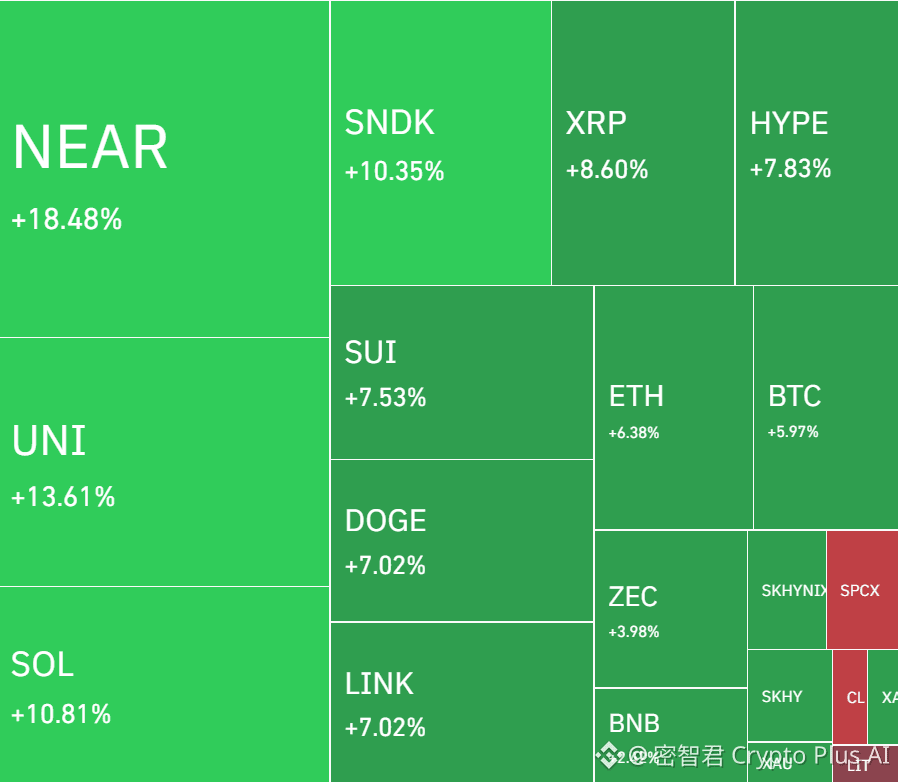
Latest Morning News on September 19, 2026 | $BTC returns to $80,000, imitation coins keep rising, $NEAR leads by more than 19% — is the bull market coming?
Brothers, good weekend! Last night, oil prices fell back, U.S. Treasury yields cooled off, and concerns about continued aggressive rate hikes eased. U.S. spot BTC ETFs saw a renewed net inflow of about $160 million, and with the regulatory easing for tokenized stocks, capital is moving back into Crypto. BTC rose by about 6%, returning to around $81,200; ETH climbed to $2,610, with a gain slightly higher than BTC.
Funds have already spread from BTC into high-volatility assets. NEAR surged by about 19%, UNI rose by over 14%, $SOL gained about 11%, and XRP, HYPE, SUI, and LINK all strengthened in sync. This round isn’t just a few coins leading the way—NEAR and UNI have pulled up quickly for two straight days. In the short term, positions are already crowded, so the next step depends on whether trading volume can continue to absorb.
Gold XAU rose to around $4,390. A drop in oil prices eased inflation pressures, helping gold and risk assets rebound at the same time; however, the dollar is still near a seven-week high, and the upside pressure on gold hasn’t been fully removed.
For the weekend, first watch whether BTC can hold above $80,000. If it holds and breaks above $81,600, the trend may continue higher; if it falls back to $78,000, the sharp gains in altcoins could be the first to unwind. What do you think about this round’s reversal/unwinding? #比特币突破8万美元大关 #以太坊重回2600美元
Latest Morning News on September 19, 2026 | $BTC returns to $80,000, imitation coins keep rising, $NEAR leads by more than 19% — is the bull market coming?
Brothers, good weekend! Last night, oil prices fell back, U.S. Treasury yields cooled off, and concerns about continued aggressive rate hikes eased. U.S. spot BTC ETFs saw a renewed net inflow of about $160 million, and with the regulatory easing for tokenized stocks, capital is moving back into Crypto. BTC rose by about 6%, returning to around $81,200; ETH climbed to $2,610, with a gain slightly higher than BTC.
Funds have already spread from BTC into high-volatility assets. NEAR surged by about 19%, UNI rose by over 14%, $SOL gained about 11%, and XRP, HYPE, SUI, and LINK all strengthened in sync. This round isn’t just a few coins leading the way—NEAR and UNI have pulled up quickly for two straight days. In the short term, positions are already crowded, so the next step depends on whether trading volume can continue to absorb.
Gold XAU rose to around $4,390. A drop in oil prices eased inflation pressures, helping gold and risk assets rebound at the same time; however, the dollar is still near a seven-week high, and the upside pressure on gold hasn’t been fully removed.
For the weekend, first watch whether BTC can hold above $80,000. If it holds and breaks above $81,600, the trend may continue higher; if it falls back to $78,000, the sharp gains in altcoins could be the first to unwind. What do you think about this round’s reversal/unwinding? #比特币突破8万美元大关 #以太坊重回2600美元
Brothers, good weekend! Last night, oil prices fell back, U.S. Treasury yields cooled off, and concerns about continued aggressive rate hikes eased. U.S. spot BTC ETFs saw a renewed net inflow of about $160 million, and with the regulatory easing for tokenized stocks, capital is moving back into Crypto. BTC rose by about 6%, returning to around $81,200; ETH climbed to $2,610, with a gain slightly higher than BTC.
Funds have already spread from BTC into high-volatility assets. NEAR surged by about 19%, UNI rose by over 14%, $SOL gained about 11%, and XRP, HYPE, SUI, and LINK all strengthened in sync. This round isn’t just a few coins leading the way—NEAR and UNI have pulled up quickly for two straight days. In the short term, positions are already crowded, so the next step depends on whether trading volume can continue to absorb.
Gold XAU rose to around $4,390. A drop in oil prices eased inflation pressures, helping gold and risk assets rebound at the same time; however, the dollar is still near a seven-week high, and the upside pressure on gold hasn’t been fully removed.
For the weekend, first watch whether BTC can hold above $80,000. If it holds and breaks above $81,600, the trend may continue higher; if it falls back to $78,000, the sharp gains in altcoins could be the first to unwind. What do you think about this round’s reversal/unwinding? #比特币突破8万美元大关 #以太坊重回2600美元
99
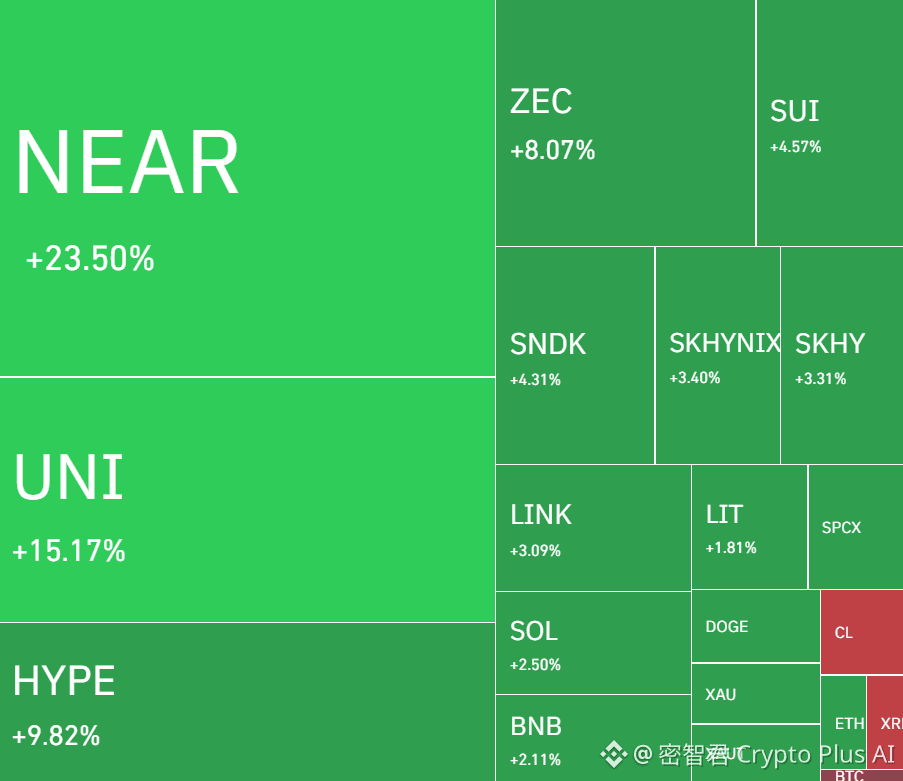
September 18, 2026 Latest Morning News|BTC continues to trade sideways; altcoins broadly rise; Near is up 23% in a day
Brothers, the pressure after the Fed’s rate hikes has eased for the moment. Last night, oil prices and U.S. Treasury yields fell back, while the Nasdaq rose 1.69%. The U.S. SEC has also rolled out a five-year exemption for tokenized stock trading.
As of this morning, BTC is still hovering around $76,500, and ETH is around $2,450. NEAR is up about 23%, UNI about 15%, HYPE nearly 10%, and ZEC continues its uptrend; SUI, SOL, and BNB also closed higher. Is this broad rally in altcoins the start of a new round of capital rotation?
Gold XAU has returned to around $4,350. The decline in oil prices eases concerns about inflation and further rate hikes, leaving room for a rebound in gold prices.
Today I’ll be watching whether BTC can break above $77,000. If it continues to trade sideways, and the leading coins start to retreat on increasing volume, this rally is more likely to first enter a period of intense rotation and turnover. Keep shorting BTC—do you think BTC will go below 70,000? #XRP涨3%瑞波接入Stripe与Tempo机器支付协议 #比特币突破77000美元
September 18, 2026 Latest Morning News|BTC continues to trade sideways; altcoins broadly rise; Near is up 23% in a day
Brothers, the pressure after the Fed’s rate hikes has eased for the moment. Last night, oil prices and U.S. Treasury yields fell back, while the Nasdaq rose 1.69%. The U.S. SEC has also rolled out a five-year exemption for tokenized stock trading.
As of this morning, BTC is still hovering around $76,500, and ETH is around $2,450. NEAR is up about 23%, UNI about 15%, HYPE nearly 10%, and ZEC continues its uptrend; SUI, SOL, and BNB also closed higher. Is this broad rally in altcoins the start of a new round of capital rotation?
Gold XAU has returned to around $4,350. The decline in oil prices eases concerns about inflation and further rate hikes, leaving room for a rebound in gold prices.
Today I’ll be watching whether BTC can break above $77,000. If it continues to trade sideways, and the leading coins start to retreat on increasing volume, this rally is more likely to first enter a period of intense rotation and turnover. Keep shorting BTC—do you think BTC will go below 70,000? #XRP涨3%瑞波接入Stripe与Tempo机器支付协议 #比特币突破77000美元
Brothers, the pressure after the Fed’s rate hikes has eased for the moment. Last night, oil prices and U.S. Treasury yields fell back, while the Nasdaq rose 1.69%. The U.S. SEC has also rolled out a five-year exemption for tokenized stock trading.
As of this morning, BTC is still hovering around $76,500, and ETH is around $2,450. NEAR is up about 23%, UNI about 15%, HYPE nearly 10%, and ZEC continues its uptrend; SUI, SOL, and BNB also closed higher. Is this broad rally in altcoins the start of a new round of capital rotation?
Gold XAU has returned to around $4,350. The decline in oil prices eases concerns about inflation and further rate hikes, leaving room for a rebound in gold prices.
Today I’ll be watching whether BTC can break above $77,000. If it continues to trade sideways, and the leading coins start to retreat on increasing volume, this rally is more likely to first enter a period of intense rotation and turnover. Keep shorting BTC—do you think BTC will go below 70,000? #XRP涨3%瑞波接入Stripe与Tempo机器支付协议 #比特币突破77000美元
536
Damn, this is way too abstract. V God is starting to study political science—like what effective altruism and defensive accelerationism. Is this them starting to seize power after being pushed out of the foundation? $ETH #V神
Damn, this is way too abstract. V God is starting to study political science—like what effective altruism and defensive accelerationism. Is this them starting to seize power after being pushed out of the foundation? $ETH #V神

225
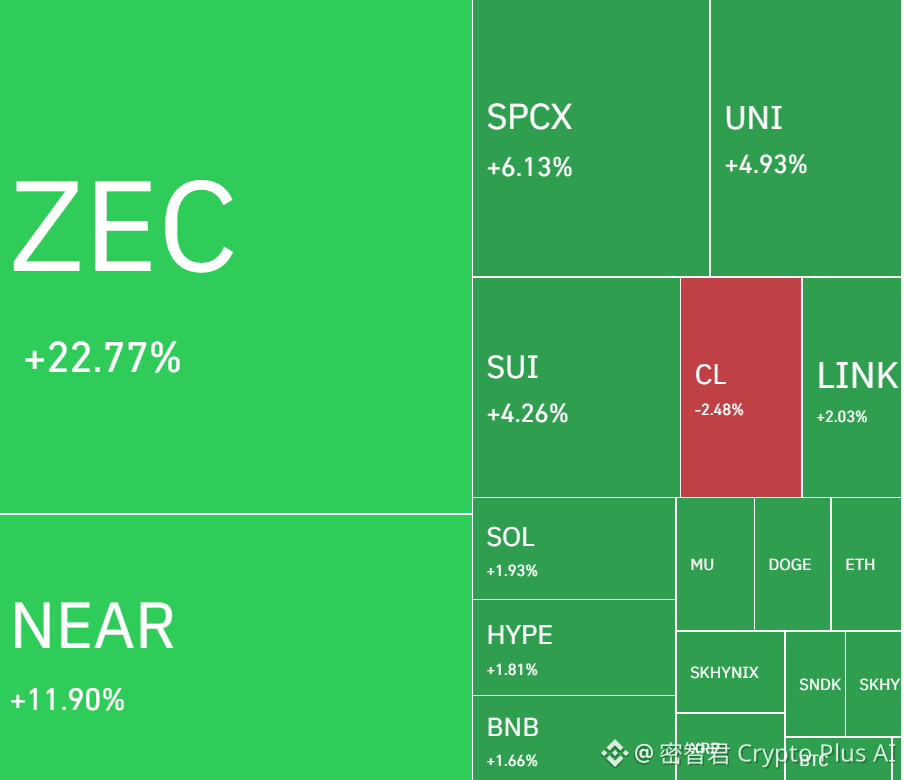
September 17, 2026 Latest Market Analysis|ZEC Surges by More Than 20%, but BTC Is Still Stuck
Brothers, last night the Fed raised rates by 25 basis points and signaled that there may be more hikes later this year. The US dollar climbed to a seven-week high, and US Treasury yields moved higher, keeping pressure on risk assets. However, after the rate hike landed, crypto didn’t continue to sell off in unison: as of this morning, $BTC is about $76,100, $ETH is about $2,420—overall the trend has been relatively stable.
$ZEC is up about 22.8%, NEAR is up about 11.9%, yet BTC’s gains are minimal. Capital is chasing a small number of strong coins, so you can’t conclude from this that the entire altcoin market has turned bullish. ZEC’s daily gain is more than 20%; if it then falls back with volume, volatility will quickly amplify as well.
Gold XAU is taking a different path: after spiking higher last night, it pulled back, and in the Asian morning it’s around $4,269. Next, we’ll need to see whether the US dollar and Treasury yields can stop rising.
For BTC, first watch whether last night’s low at $75,200 can hold. Holding the level is only a sign of stabilization—true strength would only be possible after it reclaims the prior high. Do you think BTC still has a chance to surge toward $90,000 by year-end? #美联储加息25基点美股收跌 #Zcash上涨6%
September 17, 2026 Latest Market Analysis|ZEC Surges by More Than 20%, but BTC Is Still Stuck
Brothers, last night the Fed raised rates by 25 basis points and signaled that there may be more hikes later this year. The US dollar climbed to a seven-week high, and US Treasury yields moved higher, keeping pressure on risk assets. However, after the rate hike landed, crypto didn’t continue to sell off in unison: as of this morning, $BTC is about $76,100, $ETH is about $2,420—overall the trend has been relatively stable.
$ZEC is up about 22.8%, NEAR is up about 11.9%, yet BTC’s gains are minimal. Capital is chasing a small number of strong coins, so you can’t conclude from this that the entire altcoin market has turned bullish. ZEC’s daily gain is more than 20%; if it then falls back with volume, volatility will quickly amplify as well.
Gold XAU is taking a different path: after spiking higher last night, it pulled back, and in the Asian morning it’s around $4,269. Next, we’ll need to see whether the US dollar and Treasury yields can stop rising.
For BTC, first watch whether last night’s low at $75,200 can hold. Holding the level is only a sign of stabilization—true strength would only be possible after it reclaims the prior high. Do you think BTC still has a chance to surge toward $90,000 by year-end? #美联储加息25基点美股收跌 #Zcash上涨6%
Brothers, last night the Fed raised rates by 25 basis points and signaled that there may be more hikes later this year. The US dollar climbed to a seven-week high, and US Treasury yields moved higher, keeping pressure on risk assets. However, after the rate hike landed, crypto didn’t continue to sell off in unison: as of this morning, $BTC is about $76,100, $ETH is about $2,420—overall the trend has been relatively stable.
$ZEC is up about 22.8%, NEAR is up about 11.9%, yet BTC’s gains are minimal. Capital is chasing a small number of strong coins, so you can’t conclude from this that the entire altcoin market has turned bullish. ZEC’s daily gain is more than 20%; if it then falls back with volume, volatility will quickly amplify as well.
Gold XAU is taking a different path: after spiking higher last night, it pulled back, and in the Asian morning it’s around $4,269. Next, we’ll need to see whether the US dollar and Treasury yields can stop rising.
For BTC, first watch whether last night’s low at $75,200 can hold. Holding the level is only a sign of stabilization—true strength would only be possible after it reclaims the prior high. Do you think BTC still has a chance to surge toward $90,000 by year-end? #美联储加息25基点美股收跌 #Zcash上涨6%
429
September 16, 2026|So brutal—crypto bill hits a wall, U.S. Treasury bonds break 5%, and BTC falls to $76,000!
Good morning, brothers. The “CLARITY Act” in the U.S. Senate failed to secure the 60 votes needed to advance, dashing expectations for crypto regulation. Meanwhile, Brent crude is still hovering around $108, the 10-year U.S. Treasury yield has broken above 5%, and U.S. stocks closed lower last night. Oil prices, interest rates, and policy headlines all added pressure at the same time—$BTC is about $75,865, and $ETH is about $2,394.
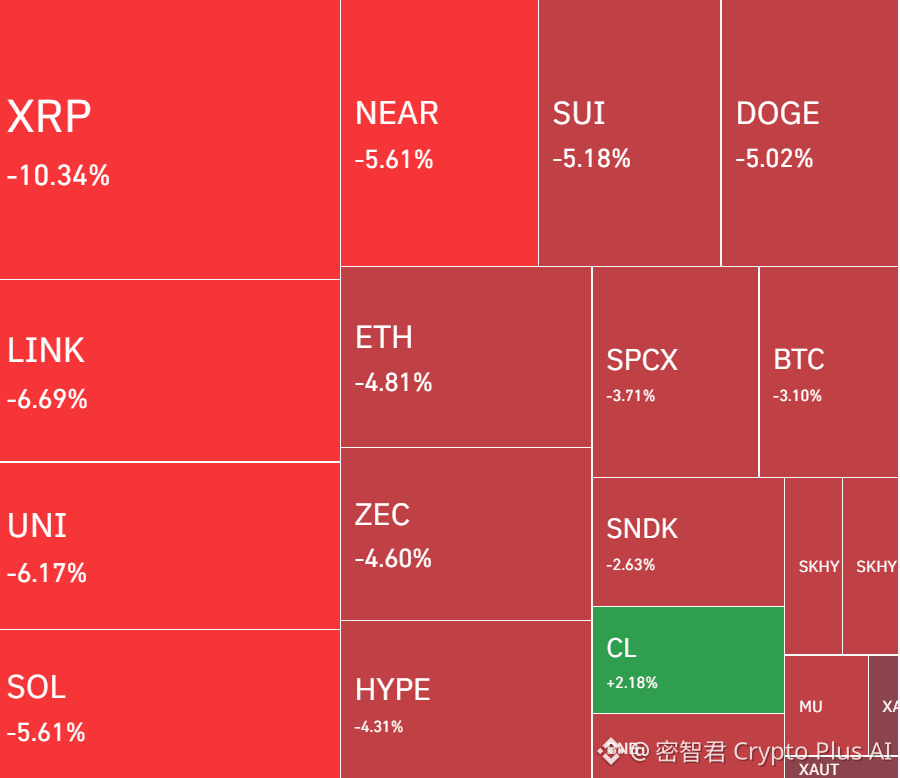
Altcoins are in an uproar: $XRP is down 10.34%, LINK is down 6.69%, and UNI is down 6.17%; ETH is down 4.81%, and BTC is down 3.10%. XRP’s drop is noticeably larger than BTC’s, suggesting the market is also trimming expectations for favorable policy outcomes. The latest trading day’s net outflow from U.S. spot BTC ETFs is about $289 million; rebounds still lack spot liquidity to step in and absorb selling.
Gold XAU is around $4,287 as well, with no clear support from geopolitical risk. The reason is that the U.S. dollar and Treasury yields are strengthening, raising the opportunity cost of holding non-yielding gold. After $4,300 is lost, first see whether it can reclaim; if it keeps weakening, watch around $4,200.
BTC is nearing the prior $75,600 watch level. If it falls below again, we’ll need to see how bids hold below $75,000; only after it regains $78,000 can near-term pressure be considered eased. The Fed’s decision will be released tonight. As of the early session, it’s still too early to write the market’s expectation as a rate-hike outcome. Stay cautious and don’t be overexposed—wait for the right moment to ride the rebound. What do you think? #美参议院否决CLARITY法案 #美联储加息是否已成定局
September 16, 2026|So brutal—crypto bill hits a wall, U.S. Treasury bonds break 5%, and BTC falls to $76,000!
Good morning, brothers. The “CLARITY Act” in the U.S. Senate failed to secure the 60 votes needed to advance, dashing expectations for crypto regulation. Meanwhile, Brent crude is still hovering around $108, the 10-year U.S. Treasury yield has broken above 5%, and U.S. stocks closed lower last night. Oil prices, interest rates, and policy headlines all added pressure at the same time—$BTC is about $75,865, and $ETH is about $2,394.
Altcoins are in an uproar: $XRP is down 10.34%, LINK is down 6.69%, and UNI is down 6.17%; ETH is down 4.81%, and BTC is down 3.10%. XRP’s drop is noticeably larger than BTC’s, suggesting the market is also trimming expectations for favorable policy outcomes. The latest trading day’s net outflow from U.S. spot BTC ETFs is about $289 million; rebounds still lack spot liquidity to step in and absorb selling.
Gold XAU is around $4,287 as well, with no clear support from geopolitical risk. The reason is that the U.S. dollar and Treasury yields are strengthening, raising the opportunity cost of holding non-yielding gold. After $4,300 is lost, first see whether it can reclaim; if it keeps weakening, watch around $4,200.
BTC is nearing the prior $75,600 watch level. If it falls below again, we’ll need to see how bids hold below $75,000; only after it regains $78,000 can near-term pressure be considered eased. The Fed’s decision will be released tonight. As of the early session, it’s still too early to write the market’s expectation as a rate-hike outcome. Stay cautious and don’t be overexposed—wait for the right moment to ride the rebound. What do you think? #美参议院否决CLARITY法案 #美联储加息是否已成定局
Good morning, brothers. The “CLARITY Act” in the U.S. Senate failed to secure the 60 votes needed to advance, dashing expectations for crypto regulation. Meanwhile, Brent crude is still hovering around $108, the 10-year U.S. Treasury yield has broken above 5%, and U.S. stocks closed lower last night. Oil prices, interest rates, and policy headlines all added pressure at the same time—$BTC is about $75,865, and $ETH is about $2,394.
Altcoins are in an uproar: $XRP is down 10.34%, LINK is down 6.69%, and UNI is down 6.17%; ETH is down 4.81%, and BTC is down 3.10%. XRP’s drop is noticeably larger than BTC’s, suggesting the market is also trimming expectations for favorable policy outcomes. The latest trading day’s net outflow from U.S. spot BTC ETFs is about $289 million; rebounds still lack spot liquidity to step in and absorb selling.
Gold XAU is around $4,287 as well, with no clear support from geopolitical risk. The reason is that the U.S. dollar and Treasury yields are strengthening, raising the opportunity cost of holding non-yielding gold. After $4,300 is lost, first see whether it can reclaim; if it keeps weakening, watch around $4,200.
BTC is nearing the prior $75,600 watch level. If it falls below again, we’ll need to see how bids hold below $75,000; only after it regains $78,000 can near-term pressure be considered eased. The Fed’s decision will be released tonight. As of the early session, it’s still too early to write the market’s expectation as a rate-hike outcome. Stay cautious and don’t be overexposed—wait for the right moment to ride the rebound. What do you think? #美参议院否决CLARITY法案 #美联储加息是否已成定局
396
September 15, 2026 Latest Morning News | The Fed decision is approaching—BTC and gold are both waiting for direction
Brothers, during today’s Asia morning session, $BTC continues to trade in a range of 76,000–78,000 USD, while $ETH remains around 2,500 USD. In the U.S., August CPI year-over-year rose 3.4%, and the market has already priced in this week’s rate hike to a high degree. The 10-year Treasury yield is nearing 5%, and risk assets remain pressured from above.
In the latest verifiable trading days, U.S. spot BTC ETFs saw net outflows of 282.6 million USD, marking a third consecutive day of outflows. If BTC can hold above 78,000 USD, it may continue to test 80,000 USD. If it breaks below 76,000 USD, watch the 72,000–74,000 USD range for support. Only after ETH holds above 2,500 USD will there be an opportunity to test 2,600 USD; if it breaks below 2,400 USD, the structure weakens.
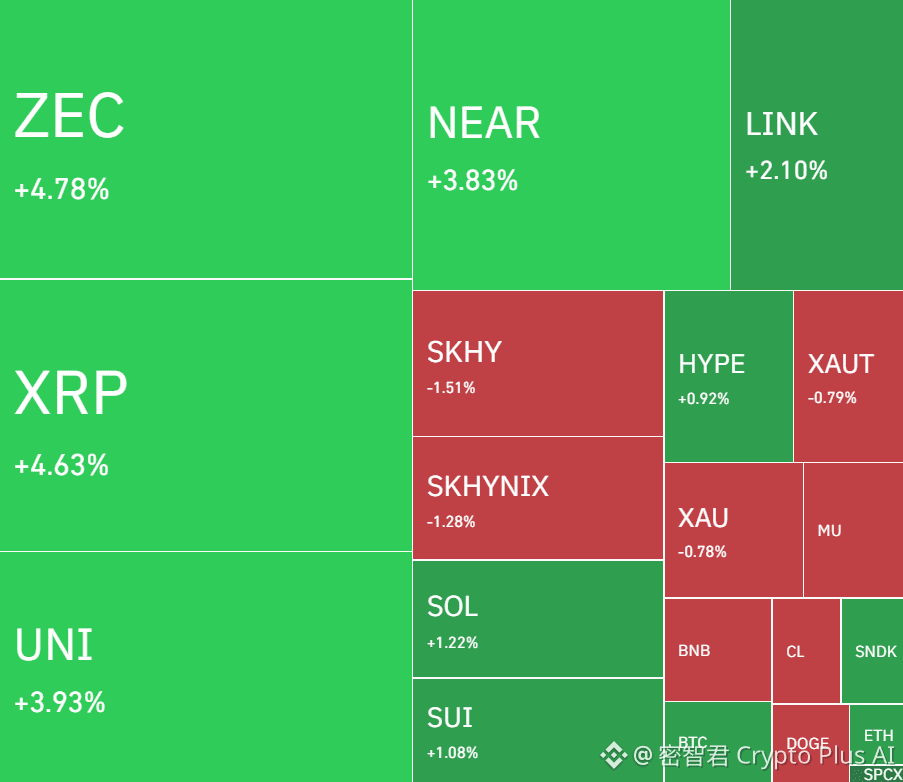
Altcoins generally started to rebound: $ZEC is up 4.78%, XRP is up 4.63%, UNI up 3.93%, NEAR up 3.83%, and LINK, SOL, and SUI have also shown rebounds. BTC has not yet broken through a key range; for now, it remains in a phase of local rotation.
Gold XAU stays around 4,350 USD. Geopolitical tensions and energy-driven inflation support safe-haven demand, but elevated U.S. Treasury yields limit upside. 4,300 USD remains short-term support. After a break above 4,400 USD, look toward 4,450 USD; if it falls below 4,300 USD, watch 4,250 USD.
The U.S. Federal Reserve meetings on September 15–16 are the key variables this week. While rate hikes have already been priced by most of the market, more attention is now on the subsequent interest-rate path. How is your position today? #比特币守稳77000美元上方 #SEC主席敦促国会推进CLARITY法案
September 15, 2026 Latest Morning News | The Fed decision is approaching—BTC and gold are both waiting for direction
Brothers, during today’s Asia morning session, $BTC continues to trade in a range of 76,000–78,000 USD, while $ETH remains around 2,500 USD. In the U.S., August CPI year-over-year rose 3.4%, and the market has already priced in this week’s rate hike to a high degree. The 10-year Treasury yield is nearing 5%, and risk assets remain pressured from above.
In the latest verifiable trading days, U.S. spot BTC ETFs saw net outflows of 282.6 million USD, marking a third consecutive day of outflows. If BTC can hold above 78,000 USD, it may continue to test 80,000 USD. If it breaks below 76,000 USD, watch the 72,000–74,000 USD range for support. Only after ETH holds above 2,500 USD will there be an opportunity to test 2,600 USD; if it breaks below 2,400 USD, the structure weakens.
Altcoins generally started to rebound: $ZEC is up 4.78%, XRP is up 4.63%, UNI up 3.93%, NEAR up 3.83%, and LINK, SOL, and SUI have also shown rebounds. BTC has not yet broken through a key range; for now, it remains in a phase of local rotation.
Gold XAU stays around 4,350 USD. Geopolitical tensions and energy-driven inflation support safe-haven demand, but elevated U.S. Treasury yields limit upside. 4,300 USD remains short-term support. After a break above 4,400 USD, look toward 4,450 USD; if it falls below 4,300 USD, watch 4,250 USD.
The U.S. Federal Reserve meetings on September 15–16 are the key variables this week. While rate hikes have already been priced by most of the market, more attention is now on the subsequent interest-rate path. How is your position today? #比特币守稳77000美元上方 #SEC主席敦促国会推进CLARITY法案
Brothers, during today’s Asia morning session, $BTC continues to trade in a range of 76,000–78,000 USD, while $ETH remains around 2,500 USD. In the U.S., August CPI year-over-year rose 3.4%, and the market has already priced in this week’s rate hike to a high degree. The 10-year Treasury yield is nearing 5%, and risk assets remain pressured from above.
In the latest verifiable trading days, U.S. spot BTC ETFs saw net outflows of 282.6 million USD, marking a third consecutive day of outflows. If BTC can hold above 78,000 USD, it may continue to test 80,000 USD. If it breaks below 76,000 USD, watch the 72,000–74,000 USD range for support. Only after ETH holds above 2,500 USD will there be an opportunity to test 2,600 USD; if it breaks below 2,400 USD, the structure weakens.
Altcoins generally started to rebound: $ZEC is up 4.78%, XRP is up 4.63%, UNI up 3.93%, NEAR up 3.83%, and LINK, SOL, and SUI have also shown rebounds. BTC has not yet broken through a key range; for now, it remains in a phase of local rotation.
Gold XAU stays around 4,350 USD. Geopolitical tensions and energy-driven inflation support safe-haven demand, but elevated U.S. Treasury yields limit upside. 4,300 USD remains short-term support. After a break above 4,400 USD, look toward 4,450 USD; if it falls below 4,300 USD, watch 4,250 USD.
The U.S. Federal Reserve meetings on September 15–16 are the key variables this week. While rate hikes have already been priced by most of the market, more attention is now on the subsequent interest-rate path. How is your position today? #比特币守稳77000美元上方 #SEC主席敦促国会推进CLARITY法案
396
🎙️ Good morning on Monday! A video that explains the most famous trading theory in depth—Chan theory. Let's make money together!

End
03 h 23 m 02 s
23
BNB
Holding
-453.76
1
0
Is an ETH bull market coming? September 14, 2026 | ETH trading volume surpasses BTC, and the market is still waiting for the Fed’s interest-rate-hike guidance!
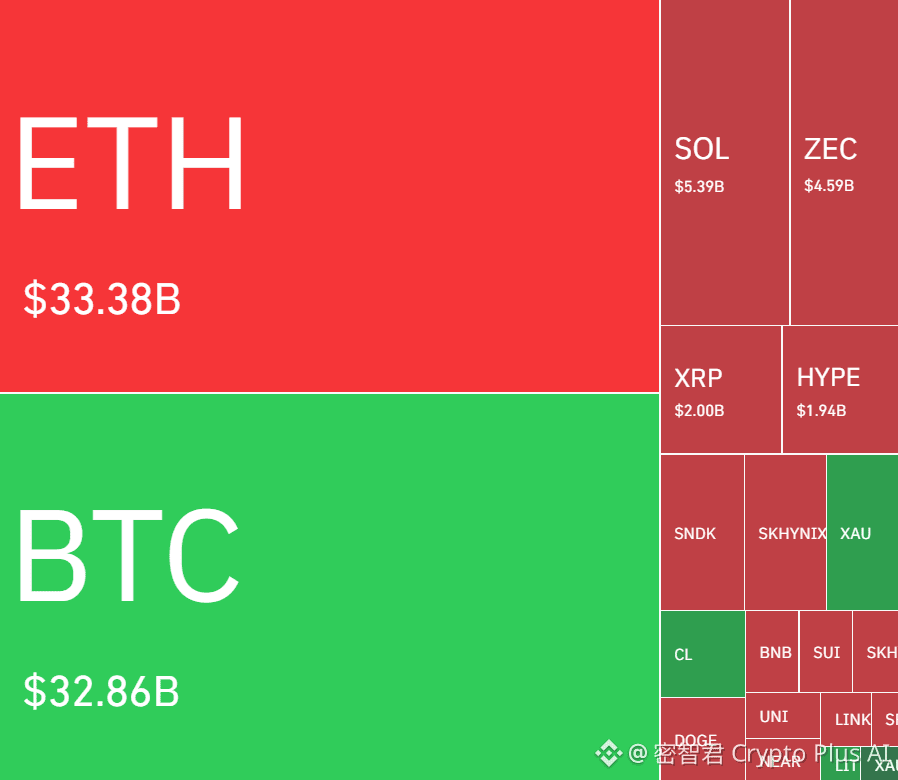
Good morning, brothers—happy Monday! The most obvious change this morning is that $ETH ’s 24-hour trading volume reached $33.38 billion, slightly higher than $BTC ’s $32.86 billion, but the price performance is weaker than BTC. Trading volume has expanded without a matching rise, suggesting that ETH still faces heavy turnover pressure around the $2,500 level.
Altcoins haven’t formed a unified direction. $UNI strengthened against the trend; NEAR and HYPE rose slightly. ZEC fell 2.67%, while SOL, SUI, and LINK continued to be relatively weak. Storage-related stocks like SK Hynix and their on-chain counterparts fell in sync—risk capital is still concentrated in only a handful of assets.
Gold (XAU) closed at around $4,349. The Middle East situation supports safe-haven demand, but the 10-year U.S. Treasury yield is approaching 5% and the market has heavily priced in a September rate hike, keeping gold under pressure. $4,300 is short-term support; if it holds, gold could test $4,400–$4,450. If it breaks down, watch $4,250.
Continue to monitor BTC at $76,000–$78,000. Only if it holds above $78,000 will there be conditions to retest $80,000. If it breaks below $76,000, the correction could extend to the $72,000–$74,000 range. The Fed meetings on September 15–16 will determine the direction for the next phase. How’s your position today? #全网爆仓6.74亿美元 #比特币四周内第三次单块重组
Is an ETH bull market coming? September 14, 2026 | ETH trading volume surpasses BTC, and the market is still waiting for the Fed’s interest-rate-hike guidance!
Good morning, brothers—happy Monday! The most obvious change this morning is that $ETH ’s 24-hour trading volume reached $33.38 billion, slightly higher than $BTC ’s $32.86 billion, but the price performance is weaker than BTC. Trading volume has expanded without a matching rise, suggesting that ETH still faces heavy turnover pressure around the $2,500 level.
Altcoins haven’t formed a unified direction. $UNI strengthened against the trend; NEAR and HYPE rose slightly. ZEC fell 2.67%, while SOL, SUI, and LINK continued to be relatively weak. Storage-related stocks like SK Hynix and their on-chain counterparts fell in sync—risk capital is still concentrated in only a handful of assets.
Gold (XAU) closed at around $4,349. The Middle East situation supports safe-haven demand, but the 10-year U.S. Treasury yield is approaching 5% and the market has heavily priced in a September rate hike, keeping gold under pressure. $4,300 is short-term support; if it holds, gold could test $4,400–$4,450. If it breaks down, watch $4,250.
Continue to monitor BTC at $76,000–$78,000. Only if it holds above $78,000 will there be conditions to retest $80,000. If it breaks below $76,000, the correction could extend to the $72,000–$74,000 range. The Fed meetings on September 15–16 will determine the direction for the next phase. How’s your position today? #全网爆仓6.74亿美元 #比特币四周内第三次单块重组
Good morning, brothers—happy Monday! The most obvious change this morning is that $ETH ’s 24-hour trading volume reached $33.38 billion, slightly higher than $BTC ’s $32.86 billion, but the price performance is weaker than BTC. Trading volume has expanded without a matching rise, suggesting that ETH still faces heavy turnover pressure around the $2,500 level.
Altcoins haven’t formed a unified direction. $UNI strengthened against the trend; NEAR and HYPE rose slightly. ZEC fell 2.67%, while SOL, SUI, and LINK continued to be relatively weak. Storage-related stocks like SK Hynix and their on-chain counterparts fell in sync—risk capital is still concentrated in only a handful of assets.
Gold (XAU) closed at around $4,349. The Middle East situation supports safe-haven demand, but the 10-year U.S. Treasury yield is approaching 5% and the market has heavily priced in a September rate hike, keeping gold under pressure. $4,300 is short-term support; if it holds, gold could test $4,400–$4,450. If it breaks down, watch $4,250.
Continue to monitor BTC at $76,000–$78,000. Only if it holds above $78,000 will there be conditions to retest $80,000. If it breaks below $76,000, the correction could extend to the $72,000–$74,000 range. The Fed meetings on September 15–16 will determine the direction for the next phase. How’s your position today? #全网爆仓6.74亿美元 #比特币四周内第三次单块重组
272
Verified
September 13, 2026|Weekend BTC sees low-volume choppy consolidation as gold waits for Fed pricing
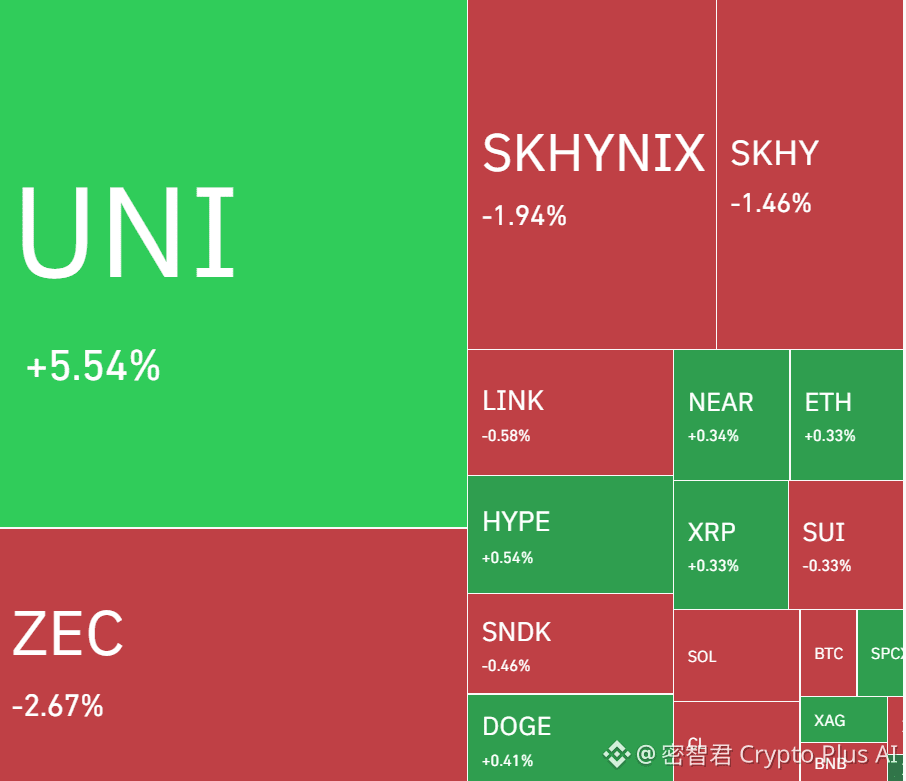
Brothers, are you all resting on the weekend? The weekend market hasn’t formed a full rebound. $BTC is still hovering around $77,000, and $ETH is up slightly by 0.33%. UNI is up 5.54%; HYPE, NEAR, and XRP are modestly stronger, while ZEC is down 2.67%. SOL and SUI remain relatively weak. Capital is concentrated in a handful of coins, and the altcoin action is still mainly rotation.
The macro market is closed over the weekend. Gold XAU latest settled around $4,349, down about 1.4% last week. Geopolitical risk supports safe-haven demand, but 10-year U.S. Treasury yields are nearing 5%, and the probability of a September rate hike has risen to nearly 90%, limiting gold’s upside.
For XAU next week, watch support at $4,300 first. If it holds, the $4,400–$4,450 area can be retested. If it breaks down, then look to $4,250. For BTC, watch the $76,000–$78,000 range. If it reclaims $78,000, there may be another attempt at $80,000. If it breaks below $76,000, it could continue to look for support in the $72,000–$74,000 area.
The latest U.S. spot BTC ETF saw net outflows of $282.6 million on the most recent trading day, marking the third consecutive day of outflows. Next week’s Fed rate decision will simultaneously affect BTC, gold, and tech stocks. Hold your positions—we just need to wait for the bull market to arrive. What do you think? #美国10年期国债收益率逼近5% #Clarity法案9月15日程序性投票
September 13, 2026|Weekend BTC sees low-volume choppy consolidation as gold waits for Fed pricing
Brothers, are you all resting on the weekend? The weekend market hasn’t formed a full rebound. $BTC is still hovering around $77,000, and $ETH is up slightly by 0.33%. UNI is up 5.54%; HYPE, NEAR, and XRP are modestly stronger, while ZEC is down 2.67%. SOL and SUI remain relatively weak. Capital is concentrated in a handful of coins, and the altcoin action is still mainly rotation.
The macro market is closed over the weekend. Gold XAU latest settled around $4,349, down about 1.4% last week. Geopolitical risk supports safe-haven demand, but 10-year U.S. Treasury yields are nearing 5%, and the probability of a September rate hike has risen to nearly 90%, limiting gold’s upside.
For XAU next week, watch support at $4,300 first. If it holds, the $4,400–$4,450 area can be retested. If it breaks down, then look to $4,250. For BTC, watch the $76,000–$78,000 range. If it reclaims $78,000, there may be another attempt at $80,000. If it breaks below $76,000, it could continue to look for support in the $72,000–$74,000 area.
The latest U.S. spot BTC ETF saw net outflows of $282.6 million on the most recent trading day, marking the third consecutive day of outflows. Next week’s Fed rate decision will simultaneously affect BTC, gold, and tech stocks. Hold your positions—we just need to wait for the bull market to arrive. What do you think? #美国10年期国债收益率逼近5% #Clarity法案9月15日程序性投票
Brothers, are you all resting on the weekend? The weekend market hasn’t formed a full rebound. $BTC is still hovering around $77,000, and $ETH is up slightly by 0.33%. UNI is up 5.54%; HYPE, NEAR, and XRP are modestly stronger, while ZEC is down 2.67%. SOL and SUI remain relatively weak. Capital is concentrated in a handful of coins, and the altcoin action is still mainly rotation.
The macro market is closed over the weekend. Gold XAU latest settled around $4,349, down about 1.4% last week. Geopolitical risk supports safe-haven demand, but 10-year U.S. Treasury yields are nearing 5%, and the probability of a September rate hike has risen to nearly 90%, limiting gold’s upside.
For XAU next week, watch support at $4,300 first. If it holds, the $4,400–$4,450 area can be retested. If it breaks down, then look to $4,250. For BTC, watch the $76,000–$78,000 range. If it reclaims $78,000, there may be another attempt at $80,000. If it breaks below $76,000, it could continue to look for support in the $72,000–$74,000 area.
The latest U.S. spot BTC ETF saw net outflows of $282.6 million on the most recent trading day, marking the third consecutive day of outflows. Next week’s Fed rate decision will simultaneously affect BTC, gold, and tech stocks. Hold your positions—we just need to wait for the bull market to arrive. What do you think? #美国10年期国债收益率逼近5% #Clarity法案9月15日程序性投票
2
1.3k
September 12, 2026 Morning Report | Oil Prices Pull Back Driving a Rebound; Gold Holds at $4,300
Brothers, enjoy your weekend—let’s make money! The U.S. August CPI rose 0.4% month-over-month and 3.4% year-over-year; the probability of a September rate hike has risen to nearly 90%. However, Brent crude pulled back from a peak of $109.97 to around $104. U.S. stocks ended a four-day losing streak: the S&P rose 0.86% and the Nasdaq gained 0.96%.
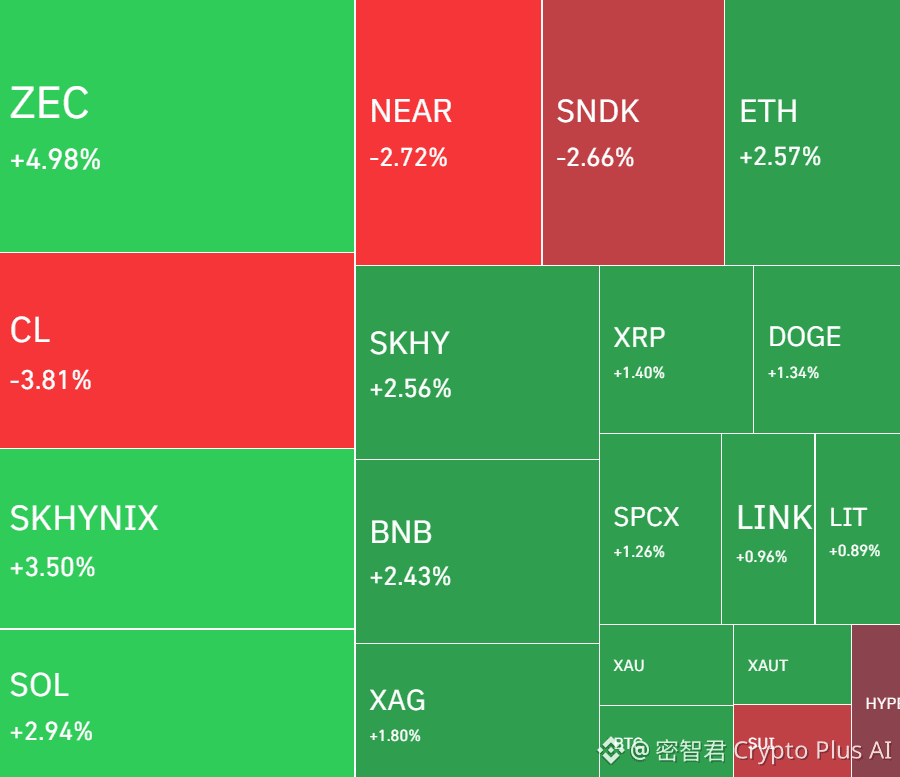
$BTC This morning around $77,300; $ETH about $2,538. ETH is up 2.57%, with SOL, BNB, and XRP rebounding in sync; ZEC rose 4.98%. NEAR and SanDisk continue to fall. The latest trading day for U.S. spot BTC ETFs saw net outflows of $282.6 million, the third consecutive day of outflows. Even though BTC has rebounded, it still lacks confirmation from spot inflow.
Gold $XAUT is trading around $4,349, up about 0.75% intraday. High interest rates suppress gold valuation, but geopolitical risks and inflation concerns driven by oil prices still provide support. For the short term, first look at $4,300; if it holds, it can continue testing the $4,400–$4,450 zone. If it breaks below $4,300, the next support to watch is $4,250.
BTC holding above $76,000 still looks like range consolidation. Only if it reclaims $78,000 will there be a chance to retest $80,000. #现货黄金涨0.87%白银涨1.13% #比特币金叉后回落至7.7万美元
September 12, 2026 Morning Report | Oil Prices Pull Back Driving a Rebound; Gold Holds at $4,300
Brothers, enjoy your weekend—let’s make money! The U.S. August CPI rose 0.4% month-over-month and 3.4% year-over-year; the probability of a September rate hike has risen to nearly 90%. However, Brent crude pulled back from a peak of $109.97 to around $104. U.S. stocks ended a four-day losing streak: the S&P rose 0.86% and the Nasdaq gained 0.96%.
$BTC This morning around $77,300; $ETH about $2,538. ETH is up 2.57%, with SOL, BNB, and XRP rebounding in sync; ZEC rose 4.98%. NEAR and SanDisk continue to fall. The latest trading day for U.S. spot BTC ETFs saw net outflows of $282.6 million, the third consecutive day of outflows. Even though BTC has rebounded, it still lacks confirmation from spot inflow.
Gold $XAUT is trading around $4,349, up about 0.75% intraday. High interest rates suppress gold valuation, but geopolitical risks and inflation concerns driven by oil prices still provide support. For the short term, first look at $4,300; if it holds, it can continue testing the $4,400–$4,450 zone. If it breaks below $4,300, the next support to watch is $4,250.
BTC holding above $76,000 still looks like range consolidation. Only if it reclaims $78,000 will there be a chance to retest $80,000. #现货黄金涨0.87%白银涨1.13% #比特币金叉后回落至7.7万美元
Brothers, enjoy your weekend—let’s make money! The U.S. August CPI rose 0.4% month-over-month and 3.4% year-over-year; the probability of a September rate hike has risen to nearly 90%. However, Brent crude pulled back from a peak of $109.97 to around $104. U.S. stocks ended a four-day losing streak: the S&P rose 0.86% and the Nasdaq gained 0.96%.
$BTC This morning around $77,300; $ETH about $2,538. ETH is up 2.57%, with SOL, BNB, and XRP rebounding in sync; ZEC rose 4.98%. NEAR and SanDisk continue to fall. The latest trading day for U.S. spot BTC ETFs saw net outflows of $282.6 million, the third consecutive day of outflows. Even though BTC has rebounded, it still lacks confirmation from spot inflow.
Gold $XAUT is trading around $4,349, up about 0.75% intraday. High interest rates suppress gold valuation, but geopolitical risks and inflation concerns driven by oil prices still provide support. For the short term, first look at $4,300; if it holds, it can continue testing the $4,400–$4,450 zone. If it breaks below $4,300, the next support to watch is $4,250.
BTC holding above $76,000 still looks like range consolidation. Only if it reclaims $78,000 will there be a chance to retest $80,000. #现货黄金涨0.87%白银涨1.13% #比特币金叉后回落至7.7万美元
1
304
Log in to explore more content
Join global crypto users on Binance Square
⚡️ Get latest and useful information about crypto.
💬 Trusted by the world’s largest crypto exchange.
👍 Discover real insights from verified creators.
Email / Phone number
Trending Topics
AIStocksWhatNext
1.1M views
7,248 Discussing
Share & Win Traffic Reward in our Trending Hashtag Campaign
✨Topic: What Other Investment Opportunities Remain as AI Stocks Keep Rising?
👉How to Join:
Publish a short post or article with hashtag #AIStocksWhatNext
Share whether you’re bullish or bearish, and post your AI stock holdings or trade — using the trade widget may improve your eligibility.
You can also strengthen your post by sharing data or charts, and avoiding AI-generated images.
✍️Create content based on the below angles:
- Nvidia says chip sales will double next year, and top AI companies keep hitting record revenue, the compute spend behind it is just as staggering. Is AI demand really taking off? And how long can it last? AI stocks are up across the board. Is this a real breakout, or just a short-term bounce?
- Industry leaders are calling to slow down AI development, while Trump plans to build an “AI Force”, claiming AI could account for 25% of U.S. GDP in the future. Whose side are you on? Will state-level backing be a long-term win for AI stocks?
- Are you buying AI stocks? Share your AI-related trade/holdings with our trade sharing widget.
⏰Campaign Period:
- 2026-09-22 7:00 - 2026-09-24 4:00 UTC
🎁Reward:
- Qualified posts that comply with the above guidelines and contain more than 100 words will be reviewed and may receive a random traffic boost of 500 to 3,000 views. You will receive a notification from your feed secretary if your post is selected.
- Get a chance to have your article featured on Binance Square Official
Need ideas for your post? Visit the topic page #AIStocksWhatNext or the Square Guide on How to Post for Better Reach.
Binance Square Official
·621 Likes
·1.8M views
US10YTreasuryYieldHits19YearHigh
0 views
0 Discussing
SpotBitcoinETFsInflow$2.31BInFourDays
10 views
7 Discussing