
Bit_boy
4.3k Posts

Bit_boy
Report
Block User
|Exploring innovative financial solutions daily| #Cryptocurrency $Bitcoin
93 Following
24.3K+ Followers
16.0K+ Liked
Posts
All
Quotes
Videos
Live
PINNED
·
--
Article
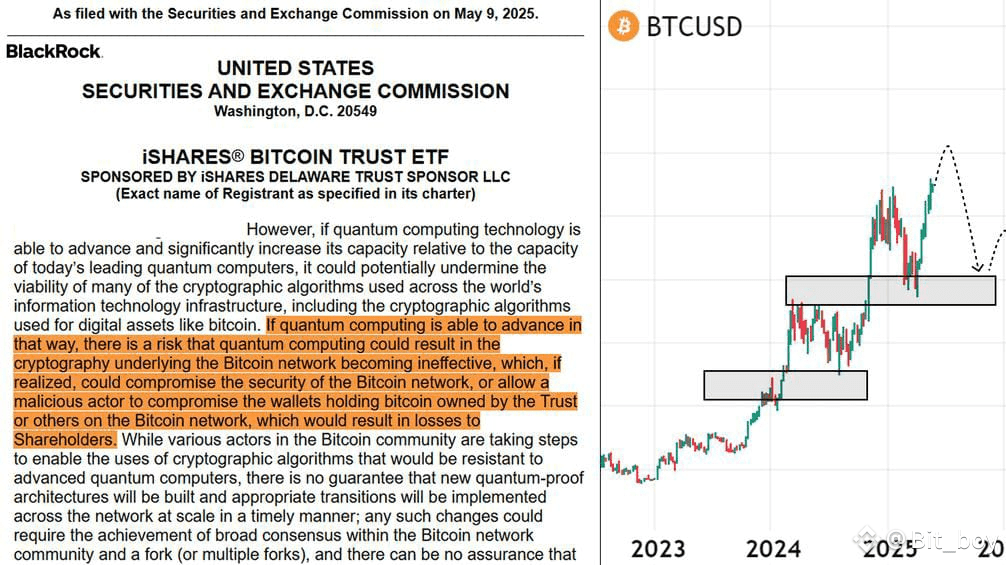
🚨BlackRock: BTC will be compromised and dumped to $40k!Development of quantum computing might kill the Bitcoin network
I researched all the data and learn everything about it.
/➮ Recently, BlackRock warned us about potential risks to the Bitcoin network
🕷 All due to the rapid progress in the field of quantum computing.
🕷 I’ll add their report at the end - but for now, let’s break down what this actually means.
/➮ Bitcoin's security relies on cryptographic algorithms, mainly ECDSA
🕷 It safeguards private keys and ensures transaction integrity
🕷 Quantum computers, leveraging algorithms like Shor's algorithm, could potentially break ECDSA
/➮ How? By efficiently solving complex mathematical problems that are currently infeasible for classical computers
🕷 This will would allow malicious actors to derive private keys from public keys
Compromising wallet security and transaction authenticity
/➮ So BlackRock warns that such a development might enable attackers to compromise wallets and transactions
🕷 Which would lead to potential losses for investors
🕷 But when will this happen and how can we protect ourselves?
/➮ Quantum computers capable of breaking Bitcoin's cryptography are not yet operational
🕷 Experts estimate that such capabilities could emerge within 5-7 yeards
🕷 Currently, 25% of BTC is stored in addresses that are vulnerable to quantum attacks
/➮ But it's not all bad - the Bitcoin community and the broader cryptocurrency ecosystem are already exploring several strategies:
- Post-Quantum Cryptography
- Wallet Security Enhancements
- Network Upgrades
/➮ However, if a solution is not found in time, it could seriously undermine trust in digital assets
🕷 Which in turn could reduce demand for BTC and crypto in general
🕷 And the current outlook isn't too optimistic - here's why:
/➮ Google has stated that breaking RSA encryption (tech also used to secure crypto wallets)
🕷 Would require 20x fewer quantum resources than previously expected
🕷 That means we may simply not have enough time to solve the problem before it becomes critical
/➮ For now, I believe the most effective step is encouraging users to transfer funds to addresses with enhanced security,
🕷 Such as Pay-to-Public-Key-Hash (P2PKH) addresses, which do not expose public keys until a transaction is made
🕷 Don’t rush to sell all your BTC or move it off wallets - there is still time
🕷 But it's important to keep an eye on this issue and the progress on solutions
Report: sec.gov/Archives/edgar…
➮ Give some love and support
🕷 Follow for even more excitement!
🕷 Remember to like, retweet, and drop a comment.
#TrumpMediaBitcoinTreasury #Bitcoin2025 $BTC
{spot}(BTCUSDT)
🚨BlackRock: BTC will be compromised and dumped to $40k!
Development of quantum computing might kill the Bitcoin network
I researched all the data and learn everything about it.
/➮ Recently, BlackRock warned us about potential risks to the Bitcoin network
🕷 All due to the rapid progress in the field of quantum computing.
🕷 I’ll add their report at the end - but for now, let’s break down what this actually means.
/➮ Bitcoin's security relies on cryptographic algorithms, mainly ECDSA
🕷 It safeguards private keys and ensures transaction integrity
🕷 Quantum computers, leveraging algorithms like Shor's algorithm, could potentially break ECDSA
/➮ How? By efficiently solving complex mathematical problems that are currently infeasible for classical computers
🕷 This will would allow malicious actors to derive private keys from public keys
Compromising wallet security and transaction authenticity
/➮ So BlackRock warns that such a development might enable attackers to compromise wallets and transactions
🕷 Which would lead to potential losses for investors
🕷 But when will this happen and how can we protect ourselves?
/➮ Quantum computers capable of breaking Bitcoin's cryptography are not yet operational
🕷 Experts estimate that such capabilities could emerge within 5-7 yeards
🕷 Currently, 25% of BTC is stored in addresses that are vulnerable to quantum attacks
/➮ But it's not all bad - the Bitcoin community and the broader cryptocurrency ecosystem are already exploring several strategies:
- Post-Quantum Cryptography
- Wallet Security Enhancements
- Network Upgrades
/➮ However, if a solution is not found in time, it could seriously undermine trust in digital assets
🕷 Which in turn could reduce demand for BTC and crypto in general
🕷 And the current outlook isn't too optimistic - here's why:
/➮ Google has stated that breaking RSA encryption (tech also used to secure crypto wallets)
🕷 Would require 20x fewer quantum resources than previously expected
🕷 That means we may simply not have enough time to solve the problem before it becomes critical
/➮ For now, I believe the most effective step is encouraging users to transfer funds to addresses with enhanced security,
🕷 Such as Pay-to-Public-Key-Hash (P2PKH) addresses, which do not expose public keys until a transaction is made
🕷 Don’t rush to sell all your BTC or move it off wallets - there is still time
🕷 But it's important to keep an eye on this issue and the progress on solutions
Report: sec.gov/Archives/edgar…
➮ Give some love and support
🕷 Follow for even more excitement!
🕷 Remember to like, retweet, and drop a comment.
#TrumpMediaBitcoinTreasury #Bitcoin2025 $BTC
I researched all the data and learn everything about it.
/➮ Recently, BlackRock warned us about potential risks to the Bitcoin network
🕷 All due to the rapid progress in the field of quantum computing.
🕷 I’ll add their report at the end - but for now, let’s break down what this actually means.
/➮ Bitcoin's security relies on cryptographic algorithms, mainly ECDSA
🕷 It safeguards private keys and ensures transaction integrity
🕷 Quantum computers, leveraging algorithms like Shor's algorithm, could potentially break ECDSA
/➮ How? By efficiently solving complex mathematical problems that are currently infeasible for classical computers
🕷 This will would allow malicious actors to derive private keys from public keys
Compromising wallet security and transaction authenticity
/➮ So BlackRock warns that such a development might enable attackers to compromise wallets and transactions
🕷 Which would lead to potential losses for investors
🕷 But when will this happen and how can we protect ourselves?
/➮ Quantum computers capable of breaking Bitcoin's cryptography are not yet operational
🕷 Experts estimate that such capabilities could emerge within 5-7 yeards
🕷 Currently, 25% of BTC is stored in addresses that are vulnerable to quantum attacks
/➮ But it's not all bad - the Bitcoin community and the broader cryptocurrency ecosystem are already exploring several strategies:
- Post-Quantum Cryptography
- Wallet Security Enhancements
- Network Upgrades
/➮ However, if a solution is not found in time, it could seriously undermine trust in digital assets
🕷 Which in turn could reduce demand for BTC and crypto in general
🕷 And the current outlook isn't too optimistic - here's why:
/➮ Google has stated that breaking RSA encryption (tech also used to secure crypto wallets)
🕷 Would require 20x fewer quantum resources than previously expected
🕷 That means we may simply not have enough time to solve the problem before it becomes critical
/➮ For now, I believe the most effective step is encouraging users to transfer funds to addresses with enhanced security,
🕷 Such as Pay-to-Public-Key-Hash (P2PKH) addresses, which do not expose public keys until a transaction is made
🕷 Don’t rush to sell all your BTC or move it off wallets - there is still time
🕷 But it's important to keep an eye on this issue and the progress on solutions
Report: sec.gov/Archives/edgar…
➮ Give some love and support
🕷 Follow for even more excitement!
🕷 Remember to like, retweet, and drop a comment.
#TrumpMediaBitcoinTreasury #Bitcoin2025 $BTC
72
46
82
186.9k
PINNED
·
--

Article
Mastering Candlestick Patterns: A Key to Unlocking $1000 a Month in Trading_Candlestick patterns are a powerful tool in technical analysis, offering insights into market sentiment and potential price movements. By recognizing and interpreting these patterns, traders can make informed decisions and increase their chances of success. In this article, we'll explore 20 essential candlestick patterns, providing a comprehensive guide to help you enhance your trading strategy and potentially earn $1000 a month.
Understanding Candlestick Patterns
Before diving into the patterns, it's essential to understand the basics of candlestick charts. Each candle represents a specific time frame, displaying the open, high, low, and close prices. The body of the candle shows the price movement, while the wicks indicate the high and low prices.
The 20 Candlestick Patterns
1. Doji: A candle with a small body and long wicks, indicating indecision and potential reversal.
2. Hammer: A bullish reversal pattern with a small body at the top and a long lower wick.
3. Hanging Man: A bearish reversal pattern with a small body at the bottom and a long upper wick.
4. Engulfing Pattern: A two-candle pattern where the second candle engulfs the first, indicating a potential reversal.
5. Piercing Line: A bullish reversal pattern where the second candle opens below the first and closes above its midpoint.
6. Dark Cloud Cover: A bearish reversal pattern where the second candle opens above the first and closes below its midpoint.
7. Morning Star: A three-candle pattern indicating a bullish reversal.
8. Evening Star: A three-candle pattern indicating a bearish reversal.
9. Shooting Star: A bearish reversal pattern with a small body at the bottom and a long upper wick.
10. Inverted Hammer: A bullish reversal pattern with a small body at the top and a long lower wick.
11. Bullish Harami: A two-candle pattern indicating a potential bullish reversal.
12. Bearish Harami: A two-candle pattern indicating a potential bearish reversal.
13. Tweezer Top: A two-candle pattern indicating a potential bearish reversal.
14. Tweezer Bottom: A two-candle pattern indicating a potential bullish reversal.
15. Three White Soldiers: A bullish reversal pattern with three consecutive long-bodied candles.
16. Three Black Crows: A bearish reversal pattern with three consecutive long-bodied candles.
17. Rising Three Methods: A continuation pattern indicating a bullish trend.
18. Falling Three Methods: A continuation pattern indicating a bearish trend.
19. Marubozu: A candle with no wicks and a full-bodied appearance, indicating strong market momentum.
20. Belt Hold Line: A single candle pattern indicating a potential reversal or continuation.
Applying Candlestick Patterns in Trading
To effectively use these patterns, it's essential to:
- Understand the context in which they appear
- Combine them with other technical analysis tools
- Practice and backtest to develop a deep understanding
By mastering these 20 candlestick patterns, you'll be well on your way to enhancing your trading strategy and potentially earning $1000 a month. Remember to stay disciplined, patient, and informed to achieve success in the markets.
#CandleStickPatterns
#tradingStrategy
#TechnicalAnalysis
#DayTradingTips
#tradingforbeginners
Mastering Candlestick Patterns: A Key to Unlocking $1000 a Month in Trading_
Candlestick patterns are a powerful tool in technical analysis, offering insights into market sentiment and potential price movements. By recognizing and interpreting these patterns, traders can make informed decisions and increase their chances of success. In this article, we'll explore 20 essential candlestick patterns, providing a comprehensive guide to help you enhance your trading strategy and potentially earn $1000 a month.
Understanding Candlestick Patterns
Before diving into the patterns, it's essential to understand the basics of candlestick charts. Each candle represents a specific time frame, displaying the open, high, low, and close prices. The body of the candle shows the price movement, while the wicks indicate the high and low prices.
The 20 Candlestick Patterns
1. Doji: A candle with a small body and long wicks, indicating indecision and potential reversal.
2. Hammer: A bullish reversal pattern with a small body at the top and a long lower wick.
3. Hanging Man: A bearish reversal pattern with a small body at the bottom and a long upper wick.
4. Engulfing Pattern: A two-candle pattern where the second candle engulfs the first, indicating a potential reversal.
5. Piercing Line: A bullish reversal pattern where the second candle opens below the first and closes above its midpoint.
6. Dark Cloud Cover: A bearish reversal pattern where the second candle opens above the first and closes below its midpoint.
7. Morning Star: A three-candle pattern indicating a bullish reversal.
8. Evening Star: A three-candle pattern indicating a bearish reversal.
9. Shooting Star: A bearish reversal pattern with a small body at the bottom and a long upper wick.
10. Inverted Hammer: A bullish reversal pattern with a small body at the top and a long lower wick.
11. Bullish Harami: A two-candle pattern indicating a potential bullish reversal.
12. Bearish Harami: A two-candle pattern indicating a potential bearish reversal.
13. Tweezer Top: A two-candle pattern indicating a potential bearish reversal.
14. Tweezer Bottom: A two-candle pattern indicating a potential bullish reversal.
15. Three White Soldiers: A bullish reversal pattern with three consecutive long-bodied candles.
16. Three Black Crows: A bearish reversal pattern with three consecutive long-bodied candles.
17. Rising Three Methods: A continuation pattern indicating a bullish trend.
18. Falling Three Methods: A continuation pattern indicating a bearish trend.
19. Marubozu: A candle with no wicks and a full-bodied appearance, indicating strong market momentum.
20. Belt Hold Line: A single candle pattern indicating a potential reversal or continuation.
Applying Candlestick Patterns in Trading
To effectively use these patterns, it's essential to:
- Understand the context in which they appear
- Combine them with other technical analysis tools
- Practice and backtest to develop a deep understanding
By mastering these 20 candlestick patterns, you'll be well on your way to enhancing your trading strategy and potentially earning $1000 a month. Remember to stay disciplined, patient, and informed to achieve success in the markets.
#CandleStickPatterns
#tradingStrategy
#TechnicalAnalysis
#DayTradingTips
#tradingforbeginners
Understanding Candlestick Patterns
Before diving into the patterns, it's essential to understand the basics of candlestick charts. Each candle represents a specific time frame, displaying the open, high, low, and close prices. The body of the candle shows the price movement, while the wicks indicate the high and low prices.
The 20 Candlestick Patterns
1. Doji: A candle with a small body and long wicks, indicating indecision and potential reversal.
2. Hammer: A bullish reversal pattern with a small body at the top and a long lower wick.
3. Hanging Man: A bearish reversal pattern with a small body at the bottom and a long upper wick.
4. Engulfing Pattern: A two-candle pattern where the second candle engulfs the first, indicating a potential reversal.
5. Piercing Line: A bullish reversal pattern where the second candle opens below the first and closes above its midpoint.
6. Dark Cloud Cover: A bearish reversal pattern where the second candle opens above the first and closes below its midpoint.
7. Morning Star: A three-candle pattern indicating a bullish reversal.
8. Evening Star: A three-candle pattern indicating a bearish reversal.
9. Shooting Star: A bearish reversal pattern with a small body at the bottom and a long upper wick.
10. Inverted Hammer: A bullish reversal pattern with a small body at the top and a long lower wick.
11. Bullish Harami: A two-candle pattern indicating a potential bullish reversal.
12. Bearish Harami: A two-candle pattern indicating a potential bearish reversal.
13. Tweezer Top: A two-candle pattern indicating a potential bearish reversal.
14. Tweezer Bottom: A two-candle pattern indicating a potential bullish reversal.
15. Three White Soldiers: A bullish reversal pattern with three consecutive long-bodied candles.
16. Three Black Crows: A bearish reversal pattern with three consecutive long-bodied candles.
17. Rising Three Methods: A continuation pattern indicating a bullish trend.
18. Falling Three Methods: A continuation pattern indicating a bearish trend.
19. Marubozu: A candle with no wicks and a full-bodied appearance, indicating strong market momentum.
20. Belt Hold Line: A single candle pattern indicating a potential reversal or continuation.
Applying Candlestick Patterns in Trading
To effectively use these patterns, it's essential to:
- Understand the context in which they appear
- Combine them with other technical analysis tools
- Practice and backtest to develop a deep understanding
By mastering these 20 candlestick patterns, you'll be well on your way to enhancing your trading strategy and potentially earning $1000 a month. Remember to stay disciplined, patient, and informed to achieve success in the markets.
#CandleStickPatterns
#tradingStrategy
#TechnicalAnalysis
#DayTradingTips
#tradingforbeginners
10
10
236
153.7k
·
--
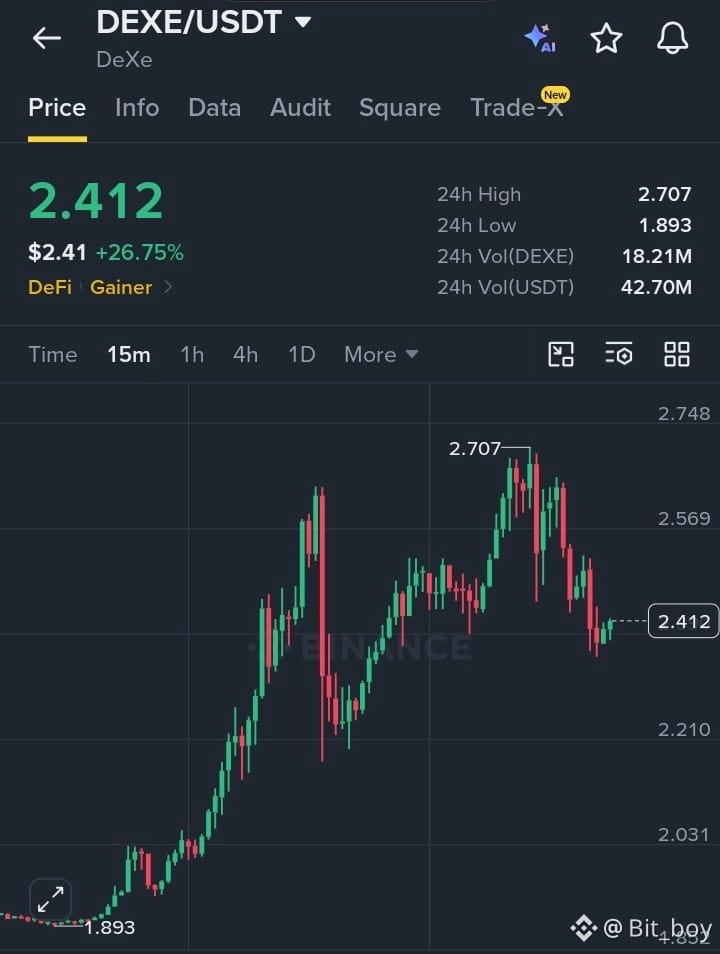
🚀 $DEXE / USDT Trade Setup
Strong DeFi move, up +26.75% after peaking at $2.707! Consolidating nicely above support for the next potential leg up.
Entry: $2.32 – $2.41
Targets: $2.56 | $2.70 | $2.92
Stop Loss: $2.18
⚡ Always practice strict risk management on high-volatility setups.
$DEXE
{future}(DEXEUSDT)
🚀 $DEXE / USDT Trade Setup
Strong DeFi move, up +26.75% after peaking at $2.707! Consolidating nicely above support for the next potential leg up.
Entry: $2.32 – $2.41
Targets: $2.56 | $2.70 | $2.92
Stop Loss: $2.18
⚡ Always practice strict risk management on high-volatility setups.
$DEXE
Strong DeFi move, up +26.75% after peaking at $2.707! Consolidating nicely above support for the next potential leg up.
Entry: $2.32 – $2.41
Targets: $2.56 | $2.70 | $2.92
Stop Loss: $2.18
⚡ Always practice strict risk management on high-volatility setups.
$DEXE
286
·
--
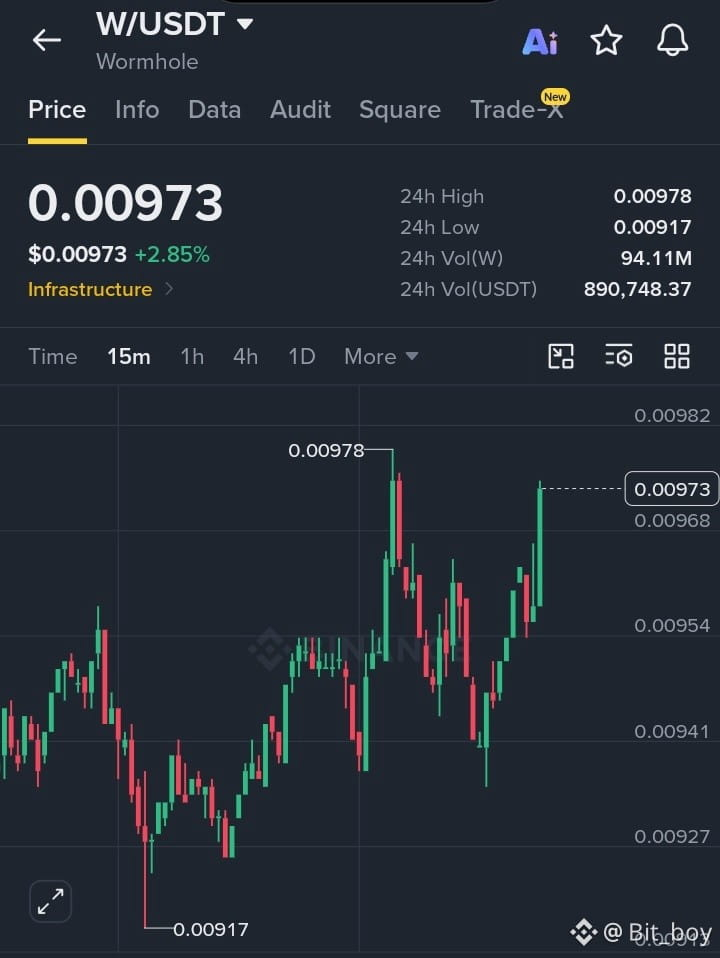
🚀 $W / USDT Trade Setup
Price pushing up +2.85% and retesting recent local highs near $0.00978! Momentum is building for a potential breakout test.
Entry: $0.00945 – $0.00973
Targets: $0.00985 | $0.01020 | $0.01070
Stop Loss: $0.00915
⚡ Always practice strict risk management on technical setups.
$W
{future}(WUSDT)
🚀 $W / USDT Trade Setup
Price pushing up +2.85% and retesting recent local highs near $0.00978! Momentum is building for a potential breakout test.
Entry: $0.00945 – $0.00973
Targets: $0.00985 | $0.01020 | $0.01070
Stop Loss: $0.00915
⚡ Always practice strict risk management on technical setups.
$W
Price pushing up +2.85% and retesting recent local highs near $0.00978! Momentum is building for a potential breakout test.
Entry: $0.00945 – $0.00973
Targets: $0.00985 | $0.01020 | $0.01070
Stop Loss: $0.00915
⚡ Always practice strict risk management on technical setups.
$W
1
201
·
--
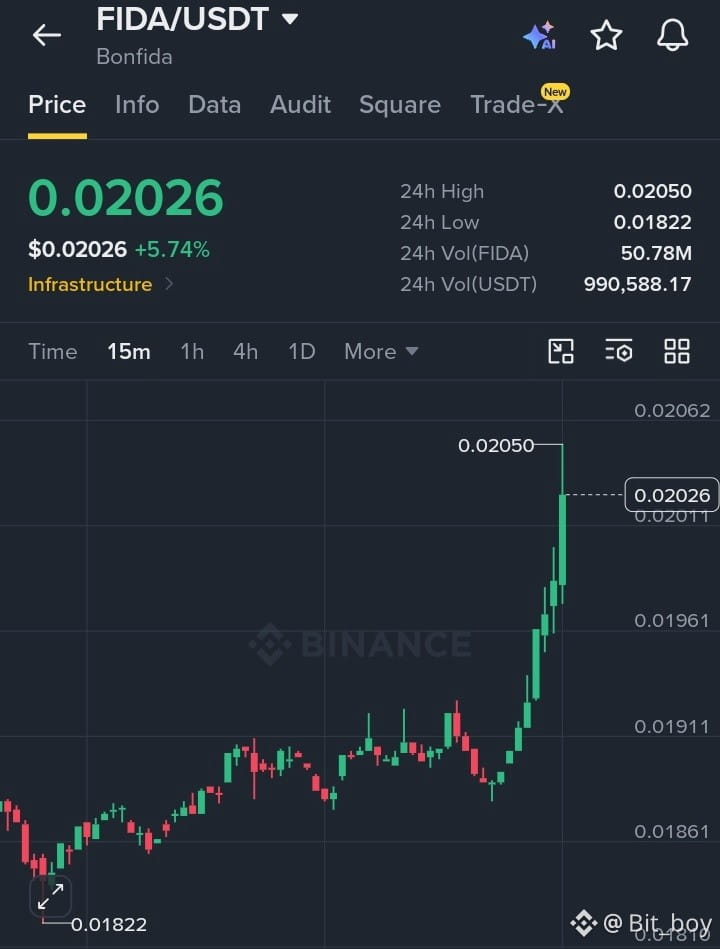
🚀 $FIDA / USDT Trade Setup
Sharp momentum impulse taking off, up +5.74% and tapping $0.02050. Eyeing continuation after this strong vertical push.
Entry: $0.0195 – $0.0202
Targets: $0.0208 | $0.0215 | $0.0225
Stop Loss: $0.0191
⚡ Always manage risk strictly on sharp breakout moves.
$FIDA
{future}(FIDAUSDT)
🚀 $FIDA / USDT Trade Setup
Sharp momentum impulse taking off, up +5.74% and tapping $0.02050. Eyeing continuation after this strong vertical push.
Entry: $0.0195 – $0.0202
Targets: $0.0208 | $0.0215 | $0.0225
Stop Loss: $0.0191
⚡ Always manage risk strictly on sharp breakout moves.
$FIDA
Sharp momentum impulse taking off, up +5.74% and tapping $0.02050. Eyeing continuation after this strong vertical push.
Entry: $0.0195 – $0.0202
Targets: $0.0208 | $0.0215 | $0.0225
Stop Loss: $0.0191
⚡ Always manage risk strictly on sharp breakout moves.
$FIDA
199
·
--
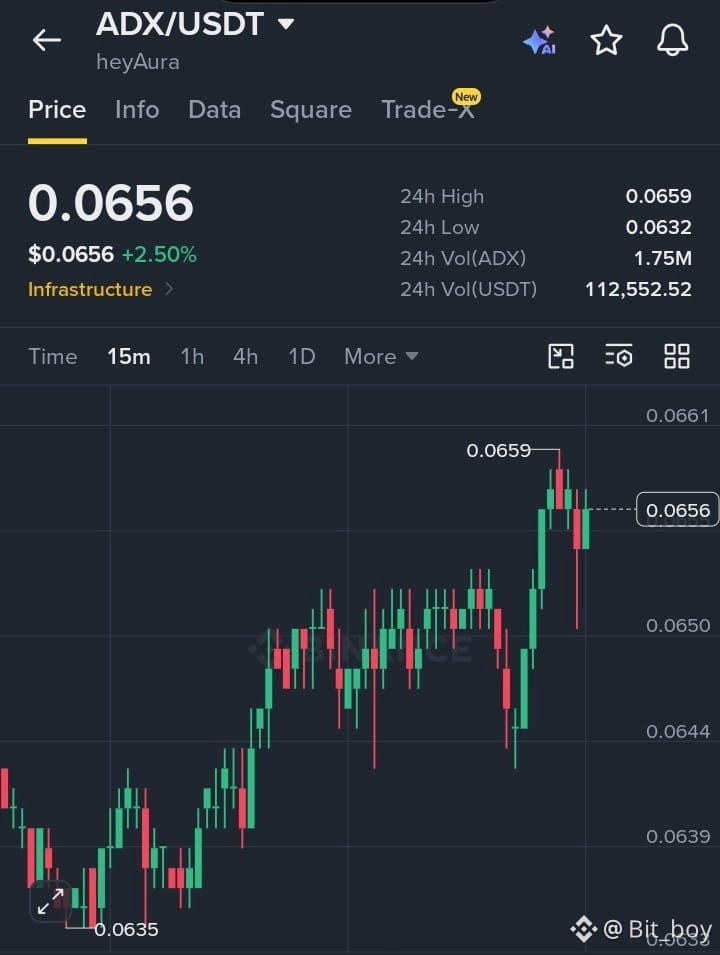
🚀 $ADX / USDT Trade Setup
Gradual bullish push, up +2.50% after reaching a high of $0.0659. Holding higher lows—eyeing a breakout past immediate resistance.
Entry: $0.0645 – $0.0656
Targets: $0.0668 | $0.0685 | $0.0710
Stop Loss: $0.0632
⚡ Always practice strict risk management on technical setups.
$ADX
{spot}(ADXUSDT)
🚀 $ADX / USDT Trade Setup
Gradual bullish push, up +2.50% after reaching a high of $0.0659. Holding higher lows—eyeing a breakout past immediate resistance.
Entry: $0.0645 – $0.0656
Targets: $0.0668 | $0.0685 | $0.0710
Stop Loss: $0.0632
⚡ Always practice strict risk management on technical setups.
$ADX
Gradual bullish push, up +2.50% after reaching a high of $0.0659. Holding higher lows—eyeing a breakout past immediate resistance.
Entry: $0.0645 – $0.0656
Targets: $0.0668 | $0.0685 | $0.0710
Stop Loss: $0.0632
⚡ Always practice strict risk management on technical setups.
$ADX
205
·
--
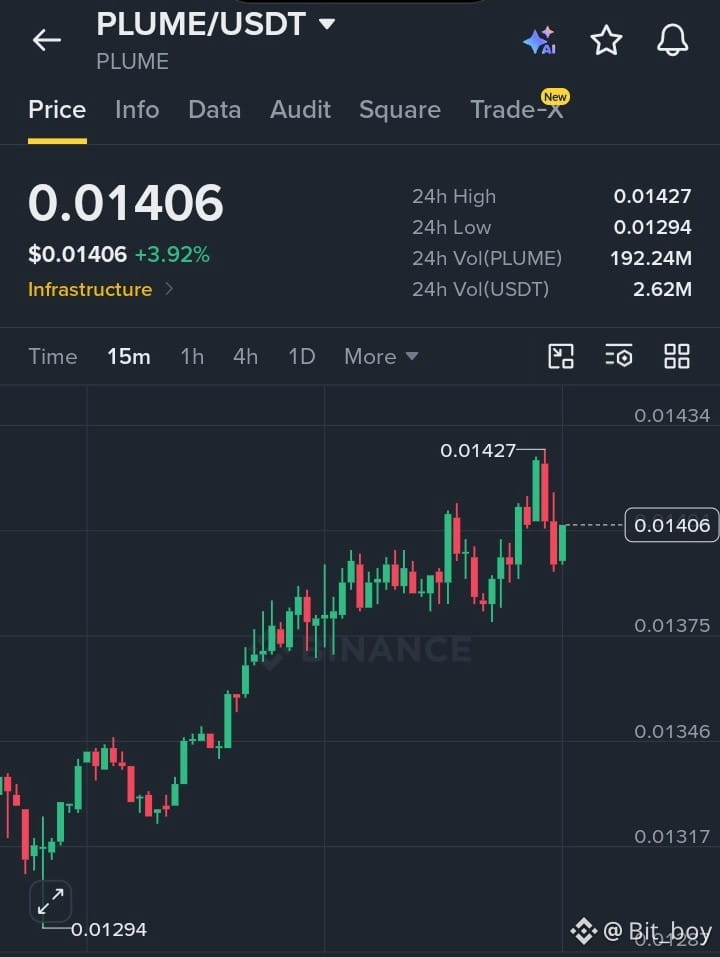
🚀 $PLUME / USDT Trade Setup
Steady uptrend taking shape, up +3.92% after hitting a high of $0.01427. Pullback complete—looking for the next upward leg.
Entry: $0.0138 – $0.0141
Targets: $0.0143 | $0.0148 | $0.0154
Stop Loss: $0.0134
⚡ Always manage your risk strictly on volatility plays.
$PLUME
{future}(PLUMEUSDT)
🚀 $PLUME / USDT Trade Setup
Steady uptrend taking shape, up +3.92% after hitting a high of $0.01427. Pullback complete—looking for the next upward leg.
Entry: $0.0138 – $0.0141
Targets: $0.0143 | $0.0148 | $0.0154
Stop Loss: $0.0134
⚡ Always manage your risk strictly on volatility plays.
$PLUME
Steady uptrend taking shape, up +3.92% after hitting a high of $0.01427. Pullback complete—looking for the next upward leg.
Entry: $0.0138 – $0.0141
Targets: $0.0143 | $0.0148 | $0.0154
Stop Loss: $0.0134
⚡ Always manage your risk strictly on volatility plays.
$PLUME
148
·
--
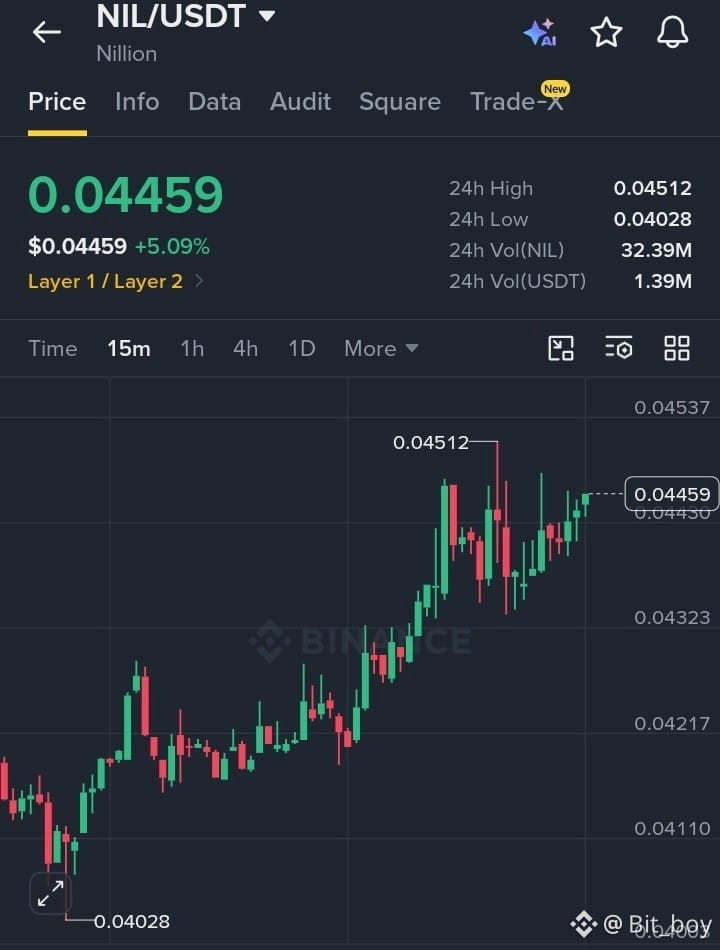
🚀 $NIL / USDT Trade Setup
Solid bullish structure forming, up +5.09% and retesting local highs around $0.04512. Looking for a breakout continuation or dip entry.
Entry: $0.0435 – $0.0446
Targets: $0.0451 | $0.0468 | $0.0485
Stop Loss: $0.0421
⚡ Always practice strict risk management on high volatility setups.
$NIL
{future}(NILUSDT)
🚀 $NIL / USDT Trade Setup
Solid bullish structure forming, up +5.09% and retesting local highs around $0.04512. Looking for a breakout continuation or dip entry.
Entry: $0.0435 – $0.0446
Targets: $0.0451 | $0.0468 | $0.0485
Stop Loss: $0.0421
⚡ Always practice strict risk management on high volatility setups.
$NIL
Solid bullish structure forming, up +5.09% and retesting local highs around $0.04512. Looking for a breakout continuation or dip entry.
Entry: $0.0435 – $0.0446
Targets: $0.0451 | $0.0468 | $0.0485
Stop Loss: $0.0421
⚡ Always practice strict risk management on high volatility setups.
$NIL
90
·
--
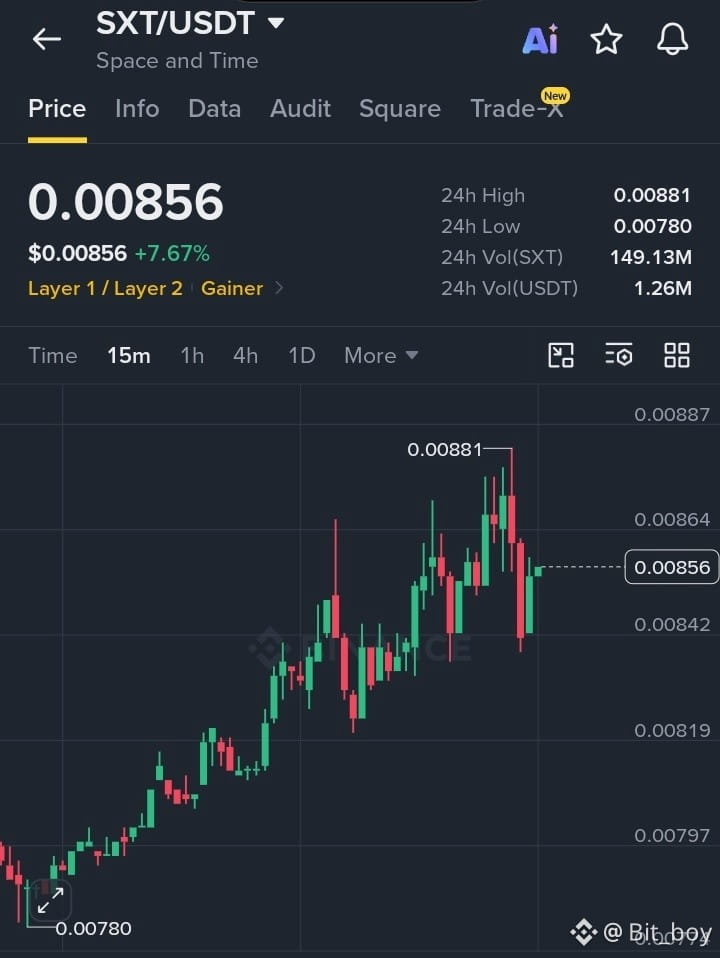
🚀 $SXT / USDT Trade Setup
Steady upward momentum, up +7.67% after testing resistance at $0.00881. Looking for a retest or breakout continuation.
Entry: $0.00835 – $0.00856
Targets: $0.00880 | $0.00910 | $0.00950
Stop Loss: $0.00810
⚡ Always practice strict risk management on high volatility plays.
$SXT
{future}(SXTUSDT)
🚀 $SXT / USDT Trade Setup
Steady upward momentum, up +7.67% after testing resistance at $0.00881. Looking for a retest or breakout continuation.
Entry: $0.00835 – $0.00856
Targets: $0.00880 | $0.00910 | $0.00950
Stop Loss: $0.00810
⚡ Always practice strict risk management on high volatility plays.
$SXT
Steady upward momentum, up +7.67% after testing resistance at $0.00881. Looking for a retest or breakout continuation.
Entry: $0.00835 – $0.00856
Targets: $0.00880 | $0.00910 | $0.00950
Stop Loss: $0.00810
⚡ Always practice strict risk management on high volatility plays.
$SXT
1
181
·
--
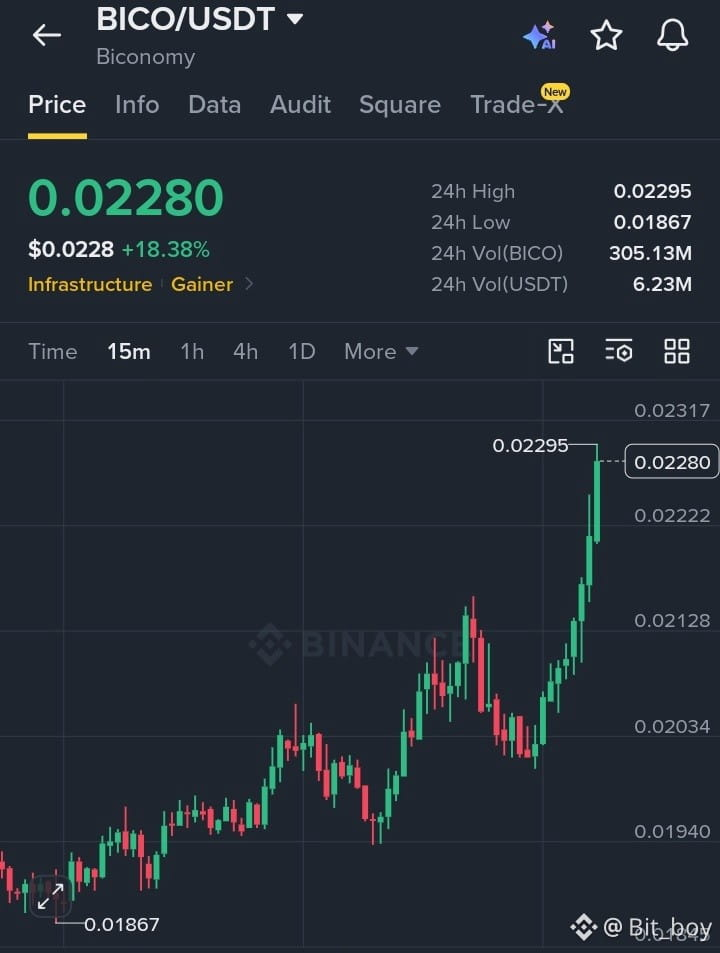
🚀 $BICO / USDT Trade Setup
Strong bullish expansion underway, up +18.38% and pushing near 24h highs! Looking for continuation or a quick dip entry.
Entry: $0.0218 – $0.0228
Targets: $0.0235 | $0.0248 | $0.0260
Stop Loss: $0.0203
⚡ Always manage risk strictly on high momentum breakouts.
$BICO
{future}(BICOUSDT)
🚀 $BICO / USDT Trade Setup
Strong bullish expansion underway, up +18.38% and pushing near 24h highs! Looking for continuation or a quick dip entry.
Entry: $0.0218 – $0.0228
Targets: $0.0235 | $0.0248 | $0.0260
Stop Loss: $0.0203
⚡ Always manage risk strictly on high momentum breakouts.
$BICO
Strong bullish expansion underway, up +18.38% and pushing near 24h highs! Looking for continuation or a quick dip entry.
Entry: $0.0218 – $0.0228
Targets: $0.0235 | $0.0248 | $0.0260
Stop Loss: $0.0203
⚡ Always manage risk strictly on high momentum breakouts.
$BICO
148
·
--
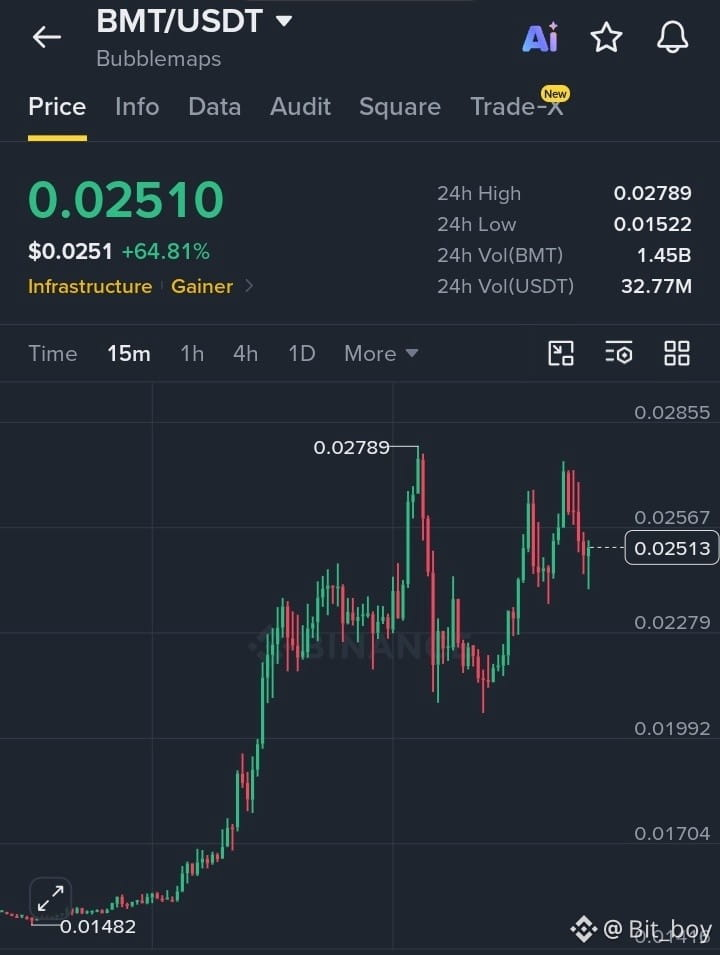
🚀 $BMT / USDT Trade Setup
Price consolidated around $0.0251 after a massive +64% surge. Setup looks ready for a potential leg up!
Entry: $0.0242 – $0.0251
Targets: $0.0268 | $0.0278 | $0.0295
Stop Loss: $0.0224
⚡ Manage your risk carefully in high volatility moves.
$BMT
{future}(BMTUSDT)
🚀 $BMT / USDT Trade Setup
Price consolidated around $0.0251 after a massive +64% surge. Setup looks ready for a potential leg up!
Entry: $0.0242 – $0.0251
Targets: $0.0268 | $0.0278 | $0.0295
Stop Loss: $0.0224
⚡ Manage your risk carefully in high volatility moves.
$BMT
Price consolidated around $0.0251 after a massive +64% surge. Setup looks ready for a potential leg up!
Entry: $0.0242 – $0.0251
Targets: $0.0268 | $0.0278 | $0.0295
Stop Loss: $0.0224
⚡ Manage your risk carefully in high volatility moves.
$BMT
118
·
--
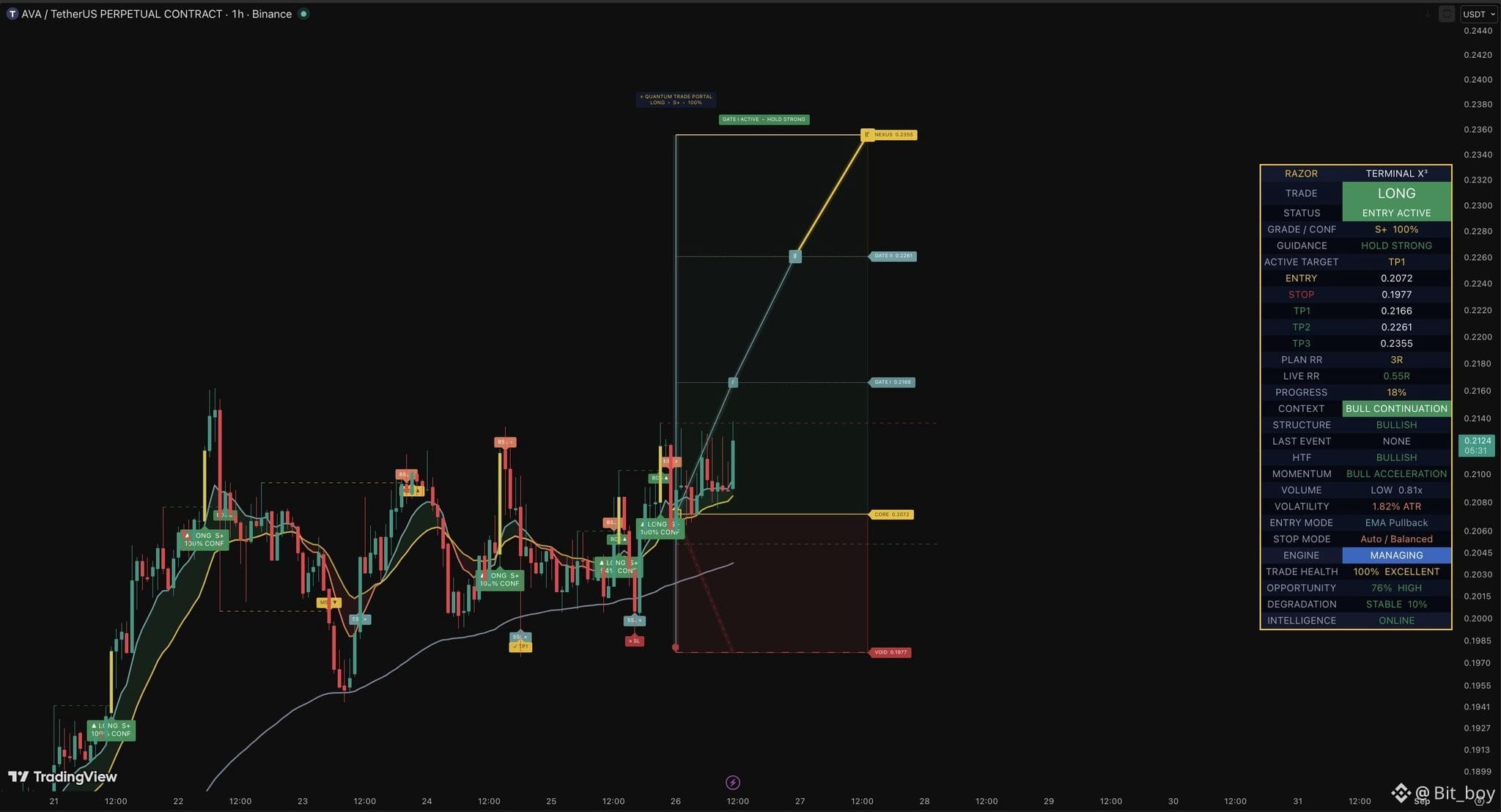
$AVA is showing a strong bullish structure on the 1H chart.
Entry around $0.2072, with $0.2166, $0.2261 and $0.2355 as key upside targets.
Momentum is building, watching the breakout closely.
$AVA
{future}(AVAUSDT)
$AVA is showing a strong bullish structure on the 1H chart.
Entry around $0.2072, with $0.2166, $0.2261 and $0.2355 as key upside targets.
Momentum is building, watching the breakout closely.
$AVA
Entry around $0.2072, with $0.2166, $0.2261 and $0.2355 as key upside targets.
Momentum is building, watching the breakout closely.
$AVA
162
·
--
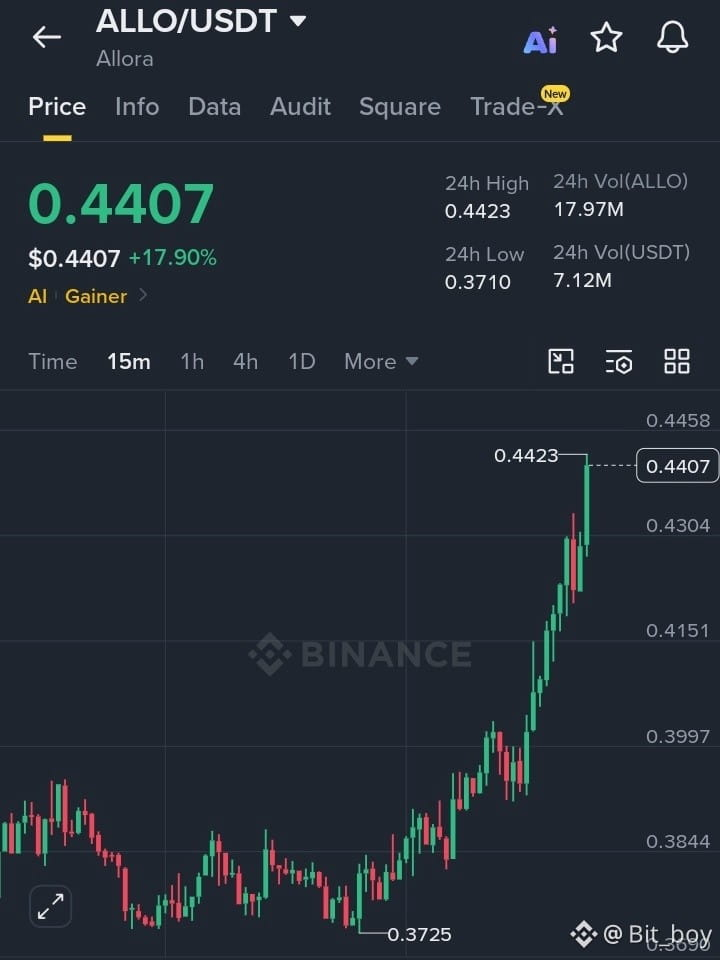
$ALLO is showing a strong continuation of its uptrend, with buyers pushing price to fresh local highs.
Momentum remains firmly in favor of the bulls, but the ability to hold above the breakout zone will be the key signal to watch next.
$ALLO
{future}(ALLOUSDT)
$ALLO is showing a strong continuation of its uptrend, with buyers pushing price to fresh local highs.
Momentum remains firmly in favor of the bulls, but the ability to hold above the breakout zone will be the key signal to watch next.
$ALLO
Momentum remains firmly in favor of the bulls, but the ability to hold above the breakout zone will be the key signal to watch next.
$ALLO
428
·
--
We often assume blockchain transparency means trust. But most explorers only show what happened, not why it happened.
A transaction can succeed, fail, or be paused, yet the authorization decision often stays hidden. Was it blocked by a compliance policy, a wallet security rule, a risk limit, or an identity check? Without that context, transparency is incomplete.
As AI agents and institutions handle more onchain activity, understanding the reasoning behind decisions becomes just as important as seeing the transaction itself.
That's what caught my attention about Newton Mainnet Beta. Instead of only displaying transaction execution, Newton Explorer also surfaces policy evaluations and signed attestations, making the authorization layer visible.
Maybe the next generation of blockchain explorers won't just show more data—they'll explain the decisions behind it.
@NewtonProtocol #NEWT $NEWT #Newt
{future}(NEWTUSDT)
We often assume blockchain transparency means trust. But most explorers only show what happened, not why it happened.
A transaction can succeed, fail, or be paused, yet the authorization decision often stays hidden. Was it blocked by a compliance policy, a wallet security rule, a risk limit, or an identity check? Without that context, transparency is incomplete.
As AI agents and institutions handle more onchain activity, understanding the reasoning behind decisions becomes just as important as seeing the transaction itself.
That's what caught my attention about Newton Mainnet Beta. Instead of only displaying transaction execution, Newton Explorer also surfaces policy evaluations and signed attestations, making the authorization layer visible.
Maybe the next generation of blockchain explorers won't just show more data—they'll explain the decisions behind it.
@NewtonProtocol #NEWT $NEWT #Newt
A transaction can succeed, fail, or be paused, yet the authorization decision often stays hidden. Was it blocked by a compliance policy, a wallet security rule, a risk limit, or an identity check? Without that context, transparency is incomplete.
As AI agents and institutions handle more onchain activity, understanding the reasoning behind decisions becomes just as important as seeing the transaction itself.
That's what caught my attention about Newton Mainnet Beta. Instead of only displaying transaction execution, Newton Explorer also surfaces policy evaluations and signed attestations, making the authorization layer visible.
Maybe the next generation of blockchain explorers won't just show more data—they'll explain the decisions behind it.
@NewtonProtocol #NEWT $NEWT #Newt
1
204
·
--
Why Verifiable AI Agents Still Need Human JudgmentThe market hasn't given me much to do this week.
When everything is chopping sideways, I usually stop staring at charts and start reading about whatever project keeps showing up on my timeline. This time it was @NewtonProtocol.
I'd noticed $NEWT getting more attention recently but never looked beyond the headline. "AI agents for crypto" isn't exactly a rare idea anymore, so I assumed I already knew the story.
Turns out I didn't.
The interesting part isn't that Newton automates things like portfolio rebalancing, recurring investments, or vault management. Plenty of tools already automate workflows.
What caught my attention was the way it tries to make those actions verifiable.
Instead of asking users to trust an agent because it's well-designed, Newton has each action executed inside a Trusted Execution Environment (TEE), generates a cryptographic proof, and lets the blockchain verify that the agent followed the instructions it was given.
That feels like a meaningful improvement over the traditional "just trust the bot" model.
But after thinking about it for a while, I realized I was mixing up two different ideas.
Verification answers the question, "Did the agent follow the rules?"
It doesn't answer, "Were those rules actually good?"
That's an important distinction.
Imagine telling an agent to sell whenever volatility crosses a certain threshold. If the market whipsaws and that turns out to be the worst possible decision, the proof will still validate the execution perfectly. The system worked exactly as intended.
The strategy simply didn't.
I think that's where a lot of conversations around verifiable AI start to blur.
People often hear "verifiable" and instinctively associate it with "safe."
In reality, those aren't the same thing.
The technology protects against an agent secretly changing your instructions or acting outside its permissions. It doesn't protect against poor assumptions, bad parameters, or strategies that stop making sense when market conditions change.
In other words, it reduces trust in the operator.
It doesn't eliminate the need to trust your own judgment.
That doesn't make the model weak. If anything, it clarifies what problem it's actually solving.
For institutions, custodians, stablecoin issuers, and tokenized asset platforms, being able to prove exactly why an action happened could be incredibly valuable. Auditability, compliance, and transparent execution matter just as much as performance in those environments.
Retail users may see it differently.
Most people don't lose money because an automated strategy secretly ignored their instructions. They lose money because the strategy itself wasn't well designed or because markets changed faster than expected.
Cryptographic proof can't fix that.
The more I thought about it, the more I felt Newton isn't really trying to build smarter agents.
It's trying to build more accountable ones.
That's a subtle difference, but probably the more important one.
Maybe that's the right direction for on-chain automation.
I'm just not convinced we should confuse verifiable execution with intelligent decision-making.
Slow markets have a funny way of making you question the assumptions behind the technology instead of just the price chart.
Today was one of those days.
@NewtonProtocol $NEWT #Newt
{future}(NEWTUSDT)
Why Verifiable AI Agents Still Need Human Judgment
The market hasn't given me much to do this week.
When everything is chopping sideways, I usually stop staring at charts and start reading about whatever project keeps showing up on my timeline. This time it was @NewtonProtocol.
I'd noticed $NEWT getting more attention recently but never looked beyond the headline. "AI agents for crypto" isn't exactly a rare idea anymore, so I assumed I already knew the story.
Turns out I didn't.
The interesting part isn't that Newton automates things like portfolio rebalancing, recurring investments, or vault management. Plenty of tools already automate workflows.
What caught my attention was the way it tries to make those actions verifiable.
Instead of asking users to trust an agent because it's well-designed, Newton has each action executed inside a Trusted Execution Environment (TEE), generates a cryptographic proof, and lets the blockchain verify that the agent followed the instructions it was given.
That feels like a meaningful improvement over the traditional "just trust the bot" model.
But after thinking about it for a while, I realized I was mixing up two different ideas.
Verification answers the question, "Did the agent follow the rules?"
It doesn't answer, "Were those rules actually good?"
That's an important distinction.
Imagine telling an agent to sell whenever volatility crosses a certain threshold. If the market whipsaws and that turns out to be the worst possible decision, the proof will still validate the execution perfectly. The system worked exactly as intended.
The strategy simply didn't.
I think that's where a lot of conversations around verifiable AI start to blur.
People often hear "verifiable" and instinctively associate it with "safe."
In reality, those aren't the same thing.
The technology protects against an agent secretly changing your instructions or acting outside its permissions. It doesn't protect against poor assumptions, bad parameters, or strategies that stop making sense when market conditions change.
In other words, it reduces trust in the operator.
It doesn't eliminate the need to trust your own judgment.
That doesn't make the model weak. If anything, it clarifies what problem it's actually solving.
For institutions, custodians, stablecoin issuers, and tokenized asset platforms, being able to prove exactly why an action happened could be incredibly valuable. Auditability, compliance, and transparent execution matter just as much as performance in those environments.
Retail users may see it differently.
Most people don't lose money because an automated strategy secretly ignored their instructions. They lose money because the strategy itself wasn't well designed or because markets changed faster than expected.
Cryptographic proof can't fix that.
The more I thought about it, the more I felt Newton isn't really trying to build smarter agents.
It's trying to build more accountable ones.
That's a subtle difference, but probably the more important one.
Maybe that's the right direction for on-chain automation.
I'm just not convinced we should confuse verifiable execution with intelligent decision-making.
Slow markets have a funny way of making you question the assumptions behind the technology instead of just the price chart.
Today was one of those days.
@NewtonProtocol $NEWT #Newt
When everything is chopping sideways, I usually stop staring at charts and start reading about whatever project keeps showing up on my timeline. This time it was @NewtonProtocol.
I'd noticed $NEWT getting more attention recently but never looked beyond the headline. "AI agents for crypto" isn't exactly a rare idea anymore, so I assumed I already knew the story.
Turns out I didn't.
The interesting part isn't that Newton automates things like portfolio rebalancing, recurring investments, or vault management. Plenty of tools already automate workflows.
What caught my attention was the way it tries to make those actions verifiable.
Instead of asking users to trust an agent because it's well-designed, Newton has each action executed inside a Trusted Execution Environment (TEE), generates a cryptographic proof, and lets the blockchain verify that the agent followed the instructions it was given.
That feels like a meaningful improvement over the traditional "just trust the bot" model.
But after thinking about it for a while, I realized I was mixing up two different ideas.
Verification answers the question, "Did the agent follow the rules?"
It doesn't answer, "Were those rules actually good?"
That's an important distinction.
Imagine telling an agent to sell whenever volatility crosses a certain threshold. If the market whipsaws and that turns out to be the worst possible decision, the proof will still validate the execution perfectly. The system worked exactly as intended.
The strategy simply didn't.
I think that's where a lot of conversations around verifiable AI start to blur.
People often hear "verifiable" and instinctively associate it with "safe."
In reality, those aren't the same thing.
The technology protects against an agent secretly changing your instructions or acting outside its permissions. It doesn't protect against poor assumptions, bad parameters, or strategies that stop making sense when market conditions change.
In other words, it reduces trust in the operator.
It doesn't eliminate the need to trust your own judgment.
That doesn't make the model weak. If anything, it clarifies what problem it's actually solving.
For institutions, custodians, stablecoin issuers, and tokenized asset platforms, being able to prove exactly why an action happened could be incredibly valuable. Auditability, compliance, and transparent execution matter just as much as performance in those environments.
Retail users may see it differently.
Most people don't lose money because an automated strategy secretly ignored their instructions. They lose money because the strategy itself wasn't well designed or because markets changed faster than expected.
Cryptographic proof can't fix that.
The more I thought about it, the more I felt Newton isn't really trying to build smarter agents.
It's trying to build more accountable ones.
That's a subtle difference, but probably the more important one.
Maybe that's the right direction for on-chain automation.
I'm just not convinced we should confuse verifiable execution with intelligent decision-making.
Slow markets have a funny way of making you question the assumptions behind the technology instead of just the price chart.
Today was one of those days.
@NewtonProtocol $NEWT #Newt
241
·
--
Article
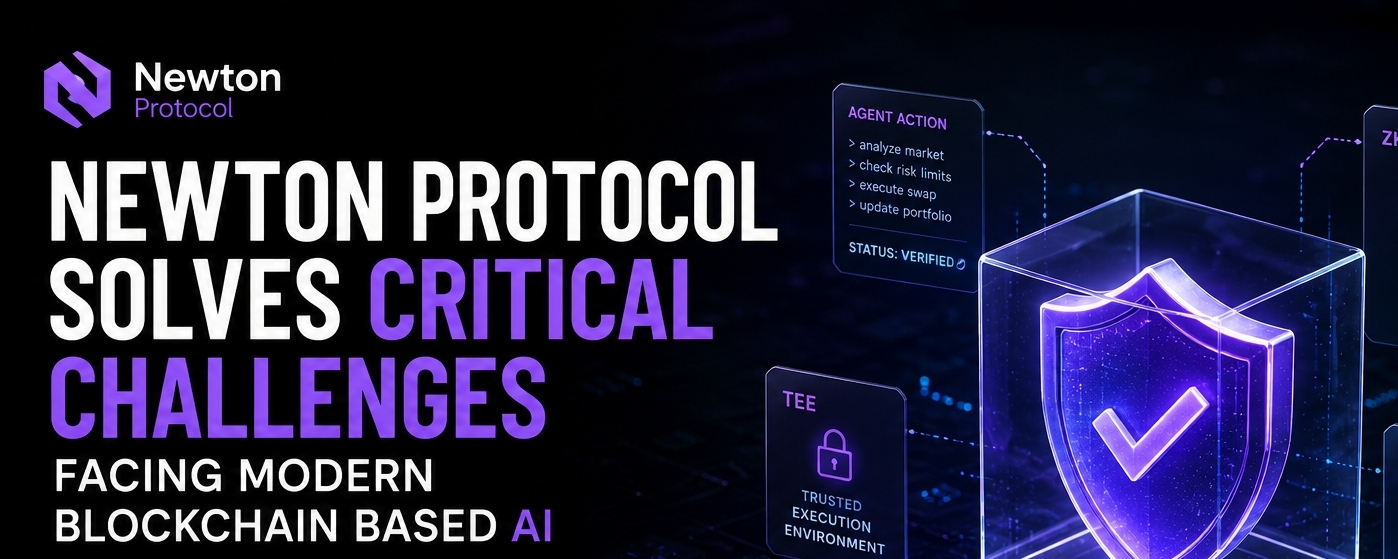
Infrastructure Behind Trusted AI AutomationMost conversations around AI in crypto focus on making agents more capable.
I've started thinking the bigger question is whether they're actually accountable.
That led me to @NewtonProtocol.
At first, I assumed it was just another AI project with blockchain branding. But after reading more, the design feels much more practical. Newton is trying to solve something simple but important: if an AI agent is allowed to act on your behalf, how do you prove it followed your instructions exactly?
Instead of asking users to simply trust the agent, Newton combines trusted execution environments (TEEs) with zero-knowledge proofs so every action can be verified. The goal isn't just automation. It's automation with cryptographic evidence.
What I find interesting is the distinction this creates.
A verifiable agent isn't necessarily an intelligent agent.
Imagine you tell an AI to rebalance your portfolio whenever ETH falls 10%. The market drops, the agent follows your rule perfectly, and every step is mathematically provable. The execution is flawless.
But what if that rule turns out to be the wrong decision for that particular market?
Nothing failed technically. The agent did exactly what it was instructed to do.
That's the difference between verifiable execution and good judgment.
One proves the process.
The other determines the outcome.
I think those two ideas often get blended together whenever people talk about autonomous AI.
Where Newton becomes especially compelling is in environments where proving compliance matters more than predicting markets.
For institutions, asset managers, stablecoin issuers, and enterprises, being able to demonstrate that every automated action followed predefined policies has real value. Auditors care about evidence. Regulators care about accountability. Infrastructure that provides both is likely to become increasingly important.
Retail users, on the other hand, face a different challenge.
The biggest risk often isn't whether the AI followed the rules.
It's whether the rules were worth following in the first place.
That's why I see Newton less as an "AI that makes better decisions" project and more as infrastructure that makes AI actions transparent, verifiable, and auditable.
As AI agents become more common across crypto, that distinction may end up being one of the most important pieces of the stack.
$NEWT #NewtonProtocol #Newt
Infrastructure Behind Trusted AI Automation
Most conversations around AI in crypto focus on making agents more capable.
I've started thinking the bigger question is whether they're actually accountable.
That led me to @NewtonProtocol.
At first, I assumed it was just another AI project with blockchain branding. But after reading more, the design feels much more practical. Newton is trying to solve something simple but important: if an AI agent is allowed to act on your behalf, how do you prove it followed your instructions exactly?
Instead of asking users to simply trust the agent, Newton combines trusted execution environments (TEEs) with zero-knowledge proofs so every action can be verified. The goal isn't just automation. It's automation with cryptographic evidence.
What I find interesting is the distinction this creates.
A verifiable agent isn't necessarily an intelligent agent.
Imagine you tell an AI to rebalance your portfolio whenever ETH falls 10%. The market drops, the agent follows your rule perfectly, and every step is mathematically provable. The execution is flawless.
But what if that rule turns out to be the wrong decision for that particular market?
Nothing failed technically. The agent did exactly what it was instructed to do.
That's the difference between verifiable execution and good judgment.
One proves the process.
The other determines the outcome.
I think those two ideas often get blended together whenever people talk about autonomous AI.
Where Newton becomes especially compelling is in environments where proving compliance matters more than predicting markets.
For institutions, asset managers, stablecoin issuers, and enterprises, being able to demonstrate that every automated action followed predefined policies has real value. Auditors care about evidence. Regulators care about accountability. Infrastructure that provides both is likely to become increasingly important.
Retail users, on the other hand, face a different challenge.
The biggest risk often isn't whether the AI followed the rules.
It's whether the rules were worth following in the first place.
That's why I see Newton less as an "AI that makes better decisions" project and more as infrastructure that makes AI actions transparent, verifiable, and auditable.
As AI agents become more common across crypto, that distinction may end up being one of the most important pieces of the stack.
$NEWT #NewtonProtocol #Newt
I've started thinking the bigger question is whether they're actually accountable.
That led me to @NewtonProtocol.
At first, I assumed it was just another AI project with blockchain branding. But after reading more, the design feels much more practical. Newton is trying to solve something simple but important: if an AI agent is allowed to act on your behalf, how do you prove it followed your instructions exactly?
Instead of asking users to simply trust the agent, Newton combines trusted execution environments (TEEs) with zero-knowledge proofs so every action can be verified. The goal isn't just automation. It's automation with cryptographic evidence.
What I find interesting is the distinction this creates.
A verifiable agent isn't necessarily an intelligent agent.
Imagine you tell an AI to rebalance your portfolio whenever ETH falls 10%. The market drops, the agent follows your rule perfectly, and every step is mathematically provable. The execution is flawless.
But what if that rule turns out to be the wrong decision for that particular market?
Nothing failed technically. The agent did exactly what it was instructed to do.
That's the difference between verifiable execution and good judgment.
One proves the process.
The other determines the outcome.
I think those two ideas often get blended together whenever people talk about autonomous AI.
Where Newton becomes especially compelling is in environments where proving compliance matters more than predicting markets.
For institutions, asset managers, stablecoin issuers, and enterprises, being able to demonstrate that every automated action followed predefined policies has real value. Auditors care about evidence. Regulators care about accountability. Infrastructure that provides both is likely to become increasingly important.
Retail users, on the other hand, face a different challenge.
The biggest risk often isn't whether the AI followed the rules.
It's whether the rules were worth following in the first place.
That's why I see Newton less as an "AI that makes better decisions" project and more as infrastructure that makes AI actions transparent, verifiable, and auditable.
As AI agents become more common across crypto, that distinction may end up being one of the most important pieces of the stack.
$NEWT #NewtonProtocol #Newt
127
·
--
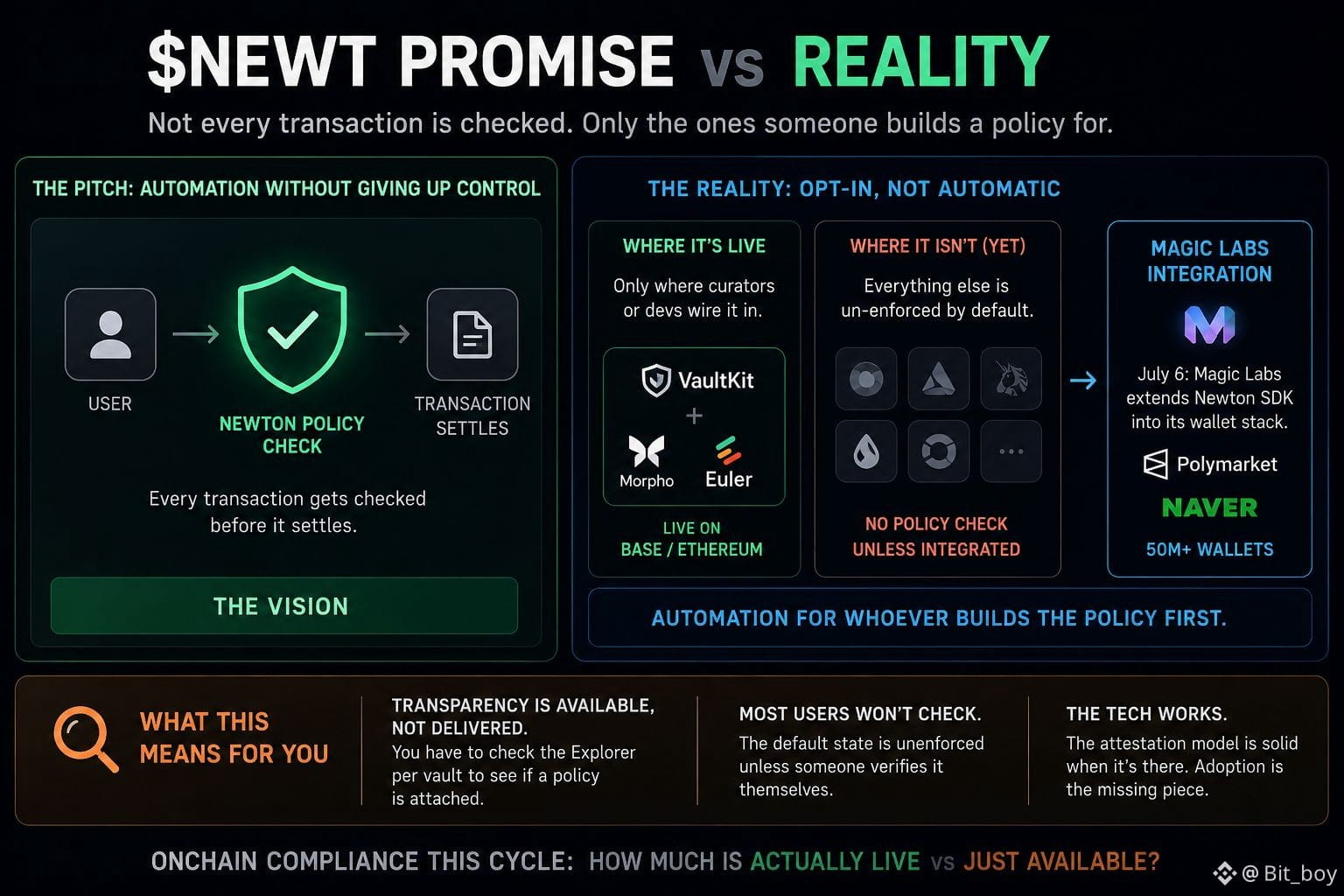
I spent some time exploring @NewtonProtocol instead of just reading the docs, and one detail stood out.
At first, I assumed every $NEWT transaction was automatically verified before settlement.
But that's not how it works.
The verification layer only exists where developers or curators have actually integrated policy checks.
A good example is Magic Labs' recent integration. It brings the Newton SDK to a wallet ecosystem serving 50M+ users, including platforms like Polymarket and Naver. That's a huge step forward, but it doesn't mean every wallet or every transaction is automatically protected. Coverage is still opt-in, depending on how each integration is configured.
That changes how I think about on-chain compliance.
The technology is there, and the attestation model works when implemented. The bigger question is adoption.
Today, transparency is available, but users still need to verify whether a vault or protocol has an active policy attached. Most people probably won't.
It feels like this cycle isn't just about building compliance infrastructure. It's about seeing who actually turns it on.
That's the difference between available and enforced.
#Newt #NewtonProtocol $NEWT
I spent some time exploring @NewtonProtocol instead of just reading the docs, and one detail stood out.
At first, I assumed every $NEWT transaction was automatically verified before settlement.
But that's not how it works.
The verification layer only exists where developers or curators have actually integrated policy checks.
A good example is Magic Labs' recent integration. It brings the Newton SDK to a wallet ecosystem serving 50M+ users, including platforms like Polymarket and Naver. That's a huge step forward, but it doesn't mean every wallet or every transaction is automatically protected. Coverage is still opt-in, depending on how each integration is configured.
That changes how I think about on-chain compliance.
The technology is there, and the attestation model works when implemented. The bigger question is adoption.
Today, transparency is available, but users still need to verify whether a vault or protocol has an active policy attached. Most people probably won't.
It feels like this cycle isn't just about building compliance infrastructure. It's about seeing who actually turns it on.
That's the difference between available and enforced.
#Newt #NewtonProtocol $NEWT
At first, I assumed every $NEWT transaction was automatically verified before settlement.
But that's not how it works.
The verification layer only exists where developers or curators have actually integrated policy checks.
A good example is Magic Labs' recent integration. It brings the Newton SDK to a wallet ecosystem serving 50M+ users, including platforms like Polymarket and Naver. That's a huge step forward, but it doesn't mean every wallet or every transaction is automatically protected. Coverage is still opt-in, depending on how each integration is configured.
That changes how I think about on-chain compliance.
The technology is there, and the attestation model works when implemented. The bigger question is adoption.
Today, transparency is available, but users still need to verify whether a vault or protocol has an active policy attached. Most people probably won't.
It feels like this cycle isn't just about building compliance infrastructure. It's about seeing who actually turns it on.
That's the difference between available and enforced.
#Newt #NewtonProtocol $NEWT
171
·
--
Proof Isn't the Same as Trust But It Changes How Trust WorksMost people think trust is built in moments of confidence. I think it's often built much later, when something goes wrong.
A transaction settles. Funds move. A contract executes. Everyone assumes the system worked because nothing appears broken. But the real test rarely comes on the day the action happens. It comes weeks or months later, when someone asks a simple question: Can you prove it?
That is where verifiable receipts begin to matter.
They're easy to overlook because they don't create value on their own. They don't increase throughput or reduce fees. They simply record that something happened in a way that can be independently verified.
And yet, that quiet record often becomes the strongest part of the entire system.
Traditional organizations spend enormous amounts of time reconstructing history. Emails are searched. Databases are compared. Teams try to remember why a decision was made. Every missing piece introduces uncertainty.
On-chain attestations approach the problem differently.
Instead of rebuilding the past, they preserve evidence while the present is happening.
That changes incentives in subtle ways.
When every important action can later be verified, accuracy stops being something reserved for auditors. It becomes part of everyday operations. People know the record will outlive the meeting, the employee, and sometimes even the company itself.
Of course, receipts aren't perfect.
A receipt can prove that something happened without explaining why it happened. It captures outcomes better than intentions. It records decisions, not debates.
That's an important distinction.
Trust doesn't come from storing more data. It comes from knowing that the evidence hasn't changed after the fact.
As blockchain infrastructure matures, I suspect we'll talk less about transactions themselves and more about the evidence surrounding them.
Because in the end, systems aren't judged only by how they perform when everything works.
They're judged by what remains when someone asks for proof.
@NewtonProtocol $NEWT #Newt
{future}(NEWTUSDT)
Proof Isn't the Same as Trust But It Changes How Trust Works
Most people think trust is built in moments of confidence. I think it's often built much later, when something goes wrong.
A transaction settles. Funds move. A contract executes. Everyone assumes the system worked because nothing appears broken. But the real test rarely comes on the day the action happens. It comes weeks or months later, when someone asks a simple question: Can you prove it?
That is where verifiable receipts begin to matter.
They're easy to overlook because they don't create value on their own. They don't increase throughput or reduce fees. They simply record that something happened in a way that can be independently verified.
And yet, that quiet record often becomes the strongest part of the entire system.
Traditional organizations spend enormous amounts of time reconstructing history. Emails are searched. Databases are compared. Teams try to remember why a decision was made. Every missing piece introduces uncertainty.
On-chain attestations approach the problem differently.
Instead of rebuilding the past, they preserve evidence while the present is happening.
That changes incentives in subtle ways.
When every important action can later be verified, accuracy stops being something reserved for auditors. It becomes part of everyday operations. People know the record will outlive the meeting, the employee, and sometimes even the company itself.
Of course, receipts aren't perfect.
A receipt can prove that something happened without explaining why it happened. It captures outcomes better than intentions. It records decisions, not debates.
That's an important distinction.
Trust doesn't come from storing more data. It comes from knowing that the evidence hasn't changed after the fact.
As blockchain infrastructure matures, I suspect we'll talk less about transactions themselves and more about the evidence surrounding them.
Because in the end, systems aren't judged only by how they perform when everything works.
They're judged by what remains when someone asks for proof.
@NewtonProtocol $NEWT #Newt
A transaction settles. Funds move. A contract executes. Everyone assumes the system worked because nothing appears broken. But the real test rarely comes on the day the action happens. It comes weeks or months later, when someone asks a simple question: Can you prove it?
That is where verifiable receipts begin to matter.
They're easy to overlook because they don't create value on their own. They don't increase throughput or reduce fees. They simply record that something happened in a way that can be independently verified.
And yet, that quiet record often becomes the strongest part of the entire system.
Traditional organizations spend enormous amounts of time reconstructing history. Emails are searched. Databases are compared. Teams try to remember why a decision was made. Every missing piece introduces uncertainty.
On-chain attestations approach the problem differently.
Instead of rebuilding the past, they preserve evidence while the present is happening.
That changes incentives in subtle ways.
When every important action can later be verified, accuracy stops being something reserved for auditors. It becomes part of everyday operations. People know the record will outlive the meeting, the employee, and sometimes even the company itself.
Of course, receipts aren't perfect.
A receipt can prove that something happened without explaining why it happened. It captures outcomes better than intentions. It records decisions, not debates.
That's an important distinction.
Trust doesn't come from storing more data. It comes from knowing that the evidence hasn't changed after the fact.
As blockchain infrastructure matures, I suspect we'll talk less about transactions themselves and more about the evidence surrounding them.
Because in the end, systems aren't judged only by how they perform when everything works.
They're judged by what remains when someone asks for proof.
@NewtonProtocol $NEWT #Newt
126
·
--
Most people think compliance tools are designed to stop bad actors. The more I watch them evolve, the more they seem designed to understand behavior instead.
A sanctions list answers a simple question: should this wallet be allowed? Velocity controls ask a different one: does this activity fit the pattern we'd expect?
That changes the architecture completely. Trust is no longer based only on identity. It is increasingly based on how activity unfolds over time.
The side effect is just as interesting. Markets rarely stop when they meet friction. They adapt. Liquidity reroutes, transactions become more granular, and wallets spread activity across new paths.
The real story isn't whether these controls work. It's how user behavior changes once everyone understands where the invisible boundaries are.
@NewtonProtocol $NEWT #Newt
{future}(NEWTUSDT)
Most people think compliance tools are designed to stop bad actors. The more I watch them evolve, the more they seem designed to understand behavior instead.
A sanctions list answers a simple question: should this wallet be allowed? Velocity controls ask a different one: does this activity fit the pattern we'd expect?
That changes the architecture completely. Trust is no longer based only on identity. It is increasingly based on how activity unfolds over time.
The side effect is just as interesting. Markets rarely stop when they meet friction. They adapt. Liquidity reroutes, transactions become more granular, and wallets spread activity across new paths.
The real story isn't whether these controls work. It's how user behavior changes once everyone understands where the invisible boundaries are.
@NewtonProtocol $NEWT #Newt
A sanctions list answers a simple question: should this wallet be allowed? Velocity controls ask a different one: does this activity fit the pattern we'd expect?
That changes the architecture completely. Trust is no longer based only on identity. It is increasingly based on how activity unfolds over time.
The side effect is just as interesting. Markets rarely stop when they meet friction. They adapt. Liquidity reroutes, transactions become more granular, and wallets spread activity across new paths.
The real story isn't whether these controls work. It's how user behavior changes once everyone understands where the invisible boundaries are.
@NewtonProtocol $NEWT #Newt
142
·
--
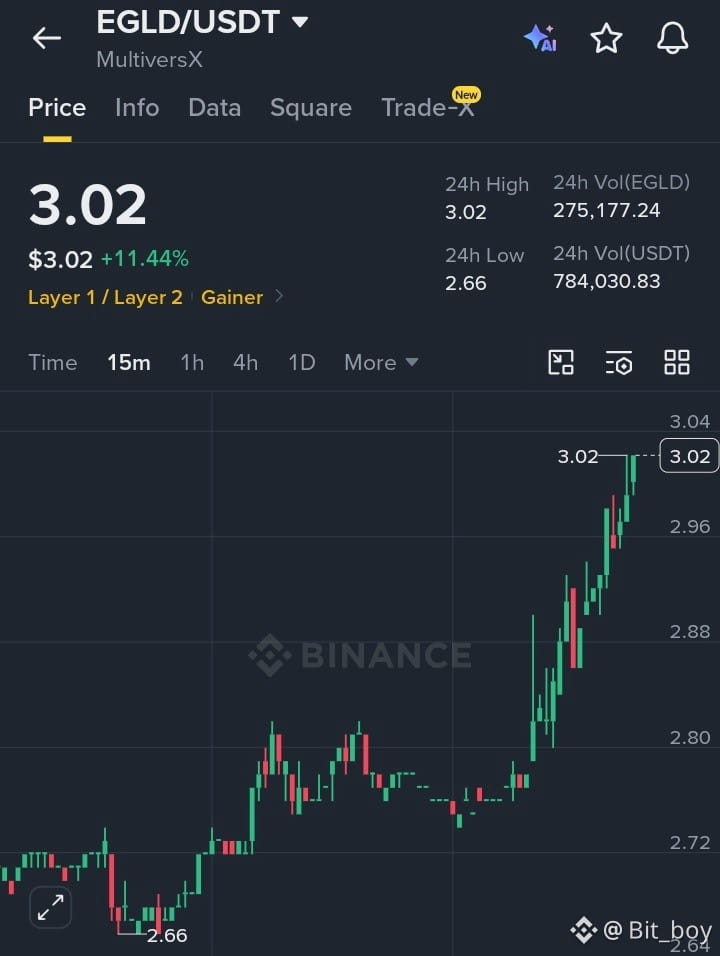
$EGLD is showing strong momentum.
Price has climbed to $3.02, up 11.44% on the day, with buyers pushing into fresh intraday highs.
If this momentum continues, MultiversX could be one to watch.
$EGLD
{future}(EGLDUSDT)
$EGLD is showing strong momentum.
Price has climbed to $3.02, up 11.44% on the day, with buyers pushing into fresh intraday highs.
If this momentum continues, MultiversX could be one to watch.
$EGLD
Price has climbed to $3.02, up 11.44% on the day, with buyers pushing into fresh intraday highs.
If this momentum continues, MultiversX could be one to watch.
$EGLD
1
244
Log in to explore more content
Join global crypto users on Binance Square
⚡️ Get latest and useful information about crypto.
💬 Trusted by the world’s largest crypto exchange.
👍 Discover real insights from verified creators.
Email / Phone number
Trending Topics
AppleDebutsFoldablePhone
46,054 views
916 Discussing
Apple just dropped the foldable iPhone — and the market is paying attention. This isn't just another product cycle; it's a new product category, a new CEO on stage, and a $1,999 price tag that pushes $AAPL further into ultra-premium territory. Foldables are the narrative, and Apple is now the headline.
#appledebutsfoldablephone #EUExtendsCentralContactPointToCASPs #US10YTreasuryYieldHitsHighestSinceNov2023 #BrentCrudeTops$100 #USTreasuryToBuyBackUpTo$6BLongDatedDebt
KimHotbae
·2 Likes
·2.9k views
TSMCAugustRevenueUp53.3%YoY
10,827 views
301 Discussing
IranSaysReadyToEscalateWarWithUS
13,625 views
312 Discussing