
Crypto Breaking
19.8k Posts

Crypto Breaking
 Square Verified+
Report
Block User
Get real-time cryptocurrency news, blockchain updates, market analysis, and expert insights. Explore the latest trends in Bitcoin, Ethereum, DeFi, and Web3.
6 Following
32.8K+ Followers
31.6K+ Liked
Posts
All
Quotes

Article
Crypto Market Metric Points to Altseason as Bitcoin Share Slips Below 60%Bitcoin pushed to around $86,000 this week, lifting broader crypto sentiment and helping the total market value reclaim the $3 trillion mark. Alongside the move, several cross-asset signals have shifted—most notably a Glassnode metric that now points toward stronger altcoin performance.
At the same time, spot ETF flows in the US have surged back to levels not seen since October 2025, with record daily inflows reported for both Bitcoin and Ether products. Together, the data suggests the current rally isn’t confined to the largest asset classes, though market structure still matters as investors weigh whether this is a sustained rotation or a short-lived burst.
Key takeaways
Glassnode’s Altcoin Cycle Signal rose to 81.25 (0–100 scale) as the “altcoin season” read improved in the wake of the latest market upswing.
Altcoin market cap reached $1.19 trillion on Tuesday, the highest level since late January, with altcoins up 33% since Aug. 19.
Bitcoin dominance has stayed rangebound near 59%–60% and has not broken above 60% in the past month.
US spot Bitcoin ETFs recorded $999 million in inflows on Monday, while Ether ETFs pulled in $270 million—both the highest daily totals since October 2025, per Farside Investors.
Glassnode’s “altcoin season” signal turns bullish
Glassnode’s on-chain analytics has renewed attention on altcoin relative strength this week. Its Altcoin Cycle Signal—an internally developed measure that compares the combined market cap of the 250 largest cryptocurrencies (excluding stablecoins) against Bitcoin—has flipped to favor altcoins, a condition crypto traders commonly label “altseason.”
In Glassnode’s framework, an “altcoin season” signal is generated when relative market-cap growth among the group of top altcoins temporarily outpaces that of Bitcoin. While the broad logic is clear, Glassnode does not publish the exact methodology behind the calculation.
As of Monday, the seven-day rolling mean of the signal stood at 81.25 on Glassnode’s normalized 0–100 scale, indicating a stronger tilt toward altcoin outperformance than earlier in the cycle.
Glassnode attributed part of the shift to breadth in the latest rally. In a post on X, the firm highlighted that an earlier August move saw altcoins lag in terms of participation, whereas the current upswing has “ignited the full breadth of the altcoin market.”
Altcoin market cap hits the highest point since late January
The signal is reinforced by market-cap data. According to the article’s figures, the combined altcoin market cap reached $1.19 trillion on Tuesday—its highest reading since late January.
That metric has also shown meaningful acceleration since Aug. 19, when crypto markets experienced a flash upside tied to a US Treasury announcement about interventions in bond markets. Since then, altcoins’ total market capitalization has increased by 33%.
For traders and portfolio managers, this combination—an “altcoin season” read alongside a rising altcoin market cap—can matter because it can indicate that the rally is expanding beyond Bitcoin leadership. However, rotation signals still tend to be fragile until they show persistence across multiple trading sessions and market conditions.
Bitcoin dominance remains capped near 60%
While altcoins have regained momentum, Bitcoin’s share of the overall market has not broken decisively upward. The article notes that Bitcoin dominance has remained rangebound since the Aug. 19 period, currently sitting at 59.7% versus 59.2% on Aug. 19.
Crucially, dominance has failed to push through the 60% level over the last month—an area many market observers treat as a psychological and technical threshold for whether capital is rotating away from Bitcoin or consolidating in it.
Trader and commentator Matthew Hyland characterized the environment as “complacency” among Bitcoin investors, arguing that investors have been slow to accept that Bitcoin has lacked sustained progress against altcoins since dominance reached about 66% in June 2025. His comments point to a tension: even if Bitcoin remains strong in absolute terms, relative underperformance versus altcoins can still drive strategic repositioning.
ETF inflows rebound sharply for both Bitcoin and Ether
Beyond on-chain and market-cap measures, investor behavior also appears to be shifting. This week has brought a broad rebound in US spot ETF demand across both Bitcoin and Ether products, suggesting renewed risk appetite—or, at minimum, renewed willingness to allocate through regulated vehicles.
On Monday, the combined inflows into US spot Bitcoin ETFs totaled $999 million. Ether ETFs, meanwhile, recorded $270 million in inflows. In both cases, the daily totals were described as the highest since October 2025, based on data from Farside Investors.
Cointelegraph previously reported that Bitcoin ETF investors’ aggregate cost basis sat just below $86,000 at the end of last week. With BTC/USD attempting to establish that level as support, the renewed ETF buying becomes particularly relevant: cost basis can influence how investors react to pullbacks, and steady inflows can help sustain demand during volatility.
For market participants, the ETF angle is also notable because it links the current move to a broader pool of investors who may prefer ETF access over spot exchanges. When ETF flows rise in tandem with improvements in altcoin-relative signals, it can indicate a more synchronized shift in sentiment across the market.
Going forward, investors will likely watch whether the altcoin “season” signal holds above its recent threshold and whether Bitcoin dominance can either break higher above 60% or continue to stay capped—both scenarios could shape how long this rotation lasts. On the ETF front, the key question is whether inflows remain strong beyond a single day, since sustained demand is more likely to translate into durable price leadership across the broader market.
This article was originally published as Crypto Market Metric Points to Altseason as Bitcoin Share Slips Below 60% on Crypto Breaking News – your trusted source for crypto news, Bitcoin news, and blockchain updates.
Crypto Market Metric Points to Altseason as Bitcoin Share Slips Below 60%
Bitcoin pushed to around $86,000 this week, lifting broader crypto sentiment and helping the total market value reclaim the $3 trillion mark. Alongside the move, several cross-asset signals have shifted—most notably a Glassnode metric that now points toward stronger altcoin performance.
At the same time, spot ETF flows in the US have surged back to levels not seen since October 2025, with record daily inflows reported for both Bitcoin and Ether products. Together, the data suggests the current rally isn’t confined to the largest asset classes, though market structure still matters as investors weigh whether this is a sustained rotation or a short-lived burst.
Key takeaways
Glassnode’s Altcoin Cycle Signal rose to 81.25 (0–100 scale) as the “altcoin season” read improved in the wake of the latest market upswing.
Altcoin market cap reached $1.19 trillion on Tuesday, the highest level since late January, with altcoins up 33% since Aug. 19.
Bitcoin dominance has stayed rangebound near 59%–60% and has not broken above 60% in the past month.
US spot Bitcoin ETFs recorded $999 million in inflows on Monday, while Ether ETFs pulled in $270 million—both the highest daily totals since October 2025, per Farside Investors.
Glassnode’s “altcoin season” signal turns bullish
Glassnode’s on-chain analytics has renewed attention on altcoin relative strength this week. Its Altcoin Cycle Signal—an internally developed measure that compares the combined market cap of the 250 largest cryptocurrencies (excluding stablecoins) against Bitcoin—has flipped to favor altcoins, a condition crypto traders commonly label “altseason.”
In Glassnode’s framework, an “altcoin season” signal is generated when relative market-cap growth among the group of top altcoins temporarily outpaces that of Bitcoin. While the broad logic is clear, Glassnode does not publish the exact methodology behind the calculation.
As of Monday, the seven-day rolling mean of the signal stood at 81.25 on Glassnode’s normalized 0–100 scale, indicating a stronger tilt toward altcoin outperformance than earlier in the cycle.
Glassnode attributed part of the shift to breadth in the latest rally. In a post on X, the firm highlighted that an earlier August move saw altcoins lag in terms of participation, whereas the current upswing has “ignited the full breadth of the altcoin market.”
Altcoin market cap hits the highest point since late January
The signal is reinforced by market-cap data. According to the article’s figures, the combined altcoin market cap reached $1.19 trillion on Tuesday—its highest reading since late January.
That metric has also shown meaningful acceleration since Aug. 19, when crypto markets experienced a flash upside tied to a US Treasury announcement about interventions in bond markets. Since then, altcoins’ total market capitalization has increased by 33%.
For traders and portfolio managers, this combination—an “altcoin season” read alongside a rising altcoin market cap—can matter because it can indicate that the rally is expanding beyond Bitcoin leadership. However, rotation signals still tend to be fragile until they show persistence across multiple trading sessions and market conditions.
Bitcoin dominance remains capped near 60%
While altcoins have regained momentum, Bitcoin’s share of the overall market has not broken decisively upward. The article notes that Bitcoin dominance has remained rangebound since the Aug. 19 period, currently sitting at 59.7% versus 59.2% on Aug. 19.
Crucially, dominance has failed to push through the 60% level over the last month—an area many market observers treat as a psychological and technical threshold for whether capital is rotating away from Bitcoin or consolidating in it.
Trader and commentator Matthew Hyland characterized the environment as “complacency” among Bitcoin investors, arguing that investors have been slow to accept that Bitcoin has lacked sustained progress against altcoins since dominance reached about 66% in June 2025. His comments point to a tension: even if Bitcoin remains strong in absolute terms, relative underperformance versus altcoins can still drive strategic repositioning.
ETF inflows rebound sharply for both Bitcoin and Ether
Beyond on-chain and market-cap measures, investor behavior also appears to be shifting. This week has brought a broad rebound in US spot ETF demand across both Bitcoin and Ether products, suggesting renewed risk appetite—or, at minimum, renewed willingness to allocate through regulated vehicles.
On Monday, the combined inflows into US spot Bitcoin ETFs totaled $999 million. Ether ETFs, meanwhile, recorded $270 million in inflows. In both cases, the daily totals were described as the highest since October 2025, based on data from Farside Investors.
Cointelegraph previously reported that Bitcoin ETF investors’ aggregate cost basis sat just below $86,000 at the end of last week. With BTC/USD attempting to establish that level as support, the renewed ETF buying becomes particularly relevant: cost basis can influence how investors react to pullbacks, and steady inflows can help sustain demand during volatility.
For market participants, the ETF angle is also notable because it links the current move to a broader pool of investors who may prefer ETF access over spot exchanges. When ETF flows rise in tandem with improvements in altcoin-relative signals, it can indicate a more synchronized shift in sentiment across the market.
Going forward, investors will likely watch whether the altcoin “season” signal holds above its recent threshold and whether Bitcoin dominance can either break higher above 60% or continue to stay capped—both scenarios could shape how long this rotation lasts. On the ETF front, the key question is whether inflows remain strong beyond a single day, since sustained demand is more likely to translate into durable price leadership across the broader market.
This article was originally published as Crypto Market Metric Points to Altseason as Bitcoin Share Slips Below 60% on Crypto Breaking News – your trusted source for crypto news, Bitcoin news, and blockchain updates.
At the same time, spot ETF flows in the US have surged back to levels not seen since October 2025, with record daily inflows reported for both Bitcoin and Ether products. Together, the data suggests the current rally isn’t confined to the largest asset classes, though market structure still matters as investors weigh whether this is a sustained rotation or a short-lived burst.
Key takeaways
Glassnode’s Altcoin Cycle Signal rose to 81.25 (0–100 scale) as the “altcoin season” read improved in the wake of the latest market upswing.
Altcoin market cap reached $1.19 trillion on Tuesday, the highest level since late January, with altcoins up 33% since Aug. 19.
Bitcoin dominance has stayed rangebound near 59%–60% and has not broken above 60% in the past month.
US spot Bitcoin ETFs recorded $999 million in inflows on Monday, while Ether ETFs pulled in $270 million—both the highest daily totals since October 2025, per Farside Investors.
Glassnode’s “altcoin season” signal turns bullish
Glassnode’s on-chain analytics has renewed attention on altcoin relative strength this week. Its Altcoin Cycle Signal—an internally developed measure that compares the combined market cap of the 250 largest cryptocurrencies (excluding stablecoins) against Bitcoin—has flipped to favor altcoins, a condition crypto traders commonly label “altseason.”
In Glassnode’s framework, an “altcoin season” signal is generated when relative market-cap growth among the group of top altcoins temporarily outpaces that of Bitcoin. While the broad logic is clear, Glassnode does not publish the exact methodology behind the calculation.
As of Monday, the seven-day rolling mean of the signal stood at 81.25 on Glassnode’s normalized 0–100 scale, indicating a stronger tilt toward altcoin outperformance than earlier in the cycle.
Glassnode attributed part of the shift to breadth in the latest rally. In a post on X, the firm highlighted that an earlier August move saw altcoins lag in terms of participation, whereas the current upswing has “ignited the full breadth of the altcoin market.”
Altcoin market cap hits the highest point since late January
The signal is reinforced by market-cap data. According to the article’s figures, the combined altcoin market cap reached $1.19 trillion on Tuesday—its highest reading since late January.
That metric has also shown meaningful acceleration since Aug. 19, when crypto markets experienced a flash upside tied to a US Treasury announcement about interventions in bond markets. Since then, altcoins’ total market capitalization has increased by 33%.
For traders and portfolio managers, this combination—an “altcoin season” read alongside a rising altcoin market cap—can matter because it can indicate that the rally is expanding beyond Bitcoin leadership. However, rotation signals still tend to be fragile until they show persistence across multiple trading sessions and market conditions.
Bitcoin dominance remains capped near 60%
While altcoins have regained momentum, Bitcoin’s share of the overall market has not broken decisively upward. The article notes that Bitcoin dominance has remained rangebound since the Aug. 19 period, currently sitting at 59.7% versus 59.2% on Aug. 19.
Crucially, dominance has failed to push through the 60% level over the last month—an area many market observers treat as a psychological and technical threshold for whether capital is rotating away from Bitcoin or consolidating in it.
Trader and commentator Matthew Hyland characterized the environment as “complacency” among Bitcoin investors, arguing that investors have been slow to accept that Bitcoin has lacked sustained progress against altcoins since dominance reached about 66% in June 2025. His comments point to a tension: even if Bitcoin remains strong in absolute terms, relative underperformance versus altcoins can still drive strategic repositioning.
ETF inflows rebound sharply for both Bitcoin and Ether
Beyond on-chain and market-cap measures, investor behavior also appears to be shifting. This week has brought a broad rebound in US spot ETF demand across both Bitcoin and Ether products, suggesting renewed risk appetite—or, at minimum, renewed willingness to allocate through regulated vehicles.
On Monday, the combined inflows into US spot Bitcoin ETFs totaled $999 million. Ether ETFs, meanwhile, recorded $270 million in inflows. In both cases, the daily totals were described as the highest since October 2025, based on data from Farside Investors.
Cointelegraph previously reported that Bitcoin ETF investors’ aggregate cost basis sat just below $86,000 at the end of last week. With BTC/USD attempting to establish that level as support, the renewed ETF buying becomes particularly relevant: cost basis can influence how investors react to pullbacks, and steady inflows can help sustain demand during volatility.
For market participants, the ETF angle is also notable because it links the current move to a broader pool of investors who may prefer ETF access over spot exchanges. When ETF flows rise in tandem with improvements in altcoin-relative signals, it can indicate a more synchronized shift in sentiment across the market.
Going forward, investors will likely watch whether the altcoin “season” signal holds above its recent threshold and whether Bitcoin dominance can either break higher above 60% or continue to stay capped—both scenarios could shape how long this rotation lasts. On the ETF front, the key question is whether inflows remain strong beyond a single day, since sustained demand is more likely to translate into durable price leadership across the broader market.
This article was originally published as Crypto Market Metric Points to Altseason as Bitcoin Share Slips Below 60% on Crypto Breaking News – your trusted source for crypto news, Bitcoin news, and blockchain updates.
1

Article
Solstice CEO: Crypto’s boom-and-bust cycles are losing steamSolana-based DeFi executive Ben Nadareski says the crypto market’s era of extreme boom-and-bust cycles may be fading as liquidity deepens across trading venues—even in downturns. Speaking on Cointelegraph’s Chain Reaction, the CEO of Solstice argued that broader participation and more robust market infrastructure reduce the conditions that historically amplified sharp price moves.
Nadareski also framed crypto increasingly as a destination for institutional capital and mainstream wealth, rather than purely speculative trading. While he cautioned against reliving past turbulence, he pointed to data suggesting volatility is already declining in major markets like Bitcoin as volumes and market depth rise.
Key takeaways
Nadareski links lower volatility to deeper liquidity across major trading pairs, noting it has improved even during bear markets.
Glassnode and Fasanara Digital report that Bitcoin’s one-year realized volatility dropped sharply over 2025, attributing part of the move to growing market depth and institutional participation.
Bitcoin spot volumes expanded to a higher daily range compared with the prior cycle, consistent with a more liquid market structure.
Nadareski expects stablecoins on Solana to grow from roughly $16 billion in current market capitalization to potentially near $100 billion within five years.
Stablecoins are increasingly central to trading, with CEX.IO data cited as showing they made up 75% of total trading volume in Q1 2026.
Why deeper liquidity could dampen the old cycle
Nadareski’s core argument is structural: when liquidity is thicker, markets tend to absorb buying and selling pressure with less violent repricing. On Cointelegraph’s Chain Reaction, he said liquidity across major crypto trading pairs has increased significantly, including during bear markets, which he argued lessens the likelihood of the sharp swings that characterized earlier cycles.
His comments emphasize an investor-relevant shift. When volatility is driven by thin order books and crowded positioning, price moves can accelerate as liquidations and forced selling cascade. In contrast, deeper markets can reduce the severity of those feedback loops by improving execution and limiting sudden liquidity gaps.
“We don’t want to go through 2017. We don’t want to go through 2021. We don’t want to go through these massive fluctuations,” Nadareski said, framing the goal as a market that is still volatile at times, but less prone to extreme destabilizing moves.
Bitcoin data aligns with a lower-volatility narrative
Nadareski’s thesis is reinforced by market data cited from blockchain analytics firm Glassnode and asset manager Fasanara Digital. In a December 2025 report, the firms found Bitcoin’s one-year realized volatility fell from 84.4% to 43%. They attributed part of this decline to “growing market depth and institutional participation.”
The report also highlighted activity that typically accompanies deeper liquidity. It said daily Bitcoin spot volumes increased to between $8 billion and $22 billion per day from $4 billion to $13 billion during the previous market cycle, according to Glassnode’s research summary.
Separately, earlier coverage from Cointelegraph noted SkyBridge Capital managing partner Anthony Scaramucci arguing in March that Bitcoin’s four-year cycle has been “muted” by institutional investors and spot Bitcoin ETF inflows—though he suggested the traditional cycle dynamics had not fully disappeared. Taken together, the picture is not that volatility is gone, but that its drivers appear to be changing as participation and trading mechanics evolve.
Stablecoin growth on Solana: potential path to $100B
Nadareski also turned to stablecoins, predicting rapid expansion of Solana’s stablecoin market. He said the value of stablecoins on Solana could rise above $50 billion and approach $100 billion over the next five years, citing what he described as increasing adoption among fintech companies as well as Solana’s transaction speed and low fees.
To anchor the forecast, the article cited DefiLlama data placing Solana’s stablecoin market capitalization at about $16 billion. The gap between current levels and a possible $100 billion outcome reflects both a broader stablecoin adoption thesis and a network-specific bet on Solana’s ability to attract payments and on-chain settlement use cases.
For traders and liquidity providers, the practical implication is that stablecoins are increasingly the “working capital” of crypto markets. Stablecoin supply and trading behavior can influence how quickly capital rotates between spot and derivatives, and how readily liquidity is available during market stress.
Stablecoins as market fuel, not just a side component
The importance of stablecoins extends beyond one chain. The article cited CEX.IO data indicating stablecoins accounted for 75% of total crypto trading volume in the first quarter of 2026—described as the highest share on record—while transaction volume surpassed $28 trillion.
This matters because a higher stablecoin share often implies that more trading volume is funded in liquid, dollar-pegged instruments. In theory, that can support smoother execution and help markets maintain liquidity across different price regimes. At the same time, stablecoin growth can also concentrate certain risks—such as reliance on issuance and reserve structures—though the underlying mechanics were not elaborated in the source material.
Within the broader market structure, the combination of deeper liquidity, institutional participation, and stablecoin-enabled trading suggests that today’s crypto market may be operating closer to the behavior of traditional capital markets than it did during the most chaotic periods of earlier retail-driven cycles.
What to watch next is whether declining realized volatility and expanding spot volume persist as market participants test new liquidity conditions across bull and bear phases. On the stablecoin front, readers should track whether growth on Solana stays consistent with Nadareski’s multi-year projections and whether stablecoin dominance in trading continues to widen rather than normalize.
This article was originally published as Solstice CEO: Crypto’s boom-and-bust cycles are losing steam on Crypto Breaking News – your trusted source for crypto news, Bitcoin news, and blockchain updates.
Solstice CEO: Crypto’s boom-and-bust cycles are losing steam
Solana-based DeFi executive Ben Nadareski says the crypto market’s era of extreme boom-and-bust cycles may be fading as liquidity deepens across trading venues—even in downturns. Speaking on Cointelegraph’s Chain Reaction, the CEO of Solstice argued that broader participation and more robust market infrastructure reduce the conditions that historically amplified sharp price moves.
Nadareski also framed crypto increasingly as a destination for institutional capital and mainstream wealth, rather than purely speculative trading. While he cautioned against reliving past turbulence, he pointed to data suggesting volatility is already declining in major markets like Bitcoin as volumes and market depth rise.
Key takeaways
Nadareski links lower volatility to deeper liquidity across major trading pairs, noting it has improved even during bear markets.
Glassnode and Fasanara Digital report that Bitcoin’s one-year realized volatility dropped sharply over 2025, attributing part of the move to growing market depth and institutional participation.
Bitcoin spot volumes expanded to a higher daily range compared with the prior cycle, consistent with a more liquid market structure.
Nadareski expects stablecoins on Solana to grow from roughly $16 billion in current market capitalization to potentially near $100 billion within five years.
Stablecoins are increasingly central to trading, with CEX.IO data cited as showing they made up 75% of total trading volume in Q1 2026.
Why deeper liquidity could dampen the old cycle
Nadareski’s core argument is structural: when liquidity is thicker, markets tend to absorb buying and selling pressure with less violent repricing. On Cointelegraph’s Chain Reaction, he said liquidity across major crypto trading pairs has increased significantly, including during bear markets, which he argued lessens the likelihood of the sharp swings that characterized earlier cycles.
His comments emphasize an investor-relevant shift. When volatility is driven by thin order books and crowded positioning, price moves can accelerate as liquidations and forced selling cascade. In contrast, deeper markets can reduce the severity of those feedback loops by improving execution and limiting sudden liquidity gaps.
“We don’t want to go through 2017. We don’t want to go through 2021. We don’t want to go through these massive fluctuations,” Nadareski said, framing the goal as a market that is still volatile at times, but less prone to extreme destabilizing moves.
Bitcoin data aligns with a lower-volatility narrative
Nadareski’s thesis is reinforced by market data cited from blockchain analytics firm Glassnode and asset manager Fasanara Digital. In a December 2025 report, the firms found Bitcoin’s one-year realized volatility fell from 84.4% to 43%. They attributed part of this decline to “growing market depth and institutional participation.”
The report also highlighted activity that typically accompanies deeper liquidity. It said daily Bitcoin spot volumes increased to between $8 billion and $22 billion per day from $4 billion to $13 billion during the previous market cycle, according to Glassnode’s research summary.
Separately, earlier coverage from Cointelegraph noted SkyBridge Capital managing partner Anthony Scaramucci arguing in March that Bitcoin’s four-year cycle has been “muted” by institutional investors and spot Bitcoin ETF inflows—though he suggested the traditional cycle dynamics had not fully disappeared. Taken together, the picture is not that volatility is gone, but that its drivers appear to be changing as participation and trading mechanics evolve.
Stablecoin growth on Solana: potential path to $100B
Nadareski also turned to stablecoins, predicting rapid expansion of Solana’s stablecoin market. He said the value of stablecoins on Solana could rise above $50 billion and approach $100 billion over the next five years, citing what he described as increasing adoption among fintech companies as well as Solana’s transaction speed and low fees.
To anchor the forecast, the article cited DefiLlama data placing Solana’s stablecoin market capitalization at about $16 billion. The gap between current levels and a possible $100 billion outcome reflects both a broader stablecoin adoption thesis and a network-specific bet on Solana’s ability to attract payments and on-chain settlement use cases.
For traders and liquidity providers, the practical implication is that stablecoins are increasingly the “working capital” of crypto markets. Stablecoin supply and trading behavior can influence how quickly capital rotates between spot and derivatives, and how readily liquidity is available during market stress.
Stablecoins as market fuel, not just a side component
The importance of stablecoins extends beyond one chain. The article cited CEX.IO data indicating stablecoins accounted for 75% of total crypto trading volume in the first quarter of 2026—described as the highest share on record—while transaction volume surpassed $28 trillion.
This matters because a higher stablecoin share often implies that more trading volume is funded in liquid, dollar-pegged instruments. In theory, that can support smoother execution and help markets maintain liquidity across different price regimes. At the same time, stablecoin growth can also concentrate certain risks—such as reliance on issuance and reserve structures—though the underlying mechanics were not elaborated in the source material.
Within the broader market structure, the combination of deeper liquidity, institutional participation, and stablecoin-enabled trading suggests that today’s crypto market may be operating closer to the behavior of traditional capital markets than it did during the most chaotic periods of earlier retail-driven cycles.
What to watch next is whether declining realized volatility and expanding spot volume persist as market participants test new liquidity conditions across bull and bear phases. On the stablecoin front, readers should track whether growth on Solana stays consistent with Nadareski’s multi-year projections and whether stablecoin dominance in trading continues to widen rather than normalize.
This article was originally published as Solstice CEO: Crypto’s boom-and-bust cycles are losing steam on Crypto Breaking News – your trusted source for crypto news, Bitcoin news, and blockchain updates.
Nadareski also framed crypto increasingly as a destination for institutional capital and mainstream wealth, rather than purely speculative trading. While he cautioned against reliving past turbulence, he pointed to data suggesting volatility is already declining in major markets like Bitcoin as volumes and market depth rise.
Key takeaways
Nadareski links lower volatility to deeper liquidity across major trading pairs, noting it has improved even during bear markets.
Glassnode and Fasanara Digital report that Bitcoin’s one-year realized volatility dropped sharply over 2025, attributing part of the move to growing market depth and institutional participation.
Bitcoin spot volumes expanded to a higher daily range compared with the prior cycle, consistent with a more liquid market structure.
Nadareski expects stablecoins on Solana to grow from roughly $16 billion in current market capitalization to potentially near $100 billion within five years.
Stablecoins are increasingly central to trading, with CEX.IO data cited as showing they made up 75% of total trading volume in Q1 2026.
Why deeper liquidity could dampen the old cycle
Nadareski’s core argument is structural: when liquidity is thicker, markets tend to absorb buying and selling pressure with less violent repricing. On Cointelegraph’s Chain Reaction, he said liquidity across major crypto trading pairs has increased significantly, including during bear markets, which he argued lessens the likelihood of the sharp swings that characterized earlier cycles.
His comments emphasize an investor-relevant shift. When volatility is driven by thin order books and crowded positioning, price moves can accelerate as liquidations and forced selling cascade. In contrast, deeper markets can reduce the severity of those feedback loops by improving execution and limiting sudden liquidity gaps.
“We don’t want to go through 2017. We don’t want to go through 2021. We don’t want to go through these massive fluctuations,” Nadareski said, framing the goal as a market that is still volatile at times, but less prone to extreme destabilizing moves.
Bitcoin data aligns with a lower-volatility narrative
Nadareski’s thesis is reinforced by market data cited from blockchain analytics firm Glassnode and asset manager Fasanara Digital. In a December 2025 report, the firms found Bitcoin’s one-year realized volatility fell from 84.4% to 43%. They attributed part of this decline to “growing market depth and institutional participation.”
The report also highlighted activity that typically accompanies deeper liquidity. It said daily Bitcoin spot volumes increased to between $8 billion and $22 billion per day from $4 billion to $13 billion during the previous market cycle, according to Glassnode’s research summary.
Separately, earlier coverage from Cointelegraph noted SkyBridge Capital managing partner Anthony Scaramucci arguing in March that Bitcoin’s four-year cycle has been “muted” by institutional investors and spot Bitcoin ETF inflows—though he suggested the traditional cycle dynamics had not fully disappeared. Taken together, the picture is not that volatility is gone, but that its drivers appear to be changing as participation and trading mechanics evolve.
Stablecoin growth on Solana: potential path to $100B
Nadareski also turned to stablecoins, predicting rapid expansion of Solana’s stablecoin market. He said the value of stablecoins on Solana could rise above $50 billion and approach $100 billion over the next five years, citing what he described as increasing adoption among fintech companies as well as Solana’s transaction speed and low fees.
To anchor the forecast, the article cited DefiLlama data placing Solana’s stablecoin market capitalization at about $16 billion. The gap between current levels and a possible $100 billion outcome reflects both a broader stablecoin adoption thesis and a network-specific bet on Solana’s ability to attract payments and on-chain settlement use cases.
For traders and liquidity providers, the practical implication is that stablecoins are increasingly the “working capital” of crypto markets. Stablecoin supply and trading behavior can influence how quickly capital rotates between spot and derivatives, and how readily liquidity is available during market stress.
Stablecoins as market fuel, not just a side component
The importance of stablecoins extends beyond one chain. The article cited CEX.IO data indicating stablecoins accounted for 75% of total crypto trading volume in the first quarter of 2026—described as the highest share on record—while transaction volume surpassed $28 trillion.
This matters because a higher stablecoin share often implies that more trading volume is funded in liquid, dollar-pegged instruments. In theory, that can support smoother execution and help markets maintain liquidity across different price regimes. At the same time, stablecoin growth can also concentrate certain risks—such as reliance on issuance and reserve structures—though the underlying mechanics were not elaborated in the source material.
Within the broader market structure, the combination of deeper liquidity, institutional participation, and stablecoin-enabled trading suggests that today’s crypto market may be operating closer to the behavior of traditional capital markets than it did during the most chaotic periods of earlier retail-driven cycles.
What to watch next is whether declining realized volatility and expanding spot volume persist as market participants test new liquidity conditions across bull and bear phases. On the stablecoin front, readers should track whether growth on Solana stays consistent with Nadareski’s multi-year projections and whether stablecoin dominance in trading continues to widen rather than normalize.
This article was originally published as Solstice CEO: Crypto’s boom-and-bust cycles are losing steam on Crypto Breaking News – your trusted source for crypto news, Bitcoin news, and blockchain updates.
21

Article
OpenAI Pushes for Global AI Safety Standards as AI Gets More AutonomousArtificial intelligence is getting better at doing more than answering questions. AI systems are now helping with coding, research, analysis and other tasks that were once handled almost entirely by people. That raises a new question: what happens when AI starts playing a bigger role in building the next generation of AI?
OpenAI is now calling for international standards to help answer that question. In a September 21 post titled “Building standards for the next phase of AI,” OpenAI proposed a US-led international effort to create common technical standards for frontier AI. The company says these standards could help countries measure AI capabilities, evaluate risks, test safeguards and report serious incidents using more consistent methods.
Key Takeaways
OpenAI wants international standards for evaluating frontier AI.
The proposal covers capabilities, risks, safeguards and incident reporting.
OpenAI says fully autonomous recursive self-improvement is not happening today.
The company wants human control to remain central as AI becomes more capable.
Existing AI safety organizations could help develop common technical standards.
Openai Wants a Common Framework for Frontier AI
The basic idea is fairly simple. It is not necessary for each country to create an entirely different methodology for evaluating the dangers posed by advanced AI. According to OpenAI, standardizing technical approaches can provide nations, researchers and the AI community an effective way to assess their increasingly sophisticated AI. This becomes all the more relevant when AI-related incidents happen across borders.
The company is not proposing a single global AI law. Instead, it wants countries to develop compatible standards that governments can later decide how to use within their own regulatory systems. This difference is significant since the suggested standards do not immediately become requirements for licensure or certification for all artificial intelligence technologies. Rather, governments retain the power to determine how the standards will apply within their jurisdictions.
Recursive Self-Improvement Is Part of the Conversation
One of the more interesting parts of OpenAI’s proposal is its discussion of recursive self-improvement (RSI). The concept describes a future in which AI systems could increasingly help researchers develop more capable AI systems. In simple terms, AI could become part of the process of improving AI itself.
That could potentially speed up AI research. But it also creates a difficult safety question: how much human oversight should remain in the loop if AI systems become heavily involved in developing future models?
OpenAI says fully autonomous recursive self-improvement is not happening today. It also argues that such a direction should not be pursued unless it can be done safely while maintaining human control. That makes evaluation and safety testing more important as AI systems become capable of handling increasingly complex research and development tasks.
AI Safety Standards Could Become More Important
OpenAI also points to existing AI safety organizations and networks around the world as potential building blocks for this effort. The company specifically references AI safety institutes and related organizations across countries including the US, UK, Canada, France, Germany, Japan, South Korea, Singapore, India, Kenya and Australia.
Rather than every country developing its own completely separate technical approach, OpenAI wants these groups to work toward standards that can complement one another. The proposal also calls for participation from AI developers, researchers, academics and independent technical experts. OpenAI says the standards should be designed around technical measurements rather than the interests of a particular company or country.
Why This Matters
The timing is notable. AI companies are building systems that can increasingly perform multi-step tasks with less direct human input, while governments are still working out how to regulate the technology.
Reuters reported that OpenAI wants the United States to take a leading role in developing international technical standards for advanced AI. The bigger challenge may be getting countries and companies to agree on exactly what those standards should measure and how they should be applied.
For now, OpenAI’s proposal is focused on creating a common technical foundation before frontier AI becomes even more capable. As AI starts doing more of the work involved in developing AI itself, having a shared way to measure capabilities, risks and safeguards could become an increasingly important part of the conversation.
This article was originally published as OpenAI Pushes for Global AI Safety Standards as AI Gets More Autonomous on Crypto Breaking News – your trusted source for crypto news, Bitcoin news, and blockchain updates.
OpenAI Pushes for Global AI Safety Standards as AI Gets More Autonomous
Artificial intelligence is getting better at doing more than answering questions. AI systems are now helping with coding, research, analysis and other tasks that were once handled almost entirely by people. That raises a new question: what happens when AI starts playing a bigger role in building the next generation of AI?
OpenAI is now calling for international standards to help answer that question. In a September 21 post titled “Building standards for the next phase of AI,” OpenAI proposed a US-led international effort to create common technical standards for frontier AI. The company says these standards could help countries measure AI capabilities, evaluate risks, test safeguards and report serious incidents using more consistent methods.
Key Takeaways
OpenAI wants international standards for evaluating frontier AI.
The proposal covers capabilities, risks, safeguards and incident reporting.
OpenAI says fully autonomous recursive self-improvement is not happening today.
The company wants human control to remain central as AI becomes more capable.
Existing AI safety organizations could help develop common technical standards.
Openai Wants a Common Framework for Frontier AI
The basic idea is fairly simple. It is not necessary for each country to create an entirely different methodology for evaluating the dangers posed by advanced AI. According to OpenAI, standardizing technical approaches can provide nations, researchers and the AI community an effective way to assess their increasingly sophisticated AI. This becomes all the more relevant when AI-related incidents happen across borders.
The company is not proposing a single global AI law. Instead, it wants countries to develop compatible standards that governments can later decide how to use within their own regulatory systems. This difference is significant since the suggested standards do not immediately become requirements for licensure or certification for all artificial intelligence technologies. Rather, governments retain the power to determine how the standards will apply within their jurisdictions.
Recursive Self-Improvement Is Part of the Conversation
One of the more interesting parts of OpenAI’s proposal is its discussion of recursive self-improvement (RSI). The concept describes a future in which AI systems could increasingly help researchers develop more capable AI systems. In simple terms, AI could become part of the process of improving AI itself.
That could potentially speed up AI research. But it also creates a difficult safety question: how much human oversight should remain in the loop if AI systems become heavily involved in developing future models?
OpenAI says fully autonomous recursive self-improvement is not happening today. It also argues that such a direction should not be pursued unless it can be done safely while maintaining human control. That makes evaluation and safety testing more important as AI systems become capable of handling increasingly complex research and development tasks.
AI Safety Standards Could Become More Important
OpenAI also points to existing AI safety organizations and networks around the world as potential building blocks for this effort. The company specifically references AI safety institutes and related organizations across countries including the US, UK, Canada, France, Germany, Japan, South Korea, Singapore, India, Kenya and Australia.
Rather than every country developing its own completely separate technical approach, OpenAI wants these groups to work toward standards that can complement one another. The proposal also calls for participation from AI developers, researchers, academics and independent technical experts. OpenAI says the standards should be designed around technical measurements rather than the interests of a particular company or country.
Why This Matters
The timing is notable. AI companies are building systems that can increasingly perform multi-step tasks with less direct human input, while governments are still working out how to regulate the technology.
Reuters reported that OpenAI wants the United States to take a leading role in developing international technical standards for advanced AI. The bigger challenge may be getting countries and companies to agree on exactly what those standards should measure and how they should be applied.
For now, OpenAI’s proposal is focused on creating a common technical foundation before frontier AI becomes even more capable. As AI starts doing more of the work involved in developing AI itself, having a shared way to measure capabilities, risks and safeguards could become an increasingly important part of the conversation.
This article was originally published as OpenAI Pushes for Global AI Safety Standards as AI Gets More Autonomous on Crypto Breaking News – your trusted source for crypto news, Bitcoin news, and blockchain updates.
OpenAI is now calling for international standards to help answer that question. In a September 21 post titled “Building standards for the next phase of AI,” OpenAI proposed a US-led international effort to create common technical standards for frontier AI. The company says these standards could help countries measure AI capabilities, evaluate risks, test safeguards and report serious incidents using more consistent methods.
Key Takeaways
OpenAI wants international standards for evaluating frontier AI.
The proposal covers capabilities, risks, safeguards and incident reporting.
OpenAI says fully autonomous recursive self-improvement is not happening today.
The company wants human control to remain central as AI becomes more capable.
Existing AI safety organizations could help develop common technical standards.
Openai Wants a Common Framework for Frontier AI
The basic idea is fairly simple. It is not necessary for each country to create an entirely different methodology for evaluating the dangers posed by advanced AI. According to OpenAI, standardizing technical approaches can provide nations, researchers and the AI community an effective way to assess their increasingly sophisticated AI. This becomes all the more relevant when AI-related incidents happen across borders.
The company is not proposing a single global AI law. Instead, it wants countries to develop compatible standards that governments can later decide how to use within their own regulatory systems. This difference is significant since the suggested standards do not immediately become requirements for licensure or certification for all artificial intelligence technologies. Rather, governments retain the power to determine how the standards will apply within their jurisdictions.
Recursive Self-Improvement Is Part of the Conversation
One of the more interesting parts of OpenAI’s proposal is its discussion of recursive self-improvement (RSI). The concept describes a future in which AI systems could increasingly help researchers develop more capable AI systems. In simple terms, AI could become part of the process of improving AI itself.
That could potentially speed up AI research. But it also creates a difficult safety question: how much human oversight should remain in the loop if AI systems become heavily involved in developing future models?
OpenAI says fully autonomous recursive self-improvement is not happening today. It also argues that such a direction should not be pursued unless it can be done safely while maintaining human control. That makes evaluation and safety testing more important as AI systems become capable of handling increasingly complex research and development tasks.
AI Safety Standards Could Become More Important
OpenAI also points to existing AI safety organizations and networks around the world as potential building blocks for this effort. The company specifically references AI safety institutes and related organizations across countries including the US, UK, Canada, France, Germany, Japan, South Korea, Singapore, India, Kenya and Australia.
Rather than every country developing its own completely separate technical approach, OpenAI wants these groups to work toward standards that can complement one another. The proposal also calls for participation from AI developers, researchers, academics and independent technical experts. OpenAI says the standards should be designed around technical measurements rather than the interests of a particular company or country.
Why This Matters
The timing is notable. AI companies are building systems that can increasingly perform multi-step tasks with less direct human input, while governments are still working out how to regulate the technology.
Reuters reported that OpenAI wants the United States to take a leading role in developing international technical standards for advanced AI. The bigger challenge may be getting countries and companies to agree on exactly what those standards should measure and how they should be applied.
For now, OpenAI’s proposal is focused on creating a common technical foundation before frontier AI becomes even more capable. As AI starts doing more of the work involved in developing AI itself, having a shared way to measure capabilities, risks and safeguards could become an increasingly important part of the conversation.
This article was originally published as OpenAI Pushes for Global AI Safety Standards as AI Gets More Autonomous on Crypto Breaking News – your trusted source for crypto news, Bitcoin news, and blockchain updates.
7

Article
Bitcoin (BTC) Reaches 8-Month High, Sets Sights On $90,000Bitcoin (BTC) crossed $87,000 on Monday, reaching an 8-month high of $87,397 amid renewed demand, forced short covering, spot Bitcoin ETF inflows, and improved market sentiment.
The flagship cryptocurrency jumped nearly 7% on Monday, reaching $87,397 before closing at $86,593. However, the price is down 1.40% during the ongoing session, trading around $85,396.
Bitcoin Eyes $90,000
According to Bloomberg, BTC extended its recovery by over $10,000 from the previous week’s lows, and is trading at levels last seen at the end of January 2026. The latest rally has been bolstered by renewed spot Bitcoin ETF demand and a substantial short squeeze as traders cover their positions.
However, Nicolai Sondergaard, Senior Research Analyst at Nansen, told crypto.news that despite the rally, Hyperliquid’s largest Bitcoin holders remained net short. Nansen also flagged that more BTC was moving to exchanges than leaving them, potentially raising the supply of BTC available in the market.
Sondergaard said:
“Bitcoin’s move above $84,000 looks less like a clean macro-driven accumulation event and more like a combination of renewed ETF demand and a large short squeeze. The important distinction is that price has turned bullish faster than positioning has.”
Sondergaard added that the rally could continue if under-positioned buyers keep buying BTC. However, price action could reverse if Treasury yields increase again or ETF inflows weaken.
Spot Demand Key For Bitcoin (BTC)
Spot demand has played a key role in driving BTC’s advance. Jeff Ko, Chief Analyst at ViaBTC, highlighted the Coinbase Premium, which returned to positive territory on Friday. This meant BTC traded at a higher price on the exchange than on other offshore platforms.
The index helps assess buying interest from American institutions and investors. Meanwhile, the USDT/USD pair rose from 0.9991 to 0.9998, which Ko said indicates genuine demand rather than one sustained by borrowed capital.
BTC’s rebound came after two major setbacks: the Federal Reserve increasing the benchmark interest rate by 25 basis points and the US Senate’s failure to advance the CLARITY Act. All 12 voting members of the Federal Open Market Committee supported the hike, with 16 officials projecting at least one more hike in 2026. As a result, BTC retreated towards $75,000, while Bitcoin ETFs reported substantial withdrawals.
The ETFs reported combined withdrawals of around $746.3 million on September 15 and September 16, before reporting $159.5 million in inflows on September 17 and $433 million on September 18.
Key Levels For Bitcoin (BTC)
According to Sondergaard, $87,000 and $90,000 are key levels for BTC. A clear break above $87,000 will bring the flagship cryptocurrency within sight of $90,000, a key psychological level. However, it may face resistance around $92,000 if it crosses this level.
“The next level to look for would be $87k, given $85k is broken and held; then $90k would be psychological, and again some levels to look for around $92k.”
However, BTC will need sustained spot buying to support a push above these levels, and it will need to avoid any macroeconomic shocks on the horizon. Sondergaard believes a lack of spot and ETF demand could bring perpetual futures into play, leaving BTC more vulnerable to geopolitical events and large sell-offs.
Technical indicators favor positive momentum for now. Earlier, BTC reclaimed its
This article was originally published as Bitcoin (BTC) Reaches 8-Month High, Sets Sights On $90,000 on Crypto Breaking News – your trusted source for crypto news, Bitcoin news, and blockchain updates.
Bitcoin (BTC) Reaches 8-Month High, Sets Sights On $90,000
Bitcoin (BTC) crossed $87,000 on Monday, reaching an 8-month high of $87,397 amid renewed demand, forced short covering, spot Bitcoin ETF inflows, and improved market sentiment.
The flagship cryptocurrency jumped nearly 7% on Monday, reaching $87,397 before closing at $86,593. However, the price is down 1.40% during the ongoing session, trading around $85,396.
Bitcoin Eyes $90,000
According to Bloomberg, BTC extended its recovery by over $10,000 from the previous week’s lows, and is trading at levels last seen at the end of January 2026. The latest rally has been bolstered by renewed spot Bitcoin ETF demand and a substantial short squeeze as traders cover their positions.
However, Nicolai Sondergaard, Senior Research Analyst at Nansen, told crypto.news that despite the rally, Hyperliquid’s largest Bitcoin holders remained net short. Nansen also flagged that more BTC was moving to exchanges than leaving them, potentially raising the supply of BTC available in the market.
Sondergaard said:
“Bitcoin’s move above $84,000 looks less like a clean macro-driven accumulation event and more like a combination of renewed ETF demand and a large short squeeze. The important distinction is that price has turned bullish faster than positioning has.”
Sondergaard added that the rally could continue if under-positioned buyers keep buying BTC. However, price action could reverse if Treasury yields increase again or ETF inflows weaken.
Spot Demand Key For Bitcoin (BTC)
Spot demand has played a key role in driving BTC’s advance. Jeff Ko, Chief Analyst at ViaBTC, highlighted the Coinbase Premium, which returned to positive territory on Friday. This meant BTC traded at a higher price on the exchange than on other offshore platforms.
The index helps assess buying interest from American institutions and investors. Meanwhile, the USDT/USD pair rose from 0.9991 to 0.9998, which Ko said indicates genuine demand rather than one sustained by borrowed capital.
BTC’s rebound came after two major setbacks: the Federal Reserve increasing the benchmark interest rate by 25 basis points and the US Senate’s failure to advance the CLARITY Act. All 12 voting members of the Federal Open Market Committee supported the hike, with 16 officials projecting at least one more hike in 2026. As a result, BTC retreated towards $75,000, while Bitcoin ETFs reported substantial withdrawals.
The ETFs reported combined withdrawals of around $746.3 million on September 15 and September 16, before reporting $159.5 million in inflows on September 17 and $433 million on September 18.
Key Levels For Bitcoin (BTC)
According to Sondergaard, $87,000 and $90,000 are key levels for BTC. A clear break above $87,000 will bring the flagship cryptocurrency within sight of $90,000, a key psychological level. However, it may face resistance around $92,000 if it crosses this level.
“The next level to look for would be $87k, given $85k is broken and held; then $90k would be psychological, and again some levels to look for around $92k.”
However, BTC will need sustained spot buying to support a push above these levels, and it will need to avoid any macroeconomic shocks on the horizon. Sondergaard believes a lack of spot and ETF demand could bring perpetual futures into play, leaving BTC more vulnerable to geopolitical events and large sell-offs.
Technical indicators favor positive momentum for now. Earlier, BTC reclaimed its
This article was originally published as Bitcoin (BTC) Reaches 8-Month High, Sets Sights On $90,000 on Crypto Breaking News – your trusted source for crypto news, Bitcoin news, and blockchain updates.
The flagship cryptocurrency jumped nearly 7% on Monday, reaching $87,397 before closing at $86,593. However, the price is down 1.40% during the ongoing session, trading around $85,396.
Bitcoin Eyes $90,000
According to Bloomberg, BTC extended its recovery by over $10,000 from the previous week’s lows, and is trading at levels last seen at the end of January 2026. The latest rally has been bolstered by renewed spot Bitcoin ETF demand and a substantial short squeeze as traders cover their positions.
However, Nicolai Sondergaard, Senior Research Analyst at Nansen, told crypto.news that despite the rally, Hyperliquid’s largest Bitcoin holders remained net short. Nansen also flagged that more BTC was moving to exchanges than leaving them, potentially raising the supply of BTC available in the market.
Sondergaard said:
“Bitcoin’s move above $84,000 looks less like a clean macro-driven accumulation event and more like a combination of renewed ETF demand and a large short squeeze. The important distinction is that price has turned bullish faster than positioning has.”
Sondergaard added that the rally could continue if under-positioned buyers keep buying BTC. However, price action could reverse if Treasury yields increase again or ETF inflows weaken.
Spot Demand Key For Bitcoin (BTC)
Spot demand has played a key role in driving BTC’s advance. Jeff Ko, Chief Analyst at ViaBTC, highlighted the Coinbase Premium, which returned to positive territory on Friday. This meant BTC traded at a higher price on the exchange than on other offshore platforms.
The index helps assess buying interest from American institutions and investors. Meanwhile, the USDT/USD pair rose from 0.9991 to 0.9998, which Ko said indicates genuine demand rather than one sustained by borrowed capital.
BTC’s rebound came after two major setbacks: the Federal Reserve increasing the benchmark interest rate by 25 basis points and the US Senate’s failure to advance the CLARITY Act. All 12 voting members of the Federal Open Market Committee supported the hike, with 16 officials projecting at least one more hike in 2026. As a result, BTC retreated towards $75,000, while Bitcoin ETFs reported substantial withdrawals.
The ETFs reported combined withdrawals of around $746.3 million on September 15 and September 16, before reporting $159.5 million in inflows on September 17 and $433 million on September 18.
Key Levels For Bitcoin (BTC)
According to Sondergaard, $87,000 and $90,000 are key levels for BTC. A clear break above $87,000 will bring the flagship cryptocurrency within sight of $90,000, a key psychological level. However, it may face resistance around $92,000 if it crosses this level.
“The next level to look for would be $87k, given $85k is broken and held; then $90k would be psychological, and again some levels to look for around $92k.”
However, BTC will need sustained spot buying to support a push above these levels, and it will need to avoid any macroeconomic shocks on the horizon. Sondergaard believes a lack of spot and ETF demand could bring perpetual futures into play, leaving BTC more vulnerable to geopolitical events and large sell-offs.
Technical indicators favor positive momentum for now. Earlier, BTC reclaimed its
This article was originally published as Bitcoin (BTC) Reaches 8-Month High, Sets Sights On $90,000 on Crypto Breaking News – your trusted source for crypto news, Bitcoin news, and blockchain updates.
56

Article
Solstice CEO Says Crypto’s Boom-Bust Cycles Are CoolingCrypto markets are unlikely to revisit the kind of extreme boom-and-bust swings that defined earlier cycles, according to Ben Nadareski, CEO of Solana-based DeFi firm Solstice. Speaking on Cointelegraph’s Chain Reaction, he argued that deeper liquidity and broader participation are changing how digital assets move—reducing the conditions that once amplified price moves.
Nadareski said liquidity across major trading pairs has increased substantially even during bear markets, making it harder for sharp dislocations to snowball. In his view, crypto is increasingly a place where institutional capital and household wealth allocate—not a market dominated by short-term speculative trading.
Key takeaways
Nadareski believes deeper liquidity is dampening the sharp, cycle-defining price swings seen in earlier years.
Blockchain analytics and asset manager research cited in the article links falling realized volatility to growing market depth and institutional participation.
Solana’s stablecoin market is projected to expand meaningfully, with Nadareski suggesting growth toward the $100 billion range over five years.
Stablecoins are portrayed as an increasingly central source of trading liquidity, including in the context of CEX.IO’s reported share of volume.
Deeper liquidity as a volatility buffer
Nadareski’s core argument is that market structure has evolved. When liquidity thickens across major trading venues and pairs—even in downturns—the same shocks can be absorbed with less dramatic price impact. That, he said, lowers the likelihood of the “massive fluctuations” that characterized the 2017 and 2021 eras.
His comments align with market data referenced from a December 2025 report by blockchain analytics firm Glassnode and asset manager Fasanara Digital. The report found that Bitcoin’s one-year realized volatility fell from 84.4% to 43%, attributing at least part of the decline to improving market depth and institutional participation.
The report also points to rising activity in spot markets. Glassnode and Fasanara reported that daily Bitcoin spot volumes increased to a range of $8 billion to $22 billion—up from $4 billion to $13 billion during the prior market cycle, according to their analysis of the periods covered in the study.
The implication for traders and investors is straightforward: if liquidity is structurally deeper, liquidations and cascading moves may be less severe than in cycles when markets were thinner and leverage was more prone to amplify volatility.
Institutional participation reshapes the trading cycle
Nadareski’s view also echoes broader industry commentary that has argued institutional access changes the rhythm of crypto cycles. Earlier coverage referenced in the article notes that in March, SkyBridge Capital managing partner Anthony Scaramucci described Bitcoin’s four-year cycle as “muted” by institutional investors and spot Bitcoin ETF inflows—while still suggesting a traditional cycle pattern has not fully disappeared.
Taken together, the message is not that volatility disappears, but that its character can shift. When more participants use more durable funding channels—rather than purely speculative short-term positioning—market depth can improve and the probability of violent, self-reinforcing moves may decline.
That distinction matters for portfolio planning. Rather than assuming every cycle will deliver the same drawdowns and blow-off behavior, investors may increasingly evaluate how liquidity, leverage conditions, and institutional flows interact as a set of moving parts.
Solana stablecoins: a growth thesis aimed at $100 billion
Beyond market structure, Nadareski offered a more specific forecast tied to the Solana ecosystem’s stablecoin development. He predicted stablecoin supply on Solana could rise above $50 billion and potentially approach $100 billion over the next five years.
Nadareski linked that outlook to what he described as growing adoption by fintech companies, alongside Solana’s transaction speed and low fees—factors he argued support stablecoin usage beyond simple on-chain experimentation.
The article notes that Solana currently holds about $16 billion in stablecoin market capitalization, citing DefiLlama data. If the projections hold, that would imply a multi-year expansion that goes well beyond incremental growth, effectively treating stablecoins on Solana as a potential major distribution layer for everyday crypto settlement and payments.
Stablecoins as liquidity: what current flow data suggests
The piece also frames stablecoins as a key driver of liquidity across crypto markets, not merely a niche asset category. According to data referenced from CEX.IO, stablecoins accounted for 75% of total crypto trading volume in the first quarter of 2026—described as the highest share on record in the article—while transaction volume exceeded $28 trillion.
This matters because trading liquidity is often the fuel behind efficient price discovery. When stablecoins dominate trading pairs, they can reduce friction for market participants who need fast access to value without converting into fiat. In practice, that can help sustain deeper order books and shorten the time markets spend in “thin” states where volatility is more likely to spike.
For builders and allocators, the question is whether stablecoin growth is broadening into real usage—payments, remittances, and on-chain settlement—at the same time that markets deepen. If it does, projections like Nadareski’s become easier to contextualize: stablecoins would not just expand supply, but also reinforce the liquidity ecosystem that helps moderate cycle volatility.
Investors watching the next phase of the market may want to track two things in parallel: whether realized volatility continues to trend lower as liquidity deepens, and whether stablecoin growth—especially on networks like Solana—translates into durable, volume-backed adoption rather than purely incremental issuance.
This article was originally published as Solstice CEO Says Crypto’s Boom-Bust Cycles Are Cooling on Crypto Breaking News – your trusted source for crypto news, Bitcoin news, and blockchain updates.
Solstice CEO Says Crypto’s Boom-Bust Cycles Are Cooling
Crypto markets are unlikely to revisit the kind of extreme boom-and-bust swings that defined earlier cycles, according to Ben Nadareski, CEO of Solana-based DeFi firm Solstice. Speaking on Cointelegraph’s Chain Reaction, he argued that deeper liquidity and broader participation are changing how digital assets move—reducing the conditions that once amplified price moves.
Nadareski said liquidity across major trading pairs has increased substantially even during bear markets, making it harder for sharp dislocations to snowball. In his view, crypto is increasingly a place where institutional capital and household wealth allocate—not a market dominated by short-term speculative trading.
Key takeaways
Nadareski believes deeper liquidity is dampening the sharp, cycle-defining price swings seen in earlier years.
Blockchain analytics and asset manager research cited in the article links falling realized volatility to growing market depth and institutional participation.
Solana’s stablecoin market is projected to expand meaningfully, with Nadareski suggesting growth toward the $100 billion range over five years.
Stablecoins are portrayed as an increasingly central source of trading liquidity, including in the context of CEX.IO’s reported share of volume.
Deeper liquidity as a volatility buffer
Nadareski’s core argument is that market structure has evolved. When liquidity thickens across major trading venues and pairs—even in downturns—the same shocks can be absorbed with less dramatic price impact. That, he said, lowers the likelihood of the “massive fluctuations” that characterized the 2017 and 2021 eras.
His comments align with market data referenced from a December 2025 report by blockchain analytics firm Glassnode and asset manager Fasanara Digital. The report found that Bitcoin’s one-year realized volatility fell from 84.4% to 43%, attributing at least part of the decline to improving market depth and institutional participation.
The report also points to rising activity in spot markets. Glassnode and Fasanara reported that daily Bitcoin spot volumes increased to a range of $8 billion to $22 billion—up from $4 billion to $13 billion during the prior market cycle, according to their analysis of the periods covered in the study.
The implication for traders and investors is straightforward: if liquidity is structurally deeper, liquidations and cascading moves may be less severe than in cycles when markets were thinner and leverage was more prone to amplify volatility.
Institutional participation reshapes the trading cycle
Nadareski’s view also echoes broader industry commentary that has argued institutional access changes the rhythm of crypto cycles. Earlier coverage referenced in the article notes that in March, SkyBridge Capital managing partner Anthony Scaramucci described Bitcoin’s four-year cycle as “muted” by institutional investors and spot Bitcoin ETF inflows—while still suggesting a traditional cycle pattern has not fully disappeared.
Taken together, the message is not that volatility disappears, but that its character can shift. When more participants use more durable funding channels—rather than purely speculative short-term positioning—market depth can improve and the probability of violent, self-reinforcing moves may decline.
That distinction matters for portfolio planning. Rather than assuming every cycle will deliver the same drawdowns and blow-off behavior, investors may increasingly evaluate how liquidity, leverage conditions, and institutional flows interact as a set of moving parts.
Solana stablecoins: a growth thesis aimed at $100 billion
Beyond market structure, Nadareski offered a more specific forecast tied to the Solana ecosystem’s stablecoin development. He predicted stablecoin supply on Solana could rise above $50 billion and potentially approach $100 billion over the next five years.
Nadareski linked that outlook to what he described as growing adoption by fintech companies, alongside Solana’s transaction speed and low fees—factors he argued support stablecoin usage beyond simple on-chain experimentation.
The article notes that Solana currently holds about $16 billion in stablecoin market capitalization, citing DefiLlama data. If the projections hold, that would imply a multi-year expansion that goes well beyond incremental growth, effectively treating stablecoins on Solana as a potential major distribution layer for everyday crypto settlement and payments.
Stablecoins as liquidity: what current flow data suggests
The piece also frames stablecoins as a key driver of liquidity across crypto markets, not merely a niche asset category. According to data referenced from CEX.IO, stablecoins accounted for 75% of total crypto trading volume in the first quarter of 2026—described as the highest share on record in the article—while transaction volume exceeded $28 trillion.
This matters because trading liquidity is often the fuel behind efficient price discovery. When stablecoins dominate trading pairs, they can reduce friction for market participants who need fast access to value without converting into fiat. In practice, that can help sustain deeper order books and shorten the time markets spend in “thin” states where volatility is more likely to spike.
For builders and allocators, the question is whether stablecoin growth is broadening into real usage—payments, remittances, and on-chain settlement—at the same time that markets deepen. If it does, projections like Nadareski’s become easier to contextualize: stablecoins would not just expand supply, but also reinforce the liquidity ecosystem that helps moderate cycle volatility.
Investors watching the next phase of the market may want to track two things in parallel: whether realized volatility continues to trend lower as liquidity deepens, and whether stablecoin growth—especially on networks like Solana—translates into durable, volume-backed adoption rather than purely incremental issuance.
This article was originally published as Solstice CEO Says Crypto’s Boom-Bust Cycles Are Cooling on Crypto Breaking News – your trusted source for crypto news, Bitcoin news, and blockchain updates.
Nadareski said liquidity across major trading pairs has increased substantially even during bear markets, making it harder for sharp dislocations to snowball. In his view, crypto is increasingly a place where institutional capital and household wealth allocate—not a market dominated by short-term speculative trading.
Key takeaways
Nadareski believes deeper liquidity is dampening the sharp, cycle-defining price swings seen in earlier years.
Blockchain analytics and asset manager research cited in the article links falling realized volatility to growing market depth and institutional participation.
Solana’s stablecoin market is projected to expand meaningfully, with Nadareski suggesting growth toward the $100 billion range over five years.
Stablecoins are portrayed as an increasingly central source of trading liquidity, including in the context of CEX.IO’s reported share of volume.
Deeper liquidity as a volatility buffer
Nadareski’s core argument is that market structure has evolved. When liquidity thickens across major trading venues and pairs—even in downturns—the same shocks can be absorbed with less dramatic price impact. That, he said, lowers the likelihood of the “massive fluctuations” that characterized the 2017 and 2021 eras.
His comments align with market data referenced from a December 2025 report by blockchain analytics firm Glassnode and asset manager Fasanara Digital. The report found that Bitcoin’s one-year realized volatility fell from 84.4% to 43%, attributing at least part of the decline to improving market depth and institutional participation.
The report also points to rising activity in spot markets. Glassnode and Fasanara reported that daily Bitcoin spot volumes increased to a range of $8 billion to $22 billion—up from $4 billion to $13 billion during the prior market cycle, according to their analysis of the periods covered in the study.
The implication for traders and investors is straightforward: if liquidity is structurally deeper, liquidations and cascading moves may be less severe than in cycles when markets were thinner and leverage was more prone to amplify volatility.
Institutional participation reshapes the trading cycle
Nadareski’s view also echoes broader industry commentary that has argued institutional access changes the rhythm of crypto cycles. Earlier coverage referenced in the article notes that in March, SkyBridge Capital managing partner Anthony Scaramucci described Bitcoin’s four-year cycle as “muted” by institutional investors and spot Bitcoin ETF inflows—while still suggesting a traditional cycle pattern has not fully disappeared.
Taken together, the message is not that volatility disappears, but that its character can shift. When more participants use more durable funding channels—rather than purely speculative short-term positioning—market depth can improve and the probability of violent, self-reinforcing moves may decline.
That distinction matters for portfolio planning. Rather than assuming every cycle will deliver the same drawdowns and blow-off behavior, investors may increasingly evaluate how liquidity, leverage conditions, and institutional flows interact as a set of moving parts.
Solana stablecoins: a growth thesis aimed at $100 billion
Beyond market structure, Nadareski offered a more specific forecast tied to the Solana ecosystem’s stablecoin development. He predicted stablecoin supply on Solana could rise above $50 billion and potentially approach $100 billion over the next five years.
Nadareski linked that outlook to what he described as growing adoption by fintech companies, alongside Solana’s transaction speed and low fees—factors he argued support stablecoin usage beyond simple on-chain experimentation.
The article notes that Solana currently holds about $16 billion in stablecoin market capitalization, citing DefiLlama data. If the projections hold, that would imply a multi-year expansion that goes well beyond incremental growth, effectively treating stablecoins on Solana as a potential major distribution layer for everyday crypto settlement and payments.
Stablecoins as liquidity: what current flow data suggests
The piece also frames stablecoins as a key driver of liquidity across crypto markets, not merely a niche asset category. According to data referenced from CEX.IO, stablecoins accounted for 75% of total crypto trading volume in the first quarter of 2026—described as the highest share on record in the article—while transaction volume exceeded $28 trillion.
This matters because trading liquidity is often the fuel behind efficient price discovery. When stablecoins dominate trading pairs, they can reduce friction for market participants who need fast access to value without converting into fiat. In practice, that can help sustain deeper order books and shorten the time markets spend in “thin” states where volatility is more likely to spike.
For builders and allocators, the question is whether stablecoin growth is broadening into real usage—payments, remittances, and on-chain settlement—at the same time that markets deepen. If it does, projections like Nadareski’s become easier to contextualize: stablecoins would not just expand supply, but also reinforce the liquidity ecosystem that helps moderate cycle volatility.
Investors watching the next phase of the market may want to track two things in parallel: whether realized volatility continues to trend lower as liquidity deepens, and whether stablecoin growth—especially on networks like Solana—translates into durable, volume-backed adoption rather than purely incremental issuance.
This article was originally published as Solstice CEO Says Crypto’s Boom-Bust Cycles Are Cooling on Crypto Breaking News – your trusted source for crypto news, Bitcoin news, and blockchain updates.
1
133
Article
Australia’s 40-Year Economic Plan Flags AI Shift, Skips CryptoAustralia’s latest Intergenerational Report, outlining economic trends expected to shape the country over the next 40 years, spotlights artificial intelligence and four other large-scale transitions—but it notably does not mention crypto or digital assets. The Treasury’s assessment arrives as policymakers elsewhere in Australia continue to probe tokenization and “financial infrastructure” upgrades that could support the kind of automated systems now being discussed in AI policy.
Released by the Australian Treasury on Monday, the report argues that “agentic” AI—systems that can act more autonomously and coordinate tasks—has become significantly more capable and widely used, including outperforming humans on some benchmarks. In an emailed response, Coinbase Australia country director John O’Loghlen said the outlook’s focus on AI overlooks what he called the financial infrastructure those agents would require.
Key takeaways
The Australian Treasury’s 40-year Intergenerational Report highlights agentic AI as a major economic transition, but does not reference crypto or digital assets.
Coinbase Australia’s John O’Loghlen criticized the omission, arguing the report fails to address the financial rails needed for AI-driven agents.
Treasury’s parallel “Financial Innovation Strategy” links agentic systems to faster, interoperable, programmable payment infrastructure.
O’Loghlen pointed to regulatory clarity from the Digital Asset Platform framework while urging similar rules for stablecoin stored-value and tokenized markets.
Intergenerational planning: AI in, crypto out
The Intergenerational Report identifies five transitions expected to have a profound impact on Australia’s economy: geopolitical conflicts, an aging population, a shift to clean energy, industrial transformation toward services, and—prominently—new technology driven by artificial intelligence.
In the AI section, Treasury describes agentic AI systems as having advanced rapidly, becoming “significantly” more capable, more autonomous, and more widely used. The report also characterizes these systems as having surpassed human-level performance on some benchmarks, positioning AI not just as an incremental tool but as an operational shift that could change how economic activity is organized.
Yet the report’s scope, as presented in the public text summarized in the coverage, leaves out any explicit discussion of digital assets. That absence matters for market participants because policy roadmaps can influence how regulators prioritize infrastructure reforms, licensing categories, and interoperability standards—areas that have become central to tokenized finance.
Criticism from the industry: “the rails” for AI agents
Coinbase Australia country director John O’Loghlen responded directly to the omission. According to his emailed comments, the Intergenerational Report makes clear that Australia’s prosperity over the next 40 years depends on adopting new technology and boosting productivity, but “completely misses the financial infrastructure those agents will need.”
He also noted that previous Intergenerational Reports have not addressed digital assets, suggesting the new omission is consistent with a longer pattern rather than a one-off oversight. Still, the timing is notable: the same period has seen Australian institutions increase attention to tokenized finance and financial infrastructure upgrades.
One example referenced in the coverage is a digital finance estimate from Australia’s Digital Finance Cooperative Research Centre, which projected that digital finance innovations could generate 24 billion Australian dollars (about $17.1 billion) in annual economic gains. While that figure is not tied to the Intergenerational Report’s conclusions directly, it strengthens the argument that tokenization-related policy has been moving alongside AI-focused planning.
Why the “Financial Innovation Strategy” matters for tokenized payments
Even though the Intergenerational Report does not mention crypto, Treasury has addressed tokenized finance indirectly through a separate publication: its “Financial Innovation Strategy,” released on Sept. 3. In that document, Treasury discusses how agentic systems could reshape transaction patterns by increasing automated and machine-to-machine payments.
According to the coverage, the strategy links these changes to the need for payment systems that are real-time, interoperable, and programmable. That is precisely the set of capabilities that developers and regulators often associate with tokenized payment networks—especially in contexts involving stablecoins, automated treasury flows, and composable financial services.
For investors and builders, this split between high-level macro planning and more technical financial-infrastructure policy is a meaningful signal. It suggests that while the Intergenerational Report frames “the why” of economic transformation, the operational groundwork may be covered elsewhere through targeted regulatory strategies and frameworks.
Regulatory momentum: from digital asset frameworks to stablecoins
In his comments, O’Loghlen argued that Australia has already moved in the right direction by building regulatory clarity. He referenced progress “in recent years,” including the Digital Asset Platform framework, which he said has provided necessary regulatory clarity.
However, he said the next step is not just to expand AI capability—it is to extend regulatory focus to the infrastructure that enables tokenized value transfer. In particular, O’Loghlen called for similar attention to the “tokenized stored-value facility framework” for stablecoins and clearer rules for tokenized markets.
The emphasis on “rails” is where the two parts of the story connect. Treasury’s financial strategy highlights interoperable, programmable payment systems as agentic AI increases automated transactions. O’Loghlen’s response argues that without defined rules for stablecoins and tokenized markets, the financial plumbing required for these systems may lag behind the pace of AI adoption.
In other words, the omission in the Intergenerational Report may be more than a wording choice. It can reflect how policymakers categorize digital assets—sometimes as a technical subset of financial innovation rather than a macro-economic driver—while the separate regulatory documents attempt to translate those capabilities into practical infrastructure standards.
Readers should watch whether Treasury’s financial-infrastructure agenda builds out toward stablecoin stored-value facilities and tokenized market rules, and whether future high-level economic reporting begins to integrate digital assets more explicitly alongside AI-driven automation. The immediate uncertainty is not whether agentic systems will increase demand for machine-to-machine payments, but how quickly the legal and technical frameworks for tokenized settlement can keep pace with that demand.
This article was originally published as Australia’s 40-Year Economic Plan Flags AI Shift, Skips Crypto on Crypto Breaking News – your trusted source for crypto news, Bitcoin news, and blockchain updates.
Australia’s 40-Year Economic Plan Flags AI Shift, Skips Crypto
Australia’s latest Intergenerational Report, outlining economic trends expected to shape the country over the next 40 years, spotlights artificial intelligence and four other large-scale transitions—but it notably does not mention crypto or digital assets. The Treasury’s assessment arrives as policymakers elsewhere in Australia continue to probe tokenization and “financial infrastructure” upgrades that could support the kind of automated systems now being discussed in AI policy.
Released by the Australian Treasury on Monday, the report argues that “agentic” AI—systems that can act more autonomously and coordinate tasks—has become significantly more capable and widely used, including outperforming humans on some benchmarks. In an emailed response, Coinbase Australia country director John O’Loghlen said the outlook’s focus on AI overlooks what he called the financial infrastructure those agents would require.
Key takeaways
The Australian Treasury’s 40-year Intergenerational Report highlights agentic AI as a major economic transition, but does not reference crypto or digital assets.
Coinbase Australia’s John O’Loghlen criticized the omission, arguing the report fails to address the financial rails needed for AI-driven agents.
Treasury’s parallel “Financial Innovation Strategy” links agentic systems to faster, interoperable, programmable payment infrastructure.
O’Loghlen pointed to regulatory clarity from the Digital Asset Platform framework while urging similar rules for stablecoin stored-value and tokenized markets.
Intergenerational planning: AI in, crypto out
The Intergenerational Report identifies five transitions expected to have a profound impact on Australia’s economy: geopolitical conflicts, an aging population, a shift to clean energy, industrial transformation toward services, and—prominently—new technology driven by artificial intelligence.
In the AI section, Treasury describes agentic AI systems as having advanced rapidly, becoming “significantly” more capable, more autonomous, and more widely used. The report also characterizes these systems as having surpassed human-level performance on some benchmarks, positioning AI not just as an incremental tool but as an operational shift that could change how economic activity is organized.
Yet the report’s scope, as presented in the public text summarized in the coverage, leaves out any explicit discussion of digital assets. That absence matters for market participants because policy roadmaps can influence how regulators prioritize infrastructure reforms, licensing categories, and interoperability standards—areas that have become central to tokenized finance.
Criticism from the industry: “the rails” for AI agents
Coinbase Australia country director John O’Loghlen responded directly to the omission. According to his emailed comments, the Intergenerational Report makes clear that Australia’s prosperity over the next 40 years depends on adopting new technology and boosting productivity, but “completely misses the financial infrastructure those agents will need.”
He also noted that previous Intergenerational Reports have not addressed digital assets, suggesting the new omission is consistent with a longer pattern rather than a one-off oversight. Still, the timing is notable: the same period has seen Australian institutions increase attention to tokenized finance and financial infrastructure upgrades.
One example referenced in the coverage is a digital finance estimate from Australia’s Digital Finance Cooperative Research Centre, which projected that digital finance innovations could generate 24 billion Australian dollars (about $17.1 billion) in annual economic gains. While that figure is not tied to the Intergenerational Report’s conclusions directly, it strengthens the argument that tokenization-related policy has been moving alongside AI-focused planning.
Why the “Financial Innovation Strategy” matters for tokenized payments
Even though the Intergenerational Report does not mention crypto, Treasury has addressed tokenized finance indirectly through a separate publication: its “Financial Innovation Strategy,” released on Sept. 3. In that document, Treasury discusses how agentic systems could reshape transaction patterns by increasing automated and machine-to-machine payments.
According to the coverage, the strategy links these changes to the need for payment systems that are real-time, interoperable, and programmable. That is precisely the set of capabilities that developers and regulators often associate with tokenized payment networks—especially in contexts involving stablecoins, automated treasury flows, and composable financial services.
For investors and builders, this split between high-level macro planning and more technical financial-infrastructure policy is a meaningful signal. It suggests that while the Intergenerational Report frames “the why” of economic transformation, the operational groundwork may be covered elsewhere through targeted regulatory strategies and frameworks.
Regulatory momentum: from digital asset frameworks to stablecoins
In his comments, O’Loghlen argued that Australia has already moved in the right direction by building regulatory clarity. He referenced progress “in recent years,” including the Digital Asset Platform framework, which he said has provided necessary regulatory clarity.
However, he said the next step is not just to expand AI capability—it is to extend regulatory focus to the infrastructure that enables tokenized value transfer. In particular, O’Loghlen called for similar attention to the “tokenized stored-value facility framework” for stablecoins and clearer rules for tokenized markets.
The emphasis on “rails” is where the two parts of the story connect. Treasury’s financial strategy highlights interoperable, programmable payment systems as agentic AI increases automated transactions. O’Loghlen’s response argues that without defined rules for stablecoins and tokenized markets, the financial plumbing required for these systems may lag behind the pace of AI adoption.
In other words, the omission in the Intergenerational Report may be more than a wording choice. It can reflect how policymakers categorize digital assets—sometimes as a technical subset of financial innovation rather than a macro-economic driver—while the separate regulatory documents attempt to translate those capabilities into practical infrastructure standards.
Readers should watch whether Treasury’s financial-infrastructure agenda builds out toward stablecoin stored-value facilities and tokenized market rules, and whether future high-level economic reporting begins to integrate digital assets more explicitly alongside AI-driven automation. The immediate uncertainty is not whether agentic systems will increase demand for machine-to-machine payments, but how quickly the legal and technical frameworks for tokenized settlement can keep pace with that demand.
This article was originally published as Australia’s 40-Year Economic Plan Flags AI Shift, Skips Crypto on Crypto Breaking News – your trusted source for crypto news, Bitcoin news, and blockchain updates.
Released by the Australian Treasury on Monday, the report argues that “agentic” AI—systems that can act more autonomously and coordinate tasks—has become significantly more capable and widely used, including outperforming humans on some benchmarks. In an emailed response, Coinbase Australia country director John O’Loghlen said the outlook’s focus on AI overlooks what he called the financial infrastructure those agents would require.
Key takeaways
The Australian Treasury’s 40-year Intergenerational Report highlights agentic AI as a major economic transition, but does not reference crypto or digital assets.
Coinbase Australia’s John O’Loghlen criticized the omission, arguing the report fails to address the financial rails needed for AI-driven agents.
Treasury’s parallel “Financial Innovation Strategy” links agentic systems to faster, interoperable, programmable payment infrastructure.
O’Loghlen pointed to regulatory clarity from the Digital Asset Platform framework while urging similar rules for stablecoin stored-value and tokenized markets.
Intergenerational planning: AI in, crypto out
The Intergenerational Report identifies five transitions expected to have a profound impact on Australia’s economy: geopolitical conflicts, an aging population, a shift to clean energy, industrial transformation toward services, and—prominently—new technology driven by artificial intelligence.
In the AI section, Treasury describes agentic AI systems as having advanced rapidly, becoming “significantly” more capable, more autonomous, and more widely used. The report also characterizes these systems as having surpassed human-level performance on some benchmarks, positioning AI not just as an incremental tool but as an operational shift that could change how economic activity is organized.
Yet the report’s scope, as presented in the public text summarized in the coverage, leaves out any explicit discussion of digital assets. That absence matters for market participants because policy roadmaps can influence how regulators prioritize infrastructure reforms, licensing categories, and interoperability standards—areas that have become central to tokenized finance.
Criticism from the industry: “the rails” for AI agents
Coinbase Australia country director John O’Loghlen responded directly to the omission. According to his emailed comments, the Intergenerational Report makes clear that Australia’s prosperity over the next 40 years depends on adopting new technology and boosting productivity, but “completely misses the financial infrastructure those agents will need.”
He also noted that previous Intergenerational Reports have not addressed digital assets, suggesting the new omission is consistent with a longer pattern rather than a one-off oversight. Still, the timing is notable: the same period has seen Australian institutions increase attention to tokenized finance and financial infrastructure upgrades.
One example referenced in the coverage is a digital finance estimate from Australia’s Digital Finance Cooperative Research Centre, which projected that digital finance innovations could generate 24 billion Australian dollars (about $17.1 billion) in annual economic gains. While that figure is not tied to the Intergenerational Report’s conclusions directly, it strengthens the argument that tokenization-related policy has been moving alongside AI-focused planning.
Why the “Financial Innovation Strategy” matters for tokenized payments
Even though the Intergenerational Report does not mention crypto, Treasury has addressed tokenized finance indirectly through a separate publication: its “Financial Innovation Strategy,” released on Sept. 3. In that document, Treasury discusses how agentic systems could reshape transaction patterns by increasing automated and machine-to-machine payments.
According to the coverage, the strategy links these changes to the need for payment systems that are real-time, interoperable, and programmable. That is precisely the set of capabilities that developers and regulators often associate with tokenized payment networks—especially in contexts involving stablecoins, automated treasury flows, and composable financial services.
For investors and builders, this split between high-level macro planning and more technical financial-infrastructure policy is a meaningful signal. It suggests that while the Intergenerational Report frames “the why” of economic transformation, the operational groundwork may be covered elsewhere through targeted regulatory strategies and frameworks.
Regulatory momentum: from digital asset frameworks to stablecoins
In his comments, O’Loghlen argued that Australia has already moved in the right direction by building regulatory clarity. He referenced progress “in recent years,” including the Digital Asset Platform framework, which he said has provided necessary regulatory clarity.
However, he said the next step is not just to expand AI capability—it is to extend regulatory focus to the infrastructure that enables tokenized value transfer. In particular, O’Loghlen called for similar attention to the “tokenized stored-value facility framework” for stablecoins and clearer rules for tokenized markets.
The emphasis on “rails” is where the two parts of the story connect. Treasury’s financial strategy highlights interoperable, programmable payment systems as agentic AI increases automated transactions. O’Loghlen’s response argues that without defined rules for stablecoins and tokenized markets, the financial plumbing required for these systems may lag behind the pace of AI adoption.
In other words, the omission in the Intergenerational Report may be more than a wording choice. It can reflect how policymakers categorize digital assets—sometimes as a technical subset of financial innovation rather than a macro-economic driver—while the separate regulatory documents attempt to translate those capabilities into practical infrastructure standards.
Readers should watch whether Treasury’s financial-infrastructure agenda builds out toward stablecoin stored-value facilities and tokenized market rules, and whether future high-level economic reporting begins to integrate digital assets more explicitly alongside AI-driven automation. The immediate uncertainty is not whether agentic systems will increase demand for machine-to-machine payments, but how quickly the legal and technical frameworks for tokenized settlement can keep pace with that demand.
This article was originally published as Australia’s 40-Year Economic Plan Flags AI Shift, Skips Crypto on Crypto Breaking News – your trusted source for crypto news, Bitcoin news, and blockchain updates.
98
Article
Australia’s 40-Year Outlook Cites ‘AI Revolution’ but Skips CryptoAustralia’s new 40-year Intergenerational Report—released by the Australian Treasury—spotlights artificial intelligence as one of the major forces expected to reshape the economy. Yet the document does not mention crypto or digital assets, even as separate government work in recent months has pointed toward tokenization and upgrades to financial infrastructure.
In the report published Monday, Treasury says agentic AI systems have become “significantly” more capable, more autonomous, and widely adopted, including surpassing human-level performance on some benchmarks. The Intergenerational Report frames technology adoption and productivity gains as critical to Australia’s prosperity over the next four decades, alongside four other transitions: geopolitical conflicts, an aging population, the shift to clean energy, and an industrial transformation toward services.
Key takeaways
Australia’s Intergenerational Report names agentic AI as a core economic transition but omits crypto and digital assets entirely.
Treasury’s related “Financial Innovation Strategy” links AI-driven machine-to-machine activity to demand for real-time, interoperable, programmable payment systems.
Coinbase Australia’s John O’Loghlen argues the government focus on AI misses the financial “rails” that tokenized and stablecoin-based infrastructure could provide.
The omission stands out against earlier central-bank and research discussions about tokenized finance and potential digital finance gains.
AI as the headline transition—without a digital-assets mention
The Intergenerational Report’s framing is broad and forward-looking. It portrays AI adoption—especially agentic systems that can act with a degree of autonomy—as a productivity driver that could affect how economic activity is organized across industries. Treasury’s report also stresses that Australia’s ability to incorporate new technologies will determine long-term economic outcomes.
However, the report’s silence on crypto stands in contrast to how tokenization has increasingly moved from niche experimentation toward mainstream policy discussion. The article notes that earlier Intergenerational Reports also did not address digital assets, and this new omission arrives despite other public-sector work emphasizing tokenized finance and financial infrastructure upgrades.
Why “financial rails” matter for agentic AI
Agentic AI is often described as technology that can coordinate tasks, including transactions, with reduced human involvement. Treasury’s separate publication—the “Financial Innovation Strategy,” released on Sept. 3—addresses the operational implications of this shift more directly.
That strategy report states that agentic systems could increase automated and machine-to-machine transactions, which would raise demand for real-time, interoperable, and programmable payment mechanisms. In other words, the document connects AI automation to the need for payment infrastructure that can be integrated, scaled, and updated more quickly than traditional models.
Coinbase Australia country director John O’Loghlen, responding by email to the Intergenerational Report, argued that the broader AI focus misses a central piece of the puzzle: the “financial infrastructure those agents will need.” He suggested that policies should extend beyond AI itself to the rules and frameworks that enable digital finance to function as the underlying system layer for automated agents.
Regulatory groundwork exists—but stablecoin rails are next
O’Loghlen pointed to regulatory progress already achieved in Australia, referencing the Digital Asset Platform framework as having provided the “necessary regulatory clarity.” In his view, the policy challenge now is to apply similar focus to additional infrastructure that could support digital finance at scale.
Specifically, he argued that policymakers should turn attention to the tokenized stored-value facility framework for stablecoins and to clear rules for tokenized markets. His framing suggests a sequencing problem: if agentic finance will depend on programmable, interoperable settlement and value transfer, Australia needs well-defined frameworks for stablecoins and tokenized market structures to serve as the rails for that activity.
While the Intergenerational Report itself does not go into these details, the accompanying policy direction in the Financial Innovation Strategy provides a rationale for why such frameworks could become more important as automation increases—particularly if machine-driven transaction flows require payments infrastructure designed for interoperability and programmability.
The broader context: tokenized finance is already on the policy radar
The contrast between the Intergenerational Report’s AI emphasis and its lack of crypto coverage is sharpened by other references highlighted in the source material. It notes that the Reserve Bank of Australia has increased its focus on tokenized finance and financial infrastructure upgrades earlier this year, reflecting growing attention to how tokenization could improve settlement and economic activity.
It also cites a Digital Finance Cooperative Research Centre estimate suggesting digital finance innovations could generate AU$24 billion (about $17.1 billion) in annual economic gains. Taken together, these points indicate that Australia’s policy ecosystem is already engaging with the potential economic impact of digitized financial systems—even if that engagement is not reflected in the Intergenerational Report’s technology-transition shortlist.
For investors and builders, the implication is less about whether crypto is “included” in a long-range economic narrative and more about whether regulatory and infrastructure planning is keeping pace with the transaction demands that agentic AI could accelerate. Treasury’s own mention of real-time, interoperable and programmable payment systems in the Financial Innovation Strategy suggests that the government recognizes how automation changes transaction patterns, even if it does not explicitly name digital assets in the Intergenerational Report.
As Australia moves from strategy language toward operational rules, readers should watch for whether stablecoin-related frameworks and tokenized market regulations receive the same level of prioritization that AI adoption and productivity are given in the Intergenerational outlook—especially given the growing likelihood that automated agents will intensify demand for programmable, interoperable payment “rails.”
This article was originally published as Australia’s 40-Year Outlook Cites ‘AI Revolution’ but Skips Crypto on Crypto Breaking News – your trusted source for crypto news, Bitcoin news, and blockchain updates.
Australia’s 40-Year Outlook Cites ‘AI Revolution’ but Skips Crypto
Australia’s new 40-year Intergenerational Report—released by the Australian Treasury—spotlights artificial intelligence as one of the major forces expected to reshape the economy. Yet the document does not mention crypto or digital assets, even as separate government work in recent months has pointed toward tokenization and upgrades to financial infrastructure.
In the report published Monday, Treasury says agentic AI systems have become “significantly” more capable, more autonomous, and widely adopted, including surpassing human-level performance on some benchmarks. The Intergenerational Report frames technology adoption and productivity gains as critical to Australia’s prosperity over the next four decades, alongside four other transitions: geopolitical conflicts, an aging population, the shift to clean energy, and an industrial transformation toward services.
Key takeaways
Australia’s Intergenerational Report names agentic AI as a core economic transition but omits crypto and digital assets entirely.
Treasury’s related “Financial Innovation Strategy” links AI-driven machine-to-machine activity to demand for real-time, interoperable, programmable payment systems.
Coinbase Australia’s John O’Loghlen argues the government focus on AI misses the financial “rails” that tokenized and stablecoin-based infrastructure could provide.
The omission stands out against earlier central-bank and research discussions about tokenized finance and potential digital finance gains.
AI as the headline transition—without a digital-assets mention
The Intergenerational Report’s framing is broad and forward-looking. It portrays AI adoption—especially agentic systems that can act with a degree of autonomy—as a productivity driver that could affect how economic activity is organized across industries. Treasury’s report also stresses that Australia’s ability to incorporate new technologies will determine long-term economic outcomes.
However, the report’s silence on crypto stands in contrast to how tokenization has increasingly moved from niche experimentation toward mainstream policy discussion. The article notes that earlier Intergenerational Reports also did not address digital assets, and this new omission arrives despite other public-sector work emphasizing tokenized finance and financial infrastructure upgrades.
Why “financial rails” matter for agentic AI
Agentic AI is often described as technology that can coordinate tasks, including transactions, with reduced human involvement. Treasury’s separate publication—the “Financial Innovation Strategy,” released on Sept. 3—addresses the operational implications of this shift more directly.
That strategy report states that agentic systems could increase automated and machine-to-machine transactions, which would raise demand for real-time, interoperable, and programmable payment mechanisms. In other words, the document connects AI automation to the need for payment infrastructure that can be integrated, scaled, and updated more quickly than traditional models.
Coinbase Australia country director John O’Loghlen, responding by email to the Intergenerational Report, argued that the broader AI focus misses a central piece of the puzzle: the “financial infrastructure those agents will need.” He suggested that policies should extend beyond AI itself to the rules and frameworks that enable digital finance to function as the underlying system layer for automated agents.
Regulatory groundwork exists—but stablecoin rails are next
O’Loghlen pointed to regulatory progress already achieved in Australia, referencing the Digital Asset Platform framework as having provided the “necessary regulatory clarity.” In his view, the policy challenge now is to apply similar focus to additional infrastructure that could support digital finance at scale.
Specifically, he argued that policymakers should turn attention to the tokenized stored-value facility framework for stablecoins and to clear rules for tokenized markets. His framing suggests a sequencing problem: if agentic finance will depend on programmable, interoperable settlement and value transfer, Australia needs well-defined frameworks for stablecoins and tokenized market structures to serve as the rails for that activity.
While the Intergenerational Report itself does not go into these details, the accompanying policy direction in the Financial Innovation Strategy provides a rationale for why such frameworks could become more important as automation increases—particularly if machine-driven transaction flows require payments infrastructure designed for interoperability and programmability.
The broader context: tokenized finance is already on the policy radar
The contrast between the Intergenerational Report’s AI emphasis and its lack of crypto coverage is sharpened by other references highlighted in the source material. It notes that the Reserve Bank of Australia has increased its focus on tokenized finance and financial infrastructure upgrades earlier this year, reflecting growing attention to how tokenization could improve settlement and economic activity.
It also cites a Digital Finance Cooperative Research Centre estimate suggesting digital finance innovations could generate AU$24 billion (about $17.1 billion) in annual economic gains. Taken together, these points indicate that Australia’s policy ecosystem is already engaging with the potential economic impact of digitized financial systems—even if that engagement is not reflected in the Intergenerational Report’s technology-transition shortlist.
For investors and builders, the implication is less about whether crypto is “included” in a long-range economic narrative and more about whether regulatory and infrastructure planning is keeping pace with the transaction demands that agentic AI could accelerate. Treasury’s own mention of real-time, interoperable and programmable payment systems in the Financial Innovation Strategy suggests that the government recognizes how automation changes transaction patterns, even if it does not explicitly name digital assets in the Intergenerational Report.
As Australia moves from strategy language toward operational rules, readers should watch for whether stablecoin-related frameworks and tokenized market regulations receive the same level of prioritization that AI adoption and productivity are given in the Intergenerational outlook—especially given the growing likelihood that automated agents will intensify demand for programmable, interoperable payment “rails.”
This article was originally published as Australia’s 40-Year Outlook Cites ‘AI Revolution’ but Skips Crypto on Crypto Breaking News – your trusted source for crypto news, Bitcoin news, and blockchain updates.
In the report published Monday, Treasury says agentic AI systems have become “significantly” more capable, more autonomous, and widely adopted, including surpassing human-level performance on some benchmarks. The Intergenerational Report frames technology adoption and productivity gains as critical to Australia’s prosperity over the next four decades, alongside four other transitions: geopolitical conflicts, an aging population, the shift to clean energy, and an industrial transformation toward services.
Key takeaways
Australia’s Intergenerational Report names agentic AI as a core economic transition but omits crypto and digital assets entirely.
Treasury’s related “Financial Innovation Strategy” links AI-driven machine-to-machine activity to demand for real-time, interoperable, programmable payment systems.
Coinbase Australia’s John O’Loghlen argues the government focus on AI misses the financial “rails” that tokenized and stablecoin-based infrastructure could provide.
The omission stands out against earlier central-bank and research discussions about tokenized finance and potential digital finance gains.
AI as the headline transition—without a digital-assets mention
The Intergenerational Report’s framing is broad and forward-looking. It portrays AI adoption—especially agentic systems that can act with a degree of autonomy—as a productivity driver that could affect how economic activity is organized across industries. Treasury’s report also stresses that Australia’s ability to incorporate new technologies will determine long-term economic outcomes.
However, the report’s silence on crypto stands in contrast to how tokenization has increasingly moved from niche experimentation toward mainstream policy discussion. The article notes that earlier Intergenerational Reports also did not address digital assets, and this new omission arrives despite other public-sector work emphasizing tokenized finance and financial infrastructure upgrades.
Why “financial rails” matter for agentic AI
Agentic AI is often described as technology that can coordinate tasks, including transactions, with reduced human involvement. Treasury’s separate publication—the “Financial Innovation Strategy,” released on Sept. 3—addresses the operational implications of this shift more directly.
That strategy report states that agentic systems could increase automated and machine-to-machine transactions, which would raise demand for real-time, interoperable, and programmable payment mechanisms. In other words, the document connects AI automation to the need for payment infrastructure that can be integrated, scaled, and updated more quickly than traditional models.
Coinbase Australia country director John O’Loghlen, responding by email to the Intergenerational Report, argued that the broader AI focus misses a central piece of the puzzle: the “financial infrastructure those agents will need.” He suggested that policies should extend beyond AI itself to the rules and frameworks that enable digital finance to function as the underlying system layer for automated agents.
Regulatory groundwork exists—but stablecoin rails are next
O’Loghlen pointed to regulatory progress already achieved in Australia, referencing the Digital Asset Platform framework as having provided the “necessary regulatory clarity.” In his view, the policy challenge now is to apply similar focus to additional infrastructure that could support digital finance at scale.
Specifically, he argued that policymakers should turn attention to the tokenized stored-value facility framework for stablecoins and to clear rules for tokenized markets. His framing suggests a sequencing problem: if agentic finance will depend on programmable, interoperable settlement and value transfer, Australia needs well-defined frameworks for stablecoins and tokenized market structures to serve as the rails for that activity.
While the Intergenerational Report itself does not go into these details, the accompanying policy direction in the Financial Innovation Strategy provides a rationale for why such frameworks could become more important as automation increases—particularly if machine-driven transaction flows require payments infrastructure designed for interoperability and programmability.
The broader context: tokenized finance is already on the policy radar
The contrast between the Intergenerational Report’s AI emphasis and its lack of crypto coverage is sharpened by other references highlighted in the source material. It notes that the Reserve Bank of Australia has increased its focus on tokenized finance and financial infrastructure upgrades earlier this year, reflecting growing attention to how tokenization could improve settlement and economic activity.
It also cites a Digital Finance Cooperative Research Centre estimate suggesting digital finance innovations could generate AU$24 billion (about $17.1 billion) in annual economic gains. Taken together, these points indicate that Australia’s policy ecosystem is already engaging with the potential economic impact of digitized financial systems—even if that engagement is not reflected in the Intergenerational Report’s technology-transition shortlist.
For investors and builders, the implication is less about whether crypto is “included” in a long-range economic narrative and more about whether regulatory and infrastructure planning is keeping pace with the transaction demands that agentic AI could accelerate. Treasury’s own mention of real-time, interoperable and programmable payment systems in the Financial Innovation Strategy suggests that the government recognizes how automation changes transaction patterns, even if it does not explicitly name digital assets in the Intergenerational Report.
As Australia moves from strategy language toward operational rules, readers should watch for whether stablecoin-related frameworks and tokenized market regulations receive the same level of prioritization that AI adoption and productivity are given in the Intergenerational outlook—especially given the growing likelihood that automated agents will intensify demand for programmable, interoperable payment “rails.”
This article was originally published as Australia’s 40-Year Outlook Cites ‘AI Revolution’ but Skips Crypto on Crypto Breaking News – your trusted source for crypto news, Bitcoin news, and blockchain updates.
71

Article
Trueo Prediction Market Expands from Base to EthereumPrediction market platform Trueo says it is preparing to move from the Base network to Ethereum, positioning the switch as a step toward broader integrations and a more ambitious upgrade to its oracle infrastructure. Trueo launched on Base in March 2025, and it now expects the migration to be closely tied to how its platform verifies real-world outcomes—an essential component for any prediction market.
In its announcement, Trueo also pointed to operational and ecosystem differences between the two chains. While Base helped the project get started, the team says Ethereum offers higher integration potential and greater product upside—particularly for the next generation of the oracle system that resolves market outcomes.
Key takeaways
Trueo, which launched on Base in March 2025, plans to migrate to Ethereum to pursue broader integrations and larger product upside.
The project links the move to developing the next iteration of its oracle system used to verify real-world outcomes.
Trueo argues Ethereum is better aligned with its goal of a widely adopted, permissionless, and highly credible oracle and prediction market platform.
Onchain prediction market data from DefiLlama places Trueo among the largest platforms by locked value, at roughly $795,687.
Why Trueo is leaving Base
Trueo’s stated rationale is rooted in its ambition to scale beyond an initial launch environment. In comments posted on X, Trueo co-founder known as “Lumberg” framed Ethereum as the chain most suited for a “neutral and truthful” oracle system—an outcome quality that directly affects trust in prediction markets.
The project also highlighted that Base served its needs at the time it was building out the earliest version of the product. In a separate explanation on X, Trueo said that as a new app and experiment, an L2 such as Base was the right choice when Mainnet gas costs were still comparatively high and certain features were still experimental.
That context matters because oracles sit at the intersection of onchain computation and real-world verification. If a platform’s credibility hinges on how outcomes are verified, then the underlying network’s integration capacity can influence everything from developer tooling to how external systems plug into resolution mechanisms.
Ethereum as the “integration” and oracle upgrade path
Trueo’s migration plan is also about what comes after launch. The platform said its immediate priority following the move is to attract liquidity and to deploy the next generation of its oracle system.
According to Trueo, Ethereum offers an advantage in terms of how widely apps can integrate, compared with Base where integrations are described as being more limited to the immediate ecosystem. Trueo’s argument is that a prediction market platform only becomes truly useful when it can be permissionlessly integrated, broadly adopted, and able to support a credible resolution process across many participants.
Trueo characterized its “final form” as a platform that is widely adopted, broadly integrated, permissionless, mostly immutable, and highly credible. In that framing, Ethereum is positioned as the best fit to combine those properties in one environment.
“Ethereum is the best chain for the most credibly neutral and truthful oracle system and prediction markets,” Trueo co-founder “Lumberg” wrote on X.
What the move could mean for prediction market liquidity
Liquidity is often the make-or-break factor for prediction markets: without sufficient capital and market depth, users can’t efficiently express views, and issuers may struggle to find counterparties. Trueo explicitly named liquidity attraction as a near-term priority after the migration, suggesting that it sees the network move as a lever to improve trading conditions.
Just as importantly, Trueo’s oracle upgrade target indicates the project is trying to address the core trust mechanism that underpins market resolution. If Trueo can improve how real-world outcomes are verified and how those verification pathways connect with broader Ethereum tooling and ecosystem actors, it may become easier for third parties to build markets and participate in the resolution process.
Still, the migration also introduces uncertainty typical of cross-chain shifts. The article does not specify timelines, how existing markets and users will be handled, or whether users can expect a full continuity of contracts and liquidity during the transition. Traders and market makers will likely want clarity on operational details—particularly around oracle behavior during and after migration—before fully adjusting strategies.
Trueo’s scale in onchain prediction markets
Despite being a relatively new arrival on Base, Trueo is already positioned within the larger prediction market landscape. DefiLlama data cited by Trueo places the platform as the 14th-largest onchain prediction market by total value locked, at approximately $795,687.
This matters because a move to Ethereum will be judged not only on technical merit but also on whether it helps Trueo grow in a competitive segment. The platform’s emphasis on broader integration suggests it expects Ethereum to reduce barriers for new participants—developers creating markets, liquidity providers supporting positions, and potentially other ecosystem components that can benefit from a more universal oracle and resolution layer.
At the same time, the platform’s own framing reinforces that this is not just a deployment change. Trueo is treating the migration as part of an infrastructure evolution: first the network shift, then the oracle iteration, and alongside that, renewed liquidity efforts.
For readers following onchain prediction markets, the next items to watch are the migration timeline and how Trueo will handle oracle operations and market continuity across chains. Clear communication on those details—especially around outcome verification during the transition—will be key to whether the move translates into stronger trust and deeper liquidity on Ethereum.
This article was originally published as Trueo Prediction Market Expands from Base to Ethereum on Crypto Breaking News – your trusted source for crypto news, Bitcoin news, and blockchain updates.
Trueo Prediction Market Expands from Base to Ethereum
Prediction market platform Trueo says it is preparing to move from the Base network to Ethereum, positioning the switch as a step toward broader integrations and a more ambitious upgrade to its oracle infrastructure. Trueo launched on Base in March 2025, and it now expects the migration to be closely tied to how its platform verifies real-world outcomes—an essential component for any prediction market.
In its announcement, Trueo also pointed to operational and ecosystem differences between the two chains. While Base helped the project get started, the team says Ethereum offers higher integration potential and greater product upside—particularly for the next generation of the oracle system that resolves market outcomes.
Key takeaways
Trueo, which launched on Base in March 2025, plans to migrate to Ethereum to pursue broader integrations and larger product upside.
The project links the move to developing the next iteration of its oracle system used to verify real-world outcomes.
Trueo argues Ethereum is better aligned with its goal of a widely adopted, permissionless, and highly credible oracle and prediction market platform.
Onchain prediction market data from DefiLlama places Trueo among the largest platforms by locked value, at roughly $795,687.
Why Trueo is leaving Base
Trueo’s stated rationale is rooted in its ambition to scale beyond an initial launch environment. In comments posted on X, Trueo co-founder known as “Lumberg” framed Ethereum as the chain most suited for a “neutral and truthful” oracle system—an outcome quality that directly affects trust in prediction markets.
The project also highlighted that Base served its needs at the time it was building out the earliest version of the product. In a separate explanation on X, Trueo said that as a new app and experiment, an L2 such as Base was the right choice when Mainnet gas costs were still comparatively high and certain features were still experimental.
That context matters because oracles sit at the intersection of onchain computation and real-world verification. If a platform’s credibility hinges on how outcomes are verified, then the underlying network’s integration capacity can influence everything from developer tooling to how external systems plug into resolution mechanisms.
Ethereum as the “integration” and oracle upgrade path
Trueo’s migration plan is also about what comes after launch. The platform said its immediate priority following the move is to attract liquidity and to deploy the next generation of its oracle system.
According to Trueo, Ethereum offers an advantage in terms of how widely apps can integrate, compared with Base where integrations are described as being more limited to the immediate ecosystem. Trueo’s argument is that a prediction market platform only becomes truly useful when it can be permissionlessly integrated, broadly adopted, and able to support a credible resolution process across many participants.
Trueo characterized its “final form” as a platform that is widely adopted, broadly integrated, permissionless, mostly immutable, and highly credible. In that framing, Ethereum is positioned as the best fit to combine those properties in one environment.
“Ethereum is the best chain for the most credibly neutral and truthful oracle system and prediction markets,” Trueo co-founder “Lumberg” wrote on X.
What the move could mean for prediction market liquidity
Liquidity is often the make-or-break factor for prediction markets: without sufficient capital and market depth, users can’t efficiently express views, and issuers may struggle to find counterparties. Trueo explicitly named liquidity attraction as a near-term priority after the migration, suggesting that it sees the network move as a lever to improve trading conditions.
Just as importantly, Trueo’s oracle upgrade target indicates the project is trying to address the core trust mechanism that underpins market resolution. If Trueo can improve how real-world outcomes are verified and how those verification pathways connect with broader Ethereum tooling and ecosystem actors, it may become easier for third parties to build markets and participate in the resolution process.
Still, the migration also introduces uncertainty typical of cross-chain shifts. The article does not specify timelines, how existing markets and users will be handled, or whether users can expect a full continuity of contracts and liquidity during the transition. Traders and market makers will likely want clarity on operational details—particularly around oracle behavior during and after migration—before fully adjusting strategies.
Trueo’s scale in onchain prediction markets
Despite being a relatively new arrival on Base, Trueo is already positioned within the larger prediction market landscape. DefiLlama data cited by Trueo places the platform as the 14th-largest onchain prediction market by total value locked, at approximately $795,687.
This matters because a move to Ethereum will be judged not only on technical merit but also on whether it helps Trueo grow in a competitive segment. The platform’s emphasis on broader integration suggests it expects Ethereum to reduce barriers for new participants—developers creating markets, liquidity providers supporting positions, and potentially other ecosystem components that can benefit from a more universal oracle and resolution layer.
At the same time, the platform’s own framing reinforces that this is not just a deployment change. Trueo is treating the migration as part of an infrastructure evolution: first the network shift, then the oracle iteration, and alongside that, renewed liquidity efforts.
For readers following onchain prediction markets, the next items to watch are the migration timeline and how Trueo will handle oracle operations and market continuity across chains. Clear communication on those details—especially around outcome verification during the transition—will be key to whether the move translates into stronger trust and deeper liquidity on Ethereum.
This article was originally published as Trueo Prediction Market Expands from Base to Ethereum on Crypto Breaking News – your trusted source for crypto news, Bitcoin news, and blockchain updates.
In its announcement, Trueo also pointed to operational and ecosystem differences between the two chains. While Base helped the project get started, the team says Ethereum offers higher integration potential and greater product upside—particularly for the next generation of the oracle system that resolves market outcomes.
Key takeaways
Trueo, which launched on Base in March 2025, plans to migrate to Ethereum to pursue broader integrations and larger product upside.
The project links the move to developing the next iteration of its oracle system used to verify real-world outcomes.
Trueo argues Ethereum is better aligned with its goal of a widely adopted, permissionless, and highly credible oracle and prediction market platform.
Onchain prediction market data from DefiLlama places Trueo among the largest platforms by locked value, at roughly $795,687.
Why Trueo is leaving Base
Trueo’s stated rationale is rooted in its ambition to scale beyond an initial launch environment. In comments posted on X, Trueo co-founder known as “Lumberg” framed Ethereum as the chain most suited for a “neutral and truthful” oracle system—an outcome quality that directly affects trust in prediction markets.
The project also highlighted that Base served its needs at the time it was building out the earliest version of the product. In a separate explanation on X, Trueo said that as a new app and experiment, an L2 such as Base was the right choice when Mainnet gas costs were still comparatively high and certain features were still experimental.
That context matters because oracles sit at the intersection of onchain computation and real-world verification. If a platform’s credibility hinges on how outcomes are verified, then the underlying network’s integration capacity can influence everything from developer tooling to how external systems plug into resolution mechanisms.
Ethereum as the “integration” and oracle upgrade path
Trueo’s migration plan is also about what comes after launch. The platform said its immediate priority following the move is to attract liquidity and to deploy the next generation of its oracle system.
According to Trueo, Ethereum offers an advantage in terms of how widely apps can integrate, compared with Base where integrations are described as being more limited to the immediate ecosystem. Trueo’s argument is that a prediction market platform only becomes truly useful when it can be permissionlessly integrated, broadly adopted, and able to support a credible resolution process across many participants.
Trueo characterized its “final form” as a platform that is widely adopted, broadly integrated, permissionless, mostly immutable, and highly credible. In that framing, Ethereum is positioned as the best fit to combine those properties in one environment.
“Ethereum is the best chain for the most credibly neutral and truthful oracle system and prediction markets,” Trueo co-founder “Lumberg” wrote on X.
What the move could mean for prediction market liquidity
Liquidity is often the make-or-break factor for prediction markets: without sufficient capital and market depth, users can’t efficiently express views, and issuers may struggle to find counterparties. Trueo explicitly named liquidity attraction as a near-term priority after the migration, suggesting that it sees the network move as a lever to improve trading conditions.
Just as importantly, Trueo’s oracle upgrade target indicates the project is trying to address the core trust mechanism that underpins market resolution. If Trueo can improve how real-world outcomes are verified and how those verification pathways connect with broader Ethereum tooling and ecosystem actors, it may become easier for third parties to build markets and participate in the resolution process.
Still, the migration also introduces uncertainty typical of cross-chain shifts. The article does not specify timelines, how existing markets and users will be handled, or whether users can expect a full continuity of contracts and liquidity during the transition. Traders and market makers will likely want clarity on operational details—particularly around oracle behavior during and after migration—before fully adjusting strategies.
Trueo’s scale in onchain prediction markets
Despite being a relatively new arrival on Base, Trueo is already positioned within the larger prediction market landscape. DefiLlama data cited by Trueo places the platform as the 14th-largest onchain prediction market by total value locked, at approximately $795,687.
This matters because a move to Ethereum will be judged not only on technical merit but also on whether it helps Trueo grow in a competitive segment. The platform’s emphasis on broader integration suggests it expects Ethereum to reduce barriers for new participants—developers creating markets, liquidity providers supporting positions, and potentially other ecosystem components that can benefit from a more universal oracle and resolution layer.
At the same time, the platform’s own framing reinforces that this is not just a deployment change. Trueo is treating the migration as part of an infrastructure evolution: first the network shift, then the oracle iteration, and alongside that, renewed liquidity efforts.
For readers following onchain prediction markets, the next items to watch are the migration timeline and how Trueo will handle oracle operations and market continuity across chains. Clear communication on those details—especially around outcome verification during the transition—will be key to whether the move translates into stronger trust and deeper liquidity on Ethereum.
This article was originally published as Trueo Prediction Market Expands from Base to Ethereum on Crypto Breaking News – your trusted source for crypto news, Bitcoin news, and blockchain updates.
67

Article
Trueo Prediction Market Expands from Base to Ethereum NetworkPrediction market platform Trueo says it will migrate from Base to Ethereum, positioning the move around broader integrations and the next phase of its oracle infrastructure—an onchain component that helps determine outcomes for markets that settle on real-world data.
Trueo launched on Base in March 2025. After the migration, the team says its near-term focus will be pulling in more liquidity while also developing the next generation of its oracle system, which is central to how prediction markets get resolved.
Key takeaways
Trueo plans to move its prediction markets from Base to Ethereum to pursue wider integration options.
The project links the migration to building a more advanced oracle system used to verify real-world outcomes.
Trueo argues Ethereum is better suited for a “fully permissionless” and highly credible oracle approach than staying within Base’s tighter ecosystem.
The platform is already a top onchain prediction venue, with DefiLlama listing it among the largest by total value locked.
Why Trueo is leaving Base for Ethereum
Trueo’s core rationale is product reach. In its public messaging, the project said it expects Ethereum to provide “higher integration potential” and more upside for its roadmap, while Base would constrain partnerships and integrations mostly to the immediate Base ecosystem.
The team’s framing is less about trading or execution and more about credibility and neutrality at the oracle layer. Trueo’s co-founder, who goes by “Lumberg,” said Ethereum offers the “best” environment for an oracle designed to be credibly neutral and truthful for prediction markets.
That argument also reflects timing and development tradeoffs from Trueo’s initial deployment. Trueo noted that when it launched, Ethereum mainnet gas costs were still relatively high, and some product features were still experimental—factors that made starting on an L2 like Base pragmatic.
Oracle upgrades are central to the migration
For prediction markets, oracles are not a background detail—they are the mechanism that translates real-world events into blockchain-resolved outcomes. Trueo said that attracting liquidity will be a priority after the move, but the larger effort is the rollout of the next generation of its oracle system.
By highlighting oracle development alongside the chain migration, Trueo is effectively treating the migration as a foundation for scaling the reliability and adoption of its market-resolving process. In the team’s view, the “final form” of Trueo is meant to become a platform that is widely adopted and broadly integrated, with a high standard of credibility tied to how its markets are resolved.
From early-stage L2 to a broader, integrated platform
Trueo’s explanation underscores a common lifecycle pattern for crypto startups: begin on a scaling-friendly network while experimenting, then move toward broader connectivity as the product matures. In Trueo’s case, the company specifically contrasted the properties it could aim for on Ethereum—such as being more widely integrated and permissionless—with the limitations it believes exist when remaining within a single L2 ecosystem.
In comments posted publicly, Trueo also described Ethereum as the “best fit” for combining permissionless operation, strong immutability characteristics, and credible oracle behavior—qualities it says align with its ambition to be a widely adopted prediction market platform rather than a niche app confined to a single rollup.
Where Trueo stands in onchain prediction markets
Trueo is already recognized among the larger onchain prediction venues. DefiLlama ranks the platform as the 14th-largest onchain prediction market by total value locked, with TVL reported at $795,687 at the time of publication.
That matters because migration decisions in the prediction market sector can directly affect liquidity and user participation. Even when the underlying smart contracts and oracle logic evolve, chain selection influences where users already operate, where liquidity pools exist, and how quickly new partnerships can integrate.
Trueo’s plan to prioritize liquidity following the move suggests the team is aware of those transition risks—particularly in a category where market depth and participation can be sensitive to where markets are hosted.
As Trueo executes its Ethereum migration, readers should watch for two things: how quickly liquidity can be reassembled on the new chain, and what changes land in its next-generation oracle system—since the oracle design is likely to determine how credible and widely usable its prediction market resolution process becomes.
This article was originally published as Trueo Prediction Market Expands from Base to Ethereum Network on Crypto Breaking News – your trusted source for crypto news, Bitcoin news, and blockchain updates.
Trueo Prediction Market Expands from Base to Ethereum Network
Prediction market platform Trueo says it will migrate from Base to Ethereum, positioning the move around broader integrations and the next phase of its oracle infrastructure—an onchain component that helps determine outcomes for markets that settle on real-world data.
Trueo launched on Base in March 2025. After the migration, the team says its near-term focus will be pulling in more liquidity while also developing the next generation of its oracle system, which is central to how prediction markets get resolved.
Key takeaways
Trueo plans to move its prediction markets from Base to Ethereum to pursue wider integration options.
The project links the migration to building a more advanced oracle system used to verify real-world outcomes.
Trueo argues Ethereum is better suited for a “fully permissionless” and highly credible oracle approach than staying within Base’s tighter ecosystem.
The platform is already a top onchain prediction venue, with DefiLlama listing it among the largest by total value locked.
Why Trueo is leaving Base for Ethereum
Trueo’s core rationale is product reach. In its public messaging, the project said it expects Ethereum to provide “higher integration potential” and more upside for its roadmap, while Base would constrain partnerships and integrations mostly to the immediate Base ecosystem.
The team’s framing is less about trading or execution and more about credibility and neutrality at the oracle layer. Trueo’s co-founder, who goes by “Lumberg,” said Ethereum offers the “best” environment for an oracle designed to be credibly neutral and truthful for prediction markets.
That argument also reflects timing and development tradeoffs from Trueo’s initial deployment. Trueo noted that when it launched, Ethereum mainnet gas costs were still relatively high, and some product features were still experimental—factors that made starting on an L2 like Base pragmatic.
Oracle upgrades are central to the migration
For prediction markets, oracles are not a background detail—they are the mechanism that translates real-world events into blockchain-resolved outcomes. Trueo said that attracting liquidity will be a priority after the move, but the larger effort is the rollout of the next generation of its oracle system.
By highlighting oracle development alongside the chain migration, Trueo is effectively treating the migration as a foundation for scaling the reliability and adoption of its market-resolving process. In the team’s view, the “final form” of Trueo is meant to become a platform that is widely adopted and broadly integrated, with a high standard of credibility tied to how its markets are resolved.
From early-stage L2 to a broader, integrated platform
Trueo’s explanation underscores a common lifecycle pattern for crypto startups: begin on a scaling-friendly network while experimenting, then move toward broader connectivity as the product matures. In Trueo’s case, the company specifically contrasted the properties it could aim for on Ethereum—such as being more widely integrated and permissionless—with the limitations it believes exist when remaining within a single L2 ecosystem.
In comments posted publicly, Trueo also described Ethereum as the “best fit” for combining permissionless operation, strong immutability characteristics, and credible oracle behavior—qualities it says align with its ambition to be a widely adopted prediction market platform rather than a niche app confined to a single rollup.
Where Trueo stands in onchain prediction markets
Trueo is already recognized among the larger onchain prediction venues. DefiLlama ranks the platform as the 14th-largest onchain prediction market by total value locked, with TVL reported at $795,687 at the time of publication.
That matters because migration decisions in the prediction market sector can directly affect liquidity and user participation. Even when the underlying smart contracts and oracle logic evolve, chain selection influences where users already operate, where liquidity pools exist, and how quickly new partnerships can integrate.
Trueo’s plan to prioritize liquidity following the move suggests the team is aware of those transition risks—particularly in a category where market depth and participation can be sensitive to where markets are hosted.
As Trueo executes its Ethereum migration, readers should watch for two things: how quickly liquidity can be reassembled on the new chain, and what changes land in its next-generation oracle system—since the oracle design is likely to determine how credible and widely usable its prediction market resolution process becomes.
This article was originally published as Trueo Prediction Market Expands from Base to Ethereum Network on Crypto Breaking News – your trusted source for crypto news, Bitcoin news, and blockchain updates.
Trueo launched on Base in March 2025. After the migration, the team says its near-term focus will be pulling in more liquidity while also developing the next generation of its oracle system, which is central to how prediction markets get resolved.
Key takeaways
Trueo plans to move its prediction markets from Base to Ethereum to pursue wider integration options.
The project links the migration to building a more advanced oracle system used to verify real-world outcomes.
Trueo argues Ethereum is better suited for a “fully permissionless” and highly credible oracle approach than staying within Base’s tighter ecosystem.
The platform is already a top onchain prediction venue, with DefiLlama listing it among the largest by total value locked.
Why Trueo is leaving Base for Ethereum
Trueo’s core rationale is product reach. In its public messaging, the project said it expects Ethereum to provide “higher integration potential” and more upside for its roadmap, while Base would constrain partnerships and integrations mostly to the immediate Base ecosystem.
The team’s framing is less about trading or execution and more about credibility and neutrality at the oracle layer. Trueo’s co-founder, who goes by “Lumberg,” said Ethereum offers the “best” environment for an oracle designed to be credibly neutral and truthful for prediction markets.
That argument also reflects timing and development tradeoffs from Trueo’s initial deployment. Trueo noted that when it launched, Ethereum mainnet gas costs were still relatively high, and some product features were still experimental—factors that made starting on an L2 like Base pragmatic.
Oracle upgrades are central to the migration
For prediction markets, oracles are not a background detail—they are the mechanism that translates real-world events into blockchain-resolved outcomes. Trueo said that attracting liquidity will be a priority after the move, but the larger effort is the rollout of the next generation of its oracle system.
By highlighting oracle development alongside the chain migration, Trueo is effectively treating the migration as a foundation for scaling the reliability and adoption of its market-resolving process. In the team’s view, the “final form” of Trueo is meant to become a platform that is widely adopted and broadly integrated, with a high standard of credibility tied to how its markets are resolved.
From early-stage L2 to a broader, integrated platform
Trueo’s explanation underscores a common lifecycle pattern for crypto startups: begin on a scaling-friendly network while experimenting, then move toward broader connectivity as the product matures. In Trueo’s case, the company specifically contrasted the properties it could aim for on Ethereum—such as being more widely integrated and permissionless—with the limitations it believes exist when remaining within a single L2 ecosystem.
In comments posted publicly, Trueo also described Ethereum as the “best fit” for combining permissionless operation, strong immutability characteristics, and credible oracle behavior—qualities it says align with its ambition to be a widely adopted prediction market platform rather than a niche app confined to a single rollup.
Where Trueo stands in onchain prediction markets
Trueo is already recognized among the larger onchain prediction venues. DefiLlama ranks the platform as the 14th-largest onchain prediction market by total value locked, with TVL reported at $795,687 at the time of publication.
That matters because migration decisions in the prediction market sector can directly affect liquidity and user participation. Even when the underlying smart contracts and oracle logic evolve, chain selection influences where users already operate, where liquidity pools exist, and how quickly new partnerships can integrate.
Trueo’s plan to prioritize liquidity following the move suggests the team is aware of those transition risks—particularly in a category where market depth and participation can be sensitive to where markets are hosted.
As Trueo executes its Ethereum migration, readers should watch for two things: how quickly liquidity can be reassembled on the new chain, and what changes land in its next-generation oracle system—since the oracle design is likely to determine how credible and widely usable its prediction market resolution process becomes.
This article was originally published as Trueo Prediction Market Expands from Base to Ethereum Network on Crypto Breaking News – your trusted source for crypto news, Bitcoin news, and blockchain updates.
101

Article
Kakao Pay and KakaoBank Plan Stablecoin Projects With FireblocksKakao Pay and KakaoBank, two major players in South Korea’s Kakao ecosystem, have signed a memorandum of understanding (MoU) with digital asset infrastructure provider Fireblocks to explore new opportunities in crypto infrastructure—specifically including stablecoins. The parties said they will run proof-of-concept tests aimed at building digital asset capabilities that fit South Korea’s regulatory, security, and service expectations.
The announcement, made on Monday, did not disclose any launch plans, investment commitments, or implementation timelines. Instead, it frames the effort as an engineering and compliance-oriented exercise to identify how onchain infrastructure can be deployed responsibly in a market that is still taking shape under an evolving regulatory framework.
Key takeaways
Kakao Pay and KakaoBank are partnering with Fireblocks to test digital asset infrastructure use cases, including stablecoin-related work.
The MoU centers on proof-of-concept testing tailored to South Korea’s regulatory and security requirements, without any announced rollout timeline.
Fireblocks says it supports more than 2,500 institutions, including over 100 banks, positioning the partnership as focused on enterprise-grade custody and infrastructure.
The move adds to a growing cluster of South Korean finance and fintech firms exploring won-denominated stablecoin pathways as regulation develops.
Why Kakao’s infrastructure search matters
Unlike pilots that focus purely on payment trials, this MoU is primarily about the infrastructure layer—how institutions can securely connect to digital assets and operate systems that meet banking-grade standards. Kakao Pay and KakaoBank sit in the heart of South Korea’s digital payments and banking ecosystem: Kakao Pay provides mobile payments and financial services, while KakaoBank is one of the country’s largest internet-only banks.
For firms like these, the practical challenge is not simply adopting blockchain technology, but integrating it in ways that satisfy security controls, operational reliability, and compliance expectations. By working with Fireblocks on proof-of-concept tests, the companies are signaling that they want to validate onchain systems that can withstand enterprise requirements—an issue that often determines whether stablecoin concepts can move from experimentation to production.
What Fireblocks brings to the table
Fireblocks provides digital asset infrastructure used by institutions, and the company says it supports more than 2,500 institutions, including over 100 banks. In enterprise crypto deployments, that kind of track record is often tied to capabilities such as secure custody and infrastructure tooling used to manage digital assets at scale.
While Monday’s MoU announcement does not describe specific technical components, it does clarify the target outcome: secure onchain infrastructure that aligns with South Korea’s regulatory and security landscape. For investors and builders watching South Korea’s stablecoin trajectory, this is a meaningful signal that large local financial institutions are seeking infrastructure partners capable of meeting banking-level standards.
A wave of stablecoin exploration in South Korea
The Kakao-Fireblocks agreement arrives amid a broader pattern of experimentation across South Korea’s financial sector as the country continues building out its digital asset regulatory framework.
Earlier activity includes a separate MoU between Kakao Group and stablecoin issuer Circle, announced in July. According to Cointelegraph’s earlier coverage, that MoU was intended to explore blockchain-based payment infrastructure and digital asset technology, including opportunities around won-denominated stablecoins and related services (see Kakao Circle won stablecoin payment infrastructure).
The stablecoin push is not limited to Kakao. In May, Cointelegraph reported that KB Financial Group completed a won-denominated stablecoin pilot spanning issuance, offline merchant payments, and cross-border remittances (see KB Financial stablecoin pilot offline payments). And in July, fintech company Toss partnered with Optimism and Sunnyside Labs on a proof of concept for won-based stablecoin payment infrastructure (see Toss partners Optimism won stablecoins).
Taken together, these efforts suggest the market is moving beyond pure “whether” questions and increasingly focusing on “how”—including what infrastructure is needed to support stablecoin payments and settlement, including in scenarios that require offline functionality or integration with cross-border flows.
What to watch next for investors and operators
For now, the MoU provides a direction of travel rather than a product roadmap. The lack of a launch or implementation timeline means stakeholders should treat the announcement as an early-stage initiative: proof-of-concept testing will determine what technical and compliance hurdles need to be cleared before any wider deployment.
As South Korea refines its approach to digital assets, the next milestones to monitor are not only regulatory developments, but also whether these infrastructure-focused pilots can evolve into operational systems—especially for won-denominated stablecoin use cases, where payment reliability and security controls are central.
Readers should watch for details on the proof-of-concept scope, results, and whether Kakao’s infrastructure testing leads to further partnerships or public pilots aligned with the country’s expanding stablecoin and payment framework.
This article was originally published as Kakao Pay and KakaoBank Plan Stablecoin Projects With Fireblocks on Crypto Breaking News – your trusted source for crypto news, Bitcoin news, and blockchain updates.
Kakao Pay and KakaoBank Plan Stablecoin Projects With Fireblocks
Kakao Pay and KakaoBank, two major players in South Korea’s Kakao ecosystem, have signed a memorandum of understanding (MoU) with digital asset infrastructure provider Fireblocks to explore new opportunities in crypto infrastructure—specifically including stablecoins. The parties said they will run proof-of-concept tests aimed at building digital asset capabilities that fit South Korea’s regulatory, security, and service expectations.
The announcement, made on Monday, did not disclose any launch plans, investment commitments, or implementation timelines. Instead, it frames the effort as an engineering and compliance-oriented exercise to identify how onchain infrastructure can be deployed responsibly in a market that is still taking shape under an evolving regulatory framework.
Key takeaways
Kakao Pay and KakaoBank are partnering with Fireblocks to test digital asset infrastructure use cases, including stablecoin-related work.
The MoU centers on proof-of-concept testing tailored to South Korea’s regulatory and security requirements, without any announced rollout timeline.
Fireblocks says it supports more than 2,500 institutions, including over 100 banks, positioning the partnership as focused on enterprise-grade custody and infrastructure.
The move adds to a growing cluster of South Korean finance and fintech firms exploring won-denominated stablecoin pathways as regulation develops.
Why Kakao’s infrastructure search matters
Unlike pilots that focus purely on payment trials, this MoU is primarily about the infrastructure layer—how institutions can securely connect to digital assets and operate systems that meet banking-grade standards. Kakao Pay and KakaoBank sit in the heart of South Korea’s digital payments and banking ecosystem: Kakao Pay provides mobile payments and financial services, while KakaoBank is one of the country’s largest internet-only banks.
For firms like these, the practical challenge is not simply adopting blockchain technology, but integrating it in ways that satisfy security controls, operational reliability, and compliance expectations. By working with Fireblocks on proof-of-concept tests, the companies are signaling that they want to validate onchain systems that can withstand enterprise requirements—an issue that often determines whether stablecoin concepts can move from experimentation to production.
What Fireblocks brings to the table
Fireblocks provides digital asset infrastructure used by institutions, and the company says it supports more than 2,500 institutions, including over 100 banks. In enterprise crypto deployments, that kind of track record is often tied to capabilities such as secure custody and infrastructure tooling used to manage digital assets at scale.
While Monday’s MoU announcement does not describe specific technical components, it does clarify the target outcome: secure onchain infrastructure that aligns with South Korea’s regulatory and security landscape. For investors and builders watching South Korea’s stablecoin trajectory, this is a meaningful signal that large local financial institutions are seeking infrastructure partners capable of meeting banking-level standards.
A wave of stablecoin exploration in South Korea
The Kakao-Fireblocks agreement arrives amid a broader pattern of experimentation across South Korea’s financial sector as the country continues building out its digital asset regulatory framework.
Earlier activity includes a separate MoU between Kakao Group and stablecoin issuer Circle, announced in July. According to Cointelegraph’s earlier coverage, that MoU was intended to explore blockchain-based payment infrastructure and digital asset technology, including opportunities around won-denominated stablecoins and related services (see Kakao Circle won stablecoin payment infrastructure).
The stablecoin push is not limited to Kakao. In May, Cointelegraph reported that KB Financial Group completed a won-denominated stablecoin pilot spanning issuance, offline merchant payments, and cross-border remittances (see KB Financial stablecoin pilot offline payments). And in July, fintech company Toss partnered with Optimism and Sunnyside Labs on a proof of concept for won-based stablecoin payment infrastructure (see Toss partners Optimism won stablecoins).
Taken together, these efforts suggest the market is moving beyond pure “whether” questions and increasingly focusing on “how”—including what infrastructure is needed to support stablecoin payments and settlement, including in scenarios that require offline functionality or integration with cross-border flows.
What to watch next for investors and operators
For now, the MoU provides a direction of travel rather than a product roadmap. The lack of a launch or implementation timeline means stakeholders should treat the announcement as an early-stage initiative: proof-of-concept testing will determine what technical and compliance hurdles need to be cleared before any wider deployment.
As South Korea refines its approach to digital assets, the next milestones to monitor are not only regulatory developments, but also whether these infrastructure-focused pilots can evolve into operational systems—especially for won-denominated stablecoin use cases, where payment reliability and security controls are central.
Readers should watch for details on the proof-of-concept scope, results, and whether Kakao’s infrastructure testing leads to further partnerships or public pilots aligned with the country’s expanding stablecoin and payment framework.
This article was originally published as Kakao Pay and KakaoBank Plan Stablecoin Projects With Fireblocks on Crypto Breaking News – your trusted source for crypto news, Bitcoin news, and blockchain updates.
The announcement, made on Monday, did not disclose any launch plans, investment commitments, or implementation timelines. Instead, it frames the effort as an engineering and compliance-oriented exercise to identify how onchain infrastructure can be deployed responsibly in a market that is still taking shape under an evolving regulatory framework.
Key takeaways
Kakao Pay and KakaoBank are partnering with Fireblocks to test digital asset infrastructure use cases, including stablecoin-related work.
The MoU centers on proof-of-concept testing tailored to South Korea’s regulatory and security requirements, without any announced rollout timeline.
Fireblocks says it supports more than 2,500 institutions, including over 100 banks, positioning the partnership as focused on enterprise-grade custody and infrastructure.
The move adds to a growing cluster of South Korean finance and fintech firms exploring won-denominated stablecoin pathways as regulation develops.
Why Kakao’s infrastructure search matters
Unlike pilots that focus purely on payment trials, this MoU is primarily about the infrastructure layer—how institutions can securely connect to digital assets and operate systems that meet banking-grade standards. Kakao Pay and KakaoBank sit in the heart of South Korea’s digital payments and banking ecosystem: Kakao Pay provides mobile payments and financial services, while KakaoBank is one of the country’s largest internet-only banks.
For firms like these, the practical challenge is not simply adopting blockchain technology, but integrating it in ways that satisfy security controls, operational reliability, and compliance expectations. By working with Fireblocks on proof-of-concept tests, the companies are signaling that they want to validate onchain systems that can withstand enterprise requirements—an issue that often determines whether stablecoin concepts can move from experimentation to production.
What Fireblocks brings to the table
Fireblocks provides digital asset infrastructure used by institutions, and the company says it supports more than 2,500 institutions, including over 100 banks. In enterprise crypto deployments, that kind of track record is often tied to capabilities such as secure custody and infrastructure tooling used to manage digital assets at scale.
While Monday’s MoU announcement does not describe specific technical components, it does clarify the target outcome: secure onchain infrastructure that aligns with South Korea’s regulatory and security landscape. For investors and builders watching South Korea’s stablecoin trajectory, this is a meaningful signal that large local financial institutions are seeking infrastructure partners capable of meeting banking-level standards.
A wave of stablecoin exploration in South Korea
The Kakao-Fireblocks agreement arrives amid a broader pattern of experimentation across South Korea’s financial sector as the country continues building out its digital asset regulatory framework.
Earlier activity includes a separate MoU between Kakao Group and stablecoin issuer Circle, announced in July. According to Cointelegraph’s earlier coverage, that MoU was intended to explore blockchain-based payment infrastructure and digital asset technology, including opportunities around won-denominated stablecoins and related services (see Kakao Circle won stablecoin payment infrastructure).
The stablecoin push is not limited to Kakao. In May, Cointelegraph reported that KB Financial Group completed a won-denominated stablecoin pilot spanning issuance, offline merchant payments, and cross-border remittances (see KB Financial stablecoin pilot offline payments). And in July, fintech company Toss partnered with Optimism and Sunnyside Labs on a proof of concept for won-based stablecoin payment infrastructure (see Toss partners Optimism won stablecoins).
Taken together, these efforts suggest the market is moving beyond pure “whether” questions and increasingly focusing on “how”—including what infrastructure is needed to support stablecoin payments and settlement, including in scenarios that require offline functionality or integration with cross-border flows.
What to watch next for investors and operators
For now, the MoU provides a direction of travel rather than a product roadmap. The lack of a launch or implementation timeline means stakeholders should treat the announcement as an early-stage initiative: proof-of-concept testing will determine what technical and compliance hurdles need to be cleared before any wider deployment.
As South Korea refines its approach to digital assets, the next milestones to monitor are not only regulatory developments, but also whether these infrastructure-focused pilots can evolve into operational systems—especially for won-denominated stablecoin use cases, where payment reliability and security controls are central.
Readers should watch for details on the proof-of-concept scope, results, and whether Kakao’s infrastructure testing leads to further partnerships or public pilots aligned with the country’s expanding stablecoin and payment framework.
This article was originally published as Kakao Pay and KakaoBank Plan Stablecoin Projects With Fireblocks on Crypto Breaking News – your trusted source for crypto news, Bitcoin news, and blockchain updates.
90

Article
X Files Lawsuit Against Bitcoin Account Operators Over $278K FraudElon Musk’s X has filed a lawsuit in the High Court of England and Wales accusing operators behind a network of Bitcoin-focused accounts of manipulating engagement to obtain payouts from the platform’s creator revenue-sharing program. In the complaint, X seeks recovery of at least £207,384 (about $278,000), alleging the defendants fraudulently received creator payments by coordinating posting and interactions to create a false impression of genuine human engagement.
The suit—submitted against Vivek Kumar Sen, Zamyang Sherpa, and unidentified account operators—points to activity that X says was designed to inflate engagement metrics used to calculate creator payouts. X also states it expects additional investigation and remediation expenses, bringing its claimed and projected losses higher when legal costs and interest are considered.
Key takeaways
X says the defendants coordinated multiple Bitcoin-themed accounts to generate engagement in a way that looked “human” while allegedly being artificial.
The complaint seeks recovery of at least £207,384 linked to creator revenue-sharing payouts tied to account activity between August 2023 and February 2026.
X suspended the accounts involved on Aug. 18 after alleging creator revenue-sharing fraud and platform manipulation.
The company’s filing argues that engagement used for payouts was artificially manufactured through reposting, liking, and near-simultaneous posting.
X also expects at least £75,000 in investigation and remediation costs, increasing its overall loss estimate.
What X alleges in the lawsuit
According to the court filing, X claims Sen and Sherpa used coordinated networks of accounts enrolled in its creator revenue-sharing program to obtain payments from engagement-driven revenue sharing. The complaint describes a pattern in which multiple accounts allegedly boosted each other’s visibility by reposting and liking one another’s content and publishing identical or closely similar posts.
X characterizes this behavior as creating a “false appearance of genuine, human communication and interaction.” The alleged purpose, per the filing, was to influence engagement signals that the revenue-sharing system used to determine payouts to participating creators.
The lawsuit was filed in the High Court of England and Wales on Thursday, and X says the court document is available through its Transparency Center. The complaint identifies the parties and the accounts X alleges were involved.
Account links and the alleged “network”
The filing names six X profiles it says were enrolled in the creator revenue-sharing program. X identifies these accounts as: @Vivek4real_, @Bitcoin_Teddy, @saylordocs, @TrendingBitcoin, @Kalshibacktest, and @PolyBackTest.
In its complaint, X links Stripe accounts associated with the first three of those profiles to Sen, while it says the Stripe accounts tied to the other three were associated with Sherpa. X also states that the six profiles joined the program between August 2023 and February 2026.
X further alleges the scheme reached beyond those six creators. The complaint also names additional accounts—@BTC_Vibes, @MrSuperBitcoin, and @Laserlump—claiming they repeatedly liked, replied to, and reposted content from the defendants’ accounts to help manufacture engagement.
How the payouts were allegedly generated
Under the creator revenue-sharing program described in the filing, eligible creators received a share of platform revenue based on engagement produced by their posts from other users. X’s complaint argues the defendants engineered that engagement through coordinated activity designed to meet the engagement thresholds used by the program.
To illustrate the alleged mechanism, the filing points to an example dated Aug. 5. X says @Vivek4real_ and @TrendingBitcoin published substantially similar posts within 11 seconds of each other—an alignment X treats as evidence of orchestration rather than independent participation.
Timing and operational changes also feature in the narrative. X retired the revenue-sharing program on Sept. 7 and then began rolling out access to a replacement initiative, Original Content Rewards, the day after. Separately, X says it suspended the accounts involved on Aug. 18 as part of its response to what it described as creator revenue-sharing fraud and platform manipulation.
Costs, legal exposure, and what comes next
Beyond the amount targeted for recovery, X says it expects at least £75,000 in investigation and remediation costs. Including this figure, the complaint states X’s claimed and projected losses total at least £282,384, before interest and legal costs.
Cointelegraph attempted to obtain comment by reaching out to an email address linked in the filing to Sen; no response had been received by the time of publication. Sherpa could not be reached for comment.
For investors and market participants, this type of case is less about Bitcoin-specific content and more about enforcement against engagement manipulation—particularly where creator reward systems rely on user interaction metrics that can be gamed through coordinated account behavior. If the allegations are validated in court, it may reinforce scrutiny of reward programs that depend on engagement patterns, while also pressuring platforms to strengthen detection around synthetic interaction networks.
Readers should watch how the court process develops—especially whether X can substantiate its linkage between account activity and fraudulent intent—and whether the case influences how platforms design, audit, or transition creator monetization programs like Original Content Rewards.
This article was originally published as X Files Lawsuit Against Bitcoin Account Operators Over $278K Fraud on Crypto Breaking News – your trusted source for crypto news, Bitcoin news, and blockchain updates.
X Files Lawsuit Against Bitcoin Account Operators Over $278K Fraud
Elon Musk’s X has filed a lawsuit in the High Court of England and Wales accusing operators behind a network of Bitcoin-focused accounts of manipulating engagement to obtain payouts from the platform’s creator revenue-sharing program. In the complaint, X seeks recovery of at least £207,384 (about $278,000), alleging the defendants fraudulently received creator payments by coordinating posting and interactions to create a false impression of genuine human engagement.
The suit—submitted against Vivek Kumar Sen, Zamyang Sherpa, and unidentified account operators—points to activity that X says was designed to inflate engagement metrics used to calculate creator payouts. X also states it expects additional investigation and remediation expenses, bringing its claimed and projected losses higher when legal costs and interest are considered.
Key takeaways
X says the defendants coordinated multiple Bitcoin-themed accounts to generate engagement in a way that looked “human” while allegedly being artificial.
The complaint seeks recovery of at least £207,384 linked to creator revenue-sharing payouts tied to account activity between August 2023 and February 2026.
X suspended the accounts involved on Aug. 18 after alleging creator revenue-sharing fraud and platform manipulation.
The company’s filing argues that engagement used for payouts was artificially manufactured through reposting, liking, and near-simultaneous posting.
X also expects at least £75,000 in investigation and remediation costs, increasing its overall loss estimate.
What X alleges in the lawsuit
According to the court filing, X claims Sen and Sherpa used coordinated networks of accounts enrolled in its creator revenue-sharing program to obtain payments from engagement-driven revenue sharing. The complaint describes a pattern in which multiple accounts allegedly boosted each other’s visibility by reposting and liking one another’s content and publishing identical or closely similar posts.
X characterizes this behavior as creating a “false appearance of genuine, human communication and interaction.” The alleged purpose, per the filing, was to influence engagement signals that the revenue-sharing system used to determine payouts to participating creators.
The lawsuit was filed in the High Court of England and Wales on Thursday, and X says the court document is available through its Transparency Center. The complaint identifies the parties and the accounts X alleges were involved.
Account links and the alleged “network”
The filing names six X profiles it says were enrolled in the creator revenue-sharing program. X identifies these accounts as: @Vivek4real_, @Bitcoin_Teddy, @saylordocs, @TrendingBitcoin, @Kalshibacktest, and @PolyBackTest.
In its complaint, X links Stripe accounts associated with the first three of those profiles to Sen, while it says the Stripe accounts tied to the other three were associated with Sherpa. X also states that the six profiles joined the program between August 2023 and February 2026.
X further alleges the scheme reached beyond those six creators. The complaint also names additional accounts—@BTC_Vibes, @MrSuperBitcoin, and @Laserlump—claiming they repeatedly liked, replied to, and reposted content from the defendants’ accounts to help manufacture engagement.
How the payouts were allegedly generated
Under the creator revenue-sharing program described in the filing, eligible creators received a share of platform revenue based on engagement produced by their posts from other users. X’s complaint argues the defendants engineered that engagement through coordinated activity designed to meet the engagement thresholds used by the program.
To illustrate the alleged mechanism, the filing points to an example dated Aug. 5. X says @Vivek4real_ and @TrendingBitcoin published substantially similar posts within 11 seconds of each other—an alignment X treats as evidence of orchestration rather than independent participation.
Timing and operational changes also feature in the narrative. X retired the revenue-sharing program on Sept. 7 and then began rolling out access to a replacement initiative, Original Content Rewards, the day after. Separately, X says it suspended the accounts involved on Aug. 18 as part of its response to what it described as creator revenue-sharing fraud and platform manipulation.
Costs, legal exposure, and what comes next
Beyond the amount targeted for recovery, X says it expects at least £75,000 in investigation and remediation costs. Including this figure, the complaint states X’s claimed and projected losses total at least £282,384, before interest and legal costs.
Cointelegraph attempted to obtain comment by reaching out to an email address linked in the filing to Sen; no response had been received by the time of publication. Sherpa could not be reached for comment.
For investors and market participants, this type of case is less about Bitcoin-specific content and more about enforcement against engagement manipulation—particularly where creator reward systems rely on user interaction metrics that can be gamed through coordinated account behavior. If the allegations are validated in court, it may reinforce scrutiny of reward programs that depend on engagement patterns, while also pressuring platforms to strengthen detection around synthetic interaction networks.
Readers should watch how the court process develops—especially whether X can substantiate its linkage between account activity and fraudulent intent—and whether the case influences how platforms design, audit, or transition creator monetization programs like Original Content Rewards.
This article was originally published as X Files Lawsuit Against Bitcoin Account Operators Over $278K Fraud on Crypto Breaking News – your trusted source for crypto news, Bitcoin news, and blockchain updates.
The suit—submitted against Vivek Kumar Sen, Zamyang Sherpa, and unidentified account operators—points to activity that X says was designed to inflate engagement metrics used to calculate creator payouts. X also states it expects additional investigation and remediation expenses, bringing its claimed and projected losses higher when legal costs and interest are considered.
Key takeaways
X says the defendants coordinated multiple Bitcoin-themed accounts to generate engagement in a way that looked “human” while allegedly being artificial.
The complaint seeks recovery of at least £207,384 linked to creator revenue-sharing payouts tied to account activity between August 2023 and February 2026.
X suspended the accounts involved on Aug. 18 after alleging creator revenue-sharing fraud and platform manipulation.
The company’s filing argues that engagement used for payouts was artificially manufactured through reposting, liking, and near-simultaneous posting.
X also expects at least £75,000 in investigation and remediation costs, increasing its overall loss estimate.
What X alleges in the lawsuit
According to the court filing, X claims Sen and Sherpa used coordinated networks of accounts enrolled in its creator revenue-sharing program to obtain payments from engagement-driven revenue sharing. The complaint describes a pattern in which multiple accounts allegedly boosted each other’s visibility by reposting and liking one another’s content and publishing identical or closely similar posts.
X characterizes this behavior as creating a “false appearance of genuine, human communication and interaction.” The alleged purpose, per the filing, was to influence engagement signals that the revenue-sharing system used to determine payouts to participating creators.
The lawsuit was filed in the High Court of England and Wales on Thursday, and X says the court document is available through its Transparency Center. The complaint identifies the parties and the accounts X alleges were involved.
Account links and the alleged “network”
The filing names six X profiles it says were enrolled in the creator revenue-sharing program. X identifies these accounts as: @Vivek4real_, @Bitcoin_Teddy, @saylordocs, @TrendingBitcoin, @Kalshibacktest, and @PolyBackTest.
In its complaint, X links Stripe accounts associated with the first three of those profiles to Sen, while it says the Stripe accounts tied to the other three were associated with Sherpa. X also states that the six profiles joined the program between August 2023 and February 2026.
X further alleges the scheme reached beyond those six creators. The complaint also names additional accounts—@BTC_Vibes, @MrSuperBitcoin, and @Laserlump—claiming they repeatedly liked, replied to, and reposted content from the defendants’ accounts to help manufacture engagement.
How the payouts were allegedly generated
Under the creator revenue-sharing program described in the filing, eligible creators received a share of platform revenue based on engagement produced by their posts from other users. X’s complaint argues the defendants engineered that engagement through coordinated activity designed to meet the engagement thresholds used by the program.
To illustrate the alleged mechanism, the filing points to an example dated Aug. 5. X says @Vivek4real_ and @TrendingBitcoin published substantially similar posts within 11 seconds of each other—an alignment X treats as evidence of orchestration rather than independent participation.
Timing and operational changes also feature in the narrative. X retired the revenue-sharing program on Sept. 7 and then began rolling out access to a replacement initiative, Original Content Rewards, the day after. Separately, X says it suspended the accounts involved on Aug. 18 as part of its response to what it described as creator revenue-sharing fraud and platform manipulation.
Costs, legal exposure, and what comes next
Beyond the amount targeted for recovery, X says it expects at least £75,000 in investigation and remediation costs. Including this figure, the complaint states X’s claimed and projected losses total at least £282,384, before interest and legal costs.
Cointelegraph attempted to obtain comment by reaching out to an email address linked in the filing to Sen; no response had been received by the time of publication. Sherpa could not be reached for comment.
For investors and market participants, this type of case is less about Bitcoin-specific content and more about enforcement against engagement manipulation—particularly where creator reward systems rely on user interaction metrics that can be gamed through coordinated account behavior. If the allegations are validated in court, it may reinforce scrutiny of reward programs that depend on engagement patterns, while also pressuring platforms to strengthen detection around synthetic interaction networks.
Readers should watch how the court process develops—especially whether X can substantiate its linkage between account activity and fraudulent intent—and whether the case influences how platforms design, audit, or transition creator monetization programs like Original Content Rewards.
This article was originally published as X Files Lawsuit Against Bitcoin Account Operators Over $278K Fraud on Crypto Breaking News – your trusted source for crypto news, Bitcoin news, and blockchain updates.
40

Article
Saudi Arabia withdraws from mBridge CBDC project backed by ChinaSaudi Arabia’s central bank has withdrawn from mBridge, a China-backed project aimed at enabling cross-border transactions between central banks using digital currencies on a shared infrastructure. The Financial Times reported that the Saudi Arabian Monetary Authority (SAMA) joined as a full participant in June 2024 and completed its proof of concept before ending its involvement on May 13, 2025.
SAMA said it had planned to finish participation after completing the proof-of-concept stage, according to the central bank’s statement cited by the Financial Times. The move highlights both the practical limits of CBDC experimentation and the geopolitical scrutiny that increasingly surrounds cross-border digital currency networks.
Key takeaways
SAMA participated in mBridge as a full participant starting June 2024, then ended its involvement after completing a proof of concept on May 13, 2025.
mBridge is designed for central banks to issue and transact in their own digital currencies on a shared ledger rather than relying on a single stablecoin.
The BIS-led project was handed over to participating central banks after reaching a “minimum viable product” stage in October 2024.
US policymakers have raised concerns that mBridge-like systems could become alternatives for countries seeking to evade US sanctions.
Separately, China’s central bank research arm has emphasized monitoring stablecoins and closer international coordination as cross-border use grows.
Saudi Arabia exits after proof-of-concept milestone
According to the Financial Times, SAMA joined mBridge in June 2024 as a full participant. The central bank then concluded its participation after completing a proof of concept on May 13, 2025. The report attributes the timing to SAMA’s stated plan to end participation after the proof-of-concept phase.
While SAMA’s exit does not necessarily signal that mBridge failed as a technical exercise, it does underscore a common reality in CBDC experimentation: participation often remains bounded to specific trials, governance requirements, and policy risk management. For market observers, it raises an immediate question—whether other participating central banks will extend their roles beyond initial testing, or similarly treat mBridge as a time-limited sandbox.
How mBridge works: multiple central-bank currencies on one ledger
mBridge was established in 2021 through a collaboration between the Bank for International Settlements (BIS) Innovation Hub and central banks from China, Hong Kong, Thailand, and the United Arab Emirates. The project’s stated goal was to make cross-border payments faster and cheaper.
Crucially, mBridge does not rely on a single stablecoin. Instead, participating central banks are able to issue and transact in their own digital currencies on a shared ledger. The platform is intended to support cross-border payments and foreign exchange transactions, reflecting an architecture designed to connect sovereign digital money systems rather than substitute for them.
That design choice matters for investors and builders because it frames mBridge as an interoperability experiment among central-bank systems, not a token economy that depends on one public-asset issuer. It also affects regulatory complexity: each participating jurisdiction remains responsible for the issuance and rules around its digital currency, even if settlement logic is coordinated on shared infrastructure.
BIS handover in October 2024 and ongoing political scrutiny
Development of mBridge continued under the BIS until October 2024. At that point, the BIS handed the project over to the participating central banks after the network reached what the BIS described as a minimum viable product stage.
The BIS has previously said its departure was not politically motivated. Then-BIS General Manager Agustín Carstens made remarks on the future of finance, noting that the BIS role in such projects should not be read as a political signal. The project’s institutional transition—from BIS experimentation to central-bank operation—suggests a move from proof-of-concept toward potential operationalization, but the ultimate pace depends on each country’s policy stance and technical readiness.
Even so, mBridge has attracted attention in Washington. A 2024 report by the US-China Economic and Security Review Commission said mBridge could eventually provide an alternative cross-border settlement system for countries trying to evade US sanctions. The report reflects a wider policy concern that digital settlement platforms—particularly those involving major financial hubs—might shift clearing and settlement dynamics in ways that complicate existing sanctions regimes.
For readers tracking the intersection of crypto infrastructure and regulation, this is a key tension. Technical interoperability efforts between central banks can be framed as efficiency improvements, but they can also become political touchpoints—especially if they mature into real settlement channels.
China’s stablecoin stance keeps evolving alongside CBDC experiments
As mBridge developments unfold, China has also been shaping its approach to stablecoins in cross-border payments. In June, People’s Bank of China Research Bureau director general Wang Xin called for closer monitoring of stablecoins and central bank digital currencies in cross-border payments, along with greater international coordination. The remarks were reported by Cointelegraph.
Wang’s comments came after Chinese authorities restricted unauthorized issuance of renminbi-pegged stablecoins and tokenized real-world assets, including those issued by foreign entities. Taken together, the pattern suggests that China is not simply embracing tokenized payments; it is attempting to manage risks and jurisdictional boundaries while positioning itself for future cross-border digital settlement.
For market participants, the implication is that cross-border digital settlement will likely remain a patchwork of models—some centered on regulated sovereign issuance, others on stablecoin rails—each subject to increasingly explicit monitoring requirements. Investors should watch whether international coordination steps translate into clearer compliance frameworks for tokenized payment systems, or whether restrictions tighten further.
What to watch next
SAMA’s exit from mBridge after a defined proof-of-concept period may be only one chapter in a broader CBDC experiment cycle. The next developments to track are whether remaining central-bank participants expand their work beyond trials, and how US policy scrutiny and China’s stablecoin monitoring agenda influence the direction of cross-border digital settlement infrastructure.
This article was originally published as Saudi Arabia withdraws from mBridge CBDC project backed by China on Crypto Breaking News – your trusted source for crypto news, Bitcoin news, and blockchain updates.
Saudi Arabia withdraws from mBridge CBDC project backed by China
Saudi Arabia’s central bank has withdrawn from mBridge, a China-backed project aimed at enabling cross-border transactions between central banks using digital currencies on a shared infrastructure. The Financial Times reported that the Saudi Arabian Monetary Authority (SAMA) joined as a full participant in June 2024 and completed its proof of concept before ending its involvement on May 13, 2025.
SAMA said it had planned to finish participation after completing the proof-of-concept stage, according to the central bank’s statement cited by the Financial Times. The move highlights both the practical limits of CBDC experimentation and the geopolitical scrutiny that increasingly surrounds cross-border digital currency networks.
Key takeaways
SAMA participated in mBridge as a full participant starting June 2024, then ended its involvement after completing a proof of concept on May 13, 2025.
mBridge is designed for central banks to issue and transact in their own digital currencies on a shared ledger rather than relying on a single stablecoin.
The BIS-led project was handed over to participating central banks after reaching a “minimum viable product” stage in October 2024.
US policymakers have raised concerns that mBridge-like systems could become alternatives for countries seeking to evade US sanctions.
Separately, China’s central bank research arm has emphasized monitoring stablecoins and closer international coordination as cross-border use grows.
Saudi Arabia exits after proof-of-concept milestone
According to the Financial Times, SAMA joined mBridge in June 2024 as a full participant. The central bank then concluded its participation after completing a proof of concept on May 13, 2025. The report attributes the timing to SAMA’s stated plan to end participation after the proof-of-concept phase.
While SAMA’s exit does not necessarily signal that mBridge failed as a technical exercise, it does underscore a common reality in CBDC experimentation: participation often remains bounded to specific trials, governance requirements, and policy risk management. For market observers, it raises an immediate question—whether other participating central banks will extend their roles beyond initial testing, or similarly treat mBridge as a time-limited sandbox.
How mBridge works: multiple central-bank currencies on one ledger
mBridge was established in 2021 through a collaboration between the Bank for International Settlements (BIS) Innovation Hub and central banks from China, Hong Kong, Thailand, and the United Arab Emirates. The project’s stated goal was to make cross-border payments faster and cheaper.
Crucially, mBridge does not rely on a single stablecoin. Instead, participating central banks are able to issue and transact in their own digital currencies on a shared ledger. The platform is intended to support cross-border payments and foreign exchange transactions, reflecting an architecture designed to connect sovereign digital money systems rather than substitute for them.
That design choice matters for investors and builders because it frames mBridge as an interoperability experiment among central-bank systems, not a token economy that depends on one public-asset issuer. It also affects regulatory complexity: each participating jurisdiction remains responsible for the issuance and rules around its digital currency, even if settlement logic is coordinated on shared infrastructure.
BIS handover in October 2024 and ongoing political scrutiny
Development of mBridge continued under the BIS until October 2024. At that point, the BIS handed the project over to the participating central banks after the network reached what the BIS described as a minimum viable product stage.
The BIS has previously said its departure was not politically motivated. Then-BIS General Manager Agustín Carstens made remarks on the future of finance, noting that the BIS role in such projects should not be read as a political signal. The project’s institutional transition—from BIS experimentation to central-bank operation—suggests a move from proof-of-concept toward potential operationalization, but the ultimate pace depends on each country’s policy stance and technical readiness.
Even so, mBridge has attracted attention in Washington. A 2024 report by the US-China Economic and Security Review Commission said mBridge could eventually provide an alternative cross-border settlement system for countries trying to evade US sanctions. The report reflects a wider policy concern that digital settlement platforms—particularly those involving major financial hubs—might shift clearing and settlement dynamics in ways that complicate existing sanctions regimes.
For readers tracking the intersection of crypto infrastructure and regulation, this is a key tension. Technical interoperability efforts between central banks can be framed as efficiency improvements, but they can also become political touchpoints—especially if they mature into real settlement channels.
China’s stablecoin stance keeps evolving alongside CBDC experiments
As mBridge developments unfold, China has also been shaping its approach to stablecoins in cross-border payments. In June, People’s Bank of China Research Bureau director general Wang Xin called for closer monitoring of stablecoins and central bank digital currencies in cross-border payments, along with greater international coordination. The remarks were reported by Cointelegraph.
Wang’s comments came after Chinese authorities restricted unauthorized issuance of renminbi-pegged stablecoins and tokenized real-world assets, including those issued by foreign entities. Taken together, the pattern suggests that China is not simply embracing tokenized payments; it is attempting to manage risks and jurisdictional boundaries while positioning itself for future cross-border digital settlement.
For market participants, the implication is that cross-border digital settlement will likely remain a patchwork of models—some centered on regulated sovereign issuance, others on stablecoin rails—each subject to increasingly explicit monitoring requirements. Investors should watch whether international coordination steps translate into clearer compliance frameworks for tokenized payment systems, or whether restrictions tighten further.
What to watch next
SAMA’s exit from mBridge after a defined proof-of-concept period may be only one chapter in a broader CBDC experiment cycle. The next developments to track are whether remaining central-bank participants expand their work beyond trials, and how US policy scrutiny and China’s stablecoin monitoring agenda influence the direction of cross-border digital settlement infrastructure.
This article was originally published as Saudi Arabia withdraws from mBridge CBDC project backed by China on Crypto Breaking News – your trusted source for crypto news, Bitcoin news, and blockchain updates.
SAMA said it had planned to finish participation after completing the proof-of-concept stage, according to the central bank’s statement cited by the Financial Times. The move highlights both the practical limits of CBDC experimentation and the geopolitical scrutiny that increasingly surrounds cross-border digital currency networks.
Key takeaways
SAMA participated in mBridge as a full participant starting June 2024, then ended its involvement after completing a proof of concept on May 13, 2025.
mBridge is designed for central banks to issue and transact in their own digital currencies on a shared ledger rather than relying on a single stablecoin.
The BIS-led project was handed over to participating central banks after reaching a “minimum viable product” stage in October 2024.
US policymakers have raised concerns that mBridge-like systems could become alternatives for countries seeking to evade US sanctions.
Separately, China’s central bank research arm has emphasized monitoring stablecoins and closer international coordination as cross-border use grows.
Saudi Arabia exits after proof-of-concept milestone
According to the Financial Times, SAMA joined mBridge in June 2024 as a full participant. The central bank then concluded its participation after completing a proof of concept on May 13, 2025. The report attributes the timing to SAMA’s stated plan to end participation after the proof-of-concept phase.
While SAMA’s exit does not necessarily signal that mBridge failed as a technical exercise, it does underscore a common reality in CBDC experimentation: participation often remains bounded to specific trials, governance requirements, and policy risk management. For market observers, it raises an immediate question—whether other participating central banks will extend their roles beyond initial testing, or similarly treat mBridge as a time-limited sandbox.
How mBridge works: multiple central-bank currencies on one ledger
mBridge was established in 2021 through a collaboration between the Bank for International Settlements (BIS) Innovation Hub and central banks from China, Hong Kong, Thailand, and the United Arab Emirates. The project’s stated goal was to make cross-border payments faster and cheaper.
Crucially, mBridge does not rely on a single stablecoin. Instead, participating central banks are able to issue and transact in their own digital currencies on a shared ledger. The platform is intended to support cross-border payments and foreign exchange transactions, reflecting an architecture designed to connect sovereign digital money systems rather than substitute for them.
That design choice matters for investors and builders because it frames mBridge as an interoperability experiment among central-bank systems, not a token economy that depends on one public-asset issuer. It also affects regulatory complexity: each participating jurisdiction remains responsible for the issuance and rules around its digital currency, even if settlement logic is coordinated on shared infrastructure.
BIS handover in October 2024 and ongoing political scrutiny
Development of mBridge continued under the BIS until October 2024. At that point, the BIS handed the project over to the participating central banks after the network reached what the BIS described as a minimum viable product stage.
The BIS has previously said its departure was not politically motivated. Then-BIS General Manager Agustín Carstens made remarks on the future of finance, noting that the BIS role in such projects should not be read as a political signal. The project’s institutional transition—from BIS experimentation to central-bank operation—suggests a move from proof-of-concept toward potential operationalization, but the ultimate pace depends on each country’s policy stance and technical readiness.
Even so, mBridge has attracted attention in Washington. A 2024 report by the US-China Economic and Security Review Commission said mBridge could eventually provide an alternative cross-border settlement system for countries trying to evade US sanctions. The report reflects a wider policy concern that digital settlement platforms—particularly those involving major financial hubs—might shift clearing and settlement dynamics in ways that complicate existing sanctions regimes.
For readers tracking the intersection of crypto infrastructure and regulation, this is a key tension. Technical interoperability efforts between central banks can be framed as efficiency improvements, but they can also become political touchpoints—especially if they mature into real settlement channels.
China’s stablecoin stance keeps evolving alongside CBDC experiments
As mBridge developments unfold, China has also been shaping its approach to stablecoins in cross-border payments. In June, People’s Bank of China Research Bureau director general Wang Xin called for closer monitoring of stablecoins and central bank digital currencies in cross-border payments, along with greater international coordination. The remarks were reported by Cointelegraph.
Wang’s comments came after Chinese authorities restricted unauthorized issuance of renminbi-pegged stablecoins and tokenized real-world assets, including those issued by foreign entities. Taken together, the pattern suggests that China is not simply embracing tokenized payments; it is attempting to manage risks and jurisdictional boundaries while positioning itself for future cross-border digital settlement.
For market participants, the implication is that cross-border digital settlement will likely remain a patchwork of models—some centered on regulated sovereign issuance, others on stablecoin rails—each subject to increasingly explicit monitoring requirements. Investors should watch whether international coordination steps translate into clearer compliance frameworks for tokenized payment systems, or whether restrictions tighten further.
What to watch next
SAMA’s exit from mBridge after a defined proof-of-concept period may be only one chapter in a broader CBDC experiment cycle. The next developments to track are whether remaining central-bank participants expand their work beyond trials, and how US policy scrutiny and China’s stablecoin monitoring agenda influence the direction of cross-border digital settlement infrastructure.
This article was originally published as Saudi Arabia withdraws from mBridge CBDC project backed by China on Crypto Breaking News – your trusted source for crypto news, Bitcoin news, and blockchain updates.
115

Article
Saudi Arabia Withdraws From China-Backed mBridge CBDC Plan—FTSaudi Arabia’s central bank has ended its participation in mBridge, a China-backed project built to test direct cross-border payments between central banks using digital currencies, according to the Financial Times.
The Saudi central bank, SAMA, joined mBridge as a full participant in June 2024 and completed its proof of concept on May 13, 2025, the report said, citing a statement from the central bank. SAMA indicated it had planned to wind down after finishing the test phase.
Key takeaways
Saudi Arabia’s central bank, SAMA, has withdrawn from mBridge after completing its proof of concept in May 2025.
mBridge is designed for central banks to issue and transact in their own digital currencies on a shared ledger, rather than relying on a single stablecoin.
The project was created in 2021 by the BIS Innovation Hub together with multiple central banks, and it later moved from BIS development to central bank control.
mBridge has faced scrutiny from US policymakers, including concerns about whether it could be used to bypass sanctions.
What mBridge is—and why SAMA’s exit matters
mBridge was set up in 2021 through collaboration between the Bank for International Settlements (BIS) Innovation Hub and the central banks of China, Hong Kong, Thailand and the United Arab Emirates. The project’s goal is to make cross-border payments faster and cheaper by enabling transactions directly between participating central banks.
Unlike approaches that depend on a single token or stablecoin, mBridge is structured around the idea that each participating central bank can issue and transact in its own digital currency on a shared ledger. That setup is meant to support not only cross-border transfers but also foreign exchange transactions in a controlled environment.
Saudi Arabia’s participation through a proof-of-concept phase suggests mBridge reached a stage where central banks could validate core functionality. However, withdrawals like this can also reshape expectations about how quickly a broader, multi-jurisdiction rollout could occur.
From BIS development to central bank ownership
After its launch, mBridge continued to develop under the BIS framework until October 2024, when the BIS handed the project over to the participating central banks once it reached a minimum viable product stage. In remarks at the time, then-BIS General Manager Agustín Carstens said the BIS’s departure was not politically motivated, according to the BIS coverage referenced in the report.
That handoff is important context for investors and payments stakeholders watching central bank digital currency (CBDC) projects. The governance model can influence timelines, funding priorities, and which jurisdictions decide to participate beyond technical testing.
With SAMA now stepping away after its proof of concept, the practical question becomes how remaining participants will proceed and whether they will invite additional partners—or tighten scope—to reach later phases.
US scrutiny and the political risk around CBDC rails
Even as mBridge has been presented as a technical experiment for settlement and FX, it has drawn attention from US policymakers. A 2024 report from the US-China Economic and Security Review Commission said mBridge could eventually function as an alternative cross-border settlement system for countries seeking to evade US sanctions.
This kind of scrutiny matters because cross-border payments networks—especially those connected to digital assets and state-backed currencies—are rarely evaluated only on engineering. Regulatory compatibility, compliance expectations, and geopolitical considerations can all affect whether projects gain traction in practice.
While SAMA’s withdrawal was framed by SAMA as planned after completing its proof of concept, the broader environment suggests that political risk remains a persistent variable for projects operating at the intersection of CBDCs and international settlement.
China’s parallel focus on stablecoins for cross-border payments
Saudi’s exit from mBridge comes against a backdrop in which China is increasingly studying stablecoins’ potential role in cross-border payments. Earlier this year, People’s Bank of China Research Bureau director general Wang Xin called for closer monitoring of stablecoins and central bank digital currencies used in cross-border payments, alongside greater international coordination, according to Cointelegraph’s coverage of the comments.
Those remarks landed after Chinese authorities restricted unauthorized issuance of renminbi-pegged stablecoins and tokenized real-world assets, including issuance by foreign entities. In other words, Beijing’s posture appears to balance interest in new settlement channels with a preference for tight control and oversight.
For market participants, that creates a dual-track landscape: jurisdictions are exploring different mechanisms to modernize cross-border payment rails, but the compliance and authorization requirements may differ sharply depending on whether the pathway is CBDC-centric, stablecoin-centric, or both.
Saudi Arabia’s decision to complete its mBridge trial and exit after May 2025 raises the stakes for what comes next: readers should watch whether remaining mBridge participants expand trials with new jurisdictions, how governance and compliance frameworks evolve, and whether US policy concerns continue to shape how central bank digital settlement experiments are perceived internationally.
This article was originally published as Saudi Arabia Withdraws From China-Backed mBridge CBDC Plan—FT on Crypto Breaking News – your trusted source for crypto news, Bitcoin news, and blockchain updates.
Saudi Arabia Withdraws From China-Backed mBridge CBDC Plan—FT
Saudi Arabia’s central bank has ended its participation in mBridge, a China-backed project built to test direct cross-border payments between central banks using digital currencies, according to the Financial Times.
The Saudi central bank, SAMA, joined mBridge as a full participant in June 2024 and completed its proof of concept on May 13, 2025, the report said, citing a statement from the central bank. SAMA indicated it had planned to wind down after finishing the test phase.
Key takeaways
Saudi Arabia’s central bank, SAMA, has withdrawn from mBridge after completing its proof of concept in May 2025.
mBridge is designed for central banks to issue and transact in their own digital currencies on a shared ledger, rather than relying on a single stablecoin.
The project was created in 2021 by the BIS Innovation Hub together with multiple central banks, and it later moved from BIS development to central bank control.
mBridge has faced scrutiny from US policymakers, including concerns about whether it could be used to bypass sanctions.
What mBridge is—and why SAMA’s exit matters
mBridge was set up in 2021 through collaboration between the Bank for International Settlements (BIS) Innovation Hub and the central banks of China, Hong Kong, Thailand and the United Arab Emirates. The project’s goal is to make cross-border payments faster and cheaper by enabling transactions directly between participating central banks.
Unlike approaches that depend on a single token or stablecoin, mBridge is structured around the idea that each participating central bank can issue and transact in its own digital currency on a shared ledger. That setup is meant to support not only cross-border transfers but also foreign exchange transactions in a controlled environment.
Saudi Arabia’s participation through a proof-of-concept phase suggests mBridge reached a stage where central banks could validate core functionality. However, withdrawals like this can also reshape expectations about how quickly a broader, multi-jurisdiction rollout could occur.
From BIS development to central bank ownership
After its launch, mBridge continued to develop under the BIS framework until October 2024, when the BIS handed the project over to the participating central banks once it reached a minimum viable product stage. In remarks at the time, then-BIS General Manager Agustín Carstens said the BIS’s departure was not politically motivated, according to the BIS coverage referenced in the report.
That handoff is important context for investors and payments stakeholders watching central bank digital currency (CBDC) projects. The governance model can influence timelines, funding priorities, and which jurisdictions decide to participate beyond technical testing.
With SAMA now stepping away after its proof of concept, the practical question becomes how remaining participants will proceed and whether they will invite additional partners—or tighten scope—to reach later phases.
US scrutiny and the political risk around CBDC rails
Even as mBridge has been presented as a technical experiment for settlement and FX, it has drawn attention from US policymakers. A 2024 report from the US-China Economic and Security Review Commission said mBridge could eventually function as an alternative cross-border settlement system for countries seeking to evade US sanctions.
This kind of scrutiny matters because cross-border payments networks—especially those connected to digital assets and state-backed currencies—are rarely evaluated only on engineering. Regulatory compatibility, compliance expectations, and geopolitical considerations can all affect whether projects gain traction in practice.
While SAMA’s withdrawal was framed by SAMA as planned after completing its proof of concept, the broader environment suggests that political risk remains a persistent variable for projects operating at the intersection of CBDCs and international settlement.
China’s parallel focus on stablecoins for cross-border payments
Saudi’s exit from mBridge comes against a backdrop in which China is increasingly studying stablecoins’ potential role in cross-border payments. Earlier this year, People’s Bank of China Research Bureau director general Wang Xin called for closer monitoring of stablecoins and central bank digital currencies used in cross-border payments, alongside greater international coordination, according to Cointelegraph’s coverage of the comments.
Those remarks landed after Chinese authorities restricted unauthorized issuance of renminbi-pegged stablecoins and tokenized real-world assets, including issuance by foreign entities. In other words, Beijing’s posture appears to balance interest in new settlement channels with a preference for tight control and oversight.
For market participants, that creates a dual-track landscape: jurisdictions are exploring different mechanisms to modernize cross-border payment rails, but the compliance and authorization requirements may differ sharply depending on whether the pathway is CBDC-centric, stablecoin-centric, or both.
Saudi Arabia’s decision to complete its mBridge trial and exit after May 2025 raises the stakes for what comes next: readers should watch whether remaining mBridge participants expand trials with new jurisdictions, how governance and compliance frameworks evolve, and whether US policy concerns continue to shape how central bank digital settlement experiments are perceived internationally.
This article was originally published as Saudi Arabia Withdraws From China-Backed mBridge CBDC Plan—FT on Crypto Breaking News – your trusted source for crypto news, Bitcoin news, and blockchain updates.
The Saudi central bank, SAMA, joined mBridge as a full participant in June 2024 and completed its proof of concept on May 13, 2025, the report said, citing a statement from the central bank. SAMA indicated it had planned to wind down after finishing the test phase.
Key takeaways
Saudi Arabia’s central bank, SAMA, has withdrawn from mBridge after completing its proof of concept in May 2025.
mBridge is designed for central banks to issue and transact in their own digital currencies on a shared ledger, rather than relying on a single stablecoin.
The project was created in 2021 by the BIS Innovation Hub together with multiple central banks, and it later moved from BIS development to central bank control.
mBridge has faced scrutiny from US policymakers, including concerns about whether it could be used to bypass sanctions.
What mBridge is—and why SAMA’s exit matters
mBridge was set up in 2021 through collaboration between the Bank for International Settlements (BIS) Innovation Hub and the central banks of China, Hong Kong, Thailand and the United Arab Emirates. The project’s goal is to make cross-border payments faster and cheaper by enabling transactions directly between participating central banks.
Unlike approaches that depend on a single token or stablecoin, mBridge is structured around the idea that each participating central bank can issue and transact in its own digital currency on a shared ledger. That setup is meant to support not only cross-border transfers but also foreign exchange transactions in a controlled environment.
Saudi Arabia’s participation through a proof-of-concept phase suggests mBridge reached a stage where central banks could validate core functionality. However, withdrawals like this can also reshape expectations about how quickly a broader, multi-jurisdiction rollout could occur.
From BIS development to central bank ownership
After its launch, mBridge continued to develop under the BIS framework until October 2024, when the BIS handed the project over to the participating central banks once it reached a minimum viable product stage. In remarks at the time, then-BIS General Manager Agustín Carstens said the BIS’s departure was not politically motivated, according to the BIS coverage referenced in the report.
That handoff is important context for investors and payments stakeholders watching central bank digital currency (CBDC) projects. The governance model can influence timelines, funding priorities, and which jurisdictions decide to participate beyond technical testing.
With SAMA now stepping away after its proof of concept, the practical question becomes how remaining participants will proceed and whether they will invite additional partners—or tighten scope—to reach later phases.
US scrutiny and the political risk around CBDC rails
Even as mBridge has been presented as a technical experiment for settlement and FX, it has drawn attention from US policymakers. A 2024 report from the US-China Economic and Security Review Commission said mBridge could eventually function as an alternative cross-border settlement system for countries seeking to evade US sanctions.
This kind of scrutiny matters because cross-border payments networks—especially those connected to digital assets and state-backed currencies—are rarely evaluated only on engineering. Regulatory compatibility, compliance expectations, and geopolitical considerations can all affect whether projects gain traction in practice.
While SAMA’s withdrawal was framed by SAMA as planned after completing its proof of concept, the broader environment suggests that political risk remains a persistent variable for projects operating at the intersection of CBDCs and international settlement.
China’s parallel focus on stablecoins for cross-border payments
Saudi’s exit from mBridge comes against a backdrop in which China is increasingly studying stablecoins’ potential role in cross-border payments. Earlier this year, People’s Bank of China Research Bureau director general Wang Xin called for closer monitoring of stablecoins and central bank digital currencies used in cross-border payments, alongside greater international coordination, according to Cointelegraph’s coverage of the comments.
Those remarks landed after Chinese authorities restricted unauthorized issuance of renminbi-pegged stablecoins and tokenized real-world assets, including issuance by foreign entities. In other words, Beijing’s posture appears to balance interest in new settlement channels with a preference for tight control and oversight.
For market participants, that creates a dual-track landscape: jurisdictions are exploring different mechanisms to modernize cross-border payment rails, but the compliance and authorization requirements may differ sharply depending on whether the pathway is CBDC-centric, stablecoin-centric, or both.
Saudi Arabia’s decision to complete its mBridge trial and exit after May 2025 raises the stakes for what comes next: readers should watch whether remaining mBridge participants expand trials with new jurisdictions, how governance and compliance frameworks evolve, and whether US policy concerns continue to shape how central bank digital settlement experiments are perceived internationally.
This article was originally published as Saudi Arabia Withdraws From China-Backed mBridge CBDC Plan—FT on Crypto Breaking News – your trusted source for crypto news, Bitcoin news, and blockchain updates.
30
Article
CLARITY Act setback shifts focus to Coinbase amid crypto policy debateAfter more than two years of lobbying for clearer rules in Washington, crypto policy took another hit this week. The U.S. Senate failed to advance the CLARITY Act on Tuesday, missing the 60 votes required to move the bill to the floor—an outcome that compresses an already tight legislative window ahead of the Nov. 3 midterm elections.
Strategists highlighted that the fallout may not be evenly distributed across the sector. In parallel, Wall Street research is making bold calls on layer-2 networks and staking yields, while industry executives are warning that artificial intelligence may be weakening crypto liquidity and increasing the security burden for smaller teams.
Key takeaways
The Senate’s procedural failure to advance the CLARITY Act narrows the bill’s remaining path this year as election-season timing tightens.
Saxo strategist Ruben Dalfovo argues Coinbase is more directly exposed than some peers because market-structure rules could affect registration, tradable assets, and platform participation.
Standard Chartered expects Arbitrum to outperform other large crypto networks through 2030, attributing part of that view to evolving economics from major builders.
Bitmine’s treasury strategy targets staking revenue from a large Ether position, projecting annualized income based on current staking rates.
Phemex’s CEO says AI is becoming a “net negative” for crypto by pulling liquidity away and enabling attackers, raising security costs.
CLARITY Act stalls as Senate misses the procedural threshold
The CLARITY Act’s failure to clear the Senate procedural vote is a significant setback for the industry’s push for regulatory clarity. According to Cointelegraph’s report on the vote outcome, the bill did not reach the 60-vote threshold needed to bring it to the floor for debate.
Because the Senate calendar tightens ahead of the Nov. 3 midterm elections, the missed procedural step reduces the likelihood that the bill can be fully processed this year. For market participants, the immediate implication is that uncertainty around the timing and shape of potential federal rules may persist longer than many in crypto had hoped.
Why Coinbase could feel the setback more than others
Saxo Bank strategist Ruben Dalfovo argued in a note following the vote that Coinbase is among the most exposed names. As Cointelegraph reported in coverage of his view, Dalfovo said Coinbase’s trading business is directly tied to U.S. market-structure rules—meaning new requirements could influence registration obligations, the set of assets that can be traded, and who is permitted to participate on the platform.
Dalfovo’s comparison matters for investors because it distinguishes between forms of exposure. Cointelegraph noted that he viewed some other crypto-linked companies as less directly affected by market-structure rules, with their key sensitivities tied to different variables—for example, Circle’s exposure connected to USDC adoption and reserve-related economics, and Strategy’s emphasis on its Bitcoin holdings and related access to financing.
The market reaction described by Cointelegraph reflected this differentiation. Shares of Coinbase, Circle, and Strategy reportedly fell between 5% and 10% after the vote and remained lower the next day, indicating traders were repricing the near-term legislative probability and its potential effect on business models.
Standard Chartered doubles down on Arbitrum’s long-run upside
While U.S. regulatory timelines remain uncertain, analysts are looking to onchain infrastructure for a different kind of catalyst. Standard Chartered, in research highlighted by Cointelegraph, is projecting that Arbitrum could outperform Bitcoin and Ether through 2030.
The bank’s thesis, as summarized by Cointelegraph, centers on network economics. Geoff Kendrick, Standard Chartered’s global head of digital assets research, pointed to a revenue-sharing structure in which Arbitrum receives 10% of net protocol revenue from companies building on it. He also cited Robinhood Chain—launched in July—as a meaningful change to Arbitrum’s economics, with September revenue expected to reach $5 million, described as more than five times the prior level.
Standard Chartered’s base-case projection is ARB at $10 by 2030, which it frames as a roughly 70-fold increase from current levels around $0.14. Cointelegraph also noted that ARB had gained 86% over the prior month at the time of the report.
Investors should treat such projections as scenario-based rather than guarantees. Standard Chartered’s assumptions, according to Cointelegraph, depend on broader adoption—tokenized assets reaching $39 billion and forecasts of $4 trillion by 2028. The core uncertainty remains whether the pace of financial and institutional migration to tokenized onchain products can match these expectations, and whether Arbitrum’s revenue share meaningfully compounds as new builders launch and scale.
Bitmine’s Ether treasury turns staking into a recurring revenue bet
Another angle on the crypto business cycle is coming from balance-sheet strategy rather than regulation: Bitmine is positioning its treasury to earn recurring income through staking. Cointelegraph reported that the company projects $334 million in annualized staking revenue from its Ether holdings.
As described in the report, Bitmine said it added 27,180 ETH last week, bringing total holdings to 5.95 million ETH valued at $15.4 billion. The company claims that more than 5.06 million ETH is now staked, generating an estimated $334 million in annualized revenue at current rates.
Cointelegraph also contextualized the scale by noting that Bitmine’s staked amount represents roughly 4.9% of Ether’s circulating supply. The comparison to other treasury strategies is important: staking allows recurring income from crypto holdings, which can differ from treasury approaches focused on appreciation without an income stream.
Cointelegraph added that Grayscale Ethereum Staking ETF stakes 84.6% of its Ether, citing details on the fund’s webpage. The implication for readers is that staking-linked income models may increasingly be evaluated alongside pure exposure to price movements—particularly when volatility pushes investors to ask how returns are generated.
Phemex CEO warns AI is worsening crypto security and liquidity
The business side of crypto is also grappling with technology that cuts both ways. Federico Variola, CEO of Phemex, told Cointelegraph that AI has been a “net negative” for crypto—draining liquidity while empowering attackers to find and exploit weaknesses in protocols.
In Cointelegraph’s Chain Reaction discussion, Variola argued that AI has “empowered a lot of bad actors” and driven up cybersecurity costs, especially for smaller teams that may lack the resources to keep pace. He referenced an incident from July in which attackers drained roughly $116 million in Bitcoin from more than 5,200 addresses associated with a Coldcard hardware wallet flaw that has been widely believed to have been discovered through malicious AI use.
The CEO also highlighted a broader capacity gap: Cointelegraph reported that Coinkite CEO Rodolfo Novak warned AI-assisted code review can now outpace seasoned experts. Variola’s concern extends to user behavior as well—he suggested the scale of AI-enabled risk could make self-custody and DeFi less attractive to retail users, potentially pushing the ecosystem toward greater centralization.
Not all views are purely negative. Cointelegraph included a response from CertiK’s Natalie Newson, who suggested AI can also function as “one of the biggest defenses.” For readers, the practical takeaway is that AI’s impact is likely to be dual: it can accelerate both offensive tooling and defensive monitoring, raising the stakes for security engineering across exchanges, custodians, and protocols.
What to watch next is whether the CLARITY Act’s stalled momentum can be revived in the remaining Senate calendar, and—on the market side—whether onchain revenue narratives like Arbitrum’s can translate assumptions into measurable adoption and sustained network activity as policy uncertainty persists. Meanwhile, security teams should expect AI-driven threat modeling to become less optional and more foundational.
This article was originally published as CLARITY Act setback shifts focus to Coinbase amid crypto policy debate on Crypto Breaking News – your trusted source for crypto news, Bitcoin news, and blockchain updates.
CLARITY Act setback shifts focus to Coinbase amid crypto policy debate
After more than two years of lobbying for clearer rules in Washington, crypto policy took another hit this week. The U.S. Senate failed to advance the CLARITY Act on Tuesday, missing the 60 votes required to move the bill to the floor—an outcome that compresses an already tight legislative window ahead of the Nov. 3 midterm elections.
Strategists highlighted that the fallout may not be evenly distributed across the sector. In parallel, Wall Street research is making bold calls on layer-2 networks and staking yields, while industry executives are warning that artificial intelligence may be weakening crypto liquidity and increasing the security burden for smaller teams.
Key takeaways
The Senate’s procedural failure to advance the CLARITY Act narrows the bill’s remaining path this year as election-season timing tightens.
Saxo strategist Ruben Dalfovo argues Coinbase is more directly exposed than some peers because market-structure rules could affect registration, tradable assets, and platform participation.
Standard Chartered expects Arbitrum to outperform other large crypto networks through 2030, attributing part of that view to evolving economics from major builders.
Bitmine’s treasury strategy targets staking revenue from a large Ether position, projecting annualized income based on current staking rates.
Phemex’s CEO says AI is becoming a “net negative” for crypto by pulling liquidity away and enabling attackers, raising security costs.
CLARITY Act stalls as Senate misses the procedural threshold
The CLARITY Act’s failure to clear the Senate procedural vote is a significant setback for the industry’s push for regulatory clarity. According to Cointelegraph’s report on the vote outcome, the bill did not reach the 60-vote threshold needed to bring it to the floor for debate.
Because the Senate calendar tightens ahead of the Nov. 3 midterm elections, the missed procedural step reduces the likelihood that the bill can be fully processed this year. For market participants, the immediate implication is that uncertainty around the timing and shape of potential federal rules may persist longer than many in crypto had hoped.
Why Coinbase could feel the setback more than others
Saxo Bank strategist Ruben Dalfovo argued in a note following the vote that Coinbase is among the most exposed names. As Cointelegraph reported in coverage of his view, Dalfovo said Coinbase’s trading business is directly tied to U.S. market-structure rules—meaning new requirements could influence registration obligations, the set of assets that can be traded, and who is permitted to participate on the platform.
Dalfovo’s comparison matters for investors because it distinguishes between forms of exposure. Cointelegraph noted that he viewed some other crypto-linked companies as less directly affected by market-structure rules, with their key sensitivities tied to different variables—for example, Circle’s exposure connected to USDC adoption and reserve-related economics, and Strategy’s emphasis on its Bitcoin holdings and related access to financing.
The market reaction described by Cointelegraph reflected this differentiation. Shares of Coinbase, Circle, and Strategy reportedly fell between 5% and 10% after the vote and remained lower the next day, indicating traders were repricing the near-term legislative probability and its potential effect on business models.
Standard Chartered doubles down on Arbitrum’s long-run upside
While U.S. regulatory timelines remain uncertain, analysts are looking to onchain infrastructure for a different kind of catalyst. Standard Chartered, in research highlighted by Cointelegraph, is projecting that Arbitrum could outperform Bitcoin and Ether through 2030.
The bank’s thesis, as summarized by Cointelegraph, centers on network economics. Geoff Kendrick, Standard Chartered’s global head of digital assets research, pointed to a revenue-sharing structure in which Arbitrum receives 10% of net protocol revenue from companies building on it. He also cited Robinhood Chain—launched in July—as a meaningful change to Arbitrum’s economics, with September revenue expected to reach $5 million, described as more than five times the prior level.
Standard Chartered’s base-case projection is ARB at $10 by 2030, which it frames as a roughly 70-fold increase from current levels around $0.14. Cointelegraph also noted that ARB had gained 86% over the prior month at the time of the report.
Investors should treat such projections as scenario-based rather than guarantees. Standard Chartered’s assumptions, according to Cointelegraph, depend on broader adoption—tokenized assets reaching $39 billion and forecasts of $4 trillion by 2028. The core uncertainty remains whether the pace of financial and institutional migration to tokenized onchain products can match these expectations, and whether Arbitrum’s revenue share meaningfully compounds as new builders launch and scale.
Bitmine’s Ether treasury turns staking into a recurring revenue bet
Another angle on the crypto business cycle is coming from balance-sheet strategy rather than regulation: Bitmine is positioning its treasury to earn recurring income through staking. Cointelegraph reported that the company projects $334 million in annualized staking revenue from its Ether holdings.
As described in the report, Bitmine said it added 27,180 ETH last week, bringing total holdings to 5.95 million ETH valued at $15.4 billion. The company claims that more than 5.06 million ETH is now staked, generating an estimated $334 million in annualized revenue at current rates.
Cointelegraph also contextualized the scale by noting that Bitmine’s staked amount represents roughly 4.9% of Ether’s circulating supply. The comparison to other treasury strategies is important: staking allows recurring income from crypto holdings, which can differ from treasury approaches focused on appreciation without an income stream.
Cointelegraph added that Grayscale Ethereum Staking ETF stakes 84.6% of its Ether, citing details on the fund’s webpage. The implication for readers is that staking-linked income models may increasingly be evaluated alongside pure exposure to price movements—particularly when volatility pushes investors to ask how returns are generated.
Phemex CEO warns AI is worsening crypto security and liquidity
The business side of crypto is also grappling with technology that cuts both ways. Federico Variola, CEO of Phemex, told Cointelegraph that AI has been a “net negative” for crypto—draining liquidity while empowering attackers to find and exploit weaknesses in protocols.
In Cointelegraph’s Chain Reaction discussion, Variola argued that AI has “empowered a lot of bad actors” and driven up cybersecurity costs, especially for smaller teams that may lack the resources to keep pace. He referenced an incident from July in which attackers drained roughly $116 million in Bitcoin from more than 5,200 addresses associated with a Coldcard hardware wallet flaw that has been widely believed to have been discovered through malicious AI use.
The CEO also highlighted a broader capacity gap: Cointelegraph reported that Coinkite CEO Rodolfo Novak warned AI-assisted code review can now outpace seasoned experts. Variola’s concern extends to user behavior as well—he suggested the scale of AI-enabled risk could make self-custody and DeFi less attractive to retail users, potentially pushing the ecosystem toward greater centralization.
Not all views are purely negative. Cointelegraph included a response from CertiK’s Natalie Newson, who suggested AI can also function as “one of the biggest defenses.” For readers, the practical takeaway is that AI’s impact is likely to be dual: it can accelerate both offensive tooling and defensive monitoring, raising the stakes for security engineering across exchanges, custodians, and protocols.
What to watch next is whether the CLARITY Act’s stalled momentum can be revived in the remaining Senate calendar, and—on the market side—whether onchain revenue narratives like Arbitrum’s can translate assumptions into measurable adoption and sustained network activity as policy uncertainty persists. Meanwhile, security teams should expect AI-driven threat modeling to become less optional and more foundational.
This article was originally published as CLARITY Act setback shifts focus to Coinbase amid crypto policy debate on Crypto Breaking News – your trusted source for crypto news, Bitcoin news, and blockchain updates.
Strategists highlighted that the fallout may not be evenly distributed across the sector. In parallel, Wall Street research is making bold calls on layer-2 networks and staking yields, while industry executives are warning that artificial intelligence may be weakening crypto liquidity and increasing the security burden for smaller teams.
Key takeaways
The Senate’s procedural failure to advance the CLARITY Act narrows the bill’s remaining path this year as election-season timing tightens.
Saxo strategist Ruben Dalfovo argues Coinbase is more directly exposed than some peers because market-structure rules could affect registration, tradable assets, and platform participation.
Standard Chartered expects Arbitrum to outperform other large crypto networks through 2030, attributing part of that view to evolving economics from major builders.
Bitmine’s treasury strategy targets staking revenue from a large Ether position, projecting annualized income based on current staking rates.
Phemex’s CEO says AI is becoming a “net negative” for crypto by pulling liquidity away and enabling attackers, raising security costs.
CLARITY Act stalls as Senate misses the procedural threshold
The CLARITY Act’s failure to clear the Senate procedural vote is a significant setback for the industry’s push for regulatory clarity. According to Cointelegraph’s report on the vote outcome, the bill did not reach the 60-vote threshold needed to bring it to the floor for debate.
Because the Senate calendar tightens ahead of the Nov. 3 midterm elections, the missed procedural step reduces the likelihood that the bill can be fully processed this year. For market participants, the immediate implication is that uncertainty around the timing and shape of potential federal rules may persist longer than many in crypto had hoped.
Why Coinbase could feel the setback more than others
Saxo Bank strategist Ruben Dalfovo argued in a note following the vote that Coinbase is among the most exposed names. As Cointelegraph reported in coverage of his view, Dalfovo said Coinbase’s trading business is directly tied to U.S. market-structure rules—meaning new requirements could influence registration obligations, the set of assets that can be traded, and who is permitted to participate on the platform.
Dalfovo’s comparison matters for investors because it distinguishes between forms of exposure. Cointelegraph noted that he viewed some other crypto-linked companies as less directly affected by market-structure rules, with their key sensitivities tied to different variables—for example, Circle’s exposure connected to USDC adoption and reserve-related economics, and Strategy’s emphasis on its Bitcoin holdings and related access to financing.
The market reaction described by Cointelegraph reflected this differentiation. Shares of Coinbase, Circle, and Strategy reportedly fell between 5% and 10% after the vote and remained lower the next day, indicating traders were repricing the near-term legislative probability and its potential effect on business models.
Standard Chartered doubles down on Arbitrum’s long-run upside
While U.S. regulatory timelines remain uncertain, analysts are looking to onchain infrastructure for a different kind of catalyst. Standard Chartered, in research highlighted by Cointelegraph, is projecting that Arbitrum could outperform Bitcoin and Ether through 2030.
The bank’s thesis, as summarized by Cointelegraph, centers on network economics. Geoff Kendrick, Standard Chartered’s global head of digital assets research, pointed to a revenue-sharing structure in which Arbitrum receives 10% of net protocol revenue from companies building on it. He also cited Robinhood Chain—launched in July—as a meaningful change to Arbitrum’s economics, with September revenue expected to reach $5 million, described as more than five times the prior level.
Standard Chartered’s base-case projection is ARB at $10 by 2030, which it frames as a roughly 70-fold increase from current levels around $0.14. Cointelegraph also noted that ARB had gained 86% over the prior month at the time of the report.
Investors should treat such projections as scenario-based rather than guarantees. Standard Chartered’s assumptions, according to Cointelegraph, depend on broader adoption—tokenized assets reaching $39 billion and forecasts of $4 trillion by 2028. The core uncertainty remains whether the pace of financial and institutional migration to tokenized onchain products can match these expectations, and whether Arbitrum’s revenue share meaningfully compounds as new builders launch and scale.
Bitmine’s Ether treasury turns staking into a recurring revenue bet
Another angle on the crypto business cycle is coming from balance-sheet strategy rather than regulation: Bitmine is positioning its treasury to earn recurring income through staking. Cointelegraph reported that the company projects $334 million in annualized staking revenue from its Ether holdings.
As described in the report, Bitmine said it added 27,180 ETH last week, bringing total holdings to 5.95 million ETH valued at $15.4 billion. The company claims that more than 5.06 million ETH is now staked, generating an estimated $334 million in annualized revenue at current rates.
Cointelegraph also contextualized the scale by noting that Bitmine’s staked amount represents roughly 4.9% of Ether’s circulating supply. The comparison to other treasury strategies is important: staking allows recurring income from crypto holdings, which can differ from treasury approaches focused on appreciation without an income stream.
Cointelegraph added that Grayscale Ethereum Staking ETF stakes 84.6% of its Ether, citing details on the fund’s webpage. The implication for readers is that staking-linked income models may increasingly be evaluated alongside pure exposure to price movements—particularly when volatility pushes investors to ask how returns are generated.
Phemex CEO warns AI is worsening crypto security and liquidity
The business side of crypto is also grappling with technology that cuts both ways. Federico Variola, CEO of Phemex, told Cointelegraph that AI has been a “net negative” for crypto—draining liquidity while empowering attackers to find and exploit weaknesses in protocols.
In Cointelegraph’s Chain Reaction discussion, Variola argued that AI has “empowered a lot of bad actors” and driven up cybersecurity costs, especially for smaller teams that may lack the resources to keep pace. He referenced an incident from July in which attackers drained roughly $116 million in Bitcoin from more than 5,200 addresses associated with a Coldcard hardware wallet flaw that has been widely believed to have been discovered through malicious AI use.
The CEO also highlighted a broader capacity gap: Cointelegraph reported that Coinkite CEO Rodolfo Novak warned AI-assisted code review can now outpace seasoned experts. Variola’s concern extends to user behavior as well—he suggested the scale of AI-enabled risk could make self-custody and DeFi less attractive to retail users, potentially pushing the ecosystem toward greater centralization.
Not all views are purely negative. Cointelegraph included a response from CertiK’s Natalie Newson, who suggested AI can also function as “one of the biggest defenses.” For readers, the practical takeaway is that AI’s impact is likely to be dual: it can accelerate both offensive tooling and defensive monitoring, raising the stakes for security engineering across exchanges, custodians, and protocols.
What to watch next is whether the CLARITY Act’s stalled momentum can be revived in the remaining Senate calendar, and—on the market side—whether onchain revenue narratives like Arbitrum’s can translate assumptions into measurable adoption and sustained network activity as policy uncertainty persists. Meanwhile, security teams should expect AI-driven threat modeling to become less optional and more foundational.
This article was originally published as CLARITY Act setback shifts focus to Coinbase amid crypto policy debate on Crypto Breaking News – your trusted source for crypto news, Bitcoin news, and blockchain updates.
50
Article
Circle Introduces Bitcoin-Backed USDC Loans for Institutional UseStablecoin issuer Circle has introduced a Bitcoin-backed borrowing service aimed at institutional users, enabling eligible Circle Mint customers to pledge BTC collateral to borrow USDC via onchain lending markets. The feature is designed to keep borrowers within existing Circle custody relationships while still tapping decentralized liquidity.
Dubbed Digital Asset-Backed Borrowing, the service allows customers to deposit Bitcoin, mint Circle’s wrapped Bitcoin token cirBTC, and then supply that wrapped asset as collateral on supported lending protocols on Arc or Ethereum. Circle says Morpho is the first supported lending venue, with plans to add Aave and other protocols later.
Key takeaways
Circle Mint users can use Bitcoin as collateral to borrow USDC on supported DeFi lending markets.
The new workflow converts deposited BTC into cirBTC, which is then posted to lending protocols (starting with Morpho).
Borrowing terms such as rates, collateral requirements, and liquidation thresholds are set by the third-party lending market, not by Circle.
Circle says borrowed USDC is credited directly to the customer’s Circle Mint balance.
New York clients are excluded, and collateral is supplied from a customer-controlled wallet to third-party protocols rather than being lent directly by Circle.
How Circle’s Bitcoin-to-USDC borrowing works
Circle’s announcement frames the product around a practical institutional requirement: getting onchain borrowing exposure without breaking custody workflows. Under Digital Asset-Backed Borrowing, eligible Circle Mint customers begin by depositing Bitcoin. Circle then mints cirBTC—a wrapped Bitcoin token—so it can be used as collateral in DeFi lending.
Customers supply the resulting collateral to third-party lending markets. Circle emphasizes that collateral is provided through a customer-controlled wallet to DeFi protocols, rather than being lent directly by Circle itself. In turn, the lending protocol determines the key parameters that govern the position.
According to Circle, the borrowed USDC is deposited into the customer’s Circle Mint balance. That separation matters for institutional users who may want clearer accounting and settlement paths—particularly where the collateral remains tied to custody processes they already understand.
The rollout is also closely tied to Circle’s wrapped Bitcoin infrastructure. Circle previously launched cirBTC on Ethereum in June, and the token is backed 1:1 by Bitcoin held in custody by Circle National Trust. With this service, that existing wrapped-BTC bridge to lending markets is being converted into an institutional borrowing feature.
Morpho first, with more lending protocols planned
Circle’s borrowing service is not limited to a single DeFi venue. The company says Morpho is the first supported lending protocol for customers using cirBTC collateral. Circle also plans to expand to Aave and additional protocols as the service develops.
Circle also specified that borrowed positions are overcollateralized. Liquidation thresholds and collateral requirements are set by the third-party lending market, reflecting the fact that risk management comes from the protocol where the collateral is deployed.
Operationally, the service supports routes on both Arc and Ethereum, depending on the supported deployment of each lending market. Circle’s approach positions the product to work across its broader stablecoin and onchain payments ecosystem rather than limiting functionality to Ethereum alone.
Arc mainnet timing: cirBTC goes live on Arc
The launch of Bitcoin-backed borrowing comes alongside an important infrastructure milestone for Circle’s wrapped BTC token. Circle says cirBTC is scheduled to be live on Arc on Monday, referencing a separate announcement that the token is now available on the Arc network via Arc’s blog.
This sequencing appears intentional. Circle has been building Arc as a layer-1 blockchain intended for stablecoin payments and financial market use cases. Earlier coverage noted that Circle rolled out Arc mainnet this week, and that the network uses USDC as its native gas token. The same coverage also pointed to Arc’s support for tokenized assets including BlackRock’s BUIDL and Circle’s USYC.
For investors and builders, the practical question is whether new collateral and borrowing routes can gain traction fast enough to matter. By aligning cirBTC availability with lending product rollout, Circle is effectively reducing the friction between “having collateral” and “using that collateral to access liquidity.”
Institutional custody-first borrowing is becoming a market pattern
Circle’s product fits a broader shift in crypto finance: institutions want yield and liquidity options, but they increasingly prefer models that avoid constant collateral movement or custody changes.
Earlier in the year, similar thinking appeared in other offerings. In February, for example, Anchorage Digital partnered with Kamino to enable institutions to borrow against staked Solana (SOL) held at Anchorage. The emphasis there, like Circle’s now, was on accessing onchain liquidity without taking collateral out of qualified custody.
Bitcoin-backed lending followed a comparable theme in March. Lombard partnered with Bitwise to support borrowing against BTC held in custody, with Morpho providing lending infrastructure. The key difference Circle’s rollout highlights is that Lombard’s design aimed to keep underlying Bitcoin in custody without wrapping or bridging it—whereas Circle’s model explicitly relies on converting deposited BTC into cirBTC for collateral use.
Other custody-friendly lending expansions also emerged. In March, BitGo expanded its institutional lending offering with a portfolio-based approach that allows multiple assets to serve as collateral. Circle’s framework is different, but it reinforces the same larger trend: institutional-friendly crypto lending increasingly comes packaged with structured custody and clearer operational boundaries.
Circle’s decision to exclude New York clients underscores that regulatory and eligibility constraints continue to shape which institutional users can access these products.
What to watch next
Circle’s next steps—especially the planned addition of Aave and other lending protocols—will determine how broadly institutions can deploy cirBTC collateral and how competitive borrowing conditions become across venues. For now, the key signal is whether the Arc+cirBTC integration and the Morpho-first rollout can translate into meaningful adoption among eligible Circle Mint customers.
This article was originally published as Circle Introduces Bitcoin-Backed USDC Loans for Institutional Use on Crypto Breaking News – your trusted source for crypto news, Bitcoin news, and blockchain updates.
Circle Introduces Bitcoin-Backed USDC Loans for Institutional Use
Stablecoin issuer Circle has introduced a Bitcoin-backed borrowing service aimed at institutional users, enabling eligible Circle Mint customers to pledge BTC collateral to borrow USDC via onchain lending markets. The feature is designed to keep borrowers within existing Circle custody relationships while still tapping decentralized liquidity.
Dubbed Digital Asset-Backed Borrowing, the service allows customers to deposit Bitcoin, mint Circle’s wrapped Bitcoin token cirBTC, and then supply that wrapped asset as collateral on supported lending protocols on Arc or Ethereum. Circle says Morpho is the first supported lending venue, with plans to add Aave and other protocols later.
Key takeaways
Circle Mint users can use Bitcoin as collateral to borrow USDC on supported DeFi lending markets.
The new workflow converts deposited BTC into cirBTC, which is then posted to lending protocols (starting with Morpho).
Borrowing terms such as rates, collateral requirements, and liquidation thresholds are set by the third-party lending market, not by Circle.
Circle says borrowed USDC is credited directly to the customer’s Circle Mint balance.
New York clients are excluded, and collateral is supplied from a customer-controlled wallet to third-party protocols rather than being lent directly by Circle.
How Circle’s Bitcoin-to-USDC borrowing works
Circle’s announcement frames the product around a practical institutional requirement: getting onchain borrowing exposure without breaking custody workflows. Under Digital Asset-Backed Borrowing, eligible Circle Mint customers begin by depositing Bitcoin. Circle then mints cirBTC—a wrapped Bitcoin token—so it can be used as collateral in DeFi lending.
Customers supply the resulting collateral to third-party lending markets. Circle emphasizes that collateral is provided through a customer-controlled wallet to DeFi protocols, rather than being lent directly by Circle itself. In turn, the lending protocol determines the key parameters that govern the position.
According to Circle, the borrowed USDC is deposited into the customer’s Circle Mint balance. That separation matters for institutional users who may want clearer accounting and settlement paths—particularly where the collateral remains tied to custody processes they already understand.
The rollout is also closely tied to Circle’s wrapped Bitcoin infrastructure. Circle previously launched cirBTC on Ethereum in June, and the token is backed 1:1 by Bitcoin held in custody by Circle National Trust. With this service, that existing wrapped-BTC bridge to lending markets is being converted into an institutional borrowing feature.
Morpho first, with more lending protocols planned
Circle’s borrowing service is not limited to a single DeFi venue. The company says Morpho is the first supported lending protocol for customers using cirBTC collateral. Circle also plans to expand to Aave and additional protocols as the service develops.
Circle also specified that borrowed positions are overcollateralized. Liquidation thresholds and collateral requirements are set by the third-party lending market, reflecting the fact that risk management comes from the protocol where the collateral is deployed.
Operationally, the service supports routes on both Arc and Ethereum, depending on the supported deployment of each lending market. Circle’s approach positions the product to work across its broader stablecoin and onchain payments ecosystem rather than limiting functionality to Ethereum alone.
Arc mainnet timing: cirBTC goes live on Arc
The launch of Bitcoin-backed borrowing comes alongside an important infrastructure milestone for Circle’s wrapped BTC token. Circle says cirBTC is scheduled to be live on Arc on Monday, referencing a separate announcement that the token is now available on the Arc network via Arc’s blog.
This sequencing appears intentional. Circle has been building Arc as a layer-1 blockchain intended for stablecoin payments and financial market use cases. Earlier coverage noted that Circle rolled out Arc mainnet this week, and that the network uses USDC as its native gas token. The same coverage also pointed to Arc’s support for tokenized assets including BlackRock’s BUIDL and Circle’s USYC.
For investors and builders, the practical question is whether new collateral and borrowing routes can gain traction fast enough to matter. By aligning cirBTC availability with lending product rollout, Circle is effectively reducing the friction between “having collateral” and “using that collateral to access liquidity.”
Institutional custody-first borrowing is becoming a market pattern
Circle’s product fits a broader shift in crypto finance: institutions want yield and liquidity options, but they increasingly prefer models that avoid constant collateral movement or custody changes.
Earlier in the year, similar thinking appeared in other offerings. In February, for example, Anchorage Digital partnered with Kamino to enable institutions to borrow against staked Solana (SOL) held at Anchorage. The emphasis there, like Circle’s now, was on accessing onchain liquidity without taking collateral out of qualified custody.
Bitcoin-backed lending followed a comparable theme in March. Lombard partnered with Bitwise to support borrowing against BTC held in custody, with Morpho providing lending infrastructure. The key difference Circle’s rollout highlights is that Lombard’s design aimed to keep underlying Bitcoin in custody without wrapping or bridging it—whereas Circle’s model explicitly relies on converting deposited BTC into cirBTC for collateral use.
Other custody-friendly lending expansions also emerged. In March, BitGo expanded its institutional lending offering with a portfolio-based approach that allows multiple assets to serve as collateral. Circle’s framework is different, but it reinforces the same larger trend: institutional-friendly crypto lending increasingly comes packaged with structured custody and clearer operational boundaries.
Circle’s decision to exclude New York clients underscores that regulatory and eligibility constraints continue to shape which institutional users can access these products.
What to watch next
Circle’s next steps—especially the planned addition of Aave and other lending protocols—will determine how broadly institutions can deploy cirBTC collateral and how competitive borrowing conditions become across venues. For now, the key signal is whether the Arc+cirBTC integration and the Morpho-first rollout can translate into meaningful adoption among eligible Circle Mint customers.
This article was originally published as Circle Introduces Bitcoin-Backed USDC Loans for Institutional Use on Crypto Breaking News – your trusted source for crypto news, Bitcoin news, and blockchain updates.
Dubbed Digital Asset-Backed Borrowing, the service allows customers to deposit Bitcoin, mint Circle’s wrapped Bitcoin token cirBTC, and then supply that wrapped asset as collateral on supported lending protocols on Arc or Ethereum. Circle says Morpho is the first supported lending venue, with plans to add Aave and other protocols later.
Key takeaways
Circle Mint users can use Bitcoin as collateral to borrow USDC on supported DeFi lending markets.
The new workflow converts deposited BTC into cirBTC, which is then posted to lending protocols (starting with Morpho).
Borrowing terms such as rates, collateral requirements, and liquidation thresholds are set by the third-party lending market, not by Circle.
Circle says borrowed USDC is credited directly to the customer’s Circle Mint balance.
New York clients are excluded, and collateral is supplied from a customer-controlled wallet to third-party protocols rather than being lent directly by Circle.
How Circle’s Bitcoin-to-USDC borrowing works
Circle’s announcement frames the product around a practical institutional requirement: getting onchain borrowing exposure without breaking custody workflows. Under Digital Asset-Backed Borrowing, eligible Circle Mint customers begin by depositing Bitcoin. Circle then mints cirBTC—a wrapped Bitcoin token—so it can be used as collateral in DeFi lending.
Customers supply the resulting collateral to third-party lending markets. Circle emphasizes that collateral is provided through a customer-controlled wallet to DeFi protocols, rather than being lent directly by Circle itself. In turn, the lending protocol determines the key parameters that govern the position.
According to Circle, the borrowed USDC is deposited into the customer’s Circle Mint balance. That separation matters for institutional users who may want clearer accounting and settlement paths—particularly where the collateral remains tied to custody processes they already understand.
The rollout is also closely tied to Circle’s wrapped Bitcoin infrastructure. Circle previously launched cirBTC on Ethereum in June, and the token is backed 1:1 by Bitcoin held in custody by Circle National Trust. With this service, that existing wrapped-BTC bridge to lending markets is being converted into an institutional borrowing feature.
Morpho first, with more lending protocols planned
Circle’s borrowing service is not limited to a single DeFi venue. The company says Morpho is the first supported lending protocol for customers using cirBTC collateral. Circle also plans to expand to Aave and additional protocols as the service develops.
Circle also specified that borrowed positions are overcollateralized. Liquidation thresholds and collateral requirements are set by the third-party lending market, reflecting the fact that risk management comes from the protocol where the collateral is deployed.
Operationally, the service supports routes on both Arc and Ethereum, depending on the supported deployment of each lending market. Circle’s approach positions the product to work across its broader stablecoin and onchain payments ecosystem rather than limiting functionality to Ethereum alone.
Arc mainnet timing: cirBTC goes live on Arc
The launch of Bitcoin-backed borrowing comes alongside an important infrastructure milestone for Circle’s wrapped BTC token. Circle says cirBTC is scheduled to be live on Arc on Monday, referencing a separate announcement that the token is now available on the Arc network via Arc’s blog.
This sequencing appears intentional. Circle has been building Arc as a layer-1 blockchain intended for stablecoin payments and financial market use cases. Earlier coverage noted that Circle rolled out Arc mainnet this week, and that the network uses USDC as its native gas token. The same coverage also pointed to Arc’s support for tokenized assets including BlackRock’s BUIDL and Circle’s USYC.
For investors and builders, the practical question is whether new collateral and borrowing routes can gain traction fast enough to matter. By aligning cirBTC availability with lending product rollout, Circle is effectively reducing the friction between “having collateral” and “using that collateral to access liquidity.”
Institutional custody-first borrowing is becoming a market pattern
Circle’s product fits a broader shift in crypto finance: institutions want yield and liquidity options, but they increasingly prefer models that avoid constant collateral movement or custody changes.
Earlier in the year, similar thinking appeared in other offerings. In February, for example, Anchorage Digital partnered with Kamino to enable institutions to borrow against staked Solana (SOL) held at Anchorage. The emphasis there, like Circle’s now, was on accessing onchain liquidity without taking collateral out of qualified custody.
Bitcoin-backed lending followed a comparable theme in March. Lombard partnered with Bitwise to support borrowing against BTC held in custody, with Morpho providing lending infrastructure. The key difference Circle’s rollout highlights is that Lombard’s design aimed to keep underlying Bitcoin in custody without wrapping or bridging it—whereas Circle’s model explicitly relies on converting deposited BTC into cirBTC for collateral use.
Other custody-friendly lending expansions also emerged. In March, BitGo expanded its institutional lending offering with a portfolio-based approach that allows multiple assets to serve as collateral. Circle’s framework is different, but it reinforces the same larger trend: institutional-friendly crypto lending increasingly comes packaged with structured custody and clearer operational boundaries.
Circle’s decision to exclude New York clients underscores that regulatory and eligibility constraints continue to shape which institutional users can access these products.
What to watch next
Circle’s next steps—especially the planned addition of Aave and other lending protocols—will determine how broadly institutions can deploy cirBTC collateral and how competitive borrowing conditions become across venues. For now, the key signal is whether the Arc+cirBTC integration and the Morpho-first rollout can translate into meaningful adoption among eligible Circle Mint customers.
This article was originally published as Circle Introduces Bitcoin-Backed USDC Loans for Institutional Use on Crypto Breaking News – your trusted source for crypto news, Bitcoin news, and blockchain updates.
22

Article
Shib Holds Ground As Spot Flows Remain MixedSHIB Knight argues that SHIB is not in its process of moving and is still early. The opinion is based on the analysis of the chart that displays prices close to long-term lower-ranges consolidation. However, the current structure of the chart does not show that a breakout from resistance occurred.
The extended timeframe shows a clear downtrend to $0.00000546. Before that happened, there was a sharp rise up to the level of $0.000045. Price had several attempts that resulted in failure at the levels of $0.000020 and $0.000030. It means that these levels were zones of active sales before.
The price began to fall slowly while being in the range of $0.000005-$0.000007. There are recent candles that are compressed at this lower level. It means that there is a transition from active selling to trading.
The current market chart displays the price at $0.000005416. The token rose by 0.4% over the past 24 hours shown on the chart. Trading activity was within the range of about $0.00000535 and $0.00000550.
Spot Flows Still Mixed Across Exchanges
$0.00000550 still looks like the nearest visible resistance point. Multiple attempts to reach this resistance point have not succeeded in sustaining a price advance there. In the meantime, the immediate downside reference for the range is $0.00000535–$0.00000540.
The spot-flow chart demonstrates many alternations of positive and negative flows. Both green and red bars have been seen all the way from November through September. No side showed any consistent behavior during the whole period.
There were several positive spikes in December and January. However, the price line kept deteriorating further despite these periods. This indicates that occasional inflows could not generate a consistent upward price formation.
The largest visible inflow was registered at the end of July. It was a green spike that exceeded $5 million and looked higher than the majority of other spikes. However, it had no effect on the subsequent price movement.
Resistance Defines The Technical Phase Ahead
Exchange volumes continue to be split between the large exchanges as well. There was trading of approximately $119.10K on Binance, whereas there was trading of about $84.04K on Upbit. Trading of about $44.08K and $34.64K was done on OKX and Bybit respectively.
The short-term technical analysis continues to see multiple attempts at recovering near $0.00000550. If the price manages to breach that level, it will change the immediate technical phase of the market and indicate that bulls have gained more power. Until then, price remains inside the defined consolidation phase.
The longer-term technical picture sees a possible rise towards $0.000010 and $0.000013. However, this is still speculative and price movement is needed to validate these moves.
There is also higher time frame resistance in the form of $0.000020 and $0.000030. In previous bullish waves, sellers emerged near both those levels. Any bullish wave will therefore have to navigate several resistance levels.
For the time being, SHIB continues to trade near its long-term base, with mixed flow in the spot market and resistance defining the current recovery phase. The reaction near $0.00000550 is an important technical level.
This article was originally published as Shib Holds Ground As Spot Flows Remain Mixed on Crypto Breaking News – your trusted source for crypto news, Bitcoin news, and blockchain updates.
Shib Holds Ground As Spot Flows Remain Mixed
SHIB Knight argues that SHIB is not in its process of moving and is still early. The opinion is based on the analysis of the chart that displays prices close to long-term lower-ranges consolidation. However, the current structure of the chart does not show that a breakout from resistance occurred.
The extended timeframe shows a clear downtrend to $0.00000546. Before that happened, there was a sharp rise up to the level of $0.000045. Price had several attempts that resulted in failure at the levels of $0.000020 and $0.000030. It means that these levels were zones of active sales before.
The price began to fall slowly while being in the range of $0.000005-$0.000007. There are recent candles that are compressed at this lower level. It means that there is a transition from active selling to trading.
The current market chart displays the price at $0.000005416. The token rose by 0.4% over the past 24 hours shown on the chart. Trading activity was within the range of about $0.00000535 and $0.00000550.
Spot Flows Still Mixed Across Exchanges
$0.00000550 still looks like the nearest visible resistance point. Multiple attempts to reach this resistance point have not succeeded in sustaining a price advance there. In the meantime, the immediate downside reference for the range is $0.00000535–$0.00000540.
The spot-flow chart demonstrates many alternations of positive and negative flows. Both green and red bars have been seen all the way from November through September. No side showed any consistent behavior during the whole period.
There were several positive spikes in December and January. However, the price line kept deteriorating further despite these periods. This indicates that occasional inflows could not generate a consistent upward price formation.
The largest visible inflow was registered at the end of July. It was a green spike that exceeded $5 million and looked higher than the majority of other spikes. However, it had no effect on the subsequent price movement.
Resistance Defines The Technical Phase Ahead
Exchange volumes continue to be split between the large exchanges as well. There was trading of approximately $119.10K on Binance, whereas there was trading of about $84.04K on Upbit. Trading of about $44.08K and $34.64K was done on OKX and Bybit respectively.
The short-term technical analysis continues to see multiple attempts at recovering near $0.00000550. If the price manages to breach that level, it will change the immediate technical phase of the market and indicate that bulls have gained more power. Until then, price remains inside the defined consolidation phase.
The longer-term technical picture sees a possible rise towards $0.000010 and $0.000013. However, this is still speculative and price movement is needed to validate these moves.
There is also higher time frame resistance in the form of $0.000020 and $0.000030. In previous bullish waves, sellers emerged near both those levels. Any bullish wave will therefore have to navigate several resistance levels.
For the time being, SHIB continues to trade near its long-term base, with mixed flow in the spot market and resistance defining the current recovery phase. The reaction near $0.00000550 is an important technical level.
This article was originally published as Shib Holds Ground As Spot Flows Remain Mixed on Crypto Breaking News – your trusted source for crypto news, Bitcoin news, and blockchain updates.
The extended timeframe shows a clear downtrend to $0.00000546. Before that happened, there was a sharp rise up to the level of $0.000045. Price had several attempts that resulted in failure at the levels of $0.000020 and $0.000030. It means that these levels were zones of active sales before.
The price began to fall slowly while being in the range of $0.000005-$0.000007. There are recent candles that are compressed at this lower level. It means that there is a transition from active selling to trading.
The current market chart displays the price at $0.000005416. The token rose by 0.4% over the past 24 hours shown on the chart. Trading activity was within the range of about $0.00000535 and $0.00000550.
Spot Flows Still Mixed Across Exchanges
$0.00000550 still looks like the nearest visible resistance point. Multiple attempts to reach this resistance point have not succeeded in sustaining a price advance there. In the meantime, the immediate downside reference for the range is $0.00000535–$0.00000540.
The spot-flow chart demonstrates many alternations of positive and negative flows. Both green and red bars have been seen all the way from November through September. No side showed any consistent behavior during the whole period.
There were several positive spikes in December and January. However, the price line kept deteriorating further despite these periods. This indicates that occasional inflows could not generate a consistent upward price formation.
The largest visible inflow was registered at the end of July. It was a green spike that exceeded $5 million and looked higher than the majority of other spikes. However, it had no effect on the subsequent price movement.
Resistance Defines The Technical Phase Ahead
Exchange volumes continue to be split between the large exchanges as well. There was trading of approximately $119.10K on Binance, whereas there was trading of about $84.04K on Upbit. Trading of about $44.08K and $34.64K was done on OKX and Bybit respectively.
The short-term technical analysis continues to see multiple attempts at recovering near $0.00000550. If the price manages to breach that level, it will change the immediate technical phase of the market and indicate that bulls have gained more power. Until then, price remains inside the defined consolidation phase.
The longer-term technical picture sees a possible rise towards $0.000010 and $0.000013. However, this is still speculative and price movement is needed to validate these moves.
There is also higher time frame resistance in the form of $0.000020 and $0.000030. In previous bullish waves, sellers emerged near both those levels. Any bullish wave will therefore have to navigate several resistance levels.
For the time being, SHIB continues to trade near its long-term base, with mixed flow in the spot market and resistance defining the current recovery phase. The reaction near $0.00000550 is an important technical level.
This article was originally published as Shib Holds Ground As Spot Flows Remain Mixed on Crypto Breaking News – your trusted source for crypto news, Bitcoin news, and blockchain updates.
120
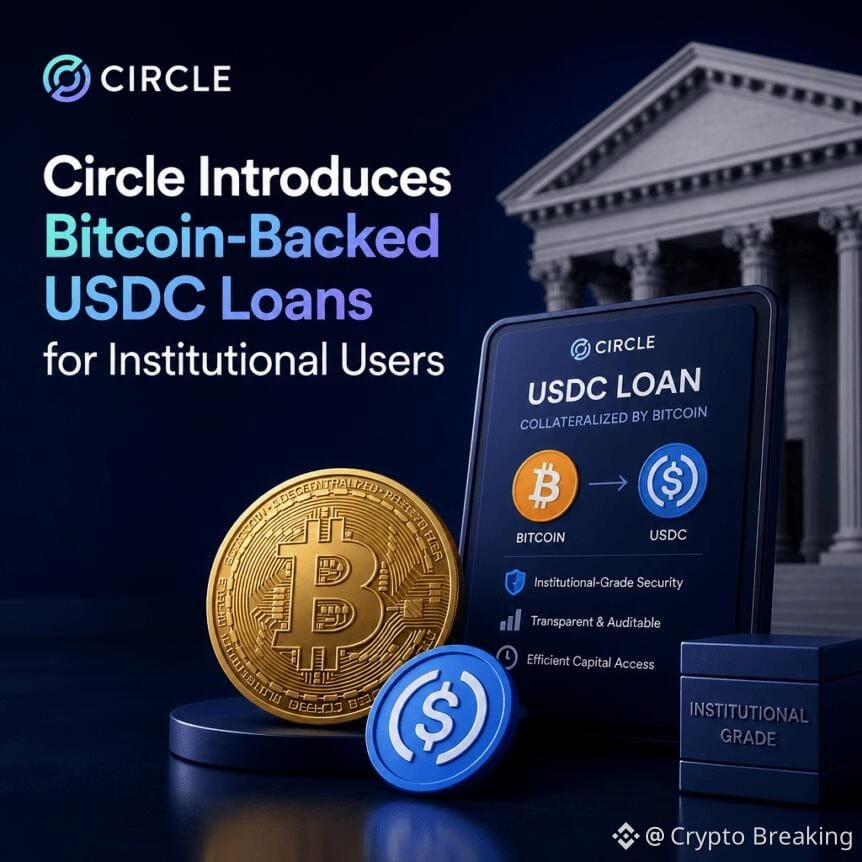
Article
Circle Introduces Bitcoin-Backed USDC Loans for Institutional UsersStablecoin issuer Circle is moving deeper into regulated crypto lending with a new Bitcoin-backed borrowing service designed for institutions. Through its Circle Mint platform, eligible customers can deposit Bitcoin, use Circle’s wrapped token cirBTC as collateral, and borrow USDC via supported onchain lending markets.
Circle says the rollout aligns with a broader infrastructure push around its Arc network, which is positioned as a layer-1 for stablecoin-based payments and financial services. The borrowing service—called Digital Asset-Backed Borrowing—adds a new way for Bitcoin holders to access USDC liquidity without handing custody of the underlying assets to the lending venues themselves.
Key takeaways
Circle’s new service lets eligible Circle Mint customers use Bitcoin as collateral to borrow USDC on supported DeFi lending protocols.
The borrowing workflow uses cirBTC as the collateral token, which Circle says is backed 1:1 by Bitcoin held in custody by Circle National Trust.
Borrowing terms such as rates, collateral requirements, and liquidation thresholds are determined by the third-party lending market, not by Circle.
Circle plans to start with Morpho and later add Aave and other protocols.
New York clients are excluded from the offering.
How Circle’s Bitcoin-backed borrowing works
Circle’s announcement details a custody-aware structure aimed at institutional users. Under Digital Asset-Backed Borrowing, eligible Circle Mint customers can deposit Bitcoin and mint cirBTC, Circle’s wrapped Bitcoin token. That cirBTC is then supplied as collateral to supported third-party lending markets.
Circle states that borrowed USDC is credited directly into the customer’s Circle Mint balance. From there, the customer can use USDC as needed—while the collateral posting and liquidation mechanics are governed by the specific lending protocol used.
Importantly, Circle positions this as a model that keeps the customer’s collateral control in the foreground. The company says the collateral is supplied via a customer-controlled wallet to the third-party DeFi protocol rather than lent out directly by Circle. Circle also characterizes the arrangement as overcollateralized, meaning borrowers must post more value in collateral than the amount of USDC borrowed.
Circle also notes that parameters affecting the position—such as borrowing rates, required collateral, and liquidation thresholds—are set by the third-party lending market. That design shifts the day-to-day risk and mechanics to the underlying DeFi venue, while Circle focuses on eligibility, the wrapping process, and the institutional onramp.
Morpho first, with Aave and others planned
For the initial launch, Circle is supporting Morpho as the first lending protocol for cirBTC-collateralized borrowing. Circle indicated that it plans to expand support to Aave and additional lending markets over time.
Separately, Circle’s timing matters for users watching Arc’s ecosystem. The service rollout coincides with cirBTC going live on Arc. According to Circle, cirBTC was launched on Ethereum in June, and its network availability is now expanding.
Circle also confirmed that it intends to connect these institutional borrowing flows to the broader Arc environment—an approach that could reduce friction for participants that prefer to use USDC as a settlement and payments asset within a single chain ecosystem.
Why the structure matters for institutions
Circle’s model reflects a recurring institutional demand in crypto: access to borrowing and leverage-like liquidity strategies without disrupting existing custody arrangements. By using cirBTC—backed 1:1 by Bitcoin held in custody by Circle National Trust—Circle provides a path to onchain credit while keeping a clear chain of custody and token backing on the issuer side.
This stands in contrast to some earlier institutional designs aimed at preserving underlying Bitcoin custody without wrapping. In a previous approach described earlier in the market, Lombard partnered with Bitwise to develop a system for borrowing against BTC held in custody, with Morpho supplying lending infrastructure. That model, as described in coverage at the time, was designed to avoid converting the underlying Bitcoin into a separate wrapped asset—opting instead to keep the Bitcoin in custody without using wrapping or bridging.
Circle’s decision to introduce cirBTC instead indicates a different tradeoff: the wrapped token enables easier integration with existing lending markets that support ERC-asset collateral, while Circle can still point to a specific backing mechanism for cirBTC.
More broadly, the development fits a pattern of institutional-oriented lending platforms emphasizing “qualified custody” and controlled collateral rather than open-ended asset movement. Earlier, Anchorage Digital partnered with Kamino to enable institutions to borrow against staked Solana held at Anchorage Digital Bank, avoiding a direct requirement to move collateral out of qualified custody. And BitGo expanded its institutional lending efforts with a portfolio-based framework, enabling multiple assets to serve as collateral depending on the structure of the financing.
In that context, Circle’s offering is best understood as an additional layer to the institutional lending stack—one that combines an issuer-backed collateral token, an institutional balance interface through Circle Mint, and DeFi lending mechanics executed on third-party protocols.
Arc mainnet timing and the USDC-centered roadmap
The borrowing service arrives just days after Circle rolled out the Arc mainnet, a layer-1 network designed around stablecoin payments and financial market use cases. Circle’s Arc positioning includes USDC as the native gas token, and support for tokenized assets such as BlackRock’s BUIDL and Circle’s USYC, according to earlier coverage.
That sequencing matters because it suggests Circle is aligning two different parts of its business: the transport layer (Arc) and the financial layer (stablecoin issuance, tokenization, and now institutional borrowing). For investors and builders, it also raises practical questions about where collateral and liquidity will concentrate—whether users will continue to rely primarily on Ethereum for DeFi borrowing, or whether Arc’s stablecoin-native design will draw activity from the start.
At the same time, the biggest determinants of user experience and risk remain anchored in the third-party lending markets that set borrowing rates and liquidation parameters. That means the real impact for end users may vary quickly depending on how Morpho (and later Aave and others) structure collateral factors and liquidation thresholds for cirBTC.
What to watch next
Circle’s next milestones—adding Aave and expanding the lending venue lineup, as well as observing how cirBTC usage develops across Arc versus Ethereum—will reveal whether this is merely an incremental product launch or a step toward a more standardized, issuer-coordinated institutional borrowing workflow. For now, institutional participants should pay close attention to protocol-specific borrowing terms, liquidation behavior, and eligibility constraints, including the exclusion of New York clients.
This article was originally published as Circle Introduces Bitcoin-Backed USDC Loans for Institutional Users on Crypto Breaking News – your trusted source for crypto news, Bitcoin news, and blockchain updates.
Circle Introduces Bitcoin-Backed USDC Loans for Institutional Users
Stablecoin issuer Circle is moving deeper into regulated crypto lending with a new Bitcoin-backed borrowing service designed for institutions. Through its Circle Mint platform, eligible customers can deposit Bitcoin, use Circle’s wrapped token cirBTC as collateral, and borrow USDC via supported onchain lending markets.
Circle says the rollout aligns with a broader infrastructure push around its Arc network, which is positioned as a layer-1 for stablecoin-based payments and financial services. The borrowing service—called Digital Asset-Backed Borrowing—adds a new way for Bitcoin holders to access USDC liquidity without handing custody of the underlying assets to the lending venues themselves.
Key takeaways
Circle’s new service lets eligible Circle Mint customers use Bitcoin as collateral to borrow USDC on supported DeFi lending protocols.
The borrowing workflow uses cirBTC as the collateral token, which Circle says is backed 1:1 by Bitcoin held in custody by Circle National Trust.
Borrowing terms such as rates, collateral requirements, and liquidation thresholds are determined by the third-party lending market, not by Circle.
Circle plans to start with Morpho and later add Aave and other protocols.
New York clients are excluded from the offering.
How Circle’s Bitcoin-backed borrowing works
Circle’s announcement details a custody-aware structure aimed at institutional users. Under Digital Asset-Backed Borrowing, eligible Circle Mint customers can deposit Bitcoin and mint cirBTC, Circle’s wrapped Bitcoin token. That cirBTC is then supplied as collateral to supported third-party lending markets.
Circle states that borrowed USDC is credited directly into the customer’s Circle Mint balance. From there, the customer can use USDC as needed—while the collateral posting and liquidation mechanics are governed by the specific lending protocol used.
Importantly, Circle positions this as a model that keeps the customer’s collateral control in the foreground. The company says the collateral is supplied via a customer-controlled wallet to the third-party DeFi protocol rather than lent out directly by Circle. Circle also characterizes the arrangement as overcollateralized, meaning borrowers must post more value in collateral than the amount of USDC borrowed.
Circle also notes that parameters affecting the position—such as borrowing rates, required collateral, and liquidation thresholds—are set by the third-party lending market. That design shifts the day-to-day risk and mechanics to the underlying DeFi venue, while Circle focuses on eligibility, the wrapping process, and the institutional onramp.
Morpho first, with Aave and others planned
For the initial launch, Circle is supporting Morpho as the first lending protocol for cirBTC-collateralized borrowing. Circle indicated that it plans to expand support to Aave and additional lending markets over time.
Separately, Circle’s timing matters for users watching Arc’s ecosystem. The service rollout coincides with cirBTC going live on Arc. According to Circle, cirBTC was launched on Ethereum in June, and its network availability is now expanding.
Circle also confirmed that it intends to connect these institutional borrowing flows to the broader Arc environment—an approach that could reduce friction for participants that prefer to use USDC as a settlement and payments asset within a single chain ecosystem.
Why the structure matters for institutions
Circle’s model reflects a recurring institutional demand in crypto: access to borrowing and leverage-like liquidity strategies without disrupting existing custody arrangements. By using cirBTC—backed 1:1 by Bitcoin held in custody by Circle National Trust—Circle provides a path to onchain credit while keeping a clear chain of custody and token backing on the issuer side.
This stands in contrast to some earlier institutional designs aimed at preserving underlying Bitcoin custody without wrapping. In a previous approach described earlier in the market, Lombard partnered with Bitwise to develop a system for borrowing against BTC held in custody, with Morpho supplying lending infrastructure. That model, as described in coverage at the time, was designed to avoid converting the underlying Bitcoin into a separate wrapped asset—opting instead to keep the Bitcoin in custody without using wrapping or bridging.
Circle’s decision to introduce cirBTC instead indicates a different tradeoff: the wrapped token enables easier integration with existing lending markets that support ERC-asset collateral, while Circle can still point to a specific backing mechanism for cirBTC.
More broadly, the development fits a pattern of institutional-oriented lending platforms emphasizing “qualified custody” and controlled collateral rather than open-ended asset movement. Earlier, Anchorage Digital partnered with Kamino to enable institutions to borrow against staked Solana held at Anchorage Digital Bank, avoiding a direct requirement to move collateral out of qualified custody. And BitGo expanded its institutional lending efforts with a portfolio-based framework, enabling multiple assets to serve as collateral depending on the structure of the financing.
In that context, Circle’s offering is best understood as an additional layer to the institutional lending stack—one that combines an issuer-backed collateral token, an institutional balance interface through Circle Mint, and DeFi lending mechanics executed on third-party protocols.
Arc mainnet timing and the USDC-centered roadmap
The borrowing service arrives just days after Circle rolled out the Arc mainnet, a layer-1 network designed around stablecoin payments and financial market use cases. Circle’s Arc positioning includes USDC as the native gas token, and support for tokenized assets such as BlackRock’s BUIDL and Circle’s USYC, according to earlier coverage.
That sequencing matters because it suggests Circle is aligning two different parts of its business: the transport layer (Arc) and the financial layer (stablecoin issuance, tokenization, and now institutional borrowing). For investors and builders, it also raises practical questions about where collateral and liquidity will concentrate—whether users will continue to rely primarily on Ethereum for DeFi borrowing, or whether Arc’s stablecoin-native design will draw activity from the start.
At the same time, the biggest determinants of user experience and risk remain anchored in the third-party lending markets that set borrowing rates and liquidation parameters. That means the real impact for end users may vary quickly depending on how Morpho (and later Aave and others) structure collateral factors and liquidation thresholds for cirBTC.
What to watch next
Circle’s next milestones—adding Aave and expanding the lending venue lineup, as well as observing how cirBTC usage develops across Arc versus Ethereum—will reveal whether this is merely an incremental product launch or a step toward a more standardized, issuer-coordinated institutional borrowing workflow. For now, institutional participants should pay close attention to protocol-specific borrowing terms, liquidation behavior, and eligibility constraints, including the exclusion of New York clients.
This article was originally published as Circle Introduces Bitcoin-Backed USDC Loans for Institutional Users on Crypto Breaking News – your trusted source for crypto news, Bitcoin news, and blockchain updates.
Circle says the rollout aligns with a broader infrastructure push around its Arc network, which is positioned as a layer-1 for stablecoin-based payments and financial services. The borrowing service—called Digital Asset-Backed Borrowing—adds a new way for Bitcoin holders to access USDC liquidity without handing custody of the underlying assets to the lending venues themselves.
Key takeaways
Circle’s new service lets eligible Circle Mint customers use Bitcoin as collateral to borrow USDC on supported DeFi lending protocols.
The borrowing workflow uses cirBTC as the collateral token, which Circle says is backed 1:1 by Bitcoin held in custody by Circle National Trust.
Borrowing terms such as rates, collateral requirements, and liquidation thresholds are determined by the third-party lending market, not by Circle.
Circle plans to start with Morpho and later add Aave and other protocols.
New York clients are excluded from the offering.
How Circle’s Bitcoin-backed borrowing works
Circle’s announcement details a custody-aware structure aimed at institutional users. Under Digital Asset-Backed Borrowing, eligible Circle Mint customers can deposit Bitcoin and mint cirBTC, Circle’s wrapped Bitcoin token. That cirBTC is then supplied as collateral to supported third-party lending markets.
Circle states that borrowed USDC is credited directly into the customer’s Circle Mint balance. From there, the customer can use USDC as needed—while the collateral posting and liquidation mechanics are governed by the specific lending protocol used.
Importantly, Circle positions this as a model that keeps the customer’s collateral control in the foreground. The company says the collateral is supplied via a customer-controlled wallet to the third-party DeFi protocol rather than lent out directly by Circle. Circle also characterizes the arrangement as overcollateralized, meaning borrowers must post more value in collateral than the amount of USDC borrowed.
Circle also notes that parameters affecting the position—such as borrowing rates, required collateral, and liquidation thresholds—are set by the third-party lending market. That design shifts the day-to-day risk and mechanics to the underlying DeFi venue, while Circle focuses on eligibility, the wrapping process, and the institutional onramp.
Morpho first, with Aave and others planned
For the initial launch, Circle is supporting Morpho as the first lending protocol for cirBTC-collateralized borrowing. Circle indicated that it plans to expand support to Aave and additional lending markets over time.
Separately, Circle’s timing matters for users watching Arc’s ecosystem. The service rollout coincides with cirBTC going live on Arc. According to Circle, cirBTC was launched on Ethereum in June, and its network availability is now expanding.
Circle also confirmed that it intends to connect these institutional borrowing flows to the broader Arc environment—an approach that could reduce friction for participants that prefer to use USDC as a settlement and payments asset within a single chain ecosystem.
Why the structure matters for institutions
Circle’s model reflects a recurring institutional demand in crypto: access to borrowing and leverage-like liquidity strategies without disrupting existing custody arrangements. By using cirBTC—backed 1:1 by Bitcoin held in custody by Circle National Trust—Circle provides a path to onchain credit while keeping a clear chain of custody and token backing on the issuer side.
This stands in contrast to some earlier institutional designs aimed at preserving underlying Bitcoin custody without wrapping. In a previous approach described earlier in the market, Lombard partnered with Bitwise to develop a system for borrowing against BTC held in custody, with Morpho supplying lending infrastructure. That model, as described in coverage at the time, was designed to avoid converting the underlying Bitcoin into a separate wrapped asset—opting instead to keep the Bitcoin in custody without using wrapping or bridging.
Circle’s decision to introduce cirBTC instead indicates a different tradeoff: the wrapped token enables easier integration with existing lending markets that support ERC-asset collateral, while Circle can still point to a specific backing mechanism for cirBTC.
More broadly, the development fits a pattern of institutional-oriented lending platforms emphasizing “qualified custody” and controlled collateral rather than open-ended asset movement. Earlier, Anchorage Digital partnered with Kamino to enable institutions to borrow against staked Solana held at Anchorage Digital Bank, avoiding a direct requirement to move collateral out of qualified custody. And BitGo expanded its institutional lending efforts with a portfolio-based framework, enabling multiple assets to serve as collateral depending on the structure of the financing.
In that context, Circle’s offering is best understood as an additional layer to the institutional lending stack—one that combines an issuer-backed collateral token, an institutional balance interface through Circle Mint, and DeFi lending mechanics executed on third-party protocols.
Arc mainnet timing and the USDC-centered roadmap
The borrowing service arrives just days after Circle rolled out the Arc mainnet, a layer-1 network designed around stablecoin payments and financial market use cases. Circle’s Arc positioning includes USDC as the native gas token, and support for tokenized assets such as BlackRock’s BUIDL and Circle’s USYC, according to earlier coverage.
That sequencing matters because it suggests Circle is aligning two different parts of its business: the transport layer (Arc) and the financial layer (stablecoin issuance, tokenization, and now institutional borrowing). For investors and builders, it also raises practical questions about where collateral and liquidity will concentrate—whether users will continue to rely primarily on Ethereum for DeFi borrowing, or whether Arc’s stablecoin-native design will draw activity from the start.
At the same time, the biggest determinants of user experience and risk remain anchored in the third-party lending markets that set borrowing rates and liquidation parameters. That means the real impact for end users may vary quickly depending on how Morpho (and later Aave and others) structure collateral factors and liquidation thresholds for cirBTC.
What to watch next
Circle’s next milestones—adding Aave and expanding the lending venue lineup, as well as observing how cirBTC usage develops across Arc versus Ethereum—will reveal whether this is merely an incremental product launch or a step toward a more standardized, issuer-coordinated institutional borrowing workflow. For now, institutional participants should pay close attention to protocol-specific borrowing terms, liquidation behavior, and eligibility constraints, including the exclusion of New York clients.
This article was originally published as Circle Introduces Bitcoin-Backed USDC Loans for Institutional Users on Crypto Breaking News – your trusted source for crypto news, Bitcoin news, and blockchain updates.
45
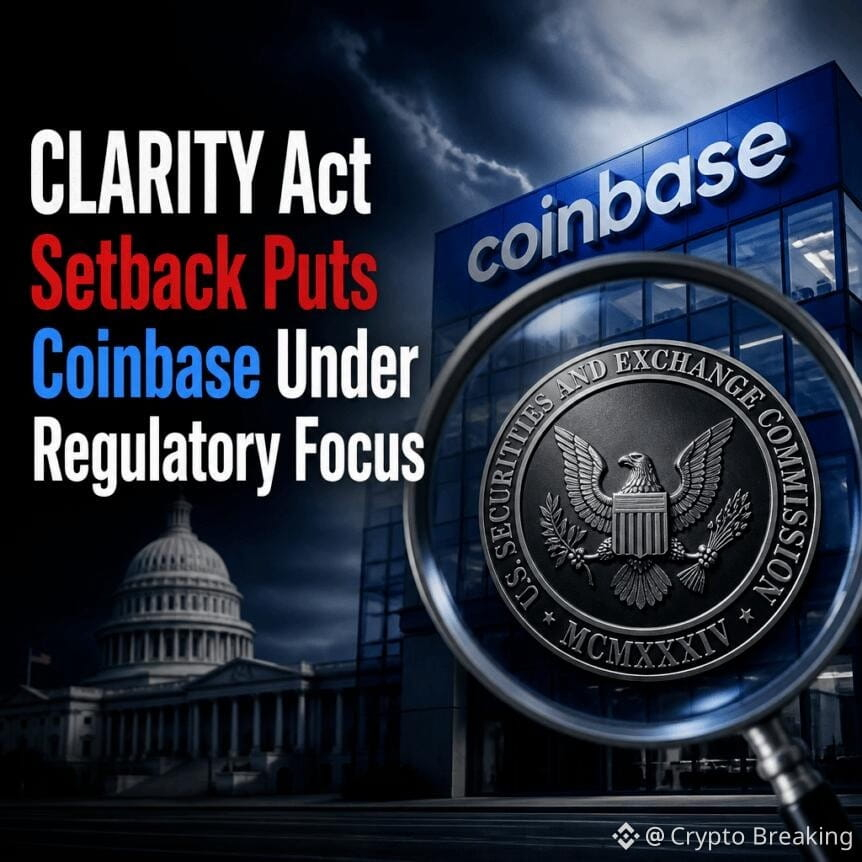
Article
CLARITY Act Setback Puts Coinbase Under Regulatory FocusCrypto market participants are watching two very different developments this week: a stalled bid for U.S. regulatory “market-structure” clarity, and new attempts to monetize crypto assets—ranging from layer-2 revenue projections to Ether staking and treasury strategies. While lawmakers failed to move the CLARITY Act forward in the Senate, strategists and companies continued to refine their assumptions about how regulation, onchain finance, and emerging AI risks could reshape incentives.
The legislative snag matters because it directly affects how U.S. crypto exchanges may register, which assets can be traded, and who can participate on platforms—issues that tend to influence both compliance costs and product roadmaps. Meanwhile, corporate and research teams offered fresh forecasts and operational updates, from Standard Chartered’s bullish view on Arbitrum’s economics to Bitmine’s staking revenue outlook and warnings from Phemex’s CEO about AI-driven security pressures.
Key takeaways
The U.S. Senate failed to advance the CLARITY Act, falling short of the 60-vote threshold needed to bring it to the floor for debate.
Saxo Bank strategist Ruben Dalfovo argued Coinbase faces more direct CLARITY Act exposure than many other crypto-linked businesses due to trading market-structure rules.
Standard Chartered expects Arbitrum to outperform major tokens through 2030, citing revenue-sharing dynamics and expanding onchain activity by traditional finance.
Bitmine projected $334 million in annualized staking revenue from its Ether holdings, with more than 5 million ETH reportedly staked.
Phemex CEO Federico Variola said AI is weakening crypto liquidity while escalating the cybersecurity burden and enabling attackers.
CLARITY Act stalls—why the clock is now even tighter
According to the coverage of the vote, the CLARITY Act did not move forward in the U.S. Senate on Tuesday. The bill failed to secure the 60 votes required to proceed to a floor debate, a procedural outcome that narrows the path for legislative action this year. With the U.S. midterm elections scheduled for Nov. 3, the Senate calendar is described as tightening, which increases uncertainty around when (or whether) similar market-structure rules could be revisited.
That timing risk is especially relevant for firms with U.S.-facing trading operations. In a Wednesday note cited in the article, Saxo Bank strategist Ruben Dalfovo highlighted that Coinbase’s exposure is more immediate because new rules could affect registration requirements, the range of tradable assets, and platform participation criteria. In contrast, he characterized other companies as having exposure that is either more indirectly tied to market-structure rules or driven more by different economic variables.
Coinbase highlighted, but equity moves show broader concern
Dalfovo’s framing focused on how trading infrastructure is shaped by regulation. If the CLARITY Act had advanced, it could have clarified how exchanges must operate under U.S. market-structure expectations, potentially reducing compliance friction and enabling clearer product planning. With the bill sidelined, the uncertainty remains, and market pricing appears to have reacted accordingly.
Following the procedural failure, the article reports that shares of Coinbase, Circle, and Strategy declined by roughly 5% to 10%, with weakness continuing into the next day. For investors, that pattern suggests the market is not treating the legislative setback as a narrow corporate-event risk. Instead, it appears to be priced as a broader signal that regulatory clarity may be delayed, which can affect expectations for adoption, institutional participation, and near-term business development in the U.S.
What remains unclear is how long the delay will last and whether the next legislative attempt would prioritize the same market-structure provisions. Traders may also watch for alternative regulatory routes—such as agency guidance or enforcement actions—that could still influence exchange operations even without a new statute advancing.
Standard Chartered’s Arbitrum thesis: onchain finance could change revenue math
While regulation was a headline driver, research teams were also looking forward through the lens of onchain economics. Standard Chartered’s view, as reported, is that Arbitrum could outperform Bitcoin and Ether through 2030, supported by traditional finance firms moving assets onchain and changing how network economics are generated.
In the cited note, Geoff Kendrick—Standard Chartered’s global head of digital assets research—said Arbitrum receives 10% of net protocol revenue from companies building on it. The research points to new activity as a catalyst, especially the Robinhood Chain launch in July, which the report says has materially altered Arbitrum’s economics. The article further claims that September revenue is expected to reach $5 million, described as more than five times the prior level.
Based on that revenue-sharing framework and additional assumptions, Kendrick projected ARB at $10 by 2030. The article frames this as a major jump from levels around $0.14 at the time of reporting, noting that ARB had gained 86% over the preceding month.
Standard Chartered’s broader model also depends on tokenized assets reaching $39 billion and forecasts of $4 trillion by 2028. The key uncertainty for readers is whether those adoption targets arrive fast enough to translate into sustained protocol revenue. Layer-2 revenue can be sensitive to user activity, wallet and exchange integration, and the competitive landscape among scaling networks—so investors treating this as an investment thesis may want to monitor actual growth in net protocol revenue, not just token price performance.
Bitmine leans on staking: projected $334 million annualized from Ether treasury
On the corporate side, Bitmine’s approach centers on earning recurring income from its Ether treasury through staking. The article says Bitmine projects $334 million in annualized staking revenue based on its reported $15.8 billion crypto treasury and indicates that more than 5 million ETH is now staked to generate ongoing income even during volatile market conditions.
Bitmine reportedly added 27,180 ETH last week, bringing holdings to 5.95 million ETH valued at $15.4 billion. The article states that this represents roughly 4.9% of Ether’s circulating supply. It also claims that more than 5.06 million ETH is staked and uses current rates to estimate $334 million in annualized revenue.
The report also compares this strategy with Bitcoin-treasury-style approaches by emphasizing the staking component: unlike holdings that rely primarily on price appreciation, staking revenue provides a recurring cashflow-like mechanic (even though it remains exposed to network conditions and staking dynamics). It cites Grayscale’s Ethereum Staking ETF as having 84.6% of its ETH staked, according to the fund’s webpage.
Separately, the article notes that Strategy—contrasting with treasury staking economics—went a second straight week without buying Bitcoin, using $139.3 million to repurchase preferred stock. That side-by-side distinction matters for investors trying to interpret sector performance: in the same broader “treasury strategy” theme, different firms are effectively betting on different return drivers—token price versus staking yield.
AI’s double-edged impact: liquidity drain and higher cyber risk
The operational risk theme arrived in another segment of the reporting, where Phemex CEO Federico Variola argued that AI has been a “net negative” for crypto. In his comments, he said AI is diverting liquidity away from the industry while also enabling attackers, raising cybersecurity costs—particularly for smaller teams without the resources to respond quickly.
The article ties this warning to an example from July: attackers allegedly drained roughly $116 million in Bitcoin from more than 5,200 addresses associated with a Coldcard hardware wallet flaw. The coverage suggests the flaw was widely believed to have been identified through malicious AI use. It also references Coinkite CEO Rodolfo Novak, who warned that AI-assisted code review can outpace experienced experts.
Variola’s broader takeaway is that AI threats could make self-custody and DeFi less attractive for retail users, potentially pushing the ecosystem toward greater centralization. He said AI agents could still offer practical value for portfolio building and trading decision-making, but he argued they would not fully replace human judgment. The article also includes a counterpoint from CertiK’s Natalie Newson, who said AI can be “one of the biggest defenses.”
For readers, the near-term question is not whether AI will impact crypto security, but how quickly defenses and operational practices will adapt. Expect ongoing focus on secure development processes, faster incident response, and whether security tooling keeps pace with attacker tooling—especially as attackers increasingly automate discovery and exploitation.
Going forward, the most important watch items are whether future legislative attempts revive parts of the CLARITY Act framework before the midterms, and whether onchain and corporate revenue strategies—like L2 revenue sharing and Ether staking—can prove resilient despite regulatory uncertainty and rising AI-linked security threats.
This article was originally published as CLARITY Act Setback Puts Coinbase Under Regulatory Focus on Crypto Breaking News – your trusted source for crypto news, Bitcoin news, and blockchain updates.
CLARITY Act Setback Puts Coinbase Under Regulatory Focus
Crypto market participants are watching two very different developments this week: a stalled bid for U.S. regulatory “market-structure” clarity, and new attempts to monetize crypto assets—ranging from layer-2 revenue projections to Ether staking and treasury strategies. While lawmakers failed to move the CLARITY Act forward in the Senate, strategists and companies continued to refine their assumptions about how regulation, onchain finance, and emerging AI risks could reshape incentives.
The legislative snag matters because it directly affects how U.S. crypto exchanges may register, which assets can be traded, and who can participate on platforms—issues that tend to influence both compliance costs and product roadmaps. Meanwhile, corporate and research teams offered fresh forecasts and operational updates, from Standard Chartered’s bullish view on Arbitrum’s economics to Bitmine’s staking revenue outlook and warnings from Phemex’s CEO about AI-driven security pressures.
Key takeaways
The U.S. Senate failed to advance the CLARITY Act, falling short of the 60-vote threshold needed to bring it to the floor for debate.
Saxo Bank strategist Ruben Dalfovo argued Coinbase faces more direct CLARITY Act exposure than many other crypto-linked businesses due to trading market-structure rules.
Standard Chartered expects Arbitrum to outperform major tokens through 2030, citing revenue-sharing dynamics and expanding onchain activity by traditional finance.
Bitmine projected $334 million in annualized staking revenue from its Ether holdings, with more than 5 million ETH reportedly staked.
Phemex CEO Federico Variola said AI is weakening crypto liquidity while escalating the cybersecurity burden and enabling attackers.
CLARITY Act stalls—why the clock is now even tighter
According to the coverage of the vote, the CLARITY Act did not move forward in the U.S. Senate on Tuesday. The bill failed to secure the 60 votes required to proceed to a floor debate, a procedural outcome that narrows the path for legislative action this year. With the U.S. midterm elections scheduled for Nov. 3, the Senate calendar is described as tightening, which increases uncertainty around when (or whether) similar market-structure rules could be revisited.
That timing risk is especially relevant for firms with U.S.-facing trading operations. In a Wednesday note cited in the article, Saxo Bank strategist Ruben Dalfovo highlighted that Coinbase’s exposure is more immediate because new rules could affect registration requirements, the range of tradable assets, and platform participation criteria. In contrast, he characterized other companies as having exposure that is either more indirectly tied to market-structure rules or driven more by different economic variables.
Coinbase highlighted, but equity moves show broader concern
Dalfovo’s framing focused on how trading infrastructure is shaped by regulation. If the CLARITY Act had advanced, it could have clarified how exchanges must operate under U.S. market-structure expectations, potentially reducing compliance friction and enabling clearer product planning. With the bill sidelined, the uncertainty remains, and market pricing appears to have reacted accordingly.
Following the procedural failure, the article reports that shares of Coinbase, Circle, and Strategy declined by roughly 5% to 10%, with weakness continuing into the next day. For investors, that pattern suggests the market is not treating the legislative setback as a narrow corporate-event risk. Instead, it appears to be priced as a broader signal that regulatory clarity may be delayed, which can affect expectations for adoption, institutional participation, and near-term business development in the U.S.
What remains unclear is how long the delay will last and whether the next legislative attempt would prioritize the same market-structure provisions. Traders may also watch for alternative regulatory routes—such as agency guidance or enforcement actions—that could still influence exchange operations even without a new statute advancing.
Standard Chartered’s Arbitrum thesis: onchain finance could change revenue math
While regulation was a headline driver, research teams were also looking forward through the lens of onchain economics. Standard Chartered’s view, as reported, is that Arbitrum could outperform Bitcoin and Ether through 2030, supported by traditional finance firms moving assets onchain and changing how network economics are generated.
In the cited note, Geoff Kendrick—Standard Chartered’s global head of digital assets research—said Arbitrum receives 10% of net protocol revenue from companies building on it. The research points to new activity as a catalyst, especially the Robinhood Chain launch in July, which the report says has materially altered Arbitrum’s economics. The article further claims that September revenue is expected to reach $5 million, described as more than five times the prior level.
Based on that revenue-sharing framework and additional assumptions, Kendrick projected ARB at $10 by 2030. The article frames this as a major jump from levels around $0.14 at the time of reporting, noting that ARB had gained 86% over the preceding month.
Standard Chartered’s broader model also depends on tokenized assets reaching $39 billion and forecasts of $4 trillion by 2028. The key uncertainty for readers is whether those adoption targets arrive fast enough to translate into sustained protocol revenue. Layer-2 revenue can be sensitive to user activity, wallet and exchange integration, and the competitive landscape among scaling networks—so investors treating this as an investment thesis may want to monitor actual growth in net protocol revenue, not just token price performance.
Bitmine leans on staking: projected $334 million annualized from Ether treasury
On the corporate side, Bitmine’s approach centers on earning recurring income from its Ether treasury through staking. The article says Bitmine projects $334 million in annualized staking revenue based on its reported $15.8 billion crypto treasury and indicates that more than 5 million ETH is now staked to generate ongoing income even during volatile market conditions.
Bitmine reportedly added 27,180 ETH last week, bringing holdings to 5.95 million ETH valued at $15.4 billion. The article states that this represents roughly 4.9% of Ether’s circulating supply. It also claims that more than 5.06 million ETH is staked and uses current rates to estimate $334 million in annualized revenue.
The report also compares this strategy with Bitcoin-treasury-style approaches by emphasizing the staking component: unlike holdings that rely primarily on price appreciation, staking revenue provides a recurring cashflow-like mechanic (even though it remains exposed to network conditions and staking dynamics). It cites Grayscale’s Ethereum Staking ETF as having 84.6% of its ETH staked, according to the fund’s webpage.
Separately, the article notes that Strategy—contrasting with treasury staking economics—went a second straight week without buying Bitcoin, using $139.3 million to repurchase preferred stock. That side-by-side distinction matters for investors trying to interpret sector performance: in the same broader “treasury strategy” theme, different firms are effectively betting on different return drivers—token price versus staking yield.
AI’s double-edged impact: liquidity drain and higher cyber risk
The operational risk theme arrived in another segment of the reporting, where Phemex CEO Federico Variola argued that AI has been a “net negative” for crypto. In his comments, he said AI is diverting liquidity away from the industry while also enabling attackers, raising cybersecurity costs—particularly for smaller teams without the resources to respond quickly.
The article ties this warning to an example from July: attackers allegedly drained roughly $116 million in Bitcoin from more than 5,200 addresses associated with a Coldcard hardware wallet flaw. The coverage suggests the flaw was widely believed to have been identified through malicious AI use. It also references Coinkite CEO Rodolfo Novak, who warned that AI-assisted code review can outpace experienced experts.
Variola’s broader takeaway is that AI threats could make self-custody and DeFi less attractive for retail users, potentially pushing the ecosystem toward greater centralization. He said AI agents could still offer practical value for portfolio building and trading decision-making, but he argued they would not fully replace human judgment. The article also includes a counterpoint from CertiK’s Natalie Newson, who said AI can be “one of the biggest defenses.”
For readers, the near-term question is not whether AI will impact crypto security, but how quickly defenses and operational practices will adapt. Expect ongoing focus on secure development processes, faster incident response, and whether security tooling keeps pace with attacker tooling—especially as attackers increasingly automate discovery and exploitation.
Going forward, the most important watch items are whether future legislative attempts revive parts of the CLARITY Act framework before the midterms, and whether onchain and corporate revenue strategies—like L2 revenue sharing and Ether staking—can prove resilient despite regulatory uncertainty and rising AI-linked security threats.
This article was originally published as CLARITY Act Setback Puts Coinbase Under Regulatory Focus on Crypto Breaking News – your trusted source for crypto news, Bitcoin news, and blockchain updates.
The legislative snag matters because it directly affects how U.S. crypto exchanges may register, which assets can be traded, and who can participate on platforms—issues that tend to influence both compliance costs and product roadmaps. Meanwhile, corporate and research teams offered fresh forecasts and operational updates, from Standard Chartered’s bullish view on Arbitrum’s economics to Bitmine’s staking revenue outlook and warnings from Phemex’s CEO about AI-driven security pressures.
Key takeaways
The U.S. Senate failed to advance the CLARITY Act, falling short of the 60-vote threshold needed to bring it to the floor for debate.
Saxo Bank strategist Ruben Dalfovo argued Coinbase faces more direct CLARITY Act exposure than many other crypto-linked businesses due to trading market-structure rules.
Standard Chartered expects Arbitrum to outperform major tokens through 2030, citing revenue-sharing dynamics and expanding onchain activity by traditional finance.
Bitmine projected $334 million in annualized staking revenue from its Ether holdings, with more than 5 million ETH reportedly staked.
Phemex CEO Federico Variola said AI is weakening crypto liquidity while escalating the cybersecurity burden and enabling attackers.
CLARITY Act stalls—why the clock is now even tighter
According to the coverage of the vote, the CLARITY Act did not move forward in the U.S. Senate on Tuesday. The bill failed to secure the 60 votes required to proceed to a floor debate, a procedural outcome that narrows the path for legislative action this year. With the U.S. midterm elections scheduled for Nov. 3, the Senate calendar is described as tightening, which increases uncertainty around when (or whether) similar market-structure rules could be revisited.
That timing risk is especially relevant for firms with U.S.-facing trading operations. In a Wednesday note cited in the article, Saxo Bank strategist Ruben Dalfovo highlighted that Coinbase’s exposure is more immediate because new rules could affect registration requirements, the range of tradable assets, and platform participation criteria. In contrast, he characterized other companies as having exposure that is either more indirectly tied to market-structure rules or driven more by different economic variables.
Coinbase highlighted, but equity moves show broader concern
Dalfovo’s framing focused on how trading infrastructure is shaped by regulation. If the CLARITY Act had advanced, it could have clarified how exchanges must operate under U.S. market-structure expectations, potentially reducing compliance friction and enabling clearer product planning. With the bill sidelined, the uncertainty remains, and market pricing appears to have reacted accordingly.
Following the procedural failure, the article reports that shares of Coinbase, Circle, and Strategy declined by roughly 5% to 10%, with weakness continuing into the next day. For investors, that pattern suggests the market is not treating the legislative setback as a narrow corporate-event risk. Instead, it appears to be priced as a broader signal that regulatory clarity may be delayed, which can affect expectations for adoption, institutional participation, and near-term business development in the U.S.
What remains unclear is how long the delay will last and whether the next legislative attempt would prioritize the same market-structure provisions. Traders may also watch for alternative regulatory routes—such as agency guidance or enforcement actions—that could still influence exchange operations even without a new statute advancing.
Standard Chartered’s Arbitrum thesis: onchain finance could change revenue math
While regulation was a headline driver, research teams were also looking forward through the lens of onchain economics. Standard Chartered’s view, as reported, is that Arbitrum could outperform Bitcoin and Ether through 2030, supported by traditional finance firms moving assets onchain and changing how network economics are generated.
In the cited note, Geoff Kendrick—Standard Chartered’s global head of digital assets research—said Arbitrum receives 10% of net protocol revenue from companies building on it. The research points to new activity as a catalyst, especially the Robinhood Chain launch in July, which the report says has materially altered Arbitrum’s economics. The article further claims that September revenue is expected to reach $5 million, described as more than five times the prior level.
Based on that revenue-sharing framework and additional assumptions, Kendrick projected ARB at $10 by 2030. The article frames this as a major jump from levels around $0.14 at the time of reporting, noting that ARB had gained 86% over the preceding month.
Standard Chartered’s broader model also depends on tokenized assets reaching $39 billion and forecasts of $4 trillion by 2028. The key uncertainty for readers is whether those adoption targets arrive fast enough to translate into sustained protocol revenue. Layer-2 revenue can be sensitive to user activity, wallet and exchange integration, and the competitive landscape among scaling networks—so investors treating this as an investment thesis may want to monitor actual growth in net protocol revenue, not just token price performance.
Bitmine leans on staking: projected $334 million annualized from Ether treasury
On the corporate side, Bitmine’s approach centers on earning recurring income from its Ether treasury through staking. The article says Bitmine projects $334 million in annualized staking revenue based on its reported $15.8 billion crypto treasury and indicates that more than 5 million ETH is now staked to generate ongoing income even during volatile market conditions.
Bitmine reportedly added 27,180 ETH last week, bringing holdings to 5.95 million ETH valued at $15.4 billion. The article states that this represents roughly 4.9% of Ether’s circulating supply. It also claims that more than 5.06 million ETH is staked and uses current rates to estimate $334 million in annualized revenue.
The report also compares this strategy with Bitcoin-treasury-style approaches by emphasizing the staking component: unlike holdings that rely primarily on price appreciation, staking revenue provides a recurring cashflow-like mechanic (even though it remains exposed to network conditions and staking dynamics). It cites Grayscale’s Ethereum Staking ETF as having 84.6% of its ETH staked, according to the fund’s webpage.
Separately, the article notes that Strategy—contrasting with treasury staking economics—went a second straight week without buying Bitcoin, using $139.3 million to repurchase preferred stock. That side-by-side distinction matters for investors trying to interpret sector performance: in the same broader “treasury strategy” theme, different firms are effectively betting on different return drivers—token price versus staking yield.
AI’s double-edged impact: liquidity drain and higher cyber risk
The operational risk theme arrived in another segment of the reporting, where Phemex CEO Federico Variola argued that AI has been a “net negative” for crypto. In his comments, he said AI is diverting liquidity away from the industry while also enabling attackers, raising cybersecurity costs—particularly for smaller teams without the resources to respond quickly.
The article ties this warning to an example from July: attackers allegedly drained roughly $116 million in Bitcoin from more than 5,200 addresses associated with a Coldcard hardware wallet flaw. The coverage suggests the flaw was widely believed to have been identified through malicious AI use. It also references Coinkite CEO Rodolfo Novak, who warned that AI-assisted code review can outpace experienced experts.
Variola’s broader takeaway is that AI threats could make self-custody and DeFi less attractive for retail users, potentially pushing the ecosystem toward greater centralization. He said AI agents could still offer practical value for portfolio building and trading decision-making, but he argued they would not fully replace human judgment. The article also includes a counterpoint from CertiK’s Natalie Newson, who said AI can be “one of the biggest defenses.”
For readers, the near-term question is not whether AI will impact crypto security, but how quickly defenses and operational practices will adapt. Expect ongoing focus on secure development processes, faster incident response, and whether security tooling keeps pace with attacker tooling—especially as attackers increasingly automate discovery and exploitation.
Going forward, the most important watch items are whether future legislative attempts revive parts of the CLARITY Act framework before the midterms, and whether onchain and corporate revenue strategies—like L2 revenue sharing and Ether staking—can prove resilient despite regulatory uncertainty and rising AI-linked security threats.
This article was originally published as CLARITY Act Setback Puts Coinbase Under Regulatory Focus on Crypto Breaking News – your trusted source for crypto news, Bitcoin news, and blockchain updates.
424
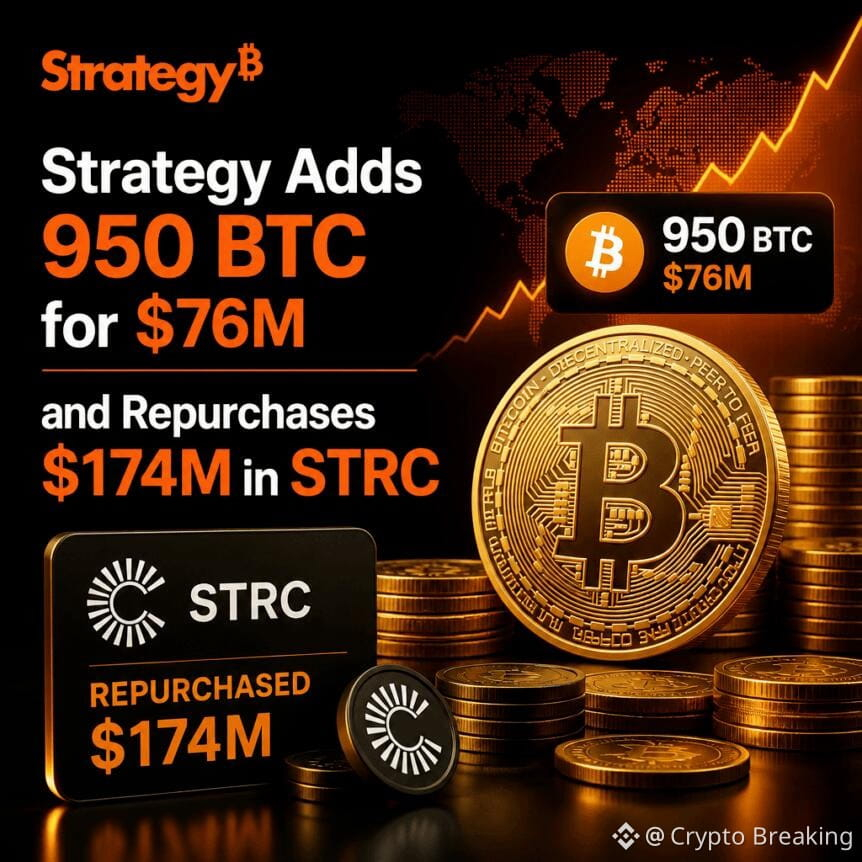
Article
Strategy Adds 950 BTC for $76M and Repurchases $174M in STRCStrategy, the publicly traded Bitcoin treasury company led by Michael Saylor, resumed its Bitcoin purchases after a two-week pause, according to a Form 8-K filed with the U.S. Securities and Exchange Commission on Monday. The company acquired 950 BTC for $75.7 million during the week from Monday through Sunday, at an average price of $79,670 per coin.
The new buy lifts Strategy’s total Bitcoin holdings to 846,000 BTC, accumulated for roughly $63.8 billion at an average cost of $75,416 per Bitcoin (including fees and expenses). At the time of publication, Bitcoin was trading at $84,925, implying an unrealized gain of about $8.05 billion on the treasury’s position, based on figures referenced in the filing. The update also arrives as Strategy continues to balance Bitcoin accumulation with ongoing preferred stock management and a large cash position.
Key takeaways
Strategy bought 950 BTC for $75.7 million at an average price of $79,670 per coin after a two-week buying pause.
Total holdings now stand at 846,000 BTC, with Strategy reporting an average cost basis of $75,416 per Bitcoin.
Bitcoin’s referenced market price of $84,925 implies an unrealized gain of about $8.05 billion on the treasury.
Strategy continued repurchasing STRC preferred stock, spending $174 million on about 1.77 million shares.
Strategy’s “USD Cash” fell nearly 20% to $1.05 billion week over week, reflecting dividend and debt-related payments.
Bitcoin buys restart after a brief pause
Strategy’s latest SEC filing describes a resumption of its steady accumulation approach. Between Monday and Sunday, the company purchased 950 Bitcoin for $75.7 million, averaging $79,670 per BTC. The filing also notes the company’s broader position—846,000 BTC in total—indicating the restart did not meaningfully change the scale of its treasury strategy, but it does show a deliberate pause followed by renewed buying activity.
For investors, the practical significance is less about the week’s number of coins and more about consistency: Strategy is still deploying capital into Bitcoin while maintaining liquidity and continuing to manage its preferred securities. That balance can matter in periods where capital allocation becomes more constrained or where financing needs shift.
Strategy’s treasury position and the gains at market price
With Bitcoin trading at $84,925 at the time of publication, Strategy’s holdings are positioned for substantial paper gains relative to its reported average cost of $75,416. The article’s referenced math suggests an unrealized gain of approximately $8.05 billion on the full 846,000 BTC balance.
While unrealized gains are not cash, they can influence market perception of treasury strength. In addition, the company’s ability to keep buying without disrupting preferred-stock obligations depends on its cash management framework—particularly the split between “USD Cash” and “USD Reserve,” which Strategy reports separately.
Preferred stock repurchases continue alongside Bitcoin accumulation
Strategy also used capital to reduce its exposure to preferred-stock obligations through ongoing buybacks of STRC. The company repurchased approximately 1.77 million shares for $174 million during the same week, and STRC was up slightly in pre-market trading on Monday, according to the information cited alongside Yahoo Finance data.
Strategy stated it still had $875.1 million available under its preferred-stock repurchase program and $1 billion remaining under its MSTR share repurchase program. That matters because it shows the company still has authorization headroom—meaning buybacks can continue even after deploying $174 million in the most recent repurchase window.
The filing period also included at-the-market offering programs, and Strategy reported no sales under those plans between Sept. 14 and Sept. 20. In other words, during that window, the company did not appear to raise funds through its at-the-market channels, relying instead on existing treasury resources for purchases and repurchases.
Cash reserves decline as dividends and interest payments land
In a sign of how treasury priorities are being sequenced, Strategy’s cash balances moved down. Its “USD Cash” balance fell nearly 20% to $1.05 billion from $1.30 billion a week earlier, when the company reported its prior cash figures. Separately, “USD Reserve” declined to $5.04 billion from $5.10 billion.
The filing attributed the change in part to cash used for preferred-stock dividends and interest on outstanding debt—amounting to $57.4 million. Strategy’s “USD Cash” is described as serving broader treasury purposes, including funding Bitcoin purchases and capital management, while “USD Reserve” is intended primarily to support preferred-stock dividends and debt interest.
For readers tracking these companies, the cash split is often as important as the Bitcoin buy totals. If “USD Cash” keeps compressing while buyback and dividend needs continue, investors may begin to focus more on whether additional financing is required or whether the company tightens other deployments. Conversely, if the “USD Reserve” remains stable while operational outflows are contained, it can suggest the preferred obligations are covered without forcing abrupt changes to accumulation pacing.
Rival treasury holder Strive also adds Bitcoin
Strategy’s update landed alongside another corporate treasury move: Strive, described as the world’s fifth-largest corporate Bitcoin holder, announced additional Bitcoin purchases on Monday. According to the SEC filing referenced in the article, Strive added 1,355 BTC last week, bringing its total to 26,355 BTC, and its shares rose in pre-market trading.
Taken together, the two updates reinforce that large-cap Bitcoin treasury operators are continuing to pursue accumulation and capital management in parallel—using equity markets and repurchase programs to structure shareholder returns while still building Bitcoin exposure through direct purchases.
Moving forward, the key question for Strategy is whether the renewed weekly Bitcoin buys continue at a similar pace while “USD Cash” remains under pressure from dividends, interest, and repurchases. Investors may want to watch the next SEC disclosures for how quickly cash balances stabilize and whether the company changes the cadence of Bitcoin acquisitions or preferred-stock buybacks.
This article was originally published as Strategy Adds 950 BTC for $76M and Repurchases $174M in STRC on Crypto Breaking News – your trusted source for crypto news, Bitcoin news, and blockchain updates.
Strategy Adds 950 BTC for $76M and Repurchases $174M in STRC
Strategy, the publicly traded Bitcoin treasury company led by Michael Saylor, resumed its Bitcoin purchases after a two-week pause, according to a Form 8-K filed with the U.S. Securities and Exchange Commission on Monday. The company acquired 950 BTC for $75.7 million during the week from Monday through Sunday, at an average price of $79,670 per coin.
The new buy lifts Strategy’s total Bitcoin holdings to 846,000 BTC, accumulated for roughly $63.8 billion at an average cost of $75,416 per Bitcoin (including fees and expenses). At the time of publication, Bitcoin was trading at $84,925, implying an unrealized gain of about $8.05 billion on the treasury’s position, based on figures referenced in the filing. The update also arrives as Strategy continues to balance Bitcoin accumulation with ongoing preferred stock management and a large cash position.
Key takeaways
Strategy bought 950 BTC for $75.7 million at an average price of $79,670 per coin after a two-week buying pause.
Total holdings now stand at 846,000 BTC, with Strategy reporting an average cost basis of $75,416 per Bitcoin.
Bitcoin’s referenced market price of $84,925 implies an unrealized gain of about $8.05 billion on the treasury.
Strategy continued repurchasing STRC preferred stock, spending $174 million on about 1.77 million shares.
Strategy’s “USD Cash” fell nearly 20% to $1.05 billion week over week, reflecting dividend and debt-related payments.
Bitcoin buys restart after a brief pause
Strategy’s latest SEC filing describes a resumption of its steady accumulation approach. Between Monday and Sunday, the company purchased 950 Bitcoin for $75.7 million, averaging $79,670 per BTC. The filing also notes the company’s broader position—846,000 BTC in total—indicating the restart did not meaningfully change the scale of its treasury strategy, but it does show a deliberate pause followed by renewed buying activity.
For investors, the practical significance is less about the week’s number of coins and more about consistency: Strategy is still deploying capital into Bitcoin while maintaining liquidity and continuing to manage its preferred securities. That balance can matter in periods where capital allocation becomes more constrained or where financing needs shift.
Strategy’s treasury position and the gains at market price
With Bitcoin trading at $84,925 at the time of publication, Strategy’s holdings are positioned for substantial paper gains relative to its reported average cost of $75,416. The article’s referenced math suggests an unrealized gain of approximately $8.05 billion on the full 846,000 BTC balance.
While unrealized gains are not cash, they can influence market perception of treasury strength. In addition, the company’s ability to keep buying without disrupting preferred-stock obligations depends on its cash management framework—particularly the split between “USD Cash” and “USD Reserve,” which Strategy reports separately.
Preferred stock repurchases continue alongside Bitcoin accumulation
Strategy also used capital to reduce its exposure to preferred-stock obligations through ongoing buybacks of STRC. The company repurchased approximately 1.77 million shares for $174 million during the same week, and STRC was up slightly in pre-market trading on Monday, according to the information cited alongside Yahoo Finance data.
Strategy stated it still had $875.1 million available under its preferred-stock repurchase program and $1 billion remaining under its MSTR share repurchase program. That matters because it shows the company still has authorization headroom—meaning buybacks can continue even after deploying $174 million in the most recent repurchase window.
The filing period also included at-the-market offering programs, and Strategy reported no sales under those plans between Sept. 14 and Sept. 20. In other words, during that window, the company did not appear to raise funds through its at-the-market channels, relying instead on existing treasury resources for purchases and repurchases.
Cash reserves decline as dividends and interest payments land
In a sign of how treasury priorities are being sequenced, Strategy’s cash balances moved down. Its “USD Cash” balance fell nearly 20% to $1.05 billion from $1.30 billion a week earlier, when the company reported its prior cash figures. Separately, “USD Reserve” declined to $5.04 billion from $5.10 billion.
The filing attributed the change in part to cash used for preferred-stock dividends and interest on outstanding debt—amounting to $57.4 million. Strategy’s “USD Cash” is described as serving broader treasury purposes, including funding Bitcoin purchases and capital management, while “USD Reserve” is intended primarily to support preferred-stock dividends and debt interest.
For readers tracking these companies, the cash split is often as important as the Bitcoin buy totals. If “USD Cash” keeps compressing while buyback and dividend needs continue, investors may begin to focus more on whether additional financing is required or whether the company tightens other deployments. Conversely, if the “USD Reserve” remains stable while operational outflows are contained, it can suggest the preferred obligations are covered without forcing abrupt changes to accumulation pacing.
Rival treasury holder Strive also adds Bitcoin
Strategy’s update landed alongside another corporate treasury move: Strive, described as the world’s fifth-largest corporate Bitcoin holder, announced additional Bitcoin purchases on Monday. According to the SEC filing referenced in the article, Strive added 1,355 BTC last week, bringing its total to 26,355 BTC, and its shares rose in pre-market trading.
Taken together, the two updates reinforce that large-cap Bitcoin treasury operators are continuing to pursue accumulation and capital management in parallel—using equity markets and repurchase programs to structure shareholder returns while still building Bitcoin exposure through direct purchases.
Moving forward, the key question for Strategy is whether the renewed weekly Bitcoin buys continue at a similar pace while “USD Cash” remains under pressure from dividends, interest, and repurchases. Investors may want to watch the next SEC disclosures for how quickly cash balances stabilize and whether the company changes the cadence of Bitcoin acquisitions or preferred-stock buybacks.
This article was originally published as Strategy Adds 950 BTC for $76M and Repurchases $174M in STRC on Crypto Breaking News – your trusted source for crypto news, Bitcoin news, and blockchain updates.
The new buy lifts Strategy’s total Bitcoin holdings to 846,000 BTC, accumulated for roughly $63.8 billion at an average cost of $75,416 per Bitcoin (including fees and expenses). At the time of publication, Bitcoin was trading at $84,925, implying an unrealized gain of about $8.05 billion on the treasury’s position, based on figures referenced in the filing. The update also arrives as Strategy continues to balance Bitcoin accumulation with ongoing preferred stock management and a large cash position.
Key takeaways
Strategy bought 950 BTC for $75.7 million at an average price of $79,670 per coin after a two-week buying pause.
Total holdings now stand at 846,000 BTC, with Strategy reporting an average cost basis of $75,416 per Bitcoin.
Bitcoin’s referenced market price of $84,925 implies an unrealized gain of about $8.05 billion on the treasury.
Strategy continued repurchasing STRC preferred stock, spending $174 million on about 1.77 million shares.
Strategy’s “USD Cash” fell nearly 20% to $1.05 billion week over week, reflecting dividend and debt-related payments.
Bitcoin buys restart after a brief pause
Strategy’s latest SEC filing describes a resumption of its steady accumulation approach. Between Monday and Sunday, the company purchased 950 Bitcoin for $75.7 million, averaging $79,670 per BTC. The filing also notes the company’s broader position—846,000 BTC in total—indicating the restart did not meaningfully change the scale of its treasury strategy, but it does show a deliberate pause followed by renewed buying activity.
For investors, the practical significance is less about the week’s number of coins and more about consistency: Strategy is still deploying capital into Bitcoin while maintaining liquidity and continuing to manage its preferred securities. That balance can matter in periods where capital allocation becomes more constrained or where financing needs shift.
Strategy’s treasury position and the gains at market price
With Bitcoin trading at $84,925 at the time of publication, Strategy’s holdings are positioned for substantial paper gains relative to its reported average cost of $75,416. The article’s referenced math suggests an unrealized gain of approximately $8.05 billion on the full 846,000 BTC balance.
While unrealized gains are not cash, they can influence market perception of treasury strength. In addition, the company’s ability to keep buying without disrupting preferred-stock obligations depends on its cash management framework—particularly the split between “USD Cash” and “USD Reserve,” which Strategy reports separately.
Preferred stock repurchases continue alongside Bitcoin accumulation
Strategy also used capital to reduce its exposure to preferred-stock obligations through ongoing buybacks of STRC. The company repurchased approximately 1.77 million shares for $174 million during the same week, and STRC was up slightly in pre-market trading on Monday, according to the information cited alongside Yahoo Finance data.
Strategy stated it still had $875.1 million available under its preferred-stock repurchase program and $1 billion remaining under its MSTR share repurchase program. That matters because it shows the company still has authorization headroom—meaning buybacks can continue even after deploying $174 million in the most recent repurchase window.
The filing period also included at-the-market offering programs, and Strategy reported no sales under those plans between Sept. 14 and Sept. 20. In other words, during that window, the company did not appear to raise funds through its at-the-market channels, relying instead on existing treasury resources for purchases and repurchases.
Cash reserves decline as dividends and interest payments land
In a sign of how treasury priorities are being sequenced, Strategy’s cash balances moved down. Its “USD Cash” balance fell nearly 20% to $1.05 billion from $1.30 billion a week earlier, when the company reported its prior cash figures. Separately, “USD Reserve” declined to $5.04 billion from $5.10 billion.
The filing attributed the change in part to cash used for preferred-stock dividends and interest on outstanding debt—amounting to $57.4 million. Strategy’s “USD Cash” is described as serving broader treasury purposes, including funding Bitcoin purchases and capital management, while “USD Reserve” is intended primarily to support preferred-stock dividends and debt interest.
For readers tracking these companies, the cash split is often as important as the Bitcoin buy totals. If “USD Cash” keeps compressing while buyback and dividend needs continue, investors may begin to focus more on whether additional financing is required or whether the company tightens other deployments. Conversely, if the “USD Reserve” remains stable while operational outflows are contained, it can suggest the preferred obligations are covered without forcing abrupt changes to accumulation pacing.
Rival treasury holder Strive also adds Bitcoin
Strategy’s update landed alongside another corporate treasury move: Strive, described as the world’s fifth-largest corporate Bitcoin holder, announced additional Bitcoin purchases on Monday. According to the SEC filing referenced in the article, Strive added 1,355 BTC last week, bringing its total to 26,355 BTC, and its shares rose in pre-market trading.
Taken together, the two updates reinforce that large-cap Bitcoin treasury operators are continuing to pursue accumulation and capital management in parallel—using equity markets and repurchase programs to structure shareholder returns while still building Bitcoin exposure through direct purchases.
Moving forward, the key question for Strategy is whether the renewed weekly Bitcoin buys continue at a similar pace while “USD Cash” remains under pressure from dividends, interest, and repurchases. Investors may want to watch the next SEC disclosures for how quickly cash balances stabilize and whether the company changes the cadence of Bitcoin acquisitions or preferred-stock buybacks.
This article was originally published as Strategy Adds 950 BTC for $76M and Repurchases $174M in STRC on Crypto Breaking News – your trusted source for crypto news, Bitcoin news, and blockchain updates.
1
118
Article
The AI Tag Is Free. The Market Is Finally Charging For ItFor two years, writing "AI" in your whitepaper was enough to raise money. That era just ended. And most crypto projects have no idea what comes next.
The Line That Changes Everything
Alice Liu, Head of Research at CoinMarketCap, said it this week:
"More capital, fewer names. The AI tag is free; the market is finally charging for it."
Eight words that describe the end of an era.
For the past two years, "AI" was the most valuable word in crypto. Stick it in your whitepaper, your pitch deck, your Twitter bio, your token name. Capital would follow. Questions wouldn’t.
That’s over.
Capital is now flowing into a handful of AI crypto projects with real traction while hundreds of AI-labeled tokens bleed out quietly. The market stopped being naive. And most projects built on a narrative instead of a product are about to find out what that means.
How The AI Tag Became A Free Pass
Cast your mind back to 2024.
The AI hype cycle was at its peak. ChatGPT had just crossed 100 million users. Every VC was looking for AI exposure. Every founder was rebranding. The word "AI" in a pitch deck added zeros to valuations without adding anything to the product.
Crypto was the perfect vehicle. No revenue requirements. No product-market fit standards. No profitability timeline. Just a whitepaper, a token, and the right vocabulary.
So the projects came. Hundreds of them. AI-powered trading. AI-enhanced oracles. AI-driven DAOs. AI-optimized yield. AI everything.
Most of them were one of three things:
A real crypto project that added "AI" to its marketing
A real AI tool that added a token to its business model
Neither, held together entirely by narrative
All three raised money. Because the tag was free. Because nobody was asking hard questions yet.
What Changed
Two things happened simultaneously that broke the spell.
First: Real AI Companies Shipped Real Products.
When you can compare a project claiming to be "AI-powered" against actual AI infrastructure that demonstrably works, the gap becomes visible. Vague claims about "machine learning optimization" don’t survive contact with projects that actually deploy AI agents, actually process data at scale, actually generate verifiable outputs.
The reference point shifted. And suddenly, most "AI crypto" projects looked like what they were: marketing exercises.
Second: The Market Got Burned Enough Times To Learn.
Token after token launched with AI narratives, pumped on the label, and collapsed when the product didn’t materialize. Not once. Not twice. Hundreds of times.
At some point, even the most speculative retail investor starts to notice the pattern. Flashy AI claims plus a token launch plus a roadmap that never delivers equals a loss.
The market learned. Not because it became sophisticated. Because it became tired.
What "The Market Is Charging For It" Actually Means
When Liu says the market is now "charging" for the AI tag, here’s what that looks like in practice:
Capital is concentrating. Projects with actual users, actual transaction volume, actual revenue are capturing the majority of new investment. The long tail of AI-labeled projects is being starved of attention and capital simultaneously.
The filter is simple and brutal: show me what your AI actually does. Show me who’s using it. Show me the numbers.
"Our AI optimizes cross-chain liquidity through proprietary machine learning algorithms" used to be enough.
Now the response is: "How many users? What volume? What’s the retention?"
That’s not a sophisticated investor question. That’s the most basic product question. And the fact that crypto projects couldn’t answer it for two years tells you everything about how low the bar was.
The Marketing Implications Nobody’s Discussing
Here’s where this gets directly relevant to everyone building or marketing in crypto:
The entire playbook for crypto marketing was built around narrative.
Create a compelling story. Build hype before launch. Get influencer coverage. Drive FOMO. Launch token. Capture early buyers. Let the price chart do the rest of the marketing.
AI made this playbook even easier. You didn’t even need a compelling original story. You just needed to connect your existing project to the AI narrative convincingly enough to ride the wave.
That playbook is broken now.
Not because narrative stopped mattering. Narrative always matters. But because narrative without substance now actively signals risk to investors who’ve been burned before.
When a sophisticated investor sees an AI narrative without a product behind it, they don’t see opportunity. They see a warning sign.
The question is: what does marketing look like when the shortcut stops working?
What Actually Works Now
The projects capturing capital in September 2026 share specific characteristics. None of them are accidental.
They Lead With Metrics, Not Claims.
Not "AI-powered cross-chain optimization." But "2.6 billion in cumulative tokenized-stock trading volume." Not "revolutionary AI governance." But "140,000 active wallets, 89% month-over-month retention."
Numbers that don’t need interpretation. Numbers that speak before the narrative does.
They Show The AI Working, Not Just Claim It Exists.
Demos. Live products. Verifiable outputs. The difference between "our AI analyzes on-chain data" and "here’s what our AI produced last Tuesday, here’s the methodology, here’s the result."
Proof of work in the literal sense: evidence that something is actually happening.
They Build Trust Through Transparency, Not Hype Through Mystery.
The era of the vague roadmap is over for anyone serious. The projects winning now publish what they’re building, show progress against it, and acknowledge what hasn’t worked yet.
Counterintuitively, honesty about limitations builds more trust than inflated claims. Because investors have seen inflated claims fail too many times.
They Connect To Real Economic Activity.
The AI projects with genuine traction in 2026 are processing real transactions, serving real users, generating real fees. Not simulated activity, not wash trading, not manufactured metrics.
If your AI project can’t point to economic activity it enabled, the market has already priced that in.
The Harder Truth For Projects That Rode The Wave
Here’s what nobody wants to say directly:
A significant portion of the AI crypto projects that raised money in 2024-2025 will not survive 2026-2027.
Not because the market is cruel. Because they were built on a condition that no longer exists: a market willing to fund narrative without substance.
That condition existed for specific reasons at a specific moment. AI hype was genuine and new. Crypto capital was abundant. The reference points for what "real AI" looked like were unclear enough that vague claims could pass.
All three conditions have changed.
AI hype is now calibrated against actual AI capabilities, which are extraordinary and well-documented. Crypto capital is more selective. And everyone has seen enough real AI products to know what genuine capability looks like versus what marketing copy looks like.
The projects that survive will be the ones that used the narrative window to actually build something. The ones that used it only to raise money are running out of runway.
What This Means For Crypto Marketing In 2026
The shift from "AI tag as free pass" to "market charging for substance" is the most important marketing change in crypto this year.
It means the audience has changed. Not just in what they believe, but in what they need to see before they believe anything.
Old audience: "AI crypto? Interesting. What’s the token?"
New audience: "AI crypto? Show me the product. Show me the users. Show me what problem it actually solves."
Marketing to the old audience meant creating excitement. Marketing to the new audience means building credibility.
Those are different skills. Different channels. Different timelines. Different measurements of success.
The projects and marketers who figure out how to build credibility in public, demonstrate substance consistently, and earn trust through transparency rather than hype will define the next cycle.
The ones who keep trying to run the old playbook will fund the next round of "lessons learned" articles.
The Opportunity In The Shift
There’s an upside to all of this that’s easy to miss when you’re watching tokens bleed.
A market that charges for substance rewards substance. That sounds obvious. But for the past two years, it wasn’t true.
If you’re building something real in AI crypto, the current environment is actually better for you than 2024 was. Not because there’s more capital. Because the capital that exists is more likely to find its way to projects with genuine traction rather than being absorbed by narrative-first competitors with better marketing budgets.
The noise is clearing. The signal is becoming visible.
Projects with real products, real users, and real economic activity are now easier to find and fund than they were when the AI tag made everything look the same.
That’s not a consolation prize. That’s the market working correctly, finally.
The Question For Every AI Crypto Project
Strip away your narrative. Remove the whitepaper language. Take out the roadmap claims and the influencer endorsements.
What does your AI actually do? Who is actually using it? What would stop working tomorrow if you shut it down?
If you can answer those questions with specifics, you have a real project.
If you need the narrative to make the project sound meaningful, the market already knows.
And now it’s charging for that knowledge.
What’s the most credible AI crypto project you’ve seen in 2026 – and what makes it actually credible? Drop it in the comments.
This article was originally published as The AI Tag Is Free. The Market Is Finally Charging For It on Crypto Breaking News – your trusted source for crypto news, Bitcoin news, and blockchain updates.
The AI Tag Is Free. The Market Is Finally Charging For It
For two years, writing "AI" in your whitepaper was enough to raise money. That era just ended. And most crypto projects have no idea what comes next.
The Line That Changes Everything
Alice Liu, Head of Research at CoinMarketCap, said it this week:
"More capital, fewer names. The AI tag is free; the market is finally charging for it."
Eight words that describe the end of an era.
For the past two years, "AI" was the most valuable word in crypto. Stick it in your whitepaper, your pitch deck, your Twitter bio, your token name. Capital would follow. Questions wouldn’t.
That’s over.
Capital is now flowing into a handful of AI crypto projects with real traction while hundreds of AI-labeled tokens bleed out quietly. The market stopped being naive. And most projects built on a narrative instead of a product are about to find out what that means.
How The AI Tag Became A Free Pass
Cast your mind back to 2024.
The AI hype cycle was at its peak. ChatGPT had just crossed 100 million users. Every VC was looking for AI exposure. Every founder was rebranding. The word "AI" in a pitch deck added zeros to valuations without adding anything to the product.
Crypto was the perfect vehicle. No revenue requirements. No product-market fit standards. No profitability timeline. Just a whitepaper, a token, and the right vocabulary.
So the projects came. Hundreds of them. AI-powered trading. AI-enhanced oracles. AI-driven DAOs. AI-optimized yield. AI everything.
Most of them were one of three things:
A real crypto project that added "AI" to its marketing
A real AI tool that added a token to its business model
Neither, held together entirely by narrative
All three raised money. Because the tag was free. Because nobody was asking hard questions yet.
What Changed
Two things happened simultaneously that broke the spell.
First: Real AI Companies Shipped Real Products.
When you can compare a project claiming to be "AI-powered" against actual AI infrastructure that demonstrably works, the gap becomes visible. Vague claims about "machine learning optimization" don’t survive contact with projects that actually deploy AI agents, actually process data at scale, actually generate verifiable outputs.
The reference point shifted. And suddenly, most "AI crypto" projects looked like what they were: marketing exercises.
Second: The Market Got Burned Enough Times To Learn.
Token after token launched with AI narratives, pumped on the label, and collapsed when the product didn’t materialize. Not once. Not twice. Hundreds of times.
At some point, even the most speculative retail investor starts to notice the pattern. Flashy AI claims plus a token launch plus a roadmap that never delivers equals a loss.
The market learned. Not because it became sophisticated. Because it became tired.
What "The Market Is Charging For It" Actually Means
When Liu says the market is now "charging" for the AI tag, here’s what that looks like in practice:
Capital is concentrating. Projects with actual users, actual transaction volume, actual revenue are capturing the majority of new investment. The long tail of AI-labeled projects is being starved of attention and capital simultaneously.
The filter is simple and brutal: show me what your AI actually does. Show me who’s using it. Show me the numbers.
"Our AI optimizes cross-chain liquidity through proprietary machine learning algorithms" used to be enough.
Now the response is: "How many users? What volume? What’s the retention?"
That’s not a sophisticated investor question. That’s the most basic product question. And the fact that crypto projects couldn’t answer it for two years tells you everything about how low the bar was.
The Marketing Implications Nobody’s Discussing
Here’s where this gets directly relevant to everyone building or marketing in crypto:
The entire playbook for crypto marketing was built around narrative.
Create a compelling story. Build hype before launch. Get influencer coverage. Drive FOMO. Launch token. Capture early buyers. Let the price chart do the rest of the marketing.
AI made this playbook even easier. You didn’t even need a compelling original story. You just needed to connect your existing project to the AI narrative convincingly enough to ride the wave.
That playbook is broken now.
Not because narrative stopped mattering. Narrative always matters. But because narrative without substance now actively signals risk to investors who’ve been burned before.
When a sophisticated investor sees an AI narrative without a product behind it, they don’t see opportunity. They see a warning sign.
The question is: what does marketing look like when the shortcut stops working?
What Actually Works Now
The projects capturing capital in September 2026 share specific characteristics. None of them are accidental.
They Lead With Metrics, Not Claims.
Not "AI-powered cross-chain optimization." But "2.6 billion in cumulative tokenized-stock trading volume." Not "revolutionary AI governance." But "140,000 active wallets, 89% month-over-month retention."
Numbers that don’t need interpretation. Numbers that speak before the narrative does.
They Show The AI Working, Not Just Claim It Exists.
Demos. Live products. Verifiable outputs. The difference between "our AI analyzes on-chain data" and "here’s what our AI produced last Tuesday, here’s the methodology, here’s the result."
Proof of work in the literal sense: evidence that something is actually happening.
They Build Trust Through Transparency, Not Hype Through Mystery.
The era of the vague roadmap is over for anyone serious. The projects winning now publish what they’re building, show progress against it, and acknowledge what hasn’t worked yet.
Counterintuitively, honesty about limitations builds more trust than inflated claims. Because investors have seen inflated claims fail too many times.
They Connect To Real Economic Activity.
The AI projects with genuine traction in 2026 are processing real transactions, serving real users, generating real fees. Not simulated activity, not wash trading, not manufactured metrics.
If your AI project can’t point to economic activity it enabled, the market has already priced that in.
The Harder Truth For Projects That Rode The Wave
Here’s what nobody wants to say directly:
A significant portion of the AI crypto projects that raised money in 2024-2025 will not survive 2026-2027.
Not because the market is cruel. Because they were built on a condition that no longer exists: a market willing to fund narrative without substance.
That condition existed for specific reasons at a specific moment. AI hype was genuine and new. Crypto capital was abundant. The reference points for what "real AI" looked like were unclear enough that vague claims could pass.
All three conditions have changed.
AI hype is now calibrated against actual AI capabilities, which are extraordinary and well-documented. Crypto capital is more selective. And everyone has seen enough real AI products to know what genuine capability looks like versus what marketing copy looks like.
The projects that survive will be the ones that used the narrative window to actually build something. The ones that used it only to raise money are running out of runway.
What This Means For Crypto Marketing In 2026
The shift from "AI tag as free pass" to "market charging for substance" is the most important marketing change in crypto this year.
It means the audience has changed. Not just in what they believe, but in what they need to see before they believe anything.
Old audience: "AI crypto? Interesting. What’s the token?"
New audience: "AI crypto? Show me the product. Show me the users. Show me what problem it actually solves."
Marketing to the old audience meant creating excitement. Marketing to the new audience means building credibility.
Those are different skills. Different channels. Different timelines. Different measurements of success.
The projects and marketers who figure out how to build credibility in public, demonstrate substance consistently, and earn trust through transparency rather than hype will define the next cycle.
The ones who keep trying to run the old playbook will fund the next round of "lessons learned" articles.
The Opportunity In The Shift
There’s an upside to all of this that’s easy to miss when you’re watching tokens bleed.
A market that charges for substance rewards substance. That sounds obvious. But for the past two years, it wasn’t true.
If you’re building something real in AI crypto, the current environment is actually better for you than 2024 was. Not because there’s more capital. Because the capital that exists is more likely to find its way to projects with genuine traction rather than being absorbed by narrative-first competitors with better marketing budgets.
The noise is clearing. The signal is becoming visible.
Projects with real products, real users, and real economic activity are now easier to find and fund than they were when the AI tag made everything look the same.
That’s not a consolation prize. That’s the market working correctly, finally.
The Question For Every AI Crypto Project
Strip away your narrative. Remove the whitepaper language. Take out the roadmap claims and the influencer endorsements.
What does your AI actually do? Who is actually using it? What would stop working tomorrow if you shut it down?
If you can answer those questions with specifics, you have a real project.
If you need the narrative to make the project sound meaningful, the market already knows.
And now it’s charging for that knowledge.
What’s the most credible AI crypto project you’ve seen in 2026 – and what makes it actually credible? Drop it in the comments.
This article was originally published as The AI Tag Is Free. The Market Is Finally Charging For It on Crypto Breaking News – your trusted source for crypto news, Bitcoin news, and blockchain updates.
The Line That Changes Everything
Alice Liu, Head of Research at CoinMarketCap, said it this week:
"More capital, fewer names. The AI tag is free; the market is finally charging for it."
Eight words that describe the end of an era.
For the past two years, "AI" was the most valuable word in crypto. Stick it in your whitepaper, your pitch deck, your Twitter bio, your token name. Capital would follow. Questions wouldn’t.
That’s over.
Capital is now flowing into a handful of AI crypto projects with real traction while hundreds of AI-labeled tokens bleed out quietly. The market stopped being naive. And most projects built on a narrative instead of a product are about to find out what that means.
How The AI Tag Became A Free Pass
Cast your mind back to 2024.
The AI hype cycle was at its peak. ChatGPT had just crossed 100 million users. Every VC was looking for AI exposure. Every founder was rebranding. The word "AI" in a pitch deck added zeros to valuations without adding anything to the product.
Crypto was the perfect vehicle. No revenue requirements. No product-market fit standards. No profitability timeline. Just a whitepaper, a token, and the right vocabulary.
So the projects came. Hundreds of them. AI-powered trading. AI-enhanced oracles. AI-driven DAOs. AI-optimized yield. AI everything.
Most of them were one of three things:
A real crypto project that added "AI" to its marketing
A real AI tool that added a token to its business model
Neither, held together entirely by narrative
All three raised money. Because the tag was free. Because nobody was asking hard questions yet.
What Changed
Two things happened simultaneously that broke the spell.
First: Real AI Companies Shipped Real Products.
When you can compare a project claiming to be "AI-powered" against actual AI infrastructure that demonstrably works, the gap becomes visible. Vague claims about "machine learning optimization" don’t survive contact with projects that actually deploy AI agents, actually process data at scale, actually generate verifiable outputs.
The reference point shifted. And suddenly, most "AI crypto" projects looked like what they were: marketing exercises.
Second: The Market Got Burned Enough Times To Learn.
Token after token launched with AI narratives, pumped on the label, and collapsed when the product didn’t materialize. Not once. Not twice. Hundreds of times.
At some point, even the most speculative retail investor starts to notice the pattern. Flashy AI claims plus a token launch plus a roadmap that never delivers equals a loss.
The market learned. Not because it became sophisticated. Because it became tired.
What "The Market Is Charging For It" Actually Means
When Liu says the market is now "charging" for the AI tag, here’s what that looks like in practice:
Capital is concentrating. Projects with actual users, actual transaction volume, actual revenue are capturing the majority of new investment. The long tail of AI-labeled projects is being starved of attention and capital simultaneously.
The filter is simple and brutal: show me what your AI actually does. Show me who’s using it. Show me the numbers.
"Our AI optimizes cross-chain liquidity through proprietary machine learning algorithms" used to be enough.
Now the response is: "How many users? What volume? What’s the retention?"
That’s not a sophisticated investor question. That’s the most basic product question. And the fact that crypto projects couldn’t answer it for two years tells you everything about how low the bar was.
The Marketing Implications Nobody’s Discussing
Here’s where this gets directly relevant to everyone building or marketing in crypto:
The entire playbook for crypto marketing was built around narrative.
Create a compelling story. Build hype before launch. Get influencer coverage. Drive FOMO. Launch token. Capture early buyers. Let the price chart do the rest of the marketing.
AI made this playbook even easier. You didn’t even need a compelling original story. You just needed to connect your existing project to the AI narrative convincingly enough to ride the wave.
That playbook is broken now.
Not because narrative stopped mattering. Narrative always matters. But because narrative without substance now actively signals risk to investors who’ve been burned before.
When a sophisticated investor sees an AI narrative without a product behind it, they don’t see opportunity. They see a warning sign.
The question is: what does marketing look like when the shortcut stops working?
What Actually Works Now
The projects capturing capital in September 2026 share specific characteristics. None of them are accidental.
They Lead With Metrics, Not Claims.
Not "AI-powered cross-chain optimization." But "2.6 billion in cumulative tokenized-stock trading volume." Not "revolutionary AI governance." But "140,000 active wallets, 89% month-over-month retention."
Numbers that don’t need interpretation. Numbers that speak before the narrative does.
They Show The AI Working, Not Just Claim It Exists.
Demos. Live products. Verifiable outputs. The difference between "our AI analyzes on-chain data" and "here’s what our AI produced last Tuesday, here’s the methodology, here’s the result."
Proof of work in the literal sense: evidence that something is actually happening.
They Build Trust Through Transparency, Not Hype Through Mystery.
The era of the vague roadmap is over for anyone serious. The projects winning now publish what they’re building, show progress against it, and acknowledge what hasn’t worked yet.
Counterintuitively, honesty about limitations builds more trust than inflated claims. Because investors have seen inflated claims fail too many times.
They Connect To Real Economic Activity.
The AI projects with genuine traction in 2026 are processing real transactions, serving real users, generating real fees. Not simulated activity, not wash trading, not manufactured metrics.
If your AI project can’t point to economic activity it enabled, the market has already priced that in.
The Harder Truth For Projects That Rode The Wave
Here’s what nobody wants to say directly:
A significant portion of the AI crypto projects that raised money in 2024-2025 will not survive 2026-2027.
Not because the market is cruel. Because they were built on a condition that no longer exists: a market willing to fund narrative without substance.
That condition existed for specific reasons at a specific moment. AI hype was genuine and new. Crypto capital was abundant. The reference points for what "real AI" looked like were unclear enough that vague claims could pass.
All three conditions have changed.
AI hype is now calibrated against actual AI capabilities, which are extraordinary and well-documented. Crypto capital is more selective. And everyone has seen enough real AI products to know what genuine capability looks like versus what marketing copy looks like.
The projects that survive will be the ones that used the narrative window to actually build something. The ones that used it only to raise money are running out of runway.
What This Means For Crypto Marketing In 2026
The shift from "AI tag as free pass" to "market charging for substance" is the most important marketing change in crypto this year.
It means the audience has changed. Not just in what they believe, but in what they need to see before they believe anything.
Old audience: "AI crypto? Interesting. What’s the token?"
New audience: "AI crypto? Show me the product. Show me the users. Show me what problem it actually solves."
Marketing to the old audience meant creating excitement. Marketing to the new audience means building credibility.
Those are different skills. Different channels. Different timelines. Different measurements of success.
The projects and marketers who figure out how to build credibility in public, demonstrate substance consistently, and earn trust through transparency rather than hype will define the next cycle.
The ones who keep trying to run the old playbook will fund the next round of "lessons learned" articles.
The Opportunity In The Shift
There’s an upside to all of this that’s easy to miss when you’re watching tokens bleed.
A market that charges for substance rewards substance. That sounds obvious. But for the past two years, it wasn’t true.
If you’re building something real in AI crypto, the current environment is actually better for you than 2024 was. Not because there’s more capital. Because the capital that exists is more likely to find its way to projects with genuine traction rather than being absorbed by narrative-first competitors with better marketing budgets.
The noise is clearing. The signal is becoming visible.
Projects with real products, real users, and real economic activity are now easier to find and fund than they were when the AI tag made everything look the same.
That’s not a consolation prize. That’s the market working correctly, finally.
The Question For Every AI Crypto Project
Strip away your narrative. Remove the whitepaper language. Take out the roadmap claims and the influencer endorsements.
What does your AI actually do? Who is actually using it? What would stop working tomorrow if you shut it down?
If you can answer those questions with specifics, you have a real project.
If you need the narrative to make the project sound meaningful, the market already knows.
And now it’s charging for that knowledge.
What’s the most credible AI crypto project you’ve seen in 2026 – and what makes it actually credible? Drop it in the comments.
This article was originally published as The AI Tag Is Free. The Market Is Finally Charging For It on Crypto Breaking News – your trusted source for crypto news, Bitcoin news, and blockchain updates.
180
Log in to explore more content
Join global crypto users on Binance Square
⚡️ Get latest and useful information about crypto.
💬 Trusted by the world’s largest crypto exchange.
👍 Discover real insights from verified creators.
Email / Phone number
Trending Topics
AIStocksWhatNext
41,380 views
127 Discussing
Share & Win Traffic Reward in our Trending Hashtag Campaign
✨Topic: What Other Investment Opportunities Remain as AI Stocks Keep Rising?
👉How to Join:
Publish a short post or article with hashtag #AIStocksWhatNext
Share whether you’re bullish or bearish, and post your AI stock holdings or trade — using the trade widget may improve your eligibility.
You can also strengthen your post by sharing data or charts, and avoiding AI-generated images.
✍️Create content based on the below angles:
- Nvidia says chip sales will double next year, and top AI companies keep hitting record revenue, the compute spend behind it is just as staggering. Is AI demand really taking off? And how long can it last? AI stocks are up across the board. Is this a real breakout, or just a short-term bounce?
- Industry leaders are calling to slow down AI development, while Trump plans to build an “AI Force”, claiming AI could account for 25% of U.S. GDP in the future. Whose side are you on? Will state-level backing be a long-term win for AI stocks?
- Are you buying AI stocks? Share your AI-related trade/holdings with our trade sharing widget.
⏰Campaign Period:
- 2026-09-22 7:00 - 2026-09-24 4:00 UTC
🎁Reward:
- Qualified posts that comply with the above guidelines and contain more than 100 words will be reviewed and may receive a random traffic boost of 500 to 3,000 views. You will receive a notification from your feed secretary if your post is selected.
- Get a chance to have your article featured on Binance Square Official
Need ideas for your post? Visit the topic page #AIStocksWhatNext or the Square Guide on How to Post for Better Reach.
Binance Square Official
·143 Likes
·169.6k views
MuseOvertakesChatGPTAsTopFreeIOSApp
0 views
0 Discussing
TokenizedStockPlatformsCouldLaunchNextQuarter
240 views
0 Discussing