
Cointelegraph
36.8k Posts

Cointelegraph
 Square Verified+
Report
Block User
Cointelegraph covers fintech, blockchain and Bitcoin, bringing you the latest news and analyses on the future of money.
2 Following
186.0K+ Followers
566.5K+ Liked
1 Badges
Posts
Article
Bitcoin SOPR metric sees longest profit run of 2026 as new analysis challenges bear marketBitcoin (BTC) is breaking with typical bear-market behavior as a classic onchain metric puts in its longest bullish streak of 2026.
Key points:
Bitcoin’s SOPR metric has stayed above its breakeven point of 1 for three full weeks, its longest stint in 2026.
Analysis suggests that UTXO profitability is reflecting a return to bull-market conditions.
David Puell says SOPR must stay bullish for longer, seeing more BTC price downside to come.
SOPR data repeats early bull-market activity
Data from crypto analytics platform CryptoQuant shows that the spent output profit ratio (SOPR) has now been above its breakeven level of 1 since Aug. 19. SOPR measures the extent to which coins moving onchain do so at a higher or lower price compared to the previous transaction.
The metric, which generally moves in a tight range around 1, currently measures 1.002. Values above 1 indicate that coins are mostly being moved in profit — a sign of overall bullish market momentum. This signal has now endured for three weeks, marking the longest stretch of bullish SOPR of 2026 so far.
Bitcoin SOPR chart. Source: CryptoQuant
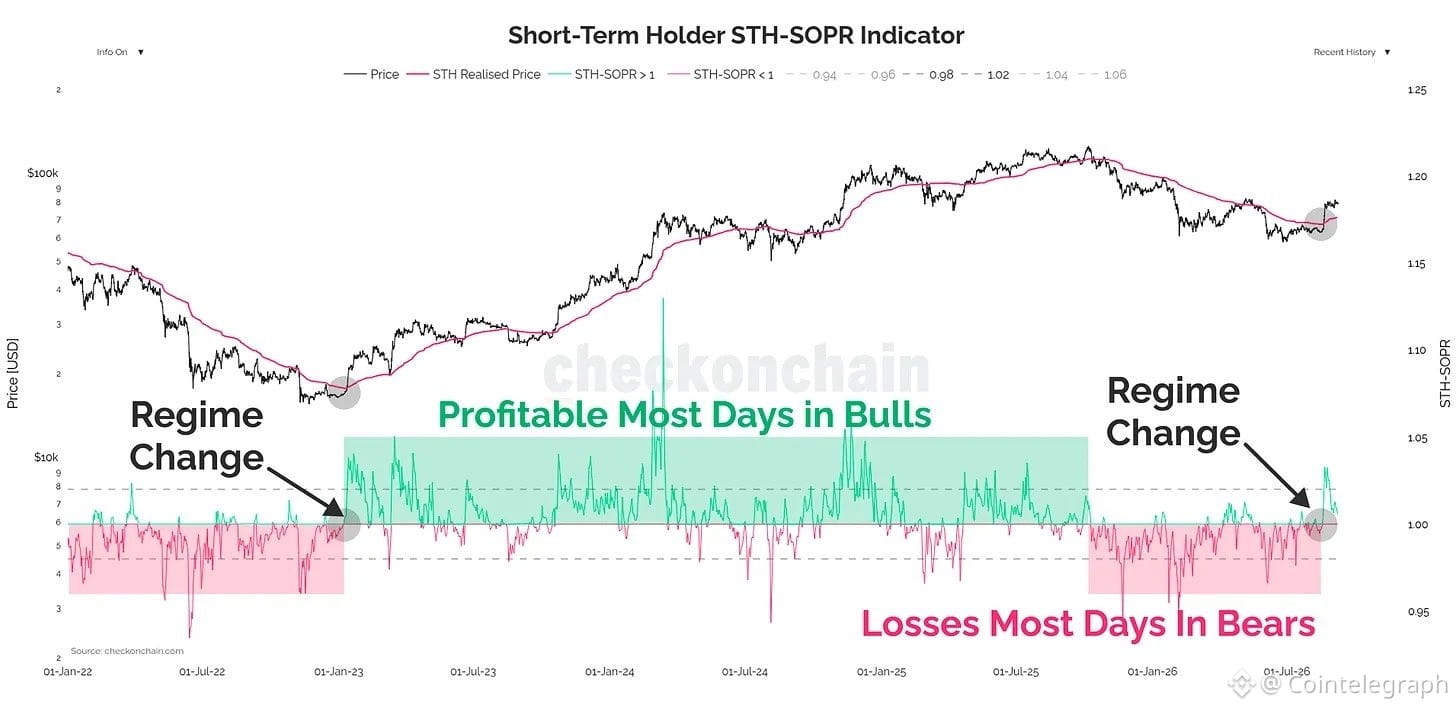
SOPR can be broken down by wallet cohort to differentiate profitability between newer and older investors. Commenting on SOPR readings for short-term holders (STHs), wallets holding a UTXO without selling for up to six months, onchain analytics suite Checkonchain added to hopes that Bitcoin is staging a long-term bullish recovery.
“In bear markets, rallies back into profit tend to get sold. In bull markets, short sharp moves below break-even tend to become buy-the-dip setups. The current structure is starting to look more like those early bull-market recoveries,” it told X followers at the weekend.
Bitcoin STH-SOPR data. Source: Checkonchain on X.com
Puell retains Bitcoin price “downside risk” despite SOPR recovery
Despite BTC/USD holding a local range around $80,000 while the SOPR profitability streak continues, the pair could still hit new macro lows this cycle, one of the industry’s best-known analysts warns.
In an interview with CryptoQuant on Sept. 4, ARK Invest portfolio manager David Puell, creator of the Puell multiple BTC price indicator, said that more evidence was needed to assume that the next bear-market floor is already in.
Asked about how Bitcoin’s 25% August upside could play out going into Q4, Puell suggested that further upside was the less likely outcome.
“In our view, as of now, we leave it as a downside risk,” he said.
Puell singled out SOPR signals as a key prerequisite for changing his long-term bias, stating that the metric needs to remain above 1 for an extended period, with investors “realizing profits consistently without price going back to a new low.”
Bitcoin must also start putting in series of higher highs and higher lows — a pattern that Cointelegraph reported is still absent on weekly time frames.
In late August, CryptoQuant CEO Ki Young Ju described the bear market as already “over” on the back of the latest readings from its proprietary Bull/Bear Market Cycle Indicator.
Bitcoin SOPR metric sees longest profit run of 2026 as new analysis challenges bear market
Bitcoin (BTC) is breaking with typical bear-market behavior as a classic onchain metric puts in its longest bullish streak of 2026.
Key points:
Bitcoin’s SOPR metric has stayed above its breakeven point of 1 for three full weeks, its longest stint in 2026.
Analysis suggests that UTXO profitability is reflecting a return to bull-market conditions.
David Puell says SOPR must stay bullish for longer, seeing more BTC price downside to come.
SOPR data repeats early bull-market activity
Data from crypto analytics platform CryptoQuant shows that the spent output profit ratio (SOPR) has now been above its breakeven level of 1 since Aug. 19. SOPR measures the extent to which coins moving onchain do so at a higher or lower price compared to the previous transaction.
The metric, which generally moves in a tight range around 1, currently measures 1.002. Values above 1 indicate that coins are mostly being moved in profit — a sign of overall bullish market momentum. This signal has now endured for three weeks, marking the longest stretch of bullish SOPR of 2026 so far.
Bitcoin SOPR chart. Source: CryptoQuant
SOPR can be broken down by wallet cohort to differentiate profitability between newer and older investors. Commenting on SOPR readings for short-term holders (STHs), wallets holding a UTXO without selling for up to six months, onchain analytics suite Checkonchain added to hopes that Bitcoin is staging a long-term bullish recovery.
“In bear markets, rallies back into profit tend to get sold. In bull markets, short sharp moves below break-even tend to become buy-the-dip setups. The current structure is starting to look more like those early bull-market recoveries,” it told X followers at the weekend.
Bitcoin STH-SOPR data. Source: Checkonchain on X.com
Puell retains Bitcoin price “downside risk” despite SOPR recovery
Despite BTC/USD holding a local range around $80,000 while the SOPR profitability streak continues, the pair could still hit new macro lows this cycle, one of the industry’s best-known analysts warns.
In an interview with CryptoQuant on Sept. 4, ARK Invest portfolio manager David Puell, creator of the Puell multiple BTC price indicator, said that more evidence was needed to assume that the next bear-market floor is already in.
Asked about how Bitcoin’s 25% August upside could play out going into Q4, Puell suggested that further upside was the less likely outcome.
“In our view, as of now, we leave it as a downside risk,” he said.
Puell singled out SOPR signals as a key prerequisite for changing his long-term bias, stating that the metric needs to remain above 1 for an extended period, with investors “realizing profits consistently without price going back to a new low.”
Bitcoin must also start putting in series of higher highs and higher lows — a pattern that Cointelegraph reported is still absent on weekly time frames.
In late August, CryptoQuant CEO Ki Young Ju described the bear market as already “over” on the back of the latest readings from its proprietary Bull/Bear Market Cycle Indicator.
Key points:
Bitcoin’s SOPR metric has stayed above its breakeven point of 1 for three full weeks, its longest stint in 2026.
Analysis suggests that UTXO profitability is reflecting a return to bull-market conditions.
David Puell says SOPR must stay bullish for longer, seeing more BTC price downside to come.
SOPR data repeats early bull-market activity
Data from crypto analytics platform CryptoQuant shows that the spent output profit ratio (SOPR) has now been above its breakeven level of 1 since Aug. 19. SOPR measures the extent to which coins moving onchain do so at a higher or lower price compared to the previous transaction.
The metric, which generally moves in a tight range around 1, currently measures 1.002. Values above 1 indicate that coins are mostly being moved in profit — a sign of overall bullish market momentum. This signal has now endured for three weeks, marking the longest stretch of bullish SOPR of 2026 so far.
Bitcoin SOPR chart. Source: CryptoQuant
SOPR can be broken down by wallet cohort to differentiate profitability between newer and older investors. Commenting on SOPR readings for short-term holders (STHs), wallets holding a UTXO without selling for up to six months, onchain analytics suite Checkonchain added to hopes that Bitcoin is staging a long-term bullish recovery.
“In bear markets, rallies back into profit tend to get sold. In bull markets, short sharp moves below break-even tend to become buy-the-dip setups. The current structure is starting to look more like those early bull-market recoveries,” it told X followers at the weekend.
Bitcoin STH-SOPR data. Source: Checkonchain on X.com
Puell retains Bitcoin price “downside risk” despite SOPR recovery
Despite BTC/USD holding a local range around $80,000 while the SOPR profitability streak continues, the pair could still hit new macro lows this cycle, one of the industry’s best-known analysts warns.
In an interview with CryptoQuant on Sept. 4, ARK Invest portfolio manager David Puell, creator of the Puell multiple BTC price indicator, said that more evidence was needed to assume that the next bear-market floor is already in.
Asked about how Bitcoin’s 25% August upside could play out going into Q4, Puell suggested that further upside was the less likely outcome.
“In our view, as of now, we leave it as a downside risk,” he said.
Puell singled out SOPR signals as a key prerequisite for changing his long-term bias, stating that the metric needs to remain above 1 for an extended period, with investors “realizing profits consistently without price going back to a new low.”
Bitcoin must also start putting in series of higher highs and higher lows — a pattern that Cointelegraph reported is still absent on weekly time frames.
In late August, CryptoQuant CEO Ki Young Ju described the bear market as already “over” on the back of the latest readings from its proprietary Bull/Bear Market Cycle Indicator.
5
Silvergate ex-CEO blames Biden pressure for bank’s 2023 wind-downFormer Silvergate Bank CEO Alan Lane said political and regulatory pressure from the Biden administration drove the crypto-focused lender’s voluntary wind-down in 2023, arguing that the bank remained solvent after weathering a deposit run.
In an inaugural Substack post on Tuesday, Lane said Silvergate could have continued operating after satisfying withdrawals equivalent to 70% of its demand deposits during the fourth quarter of 2022. He argued that a “coordinated attack by the Biden Administration” ultimately led to the wind-down, saying the bank chose liquidation “in the face of political pressure.”
Lane said Silvergate had held liquid assets that could be sold or pledged as collateral during periods of heavy withdrawals. In a January 2023 business update, the bank reported that digital asset deposits fell 68% from $11.9 billion to $3.8 billion during the quarter. Silvergate sold $5.2 billion of debt securities, recording a $718 million loss. The bank said it had $4.6 billion in cash and equivalents at year-end.
Lane’s account adds a firsthand claim to the debate over whether US agencies sought to restrict crypto companies’ access to banking. However, it differs from federal findings that attributed the bank’s liquidation to its concentrated deposit base, funding risks and weaknesses in governance and compliance.
Regulators cited risk management, compliance failures
A September 2023 review by the Federal Reserve Board’s Office of Inspector General said Silvergate’s dependence on crypto depositors, rapid growth and multilayered funding risks led to its liquidation. It also cited significant weaknesses in corporate governance and risk management and said examiners could have acted more aggressively and decisively.
Lane said no regulator had proven that Silvergate’s anti-money laundering (AML) controls failed. In July 2024, the Securities and Exchange Commission (SEC) charged Silvergate Capital, Lane and former chief risk officer Kathleen Fraher with misleading investors about the bank’s AML program and monitoring of crypto customers.
The regulator alleged that Silvergate’s automated system failed to monitor more than $1 trillion in transactions and that the bank failed to detect nearly $9 billion in suspicious transfers among FTX entities.
Lane settled the SEC’s charges without admitting or denying the allegations, agreeing to a $1 million penalty and a five-year officer-and-director bar. Separately, the Federal Reserve fined Silvergate $43 million over transaction-monitoring deficiencies.
Lane also cited interagency crypto-risk statements issued in early 2023 as evidence of pressure against the industry. The statements urged banks to take a cautious approach to crypto-related activities, although the Fed said institutions were neither prohibited nor discouraged from serving any specific customer class. In April 2025, government agencies withdrew the statements.
Magazine: Is Bitcoin too volatile to risk your retirement on?
Silvergate ex-CEO blames Biden pressure for bank’s 2023 wind-down
Former Silvergate Bank CEO Alan Lane said political and regulatory pressure from the Biden administration drove the crypto-focused lender’s voluntary wind-down in 2023, arguing that the bank remained solvent after weathering a deposit run.
In an inaugural Substack post on Tuesday, Lane said Silvergate could have continued operating after satisfying withdrawals equivalent to 70% of its demand deposits during the fourth quarter of 2022. He argued that a “coordinated attack by the Biden Administration” ultimately led to the wind-down, saying the bank chose liquidation “in the face of political pressure.”
Lane said Silvergate had held liquid assets that could be sold or pledged as collateral during periods of heavy withdrawals. In a January 2023 business update, the bank reported that digital asset deposits fell 68% from $11.9 billion to $3.8 billion during the quarter. Silvergate sold $5.2 billion of debt securities, recording a $718 million loss. The bank said it had $4.6 billion in cash and equivalents at year-end.
Lane’s account adds a firsthand claim to the debate over whether US agencies sought to restrict crypto companies’ access to banking. However, it differs from federal findings that attributed the bank’s liquidation to its concentrated deposit base, funding risks and weaknesses in governance and compliance.
Regulators cited risk management, compliance failures
A September 2023 review by the Federal Reserve Board’s Office of Inspector General said Silvergate’s dependence on crypto depositors, rapid growth and multilayered funding risks led to its liquidation. It also cited significant weaknesses in corporate governance and risk management and said examiners could have acted more aggressively and decisively.
Lane said no regulator had proven that Silvergate’s anti-money laundering (AML) controls failed. In July 2024, the Securities and Exchange Commission (SEC) charged Silvergate Capital, Lane and former chief risk officer Kathleen Fraher with misleading investors about the bank’s AML program and monitoring of crypto customers.
The regulator alleged that Silvergate’s automated system failed to monitor more than $1 trillion in transactions and that the bank failed to detect nearly $9 billion in suspicious transfers among FTX entities.
Lane settled the SEC’s charges without admitting or denying the allegations, agreeing to a $1 million penalty and a five-year officer-and-director bar. Separately, the Federal Reserve fined Silvergate $43 million over transaction-monitoring deficiencies.
Lane also cited interagency crypto-risk statements issued in early 2023 as evidence of pressure against the industry. The statements urged banks to take a cautious approach to crypto-related activities, although the Fed said institutions were neither prohibited nor discouraged from serving any specific customer class. In April 2025, government agencies withdrew the statements.
Magazine: Is Bitcoin too volatile to risk your retirement on?
In an inaugural Substack post on Tuesday, Lane said Silvergate could have continued operating after satisfying withdrawals equivalent to 70% of its demand deposits during the fourth quarter of 2022. He argued that a “coordinated attack by the Biden Administration” ultimately led to the wind-down, saying the bank chose liquidation “in the face of political pressure.”
Lane said Silvergate had held liquid assets that could be sold or pledged as collateral during periods of heavy withdrawals. In a January 2023 business update, the bank reported that digital asset deposits fell 68% from $11.9 billion to $3.8 billion during the quarter. Silvergate sold $5.2 billion of debt securities, recording a $718 million loss. The bank said it had $4.6 billion in cash and equivalents at year-end.
Lane’s account adds a firsthand claim to the debate over whether US agencies sought to restrict crypto companies’ access to banking. However, it differs from federal findings that attributed the bank’s liquidation to its concentrated deposit base, funding risks and weaknesses in governance and compliance.
Regulators cited risk management, compliance failures
A September 2023 review by the Federal Reserve Board’s Office of Inspector General said Silvergate’s dependence on crypto depositors, rapid growth and multilayered funding risks led to its liquidation. It also cited significant weaknesses in corporate governance and risk management and said examiners could have acted more aggressively and decisively.
Lane said no regulator had proven that Silvergate’s anti-money laundering (AML) controls failed. In July 2024, the Securities and Exchange Commission (SEC) charged Silvergate Capital, Lane and former chief risk officer Kathleen Fraher with misleading investors about the bank’s AML program and monitoring of crypto customers.
The regulator alleged that Silvergate’s automated system failed to monitor more than $1 trillion in transactions and that the bank failed to detect nearly $9 billion in suspicious transfers among FTX entities.
Lane settled the SEC’s charges without admitting or denying the allegations, agreeing to a $1 million penalty and a five-year officer-and-director bar. Separately, the Federal Reserve fined Silvergate $43 million over transaction-monitoring deficiencies.
Lane also cited interagency crypto-risk statements issued in early 2023 as evidence of pressure against the industry. The statements urged banks to take a cautious approach to crypto-related activities, although the Fed said institutions were neither prohibited nor discouraged from serving any specific customer class. In April 2025, government agencies withdrew the statements.
Magazine: Is Bitcoin too volatile to risk your retirement on?
1
40
Iran eases currency rules to bypass US sanctions with crypto: ReportIran’s central bank has reportedly eased foreign currency controls to encourage businesses to bring overseas earnings home, including through cryptocurrency, amid tightening US sanctions.
This includes using Tether’s USDt (USDT) and Bitcoin (BTC) to settle cross-border transactions through Iranian cryptocurrency exchanges, the Financial Times reported Wednesday.
Exporters can also use their earnings to finance imports directly without first selling their foreign currency through the government’s exchange platform at official rates, the report said.
The Central Bank of Iran did not respond to Cointelegraph’s request for comment.
In June, blockchain analytics company TRM Labs reported more than $3.8 billion in flows between crypto exchange CoinEx and sanctioned Iranian entities over more than seven years. CoinEx denied having any commercial relationship with the Iranian government or domestic Iranian exchanges and said it had never provided funding channels to sanctioned parties.
In early June, the US Treasury sanctioned four Iranian crypto exchanges as part of its “Economic Fury” campaign. Days before the sanctions, Treasury Secretary Scott Bessent said the US had seized about $1 billion in Iranian crypto assets.
On July 14, Bessent said US authorities had directed a freeze of more than $130 million in crypto held in wallets linked to Iran’s central bank.
Iran eases currency rules to bypass US sanctions with crypto: Report
Iran’s central bank has reportedly eased foreign currency controls to encourage businesses to bring overseas earnings home, including through cryptocurrency, amid tightening US sanctions.
This includes using Tether’s USDt (USDT) and Bitcoin (BTC) to settle cross-border transactions through Iranian cryptocurrency exchanges, the Financial Times reported Wednesday.
Exporters can also use their earnings to finance imports directly without first selling their foreign currency through the government’s exchange platform at official rates, the report said.
The Central Bank of Iran did not respond to Cointelegraph’s request for comment.
In June, blockchain analytics company TRM Labs reported more than $3.8 billion in flows between crypto exchange CoinEx and sanctioned Iranian entities over more than seven years. CoinEx denied having any commercial relationship with the Iranian government or domestic Iranian exchanges and said it had never provided funding channels to sanctioned parties.
In early June, the US Treasury sanctioned four Iranian crypto exchanges as part of its “Economic Fury” campaign. Days before the sanctions, Treasury Secretary Scott Bessent said the US had seized about $1 billion in Iranian crypto assets.
On July 14, Bessent said US authorities had directed a freeze of more than $130 million in crypto held in wallets linked to Iran’s central bank.
This includes using Tether’s USDt (USDT) and Bitcoin (BTC) to settle cross-border transactions through Iranian cryptocurrency exchanges, the Financial Times reported Wednesday.
Exporters can also use their earnings to finance imports directly without first selling their foreign currency through the government’s exchange platform at official rates, the report said.
The Central Bank of Iran did not respond to Cointelegraph’s request for comment.
In June, blockchain analytics company TRM Labs reported more than $3.8 billion in flows between crypto exchange CoinEx and sanctioned Iranian entities over more than seven years. CoinEx denied having any commercial relationship with the Iranian government or domestic Iranian exchanges and said it had never provided funding channels to sanctioned parties.
In early June, the US Treasury sanctioned four Iranian crypto exchanges as part of its “Economic Fury” campaign. Days before the sanctions, Treasury Secretary Scott Bessent said the US had seized about $1 billion in Iranian crypto assets.
On July 14, Bessent said US authorities had directed a freeze of more than $130 million in crypto held in wallets linked to Iran’s central bank.
263
Jack Dorsey’s Block seeks US trust bank charter for Bitcoin, stablecoinJack Dorsey’s payments company Block seeks to establish a federally regulated trust bank to provide custody services for Bitcoin and stablecoins.
Block said Tuesday it had submitted an application to the Office of the Comptroller of the Currency (OCC) to create Builders Bank & Trust, an uninsured national trust bank. If approved, the bank would operate under OCC supervision and offer custody and related fiduciary services.
Block said the charter would give its custody operations a consistent national framework as the business expands. The proposed bank would not accept deposits or make loans, separating it from a conventional commercial bank.
Lee Woolley, Block’s digital asset strategy lead, would serve as Builders Bank’s president and CEO. Woolley said the proposed institution would draw on Block’s digital asset operations and its experience with Square Financial Services, the company’s existing industrial bank.
Block joins other financial technology and crypto companies pursuing national trust bank charters. Ripple has received conditional approval for a similar charter, while Circle and BitGo have received final approval. Kraken parent Payward and crypto infrastructure provider Zerohash have also submitted applications.
Jack Dorsey’s Block seeks US trust bank charter for Bitcoin, stablecoin
Jack Dorsey’s payments company Block seeks to establish a federally regulated trust bank to provide custody services for Bitcoin and stablecoins.
Block said Tuesday it had submitted an application to the Office of the Comptroller of the Currency (OCC) to create Builders Bank & Trust, an uninsured national trust bank. If approved, the bank would operate under OCC supervision and offer custody and related fiduciary services.
Block said the charter would give its custody operations a consistent national framework as the business expands. The proposed bank would not accept deposits or make loans, separating it from a conventional commercial bank.
Lee Woolley, Block’s digital asset strategy lead, would serve as Builders Bank’s president and CEO. Woolley said the proposed institution would draw on Block’s digital asset operations and its experience with Square Financial Services, the company’s existing industrial bank.
Block joins other financial technology and crypto companies pursuing national trust bank charters. Ripple has received conditional approval for a similar charter, while Circle and BitGo have received final approval. Kraken parent Payward and crypto infrastructure provider Zerohash have also submitted applications.
Block said Tuesday it had submitted an application to the Office of the Comptroller of the Currency (OCC) to create Builders Bank & Trust, an uninsured national trust bank. If approved, the bank would operate under OCC supervision and offer custody and related fiduciary services.
Block said the charter would give its custody operations a consistent national framework as the business expands. The proposed bank would not accept deposits or make loans, separating it from a conventional commercial bank.
Lee Woolley, Block’s digital asset strategy lead, would serve as Builders Bank’s president and CEO. Woolley said the proposed institution would draw on Block’s digital asset operations and its experience with Square Financial Services, the company’s existing industrial bank.
Block joins other financial technology and crypto companies pursuing national trust bank charters. Ripple has received conditional approval for a similar charter, while Circle and BitGo have received final approval. Kraken parent Payward and crypto infrastructure provider Zerohash have also submitted applications.
1
1
111
Gemini receives Singapore payment license for crypto servicesCrypto exchange Gemini has received a Major Payment Institution (MPI) license from the Monetary Authority of Singapore (MAS), completing its transition from in-principle approval granted nearly two years ago.
On Wednesday, Gemini said the license was awarded to Gemini Digital Payments Singapore, its local entity. The MAS Financial Institutions Directory lists the company as authorized to provide digital payment token services and cross-border money transfers.
MPI license holders can provide regulated payment services without being subject to the transaction-volume limits imposed on standard payment institutions. However, MAS said major payment institutions face more comprehensive regulation because their operations’ scale poses greater risks.
Gemini President and co-founder Cameron Winklevoss said the exchange has served customers in Singapore since 2020, while CEO Tyler Winklevoss described the country as a strategic hub for serving retail and institutional clients. Gemini offers spot crypto trading, digital asset custody and over-the-counter services in Singapore.
The full license follows MAS’ in-principle approval of Gemini’s application in October 2024. In April 2025, Gemini moved its Singapore customers from Gemini Trust Company, which operated under an exemption, to its locally incorporated entity while it worked toward securing final approval.
Gemini receives Singapore payment license for crypto services
Crypto exchange Gemini has received a Major Payment Institution (MPI) license from the Monetary Authority of Singapore (MAS), completing its transition from in-principle approval granted nearly two years ago.
On Wednesday, Gemini said the license was awarded to Gemini Digital Payments Singapore, its local entity. The MAS Financial Institutions Directory lists the company as authorized to provide digital payment token services and cross-border money transfers.
MPI license holders can provide regulated payment services without being subject to the transaction-volume limits imposed on standard payment institutions. However, MAS said major payment institutions face more comprehensive regulation because their operations’ scale poses greater risks.
Gemini President and co-founder Cameron Winklevoss said the exchange has served customers in Singapore since 2020, while CEO Tyler Winklevoss described the country as a strategic hub for serving retail and institutional clients. Gemini offers spot crypto trading, digital asset custody and over-the-counter services in Singapore.
The full license follows MAS’ in-principle approval of Gemini’s application in October 2024. In April 2025, Gemini moved its Singapore customers from Gemini Trust Company, which operated under an exemption, to its locally incorporated entity while it worked toward securing final approval.
On Wednesday, Gemini said the license was awarded to Gemini Digital Payments Singapore, its local entity. The MAS Financial Institutions Directory lists the company as authorized to provide digital payment token services and cross-border money transfers.
MPI license holders can provide regulated payment services without being subject to the transaction-volume limits imposed on standard payment institutions. However, MAS said major payment institutions face more comprehensive regulation because their operations’ scale poses greater risks.
Gemini President and co-founder Cameron Winklevoss said the exchange has served customers in Singapore since 2020, while CEO Tyler Winklevoss described the country as a strategic hub for serving retail and institutional clients. Gemini offers spot crypto trading, digital asset custody and over-the-counter services in Singapore.
The full license follows MAS’ in-principle approval of Gemini’s application in October 2024. In April 2025, Gemini moved its Singapore customers from Gemini Trust Company, which operated under an exemption, to its locally incorporated entity while it worked toward securing final approval.
146
Malone Lam pleads guilty in $245M crypto theft conspiracySingaporean national Malone Lam pleaded guilty to participating in a racketeering conspiracy that US prosecutors say used social engineering and home break-ins to steal and launder more than $245 million in cryptocurrency.
On Tuesday, the US Justice Department said that Lam organized the international operation, identified prospective victims and coordinated other conspirators. The enterprise was formed through connections on online gaming platforms and operated from no later than October 2023 through at least May 2025, according to court documents.
The plea establishes criminal responsibility nearly two years after Lam was charged over the theft of more than 4,100 Bitcoin, worth over $230 at the time, from a Washington, DC resident.
Lam pleaded guilty before US District Judge Colleen Kollar-Kotelly to one count of participating in a Racketeer Influenced and Corrupt Organizations (RICO) conspiracy. The judge scheduled a status hearing for Dec. 8, but the Justice Department did not announce a sentencing date.
From a 4,100 Bitcoin theft to a RICO case
Initially, prosecutors accused Lam and Jeandiel Serrano of fraudulently obtaining more than 4,100 Bitcoin from a single victim on Aug. 18, 2024.
In 2024, blockchain investigator ZachXBT identified the victim as a Genesis creditor. The attackers allegedly posed as Google support staff to compromise the victim’s accounts before impersonating Gemini support to persuade the victim to reset two-factor authentication and use screen-sharing software that exposed private keys.
Lam and Serrano were arrested on Sept. 18, 2024, and prosecutors unsealed their indictment the following day. Prosecutors alleged that the pair laundered the proceeds through crypto mixers, exchanges, pass-through wallets and virtual private networks.
On May 15, 2025, prosecutors announced a superseding indictment charging 12 additional defendants and expanding the case into an alleged RICO conspiracy involving more than $263 million in crypto thefts. It included a separate $14 million theft in July 2024 and an alleged home break-in targeting a hardware wallet.
Prosecutors also alleged that Lam continued directing associates from pretrial detention, including arranging delivery of luxury items to his girlfriend. The group’s members allegedly spent stolen funds on private jets, rental properties, watches and at least 28 exotic cars, while nightclub bills reached $500,000 per evening.
Magazine: Is Bitcoin too volatile to risk your retirement on?
Malone Lam pleads guilty in $245M crypto theft conspiracy
Singaporean national Malone Lam pleaded guilty to participating in a racketeering conspiracy that US prosecutors say used social engineering and home break-ins to steal and launder more than $245 million in cryptocurrency.
On Tuesday, the US Justice Department said that Lam organized the international operation, identified prospective victims and coordinated other conspirators. The enterprise was formed through connections on online gaming platforms and operated from no later than October 2023 through at least May 2025, according to court documents.
The plea establishes criminal responsibility nearly two years after Lam was charged over the theft of more than 4,100 Bitcoin, worth over $230 at the time, from a Washington, DC resident.
Lam pleaded guilty before US District Judge Colleen Kollar-Kotelly to one count of participating in a Racketeer Influenced and Corrupt Organizations (RICO) conspiracy. The judge scheduled a status hearing for Dec. 8, but the Justice Department did not announce a sentencing date.
From a 4,100 Bitcoin theft to a RICO case
Initially, prosecutors accused Lam and Jeandiel Serrano of fraudulently obtaining more than 4,100 Bitcoin from a single victim on Aug. 18, 2024.
In 2024, blockchain investigator ZachXBT identified the victim as a Genesis creditor. The attackers allegedly posed as Google support staff to compromise the victim’s accounts before impersonating Gemini support to persuade the victim to reset two-factor authentication and use screen-sharing software that exposed private keys.
Lam and Serrano were arrested on Sept. 18, 2024, and prosecutors unsealed their indictment the following day. Prosecutors alleged that the pair laundered the proceeds through crypto mixers, exchanges, pass-through wallets and virtual private networks.
On May 15, 2025, prosecutors announced a superseding indictment charging 12 additional defendants and expanding the case into an alleged RICO conspiracy involving more than $263 million in crypto thefts. It included a separate $14 million theft in July 2024 and an alleged home break-in targeting a hardware wallet.
Prosecutors also alleged that Lam continued directing associates from pretrial detention, including arranging delivery of luxury items to his girlfriend. The group’s members allegedly spent stolen funds on private jets, rental properties, watches and at least 28 exotic cars, while nightclub bills reached $500,000 per evening.
Magazine: Is Bitcoin too volatile to risk your retirement on?
On Tuesday, the US Justice Department said that Lam organized the international operation, identified prospective victims and coordinated other conspirators. The enterprise was formed through connections on online gaming platforms and operated from no later than October 2023 through at least May 2025, according to court documents.
The plea establishes criminal responsibility nearly two years after Lam was charged over the theft of more than 4,100 Bitcoin, worth over $230 at the time, from a Washington, DC resident.
Lam pleaded guilty before US District Judge Colleen Kollar-Kotelly to one count of participating in a Racketeer Influenced and Corrupt Organizations (RICO) conspiracy. The judge scheduled a status hearing for Dec. 8, but the Justice Department did not announce a sentencing date.
From a 4,100 Bitcoin theft to a RICO case
Initially, prosecutors accused Lam and Jeandiel Serrano of fraudulently obtaining more than 4,100 Bitcoin from a single victim on Aug. 18, 2024.
In 2024, blockchain investigator ZachXBT identified the victim as a Genesis creditor. The attackers allegedly posed as Google support staff to compromise the victim’s accounts before impersonating Gemini support to persuade the victim to reset two-factor authentication and use screen-sharing software that exposed private keys.
Lam and Serrano were arrested on Sept. 18, 2024, and prosecutors unsealed their indictment the following day. Prosecutors alleged that the pair laundered the proceeds through crypto mixers, exchanges, pass-through wallets and virtual private networks.
On May 15, 2025, prosecutors announced a superseding indictment charging 12 additional defendants and expanding the case into an alleged RICO conspiracy involving more than $263 million in crypto thefts. It included a separate $14 million theft in July 2024 and an alleged home break-in targeting a hardware wallet.
Prosecutors also alleged that Lam continued directing associates from pretrial detention, including arranging delivery of luxury items to his girlfriend. The group’s members allegedly spent stolen funds on private jets, rental properties, watches and at least 28 exotic cars, while nightclub bills reached $500,000 per evening.
Magazine: Is Bitcoin too volatile to risk your retirement on?
1
232
New York town weighs crypto mining and AI data center banThe town of Plattsburgh in New York state held a public hearing to discuss a temporary land use moratorium for operations including AI data centers and crypto mining.
In a Thursday hearing, Plattsburgh Mayor Wendell Hughes and the common council heard from members of the public about a law proposed to impose a short-term ban on land use related to “certain high energy computing facilities,” including cryptocurrency mining and artificial intelligence. The moratorium, if passed, would halt approvals for operations requiring 300 or more kilowatts (kW) for 12 months.
As of Tuesday, reports signaled that the mayor had not approved the moratorium. The council is scheduled to hold another meeting on Sept. 17.
Plattsburgh was one of the first jurisdictions in the United States to outright ban Bitcoin (BTC) mining in response to residents’ concerns about the cost of electricity. Passed in 2018, the moratorium lasted 18 months.
Many crypto mining companies have pivoted their operations to focus on AI and high-performance computing amid difficulty, rising power costs and falling token prices.
New York town weighs crypto mining and AI data center ban
The town of Plattsburgh in New York state held a public hearing to discuss a temporary land use moratorium for operations including AI data centers and crypto mining.
In a Thursday hearing, Plattsburgh Mayor Wendell Hughes and the common council heard from members of the public about a law proposed to impose a short-term ban on land use related to “certain high energy computing facilities,” including cryptocurrency mining and artificial intelligence. The moratorium, if passed, would halt approvals for operations requiring 300 or more kilowatts (kW) for 12 months.
As of Tuesday, reports signaled that the mayor had not approved the moratorium. The council is scheduled to hold another meeting on Sept. 17.
Plattsburgh was one of the first jurisdictions in the United States to outright ban Bitcoin (BTC) mining in response to residents’ concerns about the cost of electricity. Passed in 2018, the moratorium lasted 18 months.
Many crypto mining companies have pivoted their operations to focus on AI and high-performance computing amid difficulty, rising power costs and falling token prices.
In a Thursday hearing, Plattsburgh Mayor Wendell Hughes and the common council heard from members of the public about a law proposed to impose a short-term ban on land use related to “certain high energy computing facilities,” including cryptocurrency mining and artificial intelligence. The moratorium, if passed, would halt approvals for operations requiring 300 or more kilowatts (kW) for 12 months.
As of Tuesday, reports signaled that the mayor had not approved the moratorium. The council is scheduled to hold another meeting on Sept. 17.
Plattsburgh was one of the first jurisdictions in the United States to outright ban Bitcoin (BTC) mining in response to residents’ concerns about the cost of electricity. Passed in 2018, the moratorium lasted 18 months.
Many crypto mining companies have pivoted their operations to focus on AI and high-performance computing amid difficulty, rising power costs and falling token prices.
173
Article
Franklin Templeton digital asset veteran takes helm at StablecoinXStablecoinX appointed former Franklin Templeton digital asset executive Christopher Jensen as CEO, putting him in charge of the largest corporate holder of Ethena’s ENA token.
Jensen succeeds Ted Chen, who led StablecoinX through its public listing in June and will remain chairman of the company’s board.
StablecoinX, which trades on Nasdaq under the ticker USDE, is a publicly listed company focused on the Ethena ecosystem. Ethena issues USDe, a synthetic dollar that ranks as the fifth-largest stablecoin with nearly $4.4 billion in circulation, according to DefiLlama data. ENA, Ethena’s governance token, gives holders voting rights over changes to the protocol.
StablecoinX holds about 3.03 billion ENA tokens, roughly 20% of the token’s total supply, which the company says makes it ENA’s largest corporate holder.
Before joining StablecoinX, Jensen was a portfolio manager and director of digital asset research at Franklin Templeton, where he helped build the firm’s digital asset group after its launch in 2018. The asset manager’s blockchain venture fund participated in Ethena’s seed round, giving Jensen exposure to the protocol from its early stages.
The appointment comes about a week after Ethena launched Ethena Pay, a self-custodial app that lets users spend, save and transfer its USDe synthetic dollar.
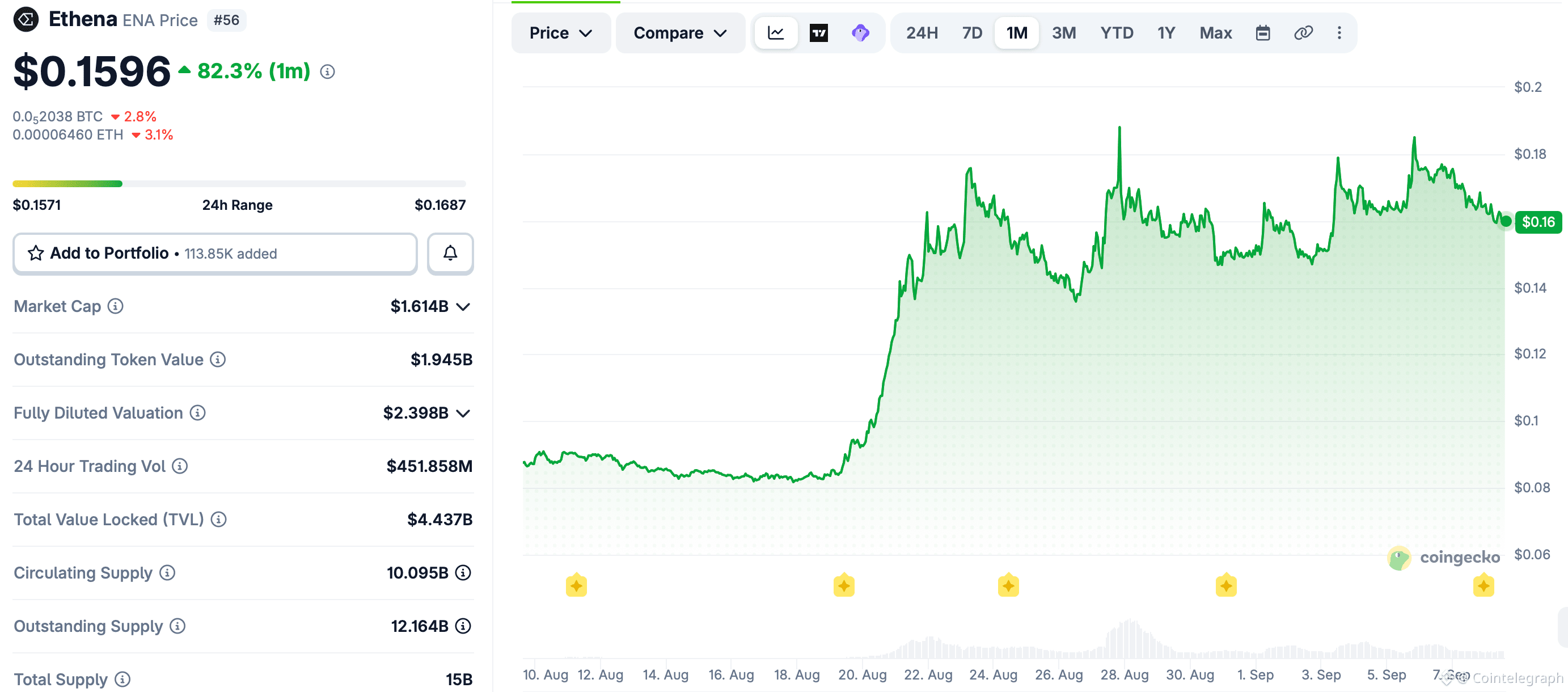
The ENA token remains down about 20% year to date but has rebounded sharply in recent weeks, gaining more than 80% over the past month to trade around $0.16, according to CoinGecko.
ENA token price over the past month. Source: CoinGecko
Franklin Templeton digital asset veteran takes helm at StablecoinX
StablecoinX appointed former Franklin Templeton digital asset executive Christopher Jensen as CEO, putting him in charge of the largest corporate holder of Ethena’s ENA token.
Jensen succeeds Ted Chen, who led StablecoinX through its public listing in June and will remain chairman of the company’s board.
StablecoinX, which trades on Nasdaq under the ticker USDE, is a publicly listed company focused on the Ethena ecosystem. Ethena issues USDe, a synthetic dollar that ranks as the fifth-largest stablecoin with nearly $4.4 billion in circulation, according to DefiLlama data. ENA, Ethena’s governance token, gives holders voting rights over changes to the protocol.
StablecoinX holds about 3.03 billion ENA tokens, roughly 20% of the token’s total supply, which the company says makes it ENA’s largest corporate holder.
Before joining StablecoinX, Jensen was a portfolio manager and director of digital asset research at Franklin Templeton, where he helped build the firm’s digital asset group after its launch in 2018. The asset manager’s blockchain venture fund participated in Ethena’s seed round, giving Jensen exposure to the protocol from its early stages.
The appointment comes about a week after Ethena launched Ethena Pay, a self-custodial app that lets users spend, save and transfer its USDe synthetic dollar.
The ENA token remains down about 20% year to date but has rebounded sharply in recent weeks, gaining more than 80% over the past month to trade around $0.16, according to CoinGecko.
ENA token price over the past month. Source: CoinGecko
Jensen succeeds Ted Chen, who led StablecoinX through its public listing in June and will remain chairman of the company’s board.
StablecoinX, which trades on Nasdaq under the ticker USDE, is a publicly listed company focused on the Ethena ecosystem. Ethena issues USDe, a synthetic dollar that ranks as the fifth-largest stablecoin with nearly $4.4 billion in circulation, according to DefiLlama data. ENA, Ethena’s governance token, gives holders voting rights over changes to the protocol.
StablecoinX holds about 3.03 billion ENA tokens, roughly 20% of the token’s total supply, which the company says makes it ENA’s largest corporate holder.
Before joining StablecoinX, Jensen was a portfolio manager and director of digital asset research at Franklin Templeton, where he helped build the firm’s digital asset group after its launch in 2018. The asset manager’s blockchain venture fund participated in Ethena’s seed round, giving Jensen exposure to the protocol from its early stages.
The appointment comes about a week after Ethena launched Ethena Pay, a self-custodial app that lets users spend, save and transfer its USDe synthetic dollar.
The ENA token remains down about 20% year to date but has rebounded sharply in recent weeks, gaining more than 80% over the past month to trade around $0.16, according to CoinGecko.
ENA token price over the past month. Source: CoinGecko
267
Verified

Article
Robinhood takes stakes in Crypto.com, OG.com in prediction markets dealRobinhood has taken equity stakes in Crypto.com and its newly spun-off prediction market platform OG.com as part of a multi-year deal to use OG.com’s regulated infrastructure for event contracts.
Under the agreement, Robinhood will route retail event contracts through OG.com’s Commodity Futures Trading Commission (CFTC)-regulated derivatives exchange and clearinghouse, with the rollout beginning Tuesday for eligible US customers.
According to Tuesday’s announcement, the online brokerage will receive initial equity stakes in both Crypto.com and OG.com, with the stakes priced at the valuations established by an earlier Citadel Securities investment in the platforms. The companies did not disclose the size or value of Robinhood’s holdings.
The deal follows OG.com’s spin-off from Crypto.com at a $5 billion valuation and comes less than two months after reports that Robinhood was in talks with Crypto.com to expand its prediction markets offering.
OG.com will operate independently from the crypto exchange, with CEO Kris Marszalek saying the platform plans to expand beyond prediction markets into futures and perpetual contracts.
Latest move expands prediction market partnerships
Robinhood launched its prediction markets hub in March 2025 with CFTC-regulated exchange Kalshi and later expanded its prediction market infrastructure.
The business has grown rapidly. Event contracts generated $156 million in revenue for Robinhood in the second quarter, up more than tenfold from a year earlier and surpassing its $129 million in equities transaction revenue and $100 million from crypto.
Bernstein analysts estimated in July that Robinhood’s revenue, including prediction markets, could reach $1.7 billion by 2028.
To be sure, prediction market operators have also faced a growing number of legal challenges from US states seeking to apply their gambling laws to sports event contracts.
In April, a Nevada judge extended a ban preventing Kalshi from offering event contracts in the state without a gaming license, finding that the products were effectively indistinguishable from traditional betting. The ruling rejected Kalshi’s argument that the contracts are swaps subject exclusively to CFTC oversight.
The legal wrangling escalated last week with New Jersey petitioning the US Supreme Court to weigh in on whether states can regulate sports contracts offered on CFTC-regulated prediction markets.
In a post announcing the move, New Jersey Attorney General Jennifer Davenport said companies such as Kalshi claim to offer legal sports betting nationwide while refusing to comply with state gambling laws, calling on the Supreme Court to resolve the jurisdictional dispute.
Source: Jennifer Davenport
Robinhood takes stakes in Crypto.com, OG.com in prediction markets deal
Robinhood has taken equity stakes in Crypto.com and its newly spun-off prediction market platform OG.com as part of a multi-year deal to use OG.com’s regulated infrastructure for event contracts.
Under the agreement, Robinhood will route retail event contracts through OG.com’s Commodity Futures Trading Commission (CFTC)-regulated derivatives exchange and clearinghouse, with the rollout beginning Tuesday for eligible US customers.
According to Tuesday’s announcement, the online brokerage will receive initial equity stakes in both Crypto.com and OG.com, with the stakes priced at the valuations established by an earlier Citadel Securities investment in the platforms. The companies did not disclose the size or value of Robinhood’s holdings.
The deal follows OG.com’s spin-off from Crypto.com at a $5 billion valuation and comes less than two months after reports that Robinhood was in talks with Crypto.com to expand its prediction markets offering.
OG.com will operate independently from the crypto exchange, with CEO Kris Marszalek saying the platform plans to expand beyond prediction markets into futures and perpetual contracts.
Latest move expands prediction market partnerships
Robinhood launched its prediction markets hub in March 2025 with CFTC-regulated exchange Kalshi and later expanded its prediction market infrastructure.
The business has grown rapidly. Event contracts generated $156 million in revenue for Robinhood in the second quarter, up more than tenfold from a year earlier and surpassing its $129 million in equities transaction revenue and $100 million from crypto.
Bernstein analysts estimated in July that Robinhood’s revenue, including prediction markets, could reach $1.7 billion by 2028.
To be sure, prediction market operators have also faced a growing number of legal challenges from US states seeking to apply their gambling laws to sports event contracts.
In April, a Nevada judge extended a ban preventing Kalshi from offering event contracts in the state without a gaming license, finding that the products were effectively indistinguishable from traditional betting. The ruling rejected Kalshi’s argument that the contracts are swaps subject exclusively to CFTC oversight.
The legal wrangling escalated last week with New Jersey petitioning the US Supreme Court to weigh in on whether states can regulate sports contracts offered on CFTC-regulated prediction markets.
In a post announcing the move, New Jersey Attorney General Jennifer Davenport said companies such as Kalshi claim to offer legal sports betting nationwide while refusing to comply with state gambling laws, calling on the Supreme Court to resolve the jurisdictional dispute.
Source: Jennifer Davenport
Under the agreement, Robinhood will route retail event contracts through OG.com’s Commodity Futures Trading Commission (CFTC)-regulated derivatives exchange and clearinghouse, with the rollout beginning Tuesday for eligible US customers.
According to Tuesday’s announcement, the online brokerage will receive initial equity stakes in both Crypto.com and OG.com, with the stakes priced at the valuations established by an earlier Citadel Securities investment in the platforms. The companies did not disclose the size or value of Robinhood’s holdings.
The deal follows OG.com’s spin-off from Crypto.com at a $5 billion valuation and comes less than two months after reports that Robinhood was in talks with Crypto.com to expand its prediction markets offering.
OG.com will operate independently from the crypto exchange, with CEO Kris Marszalek saying the platform plans to expand beyond prediction markets into futures and perpetual contracts.
Latest move expands prediction market partnerships
Robinhood launched its prediction markets hub in March 2025 with CFTC-regulated exchange Kalshi and later expanded its prediction market infrastructure.
The business has grown rapidly. Event contracts generated $156 million in revenue for Robinhood in the second quarter, up more than tenfold from a year earlier and surpassing its $129 million in equities transaction revenue and $100 million from crypto.
Bernstein analysts estimated in July that Robinhood’s revenue, including prediction markets, could reach $1.7 billion by 2028.
To be sure, prediction market operators have also faced a growing number of legal challenges from US states seeking to apply their gambling laws to sports event contracts.
In April, a Nevada judge extended a ban preventing Kalshi from offering event contracts in the state without a gaming license, finding that the products were effectively indistinguishable from traditional betting. The ruling rejected Kalshi’s argument that the contracts are swaps subject exclusively to CFTC oversight.
The legal wrangling escalated last week with New Jersey petitioning the US Supreme Court to weigh in on whether states can regulate sports contracts offered on CFTC-regulated prediction markets.
In a post announcing the move, New Jersey Attorney General Jennifer Davenport said companies such as Kalshi claim to offer legal sports betting nationwide while refusing to comply with state gambling laws, calling on the Supreme Court to resolve the jurisdictional dispute.
Source: Jennifer Davenport
238
Article
Is Bitcoin too volatile to risk your retirement on?You stack sats. You farm yield, and you’d rather sell your car than part with your BTC. But does that mean you should bank your golden years on Bitcoin?
Many retirement industry professional such as MIT finance professor Jonathan Parker say there is a sweet spot level for crypto exposure in a diversified retirement portfolio:
“Yes, zero.”
Parker, whose research spans portfolio choice, personal finance, retirement finance and Bitcoin, is unusually blunt about where the cryptocurrency belongs. But it’s a view shared by the average citizen.
A recent survey by the National Institute on Retirement Security found that 77% of Americans consider cryptocurrency in workplace retirement plans as risky.
But regulators and investment firms alike have been steadily opening the door to greater crypto exposure in retirement savings in recent years.
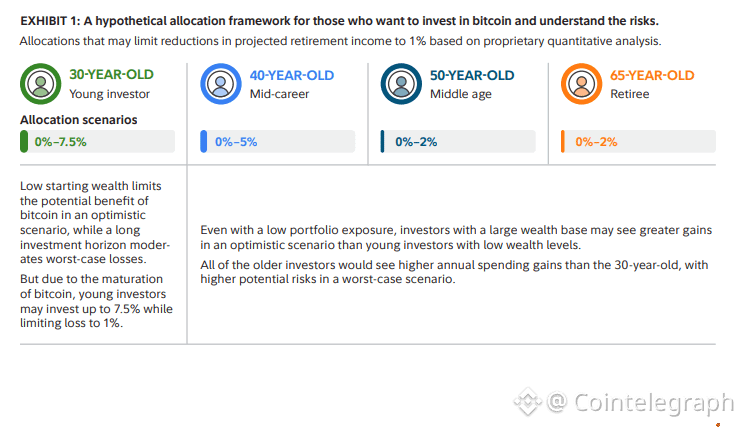
BlackRock, for example, says a 1%-2% Bitcoin allocation can be reasonable for a diversified portfolio, where investors can tolerate the risk, while Fidelity says allocations of 2%-5% could improve retirement outcomes. A smaller position allows investors to benefit from Bitcoin’s volatility while limiting the downside.
But there’s a more interesting question than whether crypto is too risky in the abstract.
Can you be a passionate believer that Bitcoin is the ultimate in sound money, or that Ether will be the future of finance — and still decide your retirement savings are better off without it?
Bitcoin is already creeping into retirement portfolios
Ryan Firth is the founder of Mercer Street Personal Financial Services, a financial planner who specializes in digital assets. He views Bitcoin as something that can sit within a conventional portfolio rather than a stand-alone retirement bet. He says BTC can potentially replace some stock exposure rather than simply being piled on top of it. He tells Magazine:
“Bitcoin offers higher return potential than stocks but with more volatility.”
Americans have mixed views on cryptocurrency in retirement plans. Source: National Institute on Retirement Security
He says his general rule of thumb is that crypto assets shouldn’t make up more than 5% of your investable assets, adding:
“The conservative approach is to invest only what you are willing to potentially lose.”
Retirement funds are taking positions themselves
The average person might think the crypto industry is too risky, but institutional investors see it as an opportunity.
Public filings show pension funds and other large investors holding regulated spot Bitcoin exchange-traded funds (ETFs), while others have gained exposure through publicly traded companies closely tied to the sector.
CalPERS, for example, the largest public pension fund in the United States, has disclosed an investment in Strategy, the largest corporate Bitcoin treasury holder, as part of its index-oriented public equity portfolio.
CalSTRS, is the largest educator-only pension fund. While it tells Magazine it has not made direct investments in cryptocurrency it has invested in firms that “some might consider crypto companies,” such as Coinbase, “a publicly traded company that operates a cryptocurrency exchange platform.”
The difference here is that institutional investors are trying to gain exposure to the growth of the crypto industry, rather than just making Bitcoin a core retirement asset.
Your retirement portfolio has one job Bitcoin doesn’t
Bitcoin’s frequent drawdowns and year long bear markets make it a tricky asset to hold for those nearing or in their retirement years.
BlackRock recommends up to a 2% Bitcoin allocation, where investors can tolerate risk. Source: BlackRock
When you’re young a drawdown is just a blip among a wider uptrend. When you are retired, spending retirement savings that have fallen significantly in value magnifies the damage considerably.
Bill Bengen, the financial planner and researcher whose work gave rise to the widely cited 4% retirement withdrawal rule, says capital preservation should be the “primary priority” for retirement portfolios.
He tells Magazine that although volatile assets like Bitcoin “can be useful,” he recommends limiting them to no more than 5% of a retirement portfolio to “help prevent a disaster.”
Firth says the question is not simply whether Bitcoin will recover, but if investors can afford to wait that long:
“Will they stay invested and avoid a knee-jerk reaction when prices inevitably fall? [...] What if crypto goes to zero? How would that disrupt their plans and what’s their backup plan?”
What if your investment thesis is wrong?
This question has crossed the mind of even the staunchest Bitcoin HODLer: how much of your future should depend on one investment thesis being right?
A hypothetical allocation framework for those who want to invest in Bitcoin. Source: Fidelity
What happens if you haven’t just wasted your life’s work but your retirement fund, if Bitcoin falls victim to quantum attackers, or if something better than Bitcoin is invented.
Bengen says many people believe AI is in a bubble.
“Bubbles eventually pop. The same could be said for Bitcoin.”
That problem rings true for anyone building a retirement portfolio around a high-conviction investment, since conviction does not eliminate the possibility of being wrong.
Parker says investors shouldn’t hold cash in retirement accounts and shouldn’t hold peer-to-peer digital cash either.
“Currencies are for transacting, not investing. Bitcoin is no different. People should invest in real assets that pay interest, coupon payments, or dividends.”
He says investors who want exposure to the success or failure of the crypto industry should own the equity or debt of companies that generate revenue from it, rather than holding Bitcoin itself.
You can believe in crypto without betting your retirement on it
If your retirement savings aren’t in Bitcoin, that doesn’t make you any less committed to its long-term growth.
You don’t have to choose between believing crypto is the future and casting it as a speculative gamble with no place in a serious portfolio, as Firth advises:
“It doesn’t have to be an all-or-nothing proposition.”
You can still believe crypto will change the world — without making your retirement depend on being right.
Magazine: Recovery specialists crack $1B crypto wallet... but find just $10
Is Bitcoin too volatile to risk your retirement on?
You stack sats. You farm yield, and you’d rather sell your car than part with your BTC. But does that mean you should bank your golden years on Bitcoin?
Many retirement industry professional such as MIT finance professor Jonathan Parker say there is a sweet spot level for crypto exposure in a diversified retirement portfolio:
“Yes, zero.”
Parker, whose research spans portfolio choice, personal finance, retirement finance and Bitcoin, is unusually blunt about where the cryptocurrency belongs. But it’s a view shared by the average citizen.
A recent survey by the National Institute on Retirement Security found that 77% of Americans consider cryptocurrency in workplace retirement plans as risky.
But regulators and investment firms alike have been steadily opening the door to greater crypto exposure in retirement savings in recent years.
BlackRock, for example, says a 1%-2% Bitcoin allocation can be reasonable for a diversified portfolio, where investors can tolerate the risk, while Fidelity says allocations of 2%-5% could improve retirement outcomes. A smaller position allows investors to benefit from Bitcoin’s volatility while limiting the downside.
But there’s a more interesting question than whether crypto is too risky in the abstract.
Can you be a passionate believer that Bitcoin is the ultimate in sound money, or that Ether will be the future of finance — and still decide your retirement savings are better off without it?
Bitcoin is already creeping into retirement portfolios
Ryan Firth is the founder of Mercer Street Personal Financial Services, a financial planner who specializes in digital assets. He views Bitcoin as something that can sit within a conventional portfolio rather than a stand-alone retirement bet. He says BTC can potentially replace some stock exposure rather than simply being piled on top of it. He tells Magazine:
“Bitcoin offers higher return potential than stocks but with more volatility.”
Americans have mixed views on cryptocurrency in retirement plans. Source: National Institute on Retirement Security
He says his general rule of thumb is that crypto assets shouldn’t make up more than 5% of your investable assets, adding:
“The conservative approach is to invest only what you are willing to potentially lose.”
Retirement funds are taking positions themselves
The average person might think the crypto industry is too risky, but institutional investors see it as an opportunity.
Public filings show pension funds and other large investors holding regulated spot Bitcoin exchange-traded funds (ETFs), while others have gained exposure through publicly traded companies closely tied to the sector.
CalPERS, for example, the largest public pension fund in the United States, has disclosed an investment in Strategy, the largest corporate Bitcoin treasury holder, as part of its index-oriented public equity portfolio.
CalSTRS, is the largest educator-only pension fund. While it tells Magazine it has not made direct investments in cryptocurrency it has invested in firms that “some might consider crypto companies,” such as Coinbase, “a publicly traded company that operates a cryptocurrency exchange platform.”
The difference here is that institutional investors are trying to gain exposure to the growth of the crypto industry, rather than just making Bitcoin a core retirement asset.
Your retirement portfolio has one job Bitcoin doesn’t
Bitcoin’s frequent drawdowns and year long bear markets make it a tricky asset to hold for those nearing or in their retirement years.
BlackRock recommends up to a 2% Bitcoin allocation, where investors can tolerate risk. Source: BlackRock
When you’re young a drawdown is just a blip among a wider uptrend. When you are retired, spending retirement savings that have fallen significantly in value magnifies the damage considerably.
Bill Bengen, the financial planner and researcher whose work gave rise to the widely cited 4% retirement withdrawal rule, says capital preservation should be the “primary priority” for retirement portfolios.
He tells Magazine that although volatile assets like Bitcoin “can be useful,” he recommends limiting them to no more than 5% of a retirement portfolio to “help prevent a disaster.”
Firth says the question is not simply whether Bitcoin will recover, but if investors can afford to wait that long:
“Will they stay invested and avoid a knee-jerk reaction when prices inevitably fall? [...] What if crypto goes to zero? How would that disrupt their plans and what’s their backup plan?”
What if your investment thesis is wrong?
This question has crossed the mind of even the staunchest Bitcoin HODLer: how much of your future should depend on one investment thesis being right?
A hypothetical allocation framework for those who want to invest in Bitcoin. Source: Fidelity
What happens if you haven’t just wasted your life’s work but your retirement fund, if Bitcoin falls victim to quantum attackers, or if something better than Bitcoin is invented.
Bengen says many people believe AI is in a bubble.
“Bubbles eventually pop. The same could be said for Bitcoin.”
That problem rings true for anyone building a retirement portfolio around a high-conviction investment, since conviction does not eliminate the possibility of being wrong.
Parker says investors shouldn’t hold cash in retirement accounts and shouldn’t hold peer-to-peer digital cash either.
“Currencies are for transacting, not investing. Bitcoin is no different. People should invest in real assets that pay interest, coupon payments, or dividends.”
He says investors who want exposure to the success or failure of the crypto industry should own the equity or debt of companies that generate revenue from it, rather than holding Bitcoin itself.
You can believe in crypto without betting your retirement on it
If your retirement savings aren’t in Bitcoin, that doesn’t make you any less committed to its long-term growth.
You don’t have to choose between believing crypto is the future and casting it as a speculative gamble with no place in a serious portfolio, as Firth advises:
“It doesn’t have to be an all-or-nothing proposition.”
You can still believe crypto will change the world — without making your retirement depend on being right.
Magazine: Recovery specialists crack $1B crypto wallet... but find just $10
Many retirement industry professional such as MIT finance professor Jonathan Parker say there is a sweet spot level for crypto exposure in a diversified retirement portfolio:
“Yes, zero.”
Parker, whose research spans portfolio choice, personal finance, retirement finance and Bitcoin, is unusually blunt about where the cryptocurrency belongs. But it’s a view shared by the average citizen.
A recent survey by the National Institute on Retirement Security found that 77% of Americans consider cryptocurrency in workplace retirement plans as risky.
But regulators and investment firms alike have been steadily opening the door to greater crypto exposure in retirement savings in recent years.
BlackRock, for example, says a 1%-2% Bitcoin allocation can be reasonable for a diversified portfolio, where investors can tolerate the risk, while Fidelity says allocations of 2%-5% could improve retirement outcomes. A smaller position allows investors to benefit from Bitcoin’s volatility while limiting the downside.
But there’s a more interesting question than whether crypto is too risky in the abstract.
Can you be a passionate believer that Bitcoin is the ultimate in sound money, or that Ether will be the future of finance — and still decide your retirement savings are better off without it?
Bitcoin is already creeping into retirement portfolios
Ryan Firth is the founder of Mercer Street Personal Financial Services, a financial planner who specializes in digital assets. He views Bitcoin as something that can sit within a conventional portfolio rather than a stand-alone retirement bet. He says BTC can potentially replace some stock exposure rather than simply being piled on top of it. He tells Magazine:
“Bitcoin offers higher return potential than stocks but with more volatility.”
Americans have mixed views on cryptocurrency in retirement plans. Source: National Institute on Retirement Security
He says his general rule of thumb is that crypto assets shouldn’t make up more than 5% of your investable assets, adding:
“The conservative approach is to invest only what you are willing to potentially lose.”
Retirement funds are taking positions themselves
The average person might think the crypto industry is too risky, but institutional investors see it as an opportunity.
Public filings show pension funds and other large investors holding regulated spot Bitcoin exchange-traded funds (ETFs), while others have gained exposure through publicly traded companies closely tied to the sector.
CalPERS, for example, the largest public pension fund in the United States, has disclosed an investment in Strategy, the largest corporate Bitcoin treasury holder, as part of its index-oriented public equity portfolio.
CalSTRS, is the largest educator-only pension fund. While it tells Magazine it has not made direct investments in cryptocurrency it has invested in firms that “some might consider crypto companies,” such as Coinbase, “a publicly traded company that operates a cryptocurrency exchange platform.”
The difference here is that institutional investors are trying to gain exposure to the growth of the crypto industry, rather than just making Bitcoin a core retirement asset.
Your retirement portfolio has one job Bitcoin doesn’t
Bitcoin’s frequent drawdowns and year long bear markets make it a tricky asset to hold for those nearing or in their retirement years.
BlackRock recommends up to a 2% Bitcoin allocation, where investors can tolerate risk. Source: BlackRock
When you’re young a drawdown is just a blip among a wider uptrend. When you are retired, spending retirement savings that have fallen significantly in value magnifies the damage considerably.
Bill Bengen, the financial planner and researcher whose work gave rise to the widely cited 4% retirement withdrawal rule, says capital preservation should be the “primary priority” for retirement portfolios.
He tells Magazine that although volatile assets like Bitcoin “can be useful,” he recommends limiting them to no more than 5% of a retirement portfolio to “help prevent a disaster.”
Firth says the question is not simply whether Bitcoin will recover, but if investors can afford to wait that long:
“Will they stay invested and avoid a knee-jerk reaction when prices inevitably fall? [...] What if crypto goes to zero? How would that disrupt their plans and what’s their backup plan?”
What if your investment thesis is wrong?
This question has crossed the mind of even the staunchest Bitcoin HODLer: how much of your future should depend on one investment thesis being right?
A hypothetical allocation framework for those who want to invest in Bitcoin. Source: Fidelity
What happens if you haven’t just wasted your life’s work but your retirement fund, if Bitcoin falls victim to quantum attackers, or if something better than Bitcoin is invented.
Bengen says many people believe AI is in a bubble.
“Bubbles eventually pop. The same could be said for Bitcoin.”
That problem rings true for anyone building a retirement portfolio around a high-conviction investment, since conviction does not eliminate the possibility of being wrong.
Parker says investors shouldn’t hold cash in retirement accounts and shouldn’t hold peer-to-peer digital cash either.
“Currencies are for transacting, not investing. Bitcoin is no different. People should invest in real assets that pay interest, coupon payments, or dividends.”
He says investors who want exposure to the success or failure of the crypto industry should own the equity or debt of companies that generate revenue from it, rather than holding Bitcoin itself.
You can believe in crypto without betting your retirement on it
If your retirement savings aren’t in Bitcoin, that doesn’t make you any less committed to its long-term growth.
You don’t have to choose between believing crypto is the future and casting it as a speculative gamble with no place in a serious portfolio, as Firth advises:
“It doesn’t have to be an all-or-nothing proposition.”
You can still believe crypto will change the world — without making your retirement depend on being right.
Magazine: Recovery specialists crack $1B crypto wallet... but find just $10
203
Article
Visa brings onchain credit to its growing stablecoin card businessPayment giant Visa is connecting its settlement network with onchain lending, giving stablecoin-linked card programs another way to access working capital, potentially expanding the role of onchain lending from crypto markets into payment settlement.
The company announced Tuesday that settlement data from VisaNet will be combined with blockchain-based lending infrastructure, allowing lenders to finance payment obligations using data from the Visa network. The initiative enables lenders to use Visa settlement records alongside onchain transaction data to assess borrowers and finance their settlement obligations.
Visa highlighted Credit Coop, a blockchain-based protocol that extends credit lines to businesses, as an early example of the model. Credit Coop has financed more than $2.5 billion in cumulative settlement volume since 2023 across participating facilities, involving more than 3,000 borrowing events and 9,000 repayments.
Rubail Birwadker, Visa’s global head of growth products and partnerships, said stablecoins are “changing how money moves” and creating opportunities to rethink the financial infrastructure supporting payments.
The initiative comes as Visa’s stablecoin-related payment business expands. More than 160 stablecoin-linked card programs now operate on its network, with payment volume up nearly 200% year over year. Visa also said its stablecoin settlement volume has surpassed a $20 billion annualized run rate, more than 15 times year-ago levels.
Visa deepens its stablecoin push
Visa has made stablecoins a growing part of its payments strategy, with management saying during its fiscal third-quarter earnings call in July that the company is “investing in each layer of the stablecoin stack,” including blockchains, wallets, infrastructure and applications.
The push includes joining the OpenStandard consortium, which plans to issue the OpenUSD stablecoin and counts Stripe among more than 140 participating businesses.
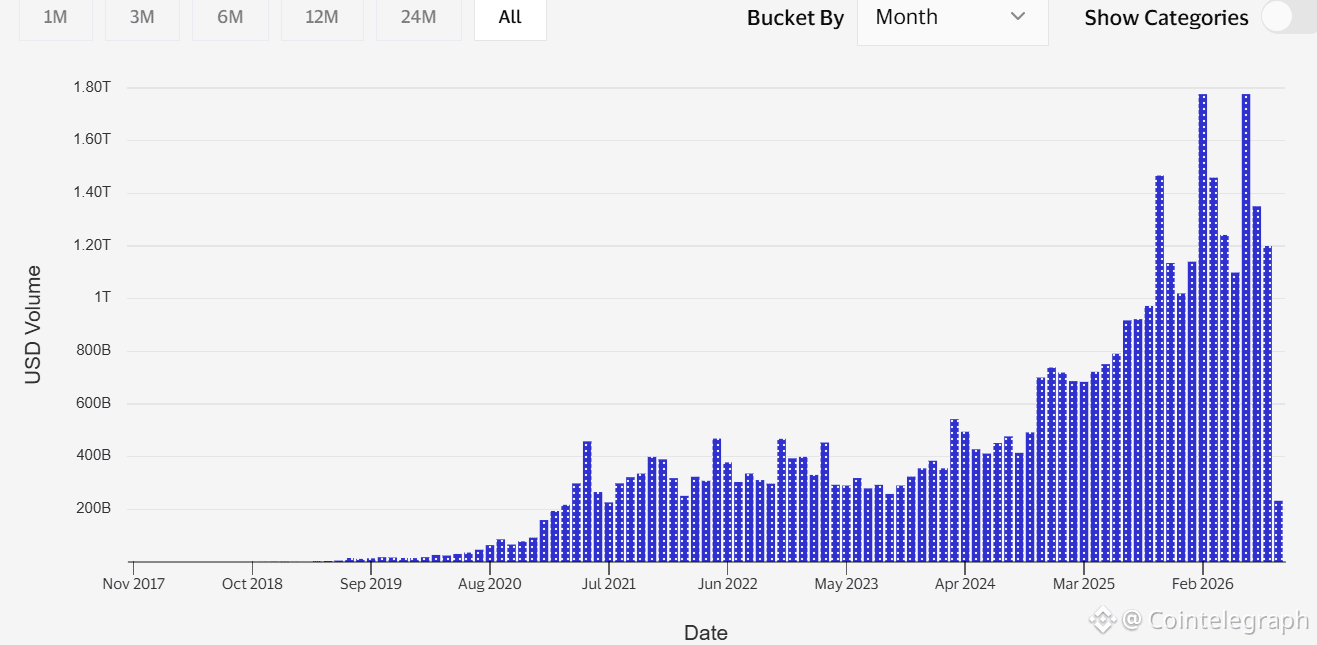
Visa’s expansion also comes as stablecoin activity continues to grow. Adjusted stablecoin transaction volume reached a record $1.79 trillion in June, while volume over the past 30 days stands at roughly $1.2 trillion, according to Visa’s analytics dashboard.
Source: Visa Onchain Analytics
Visa brings onchain credit to its growing stablecoin card business
Payment giant Visa is connecting its settlement network with onchain lending, giving stablecoin-linked card programs another way to access working capital, potentially expanding the role of onchain lending from crypto markets into payment settlement.
The company announced Tuesday that settlement data from VisaNet will be combined with blockchain-based lending infrastructure, allowing lenders to finance payment obligations using data from the Visa network. The initiative enables lenders to use Visa settlement records alongside onchain transaction data to assess borrowers and finance their settlement obligations.
Visa highlighted Credit Coop, a blockchain-based protocol that extends credit lines to businesses, as an early example of the model. Credit Coop has financed more than $2.5 billion in cumulative settlement volume since 2023 across participating facilities, involving more than 3,000 borrowing events and 9,000 repayments.
Rubail Birwadker, Visa’s global head of growth products and partnerships, said stablecoins are “changing how money moves” and creating opportunities to rethink the financial infrastructure supporting payments.
The initiative comes as Visa’s stablecoin-related payment business expands. More than 160 stablecoin-linked card programs now operate on its network, with payment volume up nearly 200% year over year. Visa also said its stablecoin settlement volume has surpassed a $20 billion annualized run rate, more than 15 times year-ago levels.
Visa deepens its stablecoin push
Visa has made stablecoins a growing part of its payments strategy, with management saying during its fiscal third-quarter earnings call in July that the company is “investing in each layer of the stablecoin stack,” including blockchains, wallets, infrastructure and applications.
The push includes joining the OpenStandard consortium, which plans to issue the OpenUSD stablecoin and counts Stripe among more than 140 participating businesses.
Visa’s expansion also comes as stablecoin activity continues to grow. Adjusted stablecoin transaction volume reached a record $1.79 trillion in June, while volume over the past 30 days stands at roughly $1.2 trillion, according to Visa’s analytics dashboard.
Source: Visa Onchain Analytics
The company announced Tuesday that settlement data from VisaNet will be combined with blockchain-based lending infrastructure, allowing lenders to finance payment obligations using data from the Visa network. The initiative enables lenders to use Visa settlement records alongside onchain transaction data to assess borrowers and finance their settlement obligations.
Visa highlighted Credit Coop, a blockchain-based protocol that extends credit lines to businesses, as an early example of the model. Credit Coop has financed more than $2.5 billion in cumulative settlement volume since 2023 across participating facilities, involving more than 3,000 borrowing events and 9,000 repayments.
Rubail Birwadker, Visa’s global head of growth products and partnerships, said stablecoins are “changing how money moves” and creating opportunities to rethink the financial infrastructure supporting payments.
The initiative comes as Visa’s stablecoin-related payment business expands. More than 160 stablecoin-linked card programs now operate on its network, with payment volume up nearly 200% year over year. Visa also said its stablecoin settlement volume has surpassed a $20 billion annualized run rate, more than 15 times year-ago levels.
Visa deepens its stablecoin push
Visa has made stablecoins a growing part of its payments strategy, with management saying during its fiscal third-quarter earnings call in July that the company is “investing in each layer of the stablecoin stack,” including blockchains, wallets, infrastructure and applications.
The push includes joining the OpenStandard consortium, which plans to issue the OpenUSD stablecoin and counts Stripe among more than 140 participating businesses.
Visa’s expansion also comes as stablecoin activity continues to grow. Adjusted stablecoin transaction volume reached a record $1.79 trillion in June, while volume over the past 30 days stands at roughly $1.2 trillion, according to Visa’s analytics dashboard.
Source: Visa Onchain Analytics
217
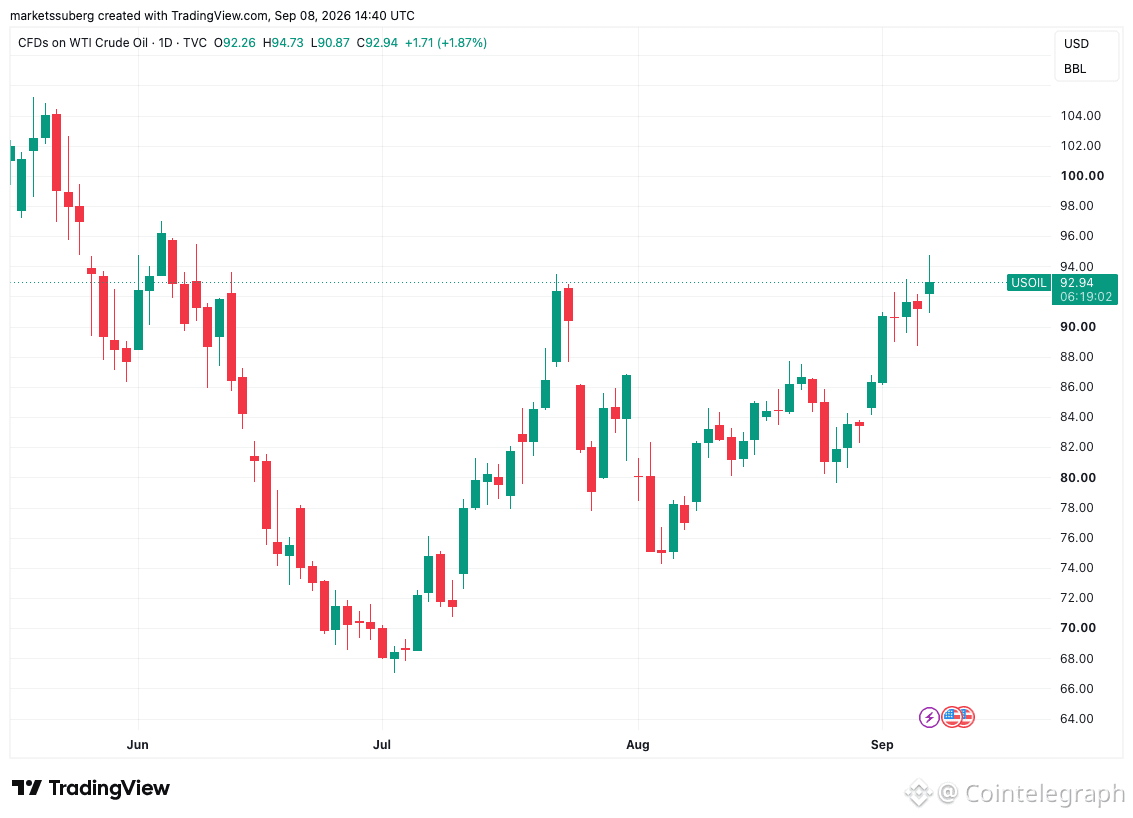
Article
Bitcoin faces key support test at $78.3K as US crude oil hits three-month highBitcoin (BTC) dipped below $78,000 at Tuesday’s Wall Street open as risk assets fell on renewed Middle East tensions.
Key points:
Bitcoin briefly dropped under $78,000 for the first time since Sept. 3, following downside pressure on US equities.
WTI crude oil hit three-month highs near $95 per barrel on renewed military strikes in the Middle East.
Bitcoin needs to hold $78,300 to avoid a repeat of its May breakdown, analysis warns.
Bitcoin, stocks fall as Middle East woes spark oil surge
Data from TradingView showed BTC/USD dropping as low as $77,600 before a modest rebound, its lowest levels since Sept. 3.
BTC/USD one-hour chart. Source: Cointelegraph/TradingView
News of Houthi strikes on Saudi Arabian cities and oil infrastructure pressured US stocks at the start of the first trading session after the Labor Day holiday. The S&P 500 and tech-heavy Nasdaq Composite Index were down by 0.5% and 0.4%, respectively, at the time of writing.
S&P 500 one-day chart. Source: Cointelegraph/TradingView
Oil prices showed a more pronounced reaction to the events, with WTI crude surging toward $95 per barrel, its highest since June 8. Brent crude targeted the $100 mark for the first time since July 24.
CFDs on US WTI crude oil one-day chart. Source: Cointelegraph/TradingView
Commenting on a concurrent record rise in US diesel prices, trading resource The Kobeissi Letter noted that “inflation expectations continue to mount as a result.” As Cointelegraph reported, this has been especially apparent in the Consumer Price Index (CPI), an inflation gauge which is again due for release on Friday.
In a Truth Social post on Monday, US president Donald Trump downplayed the oil spike, pledging lower prices in the future.
“Oil prices will drop precipitously, like everything else is dropping (but more!), when we WIN the war with Iran. Three Dollars a gallon, but ultimately, below Two Dollars a gallon,” he wrote.
Analysis shows BTC price copying failed May breakout
Discussing current BTC price action, trader and analyst Rekt Capital struck a cautious tone, drawing comparisons to Bitcoin’s failed May breakout.
At the time, BTC/USD reached $82,800 before reversing, then consolidating at $78,300 and eventually dropping to new macro lows near $57,000.
“The retest of ~$78300 is now in progress,” he noted in a post on X.
BTC/USD one-week chart. Source: Rekt Capital on X.com
Should the current zone fail to hold as support, BTC/USD would seal another lower high in a series stretching back to October 2025, keeping its 2026 bear market firmly in place.
“Ultimately, a Weekly Close below $78300 followed by a bearish retest just like in early May would likely confirm a breakdown,” Rekt Capital argued in separate analysis on X.
Bitcoin faces key support test at $78.3K as US crude oil hits three-month high
Bitcoin (BTC) dipped below $78,000 at Tuesday’s Wall Street open as risk assets fell on renewed Middle East tensions.
Key points:
Bitcoin briefly dropped under $78,000 for the first time since Sept. 3, following downside pressure on US equities.
WTI crude oil hit three-month highs near $95 per barrel on renewed military strikes in the Middle East.
Bitcoin needs to hold $78,300 to avoid a repeat of its May breakdown, analysis warns.
Bitcoin, stocks fall as Middle East woes spark oil surge
Data from TradingView showed BTC/USD dropping as low as $77,600 before a modest rebound, its lowest levels since Sept. 3.
BTC/USD one-hour chart. Source: Cointelegraph/TradingView
News of Houthi strikes on Saudi Arabian cities and oil infrastructure pressured US stocks at the start of the first trading session after the Labor Day holiday. The S&P 500 and tech-heavy Nasdaq Composite Index were down by 0.5% and 0.4%, respectively, at the time of writing.
S&P 500 one-day chart. Source: Cointelegraph/TradingView
Oil prices showed a more pronounced reaction to the events, with WTI crude surging toward $95 per barrel, its highest since June 8. Brent crude targeted the $100 mark for the first time since July 24.
CFDs on US WTI crude oil one-day chart. Source: Cointelegraph/TradingView
Commenting on a concurrent record rise in US diesel prices, trading resource The Kobeissi Letter noted that “inflation expectations continue to mount as a result.” As Cointelegraph reported, this has been especially apparent in the Consumer Price Index (CPI), an inflation gauge which is again due for release on Friday.
In a Truth Social post on Monday, US president Donald Trump downplayed the oil spike, pledging lower prices in the future.
“Oil prices will drop precipitously, like everything else is dropping (but more!), when we WIN the war with Iran. Three Dollars a gallon, but ultimately, below Two Dollars a gallon,” he wrote.
Analysis shows BTC price copying failed May breakout
Discussing current BTC price action, trader and analyst Rekt Capital struck a cautious tone, drawing comparisons to Bitcoin’s failed May breakout.
At the time, BTC/USD reached $82,800 before reversing, then consolidating at $78,300 and eventually dropping to new macro lows near $57,000.
“The retest of ~$78300 is now in progress,” he noted in a post on X.
BTC/USD one-week chart. Source: Rekt Capital on X.com
Should the current zone fail to hold as support, BTC/USD would seal another lower high in a series stretching back to October 2025, keeping its 2026 bear market firmly in place.
“Ultimately, a Weekly Close below $78300 followed by a bearish retest just like in early May would likely confirm a breakdown,” Rekt Capital argued in separate analysis on X.
Key points:
Bitcoin briefly dropped under $78,000 for the first time since Sept. 3, following downside pressure on US equities.
WTI crude oil hit three-month highs near $95 per barrel on renewed military strikes in the Middle East.
Bitcoin needs to hold $78,300 to avoid a repeat of its May breakdown, analysis warns.
Bitcoin, stocks fall as Middle East woes spark oil surge
Data from TradingView showed BTC/USD dropping as low as $77,600 before a modest rebound, its lowest levels since Sept. 3.
BTC/USD one-hour chart. Source: Cointelegraph/TradingView
News of Houthi strikes on Saudi Arabian cities and oil infrastructure pressured US stocks at the start of the first trading session after the Labor Day holiday. The S&P 500 and tech-heavy Nasdaq Composite Index were down by 0.5% and 0.4%, respectively, at the time of writing.
S&P 500 one-day chart. Source: Cointelegraph/TradingView
Oil prices showed a more pronounced reaction to the events, with WTI crude surging toward $95 per barrel, its highest since June 8. Brent crude targeted the $100 mark for the first time since July 24.
CFDs on US WTI crude oil one-day chart. Source: Cointelegraph/TradingView
Commenting on a concurrent record rise in US diesel prices, trading resource The Kobeissi Letter noted that “inflation expectations continue to mount as a result.” As Cointelegraph reported, this has been especially apparent in the Consumer Price Index (CPI), an inflation gauge which is again due for release on Friday.
In a Truth Social post on Monday, US president Donald Trump downplayed the oil spike, pledging lower prices in the future.
“Oil prices will drop precipitously, like everything else is dropping (but more!), when we WIN the war with Iran. Three Dollars a gallon, but ultimately, below Two Dollars a gallon,” he wrote.
Analysis shows BTC price copying failed May breakout
Discussing current BTC price action, trader and analyst Rekt Capital struck a cautious tone, drawing comparisons to Bitcoin’s failed May breakout.
At the time, BTC/USD reached $82,800 before reversing, then consolidating at $78,300 and eventually dropping to new macro lows near $57,000.
“The retest of ~$78300 is now in progress,” he noted in a post on X.
BTC/USD one-week chart. Source: Rekt Capital on X.com
Should the current zone fail to hold as support, BTC/USD would seal another lower high in a series stretching back to October 2025, keeping its 2026 bear market firmly in place.
“Ultimately, a Weekly Close below $78300 followed by a bearish retest just like in early May would likely confirm a breakdown,” Rekt Capital argued in separate analysis on X.
1
1
674
Strategy skips Bitcoin buy to repurchase $176M of STRC preferred sharesMichael Saylor’s Strategy, the largest corporate Bitcoin treasury, skipped its weekly Bitcoin acquisition to repurchase $176 million of its preferred STRC stock.
Strategy repurchased 1.8 million STRC shares for an aggregate $176.3 million between Aug. 31 and Sept. 7, according to a Tuesday filing with the US Securities and Exchange Commission.
The company also doubled the size of its Digital Credit Securities Repurchase Program to $2 billion. With no new purchases, Strategy’s holdings sit at 845,050 Bitcoin (BTC), acquired for a total of $63.6 billion, at an average purchase price of $75,412 apiece.
Last week, Strategy made its first BTC buy since mid June, with a $370 million purchase.
While STRC’s share price was largely flat in premarket activity on Tuesday, trading at $97.70, or a 2.3% discount from its intended $100 par value, the company’s Nasdaq-traded MSTR common stock was down more than 3% at last look, according to Yahoo Finance.
STRC is one of Strategy’s main vehicles to fund its Bitcoin accumulation. Trading below par limits Strategy’s ability to raise funds through STRC sales and may force the company to further increase its dividend rate.
Strategy unveiled a capital framework on June 29 to allow Bitcoin sales to fund dividends and increased the annual dividend rate on its STRC preferred stock to 12%.
BTC treasury challenger Strive steps purchases
While Strategy opted to pause its Bitcoin buying last week, management other companies stepped up purchases of the biggest crypto by market cap.
Strive, the fifth-largest corporate Bitcoin treasury, acquired 1,375 Bitcoin for $109 million, at an average cost of $79,281 per BTC, bringing its total holdings to 24,531 Bitcoin, CEO Matt Cole revealed on Monday. Ahead of Tuesday’s market open, the company’s Nasdaq-traded ASST shares were down more than 2.5%, after more than doubling in the past month.
France-listed Bitcoin treasury Capital B also revealed a $25 million Bitcoin acquisition on Monday, its largest in nearly a year, pushing the French company ahead of H100 Group among publicly traded BTC holders.
Strategy skips Bitcoin buy to repurchase $176M of STRC preferred shares
Michael Saylor’s Strategy, the largest corporate Bitcoin treasury, skipped its weekly Bitcoin acquisition to repurchase $176 million of its preferred STRC stock.
Strategy repurchased 1.8 million STRC shares for an aggregate $176.3 million between Aug. 31 and Sept. 7, according to a Tuesday filing with the US Securities and Exchange Commission.
The company also doubled the size of its Digital Credit Securities Repurchase Program to $2 billion. With no new purchases, Strategy’s holdings sit at 845,050 Bitcoin (BTC), acquired for a total of $63.6 billion, at an average purchase price of $75,412 apiece.
Last week, Strategy made its first BTC buy since mid June, with a $370 million purchase.
While STRC’s share price was largely flat in premarket activity on Tuesday, trading at $97.70, or a 2.3% discount from its intended $100 par value, the company’s Nasdaq-traded MSTR common stock was down more than 3% at last look, according to Yahoo Finance.
STRC is one of Strategy’s main vehicles to fund its Bitcoin accumulation. Trading below par limits Strategy’s ability to raise funds through STRC sales and may force the company to further increase its dividend rate.
Strategy unveiled a capital framework on June 29 to allow Bitcoin sales to fund dividends and increased the annual dividend rate on its STRC preferred stock to 12%.
BTC treasury challenger Strive steps purchases
While Strategy opted to pause its Bitcoin buying last week, management other companies stepped up purchases of the biggest crypto by market cap.
Strive, the fifth-largest corporate Bitcoin treasury, acquired 1,375 Bitcoin for $109 million, at an average cost of $79,281 per BTC, bringing its total holdings to 24,531 Bitcoin, CEO Matt Cole revealed on Monday. Ahead of Tuesday’s market open, the company’s Nasdaq-traded ASST shares were down more than 2.5%, after more than doubling in the past month.
France-listed Bitcoin treasury Capital B also revealed a $25 million Bitcoin acquisition on Monday, its largest in nearly a year, pushing the French company ahead of H100 Group among publicly traded BTC holders.
Strategy repurchased 1.8 million STRC shares for an aggregate $176.3 million between Aug. 31 and Sept. 7, according to a Tuesday filing with the US Securities and Exchange Commission.
The company also doubled the size of its Digital Credit Securities Repurchase Program to $2 billion. With no new purchases, Strategy’s holdings sit at 845,050 Bitcoin (BTC), acquired for a total of $63.6 billion, at an average purchase price of $75,412 apiece.
Last week, Strategy made its first BTC buy since mid June, with a $370 million purchase.
While STRC’s share price was largely flat in premarket activity on Tuesday, trading at $97.70, or a 2.3% discount from its intended $100 par value, the company’s Nasdaq-traded MSTR common stock was down more than 3% at last look, according to Yahoo Finance.
STRC is one of Strategy’s main vehicles to fund its Bitcoin accumulation. Trading below par limits Strategy’s ability to raise funds through STRC sales and may force the company to further increase its dividend rate.
Strategy unveiled a capital framework on June 29 to allow Bitcoin sales to fund dividends and increased the annual dividend rate on its STRC preferred stock to 12%.
BTC treasury challenger Strive steps purchases
While Strategy opted to pause its Bitcoin buying last week, management other companies stepped up purchases of the biggest crypto by market cap.
Strive, the fifth-largest corporate Bitcoin treasury, acquired 1,375 Bitcoin for $109 million, at an average cost of $79,281 per BTC, bringing its total holdings to 24,531 Bitcoin, CEO Matt Cole revealed on Monday. Ahead of Tuesday’s market open, the company’s Nasdaq-traded ASST shares were down more than 2.5%, after more than doubling in the past month.
France-listed Bitcoin treasury Capital B also revealed a $25 million Bitcoin acquisition on Monday, its largest in nearly a year, pushing the French company ahead of H100 Group among publicly traded BTC holders.
1
102
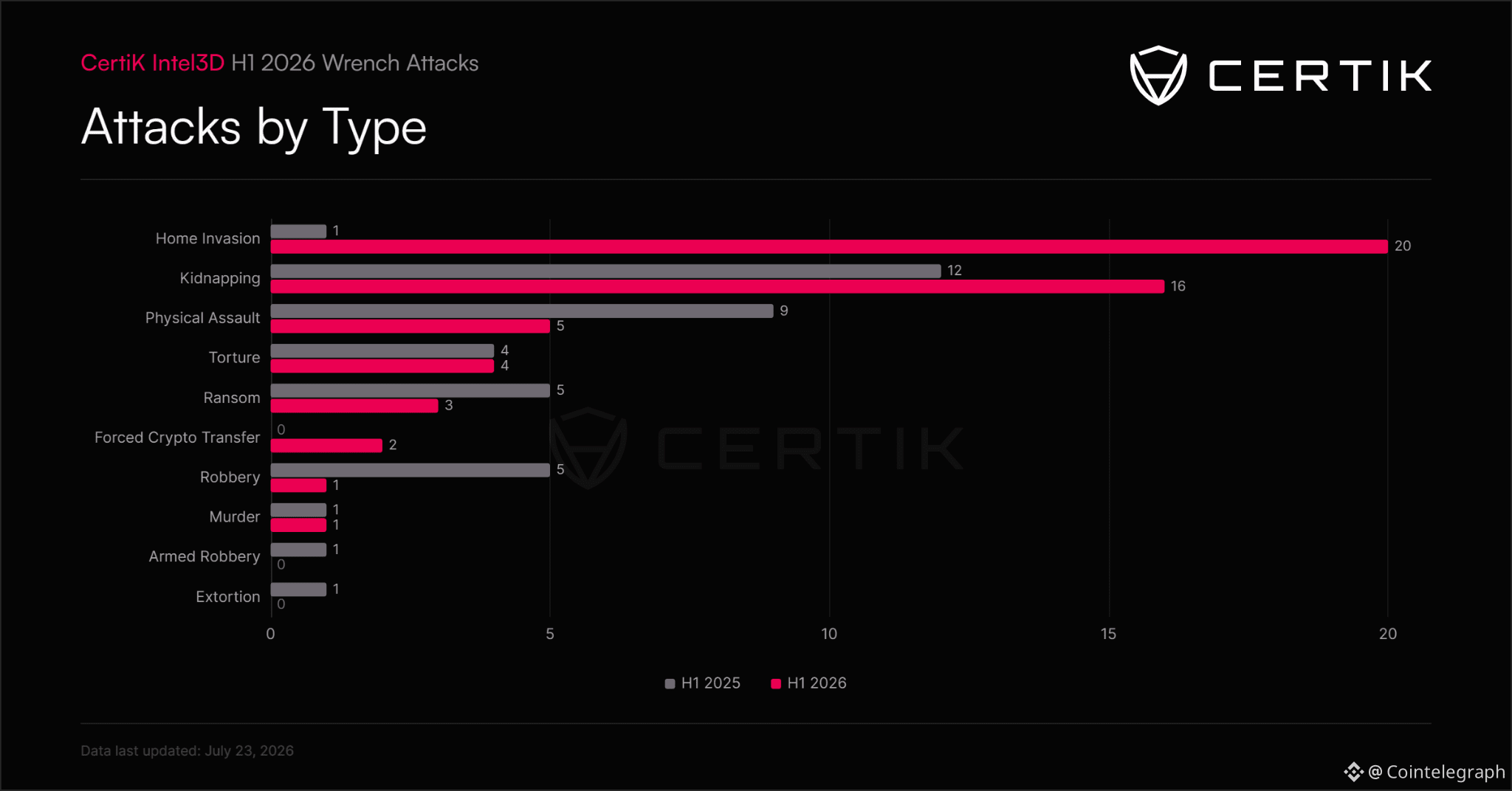
Article
Mexico quadruple homicide tied to alleged Bitcoin robbery attemptTwo suspects in the killing of four people in Mexico allegedly sought a cold wallet they believed held millions of dollars in Bitcoin, news outlet La Jornada reported on Saturday, citing an update from the Attorney General’s Office of the State of Mexico (FGJEM).
Diego Sebastián and Gerardo, whose surnames were withheld, are scheduled for a court hearing on Wednesday, where a judge will determine whether there is sufficient evidence for criminal proceedings against them to continue, reported Diario de México on Sunday.
The FGJEM announced the arrests of the two suspects in a Sept. 2 X post.
According to La Jornada, prosecutors accuse the two men of killing Jonathan Meléndez, keyboardist for rock band Camilo Séptimo, his pregnant wife, his daughter and an employee in their home in the municipality of Atizapán de Zaragoza. The family’s golden retriever was also killed.
The FGJEM said the suspects could face 25 to 70 years in prison per homicide victim if convicted, according to La Jornada.
One suspect was a business associate of one of the victims and allegedly used the relationship to enter the home, Mexico’s security secretary, Omar García Harfuch, said in a Sept. 2 X post.
Physical attacks target crypto holders
Crypto wrench attacks involve violence or threats to force people to hand over cryptocurrency or access to their wallets. The first half of 2026 saw 20 publicly reported home invasions targeting crypto owners, up from a single incident during the same period a year earlier, according to blockchain security firm CertiK.
CertiK identified a total of 52 wrench attacks worldwide in the first half of 2026, up 33.3% from 39 incidents during the same period in 2025.
Attack type year-on-year, H1 2025 vs. H1 2026. Source: CertiK
In the first half of 2026, criminals stole over $30 million in crypto through wrench attacks, according to estimates from blockchain analytics firm Chainalysis.
In October 2025, attackers killed convicted Russian crypto fraudster Roman Novak and his wife after kidnapping them and demanding crypto wallet access, reported Russian news outlet Fontanka.
Wrench attacks increased by 75% in 2025 to 72 verified cases worldwide, according to CertiK. France recorded the most attacks last year, with 19 confirmed incidents, while Europe accounted for about 40% of all attacks globally in 2025.
Magazine: Inside the ‘fake police raid’ that forced a $1M Bitcoin transfer
Mexico quadruple homicide tied to alleged Bitcoin robbery attempt
Two suspects in the killing of four people in Mexico allegedly sought a cold wallet they believed held millions of dollars in Bitcoin, news outlet La Jornada reported on Saturday, citing an update from the Attorney General’s Office of the State of Mexico (FGJEM).
Diego Sebastián and Gerardo, whose surnames were withheld, are scheduled for a court hearing on Wednesday, where a judge will determine whether there is sufficient evidence for criminal proceedings against them to continue, reported Diario de México on Sunday.
The FGJEM announced the arrests of the two suspects in a Sept. 2 X post.
According to La Jornada, prosecutors accuse the two men of killing Jonathan Meléndez, keyboardist for rock band Camilo Séptimo, his pregnant wife, his daughter and an employee in their home in the municipality of Atizapán de Zaragoza. The family’s golden retriever was also killed.
The FGJEM said the suspects could face 25 to 70 years in prison per homicide victim if convicted, according to La Jornada.
One suspect was a business associate of one of the victims and allegedly used the relationship to enter the home, Mexico’s security secretary, Omar García Harfuch, said in a Sept. 2 X post.
Physical attacks target crypto holders
Crypto wrench attacks involve violence or threats to force people to hand over cryptocurrency or access to their wallets. The first half of 2026 saw 20 publicly reported home invasions targeting crypto owners, up from a single incident during the same period a year earlier, according to blockchain security firm CertiK.
CertiK identified a total of 52 wrench attacks worldwide in the first half of 2026, up 33.3% from 39 incidents during the same period in 2025.
Attack type year-on-year, H1 2025 vs. H1 2026. Source: CertiK
In the first half of 2026, criminals stole over $30 million in crypto through wrench attacks, according to estimates from blockchain analytics firm Chainalysis.
In October 2025, attackers killed convicted Russian crypto fraudster Roman Novak and his wife after kidnapping them and demanding crypto wallet access, reported Russian news outlet Fontanka.
Wrench attacks increased by 75% in 2025 to 72 verified cases worldwide, according to CertiK. France recorded the most attacks last year, with 19 confirmed incidents, while Europe accounted for about 40% of all attacks globally in 2025.
Magazine: Inside the ‘fake police raid’ that forced a $1M Bitcoin transfer
Diego Sebastián and Gerardo, whose surnames were withheld, are scheduled for a court hearing on Wednesday, where a judge will determine whether there is sufficient evidence for criminal proceedings against them to continue, reported Diario de México on Sunday.
The FGJEM announced the arrests of the two suspects in a Sept. 2 X post.
According to La Jornada, prosecutors accuse the two men of killing Jonathan Meléndez, keyboardist for rock band Camilo Séptimo, his pregnant wife, his daughter and an employee in their home in the municipality of Atizapán de Zaragoza. The family’s golden retriever was also killed.
The FGJEM said the suspects could face 25 to 70 years in prison per homicide victim if convicted, according to La Jornada.
One suspect was a business associate of one of the victims and allegedly used the relationship to enter the home, Mexico’s security secretary, Omar García Harfuch, said in a Sept. 2 X post.
Physical attacks target crypto holders
Crypto wrench attacks involve violence or threats to force people to hand over cryptocurrency or access to their wallets. The first half of 2026 saw 20 publicly reported home invasions targeting crypto owners, up from a single incident during the same period a year earlier, according to blockchain security firm CertiK.
CertiK identified a total of 52 wrench attacks worldwide in the first half of 2026, up 33.3% from 39 incidents during the same period in 2025.
Attack type year-on-year, H1 2025 vs. H1 2026. Source: CertiK
In the first half of 2026, criminals stole over $30 million in crypto through wrench attacks, according to estimates from blockchain analytics firm Chainalysis.
In October 2025, attackers killed convicted Russian crypto fraudster Roman Novak and his wife after kidnapping them and demanding crypto wallet access, reported Russian news outlet Fontanka.
Wrench attacks increased by 75% in 2025 to 72 verified cases worldwide, according to CertiK. France recorded the most attacks last year, with 19 confirmed incidents, while Europe accounted for about 40% of all attacks globally in 2025.
Magazine: Inside the ‘fake police raid’ that forced a $1M Bitcoin transfer
104
Circle to acquire Tazapay to expand USDC cross-border paymentsCircle has agreed to acquire Singapore-based cross-border payments platform Tazapay in a deal expected to close in 2027.
The transaction will also require customary closing conditions and approval from the Monetary Authority of Singapore, Circle said in a Tuesday announcement.
Tazapay has more than $25 billion in annualized payment volume and serves more than 60 banking and fintech partners with local payout rails covering more than 100 markets. The company said in August 2025 that annualized payment volume was $10 billion.
Circle previously invested in Tazapay, including in the startup’s August 2025 Series B round that brought the total amount raised to $57.9 million, according to Traxcn data. XRP-issuer Ripple was also an investor in that round.
Stablecoins account for about 60% of Tazapay’s transaction volume, according to Circle. The company said the acquisition will expand its ability to route payments to and from Asia-Pacific and emerging markets.
“This acquisition will increase Circle’s capability to originate and terminate payments globally, near-instant and 24/7, which is a meaningful step toward making USDC the default payment rail for cross-border commerce,” said Irfan Ganchi, senior vice president of payments at Circle.
Tazapay has been a design partner for the Circle Payments Network since 2025. Circle said Tazapay customers should see no disruption to their services, APIs, pricing or support.
The financial terms of the deal were not disclosed. Circle did not immediately respond to Cointelegraph’s request for comment.
Circle’s (CRCL) NYSE-traded shares were down more than 2% in Tuesday’s premarket activity, at last look, according to Yahoo Finance.
Circle to acquire Tazapay to expand USDC cross-border payments
Circle has agreed to acquire Singapore-based cross-border payments platform Tazapay in a deal expected to close in 2027.
The transaction will also require customary closing conditions and approval from the Monetary Authority of Singapore, Circle said in a Tuesday announcement.
Tazapay has more than $25 billion in annualized payment volume and serves more than 60 banking and fintech partners with local payout rails covering more than 100 markets. The company said in August 2025 that annualized payment volume was $10 billion.
Circle previously invested in Tazapay, including in the startup’s August 2025 Series B round that brought the total amount raised to $57.9 million, according to Traxcn data. XRP-issuer Ripple was also an investor in that round.
Stablecoins account for about 60% of Tazapay’s transaction volume, according to Circle. The company said the acquisition will expand its ability to route payments to and from Asia-Pacific and emerging markets.
“This acquisition will increase Circle’s capability to originate and terminate payments globally, near-instant and 24/7, which is a meaningful step toward making USDC the default payment rail for cross-border commerce,” said Irfan Ganchi, senior vice president of payments at Circle.
Tazapay has been a design partner for the Circle Payments Network since 2025. Circle said Tazapay customers should see no disruption to their services, APIs, pricing or support.
The financial terms of the deal were not disclosed. Circle did not immediately respond to Cointelegraph’s request for comment.
Circle’s (CRCL) NYSE-traded shares were down more than 2% in Tuesday’s premarket activity, at last look, according to Yahoo Finance.
The transaction will also require customary closing conditions and approval from the Monetary Authority of Singapore, Circle said in a Tuesday announcement.
Tazapay has more than $25 billion in annualized payment volume and serves more than 60 banking and fintech partners with local payout rails covering more than 100 markets. The company said in August 2025 that annualized payment volume was $10 billion.
Circle previously invested in Tazapay, including in the startup’s August 2025 Series B round that brought the total amount raised to $57.9 million, according to Traxcn data. XRP-issuer Ripple was also an investor in that round.
Stablecoins account for about 60% of Tazapay’s transaction volume, according to Circle. The company said the acquisition will expand its ability to route payments to and from Asia-Pacific and emerging markets.
“This acquisition will increase Circle’s capability to originate and terminate payments globally, near-instant and 24/7, which is a meaningful step toward making USDC the default payment rail for cross-border commerce,” said Irfan Ganchi, senior vice president of payments at Circle.
Tazapay has been a design partner for the Circle Payments Network since 2025. Circle said Tazapay customers should see no disruption to their services, APIs, pricing or support.
The financial terms of the deal were not disclosed. Circle did not immediately respond to Cointelegraph’s request for comment.
Circle’s (CRCL) NYSE-traded shares were down more than 2% in Tuesday’s premarket activity, at last look, according to Yahoo Finance.
245
Uzbekistan begins government bond-backed stablecoin payment pilotUzbekistan has launched a pilot to test payments with a som-pegged stablecoin backed by government securities.
On Monday, the National Agency for Prospective Projects (NAPP) said it had registered Humo Digital as a participant in a special regime jointly overseen with the central bank. The pilot will test the issuance, circulation and redemption of HUMO, with each token pegged to one Uzbek som.
NAPP said more than 20 merchants are prepared to test HUMO payments for goods and services.
The project will also integrate participating banks’ payment-processing and blockchain infrastructure. Asterium, a licensed crypto exchange, will serve as a project partner.
According to the Central Bank of Uzbekistan, the initial trial will run for 12 months, with the project’s total duration capped at three years. Regulators will assess the adequacy and safeguarding of the token’s collateral, cybersecurity, consumer safeguards, anti-money laundering controls and risks to financial and price stability.
The pilot follows a framework approved in November 2025. At the time, Uzbekistan said it was planning to permit stablecoin payment trials under a sandbox, alongside provisions for tokenized shares and bonds.
Uzbekistan begins government bond-backed stablecoin payment pilot
Uzbekistan has launched a pilot to test payments with a som-pegged stablecoin backed by government securities.
On Monday, the National Agency for Prospective Projects (NAPP) said it had registered Humo Digital as a participant in a special regime jointly overseen with the central bank. The pilot will test the issuance, circulation and redemption of HUMO, with each token pegged to one Uzbek som.
NAPP said more than 20 merchants are prepared to test HUMO payments for goods and services.
The project will also integrate participating banks’ payment-processing and blockchain infrastructure. Asterium, a licensed crypto exchange, will serve as a project partner.
According to the Central Bank of Uzbekistan, the initial trial will run for 12 months, with the project’s total duration capped at three years. Regulators will assess the adequacy and safeguarding of the token’s collateral, cybersecurity, consumer safeguards, anti-money laundering controls and risks to financial and price stability.
The pilot follows a framework approved in November 2025. At the time, Uzbekistan said it was planning to permit stablecoin payment trials under a sandbox, alongside provisions for tokenized shares and bonds.
On Monday, the National Agency for Prospective Projects (NAPP) said it had registered Humo Digital as a participant in a special regime jointly overseen with the central bank. The pilot will test the issuance, circulation and redemption of HUMO, with each token pegged to one Uzbek som.
NAPP said more than 20 merchants are prepared to test HUMO payments for goods and services.
The project will also integrate participating banks’ payment-processing and blockchain infrastructure. Asterium, a licensed crypto exchange, will serve as a project partner.
According to the Central Bank of Uzbekistan, the initial trial will run for 12 months, with the project’s total duration capped at three years. Regulators will assess the adequacy and safeguarding of the token’s collateral, cybersecurity, consumer safeguards, anti-money laundering controls and risks to financial and price stability.
The pilot follows a framework approved in November 2025. At the time, Uzbekistan said it was planning to permit stablecoin payment trials under a sandbox, alongside provisions for tokenized shares and bonds.
1
130
Ledger CTO urges AI bug hunter responsibility, warns against ‘attention farming’Hardware wallet makers Ledger and Trezor called for more responsible disclosure of security vulnerabilities.
In a Monday post on X, Ledger chief technology officer Charles Guillemet said artificial intelligence has made bugs easier to find and exploit. However, some researchers are publishing their findings before fixes are available, a practice he called “attention farming with someone else’s risk.”
Guillemet urged researchers to report bugs privately and agree on a timeline for fixes before publishing details. He cited 90 days as a common default, with flexibility depending on the severity of the flaw and the work needed to fix it.
“Ninety days is a commitment on the vendor, not just on the researcher,” Jan Komárek, Trezor’s head of security, told Cointelegraph.
“Researchers: come to us first, agree a timeline, then publish in full, and if we fail to ship a fix in that window, publish anyway,” he said.
Hardware wallet security has come under scrutiny after Coldcard thefts exceeded $100 million and a data breach at Trezor’s shipping provider exposed tens of thousands of customers’ personal information.
Ledger CTO urges AI bug hunter responsibility, warns against ‘attention farming’
Hardware wallet makers Ledger and Trezor called for more responsible disclosure of security vulnerabilities.
In a Monday post on X, Ledger chief technology officer Charles Guillemet said artificial intelligence has made bugs easier to find and exploit. However, some researchers are publishing their findings before fixes are available, a practice he called “attention farming with someone else’s risk.”
Guillemet urged researchers to report bugs privately and agree on a timeline for fixes before publishing details. He cited 90 days as a common default, with flexibility depending on the severity of the flaw and the work needed to fix it.
“Ninety days is a commitment on the vendor, not just on the researcher,” Jan Komárek, Trezor’s head of security, told Cointelegraph.
“Researchers: come to us first, agree a timeline, then publish in full, and if we fail to ship a fix in that window, publish anyway,” he said.
Hardware wallet security has come under scrutiny after Coldcard thefts exceeded $100 million and a data breach at Trezor’s shipping provider exposed tens of thousands of customers’ personal information.
In a Monday post on X, Ledger chief technology officer Charles Guillemet said artificial intelligence has made bugs easier to find and exploit. However, some researchers are publishing their findings before fixes are available, a practice he called “attention farming with someone else’s risk.”
Guillemet urged researchers to report bugs privately and agree on a timeline for fixes before publishing details. He cited 90 days as a common default, with flexibility depending on the severity of the flaw and the work needed to fix it.
“Ninety days is a commitment on the vendor, not just on the researcher,” Jan Komárek, Trezor’s head of security, told Cointelegraph.
“Researchers: come to us first, agree a timeline, then publish in full, and if we fail to ship a fix in that window, publish anyway,” he said.
Hardware wallet security has come under scrutiny after Coldcard thefts exceeded $100 million and a data breach at Trezor’s shipping provider exposed tens of thousands of customers’ personal information.
125
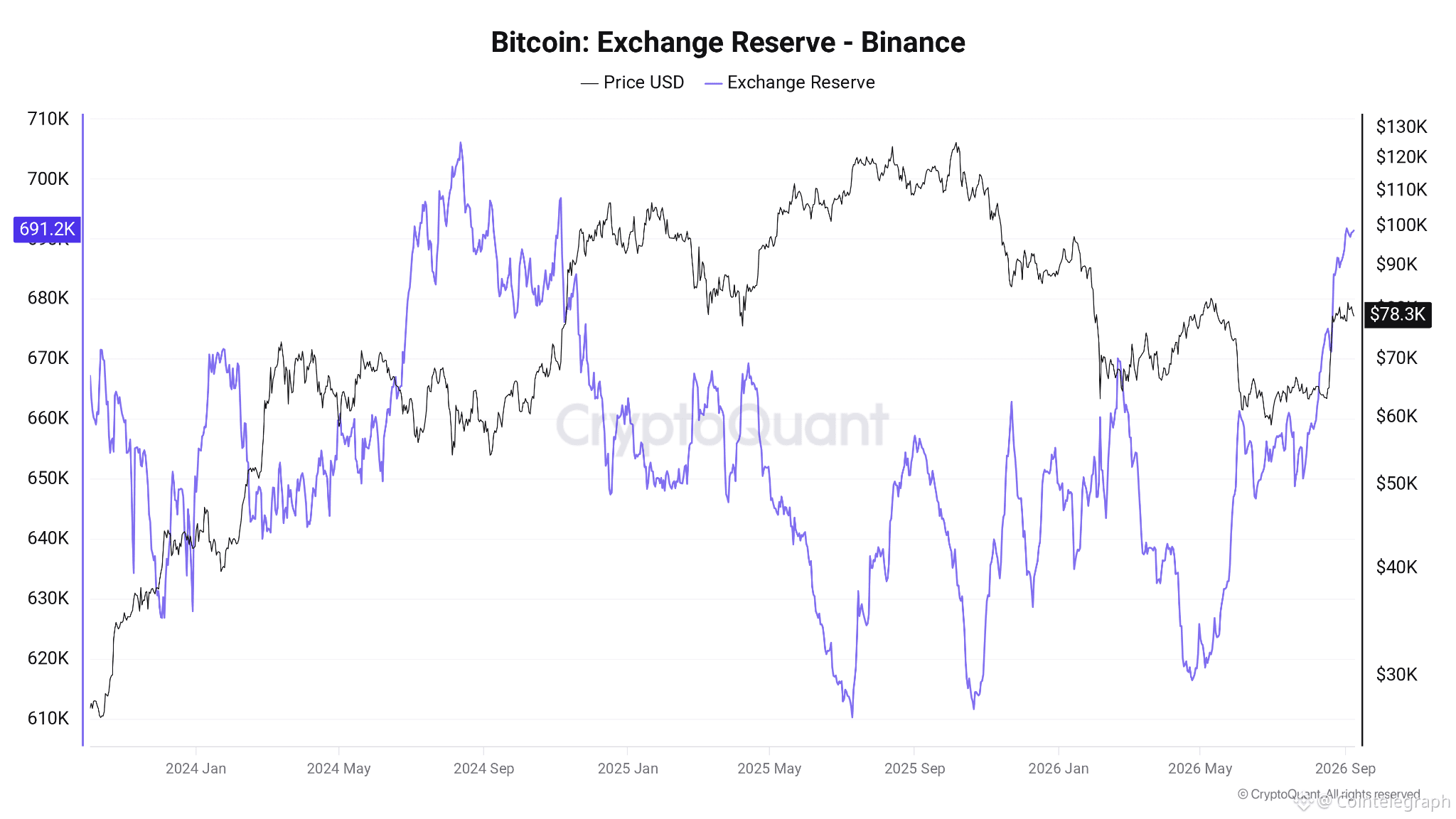
Article
New Bitcoin whales spark sell-side risk as unrealized gains hit $9BBitcoin (BTC) whales have more reason to sell than at any time in Bitcoin’s recent history as their unrealized profits hit records.
Key points:
Bitcoin short-term holder whales saw unrealized profits spike to $9 billion on Sept. 4, the largest reading ever tracked by CryptoQuant data.
Profitability is sensitive to small BTC price fluctuations, falling by $1.5 billion on a 2% daily drop in BTC/USD.
Binance exchange reserves are approaching two-year highs near 692,000 BTC.
Short-term holder whales sit on giant unrealized profits
Data from onchain analytics platform CryptoQuant shows that newer whale investors currently sit on unrealized gains worth exceeding $9 billion.
This is the largest figure CryptoQuant has recorded since it began tracking whale profitability in 2016. The reading concerns short-term holder (STH) whales — wallets holding coins that are less than six months old.
On Sept. 4, the STH whale cohort’s aggregate unrealized profit hit a new multi-year high of $9.07 billion. However, being sensitive to movements in spot price, it fell by 17% the day after as BTC/USD declined just under 2%. This is because the breakeven point of STH whales is closer to the current spot price than that of LTHs. The cost basis of STH whales currently sits near $69,000.
Bitcoin STH whale unrealized profit and loss. Source: CryptoQuant
In accompanying analysis, CryptoQuant warned that further BTC price downside may induce selling from STH whales, with newer investors traditionally seen as being speculative in nature and more sensitive to smaller market shifts.
“Unrealized profit at that scale is exposure. A cohort sitting on a record paper gain can turn into sellers the moment price wobbles, and STH whales are historically the fastest to take profit when it’s available,” it commented.
Binance BTC reserves near two-year high
Previously, Cointelegraph reported on existing ask liquidity on exchange order books keeping spot price pinned below $83,000.
The risk of selling from short-term holders is also indicated by onchain data, which shows growing inflows to exchanges since the start of May. On Sept. 2, BTC reserves on Binance, largest exchange, reached 691,658 BTC, the highest figure since November 2024.
Binance BTC reserves. Source: CryptoQuant
Commenting on the trend, however, CryptoQuant described whale participation in exchange inflows as “relatively contained.”
“The key tension is clear: liquidity and positioning on Binance remain orderly, but the elevated reserve base means that any meaningful breakout above $83K will require strong, sustained spot absorption from ETFs and organic demand to clear the available supply,” it wrote on Sunday.
CryptoQuant reiterated the need for Bitcoin spot demand to reenter, a key factor missing from the market throughout 2026.
New Bitcoin whales spark sell-side risk as unrealized gains hit $9B
Bitcoin (BTC) whales have more reason to sell than at any time in Bitcoin’s recent history as their unrealized profits hit records.
Key points:
Bitcoin short-term holder whales saw unrealized profits spike to $9 billion on Sept. 4, the largest reading ever tracked by CryptoQuant data.
Profitability is sensitive to small BTC price fluctuations, falling by $1.5 billion on a 2% daily drop in BTC/USD.
Binance exchange reserves are approaching two-year highs near 692,000 BTC.
Short-term holder whales sit on giant unrealized profits
Data from onchain analytics platform CryptoQuant shows that newer whale investors currently sit on unrealized gains worth exceeding $9 billion.
This is the largest figure CryptoQuant has recorded since it began tracking whale profitability in 2016. The reading concerns short-term holder (STH) whales — wallets holding coins that are less than six months old.
On Sept. 4, the STH whale cohort’s aggregate unrealized profit hit a new multi-year high of $9.07 billion. However, being sensitive to movements in spot price, it fell by 17% the day after as BTC/USD declined just under 2%. This is because the breakeven point of STH whales is closer to the current spot price than that of LTHs. The cost basis of STH whales currently sits near $69,000.
Bitcoin STH whale unrealized profit and loss. Source: CryptoQuant
In accompanying analysis, CryptoQuant warned that further BTC price downside may induce selling from STH whales, with newer investors traditionally seen as being speculative in nature and more sensitive to smaller market shifts.
“Unrealized profit at that scale is exposure. A cohort sitting on a record paper gain can turn into sellers the moment price wobbles, and STH whales are historically the fastest to take profit when it’s available,” it commented.
Binance BTC reserves near two-year high
Previously, Cointelegraph reported on existing ask liquidity on exchange order books keeping spot price pinned below $83,000.
The risk of selling from short-term holders is also indicated by onchain data, which shows growing inflows to exchanges since the start of May. On Sept. 2, BTC reserves on Binance, largest exchange, reached 691,658 BTC, the highest figure since November 2024.
Binance BTC reserves. Source: CryptoQuant
Commenting on the trend, however, CryptoQuant described whale participation in exchange inflows as “relatively contained.”
“The key tension is clear: liquidity and positioning on Binance remain orderly, but the elevated reserve base means that any meaningful breakout above $83K will require strong, sustained spot absorption from ETFs and organic demand to clear the available supply,” it wrote on Sunday.
CryptoQuant reiterated the need for Bitcoin spot demand to reenter, a key factor missing from the market throughout 2026.
Key points:
Bitcoin short-term holder whales saw unrealized profits spike to $9 billion on Sept. 4, the largest reading ever tracked by CryptoQuant data.
Profitability is sensitive to small BTC price fluctuations, falling by $1.5 billion on a 2% daily drop in BTC/USD.
Binance exchange reserves are approaching two-year highs near 692,000 BTC.
Short-term holder whales sit on giant unrealized profits
Data from onchain analytics platform CryptoQuant shows that newer whale investors currently sit on unrealized gains worth exceeding $9 billion.
This is the largest figure CryptoQuant has recorded since it began tracking whale profitability in 2016. The reading concerns short-term holder (STH) whales — wallets holding coins that are less than six months old.
On Sept. 4, the STH whale cohort’s aggregate unrealized profit hit a new multi-year high of $9.07 billion. However, being sensitive to movements in spot price, it fell by 17% the day after as BTC/USD declined just under 2%. This is because the breakeven point of STH whales is closer to the current spot price than that of LTHs. The cost basis of STH whales currently sits near $69,000.
Bitcoin STH whale unrealized profit and loss. Source: CryptoQuant
In accompanying analysis, CryptoQuant warned that further BTC price downside may induce selling from STH whales, with newer investors traditionally seen as being speculative in nature and more sensitive to smaller market shifts.
“Unrealized profit at that scale is exposure. A cohort sitting on a record paper gain can turn into sellers the moment price wobbles, and STH whales are historically the fastest to take profit when it’s available,” it commented.
Binance BTC reserves near two-year high
Previously, Cointelegraph reported on existing ask liquidity on exchange order books keeping spot price pinned below $83,000.
The risk of selling from short-term holders is also indicated by onchain data, which shows growing inflows to exchanges since the start of May. On Sept. 2, BTC reserves on Binance, largest exchange, reached 691,658 BTC, the highest figure since November 2024.
Binance BTC reserves. Source: CryptoQuant
Commenting on the trend, however, CryptoQuant described whale participation in exchange inflows as “relatively contained.”
“The key tension is clear: liquidity and positioning on Binance remain orderly, but the elevated reserve base means that any meaningful breakout above $83K will require strong, sustained spot absorption from ETFs and organic demand to clear the available supply,” it wrote on Sunday.
CryptoQuant reiterated the need for Bitcoin spot demand to reenter, a key factor missing from the market throughout 2026.
166
Cronos confirms $9.2M slipped away before Tectonic exploit rollbackLayer-1 blockchain Cronos said $9.19 million left its blockchain before validators halted the network during the Tectonic exploit, providing an official accounting of funds that were not reversed by its rollback.
In Tuesday’s post-mortem report, Cronos said manipulated collateral values generated about $120.4 million in borrowing activity. Restoring the network to its pre-exploit state reversed about $111.2 million, leaving 7.6% of the affected funds outside of the network.
The disclosure confirms the scale of the incident after earlier estimates placed the amount affected at about $75 million. It also puts the amount transferred off Cronos at $9.19 million, above the $8.3 million previously traced to Ethereum by blockchain data provider Bitquery.
Cointelegraph previously reported that one transaction emptied nine Tectonic lending markets through 11 transfers involving stablecoins, Bitcoin, Ether and other assets.
Bitquery said the attacker deposited $5 million, then repeatedly borrowed and redeposited TONIC through a 98-cycle loop while purchasing the thinly traded token. The activity drove TONIC’s price nearly 300-fold higher as Tectonic’s price feed followed.
Cronos said Tectonic detected the activity at 12:49 UTC on Aug. 30, and validators halted the network at 14:32:47 UTC. Block production resumed at 23:49:01 UTC after balances were restored.
Cronos confirms $9.2M slipped away before Tectonic exploit rollback
Layer-1 blockchain Cronos said $9.19 million left its blockchain before validators halted the network during the Tectonic exploit, providing an official accounting of funds that were not reversed by its rollback.
In Tuesday’s post-mortem report, Cronos said manipulated collateral values generated about $120.4 million in borrowing activity. Restoring the network to its pre-exploit state reversed about $111.2 million, leaving 7.6% of the affected funds outside of the network.
The disclosure confirms the scale of the incident after earlier estimates placed the amount affected at about $75 million. It also puts the amount transferred off Cronos at $9.19 million, above the $8.3 million previously traced to Ethereum by blockchain data provider Bitquery.
Cointelegraph previously reported that one transaction emptied nine Tectonic lending markets through 11 transfers involving stablecoins, Bitcoin, Ether and other assets.
Bitquery said the attacker deposited $5 million, then repeatedly borrowed and redeposited TONIC through a 98-cycle loop while purchasing the thinly traded token. The activity drove TONIC’s price nearly 300-fold higher as Tectonic’s price feed followed.
Cronos said Tectonic detected the activity at 12:49 UTC on Aug. 30, and validators halted the network at 14:32:47 UTC. Block production resumed at 23:49:01 UTC after balances were restored.
In Tuesday’s post-mortem report, Cronos said manipulated collateral values generated about $120.4 million in borrowing activity. Restoring the network to its pre-exploit state reversed about $111.2 million, leaving 7.6% of the affected funds outside of the network.
The disclosure confirms the scale of the incident after earlier estimates placed the amount affected at about $75 million. It also puts the amount transferred off Cronos at $9.19 million, above the $8.3 million previously traced to Ethereum by blockchain data provider Bitquery.
Cointelegraph previously reported that one transaction emptied nine Tectonic lending markets through 11 transfers involving stablecoins, Bitcoin, Ether and other assets.
Bitquery said the attacker deposited $5 million, then repeatedly borrowed and redeposited TONIC through a 98-cycle loop while purchasing the thinly traded token. The activity drove TONIC’s price nearly 300-fold higher as Tectonic’s price feed followed.
Cronos said Tectonic detected the activity at 12:49 UTC on Aug. 30, and validators halted the network at 14:32:47 UTC. Block production resumed at 23:49:01 UTC after balances were restored.
262
Swiss stablecoin sandbox enters testing phase, adds two new partnersNine Swiss companies have begun sandbox tests of CHFD, a Swiss franc stablecoin, for programmable payments and digital asset settlement.
The pilot will examine whether programmable payments can reduce fraud on online marketplaces, support fair access to event tickets and make public payments more efficient, according to a Tuesday press release shared with Cointelegraph.
Financial market operator SIX and payment app TWINT are new participants in the initiative, which launched in April.
Swiss stablecoin sandbox enters testing phase, adds two new partners
Nine Swiss companies have begun sandbox tests of CHFD, a Swiss franc stablecoin, for programmable payments and digital asset settlement.
The pilot will examine whether programmable payments can reduce fraud on online marketplaces, support fair access to event tickets and make public payments more efficient, according to a Tuesday press release shared with Cointelegraph.
Financial market operator SIX and payment app TWINT are new participants in the initiative, which launched in April.
The pilot will examine whether programmable payments can reduce fraud on online marketplaces, support fair access to event tickets and make public payments more efficient, according to a Tuesday press release shared with Cointelegraph.
Financial market operator SIX and payment app TWINT are new participants in the initiative, which launched in April.
1
191
Log in to explore more content
Join global crypto users on Binance Square
⚡️ Get latest and useful information about crypto.
💬 Trusted by the world’s largest crypto exchange.
👍 Discover real insights from verified creators.
Email / Phone number
Trending Topics
RippleLobbiesToAdvanceCLARITYActVote
0 views
23 Discussing
#ripplelobbiestoadvanceclarityactvote
🚨 RIPPLE WANTS CLARITY FOR CRYPTO! 🇺🇸
Ripple is lobbying to advance the CLARITY Act vote.
If passed, clearer crypto rules could bring more certainty for companies, investors, and the entire market. 📈
🔥 Clear rules = more confidence
💰 More confidence = more adoption
Crypto regulation is moving closer to clarity. 👀
#rippl #XR #crypto
$XRP
Faizan Crypto Learner
·0 Likes
·4 views
GrayscaleZcashETFTops$500M
2,790 views
54 Discussing
ChinaAugustCPIRises0.8%YoY
8,435 views
326 Discussing