

D E X O R A
8.8k Posts

D E X O R A
 Square Verified+
Report
Block User
Vision refined, Precision defined | Binance KOL & Crypto Mentor 🙌
Open Trade

ASTER Holder
Occasional Trader
3.7 Years
121 Following
39.0K+ Followers
107.5K+ Liked
Posts
Portfolio
All
Quotes
Live
PINNED
·
--
Article
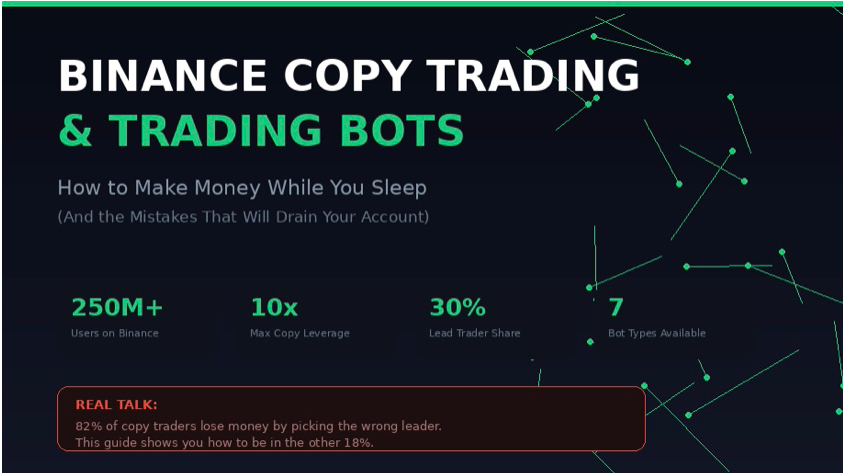
Binance Copy Trading & Bots: The Guide I Wish Someone Gave Me Before I Lost $400I'm going to be straight with you. The first time I tried copy trading on Binance, I picked the leader with the highest ROI. Guy had something like 800% in two weeks. I thought I found a goldmine. Three days later, half my money was gone. He took one massive leveraged bet, it went wrong, and everyone who copied him got wrecked.
That was a cheap lesson compared to what some people pay. And it taught me something important — copy trading and trading bots are real tools that can actually make you money. But only if you understand how they work under the hood. Most people don't. They see the big green numbers on the leaderboard and throw money at the first name they see. That's gambling, not trading.
So I'm going to walk you through everything I've learned. Not the marketing version. The real version. How it works, how to pick the right people to follow, which bots actually make sense, and the mistakes that drain accounts every single day.
How Copy Trading Works on Binance
The idea is simple. You find a trader on Binance who has a good track record. You click copy. From that moment, every trade they make gets copied into your account automatically. They buy ETH, you buy ETH. They close the position, yours closes too. You don't have to sit in front of a screen. You don't need to know how to read charts. The system handles everything.
But here's where people get confused. There are two modes. Fixed amount means you put in a set dollar amount for each trade regardless of what the leader does. Fixed ratio means your trade size matches the leader's as a percentage. So if they put 20% of their portfolio into a trade, you put 20% of your copy budget into it too.
Fixed ratio is closer to actually copying what they do. Fixed amount gives you more control. Most beginners should start with fixed amount and keep it small until they understand the rhythm of the person they're following.
The leader gets paid through profit sharing. On spot copy trading, they take 10% of whatever profit they make for you. On futures, it can go up to 30%. So if a leader makes you $1,000, they keep $100-$300. That's the deal. If they lose you money, they don't pay you back. That's important to remember.
The Part Nobody Talks About — Picking the Right Leader
This is where most people mess up. And I mean most. The Binance leaderboard shows you traders ranked by profit. And your brain immediately goes to the person at the top with the biggest number. That's a trap.
Here's why. A trader can show 1000% ROI by taking one massive bet with 125x leverage and getting lucky. One trade. That's not skill. That's a coin flip. And the next coin flip might wipe out your entire copy balance. What you want is someone boring. Someone who makes 5-15% a month consistently. Month after month. For at least 90 days. That's the kind of person who actually knows what they're doing.
The max drawdown number is your best friend. It tells you the worst peak-to-bottom drop that leader has ever had. If it's over 50%, walk away. That means at some point, their followers lost half their money before things recovered. Can you stomach that? Most people can't.
Check how many followers they have and how long those followers stay. If a leader has 500 people copy them this week and 200 leave next week, that tells you something. People who tried it and left weren't happy with the results. But if a leader has steady followers who stick around for months, that's trust earned over time.
Look at what pairs they trade. A leader who only trades one pair is putting all eggs in one basket. Someone who spreads across BTC, ETH, SOL, and a few altcoins shows they think about risk and don't rely on one market going their way.
And check their Sharpe ratio if it's shown. Above 1.0 is good. It means they're getting decent returns for the amount of risk they take. Below 0.5 means they're taking huge risks for small rewards. Not worth your money.
Spot vs Futures Copy Trading — Know the Difference
This one catches a lot of beginners off guard. Spot copy trading means the leader buys actual coins. If they buy BTC, you own BTC. If the market drops 10%, you lose 10%. Simple. Your downside is limited to what you put in. You can't lose more than your copy budget.
Futures copy trading is a completely different animal. It uses leverage. Right now, Binance caps futures copy leverage at 10x. That means a 10% move against you wipes out your entire position. Not 10% of it. All of it. Gone. And it happens fast. One bad candle at 3 AM and you wake up to zero.
My honest advice? Start with spot. Get comfortable. Learn how the system works. Watch your P&L move. Feel what it's like to trust someone else with your money. After a few months, if you want more action, try futures with a small amount and low leverage. Don't jump into 10x futures copy trading on day one. I've seen that story end badly too many times.
Trading Bots — Your 24/7 Worker
Copy trading follows people. Bots follow rules. You set the rules, the bot runs them day and night. No emotions, no hesitation, no sleeping. Binance offers seven different bot types, and each one does something different.
The Spot Grid Bot is the most popular one, and for good reason. You set a price range — say BTC between $60K and $70K. The bot places buy orders at the bottom of the range and sell orders at the top. Every time the price bounces between those levels, it skims a small profit. In sideways markets, this thing prints money. The catch? If the price breaks above your range, you miss the rally. If it drops below, you're holding bags at a loss.
The Spot DCA Bot is perfect if you don't want to think at all. You tell it to buy $50 of BTC every Monday. It does exactly that. No matter if the price is up or down. Over time, this averages out your entry price. It's the simplest and safest bot on the platform. Not exciting. But it works.
The Arbitrage Bot is interesting. It makes money from the tiny price gap between spot and futures markets. The returns are small — think 2-5% a year in calm markets — but the risk is also very low because you're hedged on both sides. It's basically the savings account of crypto bots.
The Rebalancing Bot keeps your portfolio in check. Say you want 50% BTC and 50% ETH. If BTC pumps and becomes 70% of your portfolio, the bot automatically sells some BTC and buys ETH to bring it back to 50/50. It forces you to sell high and buy low without you having to do anything.
TWAP and VP bots are for people moving serious money. If you need to buy or sell a large amount without moving the market, these bots spread your order across time or match it to real-time volume. Most regular traders won't need these, but it's good to know they exist.
The 7 Mistakes That Drain Accounts
I've made some of these myself. Talked to plenty of others who made the rest. Let me save you the tuition.
Picking leaders by ROI alone is mistake number one. We already covered this but it's worth repeating because it's the most common trap. A huge ROI in a short time almost always means huge risk. Look at the timeframe. Look at the drawdown. Look at the consistency. If the ROI only came from one or two trades, that's luck, not skill.
Going all-in on one leader is mistake number two. If that leader has a bad week, you have a bad week. Split your copy budget across 3-5 leaders with different styles. Maybe one trades BTC only. Another trades altcoins. A third uses conservative leverage. That way, if one blows up, the others keep your portfolio alive.
Not setting your own stop-loss is a big one. The leader might not have a stop-loss on their position. Or their risk tolerance might be way higher than yours. They might be fine losing 40% because their overall strategy recovers. But you might not sleep at night with that kind of drawdown. Set your own limits. Protect yourself.
Using high leverage on futures copy trading without understanding it is how people go to zero. Start at 2-3x if you must use leverage. Feel what it's like. A 5% move at 3x is a 15% swing in your account. That's already a lot. Don't go 10x until you really know what you're doing.
And forgetting about fees. Profit share plus trading fees plus funding rates on futures — it adds up. A trade that made 3% profit on paper might only net you 1% after the leader takes their cut and Binance takes the trading fee. Run the math before you celebrate.
My Personal Setup Right Now
I'll share what I'm currently doing. Not as advice. Just as a real example of how one person puts this together.
I have three copy leaders running on spot. One focuses on BTC and ETH majors with very low drawdown. Super boring. Makes maybe 4-6% a month. Second one trades mid-cap altcoins with slightly more risk but has a 120-day track record of steady growth. Third one is more aggressive — smaller altcoins, higher potential, but I only put 15% of my copy budget with them.
On the bot side, I run a Spot Grid on BTC with a range that I adjust every two weeks based on where the price is sitting. And I have a DCA bot stacking ETH weekly regardless of what happens. The grid makes me money in sideways markets. The DCA builds my long-term position.
Total time I spend on this each week? Maybe 30 minutes checking the dashboard. That's it. The rest runs on autopilot.
Bottom Line
Copy trading and bots aren't magic money machines. They're tools. Good tools in the right hands, dangerous ones in the wrong hands. The difference between the two is knowledge. And now you have more of it than most people who start.
Start small. Learn the system. Pick boring leaders over flashy ones. Set your own stop-losses. Don't trust anyone else to care about your money as much as you do. And give it time. The best results come from weeks and months of steady compounding, not overnight moonshots.
The crypto market doesn't sleep. With the right setup on Binance, you don't have to either.
NFA
#Binancecopytrading #MarketRebound #TradingCommunity #Write2Earn #Crypto_Jobs🎯
Binance Copy Trading & Bots: The Guide I Wish Someone Gave Me Before I Lost $400
I'm going to be straight with you. The first time I tried copy trading on Binance, I picked the leader with the highest ROI. Guy had something like 800% in two weeks. I thought I found a goldmine. Three days later, half my money was gone. He took one massive leveraged bet, it went wrong, and everyone who copied him got wrecked.
That was a cheap lesson compared to what some people pay. And it taught me something important — copy trading and trading bots are real tools that can actually make you money. But only if you understand how they work under the hood. Most people don't. They see the big green numbers on the leaderboard and throw money at the first name they see. That's gambling, not trading.
So I'm going to walk you through everything I've learned. Not the marketing version. The real version. How it works, how to pick the right people to follow, which bots actually make sense, and the mistakes that drain accounts every single day.
How Copy Trading Works on Binance
The idea is simple. You find a trader on Binance who has a good track record. You click copy. From that moment, every trade they make gets copied into your account automatically. They buy ETH, you buy ETH. They close the position, yours closes too. You don't have to sit in front of a screen. You don't need to know how to read charts. The system handles everything.
But here's where people get confused. There are two modes. Fixed amount means you put in a set dollar amount for each trade regardless of what the leader does. Fixed ratio means your trade size matches the leader's as a percentage. So if they put 20% of their portfolio into a trade, you put 20% of your copy budget into it too.
Fixed ratio is closer to actually copying what they do. Fixed amount gives you more control. Most beginners should start with fixed amount and keep it small until they understand the rhythm of the person they're following.
The leader gets paid through profit sharing. On spot copy trading, they take 10% of whatever profit they make for you. On futures, it can go up to 30%. So if a leader makes you $1,000, they keep $100-$300. That's the deal. If they lose you money, they don't pay you back. That's important to remember.
The Part Nobody Talks About — Picking the Right Leader
This is where most people mess up. And I mean most. The Binance leaderboard shows you traders ranked by profit. And your brain immediately goes to the person at the top with the biggest number. That's a trap.
Here's why. A trader can show 1000% ROI by taking one massive bet with 125x leverage and getting lucky. One trade. That's not skill. That's a coin flip. And the next coin flip might wipe out your entire copy balance. What you want is someone boring. Someone who makes 5-15% a month consistently. Month after month. For at least 90 days. That's the kind of person who actually knows what they're doing.
The max drawdown number is your best friend. It tells you the worst peak-to-bottom drop that leader has ever had. If it's over 50%, walk away. That means at some point, their followers lost half their money before things recovered. Can you stomach that? Most people can't.
Check how many followers they have and how long those followers stay. If a leader has 500 people copy them this week and 200 leave next week, that tells you something. People who tried it and left weren't happy with the results. But if a leader has steady followers who stick around for months, that's trust earned over time.
Look at what pairs they trade. A leader who only trades one pair is putting all eggs in one basket. Someone who spreads across BTC, ETH, SOL, and a few altcoins shows they think about risk and don't rely on one market going their way.
And check their Sharpe ratio if it's shown. Above 1.0 is good. It means they're getting decent returns for the amount of risk they take. Below 0.5 means they're taking huge risks for small rewards. Not worth your money.
Spot vs Futures Copy Trading — Know the Difference
This one catches a lot of beginners off guard. Spot copy trading means the leader buys actual coins. If they buy BTC, you own BTC. If the market drops 10%, you lose 10%. Simple. Your downside is limited to what you put in. You can't lose more than your copy budget.
Futures copy trading is a completely different animal. It uses leverage. Right now, Binance caps futures copy leverage at 10x. That means a 10% move against you wipes out your entire position. Not 10% of it. All of it. Gone. And it happens fast. One bad candle at 3 AM and you wake up to zero.
My honest advice? Start with spot. Get comfortable. Learn how the system works. Watch your P&L move. Feel what it's like to trust someone else with your money. After a few months, if you want more action, try futures with a small amount and low leverage. Don't jump into 10x futures copy trading on day one. I've seen that story end badly too many times.
Trading Bots — Your 24/7 Worker
Copy trading follows people. Bots follow rules. You set the rules, the bot runs them day and night. No emotions, no hesitation, no sleeping. Binance offers seven different bot types, and each one does something different.
The Spot Grid Bot is the most popular one, and for good reason. You set a price range — say BTC between $60K and $70K. The bot places buy orders at the bottom of the range and sell orders at the top. Every time the price bounces between those levels, it skims a small profit. In sideways markets, this thing prints money. The catch? If the price breaks above your range, you miss the rally. If it drops below, you're holding bags at a loss.
The Spot DCA Bot is perfect if you don't want to think at all. You tell it to buy $50 of BTC every Monday. It does exactly that. No matter if the price is up or down. Over time, this averages out your entry price. It's the simplest and safest bot on the platform. Not exciting. But it works.
The Arbitrage Bot is interesting. It makes money from the tiny price gap between spot and futures markets. The returns are small — think 2-5% a year in calm markets — but the risk is also very low because you're hedged on both sides. It's basically the savings account of crypto bots.
The Rebalancing Bot keeps your portfolio in check. Say you want 50% BTC and 50% ETH. If BTC pumps and becomes 70% of your portfolio, the bot automatically sells some BTC and buys ETH to bring it back to 50/50. It forces you to sell high and buy low without you having to do anything.
TWAP and VP bots are for people moving serious money. If you need to buy or sell a large amount without moving the market, these bots spread your order across time or match it to real-time volume. Most regular traders won't need these, but it's good to know they exist.
The 7 Mistakes That Drain Accounts
I've made some of these myself. Talked to plenty of others who made the rest. Let me save you the tuition.
Picking leaders by ROI alone is mistake number one. We already covered this but it's worth repeating because it's the most common trap. A huge ROI in a short time almost always means huge risk. Look at the timeframe. Look at the drawdown. Look at the consistency. If the ROI only came from one or two trades, that's luck, not skill.
Going all-in on one leader is mistake number two. If that leader has a bad week, you have a bad week. Split your copy budget across 3-5 leaders with different styles. Maybe one trades BTC only. Another trades altcoins. A third uses conservative leverage. That way, if one blows up, the others keep your portfolio alive.
Not setting your own stop-loss is a big one. The leader might not have a stop-loss on their position. Or their risk tolerance might be way higher than yours. They might be fine losing 40% because their overall strategy recovers. But you might not sleep at night with that kind of drawdown. Set your own limits. Protect yourself.
Using high leverage on futures copy trading without understanding it is how people go to zero. Start at 2-3x if you must use leverage. Feel what it's like. A 5% move at 3x is a 15% swing in your account. That's already a lot. Don't go 10x until you really know what you're doing.
And forgetting about fees. Profit share plus trading fees plus funding rates on futures — it adds up. A trade that made 3% profit on paper might only net you 1% after the leader takes their cut and Binance takes the trading fee. Run the math before you celebrate.
My Personal Setup Right Now
I'll share what I'm currently doing. Not as advice. Just as a real example of how one person puts this together.
I have three copy leaders running on spot. One focuses on BTC and ETH majors with very low drawdown. Super boring. Makes maybe 4-6% a month. Second one trades mid-cap altcoins with slightly more risk but has a 120-day track record of steady growth. Third one is more aggressive — smaller altcoins, higher potential, but I only put 15% of my copy budget with them.
On the bot side, I run a Spot Grid on BTC with a range that I adjust every two weeks based on where the price is sitting. And I have a DCA bot stacking ETH weekly regardless of what happens. The grid makes me money in sideways markets. The DCA builds my long-term position.
Total time I spend on this each week? Maybe 30 minutes checking the dashboard. That's it. The rest runs on autopilot.
Bottom Line
Copy trading and bots aren't magic money machines. They're tools. Good tools in the right hands, dangerous ones in the wrong hands. The difference between the two is knowledge. And now you have more of it than most people who start.
Start small. Learn the system. Pick boring leaders over flashy ones. Set your own stop-losses. Don't trust anyone else to care about your money as much as you do. And give it time. The best results come from weeks and months of steady compounding, not overnight moonshots.
The crypto market doesn't sleep. With the right setup on Binance, you don't have to either.
NFA
#Binancecopytrading #MarketRebound #TradingCommunity #Write2Earn #Crypto_Jobs🎯
That was a cheap lesson compared to what some people pay. And it taught me something important — copy trading and trading bots are real tools that can actually make you money. But only if you understand how they work under the hood. Most people don't. They see the big green numbers on the leaderboard and throw money at the first name they see. That's gambling, not trading.
So I'm going to walk you through everything I've learned. Not the marketing version. The real version. How it works, how to pick the right people to follow, which bots actually make sense, and the mistakes that drain accounts every single day.
How Copy Trading Works on Binance
The idea is simple. You find a trader on Binance who has a good track record. You click copy. From that moment, every trade they make gets copied into your account automatically. They buy ETH, you buy ETH. They close the position, yours closes too. You don't have to sit in front of a screen. You don't need to know how to read charts. The system handles everything.
But here's where people get confused. There are two modes. Fixed amount means you put in a set dollar amount for each trade regardless of what the leader does. Fixed ratio means your trade size matches the leader's as a percentage. So if they put 20% of their portfolio into a trade, you put 20% of your copy budget into it too.
Fixed ratio is closer to actually copying what they do. Fixed amount gives you more control. Most beginners should start with fixed amount and keep it small until they understand the rhythm of the person they're following.
The leader gets paid through profit sharing. On spot copy trading, they take 10% of whatever profit they make for you. On futures, it can go up to 30%. So if a leader makes you $1,000, they keep $100-$300. That's the deal. If they lose you money, they don't pay you back. That's important to remember.
The Part Nobody Talks About — Picking the Right Leader
This is where most people mess up. And I mean most. The Binance leaderboard shows you traders ranked by profit. And your brain immediately goes to the person at the top with the biggest number. That's a trap.
Here's why. A trader can show 1000% ROI by taking one massive bet with 125x leverage and getting lucky. One trade. That's not skill. That's a coin flip. And the next coin flip might wipe out your entire copy balance. What you want is someone boring. Someone who makes 5-15% a month consistently. Month after month. For at least 90 days. That's the kind of person who actually knows what they're doing.
The max drawdown number is your best friend. It tells you the worst peak-to-bottom drop that leader has ever had. If it's over 50%, walk away. That means at some point, their followers lost half their money before things recovered. Can you stomach that? Most people can't.
Check how many followers they have and how long those followers stay. If a leader has 500 people copy them this week and 200 leave next week, that tells you something. People who tried it and left weren't happy with the results. But if a leader has steady followers who stick around for months, that's trust earned over time.
Look at what pairs they trade. A leader who only trades one pair is putting all eggs in one basket. Someone who spreads across BTC, ETH, SOL, and a few altcoins shows they think about risk and don't rely on one market going their way.
And check their Sharpe ratio if it's shown. Above 1.0 is good. It means they're getting decent returns for the amount of risk they take. Below 0.5 means they're taking huge risks for small rewards. Not worth your money.
Spot vs Futures Copy Trading — Know the Difference
This one catches a lot of beginners off guard. Spot copy trading means the leader buys actual coins. If they buy BTC, you own BTC. If the market drops 10%, you lose 10%. Simple. Your downside is limited to what you put in. You can't lose more than your copy budget.
Futures copy trading is a completely different animal. It uses leverage. Right now, Binance caps futures copy leverage at 10x. That means a 10% move against you wipes out your entire position. Not 10% of it. All of it. Gone. And it happens fast. One bad candle at 3 AM and you wake up to zero.
My honest advice? Start with spot. Get comfortable. Learn how the system works. Watch your P&L move. Feel what it's like to trust someone else with your money. After a few months, if you want more action, try futures with a small amount and low leverage. Don't jump into 10x futures copy trading on day one. I've seen that story end badly too many times.
Trading Bots — Your 24/7 Worker
Copy trading follows people. Bots follow rules. You set the rules, the bot runs them day and night. No emotions, no hesitation, no sleeping. Binance offers seven different bot types, and each one does something different.
The Spot Grid Bot is the most popular one, and for good reason. You set a price range — say BTC between $60K and $70K. The bot places buy orders at the bottom of the range and sell orders at the top. Every time the price bounces between those levels, it skims a small profit. In sideways markets, this thing prints money. The catch? If the price breaks above your range, you miss the rally. If it drops below, you're holding bags at a loss.
The Spot DCA Bot is perfect if you don't want to think at all. You tell it to buy $50 of BTC every Monday. It does exactly that. No matter if the price is up or down. Over time, this averages out your entry price. It's the simplest and safest bot on the platform. Not exciting. But it works.
The Arbitrage Bot is interesting. It makes money from the tiny price gap between spot and futures markets. The returns are small — think 2-5% a year in calm markets — but the risk is also very low because you're hedged on both sides. It's basically the savings account of crypto bots.
The Rebalancing Bot keeps your portfolio in check. Say you want 50% BTC and 50% ETH. If BTC pumps and becomes 70% of your portfolio, the bot automatically sells some BTC and buys ETH to bring it back to 50/50. It forces you to sell high and buy low without you having to do anything.
TWAP and VP bots are for people moving serious money. If you need to buy or sell a large amount without moving the market, these bots spread your order across time or match it to real-time volume. Most regular traders won't need these, but it's good to know they exist.
The 7 Mistakes That Drain Accounts
I've made some of these myself. Talked to plenty of others who made the rest. Let me save you the tuition.
Picking leaders by ROI alone is mistake number one. We already covered this but it's worth repeating because it's the most common trap. A huge ROI in a short time almost always means huge risk. Look at the timeframe. Look at the drawdown. Look at the consistency. If the ROI only came from one or two trades, that's luck, not skill.
Going all-in on one leader is mistake number two. If that leader has a bad week, you have a bad week. Split your copy budget across 3-5 leaders with different styles. Maybe one trades BTC only. Another trades altcoins. A third uses conservative leverage. That way, if one blows up, the others keep your portfolio alive.
Not setting your own stop-loss is a big one. The leader might not have a stop-loss on their position. Or their risk tolerance might be way higher than yours. They might be fine losing 40% because their overall strategy recovers. But you might not sleep at night with that kind of drawdown. Set your own limits. Protect yourself.
Using high leverage on futures copy trading without understanding it is how people go to zero. Start at 2-3x if you must use leverage. Feel what it's like. A 5% move at 3x is a 15% swing in your account. That's already a lot. Don't go 10x until you really know what you're doing.
And forgetting about fees. Profit share plus trading fees plus funding rates on futures — it adds up. A trade that made 3% profit on paper might only net you 1% after the leader takes their cut and Binance takes the trading fee. Run the math before you celebrate.
My Personal Setup Right Now
I'll share what I'm currently doing. Not as advice. Just as a real example of how one person puts this together.
I have three copy leaders running on spot. One focuses on BTC and ETH majors with very low drawdown. Super boring. Makes maybe 4-6% a month. Second one trades mid-cap altcoins with slightly more risk but has a 120-day track record of steady growth. Third one is more aggressive — smaller altcoins, higher potential, but I only put 15% of my copy budget with them.
On the bot side, I run a Spot Grid on BTC with a range that I adjust every two weeks based on where the price is sitting. And I have a DCA bot stacking ETH weekly regardless of what happens. The grid makes me money in sideways markets. The DCA builds my long-term position.
Total time I spend on this each week? Maybe 30 minutes checking the dashboard. That's it. The rest runs on autopilot.
Bottom Line
Copy trading and bots aren't magic money machines. They're tools. Good tools in the right hands, dangerous ones in the wrong hands. The difference between the two is knowledge. And now you have more of it than most people who start.
Start small. Learn the system. Pick boring leaders over flashy ones. Set your own stop-losses. Don't trust anyone else to care about your money as much as you do. And give it time. The best results come from weeks and months of steady compounding, not overnight moonshots.
The crypto market doesn't sleep. With the right setup on Binance, you don't have to either.
NFA
#Binancecopytrading #MarketRebound #TradingCommunity #Write2Earn #Crypto_Jobs🎯
41
16
156
47.5k
·
--
BNB Chain Is Quietly Entering a Much Bigger Game: The Rise of Tokenized StocksFor a long time, when people talked about BNB Chain, the conversation usually went straight to DeFi, memecoins, gaming, or whatever token was trending that week. But lately, I have been paying attention to a different story developing around the ecosystem, and honestly, I think it could become much bigger than the usual crypto narrative. The conversation around tokenized stocks and real-world assets is growing, and BNB Chain is increasingly becoming part of that conversation.
The idea sounds complicated at first, but the basic concept is actually pretty simple. Tokenization means bringing assets that exist in traditional financial markets onto blockchain infrastructure in a digital form. Instead of treating blockchain as a completely separate financial world, the idea is to use it as another layer for accessing and transferring financial assets.
That is what makes this trend so interesting to me.
Crypto spent years trying to prove that blockchain could create a new financial system from scratch. Now, the industry seems to be moving toward something slightly different. Rather than replacing traditional finance overnight, blockchain is increasingly being used to connect with it. Tokenized stocks, bonds, funds, and other real-world assets are part of that transition, and the potential market is enormous if adoption continues.
BNB Chain is particularly interesting because it already has a large ecosystem of users, applications, developers, and liquidity. If tokenized assets become a major part of the next stage of blockchain adoption, networks that can provide fast transactions, accessible infrastructure, and an active user base could have an important role to play.
But I think there is a bigger story here than simply asking whether tokenized stocks will become popular.
It is about who gets access.
Traditional financial markets have historically operated through brokers, banks, exchanges, and other intermediaries. Blockchain introduces the possibility of making certain assets available through digital infrastructure that operates continuously and can potentially reach users across borders. That does not automatically make everything cheaper or easier, and regulation still matters enormously, but the direction of travel is difficult to ignore.
What I find fascinating is how this could change the relationship between crypto and traditional finance. Instead of having one world for stocks and another for crypto, we could eventually see more overlap between the two. A person could interact with stablecoins, tokenized assets, DeFi applications, and traditional financial products through increasingly connected digital infrastructure.
That would be a major change.
And it could bring a completely different group of users into blockchain.
Of course, there are still plenty of questions. Regulation, custody, investor protection, liquidity, and the legal rights attached to tokenized assets all need to be handled properly. A token representing an asset is only as useful as the legal and technical infrastructure supporting it. That is why I would not treat every tokenization project as an automatic winner.
Still, I think the direction is worth watching closely.
The crypto industry has spent years building its own economy. Now it is starting to build bridges toward the existing one. BNB Chain’s involvement in the RWA and tokenization narrative could therefore be more important than a short-term price chart suggests.
My view is simple: the next major wave of blockchain adoption may not come from people abandoning traditional finance. It could come from traditional finance gradually moving onto blockchain rails.
And if that transition accelerates, BNB Chain could find itself playing a much bigger role than many people expect.
#bnb #Notcoin👀🔥 #NOTCOİN #NOT🔥🔥🔥 #BNBbull
BNB Chain Is Quietly Entering a Much Bigger Game: The Rise of Tokenized Stocks
For a long time, when people talked about BNB Chain, the conversation usually went straight to DeFi, memecoins, gaming, or whatever token was trending that week. But lately, I have been paying attention to a different story developing around the ecosystem, and honestly, I think it could become much bigger than the usual crypto narrative. The conversation around tokenized stocks and real-world assets is growing, and BNB Chain is increasingly becoming part of that conversation.
The idea sounds complicated at first, but the basic concept is actually pretty simple. Tokenization means bringing assets that exist in traditional financial markets onto blockchain infrastructure in a digital form. Instead of treating blockchain as a completely separate financial world, the idea is to use it as another layer for accessing and transferring financial assets.
That is what makes this trend so interesting to me.
Crypto spent years trying to prove that blockchain could create a new financial system from scratch. Now, the industry seems to be moving toward something slightly different. Rather than replacing traditional finance overnight, blockchain is increasingly being used to connect with it. Tokenized stocks, bonds, funds, and other real-world assets are part of that transition, and the potential market is enormous if adoption continues.
BNB Chain is particularly interesting because it already has a large ecosystem of users, applications, developers, and liquidity. If tokenized assets become a major part of the next stage of blockchain adoption, networks that can provide fast transactions, accessible infrastructure, and an active user base could have an important role to play.
But I think there is a bigger story here than simply asking whether tokenized stocks will become popular.
It is about who gets access.
Traditional financial markets have historically operated through brokers, banks, exchanges, and other intermediaries. Blockchain introduces the possibility of making certain assets available through digital infrastructure that operates continuously and can potentially reach users across borders. That does not automatically make everything cheaper or easier, and regulation still matters enormously, but the direction of travel is difficult to ignore.
What I find fascinating is how this could change the relationship between crypto and traditional finance. Instead of having one world for stocks and another for crypto, we could eventually see more overlap between the two. A person could interact with stablecoins, tokenized assets, DeFi applications, and traditional financial products through increasingly connected digital infrastructure.
That would be a major change.
And it could bring a completely different group of users into blockchain.
Of course, there are still plenty of questions. Regulation, custody, investor protection, liquidity, and the legal rights attached to tokenized assets all need to be handled properly. A token representing an asset is only as useful as the legal and technical infrastructure supporting it. That is why I would not treat every tokenization project as an automatic winner.
Still, I think the direction is worth watching closely.
The crypto industry has spent years building its own economy. Now it is starting to build bridges toward the existing one. BNB Chain’s involvement in the RWA and tokenization narrative could therefore be more important than a short-term price chart suggests.
My view is simple: the next major wave of blockchain adoption may not come from people abandoning traditional finance. It could come from traditional finance gradually moving onto blockchain rails.
And if that transition accelerates, BNB Chain could find itself playing a much bigger role than many people expect.
#bnb #Notcoin👀🔥 #NOTCOİN #NOT🔥🔥🔥 #BNBbull
The idea sounds complicated at first, but the basic concept is actually pretty simple. Tokenization means bringing assets that exist in traditional financial markets onto blockchain infrastructure in a digital form. Instead of treating blockchain as a completely separate financial world, the idea is to use it as another layer for accessing and transferring financial assets.
That is what makes this trend so interesting to me.
Crypto spent years trying to prove that blockchain could create a new financial system from scratch. Now, the industry seems to be moving toward something slightly different. Rather than replacing traditional finance overnight, blockchain is increasingly being used to connect with it. Tokenized stocks, bonds, funds, and other real-world assets are part of that transition, and the potential market is enormous if adoption continues.
BNB Chain is particularly interesting because it already has a large ecosystem of users, applications, developers, and liquidity. If tokenized assets become a major part of the next stage of blockchain adoption, networks that can provide fast transactions, accessible infrastructure, and an active user base could have an important role to play.
But I think there is a bigger story here than simply asking whether tokenized stocks will become popular.
It is about who gets access.
Traditional financial markets have historically operated through brokers, banks, exchanges, and other intermediaries. Blockchain introduces the possibility of making certain assets available through digital infrastructure that operates continuously and can potentially reach users across borders. That does not automatically make everything cheaper or easier, and regulation still matters enormously, but the direction of travel is difficult to ignore.
What I find fascinating is how this could change the relationship between crypto and traditional finance. Instead of having one world for stocks and another for crypto, we could eventually see more overlap between the two. A person could interact with stablecoins, tokenized assets, DeFi applications, and traditional financial products through increasingly connected digital infrastructure.
That would be a major change.
And it could bring a completely different group of users into blockchain.
Of course, there are still plenty of questions. Regulation, custody, investor protection, liquidity, and the legal rights attached to tokenized assets all need to be handled properly. A token representing an asset is only as useful as the legal and technical infrastructure supporting it. That is why I would not treat every tokenization project as an automatic winner.
Still, I think the direction is worth watching closely.
The crypto industry has spent years building its own economy. Now it is starting to build bridges toward the existing one. BNB Chain’s involvement in the RWA and tokenization narrative could therefore be more important than a short-term price chart suggests.
My view is simple: the next major wave of blockchain adoption may not come from people abandoning traditional finance. It could come from traditional finance gradually moving onto blockchain rails.
And if that transition accelerates, BNB Chain could find itself playing a much bigger role than many people expect.
#bnb #Notcoin👀🔥 #NOTCOİN #NOT🔥🔥🔥 #BNBbull
1
299
·
--
Spot Trading on Binance Looks Simple… Until You Realize How Much Strategy Is Behind ItWhen people first enter crypto, spot trading usually feels like the easiest thing to understand. You choose an asset, decide how much you want to buy, and place an order. Compared with futures or complicated leveraged products, spot trading feels straightforward. But after spending more time in the market, I realized that the difficult part was never pressing the buy or sell button. The difficult part was knowing why you were making that decision in the first place.
That is what makes Binance Spot interesting to me.
At its core, spot trading is simply buying or selling an asset at the current market price or at a price you choose through an order. There is no leverage involved in a normal spot position, and you actually own the asset you purchase. That simplicity makes spot trading one of the most accessible ways for people to participate in the crypto market, especially when they are still learning how markets behave.
But simple does not mean easy.
The moment you start looking beyond the basic buy and sell buttons, you discover that spot trading has its own strategy. Market orders can prioritize speed, while limit orders allow you to specify the price at which you are willing to trade. Understanding the difference may seem small, but these decisions become important when markets are moving quickly and prices can change within seconds.
What I personally find most interesting is that spot trading teaches patience. In leveraged markets, there is often pressure to react immediately because positions can be liquidated. Spot trading gives investors more room to think about their thesis, their entry price, and their time horizon. That does not remove risk — crypto prices can still move sharply — but it can make the learning process much easier to manage.
Another thing beginners often overlook is position sizing. Finding a good asset is only one part of the equation. How much capital you put into that idea matters just as much. A strong project can still experience a major correction, and even a correct long-term thesis can become painful if the position is too large. This is why I believe risk management should be treated as part of the trade rather than something considered after the trade goes wrong.
Binance Spot also gives traders access to a huge range of crypto markets, which creates both opportunity and temptation. When hundreds of assets are moving at the same time, it is easy to jump from one narrative to another. One coin pumps, you chase it. Another starts moving, you switch again. Before long, you are trading the market instead of following a strategy.
That is where discipline becomes more valuable than excitement.
I think the best spot traders are not necessarily the people making the most trades. They are often the people who know when not to trade. Sometimes the smartest decision is to wait for a better entry, keep cash available, or simply avoid an asset that does not fit your risk tolerance.
Another reason I like the spot market as a starting point is that it encourages people to understand what they actually own. Instead of focusing only on liquidation prices and leverage, you can spend more time researching the project, understanding its ecosystem, following development, and deciding whether your original thesis still makes sense.
That mindset becomes extremely important during market corrections.
Anyone can feel confident when prices are rising. The real test comes when the market suddenly drops and everyone around you starts panicking. If you entered a position without understanding why you bought it, a correction can quickly turn into an emotional decision. But if you researched the asset and understood your own time horizon, volatility becomes easier to handle.
Of course, spot trading is not risk-free, and no strategy can guarantee profits. Crypto remains highly volatile, and every asset carries its own risks. Good risk management, independent research, and realistic expectations matter far more than trying to predict every short-term move.
For me, that is the real lesson behind Binance Spot.
It is not about finding a magic button that makes money.
It is about learning how markets work while keeping your decisions under control.
The market will always offer another opportunity tomorrow. You do not need to catch every pump today.
Sometimes the strongest trade is simply the one you understand well enough to hold with conviction and manage responsibly.
#Binance #trading #Spot #SOLJumps20%OnTheWeek #
Spot Trading on Binance Looks Simple… Until You Realize How Much Strategy Is Behind It
When people first enter crypto, spot trading usually feels like the easiest thing to understand. You choose an asset, decide how much you want to buy, and place an order. Compared with futures or complicated leveraged products, spot trading feels straightforward. But after spending more time in the market, I realized that the difficult part was never pressing the buy or sell button. The difficult part was knowing why you were making that decision in the first place.
That is what makes Binance Spot interesting to me.
At its core, spot trading is simply buying or selling an asset at the current market price or at a price you choose through an order. There is no leverage involved in a normal spot position, and you actually own the asset you purchase. That simplicity makes spot trading one of the most accessible ways for people to participate in the crypto market, especially when they are still learning how markets behave.
But simple does not mean easy.
The moment you start looking beyond the basic buy and sell buttons, you discover that spot trading has its own strategy. Market orders can prioritize speed, while limit orders allow you to specify the price at which you are willing to trade. Understanding the difference may seem small, but these decisions become important when markets are moving quickly and prices can change within seconds.
What I personally find most interesting is that spot trading teaches patience. In leveraged markets, there is often pressure to react immediately because positions can be liquidated. Spot trading gives investors more room to think about their thesis, their entry price, and their time horizon. That does not remove risk — crypto prices can still move sharply — but it can make the learning process much easier to manage.
Another thing beginners often overlook is position sizing. Finding a good asset is only one part of the equation. How much capital you put into that idea matters just as much. A strong project can still experience a major correction, and even a correct long-term thesis can become painful if the position is too large. This is why I believe risk management should be treated as part of the trade rather than something considered after the trade goes wrong.
Binance Spot also gives traders access to a huge range of crypto markets, which creates both opportunity and temptation. When hundreds of assets are moving at the same time, it is easy to jump from one narrative to another. One coin pumps, you chase it. Another starts moving, you switch again. Before long, you are trading the market instead of following a strategy.
That is where discipline becomes more valuable than excitement.
I think the best spot traders are not necessarily the people making the most trades. They are often the people who know when not to trade. Sometimes the smartest decision is to wait for a better entry, keep cash available, or simply avoid an asset that does not fit your risk tolerance.
Another reason I like the spot market as a starting point is that it encourages people to understand what they actually own. Instead of focusing only on liquidation prices and leverage, you can spend more time researching the project, understanding its ecosystem, following development, and deciding whether your original thesis still makes sense.
That mindset becomes extremely important during market corrections.
Anyone can feel confident when prices are rising. The real test comes when the market suddenly drops and everyone around you starts panicking. If you entered a position without understanding why you bought it, a correction can quickly turn into an emotional decision. But if you researched the asset and understood your own time horizon, volatility becomes easier to handle.
Of course, spot trading is not risk-free, and no strategy can guarantee profits. Crypto remains highly volatile, and every asset carries its own risks. Good risk management, independent research, and realistic expectations matter far more than trying to predict every short-term move.
For me, that is the real lesson behind Binance Spot.
It is not about finding a magic button that makes money.
It is about learning how markets work while keeping your decisions under control.
The market will always offer another opportunity tomorrow. You do not need to catch every pump today.
Sometimes the strongest trade is simply the one you understand well enough to hold with conviction and manage responsibly.
#Binance #trading #Spot #SOLJumps20%OnTheWeek #
That is what makes Binance Spot interesting to me.
At its core, spot trading is simply buying or selling an asset at the current market price or at a price you choose through an order. There is no leverage involved in a normal spot position, and you actually own the asset you purchase. That simplicity makes spot trading one of the most accessible ways for people to participate in the crypto market, especially when they are still learning how markets behave.
But simple does not mean easy.
The moment you start looking beyond the basic buy and sell buttons, you discover that spot trading has its own strategy. Market orders can prioritize speed, while limit orders allow you to specify the price at which you are willing to trade. Understanding the difference may seem small, but these decisions become important when markets are moving quickly and prices can change within seconds.
What I personally find most interesting is that spot trading teaches patience. In leveraged markets, there is often pressure to react immediately because positions can be liquidated. Spot trading gives investors more room to think about their thesis, their entry price, and their time horizon. That does not remove risk — crypto prices can still move sharply — but it can make the learning process much easier to manage.
Another thing beginners often overlook is position sizing. Finding a good asset is only one part of the equation. How much capital you put into that idea matters just as much. A strong project can still experience a major correction, and even a correct long-term thesis can become painful if the position is too large. This is why I believe risk management should be treated as part of the trade rather than something considered after the trade goes wrong.
Binance Spot also gives traders access to a huge range of crypto markets, which creates both opportunity and temptation. When hundreds of assets are moving at the same time, it is easy to jump from one narrative to another. One coin pumps, you chase it. Another starts moving, you switch again. Before long, you are trading the market instead of following a strategy.
That is where discipline becomes more valuable than excitement.
I think the best spot traders are not necessarily the people making the most trades. They are often the people who know when not to trade. Sometimes the smartest decision is to wait for a better entry, keep cash available, or simply avoid an asset that does not fit your risk tolerance.
Another reason I like the spot market as a starting point is that it encourages people to understand what they actually own. Instead of focusing only on liquidation prices and leverage, you can spend more time researching the project, understanding its ecosystem, following development, and deciding whether your original thesis still makes sense.
That mindset becomes extremely important during market corrections.
Anyone can feel confident when prices are rising. The real test comes when the market suddenly drops and everyone around you starts panicking. If you entered a position without understanding why you bought it, a correction can quickly turn into an emotional decision. But if you researched the asset and understood your own time horizon, volatility becomes easier to handle.
Of course, spot trading is not risk-free, and no strategy can guarantee profits. Crypto remains highly volatile, and every asset carries its own risks. Good risk management, independent research, and realistic expectations matter far more than trying to predict every short-term move.
For me, that is the real lesson behind Binance Spot.
It is not about finding a magic button that makes money.
It is about learning how markets work while keeping your decisions under control.
The market will always offer another opportunity tomorrow. You do not need to catch every pump today.
Sometimes the strongest trade is simply the one you understand well enough to hold with conviction and manage responsibly.
#Binance #trading #Spot #SOLJumps20%OnTheWeek #
1
293
·
--
Binance Square Is More Than a Crypto Feed — It Is Quietly Becoming a Community EcosystemWhen people think about Binance, the first thing that usually comes to mind is trading. Charts, prices, Bitcoin, BNB, and market opportunities are naturally the center of attention. But the more time I spend inside the Binance ecosystem, the more I realize that one of its most interesting features is not directly related to buying or selling crypto at all.
It is Binance Square.
At first, it may look like a simple social feed where people share market opinions and crypto news. But once you start using it regularly, you begin to understand that Binance Square is trying to solve a much bigger problem in crypto: information is everywhere, but useful information is difficult to find at the right time.
The crypto market moves fast. A narrative can start in the morning and dominate the entire market by the evening. New projects appear, regulations change, Bitcoin reacts to macroeconomic news, and community sentiment can shift within hours. For many users, the difficult part is not finding information. The difficult part is filtering through the noise.
That is where a community-driven platform becomes interesting.
Binance Square allows traders, creators, analysts, and everyday crypto users to share ideas in one environment. Instead of only watching charts, users can see what people are discussing, which narratives are gaining attention, and how different parts of the community are reacting to market movements. Sometimes the market starts moving before a major story reaches mainstream news, and community discussions can help users understand why people are suddenly paying attention.
I also think the creator side of Binance Square deserves more attention. Crypto has always been a community-driven industry. Many of the strongest narratives begin with conversations rather than official announcements. A creator can share an idea, another person can challenge it, and within a short period, thousands of people may be discussing the same topic. This creates a more interactive experience than simply reading traditional news articles.
Another interesting part is the connection between content and the wider Binance ecosystem. Users do not need to completely separate learning from action. They can read about market developments, explore different assets, follow discussions, and continue their journey within the same ecosystem. That connection makes the experience feel more natural, especially for users who want to understand a topic before making any decision.
Of course, this also means users need to think critically. A popular post does not automatically mean the information is correct, and a trending narrative does not guarantee a profitable opportunity. Crypto communities can become extremely emotional during periods of volatility. That is why Binance Square should be viewed as a place to discover perspectives and ideas, not as a replacement for personal research.
What makes the feature valuable, in my opinion, is the combination of information, community, and discovery. In a market where attention is often one of the earliest signals of a developing trend, understanding what people are discussing can be just as useful as watching price movements.
The more I look at how crypto is evolving, the more I believe platforms will need to offer more than trading. People want to learn, communicate, discover, and participate. They want to feel connected to the ecosystem instead of simply opening an app to place an order and leaving immediately.
That is why I think Binance Square has an important role in the future of the platform.
It is not just about creating content.
It is about bringing the crypto conversation closer to the people who are actively participating in the market.
And in an industry where information moves faster than almost anything else, being part of the conversation may sometimes be the first step toward understanding what happens next.
#SECSendsCryptoCustodyRuleToWhiteHouse #BinanceSquareTalks #Binance #CryptoFearGreedIndexHits74
Binance Square Is More Than a Crypto Feed — It Is Quietly Becoming a Community Ecosystem
When people think about Binance, the first thing that usually comes to mind is trading. Charts, prices, Bitcoin, BNB, and market opportunities are naturally the center of attention. But the more time I spend inside the Binance ecosystem, the more I realize that one of its most interesting features is not directly related to buying or selling crypto at all.
It is Binance Square.
At first, it may look like a simple social feed where people share market opinions and crypto news. But once you start using it regularly, you begin to understand that Binance Square is trying to solve a much bigger problem in crypto: information is everywhere, but useful information is difficult to find at the right time.
The crypto market moves fast. A narrative can start in the morning and dominate the entire market by the evening. New projects appear, regulations change, Bitcoin reacts to macroeconomic news, and community sentiment can shift within hours. For many users, the difficult part is not finding information. The difficult part is filtering through the noise.
That is where a community-driven platform becomes interesting.
Binance Square allows traders, creators, analysts, and everyday crypto users to share ideas in one environment. Instead of only watching charts, users can see what people are discussing, which narratives are gaining attention, and how different parts of the community are reacting to market movements. Sometimes the market starts moving before a major story reaches mainstream news, and community discussions can help users understand why people are suddenly paying attention.
I also think the creator side of Binance Square deserves more attention. Crypto has always been a community-driven industry. Many of the strongest narratives begin with conversations rather than official announcements. A creator can share an idea, another person can challenge it, and within a short period, thousands of people may be discussing the same topic. This creates a more interactive experience than simply reading traditional news articles.
Another interesting part is the connection between content and the wider Binance ecosystem. Users do not need to completely separate learning from action. They can read about market developments, explore different assets, follow discussions, and continue their journey within the same ecosystem. That connection makes the experience feel more natural, especially for users who want to understand a topic before making any decision.
Of course, this also means users need to think critically. A popular post does not automatically mean the information is correct, and a trending narrative does not guarantee a profitable opportunity. Crypto communities can become extremely emotional during periods of volatility. That is why Binance Square should be viewed as a place to discover perspectives and ideas, not as a replacement for personal research.
What makes the feature valuable, in my opinion, is the combination of information, community, and discovery. In a market where attention is often one of the earliest signals of a developing trend, understanding what people are discussing can be just as useful as watching price movements.
The more I look at how crypto is evolving, the more I believe platforms will need to offer more than trading. People want to learn, communicate, discover, and participate. They want to feel connected to the ecosystem instead of simply opening an app to place an order and leaving immediately.
That is why I think Binance Square has an important role in the future of the platform.
It is not just about creating content.
It is about bringing the crypto conversation closer to the people who are actively participating in the market.
And in an industry where information moves faster than almost anything else, being part of the conversation may sometimes be the first step toward understanding what happens next.
#SECSendsCryptoCustodyRuleToWhiteHouse #BinanceSquareTalks #Binance #CryptoFearGreedIndexHits74
It is Binance Square.
At first, it may look like a simple social feed where people share market opinions and crypto news. But once you start using it regularly, you begin to understand that Binance Square is trying to solve a much bigger problem in crypto: information is everywhere, but useful information is difficult to find at the right time.
The crypto market moves fast. A narrative can start in the morning and dominate the entire market by the evening. New projects appear, regulations change, Bitcoin reacts to macroeconomic news, and community sentiment can shift within hours. For many users, the difficult part is not finding information. The difficult part is filtering through the noise.
That is where a community-driven platform becomes interesting.
Binance Square allows traders, creators, analysts, and everyday crypto users to share ideas in one environment. Instead of only watching charts, users can see what people are discussing, which narratives are gaining attention, and how different parts of the community are reacting to market movements. Sometimes the market starts moving before a major story reaches mainstream news, and community discussions can help users understand why people are suddenly paying attention.
I also think the creator side of Binance Square deserves more attention. Crypto has always been a community-driven industry. Many of the strongest narratives begin with conversations rather than official announcements. A creator can share an idea, another person can challenge it, and within a short period, thousands of people may be discussing the same topic. This creates a more interactive experience than simply reading traditional news articles.
Another interesting part is the connection between content and the wider Binance ecosystem. Users do not need to completely separate learning from action. They can read about market developments, explore different assets, follow discussions, and continue their journey within the same ecosystem. That connection makes the experience feel more natural, especially for users who want to understand a topic before making any decision.
Of course, this also means users need to think critically. A popular post does not automatically mean the information is correct, and a trending narrative does not guarantee a profitable opportunity. Crypto communities can become extremely emotional during periods of volatility. That is why Binance Square should be viewed as a place to discover perspectives and ideas, not as a replacement for personal research.
What makes the feature valuable, in my opinion, is the combination of information, community, and discovery. In a market where attention is often one of the earliest signals of a developing trend, understanding what people are discussing can be just as useful as watching price movements.
The more I look at how crypto is evolving, the more I believe platforms will need to offer more than trading. People want to learn, communicate, discover, and participate. They want to feel connected to the ecosystem instead of simply opening an app to place an order and leaving immediately.
That is why I think Binance Square has an important role in the future of the platform.
It is not just about creating content.
It is about bringing the crypto conversation closer to the people who are actively participating in the market.
And in an industry where information moves faster than almost anything else, being part of the conversation may sometimes be the first step toward understanding what happens next.
#SECSendsCryptoCustodyRuleToWhiteHouse #BinanceSquareTalks #Binance #CryptoFearGreedIndexHits74
1
230
·
--
Bitcoin Is Rising Again… But the Most Interesting Thing Is That Not Everyone Believes It YetEvery time Bitcoin makes a strong move, the same pattern begins. Prices rise, excitement returns, and suddenly everyone starts asking whether the bull market is officially back. But this time, something feels slightly different to me. Bitcoin is moving higher, Ethereum and several major altcoins are following, and the conversation around crypto is becoming more optimistic again. Yet there is still a surprising amount of hesitation in the market.
And honestly, that hesitation might be the most interesting part of the story.
The recent recovery has not been driven by one simple announcement. A combination of stronger institutional demand, large spot Bitcoin ETF inflows, changing liquidity expectations, and renewed optimism around U.S. crypto regulation appears to be supporting the move. Bitcoin’s rally has also brought back the old debate about whether this is the beginning of a larger bull market or simply a powerful recovery after a difficult period.
What I find fascinating is how quickly market psychology changes. When prices were falling, many people were waiting for lower levels because they were afraid the decline would continue. Now that Bitcoin has recovered strongly, many of those same people are waiting for another major correction because they are afraid of buying too late. The market changed, but uncertainty stayed exactly where it was.
That is why I think the current moment is bigger than just a number on a Bitcoin chart.
The real question is whether confidence is starting to return to crypto as a whole. Bitcoin may be leading the move, but Ethereum has also shown strength, and capital is beginning to flow toward other parts of the market. When gains begin spreading beyond one asset, traders naturally start looking for signs that risk appetite is becoming broader. That does not guarantee that every altcoin will rise or that volatility has disappeared, but it does make the market conversation more interesting.
I have always believed that bull markets are not born when everyone feels confident. They usually begin when people are still doubtful. At the beginning, most investors are skeptical because they remember the pain of the previous decline. Then prices continue climbing, confidence slowly returns, and the narrative becomes harder to ignore. Eventually, the same people who were waiting for confirmation start chasing momentum because they no longer want to miss the move
That emotional cycle has repeated itself many times in crypto.
What feels different today is the scale of participation around the market. Bitcoin is no longer being watched only by retail traders. ETF flows, institutions, regulators, corporations, and governments are increasingly part of the conversation. The market is still volatile, and nothing moves in a straight line, but crypto now reacts to a much wider range of economic and political events than it did in earlier cycles.
For me, the most important lesson is not to become blindly bullish just because prices are rising. Strong rallies can create opportunities, but they can also create overconfidence. The goal should not be to believe every green candle will continue forever. The goal should be to understand why the market is moving and to stay prepared for both momentum and volatility.
Still, I cannot ignore one thing.
The market feels different from the way it felt during the deepest part of the downturn. Conversations are changing. Capital is returning. Bitcoin is once again dominating global headlines. And while many people are still asking whether the bull market has really started, the market itself is already forcing them to pay attention.
Maybe the biggest opportunity in crypto is never about knowing the exact day a bull market begins.
Maybe it is about recognizing the change in direction before the crowd becomes completely convinced.
And right now, that is the question I am watching more closely than any price target.
#GoldReboundsNearly5% #SamsungToAnnounceNewShareholderReturnPlanFriday #BitcoinHitsIntradayHigh$75500 #TeslaHitsMonthlyHigh
Bitcoin Is Rising Again… But the Most Interesting Thing Is That Not Everyone Believes It Yet
Every time Bitcoin makes a strong move, the same pattern begins. Prices rise, excitement returns, and suddenly everyone starts asking whether the bull market is officially back. But this time, something feels slightly different to me. Bitcoin is moving higher, Ethereum and several major altcoins are following, and the conversation around crypto is becoming more optimistic again. Yet there is still a surprising amount of hesitation in the market.
And honestly, that hesitation might be the most interesting part of the story.
The recent recovery has not been driven by one simple announcement. A combination of stronger institutional demand, large spot Bitcoin ETF inflows, changing liquidity expectations, and renewed optimism around U.S. crypto regulation appears to be supporting the move. Bitcoin’s rally has also brought back the old debate about whether this is the beginning of a larger bull market or simply a powerful recovery after a difficult period.
What I find fascinating is how quickly market psychology changes. When prices were falling, many people were waiting for lower levels because they were afraid the decline would continue. Now that Bitcoin has recovered strongly, many of those same people are waiting for another major correction because they are afraid of buying too late. The market changed, but uncertainty stayed exactly where it was.
That is why I think the current moment is bigger than just a number on a Bitcoin chart.
The real question is whether confidence is starting to return to crypto as a whole. Bitcoin may be leading the move, but Ethereum has also shown strength, and capital is beginning to flow toward other parts of the market. When gains begin spreading beyond one asset, traders naturally start looking for signs that risk appetite is becoming broader. That does not guarantee that every altcoin will rise or that volatility has disappeared, but it does make the market conversation more interesting.
I have always believed that bull markets are not born when everyone feels confident. They usually begin when people are still doubtful. At the beginning, most investors are skeptical because they remember the pain of the previous decline. Then prices continue climbing, confidence slowly returns, and the narrative becomes harder to ignore. Eventually, the same people who were waiting for confirmation start chasing momentum because they no longer want to miss the move
That emotional cycle has repeated itself many times in crypto.
What feels different today is the scale of participation around the market. Bitcoin is no longer being watched only by retail traders. ETF flows, institutions, regulators, corporations, and governments are increasingly part of the conversation. The market is still volatile, and nothing moves in a straight line, but crypto now reacts to a much wider range of economic and political events than it did in earlier cycles.
For me, the most important lesson is not to become blindly bullish just because prices are rising. Strong rallies can create opportunities, but they can also create overconfidence. The goal should not be to believe every green candle will continue forever. The goal should be to understand why the market is moving and to stay prepared for both momentum and volatility.
Still, I cannot ignore one thing.
The market feels different from the way it felt during the deepest part of the downturn. Conversations are changing. Capital is returning. Bitcoin is once again dominating global headlines. And while many people are still asking whether the bull market has really started, the market itself is already forcing them to pay attention.
Maybe the biggest opportunity in crypto is never about knowing the exact day a bull market begins.
Maybe it is about recognizing the change in direction before the crowd becomes completely convinced.
And right now, that is the question I am watching more closely than any price target.
#GoldReboundsNearly5% #SamsungToAnnounceNewShareholderReturnPlanFriday #BitcoinHitsIntradayHigh$75500 #TeslaHitsMonthlyHigh
And honestly, that hesitation might be the most interesting part of the story.
The recent recovery has not been driven by one simple announcement. A combination of stronger institutional demand, large spot Bitcoin ETF inflows, changing liquidity expectations, and renewed optimism around U.S. crypto regulation appears to be supporting the move. Bitcoin’s rally has also brought back the old debate about whether this is the beginning of a larger bull market or simply a powerful recovery after a difficult period.
What I find fascinating is how quickly market psychology changes. When prices were falling, many people were waiting for lower levels because they were afraid the decline would continue. Now that Bitcoin has recovered strongly, many of those same people are waiting for another major correction because they are afraid of buying too late. The market changed, but uncertainty stayed exactly where it was.
That is why I think the current moment is bigger than just a number on a Bitcoin chart.
The real question is whether confidence is starting to return to crypto as a whole. Bitcoin may be leading the move, but Ethereum has also shown strength, and capital is beginning to flow toward other parts of the market. When gains begin spreading beyond one asset, traders naturally start looking for signs that risk appetite is becoming broader. That does not guarantee that every altcoin will rise or that volatility has disappeared, but it does make the market conversation more interesting.
I have always believed that bull markets are not born when everyone feels confident. They usually begin when people are still doubtful. At the beginning, most investors are skeptical because they remember the pain of the previous decline. Then prices continue climbing, confidence slowly returns, and the narrative becomes harder to ignore. Eventually, the same people who were waiting for confirmation start chasing momentum because they no longer want to miss the move
That emotional cycle has repeated itself many times in crypto.
What feels different today is the scale of participation around the market. Bitcoin is no longer being watched only by retail traders. ETF flows, institutions, regulators, corporations, and governments are increasingly part of the conversation. The market is still volatile, and nothing moves in a straight line, but crypto now reacts to a much wider range of economic and political events than it did in earlier cycles.
For me, the most important lesson is not to become blindly bullish just because prices are rising. Strong rallies can create opportunities, but they can also create overconfidence. The goal should not be to believe every green candle will continue forever. The goal should be to understand why the market is moving and to stay prepared for both momentum and volatility.
Still, I cannot ignore one thing.
The market feels different from the way it felt during the deepest part of the downturn. Conversations are changing. Capital is returning. Bitcoin is once again dominating global headlines. And while many people are still asking whether the bull market has really started, the market itself is already forcing them to pay attention.
Maybe the biggest opportunity in crypto is never about knowing the exact day a bull market begins.
Maybe it is about recognizing the change in direction before the crowd becomes completely convinced.
And right now, that is the question I am watching more closely than any price target.
#GoldReboundsNearly5% #SamsungToAnnounceNewShareholderReturnPlanFriday #BitcoinHitsIntradayHigh$75500 #TeslaHitsMonthlyHigh
1
264
·
--
Everyone Is Waiting for the Next 100x Coin… But the Biggest Crypto Revolution May Already Be HereIf you asked someone a few years ago what stablecoins were, the answer would probably have been simple. They were just digital dollars that traders used to move in and out of Bitcoin or altcoins without converting back to traditional money. That was their identity, and for a long time, it was true.
Today, I think that story has completely changed.
The more I follow the crypto market, the more I realize that stablecoins are quietly becoming one of the most important pieces of the entire blockchain ecosystem. They are no longer just helping traders manage volatility. They are becoming the infrastructure that powers payments, cross-border transfers, settlements, and even traditional financial services. While everyone is busy looking for the next token that might double in price, the foundation of the crypto economy is being rebuilt in plain sight.
What fascinates me is that this transformation is happening without the same level of hype that usually surrounds crypto. Stablecoins rarely trend because of massive price movements. They are designed to remain stable. But sometimes the technologies that make the least noise end up creating the biggest impact. The internet itself did not change the world because websites had exciting logos. It changed the world because it became the invisible infrastructure that connected everything.
I believe stablecoins are following a similar path.
Over the past few months, banks, payment companies, and financial institutions have started paying much more attention to blockchain-based payments. Instead of asking whether stablecoins have a future, they are asking how quickly they can integrate them into existing financial systems. That shift tells me we are entering a new phase where crypto is no longer competing with traditional finance. It is beginning to work alongside it. Recent industry developments show institutions moving from experimentation to real implementation of stablecoin infrastructure.
This trend also changes how I think about the future of platforms like Binance. Crypto exchanges are no longer simply places where people trade digital assets. They are becoming gateways into a broader digital economy where payments, savings, blockchain applications, tokenized assets, and financial services exist together. As stablecoin adoption grows, ecosystems that make these tools simple and accessible may become even more valuable.
Of course, none of this means volatility will disappear or that every crypto project will succeed. Markets will always have cycles, and speculation will always be part of this industry. But beneath all of that excitement, something much more important is taking shape. The infrastructure is improving, adoption is expanding, and blockchain is slowly moving closer to everyday life.
My view is simple. The next chapter of crypto may not be defined by the loudest meme coin or the fastest rally. It may be defined by the technologies that millions of people begin using without even realizing they are using blockchain.
Sometimes the biggest revolutions happen quietly.
And by the time everyone starts talking about them, they are already changing the world
#BİNANCE #stablecoin #crypto #trading #CLARITYActToRewardWhiteHatHackers
Everyone Is Waiting for the Next 100x Coin… But the Biggest Crypto Revolution May Already Be Here
If you asked someone a few years ago what stablecoins were, the answer would probably have been simple. They were just digital dollars that traders used to move in and out of Bitcoin or altcoins without converting back to traditional money. That was their identity, and for a long time, it was true.
Today, I think that story has completely changed.
The more I follow the crypto market, the more I realize that stablecoins are quietly becoming one of the most important pieces of the entire blockchain ecosystem. They are no longer just helping traders manage volatility. They are becoming the infrastructure that powers payments, cross-border transfers, settlements, and even traditional financial services. While everyone is busy looking for the next token that might double in price, the foundation of the crypto economy is being rebuilt in plain sight.
What fascinates me is that this transformation is happening without the same level of hype that usually surrounds crypto. Stablecoins rarely trend because of massive price movements. They are designed to remain stable. But sometimes the technologies that make the least noise end up creating the biggest impact. The internet itself did not change the world because websites had exciting logos. It changed the world because it became the invisible infrastructure that connected everything.
I believe stablecoins are following a similar path.
Over the past few months, banks, payment companies, and financial institutions have started paying much more attention to blockchain-based payments. Instead of asking whether stablecoins have a future, they are asking how quickly they can integrate them into existing financial systems. That shift tells me we are entering a new phase where crypto is no longer competing with traditional finance. It is beginning to work alongside it. Recent industry developments show institutions moving from experimentation to real implementation of stablecoin infrastructure.
This trend also changes how I think about the future of platforms like Binance. Crypto exchanges are no longer simply places where people trade digital assets. They are becoming gateways into a broader digital economy where payments, savings, blockchain applications, tokenized assets, and financial services exist together. As stablecoin adoption grows, ecosystems that make these tools simple and accessible may become even more valuable.
Of course, none of this means volatility will disappear or that every crypto project will succeed. Markets will always have cycles, and speculation will always be part of this industry. But beneath all of that excitement, something much more important is taking shape. The infrastructure is improving, adoption is expanding, and blockchain is slowly moving closer to everyday life.
My view is simple. The next chapter of crypto may not be defined by the loudest meme coin or the fastest rally. It may be defined by the technologies that millions of people begin using without even realizing they are using blockchain.
Sometimes the biggest revolutions happen quietly.
And by the time everyone starts talking about them, they are already changing the world
#BİNANCE #stablecoin #crypto #trading #CLARITYActToRewardWhiteHatHackers
Today, I think that story has completely changed.
The more I follow the crypto market, the more I realize that stablecoins are quietly becoming one of the most important pieces of the entire blockchain ecosystem. They are no longer just helping traders manage volatility. They are becoming the infrastructure that powers payments, cross-border transfers, settlements, and even traditional financial services. While everyone is busy looking for the next token that might double in price, the foundation of the crypto economy is being rebuilt in plain sight.
What fascinates me is that this transformation is happening without the same level of hype that usually surrounds crypto. Stablecoins rarely trend because of massive price movements. They are designed to remain stable. But sometimes the technologies that make the least noise end up creating the biggest impact. The internet itself did not change the world because websites had exciting logos. It changed the world because it became the invisible infrastructure that connected everything.
I believe stablecoins are following a similar path.
Over the past few months, banks, payment companies, and financial institutions have started paying much more attention to blockchain-based payments. Instead of asking whether stablecoins have a future, they are asking how quickly they can integrate them into existing financial systems. That shift tells me we are entering a new phase where crypto is no longer competing with traditional finance. It is beginning to work alongside it. Recent industry developments show institutions moving from experimentation to real implementation of stablecoin infrastructure.
This trend also changes how I think about the future of platforms like Binance. Crypto exchanges are no longer simply places where people trade digital assets. They are becoming gateways into a broader digital economy where payments, savings, blockchain applications, tokenized assets, and financial services exist together. As stablecoin adoption grows, ecosystems that make these tools simple and accessible may become even more valuable.
Of course, none of this means volatility will disappear or that every crypto project will succeed. Markets will always have cycles, and speculation will always be part of this industry. But beneath all of that excitement, something much more important is taking shape. The infrastructure is improving, adoption is expanding, and blockchain is slowly moving closer to everyday life.
My view is simple. The next chapter of crypto may not be defined by the loudest meme coin or the fastest rally. It may be defined by the technologies that millions of people begin using without even realizing they are using blockchain.
Sometimes the biggest revolutions happen quietly.
And by the time everyone starts talking about them, they are already changing the world
#BİNANCE #stablecoin #crypto #trading #CLARITYActToRewardWhiteHatHackers
3
241
·
--
🎙️ Let's talk about investment mindset and DCA into BNB spot!
End
03 h 39 m 01 s
30.2k
38
40
·
--

Article
Nine Years Later, Binance Is No Longer Just an Exchange - It’s Part of Crypto HistoryNine years may not sound like a long time in traditional finance, but in crypto, it feels like an entire generation. Markets have experienced incredible rallies, painful crashes, regulatory uncertainty, technological breakthroughs, and countless narratives that came and went. Through all of those changes, one thing has remained remarkably consistent: Binance has continued to evolve alongside the industry.
That is why Binance’s ninth anniversary feels like more than just a company milestone. In many ways, it reflects how far the entire crypto ecosystem has come.
I still remember when crypto was seen as something only a small community understood. Most people were skeptical, blockchain technology felt experimental, and mainstream adoption seemed like a distant dream. Fast forward to today, and millions of people around the world use digital assets for investing, payments, savings, and innovation. The industry has matured, and platforms like Binance have played an important role in making crypto more accessible to everyday users.
What I appreciate most is that Binance never remained just a trading platform. Over the years, it expanded into an ecosystem where people can learn about blockchain, discover emerging projects, earn rewards, explore decentralized applications, and participate in the growing Web3 economy. That evolution mirrors the industry’s own journey—from simple trading to building a complete digital financial ecosystem.
Of course, the road has not always been smooth. Crypto has faced market crashes, security concerns, and changing regulations across different countries. Those challenges tested every company in the industry. What stood out to me was how the conversation gradually shifted from simply chasing the next bull run to building products, improving infrastructure, and creating a stronger foundation for long-term adoption.
The ninth anniversary is also a reminder that crypto is still in its early chapters. Artificial intelligence is beginning to merge with blockchain, tokenized real-world assets are gaining attention, stablecoins are transforming digital payments, and Web3 continues to create new possibilities. The next decade may look very different from the first, but the pace of innovation shows no signs of slowing down.
For me, the biggest lesson from the past nine years is that lasting success in crypto is not about predicting every price movement. It is about staying curious, continuing to learn, and adapting as the technology evolves. Markets will always rise and fall, but innovation continues moving forward.
Congratulations to everyone who has been part of this journey developers, builders, creators, educators, traders, and the millions of users who believed in the potential of blockchain technology long before it became mainstream.
Happy 9th Anniversary, Binance.
Here’s to the next chapter of innovation, growth, and global adoption.
@heyi @CZ
#BinanceTurns9 #Binance #BinanceSquareTalks #Square #CreatorOfTheYear
Nine Years Later, Binance Is No Longer Just an Exchange - It’s Part of Crypto History
Nine years may not sound like a long time in traditional finance, but in crypto, it feels like an entire generation. Markets have experienced incredible rallies, painful crashes, regulatory uncertainty, technological breakthroughs, and countless narratives that came and went. Through all of those changes, one thing has remained remarkably consistent: Binance has continued to evolve alongside the industry.
That is why Binance’s ninth anniversary feels like more than just a company milestone. In many ways, it reflects how far the entire crypto ecosystem has come.
I still remember when crypto was seen as something only a small community understood. Most people were skeptical, blockchain technology felt experimental, and mainstream adoption seemed like a distant dream. Fast forward to today, and millions of people around the world use digital assets for investing, payments, savings, and innovation. The industry has matured, and platforms like Binance have played an important role in making crypto more accessible to everyday users.
What I appreciate most is that Binance never remained just a trading platform. Over the years, it expanded into an ecosystem where people can learn about blockchain, discover emerging projects, earn rewards, explore decentralized applications, and participate in the growing Web3 economy. That evolution mirrors the industry’s own journey—from simple trading to building a complete digital financial ecosystem.
Of course, the road has not always been smooth. Crypto has faced market crashes, security concerns, and changing regulations across different countries. Those challenges tested every company in the industry. What stood out to me was how the conversation gradually shifted from simply chasing the next bull run to building products, improving infrastructure, and creating a stronger foundation for long-term adoption.
The ninth anniversary is also a reminder that crypto is still in its early chapters. Artificial intelligence is beginning to merge with blockchain, tokenized real-world assets are gaining attention, stablecoins are transforming digital payments, and Web3 continues to create new possibilities. The next decade may look very different from the first, but the pace of innovation shows no signs of slowing down.
For me, the biggest lesson from the past nine years is that lasting success in crypto is not about predicting every price movement. It is about staying curious, continuing to learn, and adapting as the technology evolves. Markets will always rise and fall, but innovation continues moving forward.
Congratulations to everyone who has been part of this journey developers, builders, creators, educators, traders, and the millions of users who believed in the potential of blockchain technology long before it became mainstream.
Happy 9th Anniversary, Binance.
Here’s to the next chapter of innovation, growth, and global adoption.
@Yi He @CZ
#BinanceTurns9 #Binance #BinanceSquareTalks #Square #CreatorOfTheYear
That is why Binance’s ninth anniversary feels like more than just a company milestone. In many ways, it reflects how far the entire crypto ecosystem has come.
I still remember when crypto was seen as something only a small community understood. Most people were skeptical, blockchain technology felt experimental, and mainstream adoption seemed like a distant dream. Fast forward to today, and millions of people around the world use digital assets for investing, payments, savings, and innovation. The industry has matured, and platforms like Binance have played an important role in making crypto more accessible to everyday users.
What I appreciate most is that Binance never remained just a trading platform. Over the years, it expanded into an ecosystem where people can learn about blockchain, discover emerging projects, earn rewards, explore decentralized applications, and participate in the growing Web3 economy. That evolution mirrors the industry’s own journey—from simple trading to building a complete digital financial ecosystem.
Of course, the road has not always been smooth. Crypto has faced market crashes, security concerns, and changing regulations across different countries. Those challenges tested every company in the industry. What stood out to me was how the conversation gradually shifted from simply chasing the next bull run to building products, improving infrastructure, and creating a stronger foundation for long-term adoption.
The ninth anniversary is also a reminder that crypto is still in its early chapters. Artificial intelligence is beginning to merge with blockchain, tokenized real-world assets are gaining attention, stablecoins are transforming digital payments, and Web3 continues to create new possibilities. The next decade may look very different from the first, but the pace of innovation shows no signs of slowing down.
For me, the biggest lesson from the past nine years is that lasting success in crypto is not about predicting every price movement. It is about staying curious, continuing to learn, and adapting as the technology evolves. Markets will always rise and fall, but innovation continues moving forward.
Congratulations to everyone who has been part of this journey developers, builders, creators, educators, traders, and the millions of users who believed in the potential of blockchain technology long before it became mainstream.
Happy 9th Anniversary, Binance.
Here’s to the next chapter of innovation, growth, and global adoption.
@Yi He @CZ
#BinanceTurns9 #Binance #BinanceSquareTalks #Square #CreatorOfTheYear
6
216
·
--
🎙️ Let's talk about investment mindset and investing in spot BNB with DCA!
End
03 h 33 m 40 s
30.2k
31
38
·
--
Bullish
$XEC
just made a strong move. 🚀
A 30% jump grabbed attention, and now all eyes are on whether buyers can hold the momentum after the quick pullback.
Watching or waiting? 👀
$XEC
just made a strong move. 🚀
A 30% jump grabbed attention, and now all eyes are on whether buyers can hold the momentum after the quick pullback.
Watching or waiting? 👀
just made a strong move. 🚀
A 30% jump grabbed attention, and now all eyes are on whether buyers can hold the momentum after the quick pullback.
Watching or waiting? 👀
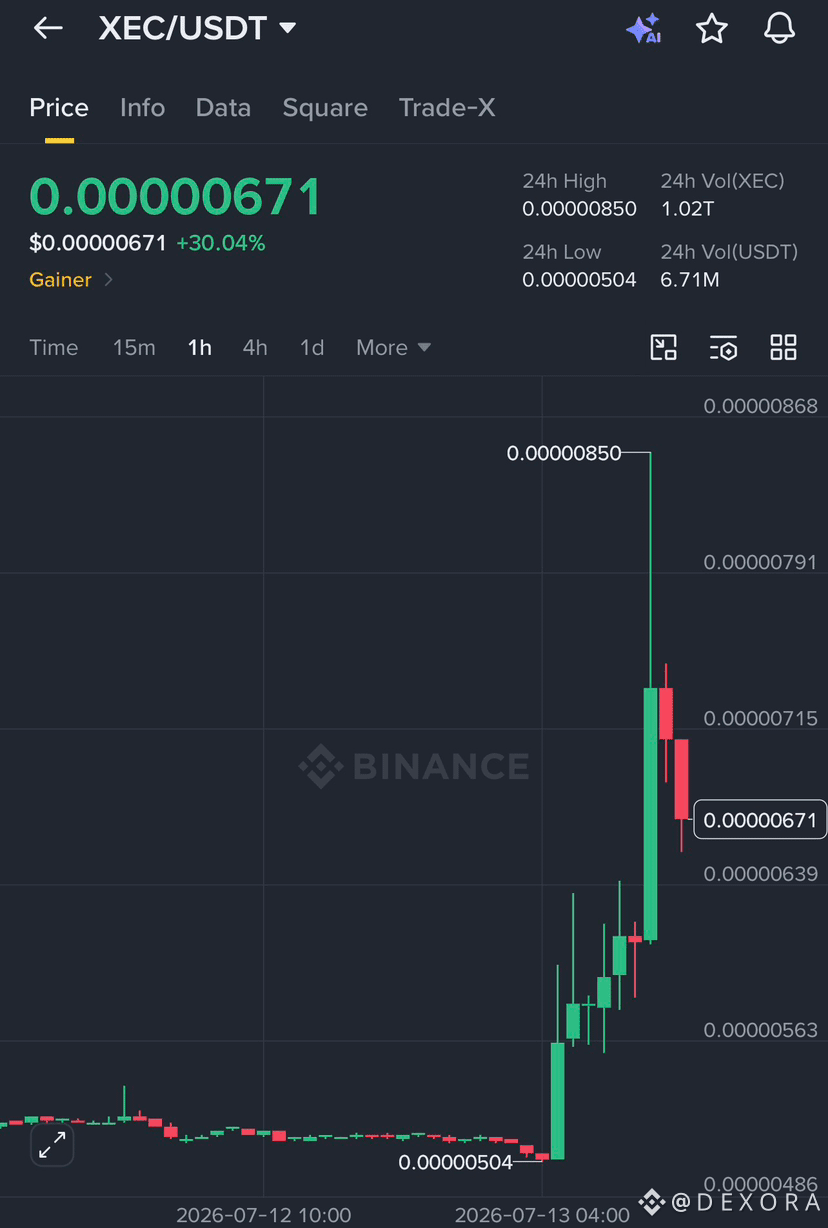

Best Wishes!
From D E X O R A
3
168
·
--

Article
The Market Doesn’t Feel Euphoric Yet… And That Might Be the Most Bullish SignOne thing I’ve noticed over the past few weeks is that crypto prices have started recovering, yet the excitement that usually comes with a major rally is still missing. Social media isn’t flooded with stories of overnight millionaires, and many investors are still waiting for the “perfect” confirmation before believing the market has truly changed. Ironically, that hesitation is exactly what makes this period so interesting to me.
Every major bull market begins with doubt. After a difficult period, investors naturally become cautious because they remember the volatility more than the opportunity. Even as Bitcoin regains strength and capital slowly returns to the market, many people are still expecting another sharp correction before committing. That cautious mindset is completely understandable, but history has shown that markets rarely wait until everyone feels comfortable. By the time confidence becomes universal, a significant part of the move has often already happened. Recent market data also points to improving sentiment, with Bitcoin supported by renewed buying interest and fresh ETF inflows.
Another trend I find encouraging is that this rally appears to be supported by more than just speculation. Institutional participation continues to grow, stablecoin adoption is expanding, and blockchain infrastructure is receiving more attention from businesses and financial firms. These developments may not generate the same headlines as meme coins, but they strengthen the foundation of the market. When adoption grows alongside investor confidence, the market becomes healthier than one driven only by hype.
That doesn’t mean every project will succeed or that prices will move in a straight line. Crypto has never worked that way. Corrections are part of every cycle, and volatility will always create moments of uncertainty. The difference is that experienced investors often view those moments as opportunities to reassess rather than reasons to panic. They understand that successful investing is usually about patience and discipline, not chasing every candle.
What excites me most isn’t simply the possibility of higher prices. It’s the feeling that the industry is becoming more mature. More institutions are participating, developers continue building regardless of market conditions, and platforms like Binance are expanding their ecosystems with features that encourage long-term engagement instead of short-term speculation. That combination creates a much stronger environment than we’ve seen in previous cycles.
My view is simple. The market doesn’t need everyone to be optimistic to continue moving forward. In fact, the strongest trends often begin while most people are still skeptical. If this recovery continues to be supported by adoption, liquidity, and growing confidence, the next chapter of this cycle could be driven by stronger fundamentals rather than pure excitement.
Sometimes the biggest opportunity isn’t buying at the absolute bottom.
It’s recognizing that a new trend has already begun while most people are still waiting for proof.
#Bitcoin #BullMarket #crypto #BinanceSquare
The Market Doesn’t Feel Euphoric Yet… And That Might Be the Most Bullish Sign
One thing I’ve noticed over the past few weeks is that crypto prices have started recovering, yet the excitement that usually comes with a major rally is still missing. Social media isn’t flooded with stories of overnight millionaires, and many investors are still waiting for the “perfect” confirmation before believing the market has truly changed. Ironically, that hesitation is exactly what makes this period so interesting to me.
Every major bull market begins with doubt. After a difficult period, investors naturally become cautious because they remember the volatility more than the opportunity. Even as Bitcoin regains strength and capital slowly returns to the market, many people are still expecting another sharp correction before committing. That cautious mindset is completely understandable, but history has shown that markets rarely wait until everyone feels comfortable. By the time confidence becomes universal, a significant part of the move has often already happened. Recent market data also points to improving sentiment, with Bitcoin supported by renewed buying interest and fresh ETF inflows.
Another trend I find encouraging is that this rally appears to be supported by more than just speculation. Institutional participation continues to grow, stablecoin adoption is expanding, and blockchain infrastructure is receiving more attention from businesses and financial firms. These developments may not generate the same headlines as meme coins, but they strengthen the foundation of the market. When adoption grows alongside investor confidence, the market becomes healthier than one driven only by hype.
That doesn’t mean every project will succeed or that prices will move in a straight line. Crypto has never worked that way. Corrections are part of every cycle, and volatility will always create moments of uncertainty. The difference is that experienced investors often view those moments as opportunities to reassess rather than reasons to panic. They understand that successful investing is usually about patience and discipline, not chasing every candle.
What excites me most isn’t simply the possibility of higher prices. It’s the feeling that the industry is becoming more mature. More institutions are participating, developers continue building regardless of market conditions, and platforms like Binance are expanding their ecosystems with features that encourage long-term engagement instead of short-term speculation. That combination creates a much stronger environment than we’ve seen in previous cycles.
My view is simple. The market doesn’t need everyone to be optimistic to continue moving forward. In fact, the strongest trends often begin while most people are still skeptical. If this recovery continues to be supported by adoption, liquidity, and growing confidence, the next chapter of this cycle could be driven by stronger fundamentals rather than pure excitement.
Sometimes the biggest opportunity isn’t buying at the absolute bottom.
It’s recognizing that a new trend has already begun while most people are still waiting for proof.
#Bitcoin #BullMarket #crypto #BinanceSquare
Every major bull market begins with doubt. After a difficult period, investors naturally become cautious because they remember the volatility more than the opportunity. Even as Bitcoin regains strength and capital slowly returns to the market, many people are still expecting another sharp correction before committing. That cautious mindset is completely understandable, but history has shown that markets rarely wait until everyone feels comfortable. By the time confidence becomes universal, a significant part of the move has often already happened. Recent market data also points to improving sentiment, with Bitcoin supported by renewed buying interest and fresh ETF inflows.
Another trend I find encouraging is that this rally appears to be supported by more than just speculation. Institutional participation continues to grow, stablecoin adoption is expanding, and blockchain infrastructure is receiving more attention from businesses and financial firms. These developments may not generate the same headlines as meme coins, but they strengthen the foundation of the market. When adoption grows alongside investor confidence, the market becomes healthier than one driven only by hype.
That doesn’t mean every project will succeed or that prices will move in a straight line. Crypto has never worked that way. Corrections are part of every cycle, and volatility will always create moments of uncertainty. The difference is that experienced investors often view those moments as opportunities to reassess rather than reasons to panic. They understand that successful investing is usually about patience and discipline, not chasing every candle.
What excites me most isn’t simply the possibility of higher prices. It’s the feeling that the industry is becoming more mature. More institutions are participating, developers continue building regardless of market conditions, and platforms like Binance are expanding their ecosystems with features that encourage long-term engagement instead of short-term speculation. That combination creates a much stronger environment than we’ve seen in previous cycles.
My view is simple. The market doesn’t need everyone to be optimistic to continue moving forward. In fact, the strongest trends often begin while most people are still skeptical. If this recovery continues to be supported by adoption, liquidity, and growing confidence, the next chapter of this cycle could be driven by stronger fundamentals rather than pure excitement.
Sometimes the biggest opportunity isn’t buying at the absolute bottom.
It’s recognizing that a new trend has already begun while most people are still waiting for proof.
#Bitcoin #BullMarket #crypto #BinanceSquare
3
209
·
--
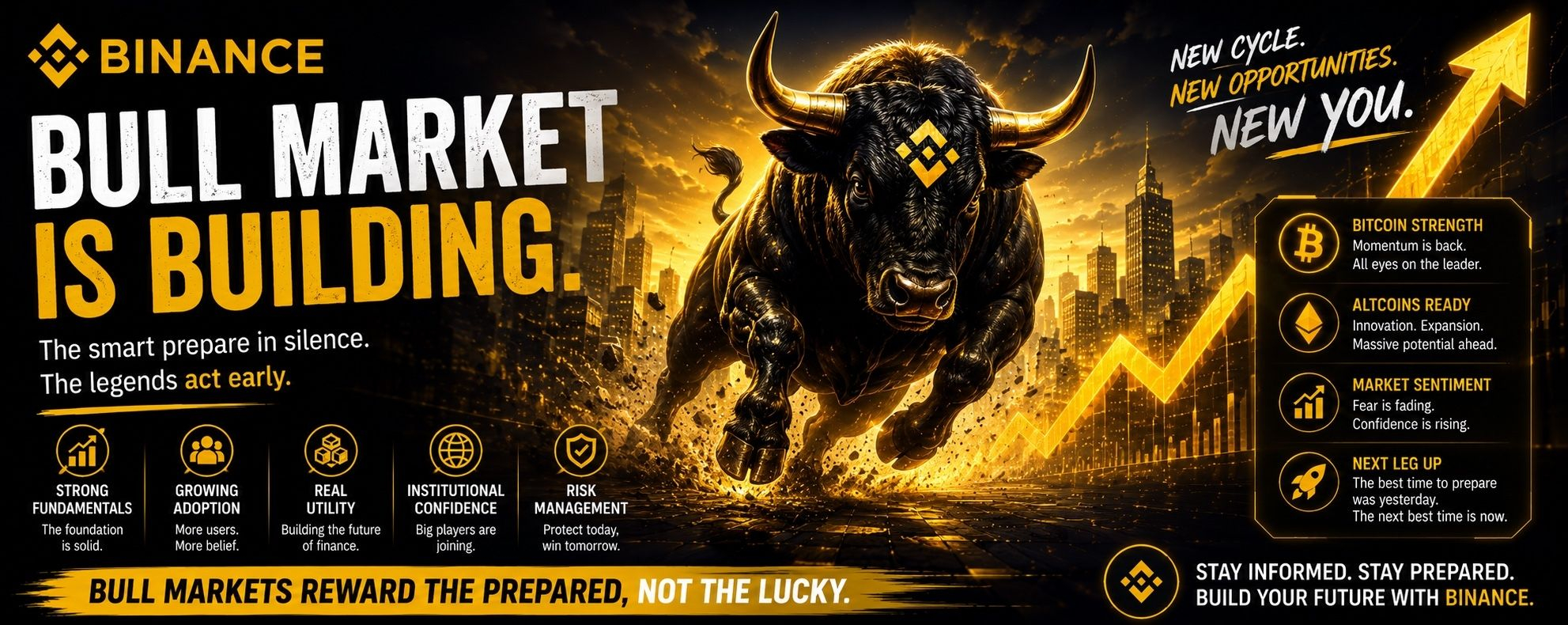
Article
Everyone Wants a Bull Market… But I Think Most People Aren’t Ready for OneFor months, the crypto community has been asking the same question: “When will the bull market finally begin?” Every small breakout sparks excitement, every pullback creates doubt, and social media swings between extreme optimism and extreme fear almost overnight. Lately, though, something feels different. The conversations are changing. Instead of asking whether a bull market is possible, more people are starting to ask how long it could last.
What catches my attention isn’t just the price of Bitcoin. It’s the confidence slowly returning to the market. Trading activity is picking up, developers are launching new projects, institutions continue exploring digital assets, and everyday investors are becoming curious again. None of these signals guarantee that prices will only move higher, but together they create an environment that feels much healthier than it did a year ago.
I have learned that every bull market tells the same story in different ways. It usually begins quietly. At first, only a small group notices the change. Then confidence starts spreading, trading volumes increase, and suddenly everyone begins talking about crypto again. By the time your friends who ignored crypto for years start asking which coin to buy, the market has often already moved much further than most people expected.
That is why I think preparation matters more than prediction. No one can consistently call the exact top or bottom of a market. What investors can control is how prepared they are before momentum really accelerates. Learning about projects, understanding risk, and building patience are often far more valuable than trying to catch every short-term move.
One mistake I see during every bullish cycle is people believing that every investment will succeed simply because the market is rising. Bull markets create incredible opportunities, but they also create overconfidence. Excitement can make people ignore research, forget risk management, and chase assets only because everyone else is talking about them. History has shown that while strong markets lift many projects, not every project survives once the excitement fades.
That is why I believe this cycle should be approached differently. Instead of focusing only on fast gains, I want to focus on strong ecosystems, real adoption, and platforms that continue building regardless of market conditions. Those are usually the foundations that remain valuable long after the headlines change.
Whether this turns into one of the biggest bull markets in crypto history or simply another step in the industry’s growth, one thing feels clear to me. Crypto is no longer a niche experiment watched by a handful of enthusiasts. It has become part of the global financial conversation, and each cycle brings more users, more innovation, and more attention than the one before it.
My view is simple. A bull market is exciting because portfolios grow, but the real opportunity is bigger than price alone. It is the chance to learn, adapt, and position yourself before the crowd fully arrives.
Because when everyone agrees that the bull market is here, the smartest investors are usually already thinking about what comes next
#BinanceTurns9 #Binance #BinanceSquareFamily #crypto #market
Everyone Wants a Bull Market… But I Think Most People Aren’t Ready for One
For months, the crypto community has been asking the same question: “When will the bull market finally begin?” Every small breakout sparks excitement, every pullback creates doubt, and social media swings between extreme optimism and extreme fear almost overnight. Lately, though, something feels different. The conversations are changing. Instead of asking whether a bull market is possible, more people are starting to ask how long it could last.
What catches my attention isn’t just the price of Bitcoin. It’s the confidence slowly returning to the market. Trading activity is picking up, developers are launching new projects, institutions continue exploring digital assets, and everyday investors are becoming curious again. None of these signals guarantee that prices will only move higher, but together they create an environment that feels much healthier than it did a year ago.
I have learned that every bull market tells the same story in different ways. It usually begins quietly. At first, only a small group notices the change. Then confidence starts spreading, trading volumes increase, and suddenly everyone begins talking about crypto again. By the time your friends who ignored crypto for years start asking which coin to buy, the market has often already moved much further than most people expected.
That is why I think preparation matters more than prediction. No one can consistently call the exact top or bottom of a market. What investors can control is how prepared they are before momentum really accelerates. Learning about projects, understanding risk, and building patience are often far more valuable than trying to catch every short-term move.
One mistake I see during every bullish cycle is people believing that every investment will succeed simply because the market is rising. Bull markets create incredible opportunities, but they also create overconfidence. Excitement can make people ignore research, forget risk management, and chase assets only because everyone else is talking about them. History has shown that while strong markets lift many projects, not every project survives once the excitement fades.
That is why I believe this cycle should be approached differently. Instead of focusing only on fast gains, I want to focus on strong ecosystems, real adoption, and platforms that continue building regardless of market conditions. Those are usually the foundations that remain valuable long after the headlines change.
Whether this turns into one of the biggest bull markets in crypto history or simply another step in the industry’s growth, one thing feels clear to me. Crypto is no longer a niche experiment watched by a handful of enthusiasts. It has become part of the global financial conversation, and each cycle brings more users, more innovation, and more attention than the one before it.
My view is simple. A bull market is exciting because portfolios grow, but the real opportunity is bigger than price alone. It is the chance to learn, adapt, and position yourself before the crowd fully arrives.
Because when everyone agrees that the bull market is here, the smartest investors are usually already thinking about what comes next
#BinanceTurns9 #Binance #BinanceSquareFamily #crypto #market
What catches my attention isn’t just the price of Bitcoin. It’s the confidence slowly returning to the market. Trading activity is picking up, developers are launching new projects, institutions continue exploring digital assets, and everyday investors are becoming curious again. None of these signals guarantee that prices will only move higher, but together they create an environment that feels much healthier than it did a year ago.
I have learned that every bull market tells the same story in different ways. It usually begins quietly. At first, only a small group notices the change. Then confidence starts spreading, trading volumes increase, and suddenly everyone begins talking about crypto again. By the time your friends who ignored crypto for years start asking which coin to buy, the market has often already moved much further than most people expected.
That is why I think preparation matters more than prediction. No one can consistently call the exact top or bottom of a market. What investors can control is how prepared they are before momentum really accelerates. Learning about projects, understanding risk, and building patience are often far more valuable than trying to catch every short-term move.
One mistake I see during every bullish cycle is people believing that every investment will succeed simply because the market is rising. Bull markets create incredible opportunities, but they also create overconfidence. Excitement can make people ignore research, forget risk management, and chase assets only because everyone else is talking about them. History has shown that while strong markets lift many projects, not every project survives once the excitement fades.
That is why I believe this cycle should be approached differently. Instead of focusing only on fast gains, I want to focus on strong ecosystems, real adoption, and platforms that continue building regardless of market conditions. Those are usually the foundations that remain valuable long after the headlines change.
Whether this turns into one of the biggest bull markets in crypto history or simply another step in the industry’s growth, one thing feels clear to me. Crypto is no longer a niche experiment watched by a handful of enthusiasts. It has become part of the global financial conversation, and each cycle brings more users, more innovation, and more attention than the one before it.
My view is simple. A bull market is exciting because portfolios grow, but the real opportunity is bigger than price alone. It is the chance to learn, adapt, and position yourself before the crowd fully arrives.
Because when everyone agrees that the bull market is here, the smartest investors are usually already thinking about what comes next
#BinanceTurns9 #Binance #BinanceSquareFamily #crypto #market
3
235
·
--

Article
Everyone Is Waiting for the Bull Run… But What If It Has Already Started in a Different Direction?Every crypto cycle has one narrative that quietly grows while everyone else is looking somewhere else. In the last cycle, it was DeFi. Then NFTs took over. After that came meme coins and AI. Today, I think another story is slowly building, but it is not getting the attention it deserves because it is not driven by hype. It is being driven by adoption.
The more I follow the market, the more I notice that institutions are no longer asking whether blockchain has a future. They are asking how they can use it. That is a completely different conversation. Instead of debating if digital assets are here to stay, companies are exploring tokenized assets, stablecoin payments, and blockchain infrastructure that can improve existing financial systems. This shift has become one of the strongest long-term themes across the crypto industry.
What makes this trend interesting is that it does not create the same excitement as a meme coin rally. There are no overnight price explosions or viral social media posts every day. Instead, progress happens quietly. New partnerships are announced, financial institutions test blockchain-based products, and stablecoins continue expanding into payments and cross-border settlements. These developments may seem less exciting, but they represent the kind of adoption that can shape the next decade of crypto.
I think many retail investors underestimate this because they naturally focus on short-term price action. That is understandable. Price is visible. Adoption is slower and harder to notice. But history has shown that markets eventually reward technologies that solve real problems. When businesses begin using blockchain because it is more efficient—not because it is trendy—that is when the industry starts moving beyond speculation.
This is also why I keep paying attention to ecosystems like Binance. As crypto evolves, platforms that connect trading, payments, earning opportunities, and on-chain participation are becoming increasingly valuable. The market is slowly moving away from isolated products toward complete ecosystems where users can do much more than simply buy and sell digital assets
My view is simple. The next big crypto opportunity may not come from chasing every new token that appears on your timeline. It may come from understanding where real adoption is happening before it becomes obvious to everyone else.
Sometimes the strongest trends are the quietest ones.
And by the time they become headlines, the smartest investors are already positioned.
#USADP98KMiss #Binance #BinanceSquareTalks
Everyone Is Waiting for the Bull Run… But What If It Has Already Started in a Different Direction?
Every crypto cycle has one narrative that quietly grows while everyone else is looking somewhere else. In the last cycle, it was DeFi. Then NFTs took over. After that came meme coins and AI. Today, I think another story is slowly building, but it is not getting the attention it deserves because it is not driven by hype. It is being driven by adoption.
The more I follow the market, the more I notice that institutions are no longer asking whether blockchain has a future. They are asking how they can use it. That is a completely different conversation. Instead of debating if digital assets are here to stay, companies are exploring tokenized assets, stablecoin payments, and blockchain infrastructure that can improve existing financial systems. This shift has become one of the strongest long-term themes across the crypto industry.
What makes this trend interesting is that it does not create the same excitement as a meme coin rally. There are no overnight price explosions or viral social media posts every day. Instead, progress happens quietly. New partnerships are announced, financial institutions test blockchain-based products, and stablecoins continue expanding into payments and cross-border settlements. These developments may seem less exciting, but they represent the kind of adoption that can shape the next decade of crypto.
I think many retail investors underestimate this because they naturally focus on short-term price action. That is understandable. Price is visible. Adoption is slower and harder to notice. But history has shown that markets eventually reward technologies that solve real problems. When businesses begin using blockchain because it is more efficient—not because it is trendy—that is when the industry starts moving beyond speculation.
This is also why I keep paying attention to ecosystems like Binance. As crypto evolves, platforms that connect trading, payments, earning opportunities, and on-chain participation are becoming increasingly valuable. The market is slowly moving away from isolated products toward complete ecosystems where users can do much more than simply buy and sell digital assets
My view is simple. The next big crypto opportunity may not come from chasing every new token that appears on your timeline. It may come from understanding where real adoption is happening before it becomes obvious to everyone else.
Sometimes the strongest trends are the quietest ones.
And by the time they become headlines, the smartest investors are already positioned.
#USADP98KMiss #Binance #BinanceSquareTalks
The more I follow the market, the more I notice that institutions are no longer asking whether blockchain has a future. They are asking how they can use it. That is a completely different conversation. Instead of debating if digital assets are here to stay, companies are exploring tokenized assets, stablecoin payments, and blockchain infrastructure that can improve existing financial systems. This shift has become one of the strongest long-term themes across the crypto industry.
What makes this trend interesting is that it does not create the same excitement as a meme coin rally. There are no overnight price explosions or viral social media posts every day. Instead, progress happens quietly. New partnerships are announced, financial institutions test blockchain-based products, and stablecoins continue expanding into payments and cross-border settlements. These developments may seem less exciting, but they represent the kind of adoption that can shape the next decade of crypto.
I think many retail investors underestimate this because they naturally focus on short-term price action. That is understandable. Price is visible. Adoption is slower and harder to notice. But history has shown that markets eventually reward technologies that solve real problems. When businesses begin using blockchain because it is more efficient—not because it is trendy—that is when the industry starts moving beyond speculation.
This is also why I keep paying attention to ecosystems like Binance. As crypto evolves, platforms that connect trading, payments, earning opportunities, and on-chain participation are becoming increasingly valuable. The market is slowly moving away from isolated products toward complete ecosystems where users can do much more than simply buy and sell digital assets
My view is simple. The next big crypto opportunity may not come from chasing every new token that appears on your timeline. It may come from understanding where real adoption is happening before it becomes obvious to everyone else.
Sometimes the strongest trends are the quietest ones.
And by the time they become headlines, the smartest investors are already positioned.
#USADP98KMiss #Binance #BinanceSquareTalks
6
273
·
--
Verified

Article
Why RE Protocol Stands Out in the RWA SpaceThe Real World Asset (RWA) sector has become one of the fastest-growing areas in crypto. Most projects focus on tokenized Treasury bills, private credit, or real estate, but RE Protocol is taking a different approach by connecting DeFi with the global reinsurance market.
That immediately caught my attention because reinsurance is one of the world’s largest financial industries, yet it’s rarely discussed in crypto.
So, what makes @Re_protocol interesting?
Instead of relying mainly on token incentives, RE Protocol allows users to deposit stablecoins that help support fully collateralized reinsurance agreements through licensed insurance partners. In return, users earn yield backed by real-world insurance premium income alongside on-chain sources.
This is a different way of thinking about DeFi yield. Rather than creating returns entirely within crypto, the protocol aims to connect blockchain capital with an established financial market.
Another feature I like is that users aren’t forced into a single product. RE Protocol offers different yield options depending on individual risk preferences, allowing users to choose the balance between liquidity and potential return that suits them best.
Transparency is another area where the project stands out. The protocol combines on-chain visibility, third-party attestations, audited smart contracts, and institutional custody to help users better understand how funds are managed. While every investment carries risk, providing greater visibility is an important step toward building trust.
The protocol also embraces DeFi composability. Its yield-bearing assets can integrate with other DeFi applications, giving users more flexibility than simply holding a token.
Personally, I think the most interesting part isn’t just the technology it’s the market RE Protocol is trying to bring on-chain. Reinsurance has traditionally been accessible only to large institutions. If blockchain can reduce those barriers, it could open a completely new category of Real World Assets for DeFi.
Whether RE Protocol succeeds will depend on execution and adoption, but I believe it’s one of the more interesting RWA projects worth following.
As always, do your own research before making any investment decisions.
Official X: http://x.com/re
Website: https://re.xyz/home
Why RE Protocol Stands Out in the RWA Space
The Real World Asset (RWA) sector has become one of the fastest-growing areas in crypto. Most projects focus on tokenized Treasury bills, private credit, or real estate, but RE Protocol is taking a different approach by connecting DeFi with the global reinsurance market.
That immediately caught my attention because reinsurance is one of the world’s largest financial industries, yet it’s rarely discussed in crypto.
So, what makes @ReProtocol interesting?
Instead of relying mainly on token incentives, RE Protocol allows users to deposit stablecoins that help support fully collateralized reinsurance agreements through licensed insurance partners. In return, users earn yield backed by real-world insurance premium income alongside on-chain sources.
This is a different way of thinking about DeFi yield. Rather than creating returns entirely within crypto, the protocol aims to connect blockchain capital with an established financial market.
Another feature I like is that users aren’t forced into a single product. RE Protocol offers different yield options depending on individual risk preferences, allowing users to choose the balance between liquidity and potential return that suits them best.
Transparency is another area where the project stands out. The protocol combines on-chain visibility, third-party attestations, audited smart contracts, and institutional custody to help users better understand how funds are managed. While every investment carries risk, providing greater visibility is an important step toward building trust.
The protocol also embraces DeFi composability. Its yield-bearing assets can integrate with other DeFi applications, giving users more flexibility than simply holding a token.
Personally, I think the most interesting part isn’t just the technology it’s the market RE Protocol is trying to bring on-chain. Reinsurance has traditionally been accessible only to large institutions. If blockchain can reduce those barriers, it could open a completely new category of Real World Assets for DeFi.
Whether RE Protocol succeeds will depend on execution and adoption, but I believe it’s one of the more interesting RWA projects worth following.
As always, do your own research before making any investment decisions.
Official X: http://x.com/re
Website: https://re.xyz/home
That immediately caught my attention because reinsurance is one of the world’s largest financial industries, yet it’s rarely discussed in crypto.
So, what makes @ReProtocol interesting?
Instead of relying mainly on token incentives, RE Protocol allows users to deposit stablecoins that help support fully collateralized reinsurance agreements through licensed insurance partners. In return, users earn yield backed by real-world insurance premium income alongside on-chain sources.
This is a different way of thinking about DeFi yield. Rather than creating returns entirely within crypto, the protocol aims to connect blockchain capital with an established financial market.
Another feature I like is that users aren’t forced into a single product. RE Protocol offers different yield options depending on individual risk preferences, allowing users to choose the balance between liquidity and potential return that suits them best.
Transparency is another area where the project stands out. The protocol combines on-chain visibility, third-party attestations, audited smart contracts, and institutional custody to help users better understand how funds are managed. While every investment carries risk, providing greater visibility is an important step toward building trust.
The protocol also embraces DeFi composability. Its yield-bearing assets can integrate with other DeFi applications, giving users more flexibility than simply holding a token.
Personally, I think the most interesting part isn’t just the technology it’s the market RE Protocol is trying to bring on-chain. Reinsurance has traditionally been accessible only to large institutions. If blockchain can reduce those barriers, it could open a completely new category of Real World Assets for DeFi.
Whether RE Protocol succeeds will depend on execution and adoption, but I believe it’s one of the more interesting RWA projects worth following.
As always, do your own research before making any investment decisions.
Official X: http://x.com/re
Website: https://re.xyz/home
60
75
10.7k
·
--

Article
Binance Alpha Is Quietly Changing How People Discover OpportunitiesOne thing I have noticed recently is that many crypto users still open Binance with the same mindset they had a few years ago. They log in, check prices, place a trade, and leave. There is nothing wrong with that, but I think they are missing one of the most interesting developments happening on the platform today. Binance is gradually shifting from being just a trading venue into a place where users can discover opportunities much earlier in their lifecycle, and Binance Alpha is one of the clearest examples of that evolution.
At first glance, Binance Alpha looks like another feature inside a growing ecosystem. It is easy to overlook because it does not create the same excitement as a major token listing or a dramatic market rally. But the more I watched how people interact with it, the more I realized that the real value is not the feature itself. It is the mindset it encourages. Instead of waiting for projects to become popular, users are encouraged to explore what is emerging before the wider market pays attention.
That is a subtle but important shift.
Crypto has always rewarded people who were willing to learn before everyone else. The biggest opportunities rarely appear when every influencer is talking about them. They usually begin quietly, with small communities, limited attention, and plenty of uncertainty. By the time a project dominates headlines, much of the early excitement has already been priced in. Binance Alpha reflects that same philosophy by giving users a place to discover and follow developing opportunities inside the ecosystem.
What I find especially interesting is that this approach changes user behavior. Instead of focusing only on short-term price movements, people begin paying more attention to participation. They start exploring new projects, learning about ecosystems, and following developments that might shape the next market narrative. Even if every project does not succeed, the habit of researching and staying engaged can be valuable on its own.
Another reason I think this feature matters is because it fits into a much larger trend across crypto. The industry is becoming more competitive every year, which means simply having access to information is no longer enough. The real advantage comes from discovering relevant information early and understanding why it matters before it becomes common knowledge. Features that encourage exploration help users build that habit naturally.
Of course, being early is never the same as being guaranteed success. Every project carries risk, and not every narrative develops the way people expect. That is why I think Binance Alpha should be viewed as a discovery tool rather than a promise of future returns. Curiosity should always be matched with research and good risk management.
My view is simple. Binance Alpha is interesting because it encourages a different way of thinking. Instead of asking, “What is already trending?” it encourages users to ask, “What could become important next?” That single change in perspective can completely transform how someone experiences the crypto market.
Sometimes the biggest edge is not finding the perfect investment.
Sometimes it is simply learning to look in the right place before everyone else does.
#KioxiaADRFallsOver14% #AAVERises8.9% #SOLRises9% #Binance #BinanceSquareTalks
Binance Alpha Is Quietly Changing How People Discover Opportunities
One thing I have noticed recently is that many crypto users still open Binance with the same mindset they had a few years ago. They log in, check prices, place a trade, and leave. There is nothing wrong with that, but I think they are missing one of the most interesting developments happening on the platform today. Binance is gradually shifting from being just a trading venue into a place where users can discover opportunities much earlier in their lifecycle, and Binance Alpha is one of the clearest examples of that evolution.
At first glance, Binance Alpha looks like another feature inside a growing ecosystem. It is easy to overlook because it does not create the same excitement as a major token listing or a dramatic market rally. But the more I watched how people interact with it, the more I realized that the real value is not the feature itself. It is the mindset it encourages. Instead of waiting for projects to become popular, users are encouraged to explore what is emerging before the wider market pays attention.
That is a subtle but important shift.
Crypto has always rewarded people who were willing to learn before everyone else. The biggest opportunities rarely appear when every influencer is talking about them. They usually begin quietly, with small communities, limited attention, and plenty of uncertainty. By the time a project dominates headlines, much of the early excitement has already been priced in. Binance Alpha reflects that same philosophy by giving users a place to discover and follow developing opportunities inside the ecosystem.
What I find especially interesting is that this approach changes user behavior. Instead of focusing only on short-term price movements, people begin paying more attention to participation. They start exploring new projects, learning about ecosystems, and following developments that might shape the next market narrative. Even if every project does not succeed, the habit of researching and staying engaged can be valuable on its own.
Another reason I think this feature matters is because it fits into a much larger trend across crypto. The industry is becoming more competitive every year, which means simply having access to information is no longer enough. The real advantage comes from discovering relevant information early and understanding why it matters before it becomes common knowledge. Features that encourage exploration help users build that habit naturally.
Of course, being early is never the same as being guaranteed success. Every project carries risk, and not every narrative develops the way people expect. That is why I think Binance Alpha should be viewed as a discovery tool rather than a promise of future returns. Curiosity should always be matched with research and good risk management.
My view is simple. Binance Alpha is interesting because it encourages a different way of thinking. Instead of asking, “What is already trending?” it encourages users to ask, “What could become important next?” That single change in perspective can completely transform how someone experiences the crypto market.
Sometimes the biggest edge is not finding the perfect investment.
Sometimes it is simply learning to look in the right place before everyone else does.
#KioxiaADRFallsOver14% #AAVERises8.9% #SOLRises9% #Binance #BinanceSquareTalks
At first glance, Binance Alpha looks like another feature inside a growing ecosystem. It is easy to overlook because it does not create the same excitement as a major token listing or a dramatic market rally. But the more I watched how people interact with it, the more I realized that the real value is not the feature itself. It is the mindset it encourages. Instead of waiting for projects to become popular, users are encouraged to explore what is emerging before the wider market pays attention.
That is a subtle but important shift.
Crypto has always rewarded people who were willing to learn before everyone else. The biggest opportunities rarely appear when every influencer is talking about them. They usually begin quietly, with small communities, limited attention, and plenty of uncertainty. By the time a project dominates headlines, much of the early excitement has already been priced in. Binance Alpha reflects that same philosophy by giving users a place to discover and follow developing opportunities inside the ecosystem.
What I find especially interesting is that this approach changes user behavior. Instead of focusing only on short-term price movements, people begin paying more attention to participation. They start exploring new projects, learning about ecosystems, and following developments that might shape the next market narrative. Even if every project does not succeed, the habit of researching and staying engaged can be valuable on its own.
Another reason I think this feature matters is because it fits into a much larger trend across crypto. The industry is becoming more competitive every year, which means simply having access to information is no longer enough. The real advantage comes from discovering relevant information early and understanding why it matters before it becomes common knowledge. Features that encourage exploration help users build that habit naturally.
Of course, being early is never the same as being guaranteed success. Every project carries risk, and not every narrative develops the way people expect. That is why I think Binance Alpha should be viewed as a discovery tool rather than a promise of future returns. Curiosity should always be matched with research and good risk management.
My view is simple. Binance Alpha is interesting because it encourages a different way of thinking. Instead of asking, “What is already trending?” it encourages users to ask, “What could become important next?” That single change in perspective can completely transform how someone experiences the crypto market.
Sometimes the biggest edge is not finding the perfect investment.
Sometimes it is simply learning to look in the right place before everyone else does.
#KioxiaADRFallsOver14% #AAVERises8.9% #SOLRises9% #Binance #BinanceSquareTalks
1
3
471
·
--
The Biggest Mistake in Crypto Isn’t Buying the Wrong Coin. It’s Waiting Too Long to LearnWhen I first entered crypto, I thought success was all about finding the perfect coin before everyone else. Every day I searched for hidden gems, watched price charts for hours, and followed every trending narrative on social media. I believed that if I could just discover the next 100x project, everything else would take care of itself. Looking back now, I realize I was asking the wrong question.
The biggest difference between experienced investors and beginners isn’t that one group always picks better coins. It’s that experienced investors spend more time understanding the market than chasing it. They know that prices change every minute, but knowledge stays with you through every market cycle. Once you understand how crypto works, every bull market and every correction becomes easier to navigate because you’re making decisions based on understanding instead of emotion.
That is why I think platforms like Binance have become much more important than people realize. Most users open the app simply to trade, but the real value often comes from everything surrounding the trades. New projects, educational content, ecosystem participation, staking opportunities, Launchpool events, and features like Binance Alpha all encourage users to become part of the ecosystem instead of simply watching prices move. The more you explore, the more you realize crypto is much bigger than buying low and selling high.
One lesson that completely changed my perspective is that the market rewards patience more often than speed. Social media makes it feel like everyone is getting rich overnight, but those stories rarely show the months or years people spent learning before they became successful. Behind every impressive portfolio is usually someone who made countless mistakes, adapted to changing conditions, and kept learning instead of giving up after a bad trade.
Today’s market feels similar. Everyone wants instant results, but the strongest opportunities often belong to the people who quietly prepare while everyone else is chasing excitement. They study new technologies, understand how different ecosystems work, and focus on building conviction rather than following the crowd. When the next major trend arrives, they are ready because they invested in knowledge long before they invested more money.
That is why I no longer believe the biggest asset in crypto is Bitcoin, BNB, or any other token. I think the biggest asset is experience. Markets will always rise and fall, narratives will always change, and new projects will continue to appear. But the ability to stay calm, think independently, and recognize opportunities before they become obvious is something no market can take away from you.
My view is simple. Don’t measure your progress only by the size of your portfolio. Measure it by how much you understand today compared to six months ago. Because in crypto, the people who never stop learning usually become the people everyone else calls “lucky” later.
And from my experience, luck has very little to do with it.
#SolanaRisesTo$72 #KioxiaADRFallsOver14% #SOLRises9%
The Biggest Mistake in Crypto Isn’t Buying the Wrong Coin. It’s Waiting Too Long to Learn
When I first entered crypto, I thought success was all about finding the perfect coin before everyone else. Every day I searched for hidden gems, watched price charts for hours, and followed every trending narrative on social media. I believed that if I could just discover the next 100x project, everything else would take care of itself. Looking back now, I realize I was asking the wrong question.
The biggest difference between experienced investors and beginners isn’t that one group always picks better coins. It’s that experienced investors spend more time understanding the market than chasing it. They know that prices change every minute, but knowledge stays with you through every market cycle. Once you understand how crypto works, every bull market and every correction becomes easier to navigate because you’re making decisions based on understanding instead of emotion.
That is why I think platforms like Binance have become much more important than people realize. Most users open the app simply to trade, but the real value often comes from everything surrounding the trades. New projects, educational content, ecosystem participation, staking opportunities, Launchpool events, and features like Binance Alpha all encourage users to become part of the ecosystem instead of simply watching prices move. The more you explore, the more you realize crypto is much bigger than buying low and selling high.
One lesson that completely changed my perspective is that the market rewards patience more often than speed. Social media makes it feel like everyone is getting rich overnight, but those stories rarely show the months or years people spent learning before they became successful. Behind every impressive portfolio is usually someone who made countless mistakes, adapted to changing conditions, and kept learning instead of giving up after a bad trade.
Today’s market feels similar. Everyone wants instant results, but the strongest opportunities often belong to the people who quietly prepare while everyone else is chasing excitement. They study new technologies, understand how different ecosystems work, and focus on building conviction rather than following the crowd. When the next major trend arrives, they are ready because they invested in knowledge long before they invested more money.
That is why I no longer believe the biggest asset in crypto is Bitcoin, BNB, or any other token. I think the biggest asset is experience. Markets will always rise and fall, narratives will always change, and new projects will continue to appear. But the ability to stay calm, think independently, and recognize opportunities before they become obvious is something no market can take away from you.
My view is simple. Don’t measure your progress only by the size of your portfolio. Measure it by how much you understand today compared to six months ago. Because in crypto, the people who never stop learning usually become the people everyone else calls “lucky” later.
And from my experience, luck has very little to do with it.
#SolanaRisesTo$72 #KioxiaADRFallsOver14% #SOLRises9%
The biggest difference between experienced investors and beginners isn’t that one group always picks better coins. It’s that experienced investors spend more time understanding the market than chasing it. They know that prices change every minute, but knowledge stays with you through every market cycle. Once you understand how crypto works, every bull market and every correction becomes easier to navigate because you’re making decisions based on understanding instead of emotion.
That is why I think platforms like Binance have become much more important than people realize. Most users open the app simply to trade, but the real value often comes from everything surrounding the trades. New projects, educational content, ecosystem participation, staking opportunities, Launchpool events, and features like Binance Alpha all encourage users to become part of the ecosystem instead of simply watching prices move. The more you explore, the more you realize crypto is much bigger than buying low and selling high.
One lesson that completely changed my perspective is that the market rewards patience more often than speed. Social media makes it feel like everyone is getting rich overnight, but those stories rarely show the months or years people spent learning before they became successful. Behind every impressive portfolio is usually someone who made countless mistakes, adapted to changing conditions, and kept learning instead of giving up after a bad trade.
Today’s market feels similar. Everyone wants instant results, but the strongest opportunities often belong to the people who quietly prepare while everyone else is chasing excitement. They study new technologies, understand how different ecosystems work, and focus on building conviction rather than following the crowd. When the next major trend arrives, they are ready because they invested in knowledge long before they invested more money.
That is why I no longer believe the biggest asset in crypto is Bitcoin, BNB, or any other token. I think the biggest asset is experience. Markets will always rise and fall, narratives will always change, and new projects will continue to appear. But the ability to stay calm, think independently, and recognize opportunities before they become obvious is something no market can take away from you.
My view is simple. Don’t measure your progress only by the size of your portfolio. Measure it by how much you understand today compared to six months ago. Because in crypto, the people who never stop learning usually become the people everyone else calls “lucky” later.
And from my experience, luck has very little to do with it.
#SolanaRisesTo$72 #KioxiaADRFallsOver14% #SOLRises9%
3
233
·
--
Everyone Is Watching Bitcoin… But the Smart Money Is Quietly Watching StablecoinsWhenever Bitcoin starts making big moves, it naturally becomes the center of every conversation. Timelines fill with price predictions, traders begin sharing charts, and everyone starts debating whether the next rally has already begun. But over the past few days, I have found myself paying attention to something much quieter, and I honestly think it could become one of the biggest stories of this cycle
That story is stablecoins.
A few years ago, stablecoins were mostly seen as tools for traders. They were simply a place to park funds while waiting for the next opportunity. Today, that idea feels outdated. Stablecoins are gradually becoming part of the financial infrastructure that powers the entire crypto economy. They are being used for cross-border payments, settlements, remittances, and increasingly as the bridge between traditional finance and blockchain technology. Recent regulatory developments are only adding more attention to this trend, showing that governments and institutions are beginning to take this sector much more seriously.
What fascinates me is that this shift is happening quietly. Stablecoins rarely create the same excitement as meme coins or AI narratives because they are not designed to explode in price. Instead, they solve real problems. They make moving value faster, cheaper, and available around the clock. History shows that technologies solving practical problems often end up becoming much bigger than the ones creating the loudest headlines.
I also think this trend says something important about where crypto is heading. The industry is slowly moving away from being driven only by speculation and toward becoming a genuine financial ecosystem. Trading will always remain a huge part of crypto, but payments, savings, tokenized assets, and real-world applications are becoming impossible to ignore. Every step in that direction strengthens the foundation of the market rather than simply increasing short-term excitement.
That is why I believe the next phase of crypto will not only be defined by which coin performs the best. It will also be defined by which technologies people actually use every day. When millions of users begin relying on blockchain without even thinking about it, adoption stops being a future goal and starts becoming reality.
My view is simple. While everyone continues searching for the next big pump, one of the most important opportunities may already be developing quietly in the background. Stablecoins may never be the loudest narrative, but they could become one of the strongest foundations for everything that comes next.
Sometimes the biggest market stories are not the ones everyone is talking about.
They are the ones quietly changing how the entire system works.
#MemeCoreMTokenCrashes80% #HormuzStraitShips20MBarrelsDaily #SKHynixADRListing #SKHynixADRListing #OilErasesGains
Everyone Is Watching Bitcoin… But the Smart Money Is Quietly Watching Stablecoins
Whenever Bitcoin starts making big moves, it naturally becomes the center of every conversation. Timelines fill with price predictions, traders begin sharing charts, and everyone starts debating whether the next rally has already begun. But over the past few days, I have found myself paying attention to something much quieter, and I honestly think it could become one of the biggest stories of this cycle
That story is stablecoins.
A few years ago, stablecoins were mostly seen as tools for traders. They were simply a place to park funds while waiting for the next opportunity. Today, that idea feels outdated. Stablecoins are gradually becoming part of the financial infrastructure that powers the entire crypto economy. They are being used for cross-border payments, settlements, remittances, and increasingly as the bridge between traditional finance and blockchain technology. Recent regulatory developments are only adding more attention to this trend, showing that governments and institutions are beginning to take this sector much more seriously.
What fascinates me is that this shift is happening quietly. Stablecoins rarely create the same excitement as meme coins or AI narratives because they are not designed to explode in price. Instead, they solve real problems. They make moving value faster, cheaper, and available around the clock. History shows that technologies solving practical problems often end up becoming much bigger than the ones creating the loudest headlines.
I also think this trend says something important about where crypto is heading. The industry is slowly moving away from being driven only by speculation and toward becoming a genuine financial ecosystem. Trading will always remain a huge part of crypto, but payments, savings, tokenized assets, and real-world applications are becoming impossible to ignore. Every step in that direction strengthens the foundation of the market rather than simply increasing short-term excitement.
That is why I believe the next phase of crypto will not only be defined by which coin performs the best. It will also be defined by which technologies people actually use every day. When millions of users begin relying on blockchain without even thinking about it, adoption stops being a future goal and starts becoming reality.
My view is simple. While everyone continues searching for the next big pump, one of the most important opportunities may already be developing quietly in the background. Stablecoins may never be the loudest narrative, but they could become one of the strongest foundations for everything that comes next.
Sometimes the biggest market stories are not the ones everyone is talking about.
They are the ones quietly changing how the entire system works.
#MemeCoreMTokenCrashes80% #HormuzStraitShips20MBarrelsDaily #SKHynixADRListing #SKHynixADRListing #OilErasesGains
That story is stablecoins.
A few years ago, stablecoins were mostly seen as tools for traders. They were simply a place to park funds while waiting for the next opportunity. Today, that idea feels outdated. Stablecoins are gradually becoming part of the financial infrastructure that powers the entire crypto economy. They are being used for cross-border payments, settlements, remittances, and increasingly as the bridge between traditional finance and blockchain technology. Recent regulatory developments are only adding more attention to this trend, showing that governments and institutions are beginning to take this sector much more seriously.
What fascinates me is that this shift is happening quietly. Stablecoins rarely create the same excitement as meme coins or AI narratives because they are not designed to explode in price. Instead, they solve real problems. They make moving value faster, cheaper, and available around the clock. History shows that technologies solving practical problems often end up becoming much bigger than the ones creating the loudest headlines.
I also think this trend says something important about where crypto is heading. The industry is slowly moving away from being driven only by speculation and toward becoming a genuine financial ecosystem. Trading will always remain a huge part of crypto, but payments, savings, tokenized assets, and real-world applications are becoming impossible to ignore. Every step in that direction strengthens the foundation of the market rather than simply increasing short-term excitement.
That is why I believe the next phase of crypto will not only be defined by which coin performs the best. It will also be defined by which technologies people actually use every day. When millions of users begin relying on blockchain without even thinking about it, adoption stops being a future goal and starts becoming reality.
My view is simple. While everyone continues searching for the next big pump, one of the most important opportunities may already be developing quietly in the background. Stablecoins may never be the loudest narrative, but they could become one of the strongest foundations for everything that comes next.
Sometimes the biggest market stories are not the ones everyone is talking about.
They are the ones quietly changing how the entire system works.
#MemeCoreMTokenCrashes80% #HormuzStraitShips20MBarrelsDaily #SKHynixADRListing #SKHynixADRListing #OilErasesGains
3
216
·
--
I Think Most People Are Looking at Binance the Wrong WayLately, I have noticed something interesting. Whenever the market becomes volatile, people immediately start talking about prices. They discuss Bitcoin, altcoins, market caps, and predictions. But very few people talk about the platforms that make the entire ecosystem work. That is why I think many investors are overlooking one of the biggest stories happening in crypto right now
The story is not about a single token.
It is about ecosystems.
And Binance may be one of the strongest examples of that trend.
When most people hear the word Binance, they think about trading. That is understandable because trading is how millions of users first entered crypto. But the more time I spend exploring the platform, the more I realize that Binance is quietly becoming much more than an exchange. It is evolving into an ecosystem where users can trade, earn, discover projects, make payments, participate in new opportunities, and interact with blockchain technology without constantly jumping between different platforms.
That matters because convenience is becoming increasingly important in crypto.
The industry has spent years building powerful technology, but powerful technology is not enough on its own. Users want simplicity. They want fewer barriers, fewer steps, and fewer complications. The platforms that make crypto easier to use are often the platforms that attract long-term growth.
This is one reason why I have been paying attention to features like Binance Alpha. While many people focus only on potential rewards, I think the bigger story is user engagement. Binance is encouraging users to explore, participate, and become more active within the ecosystem. History has shown that crypto often rewards participation long before it rewards popularity.
Another trend I find interesting is how Binance continues expanding opportunities beyond simple trading. Launchpool, Earn products, Binance Pay, and the broader BNB ecosystem all point toward the same idea: creating an environment where users can do more than speculate. They can actually interact with the crypto economy in multiple ways.
And that changes how people use the platform.
Instead of opening an app only when they want to buy or sell something, users begin returning regularly because the ecosystem itself becomes valuable.
What fascinates me is that this shift is happening while the industry is becoming more competitive than ever. New projects launch daily. New narratives appear every week. Yet despite all the noise, platforms that provide real utility continue attracting attention. In the long run, utility tends to outlast hype.
That is why I think the Binance story is bigger than many people realize.
It is not simply about trading volume or market share.
It is about building an ecosystem that keeps growing regardless of which narrative is trending this week.
My view is simple. The next phase of crypto may not be won by the loudest project or the most exciting token. It may be won by the platforms that make crypto easier, more useful, and more accessible for everyday users.
And right now, Binance appears to be positioning itself exactly for that future.
#CongressBarsFedCBDCIssuance #MicronHitsRecordHigh #NakamotoShiftsToBitcoinFocusedBusiness #EthereumFoundationToCutBudget40% #MicronHitsRecordHigh
I Think Most People Are Looking at Binance the Wrong Way
Lately, I have noticed something interesting. Whenever the market becomes volatile, people immediately start talking about prices. They discuss Bitcoin, altcoins, market caps, and predictions. But very few people talk about the platforms that make the entire ecosystem work. That is why I think many investors are overlooking one of the biggest stories happening in crypto right now
The story is not about a single token.
It is about ecosystems.
And Binance may be one of the strongest examples of that trend.
When most people hear the word Binance, they think about trading. That is understandable because trading is how millions of users first entered crypto. But the more time I spend exploring the platform, the more I realize that Binance is quietly becoming much more than an exchange. It is evolving into an ecosystem where users can trade, earn, discover projects, make payments, participate in new opportunities, and interact with blockchain technology without constantly jumping between different platforms.
That matters because convenience is becoming increasingly important in crypto.
The industry has spent years building powerful technology, but powerful technology is not enough on its own. Users want simplicity. They want fewer barriers, fewer steps, and fewer complications. The platforms that make crypto easier to use are often the platforms that attract long-term growth.
This is one reason why I have been paying attention to features like Binance Alpha. While many people focus only on potential rewards, I think the bigger story is user engagement. Binance is encouraging users to explore, participate, and become more active within the ecosystem. History has shown that crypto often rewards participation long before it rewards popularity.
Another trend I find interesting is how Binance continues expanding opportunities beyond simple trading. Launchpool, Earn products, Binance Pay, and the broader BNB ecosystem all point toward the same idea: creating an environment where users can do more than speculate. They can actually interact with the crypto economy in multiple ways.
And that changes how people use the platform.
Instead of opening an app only when they want to buy or sell something, users begin returning regularly because the ecosystem itself becomes valuable.
What fascinates me is that this shift is happening while the industry is becoming more competitive than ever. New projects launch daily. New narratives appear every week. Yet despite all the noise, platforms that provide real utility continue attracting attention. In the long run, utility tends to outlast hype.
That is why I think the Binance story is bigger than many people realize.
It is not simply about trading volume or market share.
It is about building an ecosystem that keeps growing regardless of which narrative is trending this week.
My view is simple. The next phase of crypto may not be won by the loudest project or the most exciting token. It may be won by the platforms that make crypto easier, more useful, and more accessible for everyday users.
And right now, Binance appears to be positioning itself exactly for that future.
#CongressBarsFedCBDCIssuance #MicronHitsRecordHigh #NakamotoShiftsToBitcoinFocusedBusiness #EthereumFoundationToCutBudget40% #MicronHitsRecordHigh
The story is not about a single token.
It is about ecosystems.
And Binance may be one of the strongest examples of that trend.
When most people hear the word Binance, they think about trading. That is understandable because trading is how millions of users first entered crypto. But the more time I spend exploring the platform, the more I realize that Binance is quietly becoming much more than an exchange. It is evolving into an ecosystem where users can trade, earn, discover projects, make payments, participate in new opportunities, and interact with blockchain technology without constantly jumping between different platforms.
That matters because convenience is becoming increasingly important in crypto.
The industry has spent years building powerful technology, but powerful technology is not enough on its own. Users want simplicity. They want fewer barriers, fewer steps, and fewer complications. The platforms that make crypto easier to use are often the platforms that attract long-term growth.
This is one reason why I have been paying attention to features like Binance Alpha. While many people focus only on potential rewards, I think the bigger story is user engagement. Binance is encouraging users to explore, participate, and become more active within the ecosystem. History has shown that crypto often rewards participation long before it rewards popularity.
Another trend I find interesting is how Binance continues expanding opportunities beyond simple trading. Launchpool, Earn products, Binance Pay, and the broader BNB ecosystem all point toward the same idea: creating an environment where users can do more than speculate. They can actually interact with the crypto economy in multiple ways.
And that changes how people use the platform.
Instead of opening an app only when they want to buy or sell something, users begin returning regularly because the ecosystem itself becomes valuable.
What fascinates me is that this shift is happening while the industry is becoming more competitive than ever. New projects launch daily. New narratives appear every week. Yet despite all the noise, platforms that provide real utility continue attracting attention. In the long run, utility tends to outlast hype.
That is why I think the Binance story is bigger than many people realize.
It is not simply about trading volume or market share.
It is about building an ecosystem that keeps growing regardless of which narrative is trending this week.
My view is simple. The next phase of crypto may not be won by the loudest project or the most exciting token. It may be won by the platforms that make crypto easier, more useful, and more accessible for everyday users.
And right now, Binance appears to be positioning itself exactly for that future.
#CongressBarsFedCBDCIssuance #MicronHitsRecordHigh #NakamotoShiftsToBitcoinFocusedBusiness #EthereumFoundationToCutBudget40% #MicronHitsRecordHigh
3
158
·
--

Article
The Trump-Iran Deal Could Be Bigger for Crypto Than Most People RealizeOver the past few weeks, most crypto traders have been focused on charts, token launches, and the next market catalyst. But sometimes the biggest moves begin far away from the crypto industry itself. That is why I have been paying close attention to the recent developments surrounding the Trump-Iran deal. While it may look like a geopolitical story on the surface, the reality is that global political events often shape market sentiment long before investors fully understand the impact.l
The agreement between the United States and Iran has already triggered strong reactions across traditional markets. Oil prices dropped sharply after hopes emerged that tensions in the region could ease and that the Strait of Hormuz would remain open for global energy supplies. At the same time, stock markets rallied as investors began pricing in lower inflation risks and improved economic stability. Markets tend to respond quickly when uncertainty starts disappearing.
What makes this important for crypto is that Bitcoin and digital assets are no longer isolated from the broader financial system. A few years ago, crypto often moved independently. Today, macroeconomic events influence sentiment across every major asset class. When investors become more confident about the global economy, risk appetite generally increases. That often benefits growth assets, technology stocks, and increasingly, crypto markets as well.
However, there is another side to the story that many traders are ignoring. While the deal has generated optimism, negotiations remain politically sensitive and there are still disagreements about long-term implementation. Some market participants remain cautious because geopolitical headlines can change quickly, especially when multiple countries and interests are involved. Recent reports have shown that even minor setbacks in negotiations can immediately affect oil prices, currencies, and investor confidence.
This is why I think the current market environment is so fascinating. We are witnessing a battle between relief and uncertainty. On one side, investors see a potential reduction in geopolitical risk. On the other side, traders know that unexpected developments can still create volatility at any moment. That tension is exactly what creates opportunity.
For Bitcoin, the key question is whether improving global sentiment will encourage fresh capital to move into risk assets. If investors become more comfortable taking exposure to growth opportunities, crypto could benefit alongside equities. If uncertainty returns, volatility could increase across the board. Either way, the next few weeks may be more important than many people realize.
My view is simple. The market is not just watching a political agreement. It is watching a shift in global risk sentiment. And whenever global sentiment changes, crypto rarely stays on the sidelines for long
That is why I am paying attention to this story
Because sometimes the biggest crypto narrative starts outside of crypto itself
#bitcoin #crypto #TeslaLagsSpaceXInIPOWeek #TRUMP #iran
The Trump-Iran Deal Could Be Bigger for Crypto Than Most People Realize
Over the past few weeks, most crypto traders have been focused on charts, token launches, and the next market catalyst. But sometimes the biggest moves begin far away from the crypto industry itself. That is why I have been paying close attention to the recent developments surrounding the Trump-Iran deal. While it may look like a geopolitical story on the surface, the reality is that global political events often shape market sentiment long before investors fully understand the impact.l
The agreement between the United States and Iran has already triggered strong reactions across traditional markets. Oil prices dropped sharply after hopes emerged that tensions in the region could ease and that the Strait of Hormuz would remain open for global energy supplies. At the same time, stock markets rallied as investors began pricing in lower inflation risks and improved economic stability. Markets tend to respond quickly when uncertainty starts disappearing.
What makes this important for crypto is that Bitcoin and digital assets are no longer isolated from the broader financial system. A few years ago, crypto often moved independently. Today, macroeconomic events influence sentiment across every major asset class. When investors become more confident about the global economy, risk appetite generally increases. That often benefits growth assets, technology stocks, and increasingly, crypto markets as well.
However, there is another side to the story that many traders are ignoring. While the deal has generated optimism, negotiations remain politically sensitive and there are still disagreements about long-term implementation. Some market participants remain cautious because geopolitical headlines can change quickly, especially when multiple countries and interests are involved. Recent reports have shown that even minor setbacks in negotiations can immediately affect oil prices, currencies, and investor confidence.
This is why I think the current market environment is so fascinating. We are witnessing a battle between relief and uncertainty. On one side, investors see a potential reduction in geopolitical risk. On the other side, traders know that unexpected developments can still create volatility at any moment. That tension is exactly what creates opportunity.
For Bitcoin, the key question is whether improving global sentiment will encourage fresh capital to move into risk assets. If investors become more comfortable taking exposure to growth opportunities, crypto could benefit alongside equities. If uncertainty returns, volatility could increase across the board. Either way, the next few weeks may be more important than many people realize.
My view is simple. The market is not just watching a political agreement. It is watching a shift in global risk sentiment. And whenever global sentiment changes, crypto rarely stays on the sidelines for long
That is why I am paying attention to this story
Because sometimes the biggest crypto narrative starts outside of crypto itself
#bitcoin #crypto #TeslaLagsSpaceXInIPOWeek #TRUMP #iran
The agreement between the United States and Iran has already triggered strong reactions across traditional markets. Oil prices dropped sharply after hopes emerged that tensions in the region could ease and that the Strait of Hormuz would remain open for global energy supplies. At the same time, stock markets rallied as investors began pricing in lower inflation risks and improved economic stability. Markets tend to respond quickly when uncertainty starts disappearing.
What makes this important for crypto is that Bitcoin and digital assets are no longer isolated from the broader financial system. A few years ago, crypto often moved independently. Today, macroeconomic events influence sentiment across every major asset class. When investors become more confident about the global economy, risk appetite generally increases. That often benefits growth assets, technology stocks, and increasingly, crypto markets as well.
However, there is another side to the story that many traders are ignoring. While the deal has generated optimism, negotiations remain politically sensitive and there are still disagreements about long-term implementation. Some market participants remain cautious because geopolitical headlines can change quickly, especially when multiple countries and interests are involved. Recent reports have shown that even minor setbacks in negotiations can immediately affect oil prices, currencies, and investor confidence.
This is why I think the current market environment is so fascinating. We are witnessing a battle between relief and uncertainty. On one side, investors see a potential reduction in geopolitical risk. On the other side, traders know that unexpected developments can still create volatility at any moment. That tension is exactly what creates opportunity.
For Bitcoin, the key question is whether improving global sentiment will encourage fresh capital to move into risk assets. If investors become more comfortable taking exposure to growth opportunities, crypto could benefit alongside equities. If uncertainty returns, volatility could increase across the board. Either way, the next few weeks may be more important than many people realize.
My view is simple. The market is not just watching a political agreement. It is watching a shift in global risk sentiment. And whenever global sentiment changes, crypto rarely stays on the sidelines for long
That is why I am paying attention to this story
Because sometimes the biggest crypto narrative starts outside of crypto itself
#bitcoin #crypto #TeslaLagsSpaceXInIPOWeek #TRUMP #iran
1
4
489
Log in to explore more content
Join global crypto users on Binance Square
⚡️ Get latest and useful information about crypto.
💬 Trusted by the world’s largest crypto exchange.
👍 Discover real insights from verified creators.
Email / Phone number