

CforCrypto7
6.5k Posts

CforCrypto7
Report
Block User
X /FB/ CMC: @RealCforCrypto
Frequent Trader
2.2 Years
596 Following
12.0K+ Followers
4.2K+ Liked
Posts
All
Quotes
Videos
Live
PINNED
·
--
Binance blockchain week 100
who u voted and why
Binance blockchain week 100
who u voted and why
who u voted and why

150
4
5
172
PINNED
·
--
TSLA car are flying
ⁿᵒʷ ᵐʸ ʷᵒʳᵈˢ ᵃʳᵉ ᶠˡʸⁱⁿᵍ ᵗᵒᵒ
join chatroom lets fly in chatroom (:
$BTC
{spot}(BTCUSDT)
TSLA car are flying
ⁿᵒʷ ᵐʸ ʷᵒʳᵈˢ ᵃʳᵉ ᶠˡʸⁱⁿᵍ ᵗᵒᵒ
join chatroom lets fly in chatroom (:
$BTC
ⁿᵒʷ ᵐʸ ʷᵒʳᵈˢ ᵃʳᵉ ᶠˡʸⁱⁿᵍ ᵗᵒᵒ
join chatroom lets fly in chatroom (:
$BTC
151
7
10
291
·
--
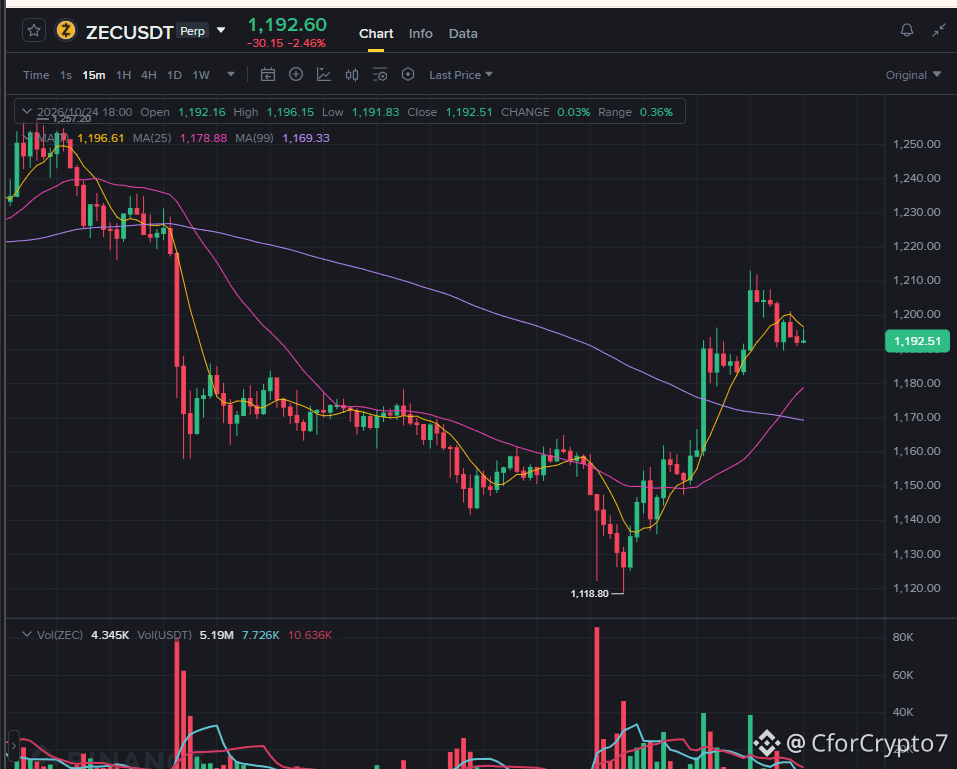
$ZEC LONG 🔥🚀
Entry: $1,188 – $1,195
TP1: $1,205
TP2: $1,215
TP3: $1,230
SL: $1,178
ZEC is recovering strongly from the $1,118 low and holding above the 25 and 99 moving averages on the chart.
Key resistance: $1,205–$1,210. A clean breakout could open the way toward higher targets.
$ZEC
{spot}(ZECUSDT)
{future}(ZECUSDT)
ps: for spot
$ZEC LONG 🔥🚀
Entry: $1,188 – $1,195
TP1: $1,205
TP2: $1,215
TP3: $1,230
SL: $1,178
ZEC is recovering strongly from the $1,118 low and holding above the 25 and 99 moving averages on the chart.
Key resistance: $1,205–$1,210. A clean breakout could open the way toward higher targets.
$ZEC
ps: for spot
Entry: $1,188 – $1,195
TP1: $1,205
TP2: $1,215
TP3: $1,230
SL: $1,178
ZEC is recovering strongly from the $1,118 low and holding above the 25 and 99 moving averages on the chart.
Key resistance: $1,205–$1,210. A clean breakout could open the way toward higher targets.
$ZEC
ps: for spot
373
·
--
🏦 WALL STREET IS MOVING DEEPER INTO BLOCKCHAIN
JPMorgan has launched its dollar-denominated JPM Coin deposit token on Ethereum for eligible institutional clients. The token is designed to support round-the-clock payments, collateral transfers and settlement.
Traditional finance and blockchain infrastructure are becoming increasingly connected.
$ETH
{future}(ETHUSDT)
{spot}(ETHUSDT)
#Ethereum #JPMorgan #Tokenization
🏦 WALL STREET IS MOVING DEEPER INTO BLOCKCHAIN
JPMorgan has launched its dollar-denominated JPM Coin deposit token on Ethereum for eligible institutional clients. The token is designed to support round-the-clock payments, collateral transfers and settlement.
Traditional finance and blockchain infrastructure are becoming increasingly connected.
$ETH
#Ethereum #JPMorgan #Tokenization
JPMorgan has launched its dollar-denominated JPM Coin deposit token on Ethereum for eligible institutional clients. The token is designed to support round-the-clock payments, collateral transfers and settlement.
Traditional finance and blockchain infrastructure are becoming increasingly connected.
$ETH
#Ethereum #JPMorgan #Tokenization

1
260
·
--
🎙️ The livestream is starting—let’s see who’s number one today.
End
01 h 12 m 23 s
2.3k
5
1
·
--
📢 BLACKROCK MAKES ANOTHER MOVE IN BITCOIN
BlackRock has filed for a proposed Bitcoin ETF that would use options to limit some downside risk.
The strategy could appeal to investors seeking regulated BTC exposure with a degree of protection but gains would also be capped, and losses aren't eliminated.
$BTC
{future}(BTCUSDT)
{spot}(BTCUSDT)
#blackRock #bitcoin #etf
📢 BLACKROCK MAKES ANOTHER MOVE IN BITCOIN
BlackRock has filed for a proposed Bitcoin ETF that would use options to limit some downside risk.
The strategy could appeal to investors seeking regulated BTC exposure with a degree of protection but gains would also be capped, and losses aren't eliminated.
$BTC
#blackRock #bitcoin #etf
BlackRock has filed for a proposed Bitcoin ETF that would use options to limit some downside risk.
The strategy could appeal to investors seeking regulated BTC exposure with a degree of protection but gains would also be capped, and losses aren't eliminated.
$BTC
#blackRock #bitcoin #etf
168
·
--
🚨 BITCOIN ETF SHOCK: $635.6 MILLION EXITS IN ONE DAY
U.S. spot Bitcoin ETFs recorded their largest single-day outflow since June on Thursday, reversing much of the previous three day inflow streak.
BTC remains under pressure near $80K. Is institutional demand weakening or is this another temporary shakeout?
$BTC
{spot}(BTCUSDT)
{future}(BTCUSDT)
#bitcoin #BTC #crypto #etf
🚨 BITCOIN ETF SHOCK: $635.6 MILLION EXITS IN ONE DAY
U.S. spot Bitcoin ETFs recorded their largest single-day outflow since June on Thursday, reversing much of the previous three day inflow streak.
BTC remains under pressure near $80K. Is institutional demand weakening or is this another temporary shakeout?
$BTC
#bitcoin #BTC #crypto #etf
U.S. spot Bitcoin ETFs recorded their largest single-day outflow since June on Thursday, reversing much of the previous three day inflow streak.
BTC remains under pressure near $80K. Is institutional demand weakening or is this another temporary shakeout?
$BTC
#bitcoin #BTC #crypto #etf

157
·
--
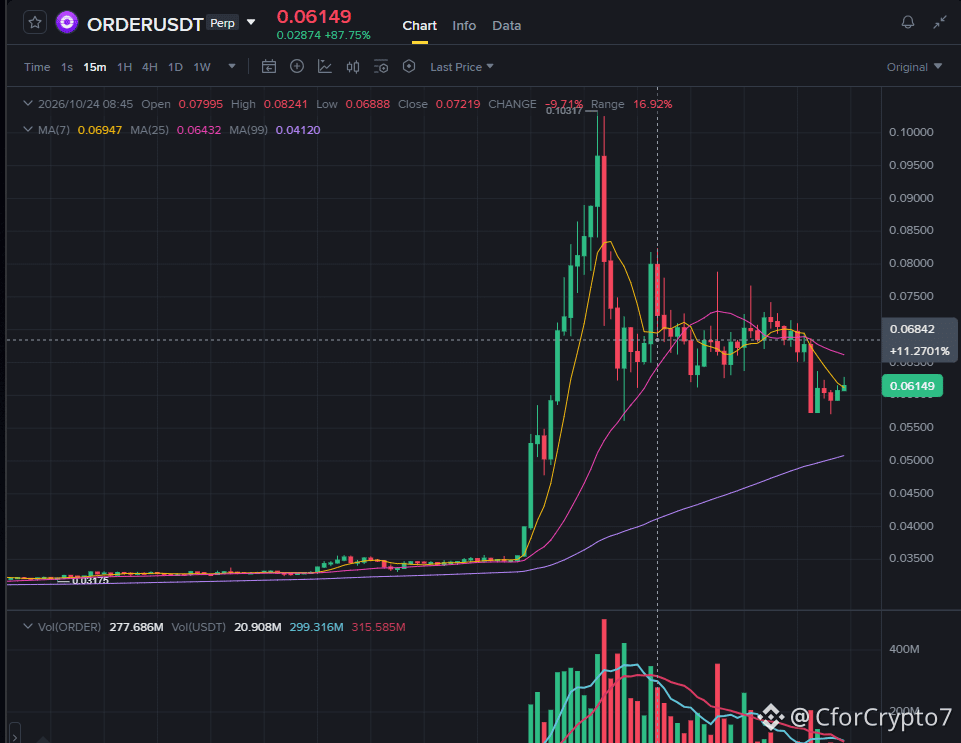
$ORDER LONG 🔥
Entry: $0.0605 – $0.0620
TP1: $0.0650
TP2: $0.0680
TP3: $0.0720
SL: $0.0575
ORDER is attempting a bounce after a massive pump and sharp correction.
Price is still below the short-term moving averages, so bullish continuation needs confirmation.
A reclaim of $0.0645–$0.0650 could open the way toward higher targets.
{alpha}(560x4e200fe2f3efb977d5fd9c430a41531fb04d97b8)
{future}(ORDERUSDT)
$ORDER LONG 🔥
Entry: $0.0605 – $0.0620
TP1: $0.0650
TP2: $0.0680
TP3: $0.0720
SL: $0.0575
ORDER is attempting a bounce after a massive pump and sharp correction.
Price is still below the short-term moving averages, so bullish continuation needs confirmation.
A reclaim of $0.0645–$0.0650 could open the way toward higher targets.
Entry: $0.0605 – $0.0620
TP1: $0.0650
TP2: $0.0680
TP3: $0.0720
SL: $0.0575
ORDER is attempting a bounce after a massive pump and sharp correction.
Price is still below the short-term moving averages, so bullish continuation needs confirmation.
A reclaim of $0.0645–$0.0650 could open the way toward higher targets.
366
·
--
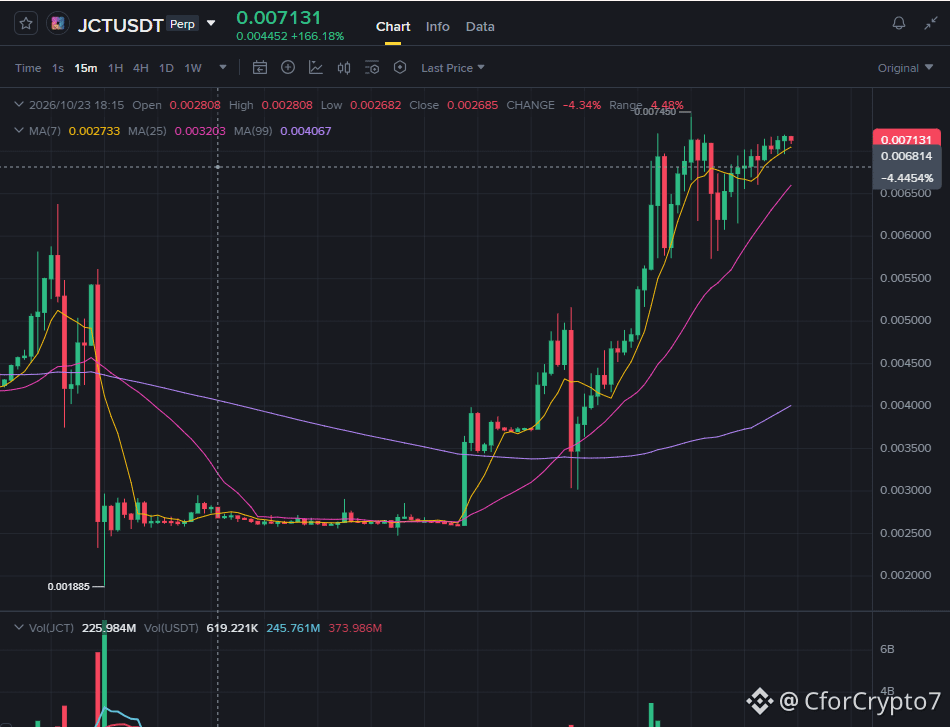
$JCT LONG 🚀🔥
Entry: $0.00685 – $0.00705
TP1: $0.00740
TP2: $0.00780
TP3: $0.00850
SL: $0.00650
JCT is showing strong bullish momentum on the 15M chart after a massive breakout.
Price is holding above the key moving averages, with buyers defending the recent consolidation.
Key resistance is $0.00745.
A clean breakout could open the way toward higher targets.
{alpha}(560xea37a8de1de2d9d10772eeb569e28bfa5cb17707)
{future}(JCTUSDT)
$JCT LONG 🚀🔥
Entry: $0.00685 – $0.00705
TP1: $0.00740
TP2: $0.00780
TP3: $0.00850
SL: $0.00650
JCT is showing strong bullish momentum on the 15M chart after a massive breakout.
Price is holding above the key moving averages, with buyers defending the recent consolidation.
Key resistance is $0.00745.
A clean breakout could open the way toward higher targets.
Entry: $0.00685 – $0.00705
TP1: $0.00740
TP2: $0.00780
TP3: $0.00850
SL: $0.00650
JCT is showing strong bullish momentum on the 15M chart after a massive breakout.
Price is holding above the key moving averages, with buyers defending the recent consolidation.
Key resistance is $0.00745.
A clean breakout could open the way toward higher targets.
1
783
Log in to explore more content
Join global crypto users on Binance Square
⚡️ Get latest and useful information about crypto.
💬 Trusted by the world’s largest crypto exchange.
👍 Discover real insights from verified creators.
Email / Phone number
Trending Topics
BinancePick
2.5M views
138,800 Discussing
Join #EarningsSeason: Predict Earnings on Binance Pick, Share Your Take on Binance Square!
Binance Square Official
·400 Likes
·337.4k views
EarningsSeason
5M views
24,021 Discussing
ElectrumWalletBugLetRogueServersStealFunds
3,254 views
168 Discussing