
Zarrar_X 1
735 Posts

Zarrar_X 1
Report
Block User
DeFi Researcher || Crypto Analyst || Web3 explorer || one chart at a time.
0 Following
60 Followers
117 Liked
Posts
·
--
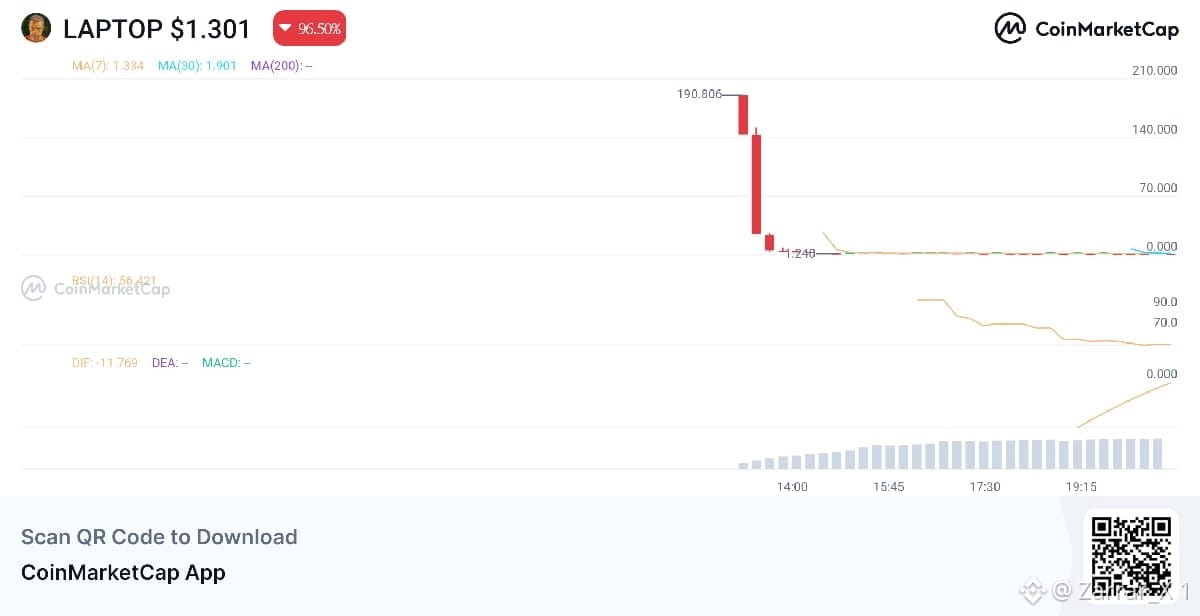
The brutal collapse of Hunter Biden's $LAPTOP memecoin, which cratered over 95% within 30 minutes of launch, left roughly 80% of participating retail wallets sitting on heavy net losses.
On-chain data reveals three distinct groups who dumped supply into late-chasing retail liquidity:
=> Free Claim / Insider Wallets: Freshly generated wallets claimed thousands of LAPTOP tokens for zero cost right before launch. Two specific unverified wallets immediately dumped 4,276 LAPTOP claims into the initial DEX liquidity pool, cashing out nearly $600,000 combined and triggering the initial price cascade.
=> Pre-Launch Market Makers & Allocation Recipient Nodes: Large token transfers (preceded by small test sends) moved millions in supply to designated liquidity providers and market makers ahead of public trading. As retail traders bid the fully diluted valuation (FDV) up past multi-billion-dollar highs against a paper-thin $48,000 liquidity pool, institutional liquidity providers and early recipients aggressively sold into the imbalance.
=> MEV Bots and Ultra-Fast Sniper Swarms: Automated snipers captured supply in the first two minutes post-launch. As FOMO buyers poured in, these bots executed front-run and sandwich trades, dumping their inventory back onto market orders before liquidity completely evaporated.
The classic structural setup a $100B+ paper market cap built on less than $50,000 in actual pooled liquidity ensured that early insider redemptions instantly wiped out retail buyers who bought near the peak.
$TRUMP #TRUMP #Macro Insights# #Meme Alpha#
The brutal collapse of Hunter Biden's $LAPTOP memecoin, which cratered over 95% within 30 minutes of launch, left roughly 80% of participating retail wallets sitting on heavy net losses.
On-chain data reveals three distinct groups who dumped supply into late-chasing retail liquidity:
=> Free Claim / Insider Wallets: Freshly generated wallets claimed thousands of LAPTOP tokens for zero cost right before launch. Two specific unverified wallets immediately dumped 4,276 LAPTOP claims into the initial DEX liquidity pool, cashing out nearly $600,000 combined and triggering the initial price cascade.
=> Pre-Launch Market Makers & Allocation Recipient Nodes: Large token transfers (preceded by small test sends) moved millions in supply to designated liquidity providers and market makers ahead of public trading. As retail traders bid the fully diluted valuation (FDV) up past multi-billion-dollar highs against a paper-thin $48,000 liquidity pool, institutional liquidity providers and early recipients aggressively sold into the imbalance.
=> MEV Bots and Ultra-Fast Sniper Swarms: Automated snipers captured supply in the first two minutes post-launch. As FOMO buyers poured in, these bots executed front-run and sandwich trades, dumping their inventory back onto market orders before liquidity completely evaporated.
The classic structural setup a $100B+ paper market cap built on less than $50,000 in actual pooled liquidity ensured that early insider redemptions instantly wiped out retail buyers who bought near the peak.
$TRUMP #TRUMP #Macro Insights# #Meme Alpha#
On-chain data reveals three distinct groups who dumped supply into late-chasing retail liquidity:
=> Free Claim / Insider Wallets: Freshly generated wallets claimed thousands of LAPTOP tokens for zero cost right before launch. Two specific unverified wallets immediately dumped 4,276 LAPTOP claims into the initial DEX liquidity pool, cashing out nearly $600,000 combined and triggering the initial price cascade.
=> Pre-Launch Market Makers & Allocation Recipient Nodes: Large token transfers (preceded by small test sends) moved millions in supply to designated liquidity providers and market makers ahead of public trading. As retail traders bid the fully diluted valuation (FDV) up past multi-billion-dollar highs against a paper-thin $48,000 liquidity pool, institutional liquidity providers and early recipients aggressively sold into the imbalance.
=> MEV Bots and Ultra-Fast Sniper Swarms: Automated snipers captured supply in the first two minutes post-launch. As FOMO buyers poured in, these bots executed front-run and sandwich trades, dumping their inventory back onto market orders before liquidity completely evaporated.
The classic structural setup a $100B+ paper market cap built on less than $50,000 in actual pooled liquidity ensured that early insider redemptions instantly wiped out retail buyers who bought near the peak.
$TRUMP #TRUMP #Macro Insights# #Meme Alpha#
·
--
How to Swap USDT From Ethereum to TON | The Complete Cross-Chain Guide.
Moving USDT from Ethereum to TON is a common task for new users. Here is how to do it safely and what happens under the hood.
First, USDT on Ethereum and TON are not the same asset. Both maintain a $1.00 peg, but they exist on separate networks. Sending ERC-20 USDT directly to a TON address will not work.
> What you need before starting
An EVM wallet holding USDT and ETH for gas (MetaMask, Rabby), plus a TON wallet (Tonkeeper, MyTonWallet, TON Space).
> The step-by-step
Head to STONfi and connect both wallets.
Set Ethereum USDT as source and TON USDT as destination. Enter your amount.
Review output, fees, address, and rate carefully. Cross-chain txs cannot be reversed, so double-check the address.
Approve spending in your EVM wallet, then confirm the deposit.
– How STONfi keeps your funds safe
STONfi uses Omniston and HTLC settlement. Funds lock in escrow on Ethereum while a resolver locks native USDT on TON under the same condition. Either both sides complete, or it fails and funds return. No wrapped tokens, custodians, or partial outcomes.
– Try Cross-Chain Swaps on STONfi : app.ston.fi
– Read the complete guide here : https://coinmarketcap.com/community/articles/6aa1b17b994e2c7cb80e9014/
$ZEC $LAPTOP #Macro Insights# #Altcoin Season# #Bullish
How to Swap USDT From Ethereum to TON | The Complete Cross-Chain Guide.
Moving USDT from Ethereum to TON is a common task for new users. Here is how to do it safely and what happens under the hood.
First, USDT on Ethereum and TON are not the same asset. Both maintain a $1.00 peg, but they exist on separate networks. Sending ERC-20 USDT directly to a TON address will not work.
> What you need before starting
An EVM wallet holding USDT and ETH for gas (MetaMask, Rabby), plus a TON wallet (Tonkeeper, MyTonWallet, TON Space).
> The step-by-step
Head to STONfi and connect both wallets.
Set Ethereum USDT as source and TON USDT as destination. Enter your amount.
Review output, fees, address, and rate carefully. Cross-chain txs cannot be reversed, so double-check the address.
Approve spending in your EVM wallet, then confirm the deposit.
– How STONfi keeps your funds safe
STONfi uses Omniston and HTLC settlement. Funds lock in escrow on Ethereum while a resolver locks native USDT on TON under the same condition. Either both sides complete, or it fails and funds return. No wrapped tokens, custodians, or partial outcomes.
– Try Cross-Chain Swaps on STONfi : app.ston.fi
– Read the complete guide here : https://coinmarketcap.com/community/articles/6aa1b17b994e2c7cb80e9014/
$ZEC $LAPTOP #Macro Insights# #Altcoin Season# #Bullish
Moving USDT from Ethereum to TON is a common task for new users. Here is how to do it safely and what happens under the hood.
First, USDT on Ethereum and TON are not the same asset. Both maintain a $1.00 peg, but they exist on separate networks. Sending ERC-20 USDT directly to a TON address will not work.
> What you need before starting
An EVM wallet holding USDT and ETH for gas (MetaMask, Rabby), plus a TON wallet (Tonkeeper, MyTonWallet, TON Space).
> The step-by-step
Head to STONfi and connect both wallets.
Set Ethereum USDT as source and TON USDT as destination. Enter your amount.
Review output, fees, address, and rate carefully. Cross-chain txs cannot be reversed, so double-check the address.
Approve spending in your EVM wallet, then confirm the deposit.
– How STONfi keeps your funds safe
STONfi uses Omniston and HTLC settlement. Funds lock in escrow on Ethereum while a resolver locks native USDT on TON under the same condition. Either both sides complete, or it fails and funds return. No wrapped tokens, custodians, or partial outcomes.
– Try Cross-Chain Swaps on STONfi : app.ston.fi
– Read the complete guide here : https://coinmarketcap.com/community/articles/6aa1b17b994e2c7cb80e9014/
$ZEC $LAPTOP #Macro Insights# #Altcoin Season# #Bullish
20
·
--
$XRP Outperforms Bitcoin, Ethereum and Solana in Latest U.S. ETF Flows.
XRP ETFs stood out in the latest U.S. crypto fund data, attracting $1.55 million in net inflows on September 8 while Bitcoin, Ethereum and Solana ETFs all recorded outflows.
Bitcoin ETFs saw roughly $46.65 million leave the funds, while Ethereum products recorded about $24.29 million in outflows. Solana ETFs also lost approximately $667,720, making XRP the only one of the four major crypto ETF groups to finish the session with positive flows.
The latest inflow adds to an already strong run for XRP investment products. U.S. spot XRP ETFs previously recorded an 11-session inflow streak, bringing around $170 million into the funds and pushing cumulative net inflows toward $1.68 billion by September 1.
Institutional interest is also becoming more visible, with filings showing exposure from major firms including Goldman Sachs, Jane Street and Millennium Management. Goldman’s reported XRP ETF holdings were estimated at around $87.4 million.
XRP itself has also been showing strength, trading around $1.43 on September 9, up roughly 2.7% over 24 hours and 7.4% over seven days at the time of the report.
The takeaway isn't that XRP has overtaken Bitcoin or Ethereum in institutional importance. Rather, its ETF demand is showing notable resilience even when broader crypto fund flows turn negative, making the trend worth watching.
#XRP #Ripple #Macro Insights#
$XRP Outperforms Bitcoin, Ethereum and Solana in Latest U.S. ETF Flows.
XRP ETFs stood out in the latest U.S. crypto fund data, attracting $1.55 million in net inflows on September 8 while Bitcoin, Ethereum and Solana ETFs all recorded outflows.
Bitcoin ETFs saw roughly $46.65 million leave the funds, while Ethereum products recorded about $24.29 million in outflows. Solana ETFs also lost approximately $667,720, making XRP the only one of the four major crypto ETF groups to finish the session with positive flows.
The latest inflow adds to an already strong run for XRP investment products. U.S. spot XRP ETFs previously recorded an 11-session inflow streak, bringing around $170 million into the funds and pushing cumulative net inflows toward $1.68 billion by September 1.
Institutional interest is also becoming more visible, with filings showing exposure from major firms including Goldman Sachs, Jane Street and Millennium Management. Goldman’s reported XRP ETF holdings were estimated at around $87.4 million.
XRP itself has also been showing strength, trading around $1.43 on September 9, up roughly 2.7% over 24 hours and 7.4% over seven days at the time of the report.
The takeaway isn't that XRP has overtaken Bitcoin or Ethereum in institutional importance. Rather, its ETF demand is showing notable resilience even when broader crypto fund flows turn negative, making the trend worth watching.
#XRP #Ripple #Macro Insights#
XRP ETFs stood out in the latest U.S. crypto fund data, attracting $1.55 million in net inflows on September 8 while Bitcoin, Ethereum and Solana ETFs all recorded outflows.
Bitcoin ETFs saw roughly $46.65 million leave the funds, while Ethereum products recorded about $24.29 million in outflows. Solana ETFs also lost approximately $667,720, making XRP the only one of the four major crypto ETF groups to finish the session with positive flows.
The latest inflow adds to an already strong run for XRP investment products. U.S. spot XRP ETFs previously recorded an 11-session inflow streak, bringing around $170 million into the funds and pushing cumulative net inflows toward $1.68 billion by September 1.
Institutional interest is also becoming more visible, with filings showing exposure from major firms including Goldman Sachs, Jane Street and Millennium Management. Goldman’s reported XRP ETF holdings were estimated at around $87.4 million.
XRP itself has also been showing strength, trading around $1.43 on September 9, up roughly 2.7% over 24 hours and 7.4% over seven days at the time of the report.
The takeaway isn't that XRP has overtaken Bitcoin or Ethereum in institutional importance. Rather, its ETF demand is showing notable resilience even when broader crypto fund flows turn negative, making the trend worth watching.
#XRP #Ripple #Macro Insights#
37
·
--
AI Boom Helps Push S&P 500 Earnings Higher as 86% Beat Estimates.
The AI boom is increasingly showing up in corporate earnings, with the S&P 500 delivering one of its strongest earnings seasons in years.
By the end of August, 86% of S&P 500 companies had reported earnings above analyst expectations, according to FactSet data. That is well above the five-year average of 78% and the 10-year average of 76%. Q2 earnings growth also reached its highest level since 2021.
Big Tech played a major role. Alphabet reported a $98 billion gain, while Amazon recorded $53.4 billion in non-operating income, largely linked to its Anthropic investment. However, the earnings strength isn't entirely dependent on those gains. Excluding Alphabet and Amazon, the aggregate earnings surprise was still positive, although much smaller.
Technology earnings have been particularly strong as companies continue pouring money into AI chips, cloud infrastructure and data centers. Nvidia's latest results have further reinforced the scale of demand across the AI supply chain.
Wall Street is responding with higher expectations. Barclays raised its 2026 S&P 500 target to 7,950 from 7,800 and lifted its 2026 EPS forecast to $365 from $337. Other major banks have also moved toward targets of 8,000 or higher.
The big question now is whether AI spending can keep producing enough revenue and profits to justify the enormous investment. For now, earnings suggest corporate America is turning the AI boom into real profits, but investors still need to watch valuations, inflation and the sustainability of AI capital spending.
$ZEC #Macro Insights# #Crypto
AI Boom Helps Push S&P 500 Earnings Higher as 86% Beat Estimates.
The AI boom is increasingly showing up in corporate earnings, with the S&P 500 delivering one of its strongest earnings seasons in years.
By the end of August, 86% of S&P 500 companies had reported earnings above analyst expectations, according to FactSet data. That is well above the five-year average of 78% and the 10-year average of 76%. Q2 earnings growth also reached its highest level since 2021.
Big Tech played a major role. Alphabet reported a $98 billion gain, while Amazon recorded $53.4 billion in non-operating income, largely linked to its Anthropic investment. However, the earnings strength isn't entirely dependent on those gains. Excluding Alphabet and Amazon, the aggregate earnings surprise was still positive, although much smaller.
Technology earnings have been particularly strong as companies continue pouring money into AI chips, cloud infrastructure and data centers. Nvidia's latest results have further reinforced the scale of demand across the AI supply chain.
Wall Street is responding with higher expectations. Barclays raised its 2026 S&P 500 target to 7,950 from 7,800 and lifted its 2026 EPS forecast to $365 from $337. Other major banks have also moved toward targets of 8,000 or higher.
The big question now is whether AI spending can keep producing enough revenue and profits to justify the enormous investment. For now, earnings suggest corporate America is turning the AI boom into real profits, but investors still need to watch valuations, inflation and the sustainability of AI capital spending.
$ZEC #Macro Insights# #Crypto
The AI boom is increasingly showing up in corporate earnings, with the S&P 500 delivering one of its strongest earnings seasons in years.
By the end of August, 86% of S&P 500 companies had reported earnings above analyst expectations, according to FactSet data. That is well above the five-year average of 78% and the 10-year average of 76%. Q2 earnings growth also reached its highest level since 2021.
Big Tech played a major role. Alphabet reported a $98 billion gain, while Amazon recorded $53.4 billion in non-operating income, largely linked to its Anthropic investment. However, the earnings strength isn't entirely dependent on those gains. Excluding Alphabet and Amazon, the aggregate earnings surprise was still positive, although much smaller.
Technology earnings have been particularly strong as companies continue pouring money into AI chips, cloud infrastructure and data centers. Nvidia's latest results have further reinforced the scale of demand across the AI supply chain.
Wall Street is responding with higher expectations. Barclays raised its 2026 S&P 500 target to 7,950 from 7,800 and lifted its 2026 EPS forecast to $365 from $337. Other major banks have also moved toward targets of 8,000 or higher.
The big question now is whether AI spending can keep producing enough revenue and profits to justify the enormous investment. For now, earnings suggest corporate America is turning the AI boom into real profits, but investors still need to watch valuations, inflation and the sustainability of AI capital spending.
$ZEC #Macro Insights# #Crypto
24
·
--
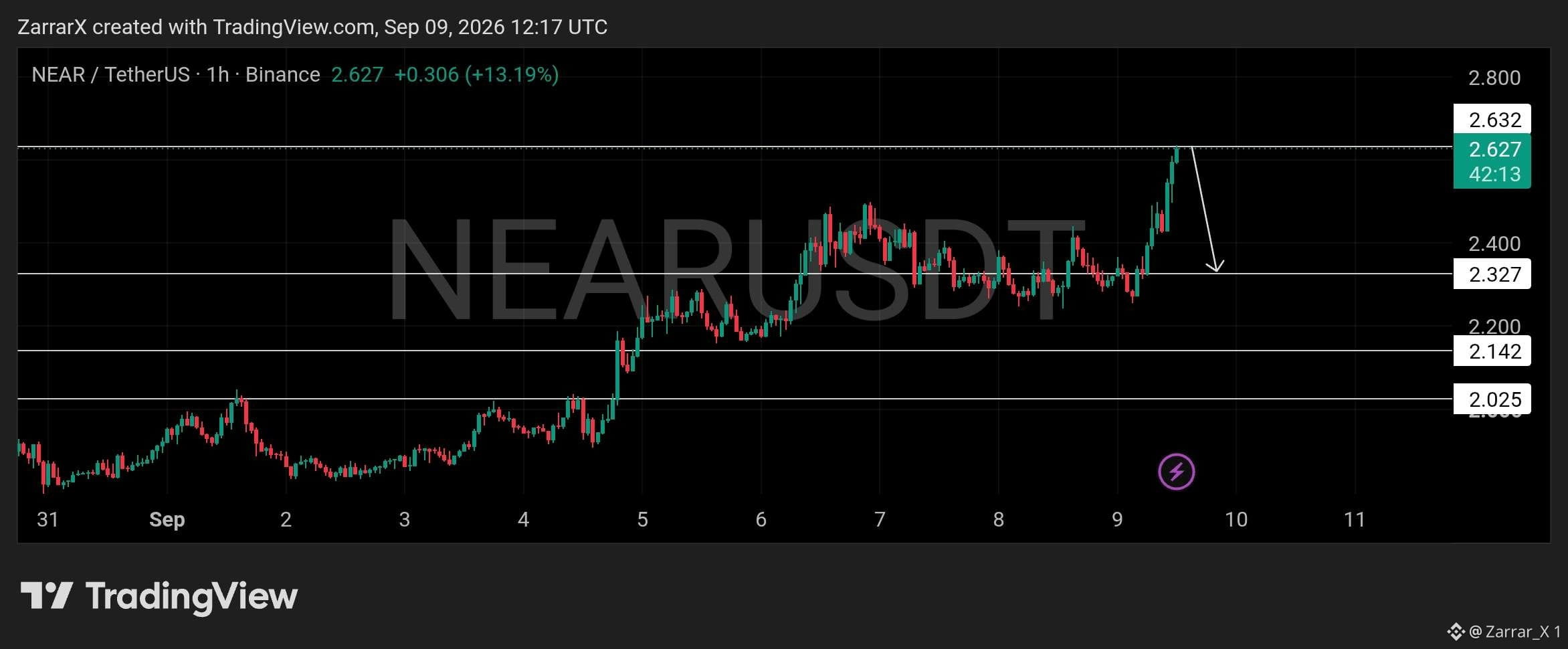
NEAR is showing strong bullish momentum on the 1H chart after breaking out of the previous consolidation range. Price is currently around $2.627 and testing the $2.63 area, which is acting as the immediate resistance.
A pullback toward the $2.327-$2.40 demand zone would give the move a healthier structure. If buyers defend this area, $NEAR could regain momentum and push toward $2.80, with $2.63 acting as the key level that needs to be reclaimed and held.
The technical roadmap remains bullish while price stays above $2.327. A clean break and hold above $2.63 could open the way toward $2.80, while losing $2.327 would increase the chance of a deeper retracement toward the $2.14-$2.03 support zone.
At the current price, chasing the move carries higher risk after such a strong 1H rally. Waiting for a pullback and confirmation around the demand zone offers a cleaner risk-to-reward setup.
#NEAR #Macro Insights# #Altcoin Season#
NEAR is showing strong bullish momentum on the 1H chart after breaking out of the previous consolidation range. Price is currently around $2.627 and testing the $2.63 area, which is acting as the immediate resistance.
A pullback toward the $2.327-$2.40 demand zone would give the move a healthier structure. If buyers defend this area, $NEAR could regain momentum and push toward $2.80, with $2.63 acting as the key level that needs to be reclaimed and held.
The technical roadmap remains bullish while price stays above $2.327. A clean break and hold above $2.63 could open the way toward $2.80, while losing $2.327 would increase the chance of a deeper retracement toward the $2.14-$2.03 support zone.
At the current price, chasing the move carries higher risk after such a strong 1H rally. Waiting for a pullback and confirmation around the demand zone offers a cleaner risk-to-reward setup.
#NEAR #Macro Insights# #Altcoin Season#
A pullback toward the $2.327-$2.40 demand zone would give the move a healthier structure. If buyers defend this area, $NEAR could regain momentum and push toward $2.80, with $2.63 acting as the key level that needs to be reclaimed and held.
The technical roadmap remains bullish while price stays above $2.327. A clean break and hold above $2.63 could open the way toward $2.80, while losing $2.327 would increase the chance of a deeper retracement toward the $2.14-$2.03 support zone.
At the current price, chasing the move carries higher risk after such a strong 1H rally. Waiting for a pullback and confirmation around the demand zone offers a cleaner risk-to-reward setup.
#NEAR #Macro Insights# #Altcoin Season#
33
·
--
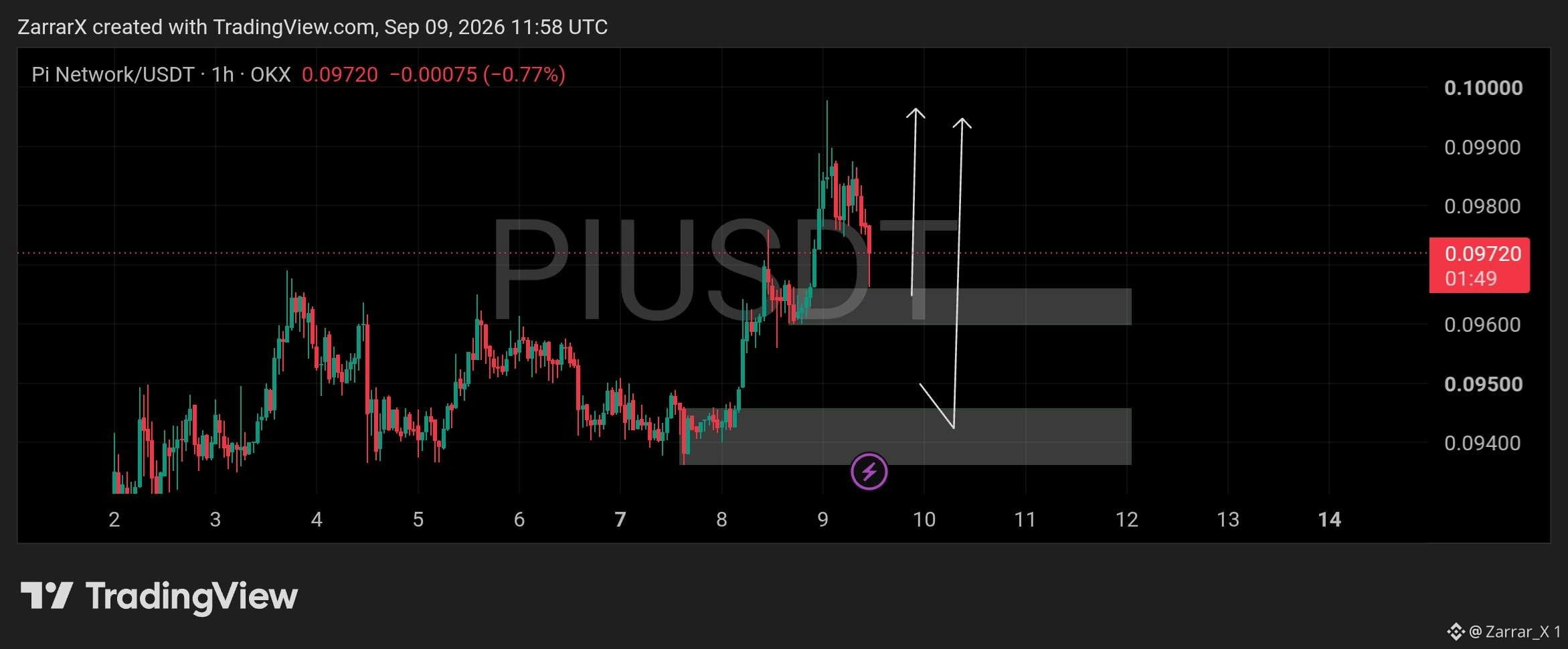
$PI is holding a bullish structure on the 1H chart after breaking above the previous consolidation around $0.0945. Price is currently near $0.0972, showing some rejection from the recent highs, so a pullback would not be surprising after the strong move.
The first demand zone sits around $0.0960 to $0.0967, which could act as the immediate area for buyers to defend. If this zone holds, $PI could regain momentum and push back toward the $0.0985 to $0.0995 region.
A deeper retracement could bring price toward the stronger $0.0936 to $0.0945 demand shelf. This area previously acted as a base before the breakout, making it an important level if the current pullback becomes more aggressive.
As long as price maintains these demand areas and continues forming higher lows, the short-term bias remains bullish. A successful reclaim of the recent highs could open the way toward $0.1000 and potentially $0.1000+, while losing $0.0936 would weaken the setup.
#PiNetwork #Altcoin Season#
$PI is holding a bullish structure on the 1H chart after breaking above the previous consolidation around $0.0945. Price is currently near $0.0972, showing some rejection from the recent highs, so a pullback would not be surprising after the strong move.
The first demand zone sits around $0.0960 to $0.0967, which could act as the immediate area for buyers to defend. If this zone holds, $PI could regain momentum and push back toward the $0.0985 to $0.0995 region.
A deeper retracement could bring price toward the stronger $0.0936 to $0.0945 demand shelf. This area previously acted as a base before the breakout, making it an important level if the current pullback becomes more aggressive.
As long as price maintains these demand areas and continues forming higher lows, the short-term bias remains bullish. A successful reclaim of the recent highs could open the way toward $0.1000 and potentially $0.1000+, while losing $0.0936 would weaken the setup.
#PiNetwork #Altcoin Season#
The first demand zone sits around $0.0960 to $0.0967, which could act as the immediate area for buyers to defend. If this zone holds, $PI could regain momentum and push back toward the $0.0985 to $0.0995 region.
A deeper retracement could bring price toward the stronger $0.0936 to $0.0945 demand shelf. This area previously acted as a base before the breakout, making it an important level if the current pullback becomes more aggressive.
As long as price maintains these demand areas and continues forming higher lows, the short-term bias remains bullish. A successful reclaim of the recent highs could open the way toward $0.1000 and potentially $0.1000+, while losing $0.0936 would weaken the setup.
#PiNetwork #Altcoin Season#
50
·
--
$ETH WEEKLY BREAKDOWN 📊 | PART 4.
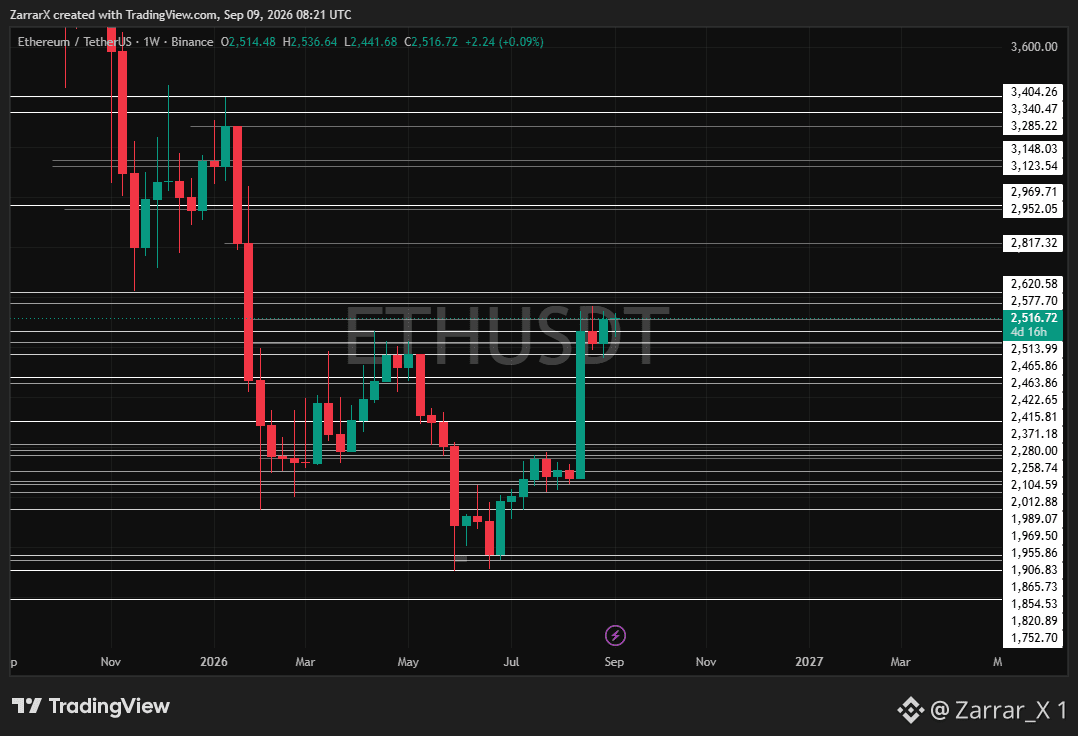
Moving down from the monthly timeframe, the weekly chart gives us a much clearer look at how ETH is reacting around the key levels we identified earlier.
ETH has shown a strong recovery from the $1,950-$2,100 area and pushed back above the $2,400 region. Right now, price is sitting around $2,500-$2,520, where the market is starting to face some resistance.
The main levels I'm watching above are around $2,577-$2,620, followed by $2,817, $2,950-$2,970, and then the bigger $3,123-$3,148 and $3,285-$3,404 zones. These levels could become important reaction areas if the current recovery continues.
On the downside, the $2,465-$2,420 area is worth watching closely. Below that, we have support around $2,280-$2,100, while the broader weekly structure remains supported as long as ETH continues holding the higher levels it has reclaimed.
What I like here is that the higher-timeframe levels are already giving us a roadmap. The chart may look messy with all these levels marked, but that's exactly why we zoom into the lower timeframes when looking for entries. The lower timeframe should help us see the price action more clearly around these key zones instead of blindly entering from the higher timeframe.
Weekly structure: Recovering, but approaching resistance.
Next, we'll zoom into the lower timeframe and see whether ETH gives us a clean buy setup around these key levels.
#ETH #Macro Insights# #Altcoin Season#
$ETH WEEKLY BREAKDOWN 📊 | PART 4.
Moving down from the monthly timeframe, the weekly chart gives us a much clearer look at how ETH is reacting around the key levels we identified earlier.
ETH has shown a strong recovery from the $1,950-$2,100 area and pushed back above the $2,400 region. Right now, price is sitting around $2,500-$2,520, where the market is starting to face some resistance.
The main levels I'm watching above are around $2,577-$2,620, followed by $2,817, $2,950-$2,970, and then the bigger $3,123-$3,148 and $3,285-$3,404 zones. These levels could become important reaction areas if the current recovery continues.
On the downside, the $2,465-$2,420 area is worth watching closely. Below that, we have support around $2,280-$2,100, while the broader weekly structure remains supported as long as ETH continues holding the higher levels it has reclaimed.
What I like here is that the higher-timeframe levels are already giving us a roadmap. The chart may look messy with all these levels marked, but that's exactly why we zoom into the lower timeframes when looking for entries. The lower timeframe should help us see the price action more clearly around these key zones instead of blindly entering from the higher timeframe.
Weekly structure: Recovering, but approaching resistance.
Next, we'll zoom into the lower timeframe and see whether ETH gives us a clean buy setup around these key levels.
#ETH #Macro Insights# #Altcoin Season#
Moving down from the monthly timeframe, the weekly chart gives us a much clearer look at how ETH is reacting around the key levels we identified earlier.
ETH has shown a strong recovery from the $1,950-$2,100 area and pushed back above the $2,400 region. Right now, price is sitting around $2,500-$2,520, where the market is starting to face some resistance.
The main levels I'm watching above are around $2,577-$2,620, followed by $2,817, $2,950-$2,970, and then the bigger $3,123-$3,148 and $3,285-$3,404 zones. These levels could become important reaction areas if the current recovery continues.
On the downside, the $2,465-$2,420 area is worth watching closely. Below that, we have support around $2,280-$2,100, while the broader weekly structure remains supported as long as ETH continues holding the higher levels it has reclaimed.
What I like here is that the higher-timeframe levels are already giving us a roadmap. The chart may look messy with all these levels marked, but that's exactly why we zoom into the lower timeframes when looking for entries. The lower timeframe should help us see the price action more clearly around these key zones instead of blindly entering from the higher timeframe.
Weekly structure: Recovering, but approaching resistance.
Next, we'll zoom into the lower timeframe and see whether ETH gives us a clean buy setup around these key levels.
#ETH #Macro Insights# #Altcoin Season#
49
·
--
Stoncat Is Now a Mintable NFT Companion | Powered by GEMSTON
You already know Stoncat from the visuals, stickers, and memes. Now you can mint your own version, a unique, evolving NFT companion that grows with you.
Give your Stoncat a personality. Feed it GEMSTON, roll Purrks to unlock visual traits, and dress it up to change its appearance. The rarer the Purrks you equip, the rarer your cat becomes, and the higher it climbs on the rarity leaderboard.
Here is how to get started:
> Mint a base Stoncat
> Feed it GEMSTON
> Roll Purrks — visual traits you can equip
> Dress up your Stoncat and watch it evolve
Each choice makes your companion more unique, unlocks rarer traits as its stage rises, and moves it up the leaderboard. Make it look like you, your favorite character, or something entirely unexpected.
Open the Stoncat website, connect your wallet, and your companion is ready to evolve.
– Mint Your Stoncat and Start Playing : https://stoncat.com/
$BTC $VVV #BTC Price Analysis# #Macro Insights# #Crypto
Stoncat Is Now a Mintable NFT Companion | Powered by GEMSTON
You already know Stoncat from the visuals, stickers, and memes. Now you can mint your own version, a unique, evolving NFT companion that grows with you.
Give your Stoncat a personality. Feed it GEMSTON, roll Purrks to unlock visual traits, and dress it up to change its appearance. The rarer the Purrks you equip, the rarer your cat becomes, and the higher it climbs on the rarity leaderboard.
Here is how to get started:
> Mint a base Stoncat
> Feed it GEMSTON
> Roll Purrks — visual traits you can equip
> Dress up your Stoncat and watch it evolve
Each choice makes your companion more unique, unlocks rarer traits as its stage rises, and moves it up the leaderboard. Make it look like you, your favorite character, or something entirely unexpected.
Open the Stoncat website, connect your wallet, and your companion is ready to evolve.
– Mint Your Stoncat and Start Playing : https://stoncat.com/
$BTC $VVV #BTC Price Analysis# #Macro Insights# #Crypto
You already know Stoncat from the visuals, stickers, and memes. Now you can mint your own version, a unique, evolving NFT companion that grows with you.
Give your Stoncat a personality. Feed it GEMSTON, roll Purrks to unlock visual traits, and dress it up to change its appearance. The rarer the Purrks you equip, the rarer your cat becomes, and the higher it climbs on the rarity leaderboard.
Here is how to get started:
> Mint a base Stoncat
> Feed it GEMSTON
> Roll Purrks — visual traits you can equip
> Dress up your Stoncat and watch it evolve
Each choice makes your companion more unique, unlocks rarer traits as its stage rises, and moves it up the leaderboard. Make it look like you, your favorite character, or something entirely unexpected.
Open the Stoncat website, connect your wallet, and your companion is ready to evolve.
– Mint Your Stoncat and Start Playing : https://stoncat.com/
$BTC $VVV #BTC Price Analysis# #Macro Insights# #Crypto

7
·
--
Solana’s RWA Adoption Crosses 400,000 Holders. Bullish?
Solana’s real-world asset (RWA) ecosystem has just crossed a major milestone, with the number of RWA holders on the network surpassing 400,000 for the first time.
According to data cited from RWA.xyz, Solana had fewer than 10,000 RWA holders in January 2025. Its distributed RWA value has also grown sharply, rising from around $1.4 billion in January 2026 to more than $4.2 billion by early September.
The network is also seeing strong capital inflows. Solana reportedly recorded around $348 million in net RWA inflows over the past 30 days, the highest among tracked networks. That translated to roughly 11.13% growth in distributed RWA value, compared with just 0.77% for Ethereum, while XRP Ledger and Avalanche recorded outflows.
Ethereum still leads in total RWA value with more than $15 billion, but Solana’s advantage appears to be the number of individual holders and the pace of recent growth.
As for $SOL , the adoption numbers are encouraging, but they don't guarantee an immediate price breakout. SOL has been trading around the $100 to $107 range recently, showing that price action has yet to fully reflect the strength of the RWA growth.
If Solana continues attracting capital and users into RWAs through Q4, that growing on-chain adoption could become a stronger catalyst for SOL over time.
#SOL #Macro Insights# #Crypto
Solana’s RWA Adoption Crosses 400,000 Holders. Bullish?
Solana’s real-world asset (RWA) ecosystem has just crossed a major milestone, with the number of RWA holders on the network surpassing 400,000 for the first time.
According to data cited from RWA.xyz, Solana had fewer than 10,000 RWA holders in January 2025. Its distributed RWA value has also grown sharply, rising from around $1.4 billion in January 2026 to more than $4.2 billion by early September.
The network is also seeing strong capital inflows. Solana reportedly recorded around $348 million in net RWA inflows over the past 30 days, the highest among tracked networks. That translated to roughly 11.13% growth in distributed RWA value, compared with just 0.77% for Ethereum, while XRP Ledger and Avalanche recorded outflows.
Ethereum still leads in total RWA value with more than $15 billion, but Solana’s advantage appears to be the number of individual holders and the pace of recent growth.
As for $SOL , the adoption numbers are encouraging, but they don't guarantee an immediate price breakout. SOL has been trading around the $100 to $107 range recently, showing that price action has yet to fully reflect the strength of the RWA growth.
If Solana continues attracting capital and users into RWAs through Q4, that growing on-chain adoption could become a stronger catalyst for SOL over time.
#SOL #Macro Insights# #Crypto
Solana’s real-world asset (RWA) ecosystem has just crossed a major milestone, with the number of RWA holders on the network surpassing 400,000 for the first time.
According to data cited from RWA.xyz, Solana had fewer than 10,000 RWA holders in January 2025. Its distributed RWA value has also grown sharply, rising from around $1.4 billion in January 2026 to more than $4.2 billion by early September.
The network is also seeing strong capital inflows. Solana reportedly recorded around $348 million in net RWA inflows over the past 30 days, the highest among tracked networks. That translated to roughly 11.13% growth in distributed RWA value, compared with just 0.77% for Ethereum, while XRP Ledger and Avalanche recorded outflows.
Ethereum still leads in total RWA value with more than $15 billion, but Solana’s advantage appears to be the number of individual holders and the pace of recent growth.
As for $SOL , the adoption numbers are encouraging, but they don't guarantee an immediate price breakout. SOL has been trading around the $100 to $107 range recently, showing that price action has yet to fully reflect the strength of the RWA growth.
If Solana continues attracting capital and users into RWAs through Q4, that growing on-chain adoption could become a stronger catalyst for SOL over time.
#SOL #Macro Insights# #Crypto
·
--
Uniswap: The DEX Powering a Major Part of DeFi.
Uniswap remains one of the biggest decentralized exchanges in crypto, allowing users to swap tokens directly through liquidity pools without relying on a traditional order book or centralized intermediary.
The protocol, launched by Hayden Adams in 2018, has evolved from Uniswap v2 to v3 and v4, with v4 introducing customizable “hooks” that can support features such as dynamic fees and other programmable trading logic. Uniswap is now deployed across dozens of networks, including Ethereum, Arbitrum, Base, Polygon, BNB Chain and Unichain.
One of the biggest changes for $UNI came with the UNIfication proposal. Protocol fees are now being collected on supported pools, with the resulting value used through a mechanism that burns UNI. Uniswap’s current documentation confirms protocol fees are active across v2 and selected v3 pools, while further expansion remains subject to governance.
Security remains an important consideration for users. While Uniswap’s core contracts have undergone extensive testing, users can still face risks from fake tokens, malicious approval contracts, phishing sites and impermanent loss when providing liquidity.
For traders, costs depend on the pool and network being used. Ethereum can carry higher gas costs, while layer-2 networks can offer significantly cheaper transactions.
Uniswap’s continued expansion, its fee-and-burn model, and the development of v4 make it one of the most important protocols to watch across the DeFi ecosystem.
Source: Uniswap Developers
#UNI #Uniswap #Macro Insights#
Uniswap: The DEX Powering a Major Part of DeFi.
Uniswap remains one of the biggest decentralized exchanges in crypto, allowing users to swap tokens directly through liquidity pools without relying on a traditional order book or centralized intermediary.
The protocol, launched by Hayden Adams in 2018, has evolved from Uniswap v2 to v3 and v4, with v4 introducing customizable “hooks” that can support features such as dynamic fees and other programmable trading logic. Uniswap is now deployed across dozens of networks, including Ethereum, Arbitrum, Base, Polygon, BNB Chain and Unichain.
One of the biggest changes for $UNI came with the UNIfication proposal. Protocol fees are now being collected on supported pools, with the resulting value used through a mechanism that burns UNI. Uniswap’s current documentation confirms protocol fees are active across v2 and selected v3 pools, while further expansion remains subject to governance.
Security remains an important consideration for users. While Uniswap’s core contracts have undergone extensive testing, users can still face risks from fake tokens, malicious approval contracts, phishing sites and impermanent loss when providing liquidity.
For traders, costs depend on the pool and network being used. Ethereum can carry higher gas costs, while layer-2 networks can offer significantly cheaper transactions.
Uniswap’s continued expansion, its fee-and-burn model, and the development of v4 make it one of the most important protocols to watch across the DeFi ecosystem.
Source: Uniswap Developers
#UNI #Uniswap #Macro Insights#
Uniswap remains one of the biggest decentralized exchanges in crypto, allowing users to swap tokens directly through liquidity pools without relying on a traditional order book or centralized intermediary.
The protocol, launched by Hayden Adams in 2018, has evolved from Uniswap v2 to v3 and v4, with v4 introducing customizable “hooks” that can support features such as dynamic fees and other programmable trading logic. Uniswap is now deployed across dozens of networks, including Ethereum, Arbitrum, Base, Polygon, BNB Chain and Unichain.
One of the biggest changes for $UNI came with the UNIfication proposal. Protocol fees are now being collected on supported pools, with the resulting value used through a mechanism that burns UNI. Uniswap’s current documentation confirms protocol fees are active across v2 and selected v3 pools, while further expansion remains subject to governance.
Security remains an important consideration for users. While Uniswap’s core contracts have undergone extensive testing, users can still face risks from fake tokens, malicious approval contracts, phishing sites and impermanent loss when providing liquidity.
For traders, costs depend on the pool and network being used. Ethereum can carry higher gas costs, while layer-2 networks can offer significantly cheaper transactions.
Uniswap’s continued expansion, its fee-and-burn model, and the development of v4 make it one of the most important protocols to watch across the DeFi ecosystem.
Source: Uniswap Developers
#UNI #Uniswap #Macro Insights#
21
·
--
Ethereum Could Let Users Pay Gas Without Holding $ETH.
Ethereum developers are moving forward with a proposal that could make one of the network’s biggest user-experience hurdles much easier: paying gas fees without actually holding ETH.
EIP-8141, known as Frame Transactions, has been scheduled for inclusion in Ethereum’s planned Hegotá upgrade for 2027. The proposal would allow another account, such as a wallet or payments app, to cover a user’s gas fee in ETH while the user pays in stablecoins or another asset.
That means someone could hold hundreds of dollars in USDC or other tokens but have zero ETH and still be able to make a transaction. Ethereum would continue receiving gas fees in ETH, but users would no longer need to purchase ETH just to move their assets.
Frames could also bundle multiple actions into a single transaction. For example, a token approval and swap could happen together, while failed transactions could automatically revoke the approval. The system could also make account recovery easier by allowing users to change the key controlling an account, including switching to quantum-resistant keys.
The proposal is still a draft and cannot be used today. Its specifications may change before Hegotá launches, but Ethereum co-founder Vitalik Buterin says significant progress has been made on Frames in recent months.
$PI #Pi #ETH #Macro Insights#
Ethereum Could Let Users Pay Gas Without Holding $ETH.
Ethereum developers are moving forward with a proposal that could make one of the network’s biggest user-experience hurdles much easier: paying gas fees without actually holding ETH.
EIP-8141, known as Frame Transactions, has been scheduled for inclusion in Ethereum’s planned Hegotá upgrade for 2027. The proposal would allow another account, such as a wallet or payments app, to cover a user’s gas fee in ETH while the user pays in stablecoins or another asset.
That means someone could hold hundreds of dollars in USDC or other tokens but have zero ETH and still be able to make a transaction. Ethereum would continue receiving gas fees in ETH, but users would no longer need to purchase ETH just to move their assets.
Frames could also bundle multiple actions into a single transaction. For example, a token approval and swap could happen together, while failed transactions could automatically revoke the approval. The system could also make account recovery easier by allowing users to change the key controlling an account, including switching to quantum-resistant keys.
The proposal is still a draft and cannot be used today. Its specifications may change before Hegotá launches, but Ethereum co-founder Vitalik Buterin says significant progress has been made on Frames in recent months.
$PI #Pi #ETH #Macro Insights#
Ethereum developers are moving forward with a proposal that could make one of the network’s biggest user-experience hurdles much easier: paying gas fees without actually holding ETH.
EIP-8141, known as Frame Transactions, has been scheduled for inclusion in Ethereum’s planned Hegotá upgrade for 2027. The proposal would allow another account, such as a wallet or payments app, to cover a user’s gas fee in ETH while the user pays in stablecoins or another asset.
That means someone could hold hundreds of dollars in USDC or other tokens but have zero ETH and still be able to make a transaction. Ethereum would continue receiving gas fees in ETH, but users would no longer need to purchase ETH just to move their assets.
Frames could also bundle multiple actions into a single transaction. For example, a token approval and swap could happen together, while failed transactions could automatically revoke the approval. The system could also make account recovery easier by allowing users to change the key controlling an account, including switching to quantum-resistant keys.
The proposal is still a draft and cannot be used today. Its specifications may change before Hegotá launches, but Ethereum co-founder Vitalik Buterin says significant progress has been made on Frames in recent months.
$PI #Pi #ETH #Macro Insights#
21
·
--
How to Create a Token on TON | Everything You Need to Know Before You Deploy.
Creating a jetton on TON is more accessible than most people think. But accessible does not mean consequence-free.
Before touching a single form field, understand the risks. Tokens can be considered taxable assets or securities in many jurisdictions. Using brand names or logos you do not own opens you up to trademark claims. Retaining admin rights after deployment signals centralization and erodes trust. And making any promise about returns is a fast track to regulatory problems. Build for utility, not speculation.
- The step-by-step process
Start with a TON-compatible wallet — Tonkeeper, MyTonWallet, or Wallet in Telegram all work. Head to minter.ton.org, fill in your token name, symbol, decimals, total supply, and logo. Double-check everything before deploying — some fields cannot be changed after the fact.
Connect your wallet → confirm the gas fee → deploy. Confirmation usually takes seconds. After that, verify your contract on Tonviewer by searching the address or checking the Jettons tab.
- Two things worth doing after deployment
Verify your contract on Tonviewer. Then seriously consider revoking admin rights, once revoked, nobody can mint new tokens or change core parameters. It is one of the strongest trust signals a token creator can send.
- What comes next
Once live, create a liquidity pool on STONfi That is what turns a contract sitting on-chain into an asset people can actually swap, farm, and use across TON DeFi.
Educational purposes only. Consult legal and tax professionals before launching any token.
– Read the Full Guide : https://blog.ston.fi/how-to-create-a-token-on-ton-jetton-a-step-by-step-guide/
$BTC $ETH #Macro Insights# #TON #BTC Price Analysis#
How to Create a Token on TON | Everything You Need to Know Before You Deploy.
Creating a jetton on TON is more accessible than most people think. But accessible does not mean consequence-free.
Before touching a single form field, understand the risks. Tokens can be considered taxable assets or securities in many jurisdictions. Using brand names or logos you do not own opens you up to trademark claims. Retaining admin rights after deployment signals centralization and erodes trust. And making any promise about returns is a fast track to regulatory problems. Build for utility, not speculation.
- The step-by-step process
Start with a TON-compatible wallet — Tonkeeper, MyTonWallet, or Wallet in Telegram all work. Head to minter.ton.org, fill in your token name, symbol, decimals, total supply, and logo. Double-check everything before deploying — some fields cannot be changed after the fact.
Connect your wallet → confirm the gas fee → deploy. Confirmation usually takes seconds. After that, verify your contract on Tonviewer by searching the address or checking the Jettons tab.
- Two things worth doing after deployment
Verify your contract on Tonviewer. Then seriously consider revoking admin rights, once revoked, nobody can mint new tokens or change core parameters. It is one of the strongest trust signals a token creator can send.
- What comes next
Once live, create a liquidity pool on STONfi That is what turns a contract sitting on-chain into an asset people can actually swap, farm, and use across TON DeFi.
Educational purposes only. Consult legal and tax professionals before launching any token.
– Read the Full Guide : https://blog.ston.fi/how-to-create-a-token-on-ton-jetton-a-step-by-step-guide/
$BTC $ETH #Macro Insights# #TON #BTC Price Analysis#
Creating a jetton on TON is more accessible than most people think. But accessible does not mean consequence-free.
Before touching a single form field, understand the risks. Tokens can be considered taxable assets or securities in many jurisdictions. Using brand names or logos you do not own opens you up to trademark claims. Retaining admin rights after deployment signals centralization and erodes trust. And making any promise about returns is a fast track to regulatory problems. Build for utility, not speculation.
- The step-by-step process
Start with a TON-compatible wallet — Tonkeeper, MyTonWallet, or Wallet in Telegram all work. Head to minter.ton.org, fill in your token name, symbol, decimals, total supply, and logo. Double-check everything before deploying — some fields cannot be changed after the fact.
Connect your wallet → confirm the gas fee → deploy. Confirmation usually takes seconds. After that, verify your contract on Tonviewer by searching the address or checking the Jettons tab.
- Two things worth doing after deployment
Verify your contract on Tonviewer. Then seriously consider revoking admin rights, once revoked, nobody can mint new tokens or change core parameters. It is one of the strongest trust signals a token creator can send.
- What comes next
Once live, create a liquidity pool on STONfi That is what turns a contract sitting on-chain into an asset people can actually swap, farm, and use across TON DeFi.
Educational purposes only. Consult legal and tax professionals before launching any token.
– Read the Full Guide : https://blog.ston.fi/how-to-create-a-token-on-ton-jetton-a-step-by-step-guide/
$BTC $ETH #Macro Insights# #TON #BTC Price Analysis#

28
·
--
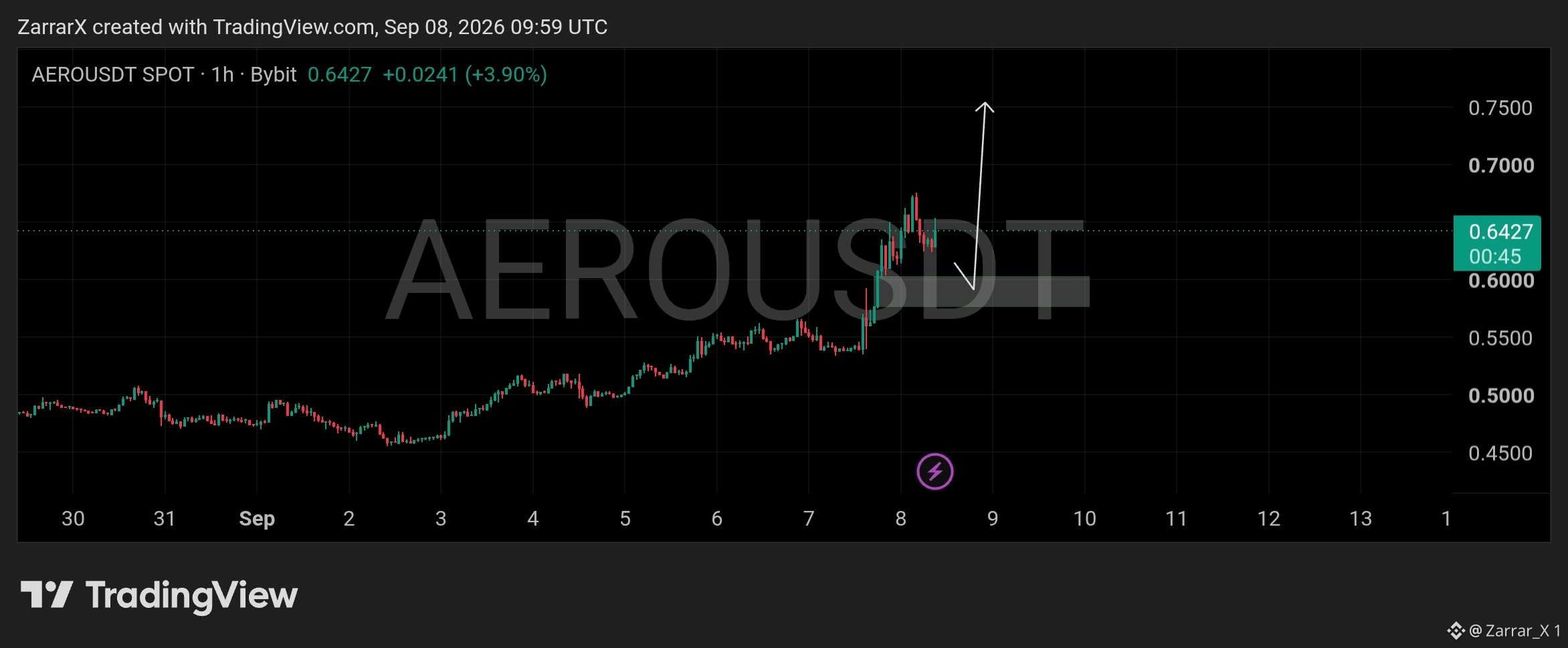
AERO is holding a strong bullish structure on the 1H chart after breaking above the previous range. Price is currently around $0.642, but the recent push has been aggressive, so a pullback would offer a cleaner setup.
The main demand zone sits around $0.57-$0.60, where buyers could step in if price retraces. Holding this area would keep the current bullish structure intact.
If the zone holds and momentum returns, $AERO could continue toward $0.70 first, with $0.75 as the next upside target. A clean reclaim above the recent high would strengthen this move.
The key risk is a loss of $0.57, which could signal a deeper correction. For now, the better approach is to watch the demand zone rather than chase the move at current levels.
#AERO #Altcoin Season#
AERO is holding a strong bullish structure on the 1H chart after breaking above the previous range. Price is currently around $0.642, but the recent push has been aggressive, so a pullback would offer a cleaner setup.
The main demand zone sits around $0.57-$0.60, where buyers could step in if price retraces. Holding this area would keep the current bullish structure intact.
If the zone holds and momentum returns, $AERO could continue toward $0.70 first, with $0.75 as the next upside target. A clean reclaim above the recent high would strengthen this move.
The key risk is a loss of $0.57, which could signal a deeper correction. For now, the better approach is to watch the demand zone rather than chase the move at current levels.
#AERO #Altcoin Season#
The main demand zone sits around $0.57-$0.60, where buyers could step in if price retraces. Holding this area would keep the current bullish structure intact.
If the zone holds and momentum returns, $AERO could continue toward $0.70 first, with $0.75 as the next upside target. A clean reclaim above the recent high would strengthen this move.
The key risk is a loss of $0.57, which could signal a deeper correction. For now, the better approach is to watch the demand zone rather than chase the move at current levels.
#AERO #Altcoin Season#
37
·
--
$ETH MONTHLY BREAKDOWN | PART 3.
Continuing the ETH top-down price action series.
After looking at the yearly and quarterly timeframes, we're now moving down to the Monthly timeframe to see how the bigger structure is playing out.
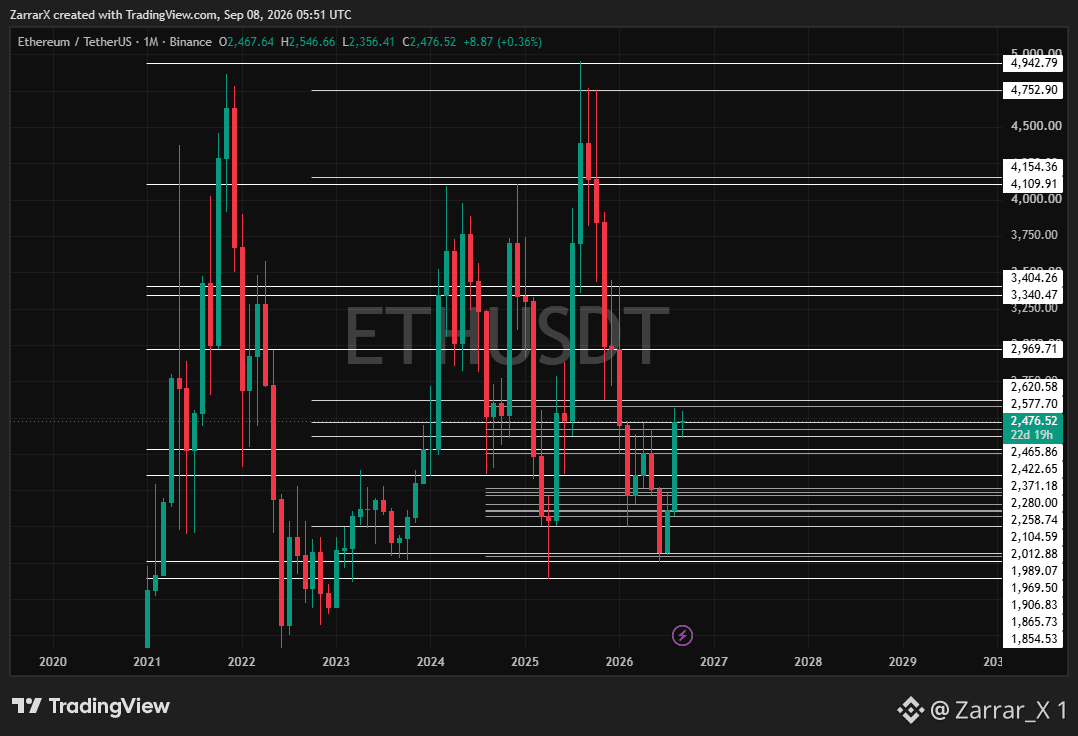
ETH has been in a strong recovery from the lower $2K area, but the monthly chart shows that price is now approaching an important resistance cluster around $2,580-$2,620. This is the first major area I’m watching closely because a clean break and hold above it could open the door for a move toward the next levels.
Above that, the major resistance areas sit around $2,970, followed by $3,340-$3,404. If ETH manages to reclaim these levels, the monthly structure would start looking considerably stronger, with $4,110-$4,154 and eventually the $4,750-$4,940 region becoming the bigger upside targets.
On the downside, the $2,280-$2,420 region remains important support. If that area fails, ETH could potentially revisit the $2,100-$2,000 zone before attempting another recovery.
For now, the monthly picture is showing a recovery within a larger structure, but #ETH still has several key resistance levels to reclaim before we can call this a confirmed higher-timeframe bullish continuation.
Yearly: Bearish structure
Quarterly: Recovery attempt
Monthly: Recovering, but facing resistance
Next, we zoom further down and see what the Weekly timeframe tells us.
Big picture first. Entries later.
#Macro Insights# #Altcoin Season#
$ETH MONTHLY BREAKDOWN | PART 3.
Continuing the ETH top-down price action series.
After looking at the yearly and quarterly timeframes, we're now moving down to the Monthly timeframe to see how the bigger structure is playing out.
ETH has been in a strong recovery from the lower $2K area, but the monthly chart shows that price is now approaching an important resistance cluster around $2,580-$2,620. This is the first major area I’m watching closely because a clean break and hold above it could open the door for a move toward the next levels.
Above that, the major resistance areas sit around $2,970, followed by $3,340-$3,404. If ETH manages to reclaim these levels, the monthly structure would start looking considerably stronger, with $4,110-$4,154 and eventually the $4,750-$4,940 region becoming the bigger upside targets.
On the downside, the $2,280-$2,420 region remains important support. If that area fails, ETH could potentially revisit the $2,100-$2,000 zone before attempting another recovery.
For now, the monthly picture is showing a recovery within a larger structure, but #ETH still has several key resistance levels to reclaim before we can call this a confirmed higher-timeframe bullish continuation.
Yearly: Bearish structure
Quarterly: Recovery attempt
Monthly: Recovering, but facing resistance
Next, we zoom further down and see what the Weekly timeframe tells us.
Big picture first. Entries later.
#Macro Insights# #Altcoin Season#
Continuing the ETH top-down price action series.
After looking at the yearly and quarterly timeframes, we're now moving down to the Monthly timeframe to see how the bigger structure is playing out.
ETH has been in a strong recovery from the lower $2K area, but the monthly chart shows that price is now approaching an important resistance cluster around $2,580-$2,620. This is the first major area I’m watching closely because a clean break and hold above it could open the door for a move toward the next levels.
Above that, the major resistance areas sit around $2,970, followed by $3,340-$3,404. If ETH manages to reclaim these levels, the monthly structure would start looking considerably stronger, with $4,110-$4,154 and eventually the $4,750-$4,940 region becoming the bigger upside targets.
On the downside, the $2,280-$2,420 region remains important support. If that area fails, ETH could potentially revisit the $2,100-$2,000 zone before attempting another recovery.
For now, the monthly picture is showing a recovery within a larger structure, but #ETH still has several key resistance levels to reclaim before we can call this a confirmed higher-timeframe bullish continuation.
Yearly: Bearish structure
Quarterly: Recovery attempt
Monthly: Recovering, but facing resistance
Next, we zoom further down and see what the Weekly timeframe tells us.
Big picture first. Entries later.
#Macro Insights# #Altcoin Season#
40
·
--
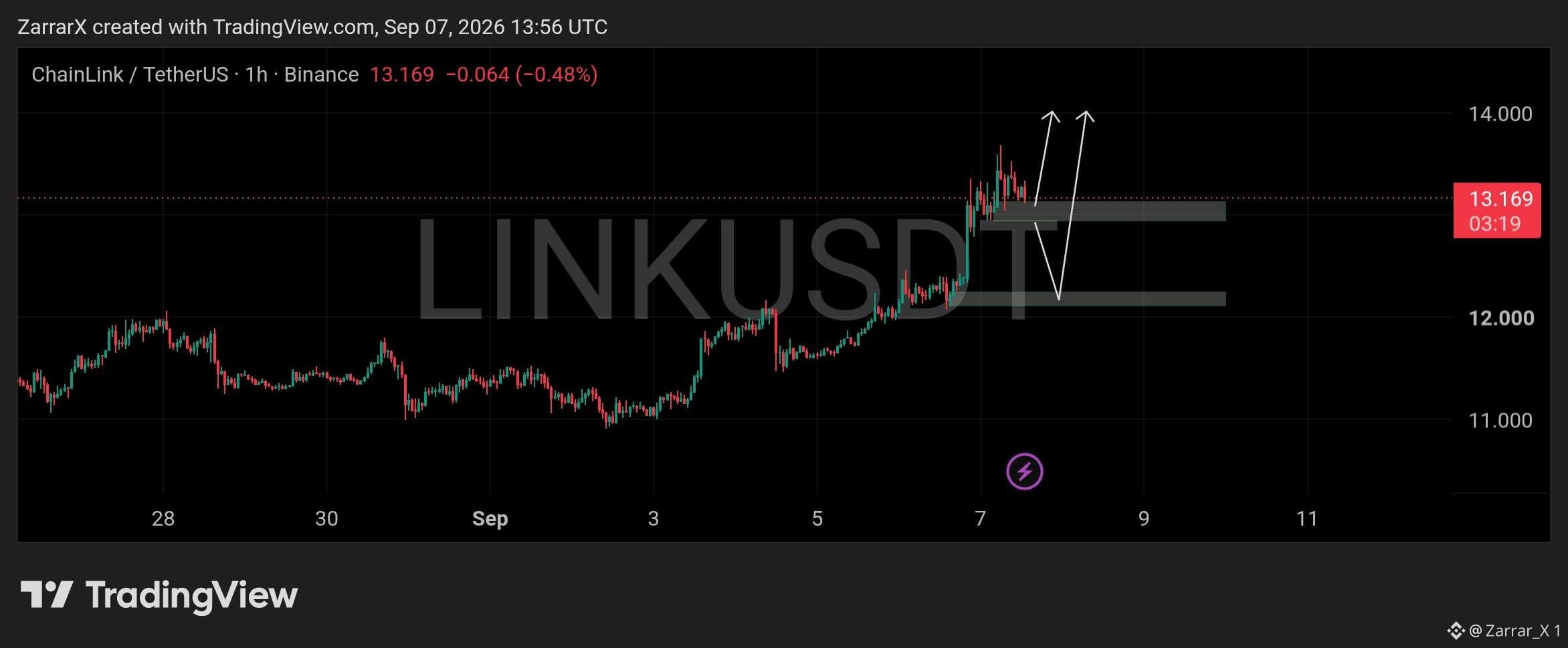
$LINK is holding a strong bullish structure on the 1H chart after breaking above the previous range. Price is currently around $13.17, with buyers still defending the breakout area.
A pullback into the $13.00-$13.10 area could offer a cleaner continuation setup. The stronger demand zone sits around $12.15-$12.35 if the correction runs deeper.
If buyers reclaim and hold above $13.30-$13.40, the next upside target is around $14.00. A clean break above that level could open room for further expansion.
The structure remains bullish while the $12.15-$12.35 demand zone holds. Chasing after the sharp move carries more risk, so patience for a pullback and confirmation makes more sense.
#LINK #Chainlink #Macro Insights#
$LINK is holding a strong bullish structure on the 1H chart after breaking above the previous range. Price is currently around $13.17, with buyers still defending the breakout area.
A pullback into the $13.00-$13.10 area could offer a cleaner continuation setup. The stronger demand zone sits around $12.15-$12.35 if the correction runs deeper.
If buyers reclaim and hold above $13.30-$13.40, the next upside target is around $14.00. A clean break above that level could open room for further expansion.
The structure remains bullish while the $12.15-$12.35 demand zone holds. Chasing after the sharp move carries more risk, so patience for a pullback and confirmation makes more sense.
#LINK #Chainlink #Macro Insights#
A pullback into the $13.00-$13.10 area could offer a cleaner continuation setup. The stronger demand zone sits around $12.15-$12.35 if the correction runs deeper.
If buyers reclaim and hold above $13.30-$13.40, the next upside target is around $14.00. A clean break above that level could open room for further expansion.
The structure remains bullish while the $12.15-$12.35 demand zone holds. Chasing after the sharp move carries more risk, so patience for a pullback and confirmation makes more sense.
#LINK #Chainlink #Macro Insights#
22
·
--
Goldman Sachs Warns Oil Could Hit $120.
Oil prices could climb as high as $120 per barrel if attacks on shipping in the Middle East escalate, according to Goldman Sachs.
The warning comes as tensions around the Strait of Hormuz continue to disrupt maritime traffic and raise concerns about longer-term energy supply disruptions. Brent crude was already trading near $97.50 on Monday after rising tensions between the U.S. and Iran.
Goldman says natural gas and diesel could offer better upside exposure to the current energy shock, as disruptions to shipping and refining capacity could tighten supplies of refined fuels and gas.
At the same time, the bank sees significant downside risk if the situation improves and regional oil exports return to normal, with crude potentially falling toward $80 per barrel.
The latest warning highlights how quickly geopolitical tensions could reshape energy markets, with higher fuel prices also creating fresh inflation risks for the global economy.
$BTC #OIL #BTC Price Analysis# #Macro Insights#
Goldman Sachs Warns Oil Could Hit $120.
Oil prices could climb as high as $120 per barrel if attacks on shipping in the Middle East escalate, according to Goldman Sachs.
The warning comes as tensions around the Strait of Hormuz continue to disrupt maritime traffic and raise concerns about longer-term energy supply disruptions. Brent crude was already trading near $97.50 on Monday after rising tensions between the U.S. and Iran.
Goldman says natural gas and diesel could offer better upside exposure to the current energy shock, as disruptions to shipping and refining capacity could tighten supplies of refined fuels and gas.
At the same time, the bank sees significant downside risk if the situation improves and regional oil exports return to normal, with crude potentially falling toward $80 per barrel.
The latest warning highlights how quickly geopolitical tensions could reshape energy markets, with higher fuel prices also creating fresh inflation risks for the global economy.
$BTC #OIL #BTC Price Analysis# #Macro Insights#
Oil prices could climb as high as $120 per barrel if attacks on shipping in the Middle East escalate, according to Goldman Sachs.
The warning comes as tensions around the Strait of Hormuz continue to disrupt maritime traffic and raise concerns about longer-term energy supply disruptions. Brent crude was already trading near $97.50 on Monday after rising tensions between the U.S. and Iran.
Goldman says natural gas and diesel could offer better upside exposure to the current energy shock, as disruptions to shipping and refining capacity could tighten supplies of refined fuels and gas.
At the same time, the bank sees significant downside risk if the situation improves and regional oil exports return to normal, with crude potentially falling toward $80 per barrel.
The latest warning highlights how quickly geopolitical tensions could reshape energy markets, with higher fuel prices also creating fresh inflation risks for the global economy.
$BTC #OIL #BTC Price Analysis# #Macro Insights#

46
·
--
$DIAM is quietly building momentum.
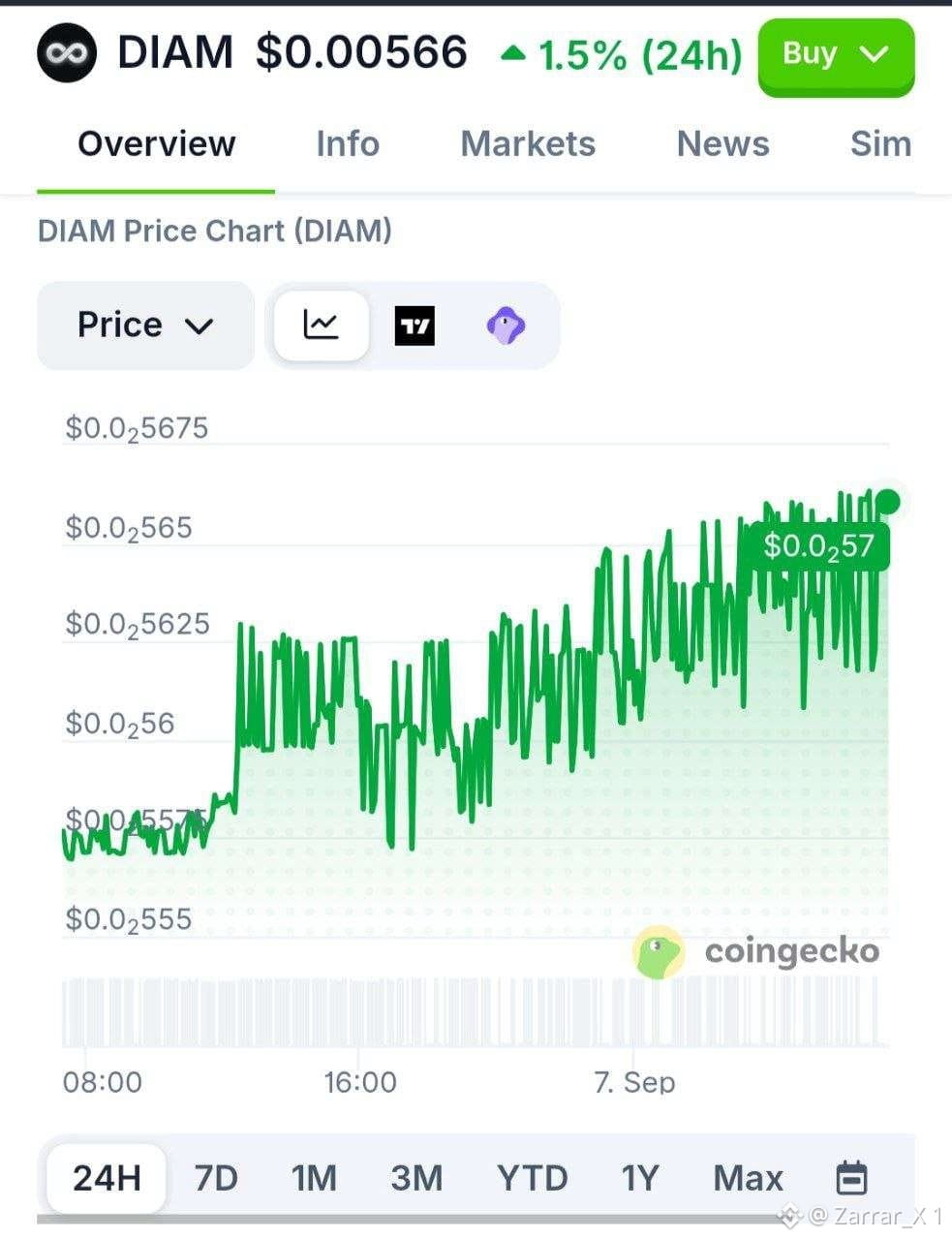
Price is hovering around $0.005666, with the token already up 1.5%+ over the last 24 hours.
What matters most now isn’t the short-term gain — it’s how price handles the next resistance.
A clean breakout backed by strong volume could completely change the setup. Until then, patience and confirmation remain key.
@Diam #BTC Price Analysis# #Macro Insights# #Altcoin Season#
$DIAM is quietly building momentum.
Price is hovering around $0.005666, with the token already up 1.5%+ over the last 24 hours.
What matters most now isn’t the short-term gain — it’s how price handles the next resistance.
A clean breakout backed by strong volume could completely change the setup. Until then, patience and confirmation remain key.
@Diam #BTC Price Analysis# #Macro Insights# #Altcoin Season#
Price is hovering around $0.005666, with the token already up 1.5%+ over the last 24 hours.
What matters most now isn’t the short-term gain — it’s how price handles the next resistance.
A clean breakout backed by strong volume could completely change the setup. Until then, patience and confirmation remain key.
@Diam #BTC Price Analysis# #Macro Insights# #Altcoin Season#
65
·
--
Jane Street, UBS Among Major Firms Holding Hyperliquid ETFs.
Institutional interest in $HYPE is becoming more visible, with Jane Street and UBS among major firms reporting holdings in U.S.-listed Hyperliquid ETFs.
A Bloomberg Intelligence review of 13F filings found that Jane Street held about $4.4 million across the three ETFs, while UBS reported roughly $7.5 million. Wealth High Governance Asset Management led the disclosed holders with nearly $24 million, followed by OLP Capital Management with about $10.5 million.
The five largest holders reported roughly $53 million combined, representing about 71% of the $74.9 million in total institutional holdings identified in the filings. Other notable names include Bank of Montreal, Discovery Capital, Brevan Howard and Balyasny.
Meanwhile, the three Hyperliquid ETFs have attracted approximately $356.58 million in net inflows since launch, highlighting growing demand for regulated exposure to the Hyperliquid ecosystem.
One important caveat: the 13F figures are snapshots of holdings as of June 30 and don't necessarily represent current positions or outright bullish bets. Firms such as Jane Street may also hold ETF shares for market-making, arbitrage or hedging strategies.
#HYPE #Hyperliquid #Macro Insights#
Jane Street, UBS Among Major Firms Holding Hyperliquid ETFs.
Institutional interest in $HYPE is becoming more visible, with Jane Street and UBS among major firms reporting holdings in U.S.-listed Hyperliquid ETFs.
A Bloomberg Intelligence review of 13F filings found that Jane Street held about $4.4 million across the three ETFs, while UBS reported roughly $7.5 million. Wealth High Governance Asset Management led the disclosed holders with nearly $24 million, followed by OLP Capital Management with about $10.5 million.
The five largest holders reported roughly $53 million combined, representing about 71% of the $74.9 million in total institutional holdings identified in the filings. Other notable names include Bank of Montreal, Discovery Capital, Brevan Howard and Balyasny.
Meanwhile, the three Hyperliquid ETFs have attracted approximately $356.58 million in net inflows since launch, highlighting growing demand for regulated exposure to the Hyperliquid ecosystem.
One important caveat: the 13F figures are snapshots of holdings as of June 30 and don't necessarily represent current positions or outright bullish bets. Firms such as Jane Street may also hold ETF shares for market-making, arbitrage or hedging strategies.
#HYPE #Hyperliquid #Macro Insights#
Institutional interest in $HYPE is becoming more visible, with Jane Street and UBS among major firms reporting holdings in U.S.-listed Hyperliquid ETFs.
A Bloomberg Intelligence review of 13F filings found that Jane Street held about $4.4 million across the three ETFs, while UBS reported roughly $7.5 million. Wealth High Governance Asset Management led the disclosed holders with nearly $24 million, followed by OLP Capital Management with about $10.5 million.
The five largest holders reported roughly $53 million combined, representing about 71% of the $74.9 million in total institutional holdings identified in the filings. Other notable names include Bank of Montreal, Discovery Capital, Brevan Howard and Balyasny.
Meanwhile, the three Hyperliquid ETFs have attracted approximately $356.58 million in net inflows since launch, highlighting growing demand for regulated exposure to the Hyperliquid ecosystem.
One important caveat: the 13F figures are snapshots of holdings as of June 30 and don't necessarily represent current positions or outright bullish bets. Firms such as Jane Street may also hold ETF shares for market-making, arbitrage or hedging strategies.
#HYPE #Hyperliquid #Macro Insights#
69
·
--
Altcoins Flip $BTC in Open Interest.
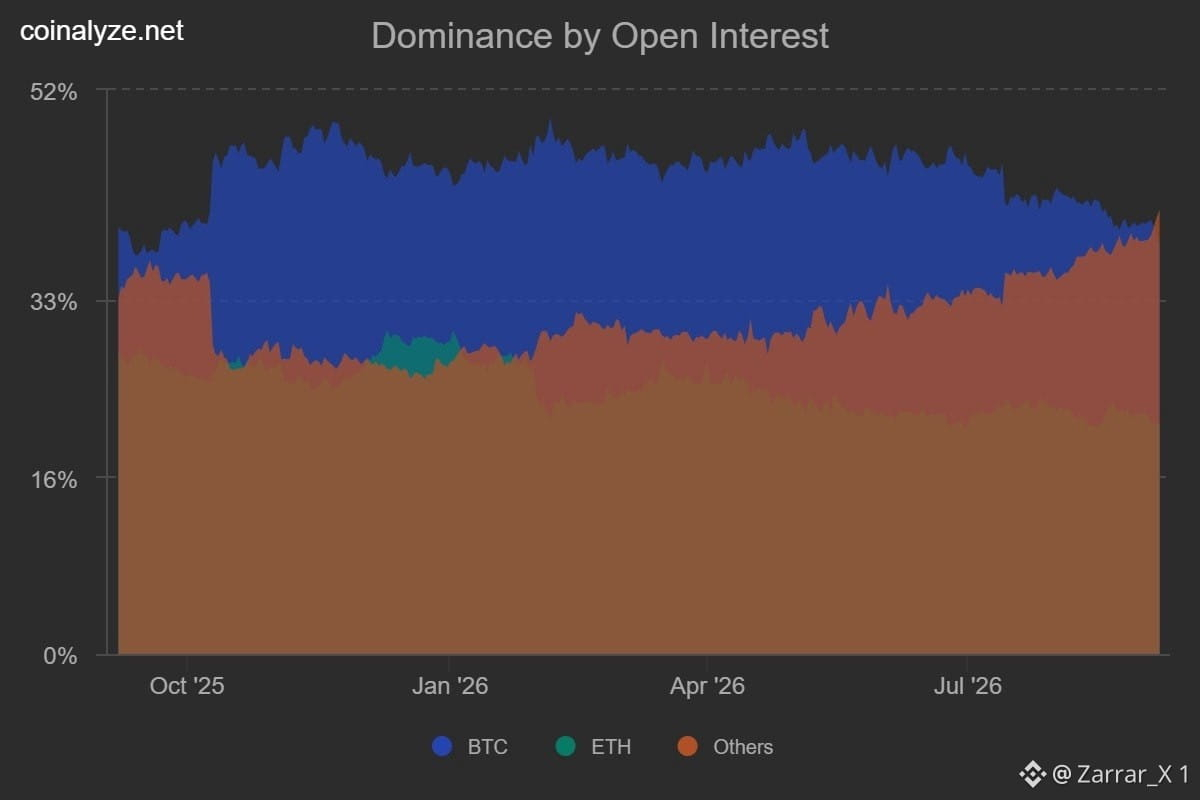
Altcoins have just overtaken Bitcoin in open interest, marking a notable shift in the derivatives market and potentially signaling that traders are becoming more aggressive outside of $BTC.
The move comes as Bitcoin dominance has started weakening in September, while the broader altcoin market has been gaining momentum. Altcoin open interest reportedly surpassed Bitcoin for the first time since December 2024.
That doesn’t automatically confirm an altseason, though. Rising open interest also means more leverage is entering the market, which can amplify both upside moves and liquidations if positioning becomes overcrowded.
Still, with capital and leverage increasingly rotating toward altcoins, this is a signal worth watching closely. If the trend continues alongside stronger spot demand, the setup could become much more supportive for a broader altcoin rally.
#BTC Price Analysis# #Altcoin Season#
Altcoins Flip $BTC in Open Interest.
Altcoins have just overtaken Bitcoin in open interest, marking a notable shift in the derivatives market and potentially signaling that traders are becoming more aggressive outside of $BTC.
The move comes as Bitcoin dominance has started weakening in September, while the broader altcoin market has been gaining momentum. Altcoin open interest reportedly surpassed Bitcoin for the first time since December 2024.
That doesn’t automatically confirm an altseason, though. Rising open interest also means more leverage is entering the market, which can amplify both upside moves and liquidations if positioning becomes overcrowded.
Still, with capital and leverage increasingly rotating toward altcoins, this is a signal worth watching closely. If the trend continues alongside stronger spot demand, the setup could become much more supportive for a broader altcoin rally.
#BTC Price Analysis# #Altcoin Season#
Altcoins have just overtaken Bitcoin in open interest, marking a notable shift in the derivatives market and potentially signaling that traders are becoming more aggressive outside of $BTC.
The move comes as Bitcoin dominance has started weakening in September, while the broader altcoin market has been gaining momentum. Altcoin open interest reportedly surpassed Bitcoin for the first time since December 2024.
That doesn’t automatically confirm an altseason, though. Rising open interest also means more leverage is entering the market, which can amplify both upside moves and liquidations if positioning becomes overcrowded.
Still, with capital and leverage increasingly rotating toward altcoins, this is a signal worth watching closely. If the trend continues alongside stronger spot demand, the setup could become much more supportive for a broader altcoin rally.
#BTC Price Analysis# #Altcoin Season#
53
·
--
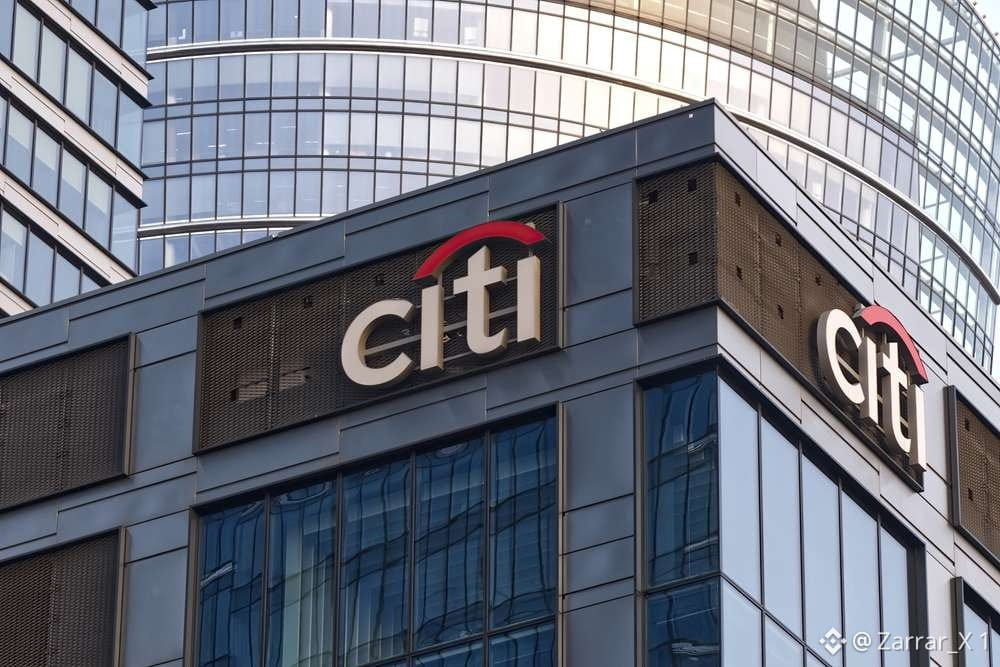
Citigroup Sued Over Alleged Website Tracking Privacy Violations.
Citigroup is facing a new lawsuit accusing the major U.S. bank of secretly using third-party tracking pixels to intercept information about visitors to its website.
The lawsuit, filed by Franceska Herrera in a California federal court, alleges that Citigroup’s website tracking tools captured users’ page visits, searches and content interests in real time without proper notice or consent. The complaint claims the data was used for commercial purposes including behavioral profiling, audience segmentation, analytics and targeted advertising.
Herrera accuses Citigroup of violating the California Invasion of Privacy Act, the Federal Wiretap Act, California’s Constitution and Unfair Competition Law, among other claims. She is seeking damages as well as court orders that would restrict the alleged tracking practices.
The case is part of a broader wave of lawsuits targeting companies over the use of tracking pixels and similar technologies. Wells Fargo, PNC Bank, Hilton and LinkedIn have also faced similar allegations.
$BTC #BTC Price Analysis# #Macro Insights#
Citigroup Sued Over Alleged Website Tracking Privacy Violations.
Citigroup is facing a new lawsuit accusing the major U.S. bank of secretly using third-party tracking pixels to intercept information about visitors to its website.
The lawsuit, filed by Franceska Herrera in a California federal court, alleges that Citigroup’s website tracking tools captured users’ page visits, searches and content interests in real time without proper notice or consent. The complaint claims the data was used for commercial purposes including behavioral profiling, audience segmentation, analytics and targeted advertising.
Herrera accuses Citigroup of violating the California Invasion of Privacy Act, the Federal Wiretap Act, California’s Constitution and Unfair Competition Law, among other claims. She is seeking damages as well as court orders that would restrict the alleged tracking practices.
The case is part of a broader wave of lawsuits targeting companies over the use of tracking pixels and similar technologies. Wells Fargo, PNC Bank, Hilton and LinkedIn have also faced similar allegations.
$BTC #BTC Price Analysis# #Macro Insights#
Citigroup is facing a new lawsuit accusing the major U.S. bank of secretly using third-party tracking pixels to intercept information about visitors to its website.
The lawsuit, filed by Franceska Herrera in a California federal court, alleges that Citigroup’s website tracking tools captured users’ page visits, searches and content interests in real time without proper notice or consent. The complaint claims the data was used for commercial purposes including behavioral profiling, audience segmentation, analytics and targeted advertising.
Herrera accuses Citigroup of violating the California Invasion of Privacy Act, the Federal Wiretap Act, California’s Constitution and Unfair Competition Law, among other claims. She is seeking damages as well as court orders that would restrict the alleged tracking practices.
The case is part of a broader wave of lawsuits targeting companies over the use of tracking pixels and similar technologies. Wells Fargo, PNC Bank, Hilton and LinkedIn have also faced similar allegations.
$BTC #BTC Price Analysis# #Macro Insights#
Log in to explore more content
Join global crypto users on Binance Square
⚡️ Get latest and useful information about crypto.
💬 Trusted by the world’s largest crypto exchange.
👍 Discover real insights from verified creators.
Email / Phone number
Trending Topics
AppleDebutsFoldablePhone
4,593 views
124 Discussing
#appledebutsfoldablephone I Got My Hands on the iPhone Duo, Apple’s First Foldable Phone. Here’s What Stands Out
The palm-size phone is Apple's boldest handset in years, with a 5.4-inch cover screen and a 7.6-inch main display. I spent some time with the Duo before its October launch.It’s finally here: Apple on Wednesday unveiled its first foldable iPhone, called the iPhone Duo.
iPhone Duo design and build
The iPhone Duo is compact, with a passport-size design. It has a 7.6-inch display on the inside and a 5.4-inch outer display. It fits squarely in my palm, with dimensions similar to Samsung’s Galaxy Z Fold 8, which has a 7.6-inch inner display and a 5.5-inch cover display.
Apple says the Duo is the thinnest iPhone ever when open, measuring 5.2mm. It’s 11.3mm thick when closed. A titanium frame keeps it lightweight at 254 grams.
One of the key differences in feel between Apple’s and Samsung’s phones is that the iPhone Duo has a matte, nano-textured finish on the inner display, which reduces the phone’s crease while also curbing reflections. It has a satisfying feel and really makes the crease virtually disappear when the screen is on. I find it even harder to notice than the Z Fold 8’s, which also has an anti-reflective display.$ONG $IMX $TAC
Isabella-I
·3 Likes
·766 views
US10YTreasuryYieldHitsHighestSinceNov2023
8,381 views
177 Discussing
USTreasuryToBuyBackUpTo$6BLongDatedDebt
9,599 views
131 Discussing