
阿Bob波哥说币
442 Posts
阿Bob波哥说币
公众号:《恋上波哥》 关注我,多交流,祝各位钱包越来越鼓!多年交易经验,走过多轮牛熊,对市场节奏和资金动向有成熟判断。依靠稳定的信息源和实战策略做交易,不空谈理论。长期用同一套逻辑操作,胜率保持在 80%–85%。分享真实思路,追求稳健、长期收益。
7 Following
40 Followers
269 Liked
Posts
In plain terms, it’s not that the technical side isn’t good—it’s that you can’t afford to wait.
Someone with a $1,000,000 account earns 10%, that’s $100,000. Even if they make a few mistakes, it doesn’t matter much. But when you only have $1,000, even if you multiply it by 10, you still can’t really change anything. So instinct kicks in—you start to get anxious. When an opportunity appears, you rush in; when there’s no clear opportunity, you still force one.
The result is frequent trading and constant trial-and-error, turning yourself from “trading” into “gambling on every single trade.”
Trading is cyclical. It doesn’t require you to take action every day. But for small capital, people most easily misunderstand this—treating the market like a place where results must happen every day.
The people who truly manage to survive are often not the busiest. They’re the ones who can wait. If the trend hasn’t arrived, stay in cash. If the opportunity isn’t clear, don’t move. When the market setup is there, strike all at once.
I was like that in the early days too—more urgency meant more losses, and more losses meant more urgency. Later I gradually understood a counterintuitive truth: the more you try to make trading happen fast, the slower it turns out. Once I adjusted the rhythm, my account began to stabilize and move upward instead.
The market doesn’t reward diligence—it rewards patience. With small capital, the most important thing isn’t trading more; it’s making fewer mistakes. Being able to hold out for a wave of opportunities matters far more than trading every day.
If you want to learn how to control your impulses and stay on a steady rhythm, come chat with Boss Bo. @阿Bob波哥说币
#美加关税战升级
Someone with a $1,000,000 account earns 10%, that’s $100,000. Even if they make a few mistakes, it doesn’t matter much. But when you only have $1,000, even if you multiply it by 10, you still can’t really change anything. So instinct kicks in—you start to get anxious. When an opportunity appears, you rush in; when there’s no clear opportunity, you still force one.
The result is frequent trading and constant trial-and-error, turning yourself from “trading” into “gambling on every single trade.”
Trading is cyclical. It doesn’t require you to take action every day. But for small capital, people most easily misunderstand this—treating the market like a place where results must happen every day.
The people who truly manage to survive are often not the busiest. They’re the ones who can wait. If the trend hasn’t arrived, stay in cash. If the opportunity isn’t clear, don’t move. When the market setup is there, strike all at once.
I was like that in the early days too—more urgency meant more losses, and more losses meant more urgency. Later I gradually understood a counterintuitive truth: the more you try to make trading happen fast, the slower it turns out. Once I adjusted the rhythm, my account began to stabilize and move upward instead.
The market doesn’t reward diligence—it rewards patience. With small capital, the most important thing isn’t trading more; it’s making fewer mistakes. Being able to hold out for a wave of opportunities matters far more than trading every day.
If you want to learn how to control your impulses and stay on a steady rhythm, come chat with Boss Bo. @阿Bob波哥说币
#美加关税战升级
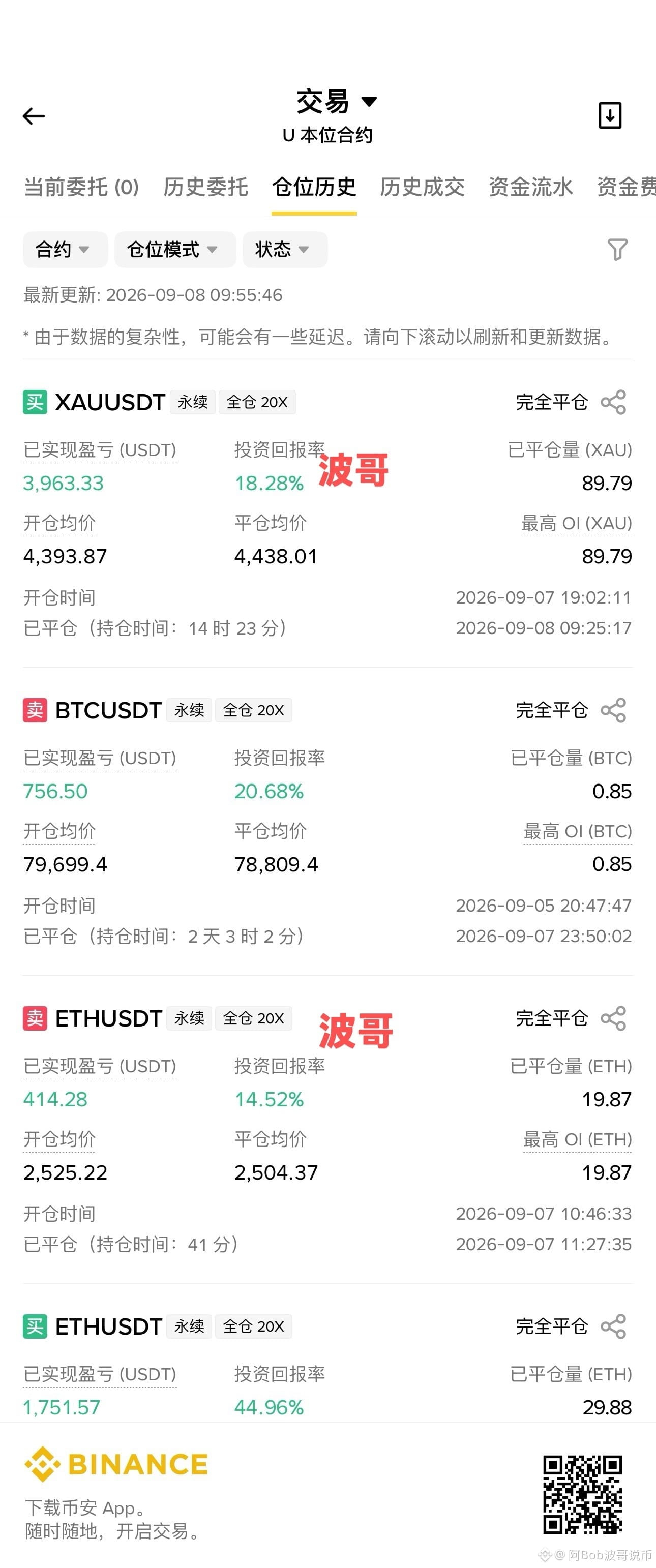
🔥 Comprehensive U.S.-Canada Tariff War Escalates: $20 Billion Retaliatory Tariffs Take Effect
On September 8, Canada’s retaliatory tariffs against the U.S. officially took effect. From brothers bickering to turning physical—it only took about half a month.
📋 The trigger was simple: on August 21, the talks fell apart, and the U.S. immediately imposed a 50% tariff on Canadian goods worth $20 billion. Canada didn’t hesitate either—three days later it announced: you add tariffs, I add tariffs too—$20 billion, more than 700 types of goods, with rates ranging from 15% to 50%.
Steel and aluminum doubled to 50%, while furniture, apparel, and cosmetics also went to 50%. Cheese and appliances are at 25%, and electronics at 15%. The point is pinpointed retaliation—hit whatever industry hurts the U.S. the most.
So what are these two plotting? They were once one family, but now they’re dumping chili oil into each other’s pot.
🗣️ Trump on his side also wasn’t idle. The day before the tariffs took effect, he posted on Truth Social, threatening to ban the sale of Canadian Bombardier aircraft in the U.S. unless Canada builds factories on U.S. soil. Earlier, he even renamed Lake Ontario as “American Lake.”
How do you say this? It’s like when you can’t win an argument, you change the other person’s WeChat nickname.
With this fight, who suffers?
📊 The Canadian dollar first took a hit. The Bank of Canada itself calculated that by the end of 2026, U.S. tariffs would reduce Canada’s GDP by 1.5% below expectations. JPMorgan also believes the tariffs will increase the risk of Canada’s economic downturn.
The U.S. also isn’t doing much better. The $20 billion in tariffs will ultimately be passed on to U.S. consumers and businesses. The auto supply chain is highly dependent on Canadian parts—higher tariffs directly raise manufacturing costs and vehicle prices.
🎯 The most ironic part is this: 63% of analysts expect that the Bank of Canada’s next move could be another rate hike, because tariffs are pushing up inflation. They meant to pressure others, but they ended up inflating themselves first.
In one sentence: Canada’s $2.0 billion in tariffs officially kicks in, and Trump threatens to ban Bombardier sales—this trade war involving the closest allies has fully escalated.
#美加关税战升级
On September 8, Canada’s retaliatory tariffs against the U.S. officially took effect. From brothers bickering to turning physical—it only took about half a month.
📋 The trigger was simple: on August 21, the talks fell apart, and the U.S. immediately imposed a 50% tariff on Canadian goods worth $20 billion. Canada didn’t hesitate either—three days later it announced: you add tariffs, I add tariffs too—$20 billion, more than 700 types of goods, with rates ranging from 15% to 50%.
Steel and aluminum doubled to 50%, while furniture, apparel, and cosmetics also went to 50%. Cheese and appliances are at 25%, and electronics at 15%. The point is pinpointed retaliation—hit whatever industry hurts the U.S. the most.
So what are these two plotting? They were once one family, but now they’re dumping chili oil into each other’s pot.
🗣️ Trump on his side also wasn’t idle. The day before the tariffs took effect, he posted on Truth Social, threatening to ban the sale of Canadian Bombardier aircraft in the U.S. unless Canada builds factories on U.S. soil. Earlier, he even renamed Lake Ontario as “American Lake.”
How do you say this? It’s like when you can’t win an argument, you change the other person’s WeChat nickname.
With this fight, who suffers?
📊 The Canadian dollar first took a hit. The Bank of Canada itself calculated that by the end of 2026, U.S. tariffs would reduce Canada’s GDP by 1.5% below expectations. JPMorgan also believes the tariffs will increase the risk of Canada’s economic downturn.
The U.S. also isn’t doing much better. The $20 billion in tariffs will ultimately be passed on to U.S. consumers and businesses. The auto supply chain is highly dependent on Canadian parts—higher tariffs directly raise manufacturing costs and vehicle prices.
🎯 The most ironic part is this: 63% of analysts expect that the Bank of Canada’s next move could be another rate hike, because tariffs are pushing up inflation. They meant to pressure others, but they ended up inflating themselves first.
In one sentence: Canada’s $2.0 billion in tariffs officially kicks in, and Trump threatens to ban Bombardier sales—this trade war involving the closest allies has fully escalated.
#美加关税战升级
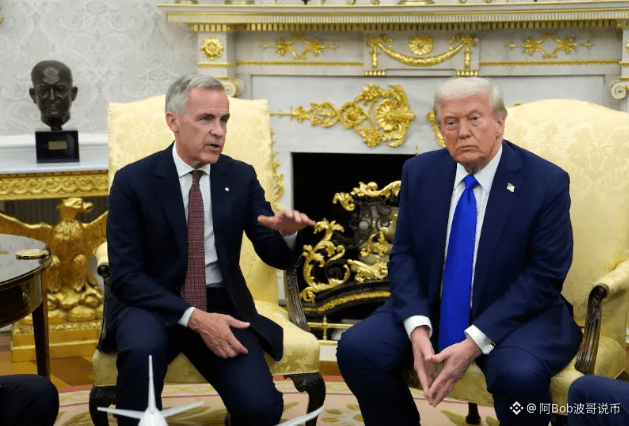
Turning around with a 6000U—it's not as difficult as you might think.
Before, someone came to find me. At the start he had one idea: just go all in and flip quickly. But it went off the rails fast—his position kept getting heavier, his leverage kept climbing higher. The market only pulled back slightly, and his mindset collapsed immediately. He didn’t make money, and even watching the charts started to make him tremble.
Later, he regrouped and got the principal back. This time, he didn’t rush to pick coins; he first changed his logic.
First: the position must be light. Better to miss than to force it. If the direction isn’t clear, don’t act.
Second: before opening every trade, think about the worst-case scenario. If you can’t accept that loss, then you shouldn’t take the trade.
Third: stop-loss must be decisive. Capital matters more than any opportunity. Loss isn’t scary; losing control is.
Once he truly started executing, the rhythm changed clearly. He only used part of the funds to test—then, once profits were made, he rolled them in gradually. He used profits to take risks, not his principal to hard-guess.
If the market isn’t clear, he moves less. Only when the trend is unmistakable does he act. He stopped obsessing over minute-by-minute fluctuations and tormenting himself every few minutes. Now he only focuses on the big picture. He once said something very real: “Before, watching the 5-minute candlestick chart made my heart race. Now, looking at the daily chart feels steady instead.”
His account also changed slowly: a few thousand U → over ten thousand → tens of thousands of U. The speed isn’t fast, but every step is more solid. After half a year, the numbers changed—and so did the person. He’s no longer in a rush, and he doesn’t gamble anymore. In fact, he’s more likely to catch opportunities.
Turning things around has never been about one desperate all-in—it’s about living long enough to be there.
Before, someone came to find me. At the start he had one idea: just go all in and flip quickly. But it went off the rails fast—his position kept getting heavier, his leverage kept climbing higher. The market only pulled back slightly, and his mindset collapsed immediately. He didn’t make money, and even watching the charts started to make him tremble.
Later, he regrouped and got the principal back. This time, he didn’t rush to pick coins; he first changed his logic.
First: the position must be light. Better to miss than to force it. If the direction isn’t clear, don’t act.
Second: before opening every trade, think about the worst-case scenario. If you can’t accept that loss, then you shouldn’t take the trade.
Third: stop-loss must be decisive. Capital matters more than any opportunity. Loss isn’t scary; losing control is.
Once he truly started executing, the rhythm changed clearly. He only used part of the funds to test—then, once profits were made, he rolled them in gradually. He used profits to take risks, not his principal to hard-guess.
If the market isn’t clear, he moves less. Only when the trend is unmistakable does he act. He stopped obsessing over minute-by-minute fluctuations and tormenting himself every few minutes. Now he only focuses on the big picture. He once said something very real: “Before, watching the 5-minute candlestick chart made my heart race. Now, looking at the daily chart feels steady instead.”
His account also changed slowly: a few thousand U → over ten thousand → tens of thousands of U. The speed isn’t fast, but every step is more solid. After half a year, the numbers changed—and so did the person. He’s no longer in a rush, and he doesn’t gamble anymore. In fact, he’s more likely to catch opportunities.
Turning things around has never been about one desperate all-in—it’s about living long enough to be there.
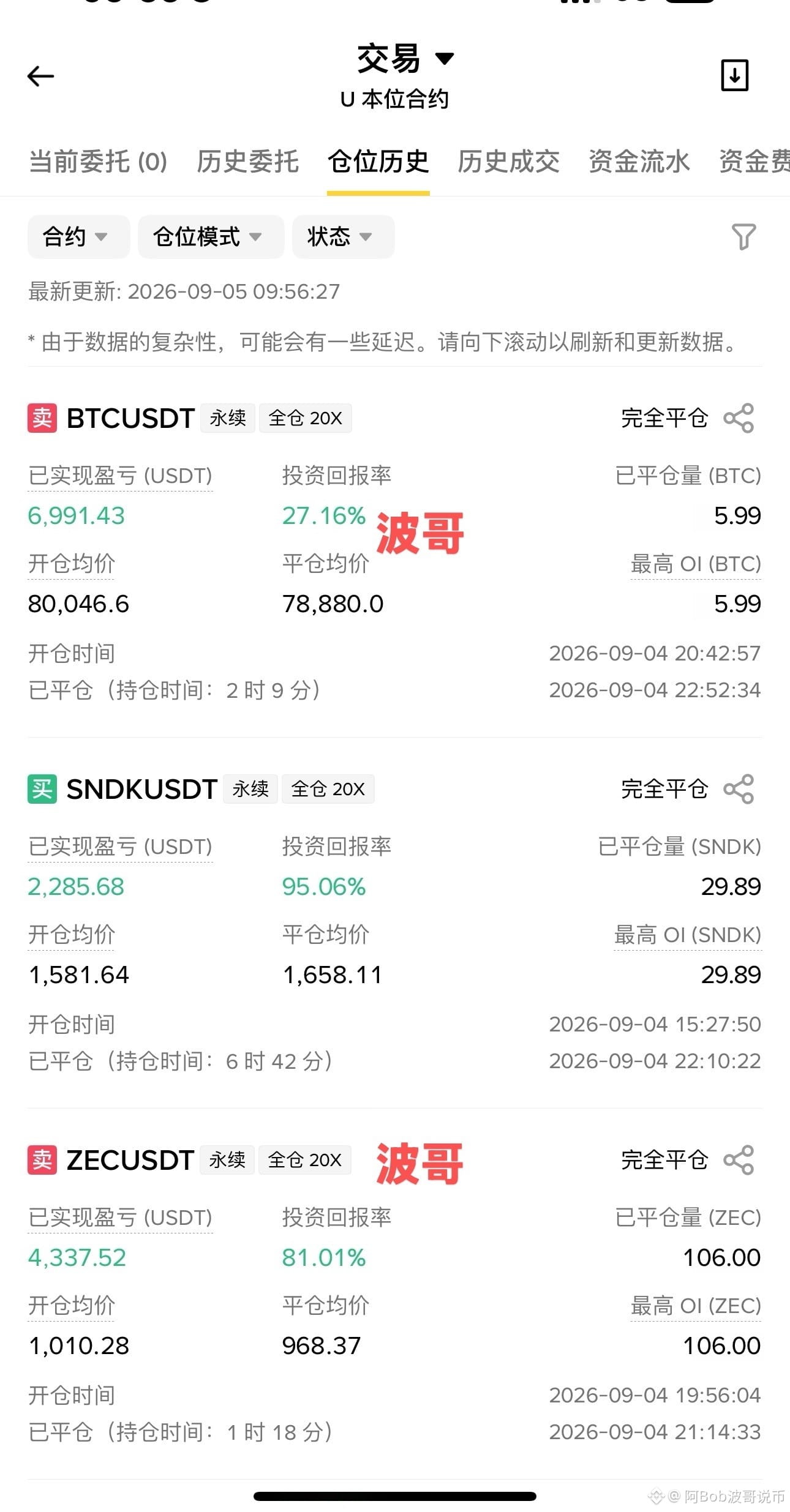
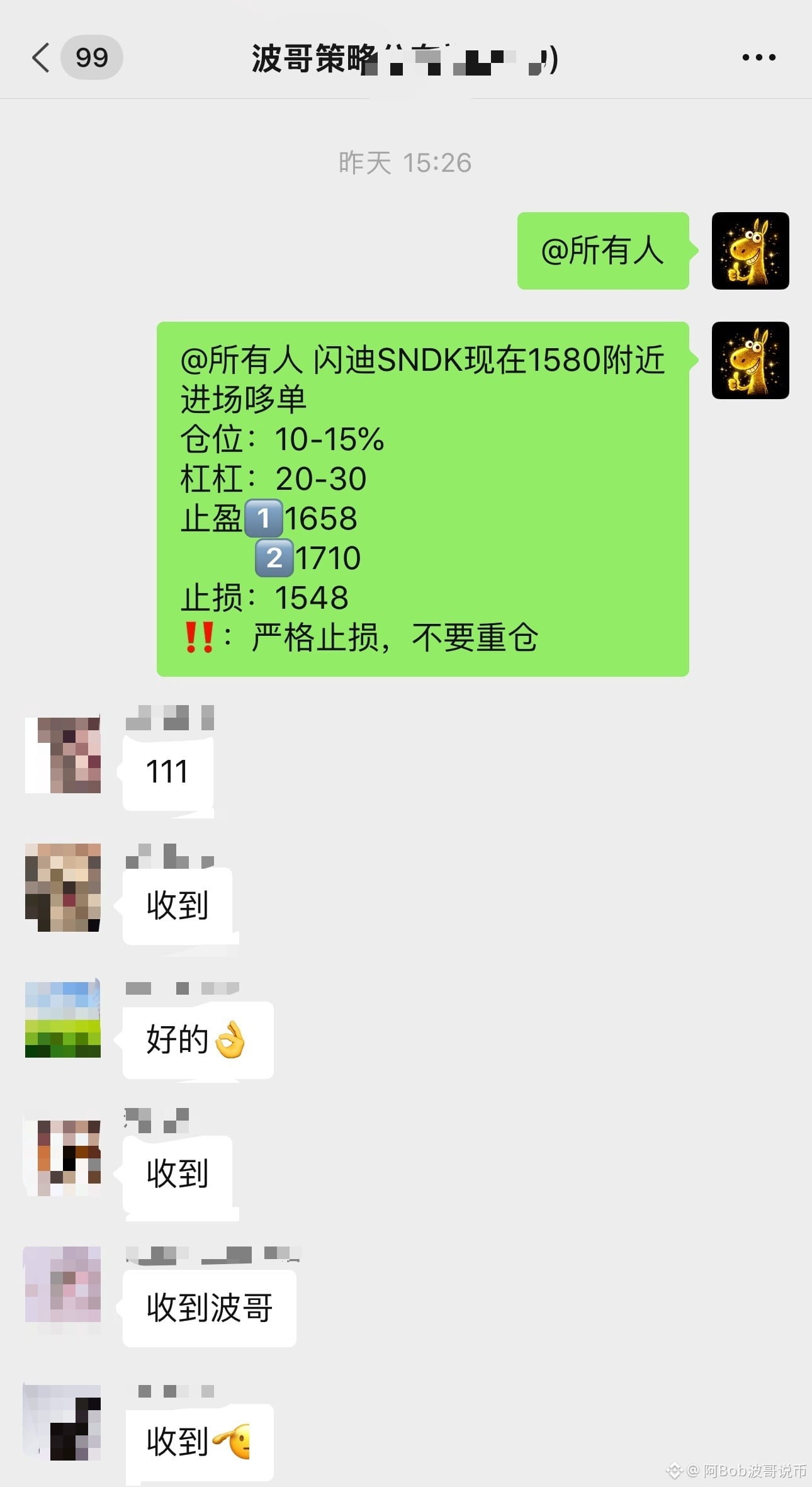
The contract direction being correct doesn’t mean you’ll surely profit.
Many people have a misconception—thinking that if they can just judge whether price will go up or down, they can consistently make money. Anyone who’s been trading contracts for a few years knows exactly where the contract market is most ruthless.
In my early days trading contracts, I made the same mistake too. In half a year I lost a staggering 800,000. What’s interesting is that on several occasions I actually predicted the market direction correctly—when I expected it to rise, it did; when I expected it to fall, it did. Yet my account kept shrinking.
Later, I reviewed all my settlement records and finally realized the problem was in a few traps.
Entering too fast. When the market started moving, I was afraid of missing the opportunity, so I chased in immediately. The main players then did a quick pullback and washed out everyone whose emotions were unstable—only after that did the market move in the direction I’d predicted.
Wrong way of setting stop-loss. Before, I liked using a fixed stop-loss because it felt safe. But contract volatility is high—normal fluctuations could also trigger the stop-loss. After being swept out a few times, and then watching the price rally back again, that feeling is hard to describe.
Position size too large. Even if your direction is correct, you can’t withstand sudden, violent swings. With a heavy position, the biggest risk isn’t just losing money—it’s not giving yourself a chance to make mistakes and recover.
Later, I gradually adjusted my pace, and only then did my account stabilize again. The people who truly make money, even when they get it wrong, step into traps, or face volatility, still have the ability to stay in the market. The longer you last, the more opportunities you’ll have.
#美伊互袭油轮冲突升级
#Zcash周涨45%创2016年来新高
Many people have a misconception—thinking that if they can just judge whether price will go up or down, they can consistently make money. Anyone who’s been trading contracts for a few years knows exactly where the contract market is most ruthless.
In my early days trading contracts, I made the same mistake too. In half a year I lost a staggering 800,000. What’s interesting is that on several occasions I actually predicted the market direction correctly—when I expected it to rise, it did; when I expected it to fall, it did. Yet my account kept shrinking.
Later, I reviewed all my settlement records and finally realized the problem was in a few traps.
Entering too fast. When the market started moving, I was afraid of missing the opportunity, so I chased in immediately. The main players then did a quick pullback and washed out everyone whose emotions were unstable—only after that did the market move in the direction I’d predicted.
Wrong way of setting stop-loss. Before, I liked using a fixed stop-loss because it felt safe. But contract volatility is high—normal fluctuations could also trigger the stop-loss. After being swept out a few times, and then watching the price rally back again, that feeling is hard to describe.
Position size too large. Even if your direction is correct, you can’t withstand sudden, violent swings. With a heavy position, the biggest risk isn’t just losing money—it’s not giving yourself a chance to make mistakes and recover.
Later, I gradually adjusted my pace, and only then did my account stabilize again. The people who truly make money, even when they get it wrong, step into traps, or face volatility, still have the ability to stay in the market. The longer you last, the more opportunities you’ll have.
#美伊互袭油轮冲突升级
#Zcash周涨45%创2016年来新高
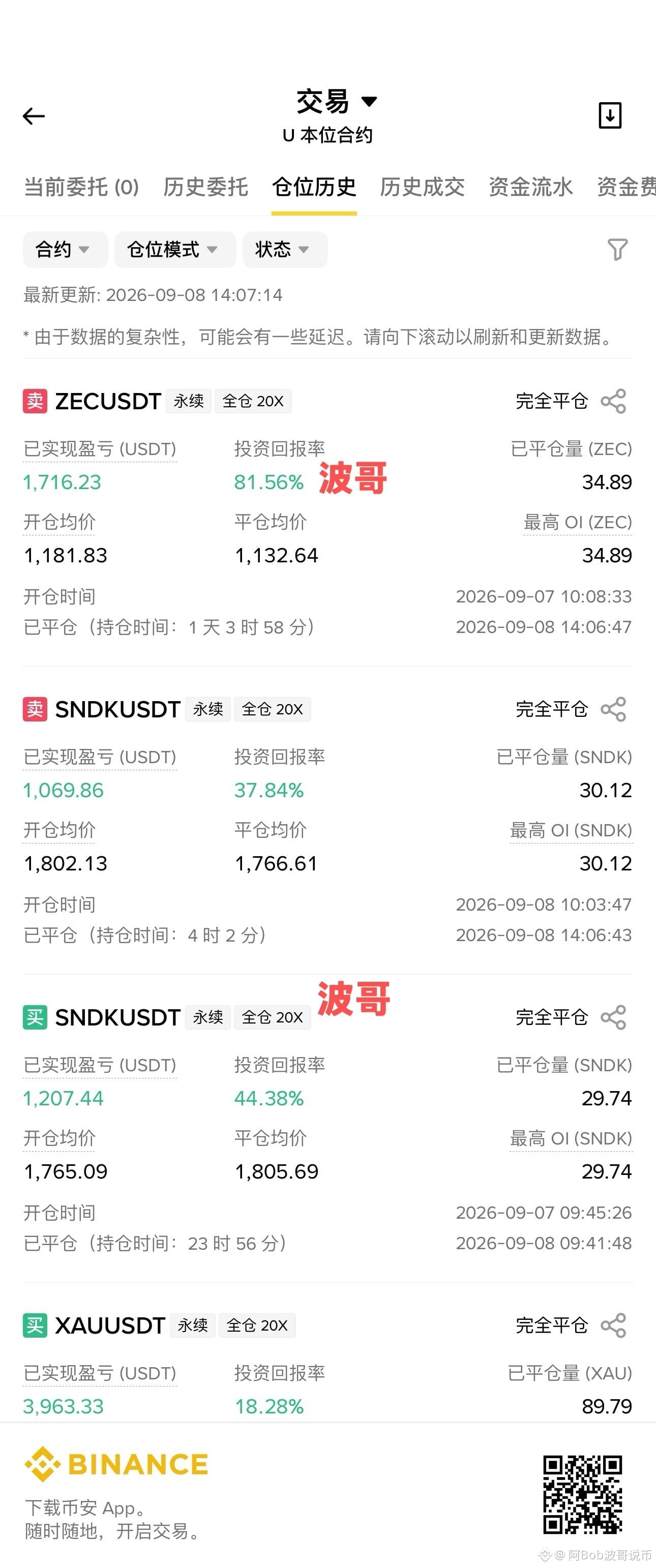
Is there still a chance with 900U?
In the early morning, a fan asked me: “There are only 900U left. Is there still a chance?”
I said: “How long have you been trading?”
He said: “Over a year. When it was at its peak, it was nearly 5,000U. Then I slowly gave it back, and now I’m down to just 900U.”
I asked again: “Do you know clearly how you lost it?”
He said it just felt like bad luck—whatever he bought kept dropping, and whatever he sold kept rising.
I’ve heard this sentence too many times. A lot of people blame their losses on the market, yet very few go back and review their own trading approach.
If you have a small amount of capital but want to build big results, first change your trading habits. Do these three things:
First, don’t go all-in. Break 900U into three parts: one for short-term trades, one to wait for trend opportunities, and one as a backup. When you have a backup plan in hand, your mindset won’t panic. People who go all-in get greedy when it rises and panic when it falls—one mistake can get them out of the game.
Second, trade only markets you can clearly understand. Focus on a few major coins. Only act when the trend is clear and the position is appropriate. If there’s no opportunity, stay in cash—don’t trade just to trade. When you can’t read the situation, not acting is the best move.
Third, decide your exit before entering. Where will you cut losses? At what profit level will you reduce your position? Think it through in advance. Don’t get greedy just because it’s pumping, and don’t panic just because it’s dumping. Make the plan first—then emotions can be kept under control.
Later, his account gradually built up to several thousand U, and then eventually broke through 30,000U. He said that before, he used to think every day about how to make quick money. Now, every day he thinks about how not to make mistakes. That’s actually the biggest difference between small capital and big capital.
Can 900U be made to work? Yes—but the prerequisite is to throw away that losing habit. If you’re here hoping to turn things around, take action.
If you want to learn how to do it steadily with small capital, come chat with Boge. @阿Bob波哥说币
#加拿大拟对美商品加征15%至50%关税
#美伊互袭油轮冲突升级
In the early morning, a fan asked me: “There are only 900U left. Is there still a chance?”
I said: “How long have you been trading?”
He said: “Over a year. When it was at its peak, it was nearly 5,000U. Then I slowly gave it back, and now I’m down to just 900U.”
I asked again: “Do you know clearly how you lost it?”
He said it just felt like bad luck—whatever he bought kept dropping, and whatever he sold kept rising.
I’ve heard this sentence too many times. A lot of people blame their losses on the market, yet very few go back and review their own trading approach.
If you have a small amount of capital but want to build big results, first change your trading habits. Do these three things:
First, don’t go all-in. Break 900U into three parts: one for short-term trades, one to wait for trend opportunities, and one as a backup. When you have a backup plan in hand, your mindset won’t panic. People who go all-in get greedy when it rises and panic when it falls—one mistake can get them out of the game.
Second, trade only markets you can clearly understand. Focus on a few major coins. Only act when the trend is clear and the position is appropriate. If there’s no opportunity, stay in cash—don’t trade just to trade. When you can’t read the situation, not acting is the best move.
Third, decide your exit before entering. Where will you cut losses? At what profit level will you reduce your position? Think it through in advance. Don’t get greedy just because it’s pumping, and don’t panic just because it’s dumping. Make the plan first—then emotions can be kept under control.
Later, his account gradually built up to several thousand U, and then eventually broke through 30,000U. He said that before, he used to think every day about how to make quick money. Now, every day he thinks about how not to make mistakes. That’s actually the biggest difference between small capital and big capital.
Can 900U be made to work? Yes—but the prerequisite is to throw away that losing habit. If you’re here hoping to turn things around, take action.
If you want to learn how to do it steadily with small capital, come chat with Boge. @阿Bob波哥说币
#加拿大拟对美商品加征15%至50%关税
#美伊互袭油轮冲突升级
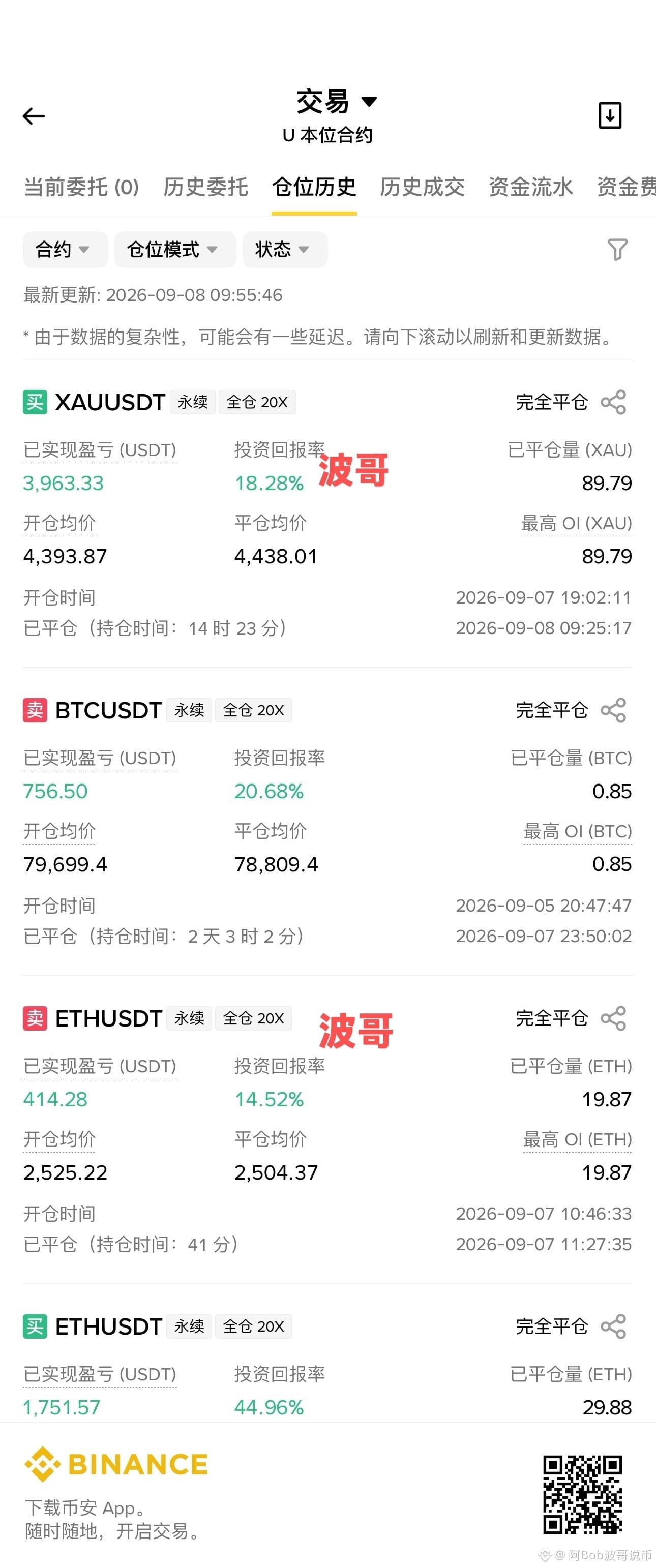
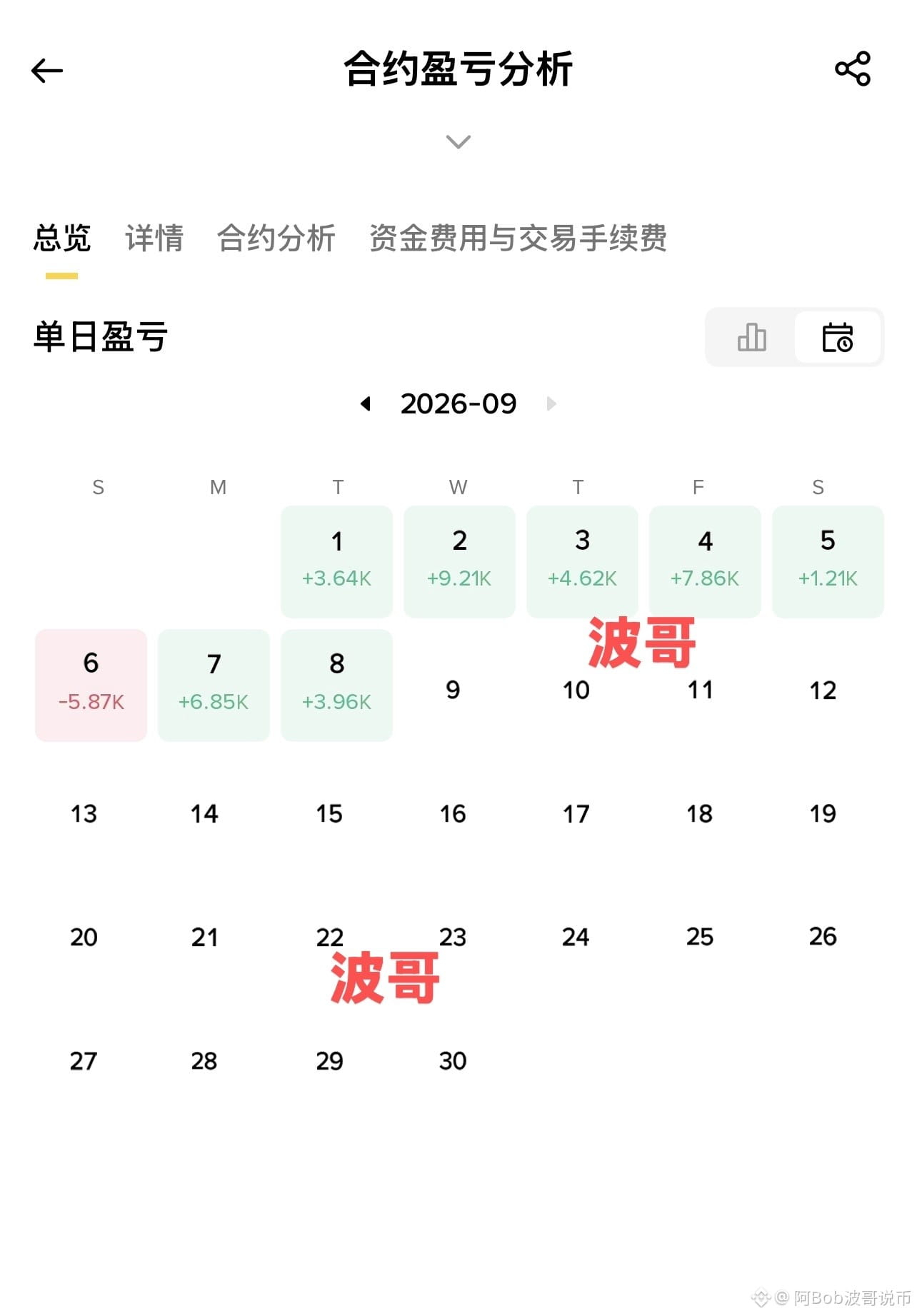


Why would I choose to step into the crypto world that year, even to try what others call a “backdoor” path?
The answer is actually simple. When I was young, I didn’t have many choices. Back then, it wasn’t just the crypto space—any direction that sounded promising and could change my income structure, I basically studied it.
Internet projects, all kinds of tracks, different circles—if someone told me there might be an opportunity there, I would go and find out. Along the way, I made money and I also lost money. But the biggest value of these experiences wasn’t how much I earned; it was that they helped me see the rules of different worlds early. I met different people, went through all kinds of collaborations, and witnessed both warmth and coldness in human relationships. Some were sincere, some were calculating. Some were willing to share opportunities, while others only wanted to take advantage of others.
Little by little, these experiences made me realize: to go far in society, ability matters, but character matters even more. So now, when I judge people and do things, the two words I care most about are: sincerity.
Many people think that those with connections can choose a stable route. But for those from ordinary families, in many cases there aren’t many shortcuts. When others have an umbrella, we can only find our own way; when others have resources, we can only rely on learning, on trying, and on constantly breaking through.
But one thing must be remembered: rules are always the bottom line, not the ceiling that limits growth. What people mean by taking a “backdoor” path isn’t crossing red lines—it’s, within compliant boundaries, finding the opportunities that belong to you. When you’re young, you dare to try; only then will you have a chance to accumulate knowledge afterward.
As I’ve walked this path, I’ve come to believe more and more: what truly changes a person isn’t some one lucky break, but the way you become stronger through repeated choices. Opportunities are always reserved for those who dare to step out—and who still keep their bottom line.
#Zcash周涨45%创2016年来新高
#CFTC请求驳回CME诉Kalshi比特币期货案
The answer is actually simple. When I was young, I didn’t have many choices. Back then, it wasn’t just the crypto space—any direction that sounded promising and could change my income structure, I basically studied it.
Internet projects, all kinds of tracks, different circles—if someone told me there might be an opportunity there, I would go and find out. Along the way, I made money and I also lost money. But the biggest value of these experiences wasn’t how much I earned; it was that they helped me see the rules of different worlds early. I met different people, went through all kinds of collaborations, and witnessed both warmth and coldness in human relationships. Some were sincere, some were calculating. Some were willing to share opportunities, while others only wanted to take advantage of others.
Little by little, these experiences made me realize: to go far in society, ability matters, but character matters even more. So now, when I judge people and do things, the two words I care most about are: sincerity.
Many people think that those with connections can choose a stable route. But for those from ordinary families, in many cases there aren’t many shortcuts. When others have an umbrella, we can only find our own way; when others have resources, we can only rely on learning, on trying, and on constantly breaking through.
But one thing must be remembered: rules are always the bottom line, not the ceiling that limits growth. What people mean by taking a “backdoor” path isn’t crossing red lines—it’s, within compliant boundaries, finding the opportunities that belong to you. When you’re young, you dare to try; only then will you have a chance to accumulate knowledge afterward.
As I’ve walked this path, I’ve come to believe more and more: what truly changes a person isn’t some one lucky break, but the way you become stronger through repeated choices. Opportunities are always reserved for those who dare to step out—and who still keep their bottom line.
#Zcash周涨45%创2016年来新高
#CFTC请求驳回CME诉Kalshi比特币期货案
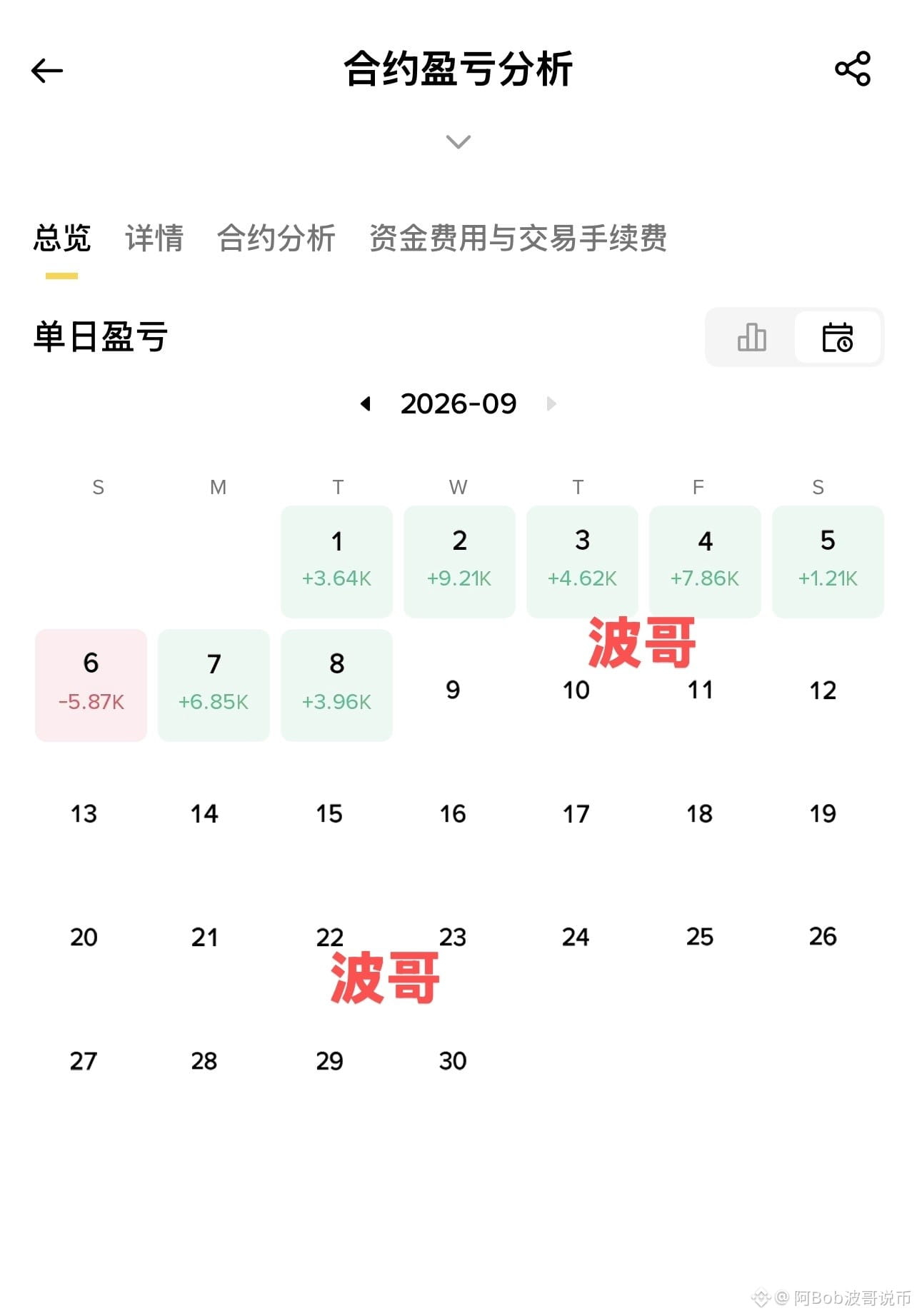
Start with a few hundred USDT, and looking back at where I am now, it’s hard too, but it’s also simple—just don’t rush to prove how much you can make. First learn how to judge whether “this trade is even worth doing.”
When I first entered the market, like most people, my mind was filled with “double, double again, and double once more.” But later I slowly understood one thing: in the small-capital stage, what matters more than making money is training your habits.
When I had 1,000 USDT, I split my funds into several parts and only moved a portion each time—never all-in, never a full send. Not because I was timid, but because I knew that the biggest advantage of small capital isn’t that you can make money fast—it’s that you still have room to make mistakes. Once the account grows gradually, I started to “subtract”: I don’t trade every day anymore, I wait for conditions with higher certainty. If there’s no opportunity, I stay in cash—no trading just for the sake of trading.
Many people think staying in cash is a waste of time. Actually, waiting itself is part of the trading. Later, as my account kept getting bigger, I added another rule: periodically take profits out. Not just to “lock in gains,” but to remind myself that the numbers in the account aren’t necessarily all mine.
Want to learn how to steadily build up from a few hundred USDT? Come chat with Boge.
#美伊互袭油轮冲突升级
#Zcash周涨45%创2016年来新高
When I first entered the market, like most people, my mind was filled with “double, double again, and double once more.” But later I slowly understood one thing: in the small-capital stage, what matters more than making money is training your habits.
When I had 1,000 USDT, I split my funds into several parts and only moved a portion each time—never all-in, never a full send. Not because I was timid, but because I knew that the biggest advantage of small capital isn’t that you can make money fast—it’s that you still have room to make mistakes. Once the account grows gradually, I started to “subtract”: I don’t trade every day anymore, I wait for conditions with higher certainty. If there’s no opportunity, I stay in cash—no trading just for the sake of trading.
Many people think staying in cash is a waste of time. Actually, waiting itself is part of the trading. Later, as my account kept getting bigger, I added another rule: periodically take profits out. Not just to “lock in gains,” but to remind myself that the numbers in the account aren’t necessarily all mine.
Want to learn how to steadily build up from a few hundred USDT? Come chat with Boge.
#美伊互袭油轮冲突升级
#Zcash周涨45%创2016年来新高
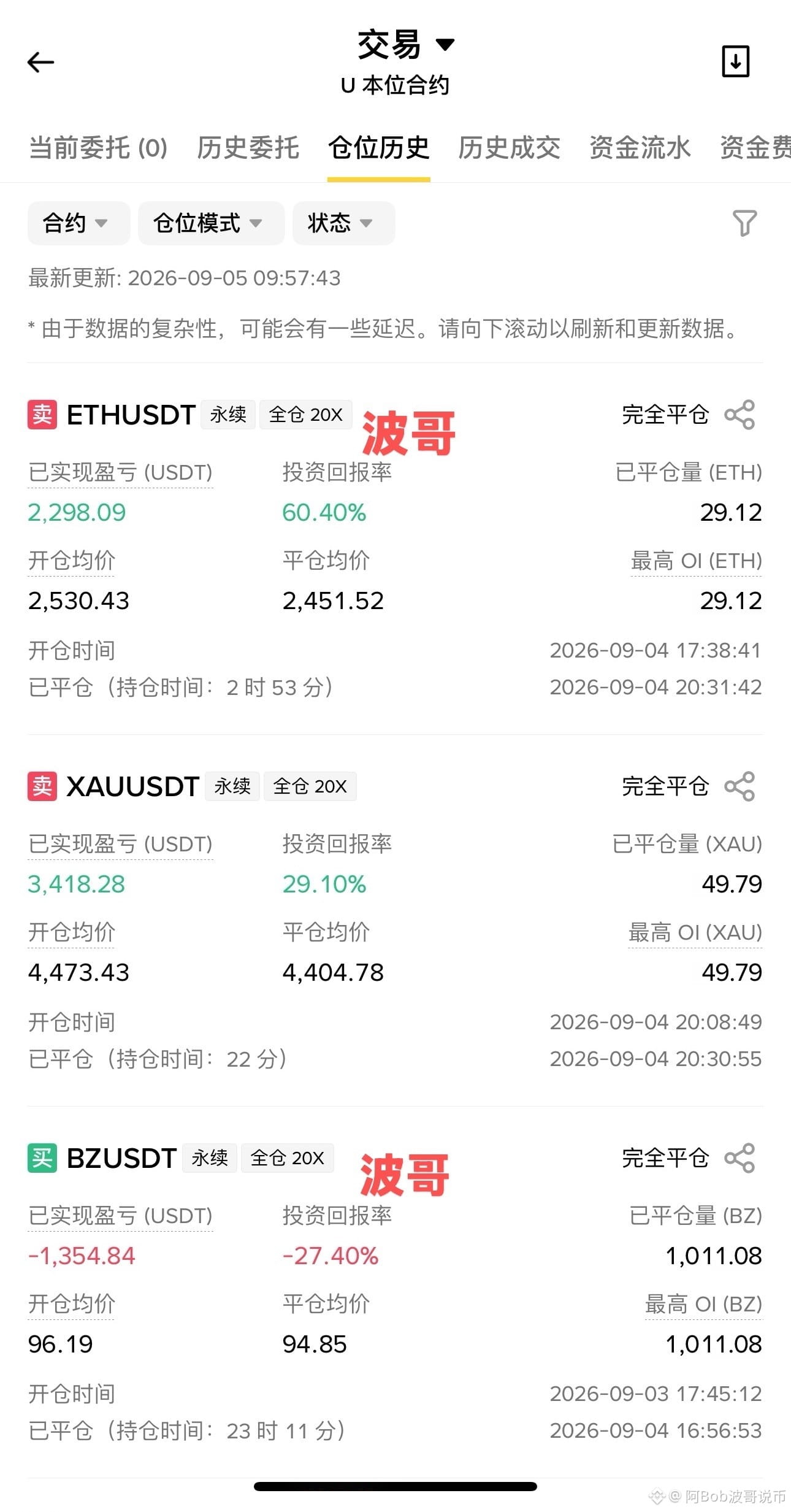
Borrowing money to trade crypto—on the surface it looks like leverage, but in reality you’re burying a ticking time bomb for yourself.
A friend of mine was new to the market with not much capital. He thought opportunities were here, and more money would surely mean bigger profits. So he borrowed some money from a friend, added his own savings, and put together 50,000 USDT to enter the market.
At first, the market really did look good. The few coins he bought kept rising, and his account profits soon appeared on the screen. During that period, he was excited every day. He felt like he’d found the key, and even started thinking about supporting himself with this in the future.
But the market won’t follow one person’s expectations. After a pullback, his account began to retreat fast. If the losses were his own money, he might still be able to handle things according to his plan. But since other people’s money was involved, he panicked. He didn’t dare to cut losses. Every time he sold, it meant the loss became real—and it also meant the borrowed money would be even harder to repay. In the end, the market never turned back in time. The losses kept compounding until the account hit zero.
After the money was gone, the hardest thing wasn’t facing the market—it was facing the person who had lent him the money. Later he said: “Losing my own money, I can start over. But losing someone else’s trust—the pressure is completely different.”
Many people don’t realize that the real risk of trading with borrowed funds isn’t the money itself—it’s the mindset. When the pressure mounts, judgment gets distorted. You don’t leave when you should, you can’t wait when you should wait, and in the end trading turns into emotional gambling.
Before entering, ask yourself one question: If you lose all this money, can you still live a normal life? If the answer is no, then it doesn’t belong in your trading account.
#Liquid网络遭3.2亿美元攻击
#美伊互袭油轮冲突升级
A friend of mine was new to the market with not much capital. He thought opportunities were here, and more money would surely mean bigger profits. So he borrowed some money from a friend, added his own savings, and put together 50,000 USDT to enter the market.
At first, the market really did look good. The few coins he bought kept rising, and his account profits soon appeared on the screen. During that period, he was excited every day. He felt like he’d found the key, and even started thinking about supporting himself with this in the future.
But the market won’t follow one person’s expectations. After a pullback, his account began to retreat fast. If the losses were his own money, he might still be able to handle things according to his plan. But since other people’s money was involved, he panicked. He didn’t dare to cut losses. Every time he sold, it meant the loss became real—and it also meant the borrowed money would be even harder to repay. In the end, the market never turned back in time. The losses kept compounding until the account hit zero.
After the money was gone, the hardest thing wasn’t facing the market—it was facing the person who had lent him the money. Later he said: “Losing my own money, I can start over. But losing someone else’s trust—the pressure is completely different.”
Many people don’t realize that the real risk of trading with borrowed funds isn’t the money itself—it’s the mindset. When the pressure mounts, judgment gets distorted. You don’t leave when you should, you can’t wait when you should wait, and in the end trading turns into emotional gambling.
Before entering, ask yourself one question: If you lose all this money, can you still live a normal life? If the answer is no, then it doesn’t belong in your trading account.
#Liquid网络遭3.2亿美元攻击
#美伊互袭油轮冲突升级
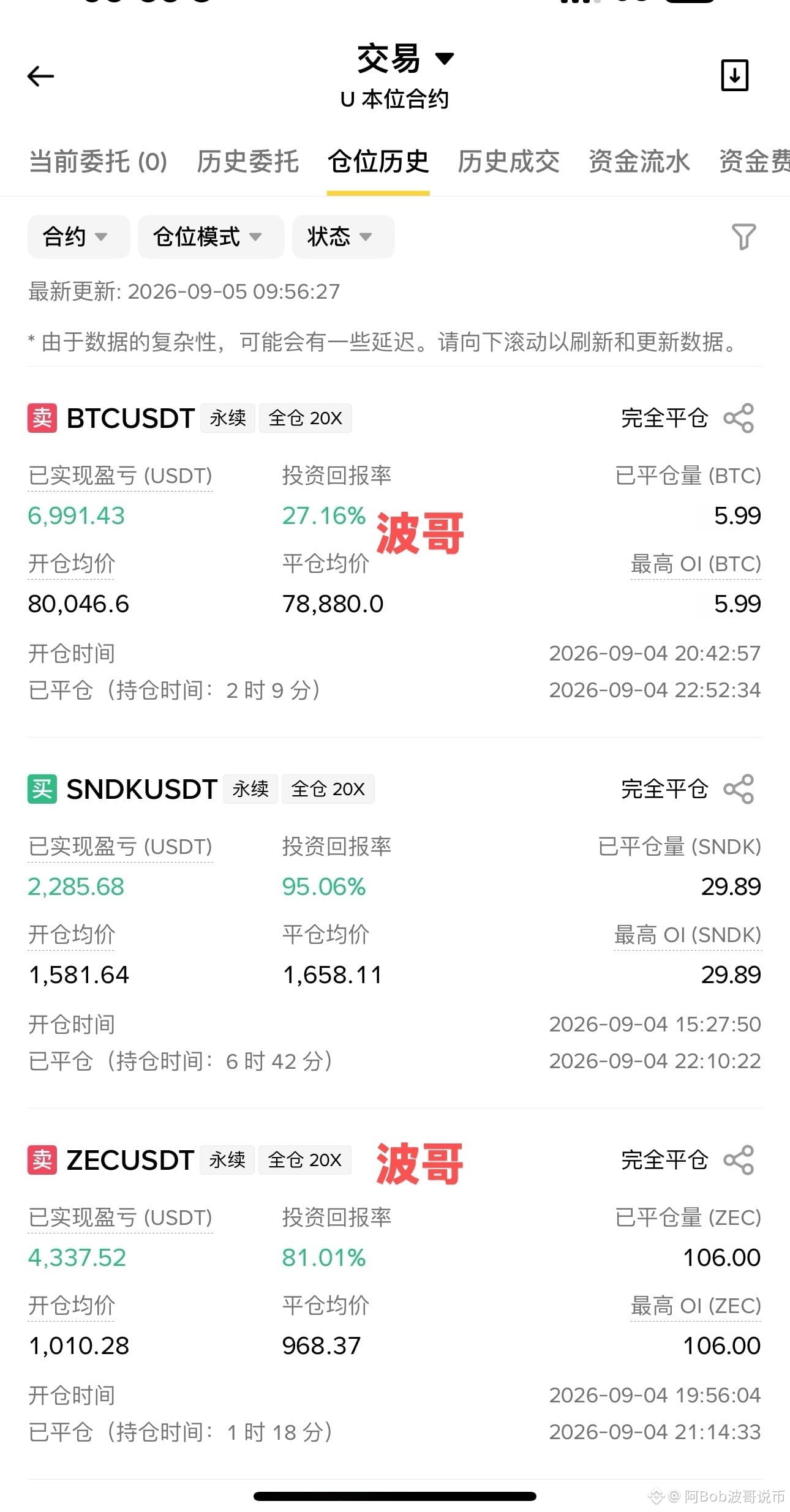
Many people get liquidated on contracts, lose once and then again—and still can’t stop. It’s not that they can’t read the market; it’s that they never really understood what they’re actually trading.
When the platform advertises low leverage, many people think the risk is controllable. With only a small amount of capital in the account, they still insist on opening positions far beyond what they can withstand. They say, “I didn’t open high leverage,” but in reality they’re already using their principal to gamble on the market. One spike or “needle” goes in before the direction is even validated—the position is wiped out first.
Many people don’t lose because of direction; they lose because of position size. Real contract traders never think before placing an order in terms of “how much I can make on this trade,” but rather, “what’s the most I can lose if I’m wrong.” They don’t spend every day chasing the market. Most of the time, they wait—wait for the trend to play out, for price to reach key levels, and for opportunities worth entering. If there’s no setup, they stay flat. Only when there is a setup do they enter. When it hits the target, they exit—no greed.
By contrast, many people place a dozen or more trades a day. They look busy, but their account gets thinner and thinner. In contract trading, what’s valuable isn’t boldness—it’s restraint. When others lose their heads, if you stay clear-headed, you have a chance to last.
Control each trade’s loss. If the direction is right, let the profits run a little longer. Take small losses, capture big wins, and accumulate steadily over time. Don’t treat contracts like a casino. If you try to “go all-in” to turn things around, in the end you won’t even keep your seat at the table.
Those who can truly stay in the game don’t rely on luck, but on discipline executed again and again.
#加拿大对美关税正式生效
#CFTC请求驳回CME诉Kalshi比特币期货案
When the platform advertises low leverage, many people think the risk is controllable. With only a small amount of capital in the account, they still insist on opening positions far beyond what they can withstand. They say, “I didn’t open high leverage,” but in reality they’re already using their principal to gamble on the market. One spike or “needle” goes in before the direction is even validated—the position is wiped out first.
Many people don’t lose because of direction; they lose because of position size. Real contract traders never think before placing an order in terms of “how much I can make on this trade,” but rather, “what’s the most I can lose if I’m wrong.” They don’t spend every day chasing the market. Most of the time, they wait—wait for the trend to play out, for price to reach key levels, and for opportunities worth entering. If there’s no setup, they stay flat. Only when there is a setup do they enter. When it hits the target, they exit—no greed.
By contrast, many people place a dozen or more trades a day. They look busy, but their account gets thinner and thinner. In contract trading, what’s valuable isn’t boldness—it’s restraint. When others lose their heads, if you stay clear-headed, you have a chance to last.
Control each trade’s loss. If the direction is right, let the profits run a little longer. Take small losses, capture big wins, and accumulate steadily over time. Don’t treat contracts like a casino. If you try to “go all-in” to turn things around, in the end you won’t even keep your seat at the table.
Those who can truly stay in the game don’t rely on luck, but on discipline executed again and again.
#加拿大对美关税正式生效
#CFTC请求驳回CME诉Kalshi比特币期货案
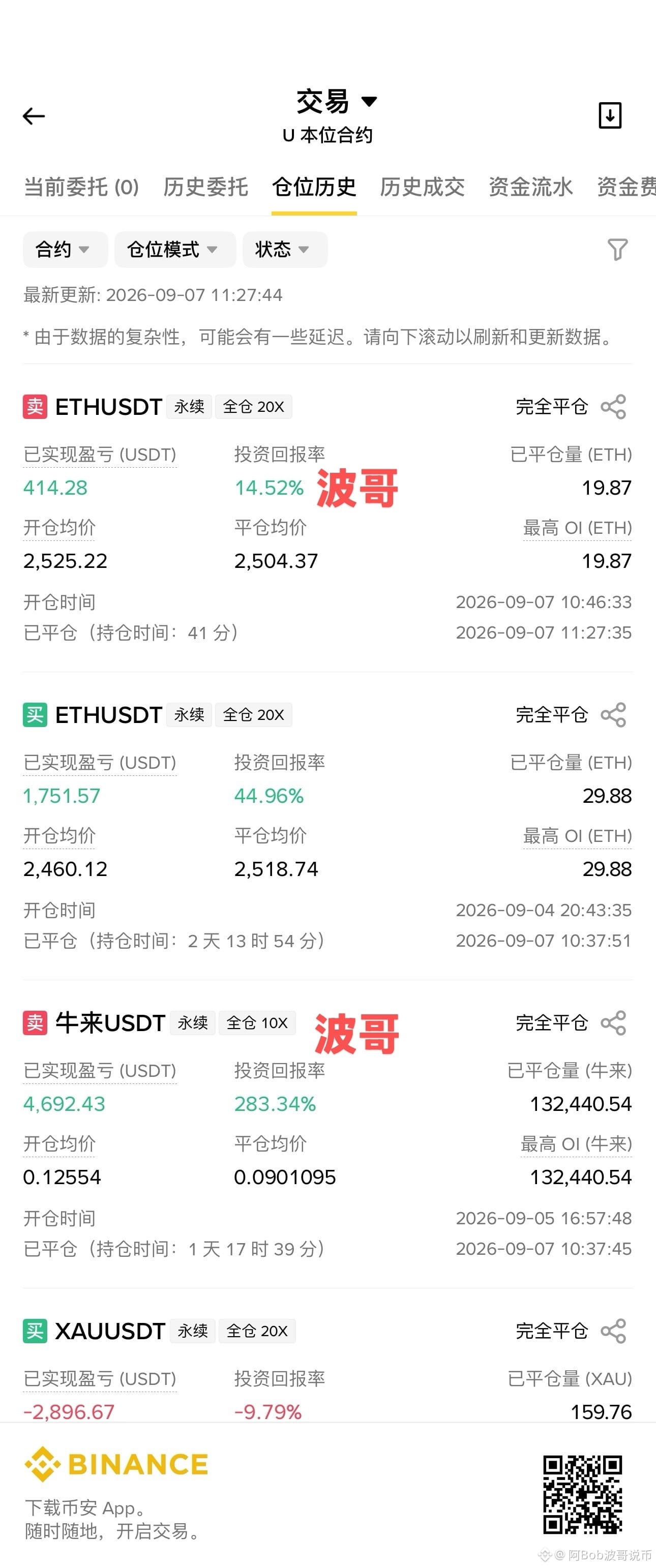
Among the people I’ve trained, the one I remember most isn’t the person who earned the most—it’s a brother who went from 2,800U to 210,000U.
Remember him, because from beginning to end he never asked me a single question like “Can I buy it now?” Most people want answers, but nobody wants to build rules. When he first found me, his account only had 2,800U. Before that, he also chased hot trends, listened to news, and followed what others were making. He didn’t buy less, he just didn’t save more.
I didn’t teach him complicated techniques. I only told him to remember three principles:
First, split your position and keep an exit route. He divided 2,800U into three parts: 900U for short-term trades—only for opportunities he can understand, at most once per day; once completed, exit. 900U for trend swings—move only after the direction becomes clear. The remaining 1,000U is reserve—no matter what, don’t recklessly touch it.
Second, only trade markets with certainty. No ranging markets. No unclear direction. Many people lose money because they treat waiting as wasted time, and frequent trading as “effort.” Real good opportunities aren’t that plentiful—there just aren’t that many of them in a year.
Third, rules are fixed; emotions take a back seat. Cut losses when you hit the point to exit. Take profit when you reach the profit point to close. As the account grows, withdraw part of the profits in time—so floating gains don’t turn into illusions.
Five months later, he reached 210,000U. The biggest change wasn’t the number—it was his mindset. He used to anxiously stare at the charts every day. Now he spends only a few minutes checking opportunities each day: if it fits, he trades; if it doesn’t, he waits.
With small capital, you build big results—not by gambling one shot, but by giving yourself countless chances to restart.
#IMF称萨尔瓦多购币未用公共资金
#美伊互袭油轮冲突升级
Remember him, because from beginning to end he never asked me a single question like “Can I buy it now?” Most people want answers, but nobody wants to build rules. When he first found me, his account only had 2,800U. Before that, he also chased hot trends, listened to news, and followed what others were making. He didn’t buy less, he just didn’t save more.
I didn’t teach him complicated techniques. I only told him to remember three principles:
First, split your position and keep an exit route. He divided 2,800U into three parts: 900U for short-term trades—only for opportunities he can understand, at most once per day; once completed, exit. 900U for trend swings—move only after the direction becomes clear. The remaining 1,000U is reserve—no matter what, don’t recklessly touch it.
Second, only trade markets with certainty. No ranging markets. No unclear direction. Many people lose money because they treat waiting as wasted time, and frequent trading as “effort.” Real good opportunities aren’t that plentiful—there just aren’t that many of them in a year.
Third, rules are fixed; emotions take a back seat. Cut losses when you hit the point to exit. Take profit when you reach the profit point to close. As the account grows, withdraw part of the profits in time—so floating gains don’t turn into illusions.
Five months later, he reached 210,000U. The biggest change wasn’t the number—it was his mindset. He used to anxiously stare at the charts every day. Now he spends only a few minutes checking opportunities each day: if it fits, he trades; if it doesn’t, he waits.
With small capital, you build big results—not by gambling one shot, but by giving yourself countless chances to restart.
#IMF称萨尔瓦多购币未用公共资金
#美伊互袭油轮冲突升级
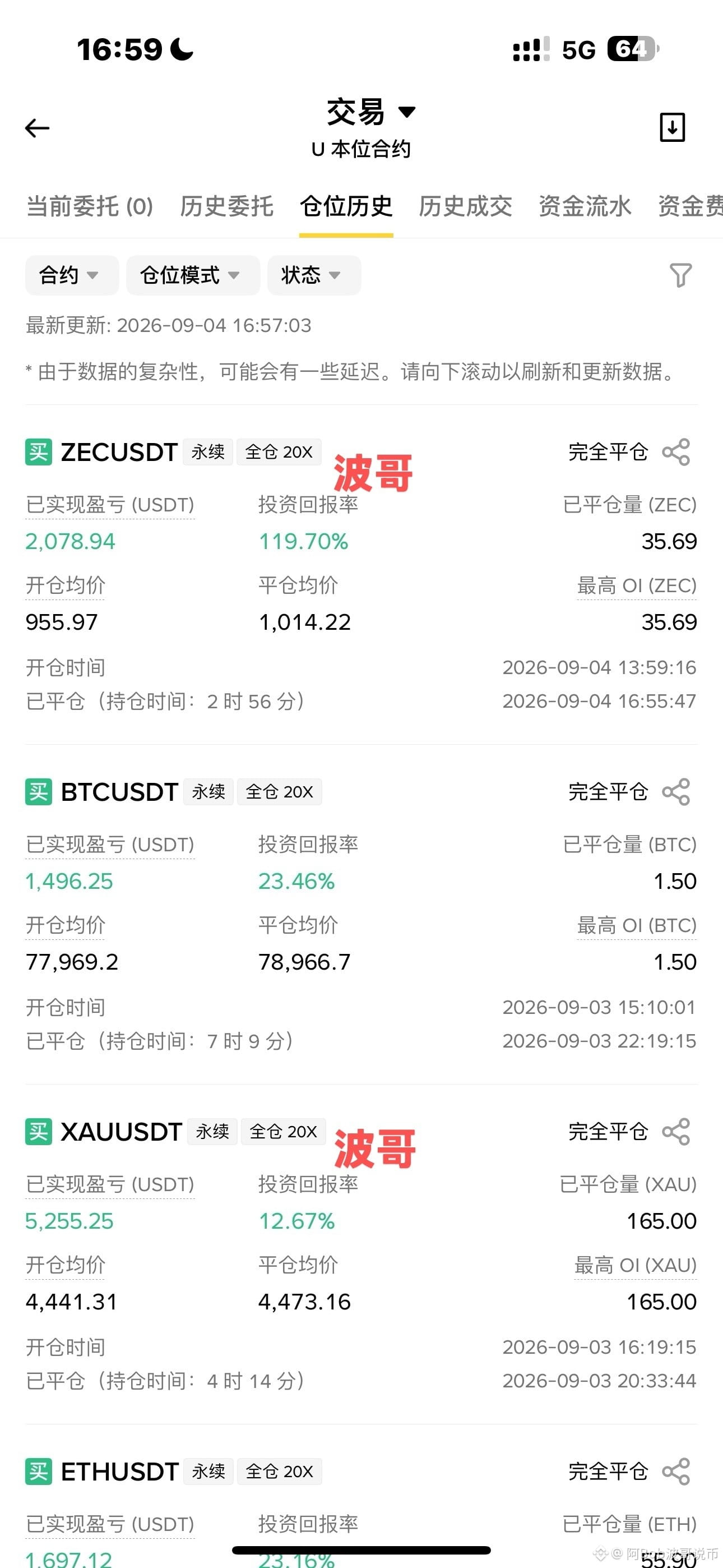
I’ve seen all kinds of people come in, go out, and come back again and again. Only at the end did I slowly understand one thing—that the endpoint of trading isn’t financial freedom, and it isn’t fast cars and beautiful women. It’s grinding your mindset down, clearing away all unnecessary thoughts.
Many people study candlestick charts, indicators, and all sorts of strategies, but they ignore the most important point: trading is essentially a game of battling with yourself. One mistake may only cost you money, but if you keep letting emotions drive you, in the end you’ll lose judgment, lose confidence, and even lose your life’s rhythm.
I constantly remind myself of these few things:
Don’t let losses get out of control. Many people don’t miss the direction—they refuse to admit it after being wrong. If you’re down 5%, you think you can still come back; if you’re down 20%, you tell yourself to wait a bit more—then a minor wound turns into a serious injury. Stop-loss isn’t failure; it’s a ticket you leave for your future self to get back into the game.
Don’t worship high profits. Online, there’s always someone posting about doubling in a day, but nobody tells you how many times they blew up before they managed that one doubling. People who can stay steady never rely on grabbing the biggest move in one shot; they rely on controlling risk over the long term, so they can keep sitting at the table.
Before entering, think clearly about whether you can handle it. This path isn’t one where you make money every day. More often, it’s a continuous stretch of uncertainty. What if you don’t have income? What if you keep losing in a row? What if others don’t understand you? If you don’t have answers to these questions, trading easily becomes a burden.
Find a simple method, and stick with it. The more indicators you add, the more confused your mind becomes. Moving averages, volume, structure—pick one that you understand and can execute. Doing that to the end is stronger by a hundredfold than constantly switching things up.
Don’t fight the market. The market won’t be wrong—only you will. If you misjudge the direction, adjust. If your timing gets messy, stop. Mature traders aren’t always winners; they’re people who, when they lose, lose less—and when they win, can hold on.
There’s no shortcut on this road. If you can make it to the end, it’s not luck—it’s discipline, patience, and the ability to pull yourself back onto the right track again and again.
In the end, trading isn’t about who charges in hardest. It’s about who can keep those rules they’re supposed to keep—honestly and consistently.
#CFTC请求驳回CME诉Kalshi比特币期货案
#加拿大对美关税正式生效
Many people study candlestick charts, indicators, and all sorts of strategies, but they ignore the most important point: trading is essentially a game of battling with yourself. One mistake may only cost you money, but if you keep letting emotions drive you, in the end you’ll lose judgment, lose confidence, and even lose your life’s rhythm.
I constantly remind myself of these few things:
Don’t let losses get out of control. Many people don’t miss the direction—they refuse to admit it after being wrong. If you’re down 5%, you think you can still come back; if you’re down 20%, you tell yourself to wait a bit more—then a minor wound turns into a serious injury. Stop-loss isn’t failure; it’s a ticket you leave for your future self to get back into the game.
Don’t worship high profits. Online, there’s always someone posting about doubling in a day, but nobody tells you how many times they blew up before they managed that one doubling. People who can stay steady never rely on grabbing the biggest move in one shot; they rely on controlling risk over the long term, so they can keep sitting at the table.
Before entering, think clearly about whether you can handle it. This path isn’t one where you make money every day. More often, it’s a continuous stretch of uncertainty. What if you don’t have income? What if you keep losing in a row? What if others don’t understand you? If you don’t have answers to these questions, trading easily becomes a burden.
Find a simple method, and stick with it. The more indicators you add, the more confused your mind becomes. Moving averages, volume, structure—pick one that you understand and can execute. Doing that to the end is stronger by a hundredfold than constantly switching things up.
Don’t fight the market. The market won’t be wrong—only you will. If you misjudge the direction, adjust. If your timing gets messy, stop. Mature traders aren’t always winners; they’re people who, when they lose, lose less—and when they win, can hold on.
There’s no shortcut on this road. If you can make it to the end, it’s not luck—it’s discipline, patience, and the ability to pull yourself back onto the right track again and again.
In the end, trading isn’t about who charges in hardest. It’s about who can keep those rules they’re supposed to keep—honestly and consistently.
#CFTC请求驳回CME诉Kalshi比特币期货案
#加拿大对美关税正式生效
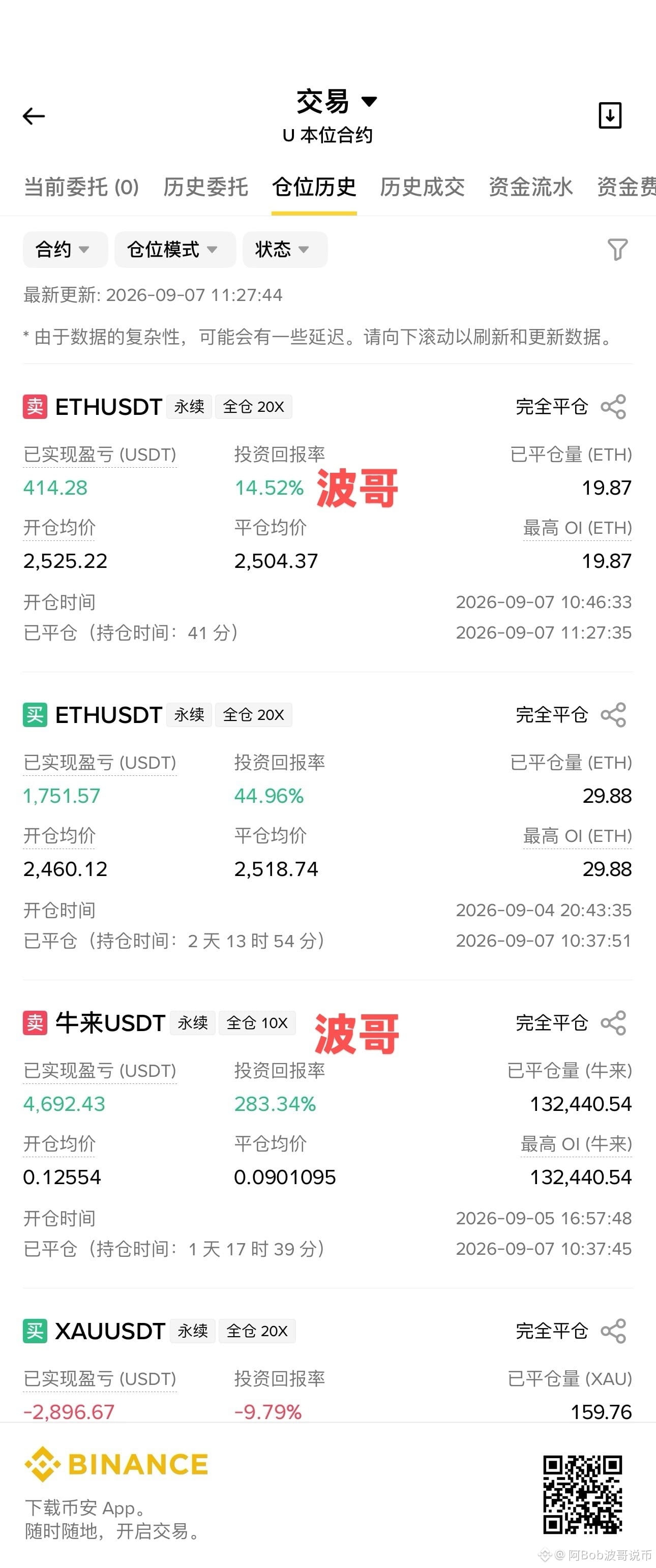
A coin drops from 100 to 80—you think you can wait for 60; but when it really falls to 60, you’re afraid there might still be another 40. By the time it climbs all the way back to 120, you finally react—you realize you’ve missed an entire stretch of the market. You got the direction right, but you made not a single cent.
This isn’t a problem of your judgment. It’s because you’re waiting for a “perfect entry point” that doesn’t exist. The market won’t tell you in advance where the bottom is or where the top is. It only reveals the answer after the move is already done.
Mature traders don’t try to make precise predictions—they make choices with higher probabilities. When the signals begin to line up—like the trend turning stronger, changes in trading volume appearing, and the price reclaiming key levels—then it’s worth considering entering in batches.
Even if your entry isn’t the lowest price, it doesn’t matter. The money you make comes from holding onto the money in a continuing trend, not from guessing the bottom. Many people don’t really “buy wrong”—they just keep waiting forever for a spot they’ll feel satisfied with. And the longer they wait, the more they miss. Real profit-makers allow themselves to buy a little expensive, but they don’t allow themselves to miss certainty. Building in batches can reduce cost, stop-losses can control risk, and adding positions after trend confirmation is far more reliable than trying to call the top or bottom.
You don’t need to buy at the absolute lowest every time, and you don’t need to sell at the absolute highest every time. If you can catch the portion of the market that belongs to you—something you can actually read and understand—that’s already more than good enough.
Want to learn how to spot certainty and keep your timing steady? Come chat with Boge.
#Liquid网络遭3.2亿美元攻击
#CFTC请求驳回CME诉Kalshi比特币期货案
This isn’t a problem of your judgment. It’s because you’re waiting for a “perfect entry point” that doesn’t exist. The market won’t tell you in advance where the bottom is or where the top is. It only reveals the answer after the move is already done.
Mature traders don’t try to make precise predictions—they make choices with higher probabilities. When the signals begin to line up—like the trend turning stronger, changes in trading volume appearing, and the price reclaiming key levels—then it’s worth considering entering in batches.
Even if your entry isn’t the lowest price, it doesn’t matter. The money you make comes from holding onto the money in a continuing trend, not from guessing the bottom. Many people don’t really “buy wrong”—they just keep waiting forever for a spot they’ll feel satisfied with. And the longer they wait, the more they miss. Real profit-makers allow themselves to buy a little expensive, but they don’t allow themselves to miss certainty. Building in batches can reduce cost, stop-losses can control risk, and adding positions after trend confirmation is far more reliable than trying to call the top or bottom.
You don’t need to buy at the absolute lowest every time, and you don’t need to sell at the absolute highest every time. If you can catch the portion of the market that belongs to you—something you can actually read and understand—that’s already more than good enough.
Want to learn how to spot certainty and keep your timing steady? Come chat with Boge.
#Liquid网络遭3.2亿美元攻击
#CFTC请求驳回CME诉Kalshi比特币期货案
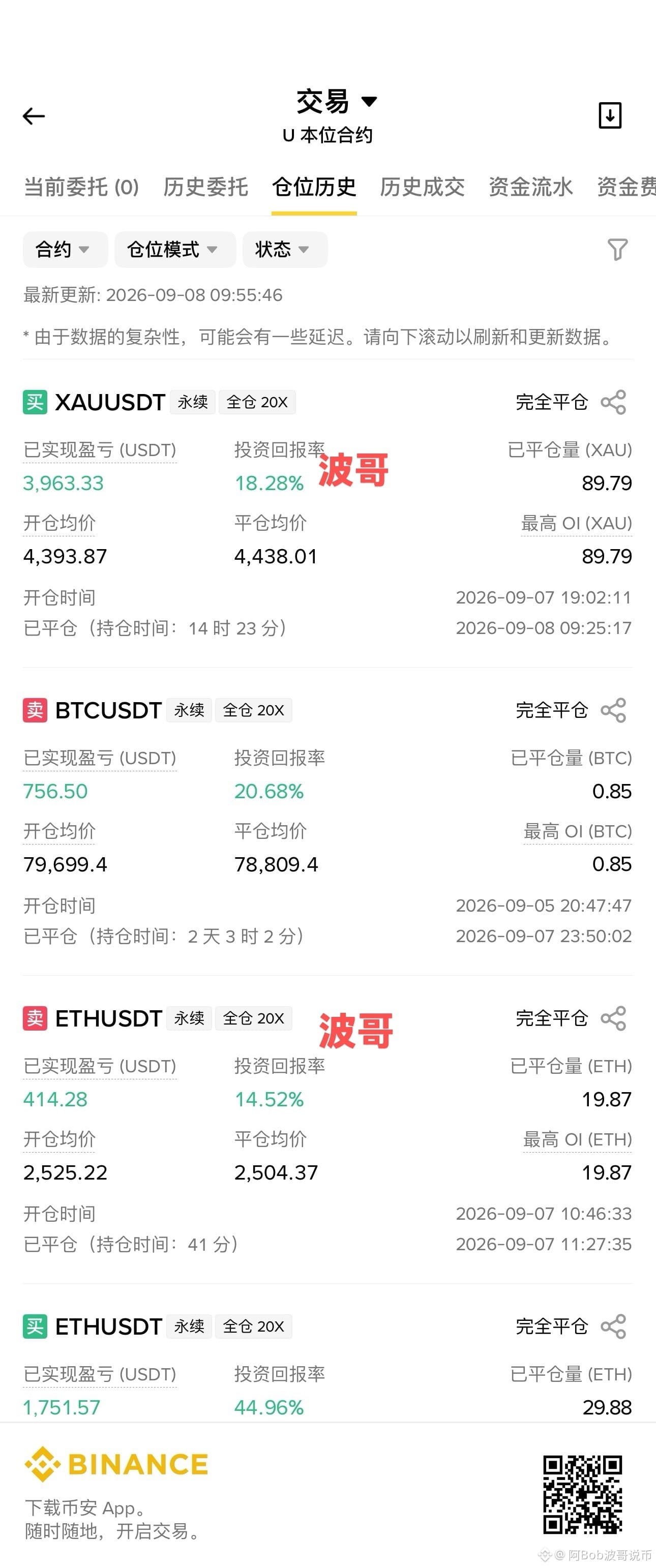
Behind the rise and fall are capital, sentiment, and trends. If you only stare at the candlestick chart, you can’t see through it.
To survive, first avoid three things:
First, don’t chase when you see things going up. A continuous rally is the easiest to get carried away. Worried about missing out, people rush in and often buy at the peak of a phase. Opportunities aren’t chased out—they’re found when the market cools down and gives you a position. When you’re anxious, the market isn’t. When you’re calm, opportunities come.
Second, don’t concentrate everything into a single asset. Even the best projects can have unexpected events. If you put too much in one place, one mistake can be hard to bear. Diversifying isn’t meant to make you earn more—it’s to leave yourself a way out. When you have cards in hand, you don’t panic.
Third, don’t stay fully invested for the long term. Holding cash isn’t a waste—it’s what gives you ammunition when a big opportunity finally arrives. People who are fully invested get greedy when it rises and panic when it falls. They’re always passive.
Don’t chase during high-level consolidation. Don’t cut during low-level consolidation. If the direction is unclear, wait. The most grinding thing about trading sideways isn’t the technique—it’s patience.
It’s easy for one person to go off-balance. If you keep your rhythm steady, the ones who follow will have a chance. Those who understand are already on the train. If you haven’t boarded yet, come chat with Bo-ge.
#SideSwap暂停Liquid服务
#IMF称萨尔瓦多购币未用公共资金
To survive, first avoid three things:
First, don’t chase when you see things going up. A continuous rally is the easiest to get carried away. Worried about missing out, people rush in and often buy at the peak of a phase. Opportunities aren’t chased out—they’re found when the market cools down and gives you a position. When you’re anxious, the market isn’t. When you’re calm, opportunities come.
Second, don’t concentrate everything into a single asset. Even the best projects can have unexpected events. If you put too much in one place, one mistake can be hard to bear. Diversifying isn’t meant to make you earn more—it’s to leave yourself a way out. When you have cards in hand, you don’t panic.
Third, don’t stay fully invested for the long term. Holding cash isn’t a waste—it’s what gives you ammunition when a big opportunity finally arrives. People who are fully invested get greedy when it rises and panic when it falls. They’re always passive.
Don’t chase during high-level consolidation. Don’t cut during low-level consolidation. If the direction is unclear, wait. The most grinding thing about trading sideways isn’t the technique—it’s patience.
It’s easy for one person to go off-balance. If you keep your rhythm steady, the ones who follow will have a chance. Those who understand are already on the train. If you haven’t boarded yet, come chat with Bo-ge.
#SideSwap暂停Liquid服务
#IMF称萨尔瓦多购币未用公共资金
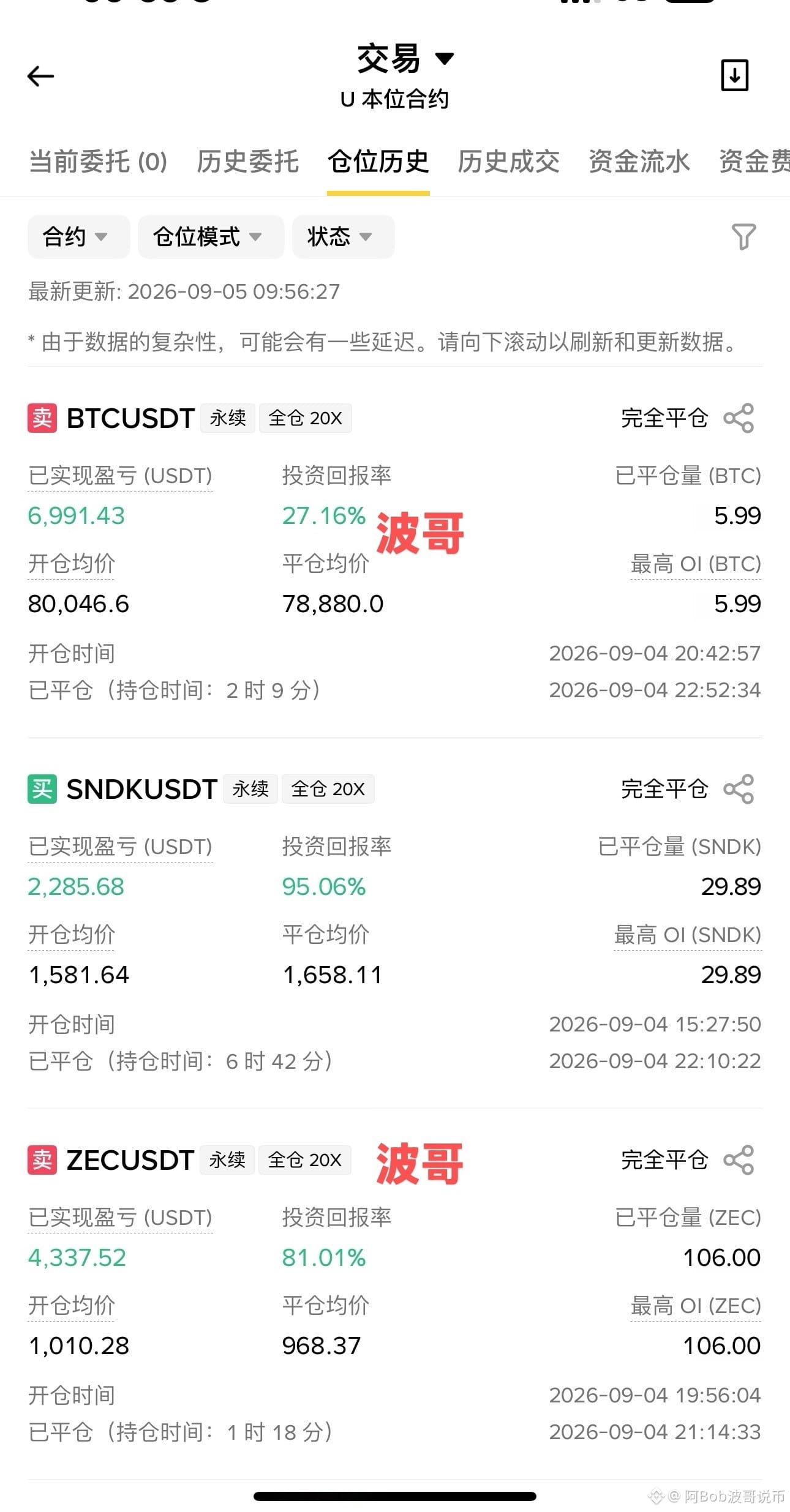
Short-term trading isn’t based on instinct—it’s built on accumulation.
The real short-term trading is established on extensive observation, reflection, and validation. By studying enough candlestick charts and researching how price behaves across different timeframes, you can form a set of judgment rules with a probability edge.
What people call “patterns” can only indicate a probabilistic direction. Behind the market are emotions, news, and multi-party game play—no one can be 100% accurate.
So what exactly should you do? Keep reviewing past trades. Identify under what conditions similar price action occurred, and after which signals the move is more likely to continue. Candlesticks don’t only reflect volatility; they also reveal traces of fund flow.
Some products slide steadily from the upper range with very little fluctuation—classic cases of “nobody manages it, and there’s no资金 lifting it.” Retail investors are still stuck in it, holding on to the end: turning a short-term position into a medium-term one, and then into something that gets carried on for years—don’t even touch such targets.
Newcomers, remember a few things: before entering, look at the win rate—prefer doing less over doing things randomly. Be content with profits; stay calm when you lose; don’t argue with the trades or fight the market. Having someone guide you can make it faster, but the key is whether you can stop and summarize on your own.
Turning over your account isn’t something you can “scroll” your way into. If you really want to change, decide on your method early. Only when your pace is stable can you talk about returns.
The real short-term trading is established on extensive observation, reflection, and validation. By studying enough candlestick charts and researching how price behaves across different timeframes, you can form a set of judgment rules with a probability edge.
What people call “patterns” can only indicate a probabilistic direction. Behind the market are emotions, news, and multi-party game play—no one can be 100% accurate.
So what exactly should you do? Keep reviewing past trades. Identify under what conditions similar price action occurred, and after which signals the move is more likely to continue. Candlesticks don’t only reflect volatility; they also reveal traces of fund flow.
Some products slide steadily from the upper range with very little fluctuation—classic cases of “nobody manages it, and there’s no资金 lifting it.” Retail investors are still stuck in it, holding on to the end: turning a short-term position into a medium-term one, and then into something that gets carried on for years—don’t even touch such targets.
Newcomers, remember a few things: before entering, look at the win rate—prefer doing less over doing things randomly. Be content with profits; stay calm when you lose; don’t argue with the trades or fight the market. Having someone guide you can make it faster, but the key is whether you can stop and summarize on your own.
Turning over your account isn’t something you can “scroll” your way into. If you really want to change, decide on your method early. Only when your pace is stable can you talk about returns.
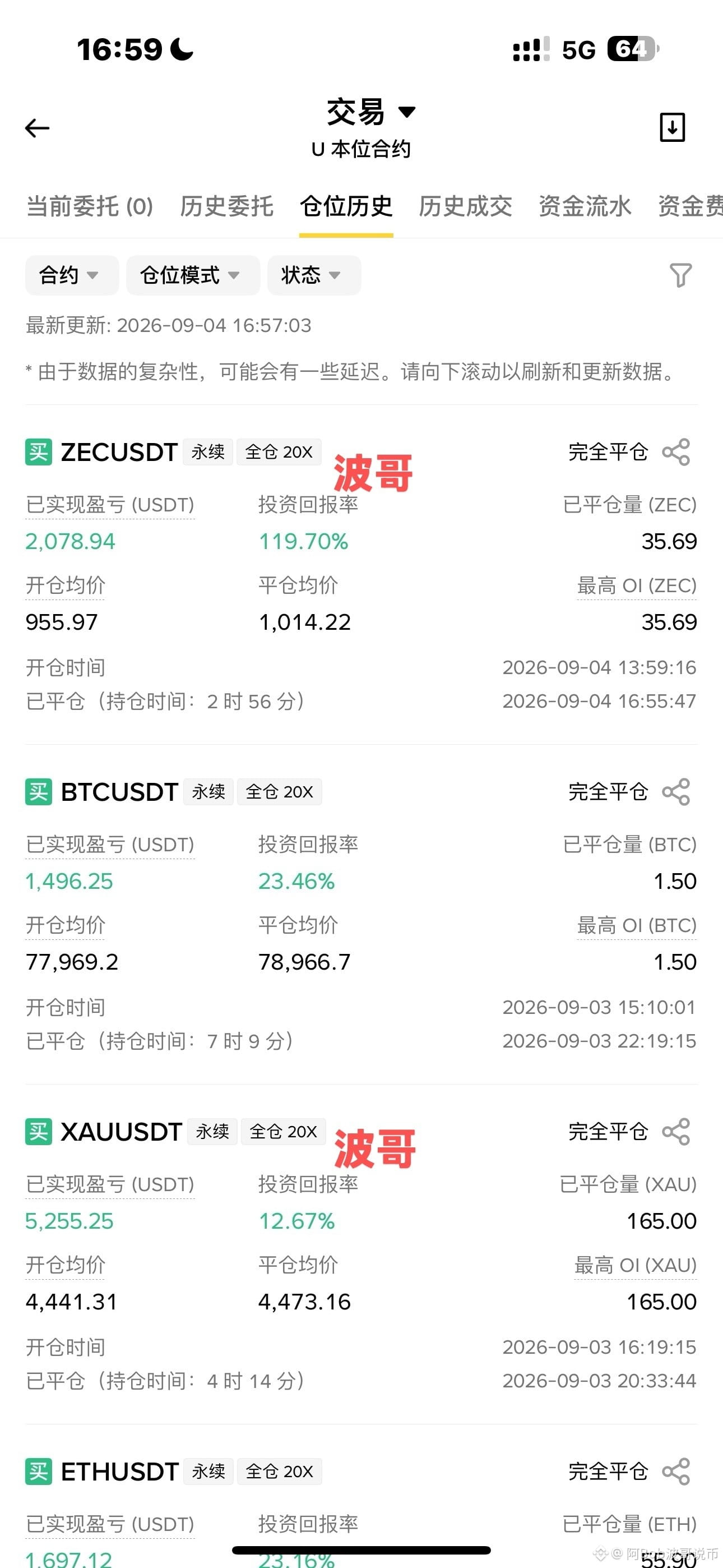
Most people never really understand the whole “rolling the warehouse” thing.
You have the right direction—and it still explodes in the end. Why? You fill the initial position to the max, then hold on no matter what. A normal pullback wipes you out and you’re forced out.
People who know how to roll do it differently. The first entry is only 10%. Once you have enough unrealized profit, you add the second tranche. The new position uses break-even stops to control downside. As price moves, you lock in profits step by step. You take out the original principal first when you’ve doubled, so whatever happens, you only risk profit—at any pullback, you’re merely giving back gains. Your principal is left completely unharmed.
What about those who don’t know how to roll? They accumulate a lot of unrealized profit, but don’t reduce positions or withdraw funds. Then when a pullback comes, they give back all the profit. If they stubbornly hold on with the principal as well, they end up losing it too.
Direction determines whether you can stay alive. Rolling determines how much you can take away. Even if you’re right about direction, if you don’t know how to roll, profit is just a number. People who know how to roll can eat a whole move when they’re right; when they’re wrong, they only lose a little.
If you’ve been blown out of a position, don’t blame luck. What you’re missing is a set of rules for rolling.
Want to learn how to roll and how to guard your gains? Come chat with Bo.
@阿Bob波哥说币
#美伊互袭油轮冲突升级
You have the right direction—and it still explodes in the end. Why? You fill the initial position to the max, then hold on no matter what. A normal pullback wipes you out and you’re forced out.
People who know how to roll do it differently. The first entry is only 10%. Once you have enough unrealized profit, you add the second tranche. The new position uses break-even stops to control downside. As price moves, you lock in profits step by step. You take out the original principal first when you’ve doubled, so whatever happens, you only risk profit—at any pullback, you’re merely giving back gains. Your principal is left completely unharmed.
What about those who don’t know how to roll? They accumulate a lot of unrealized profit, but don’t reduce positions or withdraw funds. Then when a pullback comes, they give back all the profit. If they stubbornly hold on with the principal as well, they end up losing it too.
Direction determines whether you can stay alive. Rolling determines how much you can take away. Even if you’re right about direction, if you don’t know how to roll, profit is just a number. People who know how to roll can eat a whole move when they’re right; when they’re wrong, they only lose a little.
If you’ve been blown out of a position, don’t blame luck. What you’re missing is a set of rules for rolling.
Want to learn how to roll and how to guard your gains? Come chat with Bo.
@阿Bob波哥说币
#美伊互袭油轮冲突升级
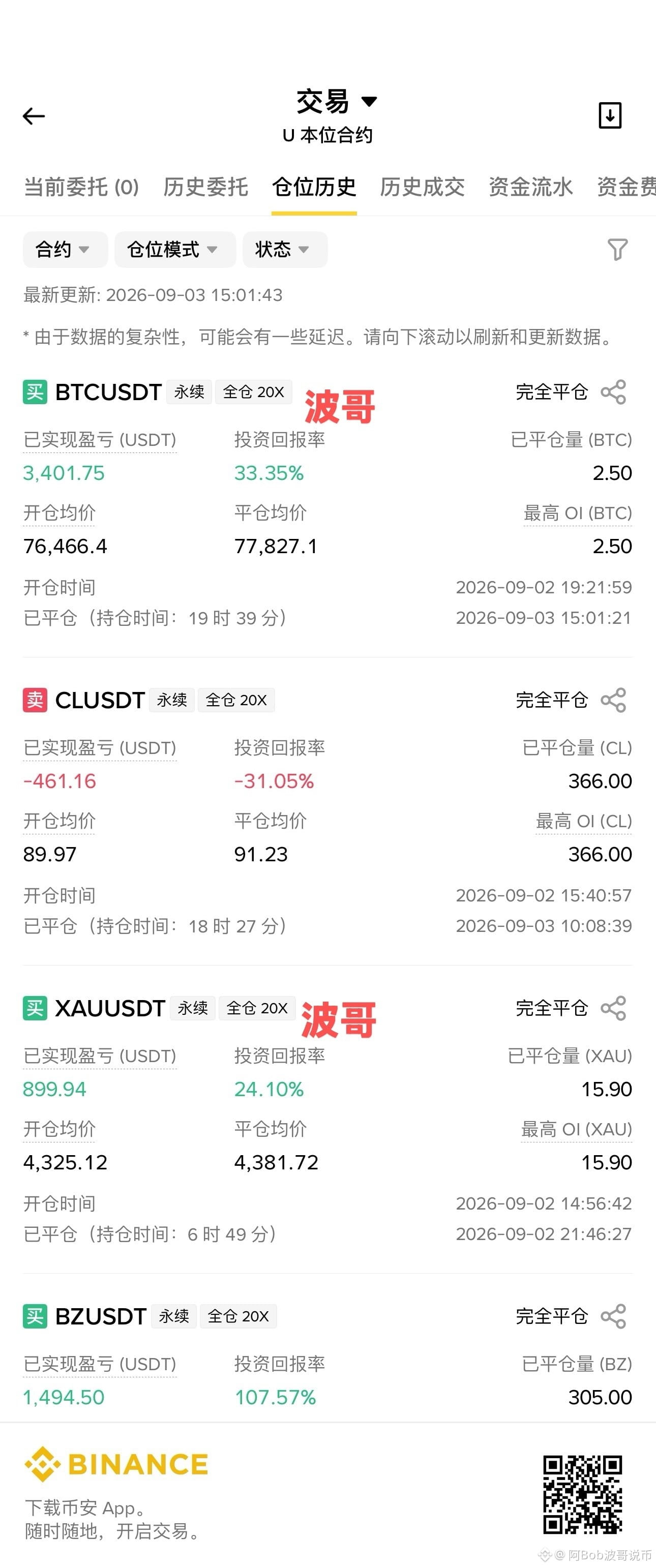
Your account hasn’t reached 10,000 U yet—don’t spend all day thinking about a 10x return. First, protect your account; that matters more than anything.
Over the years, I’ve noticed that when small accounts go to zero, it’s often not because the principal is too small—it’s because people are too impatient. They have a few thousand U and want to gamble on obscure coins, max out leverage, and bet on one-direction moves. By the time the opportunity arrives, the principal has already been wiped out by their own actions.
The reason small funds can grow isn’t luck—it’s discipline over the long term. Only trade trends you understand. Only make money within your knowledge range. When the market starts moving, then follow. When volume and momentum line up, then act. If the signal disappears, get out. Take profits in batches. Cut losses decisively. Do fewer impulsive trades, and your account has an extra bit of confidence to stay alive.
The biggest advantage of small capital is never the prospect of instant wealth—it’s the chance to make mistakes and start over. Get to 10,000 U first, then 20,000, then 50,000. Step by step, compounding is the real underlying logic. In the end, the people who can consistently make money are often not the ones who shout the loudest with trade calls—they’re the ones who stick to the rules the most.
Since your capital isn’t large yet, don’t rush into it. Learn positions, stop-losses, and timing first—then the road will become steadier the further you go.
#俄乌同时宣布停火3天
Over the years, I’ve noticed that when small accounts go to zero, it’s often not because the principal is too small—it’s because people are too impatient. They have a few thousand U and want to gamble on obscure coins, max out leverage, and bet on one-direction moves. By the time the opportunity arrives, the principal has already been wiped out by their own actions.
The reason small funds can grow isn’t luck—it’s discipline over the long term. Only trade trends you understand. Only make money within your knowledge range. When the market starts moving, then follow. When volume and momentum line up, then act. If the signal disappears, get out. Take profits in batches. Cut losses decisively. Do fewer impulsive trades, and your account has an extra bit of confidence to stay alive.
The biggest advantage of small capital is never the prospect of instant wealth—it’s the chance to make mistakes and start over. Get to 10,000 U first, then 20,000, then 50,000. Step by step, compounding is the real underlying logic. In the end, the people who can consistently make money are often not the ones who shout the loudest with trade calls—they’re the ones who stick to the rules the most.
Since your capital isn’t large yet, don’t rush into it. Learn positions, stop-losses, and timing first—then the road will become steadier the further you go.
#俄乌同时宣布停火3天
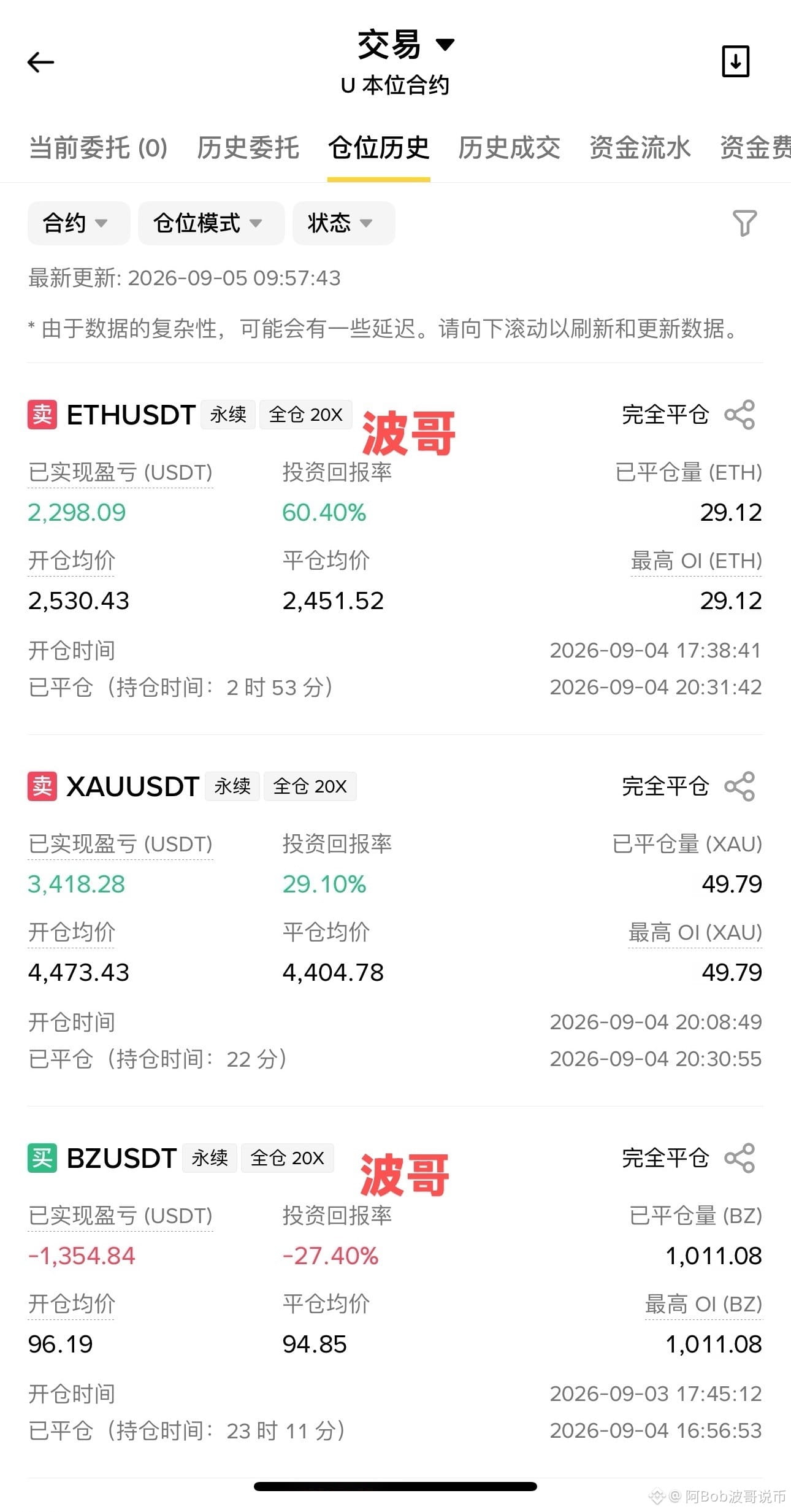
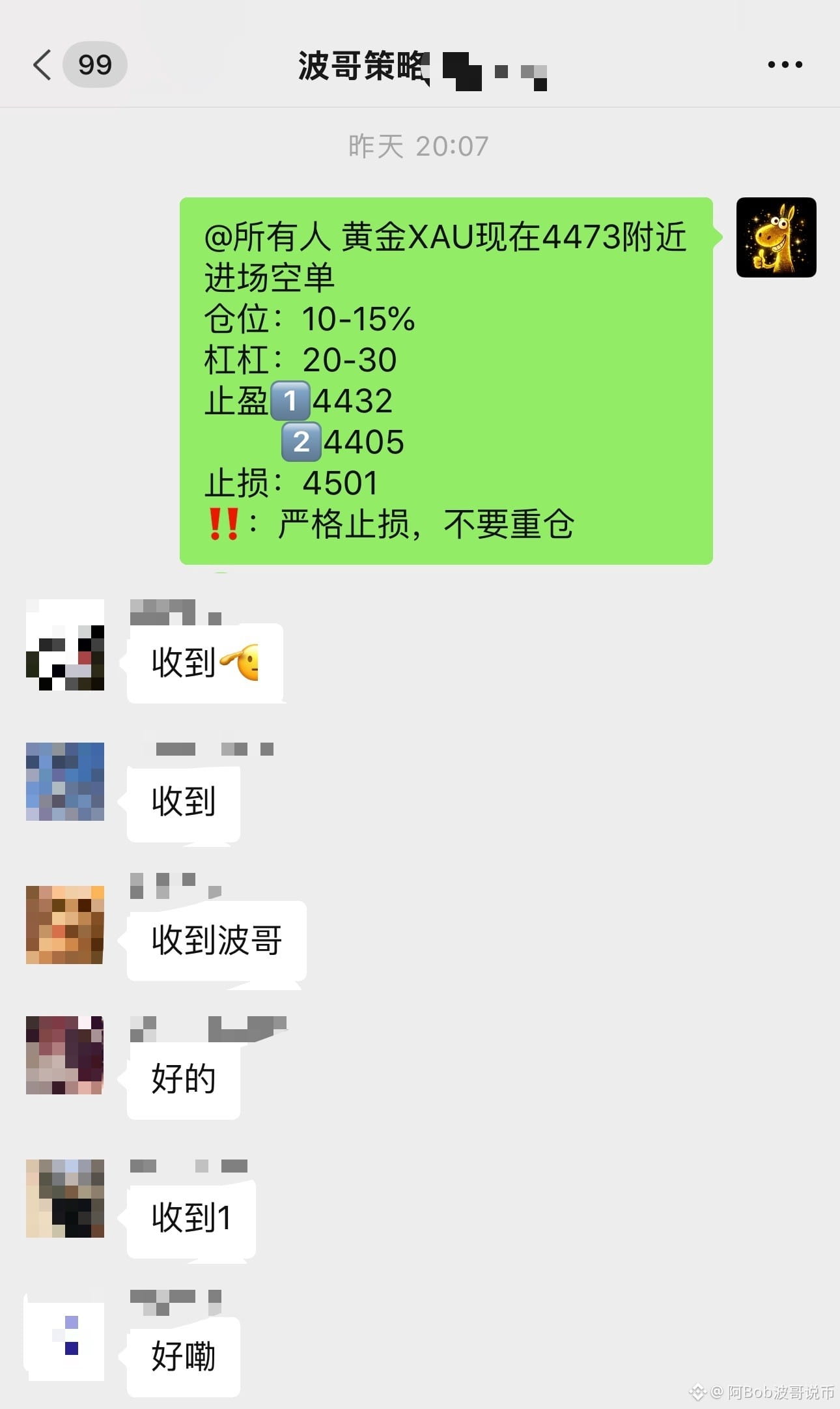

Why is it that things seem fine in the judgment, but the money is gone? Because you care about whether it’s “right,” while the market cares about “when.”
Many people think entering the trade is the beginning of making money, but in the eyes of those who know how to do it, entering is only the first step—locking risk into a controllable range. If the direction is correct, what then? Enter too early, and a normal pullback will shake you out; enter too late, chase at the peak of emotion, and when the price turns, you’re back to losing. Even if the direction is right, if the timing is wrong, you still won’t make money.
I used to be like that too—seeing the direction correctly, but each entry happened at the wrong point. Either I got swept out by the stop-loss, or I couldn’t hold on. Later I finally understood that that single moment of entry matters far more than what direction you think is right.
So now I don’t guess direction or bet on news. I just wait for signals. When the signal arrives, I act; when it doesn’t, I just watch. When the market hasn’t responded, doing nothing is the best move. A lot of the time, when you lose money, it’s not because your judgment is wrong—it’s because you acted too early.
Is technical analysis useful? It is. But technicals can only help you avoid fewer traps. What truly makes you money is something else: when the market is ready to move, do you dare to get in? When the setup looks tempting, can you restrain yourself? Most people can’t do these two things because they can’t hold back impulsiveness, and they can’t make decisive moves.
I used to draw lines every day, copy strategies, and chase the news—the account kept getting thinner. Then someone pointed it out to me, and only after that did I slowly train my sense of timing. Now when I trade, it’s based on timing—not on feelings.
If you’re still trading based on emotions, sooner or later you’ll have to pay tuition. If you truly want to turn things around, you’ll find your way yourself.
#伊朗将设霍尔木兹海峡限制区
Many people think entering the trade is the beginning of making money, but in the eyes of those who know how to do it, entering is only the first step—locking risk into a controllable range. If the direction is correct, what then? Enter too early, and a normal pullback will shake you out; enter too late, chase at the peak of emotion, and when the price turns, you’re back to losing. Even if the direction is right, if the timing is wrong, you still won’t make money.
I used to be like that too—seeing the direction correctly, but each entry happened at the wrong point. Either I got swept out by the stop-loss, or I couldn’t hold on. Later I finally understood that that single moment of entry matters far more than what direction you think is right.
So now I don’t guess direction or bet on news. I just wait for signals. When the signal arrives, I act; when it doesn’t, I just watch. When the market hasn’t responded, doing nothing is the best move. A lot of the time, when you lose money, it’s not because your judgment is wrong—it’s because you acted too early.
Is technical analysis useful? It is. But technicals can only help you avoid fewer traps. What truly makes you money is something else: when the market is ready to move, do you dare to get in? When the setup looks tempting, can you restrain yourself? Most people can’t do these two things because they can’t hold back impulsiveness, and they can’t make decisive moves.
I used to draw lines every day, copy strategies, and chase the news—the account kept getting thinner. Then someone pointed it out to me, and only after that did I slowly train my sense of timing. Now when I trade, it’s based on timing—not on feelings.
If you’re still trading based on emotions, sooner or later you’ll have to pay tuition. If you truly want to turn things around, you’ll find your way yourself.
#伊朗将设霍尔木兹海峡限制区
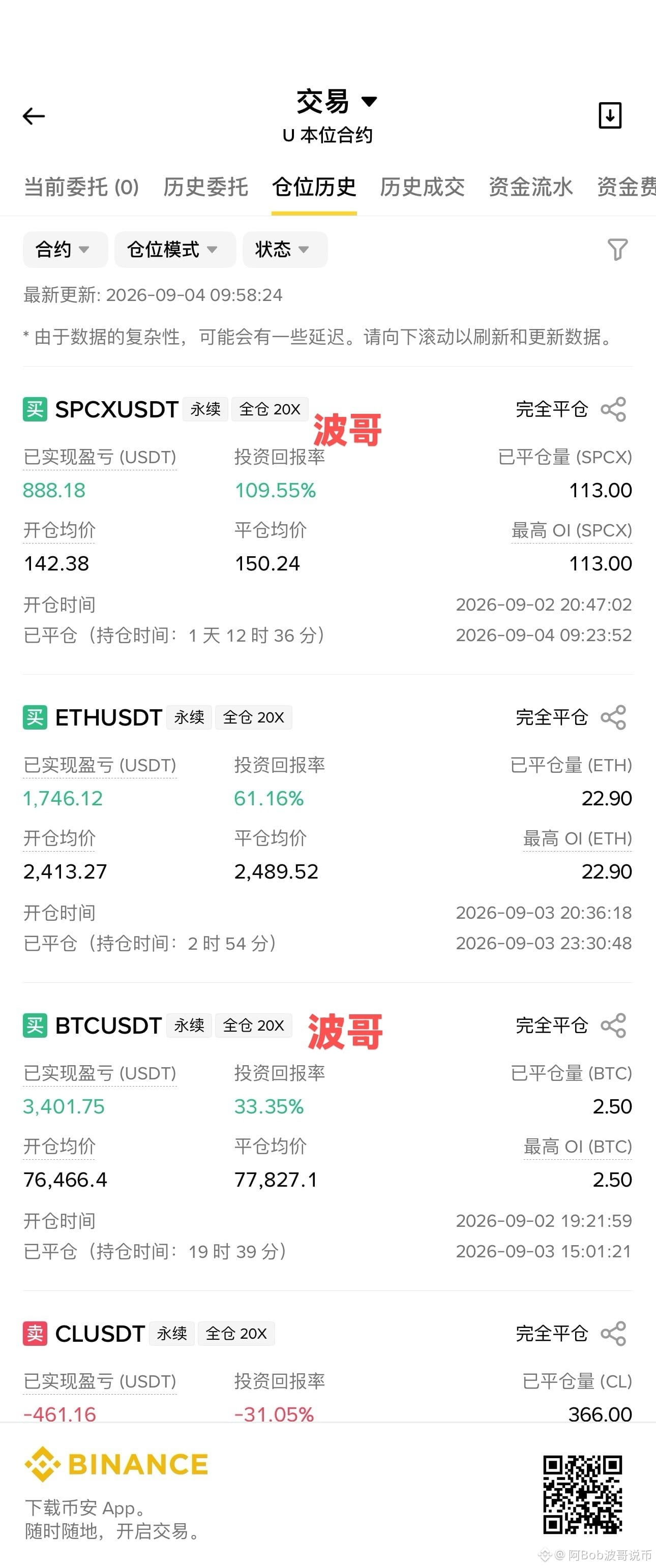
The same problem keeps happening—those who get liquidated are gone, and new ones step in.
The difference is that some people are trading, while others are buying lessons. Every position that gets wiped out is accurately turned into numbers in someone else’s account. That is the underlying structure of the derivatives market.
But why can some people stay in this market for a long time? Because their approach is different. They treat contracts as a tool, not a casino. Most people are in cash 70% of the time, waiting only for market sentiment to reach extremes—buying when panic hits, leaving when frenzy peaks.
Their core comes down to three things: first, stop-loss is not optional; it is mandatory, and a single trade loss is locked within a tolerable range. If they are wrong, they admit it immediately. Second, once the profit is enough, they exit—they do not aim to sell at the highest point, only to take the most certain middle part. Third, they do not act on feeling; they execute only according to signals.
Some ask whether contracts are gambling. In fact, they are not. Those who gamble get liquidated because they are gambling; those who know how to play may still get liquidated, but that is just a normal cost within overall profitability.
If you are still making decisions based on feelings and news, it is better to stop and think about who you are playing against. If you want to change your way of living and learn how to think like a hunter, start by learning how not to let yourself get eliminated so easily.
#俄乌同时宣布停火3天
The difference is that some people are trading, while others are buying lessons. Every position that gets wiped out is accurately turned into numbers in someone else’s account. That is the underlying structure of the derivatives market.
But why can some people stay in this market for a long time? Because their approach is different. They treat contracts as a tool, not a casino. Most people are in cash 70% of the time, waiting only for market sentiment to reach extremes—buying when panic hits, leaving when frenzy peaks.
Their core comes down to three things: first, stop-loss is not optional; it is mandatory, and a single trade loss is locked within a tolerable range. If they are wrong, they admit it immediately. Second, once the profit is enough, they exit—they do not aim to sell at the highest point, only to take the most certain middle part. Third, they do not act on feeling; they execute only according to signals.
Some ask whether contracts are gambling. In fact, they are not. Those who gamble get liquidated because they are gambling; those who know how to play may still get liquidated, but that is just a normal cost within overall profitability.
If you are still making decisions based on feelings and news, it is better to stop and think about who you are playing against. If you want to change your way of living and learn how to think like a hunter, start by learning how not to let yourself get eliminated so easily.
#俄乌同时宣布停火3天
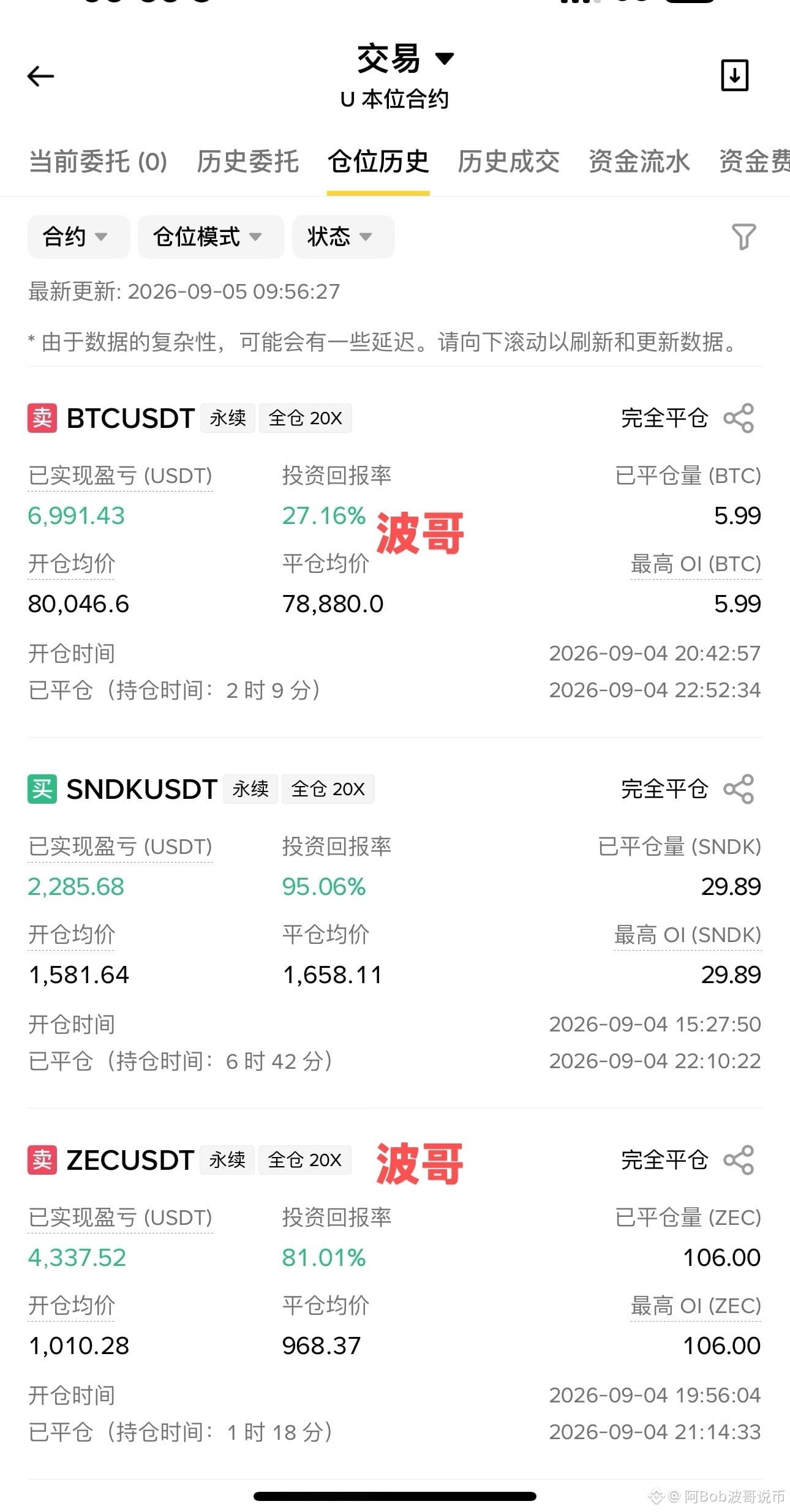
From 1000U to 10k, it relies on rhythm, not mysticism.
It’s a matter of a few days: keep the pace steady, take what should be taken, run when you should run. When the market moves, I get in. While others are still hesitating, I’m already thinking about taking profits.
Every day people DM me asking, “Can you still play with only 800 left?” and “How did you do it?” Brother, it’s not luck—it’s using rhythm to hold the situation down. You think I’m lucky, but you’re still gambling, while I’ve already started controlling it.
You don’t make money because you’re stupid; it’s because no one is guiding you onto the right path. I only help those who are willing to change, willing to fight, and truly want to turn things around. Those who keep doing the opposite while acting tough should go rest early and stop staying up late.
Doubling isn’t the problem; the key is whether you want to change. You spend every day looking at other people’s results, while I’m doubling my own positions every day. Some people make ten times in five days, some blow up ten times in a year. Which kind of person you want to be, I don’t need to say it for you.
#伊朗称袭击3艘美舰3艘油轮
It’s a matter of a few days: keep the pace steady, take what should be taken, run when you should run. When the market moves, I get in. While others are still hesitating, I’m already thinking about taking profits.
Every day people DM me asking, “Can you still play with only 800 left?” and “How did you do it?” Brother, it’s not luck—it’s using rhythm to hold the situation down. You think I’m lucky, but you’re still gambling, while I’ve already started controlling it.
You don’t make money because you’re stupid; it’s because no one is guiding you onto the right path. I only help those who are willing to change, willing to fight, and truly want to turn things around. Those who keep doing the opposite while acting tough should go rest early and stop staying up late.
Doubling isn’t the problem; the key is whether you want to change. You spend every day looking at other people’s results, while I’m doubling my own positions every day. Some people make ten times in five days, some blow up ten times in a year. Which kind of person you want to be, I don’t need to say it for you.
#伊朗称袭击3艘美舰3艘油轮
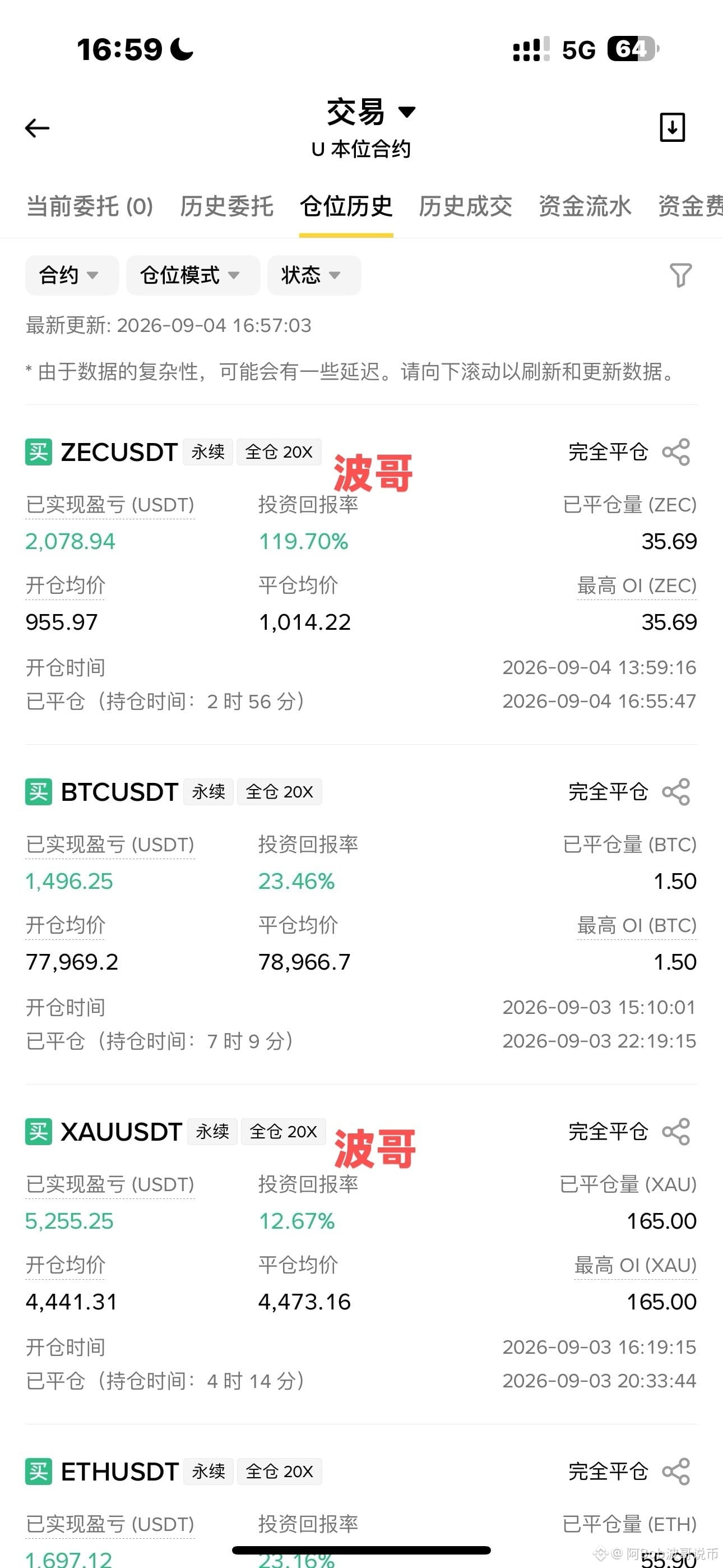
A friend once asked me: “I still have 10,000 U on hand. How can I turn it back around?” I didn’t give him a method. I only asked him one question: “Do you dare to only make 5 trades?”
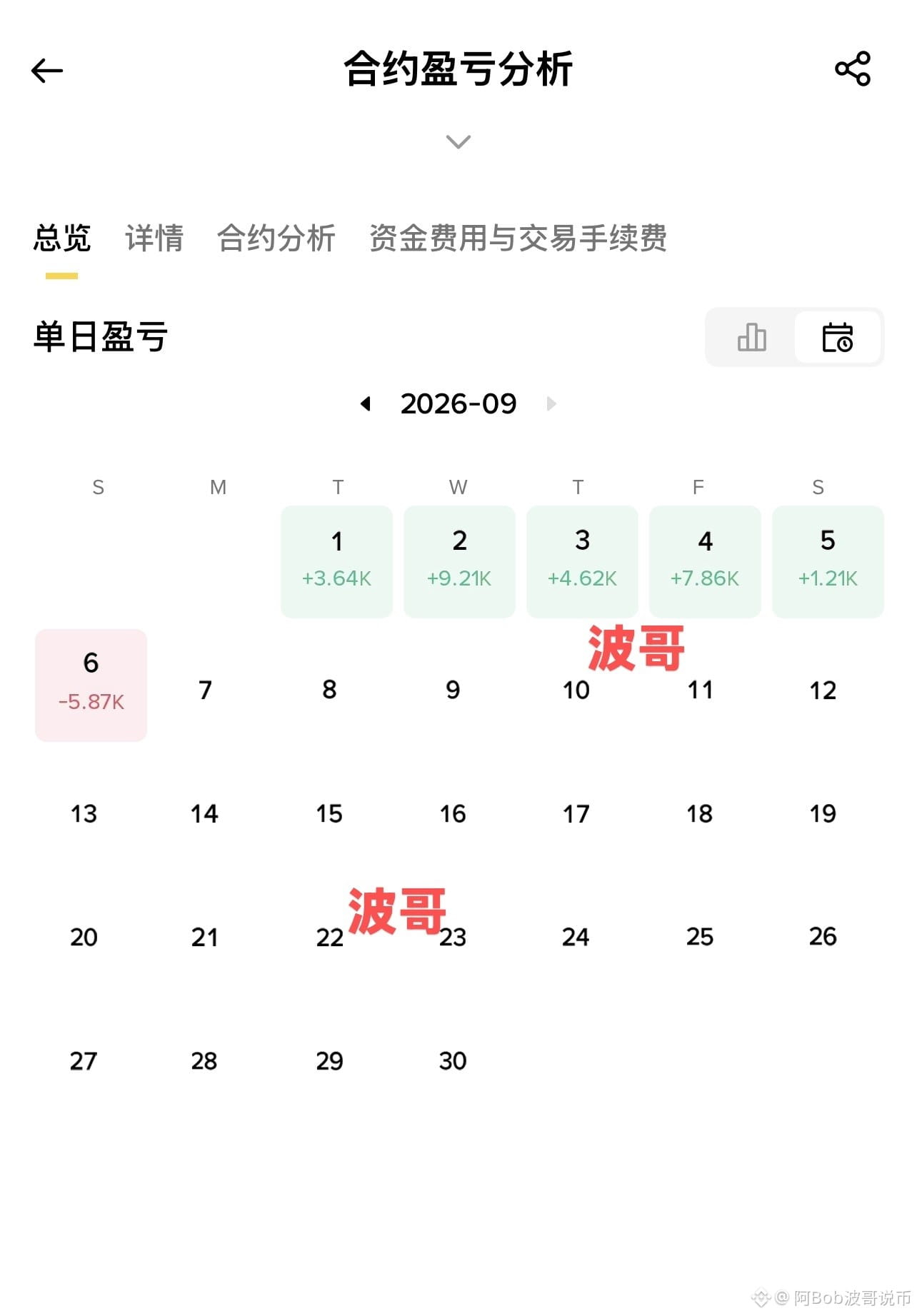
Don’t think I’m joking. That 10,000 U, I later used it to make 78,000. It wasn’t by watching the market all day and trading in and out constantly, but by only taking those opportunities that were truly ready to be acted on.
I used to be greedy too, losing a few hundred here and a few hundred there, thinking it was no big deal. By the time the account had shrunk to just a skeleton, I was numb. Later, I set a rule for myself: at most only a few trades a month, if I was wrong I would only lose a small portion, and if I was right I had to make at least several times more. If I didn’t see a clear signal, I wouldn’t move, wouldn’t gamble, and wouldn’t follow the crowd.
The first time, I went heavy long on ETH at a key structural level and took a solid profit within a few hours. Later, during that BTC rally, I got in ahead of time and directly punched through the position. I got one trade wrong out of several, but every other one paid through; after a few months, the account grew from 10,000 to 78,000. This wasn’t luck. It was putting all my energy into “rhythm” and “certainty.”
Many people can’t turn things around, not because they lack skill, but because they can’t control themselves. If you really want to turn it around, ask yourself one question: do you dare to stay steady after one mistake, and explode after one win?
It’s really hard for one person to go far alone. Finding the right direction matters much more than just forcing yourself to keep going alone.
#伊朗将设霍尔木兹海峡限制区
Don’t think I’m joking. That 10,000 U, I later used it to make 78,000. It wasn’t by watching the market all day and trading in and out constantly, but by only taking those opportunities that were truly ready to be acted on.
I used to be greedy too, losing a few hundred here and a few hundred there, thinking it was no big deal. By the time the account had shrunk to just a skeleton, I was numb. Later, I set a rule for myself: at most only a few trades a month, if I was wrong I would only lose a small portion, and if I was right I had to make at least several times more. If I didn’t see a clear signal, I wouldn’t move, wouldn’t gamble, and wouldn’t follow the crowd.
The first time, I went heavy long on ETH at a key structural level and took a solid profit within a few hours. Later, during that BTC rally, I got in ahead of time and directly punched through the position. I got one trade wrong out of several, but every other one paid through; after a few months, the account grew from 10,000 to 78,000. This wasn’t luck. It was putting all my energy into “rhythm” and “certainty.”
Many people can’t turn things around, not because they lack skill, but because they can’t control themselves. If you really want to turn it around, ask yourself one question: do you dare to stay steady after one mistake, and explode after one win?
It’s really hard for one person to go far alone. Finding the right direction matters much more than just forcing yourself to keep going alone.
#伊朗将设霍尔木兹海峡限制区
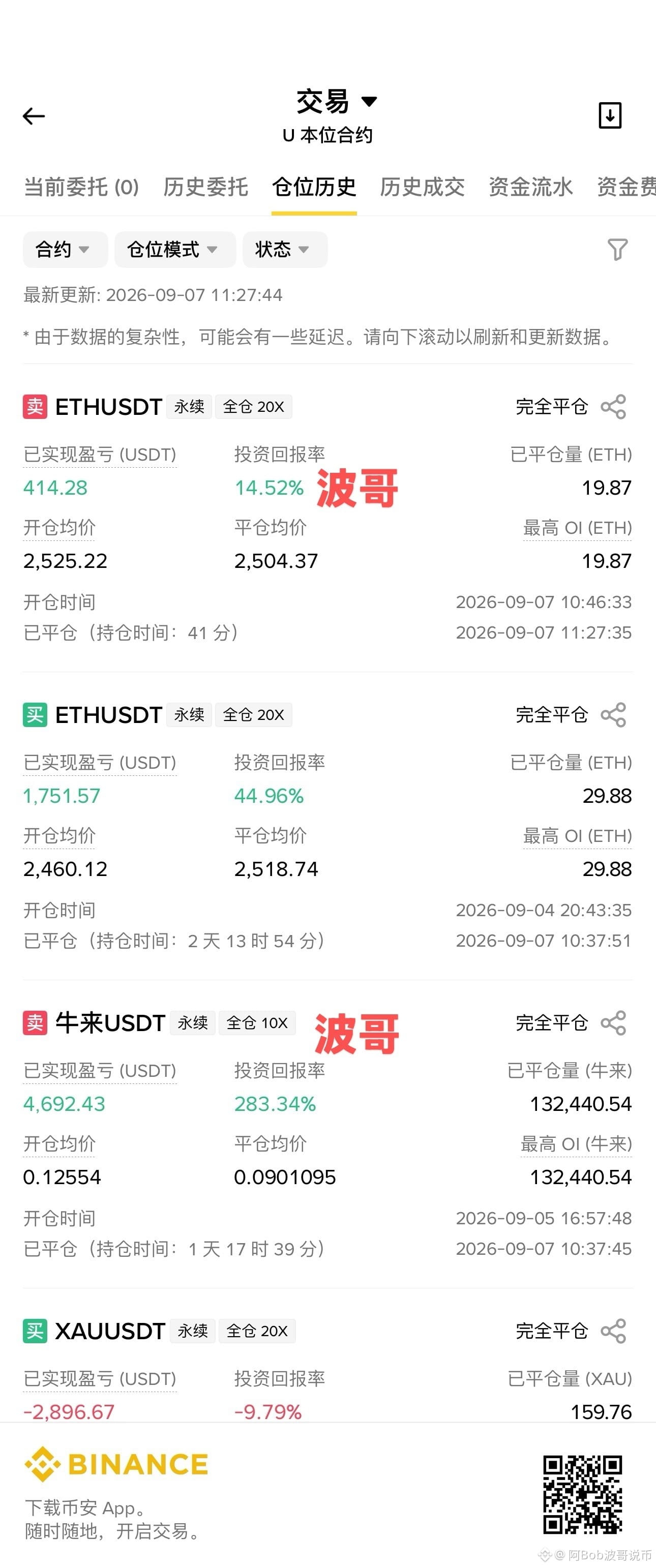

Log in to explore more content