
樱花舞伴
21 Posts

樱花舞伴
Report
Block User
Open Trade
Frequent Trader
9.2 Years
9 Following
34 Followers
17 Liked
Posts
Portfolio
·
--
SEC’s Five-Year Exemption Takes Effect: Tokenized U.S. Stocks Get the Green Light, UNI Jumps 18% in a DayAfter the Senate’s CLARITY stalled at around 50 votes, the SEC didn’t wait for Congress and opened the door on its own.
Reuters, CNBC, and CoinDesk all wrote that on September 17, the U.S. SEC published the “innovation exemption.” For qualifying tokenized securities trading venues (TSVs), it granted a conditional five-year exemption, allowing them not to register as a traditional “exchange.” Liquidity providers supporting the program may also be exempt from “dealer” registration. It only covers tokenized NMS stocks, and the token holders must retain rights equivalent to those of the underlying listed stock, such as dividends and voting. Synthetic or derivative-style stock tokens are not included. The venue must provide the issuer with 30 days’ advance notice; if the issuer objects, the process can be halted. Atkins said this is a transitional arrangement and that formal rules will follow later.
SEC’s Five-Year Exemption Takes Effect: Tokenized U.S. Stocks Get the Green Light, UNI Jumps 18% in a Day
After the Senate’s CLARITY stalled at around 50 votes, the SEC didn’t wait for Congress and opened the door on its own.
Reuters, CNBC, and CoinDesk all wrote that on September 17, the U.S. SEC published the “innovation exemption.” For qualifying tokenized securities trading venues (TSVs), it granted a conditional five-year exemption, allowing them not to register as a traditional “exchange.” Liquidity providers supporting the program may also be exempt from “dealer” registration. It only covers tokenized NMS stocks, and the token holders must retain rights equivalent to those of the underlying listed stock, such as dividends and voting. Synthetic or derivative-style stock tokens are not included. The venue must provide the issuer with 30 days’ advance notice; if the issuer objects, the process can be halted. Atkins said this is a transitional arrangement and that formal rules will follow later.
Reuters, CNBC, and CoinDesk all wrote that on September 17, the U.S. SEC published the “innovation exemption.” For qualifying tokenized securities trading venues (TSVs), it granted a conditional five-year exemption, allowing them not to register as a traditional “exchange.” Liquidity providers supporting the program may also be exempt from “dealer” registration. It only covers tokenized NMS stocks, and the token holders must retain rights equivalent to those of the underlying listed stock, such as dividends and voting. Synthetic or derivative-style stock tokens are not included. The venue must provide the issuer with 30 days’ advance notice; if the issuer objects, the process can be halted. Atkins said this is a transitional arrangement and that formal rules will follow later.
2
1.6k
·
--
$746 million pulled out in two days: ETFs are withdrawing, but BTC is still hanging around $76.5kOver the past two days, the institutional channel has been pulling funds out, but the spot price hasn’t fallen through as well.
SoSoValue: For US spot Bitcoin ETFs, net outflows were about $450.4 million on September 15, and another $295.98 million on September 16. The total over two days was about $746.3 million. Farside’s figures are close: on the 16th, about $295.9 million outflow in total—within that, BlackRock’s IBIT alone saw an outflow of about $144.11 million, ARKB about $84.4 million, FBTC about $52.72 million, and GBTC about $18.22 million. On that day, only Morgan Stanley’s MSBT had a net inflow of about $3.47 million. Cumulative net inflows still remain around $54.57–$54.64 billion, and total net assets are about $9.519 billion—there’s still underlying support, and the pace is clearly slowing.
$746 million pulled out in two days: ETFs are withdrawing, but BTC is still hanging around $76.5k
Over the past two days, the institutional channel has been pulling funds out, but the spot price hasn’t fallen through as well.
SoSoValue: For US spot Bitcoin ETFs, net outflows were about $450.4 million on September 15, and another $295.98 million on September 16. The total over two days was about $746.3 million. Farside’s figures are close: on the 16th, about $295.9 million outflow in total—within that, BlackRock’s IBIT alone saw an outflow of about $144.11 million, ARKB about $84.4 million, FBTC about $52.72 million, and GBTC about $18.22 million. On that day, only Morgan Stanley’s MSBT had a net inflow of about $3.47 million. Cumulative net inflows still remain around $54.57–$54.64 billion, and total net assets are about $9.519 billion—there’s still underlying support, and the pace is clearly slowing.
SoSoValue: For US spot Bitcoin ETFs, net outflows were about $450.4 million on September 15, and another $295.98 million on September 16. The total over two days was about $746.3 million. Farside’s figures are close: on the 16th, about $295.9 million outflow in total—within that, BlackRock’s IBIT alone saw an outflow of about $144.11 million, ARKB about $84.4 million, FBTC about $52.72 million, and GBTC about $18.22 million. On that day, only Morgan Stanley’s MSBT had a net inflow of about $3.47 million. Cumulative net inflows still remain around $54.57–$54.64 billion, and total net assets are about $9.519 billion—there’s still underlying support, and the pace is clearly slowing.
54
·
--
Verified
The dot plot is harsher than the rate hike: 16 bets on another hike this year; BTC falls back to 763,000Those 25 basis points from last night have landed.
The Federal Reserve unanimously approved a 25-basis-point rate hike. The target range for the federal funds rate was raised from 3.50%–3.75% to 3.75%–4.00%. It was the first rate hike since 2023. Ahead of the meeting, the CME FedWatch reported the probability at about 93%, and the market had already priced it in.
What really stings is the dot plot. Fed Pulse: Among 18 officials who submitted forecasts, 16 said another rate hike is still needed this year; 12 favored cumulative hikes of 50 basis points in 2026, while 4 favored 75 basis points. Six officials said rates should stay unchanged for the full year or that there should be a rate cut—by June, there were nine; this time, it all fell to zero. The median puts the year-end interest rate at about 4.1%, and in 2027 it remains around 4.1% as well. The median PCE inflation expectation was revised up to 3.7%, with core PCE to 3.4%. The unemployment rate forecast, however, was revised down to 4.1%. When the economy is a bit stronger and inflation is higher, officials follow this line.
The dot plot is harsher than the rate hike: 16 bets on another hike this year; BTC falls back to 763,000
Those 25 basis points from last night have landed.
The Federal Reserve unanimously approved a 25-basis-point rate hike. The target range for the federal funds rate was raised from 3.50%–3.75% to 3.75%–4.00%. It was the first rate hike since 2023. Ahead of the meeting, the CME FedWatch reported the probability at about 93%, and the market had already priced it in.
What really stings is the dot plot. Fed Pulse: Among 18 officials who submitted forecasts, 16 said another rate hike is still needed this year; 12 favored cumulative hikes of 50 basis points in 2026, while 4 favored 75 basis points. Six officials said rates should stay unchanged for the full year or that there should be a rate cut—by June, there were nine; this time, it all fell to zero. The median puts the year-end interest rate at about 4.1%, and in 2027 it remains around 4.1% as well. The median PCE inflation expectation was revised up to 3.7%, with core PCE to 3.4%. The unemployment rate forecast, however, was revised down to 4.1%. When the economy is a bit stronger and inflation is higher, officials follow this line.
The Federal Reserve unanimously approved a 25-basis-point rate hike. The target range for the federal funds rate was raised from 3.50%–3.75% to 3.75%–4.00%. It was the first rate hike since 2023. Ahead of the meeting, the CME FedWatch reported the probability at about 93%, and the market had already priced it in.
What really stings is the dot plot. Fed Pulse: Among 18 officials who submitted forecasts, 16 said another rate hike is still needed this year; 12 favored cumulative hikes of 50 basis points in 2026, while 4 favored 75 basis points. Six officials said rates should stay unchanged for the full year or that there should be a rate cut—by June, there were nine; this time, it all fell to zero. The median puts the year-end interest rate at about 4.1%, and in 2027 it remains around 4.1% as well. The median PCE inflation expectation was revised up to 3.7%, with core PCE to 3.4%. The unemployment rate forecast, however, was revised down to 4.1%. When the economy is a bit stronger and inflation is higher, officials follow this line.
142
·
--
Tonight’s FOMC: 25 bps already priced in—the real focus is the dot plot and WarshThe CLARITY gate has already been cleared. Tonight we switch to the main storyline: the Federal Reserve.
The decision is at 2:00 p.m. Eastern Time (2:00 a.m. Beijing time on September 17). At 2:30, Chairman Kevin Warsh will hold a press conference. CME FedWatch puts the probability of a 25-basis-point hike at about 92%–93%; a month ago, that figure was only around 33% (as relayed by 律动 to Algoz). If the federal funds target range is raised, it would move from 3.50%–3.75% to 3.75%–4.00%. This is the first rate-hike window since 2023, but the market has already priced in this step well ahead of time.
On the Bitcoin side, Binance spot is about $761,000. It’s down about 1.1% over the past 24 hours, with the intraday low touching around $750,000. According to律动, it’s down about 4% over the past week. Coinbase spot is around $76,016. Jiang Zhuo’er relayed: Yesterday, US spot Bitcoin ETFs saw net outflows of about $450 million, and Ethereum ETFs about $141 million—both are relatively large single-day figures in recent months. Talos data shows that before the decision, stablecoin net buying tendency rose to 28%, while Bitcoin buy-side interest dropped from 10% to 3%—positioning is reducing risk and building cash.
Tonight’s FOMC: 25 bps already priced in—the real focus is the dot plot and Warsh
The CLARITY gate has already been cleared. Tonight we switch to the main storyline: the Federal Reserve.
The decision is at 2:00 p.m. Eastern Time (2:00 a.m. Beijing time on September 17). At 2:30, Chairman Kevin Warsh will hold a press conference. CME FedWatch puts the probability of a 25-basis-point hike at about 92%–93%; a month ago, that figure was only around 33% (as relayed by 律动 to Algoz). If the federal funds target range is raised, it would move from 3.50%–3.75% to 3.75%–4.00%. This is the first rate-hike window since 2023, but the market has already priced in this step well ahead of time.
On the Bitcoin side, Binance spot is about $761,000. It’s down about 1.1% over the past 24 hours, with the intraday low touching around $750,000. According to律动, it’s down about 4% over the past week. Coinbase spot is around $76,016. Jiang Zhuo’er relayed: Yesterday, US spot Bitcoin ETFs saw net outflows of about $450 million, and Ethereum ETFs about $141 million—both are relatively large single-day figures in recent months. Talos data shows that before the decision, stablecoin net buying tendency rose to 28%, while Bitcoin buy-side interest dropped from 10% to 3%—positioning is reducing risk and building cash.
The decision is at 2:00 p.m. Eastern Time (2:00 a.m. Beijing time on September 17). At 2:30, Chairman Kevin Warsh will hold a press conference. CME FedWatch puts the probability of a 25-basis-point hike at about 92%–93%; a month ago, that figure was only around 33% (as relayed by 律动 to Algoz). If the federal funds target range is raised, it would move from 3.50%–3.75% to 3.75%–4.00%. This is the first rate-hike window since 2023, but the market has already priced in this step well ahead of time.
On the Bitcoin side, Binance spot is about $761,000. It’s down about 1.1% over the past 24 hours, with the intraday low touching around $750,000. According to律动, it’s down about 4% over the past week. Coinbase spot is around $76,016. Jiang Zhuo’er relayed: Yesterday, US spot Bitcoin ETFs saw net outflows of about $450 million, and Ethereum ETFs about $141 million—both are relatively large single-day figures in recent months. Talos data shows that before the decision, stablecoin net buying tendency rose to 28%, while Bitcoin buy-side interest dropped from 10% to 3%—positioning is reducing risk and building cash.
89
·
--
CLARITY stalls at about 50 votes: the bill isn’t dead, but the year-end pathway is basically blockedThe hurdle that we’d been watching last night has its result. The U.S. Senate held a procedural vote on the CLARITY encryption market structure bill: the yes votes were about 50, which is roughly 10 short of the 60 needed to move into formal debate. CoinDesk reported 49 yes and 50 no; CNBC reported 50 yes and 49 no; and律动快讯 (LMT News) reported 50:50. Across these different counts, the numbers differ by a couple of votes, but the conclusion is the same: even a simple majority is barely met, let alone the 60-vote threshold.
This doesn’t mean the bill is permanently dead. As律动快讯 put it plainly: it’s just temporarily unable to advance to formal consideration and discussion of amendments. But the calendar is tight. Members of Congress are scheduled to leave for campaigning in early October, and the midterm elections are in November. Before the vote, Senator Lummis told reporters that if this one doesn’t pass, “that’s it.” To get 60 votes across party lines again within the year, the room is already very limited.
CLARITY stalls at about 50 votes: the bill isn’t dead, but the year-end pathway is basically blocked
The hurdle that we’d been watching last night has its result. The U.S. Senate held a procedural vote on the CLARITY encryption market structure bill: the yes votes were about 50, which is roughly 10 short of the 60 needed to move into formal debate. CoinDesk reported 49 yes and 50 no; CNBC reported 50 yes and 49 no; and律动快讯 (LMT News) reported 50:50. Across these different counts, the numbers differ by a couple of votes, but the conclusion is the same: even a simple majority is barely met, let alone the 60-vote threshold.
This doesn’t mean the bill is permanently dead. As律动快讯 put it plainly: it’s just temporarily unable to advance to formal consideration and discussion of amendments. But the calendar is tight. Members of Congress are scheduled to leave for campaigning in early October, and the midterm elections are in November. Before the vote, Senator Lummis told reporters that if this one doesn’t pass, “that’s it.” To get 60 votes across party lines again within the year, the room is already very limited.
This doesn’t mean the bill is permanently dead. As律动快讯 put it plainly: it’s just temporarily unable to advance to formal consideration and discussion of amendments. But the calendar is tight. Members of Congress are scheduled to leave for campaigning in early October, and the midterm elections are in November. Before the vote, Senator Lummis told reporters that if this one doesn’t pass, “that’s it.” To get 60 votes across party lines again within the year, the room is already very limited.
238
·
--
Prediction market slashed to 18%: don’t just watch CLARITY— the SEC has opened another trackStill writing today’s 60-ticket mark in the morning. Overnight, the prediction market chart broke down a notch first. On Polymarket, “this year’s law” fell from about 34% at Monday’s peak to around 18%; Grayscale was still calling during the day for something close to 30%.
The resistance has been spelled out very specifically. A joint letter from eight bank associations asks to tighten stablecoin rewards, complaining that the “circuit breaker” should only be triggered after deposits run out. Led by the New York State attorney general, along with 17 other state attorneys general, they warn that federal overreach will weaken their ability to investigate fraud. With 53 seats for the Republicans, they still need to pull in Democrats. At 2:15 p.m. Eastern, there’s a procedural vote—only after it passes will the debate begin; it doesn’t mean the law is already set in stone.
Prediction market slashed to 18%: don’t just watch CLARITY— the SEC has opened another track
Still writing today’s 60-ticket mark in the morning. Overnight, the prediction market chart broke down a notch first. On Polymarket, “this year’s law” fell from about 34% at Monday’s peak to around 18%; Grayscale was still calling during the day for something close to 30%.
The resistance has been spelled out very specifically. A joint letter from eight bank associations asks to tighten stablecoin rewards, complaining that the “circuit breaker” should only be triggered after deposits run out. Led by the New York State attorney general, along with 17 other state attorneys general, they warn that federal overreach will weaken their ability to investigate fraud. With 53 seats for the Republicans, they still need to pull in Democrats. At 2:15 p.m. Eastern, there’s a procedural vote—only after it passes will the debate begin; it doesn’t mean the law is already set in stone.
The resistance has been spelled out very specifically. A joint letter from eight bank associations asks to tighten stablecoin rewards, complaining that the “circuit breaker” should only be triggered after deposits run out. Led by the New York State attorney general, along with 17 other state attorneys general, they warn that federal overreach will weaken their ability to investigate fraud. With 53 seats for the Republicans, they still need to pull in Democrats. At 2:15 p.m. Eastern, there’s a procedural vote—only after it passes will the debate begin; it doesn’t mean the law is already set in stone.
125
·
--
CLARITY clears the 60-vote hurdle today: prediction markets double; analysts still give only 25%Today’s focus isn’t rate hikes. This afternoon in the U.S. East, the Senate will take a procedural vote on the CLARITY crypto market structure bill. The threshold is 60 votes. If it passes, it moves into the formal debate—but that doesn’t mean the law is already in effect.
Prediction markets have suddenly heated up over the past few days. On Polymarket, “becoming law this year” rose from roughly 12% at the start of September to nearly 30% by early Monday morning. Kalshi is even more bullish: “passing by October 2027” climbed from about 26% to 53%, even hitting 64% intraday. The driving force is the final text issued by Republicans late Monday, which includes moral/ethical provisions.
Wall Street didn’t join the celebrations. On Monday, TD Cowen’s Jaret Sieberg still kept the probability of final passage down to around 25%. His point is straightforward: it’s still unclear whether the moral/ethical provisions are enough for a moderate enough Democratic Party; Trump could still use blind trust to hold crypto positions; and if it passes before the election, Democrats still have to do the political arithmetic. The Republicans have 53 seats—reportedly at least two votes will be against, and they’ll likely need to pull in about nine more Democrats.
CLARITY clears the 60-vote hurdle today: prediction markets double; analysts still give only 25%
Today’s focus isn’t rate hikes. This afternoon in the U.S. East, the Senate will take a procedural vote on the CLARITY crypto market structure bill. The threshold is 60 votes. If it passes, it moves into the formal debate—but that doesn’t mean the law is already in effect.
Prediction markets have suddenly heated up over the past few days. On Polymarket, “becoming law this year” rose from roughly 12% at the start of September to nearly 30% by early Monday morning. Kalshi is even more bullish: “passing by October 2027” climbed from about 26% to 53%, even hitting 64% intraday. The driving force is the final text issued by Republicans late Monday, which includes moral/ethical provisions.
Wall Street didn’t join the celebrations. On Monday, TD Cowen’s Jaret Sieberg still kept the probability of final passage down to around 25%. His point is straightforward: it’s still unclear whether the moral/ethical provisions are enough for a moderate enough Democratic Party; Trump could still use blind trust to hold crypto positions; and if it passes before the election, Democrats still have to do the political arithmetic. The Republicans have 53 seats—reportedly at least two votes will be against, and they’ll likely need to pull in about nine more Democrats.
Prediction markets have suddenly heated up over the past few days. On Polymarket, “becoming law this year” rose from roughly 12% at the start of September to nearly 30% by early Monday morning. Kalshi is even more bullish: “passing by October 2027” climbed from about 26% to 53%, even hitting 64% intraday. The driving force is the final text issued by Republicans late Monday, which includes moral/ethical provisions.
Wall Street didn’t join the celebrations. On Monday, TD Cowen’s Jaret Sieberg still kept the probability of final passage down to around 25%. His point is straightforward: it’s still unclear whether the moral/ethical provisions are enough for a moderate enough Democratic Party; Trump could still use blind trust to hold crypto positions; and if it passes before the election, Democrats still have to do the political arithmetic. The Republicans have 53 seats—reportedly at least two votes will be against, and they’ll likely need to pull in about nine more Democrats.
122
·
--
Article
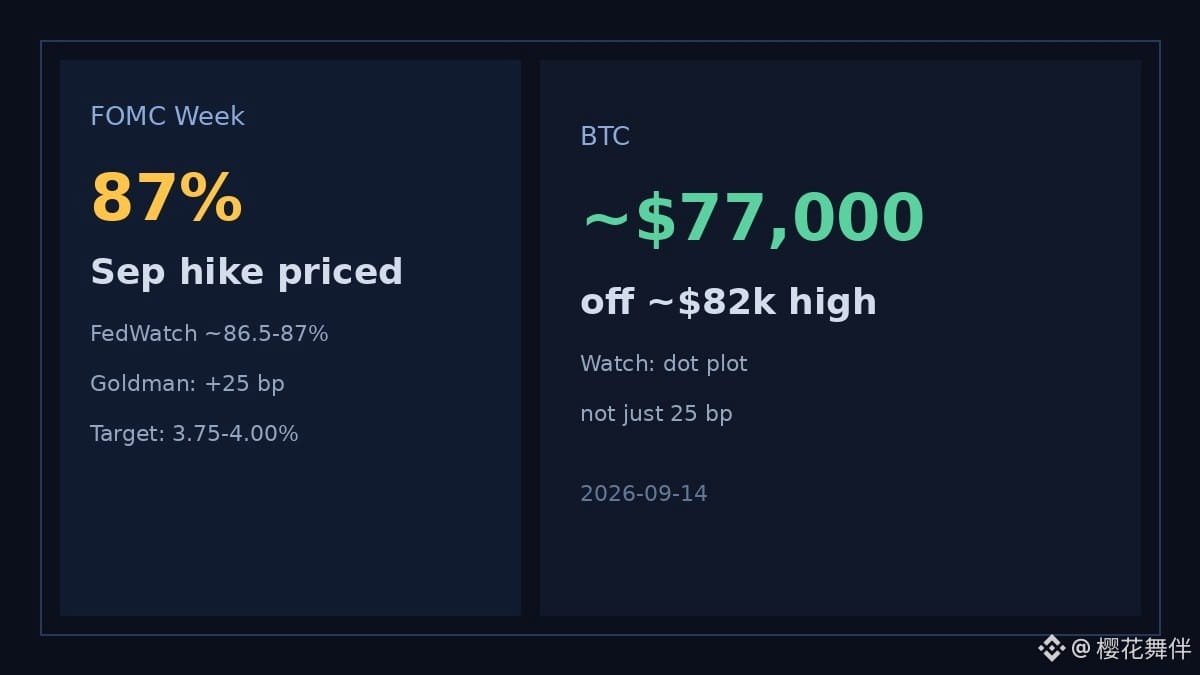
Rate-hike odds hit 87%: Goldman changes its stance; BTC returns to 77,000This week’s main storyline has changed. It’s no longer about guessing whether there will be a rate hike—it’s about guessing whether they will hike again after the hike.
The CME FedWatch has raised the probability of a 25-basis-point rate hike on September 16 to around 86.5%–87%. If the federal funds target range is raised, it would move from the current 3.50%–3.75% to 3.75%–4.00%. Before the inflation data comes out, this probability is still roughly around 70%. Goldman Sachs has also changed its tune: it is no longer betting on a hold in September, but instead expects a 25-basis-point hike. JPMorgan has gone a step further, putting a second hike in December into its forecast as well.
Here, Bitcoin after rallying and breaking through about $82,000 in early September, pulled back. Today it has been hovering around roughly $77,000, sometimes dipping to about $76.7k. Over the week, it’s down about 5%. It is falling, but it hasn’t crashed another leg the way it did after 87%—suggesting that in this September move, many positions had already priced it in in advance.
Rate-hike odds hit 87%: Goldman changes its stance; BTC returns to 77,000
This week’s main storyline has changed. It’s no longer about guessing whether there will be a rate hike—it’s about guessing whether they will hike again after the hike.
The CME FedWatch has raised the probability of a 25-basis-point rate hike on September 16 to around 86.5%–87%. If the federal funds target range is raised, it would move from the current 3.50%–3.75% to 3.75%–4.00%. Before the inflation data comes out, this probability is still roughly around 70%. Goldman Sachs has also changed its tune: it is no longer betting on a hold in September, but instead expects a 25-basis-point hike. JPMorgan has gone a step further, putting a second hike in December into its forecast as well.
Here, Bitcoin after rallying and breaking through about $82,000 in early September, pulled back. Today it has been hovering around roughly $77,000, sometimes dipping to about $76.7k. Over the week, it’s down about 5%. It is falling, but it hasn’t crashed another leg the way it did after 87%—suggesting that in this September move, many positions had already priced it in in advance.
The CME FedWatch has raised the probability of a 25-basis-point rate hike on September 16 to around 86.5%–87%. If the federal funds target range is raised, it would move from the current 3.50%–3.75% to 3.75%–4.00%. Before the inflation data comes out, this probability is still roughly around 70%. Goldman Sachs has also changed its tune: it is no longer betting on a hold in September, but instead expects a 25-basis-point hike. JPMorgan has gone a step further, putting a second hike in December into its forecast as well.
Here, Bitcoin after rallying and breaking through about $82,000 in early September, pulled back. Today it has been hovering around roughly $77,000, sometimes dipping to about $76.7k. Over the week, it’s down about 5%. It is falling, but it hasn’t crashed another leg the way it did after 87%—suggesting that in this September move, many positions had already priced it in in advance.
81
·
--
Anthropic calls for a slowdown; AI- concept coins drop by two or three tenths in a dayOver the weekend, Anthropic and OpenAI nearly slowed their messaging on the same day.
Anthropic CEO Dario Amodei posted a long piece; the core point is just one: don’t keep aggressively pushing frontier model capabilities—make time for alignment and third-party evaluation. It’s not stopping training. Sam Altman of OpenAI echoed the sentiment as well, saying there will be no IPO this year, with safety coming first.
Money is faster than sales talk. GMGN shows that in a 24-hour period, AI- concept memes all fell together: ANTHROPIG about -44% (market cap about $5.4 million), MOO about -37%, Artificial Inu about -27% (market cap still about $247 million), and FLYBRAIN about -23%. Many tokens are essentially tokenized holdings associated with companies like Nvidia, Micron, Google, or with tokenized positions tied to OpenAI and Anthropic.
Anthropic calls for a slowdown; AI- concept coins drop by two or three tenths in a day
Over the weekend, Anthropic and OpenAI nearly slowed their messaging on the same day.
Anthropic CEO Dario Amodei posted a long piece; the core point is just one: don’t keep aggressively pushing frontier model capabilities—make time for alignment and third-party evaluation. It’s not stopping training. Sam Altman of OpenAI echoed the sentiment as well, saying there will be no IPO this year, with safety coming first.
Money is faster than sales talk. GMGN shows that in a 24-hour period, AI- concept memes all fell together: ANTHROPIG about -44% (market cap about $5.4 million), MOO about -37%, Artificial Inu about -27% (market cap still about $247 million), and FLYBRAIN about -23%. Many tokens are essentially tokenized holdings associated with companies like Nvidia, Micron, Google, or with tokenized positions tied to OpenAI and Anthropic.
Anthropic CEO Dario Amodei posted a long piece; the core point is just one: don’t keep aggressively pushing frontier model capabilities—make time for alignment and third-party evaluation. It’s not stopping training. Sam Altman of OpenAI echoed the sentiment as well, saying there will be no IPO this year, with safety coming first.
Money is faster than sales talk. GMGN shows that in a 24-hour period, AI- concept memes all fell together: ANTHROPIG about -44% (market cap about $5.4 million), MOO about -37%, Artificial Inu about -27% (market cap still about $247 million), and FLYBRAIN about -23%. Many tokens are essentially tokenized holdings associated with companies like Nvidia, Micron, Google, or with tokenized positions tied to OpenAI and Anthropic.
67
·
--
Article
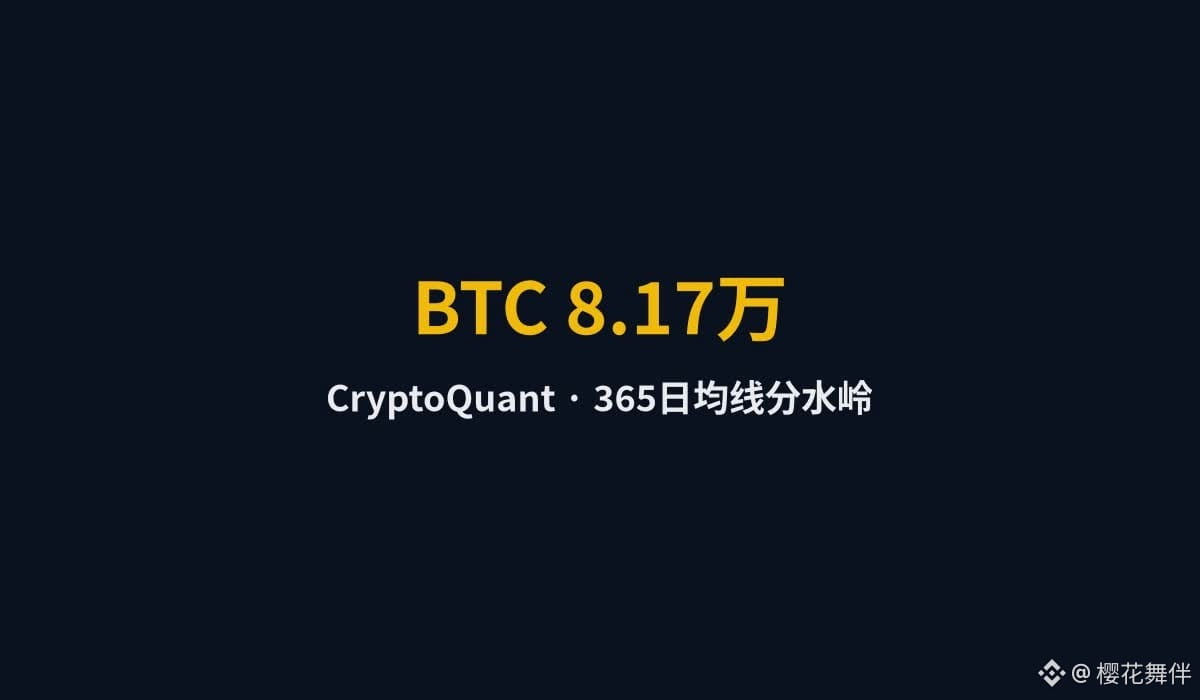
CryptoQuant: Only when BTC is above 81.7k does the bull market count as restartedThe two-week rebound has been about 24%, but Bitcoin is still stuck hovering around $77,000.
On-chain analytics firm CryptoQuant set an even tougher threshold: for the bull market to be truly confirmed as restarted, it must hold effectively above roughly $81,700—roughly corresponding to the 365-day moving average. A touch of $80,000 doesn’t count.
The direct cause of the stall is a supply wall in the range of 71,700 to 80,200. Long-term holders have sold about 539,000 BTC in this range during the current year, within 30-day cycles. When the price returns here, sell orders for getting out of the bind and taking profits show up. Higher up there’s also an estimated value band of about 83.6k, and a profit-taking band for active traders totaling about 88.7k.
CryptoQuant: Only when BTC is above 81.7k does the bull market count as restarted
The two-week rebound has been about 24%, but Bitcoin is still stuck hovering around $77,000.
On-chain analytics firm CryptoQuant set an even tougher threshold: for the bull market to be truly confirmed as restarted, it must hold effectively above roughly $81,700—roughly corresponding to the 365-day moving average. A touch of $80,000 doesn’t count.
The direct cause of the stall is a supply wall in the range of 71,700 to 80,200. Long-term holders have sold about 539,000 BTC in this range during the current year, within 30-day cycles. When the price returns here, sell orders for getting out of the bind and taking profits show up. Higher up there’s also an estimated value band of about 83.6k, and a profit-taking band for active traders totaling about 88.7k.
On-chain analytics firm CryptoQuant set an even tougher threshold: for the bull market to be truly confirmed as restarted, it must hold effectively above roughly $81,700—roughly corresponding to the 365-day moving average. A touch of $80,000 doesn’t count.
The direct cause of the stall is a supply wall in the range of 71,700 to 80,200. Long-term holders have sold about 539,000 BTC in this range during the current year, within 30-day cycles. When the price returns here, sell orders for getting out of the bind and taking profits show up. Higher up there’s also an estimated value band of about 83.6k, and a profit-taking band for active traders totaling about 88.7k.
1
1
108
·
--
When the CPI hits: 90,000 get liquidated, golden cross day dies—don’t rush to buy the dipBasically, it’s just one sentence: inflation hasn’t eased, and rate-hike expectations are back. The crypto market first sacrifices itself on leverage.
The U.S. August core CPI came in with a month-over-month increase of 0.3%, harder than what the market expected. In the futures market, bets are that there will be a 25-basis-point rate hike on September 16, with the probability jumping to above 80%. Stocks actually held up—the S&P is still up by nearly 1%. Crypto doesn’t give any face: BTC first got smashed down toward around 76,000, then surged to nearly 80,000, and then dropped back to around 77,000 where it kept wobbling. ETH briefly clawed back above 2,600; it has a bit more volatility than BTC, but it still got beaten up.
Coinglass: In the past 24 hours, liquidations were about $674 million, involving roughly 94,000 people. Both longs and shorts were wiped out—shorts didn’t escape either. On Hyperliquid, one ETH position got liquidated in a single trade, totaling more than $20 million. A golden cross? Once the daily 50-day MA crosses above the 200-day MA, the same day it’s basically already done for. These are signals you can treat like a weather forecast for that day—don’t treat them like scripture.
When the CPI hits: 90,000 get liquidated, golden cross day dies—don’t rush to buy the dip
Basically, it’s just one sentence: inflation hasn’t eased, and rate-hike expectations are back. The crypto market first sacrifices itself on leverage.
The U.S. August core CPI came in with a month-over-month increase of 0.3%, harder than what the market expected. In the futures market, bets are that there will be a 25-basis-point rate hike on September 16, with the probability jumping to above 80%. Stocks actually held up—the S&P is still up by nearly 1%. Crypto doesn’t give any face: BTC first got smashed down toward around 76,000, then surged to nearly 80,000, and then dropped back to around 77,000 where it kept wobbling. ETH briefly clawed back above 2,600; it has a bit more volatility than BTC, but it still got beaten up.
Coinglass: In the past 24 hours, liquidations were about $674 million, involving roughly 94,000 people. Both longs and shorts were wiped out—shorts didn’t escape either. On Hyperliquid, one ETH position got liquidated in a single trade, totaling more than $20 million. A golden cross? Once the daily 50-day MA crosses above the 200-day MA, the same day it’s basically already done for. These are signals you can treat like a weather forecast for that day—don’t treat them like scripture.
The U.S. August core CPI came in with a month-over-month increase of 0.3%, harder than what the market expected. In the futures market, bets are that there will be a 25-basis-point rate hike on September 16, with the probability jumping to above 80%. Stocks actually held up—the S&P is still up by nearly 1%. Crypto doesn’t give any face: BTC first got smashed down toward around 76,000, then surged to nearly 80,000, and then dropped back to around 77,000 where it kept wobbling. ETH briefly clawed back above 2,600; it has a bit more volatility than BTC, but it still got beaten up.
Coinglass: In the past 24 hours, liquidations were about $674 million, involving roughly 94,000 people. Both longs and shorts were wiped out—shorts didn’t escape either. On Hyperliquid, one ETH position got liquidated in a single trade, totaling more than $20 million. A golden cross? Once the daily 50-day MA crosses above the 200-day MA, the same day it’s basically already done for. These are signals you can treat like a weather forecast for that day—don’t treat them like scripture.
1
1
178
·
--
Article
Key Vote on Monday: CLARITY Crypto Regulatory Bill—Senate First Clears the 60-Vote HurdleNext week at 2:15 PM Eastern on September 15, the U.S. Senate will hold a procedural vote on the (Digital Asset Market Clarity Act) (CLARITY Act, H.R. 3633). Plainly put: it’s not direct legislation—first it’s about deciding whether to open debate.
The threshold is 60 votes. The Republicans have about 53 seats, so they still need to pull at least 7 members of the Democratic Party or independents. The sticking points mainly come in three areas: an official’s conflict-of-interest provision regarding crypto asset holdings; whether stablecoins can earn yield (banks strongly oppose this); and the boundaries of liability for DeFi developers.
If it can’t pass, it will be basically very difficult to get scheduled again within 2026; the market structure still depends on the SEC and the CFTC each making their own rules. Even if it does pass, there’s still debate, a second round of debate to formally end it, House alignment, and it’s still a long way from becoming law. My estimate is that the probability of the bill being signed into law this year is currently around 20%.
Key Vote on Monday: CLARITY Crypto Regulatory Bill—Senate First Clears the 60-Vote Hurdle
Next week at 2:15 PM Eastern on September 15, the U.S. Senate will hold a procedural vote on the (Digital Asset Market Clarity Act) (CLARITY Act, H.R. 3633). Plainly put: it’s not direct legislation—first it’s about deciding whether to open debate.
The threshold is 60 votes. The Republicans have about 53 seats, so they still need to pull at least 7 members of the Democratic Party or independents. The sticking points mainly come in three areas: an official’s conflict-of-interest provision regarding crypto asset holdings; whether stablecoins can earn yield (banks strongly oppose this); and the boundaries of liability for DeFi developers.
If it can’t pass, it will be basically very difficult to get scheduled again within 2026; the market structure still depends on the SEC and the CFTC each making their own rules. Even if it does pass, there’s still debate, a second round of debate to formally end it, House alignment, and it’s still a long way from becoming law. My estimate is that the probability of the bill being signed into law this year is currently around 20%.
The threshold is 60 votes. The Republicans have about 53 seats, so they still need to pull at least 7 members of the Democratic Party or independents. The sticking points mainly come in three areas: an official’s conflict-of-interest provision regarding crypto asset holdings; whether stablecoins can earn yield (banks strongly oppose this); and the boundaries of liability for DeFi developers.
If it can’t pass, it will be basically very difficult to get scheduled again within 2026; the market structure still depends on the SEC and the CFTC each making their own rules. Even if it does pass, there’s still debate, a second round of debate to formally end it, House alignment, and it’s still a long way from becoming law. My estimate is that the probability of the bill being signed into law this year is currently around 20%.
1
1
1.4k
·
--
Article
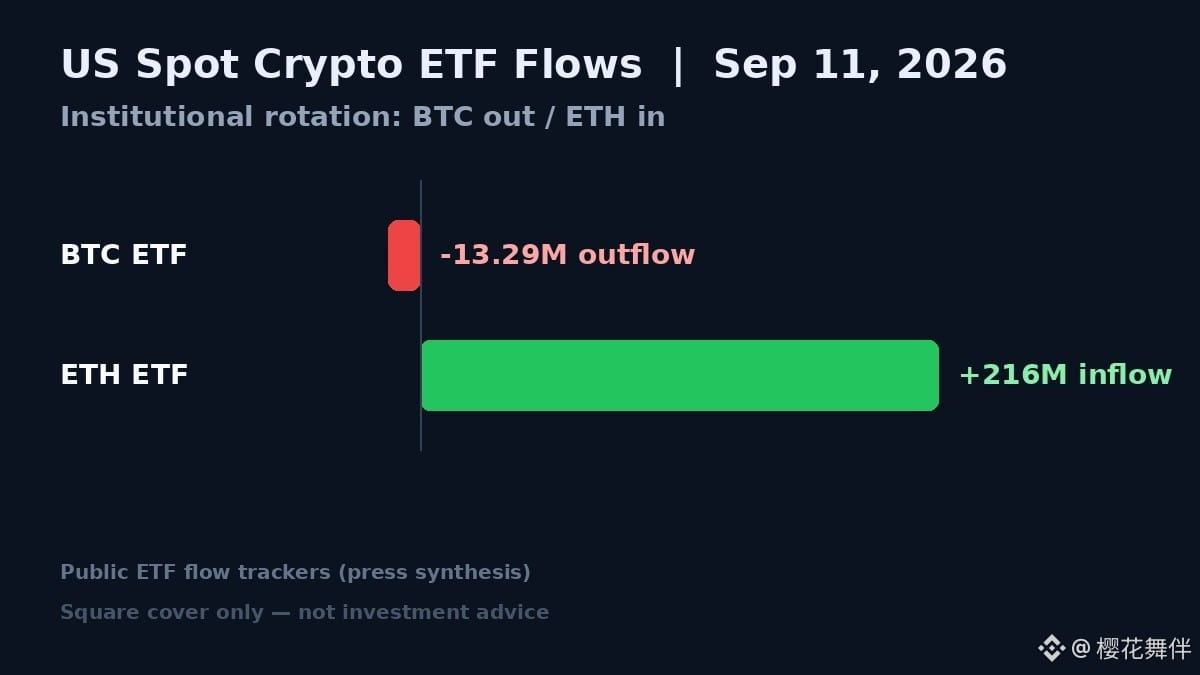
Institutional money is rotating: BTC ETF outflows, ETH ETF pulls in $216 million in a single dayOn September 11, this set of ETF flows says more than the price action.
Based on publicly tracked data: on that day, the U.S. spot Bitcoin ETF saw net outflows of about $13.29 million. On the same day, the Ethereum spot ETF saw net inflows of about $216 million. One side is reducing while the other is adding—more like “rotation within crypto,” not an overall pullout of capital.
Take another look at the price: BTC is still hovering around the $770,000 area; ETH is up more than about 2%, trading above roughly $2,510–$2,520. Short-term sentiment has also warmed up a bit.
A few plain-language key points:
1) The cumulative outflows from BTC ETFs in the past few days are already quite significant. On the 11th, the outflows narrowed—more like “bleeding slows down,” not an immediate reversal.
Institutional money is rotating: BTC ETF outflows, ETH ETF pulls in $216 million in a single day
On September 11, this set of ETF flows says more than the price action.
Based on publicly tracked data: on that day, the U.S. spot Bitcoin ETF saw net outflows of about $13.29 million. On the same day, the Ethereum spot ETF saw net inflows of about $216 million. One side is reducing while the other is adding—more like “rotation within crypto,” not an overall pullout of capital.
Take another look at the price: BTC is still hovering around the $770,000 area; ETH is up more than about 2%, trading above roughly $2,510–$2,520. Short-term sentiment has also warmed up a bit.
A few plain-language key points:
1) The cumulative outflows from BTC ETFs in the past few days are already quite significant. On the 11th, the outflows narrowed—more like “bleeding slows down,” not an immediate reversal.
Based on publicly tracked data: on that day, the U.S. spot Bitcoin ETF saw net outflows of about $13.29 million. On the same day, the Ethereum spot ETF saw net inflows of about $216 million. One side is reducing while the other is adding—more like “rotation within crypto,” not an overall pullout of capital.
Take another look at the price: BTC is still hovering around the $770,000 area; ETH is up more than about 2%, trading above roughly $2,510–$2,520. Short-term sentiment has also warmed up a bit.
A few plain-language key points:
1) The cumulative outflows from BTC ETFs in the past few days are already quite significant. On the 11th, the outflows narrowed—more like “bleeding slows down,” not an immediate reversal.
52
·
--
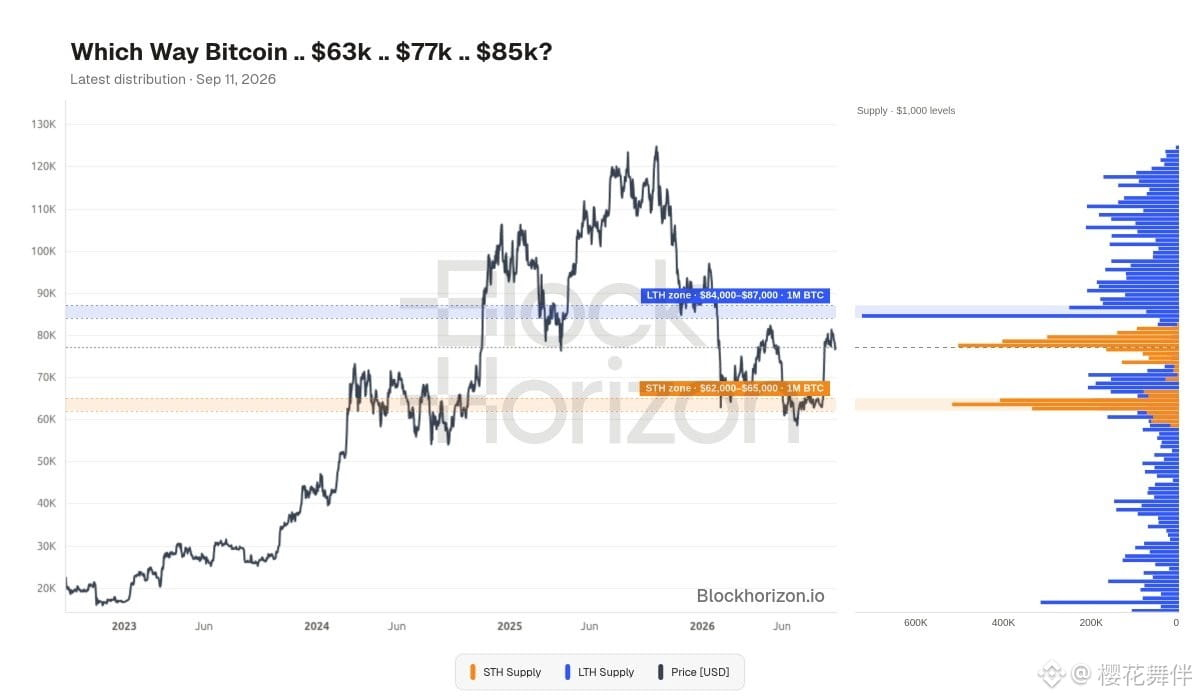
Article
BTC stuck at $77k: 1 million BTC walls both above and below—what to watch before the FOMCBitcoin is currently stuck around $77,000. On both sides there are “thick walls.”
On-chain cost distribution charts show: about 1 million BTC are clustered in the $62,000–$65,000 range below, and about 1 million BTC are also clustered in the $84,000–$87,000 range above. The current price is squeezed in between—either breaking down or pushing up, and market views are sharply split.
At the same time, everyone is still watching next week’s FOMC. In public discussion, the probability of a September rate hike has been mentioned as being above 80%; U.S. stocks and risk assets will also price around this statement. On top of that, in recent days there have still been reports of net outflows from spot Bitcoin ETFs, so liquidity conditions are not exactly comfortable.
BTC stuck at $77k: 1 million BTC walls both above and below—what to watch before the FOMC
Bitcoin is currently stuck around $77,000. On both sides there are “thick walls.”
On-chain cost distribution charts show: about 1 million BTC are clustered in the $62,000–$65,000 range below, and about 1 million BTC are also clustered in the $84,000–$87,000 range above. The current price is squeezed in between—either breaking down or pushing up, and market views are sharply split.
At the same time, everyone is still watching next week’s FOMC. In public discussion, the probability of a September rate hike has been mentioned as being above 80%; U.S. stocks and risk assets will also price around this statement. On top of that, in recent days there have still been reports of net outflows from spot Bitcoin ETFs, so liquidity conditions are not exactly comfortable.
On-chain cost distribution charts show: about 1 million BTC are clustered in the $62,000–$65,000 range below, and about 1 million BTC are also clustered in the $84,000–$87,000 range above. The current price is squeezed in between—either breaking down or pushing up, and market views are sharply split.
At the same time, everyone is still watching next week’s FOMC. In public discussion, the probability of a September rate hike has been mentioned as being above 80%; U.S. stocks and risk assets will also price around this statement. On top of that, in recent days there have still been reports of net outflows from spot Bitcoin ETFs, so liquidity conditions are not exactly comfortable.
103
·
--
BTC is a bit more bullish right now, but I won’t rush until we’ve broken through the 68,400 support level.
This move up—OI is being added, but not extremely aggressively. It feels more like a gradual build-up rather than a sudden, direct launch.
This is how I see it:
If we break above 68,400, then I’ll consider going in,
if it drops back below 67,000, then it turns more bearish,
as for the middle range, I’m still not really inclined to make a move.
BTC is a bit more bullish right now, but I won’t rush until we’ve broken through the 68,400 support level.
This move up—OI is being added, but not extremely aggressively. It feels more like a gradual build-up rather than a sudden, direct launch.
This is how I see it:
If we break above 68,400, then I’ll consider going in,
if it drops back below 67,000, then it turns more bearish,
as for the middle range, I’m still not really inclined to make a move.
This move up—OI is being added, but not extremely aggressively. It feels more like a gradual build-up rather than a sudden, direct launch.
This is how I see it:
If we break above 68,400, then I’ll consider going in,
if it drops back below 67,000, then it turns more bearish,
as for the middle range, I’m still not really inclined to make a move.
47
·
--
BTC is still ranging. The 67,500 area is holding, but above that 68,300 has been pressing down continuously.
The longs are getting a bit crowded: OI is rising, but price hasn’t moved up much. In that kind of setup, it’s easy to get whipsawed back and forth.
So I’ll be a bit cautious:
Hold around 67,500 first, then consider going long lightly,
If it pushes toward 68,300, treat it as resistance,
In the middle range, just observe first.
BTC is still ranging. The 67,500 area is holding, but above that 68,300 has been pressing down continuously.
The longs are getting a bit crowded: OI is rising, but price hasn’t moved up much. In that kind of setup, it’s easy to get whipsawed back and forth.
So I’ll be a bit cautious:
Hold around 67,500 first, then consider going long lightly,
If it pushes toward 68,300, treat it as resistance,
In the middle range, just observe first.
The longs are getting a bit crowded: OI is rising, but price hasn’t moved up much. In that kind of setup, it’s easy to get whipsawed back and forth.
So I’ll be a bit cautious:
Hold around 67,500 first, then consider going long lightly,
If it pushes toward 68,300, treat it as resistance,
In the middle range, just observe first.
·
--
BTC has been grinding above 68,400 several times but hasn't broken through. The last hourly candle crashed back down.
Open interest is decreasing, and the funding rate has been negative for two consecutive periods—money hasn't followed the price.
I'm not chasing long positions anymore.
If it breaks below 67,800, I can go short. If it stabilizes above 68,600, then we can consider going long.
#BTC #TradingSignals
BTC has been grinding above 68,400 several times but hasn't broken through. The last hourly candle crashed back down.
Open interest is decreasing, and the funding rate has been negative for two consecutive periods—money hasn't followed the price.
I'm not chasing long positions anymore.
If it breaks below 67,800, I can go short. If it stabilizes above 68,600, then we can consider going long.
#BTC #TradingSignals
Open interest is decreasing, and the funding rate has been negative for two consecutive periods—money hasn't followed the price.
I'm not chasing long positions anymore.
If it breaks below 67,800, I can go short. If it stabilizes above 68,600, then we can consider going long.
#BTC #TradingSignals
152
·
--
BTC is still fluctuating at the moment, I won't consider it strong until it surpasses 68,600.
The open interest hasn't really expanded, and the funding rate is also neutral, so this rise feels more like a test rather than a main rally.
My thoughts are very simple:
If it stabilizes above 68,600, then I'll be bullish,
If it drops below 67,800, then I'll be bearish,
If it’s stuck in between, I won’t act.
BTC is still fluctuating at the moment, I won't consider it strong until it surpasses 68,600.
The open interest hasn't really expanded, and the funding rate is also neutral, so this rise feels more like a test rather than a main rally.
My thoughts are very simple:
If it stabilizes above 68,600, then I'll be bullish,
If it drops below 67,800, then I'll be bearish,
If it’s stuck in between, I won’t act.
The open interest hasn't really expanded, and the funding rate is also neutral, so this rise feels more like a test rather than a main rally.
My thoughts are very simple:
If it stabilizes above 68,600, then I'll be bullish,
If it drops below 67,800, then I'll be bearish,
If it’s stuck in between, I won’t act.
2
2
173
·
--
This wave of BTC is slightly bullish, but the pressure around 68,500 is still very obvious. Don't rush if it hasn't passed.
The price is bouncing, but the OI is shrinking, and the funding rate isn't cooperating. This feeling is more like a pressure test rather than a true breakthrough.
So here's how I see it:
If it rises above 68,600, continue to be bullish;
If it surges and falls back, treat it as a false breakout;
In the range between 68,000 and 68,600, it's better to take less action.
This wave of BTC is slightly bullish, but the pressure around 68,500 is still very obvious. Don't rush if it hasn't passed.
The price is bouncing, but the OI is shrinking, and the funding rate isn't cooperating. This feeling is more like a pressure test rather than a true breakthrough.
So here's how I see it:
If it rises above 68,600, continue to be bullish;
If it surges and falls back, treat it as a false breakout;
In the range between 68,000 and 68,600, it's better to take less action.
The price is bouncing, but the OI is shrinking, and the funding rate isn't cooperating. This feeling is more like a pressure test rather than a true breakthrough.
So here's how I see it:
If it rises above 68,600, continue to be bullish;
If it surges and falls back, treat it as a false breakout;
In the range between 68,000 and 68,600, it's better to take less action.
2
268
·
--
🔐 Quantum computing is coming—are cryptocurrencies still safe?
Recently, a team from Google quantum computing claimed that in the future, quantum computers might only need 9 minutes to crack Bitcoin private keys!
This news instantly set off a frenzy across the crypto community:
• BTC: Social buzz exceeded 13 million, and market worries are heating up
• ETH: BlackRock deposited a large amount the same day—institutions are still continuously positioning
• XRP Ledger has already kicked off quantum-resistant algorithm upgrade
But don’t panic! Quantum threats still have a long way to go before becoming reality, and major public chains are actively working on post-quantum cryptography solutions.
The real question isn’t whether encryption will be broken, but who completes the upgrade first—and therefore wins the future.
The crypto world never lacks panic, and it never lacks believers.
What do you think about how quantum computing will impact crypto assets? Leave a comment 👇
#BTC #ETH #XRP #QuantumComputing #CryptoSecurity #Binance
🔐 Quantum computing is coming—are cryptocurrencies still safe?
Recently, a team from Google quantum computing claimed that in the future, quantum computers might only need 9 minutes to crack Bitcoin private keys!
This news instantly set off a frenzy across the crypto community:
• BTC: Social buzz exceeded 13 million, and market worries are heating up
• ETH: BlackRock deposited a large amount the same day—institutions are still continuously positioning
• XRP Ledger has already kicked off quantum-resistant algorithm upgrade
But don’t panic! Quantum threats still have a long way to go before becoming reality, and major public chains are actively working on post-quantum cryptography solutions.
The real question isn’t whether encryption will be broken, but who completes the upgrade first—and therefore wins the future.
The crypto world never lacks panic, and it never lacks believers.
What do you think about how quantum computing will impact crypto assets? Leave a comment 👇
#BTC #ETH #XRP #QuantumComputing #CryptoSecurity #Binance
Recently, a team from Google quantum computing claimed that in the future, quantum computers might only need 9 minutes to crack Bitcoin private keys!
This news instantly set off a frenzy across the crypto community:
• BTC: Social buzz exceeded 13 million, and market worries are heating up
• ETH: BlackRock deposited a large amount the same day—institutions are still continuously positioning
• XRP Ledger has already kicked off quantum-resistant algorithm upgrade
But don’t panic! Quantum threats still have a long way to go before becoming reality, and major public chains are actively working on post-quantum cryptography solutions.
The real question isn’t whether encryption will be broken, but who completes the upgrade first—and therefore wins the future.
The crypto world never lacks panic, and it never lacks believers.
What do you think about how quantum computing will impact crypto assets? Leave a comment 👇
#BTC #ETH #XRP #QuantumComputing #CryptoSecurity #Binance
5
8
Log in to explore more content
Join global crypto users on Binance Square
⚡️ Get latest and useful information about crypto.
💬 Trusted by the world’s largest crypto exchange.
👍 Discover real insights from verified creators.
Email / Phone number
Trending Topics
NEARSurges26%Past$3.45
4,208 views
54 Discussing
🚀 $NEAR surged to $3.45, with trading volume exploding 156% to $2.08B.
The trigger? Confidential perpetual trading powered by #Hyperliquid $HYPE
🔒 Positions can stay private
🌐 35+ blockchains supported
📊 50+ markets
⚡ Up to 40x leverage
#Near handles the privacy and cross-chain layer, while Hyperliquid executes the perps.
But the rally isn't over yet.
🎯 $3.00 — immediate psychological level
🚀 $3.50 — key breakout target
NEAR's TVL also reached $70M earlier this week. 👀#NEARSurges26%Past$3.45
CryptoFeed_News
·0 Likes
·76 views
BOJHikesRatesTo31YearHigh
10,719 views
363 Discussing
ChainlinkPowersBottomlinePaymentPlatform
14,627 views
400 Discussing